US5553165A - Parallel error diffusion method and apparatus - Google Patents
Parallel error diffusion method and apparatus Download PDFInfo
- Publication number
- US5553165A US5553165A US08/177,306 US17730694A US5553165A US 5553165 A US5553165 A US 5553165A US 17730694 A US17730694 A US 17730694A US 5553165 A US5553165 A US 5553165A
- Authority
- US
- United States
- Prior art keywords
- data
- input
- group
- pixels
- error diffusion
- Prior art date
- Legal status (The legal status is an assumption and is not a legal conclusion. Google has not performed a legal analysis and makes no representation as to the accuracy of the status listed.)
- Expired - Lifetime
Links
- 238000009792 diffusion process Methods 0.000 title claims description 103
- 238000000034 method Methods 0.000 claims abstract description 28
- 238000013500 data storage Methods 0.000 claims description 2
- 239000000872 buffer Substances 0.000 description 28
- 239000003086 colorant Substances 0.000 description 16
- 238000010586 diagram Methods 0.000 description 4
- OAICVXFJPJFONN-UHFFFAOYSA-N Phosphorus Chemical compound [P] OAICVXFJPJFONN-UHFFFAOYSA-N 0.000 description 3
- 230000000694 effects Effects 0.000 description 3
- 239000005262 ferroelectric liquid crystals (FLCs) Substances 0.000 description 3
- 230000003044 adaptive effect Effects 0.000 description 1
- 238000007792 addition Methods 0.000 description 1
- 230000003139 buffering effect Effects 0.000 description 1
- 238000004364 calculation method Methods 0.000 description 1
- 238000006243 chemical reaction Methods 0.000 description 1
- 230000005284 excitation Effects 0.000 description 1
- 239000000203 mixture Substances 0.000 description 1
- 238000012986 modification Methods 0.000 description 1
- 230000004048 modification Effects 0.000 description 1
- 238000013139 quantization Methods 0.000 description 1
- 238000012163 sequencing technique Methods 0.000 description 1
Images


Classifications
-
- H—ELECTRICITY
- H04—ELECTRIC COMMUNICATION TECHNIQUE
- H04N—PICTORIAL COMMUNICATION, e.g. TELEVISION
- H04N1/00—Scanning, transmission or reproduction of documents or the like, e.g. facsimile transmission; Details thereof
- H04N1/40—Picture signal circuits
- H04N1/405—Halftoning, i.e. converting the picture signal of a continuous-tone original into a corresponding signal showing only two levels
- H04N1/4051—Halftoning, i.e. converting the picture signal of a continuous-tone original into a corresponding signal showing only two levels producing a dispersed dots halftone pattern, the dots having substantially the same size
- H04N1/4052—Halftoning, i.e. converting the picture signal of a continuous-tone original into a corresponding signal showing only two levels producing a dispersed dots halftone pattern, the dots having substantially the same size by error diffusion, i.e. transferring the binarising error to neighbouring dot decisions
Definitions
- the present invention relates to a colour display apparatus such as colour computer displays and colour printers, and, in particular, to the display of colour images on a raster colour display apparatus.
- FIG. 1 is view of a conventional single pixel of a CRT type display
- FIG. 2 is a representation of a normalized colour cube
- FIG. 3 is a diagrammatic view of the Floyd and Steinberg error diffusion process.
- Colour raster graphic display devices are well known in the art.
- the display of colour images in these devices is normally achieved by means of a pixel map.
- a pixel map normally consists of individual pixels with each pixel in turn consisting of a collection of bits which represent the colour value of that pixel on the display device. The number of different possible bits in this collection corresponds with the number of different colours which may be displayed by the display device and hence the resolution with which the device can display a given image.
- Common colour systems generally store 8 or 24 bits per pixel, although other variations are possible.
- a display device displays the corresponding colour value of the pixel data input thereto, often to a high resolution.
- Common screen displays are capable of displaying a number of different pixels in the range of 1280 ⁇ 1024 pixels with each pixel capable of displaying generally up to 2 24 different colour values.
- RGB red, green, blue
- CTR Cathode Ray Tubes
- CY color raster display devices
- RGB red, green, blue
- Other colour display models include cyan, magenta, yellow (CMY) often used in colour-printing devices.
- RGB model is in the NTSC picture display standard in common use with computer displays. In this standard, each pixel element is divided into 3 separate elements. These separate elements represent the Red, Green and Blue portion of a given pixel respectively.
- each pixel 20 is made up of a red (R), green(G) and blue (B) phosphor dot or pixel element 19. These dots are generally sized sufficiently small that light emanating from the individual dots is perceived by the viewer as a mixture of the corresponding three colours. A wide range of different colours can thus be produced by a given pixel by varying the strength with which each phosphor dot is excited.
- a conversion arrangement (not shown, but known in the art) is normally provided so that the strength of each phosphor dot's excitation has some proportionality to the value of each of the above mentioned pixel element subgrouping.
- a 24 bit per pixel colour display system divided into 8 bits for each of the three colours red, green and blue can be assumed. This corresponds to 2 8 or 256 separate intensity levels of each of red, green and blue respectively and therefore a total of 2 24 different colour values.
- a colour display capable of displaying this many colours can approximate a continuous tone image to such a degree that for all practical purposes the display can be considered to be a continuous tone display.
- a black and white raster image display can only display two colours, namely black and white, and is known as a bi-level device.
- Other colour display devices can only display a finite number of discrete intensity levels for each primary colour.
- a colour bi-level device such as a bi-level ferroelectric liquid crystal display (FLCD)
- FLCD bi-level ferroelectric liquid crystal display
- error diffusion One method described by Ulichney to improve the quality of a displayed image is called error diffusion.
- This process was developed by Floyd and Steinberg for a single colour (black or white) display and is described in "An Adaptive Algorithm for Spatial Gray Scale", Society for Information Display 1975 Symposium Digest of Technical Papers, 1975, 36.
- the error associated with each pixel value is added to the values of some of the neighbouring pixels of the given current pixel in such a manner that the sum of these additions is equal to the error associated with the pixel value.
- This has the effect of spreading, or diffusing, the error over several pixels in the final image to give an improved quality image.
- An example of this process is shown in FIG. 3.
- Error diffusion is an example of a process which requires high processing rates, as each pixel must be looked at and the errors diffused to neighbouring pixels. Additionally, the error diffusion process is difficult to implement in any other than a serial manner as the error diffusion of one pixel element will influence all subsequent elements that are to be processed.
- the error diffusion can be achieved by one top-to-bottom pass over the image, as the errors diffused from a current pixel can then only influence subsequent pixels.
- a method of reducing the rate at which an image formed by input pixels is error diffused comprising the steps of:
- a parallel error diffusion apparatus for use with a display device, said apparatus comprising:
- input correction means for receiving input pixels for display and to receive error data, and configured to combine said error data and said input pixels to produce corrected input pixels
- first and second error diffusion means adapted to receive said input corrected pixels to determine display data and associated error data therefrom;
- line store means adapted to store at least one line of display input pixels and to receive said error data from said error diffusion means
- an output sequencer for retrieving said display data from said display storage means and outputing same for display.
- FIG. 1 is a view of a conventional single pixel of a CRT type display
- FIG. 2 is a representation of a normalized colour cube
- FIG. 3 is a diagrammatic view of the Floyd and Steinberg error diffusion process
- FIG. 4 is an illustration of the operation of the preferred embodiment of the present invention.
- FIG. 5 is an illustration of an alternative embodiment of the present invention.
- FIG. 6 is a generalised block diagram of an apparatus incorporating the preferred embodiment
- FIG. 7 is a schematic view of the operation of the preferred embodiment
- FIG. 8 is a schematic view of the operation of an alternative embodiment of the present invention.
- FIG. 9 is a schematic block diagram representation of an apparatus incorporating the preferred embodiment.
- FIG. 10 is a schematic block diagram of the Error Diffusion Unit of FIG. 9;
- FIG. 11 is a schematic block diagram representation of the Input Correction Unit of FIG. 9;
- FIG. 12 is a schematic view of an initial state of the apparatus of FIG. 9;
- FIG. 13 is a schematic view of a further second state of the apparatus of FIG. 9.
- FIG. 14 is a schematic view of a further third state of the apparatus of FIG. 9.
- a real time error diffusion process is achieved by parallelizing the error diffusion process so that there are a multitude of error diffusion processes which are able to work on the overall error diffusion process simultaneously, thereby reducing the speed requirements with which an input image must be handled.
- FIG. 3 shows the normal Floyd and Steinberg error diffusion process operating on one line of the input image.
- the current pixel 21 which is thresholded according to the error diffusion process to be used and an output colour O, is obtained in addition to an error measure for distribution to adjacent pixels.
- This error is added to the value of adjacent pixels 22,23,24,25,26,27 in the nature as shown. As a result of this process the values of these pixels are changed.
- the error diffusion process continues along the current line and the pixel 22, is used for the process of error diffusion, followed by pixel 23 and so forth.
- the error values which would be diffused to non-existent elements are most often discarded.
- a first and second error diffusion unit 28, 29 respectively operate on different portions of the input data simultaneously.
- a first error diffusion process 28, error diffuses the input pixels on the nth line of the input while a second error diffusion unit 29 simultaneously error diffuses information on the (n+1)th line.
- Error diffusion process 29, preferably is timed to stay far enough behind the first error diffusion unit 28 that no two error diffusion processes are required to write to the same pixel cell at the same time and hence the need for complex interlocking is avoided.
- the error diffusion of the input image can be further made parallel by the inclusion of further error diffusion processes, for example, a third error diffusion process 30, operates simultaneously on the (n+2)th line of input data.
- a third error diffusion process 30 operates simultaneously on the (n+2)th line of input data.
- the method used to produce the error diffusion value is a three-dimensional full colour error diffusion process as set out in ⁇ Colour Image Quantization for Frame Buffer Display ⁇ by Paul Heckbert, published in Computer Graphics, Volume 16, Number 3, July 1982, pages 297-304.
- the different possible output values of the display are chosen as the representative colours of the colour gamut of displayable images.
- a vector measure in a 3-dimensional colour space representing the distance between the nearest displayable colour value and a current input colour value is computed and this value is then preferably added to neighbouring pixels using the Floyd and Steinberg process.
- An input device 31 inputs 24-bit pixels into an input frame buffer 32, which is capable of storing the input pixels on a line by line basis.
- Two error diffusion units 33,34 read pixels from the input frame buffer and output error diffused values 35, to an output frame buffer 36, for displaying on an FLCD output device 90.
- the error diffused values are added to the neighbouring pixels of the current pixel, via two buses 37.
- the error diffusion units 33,34 operate in parallel as mentioned previously. By means of this parallel processing, the error diffusion units are able to work at a slower rate than the rate at which the input device is inputting values into the frame store.
- FIG. 7 shows one state of a simplified 18 ⁇ 15 frame buffer during operation of the preferred embodiment.
- the input device 31, is inputting pixels 41 into the input frame buffer 32 at a high rate.
- the error diffusion processes 38, 39 are error diffusing previous lines of the input data at a speed approximately half that which the input device 31, is inputting data.
- the error diffusion process 38 finishes with its current line, it will immediately begin on the next line 40 requiring error diffusion.
- the overall effect of the two error diffusion processes is the same as that of a single error diffusion process operating at a higher speed approximately equivalent to the input device 31.
- further parallelization of the error diffusion process is achieved by error diffusion processes 42,43,44 error diffusing the current input screen.
- error diffusion process 42 finishes with its current line, it will immediately begin on the next line 45 requiring error diffusion.
- the input device is inputting values into the frame buffer 46 at a higher rate than the error diffusion processes can maintain. Once the input device has completed the last line, it starts again on the first line.
- the error diffusion units 47,48,49 are still working on the previous image of input values, they are able to keep far enough ahead of the input device that they complete the processing of the previous screen of input values before the input device is required to write to the same pixel value.
- the output values ⁇ 0 ⁇ are written to an output frame buffer 36 as they are produced by the error diffusion units and are later read out to the Output Display 31, as required.
- the use of multiple staged error diffusion processes allows the error diffusion process to be carried out in parallel while still being able to keep up with a high input data rate which may be required.
- the preferred embodiment is particularly useful with RGB colour systems and has particular application to a Red, Green, Blue, White (RGBW) ferro-electric liquid crystal display devices an application of which will now be described.
- RGBW Red, Green, Blue, White
- a real time error diffusion process is achieved by parallelizing the error diffusion process so that there are two units working on the error diffusion process at the same time. Hence each unit is able to work at half the data rate than that which would normally be required. Additionally, by careful and flexible use of memory, only the equivalent of a single line store is needed for temporary storage of input pixels and an optional single line store is used for the temporary storage of output pixels. By use of such storage means and parallel error diffusion units, incoming pixel values can be processed at half the speed than would normally be required and storage requirements are substantially reduced.
- input data is assumed to be received in the form of two 24-bit samples each cycle.
- the output device is also assumed to have 4 colours, Red, Green, Blue, White (RGBW), each able to display 2 levels of colour (on or off).
- RGBW Red, Green, Blue, White
- the output values to be sent to the display are conveniently in the form of 4-bits with one bit for each relevant colour.
- the Line Store Memory 50 is configured such that it can be read from, or written to, once each cycle.
- a Read Data Bus 56 and a Write Data Bus 57 are each capable of reading or writing 192 bits (i.e. 8 pixels) of data during any one cycle.
- the RGBW buffer unit 51 can also be read or written once each cycle, and is arranged as a 1280 pixel by 4 bit RGBW buffer, and has write data 58 and read data 59 buses which are both 20 bits wide.
- the two identical Error Diffusion units 53,54 are capable of taking information from the Line Store Memory 50 and each produce two outputs.
- the first output is in the form of 4-bits per pixel RGBW data, which is fed to the RGBW Buffer Unit 51 and the second output is 24-bit per pixel error data, which is written back to the line store.
- the Input Correction Unit 52 receives an input bus 60 in the standard RGB format consisting of 8 bits of Green, Red and Blue input levels respectively.
- the Input Correction Unit 52 combines the RGB input data with error data for that pixel which is contained in the Line Store Memory 50, generating corrected RGB data to be written back to the Line Store Memory 50.
- the Output Sequencer 55 is responsible for reading data out of the RGBW Buffer Unit 51, and for driving an RGBW display (not shown, but known in the art) in the correct sequence by buffering the data and outputing same on the Output Bus 61. Because the input rate is 2 pixels per cycle, in order to maintain the output rate at the same rate, the Output Sequencer 55 reads output data out of the RGBW Buffer Unit 51 at the rate of five 4-bit samples every 2.5 cycles (i.e. two 20-bit reads every five cycles), and latches and buffers the data before driving it on the Output Bus 61 at the required rate.
- the Error Diffusion Units 53,54 each contain two Address Generators 62,63 for sequencing 192-bit (8 ⁇ 24 bit RGB pixel groups) wide data from the Line Store Memory 50 and 20 bit (5 ⁇ 4 bit RGBW) output data to the RGBW Buffer Unit 51. Data is sequenced through the Error Diffusion Units 53,54 in line pixel order. The 192 bit wide corrected input data is shifted by an 8-stage shift register 64 which resequences the data into 24-bit form.
- An Error Determination Unit 65 takes 24 bit input data in a RGB format and produces output data in the form of 4-bit RGBW data 66 forwarded to an RBGW Shift Register 84, and 24-bit RGB correction error data 67 by preferably determining which output colour pixel is the closest to the input data and determining a vector distance between the output RGBW data and the RGB input data. This error information is written back to the next line of the Line Store Memory 50 as will be better described.
- the resultant error data is diffused into the neighbouring pixels according to the scheme outlined previously and depicted in FIG. 3.
- This resultant error is output on the error bus 67.
- An adder 68 which consists of three 8 bit adders that add two eighths of the error to the next pixel of the input stream, is provided.
- an adder 69 takes one eighth of the value of the error result and adds this to the pixel value corresponding to 23 in FIG. 3.
- the error information is added to the next line of the Line Store Memory 50 by adding the portions of the error result being one eighth at 70, one eighth at 71, two eighths at 72 and one eighth at 73. This corresponds to adding the portion of error information shown at 25,26,24,27 of FIG. 3.
- the errors from each other pixel is also accumulated in this 4-stage pipeline, which produces the total error to be added in each pixel position on the next line.
- These accumulated error values are written back into the Line Store Memory 50 via an Output Shift Register 74, to be accessed in the following line by the Input Correction Unit 52.
- the RGBW values are written to the RGBW Buffer Unit 51 via an RGBW shift register 84.
- the Input Correction Unit 52 which corrects incoming RGB data for each pixel by adding the error values diffused from the previous line.
- the resulting corrected input values are stored-back into the Line Store Memory 50.
- the correction of input values before they are stored in the Line Store Memory 50 avoids the requirement for separate line stores for input and error values.
- the Input Correction Unit 52 consists of two sets of Correction Units 75,76 which each consisting of three adders 77,78,79, one for each of the RGB values.
- Input and Output Shift Registers 80,81 (respectively) are provided to sequence the data to and from the Line Store Memory 50.
- the Input Correction Unit 52 works on two RGB values per clock cycle in order to correct input data at the rate at which it is input. It has twice the bandwidth requirement of the Error Diffusion Units 53,54, both for reading and writing the Line Store Memory 50.
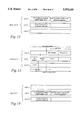
- FIGS. 12, 13, 14, in order to better understand the operation of the Parallel Error Diffusion Device of FIG. 9, an example operation will now be described.
- FIG. 12 shows the state of the error diffusion processing before the start of line N.
- the first half of the previous line (line N-1) has been error diffused; the results from this are in the RGBW buffer 51.
- the second half of line N-1 has been input corrected, and is ready for error diffusion.
- This data is stored in one half of the line store memory 50.
- the other half of the line store is occupied by the error values diffused from the first half of line N-1 into the first half of line N (the line about to be processed).
- FIG. 13 shows the state of the Line Store Memory 50 and RGBW Buffer Unit 51, part of the way through the line, and indicates the current working position within the Line Store Memory 50 and RGBW Buffer Unit 51 of each of the Error Diffusion Units 53,54.
- the first operation occurring during line N is the error diffusion of the second half of line N-1, which is done by Error Diffusion Unit 53. Previously input corrected values are read out of the line store into the Error Diffusion Unit 53. The RGBW results from the error diffusion are written into the RGBW Buffer Unit 51. Error data diffused into the second half of line N is written back to the Line Store Memory 50.
- the second operation during line N is the reading of the RGBW values for line N-1 by the Output Sequencer 55.
- the RGBW values for the first half of line N-1 are in the RGBW Buffer Unit 51.
- the Output Sequencer 55 reads these values at the rate of two values per clock cycle, so that by the end of the line all of the RGBW values for line N-1 have been output. It is necessary to ensure that the error diffusion of the second half of line N-1, which is proceeding in parallel, always stays far enough ahead of the Output Sequencer 55, so that the last RGBW values for the line are written into the RGBW Buffer Unit 51 before the time at which the Output Sequencer 55 reads the end values of the line. This is accomplished by staggering the starting time of the Output Sequencer Unit 55 relative to the RGBW Buffer Unit 51 by a few clock cycles.
- the third operation on line N is the input correction of the incoming line N data.
- the Input Correction Unit starts at the beginning of the line, reading error values from the line store at the rate of two per cycle, adding them to the incoming data, and writing two corrected inputs back into the line store in each cycle.
- the entire line is input corrected at the rate at which it comes into the Input Correction Unit.
- the error values from line N-1 required for the correction are in place for the first half of line N before the operation starts; the remaining error values are being generated by Error Diffusion Unit 1 53 as the line proceeds. Again, it is necessary to ensure that the Error Diffusion Unit 1 53 always produces the error values in advance of the time they are required by the Input Correction Unit 52.
- the fourth operation that takes place during line N is the error diffusion of the first half of line N. This works from the beginning of the line, and is timed to start immediately after the input correction has corrected the first pixel input. This error diffusion is done in Error Diffusion Unit 54. RGBW data produced is written into the RGBW Buffer Unit 51, behind the position where the output sequence is reading. Errors to be diffused to the next line are written back into the Line Store Memory 50.
- FIG. 14 shows that at the end of the line, the contents on the Line Store Memory 50, are in the same configuration as they were at the start of the line with the overall side effect of error diffusion of one line having occurred.
- FIGS. 12 to 14 show that the four operations can proceed in parallel with only one Line Store Memory 50 location for each pixel position in the line.
- Each Line Store Memory 50 location is read twice and written twice for each line; each RGBW Buffer Unit 51 location is written and read once for each line.
- the locations of Line Store Memory 50 in the second half of the line are first read by Error Diffusion Unit 53, and the error values for the next line written back. These error values are subsequently read by the Input Correction Unit 52, and the corrected input written back to the same location. Locations in the first half of the line are accessed in the opposite order, that is a read and a write for the Input Correction Unit 52, followed by a read and a write for the Error Diffusion Unit 54.
- the two Error Diffusion Units 53, 54, Input Correction Unit 52, and Output Sequencer 55 read and write the data in the Line Store Memory 50 and the RGBW Buffer Unit 51 to match the input and output requirements to successfully error diffuse the input image.
- the half-speed Error Diffusion Units 53,54 individually take two line periods to complete the error diffusion calculation for a line. In each line period, each Error Diffusion Unit 53,54 calculates the error diffusion results for half of one line, the Input Correction Unit 52 corrects and stores the data for an entire line, and the Output Sequencer 55 writes out an entire line of RGBW data.
Landscapes
- Engineering & Computer Science (AREA)
- Multimedia (AREA)
- Signal Processing (AREA)
- Controls And Circuits For Display Device (AREA)
- Image Processing (AREA)
- Facsimile Image Signal Circuits (AREA)
- Color Image Communication Systems (AREA)
- Control Of Indicators Other Than Cathode Ray Tubes (AREA)
- Liquid Crystal Display Device Control (AREA)
Applications Claiming Priority (2)
| Application Number | Priority Date | Filing Date | Title |
|---|---|---|---|
| AUPL6763 | 1993-01-11 | ||
| AUPL676393 | 1993-01-11 |
Publications (1)
| Publication Number | Publication Date |
|---|---|
| US5553165A true US5553165A (en) | 1996-09-03 |
Family
ID=3776650
Family Applications (1)
| Application Number | Title | Priority Date | Filing Date |
|---|---|---|---|
| US08/177,306 Expired - Lifetime US5553165A (en) | 1993-01-11 | 1994-01-04 | Parallel error diffusion method and apparatus |
Country Status (4)
| Country | Link |
|---|---|
| US (1) | US5553165A (fr) |
| EP (1) | EP0606988B1 (fr) |
| JP (1) | JP3406934B2 (fr) |
| DE (1) | DE69428061T2 (fr) |
Cited By (25)
| Publication number | Priority date | Publication date | Assignee | Title |
|---|---|---|---|---|
| US5848224A (en) * | 1996-09-26 | 1998-12-08 | Hewlett-Packard Company | Optimally pipelined error diffusion architecture for converting scanned image into four-color printed image |
| US5974228A (en) * | 1997-01-28 | 1999-10-26 | Hewlett-Packard Company | Image rendition by plural-row error diffusion, for faster operation and smaller integrated circuits |
| US6124844A (en) * | 1996-01-05 | 2000-09-26 | Canon Kabushiki Kaisha | Force field halftoning |
| US6181827B1 (en) * | 1997-05-23 | 2001-01-30 | Sony Corporation | Image processing method and apparatus |
| US6307978B1 (en) * | 1998-06-03 | 2001-10-23 | Wellesley College | System and method for parallel error diffusion dithering |
| US20020003632A1 (en) * | 2000-06-12 | 2002-01-10 | Takahiko Nakano | Error diffusion processing device |
| US20020067510A1 (en) * | 1999-12-02 | 2002-06-06 | Jeffrey Kempf | Odd/even error diffusion filter |
| US20020181003A1 (en) * | 2000-10-06 | 2002-12-05 | Toshiaki Kakutani | Imaga processing device, printing control device, image processing method, and recorded medium |
| WO2003094502A1 (fr) * | 2002-04-27 | 2003-11-13 | Hewlett-Packard Company | Traitement d'image dans des systemes d'impression |
| US20050063607A1 (en) * | 2003-08-12 | 2005-03-24 | Seung-Ho Park | Method for performing high-speed error diffusion and plasma display panel driving apparatus using the same |
| US20050122545A1 (en) * | 2003-12-03 | 2005-06-09 | Sridharan Ranganathan | Flexible high performance error diffusion |
| US20050157348A1 (en) * | 2004-01-16 | 2005-07-21 | Zhen He | Image data processing methods, hard imaging devices, and articles of manufacture |
| WO2005071383A1 (fr) | 2004-01-23 | 2005-08-04 | Lm Glasfiber A/S | Boitier de connexion partiellement integre dans une piece renforcee par des fibres utilise a des fins de protection et de connexion |
| US20060158693A1 (en) * | 2005-01-18 | 2006-07-20 | Seiko Epson Corporation | Image processing apparatus, image processing program, and image processing method, printing apparatus, printing apparatus control program, and printing apparatus control method, print data generating apparatus, print data generating program, and print data generating method, and display apparatus, display apparatus control program, and display apparatus control method |
| US20070229907A1 (en) * | 2006-04-03 | 2007-10-04 | Sharp Kabushiki Kaisha | Image processing apparatus, error diffusion processing method, and program |
| US20070236736A1 (en) * | 2006-03-31 | 2007-10-11 | Eastman Kodak Company | Method of making a multilevel halftone screen |
| US20070236741A1 (en) * | 2006-03-31 | 2007-10-11 | Eastman Kodak Company | Multilevel halftone screen and sets thereof |
| US20100220362A1 (en) * | 2009-02-28 | 2010-09-02 | Shepherd Matthew A | Performing halftoning by plurality of halftoning mechanisms |
| US20110123129A1 (en) * | 2009-11-23 | 2011-05-26 | Junghwan Lee | Error diffusion method and liquid crystal display using the same |
| US8937750B2 (en) | 2011-08-02 | 2015-01-20 | Hewlett-Packard Development Company, L.P. | Inter-block data management |
| US9007659B1 (en) | 2013-12-16 | 2015-04-14 | Xerox Corporation | Re-ordered error diffusion for fast implementation |
| US9262704B1 (en) | 2015-03-04 | 2016-02-16 | Xerox Corporation | Rendering images to lower bits per pixel formats using reduced numbers of registers |
| US9906687B2 (en) * | 2016-03-09 | 2018-02-27 | Xerox Corporation | Method and apparatus for starting an error diffusion method |
| US10592790B1 (en) | 2018-11-08 | 2020-03-17 | Hewlett-Packard Development Company, L.P. | Parallel image processes |
| US20220311904A1 (en) * | 2021-03-29 | 2022-09-29 | Seiko Epson Corporation | Image processing apparatus and image processing method |
Families Citing this family (7)
| Publication number | Priority date | Publication date | Assignee | Title |
|---|---|---|---|---|
| AUPN958996A0 (en) * | 1996-05-01 | 1996-05-23 | Canon Information Systems Research Australia Pty Ltd | Seamless parallel neighbourhood-process halftoning |
| US5892851A (en) * | 1997-05-23 | 1999-04-06 | Hewlett-Packard Company | Parallelized error diffusion |
| US6014227A (en) * | 1998-04-30 | 2000-01-11 | Hewlett-Packard Co. | Printer with progressive column error diffusion system and method of using same for improved printer throughput |
| JP2006146672A (ja) | 2004-11-22 | 2006-06-08 | Toshiba Corp | データ処理装置及びデータ処理方法 |
| US7639887B2 (en) | 2004-12-14 | 2009-12-29 | Intel Corporation | Error diffusion-based image processing |
| JP5115470B2 (ja) * | 2008-12-24 | 2013-01-09 | 富士ゼロックス株式会社 | 画像処理装置 |
| JP5415895B2 (ja) * | 2009-10-21 | 2014-02-12 | グローバル・オーエルイーディー・テクノロジー・リミテッド・ライアビリティ・カンパニー | 表示装置 |
Citations (8)
| Publication number | Priority date | Publication date | Assignee | Title |
|---|---|---|---|---|
| US4733230A (en) * | 1984-09-06 | 1988-03-22 | Hitachi, Ltd. | Method of displaying continuous tone picture using limited number of different colors or black-and-white levels, and display system therefor |
| EP0272147A2 (fr) * | 1986-12-19 | 1988-06-22 | Matsushita Electric Industrial Co., Ltd. | Appareil de traitement de signaux pour la visualisation d'images à deux niveaux |
| US4890167A (en) * | 1986-10-17 | 1989-12-26 | Matsushita Electric Industrial Co., Ltd. | Apparatus for processing image signal |
| US5070413A (en) * | 1989-10-10 | 1991-12-03 | Eastman Kodak Company | Color digital halftoning with vector error diffusion |
| US5271070A (en) * | 1992-11-06 | 1993-12-14 | Xerox Corporation | Multi-dimensional error diffusion technique |
| US5307426A (en) * | 1990-09-11 | 1994-04-26 | Kabushiki Kaisha Toshiba | Image processing apparatus with improved dithering scheme |
| US5325448A (en) * | 1987-11-16 | 1994-06-28 | Canon Kabushiki Kaisha | Image treatment method and apparatus with error dispersion and controllable quantization |
| US5351312A (en) * | 1990-10-09 | 1994-09-27 | Matsushita Graphic Communication Systems, Inc. | Spatial filter of an image signal processor providing alternating line images without moire |
-
1994
- 1994-01-04 US US08/177,306 patent/US5553165A/en not_active Expired - Lifetime
- 1994-01-07 DE DE69428061T patent/DE69428061T2/de not_active Expired - Lifetime
- 1994-01-07 EP EP94300111A patent/EP0606988B1/fr not_active Expired - Lifetime
- 1994-01-11 JP JP00138594A patent/JP3406934B2/ja not_active Expired - Lifetime
Patent Citations (8)
| Publication number | Priority date | Publication date | Assignee | Title |
|---|---|---|---|---|
| US4733230A (en) * | 1984-09-06 | 1988-03-22 | Hitachi, Ltd. | Method of displaying continuous tone picture using limited number of different colors or black-and-white levels, and display system therefor |
| US4890167A (en) * | 1986-10-17 | 1989-12-26 | Matsushita Electric Industrial Co., Ltd. | Apparatus for processing image signal |
| EP0272147A2 (fr) * | 1986-12-19 | 1988-06-22 | Matsushita Electric Industrial Co., Ltd. | Appareil de traitement de signaux pour la visualisation d'images à deux niveaux |
| US5325448A (en) * | 1987-11-16 | 1994-06-28 | Canon Kabushiki Kaisha | Image treatment method and apparatus with error dispersion and controllable quantization |
| US5070413A (en) * | 1989-10-10 | 1991-12-03 | Eastman Kodak Company | Color digital halftoning with vector error diffusion |
| US5307426A (en) * | 1990-09-11 | 1994-04-26 | Kabushiki Kaisha Toshiba | Image processing apparatus with improved dithering scheme |
| US5351312A (en) * | 1990-10-09 | 1994-09-27 | Matsushita Graphic Communication Systems, Inc. | Spatial filter of an image signal processor providing alternating line images without moire |
| US5271070A (en) * | 1992-11-06 | 1993-12-14 | Xerox Corporation | Multi-dimensional error diffusion technique |
Non-Patent Citations (6)
| Title |
|---|
| G. W. Braudaway, "Procedure for Optimum Choice of a Small Number of Colors From a Large Color Palette for Color Imaging", IBM Technical Disclosure Bulletin, vol. 29, No. 3, pp. 1329-1334 (Aug. 1986). |
| G. W. Braudaway, Procedure for Optimum Choice of a Small Number of Colors From a Large Color Palette for Color Imaging , IBM Technical Disclosure Bulletin, vol. 29, No. 3, pp. 1329 1334 (Aug. 1986). * |
| P. Heckbert, "Color Image Quantization for Frame Buffer Display", Computer Graphics, vol. 16, No. 3, pp. 297-307 (Jul. 1982). |
| P. Heckbert, Color Image Quantization for Frame Buffer Display , Computer Graphics, vol. 16, No. 3, pp. 297 307 (Jul. 1982). * |
| R. Ulichney, "Digital Half Toning", MIT Press, pp. 341, 342 (1987). |
| R. Ulichney, Digital Half Toning , MIT Press, pp. 341, 342 (1987). * |
Cited By (41)
| Publication number | Priority date | Publication date | Assignee | Title |
|---|---|---|---|---|
| US6124844A (en) * | 1996-01-05 | 2000-09-26 | Canon Kabushiki Kaisha | Force field halftoning |
| US5848224A (en) * | 1996-09-26 | 1998-12-08 | Hewlett-Packard Company | Optimally pipelined error diffusion architecture for converting scanned image into four-color printed image |
| US5974228A (en) * | 1997-01-28 | 1999-10-26 | Hewlett-Packard Company | Image rendition by plural-row error diffusion, for faster operation and smaller integrated circuits |
| US6181827B1 (en) * | 1997-05-23 | 2001-01-30 | Sony Corporation | Image processing method and apparatus |
| US6307978B1 (en) * | 1998-06-03 | 2001-10-23 | Wellesley College | System and method for parallel error diffusion dithering |
| US20020067510A1 (en) * | 1999-12-02 | 2002-06-06 | Jeffrey Kempf | Odd/even error diffusion filter |
| US7460275B2 (en) * | 1999-12-02 | 2008-12-02 | Texas Instruments Incorporated | Odd/even error diffusion filter |
| US6977756B2 (en) | 2000-06-12 | 2005-12-20 | Sharp Kabushiki Kaisha | Error diffusion processing device |
| US20020003632A1 (en) * | 2000-06-12 | 2002-01-10 | Takahiko Nakano | Error diffusion processing device |
| US20020181003A1 (en) * | 2000-10-06 | 2002-12-05 | Toshiaki Kakutani | Imaga processing device, printing control device, image processing method, and recorded medium |
| US7196821B2 (en) * | 2000-10-06 | 2007-03-27 | Seiko Epson Corporation | Image processing device, printing control device, image processing method, and recorded medium |
| WO2003094502A1 (fr) * | 2002-04-27 | 2003-11-13 | Hewlett-Packard Company | Traitement d'image dans des systemes d'impression |
| US8958114B2 (en) | 2002-04-27 | 2015-02-17 | Hewlett-Packard Development Company, L.P. | Printing image slices in parallel by print engines |
| US20060120787A1 (en) * | 2002-04-27 | 2006-06-08 | Lluis Abello | Image processing in printing systems |
| US7705802B2 (en) * | 2003-08-12 | 2010-04-27 | Samsung Sdi Co., Ltd. | Method for performing high-speed error diffusion and plasma display panel driving apparatus using the same |
| US20050063607A1 (en) * | 2003-08-12 | 2005-03-24 | Seung-Ho Park | Method for performing high-speed error diffusion and plasma display panel driving apparatus using the same |
| CN100395801C (zh) * | 2003-08-12 | 2008-06-18 | 三星Sdi株式会社 | 执行高速误差扩散的方法及其等离子体显示板驱动装置 |
| US20050122545A1 (en) * | 2003-12-03 | 2005-06-09 | Sridharan Ranganathan | Flexible high performance error diffusion |
| US20050157348A1 (en) * | 2004-01-16 | 2005-07-21 | Zhen He | Image data processing methods, hard imaging devices, and articles of manufacture |
| US7450270B2 (en) | 2004-01-16 | 2008-11-11 | Hewlett-Packard Development Company, L.P. | Image data processing methods, hard imaging devices, and articles of manufacture |
| WO2005071383A1 (fr) | 2004-01-23 | 2005-08-04 | Lm Glasfiber A/S | Boitier de connexion partiellement integre dans une piece renforcee par des fibres utilise a des fins de protection et de connexion |
| US7733531B2 (en) * | 2005-01-18 | 2010-06-08 | Seiko Epson Corporation | Image processing apparatus, image processing program, and image processing method with error diffusion |
| US20060158693A1 (en) * | 2005-01-18 | 2006-07-20 | Seiko Epson Corporation | Image processing apparatus, image processing program, and image processing method, printing apparatus, printing apparatus control program, and printing apparatus control method, print data generating apparatus, print data generating program, and print data generating method, and display apparatus, display apparatus control program, and display apparatus control method |
| US7626730B2 (en) | 2006-03-31 | 2009-12-01 | Eastman Kodak Company | Method of making a multilevel halftone screen |
| US7830569B2 (en) | 2006-03-31 | 2010-11-09 | Eastman Kodak Company | Multilevel halftone screen and sets thereof |
| US20110012919A1 (en) * | 2006-03-31 | 2011-01-20 | Hwai-Tzuu Tai | Multilevel halftone screen and sets thereof |
| US20070236736A1 (en) * | 2006-03-31 | 2007-10-11 | Eastman Kodak Company | Method of making a multilevel halftone screen |
| US20070236741A1 (en) * | 2006-03-31 | 2007-10-11 | Eastman Kodak Company | Multilevel halftone screen and sets thereof |
| US20070229907A1 (en) * | 2006-04-03 | 2007-10-04 | Sharp Kabushiki Kaisha | Image processing apparatus, error diffusion processing method, and program |
| US8213054B2 (en) * | 2006-04-03 | 2012-07-03 | Sharp Kabushiki Kaisha | Image processing apparatus, error diffusion processing method, and program |
| US20100220362A1 (en) * | 2009-02-28 | 2010-09-02 | Shepherd Matthew A | Performing halftoning by plurality of halftoning mechanisms |
| US8169667B2 (en) | 2009-02-28 | 2012-05-01 | Hewlett-Packard Development Company, L.P. | Performing halftoning by plurality of halftoning mechanisms |
| US8983220B2 (en) * | 2009-11-23 | 2015-03-17 | Lg Display Co., Ltd | Error diffusion method and liquid crystal display using the same |
| US20110123129A1 (en) * | 2009-11-23 | 2011-05-26 | Junghwan Lee | Error diffusion method and liquid crystal display using the same |
| US8937750B2 (en) | 2011-08-02 | 2015-01-20 | Hewlett-Packard Development Company, L.P. | Inter-block data management |
| US9007659B1 (en) | 2013-12-16 | 2015-04-14 | Xerox Corporation | Re-ordered error diffusion for fast implementation |
| US9262704B1 (en) | 2015-03-04 | 2016-02-16 | Xerox Corporation | Rendering images to lower bits per pixel formats using reduced numbers of registers |
| US9906687B2 (en) * | 2016-03-09 | 2018-02-27 | Xerox Corporation | Method and apparatus for starting an error diffusion method |
| US10592790B1 (en) | 2018-11-08 | 2020-03-17 | Hewlett-Packard Development Company, L.P. | Parallel image processes |
| US20220311904A1 (en) * | 2021-03-29 | 2022-09-29 | Seiko Epson Corporation | Image processing apparatus and image processing method |
| US11632488B2 (en) * | 2021-03-29 | 2023-04-18 | Seiko Epson Corporation | Image processing apparatus and image processing method |
Also Published As
| Publication number | Publication date |
|---|---|
| DE69428061D1 (de) | 2001-10-04 |
| EP0606988A3 (en) | 1994-08-17 |
| DE69428061T2 (de) | 2002-03-21 |
| JPH0720839A (ja) | 1995-01-24 |
| EP0606988A2 (fr) | 1994-07-20 |
| JP3406934B2 (ja) | 2003-05-19 |
| EP0606988B1 (fr) | 2001-08-29 |
Similar Documents
| Publication | Publication Date | Title |
|---|---|---|
| US5553165A (en) | Parallel error diffusion method and apparatus | |
| EP0606987B1 (fr) | Procédé et appareil de diffusion d'erreurs en parallèle | |
| EP0608053B1 (fr) | Dispositif d'affichage en couleur | |
| US4654720A (en) | Color image display system | |
| CN1871851B (zh) | 显示多输入源格式的图像数据的改善的多模显示系统 | |
| US5999160A (en) | Method for forming sub image data packet including data of sub image superimposed on main image, recording medium for recording sub image data packet, and image process apparatus | |
| HK1002718A1 (en) | Device for displaying a composite image | |
| JPH0728995A (ja) | 範囲クリッピング方法及びその装置及び表示装置 | |
| JPS61230571A (ja) | 画像走査装置 | |
| JP3499921B2 (ja) | ピクセル・エラー拡散方法 | |
| KR0184314B1 (ko) | 다계문자, 화상데이터표시 방법 및 장치 | |
| JPH0564110A (ja) | 映像信号補正装置とそれを用いた表示装置 | |
| JP2001509920A (ja) | 補間用のラインバッファを画素のルックアップテーブルとして用いる方法及び装置 | |
| US7091980B2 (en) | System and method for communicating digital display data and auxiliary processing data within a computer graphics system | |
| AU674552B2 (en) | Parallel error diffusion method and apparatus | |
| EP0721724A1 (fr) | Systeme et procede de tramage en demi-teintes a l'aide d'une grille de seuils a recouvrement | |
| US5444461A (en) | Bi-dimensional visual model | |
| JP3690860B2 (ja) | 画像処理装置 | |
| JPH0778824B2 (ja) | カラー画像合成方式およびカラー画像処理装置 | |
| JP2589953B2 (ja) | 文字・画像データ生成装置及び方法 | |
| EP0543511A1 (fr) | Méthode et appareil de conversion de données | |
| AU673556B2 (en) | Colour display system | |
| JP3642580B2 (ja) | ドットマトリックス表示システム及びこのシステムでの表示データ変換方法 | |
| JP2712146B2 (ja) | 画像表示装置 | |
| AU676419B2 (en) | Reduction of luminance noise in colour dithering |
Legal Events
| Date | Code | Title | Description |
|---|---|---|---|
| AS | Assignment |
Owner name: CANON INC., JAPAN Free format text: ASSIGNMENT OF ASSIGNORS INTEREST;ASSIGNORS:WEBB, MICHAEL;NAYLOR, WILLIAM C., JR.;REEL/FRAME:006927/0968 Effective date: 19940303 |
|
| STCF | Information on status: patent grant |
Free format text: PATENTED CASE |
|
| CC | Certificate of correction | ||
| FEPP | Fee payment procedure |
Free format text: PAYER NUMBER DE-ASSIGNED (ORIGINAL EVENT CODE: RMPN); ENTITY STATUS OF PATENT OWNER: LARGE ENTITY Free format text: PAYOR NUMBER ASSIGNED (ORIGINAL EVENT CODE: ASPN); ENTITY STATUS OF PATENT OWNER: LARGE ENTITY |
|
| FPAY | Fee payment |
Year of fee payment: 4 |
|
| FPAY | Fee payment |
Year of fee payment: 8 |
|
| FPAY | Fee payment |
Year of fee payment: 12 |