US5708778A - Automatic configuration of protocol parameters in protocol layers for public area networks - Google Patents
Automatic configuration of protocol parameters in protocol layers for public area networks Download PDFInfo
- Publication number
- US5708778A US5708778A US08/647,365 US64736596A US5708778A US 5708778 A US5708778 A US 5708778A US 64736596 A US64736596 A US 64736596A US 5708778 A US5708778 A US 5708778A
- Authority
- US
- United States
- Prior art keywords
- parameter
- probe
- value
- equipment device
- probes
- Prior art date
- Legal status (The legal status is an assumption and is not a legal conclusion. Google has not performed a legal analysis and makes no representation as to the accuracy of the status listed.)
- Expired - Lifetime
Links
- 239000000523 sample Substances 0.000 claims abstract description 163
- 238000000034 method Methods 0.000 claims abstract description 53
- 230000004044 response Effects 0.000 claims description 11
- 238000004891 communication Methods 0.000 claims description 10
- 238000004590 computer program Methods 0.000 claims description 3
- 238000012360 testing method Methods 0.000 abstract description 11
- 238000010586 diagram Methods 0.000 description 6
- 230000006399 behavior Effects 0.000 description 5
- 230000006870 function Effects 0.000 description 2
- 230000003466 anti-cipated effect Effects 0.000 description 1
- 230000001419 dependent effect Effects 0.000 description 1
- 230000000694 effects Effects 0.000 description 1
- 238000009434 installation Methods 0.000 description 1
- 238000012545 processing Methods 0.000 description 1
- 238000012546 transfer Methods 0.000 description 1
Images


Classifications
-
- H—ELECTRICITY
- H04—ELECTRIC COMMUNICATION TECHNIQUE
- H04L—TRANSMISSION OF DIGITAL INFORMATION, e.g. TELEGRAPHIC COMMUNICATION
- H04L9/00—Cryptographic mechanisms or cryptographic arrangements for secret or secure communications; Network security protocols
- H04L9/40—Network security protocols
-
- H—ELECTRICITY
- H04—ELECTRIC COMMUNICATION TECHNIQUE
- H04L—TRANSMISSION OF DIGITAL INFORMATION, e.g. TELEGRAPHIC COMMUNICATION
- H04L69/00—Network arrangements, protocols or services independent of the application payload and not provided for in the other groups of this subclass
- H04L69/24—Negotiation of communication capabilities
Definitions
- the present invention relates generally to the field of network management, and more particularly, to systems and methods for configuring communication terminals and equipment for public networks.
- Public networks and the configuration of terminals and communication equipment is known.
- public networks operate in conformance with the OSI network protocol layer model, and provide various implementations of the protocols, such as X.25, Frame Relay, ATM, ISDN, and the like.
- a typical public network such as a wide area network (WAN) or metropolitan area network (MAN)
- a user's device conventionally known with respect to X.25 as a data terminal equipment (DTE)
- DTE data terminal equipment
- DCE data communication equipment
- the DTE While the DTE is under the user's control, the DCE is typically under control of the network service provider. In order for the DTE and DCE to communicate properly, the DTE must be configured with the appropriate protocol parameters used by DCE. Conventionally, the configuration process is performed manually, with the systems administrator manually specifying parameter values for each of numerous different configuration parameters. This manual process is time consuming and error prone. In some cases system administrators do not have a basic understanding of what the parameters mean, and thus are unable to properly configure the DTE. In other cases where the systems administrators understand the various configuration parameters, they may not know, or have available information for establishing the correct configuration value. In most instances, the DCE parameters are set up at subscription time, which may be well before a particular DTE is configured, or the DTE may be set to default value that the systems administrator may not know.
- the present invention provides a desirable system, method, and software product for automatically configuring data terminals and similar network devices.
- the present invention is based on the fact that when a DTE sends a packet, message, or other data to the DCE, and the packet is not properly configured, the DCE returns an error.
- the error is coded to specify the problem with the packet structure, packet sequence, or other nonconformity with the communication protocol.
- the error coding is generally documented in the protocol specifications, such as for X.25 protocol or the like.
- the present invention takes advantage of this information, and the known behavior of the DCE to determine the correct parameter values for the various configuration parameters.
- a method for configuring parameters of a protocol layer within a terminal equipment device A set of parameters is selected to be automatically configured. Each of these parameters has an initial set of potential values that may be used to configure the parameter, and from this set, one or more values correctly configure the DTE with respect to the DCE.
- the parameters may be selected from available protocol standards, and the range of potential values determined accordingly. The choice of which parameters to select is made by the system's implementer, and not necessitated by the invention.
- a computer implemented method is then specified that performs three types of operations.
- the computer implemented method is capable of constructing for each parameter at least one probe that is to be sent from a terminal equipment device to a network equipment device to which it is communicatively coupled.
- the probe is based on the initial set of potential values for the parameter, any prior probes for the parameter, any answers received from the network equipment device in response to the any prior probes.
- a probe may include a number of probes.
- the computer implemented method is adapted to send the probe from the terminal equipment device to the network equipment device, and receive answers to the probe from the network equipment device.
- the computer implemented method is capable of restricting a current set of parameter values that may be used to configure the parameter. This restriction is made on the basis of the initial set of potential values, on prior probes for the parameter, and prior answers received from the network equipment device in response to the prior probes.
- This computer implemented method thus uses the series of probes and answers to iteratively restrict the current set of potential values for a parameter. This restriction occurs until a correct value of the parameter can be determined from the current set of potential values. At this point the parameter may be configured with a correct parameter value.
- the computer implemented method is applied to the terminal equipment device to send at least one probe constructed in the manner described above for at least one parameter.
- an iterative probing technique that sends probes, whether packets, messages, frames, datagrams, or the like, from a DTE to a DCE.
- the DTE executes an automatic configuration program for performing the method.
- a probe structured with respect to a particular configuration parameter, such as packet size, format, and so forth.
- the probe is a function of the protocol parameter being configured, selected previous probes for that parameters, and selected answers to the previous probes that the DCE provided in response thereto.
- the DCE receives the probe and responds with an answer.
- the automatic configuration program determines from the probe, the answer, selected ones of the prior probes, and selected ones of the prior answers whether a value that correctly configures the parameter may be established.
- the DTE then configures the next parameter in the same iterative manner.
- the probes may be structured to configure specific layers of the DTE communication protocols.
- the present invention is a software product in the form of a computer program memory resident in the DTE being configured or other computer connected thereto.
- the product incorporates data and procedural code to implement the probing technique of the present invention.
- the present invention is a computer system that automatically configures a DTE for communication with a DCE.
- FIG. 1 is a block diagram of a system operating with the automatic configuration method of the present invention.
- FIG. 2 is a block diagram of a data terminal equipment (DTE) configured with one embodiment of the automatic configuration program of the present invention.
- DTE data terminal equipment
- FIG. 3 is a flow diagram of the overall operation of the present invention.
- FIG. 4 is a flowchart of one embodiment of a method of configuring protocol parameters in conjuction with the automatic configuration program of the present invention.
- FIG. 5 is a block diagram of the software architecture of one embodiment of the automatic configuration program of the present invention, showing the relationships to the protocol layers.
- FIG. 6 is a flowchart of the operation of one embodiment of an automatic configuration program providing the configuration method of the present invention.
- the system 100 includes a first DTE 110 conventionally connected through a network 150 to a DCE 120 for communicating with remote DCEs 120 and DTEs 110.
- the first DTE 110 may be a computer, router, terminal server, automatic call distributor, or similar device.
- the DTE 110 includes a processing device and a memory. Resident in the DTE memory is an automatic configuration program 140 for controlling the operation of the DTE 110 to conform with one method of operation embodying the present invention.
- the DCE 120 is conventional, and provides the interface for the DTE 110 to the public network 150.
- the terms "DTE" and "DCE” are used here to refer to the user's terminal equipment and the carrier's network equipment, respectively, and are not intended to be limited to only X.25 compliant systems.
- the DTE 110 includes a processor 200 coupled to an addressable memory 203, such as RAM or ROM, and further coupled to a 20 network interface 201 for communication with a DCE 120.
- the addressable memory 203 includes an automatic configuration program 140 for controlling the operation of the processor 200 in accordance with the present invention.
- a configuration package 160 provides conventional configuration, and other facilities for the DTE 110.
- the addressable memory 203 includes at least one datastore 207 for layer 3 configuration parameters, and for layer 2 configuration parameters as further described below for use in configuring the protocol parameters.
- the configuration package 160 is here illustrated separately from the automatic configuration program 140; in other embodiments the automatic configuration program 140 may be integrated with the configuration package 160 to provide an improved version thereof.
- the automatic configuration program 140 may be provided to the DTC 110 on a computer readable memory, such as a CD-ROM, 8 mm tape, floppy diskette, or the like, for installation and execution thereon.
- FIG. 3 there is shown a flow diagram of the overall operation of the present invention.
- a protocol is selected for automatic configuration, from which some number of parameters of the protocol are further selected.
- Computer encoded descriptions of the parameters are stored in a datastore, such as datastore 207.
- a single parameter is shown for ease of illustration.
- For the parameter there is an initial set of potential values that may be used to configure the parameter, also suitably stored in a computer readable datastore. Only a subset of these values will correctly configure the DTE 110 with respect to the DCE 120.
- the automatic configuration program 140 receives 301 this parameter, and is programmed to construct 303 for this parameter at least one probe.
- the probe may be comprised of series of probes.
- the automatic configuration program 140 is further programmed to send 305 the probe to the DCE 120.
- the DCE 120 responds 307 to the probe with one or more answers.
- the automatic configuration program 140 receives 309 the answers, and restricts 313 the current set of potential values based on the set of probes that have been previously sent 305, and the set of answers received to any previous probes (309), and the existing set of potential values.
- each probe is constructed by the automatic configuration program 140 based 311 on the current set of potential values for the parameter, probes that have been previously sent 305, and the set of answers received 309 to any previous probes.
- This process is iterative, and continues until the automatic configuration program 140 is able to determine at least one value from the set of potential values that correctly configures the parameter, or that the parameter cannot be configured due to other factors.
- FIG. 4 there is shown a flowchart for configuring a DTE 110 in conjunction with one embodiment of the present invention.
- the user such as a systems administrator, executes the configuration package 160 on the DTE 110 and manually configures 400 general parameters.
- General parameters are those for which a value is not established by the automatic configuration program 140, either because they cannot be established automatically based on an analysis of the protocol standard, or because the specific implementation of the program does not determine them.
- General layer 2 parameters may include, for example, the type of layer, such as LAP-B, LAP-D, and the like.
- General layer 3 parameters may include, for example, the local address of the DTE 110, such as its X.121 address or E.164 telephone number, the type of layer 3 protocol, such as X.25-3, Q.961, Q.933 and the like.
- the systems administrator thus also manually configures 402 layer 2 parameters for which a value is not established by the automatic configuration program 140. These steps provide the systems administrator the opportunity to complete and customize the configuration process if required. In some cases it is anticipated that the systems administrator configures very few parameters at all, such as X.121 address.
- the automatic configuration program 140 then automatically configures 404 some number of layer 2 parameters.
- the configuration package 160 determines 406 whether all layer 2 parameters have been configured. If all the layer 2 parameters have not been configured, the systems administrator can again manually configured 402 any of the layer 2 parameters that were not capable of being automatically determined.
- the automatic configuration program 140 can again be used 404 to determine layer 2 parameters, this process repeating until layer 2 is configured.
- FIG. 5 illustrates one embodiment of the software architecture of the automatic configuration program 140 used to configure layer 3 and layer 2 protocols.
- each of the parameter is identified by PARAM(j), where j varies from 1 to m.
- PARAM(j) any of a number of potential parameter values may be currently used by the DCE 120 of interest.
- This set of potential values is identified by VALUE -- SET(j) 221, and the correct value in VALUE 13 SET(j) for the parameter PARAM(j) is identified by VALUE(j,k).
- VALUE 13 SET(j) 221 has some initial members, but is iteratively restricted by the automatic configuration program 140 until the automatic configuration program 140 is able to determine VALUE(j,k).
- a final correct configuration for a given layer is a list 220 of ⁇ PARAM(j), VALUE(j,k) ⁇ pairs.
- VALUE(j,k) is one of them, though not necessarily optimal.
- the restriction of values in VALUE 13 SET(j) 221 may be done by the removal of actual data values, the computation of a new range of values, the flagging of values as being inappropriate, or the like.
- the automatic configuration program 140 maintains in the datastores 207, 208 the list 220 of parameters PARAM(j) of each layer that it is designed to configure; the list of parameters will ultimately include the value of each parameter. Additionally, the datastores may include a default value for selected parameters.
- a probe (224) PROBE is a frame, packet, message, datagram, or the like, depending on the connection type and communication protocol, sent from the DTE 110 to the DCE 120.
- the probe is either an ISDN layer 2 frame, or an ISDN layer 3 data packet.
- a probe may include a sequence or set of individual probes. For example, for determining window size, a number of probes of acceptable content are sent to determine this single parameter.
- a probe 224 is specifically constructed in an attempt to establish a value VALUE(j,k) for a PARAM(j).
- the i th probe 224 used to test parameter PARAM(j) is denoted PROBE(j,i).
- a value in the current set VALUE may be used as an actual data in the probe 224.
- a parameter value of "8" specifies that the network uses packet sequence ranging from 0-7
- a parameter value of "128" specifies that the network uses packet sequence numbers ranging from 0-127.
- the value may be directly mapped to a internal value in the probe 224 to control the operation of the DCE 120. For example, bit fields are used for selecting which X.25 facilities are accepted by the DCE 120; the bits are interpreted by the DCE 120 to identify selected facilities.
- a value in VALUE -- SET(j) 221 is used to construct the probe 224, but is not used as data that is transmitted.
- a probe 224 is constructed with a number of bytes of user data, the number determined by the present values in VALUE -- SET(j) 221 for this parameter.
- the value determines the overall structure of the probe, not a specifically included item of data.
- VALUE(j,k) for a parameter PARAM(j) may be established in a variety of manners. For numeric type parameters having valid values over a range of values, a binary search, or other numerical search techniques may be used. Alternatively, VALUE 13 SET(j) 221 may be table of values, for example, ordered by frequency of use for the value. The probe 224 is then constructed by iterating through the table and selecting each value in VALUE -- SET(j) 221 for the parameter in turn. A table of parameter values is also useful for parameters that take one or more flag values instead of free-ranging values. Here too, the table of parameter values may be ordered by frequency of use. Alternatively, a rule base may be established for determining the value of each parameter.
- an answer 226 is received and identified.
- An answer to a PROBE(j,i) is denoted ANSWER(j,i).
- This answer 226 may include no response from the DCE 120, due to a timeout in the automatic configuration program 140.
- An answer 226 may include the actual frame, or packet, or message or datagram or the like received from the DCE 120 of interest, and the time duration between the emission of the probe 224 and the reception of the answer 226 from the DCE 120.
- an answer 226 may include a sequence or set of individual answers 226.
- a probe set 228 identifies the set of probes previously sent to the DCE of interest to configure a specific parameter PARAM. That is:
- PROBE -- SET(j) ⁇ PROBE(j,0), PROBE (j,1), . . . , PROBE((j,i)), . . . ⁇
- An answer set 260 identifies the set of answers 226 to the previous probes sent to the DCE 120 of interest to configure the parameter PARAM(j). That is:
- a probe PROBE(j,i) is constructed based on the parameter PARAM(j) for which the correct value needs to be determined, the set 228 of previous probes (PROBE -- SET(j)), the set of answers 226 (ANSWER -- SET(j)) to the previous probes, and the VALUE -- SET(j) 221 that may be used to construct the probe. That is:
- PROBE(j,i) Fn (PARAM(j), PROBE -- SET(j), ANSWER -- SET(j), VALUE -- SET(j))
- the method used to build the PROBE(i) depends on the parameter to be configured.
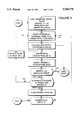
- FIG. 6 there is shown a flowchart for the operation of the automatic configuration program 140 to configure a specific layer, either layer 2 or layer 3.
- the automatic configuration program 140 loads 601 the appropriate parameters and default values (if any) from the layer 2 or layer 3 datastore 208, 207.
- Loop counter variables (i) and (j) are initialized to 0 and 1, respectively.
- the automatic configuration program 140 traverses its parameter list 220 for the layer being configured from PARAM(1) to PARAM(m) using loop variable j.
- the automatic configuration program 140 constructs 603 a probe 224, PROBE(j,i), according to the parameter PARAM(j), the set 228, PROBE -- SET(j), of previous probes for the parameter, the set 230 of answers 226 to the previous probes, ANSWER -- SET(j), and the current (here initial) set 221 of values VALUE -- SET(j). Since this is the first probe, PROBE -- SET(j) and ANSWER -- SET(j) are empty. The new probe is stored in the PROBE -- SET(j).
- the automatic configuration program 140 establishes 605 the appropriate state STATE(j) between the DTE 110 and the DCE 120 by sending the appropriate frames, packets or messages to the DCE 120.
- the data to send the DCE 120 for the STATE(j) is a function of the parameter PARAM(j) being established, and the set of probes and answers.
- the DCE 120 responds with either expected behaviors or, unexpected behaviors, in which latter case an error handler 618 is called to indicate the error in establishing the connection state.
- Expected behaviors may include acknowledgments or particular error messages.
- the automatic configuration program 140 then sends 607 the probe PROBE(j,i) to the DCE 120. Again, the probe is sent in the form appropriate for the network and layer type.
- the DCE 120 receives the probe and responds with one or more answers 226, ANSWER(j,i), which are either acknowledgments, expected errors, unexpected errors.
- the automatic configuration program 140 receives 609 the answer 226, ANSWER(j,i) from the DCE 120.
- the answer is stored in the ANSWER -- SET(j).
- the automatic configuration program 140 tests 611 the received answer 226.
- the answer 226 ANSWER(j,i) may be any of the following three types:
- ANSWER(j,i) is an unexpected answer, that is, an answer 226 that is not valid from the definition of the protocol for the parameter PARAM(j) being configured, or even if otherwise valid, one that makes it impossible for the automatic configuration program 140 to establish the value of the parameter.
- the parameter being established is Maximum Frame Size
- the only answers of interest are an RR, Receive Ready acknowledging that the current probe 224 has a frame size that is less than or equal to the Maximum Frame Size, or FRMR, a FRaMe Reject, indicating that the probe 224 has a frame size greater than the maximum.
- An expected error would be a FRMR indicating an invalid frame size.
- an unexpected answer would be a UA answer 226. This answer would indicate that there is an invalid frame, given the state of the DCE 120. Because of this answer the automatic configuration program 140 is likely not able to configure the Maximum Frame Size parameter even if additional probes are sent.
- Another example of an unexpected errors would be a timeout answer, where the DCE 120 does not respond at all. This is a valid "response," but instead of a protocol error, the problem may be physical, such as a disconnected cable.
- the automatic configuration program 140 will not be able to determine the value of the parameter from this answer 226 or from further probes. Either of these types of unexpected errors imply that it will not be possible to find a correct value VALUE(j,k) for the parameter PARAM(j), even by sending other probes.
- the automatic configuration program 140 calls an error handler 618, the behavior of which is implementation dependent.
- the error handler 618 may log an error message and ask for the user to manually enter 402 a value(s) for the parameter.
- the automatic configuration program 140 may skip the parameter, and continue with the next parameter PARAM(j+1).
- the automatic configuration program 140 tests 613 whether the value VALUE(j,k) for the parameter PARAM(j) can be established.
- ANSWER(j,i) is an answer 226 which allows the automatic configuration program 140 to determine the correct value VALUE(j,k) for the parameter PARAM(j).
- Threshold comparisons between the values in VALUE -- SET(j) for different probes PROBE(j,i) and PROBE(j,i+1) may be used to determine if VALUE(j,k) has been reached.
- an answer 226 that acknowledges the probe 224 may be used by the automatic configuration program 140 to determine the correct VALUE(j,k) for the parameters PARAM(j).
- the automatic configuration program 140 stores 615 the pair ⁇ PARAM(j), VALUE(j,k) ⁇ in the parameter list 220 in the appropriate datastore, and determines 617 whether any other parameters remain to be configured. If so, the automatic configuration program 140 increments to the next parameter, PARAM(j+1), resetting the value counter (i) to zero.
- VALUE(j,k) is one of them, though not necessarily the optimal value of the parameter.
- the automatic configuration program 140 may optionally continue the loop in order to find a better value.
- ANSWER(j,i) is an expected answer 226 which does not allow the automatic configuration program 140 to determine a correct VALUE(j,k) in the current set 221 of VALUE -- SET(j) for the parameter PARAM(j).
- the automatic configuration program 140 may not be able to determine a correct value VALUE(j,k) because the process has not sufficiently restricted the solution space described in the current VALUE -- SET(j).
- An expected answer may be either an acknowledgement or even an error as specified in the relevant protocol standard, and as shown above with Maximum Frame Size example.
- An expected error typically occurs where the automatic configuration program 140 has successively changed the value of the parameter, for example using binary search, and previously received an acknowledgment of a probe. This indicates that the last probe, PROBE(j,i-1) constructed according to some value in VALUE -- SET(j) was acceptable, but that the current probe PROBE(j,i) is rejected.
- Binary search, or other methods can use this pattern of responses to determine the next probe.
- the automatic configuration program 140 restricts 614 the set 221 potential values in VALUE -- SET(j) that may be used for the next probe, PROBE(j,i+1). This restriction may be by binary search, as described, or iterative, rule based, or similar techiques.
- the automatic configuration program 140 constructs 603 another probe, PROBE(j,i+1).
- the automatic configuration program 140 then reestablishes 605 the state of the DCE 120 and sends 607 the new probe PROBE(j,i+1).
- LAPB X.25 layer 2
- Maximum Frame Size (formally called the “Maximum number of bits in an I frame,” or N1), which is the maximum number of bits that in information frame (I frame) can have in the information field.
- N1 Maximum number of bits in an I frame
- This frame size is a subscription parameter agreed between the DCE 120 and the DTE 110. The example focuses on the N1 parameter used for frames sent by the DTE 110 to the DCE 120.
- FRMR Frame Reject
- a frame size is between 8 and 4103 bytes.
- VALUE -- SET ⁇ 0 . . . 4103 ⁇ and an initial value of 2050 is an element of the set.
- the automatic configuration program 140 uses the following steps:
- 603 Construct a valid I frame with an information field of a valid number of bytes (PROBE(j,0)), here 2050.
- the DCE 120 answers 226 with either a UA or a DM response. If another answer 226 is received, there is an error condition, and error handler 618 is called.
- the DCE 120 sends a UA response. Otherwise, there is an error condition, and again the error handler 618 is invoked.
- 607 Send the probe PROBE(j,1) with the I frame.
- 607 Send the probe PROBE(j,2) with the I frame.
- any other frame received 609 i.e. not an RR or FRMR
- a timeout may be an error.
- the DCE 120 does not send an answer 226 that is compatible with the automatic configuration of the maximum frame size, that is indicating an error in frame size.
- the answer indicates an error condition (618) that can be handled for instance by logging an error and skipping to the next parameter.
- the value VALUE(j,k) of a parameter PARAM(j) is in a variable numeric range.
- the value VALUE(j,k) may be one of a number of flags. In this case, simple iteration through the set of flag may be used to determine the appropriate value for the PARAM(j).
- the information exchanged at the upper (N+1) layers can interfere with the test.
- the I frame that is used as a probe at the layer 2 may, for example, contain an invalid layer 3 packet. If the layer 3 packet is X.25, the DCE 120 may send an answer 226 with an I frame (layer 4) which contains a layer 3 Restart packet. In most of the cases, the automatic configuration program 140 can ignore these side effects as long as it establishes the correct state for the DCE 120 before sending the next probe.
Landscapes
- Engineering & Computer Science (AREA)
- Computer Security & Cryptography (AREA)
- Computer Networks & Wireless Communication (AREA)
- Signal Processing (AREA)
- Communication Control (AREA)
- Computer And Data Communications (AREA)
Priority Applications (3)
| Application Number | Priority Date | Filing Date | Title |
|---|---|---|---|
| US08/647,365 US5708778A (en) | 1996-05-09 | 1996-05-09 | Automatic configuration of protocol parameters in protocol layers for public area networks |
| EP97106639A EP0806855A3 (fr) | 1996-05-09 | 1997-04-22 | Configuration automatique de paramètres dans les couches de protocole pour les réseaux publics |
| JP9119601A JPH1084399A (ja) | 1996-05-09 | 1997-05-09 | 公衆エリア・ネットワーク用プロトコル・レイヤにおけるプロトコル・パラメータの自動構成方法及びシステム |
Applications Claiming Priority (1)
| Application Number | Priority Date | Filing Date | Title |
|---|---|---|---|
| US08/647,365 US5708778A (en) | 1996-05-09 | 1996-05-09 | Automatic configuration of protocol parameters in protocol layers for public area networks |
Publications (1)
| Publication Number | Publication Date |
|---|---|
| US5708778A true US5708778A (en) | 1998-01-13 |
Family
ID=24596706
Family Applications (1)
| Application Number | Title | Priority Date | Filing Date |
|---|---|---|---|
| US08/647,365 Expired - Lifetime US5708778A (en) | 1996-05-09 | 1996-05-09 | Automatic configuration of protocol parameters in protocol layers for public area networks |
Country Status (3)
| Country | Link |
|---|---|
| US (1) | US5708778A (fr) |
| EP (1) | EP0806855A3 (fr) |
| JP (1) | JPH1084399A (fr) |
Cited By (20)
| Publication number | Priority date | Publication date | Assignee | Title |
|---|---|---|---|---|
| US6005846A (en) * | 1997-05-07 | 1999-12-21 | 3Com Corporation | Apparatus for an improved ISDN terminal adapter having automatic SPID configuration and methods for use therein |
| US6031848A (en) * | 1997-05-07 | 2000-02-29 | 3Com Corporation | Apparatus for an improved ISDN terminal adapter having baud rate unblocking and methods for use therein |
| US6046986A (en) * | 1996-05-13 | 2000-04-04 | Adtran, Inc. | ISDN terminal equipment-resident mechanism for determining service profile identifiers and associated telecommunication switch protocol |
| EP0998078A1 (fr) * | 1998-10-30 | 2000-05-03 | Telefonaktiebolaget Lm Ericsson | Méthode pour la configuration d'une liaison de communication pour transmission de données |
| US6076099A (en) * | 1997-09-09 | 2000-06-13 | Chen; Thomas C. H. | Method for configurable intelligent-agent-based wireless communication system |
| US6128668A (en) * | 1997-11-07 | 2000-10-03 | International Business Machines Corporation | Selective transformation of multimedia objects |
| US6246671B1 (en) | 1998-03-17 | 2001-06-12 | Adtran, Inc. | ISDN terminal adapter-resident mechanism for automatically determining telecommunication switch type and generating associated service profile identifiers |
| US6396812B1 (en) | 1996-05-13 | 2002-05-28 | Adtran, Inc. | ISDN terminal equipment-resident mechanism for automatically determining service profile identifiers (SPIDS) for subdivided area code |
| US6477566B1 (en) * | 1997-12-10 | 2002-11-05 | Nortel Networks Limited | Method and system of providing improved network management data between a plurality of network elements and a management system for increasing a flow and decreasing an amount of data transfer |
| US20020176448A1 (en) * | 1998-12-30 | 2002-11-28 | Som Sikdar | System, analyzer, and method for synchronizing a distributed system |
| US6684241B1 (en) | 1999-09-29 | 2004-01-27 | Nortel Networks Limited | Apparatus and method of configuring a network device |
| US6772413B2 (en) | 1999-12-21 | 2004-08-03 | Datapower Technology, Inc. | Method and apparatus of data exchange using runtime code generator and translator |
| US20050190751A1 (en) * | 2004-03-01 | 2005-09-01 | Gordon Rouleau | Automatic local LAPB device configuration method and apparatus |
| US7002907B1 (en) * | 2001-07-26 | 2006-02-21 | Ciena Corporation | System and methods for automatic equipment provisioning for SONET networks |
| US7058012B1 (en) * | 2001-07-26 | 2006-06-06 | Ciena Corporation | Systems and methods for automatic end-to-end path provisioning for SONET networks |
| US7702732B1 (en) * | 1999-09-29 | 2010-04-20 | Nortel Networks Limited | Methods for auto-configuring a router on an IP subnet |
| US20110185130A1 (en) * | 2010-01-25 | 2011-07-28 | Hitachi, Ltd. | Computer system and storage consolidation management method |
| US8127042B1 (en) * | 1998-01-21 | 2012-02-28 | Ciena Corporation | Data driven connection rule/constraint engine applied to trail management |
| US20150127850A1 (en) * | 2013-11-06 | 2015-05-07 | Aselsan Elektronik Sanayi Ve Ticaret Anonim Sirketi | Communication layer structure for computing device communication |
| US20250310189A1 (en) * | 2024-03-28 | 2025-10-02 | Perftech, Inc. | Self-configuring and diagnosing router |
Families Citing this family (5)
| Publication number | Priority date | Publication date | Assignee | Title |
|---|---|---|---|---|
| GB2340699A (en) * | 1998-08-11 | 2000-02-23 | Ibm | Automatic network protocol configuration in a data processing system |
| EP1158740B1 (fr) | 2000-05-24 | 2009-09-16 | Sony Deutschland GmbH | Négotiation de la qualité de service |
| US8219665B2 (en) * | 2005-03-07 | 2012-07-10 | Microsoft Corporation | Method and system for discovery via tribal knowledge |
| JP2015019220A (ja) * | 2013-07-10 | 2015-01-29 | 住友電気工業株式会社 | 通信装置、通信方法および通信プログラム |
| CN109885335B (zh) * | 2019-01-15 | 2022-12-06 | 北京百度网讯科技有限公司 | 配置处理方法、装置、设备及计算机可读存储介质 |
Citations (6)
| Publication number | Priority date | Publication date | Assignee | Title |
|---|---|---|---|---|
| US5165018A (en) * | 1987-01-05 | 1992-11-17 | Motorola, Inc. | Self-configuration of nodes in a distributed message-based operating system |
| US5410535A (en) * | 1992-07-02 | 1995-04-25 | Digital Equipment Corporation | Automatic selection of an interface for ethernet stations |
| US5497460A (en) * | 1994-06-20 | 1996-03-05 | International Business Machines Corporation | System and method for determining network connectivity |
| US5502818A (en) * | 1991-01-17 | 1996-03-26 | Kone Elevator Gmbh | Procedure for the determination of message identification in the data transmission network of an elevator system |
| US5504866A (en) * | 1991-02-19 | 1996-04-02 | Kabushiki Kaisha Toshiba | Lan control system |
| US5596723A (en) * | 1994-06-23 | 1997-01-21 | Dell Usa, Lp | Method and apparatus for automatically detecting the available network services in a network system |
Family Cites Families (4)
| Publication number | Priority date | Publication date | Assignee | Title |
|---|---|---|---|---|
| US4953210A (en) * | 1988-10-19 | 1990-08-28 | Hayes Microcomputer Products, Inc. | Feature negotiation protocol for a synchronous modem |
| CA2017458C (fr) * | 1989-07-24 | 2000-10-10 | Allen-Bradley Company Inc. | Circuit d'interface intelligent pour reseau |
| FR2670973B1 (fr) * | 1990-12-19 | 1994-04-15 | Ouest Standard Telematique Sa | Systeme de transmission par paquets a compression de donnees, procede et equipement correspondant. |
| US5504837A (en) * | 1993-05-10 | 1996-04-02 | Bell Communications Research, Inc. | Method for resolving conflicts among distributed entities through the generation of counter proposals by transversing a goal hierarchy with acceptable, unacceptable, and indeterminate nodes |
-
1996
- 1996-05-09 US US08/647,365 patent/US5708778A/en not_active Expired - Lifetime
-
1997
- 1997-04-22 EP EP97106639A patent/EP0806855A3/fr not_active Withdrawn
- 1997-05-09 JP JP9119601A patent/JPH1084399A/ja active Pending
Patent Citations (6)
| Publication number | Priority date | Publication date | Assignee | Title |
|---|---|---|---|---|
| US5165018A (en) * | 1987-01-05 | 1992-11-17 | Motorola, Inc. | Self-configuration of nodes in a distributed message-based operating system |
| US5502818A (en) * | 1991-01-17 | 1996-03-26 | Kone Elevator Gmbh | Procedure for the determination of message identification in the data transmission network of an elevator system |
| US5504866A (en) * | 1991-02-19 | 1996-04-02 | Kabushiki Kaisha Toshiba | Lan control system |
| US5410535A (en) * | 1992-07-02 | 1995-04-25 | Digital Equipment Corporation | Automatic selection of an interface for ethernet stations |
| US5497460A (en) * | 1994-06-20 | 1996-03-05 | International Business Machines Corporation | System and method for determining network connectivity |
| US5596723A (en) * | 1994-06-23 | 1997-01-21 | Dell Usa, Lp | Method and apparatus for automatically detecting the available network services in a network system |
Cited By (33)
| Publication number | Priority date | Publication date | Assignee | Title |
|---|---|---|---|---|
| US6046986A (en) * | 1996-05-13 | 2000-04-04 | Adtran, Inc. | ISDN terminal equipment-resident mechanism for determining service profile identifiers and associated telecommunication switch protocol |
| US7180870B2 (en) | 1996-05-13 | 2007-02-20 | Adtran Inc. | ISDN terminal equipment-resident mechanism for determining service profile identifiers and associated telecommunication switch protocol |
| US6396813B1 (en) | 1996-05-13 | 2002-05-28 | Adtran, Inc. | ISDN terminal equipment-resident mechanism for determining service profile identifiers and associated telecommunication switch protocol |
| US6396812B1 (en) | 1996-05-13 | 2002-05-28 | Adtran, Inc. | ISDN terminal equipment-resident mechanism for automatically determining service profile identifiers (SPIDS) for subdivided area code |
| US20020114349A1 (en) * | 1996-05-13 | 2002-08-22 | Adtran, Inc. | ISDN terminal equipment-resident mechanism for determining service profile identifiers and associated telecommunication switch protocol |
| US6031848A (en) * | 1997-05-07 | 2000-02-29 | 3Com Corporation | Apparatus for an improved ISDN terminal adapter having baud rate unblocking and methods for use therein |
| US6005846A (en) * | 1997-05-07 | 1999-12-21 | 3Com Corporation | Apparatus for an improved ISDN terminal adapter having automatic SPID configuration and methods for use therein |
| US6076099A (en) * | 1997-09-09 | 2000-06-13 | Chen; Thomas C. H. | Method for configurable intelligent-agent-based wireless communication system |
| US6128668A (en) * | 1997-11-07 | 2000-10-03 | International Business Machines Corporation | Selective transformation of multimedia objects |
| US6477566B1 (en) * | 1997-12-10 | 2002-11-05 | Nortel Networks Limited | Method and system of providing improved network management data between a plurality of network elements and a management system for increasing a flow and decreasing an amount of data transfer |
| US8127042B1 (en) * | 1998-01-21 | 2012-02-28 | Ciena Corporation | Data driven connection rule/constraint engine applied to trail management |
| US6246671B1 (en) | 1998-03-17 | 2001-06-12 | Adtran, Inc. | ISDN terminal adapter-resident mechanism for automatically determining telecommunication switch type and generating associated service profile identifiers |
| WO2000027074A1 (fr) * | 1998-10-30 | 2000-05-11 | Telefonaktiebolaget Lm Ericsson (Publ) | Procede de configuration d'une liaison de communication servant a la transmission de donnees |
| US6697336B1 (en) | 1998-10-30 | 2004-02-24 | Telefonaktiebolaget Lm Ericsson (Publ) | Method to configure a communication link for a data transmission |
| EP0998078A1 (fr) * | 1998-10-30 | 2000-05-03 | Telefonaktiebolaget Lm Ericsson | Méthode pour la configuration d'une liaison de communication pour transmission de données |
| US20020176448A1 (en) * | 1998-12-30 | 2002-11-28 | Som Sikdar | System, analyzer, and method for synchronizing a distributed system |
| US6724729B1 (en) | 1998-12-30 | 2004-04-20 | Finisar Corporation | System analyzer and method for synchronizing a distributed system |
| US7120121B2 (en) | 1998-12-30 | 2006-10-10 | Finisar Corporation | System, analyzer, and method for synchronizing a distributed system |
| US20100228837A1 (en) * | 1999-09-29 | 2010-09-09 | Squire Matthew B | Methods for auto-configuring a router on an ip subnet |
| US8782183B2 (en) | 1999-09-29 | 2014-07-15 | Rockstar Consortium Us Lp | Methods for auto-configuring a router on an IP subnet |
| US7702732B1 (en) * | 1999-09-29 | 2010-04-20 | Nortel Networks Limited | Methods for auto-configuring a router on an IP subnet |
| US6684241B1 (en) | 1999-09-29 | 2004-01-27 | Nortel Networks Limited | Apparatus and method of configuring a network device |
| US8370463B2 (en) | 1999-09-29 | 2013-02-05 | Rockstar Consortium Us Lp | Methods for auto-configuring a router on an IP subnet |
| US9104640B2 (en) | 1999-09-29 | 2015-08-11 | RPX Clearinghouse, LLC | Methods for auto-configuring a router on an IP subnet |
| US6772413B2 (en) | 1999-12-21 | 2004-08-03 | Datapower Technology, Inc. | Method and apparatus of data exchange using runtime code generator and translator |
| US7002907B1 (en) * | 2001-07-26 | 2006-02-21 | Ciena Corporation | System and methods for automatic equipment provisioning for SONET networks |
| US7058012B1 (en) * | 2001-07-26 | 2006-06-06 | Ciena Corporation | Systems and methods for automatic end-to-end path provisioning for SONET networks |
| US20050190751A1 (en) * | 2004-03-01 | 2005-09-01 | Gordon Rouleau | Automatic local LAPB device configuration method and apparatus |
| US7643433B2 (en) * | 2004-03-01 | 2010-01-05 | Dialogic Corporation | Automatic local LAPB device configuration method and apparatus |
| US20110185130A1 (en) * | 2010-01-25 | 2011-07-28 | Hitachi, Ltd. | Computer system and storage consolidation management method |
| US8707004B2 (en) * | 2010-01-25 | 2014-04-22 | Hitachi, Ltd. | Computer system and storage consolidation management method |
| US20150127850A1 (en) * | 2013-11-06 | 2015-05-07 | Aselsan Elektronik Sanayi Ve Ticaret Anonim Sirketi | Communication layer structure for computing device communication |
| US20250310189A1 (en) * | 2024-03-28 | 2025-10-02 | Perftech, Inc. | Self-configuring and diagnosing router |
Also Published As
| Publication number | Publication date |
|---|---|
| EP0806855A3 (fr) | 1998-09-09 |
| EP0806855A2 (fr) | 1997-11-12 |
| JPH1084399A (ja) | 1998-03-31 |
Similar Documents
| Publication | Publication Date | Title |
|---|---|---|
| US5708778A (en) | Automatic configuration of protocol parameters in protocol layers for public area networks | |
| US4507782A (en) | Method and apparatus of packet switching | |
| US20040058652A1 (en) | Method and system for quality of service (QoS) monitoring for wireless devices | |
| FI90168B (fi) | Dataoeverfoeringssystem, som baer fjaerrstyrningar | |
| US20020064138A1 (en) | Semiconductor manufacturing apparatus, remote control system therefor, and remote operation device | |
| WO2002071779A1 (fr) | Procede et systeme de verification de la configuration des noeuds dans un reseau de telecommunications | |
| CN112788128A (zh) | 业务信息的推送方法、装置、存储介质及电子装置 | |
| CA2319303A1 (fr) | Interface snmp de qualite porteuse pour la surveillance des defauts | |
| CN105868040A (zh) | 日志采集方法及采集终端 | |
| Brady | Performance evaluation of multireject, selective reject, and other protocol enhancements | |
| JPH07147592A (ja) | 輻輳制御方法、この方法を用いたターミナルアダプタ及びこのターミナルアダプタを有する通信システム | |
| CN1201622C (zh) | 移动无线通信系统中的网络状态管理系统及方法 | |
| US20030110243A1 (en) | Method, system and policy decision point (PDP) for policy-based test management | |
| CN113965904A (zh) | 设备注册方法、装置和存储介质 | |
| CN110445658B (zh) | 一种报文处理方法及系统 | |
| US6134221A (en) | Method for evaluating a communication link between a first and a second communication site | |
| CN114244734B (zh) | 报文发送方法及装置 | |
| CN1212817A (zh) | 在一个无线系统中测试用户站状态的方法和系统 | |
| JPH0514546A (ja) | 通信における帯域管理方式 | |
| US20020019867A1 (en) | Data transmission to network management system | |
| US20020044532A1 (en) | Method and apparatus for defining interface and telecommunication system | |
| CN112583829A (zh) | 一种自适配多级端到端传输行情信息流的方法和装置 | |
| US20030123624A1 (en) | Property management system protocol auto-detection | |
| US7580371B2 (en) | Method for recognizing local management interface type automatically by data terminal equipment | |
| US7372946B2 (en) | Measurement deferral and aggregation for extensible test configuration |
Legal Events
| Date | Code | Title | Description |
|---|---|---|---|
| AS | Assignment |
Owner name: SUN MICROSYSTEMS, INC., CALIFORNIA Free format text: ASSIGNMENT OF ASSIGNORS INTEREST;ASSIGNOR:MONOT, PHILIPPE;REEL/FRAME:008105/0135 Effective date: 19960816 |
|
| STCF | Information on status: patent grant |
Free format text: PATENTED CASE |
|
| FPAY | Fee payment |
Year of fee payment: 4 |
|
| FPAY | Fee payment |
Year of fee payment: 8 |
|
| FPAY | Fee payment |
Year of fee payment: 12 |
|
| AS | Assignment |
Owner name: ORACLE AMERICA, INC., CALIFORNIA Free format text: MERGER AND CHANGE OF NAME;ASSIGNORS:ORACLE USA, INC.;SUN MICROSYSTEMS, INC.;ORACLE AMERICA, INC.;REEL/FRAME:037254/0771 Effective date: 20100212 |