US5728635A - Aluminum nitride sintered bodies - Google Patents
Aluminum nitride sintered bodies Download PDFInfo
- Publication number
- US5728635A US5728635A US08/691,915 US69191596A US5728635A US 5728635 A US5728635 A US 5728635A US 69191596 A US69191596 A US 69191596A US 5728635 A US5728635 A US 5728635A
- Authority
- US
- United States
- Prior art keywords
- aluminum nitride
- sintered body
- nitride sintered
- aln
- carbon
- Prior art date
- Legal status (The legal status is an assumption and is not a legal conclusion. Google has not performed a legal analysis and makes no representation as to the accuracy of the status listed.)
- Expired - Lifetime
Links
Images




Classifications
-
- H—ELECTRICITY
- H10—SEMICONDUCTOR DEVICES; ELECTRIC SOLID-STATE DEVICES NOT OTHERWISE PROVIDED FOR
- H10W—GENERIC PACKAGES, INTERCONNECTIONS, CONNECTORS OR OTHER CONSTRUCTIONAL DETAILS OF DEVICES COVERED BY CLASS H10
- H10W70/00—Package substrates; Interposers; Redistribution layers [RDL]
- H10W70/60—Insulating or insulated package substrates; Interposers; Redistribution layers
- H10W70/67—Insulating or insulated package substrates; Interposers; Redistribution layers characterised by their insulating layers or insulating parts
- H10W70/69—Insulating materials thereof
- H10W70/692—Ceramics or glasses
-
- C—CHEMISTRY; METALLURGY
- C04—CEMENTS; CONCRETE; ARTIFICIAL STONE; CERAMICS; REFRACTORIES
- C04B—LIME, MAGNESIA; SLAG; CEMENTS; COMPOSITIONS THEREOF, e.g. MORTARS, CONCRETE OR LIKE BUILDING MATERIALS; ARTIFICIAL STONE; CERAMICS; REFRACTORIES; TREATMENT OF NATURAL STONE
- C04B35/00—Shaped ceramic products characterised by their composition; Ceramics compositions; Processing powders of inorganic compounds preparatory to the manufacturing of ceramic products
- C04B35/515—Shaped ceramic products characterised by their composition; Ceramics compositions; Processing powders of inorganic compounds preparatory to the manufacturing of ceramic products based on non-oxide ceramics
- C04B35/58—Shaped ceramic products characterised by their composition; Ceramics compositions; Processing powders of inorganic compounds preparatory to the manufacturing of ceramic products based on non-oxide ceramics based on borides, nitrides, i.e. nitrides, oxynitrides, carbonitrides or oxycarbonitrides or silicides
- C04B35/581—Shaped ceramic products characterised by their composition; Ceramics compositions; Processing powders of inorganic compounds preparatory to the manufacturing of ceramic products based on non-oxide ceramics based on borides, nitrides, i.e. nitrides, oxynitrides, carbonitrides or oxycarbonitrides or silicides based on aluminium nitride
-
- Y—GENERAL TAGGING OF NEW TECHNOLOGICAL DEVELOPMENTS; GENERAL TAGGING OF CROSS-SECTIONAL TECHNOLOGIES SPANNING OVER SEVERAL SECTIONS OF THE IPC; TECHNICAL SUBJECTS COVERED BY FORMER USPC CROSS-REFERENCE ART COLLECTIONS [XRACs] AND DIGESTS
- Y10—TECHNICAL SUBJECTS COVERED BY FORMER USPC
- Y10S—TECHNICAL SUBJECTS COVERED BY FORMER USPC CROSS-REFERENCE ART COLLECTIONS [XRACs] AND DIGESTS
- Y10S156/00—Adhesive bonding and miscellaneous chemical manufacture
- Y10S156/914—Differential etching apparatus including particular materials of construction
Definitions
- the present invention relates to aluminum nitride bodies and an apparatus for producing semiconductors using such aluminum nitride bodies as substrates.
- the invention also relates to aluminum nitride sintered bodies and the production process thereof as well as to an apparatus for producing semiconductors using such aluminum nitride sintered bodies as substrates.
- NGK Insulators disclosed a ceramic heater in which a wire made of a high melting point metal is buried inside a dense ceramic substrate (JP-A 3-261131). This wire is sprailly coiled inside the discoidal substrate, and terminals are connected to the opposite ends of the wire. It has been discovered that such a ceramic heater has excellent characteristics suitable particularly for use in the production of semiconductors.
- nitride-based ceramics such as silicon nitride, aluminum nitride, and sialon are preferred as ceramics constituting substrates for the ceramic heaters. Further, a susceptor is sometimes placed on the ceramic heater, and a seminconductor wafter placed on the susceptor is heated.
- NGK Insulators, Ltd. disclosed that aluminum nitride is preferred as substrates for such ceramic heaters and susceptors (JP-A 5-101871).
- halogen-based corrosive gases such as ClF 3 gas are often used as an etching gas or a cleaning gas. The reason why aluminum nitride is preferred is based on confirmation that aluminum nitride has extremely high corrosion resistance against such halogen-based corrosive gases.
- An aluminum nitride sintered body itself generally exhibits white or whitish gray.
- the substrate to be used as the above-mentioned heater or susceptor is black, because the black substrate has a greater radiation heat capacity and a better heating characteristic as compared with the white ones.
- the white or gray substrate is used in the above heater or the susceptor, uneven color is unfavorably likely to appear at the surface thereof. Therefore, some improvement has been demanded.
- the aluminum nitride sintered body according to one embodiment of a first aspect of the present invention is characterized in that a g-value of an unpaired electron in a spectrum of an electron spin resonance (ESR spectrum) of the aluminum nitride sintered body is not less than 2.0010.
- the aluminum nitride sintered body according to another embodiment of the first aspect of the present invention is characterized in that a spin amount per a unit mg of aluminum in a spectrum of an electron spin resonance of the aluminum nitride sintered body is not more than 5 ⁇ 10 12 spin/mg.
- the aluminum nitride sintered body satisfying at least one of the above characteristics is used as a substrate.
- the aluminum nitride sintered body according to a second aspect of the present invention is characterized in that a ratio, I(133)/I(680), between a height I(133) of a peak at 133 cm -1 and that I(680) of a peak at 680 cm -1 in a measurement spectrum of a laser-Raman spectroscopy of the aluminum nitride sintered body is not less than 0.3.
- the aluminum nitride sintered body satisfying at least one of the above characteristic is used as a substrate.
- the aluminum nitride sintered body satisfying at least one of the above characteristic is used as a substrate.
- the present invention also relates to a process for producing an aluminum nitride sintered body by sintering a raw material composed of powdery aluminum nitride containing 500 ppm to 5000 ppm of carbon in a temperature range of not less than 1730° C. to not more than 1920° C. under pressure of not less than 80 kg/cm 2 .
- FIG. 1 is a spectrum of an electron spin resonance (ESR spectrum) of a blackish brown aluminum nitride sintered body according to one embodiment of the first aspect of the present invention
- FIG. 2 is an ESR spectrum of a gray portion of the above blackish brown aluminum nitride sintered body obtained by thermal treatment in a nitrogen atmosphere;
- FIG. 3 is an ESR spectrum of a yellowish white portion of the above blackish brown aluminum nitride sintered body obtained by thermal treatment in a nitrogen atmosphere;
- FIG. 4 is a concept illustration explaining a bonded state of aluminum atoms and other atoms and the g-value in the ESR spectrum
- FIG. 5 is an electron microphotograph showing a ceramic tissue of the aluminum nitride sintered body according to the embodiment of the first aspect of the present invention.
- FIG. 6 is an electron microphotograph showing a ceramic tissue near a grain boundary of an AlN crystalline phase of the aluminum nitride sintered body according to one embodiment of the first aspect of the present invention
- FIG. 7 is an electron microphotograph of a ceramic tissue in the state that a grain of a (AlN) x (Al 2 OC) 1-x phase is produced in a matrix composed of particles of the AlN crystalline phase;
- FIG. 8 is a schematically sectional view for illustrating a hot press suitable for the production of the aluminum nitride sintered body according to the present invention.
- FIG. 9 is a graph illustrating the relationship between ⁇ /T and the calculated partial pressure of each of various gas phases near the surface of a grain of the aluminum nitride sintered body in the hot press;
- FIG. 10(a) is a diffusion-reflection spectrum in a visual light-infrared light zone of an aluminum nitride sintered sample having a low lightness
- FIG. 10(b) is a diffusion-reflection spectrum in a visual light-infrared light zone of a yellowish white portion of an aluminum nitride sintered sample having a low lightness obtained by thermal treatment at 1900° C.;
- FIG. 11(a) is a spectrum of a photoluminesence of an aluminum nitride sintered sample having a low lightness;
- FIG. 11(b) being spectrum in FIG. 11(a) with a visual light zone being enlarged;
- FIG. 12 is a spectrum of the photoluminesence of a yellowish portion of an aluminum nitride sintered body having a low lightness obtained by thermal treatment
- FIG. 13 is a Raman spectrum of a yellowish white sample
- FIG. 14 is a Raman spectrum of a black sample
- FIG. 15 is a Raman spectrum of another black sample
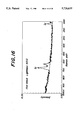
- FIG. 16 is a Raman spectrum of a further black sample
- FIG. 17 is a Raman spectrum of a white sample
- FIG. 18 is an electron microphotograph showing a ceramic tissue of an aluminum nitride sintered sample having a low lightness within the scope of the second aspect of the present invention.
- FIG. 19 is an electron microphotograph showing a ceramic tissue near an aluminum nitride grain of a ceramic tissue of an aluminum nitride sintered sample having a low lightness within the scope of the second aspect of the present invention
- FIG. 20 is a spectrum chart of a X-ray diffraction analysis of an aluminum nitride sintered body of one embodiment of the third aspect of the present invention.
- FIG. 21 is a spectrum chart of a X-ray diffraction analysis of an aluminum nitride sintered body as a comparative example
- FIG. 22 is an electron microphotograph showing a ceramic tissue of an aluminum nitride sintered body according to another embodiment of the third aspect of the present invention.
- FIG. 23 is an electron microphotograph showing a ceramic tissue near a grain boundary of a grain of an AlN crystalline phase of the aluminum nitride sintered body according to another embodiment of the third aspect of the present invention.
- FIG. 24 is an electron microphotograph showing a ceramic tissue near a grain boundary of a grain of an AlN crystalline phase of the aluminum nitride sintered body as the comparative example;
- FIG. 25 is an electron microphotograph showing a ceramic tissue in the state a grain of a (AlN) x (AL 2 OC) 1-x phase is produced in a matrix composed of particles of an AlN crystalline phase;
- FIG. 26 being an electron microphotograph showing the ceramic tissue of FIG. 25 in which the matrix and the grain of the (AlN) x (AL 2 OC) 1-x phase are enlarged.
- the "lightness” means the following.
- the color of the surface of an object is expressed by three attributes in perception of a color, i.e., the hue, the lightness, and the chroma.
- the lightness is a scale for indicating an attribute in visual sight so as to judge whether a reflecting percentage at the surface of the object is large or small.
- the ways of indicating the scales of these three attributes are specified in JIS Z 8721.
- the lightness V is determined based on the achromatic color, a standard that the lightness of ideal black is 0, and that of ideal white is 10.
- a color area between the ideal black and the ideal white is divided into 10 zones indicated by symbols of N 0 to N 10 which vary stepwise by an equal degree of the lightness in color perception.
- the lightness of an actual aluminum nitride sintered body is determined by comparing the color of the surface of the sintered body with color chips corresponding to N 0 to N 10, respectively. At that time, the lightness is principally determined up to the first decimal place, and 0 or 5 is taken as a figure at the first decimal place.
- various semiconductor-producing apparatuses such as a susceptor for placing a semiconductor wafer thereon, a dummy wafer, a shadow ring, a tube for generating a high frequency plasma, a doom for generating a high frequency plasma, a high frequency wave-permeable window, an infrared radiation-permeable window, a lift pin for supporting a semiconductor wafer, and a shower plate may be recited.
- the thermal conductivity of the aluminum nitride sintered body is preferably not less than 90 W/m ⁇ K when in use for the substrate in the heating member such as the ceramic heater, the heater with the electrostatic chuck, or the semiconductor wafer-holding susceptor.
- the present inventors have succeeded in producing blackish gray to blackish brown aluminum nitride sintered bodies having an extremely low lightness which contained almost no metallic element such as a blacking agent other than aluminum and exhibited the lightness specified in JIS Z 8721 being not more than 4.
- those aluminum nitride sintered bodies exhibit black colors having the lightness specified in JIS Z 8721 being not more than 4, its radiation heat amount is large and its heating characteristic is excellent. Therefore, the above aluminum nitride sintered bodies are suitable as substrates constituting the heating members such as the ceramic heater, the susceptor, etc.
- the content of the metal elements excluding aluminum can be largely reduced, contamination of the semiconductors needs not be feared. In particularly, it is not feared that an adverse effect is afforded upon the semiconductor wafer or the semiconductor-producing apparatus in the semiconductor-producing process.
- no uneven color clearly appears at the surface of the aluminum nitride sintered body according to the present invention, so that the appearance of the aluminum nitride sintered body is extremely excellent.
- the degree of black of the sintered body is high, its commercial value is largely enhanced.
- the present inventors have investigated the reason why the sintered bodies were colored deeply black with low lightness. As a result, the inventors have discovered that the aluminum nitride sintered bodies satisfying the specific requirement mentioned later have decreased lightness and progressed black. The inventors accomplished the present invention based on the above knowledge.
- AlON grains having the grain diameters of around 0.1 ⁇ m were typically produced in AlN crystal grains having the grain diameters of 1 to 3 ⁇ m.
- the spin amount of the unpaired electron of aluminum varies depending upon a crystalline field in which the unpaired electron exists.
- the Al atom and the N atom in the AlN crystalline phase take a 4-coordinated wurtzite structure in which a sp 3 hybrid orbit is formed by an aluminum atom and three nitrogen atoms. It can be known from the spin amount of each sample that which crystalline coordination the unpaired electron in the lattice defect exists in or what element exists around the unpaired electron.
- FIG. 1 is an ESR spectrum of the above-mentioned blackish brown aluminum nitride sintered body
- FIG. 2 is an ESR spectrum of the gray portion
- FIG. 3 is an ESR spectrum of the yellowish white portion.
- the g-value of the spin amount of the blackish brown aluminum nitride sintered body was 2.0053 ⁇ 0.0001, its peak intensity was high and the peak was sharp.
- the spin amount per unit mg of its aluminum was 7.9 ⁇ 10 11 spin/mg.
- the g-value of the spin amount was 2.0018 ⁇ 0.0001, and its peak intensity was low.
- the spin amount per unit mg of its aluminum was 2.1 ⁇ 10 12 spin/mg.
- the g-value of the spin amount was 1.9978 ⁇ 0.0001, its peak intensity was high, and the peak profile was broad.
- the spin amount per unit mg of its aluminum was 1.5 ⁇ 10 13 spin/mg.
- the spin amount (g-value) of the unpaired electron largely varies. This large change of the g-value should be attributable to the change in the kind of the atom bonded to the aluminum.
- Si atom it is reported that the spin amount similarly changes (See “ESR evaluation of materials" published by IPC, p 57). It is considered that the conspicuous change in the g-value measured above was attributable to the change in the kind of the atoms four-coordinated to the aluminum atom, that is, aluminum atoms are bonded to the aluminum atom.
- the g-value changes. Since carbon atoms and oxygen atoms exist in the Al crystalline phase, it can be considered that the above nitrogen atom or atoms are replaced by carbon atom or atoms or oxygen atom or atoms. When the carbon atom or atoms or the oxygen atom or atoms enter the location or locations of the nitrogen atom or atoms, the g-value becomes smaller. Therefore, the percentage at which the nitrogen atom or atoms are replaced by carbon or oxygen atom or atoms must be extremely low.
- the g-value is less than 2.0000, the peak is broad, and the half-value width is large.
- oxygen solid-solved into the AlN crystal that is, the N +3 site in the AlN crystal is substituted by O 2- and Al 3+ is missing, that a color center is formed by an unpaired electron trapped in this lattice defect and a yellowish white color is exhibited by remarkably absorbing a light on a short wavelength side of the visible light, and that the N 3+ is replaced by two oxygen ion sand a color center is formed by O 2- .
- the g-value of the peak in the blackish brown sintered body is large, and the peak is sharp. In the blackish gray sintered body, almost the same result as this is obtained. A slight difference in hue in a level not more than a lightness N 4 is not essential.
- the Al--Al bond is formed in the aluminum nitride sintered body having low lightness, it is considered that this bond has such a metallic bond as to absorb a visible light having continuous wavelengths over a wide zone, so that the lightness of the aluminum nitride sintered body is lowered.
- the electric resistances of the blackish brown sample and the blackish gray sample are greater than that of the yellowish white portion by about an order of two figures.
- the yellowish white sample has the greatest absorption intensity and a wide half-value width. This is considered in that the largest number of conductive electrons are trapped or captured by the above lattice defect as the color center, and the thus trapped conductive electrons contribute to reduction in the electric resistance.
- FIG. 5 shows the microstructure of the blackish brown aluminum nitride mentioned above. As shown in FIG. 5, fine AlON crystals are present in the AlN crystal grains, and the grain boundary at which the crystals contact has no crystalline grain and is dense with no gap.
- FIG. 6 is an electron microphotoraph of the blackish brown aluminum nitride sintered sample in which a grain boundary portion of a crystal composed of AlN is enlarged. No different phase is seen in the grain boundary of the AlN crystal.
- the black, dense aluminum nitride sintered body according to the present invention was obtained by decreasing the spin amount per unit mg of aluminum to not more than 5 ⁇ 10 12 spin/mg in a spectrum of the electron spin resonance of the sintered body. From this point of view, it is preferable to decrease the spin amount per unit mg of aluminum to not more than 1 ⁇ 10 12 spin/mg, which substantially corresponded to a g-value of 2.0040. Practically speaking, it is preferable to decrease the spin amount per unit mg of aluminum to not less than 1.0 ⁇ 10 11 spin/mg, and further it is more preferable to decrease the spin amount per unit mg of aluminum to not less than 1.0 ⁇ 10 10 spin/mg.
- the spin amount per unit mg of aluminum was measured by a process described in Hiroaki Ohya and Jun Yamauchi "Electron Spin Resonance” published by Kodansha Co., Ltd. That is, the absorption intensity in the ESR spectrum is proportional to the percentage of unpaired electrons in the crystalline grain of the aluminum nitride.
- the g-value needs to be quantitatively measured with reference to that of a known g-value of a standard sample. That is, it is necessary that the sample having the known g-value and the aluminum nitride sintered sample according to the present invention are measured under the same condition, absorption curves obtained are converted to integral curves, and areas defined by the integral curves are compared with each other.
- the present inventors quantitatively measured a single super fine line of Mn 2+ /MgO by using a solution of TEMPOL (4-hydroxy-2,2,6,6-tetramethylpyperidine-1-oxyl) having a known spin amount, compared the spin amounts, and calculated a spin amount of the aluminum nitride sintered body from an area ratio at peaks.
- TEMPOL 4-hydroxy-2,2,6,6-tetramethylpyperidine-1-oxyl
- a preferred process for the production of the above aluminum nitride sintered body according to the present invention having small lightness will be explained.
- a powder obtained by a reducing/nitriding process as a raw material composed of powdery aluminum nitride.
- Addition of a metal element other than aluminum to the raw material composed of powdery aluminum nitride should be avoided, and such a metal element should be preferably suppressed to not more than 100 ppm.
- the "metal element other than aluminum” includes metallic elements belonging to Groups Ia-VIIa, VIII, Ib and IIb and a part of elements belonging to Groups IIIb and IVb in the Periodic Table (Si, Ga, Ge, etc.).
- aluminum nitride powder having a high purity is prepared by the reducing/nitriding process, and molded into a molded body by a uniaxial press molding process or a cold isostatic press process, and the resulting molding is fired in the state that the molding is Wrapped by or sealed in a covering film made of carbon to prevent it from contacting surrounding air.
- Hot press or hot isostatic press may be employed for this firing process itself.
- the molding may be wrapped with the molding in the covering film made of carbon as shown in FIG. 8. That is, when the molding 6 is to be placed between an upper punch 1A and a lower punch 1B, foils 5A and 5B made of graphite are arranged at upper and lower faces of the molding 6, respectively. Then, the molding 6 with a pair of the foils 5A and 5B is placed between spacers 4A and 4B. Graphite foils 7 are placed to cover opposite side faces of the molding 6 so that the molding 6 may be sealed with the graphite foils 5A, 5B and 7. The molding 6 and the foils 7 are placed in a die 9 made of carbon via sleeves 8 made of carbon. By driving a press molding machine, the molding is pressed in vertical directions in FIG. 8 by means of the upper punch 1A and the lower punch 1B under heating.
- an aluminum nitride sintered body having the above-mentioned aluminum-aluminum bonds and a continuous light adsorbing characteristic over the visible light zone can be produced.
- the firing temperature may be set at 1750° C. to 1900° C.
- the pressure at the time of firing is set at not less than 100 kg/cm 2 , preferably at not less than 150 kg/cm 2 , more preferably at not less than 200 kg/cm 2 . Judging from the capacity of an actual apparatus, the pressure is preferably not more than 0.5 ton/cm 2 .
- the aluminum nitride crystal is produced by reducing and nitriding a ⁇ -Al 2 O 3 phase with carbon. It is considered that the carbon used as a reducing catalyst remains on the surface of the aluminum nitride crystal, and oxygen not removed by reducing or nitriding remains inside the aluminum nitride sintered body.
- Aluminum nitride is thermodynamically unstable in air, and the content of oxygen particularly in a fine sintering powder having a surface activity increases because it easily reacts with moisture and oxygen in air even at room temperature. Therefore, the aluminum nitride crystal having activity for moisture and oxygen stabilized by covering the oxidizable surface layer with an oxide or a hydroxide. This oxidizing treatment is utilized to remove carbon atoms remaining at the surfaces of the reduced grains to enhance the purity.
- the atmosphere inside the covering film is important.
- An alumina film is present at the surface of the aluminum nitride grain.
- the atmosphere inside the covering film made of a graphite foil is a reducing atmosphere (nitrogen gas atmosphere) and sintering is effected at a temperature of 1850° C. to 1950° C. under pressure of 250 kg/cm 2 .
- the partial pressure of oxygen is an order of ppm.
- CO gas is produced during the firing near the surface of the aluminum nitride grain through a reaction between Al 2 O 3 and C (carbon) remaining at said surface.
- the gas phase in this reaction includes Al, AlO, Al 2 O, Al 2 O 3 , AlC, AlC 2 , Al 2 C 2 , AlN, NO, and CO.
- a graph shown in FIG. 9 is obtained by calculating an equilibrium partial pressure of each gas phase in the state that the partial pressure of CO in the sintered body is kept constant. As seen from this graph, the partial pressure becomes lower in the order of AlN, Al, and Al 2 O. Carbon advances the reducing reaction of Al 2 O 3 to produce AlN. Further, as seen from the partial pressures of Al and Al 2 O, it is presumed that the Al--Al bonds and the AlON(AlN+Al 2 O) phase containing oxygen are produced in the crystalline lattice. It was made clear through observation of the TEM that the Al 2 OC layer existed at the crystalline grain boundary. Therefore, it is considered that the Al 2 OC layer is a product (C+Al 2 O) produced by bonding between carbon remaining on the surface of the aluminum nitride grain and Al 2 O in the gas phase.
- the partial pressure of Al is greater than that of Al 2 O, whereas at more than 1950° C., the partial pressure of Al becomes reversely smaller than that of Al 2 O. That is, it is considered that the higher the firing temperature, the more is advanced the formation of the Al 2 O phase, whereas at not more than 1950° C., the Al--Al bonds are produced.
- the defect structure inside the crystal is important.
- this defect structure is mainly influenced by the content of oxygen in the raw material powder, the sintering atmosphere, and the kinds of the gas phase produced in the sintering step.
- oxygen and carbon atoms remaining on the surface of the aluminum nitride grain has a large influence and carbon fed into the atmosphere from the graphite foil play a large role.
- the oxide is reduced with carbon to produce the AlN phase, the Al phase and ALO 2 phase so that the AlON phase and the Al--Al bonds may be formed.
- the pressure of not less than 150 kg/cm 2 it is preferable to employ the pressure of not less than 200 kg/cm 2 in the above-mentioned producing process.
- the aluminum nitride sintered body according to the present invention has a large heat radiation amount and excellent heating characteristic. Further, since the sintered body has almost no conspicuous variation in color at the surface and is blackish brown or blackish gray, its commercial value is high. Accordingly, the aluminum nitride sintered body can be used suitably particularly for various heating-apparatuses. Furthermore, since the aluminum nitride sintered body according to the present invention does not use a sintering aid or a blacking agent as a feed source of a metal element besides aluminum and the content of the metal atoms beside aluminum can be suppressed to not more than 100 ppm, it causes no contamination. Therefore, the sintered body is most suitable as a material for high purity processing. In particular, the sintered body will not afford any serious adverse effect upon the semiconductor wafer or its apparatus itself in the semiconductor-producing process.
- Aluminum nitride sintered bodies were actually produced as follows. As a raw material of aluminum nitride, high purity powder produced by the reducing/nitriding process or the directly nitriding process was used. In each powder, the content of each of Si, Fe, Ca, Mg, K, Na, Cr, Mn, Ni, Cu, Zn, W, B and Y was not more than 100 ppm, and no other metal was detected besides those metals and aluminum.
- a preliminarily molded body having a discoidal shape was produced by uniaxially press molding each raw material powder. As shown in FIG. 8, the molding 6 was placed in a mold in the state that the molding 6 was sealed inside the carbon foils. Then, the molding was fired at 1900° C. by hot press for 2 hours, while pressure of 200 kg/cm 2 was applied thereto. Thereby, an aluminum nitride sintered sample in Test Run No. A-1 was produced.
- FIGS. 1, 2 and 3 are the ESR spectra of Sample A1 and the gray portion and the yellowish while portion of Sample A2, respectively.
- the spin amount, g-value, of Sample A1 was 2.0053 ⁇ 0.0001, its peak intensity was high, and the peak was sharp.
- the spin amount per unit mg of aluminum was 7.9 ⁇ 10 11 spin/mg.
- the spin amount, g-value, of the gray portion was 2.0018 ⁇ 0.0001, and its peak intensity was small.
- the spin amount per unit mg of aluminum was 2.1 ⁇ 10 12 spin/mg.
- the spin amount, g-value, of the yellowish white portion was 1.9978 ⁇ 0.0001, its peak intensity was small, and the profile of the peak was broad.
- the spin amount per unit mg of aluminum was 1.5 ⁇ 10 13 spin/mg.
- FIG. 5 shows an electron microphotograph of a ceramic tissue of Sample A1
- FIG. 6 shows an electron microphotograph of a ceramic tissue near the grain boundary of the aluminum nitride grain.
- FIG. 7 shows an electron microphotograph of a ceramic tissue of the gray portion.
- an X-ray diffraction analysis result and an analysis result of an absorption spectrum of the visible light in a matrix portion were the same as those of Sample A1.
- the (AlN) x (Al 2 OC) 1-x phase seen black exists in this matrix, a slight gap exists between the crystalline grain and the AlN crystalline phase, and the light is diffracted in this gap to make it white.
- the tissue of the matrix of this sintered body is fundamentally the aluminum nitride sintered body according to the present invention which became relatively more black.
- the lightness of the sintered body rises up to N 5 due to the above diffracted lights.
- the firing temperature and pressure in the firing step were varied as shown in Tables 1 and 2.
- the holding time period in the firing step was set at 2 hours.
- a main crystalline phase and other crystalline phase of the sintered body were measured by the X-ray diffraction analysis.
- the relative density, the hue, and the lightness of the sintered body was measured.
- the relative density of the sintered body was calculated from the bulk density/theoretical density, the bulk density being measured by the Archimedean method.
- the theoretical density of the sintered body is 3.26 g/cc because no sintering aid having a large density was contained.
- the hue of the sintered body was visually measured, and the lightness of the sintered body was measured by the afore-mentioned method.
- the g-value in the ESR spectrum has the conspicuous correlationship between the hue and the lightness of the sintered body.
- Test Run Nos. B1, B2, B4, B5, B6, B7 and B9 fall within the scope of the present invention, whereas Test Run Nos. B3 and B8 fall outside the scope of the invention.
- a plate having a diameter of 210 mm and a thickness of 10 mm was prepared from the aluminum nitride sintered body of Sample A1 according to the present invention, and was placed in a vacuum chamber equipped with a heating mechanism having an infrared lamp unit.
- a silicon wafer having a diameter of 8 inches was placed on this plate, and thermocouples were fitted to the plate and the silicon wafer to simultaneously measure each of the temperatures thereof.
- the infrared lamp unit twenty of 500 W infrared lamps having an infrared peak around a wavelength of 1 ⁇ m and fitted to an reflecting plate made of aluminum were used, and these infrared lamps and the reflecting plate were arranged outside the vacuum chamber.
- the infrared beam radiated from each infrared lamp was, directly or indirectly after being reflected from the reflecting plate, led to the aluminum nitride sintered plate through a circular quartz window (diameter: 250 mm, thickness: 5 mm) provided at the vacuum chamber to heat the plate.
- each infrared lamp was light to elevate the temperature of the plate from room temperature to 700° C. in one minute, and the plate was kept at 700° C. for one hour. Thereafter, the infrared lamps were put out, and the plate was gradually cooled. Consequently, the consumption power of the infrared lamps was 8700 W at the maximum, and the temperature could be stably controlled. Further, measurement of the temperature of the silicon wafer revealed that when the temperature of the plate was kept at 700° C., the temperature of the silicon wafer was 609° C.
- the consumption power was 10 kw at the maximum, and the time period required to realizing the temperature elevation was longer by around 2 minutes. Further, the infrared lamps were more likely wire-cut upon reception of a heat cycle of temperature rising-temperature descending between room temperature and 700° C.
- the above-mentioned aluminum nitride powder was used, and a coil (resistive heat generating wire) made of a 0.5 mm-diameter molybdenum wire was buried in the powder, while a circular electrode, 5 mm in diameter and 10 mm in thickness, made of molybdenum was connected to the coil and also buried.
- the resulting powder body in which the coil and the electrode were buried was uniaxially press molded to obtain a discoidal molding. At that time, the coil buried in the molding took a swirling planar shape.
- the discoidal molding was set inside the mold in the above-mentioned manner, and held at 1800° C. under pressure of 200 kg/cm 2 for 2 hours according to the hot press. Thereby, an aluminum nitride sintered body was obtained, in which the above resistive heat generator and the molybdenum electrode were buried.
- This molybdenum electrode can be used as an electrostatic chucking electrode or a high frequency electrode.
- the present inventors have succeeded in producing a blackish gray to blackish brown aluminum nitride sintered body containing almost no metallic element such as a sintering aid or a blacking agent other than aluminum and having a extremely low lightness with a black of not more than lightness N4 specified in JIS Z 8721.
- this aluminum nitride sintered body exhibits the black having not more than the lightness N 4 specified in JIS Z 8721, the sintered body has a large radiation heat amount and an excellent heating characteristic. Therefore, such a sintered body is suitable as a substrate constituting a heating material for a ceramic heater, susceptor, etc.
- the content of the metal element(s) other than aluminum can be made extremely small, it is not feared that a semiconductor wafer is contaminated with such a metallic element. In particular, it is not feared that the sintered body will afford an adverse effect upon the semiconductor wafer or an apparatus therefor.
- the present inventors investigated the reason why the aluminum nitride sintered body produced as mentioned later had a high black degree and low lightness. As a result, the present inventors discovered that if the aluminum nitride sintered body satisfies a specific requirement, its black degree of the sintered body is progressed. The present invention was accomplished based on the above knowledge.
- FIG. 10(a) is a graph showing a diffraction/reflection spectrum of a visible and infrared light of an aluminum nitride sintered sample having a low lightness
- FIG. 10(b) a graph showing a diffraction/reflection spectrum of the visible and infrared light of a yellowish white portion of this sample produced by heating at 1900° C. Since the light transmittance of the sample is low, an adsorbing characteristic of the visible and infrared light of the sample was evaluated by the diffraction/reflecting method. In the diffraction/reflection method, it is judged that an absorbing band exists near a wavelength at which the reflecting intensity lowers.
- FIG. 11(a) is a graph showing the photoluminescence of a sample having a low lightness.
- FIG. 11(b) is a graph showing a visible light range of the spectrum of FIG. 11(a) in an enlarged scale.
- FIG. 12 is a spectrum of a photoluminescence of a yellowish white portion of this sample obtained by thermal treatment.
- the yellowish white portion there was a light emission at 990 nm in an infrared range, and broad peaks each having a large width of the light emission at 698 nm, 530 nm and 486 nm in the visible light range, respectively.
- a large peak was detected at 990 nm as in the case with the yellowish white portion.
- the visible light range no collective large light emission was observed in the visible light range, and light emissions were observed over the entire visible light range. The reason why the intensity of the light emissions is weak is that since the sample itself has a low lightness, some of them is absorbed inside the sample.
- the sample is characterized in that the light emissions are detected over a wide visible light range.
- FIGS. 13 to 17 shows Raman spectra obtained by measuring samples of various kinds of aluminum nitride sintered bodies.
- the lattice vibration mode of the AlN crystal can be specifically evaluated by these Raman spectrum. Based on this evaluation, information on defects inside the AlN crystal, the concentration of oxygen solid-solved, and the band structure in band gaps can be obtained.
- the Al atoms and the N atoms in the AlN crystalline phase take an 4-coordinate wurtzite structure in which the aluminum atom and the three N atoms form a sp 3 hybrid orbit.
- c-axis symmetrical A 1 species, a-axis symmetrical E 1 species and E 2 species exist. Their six optically active vibrations appear in the Raman spectrum. These peaks are identified as shown in Table 3. In Table 3 are shown the symmetrical spices and Raman shift values (cm -1 ) of the peaks in the Raman spectrum.
- Peak in a range of 133 to 100 cm -1 is a peak showing that a number of electron levels are present in the band gap of AlN. It is seen that in yellowish white samples (FIGS. 13 and 17), peaks in this range, particularly a peak at 133 cm -1 is small, whereas in a black sample, a peak at 133 cm -1 appears more greatly and more intensively than a peak at a standard vibration.
- the peaks appearing in the Raman spectrum in 80 to 150 cm -1 corresponds to a specific electron level existing in the band gap of AlN.
- a value I(133)/I(680)! normalized by dividing the intensity of this peak by that of a peak in a range of 650 to 680 cm -1 caused at the standard frequency of the AlN crystal is a physical characteristic value significant in expressing this band structure.
- the Raman shift value of this peak may slightly deviate from 133 cm -1 depending upon experimental condition, etc., such a deviation is acceptable if it is within a significant range.
- the lightness of the aluminum nitride sintered body can be made not more than N 5.0. Further, it was clarified that aluminum nitride sintered bodies having the lightness N 4.0 or less can be provided by setting this value at not less than 0.4, whereas aluminum nitride sintered bodies having the lightness N 3.0 or less can be provided by setting this value at not less than 1.0.
- FIG. 18 The microstructure of the above-mentioned black aluminum nitride is shown in FIG. 18. As shown in FIG. 18, very small AlON crystals exist in the AlN crystal grain, a grain boundary portion at which the crystals contact is dense and has no gap, free from a crystalline grain boundary.
- FIG. 19 is an electron microphotograph of the black aluminum nitride sintered sample in which the grain boundary portion of the AlN crystals. No foreign phase is seen at the AlN crystalline phase.
- the aluminum nitride sintered body having the above-mentioned Raman spectrum characteristic and the small lightness could be produced by the following process.
- a powder obtained by reducing/nitriding method is preferably used for powdery aluminum nitride as a raw material. Addition of any metal element other than aluminum to the raw material of the aluminum nitride powder should be avoided, and such a metal element should be not more than 100 ppm.
- the "metal element other than aluminum” means metal elements belonging to Groups Ia-VIIa, VIII, Ib, and IIb and part of Groups IIIb and IVb (Si, Ga, Ge, etc.) in the Periodic Table.
- the high purity aluminum nitride powder having a small content of the above metal(s) is prepared by the reducing/nitriding process, and is molded by a uniaxial press molding or cold isostatic press to produce a molding.
- the molding is fired in a reducing atmosphere without being contacted with surrounding air.
- hot press or hot isostatic press may be adopted.
- the firing pressure is set at not less than 300 kg/cm 2 . Judging from an actual producing apparatus, this pressure is preferably set at not more than 0.5 ton/cm 2 . At that time, the holding temperature in the firing is preferably set at 1750° C. to 1850° C.
- the aluminum nitride crystal is produced by reducing and nitriding a --Al 2 O 3 phase with carbon. It is considered that the carbon used as a reducing catalyst remains on the surface of the aluminum nitride crystal, and oxygen not removed by reducing or nitriding remains inside the aluminum nitride sintered body.
- Aluminum nitride is thermodynamically unstable in air, and the content of oxygen particularly in a fine sintering powder having a surface activity increases because it easily reacts with moisture and oxygen in air even at room temperature. Therefore, the aluminum nitride crystal having activity for moisture and oxygen is stabilized by covering the oxidizable surface layer with an oxide or a hydroxide. This oxidizing treatment is utilized to remove carbon atoms remaining at the surfaces of the reduced grains to enhance the purity.
- the powder obtained by the reducing/nitriding process is molded, and the molding is heated in the reducing atmosphere under application of a high pressure mentioned above. During the heating, CO gas is generated near the surface of the aluminum nitride grains through a reaction between Al 2 O 3 and C (carbon).
- the aluminum nitride sintered body according to the present invention has a large heat radiation amount and excellent heating characteristic. Further, since the sintered body has almost no conspicuous variation in color at the surface and is blackish brown or blackish gray, its commercial value is high. Accordingly, the aluminum nitride sintered body can be used suitably particularly for various heating apparatuses. Furthermore, since the aluminum nitride sintered body according to the present invention does not use a sintering aid or a blacking agent as a feed source of a metal element besides aluminum and the content of the metal atoms beside aluminum can be suppressed to not more than 100 ppm, it causes no contamination. Therefore, the sintered body is most suitable as a material for high purity processing. In particular, the sintered body will not afford any serious adverse effect upon the semiconductor wafer or its apparatus itself in the semiconductor-producing process.
- Aluminum nitride sintered bodies were actually produced as follows. As a raw material of aluminum nitride, high purity powder produced by the reducing/nitriding process was used. In each powder, the content of each of Si, Fe, Ca, Mg, K, Na, Cr, Mn, Ni, Cu, Zn, W, B and Y was not more than 100 ppm, and no other metal was detected besides those metals and aluminum.
- a molding having a discoidal shape was produced by uniaxially press molding each raw material powder.
- a sintered body was produce by setting the molding in a mold, and holding it at a given firing temperature in nitrogen atmosphere under a given pressure for a given time period. These values are shown in Table 4.
- the main crystalline phase and other crystalline phase of each sample were measured by the X-ray diffraction analysis. Further, I(133)/I(680), the relative density, the hue and the lightness of the sintered body were measured.
- the relative density of the sintered body was calculated from bulk density/theoretical density, and the bulk density was measured by the Archimedean method. Since no sintering aid having a large density was not contained, the theoretical density of the sintered body is 3.26 g/cc. The hue of the sintered body was visually determined, and the lightness of the sintered body was measured according to the above-mentioned process. These results are also shown in Table 4. Test Runs A1 and A5 fall outside the scope of the present invention, and Test Runs A2, A3, A4 and A4 fall in the scope of the present invention.
- Raman spectra were measured under the condition that the wavelength of a laser was 514.5 nm, three monochrometers were used, an incident slit was 1200 ⁇ m in width, and sensitivity was 0.05 (nA/FS) ⁇ 100.
- a visible and infrared reflection spectrum and a visible and infrared reflection spectrum of Sample No. B were similar to those in FIGS. 10(a) and 10(b), respectively. Explanation of these figures has been made before, and is omitted here.
- FIG. 11(a) is a spectrum in a photoluminescence of Test Run A2.
- FIG. 11(b) is a graph showing an enlarged spectrum of FIG. 11(a) in a visible light range.
- FIG. 12 shows a spectrum in the photoluminescence of Test Run B. Explanation of these figures has been made before, and is omitted here.
- a plate having a diameter of 210 mm and a thickness of 10 mm was prepared from the aluminum nitride sintered body of Sample A2 according to the present invention, and was placed in a vacuum chamber equipped with a heating mechanism having an infrared lamp unit.
- a silicon wafer having a diameter of 8 inches was placed on this plate, and thermocouples were fitted to the plate and the silicon wafer to simultaneously measure each of the temperatures thereof.
- the infrared lamp unit twenty of 500 W infrared lamps having an infrared peak around a wavelength of 1 ⁇ m and fitted to an reflecting plate made of aluminum were used, and these infrared lamps and the reflecting plate were arranged outside the vacuum chamber.
- the infrared beam radiated from each infrared lamp was., directly or indirectly after being reflected from the reflecting plate, led to the aluminum nitride sintered plate through a circular quartz window (diameter: 250 mm, thickness: 5 mm) provided at the vacuum chamber to heat the plate.
- each infrared lamp was lit to elevate the temperature of the plate from room temperature to 700° C. in one minute, and the plate was kept at 700° C. for one hour. Thereafter, the infrared lamps were put out, and the plate was gradually cooled. Consequently, the consumption power of the infrared lamps was 8550 W at the maximum, and the temperature could be stably controlled. Further, measurement of the temperature of the silicon wafer revealed that when the temperature of the plate was kept at 700° C., the temperature of the wafer was 615° C.
- the consumption power was 10 kw at the maximum, and the time period required to realizing the temperature elevation was longer by around 2 minutes.
- the infrared lamps were more likely to be wire-cut upon reception of a heat cycle of temperature rising-temperature descending between room temperature and 700° C.
- measurement of the temperature of the silicon wafer revealed that when the plate was held at 700° C., the temperature of the silicon wafer was 593° C. Thus, it was clarified that as compared with the invention example, the temperature of the silicon wafer was lower.
- the above-mentioned aluminum nitride powder was used, and a coil (a resistive heat generating wire) made of a 0.5 mm-diameter molybdenum wire was buried in the powder, while a circular electrode, 5 mm in diameter and 10 mm in thickness, made of molybdenum was connected to the coil and also buried.
- the resulting powder body in which the coil and the electrode were buried was uniaxially press molded to obtain a discoidal molding. At that time, the coil brined in the molding took a swirling planar shape.
- An aluminum nitride sintered body was obtained by holding the the resulting discoidal molding at 1800° C. under pressure of 300 kg/cm 2 for 2 hours according to the hot press.
- the above resistive heat generator and the molybdenum electrode were buried.
- This molybdenum electrode can be used as an electrostatic chucking electrode or a high frequency electrode.
- the present inventors have succeeded in producing a blackish gray to blackish brown aluminum nitride sintered body containing almost no metallic element such as a sintering aid or a blacking agent other than aluminum and having a extremely low lightness with a black color of not more than lightness N 4 specified in JIS Z 8721.
- this aluminum nitride sintered body exhibits the black having not more than the lightness N 4 specified in JIS Z 8721 as a preferred embodiment, the sintered body has a large radiation heat amount and an excellent heating characteristic. Therefore, such a sintered body is suitable as a substrate constituting a heating material for a ceramic heater, susceptor, etc.
- the content of the metal element(s) other than aluminum can be made extremely small, it is not feared that a semiconductor wafer is contaminated with such a metallic element. In particular, it is not feared that the sintered body will afford an adverse effect upon the semiconductor wafer or an apparatus therefor.
- the present inventors prepared a raw material composed of powdery aluminum nitride containing 500 ppm to 5000 ppm of carbon, molding it, and sintering the molding at not less than a temperature 1730° C. under pressure of not less than 80 kg/cm 2 by the hot press. By so doing, the inventors succeeded in producing the above-mentioned blackish brown to blackish gray aluminum nitride substrate having a small lightness.
- the raw material composed of the powdery aluminum nitride containing 500 ppm to 5000 ppm of carbon may be produced by any one of the following methods.
- a raw material composed of the powdery aluminum nitride having the carbon content of 500 ppm to 5000 ppm is produced by mixing plural kinds of aluminum nitride powders having different carbon contents at a given ratio. In this case, three or more kinds of aluminum nitride powders may be mixed. However, as a preferred embodiment, a raw material composed of the powdery aluminum nitride having the carbon content of 500 ppm to 5000 ppm is produced by mixing a first aluminum nitride powder having a lower carbon content with a second aluminum nitride having a higher carbon content at a given ratio.
- the present inventors succeeded in stably producing the aluminum nitride sintered body having low lightness by sintering the aluminum nitride powder containing carbon at a given ratio in a given temperature range under high pressure. If the content of carbon is less than 500 ppm, the lightness of the sintered body increases, whereas if the content of carbon is more than 5000 ppm, the relative density of the aluminum nitride sintered body is decreased to less than 92%, and its hue is gray.
- the firing temperature is less than 1730° C., the densification of the sintered body is not sufficient so that the aluminum nitride sintered body may be white and its lightness may rise to not less than 7.
- the firing temperature of the above powder is more than 1920° C., a polytype phase is produced so that the lightness of the aluminum nitride sintered body may rise.
- the firing temperature was in a range of 1750° C. to 1900° C., the lightness of the aluminum nitride sintered bodies were particularly decreased.
- te firing pressure is less than 80 kg/cm 2 , it was clarified that an AlN--Al 2 CO crystalline phase is produced or a polytype phase is produced in addition to AlN--Al 2 CO crystalline phase so that the lightness of the aluminum nitride sintered body may increase.
- this pressure is preferably not less than 150 kg/cm 2 and more preferably not less than 200 kg/cm 2 . Judging from the ability of the actual production apparatus, this pressure is preferably not more than 0.5 ton/cm 2 .
- the aluminum nitride sintered body preferably exhibits a black color having a lightness N 3 specified in JIS Z 8721.
- metal element other than aluminum additive of a metal element other than aluminum to powdery aluminum nitride should be avoided, and such a metal element is preferably not more than 100 ppm.
- the "metal element other than aluminum” means metal elements belonging to Groups Ia-VIIa, VIII, Ib, and IIb and part of Groups IIIb and IVb (Si, Ga, Ge, etc.) in the Periodic Table.
- the present inventors confirmed that high purity aluminum nitride sintered bodies each having not more than a lightness N 4 can be produced even by the hot isostatic press under the same condition as given above so long as the above temperature and pressure requirements are met.
- the present inventors investigated the reason why the aluminum nitride sintered body produced as mentioned above had a high black degree and low lightness. As a result, the present inventors has discovered the following fact, and come to accomplished the present invention.
- the main crystalline phase was AlN, and AlON was produced as an auxiliary crystalline phase, but no other crystalline phase could not be found.
- the X-ray diffraction analysis was effected. For example, as shown in FIG. 20, it was clarified that peaks of carbon clearly appeared. This shows that a carbon phase was produced in addition of the main AlN crystalline phase and the AlON crystalline phase.
- the AlN crystalline phase remains, but none of the AlON phase and the carbon appear and were detected. This is considered in that oxygen in AlON phase and the carbon are solid solved into the AlN crystal grains.
- the N-sites are substituted by oxygen atoms so that a color center may be formed to absorb a light in a short wavelength range.
- FIG. 22 The microstructure of the above-mentioned aluminum nitride is shown in FIG. 22.
- very small AlON crystals exist in the AlN crystal grain, almost no grain boundary is seen between the crystalline phases, and a grain boundary portion at which the crystals contact is dense and has no gap.
- FIG. 23 is an electron microphotograph of an aluminum nitride sintered body falling in the scope of the present invention in which a grain boundary portion of a crystal composed of AlN is enlarged.
- FIG. 24 is an electron microphotograph of a yellowish white sample in which a grain boundary portion of a AlN crystal is enlarged. No different phase is seen between the AlN crystals.
- the reducing/nitriding process and a directly nitriding process are known.
- the aluminum nitride sintered body having the low lightness can be produced by employing the powdery raw material prepared by either one of these processes. Chemical reactions used in these processes are given below.
- the firing temperature exceeds and becomes higher than 1950° C.
- the production of the Al 2 O phase proceeds according to a formula: Al 2 O+C ⁇ Al 2 OC to decrease the carbon phase, and accordingly the relatively unstable band on the surface of the AlN grain formed according to the formulae (1), (2) and (3) decreases. Further, it is considered that if the holding time is too long, the carbon similarly decreases.
- the aluminum nitride sintered body according to the present invention ordinary possesses the main crystalline phase of AlN, an auxiliary crystalline phase of AlON and a carbon phase. It is preferable that the sintered body contains substantially no (AlN)x(Al 2 OC) 1-x phase, and has not more than the lightness N 4 specified in JIS Z 8721.
- the microstructure of the fundamental matrix, etc. did not differ between the above two cases. However, as shown in electron microphotographs of FIGS. 25 and 26, it was made clear that the (AlN) x (Al 2 OC) 1-x phase was slightly produced in the gray product. A very small gap was formed between the AlN crystalline phase and the (AlN) x (Al 2 OC) 1-x phase, so that light was scattered in this gap and the scattered light rose the lightness. Therefore, the lightness of the aluminum nitride sintered body can be further decreased to not more than N 4, and furthermore to not more than N 3.5 by preventing the production of the (AlN) x (Al 2 OC) 1-x phase.
- the following can be favorably used as a carbon source to be added to powdery aluminum nitride.
- a resin containing carbon For example, a flying powdery organic resin composed of such as a phenol resin.
- Powdery carbon such as carbon black, graphite or the like
- the aluminum nitride powder and the carbon source can be mixed by dry type mixing such as a dry type bag, a ball mill or a vibration mill, or by a wet type mixing using an organic solvent.
- the aluminum nitride sintered body according to the present invention has a large heat radiation amount and excellent heating characteristic. Further, since the sintered body has almost no conspicuous variation in color at the surface and is blackish brown or blackish gray, its commercial value is high. Accordingly, the aluminum nitride sintered body can be used suitably particularly for various heating apparatuses. Furthermore, since the aluminum nitride sintered body according to the present invention does not use a sintering aid or a blacking agent as a feed source of a metal element besides aluminum and the content of the metal atoms beside aluminum can be suppressed to not more than 100 ppm, it causes no contamination. Therefore, the sintered body is most suitable as a material for high purity processing. In particular, the sintered body will not afford any serious adverse effect upon the semiconductor wafer or its apparatus itself in the semiconductor-producing process.
- Each of aluminum nitride sintered bodies in Test Runs A1 to A12 in Tables 5 and 6 was actually produced as follows.
- As a raw material of aluminum nitride high purity powder produced by the reducing/nitriding process or the direct nitriding process was used.
- the content of each of Si, Fe, Ca, Mg, K, Na, Cr, Mn, Ni, Cu, Zn, W, B and Y was not more than 100 ppm, and no other metal was detected besides those metals and aluminum.
- the content of carbon is shown in Tables 5 and 6.
- a preliminarily molded body having a discoidal shape was produced by uniaxially press molding each raw material powder.
- the molding was fired in a sealed state by the hot press.
- the firing temperature, the holding time period at this firing temperature and the pressure in the firing stage were varied as shown in Tables 5 and 6.
- the main crystalline phase and other crystalline phase of each aluminum nitride sintered body were measured by the X-ray diffraction analysis. Further, the relative density of the sintered body was calculated by bulk density/theoretical density, and the bulk density was measured by the Archimedean method. Since no sintering aid having a large density was not contained, the theoretical density of the sintered body is 3.26 g/cc.
- the content of carbon in the sintered body was measured by an elemental analysis. The hue of the sintered body was visually determined, and the lightness of the sintered body was measured according to the above-mentioned process. These results are also shown in Tables 5 and 6.
- the content of carbon was 150 ppm, the firing temperature 1800° C., and the pressure 200 kg/cm 2 .
- a crystalline phase other than the AlN crystalline phase was AlON alone, and no carbon phase was detected by the X-ray diffraction analysis.
- the hue of the sintered body was gray.
- the content of carbon was 500 ppm, the firing temperature 1800° C., and the pressure 100 kg/cm 2 .
- the AlON crystalline phase and the carbon phase were detected.
- the hue of the sintered body was blackish gray, and the lightness was N 3.5.
- the content of carbon was 750 ppm, the firing temperature 1700° C., and the pressure 200 kg/cm 2 .
- the resulting sintered body no carbon phase was detected.
- the hue of the sintered body was white.
- Test Run A4 falling inside the scope of the present invention, the content of carbon was 750 ppm, the firing temperature 1750° C., and the pressure 150 kg/cm 2 .
- the AlON crystalline phase and the carbon phase were detected.
- the hue of the sintered body was blackish gray, and the lightness was N 4.
- Test Run A5 falling inside the scope of the present invention, the content of carbon was 750 ppm, the firing temperature 1850° C., and the pressure 50 kg/cm 2 .
- the (AlN) x (Al 2 OC) 1-x phase was detected in addition to the AlON crystalline phase and the carbon phase. Accordingly, the hue of the sintered body was gray, but as mentioned above, it was confirmed that the black coloring of the matrix conspicuously proceeded. Excellent results were obtained with respect to Test Runs A6 and A7 falling inside the scope of the present invention.
- Test Run A8 falling outside the scope of the present invention, the content of carbon was 750 ppm, the firing temperature 1950° C., and the pressure 150 kg/cm 2 .
- the resulting sintered body a polytype existed besides the AlN crystalline phase.
- the hue of the sintered body was milky white, and the lightness was N8.
- Test Runs A9, A10 and A11 falling inside the scope of the present invention excellent test results were obtained.
- Test Run 12 falling in the scope of the present invention the content of carbon was 10000 ppm, the firing temperature 1800° C., and the pressure 200 kg/cm 2 .
- the carbon phase was produced, and the black coloring of the matrix conspicuously proceeded.
- the porosity increased, the lightness of the entire sintered body accordingly increased to N5.
- FIG. 20 an X-ray diffraction chart of the sintered body of Test Run A6 is shown in FIG. 20. Respective peaks representing the AlN, AlNO and carbon phases are confirmed.
- FIG. 22 is an electron microphotograph showing a ceramic tissue of a sintered body of Test Run A6.
- FIG. 23 shows the ceramic tissue near the grain boundary.
- FIG. 25 shows a ceramic tissue of the sintered body in Test Run A5
- FIG. 26 shows an enlarged view thereof.
- the X-ray diffraction analysis result of the matrix portion and the analysis result of a visible light absorption spectrum were similar to those of Test Run A6.
- the (AlN) x (Al 2 OC) 1-x phase looking black exists in this matrix, so that a slight gap exists between this crystalline grain and the AlN crystal and the light is scattered in this gap to make the sintered body white.
- the matrix tissue of this sintered body is fundamentally the same as that of the aluminum nitride sintered body according to the present invention, and the black coloring proceeded when considered relatively.
- the lightness of the sintered body was raised to N 5 due to the above scattered light.
- the sintered body in Test Run A6 was experimentally thermally treated in nitrogen atmosphere.
- this sintered body was thermally treated at 1850° C. for 2 hours, only an outer peripheral portion of the sintered body was changed to a yellowish white color, but the hue and the lightness of a central portion did not change.
- the X-ray diffraction analysis of the yellowish white-colored portion revealed that its main crystalline phase was an AlN crystalline phase, and the peaks corresponding to the AlON phase and carbon, respectively disappeared and none of these peaks were detected. No change was observed with respect to the relative density and the lattice constant ratio.
- Aluminum nitride sintered bodies in Test Runs B1 to B15 in Tables 7, 8 and 9 were actually produced in the same manner as in Test Runs A1-A12.
- As a raw material of aluminum nitride high purity powders produced by the reducing/nitriding process or the direct nitriding process were used.
- the content of each of Si, Fe, Ca, Mg, K, Na, Cr, Mn, Ni, Cu, Zn, W, B and Y was not more than 100 ppm, and no other metal was detected besides those metals and aluminum.
- Test Run B1 powdery aluminum nitride (carbon content: 500 ppm) obtained by the reducing/nitriding process.
- an additive having a larger content of carbon was added to one having a smaller content of carbon.
- a resin was used in some Test Runs, and aluminum nitride powder having a larger content of carbon was used in the other Test Runs.
- phenol resin powder was used, and its addition amount is shown.
- alumina nitride powder the one obtained by the reducing/nitriding process was used, and its content of carbon and an addition amount thereof are shown. The entire content of carbon (ppm) of each mixed raw material powder is shown.
- a preliminarily molded body having a discoidal shape was produced by uniaxially press molding each raw material powder.
- the molding was fired in a sealed state by the hot press.
- the firing temperature, the holding time period at this firing temperature and the pressure in the firing stage were varied as shown in Tables 7, 8 and 9.
- the main crystalline phase and other crystalline phase of each aluminum nitride sintered body in Test Runs were measured by the X-ray diffraction analysis. Further, the relative density, the hue and the lightness of the sintered body were measured in the same manners as in Test Runs A1-A12. Results are shown in Tables 7, 8 and 9.
- Test Run B1 falling in the scope of the present invention, a blackish gray aluminum nitride sintered body was obtained.
- Test Run B2, B3, B4, B5 and B6 falling in the scope of the present invention, a blackish gray aluminum nitride sintered body was obtained.
- Test Run B7 falling outside the scope of the present invention, since the firing temperature was as low as 1650° C., densification of a sintered body did not proceeded, and no carbon phase was produced, so that the hue of the sintered body was white.
- Test Run B8 and B9 falling in the scope of the present invention, blackish gray sintered bodies were obtained.
- Test Run B11 falling outside the scope of the present invention, since the firing temperature was too high, a polytype was except the AlN crystalline phase, and the hue of the sintered body was milky white.
- Test Runs B1, B2, B13 and B14 falling in the scope of the present invention aluminum nitride sintered body having the blackish gray hue were obtained.
- Test Run 15 falling in the scope of the present invention, the entire content of carbon in the entire aluminum nitride raw material was 7600 ppm, the AlON crystalline phase and the carbon phase were produced besides the AlN crystalline phase. However, since the sintering degree of the sintered body progressed, the relative density was only 88.0% and the lightness was N 5.
- a plate having a diameter of 210 mm and a thickness of 10 mm was prepared from the aluminum nitride sintered body of Sample A6 according to the present invention, and was placed in a vacuum chamber equipped with a heating mechanism having an infrared lamp unit.
- a silicon wafer having a diameter of 8 inches was placed on this plate, and thermocouples were fitted to the plate and the silicon wafer to simultaneously measure each of the temperatures thereof.
- the infrared lamp unit twenty of 500 W infrared lamps having an infrared peak around a wavelength of 1 ⁇ m and fitted to an reflecting plate made of aluminum were used, and these infrared lamps and the reflecting plate were arranged outside the vacuum chamber.
- the infrared beam radiated from each infrared lamp was, directly or indirectly after being reflected from the reflecting plate, led to the aluminum nitride sintered plate through a circular quartz window (diameter: 250 mm, thickness: 5 mm) provided at the vacuum chamber to heat the plate.
- each infrared lamp was lit to elevate the temperature of the plate from room temperature to 700° C. in one minute, and the plate was kept at 700° C. for one hour. Thereafter, the infrared lamps were put out, and the plate was gradually cooled. Consequently, the consumption power of the infrared lamps was 8600 W at the maximum, and the temperature could be stably controlled. Further, measurement of the temperature of the silicon wafer revealed that when the temperature of the plate was kept at 700° C., the temperature of the wafer was 611° C.
- the consumption power was 10 kw at the maximum, and the time period required to realizing the temperature elevation was longer by around 2 minutes.
- the infrared lamps were more likely to be wire-cut upon reception of a heat cycle of temperature rising-temperature descending between room temperature and 700° C.
- measurement of the temperature of the silicon wafer revealed that when the plate was held at 700° C., the temperature of the silicon wafer was 593° C. Thus, it was clarified that as compared with the invention example, the temperature of the silicon wafer was lower.
Landscapes
- Engineering & Computer Science (AREA)
- Chemical & Material Sciences (AREA)
- Ceramic Engineering (AREA)
- Manufacturing & Machinery (AREA)
- Materials Engineering (AREA)
- Structural Engineering (AREA)
- Organic Chemistry (AREA)
- Ceramic Products (AREA)
Priority Applications (1)
| Application Number | Priority Date | Filing Date | Title |
|---|---|---|---|
| US08/922,023 US5908799A (en) | 1995-08-03 | 1997-09-02 | Apparatus for producing semiconductor using aluminum nitride bodies as substrates |
Applications Claiming Priority (8)
| Application Number | Priority Date | Filing Date | Title |
|---|---|---|---|
| JP7-218158 | 1995-08-03 | ||
| JP7218158A JP3037883B2 (ja) | 1995-08-03 | 1995-08-03 | 窒化アルミニウム焼結体、その製造方法および半導体製造用装置 |
| JP7-218256 | 1995-08-04 | ||
| JP21825695 | 1995-08-04 | ||
| JP7-218257 | 1995-08-04 | ||
| JP7218257A JP3040939B2 (ja) | 1995-08-04 | 1995-08-04 | 窒化アルミニウムおよび半導体製造用装置 |
| JP8-207556 | 1996-07-18 | ||
| JP20755696A JP3559123B2 (ja) | 1995-08-04 | 1996-07-19 | 窒化アルミニウムおよび半導体製造用装置 |
Related Child Applications (1)
| Application Number | Title | Priority Date | Filing Date |
|---|---|---|---|
| US08/922,023 Division US5908799A (en) | 1995-08-03 | 1997-09-02 | Apparatus for producing semiconductor using aluminum nitride bodies as substrates |
Publications (1)
| Publication Number | Publication Date |
|---|---|
| US5728635A true US5728635A (en) | 1998-03-17 |
Family
ID=27476360
Family Applications (2)
| Application Number | Title | Priority Date | Filing Date |
|---|---|---|---|
| US08/691,915 Expired - Lifetime US5728635A (en) | 1995-08-03 | 1996-08-01 | Aluminum nitride sintered bodies |
| US08/922,023 Expired - Lifetime US5908799A (en) | 1995-08-03 | 1997-09-02 | Apparatus for producing semiconductor using aluminum nitride bodies as substrates |
Family Applications After (1)
| Application Number | Title | Priority Date | Filing Date |
|---|---|---|---|
| US08/922,023 Expired - Lifetime US5908799A (en) | 1995-08-03 | 1997-09-02 | Apparatus for producing semiconductor using aluminum nitride bodies as substrates |
Country Status (4)
| Country | Link |
|---|---|
| US (2) | US5728635A (fr) |
| EP (2) | EP0757023B1 (fr) |
| KR (1) | KR0185528B1 (fr) |
| DE (2) | DE69610673T2 (fr) |
Cited By (23)
| Publication number | Priority date | Publication date | Assignee | Title |
|---|---|---|---|---|
| US6017485A (en) * | 1996-03-28 | 2000-01-25 | Carborundum Corporation | Process for making a low electrical resistivity, high purity aluminum nitride electrostatic chuck |
| US20030080110A1 (en) * | 2000-06-15 | 2003-05-01 | Yasuji Hiramatsu | Hot plate |
| US6603650B1 (en) | 1999-12-09 | 2003-08-05 | Saint-Gobain Ceramics And Plastics, Inc. | Electrostatic chuck susceptor and method for fabrication |
| US6723274B1 (en) | 1999-12-09 | 2004-04-20 | Saint-Gobain Ceramics & Plastics, Inc. | High-purity low-resistivity electrostatic chucks |
| US6744618B2 (en) | 1999-12-09 | 2004-06-01 | Saint-Gobain Ceramics & Plastics, Inc. | Electrostatic chucks with flat film electrode |
| US20040152582A1 (en) * | 1999-09-06 | 2004-08-05 | Ibiden Co., Ltd. | Carbon-containing aluminum nitride sintered compact and ceramic substrate for use in equipment for manufacturing or inspecting semiconductor |
| US20040222211A1 (en) * | 1999-12-28 | 2004-11-11 | Ibiden Co., Ltd. | Carbon-containing aluminum nitride sintered body, and ceramic substrate for a semiconductor producing/examining device |
| US20080182092A1 (en) * | 2007-01-17 | 2008-07-31 | Crystal Is, Inc. | Defect reduction in seeded aluminum nitride crystal growth |
| US20080187016A1 (en) * | 2007-01-26 | 2008-08-07 | Schowalter Leo J | Thick Pseudomorphic Nitride Epitaxial Layers |
| US20100135349A1 (en) * | 2001-12-24 | 2010-06-03 | Crystal Is, Inc. | Nitride semiconductor heterostructures and related methods |
| US20100187541A1 (en) * | 2005-12-02 | 2010-07-29 | Crystal Is, Inc. | Doped Aluminum Nitride Crystals and Methods of Making Them |
| US20100264460A1 (en) * | 2007-01-26 | 2010-10-21 | Grandusky James R | Thick pseudomorphic nitride epitaxial layers |
| US20100314551A1 (en) * | 2009-06-11 | 2010-12-16 | Bettles Timothy J | In-line Fluid Treatment by UV Radiation |
| US20110008621A1 (en) * | 2006-03-30 | 2011-01-13 | Schujman Sandra B | Aluminum nitride bulk crystals having high transparency to ultraviolet light and methods of forming them |
| US20130160492A1 (en) * | 2011-12-23 | 2013-06-27 | Guillermo R Villalobos | Polished, hot pressed, net shape ceramics |
| US8962359B2 (en) | 2011-07-19 | 2015-02-24 | Crystal Is, Inc. | Photon extraction from nitride ultraviolet light-emitting devices |
| US9028612B2 (en) | 2010-06-30 | 2015-05-12 | Crystal Is, Inc. | Growth of large aluminum nitride single crystals with thermal-gradient control |
| US9299880B2 (en) | 2013-03-15 | 2016-03-29 | Crystal Is, Inc. | Pseudomorphic electronic and optoelectronic devices having planar contacts |
| US9447521B2 (en) | 2001-12-24 | 2016-09-20 | Crystal Is, Inc. | Method and apparatus for producing large, single-crystals of aluminum nitride |
| US20170140958A1 (en) * | 2014-05-19 | 2017-05-18 | Tokyo Electron Limited | Heater power feeding mechanism |
| US9771666B2 (en) | 2007-01-17 | 2017-09-26 | Crystal Is, Inc. | Defect reduction in seeded aluminum nitride crystal growth |
| CN109467064A (zh) * | 2017-09-07 | 2019-03-15 | 河北高富氮化硅材料有限公司 | 一种致密形貌氮化铝粉体的制备方法 |
| CN116103766A (zh) * | 2022-12-27 | 2023-05-12 | 山东大学 | 一种降低AlN晶体生长粉料杂质含量的方法 |
Families Citing this family (9)
| Publication number | Priority date | Publication date | Assignee | Title |
|---|---|---|---|---|
| JP3670416B2 (ja) | 1995-11-01 | 2005-07-13 | 日本碍子株式会社 | 金属包含材および静電チャック |
| US6684649B1 (en) | 1999-11-05 | 2004-02-03 | David A. Thompson | Enthalpy pump |
| JP2001237053A (ja) * | 1999-12-14 | 2001-08-31 | Ibiden Co Ltd | 半導体製造・検査装置用セラミックヒータおよび支持ピン |
| EP1440957A3 (fr) * | 1999-12-28 | 2005-01-05 | Ibiden Co., Ltd. | Appareil de chauffage en céramique |
| US7011874B2 (en) * | 2000-02-08 | 2006-03-14 | Ibiden Co., Ltd. | Ceramic substrate for semiconductor production and inspection devices |
| JP2001244320A (ja) * | 2000-02-25 | 2001-09-07 | Ibiden Co Ltd | セラミック基板およびその製造方法 |
| JP4454191B2 (ja) * | 2001-07-30 | 2010-04-21 | 日本特殊陶業株式会社 | セラミックヒータの製造方法 |
| SE521796C2 (sv) * | 2002-04-05 | 2003-12-09 | Sandvik Ab | Förfarande för tillverkning av ett värmeelement av molybdensilicidtyp jämte ett värmeelement |
| KR102058865B1 (ko) * | 2018-04-12 | 2019-12-24 | (주)아이엠 | 초가속 열소재를 이용한 발열 디바이스 및 이의 제조방법 |
Citations (20)
| Publication number | Priority date | Publication date | Assignee | Title |
|---|---|---|---|---|
| US4540673A (en) * | 1981-04-30 | 1985-09-10 | Hitachi, Ltd. | Sintered aluminum nitride and semi-conductor device using the same |
| US4578364A (en) * | 1984-12-07 | 1986-03-25 | General Electric Company | High thermal conductivity ceramic body of aluminum nitride |
| EP0237072A2 (fr) * | 1986-03-13 | 1987-09-16 | Elektroschmelzwerk Kempten GmbH | Corps pratiquement sans pores en nitrure d'aluminium polycrystallin et son procédé de fabrication sans utilisation d'agents de frittage |
| EP0267623A2 (fr) * | 1986-11-13 | 1988-05-18 | Sumitomo Metal Ceramics Inc. | Corps frittés noirs en nitrure d'aluminium et leur procédé de fabrication |
| JPS63190133A (ja) * | 1987-01-31 | 1988-08-05 | Ibiden Co Ltd | 窒化アルミニウム焼結体およびその製造方法 |
| US4833108A (en) * | 1987-03-28 | 1989-05-23 | Narumi China Corporation | Sintered body of aluminum nitride |
| EP0321975A1 (fr) * | 1987-12-22 | 1989-06-28 | Elektroschmelzwerk Kempten GmbH | Corps frittés polycristallins à base de nitrure d'aluminium et leur procédé de fabrication |
| US4847221A (en) * | 1987-01-13 | 1989-07-11 | Kabushiki Kaisha Toshiba | AlN sintered body having high thermal conductivity and a method of fabricating the same |
| JPH03261131A (ja) * | 1990-03-12 | 1991-11-21 | Ngk Insulators Ltd | 半導体製造装置用ウエハー加熱装置 |
| US5077244A (en) * | 1986-08-13 | 1991-12-31 | Hitachi Metals, Ltd. | Aluminum nitride sintered body and semiconductor substrate thereof |
| EP0470501A2 (fr) * | 1990-08-07 | 1992-02-12 | Sumitomo Electric Industries, Ltd. | Corps fritté coloré en nitrure d'aluminium ayant une conductibilité thermique et procédé de fabrication |
| US5096863A (en) * | 1988-11-04 | 1992-03-17 | 501 Hitachi Metals, Ltd. | Diffusion-bonded assembly of AlN ceramic bodies and heat dissipation member constituted thereby |
| JPH0564697A (ja) * | 1990-11-13 | 1993-03-19 | Misao Ogawa | 布団毛布衣類洗濯機装置及び布団毛布衣類洗濯方法及び洗濯機による洗濯物乾燥方法及び洗濯機による洗濯物乾燥装置及び兼用とする洗濯方法。 |
| JPH05101871A (ja) * | 1991-10-09 | 1993-04-23 | Ngk Insulators Ltd | セラミツクスヒーター |
| US5449648A (en) * | 1992-09-04 | 1995-09-12 | Sumitomo Electric Industries, Ltd. | Method for preparing an aluminum nitride sintered body |
| US5459113A (en) * | 1993-02-01 | 1995-10-17 | Sumitomo Metal Ceramics Inc. | Aluminum nitride powder capable of forming colored sintered body and process for preparing same |
| US5482905A (en) * | 1993-02-05 | 1996-01-09 | Sumitomo Electric Industries, Ltd. | Aluminum nitride sintered body and method of producing the same |
| US5571757A (en) * | 1994-12-12 | 1996-11-05 | U.S. Philips Corporation | Substrate of a ceramic material |
| EP0743290A1 (fr) * | 1994-02-03 | 1996-11-20 | Ngk Insulators, Ltd. | Agglomere de nitrure d'aluminium et methode de production |
| US5641718A (en) * | 1994-09-16 | 1997-06-24 | Kabushiki Kaisha Toshiba | Sintered aluminum nitride and circuit substrate using sintered aluminum nitride |
Family Cites Families (8)
| Publication number | Priority date | Publication date | Assignee | Title |
|---|---|---|---|---|
| JPS59123226A (ja) * | 1982-12-28 | 1984-07-17 | Fujitsu Ltd | 半導体装置の製造装置 |
| JPH035375A (ja) * | 1989-05-31 | 1991-01-11 | Toshiba Corp | 窒化アルミニウム焼結体の製造方法 |
| JPH06172040A (ja) * | 1992-12-09 | 1994-06-21 | Asahi Glass Co Ltd | 窒化アルミニウム焼結体の製造方法 |
| US5591269A (en) * | 1993-06-24 | 1997-01-07 | Tokyo Electron Limited | Vacuum processing apparatus |
| JP2642858B2 (ja) * | 1993-12-20 | 1997-08-20 | 日本碍子株式会社 | セラミックスヒーター及び加熱装置 |
| US5680013A (en) * | 1994-03-15 | 1997-10-21 | Applied Materials, Inc. | Ceramic protection for heated metal surfaces of plasma processing chamber exposed to chemically aggressive gaseous environment therein and method of protecting such heated metal surfaces |
| TW295677B (fr) * | 1994-08-19 | 1997-01-11 | Tokyo Electron Co Ltd | |
| JP2901907B2 (ja) * | 1996-01-10 | 1999-06-07 | アプライド マテリアルズ インコーポレイテッド | プロセスチャンバウィンドウ |
-
1996
- 1996-07-30 EP EP96305580A patent/EP0757023B1/fr not_active Expired - Lifetime
- 1996-07-30 DE DE69610673T patent/DE69610673T2/de not_active Expired - Lifetime
- 1996-07-30 EP EP99124534A patent/EP0992470B1/fr not_active Expired - Lifetime
- 1996-07-30 DE DE69635908T patent/DE69635908T2/de not_active Expired - Lifetime
- 1996-08-01 US US08/691,915 patent/US5728635A/en not_active Expired - Lifetime
- 1996-08-02 KR KR1019960032318A patent/KR0185528B1/ko not_active Expired - Lifetime
-
1997
- 1997-09-02 US US08/922,023 patent/US5908799A/en not_active Expired - Lifetime
Patent Citations (23)
| Publication number | Priority date | Publication date | Assignee | Title |
|---|---|---|---|---|
| US4585706A (en) * | 1981-04-30 | 1986-04-29 | Hitachi, Ltd. | Sintered aluminum nitride semi-conductor device |
| US4540673A (en) * | 1981-04-30 | 1985-09-10 | Hitachi, Ltd. | Sintered aluminum nitride and semi-conductor device using the same |
| US4578364A (en) * | 1984-12-07 | 1986-03-25 | General Electric Company | High thermal conductivity ceramic body of aluminum nitride |
| EP0237072A2 (fr) * | 1986-03-13 | 1987-09-16 | Elektroschmelzwerk Kempten GmbH | Corps pratiquement sans pores en nitrure d'aluminium polycrystallin et son procédé de fabrication sans utilisation d'agents de frittage |
| US4908173A (en) * | 1986-03-13 | 1990-03-13 | Schwetz Karl Alexander | Process for preparation of dense molded bodies of polycrystalline aluminum nitride without use of sintering aids |
| US5077244A (en) * | 1986-08-13 | 1991-12-31 | Hitachi Metals, Ltd. | Aluminum nitride sintered body and semiconductor substrate thereof |
| EP0267623A2 (fr) * | 1986-11-13 | 1988-05-18 | Sumitomo Metal Ceramics Inc. | Corps frittés noirs en nitrure d'aluminium et leur procédé de fabrication |
| US4847221A (en) * | 1987-01-13 | 1989-07-11 | Kabushiki Kaisha Toshiba | AlN sintered body having high thermal conductivity and a method of fabricating the same |
| JPS63190133A (ja) * | 1987-01-31 | 1988-08-05 | Ibiden Co Ltd | 窒化アルミニウム焼結体およびその製造方法 |
| US4833108A (en) * | 1987-03-28 | 1989-05-23 | Narumi China Corporation | Sintered body of aluminum nitride |
| EP0321975A1 (fr) * | 1987-12-22 | 1989-06-28 | Elektroschmelzwerk Kempten GmbH | Corps frittés polycristallins à base de nitrure d'aluminium et leur procédé de fabrication |
| US5096863A (en) * | 1988-11-04 | 1992-03-17 | 501 Hitachi Metals, Ltd. | Diffusion-bonded assembly of AlN ceramic bodies and heat dissipation member constituted thereby |
| JPH03261131A (ja) * | 1990-03-12 | 1991-11-21 | Ngk Insulators Ltd | 半導体製造装置用ウエハー加熱装置 |
| EP0470501A2 (fr) * | 1990-08-07 | 1992-02-12 | Sumitomo Electric Industries, Ltd. | Corps fritté coloré en nitrure d'aluminium ayant une conductibilité thermique et procédé de fabrication |
| JPH0564697A (ja) * | 1990-11-13 | 1993-03-19 | Misao Ogawa | 布団毛布衣類洗濯機装置及び布団毛布衣類洗濯方法及び洗濯機による洗濯物乾燥方法及び洗濯機による洗濯物乾燥装置及び兼用とする洗濯方法。 |
| JPH05101871A (ja) * | 1991-10-09 | 1993-04-23 | Ngk Insulators Ltd | セラミツクスヒーター |
| US5449648A (en) * | 1992-09-04 | 1995-09-12 | Sumitomo Electric Industries, Ltd. | Method for preparing an aluminum nitride sintered body |
| US5459113A (en) * | 1993-02-01 | 1995-10-17 | Sumitomo Metal Ceramics Inc. | Aluminum nitride powder capable of forming colored sintered body and process for preparing same |
| US5482905A (en) * | 1993-02-05 | 1996-01-09 | Sumitomo Electric Industries, Ltd. | Aluminum nitride sintered body and method of producing the same |
| US5529962A (en) * | 1993-02-05 | 1996-06-25 | Sumitomo Electric Industries, Ltd. | Aluminum nitride sintered body and method of producing the same |
| EP0743290A1 (fr) * | 1994-02-03 | 1996-11-20 | Ngk Insulators, Ltd. | Agglomere de nitrure d'aluminium et methode de production |
| US5641718A (en) * | 1994-09-16 | 1997-06-24 | Kabushiki Kaisha Toshiba | Sintered aluminum nitride and circuit substrate using sintered aluminum nitride |
| US5571757A (en) * | 1994-12-12 | 1996-11-05 | U.S. Philips Corporation | Substrate of a ceramic material |
Non-Patent Citations (6)
| Title |
|---|
| Database WPI, Section Ch, Week 08, Derwent Publications, Ltd., London, GB; Class L03, AN 91 054699, XP002031961 7 JP 03 005 375 A (Toshiba Co. Ltd.), Jan. 11, 1991 abstract. * |
| Database WPI, Section Ch, Week 08, Derwent Publications, Ltd., London, GB; Class L03, AN 91-054699, XP002031961 7 JP 03 005 375 A (Toshiba Co. Ltd.), Jan. 11, 1991 -- abstract. |
| Database WPI, Section Ch, Week 29, Derwent Publications Ltd., London, GB; Class L02, AN 94 238538 XP002031962 & JP 03 172 040 A (Asahi Glass Co. Ltd.), Jun. 21, 1994 abstract. * |
| Database WPI, Section Ch, Week 29, Derwent Publications Ltd., London, GB; Class L02, AN 94-238538 XP002031962 & JP 03 172 040 A (Asahi Glass Co. Ltd.), Jun. 21, 1994 -- abstract. |
| Database WPI, Section Ch, Week 37, Derwent Publications Ltd., London, GB; Class L02, AN 88 261048 XP002031963 & JP 63 190 133 A (Ibiden Co. Ltd.), Aug. 5, 1988 abstract and JP 05 064 697 B Sep. 16, 1993. * |
| Database WPI, Section Ch, Week 37, Derwent Publications Ltd., London, GB; Class L02, AN 88-261048 XP002031963 & JP 63 190 133 A (Ibiden Co. Ltd.), Aug. 5, 1988 -- abstract -- and JP 05 064 697 B Sep. 16, 1993. |
Cited By (44)
| Publication number | Priority date | Publication date | Assignee | Title |
|---|---|---|---|---|
| US6017485A (en) * | 1996-03-28 | 2000-01-25 | Carborundum Corporation | Process for making a low electrical resistivity, high purity aluminum nitride electrostatic chuck |
| US6964812B2 (en) * | 1999-09-06 | 2005-11-15 | Ibiden Co., Ltd. | Carbon-containing aluminum nitride sintered compact and ceramic substrate for use in equipment for manufacturing or inspecting semiconductor |
| US20040152582A1 (en) * | 1999-09-06 | 2004-08-05 | Ibiden Co., Ltd. | Carbon-containing aluminum nitride sintered compact and ceramic substrate for use in equipment for manufacturing or inspecting semiconductor |
| US20050153826A1 (en) * | 1999-09-06 | 2005-07-14 | Ibiden Co., Ltd. | Carbon-containing aluminum nitride sintered body, and ceramic substrate for a semiconductor producing/examining device |
| US20040242400A1 (en) * | 1999-09-06 | 2004-12-02 | Ibiden Co., Ltd. | Carbon-containing aluminum nitride sintered compact and ceramic substrate for use in equipment for manufacturing or inspecting semiconductor |
| US6900149B1 (en) | 1999-09-06 | 2005-05-31 | Ibiden Co., Ltd. | Carbon-containing aluminum nitride sintered compact and ceramic substrate for use in equipment for manufacturing or inspecting semiconductor |
| US7015166B2 (en) | 1999-09-06 | 2006-03-21 | Ibiden Co., Ltd. | Carbon-containing aluminum nitride sintered compact and ceramic substrate for use in equipment for manufacturing or inspecting semiconductor |
| US6603650B1 (en) | 1999-12-09 | 2003-08-05 | Saint-Gobain Ceramics And Plastics, Inc. | Electrostatic chuck susceptor and method for fabrication |
| US6723274B1 (en) | 1999-12-09 | 2004-04-20 | Saint-Gobain Ceramics & Plastics, Inc. | High-purity low-resistivity electrostatic chucks |
| US6744618B2 (en) | 1999-12-09 | 2004-06-01 | Saint-Gobain Ceramics & Plastics, Inc. | Electrostatic chucks with flat film electrode |
| US20040222211A1 (en) * | 1999-12-28 | 2004-11-11 | Ibiden Co., Ltd. | Carbon-containing aluminum nitride sintered body, and ceramic substrate for a semiconductor producing/examining device |
| US20030080110A1 (en) * | 2000-06-15 | 2003-05-01 | Yasuji Hiramatsu | Hot plate |
| US9447521B2 (en) | 2001-12-24 | 2016-09-20 | Crystal Is, Inc. | Method and apparatus for producing large, single-crystals of aluminum nitride |
| US20100135349A1 (en) * | 2001-12-24 | 2010-06-03 | Crystal Is, Inc. | Nitride semiconductor heterostructures and related methods |
| US8222650B2 (en) | 2001-12-24 | 2012-07-17 | Crystal Is, Inc. | Nitride semiconductor heterostructures and related methods |
| US9525032B2 (en) | 2005-12-02 | 2016-12-20 | Crystal Is, Inc. | Doped aluminum nitride crystals and methods of making them |
| US8747552B2 (en) | 2005-12-02 | 2014-06-10 | Crystal Is, Inc. | Doped aluminum nitride crystals and methods of making them |
| US20100187541A1 (en) * | 2005-12-02 | 2010-07-29 | Crystal Is, Inc. | Doped Aluminum Nitride Crystals and Methods of Making Them |
| US9447519B2 (en) | 2006-03-30 | 2016-09-20 | Crystal Is, Inc. | Aluminum nitride bulk crystals having high transparency to untraviolet light and methods of forming them |
| US9034103B2 (en) | 2006-03-30 | 2015-05-19 | Crystal Is, Inc. | Aluminum nitride bulk crystals having high transparency to ultraviolet light and methods of forming them |
| US20110008621A1 (en) * | 2006-03-30 | 2011-01-13 | Schujman Sandra B | Aluminum nitride bulk crystals having high transparency to ultraviolet light and methods of forming them |
| US8834630B2 (en) | 2007-01-17 | 2014-09-16 | Crystal Is, Inc. | Defect reduction in seeded aluminum nitride crystal growth |
| US8323406B2 (en) | 2007-01-17 | 2012-12-04 | Crystal Is, Inc. | Defect reduction in seeded aluminum nitride crystal growth |
| US9771666B2 (en) | 2007-01-17 | 2017-09-26 | Crystal Is, Inc. | Defect reduction in seeded aluminum nitride crystal growth |
| US9670591B2 (en) | 2007-01-17 | 2017-06-06 | Crystal Is, Inc. | Defect reduction in seeded aluminum nitride crystal growth |
| US9624601B2 (en) | 2007-01-17 | 2017-04-18 | Crystal Is, Inc. | Defect reduction in seeded aluminum nitride crystal growth |
| US20080182092A1 (en) * | 2007-01-17 | 2008-07-31 | Crystal Is, Inc. | Defect reduction in seeded aluminum nitride crystal growth |
| US10446391B2 (en) | 2007-01-26 | 2019-10-15 | Crystal Is, Inc. | Thick pseudomorphic nitride epitaxial layers |
| US8080833B2 (en) | 2007-01-26 | 2011-12-20 | Crystal Is, Inc. | Thick pseudomorphic nitride epitaxial layers |
| US9437430B2 (en) | 2007-01-26 | 2016-09-06 | Crystal Is, Inc. | Thick pseudomorphic nitride epitaxial layers |
| US20100264460A1 (en) * | 2007-01-26 | 2010-10-21 | Grandusky James R | Thick pseudomorphic nitride epitaxial layers |
| US20080187016A1 (en) * | 2007-01-26 | 2008-08-07 | Schowalter Leo J | Thick Pseudomorphic Nitride Epitaxial Layers |
| US20100314551A1 (en) * | 2009-06-11 | 2010-12-16 | Bettles Timothy J | In-line Fluid Treatment by UV Radiation |
| US9580833B2 (en) | 2010-06-30 | 2017-02-28 | Crystal Is, Inc. | Growth of large aluminum nitride single crystals with thermal-gradient control |
| US9028612B2 (en) | 2010-06-30 | 2015-05-12 | Crystal Is, Inc. | Growth of large aluminum nitride single crystals with thermal-gradient control |
| US8962359B2 (en) | 2011-07-19 | 2015-02-24 | Crystal Is, Inc. | Photon extraction from nitride ultraviolet light-emitting devices |
| US10074784B2 (en) | 2011-07-19 | 2018-09-11 | Crystal Is, Inc. | Photon extraction from nitride ultraviolet light-emitting devices |
| US20130160492A1 (en) * | 2011-12-23 | 2013-06-27 | Guillermo R Villalobos | Polished, hot pressed, net shape ceramics |
| US9299880B2 (en) | 2013-03-15 | 2016-03-29 | Crystal Is, Inc. | Pseudomorphic electronic and optoelectronic devices having planar contacts |
| US20170140958A1 (en) * | 2014-05-19 | 2017-05-18 | Tokyo Electron Limited | Heater power feeding mechanism |
| US20210366741A1 (en) * | 2014-05-19 | 2021-11-25 | Tokyo Electron Limited | Heater power feeding mechanism |
| US11756806B2 (en) * | 2014-05-19 | 2023-09-12 | Tokyo Electron Limited | Heater power feeding mechanism |
| CN109467064A (zh) * | 2017-09-07 | 2019-03-15 | 河北高富氮化硅材料有限公司 | 一种致密形貌氮化铝粉体的制备方法 |
| CN116103766A (zh) * | 2022-12-27 | 2023-05-12 | 山东大学 | 一种降低AlN晶体生长粉料杂质含量的方法 |
Also Published As
| Publication number | Publication date |
|---|---|
| DE69635908T2 (de) | 2006-11-23 |
| DE69610673T2 (de) | 2001-05-10 |
| KR0185528B1 (ko) | 1999-04-15 |
| EP0992470A2 (fr) | 2000-04-12 |
| EP0992470B1 (fr) | 2006-03-08 |
| EP0757023B1 (fr) | 2000-10-18 |
| EP0992470A3 (fr) | 2002-07-17 |
| EP0757023A2 (fr) | 1997-02-05 |
| EP0757023A3 (fr) | 1997-08-13 |
| US5908799A (en) | 1999-06-01 |
| KR19980013718A (ko) | 1998-05-15 |
| DE69610673D1 (de) | 2000-11-23 |
| DE69635908D1 (de) | 2006-05-04 |
Similar Documents
| Publication | Publication Date | Title |
|---|---|---|
| US5908799A (en) | Apparatus for producing semiconductor using aluminum nitride bodies as substrates | |
| EP0743290B1 (fr) | Agglomere de nitrure d'aluminium et methode de production | |
| US6174583B1 (en) | Aluminum nitride sintered body, metal including member, electrostatic chuck, method of producing aluminum nitride sintered body, and method of producing metal including member | |
| KR100268481B1 (ko) | 질화 알루미늄 소결체,금속 매설품,전자 기능 재료 및 정전 척 | |
| EP1867695A1 (fr) | Poudre d alliage en tant que matiere premiere pour un materiau inorganique fonctionnel et phosphore | |
| KR100843758B1 (ko) | α형 사이알론 분말 및 그 제조 방법 | |
| JPH02188466A (ja) | マイクロ波エネルギーによる材料加熱方法 | |
| JP2010241995A (ja) | β型サイアロン蛍光体とその製造方法、およびその用途 | |
| JP3040939B2 (ja) | 窒化アルミニウムおよび半導体製造用装置 | |
| JP3559123B2 (ja) | 窒化アルミニウムおよび半導体製造用装置 | |
| EP2231816B9 (fr) | Céramique pour del à diffusion réduite et procédé de fabrication de celle-ci | |
| JP3037883B2 (ja) | 窒化アルミニウム焼結体、その製造方法および半導体製造用装置 | |
| US5399536A (en) | Silicon nitride sintered body | |
| US4772575A (en) | Method of manufacturing sintered compact of cubic boron nitride | |
| JP2679798B2 (ja) | 窒化アルミニウムの製造方法 | |
| KR890002054B1 (ko) | 질화알루미늄 소결체 및 그 제조방법 | |
| JP3611951B2 (ja) | 窒化アルミニウムの焼成方法 | |
| JP2883207B2 (ja) | 窒化アルミニウム焼結体及びその製造方法 | |
| TWI851884B (zh) | 螢光體粉末、複合體、發光裝置、以及螢光體粉末之製造方法 | |
| JP7507018B2 (ja) | β型サイアロン蛍光体の製造方法、波長変換部材の製造方法、及び発光装置の製造方法 | |
| JPWO1995021139A1 (ja) | 窒化アルミニウム焼結体及びその製造方法 | |
| JP2025018510A (ja) | 蛍光体粉末の製造方法 | |
| JP2024175935A (ja) | 蛍光体粉末の製造方法 | |
| JP2024094873A (ja) | 蛍光体粉末の製造方法 | |
| WO2026100433A1 (fr) | Particules de luminophore sialon de type bêta |
Legal Events
| Date | Code | Title | Description |
|---|---|---|---|
| AS | Assignment |
Owner name: NGK INSULATORS, LTD., JAPAN Free format text: ASSIGNMENT OF ASSIGNORS INTEREST;ASSIGNORS:KOBAYASHI, HIROMICHI;BESSHO, YUKI;MORI, YUKIMASA;REEL/FRAME:008256/0082 Effective date: 19961003 |
|
| STCF | Information on status: patent grant |
Free format text: PATENTED CASE |
|
| FEPP | Fee payment procedure |
Free format text: PAYOR NUMBER ASSIGNED (ORIGINAL EVENT CODE: ASPN); ENTITY STATUS OF PATENT OWNER: LARGE ENTITY |
|
| FPAY | Fee payment |
Year of fee payment: 4 |
|
| FPAY | Fee payment |
Year of fee payment: 8 |
|
| FPAY | Fee payment |
Year of fee payment: 12 |