US5881241A - System for transmitting data packet after matching data packet's routing pattern with predetermined data routes stored in a route table - Google Patents
System for transmitting data packet after matching data packet's routing pattern with predetermined data routes stored in a route table Download PDFInfo
- Publication number
- US5881241A US5881241A US08/666,862 US66686296A US5881241A US 5881241 A US5881241 A US 5881241A US 66686296 A US66686296 A US 66686296A US 5881241 A US5881241 A US 5881241A
- Authority
- US
- United States
- Prior art keywords
- data
- route
- data route
- producer
- consumer
- Prior art date
- Legal status (The legal status is an assumption and is not a legal conclusion. Google has not performed a legal analysis and makes no representation as to the accuracy of the status listed.)
- Expired - Lifetime
Links
Images




Classifications
-
- H—ELECTRICITY
- H04—ELECTRIC COMMUNICATION TECHNIQUE
- H04L—TRANSMISSION OF DIGITAL INFORMATION, e.g. TELEGRAPHIC COMMUNICATION
- H04L45/00—Routing or path finding of packets in data switching networks
Definitions
- the present invention is related to the field of communication frameworks. More specifically, the present invention is related to a method and an apparatus for establishing data routes between a consumer and a producer on a computer system.
- Computer systems typically utilize a layered approach for implementing functionalities relating to communications frameworks where a layer is a program module for processing different portions of data traveling from a producer to a consumer.
- a disadvantage to the layered approach is that it requires examination of data by each layer to determine if any work needs to be performed by that layer before sending the data to the next layer. This examination process requires computer instructions and data to be read by the central processing unit(s) (CPU), consuming CPU cycles and time. For many cases, a given layer may not do any real work.
- CPU central processing unit
- STREAMS utilizes a layered approach to build communication services, examples being a protocol stack or a terminal interface. Writing simple STREAMS modules may be easy. From a user level, STREAMS modules can be selected and interconnected without writing any kernel level code provided that the required STREAMS modules have been implemented.
- incoming packets are pushed upstream through independent STREAMS modules in an effort to determine the final destination of the packet.
- the final destination or consumer is typically sitting on top of the stream head.
- the packets are pushed downstream in an effort to determine which STREAMS driver should be utilized to transmit the packet.
- An example of a STREAMS driver is a Networking Interface Unit (NIU) which is a hardware component that sends and receives data over a physical medium.
- NIU Networking Interface Unit
- An example of an NIU is an Ethernet Interface.
- a method and an apparatus for a new communication framework, referred herein as the data routing framework are disclosed.
- the new method and apparatus overcomes the many disadvantages of the prior art communication framework referred to as the layered approach.
- the present invention allows computer systems to establish data routes between the consumer and the producer of the data without having to have the data transmitted through all the layers between the consumer and the producer as traditionally required by the layered approach.
- the traditional layered approach to data communication sets up N number of modules (or layers) between a producer and a consumer of data.
- the modules may examine or process specific pieces of the data to determine the next module to call. The process then continues until the data reaches its final destination.
- the data routing approach of the present invention pre-configures routes for data traveling through the software or the hardware of a computer system. In this way, the data is processed only by the set of actions or functions which need to be invoked for the particular data.
- the data routes are set up by the consumer or the destination of the data and are delivered to the producer or the source of the data.
- the data route may include an identification of the consumer of the data, a minimal list of routines which will perform some preprocessing of the data, a return route, a don't care mask, a set of registered routes and a set of actions.
- the set of actions may be a set of states to transition or may be a set of functions to call to enable the transmission of the data from the producer to the consumer.
- the set of actions and functions indicated in the data route are invoked when incoming data from a producer matches a pattern in a data route table.
- a data route table contains a list of predetermined pattern of bits which represent a set of pre-determined or registered routes.
- the incoming data from the producer is And'ed with a don't care mask of the data route created by the consumer of the data.
- the result is then compared with the set of registered routes, i.e. the pattern of bits. If the results are equal, then there is a data route hit.
- the don't care mask of the data route is utilized to mask the significant bits from the incoming data before performing an equivalence check.
- the consumer may determine the path the data is to travel from the corresponding data pattern in the data route table. From the data pattern match, the consumer informs the producer of the set actions and functions which need to be invoked for the particular data being transmitted. The set of actions and functions are indicated in the data route created by the consumer.
- the present invention's data routing module for a communication framework may be used with all networking services including IP (Internet protocol) or UDP/IP (User Datagram Protocol/Internet Protocol) or TCP/IP (Transmission Control Protocol/Internet Protocol).
- IP Internet protocol
- UDP/IP User Datagram Protocol/Internet Protocol
- TCP/IP Transmission Control Protocol/Internet Protocol
- IP is a protocol used to route data from a source to its destination in an environment with multiple networks.
- UDP is a packet-level protocol typically built directly on IP and used for application-to-application communication between TCP/IP host systems.
- TCP/IP is a set of communication protocols which support peer-to-peer connectivity functions for both local and wide area networks.
- TCP is a communications protocol typically used in Internet and in any network which follows the U.S. Department of Defense Standards for Inter-Network Protocol.
- a consumer may register a set of actions or functions to invoke for a given pattern of bits of the incoming data in a data route, since the consumer knows the path which the data will follow.
- the set of actions or functions performs the necessary processing of the data produced by the producer before it reaches the consumer. This is advantageous in that in contrast to the traditional layered networking framework of data transmission, data does not have to be transmitted through every layer between a consumer and a producer in order for the necessary set of actions or functions to process the data. Additionally, the amount of code required to be executed to transmit data from the producer to the consumer is significantly reduced. Lock contention in multi-processor systems is significantly reduced as well since a given function performing an action knows that it owns the data passed into it and that no other module is contending for the data. In addition, the number of locking calls is reduced, thus improving uni-processor performance.
- FIG. 1 is a system block diagram showing the data routing framework of the present invention.
- FIG. 2 is a block diagram of an exemplary implementation of the present invention.
- FIG. 3 illustrates an exemplary data route node.
- FIG. 4 illustrates an exemplary data route construction
- FIG. 5 is a flow diagram illustrating the general steps followed by the present invention.
- FIG. 6a is a flow diagram illustrating exemplary steps which may be followed in searching data routes.
- FIG. 6b-6f illustrates an exemplary Patricia Tree search as may be used by the present invention.
- the present invention provides for a method and an apparatus referred to herein as data routing.
- Data routing allows pre-configuring of routes for data traveling through software or hardware of a computer system.
- the routes are set up by the consumer of the data or the destination, and the routes are delegated to the producer of the data or the source.
- An exemplary data route identifies the consumer of the data, a minimal list of routines which will form some pre-processing of the data and may include a return route, a pattern of bits, a don't care mask and a set of actions.
- To determine a data route hit data to be transmitted from a producer to a consumer is AND'ed with the don't care mask of the data route. The result is then compared with a set of registered routes, i.e. pattern of bits, in a data route table. If they are equal, then there is a data route hit.
- Incoming data from the producer is then passed off to the actions of the data route which can be a set of states to transition or a
- FIG. 1 is a system block diagram which includes an implementation of the data routing method and apparatus of the present invention.
- Computer system 100 has memory 102 with applications 104, data routing mechanism 106, networking layer 108, operating system 110 and NIU (Network Interface Unit) 113.
- An NIU (Network Interface Unit) as referred herein is a hardware component which transmits and receives data over a physical media.
- An example of an NIU is an Ethernet Interface.
- Memory 102 is coupled to CPU 112 and storage device 111.
- Computer system 100 may have various peripheral devices coupled to it such as keyboard 114 and monitor 116.
- Computer system 100 may interface with one or more networks.
- Network 120 may interface with computer system 100 for example for exchanging data between computer system 100 and another computer or computers in network 120.
- An application, a peripheral device and a network can be both a producer and a consumer of data.
- a consumer Given incoming data from a producer, a consumer knows how the data will be processed by using data routing of the present invention. Since the consumer knows the path which the data will follow, the consumer may register a set of actions or functions to invoke for a given pattern of bits of the incoming data in a data route. More specifically, one embodiment utilizes a data route table having a list of pattern of bits, i.e. a set of registered routes. When incoming data from a producer matches one of the pattern of bits in the data route table, the consumer may tell the path which the incoming data will take and can also notify the producer of the set of actions or functions to invoke for the particular incoming data. This is advantageous in that in contrast to the traditional layered networking framework of data transmission, data does not have to be transmitted through every networking layer between a consumer and a producer for the necessary set of actions or functions to be invoked for the data being transmitted.
- FIG. 2 is a block diagram of an exemplary implementation of the present invention's data routing mechanism 106 illustrated in FIG. 1.
- Data routing mechanism 106 has a data routing vnode 201 with data routing vnode operations 202, and a set of data routing modules 205 including producer module 206, protocol module 208 and file system type module 210.
- a vnode typically refers to an object in a file system that represents a file and is well understood in the art. Vnodes are used to communicate between the upper half of the file system and file system representations.
- Vnode operations are typically operations performed on a file such as, open, close, read, write, ioctl, and link.
- the data routing framework of the present invention allows routes to be established between a networking device driver and applications 104.
- Data from network 120 typically flows through system memory 102 on its way to a consumer of the data which may be an application or a location on a storage device on computer 100. Storing of data is typically considered to be a consumer action and retrieving of data from stable storage is considered to be a producer action.
- Application 104 operates on data from operating system 110 through a file descriptor.
- a file descriptor is used to describe a file and is well known in the art. For example, a typical file descriptor is a small positive integer that a system uses instead of a file name to identify an open file.
- application 104 Since application 104 operates on data from operating system 110 through a file descriptor, it is desirable to route the data from networking device 109 to a user's file descriptor and vice versa. Similarly, it is desirable to route the data from a user process to stable storage (write operation) and to establish a return route (read operation). A path may also be established for some applications 104 between network 120 and the disk, for example, RCP (Remote Copy Program).
- RCP Remote Copy Program
- a new data routing vnode type is established without the need for implementing a new file system.
- a new data routing vnode type is established by defining a data routing vnode operation 202 without the need for providing data routing VFS (Virtual File System) operations.
- kernel modules that support data routing are identified so that a specfs open routine (where specfs refers to a special file system used to handle device nodes) can be modified to deal with opening a data routing module and setting up a data routing vnode 201 to be returned from the specfs open routine.
- the data routing vnode 201 is then used in all future file operations. Additionally, data routes are built automatically. For an example of an automatic data route construction, refer to the description for FIG. 4 below. Applications 104 do not have to know the data routing framework which supports applications 104. In another embodiment, a new data routing module type is defined. This approach modifies the kernel to deal with the new data routing module type.
- the data routing mechanism 106 implements the supported data routing vnode operations 202 used by data routing modules 205. Not all vnode operations 202 are supported by the data routing vnode. An exemplary list of the supported operations and the functionality required of a sample of data routing vnode operations 202 are listed in Appendix A. A detailed description of a data routing vnode is provided in the description for FIG. 3 below.
- the first type is producer and/or consumer device driver module 206 (also referred herein as producer module 206).
- Producer module 206 includes a set of device driver routines. Examples of such driver routines are NIU (Networking Interface Unit) or a disk driver. Sample exemplary producer modules 206 are listed in Appendix B.
- a second type is protocol module 208 which provides interfaces for the actions which need to be performed on a data routing hit. Exemplary specifics of each protocol module's implementation of the required functions are listed in Appendix B.
- the third type of module is file system type module 210 which supplies the data routing file system's specific code to facilitate fast user level data reads and writes.
- Producer/consumer device driver modules 206 must implement the functions: open, close, read, write and ioctl (input/output control) which are used by protocol and file system modules.
- open function the producer device driver module 206 must perform the open function when the networking layer 108 is binding a network address to the NIU.
- the NIU open routine advertises the availability of its network interface to the protocol modules and operating system. This information is used later to determine which data routes get associated with which NIU's.
- the close function is performed when the network layers are unbinding a network address to the NIU.
- the read function is the network device driver 109's read routine and is called when the device receives a packet.
- the write function is the networking device driver's write routine and is called to send a packet out onto the network.
- the ioctl function processes input/output control requests issued by data routing modules, the application or the NIU. If an ioctl request is not understood, then an error is returned.
- Driver ioctl's may be NIU specific. Exemplary ioctl's which all NIU drivers should support include "I -- DRTE -- NIU -- IF" which returns information regarding the interface, and I -- REG -- ROUTE which specifies routes registered with the producer and I -- UNREG -- ROUTE which unregister the specified route with the producer.
- Protocol modules 208 must implement the following functions: open, close, read, write and ioctl which are used by the NIU, other protocol modules, or the application.
- the open function updates the data routing entry.
- Protocol module 208's prototype route, mask, actions and ioctl lists are added to the end of the vnode's respective data route fields.
- the close function removes the data route from the search tree and frees the data entry.
- An exemplary embodiment of a search tree for use with the present invention is illustrated in the description accompanying FIGS. 6b-6f. Once the close function removes the data route from the search tree and frees the data entry, the corresponding data route is no longer valid.
- the read function reads queued data from the data stream associated with the specified data route and the write function writes data to the data stream associated with the data route.
- the ioctl function processes ioctl requests. If the ioctl request is not understood, then an error is returned.
- the supported ioctl's are a subset of what is supported in for example, Solaris 2 (Sun Microsystem's Unix-based operating system).
- An example of an ioctl which must be supported by all protocol modules include I -- BIND which binds a producer to an open data route. Typically, this action will result in the completion of the data route which would be registered with the provider.
- Data routing modules 205 are implemented as character devices in the UNIX File System. They are configured as pseudo-devices which are cloneable. When a user opens a data routing module, the open call will indirectly call the specfs open routine in the kernel which has been modified to check for the data routing module flag. If this flag is set on the module, then it will create a data routing vnode 201 and return it. The open system call will then associate the file descriptor which references a file pointer with the data routing vnode 201. Future use of the file descriptor will result in calls to the data routing vnode operations 202.
- FIG. 3 illustrates an exemplary data routing vnode.
- a data routing vnode contains information which describes how to route the data from a producer to a consumer.
- An exemplary data routing vnode 300 may contain the following information: data route pattern 302, data route pattern mask 304, a set of actions 306 used to route the data from the producer to the consumer on a data route hit, a set of actions 308 used to get the data or an acknowledgment from the consumer to the producer (the return route) on a data route hit, read queue 310 used for flow control, write queue 312 used for flow control, ioctl path 314 and data route owner's credentials 316.
- Data route pattern 302 defines match criteria used to determine whether the data destination matches a defined route.
- the pattern can include a value indicating that all data is a hit and should be delivered according to the specified actions.
- match criteria used to determine whether the data destination matches a defined route.
- the pattern can include a value indicating that all data is a hit and should be delivered according to the specified actions.
- Data route pattern mask 304 is utilized to mask the significant bits from the incoming data from the producer before performing an equivalence check between the data and a pattern in the data route table.
- the data route table is created by the file system information modules during operating system initialization.
- Set of actions 306 and 308 refer to a list of actions or functions which are called in order to perform intermediate processing of the data before it is delivered to the consumer. Examples of such actions and functions would be, validating a checksum, XDRing data or removing header encapsulation. XDRing stands for External Data Representation. Some data routes may include a return route. This is useful for producers which expect data to be returned from the consumer. An example would be an RPC (Remote Procedure Call) based service where the initial route is between a network device and the server and the return route is between the server and the network device.
- RPC Remote Procedure Call
- Read queue 310 is provided for cases where data is being transferred between a producer and a consumer and the consumer is not ready to receive the data. For example, when an NIU can receive and propagate data upstream (i.e. produce) faster than a disk controller can write the data to the disk, the data sent upstream maybe stored in read queue 310 until the disk controller is able to process the data.
- Write queue 312 is provided for cases where data is being returned on the return route at a rate faster than the producer can consume it. For example, when a disk controller can read data and propagate it downstream (i.e. produce) faster than an NIU can write the data to the network, the data sent downstream may be stored in write queue 312 until the NIU is able to process the data.
- Ioctl path 314 is a list of ioctl routines which are called in order when an ioctl request is made on the file descriptor. Each ioctl routine is called until either the end of the list is reached or an ioctl routine returns a value indicating that the ioctl was performed.
- Data route owner's credentials 316 refers to the owner of the data route credentials. Only the creator or the superuser of the data route can modify an existing data route, such as push protocol modules onto the route, or delete the route. Therefore the owner of the data route credentials are stored in the data route vnode.
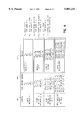
- FIG. 4 illustrates an exemplary data route construction.
- the architecture of the data routing framework of the present invention uses the pushing/popping functionality also used in the STREAMS networking framework. It is possible to open up the data routing module and then push other data routing modules 205 on top of it. More specifically, a data route is constructed by opening a data routing module and then pushing modules onto the data routing module.
- the module at the top of the stack which is the consumer when an incoming data from the producer is being transmitted, can register a data route using an ioctl which goes to the bottom module which in this example is the producer and stores the data route with the producer.
- the device at the bottom of the stack is a producer of data when the data is coming up the stack, and a consumer of data when the data is going down the stack (i.e. the return route).
- Each module adds its own data route to the data route vnode associated with the file descriptor on which the other data routing modules 205 are layered. This facility allows data routes to be built automatically since the data route associated with the vnode is the summation of the data routes for all modules which have been pushed on the vnode.
- Some data routing modules 205 may have dependencies on other data routing modules 205.
- TCP is unusable unless it is layered on IP.
- the module looks up its dependent module, calls its open routine and then pushes itself on top of the module.
- the resulting data route includes the routes from both modules.
- the lower level module can open another module and push itself onto that module. This chain reaction continues until all subordinate modules have been loaded.
- the module on top will have a data route which is a product of its own data route concentrated with all the lower layer modules. This new route will become the prototype route for the module.
- the use of this dependency loading and module prototype route eliminates the need for functionality similar to this in the STREAM plumbing routines.
- Not all data routing modules 205 may be pushed on each other.
- the data routing framework allows the module to specify the type of its downstream and upstream interfaces. Both interfaces are then further subdivided into an incoming and outgoing interface. When a module is pushed onto another module, the connecting streams are checked for compatibility.
- data routing module 400 (illustrated in FIG. 2 as data routing modules 205) has the corresponding action 402 and the corresponding data route vnode 404 (illustrated in FIG. 2 as data route vnode 201).
- an open module A has data route vnodes R A , a data route mask M A , a set of upstream actions A A , a set of downstream actions RR A and an ioctl path I A .
- the consumer indicates the set of intermediate actions and functions to invoke for the data to be transmitted to the consumer.
- Action 402 has in its column, an example set of intermediate actions to be performed for the data.
- action 402 When action 402 is designated as being push module B on module A, a union is performed on the data route vnodes for module A and module B.
- R B is the data route for module B
- M B is the data route mask for module B
- a B is a set of upstream actions for module B
- RR B is a set of downstream actions for module B
- I B is an ioctl path for module B.
- U is the union, join or an append operation exemplifying the action of pushing module B on module A.
- module C is pushed on module AUB.
- R C is a data route for module C
- M C is a data route mask for module C
- a C is a set of upstream actions for module C
- RR C is a set of downstream actions for module C
- I C is an ioctl path for module C.
- Yet another example of a data route construction is exemplified by the action of binding module AUBUC to NIU Z .
- FIG. 5 is a flow diagram illustrating the general steps followed by an embodiment of the present invention.
- a data packet arrives on network 120 for computer system 100.
- the packet is from a producer and is destined for a given consumer.
- the consumer may tell the producer that it knows the path which a given incoming data will take if the incoming data matches a given pattern. If there is a match, then the consumer is able to inform the producer of the set of actions to be executed for that particular incoming data for the data to be properly transmitted to the consumer.
- the producer performs a pattern match search on the incoming data to determine whether the incoming data matches a pattern (i.e. a data route) in a data route table (see FIG. 6a for details on searching data routes).
- step 503 if there is no pattern match hit, then in step 504 the packet is dropped. Otherwise if there is a pattern match hit, i.e. if the incoming data matches a given pattern in the data route table, then a set of actions or functions are invoked which are necessary for the data to be transmitted from the producer to the consumer. More specifically, in step 505, upstream actions are performed (data route vnode). In step 506, if there are downstream actions, then in step 507 the downstream actions are performed. In step 508, a reply is transmitted from the consumer to the producer through the network. Otherwise, if there are no downstream actions then the process ends and no reply is transmitted to the producer.
- FIG. 6a is a flow diagram illustrating exemplary steps which may be followed in searching data routes.
- step 601 given incoming data from a producer, it is determined whether or not there are data routes to be searched in the data route table.
- step 602 if there are no more data routes to be searched in the data route table, then there is a data route miss, i.e. a pattern match miss. Otherwise, in step 603, if there are more data routes X! to be searched in the data route table, then the don't care mask of the next data route X! to be checked is AND'd with the incoming data, resulting in the value of the masked data.
- step 604 it is determined whether the masked data equals the data route X!.
- step 605 if the masked data does not equal data route X!, then X is incremented by one, i.e. the next data route in the data route table to be checked and the process is repeated. Otherwise, in step 606, if the masked data is equal to data route X!, then there is a data route hit, i.e. a pattern match hit and the process is completed.
- FIGS. 6b-6f illustrate an exemplary Patricia Tree search implementation of a data route table search as utilized by the present invention.
- Data route entries in the Patricia Tree also referred to herein as data route keys, are variable with sequences of bytes with some keys as long as 80 bytes. Since the data route search will be performed for every complete IP packet coming into a system, it is pertinent that the search algorithm used be optimized for time.
- variable length keys are stored in a Patricia Tree.
- Patricia Trees are radix trees which allow searching arbitrarily long trees in a tree with just nodes and which requires only one full key comparison per search.
- the Patricia Tree is a well known concept. It takes one N-bit comparison for an average search. For 50 routes, it takes about 7 bit comparisons which is approximately O(SQRT (N)).
- Every data route vnode in a Patricia Tree as utilized by the present invention contains: data route value, data route mask and bit number to check.
- the first step in the Patricia Tree search for the present invention is to enter the first node which is the top node of the tree.
- bits are numbered as follows: bit numbers 0, 1, 2, 3, 4 . . . N, equal to the values of 0, 1, 1, 0, 0 . . . 0.
- route A is inserted into the Patricia Tree which has left and right node pointers pointing back to route A.
- route P is inserted.
- the number of bits in the A node is utilized to check the corresponding bit in B. If the bit in B is a 1, then route B is inserted as a left node. Otherwise route B is inserted on the right. In the present example, since the bit is a 0 and that node is an upward pointer, the node is inserted on the right.
- route C is inserted.
- the bit number in the A node is checked, and the corresponding bit in C is checked.
- the bit is a 0, so we now check node B.
- the bit number in the B node is checked and the corresponding bit in C is also checked.
- the bit is a 1 since the link points upward. Therefore, the C node is inserted there.
- FIG. 6f is the completed Patricia Tree. Assuming that the 01000111000 data is the incoming data to be processed. The search begins at node A illustrated in FIG. 6e. Bit 0 is inspected and since it is a 0 in the incoming data, the tree is traversed to node B. Bit 1 is inspected and since it is a 1 in the incoming data, the tree is traversed to node C. Bit 2 is inspected and since it is a 0 in the incoming data, and this link points back (or upward) the tree, the search has ended. The final step is to determine if there is a hit or a miss in the search in the Patricia Tree. The mask at node C is AND'ed with the incoming data.
- the result is then compared to the data route at node C. If they are equivalent, then there is a search hit. This is illustrated in FIG. 6f. In the example at hand, the masked data 660 and the data route 662 are equal. Therefore, there is a data route hit.
- every producer type is assigned its own Patricia Tree. For example, with incoming IP packets, searches are performed on the Patricia Tree containing IP related routes which include several higher level protocols like UDP and TCP.
- the producer makes the decision on which tree to search for a given packet. For example, an Ethernet driver makes the decision based on the ether type field value.
- Each key has a mask stored with it. The mask is used to mask off the don't care bits from a packet before doing a compare with the key value.
- the data route keys can be dynamically added and deleted from a tree.
- the head of the Patricia Tree contains a lock which must be acquired and held while performing insertions, deletions and searches. This protects the Tree in multi-processor systems and also if the producer routines are called at interrupt level.
- a lazy deletion algorithm may be used in which a key is marked as deleted but left in the tree. When the number of deleted keys become significant, the tree is rebuilt. The tree lock is not held during the rebuilding of the tree. However, if a flag is set in the tree head indicating that a rebuild is taking place, then the insertion and deletion operations should go to sleep waiting for the rebuild to be complete. The rebuild should take place when idle cycles are available.
- the present invention's architecture of data routing is not dependent on Patricia Trees and hence other search algorithms may be used instead.
- the present invention allows computer systems to establish data routes between a consumer and a producer of data without having to have the data transmitted through layers of modules between the consumer and the producer.
- appendix A An exemplary list of the supported operations and the functionality required of a sample of vnode operation are listed in appendix A, a sample of data routing modules 205 are listed in appendix B (producer module 206) and appendix C (protocol module 208).
- Producer device driver modules must implement the following functions:
- Protocol modules must implement the following functions:
Landscapes
- Engineering & Computer Science (AREA)
- Computer Networks & Wireless Communication (AREA)
- Signal Processing (AREA)
- Data Exchanges In Wide-Area Networks (AREA)
Priority Applications (2)
| Application Number | Priority Date | Filing Date | Title |
|---|---|---|---|
| US08/666,862 US5881241A (en) | 1996-06-19 | 1996-06-19 | System for transmitting data packet after matching data packet's routing pattern with predetermined data routes stored in a route table |
| EP97304128A EP0814582A3 (de) | 1996-06-19 | 1997-06-12 | Datenleitweglenkung |
Applications Claiming Priority (1)
| Application Number | Priority Date | Filing Date | Title |
|---|---|---|---|
| US08/666,862 US5881241A (en) | 1996-06-19 | 1996-06-19 | System for transmitting data packet after matching data packet's routing pattern with predetermined data routes stored in a route table |
Publications (1)
| Publication Number | Publication Date |
|---|---|
| US5881241A true US5881241A (en) | 1999-03-09 |
Family
ID=24675811
Family Applications (1)
| Application Number | Title | Priority Date | Filing Date |
|---|---|---|---|
| US08/666,862 Expired - Lifetime US5881241A (en) | 1996-06-19 | 1996-06-19 | System for transmitting data packet after matching data packet's routing pattern with predetermined data routes stored in a route table |
Country Status (2)
| Country | Link |
|---|---|
| US (1) | US5881241A (de) |
| EP (1) | EP0814582A3 (de) |
Cited By (15)
| Publication number | Priority date | Publication date | Assignee | Title |
|---|---|---|---|---|
| US6275861B1 (en) * | 1996-09-27 | 2001-08-14 | Pmc-Sierra, Inc. | Method and apparatus to identify flows in data systems |
| US6532455B1 (en) | 1999-12-22 | 2003-03-11 | Sequoia Software Corporation | Method and system for content-based document security, routing, and action execution |
| US20030182392A1 (en) * | 2002-03-22 | 2003-09-25 | Andre Kramer | Methods and systems for providing access to an application |
| US6839321B1 (en) | 2000-07-18 | 2005-01-04 | Alcatel | Domain based congestion management |
| US20050198189A1 (en) * | 2002-03-14 | 2005-09-08 | Citrix Systems, Inc. | Methods and apparatus for generating graphical and media displays at a client |
| US20050198292A1 (en) * | 1998-12-29 | 2005-09-08 | Citrix Systems, Inc. | An apparatus and method for determining a program neighborhood for a client node in a client-server network |
| US6952740B1 (en) * | 1999-10-04 | 2005-10-04 | Nortel Networks Limited | Apparatus and method of maintaining a route table |
| US7313581B1 (en) * | 1999-04-29 | 2007-12-25 | International Business Machines Corporation | Method for deferred deletion of entries for a directory service backing store |
| US7315541B1 (en) | 2002-04-03 | 2008-01-01 | Cisco Technology, Inc. | Methods and apparatus for routing a content request |
| US7603481B2 (en) | 2002-10-31 | 2009-10-13 | Novell, Inc. | Dynamic routing through a content distribution network |
| US7886291B1 (en) * | 2003-06-11 | 2011-02-08 | Symantec Corporation | Layer typed prioritizing application layered systems |
| US20130003742A1 (en) * | 2010-01-05 | 2013-01-03 | Mitsubishi Electric Corporation | Routing information generating apparatus, routing information generating method and routing information generating program |
| US8671213B2 (en) | 2002-03-14 | 2014-03-11 | Citrix Systems, Inc. | Methods and apparatus for generating graphical and media displays at a client |
| RU2547628C2 (ru) * | 2013-08-05 | 2015-04-10 | Государственное казенное образовательное учреждение высшего профессионального образования Академия Федеральной службы охраны Российской Федерации (Академия ФСО России) | Способ и устройство управления потоками данных распределенной информационной системы |
| US9081672B1 (en) | 2013-05-30 | 2015-07-14 | Richard Michael Nemes | Methods and apparatus for information storage and retrieval using a caching technique with external-chain hashing and dynamic resource-dependent data shedding |
Families Citing this family (3)
| Publication number | Priority date | Publication date | Assignee | Title |
|---|---|---|---|---|
| US6385649B1 (en) * | 1998-11-06 | 2002-05-07 | Microsoft Corporation | Routers and methods for optimal routing table compression |
| US6556984B1 (en) | 1999-01-19 | 2003-04-29 | International Business Machines Corporation | Hierarchical string matching using multi-path dynamic programming |
| US9952861B2 (en) | 2015-12-15 | 2018-04-24 | International Business Machines Corporation | Operation of a multi-slice processor with selective producer instruction types |
Citations (3)
| Publication number | Priority date | Publication date | Assignee | Title |
|---|---|---|---|---|
| US5088091A (en) * | 1989-06-22 | 1992-02-11 | Digital Equipment Corporation | High-speed mesh connected local area network |
| US5199027A (en) * | 1989-03-14 | 1993-03-30 | Alcatel N.V. | Communication switching system |
| US5321813A (en) * | 1991-05-01 | 1994-06-14 | Teradata Corporation | Reconfigurable, fault tolerant, multistage interconnect network and protocol |
-
1996
- 1996-06-19 US US08/666,862 patent/US5881241A/en not_active Expired - Lifetime
-
1997
- 1997-06-12 EP EP97304128A patent/EP0814582A3/de not_active Withdrawn
Patent Citations (3)
| Publication number | Priority date | Publication date | Assignee | Title |
|---|---|---|---|---|
| US5199027A (en) * | 1989-03-14 | 1993-03-30 | Alcatel N.V. | Communication switching system |
| US5088091A (en) * | 1989-06-22 | 1992-02-11 | Digital Equipment Corporation | High-speed mesh connected local area network |
| US5321813A (en) * | 1991-05-01 | 1994-06-14 | Teradata Corporation | Reconfigurable, fault tolerant, multistage interconnect network and protocol |
Cited By (26)
| Publication number | Priority date | Publication date | Assignee | Title |
|---|---|---|---|---|
| US6275861B1 (en) * | 1996-09-27 | 2001-08-14 | Pmc-Sierra, Inc. | Method and apparatus to identify flows in data systems |
| US8527615B2 (en) | 1998-12-29 | 2013-09-03 | Citrix Systems, Inc | Apparatus and method for determining a program neighborhood for a client node in a client-server network |
| US20050198292A1 (en) * | 1998-12-29 | 2005-09-08 | Citrix Systems, Inc. | An apparatus and method for determining a program neighborhood for a client node in a client-server network |
| US20080077584A1 (en) * | 1999-04-29 | 2008-03-27 | Bachmann David W | Method for deferred deletion of entries for a directory service backing store |
| US7895203B2 (en) | 1999-04-29 | 2011-02-22 | International Business Machines Corporation | Method for deferred deletion of entries for a directory service backing store |
| US7313581B1 (en) * | 1999-04-29 | 2007-12-25 | International Business Machines Corporation | Method for deferred deletion of entries for a directory service backing store |
| US6952740B1 (en) * | 1999-10-04 | 2005-10-04 | Nortel Networks Limited | Apparatus and method of maintaining a route table |
| US6532455B1 (en) | 1999-12-22 | 2003-03-11 | Sequoia Software Corporation | Method and system for content-based document security, routing, and action execution |
| US6839321B1 (en) | 2000-07-18 | 2005-01-04 | Alcatel | Domain based congestion management |
| US20050198189A1 (en) * | 2002-03-14 | 2005-09-08 | Citrix Systems, Inc. | Methods and apparatus for generating graphical and media displays at a client |
| US7376695B2 (en) | 2002-03-14 | 2008-05-20 | Citrix Systems, Inc. | Method and system for generating a graphical display for a remote terminal session |
| US20080201405A1 (en) * | 2002-03-14 | 2008-08-21 | Citrix Systems, Inc. | Method and System for Generating a Graphical Display for a Remote Terminal Session |
| US9325759B2 (en) | 2002-03-14 | 2016-04-26 | Citrix Systems, Inc. | Methods and apparatus for generating graphical and media displays at a client |
| US8131817B2 (en) | 2002-03-14 | 2012-03-06 | Citrix Systems, Inc. | Method and system for generating a graphical display for a remote terminal session |
| US8131816B2 (en) | 2002-03-14 | 2012-03-06 | Citrix Systems, Inc. | Methods and apparatus for generating graphical and media displays at a client |
| US8671213B2 (en) | 2002-03-14 | 2014-03-11 | Citrix Systems, Inc. | Methods and apparatus for generating graphical and media displays at a client |
| US20030182392A1 (en) * | 2002-03-22 | 2003-09-25 | Andre Kramer | Methods and systems for providing access to an application |
| US8135843B2 (en) | 2002-03-22 | 2012-03-13 | Citrix Systems, Inc. | Methods and systems for providing access to an application |
| US7315541B1 (en) | 2002-04-03 | 2008-01-01 | Cisco Technology, Inc. | Methods and apparatus for routing a content request |
| US7603481B2 (en) | 2002-10-31 | 2009-10-13 | Novell, Inc. | Dynamic routing through a content distribution network |
| US7886291B1 (en) * | 2003-06-11 | 2011-02-08 | Symantec Corporation | Layer typed prioritizing application layered systems |
| US20130003742A1 (en) * | 2010-01-05 | 2013-01-03 | Mitsubishi Electric Corporation | Routing information generating apparatus, routing information generating method and routing information generating program |
| US9166825B2 (en) * | 2010-01-05 | 2015-10-20 | Mitsubishi Electric Corporation | Routing information generating apparatus, routing information generating method and routing information generating program |
| US9081672B1 (en) | 2013-05-30 | 2015-07-14 | Richard Michael Nemes | Methods and apparatus for information storage and retrieval using a caching technique with external-chain hashing and dynamic resource-dependent data shedding |
| US9690699B1 (en) | 2013-05-30 | 2017-06-27 | Richard Michael Nemes | Methods and apparatus for information storage and retrieval using a caching technique with external-chain hashing and dynamic resource-dependent data shedding |
| RU2547628C2 (ru) * | 2013-08-05 | 2015-04-10 | Государственное казенное образовательное учреждение высшего профессионального образования Академия Федеральной службы охраны Российской Федерации (Академия ФСО России) | Способ и устройство управления потоками данных распределенной информационной системы |
Also Published As
| Publication number | Publication date |
|---|---|
| EP0814582A2 (de) | 1997-12-29 |
| EP0814582A3 (de) | 2003-02-19 |
Similar Documents
| Publication | Publication Date | Title |
|---|---|---|
| US5881241A (en) | System for transmitting data packet after matching data packet's routing pattern with predetermined data routes stored in a route table | |
| US7984038B2 (en) | Longest prefix match (LPM) algorithm implementation for a network processor | |
| KR100477391B1 (ko) | 네트워크 프로세서용 완전 정합(fm) 검색 알고리즘 구현 | |
| US6377984B1 (en) | Web crawler system using parallel queues for queing data sets having common address and concurrently downloading data associated with data set in each queue | |
| US11797534B2 (en) | Efficient SQL-based graph random walk | |
| US6993714B2 (en) | Grouping and nesting hierarchical namespaces | |
| US6563823B1 (en) | Multi-resolution tree for longest match address lookups | |
| US5594921A (en) | Authentication of users with dynamically configurable protocol stack | |
| US6173313B1 (en) | Methodology for hosting distributed objects at a predetermined node in a distributed system | |
| KR100429142B1 (ko) | 네트워크 프로세서용 소프트웨어 관리 트리 구현 | |
| US7865608B1 (en) | Method and apparatus for fast and scalable matching of structured data streams | |
| JP2000515280A (ja) | オブジェクト指向型情報伝送方法および装置 | |
| US20130046900A1 (en) | Dynamic transaction protocol upgrades | |
| US7577900B2 (en) | Mechanism for maintaining data format synchronization between different entities | |
| CN111490906B (zh) | 一种网关设备策略的分析方法、装置及可读存储介质 | |
| CN114401262A (zh) | 基于rdma的大数据传输系统、方法、装置、设备及存储介质 | |
| Hutchinson et al. | Tools for implementing network protocols | |
| US8250148B2 (en) | Reducing memory accesses in processing TCP/IP packets | |
| US7389529B1 (en) | Method and apparatus for generating and using nested encapsulation data | |
| EP1246059A1 (de) | Dynamische Bedarfszusammensetzung von Schnittstellen | |
| AU2002351296B2 (en) | System and method for processing a request using multiple database units | |
| JPH08110869A (ja) | ファイルシステム | |
| JP2003256391A (ja) | サービス探索方法、サービス実行方法、それらのプログラム及び該プログラムを記録した記録媒体 | |
| US20060253833A1 (en) | System and method for efficient hosting of wireless applications by encoding application component definitions | |
| US7568013B1 (en) | Multiple message send routine for network packets |
Legal Events
| Date | Code | Title | Description |
|---|---|---|---|
| AS | Assignment |
Owner name: SUN MICROSYSTEMS, INC., CALIFORNIA Free format text: ASSIGNMENT OF ASSIGNORS INTEREST;ASSIGNOR:CORBIN, JOHN R.;REEL/FRAME:008047/0281 Effective date: 19960617 |
|
| STCF | Information on status: patent grant |
Free format text: PATENTED CASE |
|
| FPAY | Fee payment |
Year of fee payment: 4 |
|
| SULP | Surcharge for late payment | ||
| REMI | Maintenance fee reminder mailed | ||
| FEPP | Fee payment procedure |
Free format text: PAYOR NUMBER ASSIGNED (ORIGINAL EVENT CODE: ASPN); ENTITY STATUS OF PATENT OWNER: LARGE ENTITY |
|
| FPAY | Fee payment |
Year of fee payment: 8 |
|
| FPAY | Fee payment |
Year of fee payment: 12 |
|
| AS | Assignment |
Owner name: ORACLE AMERICA, INC., CALIFORNIA Free format text: MERGER AND CHANGE OF NAME;ASSIGNORS:ORACLE USA, INC.;SUN MICROSYSTEMS, INC.;ORACLE AMERICA, INC.;REEL/FRAME:037270/0148 Effective date: 20100212 |