US6034086A - Trifluoromethylquinolinecarboxylic acid derivative - Google Patents
Trifluoromethylquinolinecarboxylic acid derivative Download PDFInfo
- Publication number
- US6034086A US6034086A US09/154,464 US15446498A US6034086A US 6034086 A US6034086 A US 6034086A US 15446498 A US15446498 A US 15446498A US 6034086 A US6034086 A US 6034086A
- Authority
- US
- United States
- Prior art keywords
- group
- pharmaceutically acceptable
- ester
- acceptable salt
- methyl
- Prior art date
- Legal status (The legal status is an assumption and is not a legal conclusion. Google has not performed a legal analysis and makes no representation as to the accuracy of the status listed.)
- Expired - Fee Related
Links
Images


Classifications
-
- C—CHEMISTRY; METALLURGY
- C07—ORGANIC CHEMISTRY
- C07D—HETEROCYCLIC COMPOUNDS
- C07D215/00—Heterocyclic compounds containing quinoline or hydrogenated quinoline ring systems
- C07D215/02—Heterocyclic compounds containing quinoline or hydrogenated quinoline ring systems having no bond between the ring nitrogen atom and a non-ring member or having only hydrogen atoms or carbon atoms directly attached to the ring nitrogen atom
- C07D215/16—Heterocyclic compounds containing quinoline or hydrogenated quinoline ring systems having no bond between the ring nitrogen atom and a non-ring member or having only hydrogen atoms or carbon atoms directly attached to the ring nitrogen atom with hetero atoms or with carbon atoms having three bonds to hetero atoms with at the most one bond to halogen, e.g. ester or nitrile radicals, directly attached to ring carbon atoms
- C07D215/48—Carbon atoms having three bonds to hetero atoms with at the most one bond to halogen
- C07D215/54—Carbon atoms having three bonds to hetero atoms with at the most one bond to halogen attached in position 3
- C07D215/56—Carbon atoms having three bonds to hetero atoms with at the most one bond to halogen attached in position 3 with oxygen atoms in position 4
-
- A—HUMAN NECESSITIES
- A61—MEDICAL OR VETERINARY SCIENCE; HYGIENE
- A61P—SPECIFIC THERAPEUTIC ACTIVITY OF CHEMICAL COMPOUNDS OR MEDICINAL PREPARATIONS
- A61P31/00—Antiinfectives, i.e. antibiotics, antiseptics, chemotherapeutics
- A61P31/12—Antivirals
- A61P31/14—Antivirals for RNA viruses
- A61P31/18—Antivirals for RNA viruses for HIV
Definitions
- This invention relates to a novel 8-trifluoromethylquinolinecarboxylic acid derivative which inhibits growth of human immunodeficient virus (hereinafter referred to as HIV), or a pharmaceutically acceptable salt thereof or an ester thereof.
- HIV human immunodeficient virus
- HIV mainly infects CD 4 -positive lymphocytes (helper/inducer), gradually reduces the number of the cells and finally causes severe acquired immunodeficiency syndrome (hereinafter referred to as AIDS).
- AIDS severe acquired immunodeficiency syndrome
- Many efforts have heretofore been made in order to treat AIDS, but development of vaccine is extremely difficult so that development of antiviral agents has been expected.
- the anti-viral agents having inhibitory actions on a reverse transcriptase inherently possessed by the virus, which have been approved at present have life-prolonging effects on AIDS patients, the agents cannot cure them completely.
- these inhibiting agents have many problems that side effects such as myelopathy and digestive system disorder, etc. are severe, drug-resistant viruses are separated with high frequency from patients to whom the agent is administered for a long period of time, and others, whereby developments of novel chemicals and therapy using multiple agents in combination have been earnestly desired.
- the present inventors have studied about the anti-HIV activities of various kinds of quinolinecarboxylic acid derivatives and found that a quinolinecarboxylic acid derivative whose hydrophobicity is strengthened and whose antibacterial activity is weakened by introducing a trifluoromethyl group at 8-position and a cyclic diamine (e.g., a piperazinyl group or homopiperazinyl group which may be substituted) substituted by a phenyl group or an aromatic heterocyclic ring group at 7-position can specifically suppress growth of HIV in HIV-infected cells and further has an activity of suppressing a cytopathic effect (CPE) of HIV, in order to accomplish the present invention.
- CPE cytopathic effect
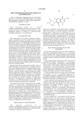
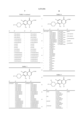
- the present invention is a 8-trifluoromethylquinolinecarboxylic acid derivative represented by the following formula (I) or a pharmaceutically acceptable salt thereof or an ester thereof: ##STR2##
- R 1 represents a lower alkyl group, a halogeno-lower alkyl group or a cycloalkyl group
- R 2 represents a phenyl group which may be substituted by R 0 , a 5-membered or 6-membered aromatic heteromonocyclic ring groups containing 1 or 2 hetero atoms selected from N, O and S, which may be substituted by R 0 , or an aromatic heterocyclic fused ring group in which the said aromatic heteromonocyclic ring and a benzene ring are fused
- R 0 represents a group selected from a halogen, a lower alkyl, a fluorine-substituted lower alkyl, a lower alkoxy or a lower alkylthio
- R 3 represents a hydrogen or
- R 1 in the above formula (I) there may be mentioned, for example, a C 1 to C 4 alkyl group such as methyl, ethyl, propyl, isopropyl, butyl, isobutyl, s-butyl and t-butyl, etc., preferably methyl, ethyl, propyl and isopropyl groups, particularly preferably methyl and ethyl groups.
- a C 1 to C 4 alkyl group such as methyl, ethyl, propyl, isopropyl, butyl, isobutyl, s-butyl and t-butyl, etc., preferably methyl, ethyl, propyl and isopropyl groups, particularly preferably methyl and ethyl groups.
- halogeno-lower alkyl group of R 1 there may be mentioned, for example, a halogeno-C 1 to C 4 alkyl group such as fluoromethyl, chloromethyl, difluoromethyl, trifluoromethyl, 2-fluoroethyl, 2-chloroethyl, 2-bromoethyl, 2-iodoethyl, 2,2,2-trifluoroethyl, 3-fluoropropyl, 3-chloropropyl, 3-bromopropyl and 4-fluorobutyl, etc., preferably 2-fluoroethyl, 2-chloroethyl and 2,2,2-trifluoroethyl groups, particularly preferably a 2-fluoroethyl group.
- a halogeno-C 1 to C 4 alkyl group such as fluoromethyl, chloromethyl, difluoromethyl, trifluoromethyl, 2-fluoroethyl, 2-chloroethyl, 2-bro
- cycloalkyl group of R 1 there may be mentioned, for example, a C 3 to C 6 cycloalkyl group such as cyclopropyl, cyclobutyl, cyclopentyl and cyclohexyl, etc., preferably cyclopropyl, cyclobutyl and cyclopentyl groups, particularly preferably a cyclopropyl group.
- aromatic heterocyclic ring group As the aromatic heteromonocyclic ring or aromatic heterocyclic fused ring group (hereinafter referred to as the aromatic heterocyclic ring group) of R 2 , there may be mentioned, for example, 2-thienyl, 2-furyl, 2-oxazolyl, 2-thiazolyl, 2-imidazolyl, 2-, 3- or 4-pyridyl, 2-, 4- or 5-pyrimidinyl, 2-pirazinyl, 3-pyridazinyl, 2-benzoxazolyl, 2-benzothiazolyl and 2-benzoimidazolyl, preferably 2-thienyl, 2-furyl, 2-oxazolyl, 2-thiazolyl, 2-imidazolyl, 2-, 3- or 4-pyridyl, 2-, 4- or 5-pyrimidinyl, 2-pirazinyl and 3-pyridazinyl groups, particularly preferably 2-pyridyl and 2-pyrimidinyl groups.
- R 0 on the phenyl and the aromatic heterocyclic ring of R 2 there may be mentioned, for example, a halogen atom such as fluorine, chlorine, bromine, iodine, etc.; a C 1 to C 4 alkyl group such as methyl, ethyl, propyl, isopropyl, butyl, s-butyl, isobutyl and t-butyl, etc.; a fluorine-substituted C 1 to C 4 alkyl group such as mono-, di- or trifluoromethyl, 2-fluoroethyl, 2- or 3-fluoropropyl, 2-, 3- or 4-fluorobutyl, etc.; a C 1 to C 4 alkoxy group such as methoxy, ethoxy, propoxy, isopropoxy, butoxy, isobutoxy, s-butoxy and t-butoxy, etc.; and a C 1 to C 4 alkylthio group
- a C 1 to C 4 alkyl group such as methyl, ethyl, propyl, isopropyl, butyl, isobutyl, s-butyl and t-butyl, etc., preferably methyl, ethyl, propyl and isopropyl groups, particularly preferably methyl and ethyl groups.
- the carboxyl group of the compound represented by the above formula (I) may be protected by a protective group to be an ester.
- a protective group there may be mentioned, for example, a C 1 to C 4 alkyl group such as methyl, ethyl, propyl, isopropyl, butyl and isobutyl groups, etc., or an aralkyl group such as benzyl and phenylethyl groups, etc.; or a C 2 to C 5 alkanoyloxyalkyl group which is easily hydrolyzed in vivo to be converted into a carboxy group, such as acetoxymethyl and pivaloyloxymethyl groups, etc.; a C 1 to C 4 alkoxycarbonyloxyalkyl group such as 1-(ethoxycarbonyloxy)ethyl and 1-(isopropoxycarbonyloxy)ethyl groups, etc.; an N,N-dialkyl-substituted aminocarbonylalkyl group such
- the compound represented by the above formula (I) can be a pharmaceutically acceptable salt, if necessary.
- an acid addition salt of a mineral acid such as hydrochloride, hydrobromide, hydroiodide, sulfate and phosphate, etc.
- an acid addition salt of an organic acid such as methanesulfonate, ethanesulfonate, benzenesulfonate, p-toluenesulfonate, oxalate, maleate, fumarate, tartrate and citrate, etc.
- a metal salt of a carboxylic acid such as a sodium salt, a potassium salt, a calcium salt, a magnesium salt, a manganese salt, an iron salt and an aluminum salt, etc.
- the compound (I) of the present invention can also exist as a hydrate.
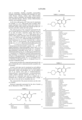
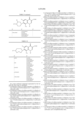
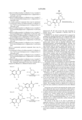
- the desired compound (I) is prepared by coupling the quinolinecarboxylic acid compound (II) with the cyclic diamine (III) in the presence or absence of an acid scavenger and in the presence or absence of a solvent
- an aprotic polar solvent such as dimethyl sulfoxide, N,N-dimethylformamide, hexamethyliphosphoric triamide and N,N-dimethylacetamide, etc.
- ketones such as acetone, methyl ethyl ketone, etc.
- ethers such as diethyl ether, tetrahydrofuran, dioxane, etc.
- esters such as ethyl acetate, etc.
- alcohols such as methanol, ethanol, propanol, isopropanol, butanol, etc.
- nitrites such as acetonitrile, etc.
- tertiary amines such as 1,8-diazabicyclo[5.4.0]-7-undecene, 1,5-diazabicyclo[4.3.0]-5-nonene, triethylamine, tributylamine, pyridine, picoline, lutidine and collidine, etc.; a metal alkoxide such as sodium methoxide, sodium ethoxide and potassium-t-butoxide, etc.; or an inorganic base such as sodium carbonate and potassium carbonate, etc.
- tertiary amines such as 1,8-diazabicyclo[5.4.0]-7-undecene, 1,5-diazabicyclo[4.3.0]-5-nonene, triethylamine, tributylamine, pyridine, picoline, lutidine and collidine, etc.
- a metal alkoxide such as sodium methoxide, sodium ethoxide and potassium-t-butoxide, etc.
- the amount of the acid scavenger to be used is preferably an equimolar amount to 5-fold moles based on the compound (II), but in the case of the above tertiary amines, they may be used extremely excessively as a solvent.
- the excess cyclic diamine (III) also acts as an acid scavenger so that the reaction proceeds smoothly even when other acid scavenger is not added.
- the reaction is carried out at a temperature range of 0° C. to 200° C. generally for 0.5 hour to 24 hours.
- Method B the desired compound (I) is prepared by coupling the boron chelate compound (IV) of carboxyquinolines with the cyclic diamine (III) in the presence or absence of an acid scavenger and in the presence or absence of a solvent in the same manner as in Method A to obtain the compound (V), and then reacting this compound in a hydrated alcohol in the presence of a base to decompose the chelate.
- the coupling reaction in Method B is carried out under the same conditions as described in the above Method A.
- an alkali hydroxide such as sodium hydroxide and potassium hydroxide, etc.
- an alkali carbonate such as sodium carbonate and potassium carbonate, etc.
- tertiary amines such as 1,8-diazabicyclo-[5.4.0]-7-undecene, 1,5-diazabicyclo[4.3.0]-5-nonene, triethylamine and 4-dimethylaminopyridine, etc.
- a metal alkoxide such as sodium methoxide, sodium ethoxide and potassium-t-butoxide, etc.
- the amount of the base to be used is preferably an equimolar amount to 5-fold moles based on the compound (V), but an extremely excessive amount may be also used.
- hydrated alcohol to be used as a solvent there may be used, for example, methanol, ethanol, propanol, isopropanol and/or butanol, etc. containing 5 to 90% by weight of water.
- the reaction is carried out at a range of 0° C. to 150° C. for 0.5 hour to 24 hours.
- the desired compounds of these reactions can be obtained by treating the reaction mixtures according to a conventional method, and, if necessary, they can be purified by a conventional purification means such as a recrystallization method, column chromatography, etc.
- the compound (I') is prepared by coupling the quinolinecarboxylic acid compound (VI) with an equimolar amount to 5-fold moles of the compound (VII) in the presence of an acid scavenger and in the presence or absence of a solvent.
- an aprotic polar solvent such as dimethyl sulfoxide, N,N-dimethylformamide, hexamethylphosphoric triamide and N,N-dimethylacetamide, etc.
- ketones such as acetone, methyl ethyl ketone, etc.
- ethers such as diethyl ether, tetrahydrofuran, dioxane, etc.
- esters such as ethyl acetate, etc.
- alcohols such as methanol, ethanol, propanol, isopropanol and butanol, etc.
- nitrites such as acetonitrile, etc., and others.
- tertiary amines such as 1,8-diazabicyclo[5.4.0]-7-undecene, 1,5-diazabicyclo[4.3.0]-5-nonene, triethylamine, tributylamine, pyridine, picoline, lutidine and collidine, etc.; or an inorganic base such as sodium carbonate and potassium carbonate, etc.
- the amount of the acid scavenger to be used is preferably an equimolar amount to 10-fold moles based on the compound (VII), but in the case of using the above tertiary amines, they may be used extremely excessively as a solvent.
- the reaction is carried out at a temperature range of 0° C. to 200° C. generally for 1 hour to 24 hours.
- the compound (VI) to be used as a starting material in Method C is prepared by using the compound (II) or (IV) as a material, using the cyclic diamine (III) in which R 2 is a hydrogen atom and reacting them in the same manner as in Method A or Method B.
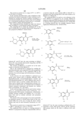
- the compound (II) to be used as a raw substance in the above Method A is prepared by, for example, Method D using the compound (VII) obtained by the method described in Japanese Patent Application Publication No. 66180/1989 as a starting material (see, for example, Japanese Patent Application Publication No. 255183/1993).
- ##STR15## (wherein R 1 has the same meaning as defined above, R 4 represents a lower alkyl group, and R 5 and R 6 represent alkyl groups which are the same or different from each other.)
- the boron chelate compound (IV) to be used as a raw substance in Method B is prepared easily from the compound (II) obtained by Method D or its lower alkyl ester compound (XIII) according to Method E (e.g., Japanese Patent Application Publication No. 198664/1988 (Reference example 8), Japanese Patent Application Publication No. 124873/1990 (Reference example 7) and Japanese Patent Application Publication No. 287577/1991 (Reference example 4)).
- Method E e.g., Japanese Patent Application Publication No. 198664/1988 (Reference example 8), Japanese Patent Application Publication No. 124873/1990 (Reference example 7) and Japanese Patent Application Publication No. 287577/1991 (Reference example 4)).
- optical isomers may exist in some cases.
- optical isomers of the corresponding desired compounds (I) can be obtained by carrying out the above reaction using an optically resolved starting compound in a suitable stage.
- the respective optical isomers can be also obtained by treating a mixture of optical isomers of the compounds represented by the formula (I) according to a conventional optical resolution method.
- the carboxy group of the compound represented by the above formula (I) may be protected to form an ester as described above, and the ester-forming reaction is carried out from a corresponding carboxy compound and an alcohol according to a conventional method (e.g., a dehydration condensation method by an acid catalyst, a method through an acid halide, a dehydration condensation method by a carbodiimide, etc.).
- a conventional method e.g., a dehydration condensation method by an acid catalyst, a method through an acid halide, a dehydration condensation method by a carbodiimide, etc.
- the compound of the formula (I) is useful as an agent for treating AIDS by HIV.
- an administration form for that purpose there may be mentioned, for example, oral administration by a tablet, a capsule, a granule, a powder, a syrup, etc., or parenteral administration by an intravenous injection, an intramuscular injection, a suppository, etc.
- These agents are prepared by a known method, if necessary, by using additives such as an excipient, a binder, a disintegrating agent, a lubricant, a stabilizer, a flavor, etc.
- the dose varies depending on age, weight, disease conditions, administration form and administration times, etc., but the compound of the formula (I) is generally administered to an adult in a dose of about 10 to 500 mg per day, which is administered once or divided into several doses.
- the compound of the formula (I) was orally administered to rats in a several-fold amount of the above dose (calculated based on weight), it did not exhibit toxicity.
- Measurement of the anti-HIV activities of the compounds of the present invention was carried out according to the method of R. Pauwel et al. (J. Virological Method 20, p. 309 to 321 (1988)). That is, MT-4 cells were centrifuged (1000 ⁇ g, 5 minutes), and a cell-floating solution in which the resulting cellular sediments were suspended in a RPMI-1640 medium containing no serum was inoculated with HIV. The mixture was cultured at 37° C. for 1 hour and then added to a RPMI-1640 medium to which 10% bovine fetal serum was added (hereinafter referred to as the serum medium), and the mixture was washed and centrifuged (1000 ⁇ g, 5 minutes).
- the HIV-infected cells thus obtained and HIV-non-infected cells were suspended in the serum media in an amount of 4 ⁇ 10 5 /ml, respectively, and each 100 ⁇ l of the suspensions were apportioned to the respective wells of a multiwell with 96 wells for tissue culture. Each 100 ⁇ l of the compounds which had been previously diluted with the serum medium stepwisely were apportioned to these respective wells, and then the mixtures were left to stand and cultured at 37° C. for 5 days in the presence of 5% carbon dioxide. In the same manner, the HIV-infected cells and the HIV-non-infected cells to which the compound was not added were cultured.
- the cellular disorder-suppressing activity against the HIV-non-infected cells to which the compound was not added was defined as 100%, and the cellular disorder-suppressing activity against the HIV-infected cells to which the compound was not added was defined as 0%.
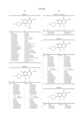
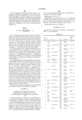
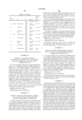
- a compound concentration (EC 50 ) at which 50% cellular disorder-suppressing activity against the HIV-infected cells was exhibited was determined. The test results are shown in Table 12.
- This compound was dissolved in 100 ml of anhydrous diethyl ether, 1.6 g (0.0416 mole) of 62.4% sodium hydride-mineral oil was gradually added to the solution under ice cooling, and the mixture was stirred at room temperature for 1 hour.
- a novel 8-trifluoromethylquinolinecarboxylic acid derivative which specifically suppresses growth of HIV in HIV-infected cells and further has an activity of suppressing a cytopathic effect (CPE) by HIV, or a pharmaceutically acceptable salt thereof or an ester are provided.
- CPE cytopathic effect
Landscapes
- Organic Chemistry (AREA)
- Chemical & Material Sciences (AREA)
- Health & Medical Sciences (AREA)
- Life Sciences & Earth Sciences (AREA)
- Virology (AREA)
- Chemical Kinetics & Catalysis (AREA)
- Medicinal Chemistry (AREA)
- Tropical Medicine & Parasitology (AREA)
- Communicable Diseases (AREA)
- Oncology (AREA)
- AIDS & HIV (AREA)
- General Chemical & Material Sciences (AREA)
- Molecular Biology (AREA)
- Nuclear Medicine, Radiotherapy & Molecular Imaging (AREA)
- Pharmacology & Pharmacy (AREA)
- Animal Behavior & Ethology (AREA)
- General Health & Medical Sciences (AREA)
- Public Health (AREA)
- Veterinary Medicine (AREA)
- Pharmaceuticals Containing Other Organic And Inorganic Compounds (AREA)
- Plural Heterocyclic Compounds (AREA)
Applications Claiming Priority (2)
| Application Number | Priority Date | Filing Date | Title |
|---|---|---|---|
| JP6-165126 | 1994-07-18 | ||
| JP16512694 | 1994-07-18 |
Related Parent Applications (1)
| Application Number | Title | Priority Date | Filing Date |
|---|---|---|---|
| US08776083 Continuation | 1997-01-17 |
Publications (1)
| Publication Number | Publication Date |
|---|---|
| US6034086A true US6034086A (en) | 2000-03-07 |
Family
ID=15806410
Family Applications (1)
| Application Number | Title | Priority Date | Filing Date |
|---|---|---|---|
| US09/154,464 Expired - Fee Related US6034086A (en) | 1994-07-18 | 1998-09-16 | Trifluoromethylquinolinecarboxylic acid derivative |
Country Status (14)
| Country | Link |
|---|---|
| US (1) | US6034086A (cs) |
| EP (1) | EP0773214A4 (cs) |
| KR (1) | KR970704693A (cs) |
| CN (1) | CN1152916A (cs) |
| AU (1) | AU683569B2 (cs) |
| CA (1) | CA2194435A1 (cs) |
| CZ (1) | CZ12097A3 (cs) |
| FI (1) | FI970195L (cs) |
| HU (1) | HUT76643A (cs) |
| MX (1) | MX9700497A (cs) |
| NO (1) | NO307704B1 (cs) |
| NZ (1) | NZ287550A (cs) |
| RU (1) | RU2140919C1 (cs) |
| WO (1) | WO1996002512A1 (cs) |
Cited By (4)
| Publication number | Priority date | Publication date | Assignee | Title |
|---|---|---|---|---|
| US20060019906A1 (en) * | 2004-05-20 | 2006-01-26 | Motohide Satoh | Novel 4-oxoquinoline compound and use thereof as HIV integrase inhibitor |
| US20060030710A1 (en) * | 2004-05-20 | 2006-02-09 | Motohide Satoh | Stable crystal of 4-oxoquinoline compound |
| US20060217413A1 (en) * | 2002-11-20 | 2006-09-28 | Japan Tobacco Inc. | 4-Oxoquinoline compound and use thereof as HIV integrase inhibitor |
| US20090036684A1 (en) * | 2006-03-06 | 2009-02-05 | Koji Matsuda | Method for producing 4-oxoquinoline compound |
Families Citing this family (4)
| Publication number | Priority date | Publication date | Assignee | Title |
|---|---|---|---|---|
| WO2006109661A1 (ja) | 2005-04-06 | 2006-10-19 | Chugai Seiyaku Kabushiki Kaisha | 2,3,4-トリフルオロ-5-(ヨード又はブロモ)安息香酸の製造方法 |
| DE102006017701A1 (de) * | 2006-04-15 | 2007-10-25 | Degussa Gmbh | Silicium-Titan-Mischoxidpulver, Dispersion hiervon und daraus hergestellter titanhaltiger Zeolith |
| DE102006017700A1 (de) * | 2006-04-15 | 2007-10-25 | Degussa Gmbh | Silicium-Titan-Mischoxid enthaltende Dispersion zur Herstellung titanhaltiger Zeolithe |
| CN115466212B (zh) * | 2022-10-26 | 2023-09-22 | 河南农业大学 | 一种2-三氟甲基喹啉类化合物及其合成方法和应用 |
Citations (19)
| Publication number | Priority date | Publication date | Assignee | Title |
|---|---|---|---|---|
| US4448962A (en) * | 1978-09-29 | 1984-05-15 | Kyorin Seiyaku Kabushiki Kaisha | Substituted quinoline carboxylic acid derivatives |
| US4544658A (en) * | 1982-12-29 | 1985-10-01 | Bayer Aktiengesellschaft | 1-Cyclopropyl-6-fluoro-1,4-dihydro-4-oxo-7-(alkyl-1-piperazinyl)quinoline-3-carboxylic acids, processes for their preparation and antibacterial agents containing them |
| US4556658A (en) * | 1983-05-18 | 1985-12-03 | Bayer Aktiengesellschaft | 7-Amino-1-cyclopropyl-6,8-difluoro-1,4-dihydro-4-oxo-quinoline-3-carboxylic acids and antibacterial agents containing these compounds |
| US4563459A (en) * | 1982-12-29 | 1986-01-07 | Bayer Aktiengesellschaft | Microbicidal agents based on quinolonecarboxylic acid |
| US4588726A (en) * | 1984-06-04 | 1986-05-13 | Bayer Aktiengesellschaft | 1-cyclopropyl-6-fluoro-1,4-dihydro-4-oxo-7-(3-oxo-1-piperazinyl)-3-quinolinecarboxylic acid antibacterial agents |
| US4668680A (en) * | 1985-12-12 | 1987-05-26 | Warner-Lambert Company | 5-amino-6,8-difluoroquinolones as antibacterial agents |
| US4705788A (en) * | 1985-03-16 | 1987-11-10 | Bayer Aktiengesellschaft | Novel antibacterial 7-amino-1(substituted cyclopropyl)-1,4-dihydro-4-oxo-3-quinolinecarboxylic acids |
| JPS63104974A (ja) * | 1986-10-20 | 1988-05-10 | ワーナー−ランバート・コンパニー | 抗細菌剤 |
| US4780468A (en) * | 1987-08-07 | 1988-10-25 | Warner-Lambert Company | 8-trifluoromethyl quinolones as antibacterial agents |
| EP0305744A2 (en) * | 1987-07-31 | 1989-03-08 | Warner-Lambert Company | Quinoline, naphthyridine and benzoxazine-carboxylic acid derivatives and their use as antibacterial agents |
| JPH01125371A (ja) * | 1987-08-21 | 1989-05-17 | Warner Lambert Co | ナフチリジン抗菌剤 |
| WO1989006649A2 (en) * | 1988-01-25 | 1989-07-27 | Warner-Lambert Company | Antibacterial agents |
| JPH02231475A (ja) * | 1988-04-27 | 1990-09-13 | Dai Ichi Seiyaku Co Ltd | 光学活性ピリドンカルボン酸誘導体 |
| EP0394553A2 (en) * | 1989-04-28 | 1990-10-31 | Daiichi Pharmaceutical Co., Ltd. | Use of fluorine containing pyridone carboxylic acid derivatives for preparing a medicament for the treatment of HIV infections |
| WO1991016894A1 (en) * | 1990-05-02 | 1991-11-14 | Abbott Laboratories | Quinolizinone type compounds |
| EP0470252A1 (en) * | 1989-04-28 | 1992-02-12 | Daiichi Pharmaceutical Co., Ltd. | Anti-hiv drug |
| US5221676A (en) * | 1992-02-06 | 1993-06-22 | Warner-Lambert Company | 7-substituted quinolones and naphthyridones as antibacterial agents |
| EP0572259A1 (en) * | 1992-05-27 | 1993-12-01 | Ube Industries, Ltd. | Aminoquinolone derivatives as anti-HIV agents |
| WO1995010519A1 (en) * | 1993-10-14 | 1995-04-20 | Abbott Laboratories | Quinolizinone type compounds |
Family Cites Families (1)
| Publication number | Priority date | Publication date | Assignee | Title |
|---|---|---|---|---|
| US4977154A (en) * | 1985-12-12 | 1990-12-11 | Warner-Lambert Company | 5-amino and 5-hydroxy-6-fluoroquinolones as antibacterial agents |
-
1995
- 1995-06-07 CA CA002194435A patent/CA2194435A1/en not_active Abandoned
- 1995-06-07 FI FI970195A patent/FI970195L/fi unknown
- 1995-06-07 HU HU9700148A patent/HUT76643A/hu unknown
- 1995-06-07 EP EP95921111A patent/EP0773214A4/en not_active Withdrawn
- 1995-06-07 MX MX9700497A patent/MX9700497A/es unknown
- 1995-06-07 WO PCT/JP1995/001123 patent/WO1996002512A1/ja not_active Ceased
- 1995-06-07 NZ NZ287550A patent/NZ287550A/en unknown
- 1995-06-07 CZ CZ97120A patent/CZ12097A3/cs unknown
- 1995-06-07 AU AU26292/95A patent/AU683569B2/en not_active Ceased
- 1995-06-07 KR KR1019970700319A patent/KR970704693A/ko not_active Ceased
- 1995-06-07 RU RU97102364A patent/RU2140919C1/ru active
- 1995-06-07 CN CN95194136A patent/CN1152916A/zh active Pending
-
1997
- 1997-01-14 NO NO970144A patent/NO307704B1/no not_active IP Right Cessation
-
1998
- 1998-09-16 US US09/154,464 patent/US6034086A/en not_active Expired - Fee Related
Patent Citations (26)
| Publication number | Priority date | Publication date | Assignee | Title |
|---|---|---|---|---|
| US4448962A (en) * | 1978-09-29 | 1984-05-15 | Kyorin Seiyaku Kabushiki Kaisha | Substituted quinoline carboxylic acid derivatives |
| US4544658A (en) * | 1982-12-29 | 1985-10-01 | Bayer Aktiengesellschaft | 1-Cyclopropyl-6-fluoro-1,4-dihydro-4-oxo-7-(alkyl-1-piperazinyl)quinoline-3-carboxylic acids, processes for their preparation and antibacterial agents containing them |
| US4563459A (en) * | 1982-12-29 | 1986-01-07 | Bayer Aktiengesellschaft | Microbicidal agents based on quinolonecarboxylic acid |
| US4556658A (en) * | 1983-05-18 | 1985-12-03 | Bayer Aktiengesellschaft | 7-Amino-1-cyclopropyl-6,8-difluoro-1,4-dihydro-4-oxo-quinoline-3-carboxylic acids and antibacterial agents containing these compounds |
| US4556658B1 (cs) * | 1983-05-18 | 1987-09-15 | ||
| US4588726A (en) * | 1984-06-04 | 1986-05-13 | Bayer Aktiengesellschaft | 1-cyclopropyl-6-fluoro-1,4-dihydro-4-oxo-7-(3-oxo-1-piperazinyl)-3-quinolinecarboxylic acid antibacterial agents |
| US4822801A (en) * | 1984-07-20 | 1989-04-18 | Warner-Lambert Company | 4-oxo-1,4-dihydroquinoline-3-carboxylic acid derivative as antibacterial agents |
| US4705788A (en) * | 1985-03-16 | 1987-11-10 | Bayer Aktiengesellschaft | Novel antibacterial 7-amino-1(substituted cyclopropyl)-1,4-dihydro-4-oxo-3-quinolinecarboxylic acids |
| JPS62187459A (ja) * | 1985-12-12 | 1987-08-15 | ワ−ナ−−ランバ−ト・コンパニ− | 5−アミノおよび5−ヒドロキシ−6,8−ジフルオロキノロン化合物 |
| US4668680A (en) * | 1985-12-12 | 1987-05-26 | Warner-Lambert Company | 5-amino-6,8-difluoroquinolones as antibacterial agents |
| JPS63104974A (ja) * | 1986-10-20 | 1988-05-10 | ワーナー−ランバート・コンパニー | 抗細菌剤 |
| EP0305744A2 (en) * | 1987-07-31 | 1989-03-08 | Warner-Lambert Company | Quinoline, naphthyridine and benzoxazine-carboxylic acid derivatives and their use as antibacterial agents |
| US4780468A (en) * | 1987-08-07 | 1988-10-25 | Warner-Lambert Company | 8-trifluoromethyl quinolones as antibacterial agents |
| EP0304087B1 (en) * | 1987-08-21 | 1994-03-30 | Warner-Lambert Company | Quinolone and naphthyridine antibacterial agents containing an alpha-amino acid in the side chain of the 7-substituent |
| JPH01125371A (ja) * | 1987-08-21 | 1989-05-17 | Warner Lambert Co | ナフチリジン抗菌剤 |
| US4851418A (en) * | 1987-08-21 | 1989-07-25 | Warner-Lambert Company | Naphthyridine antibacterial agents containing an α-amino acid in the side chain of the 7-substituent |
| WO1989006649A2 (en) * | 1988-01-25 | 1989-07-27 | Warner-Lambert Company | Antibacterial agents |
| JPH02231475A (ja) * | 1988-04-27 | 1990-09-13 | Dai Ichi Seiyaku Co Ltd | 光学活性ピリドンカルボン酸誘導体 |
| US5587386A (en) * | 1988-04-27 | 1996-12-24 | Daiichi Pharmaceutical Co., Ltd. | Optically active pyridonecarboxylic acid derivatives |
| EP0394553A2 (en) * | 1989-04-28 | 1990-10-31 | Daiichi Pharmaceutical Co., Ltd. | Use of fluorine containing pyridone carboxylic acid derivatives for preparing a medicament for the treatment of HIV infections |
| EP0470252A1 (en) * | 1989-04-28 | 1992-02-12 | Daiichi Pharmaceutical Co., Ltd. | Anti-hiv drug |
| WO1991016894A1 (en) * | 1990-05-02 | 1991-11-14 | Abbott Laboratories | Quinolizinone type compounds |
| US5221676A (en) * | 1992-02-06 | 1993-06-22 | Warner-Lambert Company | 7-substituted quinolones and naphthyridones as antibacterial agents |
| EP0572259A1 (en) * | 1992-05-27 | 1993-12-01 | Ube Industries, Ltd. | Aminoquinolone derivatives as anti-HIV agents |
| US5519016A (en) * | 1992-05-27 | 1996-05-21 | Ube Industries, Ltd. | Aryl group- or aromatic heterocyclic group-substituted aminoquinolone derivatives and anti-HIV agent |
| WO1995010519A1 (en) * | 1993-10-14 | 1995-04-20 | Abbott Laboratories | Quinolizinone type compounds |
Non-Patent Citations (11)
| Title |
|---|
| Junko Nozaki Renard et al., A Fluoroquinolone (DR 3355) Protects Human Lymphocyte Cell Lines From HIV 1 Induced Cytotoxicity , Aids, 4, 1283 1286 (1990). * |
| Junko Nozaki-Renard et al., "A Fluoroquinolone (DR-3355) Protects Human Lymphocyte Cell Lines From HIV-1-Induced Cytotoxicity", Aids, 4, 1283-1286 (1990). |
| Klopman et al., J. Med. Chem., (1993), vol. 37, No. (12), p. 2766. * |
| Renau et al., Antimicrob. Agents Chemother., (1996), vol. 40, No. (10), pp. 2363 2368. * |
| Renau et al., Antimicrob. Agents Chemother., (1996), vol. 40, No. (10), pp. 2363-2368. |
| Sanchez et al., J. Med. Chem., (1992), vol. 35, No. (2), pp. 361 367. * |
| Sanchez et al., J. Med. Chem., (1992), vol. 35, No. (2), pp. 361-367. |
| Suto et al., J. Med. Chem., (1992), vol. 35, No. (25), pp. 4745 4750. * |
| Suto et al., J. Med. Chem., (1992), vol. 35, No. (25), pp. 4745-4750. |
| Suto, Mark, et al., "Eluoroquinolones: Relationships between Structural Variations, Mammalian Cell Cytotoxicity, and Antimicrobial Activity", J. Med. Chem., 35, 4745-4750 (1992). |
| Suto, Mark, et al., Eluoroquinolones: Relationships between Structural Variations, Mammalian Cell Cytotoxicity, and Antimicrobial Activity , J. Med. Chem., 35, 4745 4750 (1992). * |
Cited By (11)
| Publication number | Priority date | Publication date | Assignee | Title |
|---|---|---|---|---|
| US20060217413A1 (en) * | 2002-11-20 | 2006-09-28 | Japan Tobacco Inc. | 4-Oxoquinoline compound and use thereof as HIV integrase inhibitor |
| US7176220B2 (en) | 2002-11-20 | 2007-02-13 | Japan Tobacco Inc. | 4-oxoquinoline compound and use thereof as pharmaceutical agent |
| US8232401B2 (en) | 2002-11-20 | 2012-07-31 | Japan Tobacco Inc. | 4-oxoquinoline compound and use thereof as HIV integrase inhibitor |
| US20060019906A1 (en) * | 2004-05-20 | 2006-01-26 | Motohide Satoh | Novel 4-oxoquinoline compound and use thereof as HIV integrase inhibitor |
| US20060030710A1 (en) * | 2004-05-20 | 2006-02-09 | Motohide Satoh | Stable crystal of 4-oxoquinoline compound |
| US7531554B2 (en) | 2004-05-20 | 2009-05-12 | Japan Tobacco Inc. | 4-oxoquinoline compound and use thereof as HIV integrase inhibitor |
| US7635704B2 (en) | 2004-05-20 | 2009-12-22 | Japan Tobacco Inc. | Stable crystal of 4-oxoquinoline compound |
| US20100204271A1 (en) * | 2004-05-20 | 2010-08-12 | Japan Tobacco Inc. | Stable crystal of 4-oxoquinoline compound |
| US8981103B2 (en) | 2004-05-20 | 2015-03-17 | Japan Tobacco Inc. | Stable crystal of 4-oxoquinoline compound |
| US20090036684A1 (en) * | 2006-03-06 | 2009-02-05 | Koji Matsuda | Method for producing 4-oxoquinoline compound |
| US8383819B2 (en) | 2006-03-06 | 2013-02-26 | Japan Tobacco Inc. | Method for producing 4-oxoquinoline compound |
Also Published As
| Publication number | Publication date |
|---|---|
| AU683569B2 (en) | 1997-11-13 |
| FI970195A7 (fi) | 1997-02-05 |
| HU9700148D0 (en) | 1997-03-28 |
| AU2629295A (en) | 1996-02-16 |
| RU2140919C1 (ru) | 1999-11-10 |
| EP0773214A1 (en) | 1997-05-14 |
| CN1152916A (zh) | 1997-06-25 |
| NO307704B1 (no) | 2000-05-15 |
| FI970195A0 (fi) | 1997-01-17 |
| KR970704693A (ko) | 1997-09-06 |
| CZ12097A3 (en) | 1997-09-17 |
| NO970144L (no) | 1997-01-20 |
| HUT76643A (en) | 1997-10-28 |
| WO1996002512A1 (en) | 1996-02-01 |
| NZ287550A (en) | 1998-01-26 |
| EP0773214A4 (en) | 1998-04-15 |
| MX9700497A (es) | 1997-04-30 |
| CA2194435A1 (en) | 1996-02-01 |
| FI970195L (fi) | 1997-02-05 |
| NO970144D0 (no) | 1997-01-14 |
Similar Documents
| Publication | Publication Date | Title |
|---|---|---|
| RU2124510C1 (ru) | Производные аминохинолона, замещенные фенильной или гетероароматической группой | |
| US4435401A (en) | 4-Amino-6,7-dimethoxy-2-(4-heteroaryl-piperazino)quinazoline antihypertensives | |
| US2543972A (en) | 1,4-disubstituted piperazines | |
| CA1198425A (en) | Quinolone compounds | |
| JP2002544196A (ja) | Mek酵素の阻害剤としてのキノリン誘導体 | |
| KR100416833B1 (ko) | 피리딘유도체,피리딘유도체의제조방법및그를위한중간체 | |
| JP2993316B2 (ja) | アリール基又は複素芳香環基置換アミノキノロン誘導体及びエイズ治療剤 | |
| EP0773214A1 (en) | Trifluoromethylquinolinecarboxylic acid derivative | |
| EP0878194A1 (en) | Remedies or preventives for aids | |
| US5145850A (en) | Imidazopyridazines, their production and use | |
| EP0089065B1 (en) | Novel phenylpiperazine derivatives and process for producing the same | |
| JPH10130149A (ja) | Tnf産生抑制剤 | |
| JP2930539B2 (ja) | トリフルオロメチルキノリンカルボン酸誘導体 | |
| HK1017814A (en) | Trifluoromethylquinolinecarboxylic acid derivative | |
| CA1260938A (en) | Pyrimidine-thioalkyl pyridine derivatives, a process for their production and medicaments containing these compounds | |
| US5981530A (en) | Piperazine derivative | |
| US3850919A (en) | Thieno(3,4-d)pyrimidines | |
| CA1084924A (en) | 4-substituted derivatives of pyrazolo 1,5- a quinoxaline-3-carboxylic acids and esters | |
| JPH09249568A (ja) | トリフルオロメチルキノリンカルボン酸誘導体を含有する医薬組成物 | |
| IE44886B1 (en) | Quinoline carboxylic acid esters | |
| US4729995A (en) | Pyrimidine 2,4-dioxamate compounds and pharmaceutical compositions | |
| JPS62145073A (ja) | キナゾリン査導体 | |
| CA1078836A (en) | 4-amino derivatives of pyrazolo (1,5-a) quinoxaline-3-carboxylic acids and esters | |
| US5972945A (en) | 2-aminoalkylaminoquinolines; dopamine receptor subtype specific ligands | |
| IE59035B1 (en) | Diazine - ethenylphenyl oxamic acids and esters and salts thereof |
Legal Events
| Date | Code | Title | Description |
|---|---|---|---|
| REMI | Maintenance fee reminder mailed | ||
| LAPS | Lapse for failure to pay maintenance fees | ||
| FP | Lapsed due to failure to pay maintenance fee |
Effective date: 20040307 |
|
| STCH | Information on status: patent discontinuation |
Free format text: PATENT EXPIRED DUE TO NONPAYMENT OF MAINTENANCE FEES UNDER 37 CFR 1.362 |