US6147150A - Vibration damping paint - Google Patents
Vibration damping paint Download PDFInfo
- Publication number
- US6147150A US6147150A US09/180,571 US18057198A US6147150A US 6147150 A US6147150 A US 6147150A US 18057198 A US18057198 A US 18057198A US 6147150 A US6147150 A US 6147150A
- Authority
- US
- United States
- Prior art keywords
- vibration damping
- base material
- damping coating
- coating according
- moment
- Prior art date
- Legal status (The legal status is an assumption and is not a legal conclusion. Google has not performed a legal analysis and makes no representation as to the accuracy of the status listed.)
- Expired - Lifetime
Links
Images


Classifications
-
- C—CHEMISTRY; METALLURGY
- C09—DYES; PAINTS; POLISHES; NATURAL RESINS; ADHESIVES; COMPOSITIONS NOT OTHERWISE PROVIDED FOR; APPLICATIONS OF MATERIALS NOT OTHERWISE PROVIDED FOR
- C09D—COATING COMPOSITIONS, e.g. PAINTS, VARNISHES OR LACQUERS; FILLING PASTES; CHEMICAL PAINT OR INK REMOVERS; INKS; CORRECTING FLUIDS; WOODSTAINS; PASTES OR SOLIDS FOR COLOURING OR PRINTING; USE OF MATERIALS THEREFOR
- C09D5/00—Coating compositions, e.g. paints, varnishes or lacquers, characterised by their physical nature or the effects produced; Filling pastes
-
- C—CHEMISTRY; METALLURGY
- C09—DYES; PAINTS; POLISHES; NATURAL RESINS; ADHESIVES; COMPOSITIONS NOT OTHERWISE PROVIDED FOR; APPLICATIONS OF MATERIALS NOT OTHERWISE PROVIDED FOR
- C09D—COATING COMPOSITIONS, e.g. PAINTS, VARNISHES OR LACQUERS; FILLING PASTES; CHEMICAL PAINT OR INK REMOVERS; INKS; CORRECTING FLUIDS; WOODSTAINS; PASTES OR SOLIDS FOR COLOURING OR PRINTING; USE OF MATERIALS THEREFOR
- C09D133/00—Coating compositions based on homopolymers or copolymers of compounds having one or more unsaturated aliphatic radicals, each having only one carbon-to-carbon double bond, and at least one being terminated by only one carboxyl radical, or of salts, anhydrides, esters, amides, imides, or nitriles thereof; Coating compositions based on derivatives of such polymers
- C09D133/04—Homopolymers or copolymers of esters
- C09D133/06—Homopolymers or copolymers of esters of esters containing only carbon, hydrogen and oxygen, the oxygen atom being present only as part of the carboxyl radical
-
- C—CHEMISTRY; METALLURGY
- C08—ORGANIC MACROMOLECULAR COMPOUNDS; THEIR PREPARATION OR CHEMICAL WORKING-UP; COMPOSITIONS BASED THEREON
- C08K—Use of inorganic or non-macromolecular organic substances as compounding ingredients
- C08K5/00—Use of organic ingredients
- C08K5/04—Oxygen-containing compounds
- C08K5/07—Aldehydes; Ketones
-
- C—CHEMISTRY; METALLURGY
- C08—ORGANIC MACROMOLECULAR COMPOUNDS; THEIR PREPARATION OR CHEMICAL WORKING-UP; COMPOSITIONS BASED THEREON
- C08K—Use of inorganic or non-macromolecular organic substances as compounding ingredients
- C08K5/00—Use of organic ingredients
- C08K5/16—Nitrogen-containing compounds
- C08K5/315—Compounds containing carbon-to-nitrogen triple bonds
-
- C—CHEMISTRY; METALLURGY
- C08—ORGANIC MACROMOLECULAR COMPOUNDS; THEIR PREPARATION OR CHEMICAL WORKING-UP; COMPOSITIONS BASED THEREON
- C08K—Use of inorganic or non-macromolecular organic substances as compounding ingredients
- C08K5/00—Use of organic ingredients
- C08K5/16—Nitrogen-containing compounds
- C08K5/34—Heterocyclic compounds having nitrogen in the ring
- C08K5/3467—Heterocyclic compounds having nitrogen in the ring having more than two nitrogen atoms in the ring
- C08K5/3472—Five-membered rings
-
- C—CHEMISTRY; METALLURGY
- C08—ORGANIC MACROMOLECULAR COMPOUNDS; THEIR PREPARATION OR CHEMICAL WORKING-UP; COMPOSITIONS BASED THEREON
- C08K—Use of inorganic or non-macromolecular organic substances as compounding ingredients
- C08K5/00—Use of organic ingredients
- C08K5/36—Sulfur-, selenium-, or tellurium-containing compounds
- C08K5/41—Compounds containing sulfur bound to oxygen
- C08K5/42—Sulfonic acids; Derivatives thereof
-
- C—CHEMISTRY; METALLURGY
- C08—ORGANIC MACROMOLECULAR COMPOUNDS; THEIR PREPARATION OR CHEMICAL WORKING-UP; COMPOSITIONS BASED THEREON
- C08K—Use of inorganic or non-macromolecular organic substances as compounding ingredients
- C08K5/00—Use of organic ingredients
- C08K5/36—Sulfur-, selenium-, or tellurium-containing compounds
- C08K5/45—Heterocyclic compounds having sulfur in the ring
- C08K5/46—Heterocyclic compounds having sulfur in the ring with oxygen or nitrogen in the ring
- C08K5/47—Thiazoles
-
- C—CHEMISTRY; METALLURGY
- C09—DYES; PAINTS; POLISHES; NATURAL RESINS; ADHESIVES; COMPOSITIONS NOT OTHERWISE PROVIDED FOR; APPLICATIONS OF MATERIALS NOT OTHERWISE PROVIDED FOR
- C09D—COATING COMPOSITIONS, e.g. PAINTS, VARNISHES OR LACQUERS; FILLING PASTES; CHEMICAL PAINT OR INK REMOVERS; INKS; CORRECTING FLUIDS; WOODSTAINS; PASTES OR SOLIDS FOR COLOURING OR PRINTING; USE OF MATERIALS THEREFOR
- C09D7/00—Features of coating compositions, not provided for in group C09D5/00; Processes for incorporating ingredients in coating compositions
- C09D7/40—Additives
- C09D7/60—Additives non-macromolecular
- C09D7/61—Additives non-macromolecular inorganic
-
- C—CHEMISTRY; METALLURGY
- C09—DYES; PAINTS; POLISHES; NATURAL RESINS; ADHESIVES; COMPOSITIONS NOT OTHERWISE PROVIDED FOR; APPLICATIONS OF MATERIALS NOT OTHERWISE PROVIDED FOR
- C09D—COATING COMPOSITIONS, e.g. PAINTS, VARNISHES OR LACQUERS; FILLING PASTES; CHEMICAL PAINT OR INK REMOVERS; INKS; CORRECTING FLUIDS; WOODSTAINS; PASTES OR SOLIDS FOR COLOURING OR PRINTING; USE OF MATERIALS THEREFOR
- C09D7/00—Features of coating compositions, not provided for in group C09D5/00; Processes for incorporating ingredients in coating compositions
- C09D7/40—Additives
- C09D7/60—Additives non-macromolecular
- C09D7/63—Additives non-macromolecular organic
-
- C—CHEMISTRY; METALLURGY
- C09—DYES; PAINTS; POLISHES; NATURAL RESINS; ADHESIVES; COMPOSITIONS NOT OTHERWISE PROVIDED FOR; APPLICATIONS OF MATERIALS NOT OTHERWISE PROVIDED FOR
- C09D—COATING COMPOSITIONS, e.g. PAINTS, VARNISHES OR LACQUERS; FILLING PASTES; CHEMICAL PAINT OR INK REMOVERS; INKS; CORRECTING FLUIDS; WOODSTAINS; PASTES OR SOLIDS FOR COLOURING OR PRINTING; USE OF MATERIALS THEREFOR
- C09D7/00—Features of coating compositions, not provided for in group C09D5/00; Processes for incorporating ingredients in coating compositions
- C09D7/40—Additives
- C09D7/65—Additives macromolecular
-
- C—CHEMISTRY; METALLURGY
- C09—DYES; PAINTS; POLISHES; NATURAL RESINS; ADHESIVES; COMPOSITIONS NOT OTHERWISE PROVIDED FOR; APPLICATIONS OF MATERIALS NOT OTHERWISE PROVIDED FOR
- C09D—COATING COMPOSITIONS, e.g. PAINTS, VARNISHES OR LACQUERS; FILLING PASTES; CHEMICAL PAINT OR INK REMOVERS; INKS; CORRECTING FLUIDS; WOODSTAINS; PASTES OR SOLIDS FOR COLOURING OR PRINTING; USE OF MATERIALS THEREFOR
- C09D7/00—Features of coating compositions, not provided for in group C09D5/00; Processes for incorporating ingredients in coating compositions
- C09D7/40—Additives
- C09D7/66—Additives characterised by particle size
- C09D7/69—Particle size larger than 1000 nm
-
- C—CHEMISTRY; METALLURGY
- C09—DYES; PAINTS; POLISHES; NATURAL RESINS; ADHESIVES; COMPOSITIONS NOT OTHERWISE PROVIDED FOR; APPLICATIONS OF MATERIALS NOT OTHERWISE PROVIDED FOR
- C09D—COATING COMPOSITIONS, e.g. PAINTS, VARNISHES OR LACQUERS; FILLING PASTES; CHEMICAL PAINT OR INK REMOVERS; INKS; CORRECTING FLUIDS; WOODSTAINS; PASTES OR SOLIDS FOR COLOURING OR PRINTING; USE OF MATERIALS THEREFOR
- C09D7/00—Features of coating compositions, not provided for in group C09D5/00; Processes for incorporating ingredients in coating compositions
- C09D7/40—Additives
- C09D7/70—Additives characterised by shape, e.g. fibres, flakes or microspheres
-
- C—CHEMISTRY; METALLURGY
- C08—ORGANIC MACROMOLECULAR COMPOUNDS; THEIR PREPARATION OR CHEMICAL WORKING-UP; COMPOSITIONS BASED THEREON
- C08K—Use of inorganic or non-macromolecular organic substances as compounding ingredients
- C08K3/00—Use of inorganic substances as compounding ingredients
- C08K3/18—Oxygen-containing compounds, e.g. metal carbonyls
- C08K3/24—Acids; Salts thereof
- C08K3/26—Carbonates; Bicarbonates
- C08K2003/265—Calcium, strontium or barium carbonate
-
- C—CHEMISTRY; METALLURGY
- C08—ORGANIC MACROMOLECULAR COMPOUNDS; THEIR PREPARATION OR CHEMICAL WORKING-UP; COMPOSITIONS BASED THEREON
- C08K—Use of inorganic or non-macromolecular organic substances as compounding ingredients
- C08K3/00—Use of inorganic substances as compounding ingredients
- C08K3/18—Oxygen-containing compounds, e.g. metal carbonyls
- C08K3/24—Acids; Salts thereof
- C08K3/26—Carbonates; Bicarbonates
-
- C—CHEMISTRY; METALLURGY
- C08—ORGANIC MACROMOLECULAR COMPOUNDS; THEIR PREPARATION OR CHEMICAL WORKING-UP; COMPOSITIONS BASED THEREON
- C08K—Use of inorganic or non-macromolecular organic substances as compounding ingredients
- C08K3/00—Use of inorganic substances as compounding ingredients
- C08K3/34—Silicon-containing compounds
Definitions
- This invention generally relates to a vibration damping coating for use on vehicles, interior trims, construction materials, home electric appliances and others to absorb and damp vibratory energy generated thereby or passing therethrough.
- vibration damping sheets are used on vehicles, interior trims, construction materials, home electric appliances and others to absorb and damp vibratory energy generated thereby or passing therethrough.
- Such a sheet need be cut to pieces of a desired size and dimension, which are applied with an adhesive onto a portion of vibratory body where damping of vibration is desired. It is very time consuming to provide such cutting and adhering application, in particular when the surface of the portion is substantially curbed or hard to access. The sheet piece applied on a curbed surface may easily peel off.
- a vibration damping coating material using a viscous/elastic polymer such as a rubber or plastic material or asphalt material as a base component, in which a vibration damping promoter such as mica flakes is blended.
- a viscous/elastic polymer such as a rubber or plastic material or asphalt material as a base component
- a vibration damping promoter such as mica flakes
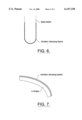
- Such a conventional coating material when applied "thick" on a curbed surface as shown in FIG. 7 will crack or peel sooner or later when subjected to repeated vibrations.
- the present invention is described in full in the following.
- the invention provides a vibration damping coating to be used on a number of objects, e.g. a vehicle, interior trim, construction material and electric appliance.
- the vibration damping coating of the present invention includes, as measured in a dried state, 30 to 90% by weight in combination of mica flakes and calcium carbonate, whose relative ratio is 75/25 to 0/100.
- the filming material or base material of the coating is a polymer material or a blend of polymer materials that provide a glass transition point -20 to 80° C., or more advantageously 0 to 40° C.
- Such polymer materials may be acrylic esters or metacrylic esters, or their selective combinations, or selective combinations of acrylic esters or metacrylic esters and styrene, or acryl-styrene copolymers.
- the base material may also contain di-2-ethylhexyl phthalate (DOP), dibutyl phthalate (DBP), and/or diisononyl phthalate (DINP), and/or a crosslinking agent.
- Polyurethane and/or asphalt materials may also be utilized for the coating of the invention.
- Easiness of handling and molding, availability and cost of ingredient materials, temperature property such as heat resistance or resistance against coldness, and weather resistance should be taken into due consideration. Applicable temperature ranges and ways of use of the vibration damping coating should also be taken into consideration.
- Mica flakes can significantly improve the vibration damping capability of the vibration damping coating.
- the average aspect ratio by weight of mica flakes to be used is preferably 20 to 60. More preferably, the average aspect ratio is 30 to 40. Mica flakes with an aspect ratio below 20 would not provide a satisfactory vibration damping, while an aspect ratio over 60 would not provide a reliable coating. Such a vibration damping coating having an aspect ratio over 60 will easily crack in use and/or clog sprayer nozzles.
- Calcium carbonate can also significantly improve the vibration damping capability of the coating. Either light calcium carbonate or heavy calcium carbonate, singly or together, can be effectively utilized, of which heavy calcium carbonate is preferred.
- the average particle size of the calcium carbonate is 1 to 80 micrometers in consideration of cost and for prevention of nozzle clogging.
- the mica flakes and calcium carbonate are preferably blended in a weight ratio 75/25 to 0/100. This preferable ratio is determined through the study conducted by the inventors. If the ratio is over 75/25, the resultant coating would easily crack or peel.
- the blend of mica flakes and calcium carbonate is preferably blended in the base material in an amount of 30 to 70% by weight as measured when the coating is "dry". An amount below this range will not provide a satisfactory vibration damping while an amount over this range will result in inadequacy of the applicability of the coating.
- the base material may additionally contain water or alcohol to provide an emulsion form.
- Such an emulsion may additionally contain a desired amount of a dispersant, filming agent, wet agent, thickener, antifoamer, viscosity controller and/or colorant.
- All selected ingredients are mixed or blended well with a conventional mixer or blender.
- the coating is applied on a surface portion of a vibratory object by means of an applicator such as an air spray gun, airless spray gun, or brush.
- an applicator such as an air spray gun, airless spray gun, or brush.
- the base material may further contain an active ingredient or moment activator to promote the dipole moment in the coating, which can significantly improve the vibration damping property of the coating.
- a plurality of such activators may be contained.
- FIG. 1 schematically shows an orientation of dipoles 12 in a vibration damping coating 11 before application of a vibration energy thereonto.
- the dipoles 12 in the coating 11 are regarded stable.
- FIG. 2 schematically shows an orientation of the dipoles 12 when a vibration energy is applied onto the coating 11.
- the dipoles 12 are regarded unstable in such a parallel orientation, which possess "built-in" energy (provided from the applied vibration energy) to return to their stable state such as shown in FIG. 1.
- the dipoles 12 consume energy as they return to a stable orientation, thus damping the vibration energy.
- Moment activators to be blended may be compounds which themselves possess high dipole moment.
- Moment activators to be blended may alternatively be compounds which can significantly increase the dipole moment of the base material when blended therein.
- a moment activator blended in the base material can significantly increase the dipole moment of the base material, three times to ten times or even more as schematically shown in FIG. 3.
- the increased dipole moment can consume the more vibration energy.
- Such moment activators may be compounds having a benzothiazyl radical or radicals such as N,N-dicyclohexylbenzothiazyl-2-sulfenamde (DCHBSA), 2-mercaptobenzothiazole (MBT), dibenzothiazylsulfide (MBTS), N-cyclohexylbenzothiazyl-2-sulfenamide (CBS), N-tert-butylbenzothiazyl-2-sulfenamide (BBS), N-oxydiethylenebenzothiazyl-2-sulfenamide (OBS), or N,N-diisopropylbenzothiazyl-2-sulfenamide (DPBS).
- DCHBSA N,N-dicyclohexylbenzothiazyl-2-sulfenamde
- MTT 2-mercaptobenzothiazole
- MBTS dibenzothiazylsulfide
- CBS N-cyclohexylbenz
- such moment activators may be compounds having a benzotriazole radical or radicals such as 2- ⁇ 2'-hydroxy-3'-(3", 4", 5", 6" tetrahydrophtaliridemethyl)-5'-methyphenyl ⁇ -benzotriazole (2HMPB), 2- ⁇ 2'-hydroxy-5'-methylphenyl ⁇ -benzotriazole (2HMPB), 2- ⁇ 2'-hydroxy-3'-t-butyl-5'-methylphenyl ⁇ -5-chlorobenzotriazole (2HBMPCB), 2- ⁇ 2'-hydroxy-3', 5'-di-t-butylphenyl ⁇ -5-chlorobenzotriazole (2HDBPCB), having as a nucleus benzotriazole comprising an azole radical bound to a benzene ring, to which a phenyl radical is bound.
- HMPB 2- ⁇ 2'-hydroxy-3'-(3", 4", 5", 6" tetrahydrophtaliridemethyl)-5
- moment activators may be compounds having a diphenylacrylate radical or radicals such as ethyl-2-cyano-3, 3-di-phenylacrylate.
- moment activators may be compounds having a benzophenone radical or radicals such as 2-hydroxy-4-methoxybenzophenone-5-sulphonic acid (HMBPS).
- HMBPS 2-hydroxy-4-methoxybenzophenone-5-sulphonic acid
- Such a moment activator or a selected combination of activators is preferably blended in a base material in an amount of 10 to 100 parts by weight in 100 parts by weight of the base material.
- a blend less than 10 parts by weight will not provide a satisfactory promotion of dipole moment while a blend more than 100 parts by weight will result in poor mixing with the moment activator or activators as well as in poor integrity of the coated layer.
- SP values are an indication of compatibility between polymers. Their SP values should be close for adequate blending.
- the amount of such a moment activator to be blended varies depending upon the type of the moment activator. The amount also varies depending upon the temperature of use and the energy to be transferred. Accordingly, the operation temperature and the magnitude of vibration to be applied should be taken into due consideration in selecting an appropriate amount of a moment activator to be blended.
- the magnitude of dipole moment is indicated by the difference in dielectric constant ( ⁇ ') between A and B shown in FIG. 4. The larger the difference, the greater the dipole moment.
- dielectric loss factor ( ⁇ ") dielectric constant ( ⁇ ') ⁇ dielectric tangent (tan ⁇ ).
- the inventors have discovered through their strenuous research that the higher the dielectric loss factor ( ⁇ ), the higher the loss factor ( ⁇ ) and loss tangent (tan ⁇ ). Thus, there is a direct relationship among the dielectric loss factor ( ⁇ "), loss factor ( ⁇ ) and dielectric tangent (tan ⁇ ).
- FIG. 1 schematically shows an arrangement or orientation of dipoles in a coating base material
- FIG. 2 schematically shows an orientation of the dipoles in the base material when a vibration energy is applied
- FIG. 3 schematically shows an increase of active dipoles in a base material where a moment activator is blended
- FIG. 4 is a graph which shows a relationship between the dielectric constant ( ⁇ ') and dielectric loss factor ( ⁇ ");
- FIG. 5 is a graph showing the loss factors ( ⁇ ) of Embodiments 1-4 and Comparisons 1 and 2 in relation to the temperature;
- FIG. 6 shows a U-shaped steel plate provided with a vibration damping coating layer thereon
- FIG. 7 shows a state where a coating layer is provided on a curbed surface.
- Vibration damping layers 1 mm thick provided respectively on steel plates 1 mm thick were prepared using vibration damping coatings prepared according to Embodiments 1 to 4 and Comparison 1, whose respective components are given below in Table 1.
- the loss factors ( ⁇ ) of the layers were measured in relation to the temperature using a central excitation loss factor measurement device (CF5200) of Ono Sokki Kabushiki-Kaisha (Ono Measurements Corporation).
- FIG. 5 shows the measurements.
- the base material or emulsion was "BONCOAT BC-280" (acryl-styrene copolymer or polymer of acrylic ester) sold from Dai-Nippon Ink Chemicals Corporation.
- the mica flakes were “200HK” sold from Kurare Co., Ltd.
- the calcium carbonate was "Super SS” sold from Maruo Calcium Corporation.
- the dispersant was tripolisodium phosphate (10 wt. %) sold from Dai-Nippon Ink Chemicals Corporation, and the filming agent was ethylene glycol sold from Mitsubishi Chemicals, Inc., while the viscosity promoter was "ARON A30" sold from Toa Synthetics Co., Ltd.
- the colorant was "DISPERBLACK” sold from Dai-Nippon Ink Chemicals Corporation and the anti-foamer was "FOAMASTER PC” sold from Sunnopco Company. Water was used as the viscosity controller.
- Comparison 2 was sampled from "GELNUCK", a conventional vibration damping material sold from Nippon Automation Company.
- FIG. 5 shows that the peak loss factors of Embodiments 1-4 and Comparison 1 were over “0.05", while that of Comparison 2 was "0.04".
- the base plates were bent into a U-shape (R15) as shown in FIG. 6, on which Embodiments 1-4 and Comparisons 1 and 2 were respectively applied as layers at a room temperature. The appearances of the surfaces of the layers were investigated.
- Comparisons 1 and 2 showed some cracking and peeling from the base plates, while Embodiment 1 showed a slow cracking. Embodiments 2-4 did not show any cracking or peeling.
- a vibration damping coating of the present invention contains in the base material mica flakes and calcium carbonate in a combined amount of 30-70% by weight.
- the proportion of the mica flakes and calcium carbonate is 75/25-0/100.
- the vibration damping coatings of the present invention provide excellent vibration damping and will not crack or peel even when applied on a curbed surface.
Landscapes
- Chemical & Material Sciences (AREA)
- Organic Chemistry (AREA)
- Engineering & Computer Science (AREA)
- Life Sciences & Earth Sciences (AREA)
- Materials Engineering (AREA)
- Wood Science & Technology (AREA)
- Health & Medical Sciences (AREA)
- Chemical Kinetics & Catalysis (AREA)
- Medicinal Chemistry (AREA)
- Polymers & Plastics (AREA)
- Inorganic Chemistry (AREA)
- Nanotechnology (AREA)
- Paints Or Removers (AREA)
- Investigating Or Analyzing Materials By The Use Of Ultrasonic Waves (AREA)
- Glass Compositions (AREA)
- Surgical Instruments (AREA)
- Golf Clubs (AREA)
- Springs (AREA)
- Vehicle Interior And Exterior Ornaments, Soundproofing, And Insulation (AREA)
Applications Claiming Priority (1)
| Application Number | Priority Date | Filing Date | Title |
|---|---|---|---|
| PCT/JP1997/004381 WO1999028394A1 (fr) | 1997-12-01 | 1997-12-01 | Peinture antivibrations |
Publications (1)
| Publication Number | Publication Date |
|---|---|
| US6147150A true US6147150A (en) | 2000-11-14 |
Family
ID=14181567
Family Applications (1)
| Application Number | Title | Priority Date | Filing Date |
|---|---|---|---|
| US09/180,571 Expired - Lifetime US6147150A (en) | 1997-12-01 | 1997-12-01 | Vibration damping paint |
Country Status (8)
| Country | Link |
|---|---|
| US (1) | US6147150A (fr) |
| EP (1) | EP0952192B1 (fr) |
| KR (1) | KR100513981B1 (fr) |
| AT (1) | ATE285453T1 (fr) |
| DE (1) | DE69732048T2 (fr) |
| ES (1) | ES2235267T3 (fr) |
| PT (1) | PT952192E (fr) |
| WO (1) | WO1999028394A1 (fr) |
Cited By (5)
| Publication number | Priority date | Publication date | Assignee | Title |
|---|---|---|---|---|
| US6635327B2 (en) * | 1996-05-10 | 2003-10-21 | Shishiai-Kabushikigaisha | Energy conversion composition |
| US20070081901A1 (en) * | 2005-10-06 | 2007-04-12 | General Electric Company | Vibration damper coating |
| US11059264B2 (en) | 2018-03-19 | 2021-07-13 | Avery Dennison Corporation | Multilayer constrained-layer damping |
| US11701863B2 (en) | 2018-05-17 | 2023-07-18 | Avery Dennison Corporation | Partial coverage multilayer damping laminate |
| US11713406B2 (en) | 2016-09-20 | 2023-08-01 | Avery Dennison Corporation | Multilayer tape |
Families Citing this family (12)
| Publication number | Priority date | Publication date | Assignee | Title |
|---|---|---|---|---|
| WO2001040391A1 (fr) * | 1999-12-02 | 2001-06-07 | Shishiai-Kabushikigaisha | Materiau pour revetement amortissant les vibrations |
| JP4221419B2 (ja) * | 2006-03-27 | 2009-02-12 | シーシーアイ株式会社 | 減衰性塗料 |
| JP5765869B2 (ja) | 2006-12-20 | 2015-08-19 | ローム アンド ハース カンパニーRohm And Haas Company | 液状適用音響減衰材 |
| JP2008248188A (ja) * | 2007-03-30 | 2008-10-16 | Cci Corp | 減衰性塗料 |
| JP2008248185A (ja) * | 2007-03-30 | 2008-10-16 | Cci Corp | 減衰性塗料 |
| CN101085896B (zh) * | 2007-07-13 | 2010-09-29 | 石家庄市尽功精细云母化工厂 | 环保水性云母涂料 |
| JP5438930B2 (ja) * | 2008-08-04 | 2014-03-12 | 本田技研工業株式会社 | 水性制振塗料組成物 |
| JP2010235888A (ja) * | 2009-03-31 | 2010-10-21 | Cci Corp | 制振組成物 |
| JP2010235885A (ja) * | 2009-03-31 | 2010-10-21 | Cci Corp | 屋根用制振塗料組成物及び屋根構造 |
| JP5701488B2 (ja) * | 2009-03-31 | 2015-04-15 | シーシーアイ株式会社 | 屋根用制振塗料組成物及び屋根構造 |
| JP2014177626A (ja) * | 2013-02-14 | 2014-09-25 | Nippon Shokubai Co Ltd | 振動減衰材用樹脂組成物 |
| CN103254698B (zh) * | 2013-06-08 | 2015-04-22 | 湖州益环环保工程有限公司 | 隔声吸振阻尼浆及生产方法 |
Citations (2)
| Publication number | Priority date | Publication date | Assignee | Title |
|---|---|---|---|---|
| US4444937A (en) * | 1981-08-06 | 1984-04-24 | Burke's Paint Company, Inc. | Long life paint |
| US4657963A (en) * | 1984-08-28 | 1987-04-14 | Honda Giken Kogyo Kabushiki Kaisha | Heat-resistant coating composition and heat-resistant coat |
Family Cites Families (4)
| Publication number | Priority date | Publication date | Assignee | Title |
|---|---|---|---|---|
| US3929692A (en) * | 1973-03-06 | 1975-12-30 | Grow Chemical Corp | Sprayable decorative coating composition for covering unfinished surfaces |
| JPS5755970A (en) * | 1980-09-19 | 1982-04-03 | Nippon Zeon Co Ltd | Self-extinguishing,aqueous damping paint composition |
| US5350793A (en) * | 1991-11-29 | 1994-09-27 | Toda Kogyo Corporation | Damping material |
| JP2829902B2 (ja) * | 1995-10-11 | 1998-12-02 | 株式会社コスモ総合研究所 | 水系制振塗料組成物 |
-
1997
- 1997-12-01 EP EP97955084A patent/EP0952192B1/fr not_active Expired - Lifetime
- 1997-12-01 KR KR1019980707286A patent/KR100513981B1/ko not_active Expired - Fee Related
- 1997-12-01 DE DE69732048T patent/DE69732048T2/de not_active Expired - Fee Related
- 1997-12-01 PT PT97955084T patent/PT952192E/pt unknown
- 1997-12-01 ES ES97955084T patent/ES2235267T3/es not_active Expired - Lifetime
- 1997-12-01 US US09/180,571 patent/US6147150A/en not_active Expired - Lifetime
- 1997-12-01 AT AT97955084T patent/ATE285453T1/de not_active IP Right Cessation
- 1997-12-01 WO PCT/JP1997/004381 patent/WO1999028394A1/fr not_active Ceased
Patent Citations (2)
| Publication number | Priority date | Publication date | Assignee | Title |
|---|---|---|---|---|
| US4444937A (en) * | 1981-08-06 | 1984-04-24 | Burke's Paint Company, Inc. | Long life paint |
| US4657963A (en) * | 1984-08-28 | 1987-04-14 | Honda Giken Kogyo Kabushiki Kaisha | Heat-resistant coating composition and heat-resistant coat |
Cited By (8)
| Publication number | Priority date | Publication date | Assignee | Title |
|---|---|---|---|---|
| US6645586B2 (en) | 1969-05-10 | 2003-11-11 | Shishiai-Kabushikigaisha | Energy conversion composition |
| US6635327B2 (en) * | 1996-05-10 | 2003-10-21 | Shishiai-Kabushikigaisha | Energy conversion composition |
| US20070081901A1 (en) * | 2005-10-06 | 2007-04-12 | General Electric Company | Vibration damper coating |
| US7360997B2 (en) | 2005-10-06 | 2008-04-22 | General Electric Company | Vibration damper coating |
| US11713406B2 (en) | 2016-09-20 | 2023-08-01 | Avery Dennison Corporation | Multilayer tape |
| US12275872B2 (en) | 2016-09-20 | 2025-04-15 | Avery Dennison Corporation | Multilayer tape |
| US11059264B2 (en) | 2018-03-19 | 2021-07-13 | Avery Dennison Corporation | Multilayer constrained-layer damping |
| US11701863B2 (en) | 2018-05-17 | 2023-07-18 | Avery Dennison Corporation | Partial coverage multilayer damping laminate |
Also Published As
| Publication number | Publication date |
|---|---|
| ATE285453T1 (de) | 2005-01-15 |
| KR19990087797A (ko) | 1999-12-27 |
| EP0952192B1 (fr) | 2004-12-22 |
| EP0952192A4 (fr) | 1999-12-01 |
| WO1999028394A1 (fr) | 1999-06-10 |
| KR100513981B1 (ko) | 2006-02-17 |
| ES2235267T3 (es) | 2005-07-01 |
| PT952192E (pt) | 2005-03-31 |
| EP0952192A1 (fr) | 1999-10-27 |
| DE69732048D1 (de) | 2005-01-27 |
| DE69732048T2 (de) | 2005-12-08 |
Similar Documents
| Publication | Publication Date | Title |
|---|---|---|
| US6147150A (en) | Vibration damping paint | |
| WO2012115986A1 (fr) | Revêtements très hydrophobes et oléophobes comprenant des systèmes de liants à faible teneur en cov | |
| WO1997038059A1 (fr) | Base de ruban-masque de revetement et ruban masque de revetement | |
| MXPA01008843A (es) | Revestimientos resistentes a la abrasion. | |
| CN103237607B (zh) | 在基材上施加防火涂层的方法 | |
| MXPA04012356A (es) | Proceso de recubrimiento paraobtener efectos especiales de superficies. | |
| CA1291838C (fr) | Composition pour peinture primaire ou pour couche intermediaire | |
| JP3613778B2 (ja) | 建築用板材 | |
| WO1999038922A1 (fr) | Materiau de revetement anti-vibrations | |
| JPH10195339A (ja) | 制振塗料 | |
| CN103756419A (zh) | 水性外墙涂料及其制备方法 | |
| US20110229727A1 (en) | Low voc multicolor coating | |
| JP4879523B2 (ja) | 粉体塗料組成物、塗膜形成方法および塗装物 | |
| JP2006321863A (ja) | 自動車内装用水性塗料組成物 | |
| Cohen | Zircoaluminate adhesion promoters | |
| WO1999006491A1 (fr) | Peinture amortissante | |
| JPH09104842A (ja) | 水系制振塗料組成物 | |
| JPWO1999028394A1 (ja) | 制振塗料 | |
| WO1994022967A1 (fr) | Composition de revetement de protection pour bas de caisse et pieces pare-gravillons de vehicules automobiles | |
| RU2854373C1 (ru) | Способ нанесения металлизированного защитно-декоративного покрытия | |
| JP2645494B2 (ja) | 塗料用組成物 | |
| US3860550A (en) | Primer coating composition | |
| KR100239507B1 (ko) | 스프레이 타입 수용성 제진재 및 그 조성물 | |
| JP4238946B2 (ja) | 制振塗料 | |
| WO2001040391A1 (fr) | Materiau pour revetement amortissant les vibrations |
Legal Events
| Date | Code | Title | Description |
|---|---|---|---|
| AS | Assignment |
Owner name: SHISHIAI-KABUSHIKIGAISHA, JAPAN Free format text: ASSIGNMENT OF ASSIGNORS INTEREST;ASSIGNORS:OHIRA, YASUYUKI;MUTO, MASAMITSU;REEL/FRAME:010300/0937 Effective date: 19980928 |
|
| STCF | Information on status: patent grant |
Free format text: PATENTED CASE |
|
| FPAY | Fee payment |
Year of fee payment: 4 |
|
| FPAY | Fee payment |
Year of fee payment: 8 |
|
| FEPP | Fee payment procedure |
Free format text: PAYOR NUMBER ASSIGNED (ORIGINAL EVENT CODE: ASPN); ENTITY STATUS OF PATENT OWNER: SMALL ENTITY |
|
| FPAY | Fee payment |
Year of fee payment: 12 |