US6238931B1 - Fluorescence energy transfer in particles - Google Patents
Fluorescence energy transfer in particles Download PDFInfo
- Publication number
- US6238931B1 US6238931B1 US08/274,534 US27453494A US6238931B1 US 6238931 B1 US6238931 B1 US 6238931B1 US 27453494 A US27453494 A US 27453494A US 6238931 B1 US6238931 B1 US 6238931B1
- Authority
- US
- United States
- Prior art keywords
- component
- particle
- energy
- loadable
- equal
- Prior art date
- Legal status (The legal status is an assumption and is not a legal conclusion. Google has not performed a legal analysis and makes no representation as to the accuracy of the status listed.)
- Expired - Lifetime
Links
- 239000002245 particle Substances 0.000 title claims abstract description 254
- 238000012546 transfer Methods 0.000 title abstract description 33
- 239000007850 fluorescent dye Substances 0.000 claims abstract description 70
- 239000003446 ligand Substances 0.000 claims abstract description 40
- 108090000623 proteins and genes Proteins 0.000 claims abstract description 13
- 102000004169 proteins and genes Human genes 0.000 claims abstract description 13
- 102000004196 processed proteins & peptides Human genes 0.000 claims abstract description 7
- 108090000765 processed proteins & peptides Proteins 0.000 claims abstract description 7
- 102000039446 nucleic acids Human genes 0.000 claims abstract description 6
- 108020004707 nucleic acids Proteins 0.000 claims abstract description 6
- 150000007523 nucleic acids Chemical class 0.000 claims abstract description 6
- 239000002773 nucleotide Substances 0.000 claims abstract description 6
- 125000003729 nucleotide group Chemical group 0.000 claims abstract description 6
- 229920001184 polypeptide Polymers 0.000 claims abstract description 4
- 239000000975 dye Substances 0.000 claims description 245
- 229910052710 silicon Inorganic materials 0.000 claims description 112
- XUIMIQQOPSSXEZ-UHFFFAOYSA-N Silicon Chemical group [Si] XUIMIQQOPSSXEZ-UHFFFAOYSA-N 0.000 claims description 111
- 239000010703 silicon Substances 0.000 claims description 111
- 239000004816 latex Substances 0.000 claims description 102
- 229920000126 latex Polymers 0.000 claims description 101
- 230000005284 excitation Effects 0.000 claims description 63
- LKKPNUDVOYAOBB-UHFFFAOYSA-N naphthalocyanine Chemical group N1C(N=C2C3=CC4=CC=CC=C4C=C3C(N=C3C4=CC5=CC=CC=C5C=C4C(=N4)N3)=N2)=C(C=C2C(C=CC=C2)=C2)C2=C1N=C1C2=CC3=CC=CC=C3C=C2C4=N1 LKKPNUDVOYAOBB-UHFFFAOYSA-N 0.000 claims description 51
- -1 phenylbutadienyl Chemical group 0.000 claims description 50
- IEQIEDJGQAUEQZ-UHFFFAOYSA-N phthalocyanine Chemical group N1C(N=C2C3=CC=CC=C3C(N=C3C4=CC=CC=C4C(=N4)N3)=N2)=C(C=CC=C2)C2=C1N=C1C2=CC=CC=C2C4=N1 IEQIEDJGQAUEQZ-UHFFFAOYSA-N 0.000 claims description 50
- YXOKVSZBUVOHOQ-UHFFFAOYSA-N 2-methylprop-1-enoxysilane Chemical compound CC(C)=CO[SiH3] YXOKVSZBUVOHOQ-UHFFFAOYSA-N 0.000 claims description 39
- 238000010791 quenching Methods 0.000 claims description 35
- 230000000171 quenching effect Effects 0.000 claims description 35
- 150000003839 salts Chemical group 0.000 claims description 32
- JACPFCQFVIAGDN-UHFFFAOYSA-M sipc iv Chemical group [OH-].[Si+4].CN(C)CCC[Si](C)(C)[O-].C=1C=CC=C(C(N=C2[N-]C(C3=CC=CC=C32)=N2)=N3)C=1C3=CC([C]1C=CC=CC1=1)=NC=1N=C1[C]3C=CC=CC3=C2[N-]1 JACPFCQFVIAGDN-UHFFFAOYSA-M 0.000 claims description 30
- VYPSYNLAJGMNEJ-UHFFFAOYSA-N Silicium dioxide Chemical compound O=[Si]=O VYPSYNLAJGMNEJ-UHFFFAOYSA-N 0.000 claims description 29
- JUJWROOIHBZHMG-UHFFFAOYSA-N Pyridine Chemical compound C1=CC=NC=C1 JUJWROOIHBZHMG-UHFFFAOYSA-N 0.000 claims description 22
- 125000005504 styryl group Chemical group 0.000 claims description 18
- 239000000298 carbocyanine Substances 0.000 claims description 17
- 239000000377 silicon dioxide Substances 0.000 claims description 13
- UMJSCPRVCHMLSP-UHFFFAOYSA-N pyridine Natural products COC1=CC=CN=C1 UMJSCPRVCHMLSP-UHFFFAOYSA-N 0.000 claims description 11
- 230000003247 decreasing effect Effects 0.000 claims description 9
- JZRYQZJSTWVBBD-UHFFFAOYSA-N pentaporphyrin i Chemical compound N1C(C=C2NC(=CC3=NC(=C4)C=C3)C=C2)=CC=C1C=C1C=CC4=N1 JZRYQZJSTWVBBD-UHFFFAOYSA-N 0.000 claims description 8
- 238000002835 absorbance Methods 0.000 claims description 7
- 230000001747 exhibiting effect Effects 0.000 claims description 7
- PNEYBMLMFCGWSK-UHFFFAOYSA-N aluminium oxide Inorganic materials [O-2].[O-2].[O-2].[Al+3].[Al+3] PNEYBMLMFCGWSK-UHFFFAOYSA-N 0.000 claims description 5
- HSHJZLRELITFHY-UHFFFAOYSA-N [dimethyl-(2,3,4,5,6-pentafluorophenyl)silyl]oxy-dimethyl-(2,3,4,5,6-pentafluorophenyl)silane Chemical compound FC=1C(F)=C(F)C(F)=C(F)C=1[Si](C)(C)O[Si](C)(C)C1=C(F)C(F)=C(F)C(F)=C1F HSHJZLRELITFHY-UHFFFAOYSA-N 0.000 claims description 4
- 229930002875 chlorophyll Natural products 0.000 claims description 4
- 235000019804 chlorophyll Nutrition 0.000 claims description 4
- ATNHDLDRLWWWCB-AENOIHSZSA-M chlorophyll a Chemical group C1([C@@H](C(=O)OC)C(=O)C2=C3C)=C2N2C3=CC(C(CC)=C3C)=[N+]4C3=CC3=C(C=C)C(C)=C5N3[Mg-2]42[N+]2=C1[C@@H](CCC(=O)OC\C=C(/C)CCC[C@H](C)CCC[C@H](C)CCCC(C)C)[C@H](C)C2=C5 ATNHDLDRLWWWCB-AENOIHSZSA-M 0.000 claims description 4
- 239000000084 colloidal system Substances 0.000 claims description 4
- GNBHRKFJIUUOQI-UHFFFAOYSA-N fluorescein Chemical group O1C(=O)C2=CC=CC=C2C21C1=CC=C(O)C=C1OC1=CC(O)=CC=C21 GNBHRKFJIUUOQI-UHFFFAOYSA-N 0.000 claims description 4
- FWPXRSGLRILKNV-UHFFFAOYSA-N trihexyl(trihexylsilyloxy)silane Chemical compound CCCCCC[Si](CCCCCC)(CCCCCC)O[Si](CCCCCC)(CCCCCC)CCCCCC FWPXRSGLRILKNV-UHFFFAOYSA-N 0.000 claims description 3
- NHQOULZCPKJYMM-UHFFFAOYSA-M (2e)-1,3,3-trimethyl-2-[(2e)-7-(1,3,3-trimethylindol-1-ium-2-yl)hepta-2,4,6-trienylidene]indole;perchlorate Chemical compound [O-]Cl(=O)(=O)=O.CC1(C)C2=CC=CC=C2N(C)C1=CC=CC=CC=CC1=[N+](C)C2=CC=CC=C2C1(C)C NHQOULZCPKJYMM-UHFFFAOYSA-M 0.000 claims description 2
- JRMSLDWZFJZLAS-UHFFFAOYSA-M [7-(dimethylamino)-1,9-dimethylphenothiazin-3-ylidene]-dimethylazanium;chloride Chemical compound [Cl-].CC1=CC(N(C)C)=CC2=[S+]C3=CC(N(C)C)=CC(C)=C3N=C21 JRMSLDWZFJZLAS-UHFFFAOYSA-M 0.000 claims description 2
- DATDIKJNDXJMGM-CMDGGOBGSA-N n,n-dibutyl-4-[(e)-2-(1-methyl-2h-pyridin-4-yl)ethenyl]aniline Chemical compound C1=CC(N(CCCC)CCCC)=CC=C1\C=C\C1=CCN(C)C=C1 DATDIKJNDXJMGM-CMDGGOBGSA-N 0.000 claims 5
- 239000002502 liposome Substances 0.000 claims 2
- VKEQBMCRQDSRET-UHFFFAOYSA-N Methylone Chemical compound CNC(C)C(=O)C1=CC=C2OCOC2=C1 VKEQBMCRQDSRET-UHFFFAOYSA-N 0.000 claims 1
- 238000000034 method Methods 0.000 abstract description 26
- 238000012800 visualization Methods 0.000 abstract description 12
- 238000001514 detection method Methods 0.000 abstract description 5
- ZMXDDKWLCZADIW-UHFFFAOYSA-N N,N-Dimethylformamide Chemical compound CN(C)C=O ZMXDDKWLCZADIW-UHFFFAOYSA-N 0.000 description 171
- WYURNTSHIVDZCO-UHFFFAOYSA-N Tetrahydrofuran Chemical compound C1CCOC1 WYURNTSHIVDZCO-UHFFFAOYSA-N 0.000 description 122
- VLKZOEOYAKHREP-UHFFFAOYSA-N n-Hexane Chemical compound CCCCCC VLKZOEOYAKHREP-UHFFFAOYSA-N 0.000 description 114
- YXFVVABEGXRONW-UHFFFAOYSA-N Toluene Chemical compound CC1=CC=CC=C1 YXFVVABEGXRONW-UHFFFAOYSA-N 0.000 description 84
- 239000000243 solution Substances 0.000 description 63
- 239000007787 solid Substances 0.000 description 43
- 239000000047 product Substances 0.000 description 40
- XLYOFNOQVPJJNP-UHFFFAOYSA-N water Substances O XLYOFNOQVPJJNP-UHFFFAOYSA-N 0.000 description 32
- XMBWDFGMSWQBCA-UHFFFAOYSA-N hydrogen iodide Chemical compound I XMBWDFGMSWQBCA-UHFFFAOYSA-N 0.000 description 28
- RAXXELZNTBOGNW-UHFFFAOYSA-N imidazole Natural products C1=CNC=N1 RAXXELZNTBOGNW-UHFFFAOYSA-N 0.000 description 27
- CYFGWAWQKXJFGI-UHFFFAOYSA-N prop-1-enoxysilane Chemical compound CC=CO[SiH3] CYFGWAWQKXJFGI-UHFFFAOYSA-N 0.000 description 27
- 210000002966 serum Anatomy 0.000 description 27
- 239000000725 suspension Substances 0.000 description 27
- 239000000523 sample Substances 0.000 description 26
- 230000015572 biosynthetic process Effects 0.000 description 24
- 238000003786 synthesis reaction Methods 0.000 description 22
- XKRFYHLGVUSROY-UHFFFAOYSA-N Argon Chemical compound [Ar] XKRFYHLGVUSROY-UHFFFAOYSA-N 0.000 description 20
- 150000001875 compounds Chemical class 0.000 description 19
- QGKMIGUHVLGJBR-UHFFFAOYSA-M (4z)-1-(3-methylbutyl)-4-[[1-(3-methylbutyl)quinolin-1-ium-4-yl]methylidene]quinoline;iodide Chemical compound [I-].C12=CC=CC=C2N(CCC(C)C)C=CC1=CC1=CC=[N+](CCC(C)C)C2=CC=CC=C12 QGKMIGUHVLGJBR-UHFFFAOYSA-M 0.000 description 18
- 229910004152 SiNc Inorganic materials 0.000 description 18
- 238000003018 immunoassay Methods 0.000 description 18
- 239000011541 reaction mixture Substances 0.000 description 18
- 238000011068 loading method Methods 0.000 description 17
- 238000003556 assay Methods 0.000 description 14
- 238000000502 dialysis Methods 0.000 description 14
- 238000005259 measurement Methods 0.000 description 14
- VLTRZXGMWDSKGL-UHFFFAOYSA-M perchlorate Inorganic materials [O-]Cl(=O)(=O)=O VLTRZXGMWDSKGL-UHFFFAOYSA-M 0.000 description 14
- YLQBMQCUIZJEEH-UHFFFAOYSA-N tetrahydrofuran Natural products C=1C=COC=1 YLQBMQCUIZJEEH-UHFFFAOYSA-N 0.000 description 14
- 239000000203 mixture Substances 0.000 description 12
- VLTRZXGMWDSKGL-UHFFFAOYSA-N perchloric acid Chemical compound OCl(=O)(=O)=O VLTRZXGMWDSKGL-UHFFFAOYSA-N 0.000 description 12
- 238000003756 stirring Methods 0.000 description 12
- 238000010348 incorporation Methods 0.000 description 11
- 229910052786 argon Inorganic materials 0.000 description 10
- 239000012528 membrane Substances 0.000 description 10
- 239000002904 solvent Substances 0.000 description 10
- 125000000391 vinyl group Chemical group [H]C([*])=C([H])[H] 0.000 description 10
- 229920002554 vinyl polymer Polymers 0.000 description 10
- 229910052732 germanium Inorganic materials 0.000 description 9
- 239000003921 oil Substances 0.000 description 9
- 125000002924 primary amino group Chemical group [H]N([H])* 0.000 description 9
- 239000012491 analyte Substances 0.000 description 8
- 239000013060 biological fluid Substances 0.000 description 8
- GNPVGFCGXDBREM-UHFFFAOYSA-N germanium atom Chemical compound [Ge] GNPVGFCGXDBREM-UHFFFAOYSA-N 0.000 description 8
- 239000007790 solid phase Substances 0.000 description 8
- 238000001228 spectrum Methods 0.000 description 8
- 229910052718 tin Inorganic materials 0.000 description 8
- ATJFFYVFTNAWJD-UHFFFAOYSA-N Tin Chemical compound [Sn] ATJFFYVFTNAWJD-UHFFFAOYSA-N 0.000 description 7
- QWYZFXLSWMXLDM-UHFFFAOYSA-M pinacyanol iodide Chemical group [I-].C1=CC2=CC=CC=C2N(CC)C1=CC=CC1=CC=C(C=CC=C2)C2=[N+]1CC QWYZFXLSWMXLDM-UHFFFAOYSA-M 0.000 description 7
- IKEIGECHKXPQKT-UHFFFAOYSA-N silicon phthalocyanine dihydroxide Chemical compound N1=C(C2=CC=CC=C2C2=NC=3C4=CC=CC=C4C(=N4)N=3)N2[Si](O)(O)N2C4=C(C=CC=C3)C3=C2N=C2C3=CC=CC=C3C1=N2 IKEIGECHKXPQKT-UHFFFAOYSA-N 0.000 description 7
- 239000006228 supernatant Substances 0.000 description 7
- CSCPPACGZOOCGX-UHFFFAOYSA-N Acetone Chemical compound CC(C)=O CSCPPACGZOOCGX-UHFFFAOYSA-N 0.000 description 6
- OKKJLVBELUTLKV-UHFFFAOYSA-N Methanol Chemical compound OC OKKJLVBELUTLKV-UHFFFAOYSA-N 0.000 description 6
- FAPWRFPIFSIZLT-UHFFFAOYSA-M Sodium chloride Chemical compound [Na+].[Cl-] FAPWRFPIFSIZLT-UHFFFAOYSA-M 0.000 description 6
- 229940032047 Tdap vaccine Drugs 0.000 description 6
- 238000010521 absorption reaction Methods 0.000 description 6
- 125000003118 aryl group Chemical group 0.000 description 6
- IJKVHSBPTUYDLN-UHFFFAOYSA-N dihydroxy(oxo)silane Chemical compound O[Si](O)=O IJKVHSBPTUYDLN-UHFFFAOYSA-N 0.000 description 6
- 230000000694 effects Effects 0.000 description 6
- 239000012530 fluid Substances 0.000 description 6
- 239000003960 organic solvent Substances 0.000 description 6
- NFHFRUOZVGFOOS-UHFFFAOYSA-N palladium;triphenylphosphane Chemical compound [Pd].C1=CC=CC=C1P(C=1C=CC=CC=1)C1=CC=CC=C1.C1=CC=CC=C1P(C=1C=CC=CC=1)C1=CC=CC=C1.C1=CC=CC=C1P(C=1C=CC=CC=1)C1=CC=CC=C1.C1=CC=CC=C1P(C=1C=CC=CC=1)C1=CC=CC=C1 NFHFRUOZVGFOOS-UHFFFAOYSA-N 0.000 description 6
- 238000002360 preparation method Methods 0.000 description 6
- 230000035945 sensitivity Effects 0.000 description 6
- LWIHDJKSTIGBAC-UHFFFAOYSA-K tripotassium phosphate Chemical compound [K+].[K+].[K+].[O-]P([O-])([O-])=O LWIHDJKSTIGBAC-UHFFFAOYSA-K 0.000 description 6
- 108090000790 Enzymes Proteins 0.000 description 5
- 102000004190 Enzymes Human genes 0.000 description 5
- 239000004793 Polystyrene Substances 0.000 description 5
- 210000004369 blood Anatomy 0.000 description 5
- 239000008280 blood Substances 0.000 description 5
- UVLDECUUBLLYRG-UHFFFAOYSA-M n-[(5e)-2-[2-(5-chloro-3-ethyl-1,3-benzothiazol-3-ium-2-yl)ethenyl]-5-[(2z)-2-(5-chloro-3-ethyl-1,3-benzothiazol-2-ylidene)ethylidene]cyclopenten-1-yl]-n-phenylaniline;perchlorate Chemical compound [O-]Cl(=O)(=O)=O.S1C2=CC=C(Cl)C=C2N(CC)C1=CC=C1CCC(C=CC2=[N+](C3=CC(Cl)=CC=C3S2)CC)=C1N(C=1C=CC=CC=1)C1=CC=CC=C1 UVLDECUUBLLYRG-UHFFFAOYSA-M 0.000 description 5
- 229920002223 polystyrene Polymers 0.000 description 5
- 239000012265 solid product Substances 0.000 description 5
- 125000001424 substituent group Chemical group 0.000 description 5
- 229910052717 sulfur Inorganic materials 0.000 description 5
- QTBSBXVTEAMEQO-UHFFFAOYSA-N Acetic acid Chemical compound CC(O)=O QTBSBXVTEAMEQO-UHFFFAOYSA-N 0.000 description 4
- QAOWNCQODCNURD-UHFFFAOYSA-L Sulfate Chemical compound [O-]S([O-])(=O)=O QAOWNCQODCNURD-UHFFFAOYSA-L 0.000 description 4
- 238000013459 approach Methods 0.000 description 4
- NSMUHPMZFPKNMZ-VBYMZDBQSA-M chlorophyll b Chemical compound C1([C@@H](C(=O)OC)C(=O)C2=C3C)=C2N2C3=CC(C(CC)=C3C=O)=[N+]4C3=CC3=C(C=C)C(C)=C5N3[Mg-2]42[N+]2=C1[C@@H](CCC(=O)OC\C=C(/C)CCC[C@H](C)CCC[C@H](C)CCCC(C)C)[C@H](C)C2=C5 NSMUHPMZFPKNMZ-VBYMZDBQSA-M 0.000 description 4
- 229930002869 chlorophyll b Natural products 0.000 description 4
- 230000007423 decrease Effects 0.000 description 4
- 238000013461 design Methods 0.000 description 4
- 125000005842 heteroatom Chemical group 0.000 description 4
- KFZMGEQAYNKOFK-UHFFFAOYSA-N isopropyl alcohol Natural products CC(C)O KFZMGEQAYNKOFK-UHFFFAOYSA-N 0.000 description 4
- 238000004519 manufacturing process Methods 0.000 description 4
- 239000003068 molecular probe Substances 0.000 description 4
- 229910052757 nitrogen Inorganic materials 0.000 description 4
- 238000006862 quantum yield reaction Methods 0.000 description 4
- 229920006395 saturated elastomer Polymers 0.000 description 4
- 238000001179 sorption measurement Methods 0.000 description 4
- 238000003260 vortexing Methods 0.000 description 4
- VEXZGXHMUGYJMC-UHFFFAOYSA-M Chloride anion Chemical compound [Cl-] VEXZGXHMUGYJMC-UHFFFAOYSA-M 0.000 description 3
- WSFSSNUMVMOOMR-UHFFFAOYSA-N Formaldehyde Chemical compound O=C WSFSSNUMVMOOMR-UHFFFAOYSA-N 0.000 description 3
- QPFYXYFORQJZEC-FOCLMDBBSA-N Phenazopyridine Chemical compound NC1=NC(N)=CC=C1\N=N\C1=CC=CC=C1 QPFYXYFORQJZEC-FOCLMDBBSA-N 0.000 description 3
- 125000000217 alkyl group Chemical group 0.000 description 3
- 229910052782 aluminium Inorganic materials 0.000 description 3
- 238000002820 assay format Methods 0.000 description 3
- 230000008033 biological extinction Effects 0.000 description 3
- 239000012472 biological sample Substances 0.000 description 3
- 229910021538 borax Inorganic materials 0.000 description 3
- 230000001413 cellular effect Effects 0.000 description 3
- 238000005119 centrifugation Methods 0.000 description 3
- 238000001816 cooling Methods 0.000 description 3
- 239000012043 crude product Substances 0.000 description 3
- 125000004093 cyano group Chemical group *C#N 0.000 description 3
- LIKFHECYJZWXFJ-UHFFFAOYSA-N dimethyldichlorosilane Chemical compound C[Si](C)(Cl)Cl LIKFHECYJZWXFJ-UHFFFAOYSA-N 0.000 description 3
- 238000000295 emission spectrum Methods 0.000 description 3
- 238000000695 excitation spectrum Methods 0.000 description 3
- 229940127121 immunoconjugate Drugs 0.000 description 3
- 239000012535 impurity Substances 0.000 description 3
- 230000036963 noncompetitive effect Effects 0.000 description 3
- 238000005457 optimization Methods 0.000 description 3
- 229910052760 oxygen Inorganic materials 0.000 description 3
- 239000012071 phase Substances 0.000 description 3
- 125000003356 phenylsulfanyl group Chemical group [*]SC1=C([H])C([H])=C([H])C([H])=C1[H] 0.000 description 3
- 239000001007 phthalocyanine dye Substances 0.000 description 3
- 210000002381 plasma Anatomy 0.000 description 3
- 229910000160 potassium phosphate Inorganic materials 0.000 description 3
- 235000011009 potassium phosphates Nutrition 0.000 description 3
- 230000008569 process Effects 0.000 description 3
- 229940070891 pyridium Drugs 0.000 description 3
- JHGCXUUFRJCMON-UHFFFAOYSA-J silicon(4+);tetraiodide Chemical compound [Si+4].[I-].[I-].[I-].[I-] JHGCXUUFRJCMON-UHFFFAOYSA-J 0.000 description 3
- 239000011780 sodium chloride Substances 0.000 description 3
- 235000010339 sodium tetraborate Nutrition 0.000 description 3
- 125000000999 tert-butyl group Chemical group [H]C([H])([H])C(*)(C([H])([H])[H])C([H])([H])[H] 0.000 description 3
- 125000003698 tetramethyl group Chemical group [H]C([H])([H])* 0.000 description 3
- BSVBQGMMJUBVOD-UHFFFAOYSA-N trisodium borate Chemical compound [Na+].[Na+].[Na+].[O-]B([O-])[O-] BSVBQGMMJUBVOD-UHFFFAOYSA-N 0.000 description 3
- ZYHQGITXIJDDKC-UHFFFAOYSA-N 2-[2-(2-aminophenyl)ethyl]aniline Chemical group NC1=CC=CC=C1CCC1=CC=CC=C1N ZYHQGITXIJDDKC-UHFFFAOYSA-N 0.000 description 2
- VXEGSRKPIUDPQT-UHFFFAOYSA-N 4-[4-(4-methoxyphenyl)piperazin-1-yl]aniline Chemical compound C1=CC(OC)=CC=C1N1CCN(C=2C=CC(N)=CC=2)CC1 VXEGSRKPIUDPQT-UHFFFAOYSA-N 0.000 description 2
- IJGRMHOSHXDMSA-UHFFFAOYSA-N Atomic nitrogen Chemical compound N#N IJGRMHOSHXDMSA-UHFFFAOYSA-N 0.000 description 2
- HEDRZPFGACZZDS-UHFFFAOYSA-N Chloroform Chemical compound ClC(Cl)Cl HEDRZPFGACZZDS-UHFFFAOYSA-N 0.000 description 2
- LCGLNKUTAGEVQW-UHFFFAOYSA-N Dimethyl ether Chemical compound COC LCGLNKUTAGEVQW-UHFFFAOYSA-N 0.000 description 2
- IAZDPXIOMUYVGZ-UHFFFAOYSA-N Dimethylsulphoxide Chemical compound CS(C)=O IAZDPXIOMUYVGZ-UHFFFAOYSA-N 0.000 description 2
- DLIOHRNRAIDJAW-UHFFFAOYSA-N N1C2=CC([N]3)=CC=C3C=C(N3)C=CC3=CC([N]3)=CC=C3C=C1C(N)=C2C1=CC=CC=C1 Chemical compound N1C2=CC([N]3)=CC=C3C=C(N3)C=CC3=CC([N]3)=CC=C3C=C1C(N)=C2C1=CC=CC=C1 DLIOHRNRAIDJAW-UHFFFAOYSA-N 0.000 description 2
- SMWDFEZZVXVKRB-UHFFFAOYSA-N Quinoline Chemical compound N1=CC=CC2=CC=CC=C21 SMWDFEZZVXVKRB-UHFFFAOYSA-N 0.000 description 2
- GPWHDDKQSYOYBF-UHFFFAOYSA-N ac1l2u0q Chemical compound Br[Br-]Br GPWHDDKQSYOYBF-UHFFFAOYSA-N 0.000 description 2
- 229960000583 acetic acid Drugs 0.000 description 2
- FPIPGXGPPPQFEQ-OVSJKPMPSA-N all-trans-retinol Chemical compound OC\C=C(/C)\C=C\C=C(/C)\C=C\C1=C(C)CCCC1(C)C FPIPGXGPPPQFEQ-OVSJKPMPSA-N 0.000 description 2
- XAGFODPZIPBFFR-UHFFFAOYSA-N aluminium Chemical compound [Al] XAGFODPZIPBFFR-UHFFFAOYSA-N 0.000 description 2
- 150000001412 amines Chemical class 0.000 description 2
- 239000007864 aqueous solution Substances 0.000 description 2
- 150000001735 carboxylic acids Chemical class 0.000 description 2
- 238000006243 chemical reaction Methods 0.000 description 2
- 239000003153 chemical reaction reagent Substances 0.000 description 2
- PQRFRTCWNCVQHI-UHFFFAOYSA-N chloro-dimethyl-(2,3,4,5,6-pentafluorophenyl)silane Chemical compound C[Si](C)(Cl)C1=C(F)C(F)=C(F)C(F)=C1F PQRFRTCWNCVQHI-UHFFFAOYSA-N 0.000 description 2
- CNUFGWIDJQHDBE-UHFFFAOYSA-N chloro-dimethyl-oct-7-en-2-ylsilane Chemical compound C[Si](Cl)(C)C(C)CCCCC=C CNUFGWIDJQHDBE-UHFFFAOYSA-N 0.000 description 2
- XSDCTSITJJJDPY-UHFFFAOYSA-N chloro-ethenyl-dimethylsilane Chemical compound C[Si](C)(Cl)C=C XSDCTSITJJJDPY-UHFFFAOYSA-N 0.000 description 2
- 238000012875 competitive assay Methods 0.000 description 2
- 238000002967 competitive immunoassay Methods 0.000 description 2
- 230000001419 dependent effect Effects 0.000 description 2
- 238000011161 development Methods 0.000 description 2
- 125000000118 dimethyl group Chemical group [H]C([H])([H])* 0.000 description 2
- KPUWHANPEXNPJT-UHFFFAOYSA-N disiloxane Chemical compound [SiH3]O[SiH3] KPUWHANPEXNPJT-UHFFFAOYSA-N 0.000 description 2
- 239000012467 final product Substances 0.000 description 2
- 238000000799 fluorescence microscopy Methods 0.000 description 2
- 239000012362 glacial acetic acid Substances 0.000 description 2
- 239000001257 hydrogen Substances 0.000 description 2
- 229910052739 hydrogen Inorganic materials 0.000 description 2
- 125000004435 hydrogen atom Chemical group [H]* 0.000 description 2
- 230000007062 hydrolysis Effects 0.000 description 2
- 238000006460 hydrolysis reaction Methods 0.000 description 2
- 238000000338 in vitro Methods 0.000 description 2
- 238000011503 in vivo imaging Methods 0.000 description 2
- 230000003993 interaction Effects 0.000 description 2
- 229920002521 macromolecule Polymers 0.000 description 2
- 238000002844 melting Methods 0.000 description 2
- 230000008018 melting Effects 0.000 description 2
- 150000004702 methyl esters Chemical class 0.000 description 2
- 125000002496 methyl group Chemical group [H]C([H])([H])* 0.000 description 2
- PQIOSYKVBBWRRI-UHFFFAOYSA-N methylphosphonyl difluoride Chemical group CP(F)(F)=O PQIOSYKVBBWRRI-UHFFFAOYSA-N 0.000 description 2
- 239000008188 pellet Substances 0.000 description 2
- 108060006184 phycobiliprotein Proteins 0.000 description 2
- 150000004032 porphyrins Chemical class 0.000 description 2
- BWHMMNNQKKPAPP-UHFFFAOYSA-L potassium carbonate Chemical compound [K+].[K+].[O-]C([O-])=O BWHMMNNQKKPAPP-UHFFFAOYSA-L 0.000 description 2
- 239000001508 potassium citrate Substances 0.000 description 2
- 229960002635 potassium citrate Drugs 0.000 description 2
- QEEAPRPFLLJWCF-UHFFFAOYSA-K potassium citrate (anhydrous) Chemical compound [K+].[K+].[K+].[O-]C(=O)CC(O)(CC([O-])=O)C([O-])=O QEEAPRPFLLJWCF-UHFFFAOYSA-K 0.000 description 2
- 235000011082 potassium citrates Nutrition 0.000 description 2
- 239000002244 precipitate Substances 0.000 description 2
- 230000002829 reductive effect Effects 0.000 description 2
- 238000012552 review Methods 0.000 description 2
- 239000000741 silica gel Substances 0.000 description 2
- 229910002027 silica gel Inorganic materials 0.000 description 2
- 239000005049 silicon tetrachloride Substances 0.000 description 2
- 239000000758 substrate Substances 0.000 description 2
- WUUHFRRPHJEEKV-UHFFFAOYSA-N tripotassium borate Chemical compound [K+].[K+].[K+].[O-]B([O-])[O-] WUUHFRRPHJEEKV-UHFFFAOYSA-N 0.000 description 2
- 238000007794 visualization technique Methods 0.000 description 2
- 108091032973 (ribonucleotides)n+m Proteins 0.000 description 1
- AXTADRUCVAUCRS-UHFFFAOYSA-N 1-(2-hydroxyethyl)pyrrole-2,5-dione Chemical compound OCCN1C(=O)C=CC1=O AXTADRUCVAUCRS-UHFFFAOYSA-N 0.000 description 1
- TWGWDJDTRRDLKO-UHFFFAOYSA-M 1-hexyl-2-[3-(1-hexyl-3,3-dimethylindol-1-ium-2-yl)prop-2-enylidene]-3,3-dimethylindole;iodide Chemical compound [I-].CC1(C)C2=CC=CC=C2N(CCCCCC)\C1=C/C=C/C1=[N+](CCCCCC)C2=CC=CC=C2C1(C)C TWGWDJDTRRDLKO-UHFFFAOYSA-M 0.000 description 1
- FPIPGXGPPPQFEQ-UHFFFAOYSA-N 13-cis retinol Natural products OCC=C(C)C=CC=C(C)C=CC1=C(C)CCCC1(C)C FPIPGXGPPPQFEQ-UHFFFAOYSA-N 0.000 description 1
- DFLQAHXAYHLWPJ-UHFFFAOYSA-N 2,2-diphenylethenoxysilane Chemical compound C=1C=CC=CC=1C(=CO[SiH3])C1=CC=CC=C1 DFLQAHXAYHLWPJ-UHFFFAOYSA-N 0.000 description 1
- KMHSUNDEGHRBNV-UHFFFAOYSA-N 2,4-dichloropyrimidine-5-carbonitrile Chemical compound ClC1=NC=C(C#N)C(Cl)=N1 KMHSUNDEGHRBNV-UHFFFAOYSA-N 0.000 description 1
- XIINLOVCJKUOQC-UHFFFAOYSA-N 389927_sial Chemical compound N1=C(C2=CC3=CC=CC=C3C=C2C2=NC=3C4=CC5=CC=CC=C5C=C4C(=N4)N=3)N2[Si](Cl)(Cl)N2C4=C(C=C3C(C=CC=C3)=C3)C3=C2N=C2C3=CC4=CC=CC=C4C=C3C1=N2 XIINLOVCJKUOQC-UHFFFAOYSA-N 0.000 description 1
- RGACNZNNZCFKQY-UHFFFAOYSA-N 4,9-diethoxy-3-iminobenzo[f]isoindol-1-amine Chemical compound C1=CC=C2C(OCC)=C(C(=N)NC3=N)C3=C(OCC)C2=C1 RGACNZNNZCFKQY-UHFFFAOYSA-N 0.000 description 1
- GPIARXZSVWTOMD-UHFFFAOYSA-N 4-[chloro(dimethyl)silyl]butanenitrile Chemical compound C[Si](C)(Cl)CCCC#N GPIARXZSVWTOMD-UHFFFAOYSA-N 0.000 description 1
- GPWFRCPEOOIYEB-UHFFFAOYSA-N CCCCCCC=C[Si](C)(C)O[Si](C)(C)C=CCCCCCC Chemical compound CCCCCCC=C[Si](C)(C)O[Si](C)(C)C=CCCCCCC GPWFRCPEOOIYEB-UHFFFAOYSA-N 0.000 description 1
- WVKVDDALQQZUGC-UHFFFAOYSA-N CN(C)C1=CC=C(C=CC2=CC=[N+](C)C=C2)C=C1 Chemical compound CN(C)C1=CC=C(C=CC2=CC=[N+](C)C=C2)C=C1 WVKVDDALQQZUGC-UHFFFAOYSA-N 0.000 description 1
- POMWLWLIVQQZTJ-UHFFFAOYSA-N CN(C)C1=CC=C(C=CC=CC2=CC=[N+](C)C=C2)C=C1 Chemical compound CN(C)C1=CC=C(C=CC=CC2=CC=[N+](C)C=C2)C=C1 POMWLWLIVQQZTJ-UHFFFAOYSA-N 0.000 description 1
- FYDWYWWFFZXLCK-UHFFFAOYSA-N CN(C)C1=CC=C(C=CC=CC=CC2=CC=[N+](C)C=C2)C=C1 Chemical compound CN(C)C1=CC=C(C=CC=CC=CC2=CC=[N+](C)C=C2)C=C1 FYDWYWWFFZXLCK-UHFFFAOYSA-N 0.000 description 1
- XEHHCJJMPATFHJ-UHFFFAOYSA-N CN(C)C1=CC=CC=C1C1=CC2=CC([N]3)=CC=C3C=C(C=C3)NC3=CC([N]3)=CC=C3C=C1N2 Chemical compound CN(C)C1=CC=CC=C1C1=CC2=CC([N]3)=CC=C3C=C(C=C3)NC3=CC([N]3)=CC=C3C=C1N2 XEHHCJJMPATFHJ-UHFFFAOYSA-N 0.000 description 1
- VNUWMMGQKKIMQY-UHFFFAOYSA-N CN1C(=CC=CC2=[N+](C)C3=C(C=CC=C3)C2(C)C)C(C)(C)C2=C1C=CC=C2 Chemical compound CN1C(=CC=CC2=[N+](C)C3=C(C=CC=C3)C2(C)C)C(C)(C)C2=C1C=CC=C2 VNUWMMGQKKIMQY-UHFFFAOYSA-N 0.000 description 1
- DGXOVEABMXEGJJ-UHFFFAOYSA-N CN1C(=CC=CC2=[N+](C)C3=C(C=CC=C3)C2)CC2=C1C=CC=C2 Chemical compound CN1C(=CC=CC2=[N+](C)C3=C(C=CC=C3)C2)CC2=C1C=CC=C2 DGXOVEABMXEGJJ-UHFFFAOYSA-N 0.000 description 1
- RYGMFSIKBFXOCR-UHFFFAOYSA-N Copper Chemical compound [Cu] RYGMFSIKBFXOCR-UHFFFAOYSA-N 0.000 description 1
- 238000002965 ELISA Methods 0.000 description 1
- VEXZGXHMUGYJMC-UHFFFAOYSA-N Hydrochloric acid Chemical compound Cl VEXZGXHMUGYJMC-UHFFFAOYSA-N 0.000 description 1
- PEEHTFAAVSWFBL-UHFFFAOYSA-N Maleimide Chemical compound O=C1NC(=O)C=C1 PEEHTFAAVSWFBL-UHFFFAOYSA-N 0.000 description 1
- 108010085220 Multiprotein Complexes Proteins 0.000 description 1
- 102000007474 Multiprotein Complexes Human genes 0.000 description 1
- GIDMLWXNDUXKTE-UHFFFAOYSA-N NC1=CC=CC=C1C1=CC2=CC([N]3)=CC=C3C=C(C=C3)NC3=CC([N]3)=CC=C3C=C1N2 Chemical compound NC1=CC=CC=C1C1=CC2=CC([N]3)=CC=C3C=C(C=C3)NC3=CC([N]3)=CC=C3C=C1N2 GIDMLWXNDUXKTE-UHFFFAOYSA-N 0.000 description 1
- 239000004677 Nylon Substances 0.000 description 1
- HKNSIVFWRXBWCK-UHFFFAOYSA-N [N].NC1=CC=CC=C1 Chemical compound [N].NC1=CC=CC=C1 HKNSIVFWRXBWCK-UHFFFAOYSA-N 0.000 description 1
- 238000011481 absorbance measurement Methods 0.000 description 1
- 239000002250 absorbent Substances 0.000 description 1
- 230000002745 absorbent Effects 0.000 description 1
- 239000006096 absorbing agent Substances 0.000 description 1
- 238000000862 absorption spectrum Methods 0.000 description 1
- 239000011717 all-trans-retinol Substances 0.000 description 1
- 229940100609 all-trans-retinol Drugs 0.000 description 1
- 235000019169 all-trans-retinol Nutrition 0.000 description 1
- HUVXQFBFIFIDDU-UHFFFAOYSA-N aluminum phthalocyanine Chemical compound [Al+3].C12=CC=CC=C2C(N=C2[N-]C(C3=CC=CC=C32)=N2)=NC1=NC([C]1C=CC=CC1=1)=NC=1N=C1[C]3C=CC=CC3=C2[N-]1 HUVXQFBFIFIDDU-UHFFFAOYSA-N 0.000 description 1
- 150000001408 amides Chemical class 0.000 description 1
- 230000003321 amplification Effects 0.000 description 1
- 125000000649 benzylidene group Chemical group [H]C(=[*])C1=C([H])C([H])=C([H])C([H])=C1[H] 0.000 description 1
- 125000000484 butyl group Chemical group [H]C([*])([H])C([H])([H])C([H])([H])C([H])([H])[H] 0.000 description 1
- 230000008859 change Effects 0.000 description 1
- 238000012512 characterization method Methods 0.000 description 1
- WZQSBCHNVPAYOC-UHFFFAOYSA-N chloro(trihexyl)silane Chemical compound CCCCCC[Si](Cl)(CCCCCC)CCCCCC WZQSBCHNVPAYOC-UHFFFAOYSA-N 0.000 description 1
- MNKYQPOFRKPUAE-UHFFFAOYSA-N chloro(triphenyl)silane Chemical compound C=1C=CC=CC=1[Si](C=1C=CC=CC=1)(Cl)C1=CC=CC=C1 MNKYQPOFRKPUAE-UHFFFAOYSA-N 0.000 description 1
- AKYGPHVLITVSJE-UHFFFAOYSA-N chloro-dimethyl-(3,3,4,4,5,5,6,6,7,7,8,8,8-tridecafluorooctyl)silane Chemical compound C[Si](C)(Cl)CCC(F)(F)C(F)(F)C(F)(F)C(F)(F)C(F)(F)C(F)(F)F AKYGPHVLITVSJE-UHFFFAOYSA-N 0.000 description 1
- PLMTWHZZBPGADP-UHFFFAOYSA-N chloro-ethenyl-diphenylsilane Chemical compound C=1C=CC=CC=1[Si](C=C)(Cl)C1=CC=CC=C1 PLMTWHZZBPGADP-UHFFFAOYSA-N 0.000 description 1
- 230000002860 competitive effect Effects 0.000 description 1
- 230000000295 complement effect Effects 0.000 description 1
- 235000020186 condensed milk Nutrition 0.000 description 1
- 230000021615 conjugation Effects 0.000 description 1
- 229910052802 copper Inorganic materials 0.000 description 1
- 239000010949 copper Substances 0.000 description 1
- 239000013078 crystal Substances 0.000 description 1
- 238000002405 diagnostic procedure Methods 0.000 description 1
- MCPLVIGCWWTHFH-UHFFFAOYSA-M disodium;4-[4-[[4-(4-sulfoanilino)phenyl]-[4-(4-sulfonatophenyl)azaniumylidenecyclohexa-2,5-dien-1-ylidene]methyl]anilino]benzenesulfonate Chemical compound [Na+].[Na+].C1=CC(S(=O)(=O)O)=CC=C1NC1=CC=C(C(=C2C=CC(C=C2)=[NH+]C=2C=CC(=CC=2)S([O-])(=O)=O)C=2C=CC(NC=3C=CC(=CC=3)S([O-])(=O)=O)=CC=2)C=C1 MCPLVIGCWWTHFH-UHFFFAOYSA-M 0.000 description 1
- 238000010828 elution Methods 0.000 description 1
- 230000010113 energy transfer pathway Effects 0.000 description 1
- 238000005516 engineering process Methods 0.000 description 1
- 230000007613 environmental effect Effects 0.000 description 1
- 125000001495 ethyl group Chemical group [H]C([H])([H])C([H])([H])* 0.000 description 1
- 238000002474 experimental method Methods 0.000 description 1
- 239000000706 filtrate Substances 0.000 description 1
- 238000002875 fluorescence polarization Methods 0.000 description 1
- 238000001506 fluorescence spectroscopy Methods 0.000 description 1
- 238000002189 fluorescence spectrum Methods 0.000 description 1
- 125000001153 fluoro group Chemical group F* 0.000 description 1
- 239000000383 hazardous chemical Substances 0.000 description 1
- 230000036541 health Effects 0.000 description 1
- 231100000206 health hazard Toxicity 0.000 description 1
- 229940084986 human chorionic gonadotropin Drugs 0.000 description 1
- 125000001165 hydrophobic group Chemical group 0.000 description 1
- XLYOFNOQVPJJNP-UHFFFAOYSA-M hydroxide Chemical compound [OH-] XLYOFNOQVPJJNP-UHFFFAOYSA-M 0.000 description 1
- 238000005286 illumination Methods 0.000 description 1
- 230000002452 interceptive effect Effects 0.000 description 1
- 125000001449 isopropyl group Chemical group [H]C([H])([H])C([H])(*)C([H])([H])[H] 0.000 description 1
- 238000002372 labelling Methods 0.000 description 1
- 230000004807 localization Effects 0.000 description 1
- 238000004020 luminiscence type Methods 0.000 description 1
- 239000011159 matrix material Substances 0.000 description 1
- 229910052751 metal Inorganic materials 0.000 description 1
- 239000002184 metal Substances 0.000 description 1
- ZTVPSFFFPDOOLA-UHFFFAOYSA-N methyl 11-[chloro(dimethyl)silyl]undecanoate Chemical compound COC(=O)CCCCCCCCCC[Si](C)(C)Cl ZTVPSFFFPDOOLA-UHFFFAOYSA-N 0.000 description 1
- PGTCZFDOIBFYTL-UHFFFAOYSA-M n,n-dibutyl-4-[(e)-2-(1-methylpyridin-1-ium-4-yl)ethenyl]aniline;iodide Chemical compound [I-].C1=CC(N(CCCC)CCCC)=CC=C1\C=C\C1=CC=[N+](C)C=C1 PGTCZFDOIBFYTL-UHFFFAOYSA-M 0.000 description 1
- 125000001624 naphthyl group Chemical group 0.000 description 1
- 230000009871 nonspecific binding Effects 0.000 description 1
- VIKNJXKGJWUCNN-XGXHKTLJSA-N norethisterone Chemical compound O=C1CC[C@@H]2[C@H]3CC[C@](C)([C@](CC4)(O)C#C)[C@@H]4[C@@H]3CCC2=C1 VIKNJXKGJWUCNN-XGXHKTLJSA-N 0.000 description 1
- 238000003199 nucleic acid amplification method Methods 0.000 description 1
- 229920001778 nylon Polymers 0.000 description 1
- 238000011275 oncology therapy Methods 0.000 description 1
- 230000003287 optical effect Effects 0.000 description 1
- PKZWDLHLOBYXKV-UHFFFAOYSA-M oxazine-1 perchlorate Chemical compound [O-]Cl(=O)(=O)=O.C1=CC(N(CC)CC)=CC2=[O+]C3=CC(N(CC)CC)=CC=C3N=C21 PKZWDLHLOBYXKV-UHFFFAOYSA-M 0.000 description 1
- QVLMUEOXQBUPAH-UHFFFAOYSA-N p-hydroxystilbene Natural products C1=CC(O)=CC=C1C=CC1=CC=CC=C1 QVLMUEOXQBUPAH-UHFFFAOYSA-N 0.000 description 1
- 125000001997 phenyl group Chemical group [H]C1=C([H])C([H])=C(*)C([H])=C1[H] 0.000 description 1
- 229910000027 potassium carbonate Inorganic materials 0.000 description 1
- 239000000843 powder Substances 0.000 description 1
- BJDYCCHRZIFCGN-UHFFFAOYSA-N pyridin-1-ium;iodide Chemical compound I.C1=CC=NC=C1 BJDYCCHRZIFCGN-UHFFFAOYSA-N 0.000 description 1
- URGXGSFSAVBUQF-UHFFFAOYSA-N pyridine;dihydroiodide Chemical compound [I-].[I-].C1=CC=[NH+]C=C1.C1=CC=[NH+]C=C1 URGXGSFSAVBUQF-UHFFFAOYSA-N 0.000 description 1
- JUJWROOIHBZHMG-UHFFFAOYSA-O pyridinium Chemical compound C1=CC=[NH+]C=C1 JUJWROOIHBZHMG-UHFFFAOYSA-O 0.000 description 1
- 239000010453 quartz Substances 0.000 description 1
- 238000003127 radioimmunoassay Methods 0.000 description 1
- 238000011160 research Methods 0.000 description 1
- 229960003471 retinol Drugs 0.000 description 1
- 239000011607 retinol Substances 0.000 description 1
- 238000000926 separation method Methods 0.000 description 1
- 150000003376 silicon Chemical class 0.000 description 1
- NURIJECXIAPSAM-UHFFFAOYSA-N silicon phthalocyanine dichloride Chemical compound N1=C(C2=CC=CC=C2C2=NC=3C4=CC=CC=C4C(=N4)N=3)N2[Si](Cl)(Cl)N2C4=C(C=CC=C3)C3=C2N=C2C3=CC=CC=C3C1=N2 NURIJECXIAPSAM-UHFFFAOYSA-N 0.000 description 1
- 125000005374 siloxide group Chemical group 0.000 description 1
- 239000002002 slurry Substances 0.000 description 1
- BEOOHQFXGBMRKU-UHFFFAOYSA-N sodium cyanoborohydride Chemical compound [Na+].[B-]C#N BEOOHQFXGBMRKU-UHFFFAOYSA-N 0.000 description 1
- 239000000126 substance Substances 0.000 description 1
- 230000008961 swelling Effects 0.000 description 1
- 238000012360 testing method Methods 0.000 description 1
- 229910052719 titanium Inorganic materials 0.000 description 1
- QVLMUEOXQBUPAH-VOTSOKGWSA-N trans-stilben-4-ol Chemical compound C1=CC(O)=CC=C1\C=C\C1=CC=CC=C1 QVLMUEOXQBUPAH-VOTSOKGWSA-N 0.000 description 1
- 238000002211 ultraviolet spectrum Methods 0.000 description 1
- 210000002700 urine Anatomy 0.000 description 1
- 238000012795 verification Methods 0.000 description 1
- 238000001429 visible spectrum Methods 0.000 description 1
Images




Classifications
-
- G—PHYSICS
- G01—MEASURING; TESTING
- G01N—INVESTIGATING OR ANALYSING MATERIALS BY DETERMINING THEIR CHEMICAL OR PHYSICAL PROPERTIES
- G01N33/00—Investigating or analysing materials by specific methods not covered by groups G01N1/00 - G01N31/00
- G01N33/48—Biological material, e.g. blood, urine; Haemocytometers
- G01N33/50—Chemical analysis of biological material, e.g. blood, urine; Testing involving biospecific ligand binding methods; Immunological testing
- G01N33/58—Chemical analysis of biological material, e.g. blood, urine; Testing involving biospecific ligand binding methods; Immunological testing involving labelled substances
- G01N33/585—Chemical analysis of biological material, e.g. blood, urine; Testing involving biospecific ligand binding methods; Immunological testing involving labelled substances with a particulate label, e.g. coloured latex
- G01N33/587—Nanoparticles
-
- C—CHEMISTRY; METALLURGY
- C09—DYES; PAINTS; POLISHES; NATURAL RESINS; ADHESIVES; COMPOSITIONS NOT OTHERWISE PROVIDED FOR; APPLICATIONS OF MATERIALS NOT OTHERWISE PROVIDED FOR
- C09B—ORGANIC DYES OR CLOSELY-RELATED COMPOUNDS FOR PRODUCING DYES, e.g. PIGMENTS; MORDANTS; LAKES
- C09B47/00—Porphines; Azaporphines
- C09B47/04—Phthalocyanines abbreviation: Pc
- C09B47/08—Preparation from other phthalocyanine compounds, e.g. cobaltphthalocyanineamine complex
-
- C—CHEMISTRY; METALLURGY
- C09—DYES; PAINTS; POLISHES; NATURAL RESINS; ADHESIVES; COMPOSITIONS NOT OTHERWISE PROVIDED FOR; APPLICATIONS OF MATERIALS NOT OTHERWISE PROVIDED FOR
- C09B—ORGANIC DYES OR CLOSELY-RELATED COMPOUNDS FOR PRODUCING DYES, e.g. PIGMENTS; MORDANTS; LAKES
- C09B67/00—Influencing the physical, e.g. the dyeing or printing properties of dyestuffs without chemical reactions, e.g. by treating with solvents grinding or grinding assistants, coating of pigments or dyes; Process features in the making of dyestuff preparations; Dyestuff preparations of a special physical nature, e.g. tablets, films
- C09B67/0097—Dye preparations of special physical nature; Tablets, films, extrusion, microcapsules, sheets, pads, bags with dyes
-
- G—PHYSICS
- G01—MEASURING; TESTING
- G01N—INVESTIGATING OR ANALYSING MATERIALS BY DETERMINING THEIR CHEMICAL OR PHYSICAL PROPERTIES
- G01N33/00—Investigating or analysing materials by specific methods not covered by groups G01N1/00 - G01N31/00
- G01N33/48—Biological material, e.g. blood, urine; Haemocytometers
- G01N33/50—Chemical analysis of biological material, e.g. blood, urine; Testing involving biospecific ligand binding methods; Immunological testing
- G01N33/58—Chemical analysis of biological material, e.g. blood, urine; Testing involving biospecific ligand binding methods; Immunological testing involving labelled substances
- G01N33/582—Chemical analysis of biological material, e.g. blood, urine; Testing involving biospecific ligand binding methods; Immunological testing involving labelled substances with fluorescent label
-
- Y—GENERAL TAGGING OF NEW TECHNOLOGICAL DEVELOPMENTS; GENERAL TAGGING OF CROSS-SECTIONAL TECHNOLOGIES SPANNING OVER SEVERAL SECTIONS OF THE IPC; TECHNICAL SUBJECTS COVERED BY FORMER USPC CROSS-REFERENCE ART COLLECTIONS [XRACs] AND DIGESTS
- Y10—TECHNICAL SUBJECTS COVERED BY FORMER USPC
- Y10S—TECHNICAL SUBJECTS COVERED BY FORMER USPC CROSS-REFERENCE ART COLLECTIONS [XRACs] AND DIGESTS
- Y10S436/00—Chemistry: analytical and immunological testing
- Y10S436/80—Fluorescent dyes, e.g. rhodamine
-
- Y—GENERAL TAGGING OF NEW TECHNOLOGICAL DEVELOPMENTS; GENERAL TAGGING OF CROSS-SECTIONAL TECHNOLOGIES SPANNING OVER SEVERAL SECTIONS OF THE IPC; TECHNICAL SUBJECTS COVERED BY FORMER USPC CROSS-REFERENCE ART COLLECTIONS [XRACs] AND DIGESTS
- Y10—TECHNICAL SUBJECTS COVERED BY FORMER USPC
- Y10S—TECHNICAL SUBJECTS COVERED BY FORMER USPC CROSS-REFERENCE ART COLLECTIONS [XRACs] AND DIGESTS
- Y10S530/00—Chemistry: natural resins or derivatives; peptides or proteins; lignins or reaction products thereof
- Y10S530/81—Carrier - bound or immobilized peptides or proteins and the preparation thereof, e.g. biological cell or cell fragment as carrier
- Y10S530/811—Peptides or proteins is immobilized on, or in, an inorganic carrier
-
- Y—GENERAL TAGGING OF NEW TECHNOLOGICAL DEVELOPMENTS; GENERAL TAGGING OF CROSS-SECTIONAL TECHNOLOGIES SPANNING OVER SEVERAL SECTIONS OF THE IPC; TECHNICAL SUBJECTS COVERED BY FORMER USPC CROSS-REFERENCE ART COLLECTIONS [XRACs] AND DIGESTS
- Y10—TECHNICAL SUBJECTS COVERED BY FORMER USPC
- Y10S—TECHNICAL SUBJECTS COVERED BY FORMER USPC CROSS-REFERENCE ART COLLECTIONS [XRACs] AND DIGESTS
- Y10S530/00—Chemistry: natural resins or derivatives; peptides or proteins; lignins or reaction products thereof
- Y10S530/81—Carrier - bound or immobilized peptides or proteins and the preparation thereof, e.g. biological cell or cell fragment as carrier
- Y10S530/812—Peptides or proteins is immobilized on, or in, an organic carrier
-
- Y—GENERAL TAGGING OF NEW TECHNOLOGICAL DEVELOPMENTS; GENERAL TAGGING OF CROSS-SECTIONAL TECHNOLOGIES SPANNING OVER SEVERAL SECTIONS OF THE IPC; TECHNICAL SUBJECTS COVERED BY FORMER USPC CROSS-REFERENCE ART COLLECTIONS [XRACs] AND DIGESTS
- Y10—TECHNICAL SUBJECTS COVERED BY FORMER USPC
- Y10S—TECHNICAL SUBJECTS COVERED BY FORMER USPC CROSS-REFERENCE ART COLLECTIONS [XRACs] AND DIGESTS
- Y10S530/00—Chemistry: natural resins or derivatives; peptides or proteins; lignins or reaction products thereof
- Y10S530/81—Carrier - bound or immobilized peptides or proteins and the preparation thereof, e.g. biological cell or cell fragment as carrier
- Y10S530/812—Peptides or proteins is immobilized on, or in, an organic carrier
- Y10S530/815—Carrier is a synthetic polymer
-
- Y—GENERAL TAGGING OF NEW TECHNOLOGICAL DEVELOPMENTS; GENERAL TAGGING OF CROSS-SECTIONAL TECHNOLOGIES SPANNING OVER SEVERAL SECTIONS OF THE IPC; TECHNICAL SUBJECTS COVERED BY FORMER USPC CROSS-REFERENCE ART COLLECTIONS [XRACs] AND DIGESTS
- Y10—TECHNICAL SUBJECTS COVERED BY FORMER USPC
- Y10T—TECHNICAL SUBJECTS COVERED BY FORMER US CLASSIFICATION
- Y10T428/00—Stock material or miscellaneous articles
- Y10T428/29—Coated or structually defined flake, particle, cell, strand, strand portion, rod, filament, macroscopic fiber or mass thereof
- Y10T428/2982—Particulate matter [e.g., sphere, flake, etc.]
- Y10T428/2989—Microcapsule with solid core [includes liposome]
-
- Y—GENERAL TAGGING OF NEW TECHNOLOGICAL DEVELOPMENTS; GENERAL TAGGING OF CROSS-SECTIONAL TECHNOLOGIES SPANNING OVER SEVERAL SECTIONS OF THE IPC; TECHNICAL SUBJECTS COVERED BY FORMER USPC CROSS-REFERENCE ART COLLECTIONS [XRACs] AND DIGESTS
- Y10—TECHNICAL SUBJECTS COVERED BY FORMER USPC
- Y10T—TECHNICAL SUBJECTS COVERED BY FORMER US CLASSIFICATION
- Y10T428/00—Stock material or miscellaneous articles
- Y10T428/29—Coated or structually defined flake, particle, cell, strand, strand portion, rod, filament, macroscopic fiber or mass thereof
- Y10T428/2982—Particulate matter [e.g., sphere, flake, etc.]
- Y10T428/2991—Coated
- Y10T428/2998—Coated including synthetic resin or polymer
Definitions
- This invention relates generally to labels and methods for the detection or visualization of analytes and more specifically to fluorescent latex particles which incorporate fluorescence energy transfer for the detection of analytes in immunoassays.
- Fluorescence microscopy utilizes fluorescent dyes, generally connected to specific probes, such as antibodies, for the localization of proteins and complexes in cells.
- immunoassays have become popular over the last 40 years because of the specificity of antibodies toward the analyte or target ligand.
- Radioimmunoassays were developed because the high specific activity of the radionuclide allowed measurement of very low concentrations of analyte.
- the use of radionuclides in immunoassays is becoming less popular.
- enzymes in immunoassays to amplify a signal has been a very important advance in the field of immunoassays because their use does not involve environmental or human health hazards or risks. Enzyme-linked immunoassays, however, can be problematic because the activity of the enzyme is temperature dependent and the instability of the enzyme or the substrates can result in inaccurate quantitation of the target ligand. Still other immunoassays monitor fluorescence as the signal, with or without enzymes, for the measurement of analyte concentrations.
- the characteristics of the fluorescent dyes are very important when quantifying analyte concentrations in biological fluids.
- the biological fluid is blood, serum or plasma
- the intrinsic fluorescence of the fluid precludes the use of many dyes.
- These biological fluids generally have fluorescence emissions up to 600 nm when exciting at various wavelengths above 200 nm.
- the fluorescent signal is measured by a fluorometer which is tuned to excite the fluorescent molecule at a specific wavelength and to measure the emission of fluorescence at another wavelength.
- the difference in the excitation and emission wavelengths is referred to as the Stokes shift.
- the emission wavelength of the sample should not interfere with the emission of the dye.
- the Stokes shift should be as large as possible so that the excitation light is not seen by the detector as noise.
- filters or monochromators can be utilized in the fluorometer to exclude light near the emission wavelength; however, the use of filters decreases the yield of light reaching the detector and generally one circumvents this problem of light loss by the use of high intensity lamps.
- a sophisticated instrument is generally built. With the advent of near-patient diagnostics in hospitals, instruments which are used for the diagnostics will become more portable and simpler to use. Therefore, there is a need for portable, simple fluorometers which can assess fluorescence in an immunoassay for the detection of analytes in biological samples.
- Another problem associated with the assay of analytes in fluids or the visualization of cellular components with an intrinsic fluorescence is that of selection of the dye which is utilized as the label.
- the dye is generally chosen for its brightness (the product of fluorescence quantum yield and extinction coefficient) since a certain sensitivity in the assay or the visualization technique is required.
- the selection of the dye used as the label is limited when the sample has an intrinsic fluorescence because the instrument may not be capable of distinguishing sample fluorescence from dye fluorescence.
- the current invention provides a methodology for the development of amplified fluorescent label systems which can be tuned to specific excitation and emission wavelengths.
- the methodology teaches improved methods for incorporation of dyes into particles to minimize fluorescence quenching and to maximize fluorescence intensities of the dye molecules in the particles.
- the novel dye systems can be utilized for the quantitation of analytes in fluids, and in particular, in biological fluids.
- the novel dye systems can be tuned to specific exciting and emitting wavelengths so that low current sources, such as light emitting diodes and laser diodes, and detectors, such as photo diodes, and the like, can be used in the manufacture of fluorometers which can be battery powered and portable, for use, for example, in immunoassays dedicated to near-patient diagnostics.
- This invention relates to novel particles which exhibit fluorescence energy transfer (singlet-singlet energy transfer). These novel particles can be tuned to specific excitation and emission wavelengths to accommodate a wide variety of assay or visualization systems.
- the methodology teaches improved methods for incorporation of dyes into particles to minimize fluorescence quenching and to maximize fluorescence intensities of the dye molecules in the particles through the use of different dye molecules which possess the same or very similar excitation and emission wavelengths.
- the invention concerns particles that comprise an energy donor as a first component and an energy acceptor as a second component positioned in a particle at an energy exchanging distance from one another, the two components having a Stokes shift of greater than or equal to 50 nm, and the particle having bound on its surface, a protein, polypeptide, nucleic acid, nucleotide or protein containing ligand analogue.
- the particles also comprise at least one additional fluorescent dye as a third component that exhibits in the particle approximately the same excitation and emission wavelengths as the second component.
- the particles are latex particles.
- the invention features particles comprising an energy donor as a first component and a fluorescent dye as a second component positioned in a particle at an energy exchanging distance from one another, the two components having a Stokes shift of greater than or equal to 50 nm, and either the first or second components being phthalocyanine or naphthalocyanine.
- the particles also comprise at least one additional fluorescent dye as a third component that exhibits in the particle approximately the same excitation and emission wavelengths as the second component.
- the particles are latex particles.
- the first component is phthalocyanine and the second component is naphthalocyanine; the first component is styryl and the second component is phthalocyanine; the first component is styryl and the second component is naphthalocyanine; the first component is phenylbutadienyl and the second component is phthalocyanine; the first component is phenylbutadienyl and the second component is naphthalocyanine; the first component is phenylhexatrienyl and the second component is phthalocyanine; the first component is phenylhexatrienyl and the second component is naphthalocyanine; the first component is porphine and the second component is phthalocyanine; the first component is porphine and the second component is naphthalocyanine; the first component is a carbocyanine dye and the second component is phthalocyanine; and the first component is a carbocyanine dye and the second component is naphthalocyanine; and
- the invention relates to particles comprising an energy donor as a first component and a fluorescent dye as a second component positioned in a particle at an energy exchanging distance from one another, the two components having a Stokes shift of greater than or equal to 50 nm, the first component being a salt of trans-4-[4-(dibutylamino) styryl]-1-methyl pyridine, and the second component being silicon phthalocyanine bis(dimethylvinylsilyloxide), silicon 2,3-napthalocyanine bis(dimethylvinylsilyloxide), or a salt of 1,1-dihexyl 3,3,3,3,-tetramethylindodicarbocyanine.
- the particles also comprise at least one additional fluorescent dye as a third component that exhibits in the particle approximately the same excitation and emission wavelengths as the second component.
- the particles are latex particles.
- the invention features particles comprising an energy donor as a first component and a fluorescent dye as a second component positioned in a particle at an energy exchanging distance from one another, the two components having a Stokes shift of greater than or equal to 50 nm, the first component being meso-tetra-2-amninophenyl porphine, and the second component being silicon phthalocyanine bis(dimethylvinylsilyloxide), a salt of 1,1-dihexyl3,3,3′,3′-tetramethylindodicarbocyanine, or silicon phthalocyanine bis(dimethylvinylsilyloxide).
- the particles also comprise at least one additional fluorescent dye as a third component that exhibits in the particle approximately the same excitation and emission wavelengths as the second component.
- the particles are latex particles.
- the invention relates to particles comprising an energy donor as a first component and a fluorescent dye as a second component positioned in a particle at an energy exchanging distance from one another, the two components having a Stokes shift of greater than or equal to 50 nm, the first component being a salt of 3-ethyl-3′-ethyl carboxyethyl thiacarbocyanine, a salt of 1,1′-dioctadecyl-3,3,3′,3′-tetramethlyindodicarbocyanine, a salt of 1,1′-diethyl-3,3,3′,3′-tetramethylindodicarbocyanine, a salt of 1,1′-dihexyl-3,3,3′,3′-tetramethlyindodicarbocyanine, a salt of 3,3-diethyl thiatricarbocyanine, a salt of 3,3-dipropyl thi
- the invention concerns particles comprising an energy donor as a first component and a fluorescent dye as a second component positioned in a particle at an energy exchanging distance from one another, the two components having a Stokes shift of greater than or equal to 50 nm, the first component being fluorescein or chlorophyll, and the second component being silicon phthalocyanine bis(dimethylvinylsilyloxide).
- the particles also comprise at least one additional fluorescent dye as a third component that exhibits in the particle approximately the same excitation and emission wavelengths as the second component.
- the particles are latex particles.
- FIG. 1 depicts the structures of Phthalocyanine and naphthalocyanine.
- FIG. 2 depicts the structures of Silicon phthalocyanine and Silicon Naphthalocyanine.
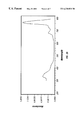
- FIG. 3 depicts the spectra of Silicon Phthalocyanine dihydroxide and the spectra of Silicon 2,3 Naphthalocyanine dihydroxide.
- FIG. 4 depicts the general structure of ethenyl-substituted dipyrrometheneboron difluoro dyes.
- FIG. 5 depicts the attenuation of the background signal as a function of increasing wavelength.
- the data was measured using a device as described in Applicant's allowed Ser. No. 07/887,526 filed May 21, 1992, now U.S. Pat. No. 5,458,852, entitled “Diagnostic Devices and Apparatus for the Controlled Movements of Reagents Without Membranes,” which is hereby fully incorporated herein.
- FIG. 6 depicts naphthalocyanine derivatives which emit in the near infrared.
- FIG. 7 depicts general structures of fluorescent energy transfer naphthalocyanine compounds.
- This invention describes novel particles which exhibit fluorescence energy transfer and diagnostic methods for their use.
- Developing a method which utilizes a fluorescent dye for the visualization of a cellular component or a cell or for an assay which quantifies an analyte in a sample requires the use of a fluorometer.
- the fluorescent label, the sample and the instrument must be compatible with each other to achieve an accurate measurement.
- Several criteria for a fluorescent label as it relates to the sample and instrument are described below. First, the absorption and emission wavelengths of the dye should not correspond to those of the specimen or sample. Second, the Stokes shift of the dye should be as large as possible to minimize the measurement of noise from the excitation wavelength.
- the dye must be compatible with the phase of the visualization or the fluid phase of the assay; that is, the dye must be water soluble or water insoluble depending on the visualization or assay format.
- the dye should be as bright as is necessary to achieve the desired sensitivity. Brightness is the product of the extinction coefficient and the quantum yield of the dye.
- the instrument used to detect the fluorescent signal is generally designed around the specifications of the dye and the specimen or sample being visualized or assayed.
- the absorption and emission wavelengths of the dye should not correspond to those of the sample being assayed or visualized, otherwise the sample can interfere with the measurement of the fluorescent signal.
- absorption or emission wavelengths of the sample do correspond to those of the dye, in practice, one dilutes, for example, a serum or blood sample so that the interference by the sample is reduced or the interfering sample is washed away from the detection area.
- no fluorescent assay system exists for the measurement of analytes in neat biological fluids, particularly blood or serum.
- One reason for the lack of assay systems which measure in neat samples is that no good fluorescent dye exists which meets all the criteria listed above, particularly for measuring fluorescence in biological samples.
- the amount of light which excites the sample is thus affected by the variation in the sample characteristics.
- serum, plasma, or blood from different individuals will be different in their relative absorbtivities, which will translate into different amounts of excitation light used to excite the fluorescent label.
- a preferred excitation wavelength for biological fluids, including urine, blood, serum or plasma is 600 nm or greater.
- Particularly preferred excitation wavelengths are those which correspond to maximum light output of laser diodes and light emitting diodes. This point will be further discussed as it relates to the inventive teachings of this application.
- the Stokes shift of the dye should be as large as possible to minimize the measurement of noise from the excitation source so that the signal-to-noise ratio at the limit of sensitivity is maximized.
- the availability of dyes with Stokes shifts greater than 100 nm is greatly limited.
- the solubility of the dyes in aqueous samples can be a problem because most dyes with large Stokes shifts are water insoluble.
- the problem of a dye possessing a small Stokes shift is usually overcome in the engineering of the fluorometer by the use of monochromators or expensive optics which filter out the light from the excitation source.
- monochromators or expensive optics which filter out the light from the excitation source.
- the dye must be compatible with the fluid phase of the assay, or in other words, the dye must be water soluble or water insoluble depending on the visualization or assay format.
- Many fluorescent dyes are water insoluble or poorly water soluble and these dyes are not easily used for labelling molecules, proteins or cells.
- water insoluble dyes can be incorporated into latex particles as described in U.S. Pat. Nos. 4,326,008, 4,609,689 and 5,154,887, which are hereby incorporated by reference.
- water insoluble dyes can be made useful by incorporation into latex particles for visualization in a variety of assay formats.
- the dye should be as bright as is necessary to achieve the desired sensitivity. If one knows the extinction coefficient and the quantum yield of the dye and the concentration of the target to be measured, it can be estimated whether the dye is bright enough to achieve the desired sensitivity. Incorporation of dyes into latex particles or the utilization of an enzyme which catalyzes the production of a fluorescent substrate are examples of techniques which one skilled in the art uses as amplification systems.
- the instrument used to detect the fluorescent signal is generally designed around the specifications of the dye and the specimen or sample being visualized or assayed because of the limited numbers of dyes which can be successfully used. As discussed above, the components of the instrument are selected for a particular dye system since a successful instrument must be highly tuned to eliminate background noise from the excitation source.
- the selection of the dye pairs is based on their ability to exhibit energy transfer at the appropriate excitation wavelength of the donor dye and the emission of the acceptor. Fluorescence energy transfer of two molecules is well known to those skilled in the art and the rate of energy transfer was described by Förster (Ann. Physik. (1948) 2,55-75). Fluorescence energy transfer has been used as a spectroscopic ruler to predict proximity relationships in proteins, RNA and peptides (Annual Review of Biochemistry (1978), 47, 819-846) and also to probe geometrical details in particles (Physical Review Letters (1988) 61, 641-644). U.S. Pat. Nos. 4,542,104 and 4,666,862 describe fluorescence energy transfer in phycobiliproteins. These dye complexes are described for use as labels in immunoassays, however, the limited use of phycobiliproteins and the expense of these natural protein complexes make them undesirable for use on a commercial scale.
- the novel fluorescent particles of this invention are composed of at least two dyes which are positioned in the interior or on the exterior of particles at an energy exchanging distance.
- various particles can be utilized, such as latex, silica, alumina and various colloids.
- Particularly preferred particles are latex particles.
- the selection of the dye molecules for incorporation into the particles should be related to the specific use of the particles and the instrument for measuring the fluorescence. For example, when developing an assay for an analyte in a biological medium, such as serum, the intrinsic absorbance and fluorescence of the serum must be considered. Serum absorbs in the ultraviolet spectrum as well as in the visible spectrum up to around 500 nm and the intrinsic fluorescence of serum broadly approaches 600 nm.
- the ideal dye couple would include the donor dye which would absorb at above 500 nm and emit at a wavelength which the acceptor dye absorbs, and the acceptor dye should emit at a wavelength above 600 nm.
- the serum then does not affect fluorescence of the acceptor dye because the serum poorly absorbs at the absorption of the donor dye and the acceptor dye emits at a wavelength where the serum does not fluoresce.
- Fluorescent dye molecules incorporated into or onto particles will exhibit fluorescence quenching because of the close proximity of the dyes to each other and to the matrix of the particle.
- the dyes are positioned in the particle at an energy exchanging distance from one another which allows singlet-singlet energy transfer.
- the dyes can be loaded successively or together.
- the degree of quenching can be quantified by measuring the fluorescence emission of a dilute suspension of particles (about 0.001% to 0.1% solids) in water and then also measuring the fluorescence of the same concentration of particles in solvent which liberates the dyes from the particle.
- the ratio of the fluorescence intensities is the amount of quenching of the dyes in the particle.
- the inventive teachings described herein provide for particles with reduced quenching and improved fluorescence intensities.
- a large majority of fluorescent molecules are aromatic, that is, they possess 4n+2 pi electrons.
- the resultant aromatic character promotes stacking of the molecules, especially of water insoluble molecules in aqueous solutions or in particles, which in turn promotes fluorescence quenching.
- the novel fluorescent particles described in this application are incorporated with dyes which, through steric interference of the dye molecules, their propensity to stack in the particles is minimized.
- fluorescence quenching of dye molecules in particles is minimized by employing different dyes with approximately the same excitation and emission wavelengths.
- the wavelength maximum for excitation and emission of the different dyes are within about 10 nm of each other so that there is substantial overlap of the peaks.
- the width of excitation and emission spectra of various dyes can vary. The principle here is that different dyes will not stack in an organized orientation with each other to the same degree as dyes which are the same. An analogy to this stacking principle is the depression of the melting point of a pure compound by an impurity. It is well known to physical chemists that an impurity in a solid compound lowers its melting point because the impurity disrupts the formation of the crystal lattice of the pure compound.
- incorporation into particles of dissimilar dyes which exhibit fluorescence energy transfer in the particles will also disrupt the others crystalline lattice formation.
- the fluorescence intensities of particles exhibiting fluorescence energy transfer will be improved as a result of decreasing quenching in the particle because the stacking of similar dyes in the particles is disrupted by the other dye.
- FIG. 1 shows preferred acceptor dyes which are phthalocyanines and naphthalocyanines.
- FIG. 2 shows particularly preferred acceptor dyes which are derivatives of silicon phthalocyanines and naphthalocyanines, where R is hydrogen or an alkylcarbon chain from 1-20 carbons, either saturated or unsaturated, having 0-10 heteroatoms (N,O,S), and having 0 or 1 silox-ide groups.
- R is hydrogen or an alkylcarbon chain from 1-20 carbons, either saturated or unsaturated, having 0-10 heteroatoms (N,O,S), and having 0 or 1 silox-ide groups.
- the parent compounds of phthalocyanines and naphthalocyanines are preferred because their emission wavelengths are around 680 nm and 780 nm in latex particles, respectively, and their quantum yields approach 70%. These emission wavelengths are particularly useful for quantifying fluorescence in biological samples.
- derivatives of the phthalocyanines and naphthalocyanines can be synthesized, for example, derivitization of the phenyl or naphthyl rings with various substitutes, respectively, to yield different molecules but these variants, also are within the scope of this application.
- the choice of the donor dye to excite the phthalocyanine or naphthalocyanine dyes is dependent on having a donor dye emission wavelength which corresponds to the appropriate range of absorbance wavelengths of the phthalocyanines or naphthalocyanines.
- FIG. 3 shows the absorbance spectra of the silicon dihydroxyphthalocyanine and silicon dihydroxynaphthalocyanine in dimethylformamide.
- a potential range of excitation of the these acceptor dyes by the donor dye is between approximately 550 nm and 670 nm and 600 nm and 760 nm, respectively.
- One skilled in the art will recognize that many dyes would be candidates for the donor dye because of the wide useful range of wavelengths which can excite the acceptor dyes.
- acceptor dye should meet the criteria outlined above.
- Several examples are described which illustrate the versatility of this novel approach. Assume that an instrument is to be built with an excitation source which has a maximum intensity at 480 nm and a detector which has a good quantum efficiency at 600 to 700 nm.
- the donor dye should thus be capable of being excited at 480 nm and further assuming that a phthalocyanine derivative is the acceptor dye for emission at 680 nm, then the donor should emit in the range of 550 to 670 nm.
- Styryl dyes are those of the following formula:
- phenylbutadienyl dyes are of the formula:
- phenylyhexatrienyl dyes are of the formula:
- R1, R2 and R3 can be the same or different and R1, R2 and R3 are H or alkylcarbon chains from 1-20 carbons, either saturated or unsaturated, and having 0-10 heteroatoms (N, O, S).
- these dye classes excite approximately between about 470 and 530 nm and emit approximately between 600 and 780 nm (see Molecular Probes Handbook of Fluorescent Probes and Research Chemicals by Richard P. Haugland, 1992-1994, p. 156).
- a particularly preferred styryl dye is the trans-4-[4-(dibutylamino)styryl]-1-methylpyridinium iodide (Aldrich Chemical Co.) which has its maximum absorbance at 486 nm in dimethylformamide and its emission is at 600 nm.
- substituents of f the aniline nitrogen and the pyridium nitrogen of these classes of dyes can vary and that preferred substituents are those with hydrophobic groups to maintain water insolubility.
- an instrument system is built which has a source of maximum intensity at 420 nm and a detector as described in the above example.
- the dye system here can include the phthalocyanine acceptor; however, a different donor must be employed.
- a preferred donor for this application is a meso-tetra-2-aminophenylporphine (Porphyrine Products, Inc., Logan Utah) which has a maximum absorbance at 418 nm in dimethylsulfoxide and an emission around 655 nm.
- This porphyrin will excite the phthalocyanine derivative in latex particles and the dye system will emit at 680 nm.
- an instrument system is built to perform immunoassays in serum or in various biological specimens and the excitation source is around 650 nm to avoid interference by the serum sample.
- the detector has good quantum efficiency at 700 to 800 nm so a preferred acceptor dye is a naphthalocyanine derivative which has an emission at approximately 780 nm, an emission wavelength which is generally not in common with serum samples or biological specimens.
- a donor dye for the naphthalocyanine acceptor should absorb at around 650 nm to coincide with the source and emit between approximately 660 nm and 760 nm.
- Preferred classes of dyes for this donor application are the carbocyanine dyes and the ethenyl-substituted dipyrrometheneboron di fluoro dyes, as described in U.S. Pat. Nos. 5,187,288, 5,248,782 and 5,274,113.
- Carbocyanine dyes which generally excite between 500 and 750 nm (see Molecular Probes Handbook) are of the general formula:
- N is 1 or 2; or 3; wherein R1 and R2 are S, N, or O; and wherein R3 and R4 are H or alkylcarbon chains of from 1-20 carbons, either saturated or unsaturated and having 0-10 heteroatoms (N, O, S).
- Carbocyanine dyes also are of the general formula:
- N is 1 or 2; or 3; wherein R1-R6 are H or alkylcarbon chains of from 1-20 carbons, either saturated or unsaturated and having 0-10 heteroatoms (N, O, S).
- Ethenyl-substituted dipyrrometheneboron difluro dyes which generally excite above 500 nm (see Molecular Probes Handbook) are of the general formula as depicted in FIG. 4, wherein R1-R7 include substituents as described in U.S. Pat. Nos. 5,187,288, 5,248,782 and 5,274,113.
- Particularly preferred donor dyes are 1,1′-dihexyl-3,3,3′,3′-tetramethylindocarbocyanine iodide, 1,1′-diethyl-3,3,3′,3′,-tetramethylindodicarbocyanine iodide and (E,E)-3,5-bis-(4-phenyl-1,3-butadienyl)-4,4-difluoro-4-bora-3a,4a-diazo-5-indacene (from Molecular Probes Inc., Eugene, Oreg.) which have absorption maximums of 642 nm, and 645 nm and 650 nm and emission maximums of 674 nm and 665 nm, and 670 nm, respectively, in dimethylformamide.
- Particles incorporated with these particularly preferred dyes and a naphthalocyanine derivative will excite with the 650 nm source and emit at approximately 780 nm.
- the excitation and emission spectra for any particular dye has a Gaussian form and therefore the excitation source does not need to correspond exactly to the excitation maximum of the donor dye in order to obtain an intense fluorescent signal.
- the donor emission does not have to coincide with the highest absorption of the acceptor dye in order to achieve efficient energy transfer.
- FIG. 5 illustrates the attenuation of the background signal as the wavelength of the measured light increases from 730 nm to 900 nm in an immunoassay device, as described in allowed application Ser. No. 07/887,526 (which is herein incorporated by reference), now U.S. Pat. No. 5,458,852, containing either neat human serum or no serum.
- This figure shows that the background decreases by a factor of 5 when measuring at 900 nm as compared to 790 nm when the illumination source is a 1 milli watt (“mW”) 670 nm laser diode.
- excitation of neat serum at 670 nm does not result in a significant measurable fluorescence between 730 nm and 900 nm.
- the signal to noise ratio of the measurement of fluorescence emission of a dye which emits at around 900 nm as compared to a dye emitting at around 790 nm would be improved by a factor of 5. Maximizing the signal to noise ratio, in general, is commonly sought in analytical chemistry because the sensitivity of the measurement is improved.
- Preferred dyes for example as described in J. Chem. Soc. Perkin Trans. 1, (1988), 2453-2458, which emit above 780 nm include derivatives of the naphthalocyanine class (FIG. 1) and are characterized by the general formulae, as depicted in FIG. 6, where M is a metal such as Si, Ge, Al, Sn and Ti and the like, and where R is an alkyl or aryl, and wheree X is an electron donating group or groups which can be the same or different, including, but not limited to aryl and —OZ, where Z is alkyl or aryl.
- M is a metal such as Si, Ge, Al, Sn and Ti and the like
- R is an alkyl or aryl
- X is an electron donating group or groups which can be the same or different, including, but not limited to aryl and —OZ, where Z is alkyl or aryl.
- the electron donating character of the X group or groups red-shifts the emission wavelength as compared to the general naphthalocyanine compounds (FIG. 1 ).
- the compounds described in examples 26, 27 and 28 are illustrative of dyes which have emission wavelengths around 850 nm. These preferred dyes would yield an improved signal to noise ratio as compared to dyes emitting at 780 nm (See FIG. 5 ).
- Preferred donor dyes for this class of near infra-red emitting dyes are those which have emission wavelengths which correlate to the absorbance characteristics of the acceptor dye.
- Preferred dyes for this application are the ethenyl-substituted dipyrrometheneboron difluoride dyes, as described in U.S. Pat. Nos. 5,187,288, 5,248,782 and 5,274,113.
- the donor and acceptor dyes can be synthesized to form an optimal compound, which, in solution, exhibits fluorescence energy transfer (“FET”) in an efficient manner.
- FET fluorescence energy transfer
- the optimized FET compound then may be incorporated into particles.
- Preferred naphthalocyanine copounds are those as depicted in FIG. 7, where X is hydrogen or electron donating groups, such as —OZ, where Z is alkyl or aryl and D is the donor dye covalently attached to the naphthalocyanine derivative at a distance which allows for energy transfer between the donor and acceptor.
- each naphthalocyanine derivative can have 1-4 donor dyes attached, depending on the required application of FET compound. Suitable donor dyes are those which emit in the absorbance range of the acceptor dye.
- Example 29 describes the synthesis of a fluorescein-silicon phthalocyanine FET compound.
- Example 30, item numbered 88 shows the fluorescence characteristics of this compound in latex particles.
- Another approach to developing particles which exhibit fluorescence energy transfer is to synthesize unsymmetrical phthalocyanines or naphthalocyanines, as described, for example, in J. Am. Chem. Soc. (1990), 112, 9640-9641, and references described therein. These unsymmetrical phthalocyanines and naphthalocyanines can be synthesized to optimize the excitation and emission wavelengths. The resulting compound is then incorporated into particles to yield particles which have excitation wavelengths above 600 nm and emission wavelengths above 680 nm.
- Preferred molar ratios of donor to acceptor dyes in the latex particles generally range from about 20:1 to about 1:20 and particularly from about 1:1 to 6:1.
- the desired fluorescence intensity should be obtained through experimentation by incorporating various ratios of donor to acceptor dyes into the particles at various dye concentrations.
- Preferred particle sizes range from about 0.1 nm to 5000 nm and preferably from about 1 nm to 1000 nm.
- the choice of particle size should be related to the specific function for the label.
- the particle size may vary for a particular application. For example, in an immunoassay, if the label requires a more intense fluorescence for measuring very low concentrations of analytes then one would employ larger particles because larger particles can incorporate more dye molecules.
- the small particle sizes (0.1-1 nm) may be employed in fluorescence polarization assays, as described for example, in U.S. Pat. Nos. 4,420,568, 4,476229 and 4,510,251, in in vitro visualization of cellular components or in in vivo imaging techniques.
- the resulting fluorescent dye particles which exhibit the appropriate excitation and emission characteristics are further adsorbed or chemically reacted with various nucleic acids, nucleotides, proteins or peptides and the like which are required for a specific purpose.
- the adsorption of macromolecules to particles, particularly latex particles is well known to those skilled in the art and generally involves adsorption of the macromolecule at a temperature between 5° C. and 50° C. and at a pH which is below the pI of the molecule.
- fluorescent particles exhibiting fluorescence energy transfer can be adsorbed with either antibodies for use in non-competitive immunoassays or ligand analogues for use in competitive immunoassays in reaction mixtures of the assays.
- the reaction mixture would include at least one target ligand and at least one class of fluorescent particles having bound thereto at least one receptor specific for target ligand, forming an antibody (fluorescent) conjugate.
- the reaction mixture will include at least one target ligand, at least one receptor specific to the target ligand, and at least one class of fluorescent particles, having bound thereto at least one ligand analogue, forming a ligand analogue (fluorescent) conjugate.
- the antibody conjugates bound to target ligands in the non-competitive reaction mixture and the ligand analogue conjugates not bound by receptors specific to the target ligands in the competitive reaction mixture can be bound to a solid phase consisting of receptors specific to another epitope of the target ligand of the target ligand-antibody conjugate complexes and of receptors specific to ligand analogues of the ligand analogue conjugates, respectively.
- the fluorescent conjugates unbound by the solid phase are removed and the fluorescence of the bound conjugates is measured. The measured fluorescence is related to the target ligand concentration.
- the various reagents described above can also be attached covalently to the latex particles.
- antibodies or ligand analogues can be attached through amine or carboxylic acids to carboxylic acids or amines on the surface of the particles, respectively, to form stable amide linkages.
- novel fluorescent particles described herein have many uses in immunoassays, fluorescence microscopy, in vivo imaging, in vitro cancer therapy and cell sorters and the like.
- Fluorescence measurements were performed on a Perkin-Elmer model LS 50B Luminescence Spectrometer for dyes emitting around 780 nm. In some instances, dyes emitting above 800 nm were measured according to Example 18. Absorbance measurements were performed on a Hewlett Packard 8452A Diode Array Spectrophotometer.
- the crude product in chloroform was purified on an Alumina column (Activity 1) equilibrated in hexane and the product was eluted with hexane/toluene (2/1, v/v) as a bright blue band.
- the solvent containing the product was evaporated to yield 69 mg of the title compound with a mp 171° C. (lit mp 175° C.).
- Latex particles were loaded into latex particles of varying sizes according to the general procedures outlined below. Two procedures are described and involve swelling latex particles with aqueous solutions of either tetrahydrofuran or dimethylformamide prior to addition of the dye solutions. Latex particle sizes used range from 67 nm to 783 nm and one skilled in the art recognizes that smaller and larger particles can be used. The choice of the organic solvent used to swell the particles depends solely on the solubility of the various dyes in either solvent. Tables 1 and 2 of Example 15 below show the aqueous organic solvent system and the optimum dye concentration which were used for the loading into particles for each dye pair of a selected number of dyes.
- Surfactant-free polystyrene sulfate latex particles in sizes ranging from 67 nm to 783 nm and caroxyl-modified latex (“CML”) particles ranging from 200 nm to 400 nm particles were obtained through Interfacial Dynamics Corp. Inc., Portland Oreg.
- Tetrahydrofuran (0.36 ml) was added, dropwise over a 5 min period, to a stirring solution of 1.6 ml of 2.5% solids of latex particles at room temperature.
- the latex suspension was stirred at room temperature for an additional 30 min to swell the latex.
- the dye solution (0.04 ml), which consists of one or both dyes at an appropriate concentration in tetrahydrofuran, was added dropwise over 5 min to the stirred latex solution, to give the loading dye concentration (in 2 ml volume) as indicated in Table 1.
- the latex-dye solution was stirred at room temperature for 30 min in the dark.
- the latex solution was then transferred to dialysis tubing (Spectra-por, 12-14,000 molecular weight cutoff, Spectrum, Houston, Tex.) and the dye-latex solutions were dialyzed against water for 12 to 15 hours at 4° C.
- the dye-latex solutions were removed from dialysis and the % solids of the solutions was calculated from the final volume after dialysis and the starting solids concentration.
- Dimethylformamide (1.33 ml) was added, dropwise over a 5 min period, to a stirring solution of 0.6 ml of 6.7% solids of latex particles at room temperature.
- the latex suspension was stirred at room temperature for an additional 30 min to swell the latex.
- the dye solution (0.07 ml), which consists of one or both dyes at an appropriate concentration in dimethylformamide, was added dropwise over 5 min to the stirred latex solution, to give the loading dye concentration (in 2 ml volume) as indicated in Table 1.
- the latex-dye solution was stirred at room temperature for 30 min in the dark.
- the latex solution was then transferred to dialysis tubing (Spectra-por, 12-14,000 molecular weight cutoff, Spectrum, Houston Tex.) and the dye-latex solutions were dialyzed against water for 12 to 15 hours at 4° C.
- the dye-latex solutions were removed from dialysis and the t solids of the solutions was calculated from the final volume after dialysis and the starting solids concentration.
- the incorporation of dye into latex particles must be optimized in order to achieve the maximum fluorescence intensity and to minimize the degree of fluorescence quenching of the dye molecules. Fluorescence quenching can be significant because of the close proximity of the dye molecules in the particles.
- the PcSi vinyl was incorporated into 67 nm latex particles (polystyrene sulfate from Interfacial Dynamics Corp., Inc., Portland, Oreg.) using method 1 (example 10) at various concentrations as indicated in the table below.
- the dye latex particles were diluted to 0.0019% solids in either water or tetrahydrofuran for each dye concentration. The solutions were excited at 350 nm and the emission at 680 nm was measured. The fluorescence intensity in water divided by the intensity in tetrahydrofuran minus 1 times 100 is the % quenching in the particles.
- the table below shows the fluorescence intensities as a function of dye loading concentrations and quenching for each condition.
- the latex particles which were incorporated with various dyes for energy transfer were diluted to 0.06% to 0.001% solids in water and either tetrahydrofuran or dimethylformamide and the solutions of equal solids concentrations were excited at wavelengths which corresponded to the approximate excitation maximum of the donor dye.
- the particles were diluted into organic solvents in order to liberate the dyes from the latex, and therefore, disrupt any energy transfer process between the dyes in the particles.
- the fluorescence of the solutions in water and organic solvent at the emission maximum of the acceptor dye or dyes were recorded and compared. Fluorescence energy transfer was defined as significant when the emission intensity of the acceptor was at least 5-fold higher in water than in the organic solvent.
- Meso-tetra 2-dimethylaminophenyl porphyrin was made as follows. To a stirring solution of meso tetra 2-aminophenyl porphyrin (100 mg, 0.15 mmol) and 37% aqueous formaldehyde (500 ⁇ L, 6.0 mmol) in tetrahydrofuran (2.5 ml was added sodium cyanoborohydride (114 mg, 1.8 mmol). The mixture was then treated with a glacial acetic acid (60 ⁇ L) over 10 minutes and stirred at room temperature for 3 hours. More glacial acetic acid (60 ⁇ L) was added and the mixture stirred a further 1 hour at room temperature.
- Tdap synthesized from the meso-tetra-2-aminophenylporphyrine which was obtained through Porphyrin Products, Inc. Logan, Utah
- PcSi vinyl (example 4) were incorporated into 67 nm latex particles (polystyrene sulfate latex from Interfacial Dynamics Inc., Portland, Oreg.) using the tetrahydrofuran method 1 of example 10.
- the molar ratio of the Tdap to the PcSi vinyl varied from 1/1 to 2/1 to 6/1 in the latex loading solutions while maintaining a constant mass (0.1 mg/ml) of PcSi vinyl in each solution.
- the dialyzed particles were diluted to 0.0019% solids in water and the fluorescence intensity at 680 nm of the PcSi vinyl was measured as a function of excitation wavelength between 350 nm and 470 nm.
- the excitation maximum of the Tdap is 430 nm and of the PcSi vinyl is 350 nm.
- the emission maximum of the Tdap is 650 nm.
- the table below shows the results.
- the latex suspension was stirred at room temperature for 6 hours, then transferred to dialysis tubing (Spectra-por, 12-14,000 molecular weight cutoff, Spectrum, Houston, Tex.) and the dye-latex solution was dialyzed against water for 12-15 hours at 4° C. The dye-latex solution was removed from dialysis and the solids concentration was adjusted to 1.6%.
- the latex suspension was stirred at room temperature for 6 hours, then transferred to dialysis tubing (Spectra-por, 12-14,000 molecular weight cutoff, Spectrum, Houston, Tex.) and the dye-latex solution was dialyzed against water for 12-15 hours at 40° C.
- the dye-latex solutions were removed from dialysis and the % solids concentration was adjusted to 1.6%.
- a variety of fluorescent energy transfer latexes were prepared with various donor and acceptor dye molecules.
- Table 1 shows the loading concentrations of the respective donor and acceptor dyes, the mole ratio of the donor and acceptor dyes and the dye loading solvent system as described in Example 10.
- Table 2 shows the excitation and emission wavelengths and the fluorescence intensity for each particle size at the specified solids concentration for each dye system. The numbers 1-22 correlate in both Table 1 and Table 2 to the same dye systems.
- the same dye pair was incorporated into different diameter latexes.
- MOLE LOADING LOADING DONOR CONC.
- ACCEPTOR CONC MOLE SOLVENT DONOR DYE (mg/mL) DYE mg/mL ACCEPTOR SYSTEM 1. trans-4-[4- 0.120 mg/mL Silicon 0.100 mg/mL 2:1 THF (Dibutyl phthalocyanine amino)styryl]-1- bis(di methyl methylvinylsilyl pyridinium oxide) Iodide 2.
- Those skilled in the art will recognize that various techniques are available to adsorb or to covalently couple proteins, peptides, ligand analogues nucleotides and nucleic acids to latex particles.
- a solution of dye latex (0.1 ml, 2% solids, 412 nm; entry 10, Table 1) was added quickly while vortexing to a solution of anti-B hCG monoclonal antibody (0.2 ml, 6.6 mg/ml; Applied Biotech Inc., San Diego, Calif.) in 20 mM sodium borate/150 mM sodium chloride, pH 8.2.
- a solution of 0.1 M potassium citrate, pH 3, (0.04 ml) was added quickly while vortexing to the antibody latex solution at room temperature and the pH of the resulting solution was 3.5.
- the solution incubated at room temperature for 5 min, then a solution of 2 M potassium borate, pH 9.7 (0.025 ml) was added quickly while vortexing to bring the pH to about 8.5.
- This latex antibody conjugate was dialyzed (Spectra-por dialysis tubing, molecular weight cutoff of 300,000, Spectrum, Houston, Tex.) against 4 changes of 2 1 each of 20 mM sodium borate/150 mM sodium chloride, pH 8.2 at 4° C. for 4 days. The dialyzed latex conjugate was then removed from the dialysis tubing and the solids concentration was calculated to be 0.4%. This conjugate can be used for immunoassays for hCG in serum.
- the latex has excitation and emission wavelengths of 650 nm and 780 nm, respectively.
- a solution of polystyrene sulfate latex (0.036 ml, 8.4% solids, 1000 nm; Interfacial Dynamics Corp., Inc., Portland Oreg.) was added quickly, at room temperature, while vortexing to a solution consisting of anti- ⁇ hCG monoclonal antibody (0.12 ml, 10.3 mg/ml; Applied Biotech Inc. San Diego, Calif.) in 20 mM sodium borate/150 mM sodium chloride, pH 8.2 and 0.1 M potassium citrate, pH 3, (0.6 ml). The solution incubated at room temperature for 5 min and was subjected to centrifugation in an Eppendorf centrifuge (2000 ⁇ g for 5 min).
- the supernatant was removed, the pellet was resuspended in 0.1 M potassium phosphate, pH 7, (1.5 ml) and the suspension was subjected to centrifugation as described above. This process was repeated 2 times more and in the final centrifugation, the pellet was resuspended with 0.1 M potassium phosphate, pH 7 (0.3 ml) to make 1% solids.
- This antibody latex is used on a solid phase, such as a membrane, to capture the hCG-dye antibody latex conjugate complex in a reaction mixture in an immunoassay for hCG.
- the solid phase anti- ⁇ hCG latex solution (0.005 ml, 1% solids; example 16) can be applied to a 2 cm 2 piece of 0.45 micron nylon membrane (Millipore Corp., Boston, Mass.) which has been treated with a 2% solution of condensed milk to lower non-specific binding interactions.
- This membrane can be used as the solid phase onto which is captured the hCG dye latex conjugate complex.
- an hCG assay can be performed by addition of dye latex conjugate (0.025 ml, example 16) to 0.1 ml samples of serum suspected of containing hCG and also to 0.1 ml serum samples containing known amounts of hCG (10, 100, 300, 500 and 1000 mIU/ml).
- the serum samples should be incubated about 10 min and then the samples are applied to the solid phase membrane containing the solid phase latex.
- the membrane should be placed over an absorbent so that the serum sample containing the dye latex conjugates flows through the solid phase latex spot.
- serum (0.5 ml) not containing the dye latex conjugate is applied to the membrane to remove unbound dye latex conjugate.
- the latex spots on the membranes are then placed in a front surface fluorescence accessory in a fluorometer and the spot is excited at 650 nm and the fluorescence intensity of the spot on each membrane is measured at 780 nm.
- the fluorescence intensity as a function of the hGC concentrations of the known samples is plotted.
- the fluorescence intensities of the unknown hCG serum samples can be compared to the known hCG concentrations from the graph.
- a high-pass cutoff filter (Schott Glass RG715) in front of the Silicon photodiode blocked scattered laser light at 670 nm but passed emitted light at wavelengths larger than 715 nm.
- the photocurrent from the silicon photodiode was amplified and displayed by a current amplifier in nanoamps (“nA”), (Melles Griot, Cat. #13 AMP 003).
- nA nanoamps
- 12 nm band filters were placed in front of the silicon photodiode with center wavelengths at 730 nm, 790 nm, 850 nm, and 900 nm.
- the product eluate was evaporated and the residue treated with hexane to afford a green solid.
- the mixture was centrifuged, the supernatant removed and the solid treated with more hexane and recentrifuged. The supernatant was again removed and the green solid dried under vacuum to yield 7.5 mg of product.
- the toluene fraction containing the product was evaporated and the residue treated with hexane to yield a dark green solid and light green supernatant.
- the mixture was centrifuged, the hexane removed and the solid dried under vacuum to yield 10 mg of final product.
- Fluorescein ATP (0.5 mg, 1.05 umol) was treated with a solution of 0.12M potassium carbonate in 80% methanol (52 uL). After 5 minutes, the hydrolysis solution was quenched by the addition of 0.5 M potassium phosphate/0.1 M potassium borate, pH 7.0 in 1 N HCl(10 uL). The quenched hydrolysis solution was evaporated to dryness, redissolved in DMF(100 uL) and the resulting solution added to SiPc[OSi(CH 3 ) 2 maleimide] 2 in a 1.0 mL serum vial. The reaction was then stirred at RT for 1 h.
- the crude product was then chromatographed on two 3′′ ⁇ 3′′ silica plates using toluene/20% DMF. After elution, the plates were dried under vacuum and rechromatographed for a better separation. The product band was scraped off, and treated with DMF (5 mL), vortexed 30 seconds and filtered from the silica. The filtrates were evaporated to give 0.55 mg of greenish fluorescent solid.
- MOLE LATEX INTENSITY MAXIMUM DONOR DYE (mg/mL) ACCEPTOR DYE mg/mL ACCEPTOR SIZE) (% SOLID) (EXCIT.) 1. trans-4-[4-(Dibutyl 0.120 Silicon phthalocyanine 0.100 2:1 THF 340 679 nm amino)styryl]-1-methyl mg/mL bis(di mg/mL (0.067 ⁇ m) (0.0019%) (475 nm) pyridinium Iodide methylvinylsilyloxide) 2.
- Germanium 0.3 Silicon 2,3- 0.1 4:1 THF 1.3 783 nm Phthalocyanine mg/mL Napthalocyanine mg/mL (0.216 ⁇ m (0.00057%) (670 nm) (OH) 2 (t-Bu) 4 bis(dimethylhexylvinylsilyl CML) oxide) 58.
- Germanium 0.3 Silicon 2,3- 0.1 4:1 THF 0.6 783 nm Phthalocyanine mg/mL Napthalocyanine mg/mL (0.216 ⁇ m (0.00057%) (670 nm) (Cl) 2 (t-Bu) 4 bis(dimethylhexylvinylsilyl CML) oxide) 59.
Landscapes
- Chemical & Material Sciences (AREA)
- Health & Medical Sciences (AREA)
- Life Sciences & Earth Sciences (AREA)
- Engineering & Computer Science (AREA)
- Immunology (AREA)
- Biomedical Technology (AREA)
- Urology & Nephrology (AREA)
- Molecular Biology (AREA)
- Hematology (AREA)
- Analytical Chemistry (AREA)
- Pathology (AREA)
- Cell Biology (AREA)
- Biotechnology (AREA)
- Food Science & Technology (AREA)
- Medicinal Chemistry (AREA)
- Physics & Mathematics (AREA)
- Organic Chemistry (AREA)
- Biochemistry (AREA)
- General Health & Medical Sciences (AREA)
- General Physics & Mathematics (AREA)
- Microbiology (AREA)
- Nanotechnology (AREA)
- Chemical Kinetics & Catalysis (AREA)
- Luminescent Compositions (AREA)
- Nitrogen Condensed Heterocyclic Rings (AREA)
- Investigating, Analyzing Materials By Fluorescence Or Luminescence (AREA)
- Investigating Or Analysing Materials By The Use Of Chemical Reactions (AREA)
- Peptides Or Proteins (AREA)
- Medicines Containing Antibodies Or Antigens For Use As Internal Diagnostic Agents (AREA)
- Measuring Or Testing Involving Enzymes Or Micro-Organisms (AREA)
- Saccharide Compounds (AREA)
- Investigating Or Analysing Biological Materials (AREA)
Priority Applications (14)
| Application Number | Priority Date | Filing Date | Title |
|---|---|---|---|
| US08/274,534 US6238931B1 (en) | 1993-09-24 | 1994-07-12 | Fluorescence energy transfer in particles |
| PCT/US1994/010826 WO1995008772A1 (en) | 1993-09-24 | 1994-09-23 | Fluorescence energy transfer and intramolecular energy transfer in particles using novel compounds |
| JP50997095A JP3773949B2 (ja) | 1993-09-24 | 1994-09-23 | 新規化合物を用いた粒子内における蛍光エネルギー伝達および分子内エネルギー伝達 |
| US08/311,098 US5763189A (en) | 1993-09-24 | 1994-09-23 | Fluorescence energy transfer and intramolecular energy transfer in particles using novel compounds |
| AU80112/94A AU8011294A (en) | 1993-09-24 | 1994-09-23 | Fluorescence energy transfer and intramolecular energy transfer in particles using novel compounds |
| CA002149419A CA2149419C (en) | 1993-09-24 | 1994-09-23 | Fluorescence energy transfer and intramolecular energy transfer in particles using novel compounds |
| US08/409,298 US6251687B1 (en) | 1993-09-24 | 1995-03-23 | Fluorescence energy transfer and intramolecular energy transfer in particles using novel compounds |
| DE69525186T DE69525186T2 (de) | 1993-09-24 | 1995-03-30 | Fluoreszenzenergieübertragung und intramolekulare energieübertragung in teilchen unter verwendung neuer verbindungen |
| AT94931287T ATE212721T1 (de) | 1993-09-24 | 1995-03-30 | Fluoreszenzenergieübertragung und intramolekulare energieübertragung in teilchen unter verwendung neuer verbindungen |
| EP94931287A EP0670041B1 (de) | 1993-09-24 | 1995-03-30 | Fluoreszenzenergieübertragung und intramolekulare energieübertragung in teilchen unter verwendung neuer verbindungen |
| US08/620,597 US5824799A (en) | 1993-09-24 | 1996-03-22 | Hybrid phthalocyanine derivatives and their uses |
| US09/066,255 US6964844B1 (en) | 1993-09-24 | 1998-04-24 | Hybrid phthalocyanine derivatives and their uses |
| US09/776,599 US7083984B2 (en) | 1993-09-24 | 2001-02-01 | Hybrid phthalocyanine derivatives and their uses |
| US11/448,613 US7322927B2 (en) | 1993-09-24 | 2006-06-06 | Hybrid phthalocyanine derivatives and their uses |
Applications Claiming Priority (3)
| Application Number | Priority Date | Filing Date | Title |
|---|---|---|---|
| US12636793A | 1993-09-24 | 1993-09-24 | |
| US13870893A | 1993-10-18 | 1993-10-18 | |
| US08/274,534 US6238931B1 (en) | 1993-09-24 | 1994-07-12 | Fluorescence energy transfer in particles |
Related Parent Applications (2)
| Application Number | Title | Priority Date | Filing Date |
|---|---|---|---|
| US12636793A Continuation-In-Part | 1993-09-24 | 1993-09-24 | |
| US13870893A Continuation-In-Part | 1993-09-24 | 1993-10-18 |
Related Child Applications (3)
| Application Number | Title | Priority Date | Filing Date |
|---|---|---|---|
| US08/311,098 Continuation-In-Part US5763189A (en) | 1993-09-24 | 1994-09-23 | Fluorescence energy transfer and intramolecular energy transfer in particles using novel compounds |
| US08/409,298 Continuation-In-Part US6251687B1 (en) | 1993-09-24 | 1995-03-23 | Fluorescence energy transfer and intramolecular energy transfer in particles using novel compounds |
| US08/620,597 Continuation-In-Part US5824799A (en) | 1993-09-24 | 1996-03-22 | Hybrid phthalocyanine derivatives and their uses |
Publications (1)
| Publication Number | Publication Date |
|---|---|
| US6238931B1 true US6238931B1 (en) | 2001-05-29 |
Family
ID=27383400
Family Applications (2)
| Application Number | Title | Priority Date | Filing Date |
|---|---|---|---|
| US08/274,534 Expired - Lifetime US6238931B1 (en) | 1993-09-24 | 1994-07-12 | Fluorescence energy transfer in particles |
| US08/311,098 Expired - Lifetime US5763189A (en) | 1993-09-24 | 1994-09-23 | Fluorescence energy transfer and intramolecular energy transfer in particles using novel compounds |
Family Applications After (1)
| Application Number | Title | Priority Date | Filing Date |
|---|---|---|---|
| US08/311,098 Expired - Lifetime US5763189A (en) | 1993-09-24 | 1994-09-23 | Fluorescence energy transfer and intramolecular energy transfer in particles using novel compounds |
Country Status (8)
| Country | Link |
|---|---|
| US (2) | US6238931B1 (de) |
| EP (1) | EP0670041B1 (de) |
| JP (1) | JP3773949B2 (de) |
| AT (1) | ATE212721T1 (de) |
| AU (1) | AU8011294A (de) |
| CA (1) | CA2149419C (de) |
| DE (1) | DE69525186T2 (de) |
| WO (1) | WO1995008772A1 (de) |
Cited By (38)
| Publication number | Priority date | Publication date | Assignee | Title |
|---|---|---|---|---|
| US20020196825A1 (en) * | 1999-05-04 | 2002-12-26 | Zuppero Anthony C. | Surface catalyst infra red laser |
| US20030000570A1 (en) * | 2001-06-29 | 2003-01-02 | Neokismet, L.L.C. | Quantum well energizing method and apparatus |
| US20030049175A1 (en) * | 1998-01-05 | 2003-03-13 | Buechler Kenneth F. | Immunoassay fluorometer |
| US20030166307A1 (en) * | 2001-01-17 | 2003-09-04 | Zuppero Anthony C. | Electron-jump chemical energy converter |
| US20030174560A1 (en) * | 2002-02-26 | 2003-09-18 | Klaus-Hermann Dahmen | Photochromic compounds for molecular switches and optical memory |
| US6887952B1 (en) | 2004-02-12 | 2005-05-03 | Biosite, Inc. | N-aryl-carbamic acid ester-derived and valeric acid ester-derived cross-linkers and conjugates, and methods for their synthesis and use |
| US6916451B1 (en) * | 1999-05-04 | 2005-07-12 | Neokismet, L.L.C. | Solid state surface catalysis reactor |
| US20050271592A1 (en) * | 2000-01-18 | 2005-12-08 | Achilefu Samuel I | Optical diagnostic and therapeutic agents and compositions |
| US20060051825A1 (en) * | 2004-09-09 | 2006-03-09 | Buechler Kenneth F | Methods and compositions for measuring canine BNP and uses thereof |
| US7025949B2 (en) * | 1994-12-07 | 2006-04-11 | Institut Fur Diagnostikforschung Gmbh An Der Freien Universitat Berlin | In-vivo diagnostic method by means of near infrared radiation |
| US7083984B2 (en) * | 1993-09-24 | 2006-08-01 | Biosite, Inc. | Hybrid phthalocyanine derivatives and their uses |
| US7119272B2 (en) | 1999-05-04 | 2006-10-10 | Neokismet, L.L.C. | Gas specie electron-jump chemical energy converter |
| US7223914B2 (en) | 1999-05-04 | 2007-05-29 | Neokismet Llc | Pulsed electron jump generator |
| US20070154970A1 (en) * | 1998-01-05 | 2007-07-05 | Biosite, Inc. | Methods for monitoring the status of assays and immunoassays |
| US7322927B2 (en) | 1993-09-24 | 2008-01-29 | Biosite, Inc. | Hybrid phthalocyanine derivatives and their uses |
| US7371962B2 (en) | 1999-05-04 | 2008-05-13 | Neokismet, Llc | Diode energy converter for chemical kinetic electron energy transfer |
| US20080206886A1 (en) * | 2007-02-28 | 2008-08-28 | Ruizheng Wang | Large stoke shift dye used for optical imaging |
| US20080233050A1 (en) * | 2000-01-18 | 2008-09-25 | Mallinckrodt Inc. | Diagnostic and therapeutic optical agents |
| US20080254485A1 (en) * | 2006-11-14 | 2008-10-16 | Biosite Incorporated | Methods And Compositions For Monitoring And Risk Prediction In Cardiorenal Syndrome |
| US20080293584A1 (en) * | 2005-12-27 | 2008-11-27 | The Furukawa Electric Co., Ltd. | Fluorescent silica nano-particle, fluorescent nano-material, and biochip and assay using the same |
| US20080293920A1 (en) * | 2005-01-21 | 2008-11-27 | Buechler Kenneth F | Arginine Analogs, and Methods for Their Synthesis and Use |
| US20090061532A1 (en) * | 2006-04-10 | 2009-03-05 | Rao Papineni | Fluorescence resonance energy transfer detection with nanoparticles for in vitro and in vivo applications |
| US7585363B1 (en) * | 2008-10-29 | 2009-09-08 | Eastman Kodak Company | Method for preparing nanodispersions of fluorinated phthalocyanine pigments |
| US7628849B1 (en) * | 2008-10-29 | 2009-12-08 | Eastman Kodak Company | Fluorinated bis-(phthalocyanylaluminoxy)silyl pigments |
| US20100022449A1 (en) * | 2006-03-09 | 2010-01-28 | Mallinckrodt Inc. | Receptor-avid exogenous optical contrast and therapeutic agents |
| US20100086944A1 (en) * | 2006-11-14 | 2010-04-08 | Gunars Valkirs | Methods and Compositions for Diagnosis and Prognosis of Renal Artery Stenosis |
| US20100102283A1 (en) * | 2008-10-29 | 2010-04-29 | Royster Jr Tommie L | Color filter element with improved colorant dispersion |
| US7713703B1 (en) * | 2000-11-13 | 2010-05-11 | Biosite, Inc. | Methods for monitoring the status of assays and immunoassays |
| US20100311186A1 (en) * | 2006-07-28 | 2010-12-09 | Biosite Incorporated | Devices and methods for performing receptor binding assays using magnetic particles |
| WO2012074888A2 (en) | 2010-11-29 | 2012-06-07 | Alere San Diego, Inc. | Methods and compositions for diagnosis and risk prediction in heart failure |
| US20140130864A1 (en) * | 2012-11-09 | 2014-05-15 | Board Of Trustees Of Michigan State University | Transparent Luminescent Solar Concentrators For Integrated Solar Windows |
| US8906354B2 (en) | 2007-02-28 | 2014-12-09 | Bruker Biospin Corporation | Loaded latex optical molecular imaging probes containing lipophilic large stokes shift dyes |
| US9437892B2 (en) | 2012-07-26 | 2016-09-06 | Quswami, Inc. | System and method for converting chemical energy into electrical energy using nano-engineered porous network materials |
| WO2017201314A1 (en) | 2016-05-18 | 2017-11-23 | Alere San Diego, Inc. | 2-ethylidene-1,5-dimethyl-3,3-diphenylpyrrolidine analogs and methods for their synthesis and use |
| EP3470416A1 (de) | 2013-03-14 | 2019-04-17 | Alere San Diego, Inc. | 6-acetylmorphin-analoga und verfahren zu deren synthese und verwendung |
| US11569402B2 (en) | 2017-05-09 | 2023-01-31 | UbiQD, Inc. | Luminescent optical elements for agricultural applications |
| US11739054B2 (en) | 2017-06-11 | 2023-08-29 | Molecular Express, Inc. | Methods and compositions for substance use disorder vaccine formulations and uses thereof |
| US12247126B2 (en) | 2018-05-09 | 2025-03-11 | Board Of Trustees Of Michigan State University | Near-infrared harvesting transparent luminescent solar concentrators with engineered stokes shift |
Families Citing this family (49)
| Publication number | Priority date | Publication date | Assignee | Title |
|---|---|---|---|---|
| US6238931B1 (en) | 1993-09-24 | 2001-05-29 | Biosite Diagnostics, Inc. | Fluorescence energy transfer in particles |
| US5824799A (en) * | 1993-09-24 | 1998-10-20 | Biosite Diagnostics Incorporated | Hybrid phthalocyanine derivatives and their uses |
| US6028190A (en) | 1994-02-01 | 2000-02-22 | The Regents Of The University Of California | Probes labeled with energy transfer coupled dyes |
| WO1996029367A1 (en) * | 1995-03-23 | 1996-09-26 | Biosite Diagnostics Incorporated | Hybrid phthalocyanine derivatives and their uses |
| US6008373A (en) * | 1995-06-07 | 1999-12-28 | Carnegie Mellon University | Fluorescent labeling complexes with large stokes shift formed by coupling together cyanine and other fluorochromes capable of resonance energy transfer |
| US5916481A (en) * | 1995-07-25 | 1999-06-29 | The Procter & Gamble Company | Low hue photobleaches |
| DE19539409C2 (de) * | 1995-10-11 | 1999-02-18 | Diagnostikforschung Inst | Kontrastmittel für die Nahinfrarot-Diagnostik |
| DE69733650T2 (de) * | 1996-03-01 | 2006-04-20 | Beckman Coulter, Inc., Fullerton | System zum simultanen Durchführen einer Vielzahl von Ligandenbindungs-Untersuchungen |
| US5945526A (en) * | 1996-05-03 | 1999-08-31 | Perkin-Elmer Corporation | Energy transfer dyes with enhanced fluorescence |
| US7388092B2 (en) * | 1996-05-03 | 2008-06-17 | Applera Corporation | Oligonucleotides and analogs labeled with energy transfer dyes |
| US7825237B2 (en) * | 1996-05-03 | 2010-11-02 | Applied Biosystems, Llc | Oligonucleotides and analogs labeled with energy transfer dyes |
| US6232124B1 (en) * | 1996-05-06 | 2001-05-15 | Verification Technologies, Inc. | Automated fingerprint methods and chemistry for product authentication and monitoring |
| US5922551A (en) * | 1997-03-20 | 1999-07-13 | Accumetrics, Inc. | Agglutrimetric platelet binding assays in blood |
| US6544797B1 (en) | 1997-04-09 | 2003-04-08 | Biosite Diagnostics, Inc. | Compositions and methods for inhibiting light-induced inactivation of biological reagents |
| US6214563B1 (en) * | 1997-08-01 | 2001-04-10 | Aurora Biosciences Corporation | Photon reducing agents for reducing undesired light emission in assays |
| US6200762B1 (en) * | 1997-08-01 | 2001-03-13 | Aurora Biosciences Corporation | Photon reducing agents and compositions for fluorescence assays |
| US6221612B1 (en) * | 1997-08-01 | 2001-04-24 | Aurora Biosciences Corporation | Photon reducing agents for use in fluorescence assays |
| WO2000075378A1 (en) * | 1999-06-09 | 2000-12-14 | Biosearch Technologies, Inc. | Fluorescence energy transfer probes with stabilized conformations |
| US7160996B1 (en) | 1999-06-09 | 2007-01-09 | Bioresearch Technologies, Inc. | Fluorescence energy transfer probes with stabilized conformations |
| US6358684B1 (en) * | 1999-08-27 | 2002-03-19 | Pe Corporation | UV excitable fluorescent energy transfer dyes |
| US6703248B1 (en) * | 1999-12-15 | 2004-03-09 | Dade Behring Marburg Gmbh | Particles for diagnostic and therapeutic use |
| DE10047528A1 (de) * | 2000-09-22 | 2002-05-02 | Roche Diagnostics Gmbh | Konjugate aus Silikatpartikeln und Biomolekülen und deren Anwendung in der medizinisch-technischen Diagnostik |
| NO20006130D0 (no) * | 2000-12-01 | 2000-12-01 | Erling Sundrehagen | Reagens og analysemetode |
| WO2002096913A1 (en) * | 2001-05-25 | 2002-12-05 | Gentian As | Substituted di(hydroxy/alkoxy)silicon phthalocyanines and their uses |
| US6767733B1 (en) | 2001-10-10 | 2004-07-27 | Pritest, Inc. | Portable biosensor apparatus with controlled flow |
| US6838289B2 (en) * | 2001-11-14 | 2005-01-04 | Beckman Coulter, Inc. | Analyte detection system |
| US20040020993A1 (en) * | 2001-12-28 | 2004-02-05 | Green Larry R. | Method for luminescent identification and calibration |
| US20040060987A1 (en) * | 2002-05-07 | 2004-04-01 | Green Larry R. | Digital image analysis method for enhanced and optimized signals in fluorophore detection |
| JP2004269439A (ja) * | 2003-03-10 | 2004-09-30 | Motohiro Takeda | センチネルリンパ節検出剤及び検出方法 |
| DE10315772A1 (de) * | 2003-04-07 | 2004-11-04 | Ulrich Prof. Dr. Steiner | Chemische Verbindung und Verfahren für den intramolekularen Energietransfer zur Abspaltung von labilen funktionellen Gruppen aus chemischen Verbindungen |
| WO2005020342A1 (ja) * | 2003-08-22 | 2005-03-03 | Matsushita Electric Industrial Co., Ltd. | 縦型有機fet及びその製造方法 |
| AU2005286235C1 (en) | 2004-09-23 | 2013-08-22 | TauRx Therapeutics Management Ltd | Methods of chemical synthesis and purification of diaminophenothiazinium compounds including Methylthioninium Chloride (MTC) |
| FR2889700B1 (fr) * | 2005-08-11 | 2012-11-23 | Synthinnove Lab | Marqueurs, leur procede de fabrication et leurs applications |
| DK3121169T3 (da) | 2006-07-11 | 2022-02-28 | Wista Lab Ltd | Fremgangsmåder til syntese og/eller oprensning af diaminophenothiaziniumforbindelser |
| WO2009015407A1 (en) * | 2007-08-01 | 2009-02-05 | Silverbrook Research Pty Ltd | Method of preparing naphthalocyanines |
| JP5306714B2 (ja) * | 2008-06-16 | 2013-10-02 | 古河電気工業株式会社 | イムノクロマト法を用いた標的物質の検出方法 |
| JP5408821B2 (ja) * | 2008-11-28 | 2014-02-05 | 国立大学法人長岡技術科学大学 | ナフタロシアニン化合物及びその製造方法 |
| KR101183159B1 (ko) * | 2008-12-22 | 2012-09-17 | 한국전자통신연구원 | 바이오 칩 및 이를 이용한 바이오 물질 검출 장치 |
| WO2010096388A2 (en) * | 2009-02-18 | 2010-08-26 | Carnegie Mellon University | Quenched dendrimeric dyes for bright detection |
| JP5408824B2 (ja) * | 2009-03-30 | 2014-02-05 | 国立大学法人長岡技術科学大学 | ナフタロシアニン化合物及びその製造方法 |
| GB2470939A (en) | 2009-06-10 | 2010-12-15 | Dna Supernova Ltd | Signal amplification microspheres |
| EP2577309B1 (de) | 2010-05-25 | 2016-11-23 | Carnegie Mellon University | Gezielte sonden für zellphysiologie |
| JP6181053B2 (ja) * | 2012-06-18 | 2017-08-16 | 日本化薬株式会社 | ポルフィラジン色素及びその用途 |
| JP5697059B2 (ja) * | 2013-06-25 | 2015-04-08 | 古河電気工業株式会社 | イムノクロマト法を用いた標的物質の検出方法および検出装置セット |
| CN107429075B (zh) | 2014-11-17 | 2022-11-01 | 卡内基梅隆大学 | 可激活的双组份光敏剂 |
| JP7296589B2 (ja) * | 2017-12-05 | 2023-06-23 | Jsr株式会社 | 親水化色素含有粒子、色素含有粒子、親水化色素含有粒子の製造方法および生体内を観察する方法 |
| CN113646316A (zh) * | 2019-09-11 | 2021-11-12 | 松下知识产权经营株式会社 | 组合物、光电转换元件以及摄像装置 |
| CN111912977B (zh) * | 2020-06-23 | 2023-09-12 | 杜旭忠 | 一种光敏检测系统及其制作方法和应用 |
| GB2597797A (en) | 2020-08-07 | 2022-02-09 | Sumitomo Chemical Co | Light-emitting marker |
Citations (5)
| Publication number | Priority date | Publication date | Assignee | Title |
|---|---|---|---|---|
| EP0285965A2 (de) | 1987-04-07 | 1988-10-12 | BASF Aktiengesellschaft | Gemischte Phthalo-naphthalocyanine sowie dünne strahlungsempfindliche Beschichtungsfilme, die diese Verbindungen enthalten |
| WO1991018007A1 (en) | 1990-05-15 | 1991-11-28 | Diatron Corporation | Phthalocyanatopolyethylene glycol, and phthalocyanato saccharides as fluorescent digoxin reagents |
| WO1993019366A1 (en) | 1992-03-23 | 1993-09-30 | Diatron Corporation | Fluorescence immunoassays using fluorescent dyes free of aggregation and serum binding |
| EP0597389A1 (de) | 1992-11-10 | 1994-05-18 | Hitachi Chemical Company, Ltd. | Wasserlösliche Tetraazaporphine und Fluorochrome für Markierung |
| WO1995008772A1 (en) | 1993-09-24 | 1995-03-30 | Biosite Diagnostics Incorporated | Fluorescence energy transfer and intramolecular energy transfer in particles using novel compounds |
Family Cites Families (22)
| Publication number | Priority date | Publication date | Assignee | Title |
|---|---|---|---|---|
| US4166105A (en) * | 1973-07-30 | 1979-08-28 | Block Engineering, Inc. | Dye tagged reagent |
| US4199559A (en) * | 1974-08-12 | 1980-04-22 | Syva Company | Fluorescence quenching with immunological pairs in immunoassays |
| US3996345A (en) * | 1974-08-12 | 1976-12-07 | Syva Company | Fluorescence quenching with immunological pairs in immunoassays |
| IT1140209B (it) * | 1981-09-25 | 1986-09-24 | Anic Spa | Reagenti per immunoluorescenza e metodo per la loro preparazione |
| EP0076695B1 (de) * | 1981-10-06 | 1985-02-20 | The Board Of Trustees Of The Leland Stanford Junior University | Fluoreszierende Konjugate zum Analysieren von Molekülen und Zellen |
| US4542104A (en) * | 1983-04-06 | 1985-09-17 | The Board Of Trustees Of The Leland Stanford Jr. Univ. | Phycobiliprotein fluorescent conjugates |
| US5132206A (en) * | 1984-06-11 | 1992-07-21 | Dreyer William J | Fluorescent pigments for tagging biological molecules |
| US4666862A (en) * | 1984-08-14 | 1987-05-19 | Ortho Diagnostic Systems Inc. | Fluorescent energy transfer with phycobiliproteins |
| US4777128A (en) * | 1986-05-27 | 1988-10-11 | Ethigen Corporation | Fluorescence immunoassay involving energy transfer between two fluorophores |
| EP0335902B1 (de) * | 1986-12-15 | 1993-12-01 | British Technology Group Usa Inc. | Monomere phthalocyanin-reagenzien |
| DE3731835A1 (de) * | 1987-09-22 | 1989-03-30 | Siemens Ag | Laserstrahl-induziertes farbdrucken |
| US5116989A (en) * | 1987-11-06 | 1992-05-26 | Baxter Diagnostics Inc. | Fluorescent poly(arylpyridine) rare earth chelates |
| US5123731A (en) * | 1988-02-01 | 1992-06-23 | Canon Kabushiki Kaisha | Particle measuring device |
| US5055414A (en) * | 1988-07-05 | 1991-10-08 | Eastman Kodak Company | Phenalenimine fluorescent dyes and their use in analytical methods |
| GB8915654D0 (en) * | 1989-07-07 | 1989-08-23 | Unilever Plc | Detectable particles |
| ATE106566T1 (de) * | 1989-11-21 | 1994-06-15 | Bayer Ag | Optischer biosensor. |
| US5326692B1 (en) * | 1992-05-13 | 1996-04-30 | Molecular Probes Inc | Fluorescent microparticles with controllable enhanced stokes shift |
| EP0529002B1 (de) * | 1990-05-15 | 2001-10-04 | Hyperion, Inc. | Fluoreszierende porphyrin- und fluoreszierende phthalocyanin-polyethylenglykol-, polyol- und saccharidderivate als fluoreszierende sonden |
| FR2664699B1 (fr) * | 1990-07-13 | 1995-08-18 | Cis Bio Int | Procede d'amplification du signal d'emission d'un compose luminescent. |
| US5154887A (en) * | 1991-05-28 | 1992-10-13 | Eastman Kodak Company | Phenalenimine fluorescent dyes and their use in analytical compositions, elements and methods |
| FR2707658B1 (fr) * | 1993-07-12 | 1995-11-24 | Prolabo Sa | Latex fluorescent comportant au moins deux fluorochromes, procédé d'obtention et application dudit latex comme marqueur, notamment en biologie. |
| US5654419A (en) * | 1994-02-01 | 1997-08-05 | The Regents Of The University Of California | Fluorescent labels and their use in separations |
-
1994
- 1994-07-12 US US08/274,534 patent/US6238931B1/en not_active Expired - Lifetime
- 1994-09-23 AU AU80112/94A patent/AU8011294A/en not_active Abandoned
- 1994-09-23 JP JP50997095A patent/JP3773949B2/ja not_active Expired - Lifetime
- 1994-09-23 WO PCT/US1994/010826 patent/WO1995008772A1/en not_active Ceased
- 1994-09-23 CA CA002149419A patent/CA2149419C/en not_active Expired - Lifetime
- 1994-09-23 US US08/311,098 patent/US5763189A/en not_active Expired - Lifetime
-
1995
- 1995-03-30 EP EP94931287A patent/EP0670041B1/de not_active Expired - Lifetime
- 1995-03-30 DE DE69525186T patent/DE69525186T2/de not_active Expired - Fee Related
- 1995-03-30 AT AT94931287T patent/ATE212721T1/de not_active IP Right Cessation
Patent Citations (5)
| Publication number | Priority date | Publication date | Assignee | Title |
|---|---|---|---|---|
| EP0285965A2 (de) | 1987-04-07 | 1988-10-12 | BASF Aktiengesellschaft | Gemischte Phthalo-naphthalocyanine sowie dünne strahlungsempfindliche Beschichtungsfilme, die diese Verbindungen enthalten |
| WO1991018007A1 (en) | 1990-05-15 | 1991-11-28 | Diatron Corporation | Phthalocyanatopolyethylene glycol, and phthalocyanato saccharides as fluorescent digoxin reagents |
| WO1993019366A1 (en) | 1992-03-23 | 1993-09-30 | Diatron Corporation | Fluorescence immunoassays using fluorescent dyes free of aggregation and serum binding |
| EP0597389A1 (de) | 1992-11-10 | 1994-05-18 | Hitachi Chemical Company, Ltd. | Wasserlösliche Tetraazaporphine und Fluorochrome für Markierung |
| WO1995008772A1 (en) | 1993-09-24 | 1995-03-30 | Biosite Diagnostics Incorporated | Fluorescence energy transfer and intramolecular energy transfer in particles using novel compounds |
Non-Patent Citations (1)
| Title |
|---|
| Hemnilä, Clin. Chem. 31/3 359-370 (1985) "Fluoro immunoassays and Immunofluorometric Assays". * |
Cited By (69)
| Publication number | Priority date | Publication date | Assignee | Title |
|---|---|---|---|---|
| US7322927B2 (en) | 1993-09-24 | 2008-01-29 | Biosite, Inc. | Hybrid phthalocyanine derivatives and their uses |
| US7083984B2 (en) * | 1993-09-24 | 2006-08-01 | Biosite, Inc. | Hybrid phthalocyanine derivatives and their uses |
| US7025949B2 (en) * | 1994-12-07 | 2006-04-11 | Institut Fur Diagnostikforschung Gmbh An Der Freien Universitat Berlin | In-vivo diagnostic method by means of near infrared radiation |
| US7416700B2 (en) | 1998-01-05 | 2008-08-26 | Biosite Incorporated | Immunoassay fluorometer |
| US20030049175A1 (en) * | 1998-01-05 | 2003-03-13 | Buechler Kenneth F. | Immunoassay fluorometer |
| US20070154970A1 (en) * | 1998-01-05 | 2007-07-05 | Biosite, Inc. | Methods for monitoring the status of assays and immunoassays |
| US20040241047A1 (en) * | 1998-01-05 | 2004-12-02 | Biosite, Inc. | Immunoassay fluorometer |
| US20050286601A1 (en) * | 1999-05-04 | 2005-12-29 | Neokismet, L.L.C. | Surface catalyst infra red laser |
| US6916451B1 (en) * | 1999-05-04 | 2005-07-12 | Neokismet, L.L.C. | Solid state surface catalysis reactor |
| US6944202B2 (en) | 1999-05-04 | 2005-09-13 | Neokismet, L.L.C. | Surface catalyst infra red laser |
| US7371962B2 (en) | 1999-05-04 | 2008-05-13 | Neokismet, Llc | Diode energy converter for chemical kinetic electron energy transfer |
| US7223914B2 (en) | 1999-05-04 | 2007-05-29 | Neokismet Llc | Pulsed electron jump generator |
| US20020196825A1 (en) * | 1999-05-04 | 2002-12-26 | Zuppero Anthony C. | Surface catalyst infra red laser |
| US7119272B2 (en) | 1999-05-04 | 2006-10-10 | Neokismet, L.L.C. | Gas specie electron-jump chemical energy converter |
| US20050281741A1 (en) * | 2000-01-18 | 2005-12-22 | Achilefu Samuel I | Receptor-avid exogenous optical contrast and therapeutic agents |
| US20050271592A1 (en) * | 2000-01-18 | 2005-12-08 | Achilefu Samuel I | Optical diagnostic and therapeutic agents and compositions |
| US20080233050A1 (en) * | 2000-01-18 | 2008-09-25 | Mallinckrodt Inc. | Diagnostic and therapeutic optical agents |
| US7767194B2 (en) | 2000-01-18 | 2010-08-03 | Mallinckrodt Inc. | Optical diagnostic and therapeutic agents and compositions |
| US7504087B2 (en) * | 2000-01-18 | 2009-03-17 | Mallinkrodt Inc. | Receptor-avid exogenous optical contrast and therapeutic agents |
| US7713703B1 (en) * | 2000-11-13 | 2010-05-11 | Biosite, Inc. | Methods for monitoring the status of assays and immunoassays |
| US7208767B2 (en) | 2001-01-17 | 2007-04-24 | Neokismet Llc | Electron-jump chemical energy converter |
| US20070163874A1 (en) * | 2001-01-17 | 2007-07-19 | Zuppero Anthony C | Electron-Jump Chemical Energy Converter |
| US20030166307A1 (en) * | 2001-01-17 | 2003-09-04 | Zuppero Anthony C. | Electron-jump chemical energy converter |
| US8173894B2 (en) | 2001-01-17 | 2012-05-08 | Neokismet L.L.C. | Electron-jump chemical energy converter |
| US8642882B2 (en) | 2001-01-17 | 2014-02-04 | Neokismet L.L.C. | Electron-jump chemical energy converter |
| US7122735B2 (en) | 2001-06-29 | 2006-10-17 | Neokismet, L.L.C. | Quantum well energizing method and apparatus |
| US20030000570A1 (en) * | 2001-06-29 | 2003-01-02 | Neokismet, L.L.C. | Quantum well energizing method and apparatus |
| US20030174560A1 (en) * | 2002-02-26 | 2003-09-18 | Klaus-Hermann Dahmen | Photochromic compounds for molecular switches and optical memory |
| US6967107B2 (en) | 2004-02-12 | 2005-11-22 | Biosite, Inc. | N-aryl-carbamic acid ester-derived and valeric acid ester-derived cross-linkers and conjugates, and methods for their synthesis and use |
| US20050282884A1 (en) * | 2004-02-12 | 2005-12-22 | Biosite, Inc. | N-aryl-carbamic acid ester-derived and valeric acid ester-derived cross-linkers and conjugates, and methods for their synthesis and use |
| US20050181416A1 (en) * | 2004-02-12 | 2005-08-18 | Buechler Kenneth F. | N-aryl-carbamic acid ester-derived and valeric acid ester-derived cross-linkers and conjugates, and methods for their synthesis and use |
| US6887952B1 (en) | 2004-02-12 | 2005-05-03 | Biosite, Inc. | N-aryl-carbamic acid ester-derived and valeric acid ester-derived cross-linkers and conjugates, and methods for their synthesis and use |
| US20060051825A1 (en) * | 2004-09-09 | 2006-03-09 | Buechler Kenneth F | Methods and compositions for measuring canine BNP and uses thereof |
| US20080293920A1 (en) * | 2005-01-21 | 2008-11-27 | Buechler Kenneth F | Arginine Analogs, and Methods for Their Synthesis and Use |
| US7879979B2 (en) | 2005-01-21 | 2011-02-01 | Alere International | Arginine analogs, and methods for their synthesis and use |
| US20080293584A1 (en) * | 2005-12-27 | 2008-11-27 | The Furukawa Electric Co., Ltd. | Fluorescent silica nano-particle, fluorescent nano-material, and biochip and assay using the same |
| US9260656B2 (en) | 2005-12-27 | 2016-02-16 | The Furukawa Electric Co., Ltd. | Fluorescent silica nano-particle, fluorescent nano-material, and biochip and assay using the same |
| US20100022449A1 (en) * | 2006-03-09 | 2010-01-28 | Mallinckrodt Inc. | Receptor-avid exogenous optical contrast and therapeutic agents |
| US8841134B2 (en) | 2006-04-10 | 2014-09-23 | Bruker Biospin Corporation | Fluorescence resonance energy transfer detection with nanoparticles for in vitro and in vivo applications |
| US20090061532A1 (en) * | 2006-04-10 | 2009-03-05 | Rao Papineni | Fluorescence resonance energy transfer detection with nanoparticles for in vitro and in vivo applications |
| US20100311186A1 (en) * | 2006-07-28 | 2010-12-09 | Biosite Incorporated | Devices and methods for performing receptor binding assays using magnetic particles |
| US8283128B2 (en) | 2006-11-14 | 2012-10-09 | Alere San Diego, Inc. | Methods and compositions for monitoring and risk prediction in cardiorenal syndrome |
| US7842472B2 (en) | 2006-11-14 | 2010-11-30 | Alere International | Methods and compositions for monitoring and risk prediction in cardiorenal syndrome |
| US20110104726A1 (en) * | 2006-11-14 | 2011-05-05 | Alere International | Methods and Compositions for Monitoring and Risk Prediction in Cardiorenal Syndrome |
| US7985560B2 (en) | 2006-11-14 | 2011-07-26 | Alere San Diego, Inc. | Methods and compositions for monitoring and risk prediction in cardiorenal syndrome |
| US20100086944A1 (en) * | 2006-11-14 | 2010-04-08 | Gunars Valkirs | Methods and Compositions for Diagnosis and Prognosis of Renal Artery Stenosis |
| US8969018B2 (en) | 2006-11-14 | 2015-03-03 | Alere San Diego, Inc. | Methods and compositions for monitoring and risk prediction in cardiorenal syndrome |
| EP2500723A2 (de) | 2006-11-14 | 2012-09-19 | Alere San Diego, Inc. | Verfahren zur Überwachung und Risikoabschätzung des Herz-Nieren-Syndroms |
| US20080254485A1 (en) * | 2006-11-14 | 2008-10-16 | Biosite Incorporated | Methods And Compositions For Monitoring And Risk Prediction In Cardiorenal Syndrome |
| US8524462B2 (en) | 2006-11-14 | 2013-09-03 | Alere San Diego, Inc. | Methods and compositions for diagnosis and prognosis of renal artery stenosis |
| US20080206886A1 (en) * | 2007-02-28 | 2008-08-28 | Ruizheng Wang | Large stoke shift dye used for optical imaging |
| US8017104B2 (en) | 2007-02-28 | 2011-09-13 | Carestream Health, Inc. | Large stoke shift dye used for optical imaging |
| US8906354B2 (en) | 2007-02-28 | 2014-12-09 | Bruker Biospin Corporation | Loaded latex optical molecular imaging probes containing lipophilic large stokes shift dyes |
| JP2010538298A (ja) * | 2007-09-07 | 2010-12-09 | ケアストリーム ヘルス インク | ナノ粒子を用いた蛍光共鳴エネルギ移動検出 |
| US7585363B1 (en) * | 2008-10-29 | 2009-09-08 | Eastman Kodak Company | Method for preparing nanodispersions of fluorinated phthalocyanine pigments |
| US20100102283A1 (en) * | 2008-10-29 | 2010-04-29 | Royster Jr Tommie L | Color filter element with improved colorant dispersion |
| US7628849B1 (en) * | 2008-10-29 | 2009-12-08 | Eastman Kodak Company | Fluorinated bis-(phthalocyanylaluminoxy)silyl pigments |
| US8277697B2 (en) | 2008-10-29 | 2012-10-02 | Global Oled Technology Llc | Color filter element with improved colorant dispersion |
| WO2012074888A2 (en) | 2010-11-29 | 2012-06-07 | Alere San Diego, Inc. | Methods and compositions for diagnosis and risk prediction in heart failure |
| US10573913B2 (en) | 2012-07-26 | 2020-02-25 | Quswami, Inc. | System and method for converting chemical energy into electrical energy using nano-engineered porous network materials |
| US9437892B2 (en) | 2012-07-26 | 2016-09-06 | Quswami, Inc. | System and method for converting chemical energy into electrical energy using nano-engineered porous network materials |
| US11699799B2 (en) | 2012-07-26 | 2023-07-11 | Quswami, Inc. | System and method for converting chemical energy into electrical energy using nano-engineered porous network materials |
| US10439090B2 (en) * | 2012-11-09 | 2019-10-08 | Board Of Trustees Of Michigan State University | Transparent luminescent solar concentrators for integrated solar windows |
| US20140130864A1 (en) * | 2012-11-09 | 2014-05-15 | Board Of Trustees Of Michigan State University | Transparent Luminescent Solar Concentrators For Integrated Solar Windows |
| EP3470416A1 (de) | 2013-03-14 | 2019-04-17 | Alere San Diego, Inc. | 6-acetylmorphin-analoga und verfahren zu deren synthese und verwendung |
| WO2017201314A1 (en) | 2016-05-18 | 2017-11-23 | Alere San Diego, Inc. | 2-ethylidene-1,5-dimethyl-3,3-diphenylpyrrolidine analogs and methods for their synthesis and use |
| US11569402B2 (en) | 2017-05-09 | 2023-01-31 | UbiQD, Inc. | Luminescent optical elements for agricultural applications |
| US11739054B2 (en) | 2017-06-11 | 2023-08-29 | Molecular Express, Inc. | Methods and compositions for substance use disorder vaccine formulations and uses thereof |
| US12247126B2 (en) | 2018-05-09 | 2025-03-11 | Board Of Trustees Of Michigan State University | Near-infrared harvesting transparent luminescent solar concentrators with engineered stokes shift |
Also Published As
| Publication number | Publication date |
|---|---|
| EP0670041A4 (de) | 1997-11-05 |
| CA2149419C (en) | 2007-05-15 |
| AU8011294A (en) | 1995-04-10 |
| US5763189A (en) | 1998-06-09 |
| DE69525186D1 (de) | 2002-03-14 |
| JPH08503994A (ja) | 1996-04-30 |
| EP0670041B1 (de) | 2002-01-30 |
| WO1995008772A1 (en) | 1995-03-30 |
| EP0670041A1 (de) | 1995-09-06 |
| JP3773949B2 (ja) | 2006-05-10 |
| ATE212721T1 (de) | 2002-02-15 |
| CA2149419A1 (en) | 1995-03-30 |
| DE69525186T2 (de) | 2002-10-31 |
Similar Documents
| Publication | Publication Date | Title |
|---|---|---|
| US6238931B1 (en) | Fluorescence energy transfer in particles | |
| US6251687B1 (en) | Fluorescence energy transfer and intramolecular energy transfer in particles using novel compounds | |
| US5824799A (en) | Hybrid phthalocyanine derivatives and their uses | |
| US5494793A (en) | Monomeric phthalocyanine reagents | |
| EP0335902B1 (de) | Monomere phthalocyanin-reagenzien | |
| WO1996029367A1 (en) | Hybrid phthalocyanine derivatives and their uses | |
| EP0174744B1 (de) | Strahlungsenergieübertragung mittels Phycobiliproteinen | |
| Terpetschnig et al. | Synthesis of squaraine-N-hydroxysuccinimide esters and their biological application as long-wavelength fluorescent labels | |
| JP2757965B2 (ja) | 発光アリールスルホネートシアニン染料を用いた物質の標識ないし検出方法 | |
| US20100003763A1 (en) | Long wavelength thiol-reactive fluorophores | |
| US6060598A (en) | Fluorescence immunoassays using fluorescent dyes free of aggregation and serum binding | |
| US5846703A (en) | Fluorescence immunoassays using fluorescent dyes free of aggregation and serum binding | |
| US7083984B2 (en) | Hybrid phthalocyanine derivatives and their uses | |
| WO1981001883A1 (en) | Chemical luminescence amplification substrate system for immunochemistry | |
| US5003050A (en) | Diazoluminomelanin and a method for preparing same | |
| US7371524B2 (en) | Substituted azaporphyrins as fluorescence labels | |
| US6964844B1 (en) | Hybrid phthalocyanine derivatives and their uses | |
| US7322927B2 (en) | Hybrid phthalocyanine derivatives and their uses | |
| EP0632893A1 (de) | Fluoreszenz-immunoassays unter verwendung von fluoroeszenzfarbstoffen, die nichtaggregieren und an serum binden | |
| US5017475A (en) | Fluorescent detection method based on enzyme activated conversion of a fluorophore precursor substrate | |
| Li et al. | Fluorescence and immunodiagnostic methods | |
| CA2350608A1 (en) | Water soluble fluorescent dyes free of aggregation and serum binding and related products and methods | |
| WO1994010568A1 (en) | METHOD FOR THE DETERMINATION OF A BIOLOGICAL SUBSTANCE $i(IN SITU) |
Legal Events
| Date | Code | Title | Description |
|---|---|---|---|
| AS | Assignment |
Owner name: BIOSITE DIAGNOSTICS, INC., CALIFORNIA Free format text: ASSIGNMENT OF ASSIGNORS INTEREST;ASSIGNORS:BUECHLER, KENNETH F.;NOAR, J. BARRY;TEDESSA, LEMA;REEL/FRAME:007564/0853 Effective date: 19940802 |
|
| STCF | Information on status: patent grant |
Free format text: PATENTED CASE |
|
| FEPP | Fee payment procedure |
Free format text: PAT HOLDER NO LONGER CLAIMS SMALL ENTITY STATUS, ENTITY STATUS SET TO UNDISCOUNTED (ORIGINAL EVENT CODE: STOL); ENTITY STATUS OF PATENT OWNER: LARGE ENTITY |
|
| FEPP | Fee payment procedure |
Free format text: PAYOR NUMBER ASSIGNED (ORIGINAL EVENT CODE: ASPN); ENTITY STATUS OF PATENT OWNER: LARGE ENTITY |
|
| AS | Assignment |
Owner name: BIOSITE, INC., CALIFORNIA Free format text: CHANGE OF NAME;ASSIGNOR:BIOSITE DIAGNOSTICS, INC.;REEL/FRAME:013718/0145 Effective date: 20010620 |
|
| AS | Assignment |
Owner name: BIOSITE, INC., CALIFORNIA Free format text: CHANGE OF NAME;ASSIGNOR:BIOSITE DIAGNOSTIC, INC.;REEL/FRAME:013751/0659 Effective date: 20010630 |
|
| FPAY | Fee payment |
Year of fee payment: 4 |
|
| AS | Assignment |
Owner name: GENERAL ELECTRIC CAPITAL CORPORATION, AS AGENT, MA Free format text: SECURITY AGREEMENT;ASSIGNOR:BIOSITE INCORPORATED;REEL/FRAME:019519/0929 Effective date: 20070629 Owner name: GENERAL ELECTRIC CAPITAL CORPORATION, AS AGENT,MAR Free format text: SECURITY AGREEMENT;ASSIGNOR:BIOSITE INCORPORATED;REEL/FRAME:019519/0929 Effective date: 20070629 |
|
| AS | Assignment |
Owner name: GENERAL ELECTRIC CAPITAL CORPORATION, AS AGENT, MA Free format text: SECURITY AGREEMENT;ASSIGNOR:BIOSITE INCORPORATED;REEL/FRAME:019523/0276 Effective date: 20070629 Owner name: GENERAL ELECTRIC CAPITAL CORPORATION, AS AGENT,MAR Free format text: SECURITY AGREEMENT;ASSIGNOR:BIOSITE INCORPORATED;REEL/FRAME:019523/0276 Effective date: 20070629 |
|
| FPAY | Fee payment |
Year of fee payment: 8 |
|
| AS | Assignment |
Owner name: GENERAL ELECTRIC CAPITAL CORPORATION, MARYLAND Free format text: SECURITY AGREEMENT;ASSIGNORS:ADVANTAGE DIAGNOSTICS CORPORATION;ALERE MEDICAL INCORPORATED;ALERE SAN DIEGO, INC.;AND OTHERS;REEL/FRAME:026557/0287 Effective date: 20110630 |
|
| FPAY | Fee payment |
Year of fee payment: 12 |
|
| AS | Assignment |
Owner name: AMEDITECH INC., CALIFORNIA Free format text: NOTICE OF RELEASE OF SECURITY INTEREST IN PATENTS RECORDED AT REEL 026557 FRAME 0287;ASSIGNOR:GENERAL ELECTRIC CAPITAL CORPORATION, AS ADMINISTRATIVE AGENT AND COLLATERAL AGENT;REEL/FRAME:036011/0581 Effective date: 20150618 Owner name: ALERE MEDICAL, INC., NEVADA Free format text: NOTICE OF RELEASE OF SECURITY INTEREST IN PATENTS RECORDED AT REEL 026557 FRAME 0287;ASSIGNOR:GENERAL ELECTRIC CAPITAL CORPORATION, AS ADMINISTRATIVE AGENT AND COLLATERAL AGENT;REEL/FRAME:036011/0581 Effective date: 20150618 Owner name: ISCHEMIA TECHNOLOGIES, INC., MASSACHUSETTS Free format text: NOTICE OF RELEASE OF SECURITY INTEREST IN PATENTS RECORDED AT REEL 026557 FRAME 0287;ASSIGNOR:GENERAL ELECTRIC CAPITAL CORPORATION, AS ADMINISTRATIVE AGENT AND COLLATERAL AGENT;REEL/FRAME:036011/0581 Effective date: 20150618 Owner name: MATRITECH, INC., MASSACHUSETTS Free format text: NOTICE OF RELEASE OF SECURITY INTEREST IN PATENTS RECORDED AT REEL 026557 FRAME 0287;ASSIGNOR:GENERAL ELECTRIC CAPITAL CORPORATION, AS ADMINISTRATIVE AGENT AND COLLATERAL AGENT;REEL/FRAME:036011/0581 Effective date: 20150618 Owner name: GENECARE MEDICAL GENETICS CENTER, INC., NORTH CARO Free format text: NOTICE OF RELEASE OF SECURITY INTEREST IN PATENTS RECORDED AT REEL 026557 FRAME 0287;ASSIGNOR:GENERAL ELECTRIC CAPITAL CORPORATION, AS ADMINISTRATIVE AGENT AND COLLATERAL AGENT;REEL/FRAME:036011/0581 Effective date: 20150618 Owner name: ZYCARE, INC., NORTH CAROLINA Free format text: NOTICE OF RELEASE OF SECURITY INTEREST IN PATENTS RECORDED AT REEL 026557 FRAME 0287;ASSIGNOR:GENERAL ELECTRIC CAPITAL CORPORATION, AS ADMINISTRATIVE AGENT AND COLLATERAL AGENT;REEL/FRAME:036011/0581 Effective date: 20150618 Owner name: APPLIED BIOTECH, INC., CALIFORNIA Free format text: NOTICE OF RELEASE OF SECURITY INTEREST IN PATENTS RECORDED AT REEL 026557 FRAME 0287;ASSIGNOR:GENERAL ELECTRIC CAPITAL CORPORATION, AS ADMINISTRATIVE AGENT AND COLLATERAL AGENT;REEL/FRAME:036011/0581 Effective date: 20150618 Owner name: INSTANT TECHNOLOGIES, INC., VIRGINIA Free format text: NOTICE OF RELEASE OF SECURITY INTEREST IN PATENTS RECORDED AT REEL 026557 FRAME 0287;ASSIGNOR:GENERAL ELECTRIC CAPITAL CORPORATION, AS ADMINISTRATIVE AGENT AND COLLATERAL AGENT;REEL/FRAME:036011/0581 Effective date: 20150618 Owner name: BINAX, INC., MAINE Free format text: NOTICE OF RELEASE OF SECURITY INTEREST IN PATENTS RECORDED AT REEL 026557 FRAME 0287;ASSIGNOR:GENERAL ELECTRIC CAPITAL CORPORATION, AS ADMINISTRATIVE AGENT AND COLLATERAL AGENT;REEL/FRAME:036011/0581 Effective date: 20150618 Owner name: ADVANTAGE DIAGNOSTICS CORPORATION, CALIFORNIA Free format text: NOTICE OF RELEASE OF SECURITY INTEREST IN PATENTS RECORDED AT REEL 026557 FRAME 0287;ASSIGNOR:GENERAL ELECTRIC CAPITAL CORPORATION, AS ADMINISTRATIVE AGENT AND COLLATERAL AGENT;REEL/FRAME:036011/0581 Effective date: 20150618 Owner name: CHOLESTECH CORPORATION, CALIFORNIA Free format text: NOTICE OF RELEASE OF SECURITY INTEREST IN PATENTS RECORDED AT REEL 026557 FRAME 0287;ASSIGNOR:GENERAL ELECTRIC CAPITAL CORPORATION, AS ADMINISTRATIVE AGENT AND COLLATERAL AGENT;REEL/FRAME:036011/0581 Effective date: 20150618 Owner name: MATRIA HEALTHCARE, INC., GEORGIA Free format text: NOTICE OF RELEASE OF SECURITY INTEREST IN PATENTS RECORDED AT REEL 026557 FRAME 0287;ASSIGNOR:GENERAL ELECTRIC CAPITAL CORPORATION, AS ADMINISTRATIVE AGENT AND COLLATERAL AGENT;REEL/FRAME:036011/0581 Effective date: 20150618 Owner name: BIOSITE INCORPORATED, CALIFORNIA Free format text: NOTICE OF RELEASE OF SECURITY INTEREST IN PATENTS RECORDED AT REEL 026557 FRAME 0287;ASSIGNOR:GENERAL ELECTRIC CAPITAL CORPORATION, AS ADMINISTRATIVE AGENT AND COLLATERAL AGENT;REEL/FRAME:036011/0581 Effective date: 20150618 Owner name: HEMOSENSE, INC., CALIFORNIA Free format text: NOTICE OF RELEASE OF SECURITY INTEREST IN PATENTS RECORDED AT REEL 026557 FRAME 0287;ASSIGNOR:GENERAL ELECTRIC CAPITAL CORPORATION, AS ADMINISTRATIVE AGENT AND COLLATERAL AGENT;REEL/FRAME:036011/0581 Effective date: 20150618 Owner name: ALERE SCARBOROUGH, INC., MAINE Free format text: NOTICE OF RELEASE OF SECURITY INTEREST IN PATENTS RECORDED AT REEL 026557 FRAME 0287;ASSIGNOR:GENERAL ELECTRIC CAPITAL CORPORATION, AS ADMINISTRATIVE AGENT AND COLLATERAL AGENT;REEL/FRAME:036011/0581 Effective date: 20150618 Owner name: INVERNESS MEDICAL - BIOSTAR INC., MASSACHUSETTS Free format text: NOTICE OF RELEASE OF SECURITY INTEREST IN PATENTS RECORDED AT REEL 026557 FRAME 0287;ASSIGNOR:GENERAL ELECTRIC CAPITAL CORPORATION, AS ADMINISTRATIVE AGENT AND COLLATERAL AGENT;REEL/FRAME:036011/0581 Effective date: 20150618 Owner name: ALERE SAN DIEGO, INC., CALIFORNIA Free format text: NOTICE OF RELEASE OF SECURITY INTEREST IN PATENTS RECORDED AT REEL 026557 FRAME 0287;ASSIGNOR:GENERAL ELECTRIC CAPITAL CORPORATION, AS ADMINISTRATIVE AGENT AND COLLATERAL AGENT;REEL/FRAME:036011/0581 Effective date: 20150618 |