US6825318B2 - Mimetic peptides for an epitope of apolipoprotein B-100, concatemers of the peptides, and modified peptides, and compositions comprising the same - Google Patents
Mimetic peptides for an epitope of apolipoprotein B-100, concatemers of the peptides, and modified peptides, and compositions comprising the same Download PDFInfo
- Publication number
- US6825318B2 US6825318B2 US10/378,707 US37870703A US6825318B2 US 6825318 B2 US6825318 B2 US 6825318B2 US 37870703 A US37870703 A US 37870703A US 6825318 B2 US6825318 B2 US 6825318B2
- Authority
- US
- United States
- Prior art keywords
- peptides
- peptide
- seq
- concatemer
- amino acid
- Prior art date
- Legal status (The legal status is an assumption and is not a legal conclusion. Google has not performed a legal analysis and makes no representation as to the accuracy of the status listed.)
- Expired - Lifetime
Links
Images


Classifications
-
- C—CHEMISTRY; METALLURGY
- C07—ORGANIC CHEMISTRY
- C07K—PEPTIDES
- C07K14/00—Peptides having more than 20 amino acids; Gastrins; Somatostatins; Melanotropins; Derivatives thereof
- C07K14/435—Peptides having more than 20 amino acids; Gastrins; Somatostatins; Melanotropins; Derivatives thereof from animals; from humans
- C07K14/775—Apolipopeptides
-
- A—HUMAN NECESSITIES
- A61—MEDICAL OR VETERINARY SCIENCE; HYGIENE
- A61P—SPECIFIC THERAPEUTIC ACTIVITY OF CHEMICAL COMPOUNDS OR MEDICINAL PREPARATIONS
- A61P3/00—Drugs for disorders of the metabolism
- A61P3/04—Anorexiants; Antiobesity agents
-
- A—HUMAN NECESSITIES
- A61—MEDICAL OR VETERINARY SCIENCE; HYGIENE
- A61P—SPECIFIC THERAPEUTIC ACTIVITY OF CHEMICAL COMPOUNDS OR MEDICINAL PREPARATIONS
- A61P3/00—Drugs for disorders of the metabolism
- A61P3/06—Antihyperlipidemics
-
- A—HUMAN NECESSITIES
- A61—MEDICAL OR VETERINARY SCIENCE; HYGIENE
- A61P—SPECIFIC THERAPEUTIC ACTIVITY OF CHEMICAL COMPOUNDS OR MEDICINAL PREPARATIONS
- A61P43/00—Drugs for specific purposes, not provided for in groups A61P1/00-A61P41/00
-
- A—HUMAN NECESSITIES
- A61—MEDICAL OR VETERINARY SCIENCE; HYGIENE
- A61K—PREPARATIONS FOR MEDICAL, DENTAL OR TOILETRY PURPOSES
- A61K39/00—Medicinal preparations containing antigens or antibodies
Definitions
- Blood serum lipids include cholesterol, triglycerides (TG), free fatty acid, phospholipid and the like, and exist in blood stream in the form of lipoproteins which are complexes of lipid and apolipoprotein.
- LDL low density lipoprotein
- LDL-cholesterol a major etiological factor for adult disease related to lipid metabolism, may be converted to high density lipoprotein (HDL) by macrophages.
- HDL high density lipoprotein
- LDL-cholesterol may be converted to another material or be converted to bile acid in the liver (Brown, M. S. and Goldstein, J. L., 1983, Annu. Rev. Biochem., 52: 223-261).
- Apolipoprotein B-100 is a major protein part of LDL and exists also in very low density lipoprotein (VLDL) and chylomicron.
- LDL-cholesterol in blood may be removed through phagocytosis by macrophages where an antibody in the blood stream is induced by recognizing the apolipoprotein B-100, since apolipoprotein B-100 leads LDL particles to bind to LDL-receptors exposed on the cell surface (Dalum I., et al., 1997, Mol. Immunol., 34 (16-17): 1113-20).
- a macromolecule such as an antibody
- lipases such as lipoprotein lipase
- TG and the like due to steric hindrance caused by the macromolecule bound to apolipoprotein B-100. Consequently, the formation of free fatty acid, a major factor for obesity, can be inhibited by means of the antibody which can bind to apolipoprotein B-100.
- the antibody induced by cholesterol vaccination is immunoglobin M (IgM), which binds to VLDL, intermediate density lipoprotein (IDL) and LDL.
- IgM immunoglobin M
- VLDL low density lipoprotein
- LDL low density lipoprotein
- IgM intermediate density lipoprotein
- a vaccine for treatment or prevention of hyperlipoidemia or arteriosclerosis caused by high level of cholesterol will be possible (Bailey, J. M., 1994, Science, 264: 1067-1068; Palinski, W. et al., 1995, Proc. Natl. Acad. Sci. USA., 92 (3): 821-5; Wu, R. et al, 1999, Hypertension, 33 (1): 53-9).
- the present inventors have found that obesity can be effectively prevented by mimetic peptide epitopes of apolipoprotein B-100, and based on the above, have developed a vaccine composition for treatment of obesity.
- some embodiments of the present invention provide a mimetic peptide for the epitope of apolipoprotein B-100, concatemers of the peptide, and modified peptides.
- some embodiments of the present invention provide a process for preparing the above mimetic peptide for the epitope of apolipoprotein B-100, concatemers of the peptide, and modified peptides.
- Some embodiments of the present invention provide a vaccine composition for treatment or prevention of obesity, which comprises the above mimetic peptide for the epitope of apolipoprotein B100, concatemers of the peptide, and modified peptides.
- Mimetic peptides for the epitope of apolipoprotein B-100 of the present invention may be selected from peptides of SEQ ID NO:1, SEQ ID NO:2, SEQ ID NO:3 or the mixtures thereof.
- the invention further provides a method for preparing mimetic peptide, concatemers of the peptide, and modified peptides, which comprises: i) a step for inserting DNAs which encodes the above mimetic peptide, concatemer of the peptide or modified peptide into a vector, ii) a step for transforming the above vector into host cells, and then incubating them, and iii) a step for isolating the above mimetic peptide, concatemer or modified peptide from the above host cells.
- FIGS. 1A to 1 D represent the structures and compositions of vector for expressing the mimetic peptide of the present invention.
- FIG. 1A represents the structure of leader cassette
- FIG. 1B represents the structure of LB cassette
- FIG. 1C represents the structure of BL cassette
- FIG. 1D represents the structure of pBX4 expression vector.
- FIG. 2 represents the procedures for preparation of pBX1 and pBX4 vector for expressing the mimetic peptide of the present invention.
- FIG. 3 represents the result of polyacrylamide gel electrophoresis (PAGE) for the identification of LB cassette.
- FIG. 4 represents the result of PAGE for the identification BL cassette incorporated in plasmid pBlue-BL.
- FIG. 5 represents the result of PAGE for the confirmation of the direction and the number of copy of DNA inserted in plasmid pBX1 and pBX3.
- FIG. 6 represents the result of western-blotting for identification of the expressed PB1 4 peptide.
- FIG. 7 represents the result of sodium dodecyl sulfate (SDS) PAGE for confirmation of the purified PB1 4 peptide.
- FIG. 8 represents the result of western-blotting for confirmation of the reactivity of the purified PB1 4 peptide against anti-PB1 4 serum.
- FIG. 9 represents the result of ELISA for measurement of the avidity of the antibody of mouse induced by PB1 4 peptide.
- FIG. 10 is illustrates the suppressing effect of PB1 4 on the increase of body weight of mouse.
- FIGS. 11A and 11B illustrate the change in body weight of mice depends on administration of PB1 4 vaccine of the present invention 20 weeks after injection of a drug which can destroy of hypothalamus.
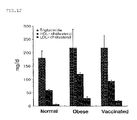
- FIG. 12 represents the effect on the concentration of lipid in blood serum according to the injection of PB1 4 vaccine.
- a peptide library system of phage was employed in the present invention in order to screen for an epitope of human apolipoprotein B-100 bound by monoclonal antibody (MabB23). Mimetic peptides structurally similar to antigenic determinants recognized by the antibody were identified and subsequently synthesized according to the amino acid sequence of the identified peptide.
- Peptide library system is a kind of process for searching a three dimensional form of antigenic determinant. That is, DNA fragments which encode random-sequenced peptides are inserted into DNAs which encodes minor coat protein of phage, inserted into RF (Reading frame) DNA, and transformed to E. coli in order to express them. The peptides expressed on the surface of E. coli are reacted with antigen in order to screen the peptides structurally similar to the antigenic determinant.
- mice were immunized by introducing the above mimetic peptides. It was confirmed that the anti-serum thus obtained recognizes the original apolipoprotein B-100, mimetic peptides and LDL at the same times (Identification of Antigenic Determinants for the Murine Monoclonal Antibodies against Apolipoprotein A-1 and Apolipoprotein B-100 by using Phage-displayed Random Peptide library, Chi-Hoon Kim, Hanyang Univ., 1997).
- Mimetic peptides of the present invention may be used in the form of concatemers in order to improve their antigenic determinant.
- two or more mimetic peptides may be linked with each other.
- the concatemer composed of three (3) to fifteen (15) peptides is desirable. More preferably, concatemers of the present invention comprise four (4) peptides of SEQ ID NO:1.
- Constant of the above mimetic peptide of the present invention refers to a polymer wherein the ends of the above mimetic peptides are linked with each other.
- the modified peptide of the above mimetic peptide of the present invention refers to mimetic peptides variants which can be recognized by monoclonal or polyclonal antibody for apolipoprotein B-100. Such variants include substitutions, deletions, additions, and chemical substitutions of one or more amino acids from the mimetic peptide of the present invention.
- the vaccine composition of the present invention which contains mimetic peptide for the epitope of apolipoprotein B-100, concatemers of the peptide and/or modified peptides may inhibit the occurrence of obesity without causing auto-immunity in an organism. Therefore, LDL-related circulatory disease can be treated by a vaccine of the present invention more effective than the transitory and high-priced conventional method in which a cholesterol metabolism-related enzyme was inhibited.
- Formulation of the vaccine composition may be prepared through any conventional method with the mimetic peptide, concatemer or modified peptide of the present invention.
- the composition wherein the active compound mixed or diluted with immune adjuvant, drug for reinforcing immunity, carrier, excipient and diluent is selected from the group consisting of tablet, pill, granule, powder, cachet, suspension, emulsion, liquid, syrup, aerosol, soft or hard gelatin capsule, sterilized liquid for injection, sterilized powder and the like.
- Immune adjuvant which may be employed in the composition of the present invention, is a sort of proteins containing the epitope of T cell (e.g. surface protein of hepatitis B virus), inert carrier such as aluminum salt, bentonite, latex, acrylic particle and the like; hydrophobic antigen (e.g. lipid), water-oil and oil-water emulsions, depot former (e.g. polysaccharide), T cell activator such as PPD, polyadenine, polyuracil and the like; B cell activator (e.g.
- T cell e.g. surface protein of hepatitis B virus
- inert carrier such as aluminum salt, bentonite, latex, acrylic particle and the like
- hydrophobic antigen e.g. lipid
- water-oil and oil-water emulsions e.g. polysaccharide
- T cell activator such as PPD, polyadenine, polyuracil and the like
- B cell activator
- surfactant such as saponin, lysolecithin, retinal, quil A, liposome and the like
- material for reinforcing activity of macrophage and alternative pathway complement activators such as inulin, zymosan, endotozin, lebamisole, C. parvum and the like.
- Carrier protein of the present invention means a pharmaceutically allowable material such as protein or aluminum salt which can transport the mimetic peptide, concatemers of the peptide, and modified peptides of the present invention through blood stream.
- Aluminum salt, phenoxyethyl ethanol, water, physiological salt solution, lactose, dextrose, sucrose, sorbitol, manitol, calcium silicate, cellulose, methyl cellulose, amorphous cellulose, polyvinylpyrolidon, metylhydroxy bezoate, propylhydroxybezoate, talc, magnesium stearate and a mineral oil may be used as suitable carriers, excipients or diluents in the composition of the present invention.
- composition of the present invention may further comprise a filler, an anti cohesive agent, a lubricant, a moisturizer, a perfume, an emulsifier and an antiseptic.
- composition of the present invention may be formulated by conventional methods well-known in this field to induce immune response in mammals through one or more inoculations.
- the vaccine composition for the treatment of obesity of the present invention may be administered through various routes such as oral, dermal, intradermal, venous or muscular administration, preferably, the intradermal administration.
- the effective dose of the vaccine composition of the present invention is 0.1 to 10 ⁇ g (active peptide) per kg of body weight, preferably, 0.5 to 1.0 ⁇ g per kg.
- the actual dosage of the active principle of the vaccine composition may be determined depends on several factors such as condition of immunity, administration routes, condition of patient, age, sex, body weight and the like. Therefore, the ranges of the said dosage amount do not limit the scope of the present invention in any way.
- the primary pharmaceutical effect of the vaccine composition of the present invention is to prevent or treat obesity. This may occur through a mechanism whereby a human antibody induced by a mimetic peptide, concatemer or modified peptide of the invention binds an epitope of apolipoprotein B-100 on the surface of LDL, and, thereby, sterically inhibits lipase from generating fatty acids, the major etiological factor for obesity.
- vaccine compositions of the present invention have an effect also on suppressing hyperlipoidemia. This may occur by a mechanism wherein LDL is detected and removed easily by macrophages through opsonization caused by a human antibody induced by a mimetic peptide, concatemer or modified peptide of the invention and conjugated to the epitope of apolipoprotein B-100 on the surface of LDL.
- composition of the present invention is to prevent or treat obesity by inhibiting cellular accumulation of lipid as cholesterol of free fatty acids. This may occur by a mechanism wherein human antibody induced by a mimetic peptide, concatemer or modified peptide of the present invention binds to the epitope of apolipoprotein B-100 on the surface of LDL, and, thereby, prohibits LDL from binding specifically to LDL receptor exposed on cell surface.
- oligonucleotides were chemically synthesized at Genemed Synthesis, Inc. (San Francisco, Calif., USA) in accordance with the sequence requested from the present inventors.
- 50 ⁇ L of 100 pmol/ ⁇ L oligonucleotide was incubated with 10 ⁇ L of 10 mM ATP, 3 ⁇ L of 10U/ ⁇ L T4 polynucleotide kinase (Takara, Otsu, Japan) and 7 ⁇ L of 10 ⁇ kinase buffer for two (2) hours at 37° C.
- Ligation mixture was prepared by mixing 1 ⁇ L of vector DNA, 5 ⁇ L of insert DNA, 1 ⁇ L of T4 DNA ligase (NEB, Beverly, Mass., USA), 1 ⁇ L of 10 ⁇ enzyme reaction buffer solution (NEB, Beverly, Mass.) and 2 ⁇ L of distilled water, and then incubated at 16° C. during the night and then incubated.
- the plasmid vector for expression of mimetic peptide generally comprises a leader cassette and one or more PB1 peptide gene.
- the plasmid pBX1 which comprises one (1) PB1 gene was prepared by cloning the leader cassette (FIG. 1 A) at the multiple cloning site of pQE30 plasmid (Qiagen, Hilden, Germany). The resulting plasmid was digested with HindIII and SalI and the small fragment was replaced by the LB cassette (FIG. 1B) to give the plasmid pBX1 which is good for the insertion of multiple numbers of BL cassettes (FIG. 1C) easily.
- the plasmid pBluescriptH SK+ was cut with SalI and XhoI and ligated with BL cassettes in which single to multiple BL cassette insertions occurred randomly.
- the expected repeats of the PB1 peptide genes in the plasmid pBlue-BL were selected and cleaved out and subcloned into pBX1 (FIG. 1 D).
- Step 2 Preparation of Vector for Expression of PB1 Mono-peptide
- a leader cassette was prepared by annealing SEQ ID NO:10 and SEQ ID NO:11 oligonucleotides synthesized through the same process as Example 1 and 2. Then, the pQE30 vector (Qiagen, Hilden, Germany), which had been cleaved by SalI and BamHI, was ligated with the above leader cassette in order to prepare pQE-Leader plasmid. As a result of expression of the above pQE30 vector, six histidine residues were additionally incorporated to the N-terminus of the expressed protein in order for the protein to be purified easily.
- the above leader cassette was designed to comprise a recognition site (DDDDKI; SEQ ID NO:12) for enterokinase in order to reduce the additional amino acids to a minimum.
- Example 1 According to the process of Example 1, four oligonucleotides of the sequences of which are represented by SEQ ID NOS:4 to 7, were synthesized, phosphorylated, and then, annealed with complementary oligonucleotides respectively in order to synthesize the LB cassette of FIG. 1B (SEQ ID NOS:13 and 14). 40 ⁇ L of the annealed oligonucleotides were mixed with 3 ⁇ L of 1 U/ ⁇ L T4 DNA ligase, 5 ⁇ L of 10 ⁇ enzyme buffer and 2 ⁇ L ⁇ L of distilled water to prepare ligation mixture. Then, the ligation mixture was incubated overnight to link the oligonucleotides each other.
- the reaction mixture was loaded onto 20% polyacrylamide gel and electrophoresed.
- the LB cassette 52 bp oligonucleotides (FIG. 3) was identified by dying the gel with ethidium bromide (EtBr).
- lane M was a mark for 20 bp ladder DNA
- lane 1 was the reaction solution.
- LB cassette was obtained from the gel by means of QIAEX II gel extraction kit (Qiagen, Hilden, Germany).
- the above pQE-Leader was cleaved by HindIII and SalI, and then ligated with the above LB cassette according to Example 2 in order to prepare expression vector for PB1 mimetic peptide.
- the prepared expression vector was named pBX1 and the peptide expressed by the vector was named PB11 peptide (refers to FIG. 2 ).
- Example 1 According to the process of Example 1, four oligonucleotides the sequences of which are shown in SEQ ID NOS:4, 5, 8, and 9, were synthesized, phosphorylated and then, annealed with complementary oligonucleotides respectively in order to synthesize BL cassette of FIG. 1C (SEQ ID NOS:15 and 16). Subsequently such oligonucletides were ligated with each other like the process of Step 2 and then were loaded onto 20% polyacrylamide gel for electrophoresis. Fifty-five bp oligonucleotide (leader cassette) was identified by staining the gel with EtBr. BL cassette was obtained from the gel through QIAEX II gel extraction kit and cleaved by SalI and XhoI.
- pBluescript II SK (Stratagene, La Jolla, Calif., USA) was cleaved by SalI and XhoI.
- the vector was electrophoresed on 0.8% agarose gel, and obtained by means of QIAEX II gel extraction kit (Qiagen, Hilden, Germany).
- Example 2 The same ligation reaction as Example 2 was carried out to obtain pBlue-BL plasmid by using 5 of BL cassette DNA and 1 of the above cleaved-vector DNA.
- Plasmid pBX2 was prepared by inserting such BL cassette into the SalI site of the pBX1 vector prepared in Step 2.
- pBX3 and pBX4 vector were prepared by changing the number of the BL cassette which inserted into the SalI site of the pBX1 vector from two (2) to three (3) (refers to FIG. 2 ).
- the peptides expressed from the pBX2, pBX3 and pBX4 vector were concatemers which comprises two (2) to four (4) PB1 peptides. They were named PB12, PB13 and PB1 4 respectively.
- Host cells E. coli M15 [pREP4]; Qiagen, Hilden, Germany
- E. coli M15 [pREP4] Qiagen, Hilden, Germany
- pBlue-BL plasmid plasmid
- One of the colonies that formed on the agar plate was inoculated in 10 mL of LB medium and incubated with shaking at 37° C. for sixteen (16) hours, and then the plasmid was isolated through DNA purification system (Wizard PLUS SV DNA miniprep DNA purification system; Promega, Madison, Wis., USA).
- coli was incubated with SalI and XhoI restriction enzyme in order to be cleaved at 37° C. for one (1) hour, and analyzed through 20% PAGE (FIG. 4 ).
- lane M represents 20 bp ladder DNA
- lane 1 represents oligonucleotide product obtained from Step 3
- lane 2 represents BL cassette DNA isolated by 20% PAGE from step3
- lane 3 represents recombinant pBlue-BL plasmid treated with restriction enzyme.
- FIG. 4 it was confirmed that the pBlue-BL plasmid contained BL cassette.
- E. coli (M15 [pREP4]) was transformed with pBX1 or pBX3 plasmid and plasmid DNA was isolated as explained above in order to confirm the number and orientation of the DNA cassette inserts.
- the isolated plasmid was cleaved by SalI and HindIII restriction enzyme and analyzed through 20% PAGE (FIG. 5 ).
- lane M represents 20 bp ladder DNA
- lanes 1 and 3 represent the pBX1 plasmid containing an LB, but not BL cassette
- lane 2 represents the plasmid harboring one LB and two BL cassettes with the right direction.
- lane 4 represents the plasmid having one LB and two BL cassettes with reversed orientation.
- the number and orientation of B cassettes were determined by restriction enzyme mapping.
- the DNA sequence of the B cassettes incorporated into the plasmid which had been harvested from the transformed E. coli was confirmed to be identical to the designed sequences.
- the plasmids were prepared by Wizard PLUS DNA miniprep kit and were sequenced by using Sequennase (Ver. 2.1) DNA sequencing kit (Amersham, Cleveland, UK).
- E. coli M15 [pREP4] were cultivated on LB agar broth containing ampicillin and kanamycin.
- One E. coli M15 [pREP4] was transformed with the plasmid pBX4, another was mock transformed with pQE30, and the other was not transformed E. coli M15 [pREP4].
- Each of colonies formed from the solid culture was inoculated respectively in liquid LB culture medium which contained 100 ⁇ L/mL ampicillin and 25 ⁇ L/mL kanamycin, and incubated overnight. The culture was incubated at 37° C. for one (1) hour with shaking until the O.D. value reached 0.5 to 0.7 at 600 nm.
- IPTG isopropyl-thio- ⁇ -galactopyranoside
- lane M represents the pre-stained standard SeeBlue label
- lane 1 represents medium used for incubation of E. coli M15 [pREP4] which was not transformed
- lane 2 represents medium used for incubation of E. coli M15 [pREP4] which was transformed with pQE30 vector
- lane 3 represents medium used for incubation of E. coli M15 [pREP4] which was transformed with pBX4 vector.
- cell lysis solution 300 mM NaCl, 50 mM NaH 2 PO 4 , 10 mM imidazol pH 8.0
- Step 3-1 Affinity Chromatography
- Ni-NTA resin for purifying His-tagged proteins was used to purify the recombinant peptide in Step 1.
- the affinity chromatography using attractive force between Ni+ saturated in resin and histidine residues at the end of the expressed protein, is a well known method for purifying interest protein easily.
- E. coli M15 [pREP4] which had been transformed with pBX4 was inoculated in 11 of LB culture medium and incubated at 37° C. to the extent that O.D. value was over 0.6 at 600 nm.
- the ratio of LB culture medium to pBX4 vector was fifty (50) to one (1).
- IPTG was added in a final concentration of 1 mM and incubated again for five (5) hours. After incubation, the cell pellet was obtained by centrifuging the culture medium at 6,000 ⁇ g for 30 min, and the pellet was stored at ⁇ 70° C. over night.
- the pellet was thawed in ice, suspended in dissolving solution (300 mM NaCl, 50 mM NaH 2 PO 4 , 10 mM imidazol pH 8.0) wherein 5 mL of dissolving solution per 1 g of the pellet was used.
- Cells are lysed by sonication as the method of Step 2 and then centrifuged at room temperature at 10,000 ⁇ g for 30 min.
- the same volume of buffer (8 M urea, 0.1 M NaH 2 PO 4 , 0.01 M Tris-HCl pH 8.0) as the pellet, was added for re-suspending the cellular debris and for denaturing proteins there in, and the pellet-suspended solution was treated with brief ultrasonic wave so that more proteins could be dissolved in buffer.
- the suspension was centrifuged at 8,000 rpm for 30 min to remove cellular debris which had not been solubilized in 8M urea.
- 1 mL of Ni-NTA resin was added at 4° C. and shook 200 rpm for 2 hours in order proteins containing His-tag to be captured.
- the target proteins containing His-tag were eluted by pouring 5 mL of low pH buffer (8 M urea, 0.1 M NaH 2 PO 4 0.01 M Tris-HCl pH 5.9) two (2) times and subsequently 5 mL of strong acid buffer (8 M urea, 0.1 M NaH 2 PO 4 , 0.01 M Tris-HCl pH 4.5) four (4) times, and then SDS-PAGE was used to confirm the eluted target proteins by using 15% acryamide gel (FIG. 7 ).
- lane M represents pre-stained SeeBlue size marker and lane 1 represents the purified PB1 4 peptide.
- the above purified proteins are dialyzed against PBS (8 g/L NaCl, 0.2 g/L KCl, 1.44 g/L Na 2 HPO 4 and 0.24 g/L KH 2 PO 4 ) in order to regain their original conformations.
- Dialysis tube employed was 3,500 Da in molecular weight cut-off size. During dialysis, 3L of PBS containing 2 M urea was used first for 5 hours, and then 5 L of PBS without urea was used two (2) times overnight.
- Step 3-2 Hydrophobic Chromatography
- Ammonium sulfate was added up to final 20% concentration little by little to the solution containing PB1 4 peptide, which was eluted from Ni-NTA resin in Step 3-1, and then adjusted to pH 7.0. The solution was left for three or more hours after 10% of ammonium sulfate had been melt completely, and then the solution was loaded on the phenyl sepharose column [a filling: Phenyl sepharose Fast Flow resin (Phamacia, Sweden); column size: 1 cm (id) ⁇ 3 cm (h)].
- urea 2 M urea was added to buffer solution (50 mM NaCl, 20 mM Tris-HCl, 2 mM CaCl 2 pH 7.4) which was good for removing denaturating agent and imidazol etc. from the purified his-tagged protein and also for activating enterokinase.
- the dialyzed PB1 4 peptide which had been obtained from Step 3-2, was dialyzed again by using the above urea containing buffer to desalt the PB1 4 peptide, and during which, the concentration of urea was lowered little by little by repeated dialysis against urea depleted buffer.
- the column was equilibrated with equilibrating buffer (50 mM sodium phosphate buffer, 2 M urea, pH 7.0) and the peptide was eluted under NaCl concentration gradient from 0 to 1M by using another buffer (50 mM sodium phosphate buffer, 2 M urea, 1 M NaCl) (flow rate: 0.5 mL/min).
- equilibrating buffer 50 mM sodium phosphate buffer, 2 M urea, pH 7.0
- another buffer 50 mM sodium phosphate buffer, 2 M urea, 1 M NaCl
- the purified PB1 4 peptide which had been obtained through the same method of Step 3 was quantitatively analyzed through colorimetric analysis by using micro BCA reagent (Pierce, Rockford, USA).
- Step 5 Confirmation of Characteristics of the Recombinant PB1 4 Peptide
- the blotted membrane was incubated with a 5 mL of blocking solution (TBS pH 7.5, 5% skim milk powder (w/v), 0.02% Tween 20) for 1.5 hours, and then was washed three times with TTBS (Tris-buffered saline solution containing 0.1% Tween 20) for 15 min, 5 min and 5 min respectively.
- TTBS Tris-buffered saline solution containing 0.1% Tween 20
- the membrane was incubated for 1.5 hours at room temperature with the solution in which alkaline phosphatase-F(ab)′2-goat anti-mouse IgG (H+L) (Zymed, San Francisco, Calif.) was diluted with the TTBS solution in ratio of one (1) to one thousand (1000).
- the membrane was washed again with TTBS three times, and then colorized by adding BCIP/NBT (5-bromo-4-chloro-3-indolyl phosphate/nitro blue tetrazolium (Sigma)). BCIP/NBT solution was removed using TTBS solution after staining.
- BCIP/NBT 5-bromo-4-chloro-3-indolyl phosphate/nitro blue tetrazolium (Sigma)
- PVDF membrane (Gelman Science, BioTrace®) was used instead of nitrocellulose membrane.
- the first antibody was used in ratio of one (1) to ten thousand (10,000) and HRP-conjugated rabbit anti-mouse IgG (Pierce, Rockford, Ill., USA.) was used as the second antibody in ratio of one (1) to ten thousand (10,000).
- lane M represents a ECL detecting label (Gibco BRL) and lane 1 represents the PB1 4 peptide.
- the expressed PB1 4 peptide could be recognized with the anti-PB1 4 serum.
- the PB1 4 peptide used herein was the PB1 4 ⁇ his peptide from which his-tag was removed, in step 3-3 of example 2.
- Step 1 Ligation Between PB1 4 Peptide and OVA
- ovalbumin As a carrier protein, ovalbumin (OVA), was added to the purified PB1 4 peptide in Step 3 in Example 2, in molar ration of one (1) to ten (10), and was incubated for one (1) hour at 4° C. To the PB1 4 peptide-ovalbumin solution, 2% (v/v) glutaraldehyde was added with the same volume, and incubated for one (1) hour with continuous shaking. Then glycine was added to the reaction mixture until final concentration is to be 0.2 M to stop the reaction proceeding therein.
- OVA ovalbumin
- the peptide with which OVA was linked in Step 1 was concentrated and used to immunize mouse.
- the amount of the antigen to be injected to the mouse was 5 ⁇ g, which was the amount of PB1 4 peptide before linked with OVA.
- the antigen which was emulsified with the same amount of an adjuvant, was injected to intraperitoneum cavity of the mouse in amount of 0.2 mL.
- CFA Complete Freund's Adjuvant
- IFA Incomplete Freund's Adjuvant
- Step 3 Measurement of Avidity of Anti-PB1 4 Antibody by Indirect ELISA
- the avidity of the antibody was measured by using blood serum obtained in Step 2.
- 100 ⁇ L of PB1 4 peptide was distributed into each well of 96 well of a micro-titer plate (Flacon: pro-binding), left alone at 4° C. for 6 hours or more, and then washed three (3) times with TTBS (Tris buffered-saline solution containing 0.05% Tween 20).
- 200 ⁇ L of blocking solution (1% BSA in TTBS) was added to each well and incubated at 37° C. for one (1) hour, and then washed three (3) times with TTBS.
- Step 1 Induction of Obesity in a Mouse
- mice 5 week-old ICR mice (Korea Center for Animal Experiment Ltd., Seoul, Korea) were used herein.
- the mice were raised in a breeding farm in which the temperature was from 17° C. to 25° C., and were fed a mixed feed (Sam Yang Feed Ltd., Seoul, Korea, [ingredient: water 11.8% or more, protein 20.0% or more, crude lipid 3.0% or more, crude fiber 10.0% or less, crude ash 10.0% or less, calcium 0.6% or less and phosphorus 0.4% or more]).
- Goldthioglucose (GTG) was administered to the mice to induce obesity.
- GTG has a role of inducing desensitization of venteromedial hypothalamic nuclei (VMH).
- VMH venteromedial hypothalamic nuclei
- mice that received GTG did not feel satiated and always had a desire to eat.
- the GTG used herein is very unstable since it is easily degraded in water or moisture. Therefore, 100 mg of GTG (Sigma, Inc.) was diluted with 1 mL of sesame oil (Sigma Inc.), and was used as the same method of Brecher et al (Brechere G. and Waxler, S. H. Proc. Soc. Exp. Biol. Med., 70: 498501 (1949)) in order for a proper amount of GTG to be administered.
- mice were distributed to prepare a test (twenty (20) mice) and a control group (four (4) mice), and 25 mL of GTG was injected to the test group whereas the control was injected with nothing.
- Body weight of the mice of the test group was measured prior to experiment and the mice of which deviation of body weight was not significant, were selected and applied to experiment.
- Body weight of the mice measured after one (1) week after GTG injection was in the range from 26.5 to 29.5 grams.
- mice of the GTG-injected group were induced to be obese whereas the remainder was not.
- mice All of the obesity-induced mice were distributed in three (3) groups. A week later from second GTG injection the PB1 4 peptide was injected to the mice of test group 1 consisting of seven (7) mice as the same method in Step 2 of Example 3. In addition, the mice (test group 2 containing seven (7) mice) of another group of the three, were injected with ovalbumin instead of PB1 4 peptide as a mock experiment, and vaccine was not injected to the other group (test group 3 containing six (6) mice) to induce obesity. On the other hand, 0.2 mL of PBS was injected to the control group to be compared with the test groups to confirm the effect of the vaccine of the present invention.
- feed used herein was mixed with the yolk of an egg and dried at 50° C. to induce intake of cholesterol so that the level of cholesterol could increase in mouse serum. Feed was also provided enough for disease related to the level of cholesterol to be caused. Body weight of the mouse was measured everyday.
- body weight of the vaccine-injected mice of test group 1 (- ⁇ - ⁇ -) increased from 27.7 ⁇ 0.4 g to 52.2 ⁇ 1.7 g after twelve weeks (12) of GTG injection.
- the data justify a conclusion that there was no significant difference of an increase in body weight between the test group 1 and the control group (- ⁇ - ⁇ -).
- body weight of the mice of both the test group 2 (- ⁇ - ⁇ -) in which ovalbumin was injected after being obese and the test group (- ⁇ - ⁇ -) in which no vaccine was injected after the induction of obesity increased continuously from 28.3 ⁇ 0.5 g to 68.9 ⁇ 2.8 g. Therefore, it was confirmed that obesity could be inhibited by injection of PB1 4 peptide vaccine.
- G 1 and G 2 represent the time of GTG injection and V 1 , V 2 and V 3 represent the time of injection of PB1 4 peptide vaccine.
- FIG. 11 represents appearance of the obesity-induced mice.
- a 20-week old mouse of the test group 1 (FIG. 11 A: normal mouse) was compared with a 20-week old mouse of the test group 3 (FIG. 11 B: obese mouse).
- FIG. 11 it was confirmed that the vaccine of the present invention was effective in inhibiting obesity.
- Step 2 Measurement of the Level of Cholesterol in Blood.
Landscapes
- Health & Medical Sciences (AREA)
- Chemical & Material Sciences (AREA)
- Life Sciences & Earth Sciences (AREA)
- Organic Chemistry (AREA)
- General Health & Medical Sciences (AREA)
- Medicinal Chemistry (AREA)
- Public Health (AREA)
- Bioinformatics & Cheminformatics (AREA)
- General Chemical & Material Sciences (AREA)
- Chemical Kinetics & Catalysis (AREA)
- Nuclear Medicine, Radiotherapy & Molecular Imaging (AREA)
- Veterinary Medicine (AREA)
- Pharmacology & Pharmacy (AREA)
- Engineering & Computer Science (AREA)
- Animal Behavior & Ethology (AREA)
- Toxicology (AREA)
- Genetics & Genomics (AREA)
- Hematology (AREA)
- Proteomics, Peptides & Aminoacids (AREA)
- Obesity (AREA)
- Zoology (AREA)
- Gastroenterology & Hepatology (AREA)
- Biochemistry (AREA)
- Biophysics (AREA)
- Diabetes (AREA)
- Molecular Biology (AREA)
- Child & Adolescent Psychology (AREA)
- Peptides Or Proteins (AREA)
- Medicines Containing Antibodies Or Antigens For Use As Internal Diagnostic Agents (AREA)
- Medicines That Contain Protein Lipid Enzymes And Other Medicines (AREA)
- Preparation Of Compounds By Using Micro-Organisms (AREA)
- Medicinal Preparation (AREA)
Applications Claiming Priority (7)
| Application Number | Priority Date | Filing Date | Title |
|---|---|---|---|
| KR20000052055 | 2000-09-04 | ||
| KR2000-0052055 | 2000-09-04 | ||
| KR2000/0052055 | 2000-09-04 | ||
| KR2001/0054005 | 2001-09-04 | ||
| KR10-2001-0054005A KR100472841B1 (ko) | 2000-09-04 | 2001-09-04 | 아포지단백질 비-100의 에피토프에 대한 모조 펩타이드,그들의 연쇄물 또는 변형체와 이들을 함유하는 백신 조성물 |
| PCT/KR2001/001492 WO2002020040A1 (en) | 2000-09-04 | 2001-09-04 | Mimetic peptides for epitope of apolipoprotein b-100, concatemer and modified peptides thereof, and the vaccine composition comprising the same |
| KR2001-0054005 | 2001-09-04 |
Related Parent Applications (1)
| Application Number | Title | Priority Date | Filing Date |
|---|---|---|---|
| PCT/KR2001/001492 Continuation WO2002020040A1 (en) | 2000-09-04 | 2001-09-04 | Mimetic peptides for epitope of apolipoprotein b-100, concatemer and modified peptides thereof, and the vaccine composition comprising the same |
Publications (2)
| Publication Number | Publication Date |
|---|---|
| US20030211997A1 US20030211997A1 (en) | 2003-11-13 |
| US6825318B2 true US6825318B2 (en) | 2004-11-30 |
Family
ID=26638363
Family Applications (1)
| Application Number | Title | Priority Date | Filing Date |
|---|---|---|---|
| US10/378,707 Expired - Lifetime US6825318B2 (en) | 2000-09-04 | 2003-03-04 | Mimetic peptides for an epitope of apolipoprotein B-100, concatemers of the peptides, and modified peptides, and compositions comprising the same |
Country Status (18)
| Country | Link |
|---|---|
| US (1) | US6825318B2 (cs) |
| EP (1) | EP1315517B1 (cs) |
| JP (1) | JP2004508029A (cs) |
| CN (1) | CN1231262C (cs) |
| AU (1) | AU8628601A (cs) |
| BG (1) | BG106655A (cs) |
| BR (1) | BR0107175A (cs) |
| CA (1) | CA2389739A1 (cs) |
| CZ (1) | CZ20021571A3 (cs) |
| EE (1) | EE200200238A (cs) |
| HU (1) | HUP0203251A2 (cs) |
| IL (1) | IL149379A0 (cs) |
| LT (1) | LT4989B (cs) |
| MX (1) | MXPA02004505A (cs) |
| NO (1) | NO20022147D0 (cs) |
| RU (1) | RU2313536C2 (cs) |
| SK (1) | SK6312002A3 (cs) |
| WO (1) | WO2002020040A1 (cs) |
Cited By (5)
| Publication number | Priority date | Publication date | Assignee | Title |
|---|---|---|---|---|
| WO2007075335A3 (en) * | 2005-12-16 | 2008-03-20 | Univ California | Modulation of in utero immune programming |
| WO2008038990A1 (en) * | 2006-09-25 | 2008-04-03 | Sj Biomed Inc. | Anti-obese immunogenic hybrid polypeptides and anti-obese vaccine composition comprising the same |
| US20080311152A1 (en) * | 2005-12-16 | 2008-12-18 | The Regents Of The University Of California | Modulation of developmental immune programming and protection against cardiovascular disease, diabetes, infectious diseases, and cancer |
| US10434141B2 (en) | 2016-05-31 | 2019-10-08 | Abcentra, Llc | Methods for treating systemic lupus erythematosus with an anti-apolipoprotein B antibody |
| US10858422B2 (en) | 2016-05-31 | 2020-12-08 | Abcentra, Llc | Methods for treating systemic lupus erythematosus with an anti-apolipoprotein B antibody |
Families Citing this family (4)
| Publication number | Priority date | Publication date | Assignee | Title |
|---|---|---|---|---|
| US7176013B2 (en) * | 2003-06-11 | 2007-02-13 | Schering Aktiengesellschaft | Modified corin molecules having substitute activation sequences and uses thereof |
| KR100639397B1 (ko) * | 2004-03-18 | 2006-10-26 | (주)에스제이바이오메드 | 항비만용 면역원성 하이브리드 폴리펩타이드 및 이를포함하는 항비만 백신 조성물 |
| US20070054298A1 (en) * | 2005-08-12 | 2007-03-08 | Kent Kirshenbaum | Methods for enzyme-mediated coupling of oligomers |
| CN103520713B (zh) * | 2013-10-16 | 2015-10-28 | 西北农林科技大学 | 一种ApoB100酵母重组疫苗及其制备方法和应用 |
Citations (1)
| Publication number | Priority date | Publication date | Assignee | Title |
|---|---|---|---|---|
| WO1998039469A1 (en) * | 1997-03-04 | 1998-09-11 | Bio-Technology General Corp. | Isolation of tissue specific peptide ligands and their use for targeting pharmaceuticals to organs |
Family Cites Families (4)
| Publication number | Priority date | Publication date | Assignee | Title |
|---|---|---|---|---|
| DE3215310A1 (de) * | 1982-04-23 | 1983-10-27 | Boehringer Mannheim Gmbh, 6800 Mannheim | Verfahren zur bestimmung der low density lipoproteine (ldl) und reagenz zu seiner durchfuehrung |
| US6309853B1 (en) * | 1994-08-17 | 2001-10-30 | The Rockfeller University | Modulators of body weight, corresponding nucleic acids and proteins, and diagnostic and therapeutic uses thereof |
| AU2801299A (en) * | 1998-03-04 | 1999-09-20 | Bio-Technology General Corporation | Isolation of tissue specific peptide ligands and their use for targeting pharmaceuticals to organs |
| WO2001064008A2 (en) * | 2000-03-03 | 2001-09-07 | Smithkline Beecham Biologicals S.A. | Vaccine for the treatment of artherosclerosis |
-
2001
- 2001-09-04 CZ CZ20021571A patent/CZ20021571A3/cs unknown
- 2001-09-04 MX MXPA02004505A patent/MXPA02004505A/es unknown
- 2001-09-04 RU RU2003109439/13A patent/RU2313536C2/ru not_active IP Right Cessation
- 2001-09-04 IL IL14937901A patent/IL149379A0/xx unknown
- 2001-09-04 CN CNB018030572A patent/CN1231262C/zh not_active Expired - Fee Related
- 2001-09-04 BR BR0107175-0A patent/BR0107175A/pt not_active Application Discontinuation
- 2001-09-04 EE EEP200200238A patent/EE200200238A/xx unknown
- 2001-09-04 AU AU86286/01A patent/AU8628601A/en not_active Abandoned
- 2001-09-04 WO PCT/KR2001/001492 patent/WO2002020040A1/en not_active Ceased
- 2001-09-04 SK SK631-2002A patent/SK6312002A3/sk unknown
- 2001-09-04 CA CA002389739A patent/CA2389739A1/en not_active Abandoned
- 2001-09-04 EP EP01965715A patent/EP1315517B1/en not_active Expired - Lifetime
- 2001-09-04 HU HU0203251A patent/HUP0203251A2/hu unknown
- 2001-09-04 JP JP2002524523A patent/JP2004508029A/ja active Pending
-
2002
- 2002-04-25 BG BG106655A patent/BG106655A/bg unknown
- 2002-04-29 LT LT2002051A patent/LT4989B/lt not_active IP Right Cessation
- 2002-05-03 NO NO20022147A patent/NO20022147D0/no not_active Application Discontinuation
-
2003
- 2003-03-04 US US10/378,707 patent/US6825318B2/en not_active Expired - Lifetime
Patent Citations (1)
| Publication number | Priority date | Publication date | Assignee | Title |
|---|---|---|---|---|
| WO1998039469A1 (en) * | 1997-03-04 | 1998-09-11 | Bio-Technology General Corp. | Isolation of tissue specific peptide ligands and their use for targeting pharmaceuticals to organs |
Non-Patent Citations (17)
Cited By (7)
| Publication number | Priority date | Publication date | Assignee | Title |
|---|---|---|---|---|
| WO2007075335A3 (en) * | 2005-12-16 | 2008-03-20 | Univ California | Modulation of in utero immune programming |
| US20080311152A1 (en) * | 2005-12-16 | 2008-12-18 | The Regents Of The University Of California | Modulation of developmental immune programming and protection against cardiovascular disease, diabetes, infectious diseases, and cancer |
| US8961982B2 (en) | 2005-12-16 | 2015-02-24 | The Regents Of The University Of California | Modulation of developmental immune programming and protection against cardiovascular disease, diabetes, infectious diseases, and cancer |
| WO2008038990A1 (en) * | 2006-09-25 | 2008-04-03 | Sj Biomed Inc. | Anti-obese immunogenic hybrid polypeptides and anti-obese vaccine composition comprising the same |
| US20110002955A1 (en) * | 2006-09-25 | 2011-01-06 | Sj Biomed Inc. | Anti-obese immunogenic hybrid polypeptides and anti-obese vaccine composition comprising the same |
| US10434141B2 (en) | 2016-05-31 | 2019-10-08 | Abcentra, Llc | Methods for treating systemic lupus erythematosus with an anti-apolipoprotein B antibody |
| US10858422B2 (en) | 2016-05-31 | 2020-12-08 | Abcentra, Llc | Methods for treating systemic lupus erythematosus with an anti-apolipoprotein B antibody |
Also Published As
| Publication number | Publication date |
|---|---|
| JP2004508029A (ja) | 2004-03-18 |
| NO20022147L (no) | 2002-05-03 |
| CA2389739A1 (en) | 2002-03-14 |
| CZ20021571A3 (cs) | 2002-09-11 |
| CN1231262C (zh) | 2005-12-14 |
| MXPA02004505A (es) | 2004-09-10 |
| HUP0203251A2 (hu) | 2003-01-28 |
| WO2002020040A1 (en) | 2002-03-14 |
| EP1315517A4 (en) | 2005-02-09 |
| LT4989B (lt) | 2003-01-27 |
| BG106655A (bg) | 2004-08-31 |
| CN1392798A (zh) | 2003-01-22 |
| BR0107175A (pt) | 2002-07-02 |
| LT2002051A (en) | 2002-09-25 |
| US20030211997A1 (en) | 2003-11-13 |
| RU2003109439A (ru) | 2004-07-20 |
| EP1315517B1 (en) | 2010-10-20 |
| AU8628601A (en) | 2002-03-22 |
| IL149379A0 (en) | 2002-11-10 |
| EE200200238A (et) | 2003-06-16 |
| SK6312002A3 (en) | 2002-09-10 |
| RU2313536C2 (ru) | 2007-12-27 |
| NO20022147D0 (no) | 2002-05-03 |
| EP1315517A1 (en) | 2003-06-04 |
Similar Documents
| Publication | Publication Date | Title |
|---|---|---|
| US6410022B1 (en) | Modulation of cholesteryl ester transfer protein (CETP) activity | |
| JP3771265B2 (ja) | モラクセラ属(Moraxella)の高分子量主要外膜タンパク | |
| US4521334A (en) | Synthetic polypeptide fragments | |
| US20030211997A1 (en) | Mimetic peptides for an epitope of apolipoprotein B-100, concatemers of the peptides, and modified peptides, and compositions comprising the same | |
| JP2001508760A (ja) | アテローム性動脈硬化症治療用のプラスミド型ワクチン | |
| KR100639397B1 (ko) | 항비만용 면역원성 하이브리드 폴리펩타이드 및 이를포함하는 항비만 백신 조성물 | |
| AU2007200834B2 (en) | Mimetic peptides for epitope of apolipoprotein B-100, concatemer and modified peptides thereof, and the vaccine composition comprising the same | |
| KR100472841B1 (ko) | 아포지단백질 비-100의 에피토프에 대한 모조 펩타이드,그들의 연쇄물 또는 변형체와 이들을 함유하는 백신 조성물 | |
| WO2001027144A2 (en) | Ab5 toxin b subunit mutants with altered chemical conjugation characteristics | |
| Petzke et al. | Schistosomamansoni gene GP22 encodes the tegumental antigen Sm25:(1) antibodies to a predicted B‐cell epitope of Sm25 cross‐react with other candidate vaccine worm antigens;(2) characterization of a recombinant product containing tandem‐repeats of this peptide as a vaccine | |
| CN101298615B (zh) | 一种新的抗恶性疟原虫表位以及含有它的疫苗 | |
| TRZYNA et al. | Schistosoma mansoni: genetic non‐response to p40, the major protein antigen of the egg, reveals a novel mechanism enhancing IgM production during infection | |
| AU747709B2 (en) | Xenogeneic cholesteryl ester transfer protein (CETP) for modulation of CETP activity | |
| US5871739A (en) | Pharmaceutical composition | |
| Kanda et al. | Dependence of the murine antibody response to an anti-CD4 CDR2 VH peptide on immunogen formulation | |
| Sjolander et al. | Plasmodium falciparum: The Immune Response in Rabbits to the Clustered Asparagine-Rich Protein (CARP) after Immunization in Freund′ s Adjuvant or Immunostimulating Complexes (ISCOMS) | |
| HK1050857A (en) | Mimetic peptides for epitope of apolipoprotein b-100, concatemer and modified peptides thereof, and the vaccine composition comprising the same | |
| JPH0859501A (ja) | 医薬組成物 |
Legal Events
| Date | Code | Title | Description |
|---|---|---|---|
| AS | Assignment |
Owner name: KIM, HYO-JOON, KOREA, REPUBLIC OF Free format text: ASSIGNMENT OF ASSIGNORS INTEREST;ASSIGNOR:JOUNG, HAE-JUNG;REEL/FRAME:014194/0948 Effective date: 20030415 |
|
| STCF | Information on status: patent grant |
Free format text: PATENTED CASE |
|
| CC | Certificate of correction | ||
| FPAY | Fee payment |
Year of fee payment: 4 |
|
| FPAY | Fee payment |
Year of fee payment: 8 |
|
| FPAY | Fee payment |
Year of fee payment: 12 |