US7078593B2 - Sequence regulating the anther-specific expression of a gene and its use in the production of androsterile plants and hybrid seeds - Google Patents
Sequence regulating the anther-specific expression of a gene and its use in the production of androsterile plants and hybrid seeds Download PDFInfo
- Publication number
- US7078593B2 US7078593B2 US10/240,299 US24029903A US7078593B2 US 7078593 B2 US7078593 B2 US 7078593B2 US 24029903 A US24029903 A US 24029903A US 7078593 B2 US7078593 B2 US 7078593B2
- Authority
- US
- United States
- Prior art keywords
- plant
- plants
- gene
- nucleotide sequence
- expression
- Prior art date
- Legal status (The legal status is an assumption and is not a legal conclusion. Google has not performed a legal analysis and makes no representation as to the accuracy of the status listed.)
- Expired - Fee Related
Links
- 230000014509 gene expression Effects 0.000 title claims abstract description 65
- 230000001105 regulatory effect Effects 0.000 title claims abstract description 18
- 108090000623 proteins and genes Proteins 0.000 title claims description 84
- 238000004519 manufacturing process Methods 0.000 title claims description 27
- 239000002773 nucleotide Substances 0.000 claims abstract description 79
- 125000003729 nucleotide group Chemical group 0.000 claims abstract description 79
- 238000002679 ablation Methods 0.000 claims abstract description 26
- 241000196324 Embryophyta Species 0.000 claims description 174
- 238000000034 method Methods 0.000 claims description 42
- 108020004414 DNA Proteins 0.000 claims description 37
- 239000013598 vector Substances 0.000 claims description 20
- 102000004169 proteins and genes Human genes 0.000 claims description 16
- 108091026890 Coding region Proteins 0.000 claims description 15
- 230000035558 fertility Effects 0.000 claims description 12
- 108090000765 processed proteins & peptides Proteins 0.000 claims description 10
- 230000036512 infertility Effects 0.000 claims description 7
- 230000001131 transforming effect Effects 0.000 claims description 7
- 241000209510 Liliopsida Species 0.000 claims description 3
- 241001233957 eudicotyledons Species 0.000 claims description 2
- 108020004707 nucleic acids Proteins 0.000 claims description 2
- 102000039446 nucleic acids Human genes 0.000 claims description 2
- 150000007523 nucleic acids Chemical class 0.000 claims description 2
- 238000011161 development Methods 0.000 abstract description 38
- 210000004027 cell Anatomy 0.000 description 53
- 210000001519 tissue Anatomy 0.000 description 50
- 230000000694 effects Effects 0.000 description 47
- 101100394003 Butyrivibrio fibrisolvens end1 gene Proteins 0.000 description 41
- 101100296979 Saccharomyces cerevisiae (strain ATCC 204508 / S288c) PEP5 gene Proteins 0.000 description 40
- 230000009261 transgenic effect Effects 0.000 description 38
- 230000018109 developmental process Effects 0.000 description 37
- 239000012634 fragment Substances 0.000 description 29
- 244000061176 Nicotiana tabacum Species 0.000 description 25
- 235000002637 Nicotiana tabacum Nutrition 0.000 description 23
- 240000004713 Pisum sativum Species 0.000 description 21
- 108010016529 Bacillus amyloliquefaciens ribonuclease Proteins 0.000 description 20
- 235000010582 Pisum sativum Nutrition 0.000 description 20
- 230000008569 process Effects 0.000 description 16
- 210000000056 organ Anatomy 0.000 description 14
- 108091028043 Nucleic acid sequence Proteins 0.000 description 13
- 239000013612 plasmid Substances 0.000 description 13
- 235000018102 proteins Nutrition 0.000 description 13
- 101710183938 Barstar Proteins 0.000 description 11
- 108700039691 Genetic Promoter Regions Proteins 0.000 description 11
- 240000003768 Solanum lycopersicum Species 0.000 description 11
- 229930027917 kanamycin Natural products 0.000 description 11
- SBUJHOSQTJFQJX-NOAMYHISSA-N kanamycin Chemical compound O[C@@H]1[C@@H](O)[C@H](O)[C@@H](CN)O[C@@H]1O[C@H]1[C@H](O)[C@@H](O[C@@H]2[C@@H]([C@@H](N)[C@H](O)[C@@H](CO)O2)O)[C@H](N)C[C@@H]1N SBUJHOSQTJFQJX-NOAMYHISSA-N 0.000 description 11
- 229960000318 kanamycin Drugs 0.000 description 11
- 229930182823 kanamycin A Natural products 0.000 description 11
- 108091032973 (ribonucleotides)n+m Proteins 0.000 description 10
- 241000219194 Arabidopsis Species 0.000 description 10
- 238000004458 analytical method Methods 0.000 description 10
- 210000002615 epidermis Anatomy 0.000 description 10
- 241000219195 Arabidopsis thaliana Species 0.000 description 9
- 206010021929 Infertility male Diseases 0.000 description 9
- 235000007688 Lycopersicon esculentum Nutrition 0.000 description 9
- 208000007466 Male Infertility Diseases 0.000 description 9
- 101100236420 Oryza sativa subsp. japonica MADS2 gene Proteins 0.000 description 9
- 230000002068 genetic effect Effects 0.000 description 9
- 230000009466 transformation Effects 0.000 description 9
- 238000003556 assay Methods 0.000 description 8
- 239000002299 complementary DNA Substances 0.000 description 8
- 102000004190 Enzymes Human genes 0.000 description 7
- 108090000790 Enzymes Proteins 0.000 description 7
- 230000000692 anti-sense effect Effects 0.000 description 7
- 230000015572 biosynthetic process Effects 0.000 description 7
- 230000002363 herbicidal effect Effects 0.000 description 7
- 239000004009 herbicide Substances 0.000 description 7
- 230000001744 histochemical effect Effects 0.000 description 7
- 239000000047 product Substances 0.000 description 7
- 108091035707 Consensus sequence Proteins 0.000 description 6
- 108700005087 Homeobox Genes Proteins 0.000 description 6
- 231100000433 cytotoxic Toxicity 0.000 description 6
- 230000001472 cytotoxic effect Effects 0.000 description 6
- 230000023753 dehiscence Effects 0.000 description 6
- 239000000284 extract Substances 0.000 description 6
- 239000002609 medium Substances 0.000 description 6
- 239000012188 paraffin wax Substances 0.000 description 6
- 210000000130 stem cell Anatomy 0.000 description 6
- 239000000126 substance Substances 0.000 description 6
- 101150101900 uidA gene Proteins 0.000 description 6
- 239000002253 acid Substances 0.000 description 5
- 238000012512 characterization method Methods 0.000 description 5
- 239000003795 chemical substances by application Substances 0.000 description 5
- 210000002808 connective tissue Anatomy 0.000 description 5
- 230000001939 inductive effect Effects 0.000 description 5
- 208000000509 infertility Diseases 0.000 description 5
- 208000021267 infertility disease Diseases 0.000 description 5
- 102000004196 processed proteins & peptides Human genes 0.000 description 5
- 230000001737 promoting effect Effects 0.000 description 5
- 239000000523 sample Substances 0.000 description 5
- 241000589155 Agrobacterium tumefaciens Species 0.000 description 4
- 108010083644 Ribonucleases Proteins 0.000 description 4
- 102000006382 Ribonucleases Human genes 0.000 description 4
- 150000007513 acids Chemical class 0.000 description 4
- 235000013339 cereals Nutrition 0.000 description 4
- 238000007796 conventional method Methods 0.000 description 4
- 235000013399 edible fruits Nutrition 0.000 description 4
- 230000006870 function Effects 0.000 description 4
- 239000003112 inhibitor Substances 0.000 description 4
- 238000002955 isolation Methods 0.000 description 4
- 229920001184 polypeptide Polymers 0.000 description 4
- 231100000331 toxic Toxicity 0.000 description 4
- 230000002588 toxic effect Effects 0.000 description 4
- 238000013518 transcription Methods 0.000 description 4
- 230000035897 transcription Effects 0.000 description 4
- FVFVNNKYKYZTJU-UHFFFAOYSA-N 6-chloro-1,3,5-triazine-2,4-diamine Chemical compound NC1=NC(N)=NC(Cl)=N1 FVFVNNKYKYZTJU-UHFFFAOYSA-N 0.000 description 3
- 101100437498 Escherichia coli (strain K12) uidA gene Proteins 0.000 description 3
- 108700008625 Reporter Genes Proteins 0.000 description 3
- 238000013459 approach Methods 0.000 description 3
- 230000008901 benefit Effects 0.000 description 3
- 150000001875 compounds Chemical class 0.000 description 3
- 230000004069 differentiation Effects 0.000 description 3
- 229930003935 flavonoid Natural products 0.000 description 3
- 150000002215 flavonoids Chemical class 0.000 description 3
- 235000017173 flavonoids Nutrition 0.000 description 3
- 230000006872 improvement Effects 0.000 description 3
- 238000003780 insertion Methods 0.000 description 3
- 230000037431 insertion Effects 0.000 description 3
- 239000013600 plasmid vector Substances 0.000 description 3
- 230000010152 pollination Effects 0.000 description 3
- 230000001850 reproductive effect Effects 0.000 description 3
- 238000003786 synthesis reaction Methods 0.000 description 3
- 240000002791 Brassica napus Species 0.000 description 2
- 235000011293 Brassica napus Nutrition 0.000 description 2
- 108020004705 Codon Proteins 0.000 description 2
- 102000015775 Core Binding Factor Alpha 1 Subunit Human genes 0.000 description 2
- 108010024682 Core Binding Factor Alpha 1 Subunit Proteins 0.000 description 2
- 240000008067 Cucumis sativus Species 0.000 description 2
- 235000010799 Cucumis sativus var sativus Nutrition 0.000 description 2
- 108091035710 E-box Proteins 0.000 description 2
- LFQSCWFLJHTTHZ-UHFFFAOYSA-N Ethanol Chemical compound CCO LFQSCWFLJHTTHZ-UHFFFAOYSA-N 0.000 description 2
- 101100288095 Klebsiella pneumoniae neo gene Proteins 0.000 description 2
- 108700005090 Lethal Genes Proteins 0.000 description 2
- 108090000364 Ligases Proteins 0.000 description 2
- 102100040604 Myotubularin-related protein 5 Human genes 0.000 description 2
- 108050003253 Myotubularin-related protein 5 Proteins 0.000 description 2
- 108091034117 Oligonucleotide Proteins 0.000 description 2
- 102000035195 Peptidases Human genes 0.000 description 2
- 108091005804 Peptidases Proteins 0.000 description 2
- 108700001094 Plant Genes Proteins 0.000 description 2
- 238000002105 Southern blotting Methods 0.000 description 2
- 240000008042 Zea mays Species 0.000 description 2
- 235000005824 Zea mays ssp. parviglumis Nutrition 0.000 description 2
- 235000002017 Zea mays subsp mays Nutrition 0.000 description 2
- FPPNZSSZRUTDAP-UWFZAAFLSA-N carbenicillin Chemical compound N([C@H]1[C@H]2SC([C@@H](N2C1=O)C(O)=O)(C)C)C(=O)C(C(O)=O)C1=CC=CC=C1 FPPNZSSZRUTDAP-UWFZAAFLSA-N 0.000 description 2
- 229960003669 carbenicillin Drugs 0.000 description 2
- 230000001413 cellular effect Effects 0.000 description 2
- 230000008614 cellular interaction Effects 0.000 description 2
- 210000000349 chromosome Anatomy 0.000 description 2
- 238000010367 cloning Methods 0.000 description 2
- 238000010276 construction Methods 0.000 description 2
- 235000005822 corn Nutrition 0.000 description 2
- 230000003412 degenerative effect Effects 0.000 description 2
- 238000013461 design Methods 0.000 description 2
- 230000029087 digestion Effects 0.000 description 2
- 206010013023 diphtheria Diseases 0.000 description 2
- 230000008034 disappearance Effects 0.000 description 2
- 239000013604 expression vector Substances 0.000 description 2
- 230000012010 growth Effects 0.000 description 2
- 101150054900 gus gene Proteins 0.000 description 2
- 238000009396 hybridization Methods 0.000 description 2
- 238000000338 in vitro Methods 0.000 description 2
- 238000011065 in-situ storage Methods 0.000 description 2
- 230000001965 increasing effect Effects 0.000 description 2
- 230000006698 induction Effects 0.000 description 2
- 239000003550 marker Substances 0.000 description 2
- 239000013642 negative control Substances 0.000 description 2
- 230000000050 nutritive effect Effects 0.000 description 2
- 210000001672 ovary Anatomy 0.000 description 2
- 239000003415 peat Substances 0.000 description 2
- 230000008488 polyadenylation Effects 0.000 description 2
- 108091008146 restriction endonucleases Proteins 0.000 description 2
- 230000010153 self-pollination Effects 0.000 description 2
- WESJNFANGQJVKA-UHFFFAOYSA-M sodium;2,3-dichloro-2-methylpropanoate Chemical compound [Na+].ClCC(Cl)(C)C([O-])=O WESJNFANGQJVKA-UHFFFAOYSA-M 0.000 description 2
- 239000000243 solution Substances 0.000 description 2
- 238000010186 staining Methods 0.000 description 2
- 238000006467 substitution reaction Methods 0.000 description 2
- 239000003440 toxic substance Substances 0.000 description 2
- 239000003053 toxin Substances 0.000 description 2
- 231100000765 toxin Toxicity 0.000 description 2
- 108700012359 toxins Proteins 0.000 description 2
- 239000010455 vermiculite Substances 0.000 description 2
- 235000019354 vermiculite Nutrition 0.000 description 2
- 229910052902 vermiculite Inorganic materials 0.000 description 2
- 101150070093 AG gene Proteins 0.000 description 1
- 101150076299 AP3 gene Proteins 0.000 description 1
- 101150092254 ASF1 gene Proteins 0.000 description 1
- 241000589156 Agrobacterium rhizogenes Species 0.000 description 1
- QGZKDVFQNNGYKY-UHFFFAOYSA-O Ammonium Chemical compound [NH4+] QGZKDVFQNNGYKY-UHFFFAOYSA-O 0.000 description 1
- 108020005544 Antisense RNA Proteins 0.000 description 1
- 240000006439 Aspergillus oryzae Species 0.000 description 1
- 235000002247 Aspergillus oryzae Nutrition 0.000 description 1
- 229930192334 Auxin Natural products 0.000 description 1
- 241000193744 Bacillus amyloliquefaciens Species 0.000 description 1
- 241000219198 Brassica Species 0.000 description 1
- 235000011331 Brassica Nutrition 0.000 description 1
- 101100462141 Brassica napus OlnB4 gene Proteins 0.000 description 1
- 244000241235 Citrullus lanatus Species 0.000 description 1
- 235000012828 Citrullus lanatus var citroides Nutrition 0.000 description 1
- 241000186216 Corynebacterium Species 0.000 description 1
- 241000219112 Cucumis Species 0.000 description 1
- 235000015510 Cucumis melo subsp melo Nutrition 0.000 description 1
- 102000018832 Cytochromes Human genes 0.000 description 1
- 108010052832 Cytochromes Proteins 0.000 description 1
- LMKYZBGVKHTLTN-NKWVEPMBSA-N D-nopaline Chemical compound NC(=N)NCCC[C@@H](C(O)=O)N[C@@H](C(O)=O)CCC(O)=O LMKYZBGVKHTLTN-NKWVEPMBSA-N 0.000 description 1
- 101100009781 Danio rerio dmbx1a gene Proteins 0.000 description 1
- 241000588724 Escherichia coli Species 0.000 description 1
- 101710082714 Exotoxin A Proteins 0.000 description 1
- 229920002148 Gellan gum Polymers 0.000 description 1
- 244000068988 Glycine max Species 0.000 description 1
- 235000010469 Glycine max Nutrition 0.000 description 1
- 101000663222 Homo sapiens Serine/arginine-rich splicing factor 1 Proteins 0.000 description 1
- 206010021928 Infertility female Diseases 0.000 description 1
- 102000003960 Ligases Human genes 0.000 description 1
- 239000004367 Lipase Substances 0.000 description 1
- 102000004882 Lipase Human genes 0.000 description 1
- 108090001060 Lipase Proteins 0.000 description 1
- 101000693242 Mus musculus Paternally-expressed gene 3 protein Proteins 0.000 description 1
- 241000699670 Mus sp. Species 0.000 description 1
- NWBJYWHLCVSVIJ-UHFFFAOYSA-N N-benzyladenine Chemical compound N=1C=NC=2NC=NC=2C=1NCC1=CC=CC=C1 NWBJYWHLCVSVIJ-UHFFFAOYSA-N 0.000 description 1
- 238000000636 Northern blotting Methods 0.000 description 1
- 101710163270 Nuclease Proteins 0.000 description 1
- 108020005187 Oligonucleotide Probes Proteins 0.000 description 1
- 241000283973 Oryctolagus cuniculus Species 0.000 description 1
- 240000007594 Oryza sativa Species 0.000 description 1
- 235000007164 Oryza sativa Nutrition 0.000 description 1
- 238000012408 PCR amplification Methods 0.000 description 1
- 240000007377 Petunia x hybrida Species 0.000 description 1
- 244000046052 Phaseolus vulgaris Species 0.000 description 1
- 235000010627 Phaseolus vulgaris Nutrition 0.000 description 1
- 239000004365 Protease Substances 0.000 description 1
- 241000589517 Pseudomonas aeruginosa Species 0.000 description 1
- 241000220324 Pyrus Species 0.000 description 1
- 101000702105 Rattus norvegicus Sproutin Proteins 0.000 description 1
- 108020004511 Recombinant DNA Proteins 0.000 description 1
- -1 SEF4 Proteins 0.000 description 1
- 101100436059 Schizosaccharomyces pombe (strain 972 / ATCC 24843) cia1 gene Proteins 0.000 description 1
- 102100037044 Serine/arginine-rich splicing factor 1 Human genes 0.000 description 1
- 101100020617 Solanum lycopersicum LAT52 gene Proteins 0.000 description 1
- 108091081024 Start codon Proteins 0.000 description 1
- CZMRCDWAGMRECN-UGDNZRGBSA-N Sucrose Chemical compound O[C@H]1[C@H](O)[C@@H](CO)O[C@@]1(CO)O[C@@H]1[C@H](O)[C@@H](O)[C@H](O)[C@@H](CO)O1 CZMRCDWAGMRECN-UGDNZRGBSA-N 0.000 description 1
- 229930006000 Sucrose Natural products 0.000 description 1
- 229920004890 Triton X-100 Polymers 0.000 description 1
- 239000013504 Triton X-100 Substances 0.000 description 1
- 235000009754 Vitis X bourquina Nutrition 0.000 description 1
- 235000012333 Vitis X labruscana Nutrition 0.000 description 1
- 240000006365 Vitis vinifera Species 0.000 description 1
- 235000014787 Vitis vinifera Nutrition 0.000 description 1
- 101100163864 Xenopus laevis asf1aa gene Proteins 0.000 description 1
- FJJCIZWZNKZHII-UHFFFAOYSA-N [4,6-bis(cyanoamino)-1,3,5-triazin-2-yl]cyanamide Chemical compound N#CNC1=NC(NC#N)=NC(NC#N)=N1 FJJCIZWZNKZHII-UHFFFAOYSA-N 0.000 description 1
- 230000009471 action Effects 0.000 description 1
- 238000001042 affinity chromatography Methods 0.000 description 1
- 239000011543 agarose gel Substances 0.000 description 1
- 230000032683 aging Effects 0.000 description 1
- 125000003275 alpha amino acid group Chemical group 0.000 description 1
- 230000004075 alteration Effects 0.000 description 1
- 150000001413 amino acids Chemical class 0.000 description 1
- 235000021120 animal protein Nutrition 0.000 description 1
- 230000007152 anther development Effects 0.000 description 1
- 101150105638 argE gene Proteins 0.000 description 1
- 239000002363 auxin Substances 0.000 description 1
- 101150103518 bar gene Proteins 0.000 description 1
- 230000033228 biological regulation Effects 0.000 description 1
- 230000001851 biosynthetic effect Effects 0.000 description 1
- 230000000903 blocking effect Effects 0.000 description 1
- 239000011575 calcium Substances 0.000 description 1
- 229910000389 calcium phosphate Inorganic materials 0.000 description 1
- 239000001506 calcium phosphate Substances 0.000 description 1
- 235000011010 calcium phosphates Nutrition 0.000 description 1
- 230000015556 catabolic process Effects 0.000 description 1
- 230000030833 cell death Effects 0.000 description 1
- 230000032823 cell division Effects 0.000 description 1
- 230000010261 cell growth Effects 0.000 description 1
- 230000008859 change Effects 0.000 description 1
- 239000013043 chemical agent Substances 0.000 description 1
- 238000006243 chemical reaction Methods 0.000 description 1
- 239000003153 chemical reaction reagent Substances 0.000 description 1
- 238000003501 co-culture Methods 0.000 description 1
- 238000000975 co-precipitation Methods 0.000 description 1
- 239000011248 coating agent Substances 0.000 description 1
- 238000000576 coating method Methods 0.000 description 1
- 238000004040 coloring Methods 0.000 description 1
- 230000009089 cytolysis Effects 0.000 description 1
- 230000006378 damage Effects 0.000 description 1
- 230000007547 defect Effects 0.000 description 1
- 238000006731 degradation reaction Methods 0.000 description 1
- 238000012217 deletion Methods 0.000 description 1
- 230000037430 deletion Effects 0.000 description 1
- 230000008021 deposition Effects 0.000 description 1
- 238000009792 diffusion process Methods 0.000 description 1
- 239000000539 dimer Substances 0.000 description 1
- 201000010099 disease Diseases 0.000 description 1
- 208000037265 diseases, disorders, signs and symptoms Diseases 0.000 description 1
- 238000009826 distribution Methods 0.000 description 1
- 238000004520 electroporation Methods 0.000 description 1
- 238000005516 engineering process Methods 0.000 description 1
- 230000007613 environmental effect Effects 0.000 description 1
- 210000003527 eukaryotic cell Anatomy 0.000 description 1
- 238000002474 experimental method Methods 0.000 description 1
- YAGKRVSRTSUGEY-UHFFFAOYSA-N ferricyanide Chemical compound [Fe+3].N#[C-].N#[C-].N#[C-].N#[C-].N#[C-].N#[C-] YAGKRVSRTSUGEY-UHFFFAOYSA-N 0.000 description 1
- 230000006543 gametophyte development Effects 0.000 description 1
- 230000030279 gene silencing Effects 0.000 description 1
- 238000010353 genetic engineering Methods 0.000 description 1
- 230000030414 genetic transfer Effects 0.000 description 1
- 239000003630 growth substance Substances 0.000 description 1
- 210000004754 hybrid cell Anatomy 0.000 description 1
- 210000004408 hybridoma Anatomy 0.000 description 1
- 238000002649 immunization Methods 0.000 description 1
- 238000011534 incubation Methods 0.000 description 1
- 230000008595 infiltration Effects 0.000 description 1
- 238000001764 infiltration Methods 0.000 description 1
- 230000000977 initiatory effect Effects 0.000 description 1
- 230000003993 interaction Effects 0.000 description 1
- 238000005304 joining Methods 0.000 description 1
- 235000019421 lipase Nutrition 0.000 description 1
- 239000002502 liposome Substances 0.000 description 1
- 230000035800 maturation Effects 0.000 description 1
- 230000001404 mediated effect Effects 0.000 description 1
- QSHDDOUJBYECFT-UHFFFAOYSA-N mercury Chemical compound [Hg] QSHDDOUJBYECFT-UHFFFAOYSA-N 0.000 description 1
- 230000004060 metabolic process Effects 0.000 description 1
- 238000000520 microinjection Methods 0.000 description 1
- 230000004048 modification Effects 0.000 description 1
- 238000012986 modification Methods 0.000 description 1
- 238000001823 molecular biology technique Methods 0.000 description 1
- 238000010369 molecular cloning Methods 0.000 description 1
- KRTSDMXIXPKRQR-AATRIKPKSA-N monocrotophos Chemical compound CNC(=O)\C=C(/C)OP(=O)(OC)OC KRTSDMXIXPKRQR-AATRIKPKSA-N 0.000 description 1
- 235000016709 nutrition Nutrition 0.000 description 1
- 230000035764 nutrition Effects 0.000 description 1
- 239000002751 oligonucleotide probe Substances 0.000 description 1
- 230000003287 optical effect Effects 0.000 description 1
- 230000002018 overexpression Effects 0.000 description 1
- 238000012261 overproduction Methods 0.000 description 1
- 235000021017 pears Nutrition 0.000 description 1
- 230000035515 penetration Effects 0.000 description 1
- 239000010451 perlite Substances 0.000 description 1
- 235000019362 perlite Nutrition 0.000 description 1
- 229930015704 phenylpropanoid Natural products 0.000 description 1
- 125000001474 phenylpropanoid group Chemical group 0.000 description 1
- 239000008055 phosphate buffer solution Substances 0.000 description 1
- 230000001766 physiological effect Effects 0.000 description 1
- 230000019612 pigmentation Effects 0.000 description 1
- 231100000614 poison Toxicity 0.000 description 1
- 230000008119 pollen development Effects 0.000 description 1
- 239000002244 precipitate Substances 0.000 description 1
- 210000001236 prokaryotic cell Anatomy 0.000 description 1
- 230000035755 proliferation Effects 0.000 description 1
- 235000019833 protease Nutrition 0.000 description 1
- 235000021251 pulses Nutrition 0.000 description 1
- 238000000746 purification Methods 0.000 description 1
- 238000003259 recombinant expression Methods 0.000 description 1
- 238000011084 recovery Methods 0.000 description 1
- 230000008929 regeneration Effects 0.000 description 1
- 238000011069 regeneration method Methods 0.000 description 1
- 238000011160 research Methods 0.000 description 1
- 238000012552 review Methods 0.000 description 1
- 210000003705 ribosome Anatomy 0.000 description 1
- 235000009566 rice Nutrition 0.000 description 1
- 239000012882 rooting medium Substances 0.000 description 1
- OARRHUQTFTUEOS-UHFFFAOYSA-N safranin Chemical compound [Cl-].C=12C=C(N)C(C)=CC2=NC2=CC(C)=C(N)C=C2[N+]=1C1=CC=CC=C1 OARRHUQTFTUEOS-UHFFFAOYSA-N 0.000 description 1
- 238000012216 screening Methods 0.000 description 1
- 238000005204 segregation Methods 0.000 description 1
- 238000012163 sequencing technique Methods 0.000 description 1
- 210000002966 serum Anatomy 0.000 description 1
- 230000011664 signaling Effects 0.000 description 1
- 150000003384 small molecules Chemical class 0.000 description 1
- 108010048090 soybean lectin Proteins 0.000 description 1
- 241000894007 species Species 0.000 description 1
- 230000002269 spontaneous effect Effects 0.000 description 1
- 239000007858 starting material Substances 0.000 description 1
- 239000005720 sucrose Substances 0.000 description 1
- 230000001629 suppression Effects 0.000 description 1
- 238000012731 temporal analysis Methods 0.000 description 1
- 231100000167 toxic agent Toxicity 0.000 description 1
- 230000002103 transcriptional effect Effects 0.000 description 1
- 238000012546 transfer Methods 0.000 description 1
- 238000000844 transformation Methods 0.000 description 1
- 238000013519 translation Methods 0.000 description 1
- 230000014621 translational initiation Effects 0.000 description 1
- QORWJWZARLRLPR-UHFFFAOYSA-H tricalcium bis(phosphate) Chemical compound [Ca+2].[Ca+2].[Ca+2].[O-]P([O-])([O-])=O.[O-]P([O-])([O-])=O QORWJWZARLRLPR-UHFFFAOYSA-H 0.000 description 1
- 238000011144 upstream manufacturing Methods 0.000 description 1
- 230000002792 vascular Effects 0.000 description 1
- 239000013603 viral vector Substances 0.000 description 1
Images




Classifications
-
- C—CHEMISTRY; METALLURGY
- C12—BIOCHEMISTRY; BEER; SPIRITS; WINE; VINEGAR; MICROBIOLOGY; ENZYMOLOGY; MUTATION OR GENETIC ENGINEERING
- C12N—MICROORGANISMS OR ENZYMES; COMPOSITIONS THEREOF; PROPAGATING, PRESERVING, OR MAINTAINING MICROORGANISMS; MUTATION OR GENETIC ENGINEERING; CULTURE MEDIA
- C12N15/00—Mutation or genetic engineering; DNA or RNA concerning genetic engineering, vectors, e.g. plasmids, or their isolation, preparation or purification; Use of hosts therefor
- C12N15/09—Recombinant DNA-technology
- C12N15/63—Introduction of foreign genetic material using vectors; Vectors; Use of hosts therefor; Regulation of expression
- C12N15/79—Vectors or expression systems specially adapted for eukaryotic hosts
- C12N15/82—Vectors or expression systems specially adapted for eukaryotic hosts for plant cells, e.g. plant artificial chromosomes (PACs)
- C12N15/8241—Phenotypically and genetically modified plants via recombinant DNA technology
- C12N15/8261—Phenotypically and genetically modified plants via recombinant DNA technology with agronomic (input) traits, e.g. crop yield
- C12N15/8287—Phenotypically and genetically modified plants via recombinant DNA technology with agronomic (input) traits, e.g. crop yield for fertility modification, e.g. apomixis
- C12N15/8289—Male sterility
-
- A—HUMAN NECESSITIES
- A61—MEDICAL OR VETERINARY SCIENCE; HYGIENE
- A61P—SPECIFIC THERAPEUTIC ACTIVITY OF CHEMICAL COMPOUNDS OR MEDICINAL PREPARATIONS
- A61P43/00—Drugs for specific purposes, not provided for in groups A61P1/00-A61P41/00
-
- C—CHEMISTRY; METALLURGY
- C07—ORGANIC CHEMISTRY
- C07K—PEPTIDES
- C07K14/00—Peptides having more than 20 amino acids; Gastrins; Somatostatins; Melanotropins; Derivatives thereof
- C07K14/415—Peptides having more than 20 amino acids; Gastrins; Somatostatins; Melanotropins; Derivatives thereof from plants
-
- C—CHEMISTRY; METALLURGY
- C12—BIOCHEMISTRY; BEER; SPIRITS; WINE; VINEGAR; MICROBIOLOGY; ENZYMOLOGY; MUTATION OR GENETIC ENGINEERING
- C12N—MICROORGANISMS OR ENZYMES; COMPOSITIONS THEREOF; PROPAGATING, PRESERVING, OR MAINTAINING MICROORGANISMS; MUTATION OR GENETIC ENGINEERING; CULTURE MEDIA
- C12N15/00—Mutation or genetic engineering; DNA or RNA concerning genetic engineering, vectors, e.g. plasmids, or their isolation, preparation or purification; Use of hosts therefor
- C12N15/09—Recombinant DNA-technology
- C12N15/63—Introduction of foreign genetic material using vectors; Vectors; Use of hosts therefor; Regulation of expression
- C12N15/79—Vectors or expression systems specially adapted for eukaryotic hosts
- C12N15/82—Vectors or expression systems specially adapted for eukaryotic hosts for plant cells, e.g. plant artificial chromosomes (PACs)
- C12N15/8216—Methods for controlling, regulating or enhancing expression of transgenes in plant cells
- C12N15/8222—Developmentally regulated expression systems, tissue, organ specific, temporal or spatial regulation
-
- C—CHEMISTRY; METALLURGY
- C12—BIOCHEMISTRY; BEER; SPIRITS; WINE; VINEGAR; MICROBIOLOGY; ENZYMOLOGY; MUTATION OR GENETIC ENGINEERING
- C12N—MICROORGANISMS OR ENZYMES; COMPOSITIONS THEREOF; PROPAGATING, PRESERVING, OR MAINTAINING MICROORGANISMS; MUTATION OR GENETIC ENGINEERING; CULTURE MEDIA
- C12N15/00—Mutation or genetic engineering; DNA or RNA concerning genetic engineering, vectors, e.g. plasmids, or their isolation, preparation or purification; Use of hosts therefor
- C12N15/09—Recombinant DNA-technology
- C12N15/63—Introduction of foreign genetic material using vectors; Vectors; Use of hosts therefor; Regulation of expression
- C12N15/79—Vectors or expression systems specially adapted for eukaryotic hosts
- C12N15/82—Vectors or expression systems specially adapted for eukaryotic hosts for plant cells, e.g. plant artificial chromosomes (PACs)
- C12N15/8216—Methods for controlling, regulating or enhancing expression of transgenes in plant cells
- C12N15/8222—Developmentally regulated expression systems, tissue, organ specific, temporal or spatial regulation
- C12N15/823—Reproductive tissue-specific promoters
- C12N15/8231—Male-specific, e.g. anther, tapetum, pollen
Definitions
- the present invention is related with the obtention of regulating DNA sequences (promoters) and, using said sequences, with the construction of new chimeric genes able to be specifically expressed in the anthers of transgenic plants.
- the invention also relates to the production of androsterile plants and hybrid seeds.
- promoters To provoke the specific expression of certain genes in the anthers of transgenic plants, different promoters have been isolated, characterised and used. The expression of these promoters is specific to a given tissue of the anther. Some of them have been used in cell ablation techniques to produce sterile plants of great utility for the production of hybrid seeds. Currently, genetic ablation of plant cells is being used to carry out studies of cell functioning and signalling within specific organs or tissues and to generate androsterility (male-sterility).
- auxins and cytokinines using genes of non-plant origin, such as genes 1 and 2 of the Ti plasmid, or the genes rol A, B and C of the plasmid Ri, represent methods where these factors become toxins due to the magnitude and inappropriate moment of expression.
- RNA from a previously established gene. This confers inherited resistance to a chemical agent, such as, for example, tolerance to a herbicide (Fabijanski SF et al., In vitro Cell. Dev. Biol. 28: 46–52, 1992].
- the effect of the “antisense” RNA is to specifically eliminate the chemical resistance, for example, in pollen, so that the application of the herbicide leads to destruction of the pollen. This method converts a herbicide into a gametocide.
- the mechanical system consists of manually eliminating the anthers from flowers (emasculation), which is an arduous and expensive task.
- the chemical method is based on the use of chemical products (gametocides) that specifically destroy the pollen leading to transitory androsterility. This approximation is not particularly effective in cultures with a long blooming period or with variable or uncontrollable blooming conditions.
- gametocides chemical products that specifically destroy the pollen leading to transitory androsterility.
- This approximation is not particularly effective in cultures with a long blooming period or with variable or uncontrollable blooming conditions.
- the commercial production of hybrid cells via gametocides is characterised by being expensive and by the high relative effectiveness of the chemical products.
- the androsterility in molecular systems is achieved by means of cell ablation processes preventing the development of the microspores or the tissues that lead to their development (tapetum and walls of the pollen sacs). In addition, it is possible to produce completely functional pollen, but this pollen is not released due to defects in the structure of the anther.
- To obtain androsterile plants useful in the production of hybrid seeds it is important to have a specific promoter for the tissues implicated in the development of the pollen, a system for selecting the androsterile line and a system for restoring the fertility in the F1 hybrid line.
- a promoter is a DNA sequence that directs the transcription of a structural gene and therefore is located in its 5′ region.
- genes that are exclusively expressed in the reproductive organs of the flower are particularly interesting, as their promoters would potentially be able to direct the expression of other genes towards said organs and provoke male or female sterility in the flower. This is the case in some gene promoters that are specifically expressed in the anthers, which have already been used, in combination with ablative agents that only affect the developing pollen, in biotechnological approaches that aim to produce androsterile plants unable to self-pollinate. Therefore, these types of approach greatly depend on the existence of promoters providing a suitable expression. During the last years, numerous genes have been isolated and characterised that are specifically expressed in tissues and cells related to the development of pollen, therefore, promoters are available for this end [Scott R J et al., Plant Sci. 80: 167–191, 1991].
- the promoters that are selected for expressing toxic agents or those that are degenerative for the tissue are usually promoters regulated by development, sufficiently active and specific for the target cells. If the target cell is tapetal tissue, the promoter should be active early in the development of the microspore in order to halt the process before the microspores become independent from the support of the tapetum. Similarly, the promoter should act before meiotic segregation to prevent the lack of degenerative activity in part of the microspores if the lethal gene is hemizygotic.
- promoters regulated by development is the use of inducible promoters.
- the number of described promoters showing specific chemical induction is very small.
- the use of an inducible promoter for blocking the development of pollen has advantages when it comes to maintaining and increasing the female line because the plants are fertile and can be multiplied by self-crossing.
- Inherited active or inducible promoters can also be used if the androsterility is based on the suppression of a gene that is expressed in a tissue implicated in the development of pollen, for example, via “antisense”.
- the restoration of fertility in hybrid plants can be carried out by crossing them with transgenic lines expressing an inhibitor specific to the toxic enzyme used for producing the androsterility, as is the case for the barstar gene, the product of which inhibits the action of barnase [Mariani C et al., Nature 357: 384–387, 1992] or an “antisense” RNA of the lethal gene used [Schmülling T et al., Mol. Gen. Genet. 237: 385–394, 1993].
- the first ablation strategy designed for producing androsterility was proposed by Mariani et al. [Nature 347: 737–741, 1990].
- the promoter of the TA29 tobacco gene, specific to tapetum, was used for directing the expression of two different RNases (T1 Rnase from Aspergillus oryzae and barnase from Bacillus amyloliquefaciens ) in tobacco and Brassica napus .
- the obtained androsterile transgenic anthers lacked the tapetum and contained the pollen sacs with no microspores or pollen grains.
- the TA29-barnase construct was fused with the bar gene, a gene that confers tolerance to the ammonium gluphosinate herbicide, to allow selection of the androsterile plants in a population.
- the application of the herbicide to the progeny of a cross eliminates the fertile male plants and thus increases the efficiency with which the sterile plants can be isolated. Despite all this, these transgenic plants were no better than the spontaneous mutants if there was no possibility of reversing the androsterility.
- Petunia hybrida the nuclear androsterility was provoked by suppressing the synthesis of flavonoids in the anther, which prevents the maturation of the pollen. This was achieved in two different ways: through the “antisense” effect of RNA [van der Meer I M et al., Plant Cell 4: 253–262, 1992] and through a co-suppression [Taylor L P and Jorgensen R, J. Hered. 83: 11–17, 1992] of the chalconsynthetase gene, an enzyme implicated in the synthesis route of flavonoids.
- flavonoids can be applied to the stigma or mixed with the pollen to allow the androsterile line to multiply by self pollination and therefore, homozygotic lines are obtained for the androsterile phenotype not requiring the use of any marker for selection [Ylstra B et al., Plant J. 6: 201–212, 1994].
- Another system for obtaining inducible androsterility is based on the use of the TA29 promoter of tapetum along with the argE gene from E. coli .
- the product of this gene deacetylises the N-acetyl-L-phosphinotrycin compound and transforms it into gluphosinate, a cytotoxic compound.
- the tapetum degenerates and androsterile plants are obtained [Kriete G et al., Plant J. 9: 809–818, 1996].
- the invention addresses the problem of developing a system useful for producing androsterility in plants.
- the solution provided by this invention is based on the isolation and characterisation of a promoter able to direct the specific anther expression in early development phases of the plant, in particular, the END1 gene promoter from pea ( Pisum sativum L.).
- the use of said promoter allows to produce transgenic plants that express a gene specific to the anther, for example, a gene that provokes the ablation of the anther and therefore gives rise to an androsterile plant, of greater use in genetic improvement programmes for obtaining hybrid seeds.
- Example 1 the production of transgenic plants containing different constructions comprising the END1 promoter fused to a reporter gene is described, observing its specificity on directing the expression of the reporter genes in anthers.
- Example 2 describes the production of androsterile plants of Arabidopsis thaliana by using the barnase gene through the END1 promoter. The obtained results show that said construct provokes the complete ablation of anthers from very early stages in their development, preventing the formation of pollen therein and leading to male sterility of the plant with a 100% effectiveness.
- an object of this invention is a sequence of nucleotides regulating the specific expression in the anther of a gene comprising the nucleotide sequence shown in SEQ ID NO 1, or a fragment thereof, or a nucleotide sequence substantially homologous to said sequences.
- the use of said nucleotide sequence for the production of androsterile plants and hybrid seeds constitutes an additional object of this invention.
- Another additional object of this invention constitutes a DNA construct comprising the whole or part of said nucleotide sequence, as well as a vector containing said sequence or DNA construct and a cell transformed with said vector.
- Another additional object of the invention constitutes the use of said DNA sequence, or of said DNA construct, in the production of transgenic plants that specifically express in anthers a DNA sequence of interest, for example, transgenically androsterile plants that express a cytotoxic polypeptide or RNA, the expression of which induces the ablation of the anther.
- the resulting transgenic plants constitute another additional object of this invention.
- Another additional object of this invention constitutes a method for producing hybrid seeds comprising introducing into said DNA construct into a plant.
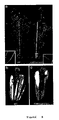
- FIG. 1 shows the space-temporal analysis of the expression of END1 in longitudinal sections of pea flowers in different phases.
- the purple coloured precipitate indicates the site of expression.
- E and F Flowers on day 6 prior to anthesis photographed with smaller and greater magnification, respectively.
- FIG. 2 shows the sequence of the promoter region of END1.
- the known motifs including two possible TATA boxes (tataaat and tatatata), a CAAT box and two CCAAT boxes appear underlined, contained in the Sequence Listing as SEQ. I.D. NO. 1, at 2390 and 2371, and SEQ. I.D. NO. 1 at 2336 for the CAAT box.
- SEQ. I.D. NO. 1 at 2390 and 2371
- SEQ. I.D. NO. 1 at 2336 for the CAAT box.
- three possible CarG boxes are represented, in green a GTCAAAA (SEQ. I.D. NO. 1 at 2447) motif, an element ACGTCA (SEQ. I.D. NO. 1 at 2610) in pink and three motifs C(A) 6/8 in red.
- the GTCAAAA SEQ. I.D. NO.
- FIG. 3 shows the stacking of the consensus sequence of joining to DNA of AGAMOUS (CArG box and adjoining sequences) with a putative equivalent sequence found in the promoter region of END1.
- the sequences shown in FIG. 3 are comprised of SEQ. I.D. NO. 1 at 2434, corresponding generally to ⁇ 103 CCCAAAATGG ⁇ 112 compared to a prior art motif disclosed in the prior art article: Huang, H., Mizukami Y., Ma, H. 1993. Isolation and characterization of the binding sequences for the product of the Arabidopsis floral homeotic genes agamous. Nucleic Acid Res. 21, 4769–4776).
- FIG. 4 shows a schematic representation of the pBI101-F3 and pBI101-F1.5 constructs used for transforming plants of Arabidopsis , tobacco and tomato.
- the plasmid pBI101 used for making the constructs consists of: the inherited promoter of nopaline synthetase (nos-pro) fused to the nptII gene which confers resistance to kanamycin, the uidA gene which codes for the enzyme b-glucuronidase (GUS-intron) and the polyadenylation signal of the nopaline synthetase gene (nos-ter) at the 3′ extremes of both genes.
- FIG. 5 shows the results of expression of the pea END1 promoter fused with the uidA gene (GUS-intron) in transgenic plants of Arabidopsis thaliana .
- a and B After performing the corresponding histochemical assays of b-glucuronidase activity (GUS) with flowers in different developmental phases, said activity was only detected in the anthers (blue) and never in other floral organs or in the rest of the plant.
- C Longitudinal section of a stamen with GUS activity included in paraffin. The GUS activity (blue) is detected in cells conforming the epidermis, the connective tissue and the endothecial tissue. No GUS activity was detected either in the tapetum or in the pollen. Although in the figure some grains of pollen appear blue, this is an artefact, as the blue colour only appears on the exine coating and never inside.
- Co connective
- En endothecial
- Ep Epidermis.
- FIG. 6 shows the results of expression of the pea END1 promoter fused with the uidA gene (GUS-intron) in transgenic tobacco plants ( Nicotiana tabacum ).
- A, B and C Histochemical assays of GUS activity in tobacco flowers in different development phases showing activity only in the anthers (blue).
- D Fresh transversal section of an anther showing the pollen grains and the remaining tapetum tissue with no blue colouring.
- E stamens, C: carpel, P: petals, S: sepals, Po: pollen.
- FIG. 7 shows the results of expression of the pea END1 promoter fused with the uidA gene (GUS-intron) in transgenic tomato plants ( Lycopersicom sculentum ).
- a Histochemical assays of GUS activity in tomato flowers showing activity specifically in the anthers (St).
- b Section in paraffin of one of these flowers, the GUS activity is restricted to tissues that form the pollen sacs (epidermis, endothecium, connective, etc) but do not exist in the tapetum or in the pollen. Se: sepals, Pe: petals, St: stamens.
- Ca carpel, Ep: epidermis, Co: connective, En: endothecium, Tp: tapetum and Po: pollen.
- FIG. 8 shows the results of transgenic Arabidopsis thaliana plants with male sterility by using the BARNASE gene directed by the END1 promoter.
- a Control plant of Arabidopsis (WT) showing the siliques (arrows, right box) formed as a result of the fertilisation of its ovaries with mature pollen. Beside it, a transgenic plant can be seen in which the effects of expression of the barnase gene under the control of the END1 promoter is shown: The ageing ovaries (right box) remain in the plant as they have not been pollinated (arrows).
- b Normal flower of a wild type plant of Arabidopsis after pollination of the stigma by means of dehiscence of the anthers (phase 14).
- the filament After the maturing process of the anther, the filament has undergone a lengthening until the pollen sacs are located at the height of the stigma to facilitate their pollination.
- c Flower of a transgenic plant in the same state showing the BARNASE effects on the development of the anther. The ablation of the anther is complete, with no pollen sacs being formed. The filament does not undergo the lengthening process, as the development of the anther is not completed. In these conditions, pollination is impossible and the plant is 100% sterile.
- FIG. 9 shows the result of studies by means of a scanning electron microscope (SEM) of the cell types present in the structures formed in the place of the anthers of transgenic plants bearing the pEND1-barnase construct.
- SEM scanning electron microscope
- c Stamen of a transgenic plant, the cell types present in the filament are observed and the rounded ones at the insertion zone, but not those of the epidermis of the pollen sacs.
- d Detail of the structure present in the terminal zone of the filament in which the lengthened cell types of the filament coexist with the rounded types of the insertion zone.
- FIG. 10 shows the result of histochemical studies in paraffin sections of the structures formed in place of the anthers in transgenic plants bearing the pEND1-barnase construct.
- a Longitudinal section of a control flower of Arabidopsis in an early development stage of the anther. In red, a group of mother cells of the microspores can be seen that will give rise to the mature pollen after successive divisions.
- b Control anther in a more advanced developmental stage (12–13, before dehiscence) in which the almost complete disappearance of the tapetum can be observed and the pollen is found in a maturing process (red). The filament has begun to lengthen.
- c and d Longitudinal sections of two transgenic flowers in stage 13 and 12 respectively, in which the structures formed in place of the stamens are observed. Inside the widening produced in the terminal zone, a small group of pollen mother cells is observed and maybe someone of the external tapetum (red) that have stopped their development (there are no divisions). The filament has not begun to lengthen.
- e Detail of one of the structures shown in figure d where detail is shown of the group of round pollen mother cells and possible tapetal cells.
- the invention provides a sequence of nucleotides regulating the specific expression in the anther of a gene, hereinafter the nucleotide sequence of the invention, selected from:
- analogous is to include any sequence of nucleotides having at least capacity to regulate specific expression in the anther.
- analogous DNA sequence typically, the analogous DNA sequence:
- the analogous DNA sequence is substantially homologous to the nucleotide sequence identified as SEQ ID NO 1.
- the expression “substantially homologous” means that at a nucleotide level the nucleotide sequences in question have an identity degree of at least 60%, preferably at least 85%, or more preferably at least 95%.
- the nucleotide sequence of the invention can originate from any organism that contains it, for example, from pea ( Pisum sativum L.) or from a host organism transformed with said DNA sequence.
- the nucleotide sequence of the invention can be isolated by means of conventional techniques, starting from the DNA from any other species by employing oligonucleotide probes prepared from information on the nucleotide sequence of the invention.
- the nucleotide sequence of the invention is the sequence shown in SEQ ID NO 1, corresponding to the nucleotide sequence of the promoter of the END1 gene of pea ( Pisum sativum L.).
- Said enriched extract was used to immunise mice and obtain hybridoma lines that produced monoclonal antibodies specific for a certain staminal protein.
- One of those (MAbA1) recognised a protein of 26 kDa (END1) present in much abundance in the stamens extracts and whose immunolocalisation indicated to us that it accumulated exclusively in the tissues that make up the architecture of the pollen sacs of the anther.
- affinity chromatography we purified a certain amount of said protein and sequenced 20 aas of its N-terminus. The obtained sequence had a high homology with another protein (PA2) previously described in pea cotyledons and whose function is unknown [Higgins et al., Plant Mol. Biol. 8: 37–45, 1987].
- the specific expression of the END1 gene in those tissues that form the pollen sacs of the anthers suggested to us the isolation and analysis of the promoter of said gene.
- the study of this promoter was interesting for different reasons. First, we could determine which motifs of a promoter determine the specific expression of a gene in the anther. Similarly, it would be interesting to analyse what transcriptional factors regulate the expression of the END1 gene and to determine whether these are related to the MADS-box homeotic genes which regulate the identity of the floral organs, in particular, with genes of class B and C that are implicated in the development of stamens. With these objectives, we examined a genomic DNA library of the pea, using the complete fragment of the END1 cDNA (SEQ ID NO 2) as a probe.
- This fragment was used as a probe to determine which fragment resulting from the restriction would be the one constituted by these 210 bp and part or all of the promoter sequence.
- the Southern Blot analysis showed that a fragment of approximately 3 Kb derived from the digestion of phage DNA with HindII hybridised with the probe.
- the fragment of 3 Kb was purified using the QUIAEXII method, cloning in the Bluescript-KS( ⁇ ) vector at the HindII site of the cloning site and subsequently sequenced.
- the complete nucleotide sequence of the END1 promoter is represented in FIG. 2 and in SEQ ID NO 1 (the nucleotides from ⁇ 2736 and 1 of FIG. 2 correlate with the nucleotides 1 and 2766 of SEQ ID NO 1, respectively).
- CArG boxes ⁇ 329 TGAAAATACC ⁇ 320 (SEQ ID NO 1 2408 TGAAAATACC 2417 ) and ⁇ 300 GGTTTCAACT ⁇ 291 (SEQ ID NO 1 2437 GGTTTCAACT 2446 )
- An example of CarG boxes that are functional, although differing from the consensus sequence, is represented by two of the three CarG boxes (CCTTTCATGG and CCATTTTTAG) of the promoter of the AP3 gene of Arabidopsis (Tilly J J J et al., Development 125: 1647–1657, 1998).
- motifs that we have identified are ⁇ 290 GTCAAAA ⁇ 284 (SEQ ID NO 1 2447 GTCAAAA 2453 ) present in the genes Zm13 and LAT52 (Zou J T et al., Am. J. Bot. 81: 552–561, 1994), the motif ⁇ 127 ACGTCA ⁇ 122 (SEQ ID NO1 2610 ACGTCA 2615 ) localised on the gene Bp19 (Zou J T et al., Am. J. Bot.
- the different motifs found in the promoter region of END1 can be grouped in function of the type of genes where they have been described.
- the motifs SEF1, SEF4, E-box, RY and Element ⁇ 300 are characterised by being present in gene promoters that code reserve proteins of the seed.
- the motifs GATA, GT1, I-box and ASF-1 are present in genes whose expression is regulated by light.
- the boxes that recognise factors homologous to Myb animal proteins: MYB-P, MYB-PH3 and MYB-ST1 have been found in genes implicated in the biosynthetic route of phenylpropanoids.
- the G-box motif is localised on a multitude of plant genes regulated by different environmental and physiological factors.
- Rootmotif1 has been identified in the promoter sequence of two genes of root of corn rolD and pox1. And the elements GTCAAAA, ACGTCA and C(A) 6/8 are present in anther specific genes of Brassica napus , such as Bp19 [Zou J T et al., Am. J. Bot. 81: 552–561, 1994; Hong H P et al., Plant Mol. Biol. 34: 549–555, 1997]. All these motifs are indicated in SEQ ID NO 1.
- the motif CArG is a DNA consensus sequence that is recognised by the MADS domain that characterises the homeotic genes of plants implicated in the development of floral organs [Huang H et al., Nuc. Acids Res. 21: 4769–4776, 1993; Shiraisi H et al., Plant J. 4: 385–398, 1993].
- AGAMOUS AG, Yanofsky M F et al., Nature 346: 35–39, 1990
- AG Yanofsky M F et al., Nature 346: 35–39, 1990
- MADS domain is composed of 56 amino acids and is implicated in the dimerisation of the MADS genes with themselves or with other MADS genes and the subsequent binding to DNA of these dimers [Shore P and Sharrocks A D, E. J. Biochem. 229: 1–13, 1995].
- the type B homeotic genes (AP3 and PI in A. thaliana ) control the development of petals and stamens, and those of type C (AG in A. thaliana ) control the formation of stamens and carpels.
- the END1 gene is expressed in stamens and, therefore, could be a target gene for the type B and C MADS genes. This hypothesis is supported by the existence of these putative CArG boxes in the promoter region of END1.
- Huang et al. [Nuc. Acids Res. 21: 4769–4776, 1993] and Shiraisi et al. [Plant J. 4: 385–398, 1993] determined that the AG gene would require some consensus sequences adjoining the CarG box for binding to DNA.
- the consensus sequence of binding to DNA for the MADS domain of AG was identified as: 5′-TT(A/T/G)CC(A/T) 6 GG(A/T/C)AA-3′ according to Shiraisi et al. [Plant J. 4: 385–398, 1993] and TT(A/T)CC(A/T)(A/t) 2 (T/A)NNGG(-G)(A/t) 2 according to Huang et al. [Nuc. Acids Res. 21: 4769–4776, 1993].
- the first construct contains the nucleotide sequence comprised from nucleotide ⁇ 2736 and ⁇ 6 (SEQ ID NO 1, 1 to 2731) and the second one contains the sequence from the residue ⁇ 1531 to ⁇ 6 (SEQ ID NO 1, 1206 to 2731).
- This latter construct was assayed to mark, in an initial attempt, the sequence constituting the promoter region in the cloned fragment.
- Both constructs were introduced into Arabidopsis using strain C58 of Agrobacterium tumefaciens , and the construct pBI101-F3 into tobacco and tomato by means of the LBA4404 strain of A. tumefaciens . All these plants were transformed in turn with the plasmid pBI101 as a control and the expression of the reporter gene was subsequently analysed in different tissues.
- regulatory sequences can be used in the development of DNA constructs that also include gene coding sequences of interest that in turn can be integrated into recombinant expression vectors.
- different techniques can be used that are well known in the state of the art [Sambrook et al, “Molecular cloning, a Laboratory Manual”, 2 nd ed., Cold Spring Harbor Laboratory Press, N.AND., 1989 Vol 1–3], some of which are shown in the present invention.
- These recombinant vectors allow the expression of different peptide, polypeptide, protein or RNA coding genes that, as described in the state of the art of the present invention, on being toxic for the tissues where they are expressed, would induce the ablation thereof and in this case would lead to androsterility of the resulting plant.
- genes are those disclosed in the European patent application EP 412006 and which can be taken as a reference along with those described in the state of the art of the present invention.
- these constructs may contain other elements regulating the specific expression in anthers depending on the recombinant vector used, the plant to be transformed, etc. All these possible DNA constructs containing as the common dominator the nucleotide sequence of the invention as well as the use thereof for the production of androsterile plants form part of the present invention.
- the invention provides a DNA construct that comprises the nucleotide sequence of the invention and a coding nucleotide sequence for a peptide, polypeptide, protein, activity or RNA of interest.
- said DNA construct comprises a coding sequence of activity promoting the sterility in plants under the control of the nucleotide sequence of the invention.
- said DNA construct comprises a coding sequence of an activity that reverse or recovers the fertility of a plant, such as a coding sequence of an activity which is capable to inhibit the promoting activity of sterility in plants, under the control of the nucleotide sequence of the invention.
- Said DNA construct can also contain some regulatory elements, operationally linked, to the specific expression in anthers, for example, a terminal sequence of the transcription, depending on the recombinant vector used, the plant to be transformed, etc.
- the invention also refers to a vector, such as an expression vector, that comprises said sequence of nucleotides of the invention, or said DNA construct.
- a vector such as an expression vector
- the choice of vector will depend on the host cell in which it is to subsequently be introduced.
- the vector where said DNA sequence is introduced can be a plasmid or a vector that, when introduced into a host cell, is integrated into the genome of said cell and is replicated along with the chromosome (or chromosomes) in which it was integrated.
- conventional methods can be used that are well known to those skilled in the art [Sambrok et al., 1989, cited earlier].
- the invention also provides a cell that comprises a nucleotide sequence of the invention, or a DNA construct containing said nucleotide sequence or said vector mentioned hereinabove.
- the host cells that can be transformed with the sequence of nucleotides of the invention can be prokaryotic cells or, preferably, eukaryotic cells, such as cells of plant tissue.
- the transformation of cells of plant tissue can also be carried out using conventional methods.
- the nucleotide sequence of the invention can be used for transforming plants and obtaining transformed plants.
- the transformation of plants is extensively described in the state of the art.
- multiple systems can be used, for example, plasmid vectors, liposomes, electroporation, microinjection, diffusion, gene gun, co-precipitation with calcium phosphate, use of viral vectors, etc.
- the transformation of plants using a plasmid vector is described as an example of the many technical possibilities, all of which form a part of the present invention.
- Example 1 the transformation of tobacco plants ( N. tabacum ), tomato ( L. sculentum ) and Arabidopsis thaliana are described as examples of plant transformation.
- the nucleotide sequence of the invention can be used to regulate the specific anther expression of a peptide, polypeptide, protein, activity or RNA sequence of interest in a plant.
- the nucleotide sequence of the invention can be used to produce plants with male sterility (androsterility), that is, androsterile plants, which comprises transforming a plant with a DNA construct provided by this invention, said DNA construct comprising a coding sequence of an activity promoting sterility in plants, for example, the sequence of a cytotoxic gene, such as a gene that codes a ribonuclease activity, under the control of the nucleotide sequence of the invention, so that the expression of the coding sequence contained in said construct provokes the complete ablation of the anthers from very early developmental stages, preventing the formation of pollen therein and producing androsterility in the plant with 100% effectiveness.
- the resulting androsterile plant can be used for the production of hybrid seeds by means of a method comprising its culture
- the invention also provides a method for restoring the fertility of an androsterile plant that comprises transforming said androsterile plant with a DNA construct comprising a coding sequence of an activity that reverses or restores the fertility under the control of the nucleotide sequence of the invention so that a fertile plant is obtained.
- the androsterility is due to the expression of the barnase gene and the recovery of fertility is due to the expression of a sequence coding an activity that reverses or restores the fertility such as the expression of barstar, an activity able to. inhibit the ablation activity of. the anthers caused by BARNASE.
- the plants susceptible to being transformed by the use of the nucleotide sequence of the invention can be both monocotyledonous plants and dicotyledonous plants, for example, monocotyledonous or dicotyledonous plants of agricultural interest, such as cereals, horticultural plants, e.g., tobacco, tomato, melon, watermelon, cucumber, etc.
- the invention provides a transgenic cell that comprises a nucleotide sequence of the invention integrated into its genome, as well as a transgenic plant comprising at least one of said transgenic cells.
- Said transgenic plants which constitute an additional object of the invention, can be obtained by means of conventional techniques, for example, through the use of conventional antisense mRNA techniques and/or overexpression (in sense silencing) or others, for example, using binary vectors or other vectors available for the different plant transformation techniques currently in use.
- Examples of transgenic plants forming part of the present invention include both monocotyledon and dicotyledonous plants.
- the nucleotide sequence of the invention is useful for obtaining androsterile plants and for producing hybrid seeds as it directs the expression of genes that code for certain enzymes that produce cellular ablation in those tissues that form the pollen sacs, as was explained earlier.
- This system in combination with another similar one, which restores the fertility on producing an inhibitor of the enzyme used for provoking cellular ablation, would be of great utility in genetic improvement programmes based on the production of hybrids (heterosis).
- different promoters had been tried before, but a 100% sterile plant population has not been attained with all of them [Zhan X et al., Sex. Plant Reprod.9: 35–43, 1996; Roberts M R et al., Sex. Plant Reprod.
- the nucleotide sequence of the invention constitutes an alternative to said promoters because it is activated when the differentiation of the staminal primordial cells is initiated. In this early phase, a proteinase or a nuclease would impede the correct development of the anther by destroying the cell lines that will give rise to tissues that form the pollen sacs at an early phase.
- Example 2 describes the production of androsterile plants of A. thaliana with a 100% efficacy.
- nucleotide sequence of the invention in particular the END1 promoter, will be able to maintain its specificity in different plants, both dicotyledonous and monocotyledonous, as in several of these plants, the MADS genes of class C have been identified (homologous to AGAMOUS) which could activate said promoter like the dicotyledons, and so it is to be expected that said nucleotide sequence of the invention will be useful for producing androsterility, both in dicotyledonous plants and in monocotyledon plants of agricultural interest.
- the promoter region of the END1 gene was amplified, using the PCR technique, from the genomic fragment of DNA cloned in the pBluescript KS(+) plasmid, using the TB1, TB2 and TB3 oligos (Table 2).
- TB1 introduces a restriction site BamHI
- TB2 and TB3 introduce a restriction site SalI.
- Two fragments are amplified: one of 2731 bp containing almost all the isolated promoter region ( ⁇ 2736/ ⁇ 6) and another one of 1526 bp next to the coding region of the gene ( ⁇ 1531/ ⁇ 6 in FIG. 1 ) (SEQ ID NO 4). Neither of these two fragments contained coding sequence.
- the leaf disks were transferred to plates with regeneration and selection medium (MSS medium with IAA 0.2 mg/l, 6-BAP 2.2 mg/l, carbenicillin 400 mg/l and kanamycin 100 mg/l), and the buds that appeared were transferred to the rooting medium (MSS medium with IAA 0.2 mg/l, carbenicillin 200 mg/l and kanamycin 100 mg/l).
- the regenerated plants were transferred to pots with peat: vermiculite (1:1) where they were kept until they produced seeds.
- the culture conditions during the whole process were 12 h of light and a temperature of 24° C.
- the growth variety known as VC82b was used, following the method of Ellul et al., (Teor. Appl. Genet. In press, 2001) that uses cotyledons from germinating seeds (12 days) as starting material and the marker gene nptII to carry out selection of the transformants in a kanamycin medium.
- the first generation of transformed plants was submitted to histochemical analysis of the activity of the b-glucuronidase gene.
- the studied tissues were infiltrated using two vacuum pulses of 5 min in a 0.1 M pH 7.0 phosphate buffer solution, 0.5 nM ferricyanide, 0.5 nM ferrocyanide, Triton X-100 at 0.1% and 2 mM X-G1cA acid and incubated in this solution at 37° C. for 16 hours. Afterwards, de-staining was carried out using successive washes with ethanol at 50°, 70° and 96°. GUS positive zones were identified as those coloured blue.
- the tissues that showed a blue coloration were fixed and included in paraffin (Ca ⁇ as LA et al., Plant J. 6: 597–604, 1994) before being dehydrated, in order to identify by sections which types of cell in particular were responsible for b-glucuronidase activity.
- the photographs of the unprocessed tissues were taken with an MZ8 lens (Leica) and the tissue sections included in paraffin in an optical microscope Eclipse 600 (Nikon).
- the study of the expression of the gene uidA was carried out by means of a histochemical assay of the b-glucuronidase activity in first generation tissues of transformed plants resistant to kanamycin.
- the organs assayed were: flowers, leaves, stems, roots and germinated seedlings.
- the study of the expression of the uidA gene was carried out in the first generation of plants with the pBI101-F3 construct.
- the tissues that were assayed were: flowers, leaves, stems and roots.
- the barnase/barstar fragment (Mariani et al., Nature 347: 737–741, 1990; Mariani et al., Nature 357: 384–387, 1992), cloned at the BamHI site of the plasmid pBluescript KS(+), was amplified using the oligos:
- T7 5′ TAATACGACTCACTATAGGG 3′, e (SEQ. I.D. NO. 8)
- Inhi II 5′ GCGAGCTCTTAAGAAAGTATGATGGTGATG 3′ (SEQ. I.D. NO. 9)
- the splicing site BamHI is maintained at the level of the ATG of the barnase gene and the later creates a splicing site for SacI at the level of the stop codon of the barstar gene.
- the fragment product of the PCR reaction was bound to the pGEM-T vector (Promega).
- the cloned barnase/barstar insert (918 bp) was released with BamHI and SacI and bound to the pBI101-pEND1 plasmid with BamHI and SacI termini.
- the results obtained are shown in FIG. 8 .
- the plants transformed with the pEND1-BARNASE construct showed how the carpels of their flowers are not fertilised and do not form the corresponding siliques as occurs in the control plant.
- the flowers of the transgenic plants showed the filaments that have not lengthened and at whose end there appear some very rudimentary structures instead of anthers.
- the total of 17 transgenic plants resistant to kanamycin recovered showed a complete ablation of their anthers and therefore, 100% male sterility.
- the barnase/barstar system has been successfully used in the production of plants with male sterility because it is directed towards the anthers of the plant by means of the use of specific promoters (generally of tapetum).
- specific promoters generally of tapetum.
- the main disadvantage of this system lies in the use of said promoters, which act too late in the development of the anther and on a tissue (tapetum) implicated in the nutrition of the cells that will give rise to the pollen. This effect leads to the production to a certain extent of pollen in some flowers of the plant, causing escapes from the system with the corresponding loss in effectiveness ( ⁇ 95%).
Landscapes
- Health & Medical Sciences (AREA)
- Genetics & Genomics (AREA)
- Life Sciences & Earth Sciences (AREA)
- Engineering & Computer Science (AREA)
- Chemical & Material Sciences (AREA)
- Biomedical Technology (AREA)
- Organic Chemistry (AREA)
- Bioinformatics & Cheminformatics (AREA)
- Wood Science & Technology (AREA)
- Zoology (AREA)
- Biotechnology (AREA)
- General Engineering & Computer Science (AREA)
- Molecular Biology (AREA)
- General Health & Medical Sciences (AREA)
- Biophysics (AREA)
- Biochemistry (AREA)
- Plant Pathology (AREA)
- Microbiology (AREA)
- Cell Biology (AREA)
- Physics & Mathematics (AREA)
- Medicinal Chemistry (AREA)
- Pregnancy & Childbirth (AREA)
- Gastroenterology & Hepatology (AREA)
- Reproductive Health (AREA)
- Botany (AREA)
- Proteomics, Peptides & Aminoacids (AREA)
- Nuclear Medicine, Radiotherapy & Molecular Imaging (AREA)
- General Chemical & Material Sciences (AREA)
- Chemical Kinetics & Catalysis (AREA)
- Pharmacology & Pharmacy (AREA)
- Animal Behavior & Ethology (AREA)
- Public Health (AREA)
- Veterinary Medicine (AREA)
- Breeding Of Plants And Reproduction By Means Of Culturing (AREA)
- Micro-Organisms Or Cultivation Processes Thereof (AREA)
Applications Claiming Priority (3)
| Application Number | Priority Date | Filing Date | Title |
|---|---|---|---|
| ESP200000814 | 2000-03-31 | ||
| ES200000814A ES2164599B1 (es) | 2000-03-31 | 2000-03-31 | Promotor y secuencias reguladoras de end1, un gen de guisante que se expresa especificamente en anteras |
| PCT/ES2001/000127 WO2001073088A1 (es) | 2000-03-31 | 2001-03-30 | Secuencia reguladora de la expresion especifica en antera de un gen y su empleo en la produccion de plantas androesteriles y semillas hibridas |
Publications (2)
| Publication Number | Publication Date |
|---|---|
| US20040083504A1 US20040083504A1 (en) | 2004-04-29 |
| US7078593B2 true US7078593B2 (en) | 2006-07-18 |
Family
ID=8492976
Family Applications (1)
| Application Number | Title | Priority Date | Filing Date |
|---|---|---|---|
| US10/240,299 Expired - Fee Related US7078593B2 (en) | 2000-03-31 | 2001-03-30 | Sequence regulating the anther-specific expression of a gene and its use in the production of androsterile plants and hybrid seeds |
Country Status (9)
| Country | Link |
|---|---|
| US (1) | US7078593B2 (de) |
| EP (1) | EP1291433B1 (de) |
| CN (2) | CN100422335C (de) |
| AT (1) | ATE521709T1 (de) |
| AU (2) | AU4253801A (de) |
| BR (1) | BR0107539A (de) |
| ES (2) | ES2164599B1 (de) |
| MX (1) | MXPA02009612A (de) |
| WO (1) | WO2001073088A1 (de) |
Families Citing this family (6)
| Publication number | Priority date | Publication date | Assignee | Title |
|---|---|---|---|---|
| ES2265232B1 (es) * | 2004-07-17 | 2008-06-16 | Newbiotechnic, S.A. | Tomates partenocarpicos y procedimiento para su produccion. |
| WO2006080598A1 (en) * | 2005-01-31 | 2006-08-03 | Dongbu Hitek Co., Ltd. | Anther-specific genes derived from malus x domestica, promoters thereof and a method for preparing transformed plant using the same |
| CN100366744C (zh) * | 2005-09-15 | 2008-02-06 | 复旦大学 | 蝴蝶兰pPI15编码序列及其应用 |
| ES2319842B1 (es) * | 2007-03-08 | 2010-02-16 | Consejo Superior De Investigaciones Cientificas | Procedimiento para modificar la arquitectura de la inflorescencia de las plantas. |
| CN101948861B (zh) * | 2010-08-26 | 2012-07-04 | 北京大学 | 植物雄性不育系及其恢复系的培育方法 |
| CN111154756B (zh) * | 2020-01-07 | 2024-01-02 | 深圳市作物分子设计育种研究院 | 植物花药花粉发育后期特异性表达启动子及其应用 |
Citations (4)
| Publication number | Priority date | Publication date | Assignee | Title |
|---|---|---|---|---|
| WO1993025695A1 (en) | 1992-06-12 | 1993-12-23 | Plant Genetic Systems N.V. | Maintenance of male-sterile plants |
| EP0578611A1 (de) | 1992-07-02 | 1994-01-12 | Ciba-Geigy Ag | Anthere-spezifische cDNA-Sequenzen, genomische DNA-sequenzen und rekombinante DNA-sequenzen |
| WO1996026283A1 (en) | 1995-02-21 | 1996-08-29 | Plant Genetic Systems, N.V. | Method to obtain male-sterile plants |
| US5689041A (en) * | 1989-08-10 | 1997-11-18 | Plant Gentic Systems N.V. | Plants modified with barstar for fertility restoration |
-
2000
- 2000-03-31 ES ES200000814A patent/ES2164599B1/es not_active Expired - Fee Related
-
2001
- 2001-03-30 US US10/240,299 patent/US7078593B2/en not_active Expired - Fee Related
- 2001-03-30 WO PCT/ES2001/000127 patent/WO2001073088A1/es not_active Ceased
- 2001-03-30 AU AU4253801A patent/AU4253801A/xx active Pending
- 2001-03-30 CN CNB018088678A patent/CN100422335C/zh not_active Expired - Fee Related
- 2001-03-30 CN CNA2006101485221A patent/CN101089183A/zh active Pending
- 2001-03-30 AU AU2001242538A patent/AU2001242538B2/en not_active Ceased
- 2001-03-30 AT AT01915442T patent/ATE521709T1/de not_active IP Right Cessation
- 2001-03-30 ES ES01915442T patent/ES2372476T3/es not_active Expired - Lifetime
- 2001-03-30 EP EP01915442A patent/EP1291433B1/de not_active Expired - Lifetime
- 2001-03-30 MX MXPA02009612A patent/MXPA02009612A/es active IP Right Grant
- 2001-03-30 BR BRPI0107539-0A patent/BR0107539A/pt not_active IP Right Cessation
Patent Citations (4)
| Publication number | Priority date | Publication date | Assignee | Title |
|---|---|---|---|---|
| US5689041A (en) * | 1989-08-10 | 1997-11-18 | Plant Gentic Systems N.V. | Plants modified with barstar for fertility restoration |
| WO1993025695A1 (en) | 1992-06-12 | 1993-12-23 | Plant Genetic Systems N.V. | Maintenance of male-sterile plants |
| EP0578611A1 (de) | 1992-07-02 | 1994-01-12 | Ciba-Geigy Ag | Anthere-spezifische cDNA-Sequenzen, genomische DNA-sequenzen und rekombinante DNA-sequenzen |
| WO1996026283A1 (en) | 1995-02-21 | 1996-08-29 | Plant Genetic Systems, N.V. | Method to obtain male-sterile plants |
Non-Patent Citations (6)
| Title |
|---|
| Benfrey et al, 1990, Science 250:959-966. * |
| Chen et al, 2000, Sex. Plant Reprod. 13:85-94. * |
| Donald et al, 1990, EMBO J. 9:1717-1726. * |
| Eyal et al, 1995, Plant Cell 7:373-384. * |
| Kim et al, 1994, Plant Mol. Biol. 24:105-117. * |
| Maiti et al, 1997, Transgen. Res., 6:143-156. * |
Also Published As
| Publication number | Publication date |
|---|---|
| ES2164599B1 (es) | 2003-05-16 |
| ATE521709T1 (de) | 2011-09-15 |
| EP1291433A1 (de) | 2003-03-12 |
| ES2164599A1 (es) | 2002-02-16 |
| AU2001242538B2 (en) | 2007-02-08 |
| ES2372476T3 (es) | 2012-01-20 |
| US20040083504A1 (en) | 2004-04-29 |
| BR0107539A (pt) | 2006-08-29 |
| AU4253801A (en) | 2001-10-08 |
| CN1427893A (zh) | 2003-07-02 |
| CN101089183A (zh) | 2007-12-19 |
| MXPA02009612A (es) | 2004-05-14 |
| CN100422335C (zh) | 2008-10-01 |
| WO2001073088A1 (es) | 2001-10-04 |
| EP1291433B1 (de) | 2011-08-24 |
Similar Documents
| Publication | Publication Date | Title |
|---|---|---|
| Hamilton et al. | Dissection of a pollen-specific promoter from maize by transient transformation assays | |
| AU683876B2 (en) | Methods and compositions for controlling plant development | |
| CA2423480C (en) | Nucleotide sequences mediating male fertility and method of using same | |
| Nacken et al. | Molecular characterization of two stamen-specific genes, tap1 and fil1, that are expressed in the wild type, but not in the deficiens mutant of Antirrhinum majus | |
| Yokoi et al. | Tapetum-specific expression of the Osg6B promoter-β-glucuronidase gene in transgenic rice | |
| US20100235947A1 (en) | Rice Pollen-Preferential Promoters And Uses Thereof | |
| US8163975B2 (en) | Nucleic acid molecules and their use in plant sterility | |
| Gómez et al. | The pea END1 promoter drives anther-specific gene expression in different plant species | |
| US5859328A (en) | Isolated DNA elements that direct pistil-specific and anther-specific gene expression and methods of using same | |
| JP2000504580A (ja) | タバコからの小胞子特異的プロモーター | |
| EP0698098B1 (de) | Verfahren zur herstellung männlich-sterilen pflanzen | |
| US7078593B2 (en) | Sequence regulating the anther-specific expression of a gene and its use in the production of androsterile plants and hybrid seeds | |
| HUP0000761A2 (en) | Protein complementation in transgenic plants | |
| CN103261419B (zh) | 一种调控植物花粉育性的构建体及其使用方法 | |
| Sage-Ono et al. | Induction of double flowers in Pharbitis nil using a class-C MADS-box transcription factor with Chimeric REpressor gene-Silencing Technology | |
| US6875906B1 (en) | Control of sporocyte or meiocyte formation in plants | |
| CA2168934C (en) | A brassica sp. gene promoter highly expressed during tapetum development | |
| WO2001096582A2 (en) | Plant-signalling ligand like proteins | |
| CA2373071C (en) | Tapetum-specific promoters | |
| Fabijanski et al. | Characterization of genes expressed during the development of Brassica napus pollen | |
| CA2343978A1 (en) | Novel method of regulating seed development in plants and genetic sequences therefor | |
| CA2274983A1 (en) | Meiosis-related gene and promoter | |
| KR100455620B1 (ko) | 벽판-특이적 아연 핑거 전사 인자 유전자를 이용한 화분수정률의 감소 방법 | |
| Mariani | identification of promoters to direct gene expression in tomato anther | |
| Le | Functional characterization of Effector of Transcription (ET) in Arabidopsis thaliana |
Legal Events
| Date | Code | Title | Description |
|---|---|---|---|
| AS | Assignment |
Owner name: CONSEJO SUPERIOR DE INVESTIGACIONES CIENTIFICAS, S Free format text: ASSIGNMENT OF ASSIGNORS INTEREST;ASSIGNORS:GOMEZ JIMENEZ, MARIA DOLORES;CANAS CLEMENTE, LUIS ANTONIO;MADUENO ALBI, FRANCISCO;AND OTHERS;REEL/FRAME:014320/0898 Effective date: 20021021 Owner name: NEWBIOTECHNIC, S.A., SPAIN Free format text: ASSIGNMENT OF ASSIGNORS INTEREST;ASSIGNORS:GOMEZ JIMENEZ, MARIA DOLORES;CANAS CLEMENTE, LUIS ANTONIO;MADUENO ALBI, FRANCISCO;AND OTHERS;REEL/FRAME:014320/0898 Effective date: 20021021 |
|
| AS | Assignment |
Owner name: CONSEJO SUPERIOR DE INVESTIGACIONES CIENTIFICAS, S Free format text: ASSIGNMENT OF ASSIGNORS INTEREST;ASSIGNOR:NEWBIOTECHNIC, S.A.;REEL/FRAME:017947/0582 Effective date: 20060522 |
|
| FPAY | Fee payment |
Year of fee payment: 4 |
|
| SULP | Surcharge for late payment | ||
| FPAY | Fee payment |
Year of fee payment: 8 |
|
| FEPP | Fee payment procedure |
Free format text: MAINTENANCE FEE REMINDER MAILED (ORIGINAL EVENT CODE: REM.) |
|
| LAPS | Lapse for failure to pay maintenance fees |
Free format text: PATENT EXPIRED FOR FAILURE TO PAY MAINTENANCE FEES (ORIGINAL EVENT CODE: EXP.) |
|
| STCH | Information on status: patent discontinuation |
Free format text: PATENT EXPIRED DUE TO NONPAYMENT OF MAINTENANCE FEES UNDER 37 CFR 1.362 |
|
| FP | Lapsed due to failure to pay maintenance fee |
Effective date: 20180718 |