US7285590B2 - Aqueous dispersions containing multi-stage emulsion polymers - Google Patents
Aqueous dispersions containing multi-stage emulsion polymers Download PDFInfo
- Publication number
- US7285590B2 US7285590B2 US10/712,512 US71251203A US7285590B2 US 7285590 B2 US7285590 B2 US 7285590B2 US 71251203 A US71251203 A US 71251203A US 7285590 B2 US7285590 B2 US 7285590B2
- Authority
- US
- United States
- Prior art keywords
- monomer mixture
- methacrylate
- stage
- aqueous dispersion
- emulsion
- Prior art date
- Legal status (The legal status is an assumption and is not a legal conclusion. Google has not performed a legal analysis and makes no representation as to the accuracy of the status listed.)
- Expired - Fee Related, expires
Links
Images

Classifications
-
- C—CHEMISTRY; METALLURGY
- C09—DYES; PAINTS; POLISHES; NATURAL RESINS; ADHESIVES; COMPOSITIONS NOT OTHERWISE PROVIDED FOR; APPLICATIONS OF MATERIALS NOT OTHERWISE PROVIDED FOR
- C09D—COATING COMPOSITIONS, e.g. PAINTS, VARNISHES OR LACQUERS; FILLING PASTES; CHEMICAL PAINT OR INK REMOVERS; INKS; CORRECTING FLUIDS; WOODSTAINS; PASTES OR SOLIDS FOR COLOURING OR PRINTING; USE OF MATERIALS THEREFOR
- C09D133/00—Coating compositions based on homopolymers or copolymers of compounds having one or more unsaturated aliphatic radicals, each having only one carbon-to-carbon double bond, and at least one being terminated by only one carboxyl radical, or of salts, anhydrides, esters, amides, imides, or nitriles thereof; Coating compositions based on derivatives of such polymers
- C09D133/04—Homopolymers or copolymers of esters
-
- C—CHEMISTRY; METALLURGY
- C08—ORGANIC MACROMOLECULAR COMPOUNDS; THEIR PREPARATION OR CHEMICAL WORKING-UP; COMPOSITIONS BASED THEREON
- C08F—MACROMOLECULAR COMPOUNDS OBTAINED BY REACTIONS ONLY INVOLVING CARBON-TO-CARBON UNSATURATED BONDS
- C08F2/00—Processes of polymerisation
- C08F2/001—Multistage polymerisation processes characterised by a change in reactor conditions without deactivating the intermediate polymer
-
- C—CHEMISTRY; METALLURGY
- C08—ORGANIC MACROMOLECULAR COMPOUNDS; THEIR PREPARATION OR CHEMICAL WORKING-UP; COMPOSITIONS BASED THEREON
- C08F—MACROMOLECULAR COMPOUNDS OBTAINED BY REACTIONS ONLY INVOLVING CARBON-TO-CARBON UNSATURATED BONDS
- C08F2/00—Processes of polymerisation
- C08F2/12—Polymerisation in non-solvents
- C08F2/16—Aqueous medium
- C08F2/22—Emulsion polymerisation
-
- C—CHEMISTRY; METALLURGY
- C08—ORGANIC MACROMOLECULAR COMPOUNDS; THEIR PREPARATION OR CHEMICAL WORKING-UP; COMPOSITIONS BASED THEREON
- C08F—MACROMOLECULAR COMPOUNDS OBTAINED BY REACTIONS ONLY INVOLVING CARBON-TO-CARBON UNSATURATED BONDS
- C08F265/00—Macromolecular compounds obtained by polymerising monomers on to polymers of unsaturated monocarboxylic acids or derivatives thereof as defined in group C08F20/00
- C08F265/04—Macromolecular compounds obtained by polymerising monomers on to polymers of unsaturated monocarboxylic acids or derivatives thereof as defined in group C08F20/00 on to polymers of esters
- C08F265/06—Polymerisation of acrylate or methacrylate esters on to polymers thereof
Definitions
- the invention relates generally to aqueous dispersions containing emulsion polymers, and more specifically, emulsion polymers made using a multi-stage emulsion polymerization process.
- the aqueous dispersions are useful in a variety of coating compositions.
- Aqueous emulsion polymers also called latexes or polymer dispersions, are known and used in both clear and pigmented form. They are used in many products, including interior and exterior architectural coatings, general metal coatings, adhesives, and the like.
- These latexes can be formed by aqueous emulsion polymerization of ethylenically unsaturated monomers such as styrene and its derivatives; acrylic and methacrylic acids; alkyl acrylates, methacrylates, and hydroxyl-substituted derivatives; vinyl acetate; acrylonitrile; glycidyl acrylates and methacrylates; and the like.
- the large number of independent variables which can be manipulated in designing latex particles renders the preparation of improved latexes technically challenging.
- the emulsion polymers used in aqueous coating compositions must be hard enough to resist physical and chemical forces, but, at the same time, soft enough to form a continuous film. Film durability, water resistance, and chemical resistance are provided by hard polymers with glass transition temperatures (Tg) above ambient temperature.
- Tg glass transition temperatures
- these polymer dispersions must have a minimum filming temperature (MFT) at or below ambient temperature, to allow for fusion of the polymer particles into a continuous film.
- MFT minimum filming temperature
- Film properties can be further improved if the polymer film crosslinks upon film formation.
- U.S. Pat. No. 5,596,035 discloses autocrossslinking aqueous dispersions, having a minimum filming temperature (MFT) of from 0° C. to about 50° C., which are a mixture of at least one carbonyl-containing soft latex polymer having an MFT of below about 20° C., at least one hard latex polymer having an MFT of above about 25° C., and at least one polyfunctional carboxylic hydrazide.
- MFT minimum filming temperature
- U.S. Pat. No. 6,005,042 discloses a polymer dispersion prepared by means of stepwise emulsion polymerization of monomer mixtures which include a proportion of hard monomers of at least 30% by weight in the first polymerization stage and at least 65% by weight in the second polymerization stage.
- the dispersions are said to have an MFT in the range from 0° to 40° C., and to form polymer films which possess high blocking resistance and scratch resistance with sufficient elasticity for the coating of substrates that are not dimensionally stable.
- the dispersion may also include polyfunctional carboxylic hydrazides.
- WO 98/08882 discloses an aqueous two-stage emulsion polymer having a first stage polymer with a calculated glass transition temperature of at least 70° C. and a second stage polymer having a calculated glass transition temperature between about 5° to 50° C., with a wet-adhesion promoting monomer being used in the second stage polymer.
- EP 1 149 875 discloses an aqueous stain-blocking coating composition including an aqueous emulsion copolymer having a glass transition temperature (Tg) from ⁇ 20 to 60° C. and including, as polymerized units, at least one ethylenically unsaturated nonionic monomer and 1.5-6%, by weight based on the dry weight of the copolymer, ethylenically unsaturated strong acid monomer, such as a phosphorus-containing strong acid monomer, or salts thereof.
- Tg glass transition temperature
- EP 1 302 515 discloses a coating composition
- a coating composition comprising a bimodal aqueous emulsion copolymer that includes as polymerized units from 0.1% to 10% by weight, based on the dry weight of the copolymer, of a strong acid monomer, or salts thereof.
- the bimodal copolymer contains small mode particles having a diameter of 50 to 150 nm, and large mode particles having a diameter of less than 400 nm.
- the coating composition is said to be particularly useful as a stain blocking coating.
- the invention relates to an aqueous dispersion, having a minimum film formation temperature no greater than about 50° C., comprising a multi-stage emulsion polymer made by a process that comprises a first polymerization stage, in which a first monomer mixture having a calculated glass transition temperature of at least about 50° C.
- the first monomer mixture including from about 80% to about 99.5% by weight of one or more ethylenically unsaturated non-ionic monomers; from 0% to about 5% by weight of one or more ethylenically unsaturated “weak” acid monomers; from 0% to about 5% by weight of one or more ethylenically unsaturated “strong” acid monomers; and from 0% to about 10% by weight of one or more ethylenically unsaturated monomers containing a keto group, wherein the first monomer mixture contains at least about 0.5% by weight of the strong acid monomers or the weak acid monomers, or a mixture of the two; and a second polymerization stage, in which a second monomer mixture having a calculated glass transition temperature from about ⁇ 30° C.
- the second monomer mixture including from about 80% to about 99.5% by weight of one or more ethylenically unsaturated non-ionic monomers; from 0% to about 5% by weight of one or more ethylenically unsaturated “weak” acid monomers; from about 0.5% to about 10% by weight of one or more ethylenically unsaturated “strong” acid monomers; and from about 0.5% to about 10% by weight of one or more ethylenically unsaturated monomers containing a keto group.
- Optional or optionally means that the subsequently described event or circumstances may or may not occur.
- the description includes instances where the event or circumstance occurs, and instances where it does not occur.
- Ranges may be expressed herein as from about one particular value, and/or to about another particular value. When such a range is expressed, it is to be understood that another embodiment is from the one particular value and/or to the other particular value.
- aqueous dispersions having a minimum film formation temperature of no more than about 50° C. containing multi-stage emulsion polymers made by a multi-stage emulsion polymerization process that includes a first polymerization stage in which a first monomer mixture having a calculated glass transition temperature of at least about 50° C. is polymerized via free radical emulsion polymerization; and a second polymerization stage in which a second monomer mixture having a calculated glass transition temperature from about ⁇ 30° to about 10° C. is polymerized via free radical emulsion polymerization in the presence of the polymer polymerized in the first polymerization stage.
- the aqueous dispersions may have a minimum film formation temperature no greater than about 40° C., or no greater than about 30° C.
- the monomer mixture of the first polymerization stage includes at least one ethylenically unsaturated strong acid monomer or at least one ethylenically unsaturated weak acid monomer
- the monomer mixture of the second polymerization stage includes at least one ethylenically unsaturated strong acid monomer, and at least one ethylenically unsaturated monomer containing a keto group.
- the aqueous dispersion further contains one or more crosslinker molecules, as defined elsewhere herein.
- these multi-stage emulsion polymers may be employed in coating compositions, such as paint compositions, to provide coatings having one or more of excellent block resistance, excellent film formation, good gloss, and low water uptake, when compared to simple morphology polymers and known multi-stage polymers.
- the polymer formed in the first polymerization stage has a calculated glass transition temperature of at least 50° C. and comprises from about 80% to about 99.5% by weight of ethylenically unsaturated non-ionic monomers; from 0% to about 5% by weight of ethylenically unsaturated “weak” acid monomers; from 0% to about 5% by weight of ethylenically unsaturated “strong” acid monomers; and from 0% to about 10% by weight of ethylenically unsaturated monomers containing a keto group.
- a minimum amount of the total of the weak and strong acid monomers used in the first polymerization stage is about 0.5% by weight of the monomers used in the first polymerization stage, in order to obtain stability of the first-stage emulsion polymer formed.
- the polymer formed in the second polymerization stage has a calculated glass transition temperature from about ⁇ 30° to about 10° C., and comprises from about 80% to about 99.5% by weight of ethylenically unsaturated non-ionic monomers; from 0% to about 5% by weight of ethylenically unsaturated “weak” acid monomers; from about 0.5% to about 10% by weight of ethylenically unsaturated “strong” acid monomers; and from about 0.5% to about 10% by weight of ethylenically unsaturated monomers containing a keto group.
- the aqueous multi-stage polymer dispersions as disclosed herein include from about 80.0% to about 99.5% by weight, or from about 85.0% to about 98.5% by weight, or from about 88.0% to about 97.0% by weight all based on the dry weight of the polymer, of one or more ethylenically unsaturated nonionic monomers in each of the first and second monomer mixtures.
- the terms “ethylenically unsaturated nonionic monomer” and “nonionic monomer” mean those monomers or monomer residues that do not bear an ionic charge at pHs at which paints are conventionally formulated, or at a pH from about 5 to about 10.
- Ethylenically unsaturated non-ionic monomers useful according to the invention include, but are not limited to, (meth)acrylic ester monomers such as methyl acrylate, ethyl acrylate, ethyl methacrylate, butyl acrylate, 2-ethylhexyl acrylate, decyl acrylate, lauryl acrylate, methyl methacrylate, butyl methacrylate, isodecyl methacrylate, lauryl methacrylate, hydroxyethyl methacrylate, hydroxypropyl methacrylate, (meth)acrylonitrile, (meth)acrylamide, amino-functional and ureido-functional monomers, styrene and substituted styrenes, butadiene, ethylene, propylene, ⁇ -olefins such as 1-decene, vinyl acetate, vinyl butyrate and other vinyl esters, and vinyl monomers such as vinyl chloride and
- the aqueous two-stage polymer dispersions according to the invention may include, in the first polymerization stage, from 0% to about 5%, or from about 0% to about 2%, all by weight based on the weight of the first monomer mixture, and, in the second polymerization stage, from 0% to about 5%, or from about 0% to about 2%, all by weight based on the weight of the second monomer mixture, of one or more ethylenically unsaturated weak acid monomers, or salts thereof.
- ethylenically unsaturated weak acid monomer and “weak acid monomer” mean a monomer or monomer residue bearing a pendant acid group having a pKa (in water at 20° C.) of greater than 4, or a salt of such a weak acid.
- ethylenically unsaturated weak acid monomers include, but are not limited to, acrylic acid, methacrylic acid, crotonic acid, itaconic acid, fumaric acid, maleic acid, and maleic anhydride.
- the aqueous two-stage polymer dispersions include, in the first polymerization stage, from 0% to 5%, or from about 0% to about 2%, all by weight based on the weight of the first monomer mixture, and, in the second polymerization stage, from about 0.5% to about 10%, or from about 0.5% to about 7.5%, or from about 1.0% to about 5.0%, all by weight based on the weight of the second monomer mixture, of one or more ethylenically unsaturated strong acid monomers, or salts thereof.
- ethylenically unsaturated strong acid monomer and “strong acid monomer” mean a monomer bearing a pendant acid group having a pKa (in water at 20° C.) of less than 4, or a salt of such a strong acid monomer.
- ethylenically unsaturated strong acid monomers include, but are not limited to, 2-acrylamido-2-methylpropane sulfonic acid, 1-allyloxy-2-hydroxypropane sulfonic acid, vinylsulfonic acid, styrene sulfonic acid, alkyl allyl sulfosuccinic acid, sulphoethyl(meth)acrylate, phosphoalkyl(meth)acrylates such as phosphoethyl methacrylate (phosphate ester of 2-hydroxyethyl methacrylate), phosphoethyl acrylate, phosphopropyl(meth)acrylate, phosphobutyl(meth)acrylate, phosphate ester of polyethyleneglycol(meth)acrylate, phosphate ester of polypropyleneglycol(meth)acrylate, phosphoalkyl crotonates, phosphoalkyl maleates, phosphoalkyl fumarate
- salts of these unsaturated strong acid monomers are also useful. Diesters and blends of monesters and diesters of the phosphate strong acids are useful also.
- the term “(meth)acrylate,” and the like, as used throughout means either an acrylate, or a methacrylate, or mixtures of both.
- the ethylenically unsaturated strong acid monomer is a phosphorous-containing monomer, and especially an unsaturated phosphate ester such as phosphoethyl methacrylate (phosphate ester of 2-hydroxyethyl methacrylate).
- the first monomer mixture comprises a total amount of at least 0.5% by weight weak acid monomers and strong acid monomers, provided to aid in the stability of the first-stage emulsion polymer formed.
- the total amount of strong and weak acid monomers in the first polymerization mixture is from 0.5% to 5%, or from 1% to 3%, in each case by weight based on the weight of the monomers used in the first monomer mixture.
- Strong acid monomer is used in the second polymerization stage in an amount of from about 0.5% to about 10%, or from about 0.5% to about 7.5%, or from about 1.0% to about 5.0%, in each case by weight based on the weight of the monomers used in the second polymerization stage.
- Weak acid monomer may be used in the second polymerization stage in an amount of from 0% to about 5%, or from 0% to about 2%, or from about 0% to 1%, in each case by weight based on the weight of the monomers used in the second polymerization stage.
- the emulsion polymer may contain, in the first polymerization stage, from about 0% to about 10%, or from about 1% to about 7%, or from about 2% to about 5%, in each case by weight based on the weight of the monomers used in the first polymerization stage, of one or more ethylenically unsaturated monomers containing a keto group.
- the emulsion polymer may contain, in the second polymerization stage, from about 0.5% to about 10%, or from about 1% to about 7%, or from about 2% to about 5%, in each case by weight based on the weight of the monomers used in the second polymerization stage, of ethylenically unsaturated monomers containing a keto group.
- ethylenically unsaturated monomers containing a keto group and “monomers containing a keto group” mean ethylenically unsaturated monomers that have one or more of ketone or aldehyde functionality. These monomers include, but are not limited to, diacetoneacrylamide, diacetonemethacrylamide, acetoacetoxyethyl(meth)acrylate, acetoacetoxypropyl(meth)acrylate, acetoacetoxybutyl(meth)acrylate, acrylamidomethylacetylacetone, allyl acetoacetate, and vinyl acetoacetate.
- the monomer containing a keto group is diacetoneacrylamide, providing keto groups that are useful for crosslinking.
- the aqueous dispersions according to the invention may also include a crosslinker molecule, that can be, for example, a molecule containing multiple —NH2 or —NH— functionality, such as hydrazine, aliphatic polyamines such as ethylene diamine, propanediamine, butanediamine, hexanediamine, isophorone diamine, piperazine, diethylene triamine, dipropylene triamine, triethylene tetramine, and other such oligomers or polymers of ethylene diamine known as polyethylene amines (also known as polyaziradines or poly(ethyleneimines)), or a polyfunctional carboxylic hydrazide containing at least two hydrazide groups per molecule, such as adipic dihydrazide, oxalic dihydrazide, isophthalic dihydrazide, or polyacrylic polyhydrazide.
- a crosslinker molecule that can be, for example, a molecule containing multiple —NH
- the polyfunctional carboxylic hydrazide is adipic dihydrazide.
- the ratio of reactive amine or hydrazide groups to keto groups present in the emulsion may be from 0:1 to about 1.5:1, or from about 0.5:1 to about 1:1.
- the calculated glass transition temperature (Tg) is at least 50° C. for the first monomer mixture polymerized in the first polymerization stage, and from ⁇ 30 to 10° C. for the second monomer mixture polymerized in the second polymerization stage.
- the glass transition temperatures of homopolymers may be found, for example, in “Emulsion Polymerization and Emulsion Polymers”, edited by P. A. Lovell and M. S. El-Aasser, John Wiley and Sons, 1997, incorporated herein by reference.
- the calculated glass transition temperature (Tg) of the residues of the first monomer mixture are thus at least about 50° C., or at least about 60° C., or at least about 70° C.
- the calculated glass transition temperature (Tg) of the residues of the second polymerization stage are from about ⁇ 30° C. to about 10° C., or from about ⁇ 20 to about 0° C.
- the weight ratio of the residues of the first stage with respect to the residues of the second stage is from about 20:80 to about 50:50, or from about 30:70 to about 40:60.
- the emulsion polymer typically has an average number particle size from about 50 to about 500 nanometers, or from about 50 to about 200 nanometers.
- the present invention also provides a process for preparing a polymer dispersion, as described above, by a multi-stage emulsion polymerization process.
- the multi-stage emulsion polymer according to the invention is prepared by a multi-stage emulsion polymerization process, in which two stages differing in composition are polymerized in sequential fashion. Such a process is believed to result in the formation of two polymer compositions that are not entirely compatible, thereby resulting in the formation of two phases within the polymer particles.
- These particles may be composed of two phases of various geometries, such as, for example, core-shell particles, core-shell particles with shell phases incompletely encapsulating the core, core-shell particles with a multiplicity of cores, and interpenetrating network particles.
- Each of the stages of the multi-stage emulsion polymer may contain the same monomers, surfactants, chain transfer agents, etc., as disclosed elsewhere herein.
- the multi-stage emulsion polymerization process may be carried out by first emulsifying and polymerizing the first monomer mixture, for the first polymerization stage, in an aqueous phase in the presence of surfactants and initiators, at suitable temperatures, such as, for example, from about 30° C. to about 95° C. Subsequently, the second polymerization stage is carried out by emulsion polymerizing the second monomer mixture in the presence of the first stage polymer, at suitable temperatures, for example, from 50° to 95° C., via initiators.
- the invention may also be accomplished by introducing a portion of the first monomer mixture into the reaction vessel in which the emulsion polymerization is to be conducted in order to generate a seed particle, prior to adding the remainder of the first monomer mixture.
- this precharge is from about 3% to about 10% by weight of the total weight of the first and second stage monomer mixtures.
- Generation of these seed particles provides a means to control the particle size of the emulsion polymer.
- the seed particles can be added directly to the reaction vessel, i.e., prepared in a separate reaction, or may be generated in situ as described above.
- the process according to the invention may alternatively be carried out in the absence of a seed particle, or in the presence of a seed particle comprised of monomers different from those present in either the first or the second monomer mixtures.
- the emulsion polymers according to the invention may be prepared in the presence or in the substantial absence of one or more support resins, as is known in the art.
- These support resins typically contain one or more acid-functional monomer residues, and are neutralized, for example with amines, in order to disperse the support resin in the reaction medium.
- the polymers may likewise be prepared using one or more monomers that contribute to wet adhesion, as are known in the art, or in the substantial absence of such wet adhesion monomers.
- Useful wet adhesion monomers include methacrylamidoethyl ethylene urea, N-(2-methacryloxyethyl)ethylene urea, vinylimidazole, vinylpyrrolidone, 2-(1-imidazolyl)ethyl methacrylate, 2-(1-imidazolidin-2-on)ethyl methacrylate, N-(4-morpholino-methyl)acrylamide and methacrylamide, t-butylaminoethyl acrylate and methacrylate, dimethylaminoethyl acrylate and methacrylate, diethylaminoethyl acrylate and methacrylate, dimethylaminopropyl acrylate and methacrylate, and N-(dimethylamino)propyl
- a suitable reaction temperature is from about 30° C. to about 95° C., preferably from about 50° to about 90° C.
- the monomer mixtures may be added neat, or as an emulsion in water.
- the polymerizable compositions may further comprise, in the usual known amounts, surfactants, initiators, catalysts, chain transfer agents and other additives used in polymerization reactions known to those skilled in the art.
- surfactants may be used, such as, for example, anionic and/or nonionic emulsifiers such as alkali metal or ammonium salts of alkylaryl sulfates, sulfonates or phosphates; alkyl sulfonic acids; sulfosuccinate salts; fatty acids and ethoxylated alcohols or phenols.
- “Reactive” surfactants may also be used, meaning emulsifiers bearing a pendant unsaturated functional group eligible to copolymerize with other commonly used monomers.
- the amount of surfactant used is usually 0.5 to 5% by weight, based on the weight of monomers, more preferably from 1 to 3% by weight, based on the weight of the monomers.
- oil-soluble and/or, preferably, water-soluble free radical initiators may be used, such as, for example, hydrogen peroxide, sodium peroxide, potassium peroxide, t-butyl hydroperoxide, cumene hydroperoxide, ammonium and/or alkali metal persulfates, sodium perborate, perphosphoric acid and salts thereof, potassium permanganate, and ammonium or alkali metal salts of peroxydisulfuric acid, etc.
- a suitable reductant such as, for example, sodium sulfoxylate formaldehyde, ascorbic acid, isoascorbic acid, alkali metal and ammonium salts of sulfur-containing acids, such as sodium sulfite, bisulfite, thiosulfate, hydrosulfite, sulfite, hydrosulfide or dithionite, formadinesulfinic acid, hydroxyme
- Chain transfer agents such as, for example, halogen compounds such as tetrabromomethane; allyl compounds; or mercaptans such as alkyl thioglycolates, alkyl mercaptoalkanoates, and C 4 -C 22 linear or branched alkyl mercaptans may be used to lower the molecular weight of the emulsion polymer, and/or to provide a different molecular weight distribution than would otherwise have been obtained with a given free radical initiator.
- halogen compounds such as tetrabromomethane
- allyl compounds or mercaptans such as alkyl thioglycolates, alkyl mercaptoalkanoates, and C 4 -C 22 linear or branched alkyl mercaptans
- mercaptans such as alkyl thioglycolates, alkyl mercaptoalkanoates, and C 4 -C 22 linear or branched alkyl mercaptans
- Alkyl mercaptoalkanoates such as isooctyl mercaptopropionate, and linear or branched C 4 -C 22 alkyl mercaptans such as t-dodecyl mercaptan are preferred.
- Chain transfer agent(s) may be added in one or more additions or continuously, linearly or not, over most or all of the reaction period or during limited portion(s) of the reaction period. Preferred is the use of 0% to 1% by weight, or from 0 to 0.5%, based on total weight of monomers used to form the emulsion polymer.
- the aqueous polymer dispersions may be neutralized with aqueous ammonia, or alkali metal or alkali-earth metal hydroxide solutions, and can be adjusted to a pH of from 5 to 11, or from 7 to 9.
- Aqueous ammonia solution is a preferred neutralization agent.
- the neutralization may be carried out either during the polymerization process or after the polymerization is finished.
- aqueous multi-stage polymer dispersions of the invention are generally employed in coating compositions that provide a protective finish or film on a substrate to which the coating composition has been applied.
- the aqueous dispersions of the invention are contemplated to encompass coatings or paint compositions which are described in the art as clear coatings, flat coatings, satin coatings, semi-gloss coatings, gloss coatings, primers, textured coatings, and the like.
- the aqueous coating compositions of the invention are applied to a substrate.
- Substrates to which the aqueous dispersions of the invention may be applied include, for example, wood, plastic, metal, mineral substrates, previously painted or primed surfaces (fresh, aged, or weathered) and the like.
- Minimum Film Forming Temperature also called Minimum Filming Temperature (MFT) is the minimum temperature at which the latex forms a continuous film, as evidenced by a visual lack of cracking or powdery appearance of the film.
- MFT Minimum Film Forming Temperature
- MFFT was measured according to ISO Test Method ISO 2115. According to the method, a polymer dispersion is dried at a suitable temperature gradient with a current of moisture-free air, and the temperature at which the coalesced (transparent) section of the film meets the uncoalesced (white) section is determined in (° C.).
- Block resistance measurements were determined using one of the following block resistance tests designated as either room temperature block resistance or hot-block resistance: Cast films of the test paints were prepared with a 120 ⁇ m Spiral film applicator (Model 358, available from Erichsen) on unsealed paper charts No. 2805 (available from BYK Gardner). Films were dried for 1 day at ambient temperature, and the films with card support were cut into two 4 ⁇ 4 cm squares. For the ROOM TEMPERATURE (RT) BLOCK RESISTANCE TEST, the squares were placed together (paint film against paint film), and a 2000 gram weight placed on the squares such that the weight was pressing with a force of 2000 g per 16 cm 2 (or 125 g/cm 2 ).
- RT TEMPERATURE
- Block Rating Type of Separation Performance 0 separation of films not possible very poor 1 up to 25% film not damaged very poor 2 50 to 75% seal very poor 3 25 to 50% seal poor 4 5 to 25% seal poor to fair 5 0 to 5% seal (areal damage) fair 6 moderate tack; higher number fair to good of point damage through the coating film to the substrate 7 slight tack; few damages good on the coating surface only 8 slight tack; higher pressure very good required 9 very slight tack; slight excellent pressure required 10 no tack; falls apart perfect spontaneously or if shaken
- Elongation was measured using ASTM Test Method D 1708. According to the method, elongation is measured as the increase in the length (in %) in the gauge length of the test specimen by a tensile load.
- the test specimens are prepared by cutting out from free sheet, dimension of the specimen is described at the ASTM D 1708 and the film thickness is about 200 ⁇ m, dry.
- Water uptake was measured as follows: Free films of the aqueous coating composition were exposed to distilled water for 24 hours at 23° C. The effect of immersion (swelling) was evaluated by weighing (in %). The specimens were prepared from free film by shearing, the shape of the specimens was square (5 ⁇ 5 cm) and thickness about 200 ⁇ m, dry.
- König hardness was measured using ISO Test Method 1522. According to the method, the test aqueous coating composition was applied using a 120 ⁇ m film applicator. The film was then allowed to dry for 7 days at 23° C. and 50% relative humidity. After the film was dried, the film was tested for pendulum hardness using Pendulum König apparatus (i.e. BRAIVE Instruments). Record the average hardness in (s).
- Film formation at low temperature tests the ability of a paint to film at 5° C., and was measured as follows: Drew down the test paint with a 250 ⁇ m film applicator on a glass and/or wooden substrate. Immediately placed the film into the CTS Climate Cabinet and dried for 24 hours at 5° C. and 50% relative humidity. Rated for cracking on this scale:
- Gloss of the coating film was measured by drawing down a 120 ⁇ m wet sample on black glass. The film was dried at 23° C. and 50% relative humidity for 24 hours. Gloss was then measured at an angle of reflection of 20 degrees and 60 degrees, using a glossmeter (i.e. Q-gloss 3, Pausch Messtechnic GmbH). Take at least 3 measurements at each appropriate angle. Record the average gloss in (%).
- the second stage monomer pre-emulsion charge was begun and fed over about 110 mins. After all monomer and initiator feeds were complete, heating was continued for 60 minutes. After that the emulsion was cooled to 40° C. at which point latex was treated with 19.5 g of adipic dihydrazide dissolved in 190 g DI water. The emulsion was mixed for 15 minutes and cooled down and filtered through a 100 ⁇ m screen. The solids content in this latex was about 46.0%, the pH about 8.0, and the MFFT was about 0° C.
- the stable first stage monomer pre-emulsion was prepared by mixing the following components: 93.0 g DI water, 17.1 g of a 30% solution of fatty alcohol ether (12 EO units) sulfate Na salt, 3.0 g methacrylic acid, 3.0 g phosphoethyl methacrylate (phosphate ester of 2-hydroxyethyl methacrylate; as used herein throughout, available as T-MULZ® 1228, a product of Harcros Chemicals, Inc., 5200 Speaker Road, Kansas City, Kans.
- the stable second stage monomer pre-emulsion was prepared by mixing the following components: 160.6 g DI water, 30.9 g of a 30% solution of fatty alcohol ether (12 EO units) sulfate Na salt, 11.2 g phosphoethyl methacrylate (phosphate ester of 2-hydroxyethyl methacrylate), 28.1 g diacetone acrylamide, 5.2 g of 25% aqueous ammonia, 317.6 g 2-ethylhexyl acrylate, and 205.6 g methyl methacrylate.
- the calculated Tg was ⁇ 10° C.
- the stable monomer pre-emulsion was prepared by mixing the following components: 253.6 g DI water, 48.0 g of a 30% solution of fatty alcohol ether (12 EO units) sulfate Na salt, 3.0 g methacrylic acid, 14.2 g phosphoethyl methacrylate (phosphate ester of 2-hydroxyethyl methacrylate), 43.1 g diacetone acrylamide, 8.1 g of 25% aqueous ammonia, 352.7 g 2-ethylhexyl acrylate and 451.8 g methyl methacrylate.
- the calculated Tg was +14° C.
- the second stage monomer pre-emulsion charge was begun and fed over about 60 mins. After all monomer and initiator feeds were complete, heating was continued for 60 minutes. After that the emulsion was cooled to 40° C. at which point latex was treated with 19.5 g of adipic dihydrazide dissolved in 190 g DI water. The emulsion was mixed for 15 minutes and cooled down and filtered through a 100 ⁇ m screen. The solids content in this latex was about 46.0%, the pH about 8.0, and the MFFT was about 0° C.
- the stable first stage monomer pre-emulsion was prepared by mixing the following components: 160.6 g DI water, 30.9 g of a 30% solution of fatty alcohol ether (12 EO units) sulfate Na salt, 11.2 g phosphoethyl methacrylate (phosphate ester of 2-hydroxyethyl methacrylate), 28.1 g diacetone acrylamide, 5.2 g of 25% aqueous ammonia, 317.6 g 2-ethylhexyl acrylate, and 205.6 g methyl methacrylate.
- the calculated Tg was ⁇ 10° C.
- the stable second stage monomer pre-emulsion was prepared by mixing the following components: 93.0 g DI water, 17.1 g of a 30% solution of fatty alcohol ether (12 EO units) sulfate Na salt, 3.0 g methacrylic acid, 3.0 g phosphoethyl methacrylate (phosphate ester of 2-hydroxyethyl methacrylate), 15 g diacetone acrylamide, 2.9 g of 25% aqueous ammonia, 35.1 g 2-ethylhexyl acrylate, and 246.2 g methyl methacrylate.
- the calculated Tg was +73° C.
- the stable monomer pre-emulsion was prepared by mixing the following components: 253.6 g DI water, 48.0 g of a 30% solution of fatty alcohol ether (12 EO units) sulfate Na salt, 8.6 g methacrylic acid, 8.6 g phosphoethyl methacrylate (phosphate ester of 2-hydroxyethyl methacrylate), 43.1 g diacetone acrylamide, 8.1 g of 25% aqueous ammonia, 100.3 g 2-ethylhexyl acrylate, and 703.9 g methyl methacrylate.
- the calculated Tg was +73° C.
- the stable monomer pre-emulsion was prepared by mixing the following components: 253.6 g DI water, 48.0 g of a 30% solution of fatty alcohol ether (12 EO units) sulfate Na salt, 17.2 g phosphoethyl methacrylate (phosphate ester of 2-hydroxyethyl methacrylate), 43.1 g diacetone acrylamide, 8.1 g of 25% aqueous ammonia, 488.5 g 2-ethylhexyl acrylate, and 315.6 g methyl methacrylate.
- the calculated Tg was ⁇ 10° C.
- Example 4A and 4B were mixed in a ratio 35:65 (wt. %) to get the same overall monomer composition as in Example 1.
- the solids content in this latex blend was about 46.0%, the pH about 8.0, and the MFFT was about 0° C.
- a transparent coating composition was prepared by mixing the components listed in Table 1.
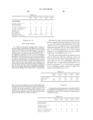
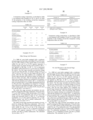
- Example Example Example 1 2 3 4 RT block resistance 125 g/cm 2 - 6 hours 10 6 10 10 at 23° C.
- a white gloss paint was prepared by mixing the following components:
- the components of the pigment paste were mixed in the order listed in Table 3 at room temperature and subsequently dispersed for about 10 minutes in a dissolver at about 4,000 rpm and with an appropriate wessel/dissolver disk geometry. After cooling of the pigment paste, the components of the let down were each added in the order listed in Table 3 with thorough stirring. Stirring was continued until a homogeneous mixture had been formed.
- Example Example Example 1 2 3 4 RT block resistance 125 g/cm 2 - 6 hours 10 7 10 10 at 23° C.
- Elongation (%) 80 60 85 115 Water uptake (%) 6 7 8 12 König hardness (s) 42 53 42 23 Gloss on glass 82/53% 78/45% 77/46% 77/40% (at 60°/20°) Film formation at excellent poor good excellent low temperature(5° C./ 50% R.H.)
- the second stage monomer pre-emulsion charge was begun and fed over about 110 mins. After all monomer and initiator feeds were complete, heating was continued for 60 minutes. After that the emulsion was cooled to 40° C. at which point latex was treated with 19.5 g of adipic dihydrazide dissolved in 190 g DI water. The emulsion was mixed for 15 minutes and cooled down and filtered through a 100 ⁇ m screen. The solids content in this latex was about 46.0%, the pH about 8.2, and the MFFT was about 0° C.
- the stable first stage monomer pre-emulsion was prepared by mixing the following components: 93.0 g DI water, 17.1 g of a 30% solution of fatty alcohol ether (12 EO units) sulfate Na salt, 6.0 g phosphoethyl methacrylate (phosphate ester of 2-hydroxyethyl methacrylate), 15 g diacetone acrylamide, 2.9 g of 25% aqueous ammonia, 35.1 g 2-ethylhexyl acrylate, and 246.2 g methyl methacrylate.
- the calculated Tg was +72° C.
- the stable second stage monomer pre-emulsion was prepared by mixing the following components: 160.6 g DI water, 30.9 g of a 30% solution of fatty alcohol ether (12 EO units) sulfate Na salt, 11.2 g phosphoethyl methacrylate (phosphate ester of 2-hydroxyethyl methacrylate), 28.1 g diacetone acrylamide, 5.2 g of 25% aqueous ammonia, 317.6 g 2-ethylhexyl acrylate, and 205.6 g methyl methacrylate.
- the calculated Tg was ⁇ 10° C.
- the second stage monomer pre-emulsion charge was begun and fed over about 110 mins. After all monomer and initiator feeds were complete, heating was continued for 60 minutes. After that the emulsion was cooled to 40° C. at which point latex was treated with 19.5 g of adipic dihydrazide dissolved in 190 g DI water. The emulsion was mixed for 15 minutes and cooled down and filtered through a 100 ⁇ m screen. The solids content in this latex was about 46.0%, the pH and the MFFT are listed in Table 5.
- the stable first stage monomer pre-emulsion was prepared by mixing the following components: 93.0 g DI water, 17.1 g of a 30% solution of fatty alcohol ether (12 EO units) sulfate Na salt, 3.0 g methacrylic acid, 3.0 g phosphoethyl methacrylate (phosphate ester of 2-hydroxyethyl methacrylate), 15 g diacetone acrylamide, 2.9 g of 25% aqueous ammonia, 35.1 g 2-ethylhexyl acrylate, and 246.2 g methyl methacrylate.
- the calculated Tg was +73° C.
- the stable second stage monomer pre-emulsion was prepared by mixing the following components: 160.6 g DI water, 30.9 g of a 30% solution of fatty alcohol ether (12 EO units) sulfate Na salt, (x) g phosphoethyl methacrylate (phosphate ester of 2-hydroxyethyl methacrylate), 28.1 g diacetone acrylamide, 5.2 g of 25% aqueous ammonia, 317.6 g 2-ethylhexyl acrylate, and (216.5-x) g methyl methacrylate.
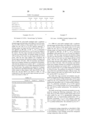
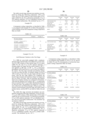
- Example Example Example 8 1 9 10 x (g) 0 11.2 28.1 39.4 Wt. % based on 0 2 5 7 second stage polymer (2% MAA) Tg calculated - ⁇ 9° C. ⁇ 10° C. ⁇ 10° C. ⁇ 11° C. second stage pH 7.5 8.0 5, 9 5, 5 MFFT ⁇ 0° C. ⁇ 0° C. ⁇ 0° C. ⁇ 0° C.
- a transparent coating composition as described in Table 1 of Example 5 was prepared with Examples 7, 8, 9, and 10.
- Table 6 the properties of the solvent-free transparent coating composition films are listed.
- Example Example Example 1 7 8 9 10 RT block resistance 125 g/cm 2 - 6 hours at 23° C. 10 10 10 10 10 10 Hot-block resistance 125 g/cm 2 - 30 8minutes at 50° C. 10 10 10 10 10 125 g/cm 2 - 60 minutes at 50° C. 10 10 10 10 10 125 g/cm 2 - 6 hours at 50° C. 10 10 10 10 10 10 Elongation (%) 120 110 110 95 95 Water uptake (%) 8 8 13 10 14 König hardness (s) 40 40 40 45 49 Film formation at low temperature excellent excellent good excellent excellent excellent excellent excellent excellent excellent excellent excellent excellent excellent excellent excellent excellent excellent excellent excellent excellent excellent excellent excellent excellent excellent excellent excellent excellent excellent excellent excellent excellent excellent excellent excellent excellent excellent excellent excellent excellent excellent excellent excellent excellent excellent excellent excellent excellent excellent excellent excellent excellent excellent excellent excellent excellent excellent excellent excellent excellent excellent excellent excellent excellent excellent excellent excellent excellent excellent excellent excellent excellent excellent excellent excellent excellent excellent excellent excellent excellent excellent excellent excellent excellent excellent excellent excellent excellent excellent excellent excellent excellent excellent excellent excellent excellent excellent excellent excellent excellent excellent excellent excellent excellent excellent excellent excellent excellent excellent
- the second stage monomer pre-emulsion charge was begun and fed over about 110 mins. After all monomer and initiator feeds were complete, heating was continued for 60 minutes. After that the emulsion was cooled to 40° C. at which point latex was treated with (z) g of 9.3% aqueous solution of adipic dihydrazide. The emulsion was mixed for 15 minutes and cooled down and filtered through a 100 ⁇ m screen. The solids content in this latex, the pH and the MFFT are listed in Table 7.
- the stable first stage monomer pre-emulsion was prepared by mixing the following components: 93.0 g DI water, 17.1 g of a 30% solution of fatty alcohol ether (12 EO units) sulfate Na salt, 3.0 g methacrylic acid, 3.0 g phosphoethyl methacrylate (phosphate ester of 2-hydroxyethyl methacrylate), (x) g diacetone acrylamide, 2.9 g of 25% aqueous ammonia, 35.1 g 2-ethylhexyl acrylate, and (261.2-x) g methyl methacrylate.
- the calculated Tg was about +73° C. (from +72° C. for 10% DAAM to +74° C. for 0% DAAM).
- the stable second stage monomer pre-emulsion was prepared by mixing the following components: 160.6 g DI water, 30.9 g of a 30% solution of fatty alcohol ether (12 EO units) sulfate Na salt, 11.2 g phosphoethyl methacrylate (phosphate ester of 2-hydroxyethyl methacrylate), (y) g diacetone acrylamide, 5.2 g of 25% aqueous ammonia, 317.6 g 2-ethylhexyl acrylate, and (233.7-y) g methyl methacrylate.
- the calculated Tg was about ⁇ 10° C. (from ⁇ 9° C. for 0% DAAM to ⁇ 10° C. for 10% DAAM).
- a transparent coating composition as described in Table 1 of Example 5 was prepared with Examples 12 (Comp.), 13, 14, 15, 16, and 17.
- Table 8 the properties of solvent free transparent coating composition films are listed.
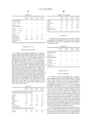
- Example Example Example Example Example 12 13 14 15 1 16 17 RT block resistance 125 g/cm 2 - 6 hours at 23° C. 10 10 10 10 10 10 10 10 Hot-block resistance 125 g/cm 2 - 30 minutes at 50° C. 7 10 10 10 10 10 10 125 g/cm 2 - 60 minutes at 50° C. 7 7 9 10 10 10 10 125 g/cm 2 - 6 hours at 50° C. 5 7 7 10 10 10 10 10 Elongation (%) 160 140 140 120 120 80 60 Water uptake (%) 21 13 10 8 8 8 8 König hardness (s) 27 30 35 40 40 45 50 Film formation at low fair good excellent excellent excellent excellent excellent excellent temperature (5° C./50% R.H.)
- the second stage monomer pre-emulsion charge was begun and fed over about y mins. After all monomer and initiator feeds were complete, heating was continued for 60 minutes. After that the emulsion was cooled to 40° C. at which point latex was treated with 19.5 g of adipic dihydrazide dissolved in 190 g DI water. The emulsion was mixed for 15 minutes and cooled down and filtered through a 100 ⁇ m screen. The solids content in these latexes were about 46.0%, the pH about 8.0 and the MFFTs are listed in Table 9.
- composition of first and second stage monomer pre-emulsions are listed in Table 9.
- the calculated Tgs of the first stage were +73° C.
- the calculated Tgs of the second stage were ⁇ 10° C.
- Example Example Example Example Example 4B 19 1 20 21 22 4A First stage monomer pre-emulsion composition (g) DI water — 79.7 93.0 106.3 119.5 130.0 253.6 surfactant — 14.6 17.1 19.5 22.0 24.4 48.0 MAA — 2.6 3.0 3.4 3.9 4.3 8.6 PEMA — 2.6 3.0 3.4 3.9 4.3 8.6 DAAM — 12.8 15.0 17.1 19.3 21.4 43.1 25% — 2.5 2.9 3.3 3.7 4.1 8.1 ammonia — 30.1 35.1 40.0 45.1 50.1 100.3 2-EHA — 211.0 246.2 281.4 316.5 351.7 703.9 MMA Feed time x (min.) — 50 60 70 75 85 170 Second stage monomer pre-emulsion composition (g) DI water 253.6 173.0 160.6 148.2 135.9 126.3 — surfactant 48.0 33.3 30.9 28.5 26.1 23.7 — PEMA 17.2 12.1 11.2 10.3 9.5 8.6 — DAAM
- Transparent coating compositions as described in Table 1 of Example 5, were prepared with Examples 4A, 4B, 20, 21, 22, and 23.
- Table 10 the properties of solvent free transparent coating composition films are listed.
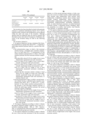
- Example Example Example Example Example Example 4B 20 1 21 22 23 4A RT block resistance 125 g/cm 2 - 6 hours at 23° C. 5 10 10 10 10 10 Hot-block resistance does not form does not form 125 g/cm 2 - 30 minutes at 50° C. 4 10 10 10 10 a continuous a continuous 125 g/cm 2 - 60 minutes at 50° C. 4 9 10 10 10 film at room film at room 125 g/cm 2 - 6 hours at 50° C. 2 8 10 10 9 temperature temperature Elongation (%) 350 140 120 100 85 Water uptake (%) 7 8 8 12 16 König hardness (s) 5 30 40 47 53 Film formation at low temperature excellent excellent excellent excellent good poor (5° C./50% R.H.)
- the second stage monomer pre-emulsion charge was begun and fed over about 110 mins. After all monomer and initiator feeds were complete, heating was continued for 60 minutes. After that the emulsion was cooled to 40° C. at which point latex was treated with 19.5 g of adipic dihydrazide dissolved in 190 g DI water. The emulsion was mixed for 15 minutes and cooled down and filtered through a 100 ⁇ m screen. The solids content in these latexes were about 46.0%, the pH about 8.0, and the MFFTs are listed in Table 11. The composition of first and second stage monomer pre-emulsions are listed in Table 11. The calculated Tg of the first stage was +73° C.
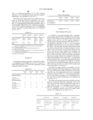
- Example Example Example 24 25 1 26 27 First stage monomer pre-emulsion composition DI water 93.0 surfactant 17.1 MAA 3.0 PEMA 3.0 DAAM 15.0 25% ammonia 2.9 2-EHA 35.1 MMA 246.2 Second stage monomer pre-emulsion comp sition DI water 160.6 160.6 160.6 160.6 surfactant 30.9 30.9 30.9 30.9 PEMA 11.2 11.2 11.2 11.2 DAAM 28.1 28.1 28.1 28.1 25% ammonia 5.2 5.2 5.2 5.2 2-EHA 410.7 365.7 317.6 284.2 247.6 MMA 112.5 157.5 205.6 239.1 275.6 Calculated Tg of ⁇ 30° C. ⁇ 20° C. ⁇ 10° C. 0° C. 10° C. second stage polymer MFFT ⁇ 0° C. ⁇ 0° C. ⁇ 0° C. 5° C. 25° C.
- a transparent coating composition as described in Table 1 was prepared with Examples 24, 25, 26, and 27.
- Table 12 the properties of solvent-free transparent coating composition films are listed.
- Example Example Example 24 25 1 26 27 RT block resistance 125 g/cm 2 - 6 hours at 23° C. 10 10 10 10 10 10 Hot-block resistance 125 g/cm 2 - 30 minutes at 50° C. 10 10 10 10 10 125 g/cm 2 - 60 minutes at 50° C. 9 10 10 10 10 125 g/cm 2 - 6 hours at 50° C. 8 10 10 9 9 Elongation (%) 160 140 120 105 30 Water uptake (%) 10 9 8 9 13 König hardness (s) 18 33 40 47 56 Film formation at low excellent excellent excellent good poor temperature (5° C./50% R.H.)
- the second stage monomer pre-emulsion charge was begun and fed over about 110 mins. After all monomer and initiator feeds were complete, heating was continued for 60 minutes. After that the emulsion was cooled to 40° C. at which point latex was treated with different amount of adipic dihydrazide dissolved in DI water (9.3% aqueous solution). The amounts of ADH used for this treatment are listed in Table 13. The emulsion was mixed for 15 minutes and cooled down and filtered through a 100 ⁇ m screen. The solids content in these latexes and the MFFTs are listed in Table 13.
- the stable first stage monomer pre-emulsion was prepared by mixing the following components: 93.0 g DI water, 17.1 g of a 30% solution of fatty alcohol ether (12 EO units) sulfate Na salt, 3.0 g methacrylic acid, 3.0 g phosphoethyl methacrylate (phosphate ester of 2-hydroxyethyl methacrylate), 15 g diacetone acrylamide, 2.9 g of 25% aqueous ammonia, 35.1 g 2-ethylhexyl acrylate, and 246.2 g methyl methacrylate.
- the calculated Tg was +73° C.
- the stable second stage monomer pre-emulsion was prepared by mixing the following components: 160.6 g DI water, 30.9 g of a 30% solution of fatty alcohol ether (12 EO units) sulfate Na salt, 11.2 g phosphoethyl methacrylate (phosphate ester of 2-hydroxyethyl methacrylate), 28.1 g diacetone acrylamide, 5.2 g of 25% aqueous ammonia, 317.6 g 2-ethylhexyl acrylate, and 205.6 g methyl methacrylate.
- the calculated Tg was ⁇ 10° C.
- Example Example Example 29 30 31 32 1 amount of ADH (g) 0 5.2 10.5 15.7 19.5 Solids content 50.8 49.3 48.1 46.9 46.0 MFFT ⁇ 0° C. ⁇ 0° C. ⁇ 0° C. ⁇ 0° C. ⁇ 0° C. ⁇ 0° C.
- a transparent coating composition as described in Table 1 was prepared with Examples 29, 30, 31, and 32.
- Table 14 the properties of solvent free transparent coating composition films are listed.
- Example Example Example 29 30 31 32 1 RT block resistance 125 g/cm 2 - 6 hours at 23° C. 10 10 10 10 10 10 Hot-block resistance 125 g/cm 2 - 30 minutes at 50° C. 10 10 10 10 10 125 g/cm 2 - 60 minutes at 50° C. 7 7 10 10 10 125 g/cm 2 - 6 hours at 50° C. 7 7 9 10 10 Elongation (%) 160 140 120 125 120 Water uptake (%) 9 9 8 9 8 König hardness (s) 33 34 36 38 40 Film formation at low excellent excellent excellent excellent excellent excellent temperature (5° C./50% R.H.)
- the second stage monomer pre-emulsion charge was begun and fed over about 110 mins. After all monomer and initiator feeds were complete, heating was continued for 60 minutes. After that the emulsion was cooled to 40° C. at which point latex was treated with 19.5 g of adipic dihydrazide dissolved in 190 g DI water. The emulsion was mixed for 15 minutes and cooled down and filtered through a 100 ⁇ m screen. The solids content in these latexes were about 46.0%, the pH about 8.0, and the MFFTs are listed in Table 15. The composition of first and second stage monomer pre-emulsions were listed in Table 15.
- Example 34 Example 35
- Example 36 First stage monomer pre-emulsion composition DI water 93.0 surfactant 17.1 MAA 3.0 PEMA 3.0 DAAM 15.0 25% ammonia 2.9 BA 35.1 MMA 246.2 Calculated Tg of +77° C. first stage polymer Second stage monomer pre-emulsion composition DI water 160.6 160.6 160.6 surfactant 30.9 30.9 30.9 PEMA 11.2 11.2 11.2 DAAM 28.1 28.1 28.1 25% ammonia 5.2 5.2 5.2 BA 354.4 337.6 317.6 MMA 168.8 185.6 205.6 Calculated Tg of ⁇ 6° C. ⁇ 2° C. +3° C. second stage polymer MFFT ⁇ 0° C. 1.5° C. 6.0° C.
- the second stage monomer pre-emulsion charge was begun and fed over about 110 mins. After all monomer and initiator feeds were complete, heating was continued for 60 minutes. After that the emulsion was cooled to 40° C. at which point latex was treated with 19.5 g of adipic dihydrazide dissolved in 190 g DI water. The emulsion was mixed for 15 minutes and cooled down and filtered through a 100 ⁇ m screen. The solids content in this latex was about 46.0%, the pH about 8.0, and the MFFT was about 3° C.
- the stable first stage monomer pre-emulsion was prepared by mixing the following components: 93.0 g DI Water, 17.1 g of a 30% solution of fatty alcohol ether (12 EO units) sulfate Na salt, 3.0 g methacrylic acid, 3.0 g phosphoethyl methacrylate (phosphate ester of 2-hydroxyethyl methacrylate), 15 g diacetone acrylamide, 2.9 g of 25% aqueous ammonia, 12.1 g n-butyl acrylate, 45.4 g n-butyl methacrylate, and 223.8 g methyl methacrylate.
- the calculated Tg was +82° C.
- the stable second stage monomer pre-emulsion was prepared by mixing the following components: 160.6 g DI water, 30.9 g of a 30% solution of fatty alcohol ether (12 EO units) sulfate Na salt, 11.2 g phosphoethyl methacrylate (phosphate ester of 2-hydroxyethyl methacrylate), 28.1 g diacetone acrylamide, 5.2 g of 25% aqueous ammonia, 281.3 g n-butyl acrylate, 84.4 g n-butyl methacrylate, and 157.5 g methyl methacrylate.
- the calculated Tg was +4° C.
- a transparent coating composition as described in Table 1, was prepared with Examples 34, 35, 36, and 37.
- Table 16 the properties of the resulting solvent-free transparent coating composition films are listed.
- Example Example Example 34 35 36 37 RT block resistance 125 g/cm 2 - 6 hours 10 10 10 10 at 23° C.
- the second stage monomer pre-emulsion charge was begun and fed over about 110 mins. After all monomer and initiator feeds were complete, heating was continued for 60 minutes. After that the emulsion was cooled to 40° C. at which point latex was treated with 19.5 g of adipic dihydrazide dissolved in 190 g DI water. The emulsion was mixed for 15 minutes and cooled down and filtered through a 100 ⁇ m screen. The solids content in these latexes were about 46.0%, the pH about 8.0, and the MFFTs are listed in Table 17. The composition of first and second stage monomer pre-emulsions were listed in Table 17.
- Example Example Example 39 40 41 42 First stage monomer pre-emulsion composition DI water 93.0 93.0 93.0 93.0 93.0 surfactant 17.1 17.1 17.1 17.1 MAA 3.0 3.0 3.0 3.0 PEMA 3.0 3.0 3.0 3.0 DAAM 15.0 15.0 15.0 15.0 25% ammonia 2.9 2.9 2.9 2.9 2-EHA 35.1 35.1 35.1 MMA 246.2 — — 123.1 Styrene — 246.2 246.2 123.1 Calculated Tg of +73° C. +75° C. +75° C. +74° C.
- first stage polymer Second stage monomer pre-emulsion composition DI water 160.6 160.6 160.6 160.6 surfactant 30.9 30.9 30.9 30.9 PEMA 11.2 11.2 11.2 11.2 DAAM 28.1 28.1 28.1 28.1 25% ammonia 5.2 5.2 5.2 2-EHA 317.6 317.6 317.6 MMA — 205.6 — 102.8 Styrene 205.6 — 205.6 102.8 Calculated Tg of ⁇ 9° C. ⁇ 10° C. ⁇ 9° C. ⁇ 9° C. second stage polymer MFFT ⁇ 0° C. ⁇ 0° C. ⁇ 0° C. ⁇ 0° C.
- a transparent coating composition as described in Table 1 was prepared with Examples 39, 40, 41 and 42.
- Table 18 the properties of solvent free transparent coating composition films are listed.
- Example Example Example 39 40 41 42 RT block resistance 125 g/cm 2 - 10 10 10 10 6 hours at 23° C.
- the second stage monomer pre-emulsion charge was begun and fed over about 110 mins. After all monomer and initiator feeds were complete, heating was continued for 60 minutes. After that the emulsion was cooled to 40° C. at which point latex was treated with 19.5 g of adipic dihydrazide dissolved in 190 g DI water. The emulsion was mixed for 15 minutes and cooled down and filtered through a 100 ⁇ m screen. The solids content in this latex, pH and MFFT as well as different reactive surfactant types are listed in Table 19.
- the stable first stage monomer pre-emulsion was prepared by mixing the following components: 84.5 g DI water, 25.6 g of a 20% aqueous solution of a reactive surfactant listed in Table 19, 3.0 g methacrylic acid, 3.0 g phosphoethyl methacrylate (phosphate ester of 2-hydroxyethyl methacrylate), 15 g diacetone acrylamide, 2.9 g of 25% aqueous ammonia, 35.1 g 2-ethylhexyl acrylate, and 246.2 g methyl methacrylate.
- the calculated Tg was +73° C.
- the stable second stage monomer pre-emulsion was prepared by mixing the following components: 145.2 g DI water, 46.3 g of a 20% aqueous solution of reactive surfactant, 11.2 g phosphoethyl methacrylate (phosphate ester of 2-hydroxyethyl methacrylate), 28.1 g diacetone acrylamide, 5.2 g of 25% aqueous ammonia, 317.6 g 2-ethylhexyl acrylate, and 205.6 g methyl methacrylate.
- the calculated Tg was ⁇ 10° C.
- Example Example 44 45 46 47 Reactive surfactant Hitenol Hitenol Adeka Adeka trade name BC-20 1 KH-10 2 Reasoap Reasoap SE-10 3 SR-10 4 Solids content 46.0 46.0 46.0 MFFT ⁇ 0° C. ⁇ 0° C. ⁇ 0° C. ⁇ 0° C. 1 . . . Poly(oxy-1,2-ethanediyl), ⁇ -sulfo- ⁇ -[4-nonyl-2-(1-propenyl)phenoxy], branched, ammonium salt 2 . . .
- a transparent coating composition as described in Table 1, was prepared with Examples 44, 45, 46, 47, and 48.
- Table 20 the properties of solvent free transparent coating composition films are listed.
- Example Example 44 45 46 47 RT block resistance 125 g/cm 2 - 10 10 10 10 6 hours at 23° C.
- the second stage monomer pre-emulsion charge was begun and fed over about 110 mins. After all monomer and initiator feeds were complete, heating was continued for 60 minutes. After that the emulsion was cooled to 40° C. at which point latex was treated with 19.5 g of adipic dihydrazide dissolved in 190 g DI water. The emulsion was mixed for 15 minutes and cooled down and filtered through a 100 ⁇ m screen. The solids content in this latex was about 46.0%, the pH about 8.0, and the MFFT was about 0° C.
- the stable first stage monomer pre-emulsion was prepared by mixing the following components: 93.0 g DI water, 17.1 g of a 30% solution of fatty alcohol ether (12 EO units) sulfate Na salt, 3.0 g methacrylic acid, 3.0 g of a phosphate monomer as listed in Table 21, 15 g diacetone acrylamide, 2.9 g of 25% aqueous ammonia, 35.1 g 2-ethylhexyl acrylate, and 246.2 g methyl methacrylate.
- the calculated Tg was about +73° C.
- the stable second stage monomer pre-emulsion was prepared by mixing the following components: 160.6 g DI water, 30.9 g of a 30% solution of fatty alcohol ether (12 EO units) sulfate Na salt, 11.2 g phosphate monomer, 28.1 g diacetone acrylamide, 5.2 g of 25% aqueous ammonia, 317.6 g 2-ethylhexyl acrylate, and 205.6 g methyl methacrylate.
- the calculated Tg was about ⁇ 10° C.
- Example 49 Example 50
- Example 52 Phosphate Phosphate ester of Phosphate ester of Phosphate ester of Phosphate ester of Phosphate ester of monomer polyethyleneglycol polypropyleneglycol 2-hydroxyethyl 4-hydroxy-butyl methacrylate methacrylate acrylate acrylate Solids content 46.0 46.0 46.0 46.0 MFFT ⁇ 0° C. ⁇ 0° C. ⁇ 0° C. ⁇ 0° C.
- a transparent coating composition as described in Table 1, was prepared with Examples 49, 50, 51, and 52.
- Table 22 the properties of the resulting solvent-free transparent coating composition films are listed:
- Example Example Example 49 50 51 52 RT block resistance 125 g/cm 2 - 10 10 10 10 6 hours at 23° C.
- Film formation at excellent excellent excellent excellent low temperature (5° C./50% R.H.)
- the second stage monomer pre-emulsion charge was begun and fed over about 110 mins. After all monomer and initiator feeds were complete, heating was continued for 60 minutes. After that the emulsion was cooled to 40° C. at which point latex was treated with 19.5 g of adipic dihydrazide dissolved in 190 g DI water. The emulsion was mixed for 15 minutes and cooled down and filtered through a 100 ⁇ m screen. The solids content in this latex was about 46.0%, the pH about 8.0, and the MFFT was about 0° C.
- the stable first stage monomer pre-emulsion was prepared by mixing the following components: 93.0 g DI water, 17.1 g of a 30% solution of fatty alcohol ether (12 EO units) sulfate Na salt, 3.0 g methacrylic acid, 3.0 g of one of the strong acid monomers listed in Table 23, 15 g diacetone acrylamide, 2.9 g of 25% aqueous ammonia, 35.1 g 2-ethylhexyl acrylate, and 246.2 g methyl methacrylate.
- the calculated Tg was about +73° C.
- the stable second stage monomer pre-emulsion was prepared by mixing the following components: 160.6 g DI water, 30.9 g of a 30% solution of fatty alcohol ether (12 EO units) sulfate Na salt, 11.2 g of one of the strong acid monomers listed in Table 23, 28.1 g diacetone acrylamide, 5.2 g of 25% aqueous ammonia, 317.6 g 2-ethylhexyl acrylate, and 205.6 g methyl methacrylate.
- the calculated Tg was about ⁇ 10° C.
- Example 54 Example 55 Special 2-acrylamido-2-methylpropane Allyloxy 2-hydroxy monomer sulfonic acid sodium salt 1 3-sulfonate propane sodium salt 2 Solids 46.0 46.0 content MFFT ⁇ 0° C. ⁇ 0° C. 1 . . . AMPS 2405 (LUBRIZOL) 2 . . . SIPOMER COPS-1 (RHODIA)
- Transparent coating compositions as described in Table 1, were prepared with Examples 54 and 55.
- Table 24 the properties of the resulting solvent-free transparent coating composition films are listed:
- Example Example 54 55 RT block resistance 125 g/cm 2 - 6 hours at 23° C. 10 10 Hot-block resistance 125 g/cm 2 - 30 minutes at 50° C. 10 10 125 g/cm 2 - 60 minutes at 50° C. 10 9 125 g/cm 2 - 6 hours at 50° C. 9 8 Film formation at low temperature good good (5° C./50% R.H.)
- the second stage monomer pre-emulsion charge was begun and fed over about 110 mins. After all monomer and initiator feeds were complete, heating was continued for 60 minutes. After that the emulsion was cooled to 40° C. at which point latex was treated with 19.5 g of adipic dihydrazide dissolved in 190 g DI water. The emulsion was mixed for 15 minutes and cooled down and filtered through a 100 ⁇ m screen. The solids content in this latex was about 46.0%, the pH about 8.0, and the MFFT was about 0° C.
- the stable first stage monomer pre-emulsion was prepared by mixing the following components: 93.0 g DI water, 17.1 g of a 30% solution of fatty alcohol ether (12 EO units) sulfate Na salt, 3.0 g methacrylic acid, 3.0 g phosphoethyl methacrylate (phosphate ester of 2-hydroxyethyl methacrylate), 15 g diacetone acrylamide, 2.9 g of 25% aqueous ammonia, 35.1 g 2-ethylhexyl acrylate, and 246.2 g methyl methacrylate.
- the calculated Tg was +73° C.
- the stable second stage monomer pre-emulsion was prepared by mixing the following components: 160.6 g DI water, 30.9 g of a 30% solution of fatty alcohol ether (12 EO units) sulfate Na salt, 28.1 g diacetone acrylamide, 5.2 g of 25% aqueous ammonia, 317.6 g 2-ethylhexyl acrylate, and 216.8 g methyl methacrylate.
- the calculated Tg was ⁇ 9° C.
- a transparent coating composition as described in Table 1, was prepared with Example 58.
- Table 25 the properties of the resulting solvent-free transparent coating composition films are listed.
- Example 1 Example 57 RT block resistance 125 g/cm 2 - 6 hours at 23° C. 10 10 Hot-block resistance 125 g/cm 2 - 30 minutes at 50° C. 10 10 125 g/cm 2 - 60 minutes at 50° C. 10 9 125 g/cm 2 - 6 hours at 50° C. 10 7 Film formation at low temperature excellent good (5° C./50% R.H.)
- the second stage monomer pre-emulsion charge was begun and fed over about 110 mins. After all monomer and initiator feeds were complete, heating was continued for 60 minutes. After that the emulsion was cooled to 40° C. at which point latex was treated with 19.5 g of adipic dihydrazide dissolved in 190 g DI water. The emulsion was mixed for 15 minutes and cooled down and filtered through a 100 ⁇ m screen. The amount of acid monomer in the first stage, the solids content in these latexes, and the MFFTs are listed in Tables 26a and 26b.
- the stable first stage monomer pre-emulsion was prepared by mixing the following components: 93.0 g DI water, 17.1 g of a 30% solution of fatty alcohol ether (12 EO units) sulfate Na salt, xg acid monomer, 15 g diacetone acrylamide, 2.9 g of 25% aqueous ammonia, 35.1 g 2-ethylhexyl acrylate, and 252.2-xg methyl methacrylate.
- the calculated Tgs are listed in Table 26.
- the stable second stage monomer pre-emulsion was prepared by mixing the following components: 160.6 g DI water, 30.9 g of a 30% solution of fatty alcohol ether (12 EO units) sulfate Na salt, 11.2 g phosphoethyl methacrylate (phosphate ester of 2-hydroxyethyl methacrylate), 28.1 g diacetone acrylamide, 5.2 g of 25% aqueous ammonia, 317.6 g 2-ethylhexyl acrylate, and 216.8 g methyl methacrylate.
- the calculated Tg was ⁇ 10° C.
- a transparent coating composition as described in Table 1, was prepared with Examples 59, 60, 61, 62, 63, and 64.
- Tables 27a and 27b the properties of solvent-free transparent coating composition films are listed.
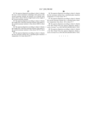
- Example Example Example 59 60 61 62 RT block resistance 125 g/cm 2 - unstable 10 10 10 6 hours at 23° C. latex Hot-block resistance 125 g/cm 2 - high grit 10 10 10 30 minutes at 50° C. content 125 g/cm 2 - 9 10 10 60 minutes at 50° C. 125 g/cm 2 - 8 9 10 6 hours at 50° C. Film formation excellent excellent excellent at low temperature (5° C./50% R.H.)
Landscapes
- Chemical & Material Sciences (AREA)
- Organic Chemistry (AREA)
- Health & Medical Sciences (AREA)
- Chemical Kinetics & Catalysis (AREA)
- Medicinal Chemistry (AREA)
- Polymers & Plastics (AREA)
- Life Sciences & Earth Sciences (AREA)
- Engineering & Computer Science (AREA)
- Materials Engineering (AREA)
- Wood Science & Technology (AREA)
- Paints Or Removers (AREA)
- Polymerisation Methods In General (AREA)
- Graft Or Block Polymers (AREA)
- Processes Of Treating Macromolecular Substances (AREA)
Priority Applications (6)
| Application Number | Priority Date | Filing Date | Title |
|---|---|---|---|
| US10/712,512 US7285590B2 (en) | 2003-11-13 | 2003-11-13 | Aqueous dispersions containing multi-stage emulsion polymers |
| PCT/US2004/037818 WO2005049184A2 (en) | 2003-11-13 | 2004-11-15 | Aqueous dispersions containing multi-stage emulsion polymers |
| CA002545727A CA2545727C (en) | 2003-11-13 | 2004-11-15 | Aqueous dispersions containing multi-stage emulsion polymers |
| BRPI0416457A BRPI0416457B1 (pt) | 2003-11-13 | 2004-11-15 | dispersão aquosa |
| EP04801024A EP1682586B1 (en) | 2003-11-13 | 2004-11-15 | Aqueous dispersions containing multi-stage emulsion polymers |
| AT04801024T ATE549360T1 (de) | 2003-11-13 | 2004-11-15 | Wässrige dispersionen, enthaltend mehrstufige emulsionspolymere |
Applications Claiming Priority (1)
| Application Number | Priority Date | Filing Date | Title |
|---|---|---|---|
| US10/712,512 US7285590B2 (en) | 2003-11-13 | 2003-11-13 | Aqueous dispersions containing multi-stage emulsion polymers |
Publications (2)
| Publication Number | Publication Date |
|---|---|
| US20050107527A1 US20050107527A1 (en) | 2005-05-19 |
| US7285590B2 true US7285590B2 (en) | 2007-10-23 |
Family
ID=34573558
Family Applications (1)
| Application Number | Title | Priority Date | Filing Date |
|---|---|---|---|
| US10/712,512 Expired - Fee Related US7285590B2 (en) | 2003-11-13 | 2003-11-13 | Aqueous dispersions containing multi-stage emulsion polymers |
Country Status (6)
| Country | Link |
|---|---|
| US (1) | US7285590B2 (pt) |
| EP (1) | EP1682586B1 (pt) |
| AT (1) | ATE549360T1 (pt) |
| BR (1) | BRPI0416457B1 (pt) |
| CA (1) | CA2545727C (pt) |
| WO (1) | WO2005049184A2 (pt) |
Cited By (32)
| Publication number | Priority date | Publication date | Assignee | Title |
|---|---|---|---|---|
| US20050256257A1 (en) * | 2004-03-10 | 2005-11-17 | Isabelle Betremieux | Aqueous polymer dispersion for barrier coating |
| US20110152406A1 (en) * | 2009-12-16 | 2011-06-23 | James Bohling | Low odor compositions and low odor coating compositions |
| US20110166257A1 (en) * | 2010-01-04 | 2011-07-07 | James Bohling | Low odor compositions and methods to attain low odor compositions |
| WO2012013492A1 (en) | 2010-07-28 | 2012-02-02 | Celanese Emulsions Gmbh | Heterogeneous vinyl acetate based copolymers as binder for paints |
| US20120058277A1 (en) * | 2010-09-03 | 2012-03-08 | James Charles Bohling | Multistage emulsion polymer and improved pigment efficiency |
| US20120083021A1 (en) * | 2010-10-01 | 2012-04-05 | James Bohling | Low odor coating compositions and paints |
| US8710133B2 (en) | 2010-09-03 | 2014-04-29 | Rohm And Haas Company | Stable aqueous composite compositions |
| US20140163160A1 (en) * | 2011-07-26 | 2014-06-12 | Rohm And Haas Company | Preparation of multistage latex polymer |
| US20150005446A1 (en) * | 2012-01-31 | 2015-01-01 | Rohm And Haas Company | Dispersion of adsorbing emulsion polymer particles |
| US20150038644A1 (en) * | 2013-07-30 | 2015-02-05 | Rohm And Haas Company | Ureido-functionalized aqueous polymeric dispersion |
| US9102848B2 (en) | 2011-02-28 | 2015-08-11 | Basf Se | Environmentally friendly, polymer dispersion-based coating formulations and methods of preparing and using same |
| US9115265B2 (en) | 2011-09-19 | 2015-08-25 | Columbia Insurance Company | Ambient self-crosslinkable latex |
| US9221992B2 (en) | 2011-06-03 | 2015-12-29 | Rohm And Haas Company | Aqueous coating compositions |
| US9238747B2 (en) | 2008-11-17 | 2016-01-19 | Basf Se | Stain blocking compositions |
| US9273221B2 (en) | 2013-02-04 | 2016-03-01 | Rohm And Haas Company | Acrylic latex binder and method of preparation |
| US9365731B2 (en) | 2012-05-29 | 2016-06-14 | Basf Se | Water-based polymer compositions for printing inks and coatings |
| US9394460B1 (en) | 2011-09-19 | 2016-07-19 | Columbia Insrancc Company | Ambient self-crosslinkable latex |
| EP3181604A1 (en) | 2015-12-18 | 2017-06-21 | Rohm And Haas Company | Aqueous multi-stage emulsion copolymer compositions for use in joinery applications |
| US20170247565A1 (en) * | 2011-12-15 | 2017-08-31 | Valspar Sourcing, Inc. | High Block, Tack and Scrub Resistant Coating Composition |
| US10053597B2 (en) | 2013-01-18 | 2018-08-21 | Basf Se | Acrylic dispersion-based coating compositions |
| US10273378B2 (en) | 2011-12-15 | 2019-04-30 | The Sherwin-Williams Company | High block, tack and scrub resistant coating composition |
| US10301501B2 (en) | 2011-12-15 | 2019-05-28 | The Sherwin-Williams Company | High block, tack and scrub resistant polymer |
| US10435582B2 (en) | 2016-10-05 | 2019-10-08 | Rohm And Haas Company | Aqueous dispersion of adsorbing polymer particles and crosslinkable polymer particles |
| US10626284B2 (en) | 2011-12-15 | 2020-04-21 | The Sherwin-Williams Company | Rheological methods for high block, tack and scrub resistant coating composition |
| EP3464481A4 (en) * | 2016-06-03 | 2020-04-29 | Basf Se | AQUEOUS WATER BARRIER COATINGS |
| US11098147B2 (en) | 2017-01-27 | 2021-08-24 | Celanese International Corporation | Aqueous polymer dispersions |
| WO2022051168A1 (en) | 2020-09-03 | 2022-03-10 | Arkema Inc. | Coating composition with improved block and humidity resistance, direct to metal adherence and low voc content |
| US11352296B2 (en) | 2018-04-28 | 2022-06-07 | Dow Global Technologies Llc | Polymer-modified cementitious composition |
| WO2022216529A1 (en) * | 2021-04-06 | 2022-10-13 | Basf Se | Coatings with improved stain removal |
| US11479619B2 (en) * | 2017-11-10 | 2022-10-25 | Basf Se | Aqueous polymer dispersions |
| WO2023038642A1 (en) | 2021-09-13 | 2023-03-16 | Celanese International Corporation | Wood stains and penetration primers comprising low voc level aqueous dispersions |
| WO2024064148A1 (en) * | 2022-09-19 | 2024-03-28 | Basf Se | Mar and scuff resistant architectural coating |
Families Citing this family (38)
| Publication number | Priority date | Publication date | Assignee | Title |
|---|---|---|---|---|
| US20060235131A1 (en) * | 2005-04-15 | 2006-10-19 | Hughes Kathleen A | Process for preparing aqueous dispersions of multistage emulsion polymers |
| FR2889196B1 (fr) * | 2005-07-29 | 2011-10-14 | Rhodia Chimie Sa | Dispersion aqueuse de polymere structure, son procede d'obtention et ses applications dans les formulations pour peintures |
| DE102005050823A1 (de) * | 2005-10-24 | 2007-04-26 | Basf Coatings Ag | Von organischen Lösemitteln im Wesentlichen oder völlig freie, strukturviskose, härtbare, wässrige Pulverdispersionen, Verfahren zu ihrer Herstellung und ihre Verwendung |
| NZ553410A (en) * | 2006-03-02 | 2008-06-30 | Rohm & Haas | Scrub and stain-resistant copolymer coating composition |
| US20070219307A1 (en) * | 2006-03-17 | 2007-09-20 | Yong Yang | Emulsion polymer blend coating compositions and methods for increasing chalky substrate adhesion |
| US8013092B1 (en) * | 2006-12-20 | 2011-09-06 | The Sherwin-Williams Company | Waterborne coating |
| FR2948374B1 (fr) * | 2009-07-23 | 2012-06-08 | Cray Valley Sa | Dispersion aqueuse de polymere autoreticulable, a base de particules de polymere structurees en coeur dur et ecorce molle et compositions de revetements ou de traitement |
| CN102101929B (zh) | 2009-12-18 | 2013-10-16 | 罗门哈斯公司 | 可固化水性组合物 |
| CA2771763C (en) | 2011-04-29 | 2014-08-05 | Rohm And Haas Company | Stabilized aqueous compositions comprising cationic polymers that deliver paint and primer properties in a coating |
| CA2771572C (en) | 2011-04-29 | 2014-06-03 | Rohm And Haas Company | Aqueous compositions comprising ion exchange resins that deliver paint and primer properties in a coating |
| JP5969484B2 (ja) * | 2011-08-22 | 2016-08-17 | テルモ株式会社 | 抗血栓性材料および医療用具 |
| JP6280035B2 (ja) * | 2011-08-30 | 2018-02-14 | ビーエーエスエフ ソシエタス・ヨーロピアBasf Se | 不透明フィルムおよびコーティング適用のための水性ポリマーエマルジョン |
| CN104011087B (zh) * | 2011-12-15 | 2017-09-22 | 巴斯夫欧洲公司 | 水性聚合物分散体用于改善对化学影响耐受性的用途 |
| CN104105550B (zh) * | 2012-02-10 | 2017-04-05 | 阿科玛股份有限公司 | 用于包含很少或不含有机溶剂的水性涂料组合物的多相乳液聚合物 |
| US9527942B2 (en) * | 2012-02-10 | 2016-12-27 | Arkema Inc. | Polymer latex binders useful in zero or low VOC coating compositions |
| US10227500B2 (en) * | 2014-06-20 | 2019-03-12 | Dow Global Technologies Llc | Multi-stage latex polymers, process of making the same, and coating compositions made thereof |
| WO2016000989A1 (de) * | 2014-07-02 | 2016-01-07 | Basf Se | Beschichtungsmasse |
| MX2017003650A (es) * | 2014-09-19 | 2017-07-13 | Basf Se | Polimeros de emulsion acuosa finamente divididos y su uso para recubrimientos hidrofobos. |
| EP3234014B1 (en) | 2014-12-19 | 2021-05-05 | Dow Global Technologies LLC | Aqueous polymer dispersion and preparation method thereof |
| FR3043405B1 (fr) * | 2015-11-10 | 2017-12-29 | Arkema France | Revetements ayant une resistance amelioree aux taches et salissures |
| BR112018068556A2 (pt) * | 2016-03-18 | 2019-02-12 | Basf Se | dispersão polimérica, método para produzir uma dispersão polimérica, material de revestimento, e, uso de uma dispersão polimérica. |
| BR112018074139B1 (pt) * | 2016-06-16 | 2022-05-10 | Dow Global Technologies Llc | Dispersão aquosa, processos de preparação de uma dispersão aquosa e de um revestimento, e, composição aquosa de revestimento |
| AU2017204399A1 (en) * | 2016-07-22 | 2018-02-08 | Dow Global Technologies Llc | Process for preparing latex functionalized with phosphorus acid and photoinitiator groups |
| US20190249043A1 (en) | 2018-02-13 | 2019-08-15 | Celanese International Corporation | Adhesive compositions |
| EP3810665B1 (en) * | 2018-06-07 | 2025-11-12 | Celanese International Corporation | Polymer dispersions, their preparation and use |
| BR112020025131A2 (pt) * | 2018-07-10 | 2021-03-23 | Dow Global Technologies Llc | dispersão aquosa de partículas poliméricas de múltiplos estágios, processo de preparação de uma dispersão aquosa de partículas poliméricas de múltiplos estágios por polimerização de radical livre de múltiplos estágios, e, composição de revestimento aquosa |
| US11970629B2 (en) * | 2018-07-10 | 2024-04-30 | Dow Global Technologies Llc | Aqueous dispersion of multistage polymer particles and process of making the same |
| EP3867314B1 (en) * | 2018-10-16 | 2024-05-29 | Dow Global Technologies LLC | Aqueous dispersion of polymeric particles |
| CN113557250B (zh) | 2019-03-07 | 2024-03-15 | 国际人造丝公司 | 含水共聚物分散体和它们在涂料组合物中的用途 |
| EP4077417B1 (en) * | 2019-12-18 | 2023-12-27 | Dow Global Technologies LLC | Preparation of an aqueous dispersion of occluded polymer particles |
| KR20220118471A (ko) * | 2019-12-18 | 2022-08-25 | 다우 글로벌 테크놀로지스 엘엘씨 | 흡장된 중합체 입자의 수성 분산액 |
| US11685800B2 (en) * | 2020-07-06 | 2023-06-27 | Columbia Insurance Company | Multi-stage polymer with low MW shell and high Tg core for early block resistance |
| CN114456306A (zh) * | 2021-02-22 | 2022-05-10 | 海南必凯水性新材料有限公司 | 一种高粘度自交联丙烯酸酯乳液及其制备方法 |
| CN113372500B (zh) * | 2021-07-21 | 2023-07-28 | 海南赛诺实业有限公司 | 功能型丙烯酸乳液及其制备方法、耐磨丙烯酸涂布膜、丙烯酸涂布bopp膜 |
| CN113853869B (zh) * | 2021-08-19 | 2022-10-14 | 大同昌盛化工有限公司 | 一种喷播剂及其应用 |
| WO2023203190A1 (en) * | 2022-04-22 | 2023-10-26 | Basf Se | Process for preparing an aqueous polymer dispersion |
| CN120344575A (zh) | 2023-01-17 | 2025-07-18 | 本杰明·摩尔公司 | 用于早期抗阻塞的具有低分子量部分和高玻璃化转变温度部分的聚合物 |
| US12215244B1 (en) | 2024-02-09 | 2025-02-04 | Swimc Llc | Wet look coating compositions, articles, and methods |
Citations (7)
| Publication number | Priority date | Publication date | Assignee | Title |
|---|---|---|---|---|
| US5539073A (en) | 1995-04-12 | 1996-07-23 | Eastman Chemical Company | Waterborne polymers having pendant allyl groups |
| US5596035A (en) | 1993-11-30 | 1997-01-21 | Hoechst Aktiengesellschaft | Aqueous polymer dispersions as binders for non-blocking scratch-resistant and chemical-resistant coatings |
| WO1998008882A1 (en) | 1996-08-29 | 1998-03-05 | S.C. Johnson Commercial Markets, Inc. | Aqueous two-stage emulsion polymers, blends and coatings thereof and method of making the same |
| US6005042A (en) | 1996-03-11 | 1999-12-21 | Clariant Gmbh | Aqueous polymer dispersions as binders for elastic, nonblocking and scratch-resistant coatings |
| EP1149875A1 (en) | 2000-04-26 | 2001-10-31 | Rohm And Haas Company | Aqueous stain-blocking coating composition |
| EP1302515A2 (en) | 2001-10-01 | 2003-04-16 | Rohm And Haas Company | Coating composition based on a bimodal emulsion copolymer, methods of blocking stains, improving hiding, improving block resistance and improving shear stability |
| US6875834B2 (en) * | 2001-01-30 | 2005-04-05 | Rohm And Haas Company | Two-component coating composition and method of preparation |
Family Cites Families (1)
| Publication number | Priority date | Publication date | Assignee | Title |
|---|---|---|---|---|
| DE3843965A1 (de) * | 1988-12-24 | 1990-07-12 | Roehm Gmbh | Mehrphasige, waessrige kunststoffdispersion und ihre verwendung in ueberzugsmittel |
-
2003
- 2003-11-13 US US10/712,512 patent/US7285590B2/en not_active Expired - Fee Related
-
2004
- 2004-11-15 WO PCT/US2004/037818 patent/WO2005049184A2/en not_active Ceased
- 2004-11-15 BR BRPI0416457A patent/BRPI0416457B1/pt not_active IP Right Cessation
- 2004-11-15 AT AT04801024T patent/ATE549360T1/de active
- 2004-11-15 EP EP04801024A patent/EP1682586B1/en not_active Expired - Lifetime
- 2004-11-15 CA CA002545727A patent/CA2545727C/en not_active Expired - Fee Related
Patent Citations (7)
| Publication number | Priority date | Publication date | Assignee | Title |
|---|---|---|---|---|
| US5596035A (en) | 1993-11-30 | 1997-01-21 | Hoechst Aktiengesellschaft | Aqueous polymer dispersions as binders for non-blocking scratch-resistant and chemical-resistant coatings |
| US5539073A (en) | 1995-04-12 | 1996-07-23 | Eastman Chemical Company | Waterborne polymers having pendant allyl groups |
| US6005042A (en) | 1996-03-11 | 1999-12-21 | Clariant Gmbh | Aqueous polymer dispersions as binders for elastic, nonblocking and scratch-resistant coatings |
| WO1998008882A1 (en) | 1996-08-29 | 1998-03-05 | S.C. Johnson Commercial Markets, Inc. | Aqueous two-stage emulsion polymers, blends and coatings thereof and method of making the same |
| EP1149875A1 (en) | 2000-04-26 | 2001-10-31 | Rohm And Haas Company | Aqueous stain-blocking coating composition |
| US6875834B2 (en) * | 2001-01-30 | 2005-04-05 | Rohm And Haas Company | Two-component coating composition and method of preparation |
| EP1302515A2 (en) | 2001-10-01 | 2003-04-16 | Rohm And Haas Company | Coating composition based on a bimodal emulsion copolymer, methods of blocking stains, improving hiding, improving block resistance and improving shear stability |
Cited By (53)
| Publication number | Priority date | Publication date | Assignee | Title |
|---|---|---|---|---|
| US7820754B2 (en) * | 2004-03-10 | 2010-10-26 | Cray Valley S.A. | Aqueous polymer dispersion for barrier coating |
| US20050256257A1 (en) * | 2004-03-10 | 2005-11-17 | Isabelle Betremieux | Aqueous polymer dispersion for barrier coating |
| US9562162B2 (en) | 2008-11-17 | 2017-02-07 | Basf Se | Stain blocking compositions |
| US9238747B2 (en) | 2008-11-17 | 2016-01-19 | Basf Se | Stain blocking compositions |
| US20110152406A1 (en) * | 2009-12-16 | 2011-06-23 | James Bohling | Low odor compositions and low odor coating compositions |
| US8546482B2 (en) * | 2009-12-16 | 2013-10-01 | Rohm And Haas Company | Low odor compositions and low odor coating compositions |
| US8524809B2 (en) * | 2010-01-04 | 2013-09-03 | Rohm And Haas Company | Low odor compositions and methods to attain low odor compositions |
| US20110166257A1 (en) * | 2010-01-04 | 2011-07-07 | James Bohling | Low odor compositions and methods to attain low odor compositions |
| US8440766B2 (en) | 2010-07-28 | 2013-05-14 | Celanese Emulsions Gmbh | Heterogeneous vinyl acetate based copolymers as binder for paints |
| WO2012013492A1 (en) | 2010-07-28 | 2012-02-02 | Celanese Emulsions Gmbh | Heterogeneous vinyl acetate based copolymers as binder for paints |
| US20120058277A1 (en) * | 2010-09-03 | 2012-03-08 | James Charles Bohling | Multistage emulsion polymer and improved pigment efficiency |
| US8710133B2 (en) | 2010-09-03 | 2014-04-29 | Rohm And Haas Company | Stable aqueous composite compositions |
| US9447215B2 (en) * | 2010-09-03 | 2016-09-20 | Rohm And Haas Company | Multistage emulsion polymer and improved pigment efficiency |
| US8703112B2 (en) * | 2010-10-01 | 2014-04-22 | Rohm And Haas Company | Low odor coating compositions and paints |
| US20120083021A1 (en) * | 2010-10-01 | 2012-04-05 | James Bohling | Low odor coating compositions and paints |
| US9102848B2 (en) | 2011-02-28 | 2015-08-11 | Basf Se | Environmentally friendly, polymer dispersion-based coating formulations and methods of preparing and using same |
| US9221992B2 (en) | 2011-06-03 | 2015-12-29 | Rohm And Haas Company | Aqueous coating compositions |
| US20140163160A1 (en) * | 2011-07-26 | 2014-06-12 | Rohm And Haas Company | Preparation of multistage latex polymer |
| US9029465B2 (en) * | 2011-07-26 | 2015-05-12 | Rohm And Haas Company | Preparation of multistage latex polymer |
| US9115265B2 (en) | 2011-09-19 | 2015-08-25 | Columbia Insurance Company | Ambient self-crosslinkable latex |
| US9394460B1 (en) | 2011-09-19 | 2016-07-19 | Columbia Insrancc Company | Ambient self-crosslinkable latex |
| US11136468B2 (en) | 2011-12-15 | 2021-10-05 | Swimc Llc | Rheological methods for high block, tack and scrub resistant coating composition |
| US10647871B2 (en) * | 2011-12-15 | 2020-05-12 | Valspar Sourcing, Inc. | High block, tack and scrub resistant coating composition |
| US10626284B2 (en) | 2011-12-15 | 2020-04-21 | The Sherwin-Williams Company | Rheological methods for high block, tack and scrub resistant coating composition |
| US20200115585A1 (en) * | 2011-12-15 | 2020-04-16 | Swimc Llc | High block, tack and scrub resistant coating composition |
| US20170247565A1 (en) * | 2011-12-15 | 2017-08-31 | Valspar Sourcing, Inc. | High Block, Tack and Scrub Resistant Coating Composition |
| US11168230B2 (en) * | 2011-12-15 | 2021-11-09 | Swimc Llc | High block, tack and scrub resistant coating composition |
| US10301501B2 (en) | 2011-12-15 | 2019-05-28 | The Sherwin-Williams Company | High block, tack and scrub resistant polymer |
| US11649368B2 (en) | 2011-12-15 | 2023-05-16 | Swimc Llc | Rheological methods for high block, tack and scrub resistant coating composition |
| US10273378B2 (en) | 2011-12-15 | 2019-04-30 | The Sherwin-Williams Company | High block, tack and scrub resistant coating composition |
| US20150005446A1 (en) * | 2012-01-31 | 2015-01-01 | Rohm And Haas Company | Dispersion of adsorbing emulsion polymer particles |
| US9303161B2 (en) * | 2012-01-31 | 2016-04-05 | Rohm And Haas Company | Dispersion of adsorbing emulsion polymer particles |
| US9499691B2 (en) | 2012-01-31 | 2016-11-22 | Rohm And Haas Company | Dispersion of adsorbing emulsion polymer particles |
| US9365731B2 (en) | 2012-05-29 | 2016-06-14 | Basf Se | Water-based polymer compositions for printing inks and coatings |
| US10053597B2 (en) | 2013-01-18 | 2018-08-21 | Basf Se | Acrylic dispersion-based coating compositions |
| US9273221B2 (en) | 2013-02-04 | 2016-03-01 | Rohm And Haas Company | Acrylic latex binder and method of preparation |
| US20150038644A1 (en) * | 2013-07-30 | 2015-02-05 | Rohm And Haas Company | Ureido-functionalized aqueous polymeric dispersion |
| US9212292B2 (en) * | 2013-07-30 | 2015-12-15 | Rohm And Haas Company | Ureido-functionalized aqueous polymeric dispersion |
| CN104341550A (zh) * | 2013-07-30 | 2015-02-11 | 罗门哈斯公司 | 脲基官能化的水性聚合物分散体 |
| EP3181604A1 (en) | 2015-12-18 | 2017-06-21 | Rohm And Haas Company | Aqueous multi-stage emulsion copolymer compositions for use in joinery applications |
| US10190002B2 (en) * | 2015-12-18 | 2019-01-29 | Rohm And Haas Company | Aqueous multi-stage emulsion copolymer compositions for use in joinery applications |
| EP3464481A4 (en) * | 2016-06-03 | 2020-04-29 | Basf Se | AQUEOUS WATER BARRIER COATINGS |
| US10961664B2 (en) | 2016-06-03 | 2021-03-30 | Basf Se | Aqueous water barrier coatings |
| EP4342919A3 (en) * | 2016-06-03 | 2024-05-29 | Basf Se | Aqueous water barrier coatings |
| US11821143B2 (en) | 2016-06-03 | 2023-11-21 | Basf Se | Aqueous water barrier coatings |
| US10435582B2 (en) | 2016-10-05 | 2019-10-08 | Rohm And Haas Company | Aqueous dispersion of adsorbing polymer particles and crosslinkable polymer particles |
| US11098147B2 (en) | 2017-01-27 | 2021-08-24 | Celanese International Corporation | Aqueous polymer dispersions |
| US11479619B2 (en) * | 2017-11-10 | 2022-10-25 | Basf Se | Aqueous polymer dispersions |
| US11352296B2 (en) | 2018-04-28 | 2022-06-07 | Dow Global Technologies Llc | Polymer-modified cementitious composition |
| WO2022051168A1 (en) | 2020-09-03 | 2022-03-10 | Arkema Inc. | Coating composition with improved block and humidity resistance, direct to metal adherence and low voc content |
| WO2022216529A1 (en) * | 2021-04-06 | 2022-10-13 | Basf Se | Coatings with improved stain removal |
| WO2023038642A1 (en) | 2021-09-13 | 2023-03-16 | Celanese International Corporation | Wood stains and penetration primers comprising low voc level aqueous dispersions |
| WO2024064148A1 (en) * | 2022-09-19 | 2024-03-28 | Basf Se | Mar and scuff resistant architectural coating |
Also Published As
| Publication number | Publication date |
|---|---|
| WO2005049184A2 (en) | 2005-06-02 |
| BRPI0416457B1 (pt) | 2016-05-31 |
| CA2545727A1 (en) | 2005-06-02 |
| EP1682586A4 (en) | 2009-04-01 |
| EP1682586A2 (en) | 2006-07-26 |
| CA2545727C (en) | 2009-08-04 |
| EP1682586B1 (en) | 2012-03-14 |
| WO2005049184A3 (en) | 2005-12-15 |
| US20050107527A1 (en) | 2005-05-19 |
| ATE549360T1 (de) | 2012-03-15 |
| BRPI0416457A (pt) | 2007-03-06 |
Similar Documents
| Publication | Publication Date | Title |
|---|---|---|
| US7285590B2 (en) | Aqueous dispersions containing multi-stage emulsion polymers | |
| JP5284320B2 (ja) | 水性ポリマー分散物 | |
| AU685269B2 (en) | Production of aqueous polymer compositions | |
| US7691942B2 (en) | Aqueous dispersion of polymeric particles | |
| EP2009072B1 (en) | Aqueous polymeric composition | |
| AU2004203178B2 (en) | Aqueous multistage emulsion polymer composition | |
| US20050171274A1 (en) | Aqueous acrylic emulsion polymer composition | |
| EP3106526B1 (en) | Phosphorus acid functionalized coating composition | |
| AU776415B2 (en) | Improved polymeric compositions | |
| AU2017234180A1 (en) | Finely divided aqueous multistage polymerizate dispersion, method for the production thereof, and use thereof as a binder | |
| US10457763B2 (en) | Aqueous polymer emulsion | |
| AU784849B2 (en) | Improved coating method | |
| US20100273018A1 (en) | Aqueous vinyl polymer coating compositions | |
| EP3580293B1 (en) | Environmentally friendly aqueous coating composition | |
| AU1003800A (en) | Leather coating binder and coated leather having good embossability and wet-flex endurance | |
| AU1557602A (en) | Improved polymeric composition | |
| JP2002121225A (ja) | 水性アクリルエマルジョンポリマー組成物 | |
| CN1984976B (zh) | 水性乙烯基聚合物涂料组合物 | |
| JP2000239603A (ja) | アニオン性水分散性被覆組成物の製造方法及び該組成物を使用した塗料用トップコート | |
| HK1108905B (en) | Aqueous vinyl polymer coating compositions |
Legal Events
| Date | Code | Title | Description |
|---|---|---|---|
| AS | Assignment |
Owner name: EASTMAN CHEMICAL COMPANY, TENNESSEE Free format text: ASSIGNMENT OF ASSIGNORS INTEREST;ASSIGNORS:HOLUB, PAVEL;MCENTIRE, EDWARD ENNS;REEL/FRAME:014388/0540;SIGNING DATES FROM 20040108 TO 20040119 |
|
| AS | Assignment |
Owner name: RESOLUTION SPECIALTY MATERIALS LLC, TEXAS Free format text: ASSIGNMENT OF ASSIGNORS INTEREST;ASSIGNOR:EASTMAN CHEMICAL COMPANY;REEL/FRAME:015201/0335 Effective date: 20040802 |
|
| AS | Assignment |
Owner name: JPMORGAN CHASE BANK, N.A., AS ADMINISTRATIVE AGENT Free format text: SECURITY AGREEMENT;ASSIGNORS:RESOLUTION PERFORMANCE PRODUCTS LLC;RESOLUTION SPECIALTY MATERIALS LLC;BORDEN CHEMICAL, INC.;REEL/FRAME:016480/0648 Effective date: 20050831 Owner name: WILMINGTON TRUST COMPANY, AS COLLATERAL AGENT, DEL Free format text: SECURITY AGREEMENT;ASSIGNORS:RESOLUTION PERFORMANCE PRODUCTS LLC;RESOLUTION SPECIALTY MATERIALS LLC;BORDEN CHEMICAL, INC.;REEL/FRAME:016522/0428 Effective date: 20050831 |
|
| AS | Assignment |
Owner name: JPMORGAN CHASE BANK, N.A. AS COLLATERAL AGENT,NEW Free format text: SECURITY AGREEMENT;ASSIGNOR:HEXION SPECIALTY CHEMICALS, INC.;REEL/FRAME:017946/0151 Effective date: 20060505 Owner name: JPMORGAN CHASE BANK, N.A. AS COLLATERAL AGENT, NEW Free format text: SECURITY AGREEMENT;ASSIGNOR:HEXION SPECIALTY CHEMICALS, INC.;REEL/FRAME:017946/0151 Effective date: 20060505 |
|
| AS | Assignment |
Owner name: WILMINGTON TRUST COMPANY, AS COLLATERAL AGENT,DELA Free format text: SECURITY AGREEMENT;ASSIGNOR:HEXION SPECIALTY CHEMICALS, INC.;REEL/FRAME:018535/0701 Effective date: 20061103 Owner name: WILMINGTON TRUST COMPANY, AS COLLATERAL AGENT, DEL Free format text: SECURITY AGREEMENT;ASSIGNOR:HEXION SPECIALTY CHEMICALS, INC.;REEL/FRAME:018535/0701 Effective date: 20061103 Owner name: JPMORGAN CHASE BANK, N.A. AS ADMINISTRATIVE AGENT, Free format text: SECURITY AGREEMENT;ASSIGNOR:HEXION SPECIALTY CHEMICALS, INC.;REEL/FRAME:018535/0556 Effective date: 20061103 |
|
| AS | Assignment |
Owner name: HEXION SPECIALTY CHEMICALS, INC., OHIO Free format text: MERGER;ASSIGNOR:RESOLUTION SPECIALTY MATERIALS LLC;REEL/FRAME:019712/0988 Effective date: 20050811 |
|
| AS | Assignment |
Owner name: WILMINGTON TRUST FSB, AS COLLATERAL AGENT,MINNESOT Free format text: SECURITY INTEREST;ASSIGNORS:HEXION SPECIALTY CHEMICALS, INC.;BORDEN CHEMICAL FOUNDRY, LLC;BORDEN CHEMICAL INVESTMENTS, INC.;AND OTHERS;REEL/FRAME:023963/0038 Effective date: 20100129 Owner name: WILMINGTON TRUST FSB, AS COLLATERAL AGENT, MINNESO Free format text: SECURITY INTEREST;ASSIGNORS:HEXION SPECIALTY CHEMICALS, INC.;BORDEN CHEMICAL FOUNDRY, LLC;BORDEN CHEMICAL INVESTMENTS, INC.;AND OTHERS;REEL/FRAME:023963/0038 Effective date: 20100129 |
|
| AS | Assignment |
Owner name: JPMORGAN CHASE BANK, N.A., AS ADMINISTRATIVE AGENT Free format text: SECURITY AGREEMENT;ASSIGNORS:HEXION LLC;HEXION SPECIALTY CHEMICALS, INC.;BORDEN CHEMICAL FOUNDRY, LLC;AND OTHERS;REEL/FRAME:023905/0451 Effective date: 20100129 |
|
| FPAY | Fee payment |
Year of fee payment: 4 |
|
| AS | Assignment |
Owner name: MOMENTIVE SPECIALTY CHEMICALS INC., OHIO Free format text: CHANGE OF NAME;ASSIGNOR:HEXION SPECIALTY CHEMICALS, INC.;REEL/FRAME:027808/0408 Effective date: 20101001 |
|
| AS | Assignment |
Owner name: MOMENTIVE SPECIALTY CHEMICALS INC. (F/K/A HEXION S Free format text: TERMINATION AND RELEASE OF SECURITY INTEREST IN PATENT RIGHTS;ASSIGNOR:JPMORGAN CHASE BANK, N.A.;REEL/FRAME:030111/0021 Effective date: 20130328 |
|
| AS | Assignment |
Owner name: WILMINGTON TRUST, NATIONAL ASSOCIATION, MINNESOTA Free format text: PATENT SECURITY AGREEMENT;ASSIGNOR:MOMENTIVE SPECIALTY CHEMICALS INC.;REEL/FRAME:030146/0946 Effective date: 20130328 Owner name: JPMORGAN CHASE BANK, N.A., DELAWARE Free format text: PATENT SECURITY AGREEMENT;ASSIGNOR:MOMENTIVE SPECIALTY CHEMICALS INC.;REEL/FRAME:030146/0970 Effective date: 20130328 |
|
| AS | Assignment |
Owner name: HEXION INC., OHIO Free format text: CHANGE OF NAME;ASSIGNOR:MOMENTIVE SPECIALTY CHEMICALS INC.;REEL/FRAME:034859/0314 Effective date: 20150115 |
|
| REMI | Maintenance fee reminder mailed | ||
| LAPS | Lapse for failure to pay maintenance fees | ||
| STCH | Information on status: patent discontinuation |
Free format text: PATENT EXPIRED DUE TO NONPAYMENT OF MAINTENANCE FEES UNDER 37 CFR 1.362 |
|
| STCH | Information on status: patent discontinuation |
Free format text: PATENT EXPIRED DUE TO NONPAYMENT OF MAINTENANCE FEES UNDER 37 CFR 1.362 |
|
| FP | Lapsed due to failure to pay maintenance fee |
Effective date: 20151023 |
|
| AS | Assignment |
Owner name: HEXION INC., OHIO Free format text: RELEASE BY SECURED PARTY;ASSIGNOR:WILMINGTON TRUST COMPANY;REEL/FRAME:039360/0724 Effective date: 20160630 |
|
| AS | Assignment |
Owner name: OILFIELD TECHNOLOGY GROUP, INC., OHIO Free format text: RELEASE BY SECURED PARTY;ASSIGNOR:WILMINGTON TRUST, NATIONAL ASSOCIATION (SUCCESSOR BY MERGER TO WILMINGTON TRUST FSB), AS COLLATERAL AGENT;REEL/FRAME:041793/0001 Effective date: 20170208 Owner name: LAWTER INTERNATIONAL INC., OHIO Free format text: RELEASE BY SECURED PARTY;ASSIGNOR:WILMINGTON TRUST, NATIONAL ASSOCIATION (SUCCESSOR BY MERGER TO WILMINGTON TRUST FSB), AS COLLATERAL AGENT;REEL/FRAME:041793/0001 Effective date: 20170208 Owner name: HSC CAPITAL CORPORATION, OHIO Free format text: RELEASE BY SECURED PARTY;ASSIGNOR:WILMINGTON TRUST, NATIONAL ASSOCIATION (SUCCESSOR BY MERGER TO WILMINGTON TRUST FSB), AS COLLATERAL AGENT;REEL/FRAME:041793/0001 Effective date: 20170208 Owner name: HEXION CI HOLDING COMPANY (CHINA) LLC, DISTRICT OF Free format text: RELEASE BY SECURED PARTY;ASSIGNOR:WILMINGTON TRUST, NATIONAL ASSOCIATION (SUCCESSOR BY MERGER TO WILMINGTON TRUST FSB), AS COLLATERAL AGENT;REEL/FRAME:041793/0001 Effective date: 20170208 Owner name: HEXION U.S. FINANCE CORP., OHIO Free format text: RELEASE BY SECURED PARTY;ASSIGNOR:WILMINGTON TRUST, NATIONAL ASSOCIATION (SUCCESSOR BY MERGER TO WILMINGTON TRUST FSB), AS COLLATERAL AGENT;REEL/FRAME:041793/0001 Effective date: 20170208 Owner name: BORDEN CHEMICAL FOUNDRY, LLC, OHIO Free format text: RELEASE BY SECURED PARTY;ASSIGNOR:WILMINGTON TRUST, NATIONAL ASSOCIATION (SUCCESSOR BY MERGER TO WILMINGTON TRUST FSB), AS COLLATERAL AGENT;REEL/FRAME:041793/0001 Effective date: 20170208 Owner name: HEXION INC. (FORMERLY KNOWN AS HEXION SPECIALTY CH Free format text: RELEASE BY SECURED PARTY;ASSIGNOR:WILMINGTON TRUST, NATIONAL ASSOCIATION (SUCCESSOR BY MERGER TO WILMINGTON TRUST FSB), AS COLLATERAL AGENT;REEL/FRAME:041793/0001 Effective date: 20170208 Owner name: HEXION INTERNATIONAL INC. (FORMERLY KNOWN AS BORDE Free format text: RELEASE BY SECURED PARTY;ASSIGNOR:WILMINGTON TRUST, NATIONAL ASSOCIATION (SUCCESSOR BY MERGER TO WILMINGTON TRUST FSB), AS COLLATERAL AGENT;REEL/FRAME:041793/0001 Effective date: 20170208 Owner name: HEXION INVESTMENTS INC. (FORMERLY KNOWN AS BORDEN Free format text: RELEASE BY SECURED PARTY;ASSIGNOR:WILMINGTON TRUST, NATIONAL ASSOCIATION (SUCCESSOR BY MERGER TO WILMINGTON TRUST FSB), AS COLLATERAL AGENT;REEL/FRAME:041793/0001 Effective date: 20170208 |
|
| AS | Assignment |
Owner name: HEXION INC. (FORMERLY KNOWN AS MOMENTIVE SPECIALTY Free format text: RELEASE OF SECURITY INTEREST IN PATENTS PREVIOUSLY RECORDED AT REEL/FRAME (030146/0970);ASSIGNOR:JPMORGAN CHASE BANK, N.A., AS ADMINISTRATIVE AGENT AND COLLATERAL AGENT;REEL/FRAME:049706/0264 Effective date: 20190701 |