US7715348B2 - Radio control device and method of selecting spread code - Google Patents
Radio control device and method of selecting spread code Download PDFInfo
- Publication number
- US7715348B2 US7715348B2 US10/758,227 US75822704A US7715348B2 US 7715348 B2 US7715348 B2 US 7715348B2 US 75822704 A US75822704 A US 75822704A US 7715348 B2 US7715348 B2 US 7715348B2
- Authority
- US
- United States
- Prior art keywords
- channelization code
- code
- channelization
- frequency
- unused
- Prior art date
- Legal status (The legal status is an assumption and is not a legal conclusion. Google has not performed a legal analysis and makes no representation as to the accuracy of the status listed.)
- Expired - Fee Related, expires
Links
Images



Classifications
-
- H—ELECTRICITY
- H04—ELECTRIC COMMUNICATION TECHNIQUE
- H04J—MULTIPLEX COMMUNICATION
- H04J13/00—Code division multiplex systems
- H04J13/16—Code allocation
- H04J13/18—Allocation of orthogonal codes
-
- H—ELECTRICITY
- H04—ELECTRIC COMMUNICATION TECHNIQUE
- H04J—MULTIPLEX COMMUNICATION
- H04J13/00—Code division multiplex systems
- H04J13/0007—Code type
- H04J13/004—Orthogonal
- H04J13/0044—OVSF [orthogonal variable spreading factor]
Definitions
- This invention relates to a method of selecting a spread code in a radio communication system where multiple radio access using spectrum spread is made between a mobile station and a base station and a plurality of cells with different frequency bands exist at the same location, and relates to a radio control device for controlling a plurality of base stations forming a plurality of cells in the radio communication system.
- a typical example of a mobile radio communication system where multiple radio access is made using spectrum spread is the W-CDMA (Wideband—Code Division Multiple Access) system in IMT-2000 (International Mobile Telecommunications-2000).
- W-CDMA Wideband—Code Division Multiple Access
- IMT-2000 International Mobile Telecommunications-2000
- a cell is identified by a spread code called scrambling code
- a channel is identified by a spread code called channelization code subsidiary to the scrambling code.
- the spread is a double spread based on these two codes.
- channelization codes subsidiary to the same scrambling code can be generated by a rule called OVSF (Orthogonal Variable Spreading Factor), and the orthogonality as OVSF is maintained if there is no time shift.
- OVSF Orthogonal Variable Spreading Factor
- the first scrambling code is called “primary scrambling code”
- the second and subsequent scrambling codes are called “secondary scrambling codes”.
- channelization codes subsidiary to the primary scrambling code are preferentially selected, and only if they are no more available, channelization codes subsidiary to the secondary scrambling code are selected.
- channelization codes subsidiary to the same scrambling code as many as possible in order to prevent increase of interference components due to the correlation of the channelization codes and to attempt to secure the system capacity, since channelization codes subsidiary to different scrambling codes, as mentioned above, have a correlation with each other regardless of time shift.
- a plurality of frequency bands can be used by direct spread in the W-CDMA system. For example, if a frequency band f 1 and a frequency band f 2 exist, a cell of f 1 and a cell of f 2 can be used at the same location as overlaid distinct cells.
- Japanese patent laid-open publication Heisei 7-23447 proposes the following control.
- the mobile station which can use both f 1 and f 2 is allowed to select preferentially channelization codes of the cell of f 1 , and only when they are no more available, select channelization codes of the cell of f 2 .
- a radio resource selection unit for frequency band f 1 tries to select a channelization code belonging to the primary scrambling code of f 1 (S 31 , S 32 ). If the selection has been successful, the selected channelization code is outputted (S 40 ). Otherwise, if the selection has been failed, the same radio resource selection unit for frequency band f 1 tries to select a channelization code belonging to the secondary scrambling code of f 1 (S 33 , S 34 ).
- a radio resource selection unit for frequency band f 2 tries to select a channelization code belonging to the primary scrambling code of f 2 (S 35 , S 36 ) and tries to select a channelization code belonging to the secondary scrambling code of f 2 (S 37 , S 38 ). Nevertheless if the selection has been failed, information indicating “selectable channelization code not found” is outputted (S 39 ).
- An object of the invention is to provide a radio control device and a method of selecting a spread code which can prevent reduction of the system capacity due to the use of channelization codes belonging to the secondary scrambling code.
- a radio control device in a radio communication system where multiple radio access using spectrum spread is made between a mobile station and a base station and a plurality of cells with different frequency bands exist at the same location, a radio control device for controlling a plurality of base stations forming the plurality of cells, comprising: code selection trial means for each cell, provided in association with each of the plurality of cells, for trying to select a spread code for the associated cell under a predetermined condition; determination means for determining whether to try to select a spread code again under a different condition from the condition that has been used in the selection trial, when the selection trial of the spread code by each code selection trial means under the predetermined condition has been terminated without any successful selection of the spread code; and control means for controlling the code selection trial means and the determination means so as to cause the code selection trial means to try to select the spread code sequentially for the plurality of cells under the predetermined condition, cause the determination means to determine whether to try to select the spread code again under
- the radio control device is provided in a radio communication system where multiple radio access using spectrum spread is made between a mobile station and a base station and a plurality of cells with different frequency bands exist at the same location.
- this radio control device comprises determination means and control means which have not conventionally existed, and the following operations are carried out under the control of the control means.
- the code selection trial means tries to select a spread code sequentially for the plurality of cells under a predetermined condition.
- the selection of the spread code is not tried for one cell under a plurality of conditions in a conventional manner, but the selection of the spread code is tried sequentially for the plurality of cells under the predetermined condition. Then, when the selection trial of the spread code by each code selection trial means has been terminated without any successful selection of the spread code, the determination means determines whether to try to select a spread code again under a different condition from the condition that has been used in the selection.
- the code selection trial means tries to select a spread code sequentially for the plurality of cells under the different condition.
- the selection may be determined that the selection is always tried again if the selection of the spread code has been failed, or it may be determined that the selection is not tried again in order to completely avoid the interference caused by the use of spread codes for one cell under the plurality of conditions.
- the code selection trial means tries to select a spread code sequentially for a plurality of cells under a predetermined condition.
- the determination means determines that the selection of the spread code should be tried again under a different condition, selection of the spread code is tried under the different condition.
- This can prevent a situation where interference components are increased and the capacity of the cell is reduced by the use of spread codes for one cell under a plurality of conditions (for example, both the channelization code belonging to the primary scrambling code and the channelization code belonging to the secondary scrambling code are used for one cell).
- the probability of selecting spread codes for different cells may be increased.
- interference between the selected spread codes for the different cells does not matter because the frequency bands differ between the different cells.
- each cell of the radio communication system is associated with a plurality of spread code trees generated by OVSF, and the different condition is associated with a selection trial from a spread code tree different from the spread code tree that has already been used in the selection trial.
- the method of selecting a spread code according to the present invention is a method of selecting a spread code in a radio communication system where multiple radio access using spectrum spread is made between a mobile station and a base station and a plurality of cells with different frequency bands exist at the same location, comprising: trying to select a spread code sequentially for the plurality of cells under a predetermined condition; determining whether to try to select a spread code again under a different condition from the condition that has been used in the selection, when the selection trial for each cell has been terminated without any successful selection of the spread code; and trying to select the spread code sequentially for the plurality of cells under the different condition when it has been determined that the selection should be tried again.
- selection of a spread code is tried sequentially for a plurality of cells under a predetermined condition.
- selection of the spread code is tried under the different condition.
- FIG. 1 is a view of the configuration of a radio communication system according to an embodiment of the invention.
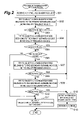
- FIG. 2 is a flow chart showing the process in the radio control station.
- FIG. 3 is a flow chart showing a conventional channelization code selection process.
- FIG. 1 shows a view of the configuration of a radio communication system 1 according to the present embodiment.
- the radio communication system 1 includes a base station 21 of frequency band F 1 , a base station 22 of frequency band f 2 , and a radio control station 10 that is connected to a core network 40 and controls the above-mentioned base stations 21 and 22 .
- a cell of frequency band f 1 formed by the base station 21 and a cell of frequency band f 2 formed by the base station 22 are overlapped in the same area, in which a mobile station 30 is located.
- the mobile station 30 , the cell and the base station 21 , 22 which use each frequency band, and the radio control station 10 each appear once in FIG. 1 , in general, more than one for each are located in the service area.
- the radio control station 10 comprises a channel assignment request reception unit 11 for receiving a channel assignment request, a radio resource selection unit 12 for selecting radio resource (for example, channelization codes and the like as described later) for frequency band F 1 , a radio resource selection unit 13 for selecting radio resource for frequency band f 2 , a continuous selection determination unit 14 for determining whether selection should be made continuously in the processing described later, an output unit 15 for outputting a message indicating unavailable selection and the like, a channel assignment unit 16 for assigning channels, and a control unit 17 for carrying out operation control and status monitoring of each of the above-mentioned units.
- a channel assignment request reception unit 11 for receiving a channel assignment request
- a radio resource selection unit 12 for selecting radio resource (for example, channelization codes and the like as described later) for frequency band F 1
- a radio resource selection unit 13 for selecting radio resource for frequency band f 2
- a continuous selection determination unit 14 for determining whether selection should be made continuously in the processing described later
- an output unit 15 for outputting a message
- the radio resource selection unit 12 comprises a channelization code selection unit 12 A for trying to select a channelization code belonging to frequency band F 1 , and a radio resource management unit 12 B for controlling the usage condition and the like of channelization codes belonging to frequency band f 1 .
- the radio resource selection unit 13 comprises a channelization code selection unit 13 A for trying to select a channelization code belonging to frequency band f 2 , and a radio resource management unit 13 B for controlling the usage condition and the like of channelization codes belonging to frequency band f 2 .
- a solid arrow represents a linkage of processing and an instruction signal related to the linkage of processing
- a dashed arrow represents a control/monitoring signal produced by the control unit 17 .
- the channel assignment request reception unit 11 receives a channel assignment request (S 01 in FIG. 2 )
- the selection instruction signal for a channelization code is transmitted to the radio resource selection unit 12 for frequency band F 1
- the channelization code selection unit 12 A tries to select a channelization code belonging to the primary scrambling code in the cell of frequency band f 1 (S 02 ).
- the channelization code selection unit 12 A inquires of the radio resource management unit 12 B about the usage condition of channelization codes belonging to the primary scrambling code of frequency band f 1 . If the channelization code is unused, the channelization code is selected. If the channelization code is in use, the channelization code is not selected.
- the information of the selected channelization code is outputted by the output unit 15 (S 12 ), and the channel assignment unit 16 assigns a channel based on the selected channelization code (S 13 ). The processing of FIG. 2 is then terminated.
- the flow then proceeds to S 04 , where an instruction signal is transmitted to the other radio resource selection unit 13 , and the channelization code selection unit 13 A tries to select a channelization code belonging to the primary scrambling code in the cell of frequency band f 2 .
- the channelization code selection unit 13 A inquires of the radio resource management unit 13 B about the usage condition of channelization codes belonging to the primary scrambling code of frequency band f 2 . If the channelization code is unused, the channelization code is selected. If the channelization code is in use, the channelization code is not selected.
- the information of the selected channelization code is outputted by the output unit 15 (S 12 ), and the channel assignment unit 16 assigns a channel based on the selected channelization code (S 13 ). The processing of FIG. 2 is then terminated.
- a selection instruction signal for a channelization code is transmitted to the radio resource selection unit 12 from the continuous selection determination unit 14 , and the channelization code selection unit 12 A tries to select a channelization code belonging to the secondary scrambling code in the cell of frequency band f 1 (S 07 ).
- the channelization code selection unit 12 A inquires of the radio resource management unit 12 B about the usage condition of channelization codes belonging to the secondary scrambling code of frequency band f 1 . If the channelization code is unused, the channelization code is selected. If the channelization code is in use, the channelization code is not selected.
- the information of the selected channelization code is outputted by the output unit 15 (S 12 ), and the channel assignment unit 16 assigns a channel based on the selected channelization code (S 13 ). The processing of FIG. 2 is then terminated.
- the channelization code selection unit 13 A inquires of the radio resource management unit 13 B about the usage condition of channelization codes belonging to the secondary scrambling code of frequency band f 2 . If the channelization code is unused, the channelization code is selected. If the channelization code is in use, the channelization code is not selected.
- the information of the selected channelization code is outputted by the output unit 15 (S 12 ), and the channel assignment unit 16 assigns a channel based on the selected channelization code (S 13 ). The processing of FIG. 2 is then terminated.
- the processing in FIG. 2 allows channelization codes belonging to the primary scrambling code to be preferentially selected across the cells of all frequency bands. This can prevent a situation where interference components are increased and the capacity of the cell is reduced by the use of both the channelization code belonging to the primary scrambling code and the channelization code belonging to the secondary scrambling code. As a result, reduction of the system capacity can be prevented.
- selection of a spread code is tried sequentially for a plurality of cells under a predetermined condition.
- selection of the spread code is tried under the different condition.
Landscapes
- Engineering & Computer Science (AREA)
- Computer Networks & Wireless Communication (AREA)
- Signal Processing (AREA)
- Mobile Radio Communication Systems (AREA)
Applications Claiming Priority (2)
| Application Number | Priority Date | Filing Date | Title |
|---|---|---|---|
| JPP2003-008754 | 2003-01-16 | ||
| JP2003008754A JP4128880B2 (ja) | 2003-01-16 | 2003-01-16 | 無線制御装置及び拡散コード選択方法 |
Publications (2)
| Publication Number | Publication Date |
|---|---|
| US20040213186A1 US20040213186A1 (en) | 2004-10-28 |
| US7715348B2 true US7715348B2 (en) | 2010-05-11 |
Family
ID=32588546
Family Applications (1)
| Application Number | Title | Priority Date | Filing Date |
|---|---|---|---|
| US10/758,227 Expired - Fee Related US7715348B2 (en) | 2003-01-16 | 2004-01-16 | Radio control device and method of selecting spread code |
Country Status (4)
| Country | Link |
|---|---|
| US (1) | US7715348B2 (fr) |
| EP (1) | EP1439652A3 (fr) |
| JP (1) | JP4128880B2 (fr) |
| CN (1) | CN100479355C (fr) |
Cited By (1)
| Publication number | Priority date | Publication date | Assignee | Title |
|---|---|---|---|---|
| US20080205347A1 (en) * | 2004-12-08 | 2008-08-28 | Changguo Sun | Distribution Method of Channelization Code in Code Division Multiple Access System |
Families Citing this family (4)
| Publication number | Priority date | Publication date | Assignee | Title |
|---|---|---|---|---|
| GB2412036A (en) * | 2004-03-08 | 2005-09-14 | Ipwireless Inc | Mitigation of intercell and intracell interference in a cellular communication system |
| US7733831B2 (en) * | 2004-08-23 | 2010-06-08 | Alcatel-Lucent Usa Inc. | Detecting a wireless network air interface |
| KR101384480B1 (ko) | 2007-10-25 | 2014-04-10 | 닛본 덴끼 가부시끼가이샤 | 이동 통신 시스템, 무선 제어 장치, 이동 단말기, 및 메시지 송신 방법 |
| US20090207175A1 (en) * | 2008-02-15 | 2009-08-20 | Apple Inc. | Animation Using Animation Effect and Trigger Element |
Citations (16)
| Publication number | Priority date | Publication date | Assignee | Title |
|---|---|---|---|---|
| JPH0723447A (ja) | 1993-06-15 | 1995-01-24 | N T T Idou Tsuushinmou Kk | 移動通信装置 |
| JPH09261726A (ja) | 1996-03-22 | 1997-10-03 | Canon Inc | 無線通信システム |
| WO1998032262A2 (fr) | 1997-01-15 | 1998-07-23 | Qualcomm Incorporated | Procede et appareil d'execution de transfert sur assiste par station mobile entre des systemes de telecommunications |
| US5953326A (en) * | 1996-03-06 | 1999-09-14 | Ntt Mobile Communications Network Inc. | Cell selection scheme in CDMA mobile communication system using spread codes and spread code phases |
| EP0989686A2 (fr) | 1998-09-24 | 2000-03-29 | Matsushita Electric Industrial Co., Ltd. | Station de base à AMRC et procédé d'allocation de code |
| JP2000174662A (ja) | 1998-12-09 | 2000-06-23 | Denso Corp | Ds−cdma基地局間非同期システムにおける移動局の同期捕捉方法及び装置 |
| KR20010016706A (ko) | 1999-08-02 | 2001-03-05 | 서평원 | 멀티 코드 레이트에서 채널화 코드 할당 방법 |
| US20020114289A1 (en) * | 2001-02-15 | 2002-08-22 | Ntt Docomo, Inc | Communications system employing novel scheme of radio channel setting control |
| US20020176438A1 (en) * | 2001-05-04 | 2002-11-28 | Miia Karjalainen | Selecting spreading code in spread spectrum system |
| US20030043774A1 (en) * | 2001-02-27 | 2003-03-06 | Seppo Hamalainen | Dynamic reselection of CDMA spreading codes |
| US20030123529A1 (en) * | 2001-12-27 | 2003-07-03 | Mitsubishi Denki Kabushiki Kaisha | Despreading method, spreading code assigning method, mobile terminal and base transceiver station |
| US6778812B1 (en) * | 2002-05-24 | 2004-08-17 | Interdigital Technology Communication | System and method for call admission control |
| US6804214B1 (en) * | 1999-04-19 | 2004-10-12 | Telefonaktiebolaget Lm Ericsson (Publ) | System and method for implementing multiple carriers in cellular networks |
| US20040203823A1 (en) * | 2002-07-25 | 2004-10-14 | Motorola, Inc. | Communications resource allocation method and apparatus |
| US7003269B2 (en) * | 2002-02-20 | 2006-02-21 | Qualcomm Incorporated | Method and apparatus for a dedicated physical channel in a wireless communication system |
| US7106708B2 (en) * | 2003-02-19 | 2006-09-12 | Interdigital Technology Corp. | Method for implementing fast dynamic channel allocation (F-DCA) call admission control in radio resource management |
Family Cites Families (2)
| Publication number | Priority date | Publication date | Assignee | Title |
|---|---|---|---|---|
| JPH09327059A (ja) * | 1996-06-07 | 1997-12-16 | N T T Ido Tsushinmo Kk | Cdma移動通信システムにおけるセル選択方法およびその基地局装置と移動局装置 |
| JP3361694B2 (ja) * | 1996-06-07 | 2003-01-07 | 株式会社エヌ・ティ・ティ・ドコモ | Cdma移動通信システムにおけるパイロットチャネル送信およびセル選択方法、移動局 |
-
2003
- 2003-01-16 JP JP2003008754A patent/JP4128880B2/ja not_active Expired - Fee Related
-
2004
- 2004-01-16 US US10/758,227 patent/US7715348B2/en not_active Expired - Fee Related
- 2004-01-16 EP EP20040000883 patent/EP1439652A3/fr not_active Withdrawn
- 2004-01-16 CN CNB2004100022401A patent/CN100479355C/zh not_active Expired - Fee Related
Patent Citations (17)
| Publication number | Priority date | Publication date | Assignee | Title |
|---|---|---|---|---|
| JPH0723447A (ja) | 1993-06-15 | 1995-01-24 | N T T Idou Tsuushinmou Kk | 移動通信装置 |
| US5953326A (en) * | 1996-03-06 | 1999-09-14 | Ntt Mobile Communications Network Inc. | Cell selection scheme in CDMA mobile communication system using spread codes and spread code phases |
| JPH09261726A (ja) | 1996-03-22 | 1997-10-03 | Canon Inc | 無線通信システム |
| WO1998032262A2 (fr) | 1997-01-15 | 1998-07-23 | Qualcomm Incorporated | Procede et appareil d'execution de transfert sur assiste par station mobile entre des systemes de telecommunications |
| JP2001508625A (ja) | 1997-01-15 | 2001-06-26 | クゥアルコム・インコーポレイテッド | 移動局に支援された通信間ハードハンドオフを行う方法及び装置 |
| EP0989686A2 (fr) | 1998-09-24 | 2000-03-29 | Matsushita Electric Industrial Co., Ltd. | Station de base à AMRC et procédé d'allocation de code |
| JP2000174662A (ja) | 1998-12-09 | 2000-06-23 | Denso Corp | Ds−cdma基地局間非同期システムにおける移動局の同期捕捉方法及び装置 |
| US6804214B1 (en) * | 1999-04-19 | 2004-10-12 | Telefonaktiebolaget Lm Ericsson (Publ) | System and method for implementing multiple carriers in cellular networks |
| KR20010016706A (ko) | 1999-08-02 | 2001-03-05 | 서평원 | 멀티 코드 레이트에서 채널화 코드 할당 방법 |
| US20020114289A1 (en) * | 2001-02-15 | 2002-08-22 | Ntt Docomo, Inc | Communications system employing novel scheme of radio channel setting control |
| US20030043774A1 (en) * | 2001-02-27 | 2003-03-06 | Seppo Hamalainen | Dynamic reselection of CDMA spreading codes |
| US20020176438A1 (en) * | 2001-05-04 | 2002-11-28 | Miia Karjalainen | Selecting spreading code in spread spectrum system |
| US20030123529A1 (en) * | 2001-12-27 | 2003-07-03 | Mitsubishi Denki Kabushiki Kaisha | Despreading method, spreading code assigning method, mobile terminal and base transceiver station |
| US7003269B2 (en) * | 2002-02-20 | 2006-02-21 | Qualcomm Incorporated | Method and apparatus for a dedicated physical channel in a wireless communication system |
| US6778812B1 (en) * | 2002-05-24 | 2004-08-17 | Interdigital Technology Communication | System and method for call admission control |
| US20040203823A1 (en) * | 2002-07-25 | 2004-10-14 | Motorola, Inc. | Communications resource allocation method and apparatus |
| US7106708B2 (en) * | 2003-02-19 | 2006-09-12 | Interdigital Technology Corp. | Method for implementing fast dynamic channel allocation (F-DCA) call admission control in radio resource management |
Cited By (1)
| Publication number | Priority date | Publication date | Assignee | Title |
|---|---|---|---|---|
| US20080205347A1 (en) * | 2004-12-08 | 2008-08-28 | Changguo Sun | Distribution Method of Channelization Code in Code Division Multiple Access System |
Also Published As
| Publication number | Publication date |
|---|---|
| CN1531233A (zh) | 2004-09-22 |
| EP1439652A2 (fr) | 2004-07-21 |
| JP2004222080A (ja) | 2004-08-05 |
| EP1439652A3 (fr) | 2009-06-24 |
| CN100479355C (zh) | 2009-04-15 |
| US20040213186A1 (en) | 2004-10-28 |
| JP4128880B2 (ja) | 2008-07-30 |
Similar Documents
| Publication | Publication Date | Title |
|---|---|---|
| US6584325B1 (en) | Subscriber unit and method of cell selection for a cellular communication system | |
| EP1768438B1 (fr) | Procédé d'accès, station mobile et station de base pour système de communication CDMA | |
| EP1169877B1 (fr) | Reseau de communication et procede d'affectation de ressources pour transfert souple | |
| US7295514B2 (en) | Method of controlling call admission in a mobile communication system | |
| EP1125379B1 (fr) | Utilisation d'un code en mode segmente dans un systeme de communications cellulaires | |
| US20080013494A1 (en) | Signal splitting method for limiting peak power in a cdma system | |
| EP1628500B1 (fr) | Système de communication AMDC avec terminal mobile utilisant un code de diffusion spécifique à ce terminal | |
| CN1250984A (zh) | 内务消息更新的方法和系统 | |
| US8005047B2 (en) | Handover method in code division multiple access communication system and system thereof | |
| JP2003319452A (ja) | ランダムアクセス方法および移動局ならびに移動式電気通信ネットワークの固定されたエンティティ | |
| GB2414636A (en) | Radio channel control method in a cellular system | |
| US20040213186A1 (en) | Radio control device and method of selecting spread code | |
| CN1886924B (zh) | 码分多址系统中分配信道化代码用的方法和系统 | |
| US6985738B1 (en) | Automatic implementation of channel plan change in cellular network | |
| EP1704661B1 (fr) | Méthode et système d'allocation des codes de canalisation dans un système d'accès multiple par repartition de codes | |
| US6393010B1 (en) | Time offset technique for increasing the capacity of a CDMA system | |
| WO1997030528A1 (fr) | Procede et appareil correspondant permettant d'attenuer des interferences occasionnees par un systeme de communication a superposition | |
| WO1998037703A2 (fr) | Attribution de canaux a l'interieur d'une bande radio | |
| KR100297556B1 (ko) | 브리딩 기능을 이용한 이동통신 시스템에서의 기지국간 자원분배방법 | |
| KR970006784B1 (ko) | Cdma 이동통신 시스템에서 핸드오프시 트래픽 채널할당 방법 | |
| FR2759221A1 (fr) | Procede de changement de canal de commandes dans un systeme cellulaire | |
| TH17682A (th) | การเลือกช่องสื่อสารในระบบสื่อสารทางวิทยุแบบ?เซลลูล่าร์ |
Legal Events
| Date | Code | Title | Description |
|---|---|---|---|
| AS | Assignment |
Owner name: NTT DOCOMO, INC.,JAPAN Free format text: ASSIGNMENT OF ASSIGNORS INTEREST;ASSIGNORS:MASUDA, MASAFUMI;OBATA, KAZUNORI;OHTO, YUTAKA;REEL/FRAME:024142/0207 Effective date: 20040521 |
|
| FEPP | Fee payment procedure |
Free format text: PAYER NUMBER DE-ASSIGNED (ORIGINAL EVENT CODE: RMPN); ENTITY STATUS OF PATENT OWNER: LARGE ENTITY Free format text: PAYOR NUMBER ASSIGNED (ORIGINAL EVENT CODE: ASPN); ENTITY STATUS OF PATENT OWNER: LARGE ENTITY |
|
| FPAY | Fee payment |
Year of fee payment: 4 |
|
| FEPP | Fee payment procedure |
Free format text: MAINTENANCE FEE REMINDER MAILED (ORIGINAL EVENT CODE: REM.) |
|
| LAPS | Lapse for failure to pay maintenance fees |
Free format text: PATENT EXPIRED FOR FAILURE TO PAY MAINTENANCE FEES (ORIGINAL EVENT CODE: EXP.) |
|
| STCH | Information on status: patent discontinuation |
Free format text: PATENT EXPIRED DUE TO NONPAYMENT OF MAINTENANCE FEES UNDER 37 CFR 1.362 |