US8063181B2 - Method for the production of cyclic molecules - Google Patents
Method for the production of cyclic molecules Download PDFInfo
- Publication number
- US8063181B2 US8063181B2 US10/566,432 US56643204A US8063181B2 US 8063181 B2 US8063181 B2 US 8063181B2 US 56643204 A US56643204 A US 56643204A US 8063181 B2 US8063181 B2 US 8063181B2
- Authority
- US
- United States
- Prior art keywords
- carbon atoms
- group
- alkyl
- stands
- alkenyl
- Prior art date
- Legal status (The legal status is an assumption and is not a legal conclusion. Google has not performed a legal analysis and makes no representation as to the accuracy of the status listed.)
- Expired - Fee Related, expires
Links
- 0 [1*]C1=C([2*])C([3*])=C([4*])C([5*])=C1*[H] Chemical compound [1*]C1=C([2*])C([3*])=C([4*])C([5*])=C1*[H] 0.000 description 16
- NNZPUHFVGAJUJA-HSBKFZLQSA-N C/C=C1\NC(=O)[C@H](CC2=CC=CC=C2)NC(=O)[C@H](CCCNC(=N)N)NC(=O)[C@@H](CCN)NC(=O)C(CCN)NC(=O)[C@@H](CO)NC(=O)C(C(=O)CC(O)CCCCCCCCC)OC(=O)C(C(O)CCl)NC(=O)[C@H](C(O)C(=O)O)NC1=O.CC(C)CCCCCCCCCC1CC(=O)N[C@@H](CC(=O)O)C(=O)N[C@H](CC2=CC=C(O)C=C2)C(=O)NCC(=O)N[C@@H](CCC(N)=O)C(=O)N2CCCC2C(=O)N[C@H](CO)C(=O)N[C@@H](CC(N)=O)C(=O)N1.CC(N)=O Chemical compound C/C=C1\NC(=O)[C@H](CC2=CC=CC=C2)NC(=O)[C@H](CCCNC(=N)N)NC(=O)[C@@H](CCN)NC(=O)C(CCN)NC(=O)[C@@H](CO)NC(=O)C(C(=O)CC(O)CCCCCCCCC)OC(=O)C(C(O)CCl)NC(=O)[C@H](C(O)C(=O)O)NC1=O.CC(C)CCCCCCCCCC1CC(=O)N[C@@H](CC(=O)O)C(=O)N[C@H](CC2=CC=C(O)C=C2)C(=O)NCC(=O)N[C@@H](CCC(N)=O)C(=O)N2CCCC2C(=O)N[C@H](CO)C(=O)N[C@@H](CC(N)=O)C(=O)N1.CC(N)=O NNZPUHFVGAJUJA-HSBKFZLQSA-N 0.000 description 1
- SKEJCHFAXCFZJX-UHFFFAOYSA-L CC(=O)NCC[S-].S=C1C=CC=C[CH-]1.S=C1C=CC=C[CH-]1.S=C1C=C[CH-]C=C1.[S-]C1=CC=CC=C1 Chemical compound CC(=O)NCC[S-].S=C1C=CC=C[CH-]1.S=C1C=CC=C[CH-]1.S=C1C=C[CH-]C=C1.[S-]C1=CC=CC=C1 SKEJCHFAXCFZJX-UHFFFAOYSA-L 0.000 description 1
- JDMUPRLRUUMCTL-VIFPVBQESA-M CC(C)(COP(=O)([O-])O)[C@@H](O)C(=O)NCCC(=O)NCCS Chemical compound CC(C)(COP(=O)([O-])O)[C@@H](O)C(=O)NCCC(=O)NCCS JDMUPRLRUUMCTL-VIFPVBQESA-M 0.000 description 1
- FDHMBQKGNSUVMG-GOTHJXGLSA-N CC(C)CCCCCCCCCCCC(=O)N[C@@H](CCC(=O)O)C(=O)N[C@@H](CC(C)C)C(=O)N[C@H](CC(C)C)C(=O)N[C@H](C(=O)C[C@@H](CC(=O)O)C(=O)C[C@H](CC(C)C)C(=O)NC(CC(C)C)C(=O)O)C(C)C.CC1=CC=C(O)C=C1.CCC(=O)O.CCC(=O)O.CCCCCCCCCCCCCC(O)CC(=O)CCC(=O)NCC(=O)CCC(=O)C[C@H](C(=O)NCC(=O)N[C@@H](C(=O)N1CCCC1C(=O)N[C@@H](CCC(=O)O)C(=O)NCC(=O)N[C@H](C(=O)OC1=CC=C(C)C=C1)C(C)CC)C(C)C)C(C)O.CCCN Chemical compound CC(C)CCCCCCCCCCCC(=O)N[C@@H](CCC(=O)O)C(=O)N[C@@H](CC(C)C)C(=O)N[C@H](CC(C)C)C(=O)N[C@H](C(=O)C[C@@H](CC(=O)O)C(=O)C[C@H](CC(C)C)C(=O)NC(CC(C)C)C(=O)O)C(C)C.CC1=CC=C(O)C=C1.CCC(=O)O.CCC(=O)O.CCCCCCCCCCCCCC(O)CC(=O)CCC(=O)NCC(=O)CCC(=O)C[C@H](C(=O)NCC(=O)N[C@@H](C(=O)N1CCCC1C(=O)N[C@@H](CCC(=O)O)C(=O)NCC(=O)N[C@H](C(=O)OC1=CC=C(C)C=C1)C(C)CC)C(C)C)C(C)O.CCCN FDHMBQKGNSUVMG-GOTHJXGLSA-N 0.000 description 1
- OTQSDKAYSAQSIS-GUQJLSPZSA-N CC(C)C[C@@H]1NC(=O)[C@H](CCCN)NC(=O)[C@H](C(C)C)NC(=O)[C@H](CC2=CC=C(O)C=C2)NC(=O)[C@H](CCC(N)=O)NC(=O)[C@H](CC(N)=O)NC(=O)[C@@H](CC2=CC=CC=C2)NC(=O)C(CC2=CC=CC=C2)NC(=O)C2CCCN2C(=O)[C@@H](CC2=CC=CC=C2)NC1=O.C[C@@H]1OC(=O)[C@H](NC(=O)CNC(=O)C2=C(O)C(O)=CC=C2)COC(=O)[C@H](NC(=O)CNC(=O)C2=CC=CC(O)=C2O)[C@H](C)OC(=O)C1NC(=O)CNC(=O)C1=CC=CC(O)=C1O Chemical compound CC(C)C[C@@H]1NC(=O)[C@H](CCCN)NC(=O)[C@H](C(C)C)NC(=O)[C@H](CC2=CC=C(O)C=C2)NC(=O)[C@H](CCC(N)=O)NC(=O)[C@H](CC(N)=O)NC(=O)[C@@H](CC2=CC=CC=C2)NC(=O)C(CC2=CC=CC=C2)NC(=O)C2CCCN2C(=O)[C@@H](CC2=CC=CC=C2)NC1=O.C[C@@H]1OC(=O)[C@H](NC(=O)CNC(=O)C2=C(O)C(O)=CC=C2)COC(=O)[C@H](NC(=O)CNC(=O)C2=CC=CC(O)=C2O)[C@H](C)OC(=O)C1NC(=O)CNC(=O)C1=CC=CC(O)=C1O OTQSDKAYSAQSIS-GUQJLSPZSA-N 0.000 description 1
- SZDVVEYFUQLCFH-QLIJNLTMSA-N CC(C)C[C@H](NC(=O)[C@@H](CC(=O)O)NC(=O)[C@H](NC(=O)[C@H](CN)NC(=O)[C@@H](CC(C)C)NC(=O)[C@@H](CCC(=O)O)NC(=O)CC(C)O)C(C)C)C(=O)N[C@H](CC(C)C)C(=O)SC1=CC=CC=C1 Chemical compound CC(C)C[C@H](NC(=O)[C@@H](CC(=O)O)NC(=O)[C@H](NC(=O)[C@H](CN)NC(=O)[C@@H](CC(C)C)NC(=O)[C@@H](CCC(=O)O)NC(=O)CC(C)O)C(C)C)C(=O)N[C@H](CC(C)C)C(=O)SC1=CC=CC=C1 SZDVVEYFUQLCFH-QLIJNLTMSA-N 0.000 description 1
- UALRPNSPWKZKQZ-RLWYBWBKSA-N CCC(C)[C@H](NC(=O)[C@H](CC1=CC=C(O)C=C1)NC(=O)[C@@H](CCC(N)=O)NC(=O)[C@@H]1CCCN1C(=O)[C@@H](C)NC(=O)[C@@H](CCC(=O)O)NC(=O)[C@H](NC(=O)[C@H](CC1=CC=C(O)C=C1)NC(=O)[C@H](CCCN)NC(=O)[C@H](CCC(=O)O)NC(C)=O)C(C)O)C(=O)SC1=CC=CC=C1 Chemical compound CCC(C)[C@H](NC(=O)[C@H](CC1=CC=C(O)C=C1)NC(=O)[C@@H](CCC(N)=O)NC(=O)[C@@H]1CCCN1C(=O)[C@@H](C)NC(=O)[C@@H](CCC(=O)O)NC(=O)[C@H](NC(=O)[C@H](CC1=CC=C(O)C=C1)NC(=O)[C@H](CCCN)NC(=O)[C@H](CCC(=O)O)NC(C)=O)C(C)O)C(=O)SC1=CC=CC=C1 UALRPNSPWKZKQZ-RLWYBWBKSA-N 0.000 description 1
Images


Classifications
-
- C—CHEMISTRY; METALLURGY
- C07—ORGANIC CHEMISTRY
- C07K—PEPTIDES
- C07K7/00—Peptides having 5 to 20 amino acids in a fully defined sequence; Derivatives thereof
- C07K7/50—Cyclic peptides containing at least one abnormal peptide link
-
- C—CHEMISTRY; METALLURGY
- C07—ORGANIC CHEMISTRY
- C07K—PEPTIDES
- C07K7/00—Peptides having 5 to 20 amino acids in a fully defined sequence; Derivatives thereof
- C07K7/64—Cyclic peptides containing only normal peptide links
-
- C—CHEMISTRY; METALLURGY
- C12—BIOCHEMISTRY; BEER; SPIRITS; WINE; VINEGAR; MICROBIOLOGY; ENZYMOLOGY; MUTATION OR GENETIC ENGINEERING
- C12P—FERMENTATION OR ENZYME-USING PROCESSES TO SYNTHESISE A DESIRED CHEMICAL COMPOUND OR COMPOSITION OR TO SEPARATE OPTICAL ISOMERS FROM A RACEMIC MIXTURE
- C12P21/00—Preparation of peptides or proteins
-
- A—HUMAN NECESSITIES
- A61—MEDICAL OR VETERINARY SCIENCE; HYGIENE
- A61K—PREPARATIONS FOR MEDICAL, DENTAL OR TOILETRY PURPOSES
- A61K38/00—Medicinal preparations containing peptides
Definitions
- Prominent examples for such compounds are penicillin, cephalosporin, daptomycin, epothilone, cyclosporine, a part of which has been successfully used in medicine for a long time.
- a common characteristic of these compounds is the cyclic structure which is decisive for the biological activity. Many of the aforementioned compounds feature no or considerably reduced effectivity if they are present in linear form. In contrast to linear molecules, cyclic molecules have reduced conformation flexibility (free movement and rotation) due to the ring formation, what allows only the biologically active form to appear. In this context, nature has selected an interesting strategy which ensures that the synthesized molecule exists in only one modification and thus interacts specifically with only one “target” (attack destination) within the biological system.
- Targets are most frequently essential parts or functions of a cell, which are important for its survival, such as e.g. the cell wall or protein synthesis.
- these molecules selectively eliminate bacterial, fungal or carcinogenic (cancer) cells or viruses while simultaneously protecting the body's own cell tissue, they are of enormous importance for the therapy of infectious diseases and cancer. In addition to that, they can also suppress the immune defense, which effectively inhibits organ rejection with transplantations (cyclosporine).
- potent cyclic natural products which are already known can serve as a lead structure and be systematically modified and tested for improved effectivity.
- Such natural products are produced in the biological system by non-ribosomal peptide synthetases (NRPS) and cyclized by so called thioesterases/cyclases, which can be recombinantly overproduced with a good yield.
- NRPS non-ribosomal peptide synthetases
- thioesterases/cyclases which can be recombinantly overproduced with a good yield.
- These enzymes can reliably and efficiently transfer linear peptides of a given lead structure into cyclic molecules.
- the activation of the C-terminus i.e. of the free carboxylic acid of the linear peptide
- a thioester leaving group the cofactor phosphopantetheine
- the recombinant cyclase reacts with an abridged thioester-mimic of this natural cofactor (N-acetylcysteamie, SNAC).
- Thioester-mimics are understood to be substances which
- Tyrocidine cyclase and surfactin cyclase have been characterized so far with the help of the SNAC leaving group.
- Many other biologically relevant cyclic compounds such as e.g. fengycin, mycosubtilin, syringomycin and bacitracin do not show any cyclization activity with the respective enzyme on using the SNAC leaving group, which can be explained by an incorrect folding of the enzyme.
- Other compounds, such as e.g. CDA (calcium dependent antibiotic) and bacillibactine show in part a very bad conversion with the known substrate analoga.
- Object of the present invention are non-natural, synthetic cofactors whose chemical qualities as leaving groups ensure an efficient enzyme acylation.
- thiophenol e.g., features, as a charge-stabilized leaving group according to the present invention, no structural analogy at all to the natural cofactor, provides, however, a significantly better leaving group quality, as the thiol is in conjugation with an aromatic benzene ring.
- the thiol function or the hydroxy function is bound to an sp 3 C atom, which is directly bound to the aromatic ring ( ⁇ -C atom), in such a way that the aromatic system has an inductive effect on the thio groups or the hydroxy groups.
- Such leaving groups according to the present invention are referred to in the following as araliphatic thio leaving groups or araliphatic hydroxy leaving groups.
- the expert skilled in the art knows that the inductive effect of an aromatic system has a stabilizing effect on the groups bound to an ( ⁇ -C-Atom, thus, increasing their leaving group quality. This can be read about e.g. in Michael B. Smith & Jerry March: March's Advanced Organic Chemistry. Reactions, Mechanisms, and Structure. 5th Edition 2000, John Wiley & Sons Inc., New York/Chichester/Brisbane/Toronto/Singapore.
- the reaction is catalyzed by a thiol, wherein the thio group is bound directly to an aromatic or heteroaromatic ring.
- a ⁇ -amino thioester is formed as an intermediate, followed by spontaneous intramolecular rearrangement, wherein the amide bond of the oligopeptide is formed.
- Disadvantages of this method are that the first oligopeptide must possess an N-terminal cysteine and that it is not able to undergo cyclization reactions.
- U.S. Pat. No. 6,307,018 B1 in contrast, describes a general method of binding a first C-terminal ⁇ -thioester peptide with a second N-terminal amino acid peptide segment, in which the N-terminal amino acid peptide segment does not need to possess an N-terminal cysteine.
- the second oligopeptide must possess a secondary amino group, which is bound by the N atom of this secondary amino group to a non-oxidized sulfhydryl group of an aromatic thiol.
- the aromatic thiol can be either a thiophenol, benzylmercaptane, or an S-alkyl benzylmercaptane. Another disadvantage of U.S. Pat.
- No. 6,307,018 B1 is that either the C-terminus of the first or the N-terminus of the second oligopeptide must be glycine.
- the method is not suitable for the cyclization of peptides.
- US 2002/0192773 A1 describes a method for the enzymatic production of macrocyclic molecules, in which recombinant thioesterase domains (TE domains, cyclases) derived from a PKS or NRPS multidomain system are reacted with a substrate, wherein the substrate contains an acyl residue which is activated by a thioester leaving group (and) an adjacent nucleophile.
- the activated acyl residue and nucleophile are separated from one another by a linear backbone.
- a disadvantage is that the leaving group is not charge-stabilized.
- charge-stabilized thio- and hydroxy compounds represent suitable leaving groups for the acylation reaction of peptide cyclases.
- Charge-stabilized thio- and hydroxy compounds are thereby understood to be aromatic or heteroaromatic ring systems, wherein a hydroxy or thio group is bound to one of the ring atoms or to a carbon atom which is bound to the ring system.
- the invention at hand provides substrates with whose help enzymatic cyclization of such peptides and proteins which were not accessible to cyclization according to the state of the art is possible. Moreover, the yield of proteins and peptides, which can be cyclized with methods available according to the state of the art, can be increased with the help of the substrates according to the present invention. Furthermore, the invention at hand provides a method to chemically modify further substrates engaged in the cyclization of peptides and proteins and thereby makes them more easily accessible for cyclization.
- a method for the production of cyclic peptides in which a peptide cyclase is brought into contact with a linear peptide, the linear peptide contains an acyl residue which is activated by a nucleophilic leaving group chemically bound to said acyl residue, and the activated acyl residue of the linear peptide selectively acylates the center of the peptide cyclase, wherein the nucleophilic leaving group is cleaved off by the formation of the cyclic peptide and cyclic peptides with rings consisting of at least 5 atoms are formed, wherein the nucleophilic leaving group, which is chemically bound to the acyl residue of the linear peptide and activates this residue, is charge-stabilized and the charge-stabilized leaving group is bound to the acyl group of the C-terminal carboxylic acid of the peptide.
- “Substrates” are understood here to be linear peptides on which a nucleophilic charge-stabilized leaving group according to the present invention is chemically bound.
- charge-stabilized thio and hydroxy compounds are understood to be aromatic or heteroaromatic ring systems in which a hydroxy or thio group is bound to one of the ring atoms or on a carbon atom which is bound to the ring system, wherein the chemical structure of the aromatic or heteroaromatic system is chosen in such a way that a negative charge occurring on the thio or hydroxy group is stabilized.
- the method according to the present invention leads to higher yields of cyclic peptides and/or increases its yields and, for the first time, allows peptides such as fengycin, mycosubtilin, syringomycin and bacitracin to cyclize as well, which are not able to be cyclized with the methods according to the state of the art.
- the provision of the substrates according to the present invention is carried out via the synthesis of the linear peptide with help from the standard methods of solid phase peptide synthesis known to persons skilled in the art, with subsequent coupling of the free carboxylic acid of the linear peptide (the free peptide acid) to the thiol or hydroxy leaving group according to the present invention, optional purification of the substrate obtained in this way according to the present invention, with subsequent reaction of the substrate obtained in this way according to the present invention with a peptide cyclase and purification of the cyclic peptides obtained in this way.
- reaction mixture is then added to ice-cold diethyl ether, subsequent to which the substrate precipitates.
- This step represents purification, by which reaction byproducts are removed and leads to a substrate purity of up to 80%, which is generally satisfactory for a further reaction of the substrate with a peptide cyclase.
- the purity of the substrate can be subsequently increased by means of preparative HPLC. If the linear peptide next to the C-terminal free COOH group has further free COOH groups within the peptide chain, such as e.g.
- COOH groups from glutamic acid and/or aspartic acid then these non C-terminal free COOH groups must be protected before the reaction of the linear peptide with an activating reagent with a suitable orthogonal protective group, which must then be cleaved off after production of the substrate according to the present invention.
- Suitable protective groups and suitable methods of their removal are known to persons skilled in the art and can be read about, for example, in Theodora W. Greene and Peter G. M. Wuts, “Protective groups in organic synthesis,” 2 nd Edition 1991, John Wiley & Sons Inc., New York/Chichester/Brisbane/Toronto/Singapore.
- the purified substrate with the leaving group according to the present invention is then incubated with the respective peptide cyclase in the ratio of 1 (enzyme): 100 (substrate) in 25 mM HEPES, 50 mM NaCl at pH 7 and room temperature for 30-60 minutes.
- the production of the HEPES solution is known to persons skilled in the art and was described in J. Sambrook, E. F. Fritsch and T. Maniatis: Molecular Cloning: A Laboratory Manual Vol. I - III , Cold Spring Harbor Laboratory Press, 1982.
- the identification and quantification of the reaction product is carried out by means of analytical HPLC.
- the substrates according to the present invention can also be reacted by reaction of the peptide acid with the respective leaving group in the presence of other reagents activating the C-terminus of the peptide acid.
- Equivalents are known and can be used without leaving the area protected by the patent claims.
- the activation reagents known to persons skilled in the art include, for example, DCI (N,N-diisopropylcarbodiimide), PyClop (chlorotripyrrolidinophosphonium hexafluorophosphate), HBTU (2-(1H-benzotriazole-1-yl)-1,1,3,3-tetramethyluronium hexafluorophosphate), HATU (2-(7-aza-1H-benzotriazole-1-yl)-1,1,3,3,-tetramethyluronium hexafluorophosphate), HOSu (N-hydroxysuccinimide), TBTU (2-(1H-benzotriazole-1-yl)-1,1,3,3-tetramethylaminium tetrafluoroborate), T3P (propylphosphonic anhydride), BopCl (bis(2-oxo-3-oxazolidinyl)phosphonic chloride) and 3-Cl-I-
- HOAt (1-hydroxy-7-azabenzotriazole) and HONB (N-hydroxy-5-norbornene-2,3-dicarboxylimide), which are known to persons skilled in the art, can also be used as coupling additives. It is known to persons skilled in the art that these reactions are effectively carried out with the addition of a base, such as e.g. DIPEA.
- a base such as e.g. DIPEA.
- solvents for use in the methods mentioned are known to persons skilled in the art Skilled persons can produce these combinations of activation reagents, coupling additives, bases, and solvents themselves with their general knowledge and standard literature.
- Charge-stabilized leaving groups are understood in the present invention to be chemical compounds which possess a thio or hydroxyl group and in which the free electron pair of the thiolate or hydroxylate ion released by the acylation reaction stands in conjugation with other electron pairs from, for example, but not exclusively, C ⁇ C or C ⁇ N double bonds or in which the thio or hydroxy group is bound to a carbon atom which is, for its part, bound to an aromatic or heteroaromatic ring.
- Such compounds are, e.g. oxo- and thio-aromatic, and oxo- and thio-heteroaromatic compounds, but also charge-stabilized aliphatic oxo and thio leaving groups.
- the thiophenol leaving group features, apart from the thiol function, no structural similarity with natural 4′-phosphopantetheine cofactor.
- the thiol function is directly bound to an aromatic phenyl ring. This structural characteristic causes a higher reactivity of this compound in relation to the leaving groups already described.
- this leaving group is released as a thiophenolate ion.
- the resulting negative charge at the sulfur atom can, in this, be delocalized by the adjacent phenyl ring very well.
- such charge-stabilized leaving groups are preferably chosen, in which a hydroxy or thio group is bound to one of the ring atoms of an aromatic, heteroaromatic or araliphatic system or to a carbon atom which is bound to the ring system, wherein the chemical structure of the aromatic, heteroaromatic or araliphatic system is so chosen that the sum of the mesomeric and inductive effects of the groups obtained exerts an electron withdrawal on the thiolate or hydroxylate ion and thus stabilizes the negative charge thereof.
- a further important criterium for the quantification of the leaving group quality is the pK A value of a chemical compound: the higher the pK A value, the worse the respective leaving group is.
- CoA, Ppant and SNAC have pK A values of 10-11, while thiophenol features a pK A value of 8. From that, it can be said that thiophenol can overcompensate for its lacking structural consistency with the natural phosphopantetheine cofactor surprisingly and contrary to the state of the art by its high chemical reactivity, which is also true for other aromatic, heteroaromatic and charge-stabilized araliphatic thiol or hydroxyl compounds.
- Such charge-stabilized aromatic, heteroaromatic and araliphatic thiol and hydroxyl compounds whose pK A value is smaller or equal to 10, preferably smaller or equal to 8, are used advantageously as leaving groups.
- the ring systems of the aromatic, heteroaromatic and araliphatic thiol and hydroxy compounds according to the present invention can be substituted by one or more substituents with positive or negative inductive or mesomeric effects, wherein the totality of the effects of all the substituents at hand causes an electron withdrawing and thus stabilizing force on the thiolation or hydroxylation released during the enzymatic cyclization.
- Surfactin likewise shows improved reaction rates during cyclization when o-mercapto anisole, m-mercapto anisole, or p-mercapto anisole or o-thiocresole, m-thiocresole, or p-thiocresole are used as leaving group.
- Thioester-bound leaving groups can exclusively influence the catalytic efficiency of the first partial step: the formation of the peptidyl-O-TE intermediate.
- thiophenol confirm this (see FIG. 4 to FIG. 6 ).
- a mutation within the active center of the enzyme shows no activity which confirms the acylation by the leaving group and the following enzymatic cyclization.
- aromatic, heteroaromatic, and araliphatic basic elements serve as charge-stabilized leaving groups:
- the invention at hand provides a new and, for the average person skilled in the art, surprising further development of the method described in US 2002/0192773 A1 for the enzymatic production of macrocyclic molecules, in which purified, isolated thioesterase domains derived from a PKS or NRPS multidomain system are reacted with a substrate.
- the substrates in question include linear peptides and lipopeptides with 5 to 22 monomeric units, such as e.g. amino acids.
- Substrates are, for example, fengycin, mycosubtilin, bacillibactin, CDA, surfactin, bacitracin or syringomycin and further substrates which are already described in US 2002/0192773 A1, as well as prystinamycin, whereby the substrates indicated additionally feature a leaving group according to the present invention.
- the method according to the present invention also provides, in comparison with the state of the art, an improvement for such linear peptides which could already be cyclized by methods known to persons skilled in the art, since the method according to the present invention accelerates the reaction rate of the cyclization and/or leads to higher yields of the cyclic peptides.
- the enzymes in question include purified, isolated thioesterase domains or peptide cyclases from NRPS or PKS systems, such as e.g. the corresponding domains or cyclases of fengycin, mycosubtilin, bacillibactin, CDA, surfactin, bacitracin, syringomycin, tyrocidin, prystinamycin and all other peptide cyclases, thioesterases and purified, isolated thioesterases listed in US 2002/0192773 A1.
- the linear peptide contains proteinogenic and non-proteinogenic amino acids in its backbone. Residues and/or functional groups, which do not derive from amino acids, can also be embedded in this backbone, such as e.g. saturated or unsaturated carbon spacers. The residues and/or functional groups facultatively embedded in the backbone were already described in US 2002/0192773 A1.
- the leaving group according to the present invention is attached either to the C-terminal carboxylic acid group or to a side chain carboxylic acid.
- the leaving group technology according to the present invention can be used for the production of substance libraries for cyclic peptides and proteins, producing new substrate variants of new structurally important molecules (for example, fengycin, mycosubtilin, syringomycin, CDA, etc.), which have so far shown no or little activity with the usual leaving group SNAC, and testing them for improved biological properties (antibiotic, antiviral, antifungal, cytostatic).
- the substrate variants are produced by combinatorial solid phase peptide synthesis and provided with the new leaving groups according to the aforementioned, general instruction.
- a substance library for peptide antibiotics adapted to target cells is preferably produced, whereby cyclic peptide antibiotics which were produced with the help of the method according to the present invention are meant.
- the method according to the present invention can be used for the production of cyclization kits which provide means for the coupling of charge-stabilized leaving groups according to the present invention as well as peptide cyclases, so that linear peptides can be reacted with the leaving groups made available, at first to form substrates according to the present invention and subsequently with the peptide cyclases made available, to form cyclic peptides.
- the producer of the kits according to the present invention knows from general knowledge how to produce, formulate and store the single components of the kit, e.g. buffers.
- the cyclic peptides and proteins produced by the method according to the present invention can be used as pharmaceuticals for patients for the therapy, diagnosis and prophylaxis of diseases in which bacterial and/or viral infections arise. Furthermore, the cyclic peptides and proteins according to the present invention can be used as pharmaceuticals for patients for the therapy, diagnosis and prophylaxis of tumor diseases as well as in transplantation medicine, provided that they feature cytostatic and/or immunosuppressive properties.
- patient refers equally to humans and vertebrates.
- the pharmaceuticals can be used both in human and veterinary medicine.
- compositions of compounds according to the claims can be available as dimers up to oligomers or as salts, esters, amides, or “prodrugs” thereof, provided that, according to reliable medical evaluation, they do not cause excessive toxicity, irritations or allergic reactions to patients.
- the therapeutically effective compounds according to the present invention can be administered to patients as part of a pharmaceutically acceptable composition either in oral, rectal, parenteral, intravenous, intramuscular, subcutaneous, intracisternal, intravaginal, intraperitoneal, intravascular, intrathecal, intravesical, topical, local form (powder, salves or drops) or in aerosol form, wherein the intravenous, subcutaneous, intraperitoneal or intrathecal administration can be carried out continuously by means of a pump or dosage unit.
- Forms of dosage for local administration of the compounds according to the present invention include salves, powders, suppositories, sprays and inhalants.
- the active component is mixed under sterile conditions with a physiologically acceptable carrier and possible stabilizing and/or preserving additives, buffers, diluents and propellants according to need.
- the linear fengycin substrate is first produced according to standard methods of peptide solid phase synthesis.
- the peptide sequence is: Acetyl-Glu-D-Orn-Tyr-D-Thr-Glu-D-Ala-Pro-Gln-D-Tyr-Ile-COOH.
- 0.1 mMol DCC, 0.1 mMol HOBt and 0.5 mMol of thiophenol are added to 0.05 mMol of the peptide and dissolved in 2 ml THF. The mixture is stirred for 30 min at RT, and 0.05 mMol of potassium carbonate is added.
- the mixture is stirred for a further 2.5 h at RT, subsequently solid DCH is removed by filtration and the solvent is evaporated.
- the deprotection of the peptide side chains is carried out for 3 h in 2 ml of 95% TFA, 2.5% water and 2.5% triisopropylsilane.
- the mixture is then poured into 50 ml of ice-cold diethyl ether and the resulting solid is separated by centrifugation.
- the purification of the solid is carried out by means of preparative HPLC with a Nucleodur C 18 column (pore size 100 ⁇ , particle size 7 ⁇ M, diameter 10 mm, length 250 mm, Macherey-Nagel) with a gradient of 10% acetonitrile in water/0.1% TFA up to 70% acetonitrile in water/0.1% TFA in 40 min at a flow rate of 6 ml/min.
- the retention time of the cyclized fengycin (see FIG. 1 ) is 19 min.
- the yield is between 70 and 80%.
- the cyclization of the linear fengycin-thiophenol substrate is carried out in an aqueous cyclization buffer comprised of 2-[4-(2-hydroxyethyl)-1-piperazinyl]-ethane sulfonic acid (HEPES, 25 mM) and sodium chloride (NaCl, 50 mM) at pH 7 in a total volume of 50 ⁇ L.
- the substrate concentration is 100 ⁇ M for standard cyclization reactions.
- the cyclization reaction is initiated by the addition of recombinant fengycin TE at an end concentration of 5 ⁇ M and stopped by the addition of 35 ⁇ L of 4% trifluoroacetic acid (TFA) in water after 4 hours.
- reaction products are examined by means of HPLC with a Nucleodur C 18 column (pore size 100 ⁇ , particle size 3 ⁇ M, diameter 10 mm, length 250 mm, Macherey-Nagel) and a gradient of 30% acetonitrile in water/0.1% TFA up to 60% acetonitrile in water/0.1% TFA in 35 min at a flow rate of 0.4 mL/min at 40° C.
- the identity of the products is confirmed by ESI mass spectrometry. Pure cyclized fengycin can be obtained by means of preparative HPLC.
- Fengycin is reacted with further leaving groups as described in embodiments 1 and 2. These are 2-mercaptopyridine, p-nitrothiophenol and pentafluorothiophenol.
- the cyclization of these fengycin substrates is carried out analogously to embodiment 1 and yields significantly higher percentages of the not enzymatically catalyzed cyclization product or the hydrolyzed product than in the case of using thiophenol or benzylmercaptane, respectively.
- FIG. 1 HPLC of the Reaction of Fengycin-thiophenol with the Fengycin-peptide Cyclase
- FIG. 2 HPLC of the Reaction of Surfactin-Thiophenol with the Surfactin-peptide Cyclase
- FIG. 3 Fengycin-peptide Cyclase
- the reactions are stopped by the addition of 35 ⁇ L TFA (4% in water) and examined by analytic HPLC with a Nucleodur C 18 column (Macherey and Nagel, 250/3, pore diameter: 100 ⁇ , particle size: 3 ⁇ m) with the following gradient: 0-35 min, 30-60% acetonitrile/0.1% TFA in water/0.1% TFA; 0.4 mL/min, 40° C.
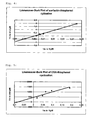
- Kinetic examinations are carried out at different points in time at substrate concentrations of 50 ⁇ M up to 1000 ⁇ m and the kinetic parameters KM and kcat are taken from the Lineweaver-Burk plot.
- a K M of 461 ⁇ m and a k cat of 0.33 min ⁇ 1 result from the cyclization reaction.
- FIG. 4 Surfactin-peptide Cyclase
- FIG. 5 CDA Peptide Cyclase
- FIG. 6 Syringomycin Peptide Cyclase
- FIG. 7 HPLC of the Reaction of Surfactin-2-thiocresole with the Surfactin Peptide Cyclase
- FIG. 8 HPLC of the Reaction of Surfactin-4-methoxythiophenol with the Surfactin Peptide Cyclase
Landscapes
- Chemical & Material Sciences (AREA)
- Organic Chemistry (AREA)
- Life Sciences & Earth Sciences (AREA)
- Health & Medical Sciences (AREA)
- Genetics & Genomics (AREA)
- General Health & Medical Sciences (AREA)
- Molecular Biology (AREA)
- Biochemistry (AREA)
- Wood Science & Technology (AREA)
- Medicinal Chemistry (AREA)
- Proteomics, Peptides & Aminoacids (AREA)
- Biophysics (AREA)
- Engineering & Computer Science (AREA)
- Zoology (AREA)
- Biotechnology (AREA)
- Microbiology (AREA)
- General Chemical & Material Sciences (AREA)
- Chemical Kinetics & Catalysis (AREA)
- Bioinformatics & Cheminformatics (AREA)
- General Engineering & Computer Science (AREA)
- Preparation Of Compounds By Using Micro-Organisms (AREA)
- Organic Low-Molecular-Weight Compounds And Preparation Thereof (AREA)
- Enzymes And Modification Thereof (AREA)
- Heterocyclic Carbon Compounds Containing A Hetero Ring Having Oxygen Or Sulfur (AREA)
Applications Claiming Priority (4)
| Application Number | Priority Date | Filing Date | Title |
|---|---|---|---|
| DE10335584A DE10335584B4 (de) | 2003-07-31 | 2003-07-31 | Verfahren zur Herstellung zyklischer Moleküle |
| DE10335584.7 | 2003-07-31 | ||
| DE10335584 | 2003-07-31 | ||
| PCT/DE2004/001704 WO2005012541A1 (de) | 2003-07-31 | 2004-07-30 | Verfahren zur herstellung zyklischer moleküle |
Publications (2)
| Publication Number | Publication Date |
|---|---|
| US20070184516A1 US20070184516A1 (en) | 2007-08-09 |
| US8063181B2 true US8063181B2 (en) | 2011-11-22 |
Family
ID=34111883
Family Applications (1)
| Application Number | Title | Priority Date | Filing Date |
|---|---|---|---|
| US10/566,432 Expired - Fee Related US8063181B2 (en) | 2003-07-31 | 2004-07-30 | Method for the production of cyclic molecules |
Country Status (6)
| Country | Link |
|---|---|
| US (1) | US8063181B2 (de) |
| EP (1) | EP1649036B1 (de) |
| AT (1) | ATE394501T1 (de) |
| CA (1) | CA2574733A1 (de) |
| DE (2) | DE10335584B4 (de) |
| WO (1) | WO2005012541A1 (de) |
Families Citing this family (14)
| Publication number | Priority date | Publication date | Assignee | Title |
|---|---|---|---|---|
| US20080306054A1 (en) | 2005-04-13 | 2008-12-11 | Astex Therapeutics Limited | Pharmaceutical Compounds |
| US7754725B2 (en) | 2006-03-01 | 2010-07-13 | Astex Therapeutics Ltd. | Dihydroxyphenyl isoindolymethanones |
| WO2008044041A1 (en) | 2006-10-12 | 2008-04-17 | Astex Therapeutics Limited | Pharmaceutical combinations |
| WO2008044027A2 (en) * | 2006-10-12 | 2008-04-17 | Astex Therapeutics Limited | Pharmaceutical compounds having hsp90 inhibitory or modulating activity |
| GB0620259D0 (en) | 2006-10-12 | 2006-11-22 | Astex Therapeutics Ltd | Pharmaceutical compounds |
| JP5721949B2 (ja) | 2006-10-12 | 2015-05-20 | アステックス、セラピューティックス、リミテッドAstex Therapeutics Limited | 複合薬剤 |
| JP5518478B2 (ja) | 2006-10-12 | 2014-06-11 | アステックス、セラピューティックス、リミテッド | 医薬化合物 |
| WO2008044045A1 (en) | 2006-10-12 | 2008-04-17 | Astex Therapeutics Limited | Pharmaceutical combinations |
| US8114640B2 (en) * | 2007-10-30 | 2012-02-14 | The Regents Of The University Of Michigan | Macrocyclization of compounds from solid support using thioesterases |
| GB0806527D0 (en) | 2008-04-11 | 2008-05-14 | Astex Therapeutics Ltd | Pharmaceutical compounds |
| WO2010087994A2 (en) | 2009-01-30 | 2010-08-05 | Whitehead Institute For Biomedical Research | Methods for ligation and uses thereof |
| CN102367269B (zh) | 2010-11-10 | 2013-11-06 | 上海天伟生物制药有限公司 | 一种卡泊芬净类似物及其制备方法和用途 |
| US10081684B2 (en) | 2011-06-28 | 2018-09-25 | Whitehead Institute For Biomedical Research | Using sortases to install click chemistry handles for protein ligation |
| US12048753B2 (en) | 2015-10-01 | 2024-07-30 | Whitehead Institute For Biomedical Research | Labeling of antibodies |
Citations (5)
| Publication number | Priority date | Publication date | Assignee | Title |
|---|---|---|---|---|
| WO1996034878A1 (en) | 1995-05-04 | 1996-11-07 | The Scripps Research Institute | Synthesis of proteins by native chemical ligation |
| WO1998028434A1 (en) | 1996-12-24 | 1998-07-02 | The Scripps Research Institute | General chemical ligation |
| WO2001005815A1 (en) | 1999-07-15 | 2001-01-25 | Eli Lilly And Company | Process for deacylation of lipodepsipeptides |
| WO2002085401A1 (en) | 2001-04-18 | 2002-10-31 | The Regents Of The University Of California | Retrocyclins: antiviral and antimicrobial peptides |
| US20020192773A1 (en) | 2000-12-18 | 2002-12-19 | The President And Fellows Of Harvard College | Methods for preparation of macrocyclic molecules and macrocyclic molecules prepared thereby |
Family Cites Families (1)
| Publication number | Priority date | Publication date | Assignee | Title |
|---|---|---|---|---|
| US20030158377A1 (en) * | 2001-11-06 | 2003-08-21 | President And Fellows Of Harvard College | Methods for preparation of macrocyclic molecules macrocyclic molecules prepared thereby and substrates and solid supports for use therein |
-
2003
- 2003-07-31 DE DE10335584A patent/DE10335584B4/de not_active Expired - Fee Related
-
2004
- 2004-07-30 EP EP04762549A patent/EP1649036B1/de not_active Expired - Lifetime
- 2004-07-30 CA CA002574733A patent/CA2574733A1/en not_active Abandoned
- 2004-07-30 DE DE502004007067T patent/DE502004007067D1/de not_active Expired - Lifetime
- 2004-07-30 US US10/566,432 patent/US8063181B2/en not_active Expired - Fee Related
- 2004-07-30 AT AT04762549T patent/ATE394501T1/de active
- 2004-07-30 WO PCT/DE2004/001704 patent/WO2005012541A1/de not_active Ceased
Patent Citations (5)
| Publication number | Priority date | Publication date | Assignee | Title |
|---|---|---|---|---|
| WO1996034878A1 (en) | 1995-05-04 | 1996-11-07 | The Scripps Research Institute | Synthesis of proteins by native chemical ligation |
| WO1998028434A1 (en) | 1996-12-24 | 1998-07-02 | The Scripps Research Institute | General chemical ligation |
| WO2001005815A1 (en) | 1999-07-15 | 2001-01-25 | Eli Lilly And Company | Process for deacylation of lipodepsipeptides |
| US20020192773A1 (en) | 2000-12-18 | 2002-12-19 | The President And Fellows Of Harvard College | Methods for preparation of macrocyclic molecules and macrocyclic molecules prepared thereby |
| WO2002085401A1 (en) | 2001-04-18 | 2002-10-31 | The Regents Of The University Of California | Retrocyclins: antiviral and antimicrobial peptides |
Non-Patent Citations (5)
| Title |
|---|
| C. Tseng et al., "Characterization of the Surfactin Synthetase C-Terminal Thioesterase Domain as a Cyclic Depsipeptide Synthase", Biochemistry 2002, 47, 13350-13359. |
| J. Grunewald et al., "Chemo- and Regioselective Peptide Cyclization Triggered by the N-Terminal Fatty Acid Chain Length: The Recombinant Cyclase of the Calcium-Dependent Antibiotic from Streptomyces coelicolor"; Biochemistry 2004, 43, 2915-2925. |
| R. Kohli et al., "Generality of Peptide Cyclization Catalyzed by Isolated Thioesterase Domains of Nonribosomal Peptide Synthetases", Biochemistry 2001, 40, 7099-7108. |
| Sieber, SA et al. Peptidyl thiophenols as substrates for nonribosomal peptide cyclases. Angew. Chem. 2004. 43:493-498. Published online Jan. 14, 2004. * |
| T. Keating et al., "Chain Termination Steps in Nonribosomal Peptide Synthetase Assembly Lines: Directed Acyl-S-Enzyme Breakdown in Antibiotic and Siderophore Biosynthesis", Chembiochem 2001, 2, 99-107. |
Also Published As
| Publication number | Publication date |
|---|---|
| DE10335584B4 (de) | 2006-06-29 |
| CA2574733A1 (en) | 2005-02-10 |
| US20070184516A1 (en) | 2007-08-09 |
| EP1649036A1 (de) | 2006-04-26 |
| EP1649036B1 (de) | 2008-05-07 |
| ATE394501T1 (de) | 2008-05-15 |
| WO2005012541A1 (de) | 2005-02-10 |
| DE502004007067D1 (de) | 2008-06-19 |
| DE10335584A1 (de) | 2005-03-03 |
Similar Documents
| Publication | Publication Date | Title |
|---|---|---|
| US20070184516A1 (en) | Method for the poduction of cyclic molecules | |
| US10234460B2 (en) | Macrocyclic peptide, method for producing same, and screening method using macrocyclic peptide library | |
| TWI640541B (zh) | Peptide compound having an annular portion and pharmaceutical composition thereof | |
| EP0280741B1 (de) | Mitomycin-derivate | |
| AU2016331658B2 (en) | Antimicrobial polymyxin derivative compounds | |
| US20250283066A1 (en) | Methods and compositions | |
| WO2021002408A1 (ja) | ペプチド及びその製造方法 | |
| CN104203956B (zh) | 用于治疗癌症的功能化的噻吩并吲哚衍生物 | |
| EP0753003B1 (de) | Azirdin-derivate, deren herstellung und verwendung | |
| DE20121865U1 (de) | Inhibitoren von Transglutaminasen | |
| HK1250948A1 (zh) | 作为组蛋白脱乙酰酶抑制剂的大环硫代酸酯前体药物 | |
| US20090111152A1 (en) | Macrocyclization of compounds from solid support using thioesterases | |
| WO2022149584A1 (ja) | ペプチド | |
| Dunny et al. | Vinyl sulfone containing parasitic cysteinyl protease inhibitors | |
| Patterson | Syntheses of desferrioxamine B conjugates for use in antibiotic delivery and iron overload diseases | |
| HS | 3.5 Synthetic methods | |
| CA3206293A1 (en) | Cyclic peptides and uses thereof | |
| Gadakh et al. | A Trojan-Horse Strategy for Antimicrobial Therapy | |
| Ungaro et al. | CALIX [4] ARENES IN BIOORGANIC CHEMISTRY | |
| HK40031377A (en) | Thioester prodrugs of macrocycles as inhibitors of histone deacetylases | |
| Gaudelli | MECHANISTIC AND STRUCTURAL STUDIES OF THE THIOESTERASE DOMAIN IN THE TERMINATION MODULE OF THE NOCARDICIN NRPS | |
| Vondenhoff et al. | Design, Synthesis and Evaluation of Aminoacyl-tRNA Synthetase Inhibitors Based on Microcin C and Albomycin | |
| HK1001329B (en) | Mitomycin derivatives | |
| WO1999001470A2 (en) | Peptidomimetic derivatives suicidal inhibitors of the hiv proliferation | |
| JPH08183767A (ja) | アジリジンジカルボン酸誘導体 |
Legal Events
| Date | Code | Title | Description |
|---|---|---|---|
| AS | Assignment |
Owner name: TRANSMIT GESELLSCHAFT FUR TECHNOLOGIETRANSFER MBH, Free format text: ASSIGNMENT OF ASSIGNORS INTEREST;ASSIGNORS:MARAHIEL, MOHAMED A.;SIEBER, STEPHAN;SIGNING DATES FROM 20060814 TO 20060817;REEL/FRAME:018363/0368 Owner name: TRANSMIT GESELLSCHAFT FUR TECHNOLOGIETRANSFER MBH, Free format text: ASSIGNMENT OF ASSIGNORS INTEREST;ASSIGNORS:MARAHIEL, MOHAMED A.;SIEBER, STEPHAN;REEL/FRAME:018363/0368;SIGNING DATES FROM 20060814 TO 20060817 |
|
| AS | Assignment |
Owner name: PHILIPPS-UNIVERSITAT MARBURG, GERMANY Free format text: ASSIGNMENT OF ASSIGNORS INTEREST;ASSIGNOR:TRANSMIT GESELLSCHAFT FUR TECHNOLOGIETRANSFER MBH;REEL/FRAME:018486/0381 Effective date: 20060810 |
|
| AS | Assignment |
Owner name: ZYRUS BETEILIGUNGSGESELLSCHAFT MBH & CO. PATENTE I Free format text: ASSIGNMENT OF ASSIGNORS INTEREST;ASSIGNOR:PHILIPPS-UNIVERSITAT MARBURG;REEL/FRAME:020142/0480 Effective date: 20071106 |
|
| REMI | Maintenance fee reminder mailed | ||
| LAPS | Lapse for failure to pay maintenance fees | ||
| STCH | Information on status: patent discontinuation |
Free format text: PATENT EXPIRED DUE TO NONPAYMENT OF MAINTENANCE FEES UNDER 37 CFR 1.362 |
|
| STCH | Information on status: patent discontinuation |
Free format text: PATENT EXPIRED DUE TO NONPAYMENT OF MAINTENANCE FEES UNDER 37 CFR 1.362 |
|
| FP | Lapsed due to failure to pay maintenance fee |
Effective date: 20151122 |