US8580756B2 - Short oligomer antagonist compounds for the modulation of target mRNA - Google Patents
Short oligomer antagonist compounds for the modulation of target mRNA Download PDFInfo
- Publication number
- US8580756B2 US8580756B2 US12/532,532 US53253208A US8580756B2 US 8580756 B2 US8580756 B2 US 8580756B2 US 53253208 A US53253208 A US 53253208A US 8580756 B2 US8580756 B2 US 8580756B2
- Authority
- US
- United States
- Prior art keywords
- oligomer
- region
- lna
- units
- seq
- Prior art date
- Legal status (The legal status is an assumption and is not a legal conclusion. Google has not performed a legal analysis and makes no representation as to the accuracy of the status listed.)
- Expired - Fee Related, expires
Links
- 0 *C([5*])(P)C1(*)CC(*)(B)C(*)([2*])C1(*)P Chemical compound *C([5*])(P)C1(*)CC(*)(B)C(*)([2*])C1(*)P 0.000 description 1
- MPASQHJEMUWYOW-IWKQBAGXSA-N B[C@@H]1CC2(CC)C[Y]C1[C@@H]2C Chemical compound B[C@@H]1CC2(CC)C[Y]C1[C@@H]2C MPASQHJEMUWYOW-IWKQBAGXSA-N 0.000 description 1
- WSGRHCKILXYQIK-MHRYVROFSA-N B[C@@H]1OC2(CC)CC[Y]C1[C@@H]2C.B[C@@H]1OC2(CC)C[Y]C1[C@@H]2C.B[C@@H]1OC2(CC)C[Y][C@@H]1[C@H]2C Chemical compound B[C@@H]1OC2(CC)CC[Y]C1[C@@H]2C.B[C@@H]1OC2(CC)C[Y]C1[C@@H]2C.B[C@@H]1OC2(CC)C[Y][C@@H]1[C@H]2C WSGRHCKILXYQIK-MHRYVROFSA-N 0.000 description 1
- WEYQZSKUGROMHF-HNQDDOCOSA-N B[C@@H]1O[C@@]2(CC)CCO[C@H]1C2C.B[C@@H]1O[C@@]2(CC)CC[C@H]1C2C.B[C@@H]1O[C@@]2(CC)CO[C@H]1C2C.B[C@@H]1O[C@@]2(CC)CS[C@H]1C2C.B[C@@H]1O[C@]2(CC)CO[C@@H]1C2C Chemical compound B[C@@H]1O[C@@]2(CC)CCO[C@H]1C2C.B[C@@H]1O[C@@]2(CC)CC[C@H]1C2C.B[C@@H]1O[C@@]2(CC)CO[C@H]1C2C.B[C@@H]1O[C@@]2(CC)CS[C@H]1C2C.B[C@@H]1O[C@]2(CC)CO[C@@H]1C2C WEYQZSKUGROMHF-HNQDDOCOSA-N 0.000 description 1
Images


Classifications
-
- C—CHEMISTRY; METALLURGY
- C12—BIOCHEMISTRY; BEER; SPIRITS; WINE; VINEGAR; MICROBIOLOGY; ENZYMOLOGY; MUTATION OR GENETIC ENGINEERING
- C12N—MICROORGANISMS OR ENZYMES; COMPOSITIONS THEREOF; PROPAGATING, PRESERVING, OR MAINTAINING MICROORGANISMS; MUTATION OR GENETIC ENGINEERING; CULTURE MEDIA
- C12N15/00—Mutation or genetic engineering; DNA or RNA concerning genetic engineering, vectors, e.g. plasmids, or their isolation, preparation or purification; Use of hosts therefor
- C12N15/09—Recombinant DNA-technology
- C12N15/11—DNA or RNA fragments; Modified forms thereof; Non-coding nucleic acids having a biological activity
- C12N15/113—Non-coding nucleic acids modulating the expression of genes, e.g. antisense oligonucleotides; Antisense DNA or RNA; Triplex- forming oligonucleotides; Catalytic nucleic acids, e.g. ribozymes; Nucleic acids used in co-suppression or gene silencing
- C12N15/1136—Non-coding nucleic acids modulating the expression of genes, e.g. antisense oligonucleotides; Antisense DNA or RNA; Triplex- forming oligonucleotides; Catalytic nucleic acids, e.g. ribozymes; Nucleic acids used in co-suppression or gene silencing against growth factors, growth regulators, cytokines, lymphokines or hormones
-
- A—HUMAN NECESSITIES
- A61—MEDICAL OR VETERINARY SCIENCE; HYGIENE
- A61P—SPECIFIC THERAPEUTIC ACTIVITY OF CHEMICAL COMPOUNDS OR MEDICINAL PREPARATIONS
- A61P43/00—Drugs for specific purposes, not provided for in groups A61P1/00-A61P41/00
-
- C—CHEMISTRY; METALLURGY
- C12—BIOCHEMISTRY; BEER; SPIRITS; WINE; VINEGAR; MICROBIOLOGY; ENZYMOLOGY; MUTATION OR GENETIC ENGINEERING
- C12N—MICROORGANISMS OR ENZYMES; COMPOSITIONS THEREOF; PROPAGATING, PRESERVING, OR MAINTAINING MICROORGANISMS; MUTATION OR GENETIC ENGINEERING; CULTURE MEDIA
- C12N15/00—Mutation or genetic engineering; DNA or RNA concerning genetic engineering, vectors, e.g. plasmids, or their isolation, preparation or purification; Use of hosts therefor
- C12N15/09—Recombinant DNA-technology
- C12N15/11—DNA or RNA fragments; Modified forms thereof; Non-coding nucleic acids having a biological activity
- C12N15/111—General methods applicable to biologically active non-coding nucleic acids
-
- C—CHEMISTRY; METALLURGY
- C12—BIOCHEMISTRY; BEER; SPIRITS; WINE; VINEGAR; MICROBIOLOGY; ENZYMOLOGY; MUTATION OR GENETIC ENGINEERING
- C12N—MICROORGANISMS OR ENZYMES; COMPOSITIONS THEREOF; PROPAGATING, PRESERVING, OR MAINTAINING MICROORGANISMS; MUTATION OR GENETIC ENGINEERING; CULTURE MEDIA
- C12N15/00—Mutation or genetic engineering; DNA or RNA concerning genetic engineering, vectors, e.g. plasmids, or their isolation, preparation or purification; Use of hosts therefor
- C12N15/09—Recombinant DNA-technology
- C12N15/11—DNA or RNA fragments; Modified forms thereof; Non-coding nucleic acids having a biological activity
- C12N15/113—Non-coding nucleic acids modulating the expression of genes, e.g. antisense oligonucleotides; Antisense DNA or RNA; Triplex- forming oligonucleotides; Catalytic nucleic acids, e.g. ribozymes; Nucleic acids used in co-suppression or gene silencing
-
- C—CHEMISTRY; METALLURGY
- C12—BIOCHEMISTRY; BEER; SPIRITS; WINE; VINEGAR; MICROBIOLOGY; ENZYMOLOGY; MUTATION OR GENETIC ENGINEERING
- C12N—MICROORGANISMS OR ENZYMES; COMPOSITIONS THEREOF; PROPAGATING, PRESERVING, OR MAINTAINING MICROORGANISMS; MUTATION OR GENETIC ENGINEERING; CULTURE MEDIA
- C12N2310/00—Structure or type of the nucleic acid
- C12N2310/10—Type of nucleic acid
- C12N2310/11—Antisense
-
- C—CHEMISTRY; METALLURGY
- C12—BIOCHEMISTRY; BEER; SPIRITS; WINE; VINEGAR; MICROBIOLOGY; ENZYMOLOGY; MUTATION OR GENETIC ENGINEERING
- C12N—MICROORGANISMS OR ENZYMES; COMPOSITIONS THEREOF; PROPAGATING, PRESERVING, OR MAINTAINING MICROORGANISMS; MUTATION OR GENETIC ENGINEERING; CULTURE MEDIA
- C12N2310/00—Structure or type of the nucleic acid
- C12N2310/30—Chemical structure
- C12N2310/31—Chemical structure of the backbone
- C12N2310/315—Phosphorothioates
-
- C—CHEMISTRY; METALLURGY
- C12—BIOCHEMISTRY; BEER; SPIRITS; WINE; VINEGAR; MICROBIOLOGY; ENZYMOLOGY; MUTATION OR GENETIC ENGINEERING
- C12N—MICROORGANISMS OR ENZYMES; COMPOSITIONS THEREOF; PROPAGATING, PRESERVING, OR MAINTAINING MICROORGANISMS; MUTATION OR GENETIC ENGINEERING; CULTURE MEDIA
- C12N2310/00—Structure or type of the nucleic acid
- C12N2310/30—Chemical structure
- C12N2310/32—Chemical structure of the sugar
- C12N2310/323—Chemical structure of the sugar modified ring structure
- C12N2310/3231—Chemical structure of the sugar modified ring structure having an additional ring, e.g. LNA, ENA
-
- C—CHEMISTRY; METALLURGY
- C12—BIOCHEMISTRY; BEER; SPIRITS; WINE; VINEGAR; MICROBIOLOGY; ENZYMOLOGY; MUTATION OR GENETIC ENGINEERING
- C12N—MICROORGANISMS OR ENZYMES; COMPOSITIONS THEREOF; PROPAGATING, PRESERVING, OR MAINTAINING MICROORGANISMS; MUTATION OR GENETIC ENGINEERING; CULTURE MEDIA
- C12N2310/00—Structure or type of the nucleic acid
- C12N2310/30—Chemical structure
- C12N2310/33—Chemical structure of the base
- C12N2310/334—Modified C
- C12N2310/3341—5-Methylcytosine
-
- C—CHEMISTRY; METALLURGY
- C12—BIOCHEMISTRY; BEER; SPIRITS; WINE; VINEGAR; MICROBIOLOGY; ENZYMOLOGY; MUTATION OR GENETIC ENGINEERING
- C12N—MICROORGANISMS OR ENZYMES; COMPOSITIONS THEREOF; PROPAGATING, PRESERVING, OR MAINTAINING MICROORGANISMS; MUTATION OR GENETIC ENGINEERING; CULTURE MEDIA
- C12N2310/00—Structure or type of the nucleic acid
- C12N2310/30—Chemical structure
- C12N2310/34—Spatial arrangement of the modifications
- C12N2310/341—Gapmers, i.e. of the type ===---===
-
- C—CHEMISTRY; METALLURGY
- C12—BIOCHEMISTRY; BEER; SPIRITS; WINE; VINEGAR; MICROBIOLOGY; ENZYMOLOGY; MUTATION OR GENETIC ENGINEERING
- C12N—MICROORGANISMS OR ENZYMES; COMPOSITIONS THEREOF; PROPAGATING, PRESERVING, OR MAINTAINING MICROORGANISMS; MUTATION OR GENETIC ENGINEERING; CULTURE MEDIA
- C12N2320/00—Applications; Uses
- C12N2320/50—Methods for regulating/modulating their activity
- C12N2320/51—Methods for regulating/modulating their activity modulating the chemical stability, e.g. nuclease-resistance
Definitions
- the present invention provides antisense oligonucleotides (oligomers), compositions and methods for modulating the expression of target mRNAs.
- oligomers antisense oligonucleotides
- the invention provides LNA gapmer oligomers, which have a total of between 1 and three, such as one or two phosphodiester internucleoside linkages. Such oligomers have been found to have superior bioavailability and have also been found to selectively accumulate in kidney cells.
- the invention provides for an oligomer consisting of a contiguous nucleobase sequence of a total of between 10-20 nucleobases, such as 11, 12, 13, 14, 15, 16, 17, 18, 19 nucleobase units, wherein the contiguous nucleobase sequence is of formula (5′-3′), A-B-C, or optionally A-B-C-D or D-A-B-C, wherein;
- the invention provides for an oligomer consisting of a contiguous nucleobase sequence of a total of 10, 11, 12, 13, 14, 15 or 16 nucleobase units, wherein the contiguous nucleobase sequence is of formula (5′-3′), A-B-C, or optionally A-B-C-D or D-C-B-A, wherein:
- A consists of 1, 2 or 3 LNA units
- B consists of 7, 8, or 9 contiguous nucleobase units which are capable of recruiting RNAseH when formed in a duplex with a complementary RNA molecule (such as a mRNA target); and
- C consists of 1, 2 or 3 LNA units
- the oligomer comprises a total of one, two or three phosphodiester bonds.
- preferably the remaining internucleoside linkages are phosphorothioate linkages.
- the invention provides for an oligomer consisting of a contiguous nucleobase sequence of a total of 10, 11, 12, 13 or 14 nucleobase units, wherein the contiguous nucleobase sequence is of formula (5′-3′), A-B-C, or optionally A-B-C-D or D-C-B-A, wherein; region A consists of 1, 2 or 3 LNA units; region B consists of 7, 8 or 9 contiguous nucleobase units which are capable of recruiting RNAseH when formed in a duplex with a complementary RNA molecule (such as a mRNA target); and region C consists of 1, 2 or 3 LNA units; and wherein said oligomer comprises of a total of 1 or 2 phosphodiester linkages; and region D, when present, consists of one DNA unit.
- the invention further provides a conjugate comprising the oligomer according to the invention, such as a conjugate which, in addition to the nucleobase sequence of the oligomer comprises at least one non-nucleotide or non-polynucleotide moiety covalently attached to the oligomer of the invention.
- the invention provides for pharmaceutical composition
- a pharmaceutically acceptable diluent, carrier, salt or adjuvant comprising the oligomer or conjugate of the invention, and a pharmaceutically acceptable diluent, carrier, salt or adjuvant.
- the invention further provides for an oligomer according to the invention, for use in medicine.
- the invention further provides for the use of the oligomer of the invention for the manufacture of a medicament for the treatment of one or more of the diseases referred to herein.
- the invention further provides for an oligomer according to the invention, for use for the treatment of one or more of the diseases referred to herein.
- the invention provides for a method for the treatment of one or more of the diseases referred to herein in a patient suffering from said disease, said method comprising administering the oligomer, conjugate or pharmaceutical of the invention to said patient.
- the invention provides for a method of inhibiting or reducing the level of a target mRNA in a cell or a tissue, the method comprising the step of contacting said cell or tissue with on oligomer, a conjugate, or a pharmaceutical composition according to the invention so that level of target mRNA is inhibited or reduced.
- the invention provides for a method of inhibiting or reducing the level of a target protein in a cell or a tissue, the method comprising the step of contacting said cell or tissue with on oligomer, a conjugate, or a pharmaceutical composition according to the invention so that level of target protein is inhibited or reduced.
- the target protein is Hif1alpha.
- the invention provides for a method for the reduction in the cellular concentration of a mRNA in a mammalian cell, said method comprising the administration of an oligomer, or the conjugate according to the invention, to the mammalian cell, wherein said mammalian cell comprises an mRNA species which comprises a nucleobase sequence which is complementary to said oligomer.
- the invention provides for a method for modifying a fully phosphorothioate oligomer to enhance its accumulation or bioavailability in an organ, said method comprising replacing a total of one or two of the phosphorothioate linkages with phosphodiester bonds, wherein said oligomers consist of a contiguous nucleobase sequence A-B-C, or A-B-C-D, or D-A-B-C, as defined in one of the embodiments herein.
- the invention provides for a method for modifying a fully phosphorothioate oligomer to enhance its accumulation or bioavailability in an organ, said method comprising replacing a total of one, two or three, such as one or two of the phosphorothioate linkages with phosphodiester bonds, wherein said oligomers consisting of a contiguous nucleobase sequence of a total of 10-25 nucleobase units, such as 11, 12, 13, 14, 15, 16, 17, 18, 19, 20, 21, 22, 23, or 25 nucleobase units wherein the contiguous nucleobase sequence is of formula (5′-3′), A-B-C, A-B-C-D or D-A-B-C; wherein region A (5′ region) consists or comprises of at least one nucleotide analogue, such as at least one LNA unit, such as between 1-6 nucleotide analogues, such as 2, 3, 4 or 5 nucleotide analogue units, such as LNA units, preferably between 2-5 nucleotide an
- region B consists or comprises at least one DNA sugar unit, such as 1-12 DNA units, preferably between 4-12 DNA units, more preferably between 6-10 DNA units, such as between 7-10 DNA units, most preferably 8, 9 or 10 DNA units, and; region C(3′ region) preferably immediately 3′ to B, consists or comprises at of at least one nucleotide analogues, such as at least one LNA unit, such as between 1-6 nucleotide analogues, such as 2, 3, 4 or 5 nucleotide analogue units, such between 2-5 nucleotide analogues, such as between 2-5 LNA units, most preferably 3 or 4 nucleotide analogues, such as 3 or 4 LNA units, and, when present region D consists of 1, 2 or 3 nucleotide units, such as DNA.
- region B consists of 11 nucleotide analogue(s) of region A and/or C.
- region B consists of 11 nucleotide analogue(s) of region A and
- the oligomer targets Hif-1alpha mRNA (e.g. SEQ ID NO 66).
- the oligomeric compound consists of a total of 10-15 or 10-16 nucleobases, wherein the nucleobase sequence of said compound corresponds to a contiguous sub-sequence present in the hifl-alpha mRNA (e.g. SEQ ID NO 66), wherein said compound comprises at least 2 or at least 3 nucleotide analogues.
- the oligomer consists of a total of 10-15, or 10-16 nucleobases, wherein the nucleobase sequence of said compound corresponds to a contiguous sub-sequence present in SEQ ID NO 51, 52, 53, 54 or 55, wherein said compound comprises at least 2 or at least 3 nucleotide analogues.
- the invention provides for a method of down-regulating hif-1alpha in a cell, said method comprising administering the oligomer or conjugate according to the invention to a cell which is expressing Hif1-alpha so that the expression of hif-1alpha in the cell is reduced.
- the invention further provides for the use of the oligomer targeting Hif-1alpha, or a conjugate thereof, for the manufacture of a medicament for the treatment of cancer.
- the invention further provides for the oligomer targeting Hif-1alpha, or a conjugate thereof, as a medicament, such as a medicament for the treatment of cancer.
- the invention further provides for a method for treating cancer, said method comprising administering the use of the oligomer targeting Hif-1alpha, or a conjugate or a pharmaceutical composition which comprises said oligomer to a patient in need thereof (typically one suffering from cancer).
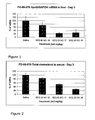
- FIG. 2 Serum cholesterol levels at sacrifice (day 3) after dosing oligos of different length.
- FIG. 9 The effect of dosing three doses at 5 mg/kg/dose of oligos of different length on ApoB-100 mRNA expression.
- FIGS. 10 and 11 SEQ ID NOS 16, 41, 17, 26, 34 all against ApoB mRNA down regulated ApoB 30%, 30%, 80%, 90%, 90% respectively but had no effect on Hif1-alpha mRNA whereas SEQ ID NOs 50, 51 and 52 against Hif1-alpha down-regulated Hif1-alpha mRNA by 0%, 40% and 70% respectively but had no effect on ApoB mRNA.
- FIG. 12 SEQ ID NOS 16, 41, 17, 26, 34 all against ApoB mRNA down regulated serum cholesterol by 40%, 40%, 80%, 90%, 85% respectively whereas SEQ ID NO's 50, 51, 52 showed no effect on serum cholesterol.
- FIG. 13 NMRI mice were dosed 5 mg/kg/dose on 3 consecutive days (one dose/day i.v.) and animals were sacrificed 24 hours after last dosing. At sacrifice, liver tissue were sampled. RNA was isolated from the tissues and the expression of Hif1-alpha mRNA was measured using qPCR.
- FIG. 14 NMRI mice were dosed 5 mg/kg/dose on 3 consecutive days (one dose/day i.v.) and animals were sacrificed 24 hours after last dosing. At sacrifice, kidney tissue were sampled. RNA was isolated from the tissues and the expression of Hif1-alpha mRNA was measured using qPCR.
- FIG. 15 Female C57BL/6 mice were dosed with either 0.2 mg/kg or 1 mg/kg on 3 consecutive days (one dose/day i.v.) and animals were sacrificed 24 hours after last dosing. At sacrifice, liver and kidney tissue were sampled. RNA was isolated from the tissues and the expression of ApoB mRNA was measured using qPCR.
- FIG. 16 The amount of oligomer SEQ ID NO 68 present in the urine of mouse injected with 1 ⁇ 50 mg/kg at 1 hr, 6 hr, and 24 hrs after injection, and the total amount.
- FIG. 17 The amount of oligomer SEQ ID NO 69 present in the urine of mouse injected with 1 ⁇ 50 mg/kg at 1 hr, 6 hr, and 24 hrs after injection, and the total amount.
- FIG. 18 The amount of oligomers SEQ ID NO 68 and SEQ ID NO 69 present in the liver and kidney of mice injected with 1 ⁇ 50 mg/kg at 24 hrs after injection.
- FIG. 19 Biodistribution/bioavailability of oligomers SEQ ID NO 68 and SEQ ID NO 69 present in the liver, kidney, urine and other tissues of mice injected with 1 ⁇ 50 mg/kg at 24 hrs after injection.
- the present invention provides oligomeric compounds (oligomers), compositions, and methods, for modulating the expression of target mRNAs.
- the invention provides LNA gapmer oligomers of between 10-20, 10-16, or 10-14 nucleobases in length, which have a total of between 1-3, such as 1 or 2 phosphodiester internucleoside linkages.
- Such oligomers have been found to have superior bioavailability and have also been found to selectively accumulate in kidney cells.
- Oligomers with the A-B-C or A-B-C-D or D-A-B-C design are referred to as gapmers herein. Gapmers of between 10-14 nucleobases are also referred to as shortmers. Suitably, the length of the oligomer (contiguous nucleobase sequence) may be 10, 11, 12, 13, 14, 15, 16, 17, 18, 19, or 20 nucleobases in length.
- An a preferred embodiment, oligomer of the invention consists or comprises of a contiguous nucleobase sequence of (a total of) between 10 and 16, such as 15 or 16 nucleobases, or 10 and 14 nucleobases, such as 11, 12, and 13 nucleobases, and preferably between 10 and 13 nucleobases.
- the oligomer of the invention consists of a nucleobase sequence with is 100% complementary to a corresponding region of the target mRNA.
- oligomeric compound refers to an oligonucleotide (which may comprise nucleotides and nucleotide analogues) which can induce a desired therapeutic effect in humans through for example binding by hydrogen bonding to a target nucleic acid. It is also envisaged that the oligomeric compounds disclosed herein may have non-therapeutic applications, such as diagnostic applications. Then oligomer is a single stranded (antisense) oligonucleotide.
- the oligomer of the invention does not comprise RNA units.
- the oligomeric compounds may hybridize to any site along the target mRNA nucleic acid, such as the 5′ untranslated leader, exons, introns and 3′ untranslated tail. However, it is preferred that the oligonucleotides hybridise to the mature mRNA form of the target nucleic acid.
- the oligonucleotides of the invention bind to the target nucleic acid and modulate the expression of its cognate protein.
- modulation produces an inhibition of expression of at least 10% or 20% compared to the normal expression level, more preferably at least a 30%, 40%, 50%, 60%, 70%, 80%, 90% or 95% inhibition compared to the normal expression level.
- modulation is seen when using between 5 and 25 nM concentrations of the compound of the invention.
- the inhibition of expression is less than 100%, such as less than 98% inhibition, less than 95% inhibition, less than 90% inhibition, less than 80% inhibition, such as less than 70% inhibition.
- Modulation of expression level is determined by measuring protein levels, e.g. by the methods such as SDS-PAGE followed by western blotting using suitable antibodies raised against the target protein.
- modulation of expression levels can be determined by measuring levels of mRNA, eg. by northern blotting or quantitative RT-PCR.
- the level of down-regulation when using an appropriate dosage is, in one embodiment, typically to a level of between 10-20% the normal levels in the absence of the compound of the invention.
- nucleobase sequence of the oligomer the contiguous nucleobase sequence
- equivalent nucleotide sequence of i) the reverse complement of the nucleic acid target such as the mRNA which encodes the target protein (e.g. Hif-1alpha)
- the sequence of nucleotides provided herein such as the group consisting of SEQ ID NOS: 51-55.
- Nucleotide analogues are compared directly to their equivalent or corresponding nucleotides.
- the terms “corresponding to”/“corresponds to” refer to the comparison between the combined sequence of nucleotides and nucleotide analogues of the oligomeric compound of the invention, or subsequence thereof, and the equivalent nucleotide sequence of Apolipoprotein B or Hif1alpha nucleic acid sequence (i.e. the nucleic acid target).
- Nucleotide analogues are compared directly to their equivalent or corresponding nucleotides.
- corresponding nucleotide analogue and “corresponding nucleotide” are intended to indicate that the nucleobase in the nucleotide analogue and the nucleotide are identical.
- the “corresponding nucleotide analogue” contains a pentose unit (different from 2-deoxyribose) linked to an adenine.
- nucleobase is used as a collective term which encompasses both nucleotides and nucleotide analogues.
- a nucleobase sequence is a sequence which comprises at least two nucleotides or nucleotide analogues.
- the nucleobase sequence may comprise of only nucleotides, such as DNA units, in an alternative embodiment, the nucleobase sequence may comprise of only nucleotide analogues, such as LNA units.
- nucleic acid is defined as a molecule formed by covalent linkage of two or more nucleotides.
- nucleic acid and “polynucleotide” are used interchangeable herein.
- target nucleic acid refers to the DNA or RNA sequence encoding the mammalian target polypeptide (target for down-regulation).
- target nucleic acid may be a cDNA or a synthetic oligonucleotide derived from the above DNA or RNA nucleic acid targets.
- the oligomer according to the invention is preferably capable of hybridising to the target nucleic acid.
- At least one comprises the integers larger than or equal to 1, such as 1, 2, 3, 4, 5, 6, 7, 8, 9, 10, 11, 12, 13, 14, 15, 16, 17, 18, 19, 20 and so forth.
- the target of the oligomers of the invention is typically a mRNA which is comprises a nucleotide sequence which is complementary (or essentially complementary—e.g. may, in one embodiment comprise one or two mismatches) to the contiguous nucleobase sequence of the oligomer of the invention—i.e. the nucleotide region of the target ‘corresponds’ to the contiguous nucleobase sequence of the oligomer.
- the target mRNA is a mammalian mRNA, such as a human mRNA, selected form the group consisting of ApoB-100 or Hif-1alpha, (see SEQ ID NO 66 for human hif 1 alpha sequence—Genbank accession number NM — 001530), and naturally occurring allelic variants and homologues thereof.
- regions A and C are in bold, regions B and where present D, are not in bold.
- a superscript m prior to the base letter C refers to methyl-cytosine; a subscript s after the base letter, refers to a phosphorothioate linkage; a superscript o after the base letter refers to oxy-LNA, particularly beta-D-oxy-LNA.
- other LNA monomers as disclosed herein may be used in place of oxy-LNA.
- non-methylated LNA cytosine monomer may be used.
- ApoB-100 see U.S. 60/896,419—hereby incorporated by reference—US60/896,419 provides the medical disorders associated with abnormal ApoB100 levels which may be treated with oligomers of the invention targeting ApoB100. See the examples for oligomers targeting ApoB.
- Hif-1alpha WO2006/050734—hereby incorporated by reference provides medical disorders associated with abnormal Hif-1alpha levels which may be treated with oligomers of the invention targeting Hif-1alpha.
- oligomers targeting Hif-1alpha include:
- the oligomeric compound of the invention has a sequence motif (contiguous nucleobase sequence) which is found within or is identical to any one of SEQ ID 41-55.
- the oligomer of the invention is selected from SEQ ID NO 57, 58, 59, 60, 61, 62, 63, 64 and 65. In one embodiment, the oligomer of the invention is SEQ ID NO 68 or 69. In one embodiment, the oligomer of the invention is SEQ ID NO 56. In one embodiment the nucleobase sequence selected from the group consisting of SEQ ID NOS 51, 52, 53, 54, or 55 (motif sequences), or a corresponding subsequence thereof.
- the oligomeric compound of the invention consists of a contiguous nucleobase sequence of a total of 10-14 nucleobases in length.
- a ‘corresponding subsequence’ in this context refers to the situation where the oligomer of the invention is shorter than the respective sequence selected from the group consisting of SEQ ID NOS 51, 52, 53, 54 or 55, (or SEQ ID NO 66) but the contiguous sequence of bases present in the oligomer is found within the respective sequence.
- the contiguous nucleobase sequence consists of a total of 10, 11, 12, 13 or 14 nucleobase units, preferably 10, 11, 12 or 13, present in, or corresponding to (such as the same base (A, T, C or G) sequence) the nucleobase sequence of the oligomer sequences shown in any one of tables of sequences or compounds disclosed herein.
- the contiguous nucleobase sequence consists of a total of 15 or 16 nucleobase units, present in, or corresponding to (such as the same base (A, T, C or G) sequence) the nucleobase sequence of the oligomer sequences shown in any one of tables of sequences or compounds disclosed herein.
- the oligomer of the invention may comprise both a polynucleotide region, i.e. a nucleobase region, which typically consists of a contiguous sequence of nucleobases/nucleotides, and a further non-nucleobase region.
- a nucleobase region typically consists of a contiguous sequence of nucleobases/nucleotides
- the compound may comprise non-nucleobase components, such as a conjugate component.
- the oligomer of the invention may consist entirely of a nucleobase region.
- the oligomer according to the invention is not: 5′-G x G x c s a s a s g s c s a s t s c s c s T x G x T -3′ (SEQ ID NO:70) or 5′-T x T x a s c s t s g s c s c s t s t s c s T x T x A -3′ (SEQ ID NO:71) or 5′-G s G s c s a s a s g s c s a s t s c s c s T s G s t-3′ (SEQ ID NO:72) or 5′-T s T s a s c s t s g s c s c t t t c s T s G t-3′ (
- the nucleobase sequence of the oligomer according to the invention is not: 5′-GGCAAGCATCCTG T -3′ (SEQ ID NO:41) or 5′-TTACTGCCTTCTT A -3′ (SEQ ID NO:74).
- the nucleobase sequence of the oligomer according to the invention is not complementary to a Hif1-alpha target sequence.
- oligomer according to the invention such as an antisense oligonucleotide which comprises LNA
- all LNA C units are 5′ methyl-Cytosine ( m C).
- the oligomer comprises only LNA nucleotide analogues and nucleotides (RNA or DNA, most preferably DNA nucleotides), optionally with modified internucleobase linkages such as phosphorothioate, or, as described herein predominantly (or fully) phosphorothioate linkages, but with the exception of 1-3, such as 1 or 2 phosphodiester linkages.
- LNA nucleotide analogues and nucleotides RNA or DNA, most preferably DNA nucleotides
- modified internucleobase linkages such as phosphorothioate, or, as described herein predominantly (or fully) phosphorothioate linkages, but with the exception of 1-3, such as 1 or 2 phosphodiester linkages.
- LNA refers to a bicyclic nucleotide analogue, known as “Locked Nucleic Acid”. It may refer to an LNA monomer, or, when used in the context of an “LNA oligonucleotide” refers to an oligonucleotide containing one or more such bicyclic nucleotide analogues.
- the LNA used in the oligonucleotide compounds of the invention preferably has the structure of the general formula I
- X is selected from —O—, —S—, —N(R N *)—, —C(R 6 R 6 *)—;
- B is selected from hydrogen, optionally substituted C 1-4 -alkoxy, optionally substituted C 1-4 -alkyl, optionally substituted C 1-4 -acyloxy, natural or non-natural nucleobases, photochemically active groups, thermochemically active groups, chelating groups, reporter groups, and ligands;
- P designates the radical position for an internucleoside linkage to a succeeding monomer, or a 5′-terminal group, such internucleoside linkage or 5′-terminal group optionally including the substituent R 5 or equally applicable the substituent R 5 *;
- P* designates an internucleoside linkage to a preceding monomer, or a 3′-terminal group
- R 4 * and R 2 * together designate a biradical consisting of 1-4 groups/atoms selected from —C(R a R b )—, —C(R a ) ⁇ C(R b )—, —C(R a ) ⁇ N—, —O—, —Si(R a ) 2 —, —S—, —SO 2 —, —N(R a )—, and >C ⁇ Z,
- R 5 * is selected from H, —CH 3 , —CH 2 —CH 3 , —CH 2 —O—CH 3 , and —CH ⁇ CH 2 .
- R 4 * and R 2 * together designate a biradical selected from —C(R a R b )—O—, —C(R a R b )—C(R c R d )—O—, —C(R a R b )—C(R c R d )—C(R e R f )—O—, —C(R a R b )—O—C(R c R d )—, —C(R a R b )—O—C(R c R d )—O—, —C(R a R b )—C(R c R d )—O—, —C(R a R b )—C(R c R d )—O—
- R 4 * and R 2 * together designate a biradical selected from —CH 2 —O—, —CH 2 —S—, —CH 2 —NH—, —CH 2 —N(CH 3 )—, —CH 2 —CH 2 -O—, —CH 2 —CH(CH 3 )—, —CH 2 —CH 2 —S—, —CH 2 —CH 2 —NH—, —CH 2 —CH 2 —CH 2 —, —CH 2 —CH 2 —CH 2 —O—, —CH 2 —CH 2 —CH(CH 3 )—, —CH ⁇ CH—CH 2 —, —CH 2 —O—CH 2 —O—, —CH 2 —NH—O—, —CH 2 —N(CH 3 )—O—, —CH 2 —O—CH 2 —, —CH(CH 3 )—O—, —CH(CH 2 —O—CH 2 —CH
- the LNA used in the oligomer of the invention comprises at least one LNA unit according to any of the formulas
- Y is —O—, —S—, —NH—, or N(R H );
- Z and Z* are independently selected among an internucleoside linkage, a terminal group or a protecting group;
- B constitutes a natural or non-natural nucleotide base moiety, and
- R H is selected from hydrogen and C 1-4 -alkyl.
- thio-LNA comprises a locked nucleotide in which Y in the formulas above represents S.
- Thio-LNA can be in both beta-D and alpha-L-configuration.
- amino-LNA comprises a locked nucleotide in which Y in the formulas above is selected from —N(H)—, and N(R H )—, where R H is selected from hydrogen and C 1-4 -alkyl. Amino-LNA can be in both beta-D and alpha-L-configuration.
- Oxy-LNA comprises a locked nucleotide in which Y in the formulas above represents —O—. Oxy-LNA can be in both beta-D and alpha-L-configuration.
- ENA comprises a locked nucleotide in which Y in the formulas above is —CH 2 —O— (where the oxygen atom of —CH 2 —O— is attached to the 2′-position relative to the base B).
- ENA can be in both beta-D and alpha-L-configuration.
- LNA is selected from beta-D-oxy-LNA, alpha-L-oxy-LNA, beta-D-amino-LNA and beta-D-thio-LNA, in particular beta-D-oxy-LNA.
- Specifically preferred LNA units are shown in scheme 2:
- the LNA used in the oligomer of the invention comprises internucleoside linkages selected from —O—P(O) 2 —O—, —O—P(O,S)—O—, —O—P(S) 2 —O—, —S—P(O) 2 —O—, —S—P(O,S)—O—, —S—P(S) 2 —O—, —O—P(O) 2 —S—, —O—P(O,S)—S—, —S—P(O) 2 —S—, —O—PO(R H )—O—, O—PO(OCH 3 )—O—, —O—PO(NR H )—O—, —O—PO(OCH 2 CH 2 S—R)—O—, —O—PO(BH 3 )—O—, —O—PO(NHR H )—O—, —O—P(O) 2 —NR H
- DNA intercalator means a group which can intercalate into a DNA or RNA helix, duplex or triplex.
- Examples of functional parts of DNA intercalators are acridines, anthracene, quinones such as anthraquinone, indole, quinoline, isoquinoline, dihydroquinones, anthracyclines, tetracyclines, methylene blue, anthracyclinone, psoralens, coumarins, ethidium-halides, dynemicin, metal complexes such as 1,10-phenanthroline-copper, tris(4,7-diphenyl-1,10-phenanthroline)ruthenium-cobalt-enediynes such as calcheamicin, porphyrins, distamycin, netropcin, viologen, daunomycin.
- acridines quinones such as anthraquinone, indole, quinoline, iso
- photochemically active groups covers compounds which are able to undergo chemical reactions upon irradiation with light.
- functional groups hereof are quinones, especially 6-methyl-1,4-naphtoquinone, anthraquinone, naphthoquinone, and 1,4-dimethyl-anthraquinone, diazirines, aromatic azides, benzophenones, psoralens, diazo compounds, and diazirino compounds.
- thermochemically reactive group is defined as a functional group which is able to undergo thermochemically-induced covalent bond formation with other groups.
- functional parts thermochemically reactive groups are carboxylic acids, carboxylic acid esters such as activated esters, carboxylic acid halides such as acid fluorides, acid chlorides, acid bromide, and acid iodides, carboxylic acid azides, carboxylic acid hydrazides, sulfonic acids, sulfonic acid esters, sulfonic acid halides, semicarbazides, thiosemicarbazides, aldehydes, ketones, primary alcohols, secondary alcohols, tertiary alcohols, phenols, alkyl halides, thiols, disulphides, primary amines, secondary amines, tertiary amines, hydrazines, epoxides, maleimides, and boronic acid derivatives.
- chelating group means a molecule that comprises more than one binding site and frequently binds to another molecule, atom or ion through more than one binding site at the same time.
- functional parts of chelating groups are iminodiacetic acid, nitrilotriacetic acid, ethylenediamine tetraacetic acid (EDTA), aminophosphonic acid, etc.
- reporter group means a group which is detectable either by itself or as a part of an detection series.
- functional parts of reporter groups are biotin, digoxigenin, fluorescent groups (groups which are able to absorb electromagnetic radiation, e.g.
- dansyl (5-dimethylamino)-1-naphthalenesulfonyl
- DOXYL N-oxyl-4,4-dimethyloxazolidine
- PROXYL N-oxyl-2,2,5,5-tetramethylpyrrolidine
- TEMPO N-oxyl-2,2,6,6-tetramethylpiperidine
- dinitrophenyl acridines, coumarins, Cy3 and Cy5 (trademarks for Biological Detection Systems, Inc.), erytrosine, coumaric acid, umbelliferone, Texas Red, rhodamine, tetramethyl rhodamine, Rox, 7-nitrobenzo-2-oxa-1-diazole (NBD), pyrene, fluorescein, europium, ruthenium, s
- paramagnetic probes e.g. Cu 2+ , Mg 2+
- enzymes such as peroxidases, alkaline phosphatases, ⁇ -galactosidases, and glucose oxidases
- antigens antibodies
- haptens groups which are able to combine with an antibody, but which cannot initiate an immune response by itself, such as peptides and steroid hormones
- carrier systems for cell membrane penetration such as: fatty acid residues, steroid moieties (cholesterol), vitamin A, vitamin D, vitamin E, folic acid peptides for specific receptors, groups for mediating endocytose, epidermal growth factor (EGF), bradykinin, and platelet derived growth factor (PDGF).
- biotin fluorescein, Texas Red, rhodamine, dinitrophenyl, digoxigen
- Ligands can comprise functional groups such as: aromatic groups (such as benzene, pyridine, naphtalene, anthracene, and phenanthrene), heteroaromatic groups (such as thiophene, furan, tetrahydrofuran, pyridine, dioxane, and pyrimidine), carboxylic acids, carboxylic acid esters, carboxylic acid halides, carboxylic acid azides, carboxylic acid hydrazides, sulfonic acids, sulfonic acid esters, sulfonic acid halides, semicarbazides, thiosemicarbazides, aldehydes, ketones, primary alcohols, secondary alcohols, tertiary alcohols, phenols, alkyl halides, thiols, disulphides, primary amines, secondary amines, tertiary amines, hydrazines, epoxide
- aromatic groups such as benzene, pyridine
- the LNA used in the oligonucleotide compounds of the invention preferably has the structure of the general formula
- X and Y are independently selected among the groups —O—, —S—, —N(H)—, N(R)—, —CH 2 — or —CH— (if part of a double bond), —CH 2 —O—, —CH 2 —S—, —CH 2 —N(H)—, —CH 2 —N(R)—, —CH 2 —CH 2 — or —CH 2 —CH— (if part of a double bond), —CH ⁇ CH—, where R is selected from hydrogen and C 1-4 -alkyl; Z and Z* are independently selected among an internucleoside linkage, a terminal group or a protecting group; B constitutes a natural or non-natural nucleotide base moiety; and the asymmetric groups may be found in either orientation.
- the LNA units comprise at least one beta-D-oxy-LNA unit(s) such as 2, 3, 4, 5 or 6 beta-D-oxy-LNA units.
- C1-4-alkyl is intended to mean a linear or branched saturated hydrocarbon chain wherein the chain has from one to four carbon atoms, such as methyl, ethyl, n-propyl, isopropyl, n-butyl, isobutyl, sec-butyl and tert-butyl.
- the oligomer of the invention may comprise more than one type of LNA unit.
- the compound may comprise both beta-D-oxy-LNA, and one or more of the following LNA units: thio-LNA, amino-LNA, oxy-LNA, ena-LNA and/or alpha-LNA in either the D-beta or L-alpha configurations or combinations thereof.
- the oligomer of the invention does not comprise any RNA units.
- At least one of the nucleobases present in the oligomer is a modified nucleobase selected from the group consisting of 5-methylcytosine, isocytosine, pseudoisocytosine, 5-bromouracil, 5-propynyluracil, 6-aminopurine, 2-aminopurine, inosine, diaminopurine, and 2-chloro-6-aminopurine.
- the oligomer of the invention is a gapmer of formula A-B-C, or optionally A-B-C-D or D-A-B-C.
- the oligomer comprises 2, 3, 4, 5 or 6 LNA units (i.e. the total of LNA units in regions A and C.
- at least one of region A and/or C consists of 2 LNA units.
- region A and C both consist of 2 LNA units.
- A consists of 1 LNA unit.
- A consists of 2 LNA units.
- A consists of 3 LNA units.
- C consists of 1 LNA unit.
- C consists of 2 LNA units.
- C consists of 3 LNA units.
- B consists of 7 nucleobase units.
- B consists of 8 nucleobase units.
- B consists of 9 nucleobase units.
- B consists of 10 nucleobase units. In one embodiment A and/or C consists of 4 or 5 nucleobase units. In one embodiment B comprises of between 1-9 DNA units, such as 2, 3, 4, 5, 6, 7 or 8 DNA units. In one embodiment B consists of only DNA units—i.e. 7, 8 or) DNA units (2′ deoxyribonucleoside). In one embodiment B comprises of at least one LNA unit which is in the alpha-L configuration, such as 2, 3, 4, 5, 6, 7, 8 or 9 LNA units in the alpha-L-configuration. In one embodiment B comprises of at least one alpha-L-oxy LNA unit or wherein all the LNA units in the alpha-L-configuration are alpha-L-oxy LNA units.
- the number of nucleobases in A-B-C are selected from the group consisting of: 1-8-1, 1-8-2, 2-8-1, 2-8-2, 3-8-3, 2-8-3, and 3-8-2. In one embodiment the number of nucleobases in A-B-C are selected from the group consisting of: 3-9-3, 3-10-3, 4-8-3, or 3-8-4. In one embodiment the number of nucleobases in A-B-C are selected from the group consisting of: 1-9-1, 1-9-2, 2-9-1, 2-9-2, 3-9-2, and 2-9-3.
- the number of nucleobases in A-B-C are selected from the group consisting of: 2-7-1, 1-7-2, 2-7-2, 3-7-3, 2-7-3, 3-7-2, 3-7-4, and 4-7-3.
- a and C both consist of two LNA units each, and B consists of 8 nucleobase units, preferably DNA units.
- the LNA units of A and C are independently selected from oxy-LNA, thio-LNA, and amino-LNA, in either of the beta-D and alpha-L configurations or combinations thereof.
- LNA units of A and C are beta-D-oxy-LNA.
- A consists of 2 LNA units neither of which are alpha-L-oxy LNA.
- C consists of 2 LNA units neither of which are alpha-L-oxy LNA. In one embodiment A does not comprise any thio-LNA nucleobases. In one embodiment C does not comprise any thio-LNA nucleobases. In one embodiment A does not comprise any amino-LNA nucleobases. In one embodiment C does not comprise any amino-LNA nucleobases.
- D typically consists of a single DNA unit. In one embodiment, there is no region D. In one embodiment regions A and C consist of either 1 or 2 nucleobase units. In one embodiment, region C consists of 2 residues, and region A consists of 1, 2 or 3 nucleobase units. In one embodiment, region A consists of 2 residues, and region C consists of 1, 2 or 3 nucleobase units.
- the 3′ and/or 5′ residues of region B are an LNA nucleobase in the alpha L configurations, such as alpha-L-oxy LNA.
- at least one of the nucleobase units other than the 3′ and/or 5′ residues of region B are an LNA nucleobase in the alpha L configurations, such as alpha-L-oxy LNA.
- Region B is essential in terms of recruitment of RNAseH—it is therefore highly preferred that region B comprises a nucleobase sequence that is capable of recruiting RNAseH.
- DNA nucleotides are highly preferred, although as disclosed in WO2004/046160, a DNA unit (or more) in region B may be substituted with one (or more) LNA units which are in the alpha-L configuration, particularly preferred being alpha-L-oxy LNA.
- 1, 2, 3, 4, 5, 6, 7, 8 or 9 of the DNA units of region B may be substituted in this manner, although when such substitutions are made it is recommended that, for example only 1, 2, or 3 of such substitutions are made in region B.
- EP 1 222 309 provides in vitro methods for determining RNaseH activity, which may be used to determine the ability to recruit RNaseH.
- a oligomer is deemed capable of recruiting RNase H if, when provided with the complementary RNA target, it has an initial rate, as measured in pmol/l/min, of at least 1%, such as at least 5%, such as at least 10% or less than 20% of the equivalent DNA only oligonucleotide, with no 2′ substitutions, with phosphorothioate linkage groups between all nucleotides in the oligonucleotide, using the methodology provided by Example 91-95 of EP 1 222 309.
- one or more of the DNA nucleotides in the central domain (B) may be substituted with one or more nucleotide analogues which are capable of recruiting RNAse H, or even all the DNA nucleotides may be substituted with nucleotide analogues which are capable or recruiting RNAse H.
- LNA nucleobases which form the alpha-L configuration, such as alpha-L-oxy LNA are particularly preferred nucleotide analogues which may be incorporated into region B as they are capable of recruiting RNAseH.
- region B may comprise both alpha-L-LNA and DNA units.
- Region B may comprise an alpha-L-LNA unit, which may, for example, be at position 1, 2, 3, 4, 5, 6, 7, 8, or 9 of region B (as determined from either the 3′ or 5′ end), and in one embodiment the remaining nucleobases of region B may be DNA, or alternatively region B may comprise one or more further alpha-L-LNA units, such as 2, 3, 4, 5, 6, 7, 8, or 9 further alpha-L-LNA units.
- region B comprises 2 alpha-L-LNA units, and the remaining nucleobase units are DNA.
- region B comprises 3 alpha-L-LNA units, and the remaining nucleobase units are DNA.
- the alpha-L-units may, in one embodiment be positioned at the 5′ and or 3′ positions of region B, and/or in a non terminal position of region B.
- region B may comprise a sequence where the alpha-LNA units are either adjacent to each other (i.e. ant least 5′-LNA-LNA-3′) and/or where the alpha LNA units are non-adjacent, i.e. separated by at least 1, such as 1, 2, 3, 4, 5, 6, 7, 8, 9 or 10 alternative nucleobases or nucleotides, such as DNA units.
- the gapmer further comprises a further region, D, which consists or comprises, preferably consists, of one DNA sugar residue terminal of the 3′ region (C) of the oligomeric compound.
- region D may be immediately 5′ (i.e. adjacent to) to region A.
- the LNA units of the oligomer, such as an antisense oligonucleotide, of the invention are selected from one or more of the following: thio-LNA, amino-LNA, oxy-LNA, ena-LNA and/or alpha-LNA in either the D-beta or L-alpha configurations or combinations thereof.
- Beta-D-oxy-LNA is a preferred LNA for use in the oligomer of the invention, particularly in regions A and C (where as alpha-L-LNA are preferred, when present, in region B).
- Thio-LNA may also be preferred for use in the oligomer of the invention.
- Amino-LNA may also be preferred for use in the oligomer of the invention.
- Oxy-LNA may also be preferred for use in the oligomer of the invention.
- Ena-LNA may also be preferred for use in the oligomer of the invention.
- Alpha-LNA may also be preferred for use in the oligo
- linkage group or “Internucleoside linkage” or “Internucleobase linkage” are intended to mean a group capable of covalently coupling together two nucleotides, two nucleotide analogues, and a nucleotide and a nucleotide analogue, etc. Specific and preferred examples include phosphate groups and phosphorothioate groups.
- Suitable internucleoside linkages include those listed within PCT/DK2006/000512, for example the internucleoside linkages listed on the first paragraph of page 34 of PCT/DK2006/000512 (hereby incorporated by reference).
- Suitable sulphur (S) containing internucleoside linkages as provided above may be preferred.
- Phosphorothioate internucleotide linkages are also preferred, particularly for the gap region (B).
- Phosphorothioate linkages may also be used for the flanking regions (A and C, and for linking C to D, and D).
- Regions A, B and C may however comprise internucleoside linkages other than phosphorothioate, such as phosphodiester linkages, particularly, for instance when the use of nucleotide analogues protects the internucleoside linkages within regions A and C from endo-nuclease degradation.
- the internucleobase linkages in the oligomer may be phosphodiester, phosphorothioate or boranophosphate so as to allow RNase H cleavage of targeted RNA.
- Phosphorothioate is preferred, for improved nuclease resistance and other reasons, such as ease of manufacture.
- the internucleoside linkages are independently selected from the group consisting of: phosphodiester, phosphorothioate and boranophosphate.
- the oligomer comprises at least one phosphorothioate internucleoside linkage.
- the internucleoside linkages adjacent to or between DNA units are phosphorothioate linkages.
- the linkages between at least one pair, such as two (independent or consecutive)pairs, of consecutive LNA units, such as 2 LNA units in region A or C is a phosphodiester linkage.
- the linkages between consecutive LNA units such as 2 LNA units in region A and/or C are phosphodiester linkages.
- all the internucleoside linkages, or the remaining internucleoside linkages are phosphorothioate linkages.
- region A comprises at least one phosphodiester linkage between two nucleotide analogue units, or a nucleotide analogue unit and a nucleobase unit of Region B.
- region C comprises at least one phosphodiester linkage between two nucleotide analogue units, or a nucleotide analogue unit and a nucleobase unit of Region B.
- region C comprises at least one phosphodiester linkage between a nucleotide analogue unit and a nucleobase unit of Region D.
- region A comprises at least one phosphodiester linkage between a nucleotide analogue unit and a nucleobase unit of region D.
- the linkage between the 3′ nucleotide analogue of region A and the 5′ nucleobase of region B is a phosphodiester. In some embodiments the linkage between the 3′ nucleobase of region B and the 5′ nucleotide analogue of region C is a phosphodiester. In some embodiments the linkage between the two adjacent nucleotide analogues at the 5′ end of region A are phosphodiester. In some embodiments the linkage between the two adjacent nucleotide analogues at the 3′ end of region C is phosphodiester. In some embodiments the linkage between the two adjacent nucleotide analogues at the 3′ end of region A is phosphodiester.
- the linkage between the two adjacent nucleotide analogues at the 5′ end of region C is phosphodiester.
- all the linkage s between nucleotide analogues present in the compound of the invention are phosphodiester.
- all remaining linkage s are either phosphodiester or phosphorothioate, or a mixture thereof, preferably phosphorothioate.
- the only phosphodiester linkages are found within regions A and/or C, or between regions A-B and/or C-B.
- linkages are phosphorothioate linkages
- alternative linkages such as those disclosed herein may be used, for example phosphate (phosphodiester) linkages may be used, particularly for linkages between nucleotide analogues, such as LNA, units.
- phosphate (phosphodiester) linkages may be used, particularly for linkages between nucleotide analogues, such as LNA, units.
- C residues are annotated as 5′methyl modified cytosine
- one or more of the Cs present in the oligonucleotide may be unmodified C residues.
- the present inventors have found that the introduction of a single phosphodiester into a gapmer can enhance the bioavailability of the oligomer in vivo. Furthermore, the present inventors have found that the introduction of a single phosphodiester into a gapmer can result in an enhanced accumulation of the oligomer in kidney cells, particularly kidney cortex cells. Suitably, the enhanced distribution to the kidney cells may be seen when comparing the relative amounts which accumulate in the liver and the kidney. Suitably, as described herein, one or two further phosphodiester linkages may be found.
- oligonucleotides of between 10-16 nucleobases in length is, in many instances, advantageous as they have enhanced in vivo bioavailability due to their small size.
- their small size also results in an increased risk of excretion in the kidney.
- the present inventors were therefore surprised to find that the introduction of a single phosphodiester linkage, or two phosphodieater linkages, in an otherwise phosphorothioate oligomer shortmer was sufficient to enhance the bioavailability and the accumulation rather than the excretion from the kidney.
- the phosphodiester linkages should preferably be placed (inserted) either between two adjacent nucleotide analogues, such as LNA, present in regions A and or C, and/or, in one embodiment, between an adjacent nucleotide analogue, such as LNA, present in regions A and or C, and a nucleobase of region B.
- the present invention therefore also provides for a method for modifying a fully phosphorothioate oligomer to enhance its accumulation or bioavailability in an organ, such as the kidney said method comprising replacing a total of one or two of the phosphorothioate linkages with phosphodiester bonds.
- modifying we refer to both a method of manufacture of oligomer and/or a method of designing. In this regards it is not considered that one should take a physical fully phosphorothioate oligomer and replace one or two of the phosphorothioate linkages with phosphodiester linkages, but, instead it is a method of designing modified phosphorothioate oligomers, by replacing one or two of the phosphorothioate linkages with phosphodiester linkages. Subsequently the oligomers can be made using routine oligonucleotide synthesis chemistry.
- modified oligomers are particularly useful for shortmer oligonucleotides
- the method is not limited to oligonucleotides of, say between 10-14 nucleobases, but is also applicable to longer oligomers, such as oligomers consisting of a contiguous nucleobase sequence of a total of 10-25 nucleobase units, such as 11, 12, 13, 14, 15, 16, 17, 18, 19, 20, 21, 22, 23, or 25 nucleobase units.
- conjugate is intended to indicate a heterogenous molecule formed by the covalent attachment of a compound as described herein (i.e. a compound comprising a sequence of nucleotides analogues) to one or more non-nucleotide/non-nucleotide-analogue, or non-polynucleotide moieties.
- non-nucleotide or non-polynucleotide moieties include macromolecular agents such as proteins, fatty acid chains, sugar residues, glycoproteins, polymers, or combinations thereof.
- proteins may be antibodies for a target protein.
- Typical polymers may be polyethylene glycol.
- the invention also provides for a conjugate comprising the compound of the invention and at least one non-nucleotide or non-polynucleotide moiety covalently attached to said compound.
- a conjugate comprising the compound of the invention and at least one non-nucleotide or non-polynucleotide moiety covalently attached to said compound.
- the oligonucleotide may be linked to ligands/conjugates, which may be used, e.g. to increase the cellular uptake of the oligonucleotide.
- This conjugation can take place at the terminal positions 5′/3′-OH but the ligands may also take place at the sugars and/or the bases.
- the 3′-OH is preferred site for cholesterol conjugation.
- the oligonucleotide of the invention is conjugated with a moiety which improvise the in vivo uptake, such as cholesterol.
- Oligomeric compound may be arranged in dimeric or dendritic structures.
- the non-nucleotide or non-polynucleotide moiety consists or comprise a sterol group such as cholesterol.
- the oligomers of the invention may also be conjugated to active drug substances, for example, aspirin, ibuprofen, a sulfa drug, an antidiabetic, an antibacterial or an antibiotic.
- active drug substances for example, aspirin, ibuprofen, a sulfa drug, an antidiabetic, an antibacterial or an antibiotic.
- the oligomeric compound is linked to ligands/conjugates, which may be used, e.g. to increase the cellular uptake of antisense oligonucleotides.
- ligands/conjugates which may be used, e.g. to increase the cellular uptake of antisense oligonucleotides.
- PCT/DK2006/000512 provides suitable ligands and conjugates, which are hereby incorporated by reference.
- the oligomers of the invention may be utilized as research reagents for, for example, diagnostics, therapeutics and prophylaxis.
- the oligomers may be used to detect and quantitate the target expression in cell and tissues by Northern blotting, in-situ hybridisation or similar techniques.
- antisense compounds oligomers
- composition according to the invention may be used for the treatment of conditions associated with:
- ApoB-100 targeting oligomers abnormal levels of apoB-100, atherosclerosis, hypercholesterolemia or hyperlipidemia. It will be recognised that the ApoB-100 targeting oligomers may be combined with further therapeutic agents in the pharmaceutical composition according to the invention—such as those further therapeutic agents provided in U.S. 60/896,419 and/or WO2007/031081—hereby incorporated by reference.
- Hif-1alpha targeting oligomers abnormal levels of Hif-1alpha—artherosclerosis, psoriasis, diabetic retinopathy, macular degeneration, rheumatoid arthritis, asthma, inflammatory bowel disease, warts, allergic dermatitis, inflammation, and skin inflammation. It will be recognised that the Hif-1alpha targeting oligomers may be combined with further therapeutic agents in the pharmaceutical composition according to the invention—such as those further therapeutic agents provided in WO2006/050734—hereby incorporated by reference.
- Suitable dosages, formulations, administration routes, compositions, dosage forms, combinations with other therapeutic agents, pro-drug formulations are also provided in PCT/DK2006/000512—which are hereby incorporated by reference.
- the invention also provides for a pharmaceutical composition
- a pharmaceutical composition comprising a compound or a conjugate as herein described or a conjugate, and a pharmaceutically acceptable diluent, carrier or adjuvant.
- a pharmaceutically acceptable diluent, carrier or adjuvant which are hereby incorporated by reference.
- LNA oligomers The pharmaceutical application of LNA oligomers is, for example, described in WO2007/031081 (anti-ApoB oligomers) and WO2006/050734 (anti-hifl-alpha oligomers).
- the LNA nucleotide analogue building blocks (e.g. ⁇ -D-oxy-LNA, ⁇ -D-thio-LNA, ⁇ -D-amino-LNA and ⁇ -L-oxy-LNA) can be prepared following established published procedures—for example see WO2007/031081, hereby incorporated by reference.
- SEQ ID NOS: 16-40 upper case letters indicates nucleotide analogue units and subscript “s” represents phosphorothiote linkage. Absence of “s” indicates phosphodiester linkage.
- Total cholesterol level is measured in plasma using a colometric assay Cholesterol CP from ABX Pentra.
- the cholesterol is measured following enzymatic hydrolysis and oxidation. 21.5 ⁇ L water was added to 1.5 ⁇ L plasma. 250 ⁇ L reagent is added and within 5 min the cholesterol content is measured at a wavelength of 540 nM. Measurements on each animal was made in duplicates. The sensitivity and linearity was tested with 2 fold diluted control compound (ABX Pentra N control). The relative Cholesterol level was determined by subtraction of the background and presented relative to the cholesterol levels in plasma of saline treated mice.
- Antisense modulation of Apo-B100 expression can be assayed in a variety of ways known in the art.
- Apo-B100 mRNA levels can be quantitated by, e.g., Northern blot analysis, competitive polymerase chain reaction (PCR), or real-time PCR. Real-time quantitative PCR is presently preferred.
- RNA analysis can be performed on total cellular RNA or mRNA. Methods of RNA isolation and RNA analysis such as Northern blot analysis is routine in the art and is taught in, for example, Current Protocols in Molecular Biology, John Wiley and Sons.
- Real-time quantitative can be conveniently accomplished using the commercially iQ Multi-Color Real Time PCR Detection System available from BioRAD.
- Real-time Quantitative PCR is a technique well known in the art and is taught in for example Heid et al. Real time quantitative PCR, Genome Research (1996), 6: 986-994.
- FIG. 1 The effect of dosing three doses at 5 mg/kg/dose of oligoes of different length on ApoB-100 mRNA expression is shown in FIG. 1 .
- SEQ ID NO 16 down regulated ApoB-100 mRNA with about 25-30%, whereas the 14-mer SEQ ID NO 17 and 12-mer SEQ ID NO 34 was much more potent and equally potent—down regulated ApoB-100 mRNA with about 75% after dosing 3 times 5 mg/kg.
- SEQ ID NO 17 and SEQ ID NO 34 were examined for duration of action on ApoB-100 mRNA expression and serum cholesterol level.
- SEQ ID NO 17 and SEQ ID NO 34 were given as a single dose of 10, 15 or 25 mg/kg to C57BL/6 female mice. Mice were sacrificed at different time points (1, 3, 5 and 8 days) after dosing; liver and serum were examined for ApoB-100 mRNA expression, liver oligonucleotide concentration and cholesterol and ALT, respectively.
- SEQ ID NO 17 Blood serum used to measure cholesterol was sampled at sacrifice. Twenty-four hours after dosing SEQ ID NO 17 serum total cholesterol was reduced 25-40%, and dosing SEQ ID NO 34 gave 40-55% reduction in total cholesterol. At day 3, the total cholesterol level was further reduced: SEQ ID NO 17 gave 70-90% reduction in a dose dependent manner after doing 10, 15 or 25 mg/kg. SEQ ID NO 34 reduced total cholesterol with 90-95% relative to the saline control group. At day 5-8 the total cholesterol level increased in all groups except the group dosed SEQ ID NO 17 at 10 mg/kg. ( FIG. 4 ).
- SEQ ID NO 17 and SEQ ID NO 34 at different concentrations were administered to C57BL/6J mice to find ED50 values for cholesterol. Duration of action was also included in this study, because we previously have seen that maximum effect of a single dose not always was achieved 24 hours after dosing.
- Example 6 we completely down-regulated ApoB-100 mRNA after dosing 10, 15 or 25 mg/kg SEQ ID NO 34 and 25 mg/kg SEQ ID NO 17. In this study we therefore have chosen lower concentrations (1, 2.5 and 5 mg/kg).
- the SEQ ID NO 34 and SEQ ID NO 26 gave similar results: 60% reduction after dosing 3*1 mg/kg and about 85-90% after 3*5 mg/kg/dose.
- the SEQ ID NO 17 was a little less potent and reduced serum cholesterol with 40% and 70% after dosing 3*1 or 5 mg/kg/dose, respectively.
- SEQ ID NOS 16, 41, 17, 26, 34 all against ApoB mRNA down regulated ApoB 30%, 30%, 80%, 90%, 90% respectively but had no effect on Hif1-alpha mRNA ( FIG. 10 and FIG. 11 ).
- SEQ ID NOS 16, 41, 17, 26, 34 all against ApoB mRNA down regulated serum cholesterol by 40%, 40%, 80%, 90%, 85% respectively whereas SEQ ID NO's 50, 51, 52 showed no effect on serum cholesterol ( FIG. 12 ).
- mice Female C57BL/6 mice were dosed with either 0.2 mg/kg or 1 mg/kg on 3 consecutive days (one dose/day i.v.) and animals were sacrificed 24 hours after last dosing. At sacrifice, liver and kidney tissue were sampled. RNA was isolated from the tissues and the expression of ApoB mRNA was measured using qPCR.
- SEQ ID NOS 16, 17, 26, 34, 31, against ApoB mRNA and SEQ ID NO 52 against Hif1-alpha were monitored for their ability to downregulate ApoB mRNA in liver and kidney.
- FIG. 15 SEQ ID NOS 16, 17, 26, 34, 31, 52 downregulate ApoB mRNA in liver/kidney 0%/20%, 0%/40%, 10%/70%, 20%/70%, 0%/65%, 0%/0% respectively at 0.2 mg/kg and 0%/5%, 50%/50%, 60%/85%, 60%/90%, 0%/80%, 0%/30% respectively at 1.0 mg/kg.
- one phosphorthioate has been replaced by a phosphodiester at linkaged 12 from the 5′ end. This modification directs the downregulation of ApoB mRNA with SEQ ID NO 31 towards the kidney ( FIG. 15 ).
- Test substance Target Sequence Hif-1 ⁇ TGGCAAGCATCCTGTA (Motif sequence)
- SEQ ID NO 68 Hif-1 ⁇ 5′- c s a s a s g s c s a s t s c s c s a-3′
- SEQ ID NO 69 Hif-1 ⁇ 5′- c s a s a s g s c s a s t s c s s s a-3′
- the oligomers were injected into mice at a dosage of 50 mg/kg. Urine was sampled after 1 hour, 6 hours and 24 hours. Animals were killed after 24 hours, and the levels of each oligomer present in the liver and kidney was assessed.
- SEQ ID NO 68 was found to be secreted at a slightly higher rate from the urine over the 24 hour period, although the initial rate of excretion appears to be higher with SEQ ID NO 69.
- SEQ ID NO 69 The amount of SEQ ID NO 69 with 2 PO's distributed to the kidney is almost twice as much as SEQ ID NO 68.
- SEQ ID NO 69 shows a wider biodistribution to other tissues—69% of SEQ ID NO 69 distributes to other tissues compared to 64% of SEQ ID NO 68.
Landscapes
- Health & Medical Sciences (AREA)
- Engineering & Computer Science (AREA)
- Life Sciences & Earth Sciences (AREA)
- Genetics & Genomics (AREA)
- Biomedical Technology (AREA)
- Chemical & Material Sciences (AREA)
- Organic Chemistry (AREA)
- Bioinformatics & Cheminformatics (AREA)
- Molecular Biology (AREA)
- Biotechnology (AREA)
- General Engineering & Computer Science (AREA)
- Wood Science & Technology (AREA)
- Zoology (AREA)
- General Health & Medical Sciences (AREA)
- Physics & Mathematics (AREA)
- Microbiology (AREA)
- Plant Pathology (AREA)
- Biochemistry (AREA)
- Biophysics (AREA)
- Endocrinology (AREA)
- General Chemical & Material Sciences (AREA)
- Chemical Kinetics & Catalysis (AREA)
- Medicinal Chemistry (AREA)
- Nuclear Medicine, Radiotherapy & Molecular Imaging (AREA)
- Pharmacology & Pharmacy (AREA)
- Animal Behavior & Ethology (AREA)
- Public Health (AREA)
- Veterinary Medicine (AREA)
- Pharmaceuticals Containing Other Organic And Inorganic Compounds (AREA)
Priority Applications (1)
| Application Number | Priority Date | Filing Date | Title |
|---|---|---|---|
| US12/532,532 US8580756B2 (en) | 2007-03-22 | 2008-03-19 | Short oligomer antagonist compounds for the modulation of target mRNA |
Applications Claiming Priority (15)
| Application Number | Priority Date | Filing Date | Title |
|---|---|---|---|
| US89641907P | 2007-03-22 | 2007-03-22 | |
| US96901607P | 2007-08-30 | 2007-08-30 | |
| EPPCT/EP07/60703 | 2007-09-10 | ||
| US97293207P | 2007-09-17 | 2007-09-17 | |
| US97740907P | 2007-10-04 | 2007-10-04 | |
| PCT/EP2007/060703 WO2008043753A2 (en) | 2006-10-09 | 2007-10-09 | Rna antagonist compounds for the modulation of pcsk9 |
| WOPCT/EP2007/060703 | 2007-10-09 | ||
| US99012507P | 2007-11-26 | 2007-11-26 | |
| US99205007P | 2007-12-03 | 2007-12-03 | |
| US1219107P | 2007-12-07 | 2007-12-07 | |
| US1218507P | 2007-12-07 | 2007-12-07 | |
| US2324408P | 2008-01-24 | 2008-01-24 | |
| US2325008P | 2008-01-24 | 2008-01-24 | |
| US12/532,532 US8580756B2 (en) | 2007-03-22 | 2008-03-19 | Short oligomer antagonist compounds for the modulation of target mRNA |
| PCT/EP2008/053314 WO2008113832A2 (en) | 2007-03-22 | 2008-03-19 | SHORT RNA ANTAGONIST COMPOUNDS FOR THE MODULATION OF TARGET mRNA |
Publications (2)
| Publication Number | Publication Date |
|---|---|
| US20100210712A1 US20100210712A1 (en) | 2010-08-19 |
| US8580756B2 true US8580756B2 (en) | 2013-11-12 |
Family
ID=39367700
Family Applications (1)
| Application Number | Title | Priority Date | Filing Date |
|---|---|---|---|
| US12/532,532 Expired - Fee Related US8580756B2 (en) | 2007-03-22 | 2008-03-19 | Short oligomer antagonist compounds for the modulation of target mRNA |
Country Status (3)
| Country | Link |
|---|---|
| US (1) | US8580756B2 (da) |
| DK (1) | DK2149605T3 (da) |
| WO (1) | WO2008113832A2 (da) |
Cited By (31)
| Publication number | Priority date | Publication date | Assignee | Title |
|---|---|---|---|---|
| WO2016040589A1 (en) | 2014-09-12 | 2016-03-17 | Alnylam Pharmaceuticals, Inc. | Polynucleotide agents targeting complement component c5 and methods of use thereof |
| WO2016061487A1 (en) | 2014-10-17 | 2016-04-21 | Alnylam Pharmaceuticals, Inc. | Polynucleotide agents targeting aminolevulinic acid synthase-1 (alas1) and uses thereof |
| WO2016069694A2 (en) | 2014-10-30 | 2016-05-06 | Alnylam Pharmaceuticals, Inc. | Polynucleotide agents targeting serpinc1 (at3) and methods of use thereof |
| WO2016164746A1 (en) | 2015-04-08 | 2016-10-13 | Alnylam Pharmaceuticals, Inc. | Compositions and methods for inhibiting expression of the lect2 gene |
| WO2016205323A1 (en) | 2015-06-18 | 2016-12-22 | Alnylam Pharmaceuticals, Inc. | Polynucleotde agents targeting hydroxyacid oxidase (glycolate oxidase, hao1) and methods of use thereof |
| US10799523B2 (en) | 2015-02-04 | 2020-10-13 | F. Hoffmann-La Roche Ag | Tau antisense oligomers and uses thereof |
| WO2020230109A1 (en) | 2019-05-16 | 2020-11-19 | Aptatargets, S.L. | Treatment of tlr-4 mediated diseases and conditions with aptamers targeting tlr-4 |
| WO2020261227A1 (en) | 2019-06-26 | 2020-12-30 | Biorchestra Co., Ltd. | Micellar nanoparticles and uses thereof |
| WO2021188611A1 (en) | 2020-03-18 | 2021-09-23 | Alnylam Pharmaceuticals, Inc. | Compositions and methods for treating subjects having a heterozygous alanine-glyoxylate aminotransferase gene (agxt) variant |
| US11359197B2 (en) | 2018-01-12 | 2022-06-14 | Bristol-Myers Squibb Company | Antisense oligonucleotides targeting alpha-synuclein and uses thereof |
| US11466274B2 (en) | 2019-05-31 | 2022-10-11 | Aligos Therapeutics, Inc. | Modified gapmer oligonucleotides and methods of use |
| WO2023003805A1 (en) | 2021-07-19 | 2023-01-26 | Alnylam Pharmaceuticals, Inc. | Methods and compositions for treating subjects having or at risk of developing a non-primary hyperoxaluria disease or disorder |
| WO2023044094A1 (en) | 2021-09-20 | 2023-03-23 | Alnylam Pharmaceuticals, Inc. | Inhibin subunit beta e (inhbe) modulator compositions and methods of use thereof |
| US11633498B2 (en) | 2021-07-09 | 2023-04-25 | Dyne Therapeutics, Inc. | Muscle targeting complexes and uses thereof for treating myotonic dystrophy |
| US11679161B2 (en) | 2021-07-09 | 2023-06-20 | Dyne Therapeutics, Inc. | Muscle targeting complexes and uses thereof for treating facioscapulohumeral muscular dystrophy |
| US11761951B2 (en) | 2015-02-04 | 2023-09-19 | Bristol-Myers Squibb Company | Methods of selecting therapeutic molecules |
| US11787869B2 (en) | 2018-08-02 | 2023-10-17 | Dyne Therapeutics, Inc. | Methods of using muscle targeting complexes to deliver an oligonucleotide to a subject having facioscapulohumeral muscular dystrophy or a disease associated with muscle weakness |
| EP4271816A1 (en) | 2020-12-31 | 2023-11-08 | Dyne Therapeutics, Inc. | Muscle targeting complexes and uses thereof for treating myotonic dystrophy |
| WO2024026490A1 (en) | 2022-07-28 | 2024-02-01 | Sqz Biotechnologies Company | Polynucleotides encoding linked antigens and uses thereof |
| WO2024026474A1 (en) | 2022-07-29 | 2024-02-01 | Regeneron Pharmaceuticals, Inc. | Compositions and methods for transferrin receptor (tfr)-mediated delivery to the brain and muscle |
| US11911484B2 (en) | 2018-08-02 | 2024-02-27 | Dyne Therapeutics, Inc. | Muscle targeting complexes and uses thereof for treating myotonic dystrophy |
| US11931421B2 (en) | 2022-04-15 | 2024-03-19 | Dyne Therapeutics, Inc. | Muscle targeting complexes and formulations for treating myotonic dystrophy |
| WO2024098002A1 (en) | 2022-11-04 | 2024-05-10 | Regeneron Pharmaceuticals, Inc. | Calcium voltage-gated channel auxiliary subunit gamma 1 (cacng1) binding proteins and cacng1-mediated delivery to skeletal muscle |
| WO2024107765A2 (en) | 2022-11-14 | 2024-05-23 | Regeneron Pharmaceuticals, Inc. | Compositions and methods for fibroblast growth factor receptor 3-mediated delivery to astrocytes |
| US12018087B2 (en) | 2018-08-02 | 2024-06-25 | Dyne Therapeutics, Inc. | Muscle-targeting complexes comprising an anti-transferrin receptor antibody linked to an oligonucleotide and methods of delivering oligonucleotide to a subject |
| US12097263B2 (en) | 2018-08-02 | 2024-09-24 | Dyne Therapeutics, Inc. | Muscle targeting complexes and uses thereof for treating myotonic dystrophy |
| US12102687B2 (en) | 2021-07-09 | 2024-10-01 | Dyne Therapeutics, Inc. | Muscle targeting complexes and uses thereof for treating myotonic dystrophy |
| WO2024240750A1 (en) | 2023-05-22 | 2024-11-28 | Aptatargets, S.L. | New tlr-4 antagonist aptamers |
| US12241065B2 (en) | 2018-01-12 | 2025-03-04 | Bristol-Myers Squibb Company | Antisense oligonucleotides targeting alpha-synuclein and uses thereof |
| US12370264B1 (en) | 2018-08-02 | 2025-07-29 | Dyne Therapeutics, Inc. | Complexes comprising an anti-transferrin receptor antibody linked to an oligonucleotide and method of delivering oligonucleotide to a subject |
| WO2025264554A1 (en) | 2024-06-17 | 2025-12-26 | Pepgen Inc. | Antisense oligonucleotide conjugates targeting peripheral myelin protein 22 (pmp22) and methods of use thereof |
Families Citing this family (112)
| Publication number | Priority date | Publication date | Assignee | Title |
|---|---|---|---|---|
| EP2007888A2 (en) | 2006-04-03 | 2008-12-31 | Santaris Pharma A/S | Pharmaceutical composition comprising anti-mirna antisense oligonucleotides |
| SG10201406016SA (en) | 2006-04-03 | 2014-11-27 | Stella Aps | Pharmaceutical composition comprising anti-mirna antisense oligonucleotides |
| EP2623599B1 (en) | 2007-10-04 | 2019-01-02 | Roche Innovation Center Copenhagen A/S | Micromirs |
| WO2009043759A2 (en) * | 2007-10-04 | 2009-04-09 | Santaris Pharma A/S | Short rna antagonist compounds for the modulation of hif1alpha |
| CA2708751A1 (en) | 2007-12-14 | 2009-06-25 | Minitube Of America, Inc. | Gender-specific separation of sperm cells and embryos |
| CA2717792A1 (en) | 2008-03-07 | 2009-09-11 | Santaris Pharma A/S | Pharmaceutical compositions for treatment of microrna related diseases |
| WO2010012667A1 (en) | 2008-08-01 | 2010-02-04 | Santaris Pharma A/S | Micro-rna mediated modulation of colony stimulating factors |
| ES2599979T3 (es) | 2009-04-24 | 2017-02-06 | Roche Innovation Center Copenhagen A/S | Composiciones farmacéuticas para el tratamiento de pacientes de VHC que no responden al interferón |
| WO2011032034A2 (en) | 2009-09-10 | 2011-03-17 | University Of Idaho | Nucleobase-functionalized conformationally restricted nucleotides and oligonucleotides for targeting nucleic acids |
| EP2490699A1 (en) * | 2009-10-20 | 2012-08-29 | Santaris Pharma A/S | Oral delivery of therapeutically effective lna oligonucleotides |
| WO2011054811A1 (en) | 2009-11-03 | 2011-05-12 | Santaris Pharma A/S | Rna antagonists targeting hsp27 combination therapy |
| WO2012007477A1 (en) | 2010-07-12 | 2012-01-19 | Santaris Pharma A/S | Anti hcv oligomers |
| GB201012418D0 (en) | 2010-07-23 | 2010-09-08 | Santaris Pharma As | Process |
| WO2012034942A1 (en) | 2010-09-13 | 2012-03-22 | Santaris Pharma A/S | Compounds for the modulation of aurora kinase b expression |
| CA2817256A1 (en) | 2010-11-12 | 2012-05-18 | The General Hospital Corporation | Polycomb-associated non-coding rnas |
| US9920317B2 (en) | 2010-11-12 | 2018-03-20 | The General Hospital Corporation | Polycomb-associated non-coding RNAs |
| WO2012066093A1 (en) | 2010-11-19 | 2012-05-24 | Santaris Pharma A/S | Compounds for the modulation of pdz-binding kinase (pbk) expression |
| WO2012066092A1 (en) | 2010-11-19 | 2012-05-24 | Santaris Pharma A/S | Compounds for the modulation of aurora kinase a expression |
| KR20140004646A (ko) | 2010-12-15 | 2014-01-13 | 미라젠 세러퓨틱스 | 잠금 뉴클레오티드를 포함하는 마이크로rna 억제제 |
| EP2673361B1 (en) | 2011-02-08 | 2016-04-13 | Ionis Pharmaceuticals, Inc. | Oligomeric compounds comprising bicyclic nucleotides and uses thereof |
| WO2012110457A2 (en) | 2011-02-14 | 2012-08-23 | Santaris Pharma A/S | Compounds for the modulation of osteopontin expression |
| WO2012143427A1 (en) | 2011-04-19 | 2012-10-26 | Santaris Pharma A/S | Anti polyomavirus compounds |
| BR112014001075A2 (pt) | 2011-07-19 | 2016-11-29 | Univ Idaho | sonda, seu uso, método in vitro para associar uma sonda com um alvo e kit |
| AU2012308320C1 (en) | 2011-09-14 | 2018-08-23 | Translate Bio Ma, Inc. | Multimeric oligonucleotide compounds |
| KR20140091688A (ko) | 2011-10-06 | 2014-07-22 | 미라젠 세러퓨틱스 인코포레이티드 | 마이크로rna 조절에 의한 전신 에너지 항상성의 제어 |
| EA201492116A1 (ru) | 2012-05-16 | 2015-05-29 | Рана Терапьютикс, Инк. | Композиции и способы для модулирования экспрессии mecp2 |
| US10837014B2 (en) | 2012-05-16 | 2020-11-17 | Translate Bio Ma, Inc. | Compositions and methods for modulating SMN gene family expression |
| EA201492122A1 (ru) | 2012-05-16 | 2015-10-30 | Рана Терапьютикс, Инк. | Композиции и способы для модулирования экспрессии utrn |
| SG11201407483YA (en) | 2012-05-16 | 2014-12-30 | Rana Therapeutics Inc | Compositions and methods for modulating smn gene family expression |
| AU2013262699A1 (en) | 2012-05-16 | 2015-01-22 | Rana Therapeutics, Inc. | Compositions and methods for modulating ATP2A2 expression |
| BR112014028631A2 (pt) | 2012-05-16 | 2017-10-17 | Rana Therapeutics Inc | composições e métodos para modulação da expressão da família de genes da hemoglobina |
| CN107236735B (zh) | 2012-06-21 | 2019-11-08 | 米拉根医疗股份有限公司 | 包含锁核酸基序的基于寡核苷酸的抑制剂 |
| US20150247141A1 (en) | 2012-09-14 | 2015-09-03 | Rana Therapeutics, Inc. | Multimeric oligonucleotide compounds |
| EP2906255B1 (en) * | 2012-10-12 | 2023-02-22 | Ionis Pharmaceuticals, Inc. | Antisense compounds and uses thereof |
| CN104837996A (zh) | 2012-11-15 | 2015-08-12 | 罗氏创新中心哥本哈根有限公司 | 抗apob反义缀合物化合物 |
| WO2014080004A1 (en) | 2012-11-26 | 2014-05-30 | Santaris Pharma A/S | Compositions and methods for modulation of fgfr3 expression |
| AU2014211406B2 (en) | 2013-01-30 | 2019-07-18 | Roche Innovation Center Copenhagen A/S | LNA oligonucleotide carbohydrate conjugates |
| CN105247052A (zh) * | 2013-05-24 | 2016-01-13 | 罗氏创新中心哥本哈根有限公司 | B-细胞cll/淋巴瘤11a(bcl11a)的寡核苷酸调节剂及其用途 |
| HUE048738T2 (hu) | 2013-06-27 | 2020-08-28 | Roche Innovation Ct Copenhagen As | Antiszensz oligomerek és konjugátumok, amelyek a PCK9-t célozzák meg |
| WO2015051283A1 (en) | 2013-10-04 | 2015-04-09 | Rana Therapeutics, Inc. | Compositions and methods for treating amyotrophic lateral sclerosis |
| CA2935426C (en) | 2014-01-30 | 2023-07-25 | F. Hoffmann-La Roche Ag | Polyoligomer compound with biocleavable conjugates for reducing or inhibiting expression of a nucleic acid target |
| GB201408623D0 (en) | 2014-05-15 | 2014-07-02 | Santaris Pharma As | Oligomers and oligomer conjugates |
| WO2016024205A1 (en) | 2014-08-15 | 2016-02-18 | Pfizer Inc. | Oligomers targeting hexanucleotide repeat expansion in human c9orf72 gene |
| CN106795200B (zh) | 2014-10-10 | 2020-06-19 | 豪夫迈·罗氏有限公司 | Galnac亚磷酰胺、其核酸缀合物及其用途 |
| WO2016070060A1 (en) | 2014-10-30 | 2016-05-06 | The General Hospital Corporation | Methods for modulating atrx-dependent gene repression |
| US10815481B2 (en) | 2014-12-16 | 2020-10-27 | Roche Innovation Center Copenhagen A/S | Chiral library screen |
| EP3247716A4 (en) | 2015-01-20 | 2018-10-17 | Miragen Therapeutics, Inc. | Mir-92 inhibitors and uses thereof |
| US10758558B2 (en) | 2015-02-13 | 2020-09-01 | Translate Bio Ma, Inc. | Hybrid oligonucleotides and uses thereof |
| WO2016149455A2 (en) | 2015-03-17 | 2016-09-22 | The General Hospital Corporation | The rna interactome of polycomb repressive complex 1 (prc1) |
| US10577388B2 (en) | 2015-10-02 | 2020-03-03 | Roche Innovation Center Copenhagen A/S | Oligonucleotide conjugation process |
| US10955407B2 (en) | 2015-10-22 | 2021-03-23 | Roche Innovation Center Copenhagen A/S | In vitro toxicity screening assay |
| LT3374509T (lt) | 2015-11-12 | 2021-03-10 | F. Hoffmann-La Roche Ag | Oligonukleotidai, skirti sukelti iš tėvo paveldėto ube3a raišką |
| US11905521B2 (en) * | 2015-11-17 | 2024-02-20 | The Chinese University Of Hong Kong | Methods and systems for targeted gene manipulation |
| EP3211081A1 (en) * | 2016-02-26 | 2017-08-30 | Secarna Pharmaceuticals GmbH & Co. KG | Novel approach for treating inflammatory disorders |
| ES2895275T3 (es) | 2016-02-26 | 2022-02-18 | Secarna Pharmaceuticals Gmbh & Co Kg | Enfoque novedoso para el tratamiento de trastornos inflamatorios |
| WO2017156242A1 (en) | 2016-03-09 | 2017-09-14 | Ionis Pharmaceuticals, Inc. | Methods and compositions for inhibiting pmp22 expression |
| RU2747822C2 (ru) | 2016-03-14 | 2021-05-14 | Ф. Хоффманн-Ля Рош Аг | Олигонуклеотиды для понижения экспрессии pd-l1 |
| WO2017178656A1 (en) | 2016-04-14 | 2017-10-19 | Roche Innovation Center Copenhagen A/S | TRITYL-MONO-GalNAc COMPOUNDS AND THEIR USE |
| WO2017179660A1 (ja) * | 2016-04-14 | 2017-10-19 | 国立大学法人岐阜大学 | マイクロrna-143誘導体 |
| JP7012033B2 (ja) | 2016-06-17 | 2022-02-10 | エフ.ホフマン-ラ ロシュ アーゲー | インビトロ腎毒性スクリーニングアッセイ |
| EP4219767A1 (en) | 2016-06-17 | 2023-08-02 | F. Hoffmann-La Roche AG | Papd5 and papd7 inhibitors for treating a hepatitis b infection |
| CN109328236B (zh) | 2016-06-17 | 2022-10-25 | 豪夫迈·罗氏有限公司 | 体外肾毒性筛选测定法 |
| US20190345496A1 (en) | 2017-01-13 | 2019-11-14 | Roche Innovation Center Copenhagen A/S | Antisense oligonucleotides for modulating relb expression |
| EP3568479A1 (en) | 2017-01-13 | 2019-11-20 | Roche Innovation Center Copenhagen A/S | Antisense oligonucleotides for modulating nfkb1 expression |
| EP3568478A1 (en) | 2017-01-13 | 2019-11-20 | Roche Innovation Center Copenhagen A/S | Antisense oligonucleotides for modulating rel expression |
| EP3568477A1 (en) | 2017-01-13 | 2019-11-20 | Roche Innovation Center Copenhagen A/S | Antisense oligonucleotides for modulating rela expression |
| WO2018130584A1 (en) | 2017-01-13 | 2018-07-19 | Roche Innovation Center Copenhagen A/S | Antisense oligonucleotides for modulating nfkb2 expression |
| US11542294B2 (en) | 2017-03-29 | 2023-01-03 | Roche Innovation Center Copenhagen A/S | Rapid unylinker cleavage |
| WO2019030313A2 (en) | 2017-08-11 | 2019-02-14 | Roche Innovation Center Copenhagen A/S | OLIGONUCLEOTIDES FOR MODULATION OF UBE3C EXPRESSION |
| WO2019038228A1 (en) | 2017-08-22 | 2019-02-28 | Roche Innovation Center Copenhagen A/S | OLIGONUCLEOTIDES FOR MODULATION OF TOM1 EXPRESSION |
| EP3694995A1 (en) | 2017-10-13 | 2020-08-19 | Roche Innovation Center Copenhagen A/S | Methods for identifying improved stereodefined phosphorothioate oligonucleotide variants of antisense oligonucleotides utilising sub-libraries of partially stereodefined oligonucleotides |
| CN111511914B (zh) | 2017-10-16 | 2023-11-17 | 豪夫迈·罗氏有限公司 | 减少PAPD5和PAPD7 mRNA的核酸分子用于治疗乙型肝炎感染 |
| KR102723989B1 (ko) | 2017-12-01 | 2024-11-01 | 더 텍사스 에이 & 엠 유니버시티 시스템 | 엔젤만 증후군 안티센스 치료 |
| WO2019115416A2 (en) | 2017-12-11 | 2019-06-20 | Roche Innovation Center Copenhagen A/S | Oligonucleotides for modulating fndc3b expression |
| WO2019121838A1 (en) | 2017-12-21 | 2019-06-27 | F. Hoffmann-La Roche Ag | Companion diagnostic for htra1 rna antagonists |
| CA3084170A1 (en) | 2017-12-22 | 2019-06-27 | Roche Innovation Center Copenhagen A/S | Gapmer oligonucleotides comprising a phosphorodithioate internucleoside linkage |
| WO2019122279A1 (en) | 2017-12-22 | 2019-06-27 | Roche Innovation Center Copenhagen A/S | Oligonucleotides comprising a phosphorodithioate internucleoside linkage |
| US11597926B2 (en) | 2017-12-22 | 2023-03-07 | Roche Innovation Center Copenhagen A/S | Thiophosphoramidites |
| US20210095274A1 (en) | 2018-01-10 | 2021-04-01 | Roche Innovation Center Copenhagen A/S | Oligonucleotides for modulating pias4 expression |
| SG11202006142PA (en) | 2018-01-12 | 2020-07-29 | Roche Innovation Ct Copenhagen As | Alpha-synuclein antisense oligonucleotides and uses thereof |
| WO2019137974A1 (en) | 2018-01-12 | 2019-07-18 | Roche Innovation Center Copenhagen A/S | Oligonucleotides for modulating gsk3b expression |
| CN111615558A (zh) | 2018-01-17 | 2020-09-01 | 罗氏创新中心哥本哈根有限公司 | 用于调节erc1表达的寡核苷酸 |
| WO2019145386A1 (en) | 2018-01-26 | 2019-08-01 | Roche Innovation Center Copenhagen A/S | Oligonucleotides for modulating csnk1d expression |
| MX2020008581A (es) | 2018-02-21 | 2020-09-21 | Bristol Myers Squibb Co | Oligonucleotidos antisentido de la proteina cinasa del tipo ii delta dependiente del calcio/calmodulina (camk2d) y sus usos. |
| SG11202009680XA (en) | 2018-04-05 | 2020-10-29 | Hoffmann La Roche | Use of fubp1 inhibitors for treating hepatitis b virus infection |
| PE20210346A1 (es) | 2018-07-03 | 2021-02-25 | Hoffmann La Roche | Oligonucleotidos para modular la expresion de tau |
| CN112534055A (zh) | 2018-07-13 | 2021-03-19 | 豪夫迈·罗氏有限公司 | 用于调节rtel1表达的寡核苷酸 |
| BR112020025272A2 (pt) | 2018-07-31 | 2021-03-09 | Roche Innovation Center Copenhagen A/S | Oligonucleotídeos, oligonucleotídeo gapmer, sal farmaceuticamente aceitável, conjugado, composição farmacêutica, usos de um oligonucleotídeo, método para o tratamento ou profilaxia de uma doença, processo para a fabricação de um oligonucleotídeo e invenção |
| EP4122943B1 (en) | 2018-07-31 | 2024-05-29 | Roche Innovation Center Copenhagen A/S | Oligonucleotides comprising a phosphorotrithioate internucleoside linkage |
| TW202045521A (zh) | 2019-02-20 | 2020-12-16 | 丹麥商羅氏創新中心哥本哈根有限公司 | 新穎亞磷醯胺化物 |
| TW202102516A (zh) | 2019-02-20 | 2021-01-16 | 丹麥商羅氏創新中心哥本哈根有限公司 | 膦醯基乙酸酯間隙子寡核苷酸 |
| CN113507942A (zh) | 2019-03-05 | 2021-10-15 | 豪夫迈·罗氏有限公司 | 分子的细胞内靶向 |
| CA3147366A1 (en) | 2019-08-14 | 2021-02-18 | Adam T. BOUTIN | Extracellular vesicles with stat3-antisense oligonucleotides |
| AU2020330133A1 (en) | 2019-08-14 | 2022-03-17 | Lonza Sales Ag | Extracellular vesicle-ASO constructs targeting CEBP/beta |
| KR20220070433A (ko) | 2019-08-14 | 2022-05-31 | 코디악 바이오사이언시즈, 인크. | Stat6을 표적으로 하는 세포외 소포-aso 작제물 |
| CA3147365A1 (en) | 2019-08-14 | 2021-02-18 | Joanne LIM | Extracellular vesicle-nlrp3 antagonist |
| CA3147701A1 (en) | 2019-08-14 | 2021-02-18 | Codiak Biosciences, Inc. | Extracellular vesicles with antisense oligonucleotides targeting kras |
| WO2021062058A1 (en) | 2019-09-25 | 2021-04-01 | Codiak Biosciences, Inc. | Sting agonist comprising exosomes for treating neuroimmunological disorders |
| EP4081217A1 (en) | 2019-12-24 | 2022-11-02 | F. Hoffmann-La Roche AG | Pharmaceutical combination of antiviral agents targeting hbv and/or an immune modulator for treatment of hbv |
| MX2022007908A (es) | 2019-12-24 | 2022-07-21 | Hoffmann La Roche | Combinacion farmaceutica de un oligonucleotido terapeutico que actua sobre hbv y un agonista de tlr7 para el tratamiento de hbv. |
| WO2021184021A1 (en) | 2020-03-13 | 2021-09-16 | Codiak Biosciences, Inc. | Extracellular vesicle-aso constructs targeting pmp22 |
| WO2021184020A1 (en) | 2020-03-13 | 2021-09-16 | Codiak Biosciences, Inc. | Methods of treating neuroinflammation |
| US20230364127A1 (en) | 2020-10-06 | 2023-11-16 | Codiak Biosciences, Inc. | Extracellular vesicle-aso constructs targeting stat6 |
| CR20230308A (es) | 2020-12-11 | 2023-09-08 | Civi Biopharma Inc | Entrega oral de conjugados antisentido que tienen por blanco a pcsk9 |
| CA3207944A1 (en) | 2021-02-17 | 2022-08-25 | Ajay Verma | Extracellular vesicle-nlrp3 antagonist |
| KR20230166101A (ko) | 2021-04-01 | 2023-12-06 | 론자 세일즈 아게 | 세포외 소포 조성물 |
| EP4105328A1 (en) * | 2021-06-15 | 2022-12-21 | Max-Planck-Gesellschaft zur Förderung der Wissenschaften e.V. | Antisense-oligonucleotides for prevention of kidney dysfunction promoted by endothelial dysfunction by ephrin-b2 suppression |
| KR20240101580A9 (ko) | 2021-11-11 | 2025-12-10 | 에프. 호프만-라 로슈 아게 | Hbv 치료를 위한 약학 조합물 |
| WO2023111210A1 (en) | 2021-12-17 | 2023-06-22 | F. Hoffmann-La Roche Ag | Combination of oligonucleotides for modulating rtel1 and fubp1 |
| WO2024098061A2 (en) | 2022-11-04 | 2024-05-10 | Genkardia Inc. | Oligonucleotide-based therapeutics targeting cyclin d2 for the treatment of heart failure |
| TW202516004A (zh) | 2023-06-16 | 2025-04-16 | 瑞士商赫孚孟拉羅股份公司 | 調節jak1表現之雙股寡核苷酸 |
| EP4711455A1 (en) | 2024-09-11 | 2026-03-18 | Aarhus Universitet | Small artificial rna (smartrna) oligonucleotide for modulating protein expression |
Citations (59)
| Publication number | Priority date | Publication date | Assignee | Title |
|---|---|---|---|---|
| US4914210A (en) | 1987-10-02 | 1990-04-03 | Cetus Corporation | Oligonucleotide functionalizing reagents |
| US4962029A (en) | 1987-10-02 | 1990-10-09 | Cetus Corporation | Covalent oligonucleotide-horseradish peroxidase conjugate |
| WO1995030746A1 (en) | 1994-05-10 | 1995-11-16 | The General Hospital Corporation | Antisense inhibition of hepatitis c virus |
| EP0699751A1 (en) | 1992-08-25 | 1996-03-06 | Mitsubishi Chemical Corporation | Antisense complementary to HCV genome |
| WO1999014226A2 (en) | 1997-09-12 | 1999-03-25 | Exiqon A/S | Bi- and tri-cyclic nucleoside, nucleotide and oligonucleotide analogues |
| US5919795A (en) | 1995-06-07 | 1999-07-06 | Pfizer Inc. | Biphenyl-2-carboxylic acid-tetrahydro-isoquinolin-6-yl amide derivatives, their preparation and their use as inhibitors of microsomal triglyceride transfer protein and/or apolipoprotein B (Apo B) secretion |
| US6030785A (en) | 1997-03-05 | 2000-02-29 | University Of Washington | Screening methods to identify agents that selectively inhibit hepatitis C virus replication |
| US6121283A (en) | 1996-11-27 | 2000-09-19 | Pfizer Inc | Apo B-secretion/MTP inhibitory amides |
| WO2000056748A1 (en) | 1999-03-18 | 2000-09-28 | Exiqon A/S | Xylo-lna analogues |
| WO2000056746A2 (en) | 1999-03-24 | 2000-09-28 | Exiqon A/S | Improved synthesis of [2.2.1]bicyclo nucleosides |
| WO2000066604A2 (en) | 1999-05-04 | 2000-11-09 | Exiqon A/S | L-ribo-lna analogues |
| WO2001023613A1 (en) | 1999-09-30 | 2001-04-05 | Isis Pharmaceuticals, Inc. | Human rnase h and oligonucleotide compositions thereof |
| WO2001025248A2 (en) | 1999-10-04 | 2001-04-12 | Exiqon A/S | Design of high affinity rnase h recruiting oligonucleotide |
| EP1099442A2 (en) | 1999-11-10 | 2001-05-16 | Pfizer Products Inc. | Methods of administering apo B-secretion/MTP inhibitors |
| EP0662157B1 (en) | 1992-09-10 | 2001-06-20 | Isis Pharmaceuticals, Inc. | Compositions and methods for treatment of hepatitis c virus-associated diseases |
| WO2002028875A2 (en) | 2000-10-04 | 2002-04-11 | Cureon A/S | Improved synthesis of purine locked nucleic acid analogues |
| US6423489B1 (en) | 1992-09-10 | 2002-07-23 | Isis Pharmaceuticals, Inc. | Compositions and methods for treatment of Hepatitis C virus-associated diseases |
| US6433159B1 (en) | 1992-09-10 | 2002-08-13 | Isis Pharmaceuticals, Inc. | Compositions and methods for treatment of Hepatitis C virus associated diseases |
| WO2002094250A2 (en) | 2001-05-18 | 2002-11-28 | Cureon A/S | Therapeutic uses of lna-modified oligonucleotides in infectious diseases |
| WO2003006475A2 (en) | 2001-07-12 | 2003-01-23 | Santaris Pharma A/S | Method for preparation of lna phosphoramidites |
| WO2003011887A2 (en) | 2001-08-01 | 2003-02-13 | Isis Pharmaceuticals, Inc. | Antisense modulation of apolipoprotein b expression |
| WO2003085110A2 (en) | 2002-04-05 | 2003-10-16 | Santaris Pharma A/S | Oligomeric compounds for the modulation hif-1alpha expression |
| WO2003095467A1 (en) | 2002-05-08 | 2003-11-20 | Santaris Pharma A/S | Synthesis of locked nucleic acid derivatives |
| WO2004044181A2 (en) | 2002-11-13 | 2004-05-27 | Isis Pharmaceuticals, Inc. | Antisense modulation of apolipoprotein b expression |
| WO2004046160A2 (en) | 2002-11-18 | 2004-06-03 | Santaris Pharma A/S | Amino-lna, thio-lna and alpha-l-oxy-ln |
| WO2004069991A2 (en) | 2003-02-10 | 2004-08-19 | Santaris Pharma A/S | Oligomeric compounds for the modulation of survivin expression |
| US20050014712A1 (en) * | 2003-02-10 | 2005-01-20 | Bo Hansen | Oligomeric compounds for the modulation survivin expression |
| WO2005013901A2 (en) | 2003-07-31 | 2005-02-17 | Isis Pharmaceuticals, Inc. | Oligomeric compounds and compositions for use in modulation of small non-coding rnas |
| US20050069522A1 (en) | 2002-08-12 | 2005-03-31 | Richard Colonno | Combination pharmaceutical agents as inhibitors of HCV replication |
| WO2005054494A2 (en) | 2003-11-26 | 2005-06-16 | University Of Massachusetts | Sequence-specific inhibition of small rna function |
| WO2005058824A2 (en) | 2003-12-09 | 2005-06-30 | Janssen Pharmaceutica N.V. | N-aryl piperidine substituted biphenylcarboxamides as inhibitors of apolipoprote in b |
| WO2005061710A1 (en) | 2003-12-23 | 2005-07-07 | Santaris Pharma A/S | Oligomeric compounds for the modulation of bcl-2 |
| WO2005098029A2 (en) | 2004-04-07 | 2005-10-20 | Exiqon A/S | Methods for quantification of micrornas and small interfering rnas |
| WO2005107816A2 (en) | 2004-05-04 | 2005-11-17 | The Board Of Trustees Of The Leland Stanford Junior University | Methods and compositions for reducing viral genome amounts in a target cell |
| WO2006010423A2 (en) | 2004-07-27 | 2006-02-02 | Merck Patent Gmbh | Azaindole inhibitors of mtp and apob |
| US20060035212A1 (en) | 2002-12-12 | 2006-02-16 | Universte Joseph Fourier | Molecules inhibiting hepatitis c virus protein synthesis and method for screening same |
| US20060035858A1 (en) | 2004-08-10 | 2006-02-16 | Geary Richard S | Methods for modulating lipoprotein and cholesterol levels in humans |
| US20060040989A1 (en) | 2002-08-12 | 2006-02-23 | Lieven Meerpoel | N-aryl piperidine substituted biphenylcarboxamides as inhibitors of apolipoprotein b secretion |
| WO2006020768A2 (en) | 2004-08-10 | 2006-02-23 | Alnylam Pharmaceuticals, Inc. | Chemically modified oligonucleotides |
| WO2006036916A2 (en) | 2004-09-24 | 2006-04-06 | Alnylam Pharmaceuticals, Inc. | Rnai modulation of apob and uses thereof |
| WO2006050734A2 (en) | 2004-11-09 | 2006-05-18 | Santaris Pharma A/S | Potent lna oligonucleotides for the inhibition of hif-1a expression |
| WO2006053430A1 (en) | 2004-11-17 | 2006-05-26 | Protiva Biotherapeutics, Inc. | Sirna silencing of apolipoprotein b |
| US7087229B2 (en) | 2003-05-30 | 2006-08-08 | Enzon Pharmaceuticals, Inc. | Releasable polymeric conjugates based on aliphatic biodegradable linkers |
| WO2006093526A2 (en) | 2004-07-21 | 2006-09-08 | Alnylam Pharmaceuticals, Inc. | Oligonucleotides comprising a modified or non-natural nucleobase |
| WO2006113910A2 (en) | 2005-04-19 | 2006-10-26 | Surface Logix, Inc. | Inhibitors of microsomal triglyceride transfer protein and apo-b secretion |
| WO2006112872A2 (en) | 2004-08-04 | 2006-10-26 | Alnylam Pharmaceuticals, Inc. | Oligonucleotides comprising a ligand tethered to a modified or non-natural nucleobase |
| WO2007031091A2 (en) | 2005-09-15 | 2007-03-22 | Santaris Pharma A/S | Rna antagonist compounds for the modulation of p21 ras expression |
| WO2007031081A2 (en) | 2005-09-15 | 2007-03-22 | Santaris Pharma A/S | RNA ANTAGONIST COMPOUNDS FOR THE INHIBITION OF APO-Bl00 EXPRESSION |
| WO2007112753A2 (en) | 2006-04-03 | 2007-10-11 | Santaris Pharma A/S | Pharmaceutical composition comprising anti-mirna antisense oligonucleotides |
| WO2007134181A2 (en) | 2006-05-11 | 2007-11-22 | Isis Pharmaceuticals, Inc. | 5'-modified bicyclic nucleic acid analogs |
| WO2008034122A2 (en) | 2006-09-15 | 2008-03-20 | Enzon Pharmaceuticals, Inc. | Hindered ester-based biodegradable linkers for oligonucleotide delivery |
| WO2008034123A2 (en) | 2006-09-15 | 2008-03-20 | Enzon Pharmaceuticals, Inc. | Polymeric conjugates containing positively-charged moieties |
| WO2008061537A2 (en) | 2006-11-23 | 2008-05-29 | Querdenker Aps | Oligonucleotides for modulating target rna activity |
| WO2008089767A1 (en) | 2007-01-26 | 2008-07-31 | Diramo A/S | Stacking of optic sensor and microfluidic-chips with optically communication through windows |
| WO2008124384A2 (en) | 2007-04-03 | 2008-10-16 | Aegerion Pharmaceuticals, Inc. | Combinations of mtp inhibitors with cholesterol absorption inhibitors or interferon for treating hepatitis c |
| WO2008150729A2 (en) | 2007-05-30 | 2008-12-11 | Isis Pharmaceuticals, Inc. | N-substituted-aminomethylene bridged bicyclic nucleic acid analogs |
| WO2008154401A2 (en) | 2007-06-08 | 2008-12-18 | Isis Pharmaceuticals, Inc. | Carbocyclic bicyclic nucleic acid analogs |
| WO2009020771A2 (en) | 2007-08-06 | 2009-02-12 | Alnylam Pharmaceuticals, Inc. | Rnai agents comprising universal nucleobases |
| US20100197762A1 (en) * | 2006-10-18 | 2010-08-05 | Swayze Eric E | Antisense compounds |
-
2008
- 2008-03-19 DK DK09169826.6T patent/DK2149605T3/da active
- 2008-03-19 WO PCT/EP2008/053314 patent/WO2008113832A2/en not_active Ceased
- 2008-03-19 US US12/532,532 patent/US8580756B2/en not_active Expired - Fee Related
Patent Citations (65)
| Publication number | Priority date | Publication date | Assignee | Title |
|---|---|---|---|---|
| US4914210A (en) | 1987-10-02 | 1990-04-03 | Cetus Corporation | Oligonucleotide functionalizing reagents |
| US4962029A (en) | 1987-10-02 | 1990-10-09 | Cetus Corporation | Covalent oligonucleotide-horseradish peroxidase conjugate |
| EP0699751A1 (en) | 1992-08-25 | 1996-03-06 | Mitsubishi Chemical Corporation | Antisense complementary to HCV genome |
| EP0662157B1 (en) | 1992-09-10 | 2001-06-20 | Isis Pharmaceuticals, Inc. | Compositions and methods for treatment of hepatitis c virus-associated diseases |
| US6433159B1 (en) | 1992-09-10 | 2002-08-13 | Isis Pharmaceuticals, Inc. | Compositions and methods for treatment of Hepatitis C virus associated diseases |
| US6423489B1 (en) | 1992-09-10 | 2002-07-23 | Isis Pharmaceuticals, Inc. | Compositions and methods for treatment of Hepatitis C virus-associated diseases |
| US6284458B1 (en) | 1992-09-10 | 2001-09-04 | Isis Pharmaceuticals, Inc. | Compositions and methods for treatment of hepatitis C virus-associated diseases |
| WO1995030746A1 (en) | 1994-05-10 | 1995-11-16 | The General Hospital Corporation | Antisense inhibition of hepatitis c virus |
| US5919795A (en) | 1995-06-07 | 1999-07-06 | Pfizer Inc. | Biphenyl-2-carboxylic acid-tetrahydro-isoquinolin-6-yl amide derivatives, their preparation and their use as inhibitors of microsomal triglyceride transfer protein and/or apolipoprotein B (Apo B) secretion |
| US6121283A (en) | 1996-11-27 | 2000-09-19 | Pfizer Inc | Apo B-secretion/MTP inhibitory amides |
| US6030785A (en) | 1997-03-05 | 2000-02-29 | University Of Washington | Screening methods to identify agents that selectively inhibit hepatitis C virus replication |
| WO1999014226A2 (en) | 1997-09-12 | 1999-03-25 | Exiqon A/S | Bi- and tri-cyclic nucleoside, nucleotide and oligonucleotide analogues |
| WO2000056748A1 (en) | 1999-03-18 | 2000-09-28 | Exiqon A/S | Xylo-lna analogues |
| WO2000056746A2 (en) | 1999-03-24 | 2000-09-28 | Exiqon A/S | Improved synthesis of [2.2.1]bicyclo nucleosides |
| WO2000066604A2 (en) | 1999-05-04 | 2000-11-09 | Exiqon A/S | L-ribo-lna analogues |
| EP1222309B1 (en) | 1999-09-30 | 2005-12-07 | Isis Pharmaceuticals, Inc. | Human rnase h and oligonucleotide compositions thereof |
| WO2001023613A1 (en) | 1999-09-30 | 2001-04-05 | Isis Pharmaceuticals, Inc. | Human rnase h and oligonucleotide compositions thereof |
| WO2001025248A2 (en) | 1999-10-04 | 2001-04-12 | Exiqon A/S | Design of high affinity rnase h recruiting oligonucleotide |
| EP1099442A2 (en) | 1999-11-10 | 2001-05-16 | Pfizer Products Inc. | Methods of administering apo B-secretion/MTP inhibitors |
| WO2002028875A2 (en) | 2000-10-04 | 2002-04-11 | Cureon A/S | Improved synthesis of purine locked nucleic acid analogues |
| WO2002094250A2 (en) | 2001-05-18 | 2002-11-28 | Cureon A/S | Therapeutic uses of lna-modified oligonucleotides in infectious diseases |
| WO2003006475A2 (en) | 2001-07-12 | 2003-01-23 | Santaris Pharma A/S | Method for preparation of lna phosphoramidites |
| WO2003011887A2 (en) | 2001-08-01 | 2003-02-13 | Isis Pharmaceuticals, Inc. | Antisense modulation of apolipoprotein b expression |
| US20030215943A1 (en) | 2001-08-01 | 2003-11-20 | Crooke Rosanne M. | Antisense modulation of apolipoprotein B expression |
| WO2003085110A2 (en) | 2002-04-05 | 2003-10-16 | Santaris Pharma A/S | Oligomeric compounds for the modulation hif-1alpha expression |
| WO2003095467A1 (en) | 2002-05-08 | 2003-11-20 | Santaris Pharma A/S | Synthesis of locked nucleic acid derivatives |
| US20050069522A1 (en) | 2002-08-12 | 2005-03-31 | Richard Colonno | Combination pharmaceutical agents as inhibitors of HCV replication |
| US20060040989A1 (en) | 2002-08-12 | 2006-02-23 | Lieven Meerpoel | N-aryl piperidine substituted biphenylcarboxamides as inhibitors of apolipoprotein b secretion |
| WO2004044181A2 (en) | 2002-11-13 | 2004-05-27 | Isis Pharmaceuticals, Inc. | Antisense modulation of apolipoprotein b expression |
| WO2004046160A2 (en) | 2002-11-18 | 2004-06-03 | Santaris Pharma A/S | Amino-lna, thio-lna and alpha-l-oxy-ln |
| US20060035212A1 (en) | 2002-12-12 | 2006-02-16 | Universte Joseph Fourier | Molecules inhibiting hepatitis c virus protein synthesis and method for screening same |
| WO2004069991A2 (en) | 2003-02-10 | 2004-08-19 | Santaris Pharma A/S | Oligomeric compounds for the modulation of survivin expression |
| US20050014712A1 (en) * | 2003-02-10 | 2005-01-20 | Bo Hansen | Oligomeric compounds for the modulation survivin expression |
| US7087229B2 (en) | 2003-05-30 | 2006-08-08 | Enzon Pharmaceuticals, Inc. | Releasable polymeric conjugates based on aliphatic biodegradable linkers |
| WO2005013901A2 (en) | 2003-07-31 | 2005-02-17 | Isis Pharmaceuticals, Inc. | Oligomeric compounds and compositions for use in modulation of small non-coding rnas |
| US20050261218A1 (en) * | 2003-07-31 | 2005-11-24 | Christine Esau | Oligomeric compounds and compositions for use in modulation small non-coding RNAs |
| WO2005054494A2 (en) | 2003-11-26 | 2005-06-16 | University Of Massachusetts | Sequence-specific inhibition of small rna function |
| WO2005058824A2 (en) | 2003-12-09 | 2005-06-30 | Janssen Pharmaceutica N.V. | N-aryl piperidine substituted biphenylcarboxamides as inhibitors of apolipoprote in b |
| WO2005061710A1 (en) | 2003-12-23 | 2005-07-07 | Santaris Pharma A/S | Oligomeric compounds for the modulation of bcl-2 |
| WO2005098029A2 (en) | 2004-04-07 | 2005-10-20 | Exiqon A/S | Methods for quantification of micrornas and small interfering rnas |
| WO2005107816A2 (en) | 2004-05-04 | 2005-11-17 | The Board Of Trustees Of The Leland Stanford Junior University | Methods and compositions for reducing viral genome amounts in a target cell |
| WO2006093526A2 (en) | 2004-07-21 | 2006-09-08 | Alnylam Pharmaceuticals, Inc. | Oligonucleotides comprising a modified or non-natural nucleobase |
| WO2006010423A2 (en) | 2004-07-27 | 2006-02-02 | Merck Patent Gmbh | Azaindole inhibitors of mtp and apob |
| WO2006112872A2 (en) | 2004-08-04 | 2006-10-26 | Alnylam Pharmaceuticals, Inc. | Oligonucleotides comprising a ligand tethered to a modified or non-natural nucleobase |
| US20060035858A1 (en) | 2004-08-10 | 2006-02-16 | Geary Richard S | Methods for modulating lipoprotein and cholesterol levels in humans |
| WO2006020768A2 (en) | 2004-08-10 | 2006-02-23 | Alnylam Pharmaceuticals, Inc. | Chemically modified oligonucleotides |
| WO2006020676A2 (en) | 2004-08-10 | 2006-02-23 | Isis Pharmaceuticals, Inc. | Antisense modulation of apolipoprotein b expression |
| WO2006036916A2 (en) | 2004-09-24 | 2006-04-06 | Alnylam Pharmaceuticals, Inc. | Rnai modulation of apob and uses thereof |
| WO2006050734A2 (en) | 2004-11-09 | 2006-05-18 | Santaris Pharma A/S | Potent lna oligonucleotides for the inhibition of hif-1a expression |
| WO2006053430A1 (en) | 2004-11-17 | 2006-05-26 | Protiva Biotherapeutics, Inc. | Sirna silencing of apolipoprotein b |
| WO2006113910A2 (en) | 2005-04-19 | 2006-10-26 | Surface Logix, Inc. | Inhibitors of microsomal triglyceride transfer protein and apo-b secretion |
| WO2007031091A2 (en) | 2005-09-15 | 2007-03-22 | Santaris Pharma A/S | Rna antagonist compounds for the modulation of p21 ras expression |
| WO2007031081A2 (en) | 2005-09-15 | 2007-03-22 | Santaris Pharma A/S | RNA ANTAGONIST COMPOUNDS FOR THE INHIBITION OF APO-Bl00 EXPRESSION |
| WO2007112753A2 (en) | 2006-04-03 | 2007-10-11 | Santaris Pharma A/S | Pharmaceutical composition comprising anti-mirna antisense oligonucleotides |
| WO2007112754A2 (en) | 2006-04-03 | 2007-10-11 | Santaris Pharma A/S | Pharmaceutical compositions comprising anti-mirna antisense oligonucleotides |
| WO2007134181A2 (en) | 2006-05-11 | 2007-11-22 | Isis Pharmaceuticals, Inc. | 5'-modified bicyclic nucleic acid analogs |
| WO2008034122A2 (en) | 2006-09-15 | 2008-03-20 | Enzon Pharmaceuticals, Inc. | Hindered ester-based biodegradable linkers for oligonucleotide delivery |
| WO2008034123A2 (en) | 2006-09-15 | 2008-03-20 | Enzon Pharmaceuticals, Inc. | Polymeric conjugates containing positively-charged moieties |
| US20100197762A1 (en) * | 2006-10-18 | 2010-08-05 | Swayze Eric E | Antisense compounds |
| WO2008061537A2 (en) | 2006-11-23 | 2008-05-29 | Querdenker Aps | Oligonucleotides for modulating target rna activity |
| WO2008089767A1 (en) | 2007-01-26 | 2008-07-31 | Diramo A/S | Stacking of optic sensor and microfluidic-chips with optically communication through windows |
| WO2008124384A2 (en) | 2007-04-03 | 2008-10-16 | Aegerion Pharmaceuticals, Inc. | Combinations of mtp inhibitors with cholesterol absorption inhibitors or interferon for treating hepatitis c |
| WO2008150729A2 (en) | 2007-05-30 | 2008-12-11 | Isis Pharmaceuticals, Inc. | N-substituted-aminomethylene bridged bicyclic nucleic acid analogs |
| WO2008154401A2 (en) | 2007-06-08 | 2008-12-18 | Isis Pharmaceuticals, Inc. | Carbocyclic bicyclic nucleic acid analogs |
| WO2009020771A2 (en) | 2007-08-06 | 2009-02-12 | Alnylam Pharmaceuticals, Inc. | Rnai agents comprising universal nucleobases |
Non-Patent Citations (81)
| Title |
|---|
| Beaucage, L. and Iyer, R., "Advances in the Synthesis of Oligonucleotides by the Phosphoramidite Approach," Tetrahedron 48:2223-2311, Pergamon Press, United Kingdom (1992). |
| Beaucage, L. and Iyer, R., "The Synthesis of Modified Oligonucleotides by the Phosphoramidite Approach and Their Applications," Tetrahedron 49:6123-6194, Pergamon Press, United Kingdom (1993). |
| Braasch, D., et al., "Antisense inhibition of gene expression in cells by oligonucleotides incorporating locked nucleic acids: effect of mRNA target sequence and chimera design," Nucleic Acids Res. 30:5160-5167, Oxford University Press, United Kingdom (2002). |
| Christensen, U. and Pedersen, E., "Intercalating nucleic acids containing insertions of 1-O-(1-pyrenylmethyl)glycerol: stabilisation of dsDNA and discrimination of DNA over RNA," Nucleic Acids Res. 30:4918-4925, Oxford University Press, United Kingdom (2002). |
| Dass, C., "Vehicles for oligonucleotide delivery to tumours," J. Pharm. Pharmacol. 54:3-27, Pharmaceutical Press, United Kingdom (2002). |
| Davidson, N. and Shelness, G., "Apolipoprotein B: mRNA Editing, Lipoprotein Assembly, and Presecretory Degradation," Annu. Rev. Nutr. 20:169-193, Annual Reviews, United States (2000). |
| Davis, S., et al., "Improved targeting of miRNA with antisense oligonucleotides," Nucleic Acids Res. 34:2294-2304, Oxford University Press, United Kingdom (2006). |
| Deere, J., et al., "Antisense Prosphorodiamidate Morpholino Oligomer Length and Target Position Effects on Gene-Specific Inhibition in Eschericia coli," Antimicrobial Agents and Chemotherapy 49:249-255, American Society for Microbiology, United States (2005). |
| Elbashir, S., et al., "Analysis of gene function in somatic mammalian cells using small interfering RNAs," Methods 26:199-213, Academic Press, United States (2002). |
| Elmén, J., et al., "Locked nucleic acid containing antisense oligonucleotides enhance inhibition of HIV-1 genome dimerization and inhibit virus replication," FEBS Letters 578:285-290, Elsevier B.V., The Netherlands (2004). |
| Feld, J., et al., "Ribavirin Improves Early Response to Peginterferon Through Improved Interferon Signaling," Gastroenterology 139:154-162, W.B. Saunders, United States (2010). |
| Frieden, M., et al., "Expanding the design horizon of antisense oligonucleotides with alpha-L-LNA," Nucleic Acids Res. 39:6365-6372, Oxford University Press, United Kingdom (2003). |
| Gentleman, R., et al., "Bioconductor: open software development for computational biology and bioinformatics," Genome Biol. 5:R80, BioMed Central Ltd., United Kingdom (2004). |
| Giles, R., et al., "Selecting optimal oligonucleotide composition for maximal antissense effect following streptolysin O-mediated delivery into human leukaemia cells," Nucleic Acid Res. 26:1567-1575, Oxford University Press, United Kingdom (1998). |
| Greene, T. and Wuts, P., Protective Groups in Organic Synthesis, [Table of Contents], 3rd ed., John Wiley & Sons, Chichester, England (1999). |
| Grünweller et al., Comparison of different antisense strategies in mammalian cells using locked nucleic acids, 2′-O-methyl RNA, phosphorothioates and small interfering RNA, 2003, Nucleic Acids Research, vol. 31, pp. 3185-3193. * |
| Grünweller et al., Comparison of different antisense strategies in mammalian cells using locked nucleic acids, 2'-O-methyl RNA, phosphorothioates and small interfering RNA, 2003, Nucleic Acids Research, vol. 31, pp. 3185-3193. * |
| Hanecak, R., et al., "Antisense Oligonucleotide Inhibition of Hepatitis C Virus Gene Expression in Transformed Hepatocytes," J. Virol. 70:5203-5212, American Society for Microbiology, United States (1996). |
| Heid, C., et al., "Real Time Quantitative PCR," Genome Res. 6:986-994, Cold Spring Harbor Laboratory Press, United States (1996). |
| Huber, W., et al., "Variance stabilization applied to microarray data calibration and to the quantification of differential expression," Bioinformatics 18:S96-S104, Oxford University Press, United Kingdom (2002). |
| Hutton, J., "Renaturation kinetics and thermal stability of DNA in aqueous solutions of formamide and urea," Nucleic Acids Res. 4:3537-3555, Oxford University Press, United Kingdom (1977). |
| Hutvágner, G., et al., "A Cellular Function for the RNA-Interference Enzyme Dicer in the Maturation of the let-7 Small Temporal RNA," Science 293:834-838, American Assn. for the Advancement of Science, United States (2001). |
| Hutvágner, G., et al., "Sequence-Specific Inhibition of Small RNA Function," PLoS Biology 2:0465-0475, Public Library of Science, United States (2004). |
| Ittig, D., et al., "Nuclear antisense effects in cyclophilin A pre-mRNA splicing by oligonucleotides: a comparison of tricyclo-DNA with LNA," Nucleic Acids Res. 32:346-353, Oxford University Press (2004). |
| Johansson, H., et al., "Target-specific arrest of mRNA translation by antisense 2′-O-alkyloligonucleotides," Nucleic Acids Res. 22: 4591-4598, Oxford University Press, United Kingdom (1994). |
| Johansson, H., et al., "Target-specific arrest of mRNA translation by antisense 2'-O-alkyloligonucleotides," Nucleic Acids Res. 22: 4591-4598, Oxford University Press, United Kingdom (1994). |
| Johnson, S., et al., "RAS is Regulated by the let-7 MicroRNA Family," Cell 120:635-647, Cell Press, United States (2005). |
| Kauppinen, S., et al., "Locked nucleic acid (LNA): High affinity targeting of RNA for diagnostics and therapeutics," Drug Discovery Today: Technologies 2:287-290, Elsevier, Ltd., The Netherlands (2005). |
| Ketting, R., et al., "Dicer functions in RNA interference and in synthesis of small RNA involved in developmental timing in C.elegans," Genes Dev. 15:2654-2659, Cold Spring Harbor Laboratory Press, United States (2001). |
| Kloosterman, W., et al., "Substrate requirements for let-7 function in the developing zebrafish embryo," Nucleic Acids Res. 32:6284-6291, Oxford University Press, United Kingdom (2004). |
| Krukemeyer, M., et al., "Description of B lymphocytes and plasma cells, complement, and chemokines/receptors in acute liver allograft rejection," Transplantation 78:65-70, Lippincott Williams & Wilkins, United States (2004). |
| Krützfeldt, J., et al., Specificity, duplex degradation and subcellular localization of antagomirs, Nucleic Acids Res. 35:2885-2892, Oxford University Press, United Kingdom (2007). |
| Kurreck, J., et al., "Design of antisense oligonucleotides stabilized by locked nucleic acids," Nucleic Acids Res. 30:1911-1918, Oxford University Press, United Kingdom (2002). |
| Lanford, R., et al., "Antiviral Effect and Virus-Host Interactions in Response to Alpha Interferon, Gamma Interferon, Poly(I)-poly(C), Tumor Necrosis Factor Alpha, and Ribavirin in Hepatitis C Virus Subgenomic Replicons," J. Virol. 77:1092-1104, American Society for Microbiology, United States (2003). |
| Lanford, R., et al., "Lack of response to exogenous interferon-alpha in the liver of chimpanzees chronically infected with hepatitis C virus," Hepatology 46:999-1008, Wiley, United States (2007). |
| Lima, W., et al., "Combinatorial Screening and Rational Optimization for Hybridization to Folded Hepatitis C Virus RNA of Oligonucleotides with Biological Antisense Activity," J. Biol. Chem. 272:626-638, A237 (1997). |
| Lisziewicz, J., et al., "Long-term treatment of human immunodeficiency virus-infected cells with antisense oligonucleotide phosphorothioates," Proc. Natl. Acad. Sci. 90:3860-3864, National Academy of Sciences, United States (1993). |
| Manoharan, M., et al., "Novel Functionalization of the Sugar Moiety of Nucleic Acids for Multiple Labeling in the Minor Groove," Tetrahedron Letters 34:7171-7174, Pergamon Press, PLC., United Kingdom (1991). |
| Martinez, J., et al., Single-Stranded Antisense siRNAs Guide Target RNA Cleavage in RNAi, Cell 110:563-574, Cell Press, United States (2002). |
| Matz, M., et al., "Early post-transplant urinary IP-10 expression after kidney transplantation is predictive of short- and long-term graft function," Kidney Int. 69:1683-1690, Nature Publishing Group (2006). |
| McManus, M., and Sharp, P., "Gene Silencing in Mammals by Small Interfering RNAs," Nat. Rev. Genet, 3:737-747, Nature Publishing Group, United Kingdom (2002). |
| Möröy, T., et al., "Structure and expression of hcr, a locus rearranged with c-myc in a woodchuck hepatocellular carcinoma," Oncogene 4:59-65, Nature Publishing Group, United Kingdom (1989). |
| Neuman, B., et al., "Antisense Morpholino-Oligomers Directed against the 5' End of the Genome Inhibit Coronavirus Proliferation and Growth," J. Virol. 78:5891-5899, American Society for Microbiology, United States (2004). |
| Neuman, B., et al., "Antisense Morpholino-Oligomers Directed against the 5′ End of the Genome Inhibit Coronavirus Proliferation and Growth," J. Virol. 78:5891-5899, American Society for Microbiology, United States (2004). |
| Nulf, C. and Corey, D., "Intracellular inhibition of hepatitis C virus (HCV) internal ribosomal entry site (IRES)-dependent translation by peptide nucleic acids (PNAs) and locked nucleic acids (LNAs)," Nucleic Acids Res. 32:3792-3798, Oxford University Press, United Kingdom (2004). |
| Opalinska et al., Oxetane modified, conformationally constrained, antisense oligodeoxyribonucleotides function efficiently as gene silencing molecules, 2004, Nucleic Acids Research, vol. 32, pp. 5791-5799. * |
| Ørom, U., et al., "LNA-modified oligonucleotides mediate specific inhibition of microRNA function," Gene 372:137-141, Elsevier, Inc., The Netherlands (2006). |
| Paushkin, S., et al., "The SMN complex, an assemblyosome of ribonucleoproteins," Curr. Opin. Cell Biol. 14:305-312, Elsevier Science Ltd., United Kingdom (2002). |
| Pedersen, D., and Koch, T., "Analogues of LNA (Locked Nucleic Acid). Synthesis of the 2′Thio-LNA Thymine and 5-Methyl Cytosine Phosphoramidites," Synthesis 4:578-582, Thieme/Academic Press, Germany (2003). |
| Pedersen, D., and Koch, T., "Analogues of LNA (Locked Nucleic Acid). Synthesis of the 2'Thio-LNA Thymine and 5-Methyl Cytosine Phosphoramidites," Synthesis 4:578-582, Thieme/Academic Press, Germany (2003). |
| Pedersen, D., et al., "Preparation of LNA Phosphoramidites," Synthesis 6:802-808, Thieme/Academic Press, Germany (2002). |
| Petersen et al., LNA: a versatile tool for therapeutics and genomics, 2003, TRENDS in Biotechnology, vol. 21, pp. 74-81. * |
| Petri, A., et al., "MicroRNA Silencing in Primates: Towards Development of Novel Therapeutics," Can Res. 69:393-395, American Association for Cancer Research, United States (2009). |
| Prakash, T., et al., "Antisense Oligonucleotides Containing Conformationally Constrained 2',4'-(N-Methoxy)aminomethylene and 2',4'-Aminooxymethylene and 2'-O,4'-C-Aminomethylene Bridged Nucleoside Analogues Show Improved Potency in Animal Models," J. Med. Chem. 53:1636-1650, American Chemical Society, United States (2010). |
| Prakash, T., et al., "Antisense Oligonucleotides Containing Conformationally Constrained 2′,4′-(N-Methoxy)aminomethylene and 2′,4′-Aminooxymethylene and 2′-O,4′-C-Aminomethylene Bridged Nucleoside Analogues Show Improved Potency in Animal Models," J. Med. Chem. 53:1636-1650, American Chemical Society, United States (2010). |
| Randall, G., et al., "Cellular cofactors affecting hepatitis C virus infection and replication," Proc. Natl. Acad. Sci. USA 104:12884-12889, National Academy of Sciences, United States (2007). |
| Rosenbohm, C., et al., "Synthesis of 2′-amino-LNA: a new strategy," Org. Biomol. Chem. 1:655-663, Royal Society of Chemistry, United Kingdom (2003). |
| Rosenbohm, C., et al., "Synthesis of 2'-amino-LNA: a new strategy," Org. Biomol. Chem. 1:655-663, Royal Society of Chemistry, United Kingdom (2003). |
| Saeed, A., et al., "TM4: A Free, Open-Source System for Microarray Data Management and Analysis," BioTechniques 34:374-378, Informa Healthcare USA, Inc., United Kingdom (2003). |
| Samuel, D., "Hepatitis C, Interferon, and Risk of Rejection After Liver Transplantation," Liver Transpl.10:868-887, Wiley InterScience, United States (2004). |
| Santaris Pharma, Nature Genetics Ad, Jun. 2006 [powerpoint slide], 1 page. |
| Sazani, P., et al., "Nuclear antisense effects of neutral, anionic and cationic oligonucleotide analogs," Nucelic Acids. Res. 29:3965-3974, Oxford University Press, United Kingdom (2001). |
| Schwarz, D., et al., "Evidence that siRNAs Function as Guides, Not Primers, in the Drosophila and Human RNAi Pathways," Mol. Cell 10:537-548, Cell Press, United States (2002). |
| Seth, P., et al., "Synthesis and Biophysical Evaluation of 2',4'-Constrained 2'O-Methoxyethyl and 2',4'-Constrained 2'O-Ethyl Nucleic Acid Analogues," J. Org. Chem. 75:1569-1581, American Chemical Society, United States (2010). |
| Seth, P., et al., "Synthesis and Biophysical Evaluation of 2′,4′-Constrained 2′O-Methoxyethyl and 2′,4′-Constrained 2′O-Ethyl Nucleic Acid Analogues," J. Org. Chem. 75:1569-1581, American Chemical Society, United States (2010). |
| Singh, S. and Wengel, J., "Synthesis of Novel Bicyclo[2.2.1] Ribonucleosides: 2′-Amino- and 2′-Thio-LNA Monomeric Nucleosides," J. Org. Chem. 63:6078-6079, American Chemical Society, United States (1998). |
| Singh, S. and Wengel, J., "Synthesis of Novel Bicyclo[2.2.1] Ribonucleosides: 2'-Amino- and 2'-Thio-LNA Monomeric Nucleosides," J. Org. Chem. 63:6078-6079, American Chemical Society, United States (1998). |
| Sørensen, M., et al.,"alpha-L-ribo-Configured Locked Nucleic Acid (alpha-L-LNA): Synthesis and Properties," J. Am. Chem. Soc. 124:2164-2176, American Chemical Society, United States (2002). |
| Sørensen, M., et al.,"α-L-ribo-Configured Locked Nucleic Acid (α-L-LNA): Synthesis and Properties," J. Am. Chem. Soc. 124:2164-2176, American Chemical Society, United States (2002). |
| Tallet-Lopez, B., et al., "Antisense oligonucleotides targeted to the domain IIId of the hepatitis C virus IRES compete with 40S ribosomal subunit binding and prevent in vitro translation," Nucleic Acids Res. 31:734-742, Oxford University Press, United Kingdom (2003). |
| Tam, W., "Identification and characterization of human BIC, a gene on chromosome 21 that encodes a noncoding RNA," Gene 274:157-167, Elsevier, The Netherlands (2001). |
| Tijsterman, M., et al., "RNA Helicase MUT-14-Depedent Gene Silencing Triggered in C.elegans by Short Antisense RNAs," Science 295:694-697, American Assn. for the Advancement of Science, United States (2002). |
| Uhlmann, E., "Recent advances in the medicinal chemistry of antisense oligonucleotides," Curr. Opin. Drug Discov. Develop. 3:203-213, Pharma Press Ltd., United Kingdom (2000). |
| Wagner, R., "Gene inhibition using antisense oligodeoxynucleotides," Nature 372:333-335, Nature Publishing Group, United Kingdom (1994). |
| Wagner, R., et al., "Potent and selective inhibition of gene expression by an antisense heptanucleotide," Nat. Biotechnol. 14:840-844, Nature Publishing Group, United States (1996). |
| Wahlestedt et al., Potent and nontoxic antisense oligonucleotides containing locked nucleic acids, 2000, PNAS, vol. 97, pp. 5633-5638. * |
| Wahlestedt, C., et al., "Potent and nontoxic antisense oligonucleotides containing locked nucleic acids," Proc. Natl. Acad. Sci. USA 97:5633-5638, National Academy of the Sciences, United States (2000). |
| Walter, T., et al., "Rejection Under Alpha Interferon Therapy in Liver Transplant Recipients," American Journal of Transplantation 7:177-184, Blackwell Munksgaard, Denmark (2007). |
| Yu, J., et al., "RNA interference by expression of short-interfering RNAs and hairpin RNAs in mammalian cells," Proc. Natl. Acad. Sci. 99:6047-6052, National Academy of Sciences, United States (2002). |
| Zhang, H., et al., "Antisense Oligonucleotide Inhibition of Hepatisis C Virus (HCV) Gene Expression in Livers of Mice Infected with an HCV-Vaccinia Virus Recombinant," Antimicrobial Agents and Chemotherapy 43:347-353, American Society for Microbiology, United States (1999). |
| Zhao, Y., et al., "Serum response factor regulates a muscle-specific microRNA that targets Hand2 during cardiogenesis," Nature 436:214-220, Nature Publishing Group, United Kingdom (2005). |
Cited By (52)
| Publication number | Priority date | Publication date | Assignee | Title |
|---|---|---|---|---|
| WO2016040589A1 (en) | 2014-09-12 | 2016-03-17 | Alnylam Pharmaceuticals, Inc. | Polynucleotide agents targeting complement component c5 and methods of use thereof |
| WO2016061487A1 (en) | 2014-10-17 | 2016-04-21 | Alnylam Pharmaceuticals, Inc. | Polynucleotide agents targeting aminolevulinic acid synthase-1 (alas1) and uses thereof |
| WO2016069694A2 (en) | 2014-10-30 | 2016-05-06 | Alnylam Pharmaceuticals, Inc. | Polynucleotide agents targeting serpinc1 (at3) and methods of use thereof |
| EP3904519A1 (en) | 2014-10-30 | 2021-11-03 | Genzyme Corporation | Polynucleotide agents targeting serpinc1 (at3) and methods of use thereof |
| US11077132B2 (en) | 2015-02-04 | 2021-08-03 | F. Hoffmann-La Roche Ag | Tau antisense oligomers and uses thereof |
| US10799523B2 (en) | 2015-02-04 | 2020-10-13 | F. Hoffmann-La Roche Ag | Tau antisense oligomers and uses thereof |
| US11761951B2 (en) | 2015-02-04 | 2023-09-19 | Bristol-Myers Squibb Company | Methods of selecting therapeutic molecules |
| WO2016164746A1 (en) | 2015-04-08 | 2016-10-13 | Alnylam Pharmaceuticals, Inc. | Compositions and methods for inhibiting expression of the lect2 gene |
| WO2016205323A1 (en) | 2015-06-18 | 2016-12-22 | Alnylam Pharmaceuticals, Inc. | Polynucleotde agents targeting hydroxyacid oxidase (glycolate oxidase, hao1) and methods of use thereof |
| US12241065B2 (en) | 2018-01-12 | 2025-03-04 | Bristol-Myers Squibb Company | Antisense oligonucleotides targeting alpha-synuclein and uses thereof |
| US11447775B2 (en) | 2018-01-12 | 2022-09-20 | Bristol-Myers Squibb Company | Antisense oligonucleotides targeting alpha-synuclein and uses thereof |
| US12180478B2 (en) | 2018-01-12 | 2024-12-31 | Bristol-Myers Squibb Company | Antisense oligonucleotides targeting alpha-synuclein and uses thereof |
| US11359197B2 (en) | 2018-01-12 | 2022-06-14 | Bristol-Myers Squibb Company | Antisense oligonucleotides targeting alpha-synuclein and uses thereof |
| US12319743B2 (en) | 2018-08-02 | 2025-06-03 | Dyne Therapeutics, Inc. | Complexes comprising an anti-transferrin receptor antibody linked to an oligonucleotide and method of delivering oligonucleotide to a subject |
| US11787869B2 (en) | 2018-08-02 | 2023-10-17 | Dyne Therapeutics, Inc. | Methods of using muscle targeting complexes to deliver an oligonucleotide to a subject having facioscapulohumeral muscular dystrophy or a disease associated with muscle weakness |
| US12428487B2 (en) | 2018-08-02 | 2025-09-30 | Dyne Therapeutics, Inc. | Complexes comprising an anti-transferrin receptor antibody linked to an oligonicleotide and method of delivering oligonucleotide to a subject |
| US12370264B1 (en) | 2018-08-02 | 2025-07-29 | Dyne Therapeutics, Inc. | Complexes comprising an anti-transferrin receptor antibody linked to an oligonucleotide and method of delivering oligonucleotide to a subject |
| US12325753B2 (en) | 2018-08-02 | 2025-06-10 | Dyne Therapeutics, Inc. | Method of using an anti-transferrin receptor antibody to deliver an oligonucleotide to a subject having facioscapulohumeral muscular dystrophy |
| US12012460B2 (en) | 2018-08-02 | 2024-06-18 | Dyne Therapeutics, Inc. | Muscle-targeting complexes comprising an anti-transferrin receptor antibody linked to an oligonucleotide |
| US12280122B2 (en) | 2018-08-02 | 2025-04-22 | Dyne Therapeutics, Inc. | Muscle targeting complexes and uses thereof for treating myotonic dystrophy |
| US12460011B2 (en) | 2018-08-02 | 2025-11-04 | Dyne Therapeutics, Inc. | Complexes comprising an anti-transferrin receptor antibody linked to an oligonucleotide and method of delivering an oligonucleotide to a subject |
| US11795234B2 (en) | 2018-08-02 | 2023-10-24 | Dyne Therapeutics, Inc. | Methods of producing muscle-targeting complexes comprising an anti-transferrin receptor antibody linked to an oligonucleotide |
| US11795233B2 (en) | 2018-08-02 | 2023-10-24 | Dyne Therapeutics, Inc. | Muscle-targeting complex comprising an anti-transferrin receptor antibody linked to an oligonucleotide |
| US12496352B2 (en) | 2018-08-02 | 2025-12-16 | Dyne Therapeutics, Inc. | Muscle targeting complexes and uses thereof for treating myotonic dystrophy |
| US12173078B2 (en) | 2018-08-02 | 2024-12-24 | Dyne Therapeutics, Inc. | Complexes comprising an anti-transferrin receptor antibody linked to an oligonucleotide |
| US12173079B2 (en) | 2018-08-02 | 2024-12-24 | Dyne Therapeutics, Inc. | Muscle-targeting complexes comprising an anti-transferrin receptor antibody linked to an oligonucleotide |
| US12097263B2 (en) | 2018-08-02 | 2024-09-24 | Dyne Therapeutics, Inc. | Muscle targeting complexes and uses thereof for treating myotonic dystrophy |
| US12018087B2 (en) | 2018-08-02 | 2024-06-25 | Dyne Therapeutics, Inc. | Muscle-targeting complexes comprising an anti-transferrin receptor antibody linked to an oligonucleotide and methods of delivering oligonucleotide to a subject |
| US11911484B2 (en) | 2018-08-02 | 2024-02-27 | Dyne Therapeutics, Inc. | Muscle targeting complexes and uses thereof for treating myotonic dystrophy |
| WO2020230109A1 (en) | 2019-05-16 | 2020-11-19 | Aptatargets, S.L. | Treatment of tlr-4 mediated diseases and conditions with aptamers targeting tlr-4 |
| WO2020230108A1 (en) | 2019-05-16 | 2020-11-19 | Aptatargets, S.L. | Treatment of ischemic stroke with aptamers targeting tlr-4 |
| US11466274B2 (en) | 2019-05-31 | 2022-10-11 | Aligos Therapeutics, Inc. | Modified gapmer oligonucleotides and methods of use |
| US11839624B2 (en) | 2019-06-26 | 2023-12-12 | Biorchestra Co., Ltd. | Micellar nanoparticles and uses thereof |
| WO2020261227A1 (en) | 2019-06-26 | 2020-12-30 | Biorchestra Co., Ltd. | Micellar nanoparticles and uses thereof |
| EP4603589A2 (en) | 2019-06-26 | 2025-08-20 | Biorchestra Co., Ltd. | Micellar nanoparticles and uses thereof |
| WO2021188611A1 (en) | 2020-03-18 | 2021-09-23 | Alnylam Pharmaceuticals, Inc. | Compositions and methods for treating subjects having a heterozygous alanine-glyoxylate aminotransferase gene (agxt) variant |
| EP4271816A1 (en) | 2020-12-31 | 2023-11-08 | Dyne Therapeutics, Inc. | Muscle targeting complexes and uses thereof for treating myotonic dystrophy |
| US11633498B2 (en) | 2021-07-09 | 2023-04-25 | Dyne Therapeutics, Inc. | Muscle targeting complexes and uses thereof for treating myotonic dystrophy |
| US11844843B2 (en) | 2021-07-09 | 2023-12-19 | Dyne Therapeutics, Inc. | Muscle targeting complexes and uses thereof for treating facioscapulohumeral muscular dystrophy |
| US12102687B2 (en) | 2021-07-09 | 2024-10-01 | Dyne Therapeutics, Inc. | Muscle targeting complexes and uses thereof for treating myotonic dystrophy |
| US11679161B2 (en) | 2021-07-09 | 2023-06-20 | Dyne Therapeutics, Inc. | Muscle targeting complexes and uses thereof for treating facioscapulohumeral muscular dystrophy |
| WO2023003805A1 (en) | 2021-07-19 | 2023-01-26 | Alnylam Pharmaceuticals, Inc. | Methods and compositions for treating subjects having or at risk of developing a non-primary hyperoxaluria disease or disorder |
| WO2023044094A1 (en) | 2021-09-20 | 2023-03-23 | Alnylam Pharmaceuticals, Inc. | Inhibin subunit beta e (inhbe) modulator compositions and methods of use thereof |
| US11931421B2 (en) | 2022-04-15 | 2024-03-19 | Dyne Therapeutics, Inc. | Muscle targeting complexes and formulations for treating myotonic dystrophy |
| US12440574B2 (en) | 2022-04-15 | 2025-10-14 | Dyne Therapeutics, Inc. | Muscle targeting complexes and formulations for treating myotonic dystrophy |
| WO2024026490A1 (en) | 2022-07-28 | 2024-02-01 | Sqz Biotechnologies Company | Polynucleotides encoding linked antigens and uses thereof |
| WO2024026474A1 (en) | 2022-07-29 | 2024-02-01 | Regeneron Pharmaceuticals, Inc. | Compositions and methods for transferrin receptor (tfr)-mediated delivery to the brain and muscle |
| WO2024098002A1 (en) | 2022-11-04 | 2024-05-10 | Regeneron Pharmaceuticals, Inc. | Calcium voltage-gated channel auxiliary subunit gamma 1 (cacng1) binding proteins and cacng1-mediated delivery to skeletal muscle |
| WO2024107765A2 (en) | 2022-11-14 | 2024-05-23 | Regeneron Pharmaceuticals, Inc. | Compositions and methods for fibroblast growth factor receptor 3-mediated delivery to astrocytes |
| WO2024240750A1 (en) | 2023-05-22 | 2024-11-28 | Aptatargets, S.L. | New tlr-4 antagonist aptamers |
| KR20260016947A (ko) | 2023-05-22 | 2026-02-04 | 메르크 파텐트 게엠베하 | 새로운 tlr-4 길항제 앱타머 |
| WO2025264554A1 (en) | 2024-06-17 | 2025-12-26 | Pepgen Inc. | Antisense oligonucleotide conjugates targeting peripheral myelin protein 22 (pmp22) and methods of use thereof |
Also Published As
| Publication number | Publication date |
|---|---|
| US20100210712A1 (en) | 2010-08-19 |
| WO2008113832A2 (en) | 2008-09-25 |
| DK2149605T3 (da) | 2013-09-30 |
| WO2008113832A3 (en) | 2008-11-06 |
Similar Documents
| Publication | Publication Date | Title |
|---|---|---|
| US8580756B2 (en) | Short oligomer antagonist compounds for the modulation of target mRNA | |
| EP2149605B1 (en) | Short RNA antagonist compounds for the modulation of target mRNA | |
| EP2225377B1 (en) | Lna antagonists targeting the androgen receptor | |
| KR102226110B1 (ko) | Pcsk9 를 표적화하는 안티센스 올리고머 및 접합체 | |
| US8563528B2 (en) | Antisense oligomers targeting PCSK9 | |
| AU2008244211B2 (en) | RNA antagonist compounds for the modulation of beta-catenin | |
| EP2922955B1 (en) | Compositions and methods for modulation of fgfr3 expression | |
| KR20160083876A (ko) | ApoB 안티센스 접합체 화합물 | |
| EP2225376B1 (en) | Rna antagonist compounds for the modulation of pik3ca expression | |
| WO2008138904A2 (en) | Rna antagonist compounds for the modulation of her3 | |
| US8470791B2 (en) | RNA antagonist compounds for the inhibition of Apo-B100 expression | |
| EP2440215B1 (en) | New potent anti apob antisense compounds | |
| JP2010539961A (ja) | HIF1αの調節のための短いRNAアンタゴニスト化合物 | |
| US8440809B2 (en) | RNA antagonists targeting Hsp27 | |
| EP2205738A2 (en) | Short rna antagonist compounds for the modulation of hif1alpha |
Legal Events
| Date | Code | Title | Description |
|---|---|---|---|
| AS | Assignment |
Owner name: SANTARIS PHARMA A/S, DENMARK Free format text: ASSIGNMENT OF ASSIGNORS INTEREST;ASSIGNORS:HANSEN, JENS BO RODE;ORUM, HENRIK;HANSEN, HENRIK FRYDENLUND;AND OTHERS;SIGNING DATES FROM 20091106 TO 20091111;REEL/FRAME:023823/0205 |
|
| STCF | Information on status: patent grant |
Free format text: PATENTED CASE |
|
| FEPP | Fee payment procedure |
Free format text: PAT HOLDER NO LONGER CLAIMS SMALL ENTITY STATUS, ENTITY STATUS SET TO UNDISCOUNTED (ORIGINAL EVENT CODE: STOL); ENTITY STATUS OF PATENT OWNER: LARGE ENTITY |
|
| AS | Assignment |
Owner name: ROCHE INNOVATION CENTER COPENHAGEN A/S, DENMARK Free format text: CHANGE OF NAME;ASSIGNOR:SANTARIS PHARMA A/S;REEL/FRAME:035979/0348 Effective date: 20140924 |
|
| FPAY | Fee payment |
Year of fee payment: 4 |
|
| FEPP | Fee payment procedure |
Free format text: MAINTENANCE FEE REMINDER MAILED (ORIGINAL EVENT CODE: REM.); ENTITY STATUS OF PATENT OWNER: LARGE ENTITY |
|
| LAPS | Lapse for failure to pay maintenance fees |
Free format text: PATENT EXPIRED FOR FAILURE TO PAY MAINTENANCE FEES (ORIGINAL EVENT CODE: EXP.); ENTITY STATUS OF PATENT OWNER: LARGE ENTITY |
|
| STCH | Information on status: patent discontinuation |
Free format text: PATENT EXPIRED DUE TO NONPAYMENT OF MAINTENANCE FEES UNDER 37 CFR 1.362 |
|
| FP | Lapsed due to failure to pay maintenance fee |
Effective date: 20211112 |