US8853493B2 - Virus induced gene silencing (VIGS) for functional analysis of genes in cotton - Google Patents
Virus induced gene silencing (VIGS) for functional analysis of genes in cotton Download PDFInfo
- Publication number
- US8853493B2 US8853493B2 US13/376,902 US201013376902A US8853493B2 US 8853493 B2 US8853493 B2 US 8853493B2 US 201013376902 A US201013376902 A US 201013376902A US 8853493 B2 US8853493 B2 US 8853493B2
- Authority
- US
- United States
- Prior art keywords
- cotton
- gene
- sequence
- vigs
- silencing
- Prior art date
- Legal status (The legal status is an assumption and is not a legal conclusion. Google has not performed a legal analysis and makes no representation as to the accuracy of the status listed.)
- Active, expires
Links
- 108090000623 proteins and genes Proteins 0.000 title claims abstract description 297
- 229920000742 Cotton Polymers 0.000 title claims abstract description 261
- 230000028604 virus induced gene silencing Effects 0.000 title claims abstract description 109
- 238000010230 functional analysis Methods 0.000 title abstract description 21
- 241000196324 Embryophyta Species 0.000 claims abstract description 224
- 241000219146 Gossypium Species 0.000 claims abstract description 220
- 241000723573 Tobacco rattle virus Species 0.000 claims abstract description 135
- 239000013598 vector Substances 0.000 claims abstract description 113
- 238000000034 method Methods 0.000 claims abstract description 83
- 230000030279 gene silencing Effects 0.000 claims abstract description 80
- 240000002024 Gossypium herbaceum Species 0.000 claims abstract description 76
- 235000004341 Gossypium herbaceum Nutrition 0.000 claims abstract description 73
- 101150084101 RNA2 gene Proteins 0.000 claims abstract description 45
- 101100353432 Saccharomyces cerevisiae (strain ATCC 204508 / S288c) PRP2 gene Proteins 0.000 claims abstract description 45
- 101150023114 RNA1 gene Proteins 0.000 claims abstract description 39
- 238000012226 gene silencing method Methods 0.000 claims abstract description 16
- 241000589158 Agrobacterium Species 0.000 claims description 46
- 230000015572 biosynthetic process Effects 0.000 claims description 40
- 102000039446 nucleic acids Human genes 0.000 claims description 35
- 108020004707 nucleic acids Proteins 0.000 claims description 35
- 150000007523 nucleic acids Chemical class 0.000 claims description 35
- 238000011161 development Methods 0.000 claims description 29
- 230000018109 developmental process Effects 0.000 claims description 27
- 239000002679 microRNA Substances 0.000 claims description 26
- 208000035199 Tetraploidy Diseases 0.000 claims description 19
- 229930014669 anthocyanidin Natural products 0.000 claims description 14
- 235000008758 anthocyanidins Nutrition 0.000 claims description 14
- 150000001452 anthocyanidin derivatives Chemical class 0.000 claims description 11
- 230000006696 biosynthetic metabolic pathway Effects 0.000 claims description 11
- 108091027967 Small hairpin RNA Proteins 0.000 claims description 10
- 108091023040 Transcription factor Proteins 0.000 claims description 10
- 229930002875 chlorophyll Natural products 0.000 claims description 10
- 235000019804 chlorophyll Nutrition 0.000 claims description 10
- ATNHDLDRLWWWCB-AENOIHSZSA-M chlorophyll a Chemical compound C1([C@@H](C(=O)OC)C(=O)C2=C3C)=C2N2C3=CC(C(CC)=C3C)=[N+]4C3=CC3=C(C=C)C(C)=C5N3[Mg-2]42[N+]2=C1[C@@H](CCC(=O)OC\C=C(/C)CCC[C@H](C)CCC[C@H](C)CCCC(C)C)[C@H](C)C2=C5 ATNHDLDRLWWWCB-AENOIHSZSA-M 0.000 claims description 10
- 208000015181 infectious disease Diseases 0.000 claims description 10
- 239000004055 small Interfering RNA Substances 0.000 claims description 10
- 230000000977 initiatory effect Effects 0.000 claims description 9
- 230000009885 systemic effect Effects 0.000 claims description 9
- 230000000692 anti-sense effect Effects 0.000 claims description 7
- 239000002243 precursor Substances 0.000 claims description 7
- JPFCOVZKLAXXOE-XBNSMERZSA-N (3r)-2-(3,5-dihydroxy-4-methoxyphenyl)-8-[(2r,3r,4r)-3,5,7-trihydroxy-2-(4-hydroxyphenyl)-3,4-dihydro-2h-chromen-4-yl]-3,4-dihydro-2h-chromene-3,5,7-triol Chemical compound C1=C(O)C(OC)=C(O)C=C1C1[C@H](O)CC(C(O)=CC(O)=C2[C@H]3C4=C(O)C=C(O)C=C4O[C@@H]([C@@H]3O)C=3C=CC(O)=CC=3)=C2O1 JPFCOVZKLAXXOE-XBNSMERZSA-N 0.000 claims description 6
- 229920001991 Proanthocyanidin Polymers 0.000 claims description 5
- 108091081021 Sense strand Proteins 0.000 claims description 5
- 230000008021 deposition Effects 0.000 claims description 5
- 229930003935 flavonoid Natural products 0.000 claims description 5
- 150000002215 flavonoids Chemical class 0.000 claims description 5
- 235000017173 flavonoids Nutrition 0.000 claims description 5
- 230000035800 maturation Effects 0.000 claims description 5
- 238000003780 insertion Methods 0.000 claims description 4
- 230000037431 insertion Effects 0.000 claims description 4
- 230000008117 seed development Effects 0.000 claims description 4
- 108700011259 MicroRNAs Proteins 0.000 claims description 3
- 108091027544 Subgenomic mRNA Proteins 0.000 abstract description 42
- 230000010474 transient expression Effects 0.000 abstract description 32
- 239000013604 expression vector Substances 0.000 abstract description 24
- 230000000694 effects Effects 0.000 abstract description 21
- 239000000835 fiber Substances 0.000 description 73
- 230000014509 gene expression Effects 0.000 description 71
- 210000001519 tissue Anatomy 0.000 description 69
- 108091032973 (ribonucleotides)n+m Proteins 0.000 description 40
- 244000299507 Gossypium hirsutum Species 0.000 description 38
- 210000004027 cell Anatomy 0.000 description 31
- 238000003753 real-time PCR Methods 0.000 description 29
- 108010005579 Katanin Proteins 0.000 description 28
- 230000009368 gene silencing by RNA Effects 0.000 description 28
- 101100327840 Arabidopsis thaliana CHLI1 gene Proteins 0.000 description 27
- 102000005909 Katanin Human genes 0.000 description 26
- 238000012228 RNA interference-mediated gene silencing Methods 0.000 description 26
- 230000006870 function Effects 0.000 description 26
- 230000009467 reduction Effects 0.000 description 25
- 108010031387 anthocyanidin synthase Proteins 0.000 description 24
- 108091070501 miRNA Proteins 0.000 description 24
- 238000004458 analytical method Methods 0.000 description 23
- QBKSWRVVCFFDOT-UHFFFAOYSA-N gossypol Chemical compound CC(C)C1=C(O)C(O)=C(C=O)C2=C(O)C(C=3C(O)=C4C(C=O)=C(O)C(O)=C(C4=CC=3C)C(C)C)=C(C)C=C21 QBKSWRVVCFFDOT-UHFFFAOYSA-N 0.000 description 22
- 108010001545 phytoene dehydrogenase Proteins 0.000 description 22
- 108020004999 messenger RNA Proteins 0.000 description 21
- 102000004169 proteins and genes Human genes 0.000 description 20
- 241000219194 Arabidopsis Species 0.000 description 19
- 108010043121 Green Fluorescent Proteins Proteins 0.000 description 19
- 102000004144 Green Fluorescent Proteins Human genes 0.000 description 19
- 235000009438 Gossypium Nutrition 0.000 description 18
- 239000005090 green fluorescent protein Substances 0.000 description 18
- 230000002441 reversible effect Effects 0.000 description 18
- 108091032955 Bacterial small RNA Proteins 0.000 description 17
- 229920002770 condensed tannin Polymers 0.000 description 17
- 239000000047 product Substances 0.000 description 16
- 235000018102 proteins Nutrition 0.000 description 16
- 101000780650 Homo sapiens Protein argonaute-1 Proteins 0.000 description 15
- 102100034183 Protein argonaute-1 Human genes 0.000 description 15
- 241000700605 Viruses Species 0.000 description 15
- 230000001105 regulatory effect Effects 0.000 description 15
- 108010068473 C-terminal binding protein Proteins 0.000 description 14
- 108020004414 DNA Proteins 0.000 description 14
- 235000009429 Gossypium barbadense Nutrition 0.000 description 14
- 239000012634 fragment Substances 0.000 description 14
- 102100034581 Dihydroorotase Human genes 0.000 description 13
- 235000009432 Gossypium hirsutum Nutrition 0.000 description 13
- 239000002299 complementary DNA Substances 0.000 description 13
- 230000008595 infiltration Effects 0.000 description 13
- 238000001764 infiltration Methods 0.000 description 13
- 210000000056 organ Anatomy 0.000 description 13
- 241000894007 species Species 0.000 description 13
- 210000004688 microtubule Anatomy 0.000 description 12
- QHOPXUFELLHKAS-UHFFFAOYSA-N Thespesin Natural products CC(C)c1c(O)c(O)c2C(O)Oc3c(c(C)cc1c23)-c1c2OC(O)c3c(O)c(O)c(C(C)C)c(cc1C)c23 QHOPXUFELLHKAS-UHFFFAOYSA-N 0.000 description 11
- 235000013399 edible fruits Nutrition 0.000 description 11
- 229930000755 gossypol Natural products 0.000 description 11
- 229950005277 gossypol Drugs 0.000 description 11
- 239000003550 marker Substances 0.000 description 11
- 239000000463 material Substances 0.000 description 11
- 101150084750 1 gene Proteins 0.000 description 10
- 241000723575 Pea early-browning virus Species 0.000 description 10
- 238000010367 cloning Methods 0.000 description 10
- 230000037361 pathway Effects 0.000 description 10
- 101710197633 Actin-1 Proteins 0.000 description 9
- 102000004190 Enzymes Human genes 0.000 description 9
- 108090000790 Enzymes Proteins 0.000 description 9
- 102000029749 Microtubule Human genes 0.000 description 9
- 108091022875 Microtubule Proteins 0.000 description 9
- 238000012545 processing Methods 0.000 description 9
- 238000003757 reverse transcription PCR Methods 0.000 description 9
- 101150009379 AS1 gene Proteins 0.000 description 8
- 238000011529 RT qPCR Methods 0.000 description 8
- 239000000203 mixture Substances 0.000 description 8
- 238000012755 real-time RT-PCR analysis Methods 0.000 description 8
- 230000002829 reductive effect Effects 0.000 description 8
- 230000003612 virological effect Effects 0.000 description 8
- 101710132601 Capsid protein Proteins 0.000 description 7
- 101710094648 Coat protein Proteins 0.000 description 7
- 102100021181 Golgi phosphoprotein 3 Human genes 0.000 description 7
- 240000000047 Gossypium barbadense Species 0.000 description 7
- 101710125418 Major capsid protein Proteins 0.000 description 7
- 101710141454 Nucleoprotein Proteins 0.000 description 7
- 101710083689 Probable capsid protein Proteins 0.000 description 7
- 150000001413 amino acids Chemical group 0.000 description 7
- 238000003556 assay Methods 0.000 description 7
- 230000004790 biotic stress Effects 0.000 description 7
- 210000002421 cell wall Anatomy 0.000 description 7
- 230000001054 cortical effect Effects 0.000 description 7
- 238000004519 manufacturing process Methods 0.000 description 7
- 239000002773 nucleotide Substances 0.000 description 7
- 125000003729 nucleotide group Chemical group 0.000 description 7
- 238000013518 transcription Methods 0.000 description 7
- 230000035897 transcription Effects 0.000 description 7
- 235000018322 upland cotton Nutrition 0.000 description 7
- WEVYAHXRMPXWCK-UHFFFAOYSA-N Acetonitrile Chemical compound CC#N WEVYAHXRMPXWCK-UHFFFAOYSA-N 0.000 description 6
- IJGRMHOSHXDMSA-UHFFFAOYSA-N Atomic nitrogen Chemical compound N#N IJGRMHOSHXDMSA-UHFFFAOYSA-N 0.000 description 6
- LFQSCWFLJHTTHZ-UHFFFAOYSA-N Ethanol Chemical compound CCO LFQSCWFLJHTTHZ-UHFFFAOYSA-N 0.000 description 6
- 240000001814 Gossypium arboreum Species 0.000 description 6
- 241001429284 Pepper ringspot virus Species 0.000 description 6
- 108700001094 Plant Genes Proteins 0.000 description 6
- 108020004459 Small interfering RNA Proteins 0.000 description 6
- 230000002159 abnormal effect Effects 0.000 description 6
- 238000009825 accumulation Methods 0.000 description 6
- 235000021466 carotenoid Nutrition 0.000 description 6
- 150000001747 carotenoids Chemical class 0.000 description 6
- 235000014113 dietary fatty acids Nutrition 0.000 description 6
- 229930195729 fatty acid Natural products 0.000 description 6
- 239000000194 fatty acid Substances 0.000 description 6
- 150000004665 fatty acids Chemical class 0.000 description 6
- 230000002068 genetic effect Effects 0.000 description 6
- 238000004128 high performance liquid chromatography Methods 0.000 description 6
- 102000040430 polynucleotide Human genes 0.000 description 6
- 108091033319 polynucleotide Proteins 0.000 description 6
- 239000002157 polynucleotide Substances 0.000 description 6
- 238000012163 sequencing technique Methods 0.000 description 6
- 230000001743 silencing effect Effects 0.000 description 6
- 238000003786 synthesis reaction Methods 0.000 description 6
- RWQNBRDOKXIBIV-UHFFFAOYSA-N thymine Chemical compound CC1=CNC(=O)NC1=O RWQNBRDOKXIBIV-UHFFFAOYSA-N 0.000 description 6
- 239000006285 cell suspension Substances 0.000 description 5
- 238000006243 chemical reaction Methods 0.000 description 5
- 239000007788 liquid Substances 0.000 description 5
- 230000001850 reproductive effect Effects 0.000 description 5
- 239000000126 substance Substances 0.000 description 5
- 150000003505 terpenes Chemical class 0.000 description 5
- 238000012360 testing method Methods 0.000 description 5
- 230000009466 transformation Effects 0.000 description 5
- 230000009261 transgenic effect Effects 0.000 description 5
- 210000003462 vein Anatomy 0.000 description 5
- 239000013603 viral vector Substances 0.000 description 5
- 102000040650 (ribonucleotides)n+m Human genes 0.000 description 4
- 108700037055 Arabidopsis AGO1 Proteins 0.000 description 4
- 108700042309 Arabidopsis ASYMMETRIC LEAVES1 Proteins 0.000 description 4
- 241000701489 Cauliflower mosaic virus Species 0.000 description 4
- 101150066002 GFP gene Proteins 0.000 description 4
- 235000014751 Gossypium arboreum Nutrition 0.000 description 4
- 108090000704 Tubulin Proteins 0.000 description 4
- OJOBTAOGJIWAGB-UHFFFAOYSA-N acetosyringone Chemical compound COC1=CC(C(C)=O)=CC(OC)=C1O OJOBTAOGJIWAGB-UHFFFAOYSA-N 0.000 description 4
- 230000009418 agronomic effect Effects 0.000 description 4
- 230000008166 cellulose biosynthesis Effects 0.000 description 4
- 210000002257 embryonic structure Anatomy 0.000 description 4
- 238000005516 engineering process Methods 0.000 description 4
- 238000002474 experimental method Methods 0.000 description 4
- 235000011389 fruit/vegetable juice Nutrition 0.000 description 4
- 150000002632 lipids Chemical class 0.000 description 4
- 108010026228 mRNA guanylyltransferase Proteins 0.000 description 4
- 230000004048 modification Effects 0.000 description 4
- 238000012986 modification Methods 0.000 description 4
- 238000010369 molecular cloning Methods 0.000 description 4
- 210000004940 nucleus Anatomy 0.000 description 4
- 239000003921 oil Substances 0.000 description 4
- 235000019198 oils Nutrition 0.000 description 4
- 230000036961 partial effect Effects 0.000 description 4
- 244000052769 pathogen Species 0.000 description 4
- 230000004044 response Effects 0.000 description 4
- YGSDEFSMJLZEOE-UHFFFAOYSA-N salicylic acid Chemical compound OC(=O)C1=CC=CC=C1O YGSDEFSMJLZEOE-UHFFFAOYSA-N 0.000 description 4
- 238000001878 scanning electron micrograph Methods 0.000 description 4
- 239000000758 substrate Substances 0.000 description 4
- 230000002103 transcriptional effect Effects 0.000 description 4
- 239000011782 vitamin Substances 0.000 description 4
- 229930003231 vitamin Natural products 0.000 description 4
- 235000013343 vitamin Nutrition 0.000 description 4
- 229940088594 vitamin Drugs 0.000 description 4
- XLYOFNOQVPJJNP-UHFFFAOYSA-N water Substances O XLYOFNOQVPJJNP-UHFFFAOYSA-N 0.000 description 4
- 239000001993 wax Substances 0.000 description 4
- RUKJCCIJLIMGEP-ONEGZZNKSA-N 4-dimethylaminocinnamaldehyde Chemical compound CN(C)C1=CC=C(\C=C\C=O)C=C1 RUKJCCIJLIMGEP-ONEGZZNKSA-N 0.000 description 3
- 101150003244 AN gene Proteins 0.000 description 3
- QTBSBXVTEAMEQO-UHFFFAOYSA-N Acetic acid Chemical compound CC(O)=O QTBSBXVTEAMEQO-UHFFFAOYSA-N 0.000 description 3
- 102000007469 Actins Human genes 0.000 description 3
- 108010085238 Actins Proteins 0.000 description 3
- 101100301006 Allochromatium vinosum (strain ATCC 17899 / DSM 180 / NBRC 103801 / NCIMB 10441 / D) cbbL2 gene Proteins 0.000 description 3
- 108091026890 Coding region Proteins 0.000 description 3
- 108091035707 Consensus sequence Proteins 0.000 description 3
- XEKOWRVHYACXOJ-UHFFFAOYSA-N Ethyl acetate Chemical compound CCOC(C)=O XEKOWRVHYACXOJ-UHFFFAOYSA-N 0.000 description 3
- 241000238631 Hexapoda Species 0.000 description 3
- 108091092195 Intron Proteins 0.000 description 3
- KFZMGEQAYNKOFK-UHFFFAOYSA-N Isopropanol Chemical compound CC(C)O KFZMGEQAYNKOFK-UHFFFAOYSA-N 0.000 description 3
- 241000221089 Jatropha Species 0.000 description 3
- OKKJLVBELUTLKV-UHFFFAOYSA-N Methanol Chemical compound OC OKKJLVBELUTLKV-UHFFFAOYSA-N 0.000 description 3
- 108050006056 Myb domains Proteins 0.000 description 3
- 102000016538 Myb domains Human genes 0.000 description 3
- ZMXDDKWLCZADIW-UHFFFAOYSA-N N,N-Dimethylformamide Chemical compound CN(C)C=O ZMXDDKWLCZADIW-UHFFFAOYSA-N 0.000 description 3
- 235000002637 Nicotiana tabacum Nutrition 0.000 description 3
- 101150108119 PDS gene Proteins 0.000 description 3
- 238000010240 RT-PCR analysis Methods 0.000 description 3
- 241000723717 Tobravirus Species 0.000 description 3
- 102000040945 Transcription factor Human genes 0.000 description 3
- 108090000848 Ubiquitin Proteins 0.000 description 3
- 241000607479 Yersinia pestis Species 0.000 description 3
- 238000013459 approach Methods 0.000 description 3
- 230000008436 biogenesis Effects 0.000 description 3
- 101150004101 cbbL gene Proteins 0.000 description 3
- 229920002678 cellulose Polymers 0.000 description 3
- 239000001913 cellulose Substances 0.000 description 3
- 239000003795 chemical substances by application Substances 0.000 description 3
- 238000010276 construction Methods 0.000 description 3
- 235000012343 cottonseed oil Nutrition 0.000 description 3
- 238000001514 detection method Methods 0.000 description 3
- NWKFECICNXDNOQ-UHFFFAOYSA-N flavylium Chemical compound C1=CC=CC=C1C1=CC=C(C=CC=C2)C2=[O+]1 NWKFECICNXDNOQ-UHFFFAOYSA-N 0.000 description 3
- 230000012010 growth Effects 0.000 description 3
- 239000004009 herbicide Substances 0.000 description 3
- 238000000338 in vitro Methods 0.000 description 3
- 230000001939 inductive effect Effects 0.000 description 3
- 229930027917 kanamycin Natural products 0.000 description 3
- 229960000318 kanamycin Drugs 0.000 description 3
- SBUJHOSQTJFQJX-NOAMYHISSA-N kanamycin Chemical compound O[C@@H]1[C@@H](O)[C@H](O)[C@@H](CN)O[C@@H]1O[C@H]1[C@H](O)[C@@H](O[C@@H]2[C@@H]([C@@H](N)[C@H](O)[C@@H](CO)O2)O)[C@H](N)C[C@@H]1N SBUJHOSQTJFQJX-NOAMYHISSA-N 0.000 description 3
- 229930182823 kanamycin A Natural products 0.000 description 3
- 238000011068 loading method Methods 0.000 description 3
- 230000007246 mechanism Effects 0.000 description 3
- 229910052757 nitrogen Inorganic materials 0.000 description 3
- 210000001672 ovary Anatomy 0.000 description 3
- 238000000059 patterning Methods 0.000 description 3
- 230000008121 plant development Effects 0.000 description 3
- 230000004260 plant-type cell wall biogenesis Effects 0.000 description 3
- 230000008569 process Effects 0.000 description 3
- 101150074945 rbcL gene Proteins 0.000 description 3
- 230000022532 regulation of transcription, DNA-dependent Effects 0.000 description 3
- 238000004626 scanning electron microscopy Methods 0.000 description 3
- 229940113082 thymine Drugs 0.000 description 3
- 230000001052 transient effect Effects 0.000 description 3
- 230000029812 viral genome replication Effects 0.000 description 3
- 238000001262 western blot Methods 0.000 description 3
- 229930004051 (+)-delta-cadinene Natural products 0.000 description 2
- FUCYIEXQVQJBKY-ZFWWWQNUSA-N (+)-δ-Cadinene Chemical compound C1CC(C)=C[C@H]2[C@H](C(C)C)CCC(C)=C21 FUCYIEXQVQJBKY-ZFWWWQNUSA-N 0.000 description 2
- BGJQNPIOBWKQAW-UHFFFAOYSA-N 1-tert-butylanthracene-9,10-dione Chemical compound O=C1C2=CC=CC=C2C(=O)C2=C1C=CC=C2C(C)(C)C BGJQNPIOBWKQAW-UHFFFAOYSA-N 0.000 description 2
- SXGZJKUKBWWHRA-UHFFFAOYSA-N 2-(N-morpholiniumyl)ethanesulfonate Chemical compound [O-]S(=O)(=O)CC[NH+]1CCOCC1 SXGZJKUKBWWHRA-UHFFFAOYSA-N 0.000 description 2
- IAJOBQBIJHVGMQ-UHFFFAOYSA-N 2-amino-4-[hydroxy(methyl)phosphoryl]butanoic acid Chemical compound CP(O)(=O)CCC(N)C(O)=O IAJOBQBIJHVGMQ-UHFFFAOYSA-N 0.000 description 2
- 241000589155 Agrobacterium tumefaciens Species 0.000 description 2
- 241000193388 Bacillus thuringiensis Species 0.000 description 2
- 108020004705 Codon Proteins 0.000 description 2
- 101000595851 Echinococcus multilocularis Tubulin beta-1 chain Proteins 0.000 description 2
- 241000221017 Euphorbiaceae Species 0.000 description 2
- 108091060211 Expressed sequence tag Proteins 0.000 description 2
- TWRXJAOTZQYOKJ-UHFFFAOYSA-L Magnesium chloride Chemical compound [Mg+2].[Cl-].[Cl-] TWRXJAOTZQYOKJ-UHFFFAOYSA-L 0.000 description 2
- 241001465754 Metazoa Species 0.000 description 2
- 241000208125 Nicotiana Species 0.000 description 2
- 240000007594 Oryza sativa Species 0.000 description 2
- 235000007164 Oryza sativa Nutrition 0.000 description 2
- NBIIXXVUZAFLBC-UHFFFAOYSA-N Phosphoric acid Chemical compound OP(O)(O)=O NBIIXXVUZAFLBC-UHFFFAOYSA-N 0.000 description 2
- 108020005067 RNA Splice Sites Proteins 0.000 description 2
- 238000002123 RNA extraction Methods 0.000 description 2
- 108700005075 Regulator Genes Proteins 0.000 description 2
- 101100510440 Schizosaccharomyces pombe (strain 972 / ATCC 24843) ksp1 gene Proteins 0.000 description 2
- 101000611441 Solanum lycopersicum Pathogenesis-related leaf protein 6 Proteins 0.000 description 2
- 101150025711 TF gene Proteins 0.000 description 2
- 101710108834 Tubulin alpha-1A chain Proteins 0.000 description 2
- 101710112367 Tubulin alpha-1B chain Proteins 0.000 description 2
- 101710117197 Tubulin alpha-4A chain Proteins 0.000 description 2
- 102100025239 Tubulin alpha-4A chain Human genes 0.000 description 2
- 102000044159 Ubiquitin Human genes 0.000 description 2
- 230000036579 abiotic stress Effects 0.000 description 2
- 108010036419 acyl-(acyl-carrier-protein)desaturase Proteins 0.000 description 2
- 101150029131 ago1 gene Proteins 0.000 description 2
- 229930002877 anthocyanin Natural products 0.000 description 2
- 235000010208 anthocyanin Nutrition 0.000 description 2
- 239000004410 anthocyanin Substances 0.000 description 2
- 150000004636 anthocyanins Chemical class 0.000 description 2
- 229940097012 bacillus thuringiensis Drugs 0.000 description 2
- 230000008901 benefit Effects 0.000 description 2
- 230000003115 biocidal effect Effects 0.000 description 2
- 239000002551 biofuel Substances 0.000 description 2
- 230000008827 biological function Effects 0.000 description 2
- 230000033228 biological regulation Effects 0.000 description 2
- 230000000903 blocking effect Effects 0.000 description 2
- 238000009395 breeding Methods 0.000 description 2
- 230000001488 breeding effect Effects 0.000 description 2
- 230000015556 catabolic process Effects 0.000 description 2
- 230000003915 cell function Effects 0.000 description 2
- 230000010261 cell growth Effects 0.000 description 2
- 239000003153 chemical reaction reagent Substances 0.000 description 2
- 238000003776 cleavage reaction Methods 0.000 description 2
- 210000001072 colon Anatomy 0.000 description 2
- 238000007796 conventional method Methods 0.000 description 2
- 238000006731 degradation reaction Methods 0.000 description 2
- 230000001419 dependent effect Effects 0.000 description 2
- 238000013461 design Methods 0.000 description 2
- 230000004069 differentiation Effects 0.000 description 2
- 201000010099 disease Diseases 0.000 description 2
- 208000037265 diseases, disorders, signs and symptoms Diseases 0.000 description 2
- 241001493065 dsRNA viruses Species 0.000 description 2
- 230000013020 embryo development Effects 0.000 description 2
- 239000003623 enhancer Substances 0.000 description 2
- 230000001747 exhibiting effect Effects 0.000 description 2
- ZEACOKJOQLAYTD-UHFFFAOYSA-N flavan-3,3',4,4',5,5',7-heptol Chemical compound OC1C(O)C2=C(O)C=C(O)C=C2OC1C1=CC(O)=C(O)C(O)=C1 ZEACOKJOQLAYTD-UHFFFAOYSA-N 0.000 description 2
- BRZYSWJRSDMWLG-CAXSIQPQSA-N geneticin Chemical compound O1C[C@@](O)(C)[C@H](NC)[C@@H](O)[C@H]1O[C@@H]1[C@@H](O)[C@H](O[C@@H]2[C@@H]([C@@H](O)[C@H](O)[C@@H](C(C)O)O2)N)[C@@H](N)C[C@H]1N BRZYSWJRSDMWLG-CAXSIQPQSA-N 0.000 description 2
- 230000003993 interaction Effects 0.000 description 2
- 231100000518 lethal Toxicity 0.000 description 2
- 230000001665 lethal effect Effects 0.000 description 2
- 239000011777 magnesium Substances 0.000 description 2
- 239000004570 mortar (masonry) Substances 0.000 description 2
- 230000035772 mutation Effects 0.000 description 2
- 230000008122 ovule development Effects 0.000 description 2
- FJKROLUGYXJWQN-UHFFFAOYSA-N papa-hydroxy-benzoic acid Natural products OC(=O)C1=CC=C(O)C=C1 FJKROLUGYXJWQN-UHFFFAOYSA-N 0.000 description 2
- 230000001717 pathogenic effect Effects 0.000 description 2
- 229930195732 phytohormone Natural products 0.000 description 2
- 229920001184 polypeptide Polymers 0.000 description 2
- 150000004032 porphyrins Chemical group 0.000 description 2
- 238000012809 post-inoculation Methods 0.000 description 2
- 230000032361 posttranscriptional gene silencing Effects 0.000 description 2
- 102000004196 processed proteins & peptides Human genes 0.000 description 2
- 108090000765 processed proteins & peptides Proteins 0.000 description 2
- 235000004252 protein component Nutrition 0.000 description 2
- 235000009566 rice Nutrition 0.000 description 2
- 229960004889 salicylic acid Drugs 0.000 description 2
- 230000007017 scission Effects 0.000 description 2
- 229930000044 secondary metabolite Natural products 0.000 description 2
- 230000019491 signal transduction Effects 0.000 description 2
- 239000002904 solvent Substances 0.000 description 2
- 238000010186 staining Methods 0.000 description 2
- 239000008223 sterile water Substances 0.000 description 2
- UCSJYZPVAKXKNQ-HZYVHMACSA-N streptomycin Chemical compound CN[C@H]1[C@H](O)[C@@H](O)[C@H](CO)O[C@H]1O[C@@H]1[C@](C=O)(O)[C@H](C)O[C@H]1O[C@@H]1[C@@H](NC(N)=N)[C@H](O)[C@@H](NC(N)=N)[C@H](O)[C@H]1O UCSJYZPVAKXKNQ-HZYVHMACSA-N 0.000 description 2
- 230000035882 stress Effects 0.000 description 2
- 230000001629 suppression Effects 0.000 description 2
- 239000000725 suspension Substances 0.000 description 2
- 230000002194 synthesizing effect Effects 0.000 description 2
- 108700012359 toxins Proteins 0.000 description 2
- 230000008511 vegetative development Effects 0.000 description 2
- 230000009105 vegetative growth Effects 0.000 description 2
- 238000005406 washing Methods 0.000 description 2
- PFTAWBLQPZVEMU-ZFWWWQNUSA-N (+)-epicatechin Natural products C1([C@@H]2OC3=CC(O)=CC(O)=C3C[C@@H]2O)=CC=C(O)C(O)=C1 PFTAWBLQPZVEMU-ZFWWWQNUSA-N 0.000 description 1
- PFTAWBLQPZVEMU-UKRRQHHQSA-N (-)-epicatechin Chemical compound C1([C@H]2OC3=CC(O)=CC(O)=C3C[C@H]2O)=CC=C(O)C(O)=C1 PFTAWBLQPZVEMU-UKRRQHHQSA-N 0.000 description 1
- OEIJRRGCTVHYTH-UKRRQHHQSA-N (2r,3r)-2-phenyl-3,4-dihydro-2h-chromen-3-ol Chemical compound C1([C@H]2OC3=CC=CC=C3C[C@H]2O)=CC=CC=C1 OEIJRRGCTVHYTH-UKRRQHHQSA-N 0.000 description 1
- 101150028074 2 gene Proteins 0.000 description 1
- OVSKIKFHRZPJSS-UHFFFAOYSA-N 2,4-D Chemical compound OC(=O)COC1=CC=C(Cl)C=C1Cl OVSKIKFHRZPJSS-UHFFFAOYSA-N 0.000 description 1
- 239000005631 2,4-Dichlorophenoxyacetic acid Substances 0.000 description 1
- 229940087195 2,4-dichlorophenoxyacetate Drugs 0.000 description 1
- ZBMRKNMTMPPMMK-UHFFFAOYSA-N 2-amino-4-[hydroxy(methyl)phosphoryl]butanoic acid;azane Chemical compound [NH4+].CP(O)(=O)CCC(N)C([O-])=O ZBMRKNMTMPPMMK-UHFFFAOYSA-N 0.000 description 1
- XIMADJWJJOMVID-UHFFFAOYSA-N 2-phenyl-3,4-dihydro-2h-chromene-3,4-diol Chemical compound OC1C(O)C2=CC=CC=C2OC1C1=CC=CC=C1 XIMADJWJJOMVID-UHFFFAOYSA-N 0.000 description 1
- VWFJDQUYCIWHTN-YFVJMOTDSA-N 2-trans,6-trans-farnesyl diphosphate Chemical compound CC(C)=CCC\C(C)=C\CC\C(C)=C\CO[P@](O)(=O)OP(O)(O)=O VWFJDQUYCIWHTN-YFVJMOTDSA-N 0.000 description 1
- UPMXNNIRAGDFEH-UHFFFAOYSA-N 3,5-dibromo-4-hydroxybenzonitrile Chemical compound OC1=C(Br)C=C(C#N)C=C1Br UPMXNNIRAGDFEH-UHFFFAOYSA-N 0.000 description 1
- CAAMSDWKXXPUJR-UHFFFAOYSA-N 3,5-dihydro-4H-imidazol-4-one Chemical class O=C1CNC=N1 CAAMSDWKXXPUJR-UHFFFAOYSA-N 0.000 description 1
- QFVHZQCOUORWEI-UHFFFAOYSA-N 4-[(4-anilino-5-sulfonaphthalen-1-yl)diazenyl]-5-hydroxynaphthalene-2,7-disulfonic acid Chemical compound C=12C(O)=CC(S(O)(=O)=O)=CC2=CC(S(O)(=O)=O)=CC=1N=NC(C1=CC=CC(=C11)S(O)(=O)=O)=CC=C1NC1=CC=CC=C1 QFVHZQCOUORWEI-UHFFFAOYSA-N 0.000 description 1
- 101150096316 5 gene Proteins 0.000 description 1
- 101150039504 6 gene Proteins 0.000 description 1
- 101150106774 9 gene Proteins 0.000 description 1
- 101150073246 AGL1 gene Proteins 0.000 description 1
- 108091006112 ATPases Proteins 0.000 description 1
- 108010000700 Acetolactate synthase Proteins 0.000 description 1
- 102000057290 Adenosine Triphosphatases Human genes 0.000 description 1
- QGZKDVFQNNGYKY-UHFFFAOYSA-O Ammonium Chemical compound [NH4+] QGZKDVFQNNGYKY-UHFFFAOYSA-O 0.000 description 1
- 108700030213 Arabidopsis ANGUSTIFOLIA Proteins 0.000 description 1
- 241000219195 Arabidopsis thaliana Species 0.000 description 1
- 101100163869 Arabidopsis thaliana AS1 gene Proteins 0.000 description 1
- 101000894393 Arabidopsis thaliana C-terminal binding protein AN Proteins 0.000 description 1
- 244000105624 Arachis hypogaea Species 0.000 description 1
- 235000010777 Arachis hypogaea Nutrition 0.000 description 1
- 239000005489 Bromoxynil Substances 0.000 description 1
- 101150019620 CAD gene Proteins 0.000 description 1
- 235000002567 Capsicum annuum Nutrition 0.000 description 1
- 240000004160 Capsicum annuum Species 0.000 description 1
- 102000053642 Catalytic RNA Human genes 0.000 description 1
- 108090000994 Catalytic RNA Proteins 0.000 description 1
- 108010022172 Chitinases Proteins 0.000 description 1
- 102000012286 Chitinases Human genes 0.000 description 1
- 108010077544 Chromatin Proteins 0.000 description 1
- 108010060434 Co-Repressor Proteins Proteins 0.000 description 1
- 102000008169 Co-Repressor Proteins Human genes 0.000 description 1
- 108020004635 Complementary DNA Proteins 0.000 description 1
- 101150002555 CtBP gene Proteins 0.000 description 1
- YAHZABJORDUQGO-NQXXGFSBSA-N D-ribulose 1,5-bisphosphate Chemical compound OP(=O)(O)OC[C@@H](O)[C@@H](O)C(=O)COP(O)(O)=O YAHZABJORDUQGO-NQXXGFSBSA-N 0.000 description 1
- 241000450599 DNA viruses Species 0.000 description 1
- 102000016911 Deoxyribonucleases Human genes 0.000 description 1
- 108010053770 Deoxyribonucleases Proteins 0.000 description 1
- MYMOFIZGZYHOMD-UHFFFAOYSA-N Dioxygen Chemical compound O=O MYMOFIZGZYHOMD-UHFFFAOYSA-N 0.000 description 1
- YQYJSBFKSSDGFO-UHFFFAOYSA-N Epihygromycin Natural products OC1C(O)C(C(=O)C)OC1OC(C(=C1)O)=CC=C1C=C(C)C(=O)NC1C(O)C(O)C2OCOC2C1O YQYJSBFKSSDGFO-UHFFFAOYSA-N 0.000 description 1
- 241000283074 Equus asinus Species 0.000 description 1
- 108700039887 Essential Genes Proteins 0.000 description 1
- VWFJDQUYCIWHTN-FBXUGWQNSA-N Farnesyl diphosphate Natural products CC(C)=CCC\C(C)=C/CC\C(C)=C/COP(O)(=O)OP(O)(O)=O VWFJDQUYCIWHTN-FBXUGWQNSA-N 0.000 description 1
- 239000005561 Glufosinate Substances 0.000 description 1
- 244000068988 Glycine max Species 0.000 description 1
- 235000010469 Glycine max Nutrition 0.000 description 1
- 239000005562 Glyphosate Substances 0.000 description 1
- 108020005004 Guide RNA Proteins 0.000 description 1
- 101000881168 Homo sapiens SPARC Proteins 0.000 description 1
- 102100034343 Integrase Human genes 0.000 description 1
- 108010025815 Kanamycin Kinase Proteins 0.000 description 1
- 101100288095 Klebsiella pneumoniae neo gene Proteins 0.000 description 1
- 108060001084 Luciferase Proteins 0.000 description 1
- UPYKUZBSLRQECL-UKMVMLAPSA-N Lycopene Natural products CC(=C/C=C/C=C(C)/C=C/C=C(C)/C=C/C1C(=C)CCCC1(C)C)C=CC=C(/C)C=CC2C(=C)CCCC2(C)C UPYKUZBSLRQECL-UKMVMLAPSA-N 0.000 description 1
- 235000007688 Lycopersicon esculentum Nutrition 0.000 description 1
- FYYHWMGAXLPEAU-UHFFFAOYSA-N Magnesium Chemical compound [Mg] FYYHWMGAXLPEAU-UHFFFAOYSA-N 0.000 description 1
- 241000134966 Malvales Species 0.000 description 1
- 101000763602 Manilkara zapota Thaumatin-like protein 1 Proteins 0.000 description 1
- 101000763586 Manilkara zapota Thaumatin-like protein 1a Proteins 0.000 description 1
- 241000219823 Medicago Species 0.000 description 1
- 241000219828 Medicago truncatula Species 0.000 description 1
- 101000966653 Musa acuminata Glucan endo-1,3-beta-glucosidase Proteins 0.000 description 1
- 208000031888 Mycoses Diseases 0.000 description 1
- 244000061176 Nicotiana tabacum Species 0.000 description 1
- 108091028043 Nucleic acid sequence Proteins 0.000 description 1
- 108090000417 Oxygenases Proteins 0.000 description 1
- 102000004020 Oxygenases Human genes 0.000 description 1
- 238000012408 PCR amplification Methods 0.000 description 1
- 101710096342 Pathogenesis-related protein Proteins 0.000 description 1
- 102000003992 Peroxidases Human genes 0.000 description 1
- 240000007377 Petunia x hybrida Species 0.000 description 1
- 241000286209 Phasianidae Species 0.000 description 1
- 101000830821 Piper nigrum Terpene synthase 2 Proteins 0.000 description 1
- 108010064851 Plant Proteins Proteins 0.000 description 1
- 108020005089 Plant RNA Proteins 0.000 description 1
- 101000621511 Potato virus M (strain German) RNA silencing suppressor Proteins 0.000 description 1
- 108010092799 RNA-directed DNA polymerase Proteins 0.000 description 1
- 108020004511 Recombinant DNA Proteins 0.000 description 1
- 102100037599 SPARC Human genes 0.000 description 1
- 238000010818 SYBR green PCR Master Mix Methods 0.000 description 1
- 240000004808 Saccharomyces cerevisiae Species 0.000 description 1
- 241001610470 Selaginella kraussiana Species 0.000 description 1
- 240000003768 Solanum lycopersicum Species 0.000 description 1
- 244000061456 Solanum tuberosum Species 0.000 description 1
- 235000002595 Solanum tuberosum Nutrition 0.000 description 1
- 101710172711 Structural protein Proteins 0.000 description 1
- 241001474404 Subterranean clover mottle virus satellite RNA Species 0.000 description 1
- 235000012308 Tagetes Nutrition 0.000 description 1
- 241000736851 Tagetes Species 0.000 description 1
- 101710104912 Transcription factor AS1 Proteins 0.000 description 1
- 102000004243 Tubulin Human genes 0.000 description 1
- 241001123668 Verticillium dahliae Species 0.000 description 1
- 108020000999 Viral RNA Proteins 0.000 description 1
- 108050006628 Viral movement proteins Proteins 0.000 description 1
- 230000001594 aberrant effect Effects 0.000 description 1
- 150000001241 acetals Chemical class 0.000 description 1
- 230000009471 action Effects 0.000 description 1
- 238000013019 agitation Methods 0.000 description 1
- 230000001476 alcoholic effect Effects 0.000 description 1
- XAGFODPZIPBFFR-UHFFFAOYSA-N aluminium Chemical compound [Al] XAGFODPZIPBFFR-UHFFFAOYSA-N 0.000 description 1
- 229910052782 aluminium Inorganic materials 0.000 description 1
- 229910000147 aluminium phosphate Inorganic materials 0.000 description 1
- 235000001014 amino acid Nutrition 0.000 description 1
- 238000003277 amino acid sequence analysis Methods 0.000 description 1
- 230000003321 amplification Effects 0.000 description 1
- 210000004102 animal cell Anatomy 0.000 description 1
- 239000003242 anti bacterial agent Substances 0.000 description 1
- 229940088710 antibiotic agent Drugs 0.000 description 1
- 150000003934 aromatic aldehydes Chemical class 0.000 description 1
- 229940090047 auto-injector Drugs 0.000 description 1
- 244000052616 bacterial pathogen Species 0.000 description 1
- 101150103518 bar gene Proteins 0.000 description 1
- 239000012472 biological sample Substances 0.000 description 1
- 239000001511 capsicum annuum Substances 0.000 description 1
- 150000001746 carotenes Chemical class 0.000 description 1
- 235000005473 carotenes Nutrition 0.000 description 1
- 150000001765 catechin Chemical class 0.000 description 1
- ADRVNXBAWSRFAJ-UHFFFAOYSA-N catechin Natural products OC1Cc2cc(O)cc(O)c2OC1c3ccc(O)c(O)c3 ADRVNXBAWSRFAJ-UHFFFAOYSA-N 0.000 description 1
- 235000005487 catechin Nutrition 0.000 description 1
- 230000034303 cell budding Effects 0.000 description 1
- 238000004113 cell culture Methods 0.000 description 1
- 230000032823 cell division Effects 0.000 description 1
- 230000032341 cell morphogenesis Effects 0.000 description 1
- 238000005119 centrifugation Methods 0.000 description 1
- 210000003793 centrosome Anatomy 0.000 description 1
- 238000012512 characterization method Methods 0.000 description 1
- 239000007795 chemical reaction product Substances 0.000 description 1
- 210000003483 chromatin Anatomy 0.000 description 1
- 230000002860 competitive effect Effects 0.000 description 1
- 150000001875 compounds Chemical class 0.000 description 1
- 230000001276 controlling effect Effects 0.000 description 1
- NKLPQNGYXWVELD-UHFFFAOYSA-M coomassie brilliant blue Chemical compound [Na+].C1=CC(OCC)=CC=C1NC1=CC=C(C(=C2C=CC(C=C2)=[N+](CC)CC=2C=C(C=CC=2)S([O-])(=O)=O)C=2C=CC(=CC=2)N(CC)CC=2C=C(C=CC=2)S([O-])(=O)=O)C=C1 NKLPQNGYXWVELD-UHFFFAOYSA-M 0.000 description 1
- 239000002385 cottonseed oil Substances 0.000 description 1
- 238000012136 culture method Methods 0.000 description 1
- 210000004292 cytoskeleton Anatomy 0.000 description 1
- 230000006378 damage Effects 0.000 description 1
- 238000007405 data analysis Methods 0.000 description 1
- 238000013480 data collection Methods 0.000 description 1
- 230000007547 defect Effects 0.000 description 1
- 230000007123 defense Effects 0.000 description 1
- 230000006735 deficit Effects 0.000 description 1
- 108010045230 delta-cadinene synthase Proteins 0.000 description 1
- 239000003398 denaturant Substances 0.000 description 1
- 230000008034 disappearance Effects 0.000 description 1
- 230000003828 downregulation Effects 0.000 description 1
- 230000024346 drought recovery Effects 0.000 description 1
- 238000009509 drug development Methods 0.000 description 1
- 230000005014 ectopic expression Effects 0.000 description 1
- 238000004520 electroporation Methods 0.000 description 1
- 230000007613 environmental effect Effects 0.000 description 1
- LPTRNLNOHUVQMS-UHFFFAOYSA-N epicatechin Natural products Cc1cc(O)cc2OC(C(O)Cc12)c1ccc(O)c(O)c1 LPTRNLNOHUVQMS-UHFFFAOYSA-N 0.000 description 1
- 235000012734 epicatechin Nutrition 0.000 description 1
- 238000010195 expression analysis Methods 0.000 description 1
- 238000000605 extraction Methods 0.000 description 1
- 238000007380 fibre production Methods 0.000 description 1
- 229930182497 flavan-3-ol Natural products 0.000 description 1
- 150000002206 flavan-3-ols Chemical class 0.000 description 1
- 238000012921 fluorescence analysis Methods 0.000 description 1
- 238000002073 fluorescence micrograph Methods 0.000 description 1
- 235000013305 food Nutrition 0.000 description 1
- 230000008014 freezing Effects 0.000 description 1
- 238000007710 freezing Methods 0.000 description 1
- 239000012520 frozen sample Substances 0.000 description 1
- 230000005078 fruit development Effects 0.000 description 1
- 230000004927 fusion Effects 0.000 description 1
- 238000012215 gene cloning Methods 0.000 description 1
- 238000003197 gene knockdown Methods 0.000 description 1
- 210000004907 gland Anatomy 0.000 description 1
- IAJOBQBIJHVGMQ-BYPYZUCNSA-N glufosinate-P Chemical compound CP(O)(=O)CC[C@H](N)C(O)=O IAJOBQBIJHVGMQ-BYPYZUCNSA-N 0.000 description 1
- ZDXPYRJPNDTMRX-UHFFFAOYSA-N glutamine Natural products OC(=O)C(N)CCC(N)=O ZDXPYRJPNDTMRX-UHFFFAOYSA-N 0.000 description 1
- XDDAORKBJWWYJS-UHFFFAOYSA-N glyphosate Chemical compound OC(=O)CNCP(O)(O)=O XDDAORKBJWWYJS-UHFFFAOYSA-N 0.000 description 1
- 229940097068 glyphosate Drugs 0.000 description 1
- 210000004209 hair Anatomy 0.000 description 1
- 230000002363 herbicidal effect Effects 0.000 description 1
- 230000003054 hormonal effect Effects 0.000 description 1
- 230000007062 hydrolysis Effects 0.000 description 1
- 238000006460 hydrolysis reaction Methods 0.000 description 1
- 108010002685 hygromycin-B kinase Proteins 0.000 description 1
- 238000003384 imaging method Methods 0.000 description 1
- 210000001822 immobilized cell Anatomy 0.000 description 1
- 230000000984 immunochemical effect Effects 0.000 description 1
- 229940027941 immunoglobulin g Drugs 0.000 description 1
- 230000008676 import Effects 0.000 description 1
- 230000002401 inhibitory effect Effects 0.000 description 1
- 239000002054 inoculum Substances 0.000 description 1
- 230000000749 insecticidal effect Effects 0.000 description 1
- 238000009830 intercalation Methods 0.000 description 1
- 230000011890 leaf development Effects 0.000 description 1
- 229920005610 lignin Polymers 0.000 description 1
- 230000000670 limiting effect Effects 0.000 description 1
- 230000004807 localization Effects 0.000 description 1
- 229910052749 magnesium Inorganic materials 0.000 description 1
- 229910001629 magnesium chloride Inorganic materials 0.000 description 1
- 230000001404 mediated effect Effects 0.000 description 1
- 239000012528 membrane Substances 0.000 description 1
- 230000020429 meristem development Effects 0.000 description 1
- 230000002503 metabolic effect Effects 0.000 description 1
- 230000004060 metabolic process Effects 0.000 description 1
- 238000002493 microarray Methods 0.000 description 1
- 238000010208 microarray analysis Methods 0.000 description 1
- 230000000813 microbial effect Effects 0.000 description 1
- 210000001724 microfibril Anatomy 0.000 description 1
- 230000008880 microtubule cytoskeleton organization Effects 0.000 description 1
- 230000037125 natural defense Effects 0.000 description 1
- 230000017074 necrotic cell death Effects 0.000 description 1
- 229930027945 nicotinamide-adenine dinucleotide Natural products 0.000 description 1
- BOPGDPNILDQYTO-NNYOXOHSSA-N nicotinamide-adenine dinucleotide Chemical compound C1=CCC(C(=O)N)=CN1[C@H]1[C@H](O)[C@H](O)[C@@H](COP(O)(=O)OP(O)(=O)OC[C@@H]2[C@H]([C@@H](O)[C@@H](O2)N2C3=NC=NC(N)=C3N=C2)O)O1 BOPGDPNILDQYTO-NNYOXOHSSA-N 0.000 description 1
- 230000006911 nucleation Effects 0.000 description 1
- 238000010899 nucleation Methods 0.000 description 1
- 238000003199 nucleic acid amplification method Methods 0.000 description 1
- 238000007899 nucleic acid hybridization Methods 0.000 description 1
- 235000016709 nutrition Nutrition 0.000 description 1
- 230000035764 nutrition Effects 0.000 description 1
- 230000005305 organ development Effects 0.000 description 1
- 210000003463 organelle Anatomy 0.000 description 1
- 230000008520 organization Effects 0.000 description 1
- 230000002018 overexpression Effects 0.000 description 1
- 230000003647 oxidation Effects 0.000 description 1
- 238000007254 oxidation reaction Methods 0.000 description 1
- 230000000737 periodic effect Effects 0.000 description 1
- 108040007629 peroxidase activity proteins Proteins 0.000 description 1
- 239000003208 petroleum Substances 0.000 description 1
- 230000000144 pharmacologic effect Effects 0.000 description 1
- 238000007539 photo-oxidation reaction Methods 0.000 description 1
- 230000008635 plant growth Effects 0.000 description 1
- 229930000223 plant secondary metabolite Natural products 0.000 description 1
- 235000021118 plant-derived protein Nutrition 0.000 description 1
- 238000006116 polymerization reaction Methods 0.000 description 1
- 238000004382 potting Methods 0.000 description 1
- 239000000843 powder Substances 0.000 description 1
- 238000002360 preparation method Methods 0.000 description 1
- 230000000644 propagated effect Effects 0.000 description 1
- 238000000746 purification Methods 0.000 description 1
- 238000010839 reverse transcription Methods 0.000 description 1
- 108091092562 ribozyme Proteins 0.000 description 1
- JQXXHWHPUNPDRT-WLSIYKJHSA-N rifampicin Chemical compound O([C@](C1=O)(C)O/C=C/[C@@H]([C@H]([C@@H](OC(C)=O)[C@H](C)[C@H](O)[C@H](C)[C@@H](O)[C@@H](C)\C=C\C=C(C)/C(=O)NC=2C(O)=C3C([O-])=C4C)C)OC)C4=C1C3=C(O)C=2\C=N\N1CC[NH+](C)CC1 JQXXHWHPUNPDRT-WLSIYKJHSA-N 0.000 description 1
- 229960001225 rifampicin Drugs 0.000 description 1
- 238000007363 ring formation reaction Methods 0.000 description 1
- 239000000523 sample Substances 0.000 description 1
- 238000005070 sampling Methods 0.000 description 1
- 238000012216 screening Methods 0.000 description 1
- 230000019702 secondary metabolite biosynthetic process Effects 0.000 description 1
- 238000002415 sodium dodecyl sulfate polyacrylamide gel electrophoresis Methods 0.000 description 1
- 239000002689 soil Substances 0.000 description 1
- 229960000268 spectinomycin Drugs 0.000 description 1
- UNFWWIHTNXNPBV-WXKVUWSESA-N spectinomycin Chemical compound O([C@@H]1[C@@H](NC)[C@@H](O)[C@H]([C@@H]([C@H]1O1)O)NC)[C@]2(O)[C@H]1O[C@H](C)CC2=O UNFWWIHTNXNPBV-WXKVUWSESA-N 0.000 description 1
- 230000007687 spindle assembly involved in meiosis Effects 0.000 description 1
- 230000007046 spindle assembly involved in mitosis Effects 0.000 description 1
- 239000012128 staining reagent Substances 0.000 description 1
- 238000010561 standard procedure Methods 0.000 description 1
- 210000000130 stem cell Anatomy 0.000 description 1
- 229960005322 streptomycin Drugs 0.000 description 1
- 108010008664 streptomycin 3''-kinase Proteins 0.000 description 1
- 238000006467 substitution reaction Methods 0.000 description 1
- 230000008685 targeting Effects 0.000 description 1
- 239000004753 textile Substances 0.000 description 1
- 231100000167 toxic agent Toxicity 0.000 description 1
- 239000003440 toxic substance Substances 0.000 description 1
- 239000003053 toxin Substances 0.000 description 1
- 231100000765 toxin Toxicity 0.000 description 1
- 108091006105 transcriptional corepressors Proteins 0.000 description 1
- 238000013519 translation Methods 0.000 description 1
- 230000009752 translational inhibition Effects 0.000 description 1
- 230000003827 upregulation Effects 0.000 description 1
- 108700026220 vif Genes Proteins 0.000 description 1
- NCYCYZXNIZJOKI-UHFFFAOYSA-N vitamin A aldehyde Natural products O=CC=C(C)C=CC=C(C)C=CC1=C(C)CCCC1(C)C NCYCYZXNIZJOKI-UHFFFAOYSA-N 0.000 description 1
Images




Classifications
-
- C—CHEMISTRY; METALLURGY
- C12—BIOCHEMISTRY; BEER; SPIRITS; WINE; VINEGAR; MICROBIOLOGY; ENZYMOLOGY; MUTATION OR GENETIC ENGINEERING
- C12N—MICROORGANISMS OR ENZYMES; COMPOSITIONS THEREOF; PROPAGATING, PRESERVING, OR MAINTAINING MICROORGANISMS; MUTATION OR GENETIC ENGINEERING; CULTURE MEDIA
- C12N15/00—Mutation or genetic engineering; DNA or RNA concerning genetic engineering, vectors, e.g. plasmids, or their isolation, preparation or purification; Use of hosts therefor
- C12N15/09—Recombinant DNA-technology
- C12N15/63—Introduction of foreign genetic material using vectors; Vectors; Use of hosts therefor; Regulation of expression
- C12N15/79—Vectors or expression systems specially adapted for eukaryotic hosts
- C12N15/82—Vectors or expression systems specially adapted for eukaryotic hosts for plant cells, e.g. plant artificial chromosomes (PACs)
- C12N15/8216—Methods for controlling, regulating or enhancing expression of transgenes in plant cells
- C12N15/8218—Antisense, co-suppression, viral induced gene silencing [VIGS], post-transcriptional induced gene silencing [PTGS]
-
- C—CHEMISTRY; METALLURGY
- C12—BIOCHEMISTRY; BEER; SPIRITS; WINE; VINEGAR; MICROBIOLOGY; ENZYMOLOGY; MUTATION OR GENETIC ENGINEERING
- C12N—MICROORGANISMS OR ENZYMES; COMPOSITIONS THEREOF; PROPAGATING, PRESERVING, OR MAINTAINING MICROORGANISMS; MUTATION OR GENETIC ENGINEERING; CULTURE MEDIA
- C12N15/00—Mutation or genetic engineering; DNA or RNA concerning genetic engineering, vectors, e.g. plasmids, or their isolation, preparation or purification; Use of hosts therefor
- C12N15/09—Recombinant DNA-technology
- C12N15/63—Introduction of foreign genetic material using vectors; Vectors; Use of hosts therefor; Regulation of expression
- C12N15/79—Vectors or expression systems specially adapted for eukaryotic hosts
- C12N15/82—Vectors or expression systems specially adapted for eukaryotic hosts for plant cells, e.g. plant artificial chromosomes (PACs)
- C12N15/8241—Phenotypically and genetically modified plants via recombinant DNA technology
- C12N15/8261—Phenotypically and genetically modified plants via recombinant DNA technology with agronomic (input) traits, e.g. crop yield
-
- Y—GENERAL TAGGING OF NEW TECHNOLOGICAL DEVELOPMENTS; GENERAL TAGGING OF CROSS-SECTIONAL TECHNOLOGIES SPANNING OVER SEVERAL SECTIONS OF THE IPC; TECHNICAL SUBJECTS COVERED BY FORMER USPC CROSS-REFERENCE ART COLLECTIONS [XRACs] AND DIGESTS
- Y02—TECHNOLOGIES OR APPLICATIONS FOR MITIGATION OR ADAPTATION AGAINST CLIMATE CHANGE
- Y02A—TECHNOLOGIES FOR ADAPTATION TO CLIMATE CHANGE
- Y02A40/00—Adaptation technologies in agriculture, forestry, livestock or agroalimentary production
- Y02A40/10—Adaptation technologies in agriculture, forestry, livestock or agroalimentary production in agriculture
- Y02A40/146—Genetically Modified [GMO] plants, e.g. transgenic plants
Definitions
- the present invention relates to the field of functional analysis of cotton genes on a genomic scale. More specifically, the present invention relates to a method for high-throughput functional analysis of cotton genes on a genomic scale using virus-induced gene silencing (VIGS). The present invention also relates to a transient expression vector for transiently expressing genes in cotton plants and to a method for transient expression of genes in cotton plants.
- VIPGS virus-induced gene silencing
- Cotton ( Gossypium spp.) is the world's most important fiber plant and a significant oilseed crop, being grown in more than 80 countries with a record of 122 million 480-pound bales in world production during the 2006/2007 growing season (United States Department of Agriculture-Foreign Agricultural Service). The deficit between consumption and production has happened in 1994/1995 and is forecasted to continue to widen to 2.5 million 480-pound bales in the 2009/2010 growing season (United States Department of Agriculture-Foreign Agricultural Service [USDA-FAS] 2009). Cotton production provides income for approximately 100 million families, and approximately 150 countries are involved in cotton import and export (Lee et al., 2007). Its economic impact is estimated to be approximately $500 billion/year worldwide.
- Cotton is also a potential candidate plant of renewable biofuel.
- Cotton fiber is composed of nearly pure cellulose. Compared to lignin, cellulose is easily convertible to biofuels. Optimized cotton fiber production and processing will ensure that this natural renewable product will be competitive with petroleum-derived synthetic non-renewable fiber to ensure more sustainable development.
- Cotton is an important crop that is widely grown and is used to produce both natural textile fiber and cotton seed oil.
- Cotton fiber is a model system for the study of cell elongation and cell wall and cellulose biosynthesis. And it is unicellular, therefore cell elongation can be evaluated independently from cell division.
- One of the most significant benefits for using cotton fiber as a model system for plant development is that a culture method for cotton ovules was perfected by Beasley and Ting (1973).
- herbaceum with high resistance to biotic and abiotic stresses, can be used as a good start genetic material for interspecies crossings with G. hirsutum to improve its resistance to various stresses. Therefore, a species independent method for gene functional analysis in Gossypium genus and relative plants is also greatly needed.
- cotton fibers are known to express genes with no known homologs in other plants, which may confer some of the unique properties of fibers. Even if the function of several transcriptional factors genes have been tested in Arabidopsis , their exact functions need to be further verified in the homologus cotton plant.
- the present invention in one embodiment, relates to a method of directly manipulating expression of a target gene in cotton ( Gossypium spp.) plants. More specifically, the present invention relates to a method of modulating or inhibiting expression of one or more target genes in all cotton species and germplasms, in particular, in tetraploid cotton, such as upland cotton ( Gossypium hirsutum ) and Gossypium barbadense , in diploid cotton, such as Gossypium herbaceum and Gossypium arboreum , and in germplasms derived from intra-species and inter-species crossings. Genes belonging to several functional categories, including transcriptional factor involved in development, small RNA pathway and secondary metabolites biosynthesis, etc have been tested by this method. It is specifically contemplated that the methods and compositions of the present invention are useful in the functional analysis of cotton genes.
- the present invention relates to the field of functional analysis of cotton genes on a genomic scale. More specifically, the present invention relates to a method for high-throughput functional analysis of cotton genes on a genomic scale using virus-induced gene silencing (VIGS). The present invention also relates to a transient expression vector for transiently expressing genes in cotton plants and plant tissue and to a method for transient expression of genes in cotton plants and plant tissue.
- VIPGS virus-induced gene silencing
- the present invention relates to the use of VIGS to evaluate gene function in cotton ( Gossypium spp.) plants and plant tissue reliably and rapidly, and in a high-throughput manner.
- the present invention provides an efficient and reproducible system and procedure for VIGS in cotton (such as, Gossypium hirsutum ).
- the present invention provides for the further re-synthesis of the whole tobacco rattle virus (TRV) viral genomes.
- TRV tobacco rattle virus
- the present invention provides for a rapid silencing procedure for genome wide functional analysis.
- the present invention provides for the use of TRV VIGS system for cloning and functional identifying several functional categories genes. These important genes can be used to improve cotton agronomic traits such as pest resistance.
- the vector comprising TRV RNA2 and the vector comprising TRV RNA1 are synthetic plant vectors.
- the TRV RNA2 comprises a first silencing sequence that is capable of silecing a first desired gene.
- the first silencing sequence is the sequence of a sense strand of the desired gene.
- the first silencing sequence is the sequence of an antisense strand of the desired gene.
- the first silencing sequence is a sequence encoding a short hairpin RNA (shRNA) that is capable of RNA interference (RNAi) of the first desired gene.
- shRNA short hairpin RNA
- the first silencing is a sequence encoding a precursor micro-RNA (miRNA) or miRNA that is capable of RNAi of the first desired gene.
- the nucleic acid further comprises a second silecing sequence capable of silecing a second desired gene.
- the nucleic acid comprises more than two silencing sequences capable of silencing more than two desired genes.
- the desired gene is a candidate transcription factor gene.
- the desired gene is a candidate gene in chlorophyll or carotenoids biosynthesis.
- the desired gene is a candidate gene in flavonoid biosynthetic pathway.
- the desired gene is a candidate gene in proanthocyanidins and anthocyanidins biosynthetic pathway.
- the desired gene is a candidate gene in cotton fiber development.
- the desired gene is a candidate gene in cotton fiber initiantion, elongation, secondary wall deposition, maturation or seed development.
- the desired gene is a candidate gene in small RNA (smRNA) biosynthesis.
- the desired gene is a candidate gene in biosynthesis of secondary metabolic toxic agents and also important for plant resistance to biotic stress.
- the desired gene is a candidate gene correlating to cell elongation, cell wall biosynthesis and cellulose biosynthesis.
- the present invention provides a method of virus-induced gene silencing (VIGS) in cotton.
- the method comprises:
- the plant tissue is a cotton plant or a cotton seedling.
- an infected plant is produced in step (c) and the infected plant is grown in step (d).
- the plant tissue is a cotton ovule.
- an infected cotton ovule is produced in step (c) and the infected cotton ovule is grown in culture in step (d).
- the plant tissue is cotton fiber.
- infected cotton fiber is produced in step (c) and the infected cotton fiber is grown in culture in step (d).
- a cotton plant or seedling is infected and the virus spreads through the cotton tissue, such that VIGS occurs in all tissue of the infected cotton plant or seedling.
- the present invention provides a method of analyzing gene function in cotton.
- the method comprises:
- the plant tissue is a cotton plant or a cotton seedling.
- an infected plant is produced in step (c) and the infected plant is grown in step (d).
- the plant tissue is a cotton ovule.
- an infected cotton ovule is produced in step (c) and the infected cotton ovule is grown in culture in step (d).
- the plant tissue is cotton fiber.
- infected cotton fiber is produced in step (c) and the infected cotton fiber is grown in culture in step (d).
- a cotton plant or seedling is infected and the virus spreads through the cotton tissue, such that VIGS occurs in all tissue of the infected cotton plant or seedling.
- the present invention provides a transient expression vector and method for transiently expressing genes in cotton plants or cotton tissue.
- the transient expression vector comprises a TRV RNA2 sequence and at least one copy of a strong subgenomic promoter and optionally a nucleic acid comprising a first sequence of interest.
- the subgenomic promoter is one that is recognized by the replicase of TRV.
- the subgenomic promoter is a strong coat protein subgenomic promoter.
- the subgenomic promoter is derived from a Tobravirus other than TRV.
- the subgenomic promoter is a synthetic pea early browning virus (PEBV) subgenomic promoter.
- the subgenomic promoter is a Pepper ringspot virus (PepRSV) coat protein subgenomic promoter.
- the nucleic acid of interest for transient expression in cotton is inserted downstream of the subgenomic promoter and is operably linked to this promoter.
- the method for transiently expressing a nucleic acid of interest in cotton tissue comprises:
- a nucleic acid comprising a first sequence of interest to be expressed in a cotton plant into a transient expression vector comprising a tobacco rattle virus (TRV) RNA2 sequence and at least one copy of a strong subgenomic promoter to produce a TRV RNA2 expression vector, wherein the nucleic acid is operably linked to the subgenomic promoter;
- TRV tobacco rattle virus
- the plant tissue is cotton seedlings. In another embodiment of this further aspect, the plant tissue is cotton ovules. In an additional embodiment of this further aspect, the plant tissue is cotton plants. In a further embodiment, the plant tissue is cotton fiber. In a still further embodiment, a cotton plant or seedling is infected and the virus spreads through the cotton tissue, such that VIGS occurs in all tissue of the infected cotton plant or seedling.
- the present invention provides a modified TRV RNA1 vector.
- the modified TRV RNA1 vector comprises the TRV RNA1 sequence into which at least one intron has been inserted.
- TRV RNA genome is modified to remove putative intron-like features and potential problematic regions, such as long thymine-rich sequence. This modified TRV RNA1 vector can be used in place of the vector containing TRV RNA1 in any of the above methods.
- FIG. 1 illustrates a method for cotton transient expression in accordance with the present invention.
- the transient expression can be used for virus-induced gene silencing (VIGS) or for gene expression.
- VIPGS virus-induced gene silencing
- FIG. 2 shows schematic drawing of TRV RNA1 modification with one intron insertion.
- FIGS. 3A-3C show the silencing of the Gossypol biosynthesis gene.
- FIG. 3A Phenotypes of cotton plants infected with control and psTRV2:CAD.
- FIG. 3B Quantitative real-time PCR using total RNA extracted from upper leaves of treated plants. The real-time PCR analysis showed that CAD transcript levels were greatly reduced in systemic leaves.
- FIG. 3C HPLC chromatograms of gossypol and related sesquiterpenoids from cad silenced cotton leaves.
- CK vector control infected; CAD, leaves from plants silenced in cadinene synthase expression. tert-butylanthraquinone was used as an internal standard.
- FIGS. 4A-C show the VIGS effect on one chlorophyll biosynthesis gene magensium chelatase CH42 gene and the effect of carotene biosynthesis gene phytoene desaturase (PDS) gene.
- Mixed culture was vacuum infiltrated into G. hirsutum plants at 2-3 leaf stage plants.
- FIG. 4A shows cotton leaves taken at 14 days post inoculation (DPI), while FIG. 4B show cotton buds and taken at 45 DPI.
- the CH42 enzyme is responsible for adding Mg into the porphyrin ring during chlorophyll biosynthesis. Silencing of the CH42 gene blocked chlorophyll synthesis in newly emerging leaves which lost their green color but appeared yellow owing to the presence of carotenoids.
- FIG. 4C Quantitative RT-PCR analysis to determine the RNA level of silenced G. hirsutum CH42 RNA levels in the CH42 treated and G. hirsutum PDS RNA levels on PDS treated cotton new emerged leaves. The numbers represent average values from 3 independent experiments with standard deviations. The real-time PCR analysis showed that CH42 and PDS transcript levels were greatly reduced in systemic leaves.
- FIGS. 5A-C show show the VIGS system works not only in tetraploid cotton G. hirsutum , but also in diploid cotton Gossypium arboreum (Fig. A, Fig. B), and Gossypium herbaceum (Fig. C).
- FIG. 6 shows the amino acid sequence comparison of the predicted putative cotton AS1 (GhAS1) protein (SEQ ID NO:18) with the Arabidopsis thaliana AS1, AtAS1 (GenBank accession number: NM — 129319; SEQ ID NO:19), Nicotiana tabacum AS1, NtAS1 (GenBank accession number: AY559043; SEQ ID NO:20), and Selaginella kraussiana ARP, SkARP (GenBank accession number: AY667452; SEQ ID NO:21).
- CLUSTALW produced alignment file was formatted and consensus sequence (SEQ ID NO:22) was listed below. The conserved R2R3 MYB domain is underlined.
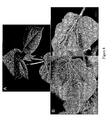
- FIGS. 7A-7H show the silencing of the transcription factor AS1.
- FIGS. 7A-7D Phenotypes of cotton plants infected with psTRV2:AS1.
- FIGS. 7F and 7G Scanning electron microscopy of cotton plants infected with psTRV2:AS1.
- FIG. 9H Quantitative real-time PCR using total RNA extracted from upper leaves of treated plants. The real-time PCR analysis showed that AS1 a transcript levels were greatly reduced in systemic leaves.
- PB primary blade
- EB ectopic blade
- ebad ectopic blade adaxial
- ebab ectopic blade abaxial.
- CK vector control infected; AS1, leaves from plants silenced in AS1 expression.
- FIGS. 8A-8C show phenotypes of cotton plants infected with psTRV2:AGO1.
- PB primary blade; EB, ectopic blade.
- FIGS. 9A and 9B show the silencing of anthocyanidin and proanthocyanidin biosynthesis gene ANS and ANR in cotton leaves.
- FIG. 9A Phenotypes of cotton plants infected with psTRV2:ANS or with sTRV2:ANR showing effects on leaves, petioles and buds.
- FIG. 9B Quantitative real-time PCR using total RNA extracted from upper leaves of treated plants. The real-time PCR analysis showed that ANR and ANS transcript levels were greatly reduced in systemic leaves.
- CK vector control infected; ANR, leaves from plants silenced in ANR expression; ANS, leaves from plants silenced in ANS expression.
- FIG. 10 shows the silencing of anthocyanidin and proanthocyanidin biosynthesis gene ANS and ANR in cotton bark.
- FIG. 11 shows the silencing of anthocyanidin and proanthocyanidin biosynthesis gene ANS and ANR in different cotton organs.
- FIG. 12 shows the silencing of anthocyanidin and proanthocyanidin biosynthesis gene ANS and ANR in cotton buds.
- FIGS. 13A-13N show the silencing of the CtBP ortholog gene AN in cotton in leaves ( FIGS. 13A and 13B ), flower bud and ball in psTRV2:AN treated plants ( FIGS. 13D , 13 F, 13 H, 13 J, 13 L and 13 N) and in flower bud and ball in control plants ( FIGS. 13C , 13 E, 13 G, 13 I, 13 K and 13 M).
- FIG. 14 shows silencing of the CtBP ortholog gene AN in cotton ovule and fiber.
- CK vector control infected
- ANR leaves from plants silenced in AN expression.
- FIG. 15 shows that the cotton CtBP ortholog gene AN plays a key role in cotton fiber initiation.
- 1+2 vector control infected; AN, leaves from plants silenced in AN expression.
- FIGS. 16A and 16B show silencing of the CtBP ortholog gene AN in cotton systemic leaves ( FIG. 16A ) and ovules ( FIG. 16B ).
- the real-time PCR analysis showed that AN transcript levels were greatly reduced in both systemic leaves and ovules.
- CK vector control infected; AN, leaves from plants silenced in AN expression.
- FIGS. 17A-J show silencing of cytoskeleton gene Katanin (KTN) in cotton. Phenotypic effect in vector control treated plant ( FIG. 17A ), in psTRV2:KTN treated plant ( FIG. 17B ), in flower bud and ball in psTRV2: KTN treated plants ( FIGS. 17D , 17 F, 17 H and 17 J) and in flower bud and ball in control plants FIGS. 17C , 17 D, 17 G and 17 I).
- KTN cytoskeleton gene Katanin
- FIG. 18 shows that KTN is an essential gene for cotton fiber elongation.
- FIG. 19 shows that KTN plays a role in leaf trichome length and patterning.
- FIGS. 20A-20E show plants infected with psTRV2:GFP.
- FIG. 20A Phenotype of plants infected with empty vector.
- FIGS. 20B-20D Phenotypes of plants infected with psTRV2:GFP.
- FIG. 20E Western blot of plants infected with psTRV2:GFP. Top panel: GFP protein band detected with anti-GFP antibody. Bottom panel: rbcL band stained with coomassie brilliant blue, which serves as a loading control. Lane 1: empty vector, lanes 2-4, 3 independent plants infiltrated with psTRV2:GFP.
- FIGS. 21A and 21B show cotton ovule culture.
- FIG. 21A 2-week culture in BT medium.
- FIG. 21B Length of fibers on in vitro ovule culture.
- FIGS. 22A and 22B show actin gene expression in cotton.
- FIG. 22A Ovules treated with psTRV1+psTRV2. All of ovules can grow fiber well.
- FIG. 22B Ovules treated with psTRV1+psTRV2:Actin 1. Although the ovules can grow fiber, fibers were shorter than control fibers.
- FIGS. 23A-23L show scanning electron micrographs of the ovule surface of VIGS-GhActin1, VIGS-GhADF1 and psTRV1+psTRV2.
- FIGS. 23A-23D Ovules infected by psTRV1+psTRV2 at 0 ( FIG. 23A ), 1 ( FIG. 23B ), and 2 ( FIG. 23C , FIG. 23D ) DPA and scanned on 1 ( FIG. 23A , FIG. 23B , FIG. 23C ), and 2 ( FIG. 23D ) days after infected. Note the length of fibers increases with time.
- FIGS. 23A-23L show scanning electron micrographs of the ovule surface of VIGS-GhActin1, VIGS-GhADF1 and psTRV1+psTRV2.
- FIGS. 23A-23D Ovules infected by psTRV1+psTRV2 at 0 ( FIG.
- FIGS. 231-23L Ovules infected by psTRV1+psTRV2:GhADF 1 at 0 ( FIG. 23E ), 1 ( FIG. 23F ), and 2 ( FIG. 23G , FIG. 23H ) DPA and scanned on 1 ( FIG. 23E , FIG. 23F , FIG. 23G ), and 2 ( FIG. 23H ) days after infected. Note the length of fibers is much shorter than that in psTRV1+psTRV2 at the same stages and the surface of trichome is rough and wrinkled.
- FIGS. 231-23L Ovules infected by psTRV1+psTRV2:GhADF 1 at 0 ( FIG.
- FIGS. 24A-24C show scanning electron micrographs of the ovule surface of VIGS-GhCTR 1, VIGS-GhDELLA 1 and psTRV1+psTRV2.
- FIG. 24A Ovules infected by psTRV1+psTRV2 at 1 DPA and scanned on 1 day after infected.
- FIG. 24B Ovules infected by psTRV1+psTRV2:GhCTR 1 at 1 DPA and scanned on 1 day after infected. Note the length of fibers is shorter than sTRV1+sTRV2 at the same stages.
- FIG. 24A Ovules infected by psTRV1+psTRV2 at 1 DPA and scanned on 1 day after infected. Note the length of fibers is shorter than sTRV1+sTRV2 at the same stages.
- FIG. 24A Ovules infected by psTRV1+psTRV2
- FIGS. 25A-25C show scanning electron micrographs of the ovule surface of VIGS-GhAlpha-tubulin 1, VIGS-GhBeta-tubulin 1 and psTRV1+psTRV2.
- FIG. 25A Ovules infected by psTRV1+psTRV2 at 1 DPA and scanned on 1 day after infected.
- FIG. 25B Ovules infected by psTRV1+psTRV2:GhAlpha-tubulin1 DPA and scanned on 1 day after infected. Note the surface of trichome is rough and wrinkled.
- FIG. 25A Ovules infected by psTRV1+psTRV2 at 1 DPA and scanned on 1 day after infected. Note the surface of trichome is rough and wrinkled.
- FIG. 25A Ovules infected by psTRV1+psTRV2 at 1 DPA and scanned on 1 day after in
- 25C Ovules infected by psTRV1+psTRV2:ADFGhBeta-tubulin 1 at 1 DPA and scanned on 1 day after infected. Note the surface of trichome is rough and wrinkled.
- FIGS. 26A-26D show scanning electron micrographs of the ovule surface of VIGS-GhMADS 9, VIGS-GhMBY5, VIGS-GhMBY6 and psTRV1+psTRV2.
- FIG. 26A Ovules infected by psTRV1+psTRV2 at 1 DPA and scanned on 3 days after infected.
- FIG. 26B Ovules infected by psTRV1+psTRV2:GhMADS 9 at 1 DPA and scanned on 3 days after infected. Note the length of fibers is longer than sTRV1+sTRV2 at the same stages.
- FIG. 26A Ovules infected by psTRV1+psTRV2 at 1 DPA and scanned on 3 days after infected. Note the length of fibers is longer than sTRV1+sTRV2 at the same stages.
- FIG. 26A Ovules infected by psTR
- FIG. 26C Ovules infected by psTRV1+psTRV2:ADFGhMYB 5 at 1 DPA and scanned on 3 dayS after infected. Note the length of fibers is same as psTRV1+psTRV2 at the same stages.
- FIG. 26D Ovules infected by psTRV1+psTRV2:ADFGhMYB 6 at 1 DPA and scanned on 3 days after infected. Note the length of fibers is same as sTRV1+sTRV2 at the same stages.
- FIGS. 27A and 27B show RT-PCR analysis of GhActin 1 gene expression in cotton fibers.
- FIG. 27A Control using tubulin gene as the RNA standard.
- FIG. 27B GhActin 1 gene expression in cotton fibers. The result of RT-PCR showed that VIGS of Actin 1 caused significant reduction in its mRNA expression.
- FIG. 28 shows real-time RT-PCR Analysis of VIGS-Actin 1 in cotton fibers. Relative value of GhActin 1 gene expression in 14 days after infected fibers is shown as a percentage of GhTubulin expression activity (see Materials and Methods Example 12). The result of real-time PCR shows that VIGS of Actin 1 caused significant reduction its mRNA.
- FIG. 29 shows real-time RT-PCR Analysis of VIGS-ADF 1 in cotton fibers. Relative value of GhADF 1 gene expression in 14 days after infected fibers is shown as a percentage of GhTubulin expression activity (see Materials and Methods Example 12). The result of real-time PCR shows that VIGS of ADF 1 caused significant reduction its mRNA.
- FIG. 30 shows real-time RT-PCR Analysis of VIGS-CTR 1 in cotton fibers. Relative value of GhCTR 1 gene expression in 14 days after infected fibers is shown as a percentage of GhTubulin expression activity (see Materials and Methods Example 12). The result of real-time PCR shows that VIGS of CTR 1 caused significant reduction its mRNA.
- FIG. 31 shows real-time. RT-PCR Analysis of VIGS-DELLA 1 in cotton fibers. Relative value of GhDELLA 1 gene expression in 14 days after infected fibers is shown as a percentage of GhTubulin expression activity (see Materials and Methods Example 12). The result of real-time PCR shows that VIGS of DELLA 1 caused significant reduction its mRNA.
- FIG. 32 shows real-time RT-PCR Analysis of VIGS-GhAlpha-tubulin 1 in cotton fibers. Relative value of GhAlpha-tubulin 1 gene expression in 14 days after infected fibers is shown as a percentage of GhUbiquitin expression activity (see Materials and Methods Example 12). The result of real-time PCR shows that VIGS of GhAlphy-tubulin 1 caused significant reduction its mRNA.
- FIG. 33 shows real-time RT-PCR Analysis of VIGS-GhBeta-tubulin 1 in cotton fibers. Relative value of GhBeta-tubulin 1 gene expression in 14 days after infected fibers is shown as a percentage of GhUbiquitin expression activity (see Materials and Methods Example 12). The result of real-time PCR shows that VIGS of GhBeta-tubulin 1 caused significant reduction its mRNA.
- FIG. 34 shows real-time RT-PCR Analysis of VIGS-GhMADS 9 in cotton fibers. Relative value of GhMADS 9 gene expression in 14 days after infected fibers is shown as a percentage of GhUbiquitin expression activity (see Materials and Methods Example 12). The result of real-time PCR shows that VIGS of GhMADS 9 caused significant reduction its mRNA.
- FIG. 35 shows real-time RT-PCR Analysis of VIGS-GhMYB 5 in cotton fibers. Relative value of GhMYB 5 gene expression in 14 days after infected fibers is shown as a percentage of GhUbiquitin expression activity (see Materials and Methods Example 12). The result of real-time PCR shows that VIGS of GhMYB 5 caused significant reduction its mRNA.
- FIG. 36 shows real-time RT-PCR Analysis of VIGS-GhMYB 6 in cotton fibers. Relative value of GhMYB 6 gene expression in 14 days after infected fibers is shown as a percentage of GhUbiquitin expression activity (see Materials and Methods Example 12). The result of real-time PCR shows that VIGS of GhMYB 6 caused significant reduction its mRNA.
- FIG. 37 shows the map for psTRV2001.
- the sequence for sTRV2 extends from nucleotide 6785 through nucleotide 9696 as set forth in SEQ ID NO:82.
- the present invention relates to the field of functional analysis of cotton genes on a genomic scale. More specifically, the present invention relates to a method for high-throughput functional analysis of cotton genes on a genomic scale using virus-induced gene silencing (VIGS). The present invention also relates to a transient expression vector for transiently expressing genes in cotton plants and to a method for transient expression of genes in cotton plants.
- VIPGS virus-induced gene silencing
- Virus-induced gene silencing (VIGS) (Ruiz et al., 1998; Burch-Smith et al., 2004) system offers the possibility to determine the biological function of gene products without the need to genetically transform the plant. Both RNA and DNA viruses induce RNA silencing resulting in the production of virus-related siRNAs (Baulcombe, 2004). Recombinant viruses can be constructed carrying an inserted partial sequence of a candidate plant gene. Such recombinant viruses can move systemically in whole plants producing siRNA which can mediate degradation of the endogenous candidate gene transcripts (Brigneti et al., 2004; Burch-Smith et al., 2004) resulting in silencing of the candidate gene expression in inoculated plants.
- TRV The tobacco rattle virus
- TRV RNA1 encodes 134 kDa and 194 kDa replicase proteins from the genomic RNA, a 29-kDa movement protein and 16-kDa cysteine-rich protein from subgenomic RNAs.
- TRV RNA2 encodes the coat protein from the genomic RNA and two non-structural proteins from the subgenomic RNAs.
- TRV RNA1 can replicate and move systemically without RNA2.
- the non-structural genes were replaced with a multiple cloning site (MCS) useful for cloning the target gene sequences for VIGS (MacFarlane and Popovich, 2000).
- MCS multiple cloning site
- TRV VIGS system has been successfully applied in some plants such as Arabidopsis (Burch-Smith et al., 2006), Capsicum annuum (Chung et al., 2004), Lycopersicon esculentum (Liu et al., 2002), Petunia hybrida (Chen et al., 2005) and Solanum tuberosum (Brigneti et al., 2004). Most of these plants have been experimentally proven to be susceptible hosts of some strain of TRV (Plant Virus Online, http colon backslash backslash image dot fs dot uidaho dot edu backslash vide backslash descr808 dot htm).
- this TRV VIGS system cannot reasonably be expected to inevitably work in all plants.
- Dinesh Kumar et al. (2007) contains a list of plants for which it is stated that the TRV VIGS system may work.
- this TRV VIGS system cannot work in Arachis hypogaea and Glycine max , because they are not hosts to TRV despite their inclusion in the list in Dinesh Kumar et al. (2007).
- the TRV VIGS system does not work in all plants listed as being susceptible to Tobacco Rattle Virus (TRV) in Dinesh Kumar et al. (2007) or in the online virus databases.
- systemic infection is required for the TRV VIGS system to be useful for functional gene analysis.
- the present invention provides an efficient and reproducible system and procedure for VIGS in cotton.
- the present invention provides for the further re-synthesis of the whole TRV viral genomes.
- the present invention demonstrates that these vectors have similar efficiency as the original vectors.
- the present invention provides for the use of TRV VIGS system for cloning and functionally identifying cotton genes.
- the transient expression vector comprises a TRV RNA2 sequence and at least one copy of a strong subgenomic promoter and optionally a nucleic acid comprising a first sequence of interest.
- the subgenomic promoter is one that is recognized by the replicase of TRV.
- the subgenomic promoter is a strong coat protein subgenomic promoter.
- the subgenomic promoter is derived from a Tobravirus other than TRV.
- the subgenomic promoter is a synthetic pea early browning virus (PEBV) subgenomic promoter.
- the subgenomic promoter is a Pepper ringspot virus (PepRSV) coat protein subgenomic promoter.
- the nucleic acid of interest for transient expression in cotton is inserted downstream of the subgenomic promoter and is operably linked to this promoter. This vector can be used for the transient expression of a nucleic acid of interest in cotton plants.
- the present invention provides a modified TRV RNA1 vector in which an intron has been inserted into the TRV RNA1 sequence.
- the present invention provides a method of virus-induced gene silencing (VIGS) in cotton.
- the method comprises:
- the plant tissue is a cotton plant or a cotton seedling.
- an infected plant is produced in step (c) and the infected plant is grown in step (d).
- the plant tissue is a cotton ovule.
- an infected cotton ovule is produced in step (c) and the infected cotton ovule is grown in culture in step (d).
- the plant tissue is cotton fiber.
- infected cotton fiber is produced in step (c) and the infected cotton fiber is grown in culture in step (d).
- a cotton plant or seedling is infected and the virus spreads through the cotton tissue, such that VIGS occurs in all tissue of the infected cotton plant or seedling.
- the vector comprising TRV RNA2 and the vector comprising TRV RNA1 are synthetic plant vectors.
- the results and the phenotypic data shown herein indicate that the synthetic TRV-VIGS systems can be used as effectively as TRV-VIGS systems to induce silencing of desirable endogenous cotton genes.
- the TRV RNA2 comprises a first silencing sequence that is capable of silecing a first desired gene.
- the first silencing sequence is the sequence of a sense strand of the desired gene.
- the first silencing sequence is the sequence of an antisense strand of the desired gene.
- the first silencing sequence is a sequence encoding a short hairpin RNA (shRNA) that is capable of RNA interference (RNAi) of the first desired gene.
- the first silencing is a sequence encoding a precursor micro-RNA (miRNA) or miRNA that is capable of RNAi of the first desired gene.
- the nucleic acid further comprises a second silecing sequence capable of silecing a second desired gene.
- the nucleic acid comprises more than two silencing sequences capable of silencing more than two desired genes.
- the desired gene is a candidate transcription factor gene. In another embodiment, the desired gene is a candidate gene in chlorophyll or carotenoids biosynthesis. In a further embodiment, the desired gene is a candidate gene in flavonoid biosynthetic pathway. In another embodiment, the desired gene is a candidate gene in proanthocyanidins and anthocyanidins biosynthetic pathway. In an additional embodiment, the desired gene is a candidate gene in cotton fiber development. In a further embodiment, the desired gene is a candidate gene in cotton fiber initiantion, elongation, secondary wall deposition, maturation or seed development. In another embodiment, the desired gene is a candidate gene in smRNA biosynthesis.
- the desired gene is a candidate gene in photohermone signal pathway. In another embodiment, the desired gene is a candidate gene invoved in abotic and biotic stress resistance. In an additional emobiment, the desired gene is a candidate gene in fatty acid biosynthesis, such as stearoyl-acyl carrier protein desaturase (SAD) gene. In a further embodiment, the desired gene is a candidate gene in cotton fiber development such as a candidate gene correlating to cell elongation, cell wall biosynthesis and cellulose biosynthesis. In another emobiment, the desired gene is a candidate gene in cotton trichome related. In a further emobiment, the desired gene is a candidate gene in secondary metabolites biosynthesis.
- SAD stearoyl-acyl carrier protein desaturase
- the results shown herein demonstrate that the VIGS system of the present invention can efficiently suppress targeted host genes and can be used as a rapid means to assay the role of candidate genes, as well as to study the role of regulatory genes, such a transcription factor genes or the role of genes involved in the small RNA biogenesis pathways.
- the VIGS assay described herein offers a means to test the function of cotton gene sequences in a homologous system. Using a normalized cDNA library it is possible to conduct large scale screens of gene function with the VIGS system of the present invention.
- the host plant can be Gossypium hirsutum (upland cotton, tetraploid), but as demonstrated herein, the invention is not limited to this species.
- the host plant can also be Gossypium barbadense (tetraploid), Gossypium arboreium (diploid), and Gossypium herbaceum (diploid) and other natural Gossypium species and all commercial cotton varieties and germplasms including germplasms derived from intra-species and inter-species crossings.
- the present invention provides a method of analyzing gene function in cotton.
- the method comprises:
- the plant tissue is a cotton plant or a cotton seedling.
- an infected plant is produced in step (c) and the infected plant is grown in step (d).
- the plant tissue is a cotton ovule.
- an infected cotton ovule is produced in step (c) and the infected cotton ovule is grown in culture in step (d).
- the plant tissue is cotton fiber.
- infected cotton fiber is produced in step (c) and the infected cotton fiber is grown in culture in step (d).
- a cotton plant or seedling is infected and the virus spreads through the cotton tissue, such that VIGS occurs in all tissue of the infected cotton plant or seedling.
- the vector comprising TRV RNA2 and the vector comprising TRV RNA1 are synthetic plant vectors.
- the results and the phenotypic data shown herein indicate that the synthetic TRV-VIGS systems can be used as effectively as TRV-VIGS systems to induce silencing of desirable endogenous cotton genes.
- the TRV RNA2 comprises a first silencing sequence that is capable of silecing a first desired gene.
- the first silencing sequence is the sequence of a sense strand of the desired gene.
- the first silencing sequence is the sequence of an antisense strand of the desired gene.
- the first silencing sequence is a sequence encoding a short hairpin RNA (shRNA) that is capable of RNA interference (RNAi) of the first desired gene.
- the first silencing is a sequence encoding a precursor micro-RNA (miRNA) or miRNA that is capable of RNAi of the first desired gene.
- the nucleic acid further comprises a second silecing sequence capable of silecing a second desired gene.
- the nucleic acid comprises more than two silencing sequences capable of silencing more than two desired genes.
- the desired gene is a candidate transcription factor gene. In another embodiment, the desired gene is a candidate gene in smRNA biosynthesis. In another embodiment, the desired gene is a candidate gene in a candidate gene in proanthocyanidins and anthocyanidins biosynthetic pathway. In an additional embodiment, the desired gene is a candidate gene in cotton fiber development. In a further embodiment, the desired gene is a candidate gene in cotton fiber initiantion, elongation, secondary wall deposition, maturation or seed development. In an additional embodiment, the desired gene is as described above.
- the results shown herein demonstrate that the VIGS system of the present invention can efficiently suppress targeted host genes and can be used as a rapid means to assay the role of candidate genes, as well as to study the role of regulatory genes, such a transcription factor genes or the role of genes involved in the small RNA biogenesis pathways.
- the VIGS assay described herein offers a means to test the function of cotton gene sequences in a homologous system. Using a normalized cDNA library it is possible to conduct large scale screens of gene function with the VIGS system of the present invention.
- the host plant can be Gossypium hirsutum (upland cotton, tetraploid), but as demonstrated herein, the invention is not limited to this species.
- the host plant can also be Gossypium barbadense (tetraploid), Gossypium arboreium (diploid), and Gossypium herbaceum (diploid) and other natural Gossypium species and all commercial cotton varieties and germplasms including germplasms derived from intra-species and inter-species crossings.
- transgenic plants can be prepared using conventional techniques to alter expression patterns of the gene or genes.
- plants transiently expressing a gene or genes can be prepared as described herein.
- the DNA that is inserted (the DNA of interest) into plants of the genera Gossypium is not critical to the transformation process.
- the DNA that is introduced into a plant is part of a construct.
- the DNA may be a gene of interest, e.g., a coding sequence for a protein, or it may be a sequence that is capable of regulating expression of a gene, such as an antisense sequence, a sense suppression sequence, a shRNA, a precursor miRNA or a miRNA sequence.
- the construct typically includes regulatory regions operatively linked to the 5′ side of the DNA of interest and/or to the 3′ side of the DNA of interest. A cassette containing all of these elements is also referred to herein as an expression cassette.
- the expression cassettes may additionally contain 5′ leader sequences in the expression cassette construct.
- the regulatory regions i.e., promoters, transcriptional regulatory regions, and translational termination regions
- the polynucleotide encoding a signal anchor may be native/analogous to the host cell or to each other.
- the regulatory regions and/or the polynucleotide encoding a signal anchor may be heterologous to the host cell or to each other. See, U.S. Pat. No. 7,205,453 and U.S. Patent Application Publication Nos. 2006/0218670 and 2006/0248616.
- the expression cassette may additionally contain selectable marker genes. See, U.S. Pat. No. 7,205,453 and U.S. Patent Application Publication Nos. 2006/0218670 and 2006/0248616.
- the expression cassette will comprise a selectable marker gene for the selection of transformed cells.
- Selectable marker genes are utilized for the selection of transformed cells or tissues.
- the plant selectable marker gene will encode antibiotic resistance, with suitable genes including at least one set of genes coding for resistance to the antibiotic spectinomycin, the streptomycin phosphotransferase (spt) gene coding for streptomycin resistance, the neomycin phosphotransferase (nptII) gene encoding kanamycin or geneticin resistance, the hygromycin phosphotransferase (hpt or aphiv) gene encoding resistance to hygromycin, acetolactate synthase (als) genes.
- the plant selectable marker gene will encode herbicide resistance such as resistance to the sulfonylurea-type herbicides, glufosinate, glyphosate, ammonium, bromoxynil, imidazolinones, and 2,4-dichlorophenoxyacetate (2,4-D), including genes coding for resistance to herbicides which act to inhibit the action of glutamine synthase such as phosphinothricin or basta (e.g., the bar gene).
- glutamine synthase such as phosphinothricin or basta
- This list of selectable marker genes is not meant to be limiting. Any selectable marker gene can be used.
- promoters can be used in the practice of the invention.
- the promoters can be selected based on the desired outcome. That is, the nucleic acids can be combined with constitutive, tissue-preferred, or other promoters for expression in the host cell of interest.
- constitutive promoters include, for example, the core promoter of the Rsyn7 (WO 99/48338 and U.S. Pat. No.
- CaMV 35S promoter (Odell et al., 1985); rice actin (McElroy et al., 1990); ubiquitin (Christensen and Quail, 1989 and Christensen et al., 1992); pEMU (Last et al., 1991); MAS (Velten et al., 1984); ALS promoter (U.S. Pat. No. 5,659,026), and the like.
- Other constitutive promoters include, for example, those disclosed in U.S. Pat. Nos. 5,608,149; 5,608,144; 5,604,121; 5,569,597; 5,466,785; 5,399,680; 5,268,463; and 5,608,142.
- promoters include inducible promoters, particularly from a pathogen-inducible promoter.
- Such promoters include those from pathogenesis-related proteins (PR proteins), which are induced following infection by a pathogen; e.g., PR proteins, SAR proteins, beta-1,3-glucanase, chitinase, etc.
- PR proteins pathogenesis-related proteins
- Other promoters include those that are expressed locally at or near the site of pathogen infection.
- the promoter may be a wound-inducible promoter.
- chemical-regulated promoters can be used to modulate the expression of a gene in a plant through the application of an exogenous chemical regulator.
- the promoter may be a chemical-inducible promoter, where application of the chemical induces gene expression, or a chemical-repressible promoter, where application of the chemical represses gene expression.
- tissue-preferred promoters can be utilized to target enhanced expression of a polynucleotide of interest within a particular plant tissue. Each of these promoters are described in U.S. Pat. Nos. 6,506,962, 6,575,814, 6,972,349 and 7,301,069 and in U.S. Patent Application Publication Nos. 2007/0061917 and 2007/0143880.
- the DNA of interest may be optimized for increased expression in the transformed plant. That is, the coding sequences can be synthesized using plant-preferred codons for improved expression. Methods are available in the art for synthesizing plant-preferred genes. See, for example, U.S. Pat. Nos. 5,380,831, 5,436,391, and 7,205,453 and U.S. Patent Application Publication Nos. 2006/0218670 and 2006/0248616.
- dsRNA for gene silencing as well as the design of siRNA or shRNA molecules for use in gene silencing in plants is well known in the art. See, for example, U.S. Patent Application Publication Nos. 2004/0192626, 2004/0203145, 2005/0026278, 2005/0186586, 2005/0244858, 2006/0212950, 2007/0259827, 2007/0265220, 2007/0269815, 20080269474 and 2008/0318896.
- miRNA for gene silencing as well as the design of precursor miRNA or miRNA molecules for use in gene silencing in plants is well known in the art. See, for example, U.S. Patent Application Publication Nos. 2006/0130176, 2006/0218673, 2007/0083947, 2007/0130653, 2007/0154896 and 2008/0313773.
- the invention also provides plant products obtained from transgenic plants of the invention.
- plant product is intended to include anything that may be obtained from a particular plant, including, for example, fruits, seeds, pollen, ovules, plant embryos, oils, juices, waxes, proteins, lipids, fatty acids, vitamins, plant tissues in whole or in part, (e.g. roots, leaves, stems, flowers, boll, fruit, bark), cells, cell suspensions, tubers and stolons.
- the present invention provides a transient expression vector and method for transiently expressing genes in cotton plants.
- the transient expression vector comprises a TRV RNA2 sequence and at least one copy of a strong subgenomic promoter and optionally a nucleic acid comprising a first sequence of interest.
- the subgenomic promoter is one that is recognized by the replicase of TRV.
- the subgenomic promoter is a strong coat protein subgenomic promoter.
- the subgenomic promoter is derived from a Tobravirus other than TRV.
- the subgenomic promoter is a synthetic pea early browning virus (PEBV) subgenomic promoter.
- PEBV pea early browning virus
- the subgenomic promoter is a Pepper ringspot virus (PepRSV) coat protein subgenomic promoter.
- the nucleic acid of interest for transient expression in cotton is inserted downstream of the subgenomic promoter and is operably linked to this promoter.
- the nucleic acid comprises two or more sequences of interest each to be expressed in a cotton plant.
- the vector comprises two or more nucleic acids each comprising a sequence of interest to be expressed in a cotton plant and each operably linked to a separate copy of the subgenomic promoter.
- the sequence of interest to be transiently expressed in plants of the genera Gossypium is not critical to the transient expression method of the present invention.
- the sequence of interest may be a gene of interest, e.g., a coding sequence for a protein, or it may be a sequence that is capable of regulating expression of a gene, such as an antisense sequence, a sense suppression sequence or a micro-RNA (miRNA) sequence.
- the sequence of interest typically includes regulatory regions operatively linked to the 5′ side of the sequence of interest and/or to the 3′ side of the sequence of interest in addition to the subgenomic promoter.
- the sequence of interest may additionally contain operably linked 5′ leader sequences in the transient expression vector.
- the regulatory regions (i.e., transcriptional regulatory regions, and translational termination regions) and/or the polynucleotide encoding a signal anchor may be native/analogous to the host cell or to each other.
- the regulatory regions and/or the polynucleotide encoding a signal anchor may be heterologous to the host cell or to each other. See, U.S. Pat. No. 7,205,453 and U.S. Patent Application Publication Nos. 2006/0218670 and 2006/0248616.
- sequence of interest may be optimized for increased transient expression in the plant. That is, the coding sequences can be synthesized using plant-preferred codons for improved expression. Methods are available in the art for synthesizing plant-preferred genes. See, for example, U.S. Pat. Nos. 5,380,831, 5,436,391, and 7,205,453 and U.S. Patent Application Publication Nos. 2006/0218670 and 2006/0248616.
- the sequence of interest is (a) a coding sequence of a gene to be expressed in cotton, such as a Bacillus thuringiensis insecticidal toxin protein (BT) and a Flower locus T (FT) gene to shorten flowing time or (b) a sequence of a gene to down regulate, such as a candidate transcription factor gene, a candidate gene in smRNA biosynthesis, a candidate gene in photohermone signal pathway, a candidate gene invoved in abotic and biotic stress resistance, a candidate gene in fatty acid biosynthesis a candidate gene in cotton fiber development a candidate gene in cotton trichome related and a candidate gene in secondary metabolite biosynthesis.
- BT Bacillus thuringiensis insecticidal toxin protein
- FT Flower locus T
- the method for transiently expressing a nucleic acid of interest in cotton tissue comprises:
- TRV tobacco rattle virus
- the plant tissue is cotton seedlings. In another embodiment of this aspect, the plant tissue is cotton ovules. In an additional embodiment of this aspect, the plant tissue is cotton plants. In a further embodiment of this aspect, the plant tissue is cotton fiber. In a still further embodiment, a cotton plant or seedling is infected and the virus spreads through the cotton tissue, such that VIGS occurs in all tissue of the infected cotton plant or seedling.
- the vector comprising TRV RNA2 and the vector comprising TRV RNA1 are synthetic plant vectors.
- the first sequence of interest is the sequence of a sense strand of a gene.
- the first sequence of interest is the sequence of an antisense strand of a gene.
- the first sequence encodes a precursor miRNA or a miRNA.
- the transient expression vector of the present invention can be used to rapidly transiently express nucleic acids of interest in cotton plants.
- the nucleic acid further comprises a second sequence of interest to be expressed in cotton plants.
- the nucleic acid comprises more than two sequences of interest to be expressed in cotton plants.
- each nucleic acid comprises a sequence of interest and each is operably linked to a separate copy of the subgenomic promoter.
- the sequences of interest in the two or more nucleic acids may be the same or different.
- the sequences of interest include those described above.
- the host plant can be Gossypium hirsutum (upland cotton, tetraploid), but as demonstrated herein, the invention is not limited to this species.
- the host plant can also be Gossypium barbadense (tetraploid), Gossypium arboreium (diploid), and Gossypium herbaceum (diploid) and other natural Gossypium species and all commercial cotton varieties and germplasms including germplasms derived from intra-species and inter-species crossings.
- the invention also provides plant products obtained from transiently expressing plants of the invention.
- plant product is intended to include anything that may be obtained from a particular plant, including, for example, fruits, seeds, pollen, ovules, plant embryos, oils, juices, waxes, proteins, lipids, fatty acids, vitamins, plant tissues in whole or in part, (e.g. roots, leaves, stems, flowers, boll, fruit, bark), cells, cell suspensions, tubers and stolons.
- the present invention provides a modified TRV RNA1 vector with improved initiation of transcription.
- RNA viral vectors There are many reasons that cause RNA viral vectors to have difficulties in initiation of transcription.
- First is the non-optimized genome sequence that might be improperly recognized by the RNA processing machinery such as cryptic splice sites and thymine-rich, putative intron sequences embedded in RNA genomes.
- Second, TRV RNA1 viral vector encode very large transcripts about 7.0 kilonucleotides, a size is about 3-4 fold of average plant genes size (1-2 Kb).
- plant genes often contain huge numbers of introns that facilitate processing and export of the pre-mRNA from the nucleus.
- pre-mRNA transcripts made in plant nucleus from viral constructs may not be efficiently recognized or proper processing without intron sequences.
- the modified TRV RNA1 vector comprises a TRV RNA1 sequence into which at least one intron has been inserted. Additional introns can be inserted to make the viral transcript easier to be recognized by the host nuclear pre-mRNA processing and export machinery, therefore to increase the percentage of plant cells in which viral replication could occur, but also the efficiency by which an infection could be initiated.
- any plant intron can be used. In one embodiment the intron ranges is in size from about 100 nucleotides to about 400 nucleotides. In another embodiment the intron is derived from Arabidopsis thaliana .
- Intron insertion site can be the consensus AG/GT sequences in the TRV1 genome or a sequence that has been mutated with silent nucleotide substitutions to match the consensus sequence.
- This modified TRV RNA1 vector can be used in place of the vector containing TRV RNA1 in any of the above methods.
- the host plant can be Gossypium hirsutum (upland cotton, tetraploid), but as demonstrated herein, the invention is not limited to this species.
- the host plant can also be Gossypium barbadense (tetraploid), Gossypium arboreium (diploid), and Gossypium herbaceum (diploid) and other natural Gossypium species and all commercial cotton varieties and germplasms including germplasms derived from intra-species and inter-species crossings.
- the practice of the present invention employs, unless otherwise indicated, conventional techniques of chemistry, molecular biology, microbiology, recombinant DNA, genetics, immunology, cell biology, cell culture and transgenic biology, which are within the skill of the art. See, e.g., Maniatis et al., 1982 , Molecular Cloning (Cold Spring Harbor Laboratory Press, Cold Spring Harbor, N.Y.); Sambrook et al., 1989 , Molecular Cloning, 2nd Ed. (Cold Spring Harbor Laboratory Press, Cold Spring Harbor, N.Y.); Sambrook and Russell, 2001 , Molecular Cloning, 3rd Ed.
- RNA Interference Technology The Nuts & Bolts of siRNA Technology , DNA Press, 2003; Gott, RNA Interference, Editing, and Modification: Methods and Protocols ( Methods in Molecular Biology ), Human Press, Totowa, N.J., 2004; Sohail, Gene Silencing by RNA Interference: Technology and Application , CRC, 2004.
- Cotton seedlings Cotton seeds were propagated and germinated in a greenhouse. Four to 14 day old seedlings carrying 2-3 true leaves were used for VIGS assays. Younger seedlings with only cotyledons can also be used for VIGS assays.
- Synthetic TRV RNA1 expression vector Synthetic TRV1 vector full length (7756 bp) sequence including: SphI site, T-DNA right border sequence (152 bp), the duplicated cauliflower mosaic virus (CaMV) 35S enhancer region (752 bp) (Shi et al., 1997) the TRV Ppk20 strain RNA1 (6791 bp), Subterranean Clover Mottle Virus satellite RNA ribozyme sequence (46 bp) and SmaI site sequence. This full length sequence was divided into two parts by an endogenous SalI site.
- the two parts were separately synthesized and cloned into pGH vector to give two vectors pGH-YeJ-V1-1 and pGH-YeJ-V1-2.
- the synthetic TRV RNA1 fragments, V1-1, released from pGH-YeJ-V1-1 by treatment with SphI and SalI enzymes, and V1-2, released from pGH-YeJ-V1-2 by treatment with SalI and SmaI enzymes, were linked with the pBI121 (GenBank accession number: AF485783) vector treated with SphI and EcoICRI enzymes.
- the new synthetic TRV RNA1 vector was named psTRV1001 (also referred to as psTRV1 herein).
- the sequence of the synthetic psTRV1001 is set forth in SEQ ID NO:1.
- the synthetic TRV RNA1 sequence is the same as the published TRV RNA1 sequence.
- Synthetic TRV RNA2 expression vector Synthetic TRV2 vector full length (2915 bp) sequence including: HindIII site, the duplicated cauliflower mosaic virus (CaMV) 35S enhancer region (752 bp) (Shi et al., 1997) the TRV strain ppk20 RNA2 5′-sequence (1639 bp), multiple cloning site (61 bp), the TRV strain ppk20 RNA2 3′-sequence (396 bp), HpaI site. The full length sequence was synthesized and cloned into pGH vector give pGH-YeJ-V2.
- the synthetic TRV RNA2 fragment V2 was linked into the pCAMBIA0390 (GenBank accession number: AF234291) by HindIII and HpaI sites.
- the new synthetic TRV RNA2 vector was named psTRV2001 (also referred to as psTRV2 herein).
- the sequence of the synthetic sTRV2 is set forth in SEQ ID NO:2.
- the synthetic TRV RNA2 sequence is the same as the published TRV RNA2 sequence.
- the sequence of the synthetic psTRV2001 is set forth in SEQ ID NO:82.
- Synthetic TRV transient expression vector For construction of the transient expression vector psTRV2100, a synthetic pea early browning virus (PEBV) subgenomic promoter (237 bp, SEQ ID NO:3) polynucleotide including an EcoRI site at its 5′ end and a NcoI site at its 3′ end was inserted into the multiple cloning site in the psTRV2001 vector.
- PEBV pea early browning virus
- Green Fluorescent Protein (GFP) expression vector pK20GFPc was PCR amplified with primers GFP-F (5′-TTATAGGTACCATGGCTAGCAAAGGAGAAGAAC-3′ (SEQ ID NO:25)) and GFP-R (5′-CCTAAGAGCTCTTAATCCATGCCATGTGTAATCCC-3′ (SEQ ID NO:26) and the GFP gene was inserted into the NcoI and BamHI sites in psTRV2100. This vector was named psTRV2:GFP.
- Modified sTRV1 vector A PCR based strategy was used to introduce a plant intron from A. thaliana actin1 (intron 2, GenBank Accession NO U27981, position 1957-2111 bp) into TRV RNA1 genome. Three fragments were amplified based on three primer pairs: F1P5 and F1P3 for F1, F2P5 and F2P3 for F2, F3P5 and F3P3 for F3. The sequences of these primer pairs are set forth in Table 1. The locations of the primers with respect to this intron are shown in FIG. 2 . Overlapping PCR was used to get a longer DNA fragment with F1P5 and F3P3 in the second round PCR amplification.
- the PCR product was further digested with EcoRI and XbaI and inserted into the psTRV1001 vector.
- the intron-containing psTRV1 was named psTRV1001-intron (also referred to as psTRV1-intron herein).
- sequence of the inserted intron is gtaagtacatttccataacgttccatcgtcattgattcttcattagtatgcgtttatgaagctttttcaatttaattctctttggtagatctt aagattcctctgtttcttgcaaaataaagggttcaattatgctaatatttttttatatcaattttgacag (SEQ ID NO:27).
- Candidate genes were amplified by PCR from cDNA products of Gossypium hirsutum leaf samples, and cloned into the XbaI and BamHI sites of the synthetic vector psTRV2001.
- the primers used in cloning the genes are set forth in Table 2, which also includes reference to the sequence of the cloned gene.
- Agrobacterium infiltration Synthetic psTRV vectors and their derivatives were introduced into Agrobacterium strain AGL1 by electroporation. A 3 ml culture was grown for 24 hr at 28° C. in 50 mg/L kanamycin and 25 mg/L rifampicin. On the following day, the culture was inoculated into LB medium containing 50 mg/L kanamycin, 10 mM 2-(N-morpholino)ethanesulfonic acid (MES) and 20 ⁇ M acetosyringone and grown overnight in a 28° C. shaker.
- MES 2-(N-morpholino)ethanesulfonic acid
- Agrobacterial cells were collected by centrifugation and resuspended in MMA solution (10 mM MES, 10 mM MgCl 2 , 200 ⁇ M acetosyringone) to a final OD 600 of 1.5.
- the agrobacterial suspension was left at room temperature for 3-4 hr without shaking.
- Agrobacterium culture containing the pTRV1/psTRV1 or pTRV2/psTRV2 vectors was mixed in a 1:1 ratio. Cotton plants were infiltrated with cultures either by syringe infiltration or by vacuum infiltration.
- agrobacterial-inocula were delivered into the underside of two or three youngest fully-expanded leaf using a 1 ml needleless syringe.
- whole plants were submerged into agrobacterial-inocula and subjected to 80-90 kPa vacuum for 5 min, and then quickly releasing the vacuum, letting the inoculum rapidly enter plant tissues. All data described below were obtained by vacuum infiltration. However, syringe infiltration can also be used, but it is more time costly than vacuum infiltration. The silencing effect obtained with vacuum infiltration is better than that obtained with syringe infiltration.
- GFP imaging and quantitative fluorescence analysis To visually detect GFP fluorescence on leaf patches and whole plants, a hand-held 100 W, long-wave UV lamp (UV Products, Upland, Calif.) was used, and fluorescence images were taken using a Nikon Coolpix 995 digital camera (Tokyo, Japan) mounted with UV and Kenko yellow lens (Tokyo, Japan).
- Antibodies and protein gel blot analysis Total plant proteins were separated by 12% sodium dodecyl sulfate-polyacrylamide gel electrophoresis. Mouse monoclonal IgG against GFP protein was used for primary antibody. ECL peroxidase conjugated donkey anti-rabbit immunoglobulin G was used as a secondary antibody. Immunoreactive bands were visualized using ECL Western blotting Detection Reagents (GE healthcare). Coomassie blue-stained rbcL band was used as a loading control.
- SEM Scanning Electron Microscope
- RNA extraction and analysis 100 mg leaf tissues was ground in liquid N2 and extracted with plant RNA purification reagent (Invitrogen). RNA concentration was measured by Nanodrop (Thermo, USA). M-MLV reverse transcriptase (Promega, USA) was used for reverse transcription reactions. Real-time PCR was performed with Power SYBR® Green PCR Master (Applied Biosystems, USA) and run in ABI7900HT using the gene specific primers set forth in Table 3. All samples were run in triplicates and data was analyzed with RQ manager at a pre-set Ct value (Applied Biosystems, USA). The Jatropha rbcL mRNA served as an internal control. Ct values included in the analyses were based on 3 biological replicates, with three technical replicates for each biological sample. Standard deviation was calculated based on 3 biological replicates.
- VIGS tobacco rattle virus
- PTGS post-transcriptional gene silencing mechanism
- Gossypol and related terpenoids are present throughout the cotton plant in the glands of foliage, floral organs, and bolls, as well as in the roots. Gossypol and other sesquiterpenoids are derived from (+)- ⁇ -cadinene.
- the gene silencing efficiency of the TRV VIGS clones to suppress cad gene expression was assessed in cotton.
- the enzyme encoded by the ⁇ -cadinene synthase gene is responsible for the first committed step involving the cyclization of farnesyl diphosphate to (+)- ⁇ -cadinene. When this gene is silenced, the biosynthesis of gossypol and other sesquiterpenoids will be all disrupted.
- Sunilkumar et al. (2006) have successfully used cad gene RNAi to disrupt gossypol biosynthesis in cotton seed by stable transformation.
- these terpenoids are induced in response to microbial infections. These compounds protect the plant from both insects and pathogens.
- CAD RNA accumulation in the upper leaves of psTRV2:CAD infected plant was much lower than that of plants infected with the empty sTRV2 vector and there is only 0.2% of CAD RNA was left in CAD treated plants.
- HPLC High-performance liquid chromatography
- This example describes the construction of additional tobacco rattle virus (TRV) based vectors and their use for virus induced gene silencing in cotton.
- TRV tobacco rattle virus
- CH42 RNA accumulation in the upper leaves of psTRV2 CH42 infected plant was much lower than that of plants infected with the empty psTRV2 vector and there is only 0.2% of CH42 RNA was left in CH42 treated plants.
- PDS phytoene desaturase
- a putative EST sequence was identified by using Arabidopsis PDS gene (AY 057669) sequence to BLAST against the whole EST sequences of GenBank. O ne EST encoded the putative PDS protein in cotton was identified.
- PCR primers SEQ ID NOs: 56 and 57 were designed to amplify a 479-bp PDS cDNA of G. hirsutum by PCR, and the PDS fragment (SEQ ID N0:77) was inserted into the sTRV2 MCS site to give psTRV2:PDS. The sequence of PDS was also verified by sequencing.
- herbaceum with high resistance to biotic and abiotic stresses, can be used as a good start genetic material for interspecies crossings with G. hirsutum to improve its resistance to various stresses. Therefore, a species independent method for gene functional analysis in Gossypium genus and relative plants is also greatly needed.
- FIGS. 5A-5C show that the sTRV VIGS system not only works in tetraploid cotton G. hirsutum , but also in diploid cotton Gossypium arboreum and Gossypium herbaceum by demonstrating the silencing effect on one chlorophyll biosynthesis gene magensium chelatase CH42 gene.
- FIG. 5A Vector control 1+2
- FIGS. 5B and 5C Cultures of Agrobacterium tumefaciens strains carrying psTRV1 and psTRV2 ( FIG. 5A , Vector control 1+2) or psTRV2: CH42 ( FIGS. 5B and 5C ) were mixed in 1:1 ratio. Mixed culture was vacuum infiltrated into Gossypium arboreum and Gossypium herbaceum plants at 2-3 leaf stage plants. FIGS. 5A and 5B of cotton leaves were taken at 7 DPI, while FIG. 5C was taken at 14 DPI.
- TFs Transcription factors
- AS1 The Arabidopsis ASYMMETRIC LEAVES 1 (AS1) and its orthologs belong to the R2R3 MYB family. They play an evolutionarily conserved role in shoot apical meristem, leaf and fruit development (Sun et al, 2002; Alonso-Cantabrana et al., 2007). AS1 represses class I KNOTTED1-like homeobox (KNOX) gene expression by binding to their promoters (Guo_et al., 2008) and it promotes stem cell function by regulating phytohormone activities (Alonso-Cantabrana et al., 2007).
- KNOX KNOTTED1-like homeobox
- AS1 also negatively regulates inducible resistance against pathogens by selective binding to certain JA-responsive gene promoters (Nurmberg et al., 2007; Yang et al., 2008).
- AS1 is a positive regulator of salicylic acid (SA)-independent extra-cellular defenses against bacterial pathogens (Nurmberg et al., 2007).
- SA salicylic acid
- PCR primers were designed to target a 418 bp fragment which was inserted into psTRV2 to give psTRV2:AS1.
- a mixture of Agrobacterium cultures containing psTRV1 and psTRV2:AS1 vector was vacuum infiltrated into cotton plants. After 18 dpi, obvious phenotypes can be seen in newly emerged leaves. Severe downward curling was the most obvious phenotype from the adaxial side ( FIG. 7B and FIG. 7C ) of leaves.
- adaxial leaf blade phenotypes provide evidence that this is cotton AS1 gene and that TRV VIGS could be used in cotton to rapidly screen for function of TF genes.
- Such genes may be important for cotton boll development and cotton fiber initiation and elongation in different developing stages. More importantly, recent evidence shows that common networks regulate leaf and fruit patterning in Arabidopsis (Nurmberg et al., 2007).
- the leaf is a model system for rapid assessment of TF gene functions and to make use of such information to further to make use of these genes to modify or enhance the quality and quantity of cotton fiber.
- the invention also provides plant products obtained from transgenic plants of the invention.
- plant product is intended to include anything that may be obtained from a particular plant, including, for example, fruits, seeds, pollen, ovules, plant embryos, oils, juices, waxes, proteins, lipids, fatty acids, vitamins, plant tissues in whole or in part, (e.g. roots, leaves, stems, flowers, boll, fruit, bark), cells, cell suspensions, tubers and stolons.
- smRNAs Small RNAs regulate processes as diverse as plant resistance to viruses, and plant development and differentiation.
- TRV VIGS TRV VIGS system for high-throughput analysis of functions of genes involved in smRNA biogenesis pathways.
- RNA-silencing pathways require the genesis of 18- to 26-nt smRNAs from the cleavage of double-stranded RNA (dsRNA) or highly structured regions within single-stranded viral RNAs.
- MicroRNA is one important kind of smRNAs. Bound to ARGONAUTE1 (AGO1) protein, miRNAs guide RNA-induced silencing complexes (RISCs) to cleave mRNAs with partial or complete sequence complementarity. Accordingly, Arabidopsis AGO1 binds miRNAs and displays slicer activity toward miRNA targets, and strong ago1 loss-of-function mutants overaccumulate miRNA target transcripts (Baulcombe, 2004). AGO1 has also proven to bind viral-derived siRNA and ago1 mutant show hypersusceptibility to virus (Beclin et al., 2002; Morel et al., 2002).
- PCR primers were designed to target a 583 bp fragment which was inserted into psTRV2 to give psTRV2:AGO1.
- a mixture of Agrobacterium cultures containing psTRV1 and psTRV2:AGO1 vector was vacuum infiltrated into cotton plants.
- a mixture of Agrobacterium cultures containing psTRV1 and psTRV2:AGO1 vector was infiltrated into cotton plants. After 27 dpi, diverse and varied phenotypes can be seen in new emerged leaves. Severe upward curling was the most obvious phenotype both from the adaxial side ( FIG.
- FIG. 8B AGO1-silenced leaves showed a specific disruption in the abaxial domain, leading to the formation of abaxial ectopic leaf blades ( FIG. 8C ).
- FIG. 8C AGO1-silenced leaves showed a specific disruption in the abaxial domain, leading to the formation of abaxial ectopic leaf blades ( FIG. 8C ).
- ectopic abaxial leaf blades structure emerged along with the leaf vein and the ectopic abaxial side faced to the primary blade abaxial ( FIG. 8C ).
- ectopic PHAV expression leads to the formation of ectopic abaxial leaf blade in AGO1 mutants (Kidner and Martienssen, 2004).
- the invention also provides plant products obtained from transgenic plants of the invention.
- plant product is intended to include anything that may be obtained from a particular plant, including, for example, fruits, seeds, pollen, ovules, plant embryos, oils, juices, waxes, proteins, lipids, fatty acids, vitamins, plant tissues in whole or in part, (e.g. roots, leaves, stems, flowers, boll, fruit, bark), cells, cell suspensions, tubers and stolons.
- PAs Proanthocyanidins
- PAs are oligomeric and polymeric end products of the flavonoid biosynthetic pathway. PAs act as antibiotics, antisporulants, feeding deterrents, and enzyme denaturants. Many evidences have shown good correlation between cotton wilt disease/insect resistances with PAs level in cotton. Most genetic studies on PAs biosynthesis pathway were done model plant Arabidopsis and recently Medicago truncatula . By our knowledge, there is no gene functional analysis in PA biosynthesis pathway in cotton. We took advantages of our sTRV VIGS system in cotton to decipher structure genes and regulated network for PA biosynthesis process.
- PAs are one class of products from the pathway leading to anthocyanins.
- Two enzymes anthocyanidin synthase (ANS) and anthocyanidin reducatase (ANR) function at branches between anthocyanin and PA biosynthesis.
- ANS converts the substrate flavan-3,4-diol (leucoanthocyanidin) to anthocyanidin, which can serve as substrate for ANR to produce another major PA unit, 2,3-cis-flavan-3-ol (epicatechin) in Arabidopsis and Medicago.
- PCR primers (ANS: SEQ ID NOs:58 and 59; ANR: SEQ ID NOs:60 and 61) to amplify partial fragments of putative GhANS and GhANR according to the querying results of GenBank EST database with amino acid sequence of Arabidopsis ANS and ANR proteins.
- the PCR products (ANS: SEQ ID NO:78; ANR: SEQ ID NO:79) were further into cloned psTRV2 to give psTRV2:ANS and psTRV2:ANR.
- a mixture of Agrobacterium cultures containing psTRV1 with psTRV2, psTRV2:ANS or psTRV2:ANR was vacuum infiltrated into 2-3 true leaf cotton plants. After 7-10 days post inoculation, leaf margin around new systemic leaves of psTRV2:ANR cotton plants appeared brownish phenotypes. Two to 7 days later, gene silencing phenotype was obvious in whole leaf blade, esp. the leaf veins in 3-5 new, expanding leaves ( FIG. 9A ) and the brownish phenotype was also visible in the lateral leaf below the infiltrated leaf. Brownish phenotype can be also found on the petiole ( FIG. 9A ), bark ( FIG. 10 ), root ( FIG.
- ANS plants show colorless because there is neither anthocyanidin red color nor PAs blue color ( FIG. 11 , FIG. 12 and FIG. 13 ).
- Both ANR and ANS silencing results prove silencing effect can enter into all over the cotton plants and shows very homogenous silencing effect, which is very important merit for a good VIGS system ( FIG. 4A-FIG . 7 ). More importantly, silencing can be achieved in reproductive organs, such as bud, flower and ovule.
- reproductive organs such as bud, flower and ovule.
- Cotton fibers are seed trichomes and are the most important product of cotton plants. Cotton fiber development undergoes several distinctive but overlapping steps including fiber initiation, elongation, secondary cell wall biosynthesis, and maturation, leading to mature fibers. Single-celled cotton fiber also provides a unique experimental system to study cell elongation. Many evidences demonstrated in previous examples have shown sTRV VIGS system can work effectively both in vegetative but also reproductive organs such as flower and bud. In this example, we showed sTRV VIGS can also work in cotton fiber.
- CtBP C-terminal binding protein
- NAD(H)-dependent transcriptional corepressor whose activity has been shown to be regulated by the NAD/NADH ratio.
- ANGUSTIFOLIA AN
- CtBP C-terminal binding protein
- a putative EST sequence was identified by using Arabidopsis AN gene (NM 100033) sequence to BLAST against the whole cotton EST sequences of GenBank.
- Arabidopsis AN gene NM 100033
- One EST encoded the putative AN protein in cotton was identified.
- PCR primers SEQ ID NOs:62 and 63
- SEQ ID NO:80 was designed to amplify a 621-bp AN cDNA of G. hirsutum by PCR, and the AN fragment (SEQ ID NO:80) was inserted into the sTRV2 MCS site to give psTRV2:AN.
- the sequence of AN was also verified by sequencing.
- AN RNA accumulation in the upper leaves of psTRV2:AN infected plant was much lower than that of plants infected with the empty sTRV vector and there is only 10% of AN RNA was left in AN treated plants.
- AN plays an very impressively key role in organ size determination, specific in width orientation and fiber development.
- the flower bud and ball was thinner and smaller ( FIGS. 13D , 13 F, 13 H, 13 J, 13 L, 13 N) comparing to control ( FIGS. 13C , 13 E, 13 G, 13 I, 13 K, 13 M) individually.
- the most severe phenotype in AN-silenced ball showed few initiated fiber in one ovule and totally few ovule number in one ball ( FIG. 14 and FIG. 15 ).
- Real-time PCR analysis showed AN transcript levels were greatly reduced in ovules ( FIG. 16B ).
- cortical MTs This may be caused by abnormal arrangement of cortical MTs. It has been proved that the abnormal arrangement of cortical microtubules account for the abnormal shape of the cells in Arabidopsis . AN gene might regulate the polarity of cell growth by controlling the arrangement of cortical MTs (Kim et al., 2002).
- AN encodes a novel protein with sequence similarity to C-terminal binding protein/BrefeldinA ribosylated substrates that are known to be involved in transcriptional regulation or in vesicle budding.
- CtBPs self-associate and act as co-repressor of transcription.
- CtBP invoved in embryogenesis mutants leads to embryo development stop at some stages. This may help to explain why some of AN-silenced ovule is lethal in cotton ovule development ( FIG. 14 ).
- Microarray analysis in Arabidopsis suggested AN gene might regulate the expression of certain genes, e.g. the genes involved in formation of cell walls (Kim et al., 2002).
- Microtubule cytoskeleton plays an important role in cell morphogenesis in plants as demonstrated by pharmacological, biochemical, and genetic studies.
- the microtubule cytoskeleton may be involved in the transportation of organelles and vesicles carrying membranes and cell wall components to the site of cell growth as in root hairs, trichome cells, and pollen tubes. Therefore, the microtubule cytoskeleton is essential for cell elongation and tip growth.
- the Arabidopsis katanin homolog has been shown to possess ATP-dependent MT severing activity in vitro and exhibit a punctate localization pattern at the cellcortex and the perinuclear region. Disruption of katanin functions by genetic mutations causes a delay in the disappearance of the perinuclear MT array and results in an aberrant organization of cortical MTs in elongating cells. Consequently, katanin mutations lead to defects in cell elongation, cellulose microfibril deposition, and hormonal responses. Studies of kataninin plants provide new insights into our understanding of its roles in cellular functions.
- a putative EST sequence was identified by using Arabidopsis KTN gene (NM — 106684.4) sequence to BLAST against the whole cotton EST sequences of GenBank.
- Arabidopsis KTN gene NM — 106684.4
- One EST encoded the putative KTN protein in cotton was identified.
- PCR primers SEQ ID NOs:64 and 65
- the KTN fragment SEQ ID NO:81
- the sequence of KTN was also verified by sequencing.
- Cultures of Agrobacterium carrying pTRV1 was mixed with cultures of Agrobacterium carrying either psTRV2:KTN or vector control.
- the mixed culture was vacuum-infiltrated into G. hirsutum plants with 2-3 true leaves (for details see Example 1).
- KTN-silenced cotton plants There are very obvious phenotypes in vegetative organs of KTN-silenced cotton plants, such as dark green and smaller leaf blades, shorter petiole (compare with vector control in FIG. 17A and KTN-silenced in FIG. 17B ) and pattern of trichome branching and length of leaf trichomes ( FIG. 19 ). These data suggested KTN play multiple significant roles on plant development.
- KTN not only plays key roles on vegetative growth and development, but also plays very impressively key roles in organ size determination, specific in width orientation and fiber development.
- the flower bud and ball was thinner and smaller ( FIGS. 17D , 17 F, 17 H, 17 J) comparing to control ( FIGS. 17C , 17 E, 17 G, 17 I) individually.
- the most severe phenotype in KTN-silenced ball showed much shorter fiber in one ovule ( FIG. 18 ). This may be caused by abnormal arrangement of cortical MTs. It has been proved that the abnormal arrangement of cortical microtubules account for the abnormal shape of the cells in Arabidopsis.
- the method requires that a heterologous DNA construct comprising a plant promoter, a DNA sequence encoding a protein.
- the DNA construct encodes an additional gene of interest.
- the DNA construct may include a gene the expression of which results in increased cotton resistance to insect or increase cotton fiber length or other agronomic properties in infiltrated plants.
- GFP green fluorescent protein
- GUS luciferase gene
- the present invention may be employed to obtain a cotton plant expressing virtually any other gene.
- the method for obtaining transient expressed cotton plants involves the fusion of GFP with other genes and the other of which comprises a gene of interest.
- PCR primers were designed to a fragment which was inserted into the psTRV2001, with a synthetic pea early browning virus (PEBV) subgenomic promoter to give psTRV2:GFP.
- PEBV pea early browning virus
- a mixture of Agrobacterium cultures containing psTRV 1 and psTRV2:GFP vector was vacuum infiltrated into cotton plants.
- strong GFP expression was fast screened when infiltrated cotton plants excited with ultraviolet light in whole plants ( FIGS. 20B , 20 C, 20 D).
- Cotton leaves were collected and GFP antiboby was used to detect the curcin protein.
- Western blot analysis showed that strong GFP accumulated in cotton leaves.
- Coomassie Bright Blue staining of the large subunit of ribulose 1,5-bisphosphate carboxylase/oxygenase indicates comparable loading of the samples.
- RNA viral vectors There are many reasons that cause RNA viral vectors to have difficulties in initiation of transcription.
- pre-mRNA transcripts made in plant nucleus from viral constructs may not be efficiently recognized or proper processing without intron sequences. Addition of an intron can make the viral transcript easier to be recognized by the host huclear pre-mRNA processing and export machinery, therefore to increase the percentage of plant cells in which viral replication could occure, but also the efficiency by which an infection could be initiated.
- the consensus sequences AG/GT is used as a target sequence for intron insetion.
- a second round screen cycle we analyzed the sequence of TRV1 using the NetgeneII program (http colon backslash backslash www dot cbs dot dtu dot dk backslash services backslash NetGene2/) with parameters set for A. thaliana sequences.
- Overlapping PCR was used to generate TRV1 fused with intron sequence derived from A. thaliana and inserted into the psTRV1001 vector to make psTRV1001-intron vector.
- the modified vector is analyzed to show that the intron-containing vector can lead to better VIGS effiencncy and higher overexpression level.
- Examples 12 and 13 The approach described in Examples 12 and 13 involves cloning a short sequence of a targeted cotton gene correlating to cell elongation, cell wall and cellulose biosynthesis into a viral delivery vector.
- the vector is used to infect the cotton ovules in vitro, and in a few days or weeks natural defense mechanisms directed at suppressing virus replication also result in specific degradation of mRNAs from the endogenous plant gene that is targeted for silencing.
- the method is rapid (1-4 days from infection to silencing), does not require development of stable transformants, allows characterization of phenotypes that might be lethal in stable lines, and offers the potential to silence either individual or multiple members of a gene family.
- Plant growth conditions All the cotton plants ( Gossypium hirsutum ) were grown in potting soil in a greenhouse with natural temperature and light. Flower buds to be used for the collection of ovaries were tagged on the day of anthesis and the corresponding bolls were harvested at 1 day after that day.
- Cotton ovule culture One day post-anthesis (DPA), flower buds or bolls were collected, and bracts, sepals, and petals were removed. Ovaries were surface sterilized by using 75% ethanol, followed by washing with sterile water 3-5 times. Ovules were carefully dissected from the ovaries under aseptic conditions. These ovules were infected by TRV containing the Actin 1 gene. Followinged by washing with sterile water 3-5 times, these ovules were immediately floated on the surface of BT medium supplemented with 1.1 mg/L IAA, 1.7 mg/L GA3 and 0.3 mg/L IBA (Beasley and Ting 1973). Oxygenate (pure oxygen) the BT medium over 30 min before use. The ovules were incubated at 32E C in the dark without agitation except for occasional brief periods for examination. Cotton ovule culture is shown in FIGS. 21A and 21B .
- RNA extraction Cotton fibers were frozen in liquid nitrogen and ground with a pestle to a fine powder in a cold mortar. Total RNA was extracted according to Wan and Wilkins (1994) with up to 100 mg of ground fibers. All RNA preparations were DNase treated and purified by Qiagen RNeasy plant mini kit.
- the RT-PCR primers used for amplifying GhActin 1 were Act-up (5′-ATATTCTAGAAGAAGAACTATGAGTTGCCT-3′; SEQ ID NO:28) and Act-dn (5′-ATGGG ATCCCGTAGAGATCCTTCCTGATAT-3′; SEQ ID NO:29).
- Tubulin gene was used as the RNA standard.
- the RT-PCR primers used for amplifying the GhTubulin gene were Tub-up (5′-GATGTTGTGCCCAAGGATGTTAATGC-3′; SEQ ID NO:30) and Tub-dn (5′-ATGAGATCA AACTTGTGGTCAATGCG-3′; SEQ ID NO:31).
- GhActin 1 5′-ATATTCTAGAAGAAGAACTATGAGTTGCCT-3′ (forward) (32) 5′-ATGGGATCCCGTAGAGATCCTTCCTGATAT-3′ (reverse) (33)
- GhADF 1 5′-TATCTGTGGATTCTTATGGGGTATGTGTGT-3′ (forward) (34) 5′-AGACCTTCTAACTTGATAACCAAATCTTTG-3′ (reverse) (35)
- GhCTR 1 5′-TGAATCCTCAAGTGGCTGCCATTATTGAGG-3′ (forward) (36) 5′-GCATGTACCCTTGGGAAGCATATAATGTTA-3′ (reverse) (37) GhDELLA 1 5′-GCAGTTGGAGGAGGTTATGTGTAATGTTCA-3′ (forward) (38) 5′-TCCGATTGATGTTGTCGAAATCCAACGTCG-3′ (reverse) (39)
- GhActin 1 GhADF 1
- GhCTR GhDELLA 1
- GhAlpha-tubulin GhBeta-tubulin 1
- GhMADS 9 GhMBY 5 and GhMBY6.
- VIGS virus-induced gene silencing approaches using RNAi technology were employed.
- the 500-650 bp fragment of a candidate gene was constructed into a vector comprising a chemically synthesized tobacco rattle virus (sTRV) RNA2 sequence to produce a modified sTRV2 vector.
- sTRV tobacco rattle virus
- GhActin1 Actin expression in cotton ovule culture is shown in FIGS. 22A and 22B . A strong band was detected in wild-type control fiber and psTRV1+psTRV2 control fiber, whereas no or weak signals were detected in the VIGS-Actin 1 lines ( FIGS. 27A , 27 B). The results of real-time PCR revealed that the expression levels of the GhActin 1 RNAi resulted in complete GhActin 1 silence in lines VIGS-1, VIGS-2, VIGS-3, VIGS-4 and VIGS-5 ( FIG. 28 ).
- GhADF 1 The results of real-time PCR revealed that the expression levels of the GhADF 1 RNAi resulted in complete GhADF 1 silence in lines VIGS-1, VIGS-2, VIGS-3, VIGS-4 and VIGS-5 ( FIG. 29 ). The results of SEM showed that the length of fibers was same as psTRV1+psTRV2 at the same stages ( FIGS. 23A-23D and FIGS. 23I-23L ). Although all VIGS-GhADF 1 showed the reduction of ADF 1 transcript levels, the length of fibers was not any changed. These data suggest that GhADF 1 is not related with the fiber elongation.
- GhCTR 1 The results of real-time PCR revealed that the expression levels of the GhCTR 1 RNAi resulted in complete GhCTR 1 silence in lines VIGS-1, VIGS-2, VIGS-3, VIGS-4 and VIGS-5 ( FIG. 30 ). The results of SEM suggested that the length of fibers was much shorter than that in psTRV1+psTRV2 at the same stages ( FIGS. 24A and 24B ). All VIGS-GhCTR 1, showed a short-fiber phenotype and the reduction of CTR 1 transcript levels, indicating that the phenotype was a result of the CTR 1 reduction caused by GhCTR 1 silence. These data suggest that GhCTR 1 is one of the dominant and functional gene in fiber elongation.
- GhDELLA 1 The results of real-time. PCR revealed that the expression levels of the GhDELLA 1 RNAi resulted in complete GhDELLA 1 silence in lines VIGS-1, VIGS-2, VIGS-3, VIGS-4 and VIGS-5 ( FIG. 31 ). The results of SEM showed that the length of fibers was same as psTRV1+psTRV2 at the same stages ( FIGS. 24A and 24C ). Although all VIGS-GhDELLA 1 showed the reduction of DELLA 1 transcript levels, the length of fibers was not any changed. These data suggest that GhDELLA 1 is not related with the fiber elongation.
- GhAlpha-tubulin 1 The results of real-time PCR revealed that the expression levels of the GhAlpha-tubulin 1 RNAi resulted in complete GhAlpha-tubulin 1 silence in lines VIGS-1, VIGS-2, VIGS-3, VIGS-4 and VIGS-5 ( FIG. 32 ). The results of SEM suggested that the length of fibers was shorter than that in psTRV1+psTRV2 at the same stages and the surface of trichome was rough and wrinkled ( FIGS. 25A and 25B ).
- GhBeta-tubulin 1 The results of real-time PCR revealed that the expression levels of the GhBeta-tubulin 1 RNAi resulted in complete GhBeta-tubulin 1 silence in lines VIGS-1, VIGS-2, VIGS-3, VIGS-4 and VIGS-5 ( FIG. 33 ). The results of SEM suggested that the length of fibers was shorter than that in psTRV 1+psTRV2 at the same stages and the surface of trichome was rough and wrinkled ( FIGS. 25A and 25C ).
- GhMADS 9 The results of real-time PCR revealed that the expression levels of the GhMADS 9 RNAi resulted in complete GhMADS 9 silence in lines VIGS-1, VIGS-2, VIGS-3, VIGS-4 and VIGS-5 ( FIG. 34 ). The results of SEM suggested that the length of fibers was longer than that in psTRV1+psTRV2 at the same stages ( FIGS. 26A and 26B ). All VIGS-GhMADS 9 showed a long-fiber phenotype and the reduction of MADS 9 transcript levels, indicating that the phenotype was a result of the MADS 9 reduction caused by GhMADS 9 silence. These data suggest that GhMADS 9 is one of the negative regulator in fiber elongation.
- GhMYB 5 The results of real-time PCR revealed that the expression levels of the GhMYB 5 RNAi resulted in complete GhMYB 5 silence in lines VIGS-1, VIGS-2, VIGS-3, VIGS-4 and VIGS-5 ( FIG. 35 ). The results of SEM showed that the length of fibers was same as psTRV1+psTRV2 at the same stages ( FIGS. 26 A and 26 C). Although all VIGS-GhMYB 5 showed the reduction of MYB 5 transcript levels, the length of fibers was not any changed. These data suggest that GhMYB 5 is not related with the fiber elongation.
- GhMYB 6 The results of real-time PCR revealed that the expression levels of the GhMYB 6 RNAi resulted in complete GhMYB 6 silence in lines VIGS-1, VIGS-2, VIGS-3, VIGS-4 and VIGS-5 ( FIG. 36 ). The results of SEM showed that the length of fibers was same as psTRV1+psTRV2 at the same stages ( FIGS. 26A and 26D ). Although all VIGS-GhMYB 6 showed the reduction of MYB 6 transcript levels, the length of fibers was not any changed. These data suggest that GhMYB 6 is not related with the fiber elongation.
- the developmental selector AS1 is an evolutionarily conserved regulator of the plant immune response. Proc Natl Acad Sci USA 104:18795-18800.
- Plasmid vector for cloning infectious cDNAs from plant RNA viruses high infectivity of cDNA clones of tomato aspermy cucumovirus. J Gen Virol 78 (Pt 5):1181-1185.
- a modified hot borate method significantly enhances the yield of high quality RNA from cotton ( Gossypium hirsutum L.). Anal Biochem 223:7-12.
Landscapes
- Health & Medical Sciences (AREA)
- Genetics & Genomics (AREA)
- Life Sciences & Earth Sciences (AREA)
- Engineering & Computer Science (AREA)
- Biotechnology (AREA)
- Chemical & Material Sciences (AREA)
- Organic Chemistry (AREA)
- Zoology (AREA)
- Biomedical Technology (AREA)
- Wood Science & Technology (AREA)
- Molecular Biology (AREA)
- General Engineering & Computer Science (AREA)
- Bioinformatics & Cheminformatics (AREA)
- Plant Pathology (AREA)
- Microbiology (AREA)
- Biophysics (AREA)
- Cell Biology (AREA)
- Biochemistry (AREA)
- General Health & Medical Sciences (AREA)
- Physics & Mathematics (AREA)
- Virology (AREA)
- Measuring Or Testing Involving Enzymes Or Micro-Organisms (AREA)
Priority Applications (1)
| Application Number | Priority Date | Filing Date | Title |
|---|---|---|---|
| US13/376,902 US8853493B2 (en) | 2009-06-10 | 2010-06-10 | Virus induced gene silencing (VIGS) for functional analysis of genes in cotton |
Applications Claiming Priority (3)
| Application Number | Priority Date | Filing Date | Title |
|---|---|---|---|
| US18563109P | 2009-06-10 | 2009-06-10 | |
| PCT/SG2010/000220 WO2010144058A1 (en) | 2009-06-10 | 2010-06-10 | Virus induced gene silencing (vigs) for functional analysis of genes in cotton. |
| US13/376,902 US8853493B2 (en) | 2009-06-10 | 2010-06-10 | Virus induced gene silencing (VIGS) for functional analysis of genes in cotton |
Publications (2)
| Publication Number | Publication Date |
|---|---|
| US20120096595A1 US20120096595A1 (en) | 2012-04-19 |
| US8853493B2 true US8853493B2 (en) | 2014-10-07 |
Family
ID=43309117
Family Applications (1)
| Application Number | Title | Priority Date | Filing Date |
|---|---|---|---|
| US13/376,902 Active 2031-02-12 US8853493B2 (en) | 2009-06-10 | 2010-06-10 | Virus induced gene silencing (VIGS) for functional analysis of genes in cotton |
Country Status (5)
| Country | Link |
|---|---|
| US (1) | US8853493B2 (de) |
| EP (1) | EP2440666B1 (de) |
| CN (2) | CN107129998A (de) |
| AU (1) | AU2010259295B2 (de) |
| WO (1) | WO2010144058A1 (de) |
Cited By (1)
| Publication number | Priority date | Publication date | Assignee | Title |
|---|---|---|---|---|
| US11427833B2 (en) * | 2016-07-21 | 2022-08-30 | Ishihara Sangyo Kaisha, Ltd. | Peptide effective in control of geminivirus disease and use thereof |
Families Citing this family (36)
| Publication number | Priority date | Publication date | Assignee | Title |
|---|---|---|---|---|
| EP2839007B1 (de) * | 2012-04-19 | 2017-12-27 | Temasek Life Sciences Laboratory Limited | Verfahren zur erhöhung der faserlänge von baumwolle |
| CN104388463B (zh) * | 2014-10-30 | 2017-09-26 | 中国农业大学 | 黄瓜花叶病毒诱导的基因沉默系统及其应用 |
| CN104388443B (zh) * | 2014-11-19 | 2017-05-03 | 上海市农业科学院 | 草莓生长素合成限速酶FaYUC11基因及应用 |
| CN104894156B (zh) * | 2015-06-02 | 2018-01-02 | 石河子大学 | 大丽轮枝菌分生孢子产量相关蛋白VdpdaA3的用途 |
| CN104928314B (zh) * | 2015-06-02 | 2017-09-22 | 石河子大学 | 大丽轮枝菌致病性相关蛋白VdpdaA1的用途 |
| CN105647966B (zh) * | 2016-03-17 | 2019-05-28 | 山东棉花研究中心 | 一种以棉花幼胚为受体接种trv病毒诱导基因沉默方法 |
| CN107541518B (zh) * | 2017-09-06 | 2020-07-03 | 中国烟草总公司郑州烟草研究院 | 棉花GhAS1基因、GhAS1蛋白、重组载体、重组菌及其应用 |
| CN107653253B (zh) * | 2017-11-28 | 2021-02-19 | 云南省烟草农业科学研究院 | 一种调控烟草开花时期NtMADS2基因及其克隆方法与应用 |
| CN108395473B (zh) * | 2018-02-13 | 2020-03-27 | 中国农业科学院生物技术研究所 | 植物类胡萝卜素合成相关蛋白及其编码基因与应用 |
| CN109897864A (zh) * | 2018-11-28 | 2019-06-18 | 云南省农业科学院花卉研究所 | 一种月季花香基因沉默的快速方法 |
| CN110172473B (zh) * | 2019-05-17 | 2023-02-24 | 郑州大学 | 一种棉花早期基因沉默方法Si-VIGS |
| CN110373419B (zh) * | 2019-08-28 | 2022-02-11 | 中国农业科学院棉花研究所 | 棉花GhMADS44-A03基因在促进植物开花中的应用 |
| CN110684797B (zh) * | 2019-11-06 | 2023-05-26 | 中国热带农业科学院热带生物技术研究所 | 基于tcv的同时沉默2个内源基因的vigs载体 |
| CN111944842A (zh) * | 2020-08-24 | 2020-11-17 | 华中农业大学 | 构建陆地棉抗虫相关基因编辑突变体库的方法 |
| CN112795589B (zh) * | 2020-12-31 | 2023-10-24 | 河南农业大学 | 一种抑制烟叶烘烤变黑的非转基因混合侵染方法及其应用 |
| CN114107374B (zh) * | 2021-11-19 | 2024-04-05 | 广东省林业科学研究院 | 一种鸢尾科植物红葱vigs沉默体系的构建方法及其应用 |
| CN114230651B (zh) * | 2021-12-30 | 2023-11-17 | 中国热带农业科学院热带作物品种资源研究所 | 一种利用DhMYB2基因瞬时改变石斛兰花色的方法 |
| CN114369614B (zh) * | 2022-02-25 | 2025-02-11 | 江苏省中国科学院植物研究所 | 一种中国石蒜LcCLA基因VIGS沉默载体、沉默体系及其构建方法和应用 |
| CN114540372B (zh) * | 2022-03-09 | 2023-08-08 | 中国农业科学院棉花研究所 | 陆地棉GhLTP17-A及其调控纤维发育方面的应用 |
| CN114561401B (zh) * | 2022-03-09 | 2023-08-04 | 中国农业科学院棉花研究所 | 陆地棉GhEXO2及其调控株型方面的应用 |
| CN114941009B (zh) * | 2022-05-25 | 2023-05-02 | 贵州大学 | 一种用于茶树基因功能研究的vigs方法 |
| CN115948413B (zh) * | 2022-08-10 | 2025-03-21 | 九圣禾种业股份有限公司 | 一种棉花转录因子编码基因GhDOF5.4及获取方法和应用 |
| CN116042700B (zh) * | 2022-10-20 | 2025-03-14 | 青岛农业大学 | 鉴定牡丹花芽内休眠解除相关基因功能的方法及基因PsmiR172b应用 |
| CN116064646B (zh) * | 2022-10-27 | 2025-10-10 | 河北农业大学 | 一种枣ZjCLA基因的VIGS沉默载体及其应用 |
| CN116064613B (zh) * | 2022-11-24 | 2025-05-09 | 浙江大学 | 一种棉花冷害相关天然反义转录本基因can1及其应用 |
| CN116004712B (zh) * | 2022-12-01 | 2025-04-29 | 郑州大学 | Rh2基因在调控棉花叶舒展/皱缩性状中的应用 |
| CN116334131B (zh) * | 2023-03-22 | 2026-04-10 | 浙江大学 | 芍药类植物芽休眠基因的同源沉默体系的构建方法 |
| CN117363634B (zh) * | 2023-10-24 | 2024-05-24 | 河北省农林科学院棉花研究所(河北省农林科学院特种经济作物研究所) | 与棉花纤维长度关联的基因簇GhAPs及其应用 |
| CN117126962B (zh) * | 2023-10-26 | 2024-02-02 | 中国农业科学院生物技术研究所 | 棉花皱叶控制基因GhZY、连锁SNP位点及其应用 |
| CN117535343A (zh) * | 2023-11-16 | 2024-02-09 | 武汉市农业科学院 | 一种快速高效稳定验证辣椒基因功能的方法及应用 |
| CN117363644B (zh) * | 2023-12-07 | 2024-02-09 | 三亚中国农业科学院国家南繁研究院 | Vigs沉默效率报告质粒、评价沉默效率的方法及应用 |
| CN118581147B (zh) * | 2024-08-06 | 2024-11-29 | 河南大学三亚研究院 | Ant基因在调控棉花叶片色素腺体形成中的应用 |
| CN118703458B (zh) * | 2024-08-30 | 2025-02-07 | 江西农业大学 | 芋CePDS基因及其VIGS病毒载体和沉默方法 |
| CN118813693B (zh) * | 2024-09-20 | 2024-11-19 | 三亚中国农业科学院国家南繁研究院 | 陆地棉GhLRP1基因在调控植物矮化中的应用 |
| CN119464371B (zh) * | 2024-11-21 | 2025-12-19 | 中国农业科学院蔬菜花卉研究所 | 一种在大叶绣球中病毒诱导的基因沉默方法 |
| CN119876256B (zh) * | 2025-02-21 | 2025-11-21 | 石河子大学 | 一种利用基因沉默技术调控植物黄萎病抗性的方法 |
Citations (3)
| Publication number | Priority date | Publication date | Assignee | Title |
|---|---|---|---|---|
| US6369296B1 (en) * | 2000-02-01 | 2002-04-09 | Plant Bioscience Limited | Recombinant plant viral vectors |
| US20030182684A1 (en) | 2002-03-14 | 2003-09-25 | Yale University | Tobacco rattle virus vectors and related compositions and methods |
| WO2005103267A2 (en) | 2004-04-16 | 2005-11-03 | The Samuel Roberts Noble Foundation, Inc. | Agroinoculation method for virus induced gene silencing |
Family Cites Families (40)
| Publication number | Priority date | Publication date | Assignee | Title |
|---|---|---|---|---|
| US5380831A (en) | 1986-04-04 | 1995-01-10 | Mycogen Plant Science, Inc. | Synthetic insecticidal crystal protein gene |
| US5569597A (en) | 1985-05-13 | 1996-10-29 | Ciba Geigy Corp. | Methods of inserting viral DNA into plant material |
| US5268463A (en) | 1986-11-11 | 1993-12-07 | Jefferson Richard A | Plant promoter α-glucuronidase gene construct |
| US5608142A (en) | 1986-12-03 | 1997-03-04 | Agracetus, Inc. | Insecticidal cotton plants |
| ATE225853T1 (de) | 1990-04-12 | 2002-10-15 | Syngenta Participations Ag | Gewebe-spezifische promotoren |
| US5498830A (en) | 1990-06-18 | 1996-03-12 | Monsanto Company | Decreased oil content in plant seeds |
| US5399680A (en) | 1991-05-22 | 1995-03-21 | The Salk Institute For Biological Studies | Rice chitinase promoter |
| US5604121A (en) | 1991-08-27 | 1997-02-18 | Agricultural Genetics Company Limited | Proteins with insecticidal properties against homopteran insects and their use in plant protection |
| TW261517B (de) | 1991-11-29 | 1995-11-01 | Mitsubishi Shozi Kk | |
| US5608144A (en) | 1994-08-12 | 1997-03-04 | Dna Plant Technology Corp. | Plant group 2 promoters and uses thereof |
| US5659026A (en) | 1995-03-24 | 1997-08-19 | Pioneer Hi-Bred International | ALS3 promoter |
| US6072050A (en) | 1996-06-11 | 2000-06-06 | Pioneer Hi-Bred International, Inc. | Synthetic promoters |
| JP3646510B2 (ja) | 1998-03-18 | 2005-05-11 | セイコーエプソン株式会社 | 薄膜形成方法、表示装置およびカラーフィルタ |
| CN1350587A (zh) | 1999-05-13 | 2002-05-22 | 孟山都技术有限公司 | 植物的获得性抗性基因 |
| US6972349B1 (en) | 1999-11-12 | 2005-12-06 | University Of South Carolina | Control of post-transcriptional gene silencing in plants |
| US8202979B2 (en) | 2002-02-20 | 2012-06-19 | Sirna Therapeutics, Inc. | RNA interference mediated inhibition of gene expression using chemically modified short interfering nucleic acid |
| US6575814B1 (en) | 2000-08-21 | 2003-06-10 | Bausch & Lomb Incorporated | Dry polishing of intraocular lenses |
| CN102212534A (zh) | 2000-10-30 | 2011-10-12 | 弗迪亚股份有限公司 | 新的草甘膦n-乙酰转移酶(gat)基因 |
| CA2429814C (en) | 2000-12-01 | 2014-02-18 | Thomas Tuschl | Rna interference mediating small rna molecules |
| US20030033637A1 (en) | 2001-06-05 | 2003-02-13 | Croptech Corporation | Gene expression and production of TGF-beta proteins including bioactive mullerian inhibiting substance from plants |
| AU2003261449A1 (en) | 2002-08-07 | 2004-02-25 | Compositions for rna interference and methods of use thereof | |
| EP2314687B1 (de) | 2003-01-17 | 2017-12-27 | Max-Planck-Gesellschaft zur Förderung der Wissenschaften e.V. | Induzierbare sirna expressionskonstrukte zur gezielten genabschaltung |
| WO2004071177A2 (en) | 2003-02-11 | 2004-08-26 | Arizona Board Of Regents, Acting For And On Behalf Of, Arizona State University | Sialylation of glycoproteins in plants |
| PT1633767T (pt) | 2003-06-02 | 2019-02-27 | Univ Massachusetts | Métodos e composições para controlar a eficácia do silenciamento de arn |
| US7750144B2 (en) | 2003-06-02 | 2010-07-06 | University Of Massachusetts | Methods and compositions for enhancing the efficacy and specificity of RNA silencing |
| WO2005030967A2 (en) | 2003-09-25 | 2005-04-07 | Pioneer Hi-Bred International, Inc. | Crop plant cystatin proteinase inhibitors and methods of use |
| US20050120415A1 (en) | 2003-10-09 | 2005-06-02 | E.I. Du Pont De Nemours And Company | Gene silencing |
| US20070265220A1 (en) | 2004-03-15 | 2007-11-15 | City Of Hope | Methods and compositions for the specific inhibition of gene expression by double-stranded RNA |
| CA2559955C (en) | 2004-03-15 | 2016-02-16 | City Of Hope | Methods and compositions for the specific inhibition of gene expression by double-stranded rna |
| WO2006085966A2 (en) | 2004-06-30 | 2006-08-17 | Pioneer Hi-Bred International, Inc. | Methods of protecting plants from pathogenic fungi and nematodes |
| WO2006044322A2 (en) | 2004-10-12 | 2006-04-27 | The Rockefeller University | Micrornas |
| US20060200878A1 (en) | 2004-12-21 | 2006-09-07 | Linda Lutfiyya | Recombinant DNA constructs and methods for controlling gene expression |
| US20070154896A1 (en) | 2005-02-11 | 2007-07-05 | International Business Machines Corporation | System and method for identification of MicroRNA target sites and corresponding targeting MicroRNA sequences |
| US20070130653A1 (en) | 2005-06-17 | 2007-06-07 | Pioneer Hi-Bred International, Inc. | Methods and compositions for gene silencing |
| BRPI0615087A2 (pt) | 2005-08-24 | 2011-05-03 | Pioneer Hi Bred Int | métodos e composições para a expressão de um polinucleotìdeo de interesse |
| EP1951736A4 (de) | 2005-11-21 | 2009-12-16 | Johnson & Johnson Res Pty Ltd | Interferenz-rnas mit mehreren zielen sowie verfahren zu deren verwendung und konstruktion |
| US20070143880A1 (en) | 2005-12-16 | 2007-06-21 | Pioneer Hi-Bred International, Inc. | Methods for Introducing Into a Plant a Polynucleotide of Interest |
| US20070259827A1 (en) | 2006-01-25 | 2007-11-08 | University Of Massachusetts | Compositions and methods for enhancing discriminatory RNA interference |
| US8252526B2 (en) | 2006-11-09 | 2012-08-28 | Gradalis, Inc. | ShRNA molecules and methods of use thereof |
| US20080313773A1 (en) | 2007-05-14 | 2008-12-18 | The Rockefeller University | Production of artificial micrornas using synthetic microrna precursors |
-
2010
- 2010-06-10 EP EP10786471.2A patent/EP2440666B1/de not_active Not-in-force
- 2010-06-10 AU AU2010259295A patent/AU2010259295B2/en not_active Ceased
- 2010-06-10 US US13/376,902 patent/US8853493B2/en active Active
- 2010-06-10 WO PCT/SG2010/000220 patent/WO2010144058A1/en not_active Ceased
- 2010-06-10 CN CN201710025640.1A patent/CN107129998A/zh active Pending
- 2010-06-10 CN CN2010800354468A patent/CN102803496A/zh active Pending
Patent Citations (4)
| Publication number | Priority date | Publication date | Assignee | Title |
|---|---|---|---|---|
| US6369296B1 (en) * | 2000-02-01 | 2002-04-09 | Plant Bioscience Limited | Recombinant plant viral vectors |
| US20030182684A1 (en) | 2002-03-14 | 2003-09-25 | Yale University | Tobacco rattle virus vectors and related compositions and methods |
| WO2005103267A2 (en) | 2004-04-16 | 2005-11-03 | The Samuel Roberts Noble Foundation, Inc. | Agroinoculation method for virus induced gene silencing |
| US7476780B2 (en) * | 2004-04-16 | 2009-01-13 | The Samuel Roberts Noble Foundation | Root agroinoculation method for virus induced gene silencing |
Non-Patent Citations (5)
| Title |
|---|
| Caplan, J. et al., "Using Viral Vectors to Silence Endogenous Genes," Unit 161.6, Current Protocols in Microbiology, vol. Suppl. 1, (Jun. 1, 2006), pp. 161.6, 1-161, 6.13, © 2006 by John Wiley & Sons, Inc., XP-002689519. |
| EP Communication, Extended European Search Report, dated: Jan. 22, 2013, Reference: RSC/P43020EP; Application No. 10786471.2-2403 / 2440666 PCT/SG2010000220, Applicant: Temasek Life Sciences Laboratory Limited, 9 pages. |
| Hileman, L.C. et al., "Virus-Induced Gene Silencing is an Effective Tool for Assaying Gene Function in the Basal Eudicot Species Papaver somniferum (Opium Poppy)," The Plant Journal, (2005), vol. 44, No. 2, pp. 334-341, © 2005 Blackwell Publishing Ltd., XP-002689517. |
| Lee et al, 2007, Annals of Botany, 100:1391-1401. * |
| Ratcliff, F. et al., "Tobacco rattle virus as a vector for analysis of gene function by silencing," The Plant Journal, 2001, vol. 25, No. 2, pp. 237-245. |
Cited By (1)
| Publication number | Priority date | Publication date | Assignee | Title |
|---|---|---|---|---|
| US11427833B2 (en) * | 2016-07-21 | 2022-08-30 | Ishihara Sangyo Kaisha, Ltd. | Peptide effective in control of geminivirus disease and use thereof |
Also Published As
| Publication number | Publication date |
|---|---|
| WO2010144058A1 (en) | 2010-12-16 |
| EP2440666B1 (de) | 2017-03-01 |
| AU2010259295A1 (en) | 2012-02-02 |
| EP2440666A4 (de) | 2013-02-20 |
| AU2010259295B2 (en) | 2015-05-07 |
| WO2010144058A8 (en) | 2011-03-31 |
| CN107129998A (zh) | 2017-09-05 |
| CN102803496A (zh) | 2012-11-28 |
| EP2440666A1 (de) | 2012-04-18 |
| US20120096595A1 (en) | 2012-04-19 |
Similar Documents
| Publication | Publication Date | Title |
|---|---|---|
| US8853493B2 (en) | Virus induced gene silencing (VIGS) for functional analysis of genes in cotton | |
| Lian et al. | Application of developmental regulators to improve in planta or in vitro transformation in plants | |
| Liang et al. | Auxin regulates sucrose transport to repress petal abscission in rose (Rosa hybrida) | |
| Rajamaki et al. | Control of nuclear and nucleolar localization of nuclear inclusion protein a of picorna-like Potato virus A in Nicotiana species | |
| Liang et al. | Gene silencing in Arabidopsis spreads from the root to the shoot, through a gating barrier, by template-dependent, nonvascular, cell-to-cell movement | |
| Fan et al. | Integrated multi‐omics analysis uncovers roles of mdm‐miR164b‐MdORE1 in strigolactone‐mediated inhibition of adventitious root formation in apple | |
| Tian et al. | Tobacco rattle virus mediated gene silencing in strawberry plants | |
| KR102674979B1 (ko) | CaPRR2 유전자 및 이를 이용한 식물체의 건조 또는 염 스트레스 저항성 증진 방법 | |
| Urso et al. | An Agrobacterium tumefaciens-mediated gene silencing system for functional analysis in grapevine | |
| Raji et al. | Multiple fungal diseases resistance induction in Cucumis melo through co-transformation of different pathogenesis related (PR) protein genes | |
| Hendelman et al. | The developmental outcomes of P0-mediated ARGONAUTE destabilization in tomato | |
| Cheng et al. | Investigation of petal senescence by TRV-mediated virus-induced gene silencing in rose | |
| Cui et al. | A rapid and efficient Agrobacterium-mediated transient gene expression system for strawberry leaves and the study of disease resistance proteins | |
| Fang et al. | Successful floral‐dipping transformation of post‐anthesis lisianthus (Eustoma grandiflorum) flowers | |
| Li et al. | SlPP2C2 interacts with FZY/SAUR and regulates tomato development via signaling crosstalk of ABA and auxin | |
| WO2016200336A1 (en) | Regulation of secondary metabolite production in plants | |
| Tzean et al. | Engineering plant resistance to tomato yellow leaf curl Thailand virus using a phloem-specific promoter expressing hairpin RNA | |
| Zhang et al. | Gibberellin acid 4 and 7 increase indole-3-acetic acid production and induce cell division via PbCRF4-mediated activation of PbYUCCA6 expression in ‘Dangshansu’pear | |
| CN118325913A (zh) | 一种调控桂花开花的基因OfC3H49-1及其应用 | |
| Kwon | Mitochondrial porin isoform AtVDAC1 regulates the competence of Arabidopsis thaliana to Agrobacterium-mediated genetic transformation | |
| KR20190113513A (ko) | Julgi 단백질의 발현 또는 활성 억제제를 포함하는 식물 영양 저장 조직의 영양 저장능력을 높이기 위한 조성물 | |
| Stav et al. | Transgenic expression of tomato bushy stunt virus silencing suppressor P19 via the pOp/LhG4 transactivation system induces viral-like symptoms in tomato | |
| Yang et al. | CsLOX facilitates glandular trichome development and increases jasmonate in cucumber (Cucumis sativus L.) | |
| Ji et al. | CsBZR1‐CsCEL1 module regulates the susceptibility of cucumber to Meloidogyne incognita by mediating cellulose metabolism | |
| Yeckel | Characterization of a soybean BAG gene and its potential role in nematode resistance |
Legal Events
| Date | Code | Title | Description |
|---|---|---|---|
| AS | Assignment |
Owner name: TEMASEK LIFE SCIENCES LABORATORY LIMITED, SINGAPOR Free format text: ASSIGNMENT OF ASSIGNORS INTEREST;ASSIGNORS:YE, JIAN;CHUA, NAM HAI;QU, JING;AND OTHERS;REEL/FRAME:027353/0110 Effective date: 20100810 |
|
| STCF | Information on status: patent grant |
Free format text: PATENTED CASE |
|
| MAFP | Maintenance fee payment |
Free format text: PAYMENT OF MAINTENANCE FEE, 4TH YR, SMALL ENTITY (ORIGINAL EVENT CODE: M2551) Year of fee payment: 4 |
|
| MAFP | Maintenance fee payment |
Free format text: PAYMENT OF MAINTENANCE FEE, 8TH YR, SMALL ENTITY (ORIGINAL EVENT CODE: M2552); ENTITY STATUS OF PATENT OWNER: SMALL ENTITY Year of fee payment: 8 |