US9553308B2 - Negative electrode material for sodium secondary battery and method for producing same, negative electrode for sodium secondary batter, and sodium secondary battery - Google Patents
Negative electrode material for sodium secondary battery and method for producing same, negative electrode for sodium secondary batter, and sodium secondary battery Download PDFInfo
- Publication number
- US9553308B2 US9553308B2 US14/355,252 US201214355252A US9553308B2 US 9553308 B2 US9553308 B2 US 9553308B2 US 201214355252 A US201214355252 A US 201214355252A US 9553308 B2 US9553308 B2 US 9553308B2
- Authority
- US
- United States
- Prior art keywords
- component
- negative electrode
- sulfide
- secondary battery
- sodium
- Prior art date
- Legal status (The legal status is an assumption and is not a legal conclusion. Google has not performed a legal analysis and makes no representation as to the accuracy of the status listed.)
- Active, expires
Links
Images




Classifications
-
- H—ELECTRICITY
- H01—ELECTRIC ELEMENTS
- H01M—PROCESSES OR MEANS, e.g. BATTERIES, FOR THE DIRECT CONVERSION OF CHEMICAL ENERGY INTO ELECTRICAL ENERGY
- H01M4/00—Electrodes
- H01M4/02—Electrodes composed of, or comprising, active material
- H01M4/36—Selection of substances as active materials, active masses, active liquids
- H01M4/58—Selection of substances as active materials, active masses, active liquids of inorganic compounds other than oxides or hydroxides, e.g. sulfides, selenides, tellurides, halogenides or LiCoFy; of polyanionic structures, e.g. phosphates, silicates or borates
-
- H—ELECTRICITY
- H01—ELECTRIC ELEMENTS
- H01M—PROCESSES OR MEANS, e.g. BATTERIES, FOR THE DIRECT CONVERSION OF CHEMICAL ENERGY INTO ELECTRICAL ENERGY
- H01M4/00—Electrodes
- H01M4/02—Electrodes composed of, or comprising, active material
- H01M4/36—Selection of substances as active materials, active masses, active liquids
- H01M4/362—Composites
- H01M4/366—Composites as layered products
-
- H—ELECTRICITY
- H01—ELECTRIC ELEMENTS
- H01M—PROCESSES OR MEANS, e.g. BATTERIES, FOR THE DIRECT CONVERSION OF CHEMICAL ENERGY INTO ELECTRICAL ENERGY
- H01M10/00—Secondary cells; Manufacture thereof
- H01M10/05—Accumulators with non-aqueous electrolyte
- H01M10/054—Accumulators with insertion or intercalation of metals other than lithium, e.g. with magnesium or aluminium
-
- H—ELECTRICITY
- H01—ELECTRIC ELEMENTS
- H01M—PROCESSES OR MEANS, e.g. BATTERIES, FOR THE DIRECT CONVERSION OF CHEMICAL ENERGY INTO ELECTRICAL ENERGY
- H01M10/00—Secondary cells; Manufacture thereof
- H01M10/05—Accumulators with non-aqueous electrolyte
- H01M10/056—Accumulators with non-aqueous electrolyte characterised by the materials used as electrolytes, e.g. mixed inorganic/organic electrolytes
- H01M10/0564—Accumulators with non-aqueous electrolyte characterised by the materials used as electrolytes, e.g. mixed inorganic/organic electrolytes the electrolyte being constituted of organic materials only
- H01M10/0566—Liquid materials
- H01M10/0568—Liquid materials characterised by the solutes
-
- H—ELECTRICITY
- H01—ELECTRIC ELEMENTS
- H01M—PROCESSES OR MEANS, e.g. BATTERIES, FOR THE DIRECT CONVERSION OF CHEMICAL ENERGY INTO ELECTRICAL ENERGY
- H01M10/00—Secondary cells; Manufacture thereof
- H01M10/05—Accumulators with non-aqueous electrolyte
- H01M10/056—Accumulators with non-aqueous electrolyte characterised by the materials used as electrolytes, e.g. mixed inorganic/organic electrolytes
- H01M10/0564—Accumulators with non-aqueous electrolyte characterised by the materials used as electrolytes, e.g. mixed inorganic/organic electrolytes the electrolyte being constituted of organic materials only
- H01M10/0566—Liquid materials
- H01M10/0569—Liquid materials characterised by the solvents
-
- H—ELECTRICITY
- H01—ELECTRIC ELEMENTS
- H01M—PROCESSES OR MEANS, e.g. BATTERIES, FOR THE DIRECT CONVERSION OF CHEMICAL ENERGY INTO ELECTRICAL ENERGY
- H01M4/00—Electrodes
- H01M4/02—Electrodes composed of, or comprising, active material
- H01M4/13—Electrodes for accumulators with non-aqueous electrolyte, e.g. for lithium-accumulators; Processes of manufacture thereof
- H01M4/136—Electrodes based on inorganic compounds other than oxides or hydroxides, e.g. sulfides, selenides, tellurides, halogenides or LiCoFy
-
- H—ELECTRICITY
- H01—ELECTRIC ELEMENTS
- H01M—PROCESSES OR MEANS, e.g. BATTERIES, FOR THE DIRECT CONVERSION OF CHEMICAL ENERGY INTO ELECTRICAL ENERGY
- H01M4/00—Electrodes
- H01M4/02—Electrodes composed of, or comprising, active material
- H01M4/13—Electrodes for accumulators with non-aqueous electrolyte, e.g. for lithium-accumulators; Processes of manufacture thereof
- H01M4/139—Processes of manufacture
- H01M4/1397—Processes of manufacture of electrodes based on inorganic compounds other than oxides or hydroxides, e.g. sulfides, selenides, tellurides, halogenides or LiCoFy
-
- H—ELECTRICITY
- H01—ELECTRIC ELEMENTS
- H01M—PROCESSES OR MEANS, e.g. BATTERIES, FOR THE DIRECT CONVERSION OF CHEMICAL ENERGY INTO ELECTRICAL ENERGY
- H01M4/00—Electrodes
- H01M4/02—Electrodes composed of, or comprising, active material
- H01M4/36—Selection of substances as active materials, active masses, active liquids
-
- H—ELECTRICITY
- H01—ELECTRIC ELEMENTS
- H01M—PROCESSES OR MEANS, e.g. BATTERIES, FOR THE DIRECT CONVERSION OF CHEMICAL ENERGY INTO ELECTRICAL ENERGY
- H01M4/00—Electrodes
- H01M4/02—Electrodes composed of, or comprising, active material
- H01M4/36—Selection of substances as active materials, active masses, active liquids
- H01M4/38—Selection of substances as active materials, active masses, active liquids of elements or alloys
-
- H—ELECTRICITY
- H01—ELECTRIC ELEMENTS
- H01M—PROCESSES OR MEANS, e.g. BATTERIES, FOR THE DIRECT CONVERSION OF CHEMICAL ENERGY INTO ELECTRICAL ENERGY
- H01M4/00—Electrodes
- H01M4/02—Electrodes composed of, or comprising, active material
- H01M4/36—Selection of substances as active materials, active masses, active liquids
- H01M4/58—Selection of substances as active materials, active masses, active liquids of inorganic compounds other than oxides or hydroxides, e.g. sulfides, selenides, tellurides, halogenides or LiCoFy; of polyanionic structures, e.g. phosphates, silicates or borates
- H01M4/581—Chalcogenides or intercalation compounds thereof
- H01M4/5815—Sulfides
-
- H—ELECTRICITY
- H01—ELECTRIC ELEMENTS
- H01M—PROCESSES OR MEANS, e.g. BATTERIES, FOR THE DIRECT CONVERSION OF CHEMICAL ENERGY INTO ELECTRICAL ENERGY
- H01M4/00—Electrodes
- H01M4/02—Electrodes composed of, or comprising, active material
- H01M4/62—Selection of inactive substances as ingredients for active masses, e.g. binders, fillers
-
- H—ELECTRICITY
- H01—ELECTRIC ELEMENTS
- H01M—PROCESSES OR MEANS, e.g. BATTERIES, FOR THE DIRECT CONVERSION OF CHEMICAL ENERGY INTO ELECTRICAL ENERGY
- H01M4/00—Electrodes
- H01M4/02—Electrodes composed of, or comprising, active material
- H01M4/62—Selection of inactive substances as ingredients for active masses, e.g. binders, fillers
- H01M4/621—Binders
- H01M4/622—Binders being polymers
-
- H—ELECTRICITY
- H01—ELECTRIC ELEMENTS
- H01M—PROCESSES OR MEANS, e.g. BATTERIES, FOR THE DIRECT CONVERSION OF CHEMICAL ENERGY INTO ELECTRICAL ENERGY
- H01M4/00—Electrodes
- H01M4/02—Electrodes composed of, or comprising, active material
- H01M4/62—Selection of inactive substances as ingredients for active masses, e.g. binders, fillers
- H01M4/624—Electric conductive fillers
-
- H—ELECTRICITY
- H01—ELECTRIC ELEMENTS
- H01M—PROCESSES OR MEANS, e.g. BATTERIES, FOR THE DIRECT CONVERSION OF CHEMICAL ENERGY INTO ELECTRICAL ENERGY
- H01M4/00—Electrodes
- H01M4/02—Electrodes composed of, or comprising, active material
- H01M2004/026—Electrodes composed of, or comprising, active material characterised by the polarity
- H01M2004/027—Negative electrodes
-
- H—ELECTRICITY
- H01—ELECTRIC ELEMENTS
- H01M—PROCESSES OR MEANS, e.g. BATTERIES, FOR THE DIRECT CONVERSION OF CHEMICAL ENERGY INTO ELECTRICAL ENERGY
- H01M2300/00—Electrolytes
- H01M2300/0017—Non-aqueous electrolytes
- H01M2300/0025—Organic electrolyte
- H01M2300/0028—Organic electrolyte characterised by the solvent
-
- H—ELECTRICITY
- H01—ELECTRIC ELEMENTS
- H01M—PROCESSES OR MEANS, e.g. BATTERIES, FOR THE DIRECT CONVERSION OF CHEMICAL ENERGY INTO ELECTRICAL ENERGY
- H01M2300/00—Electrolytes
- H01M2300/0017—Non-aqueous electrolytes
- H01M2300/0025—Organic electrolyte
- H01M2300/0028—Organic electrolyte characterised by the solvent
- H01M2300/0037—Mixture of solvents
-
- Y—GENERAL TAGGING OF NEW TECHNOLOGICAL DEVELOPMENTS; GENERAL TAGGING OF CROSS-SECTIONAL TECHNOLOGIES SPANNING OVER SEVERAL SECTIONS OF THE IPC; TECHNICAL SUBJECTS COVERED BY FORMER USPC CROSS-REFERENCE ART COLLECTIONS [XRACs] AND DIGESTS
- Y02—TECHNOLOGIES OR APPLICATIONS FOR MITIGATION OR ADAPTATION AGAINST CLIMATE CHANGE
- Y02E—REDUCTION OF GREENHOUSE GAS [GHG] EMISSIONS, RELATED TO ENERGY GENERATION, TRANSMISSION OR DISTRIBUTION
- Y02E60/00—Enabling technologies; Technologies with a potential or indirect contribution to GHG emissions mitigation
- Y02E60/10—Energy storage using batteries
-
- Y02E60/122—
-
- Y—GENERAL TAGGING OF NEW TECHNOLOGICAL DEVELOPMENTS; GENERAL TAGGING OF CROSS-SECTIONAL TECHNOLOGIES SPANNING OVER SEVERAL SECTIONS OF THE IPC; TECHNICAL SUBJECTS COVERED BY FORMER USPC CROSS-REFERENCE ART COLLECTIONS [XRACs] AND DIGESTS
- Y02—TECHNOLOGIES OR APPLICATIONS FOR MITIGATION OR ADAPTATION AGAINST CLIMATE CHANGE
- Y02P—CLIMATE CHANGE MITIGATION TECHNOLOGIES IN THE PRODUCTION OR PROCESSING OF GOODS
- Y02P70/00—Climate change mitigation technologies in the production process for final industrial or consumer products
- Y02P70/50—Manufacturing or production processes characterised by the final manufactured product
-
- Y02P70/54—
Definitions
- the present invention relates to a negative electrode material for a sodium secondary battery and its manufacturing method, and a negative electrode for a sodium secondary battery, and a sodium secondary battery.
- Lithium secondary batteries such as lithium ion batteries and lithium polymer batteries not only have high voltage and high capacity but also are light in weight compared to nickel cadmium batteries and nickel hydrogen batteries. In recent years, therefore, they are more widely used as main power sources for mobile communication equipment, portable electronic devices, electric bicycles, electric two-wheel vehicles, electric automobiles, etc.
- lithium-containing transition metal compound oxide such as lithium cobalt oxide (LiCoO 2 ), lithium nickel oxide (LiNiO 2 ) and lithium iron phosphate (LiFePO 4 ) is used, and as a negative electrode, graphite, hard carbon or the like which is capable of absorbing and releasing lithium is used.
- a solution, in which an electrolytic salt is dissolved in a mixed organic solvent is mainly used, wherein cyclic carbonate such as propylene carbonate (PC) and ethylene carbonate (EC), and chain carbonate such as dimethyl carbonate (DMC), diethyl carbonate (DEC) and methylethyl carbonate (MEC) are mixed in the mixed organic solvent, and wherein lithium tetrafluoroborate (LiBF 4 ), lithium hexafluorophosphate (LiPF 6 ), lithium hexafluoroarsenate (LiAsF 6 ), lithium perchlorate (LiClO 4 ), lithium bis (trifluoromethanesulfonyl) imide (LiN(CF 3 SO 2 ) 2 ), lithium trifluoromethanesulfonate (LiCF 3 SO 3 ) or the like is used as the electrolytic salt.
- cyclic carbonate such as propylene carbonate (PC) and ethylene carbonate (EC)
- a sodium ion battery has a major problem.
- a lithium ion battery causes intercalation phenomenon for charge and discharge, wherein lithium ion moves between graphite of a negative electrode active substance and lithium-containing transition metal compound oxide such as LiCoO 2 of a positive electrode active substance, and moves between molecules of each material. Since graphite has a layered molecule structure, the structure of the graphite is rarely destroyed even if lithium ion moves in and out between layers.
- a lithium ion battery theoretically can absorb a capacity of 327 mAh/g of lithium ion.
- sodium ion has a large radius, and thus cannot enter between layers of molecules of graphite. Accordingly, a sodium ion battery does not show any capacity.
- Patent Document 1 discloses an invention of a secondary battery using an alkali metal as negative electrode material. Specifically, it describes using a lithium metal as alkali metal. For example, if sodium metal (Na) as alkali metal is used as a negative electrode material, a high capacity can be theoretically achieved. However, when sodium metal (Na) is used as a negative electrode material, dendrites are precipitated on the negative electrode during charge, and after repeated charge and discharge they reach the positive electrode side, thus causing a phenomenon of internal short circuit.
- Patent Document 2 describes an invention relating to a sodium ion secondary battery using fibrous carbon material having a diameter of 0.1 ⁇ m to 1.0 ⁇ m as a negative electrode.
- fibrous carbon material described in Patent Document 2 is used as a negative electrode, the cycle life thereof is good.
- Patent Document 3 concerning electrolyte describes that propylene carbonate or a mixed solvent of propylene carbonate and ethylene carbonate is preferably used as a solvent for electrolyte used for a hard carbon negative electrode in a sodium ion secondary battery.
- Non Patent Document 1 shows that a hard carbon electrode utilizing EC:DMC-based electrolyte commonly used in lithium ion batteries could not obtain good cycle characteristics in a sodium cell, and reports that better cycle characteristics are obtained from PC-based electrolyte than EC:DMC-based and PC:DMC-based electrolytes.
- Patent Document 3 and Non Patent Document 1 show that the cycle characteristics of negative electrode are largely dependent on electrolyte.
- Patent Document 4 discloses an example in which sodium ion is contained in nonaqueous electrolyte in a nonaqueous electrolyte secondary battery which includes a simple substance of Sn or Ge as a negative electrode.
- Patent Document 3 and Non Patent Document 1 only studied a case of electrolyte used for a hard carbon negative electrode, and did not study a case of electrolyte used for an alloy-based negative electrode.
- Patent Document 4 The negative electrode including a simple substance of Sn or Ge described in Patent Document 4 causes large volume expansion/contraction due to absorption/release of sodium at the time of charging/discharging. As a result, there is a problem that the electrode itself may fall apart, and thus the cycle life thereof is poor. In addition, Patent Document 4 did not study an electrolyte.
- the present invention has been made in consideration of the above situation of the prior art and has its principal object to provide a negative electrode material for a sodium secondary battery and its manufacturing method, and a negative electrode for a sodium secondary battery, and a sodium secondary battery, wherein the negative electrode material can have excellent cycle characteristics while maintaining high discharge capacity.
- a negative electrode material for a sodium secondary battery according to the present invention includes sulfide or sulfide composite body containing sulfur and antimony. Further, the negative electrode material for a sodium secondary battery includes the following component(s) of (i) as necessary:
- composite body means the one composed of particles with their components being coupled to each other, and its concept is different from “mixed body” which is composed of particles containing components merely being mixed.
- a sulfide composite body includes sulfide glass, crystallized sulfide, sulfide solid solution such as sulfide amorphous body, sulfide coated body (non-sulfide has its part or all covered with sulfide), sulfide sintered body and the like.
- a negative electrode material for a sodium secondary battery according to the present invention can function as a negative electrode active substance which can obtain high capacity and excellent cycle life.
- the above described sulfide composite body preferably includes 0.5 to 40 mol % of Ge. Because Ge serves to form a glass framework, a vitrified negative electrode material can be obtained. By vitrifying, the vitrified negative electrode material has water- and acid-resistant properties, and it does not react easily with water or oxygen. Therefore, the ionic conductivity is never reduced, and the vitrified negative electrode material is easy to deal with. In addition, since a water-based binder can be used together, each manufacturing step does not have to be arranged under a dry atmosphere, and the manufacturing costs can be reduced. That is, vitrification is preferable.
- a negative electrode material for a sodium secondary battery according to the present invention may be a composite powder of the following component A and component B: (1) component A is a material capable of electrochemically absorbing and releasing sodium; and (2) component B is the above described sulfide or sulfide composite body.
- component A is a material capable of electrochemically absorbing and releasing sodium
- component B is the above described sulfide or sulfide composite body.
- the concept of “composite powder” used herein is different from that of “mixed powder”, and while a mixed powder is a mere mixture of the powder that is component A and the powder that is component B, a composite powder includes both component A and component B in each one of the particles making up the powder.
- component A and component B are coupled to each other (integrated) to make a composite powder, and the composite powder includes a form of component A being covered or supported by component B (or vice versa), for example.
- the above described composite powder is preferably a composite powder with the surface of component A coated with component B. Because with the existence of component B around (on the surface of) component A, the ionic conductivity of component A can be enhanced during absorption and release (charge and discharge) of sodium. In addition, cracks caused by expansion and contraction can be controlled. Consequently, since an active substance, which with only component A has poor ionic conductivity and poor cycle life, can enhance the ionic conductivity and cycle characteristics, even an active substance with poor conductive properties or with high capacity (large volume expansion) improves its cycle life characteristics.
- component A is preferably 40 to 95 mass % and component B is preferably 60 to 5 mass %, given that a total amount of both is 100 mass %.
- the ratio of component A and component B is adjusted within the above described range so as to obtain a long-life-type negative electrode with highly excellent cycle life characteristics or a high-capacity-type negative electrode with very high capacity per weight of an active substance.
- component A and component B may exist as the main component phase in the above described composite powder, and a very small amount of impurities may exist. The very small amount of impurities does not adversely affect the cycle.
- a negative electrode for a sodium secondary battery according to the present invention is a negative electrode for a sodium secondary battery using the above described negative electrode material for a sodium secondary battery. Accordingly, the negative electrode for a sodium second battery has a long life and high charge/discharge capacity, and it is also easy to handle with.
- the negative electrode for a sodium secondary battery according to the present invention preferably includes a polyimide binder.
- a polyimide binder By using a polyimide binder, the binding by the binder can be maintained even if the volume expansion is large during charge and discharge.
- a sulfide composite body When a sulfide composite body is vitrified, its negative electrode material is water-resistant, and thus a water-based binder may be used.
- a sodium secondary battery according to the present invention is a sodium secondary battery using the above described negative electrode for a sodium secondary battery.
- a manufacturing method of the negative electrode material for a sodium secondary battery according to the present invention includes the steps: (A) obtaining component B by preparing a material of component B and by making a solid solution of the prepared material through heat treatment (temperature: 400 to 1100° C. and treatment time: 1 to 30 hours); and (B) making a composite of component A and component B. According to this method, solid-solutioned component B is obtained during step (A), and solid-solutioned component B and component A make a composite during step (B). Thereby, a negative electrode for a sodium secondary battery having a long life and high charge/discharge capacity as well as easy to handle with can be obtained.
- step (B) is preferably a step of making a composite of component A and component B through mechanical milling. Since component B has low mechanical strength compared to component A, component B is easier to be crushed than component A. Therefore, the microparticulated powder of component B is pressure-bonded on the powder surface of component A by means of a ball, etc. so as to coat component A with component B.
- the above described step (B) may be a step of dispersing component A in melted component B and crushing it after cooling. If the amount of component B is smaller than that of component A, it is difficult to coat component A with component B, but the method of dispersing component A in melted component B and then crushing it after cooling can be adapted so as to certainly coat component A with component B.
- a conductive aid and/or binder is added during the above described step (A) and/or step (B) and thus the conductive aid and/or binder is included in the composite powder.
- a battery using the negative electrode according to the present invention is preferably a sodium secondary battery, in which an electrolyte has an NaPF 5 dissolved in a mixed solvent, and the mixed solvent includes a main solvent containing ethylene carbonate (EC) and a sub solvent containing one or more solution(s) selected from propylene carbonate (PC), ethyl methyl carbonate (EMC), dimethyl carbonate (DMC), and diethyl carbonate (DEC).
- the EC-containing solvent is used as the electrolyte solvent, thereby enhancing the effect of improving the cycle life of the negative electrode.
- EC which is a solid at normal temperature, does not function as electrolyte by itself.
- the concentration of the electrolyte is not particularly limited, but it is preferably 0.1 to 3 mol/L, and more preferably 0.5 to 2 mol/L.
- the present invention it is possible to provide a negative electrode material for a sodium secondary battery and its manufacturing method, and a negative electrode for a sodium secondary battery, and a sodium secondary battery, wherein the negative electrode material can have excellent cycle characteristics while maintaining high discharge capacity.
- FIG. 1 is a graph showing the cycle life of Embodiment 1.
- FIG. 2 is a graph showing the cycle life of Embodiment 2.
- FIG. 3 is a graph showing the cycle life of Embodiment 3.
- FIG. 4 is a graph showing the cycle life of Embodiment 4.
- FIG. 5 is a graph showing the cycle life of Embodiment 5.
- FIG. 6 is a graph showing the cycle life of Embodiment 6.
- FIG. 7 is a graph showing the cycle life of Embodiment 7.
- FIG. 8 is a graph showing the cycle lives of Embodiments 2 to 5.
- FIG. 9 is a graph showing the cycle lives of Embodiments 3, 6 and 7, and Reference Example 1.
- FIG. 10 is a graph showing the cycle life of Embodiment 8-1.
- FIG. 11 is a graph showing the cycle life of Embodiment 8-2.
- FIG. 12 is a graph showing the cycle life of Embodiment 9.
- FIG. 13 is a graph showing the cycle lives of Embodiments 10 and 11.
- FIG. 14 is a graph showing the cycle lives of Embodiments 1 and 8-1, and Reference Example 2.
- FIG. 15 is a graph of the charge and discharge curve of Embodiment 1.
- FIG. 16 is a graph of the charge and discharge curve of Embodiment 2.
- FIG. 17 is a graph of the charge and discharge curve of Embodiment 3.
- FIG. 18 is a graph of the charge and discharge curve of Embodiment 4.
- FIG. 19 is a graph of the charge and discharge curve of Embodiment 5.
- FIG. 20 is a graph of the charge and discharge curve of Embodiment 6.
- FIG. 21 is a graph of the charge and discharge curve of Embodiment 7.
- FIG. 22 is a graph of the charge and discharge curve of Embodiment 8-1.
- FIG. 23 is a graph of the charge and discharge curve of Embodiment 8-2.
- FIG. 24 is a graph of the charge and discharge curve of Embodiment 9.
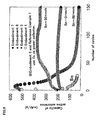
- FIG. 25 is a graph of the charge and discharge curve when antimony is used as a negative electrode active substance in a lithium ion secondary battery.
- a negative electrode material for a sodium secondary battery (sodium ion secondary battery) according to the present invention includes sulfide or sulfide composite body containing sulfur and antimony.
- the negative electrode material for a sodium secondary battery may include the following component(s) of (i) as necessary: (i) at least one or more element(s) selected from a group consisting of Sn, As, Bi, Ge, Ga, Pb, and C, wherein when a component(s) of (i) is included, the ratio of each of the above described components is sulfur: 10 to 70 mol %, antimony: 10 to 70 mol %, and (i): 3 to 60 mol %.
- sulfide and antimony are indispensable components for the negative electrode material for a sodium secondary battery according to the present invention, and the above described components of (i) are optional components which can be added as necessary.
- the ratio of sulfur and antimony is sulfur: 40 to 75 mol % and antimony: 25 to 60 mol %.
- the above described sulfide or sulfide composite body changes into at least sodium sulfide (Na 2 S) during the process of initial charge (sodium ion absorption) and does not react during subsequent processes of charge and discharge. That is, it is reduced by sodium and decomposed into at least a solid electrolyte layer.
- SnO forms sodium oxide (Na 2 O) which is a solid electrolyte during the process of initial charge.
- sodium oxide has poor ionic conductivity, its cycle life characteristics are poor.
- a sodium sulfide (Na 2 S)-based solid electrolyte layer is a solid body that can transport sodium ion during the process of absorption and release of sodium ion.
- a negative electrode material for a sodium secondary battery according to the present invention is decomposed into a sodium sulfide (Na 2 S)-based solid electrolyte during the process of initial charge so as to have good ionic conductivity, it has good cycle life characteristics even with high capacity.
- sulfur is an indispensable element for forming sodium sulfide during initial charge
- antimony serves to absorb and release sodium in a reversible manner as well as enhancing the cycle life characteristics of the negative electrode material, of which reason is not certain.
- (i) serves to absorb and release a large amount of sodium in a reversible manner.
- antimony is not a negative electrode active substance in a lithium secondary battery. According to an experiment conducted by the present inventors, antinomy absorbs lithium at a capacity exceeding 1000 mAh/g during first cycle, as shown in FIG.
- Sulfur is 10 to 70 mol % not only because if it is less than 10 mol %, an electrode with reduced amount of a sodium sulfide-based solid electrolyte that can be formed and with poor ionic conductivity or an electrode with reduced amount of a buffer layer absorbing volume expansion of (i) during charge and discharge and with poor cycle life characteristics will be formed, but also because if it is more than 70 mol %, an electrode with low negative electrode capacity due to reduced amount of antimony and (i) will be formed, neither of which is preferable.
- Sulfur is more preferably 20 to 65 mol % and even more preferably 30 to 60 mol %.
- Antimony is 10 to 70 mol % not only because if it is less than 10 mol %, an electrode with low negative electrode capacity and with poor cycle life characteristics will be formed, but also because if it is more than 70 mol %, an electrode with reduced amount of a sodium sulfide-based solid electrolyte that can be formed and with poor ionic conductivity or an electrode with reduced amount of a buffer layer absorbing volume expansion of (i) during charge and discharge and with poor cycle life characteristics will be formed due to reduced amount of sulfur, neither of which is preferable.
- Antimony is more preferably 20 to 65 mol % and even more preferably 30 to 60 mol %.
- (i) is 3 to 60 mol % not only because if it is less than 3 mol %, an electrode with low negative electrode capacity will be formed, but also because if it is more than 60 mol %, an electrode with reduced amount of a sodium sulfide-based solid electrolyte that can be formed and with poor ionic conductivity or an electrode with reduced amount of a buffer layer absorbing volume expansion of (i) during charge and discharge and with poor cycle life characteristics and also with reduced amount of antimony with poor cycle life characteristics will be formed due to reduced amount of sulfur, neither of which is preferable.
- (i) is more preferably 20 to 55 mol % and even more preferably 30 to 50 mol %.
- the sulfide, etc. constituting the negative electrode material for a sodium secondary battery according to the present invention is preferably vitrified.
- the sulfide, etc. can include Ge so as to be vitrified.
- Ge serves to form the glass framework.
- the content of Ge is preferably 0.5 to 40 mol % and more preferably 1 to 20 mol %. If the content of Ge is less than 0.5 mol %, vitrification is likely to be insufficient. If it is more than 40 mol %, an electrode will be formed having poor cycle life characteristics because of a reduced amount of antimony and having low negative electrode capacity because of a reduced amount of (i). This electrode will be costly because Ge is an expensive element. Therefore, neither case is preferable.
- the above described sulfide composite body includes a composite of two or more kinds of sulfides.
- a manufacturing method of the sulfide composite body constituting the negative electrode material for a sodium secondary battery according to the present invention is not particularly limited, but for example the sulfide composite body can be manufactured by sealing a specified amount of the material of each component in a quartz ample and vitrifying the sealed content through heat treatment.
- the material in addition to the indispensable components of sulfur (S) and antimony (Sb), a single metal such as Sn, Bi, Ge, Ga, Sn, and Pb, or a sulfide of any of these elements, or a nonmetal such as As and C (hard carbon, etc) can be used as an optional component(s) (i) as necessary.
- the inside of the quartz ample used is sufficiently dried using a vacuum dryer. Furthermore, during vitrification, it is heated preferably at 400 to 1100° C. and more preferably at 600 to 800° C.
- the heat treatment time may be long enough to vitrify the content sealed in the quartz ample and generally it is preferably 1 to 30 hours and more preferably 5 to 24 hours.
- the above described content can be sufficiently vitrified by heating at 400 to 1100° C. for 1 to 30 hours.
- the handling of the sulfide, etc. in the air and the use of a water-based binder, which were impossible with conventional sulfides, are possible since the sulfide, etc. have excellent water-resistant properties.
- the sulfide, etc. having the above described composition can improve conductive properties by formation of conductive coating with a conductive metal, carbon etc. This enables the sulfide, etc. to more improve its battery properties as a negative electrode active substance for a sodium battery.
- a method of forming the coating of a conductive metal, carbon or the like on the sulfide, etc. known art such as the sputtering method, deposition method, mechanical alloy (MA) method, rotary kiln method, and non-electrolytic plating method can be used.
- the amount of the conductive coating is preferably about 0.1 to 30 weight parts per 100 weight parts of the sulfide, etc., more preferably about 0.5 to 25 weight parts and even more preferably about 1 to 10 weight parts.
- a carbon precursor used in this method may be an organic material that can be carbonized by heating, and for example a hydrocarbon-based organic substance with adhesive properties, coal-based pitch, petroleum-based pitch and other substance can be used.
- a hydrocarbon-based organic substance with adhesive properties there are given as examples a hydrocarbon-based organic substance with adhesive properties, phenol resin, furan resin, citric acid, PVA, urushiol and the like.
- One of these carbon precursors can be used singly or two or more of them can be mixed.
- the heating temperature can be high enough to carbonize a carbon precursor, and for example it is preferably around 300 to 1100° C. and more preferably 500 to 900° C. In this case, too low heating temperature (less than 300° C.) makes it difficult for a carbon precursor to be carbonized; and on the other hand, too high heating temperature (more than 1100° C.) is not preferable not only because carbon sulfide, etc. could be generated due to reaction of the sulfide, etc. with carbon but also because it is costly due to use of a large scale apparatus.
- the heat treatment time may be long enough to carbonize a carbon precursor, and generally it may be about 1 to 24 hours.
- the atmosphere for carbonization treatment may be a non-oxidizing atmosphere such as inert atmosphere and reductive atmosphere. Specifically, it may be an atmosphere of He (helium), Ne (neon), Ar (argon), N 2 (nitrogen), H 2 (hydrogen) or the like.
- Both the above described sulfide, etc. and this sulfide, etc. with the conductive coating formed on it can be used effectively as a negative electrode active substance for a sodium secondary battery.
- the negative electrode material for a sodium secondary battery according to the present invention may include only the above described sulfide, etc., but preferably it is a composite powder of a material capable of electrochemically absorbing and releasing sodium (hereinafter referred to as “component A”) and the above described sulfide, etc. (hereinafter referred to as “component B”).
- component A a material capable of electrochemically absorbing and releasing sodium
- component B the above described sulfide, etc.
- the composite powder of component A and component B is used as the negative electrode material for a sodium secondary battery according to the present invention, it can be manufactured by a manufacturing method including the following step (A) and step (B):
- (B) a step of making a composite of component A and component B.
- step (A) and step (B) the above described manufacturing method of the sulfide composite body can be used as step (A), for example.
- step (B) a step of making a composite of component A and component B through mechanical milling, a step of dispersing component A in melted component B and crushing it after cooling or other step can be used. These steps (B) are described later in detail.
- Component A is not particularly limited so long as it can absorb sodium ion during initial charge and can absorb and release sodium ion during subsequent cycles of charge and discharge.
- it may be at least one or more element(s) selected from a group consisting of C, Mg, P, Ca, Sc, V, Cr, Mn, Fe, Co, Zn, Ga, Ge, Y, Zr, Nb, Mo, Pd, Ag, Cd, In, Sn, Sb, W, Pb, and Bi, an alloy, an oxide, chalcogen compound or halogen compound using any of these elements.
- At least one or more element(s) selected from a group consisting of C, Mg, Ti, Zn, Ge, Ag, In, Sn, and Pb, an alloy, an oxide, chalcogen compound or halogen compound using any of these elements are preferable in that the discharge plateau range can include the range of 0 to 1 V (vs. Na + /Na).
- Zn, Ge, Ag, Sn, Bi, etc. are preferable as elements, a combination of Al—Ge, Si—Ge, Si—Sn, Zn—Sn, Ge—Ag, Ge—Sn, Ge—Sb, Ag—Sn, Ag—Ge, Sn—Sb, Sb—Bi, etc.
- SnO, SnO 2 , SnC 2 O 4 , GeO, etc. are preferable as oxides, SnS, SnS 2 , etc. are preferable as chalcogen compounds, and SnF 2 , SnCl 2 , SnI 2 , SnI 4 , etc. are preferable as halogen compounds.
- One kind of component A may be used, and two or more kinds may also be used.
- component A is 5 to 80 mass % and component B is 95 to 20 mass %, and more preferably component A is 20 to 70 mass % and component B is 80 to 30 mass %, given that the total amount of both is 100 mass %.
- component A is Sn and that component A (Sn) is 5 to 35 mass % and component B is 95 to 65 mass %
- the capacity per weight of an active substance is 200 to 400 mAh/g and the cycle life characteristics are excellent, and thus this ratio is preferable for a long life negative electrode.
- component A (Sn) is 35 to 80 mass % and that component B is 65 to 20 mass %, the capacity per weight of an active substance is very high, 300 to 700 mAh/g, and thus this ratio is preferable for high capacity negative electrode.
- component A and component B may exist as the main component phase in the above described composite powder, and the existence of a very small amount of impurities does not adversely affect the cycle.
- component B is phase-separated into sodium sulfide, antimony and tin through Na reduction during the process of initial charge (Na absorption). Since sodium sulfide is not involved as an active substance under the condition of 0 to 1 V (vs. Na + /Na), it is not involved in subsequent charge and discharge reactions, either.
- Na 2 S generated during the process of charge have excellent ionic conductivity.
- Component A is a metal component which reacts principally with Na, and it has excellent electric conductivity. Therefore, during the process of charge and discharge of the composite powder constituting the negative electrode material for a sodium secondary battery according to the present invention, excellent conductivity is obtained in terms of both ionic conductivity and electric conductivity.
- Component A and phase-separated Sb and Sn change into sodium phase by further absorbing Na and become a reversible phase of a capacitance component.
- the negative electrode material for a sodium secondary battery according to the present invention which includes the above described composite powder, has large reversible electric capacity of phase-separated Sb and Sn, and component A and the framework of irreversible component of Na 2 S phase as both a solid electrolyte layer and buffer layer to exhibit excellent characteristics in terms of high capacity, cycle life, etc.
- component A is coated with component B.
- component B the ionic conductivity of component A can be enhanced during absorption and release (charge and discharge) of sodium and cracks caused by expansion and contraction can be controlled. Consequently, since an active substance, which with only component A has poor ionic conductivity and poor cycle life, can enhance the ionic conductivity and cycle characteristics, even an active substance with poor conductive properties or with high capacity (large volume expansion) improves its cycle life characteristics.
- Component A may be a primary particle itself or a cohered secondary particle, etc.
- component A may be coated with component B or only a part of component A may be coated with component B. If only a part of component A is coated with component B, 20% or more of the surface area of component A is coated with component B.
- SEM scanning electron microscope
- the method of coating the surface of component A with component B is not particularly limited, but for example a method of mixing materials including component A and component B and performing a mechanical milling treatment can be used.
- the mechanical milling treatment is a method for applying external force of impact shock, tension, friction, compression, shear, etc. to the material powder (at lease component A and component B), and this method includes using a tumbling mill, vibrating mill, planetary mill, oscillating mill, horizontal mill, attritor mill, jet mill, grinding machine, homogenizer, fluidizer, paint shaker, mixer, etc.
- the material powder and a ball are placed in a container, and the material powder can be crushed and mixed or subjected to solid-phase reaction with mechanical energy generated through rotation and revolution. It is known that this method can crush the powder into nano-order particles.
- the material powder of a negative electrode material includes at least component A and component B. Since component B has low mechanical strength compared to component A, component B is easier to be crushed than component A. Therefore, the microparticulated powder of component B is pressure-bonded on the powder surface of component A by means of a ball, etc. so as to coat component A with component B.
- the surface of component A with component B there is a method of dispersing component A in melted component B and then crushing it after cooling. If the amount of component B is smaller than that of component A, it is difficult to coat component A with component B by means of the above described mechanical milling treatment, and therefore this method (the method of dispersing component A in melted component B and then crushing it after cooling) is preferably used.
- the conditions for melting component B are not particularly limited, but component B is not easily melted at the heating temperature of less than 400° C. and it is likely to be decomposed at the temperature of more than 1100° C. Therefore, the heating temperature is preferably around 400 to 1100° C. and more preferably 500 to 900° C.
- a conductive aid may be included in component B.
- a conductive aid may be dispersed in the melted state of component B.
- a conductive aid may be included in component B during the above described step (A), and a conductive aid may also be included in component B during both step (A) and step (B).
- a conductive aid is not particularly limited, but since a metal, conductive polymer, etc. are likely to react with component B, preferably carbon black is used.
- a carbon black acetylene black (AB), ketjen black (KB), carbon fiber (VGCF), carbon nanotube (CNT), graphite, soft carbon, hard carbon, mesoporous carbon, graphene, vapor-phase growth carbon, etc. can be used.
- a carbon precursor may be used as a conductive aid. Given that component B is 100 wt %, the content of a conductive aid included is preferably 0.1 to 10 wt % and more preferably 0.5 to 5 wt %.
- the content is 0.1 to 10 wt %, sufficient effect of improving conductivity is achieved, high rate discharge characteristics can be enhanced, and capacity reduction as a result of the removal of component B from component A can be minimized.
- a conductive aid with high cohesive properties such as carbon black
- the conductive aid is dispersed by a stirrer, ultrasonic waves or other means.
- a sodium secondary battery using the above described composite powder as a negative electrode material for a sodium battery has high capacity, good cycle life characteristics and excellent water-resistant properties.
- the above described sulfide, etc. for example, antimony sulfide, sulfide glass
- a sulfide, etc. with a conductive coating formed thereon can also be used as an effective negative electrode material for a sodium secondary battery. Adhesive formation on a power collector with the negative electrode material according to the present invention enables the negative electrode for a sodium secondary battery to function well.
- Adhesive formation means fixing the negative electrode material according to the present invention to a power collector while they are in a contact. That is, it means filling the negative electrode material or fixing the negative electrode material with a power collector such as a metal net.
- the method of adhesive formation is not particularly limited, but for example, a pressure bonding method, slurry method, paste method, electrophoretic method, dipping method, spin coat method or aerosol deposition method can be used. Particularly, if a metal foam such as foamed nickel is used as a power collector, a slurry method or paste method is preferable in terms of the filling density, rate of manufacturing an electrode, etc.
- a conductive aid for adding conductivity or a binder for adding cohesive properties may be included in a negative electrode, as necessary.
- a conductive aid, binder, etc. can be included in component B by adding the conductive aid, binder etc. during the above described step (A) and/or step (B), but even in this case, a conductive aid, binder, etc. may be included in manufacturing the negative electrode using the negative electrode material.
- an appropriate solution such as N-methyl-2-pyrrolidone (NMP), water, alcohol, xylene and toluene
- NMP N-methyl-2-pyrrolidone
- water alcohol
- a mixture including the above described negative electrode material as well as a conductive aid, binder, etc.
- the obtained paste composition of the negative electrode mixture, negative electrode mixture slurry, etc. is applied, dried, and then pressed on the surface of a power collector to form a negative electrode material-containing layer on the surface of the power collector.
- the layer can be used as a negative electrode.
- a horn-shaped, cylinder-shaped, coin-shaped or other-shaped sodium secondary battery may be assembled using known battery elements (such as a positive electrode, separator and electrolyte) of a sodium secondary battery in accordance with a general method.
- a generally used aid for example any of the above described aids may be used, and if a carbon material is included in the aid, the type (structure, etc.) of the carbon material is not particularly limited.
- a carbon material such as acetylene black (AB), ketjen black (KB), graphite, carbon fiber, carbon tube, graphene or amorphous carbon may be used singly or a combination of two or more of them may be used.
- a material capable of forming a three-dimensional conductive mesh structure for example, a conductive material in a flake form (such as flake copper powder and flake nickel powder), carbon fiber, carbon tube and amorphous carbon
- With the formation of a three-dimensional conductive mesh structure sufficient power can be collected for a negative electrode material for a sodium secondary battery, and volume expansion of an electrode (particularly an alloy component) can be effectively controlled during absorption of Na.
- a binder As a binder, a generally used material, such as polyvinylidene fluoride (PVdF), polytetrafluoroethylene (PTFE), polyimide (PI), polyamide, polyamide-imide, polyacryl, styrene-butadiene rubber (SBR), styrene-ethylene-buthylene-styrene copolymer (SEBS), carboxymethylcellulose (CMC), polyacrylic, PVA, PVB, EVA, etc. may be used singly or a combination of two or more of them may be used.
- PVdF polyvinylidene fluoride
- PTFE polytetrafluoroethylene
- PI polyimide
- SBR styrene-butadiene rubber
- SEBS styrene-ethylene-buthylene-styrene copolymer
- CMC carboxymethylcellulose
- polyacrylic, PVA, PVB, EVA, etc. may be used sing
- the negative electrode material according to the present invention is 50 to 99 mass %
- the content of a conductive aid is 0.5 to 40 mass %
- the content of a binder is 0.5 to 30 mass %.
- the thickness of a negative electrode-containing negative electrode layer depends on electrode capacity density, but for example it is preferably 0.5 to 200 ⁇ m. With the thickness of a layer including a negative electrode material in this range, an electric capacity suitable for practical use can be obtained while the negative electrode material is supported by a power collector.
- a power collector is not particularly limited so long as it is a material with electronic conductivity that can be conducted through the supported negative electrode material.
- a conductive substance such as C, Cu, Al, Ti, Cr, Ni, Mo, Ru, Rh, Ta, W, Os, Ir, Pt, and Au and an alloy including two or more of these conductive substances (for example, stainless steel) can be used.
- C, Cu, Al, Ti, Cr, Ni, Cu, Au, stainless steel, etc. is preferable in terms of high electric conductivity and high stability in electrolytic liquid, and C, Cu, Al, Ni, Cu, stainless steel, etc. is preferable in terms of low material cost.
- a power collector is configured in a line, stick, plate, foil, net, woven cloth, nonwoven cloth, expanded form, porous body or foam, and among them an expanded form, porous body or foam is preferable in terms of high filling density and good output characteristics.
- any conventional material such as sodium cobalt oxide (NaCoO 2 ), sodium nickel oxide (NaNiO 2 ), sodium cobalt manganese nickel oxide (NaCo 0.33 Ni 0.33 Mn 0.33 O 2 ), sodium manganese oxide (NaMn 2 O 4 ), sodium iron oxide (NaFeO 2 ), sodium iron phosphate (NaFePO 4 ), a vanadium oxide-based material, a sulfur-based material, and graphite is used.
- sodium cobalt oxide NaCoO 2
- sodium nickel oxide NaNiO 2
- sodium cobalt manganese nickel oxide NaCo 0.33 Ni 0.33 Mn 0.33 O 2
- sodium manganese oxide NaMn 2 O 4
- sodium iron oxide NaFeO 2
- NaFePO 4 sodium iron phosphate
- vanadium oxide-based material a sulfur-based material, and graphite
- any separator used for a known lithium secondary battery and sodium secondary battery can be used.
- a porous sheet including resin such as polyethylene (PE), polypropylene (PP), polyester, cellulose and polyamide; glass filter; nonwoven cloth, etc. can be used, but not limited to them.
- sodium salt is preferable as an electrolytic salt.
- salt such as NaPF 6 , NaBF 4 . NaClO 4 , NaTiF 4 , NaVF 5 , NaAsF, NaSbF 6 , NaCF 3 SO 3 , Na(C 2 F 5 SO 2 ) 2 N, NaB(C 2 O 4 ) 2 , NaB 10 Cl 10 , NaB 12 Cl 12 , NaCF 3 COO, Na 2 S 2 O 4 , NaNO 3 , Na 2 SO 4 , NaPF 3 (C 2 F 5 ) 3 , NaB(C 6 F 5 ) 4 , and Na(CF 3 SO 2 ) 3 C can be used as the sodium salt.
- the above described sodium salts which have excellent charge and discharge cycle characteristics because of their high electronegativity and easy ionization, can enhance the charge and discharge capacity of a secondary battery.
- NaPF 6 is preferably used as electrolytic salt.
- concentration of the electrolyte concentration of the salt in a solvent
- concentration of the electrolyte is not particularly limited, but it is preferably 0.1 to 3 mol/L, and more preferably 0.5 to 2 mol/L.
- PC propylene carbonate
- EC ethylene carbonate
- DMC dimethyl carbonate
- DEC diethyl carbonate
- EMC ethyl methyl carbonate
- both ethylene carbonate and diethyl carbonate can be adjusted within the range of 10 to 90 volume %.
- EC-containing solvent is preferably used as the electrolyte solvent.
- the electrolyte solvent When the EC-containing solvent is used as the electrolyte solvent, effect of improving the cycle life of the negative electrode can be enhanced.
- EC which is a solid at normal temperature, does not function as electrolyte by itself.
- a solid electrolyte may be used instead of a solvent.
- the structure of a sodium secondary batter is not particularly limited, but the sodium secondary battery can employ the existing battery configuration/structure of stack-type battery, winding-type battery or the like. A sodium secondary battery with the above described structure functions as a secondary battery.
- Sulfides, etc. 1 to 9 consisting of the compositions shown in Table 1 were prepared.
- Commercially available antimony sulfide (Sb 2 S 3 ) (made by Kojundo Chemical Co., Ltd) was used as Sulfide, etc. 1.
- Materials for Sulfides, etc. 2 to 5 were prepared according to the compositions shown in Table 1 below, and sulfide glasses were obtained by melting the prepared materials through heat treatment. As a heat treatment condition, the prepared materials were heated up to the specified temperature at the heating speed of 20° C./hour and then retained at the same temperature for 12 hours. Then, the prepared materials naturally cooled down to normal temperature so as to obtain Sulfides, etc. 2 to 5. It is confirmed that the obtained Sulfides, etc. 2 to 8 were vitrified through the XRD measurement of the sulfides using an X ray diffractometers. It is noted that Sulfides, etc. 1 and 9 were not vitrified.
- Component A and/or component B shown in Table 2 below as a starting material(s) is subjected to crushing or milling treatment using a planetary ball mill with a zirconia ball and container (at normal temperature and normal pressure and under the atmosphere of argon gas).
- the starting materials, the preparation ratio of component A and component B and the synthesis conditions (acceleration of gravity, and time) used in Embodiments 1 to 16 and Reference Examples 1 to 3 are shown in Table 2.
- the composite powder having the surface of component A coated with component B was obtained through milling treatment of component A and component B in Embodiments 6 to 11 and 16. Powder only including component B was obtained in Embodiments 1 to 5 and 12 to 15 since it only included component B, and powder only including component A was obtained in Reference Examples 1 to 3 since it only included component A.
- a slurry mixture was prepared by mixing a negative electrode active substance: 80 wt %, PI binder: 15 wt % and KB: 5 wt %, and a test electrode (negative electrode) was obtained by applying and drying the mixture on a metal foil, joining the applied film with the metal foil tightly by a roll press machine and then heat-treating it (under reduced pressure, at 200° C. and for an hour or longer).
- a copper foil (43 ⁇ m in thickness) was used as the metal foil in Embodiments 1 to 5 and 12 to 15, and Reference Examples 1 to 3, and an aluminum foil (20 ⁇ m in thickness) was used as the meal foil in Embodiments 6 to 11 and 16. It is noted that a test electrode using a copper foil (20 ⁇ m in thickness) was also prepared for Embodiment 8 under the same condition (hereinafter, the test electrode with the copper foil is referred to as “Embodiment 8-1” and the test electrode with the aluminum foil is referred to as “Embodiment 8-2”).
- a test cell (coin cell (CR2032) was prepared including a counter electrode, a separator, and an electrolyte, wherein a metal sodium foil (13 mm in diameter, 0.5 mm in thickness) was used as the counter electrode, a glass filter (GA100) was used as the separator, and a solution in which NaP 6 was solved in a mixed solvent of EC:DMC (1:1 volume %) (concentration: 1 mol/L) was used as the electrode.
- Embodiment 1 has a low capacity of about 200 mAh/g, but the cycle life characteristics thereof are stable. Compared to the case where only Sn was used (Reference Example 1) and the case where only Sb was used (Reference Example 3), Embodiment 1 has better cycle life characteristics (see FIGS. 1, 9 and 15 , and Table 3).
- Embodiment 2 has better cycle life characteristics compared to the case where only Sn was used (Reference Example 1) and the case where only Sb was used (Reference Example 3), but the capacity thereof decreases after 40 cycles (see FIGS. 2, 9 and 15 , and Table 3).
- Embodiment 3 has better cycle life characteristics than Embodiments 1 and 2. The reason thereof is supposedly because Embodiment 3 contains Ge (see FIGS. 3, 8 and 17 ).
- Embodiment 4 has better cycle life characteristics than Embodiments 1 and 2, and it is recognized that the cycle life characteristics are good even if the amount of Sb in Embodiment 3 is increased (see FIGS. 4, 8 and 18 ).
- Embodiment 5 has the capacity of its active substance increased as the number of cycles increases (see FIGS. 5, 8 and 19 ).
- Embodiments 2 to 5 are good in order of Embodiment 3, Embodiment 4, Embodiment 5, and Embodiment 2 (see FIG. 8 ).
- Embodiment 6 has the capacity of its active substance more increased than that of Embodiment 3. It is recognized from this that the capacity of an active substance increases when sulfide, etc. and Sn make a composite (see FIGS. 6 and 20 ).
- Embodiment 7 has the capacity of its active substance up to ten cycles (500 to 600 mAh/g) larger than that of Embodiment 6, but its cycle characteristics became poor. It is recognized from this that the cycle life characteristics deteriorate when the amount of Sb for making a composite with sulfide, etc. is excessive (see FIGS. 7, 9 and 21 ).
- FIGS. 10 to 14 and 22 to 24 showing the cycle lives and the charge and discharge characteristics of Embodiments 8 to 11, and Reference Example 2.
- Embodiment 8-1 has a stable capacity of its active substance equal to or larger than 300 mAh/g over many cycles. It is recognized from this that even if sulfide, etc. 1 (Sb 2 S 3 ) which is not vitrified is used as raw material, the capacity of its active substance and its cycle life characteristics remarkably improve when the sulfide, etc. 1 makes a composite with another material (Sn) (see FIGS. 10, 14 and 22 ).
- Embodiment 8-2 uses aluminum as a power collector to prevent the deterioration of the electrode in Embodiment 8-1, and it has a stable capacity of its active substance equal to or higher than 300 mAh/g over many cycles, and the capacity of its active substance only slightly deteriorates over 150 cycles of charge and discharge, and the deterioration of the power collector was not confirmed (see FIGS. 11 and 23 ).
- Embodiment 9 has its irreversible amount less than that of Embodiment 8. The reason thereof is supposedly because the amount of Sn in Embodiment 9 was larger than that of Embodiment 8. In addition, when the amount of Sn was increased, a multi-stage plateau of the capacity of the active substance became obvious (see FIGS. 12 and 24 ).
- Embodiments 10 and 11 have low capacities of about 200 mAh/g and about 250 mAh/g, respectively, but their cycle life characteristics are stable, and are better than the cycle life characteristics of the case where only Sn was used (Reference Example 1) (see FIG. 13 ).
- a sodium secondary battery using sulfide, etc. (Embodiments 1 to 5) according to the present invention as negative electrode material has better cycle life characteristics than the case where Sn is used as a negative active substance, and its cycle life characteristics can further improve when Ge is included in the negative material.
- the sulfide, etc. make a composite with an other component(s) (Sn, SnS, Ge, etc.) (Embodiments 6-10)
- the capacity of the active substance increases, and the sodium secondary battery can have excellent cycle characteristics while maintaining high discharge capacity.
- a secondary battery using a negative electrode for a sodium secondary battery according to the present invention has high energy density and good cycle life characteristics. Accordingly, it can not only be used as a power source for electric power tool, automobile and the like, but can also be used in applications of electric equipment, electric product, vehicle and the like. In addition, it can also be used as a back-up power source.
- electric equipment electric products and vehicles
- a negative electrode for a sodium secondary battery obtained by the present invention has good cycle life characteristics with high capacity, and a sodium secondary battery using this can be endurable for practical use.
- a cheap aluminum foil can be used as a power collector of negative electrode for a sodium ion battery. Therefore, if the sodium ion battery can replace a lithium ion battery which is currently a mainstream of second battery, it is possible to manufacture a secondary battery at a cheaper cost than heretofore. Accordingly, the present invention greatly contributes to a further growth of the secondary battery market.
Landscapes
- Chemical & Material Sciences (AREA)
- Electrochemistry (AREA)
- General Chemical & Material Sciences (AREA)
- Chemical Kinetics & Catalysis (AREA)
- Engineering & Computer Science (AREA)
- Inorganic Chemistry (AREA)
- Manufacturing & Machinery (AREA)
- Materials Engineering (AREA)
- Physics & Mathematics (AREA)
- Condensed Matter Physics & Semiconductors (AREA)
- General Physics & Mathematics (AREA)
- Composite Materials (AREA)
- Battery Electrode And Active Subsutance (AREA)
- Secondary Cells (AREA)
Applications Claiming Priority (3)
| Application Number | Priority Date | Filing Date | Title |
|---|---|---|---|
| JP2011-241539 | 2011-11-02 | ||
| JP2011241539 | 2011-11-02 | ||
| PCT/JP2012/078329 WO2013065787A1 (ja) | 2011-11-02 | 2012-11-01 | ナトリウム二次電池用負極材料及びその製造方法、並びにナトリウム二次電池用負極及びナトリウム二次電池 |
Publications (2)
| Publication Number | Publication Date |
|---|---|
| US20150280220A1 US20150280220A1 (en) | 2015-10-01 |
| US9553308B2 true US9553308B2 (en) | 2017-01-24 |
Family
ID=48192125
Family Applications (1)
| Application Number | Title | Priority Date | Filing Date |
|---|---|---|---|
| US14/355,252 Active 2033-07-26 US9553308B2 (en) | 2011-11-02 | 2012-11-01 | Negative electrode material for sodium secondary battery and method for producing same, negative electrode for sodium secondary batter, and sodium secondary battery |
Country Status (6)
| Country | Link |
|---|---|
| US (1) | US9553308B2 (ko) |
| EP (1) | EP2782169B1 (ko) |
| JP (1) | JP6119021B2 (ko) |
| KR (1) | KR101649427B1 (ko) |
| CN (1) | CN103999272B (ko) |
| WO (1) | WO2013065787A1 (ko) |
Cited By (1)
| Publication number | Priority date | Publication date | Assignee | Title |
|---|---|---|---|---|
| US10141573B2 (en) * | 2013-04-10 | 2018-11-27 | National Institute Of Advanced Industrial Science And Technology | Lithium secondary battery negative electrode active material and method for manufacturing same |
Families Citing this family (18)
| Publication number | Priority date | Publication date | Assignee | Title |
|---|---|---|---|---|
| JP5002824B1 (ja) * | 2011-03-02 | 2012-08-15 | 独立行政法人産業技術総合研究所 | リチウム二次電池用負極材料及びその製造方法、並びにリチウム二次電池用負極及びリチウム二次電池 |
| US9431655B2 (en) | 2012-03-28 | 2016-08-30 | Sharp Laboratories Of America, Inc. | Antiomony and layered carbon network battery anode |
| JP5777555B2 (ja) * | 2012-03-30 | 2015-09-09 | 京セラ株式会社 | 蓄電デバイス |
| FR3007204B1 (fr) * | 2013-06-17 | 2022-03-18 | Centre Nat Rech Scient | Utilisation de nouveaux composes a titre de matiere active d'electrode negative dans une batterie sodium-ion. |
| JP6460316B2 (ja) * | 2013-12-09 | 2019-01-30 | 日本電気硝子株式会社 | ナトリウムイオン電池用電極合材、及びその製造方法並びにナトリウム全固体電池 |
| WO2015161400A1 (zh) * | 2014-04-21 | 2015-10-29 | 厦门大学 | 硫基过渡金属复合型负极活性物质及相应负极及相应电池 |
| KR102437075B1 (ko) * | 2014-12-01 | 2022-08-30 | 한국전기연구원 | 나트륨 2차 전지용 전해액 |
| CN105514392B (zh) * | 2016-01-25 | 2017-10-13 | 陕西科技大学 | 一种SnS2‑SnO2纳米片状钠离子电池负极复合材料及其制备方法 |
| KR101948217B1 (ko) * | 2016-07-26 | 2019-02-14 | 한국과학기술연구원 | 이차전지용 음극 소재, 이를 포함하는 이차전지 및 이의 제조방법 |
| JP7052215B2 (ja) * | 2017-05-08 | 2022-04-12 | 日本電気硝子株式会社 | 蓄電デバイス用部材及び蓄電デバイス |
| TWI654269B (zh) * | 2017-12-19 | 2019-03-21 | 財團法人工業技術研究院 | 黏著組合物 |
| KR102198713B1 (ko) * | 2019-01-16 | 2021-01-05 | 금오공과대학교 산학협력단 | 니오븀-안티몬 금속간 화합물 (Nb5Sb4) 제조 방법, 이에 의해 제조된 화합물을 포함하는 이차전지용 전극 물질, 이를 포함하는 리튬 또는 나트륨 이차전지 |
| CN111204731B (zh) * | 2020-01-07 | 2022-05-27 | 大连理工大学 | 一种钠离子电池硬炭负极材料的制备方法 |
| US11366531B2 (en) * | 2020-04-29 | 2022-06-21 | Science House LLC | Systems, methods, and apparatus for enhanced peripherals |
| EP4264725A1 (en) * | 2020-12-17 | 2023-10-25 | Umicore | A solid-state electrolyte for solid-state rechargeable sodium-ions batteries |
| CN114927690B (zh) * | 2022-05-06 | 2023-08-29 | 益阳生力材料科技股份有限公司 | 一种氮掺杂碳包覆纳米锑铋合金材料及其制备方法和应用 |
| CN115692827B (zh) * | 2022-11-29 | 2025-08-08 | 深圳新宙邦科技股份有限公司 | 一种钠离子电池 |
| CN119591087B (zh) * | 2025-02-08 | 2025-06-06 | 浙江工业大学 | 无机镍化合物等离子体合成硬碳/镍复合负极材料及其制备方法和应用 |
Citations (14)
| Publication number | Priority date | Publication date | Assignee | Title |
|---|---|---|---|---|
| JPS5873968A (ja) | 1981-08-13 | 1983-05-04 | モ−リ・エネルギ−・リミテツド | 電極ユニット |
| JPH03155062A (ja) | 1989-11-14 | 1991-07-03 | Showa Denko Kk | 二次電池 |
| JP2003059492A (ja) | 2001-08-17 | 2003-02-28 | Matsushita Electric Ind Co Ltd | リチウム二次電池およびその製造方法 |
| JP2003077461A (ja) | 2001-09-03 | 2003-03-14 | Nec Corp | 二次電池用負極 |
| EP1482582A2 (en) | 2003-05-01 | 2004-12-01 | Nissan Motor Co., Ltd. | High-speed charging/discharging electrode and battery |
| US6991662B2 (en) * | 2001-09-10 | 2006-01-31 | Polyplus Battery Company | Encapsulated alloy electrodes |
| JP2006244976A (ja) | 2005-02-07 | 2006-09-14 | Sanyo Electric Co Ltd | 負極およびそれを用いた非水電解質二次電池 |
| JP2008004461A (ja) | 2006-06-26 | 2008-01-10 | Sanyo Electric Co Ltd | 非水電解質二次電池 |
| JP2008103282A (ja) | 2006-10-20 | 2008-05-01 | Idemitsu Kosan Co Ltd | 極材及びそれを用いた固体二次電池 |
| WO2010109889A1 (ja) | 2009-03-27 | 2010-09-30 | 学校法人東京理科大学 | ナトリウムイオン二次電池 |
| WO2011078197A1 (ja) | 2009-12-24 | 2011-06-30 | 住友化学株式会社 | 電極活物質、電極およびナトリウム二次電池 |
| WO2011078195A1 (ja) | 2009-12-24 | 2011-06-30 | 住友化学株式会社 | 電極の製造方法、電極ペーストの製造方法およびナトリウム二次電池 |
| JP2011241539A (ja) | 2010-05-14 | 2011-12-01 | Kayaba Ind Co Ltd | ハイブリッド建設機械 |
| US8586245B2 (en) * | 2004-11-05 | 2013-11-19 | Sony Corporation | Battery |
Family Cites Families (2)
| Publication number | Priority date | Publication date | Assignee | Title |
|---|---|---|---|---|
| JP5448020B2 (ja) * | 2007-03-23 | 2014-03-19 | トヨタ自動車株式会社 | 合材層の製造方法および固体電池の製造方法 |
| JP5696353B2 (ja) * | 2009-07-22 | 2015-04-08 | トヨタ自動車株式会社 | 全固体電池システム |
-
2012
- 2012-11-01 KR KR1020147013830A patent/KR101649427B1/ko not_active Expired - Fee Related
- 2012-11-01 US US14/355,252 patent/US9553308B2/en active Active
- 2012-11-01 CN CN201280053204.0A patent/CN103999272B/zh not_active Expired - Fee Related
- 2012-11-01 WO PCT/JP2012/078329 patent/WO2013065787A1/ja not_active Ceased
- 2012-11-01 EP EP12845609.2A patent/EP2782169B1/en active Active
- 2012-11-01 JP JP2013541837A patent/JP6119021B2/ja active Active
Patent Citations (17)
| Publication number | Priority date | Publication date | Assignee | Title |
|---|---|---|---|---|
| JPS5873968A (ja) | 1981-08-13 | 1983-05-04 | モ−リ・エネルギ−・リミテツド | 電極ユニット |
| JPH03155062A (ja) | 1989-11-14 | 1991-07-03 | Showa Denko Kk | 二次電池 |
| JP2003059492A (ja) | 2001-08-17 | 2003-02-28 | Matsushita Electric Ind Co Ltd | リチウム二次電池およびその製造方法 |
| JP2003077461A (ja) | 2001-09-03 | 2003-03-14 | Nec Corp | 二次電池用負極 |
| US6991662B2 (en) * | 2001-09-10 | 2006-01-31 | Polyplus Battery Company | Encapsulated alloy electrodes |
| EP1482582A2 (en) | 2003-05-01 | 2004-12-01 | Nissan Motor Co., Ltd. | High-speed charging/discharging electrode and battery |
| US8586245B2 (en) * | 2004-11-05 | 2013-11-19 | Sony Corporation | Battery |
| JP2006244976A (ja) | 2005-02-07 | 2006-09-14 | Sanyo Electric Co Ltd | 負極およびそれを用いた非水電解質二次電池 |
| JP2008004461A (ja) | 2006-06-26 | 2008-01-10 | Sanyo Electric Co Ltd | 非水電解質二次電池 |
| JP2008103282A (ja) | 2006-10-20 | 2008-05-01 | Idemitsu Kosan Co Ltd | 極材及びそれを用いた固体二次電池 |
| WO2010109889A1 (ja) | 2009-03-27 | 2010-09-30 | 学校法人東京理科大学 | ナトリウムイオン二次電池 |
| WO2011078197A1 (ja) | 2009-12-24 | 2011-06-30 | 住友化学株式会社 | 電極活物質、電極およびナトリウム二次電池 |
| WO2011078195A1 (ja) | 2009-12-24 | 2011-06-30 | 住友化学株式会社 | 電極の製造方法、電極ペーストの製造方法およびナトリウム二次電池 |
| JP2011134551A (ja) | 2009-12-24 | 2011-07-07 | Sumitomo Chemical Co Ltd | 電極活物質、電極およびナトリウム二次電池 |
| US20120264019A1 (en) * | 2009-12-24 | 2012-10-18 | Sumitomo Chemical Company, Limited | Electrode active material, electrode, and sodium secondary battery |
| JP2011241539A (ja) | 2010-05-14 | 2011-12-01 | Kayaba Ind Co Ltd | ハイブリッド建設機械 |
| US20130035820A1 (en) | 2010-05-14 | 2013-02-07 | Kayaba Industry Co., Ltd. | Hybrid construction machine |
Non-Patent Citations (15)
| Title |
|---|
| Chinese Office Action with Translation, Application No. 201280053204.0, dated Nov. 4, 2015. |
| Extended European Search Report, Application No. EP12845609.2 dated Oct. 2, 2015. |
| International Preliminary Report on Patentability, PCT/JP2012/078329, dated May 2, 2014. |
| International Search Report, PCT/JP2012/078329, dated Jan. 8, 2013. |
| International Written Opinion, PCT/JP2012/078329, dated Jan. 8, 2013. |
| Jong-Seon Kim et al. "The Additional of Iron to NiSelectrode for Sodium Secondary Battery" vol. 11, No. 1 dated Nov. 26, 2010. |
| Kataoka, Riki et al., Development of high capacity positive electrode material for sodium ion battery, Pacific Rim Meeting on Electrochemical and Solid-State Science 2012 (Prime 2012), Oct. 7, 2012, Abstract 1841. |
| Korean Office Action with Translation, Application No. 10-2014-7013830 Dated Nov. 17, 2015. |
| Mukai et al. The substance of lectures for the 79th battery debate, 3D32, p. 138 (2012) Publication date: Mar. 29, 2012. |
| Mukai, Takashi et al., "1C04 Sn-Sb-kei Iou Glass Fukyoku o Mochiita Li Ion Niji Denchi Tokusei", the 52nd Battery Symposium in Japan Koen Yoshishu, Oct. 17, 2011 (Oct. 17, 2011), p. 181. |
| Mukai, Takashi et al., 3D32 Sodium Ion Denchi-yo Sn-Sb-kei Ryukabutsu Fukyoku no Kenkyu Kaihatsu, Abstracts of the 79th Annual Meeting of the Electrochemical Society of Japan, Mar. 29, 2012, p. 138. |
| Senguttuvan, et al., Na2Ti3O7: Lowest Voltage Ever Reported Oxide Insertion Electrode for Sodium Ion Batteries, Chemistr of Materials, Aug. 30, 2011, vol. 23, pp. 4108-4111. |
| Yamashita et al. "The substance of lectures for the 52nd battery debate", 1C04, p. 108 (2011) Publication date: Oct. 17, 2011. |
| Yamashita et al. The substance of lectures for the 53rd battery debate, 1D29, p. 227 (2012) Publication date: Nov. 14, 2012. |
| Yamashita N et al. "Development of Tin-antimony Sulfide Glass Anode and Their Li Ion Battery Performance" vol. 52, dated Oct. 17, 2011. |
Cited By (1)
| Publication number | Priority date | Publication date | Assignee | Title |
|---|---|---|---|---|
| US10141573B2 (en) * | 2013-04-10 | 2018-11-27 | National Institute Of Advanced Industrial Science And Technology | Lithium secondary battery negative electrode active material and method for manufacturing same |
Also Published As
| Publication number | Publication date |
|---|---|
| CN103999272B (zh) | 2017-03-15 |
| CN103999272A (zh) | 2014-08-20 |
| WO2013065787A1 (ja) | 2013-05-10 |
| EP2782169B1 (en) | 2020-02-19 |
| EP2782169A4 (en) | 2015-11-04 |
| KR20140092365A (ko) | 2014-07-23 |
| US20150280220A1 (en) | 2015-10-01 |
| KR101649427B1 (ko) | 2016-08-18 |
| JP6119021B2 (ja) | 2017-04-26 |
| EP2782169A1 (en) | 2014-09-24 |
| JPWO2013065787A1 (ja) | 2015-04-02 |
Similar Documents
| Publication | Publication Date | Title |
|---|---|---|
| US9553308B2 (en) | Negative electrode material for sodium secondary battery and method for producing same, negative electrode for sodium secondary batter, and sodium secondary battery | |
| JP7707244B2 (ja) | リチウムイオン電池 | |
| EP3667783B1 (en) | Lithium-ion battery electrode material, lithium-ion capacitor electrode material, electrode, battery, capacitor, electric device, production method for lithium-ion battery electrode material, and production method for lithium-ion capacitor electrode material | |
| JP5002824B1 (ja) | リチウム二次電池用負極材料及びその製造方法、並びにリチウム二次電池用負極及びリチウム二次電池 | |
| JP6474548B2 (ja) | 非水電解質二次電池用負極材及び負極活物質粒子の製造方法 | |
| JP5812482B2 (ja) | ナトリウム二次電池、ナトリウム二次電池用負極の製造方法および電気機器 | |
| JP6268293B2 (ja) | 非水電解質二次電池用負極材及び負極活物質粒子の製造方法 | |
| US9577246B2 (en) | Negative electrode active material, negative electrode for nonaqueous electrolyte secondary battery, and nonaqueous electrolyte secondary battery | |
| JP2013171798A (ja) | ナトリウム二次電池用負極材料及びその製造方法、並びにナトリウム二次電池用負極、ナトリウム二次電池及びこれを用いた電気機器 | |
| JP2017097952A (ja) | 負極活物質、混合負極活物質材料、非水電解質二次電池用負極、リチウムイオン二次電池、負極活物質の製造方法、及びリチウムイオン二次電池の製造方法 | |
| JP3304267B2 (ja) | 非水系二次電池及び負極活物質の製造方法 | |
| KR102831439B1 (ko) | 축전 디바이스의 전극 재료, 전극, 축전 디바이스, 전기 기기 및, 축전 디바이스의 전극 재료의 제조 방법 | |
| JP2013196978A (ja) | ナトリウム二次電池用正極材料及びその製造方法、並びにナトリウム二次電池用正極、ナトリウム二次電池及びこれを用いた電気機器 | |
| JP6115909B2 (ja) | リチウム二次電池用負極およびその製造方法、並びに該負極を用いたリチウム二次電池および該電池を用いた電気機器 | |
| JP2003157831A (ja) | リチウムイオン二次電池用正極板およびその製造方法、並びに該正極板を用いたリチウムイオン二次電池 | |
| JP5999683B2 (ja) | 高温特性に優れたリチウムイオン二次電池用正極、この正極を具備するリチウムイオン二次電池及びこの二次電池を用いた電気機器 |
Legal Events
| Date | Code | Title | Description |
|---|---|---|---|
| AS | Assignment |
Owner name: ISUZU GLASS CO., LTD., JAPAN Free format text: ASSIGNMENT OF ASSIGNORS INTEREST;ASSIGNORS:IKEDA, KOICHIRO;TANI, KUNIHIKO;YAMAGUCHI, KIICHIRO;AND OTHERS;SIGNING DATES FROM 20140418 TO 20140424;REEL/FRAME:032855/0043 Owner name: NATIONAL INSTITUTE OF ADVANCED INDUSTRIAL SCIENCE Free format text: ASSIGNMENT OF ASSIGNORS INTEREST;ASSIGNORS:IKEUCHI, YUTA;MUKAI, TAKASHI;SAKAI, TETSUO;AND OTHERS;SIGNING DATES FROM 20140418 TO 20140424;REEL/FRAME:032855/0016 |
|
| AS | Assignment |
Owner name: ISUZU GLASS LTD., JAPAN Free format text: ASSIGNMENT OF ASSIGNORS INTEREST;ASSIGNOR:ISUZU GLASS CO., LTD.;REEL/FRAME:035915/0374 Effective date: 20150528 |
|
| STCF | Information on status: patent grant |
Free format text: PATENTED CASE |
|
| CC | Certificate of correction | ||
| MAFP | Maintenance fee payment |
Free format text: PAYMENT OF MAINTENANCE FEE, 4TH YEAR, LARGE ENTITY (ORIGINAL EVENT CODE: M1551); ENTITY STATUS OF PATENT OWNER: LARGE ENTITY Year of fee payment: 4 |
|
| MAFP | Maintenance fee payment |
Free format text: PAYMENT OF MAINTENANCE FEE, 8TH YEAR, LARGE ENTITY (ORIGINAL EVENT CODE: M1552); ENTITY STATUS OF PATENT OWNER: LARGE ENTITY Year of fee payment: 8 |