WO1994009650A1 - Promoteur de croissance de bifidus - Google Patents
Promoteur de croissance de bifidus Download PDFInfo
- Publication number
- WO1994009650A1 WO1994009650A1 PCT/JP1993/001473 JP9301473W WO9409650A1 WO 1994009650 A1 WO1994009650 A1 WO 1994009650A1 JP 9301473 W JP9301473 W JP 9301473W WO 9409650 A1 WO9409650 A1 WO 9409650A1
- Authority
- WO
- WIPO (PCT)
- Prior art keywords
- acid
- salt
- dalconic
- darconic
- darcono
- Prior art date
- Legal status (The legal status is an assumption and is not a legal conclusion. Google has not performed a legal analysis and makes no representation as to the accuracy of the status listed.)
- Ceased
Links
Classifications
-
- C—CHEMISTRY; METALLURGY
- C12—BIOCHEMISTRY; BEER; SPIRITS; WINE; VINEGAR; MICROBIOLOGY; ENZYMOLOGY; MUTATION OR GENETIC ENGINEERING
- C12J—VINEGAR; PREPARATION OR PURIFICATION THEREOF
- C12J1/00—Vinegar; Preparation or purification thereof
-
- A—HUMAN NECESSITIES
- A21—BAKING; EDIBLE DOUGHS
- A21D—TREATMENT OF FLOUR OR DOUGH FOR BAKING, e.g. BY ADDITION OF MATERIALS; BAKING; BAKERY PRODUCTS
- A21D2/00—Treatment of flour or dough by adding materials thereto before or during baking
- A21D2/08—Treatment of flour or dough by adding materials thereto before or during baking by adding organic substances
- A21D2/14—Organic oxygen compounds
-
- A—HUMAN NECESSITIES
- A23—FOODS OR FOODSTUFFS; TREATMENT THEREOF, NOT COVERED BY OTHER CLASSES
- A23C—DAIRY PRODUCTS, e.g. MILK, BUTTER OR CHEESE; MILK OR CHEESE SUBSTITUTES; PREPARATION THEREOF
- A23C9/00—Milk preparations; Milk powder or milk powder preparations
- A23C9/152—Milk preparations; Milk powder or milk powder preparations containing additives
- A23C9/1522—Inorganic additives, e.g. minerals, trace elements; Chlorination or fluoridation of milk; Organic salts or complexes of metals other than natrium or kalium; Calcium enrichment of milk
-
- A—HUMAN NECESSITIES
- A23—FOODS OR FOODSTUFFS; TREATMENT THEREOF, NOT COVERED BY OTHER CLASSES
- A23C—DAIRY PRODUCTS, e.g. MILK, BUTTER OR CHEESE; MILK OR CHEESE SUBSTITUTES; PREPARATION THEREOF
- A23C9/00—Milk preparations; Milk powder or milk powder preparations
- A23C9/152—Milk preparations; Milk powder or milk powder preparations containing additives
- A23C9/154—Milk preparations; Milk powder or milk powder preparations containing additives containing thickening substances, eggs or cereal preparations; Milk gels
- A23C9/1542—Acidified milk products containing thickening agents or acidified milk gels, e.g. acidified by fruit juices
-
- A—HUMAN NECESSITIES
- A23—FOODS OR FOODSTUFFS; TREATMENT THEREOF, NOT COVERED BY OTHER CLASSES
- A23L—FOODS, FOODSTUFFS OR NON-ALCOHOLIC BEVERAGES, NOT OTHERWISE PROVIDED FOR; PREPARATION OR TREATMENT THEREOF
- A23L11/00—Pulses, i.e. fruits of leguminous plants, for production of food; Products from legumes; Preparation or treatment thereof
- A23L11/40—Pulse curds
- A23L11/45—Soy bean curds, e.g. tofu
-
- A—HUMAN NECESSITIES
- A23—FOODS OR FOODSTUFFS; TREATMENT THEREOF, NOT COVERED BY OTHER CLASSES
- A23L—FOODS, FOODSTUFFS OR NON-ALCOHOLIC BEVERAGES, NOT OTHERWISE PROVIDED FOR; PREPARATION OR TREATMENT THEREOF
- A23L21/00—Marmalades, jams, jellies or the like; Products from apiculture; Preparation or treatment thereof
-
- A—HUMAN NECESSITIES
- A23—FOODS OR FOODSTUFFS; TREATMENT THEREOF, NOT COVERED BY OTHER CLASSES
- A23L—FOODS, FOODSTUFFS OR NON-ALCOHOLIC BEVERAGES, NOT OTHERWISE PROVIDED FOR; PREPARATION OR TREATMENT THEREOF
- A23L21/00—Marmalades, jams, jellies or the like; Products from apiculture; Preparation or treatment thereof
- A23L21/20—Products from apiculture, e.g. royal jelly or pollen; Substitutes therefor
- A23L21/25—Honey; Honey substitutes
-
- A—HUMAN NECESSITIES
- A23—FOODS OR FOODSTUFFS; TREATMENT THEREOF, NOT COVERED BY OTHER CLASSES
- A23L—FOODS, FOODSTUFFS OR NON-ALCOHOLIC BEVERAGES, NOT OTHERWISE PROVIDED FOR; PREPARATION OR TREATMENT THEREOF
- A23L27/00—Spices; Flavouring agents or condiments; Artificial sweetening agents; Table salts; Dietetic salt substitutes; Preparation or treatment thereof
- A23L27/30—Artificial sweetening agents
- A23L27/31—Artificial sweetening agents containing amino acids, nucleotides, peptides or derivatives
- A23L27/32—Artificial sweetening agents containing amino acids, nucleotides, peptides or derivatives containing dipeptides or derivatives
-
- A—HUMAN NECESSITIES
- A23—FOODS OR FOODSTUFFS; TREATMENT THEREOF, NOT COVERED BY OTHER CLASSES
- A23L—FOODS, FOODSTUFFS OR NON-ALCOHOLIC BEVERAGES, NOT OTHERWISE PROVIDED FOR; PREPARATION OR TREATMENT THEREOF
- A23L27/00—Spices; Flavouring agents or condiments; Artificial sweetening agents; Table salts; Dietetic salt substitutes; Preparation or treatment thereof
- A23L27/40—Table salts; Dietetic salt substitutes
-
- A—HUMAN NECESSITIES
- A23—FOODS OR FOODSTUFFS; TREATMENT THEREOF, NOT COVERED BY OTHER CLASSES
- A23L—FOODS, FOODSTUFFS OR NON-ALCOHOLIC BEVERAGES, NOT OTHERWISE PROVIDED FOR; PREPARATION OR TREATMENT THEREOF
- A23L29/00—Foods or foodstuffs containing additives; Preparation or treatment thereof
- A23L29/03—Organic compounds
- A23L29/035—Organic compounds containing oxygen as heteroatom
-
- A—HUMAN NECESSITIES
- A23—FOODS OR FOODSTUFFS; TREATMENT THEREOF, NOT COVERED BY OTHER CLASSES
- A23L—FOODS, FOODSTUFFS OR NON-ALCOHOLIC BEVERAGES, NOT OTHERWISE PROVIDED FOR; PREPARATION OR TREATMENT THEREOF
- A23L29/00—Foods or foodstuffs containing additives; Preparation or treatment thereof
- A23L29/30—Foods or foodstuffs containing additives; Preparation or treatment thereof containing carbohydrate syrups; containing sugars; containing sugar alcohols, e.g. xylitol; containing starch hydrolysates, e.g. dextrin
-
- A—HUMAN NECESSITIES
- A23—FOODS OR FOODSTUFFS; TREATMENT THEREOF, NOT COVERED BY OTHER CLASSES
- A23L—FOODS, FOODSTUFFS OR NON-ALCOHOLIC BEVERAGES, NOT OTHERWISE PROVIDED FOR; PREPARATION OR TREATMENT THEREOF
- A23L33/00—Modifying nutritive qualities of foods; Dietetic products; Preparation or treatment thereof
- A23L33/10—Modifying nutritive qualities of foods; Dietetic products; Preparation or treatment thereof using additives
- A23L33/125—Modifying nutritive qualities of foods; Dietetic products; Preparation or treatment thereof using additives containing carbohydrate syrups; containing sugars; containing sugar alcohols; containing starch hydrolysates
-
- A—HUMAN NECESSITIES
- A23—FOODS OR FOODSTUFFS; TREATMENT THEREOF, NOT COVERED BY OTHER CLASSES
- A23L—FOODS, FOODSTUFFS OR NON-ALCOHOLIC BEVERAGES, NOT OTHERWISE PROVIDED FOR; PREPARATION OR TREATMENT THEREOF
- A23L5/00—Preparation or treatment of foods or foodstuffs, in general; Food or foodstuffs obtained thereby; Materials therefor
-
- A—HUMAN NECESSITIES
- A61—MEDICAL OR VETERINARY SCIENCE; HYGIENE
- A61P—SPECIFIC THERAPEUTIC ACTIVITY OF CHEMICAL COMPOUNDS OR MEDICINAL PREPARATIONS
- A61P1/00—Drugs for disorders of the alimentary tract or the digestive system
-
- A—HUMAN NECESSITIES
- A61—MEDICAL OR VETERINARY SCIENCE; HYGIENE
- A61P—SPECIFIC THERAPEUTIC ACTIVITY OF CHEMICAL COMPOUNDS OR MEDICINAL PREPARATIONS
- A61P1/00—Drugs for disorders of the alimentary tract or the digestive system
- A61P1/10—Laxatives
-
- A—HUMAN NECESSITIES
- A61—MEDICAL OR VETERINARY SCIENCE; HYGIENE
- A61P—SPECIFIC THERAPEUTIC ACTIVITY OF CHEMICAL COMPOUNDS OR MEDICINAL PREPARATIONS
- A61P1/00—Drugs for disorders of the alimentary tract or the digestive system
- A61P1/12—Antidiarrhoeals
-
- A—HUMAN NECESSITIES
- A23—FOODS OR FOODSTUFFS; TREATMENT THEREOF, NOT COVERED BY OTHER CLASSES
- A23L—FOODS, FOODSTUFFS OR NON-ALCOHOLIC BEVERAGES, NOT OTHERWISE PROVIDED FOR; PREPARATION OR TREATMENT THEREOF
- A23L7/00—Cereal-derived products; Malt products; Preparation or treatment thereof
Definitions
- the present invention relates to a growth promoting agent for selectively promoting the growth of Bifidobacterium, and to its application to specific uses.
- Bifidobacterium microorganisms are resident bacteria in the intestinal tract of mammals, including humans, and are themselves not pathogenic and produce lactic acid or lactic acid. It is known that it antagonizes pathogenic intestinal bacteria from the viewpoint of auxotrophy and prevents the growth of these bacteria in the intestinal tract. In addition, it is known that natural vegetative infants in which this fungus exists in the intestinal tract as a pure culture are less susceptible to infection in the intestinal tract than infants with little such fungus. Based on such findings, research on Bifidobacterium has recently been advanced, and the immunostimulatory effect of this bacterium, the effect of preventing bacterial metamorphosis, and the effect of inhibiting carcinogenic substances have been developed. Has been clarified, and clinical application has been attempted.
- bifid factors substances that promote the growth of bacteria
- Desirable conditions for bifidobacteria include the ability to reach the ileum and large intestine without being digested and absorbed in the upper gastrointestinal tract, and the availability of bifidobacterium is high. It is said that it is difficult to be used by other bacteria.
- the conventionally reported oligosaccharides are insufficient as bifid factors.
- fructo-oligosaccharide is decomposed by stomach acid and partially absorbed in the upper gastrointestinal tract.
- isomalt oligosaccharides are hydrolyzed and absorbed by small intestinal mucosal enzymes, and therefore require large amounts of ingestion.
- galacto-oligosaccharides it is relatively stable to acids and heat and is not easily digested and absorbed in the upper gastrointestinal tract, but the production cost is low and the production cost is high. Has disadvantages.
- the present invention has been made in view of the problems of the prior art as described above, and its purpose is to prevent the digestion and absorption in the upper gastrointestinal tract and to promote the growth of Bifidobacterium.
- An object of the present invention is to provide an excellent, yet highly selective bifactors factor.
- the present invention which has solved the above-mentioned problems, has a gist of containing dalconic acid, a nontoxic salt thereof, and Z or darcono delta lactone as active ingredients.
- dalconic acid As a result of various studies on bifid factors, the present inventors have found that dalconic acid, its non-toxic salt and / or glucono delta lactone have a bifidacterium. The present inventors have obtained a new finding that they have an activity of promoting selective growth of bacteria, and have continued their research based on this new finding, thereby completing the present invention. That is, as a result of the study of the availability of dalconic acid by the present inventors, it was found that among the bifidobacterium, bifidobacterium, which is particularly superior in the intestine of adults.
- Clostridium perfume which is efficiently used by Bifidobacterium adolescentis, is a bacterium that is present in the intestinal tract and causes puerperal fever, appendicitis, enteritis, and food poisoning. ringens) was found not to be used for ij, but rather to suppress its growth. They also found that dalconic acid (salt) was not used by bacteria of the genus Pacteroides, which is the predominant intestinal bacterium.
- the intestinal loop method tested the absorption of dalconic acid in the small intestine under conditions in which glucose was absorbed by 100%. They found that they were not absorbed by the small intestine and reached the large intestine. It is the first time that an organic acid has been found to have a growth promoting effect on Bifidobacterium. In addition, the present inventors have found for the first time that dalonic acid has an effect of suppressing the growth of Welsh bacteria, which are so-called “bad bacteria”. Thus, gluconic acid has the effect of selectively promoting the growth of bifidobacterium.
- Bifidobacterium in addition to the above-mentioned Bifidobacterium adductase, Bifidobacterium adjuvants, Bifidobacterium bacteria and Bifidobacterium bacteria It is known that fungi such as catenilla can utilize dalconic acid, and it is known that dalconic acid, its non-toxic salts, and Darcono delta lactone Can have the effect of promoting the growth of these bacteria. Dalconic acid has a mild sour taste and is used as an acidulant in foods, and its calcium salt is soluble in water and is therefore used as a calcium agent in foods and as a pharmaceutical. You. Also, Darcono delta lactone gradually changes to dalconate when dissolved in water, and is used as a coagulant for tofu and a swelling agent such as pan.
- the non-toxic salt of dalconic acid used in the present invention is not particularly limited as long as it is harmless to the human body and has good utilization of Bifidobacterium bacteria.
- alkali metal salts such as sodium salts and calcium salts, calcium salts, magnesium salts, zinc salts, copper salts and the like are exemplified as preferred ones.
- Dalconic acid, its salts and Z or Darcono delta lactone which has a growth-promoting effect on bifidobacterium, are used in human or animal bifidobacterium.
- Bacterial growth promoter Clostridium germ growth inhibitor, Intestinal medicine, Intestinal putrefaction / fermentation inhibitor, Diarrhea preventive and remedy, Fecal odor reducing agent, Fecal condition improving agent, Constipation improving agent, or Furthermore, it can be used as an animal fattening promoter.
- Bifidobacterium growth promoter of the present invention include dalconic acid, its non-toxic salt, and Z or Darcono delta lactone alone.
- two or more kinds of Bifidobacterium growth promoters may be mixed and processed into a desired form such as powders, granules, tablets and the like. Also provided as liquids according to the application and application You can do it.
- the agent for promoting the growth of Bifidobacterium of the present invention and the agent for various uses may be darconic acid, a non-toxic salt thereof and / or darcono delta lactone as it is or as it is.
- the above-prepared preparations may be administered to humans or animals alone as they are, or may be added to humans by adding to various foods, or to animals by adding to feeds. good.
- fermented milk, soft drinks, confectionery such as sorbet, candy and jelly, tofu, meat / fish meat products, and other foods for example, It may be added to various pickles, dressings, etc.
- confectionery such as sorbet, candy and jelly
- tofu meat / fish meat products
- other foods for example, It may be added to various pickles, dressings, etc.
- the purpose of reducing fecal odor It can be added to geriatric foods or hospital foods, or powders and granules can be sprinkled and added to soup stock, miso soup stock, etc. It can be used as a feed additive for pets such as dogs and cats to prevent and treat diarrhea and reduce fecal odor, or as a fattening promoter.
- darconic acid, its non-toxic salt, and Z or Darcono delta lactone can be added to water and used as drinking water for humans or animals.
- Dalconic acid its non-toxic salts and Z or Darcono delta lactone can be used as acidulants, calcium agents (calcium gnoreconate), coagulants or swelling agents. Since it has been used conventionally, it can be used as a bi-factor factor that also serves these purposes.
- the content when added to food or feed is preferably in the range of 0.1 to 10% by weight.
- the daily intake is about 0.1 g Z kg for adults and about 0.05 g Z kg for infants. Use as a guide.
- various effects of the present invention are based on substances that are hydrolyzed in water to produce dalconic acid, for example, esters of dalconic acid (for example, , Methinoles, tenores, echinolestels, etc.), darcono gamma lactones, etc., or also D-galactonic acid, D-galacto-1,4-lactos Can also be expected.
- dalconic acid for example, esters of dalconic acid (for example, , Methinoles, tenores, echinolestels, etc.), darcono gamma lactones, etc., or also D-galactonic acid, D-galacto-1,4-lactos
- Foods and food materials to which darconic acid and its non-toxic salts and / or darcono delta lactone are added, which have the effect of selectively growing bifidobacterium, are functional. Useful as food and functional food material.
- darconic acid its non-toxic salt or darcono delta lactone
- foods and food materials either directly or by adding chemicals to food and food ingredients.
- an appropriate one can be selected from dalconic acid, a non-toxic salt thereof, or darcono delta lactone, for example, to add a sour taste.
- dalcono delta lactone etc.
- sodium dalconate ⁇ calcium dalconate is added. The method of adding is considered.
- foods and food ingredients that may contain dalconic acid, its non-toxic salts and / or dalconodenoretalactone
- sweeteners honey, royal jelly, dairy products, soy products, salt, acidulants, seasonings, starch, dextrin, fish meat * processed meat products, ⁇ Foods, beverages, salted products such as breads, cakes, confectioneries, pickles, pH adjusters, freezing point depressants for ice temperature storage, water activity adjusters, preservatives, excipients, extenders, etc. All foods and food ingredients are included. The representative one is selected from these and explained.
- Honey contains a small amount of dalconic acid, but its concentration must be further increased in order for dalconic acid to function to promote the growth of Bifidobacterium. . Because the sweetness of honey and the sourness of darconic acid are well harmonized, add dalconate ⁇ darcono delta lactone to honey or add glucose in honey. A novel honey having a sour taste can be obtained by enzymatically converting it to dalconic acid.
- Sweeteners such as isomerized sugar, starch syrup, brown sugar, and glucose are widely used in beverages, candies, confectioneries, etc. By adding lactone or partially converting lactone to dalconic acid, it can be used as a novel sweetener having a functional acidity.
- Oligosaccharides having various functions have been developed, and darconic acid, a non-toxic salt thereof and / or darcono delta ratatone can be added to these sugars to enhance their functionality. Thus, it can be used as a novel sweetening agent.
- Milk and skim milk powder are used as raw materials for various foods, and can be used as functional food materials having a new taste by adding dalconic acid.
- all foods and food materials may contain dalconic acid, its non-toxic salt and / or darcono delta lactone, sourness, salty addition, calcium It can be selected and used depending on the purpose, such as strengthening of magnesium or magnesium.
- the metal salt of gluconic acid which has an activity of promoting the growth of Bifidobacterium, has the following effects in addition to the above.
- an alkali metal salt of dalconic acid improves the flavor of synthetic sweetener Acesulfame K (JP-A-59-66857).
- the gazette specifically describes how alkaline metal salts of dalconic acid improve flavor. Is not described.
- the functional sweetener of the present invention can be used as a sweetener in all foods.
- the effect of improving the sweetness is recognized when the amount of the alkali metal salt of dalonic acid is equal to or more than 1 part by weight of aspartame, but the amount of the alkali metal salt of dalonic acid is large.
- the amount of addition must be adjusted according to the food used. For example, in foods such as soft drinks where the salty taste is a problem, it is desirable to reduce the amount of alkali metal dalconate in the food to 1% or less, and conversely.
- aspartame and alkionic acid metal salts of darconic acid may be separately added to foods, or aspartame and alkenyl metal salts of dalconic acid may be added. It may be used by mixing in advance according to the food to be used.
- the form of the sweetener include conventional ones such as powder, granule, and liquid.
- various components such as sour agents, other sweeteners, seasonings, and excipients may be blended.
- the functional sweetener of the present invention brings the taste of aspartame as close to sugar as possible with low energy, it is not only excellent as a low-energy sweetener, but also the sweetener.
- Tofu is produced by adding a coagulant to soy milk produced from soybeans.Dalcono delta tartaton, which is commonly used as a coagulant, is hydrolyzed when dissolved in water to form dalconic acid.
- a coagulant which is commonly used as a coagulant
- sour taste is added to the tofu, and the addition amount is limited to 0.3%.
- tofu coagulant examples include a conventional tofu coagulant, for example, darcono delta lactone, calcium dalconate, calcium sulfate, magnesium chloride and the like, and a mixture thereof.
- the mixing ratio of the coagulant in the functional tofu coagulant to the coagulant for tofu containing the metal salt of darconic acid and the metal salt of dalconic acid is generally the coagulant. It may be blended in the range of about 0.3 to 30 with respect to 1.
- the coagulant When tofu is produced using a functional tofu coagulant containing a metal salt of dalconic acid, the coagulant may be added in an amount that allows the tofu to coagulate, but is generally used. It is preferable that the amount of dalconic acid in the tofu be 0.5% (% by weight, hereinafter the same).
- salts of organic acids such as sodium phosphate and sodium citrate may be used in combination.
- the amount of gluconic acid added is not particularly limited, but in consideration of functionality, the content in tofu should be 0.5% or more in terms of dalconic acid. It is preferably added to In this case, when glucono delta ratatone or calcium dalconate is used as the coagulant, or when a mixture thereof is used, the total amount is converted to dalconic acid. What is necessary is just to adjust the addition amount of the alkali metal salt of dalconic acid so as to be 0.5% or more.
- the metal salt of dalconic acid can be added at any time during the tofu production process.
- soybeans are ground with water. "Or, it is possible to add to soymilk obtained by removing the soybeans after heating the goose.
- it may be added alone, or it may be added in advance by mixing it with an additive used in the production of tofu, such as an antifoaming agent or a coagulant, or a food material. You can do it.
- Alkali metal salts of dalconic acid can be used for all types of tofu, such as silken tofu, filled and packaged tofu, cotton tofu, and soft tofu.
- additives such as coagulants (Dalcono delta ratatone, calcium sulfate, magnesium chloride, etc.) used for producing these tofu can be used as they are.
- the functional tofu of the present invention does not impair the flavor and tongue texture of the tofu by adding dalconic acids such as metal salts of dalconic acid to conventional tofu. , Bifid It is useful in that it has the added function of promoting the growth of bacteria.
- the alkali metal salt of dalconic acid has a weaker salty taste than salt, but its quality is close to that of salt, and it is effective as an alternative salt to salt. And were found. Also, as mentioned above, dalconic acid and the like are hardly found in the small intestine. Has been found to have the effect of reaching the large intestine without being absorbed and selectively proliferating Bifidobacterium, and is effective as a salt substitute for salt. Not only that, it is also beneficial in that it has an intestinal action.
- the present invention provides a new salty seasoning agent having a function of proliferating Bifidobacterium bacteria without deteriorating the salty quality and preservability of foods using salt. It is what you do.
- the amount of the metal salt of gluconic acid used is not particularly limited, and replacing more than half of the salt does not adversely affect the taste of the food. It also has the effect of making the taste of salt minor, which is also effective in this regard.
- the salt may be added separately from the salt or used, or may be mixed in advance and used.
- various components such as sour agents, seasonings, sweeteners, and excipients may be blended.
- the salty strength of the food can be determined by referring to this value.
- the metal salt of dalconic acid is used for the purpose of salting agent, its use is not particularly limited. It can be used for all foods used. Examples include pickles, rice, bread, miso, pepper oil, salted fish and shellfish, soups, miso soup and the like. For the purpose of adding salty taste to foods, it is not necessary to use salt in combination, and the alkali metal salt of dalconic acid may be used alone.
- the functional salty seasoning of the present invention is obtained by adding an alkali metal salt of dalconic acid to salt and using the salt as it is in the conventional use of salt. It does not reduce the salty quality and preservability of foods, but also has the added function of promoting the growth of Bifidobacterium bacteria. Useful as an agent.
- Functional acidulants with darconic acid added to acidulants Substances that add sourness to foods, various organic acids are used as so-called acidulants, but each has a strong taste and acidity. It has some characteristics and is used properly depending on the food. For example, citric acid for juices and sake for candies Liquor acid and pickles are often used to make use of the characteristics of each acidulant, such as drunk acid. In addition, some foods may be used in combination with some acidulants.
- the present inventors have conducted intensive studies to solve the above-mentioned problems, and based on the new finding that dalconic acid has an effect of promoting the growth of Bifidobacterium, darconic acid has been It has been found that by adding to the sour agent used, it is possible to add functionality without impairing the characteristics of the sour agent such as the taste, flavor, and sourness. As a result of further research, they completed this invention.
- This invention impairs the taste, flavor, and sourness of the sour agent by replacing a part of the sour agent conventionally used with dalconic acid.
- the present invention provides a novel sour agent having a function of proliferating Bifidobacterium and a food to which the sour agent is added.
- dalconic acid used in the present invention besides dalconic acid itself, any substance that becomes dalconic acid in an aqueous solution can be used.
- a substance include, for example, darconic acid.
- Alkyl esters of darconic acid such as delta-lactone, glucono-gamma-lactone, and ethyl dalconate, etc.
- Gluconic acid and Darcono delta lactone which are generally approved for use in food, are preferred.
- the sour agent it can be applied to all sour agents conventionally used as food sour agents.
- Preferred examples thereof include citric acid, lactic acid, tartaric acid, and the like. Linoleic acid, acetic acid, succinic acid and the like.
- the ratio differs depending on the type of sour agent and the intensity of sourness (sourness).
- a proportion that can be replaced by dalconic acid i.e., dalconic acid can be added without impairing the taste, flavor, and sourness of conventional sour agents
- the upper limit of the amount was expressed in sourness (Table 2).
- the values shown here are for the case where dalconic acid is used, and when other dalconic substances are used, the formation of dalconic acid in an aqueous solution What is necessary is just to convert based on quantity.
- the acidity of various acidulants when the acidity of dalconic acid is set to 1 is shown (Table 3).
- Dalconic acid may be used by adding it separately with various acidulants or by mixing it in advance.
- the proportion of the darconic acid used is not more than the value in the above table in terms of the acidity, and if the darconic acid is used in excess of this value, the taste of the sour agent is reduced. However, the flavor may change and the original characteristics may not be used.
- the acidulants can be compounded with reference to the upper limit of the acidity of each acidulant which can be replaced with dalconic acid.
- the functional sour agent of the present invention is characterized by adding and using dalconic acid to a conventional sour agent, thereby providing a conventional sour agent having a sour taste, flavor, and sour strength. It is useful as a functional acidulant having the added function of promoting the growth of Bifidobacterium bacteria without impairing its function.
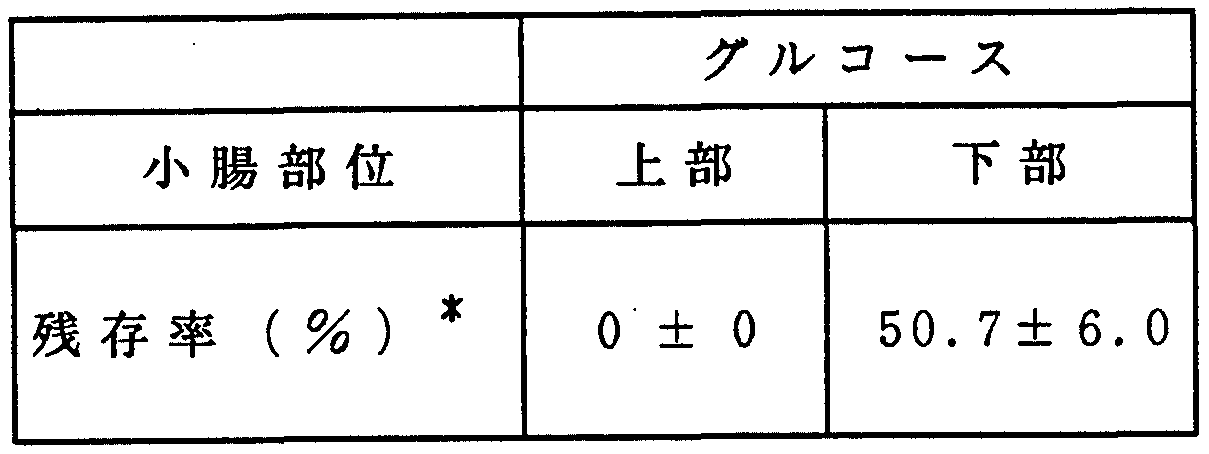
- Test Example 1 Absorption test of dalconic acid by intestinal loop> A test was carried out using sodium dalconate as an example of the present invention and glucose as a comparative agent.
- the test animals were rats (Wister strain, male, 7 weeks old, body weight: about 280 g), each group consisting of 3 rats, and a total of 12 animals were used.
- test rat was fasted for 24 hours, anesthetized with ether, and laparotomy was performed.
- a loop of about 10 cm was formed in the upper small intestine (lower ligament of the jejunum) or lower part of the small intestine (ileum).
- the amount of dalconic acid remaining in the content liquid was measured using "F-kit D-Gnoleconic acid” (Boehringer 'Mannheim' Yamanouchi).
- Glucose was measured using "Dalcos CII Test Co., Ltd.” (manufactured by Wako Pure Chemical Industries, Ltd.), and this value was used as the amount recovered at administration.
- Residual rate (%) [(recovery at administration) Z
- Table 4 shows the survival rate at the upper or lower part of the small intestine. As is evident from Table 4, about 80-90% of dalconic acid remains in the small intestine, indicating that only a part of it is digested and absorbed in the small intestine. On the other hand, glucose is completely absorbed in the upper part of the small intestine, so that it hardly reaches the large intestine, and the effect of growing Bifidobacterium bacteria cannot be expected.
- Test Example 2 ⁇ Selective use of dalconate>
- Bifidobacterium adolescentis (ATC 15703, Biiidobacterium adolescentis ATCC 15705) was used as a representative of Bifidobacterium adrogenis. Also, as representatives of so-called bad bacteria, urenoles (Clostridium perf ringens GKK 16, Clostridium perf ringens CWiu) and Bacteroides (Bacteroides) as dominant intestinal bacteria iragilis W-7) was used. The test strain was inoculated into a GAM bouillon medium (manufactured by Nissi) and anaerobically cultured at 37'C for 20 hours to obtain a precultured bacterial solution.
- GAM bouillon medium manufactured by Nissi
- test agents used were sodium dalconate, fructo-oligosaccharide, and glucose (see Table 5), and the medium for the glycolysis test was a semi-fluid medium for GAM glycolysis.
- a medium in which agar was removed from a 1/2 formulation (manufactured by Nissi) with the agar removed was used as a basal medium, and the above-mentioned test agent was added to 0.5 WZ V% and adjusted to ⁇ 6.9. Then, the precultured bacterial solution was inoculated at 0.01 V / V%, anaerobically cultured at 37 for 20 hours, and the turbidity (660 nm) and pH were measured.
- the medium was dispensed in 5 ml aliquots into test tubes having a diameter of 18 mm.
- Anaeropack Mitsubishi Gas Chemical
- Turbidity was measured in a test tube using a Shimadzu Milton Roy Spectrophotometer "Sktoronic 20A".
- the pH was directly measured with a glass electrode of pH meter HM-30S (manufactured by Toa Denpa Kogyo). Control and ratio using basal medium If the turbidity was increased or the pH was decreased, it was determined that the test agent was used. Table 5 shows the results.
- Table 6 shows the results of a test conducted on canolestim gnoreconate by selecting Bifidobacterium erium adolesce ntis ATCC 15703 as a representative strain.
- darcono delta lactone lactone of dalconic acid
- Enterobacteriaceae 7.0 6.4 6.2 6.8 (including coliform bacteria) Total number of bacteria 10.6 10.7
- Darcono delta lactone was administered to dogs to study the effect of reducing fecal odor.
- An orange juice beverage was prepared by adding a sweetener made by adding water, citric acid and aspartame to a commercially available 100% orange juice and an alkali metal salt of dalconic acid.
- a sweetener made by adding water, citric acid and aspartame
- an orange juice beverage was similarly prepared using granulated sugar so as to have the same sweetness, and the difference in taste was evaluated by a sensory test (three-point comparison method).
- the 300 g of water was added to the Chinese-les Ngehachi Mi Tsu 200 g, this guru courses O key sheet Daze (60 Interview two Tsu DOO / m g) and mosquito data hydrolase (390 Interview two Tsu preparative ZMG) activity 0.5 g of the enzyme agent was added, and the mixture was reacted at 23 ° C. under aeration conditions for 90 minutes to obtain dalconic acid-containing honey. Table shows that dalconic acid in this reaction solution was quantified by high-performance liquid chromatography. A result of 10 was obtained. This product had a refreshing taste with both acidity and sweetness.
- isomerized sugar (fructose 42% product) was added 300 g of water, and 0.5 g of the enzyme used in Example 2 was added thereto. The mixture was allowed to react at 23 ° C for 90 minutes under aeration conditions. An isomerized sugar solution containing an acid was obtained. The daruconic acid in this isomerized sugar solution was quantified by high performance liquid chromatography, and the results in Table 11 were obtained.
- Example 3 400 g of water was added to 100 g of starch syrup, and 0.5 g of the enzyme agent used in Example 2 was added thereto. The mixture was reacted at 23 ° C. for 90 minutes under aeration to obtain a starch syrup solution containing dalconic acid. . The dalconic acid in this syrup solution was quantified by high performance liquid chromatography and the results shown in the following table were obtained. In this case, as in Example 3, a method in which starch is hydrolyzed in the process of producing starch syrup and the above reaction is carried out to produce starch syrup containing dalconic acid can be considered. Table 13
- Example 2 350 g of water was added to 150 g of isomalt oligosaccharide (Showa Sangyo, Isomalt 500), and 0.5 g of the enzyme agent used in Example 2 was added thereto. The reaction was carried out under the conditions for 90 minutes to obtain an oligosaccharide solution containing dalconic acid. The daruconic acid in this oligosaccharide solution was quantified by high-performance liquid chromatography, and the results shown in Table 14 were obtained.
- This product is rich in taste compared to the one without sodium dalconate, and has a quality close to 100% Lingo juice.
- 100% Lingo juice 20g Granulated sugar 8 g 0.32 g citrate 1.08 g sodium dalconate Water 80 g
- Example 12 (tofu) Soymilk prepared by the same method as in Example 11 is cooled to 20 and the content of sodium dalconate is reduced to 1%. After the addition, Darcono delta ratatone was added to a concentration of 0.3%, and the mixture was heated in a 90 ° C water bath for 40 minutes to produce tofu.
- Example 11 Sodium milk prepared in the same manner as in Example 11 was added with sodium dalconate to a concentration of 1.0%, and then darconodeltalactone 67% and calcium sulfate 33% The resulting coagulants, 0.30 and 0.34%, were added and heated in a water bath at 80 ° C for 30 minutes to produce tofu. Tofu was prepared by adding 0.30% of a coagulant of the same composition to soymilk to which no sodium dalconate was added as a control.
- Example 11 To the soymilk prepared in the same manner as in Example 11 was added the coagulant for functional tofu prepared in Example 15 to a concentration of 1.3%, and heated in a water bath at 80 ° C for 30 minutes. And produced tofu.
- the tofu produced has a good taste, and its hardness and tongue texture are all questions. There was no title.
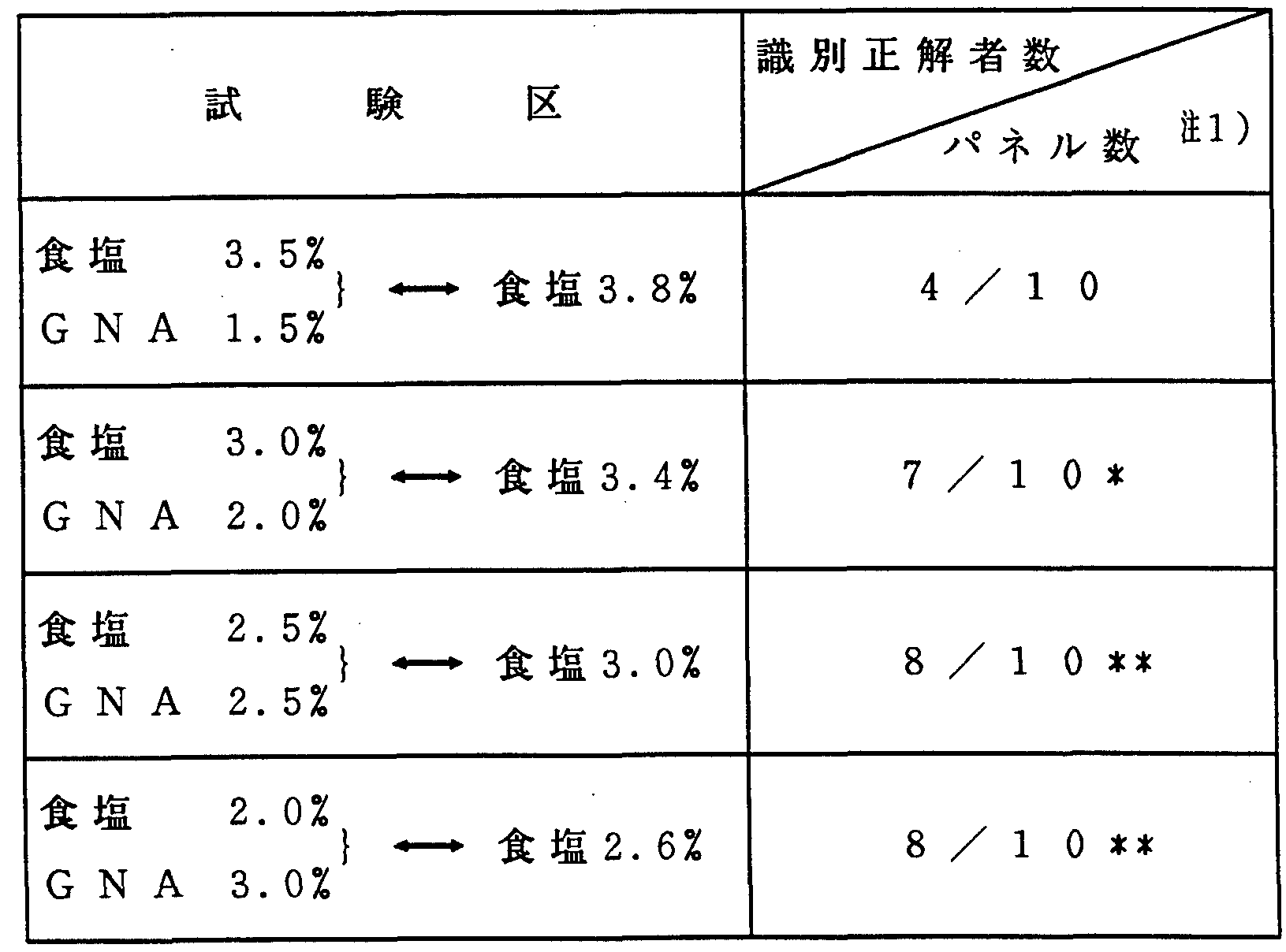
- a salty salt was prepared by replacing salt alone and part of the salt with sodium dalconate, and the taste of the aqueous solution with the same salty strength was evaluated by sensory tests.
- aqueous solution was prepared so that the salty salt was replaced with sodium dalconate (GNA) to a concentration of 5%, and a salt solution with the same saltiness was prepared.
- the difference in taste was evaluated by a three-point comparison method.
- the acidity of citric acid, lactic acid, tartaric acid, lingic acid, acetic acid, and succinic acid was selected as the acidulant, and the acidity of the acidulant alone or with some or all of the acidulant replaced with darconic acid.
- the maximum blending ratio of dalconic acid which was made to be the same and had no functional difference, was determined based on the acidity.
- the sourness of the sour agent alone (A) and the sour agent (B) in which part or all of the sour agent is replaced by dalconic acid are made the same, and a part or all of the sour agent and the sour agent is converted to darnic acid
- Three-point comparison method to determine whether there is a sensory difference between the replacements was evaluated. Number of panels: 10 Results: The results are shown in the following table.
- Example 19 (Sourness agent) Water, granulated sugar, and citric acid and dalconic acid as a sour agent were added to a commercially available 100% orange juice to prepare an orange juice beverage. .
- orange juice drinks were similarly prepared using citric acid as a sour agent so as to have the same sourness as in the example, and the tastes of both were sensory-tested (3. point (Comparative method). No significant difference was found in the taste of the two beverages.
- Powder powder powdered water syrup candy 4 3 g
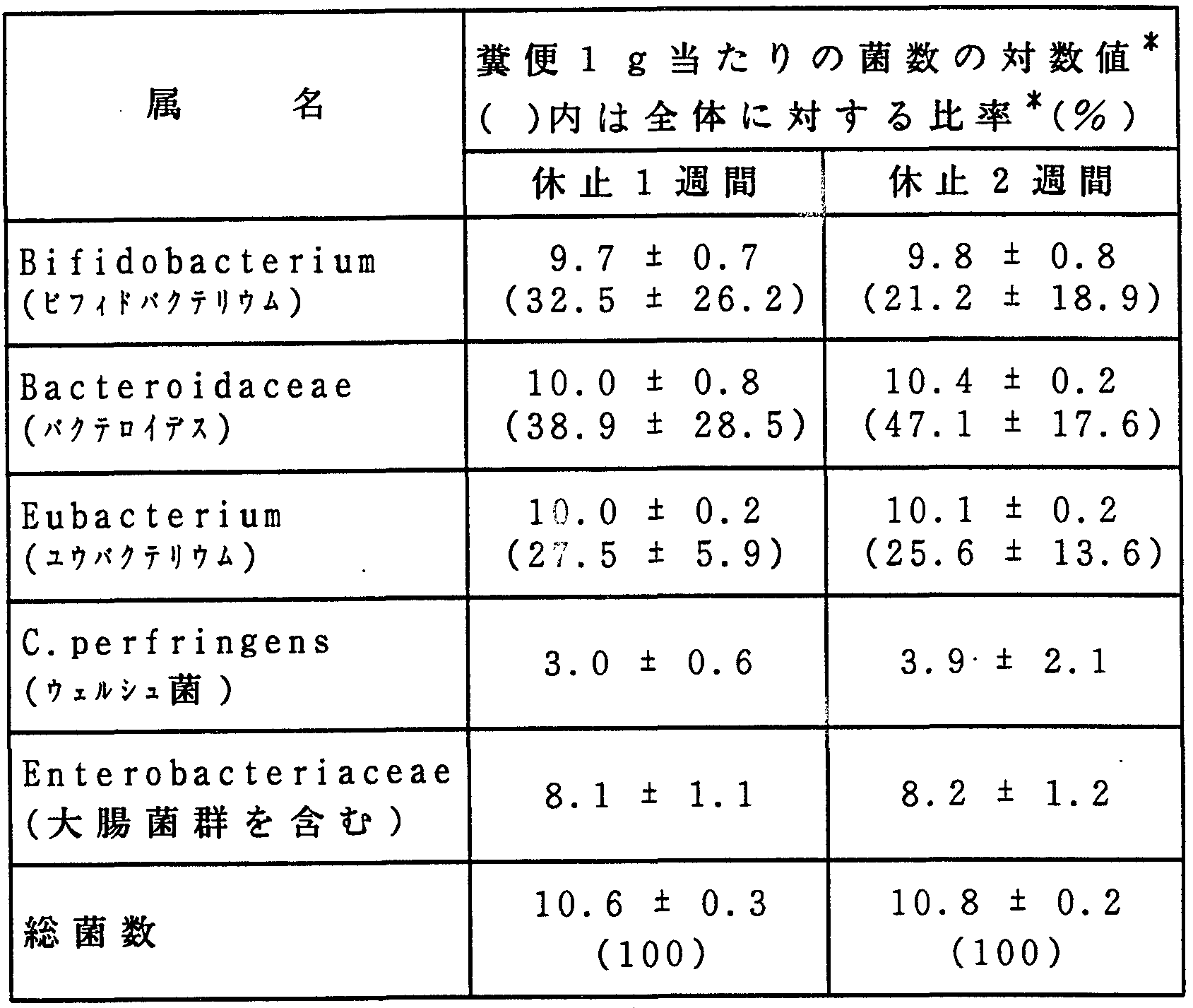
- calcium dalconate was administered to humans, and an effect on the intestinal flora was tested.
- Six healthy adult males (ages 28 to 56) were ingested 1.7 g of calcium dalconate powder once a day (after lunch) per day, one week before the start of intake
- the fecal intestinal flora in the feces on the first day of ingestion, the first and second weeks of ingestion, and one week and two weeks after the end of ingestion were measured in the same manner as in Test Example 3.
- Table 22 shows the results. Table 22 (Part 1)
- the bifidobacterium growth promoter of the present invention exhibits selective bifidobacterium growth activity and has excellent properties as a bifidobacterium. You. Therefore, the Bifidobacterium growth promoter of the present invention can be used alone or added to various foods and beverages to produce functional foods and beverages. It is very useful in terms of health promotion.
Landscapes
- Life Sciences & Earth Sciences (AREA)
- Chemical & Material Sciences (AREA)
- Engineering & Computer Science (AREA)
- Health & Medical Sciences (AREA)
- Food Science & Technology (AREA)
- Polymers & Plastics (AREA)
- Nutrition Science (AREA)
- Organic Chemistry (AREA)
- General Health & Medical Sciences (AREA)
- Bioinformatics & Cheminformatics (AREA)
- Proteomics, Peptides & Aminoacids (AREA)
- Molecular Biology (AREA)
- Veterinary Medicine (AREA)
- Animal Behavior & Ethology (AREA)
- Nuclear Medicine, Radiotherapy & Molecular Imaging (AREA)
- General Chemical & Material Sciences (AREA)
- Pharmacology & Pharmacy (AREA)
- Medicinal Chemistry (AREA)
- Public Health (AREA)
- Chemical Kinetics & Catalysis (AREA)
- Genetics & Genomics (AREA)
- Dispersion Chemistry (AREA)
- Mycology (AREA)
- Wood Science & Technology (AREA)
- General Engineering & Computer Science (AREA)
- Inorganic Chemistry (AREA)
- Biochemistry (AREA)
- Zoology (AREA)
- Agronomy & Crop Science (AREA)
- Botany (AREA)
- Coloring Foods And Improving Nutritive Qualities (AREA)
- Micro-Organisms Or Cultivation Processes Thereof (AREA)
- Medicines Containing Material From Animals Or Micro-Organisms (AREA)
- Acyclic And Carbocyclic Compounds In Medicinal Compositions (AREA)
- Organic Low-Molecular-Weight Compounds And Preparation Thereof (AREA)
Description




Claims
Priority Applications (8)
| Application Number | Priority Date | Filing Date | Title |
|---|---|---|---|
| CA002147882A CA2147882C (en) | 1992-10-27 | 1993-10-14 | Bifidobacterium growth promotant |
| DE69333587T DE69333587T2 (de) | 1992-10-27 | 1993-10-14 | Bifidobacterium wachstumspromotor |
| KR1019950701579A KR100225533B1 (ko) | 1992-10-27 | 1993-10-14 | 비피도박테리움 증식 촉진제(Biridobacterium growth promotr) |
| JP6510878A JP2893953B2 (ja) | 1992-10-27 | 1993-10-14 | ビフィドバクテリウム菌の増殖促進剤 |
| EP93922629A EP0667107B1 (en) | 1992-10-27 | 1993-10-14 | Bifidobacterium growth promoter |
| AT93922629T ATE272947T1 (de) | 1992-10-27 | 1993-10-14 | Bifidobacterium wachstumspromotor |
| AU51609/93A AU679940B2 (en) | 1992-10-27 | 1993-10-14 | Bifidobacterium growth promoter |
| US08/325,183 US5605697A (en) | 1992-10-27 | 1993-10-14 | Bifidobacterium growth promotant |
Applications Claiming Priority (24)
| Application Number | Priority Date | Filing Date | Title |
|---|---|---|---|
| JP28864392 | 1992-10-27 | ||
| JP4/288643 | 1992-10-27 | ||
| JP5/45022 | 1993-03-05 | ||
| JP4502293 | 1993-03-05 | ||
| JP5/48354 | 1993-03-09 | ||
| JP4835493 | 1993-03-09 | ||
| JP4980593 | 1993-03-11 | ||
| JP5/49805 | 1993-03-11 | ||
| JP6172193 | 1993-03-22 | ||
| JP5/61721 | 1993-03-22 | ||
| JP5/63972 | 1993-03-23 | ||
| JP6397293 | 1993-03-23 | ||
| JP6422293 | 1993-03-23 | ||
| JP5/64222 | 1993-03-23 | ||
| JP6376593 | 1993-03-23 | ||
| JP5/63765 | 1993-03-23 | ||
| JP6445193 | 1993-03-24 | ||
| JP5/64451 | 1993-03-24 | ||
| JP5/64560 | 1993-03-24 | ||
| JP6456093 | 1993-03-24 | ||
| JP5/67892 | 1993-03-26 | ||
| JP6789293 | 1993-03-26 | ||
| JP5/72695 | 1993-03-31 | ||
| JP7269593 | 1993-03-31 |
Publications (1)
| Publication Number | Publication Date |
|---|---|
| WO1994009650A1 true WO1994009650A1 (fr) | 1994-05-11 |
Family
ID=27583310
Family Applications (1)
| Application Number | Title | Priority Date | Filing Date |
|---|---|---|---|
| PCT/JP1993/001473 Ceased WO1994009650A1 (fr) | 1992-10-27 | 1993-10-14 | Promoteur de croissance de bifidus |
Country Status (7)
| Country | Link |
|---|---|
| US (2) | US5605697A (ja) |
| EP (1) | EP0667107B1 (ja) |
| JP (1) | JP2893953B2 (ja) |
| AT (1) | ATE272947T1 (ja) |
| AU (1) | AU679940B2 (ja) |
| CA (1) | CA2147882C (ja) |
| WO (1) | WO1994009650A1 (ja) |
Cited By (4)
| Publication number | Priority date | Publication date | Assignee | Title |
|---|---|---|---|---|
| US6013298A (en) * | 1994-12-07 | 2000-01-11 | Fujisawa Pharmaceutical Co., Ltd. | Method of making a reduced salt bread dough product and reduced salt bread dough product |
| WO2015002239A1 (ja) * | 2013-07-05 | 2015-01-08 | 花王株式会社 | 経口紫外線抵抗性向上剤 |
| JP2019006735A (ja) * | 2017-06-28 | 2019-01-17 | 花王株式会社 | 小腸の腸内環境改善剤 |
| WO2024095509A1 (ja) * | 2022-10-31 | 2024-05-10 | ベースフード株式会社 | パン、パン用ミックス粉及びパンの製造方法 |
Families Citing this family (35)
| Publication number | Priority date | Publication date | Assignee | Title |
|---|---|---|---|---|
| US5681575A (en) * | 1992-05-19 | 1997-10-28 | Westaim Technologies Inc. | Anti-microbial coating for medical devices |
| JP2893953B2 (ja) * | 1992-10-27 | 1999-05-24 | 藤沢薬品工業株式会社 | ビフィドバクテリウム菌の増殖促進剤 |
| EP0919137B1 (en) | 1996-07-15 | 2003-09-17 | Fujisawa Pharmaceutical Co., Ltd. | Functional sodium chloride compositions |
| US6303104B1 (en) * | 1999-02-12 | 2001-10-16 | Enamelon, Inc. | Remineralizing/mineralizing oral products having improved whitening and stain removal properties |
| DE60032383T2 (de) * | 1999-10-19 | 2007-03-29 | Fuso Chemical Co., Ltd. | Mittel zur mästförderung von tieren und mästfördernde methode |
| US6383534B1 (en) * | 2000-01-18 | 2002-05-07 | Lorin Dyrr | Mineral water composition |
| US7115297B2 (en) * | 2000-02-22 | 2006-10-03 | Suzanne Jaffe Stillman | Nutritionally fortified liquid composition with added value delivery systems/elements/additives |
| US8178150B2 (en) | 2000-02-22 | 2012-05-15 | Suzanne Jaffe Stillman | Water containing soluble fiber |
| US7892586B2 (en) | 2001-02-22 | 2011-02-22 | Suzanne Jaffe Stillman | Water containing soluble fiber |
| US6368641B1 (en) | 2000-04-28 | 2002-04-09 | Hartz International Inc. | Lactic acid bacteria and food products |
| LT4900B (lt) | 2000-05-26 | 2002-03-25 | Green Group Llc | Simbiotinis mišinys, sudarytas iš penkių bifidobakterijų, ir maisto produktai, turintys šio mišinio |
| KR100436038B1 (ko) * | 2001-12-19 | 2004-06-12 | 씨제이 주식회사 | 비열처리 생식품의 제조방법 및 그로부터 수득되는 생식품 |
| JP2004208682A (ja) * | 2002-11-13 | 2004-07-29 | Toyo Suisan Kaisha Ltd | アクリルアミドを低減化した即席油揚げ麺 |
| JP2005021150A (ja) * | 2002-12-03 | 2005-01-27 | Toyo Suisan Kaisha Ltd | アクリルアミドを低減化し得る加熱調理食品の製造方法 |
| JP2005021152A (ja) * | 2002-12-16 | 2005-01-27 | Toyo Suisan Kaisha Ltd | アクリルアミドを低減化し得る加熱調理食品の製造方法 |
| JP2005021153A (ja) * | 2002-12-26 | 2005-01-27 | Toyo Suisan Kaisha Ltd | アクリルアミドを低減化し得る加熱調理食品の製造方法 |
| US7572474B2 (en) * | 2005-06-01 | 2009-08-11 | Mead Johnson Nutrition Company | Method for simulating the functional attributes of human milk oligosaccharides in formula-fed infants |
| US8075934B2 (en) * | 2008-10-24 | 2011-12-13 | Mead Johnson Nutrition Company | Nutritional composition with improved digestibility |
| ATE472941T1 (de) * | 2006-04-11 | 2010-07-15 | Jungbunzlauer Austria Ag | Salzersatzmischung mit vermindertem nacl-gehalt |
| FR2908602B1 (fr) * | 2006-11-17 | 2009-07-17 | Sante R | Substitut du sel et composition par exemple alimentaire le comprenant |
| US20080145501A1 (en) * | 2006-12-18 | 2008-06-19 | Peter Harris Brown | Acidic Sweetener And Methods Of Use Thereof |
| US8986769B2 (en) * | 2008-10-24 | 2015-03-24 | Mead Johnson Nutrition Company | Methods for preserving endogenous TGF-β |
| US20120035127A1 (en) * | 2009-01-19 | 2012-02-09 | Universite De Liege Gembloux Agro-Bio Tech | Process for the production of a composition, the composition and the use thereof as food additive |
| US8536106B2 (en) | 2010-04-14 | 2013-09-17 | Ecolab Usa Inc. | Ferric hydroxycarboxylate as a builder |
| BR112014000256A2 (pt) * | 2011-07-15 | 2017-01-10 | Prayon | formulação de microemulsões transparentes e nutritivas |
| CN103170087B (zh) * | 2011-12-20 | 2015-12-09 | 西安坚瑞安全应急设备有限责任公司 | 一种含有糖类及糖类衍生物的灭火组合物 |
| CN103170083B (zh) | 2011-11-20 | 2016-04-06 | 西安坚瑞安全应急设备有限责任公司 | 一种含有过渡金属化合物的灭火组合物 |
| BR112014022286B1 (pt) * | 2012-03-09 | 2019-11-12 | Friesland Brands Bv | composição de rações para animais que contém glucono delta-lactona encapsulado |
| GB201417386D0 (en) | 2014-10-01 | 2014-11-12 | Nofima As | Sugar-depleted fruit or vegetable juice product, method of producing the same and use thereof to maintain health and treat and to prevent medical ailments |
| US11647760B2 (en) | 2015-03-04 | 2023-05-16 | Texas Tech University System | Emulsion for improving meat |
| CN107846950A (zh) * | 2015-03-04 | 2018-03-27 | Jcr科技有限责任公司 | 不含蛋的、热稳定的蛋黄酱型调味料 |
| ITUB20160697A1 (it) * | 2016-02-12 | 2017-08-12 | Fernando Horacio Garcia | Sale iposodico solido e processo per ottenerlo |
| IL262419B2 (en) * | 2016-04-19 | 2024-08-01 | Canna B Cure Ltd | Cannabis-enriched enzymatically treated therapeutic composition |
| US20220061366A1 (en) * | 2020-08-26 | 2022-03-03 | Blake Edward haner | Honey substitute and methods of manufacture |
| CN115490326A (zh) * | 2022-10-09 | 2022-12-20 | 山东高速环保科技有限公司 | 一种自养异养耦合微生物净水方法及装置 |
Citations (10)
| Publication number | Priority date | Publication date | Assignee | Title |
|---|---|---|---|---|
| JPS5088250A (ja) * | 1973-12-01 | 1975-07-15 | ||
| JPS5129280A (en) * | 1974-08-12 | 1976-03-12 | Kikkoman Shoyu Co Ltd | Daizuno kakoshorihoho |
| JPS5396360A (en) * | 1977-01-31 | 1978-08-23 | Masaji Kimura | Production of milk pudding powder composition |
| JPS5396355A (en) * | 1977-01-31 | 1978-08-23 | Masaji Kimura | Treatment for augumenting elasticity and cohesion of marine kneaded article |
| JPS56150067A (en) * | 1980-01-24 | 1981-11-20 | Bristol Myers Co | Antitumor composition |
| JPS5771390A (en) * | 1980-10-21 | 1982-05-04 | Yakult Honsha Co Ltd | Selective medium for bifidobacterium |
| JPS57125649A (en) * | 1981-01-28 | 1982-08-05 | Koken:Kk | Removing agent for tar attached during smoking treatment of cut fish meat |
| JPS61239873A (ja) * | 1985-04-12 | 1986-10-25 | Kazuji Fukunaga | ビフイドバクテリウム菌含有飲料の製法 |
| JPH02104531A (ja) * | 1988-10-14 | 1990-04-17 | Toyo Jozo Co Ltd | 経鼻投与用生理活性ペプチド組成物 |
| JPH03191779A (ja) * | 1989-12-21 | 1991-08-21 | Asahi Denka Kogyo Kk | ビフィズス菌増殖促進剤 |
Family Cites Families (11)
| Publication number | Priority date | Publication date | Assignee | Title |
|---|---|---|---|---|
| US4061792A (en) * | 1970-12-17 | 1977-12-06 | Calpis Shokuhin Kogyo Kabushiki Kaisha | Method of manufacturing a beverage containing fruit ingredients |
| US4321280A (en) * | 1977-12-01 | 1982-03-23 | General Foods Corporation | Textured oil seed protein products |
| JPS6053589B2 (ja) * | 1979-08-08 | 1985-11-26 | 森永乳業株式会社 | 容器入り豆腐の製造法 |
| US5095035A (en) * | 1981-07-31 | 1992-03-10 | Eby Iii George A | Flavor stable zinc acetate compositions for oral absorption |
| US5002970A (en) * | 1981-07-31 | 1991-03-26 | Eby Iii George A | Flavor masked ionizable zinc compositions for oral absorption |
| US4789553A (en) * | 1985-09-23 | 1988-12-06 | American National Can Company | Method of thermally processing low-acid foodstuffs in hermetically sealed containers and the containers having the foodstuffs therein |
| JPS6384455A (ja) * | 1986-09-27 | 1988-04-15 | Meiji Seika Kaisha Ltd | 無菌充填豆腐の製造法 |
| EP0328322A3 (en) * | 1988-02-12 | 1990-08-16 | Fujisawa Pharmaceutical Co., Ltd. | Process for preparation of soya milk with an improved flavor |
| US5087465A (en) * | 1991-04-19 | 1992-02-11 | Chen Richard K | Method of manufacturing soybean curd |
| JP2671173B2 (ja) * | 1991-12-12 | 1997-10-29 | 松下電器産業株式会社 | レーザプローブ |
| JP2893953B2 (ja) * | 1992-10-27 | 1999-05-24 | 藤沢薬品工業株式会社 | ビフィドバクテリウム菌の増殖促進剤 |
-
1993
- 1993-10-14 JP JP6510878A patent/JP2893953B2/ja not_active Expired - Lifetime
- 1993-10-14 US US08/325,183 patent/US5605697A/en not_active Expired - Lifetime
- 1993-10-14 CA CA002147882A patent/CA2147882C/en not_active Expired - Fee Related
- 1993-10-14 EP EP93922629A patent/EP0667107B1/en not_active Expired - Lifetime
- 1993-10-14 WO PCT/JP1993/001473 patent/WO1994009650A1/ja not_active Ceased
- 1993-10-14 AU AU51609/93A patent/AU679940B2/en not_active Ceased
- 1993-10-14 AT AT93922629T patent/ATE272947T1/de not_active IP Right Cessation
-
1996
- 1996-11-29 US US08/758,516 patent/US5800830A/en not_active Expired - Fee Related
Patent Citations (10)
| Publication number | Priority date | Publication date | Assignee | Title |
|---|---|---|---|---|
| JPS5088250A (ja) * | 1973-12-01 | 1975-07-15 | ||
| JPS5129280A (en) * | 1974-08-12 | 1976-03-12 | Kikkoman Shoyu Co Ltd | Daizuno kakoshorihoho |
| JPS5396360A (en) * | 1977-01-31 | 1978-08-23 | Masaji Kimura | Production of milk pudding powder composition |
| JPS5396355A (en) * | 1977-01-31 | 1978-08-23 | Masaji Kimura | Treatment for augumenting elasticity and cohesion of marine kneaded article |
| JPS56150067A (en) * | 1980-01-24 | 1981-11-20 | Bristol Myers Co | Antitumor composition |
| JPS5771390A (en) * | 1980-10-21 | 1982-05-04 | Yakult Honsha Co Ltd | Selective medium for bifidobacterium |
| JPS57125649A (en) * | 1981-01-28 | 1982-08-05 | Koken:Kk | Removing agent for tar attached during smoking treatment of cut fish meat |
| JPS61239873A (ja) * | 1985-04-12 | 1986-10-25 | Kazuji Fukunaga | ビフイドバクテリウム菌含有飲料の製法 |
| JPH02104531A (ja) * | 1988-10-14 | 1990-04-17 | Toyo Jozo Co Ltd | 経鼻投与用生理活性ペプチド組成物 |
| JPH03191779A (ja) * | 1989-12-21 | 1991-08-21 | Asahi Denka Kogyo Kk | ビフィズス菌増殖促進剤 |
Cited By (6)
| Publication number | Priority date | Publication date | Assignee | Title |
|---|---|---|---|---|
| US6013298A (en) * | 1994-12-07 | 2000-01-11 | Fujisawa Pharmaceutical Co., Ltd. | Method of making a reduced salt bread dough product and reduced salt bread dough product |
| WO2015002239A1 (ja) * | 2013-07-05 | 2015-01-08 | 花王株式会社 | 経口紫外線抵抗性向上剤 |
| JP2015027996A (ja) * | 2013-07-05 | 2015-02-12 | 花王株式会社 | 経口紫外線抵抗性向上剤 |
| JP2019006735A (ja) * | 2017-06-28 | 2019-01-17 | 花王株式会社 | 小腸の腸内環境改善剤 |
| JP7008435B2 (ja) | 2017-06-28 | 2022-01-25 | 花王株式会社 | 小腸の腸内環境改善剤 |
| WO2024095509A1 (ja) * | 2022-10-31 | 2024-05-10 | ベースフード株式会社 | パン、パン用ミックス粉及びパンの製造方法 |
Also Published As
| Publication number | Publication date |
|---|---|
| EP0667107A1 (en) | 1995-08-16 |
| CA2147882A1 (en) | 1994-05-11 |
| US5800830A (en) | 1998-09-01 |
| EP0667107A4 (en) | 1997-08-20 |
| US5605697A (en) | 1997-02-25 |
| EP0667107B1 (en) | 2004-08-11 |
| ATE272947T1 (de) | 2004-08-15 |
| CA2147882C (en) | 2008-07-29 |
| JP2893953B2 (ja) | 1999-05-24 |
| AU679940B2 (en) | 1997-07-17 |
| AU5160993A (en) | 1994-05-24 |
Similar Documents
| Publication | Publication Date | Title |
|---|---|---|
| JP2893953B2 (ja) | ビフィドバクテリウム菌の増殖促進剤 | |
| JPWO1994009650A1 (ja) | ビフィドバクテリウム菌の増殖促進剤 | |
| RU2261024C2 (ru) | Жидкий пищевой продукт, обогащенный кальцием и магнием, и способ его получения (варианты) | |
| JP4540231B2 (ja) | スクラロースを含有する組成物及びその応用 | |
| JP5270144B2 (ja) | マルトビオン酸、その塩又はマルトビオノデルタラクトン含有組成物の用途 | |
| CN100436466C (zh) | 海藻糖或麦芽糖醇和金属离子化合物的缔合物 | |
| CN115066188A (zh) | 组合物 | |
| JPWO2000024273A1 (ja) | スクラロースを含有する組成物及びその応用 | |
| KR0151138B1 (ko) | 조롱박 분말 조성물 | |
| US20050238777A1 (en) | Condensed palatinose and method for producing the same | |
| CA2458087C (en) | Mineral complexes of lactobionic acid and method of using for mineral fortification of food products | |
| JP2001204405A (ja) | キャベツシロップの製造方法及び用途 | |
| WO2019023323A1 (en) | USE OF SOPHOROLIPIDES | |
| JP5586713B2 (ja) | ミネラル可溶化安定剤 | |
| EP1290952B1 (en) | Compositions for taking dietary fibers | |
| JP5628355B2 (ja) | ミネラル吸収促進剤及び易吸収性カルシウム剤 | |
| KR100283416B1 (ko) | 밤을 기조로 한 유산균 발효음료 | |
| KR100225533B1 (ko) | 비피도박테리움 증식 촉진제(Biridobacterium growth promotr) | |
| JP5695098B2 (ja) | 脂質代謝改善剤 | |
| JPH03160956A (ja) | 飲食品用の改質非凝固性ゼラチンの製造方法、蛋白質含有飲食品材料の製造方法、および蛋白質含有飲料の製造方法 | |
| DE69333587T2 (de) | Bifidobacterium wachstumspromotor | |
| EP4609727A1 (en) | Composition for improving mouthfeel, food/beverage product composition and method for producing same, and method for improving mouthfeel | |
| JPH10313822A (ja) | 腸内細菌叢改善剤及びそれを含有する組成物 |
Legal Events
| Date | Code | Title | Description |
|---|---|---|---|
| AK | Designated states |
Kind code of ref document: A1 Designated state(s): AU CA JP KR US |
|
| AL | Designated countries for regional patents |
Kind code of ref document: A1 Designated state(s): AT BE CH DE DK ES FR GB GR IE IT LU MC NL PT SE |
|
| DFPE | Request for preliminary examination filed prior to expiration of 19th month from priority date (pct application filed before 20040101) | ||
| 121 | Ep: the epo has been informed by wipo that ep was designated in this application | ||
| WWE | Wipo information: entry into national phase |
Ref document number: 08325183 Country of ref document: US Ref document number: 1019950701579 Country of ref document: KR |
|
| WWE | Wipo information: entry into national phase |
Ref document number: 2147882 Country of ref document: CA |
|
| WWE | Wipo information: entry into national phase |
Ref document number: 1993922629 Country of ref document: EP |
|
| WWP | Wipo information: published in national office |
Ref document number: 1993922629 Country of ref document: EP |
|
| ENP | Entry into the national phase |
Ref document number: 1996 758516 Country of ref document: US Date of ref document: 19961129 Kind code of ref document: A |
|
| WWG | Wipo information: grant in national office |
Ref document number: 1993922629 Country of ref document: EP |