WO1995030791A1 - Verwendung von wasserlöslichen polymeren und polyhydroxymono- oder dicarboxylaten bei der textilbleiche - Google Patents
Verwendung von wasserlöslichen polymeren und polyhydroxymono- oder dicarboxylaten bei der textilbleiche Download PDFInfo
- Publication number
- WO1995030791A1 WO1995030791A1 PCT/EP1995/001646 EP9501646W WO9530791A1 WO 1995030791 A1 WO1995030791 A1 WO 1995030791A1 EP 9501646 W EP9501646 W EP 9501646W WO 9530791 A1 WO9530791 A1 WO 9530791A1
- Authority
- WO
- WIPO (PCT)
- Prior art keywords
- group
- weight
- hydrogen
- units
- structural formula
- Prior art date
- Legal status (The legal status is an assumption and is not a legal conclusion. Google has not performed a legal analysis and makes no representation as to the accuracy of the status listed.)
- Ceased
Links
Classifications
-
- D—TEXTILES; PAPER
- D06—TREATMENT OF TEXTILES OR THE LIKE; LAUNDERING; FLEXIBLE MATERIALS NOT OTHERWISE PROVIDED FOR
- D06L—DRY-CLEANING, WASHING OR BLEACHING FIBRES, FILAMENTS, THREADS, YARNS, FABRICS, FEATHERS OR MADE-UP FIBROUS GOODS; BLEACHING LEATHER OR FURS
- D06L4/00—Bleaching fibres, filaments, threads, yarns, fabrics, feathers or made-up fibrous goods; Bleaching leather or furs
- D06L4/10—Bleaching fibres, filaments, threads, yarns, fabrics, feathers or made-up fibrous goods; Bleaching leather or furs using agents which develop oxygen
- D06L4/12—Bleaching fibres, filaments, threads, yarns, fabrics, feathers or made-up fibrous goods; Bleaching leather or furs using agents which develop oxygen combined with specific additives
Definitions
- the invention relates to the use of water-soluble and phosphorus-free sulfonate and / or carboxylate groups containing polymers and polyhydroxymono- or dicarboxylates to prevent the deposition of magnesium and calcium silicate in textile bleaching with peroxides.
- a pretreatment must be carried out.
- One of the process steps is the bleaching of the colored accompanying substances ("Gilbene”) usually by means of chemical oxidation.
- H2O2 hydrogen peroxide
- H00 perhydroxyanion
- the heavy metals that are always present in practice act as catalysts for the radical H2O2 decay. Deactivating this Catalysts are made very effectively by colloidal magnesium silicate, which is created by adding magnesium salts and soluble silicate (eg water glass) to the bleaching liquor.
- colloidal magnesium silicate which is created by adding magnesium salts and soluble silicate (eg water glass) to the bleaching liquor.
- a disadvantage of this H2-) 2 stabilization by inorganic additives is the formation of poorly soluble alkaline earth silicates from the soluble silicate and the calcium / magnesium hardness input from the fiber (eg cotton).
- the alkaline earth silicates deposit as deposits on machine parts and as incrustations on the fibers.
- Complexing additives are used to stabilize these alkaline earth metal silicates in the liquor for colloidal stabilization ("stress effect").
- stress effect the degree of colloidal stabilization
- these additives must be substoichiometrically effective, since otherwise the undesirable complexing dissolution and thus deactivation of the colloidal magnesium silicate takes place.
- customary bleaching liquors accordingly also contain hydrogen peroxide, alkali metal hydroxide, a water-soluble magnesium salt, a water-soluble alkali metal salt of a silicate, surfactants and a deposit inhibitor.
- the combination of alkali silicate with phosphonates or phosphonate combinations as a deposit inhibitor leads to a good stabilization of peroxide in the bleaching liquor while at the same time preventing alkaline earth silicate deposits on the hard surfaces of the machine parts.
- EP-A-0 112 801 describes as a stabilizer for hydrogen peroxide in bleaching liquors a combination of a magnesium complex of oligomeric phosphonic acid esters with an organic polyhydroxy compound, in particular hydroxycarboxylic acids.
- an organic polyhydroxy compound in particular hydroxycarboxylic acids.
- incrustations on the bleaching apparatus and incrustations on the treated fiber material can only be achieved by completely dispensing with the silicates.
- EP-A-0210952 describes the use of mixtures of a phosphorus-containing compound with a polyhydroxy compound, in particular polyhydroxycarboxylic acids, for suppressing the decomposition of the per-component in bleaching liquors. In spite of the high silicate content, incrustations can occur TM o TM
- GB-A-2 192 202 describes a method for stabilizing bleaching solutions containing alkaline peroxide for textiles and paper pulps using poly-alpha-hydroxyacrylic acid salts.
- DE-A-3204834 describes a process for bleaching woven and knitted fabrics with a bleaching liquor containing hydrogen peroxide using complexing agents based on polycarbonic and polyoxycarboxylic acids in combination with magnesium salts as a stabilizer.
- phosphorus-free compounds which avoid the formation of incrustations on machines and incrustations on the treated fiber material by alkaline earth silicates in textile bleaching with peroxides.
- These compounds should have the same performance as the phosphorus-containing compounds, i.e. a phosphorus-free additive relevant for practical use should lower the deposit comparable to the phosphorus-containing additive with the same amount of active substance.
- These phosphorus-free compounds should preferably also be biodegradable.
- the object was achieved according to the invention by using polymers containing sulfonate and / or carboxylate groups and polyhydroxy mono- or dicarboxylates to prevent the deposition of magnesium and calcium silicate in textile bleaching with peroxides.
- conventional bleaching liquors contain peroxide, in particular hydrogen peroxide, alkali metal hydroxides, water-soluble magnesium salts, water-soluble alkali metal salts of a silicate, surfactants and the deposit inhibitor.
- the bleaching liquors can also contain the usual additives such as defoaming and / or deaerating agents and / or optical brighteners.
- water-soluble polymers containing sulfonate and / or carboxylate groups are used as phosphorus-free, water-soluble deposition inhibitors, which may also contain additional, non-ionic groups.
- Polymers containing sulfonate and / or carboxylate groups have proven to be suitable in particular those which contain units which are derived from two types of monomers:
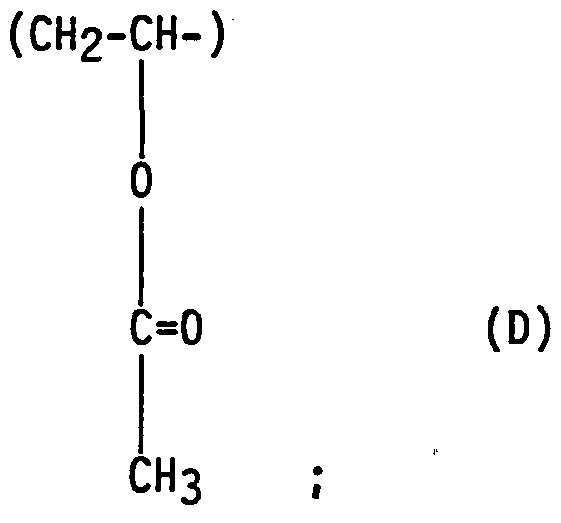
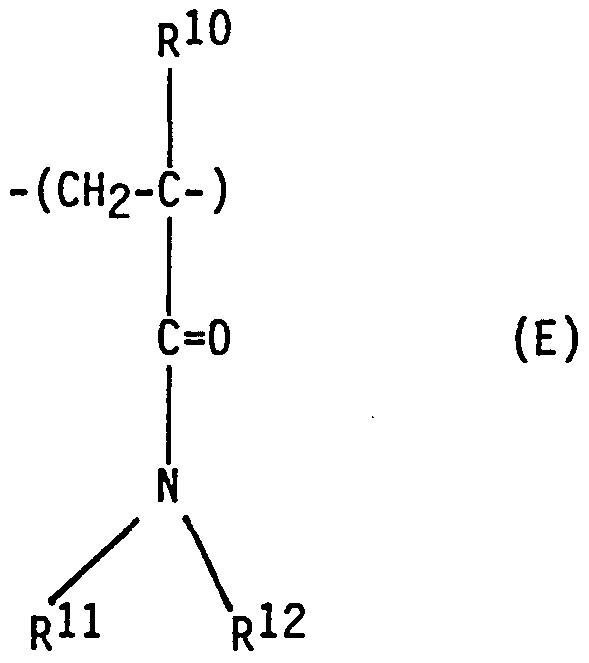
- a third monomer type can also be incorporated in the polymer which is derived from the monomer types 1 and / or 2. This is at least one unit which is derived from vinyl esters, vinyl acetate or substituted acrylamides.
- the monomers making up the polymer are characterized in that the units of (meth) acrylic acid and their salts have the following structural formula (A):
- R * is hydrogen or a methyl group
- X is hydrogen, a metal cation or N- (R2) 4, wherein R 2 is hydrogen, a Ci-C - ⁇ - alkyl group, a -C-C4-hydroxyalkyl group or a mixture thereof; that the units of the acrylamidoalkyl or acrylamidoaryl sulfonates have the following structural formula (B):
- R ⁇ is hydrogen or a methyl group
- R 4 is hydrogen or a Ci-C / j-alkyl group
- R5 is a Ci-Cß-alkyl or Cß-Cio-arylalkyl group and wherein X is a group as defined for the structural formula (A).
- nonionic monomer units which may optionally be present in the polymer, are characterized in that the units of the vinyl esters have the following structural formula (C):
- R ⁇ is hydrogen or a methyl group and R? a C ⁇ -C6-alkyl group, a C ⁇ -Cio-aryl group, a Cö-Cio-arylalkyl group or a group of the structural formula
- R * is hydrogen or a methyl group
- R9 is a Ci-C alkyl group or hydrogen and n is an even number between 1 and 3; that the unit of the vinyl acetate has the following structural formula (D):
- R * 0 is hydrogen or a methyl group and R 11 and R 12 are each hydrogen, a Ci-Cg-alkyl group, a Cß-Cß-cycloalkyl group, a benzyl group or a group of the following structural formula
- Preferred (meth) acrylic acids and salts are selected from acrylic acid, methacrylic acid and their sodium salts.
- the preferred substituted acrylamido sulfonate is 2-acrylamido-2-methylpropanesulfonic acid
- the preferred (alkyl) substituted acrylamides are those of the hindered amines, tert-butyl acrylate and dimethylacrylamide.
- the preferred vinyl esters are ethyl acrylate, hydroxyethyl methacrylate, hydroxypropyl acrylate and cellosolve acrylate.
- polymers which contain 10 to 90% by weight of units derived from (meth) acrylic acid or salts thereof and 90 to 10% by weight of acrylamidoalkyl or acrylamidoarylsulfonate units, the polymers having a weight average molecular weight of 3,000 to 25,000.
- terpolymers or interpolymers which contain between 10 and 84% by weight of (meth) acrylic acid or units derived therefrom, 11-40% by weight, are also particularly suitable for use as a deposit inhibitor. of acrylamidoalkyl or aryl sulfonate units and 5-50% by weight of one or more units, which are selected from vinyl esters, vinyl acetate and substituted acrylic ides, the polymers having a weight average molecular weight of 3000-25000.
- Terpolymers are constructed from three, interpolymers from four or more monomers.
- the units derived from the (meth) acrylic acid or its salts are preferably used in the polymers in a proportion of at least 30% by weight.
- the weight average molecular weight of the polymers is preferably 4000 to 8000 and especially 4500 to 5500.
- the terpolymer which is most preferred for the purposes of the present invention is composed of 57% by weight of units of (meth) acrylic acid or its salts, 23% by weight of 2-acrylamido-2-methylpropanesulfonic acid and 20% by weight. of a vinyl ester, vinyl acetate or alkyl substituted acrylamide and has a weight average molecular weight between 4500 and 5500.
- polyhydroxymonocarboxylates used are the sodium or potassium salts, in particular gluconic acid, glucoheptonic acid, ascorbic acid or lactobionic acid or mixtures thereof.
- the sodium or potassium salts in particular tartaric acid or glucaric acid, are used as polyhydroxydicarboxylates.
- the proportion of the deposit inhibitor (active substance) in the bleaching liquor is 0.01 to 0.2% by weight, preferably 0.05 to 0.08% by weight.
- Hydrogen peroxide in the form of its 30 to 50% by weight aqueous solution is preferably used as the peroxide.
- potassium hydroxide or in particular the less expensive sodium hydroxide are suitable as alkali metal hydroxide. Mixtures of potassium hydroxide and sodium hydroxide are also particularly suitable for this with regard to the homogeneity of the composition.
- the alkali metal hydroxide is preferably added to the bleaching liquor in the form of its aqueous solution. By adding alkali metal hydroxide, alkaline compositions are obtained, the alkalinity of the compositions being determined by the concentration of alkali metal hydroxide.
- suitable water-soluble magnesium salts are acetate, especially the sulfate or its heptahydrate and in particular the chloride or its hexahydrate of magnesium.
- the magnesium salts are generally used as a solid, with solid magnesium sulfate heptahydrate being of primary interest.
- Suitable water-soluble alkali metal salts of a silicate are, in particular, soda-water glass with a content of 24 to 28% by weight of S1O2, especially as aqueous, approximately 30 to 40% by weight solutions.
- the sodium water glass 37/40 (commercial product from Henkel KGaA, Düsseldorf) with a SiO 2 content of 26.6 to 27% by weight and a Na 2 O content of 7.8 to 8.2% by weight is particularly preferred. %.
- anionic and nonionic surfactants or mixtures thereof are suitable as surfactants (wetting agents).
- Preferred anionic surfactants are e.g. Alkane sulfonates, alkyl aryl sulfonates, fatty acid condensation products, protein cleavage products or their salts and especially alkyl sulfate salts and alkyl benzene sulfonic acids with 12 to 22 carbon atoms in the alkyl radical.
- Preferred nonionic surfactants are adducts of alkylene oxides, especially propylene and in particular ethylene oxide, and alkylphenols with e.g.
- higher alcohols e.g. Isooctyl alcohol and e.g. Phosphoric acid esters are used.
- the textile material to be treated can be in a wide variety of processing stages, for example as loose material, yarn, woven or knitted fabric. As a rule, these are always textile fiber materials that were produced from pure textile cellulose fibers or from mixtures of textile cellulose fibers with textile synthetic fibers.
- suitable cellulosic fibers are those made from regenerated cellulose, such as cellulose and viscose, those made from native cellulose, such as hemp, linen, jute and especially cotton, and synthetic fibers from polyacrylonitrile and especially polyester and polyamide.
- Fabrics made of cotton or regenerated cellulose or blended fabrics made of cotton and polyester and made of cotton and polyamide are particularly well suited for being treated according to the invention, cotton fabrics and knitted fabrics being of primary interest.
- the actual peroxide bleaching can be pre-processes such as Washing with tensides, enzymatic desizing, alkaline decoction, leaching or mercerizing and other bleaching stages.
- the impregnated material webs are first brought into contact with the bleaching liquor (padding liquor) at a temperature of 10-40 ° C.
- the chemicals applied by this impregnation then act on the textile material, the exposure time, possibly increased temperature and chemical concentration being directly related and the conditions chosen depend on the nature of the fiber material and, above all, the system available.
- the textile webs are then washed continuously at temperatures between 60 to 95 ° C.
- the visible deposits caused by the alkaline earth metal silicate increasingly form on the first rollers, in the damper, which can be attributed to the particularly strong condensation and dilution effects here, and on the first rollers of the first washing compartments.
- deposits also form on the fabric webs, which may lead to grip problems.
- the railways run through the facility only once, while the deposits on the machine parts accumulate over time.
- the alkaline earth silicate deposits are much more difficult to dissolve than carbonate deposits, so that the alkaline earth silicate deposits on machine parts can no longer be easily removed.
- carbonate deposits alkaline earth silicate deposits are not readily soluble by adding acid. In the case of silicate deposits, only the formation of the likewise poorly soluble silica occurs. For this reason, alkaline earth carbonate and silicate deposits differ considerably.
- deposition inhibitor was measured in such a way that a concentration of active substance of 0.01 to 0.2% by weight resulted.
- a phosphorus-containing deposit inhibitor As a phosphorus-containing deposit inhibitor, 2 ml of a solution of a phosphonate combination (29% by weight) per liter of bleaching liquor was used, corresponding to 0.058% by weight of active substance in the bleaching liquor.
- the roller was to be assessed as "blank" under the above-mentioned conditions.
- Carboxyalt and sulfonate 4500 40 (0.08) weak group containing coated acrylic acid copolymer
- anionic polymer low - approx. 50 (0.1) very weak molecular weight
Landscapes
- Engineering & Computer Science (AREA)
- Textile Engineering (AREA)
- Detergent Compositions (AREA)
Abstract
Description


Claims



Priority Applications (2)
| Application Number | Priority Date | Filing Date | Title |
|---|---|---|---|
| US08/737,368 US5704947A (en) | 1994-05-07 | 1995-04-29 | Use of water-soluble polymers and polyhydroxymono- or dicarboxylates in the bleaching of textiles |
| EP95919368A EP0759103A1 (de) | 1994-05-07 | 1995-04-29 | Verwendung von wasserlöslichen polymeren und polyhydroxymono- oder dicarboxylaten bei der textilbleiche |
Applications Claiming Priority (2)
| Application Number | Priority Date | Filing Date | Title |
|---|---|---|---|
| DE4416208A DE4416208A1 (de) | 1994-05-07 | 1994-05-07 | Verwendung von phosphorfreien, wasserlöslichen Polymeren und Polyhydroxymono- oder dicarboxylaten zur Stabilisierung von Erdalkalisilikaten bei der Textilbleiche |
| DEP4416208.1 | 1994-05-07 |
Publications (1)
| Publication Number | Publication Date |
|---|---|
| WO1995030791A1 true WO1995030791A1 (de) | 1995-11-16 |
Family
ID=6517592
Family Applications (1)
| Application Number | Title | Priority Date | Filing Date |
|---|---|---|---|
| PCT/EP1995/001646 Ceased WO1995030791A1 (de) | 1994-05-07 | 1995-04-29 | Verwendung von wasserlöslichen polymeren und polyhydroxymono- oder dicarboxylaten bei der textilbleiche |
Country Status (4)
| Country | Link |
|---|---|
| US (1) | US5704947A (de) |
| EP (1) | EP0759103A1 (de) |
| DE (1) | DE4416208A1 (de) |
| WO (1) | WO1995030791A1 (de) |
Families Citing this family (4)
| Publication number | Priority date | Publication date | Assignee | Title |
|---|---|---|---|---|
| JPH108092A (ja) * | 1996-06-21 | 1998-01-13 | Mitsubishi Paper Mills Ltd | 過酸化物漂白用安定化剤及びそれを用いた繊維系物質の漂白方法 |
| US5942481A (en) * | 1997-06-12 | 1999-08-24 | Charvid Limited Liability Co. | Caustic cleaning composition having low freezing point |
| DE19810885A1 (de) * | 1998-03-13 | 1999-10-07 | Henkel Kgaa | Verfahren zur schonenden Bleiche von textilen Flächengebilden |
| WO2010025452A1 (en) * | 2008-08-29 | 2010-03-04 | Micro Pure Solutions, Llc | Method for treating hydrogen sulfide-containing fluids |
Citations (8)
| Publication number | Priority date | Publication date | Assignee | Title |
|---|---|---|---|---|
| DE2035047A1 (en) * | 1970-07-15 | 1972-01-20 | Deutsche Gold und Silber-Scheideanstalt vormals Roessler, 6000 Frankfurt | Peroxide stabilisation - with polyaldehydrocarboxylic and/or polyhydr acids or ester chelates of magnesium |
| CH542313A (de) * | 1969-02-01 | 1973-03-30 | Degussa | Verwendung polymerer Komplexbildner in der Textilindustrie |
| FR2301627A1 (fr) * | 1975-02-18 | 1976-09-17 | Basf Ag | Procede pour stabiliser des bains de blanchiment alcalins contenant des peroxydes et des silicate |
| DE3204834A1 (de) * | 1982-02-11 | 1983-09-01 | Degussa Ag, 6000 Frankfurt | Verfahren zum bleichen von web- und wirkwaren aus cellulosefasern oder deren mischungen mit chemiefasern |
| DE3310351A1 (de) * | 1982-03-25 | 1983-09-29 | CIBA-GEIGY AG, 4002 Basel | Zusammensetzung aus polymaleinsaeure, fettalkohol-alkylenoxid-addukten, loesungsmitteln und metallkomplexbildnern, verfahren zur herstellung der zusammensetzungund ihre verwendung als hilfsmittel bei der vorbehandlung cellulosischer fasermaterialien |
| EP0186990A2 (de) * | 1984-12-24 | 1986-07-09 | The Dow Chemical Company | Stabilisierung von Peroxidsystemen in Gegenwart von Erdalkalimetallionen |
| EP0210952A1 (de) * | 1985-07-19 | 1987-02-04 | Ciba-Geigy Ag | Wässrige, alkalische, silikathaltige Zusammensetzung zum Bleichen von cellulosehaltigen Fasermaterialien in Gegenwart von Perverbindungen |
| EP0585038A1 (de) * | 1992-08-28 | 1994-03-02 | Crosfield Limited | Basische Silikatlösung |
Family Cites Families (3)
| Publication number | Priority date | Publication date | Assignee | Title |
|---|---|---|---|---|
| US4515597A (en) * | 1982-12-10 | 1985-05-07 | Ciba Geigy Corporation | Magnesium complexes of oligomeric phosphonic acid esters, a process for their preparation and their use as stabilizers in alkaline, peroxide-containing bleach liquors |
| US4711725A (en) * | 1985-06-26 | 1987-12-08 | Rohm And Haas Co. | Method of stabilizing aqueous systems |
| DE3720806C2 (de) * | 1986-07-03 | 1997-08-21 | Clariant Finance Bvi Ltd | Verwendung eines Stabilisators in Peroxydbleichverfahren |
-
1994
- 1994-05-07 DE DE4416208A patent/DE4416208A1/de not_active Withdrawn
-
1995
- 1995-04-29 US US08/737,368 patent/US5704947A/en not_active Expired - Fee Related
- 1995-04-29 EP EP95919368A patent/EP0759103A1/de not_active Ceased
- 1995-04-29 WO PCT/EP1995/001646 patent/WO1995030791A1/de not_active Ceased
Patent Citations (8)
| Publication number | Priority date | Publication date | Assignee | Title |
|---|---|---|---|---|
| CH542313A (de) * | 1969-02-01 | 1973-03-30 | Degussa | Verwendung polymerer Komplexbildner in der Textilindustrie |
| DE2035047A1 (en) * | 1970-07-15 | 1972-01-20 | Deutsche Gold und Silber-Scheideanstalt vormals Roessler, 6000 Frankfurt | Peroxide stabilisation - with polyaldehydrocarboxylic and/or polyhydr acids or ester chelates of magnesium |
| FR2301627A1 (fr) * | 1975-02-18 | 1976-09-17 | Basf Ag | Procede pour stabiliser des bains de blanchiment alcalins contenant des peroxydes et des silicate |
| DE3204834A1 (de) * | 1982-02-11 | 1983-09-01 | Degussa Ag, 6000 Frankfurt | Verfahren zum bleichen von web- und wirkwaren aus cellulosefasern oder deren mischungen mit chemiefasern |
| DE3310351A1 (de) * | 1982-03-25 | 1983-09-29 | CIBA-GEIGY AG, 4002 Basel | Zusammensetzung aus polymaleinsaeure, fettalkohol-alkylenoxid-addukten, loesungsmitteln und metallkomplexbildnern, verfahren zur herstellung der zusammensetzungund ihre verwendung als hilfsmittel bei der vorbehandlung cellulosischer fasermaterialien |
| EP0186990A2 (de) * | 1984-12-24 | 1986-07-09 | The Dow Chemical Company | Stabilisierung von Peroxidsystemen in Gegenwart von Erdalkalimetallionen |
| EP0210952A1 (de) * | 1985-07-19 | 1987-02-04 | Ciba-Geigy Ag | Wässrige, alkalische, silikathaltige Zusammensetzung zum Bleichen von cellulosehaltigen Fasermaterialien in Gegenwart von Perverbindungen |
| EP0585038A1 (de) * | 1992-08-28 | 1994-03-02 | Crosfield Limited | Basische Silikatlösung |
Also Published As
| Publication number | Publication date |
|---|---|
| DE4416208A1 (de) | 1995-11-09 |
| EP0759103A1 (de) | 1997-02-26 |
| US5704947A (en) | 1998-01-06 |
Similar Documents
| Publication | Publication Date | Title |
|---|---|---|
| DE2703876A1 (de) | Verfahren zur stabilisierung von zum bleichen verwendeten loesungen von peroxidverbindungen | |
| DE2604990A1 (de) | Fluessige reinigungsmittelzusammensetzungen | |
| EP0628655B1 (de) | Bleichhilfsmittel | |
| DE2557693A1 (de) | Stabilisator fuer die peroxidbleiche von cellulose | |
| DE1469470A1 (de) | Verfahren zum Antistatischmachen von Textilmaterialien | |
| EP0233350B1 (de) | Silikat- und magnesiumfreie Peroxidstabilisatoren | |
| DE4344029A1 (de) | Copolymerisate ungesättigter Carbonsäuren, Verfahren zur Herstellung und ihre Verwendung | |
| DE3423452A1 (de) | Stabilisierende mischung zur peroxidbleiche zellulosehaltiger materialien | |
| EP0094656B1 (de) | Verfahren zum gleichzeitigen Entschlichten und Bleichen von Textilmaterial aus Cellulosefasern | |
| EP0699247B1 (de) | Verfahren zur kontinuierlichen vorbehandlung von cellulosehaltigem textilgut | |
| EP0759103A1 (de) | Verwendung von wasserlöslichen polymeren und polyhydroxymono- oder dicarboxylaten bei der textilbleiche | |
| EP2446082A1 (de) | Verwendung von wässerigen wachsdispersionen und verfahren zur verbesserung der mechanischen eigenschaften von textilfasern | |
| DE2800457A1 (de) | Zubereitung zur hemmung der bildung von niederschlag in alkalischen loesungen | |
| CH687491B5 (de) | Mittel zur Vorbehandlung von Textilfasermaterial. | |
| DE721317C (de) | Verfahren zum Stabilisieren von Perverbindungen enthaltenden Textilbehandlungsflotten | |
| DE1619182C3 (de) | Verfahren zum Weichmachen von Textilien | |
| DE3820160C2 (de) | Konzentriertes Präparat und dessen Verwendung als Stabilisator für alkalische peroxydhaltige Flotten | |
| DE2015022B2 (de) | Mittel zum Stabilisieren der Wasserhärte, insbesondere in Reinigungslösungen | |
| DE2238275C3 (de) | ||
| EP1149146B1 (de) | Verwendung von phosphonsäure-modifizierten polyacrylaten als sequestriermittel | |
| DE19730650C2 (de) | Verfahren zur Vermeidung der Ablagerung von Schwermetallionen auf Textilfasern | |
| DE69716746T2 (de) | Bleichmittelzusammensetzungen | |
| DE3737071A1 (de) | Verwendung von aminethern als netzmittel fuer textilien | |
| DE1617141C3 (de) | Verfahren zur Verminderung der Wiederverschmutzung von Wäsche wahrend des Waschens | |
| DE2338411A1 (de) | Waschverfahren fuer textilien zur entfernung fettiger verschmutzungen |
Legal Events
| Date | Code | Title | Description |
|---|---|---|---|
| AK | Designated states |
Kind code of ref document: A1 Designated state(s): JP US |
|
| AL | Designated countries for regional patents |
Kind code of ref document: A1 Designated state(s): AT BE CH DE DK ES FR GB GR IE IT LU MC NL PT SE |
|
| DFPE | Request for preliminary examination filed prior to expiration of 19th month from priority date (pct application filed before 20040101) | ||
| 121 | Ep: the epo has been informed by wipo that ep was designated in this application | ||
| WWE | Wipo information: entry into national phase |
Ref document number: 1995919368 Country of ref document: EP |
|
| WWE | Wipo information: entry into national phase |
Ref document number: 08737368 Country of ref document: US |
|
| WWP | Wipo information: published in national office |
Ref document number: 1995919368 Country of ref document: EP |
|
| WWR | Wipo information: refused in national office |
Ref document number: 1995919368 Country of ref document: EP |
|
| WWW | Wipo information: withdrawn in national office |
Ref document number: 1995919368 Country of ref document: EP |