WO1996005182A2 - Saccharinderivate - Google Patents

Saccharinderivate Download PDF

Info

Publication number
WO1996005182A2
WO1996005182A2 PCT/EP1995/002973 EP9502973W WO9605182A2 WO 1996005182 A2 WO1996005182 A2 WO 1996005182A2 EP 9502973 W EP9502973 W EP 9502973W WO 9605182 A2 WO9605182 A2 WO 9605182A2
Authority
WO
WIPO (PCT)
Prior art keywords
alkyl
formula
hydrogen
phenyl
methyl
Prior art date
Legal status (The legal status is an assumption and is not a legal conclusion. Google has not performed a legal analysis and makes no representation as to the accuracy of the status listed.)
Ceased
Application number
PCT/EP1995/002973
Other languages
English (en)
French (fr)
Other versions
WO1996005182A3 (de
Inventor
Peter Plath
Uwe Kardorff
Wolfgang Von Deyn
Stefan Engel
Jürgen Kast
Harald Rang
Hartmann König
Matthias Gerber
Helmut Walter
Karl-Otto Westphalen
Current Assignee (The listed assignees may be inaccurate. Google has not performed a legal analysis and makes no representation or warranty as to the accuracy of the list.)
BASF SE
Original Assignee
BASF SE
Priority date (The priority date is an assumption and is not a legal conclusion. Google has not performed a legal analysis and makes no representation as to the accuracy of the date listed.)
Filing date
Publication date
Application filed by BASF SE filed Critical BASF SE
Priority to KR1019970700832A priority Critical patent/KR970704715A/ko
Priority to AU31665/95A priority patent/AU3166595A/en
Priority to BR9508552A priority patent/BR9508552A/pt
Priority to DE59503805T priority patent/DE59503805D1/de
Priority to JP8506952A priority patent/JPH10504031A/ja
Priority to EP95927733A priority patent/EP0775123B1/de
Priority to US08/776,582 priority patent/US5744425A/en
Publication of WO1996005182A2 publication Critical patent/WO1996005182A2/de
Publication of WO1996005182A3 publication Critical patent/WO1996005182A3/de
Anticipated expiration legal-status Critical
Ceased legal-status Critical Current

Links

Classifications

    • CCHEMISTRY; METALLURGY
    • C07ORGANIC CHEMISTRY
    • C07DHETEROCYCLIC COMPOUNDS
    • C07D275/00Heterocyclic compounds containing 1,2-thiazole or hydrogenated 1,2-thiazole rings
    • C07D275/04Heterocyclic compounds containing 1,2-thiazole or hydrogenated 1,2-thiazole rings condensed with carbocyclic rings or ring systems
    • C07D275/06Heterocyclic compounds containing 1,2-thiazole or hydrogenated 1,2-thiazole rings condensed with carbocyclic rings or ring systems with hetero atoms directly attached to the ring sulfur atom
    • AHUMAN NECESSITIES
    • A01AGRICULTURE; FORESTRY; ANIMAL HUSBANDRY; HUNTING; TRAPPING; FISHING
    • A01NPRESERVATION OF BODIES OF HUMANS OR ANIMALS OR PLANTS OR PARTS THEREOF; BIOCIDES, e.g. AS DISINFECTANTS, AS PESTICIDES OR AS HERBICIDES; PEST REPELLANTS OR ATTRACTANTS; PLANT GROWTH REGULATORS
    • A01N43/00Biocides, pest repellants or attractants, or plant growth regulators containing heterocyclic compounds
    • A01N43/72Biocides, pest repellants or attractants, or plant growth regulators containing heterocyclic compounds having rings with nitrogen atoms and oxygen or sulfur atoms as ring hetero atoms
    • A01N43/80Biocides, pest repellants or attractants, or plant growth regulators containing heterocyclic compounds having rings with nitrogen atoms and oxygen or sulfur atoms as ring hetero atoms five-membered rings with one nitrogen atom and either one oxygen atom or one sulfur atom in positions 1,2
    • CCHEMISTRY; METALLURGY
    • C07ORGANIC CHEMISTRY
    • C07DHETEROCYCLIC COMPOUNDS
    • C07D417/00Heterocyclic compounds containing two or more hetero rings, at least one ring having nitrogen and sulfur atoms as the only ring hetero atoms, not provided for by group C07D415/00
    • C07D417/02Heterocyclic compounds containing two or more hetero rings, at least one ring having nitrogen and sulfur atoms as the only ring hetero atoms, not provided for by group C07D415/00 containing two hetero rings
    • C07D417/10Heterocyclic compounds containing two or more hetero rings, at least one ring having nitrogen and sulfur atoms as the only ring hetero atoms, not provided for by group C07D415/00 containing two hetero rings linked by a carbon chain containing aromatic rings

Definitions

  • the present application relates to saccharin derivatives of the formula I.
  • L M hydrogen, -CC 4 alkyl, C ! -C 4 alkoxy, -C-C 4 alkylthio, chlorine, cyano, methylsulfonyl, nitro or trifluoromethyl;
  • Z is hydrogen, -C 4 -alkyl, C -C -cycloalkyl, C-Ce-alkenyl, Cj-Cs-alkynyl, C ⁇ -C 4 -acyl, benzyl or phenyl, where the phenyl rings are each optionally halogen or C ⁇ -C 4 alkyl are substituted;
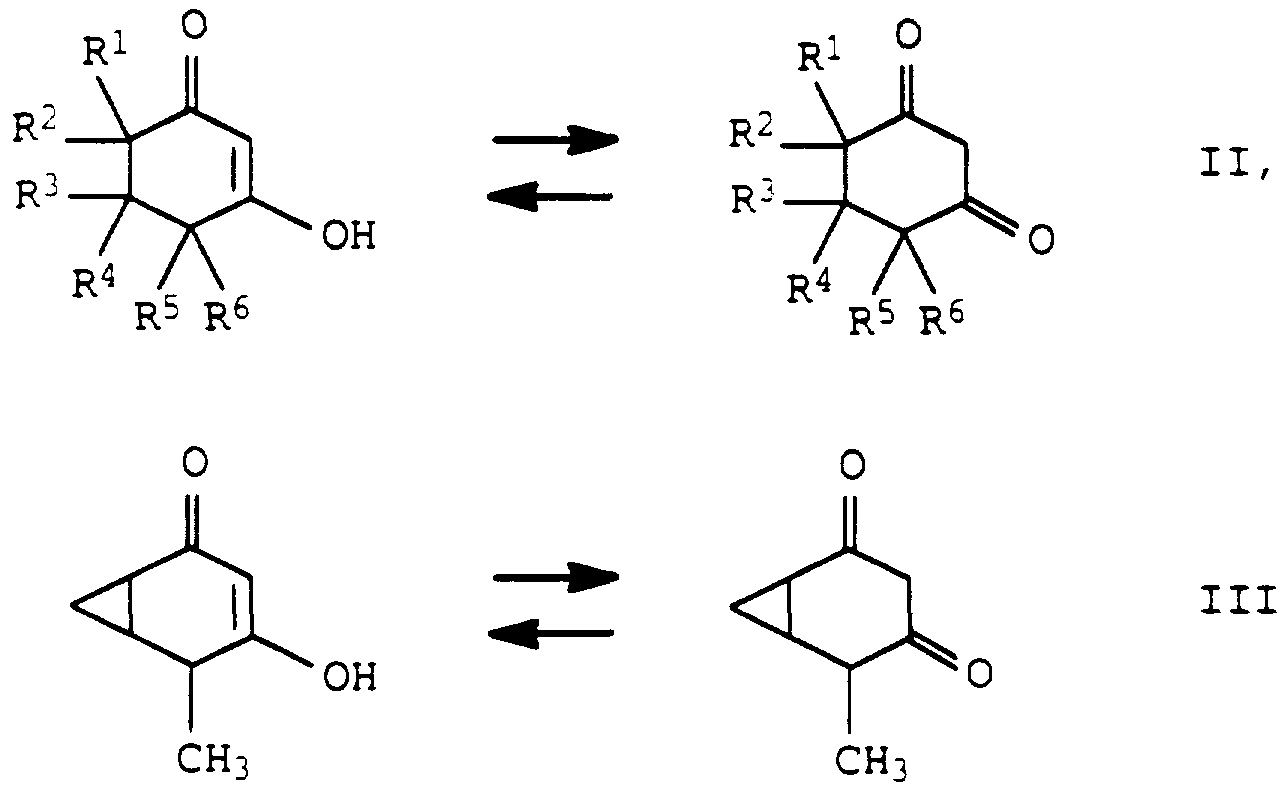
  • J is a cyclohexane-1, 3-dione ring of the formula II linked in position 2
  • R 1 to R 6 are hydrogen or methyl, or, if R 1 , R 2 , R 3 , R ⁇ and R ⁇ are hydrogen, R 4 is 2-ethyl-thiopropyl, tetrahydropyranyl-3, tetrahydropyranyl-, tetrahydro- means thiopyranyl-3 or 1-methylthio-cyclopropyl,
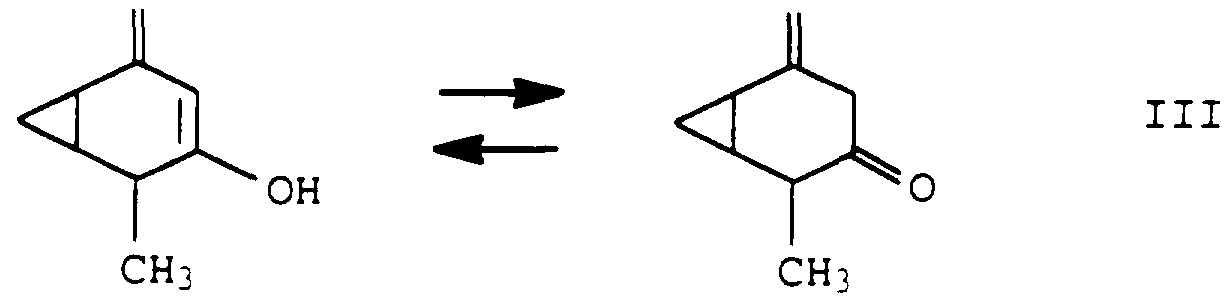
  • R 1 , R 4 , R 5 are hydrogen and R 6 are methyl, R 2 and R 3 form a three-membered ring, so that a bicyclo [4.1.0] heptane ring of the formula III linked in position 2 results
  • the invention furthermore relates to herbicidal compositions comprising the compounds I and processes for controlling unwanted vegetation with the saccharin derivatives I.
  • the present invention also comprises intermediates for the preparation of the end products I according to the invention and production processes for the products I, starting from the new intermediate products of formulas IV and V
  • Saccharin derivatives with herbicidal activity cannot be found in the prior art.
  • 4-Hydroxy-saccharin DE-OS 3 607 343
  • Herbicidally active 2-aroylcyclohexanediones are the subject of the older German application P 44 03 670. Among other things, a linkage with saccharin and N-alkylsaccharin is mentioned without specifying a production route for these compounds.
  • Heterocyclic compounds with a ring containing a sulfonamide group have become known as herbicides, and bentazone is a typical representative here
  • the invention was based on the object of making available new herbicides with a basic structure hitherto unknown for this indication. Accordingly, the compounds I defined at the outset and the intermediates IV and V were found. Intermediates IV and their preparation are the subject of the simultaneous German application DE-A 44 27 996.
  • L and M have the meaning given at the outset and Z represents hydrogen, C 1 -C 4 alkyl, C 3 -C 8 cycloalkyl, C -C 6 alkenyl, C -Cs alkynyl, C 1 -C 4 -Acyl or for optionally by halogen or C ! -C 4 alkyl substituted benzyl or phenyl.
  • the first step of the reaction sequence is carried out in a generally known manner, e.g. B. by adding an acid chloride of formula V to the solution or suspension of a cyclohexane-1, 3-dione II or III in the presence of an auxiliary base.
  • the reactants and the auxiliary base are expediently used in equimolar amounts. A little excess, e.g. 1.2 to 1.5 mol equivalents, based on II or III, of the auxiliary base may be advantageous.
  • Suitable auxiliary bases are tertiary alkylamines, pyridine or alkali carbonates.
  • a solvent e.g. Methylene chloride, diethyl ether, toluene or ethyl acetate can be used.
  • the reaction mixture is preferably cooled to 0 to 10 ° C., then the mixture is stirred at a temperature of 20 to 100 ° C., in particular 25 to 50 ° C., until the reaction has ended.
  • the processing takes place in the usual way, e.g. the reaction mixture is poured into water and the product of value extracted, e.g. with methylene chloride. After drying the organic phase and removing the solvent, the crude enol ester can be used for rearrangement without further purification.
  • Preparation examples for benzoyl enol esters of cyclohexane-1, 3-dione can be found, for. B. in EP-A 186 118 or US 4,780,127.
  • the rearrangement of the enol esters to the compounds of the formula I.1 is advantageously carried out at from 20 ° C. to 40 ° C. in a solvent and in the presence of an auxiliary base and with the aid of a cyano compound as a catalyst.
  • a solvent e.g. Acetonitrile, methylene chloride, 1, 2-dichloro-rethane, ethyl acetate or toluene can be used.
  • the preferred solvent is acetonitrile.
  • Suitable auxiliary bases are tertiary alkylamines, pyridine or alkali carbonates, which are preferably used in an equimolar amount or up to a fourfold excess, based on the benzoylenol ester.
  • the preferred auxiliary base is triethylamine in double amount.
  • Suitable catalysts are e.g. Potassium cyanide or acetone cyanohydrin, preferably in an amount of 1 to 50 mole percent, based on the enol ester.
  • Acetone cyanohydrin is preferably added, e.g. in the amount of 5 to 15, especially 10 mole percent.
  • Examples of the cyanide-catalyzed rearrangement of enol esters of cyclohexane-1, 3-diones can be found e.g. in EP-A 186 118 or US 4,780,127.
  • the processing takes place in a manner known per se.
  • the reaction mixture is acidified with dilute mineral acids such as 5% hydrochloric acid or sulfuric acid and extracted with an organic solvent such as methylene chloride or ethyl acetate.
  • the extract is cold with 5 to
  • the 1,3-diketones of the formulas II and III used as starting material are known and can be prepared by processes known per se (cf. EP-A 71 707, EP-A 142 741, EP-A 243 313, US Pat. No. 4,249,937 and WO 92/13821). Cyclohexanedione-1, 3 and dimedone are commercially available compounds.
  • the starting materials of the formula V are prepared in a manner known per se by reacting the saccharin carboxylic acid derivatives IV with thionyl chloride.
  • Saccharin carboxylic acids IV can also be obtained by using appropriate bromo- or iodine-substituted saccharin derivatives of the formula AI
  • reaction sequence can be represented as follows:
  • the catalysts nickel, cobalt, rhodium and in particular palladium can be metallic or in the form of conventional salts such as in the form of halogen compounds, for example PdCl 2 , RhCl -H 0, acetates, for example Pd (OAc) 2 - cyanides etc. in the known valence levels.
  • halogen compounds for example PdCl 2 , RhCl -H 0, acetates, for example Pd (OAc) 2 - cyanides etc. in the known valence levels.
  • metal complexes with tertiary phosphines metal alkylcarbonyls, metal carbonyls, for example CO 2 (CO) s / Ni (CO) 4 , metal carbonyl complexes with tertiary phosphines, for example (PPh 3 ) Ni (CO) 2 or transition metal salts complexed with tertiary phosphines available.
  • the latter embodiment is preferred in particular in the case of palladium as a catalyst.
  • the type of phosphine ligand is widely variable. For example, they can be represented by the following formulas:
  • n denotes the numbers 1, 2, 3 or 4 and the radicals R 7 to R 13 are low molecular weight alkyl, for example Ci-C ⁇ -alkyl, aryl, C 1 -C 4 -alkyl-aryl, for example benzyl, phenethyl or aryloxy.
  • Aryl is, for example, Naphxhyi, Anchryi and preferably optionally substituted phenyl, with the substituents only having to be considered for their inertness to the carboxylation reaction, otherwise they can be varied widely and include all inert C-organic radicals such as Ci-Ce-alkyl radicals , for example methyl, carboxyl radicals such as COOH, COOM (M is, for example, an alkali metal, alkaline earth metal or ammonium salt), or C-organic radicals bound via oxygen, such as Ci-C ⁇ alkoxy radicals.
  • Ci-Ce-alkyl radicals for example methyl
  • carboxyl radicals such as COOH, COOM (M is, for example, an alkali metal, alkaline earth metal or ammonium salt)
  • C-organic radicals bound via oxygen such as Ci-C ⁇ alkoxy radicals.
  • the phosphine complexes can be prepared in a manner known per se, for example as described in the documents mentioned at the outset. For example, one starts from customary commercially available metal salts such as PdCl 2 or Pd (OCOCH 3 ) 2 and adds the phosphine, for example P (C 6 H 5 > 3 , P (nC 4 H 9 ), PCH 3 (C 6 H 5 ) 2 , 1, 2-B ⁇ s (diphenylphosphmo) ethane added.
  • PdCl 2 or Pd (OCOCH 3 ) 2 adds the phosphine, for example P (C 6 H 5 > 3 , P (nC 4 H 9 ), PCH 3 (C 6 H 5 ) 2 , 1, 2-B ⁇ s (diphenylphosphmo) ethane added.
  • the amount of phosphine, based on the transition metal is usually 0 to 20, in particular 0.1 to 10 mol equivalents, particularly preferably 1 to 5 mol equivalents.
  • the amount of transition metal is not critical. Of course, for reasons of cost, a small amount, for example from 0.1 to 10 mol%, in particular 1 to 5 mol%, based on the starting material AI or A2, will be used.
  • the reaction is carried out with carbon monoxide and at least equimolar amounts of water, based on the starting materials AI and A2.
  • the reactant water can also serve as a solvent, i.e. the maximum amount is not critical.
  • Inert solvents which are customary for carboxylation reactions are hydrocarbons, for example toluene, xylene, hexane, pentane, cyclohexane, ethers, for example methyl tert-butyl ether, tetrahydrofuran, dioxane, dimethoxyethane, substituted amides such as dimethylformamide, per-substituted ureas such as tetra-C 1 -C 4 alkylureas or nitriles such as benzonitrile or acetonitrile.
  • hydrocarbons for example toluene, xylene, hexane, pentane, cyclohexane, ethers, for example methyl tert-butyl ether, tetrahydrofuran, dioxane, dimethoxyethane, substituted amides such as dimethylformamide, per-substituted ure
  • one of the reaction partners in particular the base, is used in excess, so that no additional solvent is required.
  • Bases suitable for the process are all inert bases which are able to bind the hydrogen iodide or hydrogen bromide released during the reaction.
  • tertiary amines such as tert-alkylamines, for example trialkylamines such as triethylamine, cyclic amines such as N-methylpiperidine or N, N'-dimethylpiperazine, pyridine, alkali metal or hydrogen carbonates, or tetraalkyl-substituted urea derivatives such as tetra-C 1 -C 4 alkyl urea, for example tetramethyl urea.
  • the amount of base is not critical, usually 1 to 10, in particular 1 to 5, moles are used.
  • the amount is generally measured so that the reactants are dissolved, unnecessarily high excesses being avoided for reasons of practicality in order to save costs, to be able to use small reaction vessels and to give the reactants maximum contact guarantee.
  • the carbon monoxide pressure is adjusted so that there is always an excess of CO, based on AI or A2.
  • the carbon monoxide pressure at room temperature is preferably 1 to 250 bar, in particular 5 to 150 bar CO.
  • the carbonylation is generally carried out continuously or batchwise at temperatures from 20 to 250 ° C., in particular at 30 to 150 ° C.
  • carbon monoxide is expediently pressed continuously onto the reaction mixture in order to maintain a constant pressure.
  • the products are converted in the usual way, e.g. isolated by distillation.
  • the starting materials AI or A2 required for the reaction are known or can be prepared in a manner known per se. They can either be obtained by permanganate oxidation of iodine-substituted 2-methylbenzenesulfonamides or by Sandmeyer reaction from aminosaccharides. Aminosaccharins are obtained by known methods by reduction of nitrosaccharides, which in turn are either known (Kastle, Amer. Chem. Journal ü, 184 (1889) or DRP 551423 (1930) or in a manner known from the literature from suitable nitrobenzene derivatives (Liebigs Ann 669.85 (1963)) or benzene
  • saccharin derivatives of the formula I are preferred in which the radicals L and M are hydrogen, methyl, methoxy, methylthio, chlorine, cyano, methylsulfonyl, nitro or trifluoromethyl. Saccharin derivatives I in which one of the radicals L or M or both radicals L and M are not hydrogen are also preferred.
  • radicals R 1 to R 6 are either all hydrogen or one, two or three radicals methyl and the remaining radicals are hydrogen.
  • the radical Z particularly preferably represents one of the C-organic radicals mentioned, in particular methyl, ethyl, propargyl, acetyl or phenyl. Particularly preferred active ingredients can be found in Tables 1 to 7.
  • the compounds I can be in the form of their agriculturally useful salts, the type of salt generally not being important. Usually the salts of such bases will be considered which do not adversely affect the herbicidal activity of I.
  • Particularly suitable basic salts are those of the alkali metals, preferably the sodium and potassium salts, those of the earth alkali metals, preferably calcium, magnesium and barium salts and those of the transition metals, preferably manganese, copper, zinc and iron salts and the ammonium salts, which can carry one to three -CC 4 alkyl, hydroxy -CC 4 alkyl substituents and / or a phenyl or benzyl substituent, preferably diisopropylammonium, tetramethylammonium, tetrabutylammonium, trimethylbenzylammonium and trimethyl (2-hydroxyethyl) ammonium salts, the phosphonium salts, the sulfonium salts, preferably tri- (C 1 -C 4 -) alkylsulfonium salts, and the sulfoxonium salts, preferably tri- (C 1 -C 4 -) alkylsulfoxonium salts.
  • the compounds I can control weeds and harmful grasses very well in crops such as wheat, rice, corn, soybeans and cotton, without significant damage to crops. This effect occurs especially at low application rates.
  • the compounds I or compositions containing them can also be used in a further number of crop plants for eliminating undesired plants.
  • the following crops are considered, for example:
  • Manihot esculenta Manihot esculenta, Medicago sativa, Musa spp., Nicotiana tabacum (N.rustica), Olea europaea, Oryza sativa, Phaseolus lunatus, Phaseolus vulgaris, Picea abies, Pinus spp., Pisum sativu, Prunus avium, Prunus persica, Pyrus communisis, Ribes sylvest , Ricinus communis, Saccharum officinarum, Seeale cereale, Solanum tuberosu, Sorghum bicolor (see vulgar), Theobroma cacao, Trifolium pratense, Triticum aestivum, Triticum durum, Vicia faba, Vitis vinifera, Zea mays.
  • the compounds I can also be used in crops which have been made largely resistant to the action of I or other herbicides by breeding and / or by means of genetic engineering methods.
  • the herbicidal compositions or the active compounds can be applied pre- or post-emergence. If the active ingredients are less compatible with certain crop plants, application techniques can be used in which the herbicidal compositions are sprayed with the aid of sprayers in such a way that the leaves of the sensitive crop plants are not hit wherever possible, while the active ingredients are applied to the leaves of undesirable plants growing below them or the uncovered floor area (post-directed, lay-by).
  • the compounds I or the herbicidal compositions comprising them can be carried out, for example, in the form of directly sprayable aqueous solutions, powders, suspensions, including high-strength aqueous, oily or other suspensions or dispersions, emulsions, oil dispersions, pastes, dusts, sprinkling agents or granules Spraying, atomizing, dusting, scattering or pouring can be used.
  • the application forms depend on the purposes; in any case, they should ensure the finest possible distribution of the active compounds according to the invention.
  • Inert auxiliaries for the production of directly sprayable solutions, emulsions, pastes or old dispersions are essentially: mineral oil fractions from medium to high boiling point such as kerosene or diesel oil, furthermore coal tar oils as well as oils of vegetable or animal origin, aliphatic, cyclic and aromatic hydrocarbons , for example paraffins, tetrahydronaphthalm, alkylated naphthalenes or their derivatives, alkylated benzenes and their derivatives, alcohols such as methanol, ethanol, propanol, butanol and cyclohexanol, ketones such as cyclohexanone or strongly polar solvents, for example amines such as N-methylpyrrolidone, or Water.
  • mineral oil fractions from medium to high boiling point such as kerosene or diesel oil, furthermore coal tar oils as well as oils of vegetable or animal origin, aliphatic, cyclic and aromatic hydrocarbons , for example par
  • Aqueous use forms can be prepared from emulsion concentrates, suspensions, pastes, wettable powders or water-dispersible granules by adding water.
  • the 5 substrates as such or dissolved in an oil or solvent can be homogenized in water using wetting agents, adhesives, dispersants or emulsifiers.
  • wetting agents, adhesives, dispersants or emulsifiers and possibly solvents or existing concentrates, 10 which are suitable for dilution with water.
  • alkali, alkaline earth, ammonium salts of aromatic sulfonic acids e.g. Lignin, phenol, naphthalene and dibutylnaphthalenesulfonic acid, as well as from
  • naphthalenesulfonic acids with phenol and formaldehyde polyoxyethylene octylphenol ether, ethoxylated isooctyl, octyl or nonylphenol, alkylphenyl, tributylphenyl polyglycol ether, alkyl aryl polyether alcohols, isotridecyl alcohol, fatty alcohol ethylene oxide condensates, ethoxylated castor oil, ethoxylated castor oil
  • Powders, materials for broadcasting and dusts can be prepared by mixing or grinding the active substances together with a solid carrier.
  • Granules e.g. Coated, impregnated and homogeneous granules can be produced by binding the active ingredients to solid carriers.
  • Solid carriers are mineral soils such as silica, silica gels, silicates, talc, kaolin, limestone, lime, chalk, bolus, loess, clay, dolomite, diatomaceous earth, calcium and magnesium sulfate, magnesium oxide, ground plastics, fertilizers, such as ammonium sulfate, Ammonium phosphate, ammonium nitrate,
  • urea and vegetable products such as cereal flour, tree bark, wood and nutshell flour, cellulose powder or other solid carriers.
  • the formulations generally contain between 0.01 and 45 95% by weight, preferably between 0.5 and 90% by weight, of active ingredient.
  • the active ingredients are used in a purity of 90% to 100%, preferably 95% to 100% (according to the NMR spectrum).
  • the compounds I according to the invention can be formulated, for example, as follows:
  • the saccharin derivatives can be mixed with numerous representatives of other herbicidal or growth-regulating active ingredient groups and applied together.
  • diazme, 4H-3,1-benzoxazine derivatives, benzothiadiazinones, 2, 6-dinitroanilines, N-phenylcarbamates, thiolcarbamates, halocarboxylic acids, triazines, amides, ureas, diphenyl ethers, triazinones, uracils, benzofuran ⁇ come as mixing partners derivatives, cyclohexane-1,3-dione derivatives, which are in the 2-position, for example carry a carboxy or carbimino group, quinolinecarboxylic acid derivatives, imidazolinones, sulfonamides, sulfonylureas, aryloxy, heteroaryloxyphenoxypropionic acids and their salts, esters
  • the application rates of active ingredient are 0.001 to 3.0, preferably 0.01 to 1.0 kg / ha of active substance (as), depending on the control target, the season, the target plants and the growth stage. Manufacturing examples
  • This substance can be produced by subsequent methylation of the saccharin obtained under 6 with dimethyl sulfate in the presence of NaOH.
  • Plastic flower pots with loamy sand with about 3.0% humus as a substrate served as culture vessels.
  • the seeds of the test plants were sown separately according to species.
  • the active ingredients suspended or emulsified in water were applied directly after sowing by means of finely distributing nozzles.
  • the vessels were sprinkled lightly to promote germination and growth, and then covered with transparent plastic hoods until the plants had grown. This cover causes the test plants to germinate evenly, provided that this has not been impaired by the active ingredients.
  • test plants For the purpose of post-emergence treatment, the test plants 15, depending on the growth habit, were first grown to a height of 3 to 15 cm and only then treated with the active ingredients suspended or emulsified in water. For this purpose, the test plants were either sown directly and grown in the same containers or they are first grown separately as seedlings and transplanted into the test containers some 20 days before the treatment.
  • the application rate for post-emergence treatment was 0.5 or 0.25 kg / ha a.S.
  • the plants were kept at temperatures of 10 to 25 25 ° C or 20 to 35 ° C, depending on the species.
  • the trial period lasted 2 to 4 weeks. During this time, the plants were cared for and their response to each treatment was evaluated.

Landscapes

  • Chemical & Material Sciences (AREA)
  • Organic Chemistry (AREA)
  • Life Sciences & Earth Sciences (AREA)
  • Wood Science & Technology (AREA)
  • Environmental Sciences (AREA)
  • Plant Pathology (AREA)
  • Health & Medical Sciences (AREA)
  • Engineering & Computer Science (AREA)
  • Dentistry (AREA)
  • General Health & Medical Sciences (AREA)
  • Agronomy & Crop Science (AREA)
  • Zoology (AREA)
  • Pest Control & Pesticides (AREA)
  • Agricultural Chemicals And Associated Chemicals (AREA)
  • Plural Heterocyclic Compounds (AREA)
  • Thiazole And Isothizaole Compounds (AREA)
  • Organic Low-Molecular-Weight Compounds And Preparation Thereof (AREA)
  • Pharmaceuticals Containing Other Organic And Inorganic Compounds (AREA)
  • Acyclic And Carbocyclic Compounds In Medicinal Compositions (AREA)
  • Heterocyclic Carbon Compounds Containing A Hetero Ring Having Oxygen Or Sulfur (AREA)
  • Nitrogen And Oxygen Or Sulfur-Condensed Heterocyclic Ring Systems (AREA)
  • Hydrogenated Pyridines (AREA)

Abstract

Saccharinderivate der Formel (I), in der die Substituenten folgende Bedeutung haben: L,M Wasserstoff, Alkyl, Alkoxy, Alkylthio, Chlor, Cyano, Methylsulfonyl, Nitro oder Trifluormethyl; Z Wasserstoff, Alkyl, Cycloalkyl, Alkenyl, Alkinyl, Acyl, gegebenenfalls durch Halogen oder Alkyl substituiertes Benzyl oder Phenyl; J ein in Stellung 2 verknüpfter gegebenenfalls substituierter Cyclohexan-1,3-dionring.

Description

Saccharinderivate
Beschreibung
Gegenstand der vorliegenden Anmeldung sind Saccharinderivate der Formel I
Figure imgf000003_0001
in der die Substituenten folgende Bedeutung haben:
L,M Wasserstoff, Cι-C4-Alkyl, C!-C4-Alkoxy, Cι-C4-Alkylthio, Chlor, Cyano, Methylsulfonyl, Nitro oder Trifluormethyl;
Z Wasserstoff, Cι-C4-Alkyl, C -Cs-Cycloalkyl, C -Ce-Alkenyl, Cj-Cs-Alkinyl, Cι-C4-Acyl, Benzyl oder Phenyl, wobei die Phenylringe jeweils gegebenenfalls durch Halogen oder Cι-C4-Alkyl substituiert sind;
Q ein Rest CO-J;
J ein in Stellung 2 verknüpfter Cyclohexan-1, 3-dionring der Formel II
Figure imgf000003_0002
in welcher entweder R1 bis R6 Wasserstoff oder Methyl bedeuten, oder, wenn R1, R2, R3, RΞ und Rδ Wasserstoff bedeuten, R4 2-Ethyl- thiopropyl, Tetrahydropyranyl-3, Tetrahydropyranyl- , Tetrahydro- thiopyranyl-3 oder 1-Methylthio-cyclopropyl bedeutet,
oder, wenn R1, R4, R5 Wasserstoff und R6 Methyl bedeuten, R2 und R3 einen Dreiring bilden, so daß ein in Stellung 2 verknüpfter Bicyclo[4.1.0]heptanring der Formel III resultiert
TTT
Figure imgf000003_0003
sowie landwirtschaftlich übliche Salze der Verbindungen I.
Gegenstand der Erfindung sind ferner herbizide Mittel, enthaltend die Verbindungen I sowie Verfahren zur Bekämpfung unerwünschten Pflanzenwuchses mit den Saccharinderivaten I. Darüber hinaus umfaßt die vorliegende Erfindung auch Zwischenprodukte zur Her¬ stellung der erfindungsgemäßen Endprodukte I und Herstellungs¬ verfahren für die Produkte I, ausgehend von den neuen Zwischen¬ produkten der Formeln IV und V
Figure imgf000004_0001
wobei die übrigen Reste L, M und Z die voranstehend genannte Bedeutung haben.
Saccharinderivate mit herbizider Wirkung sind dem Stand der Technik nicht zu entnehmen. Dagegen ist das unsubstituierte Saccharin (o-Sulfobenzoesaureimid, d.h. , M, Q und Z in Formel I = H) seit langem als synthetischer Süßstoff bekannt. Als Süßstoff bekannt ist ferner das 4-Hydroxy-saccharin (DE-OS 3 607 343). Bekannt ist auch die Verwendung von Saccharinderivaten bei der Schädlingsbekämpfung, z.B. JP-Publikation 72/00419, 73/35457 (Fungizide) und in der Pharmazie, z.B. EP-A 594 257 und darin genannte Literaturzitate.
Herbizid wirksame 2-Aroylcyclohexandione sind Gegenstand der alteren deutschen Anmeldung P 44 03 670. Unter anderem wird eine Verknüpfung mit Saccharin und N-Alkylsaccharin erwähnt, ohne einen Herstellungsweg für diese Verbindungen anzugeben.
Heterocyclische Verbindungen mit einem eine Sulfonamidgruppe ent¬ haltenden Ring sind als Herbizide bekannt geworden, als typischer Vertreter ist hier das Bentazon
Figure imgf000004_0002
H
zu nennen. Der Erfindung lag nun die Aufgabe zugrunde, neue Herbizide mit einer bislang für diese Indikation unbekannten Grundstruktur zur Verfugung zu stellen. Demgemäß wurden die eingangs definierten Verbindungen I und die Zwischenprodukte IV und V gefunden. Die Zwischenprodukte IV und deren Herstellung sind Gegenstand der zeitgleichen deutschen Anmeldung DE-A 44 27 996.
Verbindungen der Formel I erhält man dadurch, daß man Verbindungen der Formel II bzw. III mit einem Saurechlorid der Formel V acyliert und zu Saccharinderivaten der Formel I.l umlager :
Figure imgf000005_0001
II V
Katalysator
Figure imgf000005_0002
In den oben genannten Formeln haben L und M die eingangs angegebene Bedeutung und Z steht für Wasserstoff, Cι-C4-Alkyl, C3-C8-Cycloalkyl, C -C6-Alkenyl, C -Cs-Alkinyl, Cι-C4-Acyl oder für gegebenenfalls durch Halogen oder C!-C4-Alkyl substituiertes Benzyl oder Phenyl.
Der erste Schritt der Reaktionsabfolge, die Acylierung, erfolgt in allgemein bekannter Weise, z. B. durch Zugabe eines Saure- chlorids der Formel V zur Losung oder Suspension eines Cyclo- hexan-1, 3-dions II oder III in Gegenwart einer Hilfsbase. Die Reaktanden und die Hilfsbase werden dabei zweckmäßig in äguimolaren Mengen eingesetzt. Ein geringer Überschuß, z.B. 1,2 bis 1, 5-Molaquivalente, bezogen auf II bzw. III, der Hilfs¬ base kann u.U. vorteilhaft sein.
Als Hilfsbase eignen sich tertiäre Alkylamine, Pyridin oder Alkalicarbonate. Als Losungsmittel können z.B. Methylenchlorid, Diethylether, Toluol oder Essigsaureethylester verwendet werden.
Wahrend der Zugabe des Saurechlorids wird die Reaktionsmischung vorzugsweise auf 0 bis 10°C gekühlt, danach wird bei einer Temperatur von 20 bis 100°C, insbesondere 25 bis 50°C gerührt, bis die Umsetzung beendet ist. Die Aufarbeitung erfolgt in üblicher Weise, z.B. wird das Reaktionsgemisch in Wasser gegossen und das Wertprodukt extrahiert, z.B. mit Methylenchlorid. Nach Trocknen der organischen Phase und Entfernung des Losungsmittels kann der rohe Enolester ohne weitere Reinigung zur Umlagerung eingesetzt werden. Herstellungsbeispiele für Benzoyl-enolester von Cyclo¬ hexan-1, 3-dione findet man z. B. in EP-A 186 118 oder US 4,780,127.
Die Umlagerung der Enolester zu den Verbindungen der Formel I.l erfolgt zweckmäßig bei Temperaturen von 20°C bis 40°C in einem Losungsmittel und in Gegenwart einer Hilfsbase sowie mit Hilfe einer Cyanoverbindung als Katalysator.
Als Lösungsmittel kann z.B. Acetonitril, Methylenchlorid, 1, 2-Dichlc-rethan, Essigsaureethylester oder Toluol verwendet werden. Bevorzugtes Lösungsmittel ist Acetonitril. Als Hilfsbase eignen sich tertiäre Alkylamine, Pyridin oder Alkalicarbonate, die vorzugsweise in äquimolarer Menge oder bis zu vierfachem Überschuß, bezogen auf den Benzoylenolester, eingesetzt werden. Bevorzugte Hilfsbase ist Triethylamin in doppelter Menge.
Als Katalysator eignen sich z.B. Kaliumcyanid oder Acetoncyanhy¬ drin, vorzugsweise in einer Menge von 1 bis 50 Molprozent, bezogen auf den Enolester. Bevorzugt setzt man Acetoncyanhydrin zu, z.B. in der Menge von 5 bis 15, insbesondere 10 Molprozent. Beispiele zur cyanidkatalysierten Umlagerung von Enolestern der Cyclo- hexan-1, 3-dione findet man z.B. in EP-A 186 118 oder US 4,780,127.
Die Aufarbeitung erfolgt in an sich bekannter Weise. Z.B. wird das Reaktionsgemisch mit verdünnten Mineralsauren wie 5 %iger Salzsaure oder Schwefelsaure angesäuert und mit einem organischen Losungsmittel wie Methylenchlorid oder Essigsaureethylester extrahiert. Zur Reinigung wird der Extrakt mit kalter 5 bis
10 %iger Alkalicarbonatlosung extrahiert, wobei das Endprodukt in die wäßrige Phase übergeht. Durch Ansäuern der wäßrigen Losung wird das Produkt der Formel I ausgefällt oder erneut mit Methylenchlorid extrahiert, getrocknet und anschließend vom Losungsmittel befreit.
Die als Ausgangsmaterial verwendeten 1,3-Diketone der Formeln II und III sind bekannt und können nach an sich bekannten Verfahren hergestellt werden (vgl. EP-A 71 707, EP-A 142 741, EP-A 243 313, US 4 249 937 und WO 92/13821). Cyclohexandion-1, 3 und Dimedon sind käufliche Verbindungen.
Die Ausgangsstoffe der Formel V werden in an sich bekannter Weise durch Umsetzung der Saccharincarbonsäurederivate IV mit Thionyl- chlorid hergestellt.
Saccharincarbonsäuren IV sind zum Teil bekannt (4-COOH: Zincke, Liebigs Ann. 427. 231 (1922), 5-COOH: Jacobsen, Chem. Ber. 12, 1554 (1880), 6-COOH: Weber, Chem. Ber. 21, 1740 (1892)). In der DE-OS 36 07 343 ist ferner die Herstellung der 4-Chlor- saccharin-5-carbonsäure beschrieben.
Saccharincarbonsäuren IV können auch erhalten werden, indem man man entsprechende brom- oder iodsubstituierte Saccharinderivate der Formel AI
Figure imgf000007_0001
in der L, M und Z die obengenannte Bedeutung haben, oder im Falle von Z ≠- H Verbindungen der Formel A2
Figure imgf000007_0002
in Gegenwart eines Palladium-, Nickel-, Cobalt- oder Rhodium- Ubergangsmetallkatalysators und einer Base mit Kohlenmonoxid und Wasser unter erhöhtem Druck umsetzt.
Wenn beispielsweise L für Methyl und M und Z für Wasserstoff stehen, läßt sich die Reaktionsfolge wie folgt darstellen:
Figure imgf000008_0001
Die Katalysatoren Nickel, Cobalt, Rhodium und insbesondere Palladium können metallisch oder in Form üblicher Salze wie in Form von HalogenVerbindungen, z.B. PdCl2, RhCl -H 0, Acetaten, z.B. Pd(OAc)2- Cyaniden usw. in den bekannten Wertigkeitsstufen vorliegen. Ferner können Metallkomplexe mit tertiären Phosphinen, Metallalkylcarbonyle, Metallcarbonyle, z.B. C02(CO)s/ Ni(CO)4, Metallcarbonyl-Komplexe mit tertiären Phosphinen, z.B. (PPh3) Nι (CO)2 oder mit tertiären Phosphinen komplexierte Uber- gangsmetallsalze vorliegen. Die letztgenannte Ausfuhrungsform ist insbesondere im Fall von Palladium als Katalysator bevorzugt. Dabei ist die Art der Phosphinliganden breit variabel. Beispiels¬ weise lassen sie sich durch folgende Formeln wiedergeben:
Figure imgf000008_0002
wobei n die Zahlen 1, 2, 3 oder 4 bedeutet und die Reste R7 bis R13 für niedermolekulares Alkyl, z.B. Ci-Cβ-Alkyl, Aryl, Cι-C4-Alkyl-aryl, z.B. Benzyl, Phenethyl oder Aryloxy stehen. Aryl ist z.B. Naphxhyi, Anchryi und vorzugsweise gegebenenfalls substituiertes Phenyl, wobei man hinsichtlich der Substituenten nur auf deren Inertheit gegenüber der Carboxylierungsreaktion zu achten hat, ansonsten können sie breit variiert werden und u - fassen alle inerten C-organischen Reste wie Ci-Ce-Alkylreste, z.B. Methyl, Carboxylreste wie COOH, COOM (M ist z.B. ein Alkali-, Erdalkalimetall oder Ammoniumsalz) , oder C-organische Reste über Sauerstoff gebunden wie Ci-Cδ-Alkoxyreste.
Die Herstellung der Phosphinkomplexe kann in an sich bekannter Weise, z.B. wie in den eingangs genannten Dokumenten beschrieben, erfolgen. Beispielsweise geht man von üblichen kommerziell erwerblichen Metallsalzen wie PdCl2 oder Pd(OCOCH3)2 aus und fugt das Phosphin z.B. P(C6H5>3, P(n-C4H9) , PCH3(C6H5)2, 1, 2-Bιs (diphenylphosphmo)ethan hinzu.
Die Menge an Phosphin, bezogen auf das Ubergangsmetall, betragt üblicherweise 0 bis 20, insbesondere 0,1 bis 10 Molaquivalente, besonders bevorzugt 1 bis 5 Molaquivalente. Die Menge an Übergangsmetall ist nicht kritisch. Natürlich wird man aus Kostengründen eher eine geringe Menge, z.B. von 0,1 bis 10 Mol.-%, insbesondere 1 bis 5 Mol.-%, bezogen auf den Ausgangs¬ stoff AI bzw. A2 verwenden.
Zur Herstellung der Saccharincarbonsäuren IV führt man die Umsetzung mit Kohlenmonσxid und mindestens äquimolaren Mengen an Wasser, bezogen auf die Ausgangsstoffe AI bzw. A2 durch. Der Reaktionspartner Wasser kann gleichzeitig auch als Lösungsmittel dienen, d.h. die maximale Menge ist nicht kritisch.
Es kann aber auch je nach Art der Ausgangsstoffe und der ver¬ wendeten Katalysatoren von Vorteil sein, anstelle des Reaktions¬ partners ein anderes inertes Lösungsmittel oder die für die Carboxylierung verwendete Base als Lösungsmittel zu verwenden.
Als inerte Lösungsmittel kommen für Carboxylierungsreaktionen übliche Lösungsmittel wie Kohlenwasserstoffe, z.B. Toluol, Xylol, Hexan, Pentan, Cyclohexan, Ether z.B. Methyl-tert.butylether, Tetrahydrofuran, Dioxan, Dimethoxyethan, substituierte Amide wie Dimethylformamid, persubstituierte Harnstoffe wie Tetra-Cι-C4-alkylharnstoffe oder Nitrile wie Benzonitril oder Acetonitril in Betracht.
In einer bevorzugten Ausfuhrungsform des Verfahrens verwendet man einen der Reaktionspartnsr, insbesondere die Base, im Überschuß, so daß kein zusätzliches Lösungsmittel erforderlich ist.
Für das Verfahren geeignete Basen sind alle inerten Basen, die den bei der Umsetzung freiwerdenden Jodwasserstoff bzw. Brom¬ wasserstoff zu binden vermögen. Beispielsweise sind hier tertiäre Amine wie tert.-Alkylamine, z.B. Trialkylamine wie Triethylamin, cyclische Amine wie N-Methylpiperidin oder N,N' -Dimethyl- piperazin, Pyridin, Alkali- oder -hydrogencarbonate, oder tetraalkylsubstituierte Harnstoffderivate wie Tetra-Cι-C4-alkyl- harnstoff, z.B. Tetramethylharnstoff, zu nennen.
Die Menge an Base ist nicht kritisch, üblicherweise werden 1 bis 10, insbesondere 1 bis 5 Mol verwendet. Bei gleichzeitiger Ver- wendung der Base als Lösungsmittel, wird die Menge in der Regel so bemessen, daß die Reaktionspartner gelöst sind, wobei man aus Praktikabilitätsgründen unnötig hohe Überschüsse vermeidet, um Kosten zu sparen, kleine Reaktionsgefäße einsetzen zu können und den Reaktionspartnern maximalen Kontakt zu gewährleisten. Während der Umsetzung wird der Kohlenmonoxiddruck so eingestellt, daß immer ein Überschuß an CO, bezogen auf AI bzw. A2 vorliegt. Vorzugsweise liegt der Kohlenmonoxiddruck bei Raumtemperatur bei 1 bis 250 bar, insbesondere 5 bis 150 bar CO.
Die Carbonylierung wird in der Regel bei Temperaturen von 20 bis 250°C, insbesondere bei 30 bis 150°C kontinuierlich oder diskonti¬ nuierlich durchgeführt. Bei diskontinuierlichem Betrieb wird zweckmäßigerweise zur Aufrechterhaltung eines konstanten Druckes kontinuierlich Kohlenmonoxid auf das Umsetzungsgemisch aufge¬ preßt.
Aus dem anfallenden Reaktionsgemisch werden die Produkte in üblicher Weise, z.B. durch Destillation isoliert.
Die für die Umsetzung benötigten Ausgangsstoffe AI bzw. A2 sind bekannt oder können in an sich bekannter Weise hergestellt werden. Sie können entweder durch Permanganatoxidation von iod- substituierten 2-Methylbenzolsulfonamiden oder durch Sandmeyer- Reaktion aus Aminosacchariden erhalten werden. Aminosaccharine werden nach bekannten Methoden durch Reduktion von Nitro- sacchariden erhalten, die ihrerseits entweder bekannt sind (Kastle, Amer. Chem. Journal ü, 184 (1889) oder DRP 551423 (1930) oder in literaturbekannter Weise aus geeigneten Nitro- benzolderivaten (Liebigs Ann. 669. 85 (1963)) oder Benzol-
Darüber hinaus können sie analog den Herstellvorschriften aus den Beispielen 1 bis 12 erhalten werden.
Im Hinblick auf die bestimmungsgemäße Verwendung sind Saccharin¬ derivate der Formel I bevorzugt, in der die Reste L bzw. M für Wasserstoff, Methyl, Methoxy, Methylthio, Chlor, Cyano, Methyl¬ sulfonyl, Nitro oder Trifluormethyl stehen. Ferner sind Saccharinderivate I bevorzugt, in denen einer der Reste L oder M oder beide Reste L und M ungleich Wasserstoff sind.
In Formel I bedeuten die Reste R1 bis R6 entweder alle Wasserstoff oder ein, zwei oder drei Reste Methyl und die übrigen Reste Wasserstoff. Die Restekombination R3 + R4 = CH3 und R1, R2, R5, R6 = H ist neben dem unsubstituierten Cyclus (R1 bis R6 = H) besonders bevorzugt.
Der Rest Z steht besonders bevorzugt für einen der genannten C-organischen Reste, insbesondere für Methyl, Ethyl, Propargyl, Acetyl oder Phenyl. Insbesondere bevorzugte Wirkstoffe sind den Tabellen 1 bis 7 zu entnehmen.
Die Verbindungen I können in Form ihrer landwirtschaftlich brauchbaren Salze vorliegen, wobei es auf die Art des Salzes im allgemeinen nicht ankommt. Üblicherweise werden die Salze von solchen Basen in Betracht kommen, welche die herbizide Wirkung von I nicht negativ beeinträchtigen.
Als basische Salze eignen sich besonders diejenigen der Alkali¬ metalle, vorzugsweise die Natrium- und Kaliumsalze, die der Erd¬ alkalimetalle, vorzugsweise Calcium-, Magnesium-, und Bariumsalze und die der Übergangsmetalle, vorzugsweise Mangan-, Kupfer-, Zink- und Eisensalze sowie die Ammoniumsalze, die ein bis drei Cι-C4-Alkyl, Hydroxy-Cι-C4-alkylsubstituenten und/oder einen Phenyl- oder Benzylsubstituenten tragen können, vorzugsweise Diisopropylammonium-, Tetramethylammonium-, Tetrabutylammonium-, Trimethylbenzylammonium-, und Trimethyl- (2-hydroxyethyl) - ammoniumsalze, die Phosphoniumsalze, die Sulfoniumsalze, vorzugs- weise Tri- (C1-C4-)alkylsulfoniumsalze, und die Sulfoxoniumsalze, vorzugsweise Tri- (C1-C4-)alkylsulfoxoniumsalze.
Die Verbindungen I die sie enthaltenden herbiziden Mittel sowie deren umweltverträgliche Salze von beispielsweise Alkalimetallen, Erdalkalimetallen oder Ammoniak und Aminen bzw. die sie ent¬ haltenden herbiziden Mittel können in Kuiturerrwie Weizen, Reis, Mais, Soja und Baumwolle Unkräuter und Schadgräser sehr gut bekämpfen, ohne die Kulturpflanzen nennenswert zu schädigen. Dieser Effekt tritt vor allem bei niedrigen Aufwandmengen auf.
Unter Berücksichtigung der Vielseitigkeit der Applikations¬ methoden können die Verbindungen I bzw. sie enthaltende Mittel noch in einer weiteren Zahl von Kulturpflanzen zur Beseitigung unerwünschter Pflanzen eingesetzt werden. In Betracht kommen beispielsweise folgende Kulturen:
Allium cepa, Ananas comosus, Arachis hypogaea, Asparagus officinalis, Beta vulgaris spp. altissima, Beta vulgaris spp. rapa, Brassica napus var. napus, Brassica napus var. napobrassica, Brassica rapa var. silvestris, Camellia sinensis, Carthamus tinctorius, Carya illinoinensis, Citrus limon, Citrus sinensis, Coffea arabica (Coffea canephora, Coffea liberica) , Cucumis sativus, Cynodon dactylon, Daucus carota, Elaeis gumeensis, Fragaria vesca, Glycine max, Gossypium hirsutum, (Gossypium arboreum, Gossypium herbaceum, Gossypium vitifolium) , Helianthus annuus, Hevea brasiliensis, Hordeum vulgäre, Humulus lupulus, Ipomoea batatas, Juglans regia, Lens culinaris, Linum usitatissimum, Lycopersicon lycopersicum, Malus spp. , Manihot esculenta, Medicago sativa, Musa spp., Nicotiana tabacum (N.rustica), Olea europaea, Oryza sativa, Phaseolus lunatus, Phaseolus vulgaris, Picea abies, Pinus spp., Pisum sativu , Prunus avium, Prunus persica, Pyrus communis, Ribes sylvestre, Ricinus communis, Saccharum officinarum, Seeale cereale, Solanum tuberosu , Sorghum bicolor (s. vulgäre), Theobroma cacao, Trifolium pratense, Triticum aestivum, Triticum durum, Vicia faba, Vitis vinifera, Zea mays.
Darüber lassen sich die Verbindungen I auch in Kulturen, die durch Züchtung und/oder mittels gentechnischer Methoden gegen die Wirkung von I oder anderen Herbiziden weitgehend resistent gemacht wurden, einsetzen.
Die Applikation der herbiziden Mittel bzw. der Wirkstoffe kann im Vorauflauf- oder im Nachauflaufverfahren erfolgen. Sind die Wirkstoffe für gewisse Kulturpflanzen weniger verträglich, so können Ausbringungstechniken angewandt werden, bei welchen die herbiziden Mittel mit Hilfe der Spritzgerate so gespritzt werden, daß die Blatter der empfindlichen Kulturpflanzen nach Möglichkeit nicht getroffen werden, wahrend die Wirkstoffe auf die Blätter darunter wachsender unerwünschter Pflanzen oder die unbedeckte Bodenflache gelangen (post-directed, lay-by) .
Die Verbindungen I bzw. die sie enthaltenden herbiziden Mittel können beispielsweise in Form von direkt verspr hbaren wäßrigen Lösungen, Pulvern, Suspensionen, auch hochprozentigen wäßrigen, öligen oder sonstigen Suspensionen oder Dispersionen, Emulsionen, όldispersionen, Pasten, Stäubemitteln, Streumitteln oder Granu- laten durch Verspr hen, Vernebeln, Verstauben, Verstreuen oder Gießen angewendet werden. Die Anwendungsformen richten sich nach den Verwendungszwecken; sie sollten in jedem Fall möglichst die feinste Verteilung der erfindungsgemäßen Wirkstoffe gewähr¬ leisten.
Als inerte Hilfsstoffe für die Herstellung von direkt versprüh¬ baren Losungen, Emulsionen, Pasten oder Oldispersionen kommen im wesentlichen in Betracht: Mineralölfraktionen von mittlerem bis hohem Siedepunkt wie Kerosin oder Dieselöl, ferner Kohlenteerόle sowie Ole pflanzlichen oder tierischen Ursprungs, aliphatische, cyclische und aromatische Kohlenwasserstoffe, z.B. Paraffine, Tetrahydronaphthalm, alkylierte Naphthaline oder deren Derivate, alkylierce Benzole und deren Derivate, Alkohole wie Methanol, Ethanol, Propanol, Butanol und Cyclohexanol, Ketone wie Cyclo- hexanon oder stark polare Losungsmittel, z.B. Amine wie N-Methyl- pyrrolidon, oder Wasser. Wäßrige Anwendungsformen können aus Emulsionskonzentraten, Suspensionen, Pasten, netzbaren Pulvern oder wasserdispergier- baren Granulaten durch Zusatz von Wasser bereitet werden. Zur Herstellung von Emulsionen, Pasten oder Oldispersionen können die 5 Substrate als solche oder in einem 01 oder Lösungsmittel gelost, mittels Netz-, Haft-, Dispergier- oder Emulgiermittel in Wasser homogenisiert werden. Es können aber auch aus wirksamer Substanz, Netz-, Haft-, Dispergier- oder Emulgiermittel und eventuell Losungsmittel oder 01 bestehende Konzentrate hergestellt werden, 10 die zur Verdünnung mit Wasser geeignet sind.
Als oberflächenaktive Stoffe kommen die Alkali-, Erdalkali-, Ammoniumsalze von aromatischen Sulfonsäuren, z.B. Lignin-, Phenol-, Naphthalin- und Dibutylnaphthalinsulfonsäure, sowie von
15 Fettsauren, Alkyl- und Alkylarylsulfonaten, Alkyl-, Laurylether- und Fettalkoholsulfaten, sowie Salze sulfatierter Hexa-, Hepta- und Octadecanolen sowie von Fettalkoholglykolether, Kondensa¬ tionsprodukte von sulfoniertem Naphthalin und seiner Derivate mit Formaldehyd, Kondensationsprodukte des Naphthalins bzw. der
20 Naphthalinsulfonsäuren mit Phenol und Formaldehyd, Polyoxy- ethylenoctylphenolether, ethoxyliertes Isooctyl-, Octyl- oder Nonylphenol, Alkylphenyl-, Tributylphenylpolyglykolether, Alkyl- arylpolyetheralkohole, Isotridecylalkohol, Fettalkoholethylen- oxid-Kondensate, ethoxyliertes Rizinusöl, Polyoxyethylenalkyl-
25 ether oder Polyoxypropylenalkylether, Laurylalkoholpolyglykol- etheracetat, Sorbitester, Lignin-Suifitablaugen oder Methyl- cellulose in Betracht.
Pulver-, Streu- und Stäubemittel können durch Mischen oder 30 gemeinsames Vermählen der wirksamen Substanzen mit einem festen Tragerstoff hergestellt werden.
Granulate, z.B. Umhüllungs-, Impragnierungs- und Homogengranulate können durch Bindung der Wirkstoffe an feste Trägerstoffe herge-
35 stellt werden. Feste Trägerstoffe sind Mineralerden wie Kiesel¬ sauren, Kieselgele, Silikate, Talkum, Kaolin, Kalkstein, Kalk, Kreide, Bolus, Löß, Ton, Dolomit, Diatomeenerde, Calcium- und Magnesiumsulfat, Magnesiumoxid, gemahlene Kunststoffe, Dünge¬ mittel, wie Ammoniumsulfat, Ammoniumphosphat, Ammoniumnitrat,
40 Harnstoffe und pflanzliche Produkte wie Getreidemehl, Baum¬ rinden-, Holz- und Nußschalenmehl, Cellulosepulver oder andere feste Tragerstoffe.
Die Formulierungen enthalten im allgemeinen zwischen 0,01 und 45 95 Gew.-%, vorzugsweise zwischen 0,5 und 90 Gew.-%, Wirkstoff. Die Wirkstoffe werden dabei in einer Reinheit von 90 % bis 100 %, vorzugsweise 95 % bis 100 % (nach NMR-Spektrum) eingesetzt. Die erfindungsgemaßen Verbindungen I können beispielsweise wie folgt formuliert werden:
I. 20 Gewichtsteile der Verbindung Nr. 2.08 werden in einer Mischung gelöst, die aus 80 Gewichtsteilen alkyliertem Benzol, 10 Gewichtsteilen des Anlagerungsproduktes von 8 bis 10 Mol Ethylenoxid an 1 Mol Olsaure-N-monoethanol- amid, 5 Gewichtsteilen Calciumsalz der Dodecylbenzolsulfon- saure und 5 Gewichtsteilen des Anlagerungsproduktes von 40 Mol Ethylenoxid an 1 Mol Ricinusöl besteht. Durch Aus¬ gießen und feines Verteilen der Losung in 100 000 Gewichts¬ teilen Wasser erhält man eine wäßrige Dispersion, die 0,02 Gew. % des Wirkstoffs enthält.
II. 20 Gewichtsteile der Verbindung Nr. 2.08 werden in einer Mischung gelost, die aus 40 Gewichtsteilen Cyclohexanon, 30 Gewichtsteilen Isobutanol, 20 Gewichtsteilen des Anlage¬ rungsproduktes von 7 Mol Ethylenoxid an 1 Mol Isooctyl- phenol und 10 Gewichtsteilen des Anlagerungsproduktes von 40 Mol Ethylenoxid an 1 Mol Ricinusöl besteht. Durch Ein¬ gießen und feines Verteilen der Losung in 100 000 Gewichts¬ teilen Wasser erhält man eine wäßrige Dispersion, die 0,02 Gew.-% des Wirkstoffs enthält.
III. 20 Gewichtsteile des Wirkstoffs Nr. 2.08 werden in einer Mischung gelöst, die aus 25 Gewichtsteilen Cyclohexanon, 65 Gewichtsteilen einer Mineralölfraktion vom Siedepunkt 210 bis 280°C und 10 Gewichtsteilen des Anlagerungs¬ produktes von 40 Mol Ethylenoxid an 1 Mol Ricinusöl besteht. Durch Eingießen und feines Verteilen der Lösung in 100 000 Gewichtsteilen Wasser erhält man eine wäßrige Dispersion, die 0,02 Gew.-% des Wirkstoffs enthält.
IV. 20 Gewichtsteile des Wirkstoffs Nr. 2.08 werden mit 3 Gewichtsteilen des Natriumsalzes der Diisobutyl- naphthalin-α-sulfonsaure, 17 Gewichtsteilen des Natrium¬ salzes einer Ligninsulfonsäure aus einer Sulfit-Ablauge und 60 Gewichtsteilen pulverformigem Kieselsauregel gut ver¬ mischt und in einer Hammermühle vermählen. Durch feines Verteilen der Mischung in 20 000 Gewichtsteilen Wasser ent¬ halt man eine Spritzbru e, die 0,1 Gew.-% des Wirkstoffs enthalt. V. 3 Gewichtsteile des Wirkstoffs Nr. 2.08 werden mit
97 Gewichtsteilen feinteiligem Kaolin vermischt. Man erhalt auf diese Weise ein Staubemittel, das 3 Gew.-% des Wirk¬ stoffs enthalt.
VI. 20 Gewichtsteile des Wirkstoffs Nr. 2.08 werden mit
2 Gewichtsteilen Calciumsalz der Dodecylbenzolsulfonsaure, 8 Gewichtsteilen Fettalkohol-polyglykolether, 2 Gewichts¬ teilen Natriumsalz eines Phenol-Harnstoff-Formaldehyd- Kondensates und 68 Gewichtsteilen eines paraffinischen
Mineralöls innig vermischt. Man erhalt eine stabile ölige Dispersion.
Zur Verbreiterung des Wirkungsspektrums und zur Erzielung syner- gistischer Effekte können die Saccharinderivate mit zahlreichen Vertretern anderer herbizider oder wachstumsregulierender Wirk¬ stoffgruppen gemischt und gemeinsam ausgebracht werden. Bei¬ spielsweise kommen als Mischungspartner Diazme, 4H-3,1-Benz- oxazinderivate, Benzothiadiazinone, 2, 6-Dinitroaniline, N-Phenyl- carbamate, Thiolcarbamate, Halogencarbonsauren, Triazine, Amide, Harnstoffe, Diphenylether, Triazinone, Uracile, Benzofuran¬ derivate, Cyclohexan-1,3-dionderivate, die in 2-Stellung z.B. eine Carboxy- oder Carbimino-Gruppe tragen, Chinolincarbonsaure- derivate, Imidazolinone, Sulfonamide, Sulfonylharnstoffe, Aryl- oxy-, Heteroaryloxyphenoxypropionsauren sowie deren Salze, Ester und Amide und andere in Betracht.
Außerdem kann es von Nutzen sein, die Verbindungen I allein oder in Kombination mit anderen Herbiziden auch noch mit weiteren Pflanzenschutzmitteln gemischt, gemeinsam auszubringen, bei¬ spielsweise mit Mitteln zur Bekämpfung von Schädlingen oder phytopathogenen Pilzen bzw. Bakterien. Von Interesse ist ferner die Mischbarkeit mit Mineralsalzlόsungen, welche zur Behebung von Ernahrungs- und Spurenelementmangeln eingesetzt werden. Es können auch nichtphytotoxische Ole und Ölkonzentrate zugesetzt werden.
Die Aufwandmengen an Wirkstoff betragen je nach Bekampfungsziel, Jahreszeit, Zielpflanzen und Wachstumsstadium 0,001 bis 3,0, vorzugsweise 0,01 bis 1,0 kg/ha aktive Substanz (a.S.). HerStellungsbeispiele
A) Herstellung der Ausgangsstoffe
1. 2-Methyl-6-acetammobenzoesaure
Zu einer Losung von 24,8 g (0,62 Mol) NaOH in 500 ml Wasser gibt man 90,6 g (0,6 Mol) 6-Methylanthranilsaure und tropft dann 63,4 g (0,62 Mol) Acetanhydrid zu. Nach einer Stunde Nachruhren wird unter Kühlung mit konz. HC1 auf pH 3 angesäuert, der ausfallende Niederschlag wird abgesaugt, mit Wasser gewaschen und bei 50°C i.Vak. getrocknet. Ausbeute: 107 g (0,55 Mol) = 92 % d.Th., Fp.: 189 - 190°C
2-Methyl-3-nitro-6-acetaminobenzoesaure
Man legt 271 ml 98 proz. Salpetersaure bei - 5°C vor und tragt portionsweise 106 g (0,55 Mol) der unter 1. herge- stellten 2-Methyl-6-acetaminobenzoesaure ein. Nach einer Stunde Nachruhren bei 10°C wird das Reaktionsgemisch in eine Mischung aus 540 g Eis und 270 ml Wasser gegossen. Der ausgefallene Niederschlag wird abgesaugt, mit Wasser gewaschen und bei 50°C i.Vak. getrocknet. Ausbeute: 75,6 g (0,317 Mol) = 58 % d.Th., Fp. : 190 - 191°C
Aus dem Filtrat scheidet sich nach längerem Stehen das in 3-Stellung nitrierte Isomere ab: Ausbeute: 21,3 g (0.089 Mol) = 16 % d.Th., Fp. : 180 - 182°C
3. 2-Methyl-3-nitro-6-aminobenzoesaure
Man legt 450 ml 2-N NaOH vor und fugt 75,6 g (0,317 Mol) 2-Methyl-3-nitro-6-acetamιnobenzoesaure zu. Anschließend erwärmt man die Reaktionsmischung auf 95°C und laßt eine Stunde bei dieser Temperatur rühren. Nach Abkühlung auf 10°C wird durch Zugabe von 425 ml 2-N HC1 angesäuert, saugt den ausfallenden Niederschlag ab, wascht mit Wasser und trocknet bei 50°C i.Vak.. Ausbeute: 50,7 g (0,258 Mol) = 82 % d.Th., Fp. : 183 - 184°C
Beim Versuch, diesen Acetylrest im Sauren abzuspalten, wurde Decarboxylierung erfolgen. 4. 2-Methyl-3-nitro-6-aminobenzoesäuremethylester
Man löst 49,7 g (0,253 Mol) 2-Methyl-3-nitro-6-amino- benzoesäure in 380 ml Aceton und fügt 43 g (0,51 Mol) Natriumhydrogencarbonat zu. Anschließend wird zum Sieden erhitzt, bis die C0 -Entwicklung abgeschlossen ist. Zu der so erhaltenen Suspension des Natriumsalzes von 2-Methyl-3-nitro-6-aminobenzoesäure tropft man anschlie¬ ßend bei Siedetemperatur des Acetons 35,3 g (0,28 Mol) Dimethylsulfat im Laufe von zwei Stunden zu, refluxiert anschließend noch drei Stunden und läßt dann abkühlen. Nach Eingießen der Reaktionsmischung in 1,8 1 Wasser wird mit Methylenchlorid extrahiert. Nach Trocknen der organischen Phase wird eingeengt. Der erhaltene Feststoff ist für die Folgeumsetzung genügend rein (NMR) .
Ausbeute: 50 g (0,238 Mol) = 94 % d.Th., Fp.: 92 - 94°C
2-Methoxycarbonyl-3-methyl-4-nitro-benzolsulfonsaure- chlorid
Man löst unter Erwärmen 58,5 g (0,278 Mol) 2-Methyl-3-nitro-6-amino-benzoesäure-methylester in 280 ml Eisessig und gießt diese Lösung b° 15 bis 20°C in 85 ml konz. HCl. Dann tropft man bei 5 bis 10°C eine Lösung von 19,3 g (0,28 Mol) Natriumnitrit in 60 ml
Wasser zu und läßt 30 min bei 5°C nachrühren. Anschlie¬ ßend tropft man diese Diazoniumsalzlösung in eine Lösung von 374 g S02 in 750 ml Eisessig, die 14 g CuCl2 (in 30 ml Wasser gelöst) enthält. Nach Beendigung der Stickstoff- ent icklung wird noch 15 min nachgerührt und dann in 1,4 1 Eiswasser gegossen. Das Sulfonsäurechlorid wird durch Extraktion mit 1,2 1 Methylenchlorid abgetrennt. Nach Trocknen und Einengen der organischen Phase erhält man 73 g (0,25 Mol) (= 90 % d.Th.) eines Öls, das nach NMR (in CDC1 ) reines 2-Methoxycarbonyl-3-methyl-4-nitro- benzolsulfonsaurechlorid ist.
6. 4-Methyl-5-nitrosaccharin
Man legt 104 ml 25 proz. Ammoniaklösung vor, fügt 100 ml Wasser zu und tropft dann bei 10°C eine Lösung von 48,7 g (0,166 Mol) 2-Methoxycarbonyl-3-methyl-4-nitro-benzol- sulfons urechlorid in 70 ml Tetrahydrofuran zu. Nach drei Stunden Rühren bei 25CC wird Wasser und THF weitgehend entfernt und der verbleibende Rückstand mit Essigester verrührt, abgesaugt und mit Essigester gewaschen. Nach dem Trocknen i.Vak. erhält man 34 g (0,131 Mol) = 79 % d.Th. eines weißen Feststoffs mit Fp.: 312°C (Zers.)
7. 2 ,4-Dimethyl-5-nitrosaccharin
Diese Substanz kann durch nachtragliche Methylierung des unter 6. erhaltenen Saccharins mit Dimethylsulfat in Gegenwart von NaOH hergestellt werden.
8. 3-Methyl-4-nitro-2- (N'-methyl)carboxamido-N-methylbenzol- sulfonamid
Man gießt 50 ml Wasser in 50 ml 40 proz. Methylamin- Losung und tropft bei 10°C eine Losung von 24,3 g (83 mMol) 2-Methoxycarbonyl-3-methyl-4-nitro-benzol- sulfonsaurechlorid in 35 ml THF zu. Nach einer Stunde Ruhren bei 25°C werden alle fluchtigen Bestandteile entfernt. Der Ruckstand wird mit Essigester extrahiert, die organische Phase mit Wasser gewaschen, getrocknet und eingeengt. Der verbleibende Ruckstand kristallisiert nach längerem Stehen.
Ausbeute: 10,3 g (40 mMol = 48 % d.Th.), Fp. : 125 - 126°C, nach Umkristallisation aus Essigester Fp. : 144 - 145°C.
4-Methyl-5-aminosaccharin
Man löst unter Erwarmen auf 45°C 33,6 g (0,13 Mol) 4-Methyl-5-nitrosaccharin in 1,2 1 Wasser und fügt 5 g Pd/C (10 proz. auf Aktivkohle) zu. Anschließend leitet man unter heftigem Rühren Wasserstoffgas ein (drucklose Hydrierung) . Im Laufe von 4,5 Stunden werden 9 1 H2 aufgenommen. Nach Abkühlen auf 25°C wird vom Katalysator abfiltriert, auf 200 ml Volumen eingeengt und dann auf pH 1 angesäuert. Der ausgefallene Niederschlag wird abgesaugt, mit Wasser gewaschen und bei 50°C i.Vak. getrocknet. Man erhalt 23,4 g (0,11 mol = 85 % d.Th.) eines weißen Feststoffs mit Fp.: 272 - 273°C
10. 4-Methyl-5-iodsaccharin
Man legt eine Mischung von 205 ml Eisessig, 160 ml Wasser und 40 ml konz. HC1 vor und tragt unter Ruhren 23,4 g (0,11 Mol) 4-Methyl-5-amino-saccharin bei 15 - 20°C ein. Zu der entstandenen Suspension tropft man bei 5 - 10°C 7,9 g (0,115 Mol) Natriumnitrit und läßt 30 min bei 5°C nachruhren. Das als Suspension vorliegende Diazoniumsalz wird dann portionsweise in eine auf 50°C erwärmte Losung von 19,1 g (0,115 Mol) Kaliumiodid in 170 ml Wasser getropft, wobei Stickstoff entsteht. Nach Abkühlen auf Raumtemperatur wird das ausgefallene Produkt durch Absaugen isoliert, mit Wasser gewaschen und bei 50°C i.Vak. getrocknet. Man erhält 32,5 g (0,1 Mol = 91 % d.Th.) eines Feststoffs mit Fp.: 257 - 258°C. Eine Verbrennungsanalyse ergab einen lodgehalt von 38,5 % (Theorie 39,3 %) .
Das Produkt ist für die Folgeumsetzungen genügend rein.
11. 4-Amino-3-methyl-2- (N'-methyl)carboxamido-N-methylbenzol- sulfonamid
Analog dem bei Beispiel 9 beschriebenen Vorgehen wird das nach Beispiel 8 erhaltene 3-Methyl-4-nitro-2- (N'- methyl)carboxamido-N-methyl-benzolsulfonamid drucklos hydriert. Man erhält die Titelverbindung mit Fp. 217 - 218°C in 93 % Ausbeute.
12. 3-Methyl-4-iod-2- (N'-methyl)carboxamido-N-methylbenzol- sulfonamid
Nach dem unter Beispiel 10 beschriebenen Vorgehen wird die voranstehende Verbindung diazotiert und durch Umsetzung mit KI zu der Titelverbindung umgesetzt. Ausbeute: 95 % d.Th., Fp. : 60 - 62°C
B) Herstellung der Zwischenprodukte IV
13. 4-Methylsaccharin-5-carbonsäure
6,4 g (0,002 mol) 4-Methyl-5-iod-saccharin werden in 70 ml Tetramethylharnstoff und 30 ml Wasser 0,7 g gelost, mit Bis (triphenylphosphin)palladiumchlorid versetzt und das Gemisch in einem 300-ml-Autoklaven auf 100°C erhitzt und 36 h bei einem Druck von 100 bar Kohlenmonoxid gerührt.
Zur Aufarbeitung filtriert man und entfernt Wasser und Tetramethylharnstoff destillativ im Hochvakuum. Der Ruck¬ stand wird in Methyltert.-butylether (MTBE) aufgenommen, mit NaHC03-Lsg. extrahiert und nach dem Ansäuern mit HC1 wieder mit MTBE extrahiert. Nach dem Einengen erhält man 2,8 g 4-Methyl-saccharin-5-carbonsaure (58 % d.Th.). iH- MR (DMSO, 400,1 MHz) : 2,85 (3H, s); 8,05 (1H, d) ; 8,2 (1H, d) ;
13C-NMR (DMSO, 100, 6 MHz) : 167,4 (CO) ; 161,3 (CO) ; 141,6 (quart. C) ; 139,7 (quart. C) ; 138,7 (quart. C) ;
135.6 (CH) ; 125,4 (quart. C) ; 118,5 (CH) ; 15,4 (CH3) .
14. 2 , 4-Dimethylsaccharin-5-carbonsaure
7,3 g (0,02 mol) 3-Methyl-4-iod-2- (N'-methyl)carboxamido- N-methylbenzol- sulfonamid werden zusammen mit 0,69 g Bis (triphenylphosphin)palladiumchlorid, 30 ml Wasser und 70 ml Tetramethylharnstoff in einem 300-ml-Autoklaven vorgelegt, das Gemisch auf 100°C erhitzt und 36 h bei einem Druck von 100 bar Kohlenmonoxid gerührt.
Nach Aufarbeitung (wie in Beispiel 13 beschrieben) erhalt man 4,1 g der Titelverbindung (0,014 mol = 72 % d.Th.) .
!H-NMR (DMSO, 400,1 MHz): 2,9 (3H, s); 3,15 (3H, s);
8,2 (2H, 2d); 14,0 (1H, s)
13C-NMR (DMSO, 100,6 MHz) : 167,3 (CO) ; 158,6 (CO) ;
139.7 (quart. C) ; 139,1 (quart. C) ; 138,9 (quart. C) ; 135,5 (CH) ; 124,6 (quart. C) ; 119,0 (CH) ; 22,9 (CH3);
15,6 (CH3).
15. 2 , 4-Dimethyl-saccharin-5-carbonsaurechlorid
Man suspendiert 3,8 g (14,9 mMol) 2, 4-Dimethyl- saccharm-5-carbonsaure in 100 ml Toluol, erw rmt auf 80°C und tropft 3,5 g (29,8 mMol) Thionylchlorid zu. Nach zwei Stunden Refluxieren wird heiß dekantiert und das Reaktionsgemisch eingeengt. Ausbeute: 74 % d.Th., Fp. : 149 - 150°C.
In analoger Weise können die in Tabelle 8 zusammengestellten Sacchanncarbonsaurechloride V erhalten werden. C) Umsetzung der Zwischenprodukte V zu den herbizid wirksamen
Endprodukten I.
16. Acylierung von Cyclohexandion
Figure imgf000021_0001
Zu einer Suspension von 1,23 g (10,9 mMol) Cyclohexan- dion-1,3 in 50 ml Methylenchlorid gießt man 1,21 g (12 mMol) Triethylamin und tropft anschließend bei 25°C eine Losung von 3 g (10,9 mMol) 2, 4-Dimethylcaccharin- 5-carbonsaure-chlorid in 60 ml Methylenchlorid zu. Anschließend wird 7 Stunden bei 40°C gerührt. Nach dem Abkühlen werden 60 ml Wasser zugegossen, in einem Scheidetrichter die Methylenchloridphase abgetrennt und über Magnesiumsulfat getrocknet. Der nach dem Abziehen des Losungsmittels verbleibende amorphe Ruckstand (2,5 g) ist der Enolester, der ohne weitere Reinigung in der nächsten Stufe umgelagert wird.
17. Umlagerung zum Endprodukt I
(Verbindung 2.08
Figure imgf000021_0002
aus Tabelle 2)
2,5 g (7,2 mMol) des voranstehenden Enolesters werden in 80 ml Acetonitril gelöst, mit 3, 5 ml Triethylamin und dann mit 0,33 g (4 mMol) Acetoncyanhydrin versetzt und 16 h gerührt. Danach werden 24,5 g 5 proz. HC1 zugegeben und das Reaktionsgemisch mit 100 ml Methylenchlorid extrahiert. Anschließend wird die organische Phase mit 5 proz. Kaliumcarbonatlösung extrahiert, wobei das
Produkt in die wäßrige Phase übergeht. Durch Ansäuern der alkalisch-wäßrigen Lösung mit konz. HC1 wird ein gummiartiger Feststoff ausgefällt, der nach Anreiben mit Diisopropylether auskristallisiert. Nach Waschen mit Petrolether wird i.Vak. getrocknet. Ausbeute: 0,88 g (35 % d.Th.) In analoger Weise werden die nachstehenden Verbindungen erhalten:
Die in den Tabellen 1 bis 8 für einen Substituenten genannten Gruppen stellen außerdem für sich betrachtet - unabhängig von 5 der speziellen Kombination mit anderen Substituenten, in der sie genannt sind - eine besonders bevorzugte Definition des betreffenden Substituenten dar.
Tabelle 1: Saccharin-4-yl-substituierte Cyclohexan-1, 3-dione
Figure imgf000022_0001
Nr. R3 R4 L M Z Fp °C
1.26 H H H Cl CH3
1.27 H H H Cl C2H5
1.28 H H H Cl Allyl
1.29 H H H Cl Propargyl
1.30 H H H Cl Phenyl
1.31 H H H OCH3 H
1.32 H H H OCH3 CH3
1.33 H H H OCH3 C2H5
1.34 H H H OCH3 Allyl
1.35 H H H OCH3 Propargyl
1.36 H H H OCH3 Phenyl
1.37 H H OCH3 H H
1.38 H H OCH3 H CH3
1.39 H H OCH3 H C2H5
1.40 H H OCH3 H Allyl
1.41 H H OCH3 H Propargyl
1.42 H H OCH3 H Phenyl
1.43 H H H NO2 H
1.44 H H H NO2 CH3
1.45 H H H NO2 C2H5
1.46 H H H NO-. Allyl
1.47 H H H NO2 Propargyl
1.48 H H H NO2 Phenyl
1.49 H H CN H H
1.50 H H CN H CH3
1.51 H H CN H C2H5
1.52 H H CN H Allyl
1.53 H H CN H Propargyl
1.54 H H CN H Phenyl
1.55 H H CF3 H H
1.56 H H CF3 H CH3
1.57 H H CF3 H C2H5
1.58 H H CF3 H Allyl
1.59 H H CF3 H Propargyl
1.60 H H CF H Phenyl
1.61 CH3 CH3 H H H 224 - 225
1.62 CH3 CH3 H H CH3 177 - 180 Tabelle 2: Saccharin-5-yl-substituierte Cyclohexan-1, 3-dione
Figure imgf000024_0001
M
Nr. R3 R4 L M z Fp °C
2.01 H H H H H n
2.02 H H H H CH3
2.03 H H H H C2H5
2.04 H H H H Allyl
2.05 H H H H Propargyl 0 2.06 H H H H Phenyl
2.07 H H CH3 H H 280 - 282
2.08 H H CH3 H CH3 180
2.09 H H CH3 H C2H5 0 2.10 H H CH3 H Allyl
2.11 H H CH3 H Propargyl
2.12 H H CH3 H Phenyl
2.13 H H Cl H H < 2-14 H H Cl H CH3
2.15 H H Cl H C2H5
2.16 H H Cl H Allyl
2.17 H H Cl H Propargyl
2.18 H H Cl H Phenyl 0 2.19 H H H CH3 H
2.20 H H H CH3 CH3
2.21 H H H CH3 C2H5
2.22 H H H CH3 Allyl 5 2.23 H H H CH3 Propargyl
2.24 H H H CH3 Phenyl
2.25 H H H Cl H
2.26 H H H Cl CH3 0 2.27 H H H Cl C2H5
2.28 H H H Cl Allyl
2.29 H H H Cl Propargyl
2.30 H H H Cl Phenyl
2.31 H H H OCH3 H 5
2.32 H H H OCH3 CH3
2.33 H H H OCH3 C2H5 Nr. R3 R4 L M Z Fp °C
2.34 H H H OCH3 Allyl
2.35 H H H OCH3 Propargyl
2.36 H H H OCH3 Phenyl
2.37 H H OCH3 H H
2.38 H H OCH3 H CH
2.39 H H OCH3 H C2H5
2.40 H H OCH3 H Allyl
2.41 H H OCH3 H Propargyl
2.42 H H OCH3 H Phenyl
2.43 H H NO2 H H
2.44 H H NO2 H CH3
2.45 H H NO2 H C2H5
2.46 H H NO2 H Allyl
2.47 H H NO2 H Propargyl
2.48 H H NO2 H Phenyl
2.49 H H CN H H
2.50 H H CN H CH3
2.51 H H CN H C2H5
2.52 H H CN H Allyl
2.53 H H CN H Propargyl
2.54 H H CN H Phenyl
2.55 H H CF3 H H
2.56 H H CF3 H CH3
2.57 H H CF3 H C2H5
2.58 H H CF3 H Allyl
2.59 H H CF3 H Propargyl
2.60 H H CF3 H Phenyl
2.61 H CH3 CH3 H CH3
2.62 CH3 CH3 CH3 H CH3
2.63 H H CH3 CH3 CH3
2.64 CH3 H CH3 CH3 CH3
2.65 H CH3 CH3 CH3 C2H5
2.66 H H OCH3 CH3 CH3
2.67 CH3 H OCH3 CH3 CH3
2.68 CH3 CH3 OCH3 CH3 CH3
2.69 H CH3 OCH3 CH3 C2H5
2.70 H H OCH3 Cl CH3
2.71 CH3 H OCH3 Cl CH3
2.72 CH3 CH3 OCH3 Cl CH3 24
Tabelle 3 : Saccharin- 5-yl - substituierte Cyclohexan-1, 3-dione
Figure imgf000026_0001
M
Nr. R3 R4 L M Z Fp °C
3.01 H H CH3 H H i n
" 3.02 H H CH3 H CH3
3.03 H H CH3 H C2H5
3.04 H H CH3 H Allyl
3.05 H H CH3 H Propargyl ö 3.06 H H CH3 H Phenyl
3.07 H H CH3 CH3 H
3.08 H H CH3 CH3 CH3
3.09 H H CH3 CH3 C2H5
20 3.10 H H CH3 CH3 Allyl
3.11 H H CH3 CH3 Propargyl
3.12 H H CH3 CH3 Phenyl
3.13 H H Cl H H
2 ς 3 14 H H Cl H CH3
3.15 H H Cl H C2H5
3.16 H H Cl H Allyl
3.17 H H Cl H Propargyl
3.18 H H Cl H Phenyl
3 0 3.19 H H CH3 Cl H
3.20 H H CH3 Cl CH3
3.21 H H CH3 Cl C2H5
3.22 H H CH3 Cl Allyl
35 3.23 H H CH3 Cl Propargyl
3.24 H H CH3 Cl Phenyl
3.25 H H OCH3 H H
3.26 H H OCH3 H CH3
40 3- 7 H H OCH3 H C2H5
3.28 H H OCH3 H Allyl
3.29 H H OCH3 H Propargyl
3.30 H H OCH3 H Phenyl
3.31 H H CH3 OCH3 H 45
3.32 H H CH3 OCH3 CH3
3.33 H H CH3 OCH3 C2H5 Nr. R3 R4 L M Z Fp °C
3.34 H H CH3 OCH3 Allyl
3.35 H H CH3 OCH3 Propargyl
3.36 H H CH3 OCH3 Phenyl
3.37 H H OCH3 Cl H
3.38 H H OCH3 α CH3
3.39 H H OCH3 Cl C2H5
3.40 H H OCH3 Cl Allyl
3.41 H H OCH3 Cl Propargyl
3.42 H H OCH3 Cl Phenyl
3.43 H H NO2 H H
3.44 H H NO2 H CH3
3.45 H H NO2 H C2H5
3.46 H H NO2 H Allyl
3.47 H H NO2 H Propargyl
3.48 H H NO2 H Phenyl
3.49 H H SO2CH3 H H
3.50 H H SO2CH3 H CH3
3.51 H H SO2CH3 H C2H5
3.52 H H SO2CH3 H Allyl
3.53 H H SO2CH3 H Propargyl
3.54 H H SO2CH3 H Phenyl
3.55 H H CF3 H H
3.56 H H CF3 H CH3
3.57 H H CF3 H C2H5
3.58 H H CF3 H Allyl
3.59 H H CF3 H Propargyl
3.60 H H CF3 H Phenyl
3.61 CH3 CH3 CH3 H CH3 178 - 180
3.62 CH3 H CH3 H CH3
Tabelle 4: Saccharin-6-yl-substituierte Cyclohexan-1,3-dione
Figure imgf000028_0001
Nr. R3 R4 L M z Fp °C
10 4.01 H H H H H
4.02 H H H H CH3
4.03 H H H H C2H5
4.04 H H H H Allyl
15 4.05 H H H H Propargyl
4.06 H H H H Phenyl
4.07 H H CH3 H H
4.08 H H CH3 H CH3
20 4 09 H H CH3 H C2H5
4.10 H H CH3 H Allyl
4.11 H H CH3 H Propargyl
4.12 H H CH3 H Phenyl
4.13 H H Cl H H
25
4.14 H H Cl H CH3
4.15 H H Cl H C2H5
4.16 H H Cl H Allyl
4.17 H H Cl H Propargyl
J υ 4.18 H H Cl H Phenyl
4.19 H H H CH3 H
4.20 H H H CH3 CH3
4.21 H H H CH3 C2H5
35 4.22 H H H CH3 Allyl
4.23 H H H CH3 Propargyl
4.24 H H H CH3 Phenyl
4.25 H H H Cl H
4n 4-26 H H H Cl CH3
4.27 H H H Cl C2H5
4.28 H H H Cl Allyl
4.29 H H H Cl Propargyl
4.30 H H H Cl Phenyl
45 4.31 H H H OCH3 H
4.32 H H H OCH3 CH3 rVO 96/05182 27 Nr. R3 R4 L M z Fp °C
4.33 H H H 0CH3 C2H5
4.34 H H H OCH3 Allyl
5 4.35 H H H 0CH3 Propargyl
4.36 H H H OCH3 Phenyl
4.37 H H OCH3 H H
4.38 H H OCH3 H CH3
4.39 H H OCH3 H C2H5
10 4.40 H H OCH3 H Allyl
4.41 H H OCH3 H Propaijjyl
4.42 H H OCH3 H Phenyl
4.43 H H H NO2 H
15 4.44 H H H NO2 CH3
4.45 H H H NO2 C2H5
4.46 H H H NO2 Allyl
4.47 H H H NO2 Propargyl
20 4.48 H H H NO2 Phenyl
4.49 H H H CN H
4.50 H H H CN CH3
4.51 H H H CN C2H5
, , 4"52 H H H CN Allyl
4.53 H H H CN Propargyl
4.54 H H H CN Phenyl
4.55 H H H CF3 H
4.56 H H H CF3 CH3
3 0 4.57 H H H CF3 C2H5
4.58 H H H CF3 Allyl
4.59 H H H CF3 Propargyl
4.60 H H H CF3 Phenyl
35 4.61 CH3 H CH3 H H 184 - 186
4.62 CH3 H CH3 H CH3 180 - 181
4.63 CH3 H CH3 H Phenyl 325 - 330
4.64 H H CH3 H CH3 > 200
40
45 Tabelle 5: Saccharin-6-yl-substituierte Cyclohexan-1,3-dione
Figure imgf000030_0001
vυ yo/υsi»-: PCT/EP95/02973
29
Nr. R3 R4 L M Z Fp °C
5.33 H H CH3 SCH3 C2H5
5.34 H H CH3 SCH3 Allyl
5 5.35 H H CH3 SCH3 Propargyl
5.36 H H CH3 SCH3 Phenyl
5.37 H H OCH3 CH3 H
5.38 H H OCH3 CH3 CH3
5.39 H H OCH3 CH3 C2H5
10 5.40 H H OCH3 CH3 Allyl
5.41 H H OCH3 CH3 Propaiiyl
5.42 H H OCH3 CH3 Phenyl
5.43 H H Cl OCH3 H
15 5.44 H H Cl OCH3 CH3
5.45 H H Cl OCH3 C2H5
5.46 H H Cl OCH3 Allyl
5.47 H H Cl OCH3 Propargyl
20 5.48 H H Cl OCH3 Phenyl
5.49 H H CN Cl H
5.50 H H CN Cl CH3
5.51 H H CN Cl C2H5
» 5.52 H H CN Cl Allyl
5.53 H H CN Cl Propargyl
5.54 H H CN Cl Phenyl
5.55 H H CF3 CH3 H
5.56 H H CF3 CH3 CH3
3 0 5.57 H H CF3 CH3 C2H5
5.58 H H CF3 CH3 Allyl
5.59 H H CF3 CH3 Propargyl
5.60 H H CF3 CH3 Phenyl
35
40
45 Tabelle 6: Im Cyclohexanring substituierte Cyclohexan-1,3-dione des Typs
Figure imgf000032_0001
Nr. R!, R2 R5, R6 R3 R4 L M Fp °C
10 6.01 H H H 2-Ethylthiopropyl CH3 H
6.02 H H H Tetrahydropyranyl-3 CH3 H
6.03 H H H Tetrahydropyranyl-4 CH3 H
6.04 H H H Tetrahyάϊo-thiopyranyl-3 CH3 H
6.05 H H H 1-Methylthio- yclopropyl CH3 H
Tabelle 7: Saccharin-5-yl-substituierte Bicyclo[4.1.O]heptandione
Figure imgf000032_0002
Nr. L M 25 z Fp °C
7.01 H H H
7.02 H H CH3
7.03 CH3 H H
7.04 CH3 H CH3
J U 7.05 CH3 H 2-Chlorphenyl
7.06 CH3 H 3-Chlorphenyl
7.07 CH3 H 4-Chlo henyl
7.08 CH3 H 4-Chlort>enzyl
35 7.09 CH3 H 4-Methylbenzyl
7.10 CH3 CH3 CH3
7.11 CH3 Cl C2H5
7.12 Cl Cl Propargyl
40
Anwendungsbeispiele
Die herbizide Wirkung der Saccharinderivate der Formel I ließ sich durch Gewächshausversuche zeigen:
45 Als Kulturgefaße dienten Plastikblumentopfe mit lehmigem Sand mit etwa 3,0 % Humus als Substrat. Die Samen der Testpflanzen wurden nach Arten getrennt eingesät.
5 Bei Vorauflaufbehandlung wurden die in Wasser suspendierten oder emulgierten Wirkstoffe direkt nach Einsaat mittels fein ver¬ teilender Düsen aufgebracht. Die Gefäße wurden leicht beregnet, um Keimung und Wachstum zu fördern, und anschließend mit durch¬ sichtigen Plastikhauben abgedeckt, bis die Pflanzen angewachsen 10 waren. Diese Abdeckung bewirkt ein gleichmäßiges Keimen der Test- pflanzen, sofern dies nicht durch die Wirkstoffe beeinträchtigt wurde.
Zum Zweck der Nachauflaufbehandlung wurden die Testpflanzen 15 je nach Wuchsform erst bis zu einer Wuchshόhe von 3 bis 15 cm angezogen und erst dann mit den in Wasser suspendierten oder emulgierten Wirkstoffen behandelt. Die Testpflanzen wurden dafür entweder direkt gesät und in den gleichen Gefäßen aufgezogen oder sie werden erst als Keimpflanzen getrennt angezogen und einige 20 Tage vor der Behandlung in die Versuchsgefäße verpflanzt. Die Aufwandmenge für die Nachauflaufbehandlung betrug 0,5 bzw. 0,25 kg/ha a.S.
Die Pflanzen wurden artenspezifisch bei Temperaturen von 10 bis 25 25°C bzw. 20 bis 35°C gehalten. Die Versuchsperiode erstreckte sich über 2 bis 4 Wochen. Während dieser Zeit wurden die Pflanzen gepflegt, und ihre Reaktion auf die einzelnen Behandlungen wurde ausgewertet.
30 Bewertet wurde nach einer Skala von 0 bis 100. Dabei bedeutet 100 kein Aufgang der Pflanzen bzw. völlige Zerstörung zumindest der oberirdischen Teile und 0 keine Schädigung oder normaler Wachstumsverlauf.
35 Die in den Gewächshausversuchen verwendeten Pflanzen setzten sich aus folgenden Arten zusammen:
Lateinischer Name Deutscher Name Englischer Name
40 Alopecurus myosuroides Ackerfuchsschwanz blackgrass
Avena fatua Flughafer wild oats
Zea mays Mais Indian com
45 Bei einer Aufwandmenge von 0,5 bzw. 0,25 kg/ha a.S. lassen sich mit der Verbindung aus Beispiel 2.08 unerwünschte Pflanzen im Nachauflaufverfahren sehr gut bekämpfen.

Claims

Patentansprüche
1. Saccharinderivate der Formel I
Figure imgf000034_0001
in der die Substituenten folgende Bedeutung haben:
L,M Wasserstoff, Cι-C4-Alkyl, Cι-C4-Alkoxy, Cι-C4-Alkylthio, Chlor, Cyano, Methylsulfonyl, Nitro oder Trifluormethyl;
Z Wasserstoff, Cι-C4-Alkyl, C3-C8-Cycloalkyl, C3-Ce-Alkenyl, C -Cs-Alkinyl, Cι-C4-Acyl, Benzyl oder Phenyl, wobei die Phenylringe jeweils gegebenenfalls durch Halogen oder Cι-C4-Alkyl substituiert sind;
Q ein Rest CO-J;
J ein in Stellung 2 verknüpfter Cyclohexan-1, 3-dionring der Formel II
Figure imgf000034_0002
in welcher entweder R1 bis R6 Wasserstoff oder Methyl bedeu- ten, oder, wenn R1, R2, R3, R5 und R6 Wasserstoff bedeuten, R4 2-Ethylthiopropyl, Tetrahydropyranyl-3 , Tetrahydropyranyl-4, Tetrahydrothiopyranyl-3 oder l-Methylthio-cyclopropyl bedeu¬ tet,
oder, wenn R1, R4, R5 Wasserstoff und R6 Methyl bedeuten, R2 und R3 einen Dreiring bilden, so daß ein in Stellung 2 ver¬ knüpfter Bicyclo[4.l.O.heptanring der Formel III resultiert
Figure imgf000035_0001
sowie landwirtschaftlich übliche Salze der Verbindungen I.
2. Saccharinderivate der Formel I gemäß Anspruch 1, in der L für Cι-C4-Alkyl, Cι-C4-Alkoxy, Cι-C4-Alkylthio, Chlor, Cyano, Methylsulfonyl, Nitro oder Trifluormethyl und M für Wasser¬ stoff oder für Cι-C4~Alkyl, Ci-C4-Alkoxy, Cι-C4-Alkylthio, Chlor, Cyano, Methylsulfonyl, Nitro oder Trifluormethyl steht.
3. Saccharinderivate der Formel I gemäß den Ansprüchen 1 und 2 , in der die Reste L bzw. M für Wasserstoff, Methyl, Methoxy, Methylthio, Chlor, Cyano, Methylsulfonyl, Nitro oder Trifluormethyl stehen.
Herbizides Mittel, enthaltend mindestens ein Saccharinderivat der Formel I gemäß Anspruch 1 und übliche inerte Zusatz¬ stoffe.
Verfahren zur Bekämpfung unerwünschten Pflanzenwuchses, dadurch gekennzeichnet, daß man eine herbizid wirksame Menge eines Saccharinderivates der Formel I gemäß Anspruch 1 auf die Pflanzen oder deren Lebensraum einwirken läßt.
6. Verfahren zur Herstellung der Verbindungen der Formel I gemäß Anspruch 1, dadurch gekennzeichnet, daß man die jeweiligen Ausgangsstoffe der Formeln II oder III
Figure imgf000035_0002
mit einem Saurechlorid der Formel V
Figure imgf000036_0001
wobei L, M und Z die in Anspruch 1 genannte Bedeutung haben, acyliert und das Acylierungsprodukt in Gegenwart eines Kata¬ lysators zu den Verbindungen I umlagert.
7. Saccharinderivate der Formel V
Figure imgf000036_0002
in der L, M und Z die folgende Bedeutung haben:
L,M Wasserstoff, Cι-C4-Alkyl, Cι-C -Alkoxy, Cι-C4-Alkyl- thio,Chlor, Cyano, Methylsulfonyl, Nitro oder Trifluor- methyl;
Z Wasserstoff, Cι-C4-Alkyl, C -C8-Cycloalkyl, C3-Ce-Alkenyl, C -C5-Alkinyl, Cι-C4-Acyl, Benzyl oder Phenyl, jeweils im Phenylring gegebenenfalls durch Halogen oder Cι-C4-Alkyl substituiert.
PCT/EP1995/002973 1994-08-08 1995-07-27 Saccharinderivate Ceased WO1996005182A2 (de)

Priority Applications (7)

Application Number Priority Date Filing Date Title
KR1019970700832A KR970704715A (ko) 1994-08-08 1995-07-27 사카린 유도체(Saccharin Derivatives)
AU31665/95A AU3166595A (en) 1994-08-08 1995-07-27 Saccharin derivatives
BR9508552A BR9508552A (pt) 1994-08-08 1995-07-27 Derivado de sacarina composição herbicida contendo o mesmo e processos de preparação do mesmo e de controle de crescimento de planta indesejada
DE59503805T DE59503805D1 (en) 1994-08-08 1995-07-27 Saccharinderivate
JP8506952A JPH10504031A (ja) 1994-08-08 1995-07-27 サッカリン誘導体
EP95927733A EP0775123B1 (de) 1994-08-08 1995-07-27 Saccharinderivate
US08/776,582 US5744425A (en) 1994-08-08 1995-07-27 Saccharin derivatives

Applications Claiming Priority (2)

Application Number Priority Date Filing Date Title
DE4427995A DE4427995A1 (de) 1994-08-08 1994-08-08 Saccharinderivate
DEP4427995.7 1994-08-08

Publications (2)

Publication Number Publication Date
WO1996005182A2 true WO1996005182A2 (de) 1996-02-22
WO1996005182A3 WO1996005182A3 (de) 1996-07-04

Family

ID=6525159

Family Applications (1)

Application Number Title Priority Date Filing Date
PCT/EP1995/002973 Ceased WO1996005182A2 (de) 1994-08-08 1995-07-27 Saccharinderivate

Country Status (16)

Country Link
US (1) US5744425A (de)
EP (1) EP0775123B1 (de)
JP (1) JPH10504031A (de)
KR (1) KR970704715A (de)
CN (2) CN1058006C (de)
AT (1) ATE171700T1 (de)
AU (1) AU3166595A (de)
BR (1) BR9508552A (de)
CA (1) CA2197122A1 (de)
DE (2) DE4427995A1 (de)
ES (1) ES2123277T3 (de)
HU (1) HU215461B (de)
RU (1) RU2156244C2 (de)
TW (1) TW299328B (de)
WO (1) WO1996005182A2 (de)
ZA (1) ZA956575B (de)

Cited By (7)

* Cited by examiner, † Cited by third party
Publication number Priority date Publication date Assignee Title
WO1998040366A1 (de) * 1997-03-10 1998-09-17 Basf Aktiengesellschaft Saccharin-5-carbonyl-cyclohexan-1,3,5-trionderivate, deren herstellung und deren verwendung als herbizide
US5981758A (en) * 1998-03-25 1999-11-09 Basf Aktiengesellschaft Preparation of saccharincarbonyl halides
WO2000053590A1 (de) * 1999-03-05 2000-09-14 Basf Aktiengesellschaft Saccharin-5-carbonyl-derivate mit herbizider wirkung
WO2001074802A1 (en) * 2000-04-04 2001-10-11 Idemitsu Kosan Co., Ltd. Fused-benzoyl derivatives and herbicide compositions containing the same
WO2002016305A1 (de) * 2000-08-22 2002-02-28 Basf Aktiengesellschaft VERFAHREN ZUR HERSTELLUNG VON βKETOENOLESTERN
US6589915B1 (en) 1999-05-07 2003-07-08 Basf Aktiengesellschaft Benzohetero cyclylcyclo hexenones and their use as herbicides
EP2371823A1 (de) 2010-04-01 2011-10-05 Bayer CropScience AG Cyclopropyl-substituierte Phenylsulfonylamino(thio)carbonyltriazolinone, ihre Herstellung und Verwendung als Herbizide und Pflanzenwachstumsregulatoren

Families Citing this family (4)

* Cited by examiner, † Cited by third party
Publication number Priority date Publication date Assignee Title
DE19532311A1 (de) * 1995-09-01 1997-03-06 Basf Ag Benzoylderivate
AR032779A1 (es) * 2000-12-11 2003-11-26 Basf Ag Derivados de ciclohexenona de benzazolonas, acidos benzazolonacarboxilicos, agentes que contienen por lo menos un derivado de ciclohexenona, procedimiento para combatir el crecimiento indeseado de plantas y uso de dichos derivados como herbicidas
CN103724224A (zh) * 2013-12-19 2014-04-16 中国平煤神马集团开封兴化精细化工有限公司 一种糖精生产中重氮反应工艺
CN104402760B (zh) * 2014-09-28 2018-05-25 中国平煤神马集团开封兴化精细化工有限公司 一种糖精生产过程中重氮化反应连续化生产方法

Family Cites Families (21)

* Cited by examiner, † Cited by third party
Publication number Priority date Publication date Assignee Title
US4249937A (en) * 1977-05-23 1981-02-10 Nippon Soda Company, Ltd. Cyclohexane derivatives
US4447634A (en) * 1981-04-30 1984-05-08 Rhone-Poulenc Agrochimie Herbicidal arylsulfonamide derivatives of phenoxybenzoic acids
GR75443B (de) * 1981-05-29 1984-07-17 Basf Ag
DE3121355A1 (de) * 1981-05-29 1982-12-16 Basf Ag, 6700 Ludwigshafen Cyclohexandionderivate, verfahren zu ihrer herstellung und diese enthaltende herbizide
US4410353A (en) * 1981-07-17 1983-10-18 Rhone-Poulenc Agrochimie Herbicidal N-sulfonyl 5-[substituted phenoxy]-2-substituted benzamides
US4780127A (en) * 1982-03-25 1988-10-25 Stauffer Chemical Company Certain 2-(substituted benzoyl)-1,3-cyclohexanediones and their use as herbicides
DE3340265A1 (de) * 1983-11-08 1985-05-15 Basf Ag, 6700 Ludwigshafen Cyclohexan-1,3-dionderivate, verfahren zu ihrer herstellung und ihre verwendung zur bekaempfung unerwuenschten pflanzenwuchses
IL77349A (en) * 1984-12-20 1990-07-12 Stauffer Chemical Co 2-(2'-nitrobenzoyl)-1,3-cyclohexanediones,their preparation and their use as herbicides
DE3607343A1 (de) * 1985-03-19 1986-09-25 Dr. Karl Thomae Gmbh, 88400 Biberach Verfahren zur herstellung von 4-hydroxy-1,2-benzisothiazol-3(2h)-on-1,1-dioxid und seinen salzen
EP0243313B1 (de) * 1986-04-24 1990-05-16 Ciba-Geigy Ag Acyl-cyclohexandione und deren Oximäther mit herbizider und das Pflanzenwachstum regulierender Wirkung
US5169988A (en) * 1986-04-24 1992-12-08 Ciba-Geigy Corporation Intermediates for the preparation of acylcyclohexanediones and the oxime ethers thereof
EP0319075B1 (de) * 1987-11-28 1994-07-20 Nippon Soda Co., Ltd. Cyclohexenonderivate
EP0323869A1 (de) * 1988-01-06 1989-07-12 Shell Internationale Researchmaatschappij B.V. Saccharin-Derivate
US5034534A (en) * 1988-07-15 1991-07-23 E. I. Du Pont De Nemours And Company Process for producing saccharin, saccharin analogues or their salts
US5270340A (en) * 1988-12-27 1993-12-14 Bayer Aktiengesellschaft Substituted 2-cyclohexen-1-yl-amine fungicidal and herbicidal agents
DE58906997D1 (de) * 1988-12-27 1994-03-24 Bayer Ag Fungizide und herbizide Mittel sowie substituierte 2-Cyclohexen-1-yl-amin-Derivate und deren Herstellung.
HU210367B (en) * 1989-04-11 1995-04-28 Nitrokemia Ipartelepek Antidoted herbicidal compositions and antidotal composition and process for their use
US5306818A (en) * 1990-11-01 1994-04-26 Sterling Winthrop Inc. Tetrahydro 2-saccharinylmerthyl aryl carboxylates
JPH04247052A (ja) * 1991-01-31 1992-09-03 Nippon Soda Co Ltd ビシクロ〔4,1,0〕ヘプタン−2,4−ジオン誘導体、その製造法
DE4403670A1 (de) * 1994-02-07 1995-09-07 Basf Ag 2-Aroylcyclohexandione, Verfahren zu ihrer Herstellung sowie ihre Verwendung als Herbizide oder das Pflanzenwachstum regulierende Mittel
DE4427996A1 (de) * 1994-08-08 1996-02-15 Basf Ag Verfahren zur Herstellung von Saccharincarbonsäuren und -carbonsäureestern

Cited By (10)

* Cited by examiner, † Cited by third party
Publication number Priority date Publication date Assignee Title
WO1998040366A1 (de) * 1997-03-10 1998-09-17 Basf Aktiengesellschaft Saccharin-5-carbonyl-cyclohexan-1,3,5-trionderivate, deren herstellung und deren verwendung als herbizide
US5981758A (en) * 1998-03-25 1999-11-09 Basf Aktiengesellschaft Preparation of saccharincarbonyl halides
WO2000053590A1 (de) * 1999-03-05 2000-09-14 Basf Aktiengesellschaft Saccharin-5-carbonyl-derivate mit herbizider wirkung
US6410485B1 (en) 1999-03-05 2002-06-25 Basf Aktiengesellschaft Saccharin-5-carbonyl derivatives with herbicidal effect
US6589915B1 (en) 1999-05-07 2003-07-08 Basf Aktiengesellschaft Benzohetero cyclylcyclo hexenones and their use as herbicides
WO2001074802A1 (en) * 2000-04-04 2001-10-11 Idemitsu Kosan Co., Ltd. Fused-benzoyl derivatives and herbicide compositions containing the same
WO2002016305A1 (de) * 2000-08-22 2002-02-28 Basf Aktiengesellschaft VERFAHREN ZUR HERSTELLUNG VON βKETOENOLESTERN
KR100766637B1 (ko) * 2000-08-22 2007-10-15 바스프 악티엔게젤샤프트 β케토에놀 에스테르의 제조 방법
EP2371823A1 (de) 2010-04-01 2011-10-05 Bayer CropScience AG Cyclopropyl-substituierte Phenylsulfonylamino(thio)carbonyltriazolinone, ihre Herstellung und Verwendung als Herbizide und Pflanzenwachstumsregulatoren
WO2011120926A1 (de) 2010-04-01 2011-10-06 Bayer Cropscience Ag 4-cyclopropyl-2-[(5-oxo-4,5-dihydro-1,2,4-triazol-1-yl)-(thio)carbonyl-aminosulfonyl]-benzoesäurederivate, verfahren zu deren herstellung und verwendung als herbizide und pflanzenwachstumsregulatoren

Also Published As

Publication number Publication date
CA2197122A1 (en) 1996-02-22
CN1157612A (zh) 1997-08-20
ES2123277T3 (es) 1999-01-01
EP0775123B1 (de) 1998-09-30
RU2156244C2 (ru) 2000-09-20
WO1996005182A3 (de) 1996-07-04
JPH10504031A (ja) 1998-04-14
CN1129587C (zh) 2003-12-03
CN1359899A (zh) 2002-07-24
HU215461B (hu) 1999-01-28
ATE171700T1 (de) 1998-10-15
KR970704715A (ko) 1997-09-06
HUT77181A (hu) 1998-03-02
EP0775123A2 (de) 1997-05-28
US5744425A (en) 1998-04-28
CN1058006C (zh) 2000-11-01
AU3166595A (en) 1996-03-07
DE4427995A1 (de) 1996-02-15
TW299328B (de) 1997-03-01
ZA956575B (en) 1997-02-07
BR9508552A (pt) 1997-10-21
DE59503805D1 (en) 1998-11-05

Similar Documents

Publication Publication Date Title
EP0888334B1 (de) 2-hetaroylcyclohexan-1,3-dione
EP0775123B1 (de) Saccharinderivate
EP0775124B1 (de) Herbizide saccharincarbonsäure-derivate und verfahren zu ihrer herstellung
EP0847394A1 (de) 2-cyclohexan-1,3-dion-benzoylderivate
EP0888343B1 (de) Pyrazol-4-yl-hetaroylderivate als herbizide
EP0775125B1 (de) Saccharinderivate und ihre anwendung als herbizide
EP0169521B1 (de) Cyclohexenonderivate, Verfahren zur ihrer Herstellung und ihre Verwendung zur Bekämpfung unerwünschten Pflanzenwuchses
EP0775137A1 (de) Saccharinderivate mit herbizider wirkung
EP0775136A1 (de) 5-hydroxypyrazol-4-yl-carbonyl-substituierte saccharinderivate mit herbizider wirkung
EP0788479B1 (de) Substituierte phthalimido-zimtsäurederivate mit herbizider wirkung
EP0136703B1 (de) Cyclohexenonderivate, Verfahren zu ihrer Herstellung und ihre Verwendung zur Bekämpfung unerwünschten Pflanzenwuchses
EP0834503B1 (de) Tetrahydrophthalimide, deren Herstellung und Verwendung
EP0728753B1 (de) 5-Tetrahydropyranon-Cyclohexenonoximether und deren Verwendung als Herbizide
WO1994011344A1 (de) Substituierte 3,4,5,6-tetrahydrophthalimide als herbizide und/oder defoliant oder dessikant
DE3701298A1 (de) Herbizide tetrahydro(thio)pyran-2,4-dionderivate
WO1997019071A1 (de) 2-cyano-1,3-dion derivate, deren herstellung und deren verwendung als herbizide
DE19612687A1 (de) 2-Hetaroylcyclohexan-1,3-dione
DE19607105A1 (de) 2-Hetaroylcyclohexan-1,3-dione
DE19607041A1 (de) Pyrazol-4-yl-hetaroylderivate

Legal Events

Date Code Title Description
WWE Wipo information: entry into national phase

Ref document number: 95194948.9

Country of ref document: CN

AK Designated states

Kind code of ref document: A2

Designated state(s): AU BG BR BY CA CN CZ FI HU JP KR KZ MX NO NZ PL RU SG SK UA US UZ

AL Designated countries for regional patents

Kind code of ref document: A2

Designated state(s): AT BE CH DE DK ES FR GB GR IE IT LU MC NL PT SE

DFPE Request for preliminary examination filed prior to expiration of 19th month from priority date (pct application filed before 20040101)
121 Ep: the epo has been informed by wipo that ep was designated in this application
WWE Wipo information: entry into national phase

Ref document number: 08776582

Country of ref document: US

WWE Wipo information: entry into national phase

Ref document number: 1019970700832

Country of ref document: KR

WWE Wipo information: entry into national phase

Ref document number: 1995927733

Country of ref document: EP

Ref document number: 2197122

Country of ref document: CA

WWP Wipo information: published in national office

Ref document number: 1995927733

Country of ref document: EP

WWP Wipo information: published in national office

Ref document number: 1019970700832

Country of ref document: KR

WWG Wipo information: grant in national office

Ref document number: 1995927733

Country of ref document: EP

WWR Wipo information: refused in national office

Ref document number: 1019970700832

Country of ref document: KR