WO1996016062A1 - Osteoporosis remedy and triazepine compound - Google Patents
Osteoporosis remedy and triazepine compound Download PDFInfo
- Publication number
- WO1996016062A1 WO1996016062A1 PCT/JP1995/002338 JP9502338W WO9616062A1 WO 1996016062 A1 WO1996016062 A1 WO 1996016062A1 JP 9502338 W JP9502338 W JP 9502338W WO 9616062 A1 WO9616062 A1 WO 9616062A1
- Authority
- WO
- WIPO (PCT)
- Prior art keywords
- group
- methyl
- azulene
- chlorophenyl
- phenyl
- Prior art date
- Legal status (The legal status is an assumption and is not a legal conclusion. Google has not performed a legal analysis and makes no representation as to the accuracy of the status listed.)
- Ceased
Links
Classifications
-
- C—CHEMISTRY; METALLURGY
- C07—ORGANIC CHEMISTRY
- C07D—HETEROCYCLIC COMPOUNDS
- C07D401/00—Heterocyclic compounds containing two or more hetero rings, having nitrogen atoms as the only ring hetero atoms, at least one ring being a six-membered ring with only one nitrogen atom
- C07D401/02—Heterocyclic compounds containing two or more hetero rings, having nitrogen atoms as the only ring hetero atoms, at least one ring being a six-membered ring with only one nitrogen atom containing two hetero rings
- C07D401/06—Heterocyclic compounds containing two or more hetero rings, having nitrogen atoms as the only ring hetero atoms, at least one ring being a six-membered ring with only one nitrogen atom containing two hetero rings linked by a carbon chain containing only aliphatic carbon atoms
-
- C—CHEMISTRY; METALLURGY
- C07—ORGANIC CHEMISTRY
- C07D—HETEROCYCLIC COMPOUNDS
- C07D255/00—Heterocyclic compounds containing rings having three nitrogen atoms as the only ring hetero atoms, not provided for by groups C07D249/00 - C07D253/00
- C07D255/04—Heterocyclic compounds containing rings having three nitrogen atoms as the only ring hetero atoms, not provided for by groups C07D249/00 - C07D253/00 condensed with carbocyclic rings or ring systems
-
- C—CHEMISTRY; METALLURGY
- C07—ORGANIC CHEMISTRY
- C07D—HETEROCYCLIC COMPOUNDS
- C07D487/00—Heterocyclic compounds containing nitrogen atoms as the only ring hetero atoms in the condensed system, not provided for by groups C07D451/00 - C07D477/00
- C07D487/02—Heterocyclic compounds containing nitrogen atoms as the only ring hetero atoms in the condensed system, not provided for by groups C07D451/00 - C07D477/00 in which the condensed system contains two hetero rings
- C07D487/04—Ortho-condensed systems
-
- C—CHEMISTRY; METALLURGY
- C07—ORGANIC CHEMISTRY
- C07D—HETEROCYCLIC COMPOUNDS
- C07D495/00—Heterocyclic compounds containing in the condensed system at least one hetero ring having sulfur atoms as the only ring hetero atoms
- C07D495/02—Heterocyclic compounds containing in the condensed system at least one hetero ring having sulfur atoms as the only ring hetero atoms in which the condensed system contains two hetero rings
- C07D495/04—Ortho-condensed systems
-
- C—CHEMISTRY; METALLURGY
- C07—ORGANIC CHEMISTRY
- C07D—HETEROCYCLIC COMPOUNDS
- C07D495/00—Heterocyclic compounds containing in the condensed system at least one hetero ring having sulfur atoms as the only ring hetero atoms
- C07D495/12—Heterocyclic compounds containing in the condensed system at least one hetero ring having sulfur atoms as the only ring hetero atoms in which the condensed system contains three hetero rings
- C07D495/14—Ortho-condensed systems
Definitions
- the present invention relates to a therapeutic agent for osteoporosis containing a certain triazepine compound as an active ingredient, a novel triazepine compound, and an intermediate compound useful for producing such a triazepine compound, which has an excellent bone resorption inhibiting action.
- Osteoporosis is a syndrome that refers to a condition in which bone mass per unit volume is abnormally reduced without changing the chemical composition of the bone itself (the ratio between organic and inorganic substances).
- the depletion of calcium and phosphorus is its physiological feature. Since the loss of bone as the disease »is accompanied by the loss of bone mass due to physiological aging, the definition of bone loss is more pronounced than that due to physiological aging, and lower back pain It can be said that the patient had s bed symptoms such as pathological fracture and vertebral deformity.
- Osteoporosis increases with age and usually affects the spine, causing low back pain and short stature. Especially in advanced cases, the long bones are also affected, and sometimes fractures may occur. It is said that the major cause of the great tendon fracture in the elderly is senile osteoporosis. There are various causes of osteoporosis, such as endocrine abnormalities, including menopause, and nutritional disorders.
- Known treatments for osteoporosis include vitamin preparations, calcium preparations, calcitonin preparations, bisphosphonate preparations, and isoflavone preparations.
- these therapeutic agents were not always satisfactory in terms of side effects or methods of use. Therefore, there is a strong demand for the development of a therapeutic agent for osteoporosis that is more effective, safer, and easier to use.
- An object of the present invention is to provide a novel therapeutic agent for osteoporosis.
- Another object of the present invention is to provide a novel compound useful as an active ingredient of a drug for treating osteoporosis.
- Another object of the present invention is to provide an intermediate compound for producing a compound useful as an active ingredient of a therapeutic agent for osteoporosis.
- Another object of the present invention is to provide a method for treating osteoporosis and use of a triazepine compound.
- the present inventors have conducted intensive studies to search for a useful therapeutic agent for osteoporosis.As a result, the triazepine compound represented by the following general formula (I) has a remarkable inhibitory effect on bone resorption. The present invention was completed and the present invention was completed.
- the present invention relates to a remedy for osteoporosis comprising, as an active ingredient, a triazepine compound represented by the following general formula [I] or a pharmaceutically acceptable salt thereof.
- the present invention also relates to a novel triazepine compound represented by the following general formula [1 ′] or a pharmaceutically acceptable salt thereof, which is useful as such a medicament.
- the present invention provides Intermediate compounds useful for producing the compound.
- the present invention relates to a method for treating osteoporosis, which comprises administering a triazebine compound represented by the general formula [I], and a use of the triazepine compound for producing a therapeutic agent for osteoporosis. The details are as shown in the following (1) to (34).
- R 1 represents an aryl group which may be substituted for S or a heteroaryl group which may be substituted: represents a hydrogen atom, a hydroxyl group, a halogen atom or a lower alkyl group, and R 4 represents a hydrogen atom or a halogen atom. Represents an atom or!?
- R 1 and R * together form a carbonyl group with the carbon atom to which they are attached;
- R e is a hydrogen atom, lower pole alkyl group, a cycloalkyl group, an optionally substituted Ariru group, Ararukiru or substituted also to good heteroaryl group
- R 'and Rie are the same or different and are a hydrogen atom, a lower alkyl group, a lower alkoxy group, a hydroxyl group, a halogen atom, a nitro group or an amino group.
- X—Y represents one (CH 2 ), — (m is an integer of 1 to 4.;), one CO—, one C0CH 2 —, one NH—, one NHCH, ⁇ one CHj NH -, one CH 2 NHCO - one 0CH 2 - one (CH 2), 0- (n is an integer of 1 to 4.) or single CH 2 S- and and; Y is a halogen atom A cycloalkyl group, an aryl group which may be substituted, or a heteroaryl group which may be S-substituted.
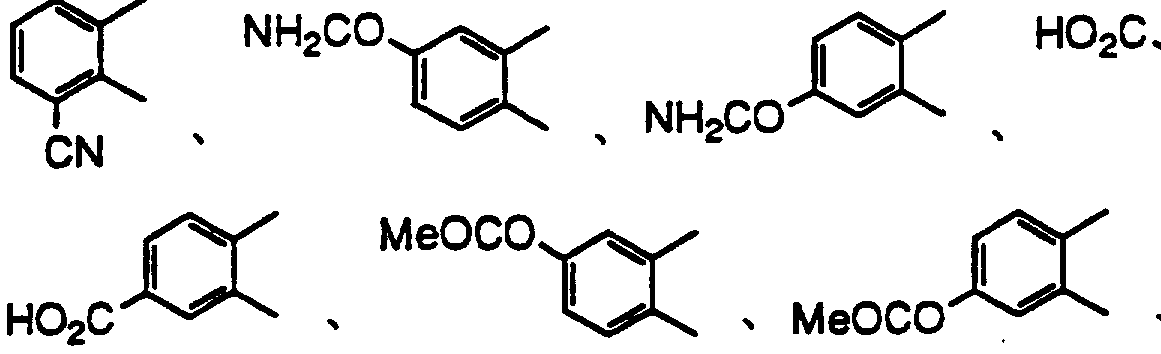
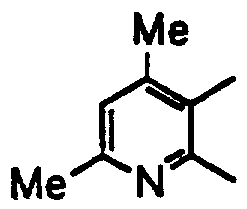
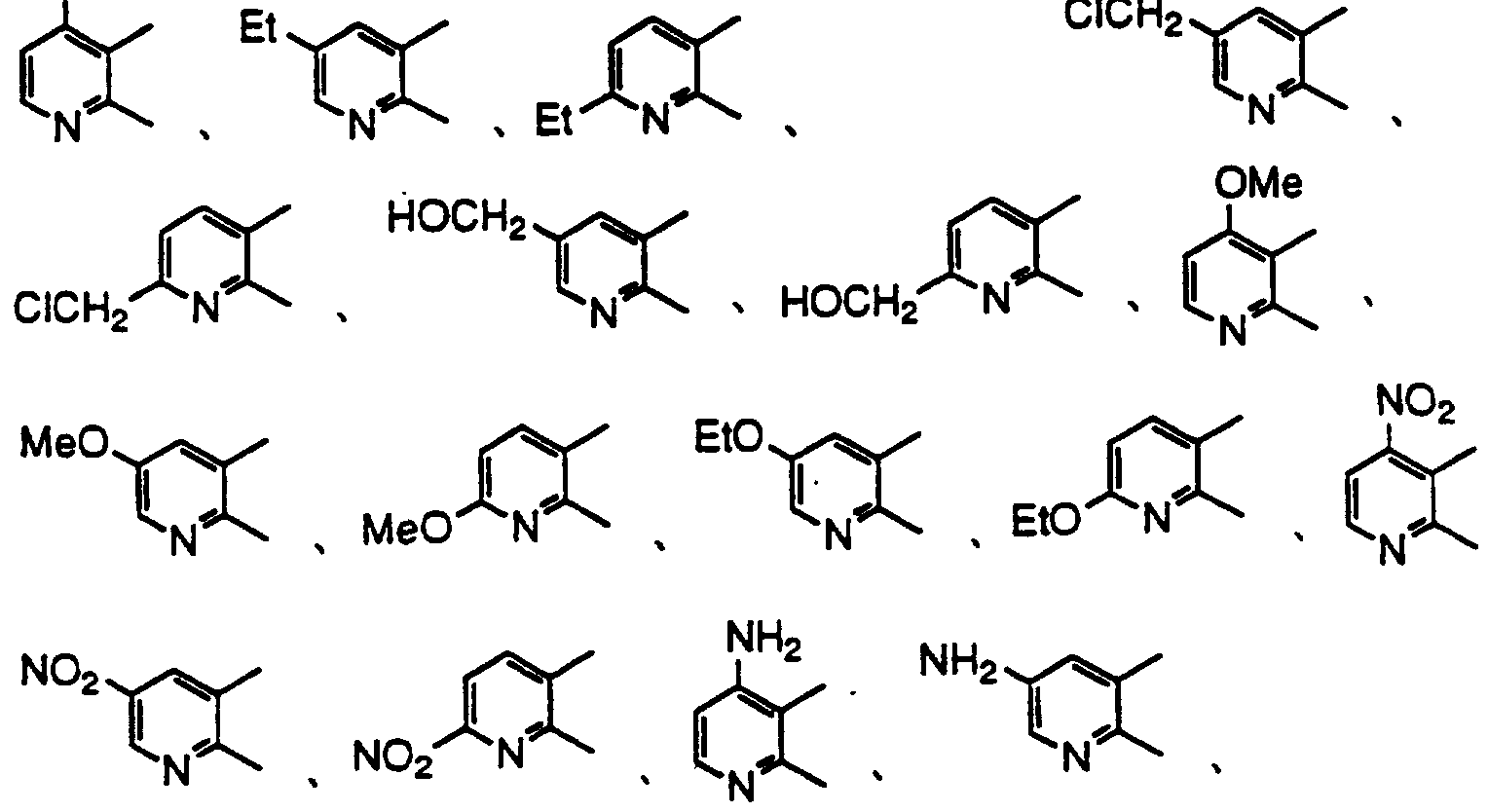
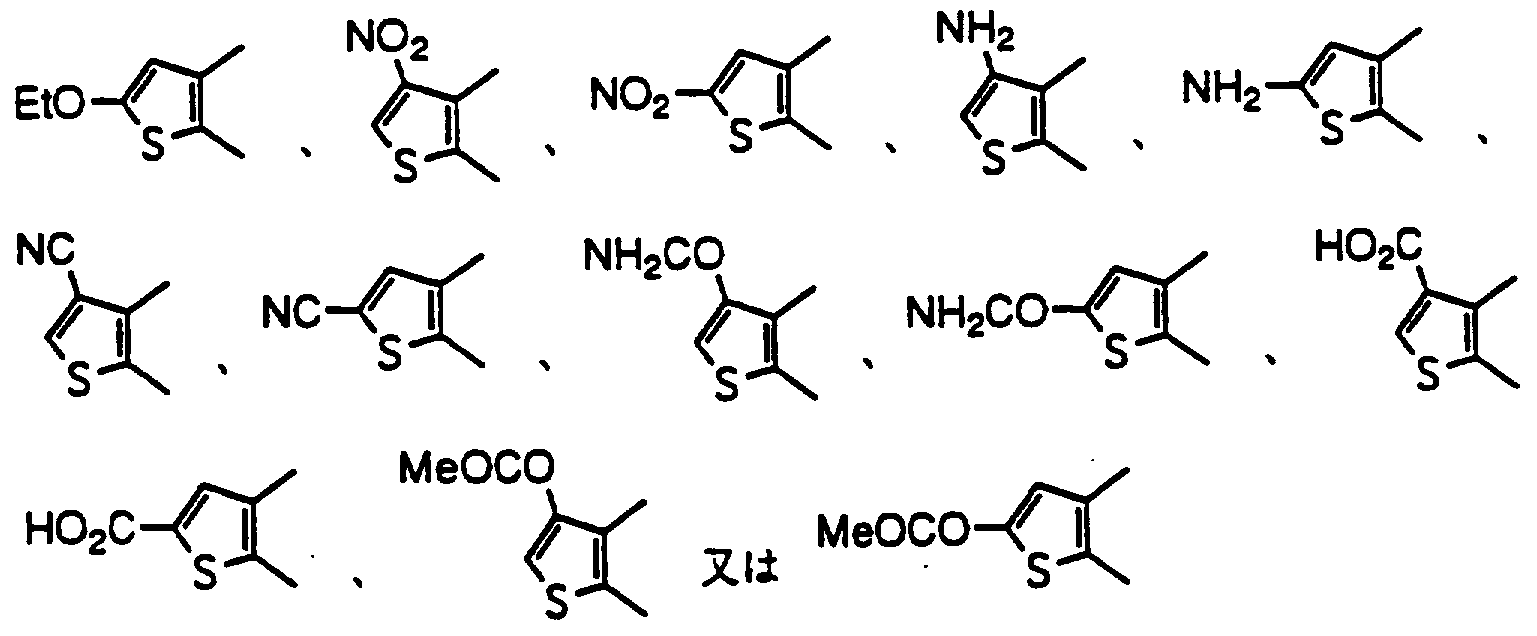
- ⁇ represents a ring A is a ring selected from the following:
- R 11 and R 12 are the same or different and are each a hydrogen atom, a halogen atom, a lower alkyl group (the lower alkyl group is a halogen atom, a lower alkoxy group, a nitro group, an amino group, a lower alkyl group, Substituted amino group, cyclic amino group, hydroxyl group, acyloxy group, cyano group, carbamoyl group, levamoyl group substituted with lower alkyl group, cyclic aminocarbonyl group, carboxy group, lower alkoxycarboxyl group Or a substituted or unsubstituted aralkyloxycarbonyl group.), A low-end alkenyl group, an aralkyl group, an aralkyl group substituted with an alkyl group, a lower alkoxy group, a nitro group, an amino group, a lower alkyl group Substituted with an amino group, a cyclic amino group,
- a therapeutic agent for osteoporosis comprising, as an active ingredient, a triazebine compound represented by the following formula or a pharmaceutically acceptable salt thereof.
- Osteoporosis therapeutic agent according to (R 16 is a lower alkyl group.) Is (2).
- 6-(4-Methylphenyl) 1 4- 1 (2-Methoxyphenylaminoacetyl) 1 1-Methyl-4H—2,3,4,5,10,10b—Penazazabenzo [e] azulene, 6- (4-chlorophenyl) 1-methyl-4-1, phenylaminoacetyl-4H 1, 2, 3, 4, 5, 1 0 b—pentaazabenzo [e] azulene,
- 6- (4-chlorophenyl) 1-methyl-4-1 (4-methylphenylaminoacetyl) 1 4H— 2,3,4,5,10 b-Ventazabenzo [e] azulene
- 6— (4-phenylphenyl) 1 4- 1 (3-fluorophenylaminoacetyl) 1-methyl-1 4H—2,3,4,5,10 b—Penaza azabenzo [e] azulene
- 6 -(4-chlorophenyl) 1-41 (2,5-dimethoxyphenylaminoacetyl) 1-methyl-4H-2,3,4,5,10b-pentaazabenzo [e] azulene
- the therapeutic agent for osteoporosis according to (1) which comprises a triazepine compound selected from the group consisting of 5,10b-tetraazabenzo [e] azulene or a pharmaceutically acceptable salt thereof as an active ingredient.
- R 1 represents an aryl group which may be substituted or a heteroaryl group which may be substituted 6;
- R 2 represents a hydrogen atom, a hydroxyl group or a halogen atom, and
- R 4 represents a hydrogen atom or a halogen atom.
- R 3 is a lower alkoxy group, a cycloalkyl group, an optionally substituted aryl group, heteroaryl group to good
- -CR 6 CR 4 R 7
- R 6, R e and R 7 are each independently hydrogen, halo gen atom, a lower alkyl group or an optionally substituted Ariru group.: ),
- R is a hydrogen atom, a lower alkyl group, a cycloalkyl group, an optionally substituted aryl group, an aralkyl group or an optionally substituted heteroaryl group, and R, and are the same or different hydrogen atoms
- a lower alkyl group, a lower alkoxy group, a hydroxyl group, a halogen atom, a nitro group or an amino group, and R 2e may be substituted An aryl group, an aralkyl group or an optionally substituted heteroaryl group.
- one X—Y where X is one (CH 2 ).
- ⁇ represents ring A is a ring selected from the following:
- R 1 ′ and R 12 are the same or different and are each a hydrogen atom, a halogen atom, a lower alkyl group (the lower alkyl group is a halogen atom, a lower alkoxy group, a nitro group, an amino group, a lower alkyl group) Group substituted with an amino group, a cyclic amino group, a hydroxyl group, an acyloxy group, a cyano group, a carbamoyl group, a carbamoyl group substituted with a lower alkyl group, a cyclic aminocarbonyl group, a carboxy group, or a lower alkoxycarbonyl Or an aralkyloxycarbonyl group.), A lower alkenyl group, an aralkyl group, an aralkyl group substituted with an alkyl group, a lower alkoxy group, a nitro group, an amino group, an amino group or a lower alkyl group.
- R 1S is a lower alkyl group, and R ie is a hydrogen atom or a lower alkyl group.
- R ie is a hydrogen atom or a lower alkyl group.
- a triazebine compound selected from the group consisting of the compounds according to (7), or a pharmaceutically acceptable salt thereof.
- a pharmaceutically acceptable salt thereof and a pharmaceutically acceptable salt thereof Or a carrier to be used.
- R 1 is an optionally substituted fuunyl group
- a pharmaceutical composition c comprising a triazepine compound selected from the group consisting of the compounds according to (7) or a pharmaceutically acceptable salt thereof, and a pharmaceutically acceptable carrier.
- R 1 is an optionally substituted fuunyl group
- R 1, R 2, R 3, the R and ring ⁇ is as described in (8), R ie represents. A low pole alkyl group) alkylthioalkyl tri ⁇ peptidase bottle or a salt thereof represented by . (28) Ring A is
- R 1 is a phenyl group which may be substituted
- Ring A is
- R 1 is a phenyl group which may be substituted
- R 2 and R 4 are both hydrogen atoms.
- Drunk acid N ' consisting of [3- (4-methoxybenzyl) -1-8-methyl-5-phenyl-3H monobenzo [e] [1,2,4] triazepine-12-yl] hydrazide
- a method for treating osteoporosis which comprises administering a triazebine compound represented by the general formula [I] or a pharmaceutically acceptable salt thereof according to (1).
- the optionally substituted aryl group J is a phenyl group, a naphthyl group or a biphenyl group which may have 1 to 3 substituents on the ring.
- a substituent a halogen atom (chlorine, bromine, fluorine, iodine), a lower alkyl group (methyl group having 1 to 6 carbon atoms, ethyl group, propyl group, isopropyl group, butyl group, tt-butyl group-isobutyl group) , Pentyl group, isopentyl group, hexyl group ), Low-alkoxy groups (C1-C6 methoxy, ethoxy, propoxy, isopropoxy, butoxy, tert-butoxy, hexoxy, etc.), aralkyloxy (benzyloxy, etc.) , A methylenedioxy group, a haloalkyl group (a chloromethyl group having 1 to
- Haloalkyloxy group trifluoromethyl group, trifluoroethoxy group, etc.
- haloalkylsulfonylamino group trifluoromethanesulfonylamino group, etc.
- hydroxyl group nitro group, amino group, mono- or di-substituted amino group ⁇ Alkylamino group (methylamino group, dimethyl Aluminyl group), an acylamino group (acetylamino group, formylamino group, etc.), an alkylsulfonylamino group (methanesulfonylamino group, etc.), a bisalkylsulfonylamino group (bismethanesulfonylamino group, etc.) ⁇ , cyano Group, alkylsulfonyl group (such as methanesulfonyl group), acyl group (such as acetyl group, bropionyl group, buty
- an aralkyl group wherein the alkyl portion has 1 to 6 carbon atoms, and a halogen atom (as defined above), a lower alkyl group (as defined above), a lower alkoxy group (as defined above), A benzyl group which may have 1 to 3 S ⁇ groups selected from a hydroxyl group, a 2-phenylethyl group, a 3-phenyl-2-propyl group and the like ⁇ .
- a halogen atom (as defined above), a lower alkyl group (as defined above), a lower alkoxy group (as defined above), an aralkyloxy group (as defined above) as a phenyl group, a biphenylyl group, a naphthyl group or a substituent As defined above), haloalkyl group
- haloalkyloxy group as defined above
- haloalkylsulfonyl A lumino group (as defined above), a nitro group, an amino group, a mono- or di-substituted amino group (as defined above), an alkylsulfonylamino group (as defined above), a bisalkylsulfonylamino group (as defined above), an alkylsulfonyl group ( The same as defined above), an acyloxy group (as defined above), a fuunyl group having a cyano group, a hydroxyl group, etc.
- a phenyl group particularly preferred are a phenyl group, a 2-methylphenyl group, a 3-methylphenyl group and a 4-methylphenyl group.
- 3-fluorophenyl group 4-monofluorophenyl group, 2,4-difluorophenyl group, 2,5-difluorophenyl group, 3,4-difluorophenyl group, 3,5-difluorophenyl group, 2-chlorophenyl group, 3-chlorophenyl, 4-chlorophenyl, 3-chloro-4-methoxyphenyl, 3,5-dichloro-4-methoxyphenyl, 4-chloro-2,5-dimethoxyphenyl 2-, 3-trifluoromethylphenyl, 3-trifluoromethylphenyl, 4-trifluoromethylphenyl, 4-trifluoromethoxyphenyl, 2-nitrophenyl, 3 —2-Trophenyl, 4-12-Trophenyl, 2-Methoxy-5—Nitrophenyl, 4-Methoxy-3-Ditrophenyl, 2-Cyanophenyl, 3-Cyanophenyl, 4-Cyan
- An optionally substituted heteroaryl group J means a pyridyl group, a phenyl group, a thienyl group, a thiazolyl group or an isoxazolyl group, which may have 1 to 3 substituents on the ring. .
- a halogen atom chlorine, chlorine, fluorine, iodine
- a lower alkyl group methyl group having 1 to 6 carbon atoms, an ethyl group, a butyl group, an isopropyl group, a butyl group, a tert group
- aralkyl group The flame number of the alkyl portion is from 1 to 6, and the ring is selected from a halogen atom (as defined above), a lower alkyl group (as defined above), a lower alkoxy group (as defined above), and a hydroxyl group Benzyl group, 2-phenylethyl group, 3-phenylpropyl group, etc. which may have 1 to 3 ffl of substituents ⁇ .
- heteroaryl groups are a halogen atom (as defined above), a lower alkyl group (as defined above), a lower alkoxy group (as defined above).
- lower alkyl group refers to a straight or branched alkyl group having 1 to 6 carbon atoms, such as methyl group, ethyl group, propyl group, isopropyl group, butyl group, isobutyl group and tert-alkyl group.
- ⁇ Halogen atom j is chlorine, element, fluorine or iodine, preferably chlorine.
- aralkyl group means an aryl group in which the aryl group is a fluorine group and the alkyl part is an alkyl group having 1 to 6 carbon atoms, such as a benzyl group, a phenylethyl group, and a phenylpropyl group. And a phenylbutyl group or a phenylhexyl group.
- a halogen atom chlorine, bromine, fluorine, etc.
- an alkyl group an alkyl group having 1 to 6 carbon atoms
- alkoxy group alkoxy having 1 to 6 carbon atoms
- Methoxy, ethoxy, propoxy isopropoxy, butoxy, tert-butoxy, hexyloxy, etc.
- the alkyl part is an alkyl group having 1 to 4 carbon atoms, such as a chloromethyl group, a bromomethyl group, a fluoromethyl group, a trifluoromethyl group, a trifluoroethyl group, a pentafluorobutyl group, a chloro
- Benzoyl which may have 1 to 3 substituents selected from a xy group (as defined above), a haloalkyl group (as defined above), and a hydroxyl group (such as a benzyl group, a benzoyl group, a methyl benzoyl group, a methyl benzoyl group, and a methoxy benzoyl group) ) Means ⁇ ] Or the like.
- a halogen atom as defined above, an alkyl group (as defined above), an alkoxy group (as defined above), a haloalkyl group (as defined above), a hydroxyl group, a nitro group, an amino group or A phenyl group having a cyano group or the like and an aralkyl group having an alkyl group having 1 to 4 carbon atoms in the alkyl portion.
- the fuunyl group and the alkyl moiety which have been IS-substituted by a halogen atom (as defined above), an alkyl group (as defined above), an alkoxy group (as defined above), or the like as a tenyl group or a substituent, are preferred. It is an aralkyl group having an alkyl group having 1 to 4 carbon atoms.
- lower alkoxy group refers to a linear or branched alkoxy group having 1 to 6 carbon atoms, such as methoxy, ethoxy, propoxydi, isopropoxy, butoxy, tert-butoxy, pentyloxy.
- Tert-pentyloxy group or hexyloxy group preferably methoxy group having 1 to 4 carbon atoms, ethoxy group, propoxy group, isopropoxy group, butoxy group or tert-butoxy group.
- Particularly preferred are a methoxy group, an ethoxy group, a propoxy group and a butoxy group.
- the “cycloalkyl group j” has 3 to 10 carbon atoms and includes, for example, cyclopropyl group, 2,3-dimethylcyclobutyl group, cyclobutyl group, 3-methylcyclobutyl group, cyclopentyl group, 3,4 —Dimethylcyclopentyl, cyclohexyl, 4-methylcyclohexyl, cyclohexyl, cyclooctyl, norbornyl, adamantyl, bicyclo [3.3.0] octane-1-yl or bicyclo [3.3. . 1] Nonan-91-yl group.
- a cyclobutyl group Preferred are a cyclobutyl group, a cyclobutyl group, a cyclopentyl group, a cyclohexyl group or a cyclohexyl group, and particularly preferred are a cyclobutyl group, a cyclobutyl group, a cyclobentyl group or a cyclohexyl group.
- Amino group substituted with a lower alkyl group means an alkyl group having 1 to 5 carbon atoms such as a methylamino group, a dimethylamino group, an ethylamino group, a acetylamino group, a propylamino group, a diaminopyramino group, or the like. Represents a concealed alkylamino group. Preferred are a methylamino group, a dimethylamino group, an ethylamino group and a dimethylamino group.
- Cyclic amino group includes a pyrrolidinyl group, a piberidino group, and a morpholino group having an oxygen, sulfur, or nitrogen atom as a hetero atom, a thiomorpholino group, or a biperazinyl group.
- the atom may be a lower alkyl group or an aralkyl group.
- pacyl group examples include an alkenyl group having 2 to 5 carbon atoms, such as an acetyl group, a propionyl group, a butyryl group, and a bivaloyl group, and a benzoyl group.
- an alkenyl group having 2 to 5 carbon atoms such as an acetyl group, a propionyl group, a butyryl group, and a bivaloyl group
- a benzoyl group Preferably, it is a formyl group, an acetyl group, a propionyl group or a benzoyl group.
- diacyloxy group refers to an alkanoyloxy group having 2 to 5 carbon atoms, such as an acetyloxy group, a propionyloxy group, a butylyloxy group or a bivaloyloxy group, or a benzoyloxy group. Preferred are an acetyloxy group, a propionyloxy group and a benzoyloxy group.
- ⁇ lowermoyl group formed by a lower alkyl group '' means a carbon number such as a methylcarbamoyl group, a dimethylcarbamoyl group, an ethylcarbamoyl group, a getylcarbamoyl group, a bilburubilyl group or a dibuylpyruvamoyl group.
- Preferred are a methylcarbamoyl group, a dimethylcarbamoyl group, an ethylcarbamoyl group and a methylcarbamoyl group.
- Cyclic aminocarbonyl group means that the cyclic amino moiety is as defined above, for example, a pyrrolidinylcarbonyl group, a biberidinocarbonyl group, a morpholinocarbonyl group, a thiomorpholinocarbonyl group, a piperazinylcarbonyl group, or 4-methyl-1 1 represents a biperazinylcarboxy group or the like.
- “Lower alkoxycarbonyl group” means a methoxycarbonyl group, an ethoxycarbonyl group, a broboxidicarbonyl group, an isopropoxycarbonyl group, a butoxycarbonyl group, an isobutoxycarbonyl group, a tert-butoxycarbonyl group, or the like.
- the alkoxy moiety represents an alkoxycarbonyl group having 1 to 5 carbon atoms. Preferably, they are a methoxycarbonyl group, an ethoxycarbonyl group or a propoxycarbonyl group.
- Diaralkyloxycarbonyl group J means an alkoxy moiety such as a benzyloxycarbonyl group, a 2-phenylethoxycarbonyl group or a 3-phenylbroboxoxycarbonyl group having 1 to 5 carbon atoms. It is a phenylalkoxycarbonyl group, which may have a halogen atom, a nitro group, an alkyl group, an alkoxy group, a trifluoromethyl group or the like as a substituent.
- low alkenyl group refers to an alkenyl group having 2 to 6 carbon atoms, such as ethenyl, 1-propenyl, 1-butenyl, 2-butenyl, 3-butenyl, 2-methyl-1- Butenyl, 1-pentenyl, 2-pentenyl, 3-pentenyl, 2-methyl-1-butenyl, 3-methyl-1-butenyl, 1-hexenyl, 2-hexenyl, 3-to Xenyl group, 4-hexenyl group, 5-hexenyl group, 2-methyl-11-pentenyl group, 3-methyl-11-pentenyl group, 4-methyl-11-pentenyl group, 2,3-dimethyl-1-butenyl group or 3 , 3-dimethyl-1-butenyl group and the like, preferably an ethenyl group having 1 to 4 carbon atoms, 1-propenyl group, 1-butenyl group, 2-butenyl group, 3-butenyl group or 2-
- the “low-alkyl aralkyl group substituted with an alkyl group” is a aralkyl group obtained by fi-replacing the above aralkyl group with an alkyl group having 1 to 6 carbon atoms, specifically, 4-methylbenzyl group, 4 Monoethylbenzyl group, 4-propylbenzyl group, 4-isobromopropylbenzyl group, 4-methylphenylethyl group, 4-ethylphenylethyl group or 4-propylphenylethyl group, and preferably 4-methylphenyl group.
- Low alkynyl group means an alkynyl group having 2 to 6 carbon atoms, such as ethynyl group, 1-vinyl group, 1-butynyl group, 2-butynyl group, 3-butynyl group, and 1-alkynyl group.
- Pentynyl group 2-pentynyl group, 3-pentynyl group, 3-methyl-1-pentynyl group, 1-1hexyl group, 2-hexyl group, 3-hexynyl group, 4-1-hexyl group, 5-hexyl group , 3-methyl-11-pentynyl group, 4-methyl-1-pentynyl group or 3,3-dimethyl-1-pentynyl group, preferably an ethynyl group having 1 to 4 carbon atoms, 1-brovinyl group, 1-butynyl group Group, 2-butynyl group or 3-butulyl group.
- ⁇ Haloalkyl group j is an alkyl group having an alkyl portion having 1 to 4 carbon atoms, and specifically, a chloromethyl group, a bromomethyl group, a fluoromethyl group, a trifluoromethyl group, a trichloromethyl group, and a trifluoroethyl group.
- a trichloromethyl group, a pentafluoropropyl group or a chlorobutyl group and preferably a methyl group, a bromomethyl group, a fluoromethyl group, a trifluoromethyl group or a trichloromethyl group.
- the lower alkylcarbonyl group j represents an alkylcarboxy group having 1 to 5 carbon atoms in the alkyl moiety such as an acetyl group, a propionyl group, a butyryl group, an isobutyryl group or a bivaloyl group.
- “Pharmaceutically acceptable salts” include, for example, various inorganic acid addition salts such as hydrochloride, hydroiodide, sulfate, phosphate, or nitrate; Licholate, lactate, maltose, oxalate, tartrate, citrate, maleate, fumarate, methanesulfonate, benzenesulfonate, p-toluenesulfonate or ascorbin Various organic acid addition salts such as acid salts; salts with various amino acids such as aspartate or gluminic acid salt, but are not limited thereto. In some cases, it may be a hydrate or a hydrate.
- the salts of the compounds [ ⁇ ], [1 ⁇ ] and [IV] include inorganic acid addition salts, organic acid addition salts and salts with amino acids as exemplified in the above “pharmaceutically acceptable salts”.
- the present invention is not limited to these. In some cases, it may be a hydrate or a hydrate.
- R 1 represents an optionally substituted aryl group or an optionally substituted heteroaryl group, preferably a phenyl group, a 2-methylphenyl group, a 3-methylphenyl group, a 4-methylphenyl group, or a 2-methoxyphenyl group.
- phenyl 2-methylphenyl, 3-methylphenyl, 4-methylphenyl, 2-methoxyphenyl, 3-methoxyphenyl, 3-methoxyphenyl, and the like.
- Examples thereof include a 3-chlorophenyl group, a 4-chlorophenyl group, a 2-methoxyphenyl group, a 3-methoxyphenyl group and a 4-methoxyphenyl group.
- R 2 represents a hydrogen atom, a hydroxyl group, a halogen atom or a lower alkyl group, or R 2 and R * together form a carbonyl group together with the carbon atom to which they are bonded.
- R ′ represents a hydrogen atom or a hydroxyl group, or R 2 and R 4 together form a carbonyl group together with the boron atom to which they are attached.
- R 2 represents a hydrogen atom or, together with R 2 , together with the carbon atom to which they are attached, form a carbonyl group, particularly preferably R 2 is a hydrogen atom.
- R ⁇ is a hydrogen atom, a lower alkyl group, a cycloalkyl group, an optionally substituted aryl group, an aralkyl group or an optionally substituted heteroaryl group, and R 9 and R ie are the same or different.
- X—Y where X is one (CH 2 ) :), one CO—, one C0CH 2 —, one NH—, one NHCH 2 —, one CHiNH—, one CHiNHCO—, one 0CH 2 —, one (CH 2 )tician0— (n Is an integer of 1 to 4.) or 1 CH 2 S—:
- Y is a halogen atom, a cycloalkyl group, an optionally substituted aryl group, or an optionally substituted heteroaryl group.
- 2-dichloroethenyl group phenylhydroxymethyl group, 2-phenyl 1-hydroxyxethyl group, 2- (2-methoxyphenyl) -1-hydroxyethyl group, benzoyl group, 2-methoxybenzoyl group, 4-methoxybenzoyl group, 2,5 dimethoxybenzoyl group, 4-cyclobenzoyl group, 2-phenyl-1-oxoethyl group, 2- (2-methoxyphenyl) -111oxoethyl group, 2- (2,
- R 4 represents a hydrogen atom or a halogen atom, preferably a hydrogen atom.
- Ring A is a ring selected from the following
- RH and R] 2 are the same or different and each represents a hydrogen atom, a halogen atom, lower pole al Kill group (the lower alkyl group is a halogen atom, a lower alkoxy group, a nitro group, an amino group, a lower alkyl group Amino group, cyclic amino group, hydroxyl group, acyloxy group, cyano group, carbamoyl group, carbamoyl group substituted with lower alkyl group, cyclic aminocarbonyl group, carboxy group, lower alkoxycarbonyl group or arral May be substituted by a carbonyloxy group.), A lower alkenyl group, an aralkyl group, an aralkyl group substituted by a lower alkyl group, a lower alkoxy group, a nitro group, an amino group, or a lower alkyl group Amino, cyclic amino, hydroxyl, acyloxy, cyano, carb
- R 16 represents a lower alkyl group
- R ′ e represents a hydrogen atom or an alkyl group.
- R 16 has the same meaning as described above.
- And represents a method for producing the target compound [I-11] in which R, and are both hydrogen atoms.
- a ketone compound (vi ii) (R 1 and A each have the same meaning as described above) obtained by a known method or the method described in JP-A-2-2566681 is used as a dichloromethane.
- a solvent such as chloroform, tetrahydrofuran, tetrahydrofuran, 1,4-dioxane, methanol, ethanol, n-propanol, isobrobanol, ethyl ethyl sulphate, acetone, acetonitrile, toluene, water, or a mixture thereof.
- thiophosgene, thiocarbonyldiimidavour, di-2-pyridylthiocarbonate, dimethylthiol-rubamyl chloride or carbon disulfide the compound is obtained.
- This step is a step for producing the hydrazine compound (vii) used in the second step.
- a Schiff base formed by reacting tert-butyl carbazate (tert-butoxycarbonylhydrazine) (V) and an aldehyde compound (vi) (R 3 has the same meaning as described above) is converted to palladium carbon, palladium black, water
- the catalyst is subjected to catalytic reduction using a catalyst such as palladium oxide carbon or Raney nickel.
- a catalyst such as palladium oxide carbon or Raney nickel.
- an acid such as hydrochloric acid
- the solvent used in these reactions may be any solvent as long as it does not participate in the reactions, and includes, for example, methanol, ethanol, n-propanol, isopropanol, water, drunk acid and the like or a mixed solvent thereof.
- any protecting group other than the tert-butoxycarbonyl group may be used as long as it is generally used as a protecting group for an amino group, and the deprotection method may be a method usually used for protecting the protecting group. Just do it.
- hydrazine monohydrate ( ⁇ ′) can be used in place of a protected hydrazine such as tert-butoxycarbonylhydrazine. In this case, the crotch protection operation need not be performed.
- the compound (ix) obtained in the first step was converted into dichloromethane, chloroform, methanol, ethanol, n-propanol, isopropanol, tetrahydrofuran,
- the hydrazine compound (vi i) or the salt thereof obtained in the 1 ′ step is preferably cooled with ice or heated. Is reacted under ice-cooling or at room temperature to give the compound (X)
- R 1 , R 3 and A each have the same meaning as described above.
- an organic base such as triethylamine or N, N-diisopropylethylamine or an inorganic base such as sodium bicarbonate.
- the compound (X) obtained in the second step is treated with hydrochloric acid, K acid or hydrochloric acid in a solvent such as methanol, ethanol, n-blovanol, isobrobanol, tetrahydrofuran, 1,4-dioxane, benzene, toluene or a mixture thereof.
- a solvent such as methanol, ethanol, n-blovanol, isobrobanol, tetrahydrofuran, 1,4-dioxane, benzene, toluene or a mixture thereof.
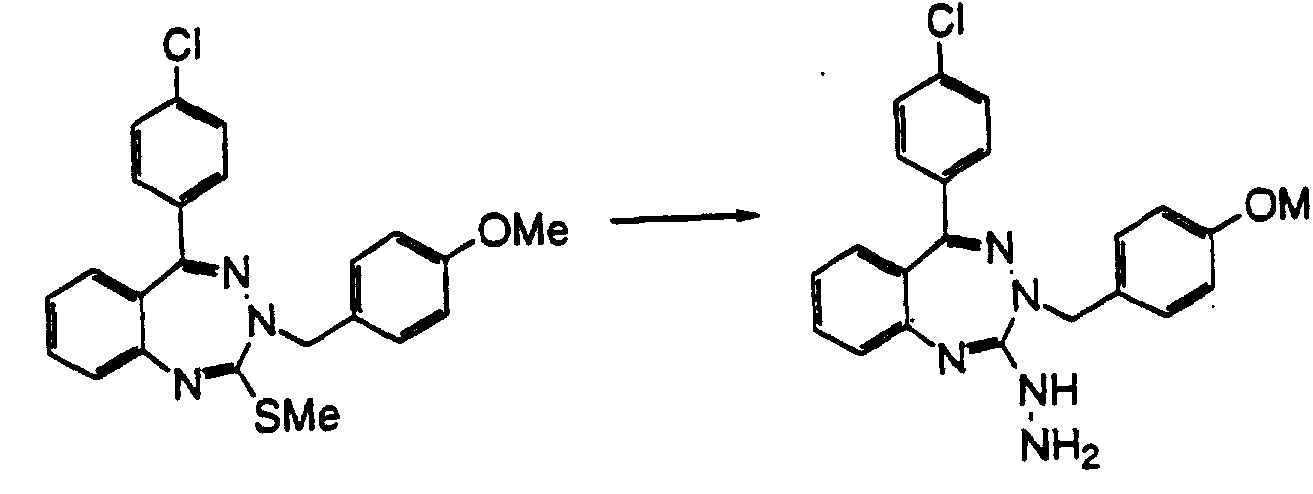
- the compound [ ⁇ ] obtained in the third step is treated with hydrazine or its hydrate in a solvent such as tetrahydrofuran, ⁇ , ⁇ -dimethylformamide, methanol, ethanol, ⁇ -propanol, isopropanol or a mixture thereof.
- a solvent such as tetrahydrofuran, ⁇ , ⁇ -dimethylformamide, methanol, ethanol, ⁇ -propanol, isopropanol or a mixture thereof.
- the compound (xi) (R *, R ', and A each have the same meaning as described above) can be obtained by reacting at room temperature or under heating.
- compound (xi) obtained in the fourth step is mixed with R 1S -C (OEt) and (R ′ 6
- R 1S -C (OEt) and (R ′ 6 The desired compound [I-11] (R 1 , R, R 1S , A is the same as that described above) by reacting with an orthoester represented by the formula under heating, preferably under heating to reflux. ) Is obtained.
- an acid such as drunk acid, p-toluenesulfonic acid, or silicic acid gel-Step 6
- This step and the next step are steps for obtaining the target compound [111] from the compound [II] via another route.
- the compound [II] obtained in the third step is dissolved or suspended in a solvent such as N, N-dimethylformamide or tetrahydrofuran, and sodium hydride is added.
- R 18 By reacting with an alkyl halide represented by the formula: Ha 1 (R "represents a lower alkyl group, and Ha 1 represents a halogen atom), to obtain a compound [III] (RR 3 , R ′ * and A each represent Or the compound [II] in a solvent such as acetone, methyl ethyl ketone, or toluene, or methanol, ethanol, or a mixed solvent thereof with sodium carbonate. or potassium carbonate ⁇ beam, in the presence of a base such as aqueous sodium hydroxide R ie - Ha 1 or
- the compound [III] obtained in the sixth step is dissolved or dissolved in a solvent such as ethanol, n-propanol, iso-branol, n-butanol, toluene or a mixture thereof,
- the compound [III] obtained in the sixth step is dissolved or suspended in a solvent such as ethanol, n-propanol, iso-lobanol, n-butanol, and toluene,
- This step is another method for obtaining the compound (xi).
- Compound (III) is shown in Step 7 in a solvent such as methanol, ethanol, n-propanol, isopropanol, n-butanol, or a mixture thereof.
- a solvent such as methanol, ethanol, n-propanol, isopropanol, n-butanol, or a mixture thereof.
- the target compound [I-11] can be obtained by heating the compound [IV] obtained in the seventh step in a solvent such as benzene or toluene, preferably by heating to reflux. In this reaction, it may be preferable to add an acid such as an acid, ⁇ -toluenesulfonic acid or hydrochloric acid.
- R 2 and R 4 are hydrogen atoms
- R 3 is a 4-methoxyphenyl group or a 3,4-dimethoxyphenyl group [I-11 ′]
- R ′ represents a hydrogen atom or a methoxy group
- R 1 and R l ⁇ A are the same as those described above. Represent meaning.
- the compound (xii) obtained in the ninth step was converted into a solvent such as N, N-dimethylformamide, dimethylsulfoxide, tetrahydrofuran, acetone, methylethylketone, dichloromethane, chloroform, water, or a mixture thereof.
- a solvent such as N, N-dimethylformamide, dimethylsulfoxide, tetrahydrofuran, acetone, methylethylketone, dichloromethane, chloroform, water, or a mixture thereof.
- the base to be used may be appropriately selected, and in some cases, these bases may be used in an appropriate combination.
- Step 10 2 R 2 and in step 1 of 1 are hydrogen atoms
- the target compound [I-11] wherein R 2 is a hydroxyl group and R ⁇ is a hydrogen atom "] May be manufactured.
- Compound (xii) was treated with a solvent such as methanol, ethanol, n-blovanol, or isopropanol to give an aqueous formaldehyde solution and a solvent (R 3 'CH, 0H) (R *' represents a lower alkyl group). and a reagent, or aqueous formaldehyde solution and ⁇ ' ⁇ 2 ( ⁇ ' by reacting under stands.
- a solvent such as methanol, ethanol, n-blovanol, or isopropanol
- Compound (xii) may be dissolved in a solvent such as dichloromethane, chloroform, N, N-dimethylformamide or tetrahydrofuran, anhydrous acetonitrile, if necessary.
- a solvent such as dichloromethane, chloroform, N, N-dimethylformamide or tetrahydrofuran, anhydrous acetonitrile, if necessary.
- an inorganic base such as sodium oxide or a hydroxylating sphere, or an organic base such as triethylamine or N, N-diisopropylethylamine, Y ′ NCO ( ⁇ ′ has the same meaning as described above.
- Compound (xii) is dissolved in a solvent such as ⁇ , N-dimethylformamide, dimethylsulfoxide or tetrahydrofuran in the presence of a base such as sodium hydride or hydrogen hydride.
- a solvent such as ⁇ , N-dimethylformamide, dimethylsulfoxide or tetrahydrofuran
- a base such as sodium hydride or hydrogen hydride.
- R ′ has the same meaning as described above.
- R 3 represents
- R 17 represents a protecting group for a hydroxyl group
- Y is by removing the protecting group represented by reduction compounds and represented.> As defined above, R 3 is
- any protecting group for the hydroxyl group may be used as long as it is commonly used.
- the solvent may be methanol, ethanol, n-blobanol, isoblovanol, tetrahydrofuran, 1,4-dioxane, Any reagent that does not participate in the reaction, such as dichloromethane or chloroform, may be used.
- the reagent is an organic acid such as p-toluenesulfonic acid or trifluorosulfonic acid, and I is an inorganic acid such as hydrochloric acid, sulfuric acid, or hydrobromic acid. Can be used.
- chromium trioxide pyridinum chromatochromate, pyridinium chromate, dione's reagent (chromium trioxide, sulfuric acid mixture) or dimethyl sulfone
- an oxidizing agent such as an oxidizing agent prepared from foxide and oxalyl chloride
- a base such as sodium hydroxide or potassium hydroxide in the above-mentioned solvent or a mixed solvent thereof
- the target compound [I-11]] in which R 3 is represented by a —CO 2 H group can be obtained.
- the R 3 guard C0 2 H the compound represented by the group N, N- Triethylamine or dimethylformamide, dimethylsulfoxide, tetrahydrofuran, acetone, dichloromethan
- the target compound [I-11 "] represented by R is -C ONHR 1 (R * has the same meaning as described above) is obtained, or according to a usual method for forming a peptide bond. , R, G-C ONHR * to obtain the target compound [I-11]] ("Basics and Experiments of Peptide Synthesis J, by Nobuo Izumisei, Maruzen, 1985").
- R 3 is a compound represented by —CH 2 —H a 1 group (H a 1 represents a halogen atom).
- H a 1 represents a halogen atom.
- a base such as Ming
- ⁇ ' ⁇ 2 ⁇ ' represents the same meaning as defined above.
- Y 'SH ⁇ ' represent. the same as defined above
- compounds in which R 3 is an aryl group which may be substituted or a heteroaryl group which may be substituted, and wherein the ⁇ group is a nitro group are represented by methanol, ethanol, ⁇ - Catalytic reduction with hydrogen in the presence of a catalyst such as palladium carbon, palladium hydroxide carbon, palladium black or Raney nickel in a solvent such as propanol, isopropanol, 1,4-dioxane, carboxylic acid, water or a mixture of these.
- a catalyst such as palladium carbon, palladium hydroxide carbon, palladium black or Raney nickel
- a solvent such as propanol, isopropanol, 1,4-dioxane, carboxylic acid, water or a mixture of these.
- formic acid, ammonium formate, cyclohexane Subject to catalytic reduction using xen or cyclohexadiene.
- R 3 is substituted with an aryl group or a substituted heteroaryl group.
- a reducing agent such as sodium borohydride or lithium borohydride in the solvent
- R 3 is substituted with an aryl group or a substituted heteroaryl group.
- the target compound [1-1-1] in which the S group is an amino group or the target compound [1-1 "] in which the substituent is a formylamino group is obtained.
- a mixture of these may be obtained. In such a case, a conventional separation method may be used.
- Step 10 of Step 10 wherein R s is an optionally substituted aryl group or a substituted heteroaryl group and the substituent is an amino group is dichloromethane or chloromethane.
- a solvent such as oral form, pyridine, ethanol, acetone, tetrahydrofuran, etc.
- an acylating agent such as anhydrous K acid, anhydrous acid and formic acid, acetyl chloride, or an alkylsulfonyl halide such as methyl sulfonyl chloride.
- Ra is an optionally substituted aryl group or an optionally substituted heteroaryl group, wherein the substituent is an acylamino group, an alkylsulfonylamino group, a bis (alkylsulfonyl) amino group or a halogeno group;
- the target compound [I-11]] which is an alkylsulfonylamino group is obtained.
- triethylamine, N, N-diisopropane It is preferred to add a base such as ropyrethylamine.
- R 3 is an optionally substituted aryl group or an optionally substituted heteroaryl group, and the substituent is a methylamino group or a dimethylamino group, whereby the target compound [I-11]] is obtained. In some cases these mixtures are obtained
- the compound obtained in step 15 of the 10th step, wherein R s is an optionally substituted aryl group or an optionally substituted heteroaryl group, and wherein the substituent is a hydroxyl group, is a compound represented by the following formula: or 1, 4 in a solvent such as one Jiokisan, by reaction with Jiazoarukiru such Jiazo methane or Jiazoetan, a heteroaryl group R 3 is the optionally be a good I Ariru or substituted even replacement,
- the target compound [I-11]] in which the substituent is a low alkoxy group is obtained.
- Compound (xiii) obtained in the first step is treated with sodium hydroxide, potassium hydroxide, lithium hydroxide, etc. in a solvent such as diethylene glycol, ethylene glycol monomethyl ether, dimethyl sulfoxide, N, N-dimethylformamide, etc.
- a solvent such as diethylene glycol, ethylene glycol monomethyl ether, dimethyl sulfoxide, N, N-dimethylformamide, etc.
- the compound (xiv) (R 1 and A each have the same meaning as described above) can be obtained by reacting with heating, preferably at 8 O'C to 15 O'C, in the presence of a base group.
- the compound (XV) obtained in the 13th step is heated in a solvent such as diethylene glycol dimethyl ether, ethylene glycol monomethyl ether, dimethyl sulfoxide, N, N-dimethylformamide, pyridine or water, or a mixed solvent thereof, preferably under heating.
- a solvent such as diethylene glycol dimethyl ether, ethylene glycol monomethyl ether, dimethyl sulfoxide, N, N-dimethylformamide, pyridine or water, or a mixed solvent thereof, preferably under heating.
- the compound (xvi) (R 1 , R 15 , and A each have the same meaning as described above) can be obtained by reacting under heating and refluxing.
- Compound (xvi) obtained in the fourteenth step is mixed with chromium trioxide, pyridinium chlorochloride in a solvent such as K acid, pyridine, dichloromethane, water or a mixture thereof.
- a solvent such as K acid, pyridine, dichloromethane, water or a mixture thereof.
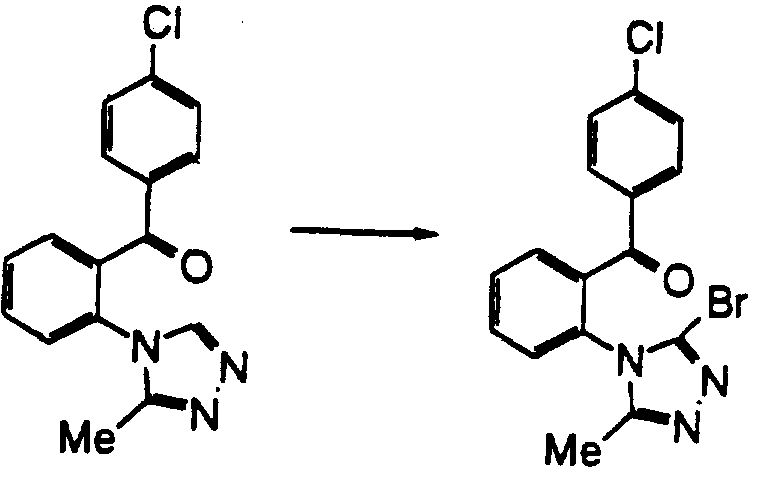
- Compound (xvii) was heated in a solvent such as carbon tetrachloride, chloroform, dichloromethane, 1,2-dichloroethane and the like under heating, preferably under reflux, under N-bromosuccinimide, N-bromosuccinate.
- Compound (xviii) (R 1 , R 1S , A is the same as described above) by halogenation using a halogenating agent such as acid imid, N-odocono, citrate, carbon tetrabromide and the like.
- Ha 1 represents a halogen atom.)
- Compound (xviii) is heated, preferably in a solvent such as methanol, ethanol, n-propanol, or isopropanol, or a mixture thereof in the presence of a weak base such as sodium succinate, potassium ftate, or lithium acid, preferably under ripening.
- a weak base such as sodium succinate, potassium ftate, or lithium acid
- the compound (xii) (R 1 , R 1S and A each have the same meaning as described above) can be obtained by reacting with sulfuric acid hydrazine under reflux.
- the target compound [I-12] (R), R *, R 3, R 4 , R 1S and A have the same meanings as described above. ).
- This step is a step in which the 18th step and the 19th step are performed in one step.
- Compound (XX) is obtained by reacting compound (viii) with methyl carbazate in a solvent such as dimethyl sulfoxide or N, N-dimethylformamide under heating, preferably under reflux under heating.
- a solvent such as dimethyl sulfoxide or N, N-dimethylformamide
- This step is a step of selectively protecting the nitrogen atom at the 1-position of the triazepine ring of compound (XX), and any protecting group may be used as long as it can be selectively protected.
- a methoxymethyl group The method of performing protection using is described below.
- Compound (XX) obtained in the 19th step or the 18th step is treated with a solvent such as N, N-dimethylformamide or tetrahydrofuran in a solvent such as sodium hydroxide, rhodium hydroxide, lithium hydroxide, sodium carbonate.
- a solvent such as sodium hydroxide, rhodium hydroxide, lithium hydroxide, sodium carbonate.
- a base such as potassium carbonate or the like
- This step is a step of removing the protecting group at the 1-position nitrogen atom of the triazebine ring of the compound (xxii), and may be performed by a method usually used to remove the protecting group. For example, deprotection of the methoxymethyl group The method of is shown.
- Compound (xxii) obtained in the 21st step is treated with hydrochloric acid, sulfuric acid, and acetic acid in a solvent such as methanol, ethanol, n-propanol, isopropanol, tetrahydrofuran, 1,4-dioxane, water, or a mixture thereof.
- a solvent such as methanol, ethanol, n-propanol, isopropanol, tetrahydrofuran, 1,4-dioxane, water, or a mixture thereof.
- the compound (xxiii) R 1 , R 2 , R s , and A have the same meanings as described above) when the reaction is carried out in the presence of an acid such as hydrochloric acid, trifluorosulfonic acid, and trifluoromethanesulfonic acid. ) Is obtained.
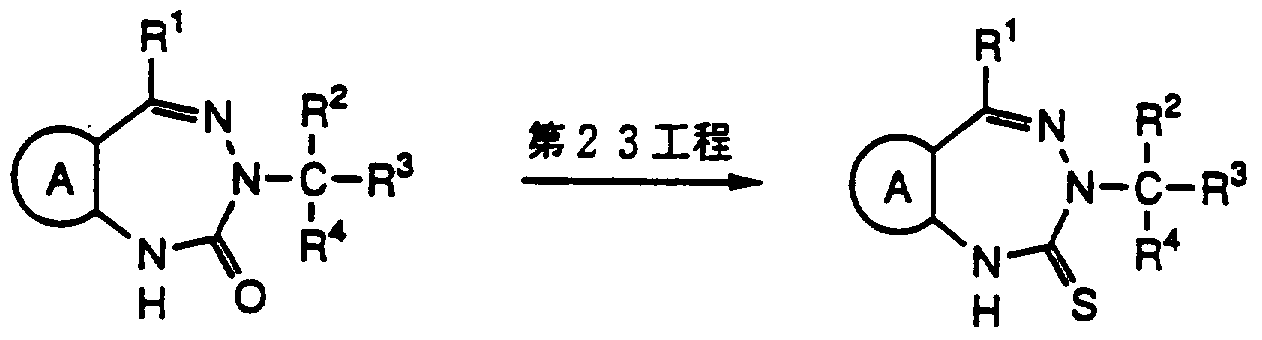
- the compound (xxiii) obtained in the 22nd step was prepared in a solvent such as diethylene glycol, diethylene glycol dimethyl ether, ethylene glycol monomethyl ether, dimethyl sulfoxide, N, N-dimethylformamide in the presence of sodium carbonate or potassium hydrogen carbonate, or Compound ( ⁇ ) (R 1 , R 2 , R 3 , R 4 , A represents the same meaning as described above) by reacting with a thiolating agent such as diphosphorus pentasulfide or Lawson's reagent in the absence of ) Is obtained.
- This compound [II] was obtained by using the method shown in the fourth and fifth steps, or the sixth, seventh and eighth steps, and, if necessary, the ninth and tenth steps.
- the compound [ ⁇ ] or a salt thereof obtained in the sixth step is heated in a solvent such as diethylene glycol, ethylene glycol monomethyl ether, 2-ethoxyethanol or the like, preferably under reflux with heating, to give aminoacetaldehyde dimethyl acetal or the like.
- a solvent such as diethylene glycol, ethylene glycol monomethyl ether, 2-ethoxyethanol or the like, preferably under reflux with heating, to give aminoacetaldehyde dimethyl acetal or the like.
- a compound (xxv) R 21 represents an undertreated alkyl group, and R 1 , R 2, R s , and R lA each have the same meaning as described above
- it may be preferable to add an acid such as acetic acid, p-toluenesulfonic acid or trifluoroacetic acid.
- the compound (XXV) or a salt thereof obtained in the 26th step is heated in a solvent such as 1,4-dioxane, sulfuric acid, water or a mixed solvent thereof under heating, preferably under reflux with heating, to obtain hydrochloric acid, sulfuric acid, By reacting with a strong acid such as hydrobromic acid, the desired compound [I-15] (R 1 , R 2 , R 3 , and RIA each have the same meaning as described above) can be obtained.
- a solvent such as 1,4-dioxane, sulfuric acid, water or a mixed solvent thereof under heating, preferably under reflux with heating
- the compound of the present invention represented by the general formula [I] thus obtained has a pharmacological action such as an action of suppressing bone resorption and an action of promoting bone formation, and is useful as a drug for treating osteoporosis or a drug for treating rheumatoid arthritis.
- a pharmacological action such as an action of suppressing bone resorption and an action of promoting bone formation
- the compound of the present invention is usually administered systemically or locally, orally or parenterally.
- the dosage varies depending on the age, body weight, symptoms, therapeutic effect, administration method, treatment time, etc., but is usually in the range of 0.0 lmg to 100 mg per adult, once to several times a day, orally or non-orally. It is administered orally.
- the compound of the present invention When the compound of the present invention is made into a solid composition for oral administration, it can be formulated into dosage forms such as tablets, pills, powders, and granules.
- the one or more active substances include at least one inert diluent, dispersant or adsorbent, such as lactose, mannitol, dextrose, hydroxybutyryl cellulose, microcrystals. It is mixed with cellulose, starch, polyvinylpyrrolidone, magnesium aluminate metasilicate or powdered gay anhydride.
- the composition may be mixed with additives other than the diluent according to a conventional method.
- a film of a gastric or enteric substance such as sucrose, gelatin, hydroxybutyl cellulose or hydroxymethylcellulose phthalate, if necessary, or with two or more layers. May be.
- capsules of substances such as gelatin or ethyl cellulose may be used.
- a liquid composition for oral administration it can be formulated into pharmaceutically acceptable emulsions, solutions, suspensions, syrups or elixirs.
- the diluent include purified water, ethanol, vegetable oil, and an emulsifier.
- this composition may contain adjuvants such as wetting agents, suspending agents, sweetening agents, flavoring agents, fragrances, preservatives, etc., in addition to the diluents.
- a sterile aqueous or non-aqueous solvent, solubilizer, suspending agent or emulsifier is used.
- aqueous solvent, solubilizing agent, and quenching agent include organic water such as distilled water for injection, physiological saline cyclodextrin and derivatives thereof, triethanolamine, diethanolamine, monoethanolamine, and triethylamine. Amines or inorganic solutions.
- non-aqueous solvent for example, vegetable oils such as propylene glycol, polyethylene glycol or olive oil, and alcohols such as ethanol may be used.
- solubilizing agent for example, a surfactant (formation of mixed micelles) such as boroxyethylene hydrogenated castor oil and sucrose fatty acid ester, or lecithin or hydrogenated lecithin (formation of liposome) is also used.
- a surfactant formation of mixed micelles
- boroxyethylene hydrogenated castor oil and sucrose fatty acid ester or lecithin or hydrogenated lecithin (formation of liposome)
- an emulsion formulation comprising a non-aqueous solvent such as vegetable oil, lecithin, polyol and the like can be used.
- compositions for parenteral administration include one or more active substances, topical solutions, ointments or suppositories, suppositories or vesicles, formulated in a manner known per se. It may be.
- the compound represented by the general formula [II], [III] or [IV] is useful as a medium-simplified body for producing the triazepine compound represented by the general formula [I].
- the target compound [I] can be produced according to the production method described above.
- the compound represented by the general formula ( ⁇ ⁇ ), CUD or (IV) is a novel compound, and It is useful as an intermediate for producing the triazepine compound represented by [I].
- the compound of Reference Example 6 was obtained from 2-aminophenyl-phenylphenylketone
- the compound of Reference Example 7 was obtained from 2-amino-5-chloro-phenylphenylketone
- the compound of Reference Example 7 was obtained from 2-amino-4-methylphenylphenylketone.
- the compound of Reference Example 8 was obtained by converting the compound of Reference Example 9 from 2-amino-5-ditrophenylphenyl ketone
- the compound of Reference Example 10 from 2-aminophenyl-4-methylphenyl ketone
- 2-amino-5-chlorophenyl phenyl ketone was obtained from chloro ketone.
- the compound of Reference Example 13 was obtained from 2-amino-3-((4-monobenzyl) -15-ethylthiophene), and the compound of Reference Example 14 was obtained from 2-amino-3-benzoyl 5-methylthiophene.
- the compound of Reference Example 15 was obtained from 2-amino-3-benzoyl-4,5-dimethylthiophene
- the compound of Reference Example 16 was obtained from 2-amino-3-benzoyl-5-ethylthiophene
- the compound of Reference Example 17 was obtained from 3- (4-methoxybenzoyl) -1,4,5-dimethylthiophene
- the reference example 18 was obtained from 2-amino-3- (2-cyclobenzyl) -14,5-dimethylthiophene. Was obtained. These are shown in Table 3.
- 34-Dimethoxybenzylhydrazine hydrochloride (22, 99 g) obtained in Reference Example 1 was dissolved in methanol (460 ml), cooled with ice, and then triethylamine (14.8 ml) was added dropwise over 5 minutes.
- methanol 460 ml
- triethylamine 14.8 ml
- a solution of 2- (4-chlorobenzene) phenylisothiocyanate (24.2 g) obtained in Reference Example 5 in tetrahydrofuran (240 ml) was added under ice cooling, and the mixture was added under ice cooling. For 15 minutes and at room temperature for 40 minutes.
- the compound of Reference Example 20 was obtained from the compound of Reference Example 3 and the compound of Reference Example 6, and the compound of Reference Example 21 was obtained from the compound of Reference Example 3 and the compound of Reference Example 5.
- the compound of Reference Example 22 from the compound of Reference Example 3 and the compound of Reference Example 7, the compound of Reference Example 23 from the compound of Reference Example 3, and the compound of Reference Example 9, and the compound of Reference Example 3 and the reference
- the compound of Reference Example 24 was obtained from the compound of Example 10, and the compound of Reference Example 25 was obtained from the compound of Reference Example 3 and the compound of Reference Example 11. These are shown in Table 4. 06
- the reaction solution is returned to room temperature, ethanol (30 ml) is added, the precipitated crystals are collected, washed with a mixed solvent of ethanol: water 80:20, and dried under reduced pressure to give the title compound (19.9 g) colorless. Obtained as crystals.
- the compound of Reference Example 28 was obtained from the compound of Reference Example 3 and the compound of Reference Example 13, and the compound of Reference Example 29 was obtained from the compound of Reference Example 3 and the compound of Reference Example 14.
- the compound of Reference Example 30 was obtained from the compound of Reference Example 3 and the compound of Reference Example 15; the compound of Reference Example 31 was obtained from the compound of Reference Example 3 and the compound of Reference Example 16;
- the compound of Reference Example 32 was obtained from the compound of Example 17, and the compound of Reference Example 33 was obtained from the compound of Reference Example 3 and the compound of Reference Example 18.
- Example 11 In the same manner as in Example 10, from the compounds of Reference Examples 28, 29, 30, 30, 31, 32, and 33, Examples 11, 12, 13, 14, 14, 15, and 1 were obtained. Six compounds were obtained respectively. These are shown in Table 8. ⁇
- Example 9 5- (4-chlorophenyl) -13- (pyridine-13-ylmethyl) -11,3-dihydrobenzo [e] [1,2,4] obtained in Example 9
- the title compound was obtained as an amorphous form from triazevin-12-thione P-toluenesulfonate.
- the NMR of this compound was consistent with the NMR of Example 27.
- Example 2 9 (Sixth step) 4- (4-phenylphenyl) 1-2-ethyl-6- (4-methoxybenzyl) -17-methylthio-6H-1-1thia-5,6,8-triazaazulene
- Example 19 5- (4-monomethylphenyl) 1-3- (3,4-dimethoxybenzyl) 1-2-methylthio-13H-benzo [e] [1,2,4] triazebi obtained in Example 19 (51.5 g) was dissolved in n-butanol (llOnl), acetylhydrazine (16.89 g) was added, and the mixture was stirred at 110 for 3 hours. The reaction solution was cooled, and the precipitated solid was collected and washed with dimethyl ether and water. This solid was dissolved in dichloromethane (11) and dried over anhydrous sodium sulfate. After the desiccant was separated, the solution was concentrated in a thick box to form a concentrated solution, and getyl ether was added to obtain crystals of the title compound (48.lg).
- Example 37 N'-acid obtained in Example 7 — [5- (4-chlorophenyl) -13- (3,4-dimethoxybenzyl) -13H-benzo [e] [1,2,4] triazebine [1-2-yl] hydrazide (48 g) and p-toluenesulfonic acid monohydrate (2.lg) were suspended in toluene, and the mixture was heated and stirred with 110 at 30 minutes. After completion of the reaction, the solvent was distilled off under reduced pressure, and the remaining brew was dissolved in dichloromethane, and washed sequentially with saturated sodium hydrogen carbonate and water. The dichloromethane was dried, dried, concentrated, and the resulting residue was crystallized from getyl ether to give the title compound (42.4 g) as colorless crystals. Melting point 23 5--2 3 'C
- Example 48 In the same manner as in Example 48, the compounds of Examples 49, 50, 51, 52, and 53 were obtained from the compounds of Examples 29, 30, 31, 32, and 33, respectively. These are shown in Table 14.
- the title compound can also be synthesized in the same manner as in Example 56 (see Example 98).
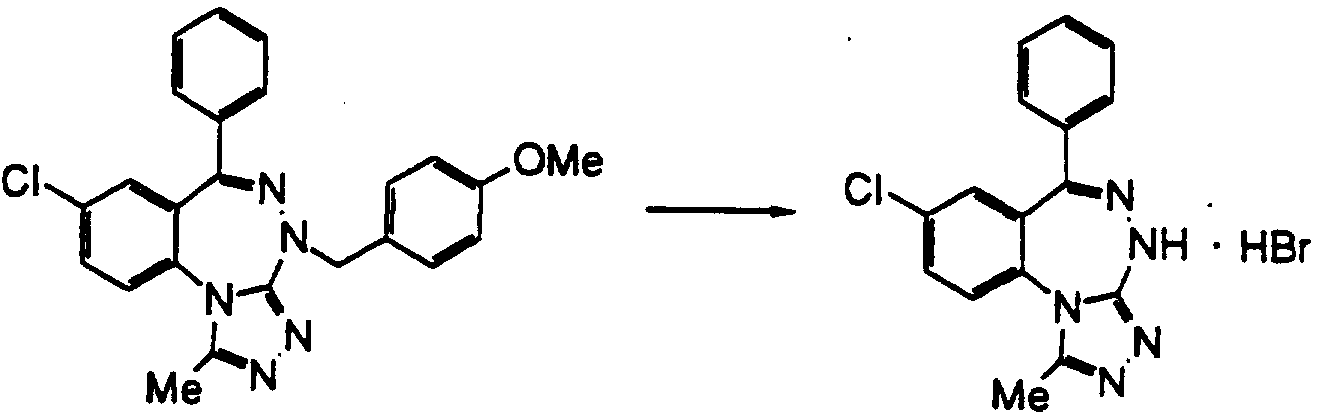
- Example 4 6- (4-chlorophenyl) obtained in 1-14- (3,4-dimethoxybenzyl) 1-1-methyl-4H-2,3,4,5,10b-Penaza Benzo [e]
- Azulene (2.02 g) and anisol (1.4 ml) were dissolved in trifluoroacetic acid (8 ml), concentrated sulfuric acid (1.3 ml) was added, stirred for 10 minutes, and concentrated sulfuric acid (3.9 ml) ) And stirred for 45 minutes. Further, sulfuric acid (1.3 ml) was added and the mixture was stirred for 1.5 hours.
- the reaction solution was poured into ice water (300 ml) and extracted with ethyl sulphate. The organic compound was washed with an aqueous sodium hydrogen carbonate solution and water, dried, concentrated, and concentrated.The residue was crystallized from getyl ether to give the title compound (748 mg) as colorless crystals.
- the reaction solution was poured into ice water (300 ml)
- Example 4 4- (4-Methoxybenzyl) -1-methyl-6- (4-methylphenyl) -1 4H—2,3,4,5,10b obtained from Example 6
- Azulene 800 mg was dissolved in a 25% hydrobromic acid solution (8 ml), anisol (0.22 ml) was added, and the mixture was heated and stirred at 40 for 3 hours.
- Diisopropyl ether 200 ml was added, and the crystals were taken out. The crystals were dissolved in water (10 ml), and sodium bicarbonate was added for neutralization.
- Example 4 8-Chloro-41- (4-methoxybenzyl) -11-methyl obtained in 4 Roux 6—Feniru H—2,3,4,5,10 b-Pentazabenzo [e] azulene (105 mg) was reacted in the same manner as in Reference Example 38 to remove the solvent under reduced pressure. On removal, crystals are obtained. This was washed with getyl ether and dried to obtain the title compound (108.2 mg).
- Reference Example 40 8-Chloro-1-methyl-6-phenyl-4H-2'3,4,5,1Ob-penazazabenzo [e] azulene hydrobromide (102 mg) obtained in 40
- the extraction operation described in Reference Example 34 was performed, and the compound was crystallized from getyl ether to obtain crystals of the title compound.
- Example 4 4- (4-chlorophenyl) -16- (4-methoxybenzyl) -1,2,3,9-trimethyl-6H- 5,6,7,8,9a-pentyl obtained in Example 8
- Azathieno [2,3-e] azulene (100 mg) and anisol (241) were dissolved in 25% hydrobromic acid Zft acid solution Ural), and stirred at 40 for 5 hours.
- the reaction solution was returned to room temperature, disobrovir ether (30 ml) was added, and the oily substance deposited in the reaction vessel and the organic solvent were separated.
- the oil was dissolved in chloroform and washed successively with water, a saturated aqueous solution of sodium hydrogen carbonate and water, and dried over anhydrous sodium sulfate. After some care, the residue obtained by reducing the concentration of the solution was crystallized with getyl ether to give the title compound (68 mg) as yellow crystals.
- Example 56 In the same manner as in Example 56, the following compounds of Examples 57 to 119 were obtained from the compound of Reference Example 34. These are shown in Tables 19 to 23.
Landscapes
- Chemical & Material Sciences (AREA)
- Organic Chemistry (AREA)
- Heterocyclic Carbon Compounds Containing A Hetero Ring Having Oxygen Or Sulfur (AREA)
- Pharmaceuticals Containing Other Organic And Inorganic Compounds (AREA)
Description
















Claims


Priority Applications (5)
| Application Number | Priority Date | Filing Date | Title |
|---|---|---|---|
| AU38807/95A AU694278B2 (en) | 1994-11-18 | 1995-11-15 | Osteoporosis remedy and triazepine compound |
| EP95938016A EP0792880A4 (en) | 1994-11-18 | 1995-11-15 | OSTEOPOROSIS MEDICINE AND TRIAZEPINE COMPOUND |
| US08/836,243 US5807850A (en) | 1994-11-18 | 1995-11-15 | Therapeutic agent for osteoporosis and triazepine compound |
| IL11727096A IL117270A0 (en) | 1995-11-15 | 1996-02-26 | Triazepine derivatives and pharmaceutical compositions containing the same |
| IL12810999A IL128109A0 (en) | 1995-11-15 | 1999-01-18 | A therapeutic agent for osteoporosis |
Applications Claiming Priority (2)
| Application Number | Priority Date | Filing Date | Title |
|---|---|---|---|
| JP30994294 | 1994-11-18 | ||
| JP6/309942 | 1994-11-18 |
Publications (1)
| Publication Number | Publication Date |
|---|---|
| WO1996016062A1 true WO1996016062A1 (en) | 1996-05-30 |
Family
ID=17999209
Family Applications (1)
| Application Number | Title | Priority Date | Filing Date |
|---|---|---|---|
| PCT/JP1995/002338 Ceased WO1996016062A1 (en) | 1994-11-18 | 1995-11-15 | Osteoporosis remedy and triazepine compound |
Country Status (7)
| Country | Link |
|---|---|
| US (1) | US5807850A (ja) |
| EP (1) | EP0792880A4 (ja) |
| CN (1) | CN1171788A (ja) |
| AU (1) | AU694278B2 (ja) |
| CA (1) | CA2205173A1 (ja) |
| HU (1) | HUT77349A (ja) |
| WO (1) | WO1996016062A1 (ja) |
Cited By (2)
| Publication number | Priority date | Publication date | Assignee | Title |
|---|---|---|---|---|
| WO1997047622A1 (en) * | 1996-06-12 | 1997-12-18 | Japan Tobacco Inc. | Cytokine production inhibitors, triazepine compounds, and intermediates thereof |
| WO2018221679A1 (ja) * | 2017-05-31 | 2018-12-06 | あゆみ製薬株式会社 | 6H-チエノ[2,3-e][1,2,4]トリアゾロ[3,4-c][1,2,4]トリアゼピン誘導体 |
Families Citing this family (11)
| Publication number | Priority date | Publication date | Assignee | Title |
|---|---|---|---|---|
| US7312044B2 (en) | 2003-03-07 | 2007-12-25 | The Trustees Of Columbia University In The City Of New York | Type 1 ryanodine receptor-based methods |
| US8022058B2 (en) | 2000-05-10 | 2011-09-20 | The Trustees Of Columbia University In The City Of New York | Agents for preventing and treating disorders involving modulation of the RyR receptors |
| US7393652B2 (en) | 2000-05-10 | 2008-07-01 | The Trustees Of Columbia University In The City Of New York | Methods for identifying a chemical compound that directly enhances binding of FKBP12.6 to PKA-phosphorylated type 2 ryanodine receptor (RyR2) |
| US7879840B2 (en) | 2005-08-25 | 2011-02-01 | The Trustees Of Columbia University In The City Of New York | Agents for preventing and treating disorders involving modulation of the RyR receptors |
| US7718644B2 (en) | 2004-01-22 | 2010-05-18 | The Trustees Of Columbia University In The City Of New York | Anti-arrhythmic and heart failure drugs that target the leak in the ryanodine receptor (RyR2) and uses thereof |
| US7544678B2 (en) | 2002-11-05 | 2009-06-09 | The Trustees Of Columbia University In The City Of New York | Anti-arrythmic and heart failure drugs that target the leak in the ryanodine receptor (RyR2) |
| US8710045B2 (en) | 2004-01-22 | 2014-04-29 | The Trustees Of Columbia University In The City Of New York | Agents for preventing and treating disorders involving modulation of the ryanodine receptors |
| US7704990B2 (en) | 2005-08-25 | 2010-04-27 | The Trustees Of Columbia University In The City Of New York | Agents for preventing and treating disorders involving modulation of the RyR receptors |
| EP3050885B1 (en) * | 2009-11-05 | 2017-10-18 | GlaxoSmithKline LLC | Benzodiazepine bromodomain inhibitor |
| JP5844358B2 (ja) | 2010-06-22 | 2016-01-13 | グラクソスミスクライン エルエルシー | ベンゾトリアゾロジアゼピン化合物を含むブロモドメイン阻害剤 |
| AU2019284971A1 (en) | 2018-06-13 | 2020-12-03 | Worg Pharmaceuticals (Zhejiang) Co., Ltd. | Preparation of condensed triazepine derivatives and their use as BET inhibitors |
Citations (3)
| Publication number | Priority date | Publication date | Assignee | Title |
|---|---|---|---|---|
| JPS5050397A (ja) * | 1973-08-27 | 1975-05-06 | ||
| US4094871A (en) * | 1977-02-16 | 1978-06-13 | The Dow Chemical Company | 1,3,4-Benzotriazepine-2-thiones |
| US4144233A (en) * | 1977-02-16 | 1979-03-13 | The Dow Chemical Company | Method for preparing benzo-(1,3,4)-benzotriazepines |
Family Cites Families (2)
| Publication number | Priority date | Publication date | Assignee | Title |
|---|---|---|---|---|
| US4455307A (en) * | 1982-01-04 | 1984-06-19 | The Upjohn Company | Antihypertensive use of triazolobenzodiazepines |
| EP0638560A4 (en) * | 1991-10-11 | 1995-03-29 | Yoshitomi Pharmaceutical | MEDICINE FOR OSTEOPOROSIS AND DIAZEPINE COMPOUND *. |
-
1995
- 1995-11-15 CN CN95197280.4A patent/CN1171788A/zh active Pending
- 1995-11-15 WO PCT/JP1995/002338 patent/WO1996016062A1/ja not_active Ceased
- 1995-11-15 CA CA002205173A patent/CA2205173A1/en not_active Abandoned
- 1995-11-15 US US08/836,243 patent/US5807850A/en not_active Expired - Fee Related
- 1995-11-15 EP EP95938016A patent/EP0792880A4/en not_active Withdrawn
- 1995-11-15 AU AU38807/95A patent/AU694278B2/en not_active Ceased
- 1995-11-15 HU HU9702054A patent/HUT77349A/hu unknown
Patent Citations (3)
| Publication number | Priority date | Publication date | Assignee | Title |
|---|---|---|---|---|
| JPS5050397A (ja) * | 1973-08-27 | 1975-05-06 | ||
| US4094871A (en) * | 1977-02-16 | 1978-06-13 | The Dow Chemical Company | 1,3,4-Benzotriazepine-2-thiones |
| US4144233A (en) * | 1977-02-16 | 1979-03-13 | The Dow Chemical Company | Method for preparing benzo-(1,3,4)-benzotriazepines |
Non-Patent Citations (1)
| Title |
|---|
| See also references of EP0792880A4 * |
Cited By (9)
| Publication number | Priority date | Publication date | Assignee | Title |
|---|---|---|---|---|
| WO1997047622A1 (en) * | 1996-06-12 | 1997-12-18 | Japan Tobacco Inc. | Cytokine production inhibitors, triazepine compounds, and intermediates thereof |
| WO2018221679A1 (ja) * | 2017-05-31 | 2018-12-06 | あゆみ製薬株式会社 | 6H-チエノ[2,3-e][1,2,4]トリアゾロ[3,4-c][1,2,4]トリアゼピン誘導体 |
| JP6494886B1 (ja) * | 2017-05-31 | 2019-04-03 | あゆみ製薬株式会社 | 6H−チエノ[2,3−e][1,2,4]トリアゾロ[3,4−c][1,2,4]トリアゼピン誘導体 |
| KR20200011450A (ko) * | 2017-05-31 | 2020-02-03 | 아유미 세이야쿠 가부시키가이샤 | 6H-티에노[2,3-e][1,2,4]트리아졸로[3,4-c][1,2,4]트리아제핀 유도체 |
| US11186588B2 (en) | 2017-05-31 | 2021-11-30 | Ayumi Pharmaceutical Corporation | 6H-thieno[2,3-e][1,2,4]triazolo[3,4-c][1,2,4]triazepine derivative |
| AU2018277958B2 (en) * | 2017-05-31 | 2022-03-03 | Ayumi Pharmaceutical Corporation | 6H-thieno[2,3-e][1,2,4]triazolo[3,4-c][1,2,4]triazepine derivative |
| AU2018277958B8 (en) * | 2017-05-31 | 2022-03-10 | Ayumi Pharmaceutical Corporation | 6H-thieno[2,3-e][1,2,4]triazolo[3,4-c][1,2,4]triazepine derivative |
| AU2018277958A8 (en) * | 2017-05-31 | 2022-03-10 | Ayumi Pharmaceutical Corporation | 6H-thieno[2,3-e][1,2,4]triazolo[3,4-c][1,2,4]triazepine derivative |
| KR102592845B1 (ko) | 2017-05-31 | 2023-10-20 | 아유미 세이야쿠 가부시키가이샤 | 6H-티에노[2,3-e][1,2,4]트리아졸로[3,4-c][1,2,4]트리아제핀 유도체 |
Also Published As
| Publication number | Publication date |
|---|---|
| AU694278B2 (en) | 1998-07-16 |
| HUT77349A (hu) | 1998-03-30 |
| CN1171788A (zh) | 1998-01-28 |
| CA2205173A1 (en) | 1996-05-30 |
| US5807850A (en) | 1998-09-15 |
| EP0792880A1 (en) | 1997-09-03 |
| AU3880795A (en) | 1996-06-17 |
| EP0792880A4 (en) | 1998-03-25 |
Similar Documents
| Publication | Publication Date | Title |
|---|---|---|
| US8912220B2 (en) | Compounds and methods of use thereof | |
| WO1997047622A1 (en) | Cytokine production inhibitors, triazepine compounds, and intermediates thereof | |
| ES2252827T3 (es) | Inhibidores biciclicos de farnesil transferasa de proteina. | |
| JP5366349B2 (ja) | ホスホジエステラーゼ阻害剤として有効な置換ピロロピリジノン誘導体 | |
| JP4084189B2 (ja) | 尿素の新誘導体、それらの製造方法、それらの薬剤としての使用、製薬組成物及び新規な用途 | |
| WO1996016062A1 (en) | Osteoporosis remedy and triazepine compound | |
| JP2005520791A (ja) | N,n’−置換−1,3−ジアミノ−2−ヒドロキシプロパン誘導体 | |
| RS62861B1 (sr) | Supstituisano piperidin jedinjenje i njegova upotreba | |
| JP2004509893A (ja) | 置換型アゼピノ[4,5b]インドリン誘導体 | |
| JP2009507080A (ja) | Axl阻害剤として有用なトリアゾール誘導体 | |
| AU2007271241A1 (en) | Benzimidazole cannabinoid agonists bearing a substituted heterocyclic group | |
| WO2006080450A1 (ja) | Igf-1r阻害剤 | |
| JP2006524686A (ja) | ミエロペルオキシダーゼ酵素(mpo)の阻害剤としての2,4−ジヒドロ−[1,2,4]トリアゾール−3−チオン誘導体の使用 | |
| WO2018015818A2 (en) | Therapeutic inhibitory compounds | |
| KR20020009383A (ko) | 축합 티오펜 유도체 및 이의 유도체를 유효 성분으로 하는약제 | |
| US6566357B1 (en) | Spirocyclic-6,7-dihydro-5H-pyrazolo[1,2-a]pyrazol-1-ones which control inflammatory cytokines | |
| FR2566404A1 (fr) | Nouveaux derives de la 1,4-dihydropyridine, leurs sels, procede pour les preparer, et compositions pharmaceutiques les contenant | |
| TW200806677A (en) | Thiazolyl-dihydro-indazole | |
| JPWO2020071550A1 (ja) | Cdk8阻害剤およびその用途 | |
| JP2002541137A (ja) | ニューロキニン−1受容体アンタゴニストとしてのn−(2−フェニル−4−アミノ−ブチル)−1−ナフトアミド | |
| CA3015914A1 (en) | Thiazolidinone compounds and use thereof | |
| JPH04283553A (ja) | ポリエーテル置換基を有するhivプロテアーゼ阻害剤 | |
| CN111875614B (zh) | 杂环基取代的噻吩并[2,3-d]嘧啶-2,4(1H,3H)-二酮类化合物及其用途 | |
| JPH11501016A (ja) | 4−アミノテトラヒドロベンズイソオキサゾール又は−イソチアゾール化合物 | |
| JP2006502189A (ja) | 炎症性サイトカインを抑制する6,7−ジヒドロ−5H−ピラゾロ[1,2−a]ピラゾール−1−オン |
Legal Events
| Date | Code | Title | Description |
|---|---|---|---|
| WWE | Wipo information: entry into national phase |
Ref document number: 95197280.4 Country of ref document: CN |
|
| AK | Designated states |
Kind code of ref document: A1 Designated state(s): AL AM AU BB BG BR BY CA CN CZ EE FI GE HU IS KG KR KZ LK LR LT LV MD MG MK MN MX NO NZ PL RO RU SG SI SK TJ TM TT UA US UZ VN |
|
| AL | Designated countries for regional patents |
Kind code of ref document: A1 Designated state(s): KE LS MW SD SZ UG AT BE CH DE DK ES FR GB GR IE IT LU MC NL PT SE BF BJ CF CG CI CM GA GN ML MR NE SN TD TG |
|
| DFPE | Request for preliminary examination filed prior to expiration of 19th month from priority date (pct application filed before 20040101) | ||
| 121 | Ep: the epo has been informed by wipo that ep was designated in this application | ||
| WWE | Wipo information: entry into national phase |
Ref document number: 08836243 Country of ref document: US |
|
| ENP | Entry into the national phase |
Ref document number: 2205173 Country of ref document: CA Ref document number: 2205173 Country of ref document: CA Kind code of ref document: A |
|
| WWE | Wipo information: entry into national phase |
Ref document number: 1019970703265 Country of ref document: KR |
|
| WWE | Wipo information: entry into national phase |
Ref document number: 1995938016 Country of ref document: EP |
|
| WWP | Wipo information: published in national office |
Ref document number: 1995938016 Country of ref document: EP |
|
| WWP | Wipo information: published in national office |
Ref document number: 1019970703265 Country of ref document: KR |
|
| WWW | Wipo information: withdrawn in national office |
Ref document number: 1995938016 Country of ref document: EP |
|
| WWR | Wipo information: refused in national office |
Ref document number: 1019970703265 Country of ref document: KR |