WO2002014246A1 - Method for nuclear chlorination of meta-xylol - Google Patents
Method for nuclear chlorination of meta-xylol Download PDFInfo
- Publication number
- WO2002014246A1 WO2002014246A1 PCT/EP2001/008891 EP0108891W WO0214246A1 WO 2002014246 A1 WO2002014246 A1 WO 2002014246A1 EP 0108891 W EP0108891 W EP 0108891W WO 0214246 A1 WO0214246 A1 WO 0214246A1
- Authority
- WO
- WIPO (PCT)
- Prior art keywords
- hydrogen
- substituted
- atoms
- alkyl
- independently
- Prior art date
- Legal status (The legal status is an assumption and is not a legal conclusion. Google has not performed a legal analysis and makes no representation as to the accuracy of the status listed.)
- Ceased
Links
- 0 *C(C(CC*CC1)C1(*)C1=*)N(*)c(c(*)c(*)c(*)c2*)c2S1=O Chemical compound *C(C(CC*CC1)C1(*)C1=*)N(*)c(c(*)c(*)c(*)c2*)c2S1=O 0.000 description 1
- ODLQJZPUEDHIOM-UHFFFAOYSA-N CC(CSc1ccccc11)NC1=O Chemical compound CC(CSc1ccccc11)NC1=O ODLQJZPUEDHIOM-UHFFFAOYSA-N 0.000 description 1
- BSIHFMUJWOYWCB-UHFFFAOYSA-N ONC1=Nc2ccccc2SCC1 Chemical compound ONC1=Nc2ccccc2SCC1 BSIHFMUJWOYWCB-UHFFFAOYSA-N 0.000 description 1
Classifications
-
- C—CHEMISTRY; METALLURGY
- C07—ORGANIC CHEMISTRY
- C07C—ACYCLIC OR CARBOCYCLIC COMPOUNDS
- C07C17/00—Preparation of halogenated hydrocarbons
- C07C17/093—Preparation of halogenated hydrocarbons by replacement by halogens
- C07C17/10—Preparation of halogenated hydrocarbons by replacement by halogens of hydrogen atoms
- C07C17/12—Preparation of halogenated hydrocarbons by replacement by halogens of hydrogen atoms in the ring of aromatic compounds
Definitions
- the present invention relates to a nuclear process for the core chlorination of m-xylene to a mixture of 4-chloro-1,3-dimethylbenzene and 2-chloro-1,3-dimethylbenzene with elemental chlorine in the presence of a catalyst and a co-catalyst.
- Mono-core chlorinated m-xylenes are valuable intermediates for the production of agro- and pharmaceutical active ingredients, as well as for the production of intermediate products of polymers.
- the core chlorination of m-xylene with elemental chlorine is known.
- J. Org. Chem 41, 1976, 3580-3582 describes that in the monochlorination of m-xylene in the presence of conventional Lewis acid catalysts, such as iodine, FeCl 3 or SbCl 3, an isomer ratio of 4 -Chlor-l, 3-dimethylbenzene to 2-chloro-l, 3-dimethylbenzene of about 3.0: 1 is obtained.
- 4-chloro-1, 3-dimethylbenzene is the more valuable isomer, so that a number of processes for increasing the proportion of 4-chloro-1,3-dimethylbenzene have been described.
- Dioxins work, i.e. are toxic.
- EP 126 669 A1 describes catalytic systems for the core chlorination of aromatics which consist of Lewis acids and ⁇ -substituted phenothiazines.
- aromatics consist of Lewis acids and ⁇ -substituted phenothiazines.
- core chlorination of m-xylene There is no example of the core chlorination of m-xylene.
- a fundamentally different process is the core chlorination of m-xylene with chlorine in the presence of zeolites as catalysts.
- J. Catal. 150, 1994, 430-433 it is described that when using a KL zeolite in 1,2-dichloroethane as solvent, a ratio of 4-chloro-1,3-dimethylbenzene to 2-chloro-1,3-dimethylbenzene of up to 6.5: 1 can be achieved, but in this case over
- a disadvantage of carrying out the process in the presence of zeolites is furthermore the use of a solvent and the heterogeneous catalyst, as a result of which additional distillation and filtration steps are necessary when working up the reaction mixture.
- the object of the present invention was to provide a process for the core chlorination of m-xylene using an easy-to-use catalyst system, the highest possible ratio of 4-chloro-l, 3-dimethylbenzene to 2-chloro-l, 3-dimethylbenzene should be achieved.
- the object is achieved in a surprisingly simple way by using benzo-condensed thiazepines or thiazocines as co-catalysts.
- the invention accordingly relates to a process for the core chlorination of m-xylene with elemental chlorine in the presence of Friedel-Crafts catalysts, benzo-condensed thiazepines or thiazocines being used as co-catalysts.
- Suitable Friedel-Crafts catalysts for the process according to the invention are known as such. Examples include: antimony chlorides, antimony oxides,
- a Friedel-Crafts catalyst ie a Lewis acid
- Examples of possible elementary compounds are: antimony oxides, iron oxides, iron sulfides, lead sulfides, tin sulfides, zinc sulfides, iron carbonyls, molybdenum carbonyls and borophosphate.
- the corresponding fluorides, bromides and optionally iodides of the elements mentioned can also be used.
- Antimony chlorides, iron, iron oxides, iron sulfides, iron carbonyls and iron ( ⁇ TI) chloride are preferably used as Friedel-Crafts catalysts in the process according to the invention.
- Iron (III) chloride is particularly preferred.
- Friedel-Crafts catalysts and / or their precursors can be used individually or as any mixtures with one another.
- the amount of the Friedel-Crafts catalyst or its precursor can be varied within wide limits. A catalyst effect can often already be seen with the addition of 0.0005% by weight. On the other hand, 5% by weight or more of the Friedel-Crafts catalyst can also be added, but such offer high levels
- the Friedel-Crafts catalyst is usually used in an amount of 0.001 to 1.0% by weight, preferably 0.005 to 0.5% by weight. All of these amounts are based on the amount of m-xylene used.
- Thiazepines or thiazocines are used as co-catalysts in the process according to the invention. Methods for the preparation of such compounds are known and are described, for example, in US Pat. No. 4,948,886.
- benzothiazepines of the formulas can be used as co-catalysts
- R 1 , R 2 , R 3 , R 4 are the same or different and are hydrogen, hydroxy, amino, cyano, halogen, ⁇ itro, ⁇ itroso, sulfonyl, sulfoxyl, tosyl, mercapto, carboxyl, carboxyamide, carbalkoxy, dithiocarboxyl, thiocarboxyamide, dithiocarbalkoxy optionally substituted alkyl, aryl, heteroaryl,
- R 5 , R 6 , R 7 and R 8 are the same or different and have the meaning of R 1 to R 4 , with the exception that they cannot form rings with one another,
- Y is hydrogen, optionally substituted alkyl, aryl, heteroaryl, acyl,
- R 9 and R 10 are identical or different and have the meaning of R 5 to R 8 ,
- Z has the meaning of Y, with the exception that Z cannot be H,
- A is the annealing of an optionally substituted saturated isocyclic or heterocyclic ring with up to 8 C atoms
- B is the annealing of an optionally substituted unsaturated isocyclic or heterocyclic ring with up to 8 C atoms and
- n 0 or 1
- R 21 and R 22 independently of one another hydrogen, hydroxy, amino, cyano, halogen, nitro, carboxyl, halocarbonyl, carboxyamide, alkoxycarbonyl, alkyl, aryl, alkoxy, aryloxy, acyloxy, alkylthio, arylthio, acylthio, acyl,
- R 23 represents hydrogen or chlorine and can furthermore form an annulated saturated, unsaturated or aromatic isocyclic or heterocyclic ring with 5 to 8 ring atoms with one of the radicals R 21 or R 22 with adjacent substitution and together with the substituted C atoms,
- R 24 is hydrogen, alkyl, aryl, halogen, alkylthio, arylthio, alkoxy, aryloxy,
- n and o can independently assume the value 0 or 1, but n and o cannot simultaneously assume the value 0,
- R, R and R independently of one another are hydrogen, alkyl, alkoxy, phenyl, acyloxy, cyano, halogen, carboxyl, alkoxycarbonyl, phenoxy or acyl, where R and R or R and R together with the substituted C atoms represent a saturated, unsaturated or can form aromatic isocyclic or heterocyclic ring with 5 to 8 ring atoms,
- R 26 and R 28 or R 28 and R 210 together can form a double formation
- R 25 and R 26 together can also represent double-bonded oxygen, sulfur or R 21 ⁇ substituted nitrogen
- R is alkyl, aryl, acyl, alkylamino or arylamino
- R and R independently of one another are hydrogen, hydroxy, amino, cyano,
- R represents hydrogen or chlorine and, together with one of the radicals R or R 32 and together with the substituted C atoms, can form an annulated saturated, unsaturated or aromatic isocyclic or heterocyclic ring with 5-8 ring atoms,
- R 34 , R 36 and R 40 independently of one another are hydrogen, -Cs-alkyl, phenyl which is unsubstituted or substituted by R 31 and R 32 (with the exception of the renewed substitution by R 31 - and R 32 -substituted phenyl), -Cs acyl,
- R 35 , R 37 and R 39 independently of one another hydrogen, CrCs-alkyl, halogen, C Cs-
- R 38 is hydrogen, -Cs-alkyl, phenyl which is unsubstituted or substituted by R 31 - and R 32 -substituted phenyl (with the exception of renewed substitution by R - and R 32 -substituted phenyl), C 1 -C 8 -acyl, Ci- -Thioacyl, halocarbonyl or -C ⁇ - alkoxycarbonyl mean and
- p represents one of the numbers 0 or 1
- pairs of substituents R 34 and R 35 , R 36 and R 37 , and R 39 and R 40 independently of one another can mean double-bonded oxygen, sulfur or R 38 -substituted nitrogen, and furthermore
- pairs of substituents R 35 and R 36 and R 38 and R 39 can independently form a double bond, and furthermore
- substituent pairs R 34 and R 37 and R 38 and R 39 can independently form 3- to 5-membered alkylene in which 1 or 2 C atoms can be replaced by oxygen, sulfur or R 38 -substituted nitrogen, and furthermore
- R 40 can also assume the meaning hydrazino, d-Cs-alkylhydrazino or phenylhydrazino,
- R 41 and R 42 independently of one another denote hydrogen, cyano, halogen, carboxyl, alkoxycarboxyl, alkyl, aryl, alkoxy, aryloxy or acyl, preferably hydrogen, methyl, ethyl, propyl, isopropyl,
- R 43 represents hydrogen, alkyl or chlorine, preferably represents hydrogen and furthermore, with one of the radicals R 41 and R 42 with adjacent substitution and together with the substituted C atoms, an annulated saturated, unsaturated or aromatic, isocyclic or heterocyclic ring with 5 to Can form 8 ring atoms,
- R 44 and R 45 independently of one another are hydrogen, alkyl, aryl, halogen, alkoxy, aryloxy, acyl or acyloxy, preferably hydrogen, methyl, ethyl, propyl, isopropyl or, together with the substituted C atoms, a saturated or unsaturated, isocyclic or heterocyclic Can form a ring with 5 to 8 ring atoms,
- R 46 is hydrogen, alkyl, aryl or silyl substituted by alkyl or aryl, preferably hydrogen and
- R 51 and R 52 independently of one another are hydrogen, hydroxy, amino, cyano, halogen, nitro, alkylsulfonyl, phenylsulfonyl, alkylsulfoxyl, phenylsulfoxyl, tosyl, mercapto, carboxyl, halocarbonyl, carboxyamide, alkoxycarbonyl, thiocarboxyamide, alkyl, aryl, heteroaryl, alkoxy , Aryloxy, heteroaryloxy, acyloxy, alkylthio, arylthio, heteroarylthio, acylthio, acyl, thioacyl or acylamino,
- R 53 represents hydrogen or chlorine and, together with one of the radicals R 5 or R 52 and together with the substituted C atoms, can form an annellated saturated, unsaturated or aromatic isocyclic or heterocyclic ring with 5 to 8 ring atoms,
- R 54 denotes hydrogen, alkyl, aryl, heteroaryl, acyl, thioacyl, halocarbonyl or alkoxycarbonyl,
- X 51 and X 52 independently of one another represent double-bonded oxygen, sulfur or R 57 -substituted nitrogen, where R 57 has the meaning of R 54 with the exception of hydrogen,
- r, s and t can independently assume the value 0 or 1 and R and R can be independently of one another on one or two of the C atoms located in the 8-ring between the S and the N atom, provided that these C atoms are not occupied by X or X, and the scope of R 51 or R 52 , where, in the case of adjacent substitution, a saturated, unsaturated or aromatic isocyclic or heterocyclic ring having 5 to 8 ring atoms can also be formed with the substituted C atoms, and furthermore R 55 and R 56 together also double-bonded oxygen or Can mean sulfur
- R 1 , R 2 , R 3 , R 4 and Y represent hydrogen
- R 9 represents hydrogen, methyl, ethyl, propyl or isopropyl, and m means 0.
- co-catalysts are compounds of the formula (VI), where
- R 1 , R 2 , R 3 , R 4 are the same or different and represent hydrogen, methyl, ethyl, propyl or isopropyl,
- R 7 and R 8 are hydrogen
- n the number 0
- A means annealing a saturated isocyclic ring with 6 carbon atoms.
- R 21 , R 22 , R 26 , R 28 are the same or different and represent hydrogen, methyl, ethyl, propyl or isopropyl,
- R 23 represents hydrogen
- R denotes methylthio, ethylthio, propylthio or isopropylthio
- n assumes the value 1 and
- R and R together with the substituted C atoms form a saturated isocyclic ring with 6 ring atoms.
- cocatalysts in combination with other elements or compounds not described as cocatalysts in the process according to the invention.
- the co-catalysts can be used both individually and in a mixture of several of them.
- the amounts of cocatalyst used can vary within wide limits. Amounts below 0.0001% by weight are less advantageous since the co-catalytic
- cocatalysts to be used according to the invention can therefore, for example, each in an amount of 0.0001-1.0% by weight, preferably 0.0005-0.5% by weight, particularly preferably 0.001-0.1% by weight based on the amount of m-xylene used.
- the molar ratio of Friedel-Crafts catalyst (s) or precursors thereof and co-catalyst (s) can be varied within wide limits in the process according to the invention. Is suitable for. B. a molar ratio of Friedel-Crafts catalysts or precursors thereof to cocatalyst from 100: 1 to 1:50, preferably 75: 1 to 1:10, particularly preferably 50: 1 to 1: 2.
- the process according to the invention is advantageously carried out in the liquid phase. If necessary, an inert solvent can be used in dilution.
- Suitable solvents are those produced by chlorine under the conditions of a
- Core chlorination are not attacked and are known to those skilled in the art, such as methylene chloride, chloroform, carbon tetrachloride, acetic acid. It is preferred to work without a solvent.
- the amount of chlorine is preferably chosen so that a degree of chlorination of not significantly higher than 1 results.
- the core chlorination to be carried out according to the invention can in principle be carried out at one
- the reaction temperature is -30 to 120 ° C, preferably -10 to 100 ° C, particularly preferably 0 to 70 ° C.
- the reaction pack can be normal, reduced or increased and is generally not critical. Normal pressure is preferred because of the inexpensive implementation. Increased pressure can be indicated, for example, if work is to be carried out above the boiling point of a low-boiling solvent. In this case, it is possible, for example, to work under the self-adjusting pressure of the reaction mixture.
- the water content of the reaction mixture is generally not critical. It is preferred not to dry all feedstocks specifically, but to use them with the low water content with which they are usually present in chemical engineering. However, it is possible to specifically dry some or all of the substances in the reaction mixture. Usually, the water content of the feed materials should not lie above the saturation limits of the respective feedstocks. According to the invention, water contents in the chlorination mixture are preferred up to 250 ppm, particularly preferably up to 150 ppm, very particularly preferably up to 100 ppm.
- the order of adding the individual components to the reaction mixture is arbitrary for the practical implementation of the process according to the invention.
- the process can be carried out either continuously or batchwise.
- m-xylene is initially introduced at the desired reaction temperature, Friedel-Crafts and cocatalysts are added, and the chlorine is metered in to the desired degree of chlorination.
- the chlorination mixture can then be passed through directly
- the process according to the invention permits the core chlorination of m-xylene with an increased proportion of 4-chloro-1,3-dimethylbenzene at the lowest application rates
- Example 1 The procedure of Example 1 was repeated, using 56 ppm of the cocatalyst of the formula instead of the cocatalyst there
- Example 1 The procedure of Example 1 was repeated using 41 ppm of the cocatalyst of the formula instead of the cocatalyst there
- Example 1 The procedure of Example 1 was repeated, using 47 ppm of the cocatalyst of the formula instead of the cocatalyst there
- Example 1 The procedure of Example 1 was repeated, using 40 ppm of the cocatalyst of the formula instead of the cocatalyst there
- Example 1 The procedure of Example 1 was repeated using 42 ppm of the cocatalyst of the formula instead of the cocatalyst there
- Chloro-1,3-dimethylbenzene was thus 6.35: 1.
- Chloro-1,3-dimethylbenzene was thus 4.44: 1.
Landscapes
- Chemical & Material Sciences (AREA)
- Organic Chemistry (AREA)
- Organic Low-Molecular-Weight Compounds And Preparation Thereof (AREA)
- Catalysts (AREA)
Abstract
Description
Verfahren zur Kernchlorierung von meta-XylolProcess for the core chlorination of meta-xylene
Die vorliegende Erfindung betrifft ein Nerfahren zur Kernchlorierung von m-Xylol zu einem Gemisch von 4-Chlor-l,3-dimethylbenzol und 2-Chlor-l,3-dimethylbenzol mit elementarem Chlor in Gegenwart eines Katalysators und eines Co-Katalysators.The present invention relates to a nuclear process for the core chlorination of m-xylene to a mixture of 4-chloro-1,3-dimethylbenzene and 2-chloro-1,3-dimethylbenzene with elemental chlorine in the presence of a catalyst and a co-catalyst.
Monokernchlorierte m-Xylole sind wertvolle Zwischenprodukte zur Herstellung von Agro- und Pharmawirkstoffen, sowie zur Herstellung von Vorprodukten von Poly- meren.Mono-core chlorinated m-xylenes are valuable intermediates for the production of agro- and pharmaceutical active ingredients, as well as for the production of intermediate products of polymers.
Die Kernchlorierung von m-Xylol mit elementarem Chlor ist bekannt. Beispielsweise wird in J. Org. Chem 41, 1976, 3580 - 3582 beschrieben, dass bei der Mono- chlorierung von m-Xylol in Gegenwart üblicher Lewis-Säure-Katalysatoren wie bei- spielsweise Jod, FeCl3 oder SbCl3 ein Isomerenverhältnis von 4-Chlor-l,3-dimethyl- benzol zu 2-Chlor-l,3-dimethylbenzol von ca. 3,0 : 1 erhalten wird. 4-Chlor-l,3-di- methylbenzol ist das wertvollere Isomer, so dass eine Reihe von Verfahren zur Erhöhung des Anteils an 4-Chlor-l,3-dimethylbenzol beschrieben wurden.The core chlorination of m-xylene with elemental chlorine is known. For example, J. Org. Chem 41, 1976, 3580-3582 describes that in the monochlorination of m-xylene in the presence of conventional Lewis acid catalysts, such as iodine, FeCl 3 or SbCl 3, an isomer ratio of 4 -Chlor-l, 3-dimethylbenzene to 2-chloro-l, 3-dimethylbenzene of about 3.0: 1 is obtained. 4-chloro-1, 3-dimethylbenzene is the more valuable isomer, so that a number of processes for increasing the proportion of 4-chloro-1,3-dimethylbenzene have been described.
Aus US-A-4, 190,609 ist ein Verfahren zur Kernchlorierung von m-Xylol mit elementarem Chlor bekannt, wobei in Gegenwart von Lewis-Säuren als Katalysatoren und bestimmten substituierten Thianthrenen als Co-Katalysatoren gearbeitet wird. Dadurch kann zwar ein Verhältnis von 4-Chlor-l,3-dimethylbenzol zu 2-Chlor- 1,3-dimethylbenzol von 3,62 : 1 erreicht werden, aber nachteilig an der Verwendung der Thianthrene ist, dass Verbindungen dieser Klasse ähnlich wie die entsprechendenA process for the core chlorination of m-xylene with elemental chlorine is known from US Pat. No. 4,190,609, the process being carried out in the presence of Lewis acids as catalysts and certain substituted thianthrenes as co-catalysts. Although a ratio of 4-chloro-1,3-dimethylbenzene to 2-chloro-1,3-dimethylbenzene of 3.62: 1 can be achieved, a disadvantage of the use of thianthrenes is that compounds of this class are similar to that appropriate
Dioxine wirken, d.h. toxisch sind.Dioxins work, i.e. are toxic.
In EP 126 669 AI werden katalytische Systeme zur Kernchlorierung von Aromaten beschrieben, die aus Lewis-Säuren und Ν-substituierten Phenothiazinen bestehen. Ein Beispiel für die Kemchlorierung von m-Xylol findet sich nicht. Ein grundsätzlich anderes Verfahren besteht in der Kemchlorierung von m-Xylol mit Chlor in Gegenwart von Zeolithen als Katalysatoren. In J. Catal. 150, 1994, 430-433 wird beschrieben, dass bei Verwendung eines KL-Zeolithen in 1,2-Dichlorethan als Lösungsmittel ein Verhältnis von 4-Chlor-l,3-dimethylbenzol zu 2-Chlor-l,3-di- methylbenzol von bis zu 6,5 : 1 erreicht werden kann, wobei in diesem Fall aber überEP 126 669 A1 describes catalytic systems for the core chlorination of aromatics which consist of Lewis acids and Ν-substituted phenothiazines. There is no example of the core chlorination of m-xylene. A fundamentally different process is the core chlorination of m-xylene with chlorine in the presence of zeolites as catalysts. In J. Catal. 150, 1994, 430-433 it is described that when using a KL zeolite in 1,2-dichloroethane as solvent, a ratio of 4-chloro-1,3-dimethylbenzene to 2-chloro-1,3-dimethylbenzene of up to 6.5: 1 can be achieved, but in this case over
61 % des eingesetzten m-Xylols nicht umgesetzt werden. Nachteilig an einer Verfahrensführung in Gegenwart von Zeolithen ist weiterhin die Verwendung eines Lösungsmittels und des heterogenen Katalysators, wodurch bei der Aufarbeitung des Reaktionsgemisches zusätzliche Destillations- und Filtrationsscl ritte notwendig werden.61% of the m-xylene used are not converted. A disadvantage of carrying out the process in the presence of zeolites is furthermore the use of a solvent and the heterogeneous catalyst, as a result of which additional distillation and filtration steps are necessary when working up the reaction mixture.
Die Aufgabe der vorliegenden Erfindung bestand darin, ein Verfahren zur Kernchlorierung von m-Xylol unter Verwendung eines einfach zu handhabenden Katalysatorsystems zur Verfügung zu stellen, wobei ein möglichst hohes Verhältnis von 4- Chlor-l,3-dimethylbenzol zu 2-Chlor-l,3-dimethylbenzol erreicht werden soll.The object of the present invention was to provide a process for the core chlorination of m-xylene using an easy-to-use catalyst system, the highest possible ratio of 4-chloro-l, 3-dimethylbenzene to 2-chloro-l, 3-dimethylbenzene should be achieved.
Die gestellte Aufgabe wird auf überraschend einfache Weise dadurch gelöst, dass als Co-Katalysatoren benzokondensierte Thiazepine oder Thiazocine eingesetzt werden.The object is achieved in a surprisingly simple way by using benzo-condensed thiazepines or thiazocines as co-catalysts.
Die Erfindung betrifft demnach ein Verfahren zur Kemchlorierung von m-Xylol mit elementarem Chlor in Gegenwart von Friedel-Crafts-Katalysatoren, wobei als Co- Katalysatoren benzokondensierte Thiazepine oder Thiazocine einsetzt werden.The invention accordingly relates to a process for the core chlorination of m-xylene with elemental chlorine in the presence of Friedel-Crafts catalysts, benzo-condensed thiazepines or thiazocines being used as co-catalysts.
Geeignete Friedel-Crafts-Katalysatoren für das erfindungsgemäße Verfahren sind als solche bekannt. Als Beispiele seien genannt: Antimonchloride, Antimonoxide,Suitable Friedel-Crafts catalysts for the process according to the invention are known as such. Examples include: antimony chlorides, antimony oxides,
Aluminiumchlorid, Eisen(π)-chlorid, Eisen(III)-chlorid, Tellurchloride, Bleichloride, Molybdänchloride, Zinnchloride, Wolframchloride, Titanchloride, Zinkchloride, Bortrichlorid und Bortrifluorid.Aluminum chloride, iron (π) chloride, iron (III) chloride, tellurium chloride, lead chloride, molybdenum chloride, tin chloride, tungsten chloride, titanium chloride, zinc chloride, boron trichloride and boron trifluoride.
Es können auch Elemente und Elementverbindungen, die während der Chlorierung einen Friedel-Crafts-Katalysator, d.h. eine Lewis-Säure bilden, eingesetzt werden (Vorläufer für Friedel-Crafts-Katalysatoren), beispielsweise die Metalle oder Halbmetalle Antimon, Eisen, Blei, Zinn, Zink, Molybdän, Tellur oder Aluminium oder deren Oxide, Sulfide, Carbonyle oder Salze, z. B. Carbonate. Beispiele für in Frage kommende Elementarverbindungen sind: Antimonoxide, Eisenoxide, Eisensulfide, Bleisulfide, Zinnsulfide, Zinksulfide, Eisencarbonyle, Molybdäncarbonyle und Bor- phoshphat. Anstelle der erwähnten Chloride können auch die entsprechenden Fluoride, Bromide und gegebenenfalls Iodide der genannten Elemente eingesetzt werden.It is also possible to use elements and element compounds which form a Friedel-Crafts catalyst, ie a Lewis acid, during the chlorination (Precursors for Friedel-Crafts catalysts), for example the metals or semimetals antimony, iron, lead, tin, zinc, molybdenum, tellurium or aluminum or their oxides, sulfides, carbonyls or salts, e.g. B. Carbonates. Examples of possible elementary compounds are: antimony oxides, iron oxides, iron sulfides, lead sulfides, tin sulfides, zinc sulfides, iron carbonyls, molybdenum carbonyls and borophosphate. Instead of the chlorides mentioned, the corresponding fluorides, bromides and optionally iodides of the elements mentioned can also be used.
Bevorzugt werden im erfindungsgemäßen Verfahren Antimonchloride, Eisen, Eisenoxide, Eisensulfide, Eisencarbonyle und Eisen(ιTI)-Chlorid als Friedel-Crafts- Katalysator eingesetzt. Besonders bevorzugt ist Eisen(III)-chlorid.Antimony chlorides, iron, iron oxides, iron sulfides, iron carbonyls and iron (ιTI) chloride are preferably used as Friedel-Crafts catalysts in the process according to the invention. Iron (III) chloride is particularly preferred.
Friedel-Crafts-Katalysatoren und/oder deren Vorläufer können einzeln oder als be- liebige Gemische untereinander eingesetzt werden.Friedel-Crafts catalysts and / or their precursors can be used individually or as any mixtures with one another.
Die Menge des Friedel-Crafts-Katalysators bzw. seines Vorläufers kann in weiten Grenzen variiert werden. So ist häufig bereits bei einem Zusatz von 0,0005 Gew.% eine Katalysatorwirkung erkennbar. Andererseits können auch 5 Gew.% oder mehr des Friedel-Crafts-Katalysators zugesetzt werden, jedoch bieten solche hohenThe amount of the Friedel-Crafts catalyst or its precursor can be varied within wide limits. A catalyst effect can often already be seen with the addition of 0.0005% by weight. On the other hand, 5% by weight or more of the Friedel-Crafts catalyst can also be added, but such offer high levels
Mengen im allgemeinen keinen Vorteil, bringen aber gegebenenfalls bei der Aufarbeitung Nachteile mit sich. Üblicherweise wird der Friedel-Crafts-Katalysator in einer Menge von 0,001 bis 1,0 Gew.%, bevorzugt 0,005 bis 0,5 Gew.% eingesetzt. Alle diese Mengenangaben sind auf die Menge des eingesetzten m-Xylols bezogen.Quantities are generally not an advantage, but may have disadvantages in the workup. The Friedel-Crafts catalyst is usually used in an amount of 0.001 to 1.0% by weight, preferably 0.005 to 0.5% by weight. All of these amounts are based on the amount of m-xylene used.
Im erfindungsgemäßen Verfahren werden als Co-Katalysatoren Thiazepine oder Thiazocine eingesetzt. Verfahren zur Herstellung solcher Verbindungen sind bekannt und beispielsweise in US-A-4,948,886 beschrieben.Thiazepines or thiazocines are used as co-catalysts in the process according to the invention. Methods for the preparation of such compounds are known and are described, for example, in US Pat. No. 4,948,886.
Beispielsweise können als Co-Katalysatoren Benzothiazepine der Formeln


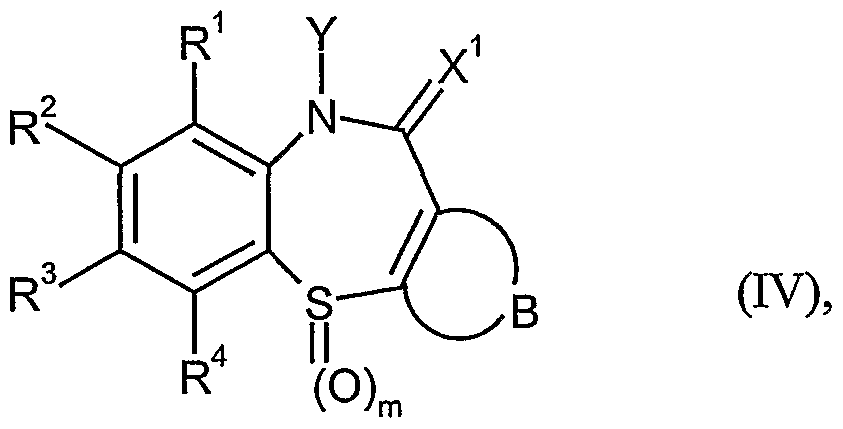


woπnembedded image in which
R1, R2, R3, R4 gleich oder verschieden sind und für Wasserstoff, Hydroxy, Amino, Cyano, Halogen, Νitro, Νitroso, Sulfonyl, Sulfoxyl, Tosyl, Mercapto, Carboxyl, Carboxyamid, Carbalkoxy, Dithiocarboxyl, Thiocarboxyamid, Dithiocarbalkoxy, gegebenenfalls substituiertes Alkyl, Aryl, Heteroaryl,R 1 , R 2 , R 3 , R 4 are the same or different and are hydrogen, hydroxy, amino, cyano, halogen, Νitro, Νitroso, sulfonyl, sulfoxyl, tosyl, mercapto, carboxyl, carboxyamide, carbalkoxy, dithiocarboxyl, thiocarboxyamide, dithiocarbalkoxy optionally substituted alkyl, aryl, heteroaryl,
Alkoxy, Aryloxy, Heteroaryloxy, Acyloxy, Alkylthio, Arylthio, Hetero- arylthio, Acylthio, Acyl, Thioacyl oder Acylamino stehen und weiterhin untereinander einen oder mehrere gesättigte oder ungesättigte, gegebenenfalls substituierte isocyclische oder heterocyclische Kohlenstoffringe mit bis zu 8 C-Atomen bilden können,Alkoxy, aryloxy, heteroaryloxy, acyloxy, alkylthio, arylthio, heteroarylthio, acylthio, acyl, thioacyl or acylamino and furthermore can form one or more saturated or unsaturated, optionally substituted isocyclic or heterocyclic carbon rings with up to 8 carbon atoms,
R5, R6, R7 und R8 gleich oder verschieden sind und die Bedeutung von R1 bis R4 besitzen, mit der Ausnahme, dass sie untereinander keine Ringe bilden können,R 5 , R 6 , R 7 and R 8 are the same or different and have the meaning of R 1 to R 4 , with the exception that they cannot form rings with one another,
Y Wasserstoff, gegebenenfalls substituiertes Alkyl, Aryl, Heteroaryl, Acyl,Y is hydrogen, optionally substituted alkyl, aryl, heteroaryl, acyl,
Thioacyl, Acyloxy, Arylamino oder Acylamino bedeutet, X1, X2, oder X3 unabhängig voneinander jeweils eine der folgende Gruppierungen bedeutet:Means thioacyl, acyloxy, arylamino or acylamino, X 1 , X 2 , or X 3 each independently of the other means one of the following groups:

wobeiin which
R9 und R10 gleich oder verschieden sind und die Bedeutung von R5 bis R8 haben,R 9 and R 10 are identical or different and have the meaning of R 5 to R 8 ,
Z die Bedeutung von Y hat mit der Ausnahme, dass Z nicht gleich H sein kann,Z has the meaning of Y, with the exception that Z cannot be H,
A die Anellierung eines gegebenenfalls substituierten gesättigten isocyclischen oder heterocyclischen Rings mit bis zu 8 C-Atomen bedeutet,A is the annealing of an optionally substituted saturated isocyclic or heterocyclic ring with up to 8 C atoms,
B die Anellierung eines gegebenenfalls substituierten ungesättigten isocyclischen oder heterocyclischen Rings mit bis zu 8 C-Atomen bedeutet undB is the annealing of an optionally substituted unsaturated isocyclic or heterocyclic ring with up to 8 C atoms and
m 0 oder 1 bedeutet,m means 0 or 1,
eingesetzt werden.be used.
Weiterhin können als Co-Katalysatoren beispielsweise Verbindungen der FormelCompounds of the formula may also be used as co-catalysts

R21 und R22 unabhängig voneinander Wasserstoff, Hydroxy, Amino, Cyano, Halogen, Nitro, Carboxyl, Halogencarbonyl, Carboxyamid, Alkoxycarbonyl, Alkyl, Aryl, Alkoxy, Aryloxy, Acyloxy, Alkylthio, Arylthio, Acylthio, Acyl,R 21 and R 22 independently of one another hydrogen, hydroxy, amino, cyano, halogen, nitro, carboxyl, halocarbonyl, carboxyamide, alkoxycarbonyl, alkyl, aryl, alkoxy, aryloxy, acyloxy, alkylthio, arylthio, acylthio, acyl,
Thioacyl oder Acylamino bedeuten,Mean thioacyl or acylamino,
R23 für Wasserstoff oder Chlor steht und weiterhin mit einem der Reste R21 oder R22 bei benachbarter Substitution und gemeinsam mit den substituierten C- Atomen einen anellierten gesättigten, ungesättigten oder aromatischen iso- cyclischen oder heterocyclischen Ring mit 5 bis 8 Ringatomen bilden kann,R 23 represents hydrogen or chlorine and can furthermore form an annulated saturated, unsaturated or aromatic isocyclic or heterocyclic ring with 5 to 8 ring atoms with one of the radicals R 21 or R 22 with adjacent substitution and together with the substituted C atoms,
R24 Wasserstoff, Alkyl, Aryl, Halogen, Alkylthio, Arylthio, Alkoxy, Aryloxy,R 24 is hydrogen, alkyl, aryl, halogen, alkylthio, arylthio, alkoxy, aryloxy,
Amino, Hydrazino, Alkylhydrazino oder Phenylhydrazino bedeutet,Represents amino, hydrazino, alkylhydrazino or phenylhydrazino,
m, n und o unabhängig voneinander den Wert 0 oder 1 annehmen können, wobei jedoch n und o nicht gleichzeitig den Wert 0 annehmen dürfen,m, n and o can independently assume the value 0 or 1, but n and o cannot simultaneously assume the value 0,
R , R und R unabhängig voneinander Wasserstoff, Alkyl, Alkoxy, Phenyl, Acyloxy, Cyano, Halogen, Carboxyl, Alkoxycarbonyl, Phenoxy oder Acyl bedeuten, wobei R und R oder R und R gemeinsam mit den substituierten C-Atomen einen gesättigten , ungesättigten oder aromatischen iso- cyclischen oder heterocyclischen Ring mit 5 bis 8 Ringatomen bilden können,R, R and R independently of one another are hydrogen, alkyl, alkoxy, phenyl, acyloxy, cyano, halogen, carboxyl, alkoxycarbonyl, phenoxy or acyl, where R and R or R and R together with the substituted C atoms represent a saturated, unsaturated or can form aromatic isocyclic or heterocyclic ring with 5 to 8 ring atoms,

91 1 wobei R Alkyl, Aryl, Acyl, Alkylamino oder Arylamino bedeutet,91 1 where R is alkyl, aryl, acyl, alkylamino or arylamino,
eingesetzt werden. Weiterhin können als Co-Katalysatoren beispielsweise Verbindungen der Formelbe used. Furthermore, as co-catalysts, for example, compounds of the formula

in derin the
R und R unabhängig voneinander Wasserstoff, Hydroxy, Amino, Cyano,R and R independently of one another are hydrogen, hydroxy, amino, cyano,
Halogen, Nitro, -Cs-Alkyl, nicht substituiertes oder durch R31 und R32 sub- stituiertes Phenyl (mit Ausnahme der erneuten Substitution durch R31- undHalogen, nitro, -Cs-alkyl, phenyl which is unsubstituted or substituted by R 31 and R 32 (with the exception of renewed substitution by R 31 - and
^9^ 9
R -substituiertes Phenyl), Q-Cs-Alkoxy, Phenoxy, -Cs-Acyloxy, C Cs- Acyl oder -Cs-Alkoxycarbonyl bedeuten,R -substituted phenyl), Q-Cs-alkoxy, phenoxy, -Cs-acyloxy, C-Cs-acyl or -Cs-alkoxycarbonyl,
R für Wasserstoff oder Chlor steht und weiterhin mit einem der Reste R oder R32 und gemeinsam mit den substituierten C-Atomen einen anellierten gesättigten, ungesättigten oder aromatischen isocyclischen oder heterocyclischen Ring mit 5 - 8 Ringatomen bilden kann,R represents hydrogen or chlorine and, together with one of the radicals R or R 32 and together with the substituted C atoms, can form an annulated saturated, unsaturated or aromatic isocyclic or heterocyclic ring with 5-8 ring atoms,
R34, R36 und R40 unabhängig voneinander Wasserstoff, -Cs-Alkyl, nicht sub- stituiertes oder durch R31 und R32 substituiertes Phenyl (mit Ausnahme der erneuten Substitution durch R31- und R32-substituiertes Phenyl), -Cs-Acyl,R 34 , R 36 and R 40 independently of one another are hydrogen, -Cs-alkyl, phenyl which is unsubstituted or substituted by R 31 and R 32 (with the exception of the renewed substitution by R 31 - and R 32 -substituted phenyl), -Cs acyl,
Cr -Alkoxycarbonyl, Cyano, Halogen, Carboxyl, CrCs-Alkoxy, CrC8-Cr -alkoxycarbonyl, cyano, halogen, carboxyl, CrCs-alkoxy, CrC 8 -
Alkylthio, Phenylthio, Benzylthio, Phenoxy oder CrC8- Acyloxy bedeuten,Alkylthio, phenylthio, benzylthio, phenoxy or CrC 8 - acyloxy,
R35, R37 und R39 unabhängig voneinander Wasserstoff, CrCs-Alkyl, Halogen, C Cs-R 35 , R 37 and R 39 independently of one another hydrogen, CrCs-alkyl, halogen, C Cs-
Alkoxy oder Ci-Cs-Alkylthio bedeuten, R38 Wasserstoff, -Cs-Alkyl, nicht substituiertes oder durch R31- und R32-sub- stituiertes Phenyl (mit Ausnahme der erneuten Substitution durch R - und R32-substituiertes Phenyl), Cι-C8-Acyl, Ci- -Thioacyl, Halogencarbonyl oder -Cδ- Alkoxycarbonyl bedeuten undMean alkoxy or Ci-Cs-alkylthio, R 38 is hydrogen, -Cs-alkyl, phenyl which is unsubstituted or substituted by R 31 - and R 32 -substituted phenyl (with the exception of renewed substitution by R - and R 32 -substituted phenyl), C 1 -C 8 -acyl, Ci- -Thioacyl, halocarbonyl or -C δ - alkoxycarbonyl mean and
p für eine der Zahlen 0 oder 1 steht,p represents one of the numbers 0 or 1,
wobei weiterhinbeing continued
die Substituentenpaare R34 und R35, R36 und R37, sowie R39 und R40 unabhängig voneinander doppelt gebundenen Sauerstoff, Schwefel oder R38-substituierten Stickstoff bedeuten können und wobei weiterhinthe pairs of substituents R 34 and R 35 , R 36 and R 37 , and R 39 and R 40 independently of one another can mean double-bonded oxygen, sulfur or R 38 -substituted nitrogen, and furthermore
die Substituentenpaare R35 und R36 sowie R38 und R39 unabhängig voneinander eine Doppelbindung bilden können und wobei weiterhinthe pairs of substituents R 35 and R 36 and R 38 and R 39 can independently form a double bond, and furthermore
die Substituentenpaare R34 und R37 sowie R38 und R39 unabhängig voneinander 3- bis 5-gliedriges Alkylen bilden können, bei dem 1 oder 2 C-Atome durch Sauerstoff, Schwefel oder R38-substituierten Stickstoff ersetzt sein können, und wobei weiterhinthe substituent pairs R 34 and R 37 and R 38 and R 39 can independently form 3- to 5-membered alkylene in which 1 or 2 C atoms can be replaced by oxygen, sulfur or R 38 -substituted nitrogen, and furthermore
R40 auch die Bedeutung Hydrazino, d-Cs-Alkylhydrazino oder Phenylhydrazino annehmen kann,R 40 can also assume the meaning hydrazino, d-Cs-alkylhydrazino or phenylhydrazino,
eingesetzt werden.be used.
Weiterhin können als Co-Katalysatoren beispielsweise Verbindungen der Formel

in derin the
R41 und R42 unabhängig voneinander Wasserstoff, Cyano, Halogen, Carboxyl, Alkoxycarboxyl, Alkyl, Aryl, Alkoxy, Aryloxy oder Acyl, bevorzugt Wasserstoff, Methyl, Ethyl, Propyl, Isopropyl bedeuten,R 41 and R 42 independently of one another denote hydrogen, cyano, halogen, carboxyl, alkoxycarboxyl, alkyl, aryl, alkoxy, aryloxy or acyl, preferably hydrogen, methyl, ethyl, propyl, isopropyl,
R 43 für Wasserstoff, Alkyl oder Chlor, bevorzugt für Wasserstoff steht und weiterhin mit einem der Reste R41 und R42 bei benachbarter Substitution und gemeinsam mit den substituierten C-Atomen einen anellierten gesättigten, ungesättigten oder aromatischen, isocyclischen oder heterocyclischen Ring mit 5 bis 8 Ringatomen bilden kann,R 43 represents hydrogen, alkyl or chlorine, preferably represents hydrogen and furthermore, with one of the radicals R 41 and R 42 with adjacent substitution and together with the substituted C atoms, an annulated saturated, unsaturated or aromatic, isocyclic or heterocyclic ring with 5 to Can form 8 ring atoms,
R44 und R45 unabhängig voneinander Wasserstoff, Alkyl, Aryl, Halogen, Alkoxy, Aryloxy, Acyl oder Acyloxy , bevorzugt Wasserstoff, Methyl, Ethyl, Propyl, Isopropyl bedeuten oder gemeinsam mit den substituierten C-Atomen einen gesättigten oder ungesättigten, isocyclischen oder heterocyclischen Ring mit 5 bis 8 Ringatomen bilden können,R 44 and R 45 independently of one another are hydrogen, alkyl, aryl, halogen, alkoxy, aryloxy, acyl or acyloxy, preferably hydrogen, methyl, ethyl, propyl, isopropyl or, together with the substituted C atoms, a saturated or unsaturated, isocyclic or heterocyclic Can form a ring with 5 to 8 ring atoms,
R46 Wasserstoff, Alkyl, Aryl oder durch Alkyl oder Aryl substituiertes Silyl, bevorzugt Wasserstoff bedeutet undR 46 is hydrogen, alkyl, aryl or silyl substituted by alkyl or aryl, preferably hydrogen and
den Wert 0 oder 1 annehmen kann,can have the value 0 or 1,
eingesetzt werden. Weiterhin können als Co-Katalysatoren beispielsweise Verbindungen der Formelbe used. Furthermore, as co-catalysts, for example, compounds of the formula

in derin the
R51 und R52 unabhängig voneinander Wasserstoff, Hydroxy, Amino, Cyano, Halogen, Nitro, Alkylsulfonyl, Phenylsulfonyl, Alkylsulfoxyl, Phenyl- sulfoxyl, Tosyl, Mercapto, Carboxyl, Halogencarbonyl, Carboxyamid, Alkoxycarbonyl, Thiocarboxyamid, Alkyl, Aryl, Heteroaryl, Alkoxy, Aryloxy, Heteroaryloxy, Acyloxy, Alkylthio, Arylthio, Heteroarylthio, Acyl- thio, Acyl, Thioacyl oder Acylamino bedeuten,R 51 and R 52 independently of one another are hydrogen, hydroxy, amino, cyano, halogen, nitro, alkylsulfonyl, phenylsulfonyl, alkylsulfoxyl, phenylsulfoxyl, tosyl, mercapto, carboxyl, halocarbonyl, carboxyamide, alkoxycarbonyl, thiocarboxyamide, alkyl, aryl, heteroaryl, alkoxy , Aryloxy, heteroaryloxy, acyloxy, alkylthio, arylthio, heteroarylthio, acylthio, acyl, thioacyl or acylamino,
R53 für Wasserstoff oder Chlor steht und weiterhin mit einem der Reste R5 oder R52 und gemeinsam mit den substituierten C-Atomen einen anellierten gesättigten, ungesättigten oder aromatischen isocyclischen oder heterocyclischen Ring mit 5 bis 8 Ringatomen bilden kann,R 53 represents hydrogen or chlorine and, together with one of the radicals R 5 or R 52 and together with the substituted C atoms, can form an annellated saturated, unsaturated or aromatic isocyclic or heterocyclic ring with 5 to 8 ring atoms,
R54 Wasserstoff, Alkyl, Aryl, Heteroaryl, Acyl, Thioacyl, Halogencarbonyl oder Alkoxycarbonyl bedeutet,R 54 denotes hydrogen, alkyl, aryl, heteroaryl, acyl, thioacyl, halocarbonyl or alkoxycarbonyl,
X51 und X52 unabhängig voneinander für doppelt gebundenen Sauerstoff, Schwefel oder R57-substituierten Stickstoff stehen wobei R57 den Bedeutungsumfang von R54 mit Ausnahme von Wasserstoff hat,X 51 and X 52 independently of one another represent double-bonded oxygen, sulfur or R 57 -substituted nitrogen, where R 57 has the meaning of R 54 with the exception of hydrogen,
r, s und t unabhängig voneinander den Wert 0 oder 1 annehmen können und R und R unabhängig voneinander an einem oder an zwei der zwischen dem S- und dem N-Atom in 8-Ring befindlichen C-Atomen stehen können, sofern diese C-Atome nicht durch X bzw. X besetzt sind, und den Bedeutungsumfang von R51 bzw. R52 haben, wobei bei benachbarter Substitution auch mit den substituierten C-Atomen ein gesättigter, ungesättigter oder aromatischer isocyclischer oder heterocyclischer Ring mit 5 bis 8 Ringatomen gebildet werden kann und wobei weiterhin R55 und R56 gemeinsam auch doppelt gebundenen Sauerstoff oder Schwefel bedeuten können,r, s and t can independently assume the value 0 or 1 and R and R can be independently of one another on one or two of the C atoms located in the 8-ring between the S and the N atom, provided that these C atoms are not occupied by X or X, and the scope of R 51 or R 52 , where, in the case of adjacent substitution, a saturated, unsaturated or aromatic isocyclic or heterocyclic ring having 5 to 8 ring atoms can also be formed with the substituted C atoms, and furthermore R 55 and R 56 together also double-bonded oxygen or Can mean sulfur
eingesetzt werden.be used.
Bevorzugt werden als Co-Katalysatoren Verbindungen eingesetzt, die einen sieben- gliedrigen N- und S-haltigen Heterocyclus enthalten.Compounds which contain a seven-membered N- and S-containing heterocycle are preferably used as co-catalysts.
Insbesondere bevorzugt werden als Co-Katalysatoren Verbindungen der Formel (I) eingesetzt, wobeiCompounds of the formula (I) are particularly preferably used as co-catalysts, wherein
R1, R2, R3, R4 und Y für Wasserstoff stehen,R 1 , R 2 , R 3 , R 4 and Y represent hydrogen,
X1 für =O steht,X 1 stands for = O,
X2 und X3 unabhängig voneinander jeweilsX 2 and X 3 each independently
Ra R a
<<
HH
bedeuten,mean,
wobeiin which
R9 für Wasserstoff, Methyl, Ethyl, Propyl oder Isopropyl steht, und m 0 bedeutet.R 9 represents hydrogen, methyl, ethyl, propyl or isopropyl, and m means 0.
Ebenfalls bevorzugt werden als Co-Katalysatoren Verbindungen der Formel (VI) ein- gesetzt, wobeiLikewise preferred as co-catalysts are compounds of the formula (VI), where
R1, R2, R3, R4 gleich oder verschieden sind und für Wasserstoff, Methyl, Ethyl, Propyl oder Isopropyl stehen,R 1 , R 2 , R 3 , R 4 are the same or different and represent hydrogen, methyl, ethyl, propyl or isopropyl,
R7 und R8 Wasserstoff bedeuten,R 7 and R 8 are hydrogen,
Y für Wasserstoff steht,Y represents hydrogen,
X1 für =0 steht,X 1 stands for = 0,
m die Zahl 0 bedeutet undm means the number 0 and
A die Annelierung eines gesättigten isocyclischen Rings mit 6 C-Atomen bedeutet.A means annealing a saturated isocyclic ring with 6 carbon atoms.
Weiterhin bevorzugt werden als Co-Katalysatoren Verbindungen der Formel (ViTI) eingesetzt, wobeiCompounds of the formula (ViTI) are furthermore preferably used as co-catalysts, wherein
R21, R22, R26, R28 gleich oder verschieden sind und für Wasserstoff, Methyl, Ethyl, Propyl oder Isopropyl stehen,R 21 , R 22 , R 26 , R 28 are the same or different and represent hydrogen, methyl, ethyl, propyl or isopropyl,
R23 für Wasserstoff steht,R 23 represents hydrogen,
R Methylthio, Ethylthio, Propylthio oder Isopropylthio bedeutet,R denotes methylthio, ethylthio, propylthio or isopropylthio,
m und o den Wert 0 annehmen, n den Wert 1 annimmt undm and o assume the value 0, n assumes the value 1 and
R und R gemeinsam mit den substituierten C-Atomen einen gesättigten iso- cyclischen Ring mit 6 Ringatomen bilden.R and R together with the substituted C atoms form a saturated isocyclic ring with 6 ring atoms.
Es ist weiterhin möglich, die Co-Katalysatoren in Kombination mit anderen, nicht als Co-Katalysatoren beschriebenen Elementen oder Verbindungen im erfindungsgemäßen Verfahren einzusetzen.It is also possible to use the cocatalysts in combination with other elements or compounds not described as cocatalysts in the process according to the invention.
Die Co-Katalysatoren können sowohl einzeln als auch im Gemisch mehrerer von ihnen eingesetzt werden.The co-catalysts can be used both individually and in a mixture of several of them.
Die Mengen an eingesetztem Co-Katalysator können in weiten Grenzen variieren. Mengen unter 0,0001 Gew.% sind weniger vorteilhaft, da dann die co-katalytischeThe amounts of cocatalyst used can vary within wide limits. Amounts below 0.0001% by weight are less advantageous since the co-catalytic
Wirkung nachläßt. Es können sogar Mengen von 5 Gew.% oder mehr an Co-Katalysator eingesetzt werden, jedoch bieten diese hohen Mengen im allgemeinen keinen Vorteil, verursachen aber gegebenenfalls Nachteile bei der Aufarbeitung. Die erfindungsgemäß zu verwendenden Co-Katalysatoren können daher beispielsweise in einer Menge von 0,0001 - 1,0 Gew.-%, bevorzugt 0,0005 - 0,5 Gew.%, besonders bevorzugt 0,001 - 0,1 Gew.%, jeweils bezogen auf die Menge des eingesetzten m- Xylols eingesetzt werden.Effect wears off. Amounts of 5% by weight or more of cocatalyst can even be used, but these large amounts generally offer no advantage, but may cause disadvantages in the workup. The cocatalysts to be used according to the invention can therefore, for example, each in an amount of 0.0001-1.0% by weight, preferably 0.0005-0.5% by weight, particularly preferably 0.001-0.1% by weight based on the amount of m-xylene used.
Das Molverhältnis von Friedel-Crafts-Katalysator(en) bzw. Vorläufern davon und Co-Katalysator(en) kann im erfindungsgemäßen Verfahren in weiten Grenzen variiert werden. Geeignet ist z. B. ein molares Verhältnis von Friedel-Crafts- Katalysatoren bzw. Vorläufern davon zu Co-Katalysator von 100:1 bis 1:50 bevorzugt 75:1 bis 1:10, besonders bevorzugt 50:1 bis 1:2. Das erfindungsgemäße Verfahren wird zweckmäßigerweise in flüssiger Phase durchgeführt. Gegebenenfalls kann in Verdünnung mit einem inerten Lösungsmittel gearbeitet werden.The molar ratio of Friedel-Crafts catalyst (s) or precursors thereof and co-catalyst (s) can be varied within wide limits in the process according to the invention. Is suitable for. B. a molar ratio of Friedel-Crafts catalysts or precursors thereof to cocatalyst from 100: 1 to 1:50, preferably 75: 1 to 1:10, particularly preferably 50: 1 to 1: 2. The process according to the invention is advantageously carried out in the liquid phase. If necessary, an inert solvent can be used in dilution.
Geeignete Lösungsmittel sind solche, die durch Chlor unter den Bedingungen einerSuitable solvents are those produced by chlorine under the conditions of a
Kernchlorierung nicht angegriffen werden und dem Fachmann hierfür bekannt sind, wie beispielsweise Methylenchlorid, Chloroform, Tetrachlorkohlenstoff, Essigsäure. Bevorzugt wird ohne Lösungsmittel gearbeitet.Core chlorination are not attacked and are known to those skilled in the art, such as methylene chloride, chloroform, carbon tetrachloride, acetic acid. It is preferred to work without a solvent.
Die Menge des Chlors wird bevorzugt so gewählt, dass ein Chloriergrad von nicht wesentlich höher als 1 resultiert. Man verwendet beispielsweise eine Menge von 0,7 bis 1,1 mol Chlor, bevorzugt 0,8 bis 1 mol Chlor, bezogen auf die Menge an eingesetztem m-Xylol.The amount of chlorine is preferably chosen so that a degree of chlorination of not significantly higher than 1 results. For example, an amount of 0.7 to 1.1 mol of chlorine, preferably 0.8 to 1 mol of chlorine, based on the amount of m-xylene used.
Die erfindungsgemäß durchzuführende Kemchlorierung kann grundsätzlich bei einerThe core chlorination to be carried out according to the invention can in principle be carried out at one
Temperatur vom Erstarrungspunkt bis zum Siedepunkt des Reaktionsgemisches durchgeführt werden. Im allgemeinen liegt die Reaktionstemperatur bei -30 bis 120°C, bevorzugt bei -10 bis 100°C, besonders bevorzugt bei 0 bis 70°C.Temperature from the solidification point to the boiling point of the reaction mixture can be carried out. In general, the reaction temperature is -30 to 120 ° C, preferably -10 to 100 ° C, particularly preferably 0 to 70 ° C.
Der Reaktionsdrack kann normal, vermindert oder erhöht sein und ist grundsätzlich unkritisch. Wegen der kostengünstigen Durchführung ist Normaldruck bevorzugt. Erhöhter Druck kann beispielsweise dann angezeigt sein, wenn oberhalb des Siedepunktes eines tiefsiedenden Lösungs-mittels gearbeitet werden soll. In diesem Fall kann beispielsweise unter dem sich von selbst einstellenden Eigendruck des Reaktionsgemisches gearbeitet werden.The reaction pack can be normal, reduced or increased and is generally not critical. Normal pressure is preferred because of the inexpensive implementation. Increased pressure can be indicated, for example, if work is to be carried out above the boiling point of a low-boiling solvent. In this case, it is possible, for example, to work under the self-adjusting pressure of the reaction mixture.
Der Wassergehalt der Reaktionsmischung ist im allgemeinen unkritisch. Es ist bevorzugt, alle Einsatzstoffe nicht speziell zu trocknen, sondern sie mit dem geringen Wassergehalt einzusetzen, mit dem sie üblicherweise in der chemischen Technik vor- liegen. Es ist jedoch möglich, einzelne oder alle Stoffe des Reaktionsgemisches speziell zu trocknen. Üblicherweise sollte der Wassergehalt der Einsatzstoffe nicht über den Sättigungsgrenzen der jeweiligen Einsatzstoffe liegen. Erfindungsgemäß bevorzugt sind Wassergehalte im Chloriergemisch bis zu 250 ppm, besonders bevorzugt bis zu 150 ppm, ganz besonders bevorzugt bis zu 100 ppm.The water content of the reaction mixture is generally not critical. It is preferred not to dry all feedstocks specifically, but to use them with the low water content with which they are usually present in chemical engineering. However, it is possible to specifically dry some or all of the substances in the reaction mixture. Usually, the water content of the feed materials should not lie above the saturation limits of the respective feedstocks. According to the invention, water contents in the chlorination mixture are preferred up to 250 ppm, particularly preferably up to 150 ppm, very particularly preferably up to 100 ppm.
Für die praktische Durchfuhrung des erfindungsgemäßen Verfahrens ist die Reihenfolge der Zugabe der einzelnen Komponenten zum Reaktionsgemisch beliebig. Hierbei läßt sich das Verfahren sowohl kontinuierlich als auch diskontinuierlich durchführen. Beispielsweise legt man m-Xylol bei der gewünschten Reaktionstemperatur vor, gibt Friedel-Crafts- und Co-Katalysator zu und dosiert das Chlor bis zum ge- wünschten Chloriergrad ein. Anschließend kann das Chloriergemisch direkt durchThe order of adding the individual components to the reaction mixture is arbitrary for the practical implementation of the process according to the invention. The process can be carried out either continuously or batchwise. For example, m-xylene is initially introduced at the desired reaction temperature, Friedel-Crafts and cocatalysts are added, and the chlorine is metered in to the desired degree of chlorination. The chlorination mixture can then be passed through directly
Destillation aufgearbeitet werden. Die Katalysatorkomponenten bleiben im Sumpf zurück.Distillation to be worked up. The catalyst components remain in the sump.
Das erfmdungsgemäße Verfahren erlaubt die Kemchlorierung von m-Xylol mit erhöhtem Anteil an 4-Chlor-l,3-dimethylbenzol mit niedrigsten Aufwandmengen anThe process according to the invention permits the core chlorination of m-xylene with an increased proportion of 4-chloro-1,3-dimethylbenzene at the lowest application rates
Friedel-Crafts- und Co-Katalysatoren. Da das Verfahren vorzugsweise ohne Lösungsmittel durchgeführt wird, ist eine einfache Aufarbeitung durch direkte Destillation des Produktgemisches möglich.Friedel-Crafts and Co-catalysts. Since the process is preferably carried out without a solvent, simple work-up by direct distillation of the product mixture is possible.
Mit dem erfindungsgemäßen Verfahren lassen sich beispielsweise Verhältnisse vonWith the method according to the invention, ratios of
4-Chlor-l,3-dimethylbenzol zu 2-Chlor-l,3-dimethylbenzol von 8,05:1 erreichen und liegen damit sogar höher als die mit Zeolith-Katalysatoren bisher erzielten Isomerenverhältnisse.4-chloro-l, 3-dimethylbenzene to 2-chloro-l, 3-dimethylbenzene of 8.05: 1 and are thus even higher than the isomer ratios previously achieved with zeolite catalysts.
Die folgenden Beispiele sollen das erfindungsgemäße Verfahren verdeutlichen, ohne es jedoch einzuschränken. BeispieleThe following examples are intended to illustrate the process according to the invention, but without restricting it. Examples
Beispiel 1example 1
In einem geschwärzten Chlorierbecher wurden 100 Gew.-Teile m-Xylol vorgelegt. Danach wurden 152 ppm FeCl3 und 45 ppm des Co-Katalysators der Formel100 parts by weight of m-xylene were placed in a blackened chlorination beaker. Thereafter, 152 ppm FeCl 3 and 45 ppm of the co-catalyst of the formula

zugegeben. Bei 50°C wurden in 5 h 95 mol% Chlor (bezogen auf m-Xylol) gleich- mäßig schnell eingeleitet. Die gaschromatographische Analyse des Reaktionsgemisches ergab 6,13 % m-Xylol, 80,11 % 4-Chlor-l,3-dimethylbenzol, 12,39 % 2- Chlor-l,3-dimethylbenzol, 1,31 % an dichlorierten m-Xylolen und 0,06 % unbekannte Produkte.added. At 50 ° C, 95 mol% chlorine (based on m-xylene) was introduced uniformly rapidly in 5 h. Gas chromatographic analysis of the reaction mixture showed 6.13% m-xylene, 80.11% 4-chloro-l, 3-dimethylbenzene, 12.39% 2-chloro-l, 3-dimethylbenzene, 1.31% of dichlorinated m- Xylenes and 0.06% unknown products.
Das Verhältnis von 4-Chlor-l,3-dimethylbenzol zu 2-Chlor-l,3-dimethylbenzol betrug somit 6,47:1.The ratio of 4-chloro-1,3-dimethylbenzene to 2-chloro-1,3-dimethylbenzene was thus 6.47: 1.
Beispiel 2Example 2
Das Verfahren des Beispiels 1 wurde wiederholt, wobei anstelle des dortigen Co-The procedure of Example 1 was repeated, using instead of the Co-
Katalysators 35 ppm des Co-Katalysators der FormelCatalyst 35 ppm of the co-catalyst of the formula

Beispiel 3Example 3
Das Verfahren des Beispiels 1 wurde wiederholt, wobei anstelle des dortigen Co-The procedure of Example 1 was repeated, using instead of the Co-
Katalysators 40 ppm des Co-Katalysators der FormelCatalyst 40 ppm of the co-catalyst of the formula
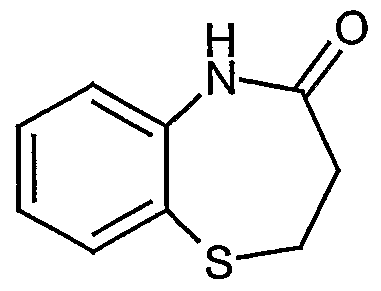
und anstelle von FeCl3 250 ppm SbCl3 eingesetzt wurden. Bei 40°C wurden in 6 hand 250 ppm SbCl 3 were used instead of FeCl 3 . At 40 ° C in 6 h
95 mol% Chlor (bezogen auf m-Xylol) gleichmäßig schnell eingeleitet. Die gaschromatographische Analyse des Reaktionsgemisches ergab 6,87 % m-Xylol, 78,50 % 4-Chlor-l,3-dimethylbenzol, 13,34 % 2-Chlor-l,3-dimethylbenzol, 1,20 % dichlorierte m-Xylole und 0,09 % unbekannte Produkte, entsprechend einem Ver- hältnis von 4-Chlor-l,3-dimethylbenzol zu 2-Chlor-l,3-dimethylbenzol von 5,88:1.95 mol% chlorine (based on m-xylene) introduced uniformly quickly. Gas chromatographic analysis of the reaction mixture showed 6.87% m-xylene, 78.50% 4-chloro-l, 3-dimethylbenzene, 13.34% 2-chloro-l, 3-dimethylbenzene, 1.20% dichlorinated m-xylenes and 0.09% unknown products, corresponding to a ratio of 4-chloro-1,3-dimethylbenzene to 2-chloro-1,3-dimethylbenzene of 5.88: 1.
Beispiel 4Example 4
Das Verfahren des Beispiels 1 wurde wiederholt, wobei anstelle des dortigen Co- Katalysators 56 ppm des Co-Katalysators der Formel

eingesetzt wurden. Anschließend wurden bei 50°C 95 mol% Chlor (bezogen auf m- Xylol) in 5 h gleichmäßig schnell eingeleitet. Die gaschromatographische Analyse des Reaktionsgemisches ergab 7,75 % m-Xylol, 80,31 % 4-Chlor-l,3-dimethyl- benzol, 9,98 % 2-Chlor-l,3-dimethylbenzol, 1,86 % dichlorierte m-Xylole und 0,10 % unbekannte Produkte. Das Verhältnis von 4-Chlor-l,3-dimethylbenzol zu 2- Chlor-l,3-dimethylbenzol betrug somit 8,05:1.were used. 95 mol% of chlorine (based on m-xylene) were then introduced uniformly rapidly at 50 ° C. in 5 h. Gas chromatographic analysis of the reaction mixture showed 7.75% m-xylene, 80.31% 4-chloro-l, 3-dimethylbenzene, 9.98% 2-chloro-l, 3-dimethylbenzene, 1.86% dichlorinated m -Xylenes and 0.10% unknown products. The ratio of 4-chloro-1,3-dimethylbenzene to 2-chloro-1,3-dimethylbenzene was thus 8.05: 1.
Beispiel 5Example 5
Das Verfahren des Beispiels 1 wurde wiederholt, wobei anstelle des dortigen Co- Katalysators 41 ppm des Co-Katalysators der FormelThe procedure of Example 1 was repeated using 41 ppm of the cocatalyst of the formula instead of the cocatalyst there

eingesetzt wurden. Anschließend wurden bei 50°C 95 mol% Chlor (bezogen auf m- Xylol) in 5 h gleichmäßig schnell eingeleitet. Die gaschromatographische Analyse des Reaktionsgemisches ergab 5,82 % m-Xylol, 81,31 % 4-Chlor-l,3-dimethyl- benzol, 10,71 % 2-Chlor-l,3-dimethylbenzol, 2,04 % dichlorierte m-Xylole und 0,12 % unbekannte Produkte. Das Verhältnis von 4-Chlor-l,3-dimethylbenzol zu 2- Chlor-l,3-dimethylbenzol betrug somit 7,59:1. Beispiel 6were used. 95 mol% of chlorine (based on m-xylene) were then introduced uniformly rapidly at 50 ° C. in 5 h. Gas chromatographic analysis of the reaction mixture showed 5.82% m-xylene, 81.31% 4-chloro-l, 3-dimethylbenzene, 10.71% 2-chloro-l, 3-dimethylbenzene, 2.04% dichlorinated m -Xylenes and 0.12% unknown products. The ratio of 4-chloro-1,3-dimethylbenzene to 2-chloro-1,3-dimethylbenzene was thus 7.59: 1. Example 6
Das Verfahren des Beispiels 1 wurde wiederholt, wobei anstelle des dortigen Co- Katalysators 47 ppm des Co-Katalysators der FormelThe procedure of Example 1 was repeated, using 47 ppm of the cocatalyst of the formula instead of the cocatalyst there

eingesetzt wurden. Anschließend wurden bei 50°C 95 mol% Chlor (bezogen auf m- Xylol) in 5 h gleichmäßig schnell eingeleitet. Die gaschromatographische Analyse des Reaktionsgemisches ergab 7,37 % m-Xylol, 73,15 % 4-Chlor-l,3-dimethyl- benzol, 17,67 % 2-Chlor-l,3-dimethylbenzol, 1,40 % dichlorierte m-Xylole und 0,41 % unbekannte Produkte. Das Verhältnis von 4-Chlor-l,3-dimethylbenzol zu 2- Chlor-l,3-dimethylbenzol betrug somit 4,14:1.were used. 95 mol% of chlorine (based on m-xylene) were then introduced uniformly rapidly at 50 ° C. in 5 h. Gas chromatographic analysis of the reaction mixture showed 7.37% m-xylene, 73.15% 4-chloro-l, 3-dimethylbenzene, 17.67% 2-chloro-l, 3-dimethylbenzene, 1.40% dichlorinated m -Xylenes and 0.41% unknown products. The ratio of 4-chloro-1,3-dimethylbenzene to 2-chloro-1,3-dimethylbenzene was thus 4.14: 1.
Beispiel 7Example 7
Das Verfahren des Beispiels 1 wurde wiederholt, wobei anstelle des dortigen Co- Katalysators 40 ppm des Co-Katalysators der FormelThe procedure of Example 1 was repeated, using 40 ppm of the cocatalyst of the formula instead of the cocatalyst there

eingesetzt wurden. Anschließend wurden bei 50°C 95 mol% Chlor (bezogen auf m-were used. Then 95 mol% chlorine (based on m-
Xylol) in 5 h gleichmäßig schnell eingeleitet. Die gaschromatographische Analyse des Reaktionsgemisches ergab 5,39 % m-Xylol, 80,57 % 4-Chlor-l,3-dimethyl- benzol, 12,49 % 2-Chlor-l,3-dimethylbenzol, 1,48 % dichlorierte m-Xylole und 0,07 % unbekannte Produkte. Das Verhältnis von 4-Chlor-l,3-dimethylbenzol zu 2- Chlor-l,3-dimethylbenzol betrug somit 6,45:1.Xylene) introduced rapidly in 5 h. Gas chromatographic analysis of the reaction mixture showed 5.39% m-xylene, 80.57% 4-chloro-l, 3-dimethylbenzene, 12.49% 2-chloro-l, 3-dimethylbenzene, 1.48% dichlorinated m -Xylenes and 0.07% unknown products. The ratio of 4-chloro-1,3-dimethylbenzene to 2-chloro-1,3-dimethylbenzene was thus 6.45: 1.
Beispiel 8Example 8
Das Verfahren des Beispiels 1 wurde wiederholt, wobei anstelle des dortigen Co- Katalysators 42 ppm des Co-Katalysators der FormelThe procedure of Example 1 was repeated using 42 ppm of the cocatalyst of the formula instead of the cocatalyst there

eingesetzt wurden. Anschließend wurden bei 50°C 95 mol% Chlor (bezogen auf m- Xylol) in 5 h gleichmäßig schnell eingeleitet. Die gaschromatographische Analyse des Reaktionsgemisches ergab 7,32 % m-Xylol, 77,54 % 4-Chlor-l,3-dimethyl- benzol, 12,22 % 2-Chlor-l,3-dimethylbenzol, 2,75 % dichlorierte m-Xylole und 0,17 % unbekannte Produkte. Das Verhältnis von 4-Chlor-l,3-dimethylbenzol zu 2-were used. 95 mol% of chlorine (based on m-xylene) were then introduced uniformly rapidly at 50 ° C. in 5 h. Gas chromatographic analysis of the reaction mixture showed 7.32% m-xylene, 77.54% 4-chloro-l, 3-dimethylbenzene, 12.22% 2-chloro-l, 3-dimethylbenzene, 2.75% dichlorinated m -Xylenes and 0.17% unknown products. The ratio of 4-chloro-1,3-dimethylbenzene to 2-
Chlor-l,3-dimethylbenzol betrug somit 6,35:1.Chloro-1,3-dimethylbenzene was thus 6.35: 1.
Beispiel 9Example 9
Das Verfahren des Beispiels 1 wurde wiederholt, wobei anstelle des dortigen Co-The procedure of Example 1 was repeated, using instead of the Co-
Katalysators 42 ppm des Co-Katalysators der FormelCatalyst 42 ppm of the co-catalyst of the formula

Chlor-l,3-dimethylbenzol betrug somit 4,44:1.Chloro-1,3-dimethylbenzene was thus 4.44: 1.
Beispiel 10Example 10
Das Verfahren des Beispiels 1 wurde wiederholt, wobei anstelle des dortigen Co-The procedure of Example 1 was repeated, using instead of the Co-
Katalysators 60 ppm des Co-Katalysators der FormelCatalyst 60 ppm of the co-catalyst of the formula

eingesetzt wurden. Anschließend wurden bei 50°C 95 mol% Chlor (bezogen auf m-were used. Then 95 mol% chlorine (based on m-
Xylol) in 5 h gleichmäßig schnell eingeleitet. Die gaschromatographische Analyse des Reaktionsgemisches ergab 6,06 % m-Xylol, 77,59 % 4-Chlor-l,3-dimethyl- benzol, 14,97 % 2-Chlor-l,3-dimethylbenzol, 1,13 % dichlorierte m-Xylole und 0,25 % unbekannte Produkte. Das Verhältnis von 4-Chlor-l,3-dimethylbenzol zu 2- Chlor-l,3-dimethylbenzol betrug somit 5,18:1. Xylene) introduced rapidly in 5 h. Gas chromatographic analysis of the reaction mixture showed 6.06% m-xylene, 77.59% 4-chloro-l, 3-dimethylbenzene, 14.97% 2-chloro-l, 3-dimethylbenzene, 1.13% dichlorinated m -Xylenes and 0.25% unknown products. The ratio of 4-chloro-1,3-dimethylbenzene to 2-chloro-1,3-dimethylbenzene was thus 5.18: 1.
Claims


Priority Applications (1)
| Application Number | Priority Date | Filing Date | Title |
|---|---|---|---|
| AU2001278519A AU2001278519A1 (en) | 2000-08-14 | 2001-08-01 | Method for nuclear chlorination of meta-xylol |
Applications Claiming Priority (2)
| Application Number | Priority Date | Filing Date | Title |
|---|---|---|---|
| DE10039717.4 | 2000-08-14 | ||
| DE10039717A DE10039717A1 (en) | 2000-08-14 | 2000-08-14 | Ring chlorination of m-xylene to intermediates for agricultural and pharmaceutical agents and polymer precursors in presence of Friedel-Crafts catalyst uses benzothiazepine or benzothiazocine compound as co-catalyst |
Publications (1)
| Publication Number | Publication Date |
|---|---|
| WO2002014246A1 true WO2002014246A1 (en) | 2002-02-21 |
Family
ID=7652404
Family Applications (1)
| Application Number | Title | Priority Date | Filing Date |
|---|---|---|---|
| PCT/EP2001/008891 Ceased WO2002014246A1 (en) | 2000-08-14 | 2001-08-01 | Method for nuclear chlorination of meta-xylol |
Country Status (4)
| Country | Link |
|---|---|
| US (1) | US20020103404A1 (en) |
| AU (1) | AU2001278519A1 (en) |
| DE (1) | DE10039717A1 (en) |
| WO (1) | WO2002014246A1 (en) |
Cited By (3)
| Publication number | Priority date | Publication date | Assignee | Title |
|---|---|---|---|---|
| US7393652B2 (en) | 2000-05-10 | 2008-07-01 | The Trustees Of Columbia University In The City Of New York | Methods for identifying a chemical compound that directly enhances binding of FKBP12.6 to PKA-phosphorylated type 2 ryanodine receptor (RyR2) |
| US7544678B2 (en) | 2002-11-05 | 2009-06-09 | The Trustees Of Columbia University In The City Of New York | Anti-arrythmic and heart failure drugs that target the leak in the ryanodine receptor (RyR2) |
| US8710045B2 (en) | 2004-01-22 | 2014-04-29 | The Trustees Of Columbia University In The City Of New York | Agents for preventing and treating disorders involving modulation of the ryanodine receptors |
Families Citing this family (2)
| Publication number | Priority date | Publication date | Assignee | Title |
|---|---|---|---|---|
| CN110372526A (en) * | 2019-07-30 | 2019-10-25 | 江苏超跃化学有限公司 | A kind of preparation method of 3- methyl-2-amino benzoic acid |
| CN112194554A (en) * | 2020-11-05 | 2021-01-08 | 湖北山水化工有限公司 | Preparation process and production process system of (o) p-chlorotoluene |
Citations (6)
| Publication number | Priority date | Publication date | Assignee | Title |
|---|---|---|---|---|
| US4190609A (en) * | 1976-10-04 | 1980-02-26 | Hooker Chemicals & Plastics Corp. | Process for the directed chlorination of xylenes |
| EP0292824A1 (en) * | 1987-05-28 | 1988-11-30 | Bayer Ag | Process for the nuclear chlorination of aromatic hydrocarbons |
| EP0324181A1 (en) * | 1988-01-09 | 1989-07-19 | Bayer Ag | Process for the preparation of benzothiazepinone derivatives |
| EP0340581A2 (en) * | 1988-05-06 | 1989-11-08 | Bayer Ag | Process for the chlorination in the nucleus of aromatic hydrocarbons |
| EP0368063A1 (en) * | 1988-11-05 | 1990-05-16 | Bayer Ag | Process for the chlorination in the nucleus of aromatic hydrocarbons |
| EP0442115A1 (en) * | 1990-02-16 | 1991-08-21 | Bayer Ag | Process for nucleus-chlorination of aromatic hydrocarbons |
-
2000
- 2000-08-14 DE DE10039717A patent/DE10039717A1/en not_active Withdrawn
-
2001
- 2001-08-01 AU AU2001278519A patent/AU2001278519A1/en not_active Abandoned
- 2001-08-01 WO PCT/EP2001/008891 patent/WO2002014246A1/en not_active Ceased
- 2001-08-13 US US09/928,540 patent/US20020103404A1/en not_active Abandoned
Patent Citations (6)
| Publication number | Priority date | Publication date | Assignee | Title |
|---|---|---|---|---|
| US4190609A (en) * | 1976-10-04 | 1980-02-26 | Hooker Chemicals & Plastics Corp. | Process for the directed chlorination of xylenes |
| EP0292824A1 (en) * | 1987-05-28 | 1988-11-30 | Bayer Ag | Process for the nuclear chlorination of aromatic hydrocarbons |
| EP0324181A1 (en) * | 1988-01-09 | 1989-07-19 | Bayer Ag | Process for the preparation of benzothiazepinone derivatives |
| EP0340581A2 (en) * | 1988-05-06 | 1989-11-08 | Bayer Ag | Process for the chlorination in the nucleus of aromatic hydrocarbons |
| EP0368063A1 (en) * | 1988-11-05 | 1990-05-16 | Bayer Ag | Process for the chlorination in the nucleus of aromatic hydrocarbons |
| EP0442115A1 (en) * | 1990-02-16 | 1991-08-21 | Bayer Ag | Process for nucleus-chlorination of aromatic hydrocarbons |
Cited By (3)
| Publication number | Priority date | Publication date | Assignee | Title |
|---|---|---|---|---|
| US7393652B2 (en) | 2000-05-10 | 2008-07-01 | The Trustees Of Columbia University In The City Of New York | Methods for identifying a chemical compound that directly enhances binding of FKBP12.6 to PKA-phosphorylated type 2 ryanodine receptor (RyR2) |
| US7544678B2 (en) | 2002-11-05 | 2009-06-09 | The Trustees Of Columbia University In The City Of New York | Anti-arrythmic and heart failure drugs that target the leak in the ryanodine receptor (RyR2) |
| US8710045B2 (en) | 2004-01-22 | 2014-04-29 | The Trustees Of Columbia University In The City Of New York | Agents for preventing and treating disorders involving modulation of the ryanodine receptors |
Also Published As
| Publication number | Publication date |
|---|---|
| DE10039717A1 (en) | 2002-02-28 |
| US20020103404A1 (en) | 2002-08-01 |
| AU2001278519A1 (en) | 2002-02-25 |
Similar Documents
| Publication | Publication Date | Title |
|---|---|---|
| EP0368063B1 (en) | Process for the chlorination in the nucleus of aromatic hydrocarbons | |
| EP0958052B1 (en) | Amidophosphonium-salt-containing catalyst for halogen-fluorine exchange reactions | |
| EP0340581B1 (en) | Process for the chlorination in the nucleus of aromatic hydrocarbons | |
| WO1998005610A2 (en) | Process for preparing fluorine-containing compounds | |
| DE2649112C3 (en) | Process for the preparation of p-chloroxylenols by chlorinating xylenols | |
| DE3023437C2 (en) | ||
| DE3025475C2 (en) | Process for the production of aromatic dialdehydes | |
| EP0292824B1 (en) | Process for the nuclear chlorination of aromatic hydrocarbons | |
| EP1311465A1 (en) | Method for nuclear chlorination of ortho-xylol | |
| DE2634340A1 (en) | METHOD OF DIRECT CHLORINATION OF ALKYLBENZENE | |
| WO2002014246A1 (en) | Method for nuclear chlorination of meta-xylol | |
| EP0691334B1 (en) | Process for the preparation of 2,5-dihydrofuran | |
| EP0124002B1 (en) | Process for the preparation of aromatic compounds containing perfluorinated side chains linked by a heteroatom | |
| EP0442115B1 (en) | Process for nucleus-chlorination of aromatic hydrocarbons | |
| DE4445548A1 (en) | Process for the preparation of 3-fluoro-4,6-dichlorotoluene | |
| EP0945416B1 (en) | Process for the preparation of 2,4-dichloro-3,5-dimethylfluorobenzene | |
| DE2549095C3 (en) | Process for the preparation of xylenes fluorinated and chlorinated in the side chains | |
| EP0657407B1 (en) | Process for the preparation of 3-fluoro-4,6-dichlorotoluene | |
| EP0019789B1 (en) | Process for the preparation of 1,3,5-trichlorobenzene | |
| EP1398304B1 (en) | Process for the nuclear chlorination of ortho-xylene | |
| EP0781745B1 (en) | Catalytic mixture based on partially fluorinated titane and zinc halogenides and their application in the preparation of fluorinated organic compounds | |
| DE19940861C1 (en) | Process for the preparation of 2-chloro-4-nitroalkylbenzene | |
| EP0347692B1 (en) | Process for preparing fluor-substituted benzaldehydes | |
| DE3344870C2 (en) | ||
| DE2739621C2 (en) | Process for the preparation of 1,1,1-trifluoro-2-chloroethane |
Legal Events
| Date | Code | Title | Description |
|---|---|---|---|
| AK | Designated states |
Kind code of ref document: A1 Designated state(s): AE AG AL AM AT AU AZ BA BB BG BR BY BZ CA CH CN CO CR CU CZ DE DK DM DZ EC EE ES FI GB GD GE GH GM HR HU ID IL IN IS JP KE KG KP KR KZ LC LK LR LS LT LU LV MA MD MG MK MN MW MX MZ NO NZ PL PT RO RU SD SE SG SI SK SL TJ TM TR TT TZ UA UG US UZ VN YU ZA ZW |
|
| AL | Designated countries for regional patents |
Kind code of ref document: A1 Designated state(s): GH GM KE LS MW MZ SD SL SZ TZ UG ZW AM AZ BY KG KZ MD RU TJ TM AT BE CH CY DE DK ES FI FR GB GR IE IT LU MC NL PT SE TR BF BJ CF CG CI CM GA GN GQ GW ML MR NE SN TD TG |
|
| 121 | Ep: the epo has been informed by wipo that ep was designated in this application | ||
| DFPE | Request for preliminary examination filed prior to expiration of 19th month from priority date (pct application filed before 20040101) | ||
| REG | Reference to national code |
Ref country code: DE Ref legal event code: 8642 |
|
| 122 | Ep: pct application non-entry in european phase | ||
| NENP | Non-entry into the national phase |
Ref country code: JP |