WO2006126609A1 - 軟質ポリウレタンフォームおよびその製造方法、該軟質ポリウレタンフォームを用いた自動車用シート - Google Patents
軟質ポリウレタンフォームおよびその製造方法、該軟質ポリウレタンフォームを用いた自動車用シート Download PDFInfo
- Publication number
- WO2006126609A1 WO2006126609A1 PCT/JP2006/310393 JP2006310393W WO2006126609A1 WO 2006126609 A1 WO2006126609 A1 WO 2006126609A1 JP 2006310393 W JP2006310393 W JP 2006310393W WO 2006126609 A1 WO2006126609 A1 WO 2006126609A1
- Authority
- WO
- WIPO (PCT)
- Prior art keywords
- polyurethane foam
- flexible polyurethane
- deflection
- alkyl group
- amino
- Prior art date
- Legal status (The legal status is an assumption and is not a legal conclusion. Google has not performed a legal analysis and makes no representation as to the accuracy of the status listed.)
- Ceased
Links
Classifications
-
- C—CHEMISTRY; METALLURGY
- C08—ORGANIC MACROMOLECULAR COMPOUNDS; THEIR PREPARATION OR CHEMICAL WORKING-UP; COMPOSITIONS BASED THEREON
- C08G—MACROMOLECULAR COMPOUNDS OBTAINED OTHERWISE THAN BY REACTIONS ONLY INVOLVING UNSATURATED CARBON-TO-CARBON BONDS
- C08G18/00—Polymeric products of isocyanates or isothiocyanates
- C08G18/06—Polymeric products of isocyanates or isothiocyanates with compounds having active hydrogen
- C08G18/28—Polymeric products of isocyanates or isothiocyanates with compounds having active hydrogen characterised by the compounds used containing active hydrogen
- C08G18/30—Low-molecular-weight compounds
- C08G18/38—Low-molecular-weight compounds having heteroatoms other than oxygen
-
- C—CHEMISTRY; METALLURGY
- C08—ORGANIC MACROMOLECULAR COMPOUNDS; THEIR PREPARATION OR CHEMICAL WORKING-UP; COMPOSITIONS BASED THEREON
- C08G—MACROMOLECULAR COMPOUNDS OBTAINED OTHERWISE THAN BY REACTIONS ONLY INVOLVING UNSATURATED CARBON-TO-CARBON BONDS
- C08G18/00—Polymeric products of isocyanates or isothiocyanates
- C08G18/06—Polymeric products of isocyanates or isothiocyanates with compounds having active hydrogen
- C08G18/28—Polymeric products of isocyanates or isothiocyanates with compounds having active hydrogen characterised by the compounds used containing active hydrogen
- C08G18/30—Low-molecular-weight compounds
- C08G18/32—Polyhydroxy compounds; Polyamines; Hydroxyamines
- C08G18/3203—Polyhydroxy compounds
-
- C—CHEMISTRY; METALLURGY
- C08—ORGANIC MACROMOLECULAR COMPOUNDS; THEIR PREPARATION OR CHEMICAL WORKING-UP; COMPOSITIONS BASED THEREON
- C08G—MACROMOLECULAR COMPOUNDS OBTAINED OTHERWISE THAN BY REACTIONS ONLY INVOLVING UNSATURATED CARBON-TO-CARBON BONDS
- C08G18/00—Polymeric products of isocyanates or isothiocyanates
- C08G18/06—Polymeric products of isocyanates or isothiocyanates with compounds having active hydrogen
- C08G18/28—Polymeric products of isocyanates or isothiocyanates with compounds having active hydrogen characterised by the compounds used containing active hydrogen
- C08G18/30—Low-molecular-weight compounds
- C08G18/32—Polyhydroxy compounds; Polyamines; Hydroxyamines
- C08G18/3271—Hydroxyamines
- C08G18/3275—Hydroxyamines containing two hydroxy groups
-
- C—CHEMISTRY; METALLURGY
- C08—ORGANIC MACROMOLECULAR COMPOUNDS; THEIR PREPARATION OR CHEMICAL WORKING-UP; COMPOSITIONS BASED THEREON
- C08G—MACROMOLECULAR COMPOUNDS OBTAINED OTHERWISE THAN BY REACTIONS ONLY INVOLVING UNSATURATED CARBON-TO-CARBON BONDS
- C08G18/00—Polymeric products of isocyanates or isothiocyanates
- C08G18/06—Polymeric products of isocyanates or isothiocyanates with compounds having active hydrogen
- C08G18/28—Polymeric products of isocyanates or isothiocyanates with compounds having active hydrogen characterised by the compounds used containing active hydrogen
- C08G18/40—High-molecular-weight compounds
- C08G18/4009—Two or more macromolecular compounds not provided for in one single group of groups C08G18/42 - C08G18/64
- C08G18/4072—Mixtures of compounds of group C08G18/63 with other macromolecular compounds
-
- C—CHEMISTRY; METALLURGY
- C08—ORGANIC MACROMOLECULAR COMPOUNDS; THEIR PREPARATION OR CHEMICAL WORKING-UP; COMPOSITIONS BASED THEREON
- C08G—MACROMOLECULAR COMPOUNDS OBTAINED OTHERWISE THAN BY REACTIONS ONLY INVOLVING UNSATURATED CARBON-TO-CARBON BONDS
- C08G18/00—Polymeric products of isocyanates or isothiocyanates
- C08G18/06—Polymeric products of isocyanates or isothiocyanates with compounds having active hydrogen
- C08G18/28—Polymeric products of isocyanates or isothiocyanates with compounds having active hydrogen characterised by the compounds used containing active hydrogen
- C08G18/40—High-molecular-weight compounds
- C08G18/48—Polyethers
- C08G18/4866—Polyethers having a low unsaturation value
-
- C—CHEMISTRY; METALLURGY
- C08—ORGANIC MACROMOLECULAR COMPOUNDS; THEIR PREPARATION OR CHEMICAL WORKING-UP; COMPOSITIONS BASED THEREON
- C08G—MACROMOLECULAR COMPOUNDS OBTAINED OTHERWISE THAN BY REACTIONS ONLY INVOLVING UNSATURATED CARBON-TO-CARBON BONDS
- C08G18/00—Polymeric products of isocyanates or isothiocyanates
- C08G18/06—Polymeric products of isocyanates or isothiocyanates with compounds having active hydrogen
- C08G18/28—Polymeric products of isocyanates or isothiocyanates with compounds having active hydrogen characterised by the compounds used containing active hydrogen
- C08G18/40—High-molecular-weight compounds
- C08G18/61—Polysiloxanes
-
- C—CHEMISTRY; METALLURGY
- C08—ORGANIC MACROMOLECULAR COMPOUNDS; THEIR PREPARATION OR CHEMICAL WORKING-UP; COMPOSITIONS BASED THEREON
- C08G—MACROMOLECULAR COMPOUNDS OBTAINED OTHERWISE THAN BY REACTIONS ONLY INVOLVING UNSATURATED CARBON-TO-CARBON BONDS
- C08G18/00—Polymeric products of isocyanates or isothiocyanates
- C08G18/06—Polymeric products of isocyanates or isothiocyanates with compounds having active hydrogen
- C08G18/28—Polymeric products of isocyanates or isothiocyanates with compounds having active hydrogen characterised by the compounds used containing active hydrogen
- C08G18/40—High-molecular-weight compounds
- C08G18/63—Block or graft polymers obtained by polymerising compounds having carbon-to-carbon double bonds on to polymers
- C08G18/632—Block or graft polymers obtained by polymerising compounds having carbon-to-carbon double bonds on to polymers onto polyethers
-
- C—CHEMISTRY; METALLURGY
- C08—ORGANIC MACROMOLECULAR COMPOUNDS; THEIR PREPARATION OR CHEMICAL WORKING-UP; COMPOSITIONS BASED THEREON
- C08G—MACROMOLECULAR COMPOUNDS OBTAINED OTHERWISE THAN BY REACTIONS ONLY INVOLVING UNSATURATED CARBON-TO-CARBON BONDS
- C08G18/00—Polymeric products of isocyanates or isothiocyanates
- C08G18/06—Polymeric products of isocyanates or isothiocyanates with compounds having active hydrogen
- C08G18/70—Polymeric products of isocyanates or isothiocyanates with compounds having active hydrogen characterised by the isocyanates or isothiocyanates used
- C08G18/72—Polyisocyanates or polyisothiocyanates
- C08G18/74—Polyisocyanates or polyisothiocyanates cyclic
- C08G18/76—Polyisocyanates or polyisothiocyanates cyclic aromatic
- C08G18/7607—Compounds of C08G18/7614 and of C08G18/7657
-
- C—CHEMISTRY; METALLURGY
- C08—ORGANIC MACROMOLECULAR COMPOUNDS; THEIR PREPARATION OR CHEMICAL WORKING-UP; COMPOSITIONS BASED THEREON
- C08G—MACROMOLECULAR COMPOUNDS OBTAINED OTHERWISE THAN BY REACTIONS ONLY INVOLVING UNSATURATED CARBON-TO-CARBON BONDS
- C08G18/00—Polymeric products of isocyanates or isothiocyanates
- C08G18/06—Polymeric products of isocyanates or isothiocyanates with compounds having active hydrogen
- C08G18/82—Post-polymerisation treatment
-
- C—CHEMISTRY; METALLURGY
- C08—ORGANIC MACROMOLECULAR COMPOUNDS; THEIR PREPARATION OR CHEMICAL WORKING-UP; COMPOSITIONS BASED THEREON
- C08J—WORKING-UP; GENERAL PROCESSES OF COMPOUNDING; AFTER-TREATMENT NOT COVERED BY SUBCLASSES C08B, C08C, C08F, C08G or C08H
- C08J9/00—Working-up of macromolecular substances to porous or cellular articles or materials; After-treatment thereof
- C08J9/22—After-treatment of expandable particles; Forming foamed products
-
- C—CHEMISTRY; METALLURGY
- C08—ORGANIC MACROMOLECULAR COMPOUNDS; THEIR PREPARATION OR CHEMICAL WORKING-UP; COMPOSITIONS BASED THEREON
- C08G—MACROMOLECULAR COMPOUNDS OBTAINED OTHERWISE THAN BY REACTIONS ONLY INVOLVING UNSATURATED CARBON-TO-CARBON BONDS
- C08G2110/00—Foam properties
- C08G2110/0008—Foam properties flexible
-
- C—CHEMISTRY; METALLURGY
- C08—ORGANIC MACROMOLECULAR COMPOUNDS; THEIR PREPARATION OR CHEMICAL WORKING-UP; COMPOSITIONS BASED THEREON
- C08G—MACROMOLECULAR COMPOUNDS OBTAINED OTHERWISE THAN BY REACTIONS ONLY INVOLVING UNSATURATED CARBON-TO-CARBON BONDS
- C08G2110/00—Foam properties
- C08G2110/0041—Foam properties having specified density
- C08G2110/005—< 50kg/m3
-
- C—CHEMISTRY; METALLURGY
- C08—ORGANIC MACROMOLECULAR COMPOUNDS; THEIR PREPARATION OR CHEMICAL WORKING-UP; COMPOSITIONS BASED THEREON
- C08G—MACROMOLECULAR COMPOUNDS OBTAINED OTHERWISE THAN BY REACTIONS ONLY INVOLVING UNSATURATED CARBON-TO-CARBON BONDS
- C08G2110/00—Foam properties
- C08G2110/0083—Foam properties prepared using water as the sole blowing agent
-
- C—CHEMISTRY; METALLURGY
- C08—ORGANIC MACROMOLECULAR COMPOUNDS; THEIR PREPARATION OR CHEMICAL WORKING-UP; COMPOSITIONS BASED THEREON
- C08G—MACROMOLECULAR COMPOUNDS OBTAINED OTHERWISE THAN BY REACTIONS ONLY INVOLVING UNSATURATED CARBON-TO-CARBON BONDS
- C08G2350/00—Acoustic or vibration damping material
Definitions
- the present invention relates to a novel flexible polyurethane foam suitable for urethane cushion materials having good ride comfort, particularly for automobile seats.
- a seat cushion a combination of a pad material made of a metal panel and a flexible polyurethane foam (hereinafter referred to as a flexible foam) has been widely used.
- a flexible foam a combination of a pad material made of a metal panel and a flexible polyurethane foam (hereinafter referred to as a flexible foam) has been widely used.
- a full-foam type automobile seats that have abolished metal panels by giving panel characteristics to flexible foams themselves, such as cost down and light weight.
- the full-form sheet is thick because it does not use a metal panel.
- the characteristics of the flexible foam have become a factor that greatly contributes to seat comfort and ride comfort.
- static and dynamic characteristics which are indicators of sitting comfort and riding comfort, have come to be regarded as important in the development of flexible foam.
- the deflection value obtained when applying a 500N load (Newton load) that also obtained the load-deflection curve force obtained by measurement using a pressure plate in accordance with JIS E7104 (2002 edition) may be used.
- This pressure plate has an oval shape with a major axis A: 300 mm, a minor axis B: 250 mm, and a thickness C: 35 mm or more, and is called a so-called Tekken type.
- polyoxyalkylene polyols generally used as raw materials for flexible foams use sodium Z potassium-based catalysts such as sodium hydroxide and potassium hydroxide, and initiators such as polyhydric alcohols. It is produced by ring-opening polymerization of an alkylene oxide such as propylene oxide.
- an unsaturated monool having an unsaturated bond hereinafter simply referred to as monool
- the amount of this monool generated is an increase in the molecular weight of the polyoxyalkylene polyol (decrease in the hydroxyl value). ) Increase with
- the load deflection characteristic is greatly influenced by the soft foam itself, so that when the load deflection amount is measured from above by the pressure plate,
- the pressure side is 500N to 900N, and the sheet has a relatively small deflection difference.
- Seats with a small difference in deflection have a feeling of bottoming, and the evaluation of ride comfort tends to be poor.
- full-form sheets have been handled by increasing the thickness of the foam in order to increase the deflection difference.
- Patent Document 3 As a technique for increasing the difference in deflection without increasing the thickness of the foam, the use of a fluorosurfactant having a perfluoroalkyl group structure has been proposed (Patent Document 3).
- Patent Document 3 proposes a fluorosurfactant having a perfluoroalkyl group structure.
- Patent Document 5 a technique for increasing the surface skin layer density of a foam using an existing antifoaming agent is known. This technique is a technique particularly applied to integral skin foam, and is greatly different from the contents of the present invention.
- Patent Document 6 This technology is related to polyurethane foam for abrasive sheets.
- the specific gravity of the body is 0.87, which is different from the content of the present invention.
- Patent Document 1 Japanese Patent Laid-Open No. 7-330843
- Patent Document 2 Japanese Patent Laid-Open No. 11-60676
- Patent Document 3 Japanese Patent Laid-Open No. 11-322875
- Patent Document 4 Japanese Patent Laid-Open No. 5-320304
- Patent Document 5 JP-A-6-87945
- Patent Document 6 Japanese Unexamined Patent Application Publication No. 2004-75700
- the present invention provides a novel flexible polyurethane foam having good vibration characteristics and excellent occupant posture retention.
- the present invention is the following invention which attempts to solve the above problems.
- a polymer polyoxyalkylene polyol or a polymer-dispersed polyol containing polymer fine particles in the polymer polyoxyalkylene polyol, and a polyisocyanate compound are used as a catalyst, a foaming agent, and a foam stabilizer.
- the amino-modified silicone (F) having a silicon atom and a nitrogen atom in the molecule is added to 0.0001 to 1 part by mass with respect to 100 parts by mass of the total active hydrogen compound.
- a flexible polyurethane foam wherein the amino equivalent of the above-mentioned amino-modified silicone (F) is 100 to 100,000 gZmol.
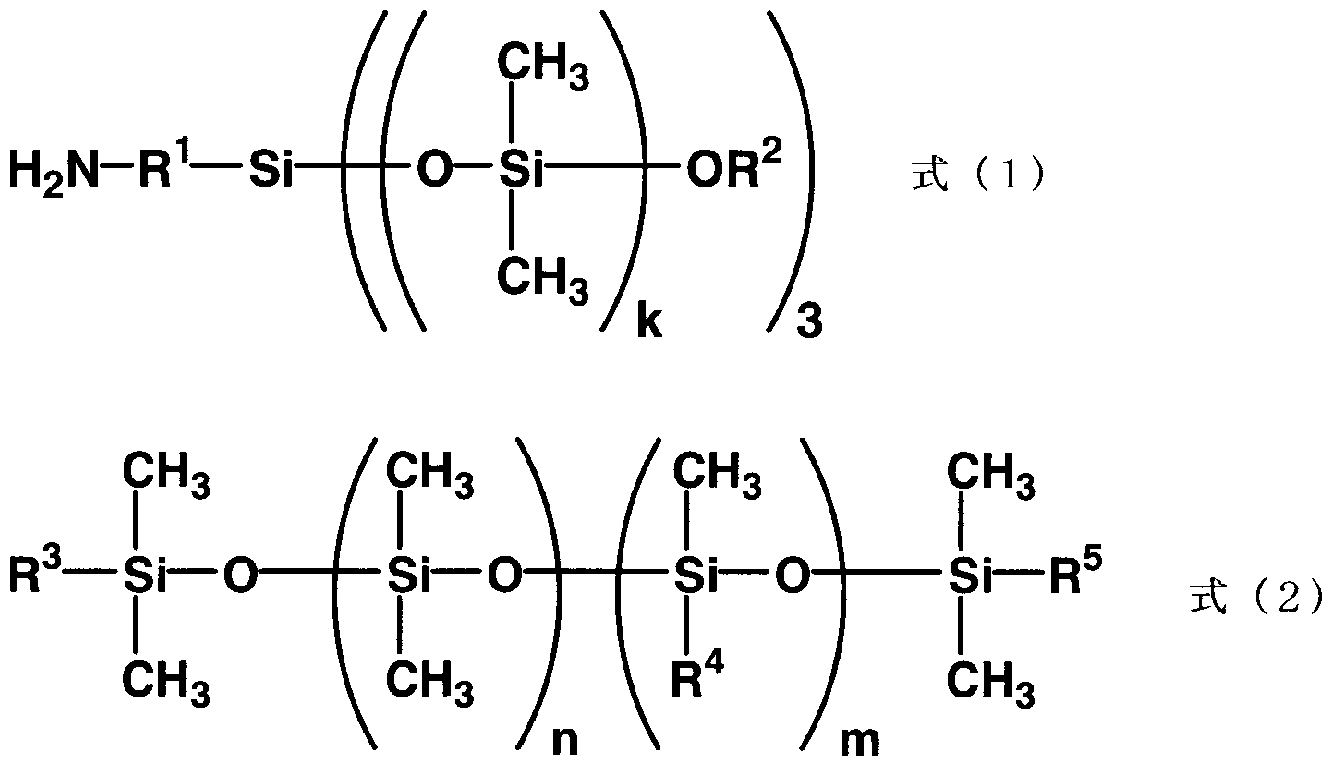
- a flexible polyurethane foam wherein the amino-modified silicone (F) is a compound represented by the following formula (1) or the following formula (2).
- R 1 is an alkylene group having 1 to 10 carbon atoms
- R 2 is an alkyl group having 1 to 10 carbon atoms
- k is an integer of 1 to 2000
- the 25% hardness (ILD) measured in accordance with JIS K6400 (1997 edition) is X (NZ314cm 2 ), and JIS E7104 (200 2 edition) )
- the value obtained by subtracting the deflection value on the 500N pressurization side from the deflection value on the 900N pressurization side obtained from the load-deflection curve measured using a pressure plate (Iken type) conforming to) (pressure deflection difference)
- the above flexible polyurethane foam characterized by satisfying the relational expression represented by the following formula (3) when X is Y (mm).
- a polymer, a polyoxyalkylene polyol, or a polymer-dispersed polyol containing polymer fine particles in the polymer polyoxyalkylene polyol, and a polyisocyanate compound are used as a catalyst, a foaming agent, and a foam stabilizer.
- Soft polyurethane foam that reacts in the presence
- 0.0001 to 1 part by mass of an amino-modified silicone (F) having a silicon atom and a nitrogen atom in the molecule is used with respect to 100 parts by mass of all active hydrogen compounds.
- a method for producing a flexible polyurethane foam wherein the amino equivalent of the above-mentioned amino-modified silicone (F) is 100 to 100,000 gZmol.
- a method for producing a flexible polyurethane foam wherein the amino-modified silicone (F) is a compound represented by the above formula (1) or the above formula (2).
- the polymer polyoxyalkylene polyol used in the production of the flexible polyurethane foam of the present invention is obtained by ring-opening polymerization of a cyclic ether in the presence of a polymerization catalyst using an active hydrogen compound having an average number of hydroxyl groups of 2 to 6 as an initiator.
- an active hydrogen compound having an average number of hydroxyl groups of 2 to 6 as an initiator.
- a molecular weight per hydroxyl group of 500 or more is preferred.
- Molecular weight per hydroxyl group ⁇ 1500 ⁇ 2500 power is particularly preferred! / ⁇ .
- the average number of hydroxyl groups of the polymer polyoxyalkylene polyol is the average number of hydroxyl groups of the initiator used.
- the polymer polyoxyalkylene polyol has a hydroxyl value measured according to JIS K1557 (1970 edition) and a molecular weight converted using the following formula.
- Examples of the polymerization catalyst include potassium compounds such as potassium hydroxide and potassium methoxide, alkali metal compounds such as cesium compounds such as cesium metal, cesium hydroxide, cesium carbonate, and cesium methoxide, or alkali metal water.
- Cationic polymerization catalysts such as acids and boron trifluoride, double metal cyanide complexes, phosphaze-um compounds and the like can be mentioned.
- use a complex metal cyanide complex to obtain a polymer having a large molecular weight that is preferred by a normal alkali catalyst such as potassium hydroxide, cesium compounds, and complex metal cyanide complexes. Especially preferred.
- the double metal cyanide complex catalyst for example, those described in JP-B-46-27250 can be used.
- Specific examples include a complex mainly composed of zinc hexanocobaltate, and its ether and Z or alcohol complexes are preferred.
- Ethers include ethylene glycol dimethyl ether (glyme), diethylene glycol dimethyl ether (diglyme), ethylene glycol mono-tert-butyl ether (METB), ethylene glycol mono-tert-pentyl ether (METP), diethylene glycol mono-tert-butyl ether (DETB), Tripropylene glycol monomethyl ether (TPME) and the like are preferable.
- Ethers include ethylene glycol dimethyl ether (glyme), diethylene glycol dimethyl ether (diglyme), ethylene glycol mono-tert-butyl ether (METB), ethylene glycol mono-tert-pentyl ether (METP), diethylene glycol mono-tert-butyl ether
- cyclic ethers that are preferably alkylene oxides having 2 or more carbon atoms include ethylene oxide, propylene oxide, 1,2-butylene oxide, 2,3-butylene oxide, and styrene oxide. Can be mentioned. A combination of ethylene oxide and at least one selected from propylene oxide, 1,2-butylene oxide, and 2,3-butylene oxide is particularly preferable.
- the high-molecular polyoxyalkylene polyol preferably has an oxyethylene group, and particularly preferably has an oxyethylene group at the terminal. Further, it may be a polyoxyalkylene polyol having an oxyethylene group inside.
- the polyoxyalkylene polyol having an oxyethylene group therein can be obtained, for example, by ring-opening polymerization of an alkylene oxide having 3 or more carbon atoms and ethylene oxide sequentially or mixed using an initiator.
- the polyoxyalkylene polyol having an oxyethylene group at the terminal can be obtained, for example, by ring-opening polymerization of an alkylene oxide having 3 or more carbon atoms using an initiator and then ring-opening polymerization of ethylene oxide. Further, it can be obtained by ring-opening polymerization of alkylene oxide having 3 or more carbon atoms and ethylene oxide sequentially or mixed using the above-described initiator, and then further ring-opening polymerization of ethylene oxide.
- the lower limit of the content of the terminal oxyethylene group in the polyoxyalkylene polyol is preferably 3% by mass, particularly preferably 5% by mass.
- the upper limit is preferably 25% by mass. If the terminal oxyethylene group content is less than 3% by mass, foam collapse may occur. Cheap. On the other hand, when the amount exceeds 25% by mass, the foam has more closed cells and the foam is cracked during the crushing process or shrinkage after the crushing process occurs.
- the content of all oxyethylene groups is preferably 30% by mass or less.
- Examples of the initiator include ethylene glycol, diethylene glycol, dipropylene glycol, neopentyl glycol, 1,4 butanediol, 1,6 hexanediol, glycerol, trimethylolpropane, pentaerythritol, diglycerol, dextrose, Examples thereof include sucrose, bisphenol A, and the like, or compounds obtained by adding a small amount of alkylene oxide thereto, and one or more of these are preferably used in combination. If the average hydroxyl group number is less than ⁇ , foam durability and ride comfort may be reduced. On the other hand, if the average number of hydroxyl groups is greater than 6, the produced flexible foam tends to be hard and mechanical properties such as elongation tend to deteriorate, and neither is preferred.
- the polyoxyalkylene polyol (a) is a polyoxyalkylene polyol having a degree of unsaturation of 0.07 meqZg or less among the high-molecular polyoxyalkylene polyols (hereinafter also referred to as polyol (a)).
- polyol (a) is a polyoxyalkylene polyol having a degree of unsaturation of 0.07 meqZg or less among the high-molecular polyoxyalkylene polyols (hereinafter also referred to as polyol (a)).
- 30 to 100 mass of high molecular weight polyoxyalkylene polyol. / 0 is preferably the polyol (a) 40-: L00% by mass is particularly preferred.
- the ratio of the polymer polyoxyalkylene polyol and the polyol (a) is the mass of the polyol excluding the polymer fine particles. Based on the calculation.
- the average molecular weight per hydroxyl group of the polyol (a) is preferably 500 or more, more preferably 1000 to 5000, and particularly preferably 1500 to 2500. If the average molecular weight per hydroxyl group is less than 1500, the durability and rideability of the polyurethane foam may be lowered. On the other hand, if it is greater than 2500, the viscosity of the polyol becomes high and workability is lowered.
- the polyol (a) preferably contains an oxyethylene group at the terminal, and the range thereof is as described for the high-molecular polyoxyalkylene polyol.
- Polyol (a) is that the content of O alkoxy propylene is 70 mass 0/0 or more polyols Is particularly preferably 75% by mass or more.
- the polyol (a) has a degree of unsaturation of not more than 0.07 meqZg, particularly preferably not more than 0.05 meqZg. When the degree of unsaturation of the polyol (a) is greater than 0.07 meqZg, the durability and ride comfort of the polyurethane foam may be lowered.
- a polymer-dispersed polyol containing polymer fine particles in a polymer polyoxyalkylene polyol may be used.
- the polymer-dispersed polyol contains fine polymer particles in a polyoxyalkylene polyol matrix, and the fine polymer particles are preferably contained in a dispersed state.
- the polymer fine particles addition polymerization polymers and condensation polymerization polymers are preferable.
- Examples of the addition polymerization polymer include homopolymers and copolymers of butyl monomers such as acrylonitrile, styrene, methacrylic acid ester, and acrylic acid ester.
- Examples of the polycondensation polymer include polyester, polyurea, polyurethane, melamine resin and the like. Due to the presence of these polymer fine particles, the hydroxyl value of the whole polymer-dispersed polyol is generally lowered from the hydroxyl value of the polyol of the matrix.
- the content of the polymer fine particles contained in the polymer polyoxyalkylene polyol is preferably 50% by mass or less. When the content of polymer fine particles is more than 50% by mass, the viscosity becomes high, which may be inconvenient.
- the polymer fine particles are preferably contained in the polymer polyoxyalkylene polyol in an amount of 1 to 35% by mass.
- amino-modified silicone (F) having a silicon atom and a nitrogen atom in the molecule is used.
- the amino-modified silicone (F) preferably has an amino equivalent of 100 to 100,000 gZmol.
- the amino equivalent can be determined by a general neutralization titration method. For example, it can be calculated using the neutralization titration method described in JIS K 7245 (2000 version).
- An amino equivalent force of SlOO to 100,000 gZmol is preferable because the above-mentioned flexible foam characteristics are readily manifested and the amino-modified silicone (F) can exist stably without being separated in the polyol used.
- the amino-modified silicone (F) is preferably a compound represented by the following formula (1) or the following formula (2).
- R 1 is an alkylene group having 1 to 10 carbon atoms
- R 2 is an alkyl group having 1 to 10 carbon atoms (provided that three R 2 may be the same or different from each other).
- K is an integer from 1 to 2 000 (where 3 k are the same or different from each other! /, May be! /, Etc.).
- R 1 is an alkylene group that may or may not have a branch. Further, the force 1 to 8 having 1 to 10 carbon atoms in R 1 is preferable, and 1 to 5 is more preferable.
- R 2 is an alkyl group with or without branching. Further, the force 1 to 8 having 1 to 10 carbon atoms in R 2 is preferred, and 1 to 5 is more preferred.
- k is an integer of 1 to 2000, but is preferably an integer of 1 to 1500, more preferably an integer of 1 to 1000. If k is in the range of 1 to 2000, foaming of the foam tends to be stable, which is preferable.
- m is an integer of 0 to 100; n is an integer of 1 to 2000; R 3 , R 4 and R 5 may be the same or different from each other.
- the group force is also selected (in the case of m force ⁇ , R 3 or R At least one of 5 is an alkyl group having a nitrogen atom, and m is 1 to: In the case of LOO, at least one of R 3 , R 5 or m R 4 is an alkyl group having a nitrogen atom. ).
- m R 4 s may be the same or different from each other.
- the chain consisting of m + n siloxane units may be a block copolymer chain or a random copolymer chain.
- n is preferably an integer of 1 to 1500, more preferably an integer of 1 to 1000. If n is in the range of 1 to 2000, foam foaming tends to be stable, which is preferable.
- R 3 , R 4 and R 5 may be the same or different from each other.
- An alkyl group, an alkoxy group, and an alkyl group having a nitrogen atom are described below. It is. However, if the m power ⁇ is an alkyl group having at least one nitrogen atom in R 3 or R 5, m is 1: For LOO even less of R 3, R 5 or the m R 4 One is an alkyl group having a nitrogen atom. This alkyl group may or may not have a branch. The number of carbon atoms of this alkyl group is preferably 1 to 8, and more preferably 1 to 5. The alkoxy group may or may not have a branch. The alkoxy group has 1 to 10 carbon atoms, preferably 1 to 8 and more preferably 1 to 5.
- the alkyl group having a nitrogen atom may have a branch! / Or may have a branch.
- the number of carbon atoms of this alkyl group having a nitrogen atom is preferably 1 to 8, and more preferably 1 to 5, which is 1 to 10.
- an alkyl group having a nitrogen atom is a group obtained by substituting a hydrogen atom of an alkyl group with a primary, secondary, or tertiary amine. When it is a secondary or tertiary amine, it will have additional carbon atoms (which may be further substituted with an amine), and these carbons are also included in the carbon number of the alkyl group.
- the number of nitrogen atoms in this alkyl group is preferably 1 to 3.
- Specific examples of the alkyl group having a nitrogen atom include an aminomethyl group, an aminoethyl group, an aminopropyl group, an aminohexyl group, an aminooctyl group, an N, N-dimethylaminoethyl group, and an N, N-jetylaminoethyl group.
- the amount of the amino-modified silicone (F) used is 0.000001 to 1 part by mass with respect to a total of 100 parts by mass of all active hydrogen compounds. When the amount is less than 0.00001 parts by mass, the above-mentioned soft form characteristics are not exhibited, which is not preferable. In addition, when the amount used is more than 1 part by mass, the foam stability during foaming is impaired, which is not preferable.
- the all active hydrogen compound means a compound containing an active hydrogen atom capable of reacting with an isocyanate group such as a polymer polyoxyalkylene polyol, a crosslinking agent, and water.
- the amount of the amino-modified silicone (F) used is preferably 0.0001 to 1 part by mass with respect to 100 parts by mass in total of all active hydrogen compounds.
- a foam stabilizer is used.
- the foam stabilizer it is particularly preferable to use a silicone compound.
- a silicone foam stabilizer usually used for flexible urethane foam can be used.
- the amount of the silicone-based foam stabilizer used is preferably 0.001 to 3 parts by mass with respect to 100 parts by mass in total of all active hydrogen compounds.
- the polyisocyanate compound used in the production of the polyurethane foam of the present invention includes tolylene diisocyanate (TDI), diphenylmethane diisocyanate (MDI), polymethylene polyphenol, which are preferable aromatic polyisocyanates. -Lepolyisocyanate (crude MDI), etc. These may be mixtures, especially preferred are mixtures of 85Z 15-75Z25 (mass ratio) of a mixture of TDI and Crude MDI.
- the amount of the polyisocyanate compound used is a value represented by 100 times the number of isocyanate groups relative to the total number of active hydrogens such as polyoxyalkylene polyol and water (usually this number is the isocyanate index). Is preferably 80 to 120, and particularly preferably 85 to 115.
- foaming agent in the present invention one or more foaming agents selected from a group force that also has water and inert gas power are preferably used.
- Inert gas includes air, nitrogen, carbon dioxide Etc. It is preferred to use only water.
- the amount of these blowing agents to be used is not particularly limited, and when only water is used, 10 parts by mass or less is preferable with respect to 100 parts by mass of the polymer polyoxyalkylene polyol. Particularly preferred.
- Other foaming agents can be used in an appropriate amount depending on the requirements such as the expansion ratio.
- a foam breaker may be used.
- the foam breaker a polyol having an average number of hydroxyl groups of 2 to 8, a hydroxyl value of 20 to 100 mgKOH / g, and an oxyethylene group content of 50 to 100% by mass is preferable.
- the amount of the foam breaker used is preferably from 0.01 to 10 parts by weight, particularly preferably from 0.1 to 10 parts by weight, based on 100 parts by weight of the high molecular weight polyoxyalkylene polyol.
- a crosslinking agent may be used.
- the crosslinking agent a polyol having an average number of hydroxyl groups of 2 to 8 and a hydroxyl value of 200 to 2000 mgKOHZg is preferable.
- the amount of the crosslinking agent used is preferably from 0.1 to 10 parts by weight, and more preferably from 0.5 to 10 parts by weight, based on 100 parts by weight of the high molecular weight polyoxyalkylene polyol.
- stimulates a urethanation reaction can be used.
- carboxylic acid metal salts such as ethyl hexyl hexanoate
- organometallic compounds such as dibutyltin dilaurate and stannasoctoate.
- additives such as emulsifiers, antioxidants, anti-aging agents such as ultraviolet absorbers, fillers such as carbonated potassium and barium sulfate, flame retardants, plasticizers, colorants, antifungal agents and the like. Auxiliaries can be used as needed.
- Manufacture of flexible polyurethane foam 'moulding can be done by either injecting the reactive mixture directly into the mold using a low-pressure foaming machine or high-pressure foaming machine (i.e. reaction injection molding process) or opening. Preferably, this is done by injecting the reactive mixture into the mold in the free state.
- High pressure foaming machines are preferred to mix two normal liquids, one of which is a polyisocyanate compound and the other is a mixture of all raw materials other than the polyisocyanate compound. It is done.
- a reactive mixture is formed and injected with a total of three components, including a catalyst, a foam breaker (usually not dispersed in some high molecular weight polyoxyalkylene polyols, dissolved and used), etc.
- a foam breaker usually not dispersed in some high molecular weight polyoxyalkylene polyols, dissolved and used
- the flexible polyurethane foam of the present invention is usually produced by a cold cure method, but can be produced by a method other than the cold cure method, for example, a method including a heating step.
- Core density of the flexible polyurethane foam of the present invention is to adapt the signaling seat cushion for an automobile preferred that a 30 ⁇ 70KgZm 3, the core density 35 ⁇ 60KgZm 3 is preferably especially. If less than the core density 30KgZm 3, durability, ride comfort is deteriorated. If the core density exceeds 70 kgZm 3 , durability and ride comfort are good, but when considering application to automobile seats, it is not preferable because it hinders fuel efficiency.
- the flexible polyurethane foam of the present invention has a hardness of 25% hardness (ILD) measured according to JIS K6400 (1997 edition) for a foam obtained by foaming to a thickness of 100 mm. It is preferable to be ⁇ 500 N / 314 cm 2 , more preferably 180 to 350 N / 314 cm 2 . If it is lower than 180 N / 314 cm 2 , the support feeling of the passenger is impaired, which is not preferable. On the other hand, if it exceeds 500NZ314cm 2, since the deflection of the sheet is reduced, undesirably the ride decrease.
- ILD 25% hardness
- the flexible polyurethane foam of the present invention has a 25% hardness (ILD) of X and JIS ⁇ 7104 (2002) measured in accordance with JIS K6400 (1997 edition) for a foam obtained by foaming to a thickness of 100 mm.
- ILD 25% hardness
- JIS K6400 (1997 edition) a pressure plate (Iken type) conforming to the year edition
- the deflection value on the 900N pressure side is obtained from the deflection value on the 900N pressure side obtained from the load deflection curve measured by applying a load at a constant speed of lOmmZs or less.
- the deflection value (pressure side deflection difference) Y (mm) satisfies the relational expression represented by the equation (3) by subtracting the deflection value.
- the flexible polyurethane foam of the present invention uses a pressure plate (Iken type) conforming to JIS E7104 (2002 edition) for the foam obtained by foaming to a thickness of 100 mm. 1
- a pressure plate Iken type conforming to JIS E7104 (2002 edition) for the foam obtained by foaming to a thickness of 100 mm. 1
- the deflection value on the 500N pressure side obtained from the load-deflection curve measured with the load at a constant speed of 1 OmmZs or less is 5.0 to 55.
- Omm add 500N from the 900N pressure side deflection value.
- the value obtained by subtracting the pressure side deflection (pressure side deflection difference) Y (mm) is preferably 22.5-33.Om m. 23. 5-33. Omm is particularly preferable.
- the deflection value on the 500N pressure side is 5.0 to 55. Omm
- the deflection value on the 500N pressure side from the deflection value on the 9OON pressure side when the foam thickness is 100mm is the bow IV
- deflection value (difference on the pressure side deflection) Y When (mm) is less than 22.5 mm, the feeling of bottoming of the sheet is slightly generated, which is not preferable. Also, when the deflection difference on the pressure side (mm) Y exceeds 33. Omm, the posture retention is deteriorated, which is preferable.
- the flexible polyurethane foam of the present invention uses a pressure plate (Iken type) conforming to JIS E7104 (2002 edition) for the foam obtained by foaming to a thickness of 100 mm.
- Deflection value of 500N calo pressure J obtained from a load-deflection curve measured by applying a load at a constant speed of OmmZs or less 8. 0 to 55.
- the value obtained by subtracting the deflection value on the pressure side of 500N from the force (pressure side deflection difference) Y (mm) is more preferably 22.5-33.0 mm 23. 5-33. Omm More preferred.
- Tables 2 to 4 show the formulation (unit: parts by mass) at the time of foam production and the foam physical properties, vibration characteristics and moldability of the obtained flexible polyurethane foam.
- Examples 1 to 7 are examples, and examples 8 to 10 are comparative examples.
- the amino-modified silicones (f 2 and f 3) were uniformly dispersed in polyoxypropylene polyol having an average number of hydroxyl groups of 3 and a hydroxyl value of 56 mg KOHZg (1 part by weight of amino-modified silicone and poly (polysiloxane)). 99 parts by mass of oxypropylene polyol was mixed and dispersed) and then mixed. (Note that the values shown in Tables 2 to 4 do not include polyoxypropylene polyol.) Polyisocyanate one-toy compound is added to the polyol-containing mixture so as to have the isocyanate index shown in Tables 2 to 4.
- the mixture was stirred and mixed with a high-speed mixer (3000 revolutions per minute) for 5 seconds, and immediately poured into a mold having inner and outer dimensions of 400 mm in length and width of 100 mm and heated to 60 ° C and sealed. After curing for 6 minutes, the flexible polyurethane foam was taken out and allowed to stand for 24 hours or more to measure various physical properties.
- a high-speed mixer 3000 revolutions per minute
- Foam physical properties include total density (unit: kgZm 3 ), core density (unit: kgZm 3 ), 25% hardness (ILD) (unit: NZ314 cm 2 ), core rebound resilience (unit:%;) , Tear strength (unit: NZcm), tensile strength (unit: kPa), elongation (unit:%), dry heat compression set (Dry
- the density of the core part and the rebound resilience of the core part were measured using a sample cut into dimensions of 100 mm in length and width and 50 mm in height, excluding the skin part from the center of the foam.
- the test method for obtaining the load-deflection curve is to use a pressure plate that is oval with a major axis A: 300 mm, minor axis B: 250 mm, and thickness C: 35 mm or more in accordance with JIS E7104 (2002 edition). 1. Measurement was performed by applying a load at a constant speed of 7 mmZs. The deflection value (mm) when a load of 500 N (Newton load) was applied was obtained from the deflection curve for the load.
- the pressure-side deflection difference Y (mm) was obtained from the pressure-side deflection value (mm) at a load of 900 N and the pressure-side deflection value at a load of 500 N (the latter was subtracted from the former and Y was taken as the value).
- 25% hardness (ILD) was X, and the value of y was calculated from the following formula (4).
- the resonance frequency (unit: Hz), resonance magnification (absolute displacement measurement), and 6 Hz transmission rate were evaluated.
- a steel plate (load: 490N) was used as the pressure plate, and the total amplitude of vibration was 5 mm.
- crushing property is an evaluation of foam connectivity.
- pressure was applied through the obtained flexible polyurethane foam through a roller to evaluate the load required to connect the foam cells.
- the foam has a lower cell foam rate, that is, the better the communication, the smaller the required load.
- Polyol al Polyoxypropyleneoxy having an average number of hydroxyl groups of 3, hydroxyl value of 33 mgKOHZg (molecular weight per hydroxyl group of 1700), unsaturation of 0.04 meqZg, and containing 16% by mass of polyoxyethylene groups at the ends Ethylene polyol.
- Polyol a2 Poly having an average number of hydroxyl groups of 3, hydroxyl value of 34 mgKOHZg (molecular weight per hydroxyl group is 1650), unsaturation of 0.07 meqZg, and containing 14.5% by mass of polyoxyethylene groups at the ends Oxypropyleneoxyethylene polyol.
- This polyoxyalkylene polyol was purified by subjecting ethylene oxide to lOOOOg ring-opening addition polymerization using a potassium hydroxide catalyst. This gives a hydroxyl value of 6 mgKOHZg, an unsaturation of 0.005 meqZg, and a terminal oxyethylene blocking group. The amount of the amount of 14 mass 0 Overall Okishiechiren group to obtain a 19 mass 0/0 polyoxypropylene O key sheet ethylene polyol.
- Polyol b 1 A polymer-dispersed polyol obtained by copolymerizing acrylonitrile and styrene in polyol a2 and having a fine polymer content of 35% by mass.
- Cross-linking agent cl diethanolamine.
- Catalyst dl Dipropylene glycol solution of triethylenediamine.
- Catalyst d2 Dipropylene glycol solution of bis-[(2-dimethylamino) ethyl] ether.
- Silicone foam stabilizer el Product name: Toray 'SZ— 1355 manufactured by Dowco Jung
- Silicone foam stabilizer e2 Trade name: Toray 'SZ— 1327 manufactured by Dowko Jung
- Silicone foam stabilizer e3 Product name: Toray 'SZ— 1325, manufactured by Dowko Jung
- Amino-modified silicone fl f 5 is shown in Table 1.
- R 2 R 3 R 4 kn and m are symbols in the formulas (1) and (2).
- Foaming agent g water
- Polyisocyanate h TDI (2, 4-tolylene diisocyanate / 2, 6-tolylene diisocyanate Aneto mixtures 80Z20 mass 0/0) and polymethylene polyphenylisocyanate Hue - 8 0Z20 wt% mixture of Le polyisobutyl Xia sulfonate, NCO group content of 44.8%.
- Product name Coronate 1021 manufactured by Nippon Polyurethane Industry Co., Ltd.
- Example 6 Polyol a 3 6 0 6 0 Polyol b 1 4 0 4 0 Crosslinker c 1 0. 5 0.5 Crosslinker c 2 3. 0 3. 0 Catalyst d 1 0. 4 5 0 4 5 Catalyst d 2 0. 0 7 0. 0 7 Silicone foam stabilizer e 2 ⁇
- Cross-linking agent c 2 3. 0 3. 0 3. 0
- Humid heat compression set 1 5. 3 ⁇ ⁇
- the flexible urethane foam of the present invention uses a specific amino-modified silicone, and the 900N-500N pressure side of the foam foamed to a thickness of 100 mm is used. The difference in deflection becomes large, and a foam with little bottoming feeling can be obtained.
- the contents shown in these examples are all excellent in vibration characteristics, resonance magnification, 6 Hz transmission rate, and good ride comfort.
- the flexible polyurethane foam of the present invention is used for cushions, seats and the like. In particular, it is suitable as a vehicle seat, and among them, it is suitable as an automobile seat.
- the contents of the specification, claims, drawings and abstract of Japanese Patent Application No. 2005-153106 filed on May 25, 2005 are hereby incorporated by reference. It is something that is incorporated.
Landscapes
- Chemical & Material Sciences (AREA)
- Health & Medical Sciences (AREA)
- Chemical Kinetics & Catalysis (AREA)
- Medicinal Chemistry (AREA)
- Polymers & Plastics (AREA)
- Organic Chemistry (AREA)
- Engineering & Computer Science (AREA)
- Materials Engineering (AREA)
- Polyurethanes Or Polyureas (AREA)
- Manufacture Of Porous Articles, And Recovery And Treatment Of Waste Products (AREA)
Abstract
Description


Claims

Priority Applications (4)
| Application Number | Priority Date | Filing Date | Title |
|---|---|---|---|
| EP06746822A EP1884530A4 (en) | 2005-05-25 | 2006-05-24 | POLYURETHANE FUEL, MANUFACTURING METHOD AND SURFACE IMPRESSION USING SUCH A POLYURETHANE FUEL FOR USE IN CARS |
| JP2007517873A JP5266757B2 (ja) | 2005-05-25 | 2006-05-24 | 軟質ポリウレタンフォームの製造方法 |
| CN2006800177895A CN101180338B (zh) | 2005-05-25 | 2006-05-24 | 软质聚氨酯泡沫塑料及其制造方法、利用该软质聚氨酯泡沫塑料的汽车用座垫 |
| US11/944,730 US7825166B2 (en) | 2005-05-25 | 2007-11-26 | Flexible polyurethane foam, process for its production, and seat for automobile using the flexible polyurethane foam |
Applications Claiming Priority (2)
| Application Number | Priority Date | Filing Date | Title |
|---|---|---|---|
| JP2005-153106 | 2005-05-25 | ||
| JP2005153106 | 2005-05-25 |
Related Child Applications (1)
| Application Number | Title | Priority Date | Filing Date |
|---|---|---|---|
| US11/944,730 Continuation US7825166B2 (en) | 2005-05-25 | 2007-11-26 | Flexible polyurethane foam, process for its production, and seat for automobile using the flexible polyurethane foam |
Publications (1)
| Publication Number | Publication Date |
|---|---|
| WO2006126609A1 true WO2006126609A1 (ja) | 2006-11-30 |
Family
ID=37452033
Family Applications (1)
| Application Number | Title | Priority Date | Filing Date |
|---|---|---|---|
| PCT/JP2006/310393 Ceased WO2006126609A1 (ja) | 2005-05-25 | 2006-05-24 | 軟質ポリウレタンフォームおよびその製造方法、該軟質ポリウレタンフォームを用いた自動車用シート |
Country Status (7)
| Country | Link |
|---|---|
| US (1) | US7825166B2 (ja) |
| EP (1) | EP1884530A4 (ja) |
| JP (1) | JP5266757B2 (ja) |
| KR (1) | KR20080018171A (ja) |
| CN (1) | CN101180338B (ja) |
| TW (1) | TW200743652A (ja) |
| WO (1) | WO2006126609A1 (ja) |
Cited By (5)
| Publication number | Priority date | Publication date | Assignee | Title |
|---|---|---|---|---|
| JP2010514909A (ja) * | 2006-12-29 | 2010-05-06 | ジョンソン コントロールズ テクノロジー カンパニー | ポリウレタンフォーム配合物、製品、および方法 |
| EP2158241A4 (en) * | 2007-06-11 | 2012-08-01 | Ndsu Res Foundation | ANCHORED POLYSILOXAN-MODIFIED POLYURETHANE COATINGS AND APPLICATIONS THEREOF |
| US20130109775A1 (en) * | 2011-11-01 | 2013-05-02 | Kia Motors Corporation | Polyurethane compositions for an automotive seat |
| JP2019038106A (ja) * | 2017-08-22 | 2019-03-14 | Dic株式会社 | 研磨パッド及びその製造方法 |
| JP2022552061A (ja) * | 2019-08-22 | 2022-12-15 | ダウ グローバル テクノロジーズ エルエルシー | ポリエーテル系水性ポリウレタン分散液およびそれを調製するための方法 |
Families Citing this family (30)
| Publication number | Priority date | Publication date | Assignee | Title |
|---|---|---|---|---|
| WO2005028535A1 (ja) * | 2003-09-19 | 2005-03-31 | Asahi Glass Company, Limited | 軟質ポリウレタンフォームおよびその製造方法 |
| TW200801060A (en) | 2006-02-28 | 2008-01-01 | Asahi Glass Co Ltd | Flexible polyurethane foam and process for producing the same |
| JP5239864B2 (ja) * | 2006-09-27 | 2013-07-17 | 旭硝子株式会社 | 軟質ポリウレタンフォームの製造方法 |
| KR20090082177A (ko) * | 2006-10-25 | 2009-07-29 | 아사히 가라스 가부시키가이샤 | 연질 폴리우레탄 폼의 제조 방법 |
| WO2008075725A1 (ja) * | 2006-12-19 | 2008-06-26 | Asahi Glass Company, Limited | 軟質ポリウレタンフォームの製造方法 |
| JP5303885B2 (ja) | 2007-09-18 | 2013-10-02 | 旭硝子株式会社 | 軟質ポリウレタンフォームの製造方法および軟質ポリウレタンフォーム |
| CN101809053B (zh) * | 2007-09-28 | 2012-09-26 | 旭硝子株式会社 | 软质聚氨酯泡沫及热压成形品的制造方法以及热压成形品 |
| JP5732845B2 (ja) * | 2010-12-22 | 2015-06-10 | 東ソー株式会社 | 軟質ポリウレタンフォーム製造用触媒組成物、及びそれを用いた軟質ポリウレタンフォームの製造法 |
| JP5732844B2 (ja) * | 2010-12-22 | 2015-06-10 | 東ソー株式会社 | 架橋剤組成物及びそれを用いた軟質ポリウレタンフォームの製造法 |
| CN102250305B (zh) * | 2011-06-01 | 2013-11-06 | 中蓝晨光化工研究设计院有限公司 | 一种疏水溶胀聚氨酯泡沫及其制备方法和应用 |
| US9758292B2 (en) | 2011-06-17 | 2017-09-12 | Berry Plastics Corporation | Insulated container |
| US9102461B2 (en) | 2011-06-17 | 2015-08-11 | Berry Plastics Corporation | Insulated sleeve for a cup |
| WO2012174568A2 (en) | 2011-06-17 | 2012-12-20 | Berry Plastics Corporation | Process for forming an insulated container having artwork |
| CN111690204A (zh) | 2011-08-31 | 2020-09-22 | 比瑞塑料公司 | 用于一种绝缘容器的聚合物材料 |
| BR112015002581A2 (pt) | 2012-08-07 | 2018-05-22 | Berry Plastics Corp | processo e máquina de formação de copos. |
| AU2013334155B2 (en) | 2012-10-26 | 2017-02-02 | Berry Plastics Corporation | Polymeric material for an insulated container |
| AR093944A1 (es) | 2012-12-14 | 2015-07-01 | Berry Plastics Corp | Troquelado para envase |
| AR093943A1 (es) | 2012-12-14 | 2015-07-01 | Berry Plastics Corp | Reborde de un envase termico |
| US9840049B2 (en) | 2012-12-14 | 2017-12-12 | Berry Plastics Corporation | Cellular polymeric material |
| US9957365B2 (en) | 2013-03-13 | 2018-05-01 | Berry Plastics Corporation | Cellular polymeric material |
| BR112015022750A2 (pt) | 2013-03-14 | 2017-07-18 | Berry Plastics Corp | recipiente |
| EP3033208A4 (en) | 2013-08-16 | 2017-07-05 | Berry Plastics Corp. | Polymeric material for an insulated container |
| HK1217347A1 (zh) | 2013-08-26 | 2017-01-06 | 比瑞塑料公司 | 用於容器的聚合物材料 |
| JP6484622B2 (ja) * | 2014-06-12 | 2019-03-13 | 株式会社ブリヂストン | 軟質ポリウレタンフォーム、及びシート用パッド |
| US9758655B2 (en) | 2014-09-18 | 2017-09-12 | Berry Plastics Corporation | Cellular polymeric material |
| WO2016118838A1 (en) | 2015-01-23 | 2016-07-28 | Berry Plastics Corporation | Polymeric material for an insulated container |
| US9937652B2 (en) | 2015-03-04 | 2018-04-10 | Berry Plastics Corporation | Polymeric material for container |
| US11091311B2 (en) | 2017-08-08 | 2021-08-17 | Berry Global, Inc. | Insulated container and method of making the same |
| TWI823144B (zh) * | 2021-09-14 | 2023-11-21 | 南亞塑膠工業股份有限公司 | 抗菌改質聚氨酯樹脂組成物 |
| CN116003801B (zh) * | 2022-07-28 | 2024-05-17 | 湖北兴瑞硅材料有限公司 | 一种三叉交联型氨基硅油及其制备方法 |
Citations (8)
| Publication number | Priority date | Publication date | Assignee | Title |
|---|---|---|---|---|
| JPS56151715A (en) * | 1980-03-28 | 1981-11-24 | Bayer Ag | Manufacture of impermeable molding of foamed polyurethane elastomer and its use as spring element |
| JPS57117524A (en) * | 1981-01-14 | 1982-07-22 | Sanyo Chem Ind Ltd | Preparation of polyurethane |
| JPS6035017A (ja) * | 1983-04-13 | 1985-02-22 | アイ・シー・アイ・アメリカス・インコーポレイテツド | 反応射出成形によって造形ポリマー成分を製造する方法に使用するための液体有機ポリイソシアネート組成物 |
| JPS636025A (ja) * | 1986-06-24 | 1988-01-12 | バイエル・アクチエンゲゼルシヤフト | ポリシロキサンイオノマの製造方法、ポリシロキサンイオノマおよび気泡ポリウレタンエラストマを製造するためのその使用 |
| JPH10218957A (ja) * | 1997-02-06 | 1998-08-18 | Nippon Unicar Co Ltd | 低密度高弾性ポリウレタンフォームの製造方法 |
| JPH11322875A (ja) * | 1998-05-15 | 1999-11-26 | Nhk Spring Co Ltd | ウレタンフォームとその製造方法 |
| JP2002187929A (ja) * | 2000-12-21 | 2002-07-05 | Bridgestone Corp | 弾性部材および画像形成装置 |
| WO2005052020A1 (ja) * | 2003-11-26 | 2005-06-09 | Asahi Glass Company, Limited | 軟質ポリウレタンフォーム、その製造方法、及びそれを用いた自動車用シート |
Family Cites Families (24)
| Publication number | Priority date | Publication date | Assignee | Title |
|---|---|---|---|---|
| US318651A (en) * | 1885-05-19 | Steam-muffler | ||
| US315702A (en) * | 1885-04-14 | Type-writing machine | ||
| US318710A (en) * | 1885-05-19 | Umbrella | ||
| US318712A (en) * | 1885-05-19 | Saw-set | ||
| US317141A (en) * | 1885-05-05 | Revolving drop-leaf table | ||
| GB1494930A (en) * | 1974-06-06 | 1977-12-14 | Bayer Ag | Process for the production of isocyanate-based polymers |
| US4016163A (en) * | 1975-06-30 | 1977-04-05 | Union Carbide Corporation | Morpholino-bearing polyalkylsiloxanes |
| US4350777A (en) * | 1980-03-28 | 1982-09-21 | Bayer Aktiengesellschaft | Impermeable molded articles of cellular polyurethane elastomers produced with organofunctional polysiloxane-derivatives and their use as spring elements |
| US5177116A (en) * | 1991-11-25 | 1993-01-05 | Basf Corporation | Flexible polyurethane foams with reduced dripping during burning |
| JP3279640B2 (ja) | 1992-05-26 | 2002-04-30 | 東洋ゴム工業株式会社 | 乗り心地の改良されたシートクッション用ポリウレタンフォームの製造方法 |
| JPH0687945A (ja) | 1992-07-08 | 1994-03-29 | Tokyo Seat Kk | 高密度表層付ウレタンフォーム成形品の製造方法 |
| JP3083235B2 (ja) | 1994-04-12 | 2000-09-04 | 三井化学株式会社 | ポリマーポリオール、その製造方法および軟質高弾性ポリウレタンフォームの製造方法 |
| US5605939A (en) * | 1996-01-26 | 1997-02-25 | Arco Chemical Technology, L.P. | Poly(oxypropylene/oxyethylene) random polyols useful in preparing flexible high resilience foam with reduced tendencies toward shrinkage and foam prepared therewith |
| JP3880699B2 (ja) | 1997-08-20 | 2007-02-14 | 三井化学ポリウレタン株式会社 | 軟質ポリウレタンフォームの製造方法 |
| KR100663682B1 (ko) * | 2000-04-14 | 2007-01-02 | 아사히 가라스 가부시키가이샤 | 연질 폴리우레탄 폼의 제조방법 |
| US6818674B2 (en) * | 2000-11-08 | 2004-11-16 | Bridgestone Corporation | Elastic member and image formation equipment |
| JP4122874B2 (ja) * | 2001-07-18 | 2008-07-23 | 旭硝子株式会社 | ポリオールおよびポリマー分散ポリオールの製造方法 |
| DE60215103T8 (de) * | 2001-11-29 | 2007-06-14 | Asahi Glass Co., Ltd. | Polyurethanweichschaum und Verfahren zu seiner Herstellung |
| EP1316573B1 (en) * | 2001-11-30 | 2007-07-18 | Asahi Glass Co., Ltd. | Flexible polyurethane foam and method for its production |
| AU2002357617A1 (en) * | 2001-12-21 | 2003-07-09 | Asahi Glass Company, Limited | Low-resilience flexible polyurethane foam and process for producing the same |
| JP4101584B2 (ja) | 2002-08-09 | 2008-06-18 | 東洋ゴム工業株式会社 | 研磨シート用ポリウレタン発泡体及びその製造方法、研磨パッド用研磨シート、並びに研磨パッド |
| WO2005028535A1 (ja) * | 2003-09-19 | 2005-03-31 | Asahi Glass Company, Limited | 軟質ポリウレタンフォームおよびその製造方法 |
| JP4910702B2 (ja) * | 2004-11-18 | 2012-04-04 | 旭硝子株式会社 | 軟質ポリウレタンフォームの製造方法 |
| CN101061155B (zh) * | 2004-11-24 | 2010-07-21 | 旭硝子株式会社 | 软质聚氨酯泡沫塑料、其制造方法以及汽车用座垫 |
-
2006
- 2006-05-24 JP JP2007517873A patent/JP5266757B2/ja not_active Expired - Fee Related
- 2006-05-24 WO PCT/JP2006/310393 patent/WO2006126609A1/ja not_active Ceased
- 2006-05-24 EP EP06746822A patent/EP1884530A4/en not_active Withdrawn
- 2006-05-24 CN CN2006800177895A patent/CN101180338B/zh not_active Expired - Fee Related
- 2006-05-24 KR KR1020077027400A patent/KR20080018171A/ko not_active Withdrawn
- 2006-05-25 TW TW095118556A patent/TW200743652A/zh unknown
-
2007
- 2007-11-26 US US11/944,730 patent/US7825166B2/en not_active Expired - Fee Related
Patent Citations (8)
| Publication number | Priority date | Publication date | Assignee | Title |
|---|---|---|---|---|
| JPS56151715A (en) * | 1980-03-28 | 1981-11-24 | Bayer Ag | Manufacture of impermeable molding of foamed polyurethane elastomer and its use as spring element |
| JPS57117524A (en) * | 1981-01-14 | 1982-07-22 | Sanyo Chem Ind Ltd | Preparation of polyurethane |
| JPS6035017A (ja) * | 1983-04-13 | 1985-02-22 | アイ・シー・アイ・アメリカス・インコーポレイテツド | 反応射出成形によって造形ポリマー成分を製造する方法に使用するための液体有機ポリイソシアネート組成物 |
| JPS636025A (ja) * | 1986-06-24 | 1988-01-12 | バイエル・アクチエンゲゼルシヤフト | ポリシロキサンイオノマの製造方法、ポリシロキサンイオノマおよび気泡ポリウレタンエラストマを製造するためのその使用 |
| JPH10218957A (ja) * | 1997-02-06 | 1998-08-18 | Nippon Unicar Co Ltd | 低密度高弾性ポリウレタンフォームの製造方法 |
| JPH11322875A (ja) * | 1998-05-15 | 1999-11-26 | Nhk Spring Co Ltd | ウレタンフォームとその製造方法 |
| JP2002187929A (ja) * | 2000-12-21 | 2002-07-05 | Bridgestone Corp | 弾性部材および画像形成装置 |
| WO2005052020A1 (ja) * | 2003-11-26 | 2005-06-09 | Asahi Glass Company, Limited | 軟質ポリウレタンフォーム、その製造方法、及びそれを用いた自動車用シート |
Non-Patent Citations (1)
| Title |
|---|
| See also references of EP1884530A4 * |
Cited By (9)
| Publication number | Priority date | Publication date | Assignee | Title |
|---|---|---|---|---|
| JP2010514909A (ja) * | 2006-12-29 | 2010-05-06 | ジョンソン コントロールズ テクノロジー カンパニー | ポリウレタンフォーム配合物、製品、および方法 |
| JP2014167115A (ja) * | 2006-12-29 | 2014-09-11 | Johnson Controls Technology Co | ポリウレタンフォーム配合物、製品、および方法 |
| EP2158241A4 (en) * | 2007-06-11 | 2012-08-01 | Ndsu Res Foundation | ANCHORED POLYSILOXAN-MODIFIED POLYURETHANE COATINGS AND APPLICATIONS THEREOF |
| US20130109775A1 (en) * | 2011-11-01 | 2013-05-02 | Kia Motors Corporation | Polyurethane compositions for an automotive seat |
| US8906976B2 (en) * | 2011-11-01 | 2014-12-09 | Hyundai Motor Company | Polyurethane compositions for an automotive seat |
| JP2019038106A (ja) * | 2017-08-22 | 2019-03-14 | Dic株式会社 | 研磨パッド及びその製造方法 |
| JP7135581B2 (ja) | 2017-08-22 | 2022-09-13 | Dic株式会社 | 研磨パッド及びその製造方法 |
| JP2022552061A (ja) * | 2019-08-22 | 2022-12-15 | ダウ グローバル テクノロジーズ エルエルシー | ポリエーテル系水性ポリウレタン分散液およびそれを調製するための方法 |
| JP7431318B2 (ja) | 2019-08-22 | 2024-02-14 | ダウ グローバル テクノロジーズ エルエルシー | ポリエーテル系水性ポリウレタン分散液およびそれを調製するための方法 |
Also Published As
| Publication number | Publication date |
|---|---|
| JP5266757B2 (ja) | 2013-08-21 |
| US7825166B2 (en) | 2010-11-02 |
| KR20080018171A (ko) | 2008-02-27 |
| US20080081847A1 (en) | 2008-04-03 |
| CN101180338B (zh) | 2011-05-04 |
| TW200743652A (en) | 2007-12-01 |
| JPWO2006126609A1 (ja) | 2008-12-25 |
| EP1884530A4 (en) | 2011-11-16 |
| EP1884530A1 (en) | 2008-02-06 |
| CN101180338A (zh) | 2008-05-14 |
Similar Documents
| Publication | Publication Date | Title |
|---|---|---|
| JP5266757B2 (ja) | 軟質ポリウレタンフォームの製造方法 | |
| US8324289B2 (en) | Flexible polyurethane foam, process for its production, and seat for automobile | |
| JP4910702B2 (ja) | 軟質ポリウレタンフォームの製造方法 | |
| KR100900175B1 (ko) | 연질 폴리우레탄 폼 및 이의 제조 방법 | |
| CN101238163B (zh) | 软质聚氨酯泡沫塑料、其制造方法以及汽车用座椅 | |
| WO2005052020A1 (ja) | 軟質ポリウレタンフォーム、その製造方法、及びそれを用いた自動車用シート | |
| JP5082847B2 (ja) | 軟質ポリウレタンフォームおよびその製造方法、該軟質ポリウレタンフォームを用いた自動車用シート | |
| JP5145935B2 (ja) | 軟質ポリウレタンフォームおよびその製造方法、該軟質ポリウレタンフォームを用いた自動車用シート | |
| JP4058954B2 (ja) | 軟質ポリウレタンフォーム | |
| JP4736538B2 (ja) | 自動車シート用軟質ポリウレタンフォームおよびその製造方法 | |
| JP4595675B2 (ja) | 軟質ポリウレタンフォームおよびその製造方法、該軟質ポリウレタンフォームを用いた自動車用シート | |
| JP4402576B2 (ja) | 自動車シート用軟質ポリウレタンフォームおよびその製造方法、該軟質ポリウレタンフォームを用いた自動車用シート | |
| JP4832702B2 (ja) | 軟質ポリウレタンフォームとその製造方法 | |
| JP4736539B2 (ja) | 自動車シート用軟質ポリウレタンフォームおよびその製造方法 | |
| JP4601894B2 (ja) | 自動車シート用軟質ポリウレタンフォーム | |
| JP4548220B2 (ja) | 軟質ポリウレタンフォームおよびその製造方法、該軟質ポリウレタンフォームを用いた自動車用シート | |
| JP2010270195A (ja) | 軟質ポリウレタンフォームの製造方法 | |
| JP2008195962A (ja) | 軟質ポリウレタンフォームとその製造方法 |
Legal Events
| Date | Code | Title | Description |
|---|---|---|---|
| WWE | Wipo information: entry into national phase |
Ref document number: 200680017789.5 Country of ref document: CN |
|
| 121 | Ep: the epo has been informed by wipo that ep was designated in this application | ||
| WWE | Wipo information: entry into national phase |
Ref document number: 2007517873 Country of ref document: JP |
|
| WWE | Wipo information: entry into national phase |
Ref document number: 2006746822 Country of ref document: EP |
|
| WWE | Wipo information: entry into national phase |
Ref document number: 1020077027400 Country of ref document: KR |
|
| WWE | Wipo information: entry into national phase |
Ref document number: 11944730 Country of ref document: US |
|
| NENP | Non-entry into the national phase |
Ref country code: DE |
|
| NENP | Non-entry into the national phase |
Ref country code: RU |
|
| WWP | Wipo information: published in national office |
Ref document number: 2006746822 Country of ref document: EP |