WO2007113246A1 - Thiazolyldihydroindazol-derivate als proteinkinase- inhibitoren - Google Patents

Thiazolyldihydroindazol-derivate als proteinkinase- inhibitoren Download PDF

Info

Publication number
WO2007113246A1
WO2007113246A1 PCT/EP2007/053093 EP2007053093W WO2007113246A1 WO 2007113246 A1 WO2007113246 A1 WO 2007113246A1 EP 2007053093 W EP2007053093 W EP 2007053093W WO 2007113246 A1 WO2007113246 A1 WO 2007113246A1
Authority
WO
WIPO (PCT)
Prior art keywords
membered
compounds
mmol
group
optionally
Prior art date
Legal status (The legal status is an assumption and is not a legal conclusion. Google has not performed a legal analysis and makes no representation as to the accuracy of the status listed.)
Ceased
Application number
PCT/EP2007/053093
Other languages
English (en)
French (fr)
Inventor
Darryl Mcconnell
Bodo Betzemeier
Thomas Gerstberger
Maria Impagnatiello
Steffen Steurer
Lars Van Der Veen
Ulrike Weyer-Czernilofsky
Current Assignee (The listed assignees may be inaccurate. Google has not performed a legal analysis and makes no representation or warranty as to the accuracy of the list.)
Boehringer Ingelheim International GmbH
Original Assignee
Boehringer Ingelheim International GmbH
Priority date (The priority date is an assumption and is not a legal conclusion. Google has not performed a legal analysis and makes no representation as to the accuracy of the date listed.)
Filing date
Publication date
Application filed by Boehringer Ingelheim International GmbH filed Critical Boehringer Ingelheim International GmbH
Priority to NZ571999A priority Critical patent/NZ571999A/en
Priority to AU2007233729A priority patent/AU2007233729A1/en
Priority to EP07727565A priority patent/EP2007774B1/de
Priority to CA002647278A priority patent/CA2647278A1/en
Priority to MX2008012537A priority patent/MX2008012537A/es
Priority to BRPI0710841-9A priority patent/BRPI0710841A2/pt
Priority to JP2009503549A priority patent/JP2009532426A/ja
Publication of WO2007113246A1 publication Critical patent/WO2007113246A1/de
Priority to IL194491A priority patent/IL194491A0/en
Anticipated expiration legal-status Critical
Ceased legal-status Critical Current

Links

Classifications

    • CCHEMISTRY; METALLURGY
    • C07ORGANIC CHEMISTRY
    • C07DHETEROCYCLIC COMPOUNDS
    • C07D513/00Heterocyclic compounds containing in the condensed system at least one hetero ring having nitrogen and sulfur atoms as the only ring hetero atoms, not provided for in groups C07D463/00, C07D477/00 or C07D499/00 - C07D507/00
    • C07D513/02Heterocyclic compounds containing in the condensed system at least one hetero ring having nitrogen and sulfur atoms as the only ring hetero atoms, not provided for in groups C07D463/00, C07D477/00 or C07D499/00 - C07D507/00 in which the condensed system contains two hetero rings
    • C07D513/04Ortho-condensed systems
    • AHUMAN NECESSITIES
    • A61MEDICAL OR VETERINARY SCIENCE; HYGIENE
    • A61KPREPARATIONS FOR MEDICAL, DENTAL OR TOILETRY PURPOSES
    • A61K31/00Medicinal preparations containing organic active ingredients
    • A61K31/33Heterocyclic compounds
    • A61K31/395Heterocyclic compounds having nitrogen as a ring hetero atom, e.g. guanethidine or rifamycins
    • A61K31/41Heterocyclic compounds having nitrogen as a ring hetero atom, e.g. guanethidine or rifamycins having five-membered rings with two or more ring hetero atoms, at least one of which being nitrogen, e.g. tetrazole
    • AHUMAN NECESSITIES
    • A61MEDICAL OR VETERINARY SCIENCE; HYGIENE
    • A61PSPECIFIC THERAPEUTIC ACTIVITY OF CHEMICAL COMPOUNDS OR MEDICINAL PREPARATIONS
    • A61P35/00Antineoplastic agents
    • AHUMAN NECESSITIES
    • A61MEDICAL OR VETERINARY SCIENCE; HYGIENE
    • A61PSPECIFIC THERAPEUTIC ACTIVITY OF CHEMICAL COMPOUNDS OR MEDICINAL PREPARATIONS
    • A61P43/00Drugs for specific purposes, not provided for in groups A61P1/00-A61P41/00

Definitions

  • the present invention relates to novel thiazolyl-dihydro-indazoles of the general formula (1)
  • radicals R 1 to R 6 have the meanings mentioned in the claims and the description, their isomers, processes for the preparation of these thiazolyl-dihydro-indazoles and their use as medicaments.
  • a number of protein kinases have already been shown to be suitable targets for therapeutic intervention in various indications, e.g. Cancer, inflammatory and autoimmune diseases have been proven. Since a high percentage of the previously identified genes involved in carcinogenesis encode kinases, these enzymes are attractive target molecules especially for cancer therapy.
  • PB-kinases Phosphatidylinositol-3 kinases
  • PI3 kinases are a subfamily of lipid kinases that catalyze the transfer of a phosphate moiety to the 3 'position of the inositol ring of phosphoinositides. They play an important role in numerous cellular processes such as cell growth and differentiation processes, the regulation of cytoskeletal changes and the regulation of intracellular transport processes. Due to their in vivo specificity for certain phosphoinositide substrates, the PI3 kinases can be divided into different classes. Detailed description of the invention
  • compounds of the general formula (1) in which the radicals R 1 to R 6 have the meanings mentioned below act as inhibitors of specific cell cycle kinases.
  • the compounds of the present invention can be used to treat diseases related to the activity of specific cell cycle kinases and characterized by excessive or abnormal cell proliferation.
  • the present invention relates to compounds of the general formula (1)
  • R 1 is selected from the group consisting of -NHR a , -NHC (O) R a , -NHC (O) OR a ,
  • R 2 and R 2 are each independently hydrogen or a radical selected from the group consisting of C 1-6 alkyl, Cs-scycloalkyl, C 6-10 aryl, 5-10 membered heteroaryl and
  • R 2 and R 2 together with the enclosed nitrogen atom form a heterocycloalkyl or heteroaryl ring which may optionally contain one or more further heteroatoms selected from the group consisting of N, O and S and optionally with one or more R b and / or R d can be substituted, and
  • R 3 is a radical selected from the group consisting of C ⁇ -ioaryl and 5-6 membered
  • Heteroaryl, optionally substituted by one or more, identical or different R c and / or R b , and R 4 and R 6 are each independently hydrogen or a radical selected from A group consisting of halogen, -CF 3 , -OCF 3 , -CN, -NR C R C , -SR C , -S (O) R C , -S (O) 2 R 0 and - OR C , or Ci - 3 alkyl optionally substituted by fluorine, -CN, -NR f R f and / or -OR f , and R 5 Ci -3 alkyl, or two R 5 together form a C 3-8 cycloalkyl ring or 3-8 membered heterocycloalkyl, and n is 0, 1 or 2, or
  • R 2 with an R 5 form a 4-8 membered heterocycloalkyl ring, or
  • R 2 with a suitable R 6 form a 4-8 membered heterocycloalkyl ring
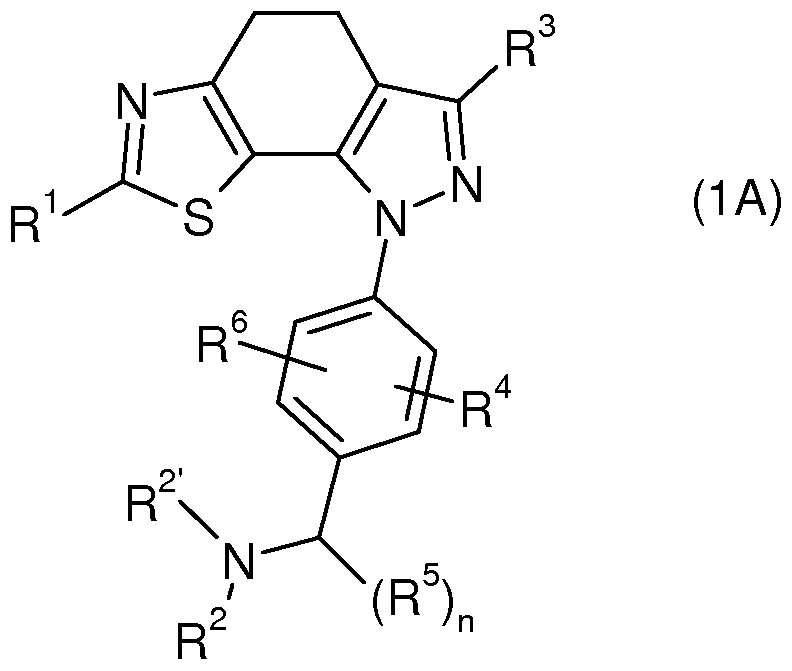
  • One aspect of the invention are compounds of the general formula (IA),
  • One aspect of the invention are compounds of general formulas (1) or (IA) wherein
  • R 3 is 5-6 membered oeteroaryl, optionally substituted with one or more, same or different R c and / or R b .
  • One aspect of the invention are compounds of the general formulas (1) or (IA) in which R 3 is unsubstituted pyridyl, in particular pyridin-3-yl.
  • One aspect of the invention are compounds of general formulas (1) or (IA) wherein R 1 is selected from the group consisting of -NHC (O) R a , -NHC (O) OR a and -NHC (O) NR a R a .
  • A2 Another aspect of the invention are compounds of general formula (1) or (IA) wherein R 1 is -NHC (O) OCH 3 or -NHC (O) OCH 2 CH 3 .
  • A3 One aspect of the invention are compounds of general formula (1) or (IA) wherein R 1 is -NHC (O) CH 3 , and
  • R 2 and R 2 are each independently hydrogen or a radical selected from the group consisting of C 3- 6Alkyl, C 3- sCycloalkyl, C 6-10 aryl, 5-10 membered heteroaryl and 3-8 membered heterocycloalkyl, optionally substituted with one or more R a and / or R b , or
  • a further aspect of the invention are compounds of the general formula (1) or (IA) in which R 2 and R 2 each, independently of one another, denote methyl or ethyl.
  • Heterocycloalkyl which may optionally contain one or more further heteroatoms selected from the group consisting of N, O and S forms.
  • a further aspect of the invention are compounds of the general formula (1) or (IA) in which R 2 together with R 2 together with the enclosed nitrogen atom
  • (D1) One aspect of the invention are compounds of the general formula (1) or (IA) in which R 5 is hydrogen.
  • (D2) Another aspect of the invention are compounds of the general formula (1) or (IA) wherein two R 5 form cyclopropyl. All of the above aspects (Al) to (A4) ffir R 1 , (Bl) to (BIO) for R 2 and R 2 ' (Cl) and (C2) for R 4 and (Dl) to (D4) for R 5 can be combined with each other.
  • One aspect of the invention are compounds of general formula (1) or (IA), or their pharmacologically acceptable salts, as medicaments.
  • One aspect of the invention are compounds of general formula (1) or (IA), or their pharmacologically acceptable salts, for the preparation of a medicament having an antiproliferative action.
  • One aspect of the invention is a pharmaceutical preparation containing as active ingredient one or more compounds of the general formula (1) or (IA) according to one of claims 1 to 5 or their pharmacologically tolerable salts, optionally in combination with customary auxiliaries and / or or carriers.
  • One aspect of the invention is the use of compounds of general formula (1) or (IA) for the manufacture of a medicament for the treatment and / or prevention of cancer.
  • One aspect of the invention is a pharmaceutical preparation comprising a compound of general formula (1) or (IA), and at least one further cytostatic or cytotoxic active ingredient other than formula (1) or (IA), optionally in the form of their tautomers, their racemates , their enantiomers, their diastereomers and their mixtures, and optionally their pharmacologically acceptable salts.
  • Alkyl substituents are in each case saturated, unsaturated, straight-chain or branched aliphatic hydrocarbon radicals (alkyl radical) and include both saturated alkyl radicals and also unsaturated alkenyl and alkynyl radicals.
  • Alkenyl substituents are each straight-chain or branched, unsaturated alkyl radicals which have at least one double bond.
  • Alkynyl substituents are to be understood as meaning in each case straight-chain or branched, unsaturated alkyl radicals which have at least one triple bond.
  • heteroalkyl radicals are represented which are derived from alkyl defined above in its broadest sense in that in the hydrocarbon chains one or more of the groups -CH 3 independently of one another by the groups -OH, -SH or -NH 2 , one or more of the groups -CH 2 - independently of one another through the groups -O-, -S- or -NH-, one or more of the groups
  • Sulfur atoms or between each one oxygen and one sulfur atom, at least one carbon atom and the rest must have total chemical stability.
  • heteroalkyl from the subgroups saturated hydrocarbon chains with hetero atom (s), heteroalkenyl and heteroalkynyl is composed, wherein a further subdivision into straight-chain (unbranched) and branched can be made. If a heteroalkyl is substituted, the substitution may be independent of each other, in each case one or more times, carried out on all hydrogen-bearing oxygen, sulfur, nitrogen and / or carbon atoms. Heteroalkyl itself may be linked to the molecule as a substituent both via a carbon atom and via a heteroatom. As an example, representatives are listed below:
  • dimethylaminomethyl Dimethylaminoethyl (1-dimethylaminoethyl; 2-dimethylaminoethyl); Dimethylaminopropyl (1-dimethylaminopropyl, 2-dimethylaminopropyl, 3-dimethylaminopropyl); diethylaminomethyl; Diethylaminoethyl (1-diethylaminoethyl, 2-diethylaminoethyl); Diethylaminopropyl (1-diethylaminopropyl, 2-diethylaminopropyl, 3-diethylaminopropyl); Diisopropylaminoethyl (1-diisopropylaminoethyl, 2-diisopropylaminoethyl); Bis-2-methoxyethylamino; [2- (dimethylaminoethyl) ethylamino] methyl; 3- [2- (d
  • Haloalkyl refers to alkyl radicals in which one or more hydrogen atoms are replaced by halogen atoms.
  • Halogen refers to fluorine, chlorine, bromine and / or iodine atoms.
  • Cycloalkyl is a monocyclic or bicyclic ring, it being possible for the ring system to be a saturated ring but also an unsaturated, nonaromatic ring which may optionally also contain double bonds, for example cyclopropyl, cyclopropenyl, cyclobutyl, cyclobutenyl, cyclopentyl, cyclopentenyl, Cyclohexyl, cyclohexenyl, norbornyl and norbornenyl.
  • Cycloalkylalkyl includes a non-cyclic alkyl group in which a hydrogen atom bonded to a carbon atom, usually at a terminal C atom, is replaced by a cycloalkyl group.
  • Aryl refers to monocyclic or bicyclic aromatic rings of 6 to 10 carbon atoms, such as phenyl and naphthyl.
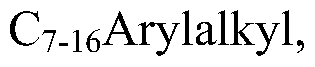
  • Arylalkyl includes a non-cyclic alkyl group in which a hydrogen atom attached to a carbon atom, usually at a terminal C atom, is replaced by an aryl group.
  • Heteroaryl is to be understood as meaning monocyclic or bicyclic aromatic rings which, instead of one or more carbon atoms, contain one or more identical or different heteroatoms, such as e.g. Nitrogen, sulfur or oxygen atoms.
  • heteroatoms such as e.g. Nitrogen, sulfur or oxygen atoms.
  • Examples which may be mentioned are furyl, thienyl, pyrrolyl, oxazolyl, thiazolyl, isoxazolyl, isothiazolyl, pyrazolyl, imidazolyl, triazolyl, tetrazolyl, oxadiazolyl, thiadiazolyl, pyridyl, pyrimidyl, pyridazinyl, pyrazinyl and triazinyl.
  • bicyclic heteroaryl radicals are indolyl, isoindolyl, benzofuryl, benzothienyl, benzoxazolyl, benzothiazolyl, benzisoxazolyl, benzisothiazolyl, benzimidazolyl, indazolyl, isoquinolinyl, quinolinyl, quinoxalinyl, cinnolinyl, phthalazinyl, quinazolinyl and benzotriazinyl, indolizinyl, oxazolopyridyl, imidazopyridyl, naphthyridinyl, indolinyl, isochromanyl , chromanyl, tetrahydroisoquinolinyl, isoindolinyl, Isobenzotetrahydrofuryl, Isobenzotetrahydrothienyl, isobenzothienyl, benzoxazoly
  • Benzoxazolinonyl pyrrolyl-iV-oxide, pyrimidinyl-i-V-oxide, pyridazinyl-i-V-oxide, pyrazinyl-i-V-oxide, quinolinyl-i-V-oxide, indolyl-i-V-oxide, indolinyl-i-V-oxide, isoquinolyl-i-V-oxide, Quinazolinyl-iV-oxide, quinoxalinyl-iV-oxide, phthalazinyl-iV-oxide, imidazolyl-iV-oxide, isoxazolyl-iV-oxide, oxazolyl-iV-oxide, thiazolyl-iV-oxide, indolizinyl-iV-oxide, indazolyl- iV oxide, benzothiazolyl iV oxide, benzimidazolyl iV oxide,
  • Heteroarylalkyl includes a non-cyclic alkyl group in which a hydrogen atom bonded to a carbon atom, usually at a terminal C atom, is replaced by a heteroaryl group.
  • Heterocycloalkyl refers to saturated or unsaturated, non-aromatic, mono-, bicyclic or bridged bicyclic rings containing 3-12 carbon atoms which carry, instead of one or more carbon atoms, heteroatoms such as nitrogen, oxygen or sulfur.
  • heterocycloalkyl radicals are tetrahydrofuryl, pyrrolidinyl, pyrrolinyl, imidazolidinyl, imidazolinyl, pyrazolidinyl, pyrazolinyl, piperidinyl, piperazinyl, indolinyl, isoindolinyl, morpholinyl, thiomorpholinyl, homomorpholinyl, homopiperidinyl, homopiperazinyl, homothiomorpholinyl, thiomorpholinyl-S-oxide, thiomorpholinyl- dioxide,
  • Heterocycloalkylalkyl refers to a non-cyclic alkyl group in which a hydrogen atom bonded to a carbon atom, usually at a terminal C atom, is replaced by a heterocycloalkyl group.
  • HPLC Agilent 1100 Series
  • MS 1100 Series LC / MSD (API-ES (+/- 3000V, Quadrupole, G1946D); Mode: Scan pos 100-1000, neg 100-1000
  • Solvent A: H 2 O desalted with 0.1% formic acid added
  • HPLC Agilent Series 1100 (GI 379A / G1310A converted to G1311A / G1313A / G1316A / G1948D / G1315B / G1946D) Mode: Scan pos 100-1000, neg 100-1000 Column: Agilent Zorbax SB-C8, 2.1x50 mm, 3.5 ⁇ m Solvent: A: H 2 O desalted with 0.1% formic acid added
  • Solvent A: H 2 O desalted with 0.1% formic acid added
  • UV 254nm bandwide 16, reference off
  • UV 230nm bandwide 8, reference off
  • Solvent A H 2 O desalted with 0.1% formic acid added
  • Range step 1.00 nm
  • Threshold 4.00 mAU
  • Range step 1.00 nm
  • Threshold 4.00 mAU
  • this intermediate compound is mixed with 100 ml of water and adjusted to pH 9 with aqueous potassium carbonate solution.
  • the aqueous phase is extracted by shaking three times with 150 ml of ethyl acetate each time.
  • the combined organic phases are dried over magnesium sulfate, filtered and concentrated. Yield 11.2 g H - 1 c) N- (2-Chloro-4-morpholin-4-ylmethylphenyl) benzophenone hydrazone
  • H-3b Analogously to the preparation of H-3b, the desired compound is obtained starting from H-3a (0.5 g, 1.7 mmol), potassium carbonate (0.73 g, 5.2 mmol), potassium iodide (3 mg, 0.02 mmol) and bis (2-bromoethyl) ether , Yield: 0.32 g. H-4b) N, N '- [4- (1-morpholin-4-yl-cyclopropyl) -phenyl] -hydrazine dicarboxylic acid di? -Butyl ester
  • Example 2.7 The preparation of Example 2.7 is analogous to the synthesis of 2.6.
  • Example 3.2 and 3.3 The presentation of Example 3.2 and 3.3 is analogous to the synthesis of 3.1.
  • HCTI 16 Cytotoxicity Test The test is based on the reduction of AlamarBlue (Biosource Int., USA) in live (metabolically active) cells to a fluorometrically detectable product. In the presence of cytotoxic substances, the substrate can not be reduced, so that no increase in fluorescence is measurable.
  • HCTI 16 human colon carcinoma cell line
  • the test substances are gradually diluted in medium and added to the cells, so that the Total volume is 200 ⁇ L / well.
  • the controls used are cells which are mixed with medium but not with substance. After an incubation period of 4 to 6 days, 20 ⁇ l / well of AlamarBlue are added and the cells are incubated for a further 6-8 h at 37 ° C. Fluorescence measurement is initiated at a wavelength of 545 nm and the emission is measured at 590 nm.
  • the substances of the present invention are PI3 kinase inhibitors. Because of their biological properties, the novel compounds of the general formula (1), their isomers and their physiologically tolerated salts are suitable for the treatment of diseases characterized by excessive or abnormal cell proliferation.
  • Such diseases include, for example: viral infections (e.g., HIV and Kaposi sarcoma); Inflammation and autoimmune diseases (e.g., colitis, arthritis, Alzheimer's disease, glomerulonephritis, and wound healing); bacterial, fungal and / or parasitic infections; Leukemias, lymphomas and solid tumors; Skin disorders (e.g., psoriasis); Bone diseases; cardiovascular diseases (e.g., restenosis and hypertrophy). Further, they are useful as protection of proliferating cells (e.g., hair, intestinal, blood and progenitor cells) against DNA damage by radiation, UV treatment and / or cytostatic treatment (Davis et al., 2001).
  • proliferating cells e.g., hair, intestinal, blood and progenitor cells
  • brain tumors such as acoustic neuroma, astrocytomas such as pilocytic astrocytomas, fibrillar astrocytoma, protoplasmic astrocytoma, gemocytic astrocytoma, anaplastic astrocytoma and glioblastomas, brain lymphoma, brain metastasis, pituitary tumor such as prolactinoma , Human growth hormone (HGH) producing tumor and ACTH-producing tumor (adrenocorticotropic hormone), craniopharyngioma,
  • HGH Human growth hormone
  • ACTH-producing tumor adrenocorticotropic hormone
  • Nervous tumors like for example tumors of the autonomic nervous system such as neuroblastoma sympathicum, ganglioneuroma, paraganglioma (pheochromocytoma, chromaffinoma) and carotid tumor, peripheral nervous system tumors such as amputation neuroma, neurofibroma, neuroma (neurilemmoma, schwannoma) and malignant schwannoma, as well as tumors of the central nervous system Brain and spinal cord tumors; Colon cancer such as rectal cancer, colon carcinoma, anal carcinoma, small intestinal tumors and duodenal tumors; Eyelid tumors such as basal cell carcinoma or basal cell carcinoma; Pancreatic cancer or pancreatic carcinoma; Bladder cancer or bladder carcinoma; Lung cancer (bronchial carcinoma) such as small cell lung carcinoma (oat cell carcinoma) and non-small cell lung carcinoma such as squamous
  • novel compounds may also be used, if desired, in combination with other state-of-art compounds, such as other anti-tumor substances, cytotoxic substances, cell proliferation inhibitors, anti-angiogenic substances, steroids or antibodies for the prevention, short-term or long-term treatment of the abovementioned diseases , be used.
  • other state-of-art compounds such as other anti-tumor substances, cytotoxic substances, cell proliferation inhibitors, anti-angiogenic substances, steroids or antibodies for the prevention, short-term or long-term treatment of the abovementioned diseases , be used.
  • Chemotherapeutics which may be administered in combination with the compounds of the present invention include, but are not limited to, hormones, hormone analogues and antihormones (eg tamoxifen, toremifene, raloxifene, fulvestrant, megestrol acetate, flutamide, nilutamide, bicalutamide, aminoglutethimide, cyproterone Acetate, finasteride, buserelin acetate, fludrocortinson, fluoxymesterone, medroxyprogesterone, octreotide), aromatase inhibitors (eg anastrozole, letrozole, liarozole, vorozole, exemestane, atamestane), LHRH agonists and antagonists (eg goserelin
  • Carmustin and Lomustin, Thiotepa); antimitotic agents e.g., vinca alkaloids such as vinblastine, vindesine, vinorelbine and vincristine; and taxanes such as paclitaxel, docetaxel
  • Topoisomerase inhibitors eg, epipodophyllotoxins such as etoposide and etopophos, teniposide, amsacrine, topotecan, irinotecan, mitoxantrone
  • various chemotherapeutics such as amifostine, anagrelide, clodronate, filgrastine, interferon alpha, leucovorin, rituximab, procarbazine, levamisole, mesna, mitotane, pamidronate and porfimer.
  • Suitable application forms are, for example, tablets, capsules, suppositories, solutions, in particular solutions for injection (s.c., i.V., i.m.) and infusion juices,
  • Emulsions or dispersible powders In this case, the proportion of the pharmaceutically active compound (s) in each case in the range of 0.1 to 90 wt .-%, preferably 0.5 to 50 wt .-% of the total composition, that is, in amounts which are sufficient to those below reach the specified dosage range.
  • the said doses may, if necessary, be given several times a day.
  • Corresponding tablets can be prepared, for example, by mixing the active substance (s) with known auxiliaries, for example inert diluents, such as calcium carbonate, calcium phosphate or lactose, disintegrants, such as corn starch or alginic acid, binders, such as starch or gelatin, lubricants, such as magnesium stearate or talc, and / or means for obtaining the depot effect, such as carboxymethyl cellulose, cellulose acetate phthalate, or polyvinyl acetate.
  • auxiliaries for example inert diluents, such as calcium carbonate, calcium phosphate or lactose, disintegrants, such as corn starch or alginic acid, binders, such as starch or gelatin, lubricants, such as magnesium stearate or talc, and / or means for obtaining the depot effect, such as carboxymethyl cellulose, cellulose acetate phthalate, or polyvinyl acetate.
  • Coated tablets can accordingly be produced by coating cores produced analogously to the tablets with agents customarily used in tablet coatings, for example collidone or shellac, gum arabic, talc, titanium dioxide or sugar.
  • the core can also consist of several layers.
  • the dragee wrapper to achieve a depot effect of several layers, wherein the above mentioned in the tablets excipients can be used.
  • Juices of the active compounds or active compound combinations according to the invention may additionally contain a sweetener, such as saccharin, cyclamate, glycerol or sugar, as well as a taste-improving agent, e.g. Flavorings such as vanillin or orange extract. They may also contain suspending aids or thickening agents, such as sodium carboxymethylcellulose, wetting agents, for example condensation products of fatty alcohols with ethylene oxide, or protective agents, such as p-hydroxybenzoates.
  • a sweetener such as saccharin, cyclamate, glycerol or sugar
  • a taste-improving agent e.g. Flavorings such as vanillin or orange extract.
  • suspending aids or thickening agents such as sodium carboxymethylcellulose, wetting agents, for example condensation products of fatty alcohols with ethylene oxide, or protective agents, such as p-hydroxybenzoates.
  • Injection and infusion solutions in the usual manner, for example with the addition of isotonic agents, preservatives such as p-hydroxybenzoates, or stabilizers such as alkali metal salts of ethylenediaminetetraacetic acid, optionally with the use of emulsifiers and / or dispersants, wherein, for example, when using water as a diluent, if appropriate organic solvents can be used as solubilizers or auxiliary solvents, prepared and filled into injection vials or ampoules or infusion bottles.
  • preservatives such as p-hydroxybenzoates
  • stabilizers such as alkali metal salts of ethylenediaminetetraacetic acid
  • emulsifiers and / or dispersants wherein, for example, when using water as a diluent, if appropriate organic solvents can be used as solubilizers or auxiliary solvents, prepared and filled into injection vials or ampoules or infusion bottles.
  • the capsules containing one or more active ingredients or combinations of active substances can be prepared, for example, by mixing the active ingredients with inert carriers, such as lactose or sorbitol, and encapsulating them in gelatine capsules.
  • suitable suppositories can be prepared, for example, by mixing with suitable carriers, such as neutral fats or polyethylene glycol or its derivatives.
  • adjuvants there may be mentioned, for example, water, pharmaceutically acceptable organic solvents such as paraffins (e.g., petroleum fractions), oils of vegetable origin (e.g., peanut or sesame oil), mono- or polyfunctional alcohols (e.g., ethanol or glycerin), carriers such as e.g.
  • paraffins e.g., petroleum fractions
  • oils of vegetable origin e.g., peanut or sesame oil
  • mono- or polyfunctional alcohols e.g., ethanol or glycerin
  • carriers such as e.g.
  • ground natural minerals eg kaolins, clays, talc, chalk
  • synthetic minerals eg fumed silica and silicates
  • sugars eg pipe, milk and dextrose
  • emulsifiers eg lignin, liquors, methylcellulose, starch and polyvinylpyrrolidone
  • lubricants eg Magnesium stearate, talc, stearic acid and sodium lauryl sulfate.
  • the application is carried out in a customary manner, preferably orally or transdermally, particularly preferably orally.
  • the tablets may also contain additives other than those mentioned.
  • Sodium citrate, calcium carbonate and dicalcium phosphate together with various adjuvants such as starch, preferably potato starch, gelatin and the like.
  • lubricants such as magnesium stearate, sodium lauryl sulfate and talc may be used for tableting.
  • the active ingredients may be added to the abovementioned excipients with various flavor enhancers or dyes.
  • solutions of the active ingredients may be employed using suitable liquid carrier materials.
  • the dosage for intravenous use is 1 - 1000 mg per hour, preferably between 5 - 500 mg per hour. Nevertheless, it may be necessary to deviate from the stated amounts, depending on the body weight or the type of administration route, the individual behavior towards the drug, the type of formulation and the time or interval at which the administration takes place , Thus, in some cases it may be sufficient to manage with less than the aforementioned minimum amount, while in other cases, the said upper limit must be exceeded. In the case of the application of larger quantities, it may be advisable to distribute these in several single doses throughout the day.
  • the finely ground active ingredient, lactose and part of the corn starch are mixed together.
  • the mixture is sieved, then moistened with a solution of polyvinylpyrrolidone in water, kneaded, wet granulated and dried.
  • the granules, the remainder of the corn starch and the magnesium stearate are sieved and mixed together.
  • the mixture is compressed into tablets of suitable shape and size.
  • the finely ground active ingredient, a portion of the corn starch, lactose, microcrystalline cellulose and polyvinylpyrrolidone are mixed together, the mixture is sieved and processed with the remainder of the corn starch and water to a granulate which is dried and sieved. To this is added the sodium carboxymethyl starch and the magnesium stearate, mixed and pressed the mixture into tablets of suitable size.
  • the active ingredient is dissolved in water at its own pH or optionally at pH 5.5-6.5 and treated with sodium chloride as isotonan.
  • the resulting solution is filtered pyrogen-free and the filtrate filled under aseptic conditions in ampoules, which are then sterilized and sealed.
  • the vials contain 5 mg, 25 mg and 50 mg active ingredient.

Landscapes

  • Chemical & Material Sciences (AREA)
  • Organic Chemistry (AREA)
  • Health & Medical Sciences (AREA)
  • Life Sciences & Earth Sciences (AREA)
  • General Health & Medical Sciences (AREA)
  • Veterinary Medicine (AREA)
  • Public Health (AREA)
  • Pharmacology & Pharmacy (AREA)
  • Medicinal Chemistry (AREA)
  • Animal Behavior & Ethology (AREA)
  • Chemical Kinetics & Catalysis (AREA)
  • General Chemical & Material Sciences (AREA)
  • Nuclear Medicine, Radiotherapy & Molecular Imaging (AREA)
  • Engineering & Computer Science (AREA)
  • Bioinformatics & Cheminformatics (AREA)
  • Epidemiology (AREA)
  • Pharmaceuticals Containing Other Organic And Inorganic Compounds (AREA)
  • Nitrogen And Oxygen Or Sulfur-Condensed Heterocyclic Ring Systems (AREA)

Abstract

Die vorliegende Erfindung umfasst Verbindungen der allgemeinen Formel (1) worin R1 bis R6 wie in Anspruch 1 definiert sind, welche zur Behandlung von Krankheiten, die durch exzessive oder anomale Zellproliferation charakterisiert sind, geeignet sind, sowie deren Verwendung zur Herstellung eines Arzneimittels mit den vorstehend genannten Eigenschaften.

Description

THIAZOLYLDIHYDROINDAZOL-DERIVATE ALS PROTEINKINASE-INHIBITOREN
Die vorliegende Erfindung betrifft neue Thiazolyl-dihydro-indazole der allgemeinen Formel (1)
Figure imgf000002_0001
wobei die Reste R1 bis R6 die in den Ansprüchen und der Beschreibung genannten Bedeutungen haben, deren Isomere, Verfahren zur Herstellung dieser Thiazolyl-dihydro- indazole sowie deren Verwendung als Arzneimittel.
Hintergrund der Erfindung
Eine Reihe von Protein-Kinasen haben sich bereits als geeignete Zielmoleküle für die therapeutische Intervention in verschiedenen Indikationen, z.B. Krebs, entzündlichen und Autoimmunerkrankungen erwiesen. Da ein hoher Prozentsatz der bisher identifizierten, an der Krebsentstehung beteiligten Gene für Kinasen kodiert, stellen diese Enzyme speziell für die Krebstherapie attraktive Zielmoleküle dar.
Phosphatidylinositol-3 -Kinasen (PB -Kinasen) sind ein Subfamilie der Lipid-Kinasen, die die Übertragung eines Phosphatrestes auf die 3 '-Position des Inositolrings von Phosphoinositiden katalysieren. Sie spielen eine wichtige Rolle bei zahlreichen zellulären Vorgängen wie z.B. Zellwachstums- und Differenzierungsvorgängen, der Steuerung von zytoskeletalen Veränderungen und der Regulation intrazellulärer Transportvorgänge. Aufgrund ihrer in vzYro-Spezifität für bestimmte Phosphoinositid-Substrate können die PI3- Kinasen in verschiedene Klassen eingeteilt werden. Detaillierte Beschreibung der Erfindung
Es wurde nun überraschenderweise gefunden, dass Verbindungen der allgemeinen Formel (1), worin die Reste R1 bis R6 die nachstehend genannten Bedeutungen haben, als Inhibitoren spezifischer Zellzykluskinasen wirken. Somit können die erfindungsgemäßen Verbindungen beispielsweise zur Behandlung von Erkrankungen, die mit der Aktivität spezifischer Zellzykluskinasen in Zusammenhang stehen und durch exzessive oder anomale Zellproliferation charakterisiert sind, verwendet werden.
Die vorliegende Erfindung betrifft Verbindungen der allgemeinen Formel (1)
Figure imgf000003_0001
worin
R1 ausgewählt aus der Gruppe bestehend aus -NHRa, -NHC(O)Ra, -NHC(O)ORa,
-NHC(O)NRaRa und -NHC(O)SRa, und
R2 und R2 jeweils unabhängig voneinander Wasserstoff oder ein Rest, ausgewählt aus der Gruppe bestehend aus C1-6Alkyl, Cs-sCycloalkyl, C6-10Aryl, 5-10 gliedriges Heteroaryl und
3-8 gliedriges Heterocycloalkyl, gegebenenfalls substituiert mit einem oder mehreren Ra und/oder Rb, oder
R2 und R2 gemeinsam mit dem eingeschlossenen Stickstoffatom einen Heterocycloalkyl- oder Heteroarylring bilden, welcher gegebenenfalls ein oder mehrere weitere Heteroatome enthalten kann, ausgewählt aus der Gruppe bestehend aus N, O und S und gegebenenfalls mit einem oder mehreren Rb und/oder Rd substituiert sein kann, und
R3 ein Rest ausgewählt aus der Gruppe bestehend aus Cό-ioAryl und 5-6 gliedriges
Heteroaryl, gegebenenfalls substituiert mit einem oder mehreren, gleich oder verschiedenen Rc und/oder Rb, und R4 und R6 jeweils unabhängig voneinander Wasserstoff oder ein Rest ausgewählt aus der Gruppe bestehend aus Halogen, -CF3, -OCF3, -CN, -NRCRC, -SRC, -S(O)RC, -S(O)2R0 und - ORC, oder Ci-3Alkyl gegebenenfalls substituiert mit Fluor, -CN, -NRfRf und/oder -ORf, und R5 Ci-3Alkyl, oder zwei R5 gemeinsam einen C3-8Cycloalkylring oder 3-8 gliedriges Heterocycloalkyl bilden, und n gleich 0, 1 oder 2, oder
R2 mit einem R5 einen 4-8 gliedrigen Heterocycloalkylring bilden, oder
R2 mit einem geeigneten R6 einen 4-8 gliedrigen Heterocycloalkylring bilden, und jedes Ra unabhängig voneinander Wasserstoff oder ein gegebenenfalls mit einem oder mehreren, gleich oder verschiedenen Rb und/oder Rc substituierter Rest ausgewählt aus der Gruppe bestehend aus
Figure imgf000004_0001
C3-sCycloalkyl, C4.nCycloalkylalkyl, Cό-ioAryl, Cy-iόArylalkyl, 2-6 gliedriges Heteroalkyl, 3-8 gliedriges Heterocycloalkyl, 4-14 gliedriges Heterocycloalkylalkyl, 5-10 gliedriges Heteroaryl und 6-16 gliedriges Heteroarylalkyl, und jedes Rb ein geeigneter Rest jeweils unabhängig voneinander ausgewählt aus der Gruppe bestehend aus =0, -ORC, Ci-3Haloalkyloxy, =S, -SRC, =NRC, =NORC, -NRCRC, Halogen, - CF3, -CN, -NC, -NO2, -N3, -S(O)RC, -S(O)2R0, -S(O)2OR0, -S(O)NRCRC, -S(O)2NRCRC, - OS(O)RC, -OS(O)2R0, -OS(O)2OR0, -OS(O)2NRCRC, -C(O)RC, -C(O)ORC, -C(O)NRCRC, -C(0)N(Rd)0Rc -CN(Rd)NRcRc, -OC(O)RC, -OC(O)ORC, -0C(0)NRcRc, -OCN(Rd)NRcRc, -N(Rd)C(0)Rc, -N(Rd)C(S)Rc, -N(Rd)S(O)2Rc, -N(Rd)C(0)0Rc, -N(Rd)C(O)NRcRc, und -N(Rd)CN(Rd)NRcRc, und jedes Rc unabhängig voneinander ein gegebenenfalls mit einem oder mehreren, gleich oder verschiedenen Rd substituierter Rest ausgewählt aus der Gruppe bestehend aus Ci-όAlkyl, C3-8Cycloalkyl, C4.πCycloalkylalkyl, Cό-ioAryl,
Figure imgf000004_0002
2-6 gliedriges Heteroalkyl, 3-8 gliedriges Heterocycloalkyl, 4-14 gliedriges Heterocycloalkylalkyl, 5-10 gliedriges Heteroaryl und 6-16 gliedriges Heteroarylalkyl, und jedes Rd unabhängig voneinander Ci-όAlkyl, C3-gCycloalkyl, C4-nCycloalkylalkyl, C6- loAryl,
Figure imgf000004_0003
2-6 gliedriges Heteroalkyl, 3-8 gliedriges Heterocycloalkyl, 4-14 gliedriges Heterocycloalkylalkyl, 5-10 gliedriges Heteroaryl und 6-16 gliedriges Heteroarylalkyl bedeuten, gegebenenfalls in Form ihrer Tautomeren, ihrer Racemate, ihrer Enantiomere, ihrer Diastereomere und ihrer Gemische, sowie gegebenenfalls ihrer pharmakologisch unbedenklichen Säureadditionssalze mit der Maßgabe, dass folgende Verbindungen nicht umfasst sind:
N-[ 1 -(4-Morpholin-4-ylmethyl-phenyl)-3-pyridin-2-yl-4,5-dihydro- lH-pyrazolo[4,3 - g]benzthiazol-7-yl]-acetamid,
N-[l-(4-Dimethylaminomethyl-phenyl)-3-pyridin-3-yl-4,5-dihydro-lH-pyrazolo[4,3- g]benzthiazol-7-yl]-acetamid,
N-{l-[4-(Benzylamino-methyl)-2-chloro-phenyl]-3-pyrazin-2-yl-4,5-dihydro-lH- pyrazolo[4,3-g]benzthiazol-7-yl}-acetamid und
N-(l-{2-Chloro-4-[(l-cyclopentyl-piperidin-4-ylamino)-methyl]-phenyl}-3-pyrazin-2-yl- 4,5-dihydro- lH-pyrazolo[4,3 -g]benzthiazol-7-yl)-acetamid.
Ein Aspekt der Erfindung sind Verbindungen der allgemeinen Formel (IA),
Figure imgf000005_0001
worin die Substituenten wie vorstehend definiert sind.
Ein Aspekt der Erfindung sind Verbindungen der allgemeinen Formeln (1) oder (IA), worin
R3 5-6 gliedriges Ηeteroaryl, gegebenenfalls substituiert mit einem oder mehreren, gleich oder verschiedenen Rc und/oder Rb bedeutet.
Ein Aspekt der Erfindung sind Verbindungen der allgemeinen Formeln (1) oder (IA), worin R3 unsubstituiertes Pyridyl, insbesondere Pyridin-3-yl bedeutet. Ein Aspekt der Erfindung sind Verbindungen der allgemeinen Formeln (1) oder (IA), worin R1 ausgewählt ist aus der Gruppe bestehend aus -NHC(O)Ra, -NHC(O)ORa und -NHC(O)NRaRa.
(A) Aspekte bezüglich R1
(Al) Ein Aspekt der Erfindung sind Verbindungen der allgemeinen Formel (1) oder (IA), worin R1 -NHC(O)CH2CH3 bedeutet.
(A2) Ein weiterer Aspekt der Erfindung sind Verbindungen der allgemeinen Formel (1) oder (IA), worin R1 -NHC(O)OCH3 oder -NHC(O)OCH2CH3 bedeutet. (A3) Ein Aspekt der Erfindung sind Verbindungen der allgemeinen Formel (1) oder (IA), worin R1 -NHC(O)CH3 bedeutet, und
R2 und R2 jeweils unabhängig voneinander Wasserstoff oder ein Rest, ausgewählt aus der Gruppe bestehend aus C3-6Alkyl, C3-sCycloalkyl, C6-10Aryl, 5-10 gliedriges Heteroaryl und 3-8 gliedriges Heterocycloalkyl, gegebenenfalls substituiert mit einem oder mehreren Ra und/oder Rb, oder
R2 und R2 gemeinsam einen Heterocycloalkyl- oder Heteroarylring bilden, welcher gegebenenfalls ein oder mehrere weitere Heteroatome enthalten kann, ausgewählt aus der Gruppe bestehend aus N und S und gegebenenfalls mit einem oder mehreren Rb und/oder Rd substituiert sein kann, und worin jedes Rb ein geeigneter Rest und jeweils unabhängig voneinander ausgewählt aus der Gruppe bestehend aus =0, -ORC, Ci-3Haloalkyloxy, =S, -SRC, =NRC, =NORC, -NRCRC, Halogen, -CF3, -CN, -NC, -NO2, -N3, -S(O)RC, -S(O)2R0, -S(O)2OR0, -S(O)NRCRC, - S(O)2NRCRC, -OS(O)RC, -OS(O)2R0, -OS(O)2OR0, -OS(O)2NRCRC, -C(O)RC, -C(O)ORC, -C(O)NRCRC, -C(0)N(Rd)0Rc -CN(Rd)NRcRc, -OC(O)RC, -OC(O)ORC, -0C(0)NRcRc, -0CN(Rd)NRcRc, -N(Rd)C(0)Rc, -N(Rd)C(S)Rc, -N(Rd)S(O)2Rc, -N(Rd)C(0)0Rc, -N(Rd)C(0)NRcRc, und -N(Rd)CN(Rd)NRcRc, und jedes Rd unabhängig voneinander Ci-όAlkyl, C4.nCycloalkylalkyl, Cy.iόArylalkyl, 2-6 gliedriges Heteroalkyl, 3-8 gliedriges Heterocycloalkyl, 4-14 gliedriges Heterocycloalkylalkyl, 5-10 gliedriges Heteroaryl und 6-16 gliedriges Heteroarylalkyl bedeuten. (B) Aspekte bezüglich R und R
(Bl) Ein Aspekt der Erfindung sind Verbindungen der allgemeinen Formel (1) oder (IA), worin R und R jeweils unabhängig voneinander Ci-όAlkyl bedeuten.
(B2) Ein weiterer Aspekt der Erfindung sind Verbindungen der allgemeinen Formel (1) oder (IA), worin R2 und R2 jeweils unabhängig voneinander Methyl oder Ethyl bedeuten.
(B3) Ein weiterer Aspekt der Erfindung sind Verbindungen der allgemeinen Formel (1) oder (IA), worin R2 Cs-sCycloalkyl bedeutet.
(B4) Ein weiterer Aspekt der Erfindung sind Verbindungen der allgemeinen Formel (1) oder (IA), worin R2 Cyclopropyl bedeutet. (B5) Ein Aspekt der Erfindung sind Verbindungen der allgemeinen Formel (1) oder (IA), worin R mit R gemeinsam mit dem eingeschlossenen Stickstoffatom ein 3-8 gliedriges
Heterocycloalkyl, welcher gegebenenfalls ein oder mehrere weitere Heteroatome enthalten kann, ausgewählt aus der Gruppe bestehend aus N, O und S bildet.
(B6) Ein weiterer Aspekt der Erfindung sind Verbindungen der allgemeinen Formel (1) oder (IA), worin R2 mit R2 gemeinsam mit dem eingeschlossenen Stickstoffatom
Azetidin, Pyrrolidin oder Piperidin bildet.
(B7) Ein weiterer Aspekt der Erfindung sind Verbindungen der allgemeinen Formel (1) oder (IA), worin R2 mit R2 gemeinsam mit dem eingeschlossenen Stickstoffatom
Thiazolidin, Thiomorpholin, Morpholin oder Piperazin bildet.
(C) Aspekte bezüglich R4
(Cl) Ein Aspekt der Erfindung sind Verbindungen der allgemeinen Formel (1) oder (IA), worin R4 Wasserstoff bedeutet.
(C2) Ein weiterer Aspekt der Erfindung sind Verbindungen der allgemeinen Formel (1) oder (IA), worin R4 Fluor oder Chlor bedeutet.
(D) Aspekte bezüglich R5
(Dl) Ein Aspekt der Erfindung sind Verbindungen der allgemeinen Formel (1) oder (IA), worin R5 Wasserstoff bedeutet. (D2) Ein weiterer Aspekt der Erfindung sind Verbindungen der allgemeinen Formel (1) oder (IA), worin zwei R5 Cyclopropyl bilden. Alle der oben genannten Aspekte (Al) bis (A4) ffir R1, (Bl) bis (BIO) für R2 und R2' (Cl) und (C2) für R4 und (Dl) bis (D4) für R5 können beliebig miteinander kombiniert werden.
Die nachfolgende Tabelle stellt bevorzugte Kombinationen verschiedener Aspekte der erfindungsgemäßen Verbindungen der Formel (1) dar:
Figure imgf000008_0001
Figure imgf000009_0001
Figure imgf000010_0001
Figure imgf000011_0001
Ein Aspekt der Erfindung sind Verbindungen der allgemeinen Formel (1) oder (IA), oder deren pharmakologisch verträglichen Salze, als Arzneimittel.
Ein Aspekt der Erfindung sind Verbindungen der allgemeinen Formel (1) oder (IA), oder deren pharmakologisch verträglichen Salze, zur Herstellung eines Arzneimittels mit antiproliferativer Wirkung.
Ein Aspekt der Erfindung ist eine pharmazeutische Zubereitungen, enthaltend als Wirk- stoff eine oder mehrere Verbindungen der allgemeinen Formel (1) oder (IA), gemäß einem der Ansprüche 1 bis 5 oder deren pharmakologisch verträglichen Salze gegebenenfalls in Kombination mit üblichen Hilfs- und/oder Trägerstoffen.
Ein Aspekt der Erfindung ist dieVerwendung von Verbindungen der allgemeinen Formel (1) oder (IA), zur Herstellung eines Arzneimittels zur Behandlung und/oder Prävention von Krebs.
Ein Aspekt der Erfindung ist eine pharmazeutische Präparation umfassend eine Verbindung der allgemeinen Formel (1) oder (IA), und mindestens eine weitere zytostatische oder zytotoxische, von Formel (1) oder (IA) verschiedene Wirksubstanz, gegebenenfalls in Form ihrer Tautomeren, ihrer Racemate, ihrer Enantiomere, ihrer Diastereomere und ihrer Gemische, sowie gegebenenfalls ihrer pharmakologisch verträglichen Salze.
Definitionen Wie hierin verwendet treffen folgenden Definitionen zu, falls nicht anders beschrieben. Unter Alkyl-Substitutenten sind jeweils gesättigte, ungesättigte, geradkettige oder verzweigte aliphatische Kohlenwasserstoffreste (Alkylrest) zu verstehen und umfasst sowohl gesättigte Alkylreste als auch ungesättigte Alkenyl- und Alkinylreste. Alkenyl- Substituenten sind jeweils geradkettige oder verzweigte, ungesättigte Alkylreste, die mindestens eine Doppelbindung aufweisen. Unter Alkinyl-Substituenten sind jeweils geradkettige oder verzweigte, ungesättigte Alkylreste, die mindestens eine Dreifachbindung aufweisen, zu verstehen.
Durch den Ausdruck Heteroalkyl werden Reste repräsentiert, die sich aus vorstehend definiertem Alkyl in seiner weitesten Bedeutung dadurch ableiten, dass in den Kohlenwasserstoffketten eine oder mehrere der Gruppen -CH3 unabhängig voneinander durch die Gruppen -OH, -SH oder -NH2, eine oder mehrere der Gruppen -CH2- unabhängig voneinander durch die Gruppen -O-, -S- oder -NH- , eine oder mehrere der Gruppen
H — C —
durch die Gruppe
— N —
eine oder mehrere der Gruppen =CH- durch die Gruppe =N-, eine oder mehrere der Gruppen =CH2 durch die Gruppe =NH oder eine oder mehrere der Gruppen ≡CH durch die Gruppe ≡N ersetzt werden, wobei insgesamt nur maximal drei Heteroatome in einem Heteroalkyl vorhanden sein können, zwischen zwei Sauerstoff- und zwischen zwei
Schwefelatomen bzw. zwischen je einem Sauerstoff- und einem Schwefelatom mindestens ein Kohlenstoffatom vorliegen und der Rest insgesamt über chemische Stabilität verfügen muss.
Aus der indirekten Definition/ Ableitung aus Alkyl ergibt sich unmittelbar, dass sich Heteroalkyl aus den Untergruppen gesättigte Kohlenwasserstoffketten mit Hetero- atom(en), Heteroalkenyl und Heteroalkinyl zusammensetzt, wobei eine weitere Unterteilung in geradkettig (unverzweigt) und verzweigt vorgenommen werden kann. Sollte ein Heteroalkyl substituiert sein, so kann die Substitution unabhängig voneinander, jeweils ein- oder mehrfach, an allen wasserstofftragenden Sauerstoff-, Schwefel-, Stickstoff- und/oder Kohlenstoffatomen erfolgen. Heteroalkyl selbst kann als Substituent sowohl über ein Kohlenstoff- als auch über ein Heteroatom mit dem Molekül verknüpft sein. Exemplarisch werden Vertreter im Folgenden aufgezählt:
Dimethylaminomethyl; Dimethylaminoethyl (1- Dimethylaminoethyl; 2-Dimethyl- aminoethyl); Dimethylaminopropyl (1-Dimethylaminopropyl, 2-Dimethylaminopropyl, 3-Dimethylaminopropyl); Diethylaminomethyl; Diethylaminoethyl (1-Diethylaminoethyl, 2-Diethylaminoethyl); Diethylaminopropyl (1-Diethylaminopropyl, 2- Diethylamino- propyl, 3-Diethylaminopropyl); Diisopropylaminoethyl (1-Diisopropylaminoethyl, 2-Di- isopropylaminoethyl); Bis-2-methoxyethylamino; [2-(Dimethylamino-ethyl)-ethyl-amino]- methyl; 3-[2-(Dimethylamino-ethyl)-ethyl-amino]-propyl; Hydroxymethyl; 2-Hydroxy- ethyl; 3-Hydroxypropyl; Methoxy; Ethoxy; Propoxy; Methoxymethyl; 2-Methoxyethyl etc.
Halogenalkyl bezieht sich auf Alkylreste, in denen ein oder mehrere Wasserstoffatome durch Halogenatome ersetzt sind. Halogenalkyl umfasst sowohl gesättigte Alkylreste als auch ungesättigte Alkenyl- und Alkinylreste, wie beispielsweise -CF3, -CHF2, -CH2F, -CF2CF35-CHFCF3, -CH2CF3, -CF2CH3, -CHFCH3, -CF2CF2CF3, -CF2CH2CH3, -CF=CF2, -CCl=CH2, -CBr=CH2, -CI=CH2, -C=C-CF3, -CHFCH2CH3 und -CHFCH2CF3.
Halogen bezieht sich auf Fluor-, Chlor-, Brom- und/oder Iodatome.
Unter Cycloalkyl ist ein mono- oder bizyklischer Ring zu verstehen, wobei das Ringsystem ein gesättigter Ring aber auch ein ungesättigter, nichtaromatischer Ring sein kann, welcher gegebenenfalls auch Doppelbindungen enthalten kann, wie zum Beispiel Cyclopropyl, Cyclopropenyl, Cyclobutyl, Cyclobutenyl, Cyclopentyl, Cyclopentenyl, Cyclohexyl, Cyclohexenyl, Norbornyl und Norbornenyl.
Cycloalkylalkyl umfasst eine nicht-zyklische Alkylgruppe, in der ein an einem Kohlenstoffatom gebundenes Wasserstoffatom, üblicherweise an einem terminalen C-Atom, durch eine Cycloalkylgruppe ersetzt ist. Aryl bezieht sich auf monozyklische oder bizyklische aromatische Ringe mit 6 - 10 Kohlenstoffatomen wie beispielsweise Phenyl und Naphthyl.
Arylalkyl umfasst eine nicht-zyklische Alkylgruppe, in der ein an einem Kohlenstoffatom gebundenes Wasserstoffatom, üblicherweise an einem terminalen C-Atom, durch eine Arylgruppe ersetzt ist.
Unter Heteroaryl sind mono- oder bizyklische aromatische Ringe zu verstehen, welche anstelle eines oder mehrere Kohlenstoffatome ein oder mehrere, gleich oder verschiedene Heteroatome enthalten, wie z.B. Stickstoff-, Schwefel- oder Sauerstoffatome. Beispielsweise genannt seien Furyl, Thienyl, Pyrrolyl, Oxazolyl, Thiazolyl, Isoxazolyl, Isothiazolyl, Pyrazolyl, Imidazolyl, Triazolyl, Tetrazolyl, Oxadiazolyl, Thiadiazolyl, Pyridyl, Pyrimidyl, Pyridazinyl, Pyrazinyl und Triazinyl. Beispiele für bizyklische Heteroarylreste sind Indolyl, Isoindolyl, Benzofuryl, Benzothienyl, Benzoxazolyl, Benzothiazolyl, Benzisoxazolyl, Benzisothiazolyl, Benzimidazolyl, Indazolyl, Isoquinolinyl, Quinolinyl, Quinoxalinyl, Cinnolinyl, Phthalazinyl, Quinazolinyl und Benzotriazinyl, Indolizinyl, Oxazolopyridyl, Imidazopyridyl, Naphthyridinyl, Indolinyl, Isochromanyl, Chromanyl, Tetrahydroisochinolinyl, Isoindolinyl, Isobenzotetrahydrofuryl, Isobenzotetrahydrothienyl, Isobenzothienyl, Benzoxazolyl, Pyridopyridyl, Benzotetrahydrofuryl, Benzotetrahydrothienyl, Purinyl, Benzodioxolyl, Triazinyl, Phenoxazinyl, Phenothiazinyl, Pteridinyl, Benzothiazolyl, Imidazopyridyl, Imidazothiazolyl, Dihydrobenzisoxazinyl, Benzisoxazinyl, Benzoxazinyl, Dihydrobenzisothiazinyl, Benzopyranyl, Benzothiopyranyl, Coumarinyl, Isocoumarinyl, Chromonyl, Chromanonyl, Pyridyl-iV-oxid Tetrahydroquinolinyl, Dihydroquinolinyl, Dihydroquinolinonyl, Dihydroisoquinolinonyl, Dihydrocoumarinyl, Dihydroisocoumarinyl, Isoindolinonyl, Benzodioxanyl,
Benzoxazolinonyl, Pyrrolyl-iV-oxid, Pyrimidinyl-iV-oxid, Pyridazinyl-iV-oxid, Pyrazinyl-iV- oxid, Quinolinyl-iV-oxid, Indolyl-iV-oxid, Indolinyl-iV-oxid, Isoquinolyl-iV-oxid, Quinazolinyl-iV-oxid, Quinoxalinyl-iV-oxid, Phthalazinyl-iV-oxid, Imidazolyl-iV-oxid, Isoxazolyl-iV-oxid, Oxazolyl-iV-oxid, Thiazolyl-iV-oxid, Indolizinyl-iV-oxid, Indazolyl-iV- oxid, Benzothiazolyl-iV-oxid, Benzimidazolyl-iV-oxid, Pyrrolyl-iV-oxid, Oxadiazolyl-iV- oxid, Thiadiazolyl-iV-oxid, Triazolyl-iV-oxid, Tetrazolyl-iV-oxid, Benzothiopyranyl-S-oxid und Benzothiopyranyl-^S-dioxid.
Heteroarylalkyl umfasst eine nicht-zyklische Alkylgruppe, in der ein an einem Kohlen- stoffatom gebundenes Wasserstoffatom, üblicherweise an einem terminalen C-Atom, durch eine Heteroarylgruppe ersetzt ist.
Heterocycloalkyl bezieht sich auf 3 - 12 Kohlenstoffatome umfassende gesättigte oder ungesättigte, nicht aromatische mono-, bizyklische oder überbrückte bizyklische Ringe, welche anstelle eines oder mehrere Kohlenstoffatome Heteroatome, wie Stickstoff, Sauerstoff oder Schwefel, tragen. Beispiele für solche Heterocyloalkylreste sind Tetrahydrofuryl, Pyrrolidinyl, Pyrrolinyl, Imidazolidinyl, Imidazolinyl, Pyrazolidinyl, Pyrazolinyl, Piperidinyl, Piperazinyl, Indolinyl, Isoindolinyl, Morpholinyl, Thiomorpholinyl, Homomorpholinyl, Homopiperidinyl, Homopiperazinyl, Homo thiomorpholinyl, Thiomorpholinyl-S-oxid, Thiomorpholinyl-^S-dioxid,
Tetrahydropyranyl, Tetrahydrothienyl, Homothiomorpholinyl-^S-Dioxid, Oxazolidinonyl, Dihydropyrazolyl, Dihydropyrrolyl, Dihydropyrazinyl, Dihydropyridyl, Dihydropyrimidinyl, Dihydrofuryl, Dihydropyranyl, Tetrahydrothienyl-S-oxid, Tetrahydrothienyl-^S-dioxid, Homothiomorpholinyl-^-oxid, 2-Oxa-5- azabicyclo[2.2.1]heptan, 8-Oxa-3-aza-bicyclo[3.2.1]octan, 3,8-Diaza-bicyclo[3.2.1]octan, 2,5-Diaza-bicyclo[2.2.1]heptan, 3,8-Diaza-bicyclo[3.2.1]octan, 3,9-Diaza- bicyclo[4.2.1]nonan und 2,6-Diaza-bicyclo[3.2.2]nonan.
Heterocycloalkylalkyl bezieht sich auf eine nicht-zyklische Alkylgruppe, in der ein an einem Kohlenstoffatom gebundenes Wasserstoffatom, üblicherweise an einem terminalen C-Atom, durch eine Heterocycloalkylgruppe ersetzt ist.
Die nachfolgenden Beispiele illustrieren die vorliegende Erfindung ohne sie jedoch in ihrem Umfang einzuschränken. Analytische Methoden Methode AMl:
HPLC: Agilent 1100 Series; MS: 1100 Series LC/MSD (API-ES (+/- 3000V, Quadrupol, G1946D); Mode: Scan pos 100-1000, neg 100-1000 Säule: Waters; Part No.186000594; XTerra MS C18 2.5μm; 2.1x50mm column
Lösungsmittel: A: H2O entsalzt mit 0.1% Ameisensäurezusatz
B: Acetonitril HPLC grade mit 0.1% Ameisensäurezusatz Detektion: peakwide >0.1 min (2 s); 190 - 450 nm UV 254 nm (bandwide 8, reference off) UV 230 nm (bandwide 8, reference off)
Injektion: 1 μL Standard injection Fluss: 0.6 mL/min Säulentemperatur: 35 C° Pumpengradient: 0.0 - 0.5 min 5% B 0.5 - 1.5 min 5% -> 50% B
1.5 - 4.0 min 50% -> 95% B 4.0 - 6.0 min 95% B 6.0 - 6.5 min 95% -> 5% B 1.5 min post run 5% B
Methode AM2
HPLC: Agilent Series 1100 (Gl 379A/G1310A umgerüstet auf G1311A/G1313A/G1316A/ G1948D/G1315B/G1946D) Mode: Scan pos 100-1000, neg 100-1000 Säule: Agilent Zorbax SB-C8, 2.1x50 mm, 3.5 μm Lösungsmittel: A: H2O entsalzt mit 0.1% Ameisensäurezusatz
B: Acetonitril HPLC grade mit 0.1% Ameisensäurezusatz Detektion: peakwide >0.1 min (2s); 190-450nm
UV 254 nm (bandwide 8, reference off) UV 230 nm (bandwide 8, reference off) Injektion: 2.5 μL Standard injection Fluss: 0. 6 mL/min
Säulentemperatur: 35 C°
Pumpengradient: 0 - 3.0 min 10% -> 90% B
3.0 - 4.0 min 90% B 4.0 - 5.0min 90% -> 10% B
Methode AM3
HPLC: Agilent Series 1100 (G1312A/G1315A/G1316A/G1367A) Agilent MSD SL ESI Mode: Scan pos 150 - 750 Säule: Agilent Zorbax SB-C8, 2.1x50 mm, 3.5 μm
Lösungsmittel: A: H2O entsalzt mit 0.1% Ameisensäurezusatz
B: Acetonitril HPLC grade mit 0.1% Ameisensäurezusatz Detektion: peakwidth >0.01 min (0.2 s); 190 - 450nm
UV 254 nm (bandwide 16, reference off) UV 230 nm (bandwide 8, reference off)
UV 214 nm (bandwide 8, reference off) Injektion: 3.0 μL overlap injection Fluss: 1.1 mL/min
Säulentemperatur: 45 0C Pumpengradient: 0 - 1.75 min 15% -> 95% B
1.75 - 1.90 min 95% B
1.90 - 1.92 min 950% -> 15% B
Methode AM4 HPLC: Agilent 1100 Series
MS: Agilent LC/MSD SL (LCMSl: 1100 series LC/MSD)
Säule: Waters, Xterra MS C 18, 2.5 μm, 2.1x30 mm, Part.No.186000592
Lösungsmittel A: H2O entsalzt mit 0.1% Ameisensäurezusatz
B: Acetonitril HPLC grade mit 0.1% Ameisensäurezusatz Detektion: MS: Positive and negative
Mass ränge: 120 - 900 m/z
Fragmentor: 120
Gain EMV: 1
Threshold: 150
Stepsize: 0.25
UV: 254 nm
Bandwide: 1 (LCMSl: 2)
Reference: off
Spectrum:
Range: 250 - 400 nm
Range step: 1.00 nm
Threshold: 4.00 mAU
Peakwidth: < 0.01 min (LCMSl: >0.05 min)
Slit: 1 nm (LCMSl: 2 nm)
Injektion: 5 μL
Fluß: 1.10 mL/min
Säulentemperatur: 40 °<
Gradient: 0.00 min 5 % B
0.00 - 2.50 min 5 % -> 95 % B
2.50 - 2.80 min 95 % B
2.81 - 3.10 min 95 % -> 5 % B
Methode AM5 HPLC: Agilent HOO Series
MS: Agilent LC/MSD SL (LCMSl: 1100 series LC/MSD)
Column: Phenomenex, Synergi Polar RP 80A, 4 μm, 2x30 mm, Part.No.00A-4336-
BO Solvent: A: H2O (Millipore purified purest water) with 0.1% Ameisensäurezusatz
B: Acetonitril (HPLC grade) Detection: MS: Positive and negative
Mass ränge: 120 - 900 m/z
Fragmentor: 120
Garn EMV: 1
Threshold: 150
Stepsize: 0.25
UV: 254 nm
Bandwide: 1 (LCMSl: 2)
Reference: off
Spectrum:
Range: 250 - 400 nm
Range step: 1.00 nm
Threshold: 4.00 mAU
Peakwidth: < 0.01 min (LCMSl: >0.05 min)
Slit: 1 nm (LCMSl: 2 nm)
Injection: Inj. Vol.: 5 μL
Inj. mode: Needle wash
Separation: Flow: 1.10 mL/min
Column temp. 40 0C
Gradient: 0.00 min 5 % solvent B
0.00 - 2.50 min 5 % -> 95 % solvent B
2.50 - 2.80 min 95 % solvent B
2.81 - 3.10 min 95 % -> 5 % solvent B
Methode AM6
HPLC: Waters Alliance 2695
Säule: Waters, Xterra MS C 18, 2.5μm, 4.6x30 mm, Part.No.186000600 Lösungsmittel A: H2O entsalzt mit 0.1% Ameisensäurezusatz
B: Acetonitril HPLC grade mit 0.08 % Ameisensäurezusatz Fluß: 1 mL/min
Säulentemperatur: 25 0C
Gradient: 0.00 mm 5 % B
0.00 - 3.10 min 5 % -> 98 % B
3.10 - 4.50 min 98 % B
4.50 - 5.00 min 98 % -> 5 % B
Verwendete Abkürzungen d Tag
DC Dünnschichtchromatographie
DMF Λf,Λf-Dimethylförmamid
DMSO Dimethylsulfoxid h Stunde
HPLC Hochdurchsatzflüssigchromatographie
M Molar min Minute mL Milliliter
MS Massenspektrometrie
N Normal
NMR Kernresonanzspektroskopie ppm part per million
Rf Retentionsfaktor
RP Reversed Phase
RT Raumtemperatur
Rt Retentionszeit
Smp Schmelzpunkt tert tertiär
THF Tetrahydrofuran Synthese der Reagenzien
H-I) (2-Chlor-4-morpholin-4-ylmethyl-phenyl)-hydrazin Dihydrochlorid
Figure imgf000021_0001
H-Ia) 4-Brom-3-chlorbenzylbromid
Figure imgf000021_0002
Ein Suspension von Λf-Bromsuccinimid (16.4 g, 87.4 mmol), 4-Brom-chlortoluol (18.2 g,
87.4 mmol) und α,α'-Azoisobutyronitril (0.67 g, 4 mmol) in 90 mL Dichlormethan wird in der Mikrowelle 1 min bei 100 0C erhitzt und anschließend über Nacht bei -20 0C gekühlt. Der entstandene weiße Niederschlag wird filtriert und das Filtrat wird eingeengt. Der Rückstand wird mit 100 mL Diethylether verrührt, filtriert, eingeengt und nochmals filtriert. Ausbeute: 24.1 g
H-Ib) 1 -Brom-2-chlor-4-morpholin-4-ylmethyl-benzol
Figure imgf000021_0003
Zu einer Lösung von Morpholin (23.1 mL, 262 mmol) in 250 mL Tetrahydrofuran wird bei 0 0C sehr langsam eine Lösung von H-Ia (24.1 g, 84.7 mmol) zugetropft. Die Reaktionsmischung wird über Nacht bei RT gerührt, filtriert und eingeengt. Der Rückstand wird nacheinander mit 250 mL Dichlormethan, 100 mL Wasser und anschließend mit 200 mL 1 M, wässeriger Salzsäure versetzt. Nach Kühlen im Eisbad wird der ausgefallene Niederschlag filtriert und zweimal mit Eiswasser sowie anschließend mit Dichlormethan gewaschen. Ausbeute: 12.9 g
Anschließend wird diese Zwischenverbindung mit 100 mL Wasser versetzt und mit wässrige Kaliumcarbonatlösung auf pH 9 gestellt. Die wässrige Phase wird dreimal mit je 150 mL Ethylacetat ausgeschüttelt. Die vereinigten organischen Phasen werden über Magnesiumsulfat getrocknet, filtriert und eingeengt. Ausbeute 11.2 g H - 1 c) N-(2-Chlor-4-morpholin-4-ylmethyl-phenyl)-benzophenon-hydrazon
Figure imgf000022_0001
Unter Argonatmosphäre wird zu einer Mischung von Benzophenonhydrazon (7.72 g, 38.5 mmol), Natrium-tert-butoxid (5.73 g, 57.8 mmol), Palladium(II)acetat (0.13 g, 0.58 mmol) und rac-BINAP (0.49 g, 0.77 mmol) eine Lösung von H-Ib (11.2 g, 38.5 mmol) in 500 mL Toluol zugegeben. Die Reaktionsmischung wird 3 h bei Rückfluss gerührt und anschließend mit 10 g Celite versetzt, über ein Celite-Bett filtriert und eingeengt. Der Rückstand wird mit 50 mL 1-Propanol versetzt und über Nacht stehen gelassen. Der ausgefallene Niederschlag wird filtriert. Ausbeute: 10.9 g. Zu H-Ic (10.8 g, 26.6 mmol) wird 30 mL 1-Propanol und 30 mL 37% Salzsäure zugegeben und die Reaktionsmischung wird 1.5 min bei 130 0C in der Mikrowelle erhitzt. Das gewünschte Produkt kristallisiert nach einiger Zeit aus. Ausbeute: 6.69 g.
H-2) (4-[l-N,N-Dimethylamino-cyclopropyl-l-yl]-phenyl)-hydrazin Dihydrochlorid
Figure imgf000022_0002
H -2a) l-(4-Bromphenyl)-l-cyclopropylcarbonsäure
Figure imgf000022_0003
Zu einer Lösung von l-Phenyl-l-cyclopropylcarbonsäure (5 g, 30 mmol) und Natrium- acetat (2.7 g, 33 mmol) in 30 mL Eisessig wird bei 5 0C Brom (1.5 mL, 30 mmol) zugetropft. Anschließend wird auf 50 0C erwärmt und 2 Tage gerührt. Die Reaktionsmischung wird mit 100 mL Wasser verdünnt, und der ausgefallene Niederschlag abfiltriert sowie mit 50% Essigsäure gewaschen . Ausbeute: 5.7 g. H -2b) 1 -(4-Bromphenyl)- 1 -cyclopropylcarbamidsäure-tert-butylester
Figure imgf000023_0001
Unter Argonatmosphäre wird ein Suspension von H-2a (5.7 g, 24 mmol), iV-Ethyldiisopropylamin (5.3 mL, 31 mmol), tert-Butanol (55 mL, 0.59 mol), Diphenylphosphorylazid (6.1 mL, 28 mmol) und aktiviertes Molsieb (4 Ä) in 120 mL Toluol 5 h unter Rückfluss erhitzt. Das Reaktionsgemisch wird eingeengt und der Rückstand mit 100 mL Ethylacetat versetzt und mit je 50 mL 5%iger Zitronensäurelösung, gesättigter Natriumhydrogencarbonatlösung und gesättigter Natriumchloridlösung ausgeschüttelt. Die organische Phase wird über Magnesiumsulfat getrocknet und eingeengt. Ausbeute 7.7 g.
H -2c) iV-Methyl- 1 -(4-bromphenyl)- 1 -cyclopropylcarbamidsäure-te/t-butylester
Figure imgf000023_0002
Zu einer Lösung von H-2b (32 g, 0.1 mol) in 300 mL DMF wird bei RT Natriumhydrid (60% in Mineralöl, 6.2 g, 0.15 mol) zugegeben. Nach 10 min wird auf 40 ° erwärmt und 15 min später wird Methyliodid (14 mL, 0.23 mol) zugegeben und noch 1 h bei 40 0C gerührt. Das Reaktionsgemisch wird auf 1.2 L Eiswasser gegeben, 15 min gerührt und anschließend dreimal mit je 500 mL Ethylacetat ausgeschüttelt. Die vereinigten organischen Phasen werden über Magnesiumsulfat getrocknet und eingeengt. Ausbeute: 38 g (w = 0.85)
H-2d) ΛMVlethyl-l-(4-bromphenyl)-l-cyclopropylamin Hydrochlorid
Figure imgf000023_0003
Eine Lösung von H-2c (34 g, 0.1 mol) in 260 mL Salzsäure (4 M in Dioxan) wird 1 h bei RT gerührt und anschließend eingeengt. Ausbeute: 31 g (w = 0.85)
H-2e) iV,iV-Dimethyl- 1 -(4-bromphenyl)- 1 -cyclopropylamin Hydrochlorid
Figure imgf000024_0001
Zu einer Lösung von H-2d (30 g, 0.1 mol) in 400 mL Dichlorethan/Methanol (1:1) wird langsam 35%iger Formaldehyd in Wasser (40 mL, 0.5 mol) zugegeben und 30 min heftig bei RT gerührt. Anschließend wird Eisessig (8.6 mL, 0.15 mol) und Natriumtrisacetoxy- borhydrid (32 g, 0.15 mol) portionsweise zugegeben und über Nacht bei RT gerührt. Das Reaktionsgemisch wird mit 500 mL gesättigter Natriumhydrogencarbonatlösung versetzt und 30 min nachgerührt. Die Phasen werden getrennt und die wässerige Phase wird mit 500 mL Dichlormethan extrahiert. Die vereinigten organischen Phasen werden getrocknet und eingeengt, und der Rückstand wird chromatographisch an Kieselgel mit Cyclohexan/Ethylacetat gereinigt. Ausbeute: 10.2 g.
H-2f) N-([\ -Λf,iV-Dimethylamino- 1 cyclopropyl- 1 -yl]-phenyl)-benzophenonhydrazon
Figure imgf000024_0002
Analog zu Darstellung von H-Ic wird ausgehend von H-2e (10 g, 42 mmol), Benzophenonhydrazon (8.3 g, 42 mmol), Natrium-te/t-butoxid (6.1 g, 64 mmol), Palladium(II)acetat (0.19 g, 0.85 mmol) und rac-BINAP (1.1 g, 1.7 mmol) die gewünschte Verbindung erhalten. Ausbeute: 9.1 g.
Eine Lösung von H-2f (8.9 g, 25 mmol) in 30 mL 1-Propanol und 31 mL 37%iger Salzsäure wird 1 h unter Rückfiuss gerührt. Das Reaktionsgemisch wird eingeengt, nochmals in 1-Propanol aufgenommen und wieder eingeengt. Der Rückstand wird über Nacht in 150 mL Acetonitril gerührt, und der entstandene Niederschlag ab filtriert. Ausbeute: 4.3 g.
H-3) [4-(l-Pyrrolidin-l-yl-cyclopropyl)-phenyl]-hydrazin Bis-Trifiuoracetat
Figure imgf000025_0001
H-3a) l-(4-Bromphenyl)-l-cyclopropylamin Hydrochlorid
Figure imgf000025_0002
Zu einer Lösung von H -2b (19.5 g, 37.4 mmol) in 50 mL Dioxan wird 47 mL Salzsäure (4 M in Dioxan) zugegeben und über Nacht bei RT gerührt. Der entstandene Niederschlag wird abfiltriert, das Filtrat auf ca. die Hälfte eingeengt und nochmals filtriert. Die Filterkuchen werden vereint und getrocknet. Ausbeute: 10.1 g (w = 0.90)
H -3b ) 4-Brom-( 1 -Pyrrolidin- 1 -yl-cyclopropyl- 1 -yl)-benzol
Figure imgf000025_0003
Zu einer Suspension von H-3a (0.5 g, 1.7 mmol), Kaliumcarbonat (0.73 g, 5.2 mmol) und
Kaliumiodid (3 mg, 0.02 mmol) in 10 mL Acetonitril wird 1 ,4-Dibrombutan (0.19 mL, 1.7 mmol) zugegeben und anschließend 24 h unter Rückfluss erhitzt. Das Reaktionsgemisch wird abfiltriert, eingeengt und der Rückstand chromatographisch mittels RP- HPLC gereinigt. Ausbeute: 0.19 g. H-3c) N,Λ^-[4-(l-Pyrrolidin-l-yl-cyclopropyl)-phenyl]-hydrazindicarbonsäure-di-?er?- butylester
Figure imgf000026_0001
Zu einer Lösung von π-Butyllithium (0.84 mL, 2.5 M in Hexan) in 5 mL trocknem THF wird bei -78 0C unter Argonatmosphäre eine Lösung von H-3b (0.19 g, 0.7 mmol) in 3 mL trockenem THF zugegeben. Danach wird eine Lösung von Di-te/t-butyl-azodicarboxylat (0.19 g, 0.84 mmol) in 4 mL trocknes THF zugegeben. Nach 5 min wird das Kältebad entfernt und nach weiteren 20 min wird das Reaktionsgemisch mit 10 mL Wasser und 20 mL Ethylacetat versetzt. Die Phasen werden getrennt und die wässerige Phase wird mit 10 mL Ethylacetat extrahiert. Die vereinigten organischen Phasen werden über Magnesiumsulfat getrocknet und eingeengt. Ausbeute: 0.31 g (w = 0.9) Zu einer Lösung von H-3c (0.29 g, 0.7 mmol) in 4 mL Dichlormethan wird Trifiuoressigsäure (0.1 mL, 2 mmol) zugegeben und 1 h bei RT gerührt. Anschließend wird das Reaktionsgemisch eingeengt. Ausbeute: 0.33 g (w = 0.9)
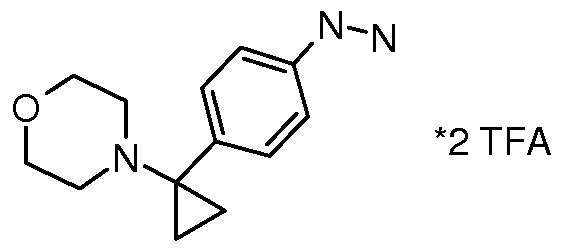
H -4) (4-[l-Morpholin-l-yl-cyclopropyl-l-yl]-phenyl)-hydrazin Bis-Trifluoracetat
Figure imgf000026_0002
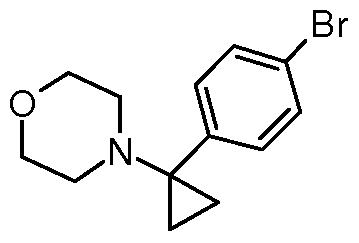
H -4a) 4-Brom-( 1 -Morpholin- 1 -yl-cyclopropyl- 1 -yl)-benzol
Figure imgf000026_0003
Analog zur Darstellung von H-3b wird ausgehend von H-3a (0.5 g, 1.7 mmol), Kaliumcarbonat (0.73 g, 5.2 mmol), Kaliumiodid (3 mg, 0.02 mmol) und Bis(2- bromethyl)ether die gewünschte Verbindung erhalten. Ausbeute: 0.32 g. H-4b) N,N'-[4-(l-Morpholin-4-yl-cyclopropyl)-phenyl]-hydrazindicarbonsäure-di-?er?- butylester
Figure imgf000027_0001
Analog zur Darstellung von H-3c wird ausgehend von H-4a (0.22 g, 0.76 mmol), π-Butyllithium (0.92 mL, 2.5 M in Hexan) und Di-te/t-butylazodicarboxylat (0.21 g, 0.92 mmol) die gewünschte Verbindung erhalten. Ausbeute: 0.34 g. Analog zur Darstellung von H-3 wird ausgehend von H-4b (0.29 g, 0.7 mmol) und Trifluoressigsäure (0.1 mL, 2 mmol) die gewünschte Verbindung erhalten. Ausbeute: 0.36 g (w = 0.9)
H-5) (4-Imidazol- 1 -ylmethyl-phenyl)-hydrazin
Figure imgf000027_0002
H-5a) l-(4-Nitro-benzyl)-lH-imidazol
Figure imgf000027_0003
Zu einer Lösung von 4-Nitrobenzylbromid (5 g, 23 mmol) und Imidazol (1.6 g, 23 mmol) wird Kaliumcarbonat (3.1 g, 23 mmol) zugegeben und das Reaktionsgemisch bei RT gerührt. Nach vollständigem Umsatz laut ΗPLC-MS wird die Suspension in 800 mL Wasser gegossen und dreimal mit Ethylacetat extrahiert. Die vereinigten organischen Phasen werden mit gesättigte Natriumchloridlösung gewaschen, über Natriumsulfat getrocknet und eingeengt. Der Rückstand wird chromatographisch an Kieselgel mit Dichlormethan/Methanol gereinigt. Ausbeute: 2.1 g. H-5b) 4-Imidazol- 1 -ylmethyl-phenylamin
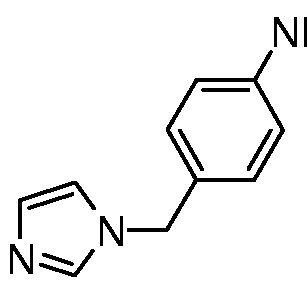
Figure imgf000028_0001
Eine Lösung von H-5a (2.1 g, 10 mmol) in 10 mL Ethanol, 10 mL Ethylacetat und 13 mL 1 M Salzsäure wird in einem Hydrierreaktor mit Palladium (10% auf Aktivkohle, 0.27 g) versetzt und über Nacht bei RT und 3.4 bar Wasserstoff druck gerührt. Das Reaktionsgemisch wird filtriert, eingeengt und dreimal mit Ethanol kodestilliert. Ausbeute: 1.8 g. Zu einer Lösung von H-5b (1.8 g, 10 mmol) in 10 mL 37% Salzsäure wird bei -10 0C eine Lösung von Natriumnitrit (0.77 g, 10 mmol) in 5 mL Wasser zugegeben. Nach 20 min Rühren bei 0 0C wird wieder bei -10 0 C eine Lösung von Zinn(II)chlorid Dihydrat (8.9 g, 39 mmol) in 10 mL 37% Salzsäure zugegeben. Das Reaktionsgemisch wird auf RT erwärmt, mit IO N Natronlauge basisch gestellt und mit Ethylacetat extrahiert. Die wässrige Phase wird filtriert und mit Dichlormethan extrahiert. Die vereinigten organischen Phasen werden getrocknet und eingeengt. Ausbeute: 0.32 g.
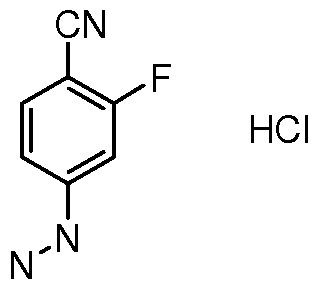
H-6) 2-Fluor-4-hydrazino-benzonitril Hydrochlorid
Figure imgf000028_0002
H-6a) 4-Amino-2-fluor-benzonitril
Figure imgf000028_0003
Eine Lösung von 2-Fluor-4-nitrobenzonitril (5 g, 30 mmol) in 300 mL Methanol wird in einem Hydrierreaktor mit Palladium (5% auf Aktivkohle, 400 mg) 2 h bei RT und 2 bar Wasserstoffdruck gerührt. Das Reaktionsgemisch wird filtriert und eingeengt. Ausbeute: 4 g- Analog zur Darstellung von H-5 wird ausgehend von H-6a (4 g, 29 mmol), Natriumnitrit (3.2 g, 46 mmol) und Zinn(II)chlorid Dihydrat (26 g, 0.12 mol) die gewünschte Verbindung nach Versetzen mit 10 mL einer 2 M-Lösung von HCl in Dioxan als Hydrochlorid erhalten. Ausbeute: 4.3 g (w = 0.7)
H-7) 4-Fluor-3-hydrazino-benzonitril
Figure imgf000029_0001
4-Fluor-3-nitrobenzonitril (5 g, 30 mmol) wird zunächst einer katalytischen Hydrierung mit 5%-Palladium auf Aktivkohle (0.4 g) in 300 mL Methanol unterzogen (2 h bei 2 bar Wasserstoffdruck), wobei das gebildete 3-Amino-4-fiuorbenzonitril nach Filtration und Evaporation des Lösungsmittels als Feststoff anfällt. Ausbeute: 4.1 g. Analog zur Darstellung von H-5 wird ausgehend von 3-Amino-4-fluorbenzonitril (4.1 g, 30 mmol), Natriumnitrit (3.1 g, 45 mmol), Zinn(II)chlorid Dihydrat (27 g, 119 mmol) in insgesamt 130 mL Salzsäure (w = 0.32) und 40 mL Wasser das gewünschte Produkt H-7 erhalten. Ausbeute: 4.1 g
Z-I) N-[7-Oxo-6-(pyridin-3-carbonyl)-4,5,6,7-tetrahydro-benzthiazol-2-yl]-acetamid
Figure imgf000029_0002
Die Synthese von Z-I ist in DE 102004048877 beschrieben.
Z-2) [7-Oxo-6-(pyridin-3-carbonyl)-4,5,6,7-tetrahydro-benzothiazol-2-yl]- carbamidsäuremethylester
Figure imgf000029_0003
Z-2a) [7-0x0-4,5, 6,7-tetrahydro-benzthiazol-2-yl]-carbamidsäuremethylester
Figure imgf000030_0001
Zu einer Suspension von 2-Amino-5,6-dihydro-4-H-benzthiazol-7-on (30 g, 0.18 mol) in 500 mL trockenem TΗF wird eine Lösung von Methylchloroformiat (15 mL, 0.2 mol) in 15 mL trockenem TΗF zugegeben und anschließend über Nacht unter Rückfluss gerührt. Das Reaktionsgemisch wird filtriert, das Filtrat eingeengt, und der feste Rückstand mit Diethylether verrührt, erneut filtriert und getrocknet. Ausbeute: 20 g. Zu einer Lösung von Z-2a (15 g, 66 mmol) in 1.2 L trockenem TΗF wird bei -10 0C unter Argonatmosphäre 200 mL LiΗMDS (IM in TΗF) zugetropft und 4 h gerührt. Anschließend wird zur Suspension eine Lösung von 3-Pyridylcarbonyl-iV-imidazolid (23 g, 0.13 mol) in 85 mL trockenem TΗF zugegeben. Nach 1 h wird das Kältebad entfernt und das Reaktionsgemisch über Nacht bei RT gerührt. Das Lösungsmittel wird abdekantiert und der Rückstand mit Dichlormethan und gesättigter Natriumhydrogencarbonatlösung versetzt. Die Phasen werden getrennt und die wässrige Phase wird mit Dichlormethan extrahiert. Die vereinigten organischen Phasen werden über Magnesiumsulfat getrocknet, eingeengt, und der Rückstand wird mit 200 mL Diethylether verrührt. Der Niederschlag wird filtriert, in 200 mL Acetonitril 1 h mit Ultraschall behandelt und abfiltriert. Ausbeute: 9.3 g.
Z-3) N-[l-(2-Chlor-4-formyl-phenyl)-3-pyridin-3-yl-4,5-dihydro-lH-pyrazolo[4,3- g]benzthiazol-7-yl]-acetamid
Figure imgf000030_0002
In einem Ηydrierreaktor unter Argonatmosphäre wird bei 10 0C zu einer Suspension von Raney-Nickel (8 g, 93 mmol) in 75 mL Dichlormethan und 75 mL Methanol Triethylammonium Ηypophsophithydrat (2.2 mL, 12 mmol) zugegeben. Nach dem Abklingen der Gasentwicklung wird N-[I -(2-Chlor-4-cyanophenyl)-3-pyridin-3-yl-4,5- dihydro-lH-pyrazolo[4,3-g]benzthiazol-7-yl]-acetamid (PCT/EP05055021) (2.7 g, 5.6 mmol) zugegeben und 3 h bei 55 0C gerührt. Das Reaktionsgemisch wird filtriert und das Filtrat eingeengt. Der Rückstand wird an Kieselgel mit Dichlormethan/Methanol gereinigt. Ausbeute: 1.1 g.
Z-4) N-[l-(3-Dimethylamino-4-formyl-phenyl)-3-pyridin-3-yl-4,5-dihydro-lH- pyrazolo[4,3-g]benzthiazol-7-yl]-acetamid
Figure imgf000031_0001
Z-4a) N-[l-(3-Chlor-4-cyanophenyl)-3-pyridin-3-yl-4,5-dihydro-lH-pyrazolo[4,3- g]benzthiazol-7-yl]-acetamid
Figure imgf000031_0002
Eine Lösung von Z-I (5.1 g, 16 mmol) und Η-6 (4.3 g, 16 mmol) in 180 mL Eisessig wird 14 h bei 50 0C gerührt. Das Reaktionsgemisch wird eingeengt und anschließend auf Eiswasser gegeben. Der entstandene Niederschlag wird filtriert. Ausbeute: 5.2 g (w = 0.9).
Z-4b) N-[l-(4-Cyano-3-dimethylamino-phenyl)-3-pyridin-3-yl-4,5-dihydro-lH- pyrazolo[4,3-g]benzthiazol-7-yl]-acetamid
Figure imgf000031_0003
Eine Lösung von Z-4a (0.2 g, 0.33 mmol) und Dimethylamin (0.81 mL, 1.6 mmol) in 2 mL DMSO wird 15 min bei 130 0C in der Mikrowelle erhitzt und anschließend mit Wasser versetzt. Der entstandene Niederschlag wird abfϊltriert und chromatographisch an Kieselgel mit Dichlormethan/Methanol gereinigt. Ausbeute: 82 mg. Zu einer Lösung von Z-4b (100 mg, 0.22 mmol) in 1.5 mL Pyridin und 0.7 mL Eisessig wird Raney-Nickel (0.2 g, 3.4 mmol) zugegeben und anschließend 2 h bei 50 0C gerührt. Das Reaktionsgemisch wird über Celite filtriert und das Filtrat eingeengt. Der Rückstand wird chromatographisch mittels RP-HPLC gereinigt. Ausbeute: 53 mg.
Z-5) l-(2-Chlor-4-dimethylaminomethylphenyl)-3-pyridin-3-yl-4,5-dihydro-lH- pyrazolo[4,3-g]benzthiazol-7-ylamin
Figure imgf000032_0001
Zu einer Lösung von 4-(7-Amino-3-pyridin-3-yl-4,5-dihydro-pyrazolo[4,3-g]benzthiazol- l-yl)-3-chlor-iV,iV-dimethylbenzamid (PCT/EP05055021) (0.46 g, 1 mmol) in 25 mL trockenem TΗF wird unter Argonatmosphäre bei -78 0C eine Lösung von
Lithiumaluminiumhydrid (1 M in TΗF, 3 mL) zugegeben. Nach 5 min wird das Kältebad entfernt und das Reaktionsgemisch auf RT erwärmt. Anschließend wird unter Kühlung 1 mL Wasser zugetropft und 30 min gerührt. Der Niederschlag wird filtriert und das Filtrat eingeengt. Ausbeute: 0.34 g.
Z-6) 1 -(4-Dimethylaminomethyl-phenyl)-3-pyridin-3-yl-4,5-dihydro- lH-pyrazolo[4,3- g]benzthiazol-7-ylamin
Figure imgf000032_0002
Analog der Darstellung von Z-5 wird ausgehend von 4-(7-Amino-3-pyridin-3-yl-4,5- dihydro-pyrazolo[4,3-^]benzthiazol-l-yl)-N,N-dimethyl-benzamid (PCT/EP05055021) (1.4 g, 3.4 mmol) und Lithiumaluminiumhydrid (1 M in THF, 6 mL) das gewünschte Produkt enthalten. Ausbeute: 1.4 g (w = 0.9).
Z-7) l-(2-Chlor-4-piperidin-l-ylmethylphenyl)-3-pyridin-3-yl-4,5-dihydro-lH- pyrazolo[4,3-g]benzthiazol-7-ylamin
Figure imgf000033_0001
X-Ia) [4-(7-Amino-3-pyridin-3-yl-4,5-dihydro-pyrazolo[4,3-g]benzthiazol-l-yl)-3- chlorphenylj-piperidin- 1 -yl-methanon
Figure imgf000033_0002
Zu einer Lösung von 4-(7-Amino-3-pyridin-3-yl-4,5-dihydro-pyrazolo[4,3-g]benzthiazol- l-yl)-3-chlorbenzoesäure (PCT/EP05055021) (0.25 g, 0.5 mmol) und O-(7- Azabenztriazol-l-yl)-N,N,N',N'-tetramethyluroniumhexafluorphosphat (0.24 g, 0.6 mmol) in 10 mL Dichlormethan wird iV,iV-Diisopropylethylamin (0.42 mL, 2.4 mmol) zugegeben und 1 h bei RT gerührt. Anschließend wird Piperidin (60 μL, 0.6 mmol) zugegeben und über Nacht bei RT gerührt. Das Reaktionsgemisch wird eingeengt, in 2 mL DMF gelöst und chromatographisch mittels RP-ΗPLC gereinigt. Ausbeute: 94 mg. Zu einer Lösung von Z-7a (89 mg, 0.18 mmol) in 8 mL trockenem TΗF wird unter Argonatmosphäre Boran-TΗF-Komplex (1 M in TΗF, 1.81 mL) zugegeben und das Reaktionsgemisch 13 h bei 60 0C gerührt. Anschließend wird 5 mL TMEDA zugegeben und das Reaktionsgemisch eingeengt. Der Rückstand wird in 2 mL DMF gelöst, filtriert und chromatographisch mittels RP-ΗPLC gereinigt. Ausbeute: 15 mg.
Z-8) N-[l-(2-Fluor-5-formylphenyl)-3-pyridin-3-yl-4,5-dihydro-lH-pyrazolo[4,3- g]benzthiazol-7-yl]-acetamid
Figure imgf000034_0001
Z-8a) Λ^l-(5-Cyano-2-fluor-phenyl)-3-pyridin-3-yl-4,5-dihydro-lH-pyrazolo[4,3- g]benzthiazol-7-yl]-acetamid
Figure imgf000034_0002
Analog zur Darstellung von I- 1 wird ausgehend von Z-I (4.7 g, 15 mmol), Η-8 (4.1 g, 15.1 mmol) und 170 mL Eisessig die gewünschte Verbindung 1-9 erhalten. Ausbeute: 4.8 g (w = 0.8)
Eine Lösung von Z-8a (400 mg, w = 0.7, 0.65 mmol) in 3 mL Pyridin und 1.4 mL Essigsäure wird 30 min bei RT gerührt, mit Raney-Nickel (400 mg, 6.8 mmol) versetzt und I h bei 60 0C gerührt. Anschließend wird über Celite filtriert, mit Pyridin gewaschen und das Filtrat im Vakuum eingeengt. Der Rückstand wird in DMF aufgenommen und mittels RP-Chromatographie gereinigt. Ausbeute: 122 mg.
Beispiel 1.1) N-[ 1 -(4-Azetidin- 1 -ylmethyl-2-chlorphenyl)-3-pyridin-3-yl-4,5-dihydro- IH- pyrazolo[4,3-g]benzthiazol-7-yl]-acetamid
Eine Lösung von Z-3 (0.1 g, 0.16 mmol) und Azetidin (12 μL, 0.18 mmol) in 4 mL Dichlormethan wird 1.5 h bei RT gerührt. Anschließend wird Natriumtrisacetoxyborhydrid (40 mg, 19 mmol) zugegeben und 2 d bei RT gerührt. Das Reaktionsgemisch wird eingeengt, der Rückstand in 2 mL DMF gelöst und chromatographisch mittels RP-ΗPLC gereinigt. Ausbeute: 28 mg.
Die Darstellung der Beispiele 1.2 - 1.8 erfolgt analog der Synthese von 2.1.
Figure imgf000035_0001
Beispiel 2.1) N-{l-[4-(l-Morpholin-4-yl-cyclopropyl)-phenyl]-3-pyridm-3-yl-4,5-dihydro- lH-pyrazolo[4,3-g]benzthiazol-7-yl}-acetamid
Eine Lösung von Z-I (0.13 g, 0.4 mmol) und Η-4 (0.18 g, 0.52 mmol) in 5 mL Eisessig wird über Nacht bei RT gerührt. Das Reaktionsgemisch wird eingeengt, der Rückstand in
2 mL DMSO gelöst und mittels RP-HPLC gereinigt. Ausbeute: 15 mg.
Die Darstellung der Beispiele 2.2 - 2.5 erfolgt analog der Synthese von 2.1.
Figure imgf000036_0001
Beispiel 2.6) N-[I -(2-Chlor-4-morpholin-4-ylmethyl-phenyl)-3-pyridin-3-yl-4,5-dihydro- lH-pyrazolo[4,3-g]benzthiazol-7-yl]-acetamid
Eine Lösung von Z-I (4.6 g, 15 mmol) und Η-l (4.7 g, 15 mmol) in 54 mL Ethanol wird in drei Teilen 10 - 12 min bei 120 -135 0C in der Mikrowelle erhitzt. Der entstandene
Niederschlag wird filtriert und mit Ethanol gewaschen. Ausbeute: 4.3 g.
Die Darstellung von Beispiel 2.7 erfolgt analog der Synthese von 2.6.
Figure imgf000037_0001
Beispiel 3.1) N-[l-(2-Chlor-4-dimethylaminomethyl-phenyl)-3-pyridin-3-yl-4,5-dihydro- lH-pyrazolo[4,3-g]benzthiazol-7-yl]-acetamid
Zu einer Lösung von Z-5 (0.18 g, 0.4 mmol) in 50 mL Dichlormethan werden Pyridin (0.4 mL, 40 mmol) und Acetylchlorid (0.32 mL, 4 mmol) zugegeben und das Reaktionsgemisch 1 h bei RT gerührt. Anschließend wird 2 mL Methanol zugegeben und das Reaktionsgemisch eingeengt. Der Rückstand wird in 2 mL DMSO gelöst und chromatographisch mittels RP-ΗPLC und anschließend an Kieselgel mit Dichlormethan/Methanol gereinigt. Ausbeute: 35 mg.
Die Darstellung von Beispiel 3.2 und 3.3 erfolgt analog der Synthese von 3.1.
Figure imgf000038_0003
Beispiel 4) 1 -[ 1 -(2-Chlor-4-dimethylammomethyl-phenyl)-3-pyridin-3-yl-4,5-dihydro- IH- pyrazolo[4,3-g]benzthiazol-7-yl]-3-methyl-harnstoff
Figure imgf000038_0001
4-a) 3-Chlor-4-(7-ethylsulfanylcarbonylamino-3-pyridm-3-yl-4,5-dihydro-pyrazolo[4,3- g]benzthiazol- 1 -yl)-benzoesäuremethylester
Figure imgf000038_0002
Eine Lösung von [7-Oxo-6-(pyridin-3-carbonyl)-4,5,6,7-tetrahydro-benzthiazol-2-yl]- thiocarbamidsäure-.S'-ethylester (PCT/EP05055021) (3.6 g, 10 mmol) und 3-Chlor-4- hydrazino-benzoesäuremethylester (3.7 g, 18 mmol) in 100 mL Eisessig wird über Nacht bei 50 0C gerührt, anschließend in Wasser gegeben und der entstandene Niederschlag abfiltriert. Ausbeute 2.9 g. 4-b) 3-Chlor-4-(7-ethylsulfanylcarbonylamino-3-pyridm-3-yl-4,5-dihydro-pyrazolo[4,3- gjbenzthiazol- 1 -yl)-benzoesäure
Figure imgf000039_0001
Ein Suspension von 4-a (5.3 g, 10 mmol) in 20 mL Dioxan wird mit Lithiumhydroxid (3.2 g, in 50 mL Wasser) versetzt. Nach Aufklaren der Lösung wird die Reaktionsmischung weitere 30 min bei RT gerührt und mit 5 M Salzsäure versetzt. Der entstandene Niederschlag wird filtriert, mit Wasser gewaschen und getrocknet. Ausbeute: 3.8 g.
4-c) [l-(2-Chlor-4-dimethylcarbamoylphenyl)-3-pyridin-3-yl-4,5-dihydro-lH- pyrazolo[4,3-g]benzthiazol-7-yl]-thiocarbamidsäure-,5r-ethyl ester
Figure imgf000039_0002
Zu einer Lösung von 4-b (0.52 g, 1 mmol), O-Benztriazol-l-yl-iV,iV,iV',iV'- tetramethyluroniumtetrafluorborat (0.38 g, 1.1 mmol) und iV,iV-Diisopropylethylamin (0.6 mL, 6.3 mmol) in 10 mL TΗF wird Dimethylamin (2 M in TΗF, 0.6 mL) gegeben und über Nacht bei RT gerührt. Anschließend wird das Reaktionsgemisch mit Wasser versetzt und mit Ethylacetat extrahiert. Die vereinigten organischen Phasen werden getrocknet und eingeengt. Ausbeute: 0.54 g. 4-d )3-Chlor-N,N-dimethyl-4-[7-(3-methyl-ureido)-3-pyridin-3-yl-4,5-dihydro- pyrazolo[4,3-g]benzthiazol-l-yl]-benzamid
Figure imgf000040_0001
Eine Lösung von 4-c (0.5 g, 0.46 mmol) und Methylamin (2 M in THF, 2 mL) in 40 mL Dichlormethan/THF wird über Nacht bei 80 0C gerührt. Das Reaktionsgemisch wird eingeengt, der Rückstand in DMF gelöst und chromatographisch mittels RP-HPLC gereinigt. Ausbeute: 0.10 g.
Zu einer Lösung von 4-d (0.1 g, 0.2 mmol) in 10 mL trocknem THF wird unter
Argonatmosphäre bei -78 0C Lithiumaluminumhydrid (1 M in THF, 0.5 mL) zugegeben. Nach Entfernen des Kältebads wird das Reaktionsgemisch 1.5 h bei RT gerührt und anschließend mit Wasser versetzt. Das Reaktionsgemisch eingeengt, der Rückstand in
DMF gelöst und chromatographisch mittels RP-HPLC gereinigt. Ausbeute: 30 mg.
HPLC: Rt = 0.59 min
[M+l]+ = 494
Beispiel 5.1 N-{1 -[2-Fluor-5-(4-methylpiperazin- 1 -ylmethyl)-phenyl]-3-pyridin-3-yl-4,5- dihydro- lH-pyrazolo[4,3-g]benzthiazol-7-yl} -acetamid
Eine Suspension von Z-8 (50 mg, 0.11 mmol) in 1 mL 1,2-Dichlorethan wird mit N- Methylpiperazin (19 mL, 0.17 mmol) versetzt und 1 h bei RT gerührt. Anschließend werden nacheinander 10 μL Eisessig und Natriumtrisacetoxyborhydrid (37 mg, 0.17 mmol) zugegeben. Nach vollständigem Umsatz (ΗPLC) wird die Reaktionsmischung chromatographisch gereinigt. Ausbeute: 32 mg. Beispiel 5.2
Analog zu Beispiel 5.1 wird folgende Beispiele synthetisiert
Figure imgf000041_0002
Weiters können nach den vorstehend beschriebenen Methoden folgende Verbindungen hergestellt werden.
Figure imgf000041_0001
Figure imgf000042_0001
Das nachfolgende Beispiel beschreibt die biologische Wirkung der erfindungsgemäßen Verbindungen ohne die Erfindung auf dieses Beispiel einzuschränken.
HCTl 16 Zytotoxizitätstest Der Test basiert auf der Reduktion von AlamarBlue (Biosource Int., USA) in lebenden (metabolisch aktiven) Zellen zu einem fluorometrisch nachweisbaren Produkt. In Gegenwart von zelltoxischen Substanzen kann das Substrat nicht mehr reduziert werden, so dass kein Anstieg der Fluoreszenz messbar ist.
HCTl 16 (humane Kolonkarzinomzelllinie) Zellen werden in Mikro titerplatten ausgesät und über Nacht in Kulturmedium bei 37 0C und 5% CO2 inkubiert. Die Testsubstanzen werden in Medium schrittweise verdünnt und zu den Zellen gegeben, so dass das Gesamtvolumen 200 μL/well beträgt. Als Kontrollen dienen Zellen, die mit Medium, jedoch nicht mit Substanz, versetzt werden. Nach einer Inkubationszeit von 4 - 6 Tagen gibt man 20 μL/well AlamarBlue zu und inkubiert die Zellen für weitere 6 - 8 h bei 37 0C. Zur Fluoreszenzmessung wird bei einer Wellenlänge von 545 nm angeregt und bei 590 nm die Emission gemessen.
Die Berechnung von EC50 Werten erfolgt mit Hilfe des Programms GraphPad Prism. Alle Verbindungen der angeführten Beispiele 1.1 bis 5.2 weisen einen EC50 (HCT-116) von kleiner als 5 μM auf.
Die Substanzen der vorliegenden Erfindung sind PI3-Kinase Inhibitoren. Aufgrund ihrer biologischen Eigenschaften eignen sich die neuen Verbindungen der allgemeinen Formel (1), deren Isomere und deren physiologisch verträgliche Salze zur Behandlung von Erkrankungen, die durch exzessive oder anomale Zellproliferation charakterisiert sind.
Zu solchen Erkrankungen gehören beispielsweise: Virale Infektionen (z.B. HIV und Kaposi Sarkoma); Entzündung und Autoimmun-Erkrankungen (z.B. Colitis, Arthritis, Alzheimer Erkrankung, Glomerulonephritis und Wund-Heilung); bakterielle, fungale und/oder parasitäre Infektionen; Leukämien, Lymphome und solide Tumore; Haut- Erkrankungen (z.B. Psoriasis); Knochen-Erkrankungen; kardiovaskuläre Erkrankungen (z.B. Restenose und Hypertrophie). Ferner sind sie nützlich als Schutz von proliferierenden Zellen (z.B. Haar-, Intestinal-, Blut- und Progenitor-Zellen) gegen DNA-Schädigung durch Strahlung, UV-Behandlung und/oder zytostatischer Behandlung (Davis et al., 2001).
Beispielsweise können folgende Krebserkrankungen mit erfindungsgemäßen Ver- bindungen behandelt werden, ohne jedoch darauf beschränkt zu sein: Hirntumore wie beispielsweise Akustikusneurinom, Astrozytome wie pilozytisches Astrozytome, fibrilläres Astrozytom, protoplasmatisches Astrozytom, gemistozytäres Astrozytom, anaplastisches Astrozytom und Glioblastome, Hirnlymphome, Hirnmetastasen, Hypophysentumor wie Prolaktinom, HGH (human growth hormon) produzierender Tumor und ACTH produzierender Tumor (adrenocorticotropes Hormon), Kraniopharyngiome,
Medulloblastome, Meningeome und Oligodendrogliome; Nerventumore (Neoplasmen) wie zum Beispiel Tumore des vegetativen Nervensystems wie Neuroblastoma sympathicum, Ganglioneurom, Paragangliom (Phäochromozytom, Chromaffϊnom) und Glomus- caroticum-Tumor, Tumore am peripheren Nervensystem wie Amputationsneurom, Neurofibrom, Neurinom (Neurilemmom, Schwannom) und malignes Schwannom, sowie Tumore am zentralen Nervensystem als Hirn- und Rückenmarkstumoren; Darmkrebs wie zum Beispiel Rektumkarzinom, Kolonkarzinom, Analkarzinom, Dünndarmtumore und Zwölffingerdarmtumore; Lidtumore wie Basaliom oder Basalzellkarzinom; Bauchspeicheldrüsenkrebs oder Pankreaskarzinom; Blasenkrebs oder Blasenkarzinom; Lungenkrebs (Bronchialkarzinom) wie beispielsweise kleinzellige Bronchialkarzinome (Haferzellkarzinome) und nicht-kleinzellige Bronchialkarzinome wie Plattenepithelkarzinome, Adenokarzinome und großzellige Bronchialkarzinome; Brustkrebs wie zum Beispiel Mammakarzinom wie infiltrierend duktales Karzinom, Kolloidkarzinom, lobulär invasives Karzinom, tubuläres Karzinom, adenozystisches Karzinom und papilläres Karzinom; Non-Hodgkin-Lymphomen (NHL) wie beispielsweise Burkitt-Lymphom, niedrigmaligne Non-Hodgkin-Lymphomen (NHL) und Mucosis fungoides; Gebärmutterkrebs oder Endometriumkarzinom bzw. Corpuskarzinom; CUP-Syndrom (Cancer of Unknown Primary); Eierstockskrebs oder Ovarial-Karzinom wie mucinöse, endometriale oder seröse Krebs; Gallenblasenkrebs; Gallengangskrebs wie beispielsweise Klatskin- Tumor; Hodenkrebs wie zum Beispiel Seminome und Nicht-Seminome; Lymphom (Lymphosarkom) wie zum Beispiel malignes Lymphom, Morbus Hodgkin, Non-Hodgkin- Lymphomen (NHL) wie chronisch lymphatische Leukämie, Haarzell-Leukämie, Immunozytom, Plasmozytom (multiples Myelom), Immunoblastom, Burkitt-Lymphom, T- Zonen-Mycosis fungoides, großzellig-anaplastisches Lymphoblastom und Lymphoblastom; Kehlkopfkrebs wie zum Beispiel Stimmbandtumoren, supraglottisch, glottisch und subglottisch Kehlkopftumore; Knochenkrebs wie zum Beispiel
Osteochondrom, Chondrom, Chondroblastom, Chondromyxoidfibrom, Osteom, Osteoid- Osteom, Osteoblastom, eosinophiles Granulom, Riesenzell-Tumor, Chondrosarkom, Osteosarkom, Ewing-Sarkom, Retikulo-Sarkom, Plasmozytom, Riesenzell-Tumor, fibröse Dysplasie, juvenile Knochenzyste und aneurysmatische Knochenzyste; Kopf-Hals- Tumoren wie zum Beispiel Tumore der Lippen, Zunge, Mundboden, Mundhöhle, Zahnfleisch, Gaumen, Speicheldrüsen, Rachen, Nasenhöhlen, Nasennebenhöhlen, Kehlkopf und Mittelohr; Leberkrebs wie zum Beispiel das Leberzellkarzinom oder hepatozelluläres Karzinom (HCC); Leukämien wie zum Beispiel akute Leukämien wie akute lymphatische/lymphoblastische Leukämie (ALL), akute myeloische Leukämie (AML); chronische Leukämien wie chronisch lymphatische Leukämie (CLL), chronisch myeloische Leukämie (CML); Magenkrebs oder Magenkarzinom wie zum Beispiel papilläres, tubuläres und muzinöses Adenokarzinom, Siegelringzellkarzinom, adenosquamöses Karzinom, kleinzelliges Karzinom und undifferenziertes Karzinom; Melanome wie zum Beispiel oberflächlich spreitendes, knotiges, lenitgo-maligna und akral-lentiginöse Melanom; Nierenkrebs wie zum Beispiel Nierenzellkarzinom oder Hypernephrom oder Grawitz-Tumor; Speiseröhrenkrebs oder Ösophaguskarzinom; Peniskrebs; Prostatakrebs; Rachenkrebs oder Pharynxkarzinome wie zum Beispiel Nasopharynxkarzinome, Oropharynxkarzinome und Hypopharynxkarzinome; Retinoblastom; Scheidenkrebs oder Vaginalkarzinom; Plattenepithelkarzinome, Adenokarzinome, in situ Karzinome, maligne Melanome und Sarkome; Schilddrüsen- Karzinome wie zum Beispiel papilläre, follikuläre und medulläre Schilddrüsen-Karzinom, sowie anaplastische Karzinome; Spinaliom, Stachelzellkarzinom und Plattenepithelkarzinom der Haut; Thymome, Urethrakrebs und Vulvakrebs.
Die neuen Verbindungen können zur Prävention, Kurz- oder Langzeitbehandlung der vorstehend erwähnten Krankheiten auch gegebenenfalls in Kombination mit anderen "State-of-art" Verbindungen, wie anderen anti-Tumor Substanzen, zytotoxischen Substanzen, Zellproliferationshemmern, anti-angiogenen Substanzen, Steroiden oder Antikörpern, verwendet werden.
Die Verbindungen der allgemeinen Formel (1) können allein oder in Kombination mit anderen erfindungsgemäßen Wirkstoffen, gegebenenfalls auch in Kombination mit weiteren pharmakologisch aktiven Wirkstoffen, zur Anwendung gelangen. Chemotherapeutika, welche in Kombination mit den erfindungsgemäßen Verbindungen verabreicht werden können, umfassen, ohne darauf eingeschränkt zu sein, Hormone, Hormonanaloge und Antihormone (z.B. Tamoxifen, Toremifen, Raloxifen, Fulvestrant, Megestrol Acetat, Flutamid, Nilutamid, Bicalutamid, Aminoglutethimid, Cyproteron Acetat, Finasterid, Buserelin Acetat, Fludrocortinson, Fluoxymesteron, Medroxyprogesteron, Octreotid), Aromatase Inhibitoren (z.B. Anastrozol, Letrozol, Liarozol, Vorozol, Exemestan, Atamestan,), LHRH Agonisten und Antagonists (z.B. Goserelin Acetat, Luprolid), Inhibitoren von Wachstumsfaktoren (growth factors wie zum Beispiel "platelet derived growth factor" und "hepatocyte growth factor", Inhibitoren sind z. B. "growth factor" -Antikörper, "growth factor receptor"-Antikörper und Tyrosinekinase Inhibitoren, wie zum Beispiel Gefitinib, Imatinib, Lapatinib, Erbitux® und Trastuzumab); Antimetabolite (z.B. Antifolate wie Methotrexat, Raltitrexed, Pyrimidinanaloge wie 5- Fluorouracil, Capecitabin und Gemcitabin, Purin- und Adenosinanaloge wie Mercaptopurin, Thioguanin, Cladribin und Pentostatin, Cytarabin, Fludarabin); Antitumor- Antibiotica (z.B. Anthracycline wie Doxorubicin, Daunorubicin, Epirubicin und Idarubicin, Mitomycin-C, Bleomycin, Dactinomycin, Plicamycin, Streptozocin); Platinderivative (z.B. Cisplatin, Oxaliplatin, Carboplatin); Alkylierungsagentien (z.B. Estramustin, Meclorethamin, Melphalan, Chlorambucil, Busulphan, Dacarbazin, Cyclophosphamid, Ifosfamid, Temozolomid, Nitrosoharnstoffe wie zum Beispiel
Carmustin und Lomustin, Thiotepa); antimitotische Agentien (z.B. Vinca-Alkaloide wie zum Beispiel Vinblastin, Vindesin, Vinorelbin und Vincristin; und Taxane wie Paclitaxel, Docetaxel); Topoisomerase Inhibitoren (z.B. Epipodophyllotoxine wie zum Beispiel Etoposid und Etopophos, Teniposid, Amsacrin, Topotecan, Irinotecan, Mitoxantron) und verschiedene Chemotherapeutica wie Amifostin, Anagrelid, Clodronat, Filgrastin, Interferon alpha, Leucovorin, Rituximab, Procarbazin, Levamisol, Mesna, Mitotan, Pamidronat und Porfimer.
Geeignete Anwendungsformen sind beispielsweise Tabletten, Kapseln, Zäpfchen, Lösungen, - insbesondere Lösungen zur Injektion (s.c, i.V., i.m.) und Infusion - Säfte,
Emulsionen oder dispersible Pulver. Hierbei soll der Anteil der pharmazeutisch wirksamen Verbindung(en) jeweils im Bereich von 0,1 - 90 Gew.-%, bevorzugt 0,5 - 50 Gew.-% der Gesamtzusammensetzung liegen, das heißt in Mengen die ausreichend sind, um den unten angegebenen Dosierungsbereich zu erreichen. Die genannten Dosen können, falls erforderlich, mehrmals täglich gegeben werden. Entsprechende Tabletten können beispielsweise durch Mischen des oder der Wirkstoffe mit bekannten Hilfsstoffen, beispielsweise inerten Verdünnungsmitteln, wie Calciumcarbonat, Calciumphosphat oder Milchzucker, Sprengmitteln, wie Maisstärke oder Algin- säure, Bindemitteln, wie Stärke oder Gelatine, Schmiermitteln, wie Magnesiumstearat oder Talk, und/oder Mitteln zur Erzielung des Depoteffektes, wie Carboxymethylcellulose, Celluloseacetatphthalat, oder Polyvinylacetat erhalten werden. Die Tabletten können auch aus mehreren Schichten bestehen.
Entsprechend können Dragees durch Überziehen von analog den Tabletten hergestellten Kernen mit üblicherweise in Drageeüberzügen verwendeten Mitteln, beispielsweise Kollidon oder Schellack, Gummi arabicum, Talk, Titandioxid oder Zucker, hergestellt werden. Zur Erzielung eines Depoteffektes oder zur Vermeidung von Inkompatibilitäten kann der Kern auch aus mehreren Schichten bestehen. Desgleichen kann auch die Drageehülle zur Erzielung eines Depoteffektes aus mehreren Schichten bestehen, wobei die oben bei den Tabletten erwähnten Hilfsstoffe verwendet werden können.
Säfte der erfindungsgemäßen Wirkstoffe beziehungsweise Wirkstoffkombinationen können zusätzlich noch ein Süßungsmittel, wie Saccharin, Cyclamat, Glycerin oder Zucker sowie ein geschmacksverbesserndes Mittel, z.B. Aromastoffe, wie Vanillin oder Orangen- extrakt, enthalten. Sie können außerdem Suspendierhilfsstoffe oder Dickungsmittel, wie Natriumcarboxymethylcellulose, Netzmittel, beispielsweise Kondensationsprodukte von Fettalkoholen mit Ethylenoxid, oder Schutzstoffe, wie p-Hydroxybenzoate, enthalten.
Injektions- und Infusionslösungen werden in üblicher Weise, z.B. unter Zusatz von Isotonantien, Konservierungsmitteln, wie p-Hydroxybenzoate, oder Stabilisatoren, wie Alkalisalzen der Ethylendiamintetraessigsäure, gegebenenfalls unter Verwendung von Emulgiermitteln und /oder Dispergiermitteln, wobei beispielsweise bei der Verwendung von Wasser als Verdünnungsmittel gegebenenfalls organische Lösemittel als Lösevermittler bzw. Hilfslösemittel eingesetzt werden können, hergestellt und in Injektions- fiaschen oder Ampullen oder Infusionsfiaschen abgefüllt. Die eine oder mehrere Wirkstoffe beziehungsweise Wirkstoffkombinationen enthaltenden Kapseln können beispielsweise hergestellt werden indem man die Wirkstoffe mit inerten Trägern, wie Milchzucker oder Sorbit, mischt und in Gelatinekapseln einkapselt. Geeignete Zäpfchen lassen sich beispielsweise durch Vermischen mit dafür vorgesehenen Trägermitteln, wie Neutralfetten oder Polyäthylenglykol beziehungsweise dessen Derivaten, herstellen.
Als Hilfsstoffe seien beispielsweise Wasser, pharmazeutisch unbedenkliche organische Lösemittel, wie Paraffine (z.B. Erdölfraktionen), Öle pflanzlichen Ursprungs (z.B. Erdnuss- oder Sesamöl), mono- oder polyfunktionelle Alkohole (z.B. Ethanol oder Glycerin), Trägerstoffe wie z.B. natürliche Gesteinsmehle (z.B. Kaoline, Tonerden, Talkum, Kreide) synthetische Gesteinsmehle (z.B. hochdisperse Kieselsäure und Silikate), Zucker (z.B. Rohr-, Milch- und Traubenzucker) Emulgiermittel (z.B. Lignin, Sulfitablaugen, Methylcellulose, Stärke und Polyvinylpyrrolidon) und Gleitmittel (z.B. Magnesiumstearat, Talkum, Stearinsäure und Natriumlaurylsulfat) erwähnt.
Die Applikation erfolgt in üblicher Weise, vorzugsweise oral oder transdermal, insbesondere bevorzugt oral. Im Falle der oralen Anwendung können die Tabletten selbstverständlich außer den genannten Trägerstoffen auch Zusätze, wie z.B. Natriumeitrat, Calciumcarbonat und Dikalziumphosphat zusammen mit verschiedenen Zuschlagstoffen, wie Stärke, vorzugsweise Kartoffelstärke, Gelatine und dergleichen enthalten. Weiterhin können Gleitmittel, wie Magnesiumstearat, Natriumlaurylsulfat und Talkum zum Tablettieren mitverwendet werden. Im Falle wässriger Suspensionen können die Wirkstoffe außer den oben genannten Hilfsstoffen mit verschiedenen Geschmacksaufbesserern oder Farbstoffen versetzt werden.
Für den Fall der parenteralen Anwendung können Lösungen der Wirkstoffe unter Verwendung geeigneter flüssiger Trägermaterialien eingesetzt werden. Die Dosierung für die intravenöse Anwendung liegt bei 1 - 1000 mg pro Stunde, vorzugsweise zwischen 5 - 500 mg pro Stunde. Trotzdem kann es gegebenenfalls notwendig sein, von den genannten Mengen abzuweichen, und zwar in Abhängigkeit vom Körpergewicht bzw. der Art des Applikationsweges, vom individuellen Verhalten gegenüber dem Medikament, der Art von dessen Formulierung und dem Zeitpunkt bzw. Intervall, zu welchen die Verabreichung erfolgt. So kann es in einigen Fällen ausreichend sein, mit weniger als der vorgenannten Mindestmenge auszukommen, während in anderen Fällen die genannte obere Grenze überschritten werden muss. Im Falle der Applikation größerer Mengen kann es empfehlenswert sein, diese in mehreren Einzelgaben über den Tag zu verteilen.
Die nachfolgenden Formulierungsbeispiele illustrieren die vorliegende Erfindung ohne sie jedoch in ihrem Umfang zu beschränken:
Pharmazeutische Formulierungsbeispiele
A) Tabletten pro Tablette
Wirkstoff nach Formel (1) 100 mg
Milchzucker 140 mg
Maisstärke 240 mg
Polyvinylpyrrolidon 15 mg
Magnesiumstearat 5 mg
500 mg
Der fein gemahlene Wirkstoff, Milchzucker und ein Teil der Maisstärke werden miteinander vermischt. Die Mischung wird gesiebt, danach mit einer Lösung von Polyvinylpyrrolidon in Wasser befeuchtet, geknetet, feucht granuliert und getrocknet. Das Granulat, der Rest der Maisstärke und das Magnesiumstearat werden gesiebt und miteinander vermischt. Das Gemisch wird zu Tabletten geeigneter Form und Größe verpresst. B) Tabletten pro Tablette
Wirkstoff nach Formel (1) 80 mg
Milchzucker 55 mg
Maisstärke 190 mg
Mikrokristalline Cellulose 35 mg
Polyvinylpyrrolidon 15 mg
Natrium-carboxymethylstärke 23 mg
Magnesiumstearat 2 mg
400 mg
Der fein gemahlene Wirkstoff, ein Teil der Maisstärke, Milchzucker, mikrokristalline Cellulose und Polyvinylpyrrolidon werden miteinander vermischt, die Mischung gesiebt und mit dem Rest der Maisstärke und Wasser zu einem Granulat verarbeitet, welches getrocknet und gesiebt wird. Dazu gibt man die Natriumcarboxymethylstärke und das Magnesiumstearat, vermischt und verpresst das Gemisch zu Tabletten geeigneter Größe.
C) Ampullenlösung
Wirkstoff nach Formel (1) 50 mg
Natriumchlorid 50 mg
Aqua pro inj. 5 ml
Der Wirkstoff wird bei Eigen-pH oder gegebenenfalls bei pH 5,5 - 6,5 in Wasser gelöst und mit Natriumchlorid als Isotonans versetzt. Die erhaltene Lösung wird pyrogenfrei filtriert und das Filtrat unter aseptischen Bedingungen in Ampullen abgefüllt, die anschließend sterilisiert und zugeschmolzen werden. Die Ampullen enthalten 5 mg, 25 mg und 50 mg Wirkstoff.

Claims

Ansprüche
1.) Verbindungen der allgemeinen Formel (1),
Figure imgf000051_0001
worin
R1 ausgewählt aus der Gruppe bestehend aus -NHRa, -NHC(O)Ra, -NHC(O)ORa,
-NHC(O)NRaRa und -NHC(O)SRa, und
R und R jeweils unabhängig voneinander Wasserstoff oder ein Rest, ausgewählt aus der Gruppe bestehend aus Ci-όAlkyl, C^sCycloalkyl, C6-10Aryl, 5-10 gliedriges Heteroaryl und 3-8 gliedriges Heterocycloalkyl, gegebenenfalls substituiert mit einem oder mehreren Ra und/oder Rb, oder
R2 und R2 gemeinsam mit dem eingeschlossenen Stickstoffatom einen
Heterocycloalkyl- oder Heteroarylring bilden, welcher gegebenenfalls ein oder mehrere weitere Heteroatome enthalten kann, ausgewählt aus der Gruppe bestehend aus N, O und S und gegebenenfalls mit einem oder mehreren Rb und/oder Rd substituiert sein kann, und
R3 ein Rest ausgewählt aus der Gruppe bestehend aus Cό-ioAryl und 5-6 gliedriges
Heteroaryl, gegebenenfalls substituiert mit einem oder mehreren, gleich oder verschiedenen Rc und/oder Rb, und R4 und R6 jeweils unabhängig voneinander Wasserstoff oder ein Rest ausgewählt aus der Gruppe bestehend aus Halogen, -CF3, -OCF3, -CN, -NRCRC, -SRC, -S(O)RC,
-S(O)2R0 und -OR0, oder Ci-3Alkyl gegebenenfalls substituiert mit Fluor, -CN,
-NRfRf und/oder -ORf, und
R5 Ci-3Alkyl, oder zwei R5 gemeinsam mit dem eingeschlossenen Kohlenstoffatom einen C3-8Cycloalkylring oder ein 3-8 gliedriges Heterocycloalkyl bilden, und n gleich 0, 1 oder 2, oder
R2 mit einem R5 und dem eingeschlossenen Stickstoff- und Kohlenstoffatom gemeinsam einen 4-8 gliedrigen Heterocycloalkylring bilden, oder R2 mit einem geeigneten R6 und den eingeschlossenen Stickstoff- und
Kohlenstoffatomen gemeinsam einen 4-8 gliedrigen Heterocycloalkylring bilden, und jedes Ra unabhängig voneinander Wasserstoff oder ein gegebenenfalls mit einem oder mehreren, gleich oder verschiedenen Rb und/oder Rc substituierter Rest ausgewählt aus der Gruppe bestehend aus C1-6Alkyl, C3-8Cycloalkyl,
C4-iiCycloalkylalkyl, C6-10Aryl, Cy.iόArylalkyl, 2-6 gliedriges Heteroalkyl, 3-8 gliedriges Heterocycloalkyl, 4-14 gliedriges Heterocycloalkylalkyl, 5-10 gliedriges Heteroaryl und 6-16 gliedriges Heteroarylalkyl, und jedes Rb ein geeigneter Rest jeweils unabhängig voneinander ausgewählt aus der Gruppe bestehend aus =0, -ORC, Ci-3Haloalkyloxy, =S, -SRC, =NRC, =NORC,
-NRCRC, Halogen, -CF3, -CN, -NC, -NO2, -N3, -S(O)RC, -S(O)2R0, -S(O)2OR0, - S(O)NRCRC, -S(O)2NRCRC, -OS(O)RC, -OS(O)2R0, -OS(O)2OR0, -0S(0)2NRcRc, -C(O)RC, -C(O)ORC, -C(O)NRCRC, -C(0)N(Rd)0Rc -CN(Rd)NRcRc, -OC(O)RC, -OC(O)ORC, -0C(0)NRcRc, -0CN(Rd)NRcRc, -N(Rd)C(0)Rc, -N(Rd)C(S)Rc, - N(Rd)S(O)2Rc, -N(Rd)C(0)0Rc, -N(Rd)C(O)NRcRc, und -N(Rd)CN(Rd)NRcRc, und jedes Rc unabhängig voneinander Wasserstoff oder ein gegebenenfalls mit einem oder mehreren, gleich oder verschiedenen Rd substituierter Rest ausgewählt aus der Gruppe bestehend aus C1-6Alkyl, C3-sCycloalkyl, C4.nCycloalkylalkyl, C6-10 Aryl, C7-16Arylalkyl, 2-6 gliedriges Heteroalkyl, 3-8 gliedriges Heterocycloalkyl, 4-14 gliedriges Heterocycloalkylalkyl, 5-10 gliedriges Heteroaryl und 6-16 gliedriges
Heteroarylalkyl, und jedes Rd unabhängig voneinander Wasserstoff, C1-6Alkyl, C3-gCycloalkyl, C-i-πCycloalkylalkyl, C6-10Aryl, C7-16Arylalkyl, 2-6 gliedriges Heteroalkyl, 3-8 gliedriges Heterocycloalkyl, 4-14 gliedriges Heterocycloalkylalkyl, 5-10 gliedriges Heteroaryl und 6-16 gliedriges Heteroarylalkyl bedeuten, gegebenenfalls in Form ihrer Tautomeren, ihrer Racemate, ihrer Enantiomere, ihrer Diastereomere und ihrer Gemische, sowie gegebenenfalls ihrer pharmakologisch verträglichen Salze mit der Maßgabe, dass folgende Verbindungen nicht umfasst sind:
N-[ 1 -(4-Morpholin-4-ylmethyl-phenyl)-3-pyridin-2-yl-4,5-dihydro- IH- pyrazolo[4,3-g]benzthiazol-7-yl]-acetamid,
N-[l-(4-Dimethylaminomethyl-phenyl)-3-pyridin-3-yl-4,5-dihydro-lH- pyrazolo[4,3-g]benzthiazol-7-yl]-acetamid,
N-{l-[4-(Benzylamino-methyl)-2-chloro-phenyl]-3-pyrazin-2-yl-4,5-dihydro-lH- pyrazolo[4,3-g]benzthiazol-7-yl}-acetamid und
N-(l-{2-Chloro-4-[(l-cyclopentyl-piperidin-4-ylamino)-methyl]-phenyl}-3- pyrazin-2-yl-4,5-dihydro-lH-pyrazolo[4,3-g]benzthiazol-7-yl)-acetamid.
2.) Verbindungen der allgemeinen Formel (IA),
Figure imgf000053_0001
worin die Substituenten wie in Anspruch 1 definiert sind.
3.) Verbindungen nach Anspruch 1 oder 2, worin
R3 5-6 gliedriges Ηeteroaryl, gegebenenfalls substituiert mit einem oder mehreren, gleich oder verschiedenen Rc und/oder Rb bedeutet.
4.) Verbindungen gemäß einem der Ansprüche 1 bis 3, worin
R3 unsubstituiertes Pyridyl bedeutet.
5.) Verbindungen gemäß einem der Ansprüche 1 bis 4, worin R3 unsubstituiertes Pyridin-3-yl bedeutet.
6.) Verbindungen gemäß einem der Ansprüche 1 bis 5, worin
R1 ausgewählt ist aus der Gruppe bestehend aus -NHC(O)Ra, -NHC(O)ORa und -NHC(O)NRaRa.
7.) Verbindungen, oder deren pharmakologisch verträglichen Salze, gemäß einem der
Ansprüche 1 bis 6 als Arzneimittel.
8.) Verbindungen, oder deren pharmakologisch verträglichen Salze, gemäß einem der
Ansprüche 1 bis 6 zur Herstellung eines Arzneimittels mit antiproliferativer Wirkung.
9.) Pharmazeutische Zubereitungen, enthaltend als Wirkstoff eine oder mehrere
Verbindungen der allgemeinen Formel (1) gemäß einem der Ansprüche 1 bis 6 oder deren pharmakologisch verträglichen Salze, gegebenenfalls in Kombination mit üblichen Hilfs- und/oder Trägerstoffen.
10.) Verwendung von Verbindungen der allgemeinen Formel (1) gemäß einem der Ansprüche 1 bis 6 zur Herstellung eines Arzneimittels zur Behandlung und/oder Prävention von Krebs.
11.) Pharmazeutische Präparation umfassend eine Verbindung der allgemeinen Formel (1) gemäß einem der Ansprüche 1 bis 6 und mindestens eine weitere zytostatische oder zytotoxische, von Formel (1) verschiedene Wirksubstanz, gegebenenfalls in Form ihrer Tautomeren, ihrer Racemate, ihrer Enantiomere, ihrer Diastereomere und ihrer Gemische, sowie gegebenenfalls ihrer pharmakologisch verträglichen
Salze.
PCT/EP2007/053093 2006-04-06 2007-03-30 Thiazolyldihydroindazol-derivate als proteinkinase- inhibitoren Ceased WO2007113246A1 (de)

Priority Applications (8)

Application Number Priority Date Filing Date Title
NZ571999A NZ571999A (en) 2006-04-06 2007-03-30 Thiazolyldihydroindazole derivatives as protein kinase inhibitors
AU2007233729A AU2007233729A1 (en) 2006-04-06 2007-03-30 Thiazolyldihydroindazole derivatives as protein kinase inhibitors
EP07727565A EP2007774B1 (de) 2006-04-06 2007-03-30 Thiazolyldihydroindazol-derivate als proteinkinase- inhibitoren
CA002647278A CA2647278A1 (en) 2006-04-06 2007-03-30 Thiazolyldihydroindazole derivatives as protein kinase inhibitors
MX2008012537A MX2008012537A (es) 2006-04-06 2007-03-30 Derivados de tiazolildihidroindazoles como inhibidores de la proteina quinasa.
BRPI0710841-9A BRPI0710841A2 (pt) 2006-04-06 2007-03-30 compostos derivados de tiazolil dihidroindazóis como inibidores da proteìna quinase, preparações farmacêuticas e o uso das mesmas
JP2009503549A JP2009532426A (ja) 2006-04-06 2007-03-30 チアゾリル−ジヒドロ−インダゾール
IL194491A IL194491A0 (en) 2006-04-06 2008-10-02 Thiazolyldihydroindazole derivatives as protein kinase inhibitors

Applications Claiming Priority (2)

Application Number Priority Date Filing Date Title
EP06112304 2006-04-06
EP06112304.8 2006-04-06

Publications (1)

Publication Number Publication Date
WO2007113246A1 true WO2007113246A1 (de) 2007-10-11

Family

ID=36888848

Family Applications (1)

Application Number Title Priority Date Filing Date
PCT/EP2007/053093 Ceased WO2007113246A1 (de) 2006-04-06 2007-03-30 Thiazolyldihydroindazol-derivate als proteinkinase- inhibitoren

Country Status (16)

Country Link
US (1) US7893049B2 (de)
EP (1) EP2007774B1 (de)
JP (1) JP2009532426A (de)
KR (1) KR20090029182A (de)
CN (1) CN101460506A (de)
AR (1) AR060338A1 (de)
AU (1) AU2007233729A1 (de)
BR (1) BRPI0710841A2 (de)
CA (1) CA2647278A1 (de)
IL (1) IL194491A0 (de)
MX (1) MX2008012537A (de)
NZ (1) NZ571999A (de)
RU (1) RU2008143556A (de)
TW (1) TW200806677A (de)
WO (1) WO2007113246A1 (de)
ZA (1) ZA200807490B (de)

Cited By (2)

* Cited by examiner, † Cited by third party
Publication number Priority date Publication date Assignee Title
WO2009112565A1 (en) * 2008-03-13 2009-09-17 Boehringer Ingelheim International Gmbh Thiazolyl-dihydro-indazoles
US8354418B2 (en) 2006-04-06 2013-01-15 Boehringer Ingelheim International Gmbh Thiazolyl-dihydro-quinazolines

Families Citing this family (6)

* Cited by examiner, † Cited by third party
Publication number Priority date Publication date Assignee Title
EP2343303A1 (de) * 2004-10-07 2011-07-13 Boehringer Ingelheim International GmbH PI3-Kinase Inhibitoren
US20070259855A1 (en) * 2006-04-06 2007-11-08 Udo Maier Thiazolyl-dihydro-indazole
US9387211B2 (en) 2010-02-01 2016-07-12 Cedars-Sinai Medical Center Methods for treatment of Cushing'S disease and hypercortisolism using gefitinib
US20120308567A1 (en) * 2010-02-01 2012-12-06 Cedars-Sinai Medical Center Use of tyrosine kinase inhibitors for treatment of prolactinoma
CA3121202A1 (en) 2018-11-30 2020-06-04 Nuvation Bio Inc. Pyrrole and pyrazole compounds and methods of use thereof
CN113292573B (zh) * 2021-06-09 2022-04-15 烟台大学 具有抗肿瘤活性的吲嗪并色原酮类化合物及其制备方法和用途

Citations (2)

* Cited by examiner, † Cited by third party
Publication number Priority date Publication date Assignee Title
WO2001057008A1 (en) * 2000-02-07 2001-08-09 Abbott Gesellschaft Mit Beschrankter Haftung & Company Kommanditgesellschaft 2-benzothiazolyl urea derivatives and their use as protein kinase inhibitors
WO2006040281A1 (de) * 2004-10-07 2006-04-20 Boehringer Ingelheim International Gmbh Thiazolyl-dihydro-indazole

Family Cites Families (1)

* Cited by examiner, † Cited by third party
Publication number Priority date Publication date Assignee Title
US5547975A (en) * 1994-09-20 1996-08-20 Talley; John J. Benzopyranopyrazolyl derivatives for the treatment of inflammation

Patent Citations (2)

* Cited by examiner, † Cited by third party
Publication number Priority date Publication date Assignee Title
WO2001057008A1 (en) * 2000-02-07 2001-08-09 Abbott Gesellschaft Mit Beschrankter Haftung & Company Kommanditgesellschaft 2-benzothiazolyl urea derivatives and their use as protein kinase inhibitors
WO2006040281A1 (de) * 2004-10-07 2006-04-20 Boehringer Ingelheim International Gmbh Thiazolyl-dihydro-indazole

Cited By (4)

* Cited by examiner, † Cited by third party
Publication number Priority date Publication date Assignee Title
US8354418B2 (en) 2006-04-06 2013-01-15 Boehringer Ingelheim International Gmbh Thiazolyl-dihydro-quinazolines
WO2009112565A1 (en) * 2008-03-13 2009-09-17 Boehringer Ingelheim International Gmbh Thiazolyl-dihydro-indazoles
JP2011513471A (ja) * 2008-03-13 2011-04-28 ベーリンガー インゲルハイム インターナショナル ゲゼルシャフト ミット ベシュレンクテル ハフツング チアゾリル−ジヒドロ−インダゾール
US8304556B2 (en) 2008-03-13 2012-11-06 Boehringer Ingelheim International Gmbh Thiazolyl-dihydro-indazoles

Also Published As

Publication number Publication date
AU2007233729A1 (en) 2007-10-11
JP2009532426A (ja) 2009-09-10
MX2008012537A (es) 2008-10-10
TW200806677A (en) 2008-02-01
AR060338A1 (es) 2008-06-11
US20080081802A1 (en) 2008-04-03
IL194491A0 (en) 2009-08-03
RU2008143556A (ru) 2010-06-27
US7893049B2 (en) 2011-02-22
KR20090029182A (ko) 2009-03-20
CN101460506A (zh) 2009-06-17
BRPI0710841A2 (pt) 2011-08-23
ZA200807490B (en) 2010-05-26
CA2647278A1 (en) 2007-10-11
EP2007774A1 (de) 2008-12-31
EP2007774B1 (de) 2012-07-25
NZ571999A (en) 2011-12-22

Similar Documents

Publication Publication Date Title
EP1799690B1 (de) Thiazolyl-dihydro-indazole
EP1751118B1 (de) Pyrimidine als plk inhibitoren
EP1989198B1 (de) 2, 4-diaminopyrimidinderivate zur behandlung und/oder prävention von krebs, infektionen, entzündungs- und autoimmunerkrankungen
JP5579724B2 (ja) ホスファチジルイノシトール−3−キナーゼ(pi−3キナーゼ)阻害剤としてのテトラ−アザ−複素環
US20060100254A1 (en) Thiazolyl-dihydro-indazole
CA2654670A1 (en) New compounds
EP2007774B1 (de) Thiazolyldihydroindazol-derivate als proteinkinase- inhibitoren
EP2041116A1 (de) Phenyl substituierte heteroaryl-derivate und deren verwendung als antitumormittel
WO2007132010A1 (de) 2, 4 -diamino pyrimidine als inhibitoren von zellzykluskinasen
EP1896472A1 (de) Alpha-carboline als cdk-1 inhibitoren
JP2010529161A (ja) インドリノン誘導体及び癌等の症状を治療する際のそれらの使用
WO2010012745A2 (en) Benzimidazoles
EP2007773B1 (de) Thiazolyl-dihydro-indazole

Legal Events

Date Code Title Description
WWE Wipo information: entry into national phase

Ref document number: 200780020848.9

Country of ref document: CN

121 Ep: the epo has been informed by wipo that ep was designated in this application

Ref document number: 07727565

Country of ref document: EP

Kind code of ref document: A1

WWE Wipo information: entry into national phase

Ref document number: 2647278

Country of ref document: CA

WWE Wipo information: entry into national phase

Ref document number: MX/a/2008/012537

Country of ref document: MX

WWE Wipo information: entry into national phase

Ref document number: 194491

Country of ref document: IL

Ref document number: 2007233729

Country of ref document: AU

WWE Wipo information: entry into national phase

Ref document number: 12008502234

Country of ref document: PH

WWE Wipo information: entry into national phase

Ref document number: 2009503549

Country of ref document: JP

NENP Non-entry into the national phase

Ref country code: DE

WWE Wipo information: entry into national phase

Ref document number: 571999

Country of ref document: NZ

Ref document number: 8641/DELNP/2008

Country of ref document: IN

WWE Wipo information: entry into national phase

Ref document number: 2007727565

Country of ref document: EP

ENP Entry into the national phase

Ref document number: 2007233729

Country of ref document: AU

Date of ref document: 20070330

Kind code of ref document: A

WWE Wipo information: entry into national phase

Ref document number: 1020087027156

Country of ref document: KR

WWE Wipo information: entry into national phase

Ref document number: 2008143556

Country of ref document: RU

ENP Entry into the national phase

Ref document number: PI0710841

Country of ref document: BR

Kind code of ref document: A2

Effective date: 20081006