WO2007128395A2 - Leichtbauteil in hybridbauweise - Google Patents
Leichtbauteil in hybridbauweise Download PDFInfo
- Publication number
- WO2007128395A2 WO2007128395A2 PCT/EP2007/003520 EP2007003520W WO2007128395A2 WO 2007128395 A2 WO2007128395 A2 WO 2007128395A2 EP 2007003520 W EP2007003520 W EP 2007003520W WO 2007128395 A2 WO2007128395 A2 WO 2007128395A2
- Authority
- WO
- WIPO (PCT)
- Prior art keywords
- weight
- parts
- hyperbranched
- acid
- groups
- Prior art date
- Legal status (The legal status is an assumption and is not a legal conclusion. Google has not performed a legal analysis and makes no representation as to the accuracy of the status listed.)
- Ceased
Links
Classifications
-
- B—PERFORMING OPERATIONS; TRANSPORTING
- B62—LAND VEHICLES FOR TRAVELLING OTHERWISE THAN ON RAILS
- B62D—MOTOR VEHICLES; TRAILERS
- B62D29/00—Superstructures, understructures, or sub-units thereof, characterised by the material thereof
- B62D29/04—Superstructures, understructures, or sub-units thereof, characterised by the material thereof predominantly of synthetic material
-
- C—CHEMISTRY; METALLURGY
- C08—ORGANIC MACROMOLECULAR COMPOUNDS; THEIR PREPARATION OR CHEMICAL WORKING-UP; COMPOSITIONS BASED THEREON
- C08L—COMPOSITIONS OF MACROMOLECULAR COMPOUNDS
- C08L101/00—Compositions of unspecified macromolecular compounds
- C08L101/005—Dendritic macromolecules
-
- B—PERFORMING OPERATIONS; TRANSPORTING
- B62—LAND VEHICLES FOR TRAVELLING OTHERWISE THAN ON RAILS
- B62D—MOTOR VEHICLES; TRAILERS
- B62D25/00—Superstructure or monocoque structure sub-units; Parts or details thereof not otherwise provided for
- B62D25/08—Front or rear portions
-
- B—PERFORMING OPERATIONS; TRANSPORTING
- B62—LAND VEHICLES FOR TRAVELLING OTHERWISE THAN ON RAILS
- B62D—MOTOR VEHICLES; TRAILERS
- B62D29/00—Superstructures, understructures, or sub-units thereof, characterised by the material thereof
- B62D29/001—Superstructures, understructures, or sub-units thereof, characterised by the material thereof characterised by combining metal and synthetic material
-
- B—PERFORMING OPERATIONS; TRANSPORTING
- B62—LAND VEHICLES FOR TRAVELLING OTHERWISE THAN ON RAILS
- B62D—MOTOR VEHICLES; TRAILERS
- B62D29/00—Superstructures, understructures, or sub-units thereof, characterised by the material thereof
- B62D29/001—Superstructures, understructures, or sub-units thereof, characterised by the material thereof characterised by combining metal and synthetic material
- B62D29/004—Superstructures, understructures, or sub-units thereof, characterised by the material thereof characterised by combining metal and synthetic material the metal being over-moulded by the synthetic material, e.g. in a mould
-
- C—CHEMISTRY; METALLURGY
- C08—ORGANIC MACROMOLECULAR COMPOUNDS; THEIR PREPARATION OR CHEMICAL WORKING-UP; COMPOSITIONS BASED THEREON
- C08L—COMPOSITIONS OF MACROMOLECULAR COMPOUNDS
- C08L101/00—Compositions of unspecified macromolecular compounds
-
- Y—GENERAL TAGGING OF NEW TECHNOLOGICAL DEVELOPMENTS; GENERAL TAGGING OF CROSS-SECTIONAL TECHNOLOGIES SPANNING OVER SEVERAL SECTIONS OF THE IPC; TECHNICAL SUBJECTS COVERED BY FORMER USPC CROSS-REFERENCE ART COLLECTIONS [XRACs] AND DIGESTS
- Y10—TECHNICAL SUBJECTS COVERED BY FORMER USPC
- Y10T—TECHNICAL SUBJECTS COVERED BY FORMER US CLASSIFICATION
- Y10T428/00—Stock material or miscellaneous articles
- Y10T428/13—Hollow or container type article [e.g., tube, vase, etc.]
- Y10T428/1352—Polymer or resin containing [i.e., natural or synthetic]
Definitions
- the present invention relates to lightweight components in hybrid construction, also referred to as hybrid component or hollow chamber Leichbauteil of a bowl-shaped body which is reinforced by means of thermoplastic and is suitable for the transmission of high mechanical loads, the thermoplastic special flow aids are added to the physical To improve properties.
- Such lightweight components are used in a corresponding design for vehicle parts, in load-bearing elements of office machines, household machines or other machines or in construction elements for decoration purposes or the like.
- Lightweight components in hydride components are characterized by the positive connection of a cup-shaped body or hollow body, usually made of metal, and a plastic part inserted or attached to it. In the context of the present invention, they are also referred to as hollow-chamber lightweight components.
- a non-detachable connection of two or more parts, preferably made of metal wherein the compound consists of plastic and in a the parts to be joined receiving tool, for example by injection molding, are prepared, is disclosed in DE-OS 27 50 982.
- EP-A 0 370 342 a lightweight component in a hybrid construction of a shell-shaped body is known, the interior of which has reinforcing ribs which are firmly connected to the body by the reinforcing ribs made of molded plastic and their connection to the body at discrete junctions through openings in Basic body takes place, through which the plastic extends through and beyond the surfaces of the openings and a tight fit is achieved.
- EP-A 0 995 668 supplements this principle by additionally providing the hollow-chamber lightweight component with a plastic cover plate or cover shell. It is also conceivable, however, a cover plate made of other materials such as metal.
- WO 2002/068257 discloses so-called integrated structures made of metal and plastic with the description of a number of fastening means in order to firmly connect the two components with one another.
- the alternative approach namely in two operations first the shell-shaped metal part with plastic so splashed that the plastic passes through openings in the metal part and leaves on the other side ridges that only in an additional operation by reworking lead to a tight fit, is in WO 2004/071741 discloses.
- the fact that the metal core can not be completely encapsulated by the plastic but only partially in sections in order to produce a solid form fit is described in EP 1 294 552 Bl discloses.
- WO 2004/011315 Openings for the tight fit with the overmolded plastic provides, is disclosed in WO 2004/011315.
- WO 2001/38063 describes a plastic composite part of at least two flat workpieces of different material, such as plastic and metal, different metals or plastics, the workpieces are connected together in its edge region and the compound consists of molded, thermoplastic material.
- a plate-shaped lightweight component in hybrid construction is disclosed by EP 1 223 032 A2.
- No. 6,761,187 B1 discloses a hybrid component in the form of a gutter or tube with an integrated closure made of a thermoplastic.
- How to prepare the metal component for use as a hybrid component to achieve a tight fit with the thermoplastic discloses DE 195 43 324 Al. The possibility of ribbing not only within the metal part to be reinforced but also outside it can be found in EP 1 340 668 A2 or in EP 1 300 325 A2.
- EP 0 679 565 B1 discloses the front of a motor vehicle (motor vehicle) having at least one rigid cross member extending over the major part of the length of the front panel with at least one plastic support member cast on the end portion of the rigid cross member.
- EP 1 032 526 Bl discloses a support structure for the front module of a motor vehicle made of a sheet steel base body, an unreinforced amorphous thermoplastic material, a glass fiber reinforced thermoplastic and a rib structure of, for example, polyamide.
- DE 100 53 840 A1 discloses a bumper system or energy absorber element made of oppositely arranged metal sheets and connecting ribs made of thermoplastic or thermosetting plastic.
- WO 2001/40009 discloses the use of hybrid technology in brake, clutch or accelerator pedals of motor vehicles.
- EP 1 211 164 B1 describes the support structure for a motor vehicle radiator arrangement in a hybrid structure.
- US Pat. No. 6,688,680 B1 describes a hybrid vehicle crossmember.
- Another example of a front end panel of a motor vehicle can be found in EP 1 380 493 A2, although here the metal part is clasped in the form of straps and not completely encapsulated.
- thermoplastic composition to allow filling of the mold with the lowest possible inflation pressures or closing forces of the corresponding injection molding machines.
- This also applies to the simultaneous filling of several injection-molded components via a common sprue system in so-called multiple tools.
- shorter cycle times can often be realized with low-viscosity thermoplastic compositions.
- good flowability is very important even with highly filled thermoplastic compositions, for example with glass fiber contents and / or mineral contents of more than 40% by weight.
- thermoplastic compositions Despite high flowability of the thermoplastic compositions, however, high mechanical demands are placed on the components to be produced therefrom itself and in particular of hybrid components to be produced therefrom, so that no impairment of the mechanical properties may be caused by the reduction in viscosity.
- thermoplastic molding compositions There are several ways to realize highly flowable, low viscosity thermoplastic molding compositions.
- flow aids also referred to as flow agents, flow aids or internal lubricants that can be added to the polymer resin as an additive.
- Such flow aids are known from the literature such as plastics 2000, 9, p 116-118 and may be, for example, fatty acid esters of polyols or amides of fatty acids or amines.
- fatty acid esters such as, for example, pentaerythritol tetrastearate or ethylene glycol dimontanoate
- polar thermoplastics such as polyamides, polyalkylene terephthalates or polycarbonates. They therefore accumulate on the molding surface and are therefore also used as mold release agents.
- polar thermoplastics such as polyamides, polyalkylene terephthalates or polycarbonates.
- they can even migrate from the moldings to the surface and absorb themselves there accumulate. This can, for example, lead to problems with regard to paint or metal adhesion in the case of coated molded parts.
- Polyester amides, polyethers or polyamines are based, as in Kunststoffe 2001, 91, p 179-
- improvements in the flowability of polyamides can be achieved by adding highly branched polymers with rigid aromatic units, by adding aromatic-based polymers or by adding phenols, bisphenols and similar low molecular weight additives.
- the object of the present invention was to produce hollow chamber lightweight components in hybrid construction, on the one hand have the known from the prior art advantages such as high buckling stability, high torsional stability, higher strength, but also by a lower weight and lower tool temperatures at Distinguishing the production, wherein a reduction in the viscosity of the Polykondensatzusammen appen is achieved by the addition of the polymer melt, without having to accept losses in properties such as impact resistance and resistance to hydrolysis, as occurs when using low-viscosity linear polymer resins or additives known from the literature.
- compositions should as far as possible not differ significantly from the non-additized polycondensate compositions, so that a problem-free replacement of the materials for plastic constructions on the basis of polyamide, for example, and thus optimized use in hybrid components is ensured.
- the solution of the problem and thus the subject of the present invention are lightweight components of a shell-shaped body whose exterior and / or interior reinforcing structure having turen, which are firmly connected to the base body and which consist of molded thermoplastics and their connection to the base body takes place at discrete connection points, characterized in that containing polymer molding compositions
- Bl at least one copolymer of at least one Olef ⁇ n, preferably an ⁇ -
- Olefin, with at least one Methacryslklarester or acrylic acid ester of an aliphatic alcohol see, preferably an aliphatic alcohol having 1-30 carbon atoms, wherein the MFI of the copolymer Bl) 100 g / 10 min, preferably not less than 150 g / 10 min or
- B2 at least one highly branched or hyperbranched polycarbonate having an OH number of 1 to 600 mg KOH / g polycarbonate (according to DIN 53240, Part 2), or
- connection of the sharpened thermoplastic with the base body at discrete connection points via openings in the base body, through which the plastic (thermoplastic) extends through and beyond the surface of the openings, whereby a solid positive engagement is achieved.
- this process can be implemented in one, two, three or more steps.
- the shell-shaped base body preferably has a U-shape, but may also be different in the case of motor vehicle doors.
- the design of the shell-shaped main body is essentially determined by the shape of the molded part to be produced.
- a bowl-shaped body is made
- thermoplastics particularly preferably of iron, steel, brass, aluminum, magnesium or titanium used for the purpose of the invention.
- the shell-shaped main body may itself also already consist of a thermoplastic, wherein the thermoplastics used may be the same as those described for component A) in the present application.
- the processing of the polymer molding compositions to the lightweight components according to the invention in hybrid construction is carried out by forming processes for thermoplastics, preferably by injection molding, melt extrusion, pressing, embossing or blow molding.
- the advantageous effects to be achieved in the case of thermoplastics are of any type.
- An enumeration of the thermoplastics to be used as component A) can be found, for example, in Kunststoff-Taschenbuch (Hrsg.
- thermoplastics are known per se to the person skilled in the art.
- the effects to be achieved are also evident in all variations of the use of hybrid technology known from the prior art cited above, be it that the plastic part completely surrounds the metal part or, as in the case of EP 1 380 493 A2, only belted, be it that Plastic part is subsequently glued or connected with, for example, a laser with the metal part or plastic part and metal part as in WO 2004/071741 in an additional step get the tight fit.
- thermoplastic polymers for the lightweight components according to the invention in hybrid technology are selected from the group of polyamides, vinyl aromatic polymers, ASA, ABS, SAN polymers, POM, PPE, Polyarylenethersulfone, polypropylene (PP) or their blends, with polyamide, polyester, polypropylene and polycarbonates or blends containing polyamide, polyester or polycarbonates as the essential constituent being preferred.
- thermoplastics particularly preference is given to using at least one polymer of the series polyester, polycarbonate, polypropylene or polyamide or blends of these thermoplastics with the abovementioned materials as component A) in the molding compositions to be processed.
- polyamides are partially crystalline polyamides, which can be prepared starting from diamines and dicarboxylic acids and / or lactams with at least 5 ring members or corresponding amino acids.
- Suitable starting materials are aliphatic and / or aromatic dicarboxylic acids such as adipic acid, 2,2,4- and 2,4,4-trimethyladipic acid, azelaic acid, sebacic acid, isophthalic acid, terephthalic acid, aliphatic and / or aromatic diamines such as e.g.
- Tetramethylenediamine Tetramethylenediamine, hexamethylenediamine, 1,9-nonanediamine, 2,2,4- and 2,4,4-trimethylhexamethylenediamine, the isomeric diamino-dicyclohexylmethanes, diaminodicyclohexylpropanes, bis-aminomethylcyclohexane, phenylenediamines, xylylenediamines, aminocarboxylic acids, e.g. Aminocaproic acid, or the corresponding lactame into consideration. Copolyamides of several of the monomers mentioned are included.
- Polyamides which are preferred according to the invention are selected from caprolactams, very particularly preferably from ⁇ -caprolactam, as well as most of those based on PA6, PA66 and other aliphatic and / or aromatic polyamides or copolyamide-based compounds in which a
- Semicrystalline polyamides to be used according to the invention as component A) can also be used in admixture with other polyamides and / or further polymers.
- the polyamides may contain conventional additives such as e.g. Mold release agents, stabilizers and / or flow aids are mixed in the melt or applied to the surface.
- Polyesters also to be used according to the invention as particularly preferred component A) are polyesters based on aromatic dicarboxylic acids and an aliphatic or aromatic dihydroxy compound.
- a first group of preferred polyesters are polyalkylene terephthalates, in particular those having 2 to 10 C atoms in the alcohol part.
- Such polyalkylene terephthalates are described in the literature. They contain an aromatic ring in the main chain derived from the aromatic dicarboxylic acid.
- the aromatic ring may also be substituted, for example by halogen, such as chlorine and bromine, or by C 1 -C 4 -alkyl groups, such as methyl, ethyl, isobutyl or n-propyl and n, i and t-butyl groups ,
- polyalkylene terephthalates can be prepared by reacting aromatic dicarboxylic acids, their esters or other ester-forming derivatives with aliphatic dihydroxy compounds in a known manner.
- Preferred dicarboxylic acids are 2,6-naphthalenedicarboxylic acid, terephthalic acid and isophthalic acid or mixtures thereof. Up to 30 mol%, preferably not more than 10 mol% of the aromatic dicarboxylic acids can be replaced by aliphatic or cycloaliphatic dicarboxylic acids such as adipic acid, azelaic acid, sebacic acid, dodecanedioic acids and cyclohexanedicarboxylic acids.
- aliphatic dihydroxy compounds are diols having 2 to 6 carbon atoms, in particular 1,2-ethanediol, 1,3-propanediol, 1, 4-butadiol, 1,6-hexanediol, 1, 4-hexanediol, 1,4-cyclo - Hexanediol, 1,4-cyclohexanedimethanol and neopentyl glycol or mixtures thereof.
- polyester of component A As particularly particularly preferred to be used polyester of component A
- Polyalkylene terephthalates derived from alkanediols having 2 to 6 carbon atoms to name.
- polyethylene terephthalate, polypropylene terephthalate and polybutylene terephthalate or mixtures thereof are preferred.
- PET and / or PBT which contain up to 1% by weight, preferably up to 0.75% by weight, of 1,6-hexanediol and / or 2-methyl-1,5-pentanediol as further monomer units.
- the viscosity number of the polyester preferably to be used according to the invention as component A) is generally in the range from 50 to 220, preferably from 8 to 160 (measured in a 0.5% strength by weight solution in a phenol / o-dichlorobenzene mixture (wt. Ratio 1: 1 at 25 ° C) according to ISO 1628.
- polyesters whose carboxyl end group content is up to 100 meq / kg, preferably up to 50 meq / kg and particularly preferably up to 40 meq / kg of polyester.
- Such polyesters can be prepared, for example, by the process of DE-A 44 01 055.
- the carboxyl end group content is usually determined by titration methods (e.g., potentiometry).
- the molding compositions contain a mixture of polyesters, which are different from PBT, such as polyethylene terephthalate (PET).
- PBT polyethylene terephthalate
- the proportion e.g. of the polyethylene terephthalate is preferably in the mixture up to 50 wt.%, In particular 10 to 35 wt .-%, based on 100 wt .-% A).
- recyclates for example PA recyclates or PET recyclates (also termed scrap PET), optionally mixed with polyalkylene terephthalates such as PBT.
- post-industrial recyclates these are production waste in the polycondensation or in the processing sprues in the injection molding, starting goods in the injection molding or extrusion or edge portions of extruded sheets or foils.
- Both types of recycled material can be present either as regrind or in the form of granules.
- the slag cyclates are melted after separation and purification in an extruder and granulated. This usually facilitates the handling, the flowability and the metering for further processing steps.
- the maximum edge length should be 10 mm, preferably less than 8 mm.
- the residual moisture content after drying is preferably ⁇ 0.2%, in particular ⁇ 0.05%.
- polyesters for component A) are fully aromatic polyesters derived from aromatic dicarboxylic acids and aromatic dihydroxy compounds.
- Suitable aromatic dicarboxylic acids are the compounds already described for the polyalkylene terephthalates. Preference is given to using mixtures of from 5 to 100 mol% of isophthalic acid and from 0 to 95 mol% of terephthalic acid, in particular mixtures of about 80% of terephthalic acid with 20% of isophthalic acid to approximately equivalent mixtures of these two acids.
- the aromatic dihydroxy compounds preferably have the general formula
- Z represents an alkylene or cycloalkylene group having up to 8 carbon atoms, an arylene group having up to 12 carbon atoms, a carbonyl group, a sulfonyl group, an oxygen or sulfur atom or a chemical bond and in the
- m has the value 0 to 2.
- the compounds may also carry C 1 -C 6 -alkyl or alkoxy groups and fluorine, chlorine or bromine as substituents on the phenylene groups.
- Suitable parent compounds of these compounds are dihydroxydiphenyl, di (hydroxyphenyl) alkane, di (hydroxyphenyl) cycloalkane, di (hydroxyphenyl) sulfide, di (hydroxyphenyl) ether, di (hydroxyphenyl) ketone, di (hydroxyphenyl) sulfoxide, ⁇ , ⁇ '-di- (hydroxyphenyl) -dialkylbenzene, di- (hydroxyphenyl) sulfone, di- (hydroxybenzene) benzene, resorcinol and hydroquinone and their ring-alkylated or ring-halogenated derivatives.
- polyalkylene terephthalates and wholly aromatic polyesters. These generally contain from 20 to 98% by weight of the polyalkylene terephthalate and from 2 to 80% by weight of the wholly aromatic polyester.
- polyester block copolymers such as copolyetheresters may also be used.
- Such products are known and described in the literature, for example in US Pat. No. 3,651,014. Also in the trade corresponding products are available, eg Hytrel ® (DuPont).
- halogen-free polycarbonates are to be understood as materials which are preferably to be used as the polyester and thus likewise as component A).
- Suitable halogen-free polycarbonates are, for example, those based on diphenols of the general formula
- Q is a single bond, a C r to C alkylene, a C 2 - to C 3 -alkylidene, C 3 - to C 6 - cycloalkylidene group, a C 6 - to C n-arylene group and -O-, -S- or -SO 2 - and m is an integer from 0 to 2.
- the diphenols may also have substituents on the phenylene radicals, such as C r to C 6 -alkyl or C r to C 6 -alkoxy.
- Preferred diphenols of the formula are, for example, hydroquinone, resorcinol, 4,4'-dihydroxydiphenyl, 2,2-bis (4-hydroxyphenyl) propane, 2,4-bis (4-hydroxyphenyl) -2-methylbutane, 1 , 1-bis (4-hydroxyphenyl) cyclohexane.
- Particular preference is given to 2,2-bis- (4-hydroxyphenyl) -propane and 1,1-bis (4-hydroxyphenyl) -cyclohexane, and also 1,1-bis- (4-hydroxyphenyl) -3,3,5- trimethylcyclohexylane.
- Both homopolycarbonates and copolycarbonates are suitable as component A), in addition to the bisphenol A homopolymer, the copolycarbonates of bisphenol A are preferred.
- the suitable polycarbonates may be branched in a known manner, preferably by the incorporation of from 0.05 to 2.0 mol%, based on the sum of the diphenols used, of at least trifunctional compounds, for example those having three or more than three phenolic compounds OH groups.
- the relative viscosities ⁇ re) from 1.10 to 1.50, in particular from 1.25 to 1.40 have. This corresponds to average molecular weights M w (weight average) of 10,000 to 200,000, preferably from 20,000 to 80,000 g / mol.
- the diphenols of the general formula are known or can be prepared by known processes.
- the polycarbonates can be prepared, for example, by reacting the diphenols with phosgene by the phase boundary process or with phosgene by the homogeneous phase process (the so-called pyridine process), the molecular weight to be respectively adjusted being achieved in a known manner by a corresponding amount of known chain terminators , (With respect polydiorganosiloxan ambiencer polycarbonates see, for example, DE-OS 33 34 782).
- Suitable chain terminators are, for example, phenol, pt-butylphenol, but also long-chain alkylphenols, such as 4- (1,3-tetramethyl-butyl) -phenol, according to DE-OS 28 42 005 or monoalkylphenols or dialkylphenols having a total of 8 to 20 C Atoms in the alkyl substituents according to DE-A 35 06 472, such as p-nonylphenyl, 3,5-di-t-butylphenol, pt-octylphenol, p-dodecylphenol, 2- (3,5-dimethylheptyl) -phenol and 4 - (3,5-dimethylheptyl) -phenol.
- alkylphenols such as 4- (1,3-tetramethyl-butyl) -phenol, according to DE-OS 28 42 005 or monoalkylphenols or dialkylphenols having a total of 8 to 20 C Atoms in the alkyl substitu
- Halogen-free polycarbonates in the context of the present invention means that the polycarbonates are composed of halogen-free diphenols, halogen-free chain terminators and optionally halogen-free branching agents, the content of minor ppm amounts of saponifiable chlorine, resulting, for example, from the preparation of the polycarbonates with phosgene by the interfacial process, is not to be regarded as halogen-containing in the context of the invention.
- Such polycarbonates with ppm contents of saponifiable chlorine are halogen-free polycarbonates in the context of the present invention.
- amorphous polyester carbonates with phosgene being replaced by aromatic dicarboxylic acid units, such as isophthalic acid and / or terephthalic acid units, in the preparation.
- aromatic dicarboxylic acid units such as isophthalic acid and / or terephthalic acid units
- EP-A 711 810 Further suitable copolycarbonates with cycloalkyl radicals as monomer units are described in EP-A
- bisphenol A can be replaced by bisphenol TMC.
- polycarbonates are available under the trademark APEC HT® from Bayer AG.
- the molding compositions to be used according to the invention can comprise B1) copolymerates, preferably random copolymers of at least one olefin, preferably ⁇ -olefin and at least one methacrylic acid ester or acrylic ester of an aliphatic alcohol, the MFI of the copolymer B) being 100 g / 10 min, preferably 150 g / 10 min, particularly preferably not less than 300 g / 10 min., Contain.
- the copolymer Bl to less than 4 wt .-%, more preferably less than 1.5 wt .-% and most preferably to 0 wt .-% of monomer units, the other reactive functional groups selected from the group comprising epoxides, oxetanes, anhydrides, imides, aziridines, furans, acids, amines, oxazolines.
- Suitable olefins preferably ⁇ -olefins, as a constituent of the copolymers B1) preferably have between 2 and 10 carbon atoms and can be unsubstituted or substituted by one or more aliphatic, cycloaliphatic or aromatic groups.
- Preferred olefins are selected from the group comprising ethene, propene, 1-butene, 1-pentene, 1-hexene, 1-octene, 3-methyl-1-pentene.
- Particularly preferred olefins are ethene and propene, most preferably ethene.
- the further reactive functional groups of the copolymer B1) selected from the group comprising epoxides, oxetanes, anhydrides, imides, aziridines, furans, acids, amines, oxazolines, are introduced exclusively via the olefins into the copolymer B1).
- the content of the olefin in the copolymer Bl) is between 50 and 90 wt .-%, preferably between 55 and 75 wt .-%.
- the copolymer Bl) is further defined by the second constituent in addition to the olefin.
- alkyl esters or arylalkyl esters of acrylic acid or methacrylic acid whose alkyl or arylalkyl group is formed of 1-30 carbon atoms are suitable.
- the alkyl or arylalkyl group may be linear or branched and may contain cycloaliphatic or aromatic groups, but may also be substituted by one or more ether or thioether functions.
- Suitable methacrylic esters or acrylates in this context are also those synthesized from an alcohol component based on oligoethylene glycol or oligopropylene glycol having only one hydroxyl group and at most 30 carbon atoms.
- the alkyl group or arylalkyl group of the methacrylic ester or acrylic ester may be selected from the group comprising methyl, ethyl, n-propyl, isopropyl, n-butyl, isobutyl, tert-butyl, sec-butyl, 1-pentyl, 1 Hexyl, 2-hexyl, 3-hexyl, 1-heptyl, 3-heptyl, 1-octyl, 1- (2-ethyl) -hexyl, 1-nonyl, 1-decyl, 1-dodecyl, 1-lauryl or 1- octadecyl.
- copolymers B1 are copolymers B1) in which the olefin is copolymerized with acrylic acid (2-ethyl) hexyl ester. Also suitable are mixtures of the described acrylic acid esters or methacrylic acid esters.
- Preferred here is the use of more than 60 wt .-%, more preferably more than 90 wt .-% and most preferably the use of 100 wt .-% of acrylic acid (2-ethyl) - hexyl ester based on the total amount of acrylic acid and methacrylic acid ester in copolymer Bl).
- the further reactive functional groups are selected from the group comprising epoxides, oxetanes, anhydrides, imides, aziridines, furans, acids, amines, oxazolines of the copolymer Bl) exclusively via the acrylic acid or methacrylic acid ester in the copolymer Bl ) brought in.
- the content of acrylic acid or methacrylic acid ester on the copolymer Bl) is between 10 and 50 wt .-%, preferably between 25 and 45 wt .-%.
- Suitable copolymers Bl) are characterized in addition to the composition by the low molecular weight. Accordingly, copolymers Bl) are suitable for the inventive molding compositions having a MFI value (melt flow index) measured at 190 0 C and a load of 2.16 kg of at least 100 g / 10 min, preferably of at least 150 g / 10 min, more preferably at least 300 g / 10 min. Suitable copolymers as component Bl) may be selected, for example, from
- Atof ⁇ na materials offered under the brand name Lotryl ® EH, which usually being used as hot melt adhesives.
- the molding compositions according to the invention can be used as an alternative to Bl) 0.01 to 50% by weight, preferably 0.5 to 20% by weight and in particular 0.7 to 10% by weight B2) of at least one of hyperbranched polycarbonate, having an OH number of from 1 to 600, preferably 10 to 550 and in particular from 50 to 550 mg KOH / g polycarbonate (according to DIN 53240, part 2) or at least one hyperbranched polyester as component B3) or mixtures of Bl) with B2) or of B2) with B3) or of Bl) with B3) or mixtures of Bl) with B2) and with B3).
- hyperbranched polycarbonates B2 are understood as meaning uncrosslinked macromolecules having hydroxyl groups and carbonate groups which are structurally as well as molecularly nonuniform. They can be constructed on the one hand, starting from a central molecule analogous to dendrimers, but with uneven chain length of the branches. On the other hand, they can also be constructed linearly with functional side groups or, as a combination of the two extremes, they can have linear and branched molecular parts.
- PJ Flory, J. Am. Chem. Soc. 1952, 74, 2718 and H. Frey et al., Chem. Eur. J. 2000, 6, no. 14, 2499.
- DB degree of branching
- dendrimer is understood to mean that the degree of branching is 99.9-100%.
- degree of branching is 99.9-100%.
- component B2) has a number average molecular weight Mn of from 100 to 15,000, preferably from 200 to 12,000 and in particular from 500 to 10,000 g / mol (GPC, standard PMMA).
- the glass transition temperature Tg is preferably from -80 0 C to 140, preferably -60 to 120 0 C (according to DSC, DIN 53765).
- the viscosity (mPas) at 23 0 C is 50 to 200,000, in particular from 100 to 150,000, and most preferably from 200 to 100,000.
- Component B2) is preferably obtainable by a process comprising at least the following steps:
- (K) have on average either one carbonate group and more than one OH group or one OH group and more than one carbonate group.
- the starting material used may be phosgene, diphosgene or triphosgene, organic carbonates being preferred.
- radicals R used as starting material organic carbonates (A) of the general formula RO (CO) OR are each independently a straight-chain or branched aliphatic, aromatic / aliphatic or aromatic hydrocarbon radical having 1 to 20 carbon atoms.
- the two radicals R can also be linked together to form a ring.
- n is preferably 1 to 3, in particular 1.
- Dialkyl carbonates or diaryl carbonates can be prepared, for example, from the reaction of aliphatic, analiphatic or aromatic alcohols, preferably monoalcohols with phosgene. Furthermore, they can also be prepared by oxidative carbonylation of the alcohols or phenols by means of CO in the presence of noble metals, oxygen or NO x. To manufacturing For methods of diaryl or dialkyl carbonates, see also Ullmann's Encyclopedia of Industrial
- suitable carbonates include aliphatic, aromatic / aliphatic or aromatic carbonates such as ethylene carbonate, 1, 2 or 1,3-propylene carbonate, diphenyl carbonate, ditolyl carbonate, dixylyl carbonate, dinaphthyl carbonate, ethylphenyl carbonate, dibenzyl carbonate, dimethyl carbonate, diethyl carbonate, dipropyl carbonate, dibutyl carbonate, Diisobutyl carbonate, dipentyl carbonate, dihexyl carbonate, dicyclohexyl carbonate, diheptylcarboate, dioctyl carbonate, didecylacarbonate or didodecyl carbonate.
- aliphatic, aromatic / aliphatic or aromatic carbonates such as ethylene carbonate, 1, 2 or 1,3-propylene carbonate, diphenyl carbonate, ditolyl carbonate, dixylyl carbonate, dinaphthyl carbonate, eth
- Examples of carbonates in which n is greater than 1 include dialkyl dicarbonates such as di (-t-butyl) dicarbonate or dialkyl tricarbonates such as di (-t-butyl tricarbonate).
- Aliphatic carbonates are preferably used, in particular those in which the radicals comprise 1 to 5 C atoms, for example dimethyl carbonate, diethyl carbonate, dipropyl carbonate, dibutyl carbonate or diisobutyl carbonate.
- the organic carbonates are reacted with at least one aliphatic alcohol (B) which has at least 3 OH groups or mixtures of two or more different alcohols.
- Examples of compounds having at least three OH groups include glycerol, trimethylolmethane, trimethylolethane, trimethylolpropane, 1,2,4-butanetriol, tris (hydroxymethyl) amine, tris (hydroxyethyl) amine, tris (hydroxypropyl) amine, pentaerythritol, diglycerol, Triglycerol, polyglycerols, bis (tri-methylolpropane), tris (hydroxymethyl) isocyanurate, tris (hydroxyethyl) isocyanurate, phloroglucinol, trihydroxytoluene, trihydroxydimethylbenzene, phloroglucides, hexahydroxybenzene, 1,3,5-benzenetrimethanol, 1,1,1-tris (4'-hydroxyphenyl) methane, 1,1,1-tris (4'-hydroxyphenyl) ethane, bis (tri-methylolpropane) or sugars, such
- polyfunctional alcohols can also be used in a mixture with difunctional alcohols (B '), with the proviso that the average OH functionality of all the alcohols used together is greater than 2.
- suitable compounds having two OH groups include ethylene glycol, diethylene glycol, triethylene glycol, 1,2- and 1,3-propanediol, dipropylene glycol, tripropylene glycol, neopentyl glycol, 1,2-, 1,3- and 1,4-butanediol, 1, 2-, 1,3- and 1,5-pentanediol, hexanediol, cyclopentanediol, cyclohexanediol, cyclohexanedimethanol, bis (4-hydroxycyclohexyl) xyl) methane, bis (4-hydroxycyclohexyl) ethane, 2,2-bis (4-hydroxycyclohexyl) propane, 1'-bis (4-hydroxycyclohexyl) e
- the diols serve to finely adjust the properties of the polycarbonate. If difunctional alcohols are used, the ratio of difunctional alcohols B ') to the at least trifunctional alcohols (B) is determined by the person skilled in the art, depending on the desired properties of the polycarbonate. In general, the amount of the alcohol or alcohols (B ') is 0 to 39.9 mol% with respect to the total amount of all alcohols (B) and (B') together. The amount is preferably 0 to 35 mol%, particularly preferably 0 to 25 mol% and very particularly preferably 0 to 10 mol%.
- the reaction of phosgene, diphosgene or triphosgene with the alcohol or alcohol mixture is usually carried out with elimination of hydrogen chloride, the reaction of the carbonates with the alcohol or alcohol mixture to highly functional highly branched polycarbonate with elimination of the monofunctional alcohol or phenol from the carbonate molecule.
- the highly functional highly branched polycarbonates are terminated after their preparation, ie without further modification, with hydroxyl groups and / or with carbonate groups. They dissolve well in various solvents, for example in water, alcohols such as methanol, ethanol, butanol, alcohol / water mixtures, acetone, 2-butanone, ethyl acetate, butyl acetate, methoxypropyl acetate, methoxyethyl acetate, tetrahydrofuran, dimethylformamide, dimethylacetamide, N-methylpyrrolidone , Ethylene carbonate or propylene carbonate.
- alcohols such as methanol, ethanol, butanol, alcohol / water mixtures, acetone, 2-butanone, ethyl acetate, butyl acetate, methoxypropyl acetate, methoxyethyl acetate, tetrahydrofuran, dimethylformamide, dimethylacetamide,
- a high-functionality polycarbonate is to be understood as meaning a product which, in addition to the carbonate groups which form the polymer backbone, also has at least three, preferably at least six, more preferably at least ten functional groups.
- the functional groups are carbonate groups and / or OH groups.
- the number of terminal or pendant functional groups is not limited to the top, but products having a very large number of functional groups may have undesirable properties such as high viscosity or poor solubility.
- the highly functional polycarbonates of present invention usually have not more than 500 terminal or pendant functional groups, preferably not more than 100 terminal or pendant functional groups.
- condensation product (K) on average either a carbonate group or carbamoyl group and contains more than one OH group or one QH group and more than one carbonate group or carbamoyl group.
- the simplest structure of the condensation product (K) of a carbonate (A) and a di- or polyalcohol (B) gives the arrangement XYn or YnX, where X is a carbonate group, Y is a hydroxyl group and n is usually a number between 1 and 6, preferably between 1 and 4, more preferably between 1 and 3.
- the reactive group which results as a single group, is referred to hereinafter generally "focal group".
- R has the meaning defined above and R 1 represents an aliphatic or aromatic radical.
- the preparation of the condensation product (K) can also be carried out, for example, from a carbonate and a trihydric alcohol, illustrated by the general formula (TV), the reaction ratio being at molar 2: 1. This results in the average molecule of the type X 2 Y; focal group here is an OH group.
- R and R 1 have the same meaning as in the formulas (I) to (HI).
- difunctional compounds eg a dicarbonate or a diol
- this causes an extension of the chains, as illustrated, for example, in the general formula (V).
- the result is again on average a molecule of the type XY 2 ; focal group is a carbonate group.
- R 2 is an organic, preferably aliphatic radical, R and Ri are defined as described above.
- condensation products (K) it is also possible to use a plurality of condensation products (K) for the synthesis.
- several alcohols or more carbonates can be used.
- the choice of the ratio of the alcohols used and the carbonates or phosgene mixtures of different condensation products of different structure receive. This is exemplified by the example of the reaction of a carbonate with a trihydric alcohol. If the starting materials are used in a ratio of 1: 1, as shown in (EI), one molecule XY 2 is obtained . If the starting materials are used in a ratio of 2: 1, as shown in (IV), one obtains a molecule X 2 Y. At a ratio of 1: 1 to 2: 1, a mixture of molecules XY 2 and X 2 Y is obtained ,
- the conversion to the condensation product (K) and the polycondensation product (P) is usually carried out at a temperature of 0 to 25O 0 C, preferably at 60 to 16O 0 C in bulk or in solution.
- solvents can be used which are inert to the respective starting materials.
- organic solvents such as, for example, decane, dodecane, benzene, toluene, chlorobenzene, xylene, dimethylformamide, dimethylacetamide or solvent naphtha.
- the condensation reaction is carried out in bulk.
- the monofunctional alcohol ROH or phenol liberated in the reaction can be removed from the reaction equilibrium by distillation, optionally under reduced pressure, to accelerate the reaction.
- Suitable catalysts are compounds which catalyze esterification or transesterification reactions, for example alkali metal hydroxides, alkali metal carbonates, alkali hydrogencarbonates, preferably of sodium, potassium or cesium, tertiary amines, guanidines, ammonium compounds, phosphonium compounds, aluminum, tin, zinc, titanium, Zirconium or bismuth organic compounds, furthermore so-called double metal cyanide (DMC) catalysts, as described for example in DE-A 10138216 or in DE-A 10147712.
- DMC double metal cyanide
- potassium hydroxide potassium carbonate, potassium bicarbonate, diazabicyclooctane (DABCO), diazabicyclononene (DBN), diazabicycloundecene (DBU), imidazoles, such as imidazole, 1-methylimidazole or 1,2-dimethylimidazole, titanium tetrabutylate, titanium tetraisopropylate, dibutyltin oxide, Dibutyltin dilaurate, tin dioctoate, Zirkonacetylacetonat or mixtures thereof used.
- the addition of the catalyst is generally carried out in an amount of 50 to 10,000, preferably from 100 to 5000 ppm by weight, based on the amount of the alcohol or alcohol mixture used.
- the intermolecular polycondensation reaction both by adding the appropriate catalyst and by selecting a suitable temperature. Furthermore, the average molecular weight of the polymer (P) can be adjusted via the composition of the starting components and over the residence time.
- the condensation products (K) or the polycondensation products (P), which were prepared at elevated temperature, are usually stable at room temperature for a longer period.
- condensation reaction may result in polycondensation products (P) having different structures that have branches but no crosslinks.
- the polycondensation products (P) ideally have either one carbonate group as the focal group and more than two OH groups or else one OH group as the focal group and more than two carbonate groups.
- the number of reactive groups results from the nature of the condensation products used (K) and the degree of polycondensation.
- a condensation product (K) according to the general formula (H) can react by three-fold intermolecular condensation to give two different polycondensation products (P) represented by the general formulas (VI) and (VE).
- R and R 1 are as defined above.
- the temperature can be lowered to a range in which the reaction comes to a standstill and the product (K) or the polycondensation product (P) is storage stable.
- the product (P) to terminate the reaction is a product with groups which are reactive towards the focal group of (P) be added.
- groups which are reactive towards the focal group of (P) for a carbonate group as the focal group, for example, a mono-, di- or polyamine may be added.
- the product (P) may be added, for example, a mono-, di- or polyisocyanate, an epoxy group-containing compound or an OH derivative reactive acid derivative.
- the production of high-functionality polycarbonates is usually carried out in a pressure range from 0.1 mbar to 20 bar, preferably at 1 mbar to 5 bar, in reactors or reactor cascades which are operated batchwise, semicontinuously or continuously.
- the products according to the invention can be further processed after preparation without further purification.
- the product is stripped, that is, freed from low molecular weight, volatile compounds.
- the product is stripped, that is, freed from low molecular weight, volatile compounds.
- volatiles e.g. Mono alcohols, phenols, carbonates, hydrogen chloride or volatile oligomeric or cyclic compounds by distillation, optionally with the introduction of a gas, preferably nitrogen, carbon dioxide or air, optionally at reduced pressure, are removed.
- the polycarbonates in addition to the functional groups already obtained by the reaction, can be given further functional groups.
- the functionalization can be carried out during the molecular weight build-up or else subsequently, i. take place after completion of the actual polycondensation.
- Such effects can be achieved, for example, by adding compounds during the polycondensation which, in addition to hydroxyl groups, carbonate groups or carbamoyl groups, contain further functional groups or functional elements, such as mercapto groups, primary, secondary or tertiary amino groups, ether groups, derivatives of carboxylic acids, derivatives of sulfonic acids , Derivatives of phosphonic acids, silane groups, siloxane groups, aryl radicals or long-chain alkyl radicals.
- compounds during the polycondensation which, in addition to hydroxyl groups, carbonate groups or carbamoyl groups, contain further functional groups or functional elements, such as mercapto groups, primary, secondary or tertiary amino groups, ether groups, derivatives of carboxylic acids, derivatives of sulfonic acids , Derivatives of phosphonic acids, silane groups, siloxane groups, aryl radicals or long-chain alkyl radicals.
- carbamate groups for example, ethanolamine, propanolamine, isopropanolamine, 2- (butylamino) ethanol, 2- (cyclohexylamino) ethanol, 2-amino-l-butanol, 2- (2'-amino-ethoxy) ethanol or higher
- Use alkoxylation products of ammonia 4-hydroxypiperidine, 1-hydroxyethylpiperazine, diethanolamine, dipropanolamine, diisopropanolamine, tris (hydroxymethyl) aminomethane, tris (hydroxyethyl) aminomethane, ethylenediamine, propylenediamine, hexamethylenediamine or isophoronediamine.
- Mercaptoethanol can be used for the modification with mercapto groups, for example.
- Tertiary amino groups can be produced, for example, by incorporation of N-methyldiethanolamine, N-methyldipropanolamine or N, N-dimethylethanolamine.
- Ether groups can be generated, for example, by condensation of di- or higher-functional polyetherols.
- Long-chain alkyl radicals can be introduced by reaction with long-chain alkanediols, the reaction with alkyl or aryl diisocyanates generates polycarbonates having alkyl, aryl and urethane groups or urea groups.
- tricarboxylic acids e.g. Terephthalic acid dimethyl esters or tricarboxylic acid esters can be produced ester groups.
- Subsequent functionalization can be obtained by reacting the resulting highly functional, highly branched or hyperbranched polycarbonate in an additional process step with a suitable functionalizing reagent which can react with the OH and / or carbonate groups or carbamoyl groups of the polycarbonate.
- Hydroxyl-containing high-functionality, highly branched or hyperbranched polycarbonates can be modified, for example, by addition of acid group- or isocyanate-group-containing molecules.
- acid group-containing polycarbonates can be obtained by reaction with compounds containing anhydride groups.
- hydroxyl-containing high-functionality polycarbonates can also be converted into highly functional polycarbonate-polyether polyols by reaction with alkylene oxides, for example ethylene oxide, propylene oxide or butylene oxide.
- alkylene oxides for example ethylene oxide, propylene oxide or butylene oxide.
- the molding compositions to be used for producing the lightweight components according to the invention may contain at least one hyperbranched polyester of the type A x B y , where x is at least 1.1, preferably at least 1.3, in particular at least 2 and y at least 2.1, preferably is at least 2.5, especially at least 3.
- a polyester of the type A x B y is understood to mean a condensate which consists of an x-functional molecule A and a y-functional molecule B.
- Hyperbranched polyesters B3) in the context of this invention are understood to mean uncrosslinked macromolecules having hydroxyl and carboxyl groups which are structurally as well as molecularly non-uniform. They can be constructed on the one hand, starting from a central molecule analogous to dendrimers, but with uneven chain length of the branches. On the other hand, they can also be constructed linearly with functional side groups or, as a combination of the two extremes, they can have linear and branched molecular parts. For the definition of dendrimeric and hyperbranched polymers see also PJ. Flory, J. Am. Chem. Soc. 1952, 74, 2718 and H. Frey et al. , Chem. Eur. J. 2000, 6, no. 14, 2499.
- hypobranched in the context of the present invention is meant that the degree of branching (DB), ie the average number of dendritic linkages plus average number of end groups per molecule, is 10 to 99.9%, preferably 20 to 99%, particularly preferably 20 to 95%.
- DB degree of branching
- dendrimer is understood to mean that the degree of branching is 99.9-100%
- degree of branching see H. Frey et al., Acta Polym., 1997, 48, 30.
- the component B3) preferably has a molecular weight of from 300 to 30,000, in particular from 400 to 25,000 and very particularly from 500 to 20,000 g / mol, determined by means of GPC, standard PMMA, eluent dimethylacetamide.
- B3) has an OH number of 0 to 600, preferably 1 to 500, in particular from 20 to 500 mg KOH / g polyester according to DIN 53240 and preferably a COOH number of 0 to 600, preferably from 1 to 500 and in particular from 2 to 500 mg KOH / g polyester.
- the Tg is preferably from -50 0 C to 14O 0 C and in particular from -50 to 100 0 C (by DSC, according to DIN 53765).
- those components B3) are preferred in which at least one OH or COOH number is greater than 0, preferably greater than 0, 1 and in particular greater than 0.5.
- the component B3) is obtainable, for example by
- Highly functional hyperbranched polyesters B3) are molecularly and structurally nonuniform. They differ in their molecular heterogeneity of dendrimers and are therefore produced with considerably less effort.
- the dicarboxylic acids which can be reacted according to variant (m) include, for example, oxalic acid, malonic acid, succinic acid, glutaric acid, adipic acid, pimelic acid, suberic acid, sebacic acid, undecane-a, w-dicarboxylic acid, dodecane-a, w-dicarboxylic acid, ice - and trans-cyclohexane-1,2-dicarboxylic acid, cis- and trans -cyclohexane-l, 3-dicarboxylic acid, cis- and trans-cyclohexane-1,4-dicarboxylic acid, cis- and trans-cyclopentane-l, 2 dicarboxylic acid and also cis- and trans-cyclopentane-1,3-dicarboxylic acid, where the abovementioned dicarboxylic acids may be substituted by one or more radicals selected from C 1 -C 10 -alkyl
- Ethylmalonic acid 2-phenylmalonic acid, 2-methylsuccinic acid, 2-ethylsuccinic acid, 2-phenylsuccinic acid, itaconic acid, 3,3-dimethylglutaric acid.
- dicarboxylic acids which can be reacted according to variant (m) include ethylenically unsaturated acids, such as, for example, maleic acid and fumaric acid, and aromatic dicarboxylic acids, for example phthalic acid, isophthalic acid or terephthalic acid.
- the dicarboxylic acids can be used either as such or in the form of derivatives.
- Mono- or dialkyl esters preferably mono- or dimethyl esters or the corresponding mono- or diethyl esters, but also those of higher alcohols such as n-propanol, iso-propanol, n-butanol, isobutanol, tert-butanol, n-pentanol , n-hexanol-derived mono- and dialkyl esters,
- mixed esters preferably methyl ethyl esters.
- Succinic acid, glutaric acid, adipic acid, phthalic acid, isophthalic acid, terephthalic acid or their mono- or dimethyl esters are particularly preferably used. Most preferably, adipic acid is used.
- trifunctional alcohols for example, can be implemented: glycerol, butane-1,2,4-triol, n-pentane-l, 2,5-triol, n-pentane-1, 3,5-triol, n-hexane-l , 2,6-triol, n-hexane-1, 2,5-triol, n-hexane-l, 3,6-triol, trimethylolbutane, trimethylolpropane or di-trimethylolpropane, trimethylolethane, pentaerythritol or dipentaerythritol; Sugar alcohols such as mesoerythritol, threol, sorbitol, mannitol or mixtures of the above at least trifunctional alcohols. Glycerol, trimethylolpropane, trimethylolethane and pentaerythritol are preferably used. According to variant (s) convertible tricarboxylic
- Tricarboxylic acids or polycarboxylic acids can be used in the reaction according to the invention either as such or in the form of derivatives.
- Mono-, di- or trialkyl esters preferably mono-, di- or trimethyl esters or the corresponding mono-, di- or triethyl esters, but also those of higher alcohols such as, for example, n-propanol, isopropanol, n-butanol, isobutanol , tert-butanol, n-pentanol, n-
- component B3 It is also possible to use a mixture of a tri- or polycarboxylic acid and one or more of its derivatives. Likewise, it is possible to use a mixture of several different derivatives of one or more tri- or polycarboxylic acids to obtain component B3).
- diols used for variant (s) include ethylene glycol, propane-1,2-diol, propane-1,3-diol, butane-1,2-diol, butane-1,3-diol, butane-1,4-diol.
- One or both hydroxyl groups in the abovementioned diols can also be substituted by SH groups.
- the molar ratios of the molecules A to molecules B in the Ax By polyester in variants (m) and (n) are 4: 1 to 1: 4, in particular 2: 1 to 1: 2.
- the at least trifunctional alcohols reacted according to variant (m) may each have hydroxyl groups of the same reactivity. Also preferred here are at least trifunctional alcohols whose OH groups are initially identically reactive, but in which a drop in reactivity due to steric or electronic influences can be induced in the remaining OH groups by reaction with at least one acid group. This is the case, for example, when using trimethylolpropane or pentaerythritol.
- the at least trifunctional alcohols reacted according to variant (m) can also have hydroxyl groups with at least two chemically different reactivities.
- the different reactivity of the functional groups can be based either on chemical (for example primary / secondary / tertiary OH group) or on steric causes.
- the triol may be a triol having primary and secondary hydroxyl groups, preferred example being glycerin.
- Suitable are, for example, hydrocarbons such as paraffins or aromatics. Particularly suitable paraffins are n-heptane and cyclohexane. Particularly suitable aromatics are toluene, ortho-xylene, meta-xylene, para-xylene, xylene as a mixture of isomers, ethylbenzene, chlorobenzene and ortho- and meta-dichlorobenzene. Furthermore, as solvents in the absence of acidic catalysts are particularly suitable: ethers such as dioxane or tetrahydrofuran and ketones such as methyl ethyl ketone and methyl isobutyl ketone.
- the amount of added solvent is at least 0.1 wt .-%, based on the mass of the starting materials to be reacted, preferably at least 1 wt .-% and particularly preferably at least 10 wt .-%. It is also possible to use excesses of solvent, based on the mass of reacted starting materials to be reacted, for example 1.01 to 10 times. Solvent amounts of more than 100 times, based on the mass of reacted starting materials to be reacted, are not advantageous because significantly lower concentrations of the reactants, the reaction rate decreases significantly, resulting in uneconomical long reaction times. To carry out the process can be in the presence of a dehydrating agent as
- Working additive which is added at the beginning of the reaction.
- Suitable examples are molecular sieves, in particular molecular sieve 4 ⁇ , MgSO 4 and Na 2 SO 4 . It is also possible during the reaction to add further water-removing agent or to replace the water-removing agent with fresh water-removing agent. It is also possible to distill off water or alcohol formed during the reaction and to use, for example, a water separator.
- the process can be carried out in the absence of acidic catalysts.
- each of the radicals R can be identical or different and are selected independently of one another from Ci-Cio Alkyl radicals, for example methyl, ethyl, n-propyl, isopropyl, n-butyl, isobutyl, sec-butyl, tert-butyl, n-pentyl, isopentyl, sec-pentyl, neopentyl, 1,2-dimethylpropyl, iso-amyl, n-hexyl, iso-hexyl, sec-hexyl, n-heptyl, iso-heptyl, n-octyl, 2-ethylhexyl, n-nonyl or n-decyl, C 3 - Ci 2 cycloalkyl, for example methyl, ethyl, n-propyl, isopropyl, n-butyl, isobutyl, sec-buty
- radicals R in Al (OR) 3 or Ti (OR) 4 are preferably identical and selected from isopropyl or 2-ethylhexyl.
- Preferred acidic organometallic catalysts are selected, for example, from dialkyltin oxides R 2 SnO, where R is as defined above.
- a particularly preferred representative of acidic organometallic catalysts is di-n-butyltin oxide, which is commercially available as so-called oxo-tin, or di-n-butyltin dilaurate.
- Preferred acidic organic catalysts are acidic organic compounds with, for example, phosphate groups, sulfonic acid groups, sulfate groups or phosphonic acid groups. Particularly preferred are sulfonic acids such as para-toluenesulfonic acid. It is also possible to use acidic ion exchangers as acidic organic catalysts, for example polystyrene resins containing sulfonic acid groups, which are crosslinked with about 2 mol% of divinylbenzene. It is also possible to use combinations of two or more of the aforementioned catalysts. It is also possible to use such organic or organometallic or even inorganic catalysts which are present in the form of discrete molecules in immobilized form.
- acidic inorganic, organometallic or organic catalysts it is erf ⁇ ndungsfil 0.1 to 10 wt .-%, preferably 0.2 to 2 wt .-% catalyst.
- the preparation process for the component B3) is carried out under inert gas atmosphere, that is, for example, under carbon dioxide, nitrogen or noble gas, among which in particular argon is mentioned. It is carried out at temperatures of 60 to 200 0 C. Preferably, one works at temperatures of 130 to 180, in particular to 150 0 C or less. Particularly preferred are maximum temperatures up to 145 ° C, most preferably up to 135 ° C.
- the printing conditions of the manufacturing process are not critical. You can work at significantly reduced pressure, for example at 10 to 500 mbar. The process can also be carried out at pressures above 500 mbar. For reasons of simplicity, the reaction is preferably at atmospheric pressure; However, it is also possible to carry it out at slightly elevated pressure, for example up to 1200 mbar. You can also work under significantly elevated pressure, for example, at pressures up to 10 bar.
- the reaction is preferably at atmospheric pressure.
- the reaction time is usually 10 minutes to 25 hours, preferably 30 minutes to 10 hours and more preferably one to 8 hours.
- the highly functional hyperbranched polyester B3) can be easily isolated, for example by filtering off the catalyst and concentration, wherein the concentration is usually carried out at reduced pressure. Further suitable work-up methods are precipitation after addition of water and subsequent washing and drying.
- component B3) can be prepared in the presence of enzymes or decomposition products of enzymes (according to DE-A 10 163 163).
- the dicarboxylic acids reacted according to the invention do not belong to the acidic organic catalysts in the sense of the present invention.
- lipases or esterases are Candida cylindracea, Candida lipolytica, Candida rugosa, Candida antarctica, Candida utilis, Chromobacterium viscosum, Geolrichum viscosum, Geotrichum candidum, Mucor javanicus, Mucor mihei, pig pancreas, Pseudomonas spp., Pseudomonas fluorescens, Pseudomonas cepacia, Rhizopus arrhizus, Rhizopus delemar, Rhizopus niveus, Rhizopus oryzae, Aspergillus niger, Penicillium roquefortii, Penicillium camembertii or Esterase from Bacillus spp. and Bacillus ther- moglucosidasius.
- Candida antarctica lipase B The enzymes listed are commercially available, for example
- the enzyme is preferably used in immobilized form, for example on silica gel or Lewatit®.
- Methods for the immobilization of enzymes are known, for example from Kurt Faber, "Biotransformations in Organic Chemistry", 3rd edition 1997, Springer Verlag, Chapter 3.2 "Immobilization” page 345-356. Immobilized enzymes are commercially available, for example from Novozymes Biotech Inc., Denmark.
- the amount of immobilized enzyme to be used is from 0.1 to 20% by weight, in particular from 10 to 15% by weight, based on the mass of the total starting material to be reacted.
- the process using enzymes is carried out at temperatures above 60 ° C. Preferably, one works at temperatures of 100 0 C or below. Temperatures are preferred to 80 0 C, most preferably from 62 to 75 ° C more preferably from 65 to 75 ° C.
- Suitable are, for example, hydrocarbons such as paraffins or aromatics.
- paraffins are n-heptane and cyclohexane.
- aromatics are toluene, ortho-xylene, meta-xylene, para-xylene, xylene as a mixture of isomers, ethylbenzene, chlorobenzene and ortho- and meta-dichlorobenzene.
- ethers such as dioxane or tetrahydrofuran and ketones such as methyl ethyl ketone and methyl isobutyl ketone.
- the amount of solvent added is at least 5 parts by weight, based on the mass of the starting materials to be reacted, preferably at least 50 parts by weight and more preferably at least 100 parts by weight. Levels of more than 10,000 parts by weight of solvent are not desirable because at significantly lower concentrations, the reaction rate decreases significantly, resulting in uneconomical long reaction times.
- the process using enzymes is carried out at pressures above 500 mbar.
- the reaction is at atmospheric pressure or slightly elevated pressure, for example up to 1200 mbar. You can also work under significantly elevated pressure, for example, at pressures up to 10 bar.
- the reaction is preferably at atmospheric pressure.
- the reaction time of the process using enzymes is usually 4 hours to 6 days, preferably 5 hours to 5 days, and particularly preferably 8 hours to 4 days.
- the highly functional hyperbranched polyester can be isolated, for example by filtering off the enzyme and concentration, whereby the concentration is usually carried out under reduced pressure. Further suitable work-up methods are precipitation after addition of water and subsequent washing and drying.
- the highly functional hyperbranched polyesters B3) obtainable by this process using enzymes are distinguished by particularly low levels of discoloration and resinification.
- hyperbranched Polymers see also: PJ. Flory, J. Am. Chem. Soc. 1952, 74, 2718 and A. Sunder et al., Chem. Eur. J. 2000, 6, no. 1, 1-8.
- the term "highly functional hyperbranched” means that the degree of branching, that is to say the average number of dendritic linkages plus the average number of end groups per molecule is 10-99.9%, preferably 20-25%. 99%, more preferably 30-90% (see H. Frey et al., Acta Polym., 1997, 48, 30).
- the polyesters B3) have a molecular weight Mw of 500 to 50,000 g / mol, preferably 1000 to 20,000, more preferably 1000 to 19,000.
- the polydispersity is from 1.2 to 50, preferably from 1.4 to 40, particularly preferably 1, 5 to 30 and most preferably 1.5 to 10. They are usually readily soluble, ie It is possible to prepare clear solutions with up to 50% by weight, in some cases even up to 80% by weight, of the polyester B3) in tetrahydrofuran (THF), n-butyl acetate, ethanol and numerous other solvents, without using only Eye gel particles are detectable.
- THF tetrahydrofuran
- n-butyl acetate ethanol
- numerous other solvents without using only Eye gel particles are detectable.
- the highly functional hyperbranched polyesters B3) are carboxy-terminated, carboxy- and hydroxyl-terminated or hydroxyl-terminated, but preferably only terminated by hydroxyl groups.
- the ratios of the components Bl) to B2) or B2) to B3) or Bl) to B3) preferably from 1:20 to 20: 1, in particular from 1:15 to 15 1 and more particularly from 1: 5 to 5: 1.
- the mixing ratio is preferably 1: 1: 20 to 1: 20: 1 or to 20: 1: 1.
- the hyperbranched polycarbonates B2) / polyesters B3) used are particles with a size of 20-500 nm. These nanoparticles are finely distributed in the polymer blend, and the size of the particles in the compound is from 20 to 500 nm, preferably 50-50 nm. 300 nm.
- the present invention relates to lightweight components of a shell-shaped body whose exterior or interior reinforcement structures, which are firmly connected to the base body and which consist of molded thermoplastics and their connection to the body takes place at discrete connection points, characterized containing polymer molding compositions
- Bl 0.01 to 50 parts by weight, preferably 0.25 to 20 parts by weight, particularly preferably 1.0 to 15 parts by weight of at least one copolymer of at least one olefin, preferably an ⁇ -olefin, with at least a Methacrylates or acrylic acid esters of an aliphatic alcohol, preferably an aliphatic alcohol having 1-30 carbon atoms, wherein the MFI of the copolymer Bl) 100 g / 10 min, preferably 150 g / 10 min, does not fall below.
- molding compositions are used for the lightweight components in hybrid construction, in addition to the components A) and B) yet
- Mixtures of two or more different fillers and / or reinforcing materials for example based on talc, mica, silicate, quartz, titanium dioxide, wollastonite, kaolin, amorphous silicas, magnesium carbonate, chalk, feldspar, barium sulfate, glass beads and / or fibrous fillers and / or reinforcing materials based on carbon fibers and / or glass fibers are used.
- Particular preference is given to using mineral particulate fillers based on talc, wollastonite, kaolin and / or glass fibers, in particular particularly preferably glass fibers.
- mineral fillers are preferably used, in particular talc, WoI lastonit or kaolin.
- needle-shaped mineral fillers are also particularly preferably used. Under needle-shaped mineral fillers erf ⁇ ndungshe understood a mineral filler with pronounced needle-like character.
- acicular WoI loadonite be mentioned.
- the mineral has a length: diameter ratio of from 2: 1 to 35: 1, more preferably from 3: 1 to 19: 1, most preferably from 4: 1 to 12: 1.
- the mean particle size of the acicular minerals according to the invention is preferably less than 20 ⁇ m, more preferably less than 15 ⁇ m, particularly preferably less than 10 ⁇ m, determined with a CILAS GRANULOMETER.
- the filler and / or reinforcing material may optionally be surface-modified, for example with a primer system, e.g. on a silane basis.
- a primer system e.g. on a silane basis.
- this pretreatment is not essential.
- polymer dispersions, film formers, branching agents and / or glass fiber processing aids can be used.
- the glass fibers which are particularly preferably used according to the invention and which generally have a fiber diameter of between 7 and 18 ⁇ m, preferably between 9 and 15 ⁇ m, are added as continuous fibers or as cut or ground glass fibers.
- the fibers may be treated with a suitable sizing system and a primer system, e.g. be equipped on a silane basis.
- silane-based adhesion promoters for the pretreatment are silane compounds, preferably silane compounds of the general formula (VDI)
- X is NH 2 -, HO- or H 3 CC -,
- q is an integer from 2 to 10, preferably 3 to 4,
- r is an integer from 1 to 5, preferably 1 to 2, and
- k is an integer from 1 to 3, preferably 1.
- Other preferred adhesion promoters are silane compounds from the group of aminopropyltrimethoxysilane, aminobutyltrimethoxysilane, aminopropyltriethoxysilane,
- the silane compounds are generally used in amounts of 0.05 to 2 wt .-%, preferably 0.25 to 1.5 wt .-% and in particular 0.5 to 1 wt .-% based on the mineral Filler used for surface coating.
- the particulate fillers can have a smaller d97 or d50 value than the fillers originally used, as a result of their processing into the molding compound or molding in the molding compound or in the molding.
- the glass fibers can, due to the processing to the molding compound or molding, in the molding material or in the molding have shorter length distributions than originally used.
- the polymer molding compositions to be used for the production of the lightweight components according to the invention on a hybrid basis may, in addition to the components A) and B) and C) or instead of C), if appropriate
- flame retardant additive or flame retardant D commercially available organic halogen compounds with synergists or commercially available organic nitrogen compounds or organic / inorganic phosphorus compounds can be used individually or in admixture.
- salts of aliphatic or aromatic sulfonic acids are also known as sodium halogen compounds with synergists or commercially available organic nitrogen compounds or organic / inorganic phosphorus compounds.
- brominated and chlorinated compounds are exemplified: ethylene-l, 2-bistetrabromphthalimid, epoxidized tetrabromobisphenol A resin, tetrabromobisphenol A oligocarbonate, tetrachloro-bisphenol A oligocarbonate, pentabromopolyacrylate, brominated polystyrene and decabromodiphenyl ether.
- TPP triphenyl phosphate
- RDP resorcinol bis
- BDP bisphenol A-bis-diphenylphosphate
- organic and inorganic phosphonic acid derivatives and their salts organic and inorganic phosphinic acid derivatives and their salts, in particular metal dialkylphosphinates such as, for example, aluminum tris-dialkylphosphinates] or zinc bis [dialkylphosphinates], also red Phosphorus, phosphites, hypophosphites, phosphine oxides, phosphazenes, melamine pyrophosphate and mixtures thereof.
- Suitable nitrogen compounds are those from the group of the allantoin, cyanuric, dicyandiamide, glycouril, guanidine-ammonium and melamine derivatives, preferably allantoin, benzoguanamine, glycouril, melamine, condensation products of melamine, for example Meiern, melam or melom or higher condensed compounds thereof Type and adducts of melamine with acids such as cyanuric acid (melamine cyanurate), phosphoric acid (melamine phosphate) or condensed phosphoric acids (eg melamine polyphosphate) in question.
- acids such as cyanuric acid (melamine cyanurate), phosphoric acid (melamine phosphate) or condensed phosphoric acids (eg melamine polyphosphate) in question.
- synergists are antimony compounds, in particular antimony trioxide, sodium antimonate and antimony pentoxide, zinc compounds such as zinc borate, zinc oxide, zinc phosphate and zinc sulfide, tin compounds such as tin stannate and tin borate and magnesium compounds such as magnesium oxide, magnesium carbonate and magnesium borate.
- the flame retardant so-called carbon formers such as phenol-formaldehyde resins, polycarbonates, polyphenyl ethers, polyimides, polysulfones, polyethersulfones, polyphenylosulfides and polyether ketones and anti-dripping agents such as tetrafluoroethylene polymers may be added.
- the polymer molding compositions to be used for producing the lightweight components according to the invention on a hybrid basis may, in addition to the components A) and B) and C) and / or D) or instead of C) and / or D), if appropriate
- the elastomer modifiers to be used as component E) comprise one or more graft polymers of
- the graft level E.2 generally has an average particle size (d 5 o value) of 0.05 to 10 .mu.m, preferably 0.1 to 5 .mu.m, particularly preferably 0.2 to 1 micron.
- Monomers E.1 are preferably mixtures of E.1.1 50 to 99% by weight of vinylaromatics and / or ring-substituted vinylaromatics (such as, for example, styrene, ⁇ -methylstyrene, p-methylstyrene, p-chlorostyrene) and / or methacrylic acid (C 1 -C 8 ) -alkyl esters (such as eg methyl methacrylate, ethyl methacrylate) and
- E.1.2 1 to 50% by weight of vinyl cyanides (unsaturated nitriles such as acrylonitrile and methacrylonitrile) and / or (meth) acrylic acid (C r C 8 ) alkyl esters (such as, for example, methyl methacrylate, n-butyl acrylate, t-butyl acrylate) and / or derivatives (such as anhydrides and imides) of unsaturated carboxylic acids (for example, maleic anhydride and N-phenyl-maleimide).
- Preferred monomers E.1.1 are selected from at least one of the monomers styrene, ⁇ -methylstyrene and methyl methacrylate
- preferred monomers E.1.2 are selected from at least one of the monomers acrylonitrile, maleic anhydride and methyl methacrylate.
- Particularly preferred monomers are E.1.1 styrene and E.1.2 acrylonitrile.
- Suitable graft bases E.2 for the graft polymers to be used in the elastomer modifiers E) are diene rubbers, EP (D) M rubbers, ie those based on ethylene / propylene and optionally diene, acrylate, polyurethane, silicone, chloroprene and ethylene / vinyl acetate rubbers.
- Preferred grafting principles E.2 are diene rubbers (for example based on butadiene, isoprene, etc.) or mixtures of diene rubbers or copolymers of diene rubbers or mixtures thereof with other copolymerizable monomers (for example according to E.1.1 and E.1.2), with the proviso that the Glass transition temperature of component E.2 at ⁇ 10 ° C, preferably at ⁇ 0 ° C, particularly preferably at ⁇ -l O 0 C.
- Particularly preferred graft bases E.2 are e.g. ABS polymers (emulsion, bulk and suspension ABS), as z.
- ABS polymers emulsion, bulk and suspension ABS
- DE-A 2 035 390 US Pat. No. 3,644,574
- DE-A 2 248 242 DE-A 1 409 275
- Ullmann, Enzyklopädie der Technischen Chemie, Vol. 19 (1980) p. 280 et seq.
- the gel fraction of the graft base E.2 is preferably at least 30% by weight, more preferably at least 40% by weight (measured in toluene).
- the elastomer modifiers or graft polymers E) are obtained by free radical polymerization, e.g. by emulsion, suspension, solution or bulk polymerization, preferably by emulsion or bulk polymerization.
- Particularly suitable graft rubbers are also ABS polymers which are prepared by redox initiation with an initiator system of organic hydroperoxide and ascorbic acid according to US Pat. No. 4,937,285. As is well known, in the grafting reaction, the grafting monomers are not necessarily completely on the
- Grafting are grafted, according to the invention under graft polymers E) also understood as those products which are obtained by (co) polymerization of the graft monomers in the presence of the graft and incurred in the workup with.
- Suitable acrylate rubbers are based on graft bases E2, which are preferably polymers of alkyl acrylates, optionally with up to 40% by weight, based on E.2 of other polymerizable, ethylenically unsaturated monomers.
- the preferred polymerisable acrylic acid esters include C 1 -C 6 -alkyl esters, for example methyl, ethyl, butyl, n-octyl and 2-ethylhexyl esters; Haloalkyl esters, preferably halogen-C 1 -C 6 -alkyl esters, such as chloroethyl acrylate, and mixtures of these monomers.
- crosslinking monomers having more than one polymerizable double bond can be copolymerized.
- Preferred examples of crosslinking monomers are esters of unsaturated monocarboxylic acids having 3 to 8 carbon atoms and esters of unsaturated monohydric alcohols having 3 to 12 carbon atoms or saturated polyols having 2 to 4 OH groups and 2 to 20 carbon atoms, such as. Ethylene glycol dimethacrylate, allyl methacrylate; polyunsaturated heterocyclic compounds, such as e.g. Trivinyl and triallyl cyanurate; polyfunctional vinyl compounds such as di- and trivinylbenzenes; but also triallyl phosphate and diallyl phthalate.
- Preferred crosslinking monomers are allyl methacrylate, ethylene glycol dimethacrylate, diallyl phthalate and heterocyclic compounds having at least three ethylenically unsaturated groups.
- crosslinking monomers are the cyclic monomers triallyl cyanurate, triallyl isocyanurate, triacryloylhexahydro-s-triazine or triallylbenzenes.
- the amount of crosslinked monomers is preferably 0.02 to 5, in particular 0.05 to 2 wt .-%, based on the grafting E.2.
- cyclic crosslinking monomers having at least three ethylenically unsaturated groups it is advantageous to limit the amount to less than 1 wt .-% of the grafting E.2.
- Preferred "other" polymerizable, ethylenically unsaturated monomers which, in addition to the acrylic acid esters, can optionally be used to prepare the graft base E.2 are, for example, acrylonitrile, styrene, ⁇ -methylstyrene, acrylamides, vinylC r C 6 -alkyl ethers, Methyl methacrylate, butadiene.
- Preferred acrylate rubbers as the graft base E.2 are emulsion polymers which have a gel content of at least 60% by weight.
- these may include, for example, elastomers having a block copolymer structure. This may further include, for example thermoplastic meltable elastomers.
- EPM, EPDM and / or SEBS rubbers are mentioned here.
- the polymer molding compositions to be used for the production of the lightweight hybrid components according to the invention may be used in addition to the components A) and B) and C) and / or D) and / or E) or instead of C), D) or
- F 0.001 to 10 parts by weight, preferably 0.05 to 3 parts by weight, particularly preferably 0.1 to 0.9 parts by weight of further conventional additives.
- Usual additives for the purposes of the present invention are e.g. Stabilizers (for example UV stabilizers, heat stabilizers, gamma ray stabilizers), antistatic agents, flow aids, mold release agents, other fire protection additives, emulsifiers, nucleating agents, plasticizers, lubricants, dyes, pigments and additives for increasing the electrical conductivity.
- Stabilizers for example UV stabilizers, heat stabilizers, gamma ray stabilizers
- antistatic agents for example UV stabilizers, heat stabilizers, gamma ray stabilizers
- flow aids for example UV stabilizers, heat stabilizers, gamma ray stabilizers
- other fire protection additives emulsifiers
- nucleating agents for example in Gumbleter, Müller, plastic additives, 3rd edition, Hanser Verlag, Kunststoff, Vienna, 1989 and in the Plastics Additives Handbook, 5th Edition, Hanser Verlag, Kunststoff, 2001.
- the Additives can
- sterically hindered phenols hydroquinones, aromatic secondary amines, e.g. Diphenylamines, substituted resorcinols, salicylates, benzotriazoles and benzophenones, as well as various substituted representatives of these groups and mixtures thereof used.
- aromatic secondary amines e.g. Diphenylamines, substituted resorcinols, salicylates, benzotriazoles and benzophenones, as well as various substituted representatives of these groups and mixtures thereof used.
- the pigments or dyes used are preferably titanium dioxide, zinc sulfide, ultramarine blue, iron oxide, carbon black, phthalocyanines, quinacridones, perylenes, nigrosine and anthraquinones.
- the nucleating agents used are preferably sodium or calcium phenylphosphinate, aluminum oxide, silicon dioxide and talc, particularly preferably talc.
- Preferred lubricants and mold release agents are ester waxes, pentaerythritol tetrastearate (PETS), long-chain fatty acids (eg stearic acid or behenic acid) or fatty acid esters, their salts (eg Ca or Zn stearate) and amide derivatives (eg ethylene-bis-stearylamide) or montan waxes (mixtures from straight-chain, saturated carboxylic acids with chain lengths of 28 to 32 carbon atoms) and low molecular weight polyethylene or polypropylene waxes used.
- PTS pentaerythritol tetrastearate
- long-chain fatty acids eg stearic acid or behenic acid
- fatty acid esters their salts (eg Ca or Zn stearate)
- the plasticizers used are preferably dioctyl phthalate, dibenzyl phthalate, butyl benzyl phthalate, hydrocarbon oils, N- (n-butyl) benzenesulfonamide.
- additives for increasing the electrical conductivity preference is given to adding carbon blacks, conductive carbon blacks, carbon fibrils, nanoscale graphite fibers or carbon fibers, graphite, conductive polymers, metal fibers and other customary additives for increasing the electrical conductivity.
- nanoscale fibers it is possible with preference to use so-called “single wall carbon nanotubes” or “multiwall carbon nanotubes” (for example from the company Hyperion Catalysis).
- the polyamide molding compositions may be used in addition to the components A) and B) and C), and / or D), and / or E), and / or F) or instead of C), D), E) or F), if appropriate
- G 0.5 to 30 parts by weight, preferably 1 to 20 parts by weight, more preferably 2 to 10 parts by weight and most preferably 3 to 7 parts by weight of compatibilizer (compatibilizer / compatibilizer).
- Compatibilizers used are preferably thermoplastic polymers with polar groups.
- G.1 is a vinylaromatic monomer
- G.2 at least one monomer selected from the group C 2 to C ⁇ -alkyl methacrylates, C 2 to C 2 -alkyl acrylates, methacrylonitriles and acrylonitriles and
- terpolymers of said monomers are used.
- terpolymers of styrene, acrylonitrile and maleic anhydride are preferably used. These terpolymers contribute in particular to the improvement of the mechanical properties, such as tensile strength and elongation at break.
- the amount of male Acid anhydride in the terpolymer can vary widely. Preferably, the amount is 0.2 to 5 mol%. Particularly preferred amounts are between 0.5 and 1.5 mol%. In this area, particularly good mechanical properties with respect to tensile strength and elongation at break are achieved.
- the terpolymer can be prepared in a known manner.
- a suitable method is the dissolution of monomer components of the terpolymer, e.g. Example of styrene, maleic anhydride or acrylonitrile in a suitable solvent, for.
- a suitable solvent for.
- a suitable solvent for.
- methyl ethyl ketone (MEK) for example, methyl ethyl ketone (MEK).
- MEK methyl ethyl ketone
- Preferred initiators are peroxides.
- the mixture is then polymerized for several hours at elevated temperatures. Subsequently, the solvent and the unreacted monomers are removed in a known manner.
- the ratio between the component G.l (vinylaromatic monomer) and the component G.2, e.g. the acrylonitrile monomer in the terpolymer is preferably between 80:20 and 50:50.
- vinylaromatic monomer G.l styrene is particularly preferred.
- acrylonitrile is particularly preferred.
- maleic anhydride is particularly suitable.
- the compatibilizers may be present in component G) alone or in any desired mixture with one another.
- Another substance which is particularly preferred as a compatibilizer is a terpolymer of styrene and acrylonitrile in a weight ratio of 2.1: 1 containing 1 mol% of maleic anhydride.
- Component G) is used in particular when the molding composition contains graft polymers as described under E).
- the following preferred combinations of the components result in polymer molding compositions for use in lightweight components based on hybrid: FROM; A 5 B 5 C; A 5 B 5 D; A 5 B 5 E; A 5 B 5 F; A, B, G; A 5 B 5 C 5 D; A 5 B 5 C 5 E; A 5 B 5 C 5 F; A 5 B 5 C 5 G; A 5 B 5 D 5 E; A 5 B 5 D 5 F; A 5 B 5 D 5 G; A, B, E, F; A, B, E, G; A 5 B 5 F 5 G; A, B, C, D, E; A, B, C, D, G; A, B, C, F 5 G; A, B, E, F, G; A, B, D, F, G; A 5 B 5 C 5 D 5 E 5 F; A 5 B 5 C 5 D 5 E 5 G; A 5 B 5 D 5 E 5 G; A 5 B 5 C 5 E 5 F 5 G; A 5 B 5 C 5 E 5 F 5 G; A 5 B 5 D 5 E 5 G;
- the lightweight hybrid-based components to be produced according to the invention from the polymer molding compositions used are characterized by higher impact strength than molded parts or molded articles of molding compositions of comparable melt viscosity, which are prepared by using a lower-viscosity polymer as component A). Due to the unusually high modulus of elasticity of about 19,000 MPa at room temperature in the case of using polyamide as component A) in combination, for example with a component Bl), the content of glass fibers can be doubled from 30% by weight to 60% by weight, resulting in twice the rigidity of a lightweight hybrid based component. The density of the polymer molding composition surprisingly only increases by about 15-20%. This allows the significant reduction in the wall thicknesses of the component components with the same mechanical performance with significantly reduced production costs. Automotive frontends, a standard application of hybrid technology, can thus be designed to be lighter and / or stiffer, with a weight and manufacturing cost reduction of 30-40%.
- a higher level of power also means that the hybrid-type front end can absorb more energy in the event of a crash.
- Vehicle parts in supporting parts of office machines, household machines or other machines, in construction elements for decoration purposes, steps, escalator steps or manhole covers.
- Cross member node elements for connecting A-pillar, cross member and side member
- Seat cross members tailgates, vehicle frames, seat structures, backrests, seat shells,
- End shields for alternators or electric motors complete vehicle door structures
- Preferred use of the lightweight components according to the invention in hybrid construction in the non-automotive sector is in E / E appliances, household appliances, furniture, heating, shopping carts, shelves, stairs, escalator steps, manhole covers.
- lightweight components according to the invention are suitable on hybrid basis but also for use in railway vehicles, aircraft, ships, sleds, scooters or other means of transport, where it depends on light but stable constructions.
- the subject of the present invention is also a method for producing a lightweight component in hybrid form, whose exterior and / or interior reinforcing structures, which are firmly connected to the body and which consist of molded thermoplastics and their connection to the body at discrete connection points through openings takes place in the main body, characterized in that containing polymer molding compositions
- Olefin with at least one methacrylic acid ester or acrylic ester of an aliphatic alcohol, preferably an aliphatic alcohol having 3-50 carbon atoms, wherein the MFI of the copolymer Bl) 100 g / 10 min, preferably
- the subject matter of the present invention is also a method for reducing the weight of components, preferably of vehicles of all types, characterized in that lightweight components are made of a shell-shaped basic body whose outer and / or interior reinforcing structures which are firmly connected to the base body and which consist of molded thermoplastics and their connection with the base body is carried out at discrete connection points, wherein the thermoplastics of polymer molding compositions containing
- Bl at least one copolymer of at least one olefin, preferably an ⁇ -olefin, with at least one methacrylic acid ester or acrylic acid ester of an aliphatic alcohol, preferably an aliphatic alcohol having 3-50 carbon atoms, wherein the MFI of the copolymer Bl) 100 g / 10 min, preferably 150 g / 10 min does not fall below or
- Firmly connected in the sense of the present invention means that the extruded polymer is pressed, for example, through openings in the main body and on the On the opposite side of the opening flows beyond the edges to give a solid positive locking during solidification.
- the connection of the sharpened thermoplastic with the base body takes place at discrete connection points via apertures in the base body, through which the plastic (thermoplastic) passes and extends beyond the surface of the apertures, whereby a particularly solid positive locking is achieved.
- the subject matter of the present invention also includes vehicles or other means of locomotion, in particular motor vehicles, railway vehicles, aircraft, ships, sleds or scooters, comprising a lightweight component in hybrid form whose outer and / or inner space has reinforcing structures which are fixedly connected to the main body and which consist of molded thermoplastics and their connection to the body at discrete connection points, characterized in that containing polymer molding compositions
- Olefin with at least one methacrylic acid ester or acrylic ester of an aliphatic alcohol, preferably an aliphatic alcohol having 3-50 carbon atoms, wherein the MFI of the copolymer Bl) 100 g / 10 min, preferably
- component A component A
- Durethan BKV 30 ® is a molding composition based on polyamide without the erf ⁇ ndungswash employed components Bl), B2) or B3).
- Durethan ® BKV 30 XF is a molding compound based on polyamide and component Bl).
- the table shows that Durethan ® BKV 30 XF is significantly improved over a conventional product.
- the numbers indicate the flow length in the tool in mm.
- Durethan ® BKV 30 XF is therefore ideal for the production of hydride components.
- Hybrid component according to the invention produced from a
- Hybrid component according to the prior art Hybrid component erf ⁇ ndungscuit i 1510 1153th
- This table shows impressively the weight saving of the present invention, produced using Lotryl EH ® hybrid front end carrier on the basis of polyamide from a corresponding front end support produced from molding compositions without flow agent according to component B.
Landscapes
- Engineering & Computer Science (AREA)
- Chemical & Material Sciences (AREA)
- Mechanical Engineering (AREA)
- Transportation (AREA)
- Combustion & Propulsion (AREA)
- Architecture (AREA)
- Structural Engineering (AREA)
- Polymers & Plastics (AREA)
- Organic Chemistry (AREA)
- Health & Medical Sciences (AREA)
- Medicinal Chemistry (AREA)
- Chemical Kinetics & Catalysis (AREA)
- Compositions Of Macromolecular Compounds (AREA)
- Injection Moulding Of Plastics Or The Like (AREA)
- Laminated Bodies (AREA)
- Processing And Handling Of Plastics And Other Materials For Molding In General (AREA)
- Manufacture Of Macromolecular Shaped Articles (AREA)
- Reinforced Plastic Materials (AREA)
- Coating Of Shaped Articles Made Of Macromolecular Substances (AREA)
Abstract
Description


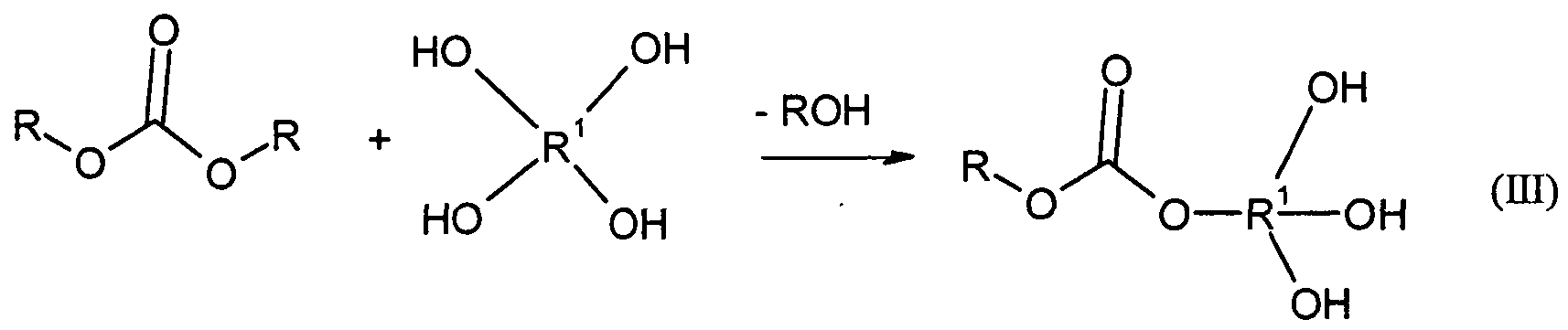


Claims
Priority Applications (4)
| Application Number | Priority Date | Filing Date | Title |
|---|---|---|---|
| JP2009508167A JP2009535243A (ja) | 2006-05-04 | 2007-04-23 | ハイブリッド構造を有する軽量部品 |
| US12/299,376 US20090202761A1 (en) | 2006-05-04 | 2007-04-23 | Lightweight component of hybrid design |
| EP07724452.3A EP2015979B1 (de) | 2006-05-04 | 2007-04-23 | Leichtbauteil in hybridbauweise |
| ES07724452.3T ES2523861T3 (es) | 2006-05-04 | 2007-04-23 | Pieza de construcción ligera en construcción híbrida |
Applications Claiming Priority (2)
| Application Number | Priority Date | Filing Date | Title |
|---|---|---|---|
| DE102006020984.2 | 2006-05-04 | ||
| DE102006020984A DE102006020984A1 (de) | 2006-05-04 | 2006-05-04 | Leichtbauteil in Hybridbauweise |
Publications (2)
| Publication Number | Publication Date |
|---|---|
| WO2007128395A2 true WO2007128395A2 (de) | 2007-11-15 |
| WO2007128395A3 WO2007128395A3 (de) | 2008-03-20 |
Family
ID=38564892
Family Applications (1)
| Application Number | Title | Priority Date | Filing Date |
|---|---|---|---|
| PCT/EP2007/003520 Ceased WO2007128395A2 (de) | 2006-05-04 | 2007-04-23 | Leichtbauteil in hybridbauweise |
Country Status (9)
| Country | Link |
|---|---|
| US (1) | US20090202761A1 (de) |
| EP (1) | EP2015979B1 (de) |
| JP (1) | JP2009535243A (de) |
| KR (1) | KR20090009225A (de) |
| CN (1) | CN101437717A (de) |
| DE (1) | DE102006020984A1 (de) |
| ES (1) | ES2523861T3 (de) |
| RU (2) | RU2450950C2 (de) |
| WO (1) | WO2007128395A2 (de) |
Cited By (7)
| Publication number | Priority date | Publication date | Assignee | Title |
|---|---|---|---|---|
| WO2008095845A1 (de) * | 2007-02-09 | 2008-08-14 | Lanxess Deutschland Gmbh | Leichtbauteil in hybridbauweise |
| DE102008042325A1 (de) | 2008-09-24 | 2010-04-01 | Isringhausen Gmbh & Co. Kg | Gurtholm für Integralsitze |
| CN101735603A (zh) * | 2008-11-19 | 2010-06-16 | 朗盛德国有限责任公司 | 混合的轻质部件 |
| CN101735602A (zh) * | 2008-11-19 | 2010-06-16 | 朗盛德国有限责任公司 | 混合设计的轻质部件 |
| US20100183848A1 (en) * | 2008-12-18 | 2010-07-22 | Lanxess Deutschland Gmbh | Metal-Plastic-Hybrid Casing Component |
| CN104781071A (zh) * | 2012-11-14 | 2015-07-15 | 博泽(科堡)汽车零部件有限公司 | 纤维增强的热塑性构件结构以及用于制造这种纤维增强的热塑性构件结构的方法 |
| DE202017003888U1 (de) | 2017-07-21 | 2017-08-10 | Lanxess Deutschland Gmbh | Ölbehälter |
Families Citing this family (26)
| Publication number | Priority date | Publication date | Assignee | Title |
|---|---|---|---|---|
| DE102007061760A1 (de) * | 2007-12-20 | 2009-06-25 | Bayer Materialscience Ag | Flammgeschützte schlagzähmodifizierte Polyalkylenterephthalat/Polycarbonat-Zusammensetzungen |
| EP2154052A1 (de) | 2008-08-12 | 2010-02-17 | Sika Technology AG | Strukturiertes Verstärkungssystem |
| DE102009034767A1 (de) * | 2009-07-25 | 2011-01-27 | Lanxess Deutschland Gmbh & Co. Kg | Organoblechstrukturbauteil |
| KR100933929B1 (ko) * | 2009-08-26 | 2009-12-28 | 한화엘앤씨 주식회사 | 물탱크 제조용 열가소성 성형재 및 이를 이용한 물탱크용 패널의 제조방법 |
| DE102009052110A1 (de) * | 2009-11-05 | 2011-05-12 | Faurecia Innenraum Systeme Gmbh | Kraftfahrzeug-Frontend |
| DE102010029787A1 (de) * | 2010-06-08 | 2011-12-08 | Faurecia Kunststoffe Automobilsysteme Gmbh | Frontträger für ein Kraftfahrzeug |
| EP2415575A1 (de) | 2010-08-05 | 2012-02-08 | LANXESS Deutschland GmbH | Geschlossene spritzgegossene Leichtbaugitterstruktur |
| ES2542007T3 (es) * | 2011-01-18 | 2015-07-29 | Basf Se | Masas moldeables termoplásticas |
| EP2481775A1 (de) * | 2011-01-28 | 2012-08-01 | LANXESS Deutschland GmbH | Verwendung von Formmassen |
| US9068476B2 (en) | 2011-12-22 | 2015-06-30 | Pratt & Whitney Canada Corp. | Hybrid metal/composite link rod for turbofan gas turbine engine |
| EP2903483B1 (de) * | 2012-10-01 | 2021-06-02 | Carrier Corporation | Verkaufskühlvitrine |
| KR101472499B1 (ko) * | 2013-06-03 | 2014-12-12 | 롯데케미칼 주식회사 | 자동차 선루프 프레임 |
| FR3009098B1 (fr) * | 2013-07-26 | 2017-06-09 | Coutier Moulage Gen Ind | Procede de fabrication d’une pedale creuse bi-matiere et pedale correspondante |
| CN103950148B (zh) * | 2014-05-12 | 2016-11-02 | 宁波华众塑料制品有限公司 | 一种车辆前端框架及其制造方法 |
| FR3025172B1 (fr) * | 2014-08-28 | 2016-08-12 | Renault Sa | Assemblage robuste d'inserts de renfort par un materiau polymere, sans soudage ou vissage des inserts |
| DE102014016045A1 (de) * | 2014-10-29 | 2016-05-04 | GM Global Technology Operations LLC (n. d. Ges. d. Staates Delaware) | Fahrzeug-Unterbaustruktur |
| FR3036643A1 (fr) * | 2015-06-01 | 2016-12-02 | Epsilon Composite | Embout surmoule |
| EP3317319B1 (de) * | 2015-07-01 | 2020-04-22 | Basf Se | Umesterung von polyestern |
| RU2637001C1 (ru) * | 2016-12-14 | 2017-11-29 | Федеральное государственное унитарное предприятие "Центральный аэрогидродинамический институт имени профессора Н.Е. Жуковского" (ФГУП "ЦАГИ") | Гибридная композитная панель для авиаконструкций |
| WO2019121356A1 (en) * | 2017-12-21 | 2019-06-27 | Covestro Deutschland Ag | Polycarbonate composition |
| US11192595B2 (en) * | 2018-01-09 | 2021-12-07 | Faurecia Emissions Control Technologies, Usa, Llc | Overmolded brackets for composite shock tower |
| US10736247B2 (en) | 2018-12-06 | 2020-08-04 | Honeywell International Inc. | System and method with optimized polymer and metal structural components for electronic assembly |
| DE102020206028A1 (de) * | 2020-05-13 | 2021-11-18 | Ford Global Technologies, Llc | Verfahren zur Herstellung eines Trägers und Träger |
| KR102881951B1 (ko) | 2020-07-22 | 2025-11-05 | 현대자동차주식회사 | 치수안정성이 우수한 복합수지 조성물 |
| CN113977801A (zh) * | 2021-09-28 | 2022-01-28 | 资阳众诺诚塑料制品有限责任公司 | 一种全生物可降解吹膜材料及加工工艺 |
| CN117757258A (zh) * | 2023-12-22 | 2024-03-26 | 重庆会通科技有限公司 | 一种高灼热丝高挠度高耐热阻燃玻纤增强聚酰胺66材料及其制备方法 |
Citations (10)
| Publication number | Priority date | Publication date | Assignee | Title |
|---|---|---|---|---|
| DE2750982A1 (de) | 1977-11-15 | 1979-05-17 | Adlerwerke Kleyer Ag H | Nichtloesbare verbindung von zwei oder mehreren teilen |
| EP0370342A2 (de) | 1988-11-25 | 1990-05-30 | Bayer Ag | Leichtbauteil |
| EP0995668A1 (de) | 1998-10-21 | 2000-04-26 | Bayer Ag | Hohlkammer-Leichtbauteil |
| WO2001038063A1 (de) | 1999-11-25 | 2001-05-31 | Bayer Aktiengesellschaft | Kunststoffverbundbauteil |
| EP1223032A2 (de) | 2001-01-11 | 2002-07-17 | Bayer Aktiengesellschaft | Plattenförmiges Leichtbauteil |
| WO2002068257A1 (en) | 2001-02-28 | 2002-09-06 | E.I. Dupont De Nemours And Company | Integral structures of metal and plastic with fastening means |
| EP1294552A1 (de) | 2000-06-21 | 2003-03-26 | ITM International Tools and Moulds GmbH | Verfahren zur herstellung eines hybridteils |
| WO2004011315A2 (en) | 2002-07-25 | 2004-02-05 | General Electric Company | Method of attaching plastic to a metal section and part made thereby |
| US6761187B1 (en) | 2003-04-03 | 2004-07-13 | Bayer Polymers Llc | Tubular assembly having an internal plug |
| WO2004071741A1 (es) | 2003-02-12 | 2004-08-26 | Sintex Beteilingungs, Gmbh. | Procedimiento para la fabricación de una pieza estructural compuesta de un material rígido y un material plástico, y pieza estructural compuesta obtenida |
Family Cites Families (19)
| Publication number | Priority date | Publication date | Assignee | Title |
|---|---|---|---|---|
| US3644574A (en) * | 1969-07-17 | 1972-02-22 | Eastman Kodak Co | Shaped articles of blends of polyesters and polyvinyls |
| DE3631539A1 (de) * | 1986-09-17 | 1988-03-24 | Bayer Ag | Alterungsbestaendige thermoplastische formmassen mit guter zaehigkeit |
| DE3631540A1 (de) * | 1986-09-17 | 1988-03-24 | Bayer Ag | Thermoplastische formmassen mit hoher alterungsbestaendigkeit und guter tieftemperaturzaehigkeit |
| DE3704657A1 (de) * | 1987-02-14 | 1988-08-25 | Bayer Ag | Teilchenfoermige mehrphasenpolymerisate |
| DE3704655A1 (de) * | 1987-02-14 | 1988-08-25 | Bayer Ag | Teilchenfoermige mehrphasenpolymerisate |
| BE1009903A3 (nl) * | 1995-12-29 | 1997-10-07 | Dsm Nv | Rubber gemodificeerde polymeersamenstelling. |
| RU2129134C1 (ru) * | 1997-04-28 | 1999-04-20 | Товарищество с ограниченной ответственностью Научно-техническая фирма "Поларм" | Термопластичная композиция |
| DK1156798T3 (da) * | 1999-02-09 | 2003-11-03 | Univ Virginia | Felbamat-afledte forbindelser |
| FR2833604B1 (fr) * | 2001-12-17 | 2004-03-12 | Rhodianyl | Composition polymere thermoplastique comprenant un copolyamide hyperbranche, et articles realises a partir de cette composition |
| EP1340668A3 (de) * | 2002-02-28 | 2003-09-17 | Bayer Ag | Leichtbauteil mit Aussenverrippung |
| US6688680B1 (en) * | 2002-12-17 | 2004-02-10 | Bayer Polymers Llc | Molded cross vehicle beam |
| JP2005271477A (ja) * | 2004-03-25 | 2005-10-06 | Sharp Corp | 筐体、電子機器および複合成形方法 |
| PL1756225T3 (pl) * | 2004-06-08 | 2009-04-30 | Lanxess Deutschland Gmbh | Masy do formowania z poliamidów o polepszonej zdolności płynięcia |
| JP4732457B2 (ja) * | 2004-06-08 | 2011-07-27 | ランクセス・ドイチュランド・ゲーエムベーハー | 熱可塑性ポリエステルをベースとする改良された流動性を有する成形用組成物 |
| DE102004049342A1 (de) * | 2004-10-08 | 2006-04-13 | Basf Ag | Fließfähige Thermoplaste mit halogenfreiem Flammschutz |
| DE102004051241A1 (de) * | 2004-10-20 | 2006-05-04 | Basf Ag | Fließfähige Polyamide mit hyperverzweigten Polyestern/Polycarbonaten |
| DE102008058224A1 (de) * | 2008-11-19 | 2010-05-20 | Lanxess Deutschland Gmbh | Leichtbauteil in Hybridbauweise |
| DE102008058225A1 (de) * | 2008-11-19 | 2010-07-08 | Lanxess Deutschland Gmbh | Leichtbauteil in Hybridbauweise |
| DE102009005763A1 (de) * | 2009-01-23 | 2010-07-29 | Lanxess Deutschland Gmbh | Rahmenseitenteil einer Kraftfahrzeug Karosserie |
-
2006
- 2006-05-04 DE DE102006020984A patent/DE102006020984A1/de not_active Withdrawn
-
2007
- 2007-04-23 EP EP07724452.3A patent/EP2015979B1/de active Active
- 2007-04-23 KR KR1020087026931A patent/KR20090009225A/ko not_active Ceased
- 2007-04-23 CN CNA200780016182XA patent/CN101437717A/zh active Pending
- 2007-04-23 WO PCT/EP2007/003520 patent/WO2007128395A2/de not_active Ceased
- 2007-04-23 US US12/299,376 patent/US20090202761A1/en not_active Abandoned
- 2007-04-23 JP JP2009508167A patent/JP2009535243A/ja active Pending
- 2007-04-23 ES ES07724452.3T patent/ES2523861T3/es active Active
- 2007-04-23 RU RU2008147612/05A patent/RU2450950C2/ru active
-
2011
- 2011-07-25 RU RU2011130917/05A patent/RU2011130917A/ru not_active Application Discontinuation
Patent Citations (10)
| Publication number | Priority date | Publication date | Assignee | Title |
|---|---|---|---|---|
| DE2750982A1 (de) | 1977-11-15 | 1979-05-17 | Adlerwerke Kleyer Ag H | Nichtloesbare verbindung von zwei oder mehreren teilen |
| EP0370342A2 (de) | 1988-11-25 | 1990-05-30 | Bayer Ag | Leichtbauteil |
| EP0995668A1 (de) | 1998-10-21 | 2000-04-26 | Bayer Ag | Hohlkammer-Leichtbauteil |
| WO2001038063A1 (de) | 1999-11-25 | 2001-05-31 | Bayer Aktiengesellschaft | Kunststoffverbundbauteil |
| EP1294552A1 (de) | 2000-06-21 | 2003-03-26 | ITM International Tools and Moulds GmbH | Verfahren zur herstellung eines hybridteils |
| EP1223032A2 (de) | 2001-01-11 | 2002-07-17 | Bayer Aktiengesellschaft | Plattenförmiges Leichtbauteil |
| WO2002068257A1 (en) | 2001-02-28 | 2002-09-06 | E.I. Dupont De Nemours And Company | Integral structures of metal and plastic with fastening means |
| WO2004011315A2 (en) | 2002-07-25 | 2004-02-05 | General Electric Company | Method of attaching plastic to a metal section and part made thereby |
| WO2004071741A1 (es) | 2003-02-12 | 2004-08-26 | Sintex Beteilingungs, Gmbh. | Procedimiento para la fabricación de una pieza estructural compuesta de un material rígido y un material plástico, y pieza estructural compuesta obtenida |
| US6761187B1 (en) | 2003-04-03 | 2004-07-13 | Bayer Polymers Llc | Tubular assembly having an internal plug |
Cited By (9)
| Publication number | Priority date | Publication date | Assignee | Title |
|---|---|---|---|---|
| WO2008095845A1 (de) * | 2007-02-09 | 2008-08-14 | Lanxess Deutschland Gmbh | Leichtbauteil in hybridbauweise |
| DE102008042325A1 (de) | 2008-09-24 | 2010-04-01 | Isringhausen Gmbh & Co. Kg | Gurtholm für Integralsitze |
| DE202008017621U1 (de) | 2008-09-24 | 2010-08-19 | Isringhausen Gmbh & Co. Kg | Gurtholm für Integralsitze |
| CN101735603A (zh) * | 2008-11-19 | 2010-06-16 | 朗盛德国有限责任公司 | 混合的轻质部件 |
| CN101735602A (zh) * | 2008-11-19 | 2010-06-16 | 朗盛德国有限责任公司 | 混合设计的轻质部件 |
| US20100183848A1 (en) * | 2008-12-18 | 2010-07-22 | Lanxess Deutschland Gmbh | Metal-Plastic-Hybrid Casing Component |
| CN104781071A (zh) * | 2012-11-14 | 2015-07-15 | 博泽(科堡)汽车零部件有限公司 | 纤维增强的热塑性构件结构以及用于制造这种纤维增强的热塑性构件结构的方法 |
| CN104781071B (zh) * | 2012-11-14 | 2016-10-12 | 博泽(科堡)汽车零部件有限公司 | 纤维增强的热塑性构件结构以及用于制造这种纤维增强的热塑性构件结构的方法 |
| DE202017003888U1 (de) | 2017-07-21 | 2017-08-10 | Lanxess Deutschland Gmbh | Ölbehälter |
Also Published As
| Publication number | Publication date |
|---|---|
| EP2015979A2 (de) | 2009-01-21 |
| KR20090009225A (ko) | 2009-01-22 |
| RU2450950C2 (ru) | 2012-05-20 |
| RU2011130917A (ru) | 2013-01-27 |
| EP2015979B1 (de) | 2014-08-20 |
| RU2008147612A (ru) | 2010-06-10 |
| ES2523861T3 (es) | 2014-12-02 |
| JP2009535243A (ja) | 2009-10-01 |
| US20090202761A1 (en) | 2009-08-13 |
| DE102006020984A1 (de) | 2007-11-08 |
| WO2007128395A3 (de) | 2008-03-20 |
| CN101437717A (zh) | 2009-05-20 |
Similar Documents
| Publication | Publication Date | Title |
|---|---|---|
| WO2007128395A2 (de) | Leichtbauteil in hybridbauweise | |
| DE202010001918U1 (de) | Organoblechstrukturbauteil | |
| US8080296B2 (en) | Lightweight component of hybrid design | |
| US8383242B2 (en) | Lightweight component of hybrid | |
| DE102009005763A1 (de) | Rahmenseitenteil einer Kraftfahrzeug Karosserie | |
| US8197715B2 (en) | Thermoplastic moulding compositions having improved ductility | |
| US8362146B2 (en) | Impact-modified polyesters with hyperbranched polyesters/polycarbonates | |
| WO2008095845A1 (de) | Leichtbauteil in hybridbauweise | |
| US20080207812A1 (en) | Flowable Thermoplastic Material Containing Halogen Flameproffing Agents | |
| DE202008015395U1 (de) | Vorderwagenstruktur | |
| DE202008015400U1 (de) | Instrumententafel | |
| DE202008015399U1 (de) | Dachstruktur | |
| DE202008015391U1 (de) | Türen- und Klappenstrukturen | |
| DE202008015396U1 (de) | Fahrwerkstruktur | |
| DE202008015394U1 (de) | Längsträgerstruktur | |
| DE202008015392U1 (de) | Pedalstruktur | |
| DE202008015397U1 (de) | Säulenstruktur | |
| DE202008015398U1 (de) | Ölwanne |
Legal Events
| Date | Code | Title | Description |
|---|---|---|---|
| WWE | Wipo information: entry into national phase |
Ref document number: 8876/DELNP/2008 Country of ref document: IN |
|
| WWE | Wipo information: entry into national phase |
Ref document number: 2007724452 Country of ref document: EP |
|
| WWE | Wipo information: entry into national phase |
Ref document number: 1020087026931 Country of ref document: KR |
|
| WWE | Wipo information: entry into national phase |
Ref document number: 200780016182.X Country of ref document: CN Ref document number: 2009508167 Country of ref document: JP |
|
| NENP | Non-entry into the national phase |
Ref country code: DE |
|
| WWE | Wipo information: entry into national phase |
Ref document number: 2008147612 Country of ref document: RU |
|
| WWE | Wipo information: entry into national phase |
Ref document number: 12299376 Country of ref document: US |