WO2008013059A1 - Polylactic acid resin composition, molded body thereof and polylactic acid compound - Google Patents
Polylactic acid resin composition, molded body thereof and polylactic acid compound Download PDFInfo
- Publication number
- WO2008013059A1 WO2008013059A1 PCT/JP2007/063844 JP2007063844W WO2008013059A1 WO 2008013059 A1 WO2008013059 A1 WO 2008013059A1 JP 2007063844 W JP2007063844 W JP 2007063844W WO 2008013059 A1 WO2008013059 A1 WO 2008013059A1
- Authority
- WO
- WIPO (PCT)
- Prior art keywords
- polylactic acid
- group
- formula
- atom
- resin composition
- Prior art date
- Legal status (The legal status is an assumption and is not a legal conclusion. Google has not performed a legal analysis and makes no representation as to the accuracy of the status listed.)
- Ceased
Links
Classifications
-
- C—CHEMISTRY; METALLURGY
- C08—ORGANIC MACROMOLECULAR COMPOUNDS; THEIR PREPARATION OR CHEMICAL WORKING-UP; COMPOSITIONS BASED THEREON
- C08K—Use of inorganic or non-macromolecular organic substances as compounding ingredients
- C08K5/00—Use of organic ingredients
- C08K5/16—Nitrogen-containing compounds
- C08K5/20—Carboxylic acid amides
-
- C—CHEMISTRY; METALLURGY
- C08—ORGANIC MACROMOLECULAR COMPOUNDS; THEIR PREPARATION OR CHEMICAL WORKING-UP; COMPOSITIONS BASED THEREON
- C08G—MACROMOLECULAR COMPOUNDS OBTAINED OTHERWISE THAN BY REACTIONS ONLY INVOLVING UNSATURATED CARBON-TO-CARBON BONDS
- C08G63/00—Macromolecular compounds obtained by reactions forming a carboxylic ester link in the main chain of the macromolecule
- C08G63/02—Polyesters derived from hydroxycarboxylic acids or from polycarboxylic acids and polyhydroxy compounds
- C08G63/06—Polyesters derived from hydroxycarboxylic acids or from polycarboxylic acids and polyhydroxy compounds derived from hydroxycarboxylic acids
-
- C—CHEMISTRY; METALLURGY
- C08—ORGANIC MACROMOLECULAR COMPOUNDS; THEIR PREPARATION OR CHEMICAL WORKING-UP; COMPOSITIONS BASED THEREON
- C08G—MACROMOLECULAR COMPOUNDS OBTAINED OTHERWISE THAN BY REACTIONS ONLY INVOLVING UNSATURATED CARBON-TO-CARBON BONDS
- C08G63/00—Macromolecular compounds obtained by reactions forming a carboxylic ester link in the main chain of the macromolecule
- C08G63/02—Polyesters derived from hydroxycarboxylic acids or from polycarboxylic acids and polyhydroxy compounds
- C08G63/60—Polyesters derived from hydroxycarboxylic acids or from polycarboxylic acids and polyhydroxy compounds derived from the reaction of a mixture of hydroxy carboxylic acids, polycarboxylic acids and polyhydroxy compounds
-
- C—CHEMISTRY; METALLURGY
- C08—ORGANIC MACROMOLECULAR COMPOUNDS; THEIR PREPARATION OR CHEMICAL WORKING-UP; COMPOSITIONS BASED THEREON
- C08K—Use of inorganic or non-macromolecular organic substances as compounding ingredients
- C08K5/00—Use of organic ingredients
- C08K5/0008—Organic ingredients according to more than one of the "one dot" groups of C08K5/01 - C08K5/59
- C08K5/0083—Nucleating agents promoting the crystallisation of the polymer matrix
-
- C—CHEMISTRY; METALLURGY
- C08—ORGANIC MACROMOLECULAR COMPOUNDS; THEIR PREPARATION OR CHEMICAL WORKING-UP; COMPOSITIONS BASED THEREON
- C08L—COMPOSITIONS OF MACROMOLECULAR COMPOUNDS
- C08L67/00—Compositions of polyesters obtained by reactions forming a carboxylic ester link in the main chain; Compositions of derivatives of such polymers
- C08L67/04—Polyesters derived from hydroxycarboxylic acids, e.g. lactones
-
- C—CHEMISTRY; METALLURGY
- C08—ORGANIC MACROMOLECULAR COMPOUNDS; THEIR PREPARATION OR CHEMICAL WORKING-UP; COMPOSITIONS BASED THEREON
- C08G—MACROMOLECULAR COMPOUNDS OBTAINED OTHERWISE THAN BY REACTIONS ONLY INVOLVING UNSATURATED CARBON-TO-CARBON BONDS
- C08G2261/00—Macromolecular compounds obtained by reactions forming a carbon-to-carbon link in the main chain of the macromolecule
- C08G2261/10—Definition of the polymer structure
- C08G2261/12—Copolymers
- C08G2261/126—Copolymers block
-
- C—CHEMISTRY; METALLURGY
- C08—ORGANIC MACROMOLECULAR COMPOUNDS; THEIR PREPARATION OR CHEMICAL WORKING-UP; COMPOSITIONS BASED THEREON
- C08L—COMPOSITIONS OF MACROMOLECULAR COMPOUNDS
- C08L2205/00—Polymer mixtures characterised by other features
- C08L2205/02—Polymer mixtures characterised by other features containing two or more polymers of the same C08L -group
-
- C—CHEMISTRY; METALLURGY
- C08—ORGANIC MACROMOLECULAR COMPOUNDS; THEIR PREPARATION OR CHEMICAL WORKING-UP; COMPOSITIONS BASED THEREON
- C08L—COMPOSITIONS OF MACROMOLECULAR COMPOUNDS
- C08L2666/00—Composition of polymers characterized by a further compound in the blend, being organic macromolecular compounds, natural resins, waxes or and bituminous materials, non-macromolecular organic substances, inorganic substances or characterized by their function in the composition
- C08L2666/02—Organic macromolecular compounds, natural resins, waxes or and bituminous materials
- C08L2666/14—Macromolecular compounds according to C08L59/00 - C08L87/00; Derivatives thereof
- C08L2666/18—Polyesters or polycarbonates according to C08L67/00 - C08L69/00; Derivatives thereof
-
- C—CHEMISTRY; METALLURGY
- C08—ORGANIC MACROMOLECULAR COMPOUNDS; THEIR PREPARATION OR CHEMICAL WORKING-UP; COMPOSITIONS BASED THEREON
- C08L—COMPOSITIONS OF MACROMOLECULAR COMPOUNDS
- C08L69/00—Compositions of polycarbonates; Compositions of derivatives of polycarbonates
- C08L69/005—Polyester-carbonates
Definitions
- Polylactic acid-based resin composition molded article thereof, and polylactic acid-based compound
- the present invention relates to a polylactic acid resin composition having improved transparency, crystallization speed and heat resistance, and a molded article comprising the composition.
- the present invention also relates to a novel polylactic acid compound used in the composition.
- polylactic acid has a limitation in application development because it is hard and brittle and has a low crystallization rate and low heat resistance.
- the softening temperature is less than 60 ° C, V, which tends to be whitened or deformed under daily use environment, and other problems have been pointed out! / RU
- Patent Document 1 describes that supplemental calories such as phosphate ester metal salts and hydrous magnesium silicate are effective as nucleating agents.
- supplemental calories such as phosphate ester metal salts and hydrous magnesium silicate are effective as nucleating agents.
- talc generally used is a force that is within the practical range only from the viewpoint of crystallization speed. To that end, the addition amount of 1% or more is often required, and transparency, which is an inherent characteristic of polylactic acid, is required. There are disadvantages that are detrimental.
- Patent Document 2 discloses an aliphatic carboxylic acid amide, an aliphatic carboxylate, a fat as a nucleating agent. Describes a method in which at least one selected from aliphatic alcohols and aliphatic carboxylic acid esters is added as a transparent nucleating agent. However, in this case, the haze is 6.5% at a crystallinity of 33%, and a result that combines a sufficient crystallinity and transparency cannot be obtained.
- Patent Document 3 describes a method using polylactic acid and an inorganic filler using a compound having a specific functional group as an initiator. However, although this method improved the slip property, transparency could not be ensured by adding an inorganic filler.
- Patent Document 1 Japanese Patent Application Laid-Open No. 2003-192884
- Patent Document 2 JP-A-9-278991
- Patent Document 3 Japanese Patent Application Laid-Open No. 2004-285121
- An object of the present invention is to provide a resin composition having improved heat resistance (high crystallization property) and transparency without impairing the inherent rigidity of the polylactic acid resin, and the resin composition.
- Means for solving the problems in providing a molded article and a novel polylactic acid compound used in the resin composition are provided.
- the polylactic acid resin composition according to the present invention has a portion represented by the following formula (1) and has a weight average molecular weight (Mw) of 5,000 500,000.
- Lactic acid compound (A) (However, when R is a group consisting of dicarboxylic acid and diol, CH (CH) C
- the weight ratio of the site derived from lactic acid represented by O and the site represented by formula (1) is in the range of 99.9 / 0. 1-90. 1 / 9.9, and The weight average molecular weight of R is less than 10,000.
- X and X each independently represent an O atom, an S atom or an NH group, and R is
- 1 2 1 represents a divalent group containing at least one aromatic ring or aliphatic ring, and the hydrocarbon group contains 0, N or S atoms!
- the polylactic acid-based resin composition of the present invention has a portion represented by the following formula (7) with respect to 100 parts by weight of the linear polylactic acid-based compound (A) and has a weight average molecular weight. (Mw) is 5, 00
- 0-500,000 polylactic acid-based compound (B) 5 ⁇ may further comprise 1900 parts by weight.
- X and X each independently represent an O atom, an S atom or an NH group, and R is
- 3 4 2 represents an aliphatic hydrocarbon group having a molecular weight of 50 to 50,000, which does not contain a ring structure, and the aliphatic hydrocarbon group may contain ⁇ , N or S atoms.
- the polylactic acid resin composition of the present invention may further contain 5 to 500 parts by weight of a lactic acid resin (D) with respect to 100 parts by weight of the linear polylactic acid compound (A).
- the polylactic acid resin composition of the present invention comprises 100 parts by weight of the linear polylactic acid compound (A) or the polylactic acid resin used as necessary with the linear polylactic acid compound (A). At least one transparent nucleus selected from carboxylic acid amides, aliphatic alcohols and aliphatic carboxylic acid esters with respect to 100 parts by weight of the total amount of the compound (B) and / or the lactic acid compound (D). Agent (C) 0.;!- May further contain 10 parts by weight! /.
- the composition is melted at 220 ° C for 3 minutes, and then cooled to 100 ° C at a cooling rate of 99 ° C / min.
- the isothermal crystallization time when kept at 100 ° C is preferably within 5 minutes.
- the site represented by the formula (1) is preferably a segment derived from at least one selected from aliphatic ring-containing diols and aromatic ring-containing diols.
- the site represented by the formula (7) is a segment derived from at least one selected from alkylene glycols, polyesters having both ends hydroxyl groups, and polycarbonates having both ends hydroxyl groups. Is preferred.
- the transparent nucleating agent (C) is a carboxylic acid amide.
- the carboxylic acid amide may be lauric acid amide, normitic acid amide, stearic acid amide, L force acid amide, behenic acid amide.
- the lactic acid resin (D) is preferably polylactic acid! /.
- the molded body according to the present invention is composed of the polylactic acid resin composition of the present invention described above, has a haze at a thickness of 1 OOrn of 0.;! To 15%, and has a crystallinity. It is characterized by 35% or more.
- the linear polylactic acid compound according to the present invention has a site represented by the following formula (1) and has a weight average molecular weight (Mw) of 5,000 to 500,000. (However, R is
- a group consisting of a dicarboxylic acid and a diol is represented by CH (CH) C (0) 0—
- the weight ratio of the site derived from lactic acid to the site represented by the formula (1) is in the range of 99.9 / 0 .;! ⁇ 90. 1 / 9.9, and the weight average molecular weight of R is Less than 10,000. ).
- X and X each independently represent an O atom, an S atom or an NH group, and R is
- 1 2 1 represents a divalent group containing at least one aromatic ring or aliphatic ring, and the hydrocarbon group contains 0, N or S atoms!
- the crystallization speed and transparency are improved, making it possible to apply to products that require molding cycle shortening, heat resistance and transparency, which have been difficult in the past, and are representative of polylactic acid resins. Can contribute to the expansion of the use of green plastic.
- the linear polylactic acid compound (A) of the present invention is also referred to as a site represented by the following formula (1) (hereinafter referred to as “node segment”) in the polymer chain of the lactic acid resin (D) described later. ) And a weight average molecular weight (Mw) of 5,000 to 500,000, and is used as an essential component of the polylactic acid resin composition of the present invention.
- R in the following formula (1) is dicarboxylic acid and
- a diol group In the case of a diol group, it is derived from lactic acid represented by —CH (CH 2) C (0) 0—.
- the acid part / hard segment] is 99 ⁇ 9/0. 1-90 in weight ratio of the part (hereinafter referred to as “lactic acid part”) and the part (hard segment) represented by the formula (1).
- the range is 1 / 9.9, and the weight average molecular weight of R is less than 10,000.
- X and X each independently represent an O atom, an S atom or an NH group, and R is
- R 1 2 1 represents a divalent group containing at least one aromatic ring or aliphatic ring, and the hydrocarbon group may contain 0, N or S atoms.
- R 1 is a group other than a group consisting of a dicarboxylic acid and a diol, R 1 preferably has 5 to 50 carbon atoms.
- the "hard segment” in the present invention refers to an aliphatic hydrocarbon group containing a cyclic structure such as an aliphatic ring or an aromatic ring (however, an atom such as O, N, or S may be included). It is a segment derived from a compound containing two or more functional groups derived from a hydroxyl group, a thiol group or an amino group.
- the linear polylactic acid compound (A) of the present invention includes the following linear polylactic acid compounds (
- X and X each independently represent an O atom, an S atom or an NH group
- R represents a single bond or a hydrocarbon group having 1 to 10 carbon atoms, and the hydrocarbon group may be linear, branched or cyclic.
- Y and Y are each independently saturated with 1 to 10 carbon atoms
- Japanese hydrocarbon group, 6 to 10 carbon atoms represents an aryl group or a hydrogen atom and does not exist when R is a single bond.
- L and L are each independently an alkylene group having 1 to 8 carbon atoms or
- An oxyalkylene group having 1 to 8 carbon atoms is represented.
- Z and Z are each independently carbon number 1
- ⁇ Represents 10 hydrocarbon groups or hydrogen atoms.
- m represents an integer of 0 to 5.
- the weight ratio of the site derived from lactic acid and the site represented by formula (3) L acid site / site represented by formula (3)] is 99.7 / 0. 3-90. 5/9.
- X and X each independently represent an O atom, an S atom or an NH group
- Y each independently represent an O atom, an S atom or an NH group
- 1 2 3 represents a hydrogen atom, carbon number;! To 8 saturated hydrocarbon group, 6 to 8 aryl group or 7 to 8 aralkyl group, and the saturated hydrocarbon group is linear or branched It may be either a ring or a ring.
- r represents an integer of 0-4.
- L and L are each independently 2 to 2 carbon atoms
- n represents an integer from 1 to 100.
- X and X each independently represent an O atom, an S atom or an NH group
- Y each independently represent an O atom, an S atom or an NH group
- R, L and L are each independently a single bond or
- Carbon number represents an alkylene group having from 8 to 8.
- p represents an integer of 0-4.
- q represents an integer from 0 to 5.
- X and X each independently represent an O atom, an S atom or an NH group.
- X and X each independently represent an O atom, an S atom or an NH group.
- the content of the hard segment in the linear polylactic acid compound (A) is particularly Although not limited, it is preferably 0.0;! To 5 mol%, more preferably 0.03 to 3 mol%. It is desirable that the content of the hard segment is actually determined from the force calculated from the target molecular weight, or the amount at which the target molecular weight can be obtained by actually performing the reaction.
- the linear polylactic acid compound (A) can be obtained by a publicly known method.
- the compound having the hard segment and a monomer having lactide or lactic acid as a main component are copolymerized. You can get power by making it.
- monomers other than lactide and lactic acid it is possible to use cyclic esters (latatones) such as force prolatatatone, propiolatatatone and butyrolatatatone, and hydroxyalkanoic acids such as hydroxybutanoic acid and hydroxypropanoic acid.
- Examples of the compound having the hard segment (2) include compounds having a hydroxyl group, a thiol group, or an amino group represented by the following formula (2a).
- R, Y, Y, L, L, Z, Z and m are synonymous.
- X and X are preferably O atoms or NH groups.
- L and L are
- Ethyl, isopropyl, and t-butyl groups are preferred Y and Y are hydrogen atoms, methyl
- R is preferably a single bond, a methyl group, a methylene group or a methine group.
- Examples of the compound having the hard segment (3) include a hydroxyl group represented by the following formula (3a), Examples thereof include compounds having a thiol group or an amino group.
- X, X, Y, L, L, r, and n are X, X, Y, L, L, r in the above formula (3).
- X and X are preferably O atoms or NH groups.
- Y is preferably a hydrogen atom, a methyl group, an ethyl group, or an isopropylene group.
- Examples of the compound having the hard segment (4) include compounds having a hydroxyl group, a thiol group, or an amino group represented by the following formula (4a).
- X and X are preferably O atoms or NH groups.
- L and L are single bonds.
- Y is hydrogen, methyl, ethyl, isopropyl, cyclo
- a xyl group is preferred.
- Examples of the compound having the hard segment (5) include a hydroxyl group represented by the following formula (5a), Examples thereof include compounds having a thiol group or an amino group.
- X and X each independently represent a ⁇ atom, an S atom or an NH group
- Atom or NH group is preferred.
- Examples of the compound having the hard segment (6) include compounds having a hydroxyl group, a thiol group, or an amino group represented by the following formula (6a).
- X and X each independently represent a ⁇ atom, an S atom or an NH group
- Atom or NH group is preferred.
- Preferable specific examples of the compound having a hard segment include aliphatic ring-containing diols and aromatic ring-containing diols.
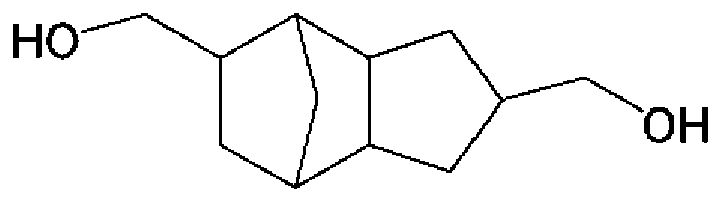
- Examples of the aliphatic ring-containing diol include, for example,
- aromatic ring-containing diols include, for example,
- aromatic dicarboxylic acids, esters of aromatic dicarboxylic acids or acid halides of aromatic dicarboxylic acids include terephthalic acid, dimethyl terephthalate, terephthalic acid chloride, isophthalic acid, dimethyl isophthalate, Examples include isophthalic acid chloride.
- alkylene diol or cycloalkylene diol having 2 to 8 carbon atoms examples include ethylene glycol, diethylene glycol, triethylene glycol, 1,3-propanediol, 1,4 butanediol, 1,5-pentane.
- Examples include dionole, 1,6-hexanediol, 1,7-heptanediol, 1,8-octanediol, 1,4-cyclohexane methanol, and the like.
- the polyesters having hydroxyl groups at both ends can be obtained by using an excessive amount of diol, condensing by a conventional method, and then removing the excessive amount of diol.
- the addition amount of the compound having a hard segment is not particularly limited, but is preferably 0.001 to 10 parts by weight with respect to 100 parts by weight of the monomer mainly containing lactide or lactic acid. Preferably 0.0;! To 5 parts by weight, more preferably 0.;! To 3 parts by weight
- a solvent may be used for the polymerization.
- Solvents include, for example, aliphatic hydrocarbons such as hexane, heptane, decane; aromatic halogenated hydrocarbons such as black benzene, o dichlorobenzene, and alicyclic hydrocarbons such as cyclopentane and cyclohexane. ; Aromatic hydrocarbons such as benzene, toluene, xylene, mesitylene, ethylbenzene, and jetylbenzene; Forces such as ether solvents such as jetyl ether, dioxane, tetrahydrofuran (THF), diglyme, etc. All solvents which are inert to can be used.
- Aromatic hydrocarbons aromatic halogenated hydrocarbons, and ether solvents are preferred and particularly preferred from the viewpoints of lactate lactic acid solubility, reaction temperature, reaction rate, and ease of solvent removal after completion of the reaction.
- Aromatic hydrocarbons aromatic halogenated hydrocarbons, and ether solvents are preferred and particularly preferred from the viewpoints of lactate lactic acid solubility, reaction temperature, reaction rate, and ease of solvent removal after completion of the reaction.
- the amount of solvent used is selected in the range of 0.;! To 20 times, preferably 0.5 to 10 times, more preferably 1.0 to 5 times the total amount of lactide or lactic acid. .
- catalysts can be used as the catalyst used in the polymerization.
- tin catalysts such as tin oxalate (tin-ethylhexanoate), dibutyltin dilaurate and tin chloride, titanium catalysts such as titanium chloride and titanium tetraisopropoxide, zinc chloride and zinc acetate
- titanium catalysts such as titanium chloride and titanium tetraisopropoxide
- zinc chloride and zinc acetate A zinc-based catalyst is mentioned.
- a tin-based catalyst is preferable, and tin octoate is more preferable.
- the catalyst is used in an amount of 0.00;! To 5 parts by weight, preferably 0.003 to 1 part by weight, and more preferably 0.05 to 0.1 part by weight per 100 parts by weight of lactide or lactic acid. is there.
- the polymerization temperature is 60 ° C to 250 ° C, preferably 100 ° C to 230 ° C.
- the reaction temperature is preferably about 150 to 200 ° C.
- the reaction temperature is preferably about 110 to about 150 ° C.
- the polymerization time varies depending on the type of monomer used, polymerization temperature, amount of catalyst, etc. 0.1 to 24 hours, preferably 0.5 to 12 hours, more preferably 1 to 6 hours.
- the molecular weight is measured by GPC (gel permeation chromatography) or the like, and the time point when the desired molecular weight is reached may be determined as the reaction end point.
- the weight average molecular weight of the linear polylactic acid compound (A) obtained as described above is 5,000-500,000, preferably ⁇ 10,000-400,000, more preferably ⁇ Is between 50,000 and 300,000.
- the weight average molecular weight shown in the present invention is a value obtained by gel permeation chromatography (GPC) (column temperature 40 ° C., chloroform solvent) in comparison with a polystyrene standard sample! /, Little.
- Polylactic acid compound (B) used as necessary in the polylactic acid resin composition of the present invention is represented by the following formula (7) in the polymer chain of the lactic acid resin (D) described later.
- a polymer having a portion hereinafter also referred to as “soft segment” and having a weight average molecular weight (Mw) of 5,000 to 500,000.
- X and X each independently represent an O atom, an S atom or an NH group, and R
- 3 4 2 represents an aliphatic hydrocarbon group having a molecular weight of 50 to 50,000, which does not include a ring structure, and the aliphatic hydrocarbon group contains ⁇ , N or S atoms! /, May! / .
- the “soft segment” in the present invention is an aliphatic hydrocarbon group that does not contain a cyclic structure such as an aliphatic ring or an aromatic ring (however, it contains atoms such as O, N, and S). It is a segment derived from a compound containing two or more functional groups derived from a hydroxyl group, a thiol group or an amino group.
- the content of the soft segment in the polylactic acid compound (B) is not particularly limited, but is preferably 0.0;! To 5 mol%, more preferably 0.03 to 3 mol%.
- the content of the soft segment is actually calculated from the target molecular weight, or the actual reaction is carried out and the amount that can achieve the target molecular weight is the same as the hard segment. It is desirable to decide.
- the polylactic acid-based compound (B) can be obtained by a publicly known method.
- the compound having the soft segment and a monomer having lactide or lactic acid as a main component are co-polymerized. You can get power with S.
- monomers other than lactide and lactic acid cyclic esters (ratatanes) such as force prolatatatone, propiolatatatone and butyrolatatatone, and hydroxyalkanoic acids such as hydroxybutanoic acid and hydroxypropanoic acid can be used.
- the compound having the soft segment preferably includes alkylene glycols, polyesters having two or more hydroxyl groups, polycarbonates having two or more hydroxyl groups, and more preferably alkylene glycols. And polyesters whose both ends are hydroxyl groups, and polycarbonates whose both ends are hydroxyl groups.
- alkylene glycols examples include polyethylene glycol (PEG) and polypropylene.
- PEG polyethylene glycol
- PPG polypropylene
- weight average molecular weight is 50-50,000, preferably 5
- ⁇ 0—10,000, more preferred ⁇ is in the range of 100-5,000.
- polyesters having two or more hydroxyl groups include polyesters produced by excessively reacting a diol component in polyesters produced from dicarboxylic acids and diols, or cyclic compounds such as force prolatatanes. Examples thereof include polyesters obtained by ring-opening polymerization of esters with water or phenols.
- dicarboxylic acids used in the production of the polyesters include maleic acid.
- aliphatic or aromatic dicarboxylic acids having 4 to 20 carbon atoms such as fumaric acid, succinic acid and adipic acid.
- Examples of the diols used in the production of the above polyesters include 2 to 20 carbon atoms such as ethylene glycolone, 1,3-prononediol, propylene glycolanol, 1,4 butanediol, and neopentyldaricol. And linear or branched aliphatic diols.
- polycarbonates having two or more hydroxyl groups examples include aliphatic polycarbonates obtained by reacting diols with phosgene, its derivatives or carbonates.
- Examples of the diols used in the production of the aliphatic polycarbonates include ethylene glycol, 1,3-propanediol, 1,4 butanediol, 1,5-pentanediol, and 1,6-hexanediol. 1,4-cyclohexanedimethanol, 2,8-octanediol, and the like.
- the weight average molecular weight of the soft segment can be calculated from the weight average molecular weight of the compound having the soft segment, and is 50-50,000, preferably 50-0,000, more preferably 100- It is in the range of 5,000.
- the alkylene glycols, polyalkylene glycols, polyesters or polycarbonates and the like may not be compatible with lactic acid or lactide. However, after the reaction is completed, they are used in the present invention.
- the polylactic acid compound (B) must be uniform and exhibit transparency.
- the linear polylactic acid compound described above is used.
- a solvent may be used when polymerizing latatin, lactic acid or other monomers.
- the type and amount of the solvent used in the reaction, the type and amount of the polymerization catalyst, the polymerization temperature, the polymerization time, the polymerization method, etc. are all the same as for the linear polylactic acid compound (A).
- the polylactic acid compound (B) is used in an amount of 5 to 1900 parts by weight, preferably 10 to 500 parts by weight, based on 100 parts by weight of the linear polylactic acid compound (A).
- the polylactic acid-based resin composition of the present invention may contain a transparent nucleating agent (C) as necessary.
- the “transparent nucleating agent” is a nucleating agent that is added to the linear polylactic acid compound (A) having a specific structure and becomes transparent during crystallization, and imparts transparency. It is. Specific examples include carboxylic acid amides, aliphatic alcohols, and aliphatic carboxylic acid esters. These may be used alone or in combination of two or more.
- carboxylic acid amide examples include lauric acid amide, palmitic acid amide, oleic acid amide, stearic acid amide, enoleic acid amide, behenic acid amide, ricinoleic acid amide, and hydroxy Aliphatic monocarboxylic amides such as stearamide;
- N-oleyl palmitate amide N-oleoleoleic acid amide, N-oleyl stearic acid amide, N-stearylolenic acid amide, N-stearyl stearic acid amide, N-stearyl oleic acid amide, methylol stearic acid amide, N-substituted aliphatic monocarboxylic amides such as methylol behenic acid amide;
- ⁇ -Butyl- ⁇ '-stearyl urea ⁇ -propyl- ⁇ '-stearyl urea, ⁇ -stearyl- ⁇ '-stearyl urea, ⁇ -phenyl- ⁇ '-stearyl urea, xylylene bisstearyl urea, xylylene bisstearyl ⁇ -Substituted ureas such as urea, toluylene bisstearyl urea, hexamethylene bis stearyl urea, diphenylmethane bisstearyl urea, and diphenylmethane bislauryl urea.
- biscarboxylic amide is preferably used, and in particular, ethylene bislauric acid amide, ethylene bisoleic acid amide, ethylene bis stearic acid amide, ethylene bis-12-hydroxystearic acid amide, Xamethylenebislauric acid amide, hexamethylenbisoleic acid amide, hexamethylenebis-12-hydroxystearic acid amide, m-xylylene bislauric acid amide, m-xylylene bisoleic acid amide, m-xylylene bis -12-hydroxystearic amide is preferred.
- ethylene bislauric acid amide ethylene bisoleic acid amide, ethylene bis-12-hydroxystearic acid amide, ethylene bis stearic acid amide, hexamethylene bis lauric acid amide, which has no aromatic ring in the molecule
- Hexamethylenebisoleic acid amide and hexamethylenebis-12-hydroxystearic acid amide are preferred because of their excellent crystallization speed!
- aliphatic alcohol examples include pentadecyl alcohol, cetyl alcoholone, heptadecinoreanolecanole, 1,6-hexanediol, 1,8-octanediol, cyclohexane 1,2 -Diol, cyclohexane 1,4-diol and the like.
- aliphatic carboxylic acid ester examples include lauric acid cetyl ester, palmitic acid cetyl ester, stearic acid cetyl ester, dilauric acid glycol, dipalmic acid glycol, monolauric acid glycerin ester, monostearic acid glycerin ester. Etc.
- the transparent nucleating agent (C) may be 100 parts by weight of the above linear polylactic acid compound (A) or The total amount of 100 parts by weight of the polylactic acid compound (A) on the straight chain and the polylactic acid compound (B) and / or lactic acid compound (D) used as necessary is 0. It can be used in an amount in the range of ⁇ 10 parts by weight, preferably 0.2 to 5 parts by weight, more preferably 0.3 to 3 parts by weight. When the content of the transparent nucleating agent (C) is within the above range, the effect as the transparent nucleating agent is greatly expressed, and a resin composition having both high crystallization speed and transparency can be obtained.
- the polylactic acid resin composition of the present invention may contain a lactic acid resin (D) other than the linear polylactic acid compound (A) and the polylactic acid compound (B) as necessary.
- lactic acid-based resin means a polymer composition containing as a main component a polymer containing 50 mol% or more, preferably 75 mol% or more of L-lactic acid units and / or D-lactic acid units. It is synthesized by polycondensation of lactic acid or ring-opening polymerization of lactide, which is a cyclic dimer of lactic acid.
- the lactic acid-based resin (D) may be obtained by copolymerization of other monomers copolymerizable with lactic acid.
- Preferred is polylactic acid having a lactic acid unit of 100 mol%, and more preferred is polylactic acid having a structural unit derived from L-lactic acid of 95 mol% or more, more preferably 97 mol% or more.
- the lactic acid resin (D) is a group in which other resins and additives are mixed within a range that does not significantly impair the properties of the polymer. It may be a composition.
- the lactic acid resin (D) has a weight average molecular weight (Mw) of 5,000-500, 000, preferably
- Monomers that can be copolymerized with lactic acid include hydroxycarboxylic acids (eg, glycolic acid, caproic acid, etc.), aliphatic polyhydric alcohols (eg, butanediol, ethylene glycol, etc.) and aliphatic polyvalent carboxylic acids. Examples include acids (for example, succinic acid, adipic acid, etc.).
- the copolymer may be arranged in any manner such as a random copolymer, an alternating copolymer, a block copolymer, and a graft copolymer.
- ethylene glycol diethylene glycol, trie Tylene glycol, polyethylene glycol, propylene glycol, dipropylene glycol, ethylene glycol / propylene glycol copolymer, 1,3-butanediol, 1,4-butanediol, 3-methinole-1,5-pentane
- Polyhydric alcohols such as bifunctional or higher, such as dionore, 1,6-hexanediol, 1,9-nonanediol, neopentyl glycol, polytetramethylene glycol, glycerin, trimethylolpropane; xylylene diisocyanate
- Polyhydric isocyanates such as 2,4-tolylene diisocyanate
- polysaccharides such as cellulose, acetylcellulose, ethylcellulose and the like may be copolymerized. At least a part of the structure may be linear, annular, branched, star-
- the lactic acid resin (D) is based on 100 parts by weight of the linear polylactic acid compound (A).
- It can be used in an amount in the range of 5 to 500 parts by weight, preferably 15 to 300 parts by weight, more preferably 30 to 250 parts by weight.
- content of the lactic acid resin (D) is within the above range, a composition having excellent heat resistance and transparency can be obtained.
- the polylactic acid-based resin composition of the present invention can be used depending on the purpose (for example, improvement of moldability, secondary processability, decomposability, tensile strength, heat resistance, storage stability, weather resistance, flame retardancy, etc.).
- other resins or polymers and various additives may be added! /.
- Examples of other resins or polymers include polycarbonate resin, unmodified polyolefin, vinyl resin, polystyrene, polyamide, acrylic resin, polyphenylene sulfide resin, polyether ether ketone resin, polyester, polysulfone, and polyphenylene resin. Side, polyimide, polyetherimide, acrylonitrile 'butadiene' styrene copolymer (ABS), ethylene / ⁇ -olefin copolymer rubber, conjugated rubber, styrene rubber, phenolic resin, melamine resin, polyester resin, silicone resin And epoxy resin. These may be used alone or in combination of two or more.
- plasticizers examples include plasticizers, antioxidants, ultraviolet absorbers, heat stabilizers, flame retardants, internal mold release agents, inorganic additives, organic additives, antistatic agents, and surface wetting improvers.
- plasticizers include triacetin, triethylene glycol diacetate, triethyl acetoyltaenoate, tributyl acetoyl citrate, and dibutyl sebacate.
- Inorganic additives and lubricants can be used to prevent blocking or slipperiness of the film or sheet.
- Such inorganic additives include silica, my strength, talc, glass fiber, glass beads, kaolin, kaolinite, barium sulfate, calcium sulfate, magnesium hydroxide, wollastonite, carbon fiber, calcium silicate fiber, magnesium Examples thereof include oxysulfate fiber, potassium titanate fiber, calcium sulfite, white carbon, clay, montmorillonite, titanium oxide, and zinc oxide. These may be used alone or in combination of two or more. In particular, the use of glass fiber as an inorganic additive can be expected to improve the heat resistance of the resin composition.
- Organic additives include starch and its derivatives, cellulose and its derivatives, pulp and its derivatives, paper and its derivatives, flour, okara, bran, coconut husk, coffee cake, protein, phthalic acid, Examples thereof include aliphatic polybasic acid-based, glycerin-based, citrate-based, glycol-based, and olefin-based low molecular weight materials, polyethylene terephthalate fiber, polyethylene naphthalate fiber, and aramid fiber. These can be used alone or in combination of two or more! /.
- the amount of other resin, polymer or additive added is appropriately selected according to the application within a range not impairing the object of the present invention.
- the polylactic acid-based resin composition of the present invention As a method for producing the polylactic acid-based resin composition of the present invention, it is possible to appropriately adopt a known production method. For example, using a high-speed stirrer or a low-speed stirrer, the components are mixed uniformly in advance, and then melt-kneaded with a uniaxial or multi-screw extruder having sufficient kneading ability above the melting point of the resin. A method of mixing and kneading, a method of removing the solvent after mixing in a solution, and the like can be employed.
- the production of the polylactic acid-based resin composition may be performed before molding of the molded body, and the production of the composition and molding may be performed simultaneously. If the composition is produced before molding, the resin composition is preferably in the form of pellets, rods or powder! [0142] ⁇ Polylactic acid resin composition>
- the polylactic acid resin composition of the present invention is excellent in that the crystallization speed is high.
- the “crystallization rate” in the present invention refers to a differential scanning calorimetry (DSC) analysis in which a polymer is heated to melt and then cooled to a predetermined temperature at a predetermined rate. When it is held, it is determined by the time from when it is held at the predetermined temperature until the exothermic peak for crystallization reaches the maximum value (hereinafter also referred to as “isothermal crystallization time”). If this time is short, the crystallization speed is fast.
- the predetermined temperature is appropriately selected depending on the polymer to be measured.
- the isothermal crystallization time is measured on a nitrogen-sealed pan by weighing 5 to 6 mg of a film-like polymer. After charging the DSC measurement part set at 30 ° C, which is nitrogen-sealed in advance, the temperature was raised at a rate of 100 ° C / min and melted at 220 ° C for 3 minutes, then 99 ° C When cooling to a specified crystallization temperature (for example, 100 ° C) at a cooling rate of / min, the time from when it is cooled to the specified temperature until the exothermic peak for crystallization reaches its maximum value Sought by.
- a specified crystallization temperature for example, 100 ° C
- the isothermal crystallization time of the polylactic acid-based resin composition of the present invention is within 5 minutes, preferably 0.1.
- the molded product of the present invention comprises the above-described polylactic acid resin composition of the present invention.
- the molded product of the present invention can be produced by a publicly known method, for example, the following method.
- a film or sheet can be molded by molding the polylactic acid resin composition of the present invention with a general T-die extrusion molding machine.
- pellets of the polylactic acid resin composition of the present invention are melt-softened and filled into a mold, and a molded product is obtained in a molding cycle of 20 to 300 seconds.
- blow molding injection blow molding, stretch blow molding, direct blow molding
- pellets of the polylactic acid resin composition of the present invention are used for general injection.
- a preform is obtained by melting in a blow molding machine and filling the mold.
- the obtained preform is reheated in an oven (heating furnace) and then kept at a constant temperature. It is put into the mold, and it is measured with the force to form a blow bottle by sending pressurized air and blowing.
- the film or sheet obtained by the extrusion molding method of (1) above and another substrate are laminated with an adhesive or heat;
- Extrusion lamination method in which molten resin is extruded directly from a T-die onto a substrate such as paper, metal, plastic, etc. in the same manner as the extrusion molding method;
- a laminated molded body can be obtained by a method such as a coextrusion method in which it is melted, merged by a die head and extruded simultaneously;
- a film or sheet formed by the same method as the extrusion forming in (1) above is slit to a specific width, and the temperature range is from 60 ° C to 140 ° C.
- the force S is used to obtain a compact by hot-rolling uniaxially and further heat-fixing in the temperature range of 80 ° C to 160 ° C as necessary.
- the polylactic acid-based resin composition of the present invention is melted at a temperature of 150 to 240 ° C using an extruder, and a yarn is obtained by a melt spinning method in which the yarn is discharged from a spinneret. be able to. If necessary, the yarn can be formed by heat stretching uniaxially in the temperature range of 60 ° C ⁇ ; 100 ° C, and in some cases, heat-setting in the temperature range of 80 ° C ⁇ 140 ° C. .
- a molded product can be molded by a spunbond method or a melt blown method.
- melt spinning is performed using a porous spinneret in the same manner as the yarn forming in (7) above, and a web is formed by drawing using an air sucker installed at the bottom of the spinneret.
- a non-woven fabric can be obtained by depositing on a collecting surface and further pressing or heat-sealing it with an embossing roll and a smooth roll.
- the molded body of the present invention has a haze force at a thickness lOO ⁇ m after heat treatment at 80 ° C to 120 ° C for 1 to 300 seconds 0.;! To 15%, preferably 0. 12%, more preferably 0.1 to ll% -e, and the crystallinity is 35% or more, preferably 38 to 60%. More preferably, it is 42 to 55%.
- the “crystallinity” in the present invention is determined by differential scanning calorimetry (DSC).
- the non-oriented film obtained by press molding is heat-treated in an oven at 105 ° C. for a predetermined time.
- Weigh 5 to 6 mg of the heat-treated film weigh it into a nitrogen-sealed pan, insert it into a nitrogen-sealed DSC measurement unit set at 30 ° C in advance, and increase the temperature at a rate of 10 ° C / min. Raise the temperature to 220 ° C.
- Crystallization engineering enthalpy ( ⁇ He) and crystal melting enthalpy ( ⁇ Hm) were measured to obtain [[(( ⁇ Hm— ⁇ He) / ( ⁇ H)] X100].
- the ⁇ ⁇ of polylactic acid is 93 j / g.
- the polylactic acid-based resin composition of the present invention can be molded by the various molding methods described above, and can be suitably used for various applications without any particular limitation.
- these molded products are suitable for automobile parts, home appliance material parts, electrical / electronic parts, building members, civil engineering members, agricultural materials and daily necessities, various films, breathable films and sheets, general industrial applications and recreational applications.
- Can be used for various applications such as foam, yarn and textiles, medical or sanitary products, and preferably used for automotive material parts, home appliance material parts, electrical / electronic material parts that require heat resistance and impact resistance can do.
- GPC Gel permeation chromatography
- DSC DSC-60 manufactured by Shimadzu Corporation. Weigh 5-6 mg of non-oriented film obtained by press molding, weigh it into a nitrogen-sealed pan, and load it into a nitrogen-sealed DSC measuring unit set at 30 ° C in advance, then 100 ° C / min The temperature was raised at a rate of 3 ° C and melted at 220 ° C for 3 minutes. After melting, the sample was cooled to 100 ° C at a cooling rate of 99 ° C / min, and the time at which the crystallization peak was maximized was determined starting from the time when it was cooled to 100 ° C.
- the enthalpy was expressed, and the value of polylactic acid 93j / g was used.
- L-lactide 200 In a 200 mL glass reactor equipped with a stirrer, thermometer and condenser, L-lactide 200. Og (l. 389 monole), D-lactide 2.43 g (0.017 monole), ethylene hydride, Sue 12 hydroxy stearinoreamide 1 ⁇ 58g (0.00253 monore) and 1 ⁇ 2mg of tin octoate were charged, and the temperature was raised to 190 ° C with stirring at 150 rpm in a nitrogen atmosphere. Subsequently, polymerization was carried out at 190 ° C to 200 ° C for 2 hours without stirring.
- the polymer was once discharged into a vat, cooled, and then dissolved in 2000 mL of black mouth form. While stirring this black mouth form solution, methanol was added little by little. When about 2000 mL of methanol was added, the solution became cloudy, so the addition of methanol was temporarily stopped and the polymer was gradually precipitated while stirring. After 2 hours, the polymer was sufficiently precipitated, so about 4000 mL of methanol was further added and stirred for 1 hour to remove the remaining lactide, and then the polymer was separated by suction filtration.
- the filter cake was rinsed with a small amount of methanol, and further stirred in 3000 mL of methanol for 1 hour, followed by suction filtration to completely remove the remaining lactide.
- the polymer thus obtained was dried at 50 ° C. and 2 kPa for 24 hours to obtain 195.2 g of polylactic acid (B-1) having a partial structure derived from ethylene bis 12 hydroxystearylamide.
- the resulting polylactic acid (B-1) had a weight average molecular weight (Mw) of 18,000.
- the polymer was once discharged into a vat and cooled, and then dissolved in 2000 mL of black mouth form. While stirring this black mouth form solution, methanol was added little by little. When about 2000 mL of methanol was added, the solution became cloudy, so the addition of methanol was temporarily stopped and the polymer was gradually precipitated while stirring. After 2 hours, the polymer was sufficiently precipitated, so about 4000 mL of methanol was further added and stirred for 1 hour to remove the remaining lactide, and then the polymer was separated by suction filtration.
- the filter cake was rinsed with a small amount of methanol, and further stirred in 3000 mL of methanol for 1 hour, followed by suction filtration to completely remove the remaining lactide.
- the polymer thus obtained was dried at 50 ° C. and 2 kPa for 24 hours, and polylactic acid having a partial structure derived from 4,4 ′ isopropylidenedicyclohexanol (hydrogenated bisphenol A). (A-1) 134. 2 g was obtained.
- the resulting polylactic acid (A-1) had a weight average molecular weight (Mw) of 179,000.
- Example 2 Using the same reaction apparatus as in Example 1, 4,4 ′ isopropylidenedicyclohexanol (hydrogenated bisbisphenol) 433 g (0.0019 monole) was converted to 4,4, -bicyclohexanol. Except for changing to (0.0018 monole), the same procedure as in Example 1 was carried out to obtain 133.5 g of polylactic acid (A-5) having a partial structure derived from 4,4, -bicyclohexanol. The obtained polylactic acid (A-5) had a weight average molecular weight (Mw) of 164,000.
- Mw weight average molecular weight
- the polylactic acid (A-1) to (A-11) synthesized in 11 and the clear nucleating agent (C) were used at a temperature of 200 ° C., a time of 5 minutes, and a rotation speed of 50 rpm using a lab blast mill.
- kneading was carried out with parts by weight shown in Table 1.
- the kneaded product was pressed under the conditions of 200 ° C. and lOMPa for 5 minutes to obtain a film having a thickness of 100 m.
- the isothermal crystallization time of the obtained film was measured as described above.
- This film was placed in an oven at 105 ° C. for 20 seconds and 60 seconds for annealing (heat treatment), and the crystallinity and transparency (haze) before and after annealing were measured as described above.
- the results are shown in Table 1.
- Examples 1 to; Polylactic acid (A— ;!) to (A-11) synthesized in Example 11, transparent nucleating agent (C), and commercially available polylactic acid (D-1) [registered trademark LACEA, manufactured by Mitsui Chemicals, Inc. , Grade H-100] was kneaded with a lab blast mill at a temperature of 200 ° C., a time of 5 minutes, and a rotation speed of 50 rpm in the weight parts shown in Table 1.
- the kneaded material was pressed under the conditions of 200 ° C and lOMPa for 5 minutes to obtain a film having a thickness of 10 C ⁇ m.
- the isothermal crystallization time of the obtained film was measured as described above.
- the film was placed in an oven at 105 ° C for 20 seconds and 60 seconds and annealed (heat treatment), and the crystallinity and transparency (haze) before and after annealing were measured as described above. .
- the results are shown in Table 2.
- the polylactic acid (A) synthesized in Examples 1, 3 and 7, the synthesis example; polylactic acid (B) synthesized in! ⁇ 3, and the clear nucleating agent (C) The mixture was kneaded in the weight parts shown in Table 1 under the conditions of 200 ° C., time 5 minutes, and rotation speed 50 rpm. The kneaded material was pressed under the conditions of 200 ° C. and lOMPa for 5 minutes to obtain a film having a thickness of 100 m. The isothermal crystallization time of the obtained film was measured as described above.
- this film is placed in an oven at 105 ° C for 20 seconds and 60 seconds for annealing (heat treatment), and the crystallinity and transparency before and after annealing are measured. Brightness (haze) was measured as described above. The results are shown in Table 3.
- Example 12 Commercially available polylactic acid (D-1) [manufactured by Mitsui Chemicals, registered trademark LACEA, grade H-100] and transparent nucleating agent (C) were mixed with Example 12 in parts by weight, except for kneading in parts by weight shown in Table 1. Films were prepared in the same manner, and isothermal crystallization time, crystallinity, and transparency were measured. The results are shown in Tables 1 and 2.
- EBL Ethylene bis lauric acid amide
- EBL Ethylene bis lauric acid amide
- EBL Ethylene bis lauric acid amide
Landscapes
- Chemical & Material Sciences (AREA)
- Health & Medical Sciences (AREA)
- Chemical Kinetics & Catalysis (AREA)
- Medicinal Chemistry (AREA)
- Polymers & Plastics (AREA)
- Organic Chemistry (AREA)
- Crystallography & Structural Chemistry (AREA)
- Compositions Of Macromolecular Compounds (AREA)
- Biological Depolymerization Polymers (AREA)
- Manufacture Of Macromolecular Shaped Articles (AREA)
- Polyesters Or Polycarbonates (AREA)
Description




Claims


Priority Applications (4)
| Application Number | Priority Date | Filing Date | Title |
|---|---|---|---|
| US12/374,983 US20090259000A1 (en) | 2006-07-26 | 2007-07-11 | Polylactic acid resin composition, molded article thereof and polylactic acid compound |
| JP2008526725A JP5139982B2 (ja) | 2006-07-26 | 2007-07-11 | ポリ乳酸系樹脂組成物、その成形体およびポリ乳酸系化合物 |
| EP07790648.5A EP2050789B1 (en) | 2006-07-26 | 2007-07-11 | Polylactic acid resin composition, molded body thereof and polylactic acid compound |
| CN2007800282097A CN101495570B (zh) | 2006-07-26 | 2007-07-11 | 聚乳酸类树脂组合物、其成型体及聚乳酸类化合物 |
Applications Claiming Priority (2)
| Application Number | Priority Date | Filing Date | Title |
|---|---|---|---|
| JP2006-203876 | 2006-07-26 | ||
| JP2006203876 | 2006-07-26 |
Publications (1)
| Publication Number | Publication Date |
|---|---|
| WO2008013059A1 true WO2008013059A1 (en) | 2008-01-31 |
Family
ID=38981372
Family Applications (1)
| Application Number | Title | Priority Date | Filing Date |
|---|---|---|---|
| PCT/JP2007/063844 Ceased WO2008013059A1 (en) | 2006-07-26 | 2007-07-11 | Polylactic acid resin composition, molded body thereof and polylactic acid compound |
Country Status (7)
| Country | Link |
|---|---|
| US (1) | US20090259000A1 (ja) |
| EP (1) | EP2050789B1 (ja) |
| JP (1) | JP5139982B2 (ja) |
| KR (1) | KR20090042820A (ja) |
| CN (1) | CN101495570B (ja) |
| TW (1) | TWI426105B (ja) |
| WO (1) | WO2008013059A1 (ja) |
Cited By (5)
| Publication number | Priority date | Publication date | Assignee | Title |
|---|---|---|---|---|
| EP2256144A4 (en) * | 2008-02-27 | 2013-09-11 | Mitsui Chemicals Inc | POLYLACTIC ACID RESIN, POLYLACTIC ACID RESIN COMPOSITION, MOLDED BODY OF POLYLACTIC ACID RESIN OR POLYLACTIC ACID RESIN COMPOSITION, AND PROCESS FOR PRODUCTION OF POLYLACTIC ACID RESIN |
| JP2015524873A (ja) * | 2012-12-17 | 2015-08-27 | エルジー・ケム・リミテッド | ポリラクチド樹脂の製造方法 |
| US10159902B2 (en) | 2013-10-16 | 2018-12-25 | Tencent Technology (Shenzhen) Company Limited | Method and system for providing game ranking information |
| US10787590B2 (en) | 2018-12-26 | 2020-09-29 | Industrial Technology Research Institute | Polymer and coating material |
| AU2018374981B2 (en) * | 2017-12-01 | 2021-06-17 | Ningbo Homelink Eco-Itech Co., Ltd. | Heat resistant polylactic acid continuous extrusion foaming material and preparation method therefor |
Families Citing this family (13)
| Publication number | Priority date | Publication date | Assignee | Title |
|---|---|---|---|---|
| CN101857715A (zh) * | 2010-05-26 | 2010-10-13 | 上海大学 | 一种聚乳酸快速结晶的方法 |
| CN102827362B (zh) * | 2011-05-12 | 2014-04-09 | 中国科学院宁波材料技术与工程研究所 | 一种聚乳酸嵌段共聚物 |
| ITMI20120250A1 (it) * | 2012-02-20 | 2013-08-21 | Novamont Spa | Composizione polimerica biodegradabile per la realizzazione di articoli aventi elevata temperatura di inflessione sotto carico. |
| US8691915B2 (en) | 2012-04-23 | 2014-04-08 | Sabic Innovative Plastics Ip B.V. | Copolymers and polymer blends having improved refractive indices |
| GB201310147D0 (en) * | 2013-06-07 | 2013-07-24 | Dupont Teijin Films Us Ltd | Polyester film - llll |
| GB201310837D0 (en) | 2013-06-18 | 2013-07-31 | Dupont Teijin Films Us Ltd | Polyester film -IV |
| KR20150026368A (ko) * | 2013-09-02 | 2015-03-11 | 삼성정밀화학 주식회사 | 생분해성 폴리에스테르 수지의 제조 방법 |
| GB201317705D0 (en) | 2013-10-07 | 2013-11-20 | Dupont Teijin Films Us Ltd | Copolyesters |
| GB201411044D0 (en) | 2014-06-20 | 2014-08-06 | Dupont Teijin Films Us Ltd | Copolyestermides and films made therefrom |
| US10570252B2 (en) | 2017-03-08 | 2020-02-25 | International Business Machines Corporation | Flame retardant lactide monomors for polylactide synthesis |
| US10072121B1 (en) | 2017-03-08 | 2018-09-11 | International Business Machines Corporation | Bottlebrush polymers derived from poly(methylidenelactide) |
| US10202489B2 (en) | 2017-03-08 | 2019-02-12 | International Business Machines Corporation | Lactide copolymers and ring-opened lactide copolymers |
| US10035877B1 (en) | 2017-03-08 | 2018-07-31 | International Business Machines Corporation | Matrix-bondable lactide monomors for polylactide synthesis |
Citations (12)
| Publication number | Priority date | Publication date | Assignee | Title |
|---|---|---|---|---|
| JPH08199054A (ja) * | 1995-01-27 | 1996-08-06 | Shimadzu Corp | 可塑化されたポリ乳酸及びその成型品 |
| JPH09158021A (ja) * | 1995-12-13 | 1997-06-17 | Dainippon Ink & Chem Inc | 乳酸系共重合ポリエステルから成る不織布 |
| EP0780428A1 (en) | 1995-12-21 | 1997-06-25 | MITSUI TOATSU CHEMICALS, Inc. | Process for preparing formed item of aliphatic polyester and formed item prepared by the process |
| JPH09278991A (ja) | 1995-12-21 | 1997-10-28 | Mitsui Toatsu Chem Inc | 脂肪族ポリエステル成形体の製造方法及びそれにより製造された成形体 |
| JPH10182801A (ja) * | 1996-12-25 | 1998-07-07 | Shimadzu Corp | 生分解性ブロック共重合体の製造方法 |
| JP2000344877A (ja) * | 1999-03-30 | 2000-12-12 | Dainippon Ink & Chem Inc | 耐ブリードアウト性に優れた乳酸系共重合ポリエステル |
| JP2003192884A (ja) | 2001-12-28 | 2003-07-09 | Asahi Denka Kogyo Kk | ポリ乳酸系ポリマー組成物、成形品及びその製造方法 |
| JP2004285121A (ja) | 2003-03-19 | 2004-10-14 | Toyota Central Res & Dev Lab Inc | ポリ乳酸系化合物及びその製造方法、ポリ乳酸系化合物複合材料並びに成形体 |
| JP2006016605A (ja) * | 2004-06-04 | 2006-01-19 | Mitsubishi Plastics Ind Ltd | 乳酸系軟質フィルム |
| JP2006335904A (ja) * | 2005-06-02 | 2006-12-14 | Tohcello Co Ltd | ポリ乳酸系延伸フィルム |
| JP2007016091A (ja) * | 2005-07-06 | 2007-01-25 | Toray Ind Inc | ポリ乳酸フィルム |
| JP2007091769A (ja) * | 2005-09-27 | 2007-04-12 | Mitsubishi Plastics Ind Ltd | 熱収縮性フィルム |
Family Cites Families (11)
| Publication number | Priority date | Publication date | Assignee | Title |
|---|---|---|---|---|
| JP3307748B2 (ja) * | 1993-03-31 | 2002-07-24 | 大日本インキ化学工業株式会社 | 乳酸系共重合ポリエステルの製造方法 |
| CN1050619C (zh) * | 1993-09-09 | 2000-03-22 | 钟纺株式会社 | 生物分解性聚酯共聚合物、使用它的成形品及该成形品的制法 |
| JP3487703B2 (ja) * | 1995-12-26 | 2004-01-19 | 三井化学株式会社 | 生体吸収性ポリエステル及びその製造方法 |
| JPH11116788A (ja) * | 1997-10-09 | 1999-04-27 | Mitsui Chem Inc | ポリ乳酸系樹脂組成物 |
| DE69918233T2 (de) * | 1998-03-05 | 2005-02-24 | Mitsui Chemicals, Inc. | Polymilchsäure zusammensetzung und daraus hergestellter film |
| US6756331B2 (en) * | 2000-07-17 | 2004-06-29 | Mitsui Chemicals, Inc. | Lactic-acid base resin composition and molded articles made therefor |
| EP1454958B1 (en) * | 2001-11-15 | 2006-10-04 | New Japan Chemical Co.,Ltd. | Lactic acid polymer composition and molded object thereof |
| EP1491585B1 (en) * | 2002-04-02 | 2011-05-18 | Mitsubishi Plastics, Inc. | Heat-shrinkable polylactic acid film |
| EP2042555B1 (en) * | 2002-06-20 | 2011-04-27 | Toray Industries, Inc. | Poly(lactid acid) polymer composition, formed plastics thereof and film |
| TWI297698B (en) * | 2002-08-21 | 2008-06-11 | Dainippon Ink & Chemicals | Resin for molding and production method thereof |
| US8304490B2 (en) * | 2004-07-22 | 2012-11-06 | Teijin Limited | Polylactic acid and manufacturing process thereof |
-
2007
- 2007-07-11 WO PCT/JP2007/063844 patent/WO2008013059A1/ja not_active Ceased
- 2007-07-11 JP JP2008526725A patent/JP5139982B2/ja not_active Expired - Fee Related
- 2007-07-11 US US12/374,983 patent/US20090259000A1/en not_active Abandoned
- 2007-07-11 KR KR1020097003951A patent/KR20090042820A/ko not_active Ceased
- 2007-07-11 EP EP07790648.5A patent/EP2050789B1/en not_active Not-in-force
- 2007-07-11 CN CN2007800282097A patent/CN101495570B/zh not_active Expired - Fee Related
- 2007-07-26 TW TW096127250A patent/TWI426105B/zh not_active IP Right Cessation
Patent Citations (12)
| Publication number | Priority date | Publication date | Assignee | Title |
|---|---|---|---|---|
| JPH08199054A (ja) * | 1995-01-27 | 1996-08-06 | Shimadzu Corp | 可塑化されたポリ乳酸及びその成型品 |
| JPH09158021A (ja) * | 1995-12-13 | 1997-06-17 | Dainippon Ink & Chem Inc | 乳酸系共重合ポリエステルから成る不織布 |
| EP0780428A1 (en) | 1995-12-21 | 1997-06-25 | MITSUI TOATSU CHEMICALS, Inc. | Process for preparing formed item of aliphatic polyester and formed item prepared by the process |
| JPH09278991A (ja) | 1995-12-21 | 1997-10-28 | Mitsui Toatsu Chem Inc | 脂肪族ポリエステル成形体の製造方法及びそれにより製造された成形体 |
| JPH10182801A (ja) * | 1996-12-25 | 1998-07-07 | Shimadzu Corp | 生分解性ブロック共重合体の製造方法 |
| JP2000344877A (ja) * | 1999-03-30 | 2000-12-12 | Dainippon Ink & Chem Inc | 耐ブリードアウト性に優れた乳酸系共重合ポリエステル |
| JP2003192884A (ja) | 2001-12-28 | 2003-07-09 | Asahi Denka Kogyo Kk | ポリ乳酸系ポリマー組成物、成形品及びその製造方法 |
| JP2004285121A (ja) | 2003-03-19 | 2004-10-14 | Toyota Central Res & Dev Lab Inc | ポリ乳酸系化合物及びその製造方法、ポリ乳酸系化合物複合材料並びに成形体 |
| JP2006016605A (ja) * | 2004-06-04 | 2006-01-19 | Mitsubishi Plastics Ind Ltd | 乳酸系軟質フィルム |
| JP2006335904A (ja) * | 2005-06-02 | 2006-12-14 | Tohcello Co Ltd | ポリ乳酸系延伸フィルム |
| JP2007016091A (ja) * | 2005-07-06 | 2007-01-25 | Toray Ind Inc | ポリ乳酸フィルム |
| JP2007091769A (ja) * | 2005-09-27 | 2007-04-12 | Mitsubishi Plastics Ind Ltd | 熱収縮性フィルム |
Non-Patent Citations (1)
| Title |
|---|
| See also references of EP2050789A4 |
Cited By (5)
| Publication number | Priority date | Publication date | Assignee | Title |
|---|---|---|---|---|
| EP2256144A4 (en) * | 2008-02-27 | 2013-09-11 | Mitsui Chemicals Inc | POLYLACTIC ACID RESIN, POLYLACTIC ACID RESIN COMPOSITION, MOLDED BODY OF POLYLACTIC ACID RESIN OR POLYLACTIC ACID RESIN COMPOSITION, AND PROCESS FOR PRODUCTION OF POLYLACTIC ACID RESIN |
| JP2015524873A (ja) * | 2012-12-17 | 2015-08-27 | エルジー・ケム・リミテッド | ポリラクチド樹脂の製造方法 |
| US10159902B2 (en) | 2013-10-16 | 2018-12-25 | Tencent Technology (Shenzhen) Company Limited | Method and system for providing game ranking information |
| AU2018374981B2 (en) * | 2017-12-01 | 2021-06-17 | Ningbo Homelink Eco-Itech Co., Ltd. | Heat resistant polylactic acid continuous extrusion foaming material and preparation method therefor |
| US10787590B2 (en) | 2018-12-26 | 2020-09-29 | Industrial Technology Research Institute | Polymer and coating material |
Also Published As
| Publication number | Publication date |
|---|---|
| CN101495570A (zh) | 2009-07-29 |
| EP2050789A1 (en) | 2009-04-22 |
| JP5139982B2 (ja) | 2013-02-06 |
| CN101495570B (zh) | 2012-07-04 |
| EP2050789B1 (en) | 2013-06-19 |
| TW200815523A (en) | 2008-04-01 |
| EP2050789A4 (en) | 2011-01-26 |
| KR20090042820A (ko) | 2009-04-30 |
| TWI426105B (zh) | 2014-02-11 |
| US20090259000A1 (en) | 2009-10-15 |
| JPWO2008013059A1 (ja) | 2009-12-17 |
Similar Documents
| Publication | Publication Date | Title |
|---|---|---|
| JP5139982B2 (ja) | ポリ乳酸系樹脂組成物、その成形体およびポリ乳酸系化合物 | |
| JP5404040B2 (ja) | ポリ乳酸系樹脂組成物およびその成形体 | |
| JP5058164B2 (ja) | 熱可塑性樹脂組成物およびその成形体 | |
| JP5052496B2 (ja) | 生分解性の脂肪−芳香族のポリエステル | |
| JP5511652B2 (ja) | ポリ乳酸系樹脂、ポリ乳酸系樹脂組成物およびそれらの成形体ならびにポリ乳酸系樹脂の製造方法 | |
| JP5199636B2 (ja) | 熱可塑性樹脂組成物およびその成形体 | |
| JP4559285B2 (ja) | 共重合体を含む乳酸系樹脂組成物、およびその成形物 | |
| JP5155643B2 (ja) | ポリ乳酸系樹脂、ポリ乳酸系樹脂組成物、およびその成形体 | |
| JP2009079188A (ja) | ポリ乳酸樹脂組成物 | |
| JP2010150385A (ja) | ポリ乳酸樹脂組成物 | |
| JP5956080B2 (ja) | 延伸フィルム | |
| JP4534806B2 (ja) | 脂肪族ポリエステル組成物及びその製造方法 | |
| JP2007332343A (ja) | ポリ乳酸系樹脂組成物およびその成形体 |
Legal Events
| Date | Code | Title | Description |
|---|---|---|---|
| WWE | Wipo information: entry into national phase |
Ref document number: 200780028209.7 Country of ref document: CN |
|
| 121 | Ep: the epo has been informed by wipo that ep was designated in this application |
Ref document number: 07790648 Country of ref document: EP Kind code of ref document: A1 |
|
| WWE | Wipo information: entry into national phase |
Ref document number: 2008526725 Country of ref document: JP |
|
| WWE | Wipo information: entry into national phase |
Ref document number: 12374983 Country of ref document: US |
|
| NENP | Non-entry into the national phase |
Ref country code: DE |
|
| WWE | Wipo information: entry into national phase |
Ref document number: 2007790648 Country of ref document: EP |
|
| WWE | Wipo information: entry into national phase |
Ref document number: 1020097003951 Country of ref document: KR Ref document number: KR |
|
| NENP | Non-entry into the national phase |
Ref country code: RU |