WO2010061902A1 - Méthode de criblage, composition contenant une substance sélectionnée par la méthode de criblage, et substance de liaison - Google Patents
Méthode de criblage, composition contenant une substance sélectionnée par la méthode de criblage, et substance de liaison Download PDFInfo
- Publication number
- WO2010061902A1 WO2010061902A1 PCT/JP2009/069985 JP2009069985W WO2010061902A1 WO 2010061902 A1 WO2010061902 A1 WO 2010061902A1 JP 2009069985 W JP2009069985 W JP 2009069985W WO 2010061902 A1 WO2010061902 A1 WO 2010061902A1
- Authority
- WO
- WIPO (PCT)
- Prior art keywords
- binding
- mif
- cys
- substance
- polypeptide
- Prior art date
- Legal status (The legal status is an assumption and is not a legal conclusion. Google has not performed a legal analysis and makes no representation as to the accuracy of the status listed.)
- Ceased
Links
Images



Classifications
-
- C—CHEMISTRY; METALLURGY
- C12—BIOCHEMISTRY; BEER; SPIRITS; WINE; VINEGAR; MICROBIOLOGY; ENZYMOLOGY; MUTATION OR GENETIC ENGINEERING
- C12Y—ENZYMES
- C12Y108/00—Oxidoreductases acting on sulfur groups as donors (1.8)
- C12Y108/01—Oxidoreductases acting on sulfur groups as donors (1.8) with NAD+ or NADP+ as acceptor (1.8.1)
- C12Y108/01008—Protein-disulfide reductase (1.8.1.8), i.e. thioredoxin
-
- C—CHEMISTRY; METALLURGY
- C07—ORGANIC CHEMISTRY
- C07D—HETEROCYCLIC COMPOUNDS
- C07D307/00—Heterocyclic compounds containing five-membered rings having one oxygen atom as the only ring hetero atom
- C07D307/77—Heterocyclic compounds containing five-membered rings having one oxygen atom as the only ring hetero atom ortho- or peri-condensed with carbocyclic rings or ring systems
- C07D307/93—Heterocyclic compounds containing five-membered rings having one oxygen atom as the only ring hetero atom ortho- or peri-condensed with carbocyclic rings or ring systems condensed with a ring other than six-membered
- C07D307/935—Not further condensed cyclopenta [b] furans or hydrogenated cyclopenta [b] furans
-
- C—CHEMISTRY; METALLURGY
- C12—BIOCHEMISTRY; BEER; SPIRITS; WINE; VINEGAR; MICROBIOLOGY; ENZYMOLOGY; MUTATION OR GENETIC ENGINEERING
- C12N—MICROORGANISMS OR ENZYMES; COMPOSITIONS THEREOF; PROPAGATING, PRESERVING, OR MAINTAINING MICROORGANISMS; MUTATION OR GENETIC ENGINEERING; CULTURE MEDIA
- C12N15/00—Mutation or genetic engineering; DNA or RNA concerning genetic engineering, vectors, e.g. plasmids, or their isolation, preparation or purification; Use of hosts therefor
- C12N15/09—Recombinant DNA-technology
- C12N15/10—Processes for the isolation, preparation or purification of DNA or RNA
- C12N15/1034—Isolating an individual clone by screening libraries
- C12N15/1055—Protein x Protein interaction, e.g. two hybrid selection
-
- C—CHEMISTRY; METALLURGY
- C12—BIOCHEMISTRY; BEER; SPIRITS; WINE; VINEGAR; MICROBIOLOGY; ENZYMOLOGY; MUTATION OR GENETIC ENGINEERING
- C12N—MICROORGANISMS OR ENZYMES; COMPOSITIONS THEREOF; PROPAGATING, PRESERVING, OR MAINTAINING MICROORGANISMS; MUTATION OR GENETIC ENGINEERING; CULTURE MEDIA
- C12N9/00—Enzymes; Proenzymes; Compositions thereof; Processes for preparing, activating, inhibiting, separating or purifying enzymes
- C12N9/0004—Oxidoreductases (1.)
- C12N9/0012—Oxidoreductases (1.) acting on nitrogen containing compounds as donors (1.4, 1.5, 1.6, 1.7)
- C12N9/0036—Oxidoreductases (1.) acting on nitrogen containing compounds as donors (1.4, 1.5, 1.6, 1.7) acting on NADH or NADPH (1.6)
-
- G—PHYSICS
- G01—MEASURING; TESTING
- G01N—INVESTIGATING OR ANALYSING MATERIALS BY DETERMINING THEIR CHEMICAL OR PHYSICAL PROPERTIES
- G01N2500/00—Screening for compounds of potential therapeutic value
Definitions
- the present invention relates to a screening method for selecting a test substance that enhances the binding between a polypeptide of the thioredoxin family (hereinafter abbreviated as “TRXs”) and a macrophage migration inhibitory factor (hereinafter abbreviated as “MIF”). And a composition containing a substance selected by the screening method, and a binding substance.
- TRXs polypeptide of the thioredoxin family
- MIF macrophage migration inhibitory factor
- Macrophage migration inhibitory factor is an inflammatory cytokine that prevents macrophages from randomly migrating into inflammatory sites, and plays an important role in systemic / local inflammation and immune response (Non-Patent Documents 1 and 2).
- MIF is produced immediately from immunocompetent cells (such as lymphocytes and macrophages) and pituitary gland in response to biological invasion (for example, stimulation of endotoxin, active oxygen, ultraviolet rays, etc. that cause oxidative stress), and is an inflammatory cytokine It is reported that it is located upstream of the cascade and regulates the inflammatory response (by inducing the expression of other inflammatory cytokines) (Non-Patent Documents 3 and 4).
- (MIF) suppresses the anti-inflammatory action of glucocorticoids, promotes the inflammatory response, is an activation promoting factor for T lymphocytes, further suppresses the function of p53, It has been reported that it plays an important role in various biological reactions, such as being involved in the proliferation and differentiation of cancer cells (Non-Patent Documents 2, 5, and 6).
- MIF has an inflammatory action
- its excessive production causes an excessive inflammatory response, causing various disorders (with inflammation).
- disorders (diseases) caused by MIF are diverse, and typical examples include delayed type allergies (type IV: cellular immune response) such as chronic rheumatoid arthritis, but in recent years the related diseases have expanded.
- type IV cellular immune response
- alveolar lavage fluid for acute respiratory distress syndrome (ARDS), urine during rejection of patients who have undergone kidney transplantation, and acute myocardial infarction, diabetes, systemic lupus erythematosus, Crohn's disease, atopic dermatitis
- ARDS acute respiratory distress syndrome
- urine during rejection of patients who have undergone kidney transplantation and acute myocardial infarction
- diabetes systemic lupus erythematosus
- Crohn's disease atopic dermatitis
- atopic dermatitis There is a report showing that the serum MIF concentration is remarkably increased as compared with that of healthy individuals.
- animal pathological models such as nephritis, hepatitis, pneumonia, arthritis, and endotoxin shock, a clear improvement effect was observed in the anti-MIF neutralizing antibody administration group (Non-patent Document 7). This indicates that the inflammatory action of MIF is involved in the deterioration of these pathological conditions.
- Non-patent documents 8 to 16 can be exemplified as publicly known documents that have been reported in detail regarding the relationship between MIF and various diseases.
- 1) Non-Patent Document 8 By giving lipopolysaccharide (LPS) stimulation to a rat model of lung injury, MIF mRNA is increased, and infiltration of neutrophils and monocytes into the alveoli and induction into bronchoalveolar lavage fluid is observed
- LPS lipopolysaccharide
- anti-MIF antibody was administered before LPS administration, these infiltration and induction were reduced, and pulmonary hemorrhage was also suppressed. This indicates that inhibition of MIF activity is effective for prevention or treatment of lung injury.
- Non-patent document 9 In BCG (bacilli Calmette Guerin) -LPS-induced acute hepatitis model mice, administration of anti-MIF antibody has been confirmed to improve survival and suppress increase in TNF- ⁇ . This indicates that inhibition of MIF activity is effective for the prevention or treatment of acute hepatitis.
- Non-patent documents 10 and 11 In type II collagen arthritis and adjuvant arthritis model animal experiments, it was reported that the inhibition of MIF activity was effective in the prevention or treatment of rheumatoid arthritis because the inflammatory reaction was reduced by the anti-MIF antibody.
- Non-patent document 12 It has been confirmed that an increase in inflammatory cytokines is suppressed by administering an anti-MIF antibody to patients with acute respiratory distress syndrome (ARDS). That is, it has been shown that inhibition of MIF activity is effective in preventing or treating acute respiratory distress syndrome (ARDS).
- ARDS acute respiratory distress syndrome
- Non-Patent Document 13 In the mouse bronchial asthma model, the anti-MIF antibody was effective in improving the pathological condition, and thus inhibition of MIF activity has been shown to be effective in the prevention or treatment of bronchial asthma.
- Non-patent documents 14 and 15 In the rapid progressive glomerulonephritis model, since the anti-MIF antibody was effective in improving the disease state, inhibition of MIF activity has been shown to be effective in the prevention or treatment of rapid progressive glomerulonephritis. 7) Non-patent document 16 In the IgA nephropathy model, since the anti-MIF antibody was effective in improving the disease state, inhibition of MIF activity has been shown to be effective in preventing or treating IgA nephropathy.
- MIF is deeply related to many diseases, and in order to alleviate the symptoms of these diseases, it is desired to search for substances that inhibit the activity of MIF.
- thioredoxin is a multifunctional 12 kDa having redox activity by disulfide / dithiol exchange reaction between two cysteine residues of its active site sequence: -Cys-Gly-Pro-Cys-: It is a polypeptide (Non-patent Document 17).
- Thioredoxin has been isolated and identified from many prokaryotes and eukaryotes since it was isolated from Escherichia coli as an important enzyme for the synthesis of deoxyribonucleotide, a hydrogen ion donor for ribonucleotide reductase.
- ADF adult T-cell leukemia-inducing factor
- AP-1 activator protein-1
- NF- ⁇ B nuclear factor-kappa B
- MAPK mitogen activating protein kinase
- ASK-1 apoptosis signal regulating kinase-1
- Non-patent Document 19 It has been reported by the present inventors that thioredoxin is released extracellularly and exhibits cytokine or chemokine action (Non-patent Document 19), and that extracellular TRX migrates into the cell (Non-patent Document 20). .
- Non-patent Document 20 the relationship between MIF and thioredoxin, and methods for screening for substances related to MIF have not been reported so far.
- Non-Patent Document 1 Nishihira J., J Interferon Cytokine Res, (2000) 20: 751-762
- Non-Patent Document 2 Bucala R., FASEB J (1996) 7: 19-24)
- Non-patent document 3 Annual Reports in Medicinal Chemistry, 33, 24, 1998
- Non-patent document 4 Advances in Immunology, 66, 197, 1997
- Non-patent document 5 Bernhagen J, et al Nature 365 : 756-759,1993
- Non-Patent Document 6 Calandra T, et al Nature 377: 68-71, 1995
- Non-patent document 7 International Journal of Molecular Medicine, Vol.
- Non-patent document 8 Makita H, et al Am J Respir Crit Care Med 158: 573-579,1998
- Non-Patent Document 9 Kobayashi S, et al Hepatology 29: 1752-1759,1999
- Non-Patent Document 10 Mikulowaska A, et al J Immunol 158: 5514-5517,1997
- Non-Patent Document 11 Ichiyama H, et al Cytokine 26: 187-194, 2004
- Non-Patent Document 12 Donnelly SC, et al Nat Med 3: 320-323,1997
- Non-Patent Document 13 Mizue Y, et al Proc. Natl. Acad. Sci.
- Non-Patent Document 14 Yang N, et al Mol Med 4: 413-424,1998
- Non-Patent Document 15 Lan HY, et al J Exp Med 185: 1455-1465,1997
- Non-Patent Document 16 Leung JC, et al Nephrol Dial Transplant 19: 36-45,2003
- Non-Patent Document 17 Redox regulation of cellular activation Ann. Rev. Immunol.
- Non-Patent Document 18 AP-1 transcriptional activity is regulated by a direct association between thioredoxin and Ref-1 PNAS.1997; 94: 3633-3638
- Non-Patent Document 19 Circulating thioredoxin suppresses lipopolysaccharide-induced neutrophil chemotaxis PNAS.2001; 98: 15143-15148
- Non-Patent Document 20 Redox-sensing release of thioredoxin from T lymphocytes with negative feedback loops J. Immunol. 2004; 172: 442-448
- the present invention makes it clear that thioredoxin and MIF bind, and provides a screening method for selecting a substance that enhances the binding of thioredoxin and MIF, a composition containing the substance selected by the screening method, and a binding substance. Let it be a solution issue.
- TRXs thioredoxin family polypeptides
- TRXs thioredoxin family polypeptides
- the present invention relates to a screening method characterized by selecting a test substance that enhances the binding between a thioredoxin family polypeptide and a macrophage migration inhibitory factor by confirming the binding state between the binding substance and the macrophage migration inhibitory factor.
- polypeptide belonging to the thioredoxin family (2) Among the amino acid sequences of polypeptides belonging to the thioredoxin family, consisting of an amino acid sequence in which one or several amino acids are deleted, substituted or added, and a polypeptide of the thioredoxin family Gene encoding genes (4) and (2) encoding proteins (3) and (1) having equivalent activities
- confirmation of the binding state between the binding substance and the macrophage migration factor The present invention relates to a screening method characterized in that it is carried out by an interaction analysis.
- Another embodiment of the present invention relates to a composition that enhances the binding between a thioredoxin family polypeptide and a macrophage migration inhibitory factor, comprising at least one selected from nitrosoglutathione and prostaglandin I2.
- Another embodiment of the present invention relates to a binding substance comprising at least one selected from the following (1) to (4) and directly binding to a macrophage migration inhibitory factor.
- polypeptide belonging to the thioredoxin family (2) Among the amino acid sequences of polypeptides belonging to the thioredoxin family, consisting of an amino acid sequence in which one or several amino acids are deleted, substituted or added, and a polypeptide of the thioredoxin family Genes Encoding Genes (4) and (2) Encoding Proteins (3) and (1) with Equivalent Activities
- Another embodiment of the present invention is that -Cys-Gly-Pro-Cys-, -Cys
- the present invention relates to a binding substance characterized by being a polypeptide having any one of -Pro-Tyr-Cys-, -Cys-Pro-His-Cys-, and -Cys-Pro-Pro-Cys-.
- the inhibition of the activity of the macrophage migration inhibitory factor possessed by the binding substance can be further strengthened.
- the binding state between molecules can be confirmed in real time.
- nitrosoglutathione and prostaglandin I2 can surely enhance the binding of thioredoxin family polypeptides and macrophage migration inhibitory factor.
- TRXs thioredoxin family polypeptides
- MIF macrophage migration inhibitory factor
- the screening method according to the present embodiment is a method for selecting a test substance that enhances the binding between TRXs and MIF. Specifically, it can be carried out through the following steps (a) to (c). (A) Mixing a binding substance (details will be described later) such as TRXs and a test substance (b) Performing a binding process for binding the binding substance mixed with the test substance to MIF (c) A binding substance mixed with the test substance Check the binding state of MIF and compare it with the binding state of the binding substance and MIF when the test substance is not mixed.
- a binding substance (details will be described later) such as TRXs and a test substance
- b) Performing a binding process for binding the binding substance mixed with the test substance to MIF
- a binding substance mixed with the test substance Check the binding state of MIF and compare it with the binding state of the binding substance and MIF when the test substance is not mixed.
- the test substance enhances the binding between the binding substance and the MIF.
- a binding substance (TRXs or the like) binds to MIF and has a role as an MIF inhibitor that inhibits the activity of MIF. By selecting a substance that enhances the binding between the binding substance and MIF, the binding substance is selected as an MIF inhibitor. The effect of can be made more remarkable.
- test substances include various peptides, lipids, sugar chains and the like.
- nitrosoglutathione and prostaglandin I2 enhance the binding of TRXs and MIF by the screening method of the present invention. Therefore, a composition containing at least one selected from nitrosoglutathione and prostaglandin I2 can be suitably used to enhance the binding between TRXs and MIF.
- the prostaglandin J2 (PGJ2) family, hyaluronic acid, S_Nitrosylation, Glutathionylation and the like can also be mentioned.
- an intermolecular interaction analysis (Biacore) using a surface plasmon resonance (SPR) phenomenon can be mentioned.
- This analysis can monitor the interaction between molecules in real time without using a label.
- MIF is immobilized as a ligand on the sensor chip, a mixture of a binding substance (TRXs, etc.) and a test substance is used as an analyte, and the binding state of the binding substance and MIF mixed with the test substance (reciprocal) Action). Then, the analysis result is compared with the binding state of the binding substance and MIF when the test substance is not mixed, thereby screening the test substance.
- the binding substance of the present invention refers to the following (1) to (4), and examples thereof include combinations of these alone.
- Thioredoxin family polypeptides TRXs
- a gene encoding a polypeptide (3) (1) consisting of an amino acid sequence in which one or several amino acids are deleted, substituted or added in the amino acid sequence of TRXs and having an activity equivalent to that of TRXs ( 4) Gene encoding (2)
- TRXs polypeptides belonging to the thioredoxin family refers to those that can directly bind to MIF.
- TRXs are polypeptides having redox activity of dithiol bonds and disulfide bonds, and are originally polypeptides present in biological cells (see JP 2002-179588, etc.).
- the TRXs of the present invention include polypeptides extracted from yeast, Escherichia coli, etc. by genetic recombination in addition to polypeptides extracted from natural human animals, plants, Escherichia coli, and yeast. Peptides and the like are also included. However, human-derived ones, those prepared by genetic recombination in Escherichia coli and yeast, and synthetic peptides composed of the same or similar sequences are considered to have less influence on the living body, and thus are preferable.
- TRXs has an active site containing a cysteine residue (-Cys-X1-X2-Cys-: X1 and X2 represent any amino acid residue and may be the same or different) and have a similar A group of molecules having a three-dimensional structure. Therefore, in addition to the above, TRXs of the present invention are fused with other amino acids or peptides in which some amino acids have been deleted or substituted within a range that does not impair the redox activity of dithiol bonds or disulfide bonds. It may be.
- the active site examples include -Cys-Gly-Pro-Cys-, -Cys-Pro-Tyr-Cys-, -Cys-Pro-His-Cys-, -Cys-Pro-Pro-Cys-, etc.
- -Cys-Gly-Pro-Cys- is a sequence that is conserved across species, so that it is preferable because the application of the experimental results in the mouse model to humans is more reliable.
- TRXs include thioredoxin (TRX), glutaredoxin and the like whose active site is -Cys-Gly-Pro-Cys-.
- Thioredoxins include those derived from human, E. coli, and yeast, and glutaredoxins include those derived from human and E. coli.
- human-derived human thioredoxin hTRX is a polypeptide consisting of 105 amino acids shown in SEQ ID NO: 1. The nucleotide sequence of hTRX is shown in SEQ ID NO: 2.
- the following method is illustrated as a specific method for extracting TRXs from human cells.
- a method of extracting from a human-derived cell line see JP-A-1-85097, etc.
- B A method using a gene recombination method (see JP-A-1-85097, etc.).
- C A method using a peptide synthesis method (see JP-A-5-139992 etc.).
- the TRX variant produced by the well-known genetic engineering method based on the human thioredoxin of sequence number 1 may be sufficient.
- Such variants include those in which one or more amino acids other than positions 32 and 35, preferably positions 32 to 35 of SEQ ID NO: 1 are substituted, deleted, added, or inserted.
- TRXs polypeptides belonging to the thioredoxin family
- TRXs polypeptides belonging to the thioredoxin family
- the polypeptide described in (1) or (2) may be produced in the cell and used.
- MIF Macrophage migration inhibitory factor
- Examples of cells / tissues that express MIF include T cells, monocytes / macrophages, dendritic cells, mesangial cells, tubular epithelial cells, corneal epithelial cells, hepatocytes, egg cells, Sertoli cells, keratinocytes, osteoblasts, synovium Examples include cells, adipocytes, astrocytes, cancer cells, mucous membranes, and pituitary glands.
- binding substances such as TRXs directly bind to MIF having inflammatory action, thereby reducing the activity of MIF and reducing inflammation by MIF (as well as fibrosis by inflammation). Can be suppressed.
- a binding substance TRXs or the like
- a binding substance inhibits MIF activity by directly binding to the redox active region of MIF.
- binding substances TRXs and the like
- can suppress MIF-induced inflammation and fibrosis due to inflammation
- MIF uptake into cells In the screening method of the present invention, a substance that enhances the binding between a binding substance (TRXs and the like) and MIF can be selected. Therefore, by using the screening method of the present invention, it is possible to search for a substance that can further enhance the effect of binding substances (TRXs and the like) on MIF.
- ATL2 cells human adult T leukemia cell line, published patent publication Sho 62-19532, Tagaya, Y., Y. Maeda, A. Mitsui, N. Kondo, H. Matsui, J. Hamuro, N. Brown, K. Arai , T. Yokota, H. Wakasugi, et al 1989.
- HL60 cells Human acute promyelocytic leukemia cell line Kyoto University Virus Research Institute Prof.
- the cells were cultured in a 175 cm 2 flask using RPMI 1640 (Sigma) medium containing 10% FCS, 100 U / ml penicillin, 100 ⁇ g / ml streptomycin.
- the 1 ⁇ 10 7 ⁇ 8 / cell of cells were collected, 1000 rpm, 4 ° C., after centrifugation for 15 minutes, the resulting precipitate was allowed to stand solubilised on ice for 30 minutes in lysis buffer.
- the solution was centrifuged at 1000 rpm, 4 ° C. for 15 minutes, and the resulting supernatant was used for immunoprecipitation experiments.
- the protein concentration was measured using a DC protein assay kit (manufactured by BIO RAD).
- the reaction solution was centrifuged at 15000 rpm, 4 ° C. for 2 minutes, and the precipitate was washed with a washing buffer (50 mM Tris-HCl (pH 7.5), 150 mM NaCl, 0.1% NP40).
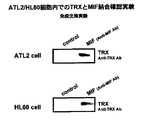
- SDS-PAGE sample buffer was added to the precipitate and subjected to 15% SDS-PAGE gel. After electrophoresis, Western blotting was performed and confirmed with an anti-TRX antibody (ADF11 antibody) (FIG. 1).
- FIG. 1 shows that TRX directly binds to MIF in both ATL2 cells and HL60 cells.
- ATL2 cells human adult T leukemia cell line, published patent publication (JP 62-19532), Tagaya, Y., Y. Maeda, A. Mitsui, N. Kondo, H. Matsui, J. Hamuro, N. Brown , K. Arai, T. Yokota, H. Wakasugi, et al 1989. See EMBO J. 8:75 Protein G Sepharose 4 Fast Flow: (GE Healthcare Biosciences) Anti-TRX antibody (ADF11 antibody): (Redox Biosciences) Anti-MIF antibody: (Santa Cruz) Anti-Rabbit antibody: (manufactured by upstate) amicon ultra-4 (Millipore)
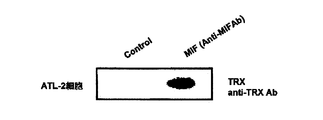
- the cell solution was centrifuged at 15,000 rpm, 4 ° C. for 2 minutes, and the resulting supernatant was added to a new microtube, and 20 ⁇ l of Protein G Sepharose and 4 ⁇ g / ml of anti-MIF antibody were further added.
- an anti-Rabbit antibody was added instead of the anti-MIF antibody as a control.
- the reaction was carried out overnight at 4 ° C. using a small rotary incubator.
- the reaction solution was centrifuged at 15000 rpm, 4 ° C.
- FIG. 2 shows that TRX directly binds to MIF outside the ATL2 cell.
- Example 3 [Confirmation of inhibition of MIF uptake into cells by TRX] MIF is taken up into cells by autocrine and paracrine actions, and induces the production of inflammatory cytokines TNF-alpha ( ⁇ ) and IL-1. Therefore, we investigated the effect of TRX on MIF uptake into cells and attempted to elucidate the mechanism of inflammatory response control.
- ATL2 cells human adult T leukemia cell line
- Recombinant MIF Recombinant MIF with His tag was expressed in E. coli using expression vector pQE30 (Qiagen), and column purified by MagneHis TM Protein Purification System (Promega).
- Recombinant TRX (rTRX): (Ajinomoto Co., Inc.)
- Anti-His tag antibody (Promega)
- ATL2 cells were cultured in RPMI 1640 medium containing 10% FCS, 100 U / ml penicillin, 100 ⁇ g / ml streptomycin in 75 cm 2 flasks.
- ATL2 cells were added to a 24-well plate at 1 ⁇ 10 6 / cell, rTRX at a final concentration of 0 to 250 ⁇ g / ml and 25 ⁇ g / ml rMIF were added, and cultured at 37 ° C. under 0.5% CO 2 for 24 hours.
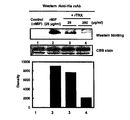
- TRX suppressed MIF uptake into ATL2 cells in a concentration-dependent manner. This suggests that TRX suppresses the inflammatory response by suppressing the intracellular uptake of MIF. (Example 4)
- RAW 264.7 cells mouse-derived macrophage cell line, Transferred by Dr. Yasuyuki Ishii, RIKEN Research Center for Allergy and Immunology, Recombinant MIF (rMIF): (manufactured by ATGEN) Recombinant TRX (rTRX): (Ajinomoto Co., Inc.) lipopolysaccharide (LPS): (manufactured by SIGMA) TNF- ⁇ ELISA kit: (R & D systems)
- RAW 264.7 cells were cultured in RPMI 1640 medium containing 10% FCS, 100 U / ml penicillin, 100 ⁇ g / ml streptomycin in 75 cm 2 flasks.
- RAW 264.7 cells are added to a 24-well plate at 1 ⁇ 10 6 / cell, final concentration 10 ng / ml MIF is added, 0 to 500 ng / ml TRX is added, and the condition is 37 ° C., 5% CO 2. And left for 4 hours.
- 100 ng / ml LPS was added (indicated as LPS (+)), and the mixture was allowed to stand at 37 ° C. under 5% CO 2 for 4 hours, and then the culture broth was collected.
- the amount of TNF-alpha ( ⁇ ) produced was measured by Duo Set ELISA Development system mouse TNF- ⁇ kit. The measurement method followed the protocol attached to the kit. The measurement results are shown in FIG.
- FIG. 4 confirms that rTRX inhibits the activity of rMIF in a concentration-dependent manner and suppresses the production of MNF-derived TNF-alpha, which is an inflammatory cytokine.
- TRX directly binds to MIF, thereby suppressing the transfer of MIF into cells. Further, from the results of Example 4 above, it was confirmed that the thioredoxin family polypeptide suppresses the transfer of MIF into cells, thereby suppressing the production of TNF-alpha and suppressing the inflammatory response. Therefore, TRX is believed to be widely effective against disorders caused by MIF. (Example 5)
- TRX and MIF binding confirmation experiment 1 The binding between TRX and MIF was confirmed by molecular interaction analysis (Biacore) (hereinafter, simply referred to as intermolecular interaction analysis) using the surface plasmon resonance (SPR) phenomenon.
- Biacore molecular interaction analysis
- SPR surface plasmon resonance
- Recombinant MIF His-tagged rMIF was expressed in Escherichia coli using the expression vector pQE30 (Qiagen) and purified by MagneHis TM Protein Purification System (Promega).
- Recombinant TRX rTRX: His-tagged rTRX was expressed in Escherichia coli using the expression vector pQE80L (Qiagen) and column purified by MagneHis TM Protein Purification System (Promega).
- Anti-His tag antibody (Promega) BIAcore2000 (using CM5 sensor chip) (Biacore)
- RMIF ⁇ experimental method ⁇ RMIF was immobilized as a ligand on the CM5 sensor chip.
- the ligand used was Running Buffer, 10 mM HEPES (pH 7.4), 150 mM NaCl, 3 mM EDTA, 0.005% Tween 20, and the MIF was adjusted to 200 nM or less.
- rTRX was used as an analyte, and the interaction between rTRX and rMIF was analyzed.
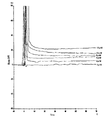
- the rTRX concentration was changed to 2 ⁇ M, 4 ⁇ M, 6 ⁇ M, 8 ⁇ M, 10 ⁇ M, and 12 ⁇ M for analysis.
- FIG. 5 shows the results of intermolecular interaction analysis of Example 5. As shown in FIG. 5, since surface plasmon resonance increases depending on the concentration of rTRX, it can be said that the binding between rTRX and rMIF has concentration dependency. Similar results were also obtained when the same experiment was performed using the sensor chip NTA (Ni-Histag). (Example 6)
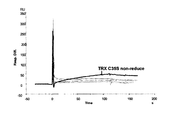
- RMIF ⁇ experimental method ⁇ RMIF adjusted to a concentration of 200 nM or less was immobilized as a ligand on the CM5 sensor chip. Then, rWT TRX, rDM TRX, and rC35S TRX were used as analytes, and the interaction between these rTRX and rMIF was analyzed for each of the oxidation state and the reduction state.
- FIG. 6 is a diagram showing the results of intermolecular interaction analysis of Example 6.
- Tables 1 and 2 show the dissociation constant values (KD values) calculated from FIG. 6,
- Table 1 shows the KD values of rTRX and rMIF in the oxidized state, and
- Table 2 shows the reduction values. 6 is a table showing KD values of rTRX and rMIF in a state.
- RMIF ⁇ experimental method ⁇ RMIF was immobilized as a ligand on the CM5 sensor chip.
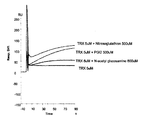
- ligand As the ligand, Running Buffer, 10 mM HEPES (pH 7.4), 150 mM NaCl, 3 mM EDTA, 0.005% Tween 20 was used, and the rMIF concentration was adjusted to 200 nM or less. Then, N-acetylglucosamine, nitrosoglutathione, and prostaglandin I2 were mixed with rTRX to prepare three types of analytes. In each analyte, the concentration of rTRX was 5 ⁇ M, and the concentration of the test substance was 500 ⁇ M. Note that prostaglandin I2 was also analyzed with an analyte concentration of 5 ⁇ M.
- FIG. 7 is a diagram showing the results of intermolecular interaction analysis when three types of test substances mixed with rTRX are used as an analyte, and the results of intermolecular interaction analysis of only rTRX (5 ⁇ M). It also shows.
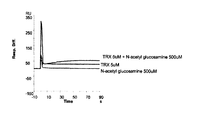
- FIG. 8 shows the result of intermolecular interaction analysis when N-acetylglucosamine is used as a test substance. As a result of intermolecular interaction analysis of only rTRX (5 ⁇ M), the molecule of only N-acetylglycosamine (500 ⁇ M) is shown. The results of the interaction analysis are also shown.
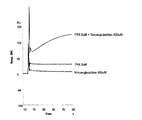
- FIG. 9 shows the results of intermolecular interaction analysis when nitrosoglutathione was used as a test substance.
- FIG. 10 shows the result of intermolecular interaction analysis when prostaglandin I2 is used as a test substance.
- the intermolecular relationship of only prostaglandin I2 500 ⁇ M is shown.
- the results of the interaction analysis are also shown.
- FIG. 11 shows the results of an intermolecular interaction analysis using an analyte in which rTRX and prostaglandin I2 are mixed as the test substance and the prostaglandin I2 concentration is 5 ⁇ M and 500 ⁇ M.
- nitrosoglutathione and prostaglandin I2 are substances that enhance the binding between TRXs and MIF.
- the screening method of the present invention can screen for substances that enhance the binding between TRXs and MIF.
Landscapes
- Chemical & Material Sciences (AREA)
- Organic Chemistry (AREA)
- Life Sciences & Earth Sciences (AREA)
- Health & Medical Sciences (AREA)
- Engineering & Computer Science (AREA)
- Genetics & Genomics (AREA)
- Bioinformatics & Cheminformatics (AREA)
- Wood Science & Technology (AREA)
- Zoology (AREA)
- General Engineering & Computer Science (AREA)
- General Health & Medical Sciences (AREA)
- Biochemistry (AREA)
- Biomedical Technology (AREA)
- Biotechnology (AREA)
- Molecular Biology (AREA)
- Microbiology (AREA)
- Physics & Mathematics (AREA)
- Biophysics (AREA)
- Crystallography & Structural Chemistry (AREA)
- Bioinformatics & Computational Biology (AREA)
- Plant Pathology (AREA)
- Medicinal Chemistry (AREA)
- Investigating Or Analysing Biological Materials (AREA)
- Peptides Or Proteins (AREA)
Abstract
Priority Applications (3)
| Application Number | Priority Date | Filing Date | Title |
|---|---|---|---|
| US13/131,339 US8440413B2 (en) | 2006-05-29 | 2009-11-26 | Method of screening for a substance that strengthens a bond between thioredoxin and macrophage migration inhibition factor |
| JP2010540512A JP5528351B2 (ja) | 2008-11-26 | 2009-11-26 | スクリーニング方法、該スクリーニング方法で選ばれた物質を含有する組成物、結合物質 |
| EP09829147A EP2363475A4 (fr) | 2008-11-26 | 2009-11-26 | Méthode de criblage, composition contenant une substance sélectionnée par la méthode de criblage, et substance de liaison |
Applications Claiming Priority (2)
| Application Number | Priority Date | Filing Date | Title |
|---|---|---|---|
| US12/315069 | 2008-11-26 | ||
| US12/315,069 US20090170108A1 (en) | 2006-05-29 | 2008-11-26 | Screening method, a composition comprising substances chosen in the method thereof, and a binding substance |
Publications (1)
| Publication Number | Publication Date |
|---|---|
| WO2010061902A1 true WO2010061902A1 (fr) | 2010-06-03 |
Family
ID=42226426
Family Applications (1)
| Application Number | Title | Priority Date | Filing Date |
|---|---|---|---|
| PCT/JP2009/069985 Ceased WO2010061902A1 (fr) | 2006-05-29 | 2009-11-26 | Méthode de criblage, composition contenant une substance sélectionnée par la méthode de criblage, et substance de liaison |
Country Status (3)
| Country | Link |
|---|---|
| EP (1) | EP2363475A4 (fr) |
| JP (1) | JP5528351B2 (fr) |
| WO (1) | WO2010061902A1 (fr) |
Cited By (1)
| Publication number | Priority date | Publication date | Assignee | Title |
|---|---|---|---|---|
| JP2015052622A (ja) * | 2012-02-27 | 2015-03-19 | 株式会社ファンケル | 皮膚のストレス蓄積量の測定方法 |
Citations (4)
| Publication number | Priority date | Publication date | Assignee | Title |
|---|---|---|---|---|
| JPS6219532A (ja) | 1985-07-19 | 1987-01-28 | Ajinomoto Co Inc | インタ−ロイキン2レセプタ−発現誘導物質a |
| JPS6485097A (en) | 1987-06-12 | 1989-03-30 | Ajinomoto Kk | Recombinant human adf |
| JPH05139992A (ja) | 1991-11-13 | 1993-06-08 | Ajinomoto Co Inc | ヒトadfを含有する臓器保護剤 |
| JP2002179588A (ja) | 2000-10-05 | 2002-06-26 | Jiyunji Yodoi | チオレドキシンファミリーに属するポリペプチド類を含む炎症予防乃至治療剤 |
Family Cites Families (1)
| Publication number | Priority date | Publication date | Assignee | Title |
|---|---|---|---|---|
| JPWO2007138961A1 (ja) * | 2006-05-29 | 2009-10-08 | レドックス・バイオサイエンス株式会社 | マクロファージ遊走阻止因子阻害剤 |
-
2009
- 2009-11-26 EP EP09829147A patent/EP2363475A4/fr not_active Withdrawn
- 2009-11-26 WO PCT/JP2009/069985 patent/WO2010061902A1/fr not_active Ceased
- 2009-11-26 JP JP2010540512A patent/JP5528351B2/ja active Active
Patent Citations (4)
| Publication number | Priority date | Publication date | Assignee | Title |
|---|---|---|---|---|
| JPS6219532A (ja) | 1985-07-19 | 1987-01-28 | Ajinomoto Co Inc | インタ−ロイキン2レセプタ−発現誘導物質a |
| JPS6485097A (en) | 1987-06-12 | 1989-03-30 | Ajinomoto Kk | Recombinant human adf |
| JPH05139992A (ja) | 1991-11-13 | 1993-06-08 | Ajinomoto Co Inc | ヒトadfを含有する臓器保護剤 |
| JP2002179588A (ja) | 2000-10-05 | 2002-06-26 | Jiyunji Yodoi | チオレドキシンファミリーに属するポリペプチド類を含む炎症予防乃至治療剤 |
Non-Patent Citations (16)
| Title |
|---|
| "Circulating thioredoxin suppresses lipopolysaccharide-induced neutrophil chemotaxis", PNAS, vol. 98, 2001, pages 15143 - 15148 |
| "Redox-sensing release of thioredoxin from T lymphocytes with negative feedback loops", J. IMMUNOL., vol. 172, 2004, pages 442 - 448 |
| ADVANCES IN IMMUNOLOGY, vol. 66, 1997, pages 197 |
| ANN. REV. IMMUNOL., vol. 15, 1997, pages 351 - 369 |
| ANNUAL REPORTS IN MEDICAL CHEMISTRY, vol. 33, 1998, pages 24 |
| BERNHAGEN J ET AL., NATURE, vol. 365, 1993, pages 756 - 759 |
| BUCALA R., FASEB J, vol. 7, 1996, pages 19 - 24 |
| CALANDRA T ET AL., NATURE, vol. 377, 1995, pages 68 - 71 |
| ICHIYAMA H ET AL., CYTOKINE, vol. 26, 2004, pages 187 - 194 |
| INTERNATIONAL JOURNAL OF MOLECULAR MEDICINE, vol. 2, 1998, pages 17 |
| KATO N. ET AL.: "Cell surface thioredoxin (TRX) is involved in macrophage migration inhibitory factor (MIF)-mediated inflammatory responses.", PROCEEDINGS OF THE JAPANESE SOCIETY FOR IMMUNOLOGY, vol. 37, 2007, pages 230, XP008152227 * |
| MIKULOWASKA A ET AL., J IMMUNOL, vol. 158, 1997, pages 5514 - 5517 |
| NISHIHIRA J., J INTERFERON CYTOKINE RES, vol. 20, 2000, pages 751 - 762 |
| REF-1 PNAS, vol. 94, 1997, pages 3633 - 3638 |
| See also references of EP2363475A4 * |
| TAGAYA, Y., Y. MAEDA, A. MITSUI, N. KONDO, H. MATSUI, J. HAMURO, N. BROWN, K. ARAI, T. YOKOTA, H. WAKASUGI ET AL., EMBO J., vol. 8, 1989, pages 75 |
Cited By (1)
| Publication number | Priority date | Publication date | Assignee | Title |
|---|---|---|---|---|
| JP2015052622A (ja) * | 2012-02-27 | 2015-03-19 | 株式会社ファンケル | 皮膚のストレス蓄積量の測定方法 |
Also Published As
| Publication number | Publication date |
|---|---|
| JP5528351B2 (ja) | 2014-06-25 |
| EP2363475A1 (fr) | 2011-09-07 |
| EP2363475A4 (fr) | 2012-07-18 |
| JPWO2010061902A1 (ja) | 2012-04-26 |
Similar Documents
| Publication | Publication Date | Title |
|---|---|---|
| Shirai et al. | Up-regulation of the expression of leucine-rich α2-glycoprotein in hepatocytes by the mediators of acute-phase response | |
| TWI779287B (zh) | 抗發炎胜肽及包含其之成分 | |
| JP2021035358A (ja) | 特異的結合ポリペプチドおよびその使用 | |
| Yang et al. | Iron-metabolic function and potential antibacterial role of Hepcidin and its correlated genes (Ferroportin 1 and Transferrin Receptor) in turbot (Scophthalmus maximus) | |
| RO118758B1 (ro) | Peptide cu rol de imunomodulatori, secvenţă de nucleotide, anticorp şi compoziţie farmaceutic | |
| US8440413B2 (en) | Method of screening for a substance that strengthens a bond between thioredoxin and macrophage migration inhibition factor | |
| RU2013137466A (ru) | Бис-met-гистоны | |
| JP2018535964A (ja) | 線維芽細胞増殖因子(fgf)1アナログによるステロイド誘導性高血糖の処置 | |
| Shigemori et al. | Genetically modified Lactococcus lactis producing a green fluorescent protein–bovine lactoferrin fusion protein suppresses proinflammatory cytokine expression in lipopolysaccharide-stimulated RAW 264.7 cells | |
| Hassan et al. | Functional characterization of an interleukin 20 like homologue in grass carp Ctenopharyngodon idella | |
| KR20230042014A (ko) | 시토카인 접합체 | |
| JP5528351B2 (ja) | スクリーニング方法、該スクリーニング方法で選ばれた物質を含有する組成物、結合物質 | |
| CN115925927B (zh) | 一种抗il-10单克隆抗体及其制备方法和应用 | |
| US20100184215A1 (en) | Modified thioredoxin | |
| US20190315820A1 (en) | A Composition Containing SMAD Protein for Treatment of Autoimmune Diseases, a Fusion Protein Comprising SMAD Protein, an Expression Vector and a Method for Preparing the Same | |
| JPH10506538A (ja) | Gp130に全く結合することができないヒトインターロイキン−6の拮抗薬、および医薬化合物の製造におけるそれらの使用 | |
| CN111788217B (zh) | 白介素-15活性的拮抗剂肽 | |
| Fuji et al. | Discovery of IL-5-binding unnatural cyclic peptides from multiple libraries by directed evolution | |
| CN118056840A (zh) | 受体亲和力偏好性的定点偶联聚乙二醇化白介素-2突变体及其用途 | |
| Ahmed et al. | Enhancing recombinant interleukin‐6 production yield by fermentation optimization, two‐step denaturing, and one‐step purification | |
| CN117247447A (zh) | 一种广谱中和SARS-CoV-2的中和抗体P2S-2E9及其应用 | |
| CN102719439A (zh) | 一种突变型人表皮生长因子基因、蛋白及其制备方法和应用 | |
| CN116355081A (zh) | 一种广谱中和SARS-CoV-2的中和抗体P2-1D5及其应用 | |
| WO2012097126A2 (fr) | Traitement par l'il-25 de l'obésité et des troubles métaboliques | |
| JP5366077B2 (ja) | 炎症および過剰増殖を伴う皮膚疾患モデル |
Legal Events
| Date | Code | Title | Description |
|---|---|---|---|
| 121 | Ep: the epo has been informed by wipo that ep was designated in this application |
Ref document number: 09829147 Country of ref document: EP Kind code of ref document: A1 |
|
| ENP | Entry into the national phase |
Ref document number: 2010540512 Country of ref document: JP Kind code of ref document: A |
|
| WWE | Wipo information: entry into national phase |
Ref document number: 2009829147 Country of ref document: EP |
|
| NENP | Non-entry into the national phase |
Ref country code: DE |
|
| WWE | Wipo information: entry into national phase |
Ref document number: 13131339 Country of ref document: US |