WO2010108505A1 - Wirkstoffkombinationen mit insektiziden und akariziden eigenschaften - Google Patents
Wirkstoffkombinationen mit insektiziden und akariziden eigenschaften Download PDFInfo
- Publication number
- WO2010108505A1 WO2010108505A1 PCT/EP2009/002168 EP2009002168W WO2010108505A1 WO 2010108505 A1 WO2010108505 A1 WO 2010108505A1 EP 2009002168 W EP2009002168 W EP 2009002168W WO 2010108505 A1 WO2010108505 A1 WO 2010108505A1
- Authority
- WO
- WIPO (PCT)
- Prior art keywords
- spp
- formula
- plants
- pyrid
- seed
- Prior art date
- Legal status (The legal status is an assumption and is not a legal conclusion. Google has not performed a legal analysis and makes no representation as to the accuracy of the status listed.)
- Ceased
Links
- 0 Cc1cc(*)c(*)nc1 Chemical compound Cc1cc(*)c(*)nc1 0.000 description 2
- ZXQYGBMAQZUVMI-UNOMPAQXSA-N CC(C)(C1/C=C(/C(F)(F)F)\Cl)C1C(OC(c1cccc(Oc2ccccc2)c1)C#N)=O Chemical compound CC(C)(C1/C=C(/C(F)(F)F)\Cl)C1C(OC(c1cccc(Oc2ccccc2)c1)C#N)=O ZXQYGBMAQZUVMI-UNOMPAQXSA-N 0.000 description 1
- ZFHGXWPMULPQSE-WTKPLQERSA-N CC(C)(C1/C=C(/C(F)(F)F)\Cl)C1C(OCc(c(F)c(c(C)c1F)F)c1F)=O Chemical compound CC(C)(C1/C=C(/C(F)(F)F)\Cl)C1C(OCc(c(F)c(c(C)c1F)F)c1F)=O ZFHGXWPMULPQSE-WTKPLQERSA-N 0.000 description 1
- OMFRMAHOUUJSGP-UNOMPAQXSA-N CC(C)(C1/C=C(/C(F)(F)F)\Cl)C1C(OCc1cccc(-c2ccccc2)c1C)=O Chemical compound CC(C)(C1/C=C(/C(F)(F)F)\Cl)C1C(OCc1cccc(-c2ccccc2)c1C)=O OMFRMAHOUUJSGP-UNOMPAQXSA-N 0.000 description 1
- QQODLKZGRKWIFG-UHFFFAOYSA-N CC(C)(C1C=C(Cl)Cl)C1C(OC(c(cc1)cc(Oc2ccccc2)c1F)C#N)=O Chemical compound CC(C)(C1C=C(Cl)Cl)C1C(OC(c(cc1)cc(Oc2ccccc2)c1F)C#N)=O QQODLKZGRKWIFG-UHFFFAOYSA-N 0.000 description 1
- XQUXKZZNEFRCAW-UHFFFAOYSA-N CC1(C)C(C)(C)C1C(OC(c1cc(Oc2ccccc2)ccc1)C#N)=O Chemical compound CC1(C)C(C)(C)C1C(OC(c1cc(Oc2ccccc2)ccc1)C#N)=O XQUXKZZNEFRCAW-UHFFFAOYSA-N 0.000 description 1
- XZJURWKNRAGMCG-UHFFFAOYSA-N Cc(cn1)cc(F)c1Cl Chemical compound Cc(cn1)cc(F)c1Cl XZJURWKNRAGMCG-UHFFFAOYSA-N 0.000 description 1
- JPHQHJFHSAVFQJ-UHFFFAOYSA-N O=C1OCC(N(CC(F)F)Cc(cn2)ccc2F)=C1 Chemical compound O=C1OCC(N(CC(F)F)Cc(cn2)ccc2F)=C1 JPHQHJFHSAVFQJ-UHFFFAOYSA-N 0.000 description 1
Classifications
-
- A—HUMAN NECESSITIES
- A01—AGRICULTURE; FORESTRY; ANIMAL HUSBANDRY; HUNTING; TRAPPING; FISHING
- A01N—PRESERVATION OF BODIES OF HUMANS OR ANIMALS OR PLANTS OR PARTS THEREOF; BIOCIDES, e.g. AS DISINFECTANTS, AS PESTICIDES OR AS HERBICIDES; PEST REPELLANTS OR ATTRACTANTS; PLANT GROWTH REGULATORS
- A01N43/00—Biocides, pest repellants or attractants, or plant growth regulators containing heterocyclic compounds
- A01N43/34—Biocides, pest repellants or attractants, or plant growth regulators containing heterocyclic compounds having rings with one nitrogen atom as the only ring hetero atom
- A01N43/40—Biocides, pest repellants or attractants, or plant growth regulators containing heterocyclic compounds having rings with one nitrogen atom as the only ring hetero atom six-membered rings
Definitions
- the present invention relates to novel drug combinations which contain at least one known compound of the formula (I) on the one hand and at least one further known active ingredient from the class of pyrethroids on the other hand and are very suitable for controlling animal pests such as insects and unwanted acarids.
- the invention also relates to methods for controlling animal pests on plants and seeds, the use of the erf Wirkstoffn- to the invention drug combinations for the treatment of seeds, a method for the protection of seeds and not least the treated with the active compound combinations of the invention seed.
- A is pyrid-2-yl or pyrid-4-yl or pyrid-3-yl which is optionally substituted in the 6-position by fluorine, chlorine, bromine, methyl, trifluoromethyl or trifluoromethoxy or for pyridazine-3 yl, which is optionally substituted in the 6-position by chlorine or methyl or pyrazine-3-yl or 2-chloro-pyrazine-5-yl or 1,3-thiazol-5-yl, which may be in the 2-position is substituted by chlorine or methyl, or
- A is a radical pyrimidinyl, pyrazolyl, thiophenyl, oxazolyl, isoxazolyl, 1,2,4-oxadiazolyl, isothiazolyl, 1,2,4-triazolyl or 1,2,5-thiadiazolyl, which is optionally substituted by fluorine, chlorine, bromine, cyano, nitro, C r C 4 -alkyl (which is optionally substituted by fluorine and / or chlorine), C 3 -alkylthio (which is optionally substituted by fluorine and / or chlorine), or C 3 - Alkylsulfonyl (which is optionally substituted by fluorine and / or chlorine),
- X is halogen, alkyl or haloalkyl
- Y is halogen, alkyl, haloalkyl, haloalkoxy, azido or cyano and
- R 1 is alkyl, haloalkyl, alkenyl, haloalkenyl, alkynyl, cycloalkyl, cycloalkylalkyl, halocycloalkyl, alkoxy, alkoxyalkyl, or halocycloalkylalkyl,
- insecticidal compound of the formula (I) or the active ingredient from the class of pyrethroids is generally good. However, especially at low application rates and with certain pests, they do not always satisfy the needs of agricultural practice, and there is still a need for economically efficient and ecologically safe pest control.
- insecticidal compounds include the lowering of the dosage amount; a substantial broadening of the spectrum of pests to be controlled including resistant pests; increased application security; a reduced toxicity to plants and thus a better plant compatibility; the control of pests at their various stages of development; a better behavior during the preparation of the insecticidal compounds, for example during milling or mixing, while their storage or during their use; a very favorable biocidal spectrum even at low concentrations with associated good compatibility by warm-blooded animals, fish and plants; and the achievement of an additional effect, for example, an algicidal, anthelmintic, avicidal, bactericidal, fungicidal, molluscicidal, nematicidal, plant-activating, rodenticidal or virucidal activity.
- insecticidal compounds used in vegetative and generative plant propagation material include negligible phytotoxicity when applied to the seed and plant propagation material, compatibility with soil conditions (eg, binding of the compound to the soil), systemic action in the plant, none negative impact on germination and efficacy during the life cycle of the corresponding pest.
- the object of the invention is to satisfy one or more of the above-mentioned claims, e.g. the reduction of the dosage amount, a widening of the combinable spectrum of damages, including resistant pests, and in particular the special requirements for the applicability to vegetative and generative plant propagation material.
- R -CH 3 or -CO 2 CH 3
- the insecticidal and acaricidal activity of the active compound combinations according to the invention is substantially higher than the sum of the effects of the individual active compounds. There is an unpredictable true synergistic effect and not just an effect supplement.
- the synergistic effect of the active compound combinations according to the invention of a compound of the formula (I) and an active compound from the class of pyrethroids extends the range of action of the compound of the formula (I) and the active ingredient from the class of pyrethroids primarily by a reduction in the dosage amount and by an extension of the Spectrum of combinable pests.
- a high degree of pest control can still be achieved, even in cases where the individual compounds of the active compound combinations according to the invention are active at the low applied application rates do not show sufficient effect.
- the active compound combinations according to the invention can show even further surprising advantages, including increased safety in use; a reduced phytotoxicity and thus a better plant compatibility; the control of pests at their various stages of development; better behavior during the preparation of the insecticidal compounds, for example during grinding or mixing, during their storage or during their use; a very advantageous biocidal spectrum even at low concentrations with associated good compatibility by warm-blooded animals, fish and plants; and the achievement of an additional effect, for example an algicidal, anthelmintic, avicidal, bactericidal, fungicidal, molluscicidal, nematicidal, plant-activating, rodenticidal or virucidal action.
- the active compound combinations according to the invention are particularly suitable for protecting seeds and / or sprouts and leaves of a plant grown from the seeds against damage by pests.
- the active compound combinations according to the invention thus show a negligible phytotoxicity when applied to the plant propagation material, a compatibility with soil conditions (eg as regards the binding of the compound to the soil), a systemic effect in the plant, no negative influence on the germination and activity during the corresponding pest lifecycle.
- the active compound combinations according to the invention contain at least one of the pyrethroids 1 to 25 listed above.
- the active compound combinations according to the invention contain precisely one compound of the formula (I) and exactly one of the pyrethroids 1 to 25 listed individually above
- Preferred are active compound combinations which contain a compound of the formula (I) and two compounds of the pyrethroids 1 to 25 listed individually above. Preference is furthermore given to mixtures which contain two compounds of the formula (I) and one compound of the pyrethroids 1 to 25 listed individually above.
- the invention also includes drug combinations comprising a compound of formula (I) and a pyrethroid selected from the group consisting of the pyrethroid ester insecticides allethrin, bioallethrin, barthrin, bioethanomethrin, cyclethrin, cyphenothrin, dimefluthrin, dimethrin, empenthrin, fenfluthrin, fenpyrithrine, flubrocythrinates , Flumethrin, furethrin, imiprothrin, metofluthrin, phenothrin, prallethrin, profluthrin, pyresmethrin, terallethrin and tetramethrin; the silicon-containing insecticide eflusilanate, the pyrethroid ether insecticides, halfenprox and protrifenbute; and the pyrethrins (botanical insecticides) Cinerine I and II,
- A is preferably 6-fluoropyrid-3-yl, 6-chloropyrid-3-yl, 6-bromo-pyrid-3-yl, 6-methyl-pyrid-3-yl, 6-trifluoromethyl-pyridine 3-yl, 6-trifluoromethoxypyrid-3-yl, 6-chloro-1, 4-pyridazin-3-yl, 6-methyl-1,4-pyridazin-3-yl, 2-
- R 1 preferably represents optionally fluorine-substituted Q-Cs-alkyl, C 2 -C 5 -alkenyl, C 3 -C 5 -cycloalkyl, C 3 -C 5 -cycloalkylalkyl or C 1 -C 5 -alkoxy.
- 6-bromo-pyrid-3-yl 5-chloro-6-bromo-pyrid-3-yl, 5,6-dibromo-pyrid-3-yl, 5-methyl-6-chloro-pyrid-3-yl, 5-chloro-6-iodo-pyrid-3-yl or S-difluoromethyl- ⁇ -chloro-pyrid-S-yl.
- R 1 particularly preferably represents methyl, methoxy, ethyl, propyl, vinyl, allyl, propargyl, cyclopropyl, 2-fluoroethyl, 2,2-difluoroethyl or 2-fluorocyclopropyl.
- R 1 very particularly preferably represents methyl, cyclopropyl, methoxy, 2-fluoroethyl or 2,2-difluoroethyl.
- A is most preferably the radical 6-chloro-pyrid-3-yl or 5-fluoro-6-chloro-pyrid-3-yl
- R 1 is most preferably methyl, 2-fluoroethyl or 2,2-difluoro-ethyl.
- A is 6-chloro-pyrid-3-yl
- R 1 is methyl
- R 1 is ethyl
- R 1 is cyclopropyl
- R 1 is 2-fluoroethyl
- R 1 is 2,2-difluoroethyl.
- a preferred subgroup of the compounds of the formula (I) are those of the formula (I-a)
- B is pyrid-2-yl or pyrid-4-yl or pyrid-3-yl, which may optionally be in 6-
- Position is substituted by fluorine, chlorine, bromine, methyl, trifluoromethyl or trifluoro- methoxy or for pyridazin-3-yl, which is optionally substituted in the 6-position by chlorine or methyl or pyrazine-3-yl or 2-chloro-pyrazin-5-yl or 1,3-thiazol-5-yl which is optionally substituted in the 2-position by chlorine or methyl,
- R 2 is haloalkyl, haloalkenyl, halocycloalkyl or halocycloalkylalkyl,
- B is preferably 6-fluoropyrid-3-yl, 6-chloropyrid-3-yl, 6-bromo-pyrid-3-yl, 6-methyl-pyrid-3-yl, 6-trifluoromethyl-pyridine 3-yl, 6-trifluoromethoxypyrid-3-yl, 6-chloro-1, 4-pyridazin-3-yl, 6-methyl-1,4-pyridazin-3-yl, 2-chloro-1,3-thiazole 5-yl or 2-methyl-1,3-thiazol-5-yl.
- R 2 preferably represents fluorine-substituted Ci-Cs-alkyl, C 2 -C 5 alkenyl, C 3 -C 5 - cycloalkyl or C 3 -C 5 cycloalkylalkyl.
- B particularly preferably represents the radical 6-fluoropyrid-3-yl, 6-chloropyrid-3-yl, 6-bromopyrid-3-yl, 6-chloro-1, 4-pyridazin-3-yl, 2 chloro-l, 3-thiazol-5-yl.
- R 2 particularly preferably represents 2-fluoroethyl, 2,2-difluoroethyl, 2-fluorocyclopropyl.
- B is very particularly preferably the radical 6-chloropyrid-3-yl.
- R 2 is most preferably 2-fluoro-ethyl or 2,2-difluoro-ethyl.
- B is 6-chloro-pyrid-3-yl
- R 2 is 2-fluoroethyl
- R 2 is 2,2-difluoroethyl.
- Another preferred subgroup of the compounds of the formula (I) are those of the formula (I-b)
- R 3 is hydrogen, alkyl, alkenyl, alkynyl, cycloalkyl or alkoxy
- D is preferably one of the radicals 5,6-difluoropyrid-3-yl, 5-chloro-6-fluoropyrid-3-yl, 5-bromo-6-fluoropyrid-3-yl, 5-iodo 6-fluoro-pyrid-3-yl, 5-fluoro-6-chloro-pyrid-3-yl, 5,6-dichloro-pyrid-3-yl, 5-bromo-6-chloro-pyrid-3-yl , 5-iodo-6-chloro-pyrid-3-yl, 5-fluoro-6-bromo-pyrid-3-yl, 5-Chloro-6-bromo-pyrid-3-yl, 5,6-dibromo-pyrid-3-yl, 5-fluoro-6-iodo-pyrid-3-yl, 5-chloro-6-iodo-pyridine 3-yl, 5-bromo-6-iodo-pyrid-3-yl,
- R 3 is preferably C 1 -C 4 -alkyl, C 2 -C 4 -alkenyl, C 2 -C 4 -alkynyl or C 3 -C 4 -cycloalkyl.
- D is more preferably 5-fluoro-6-chloro-pyrid-3-yl, 5,6-dichloro-pyrid-3-yl, 5-bromo-6-chloro-pyrid-3-yl, 5-fluoro-6 bromo-pyrid-3-yl, 5-chloro-6-bromo-pyrid-3-yl, 5,6-dibromo-pyrid-3-yl, 5-methyl-6-chloro-pyrid-3-yl, 5 Chloro-6-iodo-pyrid-3-yl or 5-difluoromethyl-6-chloro-pyrid-3-yl.
- R 3 particularly preferably represents C 1 -C 4 -alkyl.
- D is most preferably 5-fluoro-6-chloro-pyrid-3-yl or 5-fluoro-6-bromo-pyrid-3-yl.
- R 3 very particularly preferably represents methyl, ethyl, propyl, vinyl, allyl, propargyl or cyclopropyl.
- D is most preferably S-fluoro- ⁇ -chloro-pyrid-S-yl.
- R 3 most preferably represents methyl or cyclopropyl.
- D is 5,6-dichloro-pyrid-3-yl
- D is 5-bromo-6-chloro-pyrid-3-yl
- D is 5-methyl-6-chloro-pyrid-3-yl
- R 3 is methyl. In another highlighted group of compounds of formula (Ib), R 3 is ethyl.
- R 3 is cyclopropyl
- Another preferred subgroup of the compounds of the formula (I) are those of the formula (I-c)
- R 4 is haloalkyl, haloalkenyl, halocycloalkyl or halocycloalkylalkyl.
- E is preferably one of the radicals 5,6-difluoropyrid-3-yl, 5-chloro-6-fluoropyrid-3-yl, 5
- R 4 preferably represents fluorine-substituted C r C 5 alkyl, C 2 -C 5 alkenyl, C 3 -C 5 - cycloalkyl or C 3 -C 5 cycloalkylalkyl.
- E particularly preferably represents 2-chloro-pyrimidin-5-yl, 5-fluoro-6-chloro-pyrid-3-yl, 5,6-
- R 4 particularly preferably represents 2-fluoroethyl, 2,2-difluoroethyl, 2-fluoro-cyclopropyl.
- E is most preferably 5-fluoro-6-chloro-pyrid-3-yl.
- R 4 is very particularly preferably 2-fluoroethyl or 2,2-difluoroethyl.
- E is 5-bromo-6-chloro-pyrid-3-yl
- E is 5-fluoro-6-bromo-pyrid-3-yl
- E is 5-chloro-6-iodo-pyrid-3-yl
- R 4 is 2-fluoroethyl
- R 4 is 2,2-difluoroethyl.
- a preferred subgroup of the compounds of the formula (I) are those of the formula (I-d)
- G is pyrid-2-yl or pyrid-4-yl or pyrid-3-yl which is optionally substituted in the 6-position by fluorine, chlorine, bromine, methyl, trifluoromethyl or trifluoromethoxy or for pyridazine-3 yl which is optionally substituted in the 6-position by chlorine or methyl or for pyrazine-3-yl or 2-chloro-pyrazine-5-yl or for 1,3-
- R 5 is C r C 4 alkyl, C 2 -C 4 alkenyl, C 2 -C 4 alkynyl, C 3 -C 4 cycloalkyl or C r C 4 alkoxy;
- G preferably represents 6-fluoropyrid-3-yl, 6-chloropyrid-3-yl, 6-bromo-pyrid-3-yl, 6-methyl-pyrid-3-yl, 6-trifluoromethyl-pyridine 3-yl, 6-trifluoromethoxypyrid-3-yl, 6-chloro-1, 4-pyridazin-3-yl, 6-methyl-1,4-pyridazin-3-yl, 2-chloro-1,3-thiazole 5-yl or 2-methyl-1,3-thiazol-5-yl.
- R 5 is preferably C r C 4 alkyl, C r alkoxy, C 2 -C 4 alkenyl, C 2 -C 4 -alkynyl or C 3 -C 4 - cycloalkyl.
- G particularly preferably represents the radical 6-fluoropyrid-3-yl, 6-chloropyrid-3-yl, 6-bromopyrid-3-yl, 6-chloro-1, 4-pyridazin-3-yl, 2 chloro-l, 3-thiazol-5-yl,
- R 5 particularly preferably represents methyl, methoxy, ethyl, propyl, vinyl, allyl, propargyl or cyclopropyl.
- G is very particularly preferably the radical 6-chloropyrid-3-yl.
- R 5 very particularly preferably represents methyl or cyclopropyl.
- G is 6-chloro-pyrid-3-yl
- G is 6-bromo-pyrid-3-yl
- G is 6-chloro-1, 4-pyridazin-3-ylyl
- G is 2-chloro-1,3-thiazol-5-yl
- R 5 is methyl
- R 5 is cyclopropyl
- the active compound combinations according to the invention preferably comprise at least one of the compounds of the formula (I) which is selected from the group consisting of the compounds of the abovementioned formulas (Ia), (Ib), (Ic) or (Id), with the proviso that 4 - ⁇ [(6-chloropyrid-3-yl) methyl] (methyl) amino ⁇ furan-2 (5H) -one and 4 - ⁇ [(6-chloropyrid-3-yl) methyl] (cyclopropyl) pyl) amino ⁇ furan-2 (5H) -one are excluded, and one of the above individually listed pyrrethroids 1 to 25.
- the active compound combinations according to the invention contain at least one of the compounds of formula (I) as defined in this paragraph and one the pyrethroids from the group consisting of the pyrethroid ester insecticides allethrin, bioallethrin, barthrin, bioethanomethrin, cyclethrin, cyphenothrin, dimefluthrin, dimethrin, empenthrin, fenfluthrin, fenpyrithrine, flubrocythrinates, flumethrin, furethrin, imiprothrin, metofluthrin, phenothrin, prallethrin, profluthrin, pyresmethrin , Terallethrin and tetramethrin; the silicon-containing insecticide eflusilanate, the pyrethroid ether insecticides, halfenprox and protrifenbute; and the pyrethrins (botan
- the active compound combinations according to the invention furthermore preferably comprise at least one of the compounds of the formula (I) which is selected from the group consisting of the compounds of the abovementioned formulas (Ia), (Ib) or (Ic) and one of the pyrethroids 1 to 1 mentioned above individually 25.
- the active compound combinations according to the invention also preferably contain at least one of the compounds of the formula (I) as defined in this paragraph and one of the pyrethroids from the group comprising the pyrethroid ester insecticides allethrin, bioallethrin, barthrin, bioethanomethrin, cyclethrin, cyphenothrin, dimefluthrin , Dimethrin, empenthrin, fenfluthrin, fenpyrithrine, flubrocythrinates, flumethrin, furethrin, imiprothrin, metofluthrin, phenothrin, prallethrin, profluthrin, pyresmethrin, terallethrin and tetramethrin; the silicon-containing insecticide eflusilanate, the pyrethroid ether insecticides, halfenprox and protrifenbute; and the pyrethrins (
- the active compound combinations according to the invention particularly preferably contain at least one of the compounds of the formula (I) in which A is selected from the radicals 6-fluoropyrid-3-yl, 6-chloropyrid-3-yl, 6-bromopyridol 3-yl, 5-fluoro-6-chloro-pyrid-3-yl, 2-chloro-l, 3-thiazol-5-yl and 5,6-dichloro-pyrid-3-yl and R 1 is selected from the Radicals methyl, cyclopropyl, methoxy, 2-fluoroethyl or 2,2-difluoro-ethyl, with the proviso that 4 - ⁇ [(6-chloropyrid-3-yl) methyl] (methyl) amino ⁇ furan-2 (5H) -on and 4 - ⁇ [(6-chloropyrid-3-yl) methyl] (cyclopropyl) amino ⁇ furan-2 (5H) -one are excluded, and one
- the active compound combinations according to the invention at least one of the compounds of formula (I) as defined in this paragraph and one of the pyrethroids from the group consisting of the pyrethroid ester insecticides allethrin, bioallethrin, barthrin, bioethanomethrin, cyclethrin, cyphenothrin, dimefluthrin, dimethr in, empenthrin, fenfluthrin, fenpyrithrine, flubrocythrinates, flumethrin, furethrin, imiprothrin, metofluthrin, phenothrin, prallethrin, profluthrin, pyresmethrin, terallethrin and tetramethrin; the silicon-containing insect Tizid Eflusilanate, the Pyrethroid Ether Insecticides Halfenprox and Protrifenbute; and the pyrethrins (bot
- the active compound combinations according to the invention very particularly preferably comprise at least one compound of the formula (I) which is selected from the group consisting of the compounds of the formulas (I-1), (1-2), (1-3), (1 -4), (1-5), (1-6), (1-7) and (1-8), and one of the above individually listed pyrethroids 1 to 25.
- the active compound combinations according to the invention contain at least one compound of Formula (I) selected from the group consisting of the compounds of formulas (1-1), (1-2), (1-3), (1-4), (1-5), (1- 6), (1-7) and (1-8), and transfluthrin.
- the active compound combinations according to the invention comprise at least one of the compounds of the formula (I) as defined in this paragraph and one of the pyrethroids from the group consisting of the pyrethroid ester insecticides allethrin, bioallethrin, barthrin, bioethanomethrin, cyclethrin, cyphenothrin, dimefluthrin, dimethrin, empenthrin , Fenfluthrin, fenpyrithrin, flubrocythrinates, flumethrin, furethrin, imiprothrin, metofluthrin, phenothrin, prallethrin, profluthrin, pyresmethrin, terallethrin and tetramethrin; the silicon-containing insecticide eflusilanate, the pyrethroid ether insecticides, halfenprox and protrifenbute; and the pyrethrins
- each combination represents a preferred erf ⁇ ndungswashe embodiment per se.
- each combination represents a preferred erf ⁇ ndungswashe embodiment per se.
- each combination represents a preferred erf ⁇ ndungswashe embodiment per se.
- the combinations according to the invention contain an active compound of the formula (I) and one of the pyrethroids 1 to 25 listed individually above in the following preferred and particularly preferred mixing ratios:
- Particularly preferred mixing ratio 25: 1 to 1:25
- the mixing ratios are based on weight ratios.
- the ratio is to be understood as compound of formula (I): pyrethroid. Further mixing ratios of the compound of the formula (I) to one of the pyrethroids 1 to 25 are indicated below and sorted according to increasing preference of the mixing ratios: 95: 1 to 1:95, 95: 1 to 1:90, 95: 1 to 1: 85, 95: 1 to 1:80, 95: 1 to 1:75, 95: 1 to 1:70, 95: 1 to 1:65, 95: 1 to 1:60, 95: 1 to 1:55, 95: 1 to 1:50, 95: 1 to 1:45, 95: 1 to 1:40, 95: 1 to 1:35, 95: 1 to 1:30, 95: 1 to 1:25, 95: 1 to 1:20, 95: 1 to 1:15, 95: 1 to 1:10, 95: 1 to 1: 5, 95: 1 to 1: 4, 95: 1 to 1: 3, 95: 1 to 1
- the compounds of the formula (I) or the active compounds from the class of pyrethroids having at least one basic center are capable of forming, for example, acid addition salts, for example with strong inorganic acids such as mineral acids, eg perchloric acid, sulfuric acid, nitric acid, nitrous acid, a Phosphoric acid or a hydrohalic acid, with strong organic carboxylic acids such as unsubstituted or substituted, for example halogen-substituted, C r C 4 alkanecarboxylic acids, for example acetic acid, saturated or unsaturated dicarboxylic acids, eg oxalic acid, malonic acid, succinic acid, maleic acid, fumaric acid and phthalic acid, hydroxycarboxylic acids, eg Ascorbic acid, lactic acid, malic acid, tartaric acid and citric acid, or benzoic acid, or with organic sulfonic acids such as unsubstituted or substituted, for example
- the compounds of the formula (I) or the active compounds from the class of pyrethroids having at least one acidic group are capable of forming, for example, salts with bases, for example metal salts such as alkali or alkaline earth salts, for example sodium, potassium or magnesium salts , or salts with ammonia or an organic amine such as morpholine, piperidine, pyrrolidine, a lower mono-, di- or trialkylamine, for example ethyl, diethyl, triethyl or dimethylpropylamine, or a lower mono-, di- or trihydroxyalkylamine, for example Mono-, di- or triethanolamine.
- bases for example metal salts such as alkali or alkaline earth salts, for example sodium, potassium or magnesium salts
- salts with ammonia or an organic amine such as morpholine, piperidine, pyrrolidine, a lower mono-, di- or trialkylamine, for example ethyl, diethyl
- Agrochemically advantageous salts are preferred in the context of the invention.
- compounds the pyrethroids or their salts are understood to include also the corresponding salts or the free compounds of the formula (I) or the free active compounds from the class of the pyrethroids, if appropriate and appropriate. This also applies correspondingly to tautomers of the compounds of the formula (I) or of the active compounds from the class of the pyrethroids and to their salts.
- the term "combination of active ingredients” for various combinations of compounds of formula (I) and active compounds from the group of pyrethroids, for example in the form of a single ready mix ("ready mix"), in a combined spray mixture composed is from separate formulations of the individual active ingredients, eg a tank mix or in a combined use of the individual active substances, if they are applied sequentially, for example successively within a reasonably short period of time, eg a few hours or days
- the order of application of the compounds is the Formula (I) and the active compounds from the group of pyrethroids for the execution of the present invention not crucial.
- the application rates can be varied within a relatively wide range, depending on the type of application. the.
- the active compound combinations according to the invention can be used to protect plants within a certain period after treatment against the infestation by said animal pests.
- the period of time within which protection is afforded generally ranges from 1 to 28 days, preferably from 1 to 14 days, more preferably from 1 to 10 days, most preferably from 1 to 7 days after treatment of the plants with the active ingredients or up to 200 days after seed treatment.
- the active compound combinations according to the invention are suitable for good plant tolerance, favorable toxicity to warm-blooded animals and good environmental compatibility for the protection of plants and plant organs, for increasing crop yields, improving the quality of the crop and for controlling animal pests, in particular insects, arachnids, helminths, nematodes and mollusks in agriculture, horticulture, livestock, forests, gardens and recreational facilities, in the protection of materials and materials and in the hygiene sector. They can preferably be used as crop protection agents. They are effective against normally sensitive and resistant species as well as against all or individual stages of development.
- the above mentioned pests include:
- Anoplura e.g. Damalinia spp., Haematopinus spp., Ligognathus spp., Pediculus spp., Trichodectes spp.
- Epitrimerus pyri Eutetranychus spp., Eriophyes spp., Hemitarsonemus spp., Hyalomma spp., Ixodes spp., Latrodectus mactans, Metatetranychus spp., Oligonychus spp., Ornithodoros spp., Panonychus spp., Phyllocoptruta oleivora, Polyphago- tarsonemus latus, Psoroptes spp., Rhipicephalus spp., Rhizoglyphus spp., Sarcoptes spp., Scorpio maurus, Stenotarsonemus spp., Tarsonemus spp., Tetranychus spp., Vasates lycopersici. From the class of Bivalva eg Dreissena spp.
- Ceuthorhynchus spp. Ceuthorhynchus spp., Cleonus mendicus, Conoderus spp., Cosmopolites spp., Costelytra zealandica, Curculio spp., Cryptorhynchus lapathi, Dermestes spp., Diabrotica spp., Epilachna spp., Faustinus cubae, Gibbium psylloides, Heteronychus arator, Hylamo ⁇ ha elegans, Hylotrupes bajulus, Hypera postica, Hypothenemus spp., Lachnosterna consanguinea, Leptinotarsa decemlineata, Lissorhoptrus oryzophilus, Lixus spp., Lyctus spp., Meligethes aeneus, Melolontha melolontha, Migdolus spp.
- Gastropoda e.g. Arion spp., Biomphalaria spp., Bulinus spp., Deroceras spp., Galba spp., Lymnaea spp., Oncomelania spp., Succinea spp.
- helminths from the class of helminths, for example, Ancylostoma duodenale, Ancylostoma ceylanicum, Acyostoma braziliensis, Ancylostoma spp., Ascaris lubricoides, Ascaris spp., Brugia malayi, Brugia timori, Bunostomum spp., Chabertia spp., Clonorchis spp., Cooperia spp.
- Dicrocoelium spp Dictyocaulus filaria, Diphyllobothrium latum, Dracunculus medinensis, Echinococcus granulosus, Echinococcus multilocularis, Enterobius vermicularis, Faciola spp., Haemonchus spp., Heterakis spp., Hymenolepis nana, Hyostrongulus spp., Loa Loa, Nematodirus spp., Oesophagostomum spp., Opisthorchis spp., Onchocerca volvulus, Ostertagia spp., Paragonimus spp., Schistosomes spp., Strongyloides fuelleborni, Strongyloides stercoralis, Stronyloides spp., Taenia saginata, tae- nia solium, Trichinella spiralis,
- protozoa such as Eimeria
- Eimeria protozoa
- Heliopeltis spp. Horcias nobilellus, Leptocorisa spp., Leptoglossus phyllopus, Lygus spp., Macropes excavatus, Miridae, Nezara spp., Oebalus spp., Pentomidae, Piesma quadrata, Piezodorus spp., Psallus seriatetus, Pseudacysta persea, Rhodnius spp , Sahlbergella singularis, Scotinophora spp., Stephanitis nashi, Tibraca spp., Triatoma spp.
- Orthoptera e.g. Acheta domesticus, Blatta orientalis, Blattella germanica, Gryllotalpa spp., Leucophaea maderae, Locusta spp., Melanoplus spp., Periplaneta americana, Schistocerca gregaria.
- siphonaptera e.g. Ceratophyllus spp., Xenopsylla cheopis.
- Symphyla e.g. Scutigerella immaculata.
- Thysanoptera e.g. Basothrips biformis, Enneothrips flavens, Frankliniella spp., Heliothrips spp., Hercinothrips femoralis, Kakothrips spp., Rhipiphorothrips cruentatus, Scirtothrips spp., Taeniothrips cardamoni, Thrips spp.
- Thysanura e.g. Lepisma saccharina.
- the plant parasitic nematodes include, for example, Anguina spp., Aphelenchoides spp., Belonoclampus spp., Bursaphelenchus spp., Ditylenchus dipsaci, Globodera spp., Heliocotylenchus spp., Heterodera spp., Longidorus spp., Meloidogyne spp., Pratylenchus spp.
- the active compound combinations according to the invention may optionally also be used in certain concentrations or application rates as herbicides, safeners, growth regulators or agents for improving plant properties, or as microbicides, for example as fungicides, antimycotics, bactericides, viricides (including anti-viral agents) or as anti-MLO agents ( Mycoplasma-like-organism) and RLO (Rickettsia-like-organism).
- the active compounds can be converted into the customary formulations, such as solutions, emulsions, wettable powders, water- and oil-based suspensions, powders, dusts, pastes, soluble powders, soluble granules, scattering granules, suspension-emulsion concentrates, active substance-impregnated natural products, active ingredient impregnated synthetic materials, fertilizers and micro-encapsulants in polymeric materials.
- customary formulations such as solutions, emulsions, wettable powders, water- and oil-based suspensions, powders, dusts, pastes, soluble powders, soluble granules, scattering granules, suspension-emulsion concentrates, active substance-impregnated natural products, active ingredient impregnated synthetic materials, fertilizers and micro-encapsulants in polymeric materials.
- formulations are prepared in a known manner, e.g. by mixing the active compounds with extenders, ie liquid solvents and / or solid carriers, if appropriate using surface-active agents, ie emulsifiers and / or dispersants and / or foam-forming agents.
- extenders ie liquid solvents and / or solid carriers
- surface-active agents ie emulsifiers and / or dispersants and / or foam-forming agents.
- Excipients which can be used are those which are suitable for imparting special properties to the composition itself and / or preparations derived therefrom (for example spray liquor, seed dressing), such as certain technical properties and / or specific biological properties.
- Typical auxiliaries are: extenders, solvents and carriers.
- polar and non-polar organic chemical liquids e.g. from the classes of aromatic and non-aromatic hydrocarbons (such as paraffins, alkylbenzenes, alkylnaphthalenes, chlorobenzenes), alcohols and polyols (which may also be substituted, etherified and / or esterified), ketones (such as acetone, cyclohexanone), Esters (including fats and oils) and (poly) ethers, simple and substituted amines, amides, lactams (such as N-alkylpyrrolidones) and lactones, sulfones and sulfoxides (such as dimethylsulfoxide).
- aromatic and non-aromatic hydrocarbons such as paraffins, alkylbenzenes, alkylnaphthalenes, chlorobenzenes
- alcohols and polyols which may also be substituted, etherified and / or esterified
- ketones such as
- organic solvents can also be used as auxiliary solvents.
- Suitable liquid solvents are essentially: aromatics such as xylene, toluene, or alkylnaphthalenes, chlorinated aromatics and chlorinated aliphatic see hydrocarbons, such as chlorobenzenes, chloroethylenes or methylene chloride, aliphatic hydrocarbons such as cyclohexane or paraffins, eg petroleum fractions, mineral and vegetable oils , Alcohols such as butanol or glycol and their ethers and esters, ketones such as acetone, methyl ethyl ketone, methyl isobutyl ketone or cyclohexanone, strongly polar solvents such as dimethyl sulfoxide, and water.
- the carrier means a natural or synthetic, organic or inorganic substance which may be solid or liquid, with which the active ingredients are mixed or combined for better applicability, in particular for application to plants or plant parts or seeds.
- the solid or liquid carrier is generally inert and should be useful in agriculture.
- Suitable solid or liquid carriers are:
- Ammonium salts and ground natural minerals such as kaolins, clays, talc, chalk, quartz, attapulgite, montmorillonite or diatomaceous earth, and ground synthetic minerals, such as finely divided silica, alumina and silicates, as solid carriers for granules are suitable: e.g. crushed and fractionated natural rocks such as calcite, marble, pumice, sepiolite, dolomite and synthetic granules of inorganic and organic flours and granules of organic material such as paper, sawdust, coconut shells, corn cobs and tobacco stems; suitable emulsifiers and / or foam formers are: e.g.
- nonionic and anionic emulsifiers such as polyoxyethylene fatty acid esters, polyoxyethylene fatty alcohol ethers, e.g. Alkylaryl polyglycol ethers, alkylsulfonates, alkyl sulfates, arylsulfonates and protein hydrolysates;
- suitable dispersants are non-ionic and / or ionic substances, e.g.
- Adhesives such as carboxymethylcellulose, natural and synthetic powdery, granular or latex-type polymers can be used in the formulations, such as gum arabic, polyvinyl alcohol, polyvinyl acetate, as well as natural phospholipids such as cephalins and lecithins and synthetic phospholipids.
- Dyes such as inorganic pigments such as iron oxide, titanium oxide, ferrocyan blue and organic dyes such as alizarin, azo and metal phthalocyanine dyes and trace nutrients such as salts of iron, manganese, boron, copper, cobalt, molybdenum and zinc can be used.
- Other additives may be fragrances, mineral or vegetable optionally modified oils, waxes and nutrients (also trace nutrients), such as salts of iron, manganese, boron, copper, cobalt, molybdenum and zinc.
- Stabilizers such as cold stabilizers, preservatives, antioxidants, light stabilizers or other chemical and / or physical stability-improving agents may also be present.
- the active substance content of the application forms prepared from the commercial formulations can vary within wide ranges.
- the active ingredient concentration of the use forms is in the range of 0.00000001 to 97 wt .-% of active ingredient, preferably in the range of 0.0000001 to 97 wt .-%, particularly preferably in the range of 0.000001 to 83 wt .-% or 0, 000001 to 5 wt .-% and most preferably in the range of 0.0001 to 1 wt .-%.
- the active compound combinations according to the invention can be present in their commercially available formulations and in the formulations prepared from these formulations in admixture with other active ingredients such as insecticides, attractants, sterilants, bactericides, acaricides, nematicides, fungicides, growth-regulating substances, herbicides, safeners, fertilizers or semiochemicals.
- active ingredients such as insecticides, attractants, sterilants, bactericides, acaricides, nematicides, fungicides, growth-regulating substances, herbicides, safeners, fertilizers or semiochemicals.
- a mixture with other known active ingredients, such as herbicides, fertilizers, growth regulators, safeners, semiochemicals, or with agents for improving the plant properties is possible.
- the active compound combinations according to the invention can furthermore be present in use as insecticides in their commercial formulations and in the forms of use prepared from these formulations in admixture with synergists.
- Synergists are compounds that increase the effect of the active ingredients without the added synergist itself having to be active.
- the active compound combinations according to the invention can furthermore be present in insecticides in their commercially available formulations and in the forms of use prepared from these formulations in mixtures with inhibitors which reduce degradation of the active ingredient after application in the environment of the plant, on the surface of plant parts or in plant tissues ,
- the application is done in a custom forms adapted to the application forms.
- plants are understood as meaning all plants and plant populations, such as desired and undesired ones Wild plants or crops (including naturally occurring crops).
- Crop plants can be plants which can be obtained by conventional breeding and optimization methods or by biotechnological and genetic engineering methods or combinations of these methods, including the transgenic plants and including the plant varieties which can or can not be protected by plant breeders' rights.
- Plant parts are to be understood as meaning all aboveground and underground parts and organs of the plants, such as shoot, leaf, flower and root, by way of example leaves, needles, stems, stems, flowers, fruiting bodies, fruits and seeds and roots, tubers and rhizomes.
- the plant parts also include crops and vegetative and generative propagation material, for example fruits, seeds, cuttings, tubers, rhizomes, offshoots, seeds, bulbs, sinkers and shoots.
- the treatment according to the invention of the plants and plant parts with the active compound combinations takes place directly or by acting on their environment, habitat or storage space according to the usual treatment methods, e.g. by dipping, spraying, evaporating, atomizing, spreading, brushing, injecting and in propagating material, in particular in seeds, further by single or multilayer coating.
- plants which can be treated according to the invention mention may be made of the following: cotton, flax, grapevine, fruits, vegetables, such as Rosaceae sp. (for example, pome fruits such as apple and pear, but also drupes such as apricots, cherries, almonds and peaches and soft fruits such as strawberries), Ribesioidae sp., Juglandaceae sp., Betulaceae sp., Anacardiaceae sp., Fagaceae sp., Moraceae sp. , Oleaceae sp., Actinidaceae sp., Lauraceae sp., Musaceae sp.
- Rosaceae sp. for example, pome fruits such as apple and pear, but also drupes such as apricots, cherries, almonds and peaches and soft fruits such as strawberries
- Rosaceae sp. for example, pome fruits such as apple and pe
- Rubiaceae sp. for example, coffee
- Theaceae sp. Sterculiceae sp.
- Rutaceae sp. for example, lemons, organs and grapefruit
- Solanaceae sp. for example tomatoes
- Liliaceae sp. Asteraceae sp.
- Umbelliferae sp. for example, Cruciferae sp., Chenopodiaceae sp., Cucurbitaceae sp. (for example cucumber), Alliaceae sp. leek, onion), Papilionaceae sp.
- Main crops such as Gramineae sp. (for example corn, turf, cereals such as wheat, rye, rice, barley, oats, millet and triticale), Asteraceae sp. (for example sunflower), Brassicaceae sp. (for example, white cabbage, red cabbage, broccoli, cauliflower, Brussels sprouts, pak choi, kohlrabi, radishes and rapeseed, mustard, horseradish and cress), Fabacae sp. (for example, bean, peanuts), Papilionaceae sp. (for example, soybean), Solanaceae sp. (for example potatoes), Chenopodiaceae sp. (for example, sugar beet, fodder beet, Swiss chard, beet); Useful plants and ornamental plants in the garden and forest; and each genetically modified species of these plants.
- Gramineae sp. for example corn, turf, cereals such as wheat, rye, rice,
- the active compound combinations according to the invention are suitable for the treatment of
- Seed Preference is given to mention the combinations according to the invention mentioned above as being preferred or particularly preferred. This is how much of the damage is caused by pests damage to crops caused by infestation of the seed during storage and after introduction of the seed into the soil and during and immediately after germination of the crop. This phase is particularly critical, as the roots and shoots of the growing plant are particularly sensitive and even minor damage can lead to the death of the entire plant. There is therefore a particular interest in protecting the seed and the germinating plant by the use of suitable agents.
- the present invention therefore also relates, in particular, to a method for protecting seed and germinating plants from attack by pests by treating the seed with a combination of active substances according to the invention.
- the method according to the invention for the protection of seeds and germinating plants from infestation by pests comprises a method in which the seed is treated at the same time with an active compound of the formula (I) and one of the pyrrethroids 1 to 25. It also includes a method in which the seed is treated at different times with an active ingredient of formula (I) and one of pyrethroids 1 to 25.
- the invention also relates to the use of the active ingredient combinations according to the invention for the treatment of seed for the protection of the seed and the resulting plant from pests.
- the invention relates to seed which has been treated for protection against pests with a combination of active substances according to the invention.
- the invention also relates to seed treated at the same time with an active compound of the formula (I) and one of the pyrethroids 1 to 25.
- the invention further relates to seed which has been treated at different times with an active compound of the formula (I) and one of the pyrethroids 1 to 25.
- the individual active substances of the agent according to the invention may be present in different layers on the seed.
- the invention also relates to seed in which an active compound of the formula (I) and one of the pyrethroids 1 to 25 are applied as constituent of an envelope or as further layer or further layers in addition to an enclosure.
- active compound combinations according to the invention comprising at least one compound of the formula (I) which is selected from the group consisting of the compounds of the formers (I-1), (1-2), (1-3), (1- 4), (1-5), (1-6), (1-7) and (1-8), and transfluthrin for the treatment of seed.
- active compound combinations according to the invention comprising at least one compound of the formula (I) which is selected from the group consisting of the compounds of the formers (I-1), (1-2), (I-3), ( 1-4), (1-5), (1-6), (1-7) and (1-8), and transfluthrin for the treatment of transgenic seed.
- seed which contains an active substance combination comprising at least one compound of the formula (I) which is selected from the group consisting of the compounds of the formulas (I-1), (1-2), (1-3), (1-4), (1-5), (1-6), (1-7) and (1-8), and transfluthrin was treated.
- seed which at the same time with an active ingredient of formula (I), selected from the group consisting of the compounds of formulas (I-1), (I-2), (1-3), (1- 4), (1-5), (1-6), (1-7) and (1-8), and transfluthrin was treated.
- seed which at different times with an active ingredient of formula (I), selected from the group consisting of the compounds of formulas (I-1), (1-2), (1-3), (1- 4), (1-5), (1-6), (1-7) and (1-8), and transfluthrin was treated.
- an active ingredient of formula (I) selected from the group consisting of the compounds of formulas (I-1), (1-2), (1-3), (1- 4), (1-5), (1-6), (1-7) and (1-8), and transfluthrin was treated.
- One of the advantages of the present invention is that due to the particular systemic properties of the active compound combinations according to the invention, the treatment of the seed with these active ingredient combinations not only protects the seed itself, but also the resulting plants after emergence from pests. In this way, the immediate treatment of the crop at the time of sowing or shortly afterwards can be omitted.
- Another advantage consists in the synergistic increase of the insecticidal activity of the active compound combinations according to the invention over the insecticidal single active substance, which goes beyond the expected efficacy of the two individually applied active ingredients. Also advantageous is the synergistic increase in the fungicidal activity of the active compound combinations according to the invention compared with the fungicidal single active substance, which goes beyond the expected effectiveness of the individually applied active ingredient. This allows optimization of the amount of active ingredients used.
- the active compound combinations according to the invention can also be used in particular in transgenic seed, the plants resulting from this seed capable of expressing a protein directed against pests are.
- certain pests can already be controlled by the expression of the insecticidal protein, for example, and additionally protected against damage by the active compound combinations according to the invention.
- the active compound combinations according to the invention are suitable for the protection of seed of any plant variety as already mentioned above, which is used in agriculture, in the greenhouse, in forests or in horticulture.
- these are corn, peanut, canola, rapeseed, poppy, soybean, cotton, turnip (eg sugarbeet and fodder beet), rice, millet, wheat, barley, oats, rye, sunflower, tobacco, potatoes or vegetables ( eg tomatoes, cabbage).
- the active compound combinations according to the invention are likewise suitable for the treatment of the seed of fruit plants and vegetables as already mentioned above. Of particular importance is the treatment of the seeds of maize, soya, cotton, wheat and canola or rapeseed.
- transgenic seed with a combination of active substances according to the invention is of particular importance.
- the heterologous genes in transgenic seed can come from microorganisms such as Bacillus, Rhizobium, Pseudomonas, Serratia, Trichoderma, Clavibacter, Glomus or Gliocladium.
- the present invention is particularly useful for the treatment of transgenic seed containing at least one heterologous gene derived from Bacillus sp. and whose gene product shows activity against corn borer and / or corn rootworm. Most preferably, this is a heterologous gene derived from Bacillus thuringiensis.
- the active ingredient combination according to the invention is applied to the seed alone or in a suitable formulation.
- the seed is treated in a condition that is so stable that no damage occurs during the treatment.
- the treatment of the seed can be done at any time between harvesting and sowing.
- seed is used which has been separated from the plant and freed from flasks, shells, stems, hull, wool or pulp.
- the amount of the active ingredient combination and / or other additives applied to the seed is chosen so that germination of the seed is not impaired or the resulting plant is not damaged. This is especially important for active ingredients, which can show phytotoxic effects in certain application rates.
- the agents according to the invention can be applied directly, ie without containing further components and without being diluted. In general, it is preferable to apply the agents to the seed in the form of a suitable formulation.
- Suitable formulations and methods for seed treatment are known to those skilled in the art and are described, for example, in the following documents: US 4,272,417 A, US 4,245,432 A, US 4,808,430 A, US 5,876,739 A, US 2003/0176428 A1, WO 2002/080675 A1, WO 2002 / 028186 A2.
- the active compounds which can be used according to the invention can be converted into the customary seed dressing formulations, such as solutions, emulsions, suspensions, powders, foams, slurries or other seed coating compositions, as well as ULV formulations.
- formulations are prepared in a known manner by mixing the active ingredients with conventional additives, such as conventional extenders and solvents or diluents, dyes, wetting agents, dispersants, emulsifiers, defoamers, preservatives, secondary thickeners, adhesives, gibberellins and water.
- conventional additives such as conventional extenders and solvents or diluents, dyes, wetting agents, dispersants, emulsifiers, defoamers, preservatives, secondary thickeners, adhesives, gibberellins and water.
- Dyes which may be present in the seed dressing formulations which can be used according to the invention are all dyes customary for such purposes. Both water-insoluble pigments and water-soluble dyes are useful in this case. Examples which may be mentioned under the names rhodamine B, CI. Pigment Red 112 and CI. Solvent Red 1 known dyes.
- Suitable wetting agents which may be present in the seed dressing formulations which can be used according to the invention are all wetting-promoting substances customary for the formulation of agrochemical active compounds.
- Preferably usable are alkylnaphthalene sulfonates such as diisopropyl or diisobutylnaphthalene sulfonates.
- Suitable dispersants and / or emulsifiers which may be present in the seed dressing formulations which can be used according to the invention are all nonionic, anionic and cationic dispersants customary for the formulation of agrochemical active substances.
- Preferably usable are nonionic or anionic dispersants or mixtures of nonionic or anionic dispersants.
- Particularly suitable nonionic dispersants are, in particular, ethylene oxide-propylene oxide, block polymers, alkylphenol polyglycol ethers and tristryrylphenol polyglycol ethers and their phosphated or sulfated derivatives.
- Suitable anionic dispersants are in particular lignosulfonates, polyacrylic acid salts and arylsulfonate-formaldehyde condensates.
- defoamers all foam-inhibiting substances customary for the formulation of agrochemical active substances can be present in the seed dressing formulations which can be used according to the invention.
- foam-inhibiting substances customary for the formulation of agrochemical active substances can be present in the seed dressing formulations which can be used according to the invention.
- Preferably usable are silicone defoamers and magnesium stearate.
- Preservatives which may be present in the seed dressing formulations which can be used according to the invention are all substances which can be used for such purposes in agrochemical compositions. Examples include dichlorophen and Benzylalkoholhemiformal.
- Suitable secondary thickeners which may be present in the seed dressing formulations which can be used according to the invention are all substances which can be used for such purposes in agrochemical compositions. Preference is given to cellulose derivatives, acrylic acid derivatives, xanthan, modified clays and highly dispersed silicic acid.
- Suitable adhesives which may be present in the seed dressing formulations which can be used according to the invention are all customary binders which can be used in pickling agents.
- Preferably mentioned are polyvinylpyrrolidone, polyvinyl acetate, polyvinyl alcohol and Tylose.
- the gibberellins are known (see R. Wegler “Chemie der convinced- und Swdlingsbekungsstoff", Vol. 2, Springer Verlag, 1970, pp. 401-412).
- the seed dressing formulations which can be used according to the invention can be used either directly or after prior dilution with water for the treatment of seed of various kinds, including seed of transgenic plants. In this case, additional synergistic effects may occur in interaction with the substances formed by expression.
- the seed dressing formulations which can be used according to the invention or the preparations prepared therefrom by the addition of water
- all mixing devices customarily usable for the dressing can be considered.
- the seed is placed in a mixer which adds either desired amount of seed dressing formulations either as such or after prior dilution with water and mixes until evenly distributed the formulation on the seed.
- a drying process follows.
- the treatment method of the invention may be used for the treatment of genetically modified organisms (GMOs), e.g. As plants or seeds are used.
- GMOs genetically modified organisms
- Genetically modified plants are plants in which a heterologous gene has been stably integrated into the genome.
- heterologous gene essentially means a gene that is provided or assembled outside of the plant and which, when introduced into the nuclear genome, chloroplast genome or hypochondriacoma genome of the transformed plant, imparts new or improved agronomic or other properties by expressing a protein or polypeptide of interest or another gene encoding it the plant or downregulates or shuts down other genes present in the plant (for example by antisense technology, cosuppression technology or RNAi technology [RNA Interference]).
- a heterologous gene present in the genome is also referred to as a transgene.
- a transgene defined by its specific presence in the plant genome is referred to as a transformation or transgenic event.
- the treatment according to the invention can also lead to superadditive (“synergistic”) effects.
- the following effects are possible, which go beyond the expected effects: reduced application rates and / or extended spectrum of action and / or increased efficacy of the active ingredients and compositions that can be used according to the invention, better plant growth, increased tolerance to high or low Temperatures, increased tolerance to dryness or water or soil salt content, increased flowering, harvest relief, ripening, higher yields, larger fruits, greater plant height, intense leaf green color, earlier flowering, higher quality and / or higher nutritional value of the crops, higher Sugar concentration in the fruits, better shelf life and / or processability of the harvested products.
- the active compound combinations according to the invention can also exert a strengthening effect on plants. They are therefore suitable for mobilizing the plant defense system against attack by undesired phytopathogenic fungi and / or microorganisms and / or viruses. This may optionally be one of the reasons for the increased effectiveness of the combinations according to the invention, for example against fungi.
- Plant-strengthening (resistance-inducing) substances in the present context should also mean those substances or combinations of substances which are able to stimulate the plant defense system such that the treated plants, when subsequently inoculated with undesirable phytopathogenic fungi and / or microorganisms and / or viruses a considerable degree of resistance to these unwanted phytopathogenic fungi and / or microorganisms and / or viruses.
- phytopathogenic fungi, bacteria and viruses are understood to be undesirable phytopathogenic fungi and / or microorganisms and / or viruses.
- the substances according to the invention can therefore be employed for the protection of plants against attack by the mentioned pathogens within a certain period of time after the treatment. Of the Period over which a protective effect is achieved generally extends from 1 to 10 days, preferably 1 to 7 days, after the treatment of the plants with the active ingredients.
- Plants and plant varieties which are preferably treated according to the invention include all plants which have genetic material which gives these plants particularly advantageous, useful features (regardless of whether this was achieved by breeding and / or biotechnology).
- Plants and plant varieties which are also preferably treated according to the invention are resistant to one or more biotic stressors, i. H. These plants have an improved defense against animal and microbial pests such as nematodes, insects, mites, phytopathogenic fungi, bacteria, viruses and / or viroids.
- Plants and plant varieties which can also be treated according to the invention are those plants which are resistant to one or more abiotic stress factors.
- Abiotic stress conditions may include, for example, drought, cold and heat conditions, osmotic stress, waterlogging, increased soil salt content, increased exposure to minerals, ozone conditions, high light conditions, limited availability of nitrogen nutrients, limited availability of phosphorous nutrients or avoidance of shade.
- Plants and plant varieties which can also be treated according to the invention are those plants which are characterized by increased yield properties.
- An increased yield can in these plants z.
- it may be based on improved plant physiology, improved plant growth, and improved plant development, such as water utilization efficiency, water retention efficiency, improved nitrogen utilization, increased carbon assimilation, improved photosynthesis, increased germination power, and accelerated maturation.
- the yield may be further influenced by improved plant architecture (under stress and non-stress conditions), including early flowering, flowering control for hybrid seed production, seedling growth, plant size, internode count and spacing, root growth, seed size, Fruit size, pod size, pod or ear number, number of seeds per pod or ear, seed mass, increased seed filling, reduced seed drop, reduced pod popping and stability.
- Other yield-related traits include seed composition such as carbohydrate content, protein content, oil content and composition, nutritional value, reduction of nontoxic compounds, improved processability, and improved shelf life.
- Plants which can be treated according to the invention are hybrid plants which already express the properties of heterosis or hybrid effect, which generally leads to higher yield, higher vigor, better health and better resistance to biotic and abiotic stress factors.
- Such plants are typically produced by cultivating an inbred male sterile parental line (the female crossover partner) with a different inbred cultured pollenfertilen parent line (the male crossover partner) crosses.
- the hybrid seed is typically harvested from the male sterile plants and sold to propagators.
- Pollen sterile plants can sometimes be produced (eg in maize) by delaving (ie mechanical removal of the male reproductive organs or the male flowers); however, it is more common for male sterility to be due to genetic determinants in the plant genome.
- cytoplasmic male sterility have been described, for example, for Brassica species (WO 1992/005251, WO 1995/009910, WO 1998/27806, WO 2005/002324, WO 2006/021972 and US 6,229,072).
- pollen sterile plants can also be obtained using plant biotechnology methods such as genetic engineering.
- a particularly convenient means of producing male-sterile plants is described in WO 89/10396, wherein, for example, a ribonuclease such as a barnase is selectively expressed in the tapetum cells in the stamens. The fertility can then be restorated by expression of a ribonuclease inhibitor such as barstar in the tapetum cells (eg WO 1991/002069).
- Plants or plant varieties obtained by methods of plant biotechnology, such as genetic engineering which can be treated according to the invention are herbicide-tolerant plants, i. H. Plants tolerant to one or more given herbicides. Such plants can be obtained either by genetic transformation or by selection of plants containing a mutation conferring such herbicide tolerance.
- Herbicide-tolerant plants are, for example, glyphosate-tolerant plants, ie plants that have been tolerated to the herbicide glyphosate or its salts.
- glyphosate-tolerant plants can be obtained by transforming the plant with a gene encoding the enzyme 5-enolpyruvylshikimate-3-phosphate synthase (EPSPS).
- EPSPS 5-enolpyruvylshikimate-3-phosphate synthase
- EPSPS 5-enolpyruvylshikimate-3-phosphate synthase
- AroA gene mutant CT7 of the bacterium Salmonella typhimurium (Comai et al., Science (1983), 221, 370-371)
- the CP4 gene of the bacterium Agrobacterium sp. Barry et al., Curr Topics Plant Physiol.
- Glyphosate-tolerant plants can also be obtained by expressing a gene coding for a glyphosate oxidoreductase enzyme as described in US 5,776,760 and US 5,463,175. Glyphosate-tolerant plants can also be obtained by expressing a gene encoding a glyphosate acetyltransferase enzyme as described in, e.g. As WO 2002/036782, WO 2003/092360, WO 2005/012515 and WO 2007/024782 is encoded. Glyphosate-tolerant plants can also be obtained by selecting plants containing naturally occurring mutations of the above-mentioned genes, as described, for example, in WO 2001/024615 or WO 2003/013226.
- herbicide-resistant plants are, for example, plants which have been tolerated to herbicides which inhibit the enzyme glutamine synthase, such as bialaphos, phosphinotricin or glufosinate. Such plants can be obtained by expressing an enzyme which detoxifies the herbicide or a mutant of the enzyme glutamine synthase, which is resistant to inhibition.
- an effective detoxifying enzyme is, for example, an enzyme encoding a phosphinotricin acetyltransferase (such as the bar or pat protein of Streptomyces species).
- Plants expressing an exogenous phosphinotricin acetyltransferase are described, for example, in US 5,561,236; US 5,648,477; US 5,646,024; US 5,273,894; US 5,637,489; US 5,276,268; US 5,739,082; US 5,908,810 and US 7,112,665.
- hydroxyphenylpyruvate dioxygenase HPPD
- HPPD hydroxyphenylpyruvate dioxygenases
- HPPD inhibitors may be treated with a gene encoding a naturally occurring resistant HPPD enzyme, or a gene encoding an mimetic HPPD enzyme according to WO 1996/038567, WO 1999/024585, and WO 99/18045 WO 1999/024586 encoded.
- Tolerance to HPPD inhibitors can also be achieved by transforming plants with genes encoding certain enzymes that allow the formation of homogentisate despite inhibition of the native HPPD enzyme by the HPPD inhibitor. Such plants and genes are described in WO 1999/034008 and WO 2002/36787.
- the tolerance of plants to HPPD inhibitors can also be improved by transforming plants in addition to a gene coding for an HPPD-tolerant enzyme with a gene coding for a prephenate dehydrogenase enzyme, as described in WO 2004 / 024928 is described.
- Other herbicide-resistant plants are plants that have been tolerated to acetolactate synthase (ALS) inhibitors.
- ALS inhibitors examples include sulfonylurea, imidazolinone, triazolopyrimidines, pyrimidinyloxy (thio) benzoates and / or sulfonylaminocarbonyltriazolinone herbicides.
- ALS also known as acetohydroxy acid synthase, AHAS
- AHAS acetohydroxy acid synthase
- plants which are tolerant to imidazolinone and / or sulfonylurea can be obtained by induced mutagenesis, selection in cell cultures in the presence of the herbicide or by mutation breeding, as for example for the soybean in US 5,084,082, for rice in WO 1997/41218, for the sugar beet in US 5,773,702 and WO 1999/057965, for salad in US 5,198,599 or for the sunflower in WO 2001/065922.
- Plants or plant varieties obtained by plant biotechnology methods such as genetic engineering which can also be treated according to the invention are insect-resistant transgenic plants, i. Plants that have been made resistant to attack by certain target insects. Such plants can be obtained by genetic transformation or by selection of plants containing a mutation conferring such insect resistance.
- insect-resistant transgenic plant includes any plant containing at least one transgene comprising a coding sequence encoding:
- an insecticidal crystal protein from Bacillus thuringiensis or an insecticidal portion thereof such as the insecticidal crystal proteins described by Crickmore et al., Microbiology and Molecular Biology Reviews (1998), 62, 807-813, by Crickmore et al. (2005) updated in the Bacillus thuringiensis toxin nomenclature, online at: http://www.lifesci.sussex.ac.uk/Home/Neil_Crickmore/Bt/), compiled, or insecticidal parts thereof, eg proteins of the cry protein classes CrylAb, CrylAc, CrylF, Cry2Ab, Cry3Ae or Cry3Bb or insecticidal parts thereof; or
- Bacillus thuringiensis crystal protein or a part thereof which is insecticidal in the presence of a second, other crystal protein than Bacillus thuringiensis or a part thereof, such as the binary toxin consisting of the crystal proteins Cy34 and Cy35 (Moellenbeck et al. Nat. Biotechnol. (2001), 19, 668-72; Schnepf et al., Applied Environment Microb. (2006), 71, 1765-1774); or
- an insecticidal hybrid protein comprising parts of two different insecticidal crystal proteins from Bacillus thuringiensis, such as a hybrid of the proteins of 1) above or a hybrid of the proteins of 2) above, e.g. The protein CrylA.105 produced by the corn event MON98034 (WO 2007/027777); or
- DNA were induced during cloning or transformation, such as the protein Cry3Bbl in maize events MON863 or MON88017 or the protein Cry3A in the maize event MIR 604; or
- VIPs vegetative insecticidal proteins
- a secreted protein from Bacillus thuringiensis or Bacillus cereus which is insecticidal in the presence of a second secreted protein from Bacillus thuringiensis or B. cereus, such as the binary toxin consisting of the proteins VIPlA and VIP2A (WO 1994/21795); or
- a hybrid insecticidal protein comprising parts of various secreted proteins of Bacillus thuringiensis or Bacillus cereus, such as a hybrid of the proteins of 1) or a hybrid of the proteins of 2) above; or
- 8) a protein according to any one of items 1) to 3) above, in which some, in particular 1 to 10, amino acids have been replaced by another amino acid in order to achieve a higher insecticidal activity against a target insect species and / or the spectrum the corresponding due to changes induced in the coding DNA during cloning or transformation (preserving the coding for an insecticidal protein), such as the protein VIP3Aa in cotton event COT 102.
- insect-resistant transgenic plants in the present context also include any plant comprising a combination of genes encoding the proteins of any of the above classes 1 to 8.
- an insect-resistant plant contains more than one transgene encoding a protein of any one of the above 1 to 8 in order to extend the spectrum of the corresponding target insect species or to delay the development of resistance of the insects to the plants by use different proteins which are insecticidal for the same target insect species, but have a different mode of action, such as binding to different receptor binding sites in the insect.
- Plants or plant varieties obtained by methods of plant biotechnology, such as genetic engineering), which can also be treated according to the invention, are tolerant of abiotic stress factors. Such plants can be obtained by genetic transformation or by selection of plants containing a mutation conferring such stress resistance. Particularly useful plants with stress tolerance include the following:
- Plants which contain a transgene which may reduce the expression and / or activity of the gene for the poly (ADP-ribose) polymerase (PARP) in the plant cells or plants, as described in WO 2000/004173 or EP 04077984.5 or EP 06009836.5 is described.
- Plants containing a stress tolerance-requiring transgene encoding a plant-fictional enzyme of the nicotinamide adenine dinucleotide salvage biosynthetic pathway including
- Plants or plant varieties obtained by plant biotechnology methods such as genetic engineering which can also be treated according to the invention have a changed amount, quality and / or storability of the harvested product and / or altered characteristics of certain components of the harvested product, such as: 1) Transgenic plants which synthesize a modified starch with respect to their chemical-physical properties, in particular the amylose content or the Amylose / amylopectin ratio, the degree of branching, the average chain length, the distribution of the side chains, the viscosity behavior, the gel strength, the starch grain - Large and / or starch grain morphology in comparison with the synthesized starch in WiId-type plant cells or plants is changed, so that this modified starch is better suited for certain applications.
- a modified starch with respect to their chemical-physical properties, in particular the amylose content or the Amylose / amylopectin ratio, the degree of branching, the average chain length, the distribution of the side chains, the viscosity behavior, the gel strength, the starch grain
- transgenic plants which synthesize a modified starch are described, for example, in EP 0571427, WO 1995/004826, EP 0719338, WO 1996/15248, WO 1996/19581, WO 1996/27674, WO 1997/11188, WO 1997/26362, WO 1997/32985, WO 1997/42328, WO 1997/44472, WO 1997/45545, WO 1998/27212, WO
- Plants or plant varieties obtained by plant biotechnology methods such as genetic engineering), which can also be treated according to the invention, are plants such as cotton plants with altered fiber properties. Such plants can be obtained by genetic transformation or by selection of plants containing a mutation conferring such altered fiber properties; these include:
- plants such as cotton plants, which contain an altered form of rsw2 or rsw3 homologous nucleic acids, as described in WO 2004/053219;
- plants such as cotton plants having an increased expression of sucrose phosphate synthase, as described in WO 2001/017333;
- plants such as cotton plants with an increased expression of sucrose synthase, as described in WO 02/45485;
- plants such as cotton plants with modified reactivity fibers, e.g. By expression of the N-acetylglucosamine transferase gene, including nodC, and of chitin synthase genes, as described in WO 2006/136351.
- Plants or plant varieties obtained by plant biotechnology methods such as genetic engineering, which can also be treated according to the invention, are plants such as oilseed rape or related Brassica plants with altered properties of the oil composition. Such plants can be obtained by genetic transformation or by selection of plants containing a mutation conferring such altered oil properties; these include:
- plants such as rape plants producing oil of high oleic acid content, as described, for example, in US 5,969,169, US 5,840,946 or US 6,323,392 or US 6,063,947;
- plants such as oilseed rape plants which produce low linolenic acid oil, as described in US 6,270,828, US 6,169,190 or US 5,965,755.
- plants such as oilseed rape plants which produce oil with a low saturated fatty acid content, such as e.g. As described in US 5,434,283.
- transgenic plants which can be treated according to the invention are plants having one or more genes which code for one or more toxins, the transgenic plants offered under the following commercial names: YBELD GARD® (for example corn, cotton, Soybeans), KnockOut® (for example corn), Bite-Gard® (for example corn), BT-Xtra® (for example corn), StarLink® (for example corn), Bollgard® (cotton), Nucotn® (cotton) , Nucotn 33B® (cotton), NatureGard® (for example corn), Protecta® and NewLeaf® (potato).
- YBELD GARD® for example corn, cotton, Soybeans
- KnockOut® for example corn
- Bite-Gard® for example corn
- BT-Xtra® for example corn
- StarLink® for example corn
- Bollgard® cotton
- Nucotn® cotton
- Nucotn 33B® cotton
- NatureGard® for example corn
- Protecta® and NewLeaf® potato
- Herbicide-tolerant crops to be mentioned include, for example, corn, cotton and soybean varieties sold under the following tradenames: Roundup Ready® (glyphosate tolerance, for example corn, cotton, soybean), Liberty Link® (phosphinotricin tolerance, for example Rapeseed), IMI® (imidazolinone tolerance) and SCS® (Sylfonylurea tolerance), for example maize.
- Herbicide-resistant plants (plants traditionally grown for herbicide tolerance) to be mentioned include the varieties sold under the name Clearfield® (for example corn).
- transgenic plants that can be treated according to the invention are plants that contain transformation events, or a combination of transformation events, and that are listed, for example, in the files of various national or regional authorities (see, for example, http: // /gmoinfo.jrc.it/gmp_browse.aspx and http://www.agbios.com/dbase.php).
- the listed plants can be treated particularly advantageously with the active compound combinations according to the invention.
- the preferred ranges given above for the active substance combinations also apply to the treatment of these plants.
- Particularly emphasized is the plant treatment with the active ingredient combinations specifically mentioned in the present text.
- the active compound combinations according to the invention not only act against plant, hygiene and storage pests, but also in the veterinary sector against animal parasites (ecto- and endoparasites) such as ticks, leather ticks, mange mites, running mites, flies (stinging and licking), parasitic fly larvae, lice , Hair pieces, featherlings and fleas.
- animal parasites ecto- and endoparasites
- ticks such as ticks, leather ticks, mange mites, running mites, flies (stinging and licking), parasitic fly larvae, lice , Hair pieces, featherlings and fleas.
- parasites include:
- Anoplurida eg Haematopinus spp., Linognathus spp., Pediculus spp., Phytus spp., Solenopotes spp. From the order of Mallophagida and the suborders Amblycerina and Ischnocerina eg Trimenopon spp., Menopon spp., Trinoton spp., Bovicola spp., Werneckiella spp., Lepikentron spp., Damalina spp., Trichodectes spp., Felicola spp.
- Nematocerina and Brachycerina e.g. Aedes spp., Anopheles spp., Culex spp., Simulium spp., Eusimulium spp., Phlebotomus spp., Lutzomyia spp., Culicoides spp., Chrysops spp., Hybomitra spp., Atylotus spp., Tabanus spp., Haematopota spp , Philipomyia spp., Braula spp., Musca spp., Hydrotaea spp., Stomoxys spp., Haematobia spp.,
- siphonaptrida e.g. Pulex spp., Ctenocephalides spp., Xenopsylla spp., Ceratophyllus spp.
- heteropterid e.g. Cimex spp., Triatoma spp., Rhodnius spp., Panstrongylus spp.
- Actinedida Prostigmata
- Acaridida e.g. Acarapis spp., Cheyletiella spp., Ornitrocheyletia spp., Myobia spp., Psorergates spp., Demodex spp., Trombicula spp., Listrophorus spp., Acarus spp., Tyrophagus spp., Caloglyphus spp., Hypodectes spp., Pterolichus spp , Psoroptes spp., Chorioptes spp., Otodectes spp., Sarcoptes spp., Notoedres spp., Knemidocoptes spp., Cytodites spp., Laminosioptes spp.
- the active compound combinations according to the invention are also suitable for controlling arthropods, the livestock, such as cattle, sheep, goats, horses, pigs, donkeys, camels, buffalos, rabbits, chickens, turkeys, ducks, geese, bees, other pets such as dogs , Cats, caged birds, aquarium fish and so-called experimental animals, such as hamsters, guinea pigs, rats and mice infested.
- livestock such as cattle, sheep, goats, horses, pigs, donkeys, camels, buffalos, rabbits, chickens, turkeys, ducks, geese, bees, other pets such as dogs , Cats, caged birds, aquarium fish and so-called experimental animals, such as hamsters, guinea pigs, rats and mice infested.
- the application of the active compound combinations according to the invention is carried out in the veterinary sector and animal husbandry in a known manner by enteral administration in the form of, for example, tablets, capsules, infusions, drenches, granules, pastes, boilies, the feed-through process, suppositories, by parenteral Administration, for example by injections (intramuscular, subcutaneous, intravenous, intraperitoneal, etc.), implants, by nasal application, by dermal application in the form of, for example, dipping or bathing (dipping), spraying, pouring (pour-on and spot-on), washing, Einpudems and with the help of active substance-containing moldings, such as collars, ear tags, tail marks, limb bands, holsters, marking devices, etc.
- enteral administration in the form of, for example, tablets, capsules, infusions, drenches, granules, pastes, boilies, the feed-through process, suppositories
- parenteral Administration for example
- the active ingredient combinations When used for livestock, poultry, pets, etc., the active ingredient combinations may be used as formulations (for example, powders, emulsions, flowables) containing the active ingredients in an amount of 1 to 80% by weight, directly or after 100 to 10,000 dilution or use as a chemical bath.
- formulations for example, powders, emulsions, flowables
- the active compound combinations according to the invention show a high insecticidal activity against insects which destroy industrial materials.
- insects By way of example and preferably without limiting however, the following insects are mentioned:
- Hymenoptera such as Sirex juvencus, Urocerus gigas, Urocerus gigas taignus, Urocerus augur;
- Termites such as Kalotermes flavicollis, Cryptotermes brevis, Heterotermes indicola, Reticulitermes flavipes, Reticulitermes santonensis, Reticulitermes lucifugus, Mastotermes darwiniensis, Zooter- mopsis nevadensis, Coptotermes formosanus;
- Non-living materials such as preferably plastics, adhesives, glues, papers and cardboard, leather, wood, wood processing products and paints.
- the ready-to-use agents may optionally contain further insecticides and optionally one or more fungicides.
- further insecticides optionally one or more fungicides.
- fungicides optionally one or more fungicides.
- the active compound combinations according to the invention can be used to protect against fouling of objects, in particular of hulls, screens, nets, structures, quays and signal systems, which come into contact with seawater or brackish water.
- active compound combinations according to the invention can be used alone or in combinations with other active substances as antifouling agents.
- the active ingredient combinations are also suitable for controlling animal pests in household, hygiene and storage protection, in particular of insects, arachnids and mites, which are used in closed rooms, such as apartments, factory buildings, offices, vehicle cabins u.a. occurrence. They can be used to control these pests, alone or in combination with other active ingredients and adjuvants in household insecticide products. They are effective against sensitive and resistant species and against all stages of development. These pests include:
- Acarina e.g. Argas persicus, Argas reflexus, Bryobia ssp., Dermanyssus gallinae, Glyciphagus domesticus, Ornithodorus moubat, Rhipicephalus sanguineus, Trombicula alfreddugesi, Neutrombicula autumnalis, Dermatophagoides pteronissimus, Dermatophagoides forinae.
- Opiliones e.g. Pseudoscorpiones chelifer, Pseudoscorpiones cheiridium, Opiliones phalangium.
- Zygentoma e.g. Ctenolepisma spp., Lepisma saccharina, Lepismodes inqui- linus.
- Diptera e.g. Aedes aegypti, Aedes albopictus, Aedes taeniorhynchus, Anopheles spp., Calliphora erythrocephala, Chrysozona pluvialis, Culex quinquefasciatus, Culex pipiens, Culex tarsalis, Drosophila spp., Fannia canicularis, Musca domestica, Phlebotomus spp., Sarcophaga carnaria, Simulium spp. , Stomoxys calcitrans, Tipula paludosa.
- Lepidoptera e.g. Achroia grisella, Galleria mellonella, Plodia interpunctella, Tinea cloacella, Tinea pellionella, Tineola bisselliella.
- Ctenocephalides canis Ctenocephalides felis, Pulex irri- tans, Tunga penetrans, Xenopsylla cheopis.
- Hymenoptera e.g. Camponotus herculeanus, Lasius fuliginosus, Lasius niger, Lasius umbratus, Monomorium pharaonis, Paravespula spp., Tetramorium caespitum.
- Heteroptera e.g. Cimex hemipterus, Cimex lectularius, Rhodinus prolixus, Triatoma infestans.
- the application is carried out in aerosols, non-pressurized sprays, eg pump and atomizer sprays, smoke machines, foggers, foams, gels, evaporator products with evaporator plates of cellulose or plastic, liquid evaporators, gel and membrane evaporators, propeller driven evaporators, energy-less or passive evaporation systems, moth papers, Mot - bags and moth gels, as granules or dusts, in straw baits or bait stations.
- the good insecticidal and acaricidal activity of the active compound combinations according to the invention is evident from the examples below. While the individual active substances have weaknesses in their effect, the combinations show an effect which goes beyond a simple summation of effect.
- a synergistic effect is always present in insecticides and acaricides whenever the effect of the active ingredient combinations is greater than the sum of the effects of the individually applied active ingredients.
- X means the degree of killing, expressed in% of the untreated control, when using the active substance A at a rate of m g / ha or in a concentration of m ppm
- Y means the degree of killing, expressed in% of the untreated control, when using the active ingredient B in an application rate of n g / ha or in a concentration of n ppm
- Active substances A and B in amounts of m and n g / ha or in a concentration of m and n ppm,
- the combination is over-additive in its killing, ie there is a synergistic effect.
- the actually observed kill rate must be greater than the expected kill rate (E) value calculated from the above formula.
- Emulsifier 0.5 part by weight of alkylaryl polyglycol ether
- active compound 1 part by weight of active compound is mixed with the indicated amounts of solvent and emulsifier, and the concentrate is diluted with emulsifier-containing water to the desired concentration.
- Cabbage leaves (Brassica oleracea) that are heavily infested with the green pepper aphid ⁇ Myzus persicae) are treated by spraying with the preparation of active compound in the desired concentration.
- the kill is determined in%. 100% means that all aphids have been killed; 0% means that no aphids have been killed.
- the determined mortality values are calculated according to the Colby formula (see above).
- Emulsifier 2 parts by weight of alkylaryl polyglycol ether
- active compound 1 part by weight of active compound is mixed with the indicated amounts of solvent and emulsifier, and the concentrate is diluted with emulsifier-containing water to the desired concentration.
- Paprika plants (Capsicum annuurri), which are heavily infested with the green peach aphid ⁇ Myzus persicae), are treated by spraying with the preparation of active compound in the desired concentration.
- the kill is determined in%. 100% means that all aphids have been killed; 0% means that no aphids have been killed.
- the determined mortality values are calculated according to the Colby formula (see above).
- Emulsifier 0.5 part by weight of alkylaryl polyglycol ether
- active compound 1 part by weight of active compound is mixed with the indicated amounts of solvent and emulsifier, and the concentrate is diluted with emulsifier-containing water to the desired concentration.
- Cabbage leaves (Brassica oleracea) are treated by spraying with the preparation of active compound in the desired concentration and are populated with larvae of the horseradish leaf beetle (Phaedon cochleariae) while the leaves are still moist.
- the kill is determined in%. 100% means that all beetle larvae have been killed; 0% means that no beetle larvae have been killed.
- the determined mortality values are calculated according to the Colby formula (see above).
- Emulsifier 0.5 part by weight of alkylaryl polyglycol ether
- active compound 1 part by weight of active compound is mixed with the indicated amounts of solvent and emulsifier, and the concentrate is diluted with emulsifier-containing water to the desired concentration.
- Cabbage leaves ⁇ Brassica olerace®) are treated by spraying with the preparation of active compound in the desired concentration and are populated with larvae of the armyworm ⁇ Spodoptera frugiperda) while the leaves are still moist.
- the kill is determined in%. 100% means that all caterpillars have been killed; 0% means that no caterpillars have been killed.
- the determined mortality values are calculated according to the Colby formula (see above).
- Tetranychus urticae - test surgical-resistant / spray treatment
- Emulsifier 0.5 part by weight of alkylaryl polyglycol ether
- active compound 1 part by weight of active compound is mixed with the indicated amounts of solvent and emulsifier, and the concentrate is diluted with emulsifier-containing water to the desired concentration.
- Bean leaf disks Phaseolus vulgaris
- Triticae Tricholine urticae
- the effect is determined in%. 100% means that all spider mites have been killed; 0% means that no spider mites have been killed.
Landscapes
- Life Sciences & Earth Sciences (AREA)
- Agronomy & Crop Science (AREA)
- Pest Control & Pesticides (AREA)
- Plant Pathology (AREA)
- Health & Medical Sciences (AREA)
- Engineering & Computer Science (AREA)
- Dentistry (AREA)
- General Health & Medical Sciences (AREA)
- Wood Science & Technology (AREA)
- Zoology (AREA)
- Environmental Sciences (AREA)
- Agricultural Chemicals And Associated Chemicals (AREA)
Abstract
Description


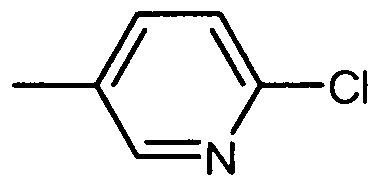


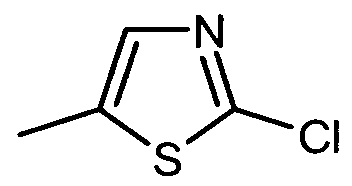


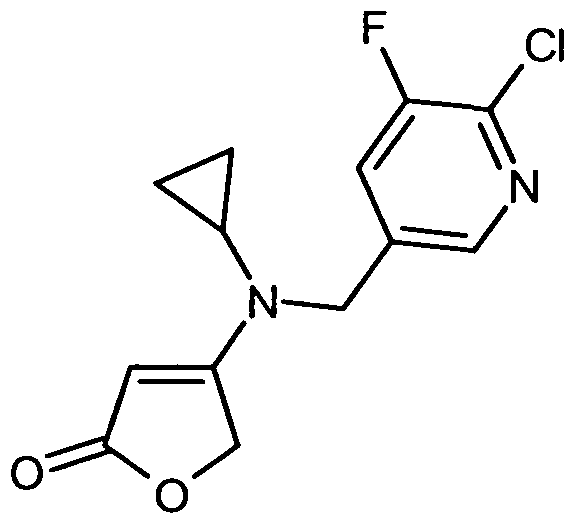


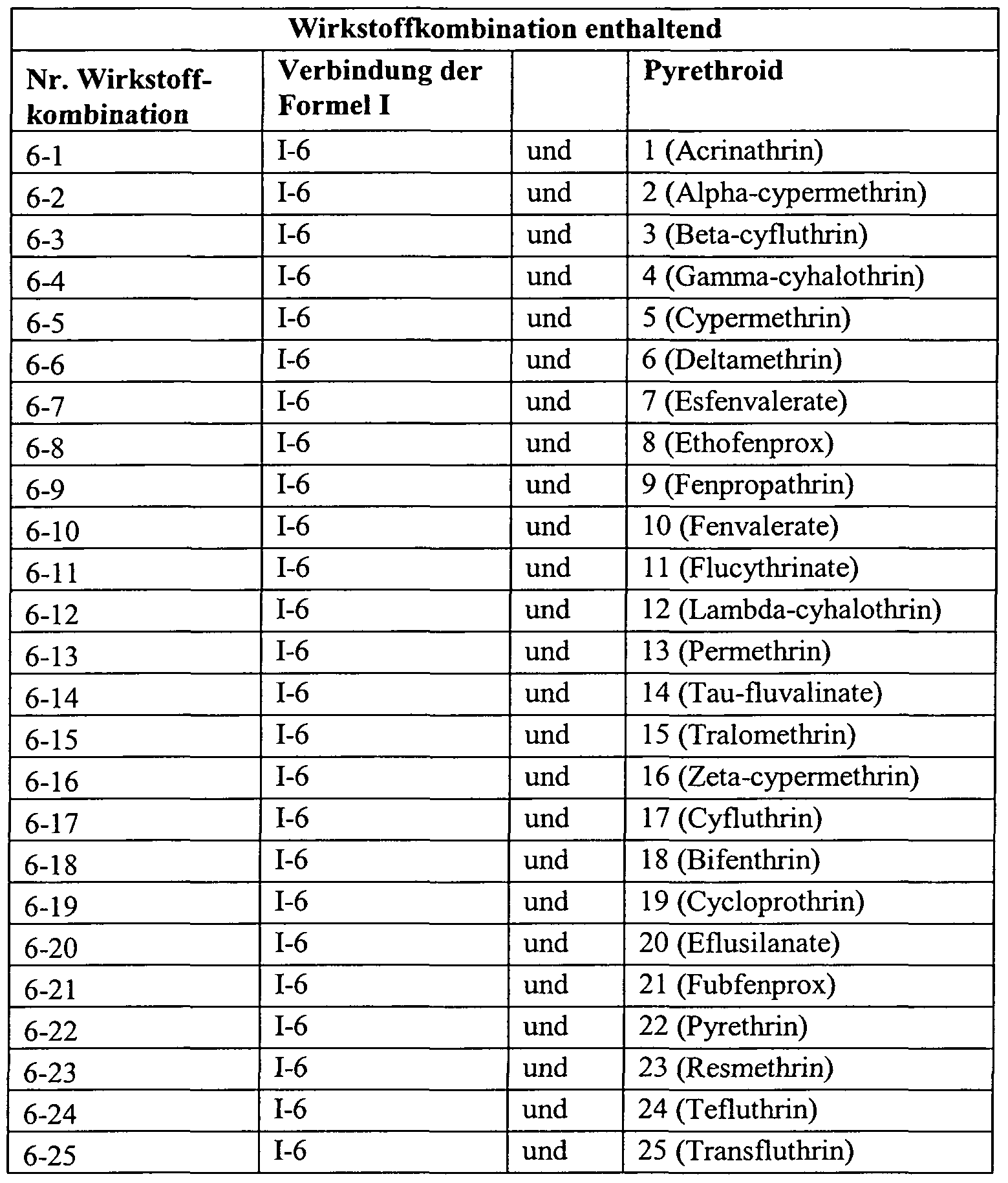


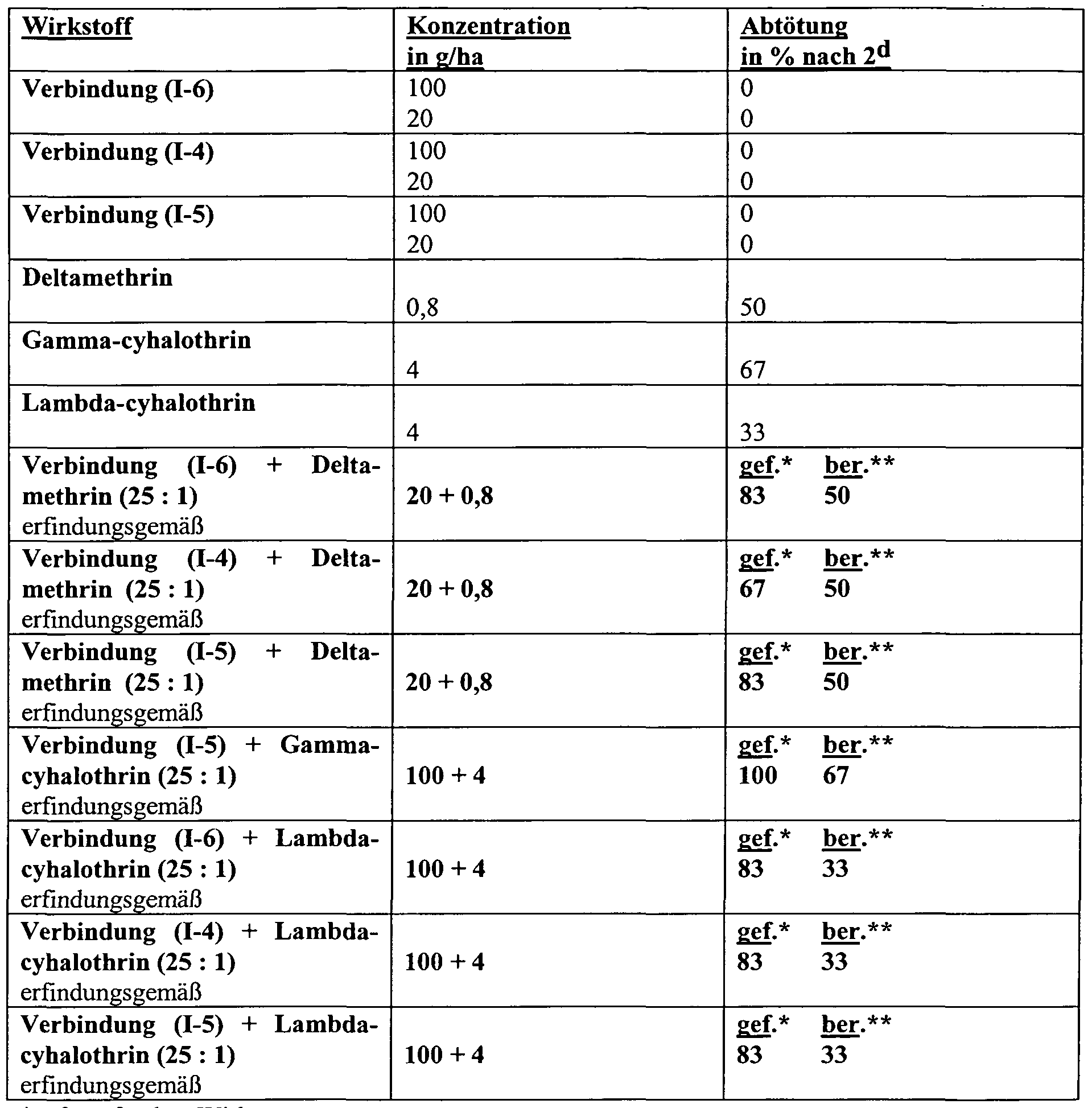


Claims


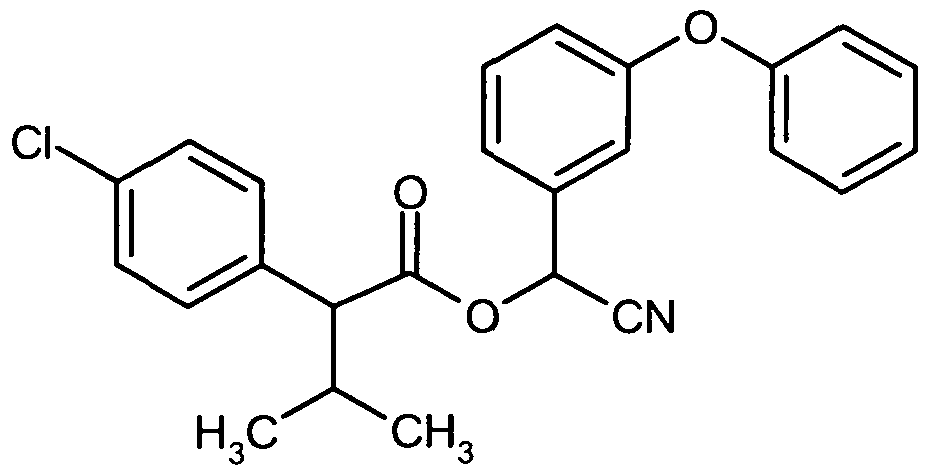


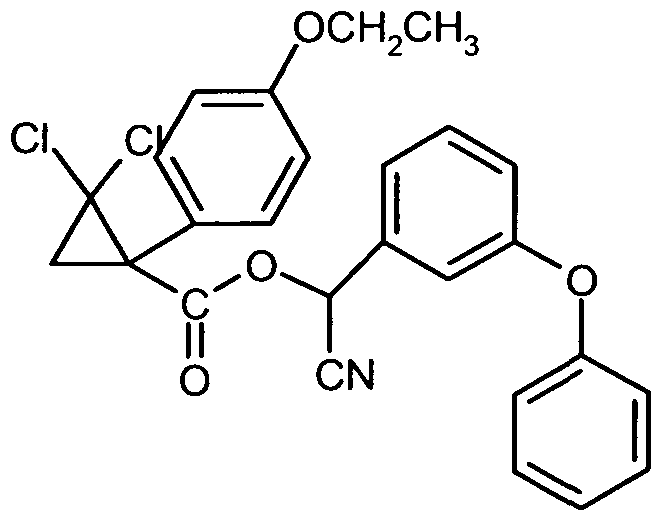


Priority Applications (8)
| Application Number | Priority Date | Filing Date | Title |
|---|---|---|---|
| PCT/EP2009/002168 WO2010108505A1 (de) | 2009-03-25 | 2009-03-25 | Wirkstoffkombinationen mit insektiziden und akariziden eigenschaften |
| KR1020117025126A KR101647706B1 (ko) | 2009-03-25 | 2009-03-25 | 살충 및 살비성을 지니는 활성 성분 배합물 |
| MX2011009918A MX2011009918A (es) | 2009-03-25 | 2009-03-25 | Combinaciones de principios activos propiedades insecticidas y acaricidas. |
| US13/259,865 US8828906B2 (en) | 2009-03-25 | 2009-03-25 | Active compound combinations having insecticidal and acaricidal properties |
| EP09776470A EP2410848A1 (de) | 2009-03-25 | 2009-03-25 | Wirkstoffkombinationen mit insektiziden und akariziden eigenschaften |
| BRPI0924839-0A BRPI0924839B1 (pt) | 2009-03-25 | 2009-03-25 | Combinações de substâncias ativas com propriedades inseticidas e acaricidas, seus usos e método para o controle de praga animais |
| CN200980159531.2A CN102448304B (zh) | 2009-03-25 | 2009-03-25 | 具有杀昆虫和杀螨特性的活性成分结合物 |
| JP2012501136A JP2012521371A (ja) | 2009-03-25 | 2009-03-25 | 殺虫特性および殺ダニ特性を有する活性化合物の組合せ |
Applications Claiming Priority (1)
| Application Number | Priority Date | Filing Date | Title |
|---|---|---|---|
| PCT/EP2009/002168 WO2010108505A1 (de) | 2009-03-25 | 2009-03-25 | Wirkstoffkombinationen mit insektiziden und akariziden eigenschaften |
Publications (2)
| Publication Number | Publication Date |
|---|---|
| WO2010108505A1 true WO2010108505A1 (de) | 2010-09-30 |
| WO2010108505A8 WO2010108505A8 (de) | 2011-10-20 |
Family
ID=41278529
Family Applications (1)
| Application Number | Title | Priority Date | Filing Date |
|---|---|---|---|
| PCT/EP2009/002168 Ceased WO2010108505A1 (de) | 2009-03-25 | 2009-03-25 | Wirkstoffkombinationen mit insektiziden und akariziden eigenschaften |
Country Status (8)
| Country | Link |
|---|---|
| US (1) | US8828906B2 (de) |
| EP (1) | EP2410848A1 (de) |
| JP (1) | JP2012521371A (de) |
| KR (1) | KR101647706B1 (de) |
| CN (1) | CN102448304B (de) |
| BR (1) | BRPI0924839B1 (de) |
| MX (1) | MX2011009918A (de) |
| WO (1) | WO2010108505A1 (de) |
Families Citing this family (10)
| Publication number | Priority date | Publication date | Assignee | Title |
|---|---|---|---|---|
| WO2010108507A2 (de) | 2009-03-25 | 2010-09-30 | Bayer Cropscience Ag | Synergistische wirkstoffkombinationen |
| KR101647702B1 (ko) | 2009-03-25 | 2016-08-11 | 바이엘 인텔렉쳐 프로퍼티 게엠베하 | 살충 및 살비성을 지니는 활성 성분 배합물 |
| MX2011009916A (es) | 2009-03-25 | 2011-10-06 | Bayer Cropscience Ag | Combinaciones de principios activos con propiedades insecticidas y acaricidas. |
| BRPI0924451B1 (pt) | 2009-03-25 | 2017-12-26 | Bayer Intellectual Property Gmbh | Combinations of active substances and their uses, as well as methods for the control of animal pests and method for the manufacture of insecticides and acaricides |
| EP3113616A1 (de) * | 2014-03-03 | 2017-01-11 | Bayer CropScience Aktiengesellschaft | Wirkstoffkombinationen mit insektiziden eigenschaften |
| US10828621B2 (en) | 2017-08-28 | 2020-11-10 | Uchicago Argonne, Llc | Supported multimetallic catalysts for oxidative dehydrogenation of alkanes |
| CN110074128A (zh) * | 2019-04-27 | 2019-08-02 | 上海明德立达生物科技有限公司 | 一种含有高效氯氟氰菊酯和氟吡呋喃酮的微囊悬浮-悬浮剂及其制备方法 |
| CN112056321A (zh) * | 2019-06-11 | 2020-12-11 | 江苏功成生物科技有限公司 | 一种含氟吡呋喃酮的卫生杀虫组合物及其应用 |
| CN115349523B (zh) * | 2022-09-14 | 2023-07-28 | 广西壮族自治区亚热带作物研究所(广西亚热带农产品加工研究所) | 一种防治荔枝蒂蛀虫的增效组合物 |
| CN117063941A (zh) * | 2023-08-25 | 2023-11-17 | 北京辉胜农业科技有限公司 | 一种含有氟吡呋喃酮与高效氯氰菊酯的杀虫组合物 |
Citations (4)
| Publication number | Priority date | Publication date | Assignee | Title |
|---|---|---|---|---|
| EP0539588A1 (de) * | 1990-07-05 | 1993-05-05 | Nippon Soda Co., Ltd. | Aminderivat |
| WO2007112846A1 (de) * | 2006-03-29 | 2007-10-11 | Bayer Cropscience Ag | Wirkstoffkombinationen mit insektiziden und akariziden eigenschaften |
| WO2007115643A1 (de) * | 2006-03-31 | 2007-10-18 | Bayer Cropscience Ag | Substituierte enaminocarbonylverbindungen |
| WO2007115644A1 (de) * | 2006-03-31 | 2007-10-18 | Bayer Cropscience Ag | Substituierte enaminocarbonylverbindungen |
Family Cites Families (198)
| Publication number | Priority date | Publication date | Assignee | Title |
|---|---|---|---|---|
| US1783460A (en) | 1926-08-06 | 1930-12-02 | Kohler Co | Pop-up waste |
| GB1168797A (en) | 1965-12-09 | 1969-10-29 | Nat Res Dev | Cyclopropane Carboxylic Acid Derivatives and their use as Insecticides |
| JPS515450B1 (de) | 1971-06-29 | 1976-02-20 | ||
| US4024163A (en) | 1972-05-25 | 1977-05-17 | National Research Development Corporation | Insecticides |
| EG11383A (en) | 1972-07-11 | 1979-03-31 | Sumitomo Chemical Co | Novel composition for controlling nixious insects and process for preparing thereof |
| US4220591A (en) | 1975-11-26 | 1980-09-02 | Commonwealth Scientific And Industrial Research Organization | Insecticidal esters |
| JPS5324019A (en) | 1976-08-18 | 1978-03-06 | Sumitomo Chem Co Ltd | Inspecticide comprising optically active isomer of alpha-cyano-3-phenoxybenzyl-2-(4-chlorophenyl)-isovalerate as an effective component |
| SE446527B (sv) | 1976-09-21 | 1986-09-22 | Roussel Uclaf | Nya cyklopropankarboxylsyraestrar med en polyhalogenerad substituent, sett for framstellning derav samt anvendning derav i pesticidkompositioner |
| US4183948A (en) | 1977-01-24 | 1980-01-15 | Imperial Chemical Industries Limited | Halogenated esters |
| DE2709264C3 (de) | 1977-03-03 | 1982-01-21 | Bayer Ag, 5090 Leverkusen | Substituierte Phenoxybenzyloxycarbonylderivate, Verfahren zu ihrer Herstellung und ihre Verwendung als Insektizide und Akarizide sowie neue Zwischenprodukte |
| US4272417A (en) | 1979-05-22 | 1981-06-09 | Cargill, Incorporated | Stable protective seed coating |
| US4245432A (en) | 1979-07-25 | 1981-01-20 | Eastman Kodak Company | Seed coatings |
| CA1155454A (en) | 1979-09-27 | 1983-10-18 | Jonathan S. Baum | Preparation of esters |
| US4402973A (en) | 1980-10-02 | 1983-09-06 | Fmc Corporation | Insecticidal (1,1'-biphenyl)-3-ylmethyl esters |
| US4260633A (en) | 1980-04-21 | 1981-04-07 | Zoecon Corporation | Pesticidal esters of amino acids |
| US4397864A (en) | 1980-05-02 | 1983-08-09 | Mitsuitoatsu Chemicals Inc. | 2-Arylpropyl ether or thioether derivatives and insecticidal and acaricidal agents containing said derivatives |
| CA1162561A (en) | 1981-05-26 | 1984-02-21 | Derek A. Wood | Preparation of cyanobenzyl cyclopropane carboxylates |
| DE3369128D1 (en) | 1982-10-11 | 1987-02-19 | Ici Plc | Insecticidal product and preparation thereof |
| US4542142A (en) | 1982-11-22 | 1985-09-17 | Roussel Uclaf | Insecticidal cyclopropane carboxylic acid derivatives with 3-unsaturated-side chain |
| DE3324274A1 (de) | 1983-07-06 | 1985-01-24 | Leonhard Schmid Kg, 8900 Augsburg | Haeckselgeraet fuer gartenabfaelle u.dgl. |
| US4761373A (en) | 1984-03-06 | 1988-08-02 | Molecular Genetics, Inc. | Herbicide resistance in plants |
| US5331107A (en) | 1984-03-06 | 1994-07-19 | Mgi Pharma, Inc. | Herbicide resistance in plants |
| US5304732A (en) | 1984-03-06 | 1994-04-19 | Mgi Pharma, Inc. | Herbicide resistance in plants |
| DE3522629A1 (de) | 1985-06-25 | 1987-01-08 | Bayer Ag | Verfahren zur herstellung bestimmter enantiomerenpaare von permethrinsaeure-(alpha)-cyano-3-phenoxy-4-fluor-benzyl -ester |
| DE3604781A1 (de) | 1986-02-13 | 1987-08-27 | Schering Ag | Neue silane, verfahren zu ihrer herstellung und diese verbindungen enthaltende einsektizide mittel |
| ATE57390T1 (de) | 1986-03-11 | 1990-10-15 | Plant Genetic Systems Nv | Durch gentechnologie erhaltene und gegen glutaminsynthetase-inhibitoren resistente pflanzenzellen. |
| US4782094A (en) | 1986-03-14 | 1988-11-01 | Mitsui Toatsu Chemicals, Inc. | Difluorobromomethoxyphenyl derivative and miticide comprising said derivative as active ingredient |
| US5276268A (en) | 1986-08-23 | 1994-01-04 | Hoechst Aktiengesellschaft | Phosphinothricin-resistance gene, and its use |
| US5273894A (en) | 1986-08-23 | 1993-12-28 | Hoechst Aktiengesellschaft | Phosphinothricin-resistance gene, and its use |
| US5637489A (en) | 1986-08-23 | 1997-06-10 | Hoechst Aktiengesellschaft | Phosphinothricin-resistance gene, and its use |
| US5378824A (en) | 1986-08-26 | 1995-01-03 | E. I. Du Pont De Nemours And Company | Nucleic acid fragment encoding herbicide resistant plant acetolactate synthase |
| US5013659A (en) | 1987-07-27 | 1991-05-07 | E. I. Du Pont De Nemours And Company | Nucleic acid fragment encoding herbicide resistant plant acetolactate synthase |
| US5605011A (en) | 1986-08-26 | 1997-02-25 | E. I. Du Pont De Nemours And Company | Nucleic acid fragment encoding herbicide resistant plant acetolactate synthase |
| DE3705224A1 (de) | 1987-02-19 | 1988-09-01 | Bayer Ag | (+)1r-trans-2,2-dimethyl-3-(2,2-dichlorvinyl) -cyclopropancarbonsaeure-2,3,5,6- tetrafluorbenzylester |
| US4808430A (en) | 1987-02-27 | 1989-02-28 | Yazaki Corporation | Method of applying gel coating to plant seeds |
| US5638637A (en) | 1987-12-31 | 1997-06-17 | Pioneer Hi-Bred International, Inc. | Production of improved rapeseed exhibiting an enhanced oleic acid content |
| GB8810120D0 (en) | 1988-04-28 | 1988-06-02 | Plant Genetic Systems Nv | Transgenic nuclear male sterile plants |
| US5084082A (en) | 1988-09-22 | 1992-01-28 | E. I. Du Pont De Nemours And Company | Soybean plants with dominant selectable trait for herbicide resistance |
| US6013861A (en) | 1989-05-26 | 2000-01-11 | Zeneca Limited | Plants and processes for obtaining them |
| ATE203276T1 (de) | 1989-08-10 | 2001-08-15 | Aventis Cropscience Nv | Pflanzen mit modifizierten blüten |
| US5739082A (en) | 1990-02-02 | 1998-04-14 | Hoechst Schering Agrevo Gmbh | Method of improving the yield of herbicide-resistant crop plants |
| US5908810A (en) | 1990-02-02 | 1999-06-01 | Hoechst Schering Agrevo Gmbh | Method of improving the growth of crop plants which are resistant to glutamine synthetase inhibitors |
| AU639319B2 (en) | 1990-04-04 | 1993-07-22 | Pioneer Hi-Bred International, Inc. | Production of improved rapeseed exhibiting a reduced saturated fatty acid content |
| US5198599A (en) | 1990-06-05 | 1993-03-30 | Idaho Resarch Foundation, Inc. | Sulfonylurea herbicide resistance in plants |
| JP3173784B2 (ja) | 1990-06-25 | 2001-06-04 | モンサント カンパニー | グリホセート耐性植物 |
| FR2667078B1 (fr) | 1990-09-21 | 1994-09-16 | Agronomique Inst Nat Rech | Sequence d'adn conferant une sterilite male cytoplasmique, genome mitochondrial, mitochondrie et plante contenant cette sequence, et procede de preparation d'hybrides. |
| DE4104782B4 (de) | 1991-02-13 | 2006-05-11 | Bayer Cropscience Gmbh | Neue Plasmide, enthaltend DNA-Sequenzen, die Veränderungen der Karbohydratkonzentration und Karbohydratzusammensetzung in Pflanzen hervorrufen, sowie Pflanzen und Pflanzenzellen enthaltend dieses Plasmide |
| US5731180A (en) | 1991-07-31 | 1998-03-24 | American Cyanamid Company | Imidazolinone resistant AHAS mutants |
| US6270828B1 (en) | 1993-11-12 | 2001-08-07 | Cargrill Incorporated | Canola variety producing a seed with reduced glucosinolates and linolenic acid yielding an oil with low sulfur, improved sensory characteristics and increased oxidative stability |
| DE4227061A1 (de) | 1992-08-12 | 1994-02-17 | Inst Genbiologische Forschung | DNA-Sequenzen, die in der Pflanze die Bildung von Polyfructanen (Lävanen) hervorrufen, Plasmide enthaltend diese Sequenzen sowie Verfahren zur Herstellung transgener Pflanzen |
| GB9218185D0 (en) | 1992-08-26 | 1992-10-14 | Ici Plc | Novel plants and processes for obtaining them |
| DK0664835T3 (da) | 1992-10-14 | 2004-09-27 | Syngenta Ltd | Nye planter og fremgangsmåde til opnåelse af dem |
| GB9223454D0 (en) | 1992-11-09 | 1992-12-23 | Ici Plc | Novel plants and processes for obtaining them |
| HU220714B1 (hu) | 1993-03-25 | 2002-04-29 | Novartis Ag. | Új peszticid proteinek és törzsek |
| AU695940B2 (en) | 1993-04-27 | 1998-08-27 | Cargill Incorporated | Non-hydrogenated canola oil for food applications |
| DE4327165A1 (de) | 1993-08-09 | 1995-02-16 | Inst Genbiologische Forschung | Debranching-Enzyme und deren kodierende DNA-Sequenzen, geeignet zur Veränderung des Verzweigungsgrades von Amylopektin - Stärke in Pflanzen |
| DE4330960C2 (de) | 1993-09-09 | 2002-06-20 | Aventis Cropscience Gmbh | Kombination von DNA-Sequenzen, die in Pflanzenzellen und Pflanzen die Bildung hochgradig amylosehaltiger Stärke ermöglichen, Verfahren zur Herstellung dieser Pflanzen und die daraus erhaltbare modifizierte Stärke |
| CA2150667C (en) | 1993-10-01 | 2007-01-09 | Mari Iwabuchi | A gene which determines cytoplasmic sterility and a method of producing hybrid plants using said gene |
| AU692791B2 (en) | 1993-10-12 | 1998-06-18 | Agrigenetics, Inc. | Brassica napus variety AG019 |
| PL180543B1 (pl) | 1993-11-09 | 2001-02-28 | Du Pont | Zrekombinowany konstrukt DNA, sposób wytwarzania fruktanui sposób zwiekszania poziomu fruktanu w roslinach PL PL |
| EP0754235A1 (de) | 1994-03-25 | 1997-01-22 | National Starch and Chemical Investment Holding Corporation | Verfahren zur herstellung veränderten stärke aus kartoffelpflanzen |
| PT759993E (pt) | 1994-05-18 | 2007-08-10 | Bayer Bioscience Gmbh | ''sequências de dna que codificam para enzimas capazes de facilitar a síntese de alfa-1,4-glucanos lineares em plantas, fungos e microrganismos'' |
| US5824790A (en) | 1994-06-21 | 1998-10-20 | Zeneca Limited | Modification of starch synthesis in plants |
| JPH10507622A (ja) | 1994-06-21 | 1998-07-28 | ゼネカ・リミテッド | 新規植物およびその入手法 |
| NL1000064C1 (nl) | 1994-07-08 | 1996-01-08 | Stichting Scheikundig Onderzoe | Produktie van oligosacchariden in transgene planten. |
| DE4441408A1 (de) | 1994-11-10 | 1996-05-15 | Inst Genbiologische Forschung | DNA-Sequenzen aus Solanum tuberosum kodierend Enzyme, die an der Stärkesynthese beteiligt sind, Plasmide, Bakterien, Pflanzenzellen und transgene Pflanzen enhaltend diese Sequenzen |
| DE4447387A1 (de) | 1994-12-22 | 1996-06-27 | Inst Genbiologische Forschung | Debranching-Enzyme aus Pflanzen und DNA-Sequenzen kodierend diese Enzyme |
| ATE373094T1 (de) | 1995-01-06 | 2007-09-15 | Plant Res Int Bv | Für kohlenhydratpolymere-bildende enzyme- kodierende dna-sequenzen und verfahren zur herstellung transgener pflanzen |
| DE19509695A1 (de) | 1995-03-08 | 1996-09-12 | Inst Genbiologische Forschung | Verfahren zur Herstellung einer modifizieren Stärke in Pflanzen, sowie die aus den Pflanzen isolierbare modifizierte Stärke |
| US5853973A (en) | 1995-04-20 | 1998-12-29 | American Cyanamid Company | Structure based designed herbicide resistant products |
| CA2218526C (en) | 1995-04-20 | 2012-06-12 | American Cyanamid Company | Structure-based designed herbicide resistant products |
| US6825342B1 (en) | 1995-05-05 | 2004-11-30 | National Starch And Chemical Investment Holding Corporation | Plant starch composition |
| FR2734842B1 (fr) | 1995-06-02 | 1998-02-27 | Rhone Poulenc Agrochimie | Sequence adn d'un gene de l'hydroxy-phenyl pyruvate dioxygenase et obtention de plantes contenant un gene de l'hydroxy-phenyl pyruvate dioxygenase, tolerantes a certains herbicides |
| US5712107A (en) | 1995-06-07 | 1998-01-27 | Pioneer Hi-Bred International, Inc. | Substitutes for modified starch and latexes in paper manufacture |
| US6284479B1 (en) | 1995-06-07 | 2001-09-04 | Pioneer Hi-Bred International, Inc. | Substitutes for modified starch and latexes in paper manufacture |
| GB9513881D0 (en) | 1995-07-07 | 1995-09-06 | Zeneca Ltd | Improved plants |
| FR2736926B1 (fr) | 1995-07-19 | 1997-08-22 | Rhone Poulenc Agrochimie | 5-enol pyruvylshikimate-3-phosphate synthase mutee, gene codant pour cette proteine et plantes transformees contenant ce gene |
| ES2335494T3 (es) | 1995-09-19 | 2010-03-29 | Bayer Bioscience Gmbh | Procedimiento para la produccion de un almidon modificado. |
| GB9524938D0 (en) | 1995-12-06 | 1996-02-07 | Zeneca Ltd | Modification of starch synthesis in plants |
| DE19601365A1 (de) | 1996-01-16 | 1997-07-17 | Planttec Biotechnologie Gmbh | Nucleinsäuremoleküle aus Pflanzen codierend Enzyme, die an der Stärkesynthese beteiligt sind |
| DE19608918A1 (de) | 1996-03-07 | 1997-09-11 | Planttec Biotechnologie Gmbh | Nucleinsäuremoleküle, die neue Debranching-Enzyme aus Mais codieren |
| US5773704A (en) | 1996-04-29 | 1998-06-30 | Board Of Supervisors Of Louisiana State University And Agricultural And Mechanical College | Herbicide resistant rice |
| DE19618125A1 (de) | 1996-05-06 | 1997-11-13 | Planttec Biotechnologie Gmbh | Nucleinsäuremoleküle, die neue Debranching-Enzyme aus Kartoffel codieren |
| BR9709487A (pt) | 1996-05-29 | 1999-08-10 | Hoechst Schering Agrevo Gmbh | Moléculas de ácido nucléico que codificam enzimas de trigo que est o envolvidas nas síntese de amigo |
| CA2257621C (en) | 1996-06-12 | 2003-02-04 | Pioneer Hi-Bred International, Inc. | Substitutes for modified starch in paper manufacture |
| WO1997047807A1 (en) | 1996-06-12 | 1997-12-18 | Pioneer Hi-Bred International, Inc. | Substitutes for modified starch in paper manufacture |
| EP0904453B1 (de) | 1996-06-12 | 2001-12-19 | Pioneer Hi-Bred International, Inc. | Ersatzmaterial für modifizierte stärke in der papierherstellung |
| US5876739A (en) | 1996-06-13 | 1999-03-02 | Novartis Ag | Insecticidal seed coating |
| AUPO069996A0 (en) | 1996-06-27 | 1996-07-18 | Australian National University, The | Manipulation of plant cellulose |
| US5773702A (en) | 1996-07-17 | 1998-06-30 | Board Of Trustees Operating Michigan State University | Imidazolinone herbicide resistant sugar beet plants |
| GB9623095D0 (en) | 1996-11-05 | 1997-01-08 | Nat Starch Chem Invest | Improvements in or relating to starch content of plants |
| US6232529B1 (en) | 1996-11-20 | 2001-05-15 | Pioneer Hi-Bred International, Inc. | Methods of producing high-oil seed by modification of starch levels |
| DE19653176A1 (de) | 1996-12-19 | 1998-06-25 | Planttec Biotechnologie Gmbh | Neue Nucleinsäuremoleküle aus Mais und ihre Verwendung zur Herstellung einer modifizierten Stärke |
| CA2193938A1 (en) | 1996-12-24 | 1998-06-24 | David G. Charne | Oilseed brassica containing an improved fertility restorer gene for ogura cytoplasmic male sterility |
| US5981840A (en) | 1997-01-24 | 1999-11-09 | Pioneer Hi-Bred International, Inc. | Methods for agrobacterium-mediated transformation |
| DE19708774A1 (de) | 1997-03-04 | 1998-09-17 | Max Planck Gesellschaft | Nucleinsäuremoleküle codierend Enzyme die Fructosylpolymeraseaktivität besitzen |
| DE19709775A1 (de) | 1997-03-10 | 1998-09-17 | Planttec Biotechnologie Gmbh | Nucleinsäuremoleküle codierend Stärkephosphorylase aus Mais |
| TW476856B (en) | 1997-06-27 | 2002-02-21 | Toshiba Corp | Liquid crystal display device |
| GB9718863D0 (en) | 1997-09-06 | 1997-11-12 | Nat Starch Chem Invest | Improvements in or relating to stability of plant starches |
| DE19749122A1 (de) | 1997-11-06 | 1999-06-10 | Max Planck Gesellschaft | Nucleinsäuremoleküle codierend Enzyme, die Fructosyltransferaseaktivität besitzen |
| US6245968B1 (en) | 1997-11-07 | 2001-06-12 | Aventis Cropscience S.A. | Mutated hydroxyphenylpyruvate dioxygenase, DNA sequence and isolation of plants which contain such a gene and which are tolerant to herbicides |
| FR2772789B1 (fr) | 1997-12-24 | 2000-11-24 | Rhone Poulenc Agrochimie | Procede de preparation enzymatique d'homogentisate |
| WO1999053072A1 (en) | 1998-04-09 | 1999-10-21 | E.I. Du Pont De Nemours And Company | Starch r1 phosphorylation protein homologs |
| DE19820608A1 (de) | 1998-05-08 | 1999-11-11 | Hoechst Schering Agrevo Gmbh | Nucleinsäuremoleküle codierend Enzyme aus Weizen, die an der Stärkesynthese beteiligt sind |
| DE19820607A1 (de) | 1998-05-08 | 1999-11-11 | Hoechst Schering Agrevo Gmbh | Nucleinsäuremoleküle codierend Enzyme aus Weizen, die an der Stärkesynthese beteiligt sind |
| JP4494634B2 (ja) | 1998-05-13 | 2010-06-30 | バイエル バイオサイエンス ゲーエムベーハー | プラスチドadp/atp転移因子の改変された活性を有するトランスジェニック植物 |
| DE19821614A1 (de) | 1998-05-14 | 1999-11-18 | Hoechst Schering Agrevo Gmbh | Sulfonylharnstoff-tolerante Zuckerrübenmutanten |
| JP2002518015A (ja) | 1998-06-15 | 2002-06-25 | ナショナル スターチ アンド ケミカル インベストメント ホールディング コーポレイション | 植物および植物製品の改良またはそれらに関する改良 |
| US6693185B2 (en) | 1998-07-17 | 2004-02-17 | Bayer Bioscience N.V. | Methods and means to modulate programmed cell death in eukaryotic cells |
| DE19836098A1 (de) | 1998-07-31 | 2000-02-03 | Hoechst Schering Agrevo Gmbh | Pflanzen, die eine modifizierte Stärke synthetisieren, Verfahren zur Herstellung der Pflanzen, ihre Verwendung sowie die modifizierte Stärke |
| DE19836099A1 (de) | 1998-07-31 | 2000-02-03 | Hoechst Schering Agrevo Gmbh | Nukleinsäuremoleküle kodierend für eine ß-Amylase, Pflanzen, die eine modifizierte Stärke synthetisieren, Verfahren zur Herstellung der Pflanzen, ihre Verwendung sowie die modifizierte Stärke |
| AU6018399A (en) | 1998-08-25 | 2000-03-14 | Pioneer Hi-Bred International, Inc. | Plant glutamine: fructose-6-phosphate amidotransferase nucleic acids |
| WO2000014249A1 (en) | 1998-09-02 | 2000-03-16 | Planttec Biotechnologie Gmbh | Nucleic acid molecules encoding an amylosucrase |
| DE19924342A1 (de) | 1999-05-27 | 2000-11-30 | Planttec Biotechnologie Gmbh | Genetisch modifizierte Pflanzenzellen und Pflanzen mit erhöhter Aktivität eines Amylosucraseproteins und eines Verzweigungsenzyms |
| JP2002529094A (ja) | 1998-11-09 | 2002-09-10 | プランテック バイオテクノロジー ゲーエムベーハー | コメ由来核酸分子および改変デンプンの生産のためのその使用 |
| US6503904B2 (en) | 1998-11-16 | 2003-01-07 | Syngenta Crop Protection, Inc. | Pesticidal composition for seed treatment |
| US6531648B1 (en) | 1998-12-17 | 2003-03-11 | Syngenta Participations Ag | Grain processing method and transgenic plants useful therein |
| DE19905069A1 (de) | 1999-02-08 | 2000-08-10 | Planttec Biotechnologie Gmbh | Nucleinsäuremoleküle codierend Alternansucrase |
| US6323392B1 (en) | 1999-03-01 | 2001-11-27 | Pioneer Hi-Bred International, Inc. | Formation of brassica napus F1 hybrid seeds which exhibit a highly elevated oleic acid content and a reduced linolenic acid content in the endogenously formed oil of the seeds |
| HUP0201018A2 (en) | 1999-04-29 | 2002-07-29 | Syngenta Ltd | Herbicide resistant plants |
| PL354925A1 (en) | 1999-04-29 | 2004-03-22 | Syngenta Ltd | Herbicide resistant plants |
| DE19926771A1 (de) | 1999-06-11 | 2000-12-14 | Aventis Cropscience Gmbh | Nukleinsäuremoleküle aus Weizen, transgene Pflanzenzellen und Pflanzen und deren Verwendung für die Herstellung modifizierter Stärke |
| DE19937348A1 (de) | 1999-08-11 | 2001-02-22 | Aventis Cropscience Gmbh | Nukleinsäuremoleküle aus Pflanzen codierend Enzyme, die an der Stärkesynthese beteiligt sind |
| DE19937643A1 (de) | 1999-08-12 | 2001-02-22 | Aventis Cropscience Gmbh | Transgene Zellen und Pflanzen mit veränderter Aktivität des GBSSI- und des BE-Proteins |
| AU7647000A (en) | 1999-08-20 | 2001-03-19 | Basf Plant Science Gmbh | Increasing the polysaccharide content in plants |
| US6423886B1 (en) | 1999-09-02 | 2002-07-23 | Pioneer Hi-Bred International, Inc. | Starch synthase polynucleotides and their use in the production of new starches |
| US6472588B1 (en) | 1999-09-10 | 2002-10-29 | Texas Tech University | Transgenic cotton plants with altered fiber characteristics transformed with a sucrose phosphate synthase nucleic acid |
| GB9921830D0 (en) | 1999-09-15 | 1999-11-17 | Nat Starch Chem Invest | Plants having reduced activity in two or more starch-modifying enzymes |
| AR025996A1 (es) | 1999-10-07 | 2002-12-26 | Valigen Us Inc | Plantas no transgenicas resistentes a los herbicidas. |
| EP1261252B1 (de) | 2000-03-09 | 2013-04-24 | E.I. Du Pont De Nemours And Company | Sulfonylurea-tolerante sonnenblumenpflanzen |
| DE60111613T2 (de) | 2000-03-09 | 2006-05-18 | Monsanto Technology Llc. | Verfahren zum herstellen von glyphosat-toleranten pflanzen |
| AU2001288040A1 (en) | 2000-09-13 | 2002-03-26 | Takara Bio Inc. | Homeostasis-maintaining agents |
| EP1325136A1 (de) | 2000-09-29 | 2003-07-09 | Syngenta Limited | Herbizid-resistente pflanzen |
| US6660690B2 (en) | 2000-10-06 | 2003-12-09 | Monsanto Technology, L.L.C. | Seed treatment with combinations of insecticides |
| US6734340B2 (en) | 2000-10-23 | 2004-05-11 | Bayer Cropscience Gmbh | Monocotyledon plant cells and plants which synthesise modified starch |
| FR2815969B1 (fr) | 2000-10-30 | 2004-12-10 | Aventis Cropscience Sa | Plantes tolerantes aux herbicides par contournement de voie metabolique |
| WO2002036782A2 (en) | 2000-10-30 | 2002-05-10 | Maxygen, Inc. | Novel glyphosate n-acetyltransferase (gat) genes |
| CN1326996C (zh) | 2000-12-08 | 2007-07-18 | 联邦科学及工业研究组织 | 蔗糖合酶的基因表达在植物组织中的修饰及其用途 |
| US20020134012A1 (en) | 2001-03-21 | 2002-09-26 | Monsanto Technology, L.L.C. | Method of controlling the release of agricultural active ingredients from treated plant seeds |
| US20040107461A1 (en) | 2001-03-30 | 2004-06-03 | Padma Commuri | Glucan chain length domains |
| JP4460282B2 (ja) | 2001-06-12 | 2010-05-12 | バイエル・クロップサイエンス・アーゲー | 高アミロースデンプンを合成するトランスジェニック植物 |
| US20030084473A1 (en) | 2001-08-09 | 2003-05-01 | Valigen | Non-transgenic herbicide resistant plants |
| BRPI0213423A2 (pt) | 2001-10-17 | 2017-05-02 | Basf Plant Science Gmbh | amido e método para produção do mesmo |
| DE10208132A1 (de) | 2002-02-26 | 2003-09-11 | Planttec Biotechnologie Gmbh | Verfahren zur Herstellung von Maispflanzen mit erhöhtem Blattstärkegehalt und deren Verwendung zur Herstellung von Maissilage |
| WO2003092360A2 (en) | 2002-04-30 | 2003-11-13 | Verdia, Inc. | Novel glyphosate-n-acetyltransferase (gat) genes |
| FR2844142B1 (fr) | 2002-09-11 | 2007-08-17 | Bayer Cropscience Sa | Plantes transformees a biosynthese de prenylquinones amelioree |
| AU2003275859A1 (en) | 2002-10-29 | 2004-05-25 | Basf Plant Science Gmbh | Compositions and methods for identifying plants having increased tolerance to imidazolinone herbicides |
| US20040110443A1 (en) | 2002-12-05 | 2004-06-10 | Pelham Matthew C. | Abrasive webs and methods of making the same |
| DK1578973T3 (da) | 2002-12-19 | 2008-11-24 | Bayer Cropscience Ag | Planteceller og planter, der syntetiserer en stivelse med foröget slutviskositet |
| CN1777677A (zh) | 2003-03-07 | 2006-05-24 | 巴斯福植物科学有限公司 | 增强植物中直链淀粉产量 |
| AU2004227111B2 (en) | 2003-04-09 | 2009-05-28 | Bayer Cropscience Nv. | Methods and means for increasing the tolerance of plants to stress conditions |
| CN1863914B (zh) | 2003-04-29 | 2011-03-09 | 先锋高级育种国际公司 | 新的草甘膦-n-乙酰转移酶(gat)基因 |
| CA2526480A1 (en) | 2003-05-22 | 2005-01-13 | Syngenta Participations Ag | Modified starch, uses, methods for production thereof |
| US9382526B2 (en) | 2003-05-28 | 2016-07-05 | Basf Aktiengesellschaft | Wheat plants having increased tolerance to imidazolinone herbicides |
| EP1493328A1 (de) | 2003-07-04 | 2005-01-05 | Institut National De La Recherche Agronomique | Verfahren zur Herstellung von doppel null fertilität-restaurations Linien von B. napus mit guter agromomischer Qualität |
| US7547819B2 (en) | 2003-07-31 | 2009-06-16 | Toyo Boseki Kabushiki Kaisha | Plant producing hyaluronic acid |
| EP1692285B1 (de) | 2003-08-15 | 2012-04-11 | Commonwealth Scientific and Industrial Research Organisation | Verfahren und mittel zur veränderung der fasereigenschaften in faserproduzierenden pflanzen |
| BRPI0413917B1 (pt) | 2003-08-29 | 2018-09-25 | Instituto Nacional De Tech Agropecuaria | ácido nucleico ahas de arroz mutagenizado não transgênico, polipeptídeo ahas isolado, e, método de controle de ervas daninhas dentro da vizinhança de uma planta de arroz |
| DE602004030613D1 (de) | 2003-09-30 | 2011-01-27 | Bayer Cropscience Ag | Pflanzen mit reduzierter aktivität eines klasse-3-verzweigungsenzyms |
| WO2005030941A1 (en) | 2003-09-30 | 2005-04-07 | Bayer Cropscience Gmbh | Plants with increased activity of a class 3 branching enzyme |
| AR048025A1 (es) | 2004-03-05 | 2006-03-22 | Bayer Cropscience Gmbh | Plantas con actividad aumentada de una enzima fosforilante del almidon |
| AR048024A1 (es) | 2004-03-05 | 2006-03-22 | Bayer Cropscience Gmbh | Plantas con actividad aumentada de distintas enzimas fosforilantes del almidon |
| AR048026A1 (es) | 2004-03-05 | 2006-03-22 | Bayer Cropscience Gmbh | Procedimientos para la identificacion de proteinas con actividad enzimatica fosforiladora de almidon |
| EP1725666B1 (de) | 2004-03-05 | 2012-01-11 | Bayer CropScience AG | Pflanzen mit reduzierter aktivität des stärkephosphorylierenden enzyms phosphoglucan-wasser-dikinase |
| US7432082B2 (en) | 2004-03-22 | 2008-10-07 | Basf Ag | Methods and compositions for analyzing AHASL genes |
| CA2570298A1 (en) | 2004-06-16 | 2006-01-19 | Basf Plant Science Gmbh | Polynucleotides encoding mature ahasl proteins for creating imidazolinone-tolerant plants |
| DE102004029763A1 (de) | 2004-06-21 | 2006-01-05 | Bayer Cropscience Gmbh | Pflanzen, die Amylopektin-Stärke mit neuen Eigenschaften herstellen |
| CN101031646B (zh) | 2004-07-30 | 2013-09-25 | 巴斯夫农业化学产品公司 | 抗除草剂的向日葵植物、编码抗除草剂的乙酰羟酸合酶大亚基蛋白的多核苷酸和使用方法 |
| EP1776462A4 (de) | 2004-08-04 | 2010-03-10 | Basf Plant Science Gmbh | Monokotyledon-ahass-sequenzen und verwendungsverfahren |
| ATE459720T1 (de) | 2004-08-18 | 2010-03-15 | Bayer Cropscience Ag | Pflanzen mit erhöhter plastidär aktivität der stärkephosphorylierenden r3-enzyme |
| WO2006021972A1 (en) | 2004-08-26 | 2006-03-02 | Dhara Vegetable Oil And Foods Company Limited | A novel cytoplasmic male sterility system for brassica species and its use for hybrid seed production in indian oilseed mustard brassica juncea |
| WO2006032538A1 (en) | 2004-09-23 | 2006-03-30 | Bayer Cropscience Gmbh | Methods and means for producing hyaluronan |
| EP1807519B1 (de) | 2004-10-29 | 2012-02-01 | Bayer BioScience N.V. | Stresstolerante baumwollpflanzen |
| AR051690A1 (es) | 2004-12-01 | 2007-01-31 | Basf Agrochemical Products Bv | Mutacion implicada en el aumento de la tolerancia a los herbicidas imidazolinona en las plantas |
| EP1672075A1 (de) | 2004-12-17 | 2006-06-21 | Bayer CropScience GmbH | Transformierte Pflanzen, die Dextransucrase exprimieren und eine veränderte Stärke synthetisieren |
| EP1679374A1 (de) | 2005-01-10 | 2006-07-12 | Bayer CropScience GmbH | Transformierte Pflanzen, die Mutansucrase exprimieren und eine veränderte Stärke synthetisieren |
| JP2006304779A (ja) | 2005-03-30 | 2006-11-09 | Toyobo Co Ltd | ヘキソサミン高生産植物 |
| EP1707632A1 (de) | 2005-04-01 | 2006-10-04 | Bayer CropScience GmbH | Phosphorylierte waxy-Kartoffelstärke |
| EP1710315A1 (de) | 2005-04-08 | 2006-10-11 | Bayer CropScience GmbH | Hoch Phosphat Stärke |
| EP1893759B1 (de) | 2005-06-15 | 2009-08-12 | Bayer BioScience N.V. | Verfahren zum erhöhen der widerstandsfähigkeit von pflanzen gegen hypoxische bedingungen |
| KR101468830B1 (ko) | 2005-06-24 | 2014-12-03 | 바이엘 크롭사이언스 엔.브이. | 식물 세포벽의 반응성을 변경하는 방법 |
| AR054174A1 (es) | 2005-07-22 | 2007-06-06 | Bayer Cropscience Gmbh | Sobreexpresion de sintasa de almidon en vegetales |
| MEP3508A (xx) | 2005-08-24 | 2010-02-10 | Pioneer Hi Bred Int | Kompozicije koje obezbjeđuju otpornost na više hibricida i njihov postupak upotrebe |
| MX2008002802A (es) | 2005-08-31 | 2008-04-07 | Monsanto Technology Llc | Secuencias nucleotidicas que codifican proteinas insecticidas. |
| JP2009509557A (ja) | 2005-10-05 | 2009-03-12 | バイエル・クロップサイエンス・アーゲー | 改善されたヒアルロン酸産生方法および手段 |
| US10428341B2 (en) | 2005-10-05 | 2019-10-01 | Basf Se | Transgenic potato plants with increased hyaluronan production |
| BRPI0616844A2 (pt) | 2005-10-05 | 2011-07-05 | Bayer Cropscience Ag | célula de planta geneticamente modificada, uso da mesma, planta, processo para produção da mesma, material de reprodução de plantas, partes de plantas colhìveis, processo para produção de hialuronano, composição, bem como seu processo de produção |
| US8158856B2 (en) | 2006-03-21 | 2012-04-17 | Bayer Cropscience Nv | Stress resistant plants |
| DE102006015468A1 (de) | 2006-03-31 | 2007-10-04 | Bayer Cropscience Ag | Substituierte Enaminocarbonylverbindungen |
| US8237017B2 (en) | 2006-05-12 | 2012-08-07 | Bayer Cropscience Nv | Stress-related microRNA molecules and uses thereof |
| EP1887079A1 (de) | 2006-08-09 | 2008-02-13 | Bayer CropScience AG | Genetisch modifizierte Pflanzen, die eine Stärke mit erhöhtem Quellvermögen synthetisieren |
| AR064558A1 (es) | 2006-12-29 | 2009-04-08 | Bayer Cropscience Sa | Proceso para la modificacion de las propiedades termicas y de digestion de almidones de maiz y harinas de maiz |
| AR064557A1 (es) | 2006-12-29 | 2009-04-08 | Bayer Cropscience Ag | Almidon de maiz y harinas y alimentos de maiz que comprenden este almidon de maiz |
| EP1950303A1 (de) | 2007-01-26 | 2008-07-30 | Bayer CropScience AG | Genetisch modifizierte Pflanzen, die eine Stärke mit geringem Amylosegehalt und erhöhtem Quellvermögen synthetisieren |
| BRPI0924451B1 (pt) | 2009-03-25 | 2017-12-26 | Bayer Intellectual Property Gmbh | Combinations of active substances and their uses, as well as methods for the control of animal pests and method for the manufacture of insecticides and acaricides |
| KR101647702B1 (ko) | 2009-03-25 | 2016-08-11 | 바이엘 인텔렉쳐 프로퍼티 게엠베하 | 살충 및 살비성을 지니는 활성 성분 배합물 |
| WO2010108507A2 (de) | 2009-03-25 | 2010-09-30 | Bayer Cropscience Ag | Synergistische wirkstoffkombinationen |
| MX2011009916A (es) | 2009-03-25 | 2011-10-06 | Bayer Cropscience Ag | Combinaciones de principios activos con propiedades insecticidas y acaricidas. |
-
2009
- 2009-03-25 JP JP2012501136A patent/JP2012521371A/ja not_active Withdrawn
- 2009-03-25 US US13/259,865 patent/US8828906B2/en active Active
- 2009-03-25 EP EP09776470A patent/EP2410848A1/de not_active Withdrawn
- 2009-03-25 WO PCT/EP2009/002168 patent/WO2010108505A1/de not_active Ceased
- 2009-03-25 KR KR1020117025126A patent/KR101647706B1/ko active Active
- 2009-03-25 BR BRPI0924839-0A patent/BRPI0924839B1/pt active IP Right Grant
- 2009-03-25 MX MX2011009918A patent/MX2011009918A/es active IP Right Grant
- 2009-03-25 CN CN200980159531.2A patent/CN102448304B/zh active Active
Patent Citations (4)
| Publication number | Priority date | Publication date | Assignee | Title |
|---|---|---|---|---|
| EP0539588A1 (de) * | 1990-07-05 | 1993-05-05 | Nippon Soda Co., Ltd. | Aminderivat |
| WO2007112846A1 (de) * | 2006-03-29 | 2007-10-11 | Bayer Cropscience Ag | Wirkstoffkombinationen mit insektiziden und akariziden eigenschaften |
| WO2007115643A1 (de) * | 2006-03-31 | 2007-10-18 | Bayer Cropscience Ag | Substituierte enaminocarbonylverbindungen |
| WO2007115644A1 (de) * | 2006-03-31 | 2007-10-18 | Bayer Cropscience Ag | Substituierte enaminocarbonylverbindungen |
Also Published As
| Publication number | Publication date |
|---|---|
| JP2012521371A (ja) | 2012-09-13 |
| KR20140014359A (ko) | 2014-02-06 |
| KR101647706B1 (ko) | 2016-08-11 |
| BRPI0924839B1 (pt) | 2018-03-20 |
| US8828906B2 (en) | 2014-09-09 |
| MX2011009918A (es) | 2011-10-06 |
| US20120115720A1 (en) | 2012-05-10 |
| WO2010108505A8 (de) | 2011-10-20 |
| EP2410848A1 (de) | 2012-02-01 |
| CN102448304A (zh) | 2012-05-09 |
| BRPI0924839A2 (pt) | 2016-08-30 |
| CN102448304B (zh) | 2015-03-11 |
Similar Documents
| Publication | Publication Date | Title |
|---|---|---|
| EP2205081B1 (de) | Wirkstoffkombinationen mit insektiziden und akariziden eigenschaften | |
| EP2194784B1 (de) | Wirkstoffkombinationen mit insektiziden und akariziden eigenschaften | |
| US8828906B2 (en) | Active compound combinations having insecticidal and acaricidal properties | |
| EP2410847A1 (de) | Wirkstoffkombinationen mit insektiziden und akariziden eigenschaften | |
| WO2009074230A1 (de) | Verwendung von wirkstoffkombinationen zur bekämpfung von tierischen schädlingen | |
| US8846568B2 (en) | Active compound combinations having insecticidal and acaricidal properties | |
| EP2410849A1 (de) | Wirkstoffkombinationen mit insektiziden und akariziden eigenschaften | |
| DE102007045953B4 (de) | Wirkstoffkombinationen mit insektiziden und akariziden Eigenschaften | |
| EP2200435B1 (de) | Wirkstoffkombinationen mit insektiziden und akariziden eingenschaften | |
| DE102007045919B4 (de) | Wirkstoffkombinationen mit insektiziden und akariziden Eigenschaften | |
| DE102007045955A1 (de) | Wirkstoffkombinationen mit insektiziden und akariziden Eigenschaften | |
| DE102007045957A1 (de) | Wirkstoffkombinationen mit insektiziden und akarziden Eigenschaften | |
| WO2010078899A2 (de) | Verfahren zur bekämpfung resistenter tierischer schädlinge | |
| BRPI0924986B1 (pt) | "combinations of active substances with inseticid and acaricid properties, its uses and method for the control of animal plagues". |
Legal Events
| Date | Code | Title | Description |
|---|---|---|---|
| WWE | Wipo information: entry into national phase |
Ref document number: 200980159531.2 Country of ref document: CN |
|
| 121 | Ep: the epo has been informed by wipo that ep was designated in this application |
Ref document number: 09776470 Country of ref document: EP Kind code of ref document: A1 |
|
| WWE | Wipo information: entry into national phase |
Ref document number: 2009776470 Country of ref document: EP |
|
| WWE | Wipo information: entry into national phase |
Ref document number: 2012501136 Country of ref document: JP Ref document number: MX/A/2011/009918 Country of ref document: MX |
|
| WWE | Wipo information: entry into national phase |
Ref document number: 7305/DELNP/2011 Country of ref document: IN |
|
| NENP | Non-entry into the national phase |
Ref country code: DE |
|
| ENP | Entry into the national phase |
Ref document number: 20117025126 Country of ref document: KR Kind code of ref document: A |
|
| WWE | Wipo information: entry into national phase |
Ref document number: 13259865 Country of ref document: US |
|
| REG | Reference to national code |
Ref country code: BR Ref legal event code: B01A Ref document number: PI0924839 Country of ref document: BR |
|
| ENP | Entry into the national phase |
Ref document number: PI0924839 Country of ref document: BR Kind code of ref document: A2 Effective date: 20110923 |