WO2011002192A2 - 폐열을 이용하는 열전발전시스템을 구비한 자동차 - Google Patents
폐열을 이용하는 열전발전시스템을 구비한 자동차 Download PDFInfo
- Publication number
- WO2011002192A2 WO2011002192A2 PCT/KR2010/004186 KR2010004186W WO2011002192A2 WO 2011002192 A2 WO2011002192 A2 WO 2011002192A2 KR 2010004186 W KR2010004186 W KR 2010004186W WO 2011002192 A2 WO2011002192 A2 WO 2011002192A2
- Authority
- WO
- WIPO (PCT)
- Prior art keywords
- battery
- transfer channel
- sub
- engine
- main battery
- Prior art date
- Legal status (The legal status is an assumption and is not a legal conclusion. Google has not performed a legal analysis and makes no representation as to the accuracy of the status listed.)
- Ceased
Links
Images


Classifications
-
- H—ELECTRICITY
- H10—SEMICONDUCTOR DEVICES; ELECTRIC SOLID-STATE DEVICES NOT OTHERWISE PROVIDED FOR
- H10N—ELECTRIC SOLID-STATE DEVICES NOT OTHERWISE PROVIDED FOR
- H10N10/00—Thermoelectric devices comprising a junction of dissimilar materials, i.e. devices exhibiting Seebeck or Peltier effects
- H10N10/10—Thermoelectric devices comprising a junction of dissimilar materials, i.e. devices exhibiting Seebeck or Peltier effects operating with only the Peltier or Seebeck effects
- H10N10/13—Thermoelectric devices comprising a junction of dissimilar materials, i.e. devices exhibiting Seebeck or Peltier effects operating with only the Peltier or Seebeck effects characterised by the heat-exchanging means at the junction
Definitions
- the present invention is channeled to an automobile equipped with a thermoelectric power generation system using waste heat.
- the waste heat generated when the engine is driven is supplied to the thermoelectric module and channeled to a vehicle having a thermoelectric power generation system using waste heat to generate electrical energy.
- heat dissipation device Since a car generates heat when used as a moving device by using available energy such as petroleum, heat dissipation device should be installed.
- thermoelectric power generation system using waste heat aims to solve the following problems.
- thermoelectric module By using the temperature difference between the low temperature fluid and lubricating oil flowing into the engine and the high temperature fluid and lubricating oil absorbing and exhausting heat from the engine to generate heat, the electric energy is generated through the thermoelectric module to generate the energy of the vehicle. I want to increase efficiency.
- thermoelectric power system when the electric energy generated in the thermoelectric power system is charged to the battery by the temperature difference between the low temperature fluid and the lubricating oil and the high temperature fluid and the lubricating oil, the efficiency of the engine is increased by controlling the generator coupled to the engine according to the state of the battery. Let's do it.
- thermoelectric module installation area it is intended to increase energy efficiency by expanding the thermal contact area between the fluid and lubricant oil flowing into the engine and the fluid and lubricant oil discharged, and the thermoelectric module installation area.
- An automobile having a thermoelectric power generation system using waste heat includes an engine, a fluid radiator, a lubricating oil radiator, and a battery unit, and the vehicle includes a thermoelectric power generation system using waste heat of an engine.
- a fluid transfer channel part comprising an engine in which a lubrication part is formed, a low temperature transfer channel through which the heat radiated from the fluid radiator is transferred to the engine radiator, and a high temperature transfer channel through which the heat absorbed by the engine from the engine radiator is transferred to the fluid radiator.
- At least one of a fluid transfer channel part and a fluid transfer channel part comprising a low temperature transfer channel through which lubricating oil is transferred from the lubricating oil radiator to the lubricating part, a high temperature transfer channel through which lubricating oil heated by the lubricating part is transferred to the lubricating oil radiator, and Installed in one of them, the temperature difference between low temperature transfer channel and high temperature transfer channel It includes a thermoelectric module for generating the energy.
- An engine of a vehicle having a thermoelectric power generation system using waste heat according to the present invention is provided with a rotating shaft that is separable from the driving shaft of the engine and is provided with a generator connected to the battery unit, and the generator separates the driving shaft of the engine from the rotating shaft of the generator.
- the control unit is connected, the battery unit is electrically connected to the thermoelectric module, the thermoelectric module and the battery unit is preferably provided with a measuring sensor for measuring the amount of electrical energy.
- a generator is installed in an engine, a generator is connected to a control unit for controlling an electrical connection with a battery unit, and a battery unit controls an electrical connection with a thermoelectric module. It is preferable that the control unit is connected.
- the measuring sensor transmits a signal to the controller, and the controller separates the drive shaft of the engine from the rotation shaft of the generator. .
- thermoelectric power generation system using waste heat according to the present invention
- the controller when electrical energy is generated from a thermoelectric module, the controller preferably blocks the electrical connection between the generator and the battery unit.
- the measurement sensor transmits a signal to the controller, and the controller separates the drive shaft of the engine from the rotation shaft of the generator.
- control unit cut off the electrical connection of the generator and the battery unit.
- the battery unit of a vehicle having a thermoelectric power generation system using waste heat includes a main battery and a sub battery
- the main battery is electrically connected to the generator
- the control unit controls the electrical connection between the main battery and the sub battery.
- the battery unit of a vehicle having a thermoelectric power generation system using waste heat includes a main battery and a sub battery
- the main battery is electrically connected to the generator
- the control unit controls the electrical connection between the main battery and the sub battery.
- thermoelectric module of a vehicle having a thermoelectric power generation system using waste heat according to the present invention is connected only to the main battery, when the charging of the main battery is completed, the controller separates the driving shaft of the engine and the rotation shaft of the generator, and the main battery and the sub It is preferable to connect the battery to charge the sub-battery with the electric energy overcharged in the main battery.
- thermoelectric module of a vehicle having a thermoelectric power generation system using waste heat according to the present invention is connected only to a sub battery, when the charging of the sub battery is completed, the controller separates the driving shaft of the engine from the rotation shaft of the generator and controls the sub battery. It is preferable to connect the battery to charge the main battery with the electric energy overcharged in the sub battery.
- thermoelectric module of a vehicle having a thermoelectric power generation system using waste heat according to the present invention is connected to only a sub battery, when the charging of the sub battery is completed, the controller cuts off the electrical connection between the generator and the main battery, It is preferable to connect the battery to charge the main battery with the electric energy overcharged in the sub battery.
- thermoelectric module of a vehicle having a thermoelectric power generation system using waste heat according to the present invention is connected only to the main battery, when the charging of the main battery is completed, the controller cuts off the electrical connection between the generator and the main battery, and the main battery and the sub battery. It is preferable to connect the battery to charge the sub-battery with the electric energy overcharged in the main battery.
- the controller may control the drive shaft of the engine and the rotation shaft of the generator. Disconnect the main battery and connect the main battery and the sub-battery to charge the sub-battery with the overcharged electric energy in the main battery, or stop the connection between the main battery and the thermoelectric module and the sub-battery is completed before the main battery.
- the controller may separate the driving shaft of the engine and the rotation shaft of the generator, connect the main battery and the sub-battery to charge the main battery with electric energy overcharged to the sub-battery, or stop the connection of the thermoelectric module and the sub-battery.
- thermoelectric module of a vehicle having a thermoelectric power generation system using waste heat according to the present invention is connected to the main battery and the sub battery at the same time, when the main battery is completely charged before the sub battery, the control unit electrically connects the generator and the main battery.
- the main battery and the sub-battery are connected to charge the sub-battery with the overcharged electric energy in the main battery, or the main battery and the thermoelectric module are disconnected and the sub-battery is charged before the main battery,
- the control unit cuts off the electrical connection between the generator and the main battery, and connects the main battery and the sub battery to charge the main battery with electric energy overcharged to the sub battery, or to stop the connection between the thermoelectric module and the sub battery.
- the electrical device of the vehicle is preferably operated by using the electric energy of the sub-battery.
- At least one of a high temperature transfer channel or a low temperature transfer channel of a vehicle having a thermoelectric power generation system using waste heat according to the present invention divides the inside so as to be in communication with one side into which fluid flows into and the other side into which fluid flows out It is preferred that the diaphragms are spaced apart.
- thermoelectric module is preferably in thermal contact with an outer wall of the high temperature transfer channel connected to the diaphragm.
- thermoelectric module when a diaphragm is formed in a low temperature transfer channel, the thermoelectric module is preferably in thermal contact with an outer wall of the low temperature transfer channel connected to the diaphragm.
- a high temperature panel is formed outside the high temperature transfer channel of the vehicle having a thermoelectric power generation system using waste heat according to the present invention.
- an insulation panel is formed on one side of the high temperature panel of the vehicle having a thermoelectric power generation system using waste heat according to the present invention.
- a low temperature panel having a plurality of cooling fins formed in one direction is formed outside the low temperature transfer channel of the vehicle having a thermoelectric power generation system using waste heat according to the present invention.
- thermoelectric module of a vehicle having a thermoelectric power generation system using waste heat according to the present invention is closely coupled to the low temperature panel on the other side of the low temperature panel, and the high temperature panel is preferably closely coupled to the other side of the low temperature panel on one side of the thermoelectric module. .
- any one of a high temperature transfer channel or a low temperature transfer channel of a vehicle having a thermoelectric power generation system using waste heat according to the present invention is bent in a zigzag shape.
- thermoelectric power generation system using waste heat it is preferable that a plurality of conveying channels having a capillary structure are formed in the engine radiator to increase the cross-sectional area in contact with the fluid.
- thermoelectric power generation system using waste heat waste heat that is discarded by operating the thermoelectric module using a temperature difference between a fluid transfer channel formed between an engine and a radiator and a lubricating oil transfer channel formed between an engine and an oil pump. There is an effect that can be used.
- an automobile having a thermoelectric power generation system using waste heat according to the present invention may increase the temperature difference between the low temperature fluid and lubricant oil flowing into the engine and the high temperature fluid and lubricant oil discharged from the engine. There is an effect that can increase the amount of electrical energy.
- thermoelectric power generation system using waste heat increases waste heat by increasing the heat absorption rate in the thermoelectric module by increasing the heat exchange area of the low temperature fluid transfer channel and the high temperature fluid transfer channel in the fluid transfer channel and the lubricating oil transfer channel.
- thermoelectric power generation system using waste heat according to an embodiment of the present invention.
- FIG. 2 is a front sectional view of the fluid transfer channel or the lubricant transfer channel illustrated in FIG. 1.
- FIG. 3 is a side cross-sectional view of the fluid transfer channel or the lubricant transfer channel shown in FIG.
- FIG. 4 is a plan view illustrating the fluid transfer channel or the lubricant transfer channel illustrated in FIG. 1.
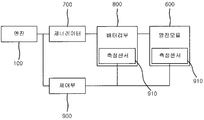
- FIG. 5 is a conceptual diagram when the generator and the battery unit are electrically connected through a control unit.
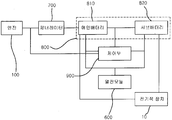
- FIG. 6 is a conceptual diagram in a case where the battery unit illustrated in FIG. 5 includes a main battery and a sub battery.
- FIG. 7 is a conceptual diagram when an engine and a generator are connected through a control unit.
- FIG. 8 is a conceptual diagram when the battery unit of FIG. 7 includes a main battery and a sub battery.
- fluid pump 300 fluid transfer channel portion
- low temperature fluid transfer channel 311 low temperature panel
- cooling fin 312 diaphragm
- lubricating oil transfer channel 510 low temperature lubricating oil transfer channel
- diaphragm 520 high temperature lubricating oil transfer channel
- thermoelectric module 522: diaphragm 600: thermoelectric module
- Control unit 910 measuring sensor
- thermoelectric power generation system using the waste heat according to the present invention.
- An automobile having a thermoelectric power generation system includes an engine heat dissipation unit 110, an engine 100 in which an lubrication unit 120 is formed, an engine heat dissipation unit 110, and a fluid radiator as shown in FIG. 1.
- the fluid transfer channel unit 300 and the fluid pump 210 formed between the 200, and the lubricant transfer channel unit 500 and the lubricant pump 410 formed between the lubrication unit 120 and the lubricant radiator 400, It consists of a thermoelectric module 600 formed between the fluid transfer channel 300 and the lubricating oil transfer channel 500 and the battery unit 800 electrically coupled to the thermoelectric module 600.
- the engine 100 obtains mechanical energy by burning gasoline, liquefied petroleum gas, and the like, and drives shafts connected to the piston by reciprocating a piston (not shown) using energy generated by burning gasoline or the like (not shown). Rotate
- the engine heat dissipation unit 110 is a fluid transfer channel unit 300 connected to the fluid radiator 200 to a space in which a cooling fluid is circulated to dissipate heat generated when the engine 100 is burned in the engine 100.
- a cooling fluid is circulated to dissipate heat generated when the engine 100 is burned in the engine 100.
- the fluid radiator 200 functions to maintain a constant temperature of the engine 100 by dissipating heat of the fluid flowing into the engine 100, and may be classified into air-cooled and water-cooled according to the type of the engine 100.
- the fluid radiator 200 used in one embodiment of the present invention uses a water-cooled radiator for cooling the engine 100 using a fluid.
- the fluid pump 210 may be installed anywhere between the engine radiator 110 and the fluid radiator 200 by forcibly transferring the fluid to the engine radiator 110. As shown in FIG. 1, the fluid transfer channel unit 300 and the fluid radiator 200 are installed.
- the position of the fluid pump 210 may be selectively changed according to the temperature of the fluid flowing out of the engine 100, the temperature of the fluid supplied to the engine heat radiating unit 110, and the like.
- Lubrication unit 120 reduces the wear of the piston reciprocating when the engine 100 is driven in the engine 100, and absorbs heat generated on the wear surface to supply the lubricant to protect the engine 100 Do it.
- the lubricating oil radiator 400 communicates with the lubricating part 120 through the lubricating oil transfer channel part 500 by dissipating heat of the lubricating oil which absorbs heat from the engine 100.
- the lubricating oil pump 410 communicates with the lubricating oil transfer channel part 500 and the lubricating oil radiator 400 to supply low temperature lubricating oil to the lubricating part 120.
- the lubricating oil transfer channel part 500 is provided.
- the fluid transfer channel unit 300 and the lubricant transfer channel unit 500 are a low temperature fluid, which is a passage through which a low temperature fluid and lubricant for cooling the engine 100 and a high temperature fluid and lubricant supplied with heat from the engine 100 move. It consists of the conveying channels 310 and 510 and the hot fluid conveying channels 320 and 520.
- the fluid transfer channel unit 300 introduces a fluid to heat dissipate heat of the engine 100 as shown in FIG. 2 or FIG. 3, in which a sectional view and a front sectional view of the fluid transfer channel or the lubricating oil transfer channel are shown. It consists of a low temperature fluid transfer channel 310, a high temperature fluid transfer channel 320, a low temperature panel 311 surrounding the low temperature fluid transfer channel 310 and a high temperature panel 421 surrounding the high temperature fluid transfer channel 320.
- the low temperature fluid transfer channel 310 communicates with one side of the engine radiator 110 and the fluid radiator 200 to transfer the fluid radiating heat from the fluid radiator 200 to the engine radiator 110, and the high temperature fluid transfer.
- the channel 320 communicates with the engine radiator 110 and the other side of the fluid radiator 200 to transfer the high temperature fluid absorbing heat from the engine 100 to the fluid radiator 200.
- Lubricating oil transfer channel 500 is a channel for introducing and flowing out lubricating oil to prevent wear of the engine 100 and to dissipate frictional heat generated during operation, as described above, one side of the lubricating unit 120 and a lubricating oil radiator ( On the other side of the low-temperature lubricating oil transfer channel 510 and the lubricating portion 120 and the lubricating oil radiator 400, the low-temperature lubricating oil flowing into the lubrication unit 120 is communicated to one side and radiated from the lubricating oil radiator 400
- the high temperature lubricant transfer channel 520 communicating with the high temperature lubricant oil absorbing heat from the engine 100 to the lubrication oil radiator 400, the low temperature panel 511 and the high temperature lubricant transfer to surround the low temperature lubricant transfer channel 510.
- the high temperature panel 521 surrounds the channel 520.
- Thermoelectric module 600 is coupled.
- thermoelectric module 600 to produce is combined.
- each thermoelectric module 600 is coupled to the fluid transfer channel unit 300 and the lubricating oil transfer channel unit 500, but the fluid transfer channel unit 300 is necessarily.
- the thermoelectric module 600 need not be coupled to each of the lubricating oil transfer channel parts 500, and the thermoelectric module 600 is coupled to only the fluid transfer channel part 300 or the lubricating oil transfer channel part 500 according to an embodiment. You can also
- the low temperature fluid transfer channel 310 and the low temperature lubricating oil transfer channel 510 and the low temperature panels 311 and 511 formed in each have similar functions and configurations, and have a high temperature fluid transfer channel 320 and a high temperature lubricant.
- the transfer channel 520 and the high temperature panels 421 and 521 formed in each of them have similar functions and configurations, so that the low temperature fluid transfer channel 310 and the high temperature fluid transfer channel 320 are respectively described below to avoid duplication of explanation. A combination of the low temperature panel 311 and the high temperature panel 321 will be described.
- the low temperature transfer channel 310 of the fluid transfer channel unit 300 is defined as a low temperature fluid transfer channel 310
- the high temperature transfer channel of the fluid transfer channel unit 300 ( 320 will be defined as the high temperature fluid transfer channel (320).
- the low temperature transfer channel 510 of the lubricating oil transfer channel part 500 is defined and used as the low temperature lubricating oil transfer channel 510
- the high temperature transfer channel 520 of the lubricating oil transfer channel part 500 is a high temperature lubricating oil transfer channel ( 520).
- thermoelectric module 600 The coupling relationship between the fluid transfer channel unit 300, the low temperature fluid transfer channel 310, the high temperature fluid transfer channel 320, and the thermoelectric module 600 will be described in detail with reference to FIG. 2. .
- the outer circumferential surface of the low temperature fluid transfer channel 310 is coupled to the low temperature panel 311 which is in thermal contact with the low temperature portion 610 of the thermoelectric module 600, and the high temperature portion of the thermoelectric module 600 is connected to the outer circumferential surface of the high temperature fluid transfer channel 320.
- the high temperature panel 321 in thermal contact with the 620 is coupled.
- the low temperature fluid transfer channel 310 formed on the outer circumferential surface of the low temperature panel 311 and the high temperature fluid transfer channel 320 formed on the outer circumferential surface of the low temperature panel 311 are radiated by the fluid radiator 200.
- a high temperature fluid endothermic by the engine 100 flows, so a temperature difference is generated between the low temperature fluid transfer channel 310 and the high temperature fluid transfer channel 320 to which the low temperature panel 311 and the high temperature panel 321 are coupled. Done.
- thermoelectric module 600 in thermal contact with the low temperature fluid transfer channel 310 and the high temperature fluid transfer channel 320 using the temperature difference is proportional to the temperature difference between the low temperature fluid transfer channel 310 and the high temperature fluid transfer channel 320. Electrical energy is generated.
- the cooling fins 3111 are coupled to the low temperature panel 311, and the heat insulation panel 3211 is coupled to the high temperature panel 321.
- the cooling fins 3111 are for increasing the surface area of the ambient air in contact with the low temperature fluid transfer channel 310, and protruding cooling fins 3111 are formed on one side of the low temperature panel 311.
- the cooling fins 3111 also serve to cool the fluid flowing into the engine.
- the cooling fins 3111 may be manufactured to cover the entire low temperature panel 311 by increasing the surface area of the low temperature panel 311 in contact with the surrounding air, but a cooling fin of this type (not shown) is formed.
- the low temperature portion 610 of the thermoelectric module 600 is coupled to the low temperature panel 311 with the cooling fins 3111 interposed therebetween, so that the low temperature portion 610 of the thermoelectric module 600 has a higher temperature when it is directly in thermal contact with the low temperature fluid transfer channel 320.
- the cooling fin 3111 is preferably formed only on the upper surface of the low temperature panel 311, as shown in FIG. ) Is preferably formed flat so that the low temperature portion 610 of the thermoelectric module 600 is in close contact.
- Cooling fins 3111 of the present invention may be configured in the shape of a variety of cross-sections, such as rectangular, circular, in the embodiment of Figures 3 to 5 pin-fin type (pin-fin type) cooling of the cross-sectional shape The pin 3111 was disposed.
- a heat insulation panel 3211 is formed on the high temperature panel 321 coupled to the outer circumferential surface of the high temperature fluid transfer channel 320.
- the high temperature fluid transfer channel 320 exchanges heat through the ambient air and the high temperature panel 321, the amount of heat exchange with the ambient air is reduced.
- the high temperature panel 321 is insulated and can be in thermal contact with the high temperature portion 620 of the thermoelectric module 600 with the temperature attracting the temperature.
- the heat insulation panel 3211 may be formed to cover the entire outer circumferential surface of the high temperature panel 321, but in this case, the high temperature portion 620 of the thermoelectric module 600 may be the high temperature panel 321 through the heat insulation panel 3211. Thermal contact.
- the high temperature portion 620 of the thermoelectric module 600 has a problem that the temperature is lower than the direct contact with the high temperature panel 321 is formed.
- the heat insulation panel 3211 may be formed in the high temperature panel 421. It formed only at the bottom.
- the shape of the heat insulating panel 3211 in the present embodiment is not necessarily limited to such a shape, and may be modified in various forms as long as it meets the purpose of blocking heat exchange between the high temperature panel 321 and the outside.
- the low temperature fluid transfer channel 310 forming the fluid transfer channel part 300 may be formed of a plurality of tubes, but when the low temperature fluid transfer channel 310 is formed of one tube, the low temperature fluid transfer channel 310 It is preferable that a plurality of septums (septum, 312) is disposed inside the low temperature fluid transfer channel 310 to allow maximum heat exchange with the periphery.
- the diaphragm 312 partitions the inside of the low temperature fluid transfer channel 310 to increase the contact area between the fluid flowing in the low temperature fluid transfer channel 310 and the low temperature fluid transfer channel 310.
- the diaphragm 312 according to the present invention increases the surface area between the low temperature panel 311 coupled to the low temperature fluid transfer channel 310 and the fluid flowing in the low temperature fluid transfer channel 310 to provide a space between the fluid and the low temperature fluid transfer channel. Increase the amount of heat exchange
- a plurality of small channels surrounded by the diaphragm and the low temperature fluid transfer channel or a small channel surrounded by the diaphragm may be formed in the low temperature fluid transfer channel 310 in which the diaphragm 312 is installed. That is, the inside of the low temperature fluid transfer channel 310 may be divided into a plurality of small channels according to the arrangement of the diaphragm 312. Fluid is transported through these small channels.
- a plurality of diaphragms 312 are installed in parallel to each other, and a technical configuration of partitioning into small channels having a rectangular pillar shape has been proposed.
- a low temperature fluid transfer channel 310 is disclosed that includes a plurality of small channels formed with a plurality of diaphragms 312 spaced in parallel.
- the high temperature fluid transfer channel 320 may be formed of a plurality of small channels, such as the low temperature fluid transfer channel 310, but when the high temperature fluid transfer channel 320 is formed of one channel, the high temperature fluid transfer channel 320 is coupled to the high temperature fluid transfer channel 320.
- the high temperature fluid transfer channel (410) is the same as the low temperature fluid transfer channel 410 so that the temperature of the high temperature unit 610 of the thermoelectric module 600 is close to the temperature of the high temperature fluid flowing inside the high temperature fluid transfer channel 320. It is preferable to arrange a plurality of septums 322 inside 320.
- the plurality of diaphragms 322 may be arranged in various forms inside the high temperature transfer channel 320, and a small channel having a plurality of various forms is formed according to the arrangement form.
- a hot fluid transfer channel 320 that includes a plurality of small channels formed with a plurality of diaphragms 322 spaced in parallel.
- the membranes 312 and 322 formed inside the low temperature fluid transfer channel 310 and the high temperature fluid transfer channel 320 may be formed in various shapes, but are shown in FIG. 3 to generate a minimum resistance to the flow of the fluid. As described above, the low-temperature fluid transfer channel 310 and the high-temperature fluid transfer channel 320 are spaced apart from each other to communicate with one side of the fluid inflow and the other side of the fluid outflow.
- the diaphragm is formed to be substantially parallel to the flow of the fluid, when the fluid flows in the low temperature fluid transfer channel 310 and the high temperature fluid transfer channel 320, the resistance is minimally generated.
- the thermoelectric module 600 may be a low temperature fluid transfer channel 310 or a high temperature fluid transfer channel ( It may be in thermal contact anywhere on the outer side of 320.
- the low temperature fluid transfer channel 310 when the low temperature fluid transfer channel 310 is in thermal contact with the outer wall of the low temperature fluid transfer channel 310 and the high temperature fluid transfer channel 320, which are connected to the diaphragm formed inside the high temperature fluid transfer channel 320, the low temperature fluid transfer channel 310. Heat exchange with the fluid flowing in the 310 and the high temperature fluid transfer channel 320 can be more smoothly.
- thermoelectric module 600 is preferably in thermal contact with the outer wall of the low temperature transfer channel 310 or the high temperature transfer channel 320 connected to the diaphragms 312 and 322.
- the fluid transfer channel part 300 includes one low temperature fluid transfer channel 310 and a high temperature fluid transfer channel 320 having a plurality of diaphragms 312 and 322 therein, but one low temperature fluid. It does not have to be made of the transport channel 310 and the hot fluid transport channel 320, it may be composed of a plurality of cold fluid transport channel 310 and the hot fluid transport channel (320).
- the diaphragms 312 and 322 are formed in both the low temperature fluid transfer channel 310 and the high temperature fluid transfer channel 320, but the diaphragm is formed in both the low temperature fluid transfer channel 310 and the high temperature fluid transfer channel 320. It is not necessary to form the 312 and 322, it may be formed only in any one of the low temperature fluid transfer channel 310 or the high temperature fluid transfer channel (320).
- the low temperature fluid transfer channel 310 and the high temperature fluid transfer channel 310 having the plurality of diaphragms 312 and 322 are formed as shown in FIG. 2, which is an embodiment of the present invention. It may be connected in a straight line form between 110, it may be formed in a variety of shapes, such as a spiral shape.
- the high temperature fluid transfer channel 320 and the low temperature fluid transfer channel 310 may be formed in a shape corresponding to each other, as shown in Figure 2 or 3 of an embodiment of the present invention.
- the high temperature fluid transfer channel 320 When the high temperature fluid transfer channel 320 is formed in a shape corresponding to the low temperature fluid transfer channel 310, the low temperature fluid transfer channel via the low temperature panel 311 and the high temperature panel 321 above and below the thermoelectric module 600.
- the 310 and the high temperature fluid transfer channel 320 are positioned to be in direct contact with each other, such that the low temperature portion 620 and the high temperature portion 610 of the thermoelectric module 600 have the largest temperature difference.
- thermoelectric module 600 can generate more electrical energy.
- the high temperature fluid transfer channel 320 and the low temperature fluid transfer channel 310 do not necessarily have to be formed in a shape corresponding to each other, and the installation position of the thermoelectric module 600, the number of installations, and the low temperature panel 311 and the high temperature panel ( It may be formed by deforming in various shapes according to the shape of the 321.
- the fluid used in the fluid transfer channel part 300 may be a coolant such as an antifreeze, but generally absorbs more heat energy from the engine 100 and releases heat faster than the fluid radiator 200. It is preferred that a fluid having is used.
- the outer circumferential surface of the low temperature lubricating oil transfer channel 510 is coupled to the low temperature panel 511 which is in thermal contact with the low temperature portion 610 of the thermoelectric module 600, and the high temperature panel 521 is coupled to the outer circumferential surface of the high temperature lubricating oil transfer channel 520.
- the high temperature part 620 of the thermoelectric module 600 is in thermal contact with the high temperature panel 521.
- the low temperature lubrication oil transfer channel 510 and the high temperature lubrication oil transfer channel 520 are installed between the lubrication unit 120 and the lubrication oil radiator 400, and the low temperature fluid transfer channel 310 and the high temperature fluid transfer channel 320 described above. ), So descriptions thereof will be omitted to avoid duplication.
- the low temperature panel 511 coupled to the low temperature lubricating oil transfer channel 510 has the same function and structure as the low temperature panel 311 coupled to the low temperature fluid transfer channel 310, the description will be given in order to avoid duplication thereof.
- the low temperature panel 311 coupled to the low temperature fluid transfer channel 310 will be replaced with the description.
- the high temperature panel 521 coupled to the outer circumferential surface of the high temperature lubricating oil transfer channel 520 also has the same structure and function as the high temperature panel 321 coupled to the high temperature fluid transfer channel 320 described above. It will be omitted.
- cooling plate (5111) coupled to the low temperature panel 511 and the heat insulating panel (5211) coupled to the high temperature panel 521 is also the cooling fin (3111) coupled to the low temperature fluid transfer channel 310 described above; Since the same function as the heat insulation panel 3211 coupled to the high temperature fluid transfer channel 320, a description thereof will be omitted to avoid duplication.
- the low temperature lubricant oil transfer channel 510 and the high temperature lubricant oil transfer channel 520 allow the lubricant to be transported with the least resistance.
- a plurality of diaphragms 512 and 522 may be formed to increase an area in contact with each other.
- the diaphragms 512 and 522 have the same function and structure as the diaphragms 312 and 322 formed in the low temperature fluid transfer channel 310 and the high temperature fluid transfer channel 320 described above. Will be omitted.
- the low temperature lubricating oil transfer channel 510 and the high temperature lubricating oil transfer channel 520 are formed in a straight line between the lubricating oil radiator 400 and the lubrication unit 120, such as the low temperature fluid transfer channel 310 and the high temperature fluid transfer channel 320. It may be connected to, or may be formed in various shapes such as a spiral shape.
- the engine heat radiating unit 110 the engine 100 having the lubricating unit 120, the radiator 200, the lubricating oil radiator 400, the generator 700, the battery unit 800, the engine Fluid transfer channel unit 400 formed between the heat dissipation unit 110 and the fluid radiator 200, lubricating oil transfer channel unit 500 and the fluid transfer channel formed between the lubrication unit 120 and the lubricant radiator 400
- a vehicle having a thermoelectric power generation system including a thermoelectric module 600 formed between the unit 300 and the lubricating oil transfer channel unit 500 may control the electrical connection between the generator 700 and the battery unit 800 with the controller.
- the first embodiment (Fig.
- FIG. 5 or 6 which is a conceptual diagram when the generator and the battery unit is electrically connected via the control unit
- Second embodiment that can be separated (engine and generator It can be divided into FIG. 7 or FIG. 8 which is a conceptual diagram of another embodiment that is connected. Therefore, for convenience of description, the description will be made by dividing the first and second embodiments.
- the first embodiment is an embodiment that can control the electrical connection between the generator and the battery unit 800 by the control unit 900 is configured as shown in FIG.
- the electrical connection between the battery unit 800 and the generator 700 and the electrical connection between the thermoelectric module 600 and the battery unit 800 are controlled by the controller 900.
- the battery unit 800 receives electric energy from both the generator 700 and the thermoelectric module 600.
- thermoelectric module 600 when the engine 100 is driven, the electric energy generated by the thermoelectric module 600 is additionally charged in the battery unit 800, thereby shortening the charging time of the battery unit 800.
- the controller when electrical energy is generated in the thermoelectric module 600, the controller may cut off the electrical connection between the generator and the battery unit 800 and charge only by using the electrical energy generated by the thermoelectric module.
- the controller 900 may generate a generator to prevent excessive charging.
- the electrical connection between the 700 and the battery unit 800 may be blocked.
- the state of the battery unit 800 and the thermoelectric module 600 may be known from the measuring sensor 910 connected to the battery unit 800 and the thermoelectric module 600.
- the battery unit 800 may include a main battery 810 and a sub battery 820, and the controller 900 may electrically connect the main battery 810 and the sub battery 820 with each other. Can be controlled.
- At least one of the main battery 810 and the sub battery 820 may be electrically connected to the thermoelectric module 600 through a control unit.
- the controller 900 disconnects the electrical connection between the generator 700 and the main battery 810 when the charging of the main battery 810 is completed, and the main battery 810 is connected to the main battery 810.
- the battery 810 and the sub-battery 820 may be connected to charge the sub-battery 820 with the electric energy overcharged in the main battery 810.
- the control unit 900 When the charging is completed, the control unit 900 generates power of the generator 700. Blocking, it can reduce the engine speed (rpm) of the engine 100 through this.
- the controller 900 disconnects the electrical connection between the generator 700 and the main battery 810 when charging of the sub-battery 820 is completed.
- the sub-battery 820 may be connected to the main battery 810 to charge the main battery 810 with the electric energy overcharged in the sub-battery 820.
- the control unit 900 when the thermoelectric module 600 is connected to the main battery 810 and the sub-battery 810 at the same time, the control unit 900, if the main battery 810 is completed before the sub-battery 820, the control unit ( 900 disconnects the electrical connection between the generator 700 and the main battery 820, connects the main battery 810 and the sub battery 820, the sub-battery 820 with the electric energy overcharged to the main battery 820 Charge the battery, or stop the connection between the main battery 810 and the thermoelectric module 600, and when the sub-battery 820 is completely charged before the main battery 810, the controller 900 is connected to the generator 700.
- the electrical connection of the main battery 810 is cut off, and the main battery 810 and the sub battery 820 are connected to charge the main battery 810 with the electric energy overcharged to the sub battery 820, or the thermoelectric module ( 600 may be disconnected from the sub-battery 820.
- the electric device 10 of the vehicle such as an air conditioner is connected to the sub battery 820 to preserve the main battery 810. Can be used.
- the controller 900 controls the separation or coupling of the drive shaft of the engine 100 and the rotation shaft of the generator 700.
- the measuring sensor 910 transmits a signal to the controller 900, and the controller 900 controls the driving shaft of the engine 100 and the rotation shaft of the generator 700. It is separated, and may receive electrical energy from the thermoelectric module 600.
- the measurement sensor 910 transmits a signal to the controller 900, and the controller 900.
- the electric power may be supplied from the thermoelectric module 600 by separating the driving shaft of the engine 100 and the rotation shaft of the generator 700.
- the battery unit 800 includes the main battery 810 and the sub battery 820
- the main battery 810 is electrically connected to the generator 700
- the control unit 900 includes the main battery 810.
- the electrical connection between the sub-batteries 820 may be controlled, and at least one of the main battery 810 and the sub-battery 820 may be controlled with the thermoelectric module 600.
- thermoelectric module 600 when the thermoelectric module 600 is connected only to the main battery 810, when charging of the main battery 810 is completed, the controller 900 separates the driving shaft of the engine 100 from the rotation shaft of the generator 700.
- the main battery 810 and the sub battery 820 may be connected to charge the sub battery 820 with the overcharged electric energy in the main battery 810.
- thermoelectric module 600 when the thermoelectric module 600 is connected only to the sub-battery 820, when charging of the sub-battery 820 is completed, the controller 900 separates the drive shaft of the engine 100 from the rotation shaft of the generator 700.
- the sub-battery 820 may be connected to the main battery 810 to charge the main battery 810 with the electric energy overcharged in the sub-battery 820.
- thermoelectric module 600 when the thermoelectric module 600 is connected to the main battery 810 and the sub-battery 810 at the same time, when the main battery 810 is completed before the sub-battery 820, the control unit 900 is the engine ( The driving shaft of the 100 and the rotation shaft of the generator 700 are separated, and the main battery 810 and the sub battery 820 are connected to charge the sub battery 820 with the overcharged electric energy in the main battery 820, Stop the connection of the main battery 810 and the thermoelectric module 600,
- the controller 900 separates the drive shaft of the engine 100 and the rotation shaft of the generator 700, and the main battery 810 and the sub-battery 820. ) To charge the main battery 810 with the overcharged electrical energy in the sub-battery 820, or stop the connection between the thermoelectric module 600 and the sub-battery 820.
- the electric device 10 of the vehicle such as an air conditioner
- the electric device 10 of the vehicle may store the sub battery 820 in order to preserve the main battery 810.
Landscapes
- Cooling, Air Intake And Gas Exhaust, And Fuel Tank Arrangements In Propulsion Units (AREA)
Abstract
본 발명에 따른 폐열을 이용하는 열전발전시스템을 구비한 자동차는 엔진, 라디에이터, 오일펌프 및 배터리부를 포함하며, 엔진의 폐열을 이용하는 열전발전시스템이 구비된 자동차로서, 엔진방열부와, 윤활부가 형성되는 엔진과, 라디에이터에서 방열된 유체가 엔진냉각부로 이송되는 저온유체이송채널과, 엔진냉각부에서 엔진의 열을 흡수한 유체가 라디에이터로 이송되는 고온유체이송채널으로 이루어진 유체이송채널과, 오일펌프에서 윤활유가 윤활부로 이송되는 저온유체이송채널과, 윤활부에서 가열된 윤활유가 오일펌프로 이송되는 고온유체이송채널으로 이루어진 윤활유이송채널과, 유체이송채널 또는 윤활유이송채널 중 적어도 하나에 설치되어 저온유체이송채널과 고온유체이송채널의 온도차이에 의해 전기 에너지를 발생시키는 열전모듈을 포함한다.
Description
본 발명은 폐열을 이용하는 열전발전시스템을 구비한 자동차에 채널한 것이다. 보다 상세하게는 엔진의 구동시 발생되는 폐열을 열전모듈에 공급하여 전기 에너지를 발생시키는 폐열을 이용하는 열전발전시스템을 구비한 자동차에 채널한 것이다.
자동차는 석유와 같은 에너지를 이용하여 이용가능한 동력을 얻어 이동하는 장치로 사용시 열을 발생시키게 되므로 방열장치가 설치되어야 한다.
그러나 이러한 종래의 방열장치는 엔진에서 발생 되는 열을 재사용하지 않고 주위로 방열시키는 점에서 에너지의 효율적인 사용 측면에서 문제가 되었다.
본 발명에 따른 폐열을 이용하는 열전발전시스템을 구비한 자동차는 다음과 같은 해결과제를 목적으로 한다.
첫째, 엔진을 방열시키기 위해 엔진으로 유입되는 저온의 유체 및 윤활유와 엔진에서 열을 흡수하고 배출되는 고온의 유체 및 윤활유 사이의 온도 차이를 이용하여, 열전모듈을 통해 전기에너지를 발생시켜 자동차의 에너지 효율을 높이고자 한다.
둘째, 저온의 유체 및 윤활유와 고온의 유체 및 윤활유 사이의 온도차에 의해 열전발전시스템에서 발생된 전기 에너지가 배터리에 충전되면 배터리의 상태에 따라 엔진에 결합되는 제너레이터를 제어함으로써 엔진의 효율을 증가시키고자 한다.
셋째, 엔진으로 유입되는 유체 및 윤활유와 엔진에서 열을 흡수하고 배출되는 유체와 윤활유 사이에 온도 차이를 증가시켜 보다 많은 전기 에너지를 발생시키고자 한다.
넷째, 엔진으로 유입되는 유체 및 윤활유와 배출되는 유체 및 윤활유 사이의 열 접촉 면적을 확대시키고 열전모듈 설치면적을 확대시켜 에너지 효율을 높이고자 한다.
본 발명의 해결과제는 이상에서 언급된 것들에 한정되지 않으며, 언급되지 아니한 다른 해결과제들은 아래의 기재로부터 당업자에게 명확하게 이해되어 질 수 있을 것이다.
본 발명에 따른 폐열을 이용하는 열전발전시스템을 구비한 자동차는 엔진, 유체라디에이터(radiator), 윤활유라디에이터 및 배터리부를 포함하며, 엔진의 폐열을 이용하는 열전발전시스템이 구비된 자동차로서, 엔진방열부와, 윤활부가 형성되는 엔진과, 유체라디에이터에서 방열된 유체가 엔진방열부로 이송되는 저온이송채널과, 엔진방열부에서 엔진의 열을 흡수한 유체가 유체라디에이터로 이송되는 고온이송채널로 이루어진 유체이송채널부와, 윤활유라디에이터에서 윤활유가 윤활부로 이송되는 저온이송채널과, 윤활부에서 가열된 윤활유가 윤활유라디에이터로 이송되는 고온이송채널로 이루어진 윤활유이송채널부와, 유체이송채널부 또는 윤활유이송채널부 중 적어도 하나에 설치되어 저온이송채널과 고온이송채널의 온도차이에 의해 전기 에너지를 발생시키는 열전모듈을 포함한다.
본 발명에 따른 폐열을 이용하는 열전발전시스템을 구비한 자동차의 엔진에는 엔진의 구동축과 분리가능한 회전축이 형성되고 배터리부와 연결된 제너레이터(generator)가 설치되고, 제너레이터에는 엔진의 구동축과 제너레이터의 회전축을 분리시키는 제어부가 연결되고, 배터리부에는 열전모듈이 전기적으로 연결되며, 열전모듈과 배터리부에는 전기 에너지의 양을 측정하는 측정센서가 설치되는 것이 바람직하다.
본 발명에 따른 폐열을 이용하는 열전발전시스템을 구비한 자동차는 엔진에는 제너레이터(generator)가 설치되고, 제너레이터에는 배터리부와 전기적 연결을 제어하는 제어부가 연결되며, 배터리부에는 열전모듈과 전기적 연결을 제어하는 제어부가 연결되는 것이 바람직하다.
본 발명에 따른 폐열을 이용하는 열전발전시스템을 구비한 자동차의 열전모듈에서 전기 에너지가 발생되는 경우, 측정센서는 제어부에 신호를 전달하고, 제어부는 엔진의 구동축과 제너레이터의 회전축을 분리시키는 것이 바람직하다.
본 발명에 따른 폐열을 이용하는 열전발전시스템을 구비한 자동차는 열전모듈에서 전기 에너지가 발생되는 경우, 제어부는 제너레이터와 배터리부의 전기적 연결을 차단시키는 것이 바람직하다.
본 발명에 따른 폐열을 이용하는 열전발전시스템을 구비한 자동차의 배터리부의 전기 에너지 충전이 완료된 경우, 측정센서는 제어부에 신호를 전달하고, 제어부는 엔진의 구동축과 제너레이터의 회전축을 분리시키는 것이 바람직하다.
본 발명에 따른 폐열을 이용하는 열전발전시스템을 구비한 자동차의 배터리부의 전기 에너지 충전이 완료된 경우, 제어부는 제너레이터와 배터리부의 전기적 연결을 차단시키는 것이 바람직하다.
본 발명에 따른 폐열을 이용하는 열전발전시스템을 구비한 자동차의 배터리부가 메인배터리와 서브배터리로 이루어지는 경우, 메인배터리는 제너레이터와 전기적으로 연결이 되고, 제어부는 메인배터리, 서브배터리 상호 간의 전기적 연결을 제어하며, 메인배터리와 서브배터리 중 적어도 어느 하나와 열전모듈의 전기적 연결을 제어하는 것이 바람직하다.
본 발명에 따른 폐열을 이용하는 열전발전시스템을 구비한 자동차의 배터리부가 메인배터리와 서브배터리로 이루어지는 경우, 메인배터리는 제너레이터와 전기적으로 연결이 되고, 제어부는 메인배터리, 서브배터리 상호 간의 전기적 연결을 제어하며, 메인배터리와 서브배터리 중 적어도 어느 하나와 열전모듈의 전기적 연결을 제어하는 것이 바람직하다.
본 발명에 따른 폐열을 이용하는 열전발전시스템을 구비한 자동차의 열전모듈이 메인배터리에만 연결되는 경우, 메인배터리의 충전이 완료되면, 제어부는 엔진의 구동축과 제너레이터의 회전축을 분리시키고, 메인배터리와 서브배터리를 연결하여 메인배터리에 과충전된 전기 에너지로 서브배터리를 충전시키는 것이 바람직하다.
본 발명에 따른 폐열을 이용하는 열전발전시스템을 구비한 자동차의 열전모듈이 서브배터리에만 연결되는 경우, 서브배터리의 충전이 완료되면, 제어부는 엔진의 구동축과 제너레이터의 회전축을 분리시키고, 서브배터리를 메인배터리와 연결하여 서브배터리에 과충전된 전기 에너지로 메인배터리를 충전시키는 것이 바람직하다.
본 발명에 따른 폐열을 이용하는 열전발전시스템을 구비한 자동차의 열전모듈이 서브배터리에만 연결되는 경우, 서브배터리의 충전이 완료되면, 제어부는 제너레이터와 메인배터리의 전기적 연결을 차단시키고, 서브배터리를 메인배터리와 연결하여 서브배터리에 과충전된 전기 에너지로 메인배터리를 충전시키는 것이 바람직하다.
본 발명에 따른 폐열을 이용하는 열전발전시스템을 구비한 자동차의 열전모듈이 메인배터리에만 연결되는 경우, 메인배터리의 충전이 완료되면, 제어부는 제너레이터와 메인배터리의 전기적 연결을 차단시키고, 메인배터리와 서브배터리를 연결하여 메인배터리에 과충전된 전기 에너지로 서브배터리를 충전시키는 것이 바람직하다.
본 발명에 따른 폐열을 이용하는 열전발전시스템을 구비한 자동차는 열전모듈이 메인배터리와 서브배터리에 동시에 연결되는 경우, 메인배터리가 서브배터리 보다 먼저 충전이 완료되면, 제어부는 엔진의 구동축과 제너레이터의 회전축을 분리시키고, 메인배터리와 서브배터리를 연결하여 메인배터리에 과충전된 전기 에너지로 서브배터리를 충전시키거나, 메인배터리와 열전모듈의 연결을 중단시키고, 서브배터리가 메인배터리 보다 먼저 충전이 완료되면, 제어부는 엔진의 구동축과 제너레이터의 회전축을 분리시키고, 메인배터리와 서브배터리를 연결하여 서브배터리에 과충전된 전기 에너지로 메인배터리를 충전시키거나, 열전모듈과 서브배터리의 연결을 중단시키는 것이 바람직하다.
본 발명에 따른 폐열을 이용하는 열전발전시스템을 구비한 자동차의 열전모듈이 메인배터리와 서브배터리에 동시에 연결되는 경우, 메인배터리가 서브배터리 보다 먼저 충전이 완료되면, 제어부는 제너레이터와 메인베터리의 전기적 연결을 차단시키고, 메인배터리와 서브배터리를 연결하여 메인배터리에 과충전된 전기 에너지로 서브배터리를 충전시키거나, 메인배터리와 열전모듈의 연결을 중단시키고, 서브배터리가 메인배터리 보다 먼저 충전이 완료되면, 제어부는 제너레이터와 메인배터리의 전기적 연결을 차단시키고, 메인배터리와 서브배터리를 연결하여 서브배터리에 과충전된 전기 에너지로 메인배터리를 충전시키거나, 열전모듈과 서브배터리의 연결을 중단시키는 것이 바람직하다.
본 발명에 따른 폐열을 이용하는 열전발전시스템을 구비한 자동차의 엔진의 작동이 중단된 경우, 자동차의 전기적 장치는 서브배터리의 전기 에너지를 이용하여 작동되는 것이 바람직하다.
본 발명에 따른 폐열을 이용하는 열전발전시스템을 구비한 자동차의 고온이송채널 또는 저온이송채널 중 적어도 어느 하나에는 내부로 유체가 유입되는 일측과, 외부로 유체가 유출되는 타측에 연통되도록 내부를 구획하는 격막이 이격 배치되는 것이 바람직하다.
본 발명에 따른 폐열을 이용하는 열전발전시스템을 구비한 자동차의 고온이송채널에 격막이 형성되는 경우, 열전모듈은 격막과 연접된 고온이송채널의 외측벽에 열 접촉되는 것이 바람직하다.
본 발명에 따른 폐열을 이용하는 열전발전시스템을 구비한 자동차는 저온이송채널에 격막이 형성되는 경우, 열전모듈은 격막과 연접된 저온이송채널의 외측벽에 열 접촉되는 것이 바람직하다.
본 발명에 따른 폐열을 이용하는 열전발전시스템을 구비한 자동차의 고온이송채널의 외부에는 고온패널이 형성되는 것이 바람직하다.
본 발명에 따른 폐열을 이용하는 열전발전시스템을 구비한 자동차의 고온패널의 일측에는 단열패널이 형성되는 것이 바람직하다.
본 발명에 따른 폐열을 이용하는 열전발전시스템을 구비한 자동차의 저온이송채널의 외부에는 일측 방향으로 복수 개의 냉각핀이 형성된 저온패널이 형성되는 것이 바람직하다.
본 발명에 따른 폐열을 이용하는 열전발전시스템을 구비한 자동차의 열전모듈은 저온패널의 타측에서 저온패널에 밀착결합되며, 고온패널은 열전모듈의 일측에서 저온패널의 타측면과 밀착결합되는 것이 바람직하다.
본 발명에 따른 폐열을 이용하는 열전발전시스템을 구비한 자동차의 고온이송채널 또는 저온이송채널 중 어느 하나는 지그재그 형상으로 절곡되는 것이 바람직하다.
본 발명에 따른 폐열을 이용하는 열전발전시스템을 구비한 자동차는 엔진방열부에는 유체와 접촉되는 단면적을 증가시키기 위해 모세관 구조의 복수 개의 이송채널이 형성되는 것이 바람직하다.
본 발명에 따른 폐열을 이용하는 열전발전시스템을 구비한 자동차는 엔진과 라디에이터 사이에서 형성된 유체이송채널과 엔진과 오일펌프 사이에 형성된 윤활유이송채널 사이의 온도차이를 이용하여 열전모듈을 작동시킴으로써 버려지는 폐열을 이용할 수 있는 효과가 있다.
또한, 본 발명에 따른 폐열을 이용하는 열전발전시스템을 구비한 자동차는 엔진에 유입되는 저온의 유체 및 윤활유와 엔진에서 배출되는 고온의 유체 및 윤활유의 온도 차이를 증가시킬 수 있도록 함으로써 열전모듈에서 발생되는 전기 에너지의 양을 증가시킬 수 있는 효과가 있다.
또한, 본 발명에 따른 폐열을 이용하는 열전발전시스템을 구비한 자동차는 유체이송채널과 윤활유이송채널 내부에서 저온유체이송채널과 고온유체이송채널의 열교환 면적을 증가시킴으로써 열전모듈에서 열 흡수율을 증가시켜 폐열을 보다 효율적으로 사용할 수 있는 효과가 있다.
본 발명의 효과는 이상에서 언급된 것들에 한정되지 않으며, 언급되지 아니한 다른 효과들은 아래의 기재로부터 당업자에게 명확하게 이해되어 질 수 있을 것이다.
도 1은 본 발명의 일실시예에 따른 폐열을 이용하는 열전발전시스템의 구성도이다.
도 2는 도 1에 도시된 유체이송채널 또는 윤활유이송채널의 정단면도가 도시된 도면이다.
도 3은 도 1에 도시된 유체이송채널 또는 윤활유이송채널의 측단면도가 도시된 도면이다.
도 4는 도 1에 도시된 유체이송채널 또는 윤활유이송채널의 평면도가 도시된 도면이다.
도 5는 제너레이터와 배터리부가 제어부를 매개로 전기적 연결이 된 경우의 개념도이다.
도 6은 도 5에 도시된 배터리부가 메인배터리와 서브배터리로 이루어진 경우의 개념도이다.
도 7은 엔진과 제너레이터가 제어부를 통해 연결이 된 경우의 개념도이다.
도 8은 도 7의 배터리부가 메인배터리와 서브배터리로 이루어진 경우의 개념도이다.
<도면의 주요부분에 관한 부호의 설명>
100 : 엔진 110 : 엔진방열부
120 : 윤활부 200 : 유체라디에이터
210 : 유체펌프 300 : 유체이송채널부
310 : 저온유체이송채널 311 : 저온패널
3111 : 냉각핀 312 : 격막
320 : 고온유체이송채널 321 : 고온패널
3211 : 단열패널 322 : 격막
400 : 윤활유라디에이터 410 : 윤활유펌프
500 : 윤활유이송채널부 510 : 저온윤활유이송채널
511 : 저온패널 5111 : 냉각핀
512 : 격막 520 : 고온윤활유이송채널
521 : 고온패널 5211 : 단열패널
522 : 격막 600 : 열전모듈
700 : 제너레이터 800 : 배터리부
900 ; 제어부 910 : 측정센서
이하에서는 도면을 참조하면서 본 발명에 따른 폐열을 이용하는 열전발전시스템을 구비한 자동차에 채널하여 구체적으로 설명하겠다.
열전발전시스템을 구비한 자동차는 본 발명의 일실시예가 도시된 도 1과 같이 엔진방열부(110)와, 윤활부(120)가 형성된 엔진(100), 엔진방열부(110)와 유체라디에이터(200) 사이에 형성되는 유체이송채널부(300) 및 유체펌프(210)와, 윤활부(120)와 윤활유라디에이터(400) 사이에 형성되는 윤활유이송채널부(500)와 윤활유펌프(410), 유체이송채널부(300)와 윤활유이송채널부(500) 사이에 형성되는 열전모듈(600) 및 열전모듈(600)에 전기적으로 결합되는 배터리부(800)로 이루어진다.
엔진(100)은 휘발유, 액화석유가스 등을 연소시켜 기계적 에너지를 얻는 것으로, 휘발유 등을 연소시켜 발생되는 에너지를 이용하여 피스톤(도면 미도시)을 왕복운동시켜 피스톤에 연결된 구동축(도면 미도시)을 회전운동시킨다.
엔진방열부(110)는 엔진(100)의 내부에서 엔진(100)의 연소시 발생되는 열을 방열시키기 위해 냉각유체가 순환되는 공간으로 유체라디에이터(200)와 연결되는 유체이송채널부(300)와 연통된다.
유체라디에이터(200)는 엔진(100)으로 유입되는 유체의 열을 방열시켜 엔진(100)의 온도를 일정하게 유지시키는 기능을 하는 것으로, 엔진(100)의 종류에 따라 공냉식과 수냉식으로 구별할 수 있으며, 수냉식과 공냉식 모두가 사용될 수 있으나 본 발명의 일 실시예에 사용되는 유체라디에이터(200)는 유체를 이용하여 엔진(100)을 냉각시키는 수냉방식의 라디에이터가 사용된다.
유체펌프(210)는 엔진방열부(110)로 유체를 강제로 이송시키는 것으로 엔진방열부(110)와 유체라이디에터(200) 사이에 어느 곳에라도 설치될 수 있으나, 본 발명의 일 실시예인 도 1에 도시된 바와 유체이송채널부(300)와 유체라디에이터(200) 사이에 설치되었다.
이러한 유체펌프(210)의 위치는 엔진(100)으로부터 유출되는 유체의 온도, 엔진방열부(110)로 공급되는 유체의 온도 등에 따라 선택적으로 변경할 수 있다.
윤활부(120)는 엔진(100)의 내부에서 엔진(100) 구동시 왕복운동하는 피스톤 등의 마모를 줄이고, 마모면에 발생되는 열을 흡수하여 엔진(100)을 보호하는 윤활유를 공급하는 기능을 한다.
윤활유라디에이터(400)는 엔진(100)에서 열을 흡수한 윤활유의 열을 방열시키는 것으로 윤활유이송채널부(500)를 통해 윤활부(120)와 연통된다.
윤활유펌프(410)는 윤활유이송채널부(500)와 윤활유라디에이터(400)에 연통되어 저온의 윤활유를 윤활부(120)에 공급하는 기능을 하는 것으로, 본 실시예에서는 윤활유이송채널부(500)와 윤활유라디에이터(400) 사이에 설치되었으나, 이러한 윤활유펌프(410)의 위치는 윤활부(120)에서 유출되는 윤할유의 온도, 윤활부(120)로 공급되는 윤활유의 온도등에 따라 변형하여 실시할 수 있다.
유체이송채널부(300)와 윤활유이송채널부(500)는 엔진(100)을 냉각시키는 저온의 유체 및 윤활유와 엔진(100)으로부터 열을 공급받은 고온의 유체 및 윤활유가 이동하는 통로인 저온유체이송채널(310, 510)과 고온유체이송채널(320, 520)으로 이루어진다.
유체이송채널부(300)는 유체이송채널 또는 윤활유이송채널의 일 실시예에 의한 정단면도 및 측단면도가 도시된 도 2 또는 도 3과 같이 엔진(100)의 열을 방열시키기 위해 유체를 유입시키고 유출시키는 저온유체이송채널(310), 고온유체이송채널(320), 저온유체이송채널(310)을 감싸는 저온패널(311) 및 고온유체이송채널(320)을 감싸는 고온패널(421)로 이루어진다.
저온유체이송채널(310)은 엔진방열부(110)와 유체라디에이터(200)의 일측에 연통되어 유체라디에이터(200)에서 열을 방열한 유체를 엔진방열부(110)로 이송시키고, 고온유체이송채널(320)는 엔진방열부(110)와 유체라디에이터(200)의 타측에 연통되어 엔진(100)으로부터 열을 흡수한 고온의 유체를 유체라디에이터(200)로 이송시킨다.
윤활유이송채널부(500)는 앞에서 살펴본 바와 같이 엔진(100)의 마모를 방지하고 작동시 발생되는 마찰열을 방열시키기 위해 윤활유를 유입시키고 유출시키는 채널으로, 윤활부(120)의 일측과 윤활유라디에이터(400)에 일측에 연통되어 윤활유라디에이터(400)에서 방열된 저온의 윤활유를 윤활부(120)에 유입시키는 저온윤활유이송채널(510)과, 윤활부(120)와 윤활유라디에이터(400)의 타측에 연통되어 엔진(100)으로부터 열을 흡수한 고온의 윤활유를 윤활유라디에이터(400)로 배출시키는 고온윤활유이송채널(520)과, 저온윤활유이송채널(510)을 감싸는 저온패널(511) 및 고온윤활유이송채널(520)을 감싸는 고온패널(521)로 이루어진다.
이러한 저온유체이송채널(310)과 고온유체이송채널(320) 사이에는 일측이 저온유체이송채널(310)에 열 접촉되며, 타측이 고온유체이송채널(320)에 열 접촉되어 전기적 에너지를 생산하는 열전모듈(600)이 결합된다.
또한, 저온윤활유이송채널(510)과 고온윤활유이송채널(520) 사이에는 일측이 일측이 저온윤활유이송채널(510)에 열 접촉되며, 타측이 고온윤활유이송채널(520)에 열 접촉되어 전기적 에너지를 생산하는 열전모듈(600)이 결합된다.
본 발명의 일 실시예인 도 1에 도시된 바와 같이 본 실시예의 유체이송채널부(300)와 윤활유이송채널부(500)에 각각의 열전모듈(600)이 결합되었으나, 반드시 유체이송채널부(300)와 윤활유이송채널부(500) 각각에 열전모듈(600)이 결합될 필요는 없으며, 실시예에 따라 유체이송채널부(300) 또는 윤활유이송채널부(500)에만 열전모듈(600)을 결합시킬 수도 있다.
앞에서 언급된 바와 같이 저온유체이송채널(310)과 저온윤활유이송채널(510) 및 각각에 형성된 저온패널(311, 511)은 그 기능 및 구성이 유사하고, 고온유체이송채널(320)과 고온윤활유이송채널(520) 및 각각에 형성된 고온패널(421, 521)은 그 기능 및 구성이 유사한바 설명의 중복을 피하기 위해 이하에서는 저온유체이송채널(310)과 고온유체이송채널(320), 각각에 결합된 저온패널(311) 및 고온패널(321)을 중심으로 설명을 하겠다.
다만, 설명시 혼동을 피하기 위하여 이하에서는 유체이송채널부(300)의 저온이송채널(310)을 저온유체이송채널(310)로 정의하여 사용하며, 유체이송채널부(300)의 고온이송채널(320)을 고온유체이송채널(320)로 정의하여 사용하겠다.
또한, 윤활유이송채널부(500)의 저온이송채널(510)을 저온윤활유이송채널(510)로 정의하여 사용하며, 윤활유이송채널부(500)의 고온이송채널(520)을 고온윤활유이송채널(520)로 정의하여 사용하겠다.
유체이송채널부(300)와 저온유체이송채널(310), 고온유체이송채널(320)과 열전모듈(600)의 결합관계를 본 발명의 일 실시예인 도 2를 참조하여 구체적으로 살펴보면 다음과 같다.
저온유체이송채널(310)의 외주면에는 열전모듈(600)의 저온부(610)와 열 접촉되는 저온패널(311)이 결합되며, 고온유체이송채널(320)의 외주면에는 열전모듈(600)의 고온부(620)과 열 접촉되는 고온패널(321)이 결합된다.
이때, 저온패널(311)이 외주면에 형성된 저온유체이송채널(310)과 고온패널(321)이 외주면에 형성된 고온유체이송채널(320) 내부에는 유체라디에이터(200)에 의해 방열이 된 저온의 유체와 엔진(100)에 의해 흡열이 된 고온의 유체가 유동하므로 저온패널(311)과 고온패널(321)이 결합된 저온유체이송채널(310)과 고온유체이송채널(320) 사이에는 온도차가 발생하게 된다.
이러한 온도차를 이용하여 저온유체이송채널(310)과 고온유체이송채널(320)에 열 접촉된 열전모듈(600)에는 저온유체이송채널(310)과 고온유체이송채널(320) 사이의 온도차에 비례하여 전기 에너지가 발생하게 된다.
따라서, 열전모듈(600)에서 발생되는 전기 에너지를 보다 크게 하기 위해서 저온패널(311)에는 냉각핀(3111)이 결합되며, 고온패널(321)에는 단열패널(3211)이 결합된다.
냉각핀(3111)은 저온유체이송채널(310)과 맞닿는 주위 공기와의 표면적을 증가시키기 위한 것으로 저온패널(311)의 일측면에는 돌출된 냉각핀(3111)이 형성된다.
라디에이터(400)에서 냉각되어 이송된 유체가 열전모듈(600)에 의해 다시 온도가 상승하여 엔진으로 유입되면 엔진의 온도가 상승될 수 있다. 이 경우 냉각핀(3111)은 엔진에 유입되는 유체를 냉각시키는 역할도 한다.
냉각핀(3111)은 저온패널(311)이 주위의 공기와 맞닿는 표면적을 증가시키는 것으로 저온패널(311) 전체를 감싸는 형태로 제작될 수도 있으나, 이러한 형태의 냉각핀(도면 미도시)이 형성되는 경우, 열전모듈(600)의 저온부(610)은 냉각핀(3111)을 사이에 두고 저온패널(311)에 결합이 되어, 저온유체이송채널(320)에 직접 열 접촉하였을 때 보다 높은 온도를 갖게 되는 문제를 발생시킨다.
따라서 냉각핀(3111)은 본 발명의 일 실시예인 도 2 내지 윤활유이송채널의 평면도가 도시된 도 4에 도시된 바와 같이, 저온패널(311)의 상면에만 형성되는 것이 바람직하며, 저온패널(311)의 하면은 열전모듈(600)의 저온부(610)가 밀착될 수 있도록 평편하게 형성되는 것이 바람직하다.
본 발명의 냉각핀(3111)은 사각형, 원형 등 다양한 단면의 형상으로 구성될 수 있으나, 도 3 내지 도 5의 실시예에서는 단면이 사각형 형상을 하는 핀-휜 타입(pin-fin type)의 냉각핀(3111)을 배치하였다.
또한, 고온유체이송채널(320)의 외주면에는 결합된 고온패널(321)에는 단열패널(3211)이 형성되는 것이 바람직하다.
이러한 단열패널(3211)이 형성되는 경우, 고온유체이송채널(320)은 주위 대기와 고온패널(321)을 매개로 열 교환을 하게 되므로, 주위 대기와의 열교환량은 감소하게 된다.
따라서, 고온패널(321)은 단열되어 온도를 유치한 상채로 열전모듈(600)의 고온부(620)에 열 접촉할 수 있게 된다.
이러한 단열패널(3211)은 고온패널(321)의 외주면 전체를 감쌀 수 있도록 형성될 수도 있으나, 이러한 경우 열전모듈(600)의 고온부(620)는 단열패널(3211)을 매개로 고온패널(321)에 열 접촉하게 된다.
이 경우 열전모듈(600)의 고온부(620)는 고온패널(321)에 직접 맞닿는 것보다 온도가 낮게 형성이 되는 문제가 발생된다.
따라서, 저온패널(311)과 맞닿는 저온부(610)와 고온패널(321)과 맞닿는 고온부(620) 사이의 온도차이를 크게 발생시키기 위해 본 실시예에서는 단열패널(3211)을 고온패널(421)의 하부에만 형성하였다.
본 실시예에서의 단열패널(3211)의 형상은 반드시 이러한 형상에 국한되는 것은 아니며 고온패널(321)과 외부와의 열 교환을 차단시키는 목적에 부합하는 한 다양한 형태로 변형하여 실시할 수 있다.
또한, 유체이송채널부(300)을 형성하는 저온유체이송채널(310)은 복수 개의 관으로 이루어질 수도 있으나, 저온유체이송채널(310)이 하나의 관으로 형성되는 경우, 저온유체이송채널(310)의 주위와 최대의 열 교환이 이루어질 수 있도록 저온유체이송채널(310)의 내부에는 복수 개의 격막(septum,312)이 배치되는 것이 바람직하다.
본 발명에 따른 격막(312)은 저온유체이송채널(310)의 내부를 구획하여 저온유체이송채널(310) 내부에서 흐르는 유체와 저온유체이송채널(310)의 접촉면적을 증가시킨다. 본 발명에 따른 격막(312)은 저온유체이송채널(310)에 결합된 저온패널(311)과 저온유체이송채널(310) 내부에서 흐르는 유체 사이의 표면적을 증가시켜 유체와 저온유체이송채널 사이의 열 교환량을 증가시킨다.
이러한 격막(312)가 설치되는 저온유체이송채널(310)의 내부에는 격막과 저온유체이송채널로 둘러싸인 작은 채널 또는 격막만으로 둘러싸인 작은 채널이 복수개 형성될 것이다. 즉 저온유체이송채널(310)의 내부는 격막(312)의 배치형태에 따라 복수 개의 작은 채널로 다시 분할이 될 수 있다. 이와 같은 작은 채널을 통해 유체가 이송된다.
본 실시예에서는 복수 개의 격막(312)이 서로 평행하게 설치되어 사각기둥 형태를 갖는 작은 채널들로 구획이 되는 기술적 구성이 제시되었다. 도 3의 실시예의 경우, 복수 개의 격막(312)이 평행하게 이격배치되어 형성되는 복수 개의 작은 채널을 포함하는 저온유체이송채널(310)이 개시되어 있다.
고온유체이송채널(320)은 저온유체이송채널(310)과 같이 복수 개의 작은 채널으로 이루어질 수도 있으나, 고온유체이송채널(320)이 하나의 채널로 이루어지는 경우, 고온유체이송채널(320)에 결합되는 열전모듈(600)의 고온부(610)의 온도를 고온유체이송채널(320) 내부에 흐르는 고온의 유체의 온도에 근접할 수 있도록, 저온유체이송채널(410)과 동일하게 고온유체이송채널(320)의 내부에 복수 개의 격막(septum, 322)을 배치하는 것이 바람직하다.
이러한 복수 개의 격막(322)은 고온이송채널(320)의 내부에 다양한 형태로 배치될 수 있으며, 이러한 배치형태에 따라 복수 개의 다양한 형태를 갖는 작은 채널이 형성된다.
본 실시예에서는 복수 개의 격막(322)이 서로 평행하게 설치되어 사각기둥 형태를 갖는 착은 채널들로 구획되는 기술적 구성이 제시되었다. 도 3이 실시예의 경우, 복수개의 격막(322)이 평행하게 이격배치되어 형성되는 복수개의 작은 채널을 포함하는 고온유체이송채널(320)이 개시되어 있다.
저온유체이송채널(310)과 고온유체이송채널(320)의 내부에 형성된 격막(312, 322)은 다양한 형상으로 형성될 수도 있으나, 유체의 흐름에 최소한의 저항을 발생시키기 위해 도 3에 도시된 바와 같이 저온유체이송채널(310)과 고온유체이송체널(320)의 내부로 유체가 유입되는 일측과 유체가 유출되는 타측에 연통되도록 이격배치된다.
이러한 격막은 유체의 흐름에 대략 평행하게 형성되므로 유체가 저온유체이송채널(310)과 고온유체이송채널(320) 내부에서 유동하는 경우, 유체에 저항을 최소한으로 발생시키게 된다.
저온유체이송채널(310)과 고온유체이송채널(320)의 내부에 복수개의 격막(312, 322)가 형성되는 경우, 열전모듈(600)은 저온유체이송채널(310) 또는 고온유체이송채널(320)의 외측면 어느 곳에라도 열 접촉될 수 있다.
그러나 저온유체이송채널(310)과 고온유체이송채널(320) 내부에 형성된 격막과 연접된 저온유체이송채널(310)과 고온유체이송채널(320)의 외측벽에 열 접촉되는 경우, 저온유체이송채널(310)과 고온유체이송채널(320)의 내부에서 흐르는 유체와 보다 원활하게 열 교환을 할 수 있다.
따라서 열전모듈(600)은 격막(312, 322)과 연접된 저온이송채널(310) 또는 고온이송채널(320)의 외측벽에 열 접촉하는 것이 바람직하다.
본 실시예에서 유체이송채널부(300)는 내부에 복수 개의 격막(312, 322)이 형성된 하나의 저온유체이송채널(310)과 고온유체이송채널(320)로 이루어져 있으나, 반드시 하나의 저온유체이송채널(310)과 고온유체이송채널(320)로 이루어질 필요는 없으며, 복수 개의 저온유체이송채널(310)과 고온유체이송채널(320)로 이루어질 수도 있다.
본 실시예의 경우, 저온유체이송채널(310)과 고온유체이송채널(320) 모두에 격막(312, 322)을 형성하였으나, 저온유체이송채널(310)과 고온유체이송채널(320) 모두에 격막(312, 322)을 형성할 필요는 없으며, 저온유체이송채널(310) 또는 고온유체이송채널(320) 중 어느 하나에만 형성되는 것도 가능하다.
이러한 복수 개의 격막(312, 322)이 형성된 저온유체이송채널(310)과 고온유체이송채널(310)은 본 발명의 일 실시예인 도 2에 도시된 바와 같이 유체라디에이터(200)와 엔진방열부(110) 사이에서 직선 형태로 연결될 수도 있으며, 나선형 형상 등 다양한 형상으로 형성될 수도 있다.
또한, 고온유체이송채널(320)과 저온유체이송채널(310)은 본 발명의 일 실시예인 도 2 또는 도 3과 같이 서로 대응되는 형상으로 형성될 수도 있다.
고온유체이송채널(320)이 저온유체이송채널(310)과 대응되는 형상으로 형성되는 경우, 열전모듈(600)의 상하에는 저온패널(311)과 고온패널(321)을 매개로 저온유체이송채널(310)과 고온유체이송채널(320)이 직접 맞닿을 수 있도록 위치되어 열전모듈(600)의 저온부(620)와 고온부(610)는 가장 큰 온도차이를 갖게 된다.
따라서,열전모듈(600)은 보다 많은 전기 에너지를 발생시킬 수 있게 된다.
그러나 반드시 고온유체이송채널(320)과 저온유체이송채널(310)이 서로 대응되는 형상으로 형성될 필요는 없으며, 열전모듈(600)의 설치위치, 설치개수 및 저온패널(311)과 고온패널(321)의 형상에 따라 다양한 형상으로 변형하여 형성될 수도 있다.
이러한 유체이송채널부(300)에 사용되는 유체는 일반적으로 부동액과 같은 냉각수가 사용될 수 있으나, 엔진(100)으로부터 열 에너지를 보다 많이 흡수하고, 유체라디에이터(200)에서 보다 빠르게 열을 방출시키는 성질을 갖는 유체가 사용되는 것이 바람직하다.
또한, 윤활유이송채널부(500)의 구성인 저온윤활유이송채널(510) 및 고온윤활유이송채널(520)과 열전모듈(600)의 결합관계를 본 발명의 일 실시예인 도 2를 참조하여 구체적으로 살펴보면 다음과 같다.
저온윤활유이송채널(510)의 외주면에는 열전모듈(600)의 저온부(610)와 열 접촉되는 저온패널(511)이 결합되며, 고온윤활유이송채널(520)의 외주면에는 고온패널(521)이 결합되며, 고온패널(521)에는 열전모듈(600)의 고온부(620)가 열 접촉된다.
저온윤활유이송채널(510)과 고온윤활유이송채널(520)는 윤활부(120)와 윤할유라디에이터(400) 사이에 설치되는 것 외에 앞에서 설명한 저온유체이송채널(310)과 고온유체이송채널(320)과 동일하므로 이에 관한 설명은 중복을 피하기 위해 샐략하기로 한다.
또한, 저온윤활유이송채널(510)에 결합된 저온패널(511)은 저온유체이송채널(310)에 결합된 저온패널(311)과 기능 및 구조가 동일하므로 이에 관한 중복을 피하기 위해 설명은 앞에서 설명된 저온유체이송채널(310)에 결합된 저온패널(311)의 설명으로 대신하기로 한다.
아울러, 고온윤활유이송채널(520)의 외주면에 결합된 고온패널(521)도 앞에서 설명된 고온유체이송채널(320)에 결합된 고온패널(321)과 그 구조 및 기능이 동일하므로 이에 관한 설명은 생략하기로 한다.
*또한, 저온패널(511)에 결합된 냉각판(5111)과 고온패널(521)에 결합된 단열패널(5211)도 앞에서 설명된 저온유체이송채널(310)에 결합된 냉각핀(3111)과 고온유체이송채널(320)에 결합된 단열패널(3211)과 동일한 기능을 하므로 이에 관한 설명은 중복을 피하기 위해 생략하기로 한다.
이러한 저온윤활유이송채널(510)과 고온윤활유이송채널(520)의 내부에는 윤활유가 최소의 저항을 받으며 이송될 수 있도록 하며, 이송되는 윤활유가 저온윤활유이송채널(510)과 고온윤활유이송채널(520)과 접하는 면적을 증가시켜 주는 복수 개의 격막(512, 522)이 형성될 수도 있다.
이러한 격막(512, 522)은 앞에서 설명한 저온유체이송채널(310)과 고온유체이송채널(320)의 내부에 형성된 격막(312, 322)과 동일한 기능 및 구조를 하고 있는바 이에 관해서는 중복을 피하기 위해 생략하기로 한다.
이러한 저온윤활유이송채널(510)과 고온윤활유이송채널(520)은 저온유체이송채널(310)과 고온유체이송체널(320)과 같이 윤할유라디에이터(400)와 윤활부(120) 사이에서 직선 형태로 연결될 수도 있으며, 나선형 형상 등 다양한 형상으로 형성될 수도 있다.
앞에서 살펴본 바와 같이 엔진방열부(110)와, 윤활부(120)가 형성된 엔진(100), 유체라디에이터(radiator, 200), 윤활유라디에이터(400), 제너레이터(700), 배터리부(800), 엔진방열부(110)와 유체라디에이터(200) 사이에 형성되는 유체이송채널부(400)와, 윤활부(120)와 윤활유라디에이터(400) 사이에 형성되는 윤활유이송채널부(500) 및 유체이송채널부(300)와 윤활유이송채널부(500) 사이에 형성되는 열전모듈(600)로 이루어진 열전발전시스템을 구비한 자동차는 제너레이터(700)와 배터리부(800)의 전기적 연결을 제어부로 제어할 수 있는 제1실시예(제너레이터와 배터리부가 제어부를 매개로 전기적 연결이 된 경우의 개념도인 도 5 또는 도 6)와, 엔진(100)의 구동축과 제너레이터(700)의 회전축을 제어부(700)를 통해 분리시킬 수 있는 제2실시예(엔진과 제너레이터가 제어부를 통해 연결이 된 다른 실시예의 개념도인 도 7 또는 도 8)로 나누어 볼 수 있다. 따라서 설명의 편의를 위해 제1실시예와 제2실시예로 나누어 설명하고자 한다.
제1실시예는 제너레이터와 배터리부(800)의 전기적 연결을 제어부(900)로 제어할 수 있는 실시예로 도 5에 도시된 바와 같이 구성된다.
제1실시예는 배터리부(800)와 제너레이터(700) 사이의 전기적 연결과 열전모듈(600)과 배터리부(800) 사이의 전기적 연결을 제어부(900)로 제어하게 된다.
따라서 배터리부(800)는 제너레이터(700)와 열전모듈(600) 양쪽으로부터 전기에너지를 공급받게 된다.
따라서 엔진(100)이 구동되면, 열전모듈(600)에서 생선된 전기 에너지는 배터리부(800)에 추가적으로 충전됨으로 배터리부(800)의 충전시간은 단축되는 장점이 있다.
이러한 제1실시예는 열전모듈(600)에서 전기적 에너지가 발생되는 경우, 제어부는 제너레이터와 배터리부(800)의 전기적 연결을 차단시키고 열전모듈에서 발생되는 전기적 에너지만을 이용하여 충전할 수 있다.
또한, 배터리부(800)가 제너레이터(700)와 열전모듈(600) 양쪽에서 전기적 에너지를 받아 충전되는 경우에 배터리(800)가 충전완료되면, 과도한 충전을 방지하기 위해 제어부(900)는 제너레이터(700)와 배터리부(800) 사이의 전기적 연결을 차단할 수도 있다.
이때, 배터리부(800)와 열전모듈(600)의 상태는 배터리부(800)와 열전모듈(600)에 연결된 측정센서(910)로부터 알 수 있다.
이러한 배터리부(800)는 도 6에 도시된 바와 같이 메인배터리(810)와 서브배터리(820)으로 이루어질 수도 있으며, 제어부(900)는 메인배터리(810)과 서브배터리(820) 상호 간의 전기적 연결을 제어할 수 있게 된다.
이때, 메인배터리(810)와 서브배터리(820) 중 적어도 하나는 제어부를 매개로 열전모듈(600)과 전기적으로 연결할 수 있다.
열전모듈(600)이 메인배터리(810)에만 연결되는 경우, 제어부(900)는 메인배터리(810)의 충전이 완료되면, 제너레이터(700)와 메인배터리(810)의 전기적 연결을 차단시키고, 메인배터리(810)과 서브배터리(820)를 연결하여 메인배터리(810)에 과충전된 전기 에너지로 서브배터리(820)를 충전시킬 수 있으며, 충전이 완료되면 제어부(900)는 제너레이터(700)의 발전을 차단시키며, 이를 통해 엔진(100)의 분당 회전수(rpm)를 감소시킬 수 있다.
또한, 열전모듈(600)이 서브배터리(820)에만 연결되는 경우, 제어부(900)는 서브배터리(820)의 충전이 완료되면, 제너레이터(700)와 메인배터리(810)의 전기적 연결을 차단시키고, 서브배터리(820)를 메인배터리(810)와 연결하여 서브배터리(820)에 과충전된 전기 에너지로 메인배터리(810)를 충전시킬 수 있다.
또한, 열전모듈(600)이 메인배터리(810)과 서브배터리(810)에 동시에 연결되는 경우, 제어부(900)는 메인배터리(810)가 서브배터리(820) 보다 먼저 충전이 완료되면, 제어부(900)는 제너레이터(700)와 메인베터리(820)의 전기적 연결을 차단시키고, 메인배터리(810)와 서브배터리(820)를 연결하여 메인배터리(820)에 과충전된 전기 에너지로 서브배터리(820)를 충전시키거나, 메인배터리(810)와 열전모듈(600)의 연결을 중단시키고, 서브배터리(820)가 메인배터리(810) 보다 먼저 충전이 완료되면, 제어부(900)는 제너레이터(700)와 메인배터리(810)의 전기적 연결을 차단시키고, 메인배터리(810)와 서브배터리(820)를 연결하여 서브배터리(820)에 과충전된 전기 에너지로 메인배터리(810)를 충전시키거나, 열전모듈(600)과 서브배터리(820)의 연결을 중단시킬 수 있다.
배터리부(800)가 메인배터리(810)와 서브배터리(820)로 이루어지는 경우, 공조장치 등과 같은 자동차의 전기적 장치(10)는 메인배터리(810)을 보존하기 위하여 서브배터리(820)에 연결되어 사용될 수 있다.
도 7 또는 도 8에 도시된 바와 같이 제2실시예는 제어부(900)가 엔진(100)의 구동축과 제너레이터(700)의 회전축의 분리 또는 결합을 제어하게 된다.
이때, 열전모듈(600)에서 전기 에너지가 발생되는 경우, 측정센서(910)는 제어부(900)에 신호를 전달하고, 제어부(900)는 엔진(100)의 구동축과 제너레이터(700)의 회전축을 분리시키고, 열전모듈(600)로부터 전기에너지를 공급받을 수 있다.
또한, 배터리부(800)가 제너레이터(700)와 열전모듈(600) 양쪽으로부터 전기 에너지를 공급받아 충전이 완료된 경우, 측정센서(910)는 제어부(900)에 신호를 전달하고, 제어부(900)는 엔진(100)의 구동축과 제너레이터(700)의 회전축을 분리시켜 열전모듈(600)로부터 전기 에너지를 공급받을 수 있다.
앞에서 살펴본 두 가지 경우, 제너레이터(700)와 엔진(100)은 분리되므로 엔진(100)의 부하가 감소되어 보다 엔진(100)의 효율성이 증가되는 장점이 있다.
또한 ,배터리부(800)가 메인배터리(810)와 서브배터리(820)으로 구성되는 경우, 메인배터리(810)는 제너레이터(700)와 전기적으로 연결되며, 제어부(900)는 메인배터리(810), 서브배터리(820) 상호 간의 전기적 연결을 제어하고, 메인배터리(810)와 서브배터리(820) 중 적어도 어느 하나와 열전모듈(600)의 전기적 연결을 제어할 수 있다.
이때, 열전모듈(600)이 메인배터리(810)에만 연결되는 경우, 메인배터리(810)의 충전이 완료되면, 제어부(900)는 엔진(100)의 구동축과 제너레이터(700)의 회전축을 분리시키고, 메인배터리(810)과 서브배터리(820)를 연결하여 메인배터리(810)에 과충전된 전기 에너지로 서브배터리(820)를 충전시킬 수 있다.
또한, 열전모듈(600)이 서브배터리(820)에만 연결되는 경우, 서브배터리(820)의 충전이 완료되면, 제어부(900)는 엔진(100)의 구동축과 제너레이터(700)의 회전축을 분리시키고, 서브배터리(820)를 메인배터리(810)와 연결하여 서브배터리(820)에 과충전된 전기 에너지로 메인배터리(810)를 충전시킬 수 있다.
또한, 열전모듈(600)이 메인배터리(810)과 서브배터리(810)에 동시에 연결되는 경우, 메인배터리(810)가 서브배터리(820) 보다 먼저 충전이 완료되면, 제어부(900)는 엔진(100)의 구동축과 제너레이터(700)의 회전축을 분리시키고, 메인배터리(810)와 서브배터리(820)를 연결하여 메인배터리(820)에 과충전된 전기 에너지로 서브배터리(820)를 충전시키거나, 메인배터리(810)와 열전모듈(600)의 연결을 중단시키고,
서브배터리(820)가 메인배터리(810) 보다 먼저 충전이 완료되면, 제어부(900)는 엔진(100)의 구동축과 제너레이터(700)의 회전축을 분리시키고, 메인배터리(810)와 서브배터리(820)를 연결하여 서브배터리(820)에 과충전된 전기 에너지로 메인배터리(810)를 충전시키거나, 열전모듈(600)과 서브배터리(820)의 연결을 중단시킬 수 있다.
앞에서 살펴본 바와 같이 배터리부(800)가 메인배터리(810)와 서브배터리(820)로 이루어지는 경우, 공조장치 등과 같은 자동차의 전기적 장치(10)는 메인배터리(810)을 보존하기 위하여 서브배터리(820)에 연결되어 사용될 수 있다.
본 명세서에서 설명되는 실시예와 첨부된 도면은 본 발명에 포함되는 기술적 사상의 일부를 예시적으로 설명하는 것에 불과하다. 따라서, 본 명세서에 개시된 실시예들은 본 발명의 기술적 사상을 한정하기 위한 것이 아니라 설명하기 위하나 것이므로, 이러한 실시예에 의하여 본 발명의 기술 사상의 범위가 한정되는 것이 아님은 자명하다. 본 발명의 명세서 및 도면에 포함된 기술적 사상의 범위 내에서 당업자가 용이하게 유추할 수 있는 변형 예와 구체적인 실시 예는 모두 본 발명의 권리범위에 포함되는 것으로 해석되어야 할 것이다.
Claims (26)
- 엔진, 유체라디에이터(radiator), 윤활유라디에이터 및 배터리부를 포함하며, 엔진의 폐열을 이용하는 열전발전시스템이 구비된 자동차로서,엔진방열부와, 윤활부가 형성되는 엔진;상기 유체라디에이터에서 방열된 유체가 상기 엔진방열부로 이송되는 저온이송채널과, 상기 엔진방열부에서 상기 엔진의 열을 흡수한 유체가 상기 유체라디에이터로 이송되는 고온이송채널로 이루어진 유체이송채널부;상기 윤활유라디에이터에서 윤활유가 상기 윤활부로 이송되는 저온이송채널과, 상기 윤활부에서 가열된 윤활유가 상기 윤활유라디에이터로 이송되는 고온이송채널로 이루어진 윤활유이송채널부; 및상기 유체이송채널부 또는 윤활유이송채널부 중 적어도 하나에 설치되어 상기 저온이송채널과 고온이송채널의 온도차이에 의해 전기 에너지를 발생시키는 열전모듈을 포함하여 이루어지는 것을 특징으로 하는 폐열을 이용하는 열전발전시스템을 구비한 자동차.
- 제1항에 있어서,상기 엔진에는 엔진의 구동축과 분리가능한 회전축이 형성되고 배터리부와 연결된 제너레이터(generator)가 설치되고,상기 제너레이터에는 상기 엔진의 구동축과 제너레이터의 회전축을 분리시키는 제어부가 연결되고,상기 배터리부에는 상기 열전모듈이 전기적으로 연결되며,상기 열전모듈과 배터리부에는 전기 에너지의 양을 측정하는 측정센서가 설치되는 것을 특징으로 하는 폐열을 이용하는 열전발전시스템을 구비한 자동차.
- 제1항에 있어서,상기 엔진에는 제너레이터(generator)가 설치되고,상기 제너레이터에는 상기 배터리부와 전기적 연결을 제어하는 제어부가 연결되며,상기 배터리부에는 상기 열전모듈과 전기적 연결을 제어하는 상기 제어부가 연결되는 것을 특징으로 하는 폐열을 이용하는 열전발전시스템을 구비한 자동차.
- 제2항에 있어서,상기 열전모듈에서 전기 에너지가 발생되는 경우,상기 측정센서는 제어부에 신호를 전달하고,상기 제어부는 엔진의 구동축과 제너레이터의 회전축을 분리시키는 것을 특징으로 하는 폐열을 이용하는 열전발전시스템을 구비한 자동차.
- 제3항에 있어서,상기 열전모듈에서 전기 에너지가 발생되는 경우,상기 제어부는 제너레이터와 상기 배터리부의 전기적 연결을 차단시키는 것을 특징으로 하는 폐열을 이용하는 열전발전시스템을 구비한 자동차.
- 제2항에 있어서,상기 배터리부의 전기 에너지 충전이 완료된 경우,상기 측정센서는 상기 제어부에 신호를 전달하고,상기 제어부는 엔진의 구동축과 제너레이터의 회전축을 분리시키는 것을 특징으로 하는 폐열을 이용하는 열전발전시스템을 구비한 자동차.
- 제3항에 있어서,상기 배터리부의 전기 에너지 충전이 완료된 경우,상기 제어부는 상기 제너레이터와 상기 배터리부의 전기적 연결을 차단시키는 것을 특징으로 하는 폐열을 이용하는 열전발전시스템을 구비한 자동차.
- 제4항에 있어서,상기 배터리부가 메인배터리와 서브배터리로 이루어지는 경우,메인배터리는 제너레이터와 전기적으로 연결이 되고,상기 제어부는 메인배터리, 서브배터리 상호 간의 전기적 연결을 제어하며, 메인배터리와 서브배터리 중 적어도 어느 하나와 열전모듈의 전기적 연결을 제어하는 것을 특징으로 하는 폐열을 이용하는 열전발전시스템을 구비한 자동차.
- 제5항에 있어서,상기 배터리부가 메인배터리와 서브배터리로 이루어지는 경우,메인배터리는 제너레이터와 전기적으로 연결이 되고,상기 제어부는 메인배터리, 서브배터리 상호 간의 전기적 연결을 제어하며, 메인배터리와 서브배터리 중 적어도 어느 하나와 열전모듈의 전기적 연결을 제어하는 것을 특징으로 하는 폐열을 이용하는 열전발전시스템을 구비한 자동차.
- 제8항에 있어서,상기 열전모듈이 메인배터리에만 연결되는 경우,메인배터리의 충전이 완료되면,상기 제어부는 엔진의 구동축과 제너레이터의 회전축을 분리시키고,메인배터리와 서브배터리를 연결하여 메인배터리에 과충전된 전기 에너지로 서브배터리를 충전시키는 것을 특징으로 하는 폐열을 이용하는 열전발전시스템을 구비한 자동차.
- 제9항에 있어서,상기 열전모듈이 메인배터리에만 연결되는 경우,메인배터리의 충전이 완료되면,상기 제어부는 제너레이터와 메인배터리의 전기적 연결을 차단시키고,메인배터리와 서브배터리를 연결하여 메인배터리에 과충전된 전기 에너지로 서브배터리를 충전시키는 것을 특징으로 하는 폐열을 이용하는 열전발전시스템을 구비한 자동차.
- 제8항에 있어서,상기 열전모듈이 서브배터리에만 연결되는 경우,서브배터리의 충전이 완료되면,상기 제어부는 엔진의 구동축과 제너레이터의 회전축을 분리시키고,서브배터리를 메인배터리와 연결하여 서브배터리에 과충전된 전기 에너지로 메인배터리를 충전시키는 것을 특징으로 하는 폐열을 이용하는 열전발전시스템을 구비한 자동차.
- 제9항에 있어서,상기 열전모듈이 서브배터리에만 연결되는 경우,서브배터리의 충전이 완료되면,상기 제어부는 제너레이터와 메인배터리의 전기적 연결을 차단시키고,서브배터리를 메인배터리와 연결하여 서브배터리에 과충전된 전기 에너지로 메인배터리를 충전시키는 것을 특징으로 하는 폐열을 이용하는 열전발전시스템을 구비한 자동차.
- 제8항에 있어서,상기 열전모듈이 메인배터리와 서브배터리에 동시에 연결되는 경우,메인배터리가 서브배터리 보다 먼저 충전이 완료되면,상기 제어부는 엔진의 구동축과 제너레이터의 회전축을 분리시키고, 메인배터리와 서브배터리를 연결하여 메인배터리에 과충전된 전기 에너지로 서브배터리를 충전시키거나, 메인배터리와 상기 열전모듈의 연결을 중단시키고,서브배터리가 메인배터리 보다 먼저 충전이 완료되면,상기 제어부는 엔진의 구동축과 제너레이터의 회전축을 분리시키고, 메인배터리와 서브배터리를 연결하여 서브배터리에 과충전된 전기 에너지로 메인배터리를 충전시키거나, 상기 열전모듈과 서브배터리의 연결을 중단시키는 것을 특징으로 하는 폐열을 이용하는 열전발전시스템을 구비한 자동차.
- 제9항에 있어서,상기 열전모듈이 메인배터리와 서브배터리에 동시에 연결되는 경우,메인배터리가 서브배터리 보다 먼저 충전이 완료되면,상기 제어부는 제너레이터와 메인베터리의 전기적 연결을 차단시키고, 메인배터리와 서브배터리를 연결하여 메인배터리에 과충전된 전기 에너지로 서브배터리를 충전시키거나, 메인배터리와 상기 열전모듈의 연결을 중단시키고,서브배터리가 메인배터리 보다 먼저 충전이 완료되면,상기 제어부는 제너레이터와 메인배터리의 전기적 연결을 차단시키고, 메인배터리와 서브배터리를 연결하여 서브배터리에 과충전된 전기 에너지로 메인배터리를 충전시키거나, 상기 열전모듈과 서브배터리의 연결을 중단시키는 것을 특징으로 하는 폐열을 이용하는 열전발전시스템을 구비한 자동차.
- 제8항, 제10항, 제12항 또는, 제14항 중 어느 한 항에 있어서엔진의 작동이 중단된 경우,자동차의 전기적 장치는 상기 서브배터리의 전기 에너지를 이용하여 작동되는 것을 특징으로 하는 폐열을 이용하는 열전발전시스템을 구비한 자동차.
- 제9항, 제11항, 제13항 또는 제15항 중 어느 한 항에 있어서엔진의 작동이 중단된 경우,자동차의 전기적 장치는 상기 서브배터리의 전기 에너지를 이용하여 작동되는 것을 특징으로 하는 폐열을 이용하는 열전발전시스템을 구비한 자동차.
- 제1항에 있어서,상기 고온이송채널 또는 저온이송채널 중 적어도 어느 하나에는 내부로 유체가 유입되는 일측과, 외부로 유체가 유출되는 타측에 연통되도록 내부를 구획하는 격막이 이격 배치되는 것을 특징으로 하는 폐열을 이용하는 열전발전시스템을 구비한 자동차.
- 제18항에 있어서,상기 고온이송채널에 상기 격막이 형성되는 경우,상기 열전모듈은 상기 격막과 연접된 상기 고온이송채널의 외측벽에 열 접촉되는 것을 특징으로 하는 폐열을 이용하는 열전발전시스템을 구비한 자동차.
- 제18항에 있어서,상기 저온이송채널에 상기 격막이 형성되는 경우,상기 열전모듈은 상기 격막과 연접된 상기 저온이송채널의 외측벽에 열 접촉되는 것을 특징으로 하는 폐열을 이용한 열전발전시스템을 구비한 자동차.
- 제1항에 있어서,상기 고온이송채널의 외부에는 고온패널이 형성되는 것을 특징으로 하는 폐열을 이용하는 열전발전시스템을 구비한 자동차.
- 제21항에 있어서,상기 고온패널의 일측에는 단열패널이 형성되는 것을 특징으로 하는 폐열을 이용한 열전발전시스템을 구비한 자동차.
- 제21항 또는 제22항에 있어서,상기 저온이송채널의 외부에는 일측 방향으로 복수 개의 냉각핀이 형성된 저온패널이 형성되는 것을 특징으로 하는 폐열을 이용하는 열전발전시스템을 구비한 자동차.
- 제23항에 있어서,상기 열전모듈은 상기 저온패널의 타측에서 상기 저온패널에 밀착결합되며, 상기 고온패널은 상기 열전모듈의 일측에서 상기 저온패널의 타측면과 밀착결합되는 것을 특징으로 하는 폐열을 이용하는 열전발전시스템을 구비한 자동차.
- 제1항에 있어서,상기 고온이송채널 또는 저온이송채널 중 어느 하나는 지그재그 형상으로 절곡되는 것을 특징으로 하는 폐열을 이용하는 열전발전시스템을 구비한 자동차.
- 제1항에 있어서,상기 엔진방열부에는 유체와 접촉되는 단면적을 증가시키기 위해 모세관 구조의 복수 개의 이송채널이 형성되는 것을 특징으로 하는 폐열을 이용하는 열전발전시스템을 구비한 자동차.
Applications Claiming Priority (4)
| Application Number | Priority Date | Filing Date | Title |
|---|---|---|---|
| KR10-2009-0059531 | 2009-06-30 | ||
| KR20090059531 | 2009-06-30 | ||
| KR10-2009-0074699 | 2009-08-13 | ||
| KR1020090074699A KR101138526B1 (ko) | 2009-06-30 | 2009-08-13 | 폐열을 이용하는 열전발전시스템을 구비한 자동차 |
Publications (2)
| Publication Number | Publication Date |
|---|---|
| WO2011002192A2 true WO2011002192A2 (ko) | 2011-01-06 |
| WO2011002192A3 WO2011002192A3 (ko) | 2011-04-21 |
Family
ID=43411577
Family Applications (1)
| Application Number | Title | Priority Date | Filing Date |
|---|---|---|---|
| PCT/KR2010/004186 Ceased WO2011002192A2 (ko) | 2009-06-30 | 2010-06-28 | 폐열을 이용하는 열전발전시스템을 구비한 자동차 |
Country Status (1)
| Country | Link |
|---|---|
| WO (1) | WO2011002192A2 (ko) |
Family Cites Families (4)
| Publication number | Priority date | Publication date | Assignee | Title |
|---|---|---|---|---|
| US7185722B1 (en) * | 2000-02-04 | 2007-03-06 | Hitachi, Ltd. | Power transmission apparatus of motor vehicles |
| JP4034291B2 (ja) * | 2004-04-26 | 2008-01-16 | 株式会社デンソー | 流体機械 |
| JP2006177265A (ja) * | 2004-12-22 | 2006-07-06 | Denso Corp | 熱電発電装置 |
| US7254953B2 (en) * | 2005-01-06 | 2007-08-14 | Caterpillar Inc | Thermoelectric heat exchange element |
-
2010
- 2010-06-28 WO PCT/KR2010/004186 patent/WO2011002192A2/ko not_active Ceased
Also Published As
| Publication number | Publication date |
|---|---|
| WO2011002192A3 (ko) | 2011-04-21 |
Similar Documents
| Publication | Publication Date | Title |
|---|---|---|
| WO2021015483A1 (ko) | 차량용 열관리 장치 및 차량용 열관리 방법 | |
| WO2019231070A1 (ko) | 배터리셀 온도제어 시스템 및 이의 제어방법 | |
| WO2020080760A1 (ko) | 열관리 시스템 | |
| WO2023132487A1 (ko) | 차량용 전동 압축기 및 이를 포함하는 열교환 모듈 | |
| WO2020145527A1 (ko) | 열관리 시스템 | |
| WO2019098507A1 (ko) | 배터리 모듈 및 이를 포함하는 배터리 팩 | |
| WO2020189826A1 (ko) | 지능형 동력생성모듈 | |
| WO2012148189A2 (ko) | 전동기 및 이를 구비한 전기차량 | |
| WO2021242018A1 (en) | System for air-conditioning the air of a passenger compartment and for heat transfer by way of components of a powertrain of a motor vehicle, as well as method for operating the system | |
| WO2020101091A1 (ko) | 전력모듈 및 그의 제조방법, 전력모듈을 구비한 인버터 장치 | |
| WO2018070618A1 (ko) | 감시 카메라용 냉각장치 | |
| WO2018143699A1 (ko) | 냉온장고 | |
| WO2019240522A1 (ko) | 전기자동차용 구동시스템 | |
| WO2020189825A1 (ko) | 지능형 동력생성모듈 | |
| WO2023234754A1 (ko) | 개선된 냉각 구조를 포함하는 배터리 랙 | |
| WO2023224278A1 (ko) | 베이퍼 인젝션 모듈 및 이를 포함하는 차량용 열관리 장치 | |
| WO2022265189A1 (ko) | 배터리 모듈을 갖는 배터리 시스템 | |
| WO2011002191A2 (ko) | 냉각유체의 폐열을 이용한 열전발전시스템 | |
| WO2022265188A1 (ko) | 배터리 셀 유지 프레임 | |
| WO2018066771A1 (ko) | Igbt 모듈 냉각 열 교환기 | |
| WO2023085757A1 (ko) | 이동형 트레이 및 이를 구비하는 차량용 냉장고 | |
| WO2011002192A2 (ko) | 폐열을 이용하는 열전발전시스템을 구비한 자동차 | |
| WO2024122666A1 (ko) | 충전 시스템 | |
| WO2021107704A1 (ko) | 무선충전 시스템 및 이를 포함하는 전기 자동차 | |
| WO2023200129A1 (ko) | 차량용 난방장치 |
Legal Events
| Date | Code | Title | Description |
|---|---|---|---|
| 121 | Ep: the epo has been informed by wipo that ep was designated in this application |
Ref document number: 10794327 Country of ref document: EP Kind code of ref document: A2 |
|
| NENP | Non-entry into the national phase |
Ref country code: DE |
|
| 122 | Ep: pct application non-entry in european phase |
Ref document number: 10794327 Country of ref document: EP Kind code of ref document: A2 |