WO2011102506A1 - Préparation solide à libération prolongée pour usage oral - Google Patents
Préparation solide à libération prolongée pour usage oral Download PDFInfo
- Publication number
- WO2011102506A1 WO2011102506A1 PCT/JP2011/053644 JP2011053644W WO2011102506A1 WO 2011102506 A1 WO2011102506 A1 WO 2011102506A1 JP 2011053644 W JP2011053644 W JP 2011053644W WO 2011102506 A1 WO2011102506 A1 WO 2011102506A1
- Authority
- WO
- WIPO (PCT)
- Prior art keywords
- preparation
- drug
- sustained
- preparation according
- weight
- Prior art date
- Legal status (The legal status is an assumption and is not a legal conclusion. Google has not performed a legal analysis and makes no representation as to the accuracy of the status listed.)
- Ceased
Links
Images



Classifications
-
- A—HUMAN NECESSITIES
- A61—MEDICAL OR VETERINARY SCIENCE; HYGIENE
- A61K—PREPARATIONS FOR MEDICAL, DENTAL OR TOILETRY PURPOSES
- A61K9/00—Medicinal preparations characterised by special physical form
- A61K9/20—Pills, tablets, discs, rods
- A61K9/2004—Excipients; Inactive ingredients
- A61K9/2013—Organic compounds, e.g. phospholipids, fats
- A61K9/2018—Sugars, or sugar alcohols, e.g. lactose, mannitol; Derivatives thereof, e.g. polysorbates
-
- A—HUMAN NECESSITIES
- A61—MEDICAL OR VETERINARY SCIENCE; HYGIENE
- A61K—PREPARATIONS FOR MEDICAL, DENTAL OR TOILETRY PURPOSES
- A61K31/00—Medicinal preparations containing organic active ingredients
- A61K31/33—Heterocyclic compounds
- A61K31/395—Heterocyclic compounds having nitrogen as a ring hetero atom, e.g. guanethidine or rifamycins
- A61K31/40—Heterocyclic compounds having nitrogen as a ring hetero atom, e.g. guanethidine or rifamycins having five-membered rings with one nitrogen as the only ring hetero atom, e.g. sulpiride, succinimide, tolmetin, buflomedil
- A61K31/403—Heterocyclic compounds having nitrogen as a ring hetero atom, e.g. guanethidine or rifamycins having five-membered rings with one nitrogen as the only ring hetero atom, e.g. sulpiride, succinimide, tolmetin, buflomedil condensed with carbocyclic rings, e.g. carbazole
- A61K31/404—Indoles, e.g. pindolol
-
- A—HUMAN NECESSITIES
- A61—MEDICAL OR VETERINARY SCIENCE; HYGIENE
- A61K—PREPARATIONS FOR MEDICAL, DENTAL OR TOILETRY PURPOSES
- A61K31/00—Medicinal preparations containing organic active ingredients
- A61K31/33—Heterocyclic compounds
- A61K31/395—Heterocyclic compounds having nitrogen as a ring hetero atom, e.g. guanethidine or rifamycins
- A61K31/435—Heterocyclic compounds having nitrogen as a ring hetero atom, e.g. guanethidine or rifamycins having six-membered rings with one nitrogen as the only ring hetero atom
- A61K31/44—Non condensed pyridines; Hydrogenated derivatives thereof
- A61K31/4427—Non condensed pyridines; Hydrogenated derivatives thereof containing further heterocyclic ring systems
- A61K31/444—Non condensed pyridines; Hydrogenated derivatives thereof containing further heterocyclic ring systems containing a six-membered ring with nitrogen as a ring heteroatom, e.g. amrinone
-
- A—HUMAN NECESSITIES
- A61—MEDICAL OR VETERINARY SCIENCE; HYGIENE
- A61K—PREPARATIONS FOR MEDICAL, DENTAL OR TOILETRY PURPOSES
- A61K31/00—Medicinal preparations containing organic active ingredients
- A61K31/33—Heterocyclic compounds
- A61K31/395—Heterocyclic compounds having nitrogen as a ring hetero atom, e.g. guanethidine or rifamycins
- A61K31/435—Heterocyclic compounds having nitrogen as a ring hetero atom, e.g. guanethidine or rifamycins having six-membered rings with one nitrogen as the only ring hetero atom
- A61K31/47—Quinolines; Isoquinolines
- A61K31/4738—Quinolines; Isoquinolines ortho- or peri-condensed with heterocyclic ring systems
- A61K31/4745—Quinolines; Isoquinolines ortho- or peri-condensed with heterocyclic ring systems condensed with ring systems having nitrogen as a ring hetero atom, e.g. phenantrolines
-
- A—HUMAN NECESSITIES
- A61—MEDICAL OR VETERINARY SCIENCE; HYGIENE
- A61K—PREPARATIONS FOR MEDICAL, DENTAL OR TOILETRY PURPOSES
- A61K9/00—Medicinal preparations characterised by special physical form
- A61K9/20—Pills, tablets, discs, rods
- A61K9/2004—Excipients; Inactive ingredients
- A61K9/2022—Organic macromolecular compounds
- A61K9/2027—Organic macromolecular compounds obtained by reactions only involving carbon-to-carbon unsaturated bonds, e.g. polyvinyl pyrrolidone, poly(meth)acrylates
-
- A—HUMAN NECESSITIES
- A61—MEDICAL OR VETERINARY SCIENCE; HYGIENE
- A61K—PREPARATIONS FOR MEDICAL, DENTAL OR TOILETRY PURPOSES
- A61K9/00—Medicinal preparations characterised by special physical form
- A61K9/20—Pills, tablets, discs, rods
- A61K9/2004—Excipients; Inactive ingredients
- A61K9/2022—Organic macromolecular compounds
- A61K9/2031—Organic macromolecular compounds obtained otherwise than by reactions only involving carbon-to-carbon unsaturated bonds, e.g. polyethylene glycol, polyethylene oxide, poloxamers
-
- A—HUMAN NECESSITIES
- A61—MEDICAL OR VETERINARY SCIENCE; HYGIENE
- A61K—PREPARATIONS FOR MEDICAL, DENTAL OR TOILETRY PURPOSES
- A61K9/00—Medicinal preparations characterised by special physical form
- A61K9/20—Pills, tablets, discs, rods
- A61K9/2004—Excipients; Inactive ingredients
- A61K9/2022—Organic macromolecular compounds
- A61K9/205—Polysaccharides, e.g. alginate, gums; Cyclodextrin
- A61K9/2054—Cellulose; Cellulose derivatives, e.g. hydroxypropyl methylcellulose
-
- A—HUMAN NECESSITIES
- A61—MEDICAL OR VETERINARY SCIENCE; HYGIENE
- A61K—PREPARATIONS FOR MEDICAL, DENTAL OR TOILETRY PURPOSES
- A61K9/00—Medicinal preparations characterised by special physical form
- A61K9/20—Pills, tablets, discs, rods
- A61K9/2004—Excipients; Inactive ingredients
- A61K9/2022—Organic macromolecular compounds
- A61K9/205—Polysaccharides, e.g. alginate, gums; Cyclodextrin
- A61K9/2059—Starch, including chemically or physically modified derivatives; Amylose; Amylopectin; Dextrin
Definitions
- the present invention relates to a sustained-release solid preparation that reliably exhibits the main pharmacological effect by oral administration once or twice a day.
- Sustained-release preparations for adjusting the blood concentration of drugs are useful in terms of separation of main pharmacological effects and side effects, improvement in medication compliance such as reduction in the number of administrations due to improved drug efficacy, and medical economics. high. For this reason, several techniques relating to sustained-release preparations have been reported. On the other hand, since the chemical properties of compounds that exhibit the main pharmacological action are diverse, several sustained-release techniques for adapting to the various chemical properties of these compounds have been reported, but still insufficient (For example, refer to Patent Documents 1 and 2).
- An acidic drug refers to an acidic compound in which a free form (a free form that does not form a salt with an acidic group of the drug, such as an addition salt of an alkali or an amine) shows acidity.
- a free form a free form that does not form a salt with an acidic group of the drug, such as an addition salt of an alkali or an amine
- the solubility in the upper part of the gastrointestinal tract such as the stomach is low, and in the case of a salt of an acidic compound (such as an alkali or amine addition salt), the problem is that it becomes a free acid with low solubility in an acidic solution. It is as.
- a basic drug refers to a basic compound in which a free form (a free form such as an acid addition salt that does not form a salt with the basic group of the drug) shows basicity, and dissolves well in a strongly acidic aqueous solution.
- a neutral aqueous solution such as a neutral buffer decreases the solubility. That is, when a basic drug is administered orally, it shows good solubility in an acidic stomach, but the solubility in the lower part of the digestive tract, such as the large intestine, which is neutral and has little water, is greatly reduced and the absorption rate is reduced. Concerned.
- sustained-release preparations for oral administration of basic drugs
- the preparations collapse due to coexistence with food in the acidic environment of the upper gastrointestinal tract, which exhibits high water solubility, and mechanical stress due to gastrointestinal motility, etc.
- the overdose of the drug that occurs at the time is a problem.
- the formulation strength is increased by increasing the sustained release base to avoid overdose of the drug
- To maintain the absorption remains as a problem of sustained-release preparations.
- we are satisfied with the sustained release of basic drugs that can avoid excessive drug release in acidic environments such as the upper gastrointestinal tract and can simultaneously achieve sustained elution in the lower gastrointestinal tract, which is a neutral environment. There is nothing you can do.
- the inventors of the present invention contain a pharmacologically active drug, carboxyvinyl polymer, povidone, and a swelling agent, and overrelease the drug in an acidic environment (
- the present invention was completed by finding a sustained-release solid preparation that avoids dose dumping and has improved dissolution in neutrality. That is, the present invention provides the following (1) to (36).
- a sustained-release solid preparation for oral administration comprising the above (A) to (C).
- the sustained-release solid preparation according to (6), wherein the sugar alcohol is mannitol, xylitol or erythritol.
- the sustained-release solid preparation according to (6), wherein the sugar alcohol is xylitol.
- the sustained-release solid preparation according to any one of (5) to (8), wherein the hydration rate of the solid preparation in an acidic aqueous solution is 60% or more.
- the pharmacologically active drug is the following ( ⁇ ) -1- (carbazol-4-yloxy) -3-[[2- (o-methoxyphenoxy) ethyl] amino] -2-propanol ; N 1- (5-chloropyridin-2-yl) -N 2 -((1S, 2R, 4S) -4-[(dimethylamino) carbonyl] -2- ⁇ [(5-methyl-4,5,6 , 7-tetrahydrothiazolo [5,4-c] pyridin-2-yl) carbonyl] amino ⁇ cyclohexyl) ethanediamide; and N 1- (5-chloropyridin-2-yl) -N 2 -[(1S, 2R , 4S) -2- ⁇ [(5-Methyl-4,5,6,7-tetrahydrothiazolo [5,4-c] pyridin-2-yl) carbonyl]
- the content of (A) a pharmacologically active drug in the solid preparation is in the range of 0.1% by weight to 60% by weight, according to any one of (1) to (20) Sustained release solid preparation.
- (5) The preparation according to (24), wherein the component (D) in the preparation is carmellose sodium.
- (26) The preparation according to (24) or (25), wherein the content of component (A) in the preparation is 5 to 35% by weight.
- the component (A) is ( ⁇ ) -1- (carbazol-4-yloxy) -3-[[2- (o-methoxyphenoxy) ethyl] amino] -2-propanol, N 1- (5-chloropyridin-2-yl) -N 2 -((1S, 2R, 4S) -4-[(dimethylamino) carbonyl] -2- ⁇ [(5-methyl-4,5,6 , 7-tetrahydrothiazolo [5,4-c] pyridin-2-yl) carbonyl] amino ⁇ cyclohexyl) ethanediamide, and N 1- (5-chloropyridin-2-yl) -N 2 -[(1S, 2R, 4S) -2- ⁇ [(5-methyl-4,5,6,7-tetrahydrothiazolo [5,4 -C] pyridin-2-yl) carbonyl] amino ⁇ -4-([1,3,4]
- a sustained-release pharmaceutical composition for oral administration containing a pharmacologically active drug can be provided. Therefore, for example, a sustained oral sustained-release solid preparation containing an activated blood coagulation factor X (FXa) inhibitor compound (1) as a medicinal ingredient is provided.
- the sustained-release pharmaceutical composition of the present invention has a good tablet strength that prevents excessive release while having a good hydration rate and swelling rate in an acidic solution, and a good dissolution property in a neutral solution. Therefore, the effect of maintaining the continuous elution of the contained pharmacologically active drug from the duodenum and small intestine to the lower digestive tract can be obtained.
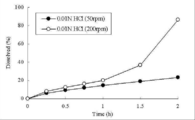
- the tablet of Comparative Example 3 shown in Table 1 was tested at an elution test (paddle method, 0.01 N hydrochloric acid, 900 mL) in an acidic solution at a paddle rotation speed of 200 rpm and 50 rpm, and 200 rpm and 50 rpm until 2 hours later. It is a figure which shows the time-dependent transition of the drug elution rate.
- elution test 0.01 N hydrochloric acid, 900 mL
- FIG. 1 shows a time-dependent transition of a drug elution rate.
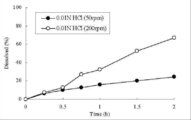
- FIG. About the tablet of the formulation 2a described in Table 4, it tested at the paddle rotation speed 200rpm and 50rpm in the dissolution test (paddle method, 0.01N hydrochloric acid, 900mL) in an acidic solution, and 200rpm and 50rpm of 2 hours later
- the term “acidic solution” means an acidic dissolution test solution used for evaluating dissolution at the upper digestive tract such as the stomach.
- the dissolution test first solution described in the Japanese Pharmacopoeia, US USP 0.1 N hydrochloric acid, 0.01 N hydrochloric acid, Simulated Gastric Fluid without Enzyme and the like described in the pharmacopoeia can be mentioned, but the acidic dissolution test solution is not limited to these.
- the “neutral solution” in the present specification means a neutral dissolution test solution used for evaluating the dissolution property of a drug in the small intestine, the large intestine, etc.
- the dissolution test second solution described in the Japanese Pharmacopoeia Examples include phosphate buffer pH 6.8, USP Phosphate Buffer (pH 6.8) described in US Pharmacopoeia, Simulated Interstitial Fluid without Enzyme, Phosphate Buffer Solution pH 6.8 described in European Pharmacopoeia, etc.
- the “soluble solution” is not limited to a pH 6.8 dissolution test solution.
- the above dissolution test solution is prepared by the method described in the pharmacopoeia of each country.
- the pH of these dissolution test solutions is preferably within ⁇ 0.05 of the pH specified for each dissolution test solution when the dissolution test solution is a buffer solution.
- the paddle method can include a method of performing a dissolution test for 2 hours at 50 rpm and 200 rpm.
- the pharmacologically active drug in the preparation is a basic drug
- the preparation is caused by mechanical stress due to coexistence with food in the acidic environment of the upper gastrointestinal tract showing high water solubility, gastrointestinal motility, etc.
- dose dumping of the drug that occurs due to the collapse of the drug.
- the average dissolution rate of a pharmacologically active drug in an acidic dissolution test solution is to maintain the formulation strength and keep the dissolution rate within a certain range even at 200 rotations per minute of the paddle method and / or 50 rotations per minute of the paddle method. Is preferred.
- the average dissolution rate of the pharmacologically active drug in the dissolution test solution after 2 hours is preferably 50% or less at any of 200 rotations per minute and / or 50 rotations per minute by the paddle method; More preferably 30% or less.
- the difference in the average dissolution rate of pharmacologically active drugs in the dissolution test solution (200 rpm per paddle method—50 rpm per paddle method) when the dissolution test method was performed for 2 hours was 15% or less.
- the ratio of the average dissolution rate of the pharmacologically active drug in the dissolution test solution after 2 hours is preferably 2.0 or less; 1.5 or less Is more preferable; 1.3 or less is particularly preferable.
- the paddle method using a neutral eluate for evaluating the dissolution property in the neutral region of the sustained release solid preparation of the present invention is, for example, 37 ⁇ 0 in phosphate buffer (pH 6.8; 900 mL).
- a method of performing a dissolution test at 50 ° C. per minute at 5 ° C. can be mentioned.
- the average dissolution rate of a pharmacologically active drug in the dissolution test solution is preferably one that shows a continuous dissolution rate even 12 hours after the start of the dissolution test. Further, those that show a continuous dissolution rate even after 12 hours from the start of the dissolution test and show an average dissolution rate of 20% or more are preferred; those that show a dissolution rate of 30% or more are more preferred.
- USP Apparatus 3 which is a dissolution test method under conditions close to the environment in the human digestive tract, may be used.
- the drug concentration in the solution can be quantified using a UV method or the like, and the average dissolution rate and dissolution time of a pharmacologically active drug in the dissolution test solution can be calculated.
- the “average dissolution rate” may be determined by measuring the dissolution rates of at least 2, preferably 6, and more preferably 12 for one kind of solid preparation, and calculating the average value thereof.
- the dissolution of the pharmacologically active drug in the sustained-release solid preparation of the present invention can be confirmed using an in vivo animal test.
- the in vivo animal test include in vivo absorbability evaluation using a dog.
- orally administered preparations are said to remain in the large intestine for a long time after passing through the stomach and small intestine. Therefore, for sustained-release preparations with a long elution time, it is very important that drug release is sustained in the large intestine that stays for a long time.
- canine colon absorbability evaluation in which the preparation is directly administered into the canine large intestine can be mentioned.
- the absorbability in the large intestine of the dog is confirmed by measuring the blood concentration after administration, and evaluated by the relative bioavailability (BA) of each tablet as a ratio to the oral administration of a pharmacologically active drug. be able to.
- BA relative bioavailability
- a neutral compound of a pharmacologically active drug means a compound that does not have a group that ionizes and dissociates even in an acidic state or a basic state in the molecule, and examples of the acidic compound include carboxy group, phenol It means a drug having an acidic group typified by a functional hydroxyl group, phosphoric acid group, sulfonic acid, tetrazolyl group and the like.
- the basic drug means a drug having a basic nitrogen atom represented by amino group, piperidinyl group, piperazinyl group and the like in the molecule.
- a basic drug is particularly suitable.
- Basic drugs have a physicochemical property in which the solubility in the neutral state (7.5> pH> 5) in the small and large intestines is lower than the solubility in the acidic state (pH ⁇ 2) such as the stomach.
- the “basic drug” in the specification of the present application refers to a drug whose solubility in the neutral state is lower than the solubility in the acidic state, and the ratio of the decrease in solubility in the neutral state is as follows: The following ranges can be mentioned.
- (Neutral state solubility) / (Acid state solubility) preferably ranges from 0.00001 to 0.6;
- (Neutral state solubility) / (Acid state solubility) is more preferably in the range of 0.001 to 0.5;
- the range of (solubility in neutral state) / (solubility in acidic state) is more preferably in the range of 0.01 to 0.1, but is not limited to these ranges.
- the solubility is more preferably in the range of 10 to 500 ⁇ g / ml.
- the absolute value of the solubility is preferably a drug whose minimum solubility in a neutral state (in the range of 7.5> pH> 5) is reduced to 3 mg / ml or less; more preferably a drug which decreases to 1 mg / ml or less; More preferred is a drug that lowers to 0.5 mg / ml or less.
- pharmacologically active drugs include anticoagulants.
- an activated blood coagulation factor X (FXa) inhibitor having a basic or weakly basic substituent is preferable.
- FXa inhibitor include the following (a) to (l): Can be mentioned.
- R 1 represents an N, N-dimethylcarbamoyl group or a [1,3,4] oxadiazol-2-yl group.
- the compound represented by the formula [hereinafter sometimes abbreviated as compound (1)] is more preferred.
- Compound (1) may be a free form (free base), a pharmacologically acceptable salt thereof, or a hydrate thereof.
- Examples of the salt of the compound represented by the formula (1) include hydrochloride, sulfate, hydrobromide, hydroiodide, phosphate, nitrate, benzoate, methanesulfonate, 2-hydroxyethane. Sulfonate, p-toluenesulfonate, acetate, propanoate, oxalate, malonate, succinate, glutarate, adipate, tartrate, maleate, fumarate, apple Acid salt, mandelate salt and the like.
- maleic acid, hydrochloride, methanesulfonate, and p-toluenesulfonate are preferable, and maleic acid and p-toluenesulfonate are particularly preferable.
- N 1- 5-chloropyridin-2-yl) -N 2 -[(1S, 2R, 4S) -2- ⁇ [(5-methyl -4,5,6,7-tetrahydrothiazolo [5,4-c] pyridin-2-yl) carbonyl] amino ⁇ -4-([1,3,4] oxadiazol-2-yl) cyclohexyl] Ethanediamide monomaleate;
- N 1- (5-chloropyridin-2-yl) -N 2 -((1S, 2R, 4S) -4-[(dimethylamino) carbonyl] -2- ⁇ [(5-methyl-4,5,6 , 7-tetrahydrothiazolo [5,4-c] pyridin-2-yl) carbonyl] amino ⁇ cyclohexyl) ethanediamide;
- N 1- (5-chloropyridin-2-yl) -N 2 -[(1S,
- the free base (free form) of compound (1) means, for example, the above-mentioned salt (acid addition salt) and / or acid addition salt “acid” and water forming hydrate. This means a compound excluding “water” in a Japanese product.
- the free base (free form) of compound (1a) and compound (1b) means the following formula (1a-1) and formula (1b-1)
- These compounds (1) can be produced by the method described in the above documents (WO2003-000657 pamphlet; WO2003-000680 pamphlet; WO2003-016302 pamphlet; WO2004-058715 pamphlet) or a method analogous thereto.
- the content of “(A) pharmacologically active drug” in “solid preparation” in the present specification is preferably 0.1 to 60% by weight as “% (A) pharmacologically active drug” by weight; 1 to 50% by weight is more preferable; 5 to 35% by weight is more preferable, but it is not limited to this range.
- “A to B wt%” indicating the content of components in the present specification means “a range of A wt% to B wt%” unless otherwise specified. .
- (B) carboxyvinyl polymer in the present specification, commercially available carbopol (Noveon / CBC) or the like may be used, and various grades having different viscosities are available.
- a preferred carboxyvinyl polymer is Carbopol 974PNF.
- the content of the carboxyvinyl polymer in the “solid preparation” is preferably 1 to 50% by weight; more preferably 5 to 30% by weight; and even more preferably 10 to 30% by weight.
- (C) povidone (polyvinylpyrrolidone) is a nonionic water-soluble polymer, which means a linear polymer of 1-vinyl-2-pyrrolidone, and 1-vinyl-2- It does not contain crospovidone which is a cross-linked polymer of pyrrolidone.
- Povidone can be obtained from various grades of K value (viscosity characteristic value correlating with molecular weight) from BASF Japan and the like, and preferred examples include commercially available Kollidon 30 (BASF Japan).
- the content of povidone in the “solid preparation” is preferably 1 to 70% by weight; more preferably 6 to 70% by weight; and even more preferably 10 to 70% by weight.
- (1) and (2) are preferable as the contents of “(B) carboxyvinyl polymer” and “(C) povidone” in the “solid preparation” of the present specification, (1) Povidone content is 10 to 70% by weight when the carboxyvinyl polymer content is 15 to 25% by weight; and (2) Povidone when the carboxyvinyl polymer content is 10 to less than 15% by weight.
- the content of is 20 to 70% by weight.
- water-soluble excipient in the present specification, fructose, purified sucrose, sucrose, purified sucrose spherical granules, lactose, anhydrous lactose, sucrose / starch spheroid granules, semi-digested starch, glucose, glucose hydrate, powder
- sugars such as sugar, pullulan, ⁇ -cyclodextrin, mannitol, xylitol, and erythritol.
- sugar alcohols such as mannitol, xylitol, erythritol are more preferred; xylitol is particularly preferred.
- the content of the water-soluble excipient in the “solid preparation” is preferably 0 to 80% by weight; more preferably 0 to 60% by weight.
- xanthan gum sodium carboxymethyl starch, guar gum, alginic acid, sodium alginate, chitosan, agar, starch, dextrin, gum arabic, gelatin, carmellose sodium and the like; carmellose sodium, xanthan gum, And carboxymethyl starch sodium is preferred; carmellose sodium is preferred.
- carmellose sodium for example, commercially available products such as Sunrose (trade name: Nippon Paper Chemicals) can be used, and those having various viscosities and etherification degrees can be obtained.
- the content of the swelling agent in the “solid preparation” is preferably 1 to 40% by weight; more preferably 5 to 15% by weight; and even more preferably 7 to 15% by weight.
- the effect of the present invention is affected.
- a disintegrating agent, a binder, a fluidizing agent, a lubricant, a coloring agent, a brightening agent and the like may be blended.
- Disintegrants include adipic acid, alginic acid, pregelatinized starch, sodium carboxymethyl starch, hydrous silicon dioxide, calcium citrate, light anhydrous silicic acid, synthetic aluminum silicate, wheat starch, rice starch, calcium stearate, corn starch, tragacanth Powder, potato starch, hydroxypropyl starch, partially pregelatinized starch, monosodium fumarate, anhydrous citric acid, calcium dihydrogen phosphate, croscarmellose sodium, crospovidone, carmellose, carmellose calcium and the like.
- binders include candy powder, gum arabic, gum arabic powder, sodium alginate, propylene glycol alginate, hydrolyzed gelatin powder, hydrolyzed starch, light anhydrous silicic acid, fructose, carboxymethyl ethyl cellulose, hydrous silicon dioxide, agar powder, Light anhydrous silicic acid, light anhydrous silicic acid-containing hydroxypropyl cellulose, crystalline cellulose, synthetic aluminum silicate, copolydon, wheat flour, wheat starch, rice flour, rice starch, vinyl acetate resin, cellulose acetate phthalate, dioctyl sodium sulfosuccinate, Dihydroxyaluminum aminoacetate, potassium sodium tartrate, normal water, sucrose fatty acid ester, purified gelatin, purified sucrose, gelatin, D-sorbitol, dextrin, starch, corn Pung, tragacanth, tragacanth powder, lactose, concentrated glycerin, sucrose,
- Fluidizing agents include hydrous silicon dioxide, light anhydrous silicic acid, crystalline cellulose, synthetic aluminum silicate, titanium oxide, stearic acid, calcium stearate, magnesium stearate, tricalcium phosphate, talc, corn starch, magnesium metasilicate aluminate Etc.
- Lubricants include cocoa butter, carnauba wax, hydrous silicon dioxide, dry aluminum hydroxide gel, glycerin fatty acid ester, magnesium silicate, light anhydrous silicic acid, crystalline cellulose, hydrogenated oil, synthetic aluminum silicate, white beeswax, magnesium oxide , Sodium potassium tartrate, sucrose fatty acid ester, stearic acid, calcium stearate, magnesium stearate, stearyl alcohol, polyoxyl 40 stearate, hardened soybean oil, gelatin, talc, magnesium carbonate, precipitated calcium carbonate, corn starch, potato starch , Fumaric acid, sodium stearyl fumarate, polyethylene glycol 600, polyethylene glycol 4000, polyethylene glycol 6000, beeswax, Magnesium Takei aluminometasilicate, sodium laurate, and magnesium sulfate.
- Coloring agents include yellow iron sesquioxide, iron sesquioxide, titanium oxide, orange essence, brown iron oxide, ⁇ -carotene, black iron oxide, edible blue No. 1, edible blue No. 2, edible red No. 2, edible red 3 No., Edible Red No. 102, Edible Yellow No. 4, Edible Yellow No. 5 and the like.
- Examples thereof include medium gold foil, white shellac, paraffin, povidone (polyvinylpyrrolidone), polyethylene glycol 1500, polyethylene glycol 4000, polyethylene glycol 6000, beeswax, glyceryl monostearate, and rosin.
- the sustained-release solid preparation of the present invention is not particularly limited as long as it is a solid preparation that can be administered orally, but granules and tablets are preferred.
- a matrix tablet is preferable.
- the sustained-release solid preparation of the present invention comprises (A) a pharmacologically active drug, (B) carboxyvinyl polymer, and (C) povidone, and the above-mentioned water-soluble excipient and swelling agent, If necessary, disintegrating agents, binders, fluidizers, lubricants, colorants, brighteners, etc. are blended, and manufactured by, for example, the method for producing solid preparations described in the General Formulation of the Japanese Pharmacopoeia be able to.
- an additive may be added to the fluidized bed.
- a granulator such as a granulator
- granulation such as wet granulation can be performed to obtain granulated granules.
- the granulated granules can be made into tablets for tableting by adding additives such as lubricants and mixing, and can be tableted by tableting.
- the resulting tablets can be coated with a coating agent as necessary. It can also be used as a film-coated tablet.
- the dosage form of the sustained-release solid preparation of the present invention is a tablet
- (A) a pharmacologically active drug (B) a carboxyvinyl polymer, and (C) povidone, a water-soluble excipient, a swelling agent, And (B) carboxyvinyl polymer; (C) a combination of povidone, a water-soluble excipient; and a swelling agent, and a pharmaceutical product.
- the shape of the tablet is not particularly limited, but a lens shape, a disk shape, a circle shape, an ellipse shape, and a polygonal shape such as a triangle or a rhombus are preferable.
- the content ratio of the pharmacologically active drug in the pharmaceutical composition of the present invention is preferably in the range of 0.1% by weight to 60% by weight in terms of free form of the pharmacologically active drug; % By weight is more preferred; 5 to 35% by weight is even more preferred.
- the dosage form of the pharmaceutical composition of the present invention is a tablet
- the content of the pharmacologically active drug contained in each tablet is in the range of 0.5 to 500 mg in terms of free form of the pharmacologically active drug. 1-100 mg is preferred; 5-75 mg is more preferred; 15-60 mg is even more preferred.
- each tablet is not hydrated after standing for 2 hours at 37 ⁇ 0.5 ° C. in 0.01 N hydrochloric acid. Obtain the volume of the part and use the following formula 1
- the hydration rate was calculated by the formula represented by:
- the hydration rate is preferably 60% or more; more preferably 90% or more.
- the swelling rate is preferably 150% or more; more preferably 180% or more; and particularly preferably 200% or more.
- the sustained-release solid preparation of the present invention contains (A) a pharmacologically active drug, (B) carboxyvinyl polymer, (C) povidone, and (D) carmellose sodium, xanthan gum or carboxymethyl starch sodium. .
- the “pharmacologically active drug” that is the component (A) used in the preparation of the present invention is not particularly limited, and the drug may be a prodrug that is converted into a pharmacologically active drug in the body. Good.
- Examples of the component (A) of the present invention include those described above as preferred, but are not limited thereto.
- the content of the component (A) in the preparation of the present invention is preferably 0.1 to 60% by weight, more preferably 1 to 50% by weight, still more preferably 5 to 35% by weight, but is not limited to this range. It is not something.
- carbopol 974PNF carbopol 974PNF
- the content of the component (B) in the preparation of the present invention is preferably 1 to 50% by weight, more preferably 5 to 30% by weight, and even more preferably 10 to 30% by weight.
- Podone which is the component (C) used in the preparation of the present invention, the above-mentioned thing is meant, and commercially available Kollidon 30 (BASF Japan) is preferable.
- the content of the component (C) in the preparation of the present invention is preferably 10 to 70% by weight.
- a content rate of (B) component and (C) component in the formulation of this invention following (1) and (2) are preferable.
- the content of component (C) in the case of less than 20 is 70 to 70% by weight.
- the component (D) used in the preparation of the present invention is carmellose sodium, xanthan gum or carboxymethyl starch sodium, preferably carmellose sodium.
- the content of component (D) in the preparation of the present invention is preferably 5 to 15% by weight; more preferably 7 to 15% by weight.
- the preparation of the present invention preferably contains a sugar alcohol in addition to (A) to (D).
- Sugar alcohols include those described above, with mannitol, xylitol or erythritol being preferred; xylitol being more preferred.
- the content of sugar alcohol in the preparation of the present invention is preferably 10 to 40% by weight.
- additives such as the above-mentioned binders, fluidizing agents, lubricants, coloring agents, brightening agents and the like may be blended within the range not affecting the effects of the present invention. .
- the dosage form of the preparation of the present invention is not particularly limited as long as it can be administered orally, but tablets are preferred.
- a matrix tablet is preferable.
- the preparation of the present invention can be obtained by tableting after mixing (A) to (D), or by tableting after mixing (A) to (D) and granulating. Mixing, granulation, and tableting may be performed using methods well known in the art.
- tableting is performed after mixing (A) to (D) and sugar alcohol, or granulation is performed by mixing (A) to (D) and sugar alcohol. And then obtained by tableting.
- the shape of the tablet is not particularly limited, but a lens shape, a disk shape, a circular shape, an elliptical shape, and a polygonal shape such as a triangular shape and a rhombus shape are preferable.
- the preparation of the present invention may be subjected to film coating using a coating agent as necessary. Mixing, granulation, tableting, and coating may be performed using methods well known in the art.
- additives When other additives are blended in the preparation of the present invention, they may be blended in any of the mixing step, granulating step, tableting step or coating step.
- the preparation of the present invention thus obtained has a good tablet strength that prevents excessive release while having a good hydration rate and swelling rate in an acidic solution, as described in the above-mentioned effects of the invention. From the duodenum and small intestine to the lower gastrointestinal tract, the effect of maintaining the continuous dissolution of the contained pharmacologically active drug can be obtained.
- the hydration rate and swelling rate of the preparation of the present invention can be calculated by the above formulas 1 and 2.
- the hydration rate is more preferably 90% or more, and the swelling rate Is preferably 150% or more; more preferably 180% or more; and particularly preferably 200% or more.
- the dissolution test in an acidic solution or a neutral solution was performed as follows. (Dissolution test in acidic solution) The dissolution test was carried out at 37 ⁇ 0.5 ° C. in 0.01 N hydrochloric acid (900 mL) at 50 and 200 rpm for the paddle method, and the average drug dissolution rate in the eluate was calculated over time.
- the ratio of the rates was calculated.
- the hydration rate and swelling rate of the tablets were measured as follows. (Evaluation of tablet hydration rate) As a method for evaluating the hydration rate, each tablet was allowed to stand at 37 ⁇ 0.5 ° C. in 0.01 N hydrochloric acid for 2 hours and then calculated using the above formula 1.
- Example 1 Manufacture of tablets
- Table 1 Each component shown in Table 1 was mixed using an agate mortar, and 200 mg of this mixed powder was tableted [tablet diameter: 8.0 mm (flat tablet)] with a single tableting machine (N-30E, Okada Seiko). And used as a sample.
- Example 2 About each prescription shown in Table 4, each component was mixed using an agate mortar, and 200 mg of this mixed powder was tableted using a single tableting machine (N-30E, Okada Seiko) to give a sample [ Tablet diameter: 8.0 mm ⁇ (6.5R)].
- the obtained sample was subjected to an elution test in an acidic solution, and the results are shown in FIGS.
- Example 3 The ingredients shown in Table 6 were mixed using an agate mortar, and 200 mg of this mixed powder was tableted with a single tableting machine (N-30E, Okada Seiko) to give a sample [tablet diameter: 8.0 mm ⁇ ( 6.5R)].
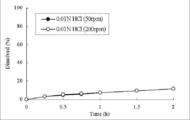
- FIG. 4, FIG. 8 and Table 7 show the dissolution test results in an acidic solution for Formulation 1 with a formulation ratio of carboxyvinyl polymer of 25% and Formulation 3 with 15%.
- Example 4 For the formulations shown in Table 8, each component was mixed using an agate mortar, and tableted with a single tableting machine (N-30E) to produce tablets (tablet diameter: 10.0 mm ⁇ (8R)).
- Table 9 and FIGS. 9 to 12 show the results of dissolution test in acidic solution and neutral solution, and the measurement results of hydration rate and swelling rate of each formulation.
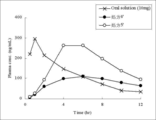
- Example 5 About the prescription 4 and the prescription 5 shown in Table 8, the large intestine absorbability in the fasting dog was evaluated.
- the formulation shown in Table 8 was reduced to about 2/3, and evaluation was performed using a formulation (formulation 4 ′ and formulation 5 ′) having a compound (1a-1) content of 20 mg and a total amount of 240 mg.
- one tablet soaked in 0.01 N hydrochloric acid for 2 hours is set in an endoscope for animals (Olympus), and about 30 cm from the anus while observing the inside of the canine large intestine with an endoscope. It was administered to the site. Before administration, the amount of drug partly dissolved in 0.01N hydrochloric acid was measured from the tablet, and the plasma drug concentration was converted so that the dose was 20 mg / head as compound (1a-1). did. The transition of plasma drug concentration at this time is shown in FIG.
- Example 6 Compound (1b), carboxyvinyl polymer, carmellose sodium, povidone, polyethylene glycol 6000, xylitol, and sodium stearyl fumarate were placed in a mortar so as to have a weight ratio shown in Table 10, and mixed for 3 minutes to obtain a mixed powder. A predetermined amount of one tablet shown in Table 10 was weighed out from this mixed powder, and tableted using a single tableting machine (NE-30, Okada Seiko) () shape: 10 mm ⁇ , flat type).
- a single tableting machine NE-30, Okada Seiko
- Table 11 shows the dissolution test results in acidic aqueous solutions for Formulation 8, Comparative Example 4 and Comparative Example 5.
- Example 7 Since the above-mentioned formulation 5 is not easily affected by the paddle rotation number in an acidic solution, exhibits a continuous dissolution property in a neutral solution, and exhibits a good swelling rate and hydration rate, Table 13 The prescription preparation shown in FIG. That is, the drug (1a), carboxyvinyl polymer, xylitol, povidone (part), carmellose sodium, and other additives were added to the fluidized bed granulator at the ratio shown in Table 13 and mixed, and then the povidone solution (part) Wet granulation was carried out by spraying the remainder excluding) as a binder solution.
- the obtained granulated product was dried to obtain granulated granules, and then sodium stearyl fumarate was added thereto and mixed using a V-type mixer to obtain granules for tableting.
- This was tableted with a rotary tableting machine ( ⁇ type: 10 mm ⁇ ) to obtain an uncoated tablet.
- a film-coated tablet was obtained by spraying an uncoated tablet with an aqueous dispersion of a coating base composed of hypromellose 2910, talc, titanium oxide and polyethylene glycol in a pan coating machine.
- the obtained preparation was subjected to dissolution test in acidic solution, hydration rate, and swelling rate measurement, and the results are shown in Tables 14 and 15.
- Formulations 11a to 11c were prepared by granulation and film coating, and it was confirmed that the evaluation results of the average dissolution rate in an acidic solution were almost the same as those of tablets.
- the preparations of Formulas 11a to 11c like the tablets of Examples 4 and 5, showed a decrease in Cmax and an increase in blood concentration after 24 hours compared with the administration of an aqueous solution of the same drug amount in the human administration test, and sustained release. It was confirmed that the preparation showed a good profile.
- the present invention can be used for the production of a sustained-release solid preparation for oral administration containing a pharmacologically active drug such as compound (1).
Landscapes
- Health & Medical Sciences (AREA)
- Life Sciences & Earth Sciences (AREA)
- Animal Behavior & Ethology (AREA)
- Pharmacology & Pharmacy (AREA)
- Epidemiology (AREA)
- Medicinal Chemistry (AREA)
- Chemical & Material Sciences (AREA)
- General Health & Medical Sciences (AREA)
- Public Health (AREA)
- Veterinary Medicine (AREA)
- Biophysics (AREA)
- Molecular Biology (AREA)
- Medicinal Preparation (AREA)
- Pharmaceuticals Containing Other Organic And Inorganic Compounds (AREA)
Abstract
L'invention concerne une préparation solide à libération prolongée administrée par voie orale dont les effets pharmacologiques peuvent être produits par administration une fois par jour ou deux fois par jour par voie orale, en évitant la libération excessive du médicament et en améliorant la capacité d'élimination du médicament du tractus gastro-intestinal inférieur. La préparation solide à libération prolongée contient (A) un médicament pharmacologiquement actif, (B) un polymère carboxyvinylique, (C) de la povidone, et (D) de la carmélose sodique, de la gomme xanthane ou du carboxyméthylamidon sodium.
Priority Applications (4)
| Application Number | Priority Date | Filing Date | Title |
|---|---|---|---|
| EP11744792.0A EP2540294B1 (fr) | 2010-02-22 | 2011-02-21 | Préparation solide à libération prolongée pour usage oral |
| ES11744792.0T ES2600894T3 (es) | 2010-02-22 | 2011-02-21 | Preparación sólida de liberación sostenida para uso oral |
| JP2012500677A JP5714562B2 (ja) | 2010-02-22 | 2011-02-21 | 経口用徐放性固形製剤 |
| US13/591,981 US20130005763A1 (en) | 2010-02-22 | 2012-08-22 | Sustained-release solid preparation for oral use |
Applications Claiming Priority (2)
| Application Number | Priority Date | Filing Date | Title |
|---|---|---|---|
| JP2010035884 | 2010-02-22 | ||
| JP2010-035884 | 2010-02-22 |
Related Child Applications (1)
| Application Number | Title | Priority Date | Filing Date |
|---|---|---|---|
| US13/591,981 Continuation US20130005763A1 (en) | 2010-02-22 | 2012-08-22 | Sustained-release solid preparation for oral use |
Publications (1)
| Publication Number | Publication Date |
|---|---|
| WO2011102506A1 true WO2011102506A1 (fr) | 2011-08-25 |
Family
ID=44483089
Family Applications (1)
| Application Number | Title | Priority Date | Filing Date |
|---|---|---|---|
| PCT/JP2011/053644 Ceased WO2011102506A1 (fr) | 2010-02-22 | 2011-02-21 | Préparation solide à libération prolongée pour usage oral |
Country Status (6)
| Country | Link |
|---|---|
| US (1) | US20130005763A1 (fr) |
| EP (1) | EP2540294B1 (fr) |
| JP (1) | JP5714562B2 (fr) |
| ES (1) | ES2600894T3 (fr) |
| TW (1) | TW201200165A (fr) |
| WO (1) | WO2011102506A1 (fr) |
Cited By (6)
| Publication number | Priority date | Publication date | Assignee | Title |
|---|---|---|---|---|
| WO2013022059A1 (fr) | 2011-08-10 | 2013-02-14 | 第一三共株式会社 | Composition pharmaceutique contenant un dérivé de diamine |
| JP2015500812A (ja) * | 2011-12-02 | 2015-01-08 | シンクロニューロン インコーポレイテッド | アカンプロサート製剤、その使用方法、及びそれを含む合剤 |
| KR101535586B1 (ko) * | 2014-08-01 | 2015-07-09 | 에스케이케미칼주식회사 | 무정형 또는 열역학적 준 안정형 리바록사반을 포함하는 약학 제제 |
| US9918975B2 (en) | 2010-03-19 | 2018-03-20 | Daiichi Sankyo Company, Limited | Method for improving dissolution of anticoagulant agent |
| US10166207B2 (en) | 2013-06-05 | 2019-01-01 | Synchroneuron, Inc. | Acamprosate formulations, methods of using the same, and combinations comprising the same |
| US10512621B2 (en) | 2011-12-02 | 2019-12-24 | Synchroneuron, Inc. | Methods of treating posttraumatic stress disorder with acamprosate salts |
Families Citing this family (2)
| Publication number | Priority date | Publication date | Assignee | Title |
|---|---|---|---|---|
| ES2706880T3 (es) | 2010-02-22 | 2019-04-01 | Daiichi Sankyo Co Ltd | Preparación sólida de liberación sostenida para uso oral |
| CA2883077C (fr) | 2012-09-03 | 2017-03-07 | Daiichi Sankyo Company, Limited | Composition pharmaceutique a liberation prolongee administree par voie orale contenant du chlorhydrate d'hydromorphone |
Citations (18)
| Publication number | Priority date | Publication date | Assignee | Title |
|---|---|---|---|---|
| JP2001513752A (ja) * | 1996-09-12 | 2001-09-04 | ロシュ ダイアグノスティクス ゲゼルシャフト ミット ベシュレンクテル ハフツング | 迅速崩壊ペレット |
| JP2001270821A (ja) * | 2000-03-23 | 2001-10-02 | Eisai Co Ltd | 服用感が優れた散剤 |
| JP2001522794A (ja) * | 1997-11-12 | 2001-11-20 | ベーリンガー・マンハイム・ファーマシューティカルズ・コーポレイション−スミスクライン・ベックマン・コーポレイション・リミテッド・パートナーシップ・ナンバー1 | カルベジロールの新規経口剤形 |
| WO2003000680A1 (fr) | 2001-06-20 | 2003-01-03 | Daiichi Pharmaceutical Co., Ltd. | Derives de diamine |
| WO2003000657A1 (fr) | 2001-06-20 | 2003-01-03 | Daiichi Pharmaceutical Co., Ltd. | Derives de diamine |
| JP2003507413A (ja) * | 1999-08-26 | 2003-02-25 | ニューロクライン バイオサイエンシーズ, インコーポレイテッド | 徐放性鎮静催眠組成物およびそれに関連する方法 |
| WO2003016302A1 (fr) | 2001-08-09 | 2003-02-27 | Daiichi Pharmaceutical Co., Ltd. | Derives de diamine |
| JP2004518676A (ja) | 2000-12-20 | 2004-06-24 | シャイア ラボラトリーズ,インコーポレイテッド | 最小化pH依存性溶解プロフィールを有する徐放性薬学的剤形 |
| WO2004058715A1 (fr) | 2002-12-25 | 2004-07-15 | Daiichi Pharmaceutical Co., Ltd. | Derives de diamine |
| JP2006507216A (ja) | 2002-02-11 | 2006-03-02 | プリバ イストラツイヴアンイエ イ ラツヴオイ ディ.オー.オー | 用量ダンピングの恐れを低減させた新規な薬物送達システムとしての徐放性固形製剤 |
| WO2008041553A1 (fr) * | 2006-09-26 | 2008-04-10 | Astellas Pharma Inc. | Préparation à libération entretenue de tacrolimus |
| JP2008169173A (ja) * | 2007-01-15 | 2008-07-24 | Kissei Pharmaceut Co Ltd | 炭水化物分解酵素阻害剤の胃内滞留型徐放性製剤 |
| WO2008100107A1 (fr) * | 2007-02-15 | 2008-08-21 | Amorepacific Corporation | Préparation de cilostazole à libération contrôlée, et procédé d'élaboration correspondant |
| JP2009500317A (ja) * | 2005-06-29 | 2009-01-08 | パナセア バイオテック リミテッド | 放出特性改良医薬組成物およびその製造方法 |
| WO2009047802A2 (fr) * | 2007-10-10 | 2009-04-16 | Lupin Limited | Nouvelle formulation bioadhésive à libération modifiée d'acide 5-aminosalicylique ou de ses sels et de ses métabolites destinée au traitement du colon |
| WO2009057138A2 (fr) * | 2007-10-29 | 2009-05-07 | Lupin Limited | Compositions pharmaceutiques à libération régulée de toltérodine |
| JP2009532462A (ja) * | 2006-04-05 | 2009-09-10 | カディラ・ヘルスケア・リミテッド | 調節放出クロピドグレル製剤 |
| JP2009535351A (ja) * | 2006-04-26 | 2009-10-01 | スパーナス ファーマシューティカルズ インコーポレイテッド | シグモイド放出プロファイルを有するオキサカルバゼピンの制御放出製剤 |
Family Cites Families (17)
| Publication number | Priority date | Publication date | Assignee | Title |
|---|---|---|---|---|
| GB8601204D0 (en) * | 1986-01-18 | 1986-02-19 | Boots Co Plc | Therapeutic agents |
| US5783212A (en) * | 1996-02-02 | 1998-07-21 | Temple University--of the Commonwealth System of Higher Education | Controlled release drug delivery system |
| JP2002212062A (ja) * | 2001-01-24 | 2002-07-31 | Teijin Ltd | 遅延放出制御組成物 |
| IN191028B (fr) * | 2001-05-17 | 2003-09-13 | Sun Pharmaceutical Ind Ltd | |
| US7125563B2 (en) * | 2002-04-12 | 2006-10-24 | Dava Pharmaceuticals, Inc. | Sustained release pharmaceutical preparations and methods for producing the same |
| US20050186276A1 (en) * | 2003-07-17 | 2005-08-25 | Pfizer Inc | Pharmaceutical formulations |
| US9173847B2 (en) * | 2003-10-10 | 2015-11-03 | Veloxis Pharmaceuticals A/S | Tablet comprising a fibrate |
| US20050096365A1 (en) * | 2003-11-03 | 2005-05-05 | David Fikstad | Pharmaceutical compositions with synchronized solubilizer release |
| US8007826B2 (en) * | 2003-12-11 | 2011-08-30 | Acorda Therapeutics, Inc. | Sustained release aminopyridine composition |
| FR2874325B1 (fr) * | 2004-08-19 | 2006-10-20 | Sanofi Synthelabo | Composition pharmaceutique sous forme de comprime a residence gastrique contenant de l'alfuzosine |
| WO2007031887A2 (fr) * | 2005-08-30 | 2007-03-22 | Nicholas Piramal India Limited | Composition pharmaceutique de metformine a liberation lente et procede de production correspondant |
| JP2007106759A (ja) * | 2005-09-16 | 2007-04-26 | Dai Ichi Seiyaku Co Ltd | 光学活性なジアミン誘導体およびその製造方法 |
| EP1988875A2 (fr) * | 2006-02-10 | 2008-11-12 | Boehringer Ingelheim International GmbH | Formulation a liberation modifiee |
| CA2569776A1 (fr) * | 2006-02-17 | 2007-08-17 | Kos Life Sciences, Inc. | Formulation de niacine provoquant de faibles symptomes de bouffee congestive |
| US20080004260A1 (en) * | 2006-06-29 | 2008-01-03 | Transcept Pharmaceuticals, Inc. | Compositions of 5-HT3 antagonists and dopamine D2 antagonists for treatment of dopamine-associated chronic conditions |
| CN100563637C (zh) * | 2006-10-13 | 2009-12-02 | 北京红林制药有限公司 | 一种控释给药的药芯组合物和控释制剂及其制备方法 |
| NZ597109A (en) * | 2007-03-29 | 2013-01-25 | Daiichi Sankyo Co Ltd | Tablet composition having favorable dissolution property useful as an anticoagulant |
-
2011
- 2011-02-21 JP JP2012500677A patent/JP5714562B2/ja active Active
- 2011-02-21 WO PCT/JP2011/053644 patent/WO2011102506A1/fr not_active Ceased
- 2011-02-21 TW TW100105563A patent/TW201200165A/zh unknown
- 2011-02-21 ES ES11744792.0T patent/ES2600894T3/es active Active
- 2011-02-21 EP EP11744792.0A patent/EP2540294B1/fr not_active Not-in-force
-
2012
- 2012-08-22 US US13/591,981 patent/US20130005763A1/en not_active Abandoned
Patent Citations (18)
| Publication number | Priority date | Publication date | Assignee | Title |
|---|---|---|---|---|
| JP2001513752A (ja) * | 1996-09-12 | 2001-09-04 | ロシュ ダイアグノスティクス ゲゼルシャフト ミット ベシュレンクテル ハフツング | 迅速崩壊ペレット |
| JP2001522794A (ja) * | 1997-11-12 | 2001-11-20 | ベーリンガー・マンハイム・ファーマシューティカルズ・コーポレイション−スミスクライン・ベックマン・コーポレイション・リミテッド・パートナーシップ・ナンバー1 | カルベジロールの新規経口剤形 |
| JP2003507413A (ja) * | 1999-08-26 | 2003-02-25 | ニューロクライン バイオサイエンシーズ, インコーポレイテッド | 徐放性鎮静催眠組成物およびそれに関連する方法 |
| JP2001270821A (ja) * | 2000-03-23 | 2001-10-02 | Eisai Co Ltd | 服用感が優れた散剤 |
| JP2004518676A (ja) | 2000-12-20 | 2004-06-24 | シャイア ラボラトリーズ,インコーポレイテッド | 最小化pH依存性溶解プロフィールを有する徐放性薬学的剤形 |
| WO2003000680A1 (fr) | 2001-06-20 | 2003-01-03 | Daiichi Pharmaceutical Co., Ltd. | Derives de diamine |
| WO2003000657A1 (fr) | 2001-06-20 | 2003-01-03 | Daiichi Pharmaceutical Co., Ltd. | Derives de diamine |
| WO2003016302A1 (fr) | 2001-08-09 | 2003-02-27 | Daiichi Pharmaceutical Co., Ltd. | Derives de diamine |
| JP2006507216A (ja) | 2002-02-11 | 2006-03-02 | プリバ イストラツイヴアンイエ イ ラツヴオイ ディ.オー.オー | 用量ダンピングの恐れを低減させた新規な薬物送達システムとしての徐放性固形製剤 |
| WO2004058715A1 (fr) | 2002-12-25 | 2004-07-15 | Daiichi Pharmaceutical Co., Ltd. | Derives de diamine |
| JP2009500317A (ja) * | 2005-06-29 | 2009-01-08 | パナセア バイオテック リミテッド | 放出特性改良医薬組成物およびその製造方法 |
| JP2009532462A (ja) * | 2006-04-05 | 2009-09-10 | カディラ・ヘルスケア・リミテッド | 調節放出クロピドグレル製剤 |
| JP2009535351A (ja) * | 2006-04-26 | 2009-10-01 | スパーナス ファーマシューティカルズ インコーポレイテッド | シグモイド放出プロファイルを有するオキサカルバゼピンの制御放出製剤 |
| WO2008041553A1 (fr) * | 2006-09-26 | 2008-04-10 | Astellas Pharma Inc. | Préparation à libération entretenue de tacrolimus |
| JP2008169173A (ja) * | 2007-01-15 | 2008-07-24 | Kissei Pharmaceut Co Ltd | 炭水化物分解酵素阻害剤の胃内滞留型徐放性製剤 |
| WO2008100107A1 (fr) * | 2007-02-15 | 2008-08-21 | Amorepacific Corporation | Préparation de cilostazole à libération contrôlée, et procédé d'élaboration correspondant |
| WO2009047802A2 (fr) * | 2007-10-10 | 2009-04-16 | Lupin Limited | Nouvelle formulation bioadhésive à libération modifiée d'acide 5-aminosalicylique ou de ses sels et de ses métabolites destinée au traitement du colon |
| WO2009057138A2 (fr) * | 2007-10-29 | 2009-05-07 | Lupin Limited | Compositions pharmaceutiques à libération régulée de toltérodine |
Non-Patent Citations (16)
| Title |
|---|
| AMERICAN CHEMICAL SOCIETY-226TH NATIONAL MEETING, NEW YORK CITY, NY, USA, 2003 |
| BLOOD, 2003, pages 102 |
| GENERATING GREATER VALUE FROM OUR PRODUCTS AND PIPELINE. AVENTIS SA COMPANY PRESENTATION, 5 February 2004 (2004-02-05) |
| J. R. PRUITT ET AL., J. MED. CHEM., vol. 46, 2003, pages 5298 - 5313 |
| M. WILEY ET AL., 228TH ACS NATIONAL MEETING, PHILADELPHIA, 22 August 2004 (2004-08-22), pages 252,254 |
| PINTO DJP; ORWAT MJ; LAM PYS ET AL.: "Discovery of 1-(4-Methoxyphenyl)-7-oxo-6-(4-(2-oxopiperidin-1-yl)phenyl)-4,5,6,7-tetrahydro-lH-pyrazolo[3,4-c]pyridine-3-carboxamide (Apixaban, BMS-562247), a highly potent, selective, efficacious, and orally bioavailable inhibitor of blood coagulation factor Xa", J. MED. CHEM., vol. 50, no. 22, 2007, pages 5339 - 56, XP007915445, DOI: doi:10.1021/jm070245n |
| S. TAKEHANA ET AL., JAPANESE JOURNAL OF PHARMACOLOGY, vol. 82, no. 1, 2000, pages 213P |
| S. YOUNG, MEDICINAL CHEMISTRY-12TH RSC-SCI SYMPOSIUM, 7 September 2003 (2003-09-07) |
| SUSANNE R ET AL., J. MED. CHEM., vol. 48, 2005, pages 5900 - 5908 |
| T. KAYAHARA ET AL., JAPANESE JOURNAL OF PHARMACOLOGY, vol. 82, no. 1, 2000, pages 213P |
| WFO DRUG INFORMATION, vol. 16, no. 3, 2002, pages 257 |
| WFO DRUG INFORMATION, vol. 18, no. 3, 2004, pages 260 |
| WFO DRUG INFORMATION, vol. 20, no. 1, 2006, pages 38 |
| WFO DRUG INFORMATION, vol. 22, no. 3, 2008, pages 226 - 227 |
| XVIITH CONGRESS OF THE INTERNATIONAL SOCIETY FOR THROMBOSIS AND HAEMOSTASIS, WASHINGTON D. C., USA, 14 August 1999 (1999-08-14) |
| ZHANG P; HUANG W; ZHU BY ET AL.: "Discovery of betrixaban (PRT054021), N-(5-chloropyridin-2-yl)-2-(4-(N,N-dimethylcarbamimidoyl)benzamido)-5-methoxybenzamide, a highly potent, selective, and orally efficacious factor Xa inhibitor", BIOORG MED. CHEM. LETT., vol. 19, no. 8, 2009, pages 2179 - 85, XP026079433, DOI: doi:10.1016/j.bmcl.2009.02.111 |
Cited By (9)
| Publication number | Priority date | Publication date | Assignee | Title |
|---|---|---|---|---|
| US9918975B2 (en) | 2010-03-19 | 2018-03-20 | Daiichi Sankyo Company, Limited | Method for improving dissolution of anticoagulant agent |
| WO2013022059A1 (fr) | 2011-08-10 | 2013-02-14 | 第一三共株式会社 | Composition pharmaceutique contenant un dérivé de diamine |
| KR20140054029A (ko) | 2011-08-10 | 2014-05-08 | 다이이찌 산쿄 가부시키가이샤 | 디아민 유도체 함유 의약 조성물 |
| US9402907B2 (en) | 2011-08-10 | 2016-08-02 | Daiichi Sankyo Company, Limited | Pharmaceutical composition containing diamine derivative |
| JP2015500812A (ja) * | 2011-12-02 | 2015-01-08 | シンクロニューロン インコーポレイテッド | アカンプロサート製剤、その使用方法、及びそれを含む合剤 |
| US10512621B2 (en) | 2011-12-02 | 2019-12-24 | Synchroneuron, Inc. | Methods of treating posttraumatic stress disorder with acamprosate salts |
| US10166207B2 (en) | 2013-06-05 | 2019-01-01 | Synchroneuron, Inc. | Acamprosate formulations, methods of using the same, and combinations comprising the same |
| KR101535586B1 (ko) * | 2014-08-01 | 2015-07-09 | 에스케이케미칼주식회사 | 무정형 또는 열역학적 준 안정형 리바록사반을 포함하는 약학 제제 |
| WO2016017993A1 (fr) * | 2014-08-01 | 2016-02-04 | 에스케이케미칼 주식회사 | Formulation pharmaceutique comprenant du rivaroxaban thermodynamiquement métastable ou amorphe |
Also Published As
| Publication number | Publication date |
|---|---|
| ES2600894T3 (es) | 2017-02-13 |
| TW201200165A (en) | 2012-01-01 |
| US20130005763A1 (en) | 2013-01-03 |
| EP2540294A4 (fr) | 2013-12-04 |
| EP2540294B1 (fr) | 2016-08-03 |
| JPWO2011102506A1 (ja) | 2013-06-17 |
| JP5714562B2 (ja) | 2015-05-07 |
| EP2540294A1 (fr) | 2013-01-02 |
Similar Documents
| Publication | Publication Date | Title |
|---|---|---|
| JP5714562B2 (ja) | 経口用徐放性固形製剤 | |
| KR101424843B1 (ko) | 의약 조성물 | |
| JP5749247B2 (ja) | 経口用徐放性固形製剤 | |
| EP1441713B1 (fr) | Comprimes de tamsulosine a liberation modifiee | |
| CN106232144B (zh) | 固体分散体 | |
| JP2013532651A (ja) | シロドシンと塩基性コポリマーとの混合物を含む経口投与用医薬品 | |
| WO2010147169A1 (fr) | Composition pharmaceutique ayant une solubilité améliorée | |
| JP5870023B2 (ja) | 経口用徐放性固形製剤 | |
| TW201431569A (zh) | 具有高含量菲索芬那定(fexofenadine)之固態單位及其製備方法 | |
| RS58214B1 (sr) | Farmaceutski sastav koji sadrži kandesartan cileksetil i amlodipin | |
| JP2016117738A (ja) | シロドシン−シクロデキストリン包接化合物 | |
| WO2016012898A1 (fr) | Composition pharmaceutique orale de lurasidone | |
| WO2019131891A1 (fr) | Particules contenant un médicament à amertume masquée et formulation contenant lesdites particules | |
| JP7585043B2 (ja) | レナリドミドを含む医薬組成物 | |
| JP6116847B2 (ja) | シクロデキストリンとの混合体を含有する錠剤 | |
| JP2022113667A (ja) | エドキサバン含有医薬組成物 | |
| JP2020520892A (ja) | ダビガトランエテキシラート又は医薬的に許容されるその塩を含む錠剤及びその製造方法 | |
| JP2018024632A (ja) | 口腔内崩壊性被覆錠剤及び口腔内崩壊性被覆錠剤の被覆層用組成物 | |
| JP6858873B2 (ja) | セレコキシブを含む錠剤 | |
| TWI810656B (zh) | 二氟甲基鳥氨酸及舒林酸(sulindac),固定劑量組合調配物 | |
| BRPI0612990A2 (pt) | formulação de liberação prolongada de princìpios ativos de medicamentos | |
| BR112015018952B1 (pt) | Composições farmacêuticas contendo dexcetoprofeno e tramadol, seu método de fabricação e seu uso | |
| TW201729814A (zh) | 固形製劑 |
Legal Events
| Date | Code | Title | Description |
|---|---|---|---|
| 121 | Ep: the epo has been informed by wipo that ep was designated in this application |
Ref document number: 11744792 Country of ref document: EP Kind code of ref document: A1 |
|
| WWE | Wipo information: entry into national phase |
Ref document number: 2012500677 Country of ref document: JP |
|
| REEP | Request for entry into the european phase |
Ref document number: 2011744792 Country of ref document: EP |
|
| WWE | Wipo information: entry into national phase |
Ref document number: 2011744792 Country of ref document: EP |
|
| NENP | Non-entry into the national phase |
Ref country code: DE |