WO2012081893A2 - Nouveau dérivé de 3-indolinone et composition le comprenant - Google Patents
Nouveau dérivé de 3-indolinone et composition le comprenant Download PDFInfo
- Publication number
- WO2012081893A2 WO2012081893A2 PCT/KR2011/009597 KR2011009597W WO2012081893A2 WO 2012081893 A2 WO2012081893 A2 WO 2012081893A2 KR 2011009597 W KR2011009597 W KR 2011009597W WO 2012081893 A2 WO2012081893 A2 WO 2012081893A2
- Authority
- WO
- WIPO (PCT)
- Prior art keywords
- carboxylate
- ethyl
- methoxy
- oxoindolin
- metabolic syndrome
- Prior art date
- Legal status (The legal status is an assumption and is not a legal conclusion. Google has not performed a legal analysis and makes no representation as to the accuracy of the status listed.)
- Ceased
Links
- 0 CC1C2=*(C[C@](*)C(OC)=O)CNC2*CC*1 Chemical compound CC1C2=*(C[C@](*)C(OC)=O)CNC2*CC*1 0.000 description 1
- HOLONSTTZVQUSD-UHFFFAOYSA-O CC1C=C(C(O)=O)C(C(c(ccc(N=C)c2)c2O2)=C(C=C3)C2=CC3=N[NH2+]C)=CC1 Chemical compound CC1C=C(C(O)=O)C(C(c(ccc(N=C)c2)c2O2)=C(C=C3)C2=CC3=N[NH2+]C)=CC1 HOLONSTTZVQUSD-UHFFFAOYSA-O 0.000 description 1
Images



Classifications
-
- A—HUMAN NECESSITIES
- A61—MEDICAL OR VETERINARY SCIENCE; HYGIENE
- A61K—PREPARATIONS FOR MEDICAL, DENTAL OR TOILETRY PURPOSES
- A61K31/00—Medicinal preparations containing organic active ingredients
- A61K31/33—Heterocyclic compounds
- A61K31/395—Heterocyclic compounds having nitrogen as a ring hetero atom, e.g. guanethidine or rifamycins
- A61K31/40—Heterocyclic compounds having nitrogen as a ring hetero atom, e.g. guanethidine or rifamycins having five-membered rings with one nitrogen as the only ring hetero atom, e.g. sulpiride, succinimide, tolmetin, buflomedil
- A61K31/4015—Heterocyclic compounds having nitrogen as a ring hetero atom, e.g. guanethidine or rifamycins having five-membered rings with one nitrogen as the only ring hetero atom, e.g. sulpiride, succinimide, tolmetin, buflomedil having oxo groups directly attached to the heterocyclic ring, e.g. piracetam, ethosuximide
-
- A—HUMAN NECESSITIES
- A61—MEDICAL OR VETERINARY SCIENCE; HYGIENE
- A61K—PREPARATIONS FOR MEDICAL, DENTAL OR TOILETRY PURPOSES
- A61K31/00—Medicinal preparations containing organic active ingredients
- A61K31/33—Heterocyclic compounds
- A61K31/395—Heterocyclic compounds having nitrogen as a ring hetero atom, e.g. guanethidine or rifamycins
- A61K31/40—Heterocyclic compounds having nitrogen as a ring hetero atom, e.g. guanethidine or rifamycins having five-membered rings with one nitrogen as the only ring hetero atom, e.g. sulpiride, succinimide, tolmetin, buflomedil
- A61K31/403—Heterocyclic compounds having nitrogen as a ring hetero atom, e.g. guanethidine or rifamycins having five-membered rings with one nitrogen as the only ring hetero atom, e.g. sulpiride, succinimide, tolmetin, buflomedil condensed with carbocyclic rings, e.g. carbazole
- A61K31/404—Indoles, e.g. pindolol
-
- A—HUMAN NECESSITIES
- A61—MEDICAL OR VETERINARY SCIENCE; HYGIENE
- A61K—PREPARATIONS FOR MEDICAL, DENTAL OR TOILETRY PURPOSES
- A61K49/00—Preparations for testing in vivo
- A61K49/001—Preparation for luminescence or biological staining
- A61K49/006—Biological staining of tissues in vivo, e.g. methylene blue or toluidine blue O administered in the buccal area to detect epithelial cancer cells, dyes used for delineating tissues during surgery
-
- C—CHEMISTRY; METALLURGY
- C07—ORGANIC CHEMISTRY
- C07D—HETEROCYCLIC COMPOUNDS
- C07D209/00—Heterocyclic compounds containing five-membered rings, condensed with other rings, with one nitrogen atom as the only ring hetero atom
- C07D209/02—Heterocyclic compounds containing five-membered rings, condensed with other rings, with one nitrogen atom as the only ring hetero atom condensed with one carbocyclic ring
- C07D209/04—Indoles; Hydrogenated indoles
- C07D209/30—Indoles; Hydrogenated indoles with hetero atoms or with carbon atoms having three bonds to hetero atoms with at the most one bond to halogen, directly attached to carbon atoms of the hetero ring
- C07D209/42—Carbon atoms having three bonds to hetero atoms with at the most one bond to halogen, e.g. ester or nitrile radicals
Definitions
- the present invention relates to novel 3-indolinone derivatives and compositions comprising them.
- Molecular imaging is a technique for detecting and imaging molecular-level changes, such as biochemical and biological changes, that occur in a cell or in vivo, and directly understands living cells for understanding complex life phenomena and for early diagnosis of diseases. It's an observable way.
- Low-molecular fluorescent materials are an indispensable means of research in the field of chemical biology, where biomolecular labels, enzyme substrates, environmental indicators, and intracellular cells are found in various places. It acts as a cellular stain. Thus, it is known that low molecular weight phosphors can image live phenomena in cells in real time.
- tryptophan fluoresce, among which tryptophan is the most fluorescent compound.
- polycyclic aromatic molecules such as anthracene
- fluorescent tools are also used as useful fluorescent tools.
- Coumarins are both fluorophores and pharmaceuticals, and representative examples thereof include 7-hydroxy-4-methylcoumarin (ie, 4-methylumbelliferone: 4-MU).
- 4-MU 7-hydroxy-4-methylcoumarin
- AMC also shows similar spectral properties.
- Indole and imidazole Traditional indole derivatives are tryptophan. Later, 4 ', 6-diamidino-2-phenylindole (DAPI, 12 in Figure 1) binds to a small groove of the DNA, which is useful for staining DNA.
- DAPI 6-diamidino-2-phenylindole
- Dibenzimidazole dyes have also been developed by Hoechst AG and used as useful DNA-binding probes.
- Hoechst 33342 (13 in Figure 1) is cell permeable and can be used in living cells.
- NBD 4-nitrobenz-2-oxa-1,3-diazole
- the main amine adduct of NBD-Cl (eg, 14 in FIG. 1) emits light in the green region.
- lambda max 465 nm
- lambda em 535 nm
- e 2.2 x 10 4 M -1 cm -1
- F 0.3.
- the well known xanthenes dye fluorescein (17 in FIG. 1) was synthesized by Bayer in 1871. Fluorescein is currently the most widely used phosphor in biochemistry, biology and medicine.
- Sulforhodamine 101 (SRh 101 , 20 in Figure 1) shows a high quantum yield as a gluolidine-based dye and is sold under the trademark Texas red.
- BODIPY Boron difluoride dipyrromethene
- Another object of the present invention is to provide a composition comprising the 3-indolinone derivative or a salt thereof.
- Still another object of the present invention is to provide a kit for screening a metabolic syndrome therapeutic drug comprising the 3-indolinone derivative or a salt thereof and a method for screening a metabolic syndrome therapeutic drug using the same.
- the present invention to achieve the above object
- R 1 is hydrogen, C 1-6 alkoxy, C 1-4 alkenyl C 2-6 optionally substituted by an alkyl Al-oxy, benzyloxy or C 1-4 alkoxy and phenyl;
- R 2 is C 1-6 alkyl
- R 3 and R 4 are each independently hydrogen, C 1-6 alkyl, C 2-6 alkenyl, C 2-6 alkynyl, benzyl or C 3-6 cycloalkyl, optionally substituted with C 1-4 alkyl Methyl;
- R 5 is C 2-6 alkenyl or C 3-6 cycloalkylmethyl, optionally substituted with C 1-6 alkyl, C 1-4 alkyl.
- the present invention provides a composition for fluorescent staining, a kit for detecting lipids, a kit for diagnosing metabolic syndrome comprising a 3-indolinone derivative represented by Formula 1 or 2 or a salt thereof as an active ingredient.
- the present invention provides a screening kit of a drug for treating metabolic syndrome comprising a 3-indolinone derivative represented by Formula 1 or 2 or a salt thereof.
- the present invention comprises the steps of administering a 3-indolinone derivative represented by Formula 1 or 2 or a salt thereof and a candidate drug in an animal model; And analyzing a biofluorescence image of the animal.
- novel 3-indolinone derivatives or salts thereof according to the present invention can be particularly useful as a biodiagnostic reagent because they can selectively fluoresce fat. Therefore, the composition containing the novel 3-indolinone derivative or salt thereof of the present invention can be usefully applied to screening operations for discovering fat regulating compounds for drug development and to study biological phenomena. .
- the 3-indolinone derivatives or salts thereof represented by Formula 1 or 2 of the present invention have a characteristic of dyeing only fats with high sensitivity, and thereby confirming the amount of fat by an optical method by measuring the fluorescence intensity generated therefrom. Can be. Since this method can be performed without surgery or tissue extraction, it can prevent unnecessary sacrifice of experimental animals, and the movement, production and disappearance of adipose tissue in vivo can be observed for a long time. Therefore, the screening kit comprising a 3-indolinone derivative represented by Formula 1 or 2 of the present invention or a salt thereof may be usefully used for the development of a drug for treating metabolic syndrome.
- 1 is a view showing a structural formula to classify conventional fluorescent materials
- Figure 2 is a photograph observing the cells before and after differentiation in Experimental Example 1 with a fluorescence microscope
- Figure 3 is a photograph observing zebrafish adipocyte differentiation over time after staining in Experimental Example 2 under a fluorescence microscope
- FIG. 4 is a photograph of fluorescence microscopy of the change of adipose tissue during starvation of zebrafish and re-feeding after staining in Experimental Example 2.
- FIG. 4 is a photograph of fluorescence microscopy of the change of adipose tissue during starvation of zebrafish and re-feeding after staining in Experimental Example 2.
- FIG. 5 is a photograph (A, A ') of undifferentiated 3T3-L1 cells through the compound of Example 4, a compound staining photograph (B, B') and differentiated of Example 4 for differentiated 3T3-L1 cells. Nile Red staining pictures (C, C ′) of 3T3-L1 cells are shown.
- Example 6 is a photograph of various kinds of cells stained with the compound of Example 4 (KR 68432).
- Figure 7 is a photograph of the comparative staining of the compound of Example 4 (KR 68432) and LipidTOX TM .
- Example 8 is a photograph of the comparative staining results of the compound of Example 4 (KR 68432) and BODIPY 493/503.
- Figure 9 is a photograph showing the results of observing the degree of staining of adipose tissue after oral administration of the compound of Example 4 (KR 68432) to the rat.
- 11 is a result graph showing the fat reduction effect of the DGAT1 inhibitor through the amount of fluorescence reduction.
- the present invention provides a 3-indolinone derivative or a salt thereof represented by the following formula (1) or (2):
- R 1 is hydrogen, C 1-6 alkoxy, C 1-4 alkenyl C 2-6 optionally substituted by an alkyl Al-oxy, benzyloxy or C 1-4 alkoxy and phenyl;
- R 2 is C 1-6 alkyl
- R 3 and R 4 are each independently hydrogen, C 1-6 alkyl, C 2-6 alkenyl, C 2-6 alkynyl, benzyl or C 3-6 cycloalkyl, optionally substituted with C 1-4 alkyl Methyl;
- R 5 is C 2-6 alkenyl or C 3-6 cycloalkylmethyl, optionally substituted with C 1-6 alkyl, C 1-4 alkyl.
- R 1 is hydrogen, methoxy, allyloxy, benzyloxy or methoxyphenyl
- R 2 is methyl, ethyl or isopropyl
- R 3 and R 4 are each independently hydrogen, methyl, propyl, hexyl, allyl, propargyl, 2-butenyl, 3-methylbut-2-enyl, benzyl or cyclopropylmethyl
- R 5 is methyl, propyl, allyl or cyclopropylmethyl.
- 3-indolinone derivatives of the general formula (1) or (2) according to the present invention can be prepared according to the synthetic route represented by the following schemes 1 to 6, for example.
- Scheme 1 is where the substituents R 3 and R 4 are the same:
- Reagents and Conditions (a) H 2 SO 4 catalyst, EtOH, reflux; (b) POCl 3 , DMF; (c) mCPBA, p-TSA, CH 2 Cl 2 ; (d) R 3 -I (or R 4 -I), K 2 CO 3 , acetone, reflux 10 hr.
- R 3 and R 4 are the same as defined in Chemical Formulas 1 and 2, but are the same substituents.
- Scheme 2 is the case where the substituents R 3 and R 4 are different.
- R 3 and R 4 are the same as defined in Chemical Formulas 1 and 2, but are different from each other.
- Reagents and Conditions (a) TBDPSCl, imidazole, THF, reflux 5 hr; (b) NaH, propargyl bromide, DMF, reflux 3hr; (c) TBAF, CH 2 Cl 2 , reflux, 2 hr; (d) propargyl bromide, K 2 CO 3 , acetone, reflux 10 hr.
- Reagents and Conditions (a) R 3 -Br, NaH, DMF; (b) Pd (OAc) 2 , PhI (OAc) 2 , acetic acid, reflux; (c) sodium tert-butoxide, K 2 CO 3 , MeOH, THF; (d) R 4 -Br or R 5 -Br, K 2 CO 3 , acetone, reflux.
- R 3 , R 4 and R 5 are as defined in formulas (1) and (2).
- Reagents and Conditions (a) H 2 SO 4 catalyst, EtOH, reflux; (b) POCl 3 , DMF; (c) mCPBA, p-TSA, CH 2 Cl 2 ; (d) TBDPSCl, imidazole, THF, reflux 5 hr; (e) boronic acid, K 3 PO 4 , Pd (OAc) 2 , tri-o-polyphosphine, EtOH; (f) NaH, allyl iodide, DMF, reflux 3 hr; (g) TBAF, CH 2 Cl 2 , reflux 2hr; (h) allyl iodide, K 2 CO 3 , acetone, reflux 10 hr.
- Reagents and Conditions (a) H 2 SO 4 catalyst, EtOH, reflux; (b) POCl 3 , DMF; (c) mCPBA, p-TSA, CH 2 Cl 2 ; (d) TBDPSCl, imidazole, THF, reflux 5 hr; (e) H 2 , Pd / C, MeOH, 2 hr; (f) NaH, allyl iodide, DMF, reflux 3 hr; (g) TBAF, CH 2 Cl 2 , reflux 2hr; (h) allyl iodide, K 2 CO 3 , acetone, reflux 10 hr.
- the 3-indolinone derivatives of Formula 1 or 2 and salts thereof according to the present invention prepared by the above method are particularly excellent in the ability to fluoresce fat to quantitatively or qualitatively analyze the amount, site, etc. of fat in vivo. It can be usefully used as a diagnostic reagent for the living body.
- the present invention provides a composition for fluorescent staining, particularly a composition for fatty fluorescent staining, comprising the 3-indolinone derivative represented by Chemical Formula 1 or 2 or a salt thereof as an active ingredient.
- the 3-indolinone derivative of Formula 1 or 2 may be included in a concentration of 0.1 to 100 ⁇ M, preferably 1 to 100 ⁇ M.
- the present invention also provides a kit comprising a 3-indolinone derivative represented by Formula 1 or 2 or a salt thereof as an active ingredient.
- the kit may include a material used to determine the reaction between the indolinone derivative and the sample.
- a material used to determine the reaction between the indolinone derivative and the sample For example, buffers, stabilizers, inert proteins, detection labels, and the like can be included.
- kits of the present invention may include instructions for performing the analysis (eg, written, tape, VCR, CD-ROM, etc.).
- composition for fluorescent staining comprising a 3-indolinone derivative represented by Formula 1 or 2 or a salt thereof as an active ingredient, and a diagnostic kit including the same may be used as a fat of the 3-indolinone derivative represented by Formula 1 or 2 above. Based on the specific staining effect, it can be used for lipid detection purposes or for diagnosis of diseases related to fat.
- the fat-related disease may include metabolic syndrome
- the metabolic syndrome may include obesity, hypertension, arteriosclerosis, hyperlipidemia, liver disease, hyperinsulinemia, hyperglycemia, type 1 and type 2 diabetes, and insulin resistance.
- features include but are not limited to dyslipidemia, erectile dysfunction, cardiovascular disease and ischemic disease.
- the liver disease includes fatty liver, hepatitis and cirrhosis due to lipid metabolism abnormalities between alcoholic and non-alcoholic, and dyslipidemia includes a significant increase in non-esterified fatty acids, ultra low density lipoproteins, an increase in triglyceride rich particles. , High ApoB levels, small dense low density lipoprotein particles, high ApoB levels in the presence of phenotype B and low high density lipoprotein levels associated with low ApoA particle levels.
- the cardiovascular diseases also include macrovascular disease, heart failure, cerebrovascular disease and terminal peripheral artery failure of various internal organs that cause myocardial infarction.
- the present invention provides a screening kit of a drug for treating metabolic syndrome comprising a 3-indolinone derivative represented by Formula 1 or 2 or a salt thereof.
- the 3-indolinone derivatives represented by Formula 1 or 2 according to the present invention can be selectively fluorescently stained with fat, and thus are applied to screening operations for discovering fat-modulating compounds for the development of new drugs and to study biological phenomena. It can be useful for doing so.
- the kit of the present invention uses a 3-indolinone derivative represented by Formula 1 or 2 or a salt thereof to detect a fat in vivo in an experimental animal model and administer a candidate drug that is expected to be effective in treating metabolic syndrome.
- the candidate drug can then be screened by confirming its effect in real time in vivo.
- the 3-indolinone derivative represented by Formula 1 or 2 or a salt thereof and a candidate drug are injected into a laboratory animal model through a conventional administration method, and then biofluorescence images are obtained through a small animal fluorescence imaging device, and fluorescence intensity is obtained.
- candidate drugs can be screened by observing the quenching of.
- the metabolic syndrome is obesity, hypertension, arteriosclerosis, hyperlipidemia, liver disease, hyperinsulinemia, hyperglycemia, type 1 and type 2 diabetes, dyslipidemia characterized by insulin resistance, erectile dysfunction, cardiovascular system Relationship diseases and ischemic diseases include, but are not limited to.
- the liver disease includes fatty liver, hepatitis and cirrhosis due to lipid metabolism abnormalities between alcoholic and non-alcoholic, and dyslipidemia includes a significant increase in non-esterified fatty acids, ultra low density lipoproteins, an increase in triglyceride rich particles. , High ApoB levels, small dense low density lipoprotein particles, high ApoB levels in the presence of phenotype B and low high density lipoprotein levels associated with low ApoAI particle levels.
- the cardiovascular diseases also include macrovascular disease, heart failure, cerebrovascular disease and terminal peripheral artery failure of various internal organs that cause myocardial infarction.
- the kit of the present invention has a feature that can be screened quantitatively in real time without limitation of the type of candidate drug, mode of administration, or order of administration. Therefore, there is an advantage in that it is possible to detect a quantitative change in the amount of fat regardless of the relationship between the candidate drug and the 3-indolinone derivative represented by Formula 1 or 2.
- the kit of the present invention may include a formulation of the 3-indolinone derivative represented by Formula 1 or 2 with the control reagent (positive and / or negative) in a dosage form.
- the control reagent positive and / or negative
- it can be administered orally as sugar-coated tablets, capsules, elixirs and microcapsules as needed, or in the form of injectables of sterile solutions or suspensions with water or other pharmaceutically acceptable liquids. Parenteral administration.
- the 3-indolinone derivative represented by Formula 1 or 2 is a pharmaceutically acceptable carrier or media, specifically sterile water, physiological saline, vegetable oils, emulsifiers, suspending agents, surfactants, stabilizers, flavors Agents, excipients, vehicles, preservatives, binders and the like.
- the amount of active ingredient in the above formulation is in a suitable dosage within the preferred range.
- additives examples include binders such as gelatin, corn starch, tragacanth rubber and arabic rubber; Excipients such as crystalline cellulose; Swelling agents such as cornstarch, gelatin, alginic acid; Lubricants such as magnesium stearate; Sweetening agents such as sugar, lactose or saccharin; And flavoring agents such as peppermint, Gaultheria adenothrix oil and cherries.
- binders such as gelatin, corn starch, tragacanth rubber and arabic rubber
- Excipients such as crystalline cellulose
- Swelling agents such as cornstarch, gelatin, alginic acid
- Lubricants such as magnesium stearate
- Sweetening agents such as sugar, lactose or saccharin
- flavoring agents such as peppermint, Gaultheria adenothrix oil and cherries.
- liquid carriers such as oils may also be included in the above components further.
- Sterile compounds for injection may be formulated according to the normal drug preparation using a vehicle such as sterile water used in the injection.
- Other isotonic solutions including physiological saline, glucose, and adjuvants such as D-sorbitol, D-mannitol, D-mannose, and sodium chloride can be used as aqueous solutions of injections. It may be used with suitable solubilizers such as alcohols, in particular polyalcohols such as ethanol, propylene glycol and polyethylene glycol, non-ionic surfactants such as polysorbate 80 (TM) and HCO-50.
- kits of the present invention may include instructions for performing the assay (eg, written, tape, VCR, CD-ROM, etc.).
- the analysis format of the kit is a fluorescence image using a small animal fluorescence imaging device known in the art.
- the present invention also provides a method for preparing an animal model comprising administering a 3-indolinone derivative represented by Formula 1 or 2 or a salt thereof and a candidate drug according to the present invention to an animal model; And analyzing the biofluorescence image of the animal, the method for screening a drug for treating metabolic syndrome.
- the first step is administering a 3-indolinone derivative or a salt thereof and a candidate drug represented by Formula 1 or 2 to an animal model.
- 3-indolinone derivatives represented by Formula 1 or 2 may be prepared in a conventional formulation.
- the liquid is preferably, but not particularly limited thereto.
- the candidate drug may also be used prepared in a conventional formulation.
- it may be used in the form of a liquid for direct injection, capsules for oral administration and the like, but is not particularly limited thereto.
- the administration may be carried out according to a conventional administration method, such as direct injection, oral administration, vascular injection, but is not particularly limited thereto.
- mice mice, mice, guinea pigs, rabbits, cats, dogs, sheep, pigs, cattle, monkeys, baboons, chimpanzees, and the like may be used as the animals.
- the second step is to obtain a fluorescent image in vivo from an animal administered with the 3-indolinone derivative represented by Formula 1 or 2 and the candidate drug, and to analyze the same.
- the in vivo fluorescent image can be obtained from the liver of the animal model to be analyzed, but is not limited thereto.
- the in vivo fluorescent image may be obtained using a small animal fluorescence imaging apparatus, but is not limited thereto.
- the 3-indolinone derivative represented by Formula 1 or 2 of the present invention exhibits a fat-specific strong fluorescence, it is possible to quantitatively or qualitatively analyze the amount, site, and the like of fat in a living body, and to administer a candidate drug to reduce it. In this case, it can be confirmed through fluorescence imaging that the fluorescence sensitivity is decreased in vivo, and thus it can be usefully used for screening candidate drugs having an effect of reducing the amount of fat.
- 5-methoxyindole-2-carboxylic acid (5 g, 0.026 mmol) was dissolved in EtOH (40 mL), and then stirred for 10 hours under sulfuric acid (4 ml) and reflux. After the reaction was completed, the mixture was concentrated under reduced pressure, dissolved in water, adjusted to pH 7 with 2N-NaOH, extracted with EtOAc, dried (Na 2 SO 4 ), filtered, and concentrated under reduced pressure to obtain the title compound.
- step 7-2 using ethyl 5-methoxy-1-propyl-1H-indole-2-carboxylate instead of ethyl 1-benzyl-5-methoxy-1H-indole-2-carboxylate, In the same manner, the title compound was obtained in 72% yield.
- step 7-2 using 1-hexyl-5-methoxy-1H-indole-2-carboxylate instead of ethyl 1-benzyl-5-methoxy-1H-indole-2-carboxylate, In the same manner, the title compound was obtained in a yield of 50%.
- Step 7-2 of ethyl 1-cyclopropylmethyl-5-methoxy-1H-indole-2-carboxylate was used instead of ethyl 1-benzyl-5-methoxy-1H-indole-2-carboxylate. In the same manner as in 1, the title compound was obtained in 97% yield.
- Ethyl 1-benzyl-3-hydroxy-5-methoxy-1H-indole-2-carboxylate 100 mg, 0.3 mmol was dissolved in acetone (10 mL), followed by K 2 CO 3 (190 mg, 1.5 mmol) and allyl eye. It was added to Odide (0.16ml, 1.5mole) and stirred for 5 hours at reflux conditions. After the reaction was completed, the mixture was concentrated under reduced pressure, dissolved in water, extracted with EtOAc, dried (Na 2 SO 4 ), filtered, and concentrated under reduced pressure, and then separated by column chromatography to obtain the title compound.
- the compound of Example 1 (ethyl 1,2-diallyl-5-methoxy-3-oxoindolin-2-carboxylate) was used.
- the cells were stained with 3T3-L1 cells, which are preadipocytes.
- 3T3-L1 cells (ATCC, CL-173 TM) were prepared using DMEM medium (Dulbecco's modified Eagle's medium (DMEM, GIBCOBRL), 10% fetal bovine serum (FBS, Hyclone) and 1% antibiotic-antifungal ( Incubated in an antibiotic-antimycotic (containing penicillin / streptomycin, GIBCOBRL) at 5% CO 2 at 37 ° C. and then treated with 10 ⁇ M of the compound of Example 1. Meanwhile, the stained sites were lipid droplets.
- DMEM medium Dulbecco's modified Eagle's medium (DMEM, GIBCOBRL)
- FBS fetal bovine serum
- FBS fetal bovine serum
- antibiotic-antifungal Incubated in an antibiotic-antimycotic (containing penicillin / streptomycin, GIBCOBRL) at 5% CO 2 at 37 ° C. and then treated with 10 ⁇ M of the compound of Example 1. Meanwhile, the stained sites were lipid droplets
- FIG. 2 The cells before and after differentiation were observed with a Leica fluorescence microscope (DMI 3000b), and the results are shown in FIG. 2.
- a and A 'of FIG. 2 show undifferentiated 3T3-L1 cells observed with a fluorescence microscope, and B shows differentiated 3T3-L1 cells observed with a fluorescence microscope.
- zebrafish which is a genetically generated animal model, was stained with the compound of Example 1.
- zebrafish after 1 day, 15 days, 30 days, 60 days, and 90 days of age were incubated in 10 ml of petri-dish, respectively, and treated with 100 ⁇ M of the compound of Example 1 to 15 at 28.5 ° C. Staining was carried out by the method of dark reaction for a minute. Adipogenesis over time after staining was observed with a fluorescence microscope (MZ10F, Leica), and the results are shown in FIG. 3.
- 3A to 3C show adipose tissue staining results at the head region of zebrafish, D and E are adipose tissue staining results at the tail region, and F and G are adipose tissue staining results at the belly region.
- I and J of Figure 3 shows the result of staining the lipid granules of zebrafish with an anti-perilipin antibody
- Figure 3 K shows the adipose tissue using the compound of Example 1 After the zebrafish liver and intestine was extracted and confirmed the staining of adipose tissue present around the organ
- L of Figure 3 is the result of analyzing the organ and the surrounding adipose tissue through paraffin sections.
- dpf means day post fertilization.
- adipose tissue was first observed around the pancreas at 15 days after fertilization (FIG. 3B), and at 20 days after fertilization (FIG. 3C), fat was detected in the viscera including the pancreas and around the liver. Tissues appeared, and fat tissue in zebrafish 20 days after fertilization was larger in number and larger in size than in 15 days after fertilization. At 30 days after fertilization (FIG. 3E), fat tissue was expanded in the pectoral fin, around the heart, and in the entire visceral area. In the zebrafish 60 days after fertilization (Fig.
- the distribution of adipose tissue was more prominently differentiated, and the fat wrapped around the eyes, jaw, heart, intestine, liver, pectoral fin, caudal fin and spine. there was.
- the adipose tissue was stained with an enlarged area (J to J '' 'in FIG. 3)
- the fat was distributed in a specific organ, and it was found that the fat was in a round shape.
- the anatomical structure of zebrafish fat cells was observed through paraffin sections, and it was confirmed that a large amount of fat was interspersed in the body cavity between the intestine, liver, bure, and intestinal liver (K and L of FIG. 3).
- the adipocytes were stained by the compound of the present invention, and only the fragments were re-extracted to confirm that the structure of the adipocytes was similar to that of human adipocytes.
- the compound of Example 4 (ethyl 5-methoxy-1,2-bis (3-methylbut-2-enyl) -3-oxoyne Mouse embryonic fibroblast cell line (3T3-L1), Human prostate cancer cell line (PC3), Human breast adenocarcinoma cell line (MCF7), Human colon cancer cell line (HT29), HepG2 ( Human liver carcinoma cell line), CHL-1 (Human melanoma cell line), and NIH3T3 (Mouse embryonic fibroblast cell line) were stained.
- 3T3-L1 Mouse embryonic fibroblast cell line
- PC3 Human prostate cancer cell line
- MCF7 Human breast adenocarcinoma cell line
- HT29 Human colon cancer cell line
- HepG2 Human liver carcinoma cell line
- CHL-1 Human melanoma cell line
- NIH3T3 Mae embryonic fibroblast cell line
- 3T3-L1 Mae embryonic fibroblast cell line
- PC3 Human prostate cancer cell line
- MCF7 Human breast adenocarcinoma cell line
- HT29 Human colon cancer cell line
- HepG2 Human liver carcinoma cell line
- CHL-1 Human melanoma cell line
- CHL-3T3 cells contained Dulbecco's modified Eagle's medium (DMEM, GIBCOBRL) containing 10% fetal bovine serum (FBS, Hyclone). was cultured at 5% CO 2 at 37 ° C.
- DMEM Dulbecco's modified Eagle's medium
- FBS Hyclone
- LLC-PK1 (Porcine kidney cell line) was cultured in Medium 199 containing 15% bovine serum, and differentiation of adipocytes was 10% FBS, dexamethasone (0.25 ⁇ M, 2 days (0 to 2 days) treatment in a DMEM medium mixture containing Sigma Aldrich, St. Louis, MO), isobutylmethylxanthine (0.5 mM, IBMX, Sigma Aldrich) and insulin (166 nM, Sigma Aldrich) The medium was then replaced with DMEM medium containing 10% FBS and insulin for 2 days. The cells were treated with DMEM containing 10% FBS, the medium was changed every two days.
- the cells were incubated with 10 ⁇ M of the compound of Example 4 in DMEM medium containing 10% FBS for 4 hours at 37 ° C., and then observed under a LeicaMZ10F microscope.
- the compound of Example 4 or Nile Red 5 ⁇ M was stained for 30 minutes, and then diluted with dimethyl sulfoxide (DMSO). After staining, cells were washed three times with PBS and observed under fluorescence microscopy.
- Laser filters of 470/40 nm or 545/30 nm were used for electron excitation. Images were acquired with a 545 / 50nm 620 / 60nm emission filter.
- FIG. 5 is a photograph (A, A ′) for undifferentiated 3T3-L1 cells, a compound staining picture (B, B ′) of Example 4 for differentiated 3T3-L1 cells and Nile for differentiated 3T3-L1 cells. Dye pictures of red (C, C ') are shown. The scale bar represents 100 ⁇ m at A and A 'and 20 ⁇ m at B, B', C and C '.
- Example 4 (KR 68432) of the present invention stained the fat of differentiated 3T3-L1 cells with high sensitivity.
- Nile Red compounds which are generally used for the fat staining used as comparative examples, also showed the fat staining effect of differentiated 3T3-L1 cells, but the image obtained by staining the compound of Example 4 (KR 68432) of the present invention was It appeared more clear and specific.
- FIG. 6 is a photograph of various kinds of cells stained with the compound of Example 4 (KR 68432) of the present invention.
- a and A 'are Mouse embryonic fibroblast cell line (NIH3T3) cell lines B and B' are human melanoma cell line (CHL-1) cells, C and C 'are human colon cancer cell line (HT29) cell lines, D and D' Is a human breast adenocarcinoma cell line (MCF7) cell line, E and E 'is a LLC-PK1 (Porcine kidney cell line) cell line, F and F' is a human prostate cancer cell line (PC3) cell line, and G and G 'is a HepG2 (Human liver carcinoma cell line) cell line. Scale bars represent 100 ⁇ m.
- Cells were LipidTOX, a compound for detecting phosphate lipids in propranolol (30 ⁇ M).
- TM phospholipid
- Cyclosporin A (30 ⁇ M) was used as a positive control (50 ⁇ L / well).
- the cells were cultured under normal culture conditions for a period of time capable of exhibiting the effect of the compound of Example 4 above. Then, formaldehyde / Hoechst 33342 fixed solution (100 ⁇ L) was added to each well and incubated at room temperature for 30 minutes. After removing the fixed solution, the cells were observed under a fluorescence microscope.
- LipidTOX TM neutral lipid
- a compound for neutral lipid detection 100 ⁇ L was added to each well. After incubation for 30 minutes at room temperature, cells were observed.
- Lipids are a mixture of triglycerides and phospholipids.
- LipidTOX TM phospholipid
- LipidTOX TM neutral lipid
- Example 4 of the present invention was incubated together, and the results are shown in FIG. 7.
- the HepG2 cells were incubated with neutral fat or phospholipid specific staining reagent (LipidTOX TM ), which was purchased commercially.
- the compound of Example 4 of the present invention can be combined with LipidTOX TM, and in particular, it can be seen that it overlaps with red staining of LipidTOX TM for neutral fat staining. Arrows in FIG. 7 indicate overlapping dyed triglyceride sites. Therefore, the compound of Example 4 of the present invention was found to specifically stain the neutral fat. Scale bars represent 100 ⁇ m.
- HepG2 cells were exposed to excess fat. Cells were incubated for 72 hours with 2% alcohol, 10 ⁇ M amiodarone, 50 ⁇ M tetracycline and 5 ⁇ M tamoxifen. After the compound treatment, 10 ⁇ M of the compound of Example 4 and 40 ⁇ g / ml BODIPY 493/503 were treated for 30 minutes. The compound was then diluted to obtain the desired final concentration, the final DMSO concentration in the culture medium did not exceed 1% and the transport sample was treated with the same amount of DMSO. Laser filters of 470/40 nm or 493/30 nm were used for electron excitation. Images were acquired with a 545 / 50nm 503 / 60nm emission filter.
- the above results show that the adipose tissue can be effectively stained using the 3-indolinone derivatives according to the present invention, and thus the derivatives of the present invention are useful for biodiagnosis, fat control substances, or for studying biological phenomena.
- the derivatives of the present invention are useful for biodiagnosis, fat control substances, or for studying biological phenomena.
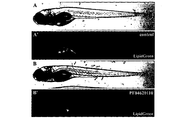
- Example 1 In order to use the compound of Example 1 in the screening of candidate drugs, screening was performed using a DGAT1 inhibitor as a candidate drug.
- DGAT1 is a potential target for treating metabolic syndromes such as diabetes and obesity.
- Microsomal enzyme catalyzes the esterification reaction of 1,2-diacylglycerol with fatty acyl CoA to form triglycerides.
- DGAT1 knockout mice express reduced levels of triacylglycerides, which are the major components of fat. Recent studies have shown that small molecule DGAT-1 inhibitors have the effect of reducing the amount and weight of triacylglycerides.
- Example 1 KR 68425, lipid green
- PF04620110 clinical phase 1 in progress
- PF04620110-exposed zebrafish was stained with the compound of Example 1. The results are shown in FIG.
- the fat of the control zebrafish stained with the compound lipid green (Example 1) of the present invention was confirmed to disappear by treatment with the candidate drug PF04620110 (see B). Therefore, as expected, it was confirmed through fat-specific staining of the compound of Example 1 that the fat of zebrafish was significantly reduced due to the treatment of PF04620110.
- FIG. 11 is a graph showing the fat accumulation amount by measuring its fluorescence sensitivity. Referring to FIG. 11, it can be seen that fluorescence was reduced due to the treatment of the candidate drug PF04620110, and the amount of fat reduction can be quantitatively inferred through the relative decrease in fluorescence.
Landscapes
- Health & Medical Sciences (AREA)
- Chemical & Material Sciences (AREA)
- Life Sciences & Earth Sciences (AREA)
- Organic Chemistry (AREA)
- Veterinary Medicine (AREA)
- Epidemiology (AREA)
- Animal Behavior & Ethology (AREA)
- General Health & Medical Sciences (AREA)
- Public Health (AREA)
- Engineering & Computer Science (AREA)
- Medicinal Chemistry (AREA)
- Pharmacology & Pharmacy (AREA)
- Biomedical Technology (AREA)
- Physics & Mathematics (AREA)
- Biodiversity & Conservation Biology (AREA)
- Nuclear Medicine, Radiotherapy & Molecular Imaging (AREA)
- Oncology (AREA)
- Optics & Photonics (AREA)
- Nitrogen Condensed Heterocyclic Rings (AREA)
- Indole Compounds (AREA)
Abstract
La présente invention concerne un nouveau dérivé de 3-indolinone et une composition le comprenant, qui est capable de coloration fluorescente sélective de matière grasse en particulier et, ainsi, peut être utile comme réactif bio-diagnostique.
Applications Claiming Priority (6)
| Application Number | Priority Date | Filing Date | Title |
|---|---|---|---|
| KR10-2010-0126694 | 2010-12-13 | ||
| KR20100126694 | 2010-12-13 | ||
| KR10-2011-0086551 | 2011-08-29 | ||
| KR1020110086551A KR101350077B1 (ko) | 2010-12-13 | 2011-08-29 | 신규한 3-인돌리논 유도체 및 이를 포함하는 조성물 |
| KR10-2011-0086553 | 2011-08-29 | ||
| KR1020110086553A KR101343668B1 (ko) | 2011-08-29 | 2011-08-29 | 3-인돌리논 유도체를 이용한 대사증후군 치료 약물의 스크리닝 방법 |
Publications (2)
| Publication Number | Publication Date |
|---|---|
| WO2012081893A2 true WO2012081893A2 (fr) | 2012-06-21 |
| WO2012081893A3 WO2012081893A3 (fr) | 2012-08-16 |
Family
ID=46245214
Family Applications (1)
| Application Number | Title | Priority Date | Filing Date |
|---|---|---|---|
| PCT/KR2011/009597 Ceased WO2012081893A2 (fr) | 2010-12-13 | 2011-12-13 | Nouveau dérivé de 3-indolinone et composition le comprenant |
Country Status (1)
| Country | Link |
|---|---|
| WO (1) | WO2012081893A2 (fr) |
Cited By (3)
| Publication number | Priority date | Publication date | Assignee | Title |
|---|---|---|---|---|
| US9145364B2 (en) | 2013-04-15 | 2015-09-29 | Council Of Scientific & Industrial Research | Synthesis of psuedo indoxyl derivatives |
| WO2021116686A1 (fr) * | 2019-12-10 | 2021-06-17 | University Of Lancaster | Dérivés de méthyl 2-allyl-1 -méthyl-3-oxoindoline-2-carboxylate and 9a-allyl-1,2,3,9a-tétrahydro-9h-pyrrolo[1,2-a]indol-9-one et composés associés destinés à être utilisés comme marqueurs fluorescents pour le marquage de médicaments, d'acides aminés et de protéines |
| US11690824B2 (en) | 2018-04-10 | 2023-07-04 | The General Hospital Corporation | Antibacterial compounds |
Family Cites Families (5)
| Publication number | Priority date | Publication date | Assignee | Title |
|---|---|---|---|---|
| US4675332A (en) * | 1984-12-10 | 1987-06-23 | Warner-Lambert Company | Acidic tetrazolyl substituted indole compounds and their use as antiallergy agents |
| LU87256A1 (fr) * | 1988-06-21 | 1990-02-28 | Oreal | Procedes de teinture de fibres keratiniques a base de 5,6-dihydroxyindole et d'au moins un sel de terre rare et compositions de mise en oeuvre |
| US5424329A (en) * | 1993-08-18 | 1995-06-13 | Warner-Lambert Company | Indole-2-carboxamides as inhibitors of cell adhesion |
| US7312302B2 (en) * | 1997-02-20 | 2007-12-25 | Oncolmmunin, Inc. | Compositions for the detection of enzyme activity in biological samples and methods of use thereof |
| US20020091148A1 (en) * | 2000-09-15 | 2002-07-11 | Bamaung Nwe Y. | 3-substituted indole antiproliferative angiogenesis inhibitors |
-
2011
- 2011-12-13 WO PCT/KR2011/009597 patent/WO2012081893A2/fr not_active Ceased
Cited By (3)
| Publication number | Priority date | Publication date | Assignee | Title |
|---|---|---|---|---|
| US9145364B2 (en) | 2013-04-15 | 2015-09-29 | Council Of Scientific & Industrial Research | Synthesis of psuedo indoxyl derivatives |
| US11690824B2 (en) | 2018-04-10 | 2023-07-04 | The General Hospital Corporation | Antibacterial compounds |
| WO2021116686A1 (fr) * | 2019-12-10 | 2021-06-17 | University Of Lancaster | Dérivés de méthyl 2-allyl-1 -méthyl-3-oxoindoline-2-carboxylate and 9a-allyl-1,2,3,9a-tétrahydro-9h-pyrrolo[1,2-a]indol-9-one et composés associés destinés à être utilisés comme marqueurs fluorescents pour le marquage de médicaments, d'acides aminés et de protéines |
Also Published As
| Publication number | Publication date |
|---|---|
| WO2012081893A3 (fr) | 2012-08-16 |
Similar Documents
| Publication | Publication Date | Title |
|---|---|---|
| WO2011043568A2 (fr) | Nouveaux composés efficaces comme inhibiteurs de la xanthine oxydase, leur procédé de préparation et composition pharmaceutique les contenant | |
| EP2917180A1 (fr) | Agoniste du récepteur gpr40, procédés de préparation de celui-ci, et compositions pharmaceutiques contenant celui-ci en tant que substance active | |
| WO2011052950A2 (fr) | Composition pharmaceutique contenant un composé indole | |
| WO2009088192A9 (fr) | Dérivés d'indole et d'indolazole possédant un effet de conservation de cellules, de tissus et d'organes | |
| WO2021066608A1 (fr) | Composé destiné à induire l'expression d'un gène klotho anti-âge et son utilisation | |
| WO2020022794A1 (fr) | Composés dérivés de 1,3,4-oxadiazole utilisés en tant qu'inhibiteur de l'histone désacétylase 6, et composition pharmaceutique les comprenant | |
| WO2012161518A2 (fr) | Nouveaux dérivés de thio-urée utilisés en tant qu'activateurs de rorα, et composition pharmaceutique les contenant | |
| EP4110781A1 (fr) | Composés dérivés de 1,3,4-oxadiazole utilisés comme inhibiteurs d'histone désacétylase 6, et composition pharmaceutique les comprenant | |
| WO2014181960A2 (fr) | Sonde fluorescente de détection de tyrosine kinase et son utilisation | |
| WO2016163727A2 (fr) | Sonde radioactive pour la détection de sulfure d'hydrogène | |
| WO2016111602A2 (fr) | Nouveau composé organique, milieu constant fluorescent dans le proche infrarouge le contenant, et procédé de nanogranulation de milieu constant | |
| WO2021162493A1 (fr) | Composé induisant la dégradation de protéines kinases et son utilisation | |
| WO2015026172A1 (fr) | Composé indole-amide en tant qu'inhibiteur de la nécrose | |
| WO2015064786A1 (fr) | Colorant de cyanine pour le marquage de biomolécules et son procédé de préparation | |
| WO2012148140A2 (fr) | Dérivés d'alcaloïdes à base d'imidazole ayant des effets d'inhibition de l'angiogenèse et antioxydants et leur procédé de préparation | |
| WO2021066573A1 (fr) | Nouveau composé et son utilisation dans le traitement de maladies auto-immunes | |
| WO2009096667A4 (fr) | Nouveau dérivé de quinazoline-2,4-dione et compositions médicales pour la prophylaxie et le traitement de la maladie du nerf crânien contenant ledit dérivé | |
| WO2023153739A1 (fr) | Nouveau composé et ses utilisations | |
| WO2020101450A1 (fr) | Composés dérivés d'azilsartan, leurs intermédiaires, leur procédé de préparation et composition pharmaceutique les comprenant | |
| WO2021251756A1 (fr) | Conjugué d'un dérivé de n-acylhydrazone et d'un marqueur et composition pharmaceutique le contenant | |
| WO2023182871A1 (fr) | Dérivé de 3-phénylisoxazole et composition pharmaceutique pour prévenir ou traiter une maladie oculaire le contenant en tant que principe actif | |
| WO2021150049A1 (fr) | Nouveau composé à base de gadolinium, son procédé de production et agent de contraste pour irm contenant ledi composé | |
| WO2022098108A1 (fr) | Composé induisant la dégradation de protéine nlrp3 | |
| WO2015026170A1 (fr) | Composé d'indole en tant qu'inhibiteur de la nécrose | |
| WO2018236115A1 (fr) | Composé marqué au 18f pour le diagnostic du cancer de la prostate et son utilisation |
Legal Events
| Date | Code | Title | Description |
|---|---|---|---|
| 121 | Ep: the epo has been informed by wipo that ep was designated in this application |
Ref document number: 11848018 Country of ref document: EP Kind code of ref document: A2 |
|
| NENP | Non-entry into the national phase |
Ref country code: DE |
|
| 122 | Ep: pct application non-entry in european phase |
Ref document number: 11848018 Country of ref document: EP Kind code of ref document: A2 |