WO2012111657A1 - Maille poreuse tridimensionnelle en aluminium destinée à être utilisée dans un collecteur, et collecteur, électrode, batterie à électrolyte non aqueux, condensateur et condensateur au lithium-ion utilisant ladite maille poreuse en aluminium - Google Patents
Maille poreuse tridimensionnelle en aluminium destinée à être utilisée dans un collecteur, et collecteur, électrode, batterie à électrolyte non aqueux, condensateur et condensateur au lithium-ion utilisant ladite maille poreuse en aluminium Download PDFInfo
- Publication number
- WO2012111657A1 WO2012111657A1 PCT/JP2012/053374 JP2012053374W WO2012111657A1 WO 2012111657 A1 WO2012111657 A1 WO 2012111657A1 JP 2012053374 W JP2012053374 W JP 2012053374W WO 2012111657 A1 WO2012111657 A1 WO 2012111657A1
- Authority
- WO
- WIPO (PCT)
- Prior art keywords
- aluminum
- electrode
- porous body
- lithium
- current collector
- Prior art date
- Legal status (The legal status is an assumption and is not a legal conclusion. Google has not performed a legal analysis and makes no representation as to the accuracy of the status listed.)
- Ceased
Links
Images





Classifications
-
- H—ELECTRICITY
- H01—ELECTRIC ELEMENTS
- H01M—PROCESSES OR MEANS, e.g. BATTERIES, FOR THE DIRECT CONVERSION OF CHEMICAL ENERGY INTO ELECTRICAL ENERGY
- H01M4/00—Electrodes
- H01M4/02—Electrodes composed of, or comprising, active material
- H01M4/64—Carriers or collectors
- H01M4/70—Carriers or collectors characterised by shape or form
- H01M4/80—Porous plates, e.g. sintered carriers
-
- H—ELECTRICITY
- H01—ELECTRIC ELEMENTS
- H01G—CAPACITORS; CAPACITORS, RECTIFIERS, DETECTORS, SWITCHING DEVICES, LIGHT-SENSITIVE OR TEMPERATURE-SENSITIVE DEVICES OF THE ELECTROLYTIC TYPE
- H01G11/00—Hybrid capacitors, i.e. capacitors having different positive and negative electrodes; Electric double-layer [EDL] capacitors; Processes for the manufacture thereof or of parts thereof
- H01G11/66—Current collectors
- H01G11/68—Current collectors characterised by their material
-
- H—ELECTRICITY
- H01—ELECTRIC ELEMENTS
- H01G—CAPACITORS; CAPACITORS, RECTIFIERS, DETECTORS, SWITCHING DEVICES, LIGHT-SENSITIVE OR TEMPERATURE-SENSITIVE DEVICES OF THE ELECTROLYTIC TYPE
- H01G11/00—Hybrid capacitors, i.e. capacitors having different positive and negative electrodes; Electric double-layer [EDL] capacitors; Processes for the manufacture thereof or of parts thereof
- H01G11/04—Hybrid capacitors
- H01G11/06—Hybrid capacitors with one of the electrodes allowing ions to be reversibly doped thereinto, e.g. lithium ion capacitors [LIC]
-
- H—ELECTRICITY
- H01—ELECTRIC ELEMENTS
- H01G—CAPACITORS; CAPACITORS, RECTIFIERS, DETECTORS, SWITCHING DEVICES, LIGHT-SENSITIVE OR TEMPERATURE-SENSITIVE DEVICES OF THE ELECTROLYTIC TYPE
- H01G11/00—Hybrid capacitors, i.e. capacitors having different positive and negative electrodes; Electric double-layer [EDL] capacitors; Processes for the manufacture thereof or of parts thereof
- H01G11/22—Electrodes
-
- H—ELECTRICITY
- H01—ELECTRIC ELEMENTS
- H01G—CAPACITORS; CAPACITORS, RECTIFIERS, DETECTORS, SWITCHING DEVICES, LIGHT-SENSITIVE OR TEMPERATURE-SENSITIVE DEVICES OF THE ELECTROLYTIC TYPE
- H01G11/00—Hybrid capacitors, i.e. capacitors having different positive and negative electrodes; Electric double-layer [EDL] capacitors; Processes for the manufacture thereof or of parts thereof
- H01G11/22—Electrodes
- H01G11/26—Electrodes characterised by their structure, e.g. multi-layered, porosity or surface features
- H01G11/28—Electrodes characterised by their structure, e.g. multi-layered, porosity or surface features arranged or disposed on a current collector; Layers or phases between electrodes and current collectors, e.g. adhesives
-
- H—ELECTRICITY
- H01—ELECTRIC ELEMENTS
- H01G—CAPACITORS; CAPACITORS, RECTIFIERS, DETECTORS, SWITCHING DEVICES, LIGHT-SENSITIVE OR TEMPERATURE-SENSITIVE DEVICES OF THE ELECTROLYTIC TYPE
- H01G11/00—Hybrid capacitors, i.e. capacitors having different positive and negative electrodes; Electric double-layer [EDL] capacitors; Processes for the manufacture thereof or of parts thereof
- H01G11/66—Current collectors
- H01G11/70—Current collectors characterised by their structure
-
- H—ELECTRICITY
- H01—ELECTRIC ELEMENTS
- H01M—PROCESSES OR MEANS, e.g. BATTERIES, FOR THE DIRECT CONVERSION OF CHEMICAL ENERGY INTO ELECTRICAL ENERGY
- H01M10/00—Secondary cells; Manufacture thereof
- H01M10/05—Accumulators with non-aqueous electrolyte
-
- H—ELECTRICITY
- H01—ELECTRIC ELEMENTS
- H01M—PROCESSES OR MEANS, e.g. BATTERIES, FOR THE DIRECT CONVERSION OF CHEMICAL ENERGY INTO ELECTRICAL ENERGY
- H01M10/00—Secondary cells; Manufacture thereof
- H01M10/05—Accumulators with non-aqueous electrolyte
- H01M10/052—Li-accumulators
-
- H—ELECTRICITY
- H01—ELECTRIC ELEMENTS
- H01M—PROCESSES OR MEANS, e.g. BATTERIES, FOR THE DIRECT CONVERSION OF CHEMICAL ENERGY INTO ELECTRICAL ENERGY
- H01M4/00—Electrodes
- H01M4/02—Electrodes composed of, or comprising, active material
- H01M4/13—Electrodes for accumulators with non-aqueous electrolyte, e.g. for lithium-accumulators; Processes of manufacture thereof
-
- H—ELECTRICITY
- H01—ELECTRIC ELEMENTS
- H01M—PROCESSES OR MEANS, e.g. BATTERIES, FOR THE DIRECT CONVERSION OF CHEMICAL ENERGY INTO ELECTRICAL ENERGY
- H01M4/00—Electrodes
- H01M4/02—Electrodes composed of, or comprising, active material
- H01M4/64—Carriers or collectors
- H01M4/66—Selection of materials
-
- H—ELECTRICITY
- H01—ELECTRIC ELEMENTS
- H01M—PROCESSES OR MEANS, e.g. BATTERIES, FOR THE DIRECT CONVERSION OF CHEMICAL ENERGY INTO ELECTRICAL ENERGY
- H01M4/00—Electrodes
- H01M4/02—Electrodes composed of, or comprising, active material
- H01M4/64—Carriers or collectors
- H01M4/66—Selection of materials
- H01M4/661—Metal or alloys, e.g. alloy coatings
-
- H—ELECTRICITY
- H01—ELECTRIC ELEMENTS
- H01M—PROCESSES OR MEANS, e.g. BATTERIES, FOR THE DIRECT CONVERSION OF CHEMICAL ENERGY INTO ELECTRICAL ENERGY
- H01M4/00—Electrodes
- H01M4/02—Electrodes composed of, or comprising, active material
- H01M4/64—Carriers or collectors
- H01M4/70—Carriers or collectors characterised by shape or form
- H01M4/72—Grids
- H01M4/74—Meshes or woven material; Expanded metal
-
- Y—GENERAL TAGGING OF NEW TECHNOLOGICAL DEVELOPMENTS; GENERAL TAGGING OF CROSS-SECTIONAL TECHNOLOGIES SPANNING OVER SEVERAL SECTIONS OF THE IPC; TECHNICAL SUBJECTS COVERED BY FORMER USPC CROSS-REFERENCE ART COLLECTIONS [XRACs] AND DIGESTS
- Y02—TECHNOLOGIES OR APPLICATIONS FOR MITIGATION OR ADAPTATION AGAINST CLIMATE CHANGE
- Y02E—REDUCTION OF GREENHOUSE GAS [GHG] EMISSIONS, RELATED TO ENERGY GENERATION, TRANSMISSION OR DISTRIBUTION
- Y02E60/00—Enabling technologies; Technologies with a potential or indirect contribution to GHG emissions mitigation
- Y02E60/10—Energy storage using batteries
-
- Y—GENERAL TAGGING OF NEW TECHNOLOGICAL DEVELOPMENTS; GENERAL TAGGING OF CROSS-SECTIONAL TECHNOLOGIES SPANNING OVER SEVERAL SECTIONS OF THE IPC; TECHNICAL SUBJECTS COVERED BY FORMER USPC CROSS-REFERENCE ART COLLECTIONS [XRACs] AND DIGESTS
- Y02—TECHNOLOGIES OR APPLICATIONS FOR MITIGATION OR ADAPTATION AGAINST CLIMATE CHANGE
- Y02E—REDUCTION OF GREENHOUSE GAS [GHG] EMISSIONS, RELATED TO ENERGY GENERATION, TRANSMISSION OR DISTRIBUTION
- Y02E60/00—Enabling technologies; Technologies with a potential or indirect contribution to GHG emissions mitigation
- Y02E60/13—Energy storage using capacitors
-
- Y—GENERAL TAGGING OF NEW TECHNOLOGICAL DEVELOPMENTS; GENERAL TAGGING OF CROSS-SECTIONAL TECHNOLOGIES SPANNING OVER SEVERAL SECTIONS OF THE IPC; TECHNICAL SUBJECTS COVERED BY FORMER USPC CROSS-REFERENCE ART COLLECTIONS [XRACs] AND DIGESTS
- Y02—TECHNOLOGIES OR APPLICATIONS FOR MITIGATION OR ADAPTATION AGAINST CLIMATE CHANGE
- Y02P—CLIMATE CHANGE MITIGATION TECHNOLOGIES IN THE PRODUCTION OR PROCESSING OF GOODS
- Y02P70/00—Climate change mitigation technologies in the production process for final industrial or consumer products
- Y02P70/50—Manufacturing or production processes characterised by the final manufactured product
Definitions
- the present invention relates to a nonaqueous electrolyte battery (such as a lithium battery), a capacitor using a nonaqueous electrolyte (hereinafter simply referred to as “capacitor”), and a lithium ion capacitor using a nonaqueous electrolyte (hereinafter simply referred to as “lithium ion capacitor”).
- the present invention relates to a current collector and an electrode using a three-dimensional reticulated aluminum porous body for use.
- Metal porous bodies having a three-dimensional network structure are used in various fields such as various filters, catalyst carriers, and battery electrodes.
- Celmet manufactured by Sumitomo Electric Industries, Ltd .: registered trademark
- nickel porous body made of a three-dimensional network nickel porous body (hereinafter referred to as “nickel porous body”) is used as an electrode material for batteries such as nickel metal hydride batteries and nickel cadmium batteries.
- Celmet is a metal porous body having continuous air holes, and has a feature of high porosity (90% or more) compared to other porous bodies such as a metal nonwoven fabric.
- aluminum like nickel, has excellent characteristics such as conductivity, corrosion resistance, and light weight.
- a positive electrode of a lithium battery is coated with an active material such as lithium cobaltate on the surface of an aluminum foil. Things are used.
- aluminum porous body having a large aluminum surface area, and to fill the active material into the aluminum. This is because the active material can be used even if the electrode is thickened, and the active material utilization rate per unit area is improved.
- Patent Document 1 discloses that a metal aluminum layer having a thickness of 2 to 20 ⁇ m is formed by subjecting a three-dimensional net-like plastic substrate having an internal communication space to aluminum vapor deposition by an arc ion plating method. A method is described. According to this method, it is said that an aluminum porous body having a thickness of 2 to 20 ⁇ m can be obtained, but it is difficult to manufacture in a large area because of the vapor phase method, and depending on the thickness and porosity of the substrate, It is difficult to form a uniform layer. In addition, there are problems such as a slow formation rate of the aluminum layer and an increase in manufacturing cost due to expensive equipment. Further, when a thick film is formed, there is a risk that the film may crack or aluminum may fall off.
- Patent Document 2 a film made of a metal (such as copper) that forms a eutectic alloy below the melting point of aluminum is formed on the skeleton of a foamed resin molding having a three-dimensional network structure, and then an aluminum paste is applied.
- a method is described in which a heat treatment is performed at a temperature of 550 ° C. or higher and 750 ° C. or lower in a non-oxidizing atmosphere so that the organic component (foamed resin) disappears and the aluminum powder is sintered to obtain an aluminum porous body.
- a layer that forms a eutectic alloy with aluminum is formed, and a high-purity aluminum layer cannot be formed.
- Patent Document 3 uses a low melting point composition in which onium halide and aluminum halide are mixed and melted as a plating bath, and the amount of moisture in the bath
- An aluminum electroplating method is disclosed, in which aluminum is deposited on the cathode while maintaining 2% by mass or less.
- aluminum electroplating is only possible on a metal surface, and electroplating on the surface of a resin molded body, in particular, a method of electroplating on the surface of a resin molded body having a three-dimensional network structure is known. There wasn't.
- the present inventors diligently studied about a method of performing electroplating of aluminum on the surface of a urethane resin molded body having a three-dimensional network structure. At least, in a molten salt bath, aluminum was added to a urethane resin molded body having a conductive surface. It was found that plating was possible by plating with, and a method for producing a porous aluminum body was completed. According to this manufacturing method, an aluminum structure having a urethane resin molded body as a skeleton core is obtained. Depending on applications such as various filters and catalyst carriers, it may be used as a composite of resin and metal as it is. However, due to restrictions in the usage environment, when using as a metal structure without resin, the resin is removed and aluminum is used.
- Removal of the resin can be performed by any method such as decomposition (dissolution) with an organic solvent, molten salt, or supercritical water, and thermal decomposition.
- methods such as thermal decomposition at high temperatures are simple, but involve oxidation of aluminum. Unlike nickel and the like, aluminum is difficult to reduce once oxidized. For example, when used as an electrode material for a battery or the like, it cannot be used because conductivity is lost due to oxidation.
- the present inventors immersed an aluminum structure formed by forming an aluminum layer on the surface of the porous resin molded body in a molten salt, A method for producing an aluminum porous body was completed by heating the aluminum layer to a temperature below the melting point of aluminum while applying a negative potential to thermally decompose and remove the porous resin molded body.
- a lead wire is attached to the aluminum porous body by a process as shown in FIG.
- an active material such as compression, cutting, etc.
- industrially manufacture electrodes such as non-aqueous electrolyte batteries, capacitors and lithium ion capacitors from the aluminum porous body The practical technology for doing this is not yet known.
- An object of the present invention is to provide an electrode using a current collector made of an aluminum porous body and having a reduced current distribution in the electrode surface.
- the configuration of the present invention is as follows. (1) When the sheet-like three-dimensional network aluminum porous body is divided into a central region and two end regions sandwiching the central region in the width direction, the amount of aluminum per unit area of the porous aluminum body in the two end regions is A three-dimensional reticulated aluminum porous body for a current collector characterized by having a larger amount of aluminum per unit area than the aluminum porous body in the central region. (2) The aluminum basis weight at one end in the width direction obtained by cutting the three-dimensional porous aluminum body for a current collector according to (1) in half at the center in the width direction is the other end A three-dimensional reticulated aluminum porous body for a current collector characterized by having a larger amount of aluminum per unit area.
- a current collector wherein a tab lead is joined by welding to the end of the three-dimensional network aluminum porous body for a current collector according to (2), which has a smaller amount of aluminum.
- the end portion having the smaller basis weight of aluminum is compressed in the thickness direction to form a compressed portion, and a tab lead is joined to the compressed portion.
- Current collector (5)
- An electrode comprising an active material filled in a porous portion of the current collector according to (3) or (4).
- a nonaqueous electrolyte battery using the electrode according to (5).
- a capacitor using a non-aqueous electrolyte, wherein the electrode according to (5) is used.
- a lithium ion capacitor using a non-aqueous electrolyte, wherein the electrode according to (5) is used.
- an electrode using the aluminum porous body for a current collector of the present invention has a small current distribution in the electrode surface, a battery or the like using this electrode has improved cycle characteristics.
- FIG. 7 is a flowchart showing the manufacturing process of the aluminum structure.
- FIG. 8 schematically shows a state in which an aluminum plating film is formed using a resin molded body as a core material corresponding to the flowchart. The flow of the entire manufacturing process will be described with reference to both drawings.
- preparation 101 of a resin molded body to be a base is performed.
- FIG. 8A is an enlarged schematic view in which the surface of the resin molded body having continuous air holes is enlarged as an example of the resin molded body serving as the base. The pores are formed with the resin molded body 1 as a skeleton.
- the surface 102 of the resin molded body is made conductive. By this step, as shown in FIG.
- a thin conductive layer 2 made of a conductive material is formed on the surface of the resin molded body 1.
- aluminum plating 103 in molten salt is performed to form an aluminum plating layer 3 on the surface of the resin molded body on which the conductive layer is formed (FIG. 8C).
- an aluminum structure in which the aluminum plating layer 3 is formed on the surface using the resin molded body as a base material is obtained.
- removal 104 of the resin molded body is performed for the resin molded body that is the base.
- the aluminum structure (porous body) in which only the metal layer remains can be obtained by dissociating and disappearing the resin molded body 1 (FIG. 8D).
- each step will be described in order.
- a porous resin molded body having a three-dimensional network structure and continuous air holes is prepared.
- Arbitrary resin can be selected as a raw material of a porous resin molding.
- the material include foamed resin moldings such as polyurethane, melamine, polypropylene, and polyethylene.
- foamed resin moldings such as polyurethane, melamine, polypropylene, and polyethylene.
- a resin molded article having an arbitrary shape can be selected as long as it has continuous pores (continuous vent holes). For example, what has a shape like a nonwoven fabric entangled with a fibrous resin can be used instead of the foamed resin molded article.
- the foamed resin molded article preferably has a porosity of 80% to 98% and a pore diameter of 50 ⁇ m to 500 ⁇ m.
- Foamed urethane and foamed melamine can be preferably used as a foamed resin molded article because they have high porosity, have pore connectivity and are excellent in thermal decomposability.
- Urethane foam is preferable in terms of pore uniformity and availability, and urethane foam is preferable in that a material having a small pore diameter can be obtained.
- the porous resin molded body often has residues such as foaming agents and unreacted monomers in the foam production process, and it is preferable to perform a washing treatment for the subsequent steps.
- FIG. 9 shows a product obtained by washing urethane foam as a pretreatment.
- the resin molded body forms a three-dimensional network as a skeleton, thereby forming continuous pores as a whole.
- the urethane skeleton has a substantially triangular shape in a cross section perpendicular to the extending direction.
- the porosity is defined by the following equation.
- Porosity (1 ⁇ (weight of porous material [g] / (volume of porous material [cm 3 ] ⁇ material density))) ⁇ 100 [%]
- the surface of the foamed resin is subjected to a conductive treatment in advance.
- a conductive treatment can provide a conductive layer on the surface of the resin molded body, electroless plating of a conductive metal such as nickel, vapor deposition and sputtering of aluminum, or conductive particles such as carbon.
- coating of the conductive paint containing this, can be selected.
- the conductive treatment include a method of conducting a conductive treatment by sputtering of aluminum and a method of conducting a conductive treatment on the surface of the foamed resin using carbon as conductive particles.
- Formation of aluminum layer molten salt plating
- electrolytic plating is performed in a molten salt to form an aluminum plating layer on the surface of the resin molded body.
- a uniformly thick aluminum layer can be formed on the surface of a complicated skeleton structure, particularly a resin molded body having a three-dimensional network structure.
- a direct current is applied in a molten salt using a resin molded body having a conductive surface as a cathode and aluminum having a purity of 99.0% as an anode.
- an organic molten salt that is a eutectic salt of an organic halide and an aluminum halide, or an inorganic molten salt that is a eutectic salt of an alkali metal halide and an aluminum halide can be used.
- Use of an organic molten salt bath that melts at a relatively low temperature is preferable because plating can be performed without decomposing the resin molded body as a base material.
- the organic halide imidazolium salt, pyridinium salt and the like can be used, and specifically, 1-ethyl-3-methylimidazolium chloride (EMIC) and butylpyridinium chloride (BPC) are preferable. Since the molten salt deteriorates when moisture or oxygen is mixed in the molten salt, the plating is preferably performed in an atmosphere of an inert gas such as nitrogen or argon and in a sealed environment.
- an inert gas such as nitrogen or argon
- a molten salt bath containing nitrogen is preferable, and among them, an imidazolium salt bath is preferably used.
- an imidazolium salt bath is preferably used.
- a salt that melts at a high temperature is used as the molten salt, the resin is dissolved or decomposed in the molten salt faster than the growth of the plating layer, and the plating layer cannot be formed on the surface of the resin molded body.
- the imidazolium salt bath can be used without affecting the resin even at a relatively low temperature.
- a salt containing an imidazolium cation having an alkyl group at the 1,3-position is preferably used.
- AlCl 3 + EMIC aluminum chloride + 1-ethyl-3-methylimidazolium chloride
- molten salt is stable. Is most preferably used because it is high and difficult to decompose. Plating onto foamed urethane resin or foamed melamine resin is possible, and the temperature of the molten salt bath is 10 ° C to 65 ° C, preferably 25 ° C to 60 ° C. The lower the temperature, the narrower the current density range that can be plated, and the more difficult it is to plate on the entire porous body surface. At a high temperature exceeding 65 ° C., a problem that the shape of the base resin is impaired tends to occur.
- the smoothness of the plating film is improved, the first feature that the aluminum skeleton forming the porous body is not easily broken, and uniform plating with a small difference in plating thickness between the surface portion and the inside of the porous body is possible.
- the second feature is obtained.
- an organic solvent to the molten salt bath
- 1,10-phenanthroline is preferably used.
- the amount added to the plating bath is preferably 0.2 to 7 g / L. If it is 0.2 g / L or less, it is brittle with plating having poor smoothness, and it is difficult to obtain the effect of reducing the difference in thickness between the surface layer and the inside. On the other hand, if it is 7 g / L or more, the plating efficiency is lowered and it is difficult to obtain a predetermined plating thickness.
- FIG. 10 is a diagram schematically showing a configuration of an apparatus for continuously performing the aluminum plating process on the above-described belt-shaped resin.
- a configuration in which the belt-like resin 22 whose surface is made conductive is sent from the left to the right in the figure.
- the first plating tank 21a includes a cylindrical electrode 24, an anode 25 made of aluminum provided on the inner wall of the container, and a plating bath 23. By passing the strip-shaped resin 22 through the plating bath 23 along the cylindrical electrode 24, a uniform current can easily flow through the entire resin molded body, and uniform plating can be obtained.
- the plating tank 21b is a tank for applying a thick and uniform plating, and is configured to be repeatedly plated in a plurality of tanks.
- Plating is performed by passing the belt-like resin 22 having a conductive surface through a plating bath 28 while sequentially feeding the belt-like resin 22 by an electrode roller 26 that also serves as a feeding roller and an out-of-vessel feeding cathode.
- anodes 27 made of aluminum provided on both surfaces of the resin molded body via a plating bath 28, and uniform plating can be applied to both surfaces of the resin molded body. After sufficiently removing the plating solution from the plated aluminum porous body by nitrogen blowing, the aluminum porous body can be obtained by washing with water.
- the feature of the present invention resides in this plating process.
- an aluminum porous body as a current collector, for example, as shown in FIG. 4, the end of the aluminum porous body is compressed, and a tab lead is attached to the compressed portion. It is necessary to join.
- the tab lead is joined to the aluminum porous body by a method such as resistance welding or ultrasonic welding.
- the aluminum porous body obtained by the above plating method has a constant basis weight in a plane. However, since a large amount of current flows in a portion close to the tab lead weld, the current is distributed in the electrode surface.
- the fact that the current is distributed means that all materials constituting the electrode are not functioning effectively, and the portion where a large amount of current flows is rapidly deteriorated, and the life of the electrode is also shortened. For this reason, it is preferable to prevent current distribution from occurring in the electrode plane.
- As a method for preventing the current distribution in the electrode plane from occurring there is a method of increasing the basis weight of a portion far from the portion where the tab lead is welded in the porous aluminum body. This makes it easier for current to flow to a site far from the tab lead weld, so that current distribution does not occur in the electrode plane.
- the aluminum porous body subjected to molten salt plating is immersed in a plating bath only for the part where the per unit area is to be increased, and further plated to adhere aluminum to the part.
- a part of the conductive film in which the amount of the porous aluminum body is to be increased is formed to be thicker than the other part of the conductive film, The method of plating can be mentioned.
- an inorganic salt bath can be used as the molten salt as long as the resin is not dissolved.
- the inorganic salt bath is typically a binary or multicomponent salt of AlCl 3 —XCl (X: alkali metal).
- Such an inorganic salt bath generally has a higher melting temperature than an organic salt bath such as an imidazolium salt bath, but is less restricted by environmental conditions such as moisture and oxygen, and can be put into practical use at a low cost overall.
- the resin is a foamed melamine resin, it can be used at a higher temperature than the foamed urethane resin, and an inorganic salt bath at 60 ° C. to 150 ° C. is used.
- an aluminum structure having a resin molded body as a skeleton core is obtained.
- the resin and metal composite may be used as they are, but the resin is removed when used as a porous metal body without resin due to restrictions on the use environment.
- the resin is removed by decomposition in a molten salt described below so that oxidation of aluminum does not occur.
- Decomposition in the molten salt is carried out by the following method.
- a resin molded body having an aluminum plating layer formed on the surface is immersed in a molten salt, and the foamed resin molded body is removed by heating while applying a negative potential (potential lower than the standard electrode potential of aluminum) to the aluminum layer.
- a negative potential potential lower than the standard electrode potential of aluminum
- the heating temperature can be appropriately selected according to the type of the foamed resin molded body.
- the temperature of the molten salt bath needs to be 380 ° C. or higher.
- the melting point of the aluminum 660 ° C. or lower is required. It is necessary to process at temperature.
- a preferable temperature range is 500 ° C. or more and 600 ° C. or less.
- the amount of negative potential to be applied is on the minus side of the reduction potential of aluminum and on the plus side of the reduction potential of the cation in the molten salt.
- an alkali metal or alkaline earth metal halide salt in which the electrode potential of aluminum is low can be used.
- FIG. 1 is a diagram for explaining an example of a process for continuously producing an electrode from an aluminum porous body.
- the process includes a porous sheet unwinding step A for unwinding the porous sheet from the unwinding roller 41, a thickness adjusting step B using the compression roller 42, and a lead using the compression / welding roller 43 and the lead welding roller 49.
- a winding process H using a winding roller 48.
- the porous aluminum sheet is unwound from the raw roll on which the porous aluminum sheet is wound, and the thickness is adjusted to an optimum thickness by a roller press in the thickness adjusting step, and the surface is flattened.
- the final thickness of the porous aluminum body is appropriately determined depending on the application of the electrode, but this thickness adjusting step is a compression step before the final thickness, and the thickness is easy to process the next step. Compress to a certain extent.
- a flat plate press or a roller press is used as the pressing machine.
- a flat plate press is preferable for suppressing the elongation of the current collector, but is not suitable for mass production, and therefore, it is preferable to use a roller press capable of continuous processing.
- the lead welding step includes a step of compressing the end portion of the aluminum porous body and a step of welding and joining the tab lead to the compressed end portion.
- FIG. 2 schematically shows the compression process.
- a rotating roller can be used as the compression jig.
- a predetermined mechanical strength can be obtained by setting the thickness of the compression portion to 0.05 mm or more and 0.2 mm or less (for example, about 0.1 mm).
- a compression portion (lead portion) 33 is formed by compressing a central portion of an aluminum porous body 34 having a width of two sheets by a rotating roller 35 using a compression jig. After compression, the central portion of the compression portion 33 is cut to obtain two electrode current collectors having the compression portion at the end.
- a plurality of band-like compression portions are formed in the central portion of the porous aluminum body using a plurality of rotating rollers, and each of the band-like compression portions is cut along the center line to thereby collect a plurality of collections. An electric body can be obtained.
- tab lead is joined to the end compression part of the current collector obtained as described above.
- the tab lead it is preferable to use a metal foil to reduce the electric resistance of the electrode and to bond the metal foil to the surface on at least one side of the peripheral edge of the electrode.
- welding it is preferable to use welding as a joining method.
- FIGS. 4 (a) and 4 (b) Schematic diagrams of the obtained current collector are shown in FIGS. 4 (a) and 4 (b).
- a tab lead 37 is welded to the compressed portion 33 of the aluminum porous body 34.
- FIG. 4B is a cross-sectional view taken along the line AA in FIG.
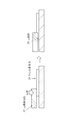
- FIG. 5 is a diagram showing a process of manufacturing the current collector of the present invention, and the shaded portion shows a portion where the basis weight of aluminum is increased.
- FIG. 5A When the sheet-like three-dimensional network aluminum porous body is divided into a central region and two end regions sandwiching the central region in the width direction, the aluminum basis weight of the aluminum porous body in the two end regions is Plating is performed so that the amount of aluminum per unit area of the aluminum porous body is larger (see FIG. 5A). Next, this aluminum porous body is cut at the center in the width direction and divided into two (see FIG. 5B). A current collector is obtained by joining a tab lead to the side of the obtained aluminum porous body having a small amount of aluminum per unit area (see FIG. 5C).
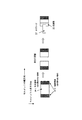
- FIG. 6 shows the current collector of the present invention.
- the width L of the compression part for welding the metal foil shown in FIG. 4 is preferably 10 mm or less because if the thickness is too large, useless space increases in the battery and the capacity density of the battery decreases. If it is too thin, welding becomes difficult and the current collecting effect is lowered, so that it is preferably 2 mm or more.
- a method such as resistance welding or ultrasonic welding can be used, but ultrasonic welding is preferable because the bonding area is wide.
- metal foil As a material of the metal foil, aluminum is preferable in consideration of electric resistance and resistance to an electrolytic solution. In addition, since impurities are eluted and reacted in the battery, capacitor, and lithium ion capacitor, it is preferable to use an aluminum foil having a purity of 99.99% or more. Moreover, it is preferable that the thickness of a welding part is thinner than the thickness of electrode itself. The thickness of the aluminum foil is preferably 20 to 500 ⁇ m.
- the compression process at the end and the bonding process of the tab lead are described as separate processes, but the compression process and the bonding process may be performed simultaneously.
- the compression roller a roller part that can be resistance-welded with the roller part that contacts the tab lead joining end of the aluminum porous sheet is used, and the aluminum porous sheet and the metal foil are simultaneously supplied to this roller. The compression and the welding of the metal foil to the compressed portion can be performed simultaneously.
- An electrode is obtained by filling the current collector with an active material.
- the type of the active material is appropriately selected according to the purpose for which the electrode is used.
- a known method such as a dip filling method or a coating method can be used for filling the active material.
- Coating methods include, for example, roll coating method, applicator coating method, electrostatic coating method, powder coating method, spray coating method, spray coater coating method, bar coater coating method, roll coater coating method, dip coater coating method, doctor blade Examples thereof include a coating method, a wire bar coating method, a knife coater coating method, a blade coating method, and a screen printing method.
- FIG. 1 shows a method of filling a porous material with a slurry by a roll coating method. As shown in the figure, slurry is supplied onto the porous sheet, and this is passed through a pair of rotating rolls facing each other with a predetermined gap. The slurry is pressed and filled into the porous body when passing through the rotating roll.
- the porous material filled with the active material is carried into a dryer, and the organic solvent is evaporated and removed by heating to obtain an electrode material in which the active material is fixed in the pores of the porous material.
- compression process The electrode material after drying is compressed to a final thickness in a compression process.
- a flat plate press or a roller press is used as the pressing machine.
- a flat plate press is preferable for suppressing the elongation of the current collector, but is not suitable for mass production, and therefore, it is preferable to use a roller press capable of continuous processing. In FIG. 1, the case where it compresses with a roller press was shown.
- the width of the porous aluminum sheet is set to the width of a plurality of final products, and this is cut by a plurality of blades along the sheet traveling direction. It is preferable to use a long sheet-like electrode material.
- This cutting step is a step of dividing the long electrode material into a plurality of long electrode materials.
- This step is a step of winding a plurality of long sheet-like electrode materials obtained in the cutting step onto a take-up roller.
- Electrodes for nonaqueous electrolyte batteries such as lithium batteries and molten salt batteries, capacitor electrodes, and lithium ion capacitor electrodes. Below, these uses are described.
- Lithium battery Next, a battery electrode material and a battery using an aluminum porous body will be described.
- a positive electrode of a lithium battery including a lithium ion secondary battery
- an active material lithium cobaltate (LiCoO 2 ), lithium manganate (LiMn 2 O 4 ), lithium nickelate (LiNiO 2 ) Etc.
- the active material is used in combination with a conductive additive and a binder.
- a conventional positive electrode material for a lithium battery an electrode in which an active material is applied to the surface of an aluminum foil is used.
- Lithium batteries have a higher capacity than nickel metal hydride batteries and capacitors, but there is a need for higher capacities in applications such as automobiles.
- the active material coating thickness must be increased.
- the aluminum foil as the current collector and the active material are in electrical contact with each other. It is used.
- the porous aluminum body of the present invention has a high porosity and a large surface area per unit area. Therefore, since the contact area between the current collector and the active material is increased, the active material can be used effectively, the capacity of the battery can be improved, and the mixing amount of the conductive additive can be reduced.
- the positive electrode material described above is used as a positive electrode, and a copper or nickel foil, a punching metal, a porous body, or the like is used as a current collector for the negative electrode.
- Graphite, lithium titanate (Li 4 Ti 5 O 12 ), Sn An alloy system such as Si or Si, or a negative electrode active material such as lithium metal is used.
- a negative electrode active material is also used in combination with a conductive additive and a binder. Since such a lithium battery can improve capacity even with a small electrode area, the energy density of the battery can be made higher than that of a lithium battery using a conventional aluminum foil.
- the effect on the secondary battery has been mainly described above. However, the effect of increasing the contact area when the porous aluminum body is filled with the active material is the same as that of the secondary battery in the primary battery. Can be improved.
- the electrolyte used for the lithium battery includes a non-aqueous electrolyte and a solid electrolyte.
- FIG. 11 is a longitudinal sectional view of an all-solid lithium battery using a solid electrolyte.
- the all solid lithium battery 60 includes a positive electrode 61, a negative electrode 62, and a solid electrolyte layer (SE layer) 63 disposed between both electrodes.
- the positive electrode 61 includes a positive electrode layer (positive electrode body) 64 and a positive electrode current collector 65
- the negative electrode 62 includes a negative electrode layer 66 and a negative electrode current collector 67.
- a non-aqueous electrolyte described later is used as the electrolyte.
- a separator a porous polymer film, a nonwoven fabric, paper, or the like
- the non-aqueous electrolyte is impregnated in both electrodes and the separator.
- an aluminum porous body When an aluminum porous body is used for a positive electrode of a lithium battery, a material capable of removing and inserting lithium can be used as an active material, and it is suitable for a lithium secondary battery by filling such an aluminum porous body. An electrode can be obtained.
- the material for the positive electrode active material include lithium cobaltate (LiCoO 2 ), lithium nickelate (LiNiO 2 ), lithium nickel cobaltate (LiCo 0.3 Ni 0.7 O 2 ), lithium manganate (LiMn 2 O 4 ), and titanate.
- the active material is used in combination with a conductive additive and a binder.
- transition metal oxides such as olivine compounds which are conventional lithium iron phosphate and its compounds (LiFePO 4 , LiFe 0.5 Mn 0.5 PO 4 ). Further, the transition metal element contained in these materials may be partially substituted with another transition metal element.
- Still other positive electrode active materials include, for example, TiS 2 , V 2 S 3 , FeS, FeS 2 , LiMSx (M is a transition metal element such as Mo, Ti, Cu, Ni, Fe, or Sb, Sn, Pb) ) And the like, and lithium metal having a skeleton of a metal oxide such as TiO 2 , Cr 3 O 8 , V 2 O 5 , and MnO 2 .
- the lithium titanate obtained by the ((Li 4 Ti 5 O 12 ) it is also possible to use as a negative electrode active material.
- Non-aqueous electrolyte a polar aprotic organic solvent is used, and specifically, ethylene carbonate, diethyl carbonate, dimethyl carbonate, propylene carbonate, ⁇ -butyrolactone, sulfolane and the like are used.
- the supporting salt lithium tetrafluoroborate, lithium hexafluorophosphate, and an imide salt are used.
- concentration of the supporting salt serving as an electrolyte is high, a concentration around 1 mol / L is generally used because there is a limit to dissolution.
- Solid electrolyte filled in aluminum porous body In addition to the active material, a solid electrolyte may be added and filled.
- a solid electrolyte By filling an aluminum porous body with an active material and a solid electrolyte, it can be made suitable for an electrode of an all-solid-state lithium battery.
- the proportion of the active material in the material filled in the aluminum porous body is preferably 50% by mass or more, more preferably 70% by mass or more, from the viewpoint of securing the discharge capacity.
- a sulfide-based solid electrolyte having high lithium ion conductivity is preferably used.
- a sulfide-based solid electrolyte having high lithium ion conductivity examples include a sulfide-based solid electrolyte containing lithium, phosphorus, and sulfur. It is done.
- the sulfide solid electrolyte may further contain an element such as O, Al, B, Si, and Ge.
- Such a sulfide-based solid electrolyte can be obtained by a known method.
- lithium sulfide (Li 2 S) and diphosphorus pentasulfide (P 2 S 5 ) are prepared as starting materials, and the ratio of Li 2 S and P 2 S 5 is about 50:50 to 80:20 in molar ratio.
- a method of melting and quenching the mixture melting and quenching method
- a method of mechanically milling the mixture (nocical milling method).
- the sulfide-based solid electrolyte obtained by the above method is amorphous. Although it can be used in this amorphous state, it may be heat-treated to obtain a crystalline sulfide solid electrolyte. Crystallization can be expected to improve lithium ion conductivity.
- the active material for filling the active material (the active material and the solid electrolyte)
- a known method such as an immersion filling method or a coating method
- the coating method include roll coating method, applicator coating method, electrostatic coating method, powder coating method, spray coating method, spray coater coating method, bar coater coating method, roll coater coating method, dip coater coating method, doctor Examples thereof include a blade coating method, a wire bar coating method, a knife coater coating method, a blade coating method, and a screen printing method.
- a conductive additive or binder is added, and an organic solvent or water is mixed therewith to produce a positive electrode mixture slurry.
- This slurry is filled into an aluminum porous body using the above method.
- carbon black such as acetylene black (AB) and ketjen black (KB) and carbon fiber such as carbon nanotube (CNT)
- AB acetylene black
- KB ketjen black
- CNT carbon nanotube
- polyfluoride can be used as the binder, for example.
- Vinylidene (PVDF), polytetrafluoroethylene (PTFE), polyvinyl alcohol (PVA), carboxymethyl cellulose (CMC), xanthan gum and the like can be used.
- the organic solvent used when preparing the positive electrode mixture slurry has an adverse effect on the material (that is, the active material, the conductive additive, the binder, and, if necessary, the solid electrolyte) filled in the aluminum porous body. If not, it can be selected as appropriate.
- organic solvents include n-hexane, cyclohexane, heptane, toluene, xylene, trimethylbenzene, dimethyl carbonate, diethyl carbonate, ethyl methyl carbonate, propylene carbonate, ethylene carbonate, butylene carbonate, vinylene carbonate, vinyl ethylene carbonate.
- the conventional positive electrode material for lithium batteries has apply
- the coating thickness of the active material is increased, and in order to effectively use the active material, the aluminum foil and the active material must be in electrical contact. For this reason, the active material is used in combination with a conductive aid.
- the porous aluminum body of the present invention has a high porosity and a large surface area per unit area. Therefore, since the contact area between the current collector and the active material is increased, the active material can be used effectively, the capacity of the battery can be improved, and the mixing amount of the conductive additive can be reduced.
- FIG. 12 is a schematic cross-sectional view showing an example of a capacitor using a capacitor electrode material.
- an electrode material in which an electrode active material is supported on a porous aluminum body is disposed as a polarizable electrode 141.
- the polarizable electrode 141 is connected to the lead wire 144 and is entirely housed in the case 145.
- the aluminum porous body as a current collector, the surface area of the current collector is increased and the contact area with the activated carbon as the active material is increased, so that a capacitor capable of high output and high capacity can be obtained.
- activated carbon is filled as an active material in an aluminum porous body current collector.
- Activated carbon is used in combination with a conductive additive or binder.
- the activated carbon is preferably 90% or more in terms of the composition ratio after drying (after removal of the solvent).
- a conductive auxiliary agent and a binder are necessary, it is a factor of a capacity
- the conductive auxiliary agent is preferably 10% by mass or less, and the binder is preferably 10% by mass or less.
- Activated carbon has a specific surface area of preferably 1000 m 2 / g or more because the capacitor has a larger surface area as the surface area becomes larger.
- Activated carbon can use plant-derived coconut shells, petroleum-based materials, and the like. In order to improve the surface area of the activated carbon, it is preferable to perform activation treatment using water vapor or alkali.
- An activated carbon paste can be obtained by mixing and stirring the electrode material mainly composed of activated carbon.
- the activated carbon paste is filled in the current collector, dried, and compressed by a roller press or the like as necessary, thereby improving the density and obtaining a capacitor electrode.
- the activated carbon can be filled using a known method such as a dip filling method or a coating method.
- a coating method include roll coating method, applicator coating method, electrostatic coating method, powder coating method, spray coating method, spray coater coating method, bar coater coating method, roll coater coating method, dip coater coating method, doctor Examples thereof include a blade coating method, a wire bar coating method, a knife coater coating method, a blade coating method, and a screen printing method.
- a conductive additive or a binder is added as necessary, and an organic solvent or water is mixed therewith to prepare a positive electrode mixture slurry.
- This slurry is filled into an aluminum porous body using the above method.
- carbon black such as acetylene black (AB) and ketjen black (KB) and carbon fiber such as carbon nanotube (CNT)
- AB acetylene black
- KB ketjen black
- CNT carbon nanotube
- polyfluoride can be used as the binder, for example.
- Vinylidene (PVDF), polytetrafluoroethylene (PTFE), polyvinyl alcohol (PVA), carboxymethyl cellulose (CMC), xanthan gum and the like can be used.
- the organic solvent used when preparing the positive electrode mixture slurry has an adverse effect on the material (that is, the active material, the conductive additive, the binder, and, if necessary, the solid electrolyte) filled in the aluminum porous body. If not, it can be selected as appropriate.
- organic solvents include n-hexane, cyclohexane, heptane, toluene, xylene, trimethylbenzene, dimethyl carbonate, diethyl carbonate, ethyl methyl carbonate, propylene carbonate, ethylene carbonate, butylene carbonate, vinylene carbonate, vinyl ethylene carbonate.
- Capacitor production Two of the electrodes obtained as described above are punched out to a suitable size, and are opposed to each other with a separator interposed therebetween.
- the separator it is preferable to use a porous film or non-woven fabric made of cellulose, polyolefin resin, or the like. And it accommodates in a cell case using a required spacer, and impregnates electrolyte solution.
- the electric double layer capacitor can be manufactured by sealing the case with an insulating gasket.
- a non-aqueous material it is preferable to sufficiently dry materials such as electrodes in order to reduce the moisture in the capacitor as much as possible.
- the capacitor may be manufactured in an environment with little moisture, and the sealing may be performed in a reduced pressure environment.
- the capacitor is not particularly limited as long as the current collector and electrode of the present invention are used, and the capacitor may be manufactured by other methods.
- Electrolyte can be used for both aqueous and non-aqueous, but non-aqueous is preferable because the voltage can be set higher.
- potassium hydroxide or the like can be used as an electrolyte.
- non-aqueous systems there are many ionic liquids in combination of cations and anions.
- cation lower aliphatic quaternary ammonium, lower aliphatic quaternary phosphonium, imidazolinium and the like are used, and as the anion, imide compounds such as metal chloride ion, metal fluoride ion, and bis (fluorosulfonyl) imide Etc. are known.
- polar aprotic organic solvents there are polar aprotic organic solvents, and specifically, ethylene carbonate, diethyl carbonate, dimethyl carbonate, propylene carbonate, ⁇ -butyrolactone, sulfolane and the like are used.
- the supporting salt in the non-aqueous electrolyte lithium tetrafluoroborate, lithium hexafluorophosphate, or the like is used.
- FIG. 13 is a schematic cross-sectional view showing an example of a lithium ion capacitor using a lithium ion capacitor electrode material.
- an electrode material having a positive electrode active material supported on an aluminum porous body is disposed as a positive electrode 146
- an electrode material having a negative electrode active material supported on a current collector is disposed as a negative electrode 147.
- the positive electrode 146 and the negative electrode 147 are connected to lead wires 148 and 149, respectively, and are entirely housed in the case 145.
- the aluminum porous body as a current collector, the surface area of the current collector is increased, and a lithium ion capacitor capable of increasing the output and capacity can be obtained even when activated carbon as an active material is thinly applied.
- activated carbon is filled as an active material in an aluminum porous body current collector.
- Activated carbon is used in combination with a conductive additive or binder.
- the activated carbon is preferably 90% or more in terms of the composition ratio after drying (after solvent removal).
- a conductive auxiliary agent and a binder are necessary, it is a factor of a capacity
- the conductive auxiliary agent is preferably 10% by mass or less, and the binder is preferably 10% by mass or less.
- the specific surface area is preferably 1000 m 2 / g or more.
- Activated carbon can use plant-derived coconut shells, petroleum-based materials, and the like. In order to improve the surface area of the activated carbon, it is preferable to perform activation treatment using water vapor or alkali.
- ketjen black, acetylene black, carbon fiber, or a composite material thereof can be used as the conductive auxiliary.
- the binder polyvinylidene fluoride, polytetrafluoroethylene, polyvinyl alcohol, carboxymethyl cellulose, xanthan gum, or the like can be used.
- water or an organic solvent may be appropriately selected depending on the kind of the binder.
- organic solvents N-methyl-2-pyrrolidone is often used.
- surfactant when using water for a solvent, you may use surfactant in order to improve a filling property.
- An activated carbon paste can be obtained by mixing and stirring the electrode material mainly composed of activated carbon.
- the activated carbon paste is filled in the current collector, dried, and compressed by a roller press or the like as necessary, thereby improving the density and obtaining an electrode for a lithium ion capacitor.
- the activated carbon can be filled using a known method such as a dip filling method or a coating method.
- a coating method include roll coating method, applicator coating method, electrostatic coating method, powder coating method, spray coating method, spray coater coating method, bar coater coating method, roll coater coating method, dip coater coating method, doctor Examples thereof include a blade coating method, a wire bar coating method, a knife coater coating method, a blade coating method, and a screen printing method.
- a conductive additive or a binder is added as necessary, and an organic solvent or water is mixed therewith to prepare a positive electrode mixture slurry.
- This slurry is filled into an aluminum porous body using the above method.
- carbon black such as acetylene black (AB) and ketjen black (KB) and carbon fiber such as carbon nanotube (CNT)
- AB acetylene black
- KB ketjen black
- CNT carbon nanotube
- polyfluoride can be used as the binder, for example.
- Vinylidene (PVDF), polytetrafluoroethylene (PTFE), polyvinyl alcohol (PVA), carboxymethyl cellulose (CMC), xanthan gum and the like can be used.
- the organic solvent used when preparing the positive electrode mixture slurry has an adverse effect on the material (that is, the active material, the conductive additive, the binder, and, if necessary, the solid electrolyte) filled in the aluminum porous body. If not, it can be selected as appropriate.
- organic solvents include n-hexane, cyclohexane, heptane, toluene, xylene, trimethylbenzene, dimethyl carbonate, diethyl carbonate, ethyl methyl carbonate, propylene carbonate, ethylene carbonate, butylene carbonate, vinylene carbonate, vinyl ethylene carbonate.
- the negative electrode is not particularly limited, and a conventional negative electrode for a lithium battery can be used.
- the conventional electrode using a copper foil as a current collector has a small capacity, it is made of copper or nickel such as the aforementioned foamed nickel.
- An electrode in which a porous material is filled with an active material is preferable.
- the negative electrode is doped with lithium ions in advance. A known method can be used as the doping method.
- the remaining capacity of the negative electrode is smaller than the positive electrode capacity, the capacity of the lithium ion capacitor is reduced, so the positive electrode capacity is not doped. It is preferable to leave it in
- Electrolytic solution used for lithium ion capacitors The same electrolyte as the nonaqueous electrolyte used for the lithium battery is used.
- a polar aprotic organic solvent is used, and specifically, ethylene carbonate, diethyl carbonate, dimethyl carbonate, propylene carbonate, ⁇ -butyrolactone, sulfolane and the like are used.
- the supporting salt lithium tetrafluoroborate, lithium hexafluorophosphate, and an imide salt are used.
- the electrode obtained as described above is punched out to an appropriate size, and is opposed to the negative electrode with a separator interposed therebetween.
- the negative electrode may be doped with lithium ions by the above-described method, and when a method of doping after assembling the cell is taken, an electrode connected with lithium metal may be arranged in the cell.
- the separator it is preferable to use a porous film or non-woven fabric made of cellulose, polyolefin resin, or the like. And it accommodates in a cell case using a required spacer, and impregnates electrolyte solution. Finally, the case is covered and sealed with an insulating gasket, so that a lithium ion capacitor can be produced.
- the material such as the electrode is sufficiently dried.
- the lithium ion capacitor may be manufactured in an environment with little moisture, and the sealing may be performed in a reduced pressure environment. Note that the lithium ion capacitor is not particularly limited as long as the current collector and the electrode of the present invention are used, and may be manufactured by a method other than this.
- the aluminum porous body can also be used as an electrode material for a molten salt battery.
- a metal compound capable of intercalating cations of molten salt as an electrolyte such as sodium chromite (NaCrO 2 ) and titanium disulfide (TiS 2 ) as an active material Is used.
- the active material is used in combination with a conductive additive and a binder.
- a conductive assistant acetylene black or the like can be used.
- PTFE polytetrafluoroethylene
- PTFE polytetrafluoroethylene
- the aluminum porous body can also be used as a negative electrode material for a molten salt battery.
- an aluminum porous body is used as a negative electrode material
- sodium alone, an alloy of sodium and another metal, carbon, or the like can be used as an active material.
- the melting point of sodium is about 98 ° C., and the metal softens as the temperature rises. Therefore, it is preferable to alloy sodium with other metals (Si, Sn, In, etc.). Of these, an alloy of sodium and Sn is particularly preferable because it is easy to handle.
- Sodium or a sodium alloy can be supported on the surface of the porous aluminum body by a method such as electrolytic plating or hot dipping.
- a metal (such as Si) that is alloyed with sodium is attached to the aluminum porous body by a method such as plating, a sodium alloy can be obtained by charging in a molten salt battery.
- FIG. 14 is a schematic cross-sectional view showing an example of a molten salt battery using the battery electrode material.
- the molten salt battery includes a positive electrode 121 carrying a positive electrode active material on the surface of an aluminum skeleton part of an aluminum porous body, a negative electrode 122 carrying a negative electrode active material on the surface of the aluminum skeleton part of an aluminum porous body, and an electrolyte.
- a separator 123 impregnated with molten salt is housed in a case 127. Between the upper surface of the case 127 and the negative electrode, a pressing member 126 including a pressing plate 124 and a spring 125 that presses the pressing plate is disposed.
- the current collector (aluminum porous body) of the positive electrode 121 and the current collector (aluminum porous body) of the negative electrode 122 are connected to the positive electrode terminal 128 and the negative electrode terminal 129 by lead wires 130, respectively.
- molten salt As the electrolyte, various inorganic salts or organic salts that melt at the operating temperature can be used.
- alkali metals such as lithium (Li), sodium (Na), potassium (K), rubidium (Rb) and cesium (Cs), beryllium (Be), magnesium (Mg), calcium (Ca)
- strontium (Sr) and barium (Ba) can be used.
- the operating temperature can be 90 ° C. or lower.
- a separator is for preventing a positive electrode and a negative electrode from contacting, and a glass nonwoven fabric, a porous resin molding, etc. can be used.
- the above positive electrode, negative electrode, and separator impregnated with molten salt are stacked and housed in a case to be used as a battery.
- Example 1 (Formation of conductive layer) As a urethane resin molded body, a urethane foam having a porosity of 95%, the number of pores per one inch (number of cells), a pore diameter of about 550 ⁇ m, and a thickness of 1 mm was prepared and cut into a 100 mm ⁇ 30 mm square. . A conductive layer was formed on the surface of the polyurethane foam by sputtering to form aluminum with a basis weight of 10 g / m 2 .
- a urethane foam with a conductive layer formed on the surface is set as a work piece in a jig with a power supply function, and then placed in a glove box with an argon atmosphere and low moisture (dew point -30 ° C or less), and melted at a temperature of 40 ° C. It was immersed in a salt aluminum plating bath (33 mol% EMIC-67 mol% AlCl 3 ). The jig on which the workpiece was set was connected to the cathode side of the rectifier, and a counter electrode aluminum plate (purity 99.99%) was connected to the anode side.
- An aluminum structure in which an aluminum plating layer having a weight of 150 g / m 2 was formed on the surface of the urethane foam was obtained by plating by applying a direct current of a current density of 3.6 A / dm 2 for 90 minutes. Stirring was performed with a stirrer using a Teflon (registered trademark) rotor.
- the current density is a value calculated by the apparent area of the urethane foam.
- only the portion corresponding to the shaded portion of FIG. 5A of the aluminum structure (50% with respect to the overall width) was immersed in the plating bath to perform additional plating.
- the basis weight of the end portion was 250 g / m 2 (1.5 times the basis weight of the central portion).
- the aluminum structure was immersed in a LiCl—KCl eutectic molten salt at a temperature of 500 ° C., and a negative potential of ⁇ 1 V was applied for 30 minutes. Bubbles were generated in the molten salt due to the decomposition reaction of the polyurethane. Then, after cooling to room temperature in the atmosphere, the molten salt was removed by washing with water to obtain a porous aluminum body from which the resin was removed. The obtained aluminum porous body had continuous air holes, and the porosity was as high as the urethane foam used as the core material.
- the obtained aluminum porous body was adjusted to a thickness of 0.96 mm by a roller press and cut into 5 cm square.
- a SUS block bar
- a jig for compression and a hammer place the SUS block on the 5 mm portion from the edge of one side of the aluminum porous body, and hit this SUS block with a hammer.
- a compressed portion having a thickness of 100 ⁇ m was formed by compression.
- the tab lead was welded by spot welding under the following conditions.
- a lithium secondary battery using a glass fiber filter as a separator was prepared by welding a tab for external drawing to the welded portion for aluminum ribbon, and using lithium metal with the external drawing tab similarly attached to the counter electrode.
- Example 1 A porous aluminum body to which tab leads were welded was obtained in the same manner as in Example 1 except that no additional plating was performed in Example 1.
- a lithium secondary battery using a glass fiber filter as a separator was prepared by welding a tab for external drawing to the welded portion for aluminum ribbon, and using lithium metal with the external drawing tab similarly attached to the counter electrode.
- charge and discharge at 0.5 C were repeated in a voltage range of 3 V to 4.2 V, and the initial discharge capacity and the capacity after 100 cycles were compared by the weight unit of the active material. Moreover, the battery after 100 cycles was disassembled and the state of the electrodes was observed.
- the current density is uniform and deterioration as a battery is suppressed from the state of change of the counter electrode lithium. It is considered that the electric resistance at a position far from the lead welding in which the current does not easily flow when the electrode is used as the electrode lead welded portion is made lower in the center of the work piece with a small basis weight, and as a result, the current density distribution is improved.
- an electrode using the aluminum porous body for a current collector of the present invention has no current distribution in the electrode surface, cycle characteristics are improved, so that it can be suitably used as an electrode for a secondary battery or the like.
Landscapes
- Engineering & Computer Science (AREA)
- Power Engineering (AREA)
- Chemical & Material Sciences (AREA)
- Microelectronics & Electronic Packaging (AREA)
- Chemical Kinetics & Catalysis (AREA)
- Electrochemistry (AREA)
- General Chemical & Material Sciences (AREA)
- Materials Engineering (AREA)
- Manufacturing & Machinery (AREA)
- Cell Electrode Carriers And Collectors (AREA)
- Electric Double-Layer Capacitors Or The Like (AREA)
- Connection Of Batteries Or Terminals (AREA)
Abstract
Priority Applications (6)
| Application Number | Priority Date | Filing Date | Title |
|---|---|---|---|
| US13/977,953 US9390866B2 (en) | 2011-02-18 | 2012-02-14 | Three-dimensional network aluminum porous body for current collector, and current collector, electrode, nonaqueous electrolyte battery, capacitor and lithium-ion capacitor, each using aluminum porous body |
| CN201280008717.XA CN103370757B (zh) | 2011-02-18 | 2012-02-14 | 用于集电体的三维网状铝多孔体和均使用了该铝多孔体的集电体、电极、非水电解质电池、电容器和锂离子电容器 |
| DE112012000880.4T DE112012000880B4 (de) | 2011-02-18 | 2012-02-14 | Stromkollektor, elektrode, batterie mit nicht-wässrigem elektrolyt, kondensator und lithium-ionen-kondensator, die einen porösen aluminiumkörper mit dreidimensionalem netzwerk verwenden |
| KR1020137021424A KR101790575B1 (ko) | 2011-02-18 | 2012-02-14 | 집전체용 3차원 그물 형상 알루미늄 다공체, 당해 알루미늄 다공체를 이용한 집전체, 전극, 비수 전해질 전지, 커패시터 및 리튬 이온 커패시터 |
| JP2012557968A JP5876839B2 (ja) | 2011-02-18 | 2012-02-14 | 集電体用三次元網状アルミニウム多孔体、該アルミニウム多孔体を用いた集電体、電極、非水電解質電池、キャパシタ及びリチウムイオンキャパシタ |
| US15/174,283 US20160284482A1 (en) | 2011-02-18 | 2016-06-06 | Three-dimensional network aluminum porous body for current collector, and current collector, electrode, nonaqueous electrolyte battery, capacitor and lithium-ion capacitor, each using aluminum porous body |
Applications Claiming Priority (4)
| Application Number | Priority Date | Filing Date | Title |
|---|---|---|---|
| JP2011032974 | 2011-02-18 | ||
| JP2011-032974 | 2011-02-18 | ||
| JP2011279364 | 2011-12-21 | ||
| JP2011-279364 | 2011-12-21 |
Related Child Applications (2)
| Application Number | Title | Priority Date | Filing Date |
|---|---|---|---|
| US13/977,953 A-371-Of-International US9390866B2 (en) | 2011-02-18 | 2012-02-14 | Three-dimensional network aluminum porous body for current collector, and current collector, electrode, nonaqueous electrolyte battery, capacitor and lithium-ion capacitor, each using aluminum porous body |
| US15/174,283 Division US20160284482A1 (en) | 2011-02-18 | 2016-06-06 | Three-dimensional network aluminum porous body for current collector, and current collector, electrode, nonaqueous electrolyte battery, capacitor and lithium-ion capacitor, each using aluminum porous body |
Publications (1)
| Publication Number | Publication Date |
|---|---|
| WO2012111657A1 true WO2012111657A1 (fr) | 2012-08-23 |
Family
ID=46672575
Family Applications (1)
| Application Number | Title | Priority Date | Filing Date |
|---|---|---|---|
| PCT/JP2012/053374 Ceased WO2012111657A1 (fr) | 2011-02-18 | 2012-02-14 | Maille poreuse tridimensionnelle en aluminium destinée à être utilisée dans un collecteur, et collecteur, électrode, batterie à électrolyte non aqueux, condensateur et condensateur au lithium-ion utilisant ladite maille poreuse en aluminium |
Country Status (6)
| Country | Link |
|---|---|
| US (2) | US9390866B2 (fr) |
| JP (1) | JP5876839B2 (fr) |
| KR (1) | KR101790575B1 (fr) |
| CN (1) | CN103370757B (fr) |
| DE (1) | DE112012000880B4 (fr) |
| WO (1) | WO2012111657A1 (fr) |
Cited By (1)
| Publication number | Priority date | Publication date | Assignee | Title |
|---|---|---|---|---|
| JP7641126B2 (ja) | 2021-01-22 | 2025-03-06 | 本田技研工業株式会社 | 電極および蓄電デバイス |
Families Citing this family (5)
| Publication number | Priority date | Publication date | Assignee | Title |
|---|---|---|---|---|
| CN104037423B (zh) * | 2014-06-19 | 2016-07-13 | 合肥国轩高科动力能源有限公司 | 锂离子电池多孔镍集流体的制备方法 |
| KR101679329B1 (ko) | 2015-01-12 | 2016-11-24 | 황병훈 | 태양광 셀 일체형 배전함 |
| WO2017025792A1 (fr) * | 2015-08-11 | 2017-02-16 | Юнаско Лимитед | Procédé de fabrication d'électrode pour un condensateur électrochimique à couche double |
| US12051812B2 (en) | 2021-03-05 | 2024-07-30 | Zelos Energy Ltd. | Rechargeable cell architecture |
| KR102917885B1 (ko) * | 2022-08-18 | 2026-01-27 | 한국자동차연구원 | 이차 전지용 전극, 그 제조 방법 및 이차 전지 |
Citations (9)
| Publication number | Priority date | Publication date | Assignee | Title |
|---|---|---|---|---|
| JPS62165862A (ja) * | 1986-01-16 | 1987-07-22 | Sanyo Electric Co Ltd | アルカリ蓄電池用電極基板の製造方法 |
| JPH04296454A (ja) * | 1991-03-27 | 1992-10-20 | Shin Kobe Electric Mach Co Ltd | 電池用電極及びその製造方法 |
| JPH07153468A (ja) * | 1993-11-29 | 1995-06-16 | Sanyo Electric Co Ltd | 蓄電池用電極板 |
| JPH09199137A (ja) * | 1996-01-24 | 1997-07-31 | Shin Kobe Electric Mach Co Ltd | 蓄電池用極板 |
| JPH11350006A (ja) * | 1998-04-08 | 1999-12-21 | Mitsubishi Materials Corp | 高強度スポンジ状焼成金属複合板およびその製造方法 |
| JP2000357519A (ja) * | 1999-06-15 | 2000-12-26 | Katayama Tokushu Kogyo Kk | 金属多孔体、該金属多孔体からなる電池用電極板、および該電極板を備えた電池 |
| JP2006310261A (ja) * | 2005-01-14 | 2006-11-09 | Sumitomo Electric Ind Ltd | 集電体、電池用電極基板及びそれらの製造方法 |
| JP2009004242A (ja) * | 2007-06-22 | 2009-01-08 | Orc Mfg Co Ltd | 放電ランプ用の電極構造 |
| JP2010033891A (ja) * | 2008-07-29 | 2010-02-12 | Toyota Industries Corp | 二次電池用電極及びそれを用いた非水系二次電池 |
Family Cites Families (21)
| Publication number | Priority date | Publication date | Assignee | Title |
|---|---|---|---|---|
| JPS5422534A (en) | 1977-07-20 | 1979-02-20 | Matsushita Electric Industrial Co Ltd | Active material holding member for use in cell |
| JPS5686459A (en) | 1979-12-14 | 1981-07-14 | Matsushita Electric Ind Co Ltd | Spiral-shaped electrode and manufacture thereof |
| JPS5780671A (en) | 1980-11-05 | 1982-05-20 | Yuasa Battery Co Ltd | Manufacture of metal fiber base plate for alkaline battery plate |
| JPH0752647B2 (ja) * | 1986-09-26 | 1995-06-05 | 松下電器産業株式会社 | 電池用電極とその製造方法 |
| EP0272926B1 (fr) * | 1986-12-24 | 1991-10-16 | Showa Aluminum Kabushiki Kaisha | Electrode de condensateur en aluminium pour condensateurs électrolytiques et son procédé de fabrication |
| JP3413662B2 (ja) | 1992-01-13 | 2003-06-03 | 上村工業株式会社 | アルミニウム多孔体の製造方法 |
| JPH05205982A (ja) * | 1992-01-24 | 1993-08-13 | Matsushita Electric Ind Co Ltd | アルミ電解コンデンサ |
| JPH06196169A (ja) | 1992-06-30 | 1994-07-15 | Japan Storage Battery Co Ltd | 非水電解液二次電池 |
| JP3202072B2 (ja) | 1992-09-21 | 2001-08-27 | 三菱化学株式会社 | 電気アルミニウムめっき方法 |
| FR2714213B1 (fr) * | 1993-12-17 | 1996-02-02 | Accumulateurs Fixes | Plaque d'électrode à support de type mousse métallique pour générateur électrochimique, et procédé d'obtention d'une telle électrode. |
| JP3781058B2 (ja) * | 1995-06-26 | 2006-05-31 | 住友電気工業株式会社 | 電池用電極基板及びその製造方法 |
| JP3568052B2 (ja) | 1994-12-15 | 2004-09-22 | 住友電気工業株式会社 | 金属多孔体、その製造方法及びそれを用いた電池用極板 |
| JP3302220B2 (ja) * | 1995-06-13 | 2002-07-15 | ニチコン株式会社 | 電解コンデンサ用アルミニウム電極箔の製造方法 |
| JPH09143510A (ja) * | 1995-11-14 | 1997-06-03 | Kataoka Tokushu Kogyo Kk | 電池電極基板用金属繊維多孔体、電池電極板およびその製造方法 |
| JP4436464B2 (ja) * | 1997-08-29 | 2010-03-24 | 三洋電機株式会社 | リチウムイオン電池 |
| JP2001283863A (ja) * | 2000-03-30 | 2001-10-12 | Sanyo Electric Co Ltd | アルカリ蓄電池用非焼結電極およびその製造方法 |
| JP2004311141A (ja) * | 2003-04-04 | 2004-11-04 | Sony Corp | 電極およびそれを用いた電池 |
| JP2005276670A (ja) * | 2004-03-25 | 2005-10-06 | Toyota Motor Corp | 燃料電池スタック |
| CN101098004A (zh) * | 2006-06-27 | 2008-01-02 | 中国电子科技集团公司第十八研究所 | 泡沫铝在制备化学电源中的应用 |
| JP2009176550A (ja) * | 2008-01-24 | 2009-08-06 | Panasonic Corp | 非水系二次電池用電極板およびこれを用いた非水系二次電池 |
| JP5598027B2 (ja) | 2009-03-05 | 2014-10-01 | 日立金属株式会社 | アルミニウム多孔質材およびその製造方法、アルミニウム多孔質材を電極集電体として用いた蓄電デバイス |
-
2012
- 2012-02-14 US US13/977,953 patent/US9390866B2/en active Active
- 2012-02-14 WO PCT/JP2012/053374 patent/WO2012111657A1/fr not_active Ceased
- 2012-02-14 JP JP2012557968A patent/JP5876839B2/ja active Active
- 2012-02-14 DE DE112012000880.4T patent/DE112012000880B4/de active Active
- 2012-02-14 CN CN201280008717.XA patent/CN103370757B/zh active Active
- 2012-02-14 KR KR1020137021424A patent/KR101790575B1/ko active Active
-
2016
- 2016-06-06 US US15/174,283 patent/US20160284482A1/en not_active Abandoned
Patent Citations (9)
| Publication number | Priority date | Publication date | Assignee | Title |
|---|---|---|---|---|
| JPS62165862A (ja) * | 1986-01-16 | 1987-07-22 | Sanyo Electric Co Ltd | アルカリ蓄電池用電極基板の製造方法 |
| JPH04296454A (ja) * | 1991-03-27 | 1992-10-20 | Shin Kobe Electric Mach Co Ltd | 電池用電極及びその製造方法 |
| JPH07153468A (ja) * | 1993-11-29 | 1995-06-16 | Sanyo Electric Co Ltd | 蓄電池用電極板 |
| JPH09199137A (ja) * | 1996-01-24 | 1997-07-31 | Shin Kobe Electric Mach Co Ltd | 蓄電池用極板 |
| JPH11350006A (ja) * | 1998-04-08 | 1999-12-21 | Mitsubishi Materials Corp | 高強度スポンジ状焼成金属複合板およびその製造方法 |
| JP2000357519A (ja) * | 1999-06-15 | 2000-12-26 | Katayama Tokushu Kogyo Kk | 金属多孔体、該金属多孔体からなる電池用電極板、および該電極板を備えた電池 |
| JP2006310261A (ja) * | 2005-01-14 | 2006-11-09 | Sumitomo Electric Ind Ltd | 集電体、電池用電極基板及びそれらの製造方法 |
| JP2009004242A (ja) * | 2007-06-22 | 2009-01-08 | Orc Mfg Co Ltd | 放電ランプ用の電極構造 |
| JP2010033891A (ja) * | 2008-07-29 | 2010-02-12 | Toyota Industries Corp | 二次電池用電極及びそれを用いた非水系二次電池 |
Cited By (1)
| Publication number | Priority date | Publication date | Assignee | Title |
|---|---|---|---|---|
| JP7641126B2 (ja) | 2021-01-22 | 2025-03-06 | 本田技研工業株式会社 | 電極および蓄電デバイス |
Also Published As
| Publication number | Publication date |
|---|---|
| JP5876839B2 (ja) | 2016-03-02 |
| JPWO2012111657A1 (ja) | 2014-07-07 |
| CN103370757A (zh) | 2013-10-23 |
| US20130288124A1 (en) | 2013-10-31 |
| US20160284482A1 (en) | 2016-09-29 |
| DE112012000880B4 (de) | 2023-02-02 |
| CN103370757B (zh) | 2016-04-06 |
| DE112012000880T5 (de) | 2014-01-02 |
| KR20140012057A (ko) | 2014-01-29 |
| US9390866B2 (en) | 2016-07-12 |
| KR101790575B1 (ko) | 2017-10-26 |
Similar Documents
| Publication | Publication Date | Title |
|---|---|---|
| JP5976551B2 (ja) | 三次元網状アルミニウム多孔体及び該アルミニウム多孔体を用いた電極並びに該電極を用いた非水電解質電池、非水電解液を用いたキャパシタ及びリチウムイオンキャパシタ | |
| WO2012111601A1 (fr) | Maille poreuse tridimensionnelle en aluminium, électrode utilisant ladite maille, batterie à l'électrolyte non aqueux utilisant ladite électrode et condensateur et condensateur au lithium-ion utilisant l'électrolyte liquide non aqueux | |
| JP5961117B2 (ja) | 三次元網状アルミニウム多孔体及び該アルミニウム多孔体を用いた電極並びに該電極を用いた非水電解質電池、非水電解液を用いたキャパシタ及びリチウムイオンキャパシタ | |
| JP5883288B2 (ja) | 集電体用三次元網状アルミニウム多孔体、該アルミニウム多孔体を用いた集電体、電極、非水電解質電池、キャパシタ及びリチウムイオンキャパシタ | |
| WO2012111605A1 (fr) | Maille poreuse tridimensionnelle en aluminium destinée à être utilisée dans un collecteur, collecteur utilisant ladite maille poreuse en aluminium, électrode utilisant ledit collecteur, batterie à électrode non aqueux, condensateur et condensateur au lithium-ion utilisant ladite électrode | |
| WO2012111608A1 (fr) | Collecteur utilisant une maille tridimensionnelle en aluminium poreux, électrode utilisant ledit collecteur, batterie à électrolyte non aqueux utilisant ladite électrode, condensateur et condensateur au lithium-ion utilisant un électrolyte liquide non aqueux, et procédé de fabrication d'électrodes | |
| WO2012111665A1 (fr) | Treillis tridimensionnel en aluminium poreux destiné à être utilisé dans un collecteur, électrode employant celui-ci, et batterie, condensateur et condensateur au lithium-ion employant ladite électrode | |
| WO2012111613A1 (fr) | Électrode utilisée dans un dispositif électrochimique et procédé de fabrication de celle-ci | |
| JP2012186141A (ja) | 電気化学デバイス | |
| WO2012111659A1 (fr) | Maille poreuse tridimensionnelle en aluminium destinée à être utilisée dans un collecteur et électrode, batterie à électrolyte non aqueux, condensateur et condensateur au lithium-ion utilisant ledit aluminium poreux | |
| CN103380522B (zh) | 包括具有三维网状结构的铝多孔部件的电极、以及包括该电极的非水电解质电池、使用非水电解液的电容器和使用非水电解液的锂离子电容器 | |
| WO2012111705A1 (fr) | Maille en aluminium poreux tridimensionnelle destinée à un collecteur, électrode utilisant ladite maille, batterie à électrolyte non aqueux utilisant ladite électrode, et condensateur à électrolyte liquide non aqueux et condensateur au lithium-ion | |
| JP5973921B2 (ja) | 三次元網状アルミニウム多孔体、該アルミニウム多孔体を用いた集電体及び電極並びに該電極を用いた非水電解質電池、非水電解液を用いたキャパシタ及びリチウムイオンキャパシタ | |
| US20160284482A1 (en) | Three-dimensional network aluminum porous body for current collector, and current collector, electrode, nonaqueous electrolyte battery, capacitor and lithium-ion capacitor, each using aluminum porous body | |
| WO2012111746A1 (fr) | Électrode destinée à être utilisée dans un dispositif électrochimique |
Legal Events
| Date | Code | Title | Description |
|---|---|---|---|
| WWE | Wipo information: entry into national phase |
Ref document number: 201280008717.X Country of ref document: CN |
|
| 121 | Ep: the epo has been informed by wipo that ep was designated in this application |
Ref document number: 12747289 Country of ref document: EP Kind code of ref document: A1 |
|
| ENP | Entry into the national phase |
Ref document number: 2012557968 Country of ref document: JP Kind code of ref document: A |
|
| WWE | Wipo information: entry into national phase |
Ref document number: 13977953 Country of ref document: US |
|
| ENP | Entry into the national phase |
Ref document number: 20137021424 Country of ref document: KR Kind code of ref document: A |
|
| WWE | Wipo information: entry into national phase |
Ref document number: 1120120008804 Country of ref document: DE Ref document number: 112012000880 Country of ref document: DE |
|
| 122 | Ep: pct application non-entry in european phase |
Ref document number: 12747289 Country of ref document: EP Kind code of ref document: A1 |