WO2012111932A2 - 칠보공예 시계 다이얼의 제조방법 - Google Patents
칠보공예 시계 다이얼의 제조방법 Download PDFInfo
- Publication number
- WO2012111932A2 WO2012111932A2 PCT/KR2012/000874 KR2012000874W WO2012111932A2 WO 2012111932 A2 WO2012111932 A2 WO 2012111932A2 KR 2012000874 W KR2012000874 W KR 2012000874W WO 2012111932 A2 WO2012111932 A2 WO 2012111932A2
- Authority
- WO
- WIPO (PCT)
- Prior art keywords
- base metal
- dial
- cloisonne
- manufacturing
- watch
- Prior art date
- Legal status (The legal status is an assumption and is not a legal conclusion. Google has not performed a legal analysis and makes no representation as to the accuracy of the status listed.)
- Ceased
Links
Images
Classifications
-
- C—CHEMISTRY; METALLURGY
- C23—COATING METALLIC MATERIAL; COATING MATERIAL WITH METALLIC MATERIAL; CHEMICAL SURFACE TREATMENT; DIFFUSION TREATMENT OF METALLIC MATERIAL; COATING BY VACUUM EVAPORATION, BY SPUTTERING, BY ION IMPLANTATION OR BY CHEMICAL VAPOUR DEPOSITION, IN GENERAL; INHIBITING CORROSION OF METALLIC MATERIAL OR INCRUSTATION IN GENERAL
- C23D—ENAMELLING OF, OR APPLYING A VITREOUS LAYER TO, METALS
- C23D5/00—Coating with enamels or vitreous layers
-
- G—PHYSICS
- G04—HOROLOGY
- G04B—MECHANICALLY-DRIVEN CLOCKS OR WATCHES; MECHANICAL PARTS OF CLOCKS OR WATCHES IN GENERAL; TIME PIECES USING THE POSITION OF THE SUN, MOON OR STARS
- G04B19/00—Indicating the time by visual means
- G04B19/06—Dials
- G04B19/10—Ornamental shape of the graduations or the surface of the dial; Attachment of the graduations to the dial
-
- B—PERFORMING OPERATIONS; TRANSPORTING
- B44—DECORATIVE ARTS
- B44C—PRODUCING DECORATIVE EFFECTS; MOSAICS; TARSIA WORK; PAPERHANGING
- B44C1/00—Processes, not specifically provided for elsewhere, for producing decorative surface effects
- B44C1/24—Pressing or stamping ornamental designs on surfaces
-
- B—PERFORMING OPERATIONS; TRANSPORTING
- B44—DECORATIVE ARTS
- B44C—PRODUCING DECORATIVE EFFECTS; MOSAICS; TARSIA WORK; PAPERHANGING
- B44C3/00—Processes, not specifically provided for elsewhere, for producing ornamental structures
-
- C—CHEMISTRY; METALLURGY
- C23—COATING METALLIC MATERIAL; COATING MATERIAL WITH METALLIC MATERIAL; CHEMICAL SURFACE TREATMENT; DIFFUSION TREATMENT OF METALLIC MATERIAL; COATING BY VACUUM EVAPORATION, BY SPUTTERING, BY ION IMPLANTATION OR BY CHEMICAL VAPOUR DEPOSITION, IN GENERAL; INHIBITING CORROSION OF METALLIC MATERIAL OR INCRUSTATION IN GENERAL
- C23D—ENAMELLING OF, OR APPLYING A VITREOUS LAYER TO, METALS
- C23D13/00—After-treatment of the enamelled articles
-
- C—CHEMISTRY; METALLURGY
- C23—COATING METALLIC MATERIAL; COATING MATERIAL WITH METALLIC MATERIAL; CHEMICAL SURFACE TREATMENT; DIFFUSION TREATMENT OF METALLIC MATERIAL; COATING BY VACUUM EVAPORATION, BY SPUTTERING, BY ION IMPLANTATION OR BY CHEMICAL VAPOUR DEPOSITION, IN GENERAL; INHIBITING CORROSION OF METALLIC MATERIAL OR INCRUSTATION IN GENERAL
- C23D—ENAMELLING OF, OR APPLYING A VITREOUS LAYER TO, METALS
- C23D5/00—Coating with enamels or vitreous layers
- C23D5/06—Coating with enamels or vitreous layers producing designs or letters
Definitions
- the present invention comprises the steps of: (a) engraving the base metal upper surface by a corrosion method or a press method; (b) applying a lacquer glaze on one or both sides of the base metal or the base metal designed by wired techniques on the base metal being engraved; (c) a first heat treatment step; (d) planar polishing step; (e) a second heat treatment step; And (f) a method of manufacturing a watch dial using a cloisonne craft comprising a finishing process step, and more particularly, an index satisfying flatness conditions by applying a manufacturing method of the present invention using a cloisonne craft to a wrist watch.
- Cloisonne craft is one of the metal craft techniques to apply a glaze glaze on the base metal, such as gold, silver, copper, and to adhere the glaze to the base metal by high temperature heat treatment under a temperature condition of 700 ⁇ 900 °C.
- Glazes contain organometallic oxides and are produced through heat treatment. These glazes develop in beautiful colors and, when heated to high temperatures, they are melted on the base metal as glossy glass.
- Cloisonne crafts should be lacquered on both the front and back to prevent deformation due to the coefficient of thermal expansion.
- the glaze-fixed cloisonne crafts have excellent luster, refractive index, reflectance, etc., and various colors are beautiful, so design and color expression are free.
- the expansion coefficient is similar to the base metal, it adheres well to the metal without cracking, and does not corrode well due to acid, alkali, gas, etc., and does not absorb water, and thus has excellent cold resistance and fire resistance. Therefore, it is also possible to protect the base material, there is no discoloration as long as there is no damage by external force, it can exhibit the beauty of semi-permanent color.
- Cloisonne crafts were used not only as traditional ornaments, but also as decorations for various household items.
- the thickness of a general watch dial to be used as a watch component should be about 0.4 to 1.0 mm, but if the dial is made with a cloisonne craft, the thickness of the cloisonne (0.6 to 2.0 mm) is added to the base metal (0.8 to 2.0 mm). There is a limit that can not be manufactured with the watch dial because it adds up to at least 1.4mm.
- the flatness of the watch dial is a very important factor because it must be tightly coupled between the movement of the watch and the case.
- the glaze is applied to the base metal before and after, and the glaze is melted and fixed through high temperature heat treatment of about 700 to 900 ° C.
- the glaze is cooled to room temperature, deformation occurs due to the difference in thermal expansion between the cloisonne and the base metal, and the flat base metal is warped in a dome shape because the heat shrinkage of the base metal is larger than that of the cloisonne.
- cloisonne is very weak against external shock because of its glassy material.
- the dial is a part that is assembled between the case and the movement. If the external shock applied to the case is transmitted directly to the Cloisonne watch dial, there is a possibility that the small impact will easily crack.
- the index of the general clock dial shows the exact position by printing or by attaching a part through a hole.However, if the index is expressed by using the existing cloisonne crafting technique, the cloisonne powder will be displayed at high temperature even if the position is accurately indicated by hand. Since some slip occurred at the time of melting, it was difficult to accurately position the index.
- the present invention has been made to solve the above-mentioned problems, and has a flatness while minimizing the thickness of the watch dial, has no contact surface crack between the case and the dial, and uses the lacquer work of the lacquer work of accurate index position. Its purpose is to provide a manufacturing method and a clock dial and a clock produced by such a manufacturing method.
- the step of engraving the base metal upper surface by a corrosion method or a press method (b) applying the lacquer glaze to one or both sides of the base metal, or the base metal of the base metal designed by the wired method on the base metal being engraved; (c) a first heat treatment step; (d) planar polishing step; (e) a second heat treatment step; And (f) it can solve the above problems by providing a manufacturing method of the watch dial using the lacquer work including a finishing process step.
- the watch dial By manufacturing the watch dial through the manufacturing method of the present invention, it is possible to minimize the thickness of the watch dial, obtain desired flatness, prevent cracking of the watch metal case and the dial contact surface, and precisely position the index. I can catch you.
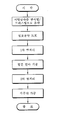
- FIG. 1 is a schematic diagram of a manufacturing method of the present invention.
- the present invention comprises the steps of: (a) engraving the base metal upper surface by a corrosion method or a press method; (b) applying the lacquer glaze on both of the base metal, or the base metal of the base metal designed by the wired technique on the base metal; (c) a first heat treatment step; (d) planar polishing step; (e) a second heat treatment step; And (f) provides a manufacturing method of cloisonne watch dial comprising a finishing process step.
- the base metal is a base metal for supporting the cloisonne, and in one embodiment of the present invention, the base metal includes gold, silver, copper, zinc, iron, manganese, tin, lead, nickel, aluminum, and two or more of these alloys. Metal selected from the group consisting of may be used, but is not limited thereto.
- Cloisonne is an artificial gemstone that has beautiful luster with gloss and excellent reflectance and refractive index. It is applied when glaze mainly containing silica, soda ash, borax, and dispersion is applied to the base metal and heat treated at 600 to 1000 °C. It is solidified in the process of melting and cooling and is formed by being fixed to the base metal.
- Such lacquer has the advantage that the color can be produced in various colors because the heat treatment temperature is different depending on the glaze composition and thickness or the color of the base metal.
- the base metal is first prepared, and then the dial design is designed in consideration of the shock absorbing surface. The engraved shape is then engraved using the corrosion or press method.
- Corrosion is a surface treatment technique in which acid is brought into contact with a metal surface to dig a metal surface to a certain depth, usually by immersing the metal in an acid solution.
- the parts that do not want to be corroded are kept by the anticorrosive to prevent the acid solution from coming into contact with the metal to maintain the original surface.
- the press method is a method of pressing or pressing a metal plate with a mechanical force through a metal mold, or engraving a surface or processing it into an uneven shape.
- the use of the template is widely used in the industry because of the advantage of being able to duplicate several copies of the same form in a short time.
- Wired technique refers to a method of completing a product by deforming a thin metal wire on a base metal into a designed shape and applying a lacquer glaze on it.
- a method for manufacturing a Cloisonne watch clock dial characterized in that the thickness of the manufactured watch dial is 1.4 mm or less.
- a method for producing a Cloisonne watch clock dial characterized in that the thickness of the manufactured watch dial is 1.0 mm or less. If the thickness of the watch dial exceeds 1.4mm, it is not suitable for use as a watch dial.
- the thickness of the lacquer glazing layer on the upper surface of the manufactured watch dial is preferably 0.6 mm or less, more preferably 0.4 mm or less.
- the first and second heat treatment steps may be carried out under temperature conditions of 600 to 1000 °C, more specifically under the temperature conditions of 700 to 900 °C. If it is lower than 600 °C, there is a fear that the lacquer glaze is not properly fixed, if it exceeds 1000 °C may not only cause the sticking phenomenon, but also economically undesirable.
- Cloisonne glaze is melted at a high temperature through the first heat treatment process and then cooled to organic nitriding and adhered to the surface of the base metal to form a cloisonne, the cloisonne formed so that the metal oxide has a variety of colors through the heat treatment base metal It is combined with the color of to develop a brilliant color.
- the surface grinding step it is preferable. At this time, use a tool such as sandpaper or a sharpener to adjust the flatness of the top of the dial.
- a scratch occurs on the surface of the cloisonne after the polishing step, it may be subjected to a process of revitalizing the gloss and color of the glaze through the secondary heat treatment step.
- the present invention provides a cloisonne watch dial manufactured by the above method, and provides a watch including the watch dial manufactured as described above.
- the watch may in particular be a wrist watch.
- the top surface of the metal to be used as the base metal was engraved with a clock dial cyan designed using the corrosion method. Thereafter, the chilbo glaze powder was applied to the front and back of the base metal thinly using a brush. Thereafter, heat treatment was performed at about 850 ° C. for 1 minute to fix the fill glaze. In order to properly adjust the flatness and thickness of the dial, the flatness of the upper surface of the dial was adjusted using sandpaper. Thereafter, a second heat treatment step was carried out to remove the adsorption on the cloisonne surface, and the temperature was about 850 ° C. After the watch dial was sufficiently dried, the oxide film was removed. The result was a watch dial with a total thickness of 1.0 mm.
- the top surface of the metal to be used as the base metal was engraved with a clock dial cyan designed using the press method. Thereafter, the chilbo glaze powder was applied to the front and back of the base metal thinly using a brush. Thereafter, heat treatment was performed at about 850 ° C. for 1 minute to fix the fill glaze. In order to properly adjust the flatness and thickness of the dial, the flatness of the top of the dial was adjusted using a whetstone. Thereafter, a second heat treatment step was carried out to remove the adsorption on the cloisonne surface, and the temperature was about 850 ° C. After the watch dial was sufficiently dried, the oxide film was removed. The result was a watch dial with a total thickness of 1.1 mm.
Landscapes
- Chemical & Material Sciences (AREA)
- Engineering & Computer Science (AREA)
- Materials Engineering (AREA)
- Mechanical Engineering (AREA)
- Metallurgy (AREA)
- Organic Chemistry (AREA)
- Physics & Mathematics (AREA)
- General Physics & Mathematics (AREA)
- ing And Chemical Polishing (AREA)
- Other Surface Treatments For Metallic Materials (AREA)
Abstract
Description
Claims (6)
- (a) 바탕금속 상부면을 부식법 또는 프레스법으로 음각하는 단계;(b) 바탕금속의 양면에 칠보유약을 도포하는 단계;(c) 1차 열처리 단계;(d) 평면 연마가공 단계;(e) 2차 열처리 단계; 및(f) 마무리 가공단계를 포함하는 칠보공예 시계 다이얼의 제조방법.
- 제1항에 있어서,상기 단계(a) 및 (b)사이에, 바탕금속의 일면에 유선기법으로 선을 부착시키는 단계가 더 포함하는 것을 특징으로 하는 칠보공예 시계 다이얼의 제조방법.
- 제1항에 있어서,상기 제조된 시계 다이얼의 두께가 1.0mm 이하인 것을 특징으로 하는 칠보공예 시계 다이얼의 제조방법.
- 제1항에 있어서,상기 제조된 시계 다이얼 중 상부면의 칠보유약층의 두께가 0.4mm 이하인 것을 특징으로 하는 칠보공예 시계 다이얼의 제조방법.
- 제1항에 있어서,상기 1차 및 2차 열처리 단계는 700 내지 900℃의 온도 조건하에 수행되는 것을 특징으로 하는 칠보공예 시계 다이얼의 제조방법.
- 제1항 내지 제5항 중 어느 한 항의 방법으로 제조된 칠보공예 시계 다이얼.
Priority Applications (1)
| Application Number | Priority Date | Filing Date | Title |
|---|---|---|---|
| CN2012800003460A CN102959128A (zh) | 2011-02-17 | 2012-02-07 | 利用景泰蓝工艺制造钟表表盘的方法 |
Applications Claiming Priority (2)
| Application Number | Priority Date | Filing Date | Title |
|---|---|---|---|
| KR1020110013990A KR101052879B1 (ko) | 2011-02-17 | 2011-02-17 | 칠보공예 시계 다이얼의 제조방법 |
| KR10-2011-0013990 | 2011-02-17 |
Publications (2)
| Publication Number | Publication Date |
|---|---|
| WO2012111932A2 true WO2012111932A2 (ko) | 2012-08-23 |
| WO2012111932A3 WO2012111932A3 (ko) | 2012-10-26 |
Family
ID=44932651
Family Applications (1)
| Application Number | Title | Priority Date | Filing Date |
|---|---|---|---|
| PCT/KR2012/000874 Ceased WO2012111932A2 (ko) | 2011-02-17 | 2012-02-07 | 칠보공예 시계 다이얼의 제조방법 |
Country Status (3)
| Country | Link |
|---|---|
| KR (1) | KR101052879B1 (ko) |
| CN (1) | CN102959128A (ko) |
| WO (1) | WO2012111932A2 (ko) |
Cited By (1)
| Publication number | Priority date | Publication date | Assignee | Title |
|---|---|---|---|---|
| KR102441621B1 (ko) * | 2022-07-23 | 2022-09-07 | (주)크리스챤모드 | 이중 판재 구조 방법을 응용한 칠보 시계 문자판 |
Families Citing this family (4)
| Publication number | Priority date | Publication date | Assignee | Title |
|---|---|---|---|---|
| CN107329390B (zh) * | 2017-07-27 | 2023-06-16 | 广州番禺职业技术学院 | 一种高温珐琅表盘及其制作方法 |
| KR102069243B1 (ko) * | 2019-10-02 | 2020-01-22 | (주)남정 | 칠보 제조방법 |
| KR102048715B1 (ko) * | 2019-10-11 | 2019-11-26 | 좋아실업주식회사 | 칠보가 포함된 도금제 금속장식품의 제작방법 |
| KR102772705B1 (ko) | 2024-10-18 | 2025-02-24 | 오승주 | 시계의 커스텀 다이얼 제작을 위한 지그플레이트 |
Family Cites Families (6)
| Publication number | Priority date | Publication date | Assignee | Title |
|---|---|---|---|---|
| KR860003473Y1 (en) * | 1984-11-21 | 1986-12-06 | Park Byong Chan | Time-piece having ornament |
| CN2043769U (zh) * | 1988-05-05 | 1989-08-30 | 上海新亚金属工艺厂 | 景泰蓝挂表 |
| KR100330669B1 (ko) * | 1999-10-25 | 2002-04-03 | 김연준 | 칠보스위치 커버의 제조방법 |
| KR20020083048A (ko) * | 2001-04-25 | 2002-11-01 | 최순복 | 은으로된 음식용구 손잡이의 칠보자기 형성방법 |
| JP2003270362A (ja) | 2002-03-18 | 2003-09-25 | Kawaguchiko Seimitsu Co Ltd | 時計用文字板の製造方法 |
| CN201503537U (zh) * | 2009-09-08 | 2010-06-09 | 陆穗岗 | 一种彩瓷钟表 |
-
2011
- 2011-02-17 KR KR1020110013990A patent/KR101052879B1/ko not_active Expired - Fee Related
-
2012
- 2012-02-07 WO PCT/KR2012/000874 patent/WO2012111932A2/ko not_active Ceased
- 2012-02-07 CN CN2012800003460A patent/CN102959128A/zh active Pending
Cited By (1)
| Publication number | Priority date | Publication date | Assignee | Title |
|---|---|---|---|---|
| KR102441621B1 (ko) * | 2022-07-23 | 2022-09-07 | (주)크리스챤모드 | 이중 판재 구조 방법을 응용한 칠보 시계 문자판 |
Also Published As
| Publication number | Publication date |
|---|---|
| KR101052879B1 (ko) | 2011-08-01 |
| CN102959128A (zh) | 2013-03-06 |
| WO2012111932A3 (ko) | 2012-10-26 |
Similar Documents
| Publication | Publication Date | Title |
|---|---|---|
| CN102181862B (zh) | 一种搪瓷钢板的制备方法 | |
| WO2012111932A2 (ko) | 칠보공예 시계 다이얼의 제조방법 | |
| TWI518200B (zh) | 玻璃構成用機具及方法 | |
| KR101636331B1 (ko) | 칠보 금속 장식판의 제조방법 및 그 방법에 의한 칠보 금속 장식판 | |
| CN103096649A (zh) | 壳体及其制备方法 | |
| CN110894137A (zh) | 钢化玻璃、3d微晶玻璃及其制备方法 | |
| CN110316968B (zh) | 一种快烧多晶型多色彩结晶釉及其制备方法和应用 | |
| CN111592234A (zh) | 图案化曲面玻璃及其制备方法和应用 | |
| CN110747471B (zh) | 一种应用于金属表面的变色珐琅加工方法 | |
| CA2072946A1 (en) | Rare earth-containing frits having a high glass transition temperature and their use for the production of enamels having improved heat resistance | |
| KR101911408B1 (ko) | 도자기 표면을 갖는 법랑 제품의 제조방법 | |
| CN110655329B (zh) | 用于化学钢化的玻璃油墨及其制备方法和应用 | |
| US2909438A (en) | Vitreous enamel compositions for aluminum and its alloys | |
| KR102130531B1 (ko) | Cgl 공정을 이용한 착색 도금강판 제조방법 | |
| CN111606718B (zh) | 一种含金属干粒的抛釉砖 | |
| CN115448756A (zh) | 一种蜡质釉瓷砖及其制备方法 | |
| CN112405795A (zh) | 一种表面具有金属花纹的钧瓷制备方法 | |
| KR101918381B1 (ko) | 칠보 공예품을 제조하는 방법과 이에 의하여 제조되는 칠보 공예품 | |
| CN113735442B (zh) | 一种哑光玻璃瓷及其制备方法 | |
| JPS6227016B2 (ko) | ||
| KR101044400B1 (ko) | 법랑용 무광택 유약 조성물 | |
| CN113735628A (zh) | 一种浅浮雕彩陶的生产工艺方法 | |
| JPH0297687A (ja) | ホウロウ基板の製造方法 | |
| CN101812570B (zh) | 一种在高磁感取向硅钢表面绘制图案的方法 | |
| WO2013125852A1 (ko) | 로고, 글자 또는 문양을 갖는 휴대기기용 고경도 케이스 제조방법 |
Legal Events
| Date | Code | Title | Description |
|---|---|---|---|
| WWE | Wipo information: entry into national phase |
Ref document number: 201280000346.0 Country of ref document: CN |
|
| 121 | Ep: the epo has been informed by wipo that ep was designated in this application |
Ref document number: 12747153 Country of ref document: EP Kind code of ref document: A2 |
|
| NENP | Non-entry into the national phase |
Ref country code: DE |
|
| 32PN | Ep: public notification in the ep bulletin as address of the adressee cannot be established |
Free format text: NOTING OF LOSS OF RIGHTS PURSUANT TO RULE 112(1) EPC (EPO FORM 1205A DATED 02/12/2013) |
|
| 122 | Ep: pct application non-entry in european phase |
Ref document number: 12747153 Country of ref document: EP Kind code of ref document: A2 |