WO2012114865A1 - Procédé de fabrication de poudre compactée, et poudre compactée - Google Patents
Procédé de fabrication de poudre compactée, et poudre compactée Download PDFInfo
- Publication number
- WO2012114865A1 WO2012114865A1 PCT/JP2012/052733 JP2012052733W WO2012114865A1 WO 2012114865 A1 WO2012114865 A1 WO 2012114865A1 JP 2012052733 W JP2012052733 W JP 2012052733W WO 2012114865 A1 WO2012114865 A1 WO 2012114865A1
- Authority
- WO
- WIPO (PCT)
- Prior art keywords
- slurry
- powder compact
- powder
- raw material
- molding
- Prior art date
- Legal status (The legal status is an assumption and is not a legal conclusion. Google has not performed a legal analysis and makes no representation as to the accuracy of the status listed.)
- Ceased
Links
Images

Classifications
-
- C—CHEMISTRY; METALLURGY
- C04—CEMENTS; CONCRETE; ARTIFICIAL STONE; CERAMICS; REFRACTORIES
- C04B—LIME, MAGNESIA; SLAG; CEMENTS; COMPOSITIONS THEREOF, e.g. MORTARS, CONCRETE OR LIKE BUILDING MATERIALS; ARTIFICIAL STONE; CERAMICS; REFRACTORIES; TREATMENT OF NATURAL STONE
- C04B35/00—Shaped ceramic products characterised by their composition; Ceramics compositions; Processing powders of inorganic compounds preparatory to the manufacturing of ceramic products
- C04B35/622—Forming processes; Processing powders of inorganic compounds preparatory to the manufacturing of ceramic products
- C04B35/626—Preparing or treating the powders individually or as batches ; preparing or treating macroscopic reinforcing agents for ceramic products, e.g. fibres; mechanical aspects section B
- C04B35/63—Preparing or treating the powders individually or as batches ; preparing or treating macroscopic reinforcing agents for ceramic products, e.g. fibres; mechanical aspects section B using additives specially adapted for forming the products, e.g.. binder binders
- C04B35/632—Organic additives
- C04B35/634—Polymers
- C04B35/63448—Polymers obtained otherwise than by reactions only involving carbon-to-carbon unsaturated bonds
- C04B35/63456—Polyurethanes; Polyisocyanates
-
- B—PERFORMING OPERATIONS; TRANSPORTING
- B28—WORKING CEMENT, CLAY, OR STONE
- B28B—SHAPING CLAY OR OTHER CERAMIC COMPOSITIONS; SHAPING SLAG; SHAPING MIXTURES CONTAINING CEMENTITIOUS MATERIAL, e.g. PLASTER
- B28B1/00—Producing shaped prefabricated articles from the material
-
- B—PERFORMING OPERATIONS; TRANSPORTING
- B28—WORKING CEMENT, CLAY, OR STONE
- B28B—SHAPING CLAY OR OTHER CERAMIC COMPOSITIONS; SHAPING SLAG; SHAPING MIXTURES CONTAINING CEMENTITIOUS MATERIAL, e.g. PLASTER
- B28B3/00—Producing shaped articles from the material by using presses; Presses specially adapted therefor
-
- B—PERFORMING OPERATIONS; TRANSPORTING
- B28—WORKING CEMENT, CLAY, OR STONE
- B28B—SHAPING CLAY OR OTHER CERAMIC COMPOSITIONS; SHAPING SLAG; SHAPING MIXTURES CONTAINING CEMENTITIOUS MATERIAL, e.g. PLASTER
- B28B5/00—Producing shaped articles from the material in moulds or on moulding surfaces, carried or formed by, in or on conveyors irrespective of the manner of shaping
-
- C—CHEMISTRY; METALLURGY
- C04—CEMENTS; CONCRETE; ARTIFICIAL STONE; CERAMICS; REFRACTORIES
- C04B—LIME, MAGNESIA; SLAG; CEMENTS; COMPOSITIONS THEREOF, e.g. MORTARS, CONCRETE OR LIKE BUILDING MATERIALS; ARTIFICIAL STONE; CERAMICS; REFRACTORIES; TREATMENT OF NATURAL STONE
- C04B35/00—Shaped ceramic products characterised by their composition; Ceramics compositions; Processing powders of inorganic compounds preparatory to the manufacturing of ceramic products
-
- C—CHEMISTRY; METALLURGY
- C04—CEMENTS; CONCRETE; ARTIFICIAL STONE; CERAMICS; REFRACTORIES
- C04B—LIME, MAGNESIA; SLAG; CEMENTS; COMPOSITIONS THEREOF, e.g. MORTARS, CONCRETE OR LIKE BUILDING MATERIALS; ARTIFICIAL STONE; CERAMICS; REFRACTORIES; TREATMENT OF NATURAL STONE
- C04B35/00—Shaped ceramic products characterised by their composition; Ceramics compositions; Processing powders of inorganic compounds preparatory to the manufacturing of ceramic products
- C04B35/01—Shaped ceramic products characterised by their composition; Ceramics compositions; Processing powders of inorganic compounds preparatory to the manufacturing of ceramic products based on oxide ceramics
-
- C—CHEMISTRY; METALLURGY
- C04—CEMENTS; CONCRETE; ARTIFICIAL STONE; CERAMICS; REFRACTORIES
- C04B—LIME, MAGNESIA; SLAG; CEMENTS; COMPOSITIONS THEREOF, e.g. MORTARS, CONCRETE OR LIKE BUILDING MATERIALS; ARTIFICIAL STONE; CERAMICS; REFRACTORIES; TREATMENT OF NATURAL STONE
- C04B35/00—Shaped ceramic products characterised by their composition; Ceramics compositions; Processing powders of inorganic compounds preparatory to the manufacturing of ceramic products
- C04B35/622—Forming processes; Processing powders of inorganic compounds preparatory to the manufacturing of ceramic products
- C04B35/624—Sol-gel processing
-
- C—CHEMISTRY; METALLURGY
- C04—CEMENTS; CONCRETE; ARTIFICIAL STONE; CERAMICS; REFRACTORIES
- C04B—LIME, MAGNESIA; SLAG; CEMENTS; COMPOSITIONS THEREOF, e.g. MORTARS, CONCRETE OR LIKE BUILDING MATERIALS; ARTIFICIAL STONE; CERAMICS; REFRACTORIES; TREATMENT OF NATURAL STONE
- C04B35/00—Shaped ceramic products characterised by their composition; Ceramics compositions; Processing powders of inorganic compounds preparatory to the manufacturing of ceramic products
- C04B35/622—Forming processes; Processing powders of inorganic compounds preparatory to the manufacturing of ceramic products
- C04B35/626—Preparing or treating the powders individually or as batches ; preparing or treating macroscopic reinforcing agents for ceramic products, e.g. fibres; mechanical aspects section B
- C04B35/62605—Treating the starting powders individually or as mixtures
- C04B35/62625—Wet mixtures
- C04B35/6263—Wet mixtures characterised by their solids loadings, i.e. the percentage of solids
-
- C—CHEMISTRY; METALLURGY
- C04—CEMENTS; CONCRETE; ARTIFICIAL STONE; CERAMICS; REFRACTORIES
- C04B—LIME, MAGNESIA; SLAG; CEMENTS; COMPOSITIONS THEREOF, e.g. MORTARS, CONCRETE OR LIKE BUILDING MATERIALS; ARTIFICIAL STONE; CERAMICS; REFRACTORIES; TREATMENT OF NATURAL STONE
- C04B35/00—Shaped ceramic products characterised by their composition; Ceramics compositions; Processing powders of inorganic compounds preparatory to the manufacturing of ceramic products
- C04B35/622—Forming processes; Processing powders of inorganic compounds preparatory to the manufacturing of ceramic products
- C04B35/626—Preparing or treating the powders individually or as batches ; preparing or treating macroscopic reinforcing agents for ceramic products, e.g. fibres; mechanical aspects section B
- C04B35/62605—Treating the starting powders individually or as mixtures
- C04B35/62625—Wet mixtures
- C04B35/6264—Mixing media, e.g. organic solvents
-
- C—CHEMISTRY; METALLURGY
- C04—CEMENTS; CONCRETE; ARTIFICIAL STONE; CERAMICS; REFRACTORIES
- C04B—LIME, MAGNESIA; SLAG; CEMENTS; COMPOSITIONS THEREOF, e.g. MORTARS, CONCRETE OR LIKE BUILDING MATERIALS; ARTIFICIAL STONE; CERAMICS; REFRACTORIES; TREATMENT OF NATURAL STONE
- C04B35/00—Shaped ceramic products characterised by their composition; Ceramics compositions; Processing powders of inorganic compounds preparatory to the manufacturing of ceramic products
- C04B35/622—Forming processes; Processing powders of inorganic compounds preparatory to the manufacturing of ceramic products
- C04B35/626—Preparing or treating the powders individually or as batches ; preparing or treating macroscopic reinforcing agents for ceramic products, e.g. fibres; mechanical aspects section B
- C04B35/62605—Treating the starting powders individually or as mixtures
- C04B35/6269—Curing of mixtures
-
- C—CHEMISTRY; METALLURGY
- C04—CEMENTS; CONCRETE; ARTIFICIAL STONE; CERAMICS; REFRACTORIES
- C04B—LIME, MAGNESIA; SLAG; CEMENTS; COMPOSITIONS THEREOF, e.g. MORTARS, CONCRETE OR LIKE BUILDING MATERIALS; ARTIFICIAL STONE; CERAMICS; REFRACTORIES; TREATMENT OF NATURAL STONE
- C04B35/00—Shaped ceramic products characterised by their composition; Ceramics compositions; Processing powders of inorganic compounds preparatory to the manufacturing of ceramic products
- C04B35/622—Forming processes; Processing powders of inorganic compounds preparatory to the manufacturing of ceramic products
- C04B35/626—Preparing or treating the powders individually or as batches ; preparing or treating macroscopic reinforcing agents for ceramic products, e.g. fibres; mechanical aspects section B
- C04B35/63—Preparing or treating the powders individually or as batches ; preparing or treating macroscopic reinforcing agents for ceramic products, e.g. fibres; mechanical aspects section B using additives specially adapted for forming the products, e.g.. binder binders
- C04B35/6303—Inorganic additives
-
- C—CHEMISTRY; METALLURGY
- C04—CEMENTS; CONCRETE; ARTIFICIAL STONE; CERAMICS; REFRACTORIES
- C04B—LIME, MAGNESIA; SLAG; CEMENTS; COMPOSITIONS THEREOF, e.g. MORTARS, CONCRETE OR LIKE BUILDING MATERIALS; ARTIFICIAL STONE; CERAMICS; REFRACTORIES; TREATMENT OF NATURAL STONE
- C04B35/00—Shaped ceramic products characterised by their composition; Ceramics compositions; Processing powders of inorganic compounds preparatory to the manufacturing of ceramic products
- C04B35/622—Forming processes; Processing powders of inorganic compounds preparatory to the manufacturing of ceramic products
- C04B35/626—Preparing or treating the powders individually or as batches ; preparing or treating macroscopic reinforcing agents for ceramic products, e.g. fibres; mechanical aspects section B
- C04B35/63—Preparing or treating the powders individually or as batches ; preparing or treating macroscopic reinforcing agents for ceramic products, e.g. fibres; mechanical aspects section B using additives specially adapted for forming the products, e.g.. binder binders
- C04B35/632—Organic additives
-
- C—CHEMISTRY; METALLURGY
- C04—CEMENTS; CONCRETE; ARTIFICIAL STONE; CERAMICS; REFRACTORIES
- C04B—LIME, MAGNESIA; SLAG; CEMENTS; COMPOSITIONS THEREOF, e.g. MORTARS, CONCRETE OR LIKE BUILDING MATERIALS; ARTIFICIAL STONE; CERAMICS; REFRACTORIES; TREATMENT OF NATURAL STONE
- C04B35/00—Shaped ceramic products characterised by their composition; Ceramics compositions; Processing powders of inorganic compounds preparatory to the manufacturing of ceramic products
- C04B35/622—Forming processes; Processing powders of inorganic compounds preparatory to the manufacturing of ceramic products
- C04B35/626—Preparing or treating the powders individually or as batches ; preparing or treating macroscopic reinforcing agents for ceramic products, e.g. fibres; mechanical aspects section B
- C04B35/63—Preparing or treating the powders individually or as batches ; preparing or treating macroscopic reinforcing agents for ceramic products, e.g. fibres; mechanical aspects section B using additives specially adapted for forming the products, e.g.. binder binders
- C04B35/632—Organic additives
- C04B35/634—Polymers
-
- C—CHEMISTRY; METALLURGY
- C04—CEMENTS; CONCRETE; ARTIFICIAL STONE; CERAMICS; REFRACTORIES
- C04B—LIME, MAGNESIA; SLAG; CEMENTS; COMPOSITIONS THEREOF, e.g. MORTARS, CONCRETE OR LIKE BUILDING MATERIALS; ARTIFICIAL STONE; CERAMICS; REFRACTORIES; TREATMENT OF NATURAL STONE
- C04B35/00—Shaped ceramic products characterised by their composition; Ceramics compositions; Processing powders of inorganic compounds preparatory to the manufacturing of ceramic products
- C04B35/622—Forming processes; Processing powders of inorganic compounds preparatory to the manufacturing of ceramic products
- C04B35/626—Preparing or treating the powders individually or as batches ; preparing or treating macroscopic reinforcing agents for ceramic products, e.g. fibres; mechanical aspects section B
- C04B35/63—Preparing or treating the powders individually or as batches ; preparing or treating macroscopic reinforcing agents for ceramic products, e.g. fibres; mechanical aspects section B using additives specially adapted for forming the products, e.g.. binder binders
- C04B35/632—Organic additives
- C04B35/636—Polysaccharides or derivatives thereof
-
- C—CHEMISTRY; METALLURGY
- C04—CEMENTS; CONCRETE; ARTIFICIAL STONE; CERAMICS; REFRACTORIES
- C04B—LIME, MAGNESIA; SLAG; CEMENTS; COMPOSITIONS THEREOF, e.g. MORTARS, CONCRETE OR LIKE BUILDING MATERIALS; ARTIFICIAL STONE; CERAMICS; REFRACTORIES; TREATMENT OF NATURAL STONE
- C04B35/00—Shaped ceramic products characterised by their composition; Ceramics compositions; Processing powders of inorganic compounds preparatory to the manufacturing of ceramic products
- C04B35/622—Forming processes; Processing powders of inorganic compounds preparatory to the manufacturing of ceramic products
- C04B35/626—Preparing or treating the powders individually or as batches ; preparing or treating macroscopic reinforcing agents for ceramic products, e.g. fibres; mechanical aspects section B
- C04B35/63—Preparing or treating the powders individually or as batches ; preparing or treating macroscopic reinforcing agents for ceramic products, e.g. fibres; mechanical aspects section B using additives specially adapted for forming the products, e.g.. binder binders
- C04B35/632—Organic additives
- C04B35/636—Polysaccharides or derivatives thereof
- C04B35/6365—Cellulose or derivatives thereof
-
- C—CHEMISTRY; METALLURGY
- C04—CEMENTS; CONCRETE; ARTIFICIAL STONE; CERAMICS; REFRACTORIES
- C04B—LIME, MAGNESIA; SLAG; CEMENTS; COMPOSITIONS THEREOF, e.g. MORTARS, CONCRETE OR LIKE BUILDING MATERIALS; ARTIFICIAL STONE; CERAMICS; REFRACTORIES; TREATMENT OF NATURAL STONE
- C04B35/00—Shaped ceramic products characterised by their composition; Ceramics compositions; Processing powders of inorganic compounds preparatory to the manufacturing of ceramic products
- C04B35/622—Forming processes; Processing powders of inorganic compounds preparatory to the manufacturing of ceramic products
- C04B35/626—Preparing or treating the powders individually or as batches ; preparing or treating macroscopic reinforcing agents for ceramic products, e.g. fibres; mechanical aspects section B
- C04B35/63—Preparing or treating the powders individually or as batches ; preparing or treating macroscopic reinforcing agents for ceramic products, e.g. fibres; mechanical aspects section B using additives specially adapted for forming the products, e.g.. binder binders
- C04B35/638—Removal thereof
-
- C—CHEMISTRY; METALLURGY
- C08—ORGANIC MACROMOLECULAR COMPOUNDS; THEIR PREPARATION OR CHEMICAL WORKING-UP; COMPOSITIONS BASED THEREON
- C08K—Use of inorganic or non-macromolecular organic substances as compounding ingredients
- C08K3/00—Use of inorganic substances as compounding ingredients
-
- C—CHEMISTRY; METALLURGY
- C08—ORGANIC MACROMOLECULAR COMPOUNDS; THEIR PREPARATION OR CHEMICAL WORKING-UP; COMPOSITIONS BASED THEREON
- C08K—Use of inorganic or non-macromolecular organic substances as compounding ingredients
- C08K3/00—Use of inorganic substances as compounding ingredients
- C08K3/18—Oxygen-containing compounds, e.g. metal carbonyls
- C08K3/20—Oxides; Hydroxides
- C08K3/22—Oxides; Hydroxides of metals
-
- C—CHEMISTRY; METALLURGY
- C08—ORGANIC MACROMOLECULAR COMPOUNDS; THEIR PREPARATION OR CHEMICAL WORKING-UP; COMPOSITIONS BASED THEREON
- C08K—Use of inorganic or non-macromolecular organic substances as compounding ingredients
- C08K5/00—Use of organic ingredients
-
- C—CHEMISTRY; METALLURGY
- C04—CEMENTS; CONCRETE; ARTIFICIAL STONE; CERAMICS; REFRACTORIES
- C04B—LIME, MAGNESIA; SLAG; CEMENTS; COMPOSITIONS THEREOF, e.g. MORTARS, CONCRETE OR LIKE BUILDING MATERIALS; ARTIFICIAL STONE; CERAMICS; REFRACTORIES; TREATMENT OF NATURAL STONE
- C04B2235/00—Aspects relating to ceramic starting mixtures or sintered ceramic products
- C04B2235/02—Composition of constituents of the starting material or of secondary phases of the final product
- C04B2235/30—Constituents and secondary phases not being of a fibrous nature
- C04B2235/32—Metal oxides, mixed metal oxides, or oxide-forming salts thereof, e.g. carbonates, nitrates, (oxy)hydroxides, chlorides
- C04B2235/3224—Rare earth oxide or oxide forming salts thereof, e.g. scandium oxide
- C04B2235/3225—Yttrium oxide or oxide-forming salts thereof
-
- C—CHEMISTRY; METALLURGY
- C04—CEMENTS; CONCRETE; ARTIFICIAL STONE; CERAMICS; REFRACTORIES
- C04B—LIME, MAGNESIA; SLAG; CEMENTS; COMPOSITIONS THEREOF, e.g. MORTARS, CONCRETE OR LIKE BUILDING MATERIALS; ARTIFICIAL STONE; CERAMICS; REFRACTORIES; TREATMENT OF NATURAL STONE
- C04B2235/00—Aspects relating to ceramic starting mixtures or sintered ceramic products
- C04B2235/02—Composition of constituents of the starting material or of secondary phases of the final product
- C04B2235/30—Constituents and secondary phases not being of a fibrous nature
- C04B2235/32—Metal oxides, mixed metal oxides, or oxide-forming salts thereof, e.g. carbonates, nitrates, (oxy)hydroxides, chlorides
- C04B2235/327—Iron group oxides, their mixed metal oxides, or oxide-forming salts thereof
- C04B2235/3279—Nickel oxides, nickalates, or oxide-forming salts thereof
-
- C—CHEMISTRY; METALLURGY
- C04—CEMENTS; CONCRETE; ARTIFICIAL STONE; CERAMICS; REFRACTORIES
- C04B—LIME, MAGNESIA; SLAG; CEMENTS; COMPOSITIONS THEREOF, e.g. MORTARS, CONCRETE OR LIKE BUILDING MATERIALS; ARTIFICIAL STONE; CERAMICS; REFRACTORIES; TREATMENT OF NATURAL STONE
- C04B2235/00—Aspects relating to ceramic starting mixtures or sintered ceramic products
- C04B2235/02—Composition of constituents of the starting material or of secondary phases of the final product
- C04B2235/30—Constituents and secondary phases not being of a fibrous nature
- C04B2235/34—Non-metal oxides, non-metal mixed oxides, or salts thereof that form the non-metal oxides upon heating, e.g. carbonates, nitrates, (oxy)hydroxides, chlorides
- C04B2235/349—Clays, e.g. bentonites, smectites such as montmorillonite, vermiculites or kaolines, e.g. illite, talc or sepiolite
-
- C—CHEMISTRY; METALLURGY
- C04—CEMENTS; CONCRETE; ARTIFICIAL STONE; CERAMICS; REFRACTORIES
- C04B—LIME, MAGNESIA; SLAG; CEMENTS; COMPOSITIONS THEREOF, e.g. MORTARS, CONCRETE OR LIKE BUILDING MATERIALS; ARTIFICIAL STONE; CERAMICS; REFRACTORIES; TREATMENT OF NATURAL STONE
- C04B2235/00—Aspects relating to ceramic starting mixtures or sintered ceramic products
- C04B2235/60—Aspects relating to the preparation, properties or mechanical treatment of green bodies or pre-forms
- C04B2235/602—Making the green bodies or pre-forms by moulding
- C04B2235/6022—Injection moulding
-
- C—CHEMISTRY; METALLURGY
- C04—CEMENTS; CONCRETE; ARTIFICIAL STONE; CERAMICS; REFRACTORIES
- C04B—LIME, MAGNESIA; SLAG; CEMENTS; COMPOSITIONS THEREOF, e.g. MORTARS, CONCRETE OR LIKE BUILDING MATERIALS; ARTIFICIAL STONE; CERAMICS; REFRACTORIES; TREATMENT OF NATURAL STONE
- C04B2235/00—Aspects relating to ceramic starting mixtures or sintered ceramic products
- C04B2235/60—Aspects relating to the preparation, properties or mechanical treatment of green bodies or pre-forms
- C04B2235/602—Making the green bodies or pre-forms by moulding
- C04B2235/6023—Gel casting
-
- C—CHEMISTRY; METALLURGY
- C04—CEMENTS; CONCRETE; ARTIFICIAL STONE; CERAMICS; REFRACTORIES
- C04B—LIME, MAGNESIA; SLAG; CEMENTS; COMPOSITIONS THEREOF, e.g. MORTARS, CONCRETE OR LIKE BUILDING MATERIALS; ARTIFICIAL STONE; CERAMICS; REFRACTORIES; TREATMENT OF NATURAL STONE
- C04B2235/00—Aspects relating to ceramic starting mixtures or sintered ceramic products
- C04B2235/60—Aspects relating to the preparation, properties or mechanical treatment of green bodies or pre-forms
- C04B2235/602—Making the green bodies or pre-forms by moulding
- C04B2235/6025—Tape casting, e.g. with a doctor blade
-
- C—CHEMISTRY; METALLURGY
- C04—CEMENTS; CONCRETE; ARTIFICIAL STONE; CERAMICS; REFRACTORIES
- C04B—LIME, MAGNESIA; SLAG; CEMENTS; COMPOSITIONS THEREOF, e.g. MORTARS, CONCRETE OR LIKE BUILDING MATERIALS; ARTIFICIAL STONE; CERAMICS; REFRACTORIES; TREATMENT OF NATURAL STONE
- C04B2235/00—Aspects relating to ceramic starting mixtures or sintered ceramic products
- C04B2235/60—Aspects relating to the preparation, properties or mechanical treatment of green bodies or pre-forms
- C04B2235/606—Drying
-
- C—CHEMISTRY; METALLURGY
- C04—CEMENTS; CONCRETE; ARTIFICIAL STONE; CERAMICS; REFRACTORIES
- C04B—LIME, MAGNESIA; SLAG; CEMENTS; COMPOSITIONS THEREOF, e.g. MORTARS, CONCRETE OR LIKE BUILDING MATERIALS; ARTIFICIAL STONE; CERAMICS; REFRACTORIES; TREATMENT OF NATURAL STONE
- C04B2235/00—Aspects relating to ceramic starting mixtures or sintered ceramic products
- C04B2235/60—Aspects relating to the preparation, properties or mechanical treatment of green bodies or pre-forms
- C04B2235/61—Mechanical properties, e.g. fracture toughness, hardness, Young's modulus or strength
-
- C—CHEMISTRY; METALLURGY
- C08—ORGANIC MACROMOLECULAR COMPOUNDS; THEIR PREPARATION OR CHEMICAL WORKING-UP; COMPOSITIONS BASED THEREON
- C08L—COMPOSITIONS OF MACROMOLECULAR COMPOUNDS
- C08L2201/00—Properties
-
- C—CHEMISTRY; METALLURGY
- C08—ORGANIC MACROMOLECULAR COMPOUNDS; THEIR PREPARATION OR CHEMICAL WORKING-UP; COMPOSITIONS BASED THEREON
- C08L—COMPOSITIONS OF MACROMOLECULAR COMPOUNDS
- C08L2312/00—Crosslinking
Definitions
- the present invention relates to a method for producing a powder molded body using a slurry containing a powdery molding raw material, and a powder molded body molded using the slurry.
- a primary molded body final powder molding just before firing
- a known method such as injection molding or sheet molding using a slurry containing raw material powder, an organic binder and a dispersion medium.
- drying shrinkage is mainly caused by a decrease in the distance between the organic binder molecules as the dispersion medium volatilizes.
- drying shrinkage rate the degree of shrinkage
- the present applicant has already proposed a method for producing a powder molded body (green body) using a so-called “gel casting method” (for example, Japanese Patent Laid-Open Nos. 11-48222 and 11). -302302, JP 2001-335371 A, International Publication No. 2009/104703, JP 2010-241129, and the like.
- the production method disclosed in International Publication No. 2009/104703 is as follows: (1) Raw material powder, isocyanate, polyol, urethane reaction catalyst, dispersion medium, dispersion aid. And a slurry containing the agent. (2) The slurry is formed by an arbitrary method. (3) The obtained slurry compact is dried and solidified.
- this gel casting method molding of a complex shape product is easily performed by casting using a slurry in a state before gelation with high fluidity. A green body with sufficient strength to withstand handling can be obtained. Further, as the gelation proceeds, cross-linking occurs between adjacent urethane resin molecules so as to connect the urethane groups (—O—CO—NH—) generated in the same molecule. . By this crosslinking, a strong network is formed between the molecules of the urethane resin. As a result, even if the volatilization of the dispersion medium proceeds, the distance between the molecules of the urethane resin is less likely to be reduced, and thus the drying shrinkage rate is reduced.
- compositional segregation may occur during the curing time due to a difference in specific gravity between components in the slurry (specifically, a component having a large specific gravity settles).
- specific gravity specifically, a component having a large specific gravity settles.
- the above-mentioned compositional segregation occurs significantly.
- an object of the present invention is to suppress as much as possible the occurrence of compositional segregation due to the difference in specific gravity between components in a slurry in a so-called gel casting method, thereby forming a powder molded body (green body) with good characteristics. Is to manufacture.
- the powder molded body of the present invention includes a powdery molding raw material (for example, ceramic powder, metal powder, transition metal compound powder serving as a ceramic raw material, or a mixed powder thereof), and a dispersion medium for dispersing this, A dispersion aid for uniformly dispersing the forming raw material in the dispersion medium, a binder precursor for generating an organic binder (synthetic resin binder) by a chemical reaction, and a reaction progress for advancing the chemical reaction And a slurry containing the agent.
- the dispersion medium is non-reactive (does not directly participate in the chemical reaction in the binder precursor), and can also function as a solvent for the dispersion aid, binder precursor, and reaction accelerator. Is.
- the chemical reaction may include a polymerization reaction, a crosslinking reaction, and the like. Therefore, a catalyst or a polymerization initiator can be used as the reaction promoter.
- the binder precursor When the chemical reaction includes a urethane reaction, the binder precursor generates a urethane resin as the organic binder by a urethane reaction (urethane precursor: for example, polyol and isocyanate), and the reaction accelerator is a urethane reaction. It is a catalyst.
- the isocyanate is a compound having an isocyanate group (—N ⁇ C ⁇ O).
- the polyol (polyhydric alcohol) is a compound having a plurality of alcoholic hydroxyl groups (—OH) (including those having other functional groups such as amino groups).
- the urethane reaction is a polyaddition reaction between an alcoholic hydroxyl group and an isocyanate group.
- the method for producing the powder molded body of the present invention comprises: A slurry preparation step of preparing the slurry containing the forming raw material, the dispersion medium, the dispersion aid, the binder precursor, and the reaction accelerator; A molding step of obtaining a primary powder molded body by molding the prepared slurry into a predetermined shape; and In the primary powder molded body, the chemical reaction is advanced to solidify the slurry, and the dispersion medium is volatilized and removed from the primary powder molded body. The solidification includes gelation and curing. )When, Is included.
- the molding raw material may include a first molding raw material and a second molding raw material different from the first molding raw material.
- the powder molded body of the present invention is molded using a slurry containing the molding raw material, the dispersion medium, the dispersion aid, the binder precursor, and the reaction accelerator.
- the feature of the present invention is that a pseudoplasticity imparting agent for imparting pseudoplasticity to the slurry is added to the slurry.
- a pseudoplasticity imparting agent for imparting pseudoplasticity to the slurry is added to the slurry.
- “pseudoplasticity” is a property in which the viscosity increases when a low shear rate is applied to the slurry, and the viscosity decreases rapidly as the shear rate increases (Japanese Patent Laid-Open No. 10-130076). reference).
- the slurry subjected to the molding step may contain the organic binder that has already been generated by the chemical reaction from the binder precursor. That is, prior to the drying and solidifying step, the organic binder may be partially generated from the binder precursor. Further, the drying and solidifying step may be divided into two steps: a solidifying step in which the chemical reaction is advanced to solidify the slurry, and a drying step in which the dispersion medium is mainly removed by volatilization. In this case, a mold release step for removing the solidified primary powder compact from a mold (such as a mold) may be included between the solidification step and the drying step. The dispersion medium remaining in the primary powder molded body (solidified by the solidification step) taken out by the mold release step is volatilized and removed in a subsequent drying step.
- the drying and solidifying step may be a step of heating the primary powder compact. Part of the heating process may be performed during the molding process. That is, the primary powder compact may be heated in a mold used in the molding step or in a molding machine.
- the organic binder is generated from the binder precursor by the action of the reaction accelerator in the primary powder molded body formed using the slurry by the drying and solidifying step, and the slurry is gelled.
- the dispersion medium is volatilized and removed.
- a urethane resin as the organic binder may be generated by a urethane reaction between a polyol and an isocyanate.
- the composite slurry slurry containing the organic component and / or a plurality of types of molding raw materials used in the gel casting method
- a high shear rate is obtained during molding. Due to the influence, the slurry has a low viscosity suitable for molding, while at the time of standing after molding, the shear rate is low, so the viscosity becomes high. Therefore, according to the present invention, composition segregation due to a difference in specific gravity between components in the slurry can be satisfactorily suppressed while maintaining good moldability.
- the slurry viscosity at the time of molding is preferably 1000 cP or less.
- the viscosity at the time of molding is preferably 5000 cP or more (more preferably 20000 cP or more).
- the slurry is When the shear rate is 1 sec -1 or less (when standing), the viscosity is 5000 cP or more, It is preferable that the viscosity is adjusted to 1000 cP or less at a shear rate of 20 sec ⁇ 1 or more (during molding). In this case, specifically, when the amount of the forming raw material is 100 parts by weight, the pseudoplasticity imparting agent is added by 1 part by weight or more and less than 3 parts by weight.
- the slurry is With a shear rate of 1 sec -1 or less and a viscosity of 20000 cP or more, More preferably, the shear rate is 20 sec ⁇ 1 or more and the viscosity is 1000 cP or less.
- the pseudoplasticity-imparting agent is added in an amount of 2 parts by weight or more and less than 3 parts by weight.
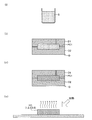
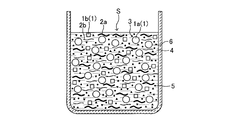
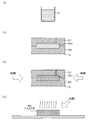
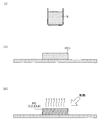
- FIG. 2A It is the schematic which shows an example of the manufacturing method of this embodiment. It is sectional drawing which shows schematic structure of the slurry shown by FIG. It is a figure which shows the outline of the chemical reaction in which the urethane resin as an organic binder is produced
- FIG. 1 is a schematic view showing an example of the manufacturing method of the present embodiment.
- 2A is a cross-sectional view showing a schematic configuration of the slurry S shown in FIG. 1 and 2A, in the present embodiment, a powder molded body (ceramic green body) PC is manufactured according to the following procedure.
- Step 1 Slurry preparation step
- Powdered ceramic raw material 1 may contain two or more ceramic raw materials 1a, 1b... As shown in FIG. 2A), binder precursor isocyanate 2a and polyol 2b, and catalyst 3 And a slurry S containing at least the dispersion medium 4.
- the ceramic raw material 1 is dispersed in the dispersion medium 4.
- the isocyanate 2a, the polyol 2b, and the catalyst 3 are dissolved in the dispersion medium 4.
- the dispersion aid 5 is added.
- the slurry S has a low viscosity suitable for molding at the time of molding (when the shear rate is high), while having a high viscosity at the time of standing after molding (when the shear rate is low).
- pseudoplasticity imparting agent 6 (which may also be referred to as “rheology control agent”) is added.
- the pseudoplasticity imparting agent 6 has a shear rate of 1000 cP or less at a shear rate of 20 sec ⁇ 1 or more, and a viscosity of the slurry S of 5000 cP or more at a shear rate of 1 sec ⁇ 1 or less (more (The specific examples of the kind and amount of the pseudoplasticity imparting agent 6 will be described later).
- the slurry S prepared in step 1 is molded into an arbitrary shape by a known molding method, thereby obtaining a primary powder molded body PC1 (see (ii) in FIG. 1). At this time, the slurry S exhibits good fluidity suitable for molding of a complicated shape due to the shear rate applied at the time of molding. Therefore, the primary powder compact PC1 is molded well.
- the mold was released from the mold and heated in a dryer for a predetermined time (see (iv) in FIG. 1). Thereby, the dispersion medium 4 is volatilized and removed.
- the ceramic raw material 1 (1a, 1b), the urethane resin 2, the catalyst 3, the dispersion aid 5, and the pseudoplasticity imparting agent 6 are contained by heating and drying and solidifying the primary powder molded body PC1.
- a powder compact PC is obtained.
- the organic components (the urethane resin 2, the catalyst 3, the dispersion aid 5, the pseudoplasticity imparting agent 6 and the like) in the powder molded body PC are removed by decomposition and scattering during the subsequent sintering.
- an oxide-based ceramic may be used, or a non-oxide-based ceramic may be used.
- a metal compound powder ZrO 2 , Al 2 O 3 , NiO, ZnO, MgO, CaO, SnO 2 , SiO 2 , Y 2 O 3 , Fe 2 O 3 , Co
- 3 O 4 BaTiO 3, SrTiO 3, PZT, SiC, TiC, Si 3 N 4, TiN, AlN, etc.
- the particle diameter of the ceramic raw material 1 (1a, 1b) is not particularly limited as long as the slurry S can be prepared (that is, can be stably dispersed in the dispersion medium 4).
- Isocyanate 2a is not particularly limited as long as it is a substance having an isocyanate group as a functional group (polyisocyanate having a plurality of isocyanate groups as exemplified in the figure can be used particularly preferably). Specifically, for example, tolylene diisocyanate (TDI), diphenylmethane diisocyanate (MDI), or modified products thereof can be used. Those having a reactive functional group other than an isocyanate group in the molecule can also be used.
- TDI tolylene diisocyanate
- MDI diphenylmethane diisocyanate
- Those having a reactive functional group other than an isocyanate group in the molecule can also be used.
- the polyol 2b is not particularly limited as long as it is a substance having a plurality of alcoholic hydroxyl groups as functional groups.
- ethylene glycol (EG), polyethylene glycol (PEG), propylene glycol (PG), polypropylene glycol (PPG), polytetramethylene ether glycol (PTMG), polyhexamethylene glycol (PHMG), polyvinyl butyral (PVB), etc. Can be used.
- the catalyst 3 is not particularly limited as long as it is a substance that promotes the urethane reaction.
- triethylenediamine, hexanediamine, 6-dimethylamino-1-hexanol, etc. can be used.
- the dispersion medium 4 is not particularly limited as long as it dissolves the isocyanate 2a, the polyol 2b, the catalyst 3, and the dispersion aid 5 and has a molecular weight of 150 or more (more preferably 160 or more).
- esters dimethyl glutarate, triacetin, ethylene glycol monobutyl ether acetate, diethylene glycol monobutyl ether acetate, propylene glycol monomethyl ether acetate, etc.
- those having two or more ester bonds such as polybasic acid esters (such as dimethyl glutarate) and polyhydric alcohol acid esters (such as triacetin) are suitable.
- dispersion aid 5 examples include polycarboxylic acid copolymers, polycarboxylates, sorbitan fatty acid esters, polyglycerin fatty acid esters, phosphate ester copolymers, sulfonate copolymers, and tertiary grades.
- a polyurethane polyester copolymer having an amine or the like can be used.
- polycarboxylic acid copolymers, polycarboxylic acid salts, and the like are suitable.
- the pseudoplasticity imparting agent 6 is well-known and many of them are already commercially available. For example, various materials such as modified polyacrylic, modified urea, and polyamide are used depending on the type of the dispersion medium 4 and the like. It can be used selectively. As specific examples, as pseudoplasticity imparting agent 6, “SN thickener 630”, “SN thickener 634”, “SN thickener 636”, “SN thickener 641”, and “SN thickener 4050” manufactured by San Nopco Co., Ltd., manufactured by Big Chemie “BYK-410”, “BYK-425”, “BYK-430”, and the like can be used as the pseudoplasticity imparting agent 6.
- FIG. 1 shows a process of injecting the slurry S into a cavity provided between the upper mold D1 and the lower mold D2 in the mold D as a representative example.
- the primary powder molded body PC1 obtained by this process includes at least a ceramic raw material 1 (1a, 1b), an isocyanate 2a, a polyol 2b, a catalyst 3, a dispersion medium 4, a dispersion aid 5, and a pseudoplasticity imparting agent 6.
- the urethane resin 2 generated by the reaction of the isocyanate 2a and a part of the polyol 2b is included. That is, during the step 1 and / or the step 2, the urethane reaction may be partially progressed.
- the step 3 (drying and solidifying step) mainly includes a gelling step (see (iii) in the drawing) in which a chemical reaction is allowed to proceed to gel (solidify) the slurry. It is possible to bisect the drying process (see (iv) in the figure) in which mainly the dispersion medium is volatilized and removed.
- the gelation step is performed before taking out the primary powder compact PC1 from the mold D.
- the mold release process which takes out from the metal mold
- NiO and Y 2 mixed powder of O 3 (molar ratio of NiO and Y 2 O 3 is 2: 1) and 100 parts by weight, the polycarboxylic acid copolymer 3 parts by weight of a dispersion aid, as a dispersion medium 28 parts by weight of a mixture of triacetin and organic dibasic acid ester (mixing ratio 1: 9) was mixed with a ball mill for 14 hours. Next, a predetermined amount (described later) of BYK-430 manufactured by BYK Chemie as a pseudoplasticity imparting agent was added to the primary mixed solution and mixed to obtain a secondary mixed solution.
- a ceramic slurry having pseudoplasticity was prepared by adding 5 parts by weight of a urethane precursor and 0.2 parts by weight of a catalyst to the secondary mixed solution, and further mixing and vacuum degassing.
- isocyanate and a polyol were used as a urethane precursor (binder precursor).
- isocyanate 4,4′-diphenylmethane diisocyanate was used.
- Ethylene glycol (EG) was used as the polyol.
- a primary powder compact having a square shape of 100 ⁇ 100 mm and a thickness of 2 mm was produced by the casting method described above. After molding, the primary powder compact is left at room temperature for 2 hours, released from the mold, and then sufficiently dried and solidified at 80 ° C. for 12 hours by heating in a dryer. Got.
- Table 1 shows the experimental results on the relationship between the addition amount of the pseudoplasticity imparting agent (weight ratio with respect to 100 parts by weight of the ceramic mixed powder:%), the composition segregation amount, and the viscosity at the shear rate of 1 sec -1 and 20 sec -1. Is shown. That is, in the table, when the “pseudoplasticity imparting agent addition amount [wt%]” is “0.5”, it means that the pseudoplasticity imparting agent addition amount is 0.5 parts by weight. “Composition segregation amount [% by weight]” is obtained by firing the ceramic green molded body described above, polishing the front and back surfaces of the fired body, and determining the elemental composition of the front and back surfaces of the fired body after polishing. It was calculated from the difference between the front and back.
- composition segregation amount was suppressed as the amount of the pseudoplastic imparting agent increased.
- the addition amount was 1.0 or more, composition segregation was suppressed very well. That is, when the addition amount is “1.0”, the compositional segregation amount is almost halved when the addition amount is “0.5” or less, and when the addition amount is “2.0”. An extremely good result was obtained that the composition segregation amount was about 10%.
- the viscosity at a shear rate of 20 sec ⁇ 1 is 800 cP (viscosity measurement was performed using a viscometer product name DV-III + manufactured by BROOKFIELD), and the shear rate was 1 sec.
- the viscosity at -1 was 5000 cP. Also, when the addition amount is "2.0", and the viscosity at a shear rate of 20sec -1 was 1000 cP, the viscosity at a shear rate of 1 sec -1 was 20200CP.
- the urethane precursor is not limited to the specific examples described above.
- other functional groups (carboxyl group, amino group, etc.) that can react with an isocyanate group may be introduced into the polyol.
- a substance having the above-described carboxyl group, amino group, or the like (which may contain one alcoholic hydroxyl group) may be used.
- a blocking agent may be added to the slurry, or a blocking action may be imparted to the urethane precursor (for example, isocyanate).
- the present invention is not limited to the case where two or more kinds of ceramic raw materials 1a, 1b... Are included as shown in FIG. That is, even when only one type of ceramic raw material 1 is included, according to the present invention, segregation due to the specific gravity difference between the ceramic raw material 1 and the organic component can be suppressed as much as possible.
- the organic binder is not limited to urethane resin.
- other well-known reactions for example, radical polymerization
- Step 3 drying and solidifying step
- step 2 and step 3 may be performed separately (that is, so as not to overlap each other).
- Step 3 may be a step of performing solidification and drying at a time by heating.
- step 3 may be performed at room temperature without heating. That is, the chemical reaction for generating the organic binder may be advanced (promoted) by a reaction accelerator (reaction accelerator) and application of energy other than heating.
- reaction accelerator reaction accelerator
- FIG. 3 is a schematic view showing a modification of the manufacturing method of the embodiment shown in FIG. As shown in (iii) in FIG. 3, in the present modification, by heating the primary powder molded body PC ⁇ b> 1 in the mold D, gelation can be advanced more rapidly.
- FIG. 4 is a schematic view showing another modification of the manufacturing method of the embodiment shown in FIG.
- step 2 forming step is a step of forming the slurry S into a thin film by the doctor blade method.
Landscapes
- Chemical & Material Sciences (AREA)
- Engineering & Computer Science (AREA)
- Ceramic Engineering (AREA)
- Manufacturing & Machinery (AREA)
- Organic Chemistry (AREA)
- Materials Engineering (AREA)
- Structural Engineering (AREA)
- Inorganic Chemistry (AREA)
- Chemical Kinetics & Catalysis (AREA)
- Polymers & Plastics (AREA)
- Health & Medical Sciences (AREA)
- Medicinal Chemistry (AREA)
- Mechanical Engineering (AREA)
- Dispersion Chemistry (AREA)
- Polyurethanes Or Polyureas (AREA)
- Compositions Of Oxide Ceramics (AREA)
Abstract
Cette poudre compactée est moulée à l'aide d'une pâte contenant : une matière première de moulage sous forme pulvérulente ; un milieu de dispersion destiné à disperser la matière première ; un auxiliaire de dispersion destiné à amener la matière première de moulage à être dispersé de façon uniforme dans le milieu de dispersion ; un précurseur de liant destiné à produire un liant organique par le biais d'une réaction chimique ; un accélérateur de réaction destiné à accélérer la réaction chimique ; et un agent de transmission de pseudo-plasticité destiné à transmettre une pseudo-plasticité à la suspension. Ce procédé de fabrication comprend : une étape destinée à préparer la suspension ; une étape de moulage destinée à mouler la suspension préparée selon une forme prédéfinie et à obtenir une poudre compactée primaire ; et une étape de séchage en solide destinée à accélérer la réaction chimique à l'aide de la poudre compactée primaire, à amener la suspension à se solidifier et à faire évaporer le milieu de dispersion de la poudre compactée primaire.
Priority Applications (2)
| Application Number | Priority Date | Filing Date | Title |
|---|---|---|---|
| JP2013500939A JP5907943B2 (ja) | 2011-02-21 | 2012-02-07 | 粉末成形体の製造方法 |
| EP12749534.9A EP2679360B1 (fr) | 2011-02-21 | 2012-02-07 | Procédé de fabrication de poudre compactée, et poudre compactée |
Applications Claiming Priority (2)
| Application Number | Priority Date | Filing Date | Title |
|---|---|---|---|
| JP2011-034072 | 2011-02-21 | ||
| JP2011034072 | 2011-02-21 |
Publications (1)
| Publication Number | Publication Date |
|---|---|
| WO2012114865A1 true WO2012114865A1 (fr) | 2012-08-30 |
Family
ID=46653285
Family Applications (1)
| Application Number | Title | Priority Date | Filing Date |
|---|---|---|---|
| PCT/JP2012/052733 Ceased WO2012114865A1 (fr) | 2011-02-21 | 2012-02-07 | Procédé de fabrication de poudre compactée, et poudre compactée |
Country Status (4)
| Country | Link |
|---|---|
| US (1) | US9051220B2 (fr) |
| EP (1) | EP2679360B1 (fr) |
| JP (1) | JP5907943B2 (fr) |
| WO (1) | WO2012114865A1 (fr) |
Cited By (1)
| Publication number | Priority date | Publication date | Assignee | Title |
|---|---|---|---|---|
| JPWO2014156768A1 (ja) * | 2013-03-26 | 2017-02-16 | 日本碍子株式会社 | 成形体の乾燥方法 |
Families Citing this family (2)
| Publication number | Priority date | Publication date | Assignee | Title |
|---|---|---|---|---|
| DE102013200281A1 (de) * | 2013-01-11 | 2014-07-17 | Robert Bosch Gmbh | Verfahren zum Herstellen einer Aufnahme für ein Sensorelement |
| CN108947484A (zh) * | 2018-09-28 | 2018-12-07 | 吴亚琴 | 一种陶瓷介质印刷浆料的制备方法 |
Citations (10)
| Publication number | Priority date | Publication date | Assignee | Title |
|---|---|---|---|---|
| JPH07186116A (ja) * | 1993-12-24 | 1995-07-25 | Toshiba Ceramics Co Ltd | セラミックスの成形法 |
| JPH08238613A (ja) | 1994-11-09 | 1996-09-17 | Ngk Insulators Ltd | セラミックスグリーンシートおよびそれを用いたセラミックス基板の製造方法 |
| JPH10130076A (ja) | 1996-10-28 | 1998-05-19 | Toshiba Ceramics Co Ltd | 多孔質セラミックスの製造方法 |
| JPH1148222A (ja) | 1997-08-06 | 1999-02-23 | Ngk Insulators Ltd | 粉体成形方法 |
| JPH11302302A (ja) | 1998-04-20 | 1999-11-02 | Ngk Insulators Ltd | ゲルキャスト成形用のでん粉とそれを用いた成形方法 |
| JP2001335371A (ja) | 2000-03-22 | 2001-12-04 | Ngk Insulators Ltd | 粉体成形体の製造方法 |
| JP2003147495A (ja) * | 2001-11-05 | 2003-05-21 | Taiheiyo Cement Corp | 金属−セラミックス複合材料用プリフォームの作製方法 |
| JP2005193573A (ja) * | 2004-01-08 | 2005-07-21 | Fujikura Kasei Co Ltd | セラミックグリーンシート並びにその製造方法 |
| WO2009104703A1 (fr) | 2008-02-19 | 2009-08-27 | 日本碍子株式会社 | Feuille de céramique crue et procédé pour la produire |
| JP2010241129A (ja) | 2009-03-19 | 2010-10-28 | Ngk Insulators Ltd | 粉体成形体の製造方法 |
Family Cites Families (6)
| Publication number | Priority date | Publication date | Assignee | Title |
|---|---|---|---|---|
| JP2958037B2 (ja) | 1990-03-01 | 1999-10-06 | 旭光学工業株式会社 | 多孔質セラミックス顆粒の製造方法 |
| EP0857702B1 (fr) | 1994-11-09 | 2000-08-23 | Ngk Insulators, Ltd. | Méthode de préparation d'un substrat céramique |
| WO2002085590A1 (fr) * | 2001-04-17 | 2002-10-31 | Ngk Insulators, Ltd. | Procede de fabrication d'un corps moule, pate de moulage, noyau de moulage, procede de fabrication de ce noyau de moulage, corps creux moule en ceramique, et recipient luminescent |
| WO2009016698A1 (fr) * | 2007-07-27 | 2009-02-05 | Ngk Insulators, Ltd. | Moulage de poudre céramique, produit de calcination de céramique et procédé pour produire un moulage de poudre céramique |
| EP2211358A3 (fr) * | 2009-01-22 | 2012-09-05 | NGK Insulators, Ltd. | Procédé pour fabriquer un matériau céramique fritté avec fil métallique placé à l'intérieur |
| EP2233449B1 (fr) * | 2009-03-27 | 2014-12-17 | Ivoclar Vivadent AG | Utilisation d'une barbotine pour la fabrication de céramiques dentaires à l'aide du procédé d'impression par injection de matière thermoplastique |
-
2012
- 2012-02-07 WO PCT/JP2012/052733 patent/WO2012114865A1/fr not_active Ceased
- 2012-02-07 JP JP2013500939A patent/JP5907943B2/ja active Active
- 2012-02-07 EP EP12749534.9A patent/EP2679360B1/fr active Active
- 2012-02-09 US US13/369,664 patent/US9051220B2/en not_active Expired - Fee Related
Patent Citations (10)
| Publication number | Priority date | Publication date | Assignee | Title |
|---|---|---|---|---|
| JPH07186116A (ja) * | 1993-12-24 | 1995-07-25 | Toshiba Ceramics Co Ltd | セラミックスの成形法 |
| JPH08238613A (ja) | 1994-11-09 | 1996-09-17 | Ngk Insulators Ltd | セラミックスグリーンシートおよびそれを用いたセラミックス基板の製造方法 |
| JPH10130076A (ja) | 1996-10-28 | 1998-05-19 | Toshiba Ceramics Co Ltd | 多孔質セラミックスの製造方法 |
| JPH1148222A (ja) | 1997-08-06 | 1999-02-23 | Ngk Insulators Ltd | 粉体成形方法 |
| JPH11302302A (ja) | 1998-04-20 | 1999-11-02 | Ngk Insulators Ltd | ゲルキャスト成形用のでん粉とそれを用いた成形方法 |
| JP2001335371A (ja) | 2000-03-22 | 2001-12-04 | Ngk Insulators Ltd | 粉体成形体の製造方法 |
| JP2003147495A (ja) * | 2001-11-05 | 2003-05-21 | Taiheiyo Cement Corp | 金属−セラミックス複合材料用プリフォームの作製方法 |
| JP2005193573A (ja) * | 2004-01-08 | 2005-07-21 | Fujikura Kasei Co Ltd | セラミックグリーンシート並びにその製造方法 |
| WO2009104703A1 (fr) | 2008-02-19 | 2009-08-27 | 日本碍子株式会社 | Feuille de céramique crue et procédé pour la produire |
| JP2010241129A (ja) | 2009-03-19 | 2010-10-28 | Ngk Insulators Ltd | 粉体成形体の製造方法 |
Non-Patent Citations (1)
| Title |
|---|
| See also references of EP2679360A4 * |
Cited By (2)
| Publication number | Priority date | Publication date | Assignee | Title |
|---|---|---|---|---|
| JPWO2014156768A1 (ja) * | 2013-03-26 | 2017-02-16 | 日本碍子株式会社 | 成形体の乾燥方法 |
| US10183893B2 (en) | 2013-03-26 | 2019-01-22 | Ngk Insulators, Ltd. | Compact drying method |
Also Published As
| Publication number | Publication date |
|---|---|
| EP2679360A1 (fr) | 2014-01-01 |
| US20120214942A1 (en) | 2012-08-23 |
| EP2679360A4 (fr) | 2015-06-03 |
| US9051220B2 (en) | 2015-06-09 |
| JPWO2012114865A1 (ja) | 2014-07-07 |
| JP5907943B2 (ja) | 2016-04-26 |
| EP2679360B1 (fr) | 2019-07-10 |
Similar Documents
| Publication | Publication Date | Title |
|---|---|---|
| JP5972630B2 (ja) | 静電チャックの製法 | |
| JP2001335371A (ja) | 粉体成形体の製造方法 | |
| JP2003535980A (ja) | 水性射出成形バインダー組成物及び成形プロセス | |
| JP5907943B2 (ja) | 粉末成形体の製造方法 | |
| JP5735745B2 (ja) | セラミックグリーンシート、及びその製造方法 | |
| JP5622577B2 (ja) | セラミックグリーン体、及びその製造方法 | |
| US8530055B2 (en) | Ceramic green body and method for producing the same | |
| WO2012108222A1 (fr) | Procédé de fabrication pour comprimés de poudre, et comprimés de poudre | |
| EP3169640B1 (fr) | Production d'une barbotine et pièce fabriquée à partir de cette barbotine | |
| DE69312533T2 (de) | Reaktionsspritzgiessen von Siliciumnitridkeramiken mit kristallisierten Korngrenzphasen | |
| KR100661638B1 (ko) | 압출성형에 의한 촉매담체의 제조방법 | |
| KR100869224B1 (ko) | 세라믹 조성물 및 그로부터 제조되는 세라믹 그린 시트 | |
| JPS60200874A (ja) | セラミツク発泡体の製法 | |
| KR102376889B1 (ko) | 압출 성형용 시멘트 조성물 | |
| JPH06287055A (ja) | セラミックス焼結体の製造方法 | |
| JPH11322441A (ja) | 無機粉末成形体の製造方法および無機粉末成形体 | |
| JPS6230654A (ja) | セラミツクスの製造法 | |
| CN115044151A (zh) | 一种高压透水丙烯酸胶模及制备方法 | |
| JP2011213530A (ja) | セラミック成形体の製造方法、並びにセラミックスラリー、セラミック成形体、セラミック焼結体、及びセラミック焼結体を含む電子部品 | |
| JPH02267144A (ja) | 人工大理石 | |
| JPH05148007A (ja) | セラミツクス製品の製造方法 |
Legal Events
| Date | Code | Title | Description |
|---|---|---|---|
| 121 | Ep: the epo has been informed by wipo that ep was designated in this application |
Ref document number: 12749534 Country of ref document: EP Kind code of ref document: A1 |
|
| ENP | Entry into the national phase |
Ref document number: 2013500939 Country of ref document: JP Kind code of ref document: A |
|
| WWE | Wipo information: entry into national phase |
Ref document number: 2012749534 Country of ref document: EP |
|
| NENP | Non-entry into the national phase |
Ref country code: DE |