WO2012118092A1 - Protéine hybride - Google Patents
Protéine hybride Download PDFInfo
- Publication number
- WO2012118092A1 WO2012118092A1 PCT/JP2012/054967 JP2012054967W WO2012118092A1 WO 2012118092 A1 WO2012118092 A1 WO 2012118092A1 JP 2012054967 W JP2012054967 W JP 2012054967W WO 2012118092 A1 WO2012118092 A1 WO 2012118092A1
- Authority
- WO
- WIPO (PCT)
- Prior art keywords
- fusion protein
- rna
- virus
- mazf
- vector
- Prior art date
- Legal status (The legal status is an assumption and is not a legal conclusion. Google has not performed a legal analysis and makes no representation as to the accuracy of the status listed.)
- Ceased
Links
Images



Classifications
-
- C—CHEMISTRY; METALLURGY
- C12—BIOCHEMISTRY; BEER; SPIRITS; WINE; VINEGAR; MICROBIOLOGY; ENZYMOLOGY; MUTATION OR GENETIC ENGINEERING
- C12N—MICROORGANISMS OR ENZYMES; COMPOSITIONS THEREOF; PROPAGATING, PRESERVING, OR MAINTAINING MICROORGANISMS; MUTATION OR GENETIC ENGINEERING; CULTURE MEDIA
- C12N9/00—Enzymes; Proenzymes; Compositions thereof; Processes for preparing, activating, inhibiting, separating or purifying enzymes
- C12N9/14—Hydrolases (3)
- C12N9/16—Hydrolases (3) acting on ester bonds (3.1)
- C12N9/22—Ribonucleases [RNase]; Deoxyribonucleases [DNase]
-
- A—HUMAN NECESSITIES
- A61—MEDICAL OR VETERINARY SCIENCE; HYGIENE
- A61P—SPECIFIC THERAPEUTIC ACTIVITY OF CHEMICAL COMPOUNDS OR MEDICINAL PREPARATIONS
- A61P31/00—Antiinfectives, i.e. antibiotics, antiseptics, chemotherapeutics
- A61P31/12—Antivirals
- A61P31/14—Antivirals for RNA viruses
-
- A—HUMAN NECESSITIES
- A61—MEDICAL OR VETERINARY SCIENCE; HYGIENE
- A61P—SPECIFIC THERAPEUTIC ACTIVITY OF CHEMICAL COMPOUNDS OR MEDICINAL PREPARATIONS
- A61P31/00—Antiinfectives, i.e. antibiotics, antiseptics, chemotherapeutics
- A61P31/12—Antivirals
- A61P31/14—Antivirals for RNA viruses
- A61P31/18—Antivirals for RNA viruses for HIV
-
- C—CHEMISTRY; METALLURGY
- C07—ORGANIC CHEMISTRY
- C07K—PEPTIDES
- C07K14/00—Peptides having more than 20 amino acids; Gastrins; Somatostatins; Melanotropins; Derivatives thereof
- C07K14/005—Peptides having more than 20 amino acids; Gastrins; Somatostatins; Melanotropins; Derivatives thereof from viruses
-
- C—CHEMISTRY; METALLURGY
- C07—ORGANIC CHEMISTRY
- C07K—PEPTIDES
- C07K14/00—Peptides having more than 20 amino acids; Gastrins; Somatostatins; Melanotropins; Derivatives thereof
- C07K14/435—Peptides having more than 20 amino acids; Gastrins; Somatostatins; Melanotropins; Derivatives thereof from animals; from humans
- C07K14/775—Apolipopeptides
-
- A—HUMAN NECESSITIES
- A61—MEDICAL OR VETERINARY SCIENCE; HYGIENE
- A61K—PREPARATIONS FOR MEDICAL, DENTAL OR TOILETRY PURPOSES
- A61K48/00—Medicinal preparations containing genetic material which is inserted into cells of the living body to treat genetic diseases; Gene therapy
- A61K48/005—Medicinal preparations containing genetic material which is inserted into cells of the living body to treat genetic diseases; Gene therapy characterised by an aspect of the 'active' part of the composition delivered, i.e. the nucleic acid delivered
-
- C—CHEMISTRY; METALLURGY
- C07—ORGANIC CHEMISTRY
- C07K—PEPTIDES
- C07K2319/00—Fusion polypeptide
-
- C—CHEMISTRY; METALLURGY
- C07—ORGANIC CHEMISTRY
- C07K—PEPTIDES
- C07K2319/00—Fusion polypeptide
- C07K2319/20—Fusion polypeptide containing a tag with affinity for a non-protein ligand
-
- C—CHEMISTRY; METALLURGY
- C12—BIOCHEMISTRY; BEER; SPIRITS; WINE; VINEGAR; MICROBIOLOGY; ENZYMOLOGY; MUTATION OR GENETIC ENGINEERING
- C12N—MICROORGANISMS OR ENZYMES; COMPOSITIONS THEREOF; PROPAGATING, PRESERVING, OR MAINTAINING MICROORGANISMS; MUTATION OR GENETIC ENGINEERING; CULTURE MEDIA
- C12N2740/00—Reverse transcribing RNA viruses
- C12N2740/00011—Details
- C12N2740/10011—Retroviridae
- C12N2740/16011—Human Immunodeficiency Virus, HIV
- C12N2740/16033—Use of viral protein as therapeutic agent other than vaccine, e.g. apoptosis inducing or anti-inflammatory
-
- C—CHEMISTRY; METALLURGY
- C12—BIOCHEMISTRY; BEER; SPIRITS; WINE; VINEGAR; MICROBIOLOGY; ENZYMOLOGY; MUTATION OR GENETIC ENGINEERING
- C12N—MICROORGANISMS OR ENZYMES; COMPOSITIONS THEREOF; PROPAGATING, PRESERVING, OR MAINTAINING MICROORGANISMS; MUTATION OR GENETIC ENGINEERING; CULTURE MEDIA
- C12N2740/00—Reverse transcribing RNA viruses
- C12N2740/00011—Details
- C12N2740/10011—Retroviridae
- C12N2740/16011—Human Immunodeficiency Virus, HIV
- C12N2740/16211—Human Immunodeficiency Virus, HIV concerning HIV gagpol
- C12N2740/16222—New viral proteins or individual genes, new structural or functional aspects of known viral proteins or genes
Definitions
- the present invention relates to a fusion protein in which a polypeptide having affinity for viral RNA is fused to an endoribonuclease that cleaves single-stranded RNA in a sequence-specific manner.
- HIV human immunodeficiency virus
- HCV hepatitis C virus
- influenza virus SARS virus
- HIV is rapidly spreading in developing countries and has become a social problem.
- HIV infects and destroys cells that express CD4 molecules.
- CD4 positive helper T cells and macrophages which are central cells that control immunity, are reduced in the human body that is infected with HIV, and finally it becomes a severe immunodeficiency state and opportunistic infection such as carini pneumonia. Develops symptoms. This condition is referred to as acquired immunodeficiency syndrome (AIDS).
- AIDS acquired immunodeficiency syndrome
- antiviral agents reverse transcriptase inhibitors, protease inhibitors, etc.
- some antiviral agents have already been put into practical use. Yes.
- mutants resistant to antiviral agents may appear in individuals infected with HIV.
- gene therapy drugs that inhibit the growth of HIV using nucleic acids such as RNA decoys and ribozymes, proteins such as transdominant mutant proteins and intracellular antibodies as active ingredients. Is not reached.
- Patent Document 1 a technique for expressing a single-stranded RNA-specific ribonuclease specifically for HIV-infected cells.
- Patent Document 2 a technique for expressing a single-stranded RNA-specific ribonuclease specifically for HIV-infected cells.
- the expression of single-stranded RNA-specific endoribonuclease is induced in a manner dependent on the Tat protein expressed with HIV infection, and the single-stranded RNA in the cell containing the HIV genome is degraded.
- HIV replication and budding are prevented in the cells.
- the HIV-derived RNA is degraded to stop the expression of Tat protein, and the expressed Tat protein disappears from the cell, the expression of endoribonuclease is also stopped.
- Patent Document 1 is advantageous in comparison with a method of inducing cell death specifically for HIV-infected cells in that it does not cause an excessive decrease in CD4-positive T cells.
- CTVI Capsid-Targeted Viral Activation
- the present invention has been made in view of the above prior art, and an object thereof is to provide a fusion protein useful for the treatment and prevention of RNA virus infection.
- the present inventors have developed an RNA virus particle from an RNA virus-infected cell using a fusion protein in which a polypeptide having affinity for viral RNA of an RNA virus is fused to an endoribonuclease that cleaves single-stranded RNA in a sequence-specific manner. Has been found to be effectively suppressed, and further, the formation of provirus in the infected cells when the RNA virus is infected with the cells is effectively suppressed, and the present invention has been completed. It was.
- the present invention [1] A fusion protein in which a polypeptide having affinity for viral RNA of an RNA virus is fused to an endoribonuclease that cleaves single-stranded RNA in a sequence-specific manner, [2] The fusion protein according to [1], wherein a polypeptide having affinity for viral RNA of an RNA virus is fused to an endoribonuclease that specifically cleaves single-stranded RNA via a linker peptide, [3] The fusion protein according to [1], further having a lipid modification signal in the N-terminal region, [4] The fusion protein according to [1], wherein the polypeptide showing affinity for viral RNA of RNA virus is a polypeptide showing affinity for packaging signal of RNA virus, [5] The fusion protein according to [4], wherein the polypeptide having affinity for the packaging signal of RNA virus is a polypeptide having affinity for the packaging signal of retrovirus, [6] The fusion protein according to [5],
- a fusion protein useful for treatment or prevention of RNA virus infection a nucleic acid encoding the fusion protein, a vector containing the nucleic acid, a pharmaceutical composition containing the vector, a cell into which the nucleic acid has been introduced,
- a method for treating or preventing an RNA virus infection comprising a step of introducing a vector into a cell, and a method for suppressing the budding of an RNA virus, comprising the step of introducing a fusion protein, nucleic acid or vector selected from the present invention into a cell.
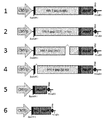
- FIG. 1 is a diagram schematically showing an expression system of a vector constructed in Example 1.
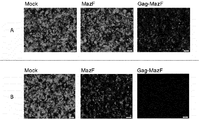
- FIG. In the figure, 1 to 6 schematically show the expression systems of the vectors constructed in Example 1 (1) to (6), respectively. It is a figure which shows the observation result by the fluorescence microscope in Example 2.
- FIG. A in the figure is a cell prepared by using 0.025 ⁇ g of pBApo-CMV pur DNA, pBApo-MazF, or pBApo-Gag-MazF for DNA introduction (shown as Mock, MazF, Gag-MazF from the left in FIG. 2A).
- FIG. 4 is a diagram showing the measurement results by qRT-PCR in Example 2.
- A shows the result of qRT-PCR using total RNA extracted from cells prepared using 0.025 ⁇ g of pBApo-CMV pur DNA, pBApo-MazF, or pBApo-Gag-MazF for DNA introduction as a template ( Fig.
- 3A shows Mock, MazF, and Gag-MazF from the left), and B in the figure is prepared using 0.4 ⁇ g of pBApo-CMV pur DNA, pBApo-MazF, or pBApo-Gag-MazF for DNA introduction.
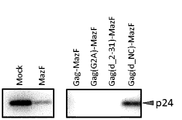
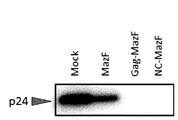
- the results of qRT-PCR using the total RNA extracted from the obtained cells as a template are shown. It is a figure which shows the result of the western blotting in Example 3. It is a figure which shows the result of the western blotting in Example 4. It is a figure which shows the result of the western blotting in Example 5.
- RNA virus is a generic term for viruses whose genome is composed of RNA.
- RNA virus includes single-stranded RNA viruses and double-stranded RNA viruses.
- double-stranded RNA virus is a generic term for viruses whose genome is composed of double-stranded RNA.
- double-stranded RNA virus includes viruses belonging to the family Reoviridae such as rotavirus.
- single-stranded RNA virus is a generic term for viruses whose genome is composed of single-stranded RNA.
- single-stranded RNA virus includes single-stranded (+) RNA viruses, single-stranded ( ⁇ ) RNA viruses, and retroviruses.
- single-stranded (+) RNA virus is a generic term for a single-stranded RNA virus in which genomic RNA itself that does not have a DNA stage in its life cycle can function as mRNA.
- the “single-stranded (+) RNA virus” in the present specification includes viruses belonging to the Picornaviridae family such as hepatitis A virus and foot-and-mouth disease virus, viruses belonging to the Caliciviridae family, viruses belonging to the Astroviridae family, and SARS viruses. Viruses belonging to the family Coronaviridae, such as West Nile virus, yellow fever virus, Japanese encephalitis virus, viruses belonging to Flaviviridae such as HCV, and viruses belonging to Togaviridae such as rubella virus.
- single-stranded ( ⁇ ) RNA virus is a general term for single-stranded RNA viruses having a life cycle in which genomic RNA is transcribed by RNA-dependent RNA polymerase.
- single-stranded ( ⁇ ) RNA virus includes viruses belonging to the Rhabdoviridae family such as rabies virus, viruses belonging to the Filoviridae family such as Ebola virus, and paramyxos such as epidemic parotitis virus.
- viruses belonging to the family Viridae viruses belonging to the Orthomyxoviridae family such as influenza virus, viruses belonging to the Bunyaviridae family, and viruses belonging to the Arenaviridae family such as Lassa virus and hepatitis D virus are included.
- retrovirus is a generic term for RNA viruses belonging to the Retroviridae family, whose genome is composed of RNA and has a life cycle that converts genomic RNA into DNA.
- retrovirus includes oncorretroviruses such as human T lymphophilic virus (HTLV) and Moloney murine leukemia virus (MMLV), human immunodeficiency virus (HIV), and simian immunodeficiency virus (SIV). Such as lentivirus.
- retroviral vector refers to a virus particle produced by genetic recombination technology based on oncorretrovirus, lentivirus, etc. belonging to the family Retroviridae, and includes oncoretrovirus vector, lentivirus vector, pseudo Contains a type vector.
- a pseudotype vector refers to a recombinant retroviral vector having an Env protein whose origin is different from that of a Gag protein or a Pol protein.
- virus RNA of an RNA virus refers to RNA derived from an RNA virus.
- viral viral RNA refers to genomic RNA of RNA virus, RNA generated by splicing the genomic RNA (for example, RNA that contributes to the expression of RNA viral accessory proteins), and Includes RNA transcribed from genomic RNA.
- RNA virus packaging signal refers to a cis-factor that is present on the genome of an RNA virus and is required for the incorporation of genomic RNA into a viral particle.
- the packaging signal ( ⁇ / Psi) is a region of about 800 bases from the 5 ′ end of the genomic RNA.
- endoribonuclease that cleaves single-stranded RNA in a sequence-specific manner refers to an endo-type ribonuclease that hydrolyzes a diester bond of single-stranded RNA in a base sequence-specific manner.
- lipid modification signal refers to an amino acid sequence that directs modification of a protein by addition of lipids such as fatty acids and isoprenoids.
- lipid modification signals for example, myristoylation signals, palmitoylation signals, myristoylation and palmitoylation double lipid modification signals, O-acylation signals, and isoprenylation signals are known.
- the fusion protein of the present invention comprises a polypeptide having affinity for viral RNA of an RNA virus fused to an endoribonuclease that cleaves single-stranded RNA in a sequence-specific manner.
- the fusion protein of the present invention recognizes a viral RNA such as a viral genomic RNA incorporated into a viral particle by a domain derived from a polypeptide having an affinity for the viral RNA of the RNA virus, and further sequences the single-stranded RNA in a sequence-specific manner.
- Viral RNA can be cleaved at a specific nucleotide sequence and decomposed by the endoribonuclease activity that cleaves it.
- the fusion protein of the present invention can suppress the formation of a provirus when an RNA virus infects a cell, and also cleaves the viral RNA in the cell infected with the RNA virus, thereby budding (production) RNA virus particles. Can be suppressed. Furthermore, the infectivity of the virus particles can be reduced by degrading the viral genome of the RNA virus even in the budding (produced) virus particles. Therefore, the fusion protein of the present invention is useful for the treatment or prevention of RNA virus infection.
- the polypeptide having affinity for viral RNA of RNA virus is not particularly limited to the present invention, but a polypeptide having affinity for packaging signal of RNA virus is exemplified.
- a polypeptide showing affinity for a single-stranded RNA virus packaging signal is more preferred, and a polypeptide showing affinity for a retroviral packaging signal is even more preferred.
- the amino acid sequence constituting the polypeptide having an affinity for the retroviral packaging signal is preferably an amino acid sequence derived from a retrovirus Gag protein, for example, an amino acid sequence derived from a human immunodeficiency virus Gag protein. Can be used.
- the amino acid sequence derived from the Gag protein include nucleocapsid.
- the nucleocapsid is one of the polypeptides constituting the retroviral Gag protein, and refers to a polypeptide involved in specific recognition of the packaging signal by the Gag protein. Nucleocapsid recognizes the secondary structure of the packaging signal through two zinc finger motifs.
- the full-length amino acid sequence constituting the natural nucleocapsid may be used, or a fragment or mutation thereof.
- the amino acid sequence constituting the body may be used.
- the amino acid sequence constituting the natural nucleocapsid include the amino acid sequence of a nucleocapsid derived from human immunodeficiency virus type 1 (HIV-1) (RefSeq Acc. No. NP_057850.1).
- the nucleocapsid fragment or mutant that can be used in the present invention is not particularly limited as long as it has an affinity for the packaging signal of retrovirus, but a fragment or mutation containing two zinc finger motifs derived from nucleocapsid.
- a polypeptide comprising an amino acid sequence in which one to several amino acid residues are substituted, deleted, and / or inserted in an amino acid sequence constituting a body or a natural nucleocapsid.
- a polypeptide comprising an amino acid sequence having a sequence identity of 90% or more, preferably 95% or more, more preferably 98% or more with an amino acid sequence constituting a natural nucleocapsid is exemplified.
- the fusion protein of the present invention may further have a lipid modification signal such as a myristoylation signal in the N-terminal region.
- a lipid modification signal such as a myristoylation signal in the N-terminal region.
- the fusion protein of the present invention in which the myristoylation signal of the matrix domain (MA), which is considered important for targeting the Gag protein to the cell membrane, is located in the N-terminal region can be localized on the cell membrane.
- the fusion protein of the present invention is localized in the cell membrane of an RNA virus-infected cell, the fusion protein is incorporated into the RNA virus particle as the RNA virus emerges. By doing so, even if RNA virus particles emerge from RNA virus-infected cells, the infectivity of the RNA virus particles can be reduced by the fusion protein of the present invention incorporated therein.
- the fusion protein of the present invention may have a basic region in the vicinity of the N-terminus of the Gag protein that is considered to contribute to the targeting of the Gag protein to the cell membrane, in addition to the lipid modification signal described above.
- a fusion protein in which a Gag protein is fused to an endoribonuclease that cleaves single-stranded RNA in a sequence-specific manner is one of the preferred embodiments of the present invention.
- the fusion protein of the present invention can be used for treatment or prevention of RNA virus infection.
- the polypeptide having affinity for the viral RNA of the RNA virus can be appropriately selected according to the type of RNA virus that causes the disease to be treated or prevented.
- the present invention is not particularly limited, when the fusion protein of the present invention is used for the treatment or prevention of HIV infection, for example, a nucleocapsid of HIV is used as a polypeptide having an affinity for a retroviral packaging signal. That's fine.
- the endoribonuclease that specifically cleaves single-stranded RNA in the fusion protein of the present invention is not particularly limited as long as it is a ribonuclease having the above activity.
- examples thereof include ribonucleases that cannot cleave double-stranded nucleic acids such as double-stranded RNA and RNA-DNA hybrids.
- Endoribonucleases that specifically degrade single-stranded RNA in a ribosome-independent manner are particularly preferred for the present invention.
- the present invention includes a microorganism-derived endoribonuclease such as MazF, PemK, MqsR, which is an endoribonuclease constituting a toxin-antitoxin-type toxin, NE1181 polypeptide derived from Nitromononas europaea ATCC 19718, Deinococcus radioduran R2 polypeptide DR0, etc. Can be used in the fusion protein of the present invention.
- MazF is an enzyme that cleaves 5′-A / CA-3 ′ sequences in single-stranded RNA
- PemK is an enzyme that mainly cleaves 5′-U / A (C, A or U) -3 ′.
- MqsR is 5'-GCU-3 'sequence
- NE1181 polypeptide is 5'-AAAU-3' sequence
- DR0662 polypeptide is 5'-UUCCUUU-3 'sequence.
- a polypeptide having high homology for example, 50% or more, preferably 70% or more, more preferably 90% or more homology
- the amino acid sequence of the polypeptide may be used for the fusion protein of the present invention.
- a polypeptide having an endoribonuclease activity that cleaves single-stranded RNA in a sequence-specific manner has already been found from many microorganisms including cyanobacteria and archaea (International Publication No. 2006/123537, International Publication No. 1). 2007/010740 pamphlet, WO 2007/013264 pamphlet, WO 2007/013265 pamphlet, etc.).
- the endoribonuclease that constitutes the toxin-antitoxin toxin is not inhibited by cytoplasmic ribonuclease inhibitors such as human placenta-derived ribonuclease inhibitors, so the single-stranded RNA used in the fusion protein of the present invention is sequence-specific. It is suitable as an endoribonuclease that cleaves automatically.
- an endoribonuclease that cleaves single-stranded RNA in a sequence-specific manner the full length of the amino acid sequence constituting the natural endoribonuclease having the above-mentioned activity may be used, or a fragment or variant thereof is constructed.
- An amino acid sequence may be used.
- the endoribonuclease fragment or variant whose amino acid sequence can be used in the present invention is not particularly limited as long as it has an activity of specifically cleaving single-stranded RNA. Examples thereof include polypeptides comprising an amino acid sequence in which one to several amino acid residues are substituted, deleted, and / or inserted in the amino acid sequence to be prepared.
- fragment or mutant examples include an amino acid sequence constituting a natural endoribonuclease [for example, an amino acid sequence constituting a natural MazF (RefSec Acc. No. NP_417262)] and 90% or more, preferably 95% or more, and more preferably. Is exemplified by amino acid sequences having 98% or more sequence identity.
- the polypeptide showing affinity for the viral RNA of the RNA virus may be located on the C-terminal side with respect to the endoribonuclease that cleaves single-stranded RNA in a sequence-specific manner. May be arranged on both sides thereof.
- the fusion protein of the present invention may have a linker peptide that connects a polypeptide having affinity for viral RNA of an RNA virus and an endoribonuclease that specifically cleaves single-stranded RNA.
- a fusion protein obtained by fusing a retrovirus-derived nucleocapsid with an endoribonuclease that cleaves single-stranded RNA in a sequence-specific manner via a linker peptide is one of the preferred embodiments of the present invention.
- the linker peptide can be appropriately selected in consideration of the effect on the function of both polypeptides fused via the linker peptide, and is not particularly limited.
- linker peptides used in the present invention include alanine linkers, serine-glycine linkers, and linker peptides having a protease recognition sequence.
- linker peptides having a protease recognition sequence For example, when an HIV-derived Gag protein is used as a polypeptide having affinity for the RNA virus packaging signal in the fusion protein of the present invention, a polypeptide having an HIV protease recognition sequence may be used as a linker peptide. . By doing so, when the fusion protein of the present invention is encapsulated in the virus particle, free endoribonuclease can be generated in the virus particle.
- nucleic acid of the present invention includes a gene encoding the fusion protein of the present invention.
- Cells into which the nucleic acid of the present invention has been introduced can be used for the production of the fusion protein of the present invention.
- budding (production) of RNA virus particles from RNA virus-infected cells can be suppressed by introducing the nucleic acid of the present invention into RNA virus-infected cells such as retrovirus-infected cells using an appropriate vector.
- the infectivity of RNA virus particles sprouting from RNA virus-infected cells can be reduced.
- provirus formation when cells infected with the nucleic acid of the present invention are infected with RNA viruses is suppressed.
- the nucleic acid sequence of the nucleic acid of the present invention is not particularly limited as long as it contains a gene encoding the fusion protein of the present invention, but the nucleic acid sequence cleaved by the endoribonuclease activity of the fusion protein expressed from the nucleic acid of the present invention. It is preferable to design so that it does not contain.
- the nucleic acid of the present invention encodes a transcriptional regulatory sequence whose transcription is induced by an RNA virus trans-acting factor, and a fusion protein of the present invention arranged in a form in which expression can be controlled by the sequence. It is composed of genes.
- a cell into which the nucleic acid of the present invention has been introduced or a cell differentiated from the cell is downstream of the transcriptional regulatory sequence when an RNA virus-derived trans-acting factor is generated in the cell after being infected with the RNA virus.
- Expression of the gene encoding the fusion protein of the present invention located in is induced, and the fusion protein of the present invention is expressed in the cell.
- Viral RNA of the RNA virus is degraded by the expressed fusion protein of the present invention.
- provirus formation, virus genome replication, virus protein synthesis, and budding (production) of RNA virus particles from virus-infected cells are suppressed in RNA virus-infected cells. Furthermore, even when RNA virus particles emerge from RNA virus-infected cells, the infectivity of RNA virus particles is reduced.
- Transcriptional regulatory sequences whose transcription is induced by RNA virus trans-acting factors are not particularly limited, but are transcribed by retroviral trans-acting factors such as transcriptional regulatory sequences whose transcription is induced by HIV Tat protein.
- Transcriptional regulatory sequences from which can be derived can be used.
- the Tat protein binds to a TAR (trans-activation response element) sequence present in RNA whose transcription has been initiated by the action of the HIV LTR promoter, and activates transcription downstream from it.
- a transcriptional regulatory sequence having a TAR region base sequence downstream can be used for the nucleic acid of the present invention.
- an HIV LTR or a transcriptional regulatory sequence obtained by appropriately modifying the LTR is used.
- Examples of the modification include deletion of a binding site with a host cell-derived transcription factor present in the promoter and deletion of a region unnecessary for Tat-specific transcription.
- the former modification can reduce the level of transcription unrelated to HIV infection by host-derived transcription factors.
- Examples of the latter modification include deletion of the LTR U5 region and a region downstream of the TAR sequence (part of R region and U5 region).
- the nucleic acid of the present invention having such a deleted LTR is advantageous in preparing a high-titer retroviral vector that retains the nucleic acid.
- RRE Rev-responsible element
- the fusion protein of the present invention is dependent on Rev protein, that is, HIV infection-dependent. Can be expressed.
- the sequence that interacts with the RNA virus-derived trans-acting factor may be used in combination with a functional sequence in which the sequence is inherently incorporated, for example, a promoter, or in combination with a heterologous functional sequence. Also good.
- a sequence constructed by combining a promoter that is not derived from an RNA virus and a sequence that interacts with a trans-acting factor derived from the RNA virus, which can initiate transcription of mRNA in a cell in which introduction of the nucleic acid of the present invention is desired. are included in the “transcriptional regulatory sequence” used in the present invention.
- the vector of the present invention is a vector containing the nucleic acid of the present invention.
- the vector of the present invention has a promoter and transcription initiation site for achieving transcription of RNA from the nucleic acid of the present invention, and other regulatory elements that cooperate with these factors, such as enhancer and operator sequences. Also good.
- a terminator sequence can be contained downstream of the nucleic acid of the present invention.
- the vector of the present invention may have an appropriate marker gene that enables selection of the gene-introduced cell.
- the marker gene for example, a drug resistance gene that confers resistance to antibiotics on a cell, a gene that encodes a fluorescent protein, or a reporter gene that can distinguish a cell into which a gene has been introduced by detecting enzyme activity can be used.
- the vector of the present invention may be loaded with a suicide gene for the purpose of excluding the transgenic cell from the living body when the treatment with the transgenic cell is completed or when some side effect occurs.
- the type of the vector of the present invention is not particularly limited, and examples thereof include plasmid vectors and virus vectors.
- virus vectors include retrovirus vectors, adenovirus vectors, adeno-associated virus vectors, and herpes virus vectors.
- retroviral vector having the ability to incorporate the nucleic acid of the present invention onto a chromosome is suitable as the vector of the present invention.
- retrovirus vector examples include oncorretrovirus vectors such as vectors based on Moloney leukemia virus (MMLV), vectors based on human immunodeficiency virus type 1 (HIV-1), and simian immunodeficiency.
- Lentiviral vectors such as vectors based on viruses (SIV) are exemplified. These vectors may be pseudotyped by using an envelope derived from a different virus as the envelope.
- pseudotype vectors include Env such as vesicular stomatitis virus (VSV), gibbon leukemia virus (GaLV), feline endogenous virus RD114, murine leukemia virus (Ecotropic-env, amphotropic-env, 10A1-env, etc.) Examples include oncoretrovirus vectors and lentivirus vectors having proteins.
- a replication-deficient recombinant retrovirus vector is one of the preferred embodiments of the vector of the present invention. The vector is non-pathogenic, deficient in replication so that it cannot replicate in infected cells.
- Known replication-defective retrovirus vectors include MFG vector (ATCC No. 68754), ⁇ -SGC vector (ATCC No.
- RNA virus-infected cells a retrovirus vector that can be restrictedly replicated in RNA virus-infected cells is also a preferred embodiment of the vector of the present invention.
- the vector selectively replicates in cells infected with the RNA virus and propagates a therapeutically effective fusion protein gene.
- a retrovirus packaging cell in which a gene encoding a retrovirus structural protein such as a gag-pol gene or an env gene has been incorporated into a chromosome in advance is packaged with a foreign gene.
- a method of producing by introducing a transfer vector carrying a signal, and a packaging plasmid having a gene encoding a retrovirus structural protein such as a gag-pol gene or an env gene in a cell having no retroviral structural protein At the same time, there can be mentioned a method of producing the aforementioned transfer vector by transfection.
- Examples of the vector of the present invention include those used as transfer vectors for retrovirus vector production.
- a plasmid vector is preferably exemplified as the vector of the present invention used as a transfer vector.
- the unit for transcription of the nucleic acid of the present invention is reverse to the transcription direction of the RNA genome of the retroviral vector, that is, the direction of transcription initiated by the transcriptional regulatory sequence of the nucleic acid of the present invention. It may be arranged in the retroviral vector so as to be opposite to the direction of transcription initiated from the 5′-LTR of the retroviral vector. If this configuration is adopted, the retroviral mRNA transcribed from the vector of the present invention corresponds to the antisense strand of the gene encoding the fusion protein of the present invention. Therefore, the expression of the fusion protein of the present invention can be expressed from this retroviral mRNA. It can be suppressed.
- the retroviral mRNA functions as an antisense RNA, so that the fusion protein of the present invention Expression is suppressed.
- a high titer retrovirus vector can be obtained by using the vector of this embodiment as a transfer vector for producing a retrovirus vector.
- the endoribonuclease that specifically cleaves single-stranded RNA in the fusion protein of the present invention is a toxin-antitoxin toxin
- an antitoxin producing strain is used as a cell that produces the retroviral vector. By doing so, a high titer retrovirus vector can be obtained.
- the retroviral vector of the present invention is a polypeptide having an affinity for the viral RNA of the RNA virus in the fusion protein of the present invention so that RNA transcribed from the vector is not recognized by the fusion protein of the present invention. It may have packaging signals with different origins.
- a retroviral vector comprising a gene encoding a fusion protein consisting of a nucleocapsid and endoribonuclease from a lentivirus (eg, HIV) and a packaging signal from an oncoretrovirus (eg, MMLV) is suitable for the vector of the present invention. This is one of the embodiments.
- the method of treating or preventing the disease of the present invention comprises the step of introducing the vector of the present invention into a cell, and treating or preventing an RNA virus infection such as a retrovirus infection.
- an RNA virus infection such as a retrovirus infection.
- RNA virus infections for which the treatment or prevention method of the present invention is effective include hepatitis A, foot-and-mouth disease, severe acute respiratory syndrome (SARS), West Nile fever, yellow fever, Japanese encephalitis, hepatitis C, rubella, Rabies, Ebola hemorrhagic fever, mumps, influenza, Lassa fever, hepatitis D, HIV infection including AIDS, and adult T-cell leukemia.
- SARS severe acute respiratory syndrome
- SARS severe acute respiratory syndrome
- West Nile fever West Nile fever
- yellow fever yellow fever
- Japanese encephalitis Japanese encephalitis
- hepatitis C rubella
- Rabies Ebola hemorrhagic fever
- mumps influenza
- the vector of the present invention is a cell that can be infected by HIV, that is, a cell containing a CD4 positive cell ( It is desired to be introduced into a cell group). Therefore, in the treatment or prevention method of the present invention, gene transfer is performed using CD4 positive cells (for example, T cells), progenitor cells that can differentiate into CD4 positive cells (for example, hematopoietic stem cells), or a cell population containing the cells as target cells. Is implemented.
- CD4 positive cells for example, T cells
- progenitor cells that can differentiate into CD4 positive cells
- hematopoietic stem cells for example, hematopoietic stem cells
- hematopoietic stem cells or a cell population containing the cells from the viewpoint of comprehensively introducing the nucleic acid construct into cells that may be infected with HIV.
- the cells are not particularly limited as long as they contain CD4 positive cells and their progenitor cells. Blood cells collected from individuals (peripheral blood cells, umbilical cord blood cells), bone marrow cells, and the aforementioned cells can be obtained by known methods. Examples include fractionated CD4-positive cells, progenitor cells of CD4-positive cells, hematopoietic stem cells, and the like.
- the method for introducing the vector of the present invention into a cell is not particularly limited.
- a plasmid vector is used as the vector of the present invention
- gene transfer methods such as the calcium phosphate method, the cationic lipid method, the liposome method, and the electroporation method can be used.
- a viral vector such as a retrovirus vector, an adenovirus vector, an adeno-associated virus vector, or a herpes virus vector
- the target cell may be infected under conditions suitable for each virus.
- a cell into which the nucleic acid of the present invention has been introduced by the vector of the present invention is also an embodiment of the present invention.
- ex vivo gene introduction is exemplified in which a vector is introduced into a cell collected from an individual organism in vitro.
- a viral vector the target cells collected from the living body and a viral vector, for example, a culture supernatant of a virus-producing cell or a viral vector purified from the supernatant are mixed and incubated under appropriate conditions.
- a viral vector for example, a culture supernatant of a virus-producing cell or a viral vector purified from the supernatant are mixed and incubated under appropriate conditions.
- a viral vector for example, a culture supernatant of a virus-producing cell or a viral vector purified from the supernatant are mixed and incubated under appropriate conditions.
- gene transfer is achieved.
- a vector capable of gene transfer in vivo such as an adenovirus vector or an adeno-associated virus vector
- a vector containing the nucleic acid of the present invention may be directly administered to an individual.
- a target cell When a retroviral vector is used for ex vivo gene introduction, a target cell can be infected with a retroviral vector with high efficiency in the presence of a functional substance having a retroviral binding activity.
- a fibronectin fragment having both a cell adhesion domain and a heparin binding domain is preferably exemplified.
- the fibronectin fragment can be prepared from fibronectin purified from a living body by means such as protease digestion or can be prepared by recombinant DNA technology.
- a recombinant fibronectin fragment sold by Takara Bio Inc. as RetroNectin (registered trademark) can be suitably used in a gene introduction method using a functional substance having a retrovirus binding activity.
- the fusion protein of the present invention to be administered may be a purified protein itself, a protein encapsulated with an adjuvant, or a virus-like particle.
- the treatment or prevention method of the present invention may be carried out alone or in combination with multi-drug combination therapy (HAART) in which 3 to 4 types of antiviral drugs (reverse transcriptase inhibitor, protease inhibitor, etc.) are used in combination. May be implemented.
- HAART multi-drug combination therapy
- the fusion protein of the present invention, the vector, and the cell into which the vector is introduced can be used for the treatment and prevention of RNA virus infection. That is, the present invention provides a pharmaceutical composition for the treatment and prevention of RNA virus infection.
- the pharmaceutical composition is not particularly limited as long as it contains the vector of the present invention or cells into which the nucleic acid of the present invention has been introduced by the vector as an active ingredient. It can take any form such as a preparation prepared by combining an active ingredient with a pharmaceutically acceptable carrier, a kit combining the vector and a reagent for gene transfer into cells ex vivo.
- Example 1 Construction of Expression Plasmid (1) Construction of pBApo-Gag-MazF A DNA fragment comprising the nucleic acid sequence described in SEQ ID NO: 1 in the Sequence Listing is a mammalian vector pBApo-CMV pur DNA (manufactured by Takara Bio Inc.). A plasmid pBApo-Gag-MazF inserted between the BamHI site and the HindIII site was constructed.
- pBApo-Gag-MazF is a fusion protein obtained by fusing HIV-1 Gag protein and single-stranded RNA sequence-specific endoribonuclease MazF via a linker peptide containing a recognition sequence of HIV protease.
- a plasmid that can be expressed under the control of a promoter / enhancer (FIG. 1).
- the amino acid sequence of the fusion protein expressed from pBApo-Gag-MazF is shown in SEQ ID NO: 2 in the sequence listing.
- SEQ ID NO: 1 shows the base sequence containing the BamHI site on the 5 ′ end side and the HindIII site on the 3 ′ end side as the nucleic acid sequence of the inserted fragment in pBApo-Gag-MazF.
- the nucleotide sequence encoding HIV-1 Gag in the nucleic acid sequence shown in SEQ ID NO: 1 is an optimized sequence of the natural HIV-1 Gag gene for human codons.
- the base sequence encoding MazF is an ACA that is a recognition sequence of MazF present in the base sequence of the natural mazF gene (the complementary strand sequence of the 2908778th to 2909113th nucleic acid sequences in RefSec Acc. No. NC_000913). This is an artificially synthesized sequence modified to other sequence so that amino acid substitution does not occur (ACA-less mazF gene; SEQ ID NO: 5 in the sequence listing).
- pBApo-Gag (G2A) -MazF expresses a fusion protein of Gag (G2A) and MazF in which the second glycine residue from the N-terminus of the Gag protein is mutated to an alanine residue under the control of the CMV promoter / enhancer A possible plasmid (FIG. 1).
- the second glycine residue from the N-terminus of the Gag protein is an amino acid residue that undergoes myristoylation modification, which is considered important for targeting Gag to the cell membrane.
- Gag (G2A) is a mutant lacking this myristoylation modification site.
- pBApo-Gag ( ⁇ NC) -MazF is a plasmid capable of expressing a fusion protein of Gag ( ⁇ NC) and MazF, which lacks the amino acid sequence of the nucleocapsid protein (NC) region of the Gag protein, under the control of the CMV promoter / enhancer. (FIG. 1).
- pBApo-Gag ( ⁇ 2-31) -MazF is a fusion of Gaz ( ⁇ 2-31) and MazF, which lacks the amino acid sequence from the 2nd glycine residue to the 31st leucine residue from the N-terminus of the Gag protein.
- Gag ( ⁇ 2-31) is a mutant lacking the myristoylation modification site and the basic region near the N-terminus, which are thought to be important for targeting Gag to the cell membrane.
- RNA sequence (ACA-less mazF gene; SEQ ID NO: 5 in the sequence listing) converted to another base sequence without changing the amino acid sequence of natural MazF as a template
- primer mazF (HindIII) _R (arrangement) PCR amplification was performed using SEQ ID NO: 3) in the column table and primer mazF (BamHI) _F (SEQ ID NO: 4 in the sequence table).
- the obtained PCR product was digested with restriction enzymes BamHI and HindIII, and then inserted into the plasmid pBApo-CMV pur DNA digested with the same enzymes.
- the thus constructed plasmid was designated as pBApo-MazF.
- pBApo-MazF is a plasmid capable of expressing MazF protein under the control of a CMV promoter / enhancer (FIG. 1).
- the plasmid is a plasmid capable of expressing a fusion protein of NC and MazF (NC-MazF) under the control of a CMV promoter / enhancer (FIG. 1).
- Example 2 Degradation of viral RNA with fusion protein of the present invention
- DMEM Dulbecco's modified Eagle medium
- GOBCO 10% fetal bovine serum
- lentiviral packaging mix (manufactured by Invitrogen) is inserted into each dish cell, and plasmids pLenti-ZsGreen and pBApo-CMV pur DNA constructed by inserting the ZsGreen1 gene into the pLenti6.3 / V5 vector (manufactured by Invitrogen).
- PBApo-Tat and pBApo-CMV pur DNA constructed by inserting the HIV-1-derived Tat gene were introduced using TransIT-293 (manufactured by Milas) as described in the instructions for the product.
- the cells thus prepared were used as control cells (Mock cells). Two types of Mock cells were prepared, one using 0.025 ⁇ g of pBApo-CMV pur DNA for introduction and one using 0.4 ⁇ g for introduction.
- Example 1 preparation of the above Mock cell except that pBApo-MazF constructed in Example 1 (5) or pBApo-Gag-MazF constructed in Example 1 (1) was introduced instead of pBApo-CMV pur DNA.
- Cells were prepared by the same method, and the introduced / expressed cells were designated as MazF cells and Gag-MazF cells.
- MazF cells and Gag-MazF cells used 0.025 ⁇ g of pBApo-MazF or pBApo-Gag-MazF for introduction and 0.4 ⁇ g of pBApo-MazF or pBApo-Gag-MazF for introduction. Two types of each were prepared.
- Example 2 Confirmation of expression of ZsGreen1
- a fluorescence microscope In control cells (Mock cells), a strong fluorescent signal derived from ZsGreen1 protein was detected, whereas in MazF cells, a fluorescent signal with a lower intensity was detected compared to control cells.
- the intensity of the fluorescent signal derived from ZsGreen1 decreased dramatically. This tendency was dependent on the amount of plasmid expressing MazF and Gag-MazF introduced into the cells.
- RNA encoding ZsGreen1 and RNA encoding ⁇ -actin in each cell was calculated by calculating a relative value with respect to the 18S rRNA amount by real-time RT-PCR (qRT-PCR).
- Primer human_18S_Fw (SEQ ID NO: 9 in the sequence listing) and primer human_18S_rev (SEQ ID NO: 10 in the sequence listing) are used for qRT-PCR of 18S rRNA
- primer ZsG_F2 sequence listing is used for qRT-PCR of RNA encoding ZsGreen1).
- the expression level of ZsGreen1 RNA was significantly decreased in MazF cells, and the expression level of ZsGreen1 RNA was significantly decreased in Gag-MazF cells.
- the expression level of ⁇ -actin mRNA which is a housekeeping gene, did not differ greatly between cells. This indicates that the remarkable decrease in the fluorescence signal intensity derived from intracellular ZsGreen1 due to Gag-MazF expression observed in Example 3 (1) is due to the degradation of ZsGreen1 RNA by the Gag-MazF fusion protein.
- the results of this example indicate that the Gag-MazF fusion protein effectively degrades RNA containing the RNA virus packaging signal, and the Gag-MazF fusion protein is effective in treating viral RNA in RNA virus-infected cells. It can be decomposed automatically.
- Example 3 Identification of a region necessary for RNA virus particle budding inhibitory effect and RNA virus particle budding inhibitory effect of the fusion protein of the present invention
- Preparation of fusion protein expression vector-introduced cells In the same manner as in Example 2 (1) Mock cells, MazF cells, and Gag-MazF cells were prepared.
- pBApo-CMV pur DNA pBApo-Gag (G2A) -MazF constructed in Example 1 (2), pBApo-Gag ( ⁇ NC) -MazF constructed in Example 1 (3), or Example 1 Cells were prepared in the same manner as the preparation of Mock cells in Example 2 (1) except that pBApo-Gag ( ⁇ 2-31) -MazF constructed in (4) was introduced.
- (G2A) -MazF cells, Gag ( ⁇ NC) -MazF cells, and Gag ( ⁇ 2-31) -MazF cells were used.
- pBApo-CMV pur DNA 0.25 ⁇ g of pBApo-CMV pur DNA, pBApo-MazF, pBApo-Gag-MazF, pBApo-Gag (G2A) -MazF, pBApo-Gag ( ⁇ NC) -MazF, Alternatively, pBApo-Gag ( ⁇ 2-31) -MazF was used.
- Example 3 (1) Preparation of concentrated virus Each cell prepared in Example 3 (1) was cultured for 24 hours under conditions of 37 ° C. and 5% CO 2 , and then further cultured for 24 hours after changing the medium. After completion of the culture, the culture supernatant was collected and filtered through a 0.45 ⁇ m filter, and the filtrate was subjected to low-speed centrifugation (6000 ⁇ g, 16 h, 4 ° C.) to pellet the virus. Subsequently, the pelleted virus was suspended in PBS buffer to obtain a 20-fold concentrated virus.
- low-speed centrifugation 6000 ⁇ g, 16 h, 4 ° C.
- the Gag-MazF fusion protein Viral budding (production) was significantly inhibited to the same extent as the expressing cells.
- results of this example show that the effect of inhibiting the budding (production) of virus particles by the Gag-MazF fusion protein has a polypeptide and single-stranded RNA sequence-specific end that has an affinity for the packaging signal of RNA virus in the fusion protein. It shows that it is caused by ribonuclease.
- Example 4 Inhibitory effect of virus particle budding by NC-MazF fusion protein Mock cells, MazF cells, and Gag-MazF cells were prepared in the same manner as in Example 2 (1). Further, human 293T / 17 cells were prepared in the same manner as the preparation of Mock cells in Example 2 (1) except that pBApo-NC-MazF constructed in Example 1 (6) was introduced instead of pBApo-CMV pur DNA. Plasmids were introduced into the cells to obtain NC-MazF cells. Next, concentrated virus was prepared from each cell by the same method as in Example 3 (2), and analyzed by Western blotting in the same manner as in Example 3 (3). The results are shown in FIG. As shown in FIG.
- NC-MazF cells showed the same virus particle budding (production) inhibitory effect as Gag-MazF-introduced cells (denoted as Gag-MazF in the figure).
- the above results indicate that a fusion protein consisting of a single-stranded RNA sequence-specific endoribonuclease fused with a polypeptide that has an affinity for RNA virus packaging signals significantly suppresses RNA virus particle budding (production). Indicates to do.
- RNA virus particle inactivation effect of the fusion protein of the present invention (1) Preparation of fusion protein expression vector-introduced cells Dulbecco's modified Eagle medium containing 10% fetal calf serum (GIBCO) in a 6 cm dish for cell culture ( 4 mL of DMEM (manufactured by Sigma) was added, and 1.8 ⁇ 10 6 human Lenti-X 293T / 17 cells (manufactured by Clontech) were further added, and cultured for 24 hours.
- DMEM fetal calf serum
- lBA virus packaging mix (Clontech), pLVX-AcGFP1-C1 vector (Clontech), and pBApo-Tat constructed by inserting HIV-1-derived Tat gene into pBApo-CMV pur DNA into each dish cell.
- pBApo-CMV pur DNA was introduced using TransIT-293 (manufactured by Milas) as described in the instructions for the product.
- the cells thus prepared were used as control cells (Mock cells). In the preparation of Mock cells, 0.025 ⁇ g of pBApo-CMV pur DNA was introduced.
- Example 1 preparation of the above Mock cell except that pBApo-MazF constructed in Example 1 (5) or pBApo-Gag-MazF constructed in Example 1 (1) was introduced instead of pBApo-CMV pur DNA.
- Cells were prepared by the same method, and the introduced / expressed cells were designated as MazF cells and Gag-MazF cells.
- Example 5 (2) Preparation of concentrated virus Each cell prepared in Example 5 (1) was cultured under the conditions of 37 ° C and 5% CO 2 for 24 hours, and then the medium was changed and further cultured for 24 hours. After completion of the culture, the culture supernatant was collected and filtered through a 0.45 ⁇ m filter, and the filtrate was subjected to low-speed centrifugation (6000 ⁇ g, 16 h, 4 ° C.) to pellet the virus. Subsequently, the pelleted virus was suspended in PBS buffer to obtain a 10-fold concentrated virus.
- low-speed centrifugation 6000 ⁇ g, 16 h, 4 ° C.
- Example 5 Western blotting analysis of concentrated virus Among the concentrated viruses obtained in Example 5 (2), the concentrated virus obtained from MazF cells and the concentrated virus obtained from Gag-MazF cells were respectively used as a sample buffer containing SDS. The mixture was heat-treated and subjected to Western blotting using an anti-MazF antibody. The results are shown in FIG. As shown in FIG. 6, MazF protein could not be detected from a virus produced from MazF cells (indicated as MazF in the figure). On the other hand, free virus and a small amount of Gag-MazF protein were detected from virus produced from Gag-MazF cells (denoted as Gag-MazF in the figure).
- Gag-MazF was effectively encapsulated in virus particles in Gag-MazF cells expressing Gag-MazF protein. Furthermore, in the virus particle, it is considered that Gag-MazF was divided into Gag protein and MazF protein by activated HIV protease, and free MazF protein was accumulated. Since this free MazF protein produced in the virus particle is not degraded by activated HIV protease, it is reasonable to assume that the ribonuclease activity is maintained in the particle.
- Example 5 (4) ELISA analysis of concentrated virus sample The amount of virus particles of each concentrated virus obtained in Example 5 (2) was quantified with a p24 antigen ELISA kit (manufactured by Zeptomerix) that detects the structural protein p24 of HIV-1 particles. did.
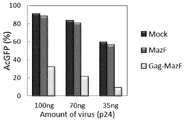
- the amount of virus particles corresponding to 100 ng, 70 ng, or 35 ng in terms of the amount of p24 protein was used for the addition of virus particles based on the quantitative value obtained in Example 5 (4).
- 1 mL of medium was added to each well and further cultured for 24 hours.
- the cells were further cultured for 2 days. The cultured cells were washed with PBS buffer, and then collected by trypsin treatment. The cells were subjected to flow cytometer analysis.
- FIG. 7 shows that the virus-prepared virus from the Gag-MazF cells, whereas the virus-prepared virus particles prepared from the MazF cells have the same AcGFP1-positive rate as the cells infected with the virus particles prepared from the Mock cells. It was found that the AcGFP1-positive rate was remarkably low in the cells infected with the particles.
- a fusion protein comprising a polypeptide having an affinity for RNA virus packaging signal and a single-stranded RNA sequence-specific endoribonuclease is fused with viral particles in cells infected with RNA virus ( Not only significantly suppresses production), but also significantly degrades the infectivity of the virus particles (remarkably inactivates the virus particles) by degrading the viral genome of the RNA virus within the budding (produced) virus particles. It shows that.
- Example 6 Virus infection inhibitory effect of cells expressing Gag-MazF and NC-MazF (1) Preparation of fusion protein expression vector-introduced cells Dulbecco modification containing 10% fetal calf serum (GIBCO) in 6-well plate for cell culture 2 mL of Eagle's medium (DMEM; manufactured by Sigma) was added, and 6 ⁇ 10 5 human Lenti-X 293T / 17 cells (manufactured by Clontech) were added and cultured for 24 hours.
- DMEM fetal calf serum
- Example 1 2 ⁇ g of pBApo-MazF constructed in Example 1 (5), pBApo-Gag-MazF constructed in Example 1 (1), or pBApo-NC constructed in Example 1 (6) was added to each well cell.
- -MazF was introduced using TransIT-293 (Mirras) as described in the product instructions. After culturing for 5.5 hours, the medium was changed and cultured for 18 hours. The cells thus prepared were designated as MazF cells, Gag-MazF cells, and NC-MazF cells, respectively.
- lentiviral vector AcGFP1 was used in the virus infection experiment of Example 6 (3).
- Example 6 (3) Lentiviral infection experiment using cells expressing the fusion protein
- the lentiviral vector prepared in Example 6 (2) was diluted with a medium to which polybrene was added to a final concentration of 8 ⁇ g / mL. After removing the medium from the suspension of each cell prepared in Example 6 (1), 1 mL of this diluted virus was added. After 24 hours, the medium was changed and further cultured for 24 hours. Cells in each well were collected by trypsinization, and the cell pellet was washed with PBS.
- the amount of proviral DNA was determined by the primer Lenti-copy1-F (SEQ ID NO: 15 in the sequence listing), the primer Lenti-copy1-R (SEQ ID NO: 16 in the sequence listing), and the probe P1S (SEQ ID NO: 16 in the sequence listing). It was determined by qPCR using 17). The number of copies of proviral DNA per host cell was calculated from the amount of host cells and the amount of proviral DNA determined by the above qPCR. The results are shown in FIG.
- FIG. 8 shows that the copy number of proviral DNA per cell in Gag-MazF cells and NC-MazF cells is significantly lower than that in MazF cells. From this result, it is found that expression of the fusion protein of the present invention in cells not only suppresses budding of RNA viruses, but can also effectively suppress provirus formation when RNA viruses infect cells. Indicated. The suppression of provirus formation is presumed to be due to the fact that the viral genome RNA of the RNA virus infecting the cells is cleaved before the reverse transcription reaction by the fusion protein of the present invention having an affinity for lentiviral RNA.
- the present invention is particularly useful for the treatment or prevention of RNA virus infections.
- SEQ ID NO: 1 Insert DNA comprising a gene encoding a Gag_mazF fusion protein.
- SEQ ID NO: 2 Gag_MazF fusion protein.
- SEQ ID NO: 3 Oligonucleotide primer named mazF (HindIII) _R.
- SEQ ID NO: 4 Oligonucleotide primer named mazF (BamHI) _F.
- SEQ ID NO: 5 Gene encoding an ACA-less-mazF.
- SEQ ID NO: 7 Oligonucleotide primer named NC-FWD.
- SEQ ID NO: 8 Oligonucleotide primer named NC-Rev3.
- SEQ ID NO: 9 Oligonucleotide primer named human_18S_fw.
Landscapes
- Health & Medical Sciences (AREA)
- Life Sciences & Earth Sciences (AREA)
- Chemical & Material Sciences (AREA)
- Organic Chemistry (AREA)
- Molecular Biology (AREA)
- Virology (AREA)
- General Health & Medical Sciences (AREA)
- Medicinal Chemistry (AREA)
- Genetics & Genomics (AREA)
- Zoology (AREA)
- Biochemistry (AREA)
- Oncology (AREA)
- Public Health (AREA)
- Biophysics (AREA)
- Gastroenterology & Hepatology (AREA)
- Communicable Diseases (AREA)
- Wood Science & Technology (AREA)
- Chemical Kinetics & Catalysis (AREA)
- General Chemical & Material Sciences (AREA)
- Nuclear Medicine, Radiotherapy & Molecular Imaging (AREA)
- Pharmacology & Pharmacy (AREA)
- Animal Behavior & Ethology (AREA)
- Proteomics, Peptides & Aminoacids (AREA)
- Veterinary Medicine (AREA)
- Bioinformatics & Cheminformatics (AREA)
- Engineering & Computer Science (AREA)
- Tropical Medicine & Parasitology (AREA)
- AIDS & HIV (AREA)
- Biomedical Technology (AREA)
- Biotechnology (AREA)
- Microbiology (AREA)
- Toxicology (AREA)
- General Engineering & Computer Science (AREA)
- Micro-Organisms Or Cultivation Processes Thereof (AREA)
- Medicines That Contain Protein Lipid Enzymes And Other Medicines (AREA)
Abstract
L'objectif de la présente invention concerne une protéine hybride qui est utile pour le traitement ou la prévention d'infections par virus à ARN. L'invention concerne donc : une protéine hybride qui est obtenue par la fusion d'un polypeptide présentant une affinité pour l'ARN viral d'un virus à ARN à une endoribonucléase apte à cliver l'ARN à simple brin d'une manière spécifique à la séquence ; un acide nucléique qui code pour la protéine hybride ; un vecteur qui porte l'acide nucléique ; une méthode de traitement ou de prévention d'infections rétrovirales, comportant une étape d'introduction du vecteur dans une cellule ; un procédé d'inhibition du bourgeonnement d'un rétrovirus à l'aide d'une cellule, dans laquelle a été introduit l'acide nucléique, et de la protéine hybride. Cette protéine hybride peut inhiber efficacement le bourgeonnement (la production) de particules rétrovirales à partir d'une cellule infectée par un rétrovirus.
Applications Claiming Priority (2)
| Application Number | Priority Date | Filing Date | Title |
|---|---|---|---|
| JP2011-044379 | 2011-03-01 | ||
| JP2011044379 | 2011-03-01 |
Publications (1)
| Publication Number | Publication Date |
|---|---|
| WO2012118092A1 true WO2012118092A1 (fr) | 2012-09-07 |
Family
ID=46758023
Family Applications (1)
| Application Number | Title | Priority Date | Filing Date |
|---|---|---|---|
| PCT/JP2012/054967 Ceased WO2012118092A1 (fr) | 2011-03-01 | 2012-02-28 | Protéine hybride |
Country Status (1)
| Country | Link |
|---|---|
| WO (1) | WO2012118092A1 (fr) |
Cited By (4)
| Publication number | Priority date | Publication date | Assignee | Title |
|---|---|---|---|---|
| CN110139870A (zh) * | 2016-12-16 | 2019-08-16 | 爱维斯健有限公司 | 细胞膜穿透肽及包含其的细胞内输送载体 |
| US11208433B2 (en) | 2017-12-28 | 2021-12-28 | Avixgen Inc. | Peptide for inhibiting skin inflammation and composition for preventing or treating skin inflammation containing the same |
| CN119039464A (zh) * | 2024-10-30 | 2024-11-29 | 中国科学院南海海洋研究所 | 一种天然存在的融合蛋白形式的ta系统so_1440基因及其在真核细胞病毒感染控制中的应用 |
| EP4301395A4 (fr) * | 2021-03-12 | 2025-06-18 | Massachusetts Institute of Technology | Compositions et procédés pour une thérapie antivirale dominante |
Citations (3)
| Publication number | Priority date | Publication date | Assignee | Title |
|---|---|---|---|---|
| WO2007020873A1 (fr) * | 2005-08-16 | 2007-02-22 | Takara Bio Inc. | Acide nucléique pour traiter ou prévenir l’infection à virus de l'immunodéficience |
| WO2008133137A1 (fr) * | 2007-04-20 | 2008-11-06 | Takara Bio Inc. | Vecteur pour une thérapie génique |
| WO2009051078A1 (fr) * | 2007-10-15 | 2009-04-23 | Takara Bio Inc. | Système d'expression d'un gène thérapeutique |
-
2012
- 2012-02-28 WO PCT/JP2012/054967 patent/WO2012118092A1/fr not_active Ceased
Patent Citations (3)
| Publication number | Priority date | Publication date | Assignee | Title |
|---|---|---|---|---|
| WO2007020873A1 (fr) * | 2005-08-16 | 2007-02-22 | Takara Bio Inc. | Acide nucléique pour traiter ou prévenir l’infection à virus de l'immunodéficience |
| WO2008133137A1 (fr) * | 2007-04-20 | 2008-11-06 | Takara Bio Inc. | Vecteur pour une thérapie génique |
| WO2009051078A1 (fr) * | 2007-10-15 | 2009-04-23 | Takara Bio Inc. | Système d'expression d'un gène thérapeutique |
Non-Patent Citations (7)
| Title |
|---|
| KOYANAGI, Y.: "Outline of the HIV Replication and its Cellular Factors: the Track of an Invader in Cell", VIRUS, vol. 55, no. 2, 2005, pages 251 - 257 * |
| MURAKAMI, T. ET AL.: "Regulation of GAG trafficking and functions", THE JOURNAL OF AIDS RESEARCH, vol. 9, no. 2, 2007, pages 102 - 107 * |
| NATSOULIS, G. ET AL.: "Targeting of a nuclease to murine leukemia virus capsids inhibits viral multiplication", PROC. NATL. ACAD. SCI. USA, vol. 92, January 1995 (1995-01-01), pages 364 - 368 * |
| OKAMOTO, M. ET AL.: "RNA Bunkai Koso MazF ga HIV LTR Ryoiki no Shihaika de Hatsugen suru Retrovirus Vector Donyu Saibo ni Okeru HIV-1 Teikosei no Kakutoku", THE JOURNAL OF AIDS RESEARCH, vol. 10, no. 4, 2008, pages P-090 * |
| SAKURAGI, J.: "Structure and Function of HIV Virion Hoso Shutsuga kara Kyuchaku Shinnyu made", VIRUS, vol. 52, no. 1, 2002, pages 95 - 102 * |
| SCHUMANN, G. ET AL.: "Antiretroviral effect of a gag-RNase HI fusion gene", GENE THERAPY, vol. 4, 1997, pages 593 - 599 * |
| SCHUMANN, G. ET AL.: "Therapeutic effect of a gag-nuclease fusion protein against retroviral infection in vivo", JOURNAL OF VIROLOGY, vol. 75, no. 15, August 2001 (2001-08-01), pages 7030 - 7041 * |
Cited By (6)
| Publication number | Priority date | Publication date | Assignee | Title |
|---|---|---|---|---|
| CN110139870A (zh) * | 2016-12-16 | 2019-08-16 | 爱维斯健有限公司 | 细胞膜穿透肽及包含其的细胞内输送载体 |
| EP3556766A4 (fr) * | 2016-12-16 | 2020-07-22 | Avixgen Inc. | Peptide de transduction cytoplasmique et messager intracellulaire le comprenant |
| CN110139870B (zh) * | 2016-12-16 | 2023-12-01 | 爱维斯健有限公司 | 细胞膜穿透肽及包含其的细胞内输送载体 |
| US11208433B2 (en) | 2017-12-28 | 2021-12-28 | Avixgen Inc. | Peptide for inhibiting skin inflammation and composition for preventing or treating skin inflammation containing the same |
| EP4301395A4 (fr) * | 2021-03-12 | 2025-06-18 | Massachusetts Institute of Technology | Compositions et procédés pour une thérapie antivirale dominante |
| CN119039464A (zh) * | 2024-10-30 | 2024-11-29 | 中国科学院南海海洋研究所 | 一种天然存在的融合蛋白形式的ta系统so_1440基因及其在真核细胞病毒感染控制中的应用 |
Similar Documents
| Publication | Publication Date | Title |
|---|---|---|
| JP2022001047A (ja) | Hiv−1感染と複製に必須な遺伝子を切断するcrispr/casの構築物のレンチウイルスによる送達 | |
| CA2328404C (fr) | Nouvelles cellules lentivirales d'encapsidation | |
| Rethwilm | The replication strategy of foamy viruses | |
| ES2886919T3 (es) | Partícula para la encapsidación de un sistema de ingeniería del genoma | |
| KR20010033064A (ko) | 높은 역가를 갖는 안전한 재조합 렌티바이러스 벡터를생성시키는 방법 및 수단 | |
| JP5484897B2 (ja) | 遺伝子治療のためのベクター | |
| WO2012118092A1 (fr) | Protéine hybride | |
| US7803582B2 (en) | Recombinant vector and use in gene therapy | |
| JP5122957B2 (ja) | 免疫不全ウイルス感染症の治療または予防のための核酸 | |
| US20240200100A1 (en) | Packaging cells with targeted gene knockouts that improve retroviral vector titers | |
| Schüle et al. | Restriction of HIV-1 replication in monocytes is abolished by Vpx of SIVsmmPBj | |
| Poluri et al. | Genetic therapy for HIV/AIDS | |
| US9023648B2 (en) | Method of transducing non-dividing myeloid cells utilizing chimeric murine leukemia viruses containing Vpx | |
| JP2010517555A (ja) | タンパク質をレンチウイルスベクターに組み込む方法 | |
| US20120034693A1 (en) | Recombinant vector and use in gene therapy | |
| JP5324912B2 (ja) | HIVVif変異体 | |
| Chin Wong et al. | Packaging systems for generating SARS-CoV-2 pseudoviruses: A mini review. | |
| JP2016067306A (ja) | ヒト免疫不全ウイルスの感染防御方法 | |
| Croyle et al. | 892. Purification of Recombinant Lentiviral V 892. Purification of Recombinant Lentiviral Vector by Anion Exchange Chromatography | |
| JP2001514517A (ja) | 修飾泡沫状ウイルスエンベロープタンパク質の発現 | |
| Guo | Understanding the multiple roles of the CA-SP1 boundary region in HIV-1 Gag multimerization, gag-membrane binding and viral RNA packaging | |
| HK1141831B (en) | Vector for gene therapy |
Legal Events
| Date | Code | Title | Description |
|---|---|---|---|
| 121 | Ep: the epo has been informed by wipo that ep was designated in this application |
Ref document number: 12752591 Country of ref document: EP Kind code of ref document: A1 |
|
| NENP | Non-entry into the national phase |
Ref country code: DE |
|
| 122 | Ep: pct application non-entry in european phase |
Ref document number: 12752591 Country of ref document: EP Kind code of ref document: A1 |
|
| NENP | Non-entry into the national phase |
Ref country code: JP |