WO2012118176A1 - Ver à soie transgénique produisant des fibrinogènes - Google Patents
Ver à soie transgénique produisant des fibrinogènes Download PDFInfo
- Publication number
- WO2012118176A1 WO2012118176A1 PCT/JP2012/055366 JP2012055366W WO2012118176A1 WO 2012118176 A1 WO2012118176 A1 WO 2012118176A1 JP 2012055366 W JP2012055366 W JP 2012055366W WO 2012118176 A1 WO2012118176 A1 WO 2012118176A1
- Authority
- WO
- WIPO (PCT)
- Prior art keywords
- silkworm
- fibrinogen
- gene
- chain
- promoter
- Prior art date
- Legal status (The legal status is an assumption and is not a legal conclusion. Google has not performed a legal analysis and makes no representation as to the accuracy of the status listed.)
- Ceased
Links
Images




Classifications
-
- C—CHEMISTRY; METALLURGY
- C07—ORGANIC CHEMISTRY
- C07K—PEPTIDES
- C07K14/00—Peptides having more than 20 amino acids; Gastrins; Somatostatins; Melanotropins; Derivatives thereof
- C07K14/435—Peptides having more than 20 amino acids; Gastrins; Somatostatins; Melanotropins; Derivatives thereof from animals; from humans
- C07K14/745—Blood coagulation or fibrinolysis factors
- C07K14/75—Fibrinogen
-
- A—HUMAN NECESSITIES
- A01—AGRICULTURE; FORESTRY; ANIMAL HUSBANDRY; HUNTING; TRAPPING; FISHING
- A01K—ANIMAL HUSBANDRY; AVICULTURE; APICULTURE; PISCICULTURE; FISHING; REARING OR BREEDING ANIMALS, NOT OTHERWISE PROVIDED FOR; NEW BREEDS OF ANIMALS
- A01K67/00—Rearing or breeding animals, not otherwise provided for; New or modified breeds of animals
- A01K67/60—New or modified breeds of invertebrates
- A01K67/61—Genetically modified invertebrates, e.g. transgenic or polyploid
- A01K67/65—Genetically modified arthropods
- A01K67/68—Genetically modified insects
-
- A—HUMAN NECESSITIES
- A01—AGRICULTURE; FORESTRY; ANIMAL HUSBANDRY; HUNTING; TRAPPING; FISHING
- A01K—ANIMAL HUSBANDRY; AVICULTURE; APICULTURE; PISCICULTURE; FISHING; REARING OR BREEDING ANIMALS, NOT OTHERWISE PROVIDED FOR; NEW BREEDS OF ANIMALS
- A01K2217/00—Genetically modified animals
- A01K2217/05—Animals comprising random inserted nucleic acids (transgenic)
- A01K2217/052—Animals comprising random inserted nucleic acids (transgenic) inducing gain of function
-
- A—HUMAN NECESSITIES
- A01—AGRICULTURE; FORESTRY; ANIMAL HUSBANDRY; HUNTING; TRAPPING; FISHING
- A01K—ANIMAL HUSBANDRY; AVICULTURE; APICULTURE; PISCICULTURE; FISHING; REARING OR BREEDING ANIMALS, NOT OTHERWISE PROVIDED FOR; NEW BREEDS OF ANIMALS
- A01K2227/00—Animals characterised by species
- A01K2227/70—Invertebrates
- A01K2227/706—Insects, e.g. Drosophila melanogaster, medfly
-
- A—HUMAN NECESSITIES
- A01—AGRICULTURE; FORESTRY; ANIMAL HUSBANDRY; HUNTING; TRAPPING; FISHING
- A01K—ANIMAL HUSBANDRY; AVICULTURE; APICULTURE; PISCICULTURE; FISHING; REARING OR BREEDING ANIMALS, NOT OTHERWISE PROVIDED FOR; NEW BREEDS OF ANIMALS
- A01K2267/00—Animals characterised by purpose
- A01K2267/01—Animal expressing industrially exogenous proteins
Definitions
- the present invention relates to a transgenic silkworm that produces fibrinogen having coagulation activity in a silk thread, a method for producing the silkworm, and a method for producing fibrinogen.
- Fibrinogen is a kind of plasma protein present in plasma and is a glycoprotein having a molecular weight of 340 kDa.
- the three chains of A ⁇ chain, B ⁇ chain and ⁇ chain are linked to each other by a disulfide bond, and this has a hexamer molecular structure of (A ⁇ -B ⁇ - ⁇ ) 2 which forms a dimer.
- the A ⁇ chain consists of 67 kDa, 610 amino acid residues, and has no sugar chain.
- the B ⁇ chain consists of 56 kDa and 461 amino acid residues, and Asn at position 364 has a sugar chain.
- the ⁇ chain consists of 48 kDa and 411 amino acid residues, and Asn at position 52 has a sugar chain.
- Fibrinogen is involved in blood clotting. Fibrinogen is cleaved in vivo by thrombin to cleave A ⁇ chain and B ⁇ chain, and fibrinopeptide A and fibrinopeptide B are removed and converted into ( ⁇ - ⁇ - ⁇ ) 2 (fibrino monomer). This fibrino monomer polymerizes in the presence of Ca 2+ to form a fibrin polymer. Further, when blood coagulation factor XIII is activated by thrombin, a peptide bond is formed between fibrin polymers due to its transglutaminase activity, resulting in strong cross-linked fibrin.
- Fibrinogen currently used in the medical field is produced by separation and purification from human plasma. Since human plasma is used as a raw material, it is next to the risk of virus contamination, and steps such as inactivation treatment of infectious sources are essential. In addition, supply of human plasma as a raw material depends on blood donation, and it is not always easy to stably supply blood plasma.
- Patent Document 1 and Non-Patent Document 1 disclose a method for producing recombinant fibrinogen using Pichia yeast. In this method, fibrinogen secreted into a culture solution is decomposed by a protease and efficiently. Is not a good production method.
- Patent Documents 2 and 3 disclose methods for producing recombinant fibrinogen using animal cultured cells. However, for commercial production, large-scale equipment for cell culture, control of culture density, etc. , Cost and hassle. Moreover, since it is an animal cell, there exists a possibility that an animal origin substance and an infectious virus may be mixed, and will have the same problem as the present method manufactured from human blood.
- JP 2004-16055 A Japanese Patent No. 4573775 Special table 2009-528843
- an object of the present invention is to provide a novel means for enabling mass production of highly safe fibrinogen at a low cost.
- the present inventors have conceived that fibrinogen is produced using a known recombinant protein production technique using silkworms, and the genes for fibrinogen A ⁇ chain, B ⁇ chain and ⁇ chain are expressed in silkworm silk gland. An attempt was made to recover fibrinogen from the straw. A silkworm expressing B ⁇ chain and a silkworm expressing A ⁇ chain and ⁇ chain were produced respectively, and an attempt was made to produce a silkworm expressing three chains by mating. I could not confirm. However, when this B ⁇ chain-expressing silkworm was crossed with an A ⁇ chain / ⁇ chain-expressing silkworm, fibrinogen having coagulation activity was successfully secreted into the silk thread, and further, there were conditions under which fibrinogen could be efficiently recovered from the silk thread. The present invention was completed.
- the present invention provides a transgenic silkworm that expresses fibrinogen subunits A ⁇ chain, B ⁇ chain, and ⁇ chain in silk gland cells and produces fibrinogen having coagulation activity in the silk thread.
- the present invention also provides silkworm cocoons containing fibrinogen having coagulation activity, which are produced by the transgenic silkworm of the present invention.
- this invention provides the manufacturing method of a fibrinogen including collect
- the present invention introduces a subunit A ⁇ gene, B ⁇ gene and ⁇ gene of fibrinogen into silkworms in a form operably linked to a promoter that functions in silk gland cells, and in the silk gland cells, A ⁇ chain, B ⁇ chain and A method for producing a transgenic silkworm that produces fibrinogen having coagulation activity in silkworms, comprising selecting a silkworm that expresses a ⁇ chain.
- a transgenic silkworm that secretes fibrinogen having coagulation activity into the silk thread is provided for the first time.
- fibrinogen is secreted into the sericin layer which is relatively soluble in water in the silk thread, which is advantageous for maintaining the activity and recovering fibrinogen. It is.
- Silkworms are organisms with extremely high protein synthesis ability and are easy to breed. Unlike the production of fibrinogen from blood material collected by blood donation, the risk of virus contamination can be eliminated. According to the present invention, highly safe fibrinogen can be mass-produced at low cost.
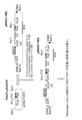
- FIG. 2 is a construction diagram of a vector used for producing a B ⁇ -introduced silkworm in an example.
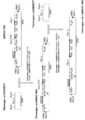
- FIG. 3 is a construction diagram of a vector used for producing A ⁇ / ⁇ -introduced silkworms in Examples.
- FIG. 3 is a construction diagram of a vector used to produce A ⁇ / ⁇ -introduced silkworms in Examples (continuation of FIG. 2).
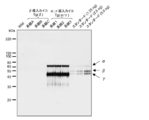
- An example of the results of detecting each subunit protein in the silk thread by Western blotting for B ⁇ -introduced silkworms and A ⁇ / ⁇ -introduced silkworms produced in the examples is shown.
- the transgenic silkworm of the present invention expresses three subunits of fibrinogen A ⁇ chain, B ⁇ chain and ⁇ chain in silk gland cells.
- the silk gland is an organ that synthesizes and secretes silk thread. When a recombinant protein is expressed in the silk gland cells, it is secreted together with the silk thread and accumulated in the cocoon.
- the silk gland is divided into three parts, an anterior part, a middle part, and a posterior part, and fibroin is secreted from the rear part and sericin is secreted from the middle part. Fibroin forms the center of the silk thread, and sericin covers it.
- the transgenic silkworm of the present invention is also preferably one that expresses three subunit genes in the middle silk gland.
- the amino acid sequence of human fibrinogen and the base sequence encoding it are known, and are registered in GenBank with accession numbers such as NM_021871 (A ⁇ chain), NM_005141 (B ⁇ chain), NM_000509 ( ⁇ chain), and the like. These known sequences are represented by SEQ ID Nos. 1 and 2 (A ⁇ chain cDNA sequence and amino acid sequence), SEQ ID Nos. 5 and 6 (B ⁇ chain cDNA sequence and amino acid sequence), SEQ ID Nos. 9 and 10 ( ⁇ chain sequences). cDNA sequence and amino acid sequence).
- a ⁇ , B ⁇ , and ⁇ genes to be incorporated into silkworm transformation vectors are easily amplified from human cDNA libraries by conventional PCR by designing appropriate primers based on the known sequence information described in the sequence listing of this application. Can be obtained.
- each subunit When introducing the fibrinogen subunit gene into silkworms, it is preferable to replace the original signal peptide region of each subunit with the signal peptide region of human calreticulin. Since the signal peptide of human calreticulin functions well in the silkworm middle silk gland cells, it is advantageous for efficiently secreting recombinant fibrinogen into the silk thread.
- the cDNA sequence and amino acid sequence of each subunit in which the signal peptide was replaced with the signal peptide of human calreticulin are SEQ ID NOs: 3, 4 (A ⁇ chain), SEQ ID NOs: 7, 8 (B ⁇ chain), SEQ ID NOS: 11, 12 ( (gamma chain) respectively.
- SEQ ID NO: 3 64 nt to 111 nt in SEQ ID NO: 3 is a region encoding a human calreticulin signal peptide.
- the nucleotide sequences shown in SEQ ID NOs: 3, 7, and 11 include sequences for incorporation into vectors (restriction enzyme recognition sites and the like), and BmNPV polyhedrin 5′-UTR added for the purpose of promoting translation (11 nt in SEQ ID NO: 3 ⁇ 60nt).
- sequence modification can be easily performed by PCR using a primer having a desired additional sequence. The specific procedure is as detailed in the examples below.
- a procedure for introducing three subunit genes into a silkworm 3 genes are introduced simultaneously, and a silkworm introduced with any one of the 3 genes and a silkworm introduced with the remaining 2 genes simultaneously are crossed. Procedures such as sequentially mating silkworms that have been introduced.
- a plurality of genes When a plurality of genes are introduced simultaneously, a plurality of genes may be incorporated on a single vector, or a plurality of vectors incorporating one gene at a time may be introduced simultaneously into silkworms.
- a vector incorporating only the B ⁇ gene and a vector incorporating both the A ⁇ gene and the ⁇ gene are constructed, and a B ⁇ -introduced silkworm and an A ⁇ / ⁇ -introduced silkworm are obtained and mated with each other.
- / B ⁇ / ⁇ -introduced silkworm has been obtained, the method for introducing 3 genes is not limited thereto.
- the A ⁇ , B ⁇ , and ⁇ genes may be introduced into the silkworm in a state in which the fibrinogen subunit is functionally linked to a promoter that functions in the silk gland cells.
- “functionally linked” means that a gene sequence is linked downstream so as to be controlled by the promoter.
- the promoter that functions in the silk gland cells may be any promoter that initiates downstream gene expression in the silk gland cells, and may function in other tissues or cells. A promoter that functions specifically is preferred.
- promoters that function in the middle silk gland include sericin genes (such as sericin 1 gene and sericin 2 gene), and preferred examples of promoters that function in the posterior silk gland include fibroin heavy chain gene and fibroin.
- the promoter include, but are not limited to, a light chain gene and a fibrohexamelin gene.
- a promoter that functions in the middle silk gland such as a sericin gene promoter is preferably used.
- the three subunit genes are preferably introduced in combination with an enhancer.
- An enhancer which is a cis element for transcriptional regulation, may be present in the vicinity of the promoter and subunit genes, and may be upstream or downstream, but is usually arranged upstream of the promoter.
- transcription of a plurality of neighboring genes can be promoted by one enhancer, for example, only one enhancer may be combined for two sets of promoter + subunit genes.
- one enhancer is inserted for two subunit genes.
- the enhancer is not particularly limited as long as it can enhance the transcription activity of the adopted promoter, and those skilled in the art preferably evaluate the effect of enhancing the transcription activity of the enhancer using a transient expression system. You can select an enhancer.
- a preferred specific example of an enhancer that can be used in the present invention is a homologous region of baculovirus.
- hr3 derived from BmNPV can be preferably used (see Japanese Patent No. 4271122).
- the sequence of baculovirus-derived enhancers such as hr3 is known (GenBank NC_001962, NC_001623, etc.), and is also used in commercially available expression vectors for insect cells. Therefore, PCR is appropriately performed from a baculovirus genome or a commercially available vector. Amplified and readily available.
- the three subunit genes are preferably introduced in combination with a transactivator.
- a transactivator is a factor that activates gene transcription by acting directly or indirectly on a promoter. It can be inserted into the same vector as the subunit gene and introduced simultaneously, or can be introduced into silkworm separately from the subunit gene.
- the transactivator gene may be inserted into a vector separate from the vector containing the subunit gene and introduced into a silkworm together with the vector containing the subunit gene, or three subunit genes may be introduced first.
- the introduced A ⁇ / B ⁇ / ⁇ -introduced silkworm may be prepared, and the transactivator gene may be introduced by crossing with a transactivator-expressing silkworm separately produced by a genetic engineering technique. Any of these embodiments is encompassed by “introducing a subunit gene in combination with a transactivator”.
- the transactivator is not particularly limited as long as it can enhance the effect on the transcription of the promoter to be adopted (and the enhancer to be adopted if it is a transactivator that acts on an enhancer).
- a preferable transactivator can be selected by appropriately evaluating the activity using a sex expression system.
- Preferable specific examples of transactivator that can be used in the present invention include baculovirus-derived transcription factor IE1 (see Japanese Patent No.
- IE1 gene sequence is also known (GenBank AY048770, M16820, etc.) and is also used in commercially available expression vectors for insect cells, etc., so it can be easily obtained by appropriate PCR amplification from baculovirus genomes or commercially available vectors. can do.
- IE1-expressing silkworm lines are known (FEBS Journal 276, 5806-5820 (2009), Biotechnol Bioeng 106, 860-870 (2010)).
- both enhancer and transactivator are introduced in combination with the fibrinogen subunit gene.
- the IE1 gene is introduced into an A ⁇ / B ⁇ / ⁇ -introduced silkworm (using hr3 as an enhancer)
- the weight of the cocoon decreases according to the expression level of IE1
- three fibrinogen subunits are used. Is greatly increased, and the content in the silk thread is greatly increased. As a result, the production efficiency of fibrinogen can be further improved.
- “introduced in combination” means that an enhancer or a transactivator is introduced into a silkworm so as to contribute to increased expression of a fibrinogen subunit gene in a silk gland cell.
- an enhancer is introduced in combination with a subunit gene
- the enhancer is introduced so that it is present in the vicinity of the promoter and subunit gene, and is usually incorporated in the vicinity of the subunit gene on the gene introduction vector.
- the subunit gene is introduced into the silkworm at the same time.
- the transactivator does not need to be located in the vicinity of the subunit gene as described above. Therefore, in the case of “transactivator is introduced in combination with the subunit gene”, the above-described embodiment, For example, a mode in which a transactivator is newly introduced into a transgenic silkworm expressing three subunit genes is also included.
- the silkworm transformation vector generally used at present is a vector using an insect-derived DNA-type transposon, and the most typical example is a plasmid vector using piggyBac.
- the plasmid vector contains two inverted repeat sequences present at both ends of the transposon piggyBac, and a sequence to be integrated into the silkworm chromosome is inserted between the repeat sequences.
- a silkworm having the region incorporated in the chromosome can be obtained.
- a piggyBac vector can also be preferably used when producing the transgenic silkworm of the present invention.
- the method used is not limited to this, and any known method may be used.
- a marker gene that is integrated into the silkworm chromosome is usually inserted together with the subunit gene for the convenience of selection. Since the expression of the transgene can be confirmed indirectly by confirming the expression of the marker gene in the silkworm individual (egg, larva or adult) into which the vector has been introduced, if a transformed silkworm is selected based on the expression of the marker gene Good.
- the step of “selecting silkworms expressing A ⁇ chain, B ⁇ chain and ⁇ chain in silk gland cells” indirectly involves the expression of the subunit gene by the expression of the marker gene. It may be a step of selecting after confirming.
- a marker that can be detected while utilizing silkworms regardless of chemical treatment or mechanical treatment is preferable.
- a fluorescent protein can be preferably used.
- Two types of transgenic silkworms may be created using two types of fluorescent protein genes. For example, when a red fluorescent protein is used as one marker and a green fluorescent protein is used as the other marker, yellow fluorescence in which red and green are combined can be observed from silkworms into which both have been introduced by mating. As a result, silkworms with 3 genes introduced can be selected.
- the vector construction diagrams shown in FIGS. 1 to 3 are vectors used for producing transgenic silkworms in the following examples.
- the pMSG-1.1R and pMSG1.1MG used are known vectors for secreting the desired recombinant protein into the silkworm sericin layer (J Biosci Bioeng 105, 595-603 (2008), FEBS Journal 276). , 5806-5820 (2009)).
- These vectors include an enhancer hr3 and a sericin 1 promoter Pser, and an NruI site for inserting a foreign gene cDNA exists between Pser and the silkworm fibroin L chain poly A addition signal FLpA (FIGS. 1 and 2). 2).
- 3 is a modified version of pMSG1.1MG so that two subunit genes can be introduced.
- the second subunit gene is inserted into the Eco47III site located between the second Pser and FLpA. It is a site to do.
- a sequence encoding a fluorescent protein (DsRed, GFP) is functionally linked downstream of the promoter 3xP3.
- 3xP3 is a promoter that functions in the eye and nervous system, and transgenic silkworms can be easily selected based on the presence or absence of fluorescence from these tissues.
- the vector thus constructed can be microinjected into a silkworm egg together with a transposase expression helper plasmid by the method specifically described in the Examples below.
- the helper plasmid to be used is not particularly limited as long as it can express transposase from the plasmid in silkworm eggs, and a known one such as pHA3PIG (Nat. Biotechnol. 18, 81-84 (2000)) used in the following examples is used. it can.
- the vector and helper plasmid are usually mixed at a ratio of about 1: 1 and used for injection.
- a buffer for injection for example, a buffer containing 0.5 mM phosphate buffer pH 7.0, 5 mM KCl, etc.
- concentration of the vector and helper plasmid is about 200 ⁇ g / ml each. It can be injected into silkworm eggs at 8 hours before blastoderm at a liquid volume of about 15-20 nl / egg.
- F1 is obtained by mating F0 generations hatched from the injected eggs with each other or with wild strains. By irradiating excitation light to eggs before F1 hatching or larvae after hatching, the fluorescence of the marker fluorescent protein can be confirmed in the eyes and nervous system in the egg or larvae into which the gene has been introduced. . Finally, the integration of the subunit gene into the silkworm genome may be confirmed by PCR, Southern blotting or the like. As appropriate, the expression level of the subunit gene in the silk gland cells or the secretion amount of the subunit protein into the silk thread may be confirmed by a conventional method, and an individual with a sufficiently high protein expression level may be further selected.
- the transgenic silkworm of the present invention into which three genes have been introduced can be obtained by sequentially crossing these three lines.
- the transgenic silkworm of the present invention into which three genes have been introduced can be obtained by mating the two.
- the transgenic silkworm cocoons of the present invention contain active fibrinogen in which three subunits are hexamers.
- the formation of a hexamer can be confirmed by size by electrophoresis in a non-reducing state.
- fibrinogen By collecting fibrinogen from this cocoon, a large amount of safe fibrinogen can be obtained without fear of contamination with viruses that can infect humans.
- the subunit gene When the subunit gene is expressed in the posterior silk gland and fibrinogen is secreted into the fibroin layer of the silk thread, the fibrinogen can be recovered by dissolving the fibroin.
- a chaotropic salt such as lithium thiocyanate, guanidine thiocyanate or lithium bromide, or a mixed solution of calcium chloride and ethanol is usually used.
- the subunit gene is expressed in the middle silk gland and fibrinogen is secreted into the sericin layer of the silk thread, the sericin layer is relatively soluble in water, so fibrinogen can be easily extracted by immersing the silk thread in an aqueous buffer solution. .
- the kite When extracting from the kite string, the kite may be immersed in the extract as it is, or may be soaked after appropriately cutting, pulverizing, or the like.
- Fibrinogen secreted into the sericin layer can be extracted and recovered by simply immersing it in an aqueous buffer, but particularly preferable extraction conditions include 1 to 4 M urea, 25 to 100 mM Tris. In a buffer containing HCl-pH (pH 6.5-8.5), 0.01-2.0% surfactant, 0-0.25M NaCl, at a low temperature of about 4-10 ° C. for about 10-24 hours, preferably 12 The condition is that the extraction is performed for about 18 hours. According to this condition, fibrinogen can be efficiently extracted while suppressing elution of sericin and in an advantageous state for the subsequent purification step.
- the urea concentration is more preferably 1 to 3M.
- polyoxyethylene octylphenyl ether (trade name: Triton® X-100), polyethylene glycol-p-octylphenyl ether (trade name: NP-40), 3-[(3-colamidopropyl) dimethylammonio ] -1-Propanesulfonate (trade name: CHAPS) can be used, and two or more kinds may be used in combination.
- the NaCl concentration of the buffer solution is preferably low, and may be, for example, 0.1M or less, or 0.01M or less.
- the fibrinogen eluted in the buffer solution can be appropriately subjected to ultrafiltration and buffer exchange, and the precipitate can be removed as necessary to obtain a concentrated fibrinogen solution.
- fibrinogen recovered from the silkworm of the transgenic silkworm of the present invention when mixed with thrombin and allowed to react at 37 ° C. for 1 hour, as described in the following examples, increases the viscosity of the reaction solution. It has been confirmed that it has clotting activity.
- a ⁇ chain is sometimes simply referred to as “ ⁇ chain”
- B ⁇ chain is simply referred to as “ ⁇ chain”.
- a ⁇ chain cDNA fragment (hereinafter referred to as Alpha) was amplified from a cDNA library under the following reaction conditions.
- the first PCR product was electrophoresed on an agarose gel, and a band presumed to be Alpha was collected from the gel and purified, and used as a template for the second PCR.
- the second PCR product was subjected to agarose gel electrophoresis, and a band presumed to be Alpha was recovered from the gel, purified, and inserted into the BamHI and HindIII sites of pBluescriptII SK +. The nucleotide sequence was confirmed and designated pSK-alpha.
- the reverse primer Fibrinogen Alpha C1 was set at the position of the mature type so that the C-terminal 15 amino acids were removed as in the mature type.
- the first PCR product was subjected to agarose gel electrophoresis, and a band presumed to be Alpha was recovered from the gel and purified, and used as a template for the second PCR.
- the second PCR product was subjected to agarose gel electrophoresis, and a band presumed to be Alpha was recovered from the gel and purified. Using Ex Taq, A was added to the 3 ′ end of the second PCR purification product, and ligation was performed to pCR2.1-TOPO. The nucleotide sequence was confirmed and designated pCR-ATGalpha.
- UTR sequence was added as follows.
- the first PCR product was subjected to agarose gel electrophoresis, and a band presumed to be Alpha was collected from the gel and purified, and used as a template for the second PCR.
- the second PCR product was subjected to agarose gel electrophoresis, and a band presumed to be Alpha was recovered from the gel and purified.
- This purified fragment was ligated to pENTR / D-TOPO, which is a vector for integration into a silkworm expression vector.
- the nucleotide sequence was confirmed and designated pENTR-UTRalpha.
- Beta B ⁇ chain cDNA fragment
- the second PCR product was subjected to agarose gel electrophoresis, and a band presumed to be Beta was recovered from the gel and purified. It was inserted into EcoRI and XhoI sites of pBluescriptII SK +. The nucleotide sequence was confirmed and designated pSK-beta.
- the signal sequence of Beta was modified.
- the first PCR product was electrophoresed on an agarose gel, and a band presumed to be Beta was recovered from the gel and purified, and used as a template for the second PCR.
- the second PCR product was subjected to agarose gel electrophoresis, and a band presumed to be Beta was recovered from the gel.
- A was added to the 3 ′ end of the second PCR purification product, and ligation was performed to pCR2.1-TOPO.
- the nucleotide sequence was confirmed and designated pCR-ATGbetat.
- UTR sequence was added as follows.
- the first PCR product was subjected to agarose gel electrophoresis, and a band presumed to be Beta was recovered from the gel and purified, and used as a template for the second PCR.
- the second PCR product was subjected to agarose gel electrophoresis, a band presumed to be Beta was collected from the gel, purified, and ligated to pENTR / D-TOPO, which is a vector for incorporation into a silkworm expression vector.
- the nucleotide sequence was confirmed and designated pENTR-UTRbeta.
- a ⁇ -chain cDNA fragment (hereinafter referred to as Gamma) was amplified from a cDNA library under the following reaction conditions.
- the first PCR product was subjected to agarose gel electrophoresis, and a band presumed to be Gamma was recovered from the gel and purified, and used as a template for the second PCR.
- the second PCR product was subjected to agarose gel electrophoresis, and a band presumed to be Gamma was recovered from the gel, purified, and inserted into the EcoRI and HindIII sites of pBluescriptII SK +. The nucleotide sequence was confirmed and designated pSK-gamma.
- the signal sequence of Gamma was modified.
- the first PCR product was subjected to agarose gel electrophoresis, and a band presumed to be Gamma was recovered from the gel and purified, and used as a template for the second PCR.
- the second PCR product was subjected to agarose gel electrophoresis, and a band presumed to be Gamma was recovered from the gel and purified.
- A was added to the 3 ′ end of the second PCR purification product, and ligation was performed to pCR2.1-TOPO.
- the nucleotide sequence was confirmed and designated as pCR-ATGgamma.
- UTR sequence was added as follows.
- the first PCR product was subjected to agarose gel electrophoresis, and a band presumed to be Gamma was recovered from the gel and purified, and used as a template for the second PCR.
- the second PCR product was subjected to agarose gel electrophoresis, a band presumed to be Gamma was recovered from the gel, purified, and ligated to pENTR / D-TOPO, which is a vector for incorporation into a silkworm expression vector.
- the nucleotide sequence was confirmed and designated pENTR-UTRgamma.
- B ⁇ chain expression vector Fibrinogen- ⁇ / pMSG1.1R (see Fig. 1) From pENTR-UTRbeta prepared above, the inserted gene was subcloned into pXINSECT-DEST38 using the GATEWAY system. Fibrinogen- ⁇ cDNA was excised from the obtained Fibrinogen- ⁇ / pXINSECT by SmaI digestion and inserted into the NruI site of a known silkworm transformation vector pMSG1.1R (J Biosci Bioeng 105, 595-603 (2008)). Fibrinogen- ⁇ / pMSG1.1R for transformation was completed (FIG. 1).
- the pMSG1.1R vector is a vector that allows the inserted gene to be expressed in the middle silk gland by the sericin 1 gene promoter Pser1, which functions in the middle silk gland cells, and contains baculovirus-derived hr3 as an enhancer, and a transgene expression marker.
- Pser1 sericin 1 gene promoter
- baculovirus-derived hr3 as an enhancer
- transgene expression marker As a red fluorescent protein gene DsRed controlled by a promoter 3xP3 that functions in the silkworm eye and nervous system.
- the gene introduction vector pMSG3.1MG for expressing two kinds of genes is constructed as follows (FIG. 2).
- PMSG1.1MG is obtained by replacing the transgene expression marker DsRed of pMSG1.1R used above with a green fluorescent protein gene hMGFP.
- Insert DNA from pCR4-TOPO vector (PserFLpA / pCR4) inserted with sequences consisting of sericin 1 promoter, Eco47III restriction enzyme cleavage site, fibroin light chain poly A addition signal, by NotI and SpeI, vector-derived restriction enzyme sites
- the excised insert DNA was blunt-ended.
- pMSG1.1MG was digested with AscI (the AscI site is between the SV40 polyA addition signal and hr3), and then blunt-ended, and the blunt-ended insert DNA was inserted into the site. With the above operation, pMSG3.1MG was completed (Fig. 2).
- Fibrinogen- ⁇ / pXINSECT was excised from Fibrinogen- ⁇ / pXINSECT by SmaI digestion and inserted into the NruI site of the pMSG3.1MG vector prepared above to obtain Fibrinogen- ⁇ / pMSG3.1MG.
- Fibrinogen- ⁇ / pXINSECT was excised from Fibrinogen- ⁇ cDNA by SmaI digestion and inserted into the Eco47III site of Fibrinogen- ⁇ / pMSG3.1MG to complete Fibrinogen- ⁇ & ⁇ / pMSG3.1MG (FIG. 3).
- This DNA solution was microinjected into a pre-blastoderm silkworm egg (Silkworm embryo) 2 to 8 hours after laying at a liquid volume of about 15 to 20 nl / egg, and the egg was incubated at 25 ° C. A total of 600 out of 3,032 injected eggs hatched. Reproductive adults obtained from this were mated to obtain 112 groups of F1 egg masses. F1 egg masses on the 5th to 6th day from the date of egg laying were observed with a fluorescent stereomicroscope, and eggs that could confirm marker gene expression, that is, red fluorescence from the eyes and nervous system, were selected. Seven groups of egg masses containing B ⁇ -expressing silkworm eggs were obtained. When these were hatched and reared, transgenic silkworms derived from multiple egg masses grew normally and became adults with reproductive ability. Each adult was crossed with a wild-type silkworm to obtain 6 B ⁇ -introduced silkworms.
- IM1 silkworm is a silkworm in which IE1 is introduced under the control of sericin 1 promoter, and highly expresses transcription factor IE1 (Biotechnol-Bioeng 106, 860-870 (2010)).
- the A ⁇ / B ⁇ / ⁇ -introduced silkworm produced above and IM1 silkworm are crossed to obtain A ⁇ / B ⁇ / ⁇ ⁇ IM silkworm, and silkworms of this silkworm are obtained, and the expression level of each subunit (each subunit in the silk thread) Content).
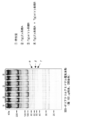
- the expression level of fibrinogen increased significantly, but the weight of the straw decreased to about 30 to 40% (Table 10 and FIG. 7).
- IE1 silkworm is a line with lower expression level of IE1 than the above IM1 silkworm (FEBS Journal 276, 5806-5820 (2009)).
- a ⁇ / B ⁇ / ⁇ ⁇ IE silkworm was obtained by crossing with IE1 silkworm, and silkworms of this silkworm were obtained, and the expression level of each subunit (content of each subunit in silk thread) and the weight of silkworm were examined. Decrease in cocoon weight could be avoided and the fibrinogen expression level was increased compared to A ⁇ / B ⁇ / ⁇ silkworm, but the fibrinogen expression level was lower than that of A ⁇ / B ⁇ / ⁇ ⁇ IM silkworm (Table 11 and FIG. 8).
- the extraction conditions for fibrinogen were examined using silkworm cocoons introduced with A ⁇ / B ⁇ / ⁇ without transactivator.
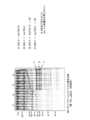
- the cocoon was cut and immersed in a buffer solution for extraction. Since extraction with PBS was difficult, examination was carried out as shown in FIG. 9 using buffers having various compositions containing NaCl and a surfactant.
- conditions 8 in FIG. 9 (2M Urea, 50 mM Tris-HCl ( pH7.5), 1% Triton X-100, extraction temperature 4 °C, 16 hours) was considered the best.
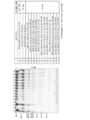
- fibrinogen extraction conditions were examined as shown in FIG. 10 (all extracted at 4 ° C. for 16 hours). Since the expression level of fibrinogen is higher than that of the previously studied A ⁇ / B ⁇ / ⁇ silkworm, it can be extracted efficiently even under milder conditions, and it was well extracted even when the Triton X-100 concentration was lowered to 0.1% .
- the A ⁇ / B ⁇ / ⁇ ⁇ IM silkworm cocoons were extracted with 6M Urea, 50 mM Tris-HCl (pH 7.5) and electrophoresed under non-reducing conditions (without 2-mercaptoethanol). Although it was not a clear band due to its large molecular weight, it was considered that a hexamer was formed from its size (not shown).
- IM sputum was extracted with 2M Urea, 50 mM Tris-HCl (pH 7.5), 0.1% Triton X-100 at 4 ° C. overnight.
- the extract was concentrated from 15 ml to 400 ⁇ l by ultrafiltration (amicon ultra-15 10,000 NMWL, millipore). Subsequently, 15 ml of 100 mM Tris-HCl (pH 8.0), 200 mM NaCl, 500 nM CaCl 2 was added, and the mixture was again concentrated to 400 ⁇ l (buffer exchange). At this stage, some proteins became insoluble and precipitation was observed.
Landscapes
- Life Sciences & Earth Sciences (AREA)
- Health & Medical Sciences (AREA)
- Chemical & Material Sciences (AREA)
- Organic Chemistry (AREA)
- Zoology (AREA)
- Environmental Sciences (AREA)
- Genetics & Genomics (AREA)
- Proteomics, Peptides & Aminoacids (AREA)
- Biophysics (AREA)
- General Health & Medical Sciences (AREA)
- Gastroenterology & Hepatology (AREA)
- Medicinal Chemistry (AREA)
- Molecular Biology (AREA)
- Biochemistry (AREA)
- Toxicology (AREA)
- Hematology (AREA)
- Animal Husbandry (AREA)
- Biodiversity & Conservation Biology (AREA)
- Animal Behavior & Ethology (AREA)
- Preparation Of Compounds By Using Micro-Organisms (AREA)
- Micro-Organisms Or Cultivation Processes Thereof (AREA)
- Peptides Or Proteins (AREA)
Abstract
L'invention concerne un nouveau moyen qui permet l'obtention en masse de fibrinogènes sans aucun danger, à un faible coût. Un ver à soie transgénique, selon la présente invention, exprime des sous-unités de chaîne Aα, de chaîne Bβ et de chaîne γ d'un fibrinogène dans les cellules de la glande séricigène et produit des fibrinogènes qui présentent une activité coagulatrice dans la soie. De préférence, le ver à soie transgénique exprime les sous-unités dans les cellules du milieu de la glande séricigène, et produit le fibrinogène dans la couche de séricine de la soie. Il est possible d'obtenir en masse des fibrinogènes sans aucun danger, à un faible coût, par la récupération des fibrinogènes provenant d'un ver à soie transgénique, selon la présente invention.
Priority Applications (2)
| Application Number | Priority Date | Filing Date | Title |
|---|---|---|---|
| EP12752986.5A EP2682464A4 (fr) | 2011-03-03 | 2012-03-02 | Ver à soie transgénique produisant des fibrinogènes |
| US14/002,430 US9447167B2 (en) | 2011-03-03 | 2012-03-02 | Fibrinogen-producing transgenic silkworm |
Applications Claiming Priority (2)
| Application Number | Priority Date | Filing Date | Title |
|---|---|---|---|
| JP2011046386A JP5839810B2 (ja) | 2011-03-03 | 2011-03-03 | フィブリノゲンを産生するトランスジェニックカイコ |
| JP2011-046386 | 2011-03-03 |
Publications (1)
| Publication Number | Publication Date |
|---|---|
| WO2012118176A1 true WO2012118176A1 (fr) | 2012-09-07 |
Family
ID=46758102
Family Applications (1)
| Application Number | Title | Priority Date | Filing Date |
|---|---|---|---|
| PCT/JP2012/055366 Ceased WO2012118176A1 (fr) | 2011-03-03 | 2012-03-02 | Ver à soie transgénique produisant des fibrinogènes |
Country Status (4)
| Country | Link |
|---|---|
| US (1) | US9447167B2 (fr) |
| EP (1) | EP2682464A4 (fr) |
| JP (1) | JP5839810B2 (fr) |
| WO (1) | WO2012118176A1 (fr) |
Families Citing this family (5)
| Publication number | Priority date | Publication date | Assignee | Title |
|---|---|---|---|---|
| JP6332585B2 (ja) * | 2013-07-11 | 2018-05-30 | 国立研究開発法人農業・食品産業技術総合研究機構 | トランスジェニックカイコを用いた非天然アミノ酸含有タンパク質の製造方法 |
| CN104839099B (zh) * | 2015-04-17 | 2017-07-14 | 江苏科技大学 | 一种杂交、回交改良家蚕抗血液型脓病的方法 |
| JP7566257B2 (ja) | 2018-10-29 | 2024-10-15 | 株式会社 免疫生物研究所 | 抗hiv抗体及びその製造方法 |
| CN114213517B (zh) * | 2021-02-08 | 2024-07-09 | 复向丝泰医疗科技(苏州)有限公司 | 利用切向流超滤技术制备可控高浓度丝素蛋白溶液的方法 |
| JPWO2024057361A1 (fr) * | 2022-09-12 | 2024-03-21 |
Citations (10)
| Publication number | Priority date | Publication date | Assignee | Title |
|---|---|---|---|---|
| JP2001161214A (ja) * | 1999-12-13 | 2001-06-19 | Japan Science & Technology Corp | 形質転換カイコ |
| JP2002306167A (ja) | 2000-11-28 | 2002-10-22 | Japan Science & Technology Corp | 形質転換カイコ作製用ベクター |
| JP2002315580A (ja) * | 2001-04-18 | 2002-10-29 | Japan Science & Technology Corp | ヒト・コラーゲンを産生する形質転換カイコ |
| JP2004016055A (ja) | 2002-06-14 | 2004-01-22 | Mitsubishi Pharma Corp | 組換えフィブリノーゲンの製造方法 |
| JP2004016144A (ja) * | 2002-06-18 | 2004-01-22 | Japan Science & Technology Corp | ヒト・コラーゲンを産生する形質転換カイコ |
| JP2006109772A (ja) * | 2004-10-15 | 2006-04-27 | Hiroshima Industrial Promotion Organization | カイコでの組換えタンパク質製造のためのポリヌクレオチド |
| JP2008067612A (ja) | 2006-09-12 | 2008-03-27 | Hiroshima Industrial Promotion Organization | 機能的な抗体分子を生産するトランスジェニックカイコ |
| JP2009502166A (ja) * | 2005-07-29 | 2009-01-29 | エコール ポリテクニーク フェデラル ドゥ ローザンヌ | 分子改変体フィブリノゲン融合タンパク質 |
| JP2009225781A (ja) * | 2008-02-29 | 2009-10-08 | Neosilk Co Ltd | カイコを用いた糖鎖構造に特徴を有する糖蛋白質の製造方法 |
| JP4573775B2 (ja) | 2003-07-29 | 2010-11-04 | 一般財団法人化学及血清療法研究所 | 組換えフィブリノゲン高産生細胞の作製方法及び高産生細胞 |
Family Cites Families (3)
| Publication number | Priority date | Publication date | Assignee | Title |
|---|---|---|---|---|
| ATE374525T1 (de) | 1994-02-18 | 2007-10-15 | American Nat Red Cross | Transgenes fibrinogen |
| WO2004016055A1 (fr) | 2002-08-05 | 2004-02-19 | Koninklijke Philips Electronics N.V. | Produit electronique, corps et procede de fabrication |
| WO2007103447A2 (fr) | 2006-03-06 | 2007-09-13 | Humagene, Inc. | Procede de preparation de la thrombine recombinante humaine et du fibrinogene |
-
2011
- 2011-03-03 JP JP2011046386A patent/JP5839810B2/ja not_active Expired - Fee Related
-
2012
- 2012-03-02 EP EP12752986.5A patent/EP2682464A4/fr not_active Withdrawn
- 2012-03-02 US US14/002,430 patent/US9447167B2/en not_active Expired - Fee Related
- 2012-03-02 WO PCT/JP2012/055366 patent/WO2012118176A1/fr not_active Ceased
Patent Citations (11)
| Publication number | Priority date | Publication date | Assignee | Title |
|---|---|---|---|---|
| JP2001161214A (ja) * | 1999-12-13 | 2001-06-19 | Japan Science & Technology Corp | 形質転換カイコ |
| JP2002306167A (ja) | 2000-11-28 | 2002-10-22 | Japan Science & Technology Corp | 形質転換カイコ作製用ベクター |
| JP2002315580A (ja) * | 2001-04-18 | 2002-10-29 | Japan Science & Technology Corp | ヒト・コラーゲンを産生する形質転換カイコ |
| JP2004016055A (ja) | 2002-06-14 | 2004-01-22 | Mitsubishi Pharma Corp | 組換えフィブリノーゲンの製造方法 |
| JP2004016144A (ja) * | 2002-06-18 | 2004-01-22 | Japan Science & Technology Corp | ヒト・コラーゲンを産生する形質転換カイコ |
| JP4573775B2 (ja) | 2003-07-29 | 2010-11-04 | 一般財団法人化学及血清療法研究所 | 組換えフィブリノゲン高産生細胞の作製方法及び高産生細胞 |
| JP2006109772A (ja) * | 2004-10-15 | 2006-04-27 | Hiroshima Industrial Promotion Organization | カイコでの組換えタンパク質製造のためのポリヌクレオチド |
| JP4271122B2 (ja) | 2004-10-15 | 2009-06-03 | 財団法人 ひろしま産業振興機構 | カイコでの組換えタンパク質製造のためのポリヌクレオチド |
| JP2009502166A (ja) * | 2005-07-29 | 2009-01-29 | エコール ポリテクニーク フェデラル ドゥ ローザンヌ | 分子改変体フィブリノゲン融合タンパク質 |
| JP2008067612A (ja) | 2006-09-12 | 2008-03-27 | Hiroshima Industrial Promotion Organization | 機能的な抗体分子を生産するトランスジェニックカイコ |
| JP2009225781A (ja) * | 2008-02-29 | 2009-10-08 | Neosilk Co Ltd | カイコを用いた糖鎖構造に特徴を有する糖蛋白質の製造方法 |
Non-Patent Citations (8)
| Title |
|---|
| BIOTECHNOL BIOENG, vol. 106, 2010, pages 860 - 870 |
| FEBS JOURNAL, vol. 276, 2009, pages 5806 - 5820 |
| J BIOSCI BIOENG, vol. 105, 2008, pages 595 - 603 |
| MASAHIRO TOMITA ET AL.: "Transgenic Kaiko ni yoru Kumikae Fibrinogen no Seisan", JAPAN SOCIETY FOR BIOSCIENCE, BIOTECHNOLOGY, AND AGROCHEMISTRY TAIKAI KOEN YOSHISHU, vol. 2011, 5 March 2011 (2011-03-05), pages 294, XP008169195 * |
| NAT. BIOTECHNOL., vol. 18, 2000, pages 81 - 84 |
| NATURE BIOTECHNOLOGY, vol. 21, 2003, pages 52 - 56 |
| PROTEIN EXPRESSION AND PURIFICATION, vol. 59, 2008, pages 289 - 296 |
| See also references of EP2682464A4 |
Also Published As
| Publication number | Publication date |
|---|---|
| EP2682464A1 (fr) | 2014-01-08 |
| US9447167B2 (en) | 2016-09-20 |
| US20130345401A1 (en) | 2013-12-26 |
| EP2682464A4 (fr) | 2014-10-22 |
| JP5839810B2 (ja) | 2016-01-06 |
| JP2012182995A (ja) | 2012-09-27 |
Similar Documents
| Publication | Publication Date | Title |
|---|---|---|
| US20080287651A1 (en) | Silk Thread Containing Spider Thread Protein and Silk Worm Producing the Silk Thread | |
| JP6253109B2 (ja) | 後部絹糸腺遺伝子発現ユニット及びそれを有する遺伝子組換え絹糸虫 | |
| US20180288988A1 (en) | Transgenic silkworms expressing spider silk | |
| EP1811027B1 (fr) | Polynucleotide pour la production d'une proteine recombinee par un ver a soie | |
| JP4701336B2 (ja) | ヒト・コラーゲンを産生する形質転換カイコ | |
| JP5839810B2 (ja) | フィブリノゲンを産生するトランスジェニックカイコ | |
| Long et al. | New insight into the mechanism underlying fibroin secretion in silkworm, B ombyx mori | |
| CN104513821B (zh) | 改造的人酸性成纤维细胞生长因子基因及其重组载体和应用 | |
| CN111793644B (zh) | 家蚕丝心蛋白重链表达系统及其制备方法和应用 | |
| CN111850039B (zh) | 表达蛋白分布于家蚕丝胶层的家蚕丝心蛋白重链表达系统及其制备方法和应用 | |
| Zhao et al. | Expression of hIGF-I in the silk glands of transgenic silkworms and in transformed silkworm cells | |
| CN102604953B (zh) | 家蚕表皮蛋白BmCP274启动子及其重组表达载体和应用 | |
| JP2011103816A (ja) | トランスジェニックカイコ | |
| JP2004016144A (ja) | ヒト・コラーゲンを産生する形質転換カイコ | |
| Wang et al. | In vivo analysis of fibroin heavy chain signal peptide of silkworm Bombyx mori using recombinant baculovirus as vector | |
| JP2008245623A (ja) | 改変フィブロインを生産する遺伝子改変カイコ | |
| CN111793645B (zh) | 一种家蚕丝心蛋白重链表达系统及其制备方法和应用 | |
| JP2008125367A (ja) | 組換えプロリン水酸化ヒトコラーゲンを生産する組換え細胞およびトランスジェニック生物 | |
| JP4798428B2 (ja) | 外来酵素蛋白質の製造法、それに用いる遺伝子組換えカイコおよびその製造法 | |
| JP2001161214A (ja) | 形質転換カイコ | |
| WO2025013948A1 (fr) | Insecte génétiquement modifié appartenant à l'ordre des lépidoptères | |
| CN118272439A (zh) | 蜘蛛表皮蛋白基因TcmaCPR1在改良蚕丝性能中的应用 | |
| CN121109507A (zh) | 基于慢病毒转染结合精子介导的蛛丝蛋白转基因生产方法及应用 | |
| HK1130834B (en) | Polynucleotide for production of recombinant protein by silkworm |
Legal Events
| Date | Code | Title | Description |
|---|---|---|---|
| 121 | Ep: the epo has been informed by wipo that ep was designated in this application |
Ref document number: 12752986 Country of ref document: EP Kind code of ref document: A1 |
|
| NENP | Non-entry into the national phase |
Ref country code: DE |
|
| WWE | Wipo information: entry into national phase |
Ref document number: 14002430 Country of ref document: US |