WO2012132017A1 - Procédé de commande d'exclusion et programme de commande d'exclusion - Google Patents
Procédé de commande d'exclusion et programme de commande d'exclusion Download PDFInfo
- Publication number
- WO2012132017A1 WO2012132017A1 PCT/JP2011/058359 JP2011058359W WO2012132017A1 WO 2012132017 A1 WO2012132017 A1 WO 2012132017A1 JP 2011058359 W JP2011058359 W JP 2011058359W WO 2012132017 A1 WO2012132017 A1 WO 2012132017A1
- Authority
- WO
- WIPO (PCT)
- Prior art keywords
- thread
- access
- exclusive control
- shared resource
- exclusive
- Prior art date
- Legal status (The legal status is an assumption and is not a legal conclusion. Google has not performed a legal analysis and makes no representation as to the accuracy of the status listed.)
- Ceased
Links
Images






Classifications
-
- G—PHYSICS
- G06—COMPUTING OR CALCULATING; COUNTING
- G06F—ELECTRIC DIGITAL DATA PROCESSING
- G06F9/00—Arrangements for program control, e.g. control units
- G06F9/06—Arrangements for program control, e.g. control units using stored programs, i.e. using an internal store of processing equipment to receive or retain programs
- G06F9/46—Multiprogramming arrangements
- G06F9/52—Program synchronisation; Mutual exclusion, e.g. by means of semaphores
-
- G—PHYSICS
- G06—COMPUTING OR CALCULATING; COUNTING
- G06F—ELECTRIC DIGITAL DATA PROCESSING
- G06F9/00—Arrangements for program control, e.g. control units
- G06F9/06—Arrangements for program control, e.g. control units using stored programs, i.e. using an internal store of processing equipment to receive or retain programs
- G06F9/46—Multiprogramming arrangements
- G06F9/52—Program synchronisation; Mutual exclusion, e.g. by means of semaphores
- G06F9/526—Mutual exclusion algorithms
-
- G—PHYSICS
- G06—COMPUTING OR CALCULATING; COUNTING
- G06F—ELECTRIC DIGITAL DATA PROCESSING
- G06F12/00—Accessing, addressing or allocating within memory systems or architectures
Definitions
- the present invention relates to an exclusive control method and an exclusive control program for controlling access to a shared resource.
- a plurality of processes or threads can operate simultaneously.
- two threads try to add 1 to the variable x in the memory at the same time.
- the process of adding 1 to the variable x is to read the value of the variable x from the memory at the CPU (Central Processing Unit) operation level, add 1 to the read value, and add the result to the variable x on the memory. It is performed in three steps of writing.
- CPU Central Processing Unit
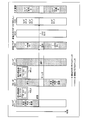
- FIG. 14 is an explanatory diagram showing an example of access to a shared resource in a multi-core processor system.
- the multi-core processor system for example, it is assumed that thread # 0 and thread # 1 are simultaneously executed by CPU # 0 and CPU # 1, respectively.
- the value of the variable x is set to 0.
- the value of the read variable x is stored in the register R1 in the CPU, 1 is added to the register R1 at time t2, and the added result is stored in the register R1.
- CPU # 1 is executing thread # 1, and in thread # 1, the value of variable x is read using the same Load instruction. Since the value of the variable x is 0, 0 is stored in the register R2 of the CPU # 1.
- thread # 0 writes the value of register R1 to memory variable x. Further, at time t4, thread # 1 writes a result obtained by adding 1 to R2, but since the added result is 1, 1 is written again to variable x.
- exclusive control must be performed when shared resources such as data on shared memory or hardware devices such as DMA (Direct Memory Access) are used by multiple processes or threads.
- exclusive control whether or not the shared resource associated with the exclusive flag is in use by updating the exclusive flag placed in the memory using a special instruction such as swap or exclusive load store provided by the CPU. to manage.
- Threads that have not been able to acquire access rights must wait until the thread that has acquired the access right finishes using the shared resource and releases the access right.
- two methods, spin lock and trilock are known as a method of waiting until a thread that has not acquired the access right releases the access right.
- FIG. 15 is an explanatory diagram showing an example of a spin lock.
- a thread that could not acquire the access right repeats the exclusive acquisition process until the value of the exclusive flag becomes a value indicating release.
- the thread that has acquired the access right by exclusive control declares the completion of use of the shared resource by writing a value indicating that the shared resource is being released to the exclusive flag when the use of the shared resource is completed.
- FIG. 16 is an explanatory diagram showing an example of a tri-lock.
- the execution of the thread that could not acquire the access right is stopped until the access right is released.
- the exclusive flag is changed to being released and the OS is notified of the release of the access right.
- the OS resumes execution of the suspended thread.
- thread # 0 tries to acquire the exclusive right at time t1, but if the exclusive flag is already in use by thread # 1, thread # 0 is changed to a waiting state by the OS and is replaced instead. The execution right is transferred to this thread (here, thread # 1). Thereafter, when the thread # 1 releases this flag, the thread # 0 is changed to an executable state by the OS.
- JP 2001-84235 A Japanese Patent Laid-Open No. 10-312294 Japanese Patent Laid-Open No. 11-85574
- the OS when the exclusive flag is updated by the OS, the OS must be called to confirm the exclusive flag.
- processing such as transitioning the CPU to privileged mode using an interrupt is performed. Therefore, several tens [ ⁇ seconds] to several hundreds [ ⁇ seconds], and flag confirmation processing It takes a lot of time.
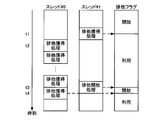
- FIG. 17 is an explanatory diagram showing call costs due to use of the OS.
- the thread immediately after the thread confirms the exclusive flag (time t1), when the flag is released by another CPU, or when the OS function is not used (in the case of the left diagram), the thread is time t2. You can get a flag and start processing using shared resources.
- the OS function in the case of the right diagram
- the OS returns to the thread processing after the interrupt is restored. Then, the processing is transferred to the OS again by the exclusive acquisition request from the thread, the OS acquires the exclusive right, and returns to the processing of the thread. The thread cannot start processing using the shared resource until.
- An object of the present invention is to provide an exclusive control method and an exclusive control program capable of reducing the overhead due to the OS in order to solve the above-described problems caused by the prior art.
- the exclusive thread accesses the shared resource until exclusive control is released.
- the exclusive control process for prohibiting the trial is executed by the operating system according to the number of attempts to access the shared resource of the exclusion target thread stored in the storage area, and is executed by any one of a plurality of threads.
- an exclusive control process is executed that causes the exclusion target thread to try until access to the shared resource is permitted, the remaining thread that is the exclusion target thread other than any one of the plurality of threads
- the number of attempts to access the shared resource is counted, and the counted number of attempts is counted by the remaining threads.
- Exclusive control method of storing in the storage area, and the exclusive control program is proposed.
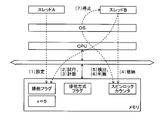
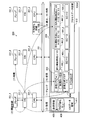
- FIG. 1 is an explanatory diagram showing an example of the present invention.
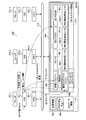
- FIG. 2 is a block diagram of a hardware example of the multi-core processor system according to the embodiment.
- FIG. 3 is a block diagram illustrating an example of functions of the multi-core processor system 200.
- FIG. 4 is an explanatory diagram illustrating an example of generation of an exclusion flag.
- FIG. 5 is an explanatory diagram illustrating an example in which a thread executes a process related to a shared resource.
- FIG. 6 is an explanatory diagram showing an example when a timer interrupt occurs.
- FIG. 7 is an explanatory diagram showing an example of tri-locking.
- FIG. 8 is an explanatory diagram illustrating an example of the end of the exclusion process for the thread 231_1.
- FIG. 8 is an explanatory diagram illustrating an example of the end of the exclusion process for the thread 231_1.
- FIG. 9 is an explanatory diagram illustrating an example of the start of exclusive processing by the thread 231_2.
- FIG. 10 is a flowchart illustrating an example of an exclusive generation procedure by the OS and threads.
- FIG. 11 is a flowchart illustrating an example of a processing procedure when exclusive control is started by an OS and a thread.
- FIG. 12 is a flowchart illustrating an example of a processing procedure when the exclusive right is released by the OS and the thread.
- FIG. 13 is a flowchart illustrating an example of an exclusive control processing procedure when a timer interrupt is generated by the OS.
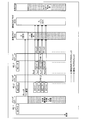
- FIG. 14 is an explanatory diagram illustrating an example of access to a shared resource in a multi-core processor system.
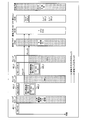
- FIG. 15 is an explanatory diagram illustrating an example of a spin lock.
- FIG. 16 is an explanatory diagram illustrating an example of a trilock.
- FIG. 17 is an explanatory diagram showing call costs due to use of the OS.
- FIG. 1 is an explanatory diagram showing an example of the present invention. Thread A and thread B share the variable x. Here, it is assumed that the state of the exclusive flag is empty and the exclusive method flag indicates spin lock.
- the thread A sets (1) the exclusive flag to use the variable x to access the variable x
- the thread A is permitted to access the variable x.
- the thread B acquires the exclusive flag to access the variable x
- the access to the variable x is prohibited because it has already been changed during use. That is, the thread B executes exclusive control processing by spin lock.
- the thread B (2) repeatedly acquires the exclusive flag until access to the variable x is permitted, and tries to determine whether the access is possible. For example, each time the thread B tries, (3) the number of trials is counted, and (4) the number of trials is stored in the spin lock counter.
- the OS detects (5) the value of the spin lock counter at a fixed timing. For example, the OS determines whether (6) the value of the spin lock counter is equal to or greater than a predetermined number of times. For example, when the value of the spin lock counter is equal to or greater than a predetermined number of times, the OS prohibits an attempt to access from the thread B by stopping the thread B (7).
- the exclusive control apparatus may be a single-core system or a multi-core processor system.
- the multi-core processor system will be described as an example.
- the multi-core processor is a processor in which a plurality of cores are mounted. If a plurality of cores are mounted, a single processor having a plurality of cores may be used, or a processor group in which single core processors are arranged in parallel may be used.
- a processor group in which single-core processors are arranged in parallel will be described as an example.
- FIG. 2 is a block diagram of a hardware example of the multi-core processor system according to the embodiment.
- the multi-core processor system 200 includes a CPU 201_1, a CPU 201_2, a CPU 201_3, a display 202, a keyboard 203, an I / F 204 (InterFace), a RAM 206 (Random Access Memory), and a ROM 207 (Read Only Memory). ing.
- the multi-core processor system 200 includes a flash ROM 208, a flash ROM controller 209, and a flash ROM 210.
- the CPUs 201_1 to 201_3, the display 202, the keyboard 203, the I / F 204, the RAM 206, the ROM 207, the flash ROM 208, and the flash ROM controller 209 are connected via a bus 211.
- the CPUs 201_1 to 201_3 each have a register, a core, and a cache.
- the core has a calculation function.
- the registers in each CPU have a PC (Program Counter) and a reset register.
- the CPU 201_1 is a master CPU, controls the entire multi-core processor system 200, and executes the OS 221_1.
- the OS 221_1 is a master OS and executes a thread assigned to the CPU 201_1.
- the OS 221_1 has a scheduler, and the scheduler has a function of controlling which CPU of the multi-core processors an application that has received a start instruction is assigned.
- the scheduler has a function of controlling the execution order of applications assigned to the CPU 201_1.
- the CPU 201_2 and the CPU 201_3 are slave CPUs, and execute the OS 221_2 and the OS 221_3, respectively.
- the OS 221_2 and the OS 221_3 are slave OSs, and execute threads assigned to the CPU 201_2 and the CPU 201_3, respectively.
- the OS 221_2 has a scheduler, and the scheduler has a function of controlling the execution order of applications assigned to the CPU 201_2.
- the OS 221_3 has a scheduler, and the scheduler has a function of controlling the execution order of applications assigned to the CPU 201_3.
- Threads 231_1 to 231_3 are threads related to the application A and share the same variables.
- the thread 231_1 is assigned to the CPU 201_1, the thread 231_2 is assigned to the CPU 201_2, and the thread 231_3 is assigned to the CPU 201_3.
- the display 202 displays data such as a document, an image, and function information as well as a cursor, an icon, or a tool box.
- a TFT liquid crystal display can be adopted.
- the keyboard 203 has keys for inputting numbers, various instructions, and the like, and inputs data.
- the keyboard 203 may be a touch panel type input pad or a numeric keypad.
- the I / F 204 is connected to a network 205 such as a LAN (Local Area Network), a WAN (Wide Area Network), and the Internet through a communication line, and is connected to another device via the network 205.
- the I / F 204 controls an internal interface with the network 205 and controls input / output of data from an external device.
- a modem or a LAN adapter may be employed as the I / F 204.
- the ROM 207 stores a program such as a boot program.
- the RAM 206 is used as a work area for each CPU.
- the flash ROM 208 stores system software such as the OSs 221_1 to 221_3 and application programs.
- the RAM 206 has a higher access speed from each CPU than the flash ROM 208.
- Each OS loads an application program from the flash ROM 208 to the RAM 206, whereby the context information of the application is expanded in the RAM 206.
- the flash ROM controller 209 controls reading / writing of data with respect to the flash ROM 210 according to the control of each CPU.
- the flash ROM 210 stores data written under the control of the flash ROM controller 209. Specific examples of the data include image data and video data acquired by the user using the multi-core processor system 200 through the I / F 204.
- As the flash ROM 210 for example, a memory card or an SD card can be adopted.
- FIG. 3 is a block diagram illustrating an example of functions of the multi-core processor system 200.
- the thread 231_m includes a counting unit 301 and a storage unit 302.
- the OS 221_n includes a detection unit 311, a calculation unit 312, a determination unit 313, an execution unit 314, a determination unit 315, and a change unit 316.
- the counting unit 301 and the storage unit 302 are coded in a thread 231_m, and the thread 231_m is stored in a storage device such as the flash ROM 208.
- the counting unit 301 and the storage unit 302 are executed.
- the detecting unit 311 to the changing unit 316 are coded in the OS 221_n, and the OS 221_n is stored in a storage device such as the flash ROM 208.
- the CPUs 201_1 to 201_3 read the OSs 221_1 to 221_3 from the storage devices, respectively, and execute the coded processing, whereby the changing unit 316 is executed from the detecting unit 311.
- the counting unit 301 counts the number of attempts of access to the shared resource by the remaining threads that are exclusive threads other than one of the threads.
- shared resources include RAM 206 shared by a plurality of CPUs, bus 211, and variables shared by applications.
- the second exclusive control process is, for example, an exclusive control process using a spin lock.
- the storage unit 302 stores the number of trials counted by the counting unit 301 in a storage area that can be referred to by the OS.
- the detecting unit 311 detects the number of attempts to access the shared resource of the exclusion target thread stored in the storage area.
- the determination unit 313 determines whether the number of trials detected by the detection unit 311 is a predetermined number or more.
- the calculation unit 312 calculates the average value of the number of attempts to access the shared resource for each remaining thread detected by the detection unit 311.
- the remaining threads store the average value calculated by the calculation unit 312 in the storage area.
- the execution unit 314 attempts to access the shared resource of the exclusion target thread until the exclusive control is released when the exclusion target thread accesses the shared resource. A first exclusive control process for prohibiting is executed.
- the determination unit 315 determines whether the elapsed time from the start of access of the exclusion target thread is equal to or longer than a predetermined time.
- the changing unit 316 cancels the prohibition on the attempt to access the shared resource of the exclusion target thread.
- the changing unit 316 continues to prohibit the trial of accessing the shared resource of the exclusion target thread. This will be described in detail based on the above.
- FIG. 4 is an explanatory diagram showing an example of generation of an exclusion flag.
- the thread 231_1 secures (1) the area of the exclusion flag 403 and the area of the exclusion method flag 404 in the process data area 410 on the RAM 206.
- the RAM 206 has an OS data area 411 and a process data area 410. Data handled by each OS is stored in the OS data area 411, and data handled by each thread is stored in the process data area 410. Each thread cannot access the process data area 410.
- the thread 231_1 acquires (2) the total number of threads including the activation schedule of the application to which the thread 231_1 belongs from the table 400.
- the table 400 has fields for application name and total number of threads.
- application name application identification information is registered, and in the total thread number, the application total thread number of the identification information registered in the application name is registered.
- the thread 231_1 is a thread belonging to the application A, 3 is acquired as the total number of threads.
- the thread 231_1 secures (3) the wait start time register area for the acquired total thread count and the SC (spin lock counter) area for the total thread count in the process data area 410 on the RAM 206.
- SC 401_1 to 401_3 and waiting start time registers 402_1 to 402_3 are secured in the process data area 410.
- the thread 231_1 sets (4) the exclusive flag 403 to 0 (open state) and sets the exclusive method flag 404 to 0 (spin lock method).
- the thread 231_1 sets (5) 0 to SC401_1 to 401_3.
- the thread 231_1 notifies the OS 221_1 of the reference information 405 of all the reserved areas (6).
- the reference information 405 is information for referring to an area reserved in the process data area 410 from the OS 221_1.
- the reference information 405 is reserved for use when a thread accesses the reserved area. The start address of the area is described.
- the OS 221_1 when the OS 221_1 receives the reference information 405 from the thread 231_1, it generates exclusive identification information corresponding to the reference information 405.
- the exclusion identification information is information for identifying information regarding exclusion in which the thread 231_1 has secured the area.
- attention is focused on only one exclusive control process, but since there are actually a plurality of exclusive control processes, information for identifying each exclusive information is attached.
- the OS 221_1 registers (7) the exclusive identification information and the reference information 405 in the OS data area 411 in association with each other.
- the OS 221_1 when the OS 221_1 receives exclusive identification information from any thread, the OS 221_1 refers to the reference information 405 based on the received exclusive identification information.
- the OS 221_1 can access the data stored in the reserved area in the process data area 410 according to the head address described in the reference information 405.
- the OS 221_1 notifies the thread 231_1 of exclusive identification information. For example, when the thread 231_1 receives exclusive identification information from the OS 221_1, the exclusive identification information is recorded in association with the secured area.
- FIG. 5 is an explanatory diagram showing an example in which a thread executes a process related to a shared resource.
- the thread 231_1 checks the exclusion flag 403 by acquiring the state of the exclusion flag 403.
- the thread 231_1 changes the exclusive flag 403 from 0 (open state) to 1 (in use).
- the thread 231_1 sets 0 to SC401_1.
- the thread 231_2 checks the exclusion flag 403 by acquiring the state of the exclusion flag 403.
- the thread 231_2 checks the exclusive method flag 404 by acquiring the state of the exclusive method flag 404.
- the exclusion method flag 404 is 0 (spin lock)
- the thread 231_2 increments SC401_2.
- the value of SC becomes 1.
- the thread 231_2 repeats the check of the exclusion flag 403 and the check of the exclusion method flag 404. While the check of the exclusive flag 403 is 1 (in use) and the exclusive method flag 404 is 0 (spin lock), the thread 231_2 repeats incrementing the SC 401_2.
- the thread 231_3 checks the exclusion flag 403 by acquiring the state of the exclusion flag 403.
- the thread 231_3 checks the exclusion method flag 404 by acquiring the state of the exclusion method flag 404.
- the exclusion method flag 404 is 0 (spin lock)
- the thread 231_3 increments SC401_3.
- the value of SC becomes 1.
- the thread 231_3 repeats the check of the exclusion flag 403 and the check of the exclusion method flag 404.
- the thread 231_3 repeats incrementing the SC 401_3.
- FIG. 6 is an explanatory diagram showing an example when a timer interrupt occurs.
- the OS 221_1 receives a timer interrupt, for example, one exclusive identification information is selected from a plurality of exclusive identification information.
- the OS 221_1 checks the exclusion flag 403 by acquiring the state of the exclusion flag 403 based on (1) the reference information 405 of the selected exclusion identification information. For example, since the exclusive flag 403 is 1 (in use), the OS 221_1 checks the exclusive method flag 404 by acquiring the state of the (2) exclusive method flag 404.
- the OS 221_1 detects the value of the all spin lock counter.
- the OS 221_1 calculates (3) an average value of counter values other than 0.
- the value of SC401_1 is 0, the value of SC401_2 is 300, and the value of SC401_3 is 296, so the average value is 298.
- the OS 221_1 determines whether (4) the calculated average value is equal to or greater than a predetermined number of times.
- the predetermined number of times is 280. Since the calculated average value is equal to or greater than the predetermined number of times, for example, the OS 221_1 changes (5) the exclusion method flag 404 from 0 (spin lock) to 1 (tri lock).
- it is determined that the average value is equal to or greater than the predetermined number of times.
- the present invention is not limited to this. It may be a majority vote such as whether there are more than one.
- FIG. 7 is an explanatory diagram showing an example of tri-locking.
- the thread 231_2 checks the exclusion flag 403 by acquiring the state of the exclusion flag 403.
- the thread 231_2 checks the exclusive method flag 404 by acquiring the state of the exclusive method flag 404.
- the exclusion method flag 404 is 1 (trilock)
- the thread 231_2 specifies exclusive identification information and requests the OS 221_2 to perform a trilock.
- the OS 221_2 registers the identification information of the thread 231_2 in the flag waiting queue 406 corresponding to the exclusive identification information received from the thread 231_2.
- the OS 221_2 acquires the current time and sets the current time in the waiting start time register 402_2 of the thread 231_2.
- the waiting start time register 402_2 becomes 15:00:10.
- the OS 221_2 performs rescheduling.
- the CPU 201_2 enters a waiting state.
- the thread 231_3 checks the exclusion flag 403 by acquiring the state of the exclusion flag 403.
- the thread 231_3 checks the exclusion method flag 404 by acquiring the state of the exclusion method flag 404.
- the thread 231_3 specifies exclusive identification information and requests the OS 221_3 for a trilock.
- the OS 221_3 registers the identification information of the thread 231_3 in the flag waiting queue 406 corresponding to the identification information received from the thread 231_3.
- the OS 221_3 obtains the current time and sets the current time in the waiting start time register 402_3 of the thread 231_3.
- the waiting start time register 402_3 is 15:00:11.
- the OS 221_3 performs rescheduling.
- the CPU 201_3 enters a waiting state.
- FIG. 8 is an explanatory diagram showing an example of the end of the exclusive processing of the thread 231_1.
- the thread 231_1 acquires the state of the exclusion method flag 404, thereby (1) checking the exclusion flag 403.
- the thread 231_1 designates (2) exclusion identification information and notifies the OS 221_1 of the release request.
- the OS 221_1 receives the release request notification, the current time is acquired.
- the OS 221_1 acquires (3) identification information of a thread registered in the flag waiting queue 406.
- identification information of each of the thread 231_2 and the thread 231_3 is acquired.
- the OS 221_1 detects the time from the thread wait start time register indicated by the acquired thread identification information. For example, the OS 221_1 calculates (4) a difference value (waiting time) between the current time and each acquired time. For example, the OS 221_1 calculates the average waiting time based on the obtained difference value for each time.
- the current time is 15:10:20.
- the value of the waiting start time register 402_2 is 15:10:10
- the value of the waiting start time register 402_3 is 15:10:11.
- the average waiting time is 9.5 [seconds].
- the OS 221_1 determines whether (5) the calculated average waiting time is equal to or shorter than a predetermined time.
- the predetermined time is 3 [seconds]. Since the calculated average waiting time is not less than or equal to the predetermined time, the tri-lock remains unchanged. Here, it is determined whether or not the average waiting time is equal to or less than the predetermined time.
- the present invention is not limited to this, and it may be determined whether or not the median waiting time is equal to or less than the predetermined time. You may judge by the majority vote of how many the time is below predetermined time.
- the tri-lock is changed to the spin lock.
- the OS 221_1 changes (6) the exclusive flag 403 from 1 (in use) to 0 (open state). For example, the OS 221_1 resumes the execution of the thread 231_2 in which the identification information is registered at the head of the (7) flag waiting queue.
- FIG. 9 is an explanatory diagram showing an example of starting exclusive processing by the thread 231_2.
- the thread 231_2 checks the exclusion flag 403 by acquiring the state of the exclusion flag 403.
- the thread 231_2 checks the exclusive method flag 404 by acquiring the state of the exclusive method flag 404.
- the exclusion method flag 404 is 1 (trilock)
- the thread 231_2 specifies exclusive identification information and requests the OS 221_2 to perform a trilock.
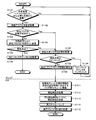
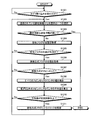
- FIG. 10 is a flowchart illustrating an example of an exclusive generation procedure by the OS and threads.
- the thread secures an exclusive flag and an exclusive method flag area (step S1001), acquires the total number of threads including the activation schedule (step S1002), and reserves a spin lock counter and a waiting start time register area for the total number of threads. (Step S1003).
- the thread sets the exclusive flag to an open state (step S1004), and sets the exclusive method flag to spin lock (step S1005).
- the spin lock is set, but the tri lock may be set.
- the thread sets all the spin lock counters to 0 (step S1006), and notifies the OS of reference information for all the reserved areas (step S1007).
- the OS When the OS receives the reference information, it generates exclusive identification information related to the reference information (step S1008), records the exclusive identification information and the reference information (step S1009), and sets the exclusive identification information as the reference information notification source. The thread is notified (step S1010). When the thread receives exclusive identification information, the identification information is recorded (step S1011), and the series of processing ends.
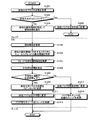
- FIG. 11 is a flowchart showing an example of a processing procedure when exclusive control is started by the OS and threads. It is determined whether the thread accesses the shared resource or returns from the waiting state (step S1101). When it is determined that the thread has not started access to the shared resource and has not returned from the wait state (step S1101: No), the process returns to step S1101.
- step S1102 If the thread determines that the shared resource has been accessed or has returned from the wait state (step S1101: Yes), the exclusive flag state is acquired (step S1102), and whether the exclusive flag state is in use. Is determined (step S1103). If the thread determines that the state of the exclusive flag is not in use (step S1103: No), the exclusive flag is changed to being used by a special instruction (step S1104). The thread determines whether or not the change is successful (step S1105). If it is determined that the change is successful (step S1105: Yes), the spin lock counter is set to 0 (step S1106).
- step S1103 When the thread determines that the state of the exclusive flag is in use (step S1103: Yes), or determines that the change has not been successful (step S1105: No), the state of the exclusive method flag is acquired (step S1103). S1107).
- the thread determines whether or not the exclusion method is spin lock (step S1108). If the thread determines that the exclusion method is spin lock (step S1108: Yes), the spin lock counter is incremented (step S1110), and the process returns to step S1101.
- step S1108: No it designates exclusion identification information and notifies a trilock request (step S1109).
- step S1109 when the OS accepts a trilock request from a thread, the OS registers the identification information of the requesting thread in the flag waiting queue corresponding to the exclusive identification information (step S1111).
- the OS acquires the current time (step S1112), and records the current time in the waiting start time register (step S1113).
- the OS reschedules (step S1114) and executes an execution thread switching process (step S1115).
- FIG. 12 is a flowchart showing an example of a processing procedure when an exclusive right is released by an OS and a thread.
- the thread acquires the state of the exclusion method flag (step S1201), and determines whether or not the exclusion method is spin lock (step S1202). If the thread determines that the exclusion method is spin lock (step S1202: Yes), the exclusion flag is changed to an empty state (step S1203), and the series of processing ends.
- step S1202 When the thread determines that the exclusion method is not spin lock (step S1202: No), it designates exclusive identification information and notifies the OS of a release request (step S1204).
- the OS receives the release request from the thread, the OS acquires the current time (step S1205).
- the OS acquires all the thread identification information from the flag waiting queue corresponding to the exclusive identification information (step S1206).
- the OS acquires the waiting start time of the thread indicated by the identification information registered in the flag waiting queue (step S1207), calculates the average waiting time (step S1208), and whether the average waiting time is equal to or less than a predetermined time. It is determined whether or not (step S1209).
- step S1209: Yes the state of the exclusive method flag is changed to spin lock (step S1210).
- the OS changes the exclusive flag to an empty state (step S1211), restarts all the threads indicated by the identification information registered in the flag waiting queue (step S1212), and ends the series of processes.
- the exclusive flag is changed to an open state (step S1213).
- the OS resumes the thread indicated by the identification information registered at the head of the flag waiting queue (step S1214), and the series of processing ends.
- FIG. 13 is a flowchart showing an example of an exclusive control processing procedure when a timer interrupt is generated by the OS.
- the OS determines whether a timer interrupt has been accepted (step S1301). If the OS determines that the timer interrupt has not been accepted (step S1301: No), the process returns to step S1301. If the OS determines that the timer interrupt has been accepted (step S1301: Yes), one unselected one is selected from the registered exclusive information (step S1302). The OS determines whether there is no selectable exclusive information (step S1303).
- step S1303 determines whether there is no selectable exclusion information (step S1303: No). If the OS does not determine that there is no selectable exclusion information (step S1303: No), the state of the exclusion flag is acquired (step S1304). The OS determines whether or not the exclusive flag is in use (step S1305). If the OS determines that the exclusive flag is not in use (step S1305: No), the process returns to step S1302.
- step S1305 determines that the state of the exclusion flag is in use (step S1305: Yes)
- step S1305 determines that the state of the exclusion flag is in use (step S1305: Yes)
- step S1306 the state of the exclusion method flag is acquired (step S1306), and it is determined whether or not the exclusion method is spin lock (step S1306).
- step S1307 the process returns to step S1302.
- step S1307 When the OS determines that the exclusion method is spin lock (step S1307: Yes), it acquires the values of all spin lock counters (step S1308). The OS calculates the average value of the spin lock counters other than 0 (step S1309), and determines whether the average value is equal to or greater than the predetermined number of times (step S1310).
- step S1310: No When the OS determines that the average value is not equal to or greater than the predetermined number (step S1310: No), the process returns to step S1302.
- step S1310: Yes the exclusive lock flag is set to trilock (step S1311), and the process proceeds to step S1302.
- step S1303 when the OS determines that there is no selectable exclusive information (step S1303: Yes), the series of processing ends. In addition, the processing related to exclusive control ends, but the OS performs normal timer interrupt processing.
- the OS Exclusive control processing with a trilock is executed.
- the OS can perform spin lock without calling the OS.
- switching between methods can be easily performed by managing, with the exclusion method flag, which exclusion lock processing is used for each exclusion target thread by using the exclusion lock process.
- the OS secures a storage area for storing the exclusion method flag in a recording area accessible to the exclusion target thread, so that the exclusion target thread can perform spin lock without calling the OS.
- the exclusive control process with the trilock by the OS is executed and the elapsed time from the access start time when the exclusion target thread accesses the shared resource is less than the predetermined time, the exclusive control process with the spin lock by the thread is executed. Is done.
- exclusive control processing with spin lock can be performed on the shared resource.
- realizing the spin lock without using the function of the OS it is possible to shorten the overhead from when the shared resource is released until the exclusive right is acquired by another thread. Also, by not calling the OS at the time of spin lock, the number of data swaps in the cache can be reduced.
- the exclusive control process with the trilock by the OS is continuously executed. Thereby, when it takes time to release the exclusive right of the shared resource, it is possible to perform exclusive control processing with a trilock on the shared resource.
- the exclusive control method described in the present embodiment can be realized by executing a prepared exclusive control program on a computer such as a personal computer or a workstation.
- the exclusive control program is recorded on a computer-readable recording medium such as a hard disk, a flexible disk, a CD-ROM, an MO, and a DVD, and is executed by being read from the recording medium by the computer.
- the exclusive control program may be distributed via a network such as the Internet.
Landscapes
- Engineering & Computer Science (AREA)
- Software Systems (AREA)
- Theoretical Computer Science (AREA)
- Physics & Mathematics (AREA)
- General Engineering & Computer Science (AREA)
- General Physics & Mathematics (AREA)
- Debugging And Monitoring (AREA)
- Multi Processors (AREA)
Abstract
L'accès à une variable (x) par un fil d'exécution (A) est accordé lorsque (1) le fil d'exécution (A) définit un fanion d'exclusion au cours du fonctionnement afin d'accéder à ladite variable (x). Quand un fil d'exécution (b) acquiert le fanion d'exclusion afin d'accéder à la variable (x), l'accès à la variable (x) est interdit car le fanion a déjà été changé au cours du fonctionnement. Le fil d'exécution (B) (2) acquiert plusieurs fois le fanion d'exclusion jusqu'à ce que l'accès à la variable (x) lui soit accordé, (3) il compte le nombre de ses tentatives d'accès à mesure qu'il les effectue, et (4) il stocke le nombre de tentatives dans un compteur de verrouillage total du CPU. (5) Un OS détecte la valeur du compteur de verrouillage total du CPU à un moment bien précis. (6) Ledit OS détermine si la valeur du compteur de verrouillage total du CPU est inférieure, égale ou supérieure à un nombre prédéfini. Lorsque la valeur du compteur de verrouillage total du CPU est égale ou supérieure au nombre prédéfini, l'OS change un fanion de schéma d'exclusion pour passer au verrouillage des essais, et (7) il arrête le fil d'exécution (B), suite à quoi toute tentative d'accès du fil d'exécution (B) est interdite.
Priority Applications (3)
| Application Number | Priority Date | Filing Date | Title |
|---|---|---|---|
| PCT/JP2011/058359 WO2012132017A1 (fr) | 2011-03-31 | 2011-03-31 | Procédé de commande d'exclusion et programme de commande d'exclusion |
| JP2013507019A JP5725162B2 (ja) | 2011-03-31 | 2011-03-31 | 排他制御方法、および排他制御プログラム |
| US14/036,272 US9632842B2 (en) | 2011-03-31 | 2013-09-25 | Exclusive access control method prohibiting attempt to access a shared resource based on average number of attempts and predetermined threshold |
Applications Claiming Priority (1)
| Application Number | Priority Date | Filing Date | Title |
|---|---|---|---|
| PCT/JP2011/058359 WO2012132017A1 (fr) | 2011-03-31 | 2011-03-31 | Procédé de commande d'exclusion et programme de commande d'exclusion |
Related Child Applications (1)
| Application Number | Title | Priority Date | Filing Date |
|---|---|---|---|
| US14/036,272 Continuation US9632842B2 (en) | 2011-03-31 | 2013-09-25 | Exclusive access control method prohibiting attempt to access a shared resource based on average number of attempts and predetermined threshold |
Publications (1)
| Publication Number | Publication Date |
|---|---|
| WO2012132017A1 true WO2012132017A1 (fr) | 2012-10-04 |
Family
ID=46929835
Family Applications (1)
| Application Number | Title | Priority Date | Filing Date |
|---|---|---|---|
| PCT/JP2011/058359 Ceased WO2012132017A1 (fr) | 2011-03-31 | 2011-03-31 | Procédé de commande d'exclusion et programme de commande d'exclusion |
Country Status (3)
| Country | Link |
|---|---|
| US (1) | US9632842B2 (fr) |
| JP (1) | JP5725162B2 (fr) |
| WO (1) | WO2012132017A1 (fr) |
Cited By (5)
| Publication number | Priority date | Publication date | Assignee | Title |
|---|---|---|---|---|
| JP2014215832A (ja) * | 2013-04-25 | 2014-11-17 | 京セラドキュメントソリューションズ株式会社 | メモリー排他制御システム及び画像形成装置 |
| JP2014215834A (ja) * | 2013-04-25 | 2014-11-17 | 京セラドキュメントソリューションズ株式会社 | メモリーアクセス制御システム及び画像形成装置 |
| JP2016081204A (ja) * | 2014-10-15 | 2016-05-16 | 三菱電機株式会社 | 電子制御装置 |
| KR20170051465A (ko) * | 2014-09-08 | 2017-05-11 | 에이알엠 리미티드 | 복수의 쓰레드를 실행하기 위한 데이터 처리장치에서의 공유 자원 |
| JP2017534994A (ja) * | 2014-11-18 | 2017-11-24 | インターナショナル・ビジネス・マシーンズ・コーポレーションInternational Business Machines Corporation | 複数の同時実行中スレッド間における共有可能リソースの排他的制御を管理するための方法、システム、およびコンピュータ・プログラム |
Families Citing this family (10)
| Publication number | Priority date | Publication date | Assignee | Title |
|---|---|---|---|---|
| CN108243115B (zh) * | 2016-12-26 | 2021-06-29 | 新华三技术有限公司 | 报文处理方法及装置 |
| CN107729129A (zh) * | 2017-09-18 | 2018-02-23 | 惠州Tcl移动通信有限公司 | 一种基于同步锁的多线程处理方法、终端以及存储介质 |
| US12019774B2 (en) * | 2018-04-19 | 2024-06-25 | Murata Machinery, Ltd. | Exclusive control system and exclusive control method |
| FR3089316B1 (fr) * | 2018-11-30 | 2020-10-30 | Thales Sa | Procédé et dispositif de surveillance d’application(s) logicielle(s) avec période temporelle tampon précédant une section réservée pour un ensemble de ressource(s) partagée(s), programme d’ordinateur et système avionique associés |
| US12153968B2 (en) * | 2021-03-10 | 2024-11-26 | EMC IP Holding Company LLC | Synchronization object having a stamp for flows in a storage system |
| US12314760B2 (en) * | 2021-09-27 | 2025-05-27 | Advanced Micro Devices, Inc. | Garbage collecting wavefront |
| CN115114612A (zh) * | 2022-04-06 | 2022-09-27 | 北京百度网讯科技有限公司 | 访问处理方法、装置、电子设备以及存储介质 |
| US11947551B2 (en) * | 2022-05-27 | 2024-04-02 | Maplebear Inc. | Automated sampling of query results for training of a query engine |
| US20240152359A1 (en) * | 2022-11-04 | 2024-05-09 | International Business Machines Corporation | Ensuring fairness for try spin lock |
| CN120872632A (zh) * | 2024-04-30 | 2025-10-31 | 华为技术有限公司 | 线程运行方法、多核处理器、计算设备和计算设备集群 |
Citations (4)
| Publication number | Priority date | Publication date | Assignee | Title |
|---|---|---|---|---|
| JPH01297760A (ja) * | 1988-05-26 | 1989-11-30 | Hitachi Ltd | タスク制御方式及びオンライン・トランザクション・システム |
| JPH05257902A (ja) * | 1992-03-10 | 1993-10-08 | Fujitsu Ltd | 処理プログラム・モードにおけるロック獲得処理方式 |
| JP2001297008A (ja) * | 1999-11-22 | 2001-10-26 | Sun Microsyst Inc | オブジェクトごとのロック履歴に基づくロック方針選択方法および装置 |
| JP2002149480A (ja) * | 2000-11-16 | 2002-05-24 | Matsushita Electric Ind Co Ltd | 排他制御方法 |
Family Cites Families (19)
| Publication number | Priority date | Publication date | Assignee | Title |
|---|---|---|---|---|
| US5274809A (en) | 1988-05-26 | 1993-12-28 | Hitachi, Ltd. | Task execution control method for a multiprocessor system with enhanced post/wait procedure |
| JPH10312294A (ja) | 1997-05-13 | 1998-11-24 | Toshiba Corp | 情報処理装置、情報処理方法、及び、情報処理プログラムを記録した読み取り可能な記録媒体 |
| JP3152178B2 (ja) | 1997-09-11 | 2001-04-03 | 日本電気株式会社 | ロック動作測定方法 |
| US6668317B1 (en) * | 1999-08-31 | 2003-12-23 | Intel Corporation | Microengine for parallel processor architecture |
| JP2001084235A (ja) | 1999-09-10 | 2001-03-30 | Nec Corp | ロック粒度統計情報を利用した排他制御方法及びプログラムを記録した機械読み取り可能な記録媒体 |
| US7246187B1 (en) * | 2000-11-28 | 2007-07-17 | Emc Corporation | Method and apparatus for controlling exclusive access to a shared resource in a data storage system |
| US6757769B1 (en) * | 2000-11-28 | 2004-06-29 | Emc Corporation | Cooperative lock override procedure |
| US7080376B2 (en) * | 2001-09-21 | 2006-07-18 | Intel Corporation | High performance synchronization of accesses by threads to shared resources |
| US7159220B2 (en) * | 2001-09-28 | 2007-01-02 | Intel Corporation | Flexible acceleration of java thread synchronization on multiprocessor computers |
| EP1497726A2 (fr) * | 2002-01-24 | 2005-01-19 | Koninklijke Philips Electronics N.V. | Execution de taches dans un environnement multitraitement |
| US7725572B1 (en) * | 2003-12-30 | 2010-05-25 | Sap Ag | Notification architecture and method employed within a clustered node configuration |
| US7594234B1 (en) * | 2004-06-04 | 2009-09-22 | Sun Microsystems, Inc. | Adaptive spin-then-block mutual exclusion in multi-threaded processing |
| US8407432B2 (en) * | 2005-06-30 | 2013-03-26 | Intel Corporation | Cache coherency sequencing implementation and adaptive LLC access priority control for CMP |
| US20090307707A1 (en) * | 2008-06-09 | 2009-12-10 | International Business Machines Corporation | System and method for dynamically adaptive mutual exclusion in multi-threaded computing environment |
| US8225048B2 (en) * | 2008-10-01 | 2012-07-17 | Hewlett-Packard Development Company, L.P. | Systems and methods for resource access |
| US8145817B2 (en) * | 2009-04-28 | 2012-03-27 | Microsoft Corporation | Reader/writer lock with reduced cache contention |
| JP2011118756A (ja) * | 2009-12-04 | 2011-06-16 | Nec Corp | 排他制御プログラム、排他制御方法、及び情報処理システム |
| US8607239B2 (en) * | 2009-12-31 | 2013-12-10 | International Business Machines Corporation | Lock mechanism to reduce waiting of threads to access a shared resource by selectively granting access to a thread before an enqueued highest priority thread |
| US9465670B2 (en) * | 2011-12-16 | 2016-10-11 | Intel Corporation | Generational thread scheduler using reservations for fair scheduling |
-
2011
- 2011-03-31 WO PCT/JP2011/058359 patent/WO2012132017A1/fr not_active Ceased
- 2011-03-31 JP JP2013507019A patent/JP5725162B2/ja not_active Expired - Fee Related
-
2013
- 2013-09-25 US US14/036,272 patent/US9632842B2/en not_active Expired - Fee Related
Patent Citations (4)
| Publication number | Priority date | Publication date | Assignee | Title |
|---|---|---|---|---|
| JPH01297760A (ja) * | 1988-05-26 | 1989-11-30 | Hitachi Ltd | タスク制御方式及びオンライン・トランザクション・システム |
| JPH05257902A (ja) * | 1992-03-10 | 1993-10-08 | Fujitsu Ltd | 処理プログラム・モードにおけるロック獲得処理方式 |
| JP2001297008A (ja) * | 1999-11-22 | 2001-10-26 | Sun Microsyst Inc | オブジェクトごとのロック履歴に基づくロック方針選択方法および装置 |
| JP2002149480A (ja) * | 2000-11-16 | 2002-05-24 | Matsushita Electric Ind Co Ltd | 排他制御方法 |
Cited By (6)
| Publication number | Priority date | Publication date | Assignee | Title |
|---|---|---|---|---|
| JP2014215832A (ja) * | 2013-04-25 | 2014-11-17 | 京セラドキュメントソリューションズ株式会社 | メモリー排他制御システム及び画像形成装置 |
| JP2014215834A (ja) * | 2013-04-25 | 2014-11-17 | 京セラドキュメントソリューションズ株式会社 | メモリーアクセス制御システム及び画像形成装置 |
| KR20170051465A (ko) * | 2014-09-08 | 2017-05-11 | 에이알엠 리미티드 | 복수의 쓰레드를 실행하기 위한 데이터 처리장치에서의 공유 자원 |
| KR102449957B1 (ko) | 2014-09-08 | 2022-10-05 | 에이알엠 리미티드 | 복수의 쓰레드를 실행하기 위한 데이터 처리장치에서의 공유 자원 |
| JP2016081204A (ja) * | 2014-10-15 | 2016-05-16 | 三菱電機株式会社 | 電子制御装置 |
| JP2017534994A (ja) * | 2014-11-18 | 2017-11-24 | インターナショナル・ビジネス・マシーンズ・コーポレーションInternational Business Machines Corporation | 複数の同時実行中スレッド間における共有可能リソースの排他的制御を管理するための方法、システム、およびコンピュータ・プログラム |
Also Published As
| Publication number | Publication date |
|---|---|
| JP5725162B2 (ja) | 2015-05-27 |
| US20140026143A1 (en) | 2014-01-23 |
| US9632842B2 (en) | 2017-04-25 |
| JPWO2012132017A1 (ja) | 2014-07-24 |
Similar Documents
| Publication | Publication Date | Title |
|---|---|---|
| JP5725162B2 (ja) | 排他制御方法、および排他制御プログラム | |
| CN105579961B (zh) | 数据处理系统及操作方法、用于数据处理系统的硬件单元 | |
| US10067782B2 (en) | Efficient detection and response to spin waits in multi-processor virtual machines | |
| US7516323B2 (en) | Security management system in parallel processing system by OS for single processors | |
| US10579413B2 (en) | Efficient task scheduling using a locking mechanism | |
| WO2012093488A1 (fr) | Procédé de planification et système de processeur multicœur | |
| CN101833475A (zh) | 用于增强线程级推测的原语 | |
| JP2011515000A (ja) | 効率的な決定論的マルチプロセッシング(deterministicmultiprocessing) | |
| EP2996043B1 (fr) | Débogage dans un appareil de traitement de données | |
| JPH1115793A (ja) | 資源の保全性を保護する方法 | |
| US20190073243A1 (en) | User-space spinlock efficiency using c-state and turbo boost | |
| TWI273495B (en) | Information processing device, process control method, and computer program | |
| JPWO2011096163A1 (ja) | 情報処理システム、排他制御方法および排他制御用プログラム | |
| US11061730B2 (en) | Efficient scheduling for hyper-threaded CPUs using memory monitoring | |
| JP5321748B2 (ja) | マルチコアプロセッサシステム、スレッド制御方法、およびスレッド制御プログラム | |
| JP5397546B2 (ja) | マルチコアプロセッサシステム、制御プログラム、および制御方法 | |
| JP5780296B2 (ja) | スレッド処理方法、およびスレッド処理システム | |
| Müller et al. | Multi sloth: An efficient multi-core rtos using hardware-based scheduling | |
| JP2009175960A (ja) | 仮想マルチプロセッサシステム | |
| US8671248B2 (en) | Architecture support of memory access coloring | |
| US7603673B2 (en) | Method and system for reducing context switch times | |
| JP3323169B2 (ja) | ソフトウェア開発支援装置、ソフトウェア開発支援方法、および、そのプログラムを記録した記録媒体 | |
| JP5376042B2 (ja) | マルチコアプロセッサシステム、スレッド切り替え制御方法、およびスレッド切り替え制御プログラム | |
| JP2009223841A (ja) | 命令ログ取得プログラム及び仮想計算機システム | |
| JP2011118756A (ja) | 排他制御プログラム、排他制御方法、及び情報処理システム |
Legal Events
| Date | Code | Title | Description |
|---|---|---|---|
| 121 | Ep: the epo has been informed by wipo that ep was designated in this application |
Ref document number: 11862761 Country of ref document: EP Kind code of ref document: A1 |
|
| ENP | Entry into the national phase |
Ref document number: 2013507019 Country of ref document: JP Kind code of ref document: A |
|
| NENP | Non-entry into the national phase |
Ref country code: DE |
|
| 122 | Ep: pct application non-entry in european phase |
Ref document number: 11862761 Country of ref document: EP Kind code of ref document: A1 |