WO2012132901A1 - 伴奏データ生成装置 - Google Patents
伴奏データ生成装置 Download PDFInfo
- Publication number
- WO2012132901A1 WO2012132901A1 PCT/JP2012/056551 JP2012056551W WO2012132901A1 WO 2012132901 A1 WO2012132901 A1 WO 2012132901A1 JP 2012056551 W JP2012056551 W JP 2012056551W WO 2012132901 A1 WO2012132901 A1 WO 2012132901A1
- Authority
- WO
- WIPO (PCT)
- Prior art keywords
- waveform data
- chord
- phrase waveform
- pitch
- sound
- Prior art date
- Legal status (The legal status is an assumption and is not a legal conclusion. Google has not performed a legal analysis and makes no representation as to the accuracy of the status listed.)
- Ceased
Links
Images



Classifications
-
- G—PHYSICS
- G10—MUSICAL INSTRUMENTS; ACOUSTICS
- G10H—ELECTROPHONIC MUSICAL INSTRUMENTS; INSTRUMENTS IN WHICH THE TONES ARE GENERATED BY ELECTROMECHANICAL MEANS OR ELECTRONIC GENERATORS, OR IN WHICH THE TONES ARE SYNTHESISED FROM A DATA STORE
- G10H7/00—Instruments in which the tones are synthesised from a data store, e.g. computer organs
-
- G—PHYSICS
- G10—MUSICAL INSTRUMENTS; ACOUSTICS
- G10H—ELECTROPHONIC MUSICAL INSTRUMENTS; INSTRUMENTS IN WHICH THE TONES ARE GENERATED BY ELECTROMECHANICAL MEANS OR ELECTRONIC GENERATORS, OR IN WHICH THE TONES ARE SYNTHESISED FROM A DATA STORE
- G10H1/00—Details of electrophonic musical instruments
- G10H1/36—Accompaniment arrangements
- G10H1/38—Chord
-
- G—PHYSICS
- G10—MUSICAL INSTRUMENTS; ACOUSTICS
- G10H—ELECTROPHONIC MUSICAL INSTRUMENTS; INSTRUMENTS IN WHICH THE TONES ARE GENERATED BY ELECTROMECHANICAL MEANS OR ELECTRONIC GENERATORS, OR IN WHICH THE TONES ARE SYNTHESISED FROM A DATA STORE
- G10H1/00—Details of electrophonic musical instruments
- G10H1/36—Accompaniment arrangements
-
- G—PHYSICS
- G10—MUSICAL INSTRUMENTS; ACOUSTICS
- G10H—ELECTROPHONIC MUSICAL INSTRUMENTS; INSTRUMENTS IN WHICH THE TONES ARE GENERATED BY ELECTROMECHANICAL MEANS OR ELECTRONIC GENERATORS, OR IN WHICH THE TONES ARE SYNTHESISED FROM A DATA STORE
- G10H2210/00—Aspects or methods of musical processing having intrinsic musical character, i.e. involving musical theory or musical parameters or relying on musical knowledge, as applied in electrophonic musical tools or instruments
- G10H2210/031—Musical analysis, i.e. isolation, extraction or identification of musical elements or musical parameters from a raw acoustic signal or from an encoded audio signal
- G10H2210/051—Musical analysis, i.e. isolation, extraction or identification of musical elements or musical parameters from a raw acoustic signal or from an encoded audio signal for extraction or detection of onsets of musical sounds or notes, i.e. note attack timings
-
- G—PHYSICS
- G10—MUSICAL INSTRUMENTS; ACOUSTICS
- G10H—ELECTROPHONIC MUSICAL INSTRUMENTS; INSTRUMENTS IN WHICH THE TONES ARE GENERATED BY ELECTROMECHANICAL MEANS OR ELECTRONIC GENERATORS, OR IN WHICH THE TONES ARE SYNTHESISED FROM A DATA STORE
- G10H2210/00—Aspects or methods of musical processing having intrinsic musical character, i.e. involving musical theory or musical parameters or relying on musical knowledge, as applied in electrophonic musical tools or instruments
- G10H2210/155—Musical effects
- G10H2210/245—Ensemble, i.e. adding one or more voices, also instrumental voices
- G10H2210/261—Duet, i.e. automatic generation of a second voice, descant or counter melody, e.g. of a second harmonically interdependent voice by a single voice harmonizer or automatic composition algorithm, e.g. for fugue, canon or round composition, which may be substantially independent in contour and rhythm
Definitions
- the present invention relates to an accompaniment data generation device and an accompaniment data generation program for generating waveform data of chord sound phrases.
- accompaniment style data by automatic performance data such as MIDI format corresponding to various styles (genres) of music is stored, and accompaniment to the user's performance is performed based on the accompaniment style data selected by the user (player).
- An automatic accompaniment device for giving is known (see, for example, Japanese Patent No. 2900753).
- the pitch of the accompaniment style data based on a predetermined chord (chord) such as CMaj is matched with the chord (chord) information detected from the user's performance. Conversion is done.
- an arpeggio performance device that stores arpeggio pattern data as phrase waveform data, adjusts the pitch and tempo to match the user's performance input, and generates automatic accompaniment data is known (for example, Patent No. 1). No. 4274272).
- An object of the present invention is to provide an accompaniment data generation device capable of generating automatic accompaniment data using phrase waveform data including chords.
- the present invention is characterized in that storage means (7, 8, 15) for storing phrase waveform data including a plurality of chord constituent sounds, and phrase waveform data including the plurality of chord constituent sounds.
- a plurality of phrase waveforms comprising phrase waveform data including at least one chord constituent sound and phrase waveform data not including the at least one chord constituent sound and including a chord constituent sound different from the at least one chord constituent sound Separation means (9, SA3, SB15) for separating data, acquisition means (9, SA19, SA20) for obtaining code information specifying the code type and code route, and among the plurality of separated phrase waveform data A part of the waveform data according to at least the code type specified by the acquired code information The chord sound phrase waveform corresponding to the chord root and chord type specified by the acquired chord information by synthesizing the plurality of separated phrase waveform data including the pitch-shifted phrase waveform data while pitch-shifting And a chord sound phrase generating means (9, SA23, SB4 to SB16) for generating data as accompaniment data.
- the separation means may separate the phrase waveform data including a plurality of chord constituent sounds and the phrase waveform data related to one chord constituent sound different from the plurality of chord constituent sounds.
- the phrase waveform data including a plurality of chord constituent sounds separated by the separating means includes a chord root sound, a third chord constituent sound and a fifth chord constituent sound, a chord root sound and a fifth chord constituent sound, Or a chord root sound and a chord constituting sound of 3 degrees are included.
- the separation means includes a chord constituent sound defined by a chord type specified by the chord information acquired by the acquiring means in one phrase waveform data, and a chord constituent sound not specified by the chord type.
- the one phrase waveform data is separated into phrase waveform data including chord constituent sounds defined by the chord type and phrase waveform data including chord constituent sounds not defined by the chord type Separation means (9, SB15) may be included.
- the separation means may separate the plurality of phrase waveform data respectively corresponding to one chord constituent sound.
- the storage means stores one phrase waveform data including a plurality of chord constituent sounds
- the chord sound phrase generating means is a partial phrase of the plurality of phrase waveform data separated by the separation means.
- the waveform data is obtained by the pitch of the chord root sound that constitutes the one phrase waveform data and the chord information acquired by the acquiring means.
- Phrase waveform data that is different from the partial waveform data among the plurality of phrase waveform data separated by the separation means, and a first pitch shift means that shifts the pitch according to the pitch difference from the specified chord root By the pitch of the chord root sound constituting the one phrase waveform data and the acquisition means.
- Second pitch shift means for shifting the pitch according to the pitch difference from the chord root specified by the chord information acquired in this way, phrase waveform data pitch-shifted by the first pitch shift means, and the second pitch It is good to comprise by the synthetic
- the storage means stores one phrase waveform data including a plurality of chord constituent sounds, and the chord sound phrase generating means is a partial phrase of the plurality of phrase waveform data separated by the separation means.
- a first pitch shift means for pitch-shifting the waveform data according to the code type specified by the code information acquired by the acquisition means; a part of the waveform data pitch-shifted by the first pitch shift means; Synthesis means for synthesizing phrase waveform data different from the partial waveform data among a plurality of phrase waveform data separated by the separation means; and the synthesized phrase waveform data is converted into the one phrase waveform data.
- the chord information acquired by the acquisition means May be constituted by a second pitch shifting means for pitch shifting according to the pitch difference between the chord root identified me.
- the storage unit stores a plurality of phrase waveform data each including a plurality of chord constituent sounds, and further, a chord specified by the chord information acquired by the acquisition unit from the plurality of phrase waveform data Selecting means (9, SA3) for selecting phrase waveform data in which a pitch having the smallest pitch difference from the root is a chord root sound, and the separating means receives at least one of the selected phrase waveform data. Separation into a plurality of phrase waveform data comprising phrase waveform data including chord constituent sounds and phrase waveform data not including the at least one chord constituent sound and including chord constituent sounds different from the at least one chord constituent sound
- the chord sound phrase generating means includes a plurality of frames separated by the separating means.
- phrases waveform data shifted may be constituted by a synthesizing means for synthesizing the phrase waveform data pitch shifting by the second pitch shifting means.
- the storage unit stores a plurality of phrase waveform data each including a plurality of chord constituent sounds, and further, a chord specified by the chord information acquired by the acquisition unit from the plurality of phrase waveform data Selecting means (9, SA3) for selecting phrase waveform data in which a pitch having the smallest pitch difference from the root is a chord root sound, and the separating means receives at least one of the selected phrase waveform data. Separation into a plurality of phrase waveform data comprising phrase waveform data including chord constituent sounds and phrase waveform data not including the at least one chord constituent sound and including chord constituent sounds different from the at least one chord constituent sound
- the chord sound phrase generating means includes a plurality of frames separated by the separating means.
- the first pitch shift means for pitch-shifting a part of the waveform waveform data of the waveform data according to the code type specified by the code information acquired by the acquisition means, and the pitch shift by the first pitch shift means
- Synthesizing means for synthesizing a part of the waveform data and a phrase waveform data different from the part of the waveform data among the plurality of phrase waveform data separated by the separation means, and the synthesized phrase waveform
- a second pitch that shifts the pitch of the data according to the pitch difference between the pitch of the chord root sound constituting the selected phrase waveform data and the chord root specified by the chord information acquired by the acquiring means You may comprise with a shift means.
- the storage means stores phrase waveform data including a plurality of chord constituent sounds for each chord root, and is further specified by the chord information acquired by the acquisition means from the plurality of phrase waveform data.
- Some phrases of multiple phrase waveform data separated by The shape data is separated by the pitch shift means for pitch shifting according to the code type specified by the code information acquired by the acquisition means, the phrase waveform data pitch shifted by the pitch shift means, and the separation means.
- a plurality of phrase waveform data may be configured by combining means for combining phrase waveform data different from the partial waveform data.
- an accompaniment data generation device capable of generating automatic accompaniment data using phrase waveform data including chords.
- the present invention is not limited to the invention of the accompaniment data generation device, but can also be implemented as an invention of an accompaniment data generation program and an accompaniment data generation method.
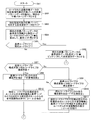
- FIG. 6B is the first half of a flowchart showing the synthetic waveform data generation process executed in step SA22 of FIG. 6B. It is the latter half part of the flowchart showing the production
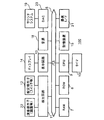
- FIG. 1 is a block diagram illustrating an example of a hardware configuration of an accompaniment data generation device 100 according to an embodiment of the present invention.
- a RAM 7, ROM 8, CPU 9, detection circuit 11, display circuit 13, storage device 15, sound source 18 and communication interface (I / F) 21 are connected to the bus 6 of the accompaniment data generation device 100.
- the RAM 7 has a buffer area such as a reproduction buffer and a working area for the CPU 9, and stores flags, registers, various parameters, and the like. For example, automatic accompaniment data described later is loaded into a predetermined area in the RAM 7.
- the ROM 8 can store various data files (for example, automatic accompaniment data AA to be described later), various parameters and a control program, a program for realizing the present embodiment, and the like. In this case, it is not necessary to store programs or the like in the storage device 15 in an overlapping manner.
- the CPU 9 performs calculation or device control according to a control program stored in the ROM 8 or the storage device 15 or a program for realizing the present embodiment.
- a timer 10 is connected to the CPU 9, and a basic clock signal, interrupt processing timing, and the like are supplied to the CPU 9.
- the user can perform various inputs, settings, and selections using the setting operator 12 connected to the detection circuit 11.
- the setting operator 12 may be any switch, pad, fader, slider, rotary encoder, joystick, jog shuttle, character input keyboard, mouse, or the like that can output a signal in accordance with the user input.
- the setting operator 12 may be a soft switch or the like displayed on the display device 14 that is operated using another operator such as a cursor switch.
- the user operates the setting operator 12 to record the automatic accompaniment data AA recorded in the storage device 15 or the ROM 8 or acquired (downloaded) from an external device via the communication I / F 21. Performs selection, automatic accompaniment start and stop instructions, and other setting operations.
- the display circuit 13 is connected to the display 14 and can display various information on the display 14.
- the display 14 can display various information for setting the accompaniment data generating apparatus 100.
- the storage device 15 is a combination of a storage medium such as a hard disk, an FD (flexible disk or floppy disk (registered trademark)), a CD (compact disk), a DVD (digital multipurpose disk), or a semiconductor memory such as a flash memory, and a driving device thereof. It is composed of at least one.
- the storage medium may be detachable or built in.
- the storage device 15 and / or the ROM 8 preferably include a plurality of automatic accompaniment data AA and separation pattern data DP including separation waveform data DW associated with the automatic accompaniment data AA, in order to realize each embodiment of the present invention. And other control programs can be stored.
- the sound source 18 is, for example, a waveform memory sound source, and is a hardware or software sound source capable of generating a musical tone signal from at least waveform data (phrase waveform data), and automatic accompaniment data recorded in the storage device 15, the ROM 8, the RAM 7, or the like.
- a musical tone signal is generated in accordance with performance signals, MIDI signals, phrase waveform data, etc. supplied from automatic performance data or performance operators (keyboards) 22 or external devices connected to the communication interface 21, and various musical effects. Is supplied to the sound system 19 via the DAC 20.
- the DAC 20 converts the supplied digital musical tone signal into an analog format, and the sound system 19 includes an amplifier and a speaker, and generates a DA converted musical tone signal.
- the communication interface 21 is a general-purpose short-distance wired I / F such as USB or IEEE 1394, a general-purpose network I / F such as Ethernet (registered trademark), a general-purpose I / F such as MIDI I / F, a wireless LAN, or Bluetooth. It is composed of at least one of a communication interface such as a general-purpose short-range wireless I / F such as (registered trademark) and a music dedicated wireless communication interface, and can communicate with an external device, a server, and the like.
- a general-purpose short-range wireless I / F such as (registered trademark) and a music dedicated wireless communication interface
- a performance operator (keyboard or the like) 22 is connected to the detection circuit 11 and supplies performance information (performance data) according to the performance operation of the user.
- the performance operator 22 is an operator for inputting a user's performance, and has a pitch corresponding to the operator operated by the user, and a key-on and key-off signal indicating an operation start timing and an end timing for the user's operator, respectively. Enter as.
- various parameters such as velocity values can be input in accordance with a user's performance operation.
- the performance information input by the performance operator (keyboard or the like) 22 includes chord information or information for generating chord information, which will be described later.
- an external device connected to the setting operator 12 or the communication interface 21 can be used for inputting chord information.
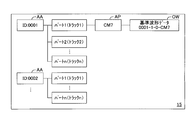
- FIG. 2 is a conceptual diagram showing an example of the configuration of automatic accompaniment data AA according to the embodiment of the present invention.
- the automatic accompaniment data AA includes one or a plurality of accompaniment parts (tracks), and each accompaniment part includes at least one accompaniment pattern data AP.
- Each accompaniment pattern data AP corresponds to one reference pitch (chord root) and chord type, and includes reference waveform data OW based on the reference pitch and chord type.
- automatic accompaniment data AA includes accompaniment style name, time signature information, tempo information (recording (playback) tempo of reference waveform data OW) of the automatic accompaniment data, and each accompaniment part.
- the setting information of the entire automatic accompaniment data including information and the like is included.
- each section includes the section name (intro, main, ending, etc.) and the number of bars (for example, one bar, four bars, eight bars, etc.).
- the automatic accompaniment data AA includes, for example, an automatic accompaniment of at least one accompaniment part (track) when the user plays a melody line using the performance operator 22 of FIG. Data to do.
- the automatic accompaniment data AA corresponds to music genres such as jazz, rock and classic, and a plurality of types are prepared for each genre, and are identified by an identification number (ID number), an accompaniment style name, or the like.
- ID number an identification number
- a plurality of automatic accompaniment data AA is stored in, for example, the storage device 15 or the ROM 8 of FIG. 1, and each automatic accompaniment data AA is assigned an ID number (“0001”, "0002" etc.).
- Each automatic accompaniment data AA is usually prepared for each accompaniment style such as a plurality of rhythm types, music genres, and tempos.
- Each automatic accompaniment data AA is provided with a plurality of sections according to the music scene such as intro, main, fill-in, and ending.
- Each section is composed of a plurality of tracks such as a chord track, a bass track, and a drum (rhythm) track.
- the automatic accompaniment data AA is composed of any one section, and the section includes a plurality of accompaniment parts (accompaniment part 1 (track 1) including at least chord accompaniment. ) To accompaniment part n (track n)).
- the accompaniment pattern data AP corresponds to a predetermined chord type at a predetermined reference pitch (chord root) and includes at least one reference waveform data OW including a constituent sound of the chord type.
- the accompaniment pattern data AP includes, as attribute information, reference chord information (reference pitch (chord route) information and reference chord type information), recording of the accompaniment pattern data AP. It holds the tempo (can be omitted if it is defined collectively in the automatic accompaniment data AA), length (time or number of bars, etc.), identifier (ID), name, number of reference waveform data OW included, and the like.
- the separated waveform data DW described later is included, the fact and the attributes (information such as constituent sounds included in the data) and the number of the separated waveform data are also stored.
- the reference waveform data OW is phrase waveform data in which musical tones corresponding to the performance of an accompaniment phrase based on the chord type and chord root (root tone) supported by the associated accompaniment pattern data AP are recorded. ⁇ The length of multiple bars.
- the reference waveform data OW based on CM7 is digitally sampled and stored by a performance (including accompaniments other than chord accompaniment) that mainly uses pitches C, E, G, and B that are CM7 chord constituent sounds. Waveform data.
- the reference waveform data OW may include pitches (non-harmonic sounds) other than the constituent sounds of a reference chord (a chord specified by a combination of chord type and chord root). In the present embodiment, as shown in FIG.
- accompaniment pattern data AP can be prepared for all chord roots (12 sounds).
- different code types may be associated with each code route. For example, “M7” may be associated with the code route “C”, and “m7” may be associated with the code route “D”.
- accompaniment pattern data AP corresponding to some chord routes (2 to 11) may be prepared instead of all chord routes.
- Each base waveform data OW is provided with an identifier that can identify the reference waveform data OW.
- each reference is in the format of “ID of automatic accompaniment data AA (style number) ⁇ accompaniment part (track) number ⁇ number indicating chord root (chord route information) ⁇ chord type name (chord type information)”.
- ID of automatic accompaniment data AA style number
- AA style number
- AA envelope number
- AA envelope number
- number ⁇ accompaniment part (track) number ⁇ number indicating chord root (chord route information)
- chord type name chord type information
- the reference waveform data OW may be stored in the automatic accompaniment data AA or stored separately from the automatic accompaniment data AA, and only the link information to the reference waveform data OW is stored in the automatic accompaniment data AA. May be stored.
- reference waveform data OW including four sounds is prepared as the reference waveform data OW, but instead of or in addition to this, only three sounds are included, You may make it prepare the thing containing 5 sounds or 6 sounds.
- chord route information and chord type information may be detected by analyzing accompaniment pattern data in addition to storing them in advance as attribute information.
- FIG. 4 is a conceptual diagram for explaining the separated waveform data according to the embodiment of the present invention.
- the predetermined constituent sound and its harmonic component are separated from the reference waveform data OW, and the separated waveform data DW corresponding to the predetermined constituent sound is generated.
- the separated waveform data DW is separated from the reference waveform data OW by separation processing.
- the separation process is, for example, as described in the section of [Embodiment of the invention] in Japanese Patent Application Laid-Open No. 2004-21027 (see particularly paragraphs [0014] to [0016] and [0025] to [0027]).
- Japanese Patent Application Laid-Open No. 2004-21027 See particularly paragraphs [0014] to [0016] and [0025] to [0027]).
- the contents described in Japanese Patent Application Laid-Open No. 2004-21027 are incorporated in the present specification.
- a musical sound waveform signal based on the reference waveform data OW is subjected to spectrum analysis for each predetermined time frame, and a line spectral component corresponding to the fundamental frequency and the harmonic frequency included in the musical sound waveform is extracted.
- a trajectory is tracked and extracted based on the peak data included in the extracted line spectrum component, and a pitch trajectory (trajectory), an amplitude trajectory (trajectory), and a phase trajectory (trajectory) for each frequency component are generated. That is, a time-series continuation of the same frequency component is detected and extracted as a trajectory. Further, a sine wave signal having a frequency corresponding to the frequency component is generated from the generated pitch trajectory and amplitude trajectory of each frequency component, and the sine wave signal of each frequency component thus generated is added and synthesized.
- a waveform (Deterministic Wave) is generated, and a residual waveform is obtained by subtracting the deterministic waveform from the original musical sound waveform, and each trajectory and residual waveform for each frequency component is obtained.
- Use analytical data Subsequently, analysis data (trajectory data) of a plurality of frequency components (ie, fundamental tone and each harmonic) having a harmonic relationship with a specific target pitch from the analysis data for each frequency component obtained by the musical tone analysis process. ) Is generated, the separated waveform data DW corresponding to a predetermined constituent sound is generated.
- the separation of the separated waveform data DW from the reference waveform data OW is not limited to the above method, and any method can be used as long as a specific chord constituent sound and its harmonic component can be separated from the reference waveform data OW. May be.
- the reference waveform data OW is generated in accordance with a five-stage separation pattern, and separated waveform data DW corresponding to a predetermined constituent sound is generated and stored for later use.
- the separation pattern at the 0th stage includes only the original reference waveform data OW that does not execute the separation process, and the data at this stage is referred to as separation pattern data DP0.
- the separated waveform data DWb including is generated.
- the generated separation waveform data DWa and separation waveform data DWb are stored as first-stage separation pattern data DP1.
- the chord root and the component sound of 5 degrees (this In the example, separation waveform data DWc including 0 degree, complete 5 degrees) and its harmonic component, and separated waveform data DWd including only the third component sound (3 degrees in this example) and its harmonic component are generated. Is done.
- the generated separated waveform data DWc and separated waveform data DWd, and the separated waveform data DWb corresponding to the seven constituent sounds previously separated are stored as the second-stage separation pattern data DP2.
- the separation waveform data DWa of the first-stage separation pattern data DP1 it is possible to separate the 5th component sound (in this example, the complete 5th) and its overtone component.
- the separated waveform data DWe includes the chord root and the third component sound (in this example, 0 degree, long third) and the separated waveform data DWe including its harmonic component and the fifth component sound (in this example, And the separated waveform data DWf including only the harmonic component thereof is generated.
- the generated separated waveform data DWe and separated waveform data DWf, and the separated waveform data DWb corresponding to the previously separated seven-degree constituent sounds are stored as the third-stage separation pattern data DP3.
- the chord root (0 degree) and its harmonics are separated from the separated waveform data DWc of the separation pattern data DP2 of the second stage by further separating the constituent sounds of 5 degrees (in this example, perfect 5 degrees) and their harmonic components.
- the separated waveform data DWg including the components, and the separated waveform data DWf including only the component sound of 5 degrees (completely 5 degrees in this example) and its overtone component are generated.
- the generated separated waveform data DWg and separated waveform data DWf, the separated waveform data DWb corresponding to the 7th component sound previously separated, and the separated waveform data DWd corresponding to the third component sound are the fourth stage. Is stored as the separation pattern data DP4.
- the fourth stage separation pattern data DP4 can also be generated from the third stage separation pattern data DP3.
- DWd is generated.
- the generated separated waveform data DWg and separated waveform data DWd, as well as the separated waveform data DWb corresponding to the 7th component sound previously separated and the separated waveform data DWf corresponding to the 5th component sound are the fourth stage. Is stored as the separation pattern data DP4.
- the separation pattern data DP0 is difficult to use except for the chord type that is based on the original reference waveform data OW because the chord constituent sounds are not separated.
- a tension sound is further added, it can be used by synthesizing with other phrase waveform data including the tension sound.
- the separation pattern data DP1 is composed of chord root, 3rd and 5th constituent sounds (in this example, 0 degree, 3rd degree, and complete 5 degrees) and separated waveform data DWa including harmonic components thereof, and 7th constituent sounds.
- the separated waveform data DWb including the overtone component thereof, the separated waveform data DWb can be adapted to the code type (6, M7, 7) by synthesizing the separated waveform data DWb as it is or by shifting the pitch to the separated waveform data DWa.
- the separated waveform data DWa can be used alone with reference to the code type (Maj).
- the separation pattern data DP2 is a separation waveform data including a chord root, 5th component sound (in this example, 0 °, complete 5 °) and its harmonic component, and a separation waveform data including 3rd component sound and its harmonic component. Since the separated waveform data DWb including the data DWd and the 7th component sound and its harmonic component are included, the separated waveform data DWd is directly or pitch-shifted and synthesized with the separated waveform data DWc, so that the code type (maj, m, sus4). Further, by further synthesizing the separated waveform data DWb as it is or by shifting the pitch, it is possible to correspond to the code type (6, M7, 7, m6, m7, mM7, 7sus4). The separated waveform data DWc can be used alone as a reference based on the code type (1 + 5).
- the separation pattern data DP3 includes a separation waveform data DWe including a chord root and a third-degree component sound (in this example, 0 degree and third degree) and its harmonic component, and a separation waveform including a fifth-degree component sound and its harmonic component. Since the separated waveform data DWb including the data DWf and the 7th component sound and its harmonic components are included, the separated waveform data DWf is directly or pitch-shifted and synthesized with the separated waveform data DWe, so that the code type (maj, aug, ⁇ 5). Further, it is possible to cope with code types (6, M7, M7 ( ⁇ ⁇ 5), 7 ( ⁇ 5), 7aug, M7auug) by synthesizing the separated waveform data DWb as it is or by shifting the pitch.
- code types (6, M7, M7 ( ⁇ ⁇ 5), 7 ( ⁇ 5), 7aug, M7auug
- each separation waveform data DW is used as it is.
- the code type shown in FIG. 5 can be handled by pitch-shifting and synthesizing with other separated waveform data DW.
- the separated waveform data DW when the separated waveform data DW is simply used in this specification, it indicates any one or the whole of the separated waveform data DWa to DWg. Further, waveform data storing accompaniment phrases such as separated waveform data DW and reference waveform data OW is referred to as phrase waveform data.
- FIG. 5 is a conceptual diagram showing an example of a semitone distance number table by chord type according to the embodiment of the present invention.
- the reference waveform data OW or the separated waveform data DW including the chord root is pitch-shifted according to the chord root of the chord information input by the user's performance operation or the like, and 1 or according to the chord root and the chord type.
- the separated waveform data DW including a plurality of constituent sounds are pitch-shifted and synthesized to generate synthesized waveform data corresponding to the accompaniment phrase based on the chord type and chord root of the input chord information.
- each separated waveform data DW is 3 degrees long ( Semitone distance number 4), complete 5 degrees (semitone distance number 7), long 7 degrees (semitone distance number 11) only, corresponding to other constituent sounds, it is necessary to shift the pitch according to the chord type There is. Therefore, when one or a plurality of separated waveform data DW is pitch-shifted according to the chord root and chord type, the chord type semitone distance number table shown in FIG. 5 is referred to.
- the semitone distance number table by chord type is a table in which the semitone distance numbers from the chord root to the chord root, the third, fifth, and fourth chord constituent sounds are recorded for each chord type.
- the numbers of semitones from the chord root of the chord root, the third and fifth constituent sounds are “0”, “4”, and “7”, respectively.
- the separation waveform data DW of the present embodiment is prepared in correspondence with the long 3 degrees (semitone distance number 4) and the complete 5 degrees (semitone distance number 7), so the pitch shift according to the code type is
- minor seventh (m7) the numbers of semitones from the chord root of the chord root, the third, fifth, and seventh degrees are “0”, “3”, “ 7 ”and“ 10 ”, the pitch (pitch) of the selected waveform data SW corresponding to 3 degrees long (semitone distance number 4) and 7 degrees long (semitone distance number 11) needs to be lowered by one semitone. This can be understood by referring to the semitone distance number table by chord type.
- the semitone distance from the chord root of the constituent sound of 9 degrees, 11 degrees, and 13 degrees is included in the code type semitone distance number table. There is a need.
- 6A and 6B are flowcharts showing main processing according to the embodiment of the present invention. This main process is started simultaneously with the power-on of the accompaniment data generation apparatus 100 according to the embodiment of the present invention.
- step SA1 in FIG. 6A main processing is started, and initial setting is performed in step SA2.
- the initial settings here are automatic accompaniment data AA selection, use chord type setting (use only major triads, triad, 7th chord, etc.), chord acquisition method (input by user performance, input by direct specification by user, chord) 1) setting, performance tempo setting, key setting, etc., for example, using the setting operator 12 in FIG.
- step SA3 the reference waveform data OW in the accompaniment pattern data AP of each part included in the automatic accompaniment data AA selected in step SA2 or later-described step SA4 is separated.
- This separation process is performed as described with reference to FIG.
- the degree of separation in this separation process (which one of separation patterns DP0 to DP4 is to be generated) is determined by the default setting or the usage code type set by the user in step SA2. For example, in step SA2, when the user sets to use only the main triad, it is sufficient to generate the separation pattern DP1 of FIG. 4, and when the user sets to use the basic code including the seventh code. It is sufficient to generate the separation pattern DP2 of FIG.
- the separation pattern DP4 of FIG. 4 may be generated.
- the generated separated waveform data DW is stored in the storage device 15, for example, in association with the accompaniment pattern data AP together with the original reference waveform data OW.
- the stored separation waveform data DW may be used. Processing is omitted.
- the separation process may be performed and stored in accordance with the input code information each time code information is input.
- step SA4 it is determined whether or not a setting change operation by the user has been detected.
- the setting change operation here is a setting that needs to initialize the current setting, such as re-selection of automatic accompaniment data AA, and does not include, for example, changing the setting of the performance tempo. If a setting change operation is detected, the process proceeds to step SA5 indicated by a Yes arrow. When the setting change operation is not detected, the process proceeds to Step SA6 indicated by a No arrow.
- step SA5 automatic accompaniment stop processing is performed.
- step SA6 it is determined whether or not an end operation of the main process (power-off of the accompaniment data generation device 100, etc.) has been detected. If an end operation is detected, the process proceeds to step SA24 indicated by a Yes arrow to end the main process. When not detected, it progresses to step SA7 shown by the arrow of No.
- step SA7 it is determined whether or not a performance operation by the user has been detected.
- the detection of the performance operation by the user is performed, for example, by detecting whether or not a performance signal is input by operating the performance operator 22 of FIG. 1 or a performance signal is input via the communication I / F 21. If a performance operation is detected, the process proceeds to step SA8 indicated by a Yes arrow, performs sound generation or mute processing based on the detected performance operation, and then proceeds to step SA9. If the performance operation is not detected, the process proceeds to step SA9 indicated by a No arrow.
- step SA9 it is determined whether or not an automatic accompaniment start instruction has been detected.
- the automatic accompaniment start instruction is performed, for example, when the user operates the setting operator 12 shown in FIG. If an automatic accompaniment start instruction is detected, the process proceeds to step SA10 indicated by a Yes arrow. When the start instruction is not detected, the process proceeds to step SA14 in FIG.
- step SA11 the automatic accompaniment data AA selected in step SA2 or step SA4 is stored in the RAM 7 from, for example, the storage device 15 in FIG. Load into a predetermined area. Thereafter, in step SA12, the immediately preceding code, current code, and synthesized waveform data are cleared, a timer is started in step SA13, and the process proceeds to step SA14 in FIG. 6A.
- step SA14 in FIG. 6B it is determined whether or not a stop instruction for automatic accompaniment has been detected.
- the automatic accompaniment stop instruction is given, for example, by the user operating the setting operator 12 shown in FIG. If an automatic accompaniment stop instruction is detected, the process proceeds to step SA15 indicated by a Yes arrow. When the stop instruction is not detected, the process proceeds to Step SA18 indicated by a No arrow.
- step SA19 it is determined whether or not input of code information is detected (code information is acquired). If the input of code information is detected, the process proceeds to step SA20 indicated by a Yes arrow, and if not detected, the process proceeds to step SA23 indicated by a No arrow.
- step SA19 may be repeated without proceeding to step SA23 until valid chord information is input, and generation of accompaniment data may be waited until valid chord information is input.
- chord information is input by a performance operation using the performance operator 22 shown in FIG.
- Acquisition of chord information from the user's performance is detected from, for example, a key combination of chord keys, which is a partial area of the performance operator 22 such as a keyboard (in this case, no sound corresponding to the key press is performed).
- it may be detected from a key pressing state at a predetermined timing width in the entire key range of the keyboard.
- a known code detection technique can be used.
- the chord information may be input not only using the performance operator 22 but also using the setting operator 12.
- the code information may be input as a combination of information (characters and numbers) indicating the code root (root sound) and information (characters and numbers) indicating the code type.
- chord information stored in advance may be read and acquired at a predetermined tempo, without chord information being input by a user, and chord detection is performed from music data being played back. May be obtained.
- step SA20 the code information set in “current code” is set in “previous code”, and the code information detected (obtained) in step SA19 is set in “current code”.
- step SA21 it is determined whether the code information set in the “current code” and the code information set in the “preceding code” are the same. If they are the same, the process proceeds to step SA23 indicated by a Yes arrow, and if not, the process proceeds to step SA22 indicated by a No arrow. Note that the process also proceeds to step SA22 when detecting the initial code information.
- step SA22 for each accompaniment part (track) included in the automatic accompaniment data AA loaded in step SA11, the chord type of chord information (hereinafter referred to as the current chord type) and chord set in “current chord” Synthetic waveform data that conforms to the root (hereinafter referred to as the current code root) is generated and referred to as “current synthetic waveform data”.
- the synthetic waveform data generation process will be described later with reference to FIGS. 7A and 7B.
- step SA23 for each accompaniment part (track) included in the automatic accompaniment data AA loaded in step SA11, data at a position suitable for the timer is set from the “current synthesized waveform data” set in step SA22. It is read according to the performance tempo, and accompaniment data is generated and output based on the read data. Thereafter, the process returns to step SA4 in FIG. 6A and the subsequent processing is repeated.
- the automatic accompaniment data AA is selected by the user before starting the automatic accompaniment in step SA2 or during automatic accompaniment in step SA4. However, the previously stored chord sequence data or the like is reproduced. For example, the designation information of the automatic accompaniment data AA may be included in the chord sequence data or the like, and it may be read and automatically selected. Further, the automatic accompaniment data AA may be selected in advance as a default.
- the instruction to start and stop the reproduction of the selected automatic accompaniment data AA is performed by detecting the user's operation in step SA9 and step SA14, but the start and end of the performance using the performance operator 22 is detected by the user. Then, playback of the selected automatic accompaniment data AA may be automatically started and stopped.
- step SA14 when an automatic accompaniment stop instruction is detected in step SA14, the automatic accompaniment may be stopped immediately, but automatically until the end of the phrase waveform data PW being reproduced or a break (where the sound is cut off). You may make it stop after continuing an accompaniment.
- step SA22 of FIG. 6B are flowcharts showing the synthetic waveform data generation process executed in step SA22 of FIG. 6B.
- this process is repeated for the number of accompaniment parts.
- step SA3 in FIG. 6A description will be made assuming that the separation pattern data DP4 in FIG. 4 has been generated.
- step SB1 in FIG. 7A the composite waveform data generation process is started.
- step SB2 the accompaniment associated with the accompaniment part that is the current processing target of the automatic accompaniment data AA loaded in step SA11 in FIG.
- the pattern data AP is extracted and set as “current accompaniment pattern data”.
- step SB3 the composite waveform data corresponding to the accompaniment part currently being processed is cleared.
- step SB4 the difference between the reference pitch information (chord route information) of the accompaniment pattern data AP set in the “current accompaniment pattern data” and the chord route of the chord information set in the “current chord” (
- the pitch shift amount is calculated from the number of semitone distances to obtain a “basic shift amount”.
- the “basic shift amount” may be negative.
- the chord root of the accompaniment pattern data AP is “C”. For example, when the input chord information is “Dm7”, the chord root of the chord information is “D”, so "Becomes" 2 (number of semitone distances) ".
- step SB17 where the synthesized waveform data generation process is terminated, and the process proceeds to step SA23 in FIG. If they are not the same, a separate pitch shift is performed for each component sound, so the process proceeds to step SB7 indicated by an arrow No.
- step SB7 it is determined whether or not the number of constituent sounds of the reference chord type is greater than the number of constituent sounds of the current chord type (the number of constituent sounds of the reference chord type> the number of constituent sounds of the current chord type). If the number of constituent sounds of the reference chord type is greater than the number of constituent sounds of the current chord type, the process proceeds to step SB8 indicated by a Yes arrow to extract constituent sounds that exist only in the reference chord type but not in the current chord type. Proceed to Step SB12 as “unnecessary component sound”. When the number of constituent sounds of the reference chord type is equal to or less than the number of constituent sounds of the current chord type, the process proceeds to step SB9 indicated by a No arrow. For example, when the current chord type is Dm, the reference chord type in the present embodiment is CM7, and therefore, the seven constituent sounds are constituent sounds that exist only in the reference chord type and are set as “unnecessary constituent sounds”. Is done.
- step SB9 it is determined whether or not the number of constituent sounds of the reference chord type is less than the number of constituent sounds of the current chord type (the number of constituent sounds of the reference chord type ⁇ the number of constituent sounds of the current chord type). If the number of constituent sounds of the reference chord type is less than the number of constituent sounds of the current chord type, the process proceeds to step SB10 indicated by the Yes arrow, and if the same, the process proceeds to step SB12 indicated by the No arrow.
- step SB10 a constituent sound that exists only in the current chord type and does not exist in the reference chord type is extracted and set as “insufficient constituent sound”.
- the reference chord type in this embodiment is CM7, and therefore, the nine-degree constituent sound is a constituent sound that exists only in the current chord type, "Is set.
- step SB11 the difference ( ⁇ 2 to +2) between the number of semitone distances from the chord root of each constituent sound other than the short constituent sound of the current chord type and the number of semitone distances from the chord root of the corresponding constituent sound of the reference chord type Are extracted with reference to the semitone distance number table shown in FIG. 5 and the process proceeds to Step SB13 in FIG. 7B.
- the case where the constituent sounds of the current chord type and the reference chord type correspond is the case where the frequency with respect to the chord root is the same. Treat as sound.
- the sixth chord (six chord) is treated as the fourth component. This correspondence is preferably set in advance, but may be settable by the user.
- the reference chord type in this embodiment is CM7, so the difference is calculated for each constituent sound other than the nine-degree constituent sound that is the “insufficient constituent sound”.
- the numbers of semitone distances of constituent sounds other than the “insufficient constituent sound” of the current chord type Dm7 (9) are the routes “0”, “3”, “3”, and “5”, respectively, according to the semitone distance number table shown in FIG. It can be seen that the degree is “7” and the fourth voice is “10”.
- the reference chord type CM 7 has a route of “0”, 3 degrees “4”, 5 degrees “7”, and 4th voice “11”, respectively, based on the semitone distance number table shown in FIG. Recognize. Therefore, when the difference is obtained for each constituent sound, the route becomes “0”, 3 ° “ ⁇ 1”, 5 ° “0”, 4th voice “ ⁇ 1”.
- step SB12 the difference ( ⁇ 2 to +2) between the number of semitones from the chord root of each constituent sound of the current chord type and the number of semitones from the chord root of the corresponding constituent sound of the reference chord type is shown in FIG. Extraction is made with reference to the chord type semitone distance number table shown, and the process proceeds to step SB13. Since the difference is extracted only for each constituent sound of the reference chord type corresponding to each constituent sound of the current chord type, “unnecessary constituent sounds” are ignored. For example, when the current chord type is Dm, the reference chord type in the present embodiment is CM7, so the difference is calculated for each constituent sound other than the seven-degree constituent sound that is an “unnecessary constituent sound”.
- the numbers of semitone distances of the current chord type Dm are routes “0”, 3 ° “3”, and 5 ° “7”, respectively.
- the reference code type CM7 has the routes “0”, “3” “4”, and “5” “7”, respectively. Therefore, when the difference is obtained for each constituent sound, the route becomes “0”, “3” “ ⁇ 1”, and “5” “0”.
- step SB13 in FIG. 7B the shift amount of each constituent sound of the reference chord type is calculated based on the difference extracted in step SB11 or step SB12.
- the shift amount of each constituent sound is obtained by adding the basic shift amount to the difference extracted in step SB11 or step SB12.
- step SB14 when the separation waveform data DW includes phrase waveform data including a plurality of chord constituent sounds (including unnecessary constituent sounds) in the separation pattern data DP associated with the current accompaniment pattern data AP.
- the phrase waveform data including both the chord constituent sound whose difference is “0” and the chord constituent sound whose difference is not “0” (including unnecessary constituent sounds) excluding the missing constituent sound is separated waveform data.
- the difference is the difference between the number of semitones from the chord root of each constituent sound of the current chord type and the number of semitones from the chord root of the corresponding constituent sound of the reference chord type.
- the separated waveform data DW includes chord constituent sounds (excluding insufficient constituent sounds) defined by the chord type of the current chord and includes chord constituent sounds not defined by the chord type. Is included in the separation pattern data DP. If the separation waveform data DW including a plurality of chord constituent sounds does not exist in the separation pattern data DP, the separation pattern data DP including the corresponding separation waveform data DW does not exist in the current accompaniment pattern data AP. It is judged. If the separation pattern data DP including the corresponding separation waveform data DW does not exist in the current accompaniment pattern data AP, the process proceeds to Step SB16 indicated by a No arrow, and if present, the process proceeds to Step SB15 indicated by a Yes arrow.
- step SB16 Even if the separated waveform data DW is not included, if the shift amounts of the constituent sounds included in the same separated waveform data DW are the same, there is no problem in the pitch shift processing in step SB16, which will be described later. The process proceeds to step SB16 indicated by the arrow.
- each constituent sound chord root of the current chord type 3 degrees, 5 degrees, Nine degrees out of 7 and 9 are ignored because they are insufficiently composed sounds. Since the separation pattern data DP4 is separated into separation waveform data DWg, DWd, DWf, and DWb corresponding to the code root, 3 degrees, 5 degrees, and 7 degrees, the process proceeds to step SB16 indicated by an arrow No.
- step SA3 of FIG. 6 when the separation code data DP3 of FIG. 4 is prepared in step SA3 of FIG. 6, if the current chord type is Dm7 (9), each constituent sound chord root of the current chord type, 3 degrees, 5 degrees, Nine degrees out of 7 and 9 are ignored because they are insufficiently composed sounds.
- the separation waveform data DWf and DWb corresponding to 5 degrees and 7 degrees are separated, but the code route of the separation waveform data DWe and the shift amount of 3 degrees out of 3 degrees are different. That is, since the separated waveform data DWe includes a chord component sound whose difference is not “0”, the process proceeds to step SB15 indicated by a Yes arrow.
- the separation pattern data DP2 of FIG. 4 is prepared in step SA3 of FIG. 6, if the current chord type is Dm7 (9), each constituent sound chord root of the current chord type, 3 degrees, 5 degrees, Nine degrees out of 7 and 9 are ignored because they are insufficiently composed sounds.
- the separation waveform data DWd and DWb corresponding to 3 degrees and 7 degrees are separated, and the code route and the 5 degree shift amount of the separation waveform data DWc are the same, that is, the separation waveform. Since the data DWc does not include a code configuration whose difference is not “0”, the process proceeds to Step SB16 indicated by a No arrow.
- each component sound whose current chord type difference is not “0” is selected from the separated waveform data DW (or reference waveform data OW) in the separated pattern data DP associated with the current accompaniment pattern data AP.
- the corresponding constituent sounds (other than the insufficient constituent sounds) and the unnecessary constituent sounds those that have not yet been separated from the separated waveform data DW are separated to generate separated waveform data DW corresponding to the constituent sounds, and new separation is performed.
- Generate pattern data In other words, when the separated waveform data DW (or the reference waveform data OW) includes a chord constituting sound that is not defined by the code type of the current chord, the code type of the current chord from the separated waveform data DW (or the reference waveform data OW).
- phrase waveform data including chord constituent sounds (other than insufficient constituent sounds) defined by the above and phrase waveform data including chord constituent sounds and unnecessary constituent sounds not defined by the chord type and new separated waveform data is obtained.
- the separation pattern data DP3 having the reference code CM7 is prepared and Dm7 is input
- the separation waveform data DWe of the separation pattern data DP3 is separated
- the separation waveform data DWg and the separation waveform data are separated.
- DWd is generated, and new separation pattern data DP4 is generated. Thereafter, the process proceeds to Step SB16.
- step SB16 the entire separated waveform data DW other than unnecessary constituent sounds in the separation pattern data DP detected in step SB15 or generated in step SB16 is pitch-shifted by the corresponding constituent sound shift amount.
- the separated waveform data DW is synthesized into synthesized waveform data. Thereafter, the process proceeds to step SB17, where the combined waveform data generation process is terminated, and the process proceeds to step SA23 in FIG.
- waveform data OW including the chord root or the separated waveform data DW whose difference is “0” is pitch-shifted by the “basic shift amount” and separated including one chord component sound whose difference is not “0”.
- Waveform data DW is accompaniment data based on the desired chord root and chord type by performing pitch shift by the number of semitone distances obtained by adding (subtracting) a value corresponding to the chord type to “basic shift amount” and synthesizing. Can be obtained.
- the component sound set as “insufficient component sound” in the current chord type is ignored because the separated waveform data DW cannot be prepared, but the data corresponding to the component sound determined as the component component insufficient. May be prepared as automatic performance data such as MIDI data.
- the phrase waveform data may be prepared in advance and synthesized after the pitch shift.
- a code type that is a substitute for the current code type and that can be handled by the prepared separation pattern data DP is set as the current code type. Good.
- step SB15 instead of newly generating separated waveform data DW including the necessary constituent sounds, an accompaniment phrase corresponding to the separated waveform data DW including the necessary constituent sounds is prepared as automatic performance data such as MIDI data. You may make it do. Further, a code type that is a substitute for the current code type and that can be handled by the prepared separation pattern data DP may be set as the current code type.
- step SB4 when preparing reference waveform data OW for all chord roots (12 sounds), the basic shift amount calculation process in step SB4 is omitted, and the basic shift amount is added in step SB13. Do not.
- the reference waveform data OW corresponding to the chord root having the smallest pitch difference from the chord information (chord root) set in the “current chord” is read, and the pitch difference is “basic”.
- the shift amount may be set.
- the reference waveform data WO corresponding to the chord root having the smallest pitch difference from the chord information (chord root) set in the “current chord” is selected by the processing of step SA3 or step SB2.
- the separation pattern data DP1 to DP4 may be processed.
- the separated waveform data DW from CM7 may be used by shifting the pitch for the major code
- the separated waveform data DW from Dm7 may be used by shifting the pitch for the minor code.
- the reference waveform data OW including a plurality of chord-constituting sounds is prepared in association with the accompaniment pattern data AP, based on a predetermined chord root and chord type chord.
- the separated waveform data DW including the reference waveform data OW or the plurality of component sounds is separated to generate the separated waveform data DW including the component sounds having a difference value other than “0”, and after appropriately shifting them.
- the phrase waveform data including a constituent sound whose difference value is other than “0” is separated from the reference waveform data OW or the separated waveform data DW including a plurality of sounds, and then synthesized after the pitch shift. Therefore, even if a code of a code type different from the code type based on the reference waveform data OW is input, it is possible to cope with it. In addition, it is possible to follow changes in the chord type accompanying chord changes.
- the reference waveform data OW is prepared for all chord root sounds, it is only necessary to perform a pitch shift on only a part of the constituent sounds, so that deterioration in sound quality due to the pitch shift can be minimized.
- the separation waveform data DW and the reference appropriate for the input code can be used without performing separation processing.
- the waveform data OW can be read and synthesized.
- accompaniment patterns are prepared as phrase waveform data, automatic accompaniment with high sound quality becomes possible. It is also possible to automatically perform accompaniment using a special instrument or a special scale that is difficult to pronounce with a MIDI sound source.
- step SB13 the difference extracted by the process in step SB11 or step SB12 and the “basic shift amount” calculated in step SB4 are added to calculate the shift amount of each constituent sound, and step SB16.
- the entire separated waveform data is pitch-shifted by the shift amount of the corresponding constituent sound.
- the combined waveform data may be finally pitch-shifted by the “basic shift amount” as follows. That is, in step SB13, without adding the “basic shift amount”, only the difference extracted by the processing in step SB11 or step SB12 is set as the shift amount of each constituent sound, and in step SB16, all the separated waveform data is set. The pitch is shifted by the shift amount set in step SB13, the pitch-shifted all separated waveform data is synthesized, and the synthesized waveform data is pitch-shifted by the “basic shift amount”.
- the separation patterns DP1 to DP4 including the separation waveform data DW are generated from the reference waveform data OW.
- at least one of the separation pattern data DP1 to DP4 including the separation waveform data DW is stored in advance. You may make it leave. Further, at least one of the separation pattern data DP0 to DP4 may be acquired from an external device as necessary.
- the recording tempo of the reference waveform data OW is stored as attribute information of the automatic accompaniment data AA, but may be stored here for each reference waveform data OW.
- the reference waveform data OW is prepared for only one recording tempo, but the reference waveform data OW may be prepared for a plurality of types of tempos.
- the embodiment of the present invention is not limited to the form of the electronic musical instrument, and may be implemented by a commercially available computer or the like in which a computer program or the like corresponding to the embodiment is installed.
- the computer program or the like corresponding to each embodiment may be provided to the user while being stored in a storage medium that can be read by a computer such as a CD-ROM.
- a computer such as a CD-ROM.
- a communication network such as a LAN, the Internet, or a telephone line
- a computer program, various data, and the like may be provided to the user via the communication network.
Landscapes
- Engineering & Computer Science (AREA)
- Physics & Mathematics (AREA)
- Acoustics & Sound (AREA)
- Multimedia (AREA)
- General Engineering & Computer Science (AREA)
- Electrophonic Musical Instruments (AREA)
- Auxiliary Devices For Music (AREA)
Abstract
伴奏データ生成装置は、複数のコード構成音を含むフレーズ波形データを記憶する記憶装置15と、CPU9とを備えている。CPU9は、複数のコード構成音を含むフレーズ波形データを異なるコード構成音をそれぞれ含む複数のフレーズ波形データに分離する処理と、コードタイプとコードルートを特定するコード情報を取得する取得処理と、前記分離された複数のフレーズ波形データのうちの一部の波形データをコードタイプに応じてピッチシフトするとともに、ピッチシフトしたフレーズ波形データを含む前記分離された複数のフレーズ波形データを合成して、コード音フレーズの波形データを伴奏データとして生成するコード音フレーズ生成処理とを実行する。
Description
本発明は、コード音フレーズの波形データを生成する伴奏データ生成装置及び伴奏データ生成プログラムに関する。
従来、音楽の各種スタイル(ジャンル)に対応したMIDI形式等の自動演奏データによる複数の伴奏スタイルデータを記憶し、ユーザ(演奏者)の選択した伴奏スタイルデータに基づいて、ユーザの演奏に伴奏を付与する自動伴奏装置が知られている(例えば、特許第2900753号公報参照)。
従来の自動演奏データを利用した自動伴奏装置では、例えば、CMajなどの所定のコード(和音)に基づく伴奏スタイルデータを、ユーザの演奏から検出したコード(和音)情報に適合するように、音高変換することが行われている。
また、アルペジオパターンデータをフレーズ波形データとして記憶し、ユーザの演奏入力に適合するように音高やテンポの調整を行い、自動伴奏データを生成するアルペジオ演奏装置が知られている(例えば、特許第4274272号公報参照)。
上記自動演奏データを利用した自動伴奏装置では、MIDI音源等を利用して楽音を生成するため、民族楽器や特殊な音階を用いる楽器などの楽音を用いた自動伴奏は困難であった。また、自動演奏データによる演奏のため、人間の生演奏による臨場感等を出すことが困難であった。
また、上記アルペジオ演奏装置等の従来のフレーズ波形データを利用した自動伴奏装置では、単音の伴奏フレーズのみが自動演奏可能であった。
本発明の目的は、和音を含むフレーズ波形データを用いた自動伴奏データを生成可能な伴奏データ生成装置を提供することである。
上記目的を達成するために、本発明の特徴は、複数のコード構成音を含むフレーズ波形データを記憶する記憶手段(7,8,15)と、前記複数のコード構成音を含むフレーズ波形データを、少なくとも1つのコード構成音を含むフレーズ波形データと、前記少なくとも1つのコード構成音を含まないとともに前記少なくとも1つのコード構成音とは異なるコード構成音を含むフレーズ波形データとからなる複数のフレーズ波形データに分離する分離手段(9,SA3,SB15)と、コードタイプとコードルートを特定するコード情報を取得する取得手段(9,SA19,SA20)と、前記分離された複数のフレーズ波形データのうちの一部の波形データを前記取得されたコード情報によって特定される少なくともコードタイプに応じてピッチシフトするとともに、前記ピッチシフトしたフレーズ波形データを含む前記分離された複数のフレーズ波形データを合成して、前記取得したコード情報によって特定されるコードルート及びコードタイプに対応したコード音フレーズの波形データを伴奏データとして生成するコード音フレーズ生成手段(9,SA23,SB4~SB16)とを備えたことにある。
この場合、前記分離手段は、複数のコード構成音を含むフレーズ波形データと、前記複数のコード構成音とは異なる1つのコード構成音に関するフレーズ波形データとに分離するとよい。そして、前記分離手段によって分離された複数のコード構成音を含むフレーズ波形データは、コードルート音、3度のコード構成音及び5度のコード構成音、コードルート音及び5度のコード構成音、又はコードルート音及び3度のコード構成音を含む。
また、前記分離手段は、1つのフレーズ波形データに、前記取得手段によって取得されたコード情報によって特定されるコードタイプによって規定されるコード構成音が含まれるとともに、前記コードタイプによって規定されないコード構成音が含まれるとき、前記1つのフレーズ波形データを、前記コードタイプによって規定されるコード構成音を含むフレーズ波形データと、前記コードタイプによって規定されないコード構成音を含むフレーズ波形データとに分離する条件付き分離手段(9,SB15)を含むとよい。
さらに、前記分離手段は、1つのコード構成音にそれぞれ対応した複数のフレーズ波形データに分離してもよい。
また、前記記憶手段は、複数のコード構成音を含む1つのフレーズ波形データを記憶し、前記コード音フレーズ生成手段は、前記分離手段によって分離された複数のフレーズ波形データのうちの一部のフレーズ波形データを、前記取得手段によって取得されたコード情報によって特定されるコードタイプに加えて、前記1つのフレーズ波形データを構成するコードルート音の音高と、前記取得手段によって取得されたコード情報によって特定されるコードルートとの音高差に応じてピッチシフトする第1ピッチシフト手段と、前記分離手段によって分離された複数のフレーズ波形データのうちで前記一部の波形データとは異なるフレーズ波形データを、前記1つのフレーズ波形データを構成するコードルート音の音高と、前記取得手段によって取得されたコード情報によって特定されるコードルートとの音高差に応じてピッチシフトする第2ピッチシフト手段と、前記第1ピッチシフト手段によってピッチシフトされたフレーズ波形データと、前記第2ピッチシフト手段によってピッチシフトされたフレーズ波形データとを合成する合成手段とで構成されるとよい。
また、前記記憶手段は、複数のコード構成音を含む1つのフレーズ波形データを記憶し、前記コード音フレーズ生成手段は、前記分離手段によって分離された複数のフレーズ波形データのうちの一部のフレーズ波形データを、前記取得手段によって取得されたコード情報によって特定されるコードタイプに応じてピッチシフトする第1ピッチシフト手段と、前記第1ピッチシフト手段によってピッチシフトされた一部の波形データと、前記分離手段によって分離された複数のフレーズ波形データのうちで前記一部の波形データとは異なるフレーズ波形データとを合成する合成手段と、前記合成されたフレーズ波形データを、前記1つのフレーズ波形データを構成するコードルート音の音高と、前記取得手段によって取得されたコード情報によって特定されるコードルートとの音高差に応じてピッチシフトする第2ピッチシフト手段とで構成されてもよい。
また、前記記憶手段は、複数のコード構成音をそれぞれ含む複数のフレーズ波形データを記憶し、さらに、前記複数のフレーズ波形データの中から、前記取得手段によって取得されたコード情報によって特定されるコードルートとの音高差が最も少ない音高をコードルート音とするフレーズ波形データを選択する選択手段(9,SA3)を備え、前記分離手段は、前記選択されたフレーズ波形データを、少なくとも1つのコード構成音を含むフレーズ波形データと、前記少なくとも1つのコード構成音を含まないとともに前記少なくとも1つのコード構成音とは異なるコード構成音を含むフレーズ波形データとからなる複数のフレーズ波形データに分離し、前記コード音フレーズ生成手段は、前記分離手段によって分離された複数のフレーズ波形データのうちの一部のフレーズ波形データを、前記取得手段によって取得されたコード情報によって特定されるコードタイプに加えて、前記選択されたフレーズ波形データを構成するコードルート音の音高と、前記取得手段によって取得されたコード情報によって特定されるコードルートとの音高差に応じてピッチシフトする第1ピッチシフト手段と、前記分離手段によって分離された複数のフレーズ波形データのうちで前記一部の波形データとは異なるフレーズ波形データを、前記選択されたフレーズ波形データを構成するコードルート音の音高と、前記取得手段によって取得されたコード情報によって特定されるコードルートとの音高差に応じてピッチシフトする第2ピッチシフト手段と、前記1ピッチシフト手段によってピッチシフトされたフレーズ波形データと、前記第2ピッチシフト手段によってピッチシフトされたフレーズ波形データとを合成する合成手段とで構成されてもよい。
また、前記記憶手段は、複数のコード構成音をそれぞれ含む複数のフレーズ波形データを記憶し、さらに、前記複数のフレーズ波形データの中から、前記取得手段によって取得されたコード情報によって特定されるコードルートとの音高差が最も少ない音高をコードルート音とするフレーズ波形データを選択する選択手段(9,SA3)を備え、前記分離手段は、前記選択されたフレーズ波形データを、少なくとも1つのコード構成音を含むフレーズ波形データと、前記少なくとも1つのコード構成音を含まないとともに前記少なくとも1つのコード構成音とは異なるコード構成音を含むフレーズ波形データとからなる複数のフレーズ波形データに分離し、前記コード音フレーズ生成手段は、前記分離手段によって分離された複数のフレーズ波形データのうちの一部のフレーズ波形データを、前記取得手段によって取得されたコード情報によって特定されるコードタイプに応じてピッチシフトする第1ピッチシフト手段と、前記第1ピッチシフト手段によってピッチシフトされた一部の波形データと、前記分離手段によって分離された複数のフレーズ波形データのうちで前記一部の波形データとは異なるフレーズ波形データとを合成する合成手段と、前記合成されたフレーズ波形データを、前記選択されたフレーズ波形データを構成するコードルート音の音高と、前記取得手段によって取得されたコード情報によって特定されるコードルートとの音高差に応じてピッチシフトする第2ピッチシフト手段とで構成されてもよい。
また、前記記憶手段は、複数のコード構成音を含むフレーズ波形データをコードルートごとに記憶し、さらに、前記複数のフレーズ波形データの中から、前記取得手段によって取得されたコード情報によって特定されるコードルートに対応したフレーズ波形データを選択する選択手段(9,SA3)を備え、前記分離手段は、前記選択されたフレーズ波形データを、少なくとも1つのコード構成音を含むフレーズ波形データと、前記少なくとも1つのコード構成音を含まないとともに前記少なくとも1つのコード構成音とは異なるコード構成音を含むフレーズ波形データとからなる複数のフレーズ波形データに分離し、前記コード音フレーズ生成手段は、前記分離手段によって分離された複数のフレーズ波形データのうちの一部のフレーズ波形データを、前記取得手段によって取得されたコード情報によって特定されるコードタイプに応じてピッチシフトするピッチシフト手段と、前記ピッチシフト手段によってピッチシフトされたフレーズ波形データと、前記分離手段によって分離された複数のフレーズ波形データのうちで前記一部の波形データとは異なるフレーズ波形データとを合成する合成手段とで構成されてもよい。
上記本発明によれば、和音を含むフレーズ波形データを用いた自動伴奏データを生成可能な伴奏データ生成装置を提供することができる。
さらに、本発明の実施にあたっては、本発明は、伴奏データ生成装置の発明に限定されることなく、伴奏データ生成プログラム及び伴奏データ生成方法の発明としても実施し得るものである。
図1は、本発明の実施形態による伴奏データ生成装置100のハードウェア構成の一例を表すブロック図である。
伴奏データ生成装置100のバス6には、RAM7、ROM8、CPU9、検出回路11、表示回路13、記憶装置15、音源18及び通信インターフェイス(I/F)21が接続される。
RAM7は、再生バッファ等のバッファ領域及びCPU9のワーキングエリアを有し、フラグ、レジスタ、各種パラメータ等を記憶する。例えば、後述する自動伴奏データは、このRAM7内の所定領域にロードされる。
ROM8には、各種データファイル(例えば、後述する自動伴奏データAA)、各種パラメータ及び制御プログラム、又は本実施形態を実現するためのプログラム等を記憶することができる。この場合、プログラム等を重ねて、記憶装置15に記憶する必要は無い。
CPU9は、ROM8若しくは記憶装置15に記憶されている制御プログラム、又は本実施形態を実現するためのプログラム等に従い、演算又は装置の制御を行う。タイマ10が、CPU9に接続されており、基本クロック信号、割り込み処理タイミング等がCPU9に供給される。
ユーザは、検出回路11に接続される設定操作子12を用いて、各種の入力、設定及び選択をすることができる。設定操作子12は、例えば、スイッチ、パッド、フェーダ、スライダ、ロータリーエンコーダ、ジョイスティック、ジョグシャトル、文字入力用キーボード、マウス等、ユーザの入力に応じた信号を出力できるものならどのようなものでもよい。また、設定操作子12は、カーソルスイッチ等の他の操作子を用いて操作する表示装置14上に表示されるソフトスイッチ等でもよい。
本実施形態では、ユーザは、設定操作子12を操作することにより、記憶装置15又はROM8等に記録された、又は通信I/F21を介して外部機器から取得(ダウンロード)する自動伴奏データAAの選択、自動伴奏の開始および停止指示及びその他の設定操作を行う。
表示回路13は、ディスプレイ14に接続され、各種情報をディスプレイ14に表示することができる。ディスプレイ14は、伴奏データ生成装置100の設定のための各種情報等を表示することができる。
記憶装置15は、ハードディスク、FD(フレキシブルディスク又はフロッピーディスク(登録商標))、CD(コンパクトディスク)、DVD(デジタル多目的ディスク)、フラッシュメモリ等の半導体メモリ等の記憶媒体とその駆動装置の組み合わせの少なくとも1つで構成される。記憶媒体は、着脱可能であってもよいし、内蔵されていてもよい。記憶装置15及び(又は)ROM8には、好ましくは複数の自動伴奏データAA及び自動伴奏データAAに対応付けられた分離波形データDWを含む分離パターンデータDP、本発明の各実施形態を実現するためのプログラムや、その他の制御プログラムを記憶することができる。なお、本発明の各実施形態を実現するためのプログラムや、その他の制御プログラムを記憶装置15に記憶する場合は、これらをROM8に合わせて記憶する必要はない。また、一部のプログラムのみを記憶装置15に記憶し、その他のプログラムをROM8に記憶するようにしてもよい。
音源18は、例えば、波形メモリ音源であり、少なくとも波形データ(フレーズ波形データ)から楽音信号を生成可能なハードウェアもしくはソフトウェア音源であり、記憶装置15、ROM8又はRAM7等に記録された自動伴奏データ、自動演奏データ又は演奏操作子(鍵盤)22あるいは通信インターフェイス21に接続された外部機器等から供給される演奏信号、MIDI信号、フレーズ波形データ等に応じて楽音信号を生成し、各種音楽的効果を付与して、DAC20を介して、サウンドシステム19に供給する。DAC20は、供給されるデジタル形式の楽音信号をアナログ形式に変換し、サウンドシステム19は、アンプ、スピーカを含み、DA変換された楽音信号を発音する。
通信インターフェイス21は、USBやIEEE1394等の汎用近距離有線I/F、Ethernet(登録商標)等の汎用ネットワークI/F等の通信インターフェイス、MIDI I/Fなどの汎用I/F、無線LANやBluetooth(登録商標)等の汎用近距離無線I/F等の通信インターフェイス及び音楽専用無線通信インターフェイスのうち少なくとも1つで構成され、外部機器、サーバ等との通信が可能である。
演奏操作子(鍵盤等)22は、検出回路11に接続され、ユーザの演奏動作に従い、演奏情報(演奏データ)を供給する。演奏操作子22は、ユーザの演奏を入力するための操作子であり、ユーザが操作した操作子に対応する音高で、該ユーザの操作子に対する操作開始タイミング及び終了タイミングをそれぞれキーオン及びキーオフ信号として入力する。また、ユーザの演奏操作に応じてベロシティ値等の各種パラメータを入力することが可能である。
なお、演奏操作子(鍵盤等)22により入力される演奏情報には、後述するコード情報又はコード情報を生成するための情報が含まれる。なお、コード情報の入力には、演奏操作子(鍵盤等)22以外にも、設定操作子12や通信インターフェイス21に接続される外部機器を用いることもできる。
図2は、本発明の実施形態による自動伴奏データAAの構成の一例を表す概念図である。
自動伴奏データAAは、1又は複数の伴奏パート(トラック)を含んで構成され、各伴奏パートは、少なくとも一つの伴奏パターンデータAPを含んで構成される。それぞれの伴奏パターンデータAPは、1つの基準音高(コードルート)及びコードタイプに対応し、当該基準音高及びコードタイプを基準とした基準波形データOWを含んで構成される。
自動伴奏データAAは、伴奏パターンデータAPのような実体データに加えて、当該自動伴奏データの伴奏スタイル名、拍子情報、テンポ情報(基準波形データOWの録音(再生)テンポ)、各伴奏パートの情報等を含む当該自動伴奏データ全体の設定情報を含んでいる。また、複数のセクションで構成される場合は、各セクションのセクション名(イントロ、メイン、エンディング等)、小節数(例えば、1小節、4小節、8小節等)を含んで構成される。
本発明の実施形態による自動伴奏データAAは、例えば、ユーザが図1の演奏操作子22を用いてメロディラインを演奏する場合に、それに合わせて、少なくとも一つの伴奏パート(トラック)の自動伴奏を行うためのデータである。
自動伴奏データAAは、ジャズ、ロック、クラッシック等の音楽ジャンルに対応するとともに各ジャンルごとに複数種類のものが用意されており、識別番号(ID番号)や、伴奏スタイル名等で識別される。本実施形態では、複数の自動伴奏データAAが、例えば、図1の記憶装置15又はROM8等に記憶されており、各自動伴奏データAAには、ID番号が付されている(「0001」、「0002」等)。
各自動伴奏データAAは、通常、複数のリズム種類、音楽ジャンル、テンポ等の伴奏スタイル毎に用意される。また、それぞれの自動伴奏データAAには、イントロ、メイン、フィルイン、エンディング等の楽曲の場面に合わせた複数のセクションが用意される。さらに、それぞれのセクションは、コードトラック、ベーストラック、ドラム(リズム)トラックなどの複数のトラックで構成される。本実施形態では、説明の便宜上、自動伴奏データAAは、任意の1つのセクションで構成され、当該セクションが少なくとも和音を用いた伴奏を行うコードトラックを含む複数の伴奏パート(伴奏パート1(トラック1)~伴奏パートn(トラックn))を含んでいるものとする。
伴奏パターンデータAPは、所定の基準音高(コードルート)における所定コードタイプに対応し、当該コードタイプの構成音を含む基準波形データOWを少なくとも一つ含んで構成される。また、伴奏パターンデータAPは、実体データである基準波形データOWに加えて、属性情報として、当該伴奏パターンデータAPの基準コード情報(基準音高(コードルート)情報及び基準コードタイプ情報)、録音テンポ(自動伴奏データAAで一括して定義される場合は省略可)、長さ(時間または小節数等)、識別子(ID)、名前、含まれる基準波形データOW数などを保持している。また、後述する分離波形データDWを含む場合は、その旨及び分離波形データの属性(当該データが含む構成音等の情報)及び数等も合わせて記憶する。
基準波形データOWは、対応付けられた伴奏パターンデータAPが対応しているコードタイプ及びコードルート(根音)を基準とした伴奏フレーズの演奏に対応する楽音を記録したフレーズ波形データであり、1~複数小節の長さである。例えば、CM7基準の基準波形データOWは、CM7のコード構成音である音高C、E、G、Bを主に用いた演奏(和音伴奏以外の伴奏も含む)による楽音をデジタルサンプリングして記憶した波形データである。なお、基準波形データOWには、基準となるコード(コードタイプ及びコードルートの組み合わせで特定されるコード)の構成音以外の音高(非和声音)も含まれる場合がある。なお、本実施形態では、図2に示すように、基準音高(コードルート)を「C」及び基準コードタイプ「M7」を基準とした基準波形データOWを用いているが、図3に示すように、全てのコードルート(12音)について、伴奏パターンデータAPを用意することもできる。また、その場合、それぞれのコードルートにおいて、異なるコードタイプに対応させてもよい。例えば、コードルート「C」には、「M7」を対応させて、コードルート「D」には「m7」を対応させるようにしてもよい。また、全てのコードルートではなく、一部のコードルート(2~11)に対応する伴奏パターンデータAPを用意するようにしてもよい。
各基準波形データOWには、当該基準波形データOWを特定することが可能な識別子が付与されている。本実施形態では、「自動伴奏データAAのID(スタイル番号)-伴奏パート(トラック)番号-コードルートを表す番号(コードルート情報)-コードタイプネーム(コードタイプ情報)」の形式で、各基準波形データOWに識別子が付与されている。なお、上記のような識別子を用いる以外の方法で、属性情報を各基準波形データOWに付与するようにしてもよい。
なお、基準波形データOWは、自動伴奏データAA内に記憶されていてもよいし、自動伴奏データAAとは別に記憶して、自動伴奏データAA内には、基準波形データOWへのリンク情報のみを記憶するようにしてもよい。
また、図2に示す例では、基準波形データOWとして、4音(4声目まで)を含む基準波形データOWを用意したが、これに代えて又は加えて、3音のみを含むものや、5音又は6音を含むものを用意するようにしてもよい。
なお、コードルート情報とコードタイプ情報は、属性情報として予め記憶しておく以外にも、伴奏パターンデータを解析することにより検出するようにしてもよい。
図4は、本発明の実施形態による分離波形データを説明するための概念図である。
本実施形態では、基準波形データOWから、所定の構成音及びその倍音成分のみを分離して、当該所定の構成音に対応する分離波形データDWを生成する。
分離波形データDWは、分離処理により、基準波形データOWより分離される。分離処理は、例えば、特開2004-21027号公報の[発明の実施の形態]の項(特に段落[0014]~[0016]及び[0025]~[0027]を参照)に記載されたような周知技術による。なお、この特開2004-21027号公報に記載の内容は、本願明細書に組み込まれるものとする。例えば、基準波形データOWによる楽音波形信号を所定の時間フレーム毎にスペクトル解析し、その楽音波形に含まれている基音周波数およびその倍音周波数に対応する線スペクトル成分を抽出する。その後、抽出した線スペクトル成分に含まれるピークデータに基づき軌跡を成すデータを追跡・抽出し、各周波数成分毎のピッチ軌跡(トラジェクトリ)、振幅軌跡(トラジェクトリ)及び位相軌跡(トラジェクトリ)を生成する。すなわち、同じ周波数成分の時系列的な連続を検出し、これを軌跡(トラジェクトリ)として抽出する。さらに、生成した各周波数成分のピッチトラジェクトリと振幅トラジェクトリとから当該周波数成分に対応する周波数の正弦波信号を生成し、こうして生成した各周波数成分の正弦波信号を加算合成することで決定論的な波形(Deterministic Wave)を生成し、元の楽音波形から該決定論的な波形を減算することにより残差波形(Residual Wave)を得て、これらの各周波数成分毎の各トラジェクトリ及び残差波形を分析データとする。続いて、上記楽音分析処理によって得られた各周波数成分についての分析データの中から、目的とする特定のピッチと倍音関係にある複数の周波数成分(つまり基音と各倍音)の分析データ(トラジェクトリデータ)を抽出することにより、所定の構成音に対応する分離波形データDWを生成する。
なお、基準波形データOWからの分離波形データDWの分離は上記の手法に限らず、特定のコード構成音とその倍音成分を基準波形データOWから分離できるものであれば、どのような手法を用いてもよい。
本実施形態では、基準波形データOWを5段階の分離パターンにより、所定の構成音に対応する分離波形データDWを生成して後に利用するために記憶しておく。第0段階目の分離パターンは、分離処理を実行しない元の基準波形データOWのみを含むものであり、この段階目のデータを分離パターンデータDP0とする。
第0段階目の分離パターンデータDP0の基準波形データOWから、4声目の構成音(この例では、長7度)及びその倍音成分を分離することにより、コードルート、3度及び5度の構成音(この例では、0度、長3度、完全5度)及びその倍音成分を含む分離波形データDWaと、4声目の構成音(この例では、長7度)及びその倍音成分のみを含む分離波形データDWbとが生成される。この生成された分離波形データDWaと分離波形データDWbは、第1段階目の分離パターンデータDP1として記憶される。
第1段階目の分離パターンデータDP1の分離波形データDWaから、3度の構成音(この例では、長3度)及びその倍音成分を分離することにより、コードルート及び5度の構成音(この例では、0度、完全5度)及びその倍音成分を含む分離波形データDWcと、3度の構成音(この例では、長3度)及びその倍音成分のみを含む分離波形データDWdとが生成される。この生成された分離波形データDWc及び分離波形データDWd、並びに従前に分離した7度の構成音に対応する分離波形データDWbは、第2段階目の分離パターンデータDP2として記憶される。
また、第1段階目の分離パターンデータDP1の分離波形データDWaからは、5度の構成音(この例では、完全5度)及びその倍音成分を分離することもできる。この場合、分離波形データDWaからコードルート及び3度の構成音(この例では、0度、長3度)及びその倍音成分を含む分離波形データDWeと、5度の構成音(この例では、完全5度)及びその倍音成分のみを含む分離波形データDWfとが生成される。この生成された分離波形データDWe及び分離波形データDWf、並びに従前に分離した7度の構成音に対応する分離波形データDWbは、第3段階目の分離パターンデータDP3として記憶される。
第2段階目の分離パターンデータDP2の分離波形データDWcから、さらに5度の構成音(この例では、完全5度)及びその倍音成分を分離することにより、コードルート(0度)及びその倍音成分を含む分離波形データDWgと、5度の構成音(この例では、完全5度)及びその倍音成分のみを含む分離波形データDWfとが生成される。この生成された分離波形データDWg及び分離波形データDWf、並びに従前に分離した7度の構成音に対応する分離波形データDWb及び3度の構成音に対応する分離波形データDWdは、第4段階目の分離パターンデータDP4として記憶される。
なお、第4段階目の分離パターンデータDP4は、第3段階目の分離パターンデータDP3からも生成することができる。この場合、分離波形データDWeからコードルート(0度)及びその倍音成分を含む分離波形データDWgと、3度の構成音(この例では、長3度)及びその倍音成分のみを含む分離波形データDWdとが生成される。この生成された分離波形データDWg及び分離波形データDWd、並びに従前に分離した7度の構成音に対応する分離波形データDWb及び5度の構成音に対応する分離波形データDWfは、第4段階目の分離パターンデータDP4として記憶される。
分離パターンデータDP0は、コード構成音が分離されていないので、元の基準波形データOWが基準としているコードタイプ以外での使用は困難である。なお、さらにテンション音を付加する場合などは、当該テンション音等を含む他のフレーズ波形データと合成することで使用可能である。
分離パターンデータDP1は、コードルート、3度及び5度の構成音(この例では、0度、長3度、完全5度)及びその倍音成分を含む分離波形データDWa、並びに7度の構成音及びその倍音成分を含む分離波形データDWbを含むので、分離波形データDWbをそのまま又はピッチシフトして、分離波形データDWaに合成することにより、コードタイプ(6、M7、7)に対応可能である。また、分離波形データDWaをコードタイプ(Maj)を基準にしたものとして単独で使用することも可能である。
分離パターンデータDP2は、コードルート及び5度の構成音(この例では、0度、完全5度)及びその倍音成分を含む分離波形データDWc、3度の構成音及びその倍音成分を含む分離波形データDWd、並びに7度の構成音及びその倍音成分を含む分離波形データDWbを含むので、分離波形データDWdをそのまま又はピッチシフトして、分離波形データDWcと合成することにより、コードタイプ(maj、m、sus4)に対応可能である。また、分離波形データDWbをそのまま又はピッチシフトしてさらに合成することによりコードタイプ(6、M7、7、m6、m7、mM7、7sus4)に対応可能である。なお、分離波形データDWcをコードタイプ(1+5)を基準にしたものとして単独で使用することも可能である。
分離パターンデータDP3は、コードルート及び3度の構成音(この例では、0度、長3度)及びその倍音成分を含む分離波形データDWe、5度の構成音及びその倍音成分を含む分離波形データDWf、並びに7度の構成音及びその倍音成分を含む分離波形データDWbを含むので、分離波形データDWfをそのまま又はピッチシフトして、分離波形データDWeと合成することにより、コードタイプ(maj、aug、♭5)に対応可能である。また、分離波形データDWbをそのまま又はピッチシフトしてさらに合成することによりコードタイプ(6、M7、M7(♭5)、7(♭5)、7aug、M7aug)に対応可能である。
分離パターンデータDP4は、それぞれがコードタイプの構成音の一つ及び当該構成音の倍音成分を含む分離波形データDWg、DWd、DWf、DWbを含んで構成されるので、各分離波形データDWをそのまま又はピッチシフトして、他の分離波形データDWと合成することにより、図5に示すコードタイプに対応可能である。
なお、分離波形データDWの合成処理及びピッチシフトは従来技術によって実現される。例えば、前述した特開2004-21027号公報の[発明の実施の形態]の項に記載されている技術が利用可能である。なお、この特開2004-21027号公報に記載の内容は、本明細書に組み込まれる。
また、本明細書で単に分離波形データDWとした場合は、分離波形データDWa~DWgのいずれか一つ又は全体を指し示す。また、分離波形データDWと基準波形データOWのような伴奏フレーズを記憶した波形データをフレーズ波形データと呼ぶ。
図5は、本発明の実施形態によるコードタイプ別半音距離数テーブルの一例を表す概念図である。
本実施形態では、ユーザの演奏操作等により入力されるコード情報のコードルートに応じてコードルートを含む基準波形データOW又は分離波形データDWをピッチシフトし、コードルートおよびコードタイプに応じて1又は複数の構成音を含む分離波形データDWをピッチシフトして、それらを合成し、入力コード情報のコードタイプ及びコードルートを基準とした伴奏フレーズに対応する合成波形データを生成する。
例えば、CM7の基準波形データOWからの分離波形データは、図4に示す分離パターンデータDP4のようにそれぞれが1音ずつ含むように分離した場合、各分離波形データDWは、それぞれ長3度(半音距離数4)、完全5度(半音距離数7)、長7度(半音距離数11)のみに対応し、その他の構成音に対応させるためにはコードタイプに応じてピッチシフトをする必要がある。したがって、コードルートおよびコードタイプに応じて1又は複数の分離波形データDWをピッチシフトする際に、図5に示すコードタイプ別半音距離数テーブルを参照する。
コードタイプ別半音距離数テーブルは、コードタイプごとに、コードルートから、コードルート、3度、5度、4声目のコード構成音までの半音距離数を記録したテーブルである。例えば、メジャーコード(Maj)の場合は、コードルート、3度、5度の構成音のコードルートからの半音距離数はそれぞれ「0」、「4」、「7」となる。この場合、本実施形態の分離波形データDWは、長3度(半音距離数4)、完全5度(半音距離数7)に対応したものが用意されているのでコードタイプに応じたピッチシフトは必要がないが、例えば、マイナーセブンス(m7)の場合は、コードルート、3度、5度、7度の構成音のコードルートからの半音距離数は、それぞれ「0」、「3」、「7」、「10」となるので、長3度(半音距離数4)及び長7度(半音距離数11)に対応した選択波形データSWのピッチ(音高)をそれぞれ1半音下げる必要があることが、コードタイプ別半音距離数テーブルを参照してわかる。
なお、テンションコード用の構成音に対応する分離波形データDWを利用する場合には、コードタイプ別半音距離数テーブルに9度、11度、13度の構成音のコードルートからの半音距離を含める必要がある。
図6A及び図6Bは、本発明の実施形態によるメイン処理を表すフローチャートである。このメイン処理は、本発明の実施形態による伴奏データ生成装置100の電源投入と同時に起動する。
図6AのステップSA1で、メイン処理を開始し、ステップSA2で初期設定を行う。ここでの初期設定は、自動伴奏データAAの選択、利用コードタイプの設定(主要三和音のみ使用、トライアド、セブンスコード等)、コード取得方法(ユーザ演奏による入力、ユーザの直接指定による入力、コード進行情報による自動入力等)の設定、演奏テンポの設定、調設定等であり、例えば、図1の設定操作子12を用いて行う。また、自動伴奏処理開始フラグRUNを初期化(RUN=0)するとともに、タイマ、その他のフラグ、レジスタ等を初期化する。
ステップSA3では、ステップSA2又は後述のステップSA4で選択された自動伴奏データAAに含まれる各パートの伴奏パターンデータAP内の基準波形データOWの分離処理を行う。この分離処理は、図4を参照して説明したように行う。この分離処理における分離の度合い(分離パターンDP0~4のいずれを生成するか)は、デフォルトの設定又はステップSA2でユーザにより設定される利用コードタイプにより決定される。例えば、ステップSA2において、ユーザが主要三和音のみを使用すると設定した場合には、図4の分離パターンDP1を生成すれば足り、また、ユーザがセブンスコードも含む基本コードを使用すると設定した場合には、図4の分離パターンDP2を生成すれば足りる。また、例えば、ユーザが広く一般の音楽で使用されるようなコードを使用すると設定した場合は、図4の分離パターンDP4を生成すればよい。なお、生成した分離波形データDWは、元の基準波形データOWとともに、伴奏パターンデータAPに対応付けられて、例えば、記憶装置15内に記憶される。また、選択された自動伴奏データAAについて生成すべき分離パターンデータDPが、すでに生成されて記憶されている場合は、当該記憶されている分離波形データDWを使用すればよいので、ここでの分離処理は省略する。また、分離処理は、コード情報が入力されるたびに、当該入力されたコード情報に応じて行い記憶するようにしてもよい。
ステップSA4では、ユーザによる設定変更操作を検出したか否かを判断する。ここでの設定変更操作は、自動伴奏データAAの再選択等、現在の設定を初期化する必要のある設定であり、例えば、演奏テンポの設定変更等は含まれない。設定変更操作を検出した場合は、Yesの矢印で示すステップSA5に進む。設定変更操作を検出しない場合は、Noの矢印で示すステップSA6に進む。
ステップSA5では、自動伴奏停止処理を行う。自動伴奏停止処理は、例えば、タイマを停止し、フラグRUNを0に設定(RUN=0)し、発音中の自動伴奏による楽音の消音処理を行う。その後、SA2に戻り、検出した変更操作に従い再度初期設定を行う。なお、自動伴奏中でない場合には、そのままステップSA2に戻る。
ステップSA6では、メイン処理の終了操作(伴奏データ生成装置100の電源切断等)を検出したか否かを判断する。終了操作を検出した場合は、Yesの矢印で示すステップSA24に進みメイン処理を終了する。検出しない場合はNoの矢印で示すステップSA7に進む。
ステップSA7では、ユーザによる演奏操作を検出したか否かを判断する。ユーザによる演奏動作の検出は、例えば、図1の演奏操作子22の操作による演奏信号の入力、又は通信I/F21を介した演奏信号の入力の有無を検出することにより行う。演奏操作を検出した場合は、Yesの矢印で示すステップSA8に進み、検出した演奏動作に基づく発音又は消音処理を行い、ステップSA9に進む。演奏操作を検出しない場合はNoの矢印で示すステップSA9に進む。
ステップSA9では、自動伴奏の開始指示を検出したか否かを判断する。自動伴奏の開始指示は、例えば、ユーザが図1の設定操作子12を操作することにより行う。自動伴奏開始指示を検出した場合は、Yesの矢印で示すステップSA10に進む。開始指示を検出しない場合は、Noの矢印で示す図6BのステップSA14に進む。
ステップSA10では、フラグRUNを1に設定(RUN=1)に設定し、ステップSA11では、ステップSA2又はステップSA4で選択された自動伴奏データAAを、例えば、図1の記憶装置15等からRAM7の所定領域内等にロードする。その後、ステップSA12で、直前コード、現在コード及び合成波形データをクリアし、ステップSA13でタイマを起動して、図6AのステップSA14に進む。
図6BのステップSA14では、自動伴奏の停止指示を検出したか否かを判断する。自動伴奏の停止指示は、例えば、ユーザが図1の設定操作子12を操作することにより行う。自動伴奏停止指示を検出した場合は、Yesの矢印で示すステップSA15に進む。停止指示を検出しない場合は、Noの矢印で示すステップSA18に進む。
ステップSA15では、タイマを停止し、ステップSA16では、フラグRUNを0に設定(RUN=0)に設定する。その後、ステップSA17で、自動伴奏データの生成処理を停止し、ステップSA18に進む。
ステップSA18では、フラグRUNが1に設定されているか否かを判断する。RUNが「1」の場合(RUN=1)の場合は、Yesの矢印で示すステップSA19に進む。RUNが「0」の場合(RUN=0)の場合は、Noの矢印で示す図6AのステップSA4に戻る。
ステップSA19では、コード情報の入力を検出(コード情報を取得)したか否かを判断する。コード情報の入力を検出した場合には、Yesの矢印で示すステップSA20に進み、検出しない場合には、Noの矢印で示すステップSA23に進む。
コード情報の入力を検出しない場合には、すでに何らかのコード情報に基づき自動伴奏生成中の場合と、有効なコード情報がない場合が含まれる。有効なコード情報がない場合には、コード情報を必要としない、例えば、リズムパートのみ伴奏データを生成するようにしてもよい。あるいは、有効なコード情報が入力されるまで、ステップSA23に進まずに、ステップSA19の処理を繰り返すようにして、有効なコード情報が入力されるまで伴奏データの生成を待つようにしてもよい。
なお、コード情報の入力は、ユーザの図1の演奏操作子22等を用いた演奏操作により入力される。ユーザの演奏からのコード情報の取得は、例えば、鍵盤等の演奏操作子22の一部の領域であるコード鍵域の押鍵組み合わせから検出(この場合は押鍵に対応する発音は行わない)してもよく、鍵盤の全鍵域における所定タイミング幅での押鍵状態から検出するようにしてもよい。その他、周知のコード検出技術を利用可能である。なお、コード情報の入力は、演奏操作子22を利用したものに限らず、設定操作子12を利用して行ってもよい。その場合、例えば、コード情報をコードルート(根音)を表す情報(文字や数字)とコードタイプを表す情報(文字や数字)の組み合わせで入力するようにしてもよく、使用可能なコード情報を記号や番号(例えば、図3のテーブル参照)で入力するようにしてもよい。さらに、コード情報をユーザの入力によらずに、予め記憶しておいたコードシーケンス(コード進行情報)を所定のテンポで読み出して取得するようにしてもよく、再生中の曲データ等からコード検出を行い取得してもよい。
ステップSA20では、「現在コード」に設定されているコード情報を「直前コード」にセットし、ステップSA19で検出(取得)したコード情報を「現在コード」にセットする。
ステップSA21では、「現在コード」に設定されているコード情報と「直前コード」に設定されているコード情報とが同一であるか否かを判断する。同一である場合はYesの矢印で示すステップSA23に進み、同一でない場合は、Noの矢印で示すステップSA22に進む。なお、初回コード情報検出時もステップSA22に進む。
ステップSA22では、ステップSA11でロードされた自動伴奏データAAに含まれる各伴奏パート(トラック)について、「現在コード」に設定されているコード情報のコードタイプ(以下、現在コードタイプと呼ぶ)とコードルート(以下、現在コードルートと呼ぶ)に適合する合成波形データを生成して、「現在の合成波形データ」とする。なお、合成波形データの生成処理については、図7A及び図7Bを参照して後述する。
ステップSA23では、ステップSA11でロードされた自動伴奏データAAに含まれる各伴奏パート(トラック)について、ステップSA22でセットされた「現在の合成波形データ」からタイマに適合する位置のデータを設定された演奏テンポにあわせて読み出し、読み出したデータを基に伴奏データを生成して出力する。その後、図6AのステップSA4に戻り、以降の処理を繰り返す。
なお、自動伴奏データAAは、ステップSA2においてユーザが自動伴奏開始前に選択するかもしくはステップSA4において自動伴奏中に選択するようにしたが、予め記憶しておいたコードシーケンスデータ等を再生する場合などは、コードシーケンスデータ等に自動伴奏データAAの指定情報を含ませるようにして、それを読み出して自動的に選択するようにしてもよい。また、デフォルトとして予め自動伴奏データAAが選択されるようにしてもよい。
なお、選択した自動伴奏データAAの再生の開始及び停止指示は、ステップSA9及びステップSA14においてユーザの操作を検出して行ったが、ユーザによる演奏操作子22を用いた演奏の開始及び終了を検出して、選択した自動伴奏データAAの再生の開始及び停止を自動的に行うようにしてもよい。
また、ステップSA14において自動伴奏の停止指示を検出した際に、直ちに自動伴奏を停止するようにしてもよいが、再生中のフレーズ波形データPWの最後又は区切れ目(音の切れるところなど)まで自動伴奏を継続してから停止するようにしてもよい。
図7A及び図7Bは、図6BのステップSA22で実行される合成波形データの生成処理を表すフローチャートである。自動伴奏データAAに複数の伴奏パートが含まれる場合は、この処理を伴奏パート数分繰り返す。なお、図6AのステップSA3では、図4の分離パターンデータDP4が生成されたものとして説明する。
図7AのステップSB1で、合成波形データ生成処理を開始し、ステップSB2では、図6のステップSA11でロードされた自動伴奏データAAの現在処理対象となっている伴奏パートに対応付けられている伴奏パターンデータAPを抽出し、「現在の伴奏パターンデータ」とする。
ステップSB3では、現在処理対象となっている伴奏パートに対応する合成波形データをクリアする。
ステップSB4では、「現在の伴奏パターンデータ」にセットされている伴奏パターンデータAPの基準音高情報(コードルート情報)と、「現在コード」に設定されているコード情報のコードルートとの差分(半音距離数)からピッチシフト量を算出して「基本シフト量」とする。なお、「基本シフト量」はマイナスとなる場合もある。本実施形態では伴奏パターンデータAPのコードルートは「C」であるので、例えば、入力コード情報が「Dm7」である場合は、コード情報のコードルートは「D」であるので、「基本シフト量」は「2(半音距離数)」となる。
ステップSB5では、基準コードタイプ(現在の伴奏パターンデータAPの基準波形データOWが基準とするコードタイプ)が現在コードタイプと同一(基準コードタイプ=現在コードタイプ)か否かを判断する。同一である場合は、各構成音について別々のピッチシフトが必要ないので、Yesの矢印で示すステップSB6に進み、現在の伴奏パターンデータAPの基準波形データOWをステップSB4で設定した「基本シフト量」分ピッチシフトを行い、それを合成波形データとして、ステップSB17に進み、合成波形データ生成処理を終了して図6のステップSA23に進む。同一でない場合は、各構成音について別々のピッチシフトを行うため、Noの矢印で示すステップSB7に進む。
ステップSB7では、基準コードタイプの構成音数が現在コードタイプの構成音数よりも多い(基準コードタイプの構成音数>現在コードタイプの構成音数)か否かを判断する。基準コードタイプの構成音数が現在コードタイプの構成音数よりも多い場合は、Yesの矢印で示すステップSB8に進み、基準コードタイプにのみ存在し現在コードタイプに存在しない構成音を抽出して「不要構成音」として、ステップSB12に進む。基準コードタイプの構成音数が現在コードタイプの構成音数と同じか又は少ない場合は、No矢印で示すステップSB9に進む。例えば、現在コードタイプがDmである場合、本実施形態での基準コードタイプはCM7であるので、7度の構成音が基準コードタイプにのみ存在する構成音であり、「不要構成音」として設定される。
ステップSB9では、基準コードタイプの構成音数が現在コードタイプの構成音数よりも少ない(基準コードタイプの構成音数<現在コードタイプの構成音数)か否かを判断する。基準コードタイプの構成音数が現在コードタイプの構成音数よりも少ない場合は、Yesの矢印で示すステップSB10に進み、同じ場合は、Noの矢印で示すステップSB12に進む。
ステップSB10では、現在コードタイプにのみ存在し基準コードタイプに存在しない構成音を抽出して「不足構成音」とする。例えば、現在コードタイプがDm7(9)である場合、本実施形態での基準コードタイプはCM7であるので、9度の構成音が現在コードタイプにのみ存在する構成音であり、「不足構成音」として設定される。
ステップSB11では、現在コードタイプの不足構成音以外の各構成音のコードルートからの半音距離数と、基準コードタイプの対応する構成音のコードルートからの半音距離数の差分(-2~+2)を、図5に示すコードタイプ別半音距離数テーブルを参照して抽出し、図7BのステップSB13に進む。本明細書において、現在コードタイプと基準コードタイプの各構成音が対応する場合とは、コードルートに対する度数が同一の場合であるが、例外として、例えば、SUS4系の4度は3度の構成音として扱う。また、六の和音(シックススコード)の6度は4声目の構成音として扱う。なお、この対応関係は予め設定されることが好ましいが、ユーザにより設定可能としてもよい。例えば、現在コードタイプがDm7(9)である場合、本実施形態での基準コードタイプはCM7であるので、「不足構成音」である9度の構成音以外の各構成音について差分が算出される。現在コードタイプのDm7(9)の「不足構成音」以外の構成音の半音距離数は、図5に示すコードタイプ別半音距離数テーブルより、それぞれルート「0」、3度「3」、5度「7」、4声目「10」であることがわかる。一方、基準コードタイプのCM7は、図5に示すコードタイプ別半音距離数テーブルより、それぞれルート「0」、3度「4」、5度「7」、4声目「11」であることがわかる。そこで各構成音について差分を求めると、ルート「0」、3度「-1」、5度「0」、4声目「-1」となる。
ステップSB12では、現在コードタイプの各構成音のコードルートからの半音距離数と、基準コードタイプの対応する構成音のコードルートからの半音距離数の差分(-2~+2)を、図5に示すコードタイプ別半音距離数テーブルを参照して抽出し、ステップSB13に進む。現在コードタイプの各構成音に対応する基準コードタイプの各構成音のみについて差分を抽出するので、「不要構成音」については無視される。例えば、現在コードタイプがDmである場合、本実施形態での基準コードタイプはCM7であるので、「不要構成音」である7度の構成音以外の各構成音について差分が算出される。現在コードタイプのDmの構成音の半音距離数は、図5に示すコードタイプ別半音距離数テーブルより、それぞれルート「0」、3度「3」、5度「7」であることがわかる。一方、基準コードタイプのCM7は、図5に示すコードタイプ別半音距離数テーブルより、それぞれルート「0」、3度「4」、5度「7」であることがわかる。そこで各構成音について差分を求めると、ルート「0」、3度「-1」、5度「0」となる。
図7BのステップSB13では、ステップSB11又はステップSB12で抽出した差分に基づき、基準コードタイプの各構成音のシフト量を算出する。各構成音のシフト量は、ステップSB11又はステップSB12で抽出した差分に基本シフト量を加算したものである。例えば、現在コードタイプがDm7(9)である場合、ステップSB11で抽出した差分より、基準コードタイプの各構成音のシフト量は、コードルート「0+2=2」、3度「-1+2=1」、5度「0+2=2」、4声目「-1+2=1」となる。なお、現在コードタイプがDmの場合は、コードルート「0+2=2」、3度「-1+2=1」、5度「0+2=2」となる。
ステップSB14では、現在の伴奏パターンデータAPに対応付けられた分離パターンデータDP中に、複数のコード構成音(不要構成音を含む)を含むフレーズ波形データが分離波形データDWとして含まれている場合に、不足構成音を除いて、差分が「0」であるコード構成音と、差分が「0」でないコード構成音(不要構成音を含む)との両者を含むフレーズ波形データが、分離波形データDWとして、含まれる分離パターンデータDPが、現在の伴奏パターンデータAPに存在するか否かを判断する。なお、差分とは、前述のように、現在コードタイプの各構成音のコードルートからの半音距離数と、基準コードタイプの対応する構成音のコードルートからの半音距離数の差である。言い換えれば、前記ステップSB14では、現在コードのコードタイプによって規定されるコード構成音(不足構成音を除く)が含まれるとともに、前記コードタイプによって規定されないコード構成音が含まれている分離波形データDWが分離パターンデータDP中に含まれているか否かを判断する。なお、複数のコード構成音を含む分離波形データDWが、分離パターンデータDP中に存在しない場合には、該当する分離波形データDWを含む分離パターンデータDPが、現在の伴奏パターンデータAPに存在しないと判断される。該当する分離波形データDWを含む分離パターンデータDPが現在の伴奏パターンデータAPに存在しなければ、Noの矢印で示すステップSB16に進み、存在すれば、Yesの矢印で示すステップSB15に進む。なお、それぞれ分離波形データDWとして含まれていなくとも、同一の分離波形データDWに含まれる構成音のシフト量が同一である場合は、後述するステップSB16のピッチシフト処理において問題がないので、Yesの矢印で示すステップSB16に進む。
例えば、図6のステップSA3で図4の分離パターンデータDP4を用意した際に、現在コードタイプがDm7(9)である場合は、現在コードタイプの各構成音コードルート、3度、5度、7度、9度のうち9度は不足構成音であるので無視する。そして、分離パターンデータDP4は、コードルート、3度、5度、7度に対応する分離波形データDWg、DWd、DWf、DWbにそれぞれ分離されているので、Noの矢印で示すステップSB16に進む。
一方、図6のステップSA3で図4の分離パターンデータDP3を用意した際に、現在コードタイプがDm7(9)である場合は、現在コードタイプの各構成音コードルート、3度、5度、7度、9度のうち9度は不足構成音であるので無視する。そして、分離パターンデータDP3においては、5度、7度に対応する分離波形データDWf、DWbが分離されているが、分離波形データDWeのコードルート及び3度のうちの3度のシフト量が異なる、すなわち分離波形データDWeには差分が「0」でないコード構成音が含まれているので、Yesの矢印で示すステップSB15に進む。
また、図6のステップSA3で図4の分離パターンデータDP2を用意した際に、現在コードタイプがDm7(9)である場合は、現在コードタイプの各構成音コードルート、3度、5度、7度、9度のうち9度は不足構成音であるので無視する。そして、分離パターンデータDP2においては、3度、7度に対応する分離波形データDWd、DWbが分離されており、分離波形データDWcのコードルート及び5度のシフト量は同一である、すなわち分離波形データDWcには差分が「0」でないコード構成は含まれていないので、Noの矢印で示すステップSB16に進む。
ステップSB15では、現在の伴奏パターンデータAPに対応付けられている分離パターンデータDPの中の分離波形データDW(又は基準波形データOW)から、現在コードタイプの差分が「0」でない各構成音に対応する構成音(不足構成音以外)及び不要構成音のうち、まだ分離波形データDWが分離されていないものを分離して、当該構成音に対応する分離波形データDWを生成し、新たな分離パターンデータを生成する。言い換えれば、分離波形データDW(又は基準波形データOW)中に現在コードのコードタイプによって規定されないコード構成音が含まれるとき、分離波形データDW(又は基準波形データOW)から、現在コードのコードタイプによって規定されるコード構成音(不足構成音以外)を含むフレーズ波形データと、前記コードタイプによって規定されないコード構成音及び不要構成音を含むフレーズ波形データとに分離して、新たな分離波形データを生成する。例えば、基準コードがCM7である分離パターンデータDP3が用意されていたときに、Dm7が入力された場合は、分離パターンデータDP3の分離波形データDWeを分離して、分離波形データDWgと分離波形データDWdを生成して、新たに分離パターンデータDP4を生成する。その後、ステップSB16に進む。
ステップSB16では、ステップSB15で検出した又はステップSB16で生成した分離パターンデータDP内の不要構成音以外の全分離波形データDWについて、対応する構成音のシフト量のピッチシフトを行い、ピッチシフト後の分離波形データDWを合成して合成波形データとする。その後、ステップSB17に進み、合成波形データ生成処理を終了して図6のステップSA23に進む。
以上のように、コードルートを含む基準波形データOW又は差分が「0」の分離波形データDWは「基本シフト量」分ピッチシフトを行い、差分が「0」でないコード構成音を1つ含む分離波形データDWは「基本シフト量」にコードタイプに応じた値を加算(減算)した半音距離数分ピッチシフトを行って、合成することにより、所望のコードルートおよびコードタイプを基準とした伴奏データを得ることができる。
なお、上記フローチャートでは、現在コードタイプの中の「不足構成音」とされた構成音については、分離波形データDWが用意できないために無視したが、不足構成音とされた構成音に対応するデータをMIDIデータ等の自動演奏データで用意するようにしてもよい。また、不足構成音となると予想される構成音については、基準波形データOWとは別に、フレーズ波形データを予め用意して、ピッチシフトした後に合成するようにしてもよい。また、単に「不足構成音」を無視するのではなく、現在コードタイプの代わりとなるコードタイプで、かつ用意されている分離パターンデータDPで対応可能なものを現在コードタイプとするようにしてもよい。
また、ステップSB15において、必要な構成音を含む分離波形データDWを新たに生成する代わりに、当該必要な構成音を含む分離波形データDWに対応する伴奏フレーズをMIDIデータ等の自動演奏データで用意するようにしてもよい。また、現在コードタイプの代わりとなるコードタイプで、かつ用意されている分離パターンデータDPで対応可能なものを現在コードタイプとするようにしてもよい。
なお、図3に示すように、全てのコードルート(12音)の基準波形データOWを用意する場合には、ステップSB4における基本シフト量の算出処理は省略し、ステップSB13において基本シフト量を加算しないようにする。また、一部のコードルート(2~11)に対応する伴奏パターンデータを用意する場合、すなわち全てのコードルート(12音)未満の2以上の複数のコードルートに対応した基準波形データOWを用意する場合には、「現在コード」に設定されているコード情報(コードルート)との音高差が最も少ないコードルートに対応した基準波形データOWを読み出して、前記音高差の分を「基本シフト量」とするようにすればよい。なお、この場合、ステップSA3又はステップSB2の処理により、「現在コード」に設定されているコード情報(コードルート)との音高差が最も少ないコードルートに対応した基準波形データWOを選択して、分離パターンデータDP1~DP4(分離波形データDw)を用意するように処理すればよい。
また、CM7の基準波形データOWとDm7(もしくはEm7、Am7等)の基準波形データOWの二つを用意する場合は、3度及び5度の構成音は分離せずに、7度の構成音のみを分離して用いるようにしてもよい(図4の分離パターンデータDP1の状態)。この場合、メジャーコードにはCM7からの分離波形データDWをピッチシフトして用い、マイナーコードにはDm7からの分離波形データDWをピッチシフトして用いればよい。このように、メジャーコードとマイナーコードの二つの基準波形データOWを用意することで、図4の分離パターンデータDP1の状態で数多くのコードタイプに対応することが可能である。
以上、本発明の実施形態によれば、伴奏パターンデータAPに対応付けて、所定のコードルート及びコードタイプのコードを基準として当該コード構成音を複数含む基準波形データOWを用意して、必要に応じて基準波形データOW又は複数の構成音を含む分離波形データDWを分離して、差分値が「0」以外の構成音を含む分離波形データDWを生成し、それらを適宜ピッチシフトしたのちに、合成することにより、複数のコードタイプに対応した合成波形データを生成することができるため、入力されるコードにあわせた自動伴奏が可能となる。
また、分離波形データDWとして、差分値が「0」以外の構成音を含むフレーズ波形データを基準波形データOW又は複数音を含む分離波形データDWから分離して、それをピッチシフトしたのちに合成することが可能であるので、基準波形データOWが基準としたコードタイプとは異なるコードタイプのコードが入力されても対応が可能である。また、コードチェンジに伴うコードタイプの変化にも追従可能である。
また、全てのコードルート音について基準波形データOWを用意すれば、構成音の一部にのみピッチシフトを行えばよくなるため、ピッチシフトによる音質の劣化を最小限に抑えることができる。
また、一旦分離した分離波形データDWを伴奏パターンデータAPに対応付けて記憶しておくことにより、次回の使用時には、分離処理を行うことなく、入力コードに応じて適切な分離波形データDWや基準波形データOWを読み出し、合成することができる。
さらに、伴奏パターンをフレーズ波形データで用意するため、高音質での自動伴奏が可能となる。また、MIDI音源では発音が困難な特殊な楽器や特殊な音階を利用した伴奏も自動で行うことが可能となる。
以上、本実施形態に沿って本発明を説明したが、本発明はこれらに制限されるものではない。例えば、種々の変更、改良、組み合わせ等が可能なことは当業者に自明であろう。以下に、本発明の実施形態の変形例を示す。
上記実施形態においては、ステップSB13で、ステップSB11又はステップSB12の処理によって抽出した差分と、ステップSB4で計算した「基本シフト量」と加算して、各構成音のシフト量を計算し、ステップSB16で全分離波形データを対応する構成音のシフト量だけピッチシフトした。しかし、これに代えて、次のようにして合成後の波形データを「基本シフト量」分だけ最終的にピッチシフトするようにしてもよい。すなわち、ステップSB13では、「基本シフト量」を加算することなく、前記ステップSB11又はステップSB12の処理によって抽出した差分のみを各構成音のシフト量として設定し、ステップSB16で、全分離波形データを前記ステップSB13で設定したシフト量だけピッチシフトし、ピッチシフトした全分離波形データを合成して、合成した波形データを前記「基本シフト量」分だけピッチシフトする。
また、上記実施形態では、基準波形データOWから分離波形データDWを含む分離パターンDP1~4を生成したが、予め分離波形データDWを含む分離パターンデータDP1~4のうちの少なくとも一つを記憶しておくようにしてもよい。また、必要に応じて外部機器から分離パターンデータDP0~4のうちの少なくとも一つを取得するようにしてもよい。
また、上記実施形態では、基準波形データOWの録音テンポを自動伴奏データAAの属性情報として記憶したが、基準波形データOWごとにここに記憶するようにしてもよい。また、実施形態では、1つの録音テンポについてのみ基準波形データOWを用意したが、複数種類のテンポについて基準波形データOWを用意してもよい。
さらに、本発明の実施形態は、電子楽器の形態に限らず実施形態に対応するコンピュータプログラム等をインストールした市販のコンピュータ等によって、実施させるようにしてもよい。
その場合には、各実施形態に対応するコンピュータプログラム等を、CD-ROM等のコンピュータが読み込むことが出来る記憶媒体に記憶させた状態で、ユーザに提供してもよい。また、そのコンピュータ等が、LAN、インターネット、電話回線等の通信ネットワークに接続されている場合には、通信ネットワークを介して、コンピュータプログラムや各種データ等をユーザに提供してもよい。
Claims (20)
- 複数のコード構成音を含むフレーズ波形データを記憶する記憶手段と、
前記複数のコード構成音を含むフレーズ波形データを、少なくとも1つのコード構成音を含むフレーズ波形データと、前記少なくとも1つのコード構成音を含まないとともに前記少なくとも1つのコード構成音とは異なるコード構成音を含むフレーズ波形データとからなる複数のフレーズ波形データに分離する分離手段と、
コードタイプとコードルートを特定するコード情報を取得する取得手段と、
前記分離された複数のフレーズ波形データのうちの一部の波形データを前記取得されたコード情報によって特定される少なくともコードタイプに応じてピッチシフトするとともに、前記ピッチシフトしたフレーズ波形データを含む前記分離された複数のフレーズ波形データを合成して、前記取得したコード情報によって特定されるコードルート及びコードタイプに対応したコード音フレーズの波形データを伴奏データとして生成するコード音フレーズ生成手段とを備えた伴奏データ生成装置。 - 請求項1に記載した伴奏データ生成装置において、
前記分離手段は、複数のコード構成音を含むフレーズ波形データと、前記複数のコード構成音とは異なる1つのコード構成音に関するフレーズ波形データとに分離する伴奏データ生成装置。 - 請求項2に記載した伴奏データ生成装置において、
前記分離手段によって分離された複数のコード構成音を含むフレーズ波形データは、コードルート音、3度のコード構成音及び5度のコード構成音、コードルート音及び5度のコード構成音、又はコードルート音及び3度のコード構成音を含む伴奏データ生成装置。 - 請求項1乃至3のうちのいずれか一つに記載した伴奏データ生成装置において、
前記分離手段は、1つのフレーズ波形データに、前記取得手段によって取得されたコード情報によって特定されるコードタイプによって規定されるコード構成音が含まれるとともに、前記コードタイプによって規定されないコード構成音が含まれるとき、前記1つのフレーズ波形データを、前記コードタイプによって規定されるコード構成音を含むフレーズ波形データと、前記コードタイプによって規定されないコード構成音を含むフレーズ波形データとに分離する条件付き分離手段を含む伴奏データ生成装置。 - 請求項1に記載した伴奏データ生成装置において、
前記分離手段は、1つのコード構成音にそれぞれ対応した複数のフレーズ波形データに分離する伴奏データ生成装置。 - 請求項1乃至5のうちのいずれか一つに記載した伴奏データ生成装置において、
前記記憶手段は、複数のコード構成音を含む1つのフレーズ波形データを記憶し、
前記コード音フレーズ生成手段は、
前記分離手段によって分離された複数のフレーズ波形データのうちの一部のフレーズ波形データを、前記取得手段によって取得されたコード情報によって特定されるコードタイプに加えて、前記1つのフレーズ波形データを構成するコードルート音の音高と、前記取得手段によって取得されたコード情報によって特定されるコードルートとの音高差に応じてピッチシフトする第1ピッチシフト手段と、
前記分離手段によって分離された複数のフレーズ波形データのうちで前記一部の波形データとは異なるフレーズ波形データを、前記1つのフレーズ波形データを構成するコードルート音の音高と、前記取得手段によって取得されたコード情報によって特定されるコードルートとの音高差に応じてピッチシフトする第2ピッチシフト手段と、
前記1ピッチシフト手段によってピッチシフトされたフレーズ波形データと、前記第2ピッチシフト手段によってピッチシフトされたフレーズ波形データとを合成する合成手段とを含む伴奏データ生成装置。 - 請求項1乃至5のうちのいずれか一つに記載した伴奏データ生成装置において、
前記記憶手段は、複数のコード構成音を含む1つのフレーズ波形データを記憶し、
前記コード音フレーズ生成手段は、
前記分離手段によって分離された複数のフレーズ波形データのうちの一部のフレーズ波形データを、前記取得手段によって取得されたコード情報によって特定されるコードタイプに応じてピッチシフトする第1ピッチシフト手段と、
前記第1ピッチシフト手段によってピッチシフトされた一部の波形データと、前記分離手段によって分離された複数のフレーズ波形データのうちで前記一部の波形データとは異なるフレーズ波形データとを合成する合成手段と、
前記合成されたフレーズ波形データを、前記1つのフレーズ波形データを構成するコードルート音の音高と、前記取得手段によって取得されたコード情報によって特定されるコードルートとの音高差に応じてピッチシフトする第2ピッチシフト手段とを含む伴奏データ生成装置。 - 請求項1乃至5のうちのいずれか一つに記載した伴奏データ生成装置において、
前記記憶手段は、複数のコード構成音をそれぞれ含む複数のフレーズ波形データを記憶し、さらに、
前記複数のフレーズ波形データの中から、前記取得手段によって取得されたコード情報によって特定されるコードルートとの音高差が最も少ない音高をコードルート音とするフレーズ波形データを選択する選択手段を備え、
前記分離手段は、前記選択されたフレーズ波形データを、少なくとも1つのコード構成音を含むフレーズ波形データと、前記少なくとも1つのコード構成音を含まないとともに前記少なくとも1つのコード構成音とは異なるコード構成音を含むフレーズ波形データとからなる複数のフレーズ波形データに分離し、
前記コード音フレーズ生成手段は、
前記分離手段によって分離された複数のフレーズ波形データのうちの一部のフレーズ波形データを、前記取得手段によって取得されたコード情報によって特定されるコードタイプに加えて、前記1つのフレーズ波形データを構成するコードルート音の音高と、前記取得手段によって取得されたコード情報によって特定されるコードルートとの音高差に応じてピッチシフトする第1ピッチシフト手段と、
前記分離手段によって分離された複数のフレーズ波形データのうちで前記一部の波形データとは異なるフレーズ波形データを、前記1つのフレーズ波形データを構成するコードルート音の音高と、前記取得手段によって取得されたコード情報によって特定されるコードルートとの音高差に応じてピッチシフトする第2ピッチシフト手段と、
前記1ピッチシフト手段によってピッチシフトされたフレーズ波形データと、前記第2ピッチシフト手段によってピッチシフトされたフレーズ波形データとを合成する合成手段とを含む伴奏データ生成装置。 - 請求項1乃至5のうちのいずれか一つに記載した伴奏データ生成装置において、
前記記憶手段は、複数のコード構成音をそれぞれ含む複数のフレーズ波形データを記憶し、さらに、
前記複数のフレーズ波形データの中から、前記取得手段によって取得されたコード情報によって特定されるコードルートとの音高差が最も少ない音高をコードルート音とするフレーズ波形データを選択する選択手段を備え、
前記分離手段は、前記選択されたフレーズ波形データを、少なくとも1つのコード構成音を含むフレーズ波形データと、前記少なくとも1つのコード構成音を含まないとともに前記少なくとも1つのコード構成音とは異なるコード構成音を含むフレーズ波形データとからなる複数のフレーズ波形データに分離し、
前記コード音フレーズ生成手段は、
前記分離手段によって分離された複数のフレーズ波形データのうちの一部のフレーズ波形データを、前記取得手段によって取得されたコード情報によって特定されるコードタイプに応じてピッチシフトする第1ピッチシフト手段と、
前記第1ピッチシフト手段によってピッチシフトされた一部の波形データと、前記分離手段によって分離された複数のフレーズ波形データのうちで前記一部の波形データとは異なるフレーズ波形データとを合成する合成手段と、
前記合成されたフレーズ波形データを、前記1つのフレーズ波形データを構成するコードルート音の音高と、前記取得手段によって取得されたコード情報によって特定されるコードルートとの音高差に応じてピッチシフトする第2ピッチシフト手段とを含む伴奏データ生成装置。 - 請求項1乃至5のうちのいずれか一つに記載した伴奏データ生成装置において、
前記記憶手段は、複数のコード構成音を含むフレーズ波形データをコードルートごとに記憶し、さらに、
前記複数のフレーズ波形データの中から、前記取得手段によって取得されたコード情報によって特定されるコードルートに対応したフレーズ波形データを選択する選択手段を備え、
前記分離手段は、前記選択されたフレーズ波形データを、少なくとも1つのコード構成音を含むフレーズ波形データと、前記少なくとも1つのコード構成音を含まないとともに前記少なくとも1つのコード構成音とは異なるコード構成音を含むフレーズ波形データとからなる複数のフレーズ波形データに分離し、
前記コード音フレーズ生成手段は、
前記分離手段によって分離された複数のフレーズ波形データのうちの一部のフレーズ波形データを、前記取得手段によって取得されたコード情報によって特定されるコードタイプに応じてピッチシフトするピッチシフト手段と、
前記ピッチシフト手段によってピッチシフトされたフレーズ波形データと、前記分離手段によって分離された複数のフレーズ波形データのうちで前記一部の波形データとは異なるフレーズ波形データとを合成する合成手段とを含む伴奏データ生成装置。 - 複数のコード構成音を含むフレーズ波形データを記憶する記憶手段を備えた伴奏データ生成装置に適用され、コンピュータに実行させるための伴奏データ生成プログラムであって、
前記複数のコード構成音を含むフレーズ波形データを、少なくとも1つのコード構成音を含むフレーズ波形データと、前記少なくとも1つのコード構成音を含まないとともに前記少なくとも1つのコード構成音とは異なるコード構成音を含むフレーズ波形データとからなる複数のフレーズ波形データに分離する分離手順と、
コードタイプとコードルートを特定するコード情報を取得する取得手順と、
前記分離された複数のフレーズ波形データのうちの一部の波形データを前記取得されたコード情報によって特定される少なくともコードタイプに応じてピッチシフトするとともに、前記ピッチシフトしたフレーズ波形データを含む前記分離された複数のフレーズ波形データを合成して、前記取得したコード情報によって特定されるコードルート及びコードタイプに対応したコード音フレーズの波形データを伴奏データとして生成するコード音フレーズ生成手順とを含む伴奏データ生成プログラム。 - 請求項11に記載した伴奏データ生成プログラムにおいて、
前記分離手順は、複数のコード構成音を含むフレーズ波形データと、前記複数のコード構成音とは異なる1つのコード構成音に関するフレーズ波形データとに分離する伴奏データ生成プログラム。 - 請求項12に記載した伴奏データ生成プログラムにおいて、
前記前記分手順によって分離された複数のコード構成音を含むフレーズ波形データは、コードルート音、3度のコード構成音及び5度のコード構成音、コードルート音及び5度のコード構成音、又はコードルート音及び3度のコード構成音を含む伴奏データ生成プログラム。 - 請求項11乃至13のうちのいずれか一つに記載した伴奏データ生成プログラムにおいて、
前記分離手順は、1つのフレーズ波形データに、前記取得手順によって取得されたコード情報によって特定されるコードタイプによって規定されるコード構成音が含まれるとともに、前記コードタイプによって規定されないコード構成音が含まれるとき、前記1つのフレーズ波形データを、前記コードタイプによって規定されるコード構成音を含むフレーズ波形データと、前記コードタイプによって規定されないコード構成音を含むフレーズ波形データとに分離する条件付き分離手順を含む伴奏データ生成プログラム。 - 請求項11に記載した伴奏データ生成プログラムにおいて、
前記分離手順は、1つのコード構成音にそれぞれ対応した複数のフレーズ波形データに分離する伴奏データ生成プログラム。 - 請求項11乃至15のうちのいずれか一つに記載した伴奏データ生成プログラムにおいて、
前記記憶手段は、複数のコード構成音を含む1つのフレーズ波形データを記憶し、
前記コード音フレーズ生成手順は、
前記分離手順によって分離された複数のフレーズ波形データのうちの一部のフレーズ波形データを、前記取得手順によって取得されたコード情報によって特定されるコードタイプに加えて、前記1つのフレーズ波形データを構成するコードルート音の音高と、前記取得手順によって取得されたコード情報によって特定されるコードルートとの音高差に応じてピッチシフトする第1ピッチシフト手順と、
前記分離手順によって分離された複数のフレーズ波形データのうちで前記一部の波形データとは異なるフレーズ波形データを、前記1つのフレーズ波形データを構成するコードルート音の音高と、前記取得手順によって取得されたコード情報によって特定されるコードルートとの音高差に応じてピッチシフトする第2ピッチシフト手順と、
前記1ピッチシフト手順によってピッチシフトされたフレーズ波形データと、前記第2ピッチシフト手順によってピッチシフトされたフレーズ波形データとを合成する合成手順とを含む伴奏データ生成プログラム。 - 請求項11乃至15のうちのいずれか一つに記載した伴奏データ生成プログラムにおいて、
前記記憶手段は、複数のコード構成音を含む1つのフレーズ波形データを記憶し、
前記コード音フレーズ生成手順は、
前記分離手順によって分離された複数のフレーズ波形データのうちの一部のフレーズ波形データを、前記取得手順によって取得されたコード情報によって特定されるコードタイプに応じてピッチシフトする第1ピッチシフト手順と、
前記第1ピッチシフト手順によってピッチシフトされた一部の波形データと、前記分離手順によって分離された複数のフレーズ波形データのうちで前記一部の波形データとは異なるフレーズ波形データとを合成する合成手順と、
前記合成されたフレーズ波形データを、前記1つのフレーズ波形データを構成するコードルート音の音高と、前記取得手順によって取得されたコード情報によって特定されるコードルートとの音高差に応じてピッチシフトする第2ピッチシフト手順とを含む伴奏データ生成プログラム。 - 請求項11乃至15のうちのいずれか一つに記載した伴奏データ生成プログラムにおいて、
前記記憶手段は、複数のコード構成音をそれぞれ含む複数のフレーズ波形データを記憶し、さらに、
前記複数のフレーズ波形データの中から、前記取得手順によって取得されたコード情報によって特定されるコードルートとの音高差が最も少ない音高をコードルート音とするフレーズ波形データを選択する選択手順を含み、
前記分離手順は、前記選択されたフレーズ波形データを、少なくとも1つのコード構成音を含むフレーズ波形データと、前記少なくとも1つのコード構成音を含まないとともに前記少なくとも1つのコード構成音とは異なるコード構成音を含むフレーズ波形データとからなる複数のフレーズ波形データに分離し、
前記コード音フレーズ生成手順は、
前記分離手順によって分離された複数のフレーズ波形データのうちの一部のフレーズ波形データを、前記取得手順によって取得されたコード情報によって特定されるコードタイプに加えて、前記1つのフレーズ波形データを構成するコードルート音の音高と、前記取得手順によって取得されたコード情報によって特定されるコードルートとの音高差に応じてピッチシフトする第1ピッチシフト手順と、
前記分離手順によって分離された複数のフレーズ波形データのうちで前記一部の波形データとは異なるフレーズ波形データを、前記1つのフレーズ波形データを構成するコードルート音の音高と、前記取得手順によって取得されたコード情報によって特定されるコードルートとの音高差に応じてピッチシフトする第2ピッチシフト手順と、
前記1ピッチシフト手順によってピッチシフトされたフレーズ波形データと、前記第2ピッチシフト手順によってピッチシフトされたフレーズ波形データとを合成する合成手順とを含む伴奏データ生成プログラム。 - 請求項11乃至15のうちのいずれか一つに記載した伴奏データ生成プログラムにおいて、
前記記憶手段は、複数のコード構成音をそれぞれ含む複数のフレーズ波形データを記憶し、さらに、
前記複数のフレーズ波形データの中から、前記取得手順によって取得されたコード情報によって特定されるコードルートとの音高差が最も少ない音高をコードルート音とするフレーズ波形データを選択する選択手順を含み、
前記分離手順は、前記選択されたフレーズ波形データを、少なくとも1つのコード構成音を含むフレーズ波形データと、前記少なくとも1つのコード構成音を含まないとともに前記少なくとも1つのコード構成音とは異なるコード構成音を含むフレーズ波形データとからなる複数のフレーズ波形データに分離し、
前記コード音フレーズ生成手順は、
前記分離手順によって分離された複数のフレーズ波形データのうちの一部のフレーズ波形データを、前記取得手順によって取得されたコード情報によって特定されるコードタイプに応じてピッチシフトする第1ピッチシフト手順と、
前記第1ピッチシフト手順によってピッチシフトされた一部の波形データと、前記分離手順によって分離された複数のフレーズ波形データのうちで前記一部の波形データとは異なるフレーズ波形データとを合成する合成手順と、
前記合成されたフレーズ波形データを、前記1つのフレーズ波形データを構成するコードルート音の音高と、前記取得手順によって取得されたコード情報によって特定されるコードルートとの音高差に応じてピッチシフトする第2ピッチシフト手順とを含む伴奏データ生成プログラム。 - 請求項11乃至15のうちのいずれか一つに記載した伴奏データ生成プログラムにおいて、
前記記憶手段は、複数のコード構成音を含むフレーズ波形データをコードルートごとに記憶し、さらに、
前記複数のフレーズ波形データの中から、前記取得手順によって取得されたコード情報によって特定されるコードルートに対応したフレーズ波形データを選択する選択手順を含み、
前記分離手順は、前記選択されたフレーズ波形データを、少なくとも1つのコード構成音を含むフレーズ波形データと、前記少なくとも1つのコード構成音を含まないとともに前記少なくとも1つのコード構成音とは異なるコード構成音を含むフレーズ波形データとからなる複数のフレーズ波形データに分離し、
前記コード音フレーズ生成手順は、
前記分離手順によって分離された複数のフレーズ波形データのうちの一部のフレーズ波形データを、前記取得手順によって取得されたコード情報によって特定されるコードタイプに応じてピッチシフトするピッチシフト手順と、
前記ピッチシフト手順によってピッチシフトされたフレーズ波形データと、前記分離手順によって分離された複数のフレーズ波形データのうちで前記一部の波形データとは異なるフレーズ波形データとを合成する合成手順とを含む伴奏データ生成プログラム。
Priority Applications (3)
| Application Number | Priority Date | Filing Date | Title |
|---|---|---|---|
| EP12764236.1A EP2690619B1 (en) | 2011-03-25 | 2012-03-14 | Accompaniment data generation device |
| CN201280015148.1A CN103443848B (zh) | 2011-03-25 | 2012-03-14 | 伴奏数据产生设备 |
| US13/982,479 US8946534B2 (en) | 2011-03-25 | 2012-03-14 | Accompaniment data generating apparatus |
Applications Claiming Priority (2)
| Application Number | Priority Date | Filing Date | Title |
|---|---|---|---|
| JP2011-067938 | 2011-03-25 | ||
| JP2011067938A JP5598398B2 (ja) | 2011-03-25 | 2011-03-25 | 伴奏データ生成装置及びプログラム |
Publications (1)
| Publication Number | Publication Date |
|---|---|
| WO2012132901A1 true WO2012132901A1 (ja) | 2012-10-04 |
Family
ID=46930639
Family Applications (1)
| Application Number | Title | Priority Date | Filing Date |
|---|---|---|---|
| PCT/JP2012/056551 Ceased WO2012132901A1 (ja) | 2011-03-25 | 2012-03-14 | 伴奏データ生成装置 |
Country Status (5)
| Country | Link |
|---|---|
| US (1) | US8946534B2 (ja) |
| EP (1) | EP2690619B1 (ja) |
| JP (1) | JP5598398B2 (ja) |
| CN (1) | CN103443848B (ja) |
| WO (1) | WO2012132901A1 (ja) |
Families Citing this family (12)
| Publication number | Priority date | Publication date | Assignee | Title |
|---|---|---|---|---|
| JP5598398B2 (ja) * | 2011-03-25 | 2014-10-01 | ヤマハ株式会社 | 伴奏データ生成装置及びプログラム |
| EP3206202B1 (en) | 2011-03-25 | 2018-12-12 | Yamaha Corporation | Accompaniment data generating apparatus and method |
| JP5891656B2 (ja) * | 2011-08-31 | 2016-03-23 | ヤマハ株式会社 | 伴奏データ生成装置及びプログラム |
| WO2013149188A1 (en) | 2012-03-29 | 2013-10-03 | Smule, Inc. | Automatic conversion of speech into song, rap or other audible expression having target meter or rhythm |
| US9459768B2 (en) | 2012-12-12 | 2016-10-04 | Smule, Inc. | Audiovisual capture and sharing framework with coordinated user-selectable audio and video effects filters |
| JP6040809B2 (ja) * | 2013-03-14 | 2016-12-07 | カシオ計算機株式会社 | コード選択装置、自動伴奏装置、自動伴奏方法および自動伴奏プログラム |
| US9384716B2 (en) * | 2014-02-07 | 2016-07-05 | Casio Computer Co., Ltd. | Automatic key adjusting apparatus and method, and a recording medium |
| JP6645085B2 (ja) | 2015-09-18 | 2020-02-12 | ヤマハ株式会社 | 自動アレンジ装置及びプログラム |
| JP6565528B2 (ja) | 2015-09-18 | 2019-08-28 | ヤマハ株式会社 | 自動アレンジ装置及びプログラム |
| JP6583320B2 (ja) * | 2017-03-17 | 2019-10-02 | ヤマハ株式会社 | 自動伴奏装置、自動伴奏プログラムおよび伴奏データ生成方法 |
| JP6733720B2 (ja) * | 2018-10-23 | 2020-08-05 | ヤマハ株式会社 | 演奏装置、演奏プログラム、及び演奏パターンデータ生成方法 |
| JP7475993B2 (ja) * | 2020-06-30 | 2024-04-30 | ローランド株式会社 | 自動編曲プログラム及び自動編曲装置 |
Citations (6)
| Publication number | Priority date | Publication date | Assignee | Title |
|---|---|---|---|---|
| JPS6059392A (ja) * | 1983-09-12 | 1985-04-05 | ヤマハ株式会社 | 自動伴奏装置 |
| JP2900753B2 (ja) | 1993-06-08 | 1999-06-02 | ヤマハ株式会社 | 自動伴奏装置 |
| JP2004021027A (ja) | 2002-06-18 | 2004-01-22 | Yamaha Corp | 演奏音制御方法及び装置 |
| JP2006126697A (ja) * | 2004-11-01 | 2006-05-18 | Roland Corp | 自動伴奏装置 |
| JP4274272B2 (ja) | 2007-08-11 | 2009-06-03 | ヤマハ株式会社 | アルペジオ演奏装置 |
| JP2009156914A (ja) * | 2007-12-25 | 2009-07-16 | Yamaha Corp | 自動伴奏装置及びプログラム |
Family Cites Families (23)
| Publication number | Priority date | Publication date | Assignee | Title |
|---|---|---|---|---|
| US4508002A (en) * | 1979-01-15 | 1985-04-02 | Norlin Industries | Method and apparatus for improved automatic harmonization |
| US4876937A (en) | 1983-09-12 | 1989-10-31 | Yamaha Corporation | Apparatus for producing rhythmically aligned tones from stored wave data |
| US4941387A (en) * | 1988-01-19 | 1990-07-17 | Gulbransen, Incorporated | Method and apparatus for intelligent chord accompaniment |
| US4922797A (en) * | 1988-12-12 | 1990-05-08 | Chapman Emmett H | Layered voice musical self-accompaniment system |
| JP2562370B2 (ja) * | 1989-12-21 | 1996-12-11 | 株式会社河合楽器製作所 | 自動伴奏装置 |
| US5179241A (en) * | 1990-04-09 | 1993-01-12 | Casio Computer Co., Ltd. | Apparatus for determining tonality for chord progression |
| JP2590293B2 (ja) * | 1990-05-26 | 1997-03-12 | 株式会社河合楽器製作所 | 伴奏内容検出装置 |
| US5138926A (en) * | 1990-09-17 | 1992-08-18 | Roland Corporation | Level control system for automatic accompaniment playback |
| JP2586740B2 (ja) * | 1990-12-28 | 1997-03-05 | ヤマハ株式会社 | 電子楽器 |
| JP2705334B2 (ja) * | 1991-03-01 | 1998-01-28 | ヤマハ株式会社 | 自動伴奏装置 |
| JP2956867B2 (ja) * | 1992-08-31 | 1999-10-04 | ヤマハ株式会社 | 自動伴奏装置 |
| JP2658767B2 (ja) * | 1992-10-13 | 1997-09-30 | ヤマハ株式会社 | 自動伴奏装置 |
| US5518408A (en) * | 1993-04-06 | 1996-05-21 | Yamaha Corporation | Karaoke apparatus sounding instrumental accompaniment and back chorus |
| US5563361A (en) | 1993-05-31 | 1996-10-08 | Yamaha Corporation | Automatic accompaniment apparatus |
| US5477003A (en) * | 1993-06-17 | 1995-12-19 | Matsushita Electric Industrial Co., Ltd. | Karaoke sound processor for automatically adjusting the pitch of the accompaniment signal |
| US5693903A (en) * | 1996-04-04 | 1997-12-02 | Coda Music Technology, Inc. | Apparatus and method for analyzing vocal audio data to provide accompaniment to a vocalist |
| JP2004000122A (ja) * | 2002-03-22 | 2004-01-08 | Kao Corp | アルカリプロテアーゼ |
| US7705231B2 (en) * | 2007-09-07 | 2010-04-27 | Microsoft Corporation | Automatic accompaniment for vocal melodies |
| JP2009156014A (ja) * | 2007-12-27 | 2009-07-16 | Fuji House Kk | ビスの突き合わせによる木材のめり込み防止構造 |
| US8779268B2 (en) * | 2009-06-01 | 2014-07-15 | Music Mastermind, Inc. | System and method for producing a more harmonious musical accompaniment |
| CA2996784A1 (en) * | 2009-06-01 | 2010-12-09 | Music Mastermind, Inc. | System and method of receiving, analyzing, and editing audio to create musical compositions |
| EP3206202B1 (en) * | 2011-03-25 | 2018-12-12 | Yamaha Corporation | Accompaniment data generating apparatus and method |
| JP5598398B2 (ja) * | 2011-03-25 | 2014-10-01 | ヤマハ株式会社 | 伴奏データ生成装置及びプログラム |
-
2011
- 2011-03-25 JP JP2011067938A patent/JP5598398B2/ja not_active Expired - Fee Related
-
2012
- 2012-03-14 US US13/982,479 patent/US8946534B2/en active Active
- 2012-03-14 WO PCT/JP2012/056551 patent/WO2012132901A1/ja not_active Ceased
- 2012-03-14 EP EP12764236.1A patent/EP2690619B1/en not_active Not-in-force
- 2012-03-14 CN CN201280015148.1A patent/CN103443848B/zh not_active Expired - Fee Related
Patent Citations (6)
| Publication number | Priority date | Publication date | Assignee | Title |
|---|---|---|---|---|
| JPS6059392A (ja) * | 1983-09-12 | 1985-04-05 | ヤマハ株式会社 | 自動伴奏装置 |
| JP2900753B2 (ja) | 1993-06-08 | 1999-06-02 | ヤマハ株式会社 | 自動伴奏装置 |
| JP2004021027A (ja) | 2002-06-18 | 2004-01-22 | Yamaha Corp | 演奏音制御方法及び装置 |
| JP2006126697A (ja) * | 2004-11-01 | 2006-05-18 | Roland Corp | 自動伴奏装置 |
| JP4274272B2 (ja) | 2007-08-11 | 2009-06-03 | ヤマハ株式会社 | アルペジオ演奏装置 |
| JP2009156914A (ja) * | 2007-12-25 | 2009-07-16 | Yamaha Corp | 自動伴奏装置及びプログラム |
Non-Patent Citations (1)
| Title |
|---|
| See also references of EP2690619A4 |
Also Published As
| Publication number | Publication date |
|---|---|
| JP2012203219A (ja) | 2012-10-22 |
| US8946534B2 (en) | 2015-02-03 |
| CN103443848B (zh) | 2015-10-21 |
| CN103443848A (zh) | 2013-12-11 |
| EP2690619B1 (en) | 2018-11-21 |
| JP5598398B2 (ja) | 2014-10-01 |
| US20130305907A1 (en) | 2013-11-21 |
| EP2690619A4 (en) | 2015-04-22 |
| EP2690619A1 (en) | 2014-01-29 |
Similar Documents
| Publication | Publication Date | Title |
|---|---|---|
| JP5598398B2 (ja) | 伴奏データ生成装置及びプログラム | |
| US9536508B2 (en) | Accompaniment data generating apparatus | |
| JP5891656B2 (ja) | 伴奏データ生成装置及びプログラム | |
| JP5821229B2 (ja) | 伴奏データ生成装置及びプログラム | |
| JP5598397B2 (ja) | 伴奏データ生成装置及びプログラム | |
| JP2011123239A (ja) | 演奏教習装置及びブログラム | |
| JP5626062B2 (ja) | 伴奏データ生成装置及びプログラム | |
| JP4186802B2 (ja) | 自動伴奏生成装置及びプログラム | |
| JP3960242B2 (ja) | 自動伴奏装置及び自動伴奏プログラム | |
| JP4572839B2 (ja) | 演奏補助装置及びプログラム | |
| JP5104418B2 (ja) | 自動演奏装置、プログラム | |
| JP4172509B2 (ja) | 奏法自動判定装置及び方法 | |
| JP5509982B2 (ja) | 楽音生成装置 | |
| JP4900233B2 (ja) | 自動演奏装置 | |
| JPH10133658A (ja) | 伴奏パターンデータ作成装置 | |
| JP2009216772A (ja) | 自動演奏装置及びプログラム | |
| JP2008233811A (ja) | 電子音楽装置 | |
| JP2002278553A (ja) | 演奏情報解析装置 | |
| JP2004212580A (ja) | 自動演奏装置及びプログラム |
Legal Events
| Date | Code | Title | Description |
|---|---|---|---|
| 121 | Ep: the epo has been informed by wipo that ep was designated in this application |
Ref document number: 12764236 Country of ref document: EP Kind code of ref document: A1 |
|
| WWE | Wipo information: entry into national phase |
Ref document number: 13982479 Country of ref document: US |
|
| NENP | Non-entry into the national phase |
Ref country code: DE |