WO2012133130A1 - Dispositif d'irradiation de lumière, système de culture de fraises et procédé de culture de fraises - Google Patents
Dispositif d'irradiation de lumière, système de culture de fraises et procédé de culture de fraises Download PDFInfo
- Publication number
- WO2012133130A1 WO2012133130A1 PCT/JP2012/057407 JP2012057407W WO2012133130A1 WO 2012133130 A1 WO2012133130 A1 WO 2012133130A1 JP 2012057407 W JP2012057407 W JP 2012057407W WO 2012133130 A1 WO2012133130 A1 WO 2012133130A1
- Authority
- WO
- WIPO (PCT)
- Prior art keywords
- light
- strawberry
- light source
- cultivation
- irradiation device
- Prior art date
- Legal status (The legal status is an assumption and is not a legal conclusion. Google has not performed a legal analysis and makes no representation as to the accuracy of the status listed.)
- Ceased
Links
Images








Classifications
-
- A—HUMAN NECESSITIES
- A01—AGRICULTURE; FORESTRY; ANIMAL HUSBANDRY; HUNTING; TRAPPING; FISHING
- A01G—HORTICULTURE; CULTIVATION OF VEGETABLES, FLOWERS, RICE, FRUIT, VINES, HOPS OR SEAWEED; FORESTRY; WATERING
- A01G7/00—Botany in general
- A01G7/04—Electric or magnetic or acoustic treatment of plants for promoting growth
- A01G7/045—Electric or magnetic or acoustic treatment of plants for promoting growth with electric lighting
-
- A—HUMAN NECESSITIES
- A01—AGRICULTURE; FORESTRY; ANIMAL HUSBANDRY; HUNTING; TRAPPING; FISHING
- A01G—HORTICULTURE; CULTIVATION OF VEGETABLES, FLOWERS, RICE, FRUIT, VINES, HOPS OR SEAWEED; FORESTRY; WATERING
- A01G9/00—Cultivation in receptacles, forcing-frames or greenhouses; Edging for beds, lawn or the like
- A01G9/04—Flower-pot saucers
- A01G9/047—Channels or gutters, e.g. for hydroponics
-
- Y—GENERAL TAGGING OF NEW TECHNOLOGICAL DEVELOPMENTS; GENERAL TAGGING OF CROSS-SECTIONAL TECHNOLOGIES SPANNING OVER SEVERAL SECTIONS OF THE IPC; TECHNICAL SUBJECTS COVERED BY FORMER USPC CROSS-REFERENCE ART COLLECTIONS [XRACs] AND DIGESTS
- Y02—TECHNOLOGIES OR APPLICATIONS FOR MITIGATION OR ADAPTATION AGAINST CLIMATE CHANGE
- Y02P—CLIMATE CHANGE MITIGATION TECHNOLOGIES IN THE PRODUCTION OR PROCESSING OF GOODS
- Y02P60/00—Technologies relating to agriculture, livestock or agroalimentary industries
- Y02P60/14—Measures for saving energy, e.g. in green houses
Definitions
- the present invention relates to a light irradiation device, a cultivation system, and a cultivation method for cultivating strawberries using artificial light.
- Strawberry is a crop that is in high demand throughout the year.
- the seasonal strawberry that is on the market from winter to spring is a short-day plant, and the flower buds are differentiated from autumn to winter when the length of the day is shortened. On the contrary, it is not expensive in summer, so it is very expensive in Japan.
- plant factories which have become a boom in recent years, can control the light environment artificially. Therefore, by constructing a light environment suitable for flower bud differentiation in the plant factories and cultivating strawberries throughout the year, even in summer, It becomes possible to supply strawberries.
- plant factories some research institutions have started to work because they are not affected by climate change and suffer little damage from pests.
- ultraviolet rays are said to have an effect of promoting the generation of functional components such as polyphenols. Therefore, it is difficult to increase the functional component in an environment without such ultraviolet rays.
- Patent Documents 1 to 3 disclose efforts for that purpose.
- Patent Document 1 discloses a plant cover that prevents the occurrence of color loss of fruits due to UV-B irradiation in a house where ultraviolet rays are cut and UV-B is irradiated.
- Patent Document 2 discloses that a cultivated yellow sprout is irradiated with a surface cell of a plant body with a light emitting diode having a radiation spectrum in a wavelength region of blue light or UV-A ultraviolet light, and the plant is embedded in the surface cell. A method of inducing the formation of a pigment to make it red is disclosed.
- Patent Document 3 discloses functional substances such as ascorbic acid and polyphenols that enhance the radical scavenging activity of diphenylpicrylhydrazyl (DPPH) in plants by irradiating UV-B to bud leek of monocotyledonous plants. A cultivation method for increasing the content is disclosed.
- DPPH diphenylpicrylhydrazyl
- UV-B is irradiated in the house.
- This UV-B suppresses the growth of plants, and therefore delays the growth and accompanying fruit growth. Delays and yield reductions may occur. Since UV-B is harmful to the human body, the work cannot be performed during irradiation. In addition, since fruits such as strawberries have pores and are breathing, there is a problem that sealing with a cover causes excessive stress on the plant and it takes time and effort to attach the cover.
- the present invention has been made to solve the above-described problems, and its purpose is to prevent the growth of plant bodies from being suppressed in strawberry cultivation using artificial light, and the pigment of strawberry fruits.
- Another object of the present invention is to provide a light irradiation device, a strawberry cultivation system and a strawberry cultivation method that can promote the accumulation of nutrients or functional components.
- a light irradiation apparatus is a light irradiation apparatus for strawberry cultivation, and includes a light source that emits blue light or UV-A ultraviolet light.
- the light source is arranged so that emitted blue light or UV-A ultraviolet light is intensively applied to the fruit of a strawberry.
- blue light or UV-A ultraviolet rays are emitted from the light source and are intensively applied to the strawberry fruit.
- Blue light is not harmful to plants and humans, and UV-A is much less harmful than UV-B. Therefore, the work can be performed safely even when irradiated with blue light or UV-A ultraviolet light.
- blue light or UV-A ultraviolet rays are intensively applied to the fruits of strawberries, the growth of the plant body is hindered by irradiating other parts such as leaves and stems with blue light or UV-A ultraviolet rays. Can be prevented.
- the accumulation of pigments, nutrients or functional ingredients in strawberry fruits can be promoted by irradiation with blue light or UV-A ultraviolet light. Further, by narrowing the irradiation range, a secondary effect that the irradiation cost of blue light or UV-A ultraviolet light can be suppressed can be obtained.
- a strawberry cultivation method includes a step of intensively irradiating a strawberry fruit with blue light or UV-A ultraviolet light emitted from a light source in order to solve the above-described problem. It is a feature.
- blue light or UV-A ultraviolet rays are emitted from the light source and are intensively applied to the strawberry fruit. It is possible to promote accumulation of pigments, nutrients or functional components in strawberry fruits while preventing other parts such as leaves and stems from being irradiated with blue light or UV-A ultraviolet rays to prevent plant growth. . Moreover, the secondary effect that the cost of light irradiation can be suppressed by narrowing the irradiation range is also obtained.
- the light irradiation apparatus is a light irradiation apparatus for strawberry cultivation, includes a light source that emits blue light or UV-A ultraviolet light, and emits blue light from the light source.
- the light source is arranged so that light or UV-A ultraviolet rays are intensively applied to the fruit of a strawberry.
- the strawberry cultivation method includes a step of intensively irradiating strawberry fruits with blue light or UV-A ultraviolet light emitted from a light source.
- FIG. 1 It is a figure which shows schematic structure of the strawberry cultivation system which concerns on one Embodiment of this invention. It is a figure which shows the structure of the UV-A irradiation apparatus contained in the said strawberry cultivation system.
- (A) is a top view which shows the example of a change of the said UV-A irradiation apparatus, (b) is the side view.
- (A) And (b) is a figure which shows the preferable example of the arrangement
- A) And (b) is a figure which shows the comparative example of the arrangement
- (A) is a graph which shows the influence which UV-A irradiation has on the total polyphenol production of a strawberry fruit
- (b) is a graph which shows the influence which UV-A irradiation has on the total anthocyanin production of a strawberry fruit. It is a graph which shows that UV-A irradiation to a strawberry fruit does not affect the yield of a strawberry.
- (A)-(d) is a perspective view which shows the example of a change of the structure of a blast pipe.
- (A)-(c) is a perspective view which shows the example of the attachment method of the UV-A irradiation apparatus to a ventilation pipe.
- (A) is a perspective view showing a blower tube in which slits and openings are not formed, and
- (b) is a perspective view showing a state in which a UV-A irradiation device is brought into close contact with the blower tube shown in (a). It is.
- the strawberry cultivation system 10 of this embodiment is a cultivation system used, for example, in a closed artificial light utilization type plant factory.
- the strawberry cultivation system 10 irradiates the strawberry fruit with blue light or UV-A ultraviolet rays in addition to irradiating the leaves with light in the wavelength range necessary for photosynthesis (light with a wavelength of 400 to 700 nm). Promotes the accumulation of pigments, nutrients or functional ingredients in strawberry fruits.
- this invention relates to the light irradiation apparatus, the cultivation system, and the cultivation method which are used in the cultivation facility (structure for plant cultivation) which grows a strawberry using artificial light as light for strawberry cultivation.
- Cultivation using artificial light means cultivation in which artificial light is used for at least part of the light for cultivation, and does not mean cultivation using no sunlight.
- the present invention can also be applied when cultivating a combination of sunlight and artificial light.
- FIG. 1 is a diagram illustrating a schematic configuration of a strawberry cultivation system 10.
- the strawberry cultivation system 10 includes a lighting device (main light source device) 1, an air conditioner 4, a cultivation container 5, a control device 6, and a UV-A irradiation device (light irradiation device) 8. It is installed inside the cultivation room 7.
- the illumination device 1 is a light source that emits light in a wavelength range necessary for photosynthesis (light having a wavelength of 400 to 700 nm), and is disposed above the cultivation container 5 (for example, about 30 cm above the cultivation container 5). In artificial plant cultivation, in order to effectively use energy, it is common to provide only the light required by plants. Also in the illuminating device 1, the strawberry 20 is irradiated only with the light of the wavelength range required for growth of a strawberry.
- the lighting device 1 includes a light source unit 2 and a cooling plate 3.
- the light source unit 2 includes, for example, a red LED (red light source) that emits light with a wavelength of 640 to 690 nm and a blue LED (blue light source) that emits light with a wavelength of 420 to 500 nm on a substrate.
- a red LED red light source
- a blue LED blue light source
- the red LED emits red light having a peak at 650 nm.
- the blue LED emits blue light having a peak at 470 nm.
- the ratio of the number of red LEDs to blue LEDs is, for example, 4: 1, but is not limited thereto.
- the ratio of the amount of light between the red light and the blue light can be changed, and the power supplied to the red LED 22 and the blue LED 23 may be adjusted in order to irradiate the desired amount of red light and blue light.
- the light source unit 2 may be a light source suitable for strawberry cultivation, and may include a light source other than an LED, for example, a halogen lamp or a fluorescent lamp.
- the wavelength and intensity of light emitted from the light source unit 2 are not particularly limited. Also, it is not always necessary to use two types of LEDs, a red LED and a blue LED. By using one type of LED that can emit light of a plurality of wavelengths, light having the same wavelength as the combination of the red LED and the blue LED is emitted. A light source may be realized.
- a cooling plate 3 is disposed on the surface of the lighting device 1 opposite to the surface on which the light source unit 2 is mounted.
- the cooling plate 3 is a member for dissipating heat emitted from the red LED and the blue LED, and is made of a material having high thermal conductivity such as metal (for example, iron, copper, aluminum).
- the air conditioner 4 is an air conditioner that adjusts the temperature inside the cultivation room 7.
- the air conditioner 4 also functions as a blower that circulates the air inside the cultivation room 7.
- the cultivation container 5 may be a planter for containing culture soil or a solid medium for cultivation (rock wool, urethane, sponge, etc.), and a water tank that holds the strawberry 20 and stores a culture solution for hydroponics. It may be.
- Control device 6 The control device 6 controls the illuminance of the lighting device 1 and the air conditioning temperature and air volume of the air conditioning device 4. Since strawberries are short-day plants, the control device 6 particularly realizes a light environment under short-day conditions by controlling the lighting device 1.
- the air-conditioning temperature in each of the day / night cycle (the length of the light period and the dark period) and the light period and the dark period are not particularly limited, and known cultivation conditions suitable for strawberries may be used.
- the UV-A irradiation device 8 is a light source device that emits UV-A ultraviolet rays (for example, a wavelength range of 315 to 400 nm), and is disposed on the side surface of the cultivation container 5. That is, the UV-A irradiation device 8 is disposed in the vicinity of the fruit 21 of the strawberry 20 that hangs down on the side surface of the cultivation container 5 where the strawberry is grown.
- UV-A ultraviolet rays for example, a wavelength range of 315 to 400 nm
- the UV-A irradiation device 8 stresses the strawberry by irradiating ultraviolet rays that do not directly affect photosynthesis to the fruit 21 of the strawberry 20, and promotes accumulation of pigments, nutrients or functional components in the fruit 21. To do.
- UV-B ultraviolet rays and UV-C ultraviolet rays can be used as ultraviolet rays irradiated for such purposes, but UV-B ultraviolet rays and UV-C ultraviolet rays have short wavelengths and are harmful to human bodies and plants. Therefore, it is preferable to use highly safe UV-A ultraviolet rays.
- the UV-A irradiation device 8 has a plurality of LEDs (light sources) 82 that emit UV-A ultraviolet rays mounted on a rod-shaped substrate 81 in a line.
- FIG. 2 is a diagram showing the configuration of the UV-A irradiation apparatus. Note that the LEDs 82 may be arranged to form a plurality of examples on the substrate 81 of the UV-A irradiation device 8, and the number and arrangement of the LEDs 82 are not particularly limited.
- FIG. 3A is a plan view showing a modified example of the UV-A irradiation apparatus 8
- FIG. 3B is a side view showing a modified example of the UV-A irradiation apparatus 8.
- the LED provided in the UV-A irradiation device 8 is a bullet-type LED (light source) 83 provided with a lens for enhancing the directivity of UV-A ultraviolet rays. May be.
- the LED provided in the UV-A irradiation device 8 may be provided with a lens that enhances the directivity of UV-A ultraviolet rays.
- the lens in the LED By arranging the lens in the LED, the directivity of the UV-A ultraviolet light emitted from the LED can be enhanced, and the strawberry fruit 21 can be efficiently irradiated with the UV-A ultraviolet light.
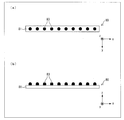
- FIGS. 4A and 4B are diagrams showing a preferable example of the arrangement method of the UV-A irradiation apparatus 8.
- the UV-A irradiation device 8 is disposed on the side surface near the bottom of the cultivation container 5 where the strawberry fruit 21 hangs down, and the UV-A in the lateral direction (horizontal direction). A UV rays are emitted.
- the UV-A irradiation device 8 is arranged on the side surface of the cultivation container 5 above the position where the strawberry fruit 21 hangs down. Then, the UV-A irradiation device 8 emits UV-A ultraviolet rays in the vertical downward direction rather than the horizontal direction. That is, the optical axis of the LED 82 is directed vertically downward from the horizontal direction.
- the strawberry fruit 21 is irradiated with UV-A ultraviolet rays in the horizontal direction or obliquely downward (vertically below the horizontal direction). Only the UV-A ultraviolet rays can be irradiated, and the accumulation of functional components and the like in the fruit 21 can be promoted.
- FIGS. 5A and 5B are diagrams showing a comparative example of the arrangement method of the UV-A irradiation device 8.
- FIG. 5A when the UV-A irradiation device 8 is arranged on the floor or the like where the cultivation container 5 is installed and the UV-A ultraviolet rays are emitted vertically upward, the UV-A ultraviolet rays are emitted. It is possible to irradiate the fruit on a strawberry. However, since UV-A ultraviolet rays are also applied to the leaves and stems of the strawberry 20, there is a possibility of inhibiting the growth of the strawberry 20. Further, there is a risk that the worker is irradiated with UV-A ultraviolet rays.
- UV-A irradiation device 8 when the UV-A irradiation device 8 is disposed above the strawberry 20 and UV-A ultraviolet rays are emitted downward, the UV-A is applied to the leaves or stems. It is difficult to efficiently irradiate fruits with UV-A ultraviolet rays because the ultraviolet rays are blocked.
- the position of the UV-A irradiation device 8 is not necessarily fixed to the side surface of the cultivation container 5, and the position thereof may be fixed by a member other than the cultivation container 5, such as a stand.
- the culture vessel 5 when the culture vessel 5 is regularly supplemented with the culture solution, the culture solution is often lower than the room temperature. Therefore, the substrate 81 and the LED 82 as the heat source can be cooled by bringing the substrate 81 of the UV-A irradiation device 8 into contact with the cultivation container 5.
- the cultivation container 5 is formed of a material having high thermal conductivity, the heat radiation effect of the UV-A irradiation device 8 can be further enhanced.
- the leaves of the strawberry 20 are mainly irradiated with light in the wavelength range necessary for photosynthesis (light with a wavelength of 400 to 700 nm) in the cultivation room 7 which is a space for planting using artificial light.
- the fruit 21 of the strawberry 20 is irradiated with UV-A ultraviolet rays (wavelength range 340 to 400 nm).
- the strawberry 20 is irradiated with red light from the red LED and blue light from the blue LED, respectively, and the fruit 21 is irradiated with UV-A ultraviolet rays from the UV-A irradiation device 8.
- the total photosynthesis photon flux density of red light and blue light is, for example, 100 to 1000 ⁇ mol / m 2 / s, and the ratio of red light to blue light is, for example, 1: 0, 1: 1, 4: 1, etc. What is necessary is just to set suitably.
- Strawberry is a short-day plant, so the cycle of day and night should be set to meet the short-day condition. That is, the light amount of the illumination device 1 and the UV-A irradiation device 8 is controlled by the control device 6 so as to realize a light environment under short-day conditions.
- the day / night cycle is, for example, 12 hours of light period and 12 hours of dark period, but is not limited thereto.
- the temperature inside the cultivation room 7 is also adjusted with the day / night cycle. This temperature adjustment is performed by the air conditioner 4 under the control of the control device 6.
- the temperature inside the cultivation room 7 is set to, for example, a light period of 25 ° C. and a dark period of 10 ° C.
- “Tochiotome” as strawberry 20 was planted in rock wool placed in the cultivation container 5 and installed below the lighting device 1.
- “Tochiotome” is one of the strawberry varieties.
- a UV-A irradiation device 8 was disposed on the side surface of the cultivation container 5 as shown in FIG.
- the horticultural experiment site prescription was used as a culture solution for strawberry cultivation and injected into the cultivation container 5.
- the lighting device 1 and the UV-A irradiation device 8 were turned on in a cycle of 12 hours in the light period and 12 hours in the dark period, and the temperature inside the cultivation room 7 was adjusted to 25 ° C. in the light period and 10 ° C. in the dark period.
- the total photosynthesis photon flux density of red light and blue light was 120 ⁇ mol / m 2 / s, and the ratio of red light to blue light (R: B) was set to 4: 1.
- the amount of UV-A ultraviolet light from the UV-A irradiation device 8 was set to 30 to 40 ⁇ mol / m 2 / s. UV-A ultraviolet rays were irradiated throughout the entire period (light period) from planting to the end of the experiment.
- the total polyphenol content and the total anthocyanin content were measured using the fruit skin part (thickness of 1 to 2 mm from the surface) of the strawberry.
- the total polyphenol content was measured by the Folin-Ciocalteu method.
- the total anthocyanin content was determined by measuring the absorbance at 533 nm with a spectrophotometer for the extract based on the Lees & Francis method.
- 4 strains of “Tochiotome” were used.
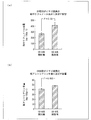
- FIG. 6 (a) is a graph showing the effect of UV-A irradiation on total polyphenol production of strawberry fruits
- FIG. 6 (b) shows the effect of UV-A irradiation on total anthocyanin production of strawberry fruits. It is a graph to show.
- the total polyphenol content in the strawberry fruits was significantly increased as compared with the case where the UV-A ultraviolet rays were not irradiated.
- the total anthocyanin content in the strawberry fruit was significantly increased when the UV-A ultraviolet rays were irradiated as compared with the case where the UV-A ultraviolet rays were not irradiated.
- vitamin C ascorbic acid
- FIG. 7 is a graph showing that UV-A irradiation on strawberry fruits does not affect strawberry yield.
- “Tochiotome” was cultivated as described above, and one strain was observed when UV-A ultraviolet rays were intensively applied to strawberry fruits and when UV-A ultraviolet rays were not irradiated. The average yield per unit was measured. 4 strains were used in each cultivation area and harvested for 170 days.
- UV-A ultraviolet rays are emitted from the light source and are intensively applied to the strawberry fruit 21. Therefore, accumulation of pigments, nutrients or functional components in the strawberry fruit 21 can be promoted while preventing the growth of the plant from being disturbed by irradiating UV-A ultraviolet rays to other parts such as leaves and stems.
- the irradiation range is narrowed compared with the case where the whole plant is irradiated with UV-A ultraviolet rays, and the cost of irradiation with UV-A ultraviolet rays can be suppressed.
- UV-A ultraviolet rays are irradiated on strawberry fruits, but functional components (polyphenol and anthocyanin) are effectively produced even when strawberry fruits are irradiated with blue light (wavelength range: 420 to 470 nm). It is confirmed that accumulation is induced.
- the UV-A irradiation device 8 in the above-described embodiment may be replaced with a blue light irradiation device.
- the light irradiation device for strawberry cultivation of the present invention includes a light source that emits blue light or UV-A ultraviolet light, and the blue light or UV-A ultraviolet light emitted from the light source is concentrated on the fruit of the strawberry.
- the light source is arranged so as to be irradiated.
- the LED emitting blue light and the LED emitting UV-A ultraviolet light may be provided on the same substrate (corresponding to the substrate 81), or may be provided on different substrates.
- One type of LED that emits light in the wavelength region of blue light and UV-A ultraviolet light may be used.
- Embodiment 2 The following will describe another embodiment of the present invention with reference to FIGS.
- symbol is attached
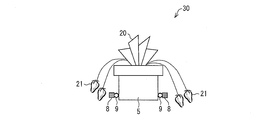
- FIG. 8 is a diagram showing a configuration of the UV-A irradiation device 8 provided with the blower tube 9 included in the strawberry cultivation system 30 according to the present embodiment.
- FIG. 9 is a view showing another arrangement method of the blower tube 9.
- the blower tube 9 may be disposed between the side surface of the cultivation container 5 and the UV-A irradiation device 8, and is fixed to the side surface of the cultivation container 5 as shown in FIG. It may be disposed below the UV-A irradiation device 8 or may be disposed above the UV-A irradiation device 8.
- the blower tube 9 is formed with a slit 91 or an opening 92.
- a blower (fan) (not shown) is connected to one end of the blower tube 9, and the wind sent from the blower blows out of the slit 91 or the opening 92 through the blower tube 9. To do. This wind cools the substrate 81 and the LED 82 of the UV-A irradiation device 8.
- the plant body needs gas exchange around the pores, and it is said that moderate wind is necessary for cultivation.
- the wind blown from the blower tube 9 can not only cool the LEDs 82 but also have a positive effect on the growth of the plant. In strawberry, there are also pores on the fruit surface.
- the blast tube 9 may have a prismatic shape, and as shown in FIGS. 10 (b) and 10 (d), it has a cylindrical shape. May be.
- one slit may be formed in the blower tube 9 along the long axis direction, and a plurality of slits may be formed in the blower tube 9 with the long axis. It may be formed in a direction perpendicular to the direction.
- the openings 92 may be formed in a line along the major axis direction of the blower tube 9, or may be formed in a plurality of lines. Good.
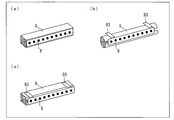
- FIG. 11 (a) to 11 (c) are perspective views showing an example of a method for attaching the UV-A irradiation device 8 to the blower tube 9.
- FIG. 11A the UV-A irradiation device 8 may be mounted in front of the slit 91 of the prismatic blast tube 9.
- the UV-A irradiation device 8 may be supported by a support member 93 in front of the slit 91 of the cylindrical blower tube 9.
- the UV-A irradiation device 8 may be supported by a support member 93 in front of the slit 91 of the prismatic air duct 9.
- the support member 93 can also be expressed as a fixing member that fixes the relative position between the blower tube 9 and the UV-A irradiation device 8.
- a gap can be formed between the blower tube 9 and the substrate 81 of the UV-A irradiation device 8, and the slit 91 of the blower tube 9 or After the air blown from the opening 92 is applied to the substrate 81, it can be efficiently escaped.
- the fixing method of the blower tube 9 and the UV-A irradiation device 8 is not limited to the above-described one.
- the UV-A irradiation device 8 is disposed below the blower tube 9, the blower tube 9 and the UV-A irradiation are performed. You may fix the apparatus 8 to the cultivation container 5, respectively.
- blower tube 9 is made of a material such as a metal having high thermal conductivity and is brought into close contact with the substrate 81 of the UV-A irradiation device 8, it is necessary to form the slit 91 and the opening 92 in the blower tube 9.
- FIG. 12A is a perspective view showing the blower tube 9 in which slits and openings are not formed
- FIG. 12B is a UV-A on the blower tube 9 shown in FIG. It is a perspective view which shows the state which made the irradiation apparatus 8 contact
- the blower tube 9 has a shape having a flat surface that comes into contact with the UV-A irradiation device 8, such as a prismatic shape.
- the blower tube 9 By moving the air inside the blower tube 9, the blower tube 9 can be cooled, and the substrate 81 of the UV-A irradiation device 8 can be cooled by the cooled blower tube 9.
- the fluid that moves inside the blower tube 9 may not be a gas but may be a liquid. That is, the substrate 81 and the UV-A irradiation device 8 may be cooled by bringing a pipe (cooling pipe) through which a liquid (for example, tap water or cooling water) passes into contact with the substrate 81 of the UV-A irradiation device 8. .
- the said light source is arrange
- the strawberry fruit can be irradiated with blue light or UV-A ultraviolet light without being blocked by the strawberry leaf or stem.
- the light source is disposed in the vicinity of the fruit that hangs down on the side surface of a cultivation container in which strawberries are grown.
- the light source is disposed on the side surface of a cultivation container in which strawberries are grown.
- the optical axis of the light source is directed in the horizontal direction or in the vertically downward direction from the horizontal direction.
- the blue light or the UV-A ultraviolet light emitted from the light source is emitted in the horizontal direction or vertically downward from the horizontal direction. Therefore, blue light or UV-A ultraviolet rays are emitted at an angle that makes a depression angle with respect to the horizontal direction, so that the strawberry leaves, stems or workers may be irradiated with blue light or UV-A ultraviolet rays. Can be reduced.
- the light source is preferably provided with a lens that enhances the directivity of the blue light or the UV-A ultraviolet light.
- the solid angle range in which the light emitted from the light source (blue light or UV-A ultraviolet light) travels can be narrowed, and the strawberry can be efficiently irradiated with blue light or UV-A ultraviolet light.
- a heat dissipating part for increasing the heat dissipating efficiency of the light source is further provided.
- the heat dissipation efficiency of the light source can be increased by the heat radiating section, and the function of the light source can be prevented from being lowered by heat or the light source being damaged by heat.
- the heat radiating portion includes a blower pipe that sends air to the light source or the vicinity thereof.
- the light source can be air-cooled, and the light source can be cooled more efficiently.
- the plant body needs gas exchange around the pores, and it is said that an appropriate wind is necessary for cultivation.
- the wind blown from the blower tube can not only cool the light source but also have a positive effect on plant growth.
- wind sent from the blower tube may be directly applied to the light source itself or may be applied to a substrate provided with the light source.
- a strawberry cultivation system including the light irradiation device and a main light source device that emits light in a wavelength range necessary for photosynthesis is also included in the technical scope of the present invention.
- the present invention can be used as a light irradiation apparatus and a cultivation system used when strawberry is cultivated with artificial illumination light, such as a plant factory.
- Lighting device main light source device
- Light source unit main light source device
- Air duct heat dissipating part
- Strawberry cultivation system 20
- Strawberry 21 Fruit 30
- Strawberry cultivation system 82
- LED (light source) 83
- LED (light source) 84
Landscapes
- Life Sciences & Earth Sciences (AREA)
- Biodiversity & Conservation Biology (AREA)
- Botany (AREA)
- Ecology (AREA)
- Forests & Forestry (AREA)
- Environmental Sciences (AREA)
- Cultivation Of Plants (AREA)
Abstract
La présente invention se rapporte à un dispositif d'irradiation aux UV-A (8) comprenant une DEL (82) qui émet une lumière ultraviolette UV-A. La DEL (82) est placée de telle sorte que les fruits d'un fraisier sont irradiés de façon intensive par la lumière ultraviolette UV-A émise par la DEL (82).
Priority Applications (1)
| Application Number | Priority Date | Filing Date | Title |
|---|---|---|---|
| CN201280016002.9A CN103476243B (zh) | 2011-03-29 | 2012-03-22 | 光照装置、草莓栽培系统和草莓栽培方法 |
Applications Claiming Priority (2)
| Application Number | Priority Date | Filing Date | Title |
|---|---|---|---|
| JP2011-072501 | 2011-03-29 | ||
| JP2011072501A JP5971623B2 (ja) | 2011-03-29 | 2011-03-29 | 光照射装置、イチゴ栽培システムおよびイチゴ栽培方法 |
Publications (1)
| Publication Number | Publication Date |
|---|---|
| WO2012133130A1 true WO2012133130A1 (fr) | 2012-10-04 |
Family
ID=46930857
Family Applications (1)
| Application Number | Title | Priority Date | Filing Date |
|---|---|---|---|
| PCT/JP2012/057407 Ceased WO2012133130A1 (fr) | 2011-03-29 | 2012-03-22 | Dispositif d'irradiation de lumière, système de culture de fraises et procédé de culture de fraises |
Country Status (3)
| Country | Link |
|---|---|
| JP (1) | JP5971623B2 (fr) |
| CN (1) | CN103476243B (fr) |
| WO (1) | WO2012133130A1 (fr) |
Cited By (6)
| Publication number | Priority date | Publication date | Assignee | Title |
|---|---|---|---|---|
| EP2767154A1 (fr) * | 2013-02-14 | 2014-08-20 | Seoul Viosys Co., Ltd. | Appareil de culture de plante pour la production de la plante |
| WO2018168583A1 (fr) | 2017-03-14 | 2018-09-20 | イビデン株式会社 | Agent augmentant la teneur en composant fonctionnel végétal, et procédé de fabrication de celui-ci |
| CN111182785A (zh) * | 2018-08-24 | 2020-05-19 | 首尔伟傲世有限公司 | 植物栽培用光源 |
| EP4085750A4 (fr) * | 2020-01-03 | 2024-01-24 | Industry-University Cooperation Foundation of Chungbuk National University | Source de lumière pour la culture de plantes |
| CN117716947A (zh) * | 2023-12-27 | 2024-03-19 | 宁波市农业科学研究院 | 一种抑制白色草莓果皮变色从而保持其原有商品性的方法 |
| WO2024261464A1 (fr) * | 2023-06-20 | 2024-12-26 | Saga Robotics As | Outil de distribution de substrat |
Families Citing this family (18)
| Publication number | Priority date | Publication date | Assignee | Title |
|---|---|---|---|---|
| MY170037A (en) | 2013-02-26 | 2019-06-26 | Fuji Seiko Co Ltd | Method for raising leaf-and-stem vegetables and light source device for raising leaf-and-stem vegetables |
| CN106472253A (zh) * | 2015-08-31 | 2017-03-08 | 重庆勃朗农业开发有限公司 | 果树种植自动灌溉系统 |
| CN106212116B (zh) * | 2016-07-20 | 2019-03-22 | 陕西省西安植物园 | 一种克隆植物uv-b辐射实验系统 |
| CN106211459A (zh) * | 2016-07-28 | 2016-12-07 | 厦门桑奈特光电科技有限公司 | 一种高效大波段生物刺激装置 |
| WO2018037281A1 (fr) | 2016-08-22 | 2018-03-01 | Biolumic Limited | Système, dispositif et méthodes de traitement de semences |
| US10433493B2 (en) * | 2016-09-30 | 2019-10-08 | Sensor Electronic Technology, Inc. | Controlling ultraviolet intensity over a surface of a light sensitive object |
| CN106718403A (zh) * | 2016-12-23 | 2017-05-31 | 浙江大学 | 一种提高草莓果实酚类物质含量的病害防治方法 |
| AU2018293468A1 (en) | 2017-06-29 | 2020-01-30 | Biolumic Limited | Method to improve crop yield and/or quality |
| CN107646341A (zh) * | 2017-10-27 | 2018-02-02 | 界首市明亮种植专业合作社 | 一种提高草莓硬度的种植方法 |
| KR20190122456A (ko) * | 2018-04-20 | 2019-10-30 | 충북대학교 산학협력단 | Uv를 이용한 식물 재배 방법 및 이를 위한 식물 재배 시스템 |
| US11125405B2 (en) * | 2018-08-10 | 2021-09-21 | Seoul Viosys Co., Ltd. | Light source for plant cultivation and plant cultivation device |
| US11291164B2 (en) * | 2018-08-24 | 2022-04-05 | Seoul Viosys Co., Ltd. | Light source for plant cultivation |
| US11547060B2 (en) * | 2018-08-28 | 2023-01-10 | Seoul Viosys Co., Ltd. | Plant cultivation device and method for culturing plant |
| JP7090020B2 (ja) * | 2018-11-29 | 2022-06-23 | シーシーエス株式会社 | ライン光照射装置 |
| JP7462139B2 (ja) * | 2019-07-10 | 2024-04-05 | 日亜化学工業株式会社 | 植物処理装置 |
| US12376532B2 (en) | 2020-04-01 | 2025-08-05 | Chungbuk National University Industry-Academic Cooperation Foundation | Light source for plant cultivation and method of plant cultivation using thereof |
| JP2024168439A (ja) * | 2023-05-24 | 2024-12-05 | 株式会社エコタイプ次世代植物工場 | イチゴの水耕栽培における花芽誘導方法 |
| KR102852345B1 (ko) * | 2023-07-13 | 2025-08-28 | 경상국립대학교산학협력단 | Led 조사를 이용한 딸기의 수확량을 증가시키는 방법 |
Citations (6)
| Publication number | Priority date | Publication date | Assignee | Title |
|---|---|---|---|---|
| JPH0388226U (fr) * | 1989-12-27 | 1991-09-10 | ||
| JPH08103167A (ja) * | 1994-10-05 | 1996-04-23 | Kensei Okamoto | 植物栽培用光源 |
| JP2000207933A (ja) * | 1999-01-08 | 2000-07-28 | Mitsubishi Chemicals Corp | 植物栽培用の照明パネル |
| JP2001095376A (ja) * | 1999-10-04 | 2001-04-10 | Natl Res Inst Of Vegetables Ornamental Plants & Tea | 植物照射装置 |
| JP2005056657A (ja) * | 2003-08-01 | 2005-03-03 | Ccs Inc | 光照射装置及び光照射システム |
| JP2010268787A (ja) * | 2009-04-22 | 2010-12-02 | Hisahiro Momo | 局所温度調節装置、短日局所夜冷処理システム及びイチゴ栽培システム |
Family Cites Families (6)
| Publication number | Priority date | Publication date | Assignee | Title |
|---|---|---|---|---|
| JP2001028947A (ja) * | 1999-07-23 | 2001-02-06 | Yamato Kogyo Kk | 有用植物の育成方法 |
| JP2007089445A (ja) * | 2005-09-28 | 2007-04-12 | Masanobu Kojima | 植物体栽培方法 |
| JP4280835B2 (ja) * | 2006-10-03 | 2009-06-17 | 国立大学法人山口大学 | 植物体の栄養成分増強方法 |
| JP2009077562A (ja) * | 2007-09-21 | 2009-04-09 | Chugoku Electric Power Co Inc:The | 二相貫通変流器および保護継電装置 |
| JP2010259374A (ja) * | 2009-05-07 | 2010-11-18 | Mkv Dream Co Ltd | 植物栽培方法 |
| JP5297894B2 (ja) * | 2009-05-26 | 2013-09-25 | パナソニック株式会社 | 植物用カバー及びこれを用いた農業用ハウス |
-
2011
- 2011-03-29 JP JP2011072501A patent/JP5971623B2/ja not_active Expired - Fee Related
-
2012
- 2012-03-22 WO PCT/JP2012/057407 patent/WO2012133130A1/fr not_active Ceased
- 2012-03-22 CN CN201280016002.9A patent/CN103476243B/zh not_active Expired - Fee Related
Patent Citations (6)
| Publication number | Priority date | Publication date | Assignee | Title |
|---|---|---|---|---|
| JPH0388226U (fr) * | 1989-12-27 | 1991-09-10 | ||
| JPH08103167A (ja) * | 1994-10-05 | 1996-04-23 | Kensei Okamoto | 植物栽培用光源 |
| JP2000207933A (ja) * | 1999-01-08 | 2000-07-28 | Mitsubishi Chemicals Corp | 植物栽培用の照明パネル |
| JP2001095376A (ja) * | 1999-10-04 | 2001-04-10 | Natl Res Inst Of Vegetables Ornamental Plants & Tea | 植物照射装置 |
| JP2005056657A (ja) * | 2003-08-01 | 2005-03-03 | Ccs Inc | 光照射装置及び光照射システム |
| JP2010268787A (ja) * | 2009-04-22 | 2010-12-02 | Hisahiro Momo | 局所温度調節装置、短日局所夜冷処理システム及びイチゴ栽培システム |
Cited By (11)
| Publication number | Priority date | Publication date | Assignee | Title |
|---|---|---|---|---|
| EP2767154A1 (fr) * | 2013-02-14 | 2014-08-20 | Seoul Viosys Co., Ltd. | Appareil de culture de plante pour la production de la plante |
| WO2018168583A1 (fr) | 2017-03-14 | 2018-09-20 | イビデン株式会社 | Agent augmentant la teneur en composant fonctionnel végétal, et procédé de fabrication de celui-ci |
| US11317568B2 (en) | 2017-03-14 | 2022-05-03 | Ibiden Co., Ltd. | Agent for increasing a plant functional component content and a method of manufacturing the same |
| US11963492B2 (en) | 2017-03-14 | 2024-04-23 | Ibiden Co., Ltd. | Agent for increasing a plant functional component content and a method for manufacturing the same |
| US12250911B2 (en) | 2017-03-14 | 2025-03-18 | Ibiden Co., Ltd. | Agent for increasing a plant functional component content and a method for manufacturing the same |
| CN111182785A (zh) * | 2018-08-24 | 2020-05-19 | 首尔伟傲世有限公司 | 植物栽培用光源 |
| EP4085750A4 (fr) * | 2020-01-03 | 2024-01-24 | Industry-University Cooperation Foundation of Chungbuk National University | Source de lumière pour la culture de plantes |
| US11910762B2 (en) | 2020-01-03 | 2024-02-27 | Industry-University Cooperation Foundation Of Chungbuk National University | Light source module for plant cultivation |
| US12514168B2 (en) | 2020-01-03 | 2026-01-06 | Industry-University Cooperation Foundation Of Chungbuk National University | Light source for plant cultivation |
| WO2024261464A1 (fr) * | 2023-06-20 | 2024-12-26 | Saga Robotics As | Outil de distribution de substrat |
| CN117716947A (zh) * | 2023-12-27 | 2024-03-19 | 宁波市农业科学研究院 | 一种抑制白色草莓果皮变色从而保持其原有商品性的方法 |
Also Published As
| Publication number | Publication date |
|---|---|
| JP5971623B2 (ja) | 2016-08-17 |
| CN103476243A (zh) | 2013-12-25 |
| JP2012205520A (ja) | 2012-10-25 |
| CN103476243B (zh) | 2016-01-13 |
Similar Documents
| Publication | Publication Date | Title |
|---|---|---|
| JP5971623B2 (ja) | 光照射装置、イチゴ栽培システムおよびイチゴ栽培方法 | |
| US20210321574A1 (en) | System and method for growing a plant in an at least partly conditioned environment | |
| EP2278870B1 (fr) | Procédé et appareil permettant d'utiliser des diodes électroluminescentes dans une serre | |
| JP2012165665A (ja) | 照明装置、イチゴ栽培システムおよびイチゴ栽培方法 | |
| KR101415842B1 (ko) | 실내용 식물 재배 장치 | |
| EP3127421A1 (fr) | Dispositif d'éclairage pour la croissance de plantes, et procédé de croissance de plantes | |
| KR101414473B1 (ko) | 상,하부 성장 촉진램프를 이용한 식물 재배방법 및 장치 | |
| JP2003339236A (ja) | 植物育成用照明装置及び植物育成装置並びに植物育成方法 | |
| JP2019115287A (ja) | 植物栽培装置及び植物栽培方法 | |
| JP2005192517A (ja) | 植物育成方法 | |
| JP2001054320A (ja) | 植物栽培方法 | |
| CN115868335A (zh) | 一种植物照明栽培方法、栽培装置及照明系统 | |
| CN104813857A (zh) | 一种基于无自然光条件下led植物灯的西瓜秧苗培育技术 | |
| KR20110012878A (ko) | 조명본체 위치 조절장치 | |
| JP2015133939A (ja) | 植物栽培用照明装置 | |
| JP5919579B2 (ja) | 藻類培養装置及び培養方法 | |
| KR200247078Y1 (ko) | 발광다이오드를 이용한 절화 및 분화식물의 품질유지용조명장치 | |
| JP6275432B2 (ja) | 胡蝶蘭栽培方法および胡蝶蘭用照明装置 | |
| JP2001258389A (ja) | 植物栽培方法 | |
| TW201803442A (zh) | 利用人造光之菠菜栽培法 | |
| KR101290801B1 (ko) | 식물 재배용 광원 및 이를 이용한 식물 재배 장치 | |
| KR102604933B1 (ko) | 식물생장조명장치 | |
| KR20230032838A (ko) | 회전형 식물재배기를 위한 조명 장치 | |
| JP2017046651A (ja) | 植物栽培用照明装置及びそれを用いた植物栽培方法 | |
| Runkle | Sole-source lighting of plants |
Legal Events
| Date | Code | Title | Description |
|---|---|---|---|
| 121 | Ep: the epo has been informed by wipo that ep was designated in this application |
Ref document number: 12765365 Country of ref document: EP Kind code of ref document: A1 |
|
| NENP | Non-entry into the national phase |
Ref country code: DE |
|
| 122 | Ep: pct application non-entry in european phase |
Ref document number: 12765365 Country of ref document: EP Kind code of ref document: A1 |