WO2012137932A1 - Composition pour une application externe - Google Patents
Composition pour une application externe Download PDFInfo
- Publication number
- WO2012137932A1 WO2012137932A1 PCT/JP2012/059549 JP2012059549W WO2012137932A1 WO 2012137932 A1 WO2012137932 A1 WO 2012137932A1 JP 2012059549 W JP2012059549 W JP 2012059549W WO 2012137932 A1 WO2012137932 A1 WO 2012137932A1
- Authority
- WO
- WIPO (PCT)
- Prior art keywords
- composition
- pqq
- surfactant
- item
- salt
- Prior art date
- Legal status (The legal status is an assumption and is not a legal conclusion. Google has not performed a legal analysis and makes no representation as to the accuracy of the status listed.)
- Ceased
Links
Images



Classifications
-
- C—CHEMISTRY; METALLURGY
- C07—ORGANIC CHEMISTRY
- C07D—HETEROCYCLIC COMPOUNDS
- C07D471/00—Heterocyclic compounds containing nitrogen atoms as the only ring hetero atoms in the condensed system, at least one ring being a six-membered ring with one nitrogen atom, not provided for by groups C07D451/00 - C07D463/00
- C07D471/02—Heterocyclic compounds containing nitrogen atoms as the only ring hetero atoms in the condensed system, at least one ring being a six-membered ring with one nitrogen atom, not provided for by groups C07D451/00 - C07D463/00 in which the condensed system contains two hetero rings
- C07D471/04—Ortho-condensed systems
-
- A—HUMAN NECESSITIES
- A61—MEDICAL OR VETERINARY SCIENCE; HYGIENE
- A61K—PREPARATIONS FOR MEDICAL, DENTAL OR TOILETRY PURPOSES
- A61K31/00—Medicinal preparations containing organic active ingredients
- A61K31/33—Heterocyclic compounds
- A61K31/395—Heterocyclic compounds having nitrogen as a ring hetero atom, e.g. guanethidine or rifamycins
- A61K31/435—Heterocyclic compounds having nitrogen as a ring hetero atom, e.g. guanethidine or rifamycins having six-membered rings with one nitrogen as the only ring hetero atom
- A61K31/4353—Heterocyclic compounds having nitrogen as a ring hetero atom, e.g. guanethidine or rifamycins having six-membered rings with one nitrogen as the only ring hetero atom ortho- or peri-condensed with heterocyclic ring systems
- A61K31/437—Heterocyclic compounds having nitrogen as a ring hetero atom, e.g. guanethidine or rifamycins having six-membered rings with one nitrogen as the only ring hetero atom ortho- or peri-condensed with heterocyclic ring systems the heterocyclic ring system containing a five-membered ring having nitrogen as a ring hetero atom, e.g. indolizine, beta-carboline
-
- A—HUMAN NECESSITIES
- A61—MEDICAL OR VETERINARY SCIENCE; HYGIENE
- A61K—PREPARATIONS FOR MEDICAL, DENTAL OR TOILETRY PURPOSES
- A61K47/00—Medicinal preparations characterised by the non-active ingredients used, e.g. carriers or inert additives; Targeting or modifying agents chemically bound to the active ingredient
- A61K47/06—Organic compounds, e.g. natural or synthetic hydrocarbons, polyolefins, mineral oil, petrolatum or ozokerite
- A61K47/08—Organic compounds, e.g. natural or synthetic hydrocarbons, polyolefins, mineral oil, petrolatum or ozokerite containing oxygen, e.g. ethers, acetals, ketones, quinones, aldehydes, peroxides
- A61K47/10—Alcohols; Phenols; Salts thereof, e.g. glycerol; Polyethylene glycols [PEG]; Poloxamers; PEG/POE alkyl ethers
-
- A—HUMAN NECESSITIES
- A61—MEDICAL OR VETERINARY SCIENCE; HYGIENE
- A61K—PREPARATIONS FOR MEDICAL, DENTAL OR TOILETRY PURPOSES
- A61K47/00—Medicinal preparations characterised by the non-active ingredients used, e.g. carriers or inert additives; Targeting or modifying agents chemically bound to the active ingredient
- A61K47/06—Organic compounds, e.g. natural or synthetic hydrocarbons, polyolefins, mineral oil, petrolatum or ozokerite
- A61K47/08—Organic compounds, e.g. natural or synthetic hydrocarbons, polyolefins, mineral oil, petrolatum or ozokerite containing oxygen, e.g. ethers, acetals, ketones, quinones, aldehydes, peroxides
- A61K47/14—Esters of carboxylic acids, e.g. fatty acid monoglycerides, medium-chain triglycerides, parabens or PEG fatty acid esters
-
- A—HUMAN NECESSITIES
- A61—MEDICAL OR VETERINARY SCIENCE; HYGIENE
- A61K—PREPARATIONS FOR MEDICAL, DENTAL OR TOILETRY PURPOSES
- A61K47/00—Medicinal preparations characterised by the non-active ingredients used, e.g. carriers or inert additives; Targeting or modifying agents chemically bound to the active ingredient
- A61K47/30—Macromolecular organic or inorganic compounds, e.g. inorganic polyphosphates
- A61K47/32—Macromolecular compounds obtained by reactions only involving carbon-to-carbon unsaturated bonds, e.g. carbomers, poly(meth)acrylates, or polyvinyl pyrrolidone
-
- A—HUMAN NECESSITIES
- A61—MEDICAL OR VETERINARY SCIENCE; HYGIENE
- A61K—PREPARATIONS FOR MEDICAL, DENTAL OR TOILETRY PURPOSES
- A61K47/00—Medicinal preparations characterised by the non-active ingredients used, e.g. carriers or inert additives; Targeting or modifying agents chemically bound to the active ingredient
- A61K47/30—Macromolecular organic or inorganic compounds, e.g. inorganic polyphosphates
- A61K47/36—Polysaccharides; Derivatives thereof, e.g. gums, starch, alginate, dextrin, hyaluronic acid, chitosan, inulin, agar or pectin
-
- A—HUMAN NECESSITIES
- A61—MEDICAL OR VETERINARY SCIENCE; HYGIENE
- A61K—PREPARATIONS FOR MEDICAL, DENTAL OR TOILETRY PURPOSES
- A61K47/00—Medicinal preparations characterised by the non-active ingredients used, e.g. carriers or inert additives; Targeting or modifying agents chemically bound to the active ingredient
- A61K47/44—Oils, fats or waxes according to two or more groups of A61K47/02-A61K47/42; Natural or modified natural oils, fats or waxes, e.g. castor oil, polyethoxylated castor oil, montan wax, lignite, shellac, rosin, beeswax or lanolin
-
- A—HUMAN NECESSITIES
- A61—MEDICAL OR VETERINARY SCIENCE; HYGIENE
- A61K—PREPARATIONS FOR MEDICAL, DENTAL OR TOILETRY PURPOSES
- A61K8/00—Cosmetics or similar toiletry preparations
- A61K8/18—Cosmetics or similar toiletry preparations characterised by the composition
- A61K8/30—Cosmetics or similar toiletry preparations characterised by the composition containing organic compounds
- A61K8/49—Cosmetics or similar toiletry preparations characterised by the composition containing organic compounds containing heterocyclic compounds
- A61K8/494—Cosmetics or similar toiletry preparations characterised by the composition containing organic compounds containing heterocyclic compounds with more than one nitrogen as the only hetero atom
-
- A—HUMAN NECESSITIES
- A61—MEDICAL OR VETERINARY SCIENCE; HYGIENE
- A61K—PREPARATIONS FOR MEDICAL, DENTAL OR TOILETRY PURPOSES
- A61K8/00—Cosmetics or similar toiletry preparations
- A61K8/18—Cosmetics or similar toiletry preparations characterised by the composition
- A61K8/72—Cosmetics or similar toiletry preparations characterised by the composition containing organic macromolecular compounds
- A61K8/84—Cosmetics or similar toiletry preparations characterised by the composition containing organic macromolecular compounds obtained by reactions otherwise than those involving only carbon-carbon unsaturated bonds
- A61K8/86—Polyethers
-
- A—HUMAN NECESSITIES
- A61—MEDICAL OR VETERINARY SCIENCE; HYGIENE
- A61K—PREPARATIONS FOR MEDICAL, DENTAL OR TOILETRY PURPOSES
- A61K9/00—Medicinal preparations characterised by special physical form
- A61K9/0012—Galenical forms characterised by the site of application
- A61K9/0014—Skin, i.e. galenical aspects of topical compositions
-
- A—HUMAN NECESSITIES
- A61—MEDICAL OR VETERINARY SCIENCE; HYGIENE
- A61K—PREPARATIONS FOR MEDICAL, DENTAL OR TOILETRY PURPOSES
- A61K9/00—Medicinal preparations characterised by special physical form
- A61K9/06—Ointments; Bases therefor; Other semi-solid forms, e.g. creams, sticks, gels
-
- A—HUMAN NECESSITIES
- A61—MEDICAL OR VETERINARY SCIENCE; HYGIENE
- A61P—SPECIFIC THERAPEUTIC ACTIVITY OF CHEMICAL COMPOUNDS OR MEDICINAL PREPARATIONS
- A61P17/00—Drugs for dermatological disorders
-
- A—HUMAN NECESSITIES
- A61—MEDICAL OR VETERINARY SCIENCE; HYGIENE
- A61P—SPECIFIC THERAPEUTIC ACTIVITY OF CHEMICAL COMPOUNDS OR MEDICINAL PREPARATIONS
- A61P17/00—Drugs for dermatological disorders
- A61P17/16—Emollients or protectives, e.g. against radiation
-
- A—HUMAN NECESSITIES
- A61—MEDICAL OR VETERINARY SCIENCE; HYGIENE
- A61P—SPECIFIC THERAPEUTIC ACTIVITY OF CHEMICAL COMPOUNDS OR MEDICINAL PREPARATIONS
- A61P25/00—Drugs for disorders of the nervous system
-
- A—HUMAN NECESSITIES
- A61—MEDICAL OR VETERINARY SCIENCE; HYGIENE
- A61P—SPECIFIC THERAPEUTIC ACTIVITY OF CHEMICAL COMPOUNDS OR MEDICINAL PREPARATIONS
- A61P25/00—Drugs for disorders of the nervous system
- A61P25/28—Drugs for disorders of the nervous system for treating neurodegenerative disorders of the central nervous system, e.g. nootropic agents, cognition enhancers, drugs for treating Alzheimer's disease or other forms of dementia
-
- A—HUMAN NECESSITIES
- A61—MEDICAL OR VETERINARY SCIENCE; HYGIENE
- A61P—SPECIFIC THERAPEUTIC ACTIVITY OF CHEMICAL COMPOUNDS OR MEDICINAL PREPARATIONS
- A61P3/00—Drugs for disorders of the metabolism
- A61P3/02—Nutrients, e.g. vitamins, minerals
-
- A—HUMAN NECESSITIES
- A61—MEDICAL OR VETERINARY SCIENCE; HYGIENE
- A61Q—SPECIFIC USE OF COSMETICS OR SIMILAR TOILETRY PREPARATIONS
- A61Q1/00—Make-up preparations; Body powders; Preparations for removing make-up
- A61Q1/14—Preparations for removing make-up
-
- A—HUMAN NECESSITIES
- A61—MEDICAL OR VETERINARY SCIENCE; HYGIENE
- A61Q—SPECIFIC USE OF COSMETICS OR SIMILAR TOILETRY PREPARATIONS
- A61Q19/00—Preparations for care of the skin
-
- A—HUMAN NECESSITIES
- A61—MEDICAL OR VETERINARY SCIENCE; HYGIENE
- A61K—PREPARATIONS FOR MEDICAL, DENTAL OR TOILETRY PURPOSES
- A61K2800/00—Properties of cosmetic compositions or active ingredients thereof or formulation aids used therein and process related aspects
- A61K2800/40—Chemical, physico-chemical or functional or structural properties of particular ingredients
- A61K2800/52—Stabilizers
Definitions
- the present invention relates to a composition for external use that contains pyrroloquinoline quinone and is used as a cosmetic, quasi-drug, or pharmaceutical product.
- PQQ Pyrroloquinoline quinone
- PQQ Pyrroloquinoline quinone
- PQQ is widely present in the living world such as plants, organisms, and microorganisms, and functions as a redox coenzyme essential for energy acquisition.
- PQQ is known to have many physiological activities and is expected to be used as an active ingredient in pharmaceuticals, quasi drugs, cosmetics, or supplements.
- physiological activities active oxygen and radical removal action, cell growth promotion action, ultraviolet absorption action, nerve growth factor production promotion action, brain function improvement action, hair growth action, facial color improvement action, melanin production suppression and whitening action, Mitochondrial activation and anti-fatigue effects are known. Attempts have also been made to improve the stability of PQQ in formulations.
- Patent Document 1 oxazopyrroloquinoline, a salt thereof, or an ester thereof, which is a compound similar to PQQ, has physiological activities such as an active oxygen scavenging action, a melanin synthesis inhibitory action, and a lipid peroxide production inhibitory action. At the same time, it teaches excellent stability in the preparation.
- Patent Documents 2 and 3 show that a specific ester of PQQ has physiological activities such as a melanin production inhibitory action, a melanin deposition inhibitory action, and an ultraviolet absorption action, as well as stability and safety in the preparation. Also teaches that it is excellent.
- the present invention is a composition for external use containing pyrroloquinoline quinone or a pharmaceutically acceptable salt thereof (hereinafter sometimes abbreviated as “a salt thereof”), which is excellent in the storage stability of PQQ or a salt thereof.
- a salt thereof pyrroloquinoline quinone or a pharmaceutically acceptable salt thereof
- the present inventor has conducted research to solve the above-mentioned problems, and has found that when a surfactant is added to a composition containing PQQ or a salt thereof, the stability of PQQ or a salt thereof becomes very poor. Further, it has been found that the storage stability of PQQ or a salt thereof is improved by adjusting the pH of the composition containing PQQ or a salt thereof and a surfactant to 4 to 6.
- Item 1 A composition for external use comprising pyrroloquinoline quinone or a pharmaceutically acceptable salt thereof and a surfactant and having a pH of 4 to 6.
- Item 2. The external composition according to Item 1, wherein the concentration of pyrroloquinoline quinone or a pharmaceutically acceptable salt thereof is 1% by weight or less based on the total amount of the composition.
- Item 3. Item 3. The topical composition according to Item 1 or 2, wherein the concentration of pyrroloquinoline quinone or a pharmaceutically acceptable salt thereof is 0.00001% by weight or more based on the total amount of the composition.
- Item 4. Item 4.
- the nonionic surfactant is selected from the group consisting of sorbitan fatty acid ester, polyglycerin fatty acid ester, hydrogenated castor oil derivative, polyoxyethylene sorbitan fatty acid ester, polyoxyethylene monococonut oil fatty acid glyceryl, glycerin alkyl ether, and alkyl glucoside. Item 6.
- the external composition according to Item 5 which is at least one selected from the group consisting of: Item 7.
- Item 5. The composition for external use according to any one of Items 1 to 4, wherein the surfactant is an anionic surfactant.
- Item 8. The composition for external use according to Item 7, wherein the anionic surfactant is glycerophospholipid.
- Item 9. The composition for external use according to any one of Items 1 to 8, wherein the surfactant is contained in an amount of 0.001 to 10% by weight based on the total amount of the composition.
- Item 11 At least one selected from the group consisting of polyhydric alcohols having 2 to 6 carbon atoms and 2 to 4 hydroxyl groups, and monoethers thereof is propylene glycol, 1,3-butylene glycol, dipropylene glycol, glycerin, isoprene glycol, Item 11.
- the external composition according to Item 10 which is at least one selected from the group consisting of diglycerin and diethylene glycol monoethyl ether (ethoxy glycol).
- the concentration of at least one selected from the group consisting of polyhydric alcohols having 2 to 6 carbon atoms and 2 to 4 hydroxyl groups, and monoethers thereof is 0.01 to 70% by weight based on the total amount of the composition.
- Item 16. The external composition according to any one of Items 1 to 15, further comprising EDTA or a pharmaceutically acceptable salt thereof.
- Item 17. The external composition according to Item 16, wherein the concentration of EDTA or a pharmaceutically acceptable salt thereof is 0.0001 to 1% by weight based on the total amount of the composition.
- Item 19 Stability of pyrroloquinoline quinone or a pharmaceutically acceptable salt thereof in this composition, wherein the pH of the composition comprising pyrroloquinoline quinone or a pharmaceutically acceptable salt thereof and a surfactant is 4-6 How to improve.
- Item 20. The method according to Item 19, wherein the concentration of pyrroloquinoline quinone or a pharmaceutically acceptable salt thereof in the composition is 1% by weight or less based on the total amount of the composition.
- Item 21. The method according to Item 19 or 20, wherein the concentration of pyrroloquinoline quinone or a pharmaceutically acceptable salt thereof in the composition is 0.00001% by weight or more based on the total amount of the composition.
- Item 22. Item 22.
- the nonionic surfactant is selected from the group consisting of sorbitan fatty acid ester, polyglycerin fatty acid ester, hydrogenated castor oil derivative, polyoxyethylene sorbitan fatty acid ester, polyoxyethylene monococonut oil fatty acid glyceryl, glycerin alkyl ether, and alkyl glucoside.
- Item 24. The method according to Item 23, which is at least one selected from the group consisting of: Item 25.
- Item 23 The method according to any one of Items 19 to 22, wherein the surfactant is an anionic surfactant.
- Item 26. Item 26.
- Item 27. Item 27.
- Item 28. Item 28. The method according to any one of Items 19 to 27, wherein the composition further comprises at least one selected from the group consisting of a polyhydric alcohol having 2 to 6 carbon atoms and 2 to 4 hydroxyl groups, and a monoether thereof.
- At least one selected from the group consisting of polyhydric alcohols having 2 to 6 carbon atoms and 2 to 4 hydroxyl groups, and monoethers thereof is propylene glycol, 1,3-butylene glycol, dipropylene glycol, glycerin, isoprene glycol, Item 29.
- the concentration of at least one selected from the group consisting of polyhydric alcohols having 2 to 6 carbon atoms and 2 to 4 hydroxyl groups and monoethers thereof in the composition is 0.01 to 70 with respect to the total amount of the composition. Item 30.
- Item 31 The method according to any one of Items 19 to 30, wherein the composition further comprises at least one selected from the group consisting of monohydric alcohols having 2 to 5 carbon atoms.
- Item 32. The method according to Item 31, wherein at least one selected from the group consisting of monohydric alcohols having 2 to 5 carbon atoms is at least one selected from the group consisting of ethanol, propanol, and isopropyl alcohol.
- Item 33 Item 33. The method according to Item 31 or 32, wherein the concentration of the monohydric alcohol having 2 to 5 carbon atoms in the composition is 0.01 to 50% by weight relative to the total amount of the composition.
- Item 34 The method according to any one of Items 19 to 33, wherein the composition further comprises EDTA or a pharmaceutically acceptable salt thereof.
- Item 35 The method according to Item 34, wherein the concentration of EDTA or a pharmaceutically acceptable salt thereof in the composition is 0.0001 to 1% by weight relative to the total amount of the composition.
- Item 36 Item 34 or 35, wherein the composition comprises 0.001 to 1000 parts by weight of EDTA or a pharmaceutically acceptable salt thereof per 1 part by weight of pyrroloquinoline quinone or a pharmaceutically acceptable salt thereof. the method of.
- a surfactant may be added in order to improve the familiarity with the skin or improve the permeability of other components to the skin.
- the present inventor has found that when a surfactant is added to a composition containing PQQ or a salt thereof, the storage stability of PQQ or a salt thereof becomes very poor. Since the composition of the present invention has a pH of 4 to 6, PQQ or a salt thereof can be kept stable despite being a composition containing a surfactant. According to the present invention, PQQ or a salt thereof can be practically used as a component of cosmetics, quasi drugs, and pharmaceutical external preparations.
- composition for external use of the present invention is a composition containing PQQ or a salt thereof and a surfactant and having a pH of 4 to 6.
- PQQ or its salt PQQ exists in various organisms such as animals, plants, and bacteria, it can be extracted from various organisms. Moreover, PQQ can purchase a commercial item.
- pharmaceutically acceptable salts of PQQ include alkali metal salts such as sodium salt, potassium salt, and lithium salt; alkaline earth metal salts such as calcium salt and magnesium salt. Among the salts, sodium salt, potassium salt, lithium salt, calcium salt, and magnesium salt are preferable.
- the content of PQQ or a salt thereof in the composition is preferably 0.00001% by weight or more, more preferably 0.0001% by weight or more, and still more preferably 0.001% by weight or more with respect to the total amount of the composition. . Moreover, 1 weight% or less is preferable, 0.3 weight% or less is more preferable, and 0.1 weight% or less is still more preferable. If it is the said range, the physiological activity of PQQ or its salt will fully be obtained by the normal usage-amount of cosmetics, a quasi-drug, and a pharmaceutical external preparation. Moreover, if it is the said range, the solubility in a formulation will be favorable and it will be excellent in the point of the external appearance as a composition for external use.
- Surfactants are often used for the purpose of assisting penetration of other components into the skin and improving the familiarity of the composition with the skin. Moreover, it may be used as a cleaning component.
- a nonionic surfactant any of a nonionic surfactant, an anionic surfactant, a cationic surfactant, and an amphoteric surfactant can be used.
- Nonionic surfactants include, for example, sorbitan monoisostearate, sorbitan monolaurate, sorbitan monopalmitate, sorbitan monostearate, diglycerol sorbitan penta-2-ethylhexylate, and di-2-ethylhexylate dioctyl-2-ethylhexylate.
- Sorbitan fatty acid esters such as glycerol sorbitan; Glyceryl fatty acid esters such as glyceryl monostearate and glyceryl monostearate malate; Polyglyceryl fatty acid esters such as polyglyceryl monostearate, polyglyceryl monoisostearate, polyglyceryl diisostearate, polyglyceryl monolaurate, polyglyceryl monooleate, polyglyceryl monomyristate; Polyglyceryl fatty acids such as polyglyceryl monostearate, polyglyceryl monoisostearate, polyglyceryl diisostearate, polyglyceryl monolaurate, polyglyceryl monooleate, and glyceryl fatty acid esters; Propylene glycol fatty acid esters such as propylene glycol monostearate; Polyoxyethylene hydrogenated castor oil 40 (HCO-40), polyoxyethylene hydrogenated castor oil 50 (HCO-50), poly
- glycerophospholipid such as lecithin (including hydrogenated lecithin), polyoxyalkylene alkyl (or alkenyl) ether sulfate, alkyl (or alkenyl) sulfate, higher fatty acid salt, ether carboxylate, amide ether carboxyl
- Anionic surfactants such as acid salts, alkyl phosphate ester salts, N-acyl amino acid salts, polyoxyalkylene fatty acid amide ether sulfates, acylated isethionates, and acylated taurates;
- cationic surfactants such as mono- or di-long chain alkyl quaternary ammonium salts having a linear or branched long chain alkyl group; and, for example, carbobetaine, sulfobetaine, imidazolinium betaine, and Amphoteric surface activity such as amide betaine It can also be used.
- a surfactant having a HLB of 8 or more, particularly 10 or more, and especially 12 or more is preferable in that the composition is well adapted to the skin.
- the upper limit of HLB is usually about 20.
- Examples of the surfactant having an HLB of 8 or more include the following.
- Nonionic surfactants include, for example, sorbitan fatty acid esters such as sorbitan monolaurate, sorbitan monopalmitate, diglycerol sorbitan penta-2-ethylhexylate, and diglycerol sorbitan tetra-2-ethylhexylate; Polyglyceryl fatty acid esters such as polyglyceryl monostearate, polyglyceryl monoisostearate, polyglyceryl diisostearate, polyglyceryl monolaurate, polyglyceryl monooleate, polyglyceryl monomyristate; Polyoxyethylene hydrogenated castor oil 40 (HCO-40), polyoxyethylene hydrogenated castor oil 50 (HCO-50), polyoxyethylene hydrogenated castor oil 60 (HCO-60), and polyoxyethylene hydrogenated castor oil 80 Hydrogenated castor oil derivatives such as oxyethylene hydrogenated castor oil; Polyoxyethylene (20) sorbitan monolaurate (polysorbate 20), polyoxy
- Anionic surfactants include lecithin and glycerophospholipids such as hydrogenated lecithin, polyoxyalkylene alkyl (or alkenyl) ether sulfate, alkyl (or alkenyl) sulfate, higher fatty acid salt, ether carboxylate, amide Ether carboxylates, alkyl phosphate esters, N-acyl amino acid salts, polyoxyalkylene fatty acid amide ether sulfates, acylated isethionates, acylated taurates, and the like.
- lecithin and glycerophospholipids such as hydrogenated lecithin, polyoxyalkylene alkyl (or alkenyl) ether sulfate, alkyl (or alkenyl) sulfate, higher fatty acid salt, ether carboxylate, amide Ether carboxylates, alkyl phosphate esters, N-acyl amino acid salts, polyoxyalky
- Examples of the cationic surfactant include mono- or di-long alkyl quaternary ammonium salts having a linear or branched long-chain alkyl group to which alkylene oxide may be added.
- Examples of amphoteric surfactants include carbobetaine, sulfobetaine, imidazolinium betaine, and amide betaine.
- nonionic surfactants are preferable, hydrogenated castor oil derivatives, polyoxyethylene sorbitan fatty acid esters, and sorbitan fatty acid esters are more preferable, and among these, hydrogenated castor oil derivatives and polyoxyethylene sorbitan fatty acid esters are preferable. .
- Anionic surfactants are also preferable, and among them, glycerophospholipid, particularly lecithin (for example, soybean-derived lecithin) and hydrogenated lecithin (for example, hydrogenated to soybean-derived lecithin) are more preferable.
- Surfactant can be used individually by 1 type or in combination of 2 or more types.
- the content of the surfactant in the composition is preferably 0.001% by weight or more, more preferably 0.01% by weight or more, and still more preferably 0.1% by weight or more based on the total amount of the composition. If it is the said range, the effect
- Polyhydric alcohol / monoether thereof The composition of the present invention preferably contains a polyhydric alcohol and / or a monoether thereof.
- Polyhydric alcohols or monoethers thereof are generally added to cosmetics and pharmaceutical external preparations as moisturizers.
- the present inventors also reduced the storage stability of polyhydric alcohols or monoethers of PQQ or salts thereof. I found out that Therefore, in addition to PQQ or a salt thereof, and a surfactant, a composition containing a polyhydric alcohol and / or a monoether thereof is also a suitable subject of the present invention.
- the polyhydric alcohol for example, a polyhydric alcohol having 2 to 6 carbon atoms and 2 to 4 hydroxyl groups can be used.
- ethylene glycol, propylene glycol, 1,3-propanediol (trimethylene glycol), 1,2-butylene glycol, 1,3-butylene glycol, 2,3-butylene glycol, 1,4- Butanediol (tetramethylene glycol), 2-butene-1,4-diol, 1,5-pentanediol (pentamethylene glycol), 1,2-pentanediol, isoprene glycol (isopentyldiol), hexylene glycol, diethylene glycol And dihydric alcohols such as dipropylene glycol; trihydric alcohols such as glycerin and trimethylolpropane; and tetrahydric alcohols such as diglycerin, pentaerythritol, and 1,2,6-hexanetriol.
- dihydric alcohols such as dipropylene glycol
- trihydric alcohols such as glycerin and trimethylolpropan
- Examples of monoethers of polyhydric alcohols include methyl ethers or ethyl ethers of polyhydric alcohols having 2 to 6 carbon atoms and 2 to 4 hydroxyl groups (for example, those exemplified above).
- monoethers of polyhydric alcohols include methyl ethers or ethyl ethers of polyhydric alcohols having 2 to 6 carbon atoms and 2 to 4 hydroxyl groups (for example, those exemplified above).
- propylene glycol, 1,3-butylene glycol, dipropylene glycol, glycerin, isoprene glycol, diglycerin, and diethylene glycol monoethyl ether (ethoxy glycol) are preferable, and propylene glycol, 1,3-butylene glycol, glycerin, and diethylene glycol are preferred.
- Glycerin is more preferred.
- a polyhydric alcohol or its monoether can be used individually by 1 type or in combination of 2 or more types.
- the content of the polyhydric alcohol having 2 to 6 carbon atoms and 2 to 4 hydroxyl groups and / or its monoether in the composition is preferably 0.01% by weight or more based on the total amount of the composition, % By weight or more is more preferable, and 1% by weight or more is even more preferable. If it is the said range, the effect
- the content of the polyhydric alcohol and / or monoether thereof in the composition is preferably 70% by weight or less, more preferably 50% by weight or less, and further preferably 30% by weight or less, based on the total amount of the composition. More preferred. If it is the said range, PQQ or its salt will be kept stable, and it will become a composition of the favorable usability
- the composition of the present invention preferably contains a lower alcohol.
- a lower alcohol for example, a linear or branched monovalent alcohol having 2 to 5 carbon atoms can be used.
- Examples of monovalent lower alcohols include ethanol, propanol, isopropyl alcohol, butanol, isobutyl alcohol, t-butyl alcohol, 1-pentanol (n-amyl alcohol), 2-pentanol (sec-amyl alcohol), 2 -Pentanol, 2-methyl-1-butanol, 3-methyl-1-butanol, 2-methyl-2-butanol, 3-methyl-2-butanol, and 2,2-dimethyl-1-propanol (neopentyl alcohol) ).
- ethanol, propanol, and isopropyl alcohol are preferable.
- a lower alcohol can be used individually by 1 type or in combination of 2 or more types.
- the content of the lower alcohol in the composition is preferably 0.01% by weight or more, more preferably 0.1% by weight or more, and still more preferably 1% by weight or more based on the total amount of the composition. If it is the said range, the effect
- the content of the lower alcohol in the composition is preferably 50% by weight or less, more preferably 30% by weight or less, and still more preferably 10% by weight or less based on the total amount of the composition. If it is the said range, PQQ or its salt will be kept stable, and it will become a composition of the favorable usability
- the composition of the present invention preferably comprises EDTA or a pharmaceutically acceptable salt thereof.
- EDTA or a salt thereof is generally added as a chelating agent to cosmetics and pharmaceutical external preparations.
- the stability of PQQ or a salt thereof is further improved.
- the EDTA salt include Na salt (2Na salt, 3Na salt, 4Na salt), K salt (2K salt, 3K salt, 4K salt), and Ca ⁇ Na salt (Ca ⁇ 2Na salt). It is done. These may be hydrates.
- EDTA salt is preferable due to high chelating action, and Na salt or K salt of EDTA is more preferable.
- EDTA or its salt can be used individually by 1 type or in combination of 2 or more types.
- the content of EDTA or a salt thereof in the composition for external use of the present invention is preferably 0.0001% by weight or more, more preferably 0.001% by weight or more, and more preferably 0.01% by weight or more based on the total amount of the composition. Is even more preferred. Moreover, 1 weight% or less is preferable, 0.7 weight% or less is more preferable, and 0.5 weight% or less is still more preferable.
- the ratio of the content of PQQ or a salt thereof and the content of EDTA or a salt thereof is preferably 1: 0.001 to 1000 by weight, and 1: 0.01 to 700 is more preferable, and 1: 0.1 to 100 is even more preferable. When the content of EDTA or a salt thereof is in the above range, a sufficient stability of PQQ or a salt thereof can be obtained, and a skin irritation hardly occurs.
- the pH of the composition of the present invention is 4 or higher. Moreover, the pH of the composition of this invention is 6 or less, Preferably it is 5.5 or less, More preferably, it is 5 or less. The pH of the composition of the present invention is 4 to 6, for example, preferably 4 to 5.5, and more preferably 4 to 5. If it is the said range, PQQ or its salt will be kept stable.
- composition for external use of the present invention usually contains PQQ or a salt thereof, a surfactant, and, if necessary, the above polyhydric alcohol or monoether or lower alcohol thereof in a pharmaceutical, quasi-drug or cosmetic. It can be mixed with the base or carrier to be used and, if necessary, an additive to prepare a skin external composition for pharmaceuticals, quasi drugs, or cosmetics.
- the form of the external composition for skin for pharmaceuticals is not particularly limited, and examples thereof include solutions, suspensions, emulsions, creams, ointments, gels, liniments, lotions, and aerosols. These preparations can be produced according to the method described in the 15th revised Japanese Pharmacopoeia General Rules for Preparations. Of these, liquids, suspensions, emulsions, creams, ointments, gels, lotions, and aerosols are preferable, and creams, emulsions, and gels are more preferable. Also when it is set as the composition for external use on the skin for quasi drugs or cosmetics, it can be made into the same form as said pharmaceutical.
- a stick agent, a sheet agent obtained by impregnating a non-woven fabric with a chemical solution, and the like can be given.
- a liquid agent, a suspension agent, an emulsion, a cream agent, an ointment, a gel agent, a lotion agent, and a sheet agent are preferable, and a cream agent, an emulsion, and a gel agent are more preferable.
- an oily base and an aqueous base are included, such as creams and emulsions, they may be W / O type or O / W type, but O / W type is preferred.
- a base not containing water an ointment and a liquid containing the lower alcohol described above and / or the polyhydric alcohol described above as a base are preferable.
- the use in the case of a quasi-drug or cosmetic composition for external use in skin includes, for example, lotion, emulsion, gel, cream, cosmetic liquid, sunscreen cosmetic, pack, mask, hand cream And basic cosmetics such as body lotions and body creams; and cleansing cosmetics such as facial cleansers, makeup removers, body shampoos, shampoos, rinses, and treatments.
- a base or carrier base or carrier for example, liquid paraffin, squalane, vaseline, hydrocarbon gel (such as Plastibase), ozokerite, alpha-olefin oligomers, and hydrocarbons such as light liquid paraffin; methylpolysiloxane, Cross-linked methylpolysiloxane, highly polymerized methylpolysiloxane, cyclic silicone, alkyl-modified silicone, cross-linked alkyl-modified silicone, amino-modified silicone, polyether-modified silicone, polyglycerin-modified silicone, cross-linked polyether-modified silicone, cross-linked alkylpoly Ether-modified silicone, silicone-alkyl chain co-modified polyether-modified silicone, silicone-alkyl chain co-modified polyglycerin-modified silicone, polyether-modified branched silicone, polyglycerin-modified Silicone oils such as silicone, acrylic silicone, phenyl-modified silicone, and silicone resin; higher alcohols such as
- composition of the present invention include creams, gels, and emulsions containing the above-described polyhydric alcohol as a base.
- carrier can be used individually by 1 type or in combination of 2 or more types.
- additives that are added to pharmaceuticals, quasi drugs, or cosmetics within a range not impairing the effects of the present invention, for example, antioxidants, thickeners, storage
- An agent, a pH adjuster, a stabilizer, an irritation reducing agent, an antiseptic, a coloring agent, a fragrance, and / or a pearly luster imparting agent can be added.
- antioxidants examples include dibutylhydroxytoluene, butylhydroxyanisole, sorbic acid, sodium sulfite, ascorbic acid, ascorbic acid derivatives, tocopherol, tocopherol derivatives, erythorbic acid, and L-cysteine hydrochloride.
- thickener examples include guar gum, locust bean gum, carrageenan, xanthan gum, polyvinyl alcohol, polyvinyl pyrrolidone, carboxyvinyl polymer, alkyl methacrylate copolymer, polyethylene glycol, bentonite, alginic acid, macrogol, chondroitin sulfate sodium And cellulose-based thickeners such as methylcellulose, ethylcellulose, hydroxyethylcellulose, hydroxymethylcellulose, hydroxypropylcellulose, hydroxypropylmethylcellulose, carboxymethylcellulose, and carboxyethylcellulose.
- preservatives and preservatives examples include benzoic acid, sodium benzoate, dehydroacetic acid, sodium dehydroacetate, isobutyl paraoxybenzoate, isopropyl paraoxybenzoate, butyl paraoxybenzoate, ethyl paraoxybenzoate, propyl paraoxybenzoate, paraoxybenzoate
- examples include benzyl benzoate, methyl paraoxybenzoate, phenoxyethanol, benzyl alcohol, chlorobutanol, sorbic acid and its salts, chlorhexidine gluconate, and alkanediol.
- pH adjusters examples include inorganic acids (such as hydrochloric acid and sulfuric acid), organic acids (such as lactic acid, sodium lactate, citric acid, sodium citrate, succinic acid, and sodium succinate), inorganic bases (potassium hydroxide, And sodium hydroxide), and organic bases (such as triethanolamine, diisopropanolamine, and triisopropanolamine).
- inorganic acids such as hydrochloric acid and sulfuric acid
- organic acids such as lactic acid, sodium lactate, citric acid, sodium citrate, succinic acid, and sodium succinate
- inorganic bases potassium hydroxide, And sodium hydroxide
- organic bases such as triethanolamine, diisopropanolamine, and triisopropanolamine.
- Examples of the stabilizer include sodium polyacrylate, dibutylhydroxytoluene, and butylhydroxyanisole.
- Examples of the irritation reducing agent include licorice extract and sodium alginate.
- Additives can be used singly or in combination of two or more.
- composition for external use of this invention can contain another active ingredient in the range which does not impair the effect of this invention.
- active ingredients include, for example, moisturizing ingredients, anti-inflammatory ingredients, antibacterial ingredients, vitamins, amino acids or derivatives thereof, cell activation ingredients, anti-aging ingredients, blood circulation promoting ingredients, keratin softening ingredients, whitening ingredients, and astringents. Ingredients and the like.
- moisturizing ingredients include sodium hyaluronate, heparin-like substance, chondroitin sulfate sodium, collagen, elastin, keratin, chitin, and chitosan polymer compounds; amino acids such as glycine, aspartic acid, arginine; sodium lactate, Natural moisturizing factors such as urea and sodium pyrrolidone carboxylate; lipids such as ceramide, cholesterol, and phospholipids; and plant extract extracts such as chamomile extract, hamamelis extract, tea extract, and perilla extract.
- anti-inflammatory component examples include a component derived from a plant (for example, Comfrey), allantoin, glycyrrhizic acid or a derivative thereof, zinc oxide, pyridoxine hydrochloride, tocopherol acetate, salicylic acid or a derivative thereof, and ⁇ -aminocaproic acid. It is done.
- Antibacterial or bactericidal components include, for example, chlorhexidine, salicylic acid, benzalkonium chloride, acrinol, sulfur, resorcin, ethanol, benzethonium chloride, adapalene, benzoyl peroxide, clindamycin, cresol, gluconic acid and its derivatives, popidone iodine, iodine Potassium iodide, iodine, isopropylmethylphenol, triclocarban, triclosan, photosensitizer 101, photosensitizer 201, paraben, phenoxyethanol, 1,2-pentanediol, alkyldiaminoglycine hydrochloride, chlorhexidine gluconate, and zinc paraphenolsulfonate Etc.
- vitamins include retinol derivatives (retinol, retinol acetate, retinol palmitate, etc.), retinal, retinoic acid, methyl retinoic acid, ethyl retinoic acid, retinol retinoic acid, d- ⁇ -tocopheryl retinoate, ⁇ -tococolic acid.
- Vitamin A such as ferryl retinoate and ⁇ -tocopheryl retinoate; vitamins such as dl- ⁇ -tocopherol, dl- ⁇ -tocopherol acetate, dl- ⁇ -tocopherol succinate, and dl- ⁇ -tocopherol calcium succinate E: Riboflavin, flavin mononucleotide, flavin adenine dinucleotide, riboflavin butyrate, riboflavin tetrabutyrate, sodium riboflavin 5′-phosphate, and riboflavin tetranicotinate Vitamin B2 such as Tell; Nicotinic acids such as dl- ⁇ -tocopherol nicotinate, benzyl nicotinate, methyl nicotinate, ⁇ -butoxyethyl nicotinate, and 1- (4-methylphenyl) ethyl nicotinate; Ascorbigen-A , Vitamin Cs such as
- nicotinic acids such as nicotinic acid and nicotinic acid amide
- pantothenic acid pantothenic acid calcium, pantothenyl alcohol (panthenol), D-pantheine, D-pa Pantothenic acids such as tetin, coenzyme A, and pantothenyl ethyl ether
- biotins such as biotin and biotisin
- ascorbic acid sodium ascorbate, dehydroascorbic acid, sodium ascorbate phosphate, and magnesium ascorbate phosphate
- vitamin C acting ascorbic acid derivatives such as carnitine, ferulic acid, ⁇ -lipoic acid and orotic acid.
- amino acids or derivatives thereof include betaine (trimethylglycine), proline, hydroxyproline, arginine, lysine, serine, glycine, alanine, phenylalanine, ⁇ -alanine, threonine, glutamic acid, glutamine, asparagine, aspartic acid, cysteine, cystine Methionine, leucine, isoleucine, valine, histidine, taurine, ⁇ -aminobutyric acid, ⁇ -amino- ⁇ -hydroxybutyric acid, carnitine, carnosine, creatine and the like.
- Cell activation components include, for example, amino acids such as ⁇ -aminobutyric acid and ⁇ -aminoproic acid; vitamins such as retinol, thiamine, riboflavin, pyridoxine hydrochloride, and pantothenic acids; ⁇ - such as glycolic acid and lactic acid Hydroxy acids; Tannins; Flavonoids; Saponins; Allantoins;
- the anti-aging component include pangamic acid, kinetin, ursolic acid, turmeric extract, sphingosine derivative, silicon, silicic acid, N-methyl-L-serine, and mevalonolactone.
- Examples of the blood circulation promoting component include plants (e.g., ginseng, ashitaba, arnica, ginkgo, fennel, enmelio, dutch oak, chamomile, roman chamomile, carrot, gentian, burdock, rice, hawthorn, shiitake, hawthorn, prunus, Senkyu, assembly, thyme, clove, chimpi, spruce, spruce, spruce, carrot, garlic, butcher bloom, grapes, buttons, maronier, melissa, yuzu, yokuinin, rosemary, rosehip, chimpi, spruce, spruce, peach, apricot , Walnuts, and corn); and glucosyl hesperidin.
- plants e.g., ginseng, ashitaba, arnica, ginkgo, fennel, enmelio, dutch oak, chamomile, roman chamo
- Examples of the keratin softening component include urea, salicylic acid, glycolic acid, fruit acid, phytic acid, and sulfur.
- Examples of the whitening component include ascorbic acid and its derivatives, arbutin, and tocopherol.
- Examples of the astringent component include zinc paraphenol sulfonate, zinc oxide, menthol, and ethanol.
- composition of the present invention which is excellent in storage stability of the container PQQ or a salt thereof, can be stored and used in a container having an appropriately selected shape and material according to the intended purpose and application.
- the container shape include a bottle type, a tube type, a jar type, a spoid type, a dispenser type, a stick type, a pouch bag, and a cheer pack.
- the material include polyethylene terephthalate, polypropylene, polyethylene (such as HDPE, LDPE, and LLDPE), ABS resin, ethylene vinyl alcohol resin, polystyrene, glass, and metal (such as aluminum).
- these materials are subjected to various coating treatments in consideration of strength, flexibility, weather resistance, component stability, etc., and these materials are combined or laminated, for example, by mixing them. It can be used as a container material. Further, those skilled in the art can select the diameter and material of the nozzle of the container and the elution part of the preparation in order to limit the discharge amount from the container and reduce the adhesion to the container.
- composition for external use of the present invention varies depending on the skin condition, age, sex, etc. of the subject of use, but may be the following method, for example. That is, an appropriate amount (for example, about 0.05 to 5 g) may be applied to the skin several times a day (for example, about 1 to 5 times, preferably 1 to 3 times). Further, the composition is used so that the daily use amount of PQQ or a salt thereof is, for example, about 0.0005 to 0.05 g, preferably 0.001 to 0.02 g, more preferably about 0.002 to 0.01 g. May be applied. The application period may be, for example, about 2 weeks to 6 months, preferably about 1 to 6 months.
- composition for external use of the present invention can be suitably used for people having various skin diseases and skin troubles, expecting the physiological activity of PQQ or a salt thereof.
- people who have wrinkles and tarmi, people whose skin texture is disturbed, and people with sensitive skin are suitable targets.
- the person who has normal skin also becomes a suitable use object for prevention of a skin trouble.
- the present invention includes a method for improving the stability of PQQ or a salt thereof, wherein the pH of the composition containing PQQ or a salt thereof and a surfactant is adjusted to 4 to 6.
- the preferred pH of the composition is the same as that of the external composition of the present invention.
- the composition for external use is at least one selected from the group consisting of polyhydric alcohols and monoethers thereof, at least one selected from the group consisting of lower alcohols, and / or at least selected from the group consisting of EDTA or a salt thereof. It is the same as the case of the composition for external use of this invention that it is preferable to include 1 type.
- the types of polyhydric alcohols and monoethers thereof, lower alcohols, and EDTA or salts thereof, preferred ones thereof, and the content of these components in the composition are the same as in the case of the composition for external use of the present invention. .
- the composition can be a skin external composition for pharmaceuticals, quasi drugs, or cosmetics.
- the formulation form of the external composition for skin is the same as that of the external composition of the present invention.
- usable bases or carriers, additives, active ingredients other than PQQ or a salt thereof, and preferred ones thereof are the same as in the case of the composition for external use of the present invention.
- the container which accommodates a composition, and the usage method of a composition are the same as the case of the composition for external use of this invention.
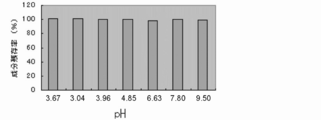
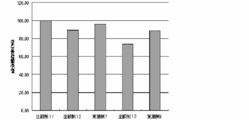
- the PQQ-2Na content before and after storage was quantified by HPLC, and the residual ratio (%) of PQQ-2Na after storage was determined. The results are shown in FIG. As is clear from FIG. 1, when no surfactant was contained, the storage stability of PQQ-2Na was good and was not affected by pH.
- Comparative Example 1 Ingredients such as surfactants, polyhydric alcohols or their monoethers, and lower alcohols are formulated to improve the skin fit of the preparation, improve the skin permeability of other ingredients, and obtain moisturizing and antiseptic effects.
- the solution of Comparative Example 1 not containing these components was not preferable as an external preparation because the formulation was generally repelled when applied to the skin.
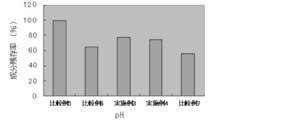
- the stability of PQQ-2Na in the test solution was significantly reduced by the blending of these components. That is, when Comparative Example 1 and Comparative Example 2 in FIG. 3 are compared, Comparative Example 2 containing a surfactant, a polyhydric alcohol, and a lower alcohol as compared with the test solution of Comparative Example 1 while having a comparable pH.
- This test solution had very low stability of PQQ-2Na.
- the stability of PQQ-2Na in the test solutions of Comparative Examples 3 and 4 having a pH exceeding 6 was very low.
- the test solutions of Examples 1 and 2 that contain a surfactant, a polyhydric alcohol, and a lower alcohol but within the pH range of 4 to 6 include the surfactant, the polyhydric alcohol, and the lower alcohol.
- PQQ-2Na was as stable as the test solution of Comparative Example 1 that was not present.
- the test solution of Example 2 containing EDTA-2Na was more stable than the test solution of Example 1 not containing EDTA-2Na.
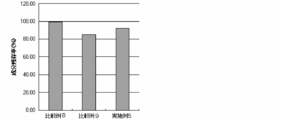
- Test 2 The composition of the Example and comparative example which have a composition of following Table 3 was prepared. These test solutions were filled in 10 mL glass vials, sealed, and stored at 60 ° C. for 1 week. The PQQ-2Na content before and after storage was quantified by HPLC, and the component remaining ratio (%) after storage was determined. The results are shown in FIG.
- HCO-60 manufactured by NIKKOL, polyoxyethylene (60) hydrogenated castor oil
- the stability of PQQ-2Na in the test solution was significantly reduced by the addition of the surfactant. That is, when Comparative Example 5 and Comparative Example 6 in FIG. 4 are compared, the test solution of Comparative Example 6 to which a surfactant is added compared to the test solution of Comparative Example 5 while having the same pH is PQQ-2Na. Stability was very low. Further, the stability of PQQ-2Na in the test solution of Comparative Example 7 having a pH exceeding 6 was very low. On the other hand, PQQ-2Na was stable in the test solutions of Examples 3 and 4 having a pH in the range of 4 to 6 even if a surfactant was included.
- Test 3 The composition of the Example and comparative example which have a composition of following Table 4 was prepared. These test solutions were filled in 10 mL glass vials, sealed, and stored at 60 ° C. for 1 week. The PQQ-2Na content before and after storage was quantified by HPLC, and the component remaining ratio (%) after storage was determined. The results are shown in FIG. 5 and FIG. TS-10MV: manufactured by NIKKOL, polysorbate 60 (Polyoxyethylene sorbitan monostearate (20E.O.)) Resinol S-10: manufactured by NIKKOL, hydrogenated lecithin
- Test 4 The compositions of Examples and Comparative Examples having the compositions shown in Table 5 below were prepared. These test solutions were filled in 10 mL glass vials, sealed, and stored at 60 ° C. for 1 week. The PQQ-2Na content before and after storage was quantified by HPLC, and the component remaining ratio (%) after storage was determined. The results are shown in FIG. TI-10V: manufactured by NIKKOL, PEG-20 sorbitan isostearate (polyoxyethylene sorbitan isostearate (20E.O.)) TO-10MV: manufactured by NIKKOL, polysorbate 80 (Polyoxyethylene sorbitan monooleate (20E.O.))
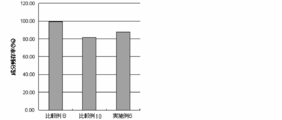
- Test 5 Compositions of Examples and Comparative Examples having the compositions shown in Table 6 below were prepared. These test solutions were filled in 10 mL glass vials, sealed, and stored at 60 ° C. for 1 week. The PQQ-2Na content before and after storage was quantified by HPLC, and the component remaining ratio (%) after storage was determined. The results are shown in FIG. Decaglyn1-SV: manufactured by NIKKOL, polyglyceryl stearate-10 (Polyglyceryl monostearate)
- the stability of PQQ-2Na in the test solution was significantly reduced by the incorporation of the surfactant and the polyhydric alcohol. That is, when Comparative Example 8 and Comparative Example 14 in FIG. 8 are compared, the test of Comparative Example 14 in which a surfactant and a polyhydric alcohol were added as compared with the test solution of Comparative Example 8 while having the same pH. The solution was very poor in PQQ-2Na stability. Further, the stability of PQQ-2Na was also very low in the test solution of Comparative Example 15 containing a surfactant and a polyhydric alcohol and having a pH of more than 6. On the other hand, PQQ-2Na was stable in the test solution of Example 9 which contained a surfactant and a polyhydric alcohol but was in the range of pH 4-6.
- Formulation Example A formulation example of the external preparation of the present invention is shown below.
- the unit of the content of each component is% by weight.
- Example 1 (milky lotion) PQQ2Na 0.01 Acrylic acid / alkyl methacrylate copolymer 0.4 Hydroxyethyl cellulose 0.2 1,3-butylene glycol 3 Glycerin 2 Polyoxyethylene (60) hydrogenated castor oil (HLB14) 0.5 Sodium edetate 0.05 Methylphenylpolysiloxane 3 pH adjuster (Adjust so that pH is 5.5) Preservative appropriate amount Purified water remaining 100% The prepared preparation is filled into a pump bottle made of polypropylene.
- Example 2 (cream) PQQ2Na 0.02 Liquid paraffin 10 Isopropyl palmitate 10 Glycerin 5 Polyoxyethylene (60) hydrogenated castor oil (HLB14) 2 Glycerin stearate 1 Carboxyvinyl polymer 0.5 Xanthan gum 0.3 pH adjuster (Adjust to pH 6.0) Preservative appropriate amount Purified water remaining 100% The prepared preparation is filled into a polyethylene tube container.
- Example 3 PQQ2Na 0.01 Dipropylene glycol 5 Glycerin 5 Polyoxyethylene (80) hydrogenated castor oil (HLB15) 0.2 Sodium edetate 0.05 pH adjuster (Adjust to pH 4.0) Preservative appropriate amount Purified water remaining 100%
- Example 4 (Cosmetic liquid) PQQ2Na 0.02 Acrylic acid / alkyl methacrylate copolymer 0.3 1,3-butylene glycol 3 Dipropylene glycol 2 Sodium edetate 0.05 Squalane 5 Glyceryl stearate (HLB12) 0.2 pH adjuster (Adjust so that pH is 5.0) Preservative appropriate amount Purified water remaining 100%
- Example 5 (cleansing agent) PQQ2Na 0.001 Acrylic acid / alkyl methacrylate copolymer 0.3 Carboxyvinyl polymer 0.4 1,3-butylene glycol 5 Glycerin 5 Tetraoleic acid polyoxyethylene sorbit (HLB14) 1 Dialkyl carbonate (C14,15) 5 Triethylhexanoin 10 Liquid paraffin 15 pH adjuster (Adjust so that pH is 5.5) Preservative appropriate amount Purified water remaining 100%
- composition for external use of the present invention contains PQQ or a salt thereof and is excellent in storage stability, and thus has a high commercial value.
Landscapes
- Health & Medical Sciences (AREA)
- Chemical & Material Sciences (AREA)
- Life Sciences & Earth Sciences (AREA)
- Veterinary Medicine (AREA)
- Public Health (AREA)
- General Health & Medical Sciences (AREA)
- Animal Behavior & Ethology (AREA)
- Pharmacology & Pharmacy (AREA)
- Medicinal Chemistry (AREA)
- Epidemiology (AREA)
- Engineering & Computer Science (AREA)
- Chemical Kinetics & Catalysis (AREA)
- General Chemical & Material Sciences (AREA)
- Organic Chemistry (AREA)
- Bioinformatics & Cheminformatics (AREA)
- Nuclear Medicine, Radiotherapy & Molecular Imaging (AREA)
- Oil, Petroleum & Natural Gas (AREA)
- Dermatology (AREA)
- Neurology (AREA)
- Biomedical Technology (AREA)
- Neurosurgery (AREA)
- Birds (AREA)
- Inorganic Chemistry (AREA)
- Hospice & Palliative Care (AREA)
- Psychiatry (AREA)
- Diabetes (AREA)
- Toxicology (AREA)
- Nutrition Science (AREA)
- Hematology (AREA)
- Obesity (AREA)
- Cosmetics (AREA)
- Medicinal Preparation (AREA)
- Pharmaceuticals Containing Other Organic And Inorganic Compounds (AREA)
Abstract
L'invention concerne une composition pour une application externe, qui comprend de la pyrroloquinoléinequinone (PQQ) ou un sel pharmaceutiquement acceptable de celle-ci et un agent tensio-actif, et a une valeur de pH de 4-6. Lorsqu'un agent tensio-actif est ajouté à une composition contenant de la PQQ ou un sel de celle-ci, la stabilité de la PQQ ou du sel de celle-ci est détériorée de manière significative. La stabilité de stockage de la PQQ ou d'un sel de celle-ci dans une composition comprenant de la PQQ ou le sel de celle-ci et un agent tensio-actif peut être améliorée par ajustement de la valeur de pH de la composition à 4-6.
Priority Applications (1)
| Application Number | Priority Date | Filing Date | Title |
|---|---|---|---|
| CN2012800174182A CN103458865A (zh) | 2011-04-07 | 2012-04-06 | 外用组合物 |
Applications Claiming Priority (2)
| Application Number | Priority Date | Filing Date | Title |
|---|---|---|---|
| JP2011085712 | 2011-04-07 | ||
| JP2011-085712 | 2011-04-07 |
Publications (1)
| Publication Number | Publication Date |
|---|---|
| WO2012137932A1 true WO2012137932A1 (fr) | 2012-10-11 |
Family
ID=46969320
Family Applications (1)
| Application Number | Title | Priority Date | Filing Date |
|---|---|---|---|
| PCT/JP2012/059549 Ceased WO2012137932A1 (fr) | 2011-04-07 | 2012-04-06 | Composition pour une application externe |
Country Status (3)
| Country | Link |
|---|---|
| JP (3) | JP5651138B2 (fr) |
| CN (1) | CN103458865A (fr) |
| WO (1) | WO2012137932A1 (fr) |
Cited By (1)
| Publication number | Priority date | Publication date | Assignee | Title |
|---|---|---|---|---|
| CN120267557A (zh) * | 2025-06-10 | 2025-07-08 | 水羊化妆品制造有限公司 | 含有pqq或其盐的组合物、化妆品原料、应用和一种化妆品 |
Families Citing this family (6)
| Publication number | Priority date | Publication date | Assignee | Title |
|---|---|---|---|---|
| WO2012137932A1 (fr) * | 2011-04-07 | 2012-10-11 | ロート製薬株式会社 | Composition pour une application externe |
| WO2014087990A1 (fr) * | 2012-12-04 | 2014-06-12 | ロート製薬株式会社 | Composition pour application externe |
| JP6284730B2 (ja) * | 2013-09-25 | 2018-02-28 | ロート製薬株式会社 | 外用組成物 |
| CN109718136A (zh) * | 2019-01-25 | 2019-05-07 | 重庆真艾农业有限公司 | 一种以艾草精油、磷脂和吡咯喹啉醌为基础的皮肤搽剂 |
| CN116474218A (zh) * | 2019-06-28 | 2023-07-25 | 四川普锐特药业有限公司 | 保持给药均一度的药物流体分配器及右美托咪定鼻喷器 |
| CN120210034B (zh) * | 2025-01-24 | 2026-07-07 | 湖南省微生物研究院 | 一种制剂及其制备方法和应用 |
Citations (7)
| Publication number | Priority date | Publication date | Assignee | Title |
|---|---|---|---|---|
| JPH03112912A (ja) * | 1989-09-27 | 1991-05-14 | Sanko Seibutsu Kagaku Kenkyusho:Kk | 化粧料組成物 |
| JPH06100428A (ja) * | 1992-09-18 | 1994-04-12 | Isehan:Kk | 皮膚外用剤 |
| JPH0820585A (ja) * | 1994-07-07 | 1996-01-23 | Mitsubishi Gas Chem Co Inc | 紫外線吸収剤及び皮膚外用剤 |
| JPH0820512A (ja) * | 1994-07-07 | 1996-01-23 | Mitsubishi Gas Chem Co Inc | メラニン産生抑制剤及び美白用皮膚外用剤 |
| JP2010120904A (ja) * | 2008-11-21 | 2010-06-03 | Mitsubishi Gas Chemical Co Inc | 育毛用組成物およびそれを用いた育毛方法 |
| JP2011026226A (ja) * | 2009-07-23 | 2011-02-10 | Mitsubishi Gas Chemical Co Inc | ピロロキノリンキノン類を含む液体の保存方法 |
| WO2012020767A1 (fr) * | 2010-08-09 | 2012-02-16 | 三菱瓦斯化学株式会社 | Gel de pyrroloquinoléine quinone |
Family Cites Families (11)
| Publication number | Priority date | Publication date | Assignee | Title |
|---|---|---|---|---|
| JPS59139315A (ja) * | 1983-01-31 | 1984-08-10 | Taisho Pharmaceut Co Ltd | クリ−ム剤 |
| JPS6348215A (ja) * | 1986-08-14 | 1988-02-29 | Sogo Yatsukou Kk | 糖尿病性合併症治療剤 |
| EP0256472A3 (fr) * | 1986-08-11 | 1988-09-07 | Lion Corporation | Agent cosmétique pour application sur la peau |
| JPS63152309A (ja) * | 1986-08-11 | 1988-06-24 | Lion Corp | 皮膚外用剤 |
| JPH085792B2 (ja) * | 1986-12-19 | 1996-01-24 | 相互薬工株式会社 | 逆転写酵素阻害剤 |
| JP2004051627A (ja) * | 2002-05-28 | 2004-02-19 | Japan Natural Laboratory Co Ltd | ビタミンk等を有効成分とするくすみ、くま、目下のたるみ、紫斑、打撲によるあざ、レーザー治療後の紫斑等の改善化粧料、全身化粧料、パック類およびその製造方法 |
| JP4989119B2 (ja) * | 2006-06-16 | 2012-08-01 | ポーラ化成工業株式会社 | ベシクル系に好適な皮膚外用剤 |
| JP2009221154A (ja) * | 2008-03-17 | 2009-10-01 | Pola Chem Ind Inc | インタ−ロイキン−6産生抑制剤 |
| JP2009221153A (ja) * | 2008-03-17 | 2009-10-01 | Pola Chem Ind Inc | 顔色改善剤 |
| JP5672751B2 (ja) * | 2010-04-07 | 2015-02-18 | 三菱瓦斯化学株式会社 | ピロロキノリンキノンを含むリポソーム |
| WO2012137932A1 (fr) * | 2011-04-07 | 2012-10-11 | ロート製薬株式会社 | Composition pour une application externe |
-
2012
- 2012-04-06 WO PCT/JP2012/059549 patent/WO2012137932A1/fr not_active Ceased
- 2012-04-06 CN CN2012800174182A patent/CN103458865A/zh active Pending
- 2012-04-06 JP JP2012087542A patent/JP5651138B2/ja active Active
-
2014
- 2014-06-24 JP JP2014129124A patent/JP6310788B2/ja active Active
-
2016
- 2016-11-07 JP JP2016217683A patent/JP2017025110A/ja active Pending
Patent Citations (7)
| Publication number | Priority date | Publication date | Assignee | Title |
|---|---|---|---|---|
| JPH03112912A (ja) * | 1989-09-27 | 1991-05-14 | Sanko Seibutsu Kagaku Kenkyusho:Kk | 化粧料組成物 |
| JPH06100428A (ja) * | 1992-09-18 | 1994-04-12 | Isehan:Kk | 皮膚外用剤 |
| JPH0820585A (ja) * | 1994-07-07 | 1996-01-23 | Mitsubishi Gas Chem Co Inc | 紫外線吸収剤及び皮膚外用剤 |
| JPH0820512A (ja) * | 1994-07-07 | 1996-01-23 | Mitsubishi Gas Chem Co Inc | メラニン産生抑制剤及び美白用皮膚外用剤 |
| JP2010120904A (ja) * | 2008-11-21 | 2010-06-03 | Mitsubishi Gas Chemical Co Inc | 育毛用組成物およびそれを用いた育毛方法 |
| JP2011026226A (ja) * | 2009-07-23 | 2011-02-10 | Mitsubishi Gas Chemical Co Inc | ピロロキノリンキノン類を含む液体の保存方法 |
| WO2012020767A1 (fr) * | 2010-08-09 | 2012-02-16 | 三菱瓦斯化学株式会社 | Gel de pyrroloquinoléine quinone |
Cited By (2)
| Publication number | Priority date | Publication date | Assignee | Title |
|---|---|---|---|---|
| CN120267557A (zh) * | 2025-06-10 | 2025-07-08 | 水羊化妆品制造有限公司 | 含有pqq或其盐的组合物、化妆品原料、应用和一种化妆品 |
| CN120267557B (zh) * | 2025-06-10 | 2025-08-26 | 水羊化妆品制造有限公司 | 含有pqq或其盐的组合物、化妆品原料、应用和一种化妆品 |
Also Published As
| Publication number | Publication date |
|---|---|
| CN103458865A (zh) | 2013-12-18 |
| JP5651138B2 (ja) | 2015-01-07 |
| JP2012224625A (ja) | 2012-11-15 |
| JP6310788B2 (ja) | 2018-04-11 |
| JP2017025110A (ja) | 2017-02-02 |
| JP2014198721A (ja) | 2014-10-23 |
Similar Documents
| Publication | Publication Date | Title |
|---|---|---|
| JP5876962B2 (ja) | 外用組成物 | |
| JP6310788B2 (ja) | 外用組成物 | |
| JP6386911B2 (ja) | 外用組成物 | |
| JP5934164B2 (ja) | 外用組成物 | |
| JP6148454B2 (ja) | トラネキサム酸を含む外用及び内服用組成物 | |
| JP5951277B2 (ja) | アゼライン酸を含有する外用組成物 | |
| JP6430109B2 (ja) | 外用組成物 | |
| JP6632495B2 (ja) | 抗菌用組成物 | |
| JP2024096209A (ja) | 脂肪族アルコールとグリセリンとのエーテルを含む組成物 | |
| JP2014001155A (ja) | 美容オイル | |
| JP6403487B2 (ja) | 外用剤 | |
| JPWO2012165309A1 (ja) | 外用組成物 | |
| JP2016088882A (ja) | 外用剤 | |
| JP6416473B2 (ja) | 外用組成物 | |
| JP5902410B2 (ja) | 外用組成物 | |
| JPWO2014069566A1 (ja) | 皮膚外用組成物 | |
| JP2012036174A (ja) | 外用組成物 | |
| WO2012008457A1 (fr) | Composition pour application externe | |
| JP5734686B2 (ja) | 皮膚外用組成物 | |
| JP2012158567A (ja) | 皮膚外用組成物 | |
| JP2016204307A (ja) | 皮膚外用組成物、着色抑制剤および着色抑制方法 | |
| HK1189827A (en) | Composition for external application | |
| JP6199595B2 (ja) | 外用組成物 | |
| HK40054924A (en) | Composition containing ether from aliphatic alcohol and glycerin | |
| JP2019059792A (ja) | 皮膚外用剤 |
Legal Events
| Date | Code | Title | Description |
|---|---|---|---|
| 121 | Ep: the epo has been informed by wipo that ep was designated in this application |
Ref document number: 12768455 Country of ref document: EP Kind code of ref document: A1 |
|
| NENP | Non-entry into the national phase |
Ref country code: DE |
|
| 122 | Ep: pct application non-entry in european phase |
Ref document number: 12768455 Country of ref document: EP Kind code of ref document: A1 |