WO2012147865A1 - Hydrate cristallin d'ortho-phtalaldéhyde, agent désinfectant et biocide le contenant, et procédé de préparation d'ortho-phtalaldéhyde - Google Patents
Hydrate cristallin d'ortho-phtalaldéhyde, agent désinfectant et biocide le contenant, et procédé de préparation d'ortho-phtalaldéhyde Download PDFInfo
- Publication number
- WO2012147865A1 WO2012147865A1 PCT/JP2012/061242 JP2012061242W WO2012147865A1 WO 2012147865 A1 WO2012147865 A1 WO 2012147865A1 JP 2012061242 W JP2012061242 W JP 2012061242W WO 2012147865 A1 WO2012147865 A1 WO 2012147865A1
- Authority
- WO
- WIPO (PCT)
- Prior art keywords
- opa
- opach
- water
- solution
- crystalline hydrate
- Prior art date
- Legal status (The legal status is an assumption and is not a legal conclusion. Google has not performed a legal analysis and makes no representation as to the accuracy of the status listed.)
- Ceased
Links
- 0 CCC(C)(C1OC(CC*C(C)(*)C2OC(*)c3ccccc23)c2ccccc12)OC(*(C)C(C(N)(N)N)=O)=O Chemical compound CCC(C)(C1OC(CC*C(C)(*)C2OC(*)c3ccccc23)c2ccccc12)OC(*(C)C(C(N)(N)N)=O)=O 0.000 description 1
Images


Classifications
-
- C—CHEMISTRY; METALLURGY
- C07—ORGANIC CHEMISTRY
- C07D—HETEROCYCLIC COMPOUNDS
- C07D307/00—Heterocyclic compounds containing five-membered rings having one oxygen atom as the only ring hetero atom
- C07D307/77—Heterocyclic compounds containing five-membered rings having one oxygen atom as the only ring hetero atom ortho- or peri-condensed with carbocyclic rings or ring systems
- C07D307/87—Benzo [c] furans; Hydrogenated benzo [c] furans
- C07D307/89—Benzo [c] furans; Hydrogenated benzo [c] furans with two oxygen atoms directly attached in positions 1 and 3
-
- A—HUMAN NECESSITIES
- A01—AGRICULTURE; FORESTRY; ANIMAL HUSBANDRY; HUNTING; TRAPPING; FISHING
- A01N—PRESERVATION OF BODIES OF HUMANS OR ANIMALS OR PLANTS OR PARTS THEREOF; BIOCIDES, e.g. AS DISINFECTANTS, AS PESTICIDES OR AS HERBICIDES; PEST REPELLANTS OR ATTRACTANTS; PLANT GROWTH REGULATORS
- A01N25/00—Biocides, pest repellants or attractants, or plant growth regulators, characterised by their forms, or by their non-active ingredients or by their methods of application, e.g. seed treatment or sequential application; Substances for reducing the noxious effect of the active ingredients to organisms other than pests
- A01N25/12—Powders or granules
Definitions
- the present invention relates to a crystalline hydrate of orthophthalaldehyde represented by the following formula (1).
- Orthophthalaldehyde (hereinafter also referred to as OPA) is a product of glutaraldehyde because the product formulated at a low concentration of 0.55% by mass has an excellent bactericidal effect against microorganisms such as bacteria and has low odor.
- OPA is used as a high-level disinfectant for sterilizing and disinfecting medical instruments such as endoscopes (Patent Document 1).
- OPA is also used as a biocide for the purpose of sterilization and slime control of white water systems in paper mills, air conditioning cooling water systems and circulating water systems in various factories and facilities (Patent Documents 2 and 3).
- the aforementioned disinfectant and biocide products are usually provided in the form of easy-to-handle OPA solutions, but their production requires the use of crystalline OPA, which is difficult to handle.
- OPA is commercially available in crystalline powder or flake form, and its melting point is as low as about 56 ° C., so that it has a problem that it tends to solidify during storage at room temperature.
- OPA is an unstable substance having a dialdehyde structure, so there is a problem that the purity tends to decrease if air and moisture are not sufficiently blocked during storage.
- OPA crystals and vapors are in the skin and mucous membranes.
- OPA is not usually a solid product form, but a solution containing about 10 to 40% by mass of OPA except for a low-concentration preparation such as the above-mentioned high-level disinfectant.
- the product form is distributed.
- the solubility of OPA in water is as low as about 5.9% by mass at room temperature, it is an expensive aprotic organic solvent that is a good solvent for OPA in order to provide such a highly concentrated OPA solution as a product.
- VOC volatile organic compound
- organic solvents are used as a carbon source to assimilate microorganisms, so it is desirable to avoid mixing organic solvents in biocides as much as possible. It is rare.
- an aqueous suspension such as a flowable agent that does not use an organic solvent as much as possible as a product formulated with OPA.
- the melting point of OPA is as low as about 56 ° C., and solidification is likely to occur. Because it was not successful.
- OPA is non-oxidizing and has the advantage of low corrosiveness to metals such as iron, stainless steel, and copper, it has a low melting point and a relatively high dissolution rate in water. It was not processed into tablets and provided as a disinfectant and biocide. As described above, there was a problem in working environment in handling OPA crystals in an open system, which is also why the tableting was difficult.
- solid substances such as bromochlorodimethylhydantoin (hereinafter also referred to as BCDMH) that generates hypochlorous acid and hypobromite in water, chlorinated isocyanuric acid, and chlorite that generates chlorine dioxide are contained in tablets. Processed products have already been put on the market, but since they are all oxidative, they have a high metal corrosiveness against iron, stainless steel, copper and the like, which has been a problem.
- BCDMH bromochlorodimethylhydantoin
- an active substance having the same physiological activity as OPA that is, a biological effect for sterilization, disinfection, slime control, etc. that can be used as a disinfectant or biocide, and having less problems as described above has been desired.
- OPA a biological effect for sterilization, disinfection, slime control, etc.
- it does not have a low melting point such as OPA, is hard to be consolidated, has a strong odor like OPA, does not irritate the skin / mucous membrane, and is easy to handle
- an oxidizing substance such as BCDMH
- product forms such as aqueous suspensions and tablets that were difficult to prepare or apply with OPA It is required that it can be used after being processed, or can be used as a crystalline powder.
- ⁇ , ⁇ , ⁇ ′, ⁇ ′-tetrahalogeno-o-xylene is hydrolyzed under normal pressure or under pressure (Patent Document 4 and Patent Document 5), or naphthalene is used.
- a method of performing ozonolysis under pressure (Patent Document 6) is known. Then, the obtained OPA reaction liquid is extracted with an organic solvent to take out crude OPA once, and purification operations such as crystallization and distillation are added thereto to commercialize OPA.
- Patent Document 7 has a drawback that the purification process is very long and complicated. That is, in Patent Document 7, ⁇ , ⁇ , ⁇ ′, ⁇ ′-tetrachloro-o-xylene is hydrolyzed to give an OPA reaction solution, OPA is extracted with methyl tertiary butyl ether (MTBE), and MTBE is removed by distillation. Then, methanol was added to the evaporation residue of the obtained crude OPA to acetal, this was distilled under reduced pressure to distill OPA dimethoxyacetal, and this purified OPA dimethoxyacetal was heated in water under a sulfuric acid catalyst to form OPA.
- MTBE methyl tertiary butyl ether
- the OPA is extracted from the resulting OPA aqueous solution with diisopropyl ether (DIPE), and this DIPE solution is cooled and crystallized to crystallize OPA, which is filtered and dried to obtain a crystal product of OPA.
- DIPE diisopropyl ether
- acetalization of OPA was incorporated, and the production of high-purity OPA was a very complicated operation.
- diisopropyl ether which is also described in Patent Document 7, or an organic solvent having relatively high toxicity and high flammability, such as toluene, is usually used.
- DIPE diisopropyl ether
- organic solvent having relatively high toxicity and high flammability such as toluene
- OPACH crystalline hydrate of OPA of the present invention
- Patent Document 8 Non-Patent Document
- Document 1 Non-Patent Document 2
- Non-Patent Document 5 OPA is self-polymerized into an OPA polymer in the presence of an initiator and a catalyst at a low temperature of usually ⁇ 50 ° C. or lower. At that time, cyclic hemiacetal is connected by an ether bond and polymerization proceeds, and the hydroxyl groups at both ends of the polymer are bonded to alcohol, amine, acyl compound, etc.
- Non-Patent Document 2 the OPA polymer described in Non-Patent Document 2 is represented by the formula (2) using alcohol as an initiator and trichloroacetyl isocyanate as a stopper.
- OPA polymer has a ceiling temperature of about ⁇ 43 ° C., and it is known that the OPA polymerization does not occur at a relatively high temperature such as room temperature. There is no literature report that an oligomer was obtained.
- the crystalline hydrate of OPA of the present invention (OPACH) is a compound that can be said to be an OPA dimer.
- OPA dimer the OPA is first converted to phthalide by sunlight, which is condensed with another molecule of OPA.
- Another compound that has been produced has already been reported (for example, Non-Patent Document 3), and in this application, “OPA dimer” is not used as the name of the novel compound of the present invention.
- Non-Patent Document 4 OPA has been reported to exist in an equilibrium state represented by the following three different chemical formulas in an aqueous solution.
- Non-Patent Document 4 a part of dialdehyde (3a) normally expressed as OPA is hydrated with one molecule of water per OPA molecule in an aqueous solution to become an acyclic hydrate (3b). It is further stated that this closes to a cyclic hemiacetal (3c). The abundance ratio in a 25 ° C. aqueous solution of a certain concentration is reported that (3a) is about 20%, (3b) is about 8%, and (3c) is about 72%, and the temperature of the OPA aqueous solution is high. It is also stated that the proportion of dialdehyde (3a) increases.
- a crystalline solid which is a novel compound, is preferentially deposited over OPA in OPA in an aqueous solution or a water-miscible organic solvent containing water (hereinafter, both are collectively referred to as “in the aqueous solution”). It has been reported that the precipitates are present in a stable dispersion in the solution, and the crystalline solid obtained by solid-liquid separation and drying is also stable in air at normal temperature and pressure. It has not been.
- JP-A-63-3313705 Japanese Patent Application Laid-Open No. 06-26497 Japanese Patent Laid-Open No. 06-23368 JP 2000-26359 A Japanese Patent Laid-Open No. 09-31009 JP-A-10-182542 JP 2007-8932 A JP 59-216142 A
- the subject of the present invention is further a method for producing OPA having a higher purity than the original OPA by a simple operation of passing the crystalline hydrate as an intermediate from OPA, in particular, isolation and purification thereof. To provide a law.
- OPACH obtained by solid-liquid separation and drying is stably present in air at room temperature and normal pressure, and this OPACH has useful properties for handling and formulation as compared with conventional crystalline OPA.
- This OPACH has a physiological activity as a disinfectant and biocide similar to OPA because it is easily decomposed by heating and / or dissolution in water or an organic solvent and returns to two molecules of OPA and one molecule of water.
- OPA having higher purity than that of the original OPA can be obtained by returning OPACH to OPA.
- the present invention has been made based on this finding.
- a crystalline hydrate of orthophthalaldehyde represented by the following formula (1) A disinfectant comprising the orthophthalaldehyde crystalline hydrate according to (1).
- a method for producing orthophthalaldehyde characterized in that the crystalline hydrate of orthophthalaldehyde according to (1) is heated and / or dissolved in a solvent.
- the orthophthalaldehyde crystalline hydrate (OPACH) represented by the formula (1) of the present invention becomes orthophthalaldehyde (OPA) at the time of use, and therefore has a physiological activity as a disinfectant and biocide of OPA. It is easier to handle than OPA and can be used in the production of high-purity OPA. Accordingly, the orthophthalaldehyde crystalline hydrate (OPACH) of the present invention can be used as OPACH, or it can be decomposed into OPA and used as OPA.
- FIG. 2 is a DSC chart of OPACH manufactured in Example 1.
- FIG. 2 is an FT-IR spectrum of OPACH produced in Example 1.
- 2 is a UV spectrum of OPACH produced in Example 1. It is a UV spectrum of OPA for comparative reference.
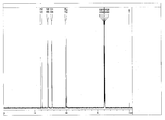
- 1 is a 1 H-NMR spectrum (D 2 O solution) of OPA for comparison.
- 1 is a 1 H-NMR spectrum (DMSO-d 6 solution) of OPACH produced in Example 1.
- 3 is a 13 C-NMR spectrum (DMSO-d 6 solution) of OPACH produced in Example 1.
- the present invention will be specifically described below.
- First Embodiment Crystalline Hydrate of Orthophthalaldehyde The first embodiment of the present invention is formed from two molecules of orthophthalaldehyde and one molecule of water, and is stable as a crystalline solid in air at normal temperature and pressure. It is a crystalline hydrate (OPACH) of orthophthalaldehyde represented by the following formula (1).
- the crystalline hydrate of OPA of the present invention is a hydration reaction from two molecules of OPA and one molecule of water according to the following formula (4) including the above (3a), (3b) and (3c). It is a novel compound that is thought to be produced by
- the OPA crystalline hydrate (OPACH) of the present invention can be produced by performing a hydration reaction of OPA in an aqueous solution or in a water-miscible organic solvent containing water, that is, in the aqueous solution.
- OPACH produced by OPA hydration is preferentially precipitated because its solubility in the aqueous solution is lower than that of OPA.
- OPACH will precipitate if OPA is dissolved at a concentration exceeding the saturation solubility, for example, in a supersaturated state.
- OPA precipitates preferentially, and this becomes a normal OPA crystallization operation by lowering the temperature of the solution.
- an organic solvent immiscible with water for example, toluene
- OPA is precipitated instead of OPACH by cooling.
- the solvent used may be water alone, but in that case, the OPACH production efficiency decreases because the solubility of OPA as a raw material in water is as low as about 5.9% by mass. Therefore, in order to increase the production rate and yield of OPACH, an organic solvent that is a good solvent for OPA and is miscible with water is preferably used in combination with the excess amount of water. However, use of lower alcohols such as methanol, ethanol, and 2-propanol is avoided because OPA acetalization easily occurs even in the presence of water, and the production of OPACH is suppressed.
- Suitable organic solvents miscible with water include acetone, 1,2-dimethoxyethane (DME), N, N-dimethylformamide (DMF), N-methyl-2-pyrrolidone (NMP), propylene carbonate, etc. Is mentioned.
- DME 1,2-dimethoxyethane
- DMF N-dimethylformamide
- NMP N-methyl-2-pyrrolidone
- propylene carbonate etc. Is mentioned.
- it is a solvent which is not mixed with water at an arbitrary ratio such as propylene carbonate, it can be used in combination with another organic solvent miscible with water.
- organic solvent that is a good solvent for OPA and suppresses the production of OPACH even if it is miscible with water.
- organic solvent include, in addition to the above-mentioned lower alcohols, glycols such as ethylene glycol, diethylene glycol, propylene glycol, polyethylene glycol # 200, acetonitrile, tetrahydrofuran, diglyme, N, N-dimethylacetamide, etc., and their use should be avoided. preferable.
- glycols such as ethylene glycol, diethylene glycol, propylene glycol, polyethylene glycol # 200, acetonitrile, tetrahydrofuran, diglyme, N, N-dimethylacetamide, etc.
- acetonitrile acetonitrile
- tetrahydrofuran diglyme
- N N-dimethylacetamide
- suitable organic solvent etc.
- the OPA concentration and hydration reaction conditions for increasing the production rate and yield of OPACH are as follows. That is, as a measure of the OPA concentration, the aqueous solution of OPA is prepared at a concentration lower than the saturation solubility of OPA at room temperature but close thereto. At that time, the OPA concentration may be set to about 5% by mass to 40% by mass by adjusting the types of water and organic solvents and the mixing ratio thereof. When this aqueous solution is stirred at room temperature for several hours to 24 hours to carry out a hydration reaction, white OPACH crystals precipitate slowly. As described above, when the OPA concentration is set exceeding the saturation solubility in the aqueous solution, not only OPACH but also OPA yellow crystals may be precipitated, so it must be avoided.
- OPACH is produced by combining the dialdehyde (3a) and cyclic hemiacetal (3c) one molecule at a time by weak intermolecular force. It is estimated that. Therefore, it is considered that the production of OPACH is promoted when the concentrations of dialdehyde (3a) and cyclic hemiacetal (3c) are increased in the aqueous solution.
- the production of OPACH is basically subject to kinetic control, and the decomposition of OPACH which is a reverse reaction is subject to thermodynamic control.
- the production of OPACH is promoted at a temperature lower than room temperature, and the decomposition of OPACH is promoted at a high temperature. Therefore, in order to increase the production rate and yield of OPACH, it is also recommended to cool the OPACH when it starts to precipitate from the aqueous solution to lower the solution temperature to around 0 ° C. Since the OPACH crystal is white and the OPA crystal is yellow, whether or not OPACH is precipitated can be determined from the appearance of the crystal. In order to promote precipitation of OPACH, the final solution temperature may be lowered to ⁇ 10 ° C. or lower. However, energy and time are required for cooling, and the viscosity of the solution is increased and solid-liquid separation is performed.
- the merit also decreases due to the reason that workability is reduced.
- the hydration reaction from OPA to OPACH is considered to antagonize the kinetic control and the thermodynamic control as described above.
- the temperature of the aqueous solution exceeds about 30 ° C., hydration of OPA is suppressed, and it does not occur at higher temperatures.
- the precipitated OPACH may be dissolved by heating and return to OPA.
- the OPACH precipitated by the hydration reaction of OPA can be isolated as a white crystalline powder by solid-liquid separation by a method such as centrifugal filtration, suction filtration or decantation, washing with water and / or an organic solvent, and drying.
- OPACH OPACH
- the OPACH thus obtained has a melting point of about 121 ° C. as an endothermic peak in DSC analysis as shown in FIG. 1. Unlike OPA, it is almost odorless and non-irritating. Is a white powder that does not color and is harder to set than OPA at room temperature.
- OPACH can be added to an aqueous system as a powder because of such characteristics, and can be further processed into a formulation such as an aqueous suspension or a tablet, which was difficult with OPA.
- OPACH crystalline hydrate of OPA of the present invention
- two molecules of OPA and one molecule of water hydrate by a weak intermolecular force. It is a precursor compound of OPA because it is relatively stable under normal temperature and pressure, but easily returns to OPA and water by heating and dissolution. Therefore, the OPACH of the present invention can be added to an aqueous system contaminated with microorganisms and used as a disinfectant or biocide without changing to OPA.
- OPACH can be used in the form of crystals in an aqueous system, or a suspension (so-called flowable agent, preferably having a concentration of 5 to 40% by mass) dispersed in water and / or an organic solvent, or a tablet It can also be used after being processed. At that time, a part of OPACH may be changed to OPA and exist as OPA. Further, OPACH may be used as a solution by dissolving it in water and / or an organic solvent, but in that case, it may be practically used as an OPA solution.
- the organic solvent that can be used here is generally combined with water, but acetone, 1,2-dimethoxyethane (DME), ⁇ -butyrolactone, propylene carbonate, ethylene glycol, diethylene glycol, polyethylene glycol # 200 and the like.
- the thickener normally used can be added suitably.
- the thickener include xanthan gum, sodium carboxymethyl cellulose, sodium alginate and the like.
- OPACH Using OPACH as crystals, and processing into suspensions and tablets dispersed in water or organic solvents and using them as disinfectants and biocides, as previously stated, is difficult with OPA, This is a new point made possible by the present invention.
- these disinfectants and biocides using OPACH are all referred to as disinfectants and biocides containing OPACH, including the case where they are used in the form of crystals and the case where they are changed to OPA.
- the following known biocides may be used in combination. Orthophthalaldehyde, glutaraldehyde, peracetic acid, hydrogen peroxide, hypochlorous acid, ammonia monochloramine, bromochlorodimethylhydantoin (BCDMH), trichloroisocyanuric acid, sodium dichloroisocyanurate, 2,2-dibromo-3-nitrilopropion Amide, 4,5-dichloro-1,2-dithiol-3-one, methylenebisthiocyanate, 3,3,4,4-tetrachlorotetrahydrothiophene-1,1-dioxide, 1,4-bis (bromoacetoxy) -2-butene, 1,2-bis (bromoacetoxy) ethane, dichloroglyoxime, ⁇ -chlorobenzaldoxime, ⁇ -chlorobenzaldoxime a
- ⁇ Third Embodiment> Method for Producing High-Purity OPA Using OPACH As a result of intensive studies on the production mechanism of OPACH and the decomposition mechanism of OPACH into water, OPACH is heated and / or water or It was clarified that OPA having a higher degree of purification than the original OPA can be obtained by dissolving in an organic solvent and returning to OPA. This was confirmed by analyzing the purity of OPA before and after passing OPACH as an intermediate, as described in the Examples.
- the method for producing OPA of the present invention is suitable for producing OPA having a purity of 98 to 100% by mass.
- the organic solvents that can be used here are the same as those mentioned in the first embodiment. In the case of heating, 50 to 120 ° C is preferable, and 60 to 100 ° C is more preferable.
- Non-patent document 5 it is known that an OPA polymer undergoes a so-called unzipping reaction in the presence of an acid catalyst to return to OPA, and due to such characteristics, the OPA polymer is used as a resist material ( Non-patent document 5).
- the OPACH of the present invention is similar to the partial structure of the OPA polymer, but basically differs from the polymerization of OPA in that water is essential to generate OPACH by a hydration reaction as described above.
- the hydration reaction is possible near room temperature without requiring a low temperature condition of ⁇ 50 ° C. or lower like the polymerization of OPA, and both terminal groups (initiator and terminator) are required as a polymer stabilizer.
- OPACH differs from the polymerization of OPA.
- the fact that the temperature condition for producing OPACH may be around room temperature is advantageous for industrial implementation.
- OPA polymerization reaction and the hydration reaction are common in that two adjacent aldehyde groups are bonded on the benzene ring. Therefore, the molecule not having the adjacent dialdehyde structure does not participate in the reaction and remains dissolved in the aqueous solution. Since OPACH is preferably less soluble than OPA and other impurities, it can exist stably at room temperature and normal pressure as crystals dispersed in the aqueous solution or as solid-liquid separated crystals.
- OPA crystalline hydrate (OPACH) purified by removing impurities by solid-liquid separation is also a raw material of high-purity OPA, and this is organized by the following formula (5) as the reverse reaction of the hydration reaction.
- two OPA molecules and one water molecule are quantitatively obtained from one OPCHA molecule.
- OPA
- the solid material obtained by hydration of OPA is a crystalline hydrate of OPA (OPACH) and a precursor compound of OPA having a high purity. did it.
- FIG. 2 shows the FT-IR spectrum of the obtained OPACH.
- UV Ultraviolet absorption spectrum
- FIG. 5 shows the 1 H-NMR spectrum of the resulting OPA.
- OPA of D 2 O solution chart considered a mixture of dialdehyde (3a) with the cyclic hemiacetal (3c) was obtained. The abundance ratio was considered to be about 1:14 to 15 from the proton ratio of both benzene rings.
- OPACH was dissolved in DMSO-d 6 at room temperature, and a 1 H-NMR spectrum was immediately measured. The obtained 1 H-NMR spectrum is shown in FIG.
- the OPACH solution in DMSO-d 6 contained no dialdehyde (3a) and cyclic hemiacetal (3c), and a chart supporting the presence as OPACH was obtained.
- OPACH is dispersed in ion-exchanged water so that the concentration is sufficiently lower than the saturated solubility of OPA in water (about 5.9% by mass) to prepare a 1.0% by mass aqueous dispersion of OPACH.
- the time until the crystals were completely dissolved was observed while stirring at this temperature.
- the dissolution time of OPACH was 30 ° C. for 5 hours, 40 ° C. for 3 hours, and 50 ° C. for 1 hour. From the above, it was found that the dissolution time of OPACH in water depends on the temperature and can be shortened if the temperature is high, and there is no practical problem as a disinfectant and biocide.
- the typical use concentration of OPA as a high-level disinfectant is 0.55% by mass
- the concentration used by adding to a water system as a biocide is usually several mg / L to Since it is several hundred mg / L, the above-mentioned OPACH having solubility in water dissolves as OPA even when added as it is to an aqueous system contaminated with microorganisms, and thus exhibits physiological activity as OPA. It was found that the concentration was reached.
- GPC chromatogram OPACH was dissolved in DMF to make a 1.0 mass% solution.
- OPA was also dissolved in DMF to prepare a 1.0 mass% solution.
- the crystals were easily dissolved by shaking for 1 to 2 minutes at room temperature, and did not become a high-viscosity solution characteristic when the polymer was dissolved.
- GPC gel permeation chromatography
- Example 2 (Production in acetone aqueous solution) The same operation as in Example 1 was performed except that acetone was used instead of 1,2-dimethoxyethane in Example 1. As a result, OPA crystalline hydrate (OPACH) was obtained as white crystals in a yield of 47.6% based on OPA. However, the yield does not correct the mass of water added by the hydration reaction (6.29%).
- OPACH OPA crystalline hydrate
- Example 3 (Production in DMF aqueous solution) The same operation as in Example 1 was conducted except that N, N-dimethylformamide (DMF) was used instead of 1,2-dimethoxyethane in Example 1.
- DMF N, N-dimethylformamide
- OPACH OPA crystalline hydrate
- Example 4 (Production effect in aqueous solution and seed crystal addition effect) OPA (manufactured by Kay Kasei Co., Ltd., purity 99.5%) and ion-exchanged water were added to a beaker to prepare an OPA 5.0 mass% aqueous solution.
- a predetermined amount of OPA crystalline hydrate (OPACH, prepared in Example 1) was added as a seed crystal to 50 g of this aqueous solution ((A) in Table 1 below), followed by stirring at room temperature for 24 hours.
- OPA which is a yellow crystal did not precipitate in any case
- a crystalline hydrate (OPACH) of OPA which was a white crystal was precipitated as shown in Table 1 below.
- the crystals were filtered and dried and subjected to gravimetric analysis ((B) in Table 1 below), and the OPA concentration in the filtrate was determined by gas chromatography ((C) in Table 1 below).
- Example 5 (Behavior in aqueous solution) 5 g of OPACH obtained in Example 1 was added and dispersed in 50 g of ion-exchanged water and stirred at room temperature for 24 hours. Since some of the crystals were gradually dissolved, the crystals were removed through a filter and the solution portion was sampled and analyzed by gas chromatography. As a result, only one peak was observed at the same elution position as OPA in the solution part, and it was found that 2.6% by mass of OPA was contained.
- Example 6 (bactericidal effect) With respect to the aqueous solution of OPACH obtained in Example 5 (containing 2.6% by mass as OPA), the bactericidal effect for a contact time of 30 minutes against bacteria was examined. For reference, the bactericidal effect was also examined for a solution in which 0.1 mass% of OPACH was dissolved in DMSO. Moreover, in order to compare the bactericidal effect with OPA, the aqueous solution of OPA and DMSO solution were also prepared. The concentration of OPACH as OPA was calculated and matched to the concentration of OPA added. The results are shown in Table 2 below. The test conditions for the bactericidal effect are as follows.
- Test system pH 6 buffer system and pH 8 buffer system (phosphate-citrate buffer)
- Target bacteria The following three types of bacteria are mixed: Enterobacter aerogenes NBRC 13534 Staphylococcus aureus NBRC 12732 Pseudomonas aeruginosa NBRC 13275 Contact time: 30 minutes
- Example 7 Purification effect of OPA obtained via OPACH
- the OPACH was isolated by suction filtration and drying of white crystals produced by hydration in the same manner as in Example 1 except that the OPA in Example 1 was changed to 98.8% purity (manufactured by Ihara Nikkei Chemical Co., Ltd.). did.
- the OPA purity by gas chromatography was improved to 99.5%, phthalide was greatly reduced, and chlorine-containing impurities ⁇ , ⁇ , ⁇ ′, ⁇ ′-tetrachloro-o-xylene (TECOX) was not detected.
- Example 8 (Crystal solidification) A transparent hard glass cylinder having an inner diameter of 50 mm, a height of 70 mm, and a thickness of 5 mm was prepared, and the open part of the cylinder was placed up and down on a flat glass. After adding 40 g of crystal samples of OPA (recrystallized from diisopropyl ether) and OPACH (manufactured in Example 1) from the open part, a flat glass was placed on the crystal and capped. A weight of 620 g of stainless steel weight was placed on the crystal. These were allowed to stand in a constant temperature bath at 40 ° C. for 1 week, and the presence or absence of consolidation was observed.
- Example 9 Preparation of aqueous suspension and solubility in water
- 80 parts by mass of ion-exchanged water and 0.8 parts by mass of a thickener xanthan gum (trade name: Rhode Poul 23, manufactured by Rhone-Poulenc) were added to a glass bottle and dissolved by stirring.
- 20 parts by mass of OPACH was added and stirred and mixed to obtain a uniform white slurry.
- the aqueous suspension was sealed and allowed to stand at room temperature for 3 months. The crystals slightly settled (the volume of the supernatant was less than 10% of the total), but it was easily stirred into a uniform slurry (floorable agent). I'm back.
- Example 10 Manufacture of tablets and solubility in water
- the OPACH powder was sieved to collect powder having a particle size of 1.0 to 2.0 mm. This was mixed at a ratio of 85% by weight, magnesium stearate 10% by weight, and talc 5% by weight, and 10 g each was weighed and tableted by changing the tableting pressure to obtain an off-white tablet (Table 4 below).
- 1 L of clean water was weighed into a 1 L beaker, and tablets were added one by one and stirred for 7 days at room temperature using a magnetic stirrer. At that time, the stirrer was prevented from coming into direct contact with the tablet.
- Reference Example 1 (Effect of low OPA concentration) It stirred at room temperature for 24 hours like Example 1 except having reduced the density
- Reference example 2 (effect when OPA concentration is high) It stirred at room temperature for 24 hours like Example 1 except having increased the density
Landscapes
- Chemical & Material Sciences (AREA)
- Life Sciences & Earth Sciences (AREA)
- Organic Chemistry (AREA)
- General Health & Medical Sciences (AREA)
- Health & Medical Sciences (AREA)
- Pest Control & Pesticides (AREA)
- Toxicology (AREA)
- Engineering & Computer Science (AREA)
- Dentistry (AREA)
- Wood Science & Technology (AREA)
- Zoology (AREA)
- Environmental Sciences (AREA)
- Plant Pathology (AREA)
- Agronomy & Crop Science (AREA)
- Agricultural Chemicals And Associated Chemicals (AREA)
- Furan Compounds (AREA)
- Organic Low-Molecular-Weight Compounds And Preparation Thereof (AREA)
Abstract
La présente invention concerne un hydrate cristallin d'ortho-phtalaldéhyde représenté par la formule (1).
Applications Claiming Priority (2)
| Application Number | Priority Date | Filing Date | Title |
|---|---|---|---|
| JP2011099736A JP5806848B2 (ja) | 2011-04-27 | 2011-04-27 | 3,3’−オキシビス(1,3−ジヒドロイソベンゾフラン−1−オール)、それを含有する消毒薬及び殺生物剤、並びにオルトフタルアルデヒドの製造方法 |
| JP2011-099736 | 2011-04-27 |
Publications (1)
| Publication Number | Publication Date |
|---|---|
| WO2012147865A1 true WO2012147865A1 (fr) | 2012-11-01 |
Family
ID=47072380
Family Applications (1)
| Application Number | Title | Priority Date | Filing Date |
|---|---|---|---|
| PCT/JP2012/061242 Ceased WO2012147865A1 (fr) | 2011-04-27 | 2012-04-26 | Hydrate cristallin d'ortho-phtalaldéhyde, agent désinfectant et biocide le contenant, et procédé de préparation d'ortho-phtalaldéhyde |
Country Status (2)
| Country | Link |
|---|---|
| JP (1) | JP5806848B2 (fr) |
| WO (1) | WO2012147865A1 (fr) |
Citations (3)
| Publication number | Priority date | Publication date | Assignee | Title |
|---|---|---|---|---|
| JPS5810567A (ja) * | 1981-06-15 | 1983-01-21 | イ−ストマン・コダツク・カンパニ− | フタルアルデヒド付加物及びこれを含有する画像形成組成物 |
| JPH11140010A (ja) * | 1997-11-11 | 1999-05-25 | Ki Kasei Kk | オルトフタルアルデヒド安定化組成物 |
| JP2000178222A (ja) * | 1998-12-16 | 2000-06-27 | Ki Kasei Kk | オルトフタルアルデヒド安定化組成物及びその製造方法 |
-
2011
- 2011-04-27 JP JP2011099736A patent/JP5806848B2/ja active Active
-
2012
- 2012-04-26 WO PCT/JP2012/061242 patent/WO2012147865A1/fr not_active Ceased
Patent Citations (3)
| Publication number | Priority date | Publication date | Assignee | Title |
|---|---|---|---|---|
| JPS5810567A (ja) * | 1981-06-15 | 1983-01-21 | イ−ストマン・コダツク・カンパニ− | フタルアルデヒド付加物及びこれを含有する画像形成組成物 |
| JPH11140010A (ja) * | 1997-11-11 | 1999-05-25 | Ki Kasei Kk | オルトフタルアルデヒド安定化組成物 |
| JP2000178222A (ja) * | 1998-12-16 | 2000-06-27 | Ki Kasei Kk | オルトフタルアルデヒド安定化組成物及びその製造方法 |
Non-Patent Citations (3)
| Title |
|---|
| RAISTRICK,H. ET AL.: "Biochemistry of microorganisms. XCVII. Flavipin, a crystalline metabolite of Aspergillus flavipes and Aspergillus terreus", BIOCHEMICAL JOURNAL, vol. 63, 1956, pages 395 - 406 * |
| SCHONBERG,A. ET AL.: "Photochemical reactions in sunlight. XVIII. Dimerization of o- phthalaldehyde", JOURNAL OF THE AMERICAN CHEMICAL SOCIETY, vol. 77, 1955, pages 5755 - 5756 * |
| WATANABE,M. ET AL.: "A facile synthesis of optically active 3-ethyl- and 3-butylphthalides via catalytic enantioselective addition of dialkylzinc reagents to o-phthalaldehyde", JOURNAL OF ORGANIC CHEMISTRY, vol. 57, no. 2, 1992, pages 742 - 744 * |
Also Published As
| Publication number | Publication date |
|---|---|
| JP2012229187A (ja) | 2012-11-22 |
| JP5806848B2 (ja) | 2015-11-10 |
Similar Documents
| Publication | Publication Date | Title |
|---|---|---|
| Sun et al. | A new cyclic N-halamine biocidal polymer | |
| DE69429829T2 (de) | Biozide polymere zyklische n-halamine | |
| US5670646A (en) | Monomeric and polymeric cyclic amine and-halamine compounds | |
| EP0239896B1 (fr) | N,N'-Dihalogéno imidazolidinone-2 | |
| RU2670439C2 (ru) | Производное замещенного пиразолилпиразола и его применение в качестве гербицида | |
| HU189592B (en) | Herbicidal compositions containing 2-/2-fluor-4-halogen-5-substituted-phanyl/-hydantoines and process for the production of the active substance | |
| Farah et al. | Antimicrobial N-brominated hydantoin and uracil grafted polystyrene beads | |
| JP5806848B2 (ja) | 3,3’−オキシビス(1,3−ジヒドロイソベンゾフラン−1−オール)、それを含有する消毒薬及び殺生物剤、並びにオルトフタルアルデヒドの製造方法 | |
| JPH02193948A (ja) | 抗微生物性を有する化合物及びその製造法 | |
| CN104230838B (zh) | 农用杀虫剂茚虫威高纯度关键中间体的制备方法 | |
| KR101569556B1 (ko) | 살미생물제 | |
| US4996220A (en) | Method of producing a clathrate compound | |
| JPH07101890A (ja) | 包接化合物 | |
| DE102009060249A1 (de) | Das Verfahren der Desinfektionsmittelgewinnung durch die Vermischung von der Polyhexamethylenguanidinbase mit ihren Derivaten, die Phosphat-Anionen und Jod enthalten | |
| EP3237490B1 (fr) | Nouveaux polymeres contenant des fonctions sulfonates metalliques, leurs procedes de preparation et leurs utilisations comme antibacteriens, fongicides, antimicrobiens | |
| CN106632032B (zh) | 地喹氯铵及其制备方法 | |
| Limban et al. | Some new 2-(4-ethyl-phenoxymethyl) benzoic acid thioureides: Synthesis and spectral characterization | |
| JP6275596B2 (ja) | テルミサルタンのアンモニウム塩の製造方法 | |
| KR100369843B1 (ko) | 3-이소티아졸론 용액 조성물 | |
| CN103333165A (zh) | 2-苯基-5-(3,4-二甲基)吡咯基-1,3,4-噁二唑及制备方法 | |
| KR100433207B1 (ko) | 3-이소티아졸론 용액 조성물 | |
| JPH0733755A (ja) | 新規な分子間化合物及びその製造方法 | |
| JP4774192B2 (ja) | 1,2−ジクロロエタンを含まないゾニサミドの結晶の製造方法およびゾニサミドの高純度結晶 | |
| US6624316B2 (en) | Method for obtaining 2-bromo-5-(2-bromo-2-nitrovinyl)-furan | |
| KR100433205B1 (ko) | 3-이소티아졸론 용액 조성물 |
Legal Events
| Date | Code | Title | Description |
|---|---|---|---|
| 121 | Ep: the epo has been informed by wipo that ep was designated in this application |
Ref document number: 12776931 Country of ref document: EP Kind code of ref document: A1 |
|
| NENP | Non-entry into the national phase |
Ref country code: DE |
|
| 122 | Ep: pct application non-entry in european phase |
Ref document number: 12776931 Country of ref document: EP Kind code of ref document: A1 |