WO2012157574A1 - Composition nutritionnelle visqueuse - Google Patents
Composition nutritionnelle visqueuse Download PDFInfo
- Publication number
- WO2012157574A1 WO2012157574A1 PCT/JP2012/062189 JP2012062189W WO2012157574A1 WO 2012157574 A1 WO2012157574 A1 WO 2012157574A1 JP 2012062189 W JP2012062189 W JP 2012062189W WO 2012157574 A1 WO2012157574 A1 WO 2012157574A1
- Authority
- WO
- WIPO (PCT)
- Prior art keywords
- viscosity
- composition
- nutritional composition
- dietary fiber
- heat treatment
- Prior art date
- Legal status (The legal status is an assumption and is not a legal conclusion. Google has not performed a legal analysis and makes no representation as to the accuracy of the status listed.)
- Ceased
Links
Images

Classifications
-
- A—HUMAN NECESSITIES
- A61—MEDICAL OR VETERINARY SCIENCE; HYGIENE
- A61K—PREPARATIONS FOR MEDICAL, DENTAL OR TOILETRY PURPOSES
- A61K45/00—Medicinal preparations containing active ingredients not provided for in groups A61K31/00 - A61K41/00
- A61K45/06—Mixtures of active ingredients without chemical characterisation, e.g. antiphlogistics and cardiaca
-
- A—HUMAN NECESSITIES
- A23—FOODS OR FOODSTUFFS; TREATMENT THEREOF, NOT COVERED BY OTHER CLASSES
- A23L—FOODS, FOODSTUFFS OR NON-ALCOHOLIC BEVERAGES, NOT OTHERWISE PROVIDED FOR; PREPARATION OR TREATMENT THEREOF
- A23L33/00—Modifying nutritive qualities of foods; Dietetic products; Preparation or treatment thereof
- A23L33/20—Reducing nutritive value; Dietetic products with reduced nutritive value
- A23L33/21—Addition of substantially indigestible substances, e.g. dietary fibres
-
- A—HUMAN NECESSITIES
- A23—FOODS OR FOODSTUFFS; TREATMENT THEREOF, NOT COVERED BY OTHER CLASSES
- A23L—FOODS, FOODSTUFFS OR NON-ALCOHOLIC BEVERAGES, NOT OTHERWISE PROVIDED FOR; PREPARATION OR TREATMENT THEREOF
- A23L29/00—Foods or foodstuffs containing additives; Preparation or treatment thereof
- A23L29/20—Foods or foodstuffs containing additives; Preparation or treatment thereof containing gelling or thickening agents
- A23L29/206—Foods or foodstuffs containing additives; Preparation or treatment thereof containing gelling or thickening agents of vegetable origin
- A23L29/212—Starch; Modified starch; Starch derivatives, e.g. esters or ethers
-
- A—HUMAN NECESSITIES
- A23—FOODS OR FOODSTUFFS; TREATMENT THEREOF, NOT COVERED BY OTHER CLASSES
- A23L—FOODS, FOODSTUFFS OR NON-ALCOHOLIC BEVERAGES, NOT OTHERWISE PROVIDED FOR; PREPARATION OR TREATMENT THEREOF
- A23L33/00—Modifying nutritive qualities of foods; Dietetic products; Preparation or treatment thereof
- A23L33/40—Complete food formulations for specific consumer groups or specific purposes, e.g. infant formula
-
- A—HUMAN NECESSITIES
- A61—MEDICAL OR VETERINARY SCIENCE; HYGIENE
- A61K—PREPARATIONS FOR MEDICAL, DENTAL OR TOILETRY PURPOSES
- A61K33/00—Medicinal preparations containing inorganic active ingredients
- A61K33/18—Iodine; Compounds thereof
-
- A—HUMAN NECESSITIES
- A23—FOODS OR FOODSTUFFS; TREATMENT THEREOF, NOT COVERED BY OTHER CLASSES
- A23V—INDEXING SCHEME RELATING TO FOODS, FOODSTUFFS OR NON-ALCOHOLIC BEVERAGES AND LACTIC OR PROPIONIC ACID BACTERIA USED IN FOODSTUFFS OR FOOD PREPARATION
- A23V2002/00—Food compositions, function of food ingredients or processes for food or foodstuffs
Definitions
- the present invention relates to a viscous nutritional composition. More particularly, the present invention relates to a nutritional composition having a physiologically favorable viscosity and having a viscosity that can be used in the production of a liquid food.
- Low-viscosity liquid liquid foods are known to cause gastroesophageal reflux in the gastrostomy tube administration method, which is administered directly to the stomach.
- the liquid viscosity of 4000 to 20,000 mPa ⁇ s (12 rpm) A method of administering a semi-solid liquid food in a short time is often performed. As such administration methods have been attempted, the number of cases in which symptoms are actually improved has increased, and the idea that it is physiologically undesirable to administer liquid directly to the stomach has also been recognized.
- liquid diet that is more physiologically preferable than a liquid diet that can be used in the natural drop administration that is a mature technique and has a very low viscosity has come to be demanded.
- JP 2010-065013 is characterized by containing kappa carrageenan in which a part of the molecule is replaced with iota carrageenan.
- a semi-solidifying agent for enteral nutrients used for gastrostomy patients is described.
- the definition of “semi-solid” is as follows: “In this specification, semi-solid is a gel-like state in a stationary state, but it changes into a uniform paste state when deformed or applied. There is a description.
- the semi-solid enteral nutrient described in this document is filled with 25 ml of a semi-solid enteral nutrient in a 50 ml syringe with an inner diameter of 30 mm, connected to a tube with an inner diameter of 4 mm and a length of 300 mm, and 5 mm / It is described that the stress when the tube is pushed into the tube at a speed of 2 seconds is 20000 N / m 2 or less.
- Patent Document 1 has a reference to dietary fiber, but there is no specific description of what dietary fiber it is. Moreover, the manufacture of the nutrient described in Patent Document 1 does not involve a heat sterilization process. In paragraph [0008] of the same document, there is a description that the nutrient solution of the prior art involves a dangerous work of heating, and heating is described as undesirable.
- Patent Document 2 JP 2007-295877 (Patent Document 2) describes a milk protein-containing gel-like nutritional composition containing a gelling agent and a polyvalent metal salt and heat-sterilized.
- Patent Document 2 exemplifies sodium carboxymethyl cellulose as a gelling agent in paragraph [0009].
- paragraph [0022] states that apple 4 times concentrated fruit juice was added and heated at 80 ° C. This invention is intended to make the gel strength of the nutrients constant (see claim 4 of Patent Document 2).
- Patent Document 3 JP 2004-261063 (Patent Document 3) describes a milk component-containing gel food emulsifier containing a glycerol organic acid ester such as glycerol citrate fatty acid ester.
- this document includes a milk component-containing gel food such as milk pudding, which includes a step of adding an emulsifier before the heat sterilization step, performing heat sterilization, and then solidifying the milk component-containing gel food by slow cooling. The manufacturing method is described. None of these Patent Documents 2 and 3 describes or suggests the synergistic effect of the thickener and the emulsifier. Also, there is no description or suggestion about water-absorbing dietary fiber.
- Patent Document 4 JP-A-2007-289164 (Patent Document 4), as a liquid food manufacturing method, manufactures a preparation liquid having a predetermined viscosity in which a thickener is uniformly dispersed, heated and sterilized by retort, and has a predetermined viscosity. A method for producing a liquid food is described.
- tamarind gum is mainly used as a thickener.
- Patent Document 4 neither describes nor suggests the synergistic effect of the thickener and the emulsifier.
- dietary fiber is used as a raw material, but there is no specific description of what this is. In the same document, there is no description or suggestion of water-absorbing dietary fiber.
- An object of the present invention is to provide a nutritional composition having a property that the viscosity before heat treatment is low and the viscosity after heat treatment is remarkably high.
- the present inventors Based on the new knowledge that the viscosity of the composition after the heat treatment was significantly increased by using the water-absorbing dietary fiber, the present inventors have significantly increased the viscosity of the composition after the heat treatment.
- the present invention as a composition was completed. Furthermore, since the composition reduces free water due to the water-absorbing action of the dietary fiber, it is possible to reduce the amount of a thickener and the like necessary for imparting a certain viscosity. It is also possible to adjust the viscosity of the composition after the heat treatment by adjusting the homogenous treatment pressure.
- the inventors of the present invention have significantly increased the viscosity of the composition after the heat treatment while suppressing the viscosity of the composition before the heat treatment to a low viscosity by using starch that has not been pre-gelatinized. Based on the new knowledge, the present invention as a nutritional composition has been completed.
- the present invention is as follows.
- a viscous nutritional composition comprising water-absorbing dietary fiber and having a property of increasing viscosity by heat treatment.
- composition according to any one of [1] to [5], comprising one or more of the group consisting of proteins, lipids, or carbohydrates, wherein the composition has a specific gravity of 1.06 to 1.5.
- Nutritional composition comprising one or more of the group consisting of proteins, lipids, or carbohydrates, wherein the composition has a specific gravity of 1.06 to 1.5.
- the viscosity of the composition is 5 to 300 mPa ⁇ s, and the viscosity of the composition is measured using a B-type viscometer at 45 to 85 ° C. and 12 rpm.
- the nutritional composition according to any one of to [7].
- the viscosity of the composition becomes 300 to 6700 mPa ⁇ s by heat treatment and further storage at a temperature of room temperature or lower for 1 to 90 days.
- the viscosity of the composition after heat treatment and storage at a temperature below room temperature for 1 to 90 days is 300 to 6700 mPa ⁇ s, and the heat treatment and storage at a temperature below room temperature for 1 to 90 days
- the viscosity of the latter composition is a method for producing a viscous nutritional composition, which is measured using a B-type viscometer at 20 ° C. and 12 rpm.
- the homogenization pressure in the pressure treatment step for homogenization is 10 to 100 MPa, and the viscosity of the composition after heat treatment and storage for 1 to 90 days at a temperature below room temperature is 300 to 6700 mPa ⁇
- the viscosity of the composition after the heat treatment and storage for 1 to 90 days at a temperature below room temperature is that measured when measured at 20 ° C. and 12 rpm using a B-type viscometer.
- a viscous nutritional composition comprising starch that has not been pre-gelatinized and having a property of increasing viscosity by heat treatment.
- the viscosity according to [13], comprising 0.1 to 3.0% by weight of starch that has not been pre-gelatinized with respect to the nutritional composition, and has a property of increasing viscosity by heat treatment A nutritional composition.
- composition according to any one of [13] to [14], wherein the composition contains one or more of the group consisting of proteins, lipids, or carbohydrates, and the composition has a specific gravity of 1.06 to 1.5.
- Nutritional composition is any one of [13] to [14], wherein the composition contains one or more of the group consisting of proteins, lipids, or carbohydrates, and the composition has a specific gravity of 1.06 to 1.5.
- the viscosity of the composition is 5 to 300 mPa ⁇ s, and the viscosity of the composition is measured using a B-type viscometer at 45 to 85 ° C. and 12 rpm.
- the nutritional composition according to any one of to [16].
- composition is heat-treated and further stored at a temperature of room temperature or lower for 1 to 90 days, so that the viscosity of the composition becomes 300 to 6700 mPa ⁇ s.
- the nutritional composition according to any one of [13] to [18], wherein the viscosity of the composition after storage for 90 days is measured using a B-type viscometer at 20 ° C. and 12 rpm. .
- the viscosity of the composition before heat treatment is 5 to 300 mPa ⁇ s, and the viscosity of the composition before heat treatment is measured at 45 to 85 ° C. and 12 rpm using a B-type viscometer.
- the viscosity of the composition after heat treatment and storage at a temperature below room temperature for 1 to 90 days is 300 to 6700 mPa ⁇ s, and the heat treatment and storage at a temperature below room temperature for 1 to 90 days
- the viscosity of the latter composition is a method for producing a viscous nutritional composition, which is measured using a B-type viscometer at 20 ° C. and 12 rpm.
- the viscosity of the composition before heat treatment is 5 to 300 mPa ⁇ s, and the viscosity of the composition before heat treatment is measured at 45 to 85 ° C. and 12 rpm using a B-type viscometer.
- the homogenization pressure in the pressure treatment step for homogenization is 10 to 100 MPa, and the viscosity of the composition after heat treatment and storage for 1 to 90 days at a temperature below room temperature is 300 to 6700 mPa ⁇
- the viscosity of the composition after the heat treatment and storage for 1 to 90 days at a temperature below room temperature is that measured when measured at 20 ° C. and 12 rpm using a B-type viscometer.
- the nutritional composition of the present invention is a nutritional composition that is easy to manufacture and easy to administer by tube.
- the nutrition composition of this invention can suppress the viscosity before heat-processing low compared with the composition which mainly increased the viscosity with the thickener, Therefore Manufacture becomes easy. Furthermore, when the water-absorbing dietary fiber is used, the nutritional composition of the present invention reduces free water due to the water-absorbing action of the water-absorbing dietary fiber, so that a thickener necessary for imparting a certain viscosity is used. It is possible to keep the content low compared to the conventional one. In addition, when a starch that has not been pre-gelatinized is used, the nutritional composition of the present invention can obtain an appropriate viscosity without adding a thickening agent.
- the nutritional composition of the present invention can have sufficient viscosity depending on the composition of starch or water-absorbing dietary fiber that has not been pre-gelatinized, and has a flexible outlet having an outlet used for oral administration. It can also be used for sex containers (so-called cheapack etc.).
- the nutritional composition of the present invention contains the nutritional composition without excessively increasing the viscosity of the composition before heat treatment in connection with the fact that the amount of thickener used can be kept low. The amount of heat can be made higher than the conventional one.
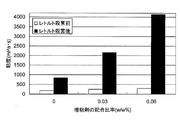
- the composition containing a fixed amount of water-absorbing dietary fiber and emulsifier shows the change in viscosity after retort sterilization of the composition when the amount of thickener added is changed.
- Fig. 4 shows the change in viscosity after retort sterilization of the composition when the homogenous processing pressure is changed in the presence of a certain amount of water-absorbing dietary fiber, thickener and emulsifier.
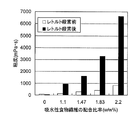
- the composition containing a fixed amount of emulsifiers shows the change in viscosity before and after retort sterilization of the composition when the amount of water-absorbing dietary fiber added is changed.
- the nutritional composition of the present invention is based on a new finding that a composition having a high viscosity can be obtained after heat treatment by using water-absorbing dietary fiber and / or starch that has not been pre-gelatinized.
- the dietary fiber refers to a substance in food that is not hydrolyzed by human digestive enzymes, and is classified into water-soluble dietary fiber and insoluble dietary fiber based on its affinity for water. Its origins include cell wall structural substances (cellulose, hemicellulose, insoluble pectin, lignin, chitin, etc.), non-constituent substances (water-soluble pectin, plant gum, adhesive, seaweed polysaccharides, chemically modified polysaccharides, etc.) Known (edited by Satoshi Inami et al., Dietary fiber, published by Daiichi Shuppan, 1982).
- the water-absorbing dietary fiber that can be used in the present invention refers to a dietary fiber having water-absorbing properties, and preferably has a property of increasing water-absorbing properties by heat treatment.
- water-absorbing dietary fiber is used in the nutritional composition of the present invention, free water in the composition decreases due to its water-absorbing action, so that the concentration of thickeners and the like in the solution portion in the composition is relatively increased. Become. As a result, the viscosity derived from the thickener or the like is increased.
- the viscosity is further increased by heat treatment.
- the water-absorbing property can be increased by heat treatment, such as starch, thickening polysaccharide, fibrous cellulose, crystalline cellulose, etc. that have not been pre-gelatinized. Other substances that increase may be used in combination.
- the heat treatment includes heat treatment at 70 ° C. or higher ⁇ several minutes or 80 ° C. or higher ⁇ several minutes or more in addition to heat sterilization described later.
- the water-absorbing dietary fiber of the present invention may be subjected to a heat treatment together with protein, lipid, sugar or the like.
- the protein, lipid, or carbohydrate may be added to the heat-sterilized protein, lipid, carbohydrate, or the like that is separately heat-treated.
- Insoluble dietary fiber can be preferably used as the water-absorbing dietary fiber of the present invention.
- the insoluble dietary fiber include cellulose, hemicellulose (xylan, mannan, galactan, glucan, glucomannan, xyloglucan, etc.), holocellulose, matrix polysaccharide, plant (vegetables (lettuce, celery, onion, burdock, radish, green peas) , Kanpyo, tomatoes, etc.), fruits (apples, bananas, etc.), cereals (barley, wheat, oats, corn, amaranth, etc.), potatoes (sweet potatoes, potatoes, konjac potatoes), beans (peas, soybeans, soybeans, Red beans, chickpeas, kidney beans, quail beans, mung beans, etc.), mushrooms (kikurage, shiitake, etc.), chestnuts, almonds, peanuts, sesame etc.
- insoluble fibers of dietary fibers derived from microorganisms, etc. and insoluble fibers derived from natural products Modified, partially decomposed or refined, chemically synthesized insoluble fiber, soy bran, wheat bran, barley bran, corn bran, oat bran, rye bran, pearl bran, rice bran, millet, millet, millet Cereal bran such as sorghum, cereal bran, legume bran, sesame bran, okara, etc.
- Suitable examples include insoluble fiber of soybean dietary fiber, soybean bran, etc. I can do things.
- the insoluble dietary fiber those from which hydrophobic components such as lignin have been removed, those having a large number of side chains, and those that are amorphous can be suitably used.
- the water-absorbing dietary fiber can be used alone or in combination, and a food containing a large amount of the water-absorbing dietary fiber or an additive containing a large amount of the water-absorbing dietary fiber may be used. Moreover, in this invention, you may use a part of other dietary fiber together with the said water absorbing dietary fiber.
- at least insoluble fiber of soybean dietary fiber and / or soybean bran may be included in the water-absorbent dietary fiber used in the composition of the present invention.
- the insoluble fiber of the soy dietary fiber used in the examples of the present invention can be obtained, for example, by drying the insoluble matter produced when the soybean is defatted and further extracted with water. It can also be obtained by drying okara.
- the total amount of fiber, the amount of water-soluble dietary fiber, and the amount of insoluble dietary fiber are 17.1 g / 100 edible portion, 1.8 g / 100 edible portion, and 15.3 g / 100 edible portion, respectively.
- the total amount of dietary fiber, water-soluble dietary fiber, and insoluble dietary fiber contained in okara are 9.7g / 100 edible part, 0.3g / 100 edible part, and 9.4g / 100 posible respectively.
- the total amount of dietary fiber, amount of water-soluble dietary fiber, and amount of insoluble dietary fiber contained in okara are 11.5g / 100 edible part, 0.4g / 100 edible part, 11.1g, respectively. / 100 edible part.
- the water-absorbing dietary fiber of the present invention does not contain water-soluble dietary fiber such as soybean thickening polysaccharide and indigestible dextrin.
- water-soluble dietary fiber such as soybean thickening polysaccharide and indigestible dextrin.
- a part of the water-soluble dietary fiber may be used together.
- “Fusuma” refers to the remainder of the cereal milled to make the grain.
- soybean bran is a residue produced when soybean is milled
- wheat bran is also called a wheat feed, and is a residue when wheat is milled to make flour.
- bran is sometimes called rice bran.
- Persimmon refers to parts such as pericarp, seed coat, and germ produced when grain is refined.
- bran is used synonymously with cocoon.
- bran is used for all grains, and is not limited to specific grains such as wheat, corn, oats and the like.
- bran examples include, but are not limited to, chemically synthesized edible insoluble fiber, soy bran, wheat bran, barley bran, corn bran, oat bran, rye bran, and barley bran.
- starch that has not been pre-gelatinized can be used instead of or together with the water-absorbing dietary fiber. It is known that starch that has not been pregelatinized in advance imparts viscosity to the aqueous solution and increases water absorption when heated in an aqueous solution.
- starch in a natural crystalline state is referred to as ⁇ -starch
- starch in a state where the hydrogen bonds between starch sugar chains are broken and sugar chains are freed is referred to as ⁇ -starch. It is known that starch is ⁇ -ized by breaking hydrogen bonds by heating, for example, by a heat treatment step.
- the nutritional composition of the present invention preferably does not contain starch that has been pregelatinized prior to heat treatment.
- the amount of starch that has not been pre-gelatinized for use in the nutritional composition of the present invention depends on the viscosity of the nutritional composition to be produced, the type and content of other ingredients such as thickeners and emulsifiers, and the homogenous treatment pressure. Although it can be adjusted as appropriate, 0.10 to 5.00% by weight (w / w%), 0.50 to 5.00% by weight (w / w%) with respect to the nutritional composition is preferable.
- the amount of starch that has not been pre-gelatinized and used is defined as “(lower limit value) to (upper limit value)”. Can be described.
- starch used in the present invention examples include wheat flour, rice flour, rye flour, corn starch, waxy corn starch, corn flour, potato starch, legume starch, sweet potato starch, tapioca starch, potato starch and sweet potato starch. If necessary, two or more kinds of the above starches may be combined, or modified starches may be used as long as they are not pregelatinized.
- the water-absorbing dietary fiber of the present invention and starch that has not been pre-gelatinized have high water absorption when heated. That is, these can also be collectively referred to as auxiliary agents that increase water absorption when heated.
- the nutritional composition of the present invention comprises an adjuvant that increases water absorption upon heating, selected from the group consisting of water-absorbing dietary fiber and pre-pregelatinized starch.
- the amount of water-absorbing dietary fiber and / or pre-pregelatinized starch used in the nutritional composition of the present invention depends on the viscosity of the nutritional composition to be produced, water-absorbing dietary fiber or starch that has not been pre-gelatinized. It can be adjusted as appropriate depending on the type, type and content of other ingredients such as food protein, thickener, emulsifier, etc., homogenous treatment pressure, etc. 0.10 to 3.00% by weight based on the nutritional composition w / w%), preferably 0.10 to 2.50% by weight (w / w%), preferably 0.10 to 2.20% by weight (w / w%), preferably 0.10 to 2.%.
- the amount of the water-absorbing dietary fiber to be used may be described as “(lower limit value) to (upper limit value)”. it can.
- the size of the dietary fiber that can be suitably used includes the viscosity of the nutritional composition to be produced, the type and content of the water-absorbing dietary fiber, the types of other ingredients such as food proteins, thickeners, and emulsifiers. It can be adjusted as appropriate depending on the content, homogenous treatment pressure, etc.
- the size of the water-absorbing dietary fiber in the dry state before absorbing water is a size that is sieved through 20 mesh and not sieved through 100 mesh. More preferably, a size that sifts 60 mesh and does not sift 100 mesh can be mentioned. The same applies to starch that has not been pre-gelatinized.
- Soy dietary fiber contains cellulose, hemicellulose, and the like, and water-soluble dietary fiber and insoluble dietary fiber exist depending on the degree of polymerization and the three-dimensional structure. Since water-soluble dietary fiber itself has a thickening viscosity, it has been put to practical use as a thickening stabilizer. On the other hand, the insoluble dietary fiber mainly composed of cellulose and hemicellulose hardly shows thickening itself.
- the insoluble dietary fibers of soybean dietary fiber those having a large tertiary structure are excellent in water absorption, and have the property of increasing their water absorption when heated. Soy bran is known as a material rich in insoluble dietary fiber of soy dietary fiber.
- thickeners also referred to as gelling agents, stabilizers, thickening stabilizers, and pastes
- examples of thickeners that can be used in the present invention include locust bean gum, ⁇ -carrageenan, ⁇ -carrageenan, ⁇ -carrageenan, carrageenan , Gelatin, low methoxyl pectin, high methoxyl pectin, pectin, tara gum, agar, low-strength agar, gellan gum, guar gum, xanthan gum, tamarind gum, propylene glycol, ethyl hydroxyethyl cellulose, carboxymethyl cellulose, etc.
- the thickener which has a polysaccharide as a main component can be mentioned.
- the thickener can be used alone or in combination of two or more.
- other thickeners may be used in combination with the thickener.
- carrageenan and / or low intensity agar may be included in the thickener used in the composition of the present invention.
- the amount of the thickener used in the nutritional composition of the present invention includes the viscosity of the nutritional composition to be produced, the type of thickener, water-absorbing dietary fiber and / or starch, emulsifier, etc. that have not been pre-gelatinized. It can be appropriately adjusted depending on the type and content of the components, the homogenous processing pressure, and the like.
- the lower limit amount is, for example, 0.01% by weight, 0.02% by weight, 0.05% by weight with respect to the nutritional composition. possible.
- the upper limit amount is, for example, 2.0% by weight, 1.0% by weight, or 0.5% by weight with respect to the nutritional composition.
- the amount of the thickener used can be described as “(lower limit value) to (upper limit value)”. Moreover, in this invention, it is not necessary to use a thickener.
- Carrageenan is a polysaccharide sulfate salt composed of galactose and anhydrogalactose, which is obtained by extraction and purification with water or an alkaline aqueous solution from all the algae of Ibaranori, Kirinsai, Ginnanso, Suginori and Tsunomatata (purified carrageenan). Also known as Carrageenan, Carrageenan, Carrageenan, Carrageenan. It can also be used as a Yukema powder or processed Yukema algae obtained by drying or alkali treatment followed by neutralization and drying treatment of all ginseng algae.
- ⁇ -, ⁇ -, and ⁇ -type carrageenans exist.
- ⁇ -carrageenan in which a part of the ⁇ -carrageenan molecule is substituted with ⁇ -carrageenan, and decomposed carrageenan used for other than food.
- ⁇ - and ⁇ -type carrageenans have the property of gelling, and the viscosity in aqueous solution is ⁇ -carrageenan ⁇ -carrageenan.
- Low-intensity agar is obtained by cleaving the agar component molecules by heat-treating the agar and adjusting the jelly strength (Nichikansui method) to 10 to 250 g / cm 2 at an agar concentration of 1.5%.
- the jelly strength is low.
- the low-intensity agar can be produced, for example, by the method described in Japanese Patent No. 3414954.
- the jelly strength (Niskansui method) is the maximum weight (in grams) that can withstand 20 seconds per 1 cm 2 of the surface of a gel that has been solidified by preparing a 1.5% solution of agar for 15 hours at 20 ° C. Say.
- emulsifiers examples include glycerol fatty acid esters (for example, pentaglycerol monolaurate, hexaglycerol monolaurate, decaglycerol monolaurate, tetraglycerol monostearate, decaglycerol monostearate, deca Glycerin distearate, diglycerin monooleate, decaglycerin monooleate, decaglycerin erucic acid ester, etc.), organic acids (acetic acid, lactic acid, citric acid, succinic acid, diacetyltartaric acid etc.) monoglyceride, polyglycerin fatty acid ester, propylene glycol fatty acid Esters, polyglycerin condensed ricinoleic acid esters, sorbitan fatty acid esters, sucrose fatty acid esters (eg sucrose erucic acid ester, sucrose stearate ester, sucrose
- the said emulsifier can be used 1 type or in combination of multiple types, and you may use it combining a hydrophilic emulsifier and another emulsifier.
- other emulsifiers other than the said emulsifier may be contained in the said emulsifier in part, for example in the quantity smaller than the said emulsifier.
- at least succinic acid monoglyceride and / or diacetyltartaric acid monoglyceride may be included in the emulsifier used in the composition of the present invention, and at least organic acid monoglyceride may be included in the emulsifier used in the composition of the present invention.
- the amount of the emulsifier added can be appropriately adjusted depending on the viscosity of the nutritional composition to be produced, the type of emulsifier, the content of other raw materials such as a water-absorbing dietary fiber and a thickener, the homogeneous treatment pressure, and the like.
- the lower limit amount is, for example, 0.02% by weight, 0.05% by weight, 0.10% by weight, 0.55% by weight, 0% with respect to the nutritional composition. .60% by weight and may be 0.70% by weight.
- the upper limit amount is, for example, 2.0% by weight, 1.5% by weight, or 1.0% by weight with respect to the nutritional composition.
- the amount of the emulsifier to be used can be described as “(lower limit value) to (upper limit value)”.
- Monoglyceride is a fatty acid bonded to one hydroxyl group of glycerin.
- the organic acid monoglyceride refers to an organic acid ester-bonded to the hydroxyl group of the monoglyceride.
- Diacetyl tartaric acid monoglyceride is a compound in which a hydroxyl group of tartaric acid is acetylated and ester-bonded to the hydroxyl group of the monoglyceride. Also known as TMG, DATEM (Diacetyl Tartaric (Acid) ester of monoglyceride). It may be used for O / W type emulsification.
- the succinic acid monoglyceride is obtained by esterifying succinic acid to the hydroxyl group of the monoglyceride. Also known as SMG (Succinic Acid esters of monoglyceride). It may be used for O / W type emulsification.
- examples of fatty acids constituting the organic acid monoglyceride include saturated fatty acids and unsaturated fatty acids such as caprylic acid, capric acid, lauric acid, myristic acid, palmitic acid, stearic acid, and oleic acid. It is not limited to examples.
- food protein can be used for all or part of the protein.
- food proteins that can be used in the present invention include milk-derived proteins (casein, sodium caseinate, MPC (Milk Protein Concentrate), ⁇ -casein, ⁇ -casein, ⁇ -casein, etc., and their degradation products), Soybean-derived proteins (glycinin, ⁇ -conglycinin, etc.), wheat-derived proteins (gluten, glutazine, glutelin, etc.), livestock meat-derived proteins (muscle structural proteins, myosin, actin, etc.), fish meat (muscle fiber protein, actomyosin, myosin, actin, etc.) ), Chicken egg-derived proteins (egg albumin, egg yolk lipoprotein, etc.), pork skin-derived proteins (gelatin etc.) and the like, and a preferred example is sodium caseinate.
- milk-derived proteins casein, sodium caseinate, MPC (Milk Protein Concentrate), ⁇ -casein, ⁇ -casein, ⁇ -case
- the food protein can be used alone or in combination.
- other food proteins may be used in combination with the protein.
- at least sodium caseinate may be included in the food protein used in the composition of the present invention.
- the amount of food protein used in the nutritional composition of the present invention is the viscosity, pH, ionic strength, temperature, type of food protein, type of other ingredients such as dietary fiber, thickener, emulsifier, etc.
- the content can be appropriately adjusted depending on the content, the homogenous treatment pressure, etc., but if it is mentioned, it is 1.0 to 12.0% by weight (w / w%), preferably 2.0 to 10.0 with respect to the nutritional composition. % By weight, more preferably 3.0 to 8.0% by weight can be used.
- the nutritional composition of the present invention can contain saccharides.
- sugars that can be used in the present invention include polysaccharides such as starch, dextrin, cellulose, glucomannan and glucan, chitins, fructooligosaccharides, galactooligosaccharides, mannan oligosaccharides, low molecular weight polysaccharides, low molecular weight dextrins. , Low molecular cellulose, low molecular glucomannan and the like. For example, DE values of 12 to 50, 15 to 40, and 20 to 40 can be used.
- the origin of saccharides may be any of plants, animals, microorganisms, etc., and may be chemically synthesized.
- plants for example, it is derived from plants (potato, rice, sweet potato, corn, wheat, beans (boiled beans, mung beans, red beans, etc.), cassava, animals (crustaceans, insects, shellfish, etc.), microorganisms (mushrooms, fungi, etc.) Saccharides may be used as they are, or a part or the whole of which may be decomposed, modified, etc. by means of enzyme reaction, reaction using microorganisms, heat, chemical reaction, or the like.
- the amount and type of saccharides used in the nutritional composition of the present invention can be appropriately adjusted and selected depending on the viscosity of the nutritional composition to be produced, the type and content of other raw materials such as emulsifiers, thickeners, proteins and lipids. it can.
- Dextrin is a product obtained by decomposing starch with heat, acid, enzyme, etc. and purifying it if necessary. Also known as British gum, starch gum, or Dextrine.
- Various dextrins exist depending on the production method and the degree of decomposition. Examples of various dextrins include maltodextrin, indigestible dextrin (water-soluble dietary fiber), cyclodextrin, solubilized starch, and branched corn syrup.
- Dextrin can be evaluated by dextrose equivalent (DE). A person skilled in the art can determine the DE in a conventional manner. For example, the dextrose equivalent of maltodextrin is 3 to 20.
- the dextrose equivalent (DE) of the dextrin used in the present invention is usually 12 to 50, preferably 15 to 40, more preferably 20 to 40. This dextrin may be used in combination with other dextrin having DE.
- the nutritional composition of the present invention comprises water, protein, carbohydrates, lipids, vitamins in addition to the water-absorbing dietary fiber and / or starch, thickener, emulsifier, food protein, and saccharide not previously pregelatinized.
- Minerals, organic acids, organic bases, fruit juices, flavors, pH regulators and the like can be used.
- proteins include milk-derived protein, protein enzyme degradation product, whole milk powder, skim milk powder, casein, casein degradation product, whey powder, whey protein, whey protein concentrate, whey protein isolate, whey protein hydrolyzate, ⁇ -Casein, ⁇ -casein, ⁇ -casein, ⁇ -lactoglobulin, ⁇ -lactalbumin, lactoferrin, soy protein, egg protein, meat protein, and other degradation products thereof; butter, whey minerals, cream, Examples include various milk-derived components such as whey, non-protein nitrogen, sialic acid, phospholipid, and lactose. It may contain peptides such as casein phosphopeptides and lysines and amino acids.
- saccharide examples include saccharides, processed starch (in addition to text phosphorus, soluble starch, British starch, oxidized starch, starch ester, starch ether, etc.), dietary fiber, and the like.
- lipid examples include animal oils such as lard, fish oil, etc., fractionated oils, hydrogenated oil, transesterified oil, etc .; palm oil, safflower oil, corn oil, rapeseed oil, coconut oil, fractionated oils thereof, Examples include vegetable oils such as hydrogenated oils and transesterified oils.
- vitamins include vitamin A, carotene, vitamin B group, vitamin C, vitamin D group, vitamin E, vitamin K group, vitamin P, vitamin Q, niacin, nicotinic acid, pantothenic acid, biotin, inositol, choline.
- minerals include calcium, potassium, magnesium, sodium, copper, iron, manganese, zinc, and selenium.
- organic acid include malic acid, citric acid, lactic acid, tartaric acid, erythorbic acid, and the like. These components can be used in combination of two or more, and synthetic products and / or foods containing a large amount thereof may be used.
- the amount of heat of the nutritional composition of the present invention can be adjusted by appropriately adding proteins, lipids and carbohydrates.
- the nutritional composition of the present invention can contain, for example, 3-10 g / 100 g of protein, preferably 4-8 g / 100 g, more preferably 5-7 g / 100 g.
- the nutritional composition of the present invention can contain, for example, 2-10 g / 100 g of lipid, preferably 3-8 g / 100 g, more preferably 3-6 g / 100 g.
- the nutritional composition of the present invention can contain, for example, 13 to 30 g / 100 g of carbohydrate, preferably 15 to 27 g / 100 g, more preferably 20 to 25 g / 100 g.
- the nutritional composition of the present invention can contain the above-mentioned amounts of protein, lipid, and carbohydrate while having the above-mentioned predetermined fluidization characteristics.
- the specific gravity of the nutritional composition of the present invention can be adjusted depending on the application.
- the specific gravity of the nutritional composition of the present invention can be, for example, 1.06 or more, 1.07 or more, 1.08 or more, 1.09 or more, 1.1 or more, less than 1.5, less than 1.4, less than 1.3, or less than 1.2, for example, 1.06 to 1.5, 1.07 to 1.5, 1.08 to 1.4, 1.09 to 1.3, 1.1 to 1.2, 1.1 to 1.15, 1.12 to 1.15, 1.13 to 1.15, preferably 1.135 to 1.145.
- a person skilled in the art can appropriately adjust each component to set the specific gravity of the composition.
- the specific gravity may vary depending on the temperature, for the sake of convenience, the specific gravity referred to in this specification means a value at 20 ° C.
- the specific gravity of the composition can be calculated from the weight and volume of each component, or can be measured by a conventional method such as using a density hydrometer.
- the nutritional composition suitably contains protein, lipid, carbohydrate, etc., and the specific gravity of the composition is 1.06 or more, such as 1.06 to 1.5, such as 1.07 to 1.5, such as 1.08 to 1.4, such as 1.09 to A composition that is 1.3, such as 1.1 to 1.2, such as 1.1 to 1.15, such as 1.12 to 1.15, such as 1.13 to 1.15, 1.135 to 1.145.
- Homogenization means homogenization by thoroughly mixing each prepared component, and mechanically refining fat globules and coarse particles of other components to prevent the rising and aggregation of fat and the like, It means making into a uniform emulsified state.
- the homogenization pressure at the time of homogenization is increased, the viscosity after the heat treatment can be lowered, and the generation of sediment (sedimented particles) can be reduced. That is, it is possible to control the viscosity of the nutritional composition and the generation of sediment by adjusting the homogeneous treatment pressure.
- the homogenization is usually performed by stirring the adjustment liquid under a predetermined pressure using a conventional homogenizer.
- the homogenization treatment can be preferably carried out at a homogeneous treatment pressure of 10, 25, 40, 60, 100 MPa, etc., but the treatment pressure is not limited to these examples. That is, in addition to the use of the thickener and the emulsifier, the viscosity of the composition after heat treatment and storage at a temperature below room temperature for a predetermined period, for example, 7 days, by homogenization treatment at a homogenization treatment pressure of 10 to 100 MPa ( B-type viscometer, 20 ° C., 12 rpm) can be adjusted to 300 to 6700 mPa ⁇ s, for example, 400 to 6700 mPa ⁇ s.
- Homogenization treatment after mixing raw materials can be performed at any suitable temperature.
- the homogenization treatment can be performed at a room temperature of about 20 ° C., for example, and higher temperatures, for example, 20 to 85 ° C., such as 45 to 80 ° C., preferably 45 to 70 ° C., more preferably 50 ° C. to 60 ° C. It can also be carried out at a temperature around °C.
- the homogenization treatment is performed at a temperature of about 50 ° C. to 60 ° C.
- the viscosity of the composition in the homogenization step (B-type viscometer, homogenization temperature, 12 rpm) can be preferably suppressed to about 5 to 300 mPa ⁇ s.
- heat treatment or heat sterilization is performed.
- heat sterilization conditions general food sterilization conditions can be used, and heat sterilization can be performed using a conventional apparatus. For example, sterilization of 62-65 ° C x 30 minutes, 72 ° C or more x 15 seconds or more, 72 ° C or more x 15 minutes or more, or 120-150 ° C x 1-5 seconds, or 121-124 ° C x 5-20 minutes, 105
- sterilization at ⁇ 140 ° C. retort (pressure heating) sterilization, high-pressure steam sterilization, etc. can be used, it is not limited to these examples.
- the heat sterilization can be preferably performed under pressure.
- the viscosity of the nutritional composition can be increased.
- sterilization and sterilization can be used synonymously.
- retort sterilization can be used as one aspect
- the nutritional composition of the present invention preferably has a viscosity of 5 before mixing with water-absorbing dietary fiber and / or starch that has not been pre-gelatinized, a thickener, an emulsifier, food protein, and the like. 810 mPa ⁇ s, preferably 5 to 300 mPa ⁇ s, preferably 10 to 200 mPa ⁇ s, more preferably 20 to 100 mPa ⁇ s.
- the process from preparation of raw materials to filling of the container has a viscosity that is easy to manufacture. Can be maintained.
- the viscosity is a value obtained by measuring the viscosity at 45 to 85 ° C., preferably 45 to 70 ° C., more preferably 50 to 60 ° C. using a B-type viscometer under the condition of 12 rpm.
- the viscosity of the mixed solution before heat treatment at 20 ° C. (B-type viscometer, 12 rpm12) is 5 to 810 mPa ⁇ s, preferably 5 to 400 mPa ⁇ s, preferably 50 to 300 mPa ⁇ s, more preferably 100 to 300 mPa. ⁇ S.
- the viscosity before heat treatment is 5 to 300 mPa ⁇ s
- the nutritional composition of the present invention gradually increases in viscosity (B-type viscometer, 20 ° C., 12 rpm) when stored at a temperature below room temperature after the heat treatment, and the viscosity is almost stabilized after a certain period of time.
- the period of storage of the composition is from several hours to half a day, 1 day, 2 days, 3 days, 4 days, 5 days, 6 days, 7 days, 10 days, 14 days, 20 days, depending on the desired viscosity. 30 days, 40 days, 50 days, 60 days, 70 days, 80 days, 90 days, etc. can be selected as appropriate.
- the storage period after the heat treatment of the composition of the present invention can be, for example, 1 to 90 days, preferably 5 to 60 days, more preferably 7 to 30 days, and further preferably 7 days.
- the nutritional composition of a preferred embodiment of the present invention is substantially stable in viscosity (B-type viscometer, 20 ° C., 12 rpm) after about 7 days (after about 1 week) when stored at a temperature below room temperature after heat treatment. .
- B-type viscometer 20 ° C., 12 rpm
- a person skilled in the art can appropriately determine the time until the viscosity of the composition after the heat treatment becomes constant using a conventional method.
- the viscosity of the nutritional composition of the present invention after being heat-treated and further stored at a temperature of room temperature (15 to 25 ° C.) or lower for a predetermined period, for example, 7 days (B-type viscometer, 20 ° C., 12 rpm) Is 300 mPa ⁇ s or more, 400 mPa ⁇ s or more, 500 mPa ⁇ s or more, 600 mPa ⁇ s or more, 700 mPa ⁇ s or more, 800 mPa ⁇ s or more, 900 mPa ⁇ s or more, 1000 mPa ⁇ s or more, 1200 mPa ⁇ s or more, less than 6700 mPa ⁇ s, less than 6000 mPa ⁇ s, less than 5000 mPa ⁇ s, less than 4000 mPa ⁇ s, less than 3000 mPa ⁇ s, less than 2000 m
- the viscosity of the nutritional composition of the present invention after heat treatment and storage for a predetermined period at a temperature below room temperature is, for example, 300 to 6700 ⁇ mPa ⁇ s, preferably 400 to 6700 ⁇ mPa ⁇ s, preferably 400 to 2000 ⁇ mPa ⁇ s. s, more preferably 500 to 1500 ⁇ mPa ⁇ s.
- Storage of the nutritional composition of the present invention after heat treatment is preferably performed at 0 ° C. to room temperature or lower.
- syringe injection which is a problem in the administration of gastroesophageal reflux, which is a problem when administering a low-viscosity nutritional composition by tube, or a semi-solid nutritional composition having a high viscosity (for example, 7000 to 20000 mPa ⁇ s) It is possible to eliminate the complications such as simple administration.
- the viscosity is approximately the same as that of a semisolid liquid food of 4000 ⁇ mPa ⁇ s (B-type viscometer, 20 ° C., It is also possible to obtain a composition of 12 rpm).
- This nutritional composition can be used in various containers used for liquid food and oral and tube feeding.
- a flexible container so-called soft bag, nutrition bag, etc. having an outlet used for liquid food and oral / tube feeding can be mentioned.
- the nutritional composition used for the flexible container (what is called a thiapack) which has an outflow port used for oral administration can also be obtained by adjusting a viscosity suitably.
- the viscosity of the composition (when measured at a B-type viscometer, 20 ° C., 12 rpm) is compared with that before the heat treatment by heat treatment and storage for a predetermined period of time at room temperature or lower, for example, 7 days. 1.5 to 20 times, preferably 2 to 12 times, more preferably 3 to 10 times.
- the viscosity of the nutritional composition of the present invention after being heat-treated and further stored at a temperature of room temperature or lower for a predetermined period is 300 to 6700 mPa ⁇ s
- this is not lower than the lower limit and lower than the upper limit. It shall mean a range. That is, 300 to 6700 ⁇ mPa ⁇ s means not less than 300 ⁇ mPa ⁇ s and less than 6700 ⁇ mPa ⁇ s.
- the viscosity of the nutritional composition of the present invention can be measured by a conventional method.
- the viscosity can be measured using a B-type viscometer (20 ° C. to 85 ° C., 12 rpm).
- the viscosity (20 ° C., 12 rpm) of the nutritional composition of the present invention is, for example, “special permission label for food for special use: test method for food for elderly people” 3 viscosity (“Handling of labeling permission for food for elderly people” (Heisei This can be done in accordance with February 23, 2006 in accordance with the notification of the Director of the Newly Developed Food and Health Measures Department, Health and Welfare Bureau, Ministry of Health and Welfare No. 15). Specifically, using a B-type rotational viscometer, the value obtained by rotating the rotor at 12 rpm, reading the reading after 2 minutes, and multiplying the value by the coefficient is expressed in mPa ⁇ s. The measurement is performed at 20 ⁇ 2 ° C.
- the viscosity during the production process may be appropriately or continuously measured using an inline viscometer such as a torsional vibration viscometer, an ultrasonic viscometer, a rotary viscometer, or the like.
- an inline viscometer such as a torsional vibration viscometer, an ultrasonic viscometer, a rotary viscometer, or the like.
- the nutritional composition of the present invention is heat-treated due to the effects of water-absorbing dietary fiber and / or starch that has not been pre-gelatinized, and is further stored at a temperature of room temperature or lower for a predetermined period, for example, 1 to 90 days, for example, 7 days. It has the effect of increasing the viscosity after the treatment. Therefore, compared with a composition whose viscosity is mainly increased by a thickener, it is possible to keep the viscosity before heat treatment low. That is, the present invention provides a nutritional composition that is easy to manufacture and easy to administer by tube.
- the effect of water-absorbing dietary fiber and / or starch that has not been pre-gelatinized is the viscosity after heat treatment and storage at a temperature of room temperature or lower for a predetermined period, for example, 1 to 90 days, for example, 7 days ( B type viscometer, 20 ° C, 12rpm) before producing a nutritional composition with a viscosity of 300-6700 mPa ⁇ s, compared to the viscosity of the nutritional composition, which is mainly increased in viscosity by a thickener.
- the viscosity of the composition is mainly increased by a thickener.
- the nutritional composition can be as high as or higher than the nutritional composition with increased viscosity.
- the nutritional composition of the present invention is appropriately heat-treated by adjusting the mixing ratio of the water-absorbing dietary fiber contained therein and / or starch, thickener and emulsifier that have not been pre-gelatinized, and then at room temperature or lower.
- a nutritional composition having a predetermined viscosity can be obtained after storage at temperature for a predetermined period, for example, 1 to 90 days, for example, 7 days. This viscosity is affected by factors such as the content and type of protein and fat contained in the nutritional composition, fat particle size before sterilization, etc., so water-absorbing dietary fiber and / or starch that has not been pre-gelatinized, thickened
- the mixing ratio of the agent and the emulsifier can be adjusted as appropriate.
- the nutritional composition of the present invention can have a sufficient viscosity by adjusting the amount of water-absorbing dietary fiber used and / or starch that has not been pre-gelatinized, and the like. It can also be used for flexible containers having outlets.
- a flexible container having an outflow port used for oral administration is a so-called cheer pack, which is provided with an outflow port in a flexible bag-like container body, for example, a cylindrical spout fixed Say.
- Other names include an aluminum pouch with an outlet, a spout of a flexible container, a flexible bag-like container having a mouth with a cap, and a pouch container with a stopper.
- Example 1 Effect of Thickener Addition Amount on Composition Viscosity
- a certain amount of water-absorbing dietary fiber and emulsifier are added at different blending ratios of the thickener and given to the viscosity of the composition. The effect was tested.
- the raw materials are agitated and mixed according to the composition table in Table 1 to prepare various nutritional compositions (Production Examples 1 to 3), homogenized under conditions of 50 to 60 ° C. and a homogenization pressure of 20 MPa, and further 50 to 60 Homogenization was performed under the conditions of °C and homogenization pressure 30MPa.
- the specific gravity is a value actually measured at 20 ° C. by a density specific gravity meter.
- the viscosity of this nutritional composition was measured [before retort sterilization], then the nutritional composition was filled in a container and sealed, and retort sterilization was performed at 121 to 123.5 ° C. for 5 to 20 minutes. After storing the nutritional composition after retort sterilization at 15 ° C. for 1 week, the viscosity was measured again [after retort sterilization]. The viscosity was measured using a B-type viscometer under the conditions of 12 rpm and 20 ° C.
- the milk-derived protein used was a combination of MPC 1.9% by weight, sodium caseinate 3.8% by weight and milk protein degradation product 1.5%, the water-absorbing dietary fiber was insoluble fiber of soybean dietary fiber, and the emulsifier was diacetyltartaric acid monoglyceride (DATEM), the thickener was carrageenan.
- DATEM diacetyltartaric acid monoglyceride
- the compositions of Production Examples 1 to 3 are shown in Table 1-2.
- the viscosity after retort sterilization of the composition to which an emulsifier and a thickener are added is increased by about 8.4 to 13.4 times before retort sterilization, and the blending ratio of thickener
- the viscosities before retort sterilization were not significantly different depending on the blending ratio of the thickener.
- the composition after retort sterilization can be obtained even if there is no thickener or only a small amount of thickener. It was found that the viscosity of can be dramatically increased.
- Example 2 Effect of Homogeneous Processing Pressure on Viscosity of Composition, etc. Effect of adding a certain amount of thickener and emulsifier to a nutritional composition, changing the homogenization processing pressure, and performing homogenization treatment on the viscosity of the composition was tested.
- the raw materials were stirred and mixed according to the recipe of Table 2 to prepare a nutritional composition (Production Example 4), and homogenized under conditions of 50 to 60 ° C. and a homogenization pressure of 20, 40, or 60 MPa.
- As the specific gravity an actual measurement value at 20 ° C. by a density specific gravity meter is described.
- the nutritional composition was filled in a container and sealed, and retort sterilized under conditions of 121 to 123.5 ° C.
- Example 3 Effect of water-absorbing dietary fiber addition amount on the viscosity of the composition Add a certain amount of emulsifier and water-absorbing dietary fiber to the nutritional composition without using a thickener, The effect on the viscosity of the composition was tested.
- the raw materials are stirred and mixed according to the composition table in Table 3 to prepare various nutritional compositions (Production Example 1, Examples 1 to 4 and Comparative Example 1), and homogeneous under the conditions of 50 to 60 ° C. and a homogeneous processing pressure of 20 MPa. Then, homogenization was further performed under the conditions of 50 to 60 ° C. and a homogenization pressure of 30 MPa.
- As the specific gravity an actual measurement value at 20 ° C. by a density specific gravity meter is described.
- the viscosity of this nutritional composition was measured [before retort sterilization], then the nutritional composition was filled in a container and sealed, and retort sterilization was performed at 121 to 123.5 ° C. for 5 to 20 minutes. After storing the nutritional composition after retort sterilization at 15 ° C. for 1 week, the viscosity was measured again [after retort sterilization]. The viscosity was measured using a B-type viscometer under the conditions of 12 rpm, 20 ° C. or 50 ° C.
- the milk-derived protein used was a combination of MPC 1.9% by weight, casein sodium 3.8% by weight and milk protein degradation product 1.5%
- the water-absorbing dietary fiber was an insoluble fiber of soybean dietary fiber
- the emulsifier was diacetyl. It was tartaric acid monoglyceride (DATEM).
- DATEM tartaric acid monoglyceride
- the viscosity after retort sterilization of the composition to which the water-absorbing dietary fiber was added increased to about 5.9 to 8.2 times that before retort sterilization.
- the viscosity of the composition after retort sterilization showed a higher value when the blending ratio of the water-absorbing dietary fiber was higher.
- the viscosity of 6610 mPas (20 ° C.) is remarkably high after retort sterilization without using any thickener.
- a composition was obtained.
- the viscosity (50 degreeC) before the retort sterilization of Example 1 and Example 2 was 300 mPa * s (50 degreeC) and 160 mPa * s (50 degreeC), respectively.
- Example 4 Pre-pregelatinized starch A predetermined amount of non-pregelatinized starch was added to the nutritional composition to test its effect on the viscosity of the composition.
- the raw materials are stirred and mixed to prepare various nutritional compositions (formulation 3, formula 4), and homogenized at 50-60 ° C and a homogenization pressure of 20 MPa. Homogeneous treatment was performed at 50-60 ° C. and 30 MPa.
- As the specific gravity an actual measurement value at 20 ° C. by a density specific gravity meter is described.
- the viscosity of this nutritional composition was measured [before retort sterilization], then the nutritional composition was filled in a container and sealed, and retort sterilization was performed at 121 to 123.5 ° C. for 5 to 20 minutes. After storing the nutritional composition after retort sterilization at 15 ° C. for 3 days, the viscosity was measured again [after retort sterilization]. The viscosity was measured using a B-type viscometer under the conditions of 12 rpm, 20 ° C. or 50 ° C.
- the starch not pre-gelatinized used in this example is waxy corn starch (trade name Suehiro 200, manufactured by Oji Corn Starch Co., Ltd.), milk-derived protein is MPC 1.9% by weight, casein sodium 3.7% by weight, and milk. Concomitant use of 1.5% protein degradation product, the emulsifier was diacetyltartaric acid monoglyceride (DATEM), and no thickener was used.
- DATEM diacetyltartaric acid monoglyceride
- Table 4-2 The compositions of Formulation 3 and Formulation 4 are shown in Table 4-2.
- Table 4-1 shows the results of viscosity measurements before and after heat sterilization.
- the nutritional compositions of Formulation 3 and Formulation 4 significantly increased in viscosity before and after heat sterilization.
- the viscosity increased about 24 times before and after heat sterilization.
Landscapes
- Health & Medical Sciences (AREA)
- Life Sciences & Earth Sciences (AREA)
- Chemical & Material Sciences (AREA)
- Polymers & Plastics (AREA)
- Food Science & Technology (AREA)
- Engineering & Computer Science (AREA)
- Nutrition Science (AREA)
- Mycology (AREA)
- Medicinal Chemistry (AREA)
- Veterinary Medicine (AREA)
- General Health & Medical Sciences (AREA)
- Animal Behavior & Ethology (AREA)
- Epidemiology (AREA)
- Pharmacology & Pharmacy (AREA)
- Public Health (AREA)
- Pediatric Medicine (AREA)
- Dispersion Chemistry (AREA)
- Inorganic Chemistry (AREA)
- Coloring Foods And Improving Nutritive Qualities (AREA)
- Jellies, Jams, And Syrups (AREA)
- Grain Derivatives (AREA)
Abstract
La présente invention concerne un aliment liquide pouvant être utilisé dans le cadre de traitements par perfusion et présentant une viscosité préférée d'un point de vue physiologique par rapport à un aliment liquide très peu visqueux. L'invention concerne, donc, une composition nutritionnelle à base de fibres alimentaires absorbant l'eau et d'amidon n'ayant pas été soumis à une gélatinisation. La viscosité de ladite composition nutritionnelle est préservée lors du processus de transformation, très simple, comprenant des étapes allant de la préparation des matières premières au remplissage des flacons avec ladite composition nutritionnelle. Ladite composition nutritionnelle présente une viscosité adaptée aux récipients souples dotés d'un orifice servant à l'administration par sonde au goutte-à-goutte, ou à l'administration par voie orale, après traitement thermique.
Priority Applications (3)
| Application Number | Priority Date | Filing Date | Title |
|---|---|---|---|
| JP2013515130A JP6084159B2 (ja) | 2011-05-13 | 2012-05-11 | 粘性を有する栄養組成物 |
| SG2013083860A SG194925A1 (en) | 2011-05-13 | 2012-05-11 | Viscous nutritional composition |
| CN201280023361.7A CN103533852B (zh) | 2011-05-13 | 2012-05-11 | 具有粘性的营养组合物 |
Applications Claiming Priority (4)
| Application Number | Priority Date | Filing Date | Title |
|---|---|---|---|
| JP2011-108854 | 2011-05-13 | ||
| JP2011108857 | 2011-05-13 | ||
| JP2011-108857 | 2011-05-13 | ||
| JP2011108854 | 2011-05-13 |
Publications (1)
| Publication Number | Publication Date |
|---|---|
| WO2012157574A1 true WO2012157574A1 (fr) | 2012-11-22 |
Family
ID=47176892
Family Applications (1)
| Application Number | Title | Priority Date | Filing Date |
|---|---|---|---|
| PCT/JP2012/062189 Ceased WO2012157574A1 (fr) | 2011-05-13 | 2012-05-11 | Composition nutritionnelle visqueuse |
Country Status (5)
| Country | Link |
|---|---|
| JP (3) | JP6084159B2 (fr) |
| CN (1) | CN103533852B (fr) |
| SG (2) | SG194925A1 (fr) |
| TW (1) | TWI615097B (fr) |
| WO (1) | WO2012157574A1 (fr) |
Cited By (1)
| Publication number | Priority date | Publication date | Assignee | Title |
|---|---|---|---|---|
| JPWO2019188788A1 (ja) * | 2018-03-29 | 2021-03-25 | 不二製油株式会社 | 大豆ペースト状食品乃至ゲル状食品の製造方法 |
Families Citing this family (4)
| Publication number | Priority date | Publication date | Assignee | Title |
|---|---|---|---|---|
| JP6582304B1 (ja) * | 2018-04-06 | 2019-10-02 | 株式会社Mizkan Holdings | 微粒子複合体含有組成物及びその製造法 |
| JP6842185B2 (ja) * | 2018-07-17 | 2021-03-17 | 有限会社粉川 | 吸水・吸油剤及びその製造方法 |
| JP7524490B2 (ja) * | 2022-03-31 | 2024-07-29 | ニュートリー株式会社 | 液状栄養組成物および包装体 |
| KR102745552B1 (ko) * | 2023-11-20 | 2024-12-23 | 강시헌 | 인삼, 알지네이트 및 젤라틴을 주성분으로 하는 유동식 및 그 제조 방법 |
Citations (5)
| Publication number | Priority date | Publication date | Assignee | Title |
|---|---|---|---|---|
| JP2004065179A (ja) * | 2002-08-08 | 2004-03-04 | Ezaki Glico Co Ltd | α化されていないでん粉を含むペースト状調味ソースの製造方法 |
| JP2010104307A (ja) * | 2008-10-31 | 2010-05-13 | House Foods Corp | 粘性を有する流動状食品 |
| JP2011004702A (ja) * | 2009-06-29 | 2011-01-13 | Asahi Kasei Pharma Kk | 食物繊維含有栄養組成物 |
| JP2011120571A (ja) * | 2009-11-13 | 2011-06-23 | Q P Corp | 水中油型乳化状調味料及びその製造方法 |
| WO2012086593A1 (fr) * | 2010-12-22 | 2012-06-28 | 株式会社明治 | Composition nutritionnelle visqueuse |
Family Cites Families (11)
| Publication number | Priority date | Publication date | Assignee | Title |
|---|---|---|---|---|
| JPS6075255A (ja) * | 1983-09-29 | 1985-04-27 | Kanegafuchi Chem Ind Co Ltd | ペ−スト状カレ−ル−及びその製造法 |
| US5229136A (en) * | 1992-05-21 | 1993-07-20 | Clintec Nutrition Co. | Low caloric density enteral formulation designed to reduce diarrhea in tube-fed patients |
| DK0689770T3 (da) * | 1994-06-29 | 2001-03-26 | Aqualon Co | Sammensætning til regulering af flydende levnedsmidlers viskositet |
| JPH08214813A (ja) * | 1995-02-13 | 1996-08-27 | Ii P D:Kk | 脱脂おから加工品及びその製造方法 |
| JP2002051755A (ja) * | 2000-05-31 | 2002-02-19 | Dainippon Ink & Chem Inc | おから飲料及び該飲料の製造方法 |
| JP2002218933A (ja) * | 2001-01-25 | 2002-08-06 | Mitsukan Group Honsha:Kk | オカラ入り豆乳とその製造法並びにその利用 |
| US6989166B2 (en) * | 2001-12-20 | 2006-01-24 | N.V. Nutricia | Soft drink replacer |
| JP2004065175A (ja) * | 2002-08-08 | 2004-03-04 | Ezaki Glico Co Ltd | 油脂、でん粉を含むペースト状調味ソースの製造方法 |
| JP2006230274A (ja) * | 2005-02-24 | 2006-09-07 | Kagoshima Univ | おからペーストの製造方法 |
| JP2007289164A (ja) * | 2006-03-30 | 2007-11-08 | Nof Corp | 流動食の製造方法 |
| JPWO2009096579A1 (ja) * | 2008-02-01 | 2011-05-26 | 味の素株式会社 | 高血糖抑制用栄養組成物 |
-
2012
- 2012-05-11 WO PCT/JP2012/062189 patent/WO2012157574A1/fr not_active Ceased
- 2012-05-11 SG SG2013083860A patent/SG194925A1/en unknown
- 2012-05-11 CN CN201280023361.7A patent/CN103533852B/zh active Active
- 2012-05-11 SG SG10201610012PA patent/SG10201610012PA/en unknown
- 2012-05-11 TW TW101116958A patent/TWI615097B/zh active
- 2012-05-11 JP JP2013515130A patent/JP6084159B2/ja active Active
-
2016
- 2016-10-28 JP JP2016212075A patent/JP6367892B2/ja active Active
-
2018
- 2018-07-05 JP JP2018127932A patent/JP2018171068A/ja active Pending
Patent Citations (5)
| Publication number | Priority date | Publication date | Assignee | Title |
|---|---|---|---|---|
| JP2004065179A (ja) * | 2002-08-08 | 2004-03-04 | Ezaki Glico Co Ltd | α化されていないでん粉を含むペースト状調味ソースの製造方法 |
| JP2010104307A (ja) * | 2008-10-31 | 2010-05-13 | House Foods Corp | 粘性を有する流動状食品 |
| JP2011004702A (ja) * | 2009-06-29 | 2011-01-13 | Asahi Kasei Pharma Kk | 食物繊維含有栄養組成物 |
| JP2011120571A (ja) * | 2009-11-13 | 2011-06-23 | Q P Corp | 水中油型乳化状調味料及びその製造方法 |
| WO2012086593A1 (fr) * | 2010-12-22 | 2012-06-28 | 株式会社明治 | Composition nutritionnelle visqueuse |
Cited By (3)
| Publication number | Priority date | Publication date | Assignee | Title |
|---|---|---|---|---|
| JPWO2019188788A1 (ja) * | 2018-03-29 | 2021-03-25 | 不二製油株式会社 | 大豆ペースト状食品乃至ゲル状食品の製造方法 |
| JP2023029581A (ja) * | 2018-03-29 | 2023-03-03 | 不二製油株式会社 | 大豆ペースト状食品乃至ゲル状食品の製造方法 |
| JP7279708B2 (ja) | 2018-03-29 | 2023-05-23 | 不二製油株式会社 | 大豆ペースト状食品乃至ゲル状食品の製造方法 |
Also Published As
| Publication number | Publication date |
|---|---|
| TWI615097B (zh) | 2018-02-21 |
| SG194925A1 (en) | 2013-12-30 |
| JPWO2012157574A1 (ja) | 2014-07-31 |
| JP6367892B2 (ja) | 2018-08-01 |
| CN103533852B (zh) | 2017-06-13 |
| SG10201610012PA (en) | 2017-01-27 |
| CN103533852A (zh) | 2014-01-22 |
| JP2017029168A (ja) | 2017-02-09 |
| JP2018171068A (ja) | 2018-11-08 |
| TW201249350A (en) | 2012-12-16 |
| JP6084159B2 (ja) | 2017-02-22 |
Similar Documents
| Publication | Publication Date | Title |
|---|---|---|
| Tahmouzi et al. | Application of guar (Cyamopsis tetragonoloba L.) gum in food technologies: A review of properties and mechanisms of action | |
| JP6556678B2 (ja) | 粘性を有する栄養組成物 | |
| WO2012086593A1 (fr) | Composition nutritionnelle visqueuse | |
| JP6324896B2 (ja) | シクロデキストリンを含む炭水化物濃度が高い食品組成物及びその製造方法 | |
| JP6367892B2 (ja) | 粘性を有する栄養組成物 | |
| JP5373227B1 (ja) | 栄養組成物の製造方法 | |
| TWI434659B (zh) | 包含碳水界面活性劑複合物之增黏營養乳劑 | |
| WO2013089056A1 (fr) | Produit alimentaire protéique acide adapté à la congélation | |
| KR20200051615A (ko) | 콩과 식물 단백질에 기반한 조성물의 제조 방법 | |
| US20210195928A1 (en) | Novel thickening compositions based on starch | |
| HK1189335A (en) | Viscous nutritional composition | |
| HK1189335B (en) | Viscous nutritional composition | |
| HK1184382A (en) | Viscous nutritional composition | |
| HK1184382B (en) | Viscous nutritional composition | |
| JP2025063721A (ja) | タンパク質、タンパク質の製造方法、タンパク質粒子分散液、乳化組成物、乳化組成物の製造方法、食品、動物由来食品代替物、乳代替物、医薬品、化粧品、及びパーソナルケア製品 | |
| HK1194257B (en) | Viscous nutritional composition | |
| JP2017205041A (ja) | 耐熱性食用蛋白ゲルの製造方法及び耐熱性食用蛋白ゲル |
Legal Events
| Date | Code | Title | Description |
|---|---|---|---|
| 121 | Ep: the epo has been informed by wipo that ep was designated in this application |
Ref document number: 12785205 Country of ref document: EP Kind code of ref document: A1 |
|
| ENP | Entry into the national phase |
Ref document number: 2013515130 Country of ref document: JP Kind code of ref document: A |
|
| NENP | Non-entry into the national phase |
Ref country code: DE |
|
| 122 | Ep: pct application non-entry in european phase |
Ref document number: 12785205 Country of ref document: EP Kind code of ref document: A1 |