WO2012176331A1 - Dispositif de commande de moteur à combustion interne - Google Patents
Dispositif de commande de moteur à combustion interne Download PDFInfo
- Publication number
- WO2012176331A1 WO2012176331A1 PCT/JP2011/064544 JP2011064544W WO2012176331A1 WO 2012176331 A1 WO2012176331 A1 WO 2012176331A1 JP 2011064544 W JP2011064544 W JP 2011064544W WO 2012176331 A1 WO2012176331 A1 WO 2012176331A1
- Authority
- WO
- WIPO (PCT)
- Prior art keywords
- cetane number
- fuel
- internal combustion
- combustion engine
- integrated value
- Prior art date
- Legal status (The legal status is an assumption and is not a legal conclusion. Google has not performed a legal analysis and makes no representation as to the accuracy of the status listed.)
- Ceased
Links
Images



Classifications
-
- F—MECHANICAL ENGINEERING; LIGHTING; HEATING; WEAPONS; BLASTING
- F02—COMBUSTION ENGINES; HOT-GAS OR COMBUSTION-PRODUCT ENGINE PLANTS
- F02D—CONTROLLING COMBUSTION ENGINES
- F02D41/00—Electrical control of supply of combustible mixture or its constituents
- F02D41/0025—Controlling engines characterised by use of non-liquid fuels, pluralities of fuels, or non-fuel substances added to the combustible mixtures
-
- F—MECHANICAL ENGINEERING; LIGHTING; HEATING; WEAPONS; BLASTING
- F02—COMBUSTION ENGINES; HOT-GAS OR COMBUSTION-PRODUCT ENGINE PLANTS
- F02D—CONTROLLING COMBUSTION ENGINES
- F02D19/00—Controlling engines characterised by their use of non-liquid fuels, pluralities of fuels, or non-fuel substances added to the combustible mixtures
- F02D19/06—Controlling engines characterised by their use of non-liquid fuels, pluralities of fuels, or non-fuel substances added to the combustible mixtures peculiar to engines working with pluralities of fuels, e.g. alternatively with light and heavy fuel oil, other than engines indifferent to the fuel consumed
- F02D19/0626—Measuring or estimating parameters related to the fuel supply system
- F02D19/0634—Determining a density, viscosity, composition or concentration
- F02D19/0636—Determining a density, viscosity, composition or concentration by estimation, i.e. without using direct measurements of a corresponding sensor
-
- F—MECHANICAL ENGINEERING; LIGHTING; HEATING; WEAPONS; BLASTING
- F02—COMBUSTION ENGINES; HOT-GAS OR COMBUSTION-PRODUCT ENGINE PLANTS
- F02D—CONTROLLING COMBUSTION ENGINES
- F02D19/00—Controlling engines characterised by their use of non-liquid fuels, pluralities of fuels, or non-fuel substances added to the combustible mixtures
- F02D19/06—Controlling engines characterised by their use of non-liquid fuels, pluralities of fuels, or non-fuel substances added to the combustible mixtures peculiar to engines working with pluralities of fuels, e.g. alternatively with light and heavy fuel oil, other than engines indifferent to the fuel consumed
- F02D19/0639—Controlling engines characterised by their use of non-liquid fuels, pluralities of fuels, or non-fuel substances added to the combustible mixtures peculiar to engines working with pluralities of fuels, e.g. alternatively with light and heavy fuel oil, other than engines indifferent to the fuel consumed characterised by the type of fuels
- F02D19/0649—Liquid fuels having different boiling temperatures, volatilities, densities, viscosities, cetane or octane numbers
-
- F—MECHANICAL ENGINEERING; LIGHTING; HEATING; WEAPONS; BLASTING
- F02—COMBUSTION ENGINES; HOT-GAS OR COMBUSTION-PRODUCT ENGINE PLANTS
- F02B—INTERNAL-COMBUSTION PISTON ENGINES; COMBUSTION ENGINES IN GENERAL
- F02B3/00—Engines characterised by air compression and subsequent fuel addition
- F02B3/06—Engines characterised by air compression and subsequent fuel addition with compression ignition
-
- F—MECHANICAL ENGINEERING; LIGHTING; HEATING; WEAPONS; BLASTING
- F02—COMBUSTION ENGINES; HOT-GAS OR COMBUSTION-PRODUCT ENGINE PLANTS
- F02D—CONTROLLING COMBUSTION ENGINES
- F02D41/00—Electrical control of supply of combustible mixture or its constituents
- F02D41/24—Electrical control of supply of combustible mixture or its constituents characterised by the use of digital means
- F02D41/26—Electrical control of supply of combustible mixture or its constituents characterised by the use of digital means using computer, e.g. microprocessor
- F02D41/28—Interface circuits
- F02D2041/286—Interface circuits comprising means for signal processing
-
- F—MECHANICAL ENGINEERING; LIGHTING; HEATING; WEAPONS; BLASTING
- F02—COMBUSTION ENGINES; HOT-GAS OR COMBUSTION-PRODUCT ENGINE PLANTS
- F02D—CONTROLLING COMBUSTION ENGINES
- F02D2200/00—Input parameters for engine control
- F02D2200/02—Input parameters for engine control the parameters being related to the engine
- F02D2200/06—Fuel or fuel supply system parameters
- F02D2200/0611—Fuel type, fuel composition or fuel quality
- F02D2200/0612—Fuel type, fuel composition or fuel quality determined by estimation
-
- F—MECHANICAL ENGINEERING; LIGHTING; HEATING; WEAPONS; BLASTING
- F02—COMBUSTION ENGINES; HOT-GAS OR COMBUSTION-PRODUCT ENGINE PLANTS
- F02D—CONTROLLING COMBUSTION ENGINES
- F02D2200/00—Input parameters for engine control
- F02D2200/02—Input parameters for engine control the parameters being related to the engine
- F02D2200/10—Parameters related to the engine output, e.g. engine torque or engine speed
- F02D2200/101—Engine speed
-
- F—MECHANICAL ENGINEERING; LIGHTING; HEATING; WEAPONS; BLASTING
- F02—COMBUSTION ENGINES; HOT-GAS OR COMBUSTION-PRODUCT ENGINE PLANTS
- F02D—CONTROLLING COMBUSTION ENGINES
- F02D41/00—Electrical control of supply of combustible mixture or its constituents
- F02D41/02—Circuit arrangements for generating control signals
- F02D41/14—Introducing closed-loop corrections
- F02D41/1497—With detection of the mechanical response of the engine
-
- Y—GENERAL TAGGING OF NEW TECHNOLOGICAL DEVELOPMENTS; GENERAL TAGGING OF CROSS-SECTIONAL TECHNOLOGIES SPANNING OVER SEVERAL SECTIONS OF THE IPC; TECHNICAL SUBJECTS COVERED BY FORMER USPC CROSS-REFERENCE ART COLLECTIONS [XRACs] AND DIGESTS
- Y02—TECHNOLOGIES OR APPLICATIONS FOR MITIGATION OR ADAPTATION AGAINST CLIMATE CHANGE
- Y02T—CLIMATE CHANGE MITIGATION TECHNOLOGIES RELATED TO TRANSPORTATION
- Y02T10/00—Road transport of goods or passengers
- Y02T10/10—Internal combustion engine [ICE] based vehicles
- Y02T10/30—Use of alternative fuels, e.g. biofuels
Definitions
- the present invention relates to a technical field of a control device for an internal combustion engine operated using, for example, light oil as a fuel.
- Light oil used in this type of internal combustion engine may vary or decrease in cetane number due to, for example, the manufacturing process or the destination.
- the fuel injection control of the internal combustion engine is based on a cetane number reference value in each country, for example. If the cetane number varies or decreases, there is a possibility that proper fuel injection control cannot be performed.
- Patent Document 1 discloses a technique for detecting a cetane number using an angular velocity of a crankshaft of an internal combustion engine.
- Patent Document 2 discloses a technique for removing noise of a 0.5th-order frequency component of an internal combustion engine.
- Patent Document 3 discloses a technique of detecting a cetane number from an inflection point of a cubic curve approximated based on torque fluctuation when the fuel injection timing is changed.
- Patent Document 4 discloses a technique for detecting the alcohol concentration of fuel injected from a fuel injection valve and performing start control of the internal combustion engine in accordance with the detected alcohol concentration.
- the present invention has been made in view of the above-described problems, and an object of the present invention is to provide a control device for an internal combustion engine that can suitably detect the cetane number of fuel used in the internal combustion engine.
- control device for an internal combustion engine of the present invention is a control device for an internal combustion engine capable of executing a cetane number detection process for detecting a cetane number of fuel used in the internal combustion engine, wherein the internal combustion engine An angular velocity detecting means for detecting an angular velocity of the crankshaft, a filter processing means for performing a filter process on the output value of the detected angular speed, and an integrated value obtained by integrating the output value subjected to the filter process for a predetermined period. An integration means for calculating the integrated value, the calculated integrated value corresponding to the first reference integrated value corresponding to the fuel having the first cetane number, and the fuel having the second cetane number different from the first cetane number. And a cetane number detecting means for detecting the cetane number of the fuel used in the internal combustion engine by comparing with each of the second reference integrated values.
- An internal combustion engine control apparatus is a control apparatus for controlling an internal combustion engine such as a diesel engine mounted on a vehicle, for example, one or a plurality of CPUs (Central Processing Unit), MPU (Micro Processing Unit). ), Various processors or various controllers, or further various storage means such as ROM (Read Only Memory), RAM (Random Access Memory), buffer memory or flash memory, etc., or a single or multiple ECU (Electronic Controlled) Various processing units such as Unit), various controllers, various computer systems such as a microcomputer device, and the like can be employed.
- CPUs Central Processing Unit
- MPU Micro Processing Unit
- Various processors or various controllers, or further various storage means such as ROM (Read Only Memory), RAM (Random Access Memory), buffer memory or flash memory, etc., or a single or multiple ECU (Electronic Controlled)
- ROM Read Only Memory
- RAM Random Access Memory
- buffer memory etc.
- ECU Electronic Controlled
- a cetane number detection process for detecting the cetane number of light oil that is a fuel used in the internal combustion engine can be executed.
- the angular velocity of the crankshaft of the internal combustion engine is detected by the angular velocity detector.
- the angular velocity of the crankshaft can be detected based on, for example, a crank angle signal detected by a crank position sensor or the like. Note that the detection of the angular velocity is preferably performed in a state where the load of the internal combustion engine is relatively high (for example, during a fuel cut period) in order to improve detection accuracy.
- the filter processing means When the angular velocity of the crankshaft is detected, the filter processing means performs a filtering process on the output value of the detected angular velocity.
- the filtering process here is a process for more suitably detecting the cetane number, which will be described later, and specifically, an extraction process of the rotational 0.5th order vibration of the internal combustion engine that is an index of combustion instability, etc. It is done.
- the integration unit calculates the integrated value by integrating the output value subjected to the integrating filter process for a predetermined period. That is, the output value corresponding to the instantaneous angular velocity detected by the angular velocity detecting means is integrated to obtain a value corresponding to the predetermined period.
- the “integration” here may be a calculation that simply adds the output values, or may be a relatively complicated calculation that uses various counts or other parameters.
- the cetane number detecting means detects the cetane number using the integrated value. Specifically, the integrated value calculated by the integrating means is compared with the first reference integrated value corresponding to the fuel having the first cetane number and the second reference integrated value corresponding to the fuel having the second cetane number. Thus, the cetane number is detected.
- the first reference integrated value is a value obtained by performing the above-described filtering process on the angular velocity detected when the fuel having the first cetane number is used, and further integrating the output value subjected to the filtering process for a predetermined period. It is set in advance.
- the second reference integrated value is a value obtained by performing the above-described filtering process on the angular velocity detected when the fuel having the second cetane number is used, and further integrating the output value subjected to the filtering process for a predetermined period. It is set in advance.
- the first cetane number and the second cetane number corresponding to each of the first reference integrated value and the second reference integrated value are set as different values. Therefore, the correlation between the current cetane number, the first cetane number, and the second cetane number of the fuel is estimated from the correlation between the integrated value, the first reference integrated value, and the second reference integrated value. As a result, the current cetane number of the fuel can be detected based on the values of the first cetane number and the second cetane number.
- the cetane number detected by the cetane number detection means may be a specific numerical value, or a value indicating whether it is higher or lower than the first cetane number and the second cetane number. .
- the detection accuracy of the cetane number is increased according to the number of integrations (that is, a predetermined period). Specifically, since the number of angular velocity samples for detecting the cetane number is increased, it is possible to reduce the influence of erroneous detection and errors. In the present invention, if the predetermined period for performing integration is set longer, the detection accuracy can be increased accordingly. However, in order to prevent inconvenience such as delay in the cetane number detection process, it is preferable that the predetermined period is not too long.
- the detection of cetane number using the integrated value is not limited to two of the first reference integrated value and the second reference integrated value, but three or more reference integrated values (that is, the first corresponding to the third cetane number). 3 reference integrated values, fourth reference integrated values corresponding to the fourth cetane number, etc.) may be set. In this case, since the number of comparison targets of the integrated value increases, the processing becomes complicated, but the cetane number detection accuracy can be improved accordingly.
- the integrated value is used when the cetane number detection process using the crank angular velocity is performed. For this reason, it is possible to reduce the deterioration in the accuracy of the output value due to the occurrence of erroneous detection or error. Therefore, it is possible to detect the cetane number of fuel consumption suitably.
- the cetane number detection means includes the difference between the calculated integrated value and the first reference integrated value, the calculated integrated value, and the second reference integrated value.
- the cetane number of the fuel used in the internal combustion engine is detected based on the ratio to the difference between the two.
- the cetane number when detecting the cetane number, first, the difference between the integrated value obtained by integration and the first reference integrated value, and the difference between the integrated value obtained by integration and the first reference integrated value, respectively. Calculated. Then, the current cetane number of the fuel is detected according to the calculated ratio of the two differences. In this way, it is possible to detect a very accurate cetane number with a relatively simple process.
- an injection amount by a fuel supply detection means for detecting fuel supply to a fuel tank storing the fuel and a fuel injection means for injecting the fuel into the cylinder is detected. It is determined that the cetane number detection process is executed when the injection amount detection unit and the injection amount after detecting the fuel supply are equal to or larger than the volume of a fuel supply pipe connecting the fuel tank and the fuel injection unit. Determination means.
- the fuel supply detection means such as a remaining fuel sensor
- the fuel injection amount from the fuel injection means is detected by the injection amount detection means.
- the cetane number detection process is executed by the determination means. As a result, detection of the angular velocity of the crankshaft, output value filtering, integration processing, and cetane number detection are performed.
- the cetane number of the fuel hardly changes over time in the fuel tank, for example, and varies greatly when fuels having different cetane numbers are mixed. Therefore, if the cetane number is detected when refueling in which different fuels can be mixed is performed, fluctuations in the cetane number can be reliably detected.
- the refueled fuel is not immediately injected, but first, the fuel remaining in the fuel supply pipe (that is, fuel whose fuel has not changed due to refueling) is injected from the fuel injection means. Therefore, if the cetane number detection process is started immediately after refueling, fluctuations in the cetane number may not be detected properly.
- the cetane number detection process is started after the fuel injection amount after refueling becomes equal to or larger than the volume of the fuel supply pipe, all the fuel remaining in the fuel supply pipe before fueling is injected. Processing starts at the timing. Therefore, the cetane number detection process can be performed more preferably.
- a fuel injection control unit that performs fuel injection control in the internal combustion engine based on the detected cetane number is provided.
- the detected cetane number is used for fuel injection control in the internal combustion engine.
- the fuel injection control unit changes the fuel injection interval and the injection amount based on, for example, the detected cetane number.
- 1 is a schematic configuration diagram conceptually showing a configuration of an engine system. It is a block diagram which shows the structure of ECU. 3 is a flowchart showing the operation of the control device for an internal combustion engine according to the embodiment. It is a graph which shows the start timing of the cetane number detection process after refueling. It is a graph which shows the fluctuation
- FIG. 1 is a schematic configuration diagram conceptually showing the configuration of the engine system.
- an engine system 10 is mounted on a vehicle (not shown) and includes an ECU 100 and an engine 200.
- the ECU 100 is an electronic control unit that controls the entire operation of the engine 200 including a CPU, a ROM, a RAM, and the like, and is an example of the “control device for an internal combustion engine” according to the present invention.
- the ECU 100 is configured to be able to execute various controls according to a control program stored in, for example, a ROM. A specific configuration of the ECU 100 will be described in detail later.
- Engine 200 is a diesel engine using light oil as fuel, and is an example of an “internal combustion engine” according to the present invention.
- the engine 200 can convert the reciprocating motion of the piston 202 according to the explosive force generated when the air-fuel mixture containing fuel is compressed and ignited in the cylinder 201 into the rotational motion of the crankshaft 204 via the connection rod 203. It is configured to be possible.
- the crankshaft is an example of the “crankshaft” in the present invention, and a crank position sensor 205 that detects the rotational position of the crankshaft 204 is installed in the vicinity of the crankshaft 204.
- the crank position sensor 205 is electrically connected to the ECU 100, and the ECU 100 can calculate the engine speed NE of the engine 200 based on the rotational position of the crankshaft 204 detected by the crank position sensor 205. It is configured. Below, the principal part structure of the engine 200 is demonstrated with a part of the operation
- air sucked from outside is purified by an air cleaner (not shown), then passes through the intake pipe 206, and enters the cylinder 201 when the intake valve 210 is opened via the intake port 209. Inhaled.
- the intake air amount related to the intake air sucked into the cylinder 201 is detected by an air flow meter (not shown), and is output to the ECU 100 as an electric signal at a constant or indefinite output timing.
- the intake pipe 206 is provided with a throttle valve 207 that can adjust the amount of intake air.
- the throttle valve 207 is configured to be electrically and mechanically driven by a throttle valve motor 208 electrically connected to the ECU 100 according to, for example, an operation amount of an accelerator pedal (not shown).
- the throttle opening representing the open / closed state of the throttle valve 207 is detected by a throttle position sensor (not shown) electrically connected to the ECU 100 and is output to the ECU 100 at a constant or indefinite timing.
- the fuel is stored in the fuel tank 212.
- the fuel tank 212 is provided with a float type fuel amount sensor 217 capable of detecting the remaining amount of fuel that represents the amount of fuel stored in the fuel tank 212.
- the fuel amount sensor 217 is electrically connected to the ECU 100, and the detected fuel amount is grasped by the ECU 100 at a constant or indefinite timing.
- the fuel stored in the fuel tank 212 is directly injected into the combustion chamber in the cylinder 201 by the injector 211.
- the injector 211 When fuel is injected through the injector 211, the fuel stored in the fuel tank 212 is first pumped from the fuel tank 212 through the delivery pipe 213 by the action of the feed pump 214 and supplied to the high-pressure pump 215.
- the common rail 216 is electrically connected to the ECU 100 and is configured to store high pressure fuel supplied from the upstream side (that is, the high pressure pump 215 side) up to a target rail pressure set by the ECU 100. Means.
- the common rail 216 is provided with a rail pressure sensor capable of detecting the rail pressure and a pressure limiter for limiting the amount of fuel accumulated so that the rail pressure does not exceed the upper limit value. The illustration is omitted.
- the above-described injector 211 in the engine 200 is mounted for each cylinder 201, and each is connected to the common rail 216 via a high-pressure delivery.
- the injector 211 includes an electromagnetic valve that operates based on a command from the ECU 100 and a nozzle (all not shown) that injects fuel when the electromagnetic valve is energized.
- the solenoid valve is configured to be able to control the communication state between the pressure chamber to which the high pressure fuel of the common rail 216 is applied and the low pressure side low pressure passage connected to the pressure chamber.
- the pressurizing chamber and the low pressure passage are communicated with each other, and the pressurizing chamber and the low pressure passage are shut off from each other when energization is stopped.
- the nozzle has a built-in needle that opens and closes the nozzle hole, and the fuel pressure in the pressure chamber urges the needle in the valve closing direction (direction in which the nozzle hole is closed). Therefore, when the solenoid chamber is energized, the pressurization chamber communicates with the low-pressure passage, and when the fuel pressure in the pressure chamber decreases, the needle rises in the nozzle and opens (opens the nozzle hole), so that the common rail 216 is opened. The high-pressure fuel supplied more can be injected from the injection hole.
- the fuel injected into the cylinder 201 in this way is mixed with the intake air sucked through the intake valve 210, and becomes the above-described mixture.
- the air-fuel mixture burns by self-ignition in the compression step, and is opened as the exhaust valve 218 that opens and closes in conjunction with the opening and closing of the intake valve 210 as a burned gas or a partially unburned air-fuel mixture. It is configured to be guided to the exhaust pipe 220 via 219.
- the exhaust pipe 220 is provided with a DPF (Diesel Particulate Filter) 221.
- the DPF 221 is configured to be able to collect and purify soot (smoke) or smoke discharged from the engine 200 and PM (Particulate Matter: particulate matter).
- various sensors other than the above-mentioned sensor are arranged in engine 200, for example, a water temperature sensor which detects the cooling water temperature of engine 200, an engine A knock sensor that detects the knocking level of 200, an intake air temperature sensor that detects the intake air temperature that is the temperature of the intake air, an intake air pressure sensor that detects the intake pressure that is the pressure of the intake air, and the like are installed at optimal positions for each detection target. ing.
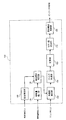
- FIG. 2 is a block diagram showing the configuration of the ECU.
- the ECU 100 includes an oil supply detection unit 110, an injection amount detection unit 120, a detection start determination unit 130, an angular velocity detection unit 140, a filter processing unit 150, an integration unit 160, and a cetane number detection unit 170.
- the fuel injection control unit 180 is provided.
- the fuel supply detection unit 110 is an example of the “fuel supply detection unit” of the present invention, and fuel is supplied by a change in the remaining amount of fuel in the fuel tank 212 detected by the fuel amount sensor 217 (see FIG. 1). Detect that. The detection result in the fuel supply detection unit 110 is transmitted to the detection start determination unit 130.
- the injection amount detection unit 120 is an example of the “injection amount detection means” in the present invention, and detects the injection amount of the fuel injected from the injector 211 into the cylinder 201. The injection amount detected by the injection amount detection unit 120 is transmitted to the detection start determination unit 130.
- the detection start determination unit 130 is an example of the “determination unit” of the present invention, and starts the integration of the fuel injection amount detected by the injection amount detection unit 120 when the fuel supply detection unit 110 detects fuel supply.
- the detection start determination unit 130 determines to start the cetane number detection process based on the fuel injection amount integrated value after refueling. The start determination of the cetane number detection process by the detection start determination unit 130 will be described in detail later.
- the angular velocity detector 140 is an example of the “angular velocity detector” of the present invention, and based on the crank angle signal output from the crank position sensor 205 (see FIG. 1), the angular velocity of the crankshaft 204 (hereinafter referred to as “crank” as appropriate). (Referred to as “angular velocity”).
- crank the angular velocity of the crankshaft 204
- angular velocity the angular velocity detected by the angular velocity detector 140 is output to the filter processor 150.
- the filter processing unit 150 is an example of the “filter processing unit” of the present invention, and performs a filter process on the output value of the crank angular velocity detected by the angular velocity detection unit 140.
- the filter processing unit 150 can execute, for example, a process of extracting the rotational 0.5th order vibration of the engine 200 that is an index of combustion instability.
- the integrating unit 160 is an example of the “integrating unit” of the present invention, and calculates the integrated value by integrating the output values subjected to the filter processing in the filter processing unit 150 for a predetermined period (in other words, a predetermined number of times).
- the integrated value calculated by the integrating unit 160 is transmitted to the cetane number detecting unit 170.
- the cetane number detection unit 170 is an example of the “cetane number detection means” of the present invention, and detects the cetane number of the fuel using the integrated value calculated by the integration unit 160.
- the cetane number detected by the cetane number detection unit 170 may be a specific numerical value or a value indicating whether the cetane number is higher or lower than a predetermined reference value. A specific method for detecting the cetane number will be described in detail later.
- the fuel injection control unit 180 is an example of the “fuel injection control means” of the present invention, and performs fuel injection control in the engine 200 based on the cetane number detected by the cetane number detection unit 170. Specifically, the injection amount and the injection interval of the fuel injected from the injector 211 in the engine 200 are appropriately changed according to the detected cetane number.
- the ECU 100 configured to include each part described above is an electronic control unit configured integrally, and all the operations related to the above parts are configured to be executed by the ECU 100.
- the physical, mechanical, and electrical configurations of the above-described parts according to the present invention are not limited thereto.
- each of these parts includes various ECUs, various processing units, various controllers, microcomputer devices, and the like. It may be configured as a computer system or the like.
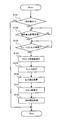
- FIG. 3 is a flowchart showing the operation of the control device for the internal combustion engine according to the embodiment.
- the fuel supply detection unit 110 determines whether or not fuel has been supplied to the fuel tank 212 (step S101).
- step S101: YES the detection start determination unit 130
- integration of the fuel injection amount from the injector 211 detected by the injection amount detection unit 120 is started.
- the detection start determination unit 130 determines whether or not the injection amount after refueling is equal to or greater than the volume of the delivery pipe 213 (step S102).
- step S102: YES cetane number detection processing for detecting the cetane number of the fuel is started.
- FIG. 4 is a graph showing the start timing of the cetane number detection process after refueling.
- the cetane number of the fuel hardly changes over time in the fuel tank 212, for example, and varies greatly when fuels having different cetane numbers are mixed. Therefore, if the cetane number is detected when refueling in which different fuels can be mixed is performed, fluctuations in the cetane number can be reliably detected.
- the refueled fuel is not immediately injected from the injector 211, but first, the fuel remaining in the delivery pipe 213 (that is, fuel whose fuel has not changed due to refueling) is injected. Therefore, when the cetane number detection process is started immediately after refueling, there is a possibility that fluctuations in the cetane number cannot be detected properly.
- the fuel injection amount is reset once when refueling is detected, and the cetane number is increased after the fuel injection amount after refueling exceeds the volume of the delivery pipe 213.
- the detection process is started. In this way, since the process is started at the timing when all the fuel remaining in the delivery pipe 213 is injected, the cetane number can be detected more suitably.
- the determination can be made more accurately by adding the volumes of the feed pump 214, the high-pressure pump 215, and the common rail 216 to the volume of the delivery pipe 213.
- the angular velocity detector 140 first detects the angular velocity of the crankshaft 204 (step S104).
- the output value of the crank angular velocity detected by the angular velocity detector 140 is subjected to filter processing in the filter processor 150 (step S105). Specifically, processing for extracting the rotational 0.5th order vibration of engine 200 is performed from the detected output value of the crank angular velocity.
- the output value after the filter process is integrated by the integrating unit 160, and the integrated value is calculated (step S106).
- the cetane number detection unit 170 detects the cetane number of the fuel using the integration value (step S107).
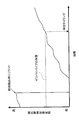
- FIG. 5 is a graph showing the fluctuation of the integrated value together with the first reference integrated value and the second reference integrated value.
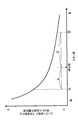
- FIG. 6 is a graph showing the cetane number detection process using the integrated value.
- the integration value calculated by the integration unit 160 increases as the number of integration increases, as indicated by the solid line in the figure.
- the cetane number detection unit 170 compares the calculated integrated value with the first reference integrated value and the second reference integrated value.
- the first reference integrated value is a value obtained as an integrated value when a fuel having a cetane number A set as a reference for a relatively low cetane number is used.
- the second reference integrated value is a value obtained as an integrated value when a fuel having a cetane number B set as a reference for a relatively high cetane number is used.
- the cetane number detection unit 170 determines the difference between the calculated integrated value and the first reference integrated value (hereinafter referred to as “first integrated value difference” as appropriate), and the calculated integrated value and the second integrated value. A difference from the reference integrated value (hereinafter referred to as “second integrated value difference” as appropriate) is calculated. Subsequently, the cetane number detection unit 170 calculates a ratio between the first integrated value difference and the second integrated value difference.
- first integrated value difference the first reference integrated value
- second integrated value difference A difference from the reference integrated value
- the cetane number detection unit 170 calculates a ratio between the first integrated value difference and the second integrated value difference.
- the ratio of the first integrated value difference and the second integrated value difference is a: b.
- the cetane number detection unit 170 has a map showing the correlation between the integrated value and the cetane number.
- the cetane number A corresponding to the first reference integrated value and the cetane number B corresponding to the first reference integrated value are respectively input.
- the cetane number detection unit 170 divides the cetane number A and cetane number B in the map by the above-mentioned ratio of the first integrated value difference and the second integrated value difference a: b, and determines the cetane number of the current fuel. Detect as.
- FIG. 7 is a graph showing the correlation between the engine rotation 0.5th order vibration and the cetane number.
- the number of samples of the crank angular speed for detecting the cetane number is increased, so that the influence of false detection, error, etc. can be reduced. it can. Therefore, the detection accuracy of the cetane number can be increased.
- the fuel injection control unit 180 performs fuel injection control based on the detected cetane number (step S108). For example, if the cetane number is detected as a relatively low value. Since it is considered that the ignitability of the fuel is deteriorated, the fuel injection control unit 180 performs the fuel injection control so as to improve the ignitability. Specifically, the engine 200 is controlled so as to shorten the fuel injection interval by the injector 211 or increase the fuel injection amount. According to such fuel injection control, the operating state of the engine 200 can be made appropriate according to the cetane number.
- cetane number detected by the cetane number detection unit 170 may be used for control other than fuel injection control. That is, the purpose of use of the detected cetane number is not particularly limited.
- the output value accumulated when performing the cetane number detection process using the crank angular velocity is used. For this reason, it is possible to reduce the deterioration in the accuracy of the output value due to the occurrence of erroneous detection or error. Therefore, it is possible to detect the cetane number of fuel consumption suitably.
- the present invention is not limited to the above-described embodiment, and can be appropriately changed without departing from the gist or concept of the invention that can be read from the claims and the entire specification.
- the control device is also included in the technical scope of the present invention.
Landscapes
- Engineering & Computer Science (AREA)
- Chemical & Material Sciences (AREA)
- Combustion & Propulsion (AREA)
- Mechanical Engineering (AREA)
- General Engineering & Computer Science (AREA)
- Oil, Petroleum & Natural Gas (AREA)
- Combined Controls Of Internal Combustion Engines (AREA)
Abstract
Le dispositif de commande de moteur à combustion interne (100) de l'invention est équipé : d'un moyen de détection de vitesse angulaire (140) permettant d'exécuter un traitement de détection d'indice de cétane afin de détecter l'indice de cétane d'un carburant mis en œuvre dans un moteur à combustion interne (200), et de détecter la vitesse angulaire d'un essieu coudé (204) appartenant au moteur à combustion interne; d'un moyen de traitement de filtrage (150) qui effectue un traitement de filtrage sur une grandeur de sortie de la vitesse angulaire détectée; d'un moyen d'estimation (160) qui calcule une valeur d'estimation par une estimation de période prédéfinie de la grandeur de sortie soumise au traitement de filtrage; et d'un moyen de détection d'indice de cétane (170) qui compare individuellement la valeur d'estimation calculée avec une première valeur d'estimation standard correspondant à un carburant possédant un premier indice de cétane, et avec une seconde valeur d'estimation standard correspondant à un carburant possédant un second indice de cétane distinct du premier indice de cétane, permettant ainsi de détecter l'indice de cétane du carburant mis en œuvre dans le moteur à combustion interne. Il est donc possible de détecter l'indice de cétane du carburant de manière extrêmement adéquate.
Priority Applications (1)
| Application Number | Priority Date | Filing Date | Title |
|---|---|---|---|
| PCT/JP2011/064544 WO2012176331A1 (fr) | 2011-06-24 | 2011-06-24 | Dispositif de commande de moteur à combustion interne |
Applications Claiming Priority (1)
| Application Number | Priority Date | Filing Date | Title |
|---|---|---|---|
| PCT/JP2011/064544 WO2012176331A1 (fr) | 2011-06-24 | 2011-06-24 | Dispositif de commande de moteur à combustion interne |
Publications (1)
| Publication Number | Publication Date |
|---|---|
| WO2012176331A1 true WO2012176331A1 (fr) | 2012-12-27 |
Family
ID=47422204
Family Applications (1)
| Application Number | Title | Priority Date | Filing Date |
|---|---|---|---|
| PCT/JP2011/064544 Ceased WO2012176331A1 (fr) | 2011-06-24 | 2011-06-24 | Dispositif de commande de moteur à combustion interne |
Country Status (1)
| Country | Link |
|---|---|
| WO (1) | WO2012176331A1 (fr) |
Cited By (1)
| Publication number | Priority date | Publication date | Assignee | Title |
|---|---|---|---|---|
| US11536627B2 (en) * | 2018-08-03 | 2022-12-27 | Fanuc Corporation | Abnormality monitoring device, abnormality monitoring method, and control device |
Citations (4)
| Publication number | Priority date | Publication date | Assignee | Title |
|---|---|---|---|---|
| JP2003286890A (ja) * | 2002-03-26 | 2003-10-10 | Mazda Motor Corp | エンジンの制御装置 |
| JP3494516B2 (ja) * | 1995-11-28 | 2004-02-09 | 株式会社日立ユニシアオートモティブ | 内燃機関の燃料性状検出装置 |
| JP2009062874A (ja) * | 2007-09-06 | 2009-03-26 | Toyota Motor Corp | 内燃機関の制御装置 |
| WO2010125688A1 (fr) * | 2009-05-01 | 2010-11-04 | トヨタ自動車株式会社 | Dispositif de détermination de propriété de carburant |
-
2011
- 2011-06-24 WO PCT/JP2011/064544 patent/WO2012176331A1/fr not_active Ceased
Patent Citations (4)
| Publication number | Priority date | Publication date | Assignee | Title |
|---|---|---|---|---|
| JP3494516B2 (ja) * | 1995-11-28 | 2004-02-09 | 株式会社日立ユニシアオートモティブ | 内燃機関の燃料性状検出装置 |
| JP2003286890A (ja) * | 2002-03-26 | 2003-10-10 | Mazda Motor Corp | エンジンの制御装置 |
| JP2009062874A (ja) * | 2007-09-06 | 2009-03-26 | Toyota Motor Corp | 内燃機関の制御装置 |
| WO2010125688A1 (fr) * | 2009-05-01 | 2010-11-04 | トヨタ自動車株式会社 | Dispositif de détermination de propriété de carburant |
Cited By (1)
| Publication number | Priority date | Publication date | Assignee | Title |
|---|---|---|---|---|
| US11536627B2 (en) * | 2018-08-03 | 2022-12-27 | Fanuc Corporation | Abnormality monitoring device, abnormality monitoring method, and control device |
Similar Documents
| Publication | Publication Date | Title |
|---|---|---|
| RU2608787C2 (ru) | Способ управления двигателем в ответ на преждевременное воспламенение (варианты) | |
| US8042517B2 (en) | Fuel property detector for internal combustion engine | |
| US20100030453A1 (en) | Cetane Number Detection Means and Engine Having the Cetane Number Detection Means | |
| CN105264206A (zh) | 内燃机的控制装置 | |
| JP2010127257A (ja) | セタン価判定装置 | |
| JP5850140B2 (ja) | 内燃機関の制御装置 | |
| JP2009203918A (ja) | ガソリンエンジンの運転制御方法 | |
| JP2011085081A (ja) | エンジンの失火判定方法 | |
| US9453471B2 (en) | Control device and control method for internal combustion engine | |
| JP5273310B2 (ja) | 内燃機関の制御装置 | |
| WO2012176331A1 (fr) | Dispositif de commande de moteur à combustion interne | |
| JP5741285B2 (ja) | 内燃機関の制御装置 | |
| JP5712819B2 (ja) | 内燃機関の制御装置 | |
| JP2013231372A (ja) | 内燃機関の制御装置 | |
| JP5182646B2 (ja) | 筒内圧センサの感度劣化判定装置 | |
| JP5626140B2 (ja) | 内燃機関の制御装置 | |
| JP4470794B2 (ja) | エンジンの始動時噴射制御装置 | |
| JP2010275909A (ja) | 内燃機関の制御装置 | |
| JP2014074337A (ja) | 内燃機関の制御装置 | |
| JP2010019115A (ja) | ディーゼル機関の燃料のアンチノック性指標値検出装置 | |
| JP2016191344A (ja) | 過給機付き内燃機関の制御装置 | |
| JP2010209741A (ja) | セタン価検出装置 | |
| JP2013181518A (ja) | 悪路判定装置 | |
| JP2013007302A (ja) | 内燃機関の制御装置 | |
| JP6473390B2 (ja) | エンジン |
Legal Events
| Date | Code | Title | Description |
|---|---|---|---|
| 121 | Ep: the epo has been informed by wipo that ep was designated in this application |
Ref document number: 11868288 Country of ref document: EP Kind code of ref document: A1 |
|
| NENP | Non-entry into the national phase |
Ref country code: DE |
|
| NENP | Non-entry into the national phase |
Ref country code: JP |
|
| 122 | Ep: pct application non-entry in european phase |
Ref document number: 11868288 Country of ref document: EP Kind code of ref document: A1 |