WO2013062027A1 - アゾール誘導体 - Google Patents
アゾール誘導体 Download PDFInfo
- Publication number
- WO2013062027A1 WO2013062027A1 PCT/JP2012/077541 JP2012077541W WO2013062027A1 WO 2013062027 A1 WO2013062027 A1 WO 2013062027A1 JP 2012077541 W JP2012077541 W JP 2012077541W WO 2013062027 A1 WO2013062027 A1 WO 2013062027A1
- Authority
- WO
- WIPO (PCT)
- Prior art keywords
- reference example
- compound
- formula
- synthesis
- acetamide
- Prior art date
- Legal status (The legal status is an assumption and is not a legal conclusion. Google has not performed a legal analysis and makes no representation as to the accuracy of the status listed.)
- Ceased
Links
Classifications
-
- C—CHEMISTRY; METALLURGY
- C07—ORGANIC CHEMISTRY
- C07D—HETEROCYCLIC COMPOUNDS
- C07D471/00—Heterocyclic compounds containing nitrogen atoms as the only ring hetero atoms in the condensed system, at least one ring being a six-membered ring with one nitrogen atom, not provided for by groups C07D451/00 - C07D463/00
- C07D471/02—Heterocyclic compounds containing nitrogen atoms as the only ring hetero atoms in the condensed system, at least one ring being a six-membered ring with one nitrogen atom, not provided for by groups C07D451/00 - C07D463/00 in which the condensed system contains two hetero rings
- C07D471/08—Bridged systems
-
- A—HUMAN NECESSITIES
- A61—MEDICAL OR VETERINARY SCIENCE; HYGIENE
- A61K—PREPARATIONS FOR MEDICAL, DENTAL OR TOILETRY PURPOSES
- A61K31/00—Medicinal preparations containing organic active ingredients
- A61K31/33—Heterocyclic compounds
- A61K31/395—Heterocyclic compounds having nitrogen as a ring hetero atom, e.g. guanethidine or rifamycins
- A61K31/41—Heterocyclic compounds having nitrogen as a ring hetero atom, e.g. guanethidine or rifamycins having five-membered rings with two or more ring hetero atoms, at least one of which being nitrogen, e.g. tetrazole
- A61K31/4164—1,3-Diazoles
-
- A—HUMAN NECESSITIES
- A61—MEDICAL OR VETERINARY SCIENCE; HYGIENE
- A61K—PREPARATIONS FOR MEDICAL, DENTAL OR TOILETRY PURPOSES
- A61K31/00—Medicinal preparations containing organic active ingredients
- A61K31/33—Heterocyclic compounds
- A61K31/395—Heterocyclic compounds having nitrogen as a ring hetero atom, e.g. guanethidine or rifamycins
- A61K31/41—Heterocyclic compounds having nitrogen as a ring hetero atom, e.g. guanethidine or rifamycins having five-membered rings with two or more ring hetero atoms, at least one of which being nitrogen, e.g. tetrazole
- A61K31/4164—1,3-Diazoles
- A61K31/4178—1,3-Diazoles not condensed 1,3-diazoles and containing further heterocyclic rings, e.g. pilocarpine, nitrofurantoin
-
- A—HUMAN NECESSITIES
- A61—MEDICAL OR VETERINARY SCIENCE; HYGIENE
- A61K—PREPARATIONS FOR MEDICAL, DENTAL OR TOILETRY PURPOSES
- A61K31/00—Medicinal preparations containing organic active ingredients
- A61K31/33—Heterocyclic compounds
- A61K31/395—Heterocyclic compounds having nitrogen as a ring hetero atom, e.g. guanethidine or rifamycins
- A61K31/41—Heterocyclic compounds having nitrogen as a ring hetero atom, e.g. guanethidine or rifamycins having five-membered rings with two or more ring hetero atoms, at least one of which being nitrogen, e.g. tetrazole
- A61K31/4196—1,2,4-Triazoles
-
- A—HUMAN NECESSITIES
- A61—MEDICAL OR VETERINARY SCIENCE; HYGIENE
- A61K—PREPARATIONS FOR MEDICAL, DENTAL OR TOILETRY PURPOSES
- A61K31/00—Medicinal preparations containing organic active ingredients
- A61K31/33—Heterocyclic compounds
- A61K31/395—Heterocyclic compounds having nitrogen as a ring hetero atom, e.g. guanethidine or rifamycins
- A61K31/435—Heterocyclic compounds having nitrogen as a ring hetero atom, e.g. guanethidine or rifamycins having six-membered rings with one nitrogen as the only ring hetero atom
- A61K31/44—Non condensed pyridines; Hydrogenated derivatives thereof
- A61K31/4427—Non condensed pyridines; Hydrogenated derivatives thereof containing further heterocyclic ring systems
- A61K31/4439—Non condensed pyridines; Hydrogenated derivatives thereof containing further heterocyclic ring systems containing a five-membered ring with nitrogen as a ring hetero atom, e.g. omeprazole
-
- A—HUMAN NECESSITIES
- A61—MEDICAL OR VETERINARY SCIENCE; HYGIENE
- A61K—PREPARATIONS FOR MEDICAL, DENTAL OR TOILETRY PURPOSES
- A61K31/00—Medicinal preparations containing organic active ingredients
- A61K31/33—Heterocyclic compounds
- A61K31/395—Heterocyclic compounds having nitrogen as a ring hetero atom, e.g. guanethidine or rifamycins
- A61K31/435—Heterocyclic compounds having nitrogen as a ring hetero atom, e.g. guanethidine or rifamycins having six-membered rings with one nitrogen as the only ring hetero atom
- A61K31/44—Non condensed pyridines; Hydrogenated derivatives thereof
- A61K31/4427—Non condensed pyridines; Hydrogenated derivatives thereof containing further heterocyclic ring systems
- A61K31/444—Non condensed pyridines; Hydrogenated derivatives thereof containing further heterocyclic ring systems containing a six-membered ring with nitrogen as a ring heteroatom, e.g. amrinone
-
- A—HUMAN NECESSITIES
- A61—MEDICAL OR VETERINARY SCIENCE; HYGIENE
- A61K—PREPARATIONS FOR MEDICAL, DENTAL OR TOILETRY PURPOSES
- A61K31/00—Medicinal preparations containing organic active ingredients
- A61K31/33—Heterocyclic compounds
- A61K31/395—Heterocyclic compounds having nitrogen as a ring hetero atom, e.g. guanethidine or rifamycins
- A61K31/435—Heterocyclic compounds having nitrogen as a ring hetero atom, e.g. guanethidine or rifamycins having six-membered rings with one nitrogen as the only ring hetero atom
- A61K31/44—Non condensed pyridines; Hydrogenated derivatives thereof
- A61K31/445—Non condensed piperidines, e.g. piperocaine
- A61K31/4523—Non condensed piperidines, e.g. piperocaine containing further heterocyclic ring systems
- A61K31/454—Non condensed piperidines, e.g. piperocaine containing further heterocyclic ring systems containing a five-membered ring with nitrogen as a ring hetero atom, e.g. pimozide, domperidone
-
- A—HUMAN NECESSITIES
- A61—MEDICAL OR VETERINARY SCIENCE; HYGIENE
- A61K—PREPARATIONS FOR MEDICAL, DENTAL OR TOILETRY PURPOSES
- A61K31/00—Medicinal preparations containing organic active ingredients
- A61K31/33—Heterocyclic compounds
- A61K31/395—Heterocyclic compounds having nitrogen as a ring hetero atom, e.g. guanethidine or rifamycins
- A61K31/435—Heterocyclic compounds having nitrogen as a ring hetero atom, e.g. guanethidine or rifamycins having six-membered rings with one nitrogen as the only ring hetero atom
- A61K31/44—Non condensed pyridines; Hydrogenated derivatives thereof
- A61K31/445—Non condensed piperidines, e.g. piperocaine
- A61K31/4523—Non condensed piperidines, e.g. piperocaine containing further heterocyclic ring systems
- A61K31/4545—Non condensed piperidines, e.g. piperocaine containing further heterocyclic ring systems containing a six-membered ring with nitrogen as a ring hetero atom, e.g. pipamperone, anabasine
-
- A—HUMAN NECESSITIES
- A61—MEDICAL OR VETERINARY SCIENCE; HYGIENE
- A61K—PREPARATIONS FOR MEDICAL, DENTAL OR TOILETRY PURPOSES
- A61K31/00—Medicinal preparations containing organic active ingredients
- A61K31/33—Heterocyclic compounds
- A61K31/395—Heterocyclic compounds having nitrogen as a ring hetero atom, e.g. guanethidine or rifamycins
- A61K31/435—Heterocyclic compounds having nitrogen as a ring hetero atom, e.g. guanethidine or rifamycins having six-membered rings with one nitrogen as the only ring hetero atom
- A61K31/46—8-Azabicyclo [3.2.1] octane; Derivatives thereof, e.g. atropine, cocaine
-
- A—HUMAN NECESSITIES
- A61—MEDICAL OR VETERINARY SCIENCE; HYGIENE
- A61K—PREPARATIONS FOR MEDICAL, DENTAL OR TOILETRY PURPOSES
- A61K31/00—Medicinal preparations containing organic active ingredients
- A61K31/33—Heterocyclic compounds
- A61K31/395—Heterocyclic compounds having nitrogen as a ring hetero atom, e.g. guanethidine or rifamycins
- A61K31/435—Heterocyclic compounds having nitrogen as a ring hetero atom, e.g. guanethidine or rifamycins having six-membered rings with one nitrogen as the only ring hetero atom
- A61K31/47—Quinolines; Isoquinolines
- A61K31/472—Non-condensed isoquinolines, e.g. papaverine
- A61K31/4725—Non-condensed isoquinolines, e.g. papaverine containing further heterocyclic rings
-
- A—HUMAN NECESSITIES
- A61—MEDICAL OR VETERINARY SCIENCE; HYGIENE
- A61K—PREPARATIONS FOR MEDICAL, DENTAL OR TOILETRY PURPOSES
- A61K31/00—Medicinal preparations containing organic active ingredients
- A61K31/33—Heterocyclic compounds
- A61K31/395—Heterocyclic compounds having nitrogen as a ring hetero atom, e.g. guanethidine or rifamycins
- A61K31/495—Heterocyclic compounds having nitrogen as a ring hetero atom, e.g. guanethidine or rifamycins having six-membered rings with two or more nitrogen atoms as the only ring heteroatoms, e.g. piperazine or tetrazines
- A61K31/496—Non-condensed piperazines containing further heterocyclic rings, e.g. rifampin, thiothixene or sparfloxacin
-
- A—HUMAN NECESSITIES
- A61—MEDICAL OR VETERINARY SCIENCE; HYGIENE
- A61K—PREPARATIONS FOR MEDICAL, DENTAL OR TOILETRY PURPOSES
- A61K31/00—Medicinal preparations containing organic active ingredients
- A61K31/33—Heterocyclic compounds
- A61K31/395—Heterocyclic compounds having nitrogen as a ring hetero atom, e.g. guanethidine or rifamycins
- A61K31/535—Heterocyclic compounds having nitrogen as a ring hetero atom, e.g. guanethidine or rifamycins having six-membered rings with at least one nitrogen and one oxygen as the ring hetero atoms, e.g. 1,2-oxazines
- A61K31/537—Heterocyclic compounds having nitrogen as a ring hetero atom, e.g. guanethidine or rifamycins having six-membered rings with at least one nitrogen and one oxygen as the ring hetero atoms, e.g. 1,2-oxazines spiro-condensed or forming part of bridged ring systems
-
- A—HUMAN NECESSITIES
- A61—MEDICAL OR VETERINARY SCIENCE; HYGIENE
- A61K—PREPARATIONS FOR MEDICAL, DENTAL OR TOILETRY PURPOSES
- A61K31/00—Medicinal preparations containing organic active ingredients
- A61K31/33—Heterocyclic compounds
- A61K31/395—Heterocyclic compounds having nitrogen as a ring hetero atom, e.g. guanethidine or rifamycins
- A61K31/535—Heterocyclic compounds having nitrogen as a ring hetero atom, e.g. guanethidine or rifamycins having six-membered rings with at least one nitrogen and one oxygen as the ring hetero atoms, e.g. 1,2-oxazines
- A61K31/5375—1,4-Oxazines, e.g. morpholine
- A61K31/5377—1,4-Oxazines, e.g. morpholine not condensed and containing further heterocyclic rings, e.g. timolol
-
- A—HUMAN NECESSITIES
- A61—MEDICAL OR VETERINARY SCIENCE; HYGIENE
- A61K—PREPARATIONS FOR MEDICAL, DENTAL OR TOILETRY PURPOSES
- A61K31/00—Medicinal preparations containing organic active ingredients
- A61K31/33—Heterocyclic compounds
- A61K31/395—Heterocyclic compounds having nitrogen as a ring hetero atom, e.g. guanethidine or rifamycins
- A61K31/535—Heterocyclic compounds having nitrogen as a ring hetero atom, e.g. guanethidine or rifamycins having six-membered rings with at least one nitrogen and one oxygen as the ring hetero atoms, e.g. 1,2-oxazines
- A61K31/5375—1,4-Oxazines, e.g. morpholine
- A61K31/5386—1,4-Oxazines, e.g. morpholine spiro-condensed or forming part of bridged ring systems
-
- A—HUMAN NECESSITIES
- A61—MEDICAL OR VETERINARY SCIENCE; HYGIENE
- A61K—PREPARATIONS FOR MEDICAL, DENTAL OR TOILETRY PURPOSES
- A61K31/00—Medicinal preparations containing organic active ingredients
- A61K31/33—Heterocyclic compounds
- A61K31/395—Heterocyclic compounds having nitrogen as a ring hetero atom, e.g. guanethidine or rifamycins
- A61K31/54—Heterocyclic compounds having nitrogen as a ring hetero atom, e.g. guanethidine or rifamycins having six-membered rings with at least one nitrogen and one sulfur as the ring hetero atoms, e.g. sulthiame
- A61K31/541—Non-condensed thiazines containing further heterocyclic rings
-
- A—HUMAN NECESSITIES
- A61—MEDICAL OR VETERINARY SCIENCE; HYGIENE
- A61K—PREPARATIONS FOR MEDICAL, DENTAL OR TOILETRY PURPOSES
- A61K31/00—Medicinal preparations containing organic active ingredients
- A61K31/33—Heterocyclic compounds
- A61K31/395—Heterocyclic compounds having nitrogen as a ring hetero atom, e.g. guanethidine or rifamycins
- A61K31/55—Heterocyclic compounds having nitrogen as a ring hetero atom, e.g. guanethidine or rifamycins having seven-membered rings, e.g. azelastine, pentylenetetrazole
- A61K31/553—Heterocyclic compounds having nitrogen as a ring hetero atom, e.g. guanethidine or rifamycins having seven-membered rings, e.g. azelastine, pentylenetetrazole having at least one nitrogen and one oxygen as ring hetero atoms, e.g. loxapine, staurosporine
-
- A—HUMAN NECESSITIES
- A61—MEDICAL OR VETERINARY SCIENCE; HYGIENE
- A61P—SPECIFIC THERAPEUTIC ACTIVITY OF CHEMICAL COMPOUNDS OR MEDICINAL PREPARATIONS
- A61P1/00—Drugs for disorders of the alimentary tract or the digestive system
-
- A—HUMAN NECESSITIES
- A61—MEDICAL OR VETERINARY SCIENCE; HYGIENE
- A61P—SPECIFIC THERAPEUTIC ACTIVITY OF CHEMICAL COMPOUNDS OR MEDICINAL PREPARATIONS
- A61P1/00—Drugs for disorders of the alimentary tract or the digestive system
- A61P1/04—Drugs for disorders of the alimentary tract or the digestive system for ulcers, gastritis or reflux esophagitis, e.g. antacids, inhibitors of acid secretion, mucosal protectants
-
- A—HUMAN NECESSITIES
- A61—MEDICAL OR VETERINARY SCIENCE; HYGIENE
- A61P—SPECIFIC THERAPEUTIC ACTIVITY OF CHEMICAL COMPOUNDS OR MEDICINAL PREPARATIONS
- A61P17/00—Drugs for dermatological disorders
-
- A—HUMAN NECESSITIES
- A61—MEDICAL OR VETERINARY SCIENCE; HYGIENE
- A61P—SPECIFIC THERAPEUTIC ACTIVITY OF CHEMICAL COMPOUNDS OR MEDICINAL PREPARATIONS
- A61P17/00—Drugs for dermatological disorders
- A61P17/14—Drugs for dermatological disorders for baldness or alopecia
-
- A—HUMAN NECESSITIES
- A61—MEDICAL OR VETERINARY SCIENCE; HYGIENE
- A61P—SPECIFIC THERAPEUTIC ACTIVITY OF CHEMICAL COMPOUNDS OR MEDICINAL PREPARATIONS
- A61P25/00—Drugs for disorders of the nervous system
-
- A—HUMAN NECESSITIES
- A61—MEDICAL OR VETERINARY SCIENCE; HYGIENE
- A61P—SPECIFIC THERAPEUTIC ACTIVITY OF CHEMICAL COMPOUNDS OR MEDICINAL PREPARATIONS
- A61P25/00—Drugs for disorders of the nervous system
- A61P25/08—Antiepileptics; Anticonvulsants
-
- A—HUMAN NECESSITIES
- A61—MEDICAL OR VETERINARY SCIENCE; HYGIENE
- A61P—SPECIFIC THERAPEUTIC ACTIVITY OF CHEMICAL COMPOUNDS OR MEDICINAL PREPARATIONS
- A61P25/00—Drugs for disorders of the nervous system
- A61P25/14—Drugs for disorders of the nervous system for treating abnormal movements, e.g. chorea, dyskinesia
-
- A—HUMAN NECESSITIES
- A61—MEDICAL OR VETERINARY SCIENCE; HYGIENE
- A61P—SPECIFIC THERAPEUTIC ACTIVITY OF CHEMICAL COMPOUNDS OR MEDICINAL PREPARATIONS
- A61P25/00—Drugs for disorders of the nervous system
- A61P25/14—Drugs for disorders of the nervous system for treating abnormal movements, e.g. chorea, dyskinesia
- A61P25/16—Anti-Parkinson drugs
-
- A—HUMAN NECESSITIES
- A61—MEDICAL OR VETERINARY SCIENCE; HYGIENE
- A61P—SPECIFIC THERAPEUTIC ACTIVITY OF CHEMICAL COMPOUNDS OR MEDICINAL PREPARATIONS
- A61P25/00—Drugs for disorders of the nervous system
- A61P25/18—Antipsychotics, i.e. neuroleptics; Drugs for mania or schizophrenia
-
- A—HUMAN NECESSITIES
- A61—MEDICAL OR VETERINARY SCIENCE; HYGIENE
- A61P—SPECIFIC THERAPEUTIC ACTIVITY OF CHEMICAL COMPOUNDS OR MEDICINAL PREPARATIONS
- A61P25/00—Drugs for disorders of the nervous system
- A61P25/22—Anxiolytics
-
- A—HUMAN NECESSITIES
- A61—MEDICAL OR VETERINARY SCIENCE; HYGIENE
- A61P—SPECIFIC THERAPEUTIC ACTIVITY OF CHEMICAL COMPOUNDS OR MEDICINAL PREPARATIONS
- A61P25/00—Drugs for disorders of the nervous system
- A61P25/24—Antidepressants
-
- A—HUMAN NECESSITIES
- A61—MEDICAL OR VETERINARY SCIENCE; HYGIENE
- A61P—SPECIFIC THERAPEUTIC ACTIVITY OF CHEMICAL COMPOUNDS OR MEDICINAL PREPARATIONS
- A61P25/00—Drugs for disorders of the nervous system
- A61P25/28—Drugs for disorders of the nervous system for treating neurodegenerative disorders of the central nervous system, e.g. nootropic agents, cognition enhancers, drugs for treating Alzheimer's disease or other forms of dementia
-
- A—HUMAN NECESSITIES
- A61—MEDICAL OR VETERINARY SCIENCE; HYGIENE
- A61P—SPECIFIC THERAPEUTIC ACTIVITY OF CHEMICAL COMPOUNDS OR MEDICINAL PREPARATIONS
- A61P25/00—Drugs for disorders of the nervous system
- A61P25/30—Drugs for disorders of the nervous system for treating abuse or dependence
-
- A—HUMAN NECESSITIES
- A61—MEDICAL OR VETERINARY SCIENCE; HYGIENE
- A61P—SPECIFIC THERAPEUTIC ACTIVITY OF CHEMICAL COMPOUNDS OR MEDICINAL PREPARATIONS
- A61P29/00—Non-central analgesic, antipyretic or antiinflammatory agents, e.g. antirheumatic agents; Non-steroidal antiinflammatory drugs [NSAID]
-
- A—HUMAN NECESSITIES
- A61—MEDICAL OR VETERINARY SCIENCE; HYGIENE
- A61P—SPECIFIC THERAPEUTIC ACTIVITY OF CHEMICAL COMPOUNDS OR MEDICINAL PREPARATIONS
- A61P37/00—Drugs for immunological or allergic disorders
- A61P37/02—Immunomodulators
-
- A—HUMAN NECESSITIES
- A61—MEDICAL OR VETERINARY SCIENCE; HYGIENE
- A61P—SPECIFIC THERAPEUTIC ACTIVITY OF CHEMICAL COMPOUNDS OR MEDICINAL PREPARATIONS
- A61P43/00—Drugs for specific purposes, not provided for in groups A61P1/00-A61P41/00
-
- A—HUMAN NECESSITIES
- A61—MEDICAL OR VETERINARY SCIENCE; HYGIENE
- A61P—SPECIFIC THERAPEUTIC ACTIVITY OF CHEMICAL COMPOUNDS OR MEDICINAL PREPARATIONS
- A61P9/00—Drugs for disorders of the cardiovascular system
-
- A—HUMAN NECESSITIES
- A61—MEDICAL OR VETERINARY SCIENCE; HYGIENE
- A61P—SPECIFIC THERAPEUTIC ACTIVITY OF CHEMICAL COMPOUNDS OR MEDICINAL PREPARATIONS
- A61P9/00—Drugs for disorders of the cardiovascular system
- A61P9/10—Drugs for disorders of the cardiovascular system for treating ischaemic or atherosclerotic diseases, e.g. antianginal drugs, coronary vasodilators, drugs for myocardial infarction, retinopathy, cerebrovascula insufficiency, renal arteriosclerosis
-
- A—HUMAN NECESSITIES
- A61—MEDICAL OR VETERINARY SCIENCE; HYGIENE
- A61P—SPECIFIC THERAPEUTIC ACTIVITY OF CHEMICAL COMPOUNDS OR MEDICINAL PREPARATIONS
- A61P9/00—Drugs for disorders of the cardiovascular system
- A61P9/12—Antihypertensives
-
- C—CHEMISTRY; METALLURGY
- C07—ORGANIC CHEMISTRY
- C07D—HETEROCYCLIC COMPOUNDS
- C07D207/00—Heterocyclic compounds containing five-membered rings not condensed with other rings, with one nitrogen atom as the only ring hetero atom
- C07D207/02—Heterocyclic compounds containing five-membered rings not condensed with other rings, with one nitrogen atom as the only ring hetero atom with only hydrogen or carbon atoms directly attached to the ring nitrogen atom
- C07D207/44—Heterocyclic compounds containing five-membered rings not condensed with other rings, with one nitrogen atom as the only ring hetero atom with only hydrogen or carbon atoms directly attached to the ring nitrogen atom having three double bonds between ring members or between ring members and non-ring members
- C07D207/444—Heterocyclic compounds containing five-membered rings not condensed with other rings, with one nitrogen atom as the only ring hetero atom with only hydrogen or carbon atoms directly attached to the ring nitrogen atom having three double bonds between ring members or between ring members and non-ring members having two doubly-bound oxygen atoms directly attached in positions 2 and 5
-
- C—CHEMISTRY; METALLURGY
- C07—ORGANIC CHEMISTRY
- C07D—HETEROCYCLIC COMPOUNDS
- C07D231/00—Heterocyclic compounds containing 1,2-diazole or hydrogenated 1,2-diazole rings
- C07D231/02—Heterocyclic compounds containing 1,2-diazole or hydrogenated 1,2-diazole rings not condensed with other rings
- C07D231/10—Heterocyclic compounds containing 1,2-diazole or hydrogenated 1,2-diazole rings not condensed with other rings having two or three double bonds between ring members or between ring members and non-ring members
- C07D231/12—Heterocyclic compounds containing 1,2-diazole or hydrogenated 1,2-diazole rings not condensed with other rings having two or three double bonds between ring members or between ring members and non-ring members with only hydrogen atoms, hydrocarbon or substituted hydrocarbon radicals, directly attached to ring carbon atoms
-
- C—CHEMISTRY; METALLURGY
- C07—ORGANIC CHEMISTRY
- C07D—HETEROCYCLIC COMPOUNDS
- C07D233/00—Heterocyclic compounds containing 1,3-diazole or hydrogenated 1,3-diazole rings, not condensed with other rings
- C07D233/54—Heterocyclic compounds containing 1,3-diazole or hydrogenated 1,3-diazole rings, not condensed with other rings having two double bonds between ring members or between ring members and non-ring members
- C07D233/64—Heterocyclic compounds containing 1,3-diazole or hydrogenated 1,3-diazole rings, not condensed with other rings having two double bonds between ring members or between ring members and non-ring members with substituted hydrocarbon radicals attached to ring carbon atoms, e.g. histidine
-
- C—CHEMISTRY; METALLURGY
- C07—ORGANIC CHEMISTRY
- C07D—HETEROCYCLIC COMPOUNDS
- C07D233/00—Heterocyclic compounds containing 1,3-diazole or hydrogenated 1,3-diazole rings, not condensed with other rings
- C07D233/54—Heterocyclic compounds containing 1,3-diazole or hydrogenated 1,3-diazole rings, not condensed with other rings having two double bonds between ring members or between ring members and non-ring members
- C07D233/66—Heterocyclic compounds containing 1,3-diazole or hydrogenated 1,3-diazole rings, not condensed with other rings having two double bonds between ring members or between ring members and non-ring members with hetero atoms or with carbon atoms having three bonds to hetero atoms with at the most one bond to halogen, e.g. ester or nitrile radicals, directly attached to ring carbon atoms
- C07D233/70—One oxygen atom
-
- C—CHEMISTRY; METALLURGY
- C07—ORGANIC CHEMISTRY
- C07D—HETEROCYCLIC COMPOUNDS
- C07D233/00—Heterocyclic compounds containing 1,3-diazole or hydrogenated 1,3-diazole rings, not condensed with other rings
- C07D233/54—Heterocyclic compounds containing 1,3-diazole or hydrogenated 1,3-diazole rings, not condensed with other rings having two double bonds between ring members or between ring members and non-ring members
- C07D233/66—Heterocyclic compounds containing 1,3-diazole or hydrogenated 1,3-diazole rings, not condensed with other rings having two double bonds between ring members or between ring members and non-ring members with hetero atoms or with carbon atoms having three bonds to hetero atoms with at the most one bond to halogen, e.g. ester or nitrile radicals, directly attached to ring carbon atoms
- C07D233/90—Carbon atoms having three bonds to hetero atoms with at the most one bond to halogen, e.g. ester or nitrile radicals
-
- C—CHEMISTRY; METALLURGY
- C07—ORGANIC CHEMISTRY
- C07D—HETEROCYCLIC COMPOUNDS
- C07D249/00—Heterocyclic compounds containing five-membered rings having three nitrogen atoms as the only ring hetero atoms
- C07D249/02—Heterocyclic compounds containing five-membered rings having three nitrogen atoms as the only ring hetero atoms not condensed with other rings
- C07D249/08—1,2,4-Triazoles; Hydrogenated 1,2,4-triazoles
-
- C—CHEMISTRY; METALLURGY
- C07—ORGANIC CHEMISTRY
- C07D—HETEROCYCLIC COMPOUNDS
- C07D249/00—Heterocyclic compounds containing five-membered rings having three nitrogen atoms as the only ring hetero atoms
- C07D249/02—Heterocyclic compounds containing five-membered rings having three nitrogen atoms as the only ring hetero atoms not condensed with other rings
- C07D249/08—1,2,4-Triazoles; Hydrogenated 1,2,4-triazoles
- C07D249/10—1,2,4-Triazoles; Hydrogenated 1,2,4-triazoles with hetero atoms or with carbon atoms having three bonds to hetero atoms with at the most one bond to halogen, e.g. ester or nitrile radicals, directly attached to ring carbon atoms
-
- C—CHEMISTRY; METALLURGY
- C07—ORGANIC CHEMISTRY
- C07D—HETEROCYCLIC COMPOUNDS
- C07D249/00—Heterocyclic compounds containing five-membered rings having three nitrogen atoms as the only ring hetero atoms
- C07D249/02—Heterocyclic compounds containing five-membered rings having three nitrogen atoms as the only ring hetero atoms not condensed with other rings
- C07D249/08—1,2,4-Triazoles; Hydrogenated 1,2,4-triazoles
- C07D249/10—1,2,4-Triazoles; Hydrogenated 1,2,4-triazoles with hetero atoms or with carbon atoms having three bonds to hetero atoms with at the most one bond to halogen, e.g. ester or nitrile radicals, directly attached to ring carbon atoms
- C07D249/12—Oxygen or sulfur atoms
-
- C—CHEMISTRY; METALLURGY
- C07—ORGANIC CHEMISTRY
- C07D—HETEROCYCLIC COMPOUNDS
- C07D263/00—Heterocyclic compounds containing 1,3-oxazole or hydrogenated 1,3-oxazole rings
- C07D263/02—Heterocyclic compounds containing 1,3-oxazole or hydrogenated 1,3-oxazole rings not condensed with other rings
- C07D263/30—Heterocyclic compounds containing 1,3-oxazole or hydrogenated 1,3-oxazole rings not condensed with other rings having two or three double bonds between ring members or between ring members and non-ring members
- C07D263/32—Heterocyclic compounds containing 1,3-oxazole or hydrogenated 1,3-oxazole rings not condensed with other rings having two or three double bonds between ring members or between ring members and non-ring members with only hydrogen atoms, hydrocarbon or substituted hydrocarbon radicals, directly attached to ring carbon atoms
-
- C—CHEMISTRY; METALLURGY
- C07—ORGANIC CHEMISTRY
- C07D—HETEROCYCLIC COMPOUNDS
- C07D277/00—Heterocyclic compounds containing 1,3-thiazole or hydrogenated 1,3-thiazole rings
- C07D277/02—Heterocyclic compounds containing 1,3-thiazole or hydrogenated 1,3-thiazole rings not condensed with other rings
- C07D277/20—Heterocyclic compounds containing 1,3-thiazole or hydrogenated 1,3-thiazole rings not condensed with other rings having two or three double bonds between ring members or between ring members and non-ring members
-
- C—CHEMISTRY; METALLURGY
- C07—ORGANIC CHEMISTRY
- C07D—HETEROCYCLIC COMPOUNDS
- C07D277/00—Heterocyclic compounds containing 1,3-thiazole or hydrogenated 1,3-thiazole rings
- C07D277/02—Heterocyclic compounds containing 1,3-thiazole or hydrogenated 1,3-thiazole rings not condensed with other rings
- C07D277/20—Heterocyclic compounds containing 1,3-thiazole or hydrogenated 1,3-thiazole rings not condensed with other rings having two or three double bonds between ring members or between ring members and non-ring members
- C07D277/22—Heterocyclic compounds containing 1,3-thiazole or hydrogenated 1,3-thiazole rings not condensed with other rings having two or three double bonds between ring members or between ring members and non-ring members with only hydrogen atoms, hydrocarbon or substituted hydrocarbon radicals, directly attached to ring carbon atoms
- C07D277/30—Radicals substituted by carbon atoms having three bonds to hetero atoms with at the most one bond to halogen, e.g. ester or nitrile radicals
-
- C—CHEMISTRY; METALLURGY
- C07—ORGANIC CHEMISTRY
- C07D—HETEROCYCLIC COMPOUNDS
- C07D401/00—Heterocyclic compounds containing two or more hetero rings, having nitrogen atoms as the only ring hetero atoms, at least one ring being a six-membered ring with only one nitrogen atom
- C07D401/02—Heterocyclic compounds containing two or more hetero rings, having nitrogen atoms as the only ring hetero atoms, at least one ring being a six-membered ring with only one nitrogen atom containing two hetero rings
- C07D401/04—Heterocyclic compounds containing two or more hetero rings, having nitrogen atoms as the only ring hetero atoms, at least one ring being a six-membered ring with only one nitrogen atom containing two hetero rings directly linked by a ring-member-to-ring-member bond
-
- C—CHEMISTRY; METALLURGY
- C07—ORGANIC CHEMISTRY
- C07D—HETEROCYCLIC COMPOUNDS
- C07D401/00—Heterocyclic compounds containing two or more hetero rings, having nitrogen atoms as the only ring hetero atoms, at least one ring being a six-membered ring with only one nitrogen atom
- C07D401/02—Heterocyclic compounds containing two or more hetero rings, having nitrogen atoms as the only ring hetero atoms, at least one ring being a six-membered ring with only one nitrogen atom containing two hetero rings
- C07D401/10—Heterocyclic compounds containing two or more hetero rings, having nitrogen atoms as the only ring hetero atoms, at least one ring being a six-membered ring with only one nitrogen atom containing two hetero rings linked by a carbon chain containing aromatic rings
-
- C—CHEMISTRY; METALLURGY
- C07—ORGANIC CHEMISTRY
- C07D—HETEROCYCLIC COMPOUNDS
- C07D403/00—Heterocyclic compounds containing two or more hetero rings, having nitrogen atoms as the only ring hetero atoms, not provided for by group C07D401/00
- C07D403/02—Heterocyclic compounds containing two or more hetero rings, having nitrogen atoms as the only ring hetero atoms, not provided for by group C07D401/00 containing two hetero rings
- C07D403/04—Heterocyclic compounds containing two or more hetero rings, having nitrogen atoms as the only ring hetero atoms, not provided for by group C07D401/00 containing two hetero rings directly linked by a ring-member-to-ring-member bond
-
- C—CHEMISTRY; METALLURGY
- C07—ORGANIC CHEMISTRY
- C07D—HETEROCYCLIC COMPOUNDS
- C07D403/00—Heterocyclic compounds containing two or more hetero rings, having nitrogen atoms as the only ring hetero atoms, not provided for by group C07D401/00
- C07D403/02—Heterocyclic compounds containing two or more hetero rings, having nitrogen atoms as the only ring hetero atoms, not provided for by group C07D401/00 containing two hetero rings
- C07D403/06—Heterocyclic compounds containing two or more hetero rings, having nitrogen atoms as the only ring hetero atoms, not provided for by group C07D401/00 containing two hetero rings linked by a carbon chain containing only aliphatic carbon atoms
-
- C—CHEMISTRY; METALLURGY
- C07—ORGANIC CHEMISTRY
- C07D—HETEROCYCLIC COMPOUNDS
- C07D403/00—Heterocyclic compounds containing two or more hetero rings, having nitrogen atoms as the only ring hetero atoms, not provided for by group C07D401/00
- C07D403/02—Heterocyclic compounds containing two or more hetero rings, having nitrogen atoms as the only ring hetero atoms, not provided for by group C07D401/00 containing two hetero rings
- C07D403/10—Heterocyclic compounds containing two or more hetero rings, having nitrogen atoms as the only ring hetero atoms, not provided for by group C07D401/00 containing two hetero rings linked by a carbon chain containing aromatic rings
-
- C—CHEMISTRY; METALLURGY
- C07—ORGANIC CHEMISTRY
- C07D—HETEROCYCLIC COMPOUNDS
- C07D413/00—Heterocyclic compounds containing two or more hetero rings, at least one ring having nitrogen and oxygen atoms as the only ring hetero atoms
- C07D413/02—Heterocyclic compounds containing two or more hetero rings, at least one ring having nitrogen and oxygen atoms as the only ring hetero atoms containing two hetero rings
- C07D413/10—Heterocyclic compounds containing two or more hetero rings, at least one ring having nitrogen and oxygen atoms as the only ring hetero atoms containing two hetero rings linked by a carbon chain containing aromatic rings
-
- C—CHEMISTRY; METALLURGY
- C07—ORGANIC CHEMISTRY
- C07D—HETEROCYCLIC COMPOUNDS
- C07D451/00—Heterocyclic compounds containing 8-azabicyclo [3.2.1] octane, 9-azabicyclo [3.3.1] nonane, or 3-oxa-9-azatricyclo [3.3.1.0<2,4>] nonane ring systems, e.g. tropane or granatane alkaloids, scopolamine; Cyclic acetals thereof
- C07D451/02—Heterocyclic compounds containing 8-azabicyclo [3.2.1] octane, 9-azabicyclo [3.3.1] nonane, or 3-oxa-9-azatricyclo [3.3.1.0<2,4>] nonane ring systems, e.g. tropane or granatane alkaloids, scopolamine; Cyclic acetals thereof containing not further condensed 8-azabicyclo [3.2.1] octane or 3-oxa-9-azatricyclo [3.3.1.0<2,4>] nonane ring systems, e.g. tropane; Cyclic acetals thereof
- C07D451/04—Heterocyclic compounds containing 8-azabicyclo [3.2.1] octane, 9-azabicyclo [3.3.1] nonane, or 3-oxa-9-azatricyclo [3.3.1.0<2,4>] nonane ring systems, e.g. tropane or granatane alkaloids, scopolamine; Cyclic acetals thereof containing not further condensed 8-azabicyclo [3.2.1] octane or 3-oxa-9-azatricyclo [3.3.1.0<2,4>] nonane ring systems, e.g. tropane; Cyclic acetals thereof with hetero atoms directly attached in position 3 of the 8-azabicyclo [3.2.1] octane or in position 7 of the 3-oxa-9-azatricyclo [3.3.1.0<2,4>] nonane ring system
- C07D451/06—Oxygen atoms
-
- C—CHEMISTRY; METALLURGY
- C07—ORGANIC CHEMISTRY
- C07D—HETEROCYCLIC COMPOUNDS
- C07D491/00—Heterocyclic compounds containing in the condensed ring system both one or more rings having oxygen atoms as the only ring hetero atoms and one or more rings having nitrogen atoms as the only ring hetero atoms, not provided for by groups C07D451/00 - C07D459/00, C07D463/00, C07D477/00 or C07D489/00
- C07D491/02—Heterocyclic compounds containing in the condensed ring system both one or more rings having oxygen atoms as the only ring hetero atoms and one or more rings having nitrogen atoms as the only ring hetero atoms, not provided for by groups C07D451/00 - C07D459/00, C07D463/00, C07D477/00 or C07D489/00 in which the condensed system contains two hetero rings
- C07D491/10—Spiro-condensed systems
- C07D491/107—Spiro-condensed systems with only one oxygen atom as ring hetero atom in the oxygen-containing ring
-
- C—CHEMISTRY; METALLURGY
- C07—ORGANIC CHEMISTRY
- C07D—HETEROCYCLIC COMPOUNDS
- C07D498/00—Heterocyclic compounds containing in the condensed system at least one hetero ring having nitrogen and oxygen atoms as the only ring hetero atoms
- C07D498/02—Heterocyclic compounds containing in the condensed system at least one hetero ring having nitrogen and oxygen atoms as the only ring hetero atoms in which the condensed system contains two hetero rings
- C07D498/08—Bridged systems
Definitions
- the present invention relates to a compound having an azole skeleton having an antagonistic action on the V1b receptor of arginine-vasopressin (AVP) and a pharmaceutical composition comprising the compound as an active ingredient, in particular, mood disorders (including depression), anxiety disorders, integration Ataxia, Alzheimer's disease, Parkinson's disease, Huntington's disease, eating disorders, hypertension, digestive disorders, drug addiction, epilepsy, cerebral infarction, cerebral ischemia, cerebral edema, head trauma, inflammation, immune related diseases, hair loss
- AVP arginine-vasopressin
- Arginine-vasopressin is a 9-amino acid peptide that is biosynthesized mainly in the hypothalamus and is deeply involved in the regulation of plasma osmotic pressure, blood pressure, and fluid volume as a pituitary hormone.
- V1a receptor As for the AVP receptor, three subtypes of V1a, V1b and V2 receptors have been cloned so far, and it is known that all are 7-transmembrane receptors.
- V2 receptors couple with Gs and increase the amount of cAMP.
- V1a receptors couple with Gq / 11 to promote PI responses and increase intracellular Ca.
- V1a receptor is expressed in brain, liver, adrenal gland, vascular smooth muscle and the like, and is involved in vasoconstrictive action.
- the V1b receptor is also coupled to Gq / 11 in the same manner as the V1a receptor and promotes the PI response (see Non-Patent Document 1 and Non-Patent Document 2).
- V1b receptors are most abundant in the pituitary gland (expressed in more than 90% of anterior lobe ACTH-secreting cells) and are presumed to be involved in ACTH secretion from the anterior pituitary gland by AVP.
- the V1b receptor is present in a wide area of the brain other than the pituitary gland and is the limbic system such as the hippocampus, amygdala, entorhinal cortex, cerebral cortex, olfactory bulb, and the raphe nucleus that is the origin of the serotonin nervous system. (See Non-Patent Document 3 and Non-Patent Document 4).
- V1b receptor is associated with mood disorders and anxiety disorders, and the usefulness of V1b receptor antagonists has been studied. It has been shown that aggressive behavior is reduced in V1b receptor KO mice (see Non-Patent Document 5). In addition, it has been reported that by injecting a V1b receptor antagonist into the septum, the staying time in the open road is prolonged in the elevated plus maze test (anxiety-like action) (see Non-Patent Document 6). In recent years, V1b receptor-specific antagonists that are peripherally administrable 1,3-dihydro-2H-indol-2-one compounds have been created (see Patent Documents 1 to 3).
- Patent Document 1 is a compound having high affinity (1 ⁇ 10 ⁇ 9 mol / L to 4 ⁇ 10 ⁇ 9 mol / L) and selectively acting on the V1b receptor. Both antagonize + CRF and restraint stress-induced ACTH increase.
- V1b receptor antagonists having structures different from those of 1,3-dihydro-2H-indol-2-one compounds, quinazolin-4-one derivatives (see Patent Documents 4 and 10), ⁇ -lactam derivatives (patents) References 5 and 7), azinone / diazinone derivatives (see Patent Document 6), benzimidazolone derivatives (Patent Document 8), isoquinolinone derivatives (see Patent Documents 9 and 10), pyridopyrimidin-4-one derivatives (Patent Documents) 11), pyrrolo [1,2-a] pyrazine derivatives (see Patent Document 12), pyrazolo [1,2-a] pyrazine derivatives (see Patent Document 13), quinoline derivatives (see Patent Document 14), tetrahydroquinoline sulfone.
- Non-Patent Document 11 Amide derivatives (see non-patent document 9), thiazole derivatives (see non-patent document 10) and sulfonamides Conductor (Non-Patent Document 11) have been reported. However, there is no report about the compound having an azole skeleton disclosed in the present invention.
- the object of the present invention is to find a novel compound having V1b receptor antagonistic action, mood disorder (including depression), anxiety disorder, schizophrenia, Alzheimer's disease, Parkinson's disease, Huntington's chorea, eating disorder, hypertension,
- mood disorder including depression
- anxiety disorder schizophrenia
- schizophrenia Alzheimer's disease
- Parkinson's disease Huntington's chorea
- eating disorder hypertension
- the object is to provide a therapeutic or preventive agent for diseases such as gastrointestinal diseases, drug dependence, epilepsy, cerebral infarction, cerebral ischemia, cerebral edema, head trauma, inflammation, immune related diseases, alopecia and the like.
- azole derivative a novel azole skeleton compound having a V1b receptor antagonistic activity (hereinafter referred to as “azole derivative”) and completed the present invention. That is, the present invention (1) Formula (I)
- R 1 is a hydrogen atom, C 1-5 alkyl (the C 1-5 alkyl is 1 to 3 selected from the group consisting of hydroxy, halogen atom, cyano, C 3-7 cycloalkyl and C 1-5 alkoxy) A C 3-7 cycloalkyl, or a 4-8 membered saturated heterocycle;
- R 2 represents a hydrogen atom or C 1-5 alkyl;
- R 3 is aryl or heteroaryl (the aryl and heteroaryl are C 1-5 alkoxy, C 1-5 alkyl, halogen atom, trifluoromethyl, trifluoromethoxy, cyano, hydroxy, difluoromethoxy and C 1.
- R 4 and R 5 may be substituted with 1 to 2 groups selected from the group consisting of -5 alkylsulfonyl); R 4 and R 5 are the same or different and each represents a hydrogen atom, C 1-5 alkyl (wherein the C 1-5 alkyl is hydroxy, halogen atom, cyano, C 3-7 cycloalkyl and C 1-5 alkoxy).
- a saturated or unsaturated heterocycle (the 4- to 8-membered saturated or unsaturated heterocycle is from hydroxy, C 1-5 alkyl, C 1-5 alkoxy, halogen atom, cyano, C 2-5 alkanoyl and trifluoromethyl; Or may be substituted with 1 to 2 groups selected from the group consisting of: Or R 4 and R 5 together with the adjacent nitrogen atom, may contain one or more nitrogen atoms, oxygen atoms or sulfur atoms in addition to the nitrogen atom in the ring; An unsaturated heterocycle (the 4- to 8-membered saturated or unsaturated heterocycle is hydroxy, C 1-5 alkyl (the C 1-5 alkyl may be substituted with 1 to 2 hydroxy)), C 1-5 alkoxy, halogen atom, cyano, C 2-5 alkan
- R y represents a hydrogen atom or C 1-5 alkyl
- X 1 and X 2 are i) when X 1 is a single bond or the formula —CO—, X 2 represents —C 1-5 alkylene- or —O—C 1-5 alkylene-; ii) when X 1 is of the formula —CONR x1 — X 2 represents a single bond; R x1 represents a hydrogen atom or C 1-5 alkyl; Ring A is a benzene ring or a 6-membered aromatic heterocycle (the benzene ring and 6-membered aromatic heterocycle may be substituted with 1 to 2 groups selected from a halogen atom and C 1-5 alkoxy).
- R 4 and R 5 are the same or different and each represents a hydrogen atom, C 1-5 alkyl (the C 1-5 alkyl is hydroxy, halogen atom, cyano, C 3-7 cycloalkyl and C 1-5 alkoxy).
- a saturated or unsaturated heterocycle (the 4- to 8-membered saturated or unsaturated heterocycle is from hydroxy, C 1-5 alkyl, C 1-5 alkoxy, halogen atom, cyano, C 2-5 alkanoyl and trifluoromethyl; Or may be substituted with 1 to 2 groups selected from the group consisting of Or R 4 and R 5 together with the adjacent nitrogen atom may contain one or more nitrogen atoms, oxygen atoms or sulfur atoms in addition to the nitrogen atom in the ring;
- An unsaturated heterocycle (the 4- to 8-membered saturated or unsaturated heterocycle is hydroxy, C 1-5 alkyl (the C 1-5 alkyl may be substituted with 1 to 2 hydroxy)), 1 selected from the group consisting of C 1-5 alkoxy, halogen atom, cyano
- X 1 is a single bond
- X 2 is —C 1-5 alkylene- or —O—C 1-5 alkylene-
- Ring A is a benzene ring or a 6-membered aromatic heterocycle (the benzene ring and 6-membered aromatic heterocycle may be substituted with 1 to 2 groups selected from a halogen atom and C 1-5 alkoxy).
- a 4- to 8-membered saturated or unsaturated heterocycle containing 1 to 2 nitrogen atoms (the 4- to 8-membered saturated or unsaturated heterocycle may be substituted with one oxo).
- Ring A is a benzene ring or a 6-membered aromatic heterocycle (the benzene ring and 6-membered aromatic heterocycle are substituted with 1 to 2 groups selected from a halogen atom and C 1-5 alkoxy).
- Ring A is a benzene ring or a pyridine ring (the benzene ring and pyridine ring may be substituted with 1 to 2 groups selected from a halogen atom and C 1-5 alkoxy) (1) to The azole derivative according to any one of (4) or a pharmaceutically acceptable salt thereof.
- R 1 is C 1-5 alkyl
- R 2 is a hydrogen atom
- R 3 is phenyl or pyridyl (the phenyl and pyridyl are composed of C 1-5 alkyl, C 1-5 alkoxy, halogen atom, cyano, trifluoromethyl, difluoromethoxy, trifluoromethoxy and C 1-5 alkylsulfonyl.
- the azole derivative or the pharmaceutically acceptable salt thereof according to any one of (1) to (5), which may be substituted with 1 to 2 groups selected from the group.
- An optionally substituted azole ring represented by the following formula ( ⁇ ) is:
- X 1 is a single bond
- X 2 is ethylene or methylethylene
- R 4 and R 5 together with the adjacent nitrogen atom, a 5-membered or 6-membered saturated heterocyclic ring which may contain one or more oxygen atoms in addition to the nitrogen atom (the 6-membered saturated ring)
- the heterocycle may be substituted with 1 to 2 groups selected from the group consisting of hydroxy and C 1-5 alkyl, and further the 6-membered saturated heterocycle is between two different carbon atoms in the ring. May be bridged with C 1-5 alkylene), or any one of (1) to (8) forming 2-oxa-6-azaspiro [3.3] hept-6-yl Or an pharmaceutically acceptable salt thereof.
- a pharmaceutical composition comprising the azole derivative according to any one of (1) to (9) or a pharmaceutically acceptable salt thereof as an active ingredient.
- Mood disorder, anxiety disorder, schizophrenia comprising as an active ingredient the azole derivative according to any one of (1) to (9), or a pharmaceutically acceptable salt thereof.
- novel azole derivative of the present invention exhibits an affinity for the V1b receptor and antagonizes the stimulation of the receptor by a physiological ligand.
- Halogen atom refers to a fluorine atom, a chlorine atom, a bromine atom, or an iodine atom.
- C 1-5 alkyl refers to a linear or branched alkyl group having 1 to 5 carbon atoms, methyl, ethyl, n-propyl, isopropyl, n-butyl, isobutyl, sec- Examples include butyl, tert-butyl, n-pentyl, isopentyl, neopentyl, tert-pentyl and the like.
- C 3-7 cycloalkyl includes cyclopropyl, cyclobutyl, cyclopentyl, cyclohexyl and cycloheptyl groups.
- C 1-5 alkoxy means a linear or branched alkoxy group having 1 to 5 carbon atoms, methoxy, ethoxy, n-propoxy, isopropoxy, n-butoxy, isobutoxy, sec- Examples include butoxy, tert-butoxy, n-pentyloxy, isopentyloxy, neopentyloxy, tert-pentyloxy and the like.
- C 1-5 alkylsulfonyl means a sulfonyl group substituted with the above “C 1-5 alkyl”, methylsulfonyl, ethylsulfonyl, n-propylsulfonyl, isopropylsulfonyl, n-butylsulfonyl, isobutyl Examples include sulfonyl, sec-butylsulfonyl, tert-butylsulfonyl, n-pentylsulfonyl, isopentylsulfonyl, neopentylsulfonyl, tert-pentylsulfonyl and the like.
- C 2-5 alkanoyl means a linear or branched alkanoyl group having 2 to 5 carbon atoms, and includes groups such as acetyl, propionyl, butyryl, isobutyryl, valeryl, isovaleryl, pivaloyl and the like. Can do.
- C 2-5 alkanoylamino means an amino group having one as a substituent "C 2-5 alkanoyl” said, acetylamino, propionylamino, butyrylamino, isobutyrylamino, valerylamino, Isobare Examples include rylamino and pivaloylamino.
- “Mono C 1-5 alkylaminocarbonyl” means a carbonyl group substituted with amino having one “C 1-5 alkyl” as a substituent, methylaminocarbonyl, ethylaminocarbonyl, n- Propylaminocarbonyl, isopropylaminocarbonyl, n-butylaminocarbonyl, isobutylaminocarbonyl, s-butylaminocarbonyl, t-butylaminocarbonyl, n-pentylaminocarbonyl, isopentylaminocarbonyl, neopentylaminocarbonyl, etc. it can.
- “Mono C 1-5 alkylamino” means an amino group having one “C 1-5 alkyl” as a substituent, methylamino, ethylamino, n-propylamino, isopropylamino, n- Examples include butylamino, isobutylamino, s-butylamino, t-butylamino, n-pentylamino, isopentylamino, neopentylamino and the like.
- “Di-C 1-5 alkylaminocarbonyl” means a carbonyl group substituted with amino having the same or different two “C 1-5 alkyl” as the substituent, dimethylaminocarbonyl, diethylaminocarbonyl , Di (n-propyl) aminocarbonyl, di (isopropyl) aminocarbonyl, ethylmethylaminocarbonyl, methyl (n-propyl) aminocarbonyl, isopropyl (methyl) aminocarbonyl, and the like.
- Di-C 1-5 alkylamino means an amino group having the same or different “C 1-5 alkyl” as a substituent, and includes dimethylamino, diethylamino, di (n-propyl) amino. , Di (isopropyl) amino, ethylmethylamino, methyl (n-propyl) amino, isopropyl (methyl) amino and the like.
- Aryl is a monocyclic to bicyclic aromatic carbocyclic ring, and examples thereof include phenyl, 1-naphthyl, 2-naphthyl and the like.
- Heteroaryl is an aromatic group having 1 to 9 carbon atoms and having at least one heteroatom selected from an oxygen atom, a nitrogen atom and a sulfur atom, and includes thienyl, furyl, Examples include groups such as pyrazolyl, imidazolyl, triazolyl, tetrazolyl, thiazolyl, isothiazolyl, thiadiazolyl, oxazolyl, isoxazolyl, oxadiazolyl, pyridyl, pyrimidinyl, quinolyl, indolyl, benzofuranyl and the like.
- “4- to 8-membered saturated heterocycle” means oxetane-3-yl, azetidin-1-yl, 1-pyrrolidinyl, piperidino, 2-piperidyl, 3-piperidyl, 1-piperazinyl, morpholin-4-yl, morpholine Examples include groups such as -3-yl, thiomorpholin-4-yl, thiomorpholin-3-yl, azepan-1-yl, 1,4-oxazepan-4-yl, and azocan-1-yl.
- “4- to 8-membered saturated or unsaturated heterocycle containing one or more nitrogen, oxygen or sulfur atoms in the ring” means oxetan-3-yl, azetidin-1-yl, 1-pyrrolidinyl, piperidino 2-piperidyl, 3-piperidyl, 1-piperazinyl, morpholin-4-yl, morpholin-3-yl, thiomorpholin-4-yl, thiomorpholin-3-yl, azepan-1-yl, 1,4-oxazepan Examples include groups such as -4-yl and azocan-1-yl.
- a 4 to 8 membered saturated or unsaturated heterocyclic ring which may contain one or more nitrogen, oxygen or sulfur atoms in addition to the nitrogen atom in the ring together with the adjacent nitrogen atom” , Azetidin-1-yl, 1-pyrrolidinyl, piperidino, 1-piperazinyl, morpholin-4-yl, thiomorpholin-4-yl, azepan-1-yl, 1,4-oxazepan-4-yl, azocan-1- And groups such as yl, 5,6-dihydropyridin-1 (2H) -yl, 1,4-diazepan-1-yl, 1,2,3,6-tetrahydropyridin-1-yl, and the like.
- the ring is preferably a 5-membered or 6-membered saturated heterocyclic ring which, together with the adjacent nitrogen atom, may contain one or more oxygen atoms in addition to the nitrogen atom.
- C 1-5 alkylene means a divalent group obtained by removing one hydrogen atom from the above “C 1-5 alkyl”, and includes methylene, ethylene, methylmethylene, trimethylene, methylethylene, propylene, tetramethylene. , Ethylethylene, pentamethylene and the like.
- a 4- to 8-membered saturated or unsaturated heterocyclic ring which may contain one or more nitrogen, oxygen or sulfur atoms in addition to the nitrogen atom in the ring together with the adjacent nitrogen atom.
- 4- to 8-membered saturated or unsaturated heterocyclic ring bridged by C 1-5 alkylene between two different carbon atoms in the ring means 8-azabicyclo [3.2.1] Oct-8-yl (tropinyl), 8-oxa-3-azabicyclo [3.2.1] oct-3-yl, 3-oxa-8-azabicyclo "3.2.1" octa-8-yl, octa Groups such as hydroisoquinolin-2 (1H) -yl can be raised.
- 8-azabicyclo [3.2.1] oct-8-yl (tropinyl), 8-oxa-3-azabicyclo [3.2.1] oct-3-yl, 3-oxa-8-azabicyclo "3.2 .1 "oct-8-yl is preferred.
- An example where 8-azabicyclo [3.2.1] oct-8-yl is substituted with hydroxy is 3-hydroxy-8-azabicyclo [3.2.1] oct-8-yl.
- the “6-membered aromatic heterocycle” includes rings such as pyridine and pyrimidine.
- “4- to 8-membered saturated or partially unsaturated heterocycle containing 1 to 2 nitrogen atoms” means azetidine, pyrrolidine, piperidine, piperazine, azepane, 1,4-diazepane, 1,2-dihydropyridine, 1,2 , 3,6-tetrahydropyridine and the like.
- C 3-7 cycloalkane examples include cyclopropane, cyclobutane, cyclopentane, cyclohexane and cycloheptane.
- R 1 in the present invention is C 1-5 alkyl. More preferred is isopropyl or tert-butyl.
- Preferred R 2 in the present invention is a hydrogen atom.
- Preferred R 3 in the present invention is phenyl or pyridyl (the phenyl or pyridyl is C 1-5 alkyl, C 1-5 alkoxy, halogen atom, cyano, hydroxy, trifluoromethyl, difluoromethoxy, trifluoromethoxy and C 1. -5 may be substituted with 1 to 2 groups selected from the group consisting of alkylsulfonyl).
- R 3 is more preferably phenyl (wherein the phenyl is C 1-5 alkyl, C 1-5 alkoxy, halogen atom, cyano, trifluoromethyl, difluoromethoxy, trifluoromethoxy and C 1-5 alkylsulfonyl) Or may be substituted with 2 groups) or pyridyl (which is from C 1-5 alkyl, C 1-5 alkoxy, halogen atom, cyano, hydroxy, trifluoromethyl, difluoromethoxy and trifluoromethoxy). And may be substituted with 1 to 2 groups selected.).
- R 3 is phenyl (the phenyl may be substituted with 1 to 2 groups selected from C 1-5 alkoxy, chlorine atom, fluorine atom, cyano, C 1-5 alkylsulfonyl), or Pyridyl (which may be substituted with C 1-5 alkoxy).
- R 3 is a group represented by any structure of the following formula group (IV).
- the preferable azole ring represented by the following formula ( ⁇ ) in the present invention is:
- azole ring which may be substituted represented by the above formula ( ⁇ ) is a ring represented by any structure of the following formula group (VI).
- Preferred R y in the present invention is a hydrogen atom or a methyl group.
- Preferred X 1 in the present invention is a single bond.
- Preferred X 2 in the present invention is —C 1-5 alkylene- or —O—C 1-5 alkylene-.
- More preferred X 2 is —C 1-5 alkylene-.
- X 2 is ethylene or methylethylene.
- a preferable A ring in the present invention is benzene, pyridine (the benzene ring and pyridine may be substituted with 1 to 2 groups selected from a halogen atom, C 1-5 alkoxy), or a nitrogen atom.
- More preferable ring A is a ring represented by any structure of the following formula group (VII).
- ring A is a ring represented by any structure of the following formula group (VIII).
- Preferred R 4 and R 5 in the present invention may contain one or more nitrogen atoms, oxygen atoms or sulfur atoms in addition to the nitrogen atom in the ring.
- a saturated or unsaturated heterocyclic ring (the 4- to 8-membered saturated or unsaturated heterocyclic ring is hydroxy, C 1-5 alkyl (the C 1-5 alkyl may be substituted with 1 to 2 hydroxys) ), C 1-5 alkoxy, halogen atom, cyano, C 2-5 alkanoyl and trifluoromethyl may be substituted with 1 to 2 groups, and the 4- to 8-membered saturated group may be substituted.
- an unsaturated heterocycle may be bridged with C 1-5 alkylene between two different carbon atoms in the ring), or 2-oxa-6-azaspiro [3.3] hept-6- Is a group that forms yl.
- R 4 and R 5 are a 5-membered or 6-membered saturated heterocyclic ring which may contain one or more oxygen atoms in addition to the nitrogen atom together with the adjacent nitrogen atom (the 6
- the membered saturated heterocycle may be substituted with 1 to 2 groups selected from the group consisting of hydroxy and C 1-5 alkyl, and the 6-membered saturated heterocycle is composed of two different carbons in the ring. between atoms may be crosslinked with C 1-5 alkylene.), or 2-oxa-6-azaspiro [3.3] groups forming hept-6-yl.
- Particularly preferred examples of the ring formed by R 4 and R 5 together with the adjacent nitrogen atom are: 1-pyrrolidinyl, piperidino (where the 1-pyrrolidinyl and piperidino may be substituted with 1-2 hydroxy), morpholin-4-yl (where the morpholine is 1-2 A C 1-5 alkyl group, such as 3-methyl-morpholin-4-yl), 1,4-oxazepan-4-yl, thiomorpholin-4-yl, 8-azabicyclo [3.
- Examples of preferred compounds in the compounds of the present invention include 2- [2- (3-Chlorophenyl) -4- ⁇ 4- [2- (piperidin-1-yl) ethyl] phenyl ⁇ -1H-imidazol-1-yl] -N- (propan-2-yl) acetamide , 2- [2- (3-Chlorophenyl) -4- ⁇ 4- [2- (morpholin-4-yl) ethyl] phenyl ⁇ -1H-imidazol-1-yl] -N- (propan-2-yl) acetamide , 2- [2- (3-Chlorophenyl) -4- (4- ⁇ 2- [3- (hydroxymethyl) pyrrolidin-1-yl] ethyl ⁇ phenyl) -1H-imidazol-1-yl] -N- (propane -2-yl) acetamide, 2- [2- (3-Chlorophenyl) -4- ⁇ 4-
- “Pharmaceutically acceptable salt” refers to salts with inorganic acids such as sulfuric acid, hydrochloric acid, hydrobromic acid, phosphoric acid, nitric acid, formic acid, trifluoroacetic acid, acetic acid, oxalic acid, lactic acid, tartaric acid, fumaric acid, Maleic acid, citric acid, benzenesulfonic acid, methanesulfonic acid, p-toluenesulfonic acid, benzoic acid, camphorsulfonic acid, ethanesulfonic acid, glucoheptonic acid, gluconic acid, glutamic acid, glycolic acid, malic acid, malonic acid, mandelic acid , Salts with organic acids such as galactaric acid, naphthalene-2-sulfonic acid, salts with one or more metal ions such as lithium ion, sodium ion, potassium ion, calcium ion, magnesium ion, zinc ion,
- the compound of the present invention may exist as various solvates. Moreover, it may be a hydrate from the viewpoint of applicability as a medicine.
- the compounds of the present invention include all enantiomers, diastereomers, equilibrium compounds, mixtures of these in arbitrary proportions, racemates, and the like.
- the compound of the present invention can be combined with one or more pharmaceutically acceptable carriers, excipients or diluents to form a pharmaceutical preparation.
- a pharmaceutical preparation for example, water, lactose, dextrose, fructose, sucrose, sorbitol, mannitol, polyethylene glycol, propylene glycol, starch, gum, gelatin, alginate, calcium silicate, calcium phosphate, cellulose, water syrup And various oils such as methylcellulose, polyvinylpyrrolidone, alkyl parahydroxybenzosorbate, talc, magnesium stearate, stearic acid, glycerin, sesame oil, olive oil and soybean oil.
- additives such as extenders, binders, disintegrants, pH adjusters, and solubilizers that are generally used as necessary are mixed with the above carriers, excipients, or diluents, and tablets are prepared by conventional formulation techniques.
- the compound of the present invention can be orally or parenterally administered to an adult patient at a dosage of 0.001 to 500 mg once or several times a day. The dose can be appropriately increased or decreased depending on the type of disease to be treated, the age, weight, symptoms, etc. of the patient.
- the compounds of the present invention also include compounds in which one or more hydrogen atoms, fluorine atoms, carbon atoms, nitrogen atoms, oxygen atoms, and sulfur atoms are substituted with radioactive isotopes or stable isotopes. These labeled compounds are useful for metabolic and pharmacokinetic studies, biological ligands, etc. as receptor ligands.
- the compound of the present invention can be produced, for example, according to the method shown below.
- the compound (I) of the present invention and pharmaceutically acceptable salts thereof can be synthesized by using various organic synthesis methods known to those skilled in the art. For example, the production method is shown below, but is not limited to this synthesis method.
- “Inert solvent” means, for example, aromatic solvents such as benzene, toluene, xylene, pyridine; hydrocarbon solvents such as hexane, pentane, cyclohexane; dichloromethane, chloroform, 1,2-dichloroethane, carbon tetrachloride, etc.
- Halogenated hydrocarbon solvents such as tetrahydrofuran, diethyl ether, 1,2-dimethoxyethane, 1,4-dioxane; ester solvents such as ethyl acetate and ethyl formate; methanol, ethanol, isopropyl alcohol, tert- Alcohol solvents such as butyl alcohol and ethylene glycol; ketone solvents such as acetone and methyl ethyl ketone; amide solvents such as N, N-dimethylformamide, N-methylpyrrolidone and N, N-dimethylacetamide; sulfos such as dimethyl sulfoxide Sid solvents; acetonitrile, nitriles and water, such as propionitrile, and also these homogeneous and heterogeneous mixed solvents.
- inert solvents are appropriately selected according to various reaction conditions known to those skilled in the art.
- Examples of the “base” include hydrides of alkali metals or alkaline earth metals such as lithium hydride, sodium hydride, potassium hydride, calcium hydride; lithium amide, sodium amide, lithium diisopropylamide, lithium dicyclohexylamide, lithium Alkali metal or alkaline earth metal amides such as hexamethyldisilazide, sodium hexamethyldisilazide, potassium hexamethyldisilazide; alkali metals such as sodium methoxide, sodium ethoxide, potassium tert-butoxide, or alkaline earth Lower metal alkoxides; alkyl lithiums such as butyl lithium, sec-butyl lithium, tert-butyl lithium, methyl lithium; sodium hydroxide, potassium hydroxide, lithium hydroxide, Beauty hydroxide Alkali metal or alkaline earth metal hydroxides such as sodium carbonate; alkaline metal or alkaline earth metal carbonates such as sodium carbon
- amines such as non-5-ene (DBN) and N, N-dimethylaniline; basic heterocyclic compounds such as pyridine, imidazole and 2,6-lutidine. These bases are appropriately selected according to various reaction conditions known to those skilled in the art.
- Examples of the “acid” include inorganic acids such as hydrochloric acid, hydrobromic acid, sulfuric acid, nitric acid, phosphoric acid, and organic acids such as p-toluenesulfonic acid, methanesulfonic acid, trifluoroacetic acid, formic acid, and acetic acid. These acids are appropriately selected according to various reaction conditions known to those skilled in the art. *
- the compound of the present invention can be produced, for example, according to the method shown below. *
- the compound represented by the formula (I) can be produced by the synthesis method shown in Scheme 1.
- L 1 Represents a leaving group, which means a p-toluenesulfonyloxy group, a methanesulfonyloxy group, a halogen atom or the like.
- the compound represented by the formula (I) is obtained by converting the hydroxy group of the compound represented by the formula (1- a) into a general leaving group to obtain a compound represented by the formula (1- b).
- Step 1-1) can be obtained by reacting compound (1- b) with the corresponding amine (1- c) (Step 1-2).
- Examples of the reaction in step 1-1 conversion to a leaving group) include chlorination, bromination, iodination, methanesulfonylation, p-toluenesulfonylation, and the like.
- Examples of the chlorination reaction include, for example, a method using carbon tetrachloride and triphenylphosphine, a method using thionyl chloride and phosphorus oxychloride, a leaving group using p-toluenesulfonyl chloride and the like, and then replacing with lithium chloride or the like. Methods and the like.
- a solvent such as tetrahydrofuran, dioxane, dichloromethane, chloroform, N, N-dimethylformamide, or a mixed solvent thereof can be used. These reactions can be performed at ⁇ 50 to 100 ° C.
- bromination reaction examples include a method using carbon tetrabromide and triphenylphosphine, for example. This reaction can be performed at ⁇ 50 to 50 ° C. in a solvent such as tetrahydrofuran, dioxane, dichloromethane, chloroform, N, N-dimethylformamide, or a mixed solvent thereof.
- a solvent such as tetrahydrofuran, dioxane, dichloromethane, chloroform, N, N-dimethylformamide, or a mixed solvent thereof.
- Examples of the iodination reaction include a method using iodine, triphenylphosphine and imidazole, for example.
- a solvent such as tetrahydrofuran, dioxane, dichloromethane, chloroform, N, N-dimethylformamide, or a mixed solvent thereof can be used.
- These reactions can be performed under a temperature condition of ⁇ 50 to 100 ° C.
- Methanesulfonylation and p-toluenesulfonylation can be performed using, for example, methanesulfonyl chloride, p-toluenesulfonyl chloride, and the like.
- an appropriate base may be added.
- the base to be added include organic amines such as triethylamine and diisopropylethylamine, or inorganic bases such as potassium carbonate.
- the reaction solvent is, for example, a solvent such as N, N-dimethylformamide, tetrahydrofuran, dioxane, dichloromethane, chloroform, 1,2-dichloroethane, or a mixed solvent thereof, and the reaction is performed at a temperature of ⁇ 50 to 50 ° C. Can do.
- the reaction in Step 1-2 is performed at room temperature to around the boiling point of the solvent in the absence of solvent or in a solvent such as tetrahydrofuran, acetonitrile, N, N-dimethylformamide, dimethyl sulfoxide, ethanol, isopropyl alcohol, or a mixed solvent thereof. Progress under conditions. In addition to the presence of an inorganic base such as potassium carbonate or cesium carbonate or an organic base such as triethylamine or diisopropylethylamine, the reaction proceeds more smoothly by adding sodium iodide or potassium iodide.
- a solvent such as tetrahydrofuran, acetonitrile, N, N-dimethylformamide, dimethyl sulfoxide, ethanol, isopropyl alcohol, or a mixed solvent thereof. Progress under conditions. In addition to the presence of an inorganic base such as potassium carbonate or cesium carbonate or an organic base such as triethylamine or diisopropyle
- the compound represented by the formula (2- g) can be produced by the synthesis method shown in Scheme 2.
- R 1 , R 2 , R 3 , Y 1 , Y 2 , Y 3 , Y 4 , Y 5 and A are the same as above.
- R 6 represents C 1-5 alkyl.
- L 2 Represents a chlorine atom, a bromine atom, an iodine atom, or a trifluoromethanesulfonyloxy group.
- the compound represented by the formula (2- b) can be obtained by hydrolyzing the compound represented by the formula (2- a) (Step 2-1).
- the reaction in Step 2-1 is carried out in the presence of a base such as sodium hydroxide, potassium hydroxide, lithium hydroxide, or barium hydroxide in a solvent such as water, methanol, ethanol, or a mixed solvent thereof. It proceeds under temperature conditions near the boiling point of the solvent.
- the compound represented by the formula (2-d) can be obtained by subjecting the compound represented by the formula (2- b) to an amidation reaction with a compound represented by the formula (2- c) ( Step 2-2).
- the amidation reaction include a method using a dehydrating condensing agent.
- the dehydrating condensing agent include 1-ethyl-3- (3-dimethylaminopropyl) carbodiimide / hydrochloride, dicyclohexylcarbodiimide, diphenylphosphonyl azide, carbonyldiimidazole, and the like.
- 1-hydroxybenzotriazole, hydroxy An activator such as succinimide can be used.
- reaction solvent examples include dichloromethane, chloroform, 1,2-dichloroethane, N, N-dimethylformamide, tetrahydrofuran, dioxane, toluene, ethyl acetate, and a mixed solvent thereof.
- the reaction can be performed using a base.
- the base include organic amines such as triethylamine and diisopropylethylamine, organic acid salts such as sodium 2-ethylhexanoate and potassium 2-ethylhexanoate, potassium carbonate and the like. And inorganic bases.
- the reaction can be carried out from ⁇ 50 ° C. to around the boiling point of the reaction solvent.
- the compound represented by the formula (2- e) is obtained by introducing vinyl into the compound represented by the formula (2- d) by the right rice-Kosugi-still cross coupling reaction or the Suzuki-Miyaura cross coupling reaction. Can be obtained (step 2-3).
- a comprehensive overview of the Ueda-Kosugi-Still cross coupling reaction can be found in Angew. Chem. Int. Ed.2004, 43, 4704-4734.
- a comprehensive overview of the Suzuki-Miyaura cross-coupling reaction can be found in Chem. Rev. 1995, 95, 2457-2483.
- the compound represented by the formula (2- g) can be obtained from the compound represented by the formula (2- e) by an oxidation reaction subsequent to general hydroboration (step 2-5).
- the compound represented by the formula (2- e) is prepared by reacting an alkene with borane-tetrahydrofuran complex, 9-borabicyclo [3.3.1] nonane, dicyamilborane, texylborane, etc. with tetrahydrofuran, toluene, After hydroborating the alkene in a solvent such as acetonitrile or a mixed solvent thereof under a temperature condition of ⁇ 10 ° C.
- sodium peroxoborate (monohydrate or tetrahydrate) or water It proceeds by using hydrogen peroxide or the like in the presence of a base such as sodium oxide.
- a base such as sodium oxide.
- Step 2-4 The compound represented by the formula (2- f) is obtained by introducing an alkoxy vinyl into the compound represented by the formula (2- d) by the right rice-Kosugi-still cross coupling reaction or the Suzuki-Miyaura cross coupling reaction. (Step 2-4). Step 2-4 proceeds under the same reaction conditions as Step 2-3.
- the compound represented by the formula (2- g) is obtained by converting the compound represented by the formula (2- f) into a formyl compound by performing a hydrolysis reaction in the presence of an acid catalyst in a water-containing solvent. Can be obtained by subjecting to a reduction reaction with a reducing agent.
- a comprehensive overview of the hydrolysis reaction can be found in [Protective Groups ⁇ Organic Synthesis, 4th edition, John Wiley & Sons, INC.].
- a comprehensive overview of the reduction reaction can be found in Comprehensive Organic Transformations Second Edition (Comprehensive Organic Transformations Second Edition, 1999, John Wiley & Sons, INC.).
- a reducing agent is a reagent that can reduce a formyl compound and convert it into an alcohol compound.
- lithium borohydride, sodium borohydride, calcium borohydride, zinc borohydride, lithium aluminum hydride Examples include sodium aluminum hydride and diisobutylaluminum hydride.
- the compound represented by the formula (3- h) can be produced by the synthesis method shown in Scheme 3.
- the compound represented by the formula (3- c) is reacted with the ketone compound represented by the formula (3- a) and the hydrazine compound represented by the formula (3- b) in the presence or absence of an acid catalyst.
- Step 3-1 a commercially available compound, a known compound or a compound synthesized from a known compound using various organic synthesis methods known to those skilled in the art is used. be able to.
- the compound represented by the formula (3- d) can be obtained by reacting the compound represented by the formula (3- c) with phosphoryl chloride in an inert solvent or without a solvent (Step 3- 2).
- the compound represented by the formula (3- e) can be obtained by reacting the compound represented by the formula (3- d) with a reducing agent in an inert solvent (step 3-3).
- a reducing agent is a reagent that can reduce a formyl compound and convert it into an alcohol compound.
- the reducing agent is a reagent that can reduce a formyl compound and convert it into an alcohol compound.
- lithium borohydride, sodium borohydride, calcium borohydride, zinc borohydride, aluminum hydride examples thereof include lithium, sodium aluminum hydride, diisobutylaluminum hydride, and the like.
- Alcohol compound (3- e) can be converted to compound (3-f) by the same method as in step 1-1 in scheme 1 (step 3-4).
- the compound represented by the formula (3- g) can be obtained by reacting the compound represented by the formula (3- f) with a cyanating agent in an inert solvent (Step 3-5).
- a cyanating agent include potassium cyanide and sodium cyanide.
- the compound represented by the formula (3- h) can be obtained by hydrolyzing the compound represented by the formula (3- g) (Step 3-6).
- the hydrolysis reaction in this step is carried out in the presence of a base such as sodium hydroxide, potassium hydroxide, lithium hydroxide, or barium hydroxide in a solvent such as water, methanol, ethanol, or a mixed solvent thereof. It proceeds under temperature conditions near the boiling point of the solvent.
- the reaction proceeds in a solvent such as methanol or ethanol, or in a mixed solvent thereof in the presence of an acid such as hydrochloric acid or sulfuric acid under a temperature condition from about 0 ° C. to about the boiling point of the solvent.
- a base such as sodium hydroxide, potassium hydroxide, lithium hydroxide, or barium hydroxide
- a solvent such as water, methanol, ethanol, or a mixed solvent thereof. It proceeds under temperature conditions near the boiling point of the solvent.
- the reaction proceeds in a solvent such as methanol
- the compound represented by the formula (4- l) can be produced by the synthesis method shown in Scheme 4.
- L 3 represents a bromine atom or an iodine atom.
- L 4 represents a halogen atom such as a chlorine atom, a bromine atom or an iodine atom.
- L 5 represents a chlorine atom, a bromine atom, an iodine atom, or a trifluoromethanesulfonyloxy group
- Mt represents a metal atom or a metal atomic group used in the coupling reaction, and is an example of the compound (4-e)
- a magnesium reactant As a magnesium reactant, a zinc reactant, a boron reactant bound with boric acid or a borate ester, a tin reactant, etc.
- the compound represented by the formula (4- c) can be obtained by an Ullmann reaction between the compound represented by the formula (4- a) and the compound represented by the formula (4- b) (Step 4- 1).
- the compound represented by the formula (4- b) a commercially available compound, a known compound, or a compound synthesized from a known compound using various organic synthesis techniques known to those skilled in the art can be used.
- a comprehensive overview of the Ullmann reaction can be found in Ley, S. V .; Thomas, A. W. Angew. Chem., Int. Ed. 2003, 42, 5400-5449.
- the compound represented by the formula (4- d) can be obtained by subjecting the compound (4- c) to an electrophilic substitution reaction with a halogenating agent.
- the electrophilic substitution reaction is carried out in an inert solvent or without a solvent, in the presence or absence of an acid, such as chlorine, bromine, iodine or N-chlorosuccinimide, N-bromosuccinimide, N-iodosuccinimide, etc.
- an acid such as chlorine, bromine, iodine or N-chlorosuccinimide, N-bromosuccinimide, N-iodosuccinimide, etc.
- the reaction proceeds under a temperature condition from about 0 ° C. to the boiling point of the solvent (step 4-2).
- the compound represented by the formula (4- f) is the right-Kosugi-Steel cross-coupling reaction between the compound represented by the formula (4- d) and the compound represented by the formula (4- e) or Suzuki- It can be obtained by Miyaura cross-coupling reaction (step 4-3).
- a comprehensive overview of the Ueda-Kosugi-Still cross coupling reaction can be found in Angew. Chem. Int. Ed.2004, 43, 4704-4734.
- a comprehensive overview of the Suzuki-Miyaura cross-coupling reaction can be found in Chem. Rev. 1995, 95, 2457-2483.
- the compound represented by the formula (4- g) can be obtained by halogenation or trifluoromethanesulfonylation of the hydroxyl group of the compound represented by the formula (4- f) (step 4-4).
- a comprehensive overview of the halogenation or trifluoromethanesulfonylation reaction can be found in Comprehensive Organic Transformations Second Edition (Comprehensive Organic Transformations Second Edition 1999, John Wiley & Sons, INC.) be able to.
- the compound represented by the formula (4- g) is subjected to a halogenation reaction with a halogenating agent in the presence of a radical reaction initiator or under light irradiation.
- a radical reaction initiator include azobisisobutyronitrile and benzoyl peroxide.
- the halogenating agent include chlorine, bromine, N-chlorosuccinimide, N-bromosuccinimide and the like.
- the halogen compound (4- h) can be converted to a cyano compound (4- i) by the same method as in Step 3-5 in Scheme 3 (Step 4-6).
- Compound (4- i) can be converted to compound (4- j) by the same method as in Step 2-3 in Scheme 2 (Step 4-7).
- Compound (4- j) can be converted to compound (4- k) by the same method as in Step 3-6 in Scheme 3 (Step 4-8).
- Compound (4- k) can be converted to amide compound (4- l) by the same method as in Step 2-2 in Scheme 2 (Step 4-9).
- the compound represented by the formula (5- l) can be produced by the synthesis method shown in Scheme 5.
- P 1 is a methyl group, a methoxymethyl group, an allyl group, an acetyl group, a methyl carbonate group, a benzyl group, etc.
- P 2 is a trimethylsilyl group, Indicates protecting groups for terminal alkynes such as triethylsilyl and triisopropylsilyl [see Protective Groups in Organic Synthesis 4th Edition, John Wiley & Sons, INC.] .
- the compound represented by the formula (5- c) is obtained by alkynylation reaction of the compound represented by the formula (5- a) and the compound represented by the formula (5- b) in the presence of a base in an inert solvent. Can be obtained (step 5-1).
- a commercially available compound a known compound or a compound synthesized from a known compound using various organic synthesis methods known to those skilled in the art can be used. .
- the base is an alkali metal or alkaline earth metal amide such as lithium diisopropylamide or lithium dicyclohexylamide, an alkali metal or alkaline earth metal lower alkoxide such as sodium methoxide, sodium ethoxide, potassium tert-butoxide, Examples thereof include alkyllithium such as butyllithium, sec-butyllithium, tert-butyllithium and methyllithium, and Grignard reagents such as ethylmagnesium bromide.
- alkyllithium such as butyllithium, sec-butyllithium, tert-butyllithium and methyllithium
- Grignard reagents such as ethylmagnesium bromide.
- the compound represented by the formula (5-d) can be obtained by using various organic synthetic methods known to those skilled in the art for protecting the protective group P 2 of the terminal alkyne of the compound (5-c) [Protective Groups in (See Organic Synthesis) 4th edition, John Wiley & Sons, INC.] (Step 5-2).
- the compound represented by the formula (5- e) can be obtained by subjecting the compound represented by the formula (5- d) to an oxidation reaction (step 5-3).
- the oxidizing agent for the oxidation reaction include manganese dioxide, chromic acid such as pyridinium chlorochromate and pyridinium dichromate, Dess-Martin reagent (1,1,1-triacetoxy-1,1-dihydro-1, 2-benzoiodooxol-3- (1H) -one) and the like.
- the reaction solvent include dichloromethane, chloroform and the like.
- the reaction temperature can be 0 ° C. to around the boiling point of the reaction solvent.
- the reaction can be performed using, for example, IBX (1-hydroxy-1,2-benziodooxaol-3 (1H) -one 1-oxide).
- the reaction solvent for example, dimethyl sulfoxide can be used, and the reaction can be carried out by further diluting with a solvent such as tetrahydrofuran, dichloromethane, chloroform, etc. that does not participate in the reaction.
- the reaction temperature can be 0 ° C to 40 ° C.
- the oxidation reaction is not particularly limited as long as it is a method capable of oxidizing alcohol to aldehyde other than the above.
- Examples include reaction with dimethyl sulfoxide and an activating agent (oxalyl chloride, N-chlorosuccinimide, dicyclohexylcarbodiimide, etc.), and an oxidation method using perruthenic acid (VII) tetra-n-propylammonium and N-methylmorpholine oxide. It is done. A comprehensive overview of this oxidation reaction can be found in Richard C. Larock, Comprehensive Organic Transformation, WILEY-VCH, 1999, 604.
- the compound represented by the formula (5- g) can be obtained by subjecting the compound represented by the formula (5- e) to a pyrazole ring formation reaction by a reaction with the hydrazine compound (5- f) (step). 5-4).
- the hydrazine compound (5- f) a commercially available compound, a known compound, or a compound synthesized from a known compound by using various organic synthesis methods known to those skilled in the art can be used.
- the compound represented by the formula (5- h) can be obtained by a carbon increase reaction between the compound represented by the formula (5- g) and carbon dioxide in the presence of a base such as lithium diisopropylamide in an inert solvent. (Step 5-5).
- the compound represented by the formula (5- i) can be obtained by carbonizing the compound represented by the formula (5- h) by Arndt-Einstert reaction (step 5-6).
- Arndt-Eistert reaction A comprehensive concept of the Arndt-Eistert reaction can be found in Chem Ber. 1927, 60, 1364.
- the compound (5- i) can be converted to the amide compound (5-j) by the same method as in Step 2-2 in Scheme 2 (Step 5-7).
- Protective group P 1 of the compound represented by formula (5-j) can be obtained by various organic synthesis methods known to those skilled in the art [Protective Groups in Organic Synthesis, 4th edition, John Willy and Sons. (See John Wiley & Sons, INC.) To obtain the compound represented by the formula (5-k) (Step 5-8).
- the compound represented by formula (5- k) can be converted to the compound represented by formula (5-l) by the same method as in step 4-4 in scheme 4 (step 5-9).
- the compound represented by the formula (6- f) can be produced by the synthesis method shown in Scheme 6.
- the compound represented by the formula (6- c) can be obtained by an aldol reaction between the compound represented by the formula (6- a) and the compound represented by the formula (6- b) (Step 6- 1).
- a comprehensive overview of the aldol reaction can be found in Comprehensive Organic Transformations Second Edition (Comprehensive Organic Transformations Second Edition, 1999, John Wiley & Sons, INC.).
- the compound represented by the formula (6- a) and the compound represented by the formula (6- b) are commercially available using commercially available compounds, known compounds, or various organic synthesis methods known to those skilled in the art. A compound or a compound synthesized from a known compound can be used.
- the compound represented by the formula (6- e) includes a compound represented by the formula (6- c) and a hydrazine represented by the formula (6-d) in an inert solvent in the presence or absence of an acid catalyst. It can be obtained by a reaction formula of dihydropyrazole ring formation by reaction with a compound (step 6-2).
- a compound represented by the formula (6- d) a commercially available compound, a known compound or a compound synthesized from a known compound using various organic synthesis methods known to those skilled in the art can be used.
- the compound represented by the formula (6- f) can be obtained by an oxidation reaction between the compound represented by the formula (6- e) and an oxidizing agent (step 6-3).
- an oxidizing agent for example, 2,3-dichloro-5,6-dicyano-p-benzoquinone, manganese dioxide, potassium permanganate and the like can be used.
- the reaction solvent include toluene, dichloromethane, chloroform and the like.
- the reaction temperature can be 0 ° C. to around the boiling point of the reaction solvent.
- the compound represented by the formula (7- f) can be produced by the synthesis method shown in Scheme 7.
- the compound represented by the formula (7-c) is a compound represented by the formula (7-b) in which L 6 is a halogen atom in an inert solvent in the presence or absence of a base and the compound represented by the formula (7-a).
- the compound represented by the formula (7-c) is known to those skilled in the art of the compound represented by the formula (7-a) and the compound represented by the formula (7-b) in which L 6 is a hydroxyl group. It can be produced by a variety of amidation reactions (Step 7-1).
- the compound represented by the formula (7-a) and the compound represented by the formula (7-b) are commercially available compounds, known compounds, or commercially available compounds or known compounds using various organic synthesis methods known to those skilled in the art.
- a synthesized compound can be used.
- the amidation reaction of the compound (7-b) in which L 6 is a hydroxyl group is, for example, O- (7-azabenzotriazol-1-yl)-in an inert solvent in the presence or absence of a base.
- HATU N, N, N ′, N′-tetramethyluronium hexafluorophosphoric acid
- HBTU O- (benzotriazol-1-yl) -N, N, N ′, N′-tetramethyluronium hexafluorophosphorus Acid
- DCC N, N′-dicyclohexylcarbodiimide
- EDC ⁇ HCl 1-ethyl-3- (3-dimethylaminopropyl) carbodiimide hydrochloride
- DPPA diphenylphosphoryl azide
- CDI carbonyldiimidazole
- condensing agents mixed acid anhydrides using ethyl chloroformate, isobutyl chloroformate, trimethylacetyl chloride, etc.
- additives such as 1-hydroxybenzotriazole (HOBt) and hydroxysuccinimi
- the compound represented by the formula (7- e) is obtained by an alkylation reaction between the compound represented by the formula (7- c) and the compound represented by the formula (7- d) in the presence of a base in an inert solvent. Can be obtained (step 7-2).
- the compound represented by (7- f) can be obtained by intramolecular ring-closing reaction of the compound represented by formula (7- e) in the presence of phosphoryl chloride in an inert solvent (Step 7-3).
- the compound represented by the formula (8- c) can be produced by the synthesis method shown in Scheme 8.
- the compound represented by (8- c) can be obtained by an oxazole ring formation reaction of a compound represented by the formula (8- a) and a compound represented by the formula (8- b) in the presence of an acid (Ste 8-1).
- examples of the acid include concentrated sulfuric acid.
- the compound represented by the formula (8- a) and the compound represented by the formula (8-b) are commercially available compounds, known compounds, or commercially available compounds using various organic synthesis methods known to those skilled in the art. Alternatively, a compound synthesized from a known compound can be used.
- the compound represented by the formula (9-e) can be produced by the synthesis method shown in Scheme 9.
- the compound represented by the formula (9- c) can be obtained by a thiazole ring formation reaction between a compound represented by the formula (9- a) and a compound represented by the formula (9- b) in an inert solvent. Yes (step 9-1).
- the compound represented by the formula (9- a) and the compound represented by the formula (9- b) are commercially available compounds, known compounds, or commercially available compounds using various organic synthesis methods known to those skilled in the art.
- a compound synthesized from a known compound can be used.
- the compound represented by the formula (9-d) can be obtained from the compound represented by the formula (9-c) by the same method as in Step 2-1 shown in Scheme 2.
- the compound represented by the formula (9-e) can be obtained from the compound represented by the formula (9-d) by the same method as in Step 5-6 shown in Scheme 5.
- the compound represented by the formula (10- e) can be produced by the synthesis method shown in Scheme 10.
- the compound represented by (10- c) is obtained by an imidazole ring formation reaction between a compound represented by formula (10- a) and a compound represented by formula (10- b) in the presence of a base in an inert solvent. Can be obtained (step 10-1).
- the compound represented by the formula (10- a) and the compound represented by the formula (10- b) are commercially available compounds, known compounds, or commercially available compounds using various organic synthesis methods known to those skilled in the art. Alternatively, a compound synthesized from a known compound can be used.
- the compound represented by the formula (10- e) is obtained by an alkylation reaction of the compound represented by the formula (10- c) and the compound represented by the formula (10- d) in the presence of a base in an inert solvent. Can be obtained (step 10-2).
- the compound represented by the formula (11- i) can be produced by the synthesis method shown in Scheme 11.
- P 2 is a methoxymethyl group, tert-butyldimethylsilyl group, acetyl group, benzyl group, Protective groups for hydroxyl groups such as tetrahydropyranyl and 2- (trimethylsilyl) ethoxymethyl groups ⁇ Protective Groups in Organic Synthesis 4th Edition, John Wiley & Sons, INC. Reference ⁇ or a hydrogen atom.
- the compound represented by the formula (11- c) is represented by the formula (11- b) and the compound represented by the formula (11- b) in the presence or absence of an acid in an inert solvent or without a solvent. It can be obtained by cyclization reaction of the compound represented (Step 11-1).
- the compound represented by the formula (11- a) and the compound represented by the formula (11- b) are commercially available compounds, known compounds or commercially available compounds using various organic synthesis methods known to those skilled in the art. Alternatively, a compound synthesized from a known compound can be used.
- the compound (11- d) is chlorinated, brominated, iodine or N-chlorosuccinimide, N-bromosuccinimide, N-iodosuccinimide, chloride in the presence or absence of an acid. It can be converted to a compound (11- e) into which a halogen atom has been introduced by subjecting it to a halogenation reaction with thionyl or the like (step 11-3).
- the compound represented by the formula (11- g) is a nucleophilic substitution reaction between the compound represented by the formula (11- e) and the compound represented by the formula (11-f) in the presence of a base in an inert solvent.
- Step 11-4 the compound represented by the formula (11- f)
- a commercially available compound a known compound or a compound synthesized from a known compound using various organic synthesis methods known to those skilled in the art can be used. .
- the compound represented by the formula (11-h) is obtained by subjecting the ester of the compound represented by the formula (11-g) to hydrolysis and subsequent decarboxylation reaction in the presence of an acid in an inert solvent, and the protecting group P 2 Can be removed (step 11-5).
- the compound represented by the formula (12- e) can be produced by the synthesis method shown in Scheme 12.
- the compound represented by (12- c) is a compound represented by the formula (12- a) and a compound represented by the formula (12- b) in the presence of a base in an inert solvent or without a solvent. It can be obtained by an alkylation reaction (step 12-1).
- the compound represented by formula (12- a) and the compound represented by formula (12- b) are commercially available compounds, known compounds, or commercially available compounds using various organic synthesis methods known to those skilled in the art. Alternatively, a compound synthesized from a known compound can be used.
- the compound represented by the formula (12- d) is a compound represented by the formula (12- c), potassium cyanate, sodium cyanate, etc. in an inert solvent or in the absence or presence of an acid. (Step 12-2).
- the compound represented by the formula (13- d) can be produced by the synthesis method shown in Scheme 13.
- the compound represented by the formula (13- c) can be obtained by the reaction of the compound represented by the formula (13- a) and the compound represented by the formula (13- b) in an inert solvent (process) 13-1).
- the compound represented by the formula (13- a) and the compound represented by the formula (13- b) are commercially available compounds, known compounds, or commercially available compounds using various organic synthesis methods known to those skilled in the art. Alternatively, a compound synthesized from a known compound can be used.
- the compound represented by the formula (14- f) can be produced by the synthesis method shown in Scheme 14.
- the compound represented by the formula (14- c) can be obtained by reacting the compound represented by the formula (14- a) with the acid halide represented by the formula (14- b) (Step 14- 1).
- the reaction in Step 14-1 proceeds under a temperature condition of about 0 ° C. to about room temperature in the presence of a base such as triethylamine or diisopropylethylamine in a solvent such as chloroform, toluene, tetrahydrofuran, acetonitrile, or a mixed solvent thereof.
- the compound represented by the formula (14- a) and the compound represented by the formula (14- b) are commercially available compounds, known compounds, or commercially available compounds using various organic synthesis methods known to those skilled in the art. Alternatively, a compound synthesized from a known compound can be used.
- the compound represented by the formula (14- d) can be obtained by a halogenation reaction of the compound represented by the formula (14- c) (step 14-2).
- the halogenation reaction include, for example, a method using carbon tetrachloride and triphenylphosphine, a method using thionyl chloride and phosphorus oxychloride.
- a solvent such as tetrahydrofuran, dioxane, dichloromethane, chloroform, N, N-dimethylformamide, or a mixed solvent thereof can be used.
- These reactions can be performed at ⁇ 50 to 100 ° C.
- the compound represented by the formula (14- f) is obtained by reacting the compound represented by the formula (14- d) with the compound represented by the amine compound (14- e) in the presence of an oxidizing agent.
- oxidizing agents include silver carbonate, hydrogen peroxide, sodium hypochlorite, Dess-Martin reagent (1,1,1-triacetoxy-1,1-dihydro-1,2-benzdiodoxol-3 (1H) -one) and the like.
- the compound represented by the formula (15- g) can be produced by the synthesis method shown in Scheme 15.
- the compound represented by the formula (15- c) can be obtained by allowing the compound represented by the formula (15- b) to act on the isocyanate derivative represented by the formula (15- a) (steps). 15-1).
- the reaction in Step 15-1 proceeds in a solvent such as chloroform, toluene, tetrahydrofuran, acetonitrile, or a mixed solvent thereof at a temperature near room temperature to a temperature near the boiling point of the solvent.
- the compound represented by the formula (15- a) and the compound represented by the formula (15- b) are commercially available compounds, known compounds, or commercially available compounds using various organic synthesis methods known to those skilled in the art. Alternatively, a compound synthesized from a known compound can be used.
- the compound represented by the formula (15- d) can be obtained by reacting the compound represented by the formula (15- c) under basic conditions (Step 15-2).
- the reaction in Step 15-2 is carried out in a solvent such as water, tetrahydrofuran, 1,4-dioxane, N, N-dimethylformamide, or a mixed solvent thereof, sodium hydroxide, potassium hydroxide, lithium hydroxide, hydroxide
- the reaction proceeds in the presence of an inorganic base such as barium under a temperature range from about room temperature to the boiling point of the solvent.
- the compound represented by the formula (15- e) can be obtained by an amidation reaction between the compound represented by the formula (15- d) and the amine (2-c) (Step 15-3).
- Examples of the amidation reaction that can be used in Step 15-3 include a method using a dehydration condensing agent.
- Examples of the dehydrating condensing agent include 1-ethyl-3- (3-dimethylaminopropyl) carbodiimide / hydrochloride, dicyclohexylcarbodiimide, diphenylphosphonyl azide, carbonyldiimidazole, and the like.
- 1-hydroxybenzotriazole An activator such as hydroxysuccinimide can be used.
- reaction solvent examples include dichloromethane, chloroform, 1,2-dichloroethane, N, N-dimethylformamide, tetrahydrofuran, dioxane, toluene, ethyl acetate, and a mixed solvent thereof.
- the reaction can be performed using a base.
- the base include organic amines such as triethylamine and diisopropylethylamine, organic acid salts such as sodium 2-ethylhexanoate and potassium 2-ethylhexanoate, potassium carbonate and the like. And inorganic bases.
- the reaction can be carried out from ⁇ 50 ° C. to around the boiling point of the reaction solvent.
- the compound (15- g) can be converted to the compound (15- g) by the Ullmann reaction of the compound (15- e) and the compound (15- f) by the same method as in Step 4-1 in Scheme 4 (Step 15-4). .
- the compound represented by the formula (16- e) can be produced by the synthesis method shown in Scheme 16.
- the compound represented by the formula (16- b) is obtained by combining the compound represented by the formula (16- a) and the compound represented by the formula (10- d) by the same method as in Step 10-2 in Scheme 10. It can be obtained by an alkylation reaction (step 16-1).
- the compound represented by the formula (16- a) and the compound represented by the formula (10- d) are commercially available compounds, known compounds, or commercially available compounds using various organic synthesis methods known to those skilled in the art. Alternatively, a compound synthesized from a known compound can be used.
- Compound (16-b) can be converted to a compound represented by formula (16-c) by the same method as in Step 4-3 in Scheme 4 (Step 16-2).
- Step 16-2 a coupling reaction of a compound represented by formula (16-c) and a compound represented by formula (16-d) The compound represented can be obtained (step 16-3).
- the compound represented by the formula (17- b) can be produced by the synthesis method shown in Scheme 17.
- R 1 , R 2 , R 3 , R 4 , R 5 , R 6 , Y 1 , Y 2 , Y 3 , Y 4 , Y 5 and A are the same as above.
- the compound represented by the formula (17-a) can be obtained by subjecting the compound represented by the formula (2-f) to a hydrolysis reaction in a water-containing solvent in the presence of an acid catalyst.
- a hydrolysis reaction in a water-containing solvent in the presence of an acid catalyst.
- the compound represented by the formula (17- b) can be obtained by a reductive amination reaction of the compound represented by the formula (17- a) and the compound represented by the formula (1- c) (Step 17). -2).
- the reductive amination reaction is achieved by reacting the aldehyde (17- a) with the corresponding amine (1-c) to produce an imine derivative and reducing it with a reducing agent such as sodium triacetoxyborohydride. Is done. This reaction proceeds under a temperature condition between ⁇ 70 ° C.
- an inert solvent such as methanol, ethanol, tetrahydrofuran, dichloromethane, chloroform or the like, or a mixed solvent thereof in the presence or absence of an acid catalyst.
- an inert solvent such as methanol, ethanol, tetrahydrofuran, dichloromethane, chloroform or the like, or a mixed solvent thereof in the presence or absence of an acid catalyst.
- hydrogen gas can be used for this reaction using, for example, palladium carbon as a catalyst, and other boron reagents such as borohydride, sodium borohydride, sodium cyanoborohydride, etc. can be used. You can also.
- the compound represented by the formula (18- l) can be produced by the synthesis method shown in Scheme 18.
- R 7 represents a hydrogen atom or a C 1-5 alkyl group.
- R 8 Represents a protecting group for a carbonyl group such as a methyl group or an ethyl group, or may be bonded together to form a ring ⁇ Protective Groups in Organic Synthesis, 4th edition, John Willy and Sons (See John Wiley & Sons, INC.) ⁇ .
- Compound (18-a) can be converted to a compound represented by formula (18-b) by the same method as in Step 10-2 in Scheme 10 (Step 18-1).
- the compound (18-a) a commercially available compound, a known compound, or a compound synthesized from a known compound using various organic synthesis methods known to those skilled in the art can be used.
- the compound represented by formula (18- b) can be converted to the compound represented by formula (18- c) by the same method as in step 4-2 in Scheme 4 (step 18-2).
- the compound represented by the formula (18- f) can be obtained by the dehalogenation reaction of the compound represented by the formula (18- c) in the presence of a base in an inert solvent (step 18-3).
- the compound represented by the formula (18- d) can be converted to the compound represented by the formula (18- e) by the same method as in the step 10-2 in Scheme 10 (step 18-4).
- the compound represented by the formula compound (18- d) a commercially available compound, a known compound or a compound synthesized from a known compound using various organic synthesis techniques known to those skilled in the art may be used. it can.
- the compound represented by formula (18- e) can be converted to the compound represented by formula (18-18f) by the same method as in step 4-2 in scheme 4 (step 18-5).
- the compound represented by the formula (18-g) is prepared by reacting the compound represented by the formula (18-f) in an inert solvent in the presence or absence of a base, in the presence of a palladium catalyst, and optionally using a ligand of a palladium catalyst.
- a palladium catalyst include palladium (II) acetate, dichlorobistriphenylphosphine palladium (II), dichlorobisacetonitrile palladium (II), tetrakistriphenylphosphine palladium (0), and the like.
- Examples of the ligand include triphenylphosphine, tributylphosphine, 2,2-bis (diphenylphosphino) -1,1-binaphthyl (BINAP), 2- (di-tert-butylphosphino) biphenyl, 1,1 ′ -Bis (diphenylphosphino) ferrocene (dppf), 1,3-bis (diphenylphosphino) propane (dppp) and the like.
- BINAP 2,2-bis (diphenylphosphino) -1,1-binaphthyl
- dppf 1,1 ′ -Bis (diphenylphosphino) ferrocene
- dppp 1,3-bis (diphenylphosphino) propane
- the compound represented by the formula (18- g) can be converted to the compound represented by the formula (18- h) by the same method as in Step 2-1 in Scheme 2 (Step 18-7).
- Step 18-7 By a method similar to that in Step 2-2 in Scheme 2, an amidation reaction of a compound represented by Formula (18- h) and a compound represented by Formula (18- i) yields Formula (18- j)
- the compound represented can be obtained (step 18-8).
- the compound represented by the formula (19- c) can be produced by the synthesis method shown in Scheme 19.
- n is Represents an integer of 1-5.
- the compound represented by the formula (19- c) can be obtained by reacting the compound represented by the formula (19- a) with the compound represented by the formula (19- b) under Mitsunobu reaction conditions (steps). 19-1).
- a comprehensive overview of the Mitsunobu reaction can be found in Synthesis. 1981, 1-28 .; Chem. Asian J. 2007, 2, .1340-1355; Chem. Pharm. Bull. 2003, 51 (4), 474-476. .
- the compound represented by the formula (19- e) can be obtained by reacting the compound represented by the formula (19- a) with the compound represented by the formula (19- d) under basic conditions. Yes (step 19-2).
- an inorganic base such as potassium carbonate or cesium carbonate or triethylamine is used in a solvent such as N, N-dimethylformamide, dimethyl sulfoxide, tetrahydrofuran, acetonitrile, ethanol, isopropyl alcohol, or a mixed solvent thereof.
- the reaction proceeds in the presence of an organic base such as diisopropylethylamine under temperature conditions from about 0 ° C. to the boiling point of the solvent.
- the compound represented by the formula (19- c) can be obtained by reacting the compound represented by the formula (19- e) with the compound represented by the formula (1- c) which is an amine. (Step 19-3). The reaction in Step 19-3 proceeds under the same conditions as in Step 1-2.
- the compound represented by the formula (20- d) can be produced by the synthesis method shown in Scheme 20.
- the compound represented by the formula (10- a) can be converted into the compound represented by the compound represented by the formula (20- b) by the same method as in Step 10-1 in Scheme 10 (step 20-1).
- the compound represented by formula (20- b) can be converted to the compound represented by formula (20- c) by the same method as in step 10-2 in Scheme 10 (step 20-2).
- the compound represented by formula (20- c) can be converted to the compound represented by formula (20- d) by the same method as in Step 5-8 of Scheme 5 (Step 20). -3).
- the compound represented by the formula (21- a) can be produced by the synthesis method shown in Scheme 21.
- the compound represented by the formula (21- a) can be obtained by converting the compound represented by the formula (10- e) into a boronic acid derivative and then hydroxylating with a peracid (Step 21- 1). This step can be carried out according to the method described in WO2006 / 021886.
- the compound represented by the formula (22- b) can be produced by the synthesis method shown in Scheme 22.
- the compound represented by the formula (22- b) can be obtained by reacting the compound represented by the formula (15- e) with the compound represented by the formula (22- a) (Step 22- 1).
- the reaction in Step 22-1 proceeds under the same conditions as in Step 15-4.
- the compound represented by the formula (23- c) can be produced by the synthesis method shown in Scheme 23.
- the compound represented by the formula (23- c) can be obtained by reacting the compound represented by the formula (23- a) with the compound represented by the formula (23- b) (Step 23- 1).
- the reaction in Step 23-1 proceeds under the same conditions as in Step 4-3.
- the compound represented by the formula (24- a) can be produced by the synthesis method shown in Scheme 24.
- the compound represented by the formula (24- a) can be obtained by reacting the compound represented by the formula (18- c) with a methylating agent such as methyl iodide in the presence of a base (step 24). -1).
- the compound represented by the formula (25- b) can be produced by the synthesis method shown in Scheme 25.
- the compound represented by the formula (25- b) can be obtained by reacting the compound represented by the formula (18- f) with the compound represented by the formula (25- a) (Step 25- 1).
- the reaction in step 25-1 proceeds under the same conditions as in step 4-1.
- the compound represented by the formula (26- f) can be produced by the synthesis method shown in Scheme 26.
- P 3 is a benzyloxycarbonyl group, an allyloxycarbonyl group, a tert-butylcarbonyl group.
- Protecting groups for amino groups such as p-toluenesulfonyl group (see Protective Groups in Organic Synthesis 4th edition, John Wiley & Sons, INC.).
- the compound represented by the formula (26- c) can be obtained by reacting the compound represented by the formula (26- a) with the compound represented by the formula (26- b) (Step 26- 1).
- the reaction in Step 26-1 proceeds under the same conditions as in Step 4-1.
- the compound (26- b) a commercially available compound, a known compound or a compound synthesized from a known compound using various organic synthesis methods known to those skilled in the art can be used.
- Protective group P 3 of the compound represented by formula (26-c) can be obtained by various organic synthesis methods known to those skilled in the art [Protective Groups in Organic Synthesis, 4th edition, John Willy and Sons. (See John Wiley & Sons, INC.)] To obtain a compound represented by the formula (26-d) (step 26-2).
- the compound represented by the formula (26-f) can be obtained by reacting the compound represented by the formula (26-d) with the compound represented by the formula (26-e) (Step 26- 3).
- the reaction in Step 26-3 proceeds under the same conditions as in Step 1-2.
- the compounds represented by the formula (27- e) and the formula (27- j) can be produced by the synthesis method shown in Scheme 27.
- R 4 , R 5 , R 7 , L 1 , L 4 and A are the same as above.
- Met represents a metal such as —MgBr, MgCl, —Li, and R a represents a methyl or ethyl group. Is shown.
- the compound represented by the formula (27- b) can be obtained by carbonizing the compound represented by the formula (27- a) by Arndt-Einstert reaction (step 27-1).
- Arndt-Eistert reaction A comprehensive concept of the Arndt-Eistert reaction can be found in Chem Ber.1927, 60, 1364.
- the compound (27- a) a commercially available compound, a known compound, or a compound synthesized from a known compound by using various organic synthesis methods known to those skilled in the art can be used.
- the compound represented by the formula (27- c) can be obtained by reducing the compound represented by the formula (27- b) (Step 27-2).
- the reduction reaction in Step 27-2 is carried out in the presence of a reducing agent such as borane / THF complex or lithium aluminum hydride in a solvent such as tetrahydrofuran, 1,4-dioxane, diethyl ether, diisopropyl ether, or a mixed solvent thereof. It proceeds under a temperature condition of 78 ° C. to around room temperature.
- a reducing agent such as borane / THF complex or lithium aluminum hydride
- a solvent such as tetrahydrofuran, 1,4-dioxane, diethyl ether, diisopropyl ether, or a mixed solvent thereof. It proceeds under a temperature condition of 78 ° C. to around room temperature.
- the hydroxy group of the compound represented by the formula (27- c) is converted into a leaving group (step 27-3), and the amine (1- c) is allowed to act. (Step 27-4).
- step 27-5 the hydroxy group of the compound represented by the formula (27- c) is oxidized to an aldehyde group by a general oxidation reaction (step 27-5), and the reductive amination reaction with amine (1- c) is also performed. Can be obtained (step 27-6).
- Step 27-3 proceeds under the same reaction conditions as Step 1-1
- Step 27-4 proceeds as Step 1-2
- Step 27-6 proceeds under the same reaction conditions as Step 17-2.
- the compound represented by the formula (27- j) is obtained by converting the compound represented by the formula (27- b) into Weinreb amide (Step 27-7), and corresponding organometallic reagent (Grineer It can be obtained by inducing a ketone body (27- i) by the action of a reagent, an organolithium reagent, etc. (step 27-8) and then subjecting the amine (1- c) to a reductive amination reaction. (Step 27-9).
- the reaction in Step 27-7 proceeds in the presence of N, O-dimethylhydroxylamine under the same amidation conditions as in Step 2-2.
- Step 27-8 is represented by the formula (27- h) under a temperature condition of ⁇ 78 ° C. to around room temperature in a solvent such as tetrahydrofuran, 1,4-dioxane, diethyl ether, diisopropyl ether, or a mixed solvent thereof.
- a solvent such as tetrahydrofuran, 1,4-dioxane, diethyl ether, diisopropyl ether, or a mixed solvent thereof.
- Reaction metal reagent such as Grineer reagent and organolithium reagent.
- the compound represented by the formula (23- b) can be produced by the synthesis method shown in Scheme 28.
- the compound represented by the above formula (23- b) is synthesized by a metal exchange reaction of the compound represented by the formula (22- a) in the presence or absence of a transition metal catalyst and in the presence or absence of a base.
- the metal exchange reaction is, for example, in the presence of a palladium catalyst in an inert solvent, and optionally using a ligand of a palladium catalyst in the presence of a base such as potassium acetate or triethylamine, and (22- a) is converted to pinaco. Reaction with rate borane and bispinacol diborane can be mentioned.
- the palladium catalyst examples include palladium (II) acetate, dichlorobistriphenylphosphine palladium (II), dichlorobisacetonitrile palladium (II), tetrakistriphenylphosphine palladium (0), and the like.
- Examples of the ligand include triphenylphosphine, tributylphosphine, 2,2-bis (diphenylphosphino) -1,1-binaphthyl (BINAP), 2- (di-tert-butylphosphino) biphenyl, 1,1 ′ -Bis (diphenylphosphino) ferrocene (dppf), 1,3-bis (diphenylphosphino) propane (dppp) and the like.
- BINAP 2,2-bis (diphenylphosphino) -1,1-binaphthyl
- dppf 1,1 ′ -Bis (diphenylphosphino) ferrocene
- dppf 1,3-bis (diphenylphosphino) propane
- metal exchange reaction (22- a) in an inert solvent is converted into a Grineer reagent, an organolithium reagent, etc. using various organic synthesis
- the compound represented by the formula (27- c) can be produced by the synthesis method shown in Scheme 29.
- the compound represented by the formula (29- b) can be obtained by carbonizing the compound represented by the formula (29- a) by Wittig reaction (step 29-1).
- step 29-1 A comprehensive overview of the Wittig reaction can be found in Comprehensive Organic Transformations Second Edition (Comprehensive Organic Transformations Second Edition, 1999, John Wiley & Sons, INC.).
- Phase Separator at the time of post-processing is ISOLUTE (registered trademark) Phase Separator manufactured by Biotage.
- SNAP Cartridge KP-NH when purified using column chromatography is Biotage's SNAP Cartridge KP-NH
- SNAP Cartridge KP-Sil is Biotage ’s SNAP Cartridge KP-Sil
- SNAP Cartridge HP Biotage SNAP Cartridge HP-Sil was used for “Sil”
- Chromatrex (registered trademark) NH manufactured by Fuji Silysia Chemical Ltd. was used for “Chromatorex NH”.
- PTLC preparative thin layer chromatography
- NMR spectrum JEOL JNM-ECA600 (600 MHz), JEOL JNM-ECA500 (500 MHz), Varian UNITYNOVA300 (300 MHz), Varian GEMINI 2000/200 (200 MHz)
- MS spectrum Shimadzu LCMS-2010EV or micromass Platform LC
- LC / MS high performance liquid chromatography mass spectrometry
- Condition 1 Measuring instrument: Micromass Platform LC and Agilent Agilent 1100 Column: Waters SunFire C18, 2.5 ⁇ m, ⁇ 4.6 ⁇ 50 mm
- Ionization method Electron impact ionization (Electron Spray Ionization: ESI)
- Condition 2-1 Measuring machine: Agilent 2900 and
- a purified product (206 mg, colorless solid) was obtained.
- Acetic acid (0.36 mL) was added to an EtOH suspension (18 mL) of 1- (3-chlorophenyl) ethanone (1.0 g) and (4-bromophenyl) hydrazine hydrochloride (1.6 g), and an external temperature of 100 Stir at 0 ° C. for 3 hours.
- EtOAc 1- (3-chlorophenyl) ethanone
- 4-bromophenyl) hydrazine hydrochloride 1.6 g
- Tributyltin chloride (4.3 mL) was added to a THF solution (0.5 M, 30 mL) of (3-chlorophenyl) magnesium bromide under ice-cooling, and the mixture was stirred at room temperature for 5 hours. A saturated aqueous ammonium chloride solution and EtOAc were added to the reaction solution, and the organic layer was separated. The resulting organic layer was dried over MgSO 4 , the desiccant was filtered off, the filtrate was concentrated under reduced pressure, and the resulting residue was purified by silica gel column chromatography (SNAP Cartridge HP-Sil, mobile phase: n-hexane). Purification gave the title compound (5.6 g, colorless oil).
- Triphenylphosphine (1.9 g) and carbon tetrachloride (1.1 g) were added to a MeCN suspension (40 mL) of the compound (2.0 g) obtained in Reference Example P-C81, and the mixture was stirred overnight at room temperature. .
- the reaction solution was heated to 40 ° C., allowed to cool, triphenylphosphine (1.6 g) and carbon tetrachloride (0.6 mL) were added, and the mixture was stirred at room temperature for 24 hours.
- Example A-01 2- [2- (3-Chlorophenyl) -4- ⁇ 4- [2- (piperidin-1-yl) ethyl] phenyl ⁇ -1H-imidazol-1-yl] -N- ( Synthesis of propan-2-yl) acetamide
- Example A-02 2- [2- (3-Chlorophenyl) -4- ⁇ 4- [2- (morpholin-4-yl) ethyl] phenyl ⁇ -1H-imidazol-1-yl] -N- ( Propan-2-yl) acetamide
- Example A-03 2- [2- (3-Chlorophenyl) -4- ⁇ 4- [2- (2-oxa-6-azaspiro [3.3] hept-6-yl) ethyl] phenyl ⁇ - 1H-imidazol-1-yl] -N- (propan-2-yl) acetamide
- Example A-04 2- [2- (3-chlorophenyl) -4- ⁇ 4- [2- (4-hydroxypiperidin-1-yl) ethyl] phenyl ⁇ -1H-imidazol-1-yl]- N- (propan-2-yl) acetamide
- Example A-05 2- [2- (3-chlorophenyl) -4- ⁇ 4- [2- (3-hydroxypiperidin-1-yl) ethyl] phenyl ⁇ -1H-imidazol-1-yl]- N- (propan-2-yl) acetamide
- Example A-06 2- [2- (3-chlorophenyl) -4- ⁇ 4- [2- (3-hydroxypyrrolidin-1-yl) ethyl] phenyl ⁇ -1H-imidazol-1-yl]- N- (propan-2-yl) acetamide
- Example A-07 2- [2- (3-chlorophenyl) -4- (4- ⁇ 2- [3- (hydroxymethyl) pyrrolidin-1-yl] ethyl ⁇ phenyl) -1H-imidazole-1- Yl] -N- (propan-2-yl) acetamide
- Example A-08 2- [2- (3-chlorophenyl) -4- ⁇ 4- [2- (3-oxa-8-azabicyclo [3.2.1] oct-8-yl) ethyl] phenyl ⁇ -1H-imidazol-1-yl] -N- (propan-2-yl) acetamide
- Example A-09 2- [2- (4-Fluoro-3-methoxyphenyl) -4- ⁇ 4- [2- (piperidin-1-yl) ethyl] phenyl ⁇ -1H-imidazol-1-yl ] -N- (propan-2-yl) acetamide
- Example A-10 2- [2- (4-Fluoro-3-methoxyphenyl) -4- ⁇ 4- [2- (morpholin-4-yl) ethyl] phenyl ⁇ -1H-imidazol-1-yl ] -N- (propan-2-yl) acetamide
- Example A-11 2- [2- (4-Fluoro-3-methoxyphenyl) -4- ⁇ 4- [2- (pyrrolidin-1-yl) ethyl] phenyl ⁇ -1H-imidazol-1-yl ] -N- (propan-2-yl) acetamide
- Example A-12 2- [2- (4-Fluoro-3-methoxyphenyl) -4- (4- ⁇ 2-[(2R) -2-methylpyrrolidin-1-yl] ethyl ⁇ phenyl)- 1H-imidazol-1-yl] -N- (propan-2-yl) acetamide
- Example A-13 2- [4- ⁇ 4- [2- (3-cyanopiperidin-1-yl) ethyl] phenyl ⁇ -2- (4-fluoro-3-methoxyphenyl) -1H-imidazole- 1-yl] -N- (propan-2-yl) acetamide
- Example A-14 2- [4- ⁇ 4- [2- (4-cyanopiperidin-1-yl) ethyl] phenyl ⁇ -2- (4-fluoro-3-methoxyphenyl) -1H-imidazole- 1-yl] -N- (propan-2-yl) acetamide
- Example A-15 2- [2- (4-Fluoro-3-methoxyphenyl) -4- ⁇ 4- [2- (3-hydroxy-8-azabicyclo [3.2.1] oct-8- Yl) ethyl] phenyl ⁇ -1H-imidazol-1-yl] -N- (propan-2-yl) acetamide
- Example A-16 2- [4- ⁇ 4- [2- (3-cyanoazetidin-1-yl) ethyl] phenyl ⁇ -2- (4-fluoro-3-methoxyphenyl) -1H-imidazole-1 -Yl] -N- (propan-2-yl) acetamide
- Example A-17 2- [2- (4-Fluoro-3-methoxyphenyl) -4- ⁇ 4- [2- (3-methoxypyrrolidin-1-yl) ethyl] phenyl ⁇ -1H-imidazole- 1-yl] -N- (propan-2-yl) acetamide
- Example A-18 2- [2- (4-Fluoro-3-methoxyphenyl) -4- ⁇ 4- [2- (3-methoxypiperidin-1-yl) ethyl] phenyl ⁇ -1H-imidazole- 1-yl] -N- (propan-2-yl) acetamide
- Example A-19 2- [4- ⁇ 4- [2- (3-Fluoroazetidin-1-yl) ethyl] phenyl ⁇ -2- (4-fluoro-3-methoxyphenyl) -1H-imidazole -1-yl] -N- (propan-2-yl) acetamide
- Example A-20 2- [4- ⁇ 4- [2- (2,6-dimethylmorpholin-4-yl) ethyl] phenyl ⁇ -2- (4-fluoro-3-methoxyphenyl) -1H- Imidazole-1-yl] -N- (propan-2-yl) acetamide
- Example A-21 2- [2- (4-Fluoro-3-methoxyphenyl) -4- ⁇ 4- [2- (3-methylpyrrolidin-1-yl) ethyl] phenyl ⁇ -1H-imidazole- 1-yl] -N- (propan-2-yl) acetamide
- Example A-22 2- [2- (4-Fluoro-3-methoxyphenyl) -4- ⁇ 4- [2- (3-oxa-8-azabicyclo [3.2.1] oct-8- Yl) ethyl] phenyl ⁇ -1H-imidazol-1-yl] -N- (propan-2-yl) acetamide
- Example A-23 2- [2- (4-Fluoro-3-methoxyphenyl) -4- ⁇ 4- [2- (1,4-oxazepan-4-yl) ethyl] phenyl ⁇ -1H-imidazole -1-yl] -N- (propan-2-yl) acetamide
- Example A-24 2- [2- (4-Fluoro-3-methoxyphenyl) -4- ⁇ 4- [2- (4-methoxypiperidin-1-yl) ethyl] phenyl ⁇ -1H-imidazole- 1-yl] -N- (propan-2-yl) acetamide
- Example A-25 2- [4- ⁇ 4- [2- (3,5-dimethylmorpholin-4-yl) ethyl] phenyl ⁇ -2- (4-fluoro-3-methoxyphenyl) -1H- Imidazole-1-yl] -N- (propan-2-yl) acetamide
- Example A-26 2- [2- (3-chlorophenyl) -4- ⁇ 5- [2- (morpholin-4-yl) ethyl] pyridin-2-yl ⁇ -1H-imidazol-1-yl] -N- (propan-2-yl) acetamide
- Example A-27 2- [2- (3-chlorophenyl) -4- ⁇ 5- [2- (3-oxa-8-azabicyclo [3.2.1] oct-8-yl) ethyl] pyridine -2-yl ⁇ -1H-imidazol-1-yl] -N- (propan-2-yl) acetamide
- Example A-28 2- [2- (6-methoxypyridin-2-yl) -4- ⁇ 4- [2- (piperidin-1-yl) ethyl] phenyl ⁇ -1H-imidazol-1-yl Synthesis of —N- (propan-2-yl) acetamide
- Example A-29 2- [2- (6-methoxypyridin-2-yl) -4- ⁇ 4- [2- (morpholin-4-yl) ethyl] phenyl ⁇ -1H-imidazol-1-yl ] -N- (propan-2-yl) acetamide
- Example A-30 2- [2- (3-chlorophenyl) -4- ⁇ 6- [2- (morpholin-4-yl) ethyl] pyridin-3-yl ⁇ -1H-imidazol-1-yl] -N- (propan-2-yl) acetamide
- Example A-31 2- [4- ⁇ 4- [2- (diethylamino) ethyl] phenyl ⁇ -2- (4-fluoro-3-methoxyphenyl) -1H-imidazol-1-yl] -N— (Propan-2-yl) acetamide
- Example A-32 2- [4- (4- ⁇ 2- [ethyl (2-methoxyethyl) amino] ethyl ⁇ phenyl) -2- (4-fluoro-3-methoxyphenyl) -1H-imidazole- 1-yl] -N- (propan-2-yl) acetamide
- Example A-33 2- [2- (3-chlorophenyl) -4- ⁇ 4- [2- (piperidin-1-yl) ethoxy] phenyl ⁇ -1H-imidazol-1-yl] -N- ( Synthesis of propan-2-yl) acetamide
- Example A-34 2- [2- (3-chlorophenyl) -4- ⁇ 3- [2- (piperidin-1-yl) ethoxy] phenyl ⁇ -1H-imidazol-1-yl] -N- ( Propan-2-yl) acetamide
- Example A-35 2- [2- (3-chlorophenyl) -4- ⁇ 3- [3- (piperidin-1-yl) propoxy] phenyl ⁇ -1H-imidazol-1-yl] -N— ( Propan-2-yl) acetamide
- Example A-36 2- [2- (3-methoxyphenyl) -5-methyl-4- ⁇ 4- [2- (morpholin-4-yl) ethyl] phenyl ⁇ -1H-imidazol-1-yl Synthesis of —N- (propan-2-yl) acetamide
- Example A-37 2- [2- (3-methoxyphenyl) -4- ⁇ 4- [2- (piperidin-1-yl) ethyl] phenyl ⁇ -1H-imidazol-1-yl] -N— (Propan-2-yl) acetamide
- Example A-38 2- [2- (3-methoxyphenyl) -4- ⁇ 4- [2- (morpholin-4-yl) ethyl] phenyl ⁇ -1H-imidazol-1-yl] -N— (Propan-2-yl) acetamide
- Example A-39 2- [2- (3-Chloro-4-fluorophenyl) -4- ⁇ 4- [2- (morpholin-4-yl) ethyl] phenyl ⁇ -1H-imidazol-1-yl ] -N- (propan-2-yl) acetamide
- Example A-40 2- [2- (5-Methoxypyridin-3-yl) -4- ⁇ 4- [2- (morpholin-4-yl) ethyl] phenyl ⁇ -1H-imidazol-1-yl ] -N- (propan-2-yl) acetamide
- Example A-41 2- [2- (2-methoxypyridin-4-yl) -4- ⁇ 4- [2- (morpholin-4-yl) ethyl] phenyl ⁇ -1H-imidazol-1-yl ] -N- (propan-2-yl) acetamide
- Example A-42 2- [2- (3-methoxyphenyl) -4- ⁇ 4- [2- (3-oxa-8-azabicyclo [3.2.1] oct-8-yl) ethyl] Phenyl ⁇ -1H-imidazol-1-yl] -N- (propan-2-yl) acetamide
- Example A-43 2- [2- (3-chlorophenyl) -4- ⁇ 2-fluoro-4- [2- (morpholin-4-yl) ethyl] phenyl ⁇ -1H-imidazol-1-yl] -N- (propan-2-yl) acetamide
- Example A-44 2- [2- (3-chlorophenyl) -4- ⁇ 4- [2- (morpholin-4-yl) propyl] phenyl ⁇ -1H-imidazol-1-yl] -N- ( Propan-2-yl) acetamide
- Example A-45 2- [2- (3-chlorophenyl) -4- ⁇ 4- [2- (morpholin-4-yl) ethyl] -2-oxopyridin-1 (2H) -yl ⁇ -1H -Imidazole-1-yl] -N- (propan-2-yl) acetamide
- Example A-46 2- [2- (3-chlorophenyl) -4- ⁇ 4- [2- (morpholin-4-yl) ethyl] -2-oxopiperazin-1-yl ⁇ -1H-imidazole- Synthesis of 1-yl] -N- (propan-2-yl) acetamide
- Example A-47 2- (3-chlorophenyl) -N- [4- (morpholin-4-yl) cyclohexyl] -1- [2-oxo-2- (propan-2-ylamino) ethyl] -1H -Imidazole-4-carboxamide synthesis
- Example A-48 2- (3-chlorophenyl) -N-methyl-N- [4- (morpholin-4-yl) cyclohexyl] -1- [2-oxo-2- (propan-2-ylamino) Of Ethyl] -1H-imidazole-4-carboxamide
- Example A-49 2- [2- (3-chlorophenyl) -4-( ⁇ 3- [2- (morpholin-4-yl) ethyl] pyrrolidin-1-yl ⁇ carbonyl) -1H-imidazole-1 Synthesis of -yl] -N- (propan-2-yl) acetamide
- Example B-01 2- [5- (3-Chlorophenyl) -3- ⁇ 4- [2- (3-oxa-8-azabicyclo [3.2.1] oct-8-yl) ethyl] phenyl ⁇ -1H-1,2,4-triazol-1-yl] -N- (propan-2-yl) acetamide
- Example B-02 2- [5- (3-Chlorophenyl) -3- ⁇ 4- [2- (morpholin-4-yl) ethyl] phenyl ⁇ -1H-1,2,4-triazole-1- Yl] -N- (propan-2-yl) acetamide
- Example B-03 2- [5- (3-Chlorophenyl) -3- ⁇ 4-[(4-methylpiperazin-1-yl) methyl] phenyl ⁇ -1H-1,2,4-triazole-1 -Yl] -N- (propan-2-yl) acetamide
- Example B-04 2- [5- (3-chlorophenyl) -3- ⁇ 5- [2- (3-oxa-8-azabicyclo [3.2.1] oct-8-yl) ethyl] pyridine Synthesis of -2-yl ⁇ -1H-1,2,4-triazol-1-yl] -N- (propan-2-yl) acetamide
- Example B-05 2- [5- (3-methoxyphenyl) -3- ⁇ 5- [2- (3-oxa-8-azabicyclo [3.2.1] oct-8-yl) ethyl] Pyridin-2-yl ⁇ -1H-1,2,4-triazol-1-yl] -N- (propan-2-yl) acetamide
- Example B-06 2- [5- (4-Fluoro-3-methoxyphenyl) -3- ⁇ 5- [2- (3-oxa-8-azabicyclo [3.2.1] oct-8- Yl) ethyl] pyridin-2-yl ⁇ -1H-1,2,4-triazol-1-yl] -N- (propan-2-yl) acetamide
- Example B-07 N-tert-butyl-2- [5- (3-methoxyphenyl) -3- ⁇ 5- [2- (3-oxa-8-azabicyclo [3.2.1] octa- 8-yl) ethyl] pyridin-2-yl ⁇ -1H-1,2,4-triazol-1-yl] acetamide
- Example B-08 2- [5- (3-chloro-4-fluorophenyl) -3- ⁇ 5- [2- (3-oxa-8-azabicyclo [3.2.1] oct-8- Yl) ethyl] pyridin-2-yl ⁇ -1H-1,2,4-triazol-1-yl] -N- (propan-2-yl) acetamide
- Example B-09 N-tert-butyl-2- [5- (3-chlorophenyl) -3- ⁇ 5- [2- (3-oxa-8-azabicyclo [3.2.1] oct-8 -Yl) ethyl] pyridin-2-yl ⁇ -1H-1,2,4-triazol-1-yl] acetamide
- Example B-10 2- [5- (3-chlorophenyl) -3- ⁇ 5- [2- (morpholin-4-yl) ethyl] pyridin-2-yl ⁇ -1H-1,2,4- Triazol-1-yl] -N- (propan-2-yl) acetamide
- Example B-11 N-tert-butyl-2- [5- (3-chlorophenyl) -3- ⁇ 5- [2- (morpholin-4-yl) ethyl] pyridin-2-yl ⁇ -1H- 1,2,4-triazol-1-yl] acetamide
- Example B-12 2- [5- (3-Chloro-4-fluorophenyl) -3- ⁇ 5- [2- (morpholin-4-yl) ethyl] pyridin-2-yl ⁇ -1H-1 , 2,4-Triazol-1-yl] -N- (propan-2-yl) acetamide
- Example B-13 2- [5- (4-Fluoro-3-methoxyphenyl) -3- ⁇ 5- [2- (morpholin-4-yl) ethyl] pyridin-2-yl ⁇ -1H-1 , 2,4-Triazol-1-yl] -N- (propan-2-yl) acetamide
- Example B-14 N-tert-butyl-2- [5- (3-methoxyphenyl) -3- ⁇ 5- [2- (morpholin-4-yl) ethyl] pyridin-2-yl ⁇ -1H -1,2,4-triazol-1-yl] acetamide
- Example B-15 2- [5- (3-methoxyphenyl) -3- ⁇ 5- [2- (morpholin-4-yl) ethyl] pyridin-2-yl ⁇ -1H-1,2,4 -Triazol-1-yl] -N- (propan-2-yl) acetamide
- Example B-16 2- [5- (3-methoxyphenyl) -3- ⁇ 4- [2- (morpholin-4-yl) ethyl] phenyl ⁇ -1H-1,2,4-triazole-1 -Yl] -N- (propan-2-yl) acetamide
- Example B-17 2- [5- (3-methoxyphenyl) -3- ⁇ 4- [2- (3-oxa-8-azabicyclo [3.2.1] oct-8-yl) ethyl] Phenyl ⁇ -1H-1,2,4-triazol-1-yl] -N- (propan-2-yl) acetamide
- Example B-18 2- [3- ⁇ 2-Fluoro-4- [2- (morpholin-4-yl) ethyl] phenyl ⁇ -5- (3-methoxyphenyl) -1H-1,2,4 -Triazol-1-yl] -N- (propan-2-yl) acetamide
- Example B-19 2- [3- ⁇ 3-Fluoro-4- [2- (morpholin-4-yl) ethyl] phenyl ⁇ -5- (3-methoxyphenyl) -1H-1,2,4 -Triazol-1-yl] -N- (propan-2-yl) acetamide
- Example B-20 2- [5- (3-methoxyphenyl) -3- ⁇ 4- [2- (3-oxa-8-azabicyclo [3.2.1] oct-8-yl) propyl] Phenyl ⁇ -1H-1,2,4-triazol-1-yl] -N- (propan-2-yl) acetamide
- Example B-21 2- [5- (3-methoxyphenyl) -3- ⁇ 4- [2- (pyrrolidin-1-yl) ethyl] phenyl ⁇ -1H-1,2,4-triazole-1 -Yl] -N- (propan-2-yl) acetamide
- Example B-22 2- [3- ⁇ 4- [2- (3,6-dihydropyridin-1 (2H) -yl) ethyl] phenyl ⁇ -5- (3-Methoxyphenyl) -1H-1,2,4-triazol-1-yl] -N- (propan-2-yl) acetamide
- Example B-23 2- [5- (3- Methoxyphenyl) -3- ⁇ 4- [2- (4-methylpiperidin-1-yl) ethyl] phenyl ⁇ -1H-1,2,4
- Example B-29 2- [3- (4- ⁇ 2-[(2R, 6S) -2,6-dimethylmorpholin-4-yl] ethyl ⁇ phenyl) -5- (3 -Methoxyphenyl) -1H-1,2,4-triazol-1-yl] -N- (propan-2-yl) acetamide
- Example B-30 2- [5- (3-methoxyphenyl) -3 - ⁇ 4- [2- (3-Methylmorpholin-4-yl ) Ethyl] phenyl ⁇ -1H-1,2,4-triazol-1-yl] -N- (propan-2-yl) acetamide
- Example B-31 2- [3- ⁇ 4- [2- ( 3-ethylmorpholin-4-yl) ethyl] phenyl ⁇ -5- (3-methoxyphenyl) -1H-1,2,4-triazol-1-yl] -N- (propan-2-yl
- Example B-40 2- [3- ⁇ 4- [2- (4,4-difluoropiperidin-1-yl) ethyl] phenyl ⁇ -5- (3-methoxy Phenyl) -1H-1,2,4-triazol-1-yl] -N- (propan-2-yl) acetamide
- Example B-41 2- [3- ⁇ 4- [2- (3,5 -Dimethylmorpholin-4-yl) ethyl] phenyl ⁇ -5- (3-methoxyphenyl) -1H-1,2,4-triazol-1-yl] -N- (propan-2-yl) acetamide
- Examples B-42 2- [5- (3-methoxyphenyl) -3- ⁇ 4- [2- (2-oxa-6-azaspiro [3.3] hept-6-yl) ethyl] phenyl ⁇ -1H- 1,2,4-triazol-1-yl] -N- (prop
- Example C-01 2- [4- (3-Chlorophenyl) -1- ⁇ 4- [2- (piperidin-1-yl) ethyl] phenyl ⁇ -1H-pyrazol-3-yl] -N- ( Propan-2-yl) acetamide
- Example C-02 2- [3- (3-Chlorophenyl) -1- ⁇ 4- [2- (piperidin-1-yl) ethyl] phenyl ⁇ -1H-pyrazole-4 -Il] -N- (propan-2-yl) acetamide
- Example C-03 2- [3- (3-Chlorophenyl) -1- ⁇ 4- [2- (morpholin-4-yl) ethyl] phenyl ⁇ -1H-pyrazol-4-yl] -N- (propan-2-yl) acetamide
- Example C-04 2- [3- (3-chlorophenyl) -1- ⁇ 4- [2- (2
- Example D-01 2- [4- (3-chlorophenyl) -1- ⁇ 4- [2- (morpholin-4-yl) ethyl] phenyl ⁇ -5-oxo-4,5-dihydro-1H- Synthesis of 1,2,4-triazol-3-yl] -N- (propan-2-yl) acetamide
- Example P-D04 Reference Example P-D05, Reference Example P-D08, Reference Example P-D09, Reference Example P-D12, Reference Example P-D13, Reference Example P -D16, Reference Example P-D17, Reference Example P-D20, Reference Example P-A42, Reference Example P-A47, Reference Example P-A49, Reference Example P-A50, Reference Example P-A52, Reference Example P-A54 Reference Example P-A55, Reference Example P-A56, Reference Example P-A57, Reference Example P-A59, Reference Example P-A61, Reference Example P-A63, Reference Example P-A64, Reference Example P-A66, Reference The following compounds were synthesized using the compound obtained in Example P-A67 and 4- (4-bromophenethyl) morpholine.
- Example D-02 2- [4- (3-Chlorophenyl) -1- ⁇ 5- [2- (3-oxa-8-azabicyclo [3.2.1] oct-8-yl) ethyl] pyridine-2 -Il ⁇ -5-oxo-4,5-dihydro-1H-1,2,4-triazol-3-yl] -N- (propan-2-yl) acetamide
- Example D-03 2- [4 -(3-Chlorophenyl) -1- ⁇ 4- [2- (3-oxa-8-azabicyclo [3.2.1] oct-8-yl) ethyl] phenyl ⁇ -5-oxo-4,5-dihydro-1H -1,2,4-Triazol-3-yl] -N- (propan-2-yl) acetamide
- Example D-04 2- [4- (3-Chlorophenyl) -1- ⁇ 5- [2- (Morpholin-4-
- Example D-21 2- [4- (3-chlorophenyl) -1- ⁇ 3-fluoro-4- [2- (3-oxa-8-azabicyclo [3.2 .1] Octa-8-yl) ethyl] phenyl ⁇ -5-oxo-4,5-dihydro-1H-1,2,4-triazol-3-yl] -N- (propan-2-yl) acetamide
- Example D-22 2- [4- (3-chloropheny ) -1- ⁇ 3-methoxy-4- [2- (morpholin-4-yl) ethyl] phenyl ⁇ -5-oxo-4,5-dihydro-1H-1,2,4-triazol-3-yl] -N- (propan-2-yl) acetamide
- Example D-23 2- [4- (3-Chlorophenyl) -1- ⁇ 3-methoxy-4- [2- (3-oxa-8-azabicyclo [ 3.2.1] Octa
- Example D-43 2- [4- (3-chloro-4-fluorophenyl) -5-oxo-1- ⁇ 4- [2- (pyrrolidin-1-yl) ethyl] phenyl ⁇ -4,5 -Dihydro-1H-1,2,4-triazol-3-yl] -N- (propan-2-yl) acetamide
- Example D-44 2- [4- (3-chloro-4-fluorophenyl) -5-Oxo-1- ⁇ 4- [2- (piperidin-1-yl) ethyl] phenyl ⁇ -4,5-dihydro-1H-1,2,4-triazol-3-yl] -N- (propane -2-yl) acetamide
- Example D-45 2- [4- (3-chlorophenyl)
- Test example 1 -V1b receptor binding test Human V1b receptor was transiently expressed in 293FT cells (Invitrogen), the cells were collected, and 15 mmol / L Tris-HCl buffer (pH 7.4, 2 mmol / L magnesium chloride, 0.3 mmol) / L containing ethylenediaminetetraacetic acid and 1 mmol / L glycol ether diaminetetraacetic acid).
- the obtained homogenate was centrifuged at 50,000 ⁇ g for 20 minutes at 4 ° C., and the precipitate was added to 75 mmol / L Tris-HCl buffer (pH 7.4, 12.5 mmol / L magnesium chloride, 0.3 mmol / L ethylenediamine tetrachloride).
- Acetic acid, 1 mmol / L glycol ether diamine tetraacetic acid, 250 mmol / L sucrose was resuspended to prepare a crude membrane preparation, and stored at ⁇ 80 ° C. until the binding test was performed.
- the crude membrane preparation was diluted with 50 mmol / L Tris-HCl buffer (pH 7.4, 10 mmol / L magnesium chloride, containing 0.1% bovine serum albumin), and each test compound, And [ 3 H] AVP (final concentration 0.4-1 nmol / L) and incubated at room temperature for 60 minutes.
- the test compound is diluted stepwise with DMSO, and the final concentration of the test compound at the time of mixing is 0.01 nmol / L to 1 ⁇ mol / L.
- the mixed solution was suction filtered through a GF / C filter infiltrated with 0.3% polyethyleneimine.
- Test example 2 Measurement of V1b receptor antagonism Using cells stably expressing human V1b receptor in CHO cells (ATCC), cultured in Ham's F-12 (10% FBS, 0.5 mg / mL Geneticin included) did. On the day before the test, the cells were seeded on a 96-well poly-D lysine-coated black plate at a number of 20,000 cells per well.
- the loading solution (1 ⁇ HBSS, 10 mmol / L HEPES, 0.1% bovine serum albumin, 1.25 mmol / L Probenecid, 0.02% Pluronic F-127, 1.5 ⁇ mol) / L Fluo-4-AM, pH 7.4) was added and incubated in a CO 2 incubator for 1 hour. After the incubation, the loading solution is removed, and a test solution containing each test compound (1 ⁇ HBSS, 10 mmol / L HEPES, 0.1% bovine serum albumin, 1.25 mmol / L Probenecid, pH 7.4) is added. In addition, it was incubated for 30 minutes in a CO 2 incubator.
- the test compound is diluted stepwise with DMSO, and the final concentration of the test compound at the time of measurement is 0.1 nmol / L to 1 ⁇ mol / L. After the incubation, the fluorescence value was measured and AVP was added using FDSS (Hamamatsu Photonics). AVP was added so that the final concentration at the time of measurement was 2.5 nmol / L. This concentration is 70-80% of the maximum response by AVP. The fluorescence value of a well to which no test compound and AVP are added is 0%, and the fluorescence value of a well to which only the AVP is added without the addition of the test compound is 100%. A dose response curve was prepared from the fluorescence values after addition of AVP in the presence of each concentration of the test compound, and 50% inhibitory concentration (IC 50 value) was calculated. The results are shown in Table 7.
- mood disorders anxiety disorders, schizophrenia, Alzheimer's disease, Parkinson's disease, Huntington's disease, eating disorders, hypertension, digestive disorders, drug addiction, epilepsy, cerebral infarction, cerebral ischemia, cerebral edema, It becomes possible to provide a therapeutic or preventive agent for head trauma, inflammation, immune-related diseases, alopecia and the like.
Landscapes
- Chemical & Material Sciences (AREA)
- Organic Chemistry (AREA)
- Health & Medical Sciences (AREA)
- Animal Behavior & Ethology (AREA)
- Pharmacology & Pharmacy (AREA)
- Veterinary Medicine (AREA)
- Public Health (AREA)
- Medicinal Chemistry (AREA)
- General Health & Medical Sciences (AREA)
- Life Sciences & Earth Sciences (AREA)
- Engineering & Computer Science (AREA)
- Bioinformatics & Cheminformatics (AREA)
- Nuclear Medicine, Radiotherapy & Molecular Imaging (AREA)
- General Chemical & Material Sciences (AREA)
- Chemical Kinetics & Catalysis (AREA)
- Epidemiology (AREA)
- Biomedical Technology (AREA)
- Neurology (AREA)
- Neurosurgery (AREA)
- Psychiatry (AREA)
- Heart & Thoracic Surgery (AREA)
- Cardiology (AREA)
- Pain & Pain Management (AREA)
- Immunology (AREA)
- Dermatology (AREA)
- Psychology (AREA)
- Urology & Nephrology (AREA)
- Addiction (AREA)
- Rheumatology (AREA)
- Hospice & Palliative Care (AREA)
- Vascular Medicine (AREA)
- Emergency Medicine (AREA)
- Pharmaceuticals Containing Other Organic And Inorganic Compounds (AREA)
- Plural Heterocyclic Compounds (AREA)
- Nitrogen Condensed Heterocyclic Rings (AREA)
- Thiazole And Isothizaole Compounds (AREA)
- Heterocyclic Carbon Compounds Containing A Hetero Ring Having Nitrogen And Oxygen As The Only Ring Hetero Atoms (AREA)
- Pyrrole Compounds (AREA)
- Nitrogen And Oxygen Or Sulfur-Condensed Heterocyclic Ring Systems (AREA)
Abstract
Description
すなわち本発明は、
(1)式(I)

[式(I)中、
R1は、水素原子、C1-5アルキル(該C1-5アルキルは、ヒドロキシ、ハロゲン原子、シアノ、C3-7シクロアルキル及びC1-5アルコキシからなる群より選ばれる1~3個の基で置換されてもよい。)、C3-7シクロアルキル、又は4~8員の飽和複素環を示し;
R2は、水素原子、又はC1-5アルキルを示し;
R3は、アリール、又はヘテロアリール(該アリール、及びヘテロアリールは、C1-5アルコキシ、C1-5アルキル、ハロゲン原子、トリフルオロメチル、トリフルオロメトキシ、シアノ、ヒドロキシ、ジフルオロメトキシ及びC1-5アルキルスルホニルからなる群より選ばれる1~2個の基で置換されてもよい。)を示し;
R4及びR5は、同一又は異なって、それぞれ水素原子、C1-5アルキル(該C1-5アルキルは、ヒドロキシ、ハロゲン原子、シアノ、C3-7シクロアルキル及びC1-5アルコキシからなる群より選ばれる1~3個の基で置換されてもよい。)、C3-7シクロアルキル、又は環中に1つ以上の窒素原子、酸素原子若しくは硫黄原子を含む4~8員の飽和若しくは不飽和複素環(該4~8員の飽和若しくは不飽和複素環は、ヒドロキシ、C1-5アルキル、C1-5アルコキシ、ハロゲン原子、シアノ、C2-5アルカノイル及びトリフルオロメチルからなる群より選ばれる1~2個の基で置換されてもよい。)を示すか、
又はR4及びR5は、隣接する窒素原子と一緒になって、環中に前記窒素原子の他に1つ以上の窒素原子、酸素原子若しくは硫黄原子を含んでもよい4~8員の飽和若しくは不飽和複素環(該4~8員の飽和若しくは不飽和複素環は、ヒドロキシ、C1-5アルキル(該C1-5アルキルは、1~2個のヒドロキシで置換されてもよい。)、C1-5アルコキシ、ハロゲン原子、シアノ、C2-5アルカノイル、オキソ、アミノカルボニル、モノC1-5アルキルアミノカルボニル、ジC1-5アルキルアミノカルボニル、トリフルオロメチル、アミノ、モノC1-5アルキルアミノ、ジC1-5アルキルアミノ及びC2-5アルカノイルアミノからなる群より選ばれる1~2個の基で置換されてもよく、さらに該4~8員の飽和若しくは不飽和複素環は、環中の異なる2個の炭素原子の間をC1-5アルキレンで架橋されてもよい。)、2-オキサ-6-アザスピロ[3.3]ヘプタ-6-イル、又は7-オキサ-2-アザスピロ[3.5]ノナ-2-イルを形成し;
下記式(α)で表される置換されても良いアゾール環は、
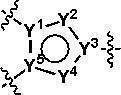
下記式群(II)のいずれかの構造を示し;

Ryは、水素原子、又はC1-5アルキルを示し;
X1及びX2は
i)X1が、単結合、又は式-CO-のとき、
X2は、-C1-5アルキレン-、又は-O-C1-5アルキレン-を示し;
ii)X1が、式-CONRx1-のとき、
X2は、単結合を示し;
Rx1は、水素原子、又はC1-5アルキルを示し;
A環は、ベンゼン環、6員の芳香族複素環(該ベンゼン環及び6員の芳香族複素環は、ハロゲン原子、C1-5アルコキシから選ばれる1~2個の基で置換されてもよい。)、窒素原子を1~2個含む4~8員の飽和若しくは部分不飽和複素環(該4~8員の飽和若しくは不飽和複素環は、1個のオキソで置換されてもよい。)、又はC3-7シクロアルカンを示す]
で表されるアゾール誘導体、又はその医薬上許容される塩。
(2)上記式(I)において、
R4及びR5が、同一又は異なって、それぞれ水素原子、C1-5アルキル(該C1-5アルキルは、ヒドロキシ、ハロゲン原子、シアノ、C3-7シクロアルキル及びC1-5アルコキシからなる群より選ばれる1~3個の基で置換されてもよい。)、C3-7シクロアルキル、又は環中に1つ以上の窒素原子、酸素原子若しくは硫黄原子を含む4~8員の飽和若しくは不飽和複素環(該4~8員の飽和若しくは不飽和複素環は、ヒドロキシ、C1-5アルキル、C1-5アルコキシ、ハロゲン原子、シアノ、C2-5アルカノイル及びトリフルオロメチルからなる群より選ばれる1~2個の基で置換されてもよい。)を示すか、
又はR4及びR5が、隣接する窒素原子と一緒になって、環中に前記窒素原子の他に1つ以上の窒素原子、酸素原子若しくは硫黄原子を含んでもよい4~8員の飽和若しくは不飽和複素環(該4~8員の飽和若しくは不飽和複素環は、ヒドロキシ、C1-5アルキル(該C1-5アルキルは、1~2個のヒドロキシで置換されてもよい。)、C1-5アルコキシ、ハロゲン原子、シアノ、C2-5アルカノイル、オキソ、アミノカルボニル、モノC1-5アルキルアミノカルボニル、ジC1-5アルキルアミノカルボニル及びトリフルオロメチルからなる群より選ばれる1~2個の基で置換されてもよく、さらに該4~8員の飽和若しくは不飽和複素環は、環中の異なる2個の炭素原子の間をC1-5アルキレンで架橋されてもよい。)、2-オキサ-6-アザスピロ[3.3]ヘプタ-6-イル、又は7-オキサ-2-アザスピロ[3.5]ノナ-2-イルを形成する、(1)に記載のアゾール誘導体、又はその医薬上許容される塩。
(3)上記式(I)において、
X1が、単結合であり;
X2が、-C1-5アルキレン-、又は-O-C1-5アルキレン-であり;
A環が、ベンゼン環、6員の芳香族複素環(該ベンゼン環及び6員の芳香族複素環は、ハロゲン原子、C1-5アルコキシから選ばれる1~2個の基で置換されてもよい。)、又は窒素原子を1~2個含む4~8員の飽和若しくは不飽和複素環(該4~8員の飽和若しくは不飽和複素環は、1個のオキソで置換されてもよい。)である(1)又は(2)に記載のアゾール誘導体、又はその医薬上許容される塩。
(4)上記式(I)において、
A環が、ベンゼン環、又は6員の芳香族複素環(該ベンゼン環及び6員の芳香族複素環は、ハロゲン原子、C1-5アルコキシから選ばれる1~2個の基で置換されてもよい。)である(1)~(3)のいずれか一つに記載のアゾール誘導体、又はその医薬上許容される塩。
(5)上記式(I)において、
A環が、ベンゼン環、又はピリジン環(該ベンゼン環及びピリジン環は、ハロゲン原子、C1-5アルコキシから選ばれる1~2個の基で置換されてもよい。)である(1)~(4)のいずれか一つに記載のアゾール誘導体、又はその医薬上許容される塩。
(6)上記式(I)において、
R1が、C1-5アルキルであり;
R2が、水素原子であり;
R3が、フェニル又はピリジル(該フェニル及びピリジルは、C1-5アルキル、C1-5アルコキシ、ハロゲン原子、シアノ、トリフルオロメチル、ジフルオロメトキシ、トリフルオロメトキシ及びC1-5アルキルスルホニルからなる群より選ばれる1~2個の基で置換されてもよい。)である(1)~(5)のいずれか一つに記載のアゾール誘導体、又はその医薬上許容される塩。
(7)上記式(I)において、
下記式(α)で表される置換されても良いアゾール環が、
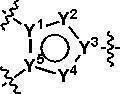
下記式群(III)のいずれかの構造であり;
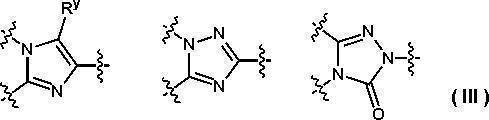
Ryが、水素原子、又はメチル基である(1)~(6)のいずれか一つに記載のアゾール誘導体、又はその医薬上許容される塩。
(8)上記式(I)において、
X1が、単結合であり;
X2が、エチレン、又はメチルエチレンであり;
R4及びR5が隣接する窒素原子と一緒になって、環中に前記窒素原子の他に1つ以上の窒素原子、酸素原子若しくは硫黄原子を含んでもよい4~8員の飽和若しくは不飽和複素環(該4~8員の飽和若しくは不飽和複素環は、ヒドロキシ、C1-5アルキル(該C1-5アルキルは、1~2個のヒドロキシで置換されてもよい。)、C1-5アルコキシ、ハロゲン原子、シアノ、C2-5アルカノイル及びトリフルオロメチルからなる群より選ばれる1~2個の基で置換されてもよく、さらに該4~8員の飽和又は不飽和複素環は、環中の異なる2個の炭素原子の間をC1-5アルキレンで架橋されてもよい。)、又は2-オキサ-6-アザスピロ[3.3]ヘプタ-6-イルを形成する(1)~(7)のいずれか一つに記載のアゾール誘導体、又はその医薬上許容される塩。
(9)上記式(I)において、
R4及びR5が隣接する窒素原子と一緒になって、環中に前記窒素原子の他に1つ以上の酸素原子を含んでもよい5員又は6員の飽和複素環(該6員の飽和複素環は、ヒドロキシ及びC1-5アルキルからなる群より選ばれる1~2個の基で置換されてもよく、さらに該6員飽和複素環は、環中の異なる2個の炭素原子の間をC1-5アルキレンで架橋されてもよい。)、又は2-オキサ-6-アザスピロ[3.3]ヘプタ-6-イルを形成する(1)~(8)のいずれか一つに記載のアゾール誘導体、又はその医薬上許容される塩。
(10)(1)~(9)のいずれか一つに記載のアゾール誘導体、又はその医薬上許容される塩を有効成分として含有する医薬組成物。
(11)(1)~(9)のいずれか一つに記載のアゾール誘導体、又はその医薬上許容される塩を有効成分として含有することを特徴とする、気分障害、不安障害、統合失調症、アルツハイマー病、パーキンソン病、ハンチントン舞踏病、摂食障害、高血圧、消化器疾患、薬物依存症、てんかん、脳梗塞、脳虚血、脳浮腫、頭部外傷、炎症、免疫関連疾患又は脱毛症の治療又は予防剤。


下記式群(V)のいずれかの構造で表される環である。


1-ピロリジニル、ピペリジノ(ここで、該1-ピロリジニル及びピペリジノは、1~2個のヒドロキシで置換されてもよい。)、モルホリン-4-イル(ここで、該モルホリンは、1~2個のC1-5アルキル基で置換されてもよい。例えば、3-メチル-モルホリン-4-イル等)、1,4-オキサゼパン-4-イル、チオモルホリン-4-イル、8-アザビシクロ[3.2.1]オクタ-8-イル(トロピニル)、3-ヒドロキシ-8-アザビシクロ[3.2.1]オクタ-8-イル、8-オキサ-3-アザビシクロ[3.2.1]オクタ-3-イル、3-オキサ-8-アザビシクロ「3.2.1」オクタ-8-イル、2-オキサ-6-アザスピロ[3.3]ヘプタ-6-イル、7-オキサ-2-アザスピロ[3.5]ノナ-2-イルである。
2-[2-(3-クロロフェニル)-4-{4-[2-(ピペリジン-1-イル)エチル]フェニル}-1H-イミダゾール-1-イル]-N-(プロパン-2-イル)アセトアミド、
2-[2-(3-クロロフェニル)-4-{4-[2-(モルホリン-4-イル)エチル]フェニル}-1H-イミダゾール-1-イル]-N-(プロパン-2-イル)アセトアミド、
2-[2-(3-クロロフェニル)-4-(4-{2-[3-(ヒドロキシメチル)ピロリジン-1-イル]エチル}フェニル)-1H-イミダゾール-1-イル]-N-(プロパン-2-イル)アセトアミド、
2-[2-(3-クロロフェニル)-4-{4-[2-(3-オキサ-8-アザビシクロ[3.2.1]オクタ-8-イル)エチル]フェニル}-1H-イミダゾール-1-イル]-N-(プロパン-2-イル)アセトアミド、
2-[2-(4-フルオロ-3-メトキシフェニル)-4-{4-[2-(ピペリジン-1-イル)エチル]フェニル}-1H-イミダゾール-1-イル]-N-(プロパン-2-イル)アセトアミド、
2-[2-(4-フルオロ-3-メトキシフェニル)-4-{4-[2-(モルホリン-4-イル)エチル]フェニル}-1H-イミダゾール-1-イル]-N-(プロパン-2-イル)アセトアミド、
2-[2-(4-フルオロ-3-メトキシフェニル)-4-{4-[2-(ピロリジン-1-イル)エチル]フェニル}-1H-イミダゾール-1-イル]-N-(プロパン-2-イル)アセトアミド、
2-[2-(4-フルオロ-3-メトキシフェニル)-4-(4-{2-[(2R)-2-メチルピロリジン-1-イル]エチル}フェニル)-1H-イミダゾール-1-イル]-N-(プロパン-2-イル)アセトアミド、
2-[2-(4-フルオロ-3-メトキシフェニル)-4-{4-[2-(3-ヒドロキシ-8-アザビシクロ[3.2.1]オクタ-8-イル)エチル]フェニル}-1H-イミダゾール-1-イル]-N-(プロパン-2-イル)アセトアミド、
2-[2-(4-フルオロ-3-メトキシフェニル)-4-{4-[2-(3-メトキシピペリジン-1-イル)エチル]フェニル}-1H-イミダゾール-1-イル]-N-(プロパン-2-イル)アセトアミド、
2-[4-{4-[2-(2,6-ジメチルモルホリン-4-イル)エチル]フェニル}-2-(4-フルオロ-3-メトキシフェニル)-1H-イミダゾール-1-イル]-N-(プロパン-2-イル)アセトアミド、
2-[2-(4-フルオロ-3-メトキシフェニル)-4-{4-[2-(3-メチルピロリジン-1-イル)エチル]フェニル}-1H-イミダゾール-1-イル]-N-(プロパン-2-イル)アセトアミド、
2-[2-(4-フルオロ-3-メトキシフェニル)-4-{4-[2-(3-オキサ-8-アザビシクロ[3.2.1]オクタ-8-イル)エチル]フェニル}-1H-イミダゾール-1-イル]-N-(プロパン-2-イル)アセトアミド、
2-[2-(4-フルオロ-3-メトキシフェニル)-4-{4-[2-(1,4-オキサゼパン-4-イル)エチル]フェニル}-1H-イミダゾール-1-イル]-N-(プロパン-2-イル)アセトアミド、
2-[4-{4-[2-(3,5-ジメチルモルホリン-4-イル)エチル]フェニル}-2-(4-フルオロ-3-メトキシフェニル)-1H-イミダゾール-1-イル]-N-(プロパン-2-イル)アセトアミド、
2-[2-(3-クロロフェニル)-4-{5-[2-(モルホリン-4-イル)エチル]ピリジン-2-イル}-1H-イミダゾール-1-イル]-N-(プロパン-2-イル)アセトアミド、
2-[2-(3-クロロフェニル)-4-{5-[2-(3-オキサ-8-アザビシクロ[3.2.1]オクタ-8-イル)エチル]ピリジン-2-イル}-1H-イミダゾール-1-イル]-N-(プロパン-2-イル)アセトアミド、
2-[2-(3-クロロフェニル)-4-{6-[2-(モルホリン-4-イル)エチル]ピリジン-3-イル}-1H-イミダゾール-1-イル]-N-(プロパン-2-イル)アセトアミド、
2-[2-(3-メトキシフェニル)-5-メチル-4-{4-[2-(モルホリン-4-イル)エチル]フェニル}-1H-イミダゾール-1-イル]-N-(プロパン-2-イル)アセトアミド、
2-[2-(3-メトキシフェニル)-4-{4-[2-(モルホリン-4-イル)エチル]フェニル}-1H-イミダゾール-1-イル]-N-(プロパン-2-イル)アセトアミド、
2-[2-(3-クロロ-4-フルオロフェニル)-4-{4-[2-(モルホリン-4-イル)エチル]フェニル}-1H-イミダゾール-1-イル]-N-(プロパン-2-イル)アセトアミド、
2-[2-(3-メトキシフェニル)-4-{4-[2-(3-オキサ-8-アザビシクロ[3.2.1]オクタ-8-イル)エチル]フェニル}-1H-イミダゾール-1-イル]-N-(プロパン-2-イル)アセトアミド、
2-[2-(3-クロロフェニル)-4-{2-フルオロ-4-[2-(モルホリン-4-イル)エチル]フェニル}-1H-イミダゾール-1-イル]-N-(プロパン-2-イル)アセトアミド、
2-[2-(3-クロロフェニル)-4-{4-[2-(モルホリン-4-イル)プロピル]フェニル}-1H-イミダゾール-1-イル]-N-(プロパン-2-イル)アセトアミド、
2-[5-(3-クロロフェニル)-3-{4-[2-(3-オキサ-8-アザビシクロ[3.2.1]オクタ-8-イル)エチル]フェニル}-1H-1,2,4-トリアゾール-1-イル]-N-(プロパン-2-イル)アセトアミド、
2-[5-(3-クロロフェニル)-3-{4-[2-(モルホリン-4-イル)エチル]フェニル}-1H-1,2,4-トリアゾール-1-イル]-N-(プロパン-2-イル)アセトアミド、
2-[5-(3-クロロフェニル)-3-{5-[2-(3-オキサ-8-アザビシクロ[3.2.1]オクタ-8-イル)エチル]ピリジン-2-イル}-1H-1,2,4-トリアゾール-1-イル]-N-(プロパン-2-イル)アセトアミド、
2-[5-(3-メトキシフェニル)-3-{5-[2-(3-オキサ-8-アザビシクロ[3.2.1]オクタ-8-イル)エチル]ピリジン-2-イル}-1H-1,2,4-トリアゾール-1-イル]-N-(プロパン-2-イル)アセトアミド、
2-[5-(4-フルオロ-3-メトキシフェニル)-3-{5-[2-(3-オキサ-8-アザビシクロ[3.2.1]オクタ-8-イル)エチル]ピリジン-2-イル}-1H-1,2,4-トリアゾール-1-イル]-N-(プロパン-2-イル)アセトアミド、
N-tert-ブチル-2-[5-(3-メトキシフェニル)-3-{5-[2-(3-オキサ-8-アザビシクロ[3.2.1]オクタ-8-イル)エチル]ピリジン-2-イル}-1H-1,2,4-トリアゾール-1-イル]アセトアミド、
2-[5-(3-クロロ-4-フルオロフェニル)-3-{5-[2-(3-オキサ-8-アザビシクロ[3.2.1]オクタ-8-イル)エチル]ピリジン-2-イル}-1H-1,2,4-トリアゾール-1-イル]-N-(プロパン-2-イル)アセトアミド、
N-tert-ブチル-2-[5-(3-クロロフェニル)-3-{5-[2-(3-オキサ-8-アザビシクロ[3.2.1]オクタ-8-イル)エチル]ピリジン-2-イル}-1H-1,2,4-トリアゾール-1-イル]アセトアミド、
2-[5-(3-クロロフェニル)-3-{5-[2-(モルホリン-4-イル)エチル]ピリジン-2-イル}-1H-1,2,4-トリアゾール-1-イル]-N-(プロパン-2-イル)アセトアミド、
N-tert-ブチル-2-[5-(3-クロロフェニル)-3-{5-[2-(モルホリン-4-イル)エチル]ピリジン-2-イル}-1H-1,2,4-トリアゾール-1-イル]アセトアミド、
2-[5-(3-クロロ-4-フルオロフェニル)-3-{5-[2-(モルホリン-4-イル)エチル]ピリジン-2-イル}-1H-1,2,4-トリアゾール-1-イル]-N-(プロパン-2-イル)アセトアミド、
2-[5-(4-フルオロ-3-メトキシフェニル)-3-{5-[2-(モルホリン-4-イル)エチル]ピリジン-2-イル}-1H-1,2,4-トリアゾール-1-イル]-N-(プロパン-2-イル)アセトアミド、
N-tert-ブチル-2-[5-(3-メトキシフェニル)-3-{5-[2-(モルホリン-4-イル)エチル]ピリジン-2-イル}-1H-1,2,4-トリアゾール-1-イル]アセトアミド、
2-[5-(3-メトキシフェニル)-3-{4-[2-(モルホリン-4-イル)エチル]フェニル}-1H-1,2,4-トリアゾール-1-イル]-N-(プロパン-2-イル)アセトアミド、
2-[5-(3-メトキシフェニル)-3-{4-[2-(3-オキサ-8-アザビシクロ[3.2.1]オクタ-8-イル)エチル]フェニル}-1H-1,2,4-トリアゾール-1-イル]-N-(プロパン-2-イル)アセトアミド、
2-[3-{2-フルオロ-4-[2-(モルホリン-4-イル)エチル]フェニル}-5-(3-メトキシフェニル)-1H-1,2,4-トリアゾール-1-イル]-N-(プロパン-2-イル)アセトアミド、
2-[3-{3-フルオロ-4-[2-(モルホリン-4-イル)エチル]フェニル}-5-(3-メトキシフェニル)-1H-1,2,4-トリアゾール-1-イル]-N-(プロパン-2-イル)アセトアミド、
2-[5-(3-メトキシフェニル)-3-{4-[2-(3-オキサ-8-アザビシクロ[3.2.1]オクタ-8-イル)プロピル]フェニル}-1H-1,2,4-トリアゾール-1-イル]-N-(プロパン-2-イル)アセトアミド、
2-[5-(3-メトキシフェニル)-3-{4-[2-(7-オキサ-2-アザスピロ[3.5]ノナ-2-イル)エチル]フェニル}-1H-1,2,4-トリアゾール-1-イル]-N-(プロパン-2-イル)アセトアミド、
2-[5-(3-メトキシフェニル)-3-{4-[2-(2-オキサ-6-アザスピロ[3.3]ヘプタ-6-イル)エチル]フェニル}-1H-1,2,4-トリアゾール-1-イル]-N-(プロパン-2-イル)アセトアミド、
2-[1-(3-クロロフェニル)-3-{4-[2-(モルホリン-4-イル)エチル]フェニル}-1H-1,2,4-トリアゾール-5-イル]-N-(プロパン-2-イル)アセトアミド、
2-[1-(3-クロロフェニル)-3-{4-[2-(3-オキサ-8-アザビシクロ[3.2.1]オクタ-8-イル)エチル]フェニル}-1H-1,2,4-トリアゾール-5-イル]-N-(プロパン-2-イル)アセトアミド、
2-[5-(3-クロロフェニル)-3-{4-[2-(モルホリン-4-イル)エチル]フェニル}-2-オキソ-2,3-ジヒドロ-1H-イミダゾール-1-イル]-N-(プロパン-2-イル)アセトアミド、
2-[4-(3-クロロフェニル)-2-{4-[2-(ピペリジン-1-イル)エチル]フェニル}-1,3-オキサゾール-5-イル]-N-(プロパン-2-イル)アセトアミド、
2-[4-(3-クロロフェニル)-2-{4-[2-(モルホリン-4-イル)エチル]フェニル}-1,3-オキサゾール-5-イル]-N-(プロパン-2-イル)アセトアミド、
2-[4-(3-クロロフェニル)-2-{4-[2-(2-オキサ-6-アザスピロ[3.3]ヘプタ-6-イル)エチル]フェニル}-1,3-オキサゾール-5-イル]-N-(プロパン-2-イル)アセトアミド、
2-[5-(3-クロロフェニル)-2-{4-[2-(ピペリジン-1-イル)エチル]フェニル}-1,3-チアゾール-4-イル]-N-(プロパン-2-イル)アセトアミド、
2-[5-(3-クロロフェニル)-2-{4-[2-(モルホリン-4-イル)エチル]フェニル}-1,3-チアゾール-4-イル]-N-(プロパン-2-イル)アセトアミド、
2-[3-(3-クロロフェニル)-1-{4-[2-(ピペリジン-1-イル)エチル]フェニル}-1H-ピラゾール-4-イル]-N-(プロパン-2-イル)アセトアミド、
2-[3-(3-クロロフェニル)-1-{4-[2-(モルホリン-4-イル)エチル]フェニル}-1H-ピラゾール-4-イル]-N-(プロパン-2-イル)アセトアミド、
2-[5-(3-クロロフェニル)-3-{4-[2-(モルホリン-4-イル)エチル]フェニル}-1H-ピラゾール-1-イル]-N-(プロパン-2-イル)アセトアミド、
2-[4-(3-クロロフェニル)-1-{4-[2-(モルホリン-4-イル)エチル]フェニル}-2,5-ジオキソ-2,5-ジヒドロ-1H-ピロール-3-イル]-N-(プロパン-2-イル)アセトアミド、
2-[4-(3-クロロフェニル)-1-{4-[2-(モルホリン-4-イル)エチル]フェニル}-5-オキソ-4,5-ジヒドロ-1H-1,2,4-トリアゾール-3-イル]-N-(プロパン-2-イル)アセトアミド、
2-[4-(3-クロロフェニル)-1-{4-[2-(3-オキサ-8-アザビシクロ[3.2.1]オクタ-8-イル)エチル]フェニル}-5-オキソ-4,5-ジヒドロ-1H-1,2,4-トリアゾール-3-イル]-N-(プロパン-2-イル)アセトアミド、
N-tert-ブチル-2-[4-(4-フルオロ-3-メトキシフェニル)-1-{4-[2-(モルホリン-4-イル)エチル]フェニル}-5-オキソ-4,5-ジヒドロ-1H-1,2,4-トリアゾール-3-イル]アセトアミド、
N-tert-ブチル-2-[4-(3-メトキシフェニル)-1-{4-[2-(モルホリン-4-イル)エチル]フェニル}-5-オキソ-4,5-ジヒドロ-1H-1,2,4-トリアゾール-3-イル]アセトアミド、
N-tert-ブチル-2-[4-(3-メトキシフェニル)-1-{4-[2-(3-オキサ-8-アザビシクロ[3.2.1]オクタ-8-イル)エチル]フェニル}-5-オキソ-4,5-ジヒドロ-1H-1,2,4-トリアゾール-3-イル]アセトアミド、
N-tert-ブチル-2-[4-(4-フルオロ-3-メトキシフェニル)-1-{4-[2-(3-オキサ-8-アザビシクロ[3.2.1]オクタ-8-イル)エチル]フェニル}-5-オキソ-4,5-ジヒドロ-1H-1,2,4-トリアゾール-3-イル]アセトアミド、
N-tert-ブチル-2-[4-(4-フルオロ-3-メトキシフェニル)-1-{5-[2-(3-オキサ-8-アザビシクロ[3.2.1]オクタ-8-イル)エチル]ピリジン-2-イル}-5-オキソ-4,5-ジヒドロ-1H-1,2,4-トリアゾール-3-イル]アセトアミド、
N-tert-ブチル-2-[4-(3-クロロフェニル)-1-{4-[2-(モルホリン-4-イル)エチル]フェニル}-5-オキソ-4,5-ジヒドロ-1H-1,2,4-トリアゾール-3-イル]アセトアミド、
N-tert-ブチル-2-[4-(3-クロロフェニル)-1-{4-[2-(3-オキサ-8-アザビシクロ[3.2.1]オクタ-8-イル)エチル]フェニル}-5-オキソ-4,5-ジヒドロ-1H-1,2,4-トリアゾール-3-イル]アセトアミド、
2-[4-(3-クロロフェニル)-1-{4-[2-(モルホリン-4-イル)プロピル]フェニル}-5-オキソ-4,5-ジヒドロ-1H-1,2,4-トリアゾール-3-イル]-N-(プロパン-2-イル)アセトアミド、
2-[4-(3-クロロフェニル)-1-{4-[2-(3-オキサ-8-アザビシクロ[3.2.1]オクタ-8-イル)プロピル]フェニル}-5-オキソ-4,5-ジヒドロ-1H-1,2,4-トリアゾール-3-イル]-N-(プロパン-2-イル)アセトアミド、
2-[4-(3-クロロフェニル)-1-{3-フルオロ-4-[2-(モルホリン-4-イル)エチル]フェニル}-5-オキソ-4,5-ジヒドロ-1H-1,2,4-トリアゾール-3-イル]-N-(プロパン-2-イル)アセトアミド、
2-[4-(3-クロロフェニル)-1-{3-フルオロ-4-[2-(3-オキサ-8-アザビシクロ[3.2.1]オクタ-8-イル)エチル]フェニル}-5-オキソ-4,5-ジヒドロ-1H-1,2,4-トリアゾール-3-イル]-N-(プロパン-2-イル)アセトアミド、
2-[4-(3-クロロフェニル)-1-{3-メトキシ-4-[2-(モルホリン-4-イル)エチル]フェニル}-5-オキソ-4,5-ジヒドロ-1H-1,2,4-トリアゾール-3-イル]-N-(プロパン-2-イル)アセトアミド、
2-[4-(3-クロロフェニル)-1-{3-メトキシ-4-[2-(3-オキサ-8-アザビシクロ[3.2.1]オクタ-8-イル)エチル]フェニル}-5-オキソ-4,5-ジヒドロ-1H-1,2,4-トリアゾール-3-イル]-N-(プロパン-2-イル)アセトアミド、
2-[4-(3-クロロ-4-フルオロフェニル)-1-{4-[2-(モルホリン-4-イル)エチル]フェニル}-5-オキソ-4,5-ジヒドロ-1H-1,2,4-トリアゾール-3-イル]-N-(プロパン-2-イル)アセトアミド、
2-[4-(3-クロロ-4-フルオロフェニル)-1-{4-[2-(3-オキサ-8-アザビシクロ[3.2.1]オクタ-8-イル)エチル]フェニル}-5-オキソ-4,5-ジヒドロ-1H-1,2,4-トリアゾール-3-イル]-N-(プロパン-2-イル)アセトアミド、
N-tert-ブチル-2-[4-(3-クロロ-4-フルオロフェニル)-1-{4-[2-(モルホリン-4-イル)エチル]フェニル}-5-オキソ-4,5-ジヒドロ-1H-1,2,4-トリアゾール-3-イル]アセトアミド、
N-tert-ブチル-2-[4-(3-クロロ-4-フルオロフェニル)-1-{4-[2-(3-オキサ-8-アザビシクロ[3.2.1]オクタ-8-イル)エチル]フェニル}-5-オキソ-4,5-ジヒドロ-1H-1,2,4-トリアゾール-3-イル]アセトアミド、
N-tert-ブチル-2-[4-(3-クロロ-4-フルオロフェニル)-1-{5-[2-(モルホリン-4-イル)エチル]ピリジン-2-イル}-5-オキソ-4,5-ジヒドロ-1H-1,2,4-トリアゾール-3-イル]アセトアミド、
N-tert-ブチル-2-[4-(3-クロロ-4-フルオロフェニル)-1-{5-[2-(3-オキサ-8-アザビシクロ[3.2.1]オクタ-8-イル)エチル]ピリジン-2-イル}-5-オキソ-4,5-ジヒドロ-1H-1,2,4-トリアゾール-3-イル]アセトアミド、
2-[4-(3-クロロフェニル)-1-{5-[2-(3-オキサ-8-アザビシクロ[3.2.1]オクタ-8-イル)プロピル]ピリジン-2-イル}-5-オキソ-4,5-ジヒドロ-1H-1,2,4-トリアゾール-3-イル]-N-(プロパン-2-イル)アセトアミド、
2-(1-{4-[2-(モルホリン-4-イル)エチル]フェニル}-5-オキソ-4-[3-(トリフルオロメチル)フェニル]-4,5-ジヒドロ-1H-1,2,4-トリアゾール-3-イル)-N-(プロパン-2-イル)アセトアミド、
2-[4-(3-クロロ-4-フルオロフェニル)-1-{4-[2-(3-オキサ-8-アザビシクロ[3.2.1]オクタ-8-イル)プロピル]フェニル}-5-オキソ-4,5-ジヒドロ-1H-1,2,4-トリアゾール-3-イル]-N-(プロパン-2-イル)アセトアミド、
2-[4-(4-フルオロ-3-メトキシフェニル)-1-{4-[2-(3-オキサ-8-アザビシクロ[3.2.1]オクタ-8-イル)エチル]フェニル}-5-オキソ-4,5-ジヒドロ-1H-1,2,4-トリアゾール-3-イル]-N-(プロパン-2-イル)アセトアミド、
2-[4-(4-フルオロ-3-メトキシフェニル)-1-{3-メトキシ-4-[2-(3-オキサ-8-アザビシクロ[3.2.1]オクタ-8-イル)エチル]フェニル}-5-オキソ-4,5-ジヒドロ-1H-1,2,4-トリアゾール-3-イル]-N-(プロパン-2-イル)アセトアミド、
2-[1-{3-メトキシ-4-[2-(3-オキサ-8-アザビシクロ[3.2.1]オクタ-8-イル)エチル]フェニル}-4-(3-メトキシフェニル)-5-オキソ-4,5-ジヒドロ-1H-1,2,4-トリアゾール-3-イル]-N-(プロパン-2-イル)アセトアミド、
2-[4-(3-クロロ-4-フルオロフェニル)-5-オキソ-1-{4-[2-(ピロリジン-1-イル)エチル]フェニル}-4,5-ジヒドロ-1H-1,2,4-トリアゾール-3-イル]-N-(プロパン-2-イル)アセトアミド、
2-[4-(3-クロロ-4-フルオロフェニル)-5-オキソ-1-{4-[2-(ピペリジン-1-イル)エチル]フェニル}-4,5-ジヒドロ-1H-1,2,4-トリアゾール-3-イル]-N-(プロパン-2-イル)アセトアミド、
又はその医薬上許容される塩が挙げられる。
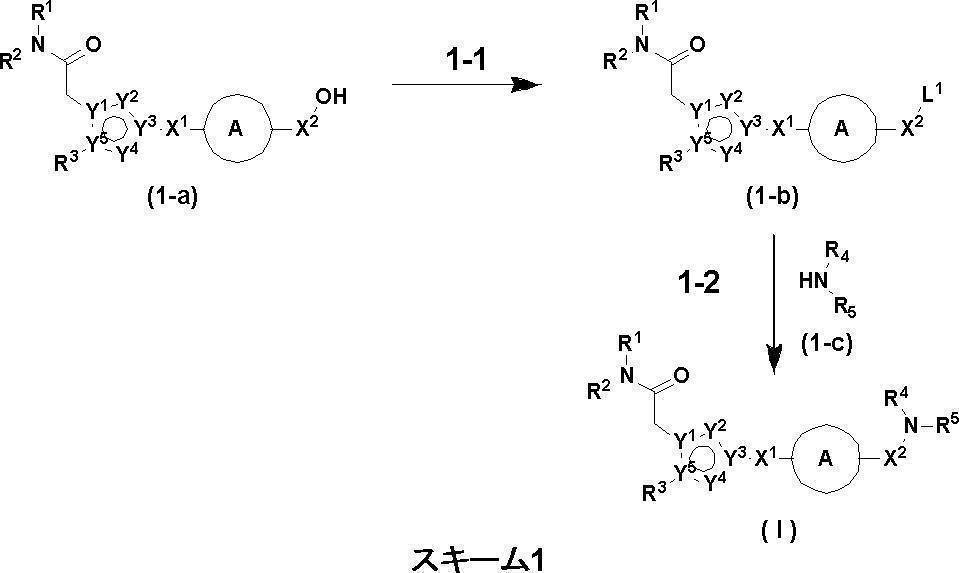
(式中、R1、R2、R3、R4、R5、X1、X2、Y1、Y2、Y3、Y4、Y5及びAは上記と同じである。L1は、脱離基を示す。脱離基とは、p-トルエンスルホニルオキシ基、メタンスルホニルオキシ基、ハロゲン原子等を意味する。)

(式中、R1、R2、R3、Y1、Y2、Y3、Y4、Y5及びAは上記と同じである。R6は、C1-5アルキルを示す。L2は、塩素原子、臭素原子、ヨウ素原子、トリフルオロメタンスルホニルオキシ基を示す。)

(式中、R3、L1、L2及びAは上記と同じである。)

(式中、R1、R2、R3及びAは上記と同じである。L3は、臭素原子、ヨウ素原子を示す。L4は、塩素原子、臭素原子、ヨウ素原子などのハロゲン原子を示す。L5は、塩素原子、臭素原子、ヨウ素原子、又はトリフルオロメタンスルホニルオキシ基を示す。Mtは、カップリング反応で用いられる金属原子または金属原子団を示し、化合物(4- e)の例としてマグネシウム反応剤、亜鉛反応剤、ホウ酸又はホウ酸エステルが結合したホウ素反応剤、スズ反応剤等が挙げられる。)

(式中、R1、R2、R3、L5及びAは上記と同じである。P1は、メチル基、メトキシメチル基、アリル基、アセチル基、メチル炭酸エステル基、又はベンジル基等のフェノール性水酸基の保護基を示す[プロテクティブ グループス イン オーガニック シンセシス(Protective Groups in Organic Synthesis)第4版、ジョン ウィリー アンド サンズ(John Wiley & Sons, INC.) 参照]。P2は、トリメチルシリル基、トリエチルシリル基、トリイソプロピルシリル基等の末端アルキンの保護基を示す[プロテクティブ グループス イン オーガニック シンセシス(Protective Groups in Organic Synthesis)第4版、ジョン ウィリー アンド サンズ(John Wiley & Sons, INC.) 参照]。)

(式中、R3、R6、L2及びAは上記と同じである。)

(式中、R3、R6、L2及びAは上記と同じである。L6は、塩素原子、臭素原子、ヒドロキシル基を示す。L7は、塩素原子、臭素原子を示す。)

(式中、R3、R6、L2及びAは上記と同じである。)

(式中、R3、R6、L2及びAは上記と同じである。)

(式中、R1、R2、R3、L2、L7及びAは上記と同じである。)

(式中、R1、R2、R3、R6、L4、Mt及びAは上記と同じである。P2は、メトキシメチル基、tert-ブチルジメチルシリル基、アセチル基、ベンジル基、テトラヒドロピラニル基、2-(トリメチルシリル)エトキシメチル基等の水酸基の保護基{プロテクティブ グループズ イン オーガニック シンセシス(Protective Groups in Organic Synthesis)第4版、ジョン ウィリー アンド サンズ(John Wiley & Sons, INC.)参照}又は水素原子を示す。)

(式中、R1、R2、R3、L2、L7及びAは上記と同じである。)
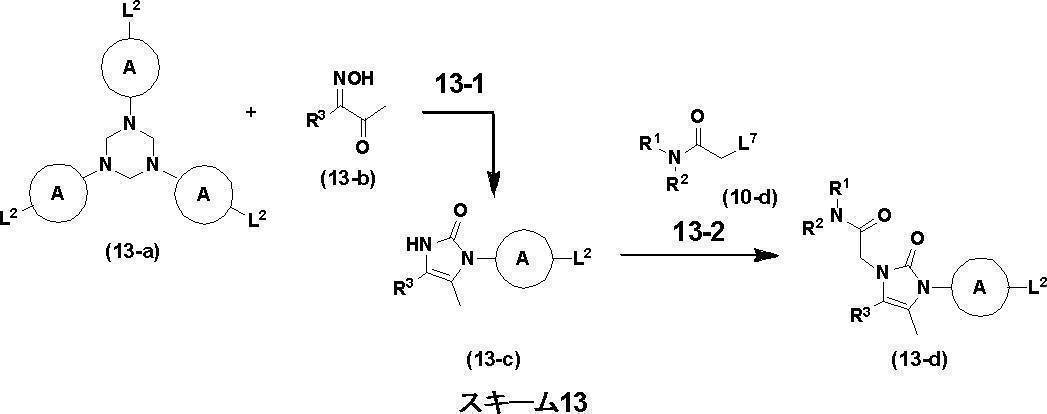
(式中、R1、R2、R3、L2、L7及びAは上記と同じである。)
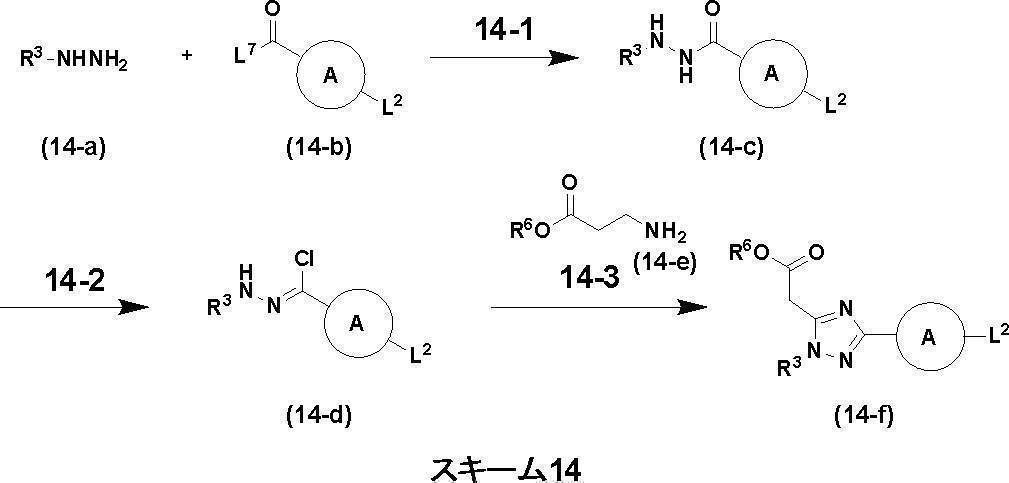
(式中、R3、R6、L2、L7及びAは上記と同じである。)

(式中、R1、R2、R3、R6、L3及びAは上記と同じである。)
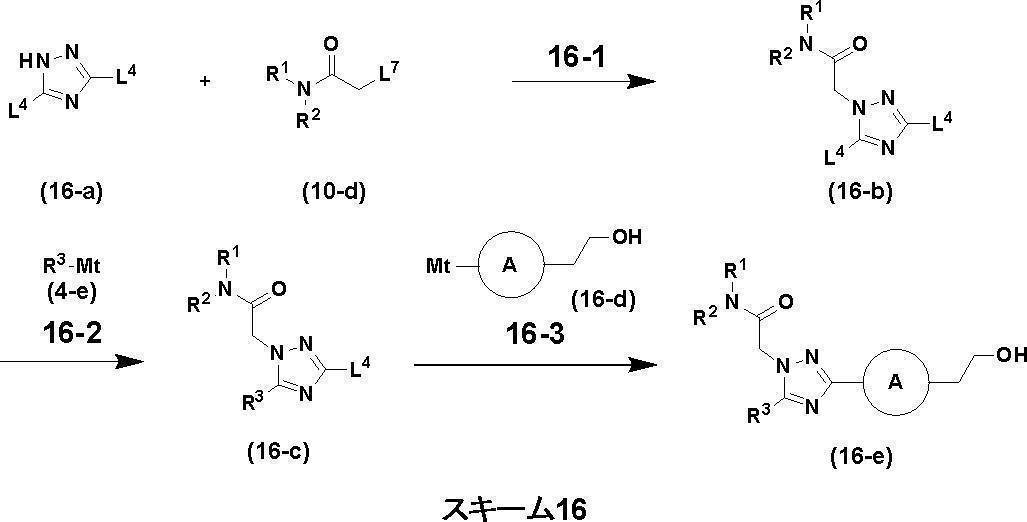
(式中、R1、R2、R3、L4、L7、Mt及びAは上記と同じである。)
スキーム4中の工程4-3と同様の手法により、式(16- c)で表される化合物と式(16- d)で表される化合物のカップリング反応により、式(16- e)で表される化合物を得ることができる(工程16-3)。

(式中、R1、R2、R3、R4、R5、R6、Y1、Y2、Y3、Y4、Y5及びAは上記と同じである。)

(式中、R1、R2、R3、R4、R5、L4、L7及びAは上記と同じである。R7は、水素原子またはC1-5アルキル基を示す。R8はメチル基、エチル基等のカルボニル基の保護基を示し、又は共に結合して環を形成してもよい{プロテクティブ グループズ イン オーガニック シンセシス(Protective Groups in Organic Synthesis)第4版、ジョン ウィリー アンド サンズ(John Wiley & Sons, INC.)参照}。
スキーム10中の工程10-2と同様の手法により、化合物(18- a)を式(18- b)で表される化合物に変換することができる(工程18-1)。ここで化合物(18- a)は、市販化合物、公知化合物或いは当業者に公知である種々の有機合成手法を用いて市販化合物又は公知化合物より合成した化合物を用いることができる。
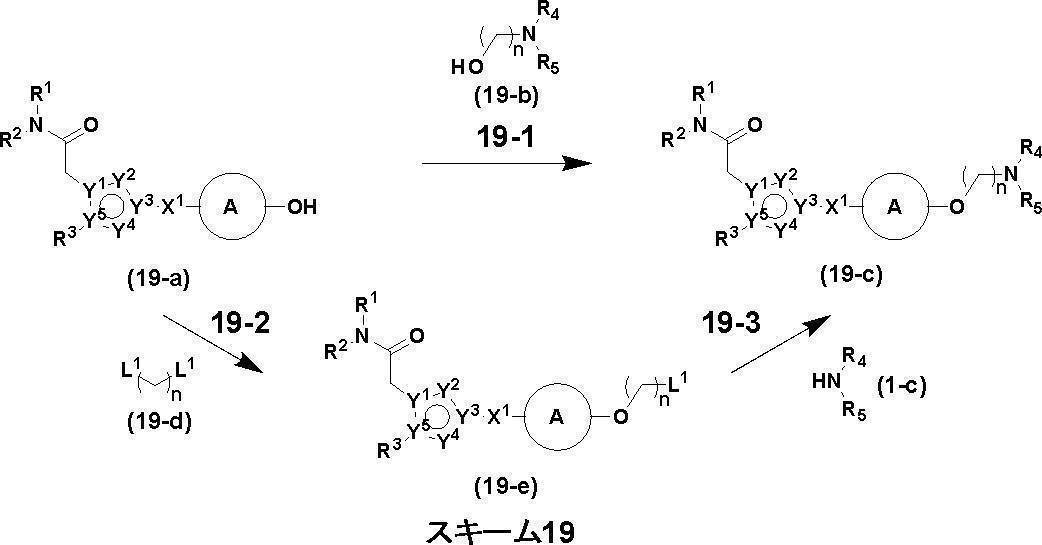
(式中、R1、R2、R3、R4、R5、Y1、Y2、Y3、Y4、Y5、L1、X1及びAは上記と同じである。nは1-5の整数を示す。)
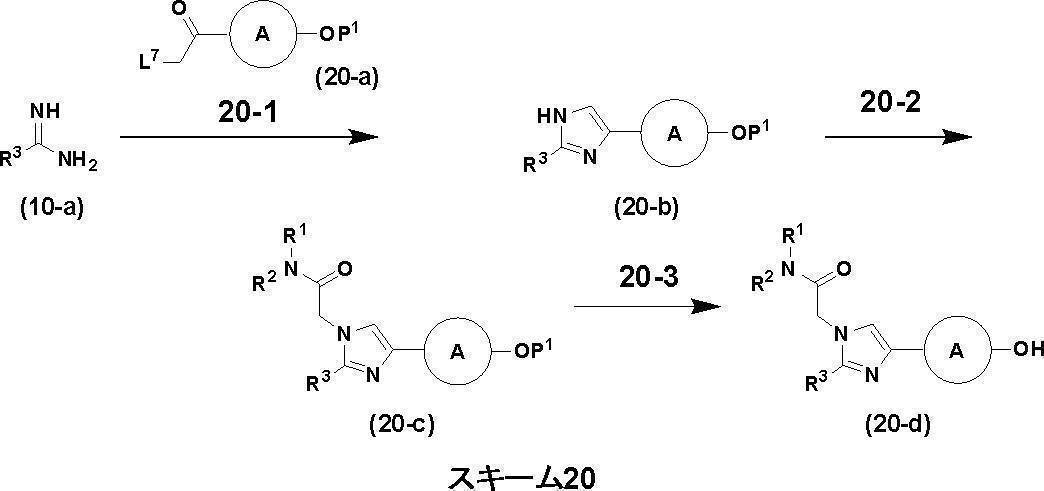
(式中、R1、R2、R3、L7、P1及びAは上記と同じである。)

(式中、R1、R2、R3、L2及びAは上記と同じである。)
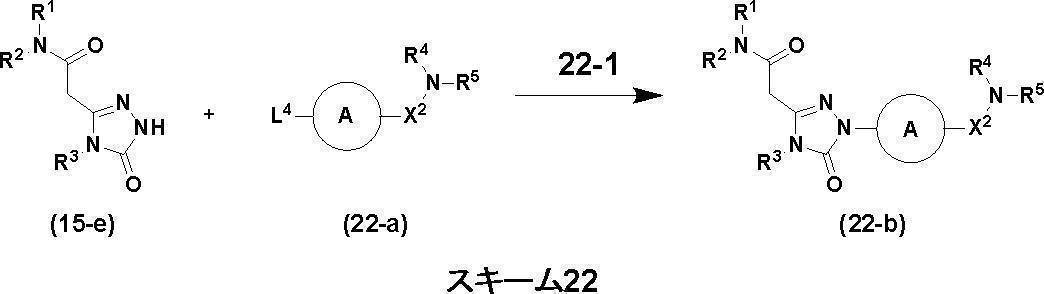
(式中、R1、R2、R3、R4、R5、L4、X2及びAは上記と同じである。)

(式中、R1、R2、R3、R4、R5、L4、X2、Y2、Mt及びAは上記と同じである。)
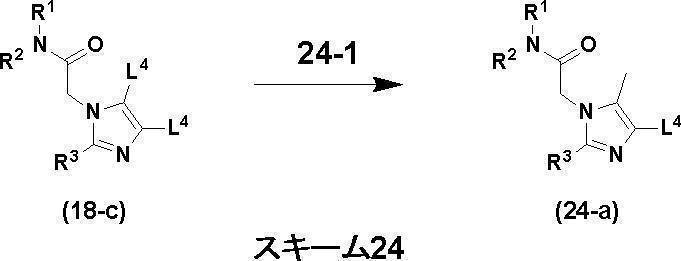
(式中、R1、R2、R3及びL4は上記と同じである。)

(式中、R1、R2、R3、R4、R5、L4及び、X2は上記と同じである。)

(式中、R1、R2、R3、R4、R5、L3及びX2は上記と同じである。P3は、ベンジルオキシカルボニル基、アリルオキシカルボニル基、tert-ブチルカルボニル基、p-トルエンスルホニル基等のアミノ基の保護基{プロテクティブ グループズ イン オーガニック シンセシス(Protective Groups in Organic Synthesis)第4版、ジョン ウィリー アンド サンズ(John Wiley & Sons, INC.)参照}を示す。)
式(26- f)で表される化合物は、式(26- d)で表される化合物と、式(26- e)で表される化合物を反応させることにより得ることができる(工程26-3)。工程26-3における反応は、工程1-2と同様の条件下進行する。

(式中、R4、R5、R7、L1、L4及びAは上記と同じである。Metは、-MgBr、MgCl、-Liなどの金属を示し、Raはメチル又はエチル基を示す。)
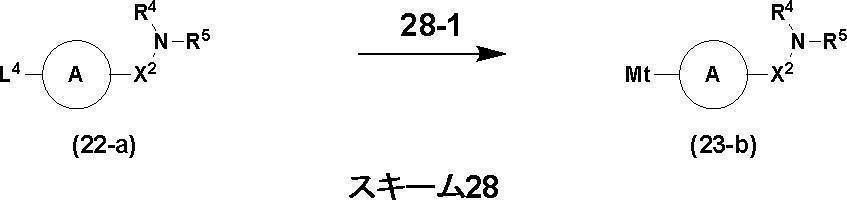
(式中、R4、R5、L4、X2、Mt及びAは上記と同じである。)

(式中、R6、L4及びAは上記と同じである。)
参考例、実施例において、後処理の際の「Phase Separator」とはBiotage社のISOLUTE(商標登録)Phase Separatorである。カラムクロマトグラフィーを使用して精製した際の「SNAP Cartridge KP-NH」にはBiotage社SNAP Cartridge KP-NH、「SNAP Cartridge KP-Sil」にはBiotage社SNAP Cartridge KP-Sil、「SNAP Cartridge HP-Sil」にはBiotage社SNAP Cartridge HP-Sil、「Chromatorex NH」には富士シリシア化学社製クロマトレックス(登録商標)NHを使用した。分取薄層クロマトグラフィー(PTLC)を使用して精製した際にはメルク社シリカゲル60F254、20cm×20cmを使用した。精製の際の「逆相カラムクロマトグラフィー」にはWaters Sunfire prep C18 OBD,5.0μm,φ30×50mmまたはYMC-Actus Triart C18,5.0μm,φ30×50mmを用いた。
NMRスペクトル:日本電子社JNM-ECA600(600MHz)、日本電子社JNM-ECA500(500MHz)、Varian社UNITYNOVA300(300MHz)、Varian社GEMINI2000/200(200MHz)
MSスペクトル:島津社LCMS-2010EVあるいはmicromass社 Platform LC
条件1
測定機器:micromass社 Platform LCおよびAgilent社 Agilent1100
カラム:Waters社 SunFire C18,2.5μm,φ4.6x50mm
溶媒:A液;0.1%トリフルオロ酢酸含有水、B液;0.1%トリフルオロ酢酸含有アセトニトリル
グラジエント:0分(A液/B液=90/10)、0.5分(A液/B液=90/10)、5.5分(A液/B液=20/80)、6.0分(A液/B液=1/99)、6.3分(A液/B液=1/99)
流速:1mL/min、検出法:254nm
イオン化法:電子衝撃イオン化法Electron Spray Ionization: ESI)
条件2-1
測定機械:Agilent 2900およびAgilent 6150
カラム:Waters Acquity CSH C18,1.7μm,φ2.1x50mm
溶媒:A液;0.1%ギ酸含有水、B液;0.1%ギ酸含有アセトニトリル
グラジエント:0分(A液/B液=80/20)、1.2-1.4分(A液/B液=1/99)
流速:0.8mL/min、検出法:254nm
条件2-2
測定機器、カラム、溶媒は条件2-1と同じ。
グラジエント、流速:0.8mL/min、0min(A液/B液=95/5)、1.20min(A液/B液=50/50)、1.0mL/min、1.38min(A液/B液=3/97)
検出法:254nm
Brine(飽和食塩水)、MeOH(メタノール)、MgSO4(無水硫酸マグネシウム)、K2CO3(炭酸カリウム)、Na2CO3(炭酸ナトリウム)、Na2SO4(無水硫酸ナトリウム)、NaHCO3(炭酸水素ナトリウム)、NaOH(水酸化ナトリウム)、KOH(水酸化カリウム)、HCl(塩化水素)、IPE(ジイソプロピルエーテル)、THF(テトラヒドロフラン)、DMF(N,N-ジメチルホルムアミド)、Et2O(ジエチルエーテル)、EtOH(エタノール)、NH4OH(25~28%アンモニア水)、EtOAc(酢酸エチル)、CHCl3(クロロホルム)、DMSO(ジメチルスルホキシド)、MeCN(アセトニトリル)、n-Hexane(n-ヘキサン)、Et3N(トリエチルアミン)、iPr2NEt(ジイソプロピルエチルアミン)、Pd(PPh3)4[テトラキストリフェニルホスフィンパラジウム(0)]、HATU[O-(7-アザベンゾトリアゾール-1-イル)-N,N,N’,N’-テトラメチルウロニウム ヘキサフルオロホスファート]、DPPA(ジフェニルリン酸アジド)、BH3・THF(ボラン-テトラヒドロフラン コンプレックス)、NaBO3・4H2O(過ホウ酸ナトリウム四水和物)、9-BBN(9-ボラビシクロ[3.3.1]ノナン)、IBX(1-ヒドロキシ-1,2-ベンゾヨードキソール-3(1H)-オン 1-オキシド)、BBr3(三臭化ホウ素)、MsCl(塩化メタンスルホニル)、TMSCH2N2(トリメチルシリルジアゾメタン)、n-BuLi(n-ブチルリチウム)、EDC・HCl[1-エチル-3-(3-ジメチルアミノプロピル)カルボジイミド塩酸塩]、HOBt・H2O(1-ヒドロキシベンゾトリアゾール・1水和物)、Cs2CO3(炭酸セシウム)、PdCl2(PPh3)2[ビス(トリフェニルホスフィン)パラジウム(II) 二塩化物]、NaBH4(水素化ホウ素ナトリウム)、Na2SO3(亜硫酸ナトリウム)、PdCl2(dppf)・CH2Cl2{[1,1´-ビス(ジフェニルホスフィノ)フェロセン]パラジウム(II)ジクロリド ジクロロメタン錯体(1:1)}、AcOK(酢酸カリウム)、Boc(tert-ブトキシカルボニル)、NBS(N-ブロモスクシンイミド)、NIS(N-ヨードスクシンイミド)、Tf2O(トリフルオロメタンスルホン酸無水物)、NH4Cl(塩化アンモニア)、TBDPS(tert-ブチルジフェニルシリル)。
・参考例P-A01:4-(4-ブロモフェニル)-2-(3-クロロフェニル)-1H-イミダゾールの合成
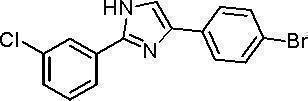
MS (ESI pos.) m/z : 333, 335([M+H]+).
・参考例P-A02:2-[4-(4-ブロモフェニル)-2-(3-クロロフェニル)-1H-イミダゾール-1-イル]-N-(プロパン-2-イル)アセトアミドの合成

MS (ESI pos.) m/z : 432, 434([M+H]+).
・参考例P-A03:2-[2-(3-クロロフェニル)-4-(4-エテニルフェニル)-1H-イミダゾール-1-イル]-N-(プロパン-2-イル)アセトアミドの合成

MS (ESI pos.) m/z : 380([M+H]+).
・参考例P-A04:2-{2-(3-クロロフェニル)-4-[4-(2-ヒドロキシエチル)フェニル]-1H-イミダゾール-1-イル}-N-(プロパン-2-イル)アセトアミドの合成

MS (ESI pos.) m/z : 398([M+H]+).
・参考例P-A05:4-(4-ブロモフェニル)-2-(4-フルオロ-3-メトキシフェニル)-1H-イミダゾールの合成

MS (ESI pos.) m/z : 347, 349([M+H]+).
・参考例P-A06:2-[4-(4-ブロモフェニル)-2-(4-フルオロ-3-メトキシフェニル)-1H-イミダゾール-1-イル]-N-(プロパン-2-イル)アセトアミドの合成

MS (ESI pos.) m/z : 446, 448([M+H]+).
・参考例P-A07:2-[4-(4-エテニルフェニル)-2-(4-フルオロ-3-メトキシフェニル)-1H-イミダゾール-1-イル]-N-(プロパン-2-イル)アセトアミドの合成

MS (ESI pos.) m/z : 394([M+H]+).
・参考例P-A08:2-{2-(4-フルオロ-3-メトキシフェニル)-4-[4-(2-ヒドロキシエチル)フェニル]-1H-イミダゾール-1-イル}-N-(プロパン-2-イル)アセトアミドの合成
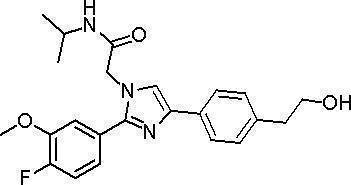
MS (ESI pos.) m/z : 412([M+H]+).
・参考例P-A09:5-ブロモ-2-[2-(3-クロロフェニル)-1H-イミダゾール-4-イル]ピリジンの合成

MS (ESI pos.) m/z : 334, 336([M+H]+).
・参考例P-A10:2-[4-(5-ブロモピリジン-2-イル)-2-(3-クロロフェニル)-1H-イミダゾール-1-イル]-N-(プロパン-2-イル)アセトアミドの合成

MS (ESI pos.) m/z : 433, 435([M+H]+).
・参考例P-A11:2-[2-(3-クロロフェニル)-4-(5-エテニルピリジン-2-イル)-1H-イミダゾール-1-イル]-N-(プロパン-2-イル)アセトアミドの合成

MS (ESI pos.) m/z : 381([M+H]+).
・参考例P-A12:2-{2-(3-クロロフェニル)-4-[5-(2-ヒドロキシエチル)ピリジン-2-イル]-1H-イミダゾール-1-イル}-N-(プロパン-2-イル)アセトアミドの合成

MS (ESI pos.) m/z : 399([M+H]+).
・参考例P-A13:2-[4-(4-ブロモフェニル)-1H-イミダゾール-2-イル]-6-メトキシピリジンの合成

MS (ESI pos.) m/z : 330, 332([M+H]+).
・参考例P-A14:2-[4-(4-ブロモフェニル)-2-(6-メトキシピリジン-2-イル)-1H-イミダゾール-1-イル]-N-(プロパン-2-イル)アセトアミドの合成

MS (ESI pos.) m/z : 429, 431([M+H]+).
・参考例P-A15:2-[4-{4-[(Z)-2-エトキシエテニル]フェニル}-2-(6-メトキシピリジン-2-イル)-1H-イミダゾール-1-イル]-N-(プロパン-2-イル)アセトアミドの合成
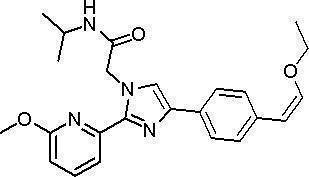
MS (ESI pos.) m/z : 421([M+H]+).
・参考例P-A16:2-{2-(6-メトキシピリジン-2-イル)-4-[4-(2-オキソエチル)フェニル]-1H-イミダゾール-1-イル}-N-(プロパン-2-イル)アセトアミドの合成

MS (ESI pos.) m/z : 393([M+H]+).
・参考例P-A17:2-ブロモ-5-[2-(3-クロロフェニル)-1H-イミダゾール-4-イル]ピリジンの合成
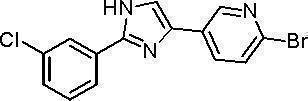
MS (ESI pos.) m/z : 334, 336([M+H]+).
・参考例P-A18:2-[4-(6-ブロモピリジン-3-イル)-2-(3-クロロフェニル)-1H-イミダゾール-1-イル]-N-(プロパン-2-イル)アセトアミドの合成
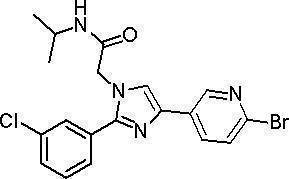
MS (ESI pos.) m/z : 433, 435([M+H]+).
・参考例P-A19:2-[2-(3-クロロフェニル)-4-{6-[(Z)-2-エトキシエテニル]ピリジン-3-イル}-1H-イミダゾール-1-イル]-N-(プロパン-2-イル)アセトアミドの合成

MS (ESI pos.) m/z : 425([M+H]+).
・参考例P-A20:2-{2-(3-クロロフェニル)-4-[6-(2-オキソエチル)ピリジン-3-イル]-1H-イミダゾール-1-イル}-N-(プロパン-2-イル)アセトアミドの合成

MS (ESI pos.) m/z : 397([M+H]+).
・参考例P-A21:2-[4-{4-[(Z)-2-エトキシエテニル]フェニル}-2-(4-フルオロ-3-メトキシフェニル)-1H-イミダゾール-1-イル]-N-(プロパン-2-イル)アセトアミドの合成
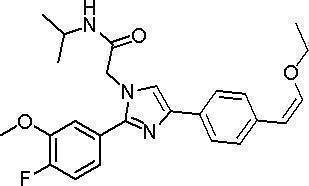
MS (ESI pos.) m/z : 438([M+H]+).
・参考例P-A22:2-{2-(4-フルオロ-3-メトキシフェニル)-4-[4-(2-オキソエチル)フェニル]-1H-イミダゾール-1-イル}-N-(プロパン-2-イル)アセトアミドの合成

MS (ESI pos.) m/z : 410([M+H]+).
・参考例P-A23:2-{2-(3-クロロフェニル)-4-[4-(4,4,5,5-テトラメチル-1,3,2-ジオキサボロラン-2-イル)フェニル]-1H-イミダゾール-1-イル}-N-(プロパン-2-イル)アセトアミドの合成

MS (ESI pos.) m/z : 480([M+H]+).
・参考例P-A24:2-[2-(3-クロロフェニル)-4-(4-ヒドロキシフェニル)-1H-イミダゾール-1-イル]-N-(プロパン-2-イル)アセトアミドの合成

MS (ESI pos.) m/z : 370([M+H]+).
・参考例P-A25:2-(3-クロロフェニル)-4-(3-メトキシフェニル)-1H-イミダゾールの合成

MS (ESI pos.) m/z : 285([M+H]+).
・参考例P-A26:2-[2-(3-クロロフェニル)-4-(3-メトキシフェニル)-1H-イミダゾール-1-イル]-N-(プロパン-2-イル)アセトアミドの合成

MS (ESI pos.) m/z : 384([M+H]+).
・参考例P-A27:2-[2-(3-クロロフェニル)-4-(3-ヒドロキシフェニル)-1H-イミダゾール-1-イル]-N-(プロパン-2-イル)アセトアミドの合成

MS (ESI pos.) m/z : 370([M+H]+).
・参考例P-A28:N-(プロパン-2-イル)-2-(2,4,5-トリブロモ-1H-イミダゾール-1-イル)アセトアミドの合成

MS (ESI pos.) m/z : 402([M+H]+).
・参考例P-A29:2-[4,5-ジブロモ-2-(3-メトキシフェニル)-1H-イミダゾール-1-イル]-N-(プロパン-2-イル)アセトアミドの合成

MS (ESI pos.) m/z : 430([M+H]+).
・参考例P-A30:2-[4-ブロモ-2-(3-メトキシフェニル)-5-メチル-1H-イミダゾール-1-イル]-N-(プロパン-2-イル)アセトアミドの合成

MS (ESI pos.) m/z : 366([M+H]+).
・参考例P-A31:2-(2,4-ジブロモ-1H-イミダゾール-1-イル)-N-(プロパン-2-イル)アセトアミドの合成
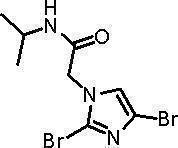
MS (ESI pos.) m/z : 324([M+H]+).
参考例P-A29と同様の手法により、参考例P-A31で得られた化合物から以下の化合物を合成した。
・参考例P-A32:2-[4-ブロモ-2-(3-メトキシフェニル)-1H-イミダゾール-1-イル]-N-(プロパン-2-イル)アセトアミド

・参考例P-A33:2-[4-ブロモ-2-(3-クロロ-4-フルオロフェニル)-1H-イミダゾール-1-イル]-N-(プロパン-2-イル)アセトアミド
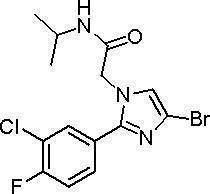
・参考例P-A34:2-[4-ブロモ-2-(5-メトキシピリジン-3-イル)-1H-イミダゾール-1-イル]-N-(プロパン-2-イル)アセトアミド
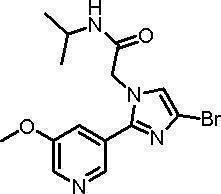
・参考例P-A35:2-[4-ブロモ-2-(2-メトキシピリジン-4-イル)-1H-イミダゾール-1-イル]-N-(プロパン-2-イル)アセトアミド
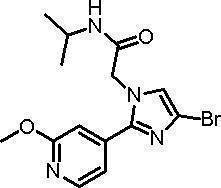
・参考例P-A36:2-[4-ブロモ-2-(3-クロロフェニル)-1H-イミダゾール-1-イル]-N-(プロパン-2-イル)アセトアミド
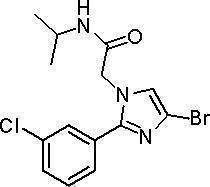
・参考例P-A37:2-[2-(3-クロロフェニル)-4-(2-オキソピペラジン-1-イル)-1H-イミダゾール-1-イル]-N-(プロパン-2-イル)アセトアミドの合成

MS (ESI pos.) m/z : 376([M+H]+).
・参考例P-A38:2-(3-クロロフェニル)-1-[2-オキソ-2-(プロパン-2-イルアミノ)エチル]-1H-イミダゾール-4-カルボン酸ナトリウムの合成

得られた精製物(300mg)のTHF(4.5mL)懸濁液に1M NaOH水溶液(0.9mL)を加え、5時間加熱還流した。減圧下濃縮し、表題化合物(307mg、無色固体)を得た。
1H-NMR (600 MHz, DMSO-d6) δ(ppm) ; 1.06 (6 H, d, J=6.6 Hz), 3.79 - 3.88 (1 H, m), 4.62 (2 H, s), 7.31 (1 H, s), 7.42 - 7.47 (2 H, m), 7.59 - 7.64 (1 H, m),
7.69 - 7.72 (1 H, m), 8.22 (1 H, d, J=7.4 Hz).
・参考例P-A39:2-(3-クロロフェニル)-N-(4-オキソシクロヘキシル)-1-[2-オキソ-2-(プロパン-2-イルアミノ)エチル]-1H-イミダゾール-4-カルボキサミドの合成
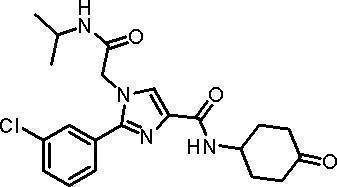
MS (ESI pos.) m/z : 417([M+H]+).
・参考例P-A40:2-(3-クロロフェニル)-N-メチル-N-(4-オキソシクロヘキシル)-1-[2-オキソ-2-(プロパン-2-イルアミノ)エチル]-1H-イミダゾール-4-カルボキサミドの合成

MS (ESI pos.) m/z : 431 ([M+H]+).
・参考例P-A41:2-[2-(3-クロロフェニル)-4-{[3-(2-ヒドロキシエチル)ピロリジン-1-イル]カルボニル}-1H-イミダゾール-1-イル]-N-(プロパン-2-イル)アセトアミドの合成

MS (ESI pos.) m/z : 419([M+H]+).
・参考例P-A42:8-[2-(4-ブロモフェニル)エチル]-3-オキサ-8-アザビシクロ[3.2.1]オクタンの合成

得られた残渣(2.40g、淡黄色油状物)、3-オキサ-8-アザビシクロ[3.2.1]オクタン(904mg)、2,2,6,6-テトラメチルピペリジン(2.0mL)、MeCN(10mL)の混合物を外温95℃で4日間撹拌した。放冷後、水を加え、CHCl3で抽出した。有機層をPhase Separator濾過し、溶媒を減圧下留去した。得られた残渣をシリカゲルカラムクロマトグラフィー(SNAP Cartridge HP-Sil 50g、移動相:EtOAc/MeOH=99/1~90/10;v/v)にて精製し、表題化合物(1.47g、淡褐色固体)を得た。
MS (ESI pos.) m/z : 296, 298([M+H]+).
・参考例P-A43:{4-[2-(3-オキサ-8-アザビシクロ[3.2.1]オクタ-8-イル)エチル]フェニル}ボロン酸の合成

MS (ESI pos.) m/z : 262([M+H]+).
・参考例P-A44:2-(4-ブロモ-3-フルオロフェニル)エタノールの合成

MS (ESI pos.) m/z : 218, 220(M+).
・参考例P-A45:4-[2-(4-ブロモ-3-フルオロフェニル)エチル]モルホリンの合成

MS (ESI pos.) m/z : 288, 290([M+H]+).
・参考例P-A46:{2-フルオロ-4-[2-(モルホリン-4-イル)エチル]フェニル}ボロン酸の合成
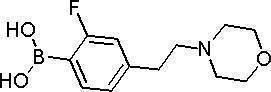
MS (ESI pos.) m/z : 254([M+H]+).
・参考例P-A47:8-[2-(4-ブロモ-3-フルオロフェニル)エチル]-3-オキサ-8-アザビシクロ[3.2.1]オクタンの合成
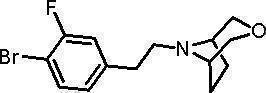
MS (ESI pos.) m/z : 314, 316([M+H]+).
・参考例P-A48:2-(4-ブロモ-2-フルオロフェニル)エタノールの合成
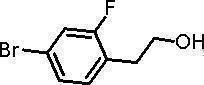
MS (ESI pos.) m/z : 218, 220(M+).
・参考例P-A49:4-[2-(4-ブロモ-2-フルオロフェニル)エチル]モルホリンの合成

MS (ESI pos.) m/z : 288, 290 ([M+H]+).
・参考例P-A50:8-[2-(4-ブロモ-2-フルオロフェニル)エチル]-3-オキサ-8-アザビシクロ[3.2.1]オクタンの合成

MS (ESI pos.) m/z : 314, 316([M+H]+).
・参考例P-A51:2-(4-ブロモ-3-メトキシフェニル)エタノールの合成

MS (ESI pos.) m/z : 227, 229([M-H]-).
・参考例P-A52:8-[2-(4-ブロモ-3-メトキシフェニル)エチル]-3-オキサ-8-アザビシクロ[3.2.1]オクタンの合成
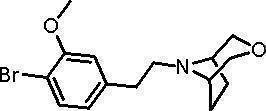
MS (ESI pos.) m/z : 326, 328([M+H]+).
・参考例P-A53:2-(4-ブロモ-2-メトキシフェニル)エタノールの合成

MS (ESI pos.) m/z : 231([M+H]+).
・参考例P-A54:4-[2-(4-ブロモ-2-メトキシフェニル)エチル]モルホリンの合成
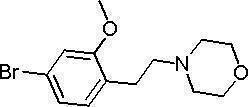
MS (ESI pos.) m/z : 300, 302 ([M+H]+).
・参考例P-A55:8-[2-(4-ブロモ-2-メトキシフェニル)エチル]-3-オキサ-8-アザビシクロ[3.2.1]オクタンの合成
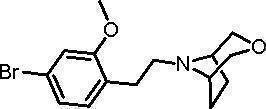
MS (ESI pos.) m/z : 326, 328([M+H]+).
・参考例P-A56:4-[2-(6-クロロピリジン-3-イル)エチル]モルホリンの合成
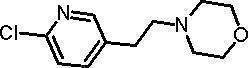
MS (ESI pos.) m/z : 227([M+H]+).
・参考例P-A57:8-[2-(6-クロロピリジン-3-イル)エチル]-3-オキサ-8-アザビシクロ[3.2.1]オクタンの合成
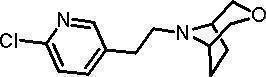
MS (ESI pos.) m/z : 253([M+H]+).
・参考例P-A58:2-(6-ブロモピリジン-3-イル)エタノールの合成

MS (ESI pos.) m/z : 202([M+H]+).
・参考例P-A59:4-[2-(6-ブロモピリジン-3-イル)エチル]モルホリンの合成

MS (ESI pos.) m/z : 271, 273([M+H]+).
・参考例P-A60:4-{2-[6-(トリブチルスタンナニル)ピリジン-3-イル]エチル}モルホリンの合成

MS (ESI pos.) m/z : 481([M+H]+).
・参考例P-A61:8-[2-(6-ブロモピリジン-3-イル)エチル]-3-オキサ-8-アザビシクロ[3.2.1]オクタンの合成
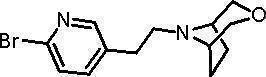
MS (ESI pos.) m/z : 297, 299([M+H]+).
・参考例P-A62:8-{2-[6-(トリブチルスタンナニル)ピリジン-3-イル]エチル}-3-オキサ-8-アザビシクロ[3.2.1]オクタンの合成

MS (ESI pos.) m/z : 509([M+H]+).
・参考例P-A63:8-[1-(4-ブロモフェニル)プロパン-2-イル]-3-オキサ-8-アザビシクロ[3.2.1]オクタンの合成
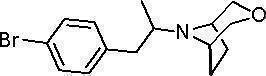
MS (ESI pos.) m/z : 310, 312([M+H]+).
・参考例P-A64:4-[1-(4-ブロモフェニル)プロパン-2-イル]モルホリンの合成

MS (ESI pos.) m/z : 284, 286([M+H]+).
・参考例P-A65:{4-[2-(モルホリン-4-イル)プロピル]フェニル}ボロン酸の合成

MS (ESI pos.) m/z : 250([M+H]+).
・参考例P-A66:8-[1-(6-クロロピリジン-3-イル)プロパン-2-イル]-3-オキサ-8-アザビシクロ[3.2.1]オクタンの合成

MS (ESI pos.) m/z : 267([M+H]+).
・参考例P-A67:4-[1-(6-クロロピリジン-3-イル)プロパン-2-イル]モルホリンの合成

MS (ESI pos.) m/z : 241([M+H]+).
・参考例P-A68:4-[2-(2-メトキシピリジン-4-イル)エチル]モルホリンの合成
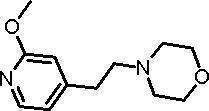
1H-NMR (600 MHz, CDCl3) δ (ppm) ; 2.47 - 2.54 (4 H, m), 2.58 - 2.63 (2 H, m), 2.73 - 2.77 (2 H, m), 3.71 - 3.75 (4 H, m), 3.93 (3 H, s), 6.60 (1 H, s), 6.72 -6.76 (1 H, m), 8.06 (1 H, d, J=5.4 Hz).
・参考例P-A69:4-[2-(モルホリン-4-イル)エチル]ピリジン-2(1H)-オンの合成
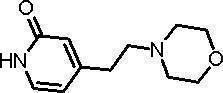
1H-NMR (600 MHz, DMSO-d6) δ(ppm) ; 3.00 - 3.14 (4 H, m), 3.30 - 3.39 (2 H, m), 3.45 (2 H, d, J=12.4 Hz), 3.76 - 3.83 (2 H, m), 3.97 (2 H, d, J=12.4 Hz),6.77 (1 H, s), 6.89 - 6.96 (1 H, m), 8.13 (1 H, d, J=5.4 Hz), 11.24 - 11.37 (1 H, m).
・参考例P-B01:2-(3,5-ジブロモ-1H-1,2,4-トリアゾール-1-イル)-N-(プロパン-2-イル)アセトアミドの合成

MS (ESI pos.) m/z : 325, 327([M+H]+).
参考例P-A29と同様の手法により、参考例P-B01で得られた化合物から以下の化合物を合成した。
・参考例P-B02:2-[3-ブロモ-5-(3-クロロフェニル)-1H-1,2,4-トリアゾール-1-イル]-N-(プロパン-2-イル)アセトアミド

・参考例P-B03:2-[3-ブロモ-5-(4-フルオロ-3-メトキシフェニル)-1H-1,2,4-トリアゾール-1-イル]-N-(プロパン-2-イル)アセトアミド

・参考例P-B04:2-[3-ブロモ-5-(3-メトキシフェニル)-1H-1,2,4-トリアゾール-1-イル]-N-(プロパン-2-イル)アセトアミド

・参考例P-B05:2-[3-ブロモ-5-(3-クロロ-4-フルオロフェニル)-1H-1,2,4-トリアゾール-1-イル]-N-(プロパン-2-イル)アセトアミド

・参考例P-B06:N-tert-ブチル-2-(3,5-ジブロモ-1H-1,2,4-トリアゾール-1-イル)アセトアミドの合成

1H-NMR (600 MHz, DMSO-d6) δ(ppm) ; 1.27 (9 H, s), 4.81 (2 H, s), 8.03 (1 H, s).
参考例P-A29と同様の手法により、参考例P-B06で得られた化合物から以下の化合物を合成した。
・参考例P-B07:2-[3-ブロモ-5-(3-クロロフェニル)-1H-1,2,4-トリアゾール-1-イル]-N-tert-ブチルアセトアミド

・参考例P-B08:2-[3-ブロモ-5-(3-メトキシフェニル)-1H-1,2,4-トリアゾール-1-イル]-N-tert-ブチルアセトアミド

参考例P-A29と同様の手法により、参考例P-B04で得られた化合物から以下の化合物を合成した。
・参考例P-B09:2-{3-[4-(2-ヒドロキシエチル)フェニル]-5-(3-メトキシフェニル)-1H-1,2,4-トリアゾール-1-イル}-N-(プロパン-2-イル)アセトアミド
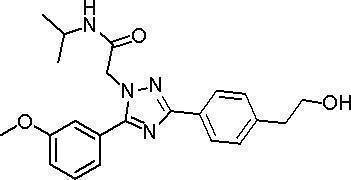
・参考例P-C01:4-(3-メチル-1H-ピラゾール-1-イル)フェノールの合成
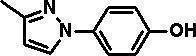
MS (ESI pos.) m/z : 175([M+H]+).
・参考例P-C02:4-(4-ヨード-3-メチル-1H-ピラゾール-1-イル)フェノールの合成

MS (ESI pos.) m/z : 301([M+H]+).
・参考例P-C03:4-[4-(3-クロロフェニル)-3-メチル-1H-ピラゾール-1-イル]フェノールの合成

MS (ESI pos.) m/z : 285([M+H]+).
・参考例P-C04:4-[4-(3-クロロフェニル)-3-メチル-1H-ピラゾール-1-イル]フェニル トリフルオロメタンスルホナートの合成

MS (ESI pos.) m/z : 417([M+H]+).
・参考例P-C05:4-[3-(ブロモメチル)-4-(3-クロロフェニル)-1H-ピラゾール-1-イル]フェニル トリフルオロメタンスルホナートの合成

MS (ESI pos.) m/z : 495([M+H]+).
・参考例P-C06:4-[4-(3-クロロフェニル)-3-(シアノメチル)-1H-ピラゾール-1-イル]フェニル トリフルオロメタンスルホナートの合成
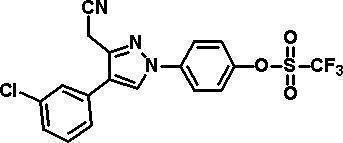
MS (ESI pos.) m/z : 442([M+H]+).
・参考例P-C07:[4-(3-クロロフェニル)-1-(4-エテニルフェニル)-1H-ピラゾール-3-イル]アセトニトリルの合成
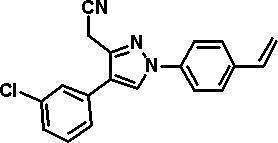
MS (ESI pos.) m/z : 320([M+H]+).
・参考例P-C08:[4-(3-クロロフェニル)-1-(4-エテニルフェニル)-1H-ピラゾール-3-イル]酢酸の合成
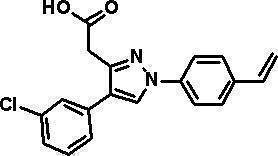
MS (ESI pos.) m/z : 339([M+H]+).
・参考例P-C09:2-[4-(3-クロロフェニル)-1-(4-エテニルフェニル)-1H-ピラゾール-3-イル]-N-(プロパン-2-イル)アセトアミドの合成
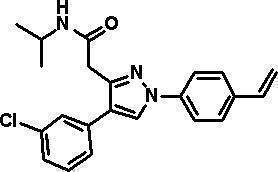
MS (ESI pos.) m/z : 380([M+H]+).
・参考例P-C10:2-{4-(3-クロロフェニル)-1-[4-(2-ヒドロキシエチル)フェニル]-1H-ピラゾール-3-イル}-N-(プロパン-2-イル)アセトアミドの合成

MS (ESI pos.) m/z : 398([M+H]+).
・参考例P-C11:(2E)-1-(4-ブロモフェニル)-2-[1-(3-クロロフェニル)エチリデン]ヒドラジンの合成
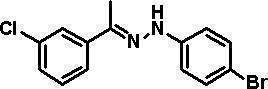
MS (ESI neg.) m/z : 323([M]+).
・参考例P-C12:1-(4-ブロモフェニル)-3-(3-クロロフェニル)-1H-ピラゾール-4-カルバルデヒドの合成

1H-NMR (600 MHz, CDCl3) δ (ppm) ; 7.42 - 7.48 (2 H, m), 7.63 - 7.67 (2 H, m), 7.67 - 7.71 (2 H, m), 7.72 - 7.77 (1 H, m), 7.85 - 7.89 (1 H, m), 8.52 (1 H, s), 10.05 (1 H, s).
・参考例P-C13:[1-(4-ブロモフェニル)-3-(3-クロロフェニル)-1H-ピラゾール-4-イル]メタノールの合成
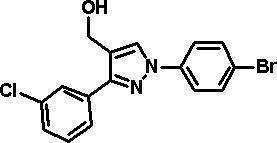
MS (ESI pos.) m/z : 363([M+H]+).
・参考例P-C14:1-(4-ブロモフェニル)-4-(クロロメチル)-3-(3-クロロフェニル)-1H-ピラゾールの合成
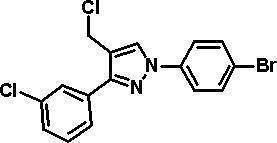
MS (ESI pos.) m/z : 381([M+H]+).
・参考例P-C15:[1-(4-ブロモフェニル)-3-(3-クロロフェニル)-1H-ピラゾール-4-イル]アセトニトリルの合成

MS (ESI pos.) m/z : 372([M+H]+).
・参考例P-C16:[1-(4-ブロモフェニル)-3-(3-クロロフェニル)-1H-ピラゾール-4-イル]酢酸の合成
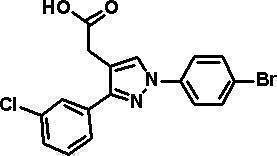
MS (ESI neg.) m/z : 389([M-H]-).
・参考例P-C17:2-[1-(4-ブロモフェニル)-3-(3-クロロフェニル)-1H-ピラゾール-4-イル]-N-(プロパン-2-イル)アセトアミドの合成

MS (ESI pos.) m/z : 432([M+H]+).
・参考例P-C18:2-[3-(3-クロロフェニル)-1-(4-エテニルフェニル)-1H-ピラゾール-4-イル]-N-(プロパン-2-イル)アセトアミドの合成

MS (ESI pos.) m/z : 380([M+H]+).
・参考例P-C19:2-{3-(3-クロロフェニル)-1-[4-(2-ヒドロキシエチル)フェニル]-1H-ピラゾール-4-イル}-N-(プロパン-2-イル)アセトアミドの合成

MS (ESI pos.) m/z : 420([M+Na]+).
・参考例P-C20:1-(4-メトキシフェニル)プロパ-2-イン-1-オンの合成
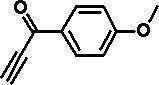
MS (ESI pos.) m/z : 161([M+H]+).
・参考例P-C21:1-(3-クロロフェニル)-3-(4-メトキシフェニル)-1H-ピラゾールの合成
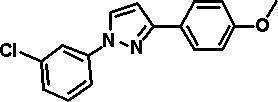
MS (ESI pos.) m/z : 285([M+H]+).
・参考例P-C22:1-(3-クロロフェニル)-3-(4-メトキシフェニル)-1H-ピラゾール-5-カルボン酸の合成

MS (ESI pos.) m/z : 329([M+H]+).
・参考例P-C23:[1-(3-クロロフェニル)-3-(4-メトキシフェニル)-1H-ピラゾール-5-イル]酢酸の合成
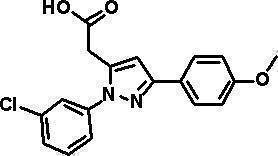
MS (ESI pos.) m/z : 343([M+H]+).
・参考例P-C24:2-[1-(3-クロロフェニル)-3-(4-メトキシフェニル)-1H-ピラゾール-5-イル]-N-(プロパン-2-イル)アセトアミドの合成
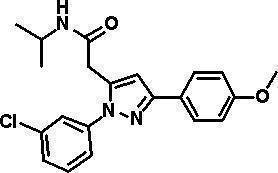
MS (ESI pos.) m/z : 384([M+H]+).
・参考例P-C25:2-[1-(3-クロロフェニル)-3-(4-ヒドロキシフェニル)-1H-ピラゾール-5-イル]-N-(プロパン-2-イル)アセトアミドの合成
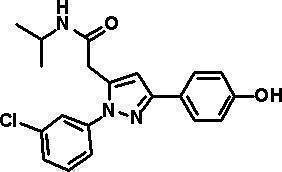
MS (ESI pos.) m/z : 370([M+H]+).
・参考例P-C26:4-{1-(3-クロロフェニル)-5-[2-オキソ-2-(プロパン-2-イルアミノ)エチル]-1H-ピラゾール-3-イル}フェニル トリフルオロメタンスルホナートの合成
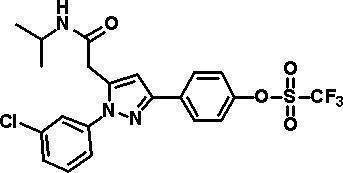
MS (ESI pos.) m/z : 502([M+H]+).
・参考例P-C27:2-[1-(3-クロロフェニル)-3-(4-エテニルフェニル)-1H-ピラゾール-5-イル]-N-(プロパン-2-イル)アセトアミドの合成

MS (ESI pos.) m/z : 380([M+H]+).
・参考例P-C28:2-{1-(3-クロロフェニル)-3-[4-(2-ヒドロキシエチル)フェニル]-1H-ピラゾール-5-イル}-N-(プロパン-2-イル)アセトアミドの合成

MS (ESI pos.) m/z : 398([M+H]+).
・参考例P-C29:(2E)-1-(4-ブロモフェニル)-3-(3-クロロフェニル)プロパ-2-エン-1-オンの合成
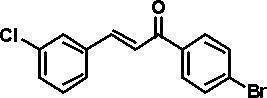
MS (ESI pos.) m/z : 321([M+H]+).
・参考例P-C30:エチル [3-(4-ブロモフェニル)-5-(3-クロロフェニル)-4,5-ジヒドロ-1H-ピラゾール-1-イル]アセタートの合成

MS (ESI pos.) m/z : 421([M+H]+).
・参考例P-C31:エチル [3-(4-ブロモフェニル)-5-(3-クロロフェニル)-1H-ピラゾール-1-イル]アセタートの合成

MS (ESI pos.) m/z : 419([M+H]+).
・参考例P-C32:[3-(4-ブロモフェニル)-5-(3-クロロフェニル)-1H-ピラゾール-1-イル]酢酸の合成

MS (ESI pos.) m/z : 391([M+H]+).
・参考例P-C33:2-[3-(4-ブロモフェニル)-5-(3-クロロフェニル)-1H-ピラゾール-1-イル]-N-(プロパン-2-イル)アセトアミドの合成

MS (ESI pos.) m/z : 432([M+H]+).
・参考例P-C34:2-[5-(3-クロロフェニル)-3-(4-エテニルフェニル)-1H-ピラゾール-1-イル]-N-(プロパン-2-イル)アセトアミドの合成

MS (ESI pos.) m/z : 380([M+H]+).
・参考例P-C35:2-{5-(3-クロロフェニル)-3-[4-(2-ヒドロキシエチル)フェニル]-1H-ピラゾール-1-イル}-N-(プロパン-2-イル)アセトアミドの合成
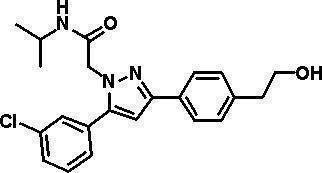
MS (ESI pos.) m/z : 398([M+H]+).
・参考例P-C36:4-ブロモ-N-[2-(3-クロロフェニル)-2-オキソエチル]ベンズアミドの合成

MS (ESI pos.) m/z : 352([M+H]+).
・参考例P-C37:4エチル 3-[(4-ブロモベンゾイル)アミノ]-4-(3-クロロフェニル)-4-オキソブタノアートの合成

MS (ESI pos.) m/z : 438([M+H]+).
・参考例P-C38:エチル [2-(4-ブロモフェニル)-5-(3-クロロフェニル)-1,3-オキサゾール-4-イル]アセタートの合成

MS (ESI pos.) m/z : 420([M+H]+).
・参考例P-C39:[2-(4-ブロモフェニル)-5-(3-クロロフェニル)-1,3-オキサゾール-4-イル]酢酸の合成

MS (ESI pos.) m/z : 392([M+H]+).
・参考例P-C40:2-[2-(4-ブロモフェニル)-5-(3-クロロフェニル)-1,3-オキサゾール-4-イル]-N-(プロパン-2-イル)アセトアミドの合成

MS (ESI pos.) m/z : 433([M+H]+).
・参考例P-C41:2-[5-(3-クロロフェニル)-2-(4-エテニルフェニル)-1,3-オキサゾール-4-イル]-N-(プロパン-2-イル)アセトアミドの合成

MS (ESI pos.) m/z : 381([M+H]+).
・参考例P-C42:2-{5-(3-クロロフェニル)-2-[4-(2-ヒドロキシエチル)フェニル]-1,3-オキサゾール-4-イル}-N-(プロパン-2-イル)アセトアミドの合成

MS (ESI pos.) m/z : 399([M+H]+).
・参考例P-C43:4-(3-クロロフェニル)-4-ヒドロキシブタ-2-イン酸メチルの合成

1H NMR (600 MHz, CHLOROFORM-d) δ(ppm) ;2.43 - 2.52 (1 H, m) 3.79 (3 H, s) 5.55 (1 H, d, J=6.4 Hz) 7.29 - 7.35 (2 H, m) 7.36 - 7.42 (1 H, m) 7.47 - 7.57 (1 H, m) .
・参考例P-C44:メチル [4-(3-クロロフェニル)-2-(4-ヨードフェニル)-1,3-オキサゾール-5-イル]アセタートの合成

MS (ESI pos.) m/z : 454([M+H]+).
・参考例P-C45:[4-(3-クロロフェニル)-2-(4-ヨードフェニル)-1,3-オキサゾール-5-イル]酢酸の合成
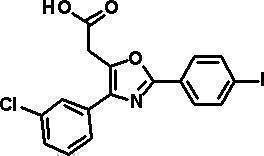
MS (ESI pos.) m/z : 440([M+H]+).
・参考例P-C46:3-クロロフェニル)-2-(4-ヨードフェニル)-1,3-オキサゾール-5-イル]-N-(プロパン-2-イル)アセトアミドの合成
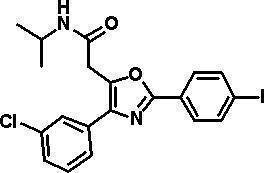
MS (ESI pos.) m/z : 481([M+H]+).
・参考例P-C47:2-[4-(3-クロロフェニル)-2-(4-エテニルフェニル)-1,3-オキサゾール-5-イル]-N-(プロパン-2-イル)アセトアミドの合成
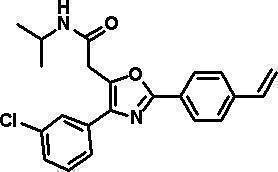
MS (ESI pos.) m/z : 381([M+H]+).
・参考例P-C48:2-{4-(3-クロロフェニル)-2-[4-(2-ヒドロキシエチル)フェニル]-1,3-オキサゾール-5-イル}-N-(プロパン-2-イル)アセトアミドの合成

MS (ESI pos.) m/z : 399([M+H]+).
・参考例P-C49:メチル 3-クロロ-3-(3-クロロフェニル)-2-オキソプロパノアートの合成

MS (ESI neg.) m/z : 245([M-H]-).
・参考例P-C50:2-(4-ブロモフェニル)-5-(3-クロロフェニル)-1,3-チアゾール-4-カルボン酸メチルの合成

MS (ESI pos.) m/z : 408([M+H]+).
・参考例P-C51:2-(4-ブロモフェニル)-5-(3-クロロフェニル)-1,3-チアゾール-4-カルボン酸の合成

MS (ESI pos.) m/z : 394([M+H]+).
・参考例P-C52:[2-(4-ブロモフェニル)-5-(3-クロロフェニル)-1,3-チアゾール-4-イル]酢酸の合成

MS (ESI pos.) m/z : 408([M+H]+).
・参考例P-C53:2-[2-(4-ブロモフェニル)-5-(3-クロロフェニル)-1,3-チアゾール-4-イル]-N-(プロパン-2-イル)アセトアミドの合成

MS (ESI pos.) m/z : 449([M+H]+).
・参考例P-C54:2-[5-(3-クロロフェニル)-2-(4-エテニルフェニル)-1,3-チアゾール-4-イル]-N-(プロパン-2-イル)アセトアミドの合成

MS (ESI pos.) m/z : 397([M+H]+).
・参考例P-C55:2-{5-(3-クロロフェニル)-2-[4-(2-ヒドロキシエチル)フェニル]-1,3-チアゾール-4-イル}-N-(プロパン-2-イル)アセトアミドの合成

MS (ESI pos.) m/z : 415([M+H]+).
・参考例P-C56:2-(3-ブロモフェニル)-5-(3-クロロフェニル)チアゾール-4-カルボン酸メチルの合成

MS (ESI pos.) m/z : 408([M+H]+).
・参考例P-C57:2-(3-ブロモフェニル)-5-(3-クロロフェニル)チアゾール-4-カルボン酸の合成

MS (ESI pos.) m/z : 394([M+H]+).
・参考例P-C58:2-(2-(3-ブロモフェニル)-5-(3-クロロフェニル)チアゾール-4-イル)酢酸の合成

MS (ESI pos.) m/z : 408([M+H]+).
・参考例P-C59:2-(2-(3-ブロモフェニル)-5-(3-クロロフェニル)チアゾール-4-イル)-N-イソプロピルアセトアミドの合成

MS (ESI pos.) m/z : 449([M+H]+).
・参考例P-C60:2-(5-(3-クロロフェニル)-2-(3-ビニルフェニル)チアゾール-4-イル)-N-イソプロピルアセトアミドの合成

MS (ESI pos.) m/z : 397([M+H]+).
・参考例P-C61:2-(5-(3-クロロフェニル)-2-(3-(2-ヒドロキシエチル)フェニル)チアゾール-4-イル)-N-イソプロピルアセトアミドの合成

MS (ESI pos.) m/z : 415([M+H]+).
・参考例P-C62:4-(2-{[tert-ブチル(ジフェニル)シリル]オキシ}エチル)アニリンの合成
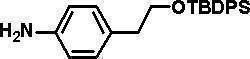
MS (ESI pos.) m/z : 376([M+H]+).
・参考例P-C63:3-ブロモ-1-[4-(2-{[tert-ブチル(ジフェニル)シリル]オキシ}エチル)フェニル]-1H-ピロール-2,5-ジオンの合成

MS (ESI pos.) m/z : 534, 536([M+H]+).
・参考例P-C64:トリブチル(3-クロロフェニル)スタンナンの合成

1H NMR (600 MHz, CHLOROFORM-d) δ(ppm) ;0.82 - 0.92 (34 H, m), 0.97 - 1.13 (24 H, m), 1.32 (24 H, dq, J=14.7, 7.4 Hz), 1.43 - 1.63 (27 H, m), 7.20 - 7.27 (12 H, m), 7.28 - 7.32 (3 H, m), 7.39 (3 H, d, J=2.1 Hz)
・参考例P-C65:1-[4-(2-{[tert-ブチル(ジフェニル)シリル]オキシ}エチル)フェニル]-3-(3-クロロフェニル)-1H-ピロール-2,5-ジオンの合成

MS (ESI pos.) m/z : 588([M+Na]+).
・参考例P-C66:1-[4-(2-{[tert-ブチル(ジフェニル)シリル]オキシ}エチル)フェニル]-3-クロロ-4-(3-クロロフェニル)-1H-ピロール-2,5-ジオンの合成

MS (ESI pos.) m/z : 622([M+Na]+).
・参考例P-C67:ジ-tert-ブチル {1-[4-(2-{[tert-ブチル(ジフェニル)シリル]オキシ}エチル)フェニル]-4-(3-クロロフェニル)-2,5-ジオキソ-2,5-ジヒドロ-1H-ピロール-3-イル}プロパンジオアートの合成
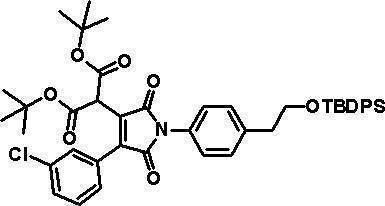
MS (ESI neg.) m/z : 778([M-H]-).
・参考例P-C68:{4-(3-クロロフェニル)-1-[4-(2-ヒドロキシエチル)フェニル]-2,5-ジオキソ-2,5-ジヒドロ-1H-ピロール-3-イル}酢酸の合成

MS (ESI pos.) m/z : 386([M+H]+).
・参考例P-C69:2-{4-(3-クロロフェニル)-1-[4-(2-ヒドロキシエチル)フェニル]-2,5-ジオキソ-2,5-ジヒドロ-1H-ピロール-3-イル}-N-(プロパン-2-イル)アセトアミドの合成

MS (ESI pos.) m/z : 427([M+H]+).
・参考例P-C70:2-[(4-ブロモフェニル)アミノ]-1-(3-クロロフェニル)エタノンの合成
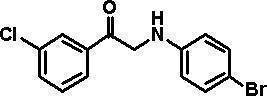
MS (ESI pos.) m/z : 324, 326([M+H]+).
・参考例P-C71:1-(4-ブロモフェニル)-4-(3-クロロフェニル)-1,3-ジヒドロ-2H-イミダゾール-2-オンの合成

MS (ESI pos.) m/z : 351([M+H]+).
・参考例P-C72:2-[3-(4-ブロモフェニル)-5-(3-クロロフェニル)-2-オキソ-2,3-ジヒドロ-1H-イミダゾール-1-イル]-N-(プロパン-2-イル)アセトアミドの合成
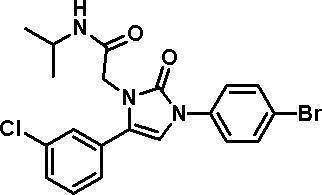
MS (ESI pos.) m/z : 448, 450([M+H]+).
・参考例P-C73:2-[5-(3-クロロフェニル)-3-(4-エテニルフェニル)-2-オキソ-2,3-ジヒドロ-1H-イミダゾール-1-イル]-N-(プロパン-2-イル)アセトアミドの合成
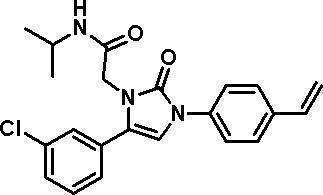
MS (ESI pos.) m/z : 396([M+H]+).
・参考例P-C74:2-{5-(3-クロロフェニル)-3-[4-(2-ヒドロキシエチル)フェニル]-2-オキソ-2,3-ジヒドロ-1H-イミダゾール-1-イル}-N-(プロパン-2-イル)アセトアミドの合成

MS (ESI pos.) m/z : 414([M+H]+).
・参考例P-C75:(1E)-1-(3-クロロフェニル)-1-(ヒドロキシイミノ)プロパン-2-オンの合成

MS (ESI neg.) m/z : 196([M-H]-).
・参考例P-C76:1,3,5-トリス(4-ブロモフェニル)-1,3,5-トリアジナンの合成

MS (ESI pos.) m/z : 550, 552([M+H]+).
・参考例P-C77:1-(4-ブロモフェニル)-4-(3-クロロフェニル)-5-メチル-1,3-ジヒドロ-2H-イミダゾール-2-オンの合成
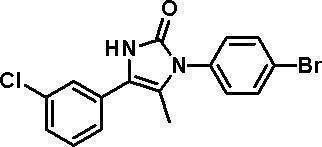
MS (ESI pos.) m/z : 363([M+H]+).
・参考例P-C78:2-[3-(4-ブロモフェニル)-5-(3-クロロフェニル)-4-メチル-2-オキソ-2,3-ジヒドロ-1H-イミダゾール-1-イル]-N-(プロパン-2-イル)アセトアミドの合成
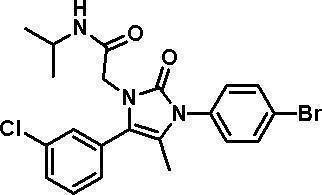
MS (ESI pos.) m/z : 462, 464([M+H]+).
・参考例P-C79:2-[5-(3-クロロフェニル)-3-(4-エテニルフェニル)-4-メチル-2-オキソ-2,3-ジヒドロ-1H-イミダゾール-1-イル]-N-(プロパン-2-イル)アセトアミドの合成

MS (ESI pos.) m/z : 410([M+H]+).
・参考例P-C80:2-{5-(3-クロロフェニル)-3-[4-(2-ヒドロキシエチル)フェニル]-4-メチル-2-オキソ-2,3-ジヒドロ-1H-イミダゾール-1-イル}-N-(プロパン-2-イル)アセトアミドの合成
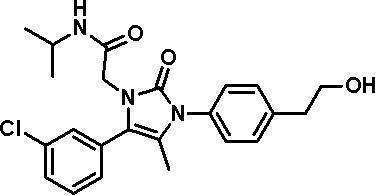
MS (ESI pos.) m/z : 428([M+H]+).
・参考例P-C81:4-ブロモ-N'-(3-クロロフェニル)ベンゾヒドラジドの合成
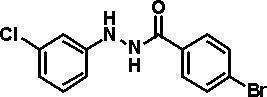
MS (ESI pos.) m/z : 327([M+H]+).
・参考例P-C82:4-ブロモ-N-(3-クロロフェニル)ベンゼンカルボヒドラゾノイル クロリドの合成

MS (ESI neg.) m/z : 341, 343([M-H]-).
・参考例P-C83:2-[3-(4-ブロモフェニル)-1-(3-クロロフェニル)-1H-1,2,4-トリアゾール-5-イル]-N-(プロパン-2-イル)アセトアミドの合成
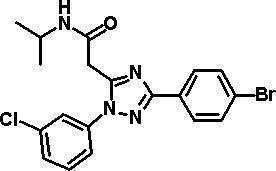
MS (ESI pos.) m/z : 433([M+H]+).
・参考例P-C84:2-[1-(3-クロロフェニル)-3-(4-エテニルフェニル)-1H-1,2,4-トリアゾール-5-イル]-N-(プロパン-2-イル)アセトアミドの合成

MS (ESI pos.) m/z : 381([M+H]+).
・参考例P-C85:2-{1-(3-クロロフェニル)-3-[4-(2-ヒドロキシエチル)フェニル]-1H-1,2,4-トリアゾール-5-イル}-N-(プロパン-2-イル)アセトアミドの合成

MS (ESI pos.) m/z : 399([M+H]+).
・参考例P-D01:1-フルオロ-4-イソシアナト-2-メトキシベンゼンの合成

・参考例P-D02:エチル 3-{2-[(4-フルオロ-3-メトキシフェニル)カルバモイル]ヒドラジニル}-3-オキソプロパノアートの合成

1H NMR (600 MHz, DMSO-d6) δ(ppm) ;1.12 - 1.22 (3 H, m) 3.27 - 3.32 (4 H, m) 3.75 (3 H, s) 4.02 - 4.14 (2 H, m) 6.82 - 6.95 (1 H, m) 7.05 (1 H, dd, J=11.4, 8.9 Hz) 7.30 (1 H, dd, J=8.1, 2.3 Hz) 8.22 (1 H, br. s.) 8.64 (1 H, br. s.) 9.87 (1 H, br. s.)
・参考例P-D03:[4-(4-フルオロ-3-メトキシフェニル)-5-オキソ-4,5-ジヒドロ-1H-1,2,4-トリアゾール-3-イル]酢酸の合成

MS (ESI pos.) m/z : 268([M+H]+).
・参考例P-D04:2-[4-(4-フルオロ-3-メトキシフェニル)-5-オキソ-4,5-ジヒドロ-1H-1,2,4-トリアゾール-3-イル]-N-(プロパン-2-イル)アセトアミドの合成

MS (ESI pos.) m/z : 309([M+H]+).
・参考例P-D05:N-tert-ブチル-2-[4-(4-フルオロ-3-メトキシフェニル)-5-オキソ-4,5-ジヒドロ-1H-1,2,4-トリアゾール-3-イル]アセトアミドの合成

MS (ESI pos.) m/z : 323([M+H]+).
・参考例P-D06:エチル 3-{2-[(3-クロロフェニル)カルバモイル]ヒドラジニル}-3-オキソプロパノアートの合成

MS (ESI pos.) m/z : 300([M+H]+).
・参考例P-D07:[4-(3-クロロフェニル)-5-オキソ-4,5-ジヒドロ-1H-1,2,4-トリアゾール-3-イル]酢酸の合成

MS (ESI pos.) m/z : 254([M+H]+).
・参考例P-D08:2-[4-(3-クロロフェニル)-5-オキソ-4,5-ジヒドロ-1H-1,2,4-トリアゾール-3-イル]-N-(プロパン-2-イル)アセトアミドの合成
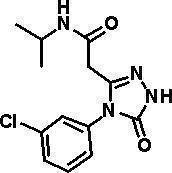
MS (ESI pos.) m/z : 295([M+H]+).
・参考例P-D09:N-tert-ブチル-2-[4-(3-クロロフェニル)-5-オキソ-4,5-ジヒドロ-1H-1,2,4-トリアゾール-3-イル]アセトアミドの合成

MS (ESI pos.) m/z : 309([M+H]+).
・参考例P-D10:エチル 3-{2-[(3-クロロ-4-フルオロフェニル)カルバモイル]ヒドラジニル}-3-オキソプロパノアートの合成

1H NMR (600 MHz, DMSO-d6) δ(ppm) ;1.16 (3 H, t, J=7.0 Hz), 3.26 (2 H, s), 4.07 (2 H, q, J=7.0 Hz), 7.17 - 7.46 (2 H, m), 7.63 - 7.84 (1 H, m), 8.39 (1 H, br. s), 8.84 (1 H, br. s), 9.90 (1 H, br. s)
・参考例P-D11:[4-(3-クロロ-4-フルオロフェニル)-5-オキソ-4,5-ジヒドロ-1H-1,2,4-トリアゾール-3-イル]酢酸の合成

1H NMR (600 MHz, DMSO-d6) δ(ppm) ;3.60 (2 H, s), 7.36 - 7.45 (1 H, m), 7.56 (1 H, t, J=8.9 Hz), 7.67 (1 H, dd, J=6.6, 2.9 Hz), 11.87 (1 H, s), 12.52 - 12.89 (1 H, m)
・参考例P-D12:2-[4-(3-クロロ-4-フルオロフェニル)-5-オキソ-4,5-ジヒドロ-1H-1,2,4-トリアゾール-3-イル]-N-(プロパン-2-イル)アセトアミドの合成

MS (ESI pos.) m/z : 313([M+H]+).
・参考例P-D13:N-tert-ブチル-2-[4-(3-クロロ-4-フルオロフェニル)-5-オキソ-4,5-ジヒドロ-1H-1,2,4-トリアゾール-3-イル]アセトアミドの合成
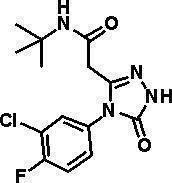
MS (ESI pos.) m/z : 327([M+H]+).
・参考例P-D14:エチル 3-{2-[(3-メトキシフェニル)カルバモイル]ヒドラジニル}-3-オキソプロパノアートの合成

MS (ESI pos.) m/z : 296([M+H]+).
・参考例P-D15:[4-(3-メトキシフェニル)-5-オキソ-4,5-ジヒドロ-1H-1,2,4-トリアゾール-3-イル]酢酸の合成
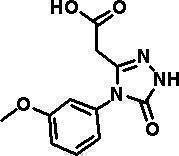
MS (ESI pos.) m/z : 250([M+H]+).
・参考例P-D16:2-[4-(3-メトキシフェニル)-5-オキソ-4,5-ジヒドロ-1H-1,2,4-トリアゾール-3-イル]-N-(プロパン-2-イル)アセトアミドの合成

MS (ESI pos.) m/z : 291([M+H]+).
・参考例P-D17:N-tert-ブチル-2-[4-(3-メトキシフェニル)-5-オキソ-4,5-ジヒドロ-1H-1,2,4-トリアゾール-3-イル]アセトアミドの合成

MS (ESI pos.) m/z : 305([M+H]+).
・参考例P-D18:エチル 3-オキソ-3-(2-{[3-(トリフルオロメチル)フェニル]カルバモイル}ヒドラジニル)プロパノアートの合成

・参考例P-D19:{5-オキソ-4-[3-(トリフルオロメチル)フェニル]-4,5-ジヒドロ-1H-1,2,4-トリアゾール-3-イル}酢酸の合成

MS (ESI pos.) m/z : 288([M+H]+).
・参考例P-D20:2-{5-オキソ-4-[3-(トリフルオロメチル)フェニル]-4,5-ジヒドロ-1H-1,2,4-トリアゾール-3-イル}-N-(プロパン-2-イル)アセトアミドの合成

MS (ESI pos.) m/z : 329([M+H]+).
・参考例P-D21:2-{4-(3-クロロフェニル)-1-[4-(2-ヒドロキシエチル)フェニル]-5-オキソ-4,5-ジヒドロ-1H-1,2,4-トリアゾール-3-イル}-N-(プロパン-2-イル)アセトアミドの合成

MS (ESI pos.) m/z : 415([M+H]+).
・参考例P-D22:2-(4-(3-クロロ-4-フルオロフェニル)-1-(4-(2-ヒドロキシエチル)フェニル)-5-オキソ-4,5-ジヒドロ-1H-1,2,4-トリアゾール-3-イル)-N-イソプロピルアセトアミドの合成

MS (ESI pos.) m/z : 433([M+H]+).
・実施例A-01:2-[2-(3-クロロフェニル)-4-{4-[2-(ピペリジン-1-イル)エチル]フェニル}-1H-イミダゾール-1-イル]-N-(プロパン-2-イル)アセトアミドの合成
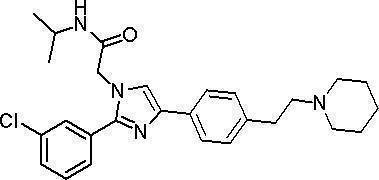
得られたメシル体(102mg)、ピペリジン(0.042mL)、iPr2NEt(0.073mL)、MeCN(2.0mL)の混合物を、microwave(100℃、1時間半)にて反応した。逆相カラムクロマトグラフィー(移動相:0.1% TFA MeCN/H2O=10/90~90/10;v/v)にて精製した。フラクションを飽和NaHCO3水溶液にて中和し、CHCl3にて抽出し、Phase Separator濾過した。減圧下溶媒を留去し、表題化合物(65mg、無色固体)を得た。
MS (ESI pos.) m/z : 465([M+H]+).
1H-NMR (600 MHz, CDCl3) δ (ppm) ; 1.12 (6 H, d, J=6.4 Hz), 1.43 - 1.51 (2 H, m), 1.60 - 1.67 (4 H, m), 2.48 (4 H, br. s.), 2.55 - 2.62 (2 H, m), 2.80 - 2.87 (2 H, m), 4.09 - 4.19 (1 H, m), 4.65 (2 H, s), 5.33 - 5.40 (1 H, m), 7.23 - 7.26 (2 H, m), 7.28 (1 H, s), 7.38 - 7.47 (3 H, m), 7.67 (1 H, s), 7.74 - 7.78 (2 H, m).
実施例A-01と同様の手法により、参考例P-A04、参考例P-A08、参考例P-A12から以下の化合物を合成した。
・実施例A-02:2-[2-(3-クロロフェニル)-4-{4-[2-(モルホリン-4-イル)エチル]フェニル}-1H-イミダゾール-1-イル]-N-(プロパン-2-イル)アセトアミド

1H-NMR (600 MHz, CDCl3) δ (ppm) ; 1.12 (6 H, d, J=6.9 Hz), 2.54 (4 H, br. s.), 2.59 - 2.67 (2 H, m), 2.79 - 2.87 (2 H, m), 3.75 (4 H, br. s.), 4.15 (1 H, dt, J=7.9, 6.8 Hz), 4.65 (2 H, s), 5.37 (1 H, d, J=7.8 Hz), 7.24 - 7.26 (2 H, m), 7.28 (1 H, s), 7.38 - 7.48 (3 H, m), 7.65 - 7.68 (1 H, m), 7.75 - 7.79 (2 H, m).
・実施例A-03:2-[2-(3-クロロフェニル)-4-{4-[2-(2-オキサ-6-アザスピロ[3.3]ヘプタ-6-イル)エチル]フェニル}-1H-イミダゾール-1-イル]-N-(プロパン-2-イル)アセトアミド
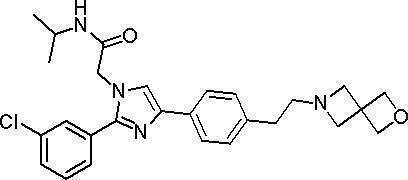
1H-NMR (600 MHz, CDCl3) δ (ppm) ; 1.12 (6 H, d, J=6.4 Hz), 2.63 - 2.66 (4 H, m), 3.34 (4 H, s), 4.11 - 4.18 (1 H, m), 4.64 (2 H, s), 4.73 (4 H, s), 5.38 (1 H, d, J=7.8 Hz), 7.20 - 7.23 (2 H, m), 7.28 (1 H, s), 7.38 - 7.47 (3 H, m), 7.66 - 7.68 (1 H, m), 7.74 - 7.78 (2 H, m).
・実施例A-04:2-[2-(3-クロロフェニル)-4-{4-[2-(4-ヒドロキシピペリジン-1-イル)エチル]フェニル}-1H-イミダゾール-1-イル]-N-(プロパン-2-イル)アセトアミド

1H-NMR (600 MHz, CDCl3) δ (ppm) ; 1.12 (6 H, d, J=6.9 Hz), 1.61 - 1.67 (2 H, m), 1.90 - 1.97 (2 H, m), 2.19 - 2.27 (2 H, m), 2.58 - 2.64 (2 H, m), 2.80 - 2.91 (4 H, m), 3.72 (1 H, br. s.), 4.11 - 4.19 (1 H, m), 4.64 (2 H, s), 5.39 (1 H, d, J=8.3 Hz), 7.23 - 7.26 (2 H, m), 7.28 (1 H, s), 7.38 - 7.47 (3 H, m), 7.66 (1 H, s), 7.74 - 7.78 (2 H, m).
・実施例A-05:2-[2-(3-クロロフェニル)-4-{4-[2-(3-ヒドロキシピペリジン-1-イル)エチル]フェニル}-1H-イミダゾール-1-イル]-N-(プロパン-2-イル)アセトアミド
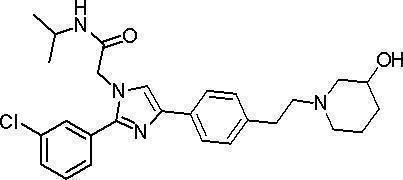
1H-NMR (600 MHz, CDCl3) δ (ppm) ; 1.12 (6 H, d, J=6.9 Hz), 1.50 - 1.59 (3 H, m), 1.77 - 1.86 (1 H, m), 2.30 - 2.39 (1 H, m), 2.50 - 2.67 (5 H, m), 2.78 - 2.84 (2 H, m), 3.84 (1 H, br. s.), 4.11 - 4.19 (1 H, m), 4.65 (2 H, s), 5.39 (1 H, d, J=7.8 Hz), 7.22 - 7.25 (2 H, m), 7.28 (1 H, s), 7.38 - 7.47 (3 H, m), 7.66 - 7.68 (1 H, m), 7.75 - 7.79 (2 H, m).
・実施例A-06:2-[2-(3-クロロフェニル)-4-{4-[2-(3-ヒドロキシピロリジン-1-イル)エチル]フェニル}-1H-イミダゾール-1-イル]-N-(プロパン-2-イル)アセトアミド

1H-NMR (600 MHz, CDCl3) δ (ppm) ; 1.12 (6 H, d, J=6.4 Hz), 1.73 - 1.80 (1 H, m), 2.16 - 2.24 (1 H, m), 2.32 - 2.38 (1 H, m), 2.57 (1 H, dd, J=10.1, 5.0 Hz), 2.71 - 2.79 (3 H, m), 2.82 - 2.88 (2 H, m), 2.94 - 2.99 (1 H, m), 4.11 - 4.19 (1 H, m), 4.33 - 4.37 (1 H, m), 4.65 (2 H, s), 5.39 (1 H, d, J=7.8 Hz), 7.24 - 7.26 (2 H, m), 7.28 (1 H, s), 7.38 - 7.47 (3 H, m), 7.65 - 7.68 (1 H, m), 7.75 - 7.79 (2 H, m).
・実施例A-07:2-[2-(3-クロロフェニル)-4-(4-{2-[3-(ヒドロキシメチル)ピロリジン-1-イル]エチル}フェニル)-1H-イミダゾール-1-イル]-N-(プロパン-2-イル)アセトアミド
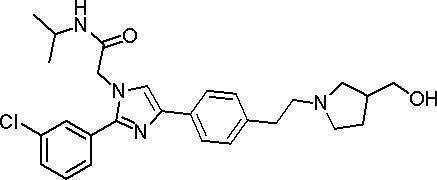
1H-NMR (600 MHz, CDCl3) δ (ppm) ; 1.12 (6 H, d, J=6.9 Hz), 1.67 - 1.75 (1 H, m), 1.98 - 2.05 (1 H, m), 2.32 - 2.38 (2 H, m), 2.53 - 2.58 (1 H, m), 2.67 - 2.75 (3 H, m), 2.81 - 2.86 (2 H, m), 2.89 - 2.95 (1 H, m), 3.53 (1 H, dd, J=9.9, 4.8 Hz), 3.69 (1 H, dd, J=10.1, 4.1 Hz), 4.10 - 4.19 (1 H, m), 4.64 (2 H, s), 5.42 (1 H, d, J=7.8 Hz), 7.23 - 7.26 (2 H, m), 7.27 (1 H, s), 7.38 - 7.46 (3 H, m), 7.65 - 7.67 (1 H, m), 7.75 - 7.79 (2 H, m).
・実施例A-08:2-[2-(3-クロロフェニル)-4-{4-[2-(3-オキサ-8-アザビシクロ[3.2.1]オクタ-8-イル)エチル]フェニル}-1H-イミダゾール-1-イル]-N-(プロパン-2-イル)アセトアミド

1H-NMR (600 MHz, CDCl3) δ (ppm) ; 1.12 (6 H, d, J=6.6 Hz), 1.85 - 1.95 (4 H, m), 2.51 - 2.57 (2 H, m), 2.78 - 2.84 (2 H, m), 3.10 (2 H, br. s.), 3.53 (2 H, dd, J=10.3, 1.7 Hz), 3.74 (2 H, d, J=10.3 Hz), 4.11 - 4.20 (1 H, m), 4.65 (2 H, s), 5.37 (1 H, d, J=7.8 Hz), 7.25 - 7.28 (2 H, m), 7.29 (1 H, s), 7.38 - 7.47 (3 H, m), 7.67 (1 H, t, J=1.7 Hz), 7.75 - 7.79 (2 H, m).
・実施例A-09:2-[2-(4-フルオロ-3-メトキシフェニル)-4-{4-[2-(ピペリジン-1-イル)エチル]フェニル}-1H-イミダゾール-1-イル]-N-(プロパン-2-イル)アセトアミド
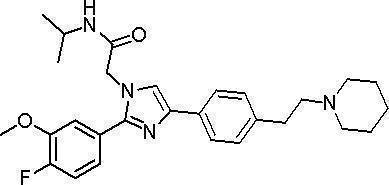
1H-NMR (600 MHz, CDCl3) δ (ppm) ; 1.04 - 1.17 (6 H, m), 1.39 - 1.72 (7 H, m), 2.39 - 2.94 (7 H, m), 3.93 (3 H, s), 4.07 - 4.21 (1 H, m), 4.64 (2 H,s), 5.35 - 5.46 (1 H, m), 7.01 - 7.10 (1 H, m), 7.12 - 7.19 (1 H, m), 7.21 - 7.35 (4 H, m), 7.69 - 7.82 (2 H, m).
・実施例A-10:2-[2-(4-フルオロ-3-メトキシフェニル)-4-{4-[2-(モルホリン-4-イル)エチル]フェニル}-1H-イミダゾール-1-イル]-N-(プロパン-2-イル)アセトアミド

1H-NMR (600 MHz, CDCl3) δ (ppm) ; 1.11 (6 H, d, J=6.4 Hz), 2.47 - 2.57 (4 H, m), 2.58 - 2.67 (2 H, m), 2.75 - 2.89 (2 H, m), 3.68 - 3.83 (4 H, m),3.93 (3 H, s), 4.08 - 4.21 (1 H, m), 4.64 (2 H, s), 5.40 (1 H, d, J=7.8 Hz), 7.03 - 7.10 (1 H, m), 7.12 - 7.20 (1 H, m), 7.20 - 7.34 (4 H, m), 7.73 - 7.82 (2 H, m).
・実施例A-11:2-[2-(4-フルオロ-3-メトキシフェニル)-4-{4-[2-(ピロリジン-1-イル)エチル]フェニル}-1H-イミダゾール-1-イル]-N-(プロパン-2-イル)アセトアミド

1H-NMR (600 MHz, CDCl3) δ (ppm) ; 1.12 (6 H, d, J=6.9 Hz), 1.92 (4 H, br. s.), 2.46 - 3.21 (8 H, m), 3.94 (3 H, s), 4.07 - 4.21 (1 H, m), 4.64 (2 H, s), 5.41 (1 H, d, J=7.8 Hz), 7.00 - 7.10 (1 H, m), 7.16 (1 H, dd, J=11.0, 8.3 Hz), 7.22 - 7.31 (4 H, m), 7.78 (2 H, d, J=8.3 Hz).
・実施例A-12:2-[2-(4-フルオロ-3-メトキシフェニル)-4-(4-{2-[(2R)-2-メチルピロリジン-1-イル]エチル}フェニル)-1H-イミダゾール-1-イル]-N-(プロパン-2-イル)アセトアミド

1H-NMR (600 MHz, CDCl3) δ (ppm) ; 1.11 (9 H, d, J=6.4 Hz), 1.45 (1 H, br. s.), 1.66 - 1.87 (2 H, m), 1.89 - 2.00 (1 H, m), 2.13 - 2.25 (1 H, m), 2.27 - 2.40 (2 H, m), 2.79 - 2.94 (2 H, m), 2.98 - 3.10 (1 H, m), 3.19 - 3.32 (1 H, m), 3.94 (3 H, s), 4.09 - 4.20 (1 H, m), 4.65 (2 H, s), 5.40 (1 H, d, J=8.3 Hz), 7.02 - 7.10 (2 H, m), 7.16 (2 H, dd, J=10.8, 8.5 Hz), 7.21 - 7.34 (4 H, m), 7.78 (2 H, d, J=8.3 Hz).
・実施例A-13:2-[4-{4-[2-(3-シアノピペリジン-1-イル)エチル]フェニル}-2-(4-フルオロ-3-メトキシフェニル)-1H-イミダゾール-1-イル]-N-(プロパン-2-イル)アセトアミド
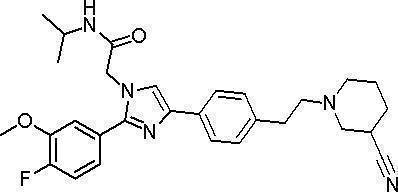
1H-NMR (600 MHz, CDCl3) δ (ppm) ; 1.12 (6 H, d, J=6.9 Hz), 1.56 - 1.76 (2 H, m), 1.78 - 1.96 (2 H, m), 2.38 (1 H, br. s.), 2.56 (1 H, br. s.), 2.61 - 2.69 (3 H, m), 2.74 - 2.90 (4 H, m), 3.94 (3 H, s), 4.07 - 4.20 (1 H, m), 4.64 (2 H, s), 5.40 (1 H, d, J=8.3 Hz), 7.02 - 7.10 (1 H, m), 7.16 (1 H, dd, J=10.8, 8.5 Hz), 7.22 - 7.33 (4 H, m), 7.78 (2 H, d, J=8.3 Hz).
・実施例A-14:2-[4-{4-[2-(4-シアノピペリジン-1-イル)エチル]フェニル}-2-(4-フルオロ-3-メトキシフェニル)-1H-イミダゾール-1-イル]-N-(プロパン-2-イル)アセトアミド

1H-NMR (600 MHz, CDCl3) δ (ppm) ; 1.12 (6 H, d, J=6.9 Hz), 1.84 - 2.02 (4 H, m), 2.42 (2 H, br. s.), 2.58 - 2.78 (5 H, m), 2.78 - 2.86 (2 H, m), 3.94 (3 H, s), 4.08 - 4.20 (1 H, m), 4.64 (2 H, s), 5.40 (1 H, d, J=7.8 Hz), 6.99 - 7.10 (1 H, m), 7.16 (1 H, dd, J=11.0, 8.3 Hz), 7.22 - 7.34 (4 H, m), 7.77 (2 H, d, J=7.8 Hz).
・実施例A-15:2-[2-(4-フルオロ-3-メトキシフェニル)-4-{4-[2-(3-ヒドロキシ-8-アザビシクロ[3.2.1]オクタ-8-イル)エチル]フェニル}-1H-イミダゾール-1-イル]-N-(プロパン-2-イル)アセトアミド

1H-NMR (500 MHz, CDCl3) δ (ppm) ; 1.12 (6 H, d, J=6.5 Hz), 1.18 - 1.33 (1 H, m), 1.63 - 1.74 (2 H, m), 1.89 - 2.01 (2 H, m), 2.03 - 2.20 (4 H, m), 2.54 - 2.68 (2 H, m), 2.78 - 2.89 (2 H, m), 3.22 - 3.31 (2 H, m), 3.94 (3 H, s), 4.05 - 4.10 (1 H, m), 4.10 - 4.20 (1 H, m), 4.65 (2 H, s), 5.35 - 5.46 (1 H, m), 7.02 - 7.09 (1 H, m), 7.17 (1 H, dd, J=10.9, 8.2 Hz), 7.23 - 7.33 (4 H, m), 7.78 (2 H, d, J=8.4 Hz).
・実施例A-16:2-[4-{4-[2-(3-シアノアゼチジン-1-イル)エチル]フェニル}-2-(4-フルオロ-3-メトキシフェニル)-1H-イミダゾール-1-イル]-N-(プロパン-2-イル)アセトアミド

1H-NMR (500 MHz, CDCl3) δ (ppm) ; 1.13 (6 H, d, J=6.5 Hz), 2.63 - 2.79 (4 H, m), 3.21 - 3.32 (3 H, m), 3.55 - 3.63 (2 H, m), 3.94 (3 H, s), 4.09 - 4.22 (1 H, m), 4.65 (2 H, s), 5.37 - 5.45 (1 H, m), 7.04 - 7.10 (1 H, m), 7.17 (1 H, dd, J=10.7, 8.4 Hz), 7.20 - 7.33 (4 H, m), 7.79 (2 H, d, J=8.0 Hz).
・実施例A-17:2-[2-(4-フルオロ-3-メトキシフェニル)-4-{4-[2-(3-メトキシピロリジン-1-イル)エチル]フェニル}-1H-イミダゾール-1-イル]-N-(プロパン-2-イル)アセトアミド

1H-NMR (600 MHz, CDCl3) δ (ppm) ; 1.11 (6 H, d, J=6.6 Hz), 1.27 - 1.37 (1 H, m), 1.73 - 1.85 (1 H, m), 1.94 (1 H, d, J=9.5 Hz), 2.08 - 2.25 (2 H, m), 2.55 - 2.67 (2 H, m), 2.68 - 2.77 (1 H, m), 2.78 - 2.89 (2 H, m), 2.97 (1 H, d, J=8.3 Hz), 3.29 - 3.42 (3 H, m), 3.93 (3 H, s), 4.09 - 4.19 (1 H, m), 4.64 (2 H, s), 5.41 (1 H, d, J=7.8 Hz), 7.03 - 7.10 (1 H, m), 7.16 (1 H, dd, J=10.7, 8.3 Hz), 7.24 (2 H, s), 7.28 - 7.32 (2 H, m), 7.77 (2 H, d, J=8.3 Hz).
・実施例A-18:2-[2-(4-フルオロ-3-メトキシフェニル)-4-{4-[2-(3-メトキシピペリジン-1-イル)エチル]フェニル}-1H-イミダゾール-1-イル]-N-(プロパン-2-イル)アセトアミド

1H-NMR (600 MHz, CDCl3) δ (ppm) ; 1.12 (6 H, d, J=6.6 Hz), 1.85 (2 H, br. s.), 2.04 - 2.15 (1 H, m), 2.46 - 2.57 (1 H, m), 2.63 - 2.81 (5 H, m), 2.82 - 2.92 (2 H, m), 3.30 (3 H, s), 3.94 (5 H, s), 4.10 - 4.19 (1 H, m), 4.64 (2 H, s), 5.40 (1 H, d, J=7.8 Hz), 7.03 - 7.10 (1 H, m), 7.16 (2 H, dd, J=10.7, 8.3 Hz), 7.25 (2 H, br. s.), 7.29 (1 H, dd, J=8.3, 2.1 Hz), 7.77 (2 H, d, J=8.3 Hz).
・実施例A-19:2-[4-{4-[2-(3-フルオロアゼチジン-1-イル)エチル]フェニル}-2-(4-フルオロ-3-メトキシフェニル)-1H-イミダゾール-1-イル]-N-(プロパン-2-イル)アセトアミド
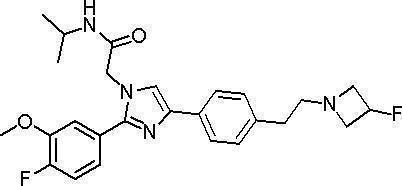
1H-NMR (600 MHz, CDCl3) δ (ppm) ; 1.12 (6 H, d, J=6.6 Hz), 2.60 - 2.81 (4 H, m), 3.06 - 3.19 (2 H, m), 3.60 - 3.74 (2 H, m), 3.94 (3 H, s), 4.09 - 4.20 (1 H, m), 4.64 (2 H, s), 5.02 - 5.20 (1 H, m), 5.40 (1 H, d, J=8.3 Hz), 7.02 - 7.10 (1 H, m), 7.16 (1 H, dd, J=10.7, 8.3 Hz), 7.20 - 7.33 (4 H, m), 7.77 (2 H, d, J=8.3 Hz).
・実施例A-20:2-[4-{4-[2-(2,6-ジメチルモルホリン-4-イル)エチル]フェニル}-2-(4-フルオロ-3-メトキシフェニル)-1H-イミダゾール-1-イル]-N-(プロパン-2-イル)アセトアミド

1H-NMR (600 MHz, CDCl3) δ (ppm) ; 1.12 (6 H, d, J=6.6 Hz), 1.18 (6 H, d, J=6.6 Hz), 1.81 (2 H, t, J=10.7 Hz), 2.55 - 2.65 (2 H, m), 2.83 (4 H, d, J=10.3 Hz), 3.66 - 3.77 (2 H, m), 3.94 (3 H, s), 4.10 - 4.20 (1 H, m), 4.64 (2 H, s), 5.40 (1 H, d, J=7.8 Hz), 7.02 - 7.09 (1 H, m), 7.16 (1 H, dd, J=10.7, 8.3 Hz), 7.22 - 7.27 (3 H, m), 7.28 - 7.32 (1 H, m), 7.77 (2 H, d, J=7.8 Hz).
・実施例A-21:2-[2-(4-フルオロ-3-メトキシフェニル)-4-{4-[2-(3-メチルピロリジン-1-イル)エチル]フェニル}-1H-イミダゾール-1-イル]-N-(プロパン-2-イル)アセトアミド

1H-NMR (600 MHz, CDCl3) δ (ppm) ; 1.11 (6 H, d, J=6.6 Hz), 1.94 (2 H, d, J=10.3 Hz), 2.24 (2 H, br. s.), 2.56 - 2.67 (2 H, m), 2.79 - 2.90 (4 H, m), 3.24 (1 H, br. s.), 3.35 (3 H, s), 3.93 (3 H, s), 4.08 - 4.22 (1 H, m), 4.64 (2 H, s), 5.40 (1 H, d, J=7.8 Hz), 7.02 - 7.07 (1 H, m), 7.16 (1 H, dd, J=10.7, 8.3 Hz), 7.22 - 7.31 (4 H, m), 7.77 (2 H, d, J=8.3 Hz).
・実施例A-22:2-[2-(4-フルオロ-3-メトキシフェニル)-4-{4-[2-(3-オキサ-8-アザビシクロ[3.2.1]オクタ-8-イル)エチル]フェニル}-1H-イミダゾール-1-イル]-N-(プロパン-2-イル)アセトアミド

1H-NMR (600 MHz, CDCl3) δ (ppm) ; 1.12 (6 H, d, J=6.4 Hz), 1.82 - 2.00 (4 H, m), 2.49 - 2.60 (2 H, m), 2.77 - 2.88 (2 H, m), 3.06 - 3.17 (2 H, m), 3.49 - 3.58 (2 H, m), 3.69 - 3.81 (2 H, m), 3.94 (3 H, s), 4.07 - 4.24 (1 H, m), 4.65 (2 H, s), 5.36 - 5.48 (1 H, m), 7.01 - 7.11 (1 H, m), 7.17 (1 H, dd, J=11.0, 8.3 Hz), 7.24 - 7.29 (3 H, m), 7.30 (1 H, dd, J=8.0, 2.1 Hz), 7.78 (2 H, d, J=8.3 Hz).
・実施例A-23:2-[2-(4-フルオロ-3-メトキシフェニル)-4-{4-[2-(1,4-オキサゼパン-4-イル)エチル]フェニル}-1H-イミダゾール-1-イル]-N-(プロパン-2-イル)アセトアミド
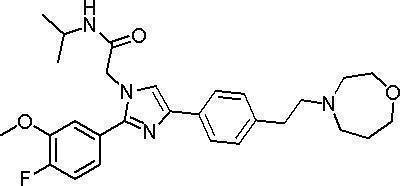
1H-NMR (600 MHz, CDCl3) δ (ppm) ; 1.12 (6 H, d, J=6.6 Hz), 1.92 (2 H, quin, J=5.8 Hz), 2.73 - 2.87 (8 H, m), 3.72 - 3.78 (2 H, m), 3.82 (2 H, t, J=6.0 Hz), 3.94 (3 H, s), 4.08 - 4.19 (1 H, m), 4.64 (2 H, s), 5.40 (1 H, d, J=8.3 Hz), 7.01 - 7.10 (1 H, m), 7.16 (1 H, dd, J=10.7, 8.3 Hz), 7.21 - 7.34 (4 H, m), 7.77 (2 H, d, J=8.3 Hz).
・実施例A-24:2-[2-(4-フルオロ-3-メトキシフェニル)-4-{4-[2-(4-メトキシピペリジン-1-イル)エチル]フェニル}-1H-イミダゾール-1-イル]-N-(プロパン-2-イル)アセトアミド

1H-NMR (600 MHz, CDCl3) δ (ppm) ; 1.04 (3 H, s), 1.11 (6 H, d, J=6.6 Hz), 1.37 (1 H, td, J=12.5, 6.0 Hz), 1.97 - 2.14 (2 H, m), 2.23 - 2.35 (1 H, m), 2.52 (1 H, br. s.), 2.61 - 2.98 (8 H, m), 3.93 (3 H, s), 4.08 - 4.20 (1 H, m), 4.64 (2 H, s), 5.41 (1 H, d, J=7.8 Hz), 7.02 - 7.11 (1 H, m), 7.16 (1 H, dd, J=10.7, 8.3 Hz), 7.21 - 7.33 (4 H, m), 7.77 (2 H, d, J=7.8 Hz).
・実施例A-25:2-[4-{4-[2-(3,5-ジメチルモルホリン-4-イル)エチル]フェニル}-2-(4-フルオロ-3-メトキシフェニル)-1H-イミダゾール-1-イル]-N-(プロパン-2-イル)アセトアミド
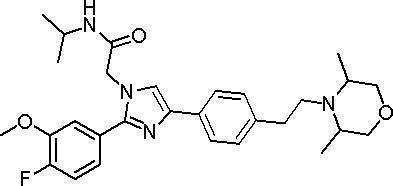
1H-NMR (600 MHz, CDCl3) δ (ppm) ; 1.02 - 1.10 (6 H, m), 1.13 (6 H, d, J=6.6 Hz), 2.50 - 2.58 (1 H, m), 2.65 - 2.75 (1 H, m), 2.80 - 2.99 (4 H, m), 3.40 - 3.46 (2 H, m), 3.68 - 3.75 (2 H, m), 3.95 (3 H, s), 4.11 - 4.20 (1 H, m), 4.66 (2 H, s), 5.37 - 5.44 (1 H, m), 7.05 - 7.10 (1 H, m), 7.14 - 7.20 (1 H, m), 7.21 - 7.33 (4 H, m), 7.79 (2 H, d, J=8.3 Hz).
・実施例A-26:2-[2-(3-クロロフェニル)-4-{5-[2-(モルホリン-4-イル)エチル]ピリジン-2-イル}-1H-イミダゾール-1-イル]-N-(プロパン-2-イル)アセトアミド

1H-NMR (600 MHz, DMSO-d6) δ (ppm) ; 1.04 - 1.07 (6 H, m), 3.07 - 3.20 (4 H, m), 3.39 - 3.46 (2 H, m), 3.47 - 3.53 (2 H, m), 3.77 - 3.87 (3 H, m), 3.97 - 4.03 (2 H, m), 4.82 (2 H, s), 7.55 - 7.59 (1 H, m), 7.59 - 7.63 (1 H, m), 7.63 - 7.66 (1 H, m), 7.69 - 7.71 (1 H, m), 7.91 - 8.22 (3 H, m), 8.26 - 8.35 (1 H, m), 8.50 - 8.61 (1 H, m).
・実施例A-27:2-[2-(3-クロロフェニル)-4-{5-[2-(3-オキサ-8-アザビシクロ[3.2.1]オクタ-8-イル)エチル]ピリジン-2-イル}-1H-イミダゾール-1-イル]-N-(プロパン-2-イル)アセトアミド
1H-NMR (600 MHz, DMSO-d6) δ (ppm) ; 1.05 (6 H, d, J=6.6 Hz), 2.02 - 2.06 (2 H, m), 2.18 - 2.23 (2 H, m), 3.27 (4 H, s), 3.71 (2 H, d, J=11.1 Hz), 3.79 - 3.86 (1 H, m), 4.01 - 4.06 (2 H, m), 4.13 - 4.19 (2 H, m), 4.85 (2 H, s), 7.57 - 7.62 (1 H, m), 7.62 - 7.68 (2 H, m), 7.72 (1 H, s), 8.10 - 8.24 (2 H, m), 8.29 - 8.37 (1 H, m), 8.58 - 8.65 (1 H, m).
・実施例A-28:2-[2-(6-メトキシピリジン-2-イル)-4-{4-[2-(ピペリジン-1-イル)エチル]フェニル}-1H-イミダゾール-1-イル]-N-(プロパン-2-イル)アセトアミドの合成

MS (ESI pos.) m/z : 462([M+H]+).
1H-NMR (600 MHz, CDCl3) δ (ppm) ; 0.99 (6 H, d, J=6.4 Hz), 1.42 - 1.51 (2 H, m), 1.61 - 1.68 (4 H, m), 2.44 - 2.54 (4 H, m), 2.56 - 2.63 (2 H, m), 2.82 - 2.88 (2 H, m), 3.95 (3 H, s), 4.03 - 4.11 (1 H, m), 5.28 (2 H, s), 5.57 - 5.64 (1 H, m), 6.72 - 6.78 (1 H, m), 7.24 - 7.28 (3 H, m), 7.68 - 7.73 (1 H, m), 7.79 (2 H, d, J=8.3 Hz), 7.95 - 7.99 (1 H, m).
実施例A-28と同様の手法により、参考例P-A16、参考例P-A20、参考例P-A22で得られた化合物から以下の化合物を合成した。
・実施例A-29:2-[2-(6-メトキシピリジン-2-イル)-4-{4-[2-(モルホリン-4-イル)エチル]フェニル}-1H-イミダゾール-1-イル]-N-(プロパン-2-イル)アセトアミド

1H-NMR (600 MHz, CDCl3) δ (ppm) ; 0.99 (6 H, d, J=6.4 Hz), 2.51 - 2.58 (4 H, m), 2.61 - 2.66 (2 H, m), 2.82 - 2.87 (2 H, m), 3.73 - 3.79 (4 H, m), 3.95 (3 H, s), 4.03 - 4.11 (1 H, m), 5.28 (2 H, s), 5.60 - 5.65 (1 H, m), 6.75 (1 H, d, J=8.3 Hz), 7.25 - 7.29 (3 H, m), 7.68 - 7.74 (1 H, m), 7.80 (2 H, d, J=8.3 Hz), 7.95 - 7.99 (1 H, m).
・実施例A-30:2-[2-(3-クロロフェニル)-4-{6-[2-(モルホリン-4-イル)エチル]ピリジン-3-イル}-1H-イミダゾール-1-イル]-N-(プロパン-2-イル)アセトアミド

1H-NMR (600 MHz, CDCl3) δ (ppm) ; 1.14 (6 H, d, J=6.4 Hz), 2.55 (4 H, br. s.), 2.77 - 2.82 (2 H, m), 3.00 - 3.04 (2 H, m), 3.73 (4 H, t, J=4.6 Hz), 4.11 - 4.20 (1 H, m), 4.65 (2 H, s), 5.36 (1 H, d, J=7.8 Hz), 7.24 (1 H, d, J=8.3 Hz), 7.37 (1 H, s), 7.40 - 7.49 (3 H, m), 7.65 (1 H, s), 8.11 (1 H, dd, J=8.0, 2.1 Hz), 8.92 (1 H, d, J=2.3 Hz).
・実施例A-31:2-[4-{4-[2-(ジエチルアミノ)エチル]フェニル}-2-(4-フルオロ-3-メトキシフェニル)-1H-イミダゾール-1-イル]-N-(プロパン-2-イル)アセトアミド
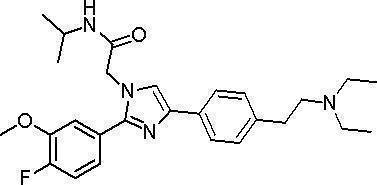
1H-NMR (600 MHz, CDCl3) δ (ppm) ; 1.09 (6 H, t, J=7.0 Hz), 1.12 (6 H, d, J=6.2 Hz), 2.59 - 2.67 (4 H, m), 2.70 - 2.83 (4 H, m), 3.94 (3 H, s), 4.11 - 4.20 (1 H, m), 4.65 (2 H, s), 5.38 - 5.45 (1 H, m), 7.04 - 7.09 (1 H, m), 7.17 (1 H, dd, J=11.1, 8.3 Hz), 7.22 - 7.34 (4 H, m), 7.78 (2 H, d, J=8.3 Hz).
・実施例A-32:2-[4-(4-{2-[エチル(2-メトキシエチル)アミノ]エチル}フェニル)-2-(4-フルオロ-3-メトキシフェニル)-1H-イミダゾール-1-イル]-N-(プロパン-2-イル)アセトアミド

1H-NMR (600 MHz, CDCl3) δ (ppm) ; 1.08 (3 H, t, J=7.0 Hz), 1.12 (6 H, d, J=6.6 Hz), 2.64 - 2.83 (8 H, m), 3.38 (3 H, s), 3.47 - 3.54 (2 H, m), 3.94 (3 H, s), 4.11 - 4.21 (1 H, m), 4.65 (2 H, s), 5.39 - 5.44 (1 H, m), 7.04 - 7.10 (1 H, m), 7.13 - 7.19 (1 H, m), 7.23 - 7.28 (3 H, m), 7.28 - 7.33 (1 H, m), 7.78 (2 H, d, J=8.3 Hz).
・実施例A-33:2-[2-(3-クロロフェニル)-4-{4-[2-(ピペリジン-1-イル)エトキシ]フェニル}-1H-イミダゾール-1-イル]-N-(プロパン-2-イル)アセトアミドの合成

MS (ESI pos.) m/z : 481([M+H]+).
1H-NMR (600 MHz, CDCl3) δ (ppm) ; 1.13 (6 H, d, J=6.4 Hz), 1.44 - 1.50 (2 H, m), 1.60 - 1.67 (4 H, m), 2.48 - 2.59 (4 H, m), 2.76 - 2.83 (2 H, m), 4.11 - 4.20 (3 H, m), 4.65 (2 H, s), 5.36 - 5.42 (1 H, m), 6.94 - 6.99 (2 H, m), 7.22 (1 H, s), 7.38 - 7.47 (3 H, m), 7.66 - 7.69 (1 H, m), 7.75 - 7.80 (2 H, m).
実施例A-33と同様の手法により、参考例P-A27から以下の化合物を合成した。
・実施例A-34:2-[2-(3-クロロフェニル)-4-{3-[2-(ピペリジン-1-イル)エトキシ]フェニル}-1H-イミダゾール-1-イル]-N-(プロパン-2-イル)アセトアミド
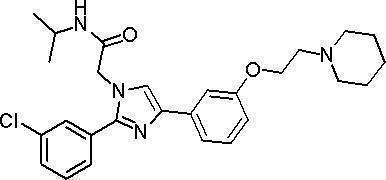
1H-NMR (600 MHz, CDCl3) δ (ppm) ; 1.13 (6 H, d, J=6.4 Hz), 1.41 - 1.50 (2 H, m), 1.61 - 1.67 (4 H, m), 2.37 - 2.61 (4 H, m), 2.79 - 2.85 (2 H, m), 4.12 - 4.23 (3 H, m), 4.66 (2 H, s), 5.37 - 5.42 (1 H, m), 6.84 - 6.88 (1 H, m), 7.29 - 7.34 (2 H, m), 7.40 - 7.48 (5 H, m), 7.67 - 7.70 (1 H, m).
・実施例A-35:2-[2-(3-クロロフェニル)-4-{3-[3-(ピペリジン-1-イル)プロポキシ]フェニル}-1H-イミダゾール-1-イル]-N-(プロパン-2-イル)アセトアミド

1H-NMR (600 MHz, CDCl3) δ (ppm) ; 1.13 (6 H, d, J=6.4 Hz), 1.43 - 1.50 (2 H, m), 1.63 - 1.71 (4 H, m), 2.00 - 2.10 (2 H, m), 2.35 - 2.63 (6 H, m), 4.08 - 4.12 (2 H, m), 4.13 - 4.21 (1 H, m), 4.66 (2 H, s), 5.37 - 5.42 (1 H, m), 6.83 - 6.87 (1 H, m), 7.29 - 7.34 (2 H, m), 7.38 - 7.49 (5 H, m), 7.67 - 7.70 (1 H, m).
・実施例A-36:2-[2-(3-メトキシフェニル)-5-メチル-4-{4-[2-(モルホリン-4-イル)エチル]フェニル}-1H-イミダゾール-1-イル]-N-(プロパン-2-イル)アセトアミドの合成
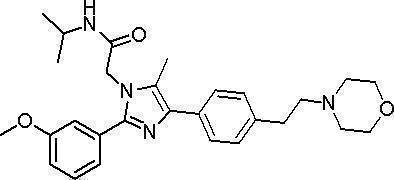
MS (ESI pos.) m/z : 477([M+H]+).
1H-NMR (600 MHz, CDCl3) δ (ppm) ; 1.13 (6 H, d, J=6.0 Hz), 2.43 (3 H, s), 2.48 - 2.58 (4 H, m), 2.59 - 2.69 (2 H, m), 2.79 - 2.90 (2 H, m), 3.69 -3.77 (4 H, m), 3.83 (3 H, s), 4.13 - 4.23 (1 H, m), 4.60 (2 H, s), 5.32 - 5.41 (1 H, m), 6.92 - 7.16 (3 H, m), 7.21 - 7.30 (2 H, m), 7.31 - 7.41 (1 H, m), 7.59 -7.71 (2 H, m).
実施例A-36と同様の手法により、参考例P-A32、参考例P-A33、参考例P-A34、参考例P-A35、参考例P-A36、参考例P-A43、参考例P-A46、参考例P-A65で得られた化合物から以下の化合物を合成した。
・実施例A-37:2-[2-(3-メトキシフェニル)-4-{4-[2-(ピペリジン-1-イル)エチル]フェニル}-1H-イミダゾール-1-イル]-N-(プロパン-2-イル)アセトアミド
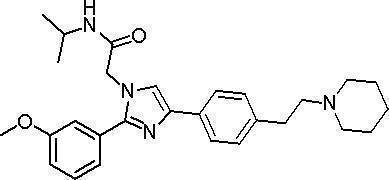
1H-NMR (600 MHz, CDCl3) δ (ppm) ; 1.09 (6 H, d, J=6.4 Hz), 1.45 (1 H, br. s.), 1.53 - 1.67 (5 H, m), 2.39 - 2.53 (4 H, m), 2.52 - 2.62 (2 H, m),2.73 - 2.90 (2 H, m), 3.71 - 3.89 (3 H, m), 4.04 - 4.20 (1 H, m), 4.66 (2 H, s), 5.40 (1 H, d, J=7.8 Hz), 6.95 - 7.02 (1 H, m), 7.07 - 7.20 (2 H, m), 7.18 - 7.29 (3H, m), 7.32 - 7.41 (1 H, m), 7.67 - 7.84 (2 H, m).
・実施例A-38:2-[2-(3-メトキシフェニル)-4-{4-[2-(モルホリン-4-イル)エチル]フェニル}-1H-イミダゾール-1-イル]-N-(プロパン-2-イル)アセトアミド
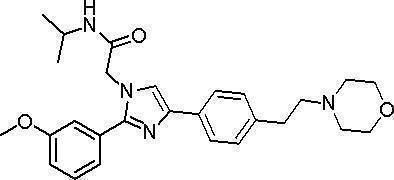
1H-NMR (600 MHz, CDCl3) δ (ppm) ; 1.11 (6 H, s), 2.54 (4 H, br. s.), 2.58 - 2.67 (2 H, m), 2.75 - 2.90 (2 H, m), 3.70 - 3.79 (4 H, m), 3.85 (3 H, s),4.06 - 4.20 (1 H, m), 4.67 (2 H, s), 5.40 (1 H, d, J=7.8 Hz), 6.93 - 7.03 (1 H, m), 7.09 - 7.19 (2 H, m), 7.22 - 7.29 (3 H, m), 7.32 - 7.42 (1 H, m), 7.71 - 7.87 (2H, m).
・実施例A-39:2-[2-(3-クロロ-4-フルオロフェニル)-4-{4-[2-(モルホリン-4-イル)エチル]フェニル}-1H-イミダゾール-1-イル]-N-(プロパン-2-イル)アセトアミド

1H-NMR (600 MHz, CDCl3) δ (ppm) ; 1.13 (6 H, d, J=6.4 Hz), 2.54 (4 H, br. s.), 2.59 - 2.68 (2 H, m), 2.76 - 2.89 (2 H, m), 3.67 - 3.81 (4 H, m),4.09 - 4.22 (1 H, m), 4.62 (2 H, s), 5.37 (1 H, d, J=7.8 Hz), 7.14 - 7.34 (4 H, m), 7.40 - 7.51 (1 H, m), 7.63 - 7.84 (3 H, m).
・実施例A-40:2-[2-(5-メトキシピリジン-3-イル)-4-{4-[2-(モルホリン-4-イル)エチル]フェニル}-1H-イミダゾール-1-イル]-N-(プロパン-2-イル)アセトアミド

1H-NMR (600 MHz, CDCl3) δ (ppm) ; 1.12 (6 H, d, J=6.4 Hz), 2.54 (4 H, br. s.), 2.58 - 2.66 (2 H, m), 2.78 - 2.90 (2 H, m), 3.71 - 3.78 (4 H, m),3.91 (3 H, s), 4.08 - 4.20 (1 H, m), 4.66 (2 H, s), 5.39 (1 H, d, J=7.8 Hz), 7.21 - 7.29 (2 H, m), 7.32 (1 H, s), 7.47 - 7.52 (1 H, m), 7.74 - 7.80 (2 H, m), 8.36 -8.45 (2 H, m).
・実施例A-41:2-[2-(2-メトキシピリジン-4-イル)-4-{4-[2-(モルホリン-4-イル)エチル]フェニル}-1H-イミダゾール-1-イル]-N-(プロパン-2-イル)アセトアミド
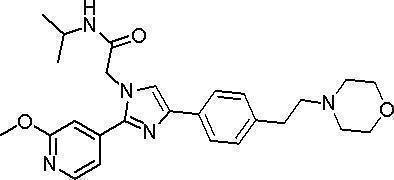
1H-NMR (600 MHz, CDCl3) δ (ppm) ; 1.11 (6 H, d, J=6.4 Hz), 2.54 (4 H, br. s.), 2.59 - 2.65 (2 H, m), 2.80 - 2.89 (2 H, m), 3.71 - 3.78 (4 H, m),3.98 (3 H, s), 4.10 - 4.20 (1 H, m), 4.70 (2 H, s), 5.35 (1 H, d, J=8.3 Hz), 6.98 (1 H, s), 7.12 - 7.17 (1 H, m), 7.23 - 7.28 (2 H, m), 7.31 (1 H, s), 7.77 (2 H, d, J=8.3 Hz), 8.26 (1 H, d, J=5.0 Hz).
・実施例A-42:2-[2-(3-メトキシフェニル)-4-{4-[2-(3-オキサ-8-アザビシクロ[3.2.1]オクタ-8-イル)エチル]フェニル}-1H-イミダゾール-1-イル]-N-(プロパン-2-イル)アセトアミド

1H-NMR (600 MHz, CDCl3) δ (ppm) ; 1.11 (6 H, d, J=6.6 Hz), 1.84 - 1.97 (4 H, m), 2.51 - 2.59 (2 H, m), 2.79 - 2.85 (2 H, m), 3.11 (2 H, br. s.), 3.53 (2 H, d, J=9.1 Hz), 3.75 (2 H, d, J=10.3 Hz), 3.86 (3 H, s), 4.10 - 4.20 (1 H, m), 4.68 (2 H, s), 5.36 - 5.43 (1 H, m), 6.97 - 7.04 (1 H, m), 7.13 (1 H, d, J=7.4 Hz), 7.16 - 7.20 (1 H, m), 7.23 - 7.30 (3 H, m), 7.38 (1 H, t, J=8.1 Hz), 7.79 (2 H, d, J=7.8 Hz).
・実施例A-43:2-[2-(3-クロロフェニル)-4-{2-フルオロ-4-[2-(モルホリン-4-イル)エチル]フェニル}-1H-イミダゾール-1-イル]-N-(プロパン-2-イル)アセトアミド

1H-NMR (600 MHz, CDCl3) δ (ppm) ; 1.12 (6 H, d, J=6.6 Hz), 2.53 (4 H, br. s.), 2.60 - 2.65 (2 H, m), 2.80 - 2.85 (2 H, m), 3.74 (4 H, t, J=4.5 Hz), 4.10 - 4.19 (1 H, m), 4.65 (2 H, s), 5.42 (1 H, d, J=7.8 Hz), 6.99 (1 H, dd, J=12.2, 1.4 Hz), 7.07 (1 H, dd, J=8.1, 1.4 Hz), 7.38 - 7.50 (4 H, m), 7.66 - 7.69 (1 H, m), 8.15 (1 H, t, J=8.1 Hz).
・実施例A-44:2-[2-(3-クロロフェニル)-4-{4-[2-(モルホリン-4-イル)プロピル]フェニル}-1H-イミダゾール-1-イル]-N-(プロパン-2-イル)アセトアミド

1H-NMR (600 MHz, CDCl3) δ (ppm) ; 0.98 (3 H, d, J=6.6 Hz), 1.12 (6 H, d, J=6.6 Hz), 2.42 - 2.48 (1 H, m), 2.59 - 2.65 (4 H, m), 2.76 - 2.83 (1 H, m), 2.99 - 3.05 (1 H, m), 3.71 - 3.77 (4 H, m), 4.10 - 4.20 (1 H, m), 4.65 (2 H, s), 5.38 (1 H, d, J=7.8 Hz), 7.22 (2 H, d, J=8.3 Hz), 7.29 (1 H, s), 7.38 - 7.47 (3 H, m), 7.67 (1 H, t, J=1.7 Hz), 7.75 - 7.79 (2 H, m).
・実施例A-45:2-[2-(3-クロロフェニル)-4-{4-[2-(モルホリン-4-イル)エチル]-2-オキソピリジン-1(2H)-イル}-1H-イミダゾール-1-イル]-N-(プロパン-2-イル)アセトアミドの合成

MS (ESI pos.) m/z : 484([M+H]+).
1H-NMR (600 MHz, CDCl3) δ (ppm) ; 1.13 (6 H, d, J=6.6 Hz), 2.32 - 2.90 (8 H, m), 3.73 (4 H, br. s.), 4.05 - 4.22 (1 H, m), 4.65 (2 H, s), 5.49 (1 H, d, J=7.4 Hz), 6.25 (1 H, d, J=7.4 Hz), 6.49 (1 H, s), 7.36 - 7.51 (3 H, m), 7.66 (1 H, t, J=1.7 Hz), 8.03 (1 H, s), 8.54 (1 H, d, J=7.0 Hz).
・実施例A-46:2-[2-(3-クロロフェニル)-4-{4-[2-(モルホリン-4-イル)エチル]-2-オキソピペラジン-1-イル}-1H-イミダゾール-1-イル]-N-(プロパン-2-イル)アセトアミドの合成
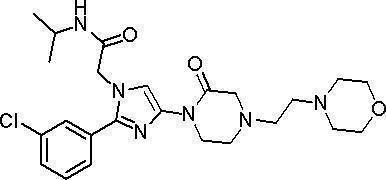
MS (ESI pos.) m/z : 489([M+H]+).
1H-NMR (600 MHz, CDCl3) δ (ppm) ; 1.13 (6 H, d, J=6.6 Hz), 2.52 (4 H, br. s.), 2.55 - 2.60 (2 H, m), 2.63 - 2.68 (2 H, m), 2.87 - 2.92 (2 H, m), 3.40 (2 H, s), 3.69 - 3.77 (4 H, m), 4.07 - 4.18 (3 H, m), 4.61 (2 H, s), 5.37 - 5.43 (1 H, m), 7.37 - 7.43 (3 H, m), 7.59 - 7.63 (1 H, m), 7.69 (1 H, s).
・実施例A-47:2-(3-クロロフェニル)-N-[4-(モルホリン-4-イル)シクロヘキシル]-1-[2-オキソ-2-(プロパン-2-イルアミノ)エチル]-1H-イミダゾール-4-カルボキサミドの合成
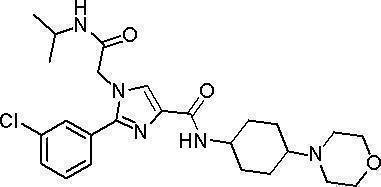
MS (ESI pos.) m/z : 488([M+H]+).
1H-NMR (600 MHz, CDCl3) δ (ppm) ; 1.14 (6 H, d, J=6.6 Hz), 1.23 - 1.61 (3 H, m), 1.64 - 1.77 (4 H, m), 1.85 - 2.03 (2 H, m), 2.12 - 2.21 (1 H, m), 2.47 - 2.61 (4 H, m), 3.73 (4 H, br. s.), 4.09 - 4.22 (2 H, m), 4.56 - 4.62 (2 H, m), 5.27 - 5.35 (1 H, m), 7.39 - 7.50 (3 H, m), 7.59 - 7.66 (2 H, m).
・実施例A-48:2-(3-クロロフェニル)-N-メチル-N-[4-(モルホリン-4-イル)シクロヘキシル]-1-[2-オキソ-2-(プロパン-2-イルアミノ)エチル]-1H-イミダゾール-4-カルボキサミドの合成

MS (ESI pos.) m/z : 502([M+H]+).
1H-NMR (600 MHz, CDCl3) δ (ppm) ; 1.14 (6 H, d, J=6.6 Hz), 1.36 - 1.69 (6 H, m), 1.84 - 2.19 (4 H, m), 2.45 (2 H, br. s.), 2.57 (2 H, br. s.), 2.93 - 3.05 (1 H, m), 3.36 (1 H, br. s.), 3.67 - 3.79 (4 H, m), 4.08 - 4.18 (1 H, m), 4.63 (2 H, d, J=12.0 Hz), 7.37 - 7.49 (3 H, m), 7.58 - 7.66 (2 H, m).
・実施例A-49:2-[2-(3-クロロフェニル)-4-({3-[2-(モルホリン-4-イル)エチル]ピロリジン-1-イル}カルボニル)-1H-イミダゾール-1-イル]-N-(プロパン-2-イル)アセトアミドの合成

MS (ESI pos.) m/z : 488([M+H]+).
1H-NMR (600 MHz, CDCl3) δ (ppm) ; 1.13 (6 H, d, J=6.6 Hz), 1.50 - 1.72 (5 H, m), 2.04 - 2.30 (2 H, m), 2.35 - 2.52 (4 H, m), 3.19 - 3.63 (1 H, m), 3.66 - 3.84 (5 H, m), 3.86 - 4.00 (1 H, m), 4.08 - 4.17 (1 H, m), 4.30 - 4.46 (1 H, m), 4.63 (2 H, s), 5.65 - 5.78 (1 H, m), 7.37 - 7.50 (3 H, m), 7.64 (1 H, s), 7.71 (1 H, s).
実施例A-36と同様の手法により、参考例P-B02で得られた化合物と参考例P-A43で得られた化合物、4-(2-モルホリノエチル)フェニルボロン酸及び4-(4-メチル-1-ピペラジニルメチル)ベンゼンボロン酸 ピナコール エステルから以下の化合物を合成した。
・実施例B-01:2-[5-(3-クロロフェニル)-3-{4-[2-(3-オキサ-8-アザビシクロ[3.2.1]オクタ-8-イル)エチル]フェニル}-1H-1,2,4-トリアゾール-1-イル]-N-(プロパン-2-イル)アセトアミド

1H-NMR (600 MHz, CDCl3) δ (ppm) ; 1.17 (6 H, d, J=6.6 Hz), 1.85 - 1.97 (4 H, m), 2.54 - 2.60 (2 H, m), 2.83 - 2.88 (2 H, m), 3.11 (2 H, br. s.), 3.54 (2 H, d, J=9.1 Hz), 3.75 (2 H, d, J=10.3 Hz), 4.11 - 4.18 (1 H, m), 4.85 (2 H, s), 6.15 - 6.20 (1 H, m), 7.34 (2 H, d, J=7.8 Hz), 7.46 - 7.50 (1 H, m), 7.51 - 7.55 (1 H, m), 7.55 - 7.58 (1 H, m), 7.78 - 7.80 (1 H, m), 8.09 (2 H, d, J=8.3 Hz).
・実施例B-02:2-[5-(3-クロロフェニル)-3-{4-[2-(モルホリン-4-イル)エチル]フェニル}-1H-1,2,4-トリアゾール-1-イル]-N-(プロパン-2-イル)アセトアミド
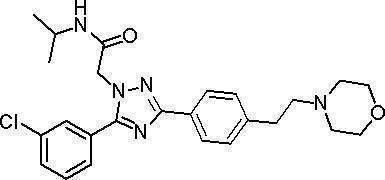
1H-NMR (600 MHz, CDCl3) δ (ppm) ; 1.16 (6 H, d, J=6.6 Hz), 2.52 - 2.57 (4 H, m), 2.62 - 2.68 (2 H, m), 2.85 - 2.90 (2 H, m), 3.75 (4 H, t, J=4.5 Hz), 4.11 - 4.17 (1 H, m), 4.85 (2 H, s), 6.14 - 6.19 (1 H, m), 7.31 - 7.34 (2 H, m), 7.46 - 7.50 (1 H, m), 7.51 - 7.53 (1 H, m), 7.54 - 7.57 (1 H, m), 7.77 - 7.79 (1 H, m), 8.08 (2 H, d, J=8.3 Hz).
・実施例B-03:2-[5-(3-クロロフェニル)-3-{4-[(4-メチルピペラジン-1-イル)メチル]フェニル}-1H-1,2,4-トリアゾール-1-イル]-N-(プロパン-2-イル)アセトアミド

1H-NMR (600 MHz, DMSO-d6) δ (ppm) ; 1.08 (6 H, d, J=6.6 Hz), 2.15 (3 H, s), 3.50 (2 H, s), 3.81 - 3.88 (1 H, m), 4.93 (2 H, s), 7.40 (2 H, d, J=8.3 Hz), 7.58 - 7.62 (1 H, m), 7.63 - 7.66 (1 H, m), 7.76 - 7.79 (1 H, m), 7.83 - 7.85 (1 H, m), 7.98 (2 H, d, J=8.3 Hz), 8.34 (1 H, d, J=7.4 Hz).
・実施例B-04:2-[5-(3-クロロフェニル)-3-{5-[2-(3-オキサ-8-アザビシクロ[3.2.1]オクタ-8-イル)エチル]ピリジン-2-イル}-1H-1,2,4-トリアゾール-1-イル]-N-(プロパン-2-イル)アセトアミドの合成

MS (ESI pos.) m/z : 495([M+H]+).
1H-NMR (600 MHz, CDCl3) δ (ppm) ; 1.16 (6 H, d, J=6.6 Hz), 1.86 - 1.94 (4 H, m), 2.55 - 2.60 (2 H, m), 2.82 - 2.87 (2 H, m), 3.08 (2 H, br. s.), 3.53 (2 H, d, J=9.1 Hz), 3.72 (2 H, d, J=10.3 Hz), 4.11 - 4.18 (1 H, m), 4.92 (2 H, s), 5.96 - 6.02 (1 H, m), 7.46 - 7.51 (1 H, m), 7.52 - 7.55 (1 H, m), 7.62 - 7.66 (1 H, m), 7.70 - 7.74 (1 H, m), 7.86 - 7.89 (1 H, m), 8.15 (1 H, d, J=7.8 Hz), 8.66 (1 H, d, J=1.7 Hz).
・実施例B-05:2-[5-(3-メトキシフェニル)-3-{5-[2-(3-オキサ-8-アザビシクロ[3.2.1]オクタ-8-イル)エチル]ピリジン-2-イル}-1H-1,2,4-トリアゾール-1-イル]-N-(プロパン-2-イル)アセトアミド

1H-NMR (600 MHz, CDCl3) δ (ppm) ; 1.14 (6 H, d, J=6.6 Hz), 1.91 (4 H, br. s.), 2.49 - 2.61 (2 H, m), 2.84 (2 H, t, J=7.4 Hz), 3.08 (2 H, br. s.), 3.52 (2 H, d, J=10.7 Hz), 3.71 (2 H, d, J=9.9 Hz), 3.88 (3 H, s), 4.07 - 4.19 (1 H, m), 4.93 (2 H, s), 6.03 (1 H, d, J=9.5 Hz), 7.02 - 7.12 (1 H, m), 7.28 - 7.35 (2 H, m), 7.39 - 7.49 (1 H, m), 7.71 (1 H, d, J=9.9 Hz), 8.16 (1 H, d, J=8.3 Hz), 8.66 (1 H, s).
・実施例B-06:2-[5-(4-フルオロ-3-メトキシフェニル)-3-{5-[2-(3-オキサ-8-アザビシクロ[3.2.1]オクタ-8-イル)エチル]ピリジン-2-イル}-1H-1,2,4-トリアゾール-1-イル]-N-(プロパン-2-イル)アセトアミド
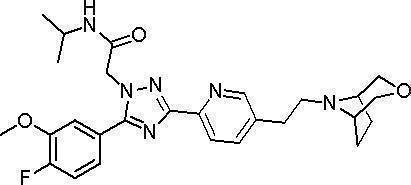
1H-NMR (600 MHz, CDCl3) δ (ppm) ; 1.16 (6 H, d, J=6.2 Hz), 1.83 - 1.97 (4 H, m), 2.51 - 2.61 (2 H, m), 2.81 - 2.88 (2 H, m), 3.08 (2 H, br. s.), 3.53 (2 H, d, J=9.9 Hz), 3.71 (2 H, d, J=10.3 Hz), 3.98 (3 H, s), 4.09 - 4.18 (1 H, m), 4.91 (2 H, s), 6.02 - 6.12 (1 H, m), 7.23 (1 H, dd, J=10.7, 8.3 Hz), 7.29 - 7.33 (1 H, m), 7.48 (1 H, dd, J=7.8, 2.1 Hz), 7.69 - 7.75 (1 H, m), 8.15 (1 H, d, J=7.8 Hz), 8.66 (1 H, d, J=2.1 Hz).
・実施例B-07:N-tert-ブチル-2-[5-(3-メトキシフェニル)-3-{5-[2-(3-オキサ-8-アザビシクロ[3.2.1]オクタ-8-イル)エチル]ピリジン-2-イル}-1H-1,2,4-トリアゾール-1-イル]アセトアミド
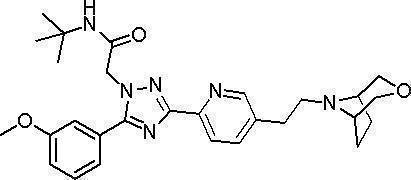
1H-NMR (600 MHz, CDCl3) δ (ppm) ; 1.34 (9 H, s), 1.90 (4 H, br. s.), 2.56 (2 H, t, J=7.6 Hz), 2.84 (2 H, t, J=7.4 Hz), 3.07 (2 H, br. s.), 3.52 (2 H, d, J=9.1 Hz), 3.71 (2 H, d, J=10.3 Hz), 3.88 (3 H, s), 4.87 (2 H, s), 6.05 (1 H, s), 7.08 (1 H, dd, J=8.3, 2.5 Hz), 7.28 - 7.34 (2 H, m), 7.44 (1 H, t, J=7.8 Hz), 7.70 (1 H, dd, J=8.1, 1.9 Hz), 8.16 (1 H, d, J=8.3 Hz), 8.65 (1 H, d, J=2.1 Hz).
・実施例B-08:2-[5-(3-クロロ-4-フルオロフェニル)-3-{5-[2-(3-オキサ-8-アザビシクロ[3.2.1]オクタ-8-イル)エチル]ピリジン-2-イル}-1H-1,2,4-トリアゾール-1-イル]-N-(プロパン-2-イル)アセトアミド

1H-NMR (600 MHz, CDCl3) δ (ppm) ; 1.16 (6 H, d, J=6.6 Hz), 1.90 (4 H, s), 2.56 (2 H, t, J=7.4 Hz), 2.84 (2 H, t, J=7.6 Hz), 3.07 (2 H, br. s.), 3.52 (2 H, dd, J=10.5, 1.9 Hz), 3.70 (2 H, d, J=10.3 Hz), 4.05 - 4.18 (1 H, m), 4.89 (2 H, s), 6.03 (1 H, d, J=7.8 Hz), 7.31 (1 H, t, J=8.5 Hz), 7.64 - 7.74 (2 H, m), 7.98 (1 H, dd, J=7.0, 2.1 Hz), 8.13 (1 H, d, J=7.8 Hz), 8.65 (1 H, d, J=1.7 Hz).
・実施例B-09:N-tert-ブチル-2-[5-(3-クロロフェニル)-3-{5-[2-(3-オキサ-8-アザビシクロ[3.2.1]オクタ-8-イル)エチル]ピリジン-2-イル}-1H-1,2,4-トリアゾール-1-イル]アセトアミド

1H-NMR (600 MHz, CDCl3) δ (ppm) ; 1.35 (9 H, s), 1.91 (4 H, br. s.), 2.57 (2 H, t, J=7.6 Hz), 2.84 (2 H, t, J=7.2 Hz), 3.08 (2 H, br. s.), 3.53 (2 H, d, J=10.7 Hz), 3.71 (2 H, d, J=9.9 Hz), 4.86 (2 H, s), 6.00 (1 H, br. s.), 7.40 - 7.58 (2 H, m), 7.60 - 7.76 (2 H, m), 7.86 (1 H, s), 8.14 (1 H, d, J=8.3 Hz), 8.65 (1 H, s).
・実施例B-10:2-[5-(3-クロロフェニル)-3-{5-[2-(モルホリン-4-イル)エチル]ピリジン-2-イル}-1H-1,2,4-トリアゾール-1-イル]-N-(プロパン-2-イル)アセトアミド
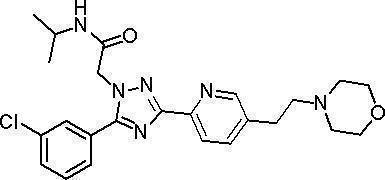
1H-NMR (600 MHz, CDCl3) δ (ppm) ; 1.16 (6 H, d, J=6.6 Hz), 2.95 (2 H, br. s.), 3.20 - 3.29 (2 H, m), 3.35 - 3.46 (2 H, m), 3.56 (2 H, br. s.), 3.93 - 4.18 (3 H, m), 4.26 (2 H, br. s.), 4.92 (2 H, s), 6.07 (1 H, d, J=7.0 Hz), 7.45 - 7.58 (2 H, m), 7.65 (1 H, d, J=7.8 Hz), 7.77 - 7.90 (2 H, m), 8.21 (1 H, d, J=8.3 Hz), 8.64 (1 H, s).
・実施例B-11:N-tert-ブチル-2-[5-(3-クロロフェニル)-3-{5-[2-(モルホリン-4-イル)エチル]ピリジン-2-イル}-1H-1,2,4-トリアゾール-1-イル]アセトアミド

1H-NMR (600 MHz, CDCl3) δ (ppm) ; 1.33 (9 H, s), 2.52 (4 H, br. s.), 2.58 - 2.69 (2 H, m), 2.81 - 2.90 (2 H, m), 3.72 (4 H, t, J=4.7 Hz), 4.84 (2 H, s), 5.97 (1 H, s), 7.44 - 7.53 (2 H, m), 7.59 - 7.70 (2 H, m), 7.84 (1 H, t, J=1.9 Hz), 8.13 (1 H, d, J=7.8 Hz), 8.61 (1 H, d, J=2.1 Hz).
・実施例B-12:2-[5-(3-クロロ-4-フルオロフェニル)-3-{5-[2-(モルホリン-4-イル)エチル]ピリジン-2-イル}-1H-1,2,4-トリアゾール-1-イル]-N-(プロパン-2-イル)アセトアミド

1H-NMR (600 MHz, CDCl3) δ (ppm) ; 1.16 (6 H, d, J=6.6 Hz), 2.53 (4 H, br. s.), 2.65 (2 H, t, J=7.6 Hz), 2.87 (2 H, t, J=7.6 Hz), 3.73 (4 H, t, J=4.3 Hz), 4.07 - 4.17 (1 H, m), 4.89 (2 H, s), 6.01 (1 H, d, J=8.7 Hz), 7.31 (1 H, t, J=8.7 Hz), 7.64 - 7.73 (2 H, m), 7.98 (1 H, dd, J=6.8, 2.3 Hz), 8.13 (1 H, d, J=7.8 Hz), 8.63 (1 H, d, J=1.7 Hz).
・実施例B-13:2-[5-(4-フルオロ-3-メトキシフェニル)-3-{5-[2-(モルホリン-4-イル)エチル]ピリジン-2-イル}-1H-1,2,4-トリアゾール-1-イル]-N-(プロパン-2-イル)アセトアミド

1H-NMR (600 MHz, CDCl3) δ (ppm) ; 1.15 (6 H, d, J=6.6 Hz), 2.53 (4 H, br. s.), 2.65 (2 H, t, J=7.6 Hz), 2.88 (2 H, t, J=7.6 Hz), 3.74 (4 H, t, J=4.5 Hz), 3.97 (3 H, s), 4.12 (1 H, dq, J=13.5, 6.6 Hz), 4.91 (2 H, s), 6.01 - 6.13 (1 H, m), 7.23 (1 H, dd, J=10.5, 8.5 Hz), 7.28 - 7.35 (1 H, m), 7.47 (1 H, dd, J=7.8, 1.7 Hz), 7.69 (1 H, dd, J=8.1, 1.9 Hz), 8.15 (1 H, d, J=8.3 Hz), 8.63 (1 H, d, J=2.1 Hz).
・実施例B-14:N-tert-ブチル-2-[5-(3-メトキシフェニル)-3-{5-[2-(モルホリン-4-イル)エチル]ピリジン-2-イル}-1H-1,2,4-トリアゾール-1-イル]アセトアミド

1H-NMR (600 MHz, CDCl3) δ (ppm) ; 1.34 (9 H, s), 2.54 (4 H, br. s.), 2.61 - 2.69 (2 H, m), 2.84 - 2.90 (2 H, m), 3.74 (4 H, t, J=4.7 Hz), 3.87 (3 H, s), 4.87 (2 H, s), 6.04 (1 H, s), 7.08 (1 H, dd, J=8.9, 3.1 Hz), 7.28 - 7.35 (2 H, m), 7.40 - 7.47 (1 H, m), 7.68 (1 H, dd, J=8.1, 2.3 Hz), 8.16 (1 H, d, J=8.3 Hz), 8.63 (1 H, d, J=2.1 Hz).
・実施例B-15:2-[5-(3-メトキシフェニル)-3-{5-[2-(モルホリン-4-イル)エチル]ピリジン-2-イル}-1H-1,2,4-トリアゾール-1-イル]-N-(プロパン-2-イル)アセトアミドの合成

得られた残渣、参考例P-A59で得られた化合物(95mg)、Pd(PPh3)4(80mg)、DMF(2.5mL)の混合物を、外温95℃で2日間撹拌した。放冷後、水、飽和NaHCO3水溶液を加え、CHCl3抽出を行った。有機層をBrineで洗浄し、Phase Separator濾過し、溶媒を減圧下留去した。得られた残渣をシリカゲルカラムクロマトグラフィー(SNAP Cartridge HP-Sil、移動相:CHCl3/MeOH=98/2~85/15;v/v)にて精製した。精製物を混合溶媒(EtOAc/n-Hexane=1/4;v/v)にて洗浄し、表題化合物(68mg、無色固体)を得た。
MS (ESI pos.) m/z : 465([M+H]+).
1H-NMR (600 MHz, CDCl3) δ (ppm) ; 1.14 (6 H, d, J=6.6 Hz), 2.53 (4 H, br. s.), 2.60 - 2.70 (2 H, m), 2.82 - 2.91 (2 H, m), 3.74 (4 H, t, J=4.5 Hz), 3.87 (3 H, s), 4.07 - 4.19 (1 H, m), 4.93 (2 H, s), 6.04 (1 H, d, J=7.4 Hz), 7.04 - 7.11 (1 H, m), 7.27 - 7.35 (2 H, m), 7.44 (1 H, t, J=7.8 Hz), 7.68 (1 H, dd, J=8.3, 2.1 Hz), 8.16 (1 H, d, J=8.3 Hz), 8.63 (1 H, d, J=1.7 Hz).
実施例B-15と同様の手法により、参考例P-B04で得られた化合物と4-(4-ブロモフェネチル)モルホリン、参考例P-A42、参考例P-A45、参考例P-A49及び参考例P-A64から以下の化合物を合成した。
・実施例B-16:2-[5-(3-メトキシフェニル)-3-{4-[2-(モルホリン-4-イル)エチル]フェニル}-1H-1,2,4-トリアゾール-1-イル]-N-(プロパン-2-イル)アセトアミド

1H-NMR (600 MHz, CDCl3) δ (ppm) ; 1.10 - 1.18 (6 H, m), 2.55 (4 H, br. s.), 2.62 - 2.68 (2 H, m), 2.83 - 2.91 (2 H, m), 3.75 (4 H, t, J=4.5 Hz), 3.81 - 3.90 (3 H, m), 4.07 - 4.18 (1 H, m), 4.76 (2 H, s), 6.19 (1 H, d, J=7.0 Hz), 7.00 - 7.10 (1 H, m), 7.14 - 7.25 (2 H, m), 7.32 (1 H, d, J=7.8 Hz), 7.42 - 7.47 (1 H, m), 8.06 (1 H, s), 8.10 (2 H, d, J=8.3 Hz).
・実施例B-17:2-[5-(3-メトキシフェニル)-3-{4-[2-(3-オキサ-8-アザビシクロ[3.2.1]オクタ-8-イル)エチル]フェニル}-1H-1,2,4-トリアゾール-1-イル]-N-(プロパン-2-イル)アセトアミド

1H-NMR (600 MHz, CDCl3) δ (ppm) ; 1.17 (1 H, d, J=6.6 Hz), 1.83 - 1.98 (4 H, m), 2.54 - 2.61 (2 H, m), 2.82 - 2.89 (2 H, m), 3.08 - 3.15 (2 H, m), 3.52 - 3.57 (2 H, m), 3.72 - 3.78 (2 H, m), 3.88 (3 H, s), 4.11 - 4.18 (1 H, m), 4.87 (2 H, s), 6.17 - 6.23 (1 H, m), 7.06 - 7.11 (1 H, m), 7.22 - 7.26 (2 H, m), 7.31 - 7.36 (2 H, m), 7.42 - 7.46 (1 H, m), 8.08 - 8.13 (2 H, m).
・実施例B-18:2-[3-{2-フルオロ-4-[2-(モルホリン-4-イル)エチル]フェニル}-5-(3-メトキシフェニル)-1H-1,2,4-トリアゾール-1-イル]-N-(プロパン-2-イル)アセトアミド

1H-NMR (600 MHz, CDCl3) δ (ppm) ; 1.10 - 1.21 (6 H, m), 2.53 (4 H, br. s.), 2.60 - 2.70 (2 H, m), 2.80 - 2.92 (2 H, m), 3.74 (4 H, t, J=4.7 Hz), 3.81 - 3.91 (3 H, m), 4.04 - 4.18 (1 H, m), 4.90 (2 H, s), 6.54 (1 H, d, J=7.4 Hz), 7.01 - 7.25 (4 H, m), 7.34 - 7.48 (2 H, m), 7.97 - 8.11 (1 H, m).
・実施例B-19:2-[3-{3-フルオロ-4-[2-(モルホリン-4-イル)エチル]フェニル}-5-(3-メトキシフェニル)-1H-1,2,4-トリアゾール-1-イル]-N-(プロパン-2-イル)アセトアミド

1H-NMR (600 MHz, CDCl3) δ (ppm) ; 1.10 - 1.20 (6 H, m), 2.55 (4 H, br. s.), 2.60 - 2.68 (2 H, m), 2.84 - 2.94 (2 H, m), 3.74 (2 H, t, J=4.5 Hz), 3.82 - 3.90 (5 H, m), 4.14 (1 H, d, J=7.4 Hz), 4.86 (2 H, d, J=5.0 Hz), 6.12 (1 H, d, J=7.4 Hz), 7.00 - 7.11 (1 H, m), 7.17 - 7.21 (1 H, m), 7.32 (1 H, t, J=7.6 Hz), 7.43 (1 H, q, J=8.1 Hz), 7.75 - 7.93 (2 H, m), 8.06 (1 H, s).
・実施例B-20:2-[5-(3-メトキシフェニル)-3-{4-[2-(3-オキサ-8-アザビシクロ[3.2.1]オクタ-8-イル)プロピル]フェニル}-1H-1,2,4-トリアゾール-1-イル]-N-(プロパン-2-イル)アセトアミド
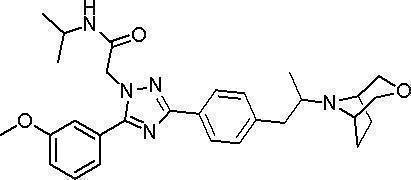
1H-NMR (600 MHz, CDCl3) δ (ppm) ; 1.17 (6 H, d, J=6.6 Hz), 2.42 - 2.51 (2 H, m), 2.55 - 2.62 (2 H, m), 3.04 (2 H, dd, J=12.6, 2.3 Hz), 3.36 (2 H, d, J=7.0 Hz), 3.47 (2 H, d, J=5.0 Hz), 3.57 (2 H, dd, J=8.1, 2.3 Hz), 3.68 - 3.83 (3 H, m), 3.88 (3 H, s), 4.06 - 4.21 (2 H, m), 4.87 (2 H, s), 6.20 (1 H, d, J=7.4 Hz), 7.00 - 7.12 (2 H, m), 7.19 - 7.26 (3 H, m), 7.39 - 7.49 (1 H, m), 8.09 (2 H, d, J=8.3 Hz).
実施例A-01と同様の手法により、参考例P-B09で得られた化合物から以下の化合物を合成した。
・実施例B-21:2-[5-(3-メトキシフェニル)-3-{4-[2-(ピロリジン-1-イル)エチル]フェニル}-1H-1,2,4-トリアゾール-1-イル]-N-(プロパン-2-イル)アセトアミド
・実施例B-22:2-[3-{4-[2-(3,6-ジヒドロピリジン-1(2H)-イル)エチル]フェニル}-5-(3-メトキシフェニル)-1H-1,2,4-トリアゾール-1-イル]-N-(プロパン-2-イル)アセトアミド
・実施例B-23:2-[5-(3-メトキシフェニル)-3-{4-[2-(4-メチルピペリジン-1-イル)エチル]フェニル}-1H-1,2,4-トリアゾール-1-イル]-N-(プロパン-2-イル)アセトアミド
・実施例B-24:2-[3-{4-[2-(4-シアノピペリジン-1-イル)エチル]フェニル}-5-(3-メトキシフェニル)-1H-1,2,4-トリアゾール-1-イル]-N-(プロパン-2-イル)アセトアミド
・実施例B-25:2-[5-(3-メトキシフェニル)-3-{4-[2-(3-メトキシピペリジン-1-イル)エチル]フェニル}-1H-1,2,4-トリアゾール-1-イル]-N-(プロパン-2-イル)アセトアミド
・実施例B-26:2-[3-(4-{2-[4-(ジメチルアミノ)ピペリジン-1-イル]エチル}フェニル)-5-(3-メトキシフェニル)-1H-1,2,4-トリアゾール-1-イル]-N-(プロパン-2-イル)アセトアミド
・実施例B-27:2-[5-(3-メトキシフェニル)-3-{4-[2-(オクタヒドロイソキノリン-2(1H)-イル)エチル]フェニル}-1H-1,2,4-トリアゾール-1-イル]-N-(プロパン-2-イル)アセトアミド
・実施例B-28:2-[5-(3-メトキシフェニル)-3-{4-[2-(チオモルホリン-4-イル)エチル]フェニル}-1H-1,2,4-トリアゾール-1-イル]-N-(プロパン-2-イル)アセトアミド
・実施例B-29:2-[3-(4-{2-[(2R,6S)-2,6-ジメチルモルホリン-4-イル]エチル}フェニル)-5-(3-メトキシフェニル)-1H-1,2,4-トリアゾール-1-イル]-N-(プロパン-2-イル)アセトアミド
・実施例B-30:2-[5-(3-メトキシフェニル)-3-{4-[2-(3-メチルモルホリン-4-イル)エチル]フェニル}-1H-1,2,4-トリアゾール-1-イル]-N-(プロパン-2-イル)アセトアミド
・実施例B-31:2-[3-{4-[2-(3-エチルモルホリン-4-イル)エチル]フェニル}-5-(3-メトキシフェニル)-1H-1,2,4-トリアゾール-1-イル]-N-(プロパン-2-イル)アセトアミド
・実施例B-32:2-[5-(3-メトキシフェニル)-3-{4-[2-(4-メチルピペラジン-1-イル)エチル]フェニル}-1H-1,2,4-トリアゾール-1-イル]-N-(プロパン-2-イル)アセトアミド
・実施例B-33:2-[3-{4-[2-(4-アセチルピペラジン-1-イル)エチル]フェニル}-5-(3-メトキシフェニル)-1H-1,2,4-トリアゾール-1-イル]-N-(プロパン-2-イル)アセトアミド
・実施例B-34:1-[2-(4-{5-(3-メトキシフェニル)-1-[2-オキソ-2-(プロパン-2-イルアミノ)エチル]-1H-1,2,4-トリアゾール-3-イル}フェニル)エチル]ピペリジン-4-カルボキサミド
・実施例B-35:2-[3-(4-{2-[4-(アセチルアミノ)ピペリジン-1-イル]エチル}フェニル)-5-(3-メトキシフェニル)-1H-1,2,4-トリアゾール-1-イル]-N-(プロパン-2-イル)アセトアミド
・実施例B-36:2-[3-{4-[2-(4-ヒドロキシ-4-メチルピペリジン-1-イル)エチル]フェニル}-5-(3-メトキシフェニル)-1H-1,2,4-トリアゾール-1-イル]-N-(プロパン-2-イル)アセトアミド
・実施例B-37:2-[5-(3-メトキシフェニル)-3-{4-[2-(7-オキサ-2-アザスピロ[3.5]ノナ-2-イル)エチル]フェニル}-1H-1,2,4-トリアゾール-1-イル]-N-(プロパン-2-イル)アセトアミド
・実施例B-38:2-[5-(3-メトキシフェニル)-3-(4-{2-[4-(トリフルオロメチル)ピペリジン-1-イル]エチル}フェニル)-1H-1,2,4-トリアゾール-1-イル]-N-(プロパン-2-イル)アセトアミド
・実施例B-39:2-[3-{4-[2-(4-フルオロピペリジン-1-イル)エチル]フェニル}-5-(3-メトキシフェニル)-1H-1,2,4-トリアゾール-1-イル]-N-(プロパン-2-イル)アセトアミド
・実施例B-40:2-[3-{4-[2-(4,4-ジフルオロピペリジン-1-イル)エチル]フェニル}-5-(3-メトキシフェニル)-1H-1,2,4-トリアゾール-1-イル]-N-(プロパン-2-イル)アセトアミド
・実施例B-41:2-[3-{4-[2-(3,5-ジメチルモルホリン-4-イル)エチル]フェニル}-5-(3-メトキシフェニル)-1H-1,2,4-トリアゾール-1-イル]-N-(プロパン-2-イル)アセトアミド
・実施例B-42:2-[5-(3-メトキシフェニル)-3-{4-[2-(2-オキサ-6-アザスピロ[3.3]ヘプタ-6-イル)エチル]フェニル}-1H-1,2,4-トリアゾール-1-イル]-N-(プロパン-2-イル)アセトアミド
実施例B-21からB-42のLCMSのRetention Time(以下RT)、MSの測定結果を表1-1~表1-4に示す。


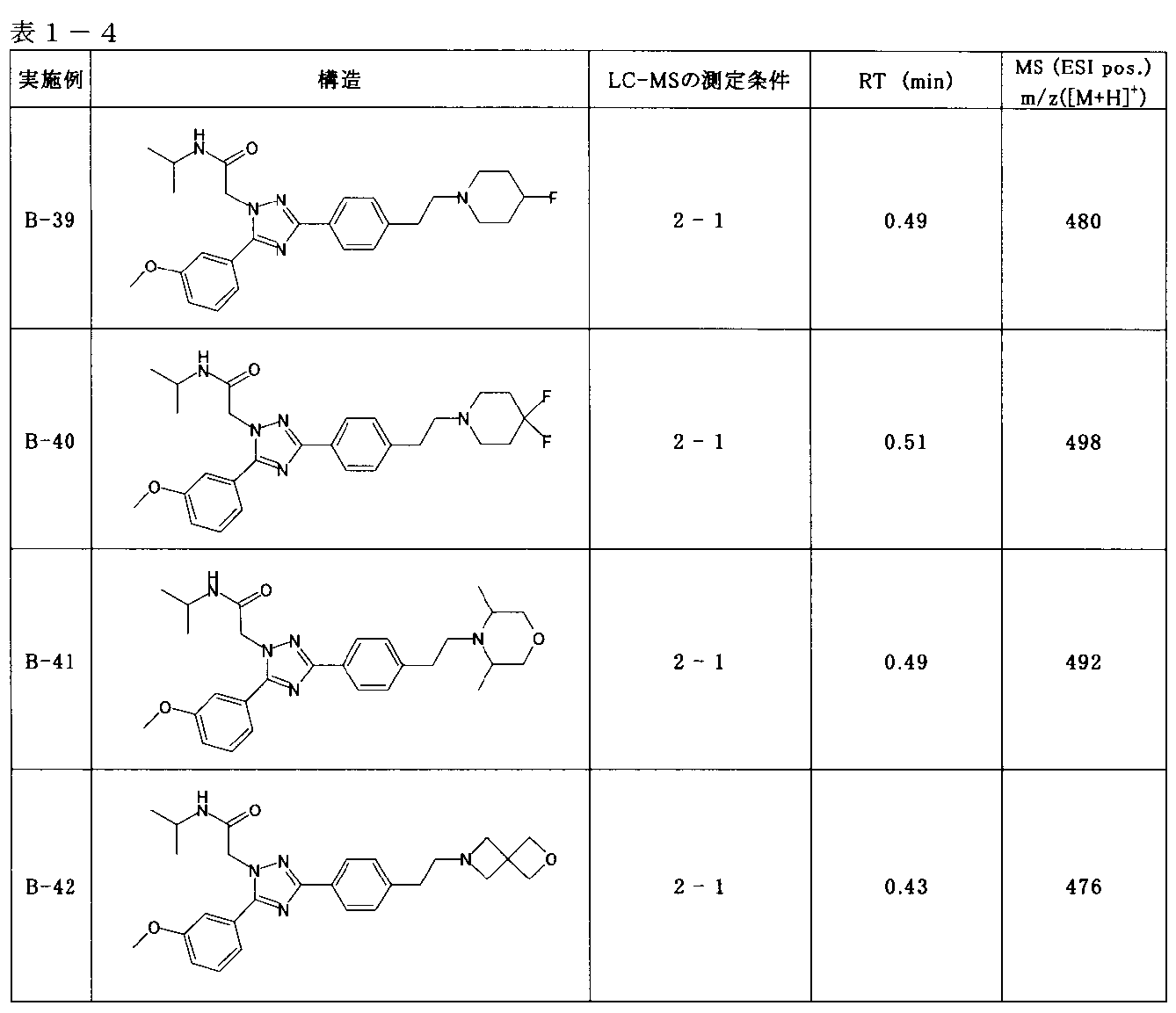
・実施例C-01:2-[4-(3-クロロフェニル)-1-{4-[2-(ピペリジン-1-イル)エチル]フェニル}-1H-ピラゾール-3-イル]-N-(プロパン-2-イル)アセトアミド
・実施例C-02:2-[3-(3-クロロフェニル)-1-{4-[2-(ピペリジン-1-イル)エチル]フェニル}-1H-ピラゾール-4-イル]-N-(プロパン-2-イル)アセトアミド
・実施例C-03:2-[3-(3-クロロフェニル)-1-{4-[2-(モルホリン-4-イル)エチル]フェニル}-1H-ピラゾール-4-イル]-N-(プロパン-2-イル)アセトアミド
・実施例C-04:2-[3-(3-クロロフェニル)-1-{4-[2-(2-オキサ-6-アザスピロ[3.3]ヘプタ-6-イル)エチル]フェニル}-1H-ピラゾール-4-イル]-N-(プロパン-2-イル)アセトアミド
・実施例C-05:2-[1-(3-クロロフェニル)-3-{4-[2-(モルホリン-4-イル)エチル]フェニル}-1H-ピラゾール-5-イル]-N-(プロパン-2-イル)アセトアミド
・実施例C-06:2-[5-(3-クロロフェニル)-3-{4-[2-(ピペリジン-1-イル)エチル]フェニル}-1H-ピラゾール-1-イル]-N-(プロパン-2-イル)アセトアミド
・実施例C-07:2-[5-(3-クロロフェニル)-3-{4-[2-(モルホリン-4-イル)エチル]フェニル}-1H-ピラゾール-1-イル]-N-(プロパン-2-イル)アセトアミド
・実施例C-08:2-[5-(3-クロロフェニル)-2-{4-[2-(ピペリジン-1-イル)エチル]フェニル}-1,3-オキサゾール-4-イル]-N-(プロパン-2-イル)アセトアミド
・実施例C-09:2-[5-(3-クロロフェニル)-2-{4-[2-(モルホリン-4-イル)エチル]フェニル}-1,3-オキサゾール-4-イル]-N-(プロパン-2-イル)アセトアミド
・実施例C-10:2-[4-(3-クロロフェニル)-2-{4-[2-(ピペリジン-1-イル)エチル]フェニル}-1,3-オキサゾール-5-イル]-N-(プロパン-2-イル)アセトアミド
・実施例C-11:2-[4-(3-クロロフェニル)-2-{4-[2-(モルホリン-4-イル)エチル]フェニル}-1,3-オキサゾール-5-イル]-N-(プロパン-2-イル)アセトアミド
・実施例C-12:2-[4-(3-クロロフェニル)-2-{4-[2-(2-オキサ-6-アザスピロ[3.3]ヘプタ-6-イル)エチル]フェニル}-1,3-オキサゾール-5-イル]-N-(プロパン-2-イル)アセトアミド
・実施例C-13:2-[5-(3-クロロフェニル)-2-{4-[2-(ピペリジン-1-イル)エチル]フェニル}-1,3-チアゾール-4-イル]-N-(プロパン-2-イル)アセトアミド
・実施例C-14:2-[5-(3-クロロフェニル)-2-{4-[2-(モルホリン-4-イル)エチル]フェニル}-1,3-チアゾール-4-イル]-N-(プロパン-2-イル)アセトアミド
・実施例C-15:2-[5-(3-クロロフェニル)-2-{4-[2-(2-オキサ-6-アザスピロ[3.3]ヘプタ-6-イル)エチル]フェニル}-1,3-チアゾール-4-イル]-N-(プロパン-2-イル)アセトアミド
・実施例C-16:2-[5-(3-クロロフェニル)-2-{3-[2-(ピペリジン-1-イル)エチル]フェニル}-1,3-チアゾール-4-イル]-N-(プロパン-2-イル)アセトアミド
・実施例C-17:2-[5-(3-クロロフェニル)-2-{3-[2-(モルホリン-4-イル)エチル]フェニル}-1,3-チアゾール-4-イル]-N-(プロパン-2-イル)アセトアミド
・実施例C-18:2-[4-(3-クロロフェニル)-1-{4-[2-(モルホリン-4-イル)エチル]フェニル}-2,5-ジオキソ-2,5-ジヒドロ-1H-ピロール-3-イル]-N-(プロパン-2-イル)アセトアミド
・実施例C-19:2-[5-(3-クロロフェニル)-3-{4-[2-(モルホリン-4-イル)エチル]フェニル}-2-オキソ-2,3-ジヒドロ-1H-イミダゾール-1-イル]-N-(プロパン-2-イル)アセトアミド
・実施例C-20:2-[5-(3-クロロフェニル)-4-メチル-3-{4-[2-(モルホリン-4-イル)エチル]フェニル}-2-オキソ-2,3-ジヒドロ-1H-イミダゾール-1-イル]-N-(プロパン-2-イル)アセトアミド
・実施例C-21:2-[1-(3-クロロフェニル)-3-{4-[2-(モルホリン-4-イル)エチル]フェニル}-1H-1,2,4-トリアゾール-5-イル]-N-(プロパン-2-イル)アセトアミド
・実施例C-22:2-[1-(3-クロロフェニル)-3-{4-[2-(3-オキサ-8-アザビシクロ[3.2.1]オクタ-8-イル)エチル]フェニル}-1H-1,2,4-トリアゾール-5-イル]-N-(プロパン-2-イル)アセトアミド
実施例C-01~C-22の1H-NMR、MSの測定結果を表2-1~表2-4に示す。

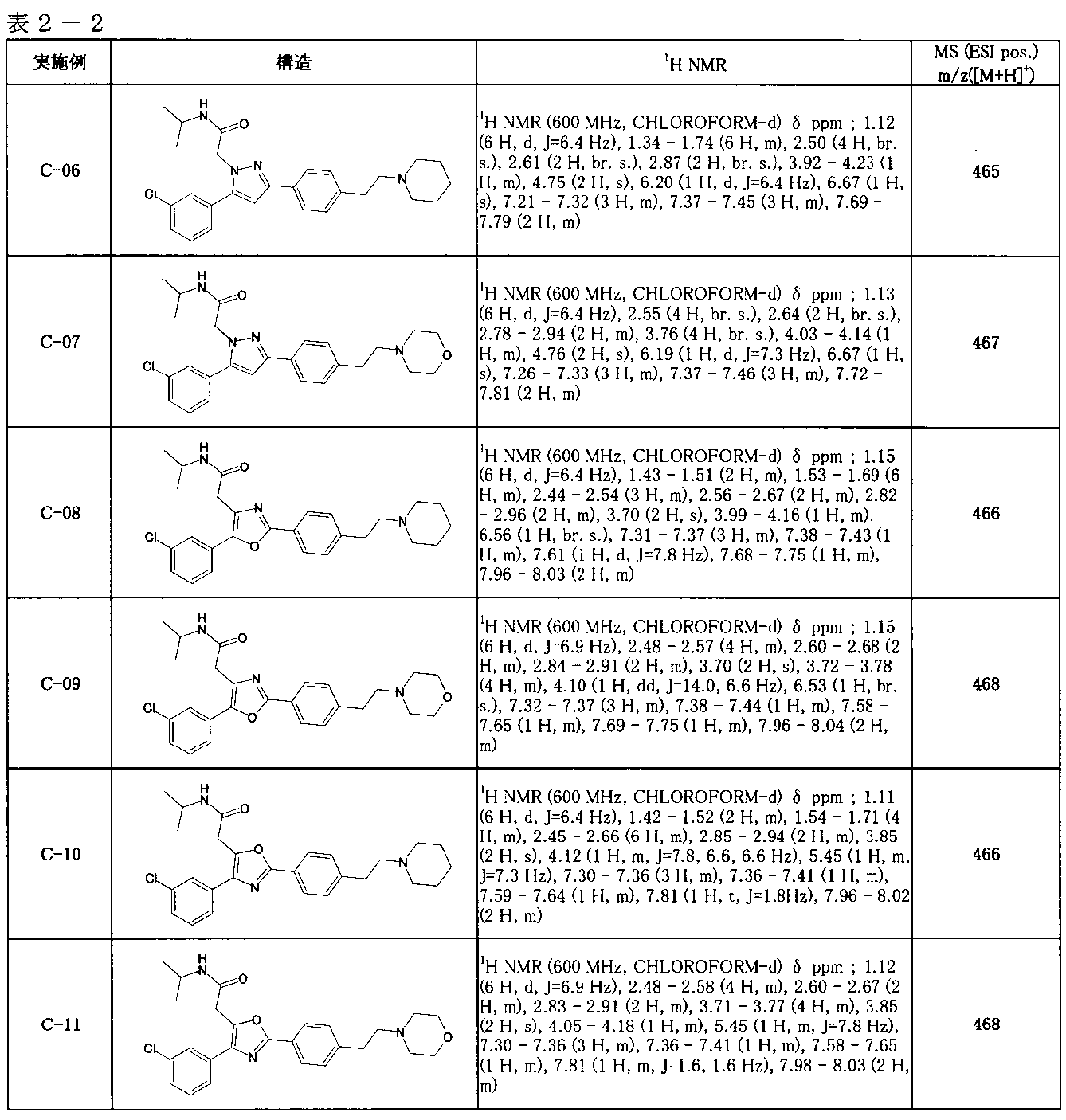


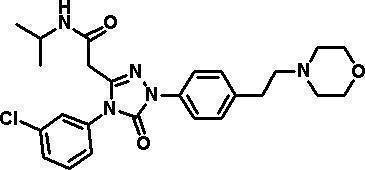
1H-NMR (600 MHz, CDCl3) δ (ppm) ; 1.14 (6 H, d, J=6.6 Hz), 2.53 (4 H, br. s.), 2.58 - 2.64 (2 H, m), 2.78 - 2.87 (2 H, m), 3.47 (2 H, s), 3.75 (4 H, t, J=4.5 Hz), 3.96 - 4.09 (1 H, m), 5.92 (1 H, d, J=6.6 Hz), 7.27 - 7.33 (3 H, m), 7.37 - 7.50 (3 H, m), 7.81 - 7.93 (2 H, m) .
MS (ESI pos.) m/z : 484([M+H]+).
実施例D-01と同様の手法により、参考例P-D04、参考例P-D05、参考例P-D08、参考例P-D09、参考例P-D12、参考例P-D13、参考例P-D16、参考例P-D17、参考例P-D20、参考例P-A42、参考例P-A47、参考例P-A49、参考例P-A50、参考例P-A52、参考例P-A54、参考例P-A55、参考例P-A56、参考例P-A57、参考例P-A59、参考例P-A61、参考例P-A63、参考例P-A64、参考例P-A66、参考例P-A67で得られた化合物及び4-(4-ブロモフェネチル)モルホリンを用いて以下の化合物を合成した。
・実施例D-02:2-[4-(3-クロロフェニル)-1-{5-[2-(3-オキサ-8-アザビシクロ[3.2.1]オクタ-8-イル)エチル]ピリジン-2-イル}-5-オキソ-4,5-ジヒドロ-1H-1,2,4-トリアゾール-3-イル]-N-(プロパン-2-イル)アセトアミド
・実施例D-03:2-[4-(3-クロロフェニル)-1-{4-[2-(3-オキサ-8-アザビシクロ[3.2.1]オクタ-8-イル)エチル]フェニル}-5-オキソ-4,5-ジヒドロ-1H-1,2,4-トリアゾール-3-イル]-N-(プロパン-2-イル)アセトアミド
・実施例D-04:2-[4-(3-クロロフェニル)-1-{5-[2-(モルホリン-4-イル)エチル]ピリジン-2-イル}-5-オキソ-4,5-ジヒドロ-1H-1,2,4-トリアゾール-3-イル]-N-(プロパン-2-イル)アセトアミド
・実施例D-05:N-tert-ブチル-2-[4-(4-フルオロ-3-メトキシフェニル)-1-{4-[2-(モルホリン-4-イル)エチル]フェニル}-5-オキソ-4,5-ジヒドロ-1H-1,2,4-トリアゾール-3-イル]アセトアミド
・実施例D-06:N-tert-ブチル-2-[4-(3-メトキシフェニル)-1-{4-[2-(モルホリン-4-イル)エチル]フェニル}-5-オキソ-4,5-ジヒドロ-1H-1,2,4-トリアゾール-3-イル]アセトアミド
・実施例D-07:N-tert-ブチル-2-[4-(3-メトキシフェニル)-1-{4-[2-(3-オキサ-8-アザビシクロ[3.2.1]オクタ-8-イル)エチル]フェニル}-5-オキソ-4,5-ジヒドロ-1H-1,2,4-トリアゾール-3-イル]アセトアミド
・実施例D-08:N-tert-ブチル-2-[4-(3-メトキシフェニル)-1-{5-[2-(モルホリン-4-イル)エチル]ピリジン-2-イル}-5-オキソ-4,5-ジヒドロ-1H-1,2,4-トリアゾール-3-イル]アセトアミド
・実施例D-09:N-tert-ブチル-2-[4-(3-メトキシフェニル)-1-{5-[2-(3-オキサ-8-アザビシクロ[3.2.1]オクタ-8-イル)エチル]ピリジン-2-イル}-5-オキソ-4,5-ジヒドロ-1H-1,2,4-トリアゾール-3-イル]アセトアミド
・実施例D-10:N-tert-ブチル-2-[4-(4-フルオロ-3-メトキシフェニル)-1-{4-[2-(3-オキサ-8-アザビシクロ[3.2.1]オクタ-8-イル)エチル]フェニル}-5-オキソ-4,5-ジヒドロ-1H-1,2,4-トリアゾール-3-イル]アセトアミド
・実施例D-11:N-tert-ブチル-2-[4-(4-フルオロ-3-メトキシフェニル)-1-{5-[2-(モルホリン-4-イル)エチル]ピリジン-2-イル}-5-オキソ-4,5-ジヒドロ-1H-1,2,4-トリアゾール-3-イル]アセトアミド
・実施例D-12:N-tert-ブチル-2-[4-(4-フルオロ-3-メトキシフェニル)-1-{5-[2-(3-オキサ-8-アザビシクロ[3.2.1]オクタ-8-イル)エチル]ピリジン-2-イル}-5-オキソ-4,5-ジヒドロ-1H-1,2,4-トリアゾール-3-イル]アセトアミド
・実施例D-13:N-tert-ブチル-2-[4-(3-クロロフェニル)-1-{4-[2-(モルホリン-4-イル)エチル]フェニル}-5-オキソ-4,5-ジヒドロ-1H-1,2,4-トリアゾール-3-イル]アセトアミド
・実施例D-14:N-tert-ブチル-2-[4-(3-クロロフェニル)-1-{4-[2-(3-オキサ-8-アザビシクロ[3.2.1]オクタ-8-イル)エチル]フェニル}-5-オキソ-4,5-ジヒドロ-1H-1,2,4-トリアゾール-3-イル]アセトアミド
・実施例D-15:N-tert-ブチル-2-[4-(3-クロロフェニル)-1-{5-[2-(モルホリン-4-イル)エチル]ピリジン-2-イル}-5-オキソ-4,5-ジヒドロ-1H-1,2,4-トリアゾール-3-イル]アセトアミド
・実施例D-16:N-tert-ブチル-2-[4-(3-クロロフェニル)-1-{5-[2-(3-オキサ-8-アザビシクロ[3.2.1]オクタ-8-イル)エチル]ピリジン-2-イル}-5-オキソ-4,5-ジヒドロ-1H-1,2,4-トリアゾール-3-イル]アセトアミド
・実施例D-17:2-[4-(3-クロロフェニル)-1-{4-[2-(モルホリン-4-イル)プロピル]フェニル}-5-オキソ-4,5-ジヒドロ-1H-1,2,4-トリアゾール-3-イル]-N-(プロパン-2-イル)アセトアミド
・実施例D-18:2-[4-(3-クロロフェニル)-1-{4-[2-(3-オキサ-8-アザビシクロ[3.2.1]オクタ-8-イル)プロピル]フェニル}-5-オキソ-4,5-ジヒドロ-1H-1,2,4-トリアゾール-3-イル]-N-(プロパン-2-イル)アセトアミド
・実施例D-19:2-[4-(3-クロロフェニル)-1-{5-[2-(モルホリン-4-イル)プロピル]ピリジン-2-イル}-5-オキソ-4,5-ジヒドロ-1H-1,2,4-トリアゾール-3-イル]-N-(プロパン-2-イル)アセトアミド
・実施例D-20:2-[4-(3-クロロフェニル)-1-{3-フルオロ-4-[2-(モルホリン-4-イル)エチル]フェニル}-5-オキソ-4,5-ジヒドロ-1H-1,2,4-トリアゾール-3-イル]-N-(プロパン-2-イル)アセトアミド
・実施例D-21:2-[4-(3-クロロフェニル)-1-{3-フルオロ-4-[2-(3-オキサ-8-アザビシクロ[3.2.1]オクタ-8-イル)エチル]フェニル}-5-オキソ-4,5-ジヒドロ-1H-1,2,4-トリアゾール-3-イル]-N-(プロパン-2-イル)アセトアミド
・実施例D-22:2-[4-(3-クロロフェニル)-1-{3-メトキシ-4-[2-(モルホリン-4-イル)エチル]フェニル}-5-オキソ-4,5-ジヒドロ-1H-1,2,4-トリアゾール-3-イル]-N-(プロパン-2-イル)アセトアミド
・実施例D-23:2-[4-(3-クロロフェニル)-1-{3-メトキシ-4-[2-(3-オキサ-8-アザビシクロ[3.2.1]オクタ-8-イル)エチル]フェニル}-5-オキソ-4,5-ジヒドロ-1H-1,2,4-トリアゾール-3-イル]-N-(プロパン-2-イル)アセトアミド
・実施例D-24:2-[4-(3-クロロフェニル)-1-{2-フルオロ-4-[2-(3-オキサ-8-アザビシクロ[3.2.1]オクタ-8-イル)エチル]フェニル}-5-オキソ-4,5-ジヒドロ-1H-1,2,4-トリアゾール-3-イル]-N-(プロパン-2-イル)アセトアミド
・実施例D-25:2-[4-(3-クロロフェニル)-1-{2-メトキシ-4-[2-(3-オキサ-8-アザビシクロ[3.2.1]オクタ-8-イル)エチル]フェニル}-5-オキソ-4,5-ジヒドロ-1H-1,2,4-トリアゾール-3-イル]-N-(プロパン-2-イル)アセトアミド
・実施例D-26:2-[4-(3-クロロ-4-フルオロフェニル)-1-{4-[2-(モルホリン-4-イル)エチル]フェニル}-5-オキソ-4,5-ジヒドロ-1H-1,2,4-トリアゾール-3-イル]-N-(プロパン-2-イル)アセトアミド
・実施例D-27:2-[4-(3-クロロ-4-フルオロフェニル)-1-{4-[2-(3-オキサ-8-アザビシクロ[3.2.1]オクタ-8-イル)エチル]フェニル}-5-オキソ-4,5-ジヒドロ-1H-1,2,4-トリアゾール-3-イル]-N-(プロパン-2-イル)アセトアミド
・実施例D-28:2-[4-(3-クロロ-4-フルオロフェニル)-1-{5-[2-(モルホリン-4-イル)エチル]ピリジン-2-イル}-5-オキソ-4,5-ジヒドロ-1H-1,2,4-トリアゾール-3-イル]-N-(プロパン-2-イル)アセトアミド
・実施例D-29:2-[4-(3-クロロ-4-フルオロフェニル)-1-{5-[2-(3-オキサ-8-アザビシクロ[3.2.1]オクタ-8-イル)エチル]ピリジン-2-イル}-5-オキソ-4,5-ジヒドロ-1H-1,2,4-トリアゾール-3-イル]-N-(プロパン-2-イル)アセトアミド
・実施例D-30:N-tert-ブチル-2-[4-(3-クロロ-4-フルオロフェニル)-1-{4-[2-(モルホリン-4-イル)エチル]フェニル}-5-オキソ-4,5-ジヒドロ-1H-1,2,4-トリアゾール-3-イル]アセトアミド
・実施例D-31:N-tert-ブチル-2-[4-(3-クロロ-4-フルオロフェニル)-1-{4-[2-(3-オキサ-8-アザビシクロ[3.2.1]オクタ-8-イル)エチル]フェニル}-5-オキソ-4,5-ジヒドロ-1H-1,2,4-トリアゾール-3-イル]アセトアミド
・実施例D-32:N-tert-ブチル-2-[4-(3-クロロ-4-フルオロフェニル)-1-{5-[2-(モルホリン-4-イル)エチル]ピリジン-2-イル}-5-オキソ-4,5-ジヒドロ-1H-1,2,4-トリアゾール-3-イル]アセトアミド
・実施例D-33:N-tert-ブチル-2-[4-(3-クロロ-4-フルオロフェニル)-1-{5-[2-(3-オキサ-8-アザビシクロ[3.2.1]オクタ-8-イル)エチル]ピリジン-2-イル}-5-オキソ-4,5-ジヒドロ-1H-1,2,4-トリアゾール-3-イル]アセトアミド
・実施例D-34:2-[4-(3-クロロフェニル)-1-{5-[2-(3-オキサ-8-アザビシクロ[3.2.1]オクタ-8-イル)プロピル]ピリジン-2-イル}-5-オキソ-4,5-ジヒドロ-1H-1,2,4-トリアゾール-3-イル]-N-(プロパン-2-イル)アセトアミド
・実施例D-35:2-(1-{4-[2-(モルホリン-4-イル)エチル]フェニル}-5-オキソ-4-[3-(トリフルオロメチル)フェニル]-4,5-ジヒドロ-1H-1,2,4-トリアゾール-3-イル)-N-(プロパン-2-イル)アセトアミド
・実施例D-36:2-[4-(3-クロロ-4-フルオロフェニル)-1-{4-[2-(3-オキサ-8-アザビシクロ[3.2.1]オクタ-8-イル)プロピル]フェニル}-5-オキソ-4,5-ジヒドロ-1H-1,2,4-トリアゾール-3-イル]-N-(プロパン-2-イル)アセトアミド
・実施例D-37:2-[4-(4-フルオロ-3-メトキシフェニル)-1-{4-[2-(3-オキサ-8-アザビシクロ[3.2.1]オクタ-8-イル)エチル]フェニル}-5-オキソ-4,5-ジヒドロ-1H-1,2,4-トリアゾール-3-イル]-N-(プロパン-2-イル)アセトアミド
・実施例D-38:2-[4-(4-フルオロ-3-メトキシフェニル)-1-{5-[2-(3-オキサ-8-アザビシクロ[3.2.1]オクタ-8-イル)エチル]ピリジン-2-イル}-5-オキソ-4,5-ジヒドロ-1H-1,2,4-トリアゾール-3-イル]-N-(プロパン-2-イル)アセトアミド
・実施例D-39:2-[4-(3-メトキシフェニル)-1-{4-[2-(3-オキサ-8-アザビシクロ[3.2.1]オクタ-8-イル)エチル]フェニル}-5-オキソ-4,5-ジヒドロ-1H-1,2,4-トリアゾール-3-イル]-N-(プロパン-2-イル)アセトアミド
・実施例D-40:2-[4-(3-メトキシフェニル)-1-{5-[2-(3-オキサ-8-アザビシクロ[3.2.1]オクタ-8-イル)エチル]ピリジン-2-イル}-5-オキソ-4,5-ジヒドロ-1H-1,2,4-トリアゾール-3-イル]-N-(プロパン-2-イル)アセトアミド
・実施例D-41:2-[4-(4-フルオロ-3-メトキシフェニル)-1-{3-メトキシ-4-[2-(3-オキサ-8-アザビシクロ[3.2.1]オクタ-8-イル)エチル]フェニル}-5-オキソ-4,5-ジヒドロ-1H-1,2,4-トリアゾール-3-イル]-N-(プロパン-2-イル)アセトアミド
・実施例D-42:2-[1-{3-メトキシ-4-[2-(3-オキサ-8-アザビシクロ[3.2.1]オクタ-8-イル)エチル]フェニル}-4-(3-メトキシフェニル)-5-オキソ-4,5-ジヒドロ-1H-1,2,4-トリアゾール-3-イル]-N-(プロパン-2-イル)アセトアミド
実施例D-02からD-42の1H-NMR、MSの測定結果を表3-1~表3-7に示す。

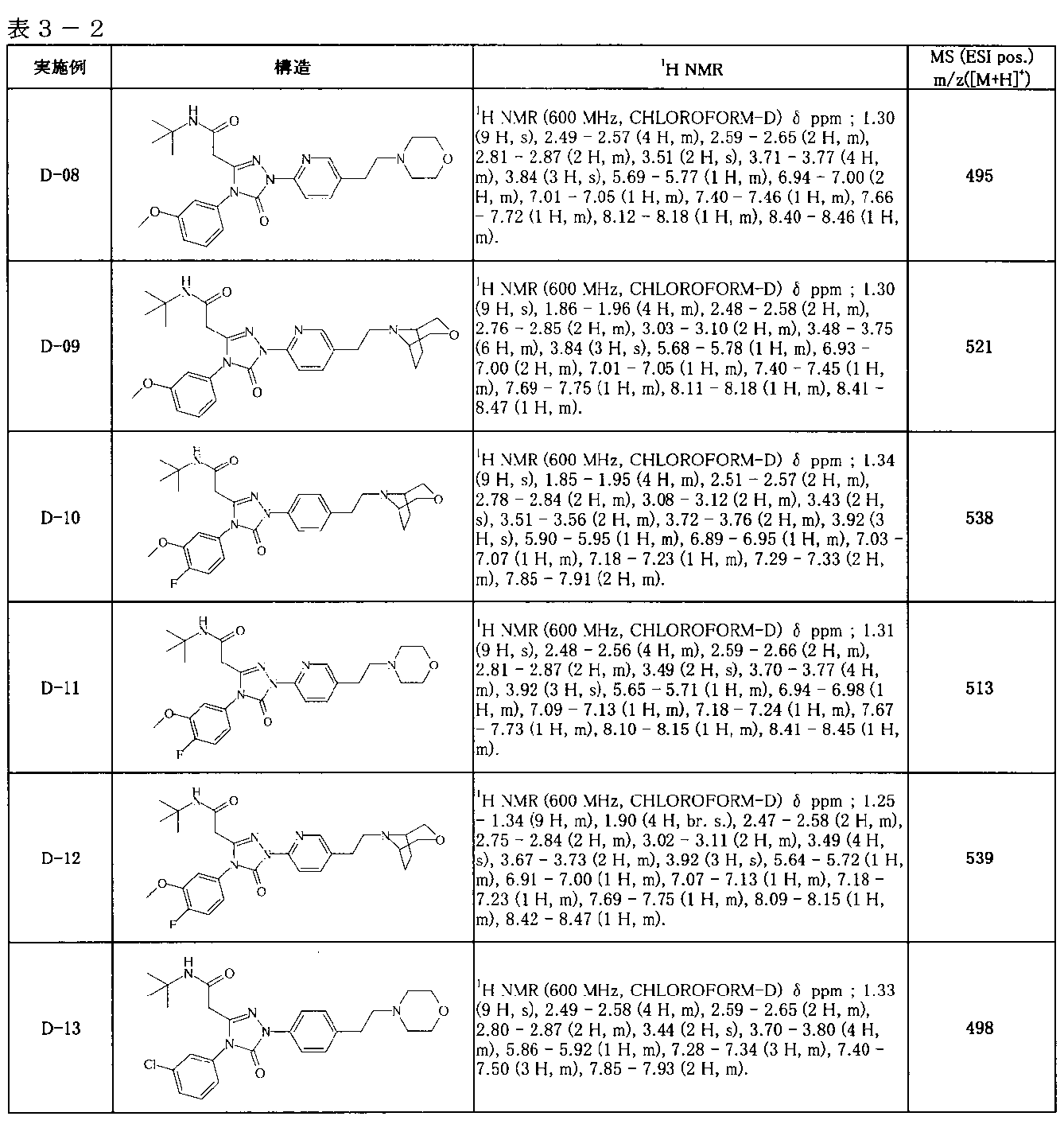

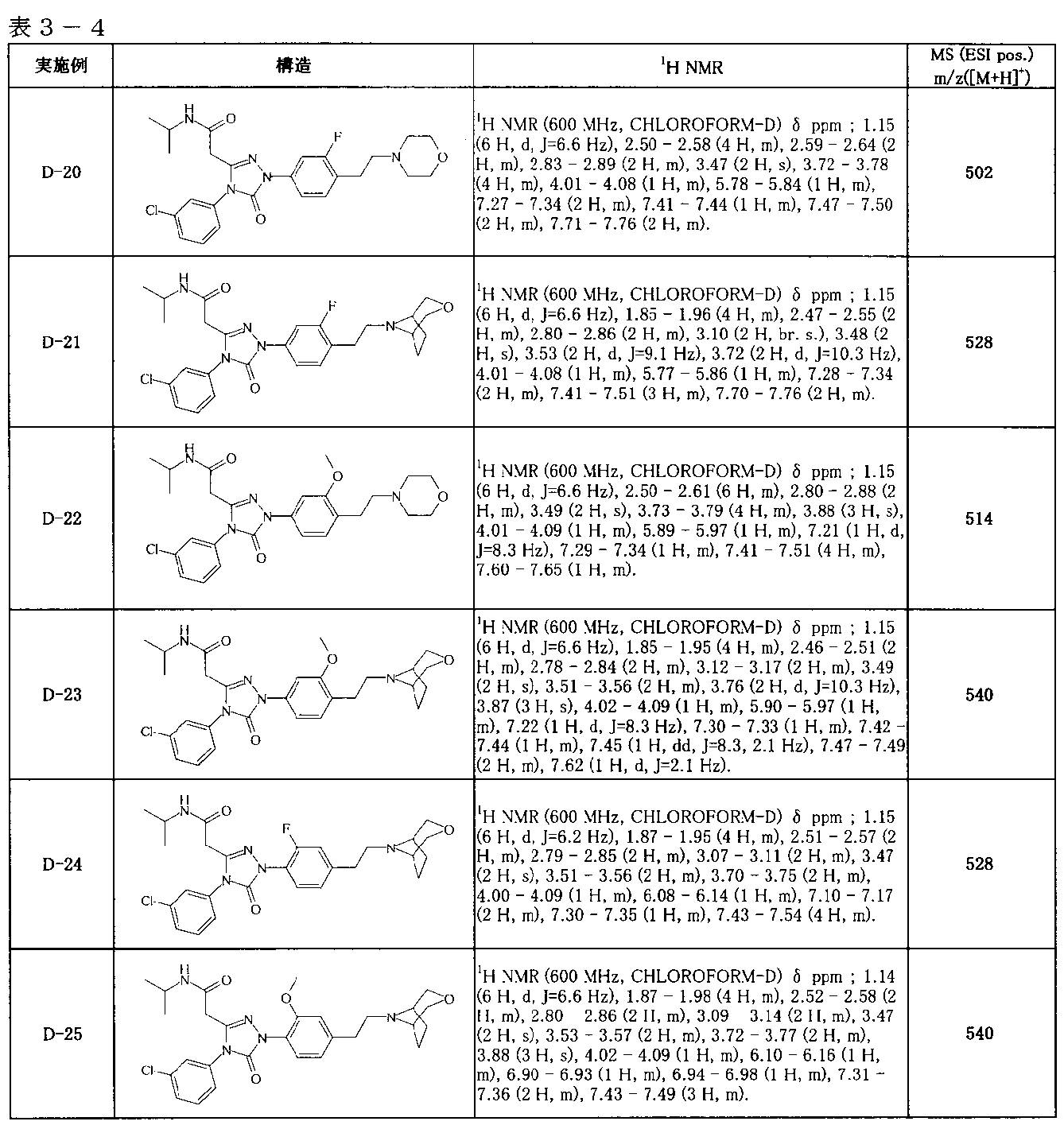
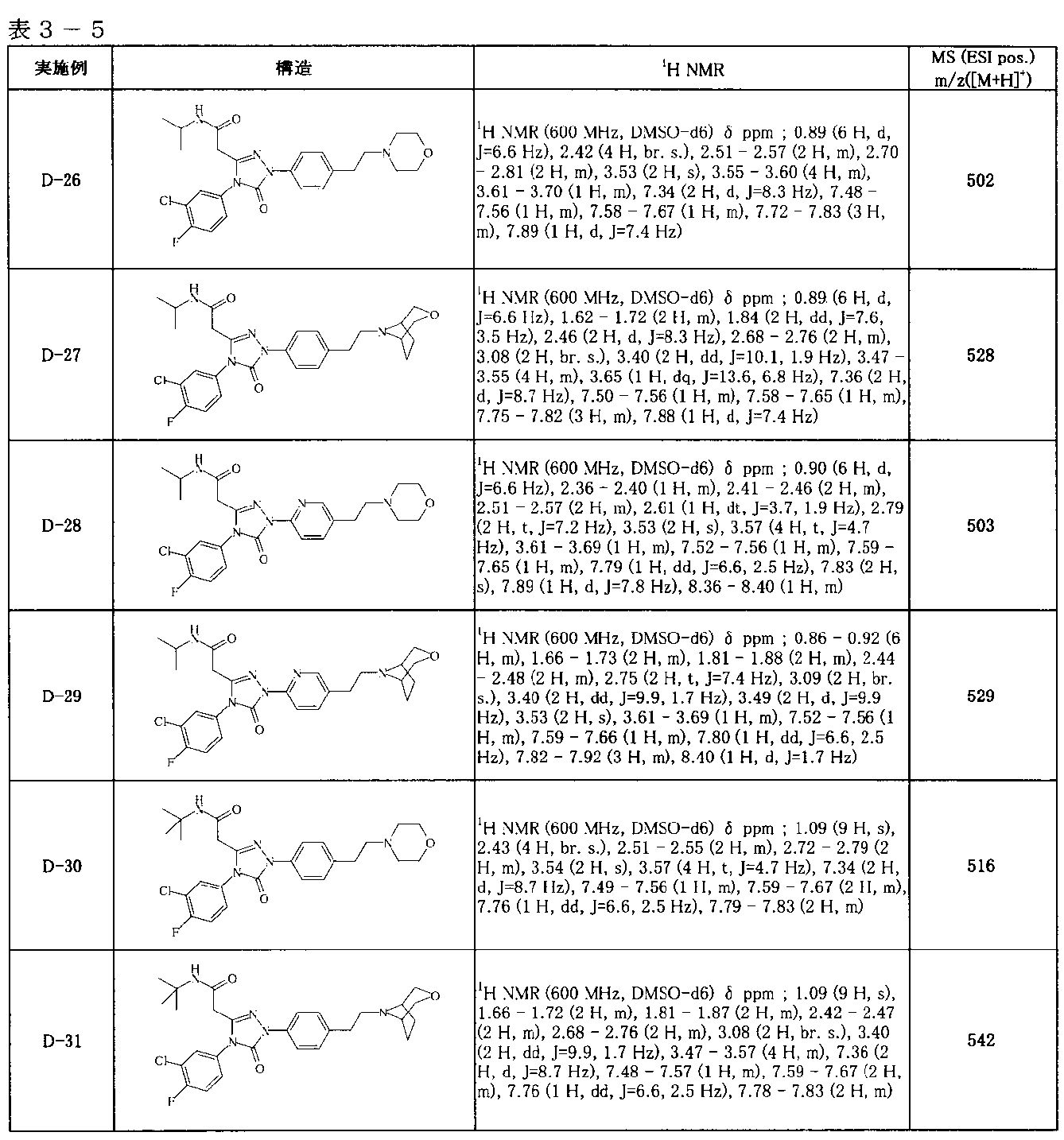
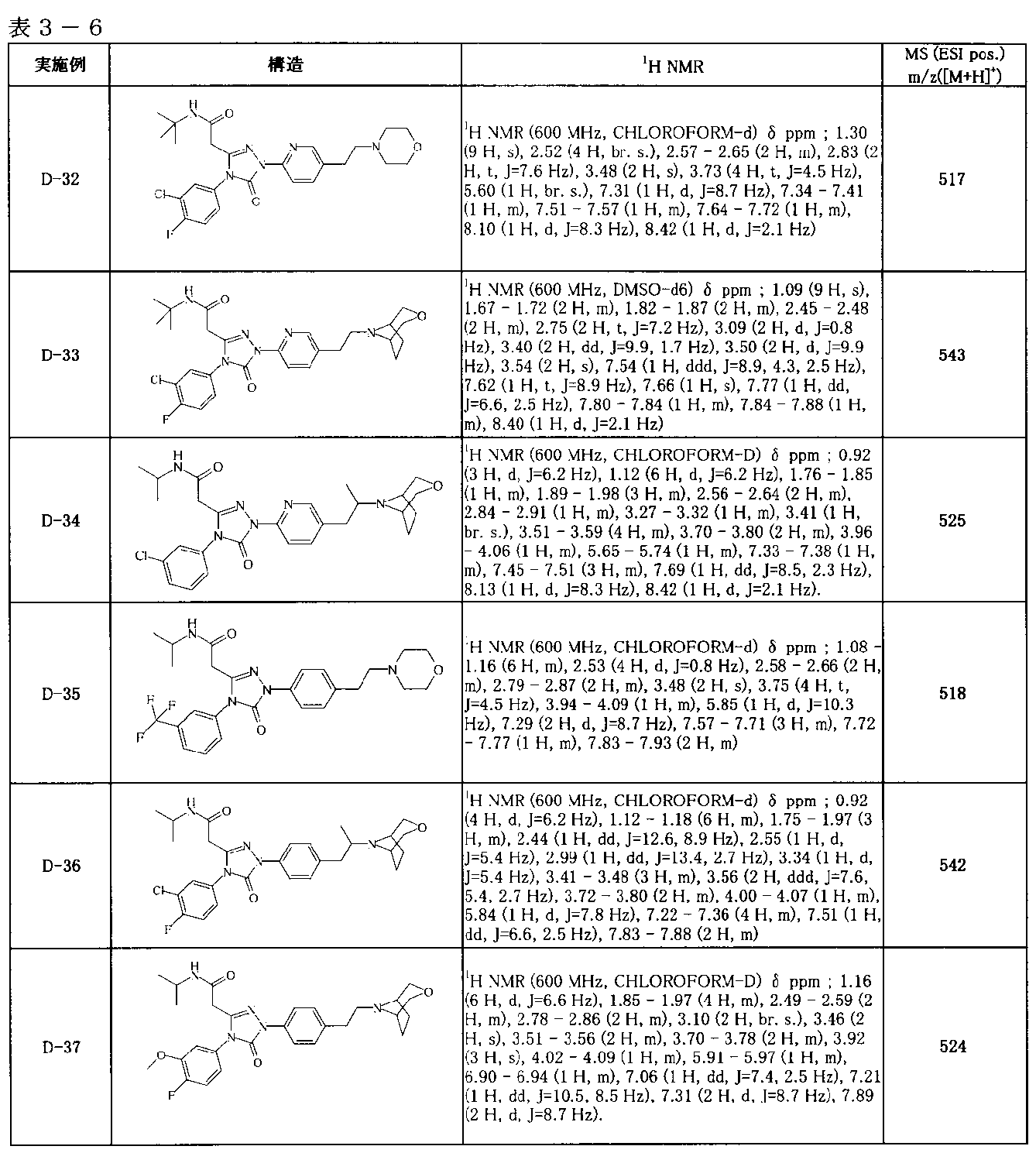

・実施例D-43:2-[4-(3-クロロ-4-フルオロフェニル)-5-オキソ-1-{4-[2-(ピロリジン-1-イル)エチル]フェニル}-4,5-ジヒドロ-1H-1,2,4-トリアゾール-3-イル]-N-(プロパン-2-イル)アセトアミド
・実施例D-44:2-[4-(3-クロロ-4-フルオロフェニル)-5-オキソ-1-{4-[2-(ピペリジン-1-イル)エチル]フェニル}-4,5-ジヒドロ-1H-1,2,4-トリアゾール-3-イル]-N-(プロパン-2-イル)アセトアミド
・実施例D-45:2-[4-(3-クロロフェニル)-5-オキソ-1-{4-[2-(ピロリジン-1-イル)エチル]フェニル}-4,5-ジヒドロ-1H-1,2,4-トリアゾール-3-イル]-N-(プロパン-2-イル)アセトアミド
・実施例D-46:2-[4-(3-クロロフェニル)-5-オキソ-1-{4-[2-(ピペリジン-1-イル)エチル]フェニル}-4,5-ジヒドロ-1H-1,2,4-トリアゾール-3-イル]-N-(プロパン-2-イル)アセトアミド
・実施例D-47:2-[4-(3-クロロフェニル)-1-{4-[2-(3,6-ジヒドロピリジン-1(2H)-イル)エチル]フェニル}-5-オキソ-4,5-ジヒドロ-1H-1,2,4-トリアゾール-3-イル]-N-(プロパン-2-イル)アセトアミド
・実施例D-48:2-[4-(3-クロロフェニル)-5-オキソ-1-{4-[2-(チオモルホリン-4-イル)エチル]フェニル}-4,5-ジヒドロ-1H-1,2,4-トリアゾール-3-イル]-N-(プロパン-2-イル)アセトアミド
・実施例D-49:2-[4-(3-クロロフェニル)-1-{4-[2-(4-メチルピペリジン-1-イル)エチル]フェニル}-5-オキソ-4,5-ジヒドロ-1H-1,2,4-トリアゾール-3-イル]-N-(プロパン-2-イル)アセトアミド
・実施例D-50:2-[4-(3-クロロフェニル)-1-{4-[2-(3-メトキシピペリジン-1-イル)エチル]フェニル}-5-オキソ-4,5-ジヒドロ-1H-1,2,4-トリアゾール-3-イル]-N-(プロパン-2-イル)アセトアミド
・実施例D-51:2-[4-(3-クロロフェニル)-1-{4-[2-(オクタヒドロイソキノリン-2(1H)-イル)エチル]フェニル}-5-オキソ-4,5-ジヒドロ-1H-1,2,4-トリアゾール-3-イル]-N-(プロパン-2-イル)アセトアミド
・実施例D-52:2-[4-(3-クロロフェニル)-1-(4-{2-[(2R,6S)-2,6-ジメチルモルホリン-4-イル]エチル}フェニル)-5-オキソ-4,5-ジヒドロ-1H-1,2,4-トリアゾール-3-イル]-N-(プロパン-2-イル)アセトアミド
・実施例D-53:2-[4-(3-クロロフェニル)-1-{4-[2-(3-メチルモルホリン-4-イル)エチル]フェニル}-5-オキソ-4,5-ジヒドロ-1H-1,2,4-トリアゾール-3-イル]-N-(プロパン-2-イル)アセトアミド
・実施例D-54:2-[4-(3-クロロフェニル)-1-{4-[2-(3-エチルモルホリン-4-イル)エチル]フェニル}-5-オキソ-4,5-ジヒドロ-1H-1,2,4-トリアゾール-3-イル]-N-(プロパン-2-イル)アセトアミド
・実施例D-55:2-[4-(3-クロロフェニル)-1-{4-[2-(4-ヒドロキシ-4-メチルピペリジン-1-イル)エチル]フェニル}-5-オキソ-4,5-ジヒドロ-1H-1,2,4-トリアゾール-3-イル]-N-(プロパン-2-イル)アセトアミド
・実施例D-56:2-[4-(3-クロロフェニル)-1-{4-[2-(7-オキサ-2-アザスピロ[3.5]ノナ-2-イル)エチル]フェニル}-5-オキソ-4,5-ジヒドロ-1H-1,2,4-トリアゾール-3-イル]-N-(プロパン-2-イル)アセトアミド
・実施例D-57:2-[4-(3-クロロフェニル)-1-{4-[2-(4-フルオロピペリジン-1-イル)エチル]フェニル}-5-オキソ-4,5-ジヒドロ-1H-1,2,4-トリアゾール-3-イル]-N-(プロパン-2-イル)アセトアミド
・実施例D-58:2-[4-(3-クロロフェニル)-1-{4-[2-(4,4-ジフルオロピペリジン-1-イル)エチル]フェニル}-5-オキソ-4,5-ジヒドロ-1H-1,2,4-トリアゾール-3-イル]-N-(プロパン-2-イル)アセトアミド
・実施例D-59:2-[4-(3-クロロフェニル)-5-オキソ-1-(4-{2-[4-(トリフルオロメチル)ピペリジン-1-イル]エチル}フェニル)-4,5-ジヒドロ-1H-1,2,4-トリアゾール-3-イル]-N-(プロパン-2-イル)アセトアミド
・実施例D-60:2-[4-(3-クロロフェニル)-1-{4-[2-(3,5-ジメチルモルホリン-4-イル)エチル]フェニル}-5-オキソ-4,5-ジヒドロ-1H-1,2,4-トリアゾール-3-イル]-N-(プロパン-2-イル)アセトアミド
・実施例D-61:2-[4-(3-クロロフェニル)-1-{4-[2-(2-オキサ-6-アザスピロ[3.3]ヘプタ-6-イル)エチル]フェニル}-5-オキソ-4,5-ジヒドロ-1H-1,2,4-トリアゾール-3-イル]-N-(プロパン-2-イル)アセトアミド
実施例D-43からD-46の1H-NMR、MSの測定結果を表4に示す。


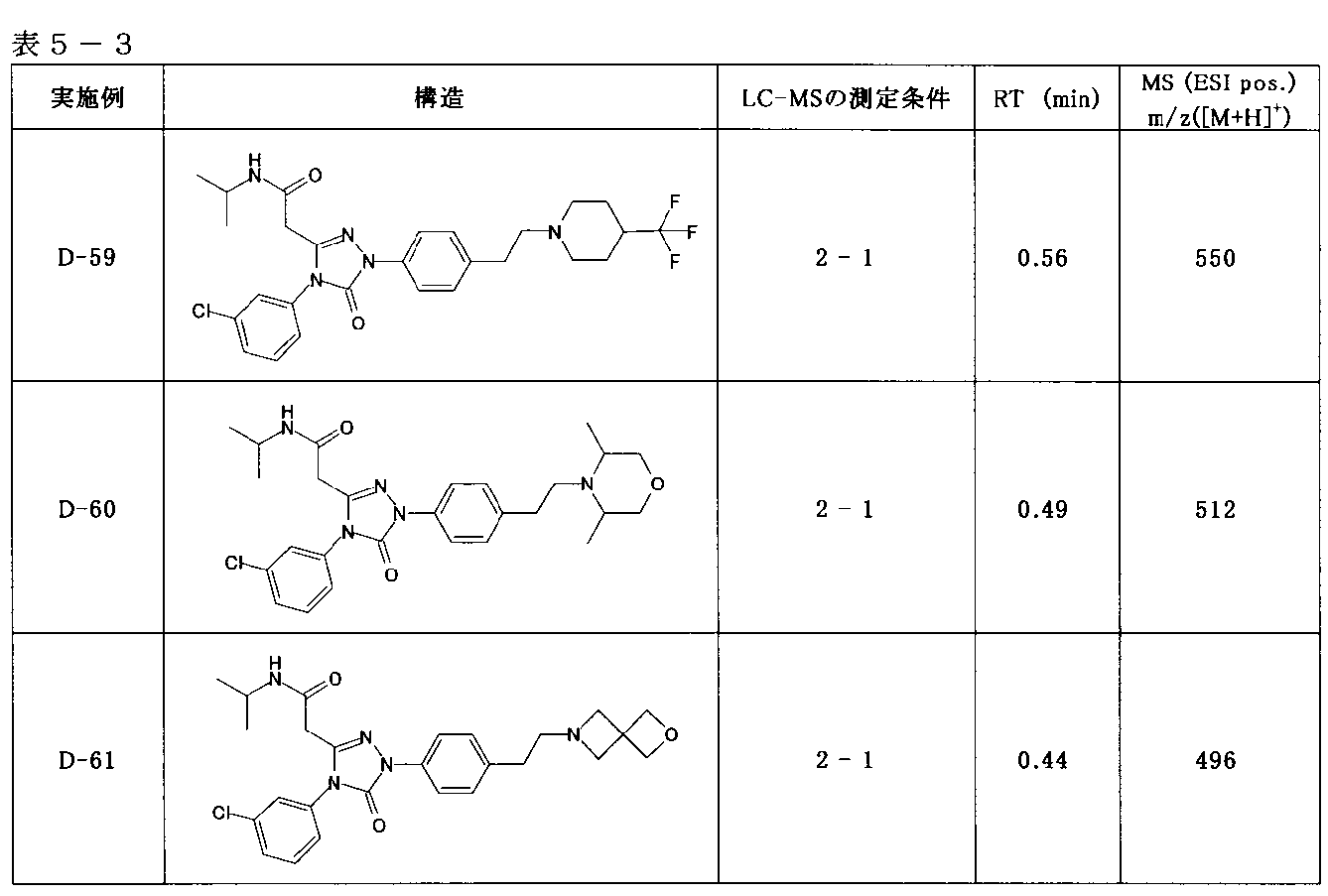
・V1b受容体結合試験
293FT細胞(インビトロジェン)にヒトV1b受容体を一過性に発現させ、細胞を回収し、15mmol/L トリス塩酸緩衝液(pH7.4、2mmol/L 塩化マグネシウム、0.3mmol/L エチレンジアミン四酢酸、1mmol/L グリコールエーテルジアミン四酢酸を含む)中でホモジナイズした。得られたホモジネートを50,000×g、4℃で20分間遠心分離し、沈殿物を75mmol/L トリス塩酸緩衝液(pH7.4、12.5mmol/L 塩化マグネシウム、0.3mmol/L エチレンジアミン四酢酸、1mmol/L グリコールエーテルジアミン四酢酸、250mmol/Lショ糖を含む)に再懸濁して粗膜標品とし、結合試験実施前まで-80℃にて保存した。結合試験の際は、この粗膜標品を50mmol/L トリス塩酸緩衝液(pH7.4、10mmol/L 塩化マグネシウム、0.1% ウシ血清アルブミンを含む)にて希釈し、各被検化合物、及び[3H]AVP(最終濃度0.4~1nmol/L)と混合し、室温で60分間インキュベーションした。被検化合物はDMSOにて段階的に希釈し、混合時の被検化合物の最終濃度は、0.01nmol/L~1μmol/Lである。インキュベーション後、混合溶液を0.3% ポリエチレンイミンを浸透させたGF/Cフィルターへと吸引濾過した。このGF/Cフィルターを乾燥させてシンチレーターを加えた後、トップカウント(パーキンエルマー社)を用いてフィルター上に残存する放射活性を測定した。10μmol/Lの未標識AVP存在下での放射活性を0%とし、未標識AVP非存在下での放射活性を100%とする。各濃度の被検化合物存在化での放射活性より用量反応曲線を作成し、被検化合物の50%阻害濃度(IC50値)を算出した。本発明の化合物のIC50値は、0.1nM~1000nMの範囲であった。その結果を表6-1~表6-2に示す。


・V1b受容体拮抗作用測定
CHO細胞(ATCC)にヒトV1b受容体を安定発現させた細胞を使用し、Ham's F-12(10%FBS、0.5mg/mL Geneticinを含む)にて培養した。試験前日に96wellポリDリジンコーティング黒プレートにて、1wellあたり20,000細胞数にて播種した。試験当日に培養液を除いた後、ロード用液(1×HBSS、10mmol/L HEPES、0.1% ウシ血清アルブミン、1.25mmol/L Probenecid、0.02% Pluronic F-127、1.5μmol/L Fluo-4-AM、pH 7.4)を添加し、CO2インキュベーター内で1時間インキュベーションした。インキュベーション後、上記のロード用液を除き、各被検化合物を含む試験溶液(1×HBSS、10mmol/L HEPES、0.1% ウシ血清アルブミン、1.25mmol/L Probenecid、pH 7.4)を加え、CO2インキュベーター内で30分間インキュベーションした。被検化合物はDMSOにて段階的に希釈し、測定時の被検化合物の最終濃度は、0.1nmol/L~1μmol/Lとなる。インキュベーション後、FDSS(浜松ホトニクス社)にて蛍光値の測定とAVPの添加を行った。AVPは、測定時の最終濃度が2.5nmol/Lとなるように添加した。この濃度は、AVPによる最大反応の70~80%を示す濃度である。被検化合物およびAVPを添加しないwellの蛍光値を0%とし、被検化合物の添加がなく、AVPのみを添加するwellの蛍光値を100%とする。各濃度の被検化合物存在下でのAVP添加後の蛍光値より用量反応曲線を作成し、50%阻害濃度(IC50値)を算出した。その結果を表7に示す。

Claims (11)
- 式(I)

[式(I)中、
R1は、水素原子、C1-5アルキル(該C1-5アルキルは、ヒドロキシ、ハロゲン原子、シアノ、C3-7シクロアルキル及びC1-5アルコキシからなる群より選ばれる1~3個の基で置換されてもよい。)、C3-7シクロアルキル、又は4~8員の飽和複素環を示し;
R2は、水素原子、又はC1-5アルキルを示し;
R3は、アリール、又はヘテロアリール(該アリール、及びヘテロアリールは、C1-5アルコキシ、C1-5アルキル、ハロゲン原子、トリフルオロメチル、トリフルオロメトキシ、シアノ、ヒドロキシ、ジフルオロメトキシ及びC1-5アルキルスルホニルからなる群より選ばれる1~2個の基で置換されてもよい。)を示し;
R4及びR5は、同一又は異なって、それぞれ水素原子、C1-5アルキル(該C1-5アルキルは、ヒドロキシ、ハロゲン原子、シアノ、C3-7シクロアルキル及びC1-5アルコキシからなる群より選ばれる1~3個の基で置換されてもよい。)、C3-7シクロアルキル、又は環中に1つ以上の窒素原子、酸素原子若しくは硫黄原子を含む4~8員の飽和若しくは不飽和複素環(該4~8員の飽和若しくは不飽和複素環は、ヒドロキシ、C1-5アルキル、C1-5アルコキシ、ハロゲン原子、シアノ、C2-5アルカノイル及びトリフルオロメチルからなる群より選ばれる1~2個の基で置換されてもよい。)を示すか、
又はR4及びR5は、隣接する窒素原子と一緒になって、環中に前記窒素原子の他に1つ以上の窒素原子、酸素原子若しくは硫黄原子を含んでもよい4~8員の飽和若しくは不飽和複素環(該4~8員の飽和若しくは不飽和複素環は、ヒドロキシ、C1-5アルキル(該C1-5アルキルは、1~2個のヒドロキシで置換されてもよい。)、C1-5アルコキシ、ハロゲン原子、シアノ、C2-5アルカノイル、オキソ、アミノカルボニル、モノC1-5アルキルアミノカルボニル、ジC1-5アルキルアミノカルボニル、トリフルオロメチル、アミノ、モノC1-5アルキルアミノ、ジC1-5アルキルアミノ及びC2-5アルカノイルアミノからなる群より選ばれる1~2個の基で置換されてもよく、さらに該4~8員の飽和若しくは不飽和複素環は、環中の異なる2個の炭素原子の間をC1-5アルキレンで架橋されてもよい。)、2-オキサ-6-アザスピロ[3.3]ヘプタ-6-イル、又は7-オキサ-2-アザスピロ[3.5]ノナ-2-イルを形成し;
下記式(α)で表される置換されても良いアゾール環は、
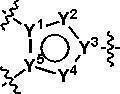
下記式群(II)のいずれかの構造を示し;

Ryは、水素原子、又はC1-5アルキルを示し;
X1及びX2は
i)X1が、単結合、又は式-CO-のとき、
X2は、-C1-5アルキレン-、又は-O-C1-5アルキレン-を示し;
ii)X1が、式-CONRx1-のとき、
X2は、単結合を示し;
Rx1は、水素原子、又はC1-5アルキルを示し;
A環は、ベンゼン環、6員の芳香族複素環(該ベンゼン環及び6員の芳香族複素環は、ハロゲン原子、C1-5アルコキシから選ばれる1~2個の基で置換されてもよい。)、窒素原子を1~2個含む4~8員の飽和若しくは部分不飽和複素環(該4~8員の飽和若しくは不飽和複素環は、1個のオキソで置換されてもよい。)、又はC3-7シクロアルカンを示す]
で表されるアゾール誘導体、又はその医薬上許容される塩。 - 上記式(I)において、
R4及びR5が、同一又は異なって、それぞれ水素原子、C1-5アルキル(該C1-5アルキルは、ヒドロキシ、ハロゲン原子、シアノ、C3-7シクロアルキル及びC1-5アルコキシからなる群より選ばれる1~3個の基で置換されてもよい。)、C3-7シクロアルキル、又は環中に1つ以上の窒素原子、酸素原子若しくは硫黄原子を含む4~8員の飽和若しくは不飽和複素環(該4~8員の飽和若しくは不飽和複素環は、ヒドロキシ、C1-5アルキル、C1-5アルコキシ、ハロゲン原子、シアノ、C2-5アルカノイル及びトリフルオロメチルからなる群より選ばれる1~2個の基で置換されてもよい。)を示すか、
又はR4及びR5が、隣接する窒素原子と一緒になって、環中に前記窒素原子の他に1つ以上の窒素原子、酸素原子若しくは硫黄原子を含んでもよい4~8員の飽和若しくは不飽和複素環(該4~8員の飽和若しくは不飽和複素環は、ヒドロキシ、C1-5アルキル(該C1-5アルキルは、1~2個のヒドロキシで置換されてもよい。)、C1-5アルコキシ、ハロゲン原子、シアノ、C2-5アルカノイル、オキソ、アミノカルボニル、モノC1-5アルキルアミノカルボニル、ジC1-5アルキルアミノカルボニル及びトリフルオロメチルからなる群より選ばれる1~2個の基で置換されてもよく、さらに該4~8員の飽和若しくは不飽和複素環は、環中の異なる2個の炭素原子の間をC1-5アルキレンで架橋されてもよい。)、2-オキサ-6-アザスピロ[3.3]ヘプタ-6-イル、又は7-オキサ-2-アザスピロ[3.5]ノナ-2-イルを形成する、請求項1に記載のアゾール誘導体、又はその医薬上許容される塩。 - 上記式(I)において、
X1が、単結合であり;
X2が、-C1-5アルキレン-、又は-O-C1-5アルキレン-であり;
A環が、ベンゼン環、6員の芳香族複素環(該ベンゼン環及び6員の芳香族複素環は、ハロゲン原子、C1-5アルコキシから選ばれる1~2個の基で置換されてもよい。)、又は窒素原子を1~2個含む4~8員の飽和若しくは不飽和複素環(該4~8員の飽和若しくは不飽和複素環は、1個のオキソで置換されてもよい。)である請求項1又は2に記載のアゾール誘導体、又はその医薬上許容される塩。 - 上記式(I)において、
A環が、ベンゼン環、又は6員の芳香族複素環(該ベンゼン環及び6員の芳香族複素環は、ハロゲン原子、C1-5アルコキシから選ばれる1~2個の基で置換されてもよい。)である請求項1~3のいずれか1項に記載のアゾール誘導体、又はその医薬上許容される塩。 - 上記式(I)において、
A環が、ベンゼン環、又はピリジン環(該ベンゼン環及びピリジン環は、ハロゲン原子、C1-5アルコキシから選ばれる1~2個の基で置換されてもよい。)である請求項1~4いずれか一項に記載のアゾール誘導体、又はその医薬上許容される塩。 - 上記式(I)において、
R1が、C1-5アルキルであり;
R2が、水素原子であり;
R3が、フェニル又はピリジル(該フェニル及びピリジルは、C1-5アルキル、C1-5アルコキシ、ハロゲン原子、シアノ、トリフルオロメチル、ジフルオロメトキシ、トリフルオロメトキシ及びC1-5アルキルスルホニルからなる群より選ばれる1~2個の基で置換されてもよい。)である請求項1~5いずれか一項に記載のアゾール誘導体、又はその医薬上許容される塩。 - 上記式(I)において、
下記式(α)で表される置換されても良いアゾール環が、

下記式群(III)のいずれかの構造であり;

Ryが、水素原子、又はメチル基である請求項1~6いずれか一項に記載のアゾール誘導体、又はその医薬上許容される塩。 - 上記式(I)において、
X1が、単結合であり;
X2が、エチレン、又はメチルエチレンであり;
R4及びR5が隣接する窒素原子と一緒になって、環中に前記窒素原子の他に1つ以上の窒素原子、酸素原子若しくは硫黄原子を含んでもよい4~8員の飽和若しくは不飽和複素環(該4~8員の飽和若しくは不飽和複素環は、ヒドロキシ、C1-5アルキル(該C1-5アルキルは、1~2個のヒドロキシで置換されてもよい。)、C1-5アルコキシ、ハロゲン原子、シアノ、C2-5アルカノイル及びトリフルオロメチルからなる群より選ばれる1~2個の基で置換されてもよく、さらに該4~8員の飽和又は不飽和複素環は、環中の異なる2個の炭素原子の間をC1-5アルキレンで架橋されてもよい。)、又は2-オキサ-6-アザスピロ[3.3]ヘプタ-6-イルを形成する請求項1~7いずれか一項に記載のアゾール誘導体、又はその医薬上許容される塩。 - 上記式(I)において、
R4及びR5が隣接する窒素原子と一緒になって、環中に前記窒素原子の他に1つ以上の酸素原子を含んでもよい5員又は6員の飽和複素環(該6員の飽和複素環は、ヒドロキシ及びC1-5アルキルからなる群より選ばれる1~2個の基で置換されてもよく、さらに該6員飽和複素環は、環中の異なる2個の炭素原子の間をC1-5アルキレンで架橋されてもよい。)、又は2-オキサ-6-アザスピロ[3.3]ヘプタ-6-イルを形成する請求項1~8いずれか一項に記載のアゾール誘導体、又はその医薬上許容される塩。 - 請求項1~9のいずれか一項に記載のアゾール誘導体、又はその医薬上許容される塩を有効成分として含有する医薬組成物。
- 請求項1~9のいずれか一項に記載のアゾール誘導体、又はその医薬上許容される塩を有効成分として含有することを特徴とする、気分障害、不安障害、統合失調症、アルツハイマー病、パーキンソン病、ハンチントン舞踏病、摂食障害、高血圧、消化器疾患、薬物依存症、てんかん、脳梗塞、脳虚血、脳浮腫、頭部外傷、炎症、免疫関連疾患又は脱毛症の治療又は予防剤。
Priority Applications (24)
| Application Number | Priority Date | Filing Date | Title |
|---|---|---|---|
| KR1020147010165A KR101998442B1 (ko) | 2011-10-27 | 2012-10-25 | 아졸 유도체 |
| JP2013540819A JP6025066B2 (ja) | 2011-10-27 | 2012-10-25 | アゾール誘導体 |
| NZ623918A NZ623918B2 (en) | 2011-10-27 | 2012-10-25 | Azole derivative |
| RU2014121205A RU2622639C2 (ru) | 2011-10-27 | 2012-10-25 | Производные азолов |
| ES12843663.1T ES2568882T3 (es) | 2011-10-27 | 2012-10-25 | Derivado de azol |
| SG11201401766UA SG11201401766UA (en) | 2011-10-27 | 2012-10-25 | Azole derivative |
| PH1/2014/500921A PH12014500921A1 (en) | 2011-10-27 | 2012-10-25 | Azole derivative |
| US14/353,447 US9522914B2 (en) | 2011-10-27 | 2012-10-25 | Azole derivative |
| BR112014009927-8A BR112014009927B1 (pt) | 2011-10-27 | 2012-10-25 | Derivado de azol, composição farmacêutica que o compreende e uso do mesmo |
| SI201230542A SI2772482T1 (sl) | 2011-10-27 | 2012-10-25 | Derivat azola |
| CN201280052958.4A CN103889951B (zh) | 2011-10-27 | 2012-10-25 | 唑类衍生物 |
| DK12843663.1T DK2772482T3 (en) | 2011-10-27 | 2012-10-25 | azole derivative |
| CA2853227A CA2853227C (en) | 2011-10-27 | 2012-10-25 | Azole derivative |
| AU2012329965A AU2012329965B2 (en) | 2011-10-27 | 2012-10-25 | Azole derivative |
| RS20160363A RS54825B1 (sr) | 2011-10-27 | 2012-10-25 | Derivati azola |
| MX2014005140A MX339763B (es) | 2011-10-27 | 2012-10-25 | Derivado de azol. |
| MEP-2016-102A ME02402B (me) | 2011-10-27 | 2012-10-25 | Derivati azola |
| PL12843663T PL2772482T3 (pl) | 2011-10-27 | 2012-10-25 | Pochodna azolu |
| HRP20160421TT HRP20160421T1 (hr) | 2011-10-27 | 2012-10-25 | Derivat azola |
| EP12843663.1A EP2772482B1 (en) | 2011-10-27 | 2012-10-25 | Azole derivative |
| IL232217A IL232217A (en) | 2011-10-27 | 2014-04-24 | Derivatives of Azul, pharmaceutical preparations containing them and their use |
| ZA2014/03000A ZA201403000B (en) | 2011-10-27 | 2014-04-24 | Azole Derivative |
| CY20161100454T CY1118021T1 (el) | 2011-10-27 | 2016-05-24 | Παραγωγο αζολιου |
| SM201600153T SMT201600153B (it) | 2011-10-27 | 2016-05-31 | Derivato di azolo |
Applications Claiming Priority (2)
| Application Number | Priority Date | Filing Date | Title |
|---|---|---|---|
| JP2011-236487 | 2011-10-27 | ||
| JP2011236487 | 2011-10-27 |
Publications (1)
| Publication Number | Publication Date |
|---|---|
| WO2013062027A1 true WO2013062027A1 (ja) | 2013-05-02 |
Family
ID=48167853
Family Applications (1)
| Application Number | Title | Priority Date | Filing Date |
|---|---|---|---|
| PCT/JP2012/077541 Ceased WO2013062027A1 (ja) | 2011-10-27 | 2012-10-25 | アゾール誘導体 |
Country Status (28)
| Country | Link |
|---|---|
| US (1) | US9522914B2 (ja) |
| EP (1) | EP2772482B1 (ja) |
| JP (1) | JP6025066B2 (ja) |
| KR (1) | KR101998442B1 (ja) |
| CN (1) | CN103889951B (ja) |
| AU (1) | AU2012329965B2 (ja) |
| BR (1) | BR112014009927B1 (ja) |
| CA (1) | CA2853227C (ja) |
| CY (1) | CY1118021T1 (ja) |
| DK (1) | DK2772482T3 (ja) |
| ES (1) | ES2568882T3 (ja) |
| HR (1) | HRP20160421T1 (ja) |
| HU (1) | HUE028799T2 (ja) |
| IL (1) | IL232217A (ja) |
| ME (1) | ME02402B (ja) |
| MX (1) | MX339763B (ja) |
| MY (1) | MY168930A (ja) |
| PH (1) | PH12014500921A1 (ja) |
| PL (1) | PL2772482T3 (ja) |
| PT (1) | PT2772482E (ja) |
| RS (1) | RS54825B1 (ja) |
| RU (1) | RU2622639C2 (ja) |
| SG (1) | SG11201401766UA (ja) |
| SI (1) | SI2772482T1 (ja) |
| SM (1) | SMT201600153B (ja) |
| TW (1) | TWI543971B (ja) |
| WO (1) | WO2013062027A1 (ja) |
| ZA (1) | ZA201403000B (ja) |
Cited By (2)
| Publication number | Priority date | Publication date | Assignee | Title |
|---|---|---|---|---|
| WO2018011111A1 (de) | 2016-07-12 | 2018-01-18 | Bayer Cropscience Aktiengesellschaft | Bicyclische verbindungen als schädlingsbekämpfungsmittel |
| JPWO2021187486A1 (ja) * | 2020-03-17 | 2021-09-23 |
Families Citing this family (14)
| Publication number | Priority date | Publication date | Assignee | Title |
|---|---|---|---|---|
| ME02169B (me) * | 2010-10-01 | 2015-10-20 | Taisho Pharmaceutical Co Ltd | Derivat 1,2,4-triazolona |
| JP6387669B2 (ja) * | 2013-04-26 | 2018-09-12 | 大正製薬株式会社 | アゾール誘導体を含有する医薬 |
| US9663457B2 (en) * | 2014-04-09 | 2017-05-30 | Allergan, Inc. | Carbamoyl hydrazine derivatives as formyl peptide modulators |
| KR20220129667A (ko) | 2015-07-06 | 2022-09-23 | 길리애드 사이언시즈, 인코포레이티드 | Cot 조정제 및 그의 사용 방법 |
| CN106831712B (zh) * | 2017-01-13 | 2019-04-02 | 深圳大学 | 一种多靶点Aβ寡聚化抑制剂 |
| CN106831713B (zh) * | 2017-01-13 | 2019-04-02 | 深圳大学 | 一种多靶点Aβ寡聚化抑制剂的合成方法及应用 |
| CN107434778A (zh) * | 2017-05-23 | 2017-12-05 | 重庆文理学院 | 一种4‑羟基‑2h‑吡咯‑2‑酮衍生物的制备方法 |
| CN107857729B (zh) * | 2017-12-25 | 2019-10-15 | 福州大学 | 一种4-碘化-n-芳基化的吡唑类化合物的合成方法 |
| US10039749B1 (en) | 2018-01-15 | 2018-08-07 | King Saud University | Substituted pyrazole derivatives |
| EP3886854A4 (en) | 2018-11-30 | 2022-07-06 | Nuvation Bio Inc. | Pyrrole and pyrazole compounds and methods of use thereof |
| TWI915558B (zh) | 2019-06-14 | 2026-02-21 | 美商基利科學股份有限公司 | Cot 調節劑及其使用方法 |
| RU2730492C1 (ru) * | 2019-12-27 | 2020-08-24 | Федеральное государственное бюджетное образовательное учреждение высшего образования "Российский химико-технологический университет имени Д.И. Менделеева" | Способ получения алкил 2-[([1,1'-бифенил]-4-карбонил)амино]-3-(1н-азол-1-ил) пропаноатов |
| KR102924836B1 (ko) | 2020-03-30 | 2026-02-09 | 길리애드 사이언시즈, 인코포레이티드 | Cot 억제제 화합물, (S)-6-(((1-(바이사이클로[1.1.1]펜탄-1-일)-1H-1,2,3-트라이아졸-4-일)2-메틸-1-옥소-1,2-다이하이드로아이소퀴놀린-5-일)메틸)))아미노8-클로로-(네오펜틸아미노)퀴놀린-3-카르보니트릴의 고체 형태 |
| TWI778562B (zh) | 2020-04-02 | 2022-09-21 | 美商基利科學股份有限公司 | 製備cot抑制劑化合物的方法 |
Citations (19)
| Publication number | Priority date | Publication date | Assignee | Title |
|---|---|---|---|---|
| JP2000063363A (ja) * | 1998-08-12 | 2000-02-29 | Yamanouchi Pharmaceut Co Ltd | 新規なトリアゾール誘導体 |
| WO2001055130A2 (fr) | 2000-01-25 | 2001-08-02 | Sanofi-Synthelabo | Derives de 1,3-dihydro-2h-indol-2-one et leur utilisation en tant que ligands des recepteurs v1b ou v1b et v1a de l'arginine-vasopressine |
| WO2005021534A1 (ja) | 2003-08-28 | 2005-03-10 | Taisho Pharmaceutical Co., Ltd. | 1,3−ジヒドロ−2h−インドール−2−オン誘導体 |
| WO2005030755A1 (en) | 2003-09-30 | 2005-04-07 | Abbott Gmbh & Co. Kg | Heteroaryl-substituted 1,3-dihydroindol-2-one derivatives and medicaments containing them |
| WO2006021886A1 (en) | 2004-08-26 | 2006-03-02 | Pfizer Inc. | Aminoheteroaryl compounds as protein tyrosine kinase inhibitors |
| WO2006095014A1 (en) | 2005-03-11 | 2006-09-14 | N.V. Organon | 2- (4-0x0-4h-quinaz0lin-3-yl) acetamides and their use as vasopressin v3 antagonists |
| WO2006102308A2 (en) | 2005-03-22 | 2006-09-28 | Azevan Pharmaceuticals, Inc. | Beta-lactamyl vasopressin v1b antagonists |
| WO2006133242A2 (en) | 2005-06-07 | 2006-12-14 | Pharmacopeia, Inc. | Azinone and diazinone v3 inhibitors for depression and stress disorders |
| WO2007109098A2 (en) | 2006-03-16 | 2007-09-27 | Azevan Pharmaceuticals, Inc. | HYDROXY AND KETO-SUBSTITUTED β-LACTAMYL ALKANEDIOIC ACIDS |
| WO2008025736A1 (en) | 2006-08-26 | 2008-03-06 | Abbott Gmbh & Co. Kg | Substituted benzimidazolone derivatives, medicaments comprising them and their use |
| WO2008033764A2 (en) | 2006-09-11 | 2008-03-20 | N.V. Organon | Quinazolinone and isoquinolinone acetamide derivatives |
| WO2008033757A2 (en) | 2006-09-11 | 2008-03-20 | N.V. Organon | 2-(1-oxo-1h-isoquinolin-2-yl) acetamide derivatives |
| WO2009017236A1 (ja) | 2007-08-01 | 2009-02-05 | Taisho Pharmaceutical Co., Ltd. | ピリドピリミジン-4-オン誘導体 |
| WO2009130231A1 (en) | 2008-04-24 | 2009-10-29 | Glaxo Group Limited | Pyrrolo [1, 2-a] pyrazine derivatives as vasopressin vib receptor antagonists |
| JP2009537581A (ja) * | 2006-05-23 | 2009-10-29 | バイエル・ヘルスケア・アクチェンゲゼルシャフト | バソプレシン受容体の阻害剤としての置換アリールイミダゾロンおよびトリアゾロン |
| WO2009130232A1 (en) | 2008-04-24 | 2009-10-29 | Glaxo Group Limited | Pyrazolo [1, 5 -a] pyrazine derivatives as antagonists of v1b receptors |
| WO2011096461A1 (ja) | 2010-02-03 | 2011-08-11 | 大正製薬株式会社 | キノリン誘導体 |
| WO2011104322A1 (de) * | 2010-02-27 | 2011-09-01 | Bayer Pharma Aktiengesellschaft | Bis-arylverknüpfte aryltriazolone und ihre verwendung |
| WO2012043791A1 (ja) * | 2010-10-01 | 2012-04-05 | 大正製薬株式会社 | 1,2,4-トリアゾロン誘導体 |
Family Cites Families (3)
| Publication number | Priority date | Publication date | Assignee | Title |
|---|---|---|---|---|
| AR052342A1 (es) * | 2004-12-21 | 2007-03-14 | Janssen Pharmaceutica Nv | Derivados sustituidos de triazolona,tetrazolona e imidazolona con actividad selectiva antagonista de alfa2c-adenoreceptores |
| JP5369721B2 (ja) * | 2009-01-30 | 2013-12-18 | 大正製薬株式会社 | ピリドピリミジン−4−オン誘導体 |
| DE102009013642A1 (de) * | 2009-03-18 | 2010-09-23 | Bayer Schering Pharma Aktiengesellschaft | Substituierte Phenylalaninderivate und deren Verwendung |
-
2012
- 2012-10-25 CN CN201280052958.4A patent/CN103889951B/zh not_active Expired - Fee Related
- 2012-10-25 JP JP2013540819A patent/JP6025066B2/ja not_active Expired - Fee Related
- 2012-10-25 KR KR1020147010165A patent/KR101998442B1/ko not_active Expired - Fee Related
- 2012-10-25 RS RS20160363A patent/RS54825B1/sr unknown
- 2012-10-25 BR BR112014009927-8A patent/BR112014009927B1/pt not_active IP Right Cessation
- 2012-10-25 ES ES12843663.1T patent/ES2568882T3/es active Active
- 2012-10-25 RU RU2014121205A patent/RU2622639C2/ru active
- 2012-10-25 EP EP12843663.1A patent/EP2772482B1/en active Active
- 2012-10-25 MX MX2014005140A patent/MX339763B/es active IP Right Grant
- 2012-10-25 US US14/353,447 patent/US9522914B2/en not_active Expired - Fee Related
- 2012-10-25 DK DK12843663.1T patent/DK2772482T3/en active
- 2012-10-25 PT PT128436631T patent/PT2772482E/pt unknown
- 2012-10-25 AU AU2012329965A patent/AU2012329965B2/en not_active Ceased
- 2012-10-25 SI SI201230542A patent/SI2772482T1/sl unknown
- 2012-10-25 WO PCT/JP2012/077541 patent/WO2013062027A1/ja not_active Ceased
- 2012-10-25 CA CA2853227A patent/CA2853227C/en active Active
- 2012-10-25 MY MYPI2014701021A patent/MY168930A/en unknown
- 2012-10-25 HU HUE12843663A patent/HUE028799T2/en unknown
- 2012-10-25 ME MEP-2016-102A patent/ME02402B/me unknown
- 2012-10-25 PL PL12843663T patent/PL2772482T3/pl unknown
- 2012-10-25 SG SG11201401766UA patent/SG11201401766UA/en unknown
- 2012-10-25 HR HRP20160421TT patent/HRP20160421T1/hr unknown
- 2012-10-25 PH PH1/2014/500921A patent/PH12014500921A1/en unknown
- 2012-10-26 TW TW101139716A patent/TWI543971B/zh not_active IP Right Cessation
-
2014
- 2014-04-24 IL IL232217A patent/IL232217A/en active IP Right Grant
- 2014-04-24 ZA ZA2014/03000A patent/ZA201403000B/en unknown
-
2016
- 2016-05-24 CY CY20161100454T patent/CY1118021T1/el unknown
- 2016-05-31 SM SM201600153T patent/SMT201600153B/it unknown
Patent Citations (20)
| Publication number | Priority date | Publication date | Assignee | Title |
|---|---|---|---|---|
| JP2000063363A (ja) * | 1998-08-12 | 2000-02-29 | Yamanouchi Pharmaceut Co Ltd | 新規なトリアゾール誘導体 |
| WO2001055130A2 (fr) | 2000-01-25 | 2001-08-02 | Sanofi-Synthelabo | Derives de 1,3-dihydro-2h-indol-2-one et leur utilisation en tant que ligands des recepteurs v1b ou v1b et v1a de l'arginine-vasopressine |
| WO2005021534A1 (ja) | 2003-08-28 | 2005-03-10 | Taisho Pharmaceutical Co., Ltd. | 1,3−ジヒドロ−2h−インドール−2−オン誘導体 |
| WO2005030755A1 (en) | 2003-09-30 | 2005-04-07 | Abbott Gmbh & Co. Kg | Heteroaryl-substituted 1,3-dihydroindol-2-one derivatives and medicaments containing them |
| WO2006021886A1 (en) | 2004-08-26 | 2006-03-02 | Pfizer Inc. | Aminoheteroaryl compounds as protein tyrosine kinase inhibitors |
| WO2006095014A1 (en) | 2005-03-11 | 2006-09-14 | N.V. Organon | 2- (4-0x0-4h-quinaz0lin-3-yl) acetamides and their use as vasopressin v3 antagonists |
| WO2006102308A2 (en) | 2005-03-22 | 2006-09-28 | Azevan Pharmaceuticals, Inc. | Beta-lactamyl vasopressin v1b antagonists |
| JP2008542444A (ja) * | 2005-06-07 | 2008-11-27 | フアーマコペイア・インコーポレイテツド | うつ病およびストレス疾患のためのアジノンおよびジアジノンv3阻害剤 |
| WO2006133242A2 (en) | 2005-06-07 | 2006-12-14 | Pharmacopeia, Inc. | Azinone and diazinone v3 inhibitors for depression and stress disorders |
| WO2007109098A2 (en) | 2006-03-16 | 2007-09-27 | Azevan Pharmaceuticals, Inc. | HYDROXY AND KETO-SUBSTITUTED β-LACTAMYL ALKANEDIOIC ACIDS |
| JP2009537581A (ja) * | 2006-05-23 | 2009-10-29 | バイエル・ヘルスケア・アクチェンゲゼルシャフト | バソプレシン受容体の阻害剤としての置換アリールイミダゾロンおよびトリアゾロン |
| WO2008025736A1 (en) | 2006-08-26 | 2008-03-06 | Abbott Gmbh & Co. Kg | Substituted benzimidazolone derivatives, medicaments comprising them and their use |
| WO2008033757A2 (en) | 2006-09-11 | 2008-03-20 | N.V. Organon | 2-(1-oxo-1h-isoquinolin-2-yl) acetamide derivatives |
| WO2008033764A2 (en) | 2006-09-11 | 2008-03-20 | N.V. Organon | Quinazolinone and isoquinolinone acetamide derivatives |
| WO2009017236A1 (ja) | 2007-08-01 | 2009-02-05 | Taisho Pharmaceutical Co., Ltd. | ピリドピリミジン-4-オン誘導体 |
| WO2009130231A1 (en) | 2008-04-24 | 2009-10-29 | Glaxo Group Limited | Pyrrolo [1, 2-a] pyrazine derivatives as vasopressin vib receptor antagonists |
| WO2009130232A1 (en) | 2008-04-24 | 2009-10-29 | Glaxo Group Limited | Pyrazolo [1, 5 -a] pyrazine derivatives as antagonists of v1b receptors |
| WO2011096461A1 (ja) | 2010-02-03 | 2011-08-11 | 大正製薬株式会社 | キノリン誘導体 |
| WO2011104322A1 (de) * | 2010-02-27 | 2011-09-01 | Bayer Pharma Aktiengesellschaft | Bis-arylverknüpfte aryltriazolone und ihre verwendung |
| WO2012043791A1 (ja) * | 2010-10-01 | 2012-04-05 | 大正製薬株式会社 | 1,2,4-トリアゾロン誘導体 |
Non-Patent Citations (26)
| Title |
|---|
| "Comprehensive Organic Transformations", 1999, JOHN WILEY & SONS, INC |
| "Comprehensive Organic Transformations", 1999, JOHN WILEY & SONS, INC. |
| "Protective Groups in Organic Synthesis", JOHN WILEY & SONS, INC |
| "Protective Groups in Organic Synthesis", JOHN WILEY & SONS, INC. |
| ANGEW. CHEM. INT., ED., vol. 43, 2004, pages 4704 - 4734 |
| CHEM. ASIAN J., vol. 2, 2007, pages 1340 - 1355 |
| CHEM. PHARM. BULL., vol. 51, no. 4, 2003, pages 474 - 476 |
| CHRIS A S, BIOORGANIC & MEDICINAL CHEMISTRY LETTERS, vol. 21, 2011, pages 92 - 96 |
| GAL CS; LE FUR G, JPET, vol. 300, 2002, pages 1122 - 1130 |
| GRIEBEL G; SOUBRIE P, PNAS, vol. 99, 2002, pages 6370 - 6375 |
| HERNANDO F; BURBACH J, ENDOCRINOLOGY, vol. 142, 2001, pages 1659 - 1668 |
| J. AM. CHEM. SOC., vol. 78, 1956, pages 5694 - 5695 |
| J. ORG. CHEM., vol. 51, 1986, pages 439 - 445 |
| JACK D. SCOTT ET AL., BIOORGANIC & MEDICINAL CHEMISTRY LETTERS, vol. 19, no. 21, 2009, pages 6018 - 6022 |
| JAMES B, BIOORGANIC & MEDICINAL CHEMISTRY LETTERS, vol. 21, 2011, pages 3603 - 3607 |
| LEY, S. V.; THOMAS, A. W., ANGEW. CHEM., INT. ED., vol. 42, 2003, pages 5400 - 5449 |
| LIEBSCH G; ENGELMANN M, NEUROSCI. LETT., vol. 217, 1996, pages 101 - 104 |
| LOLAIT S; BROWNSTEIN M, PNAS, vol. 92, 1995, pages 6783 - 6787 |
| MITSUNOBU, SYNTHESIS, 1981, pages 1 - 28 |
| RICHARD C. LAROCK: "Comprehensive Organic Transformation", 1999, WILEY-VCH, pages: 604 |
| See also references of EP2772482A4 |
| SUGIMOTO T; KAWASHIMA G, J. BIOL. CHEM., vol. 269, 1994, pages 27088 - 27092 |
| SUZUKI-MIYAURA, CHEM. REV., vol. 95, 1995, pages 2457 - 2483 |
| UZUKI-MIYAURA, CHEM. REV., vol. 95, 1995, pages 2457 - 2483 |
| VACCARI C; OSTROWSKI N, ENDOCRINOLOGY, vol. 139, 1998, pages 5015 - 5033 |
| WERSINGER SR; TOUNG WS, MOL. PSYCHIATRY, vol. 7, 2002, pages 975 - 984 |
Cited By (7)
| Publication number | Priority date | Publication date | Assignee | Title |
|---|---|---|---|---|
| WO2018011111A1 (de) | 2016-07-12 | 2018-01-18 | Bayer Cropscience Aktiengesellschaft | Bicyclische verbindungen als schädlingsbekämpfungsmittel |
| JPWO2021187486A1 (ja) * | 2020-03-17 | 2021-09-23 | ||
| WO2021187486A1 (ja) * | 2020-03-17 | 2021-09-23 | 大日本住友製薬株式会社 | オキサジアゾール誘導体 |
| CN115515943A (zh) * | 2020-03-17 | 2022-12-23 | 住友制药株式会社 | 噁二唑衍生物 |
| US11718592B2 (en) | 2020-03-17 | 2023-08-08 | Sumitomo Pharma Co., Ltd. | Oxadiazole derivative |
| JP7637121B2 (ja) | 2020-03-17 | 2025-02-27 | 住友ファーマ株式会社 | オキサジアゾール誘導体 |
| US12624011B2 (en) | 2020-03-17 | 2026-05-12 | Sumitomo Pharma Co., Ltd. | Oxadiazole derivative |
Also Published As
Similar Documents
| Publication | Publication Date | Title |
|---|---|---|
| JP6025066B2 (ja) | アゾール誘導体 | |
| AU2016279388B2 (en) | NRF2 regulators | |
| AU2018243691B2 (en) | Heterocyclic compound | |
| JP6647592B2 (ja) | ピロロピロールカルバメート、および関連する有機化合物、医薬組成物、ならびにその医学的使用 | |
| JP6424219B2 (ja) | 複素芳香環−ベンジル−アミド−サイクルコアを含むオートタキシン阻害剤 | |
| JP6387669B2 (ja) | アゾール誘導体を含有する医薬 | |
| JP2022527590A (ja) | モノアシルグリセロールリパーゼ(magl)の阻害剤としての複素環式化合物 | |
| AU2013207252A1 (en) | Carbamate compounds and pharmaceutical compositions thereof | |
| TW202309010A (zh) | 新穎雜環化合物 | |
| UA110841C2 (uk) | СПОЛУКИ ТА КОМПОЗИЦІЇ ЯК ІНГІБІТОРИ с-KІТ КІНАЗИ | |
| JP2016523851A (ja) | 新規cyp17阻害剤/抗アンドロゲン | |
| CN115209952A (zh) | 经取代的吡唑并嘧啶及其用途 | |
| JP2023513373A (ja) | P2x3修飾薬 | |
| JPWO2007126041A1 (ja) | ベンゾイソオキサゾール化合物 | |
| KR20180109871A (ko) | 아졸로 치환된 피리딘 화합물 | |
| EP4543870A1 (en) | New heterocyclic-carbonyl-cyclic compounds as magl inhibitors | |
| HK1195056A (en) | Azole derivative | |
| HK1195056B (en) | Azole derivative | |
| NZ623918B2 (en) | Azole derivative | |
| HK40075899A (en) | Substituted pyrazolo-pyrimidines and uses thereof |
Legal Events
| Date | Code | Title | Description |
|---|---|---|---|
| 121 | Ep: the epo has been informed by wipo that ep was designated in this application |
Ref document number: 12843663 Country of ref document: EP Kind code of ref document: A1 |
|
| ENP | Entry into the national phase |
Ref document number: 2013540819 Country of ref document: JP Kind code of ref document: A |
|
| ENP | Entry into the national phase |
Ref document number: 20147010165 Country of ref document: KR Kind code of ref document: A |
|
| WWE | Wipo information: entry into national phase |
Ref document number: 14353447 Country of ref document: US |
|
| ENP | Entry into the national phase |
Ref document number: 2853227 Country of ref document: CA |
|
| WWE | Wipo information: entry into national phase |
Ref document number: 232217 Country of ref document: IL Ref document number: 2012843663 Country of ref document: EP |
|
| WWE | Wipo information: entry into national phase |
Ref document number: MX/A/2014/005140 Country of ref document: MX |
|
| NENP | Non-entry into the national phase |
Ref country code: DE |
|
| ENP | Entry into the national phase |
Ref document number: 2012329965 Country of ref document: AU Date of ref document: 20121025 Kind code of ref document: A |
|
| ENP | Entry into the national phase |
Ref document number: 2014121205 Country of ref document: RU Kind code of ref document: A |
|
| REG | Reference to national code |
Ref country code: BR Ref legal event code: B01A Ref document number: 112014009927 Country of ref document: BR |
|
| WWE | Wipo information: entry into national phase |
Ref document number: P-2016/0363 Country of ref document: RS |
|
| ENP | Entry into the national phase |
Ref document number: 112014009927 Country of ref document: BR Kind code of ref document: A2 Effective date: 20140425 |