WO2013077476A1 - Hydrogel comprenant un chitosan ou une polyamine couplé(e) à un groupe catéchol et un poloxamère comprenant un groupe thiol couplé à son extrémité, son procédé de préparation, et hémostat l'utilisant - Google Patents
Hydrogel comprenant un chitosan ou une polyamine couplé(e) à un groupe catéchol et un poloxamère comprenant un groupe thiol couplé à son extrémité, son procédé de préparation, et hémostat l'utilisant Download PDFInfo
- Publication number
- WO2013077476A1 WO2013077476A1 PCT/KR2011/008880 KR2011008880W WO2013077476A1 WO 2013077476 A1 WO2013077476 A1 WO 2013077476A1 KR 2011008880 W KR2011008880 W KR 2011008880W WO 2013077476 A1 WO2013077476 A1 WO 2013077476A1
- Authority
- WO
- WIPO (PCT)
- Prior art keywords
- chitosan
- polyamine
- catechol
- solution
- group
- Prior art date
- Legal status (The legal status is an assumption and is not a legal conclusion. Google has not performed a legal analysis and makes no representation as to the accuracy of the status listed.)
- Ceased
Links
Images



Classifications
-
- A—HUMAN NECESSITIES
- A61—MEDICAL OR VETERINARY SCIENCE; HYGIENE
- A61L—METHODS OR APPARATUS FOR STERILISING MATERIALS OR OBJECTS IN GENERAL; DISINFECTION, STERILISATION OR DEODORISATION OF AIR; CHEMICAL ASPECTS OF BANDAGES, DRESSINGS, ABSORBENT PADS OR SURGICAL ARTICLES; MATERIALS FOR BANDAGES, DRESSINGS, ABSORBENT PADS OR SURGICAL ARTICLES
- A61L27/00—Materials for grafts or prostheses or for coating grafts or prostheses
- A61L27/50—Materials characterised by their function or physical properties, e.g. injectable or lubricating compositions, shape-memory materials, surface modified materials
- A61L27/52—Hydrogels or hydrocolloids
-
- A—HUMAN NECESSITIES
- A61—MEDICAL OR VETERINARY SCIENCE; HYGIENE
- A61L—METHODS OR APPARATUS FOR STERILISING MATERIALS OR OBJECTS IN GENERAL; DISINFECTION, STERILISATION OR DEODORISATION OF AIR; CHEMICAL ASPECTS OF BANDAGES, DRESSINGS, ABSORBENT PADS OR SURGICAL ARTICLES; MATERIALS FOR BANDAGES, DRESSINGS, ABSORBENT PADS OR SURGICAL ARTICLES
- A61L24/00—Surgical adhesives or cements; Adhesives for colostomy devices
- A61L24/04—Surgical adhesives or cements; Adhesives for colostomy devices containing macromolecular materials
- A61L24/08—Polysaccharides
-
- A—HUMAN NECESSITIES
- A61—MEDICAL OR VETERINARY SCIENCE; HYGIENE
- A61L—METHODS OR APPARATUS FOR STERILISING MATERIALS OR OBJECTS IN GENERAL; DISINFECTION, STERILISATION OR DEODORISATION OF AIR; CHEMICAL ASPECTS OF BANDAGES, DRESSINGS, ABSORBENT PADS OR SURGICAL ARTICLES; MATERIALS FOR BANDAGES, DRESSINGS, ABSORBENT PADS OR SURGICAL ARTICLES
- A61L24/00—Surgical adhesives or cements; Adhesives for colostomy devices
- A61L24/001—Use of materials characterised by their function or physical properties
- A61L24/0015—Medicaments; Biocides
-
- A—HUMAN NECESSITIES
- A61—MEDICAL OR VETERINARY SCIENCE; HYGIENE
- A61L—METHODS OR APPARATUS FOR STERILISING MATERIALS OR OBJECTS IN GENERAL; DISINFECTION, STERILISATION OR DEODORISATION OF AIR; CHEMICAL ASPECTS OF BANDAGES, DRESSINGS, ABSORBENT PADS OR SURGICAL ARTICLES; MATERIALS FOR BANDAGES, DRESSINGS, ABSORBENT PADS OR SURGICAL ARTICLES
- A61L24/00—Surgical adhesives or cements; Adhesives for colostomy devices
- A61L24/001—Use of materials characterised by their function or physical properties
- A61L24/0031—Hydrogels or hydrocolloids
-
- A—HUMAN NECESSITIES
- A61—MEDICAL OR VETERINARY SCIENCE; HYGIENE
- A61L—METHODS OR APPARATUS FOR STERILISING MATERIALS OR OBJECTS IN GENERAL; DISINFECTION, STERILISATION OR DEODORISATION OF AIR; CHEMICAL ASPECTS OF BANDAGES, DRESSINGS, ABSORBENT PADS OR SURGICAL ARTICLES; MATERIALS FOR BANDAGES, DRESSINGS, ABSORBENT PADS OR SURGICAL ARTICLES
- A61L24/00—Surgical adhesives or cements; Adhesives for colostomy devices
- A61L24/001—Use of materials characterised by their function or physical properties
- A61L24/0042—Materials resorbable by the body
-
- A—HUMAN NECESSITIES
- A61—MEDICAL OR VETERINARY SCIENCE; HYGIENE
- A61L—METHODS OR APPARATUS FOR STERILISING MATERIALS OR OBJECTS IN GENERAL; DISINFECTION, STERILISATION OR DEODORISATION OF AIR; CHEMICAL ASPECTS OF BANDAGES, DRESSINGS, ABSORBENT PADS OR SURGICAL ARTICLES; MATERIALS FOR BANDAGES, DRESSINGS, ABSORBENT PADS OR SURGICAL ARTICLES
- A61L24/00—Surgical adhesives or cements; Adhesives for colostomy devices
- A61L24/04—Surgical adhesives or cements; Adhesives for colostomy devices containing macromolecular materials
- A61L24/043—Mixtures of macromolecular materials
-
- A—HUMAN NECESSITIES
- A61—MEDICAL OR VETERINARY SCIENCE; HYGIENE
- A61L—METHODS OR APPARATUS FOR STERILISING MATERIALS OR OBJECTS IN GENERAL; DISINFECTION, STERILISATION OR DEODORISATION OF AIR; CHEMICAL ASPECTS OF BANDAGES, DRESSINGS, ABSORBENT PADS OR SURGICAL ARTICLES; MATERIALS FOR BANDAGES, DRESSINGS, ABSORBENT PADS OR SURGICAL ARTICLES
- A61L27/00—Materials for grafts or prostheses or for coating grafts or prostheses
- A61L27/14—Macromolecular materials
- A61L27/20—Polysaccharides
-
- A—HUMAN NECESSITIES
- A61—MEDICAL OR VETERINARY SCIENCE; HYGIENE
- A61L—METHODS OR APPARATUS FOR STERILISING MATERIALS OR OBJECTS IN GENERAL; DISINFECTION, STERILISATION OR DEODORISATION OF AIR; CHEMICAL ASPECTS OF BANDAGES, DRESSINGS, ABSORBENT PADS OR SURGICAL ARTICLES; MATERIALS FOR BANDAGES, DRESSINGS, ABSORBENT PADS OR SURGICAL ARTICLES
- A61L27/00—Materials for grafts or prostheses or for coating grafts or prostheses
- A61L27/50—Materials characterised by their function or physical properties, e.g. injectable or lubricating compositions, shape-memory materials, surface modified materials
- A61L27/54—Biologically active materials, e.g. therapeutic substances
-
- A—HUMAN NECESSITIES
- A61—MEDICAL OR VETERINARY SCIENCE; HYGIENE
- A61K—PREPARATIONS FOR MEDICAL, DENTAL OR TOILETRY PURPOSES
- A61K51/00—Preparations containing radioactive substances for use in therapy or testing in vivo
- A61K51/12—Preparations containing radioactive substances for use in therapy or testing in vivo characterised by a special physical form, e.g. emulsion, microcapsules, liposomes, characterized by a special physical form, e.g. emulsions, dispersions, microcapsules
- A61K51/1213—Semi-solid forms, gels, hydrogels, ointments, fats and waxes that are solid at room temperature
-
- A—HUMAN NECESSITIES
- A61—MEDICAL OR VETERINARY SCIENCE; HYGIENE
- A61K—PREPARATIONS FOR MEDICAL, DENTAL OR TOILETRY PURPOSES
- A61K9/00—Medicinal preparations characterised by special physical form
- A61K9/06—Ointments; Bases therefor; Other semi-solid forms, e.g. creams, sticks, gels
-
- A—HUMAN NECESSITIES
- A61—MEDICAL OR VETERINARY SCIENCE; HYGIENE
- A61L—METHODS OR APPARATUS FOR STERILISING MATERIALS OR OBJECTS IN GENERAL; DISINFECTION, STERILISATION OR DEODORISATION OF AIR; CHEMICAL ASPECTS OF BANDAGES, DRESSINGS, ABSORBENT PADS OR SURGICAL ARTICLES; MATERIALS FOR BANDAGES, DRESSINGS, ABSORBENT PADS OR SURGICAL ARTICLES
- A61L2400/00—Materials characterised by their function or physical properties
- A61L2400/04—Materials for stopping bleeding
Definitions
- the present invention relates to an adhesive hydrogel composition
- an adhesive hydrogel composition comprising a chitosan bonded to a catechol group and a pluronic bond bound to a thiol group at a terminal thereof, and more particularly, has a safety in and out of the body, a temperature response, and a hemostatic effect.
- the present invention relates to an adhesive composition excellent in use as a bioadhesive and a medical adhesive, an anti-adhesion agent, and a surface adsorption inhibitor comprising the same.
- An adhesive is a substance used to attach an object to the surface of another object.
- ISO International Organization for Standardization
- 'adhesion' is a state where two surfaces are integrated by chemical or physical forces, or both.
- Adhesives are widely used in various fields of daily life and industrial activities because of their convenience, and are classified into inorganic adhesives and organic adhesives according to their main ingredients.
- Organic adhesives are further classified into synthetic organic adhesives and natural organic adhesives, and synthetic organic adhesives are classified into resin systems including thermosetting resins or thermoplastic resins, rubber systems, and mixed systems including phenol and epoxy.
- problems such as release of harmful substances have recently occurred.
- Adhesive can be considered as a kind of adhesive.
- the adhesive adheres to one part of the adhesive sufficiently adheres to the adherend, and has a low cohesive force, fast stress relaxation, and easy deformation against external force.
- Raw materials used for pressure-sensitive adhesives are thermoplastic resins such as natural rubber, synthetic rubber, acrylic and silicone, and most of them are elastic.
- the adhesive has a feature of maintaining adhesive strength even after repeated use, and has a sticky property, which is called stickiness.
- tissue adhesives including sealants and hemostats
- fibrin sealants approved by the US FDA in 1998
- tissue adhesives are constantly being developed each year.
- Such tissue adhesives are in the spotlight as a material that can replace techniques such as suture, clip surgery, and moxibustion that are conventionally used in surgical or medical surgery.
- tissue adhesives have a number of advantages, such as fast adhesion time, ease of use, and no need for removal after the procedure.
- tissue adhesives have limitations of low adhesiveness and tensile strength and adhesion in the presence of moisture. Research to overcome the limitations of these tissue adhesives is continuing.
- Tissue adhesives are in direct contact with tissue and therefore biocompatible.
- medical adhesives since they are usually used in vivo, since the adhesion is inherently involved in the body fluid and blood, the living body is directly involved, and therefore, there should be no toxicity and risk under more stringent conditions, and more precise biocompatibility and biodegradable material. Is required.
- tissue adhesives are used in various areas such as skin, blood vessels, digestive organs, cranial nerves, plastic surgery, orthopedic surgery, but each requires different characteristics, but mainly requires the following characteristics. That is, 1) it must be rapidly bonded at room temperature and atmospheric pressure even in the presence of moisture, 2) it must be non-toxic and sterilized, 3) it must adhere to the wound surface and maintain sufficient mechanical strength, 4) biodegradation Sexual and hemostatic effects should be possible, and 5) effective for biological healing.
- Tissue adhesives currently commercially available or practically include cyanoacrylate instant adhesives, fibrin glues, gelatin glues, and polyurethane-based adhesives. Cyanoacrylate instant adhesives have recently been in the spotlight in the study of instant adhesives having high functionality and high performance. In particular, biocompatible, biocompatible adhesives for flexibility and low toxicity biomedical adhesives, as well as hemostatic and antimicrobial effects, as well as the replacement of the suture is being actively researched around developed countries.
- Such cyanoacrylate-based tissue adhesive is currently commercialized as a product such as Dermabond (Dermabond; Johnson & Johnson) and Indermil (US Surgical).
- Dermabond Dermabond
- Johnson & Johnson Johnson & Johnson
- US Surgical Indermil
- Such cyanoacrylate-based tissue adhesive has a single material, which is cured by moisture at room temperature without an initiator in a short time, has an advantage in that its appearance is transparent, and its adhesive strength is large, but it is weak in impact and inferior in heat resistance.
- it is very toxic and is rarely used at present and is partially used in clinical practice in countries other than the United States, but its use is limited due to some tissue toxicity and vulnerability.
- Fibrin glue adhesives were first approved for use in cardiac surgery by the US FDA in 1998. Since then, research and development on fibrin tissue adhesives have been actively conducted, and products such as Tisseel VH (Baxer) and Evicel TM (Johnson & Johnson) are commercially available.
- Fibrin-based tissue adhesives along with cyanoacrylates, make up the vast majority of the tissue adhesive market.
- Fibrin tissue adhesives have been applied for the replacement or reinforcement of sutures by applying fibrinogen, thrombin, calcium chloride, and inhibitors of linear enzymes as tissue adhesives to suture peripheral nerves, microvessels, etc. using a fibrin crosslinking reaction. .
- Such fibrin glue adhesives have the advantages of fast adhesion without being affected by the moisture of the adhesive site, no platelet and coagulation failure, and excellent biocompatibility. However, they have poor adhesion, fast biodegradation, and dangerous limitations of infection.
- gelatin glue was developed by crosslinking with gelatin-resorcinol-formalin (GRF) as a tissue adhesive derived from a living body.
- GRF gelatin-resorcinol-formalin
- tissue adhesives such as gelatin-glutaaldehyde have been developed, but tissue adhesion is high, but formalin or glutaaldehyde, which is used as a crosslinking agent, has a disadvantage of causing tissue toxicity by causing a crosslinking reaction with proteins in vivo.
- polyurethane-based adhesives have been developed in the form of elastic adhesives that maintain the flexibility of the joint after curing.
- the adhesive absorbs water on the surface of the biological tissue to enhance adhesion with the tissue, reacts with water to cure within minutes, and the cured product has flexibility, and the cured adhesive has the advantage of adequate biodegradation.
- aromatic diisocyanates which are synthetic materials, have the disadvantage of being biotoxic.
- tissue adhesives still have problems such as toxicity and weak adhesion of polymers or crosslinkers.
- a research on the development of a tissue adhesive using a mussel-derived protein 3,4-dihydroxyphenyl-L-alamine (dopa) has recently been conducted.
- the waveguide material is derived from a foot protein present in the mussel's foot yarn, and is an amino acid obtained by hydration of tyrosine present in the foot muscle protein by polyphenol oxidase. This material can form very strong hydrogen bonds with the hydrophilic surface and has strong coordination bonds with metals and semimetals.
- the dopa moiety is oxidized in the dopa-quinone form to facilitate crosslinking of protein molecules.
- Tissue adhesives using waveguides are currently commercialized as Cell-TakTM (BDBioscienceClontech) and MAPTM (SwedishBioScienceLab.) Products.
- Cell-TakTM BDBioscienceClontech
- MAPTM SawedishBioScienceLab.
- Patent 5,496,872 discloses chitosan during a fairly comprehensive enumeration of potential agents, but is dependent on the thiols, carboxylic acids and radicals to which it binds.
- U. S. Patent No. 6,200, 595 discloses a combination of a polycationic substrate and a polyanionic substrate comprising chitosan for use as a potential medical adhesive. In this patent, the bonding force is reported not to exceed 70 gf / cm 2 . In addition, this invention requires the mixing of the two components immediately before use.
- US Pat. No. 6,991,652 discloses chitosan as one of a list of many potential substances to be used as matrices for cell growth.
- US Pat. No. 6,310,188 utilizes chitosan dialysis to remove low molecular weight compounds.
- compositions that are safe and effective tissue adhesives that can be provided in a sterile and easy-to-use form. Such highly adhesive compositions also provide significant benefits for drug delivery. There is also a need in the art for compositions that remain highly hydrated, providing fillers, bulking compositions, or reconstructive compositions for use in cosmetic and reconstructive surgical operations.
- the present inventors include a compound in which a catechol group is bonded to chitosan or polyamine, which is harmless to the human body, and a compound in which towel groups are bonded to both ends of a polaxamer.
- the present invention has been completed by developing an adhesive hydrogel having excellent biocompatibility and mechanical strength and having excellent temperature adhesion.
- an object of the present invention to provide an adhesive hydrogel comprising a compound in which a catechol group is bonded to chitosan or a polyamine and a compound in which towel groups are bonded to both ends of a polaxamer.
- another object of the present invention is an adhesive hydrogel comprising a compound in which a catechol group is bonded to chitosan or a polyamine and a compound in which towel groups are bonded to both ends of a polaxamer. bioadhesive, anti-adhesion and surface adsorption inhibitors.
- another object of the present invention is a method for preparing an adhesive hydrogel comprising a compound in which a catechol group is bonded to chitosan or a polyamine and a compound in which towel groups are bonded to both ends of a polaxamer.
- the present invention ( ) Chitosan or polyamine bound to catechol group, and ( Provided is an adhesive hydrogel composition comprising a poloxamer bonded to a thiol group at the end.
- Chitosan is a cationic polysaccharide derived by partially deacetylating chitin from the exoskeleton of shellfish, including shrimp, lobster, and crabs.
- the chemical properties of chitosan are well described as deacrylated- (1,4) -N-acetyl-D-glucosamine polymers.
- the adhesive properties of chitosan are known for some cases. However, to date, no adhesive product based on chitosan has ever been produced. This is largely due to the difficulty in handling due to the soluble nature of chitosan in the concentrated acidic solution and the difficulty of delivering it in the form of rapid bonding with the tissue.
- the catechol group described in the present invention is represented by the following formula (1);
- Chitosan or polyamine bonded to the catechol group is characterized in that the molecular weight of 10,000 Da to 1,000,000 Da, more preferably using a molecular weight of 50,000 Da to 200,000 Da is the stability and adhesion of the hydrogel Most preferred in terms of aspect.
- Polyamine (polyamine) bonded to the catechol group is specifically ethylene diamine (ethylene diamine), 1,3-diaminopropane (1,3-diaminopropane), hexamethylenediamine (hexamethylenediamine), tetraethylmethylenediamine ( tetraethylmethylenediamine, putrescine, putrcine, cadaverine, spermidine, spermine, linear polyethyleneimine, linear, polyethyleneimine (branched), polylysine ( ⁇ ) at least one selected from the group consisting of -poly-L-lysine) and poly (allylamine hydrochloride), more preferably linear polyethyleneimine (linear), branched From the group consisting of polyethyleneimine (branched) and polylysine ( ⁇ -poly-L-lysine) and poly (allylamine hydrochloride) But not less than either or both that is selected, but are not limited to.
- Polaxamer is a temperature sensitive polymer, which is liquid at low temperature and becomes a solid at temperature, and is suitably used as a scanning material.
- Poloxamer (polaxamer) described in the present invention is a hydrogel composition characterized in that the pluronic represented by the formula (2) or Tetronic represented by the following formula (3).
- Pluronic is a block copolymer having a structure of polyethylene oxide (PEO) -polypropylene oxide (PPO) -polyethylene oxide (PEO).
- Polypropylene oxide (PPO) -polyethylene oxide (PEO) is a block copolymer functionalized in four directions, specific examples 1107, 1307, 130r2, 150r1, 304, 701, 702, 704, 901, 904, 908, 90r4 is included, but is not limited to this.
- A is an integer from 2 to 200;
- B is an integer from 10 to 100;
- a is an integer from 2 to 141;
- B is an integer from 16 to 69;
- a and b are present in a ratio of 1: 9 to 8: 2.
- A is an integer from 2 to 600;
- B is an integer from 10 to 150
- a is an integer from 10 to 455;
- B is an integer from 17 to 116;
- a and b are present in a ratio of 1: 9 to 9: 1.
- Pluronic with a thiol group bonded to the terminal or tetronic connected with a thiol group at the terminal has a molecular weight of 500 Da to 500,000 Da so that the side of the packing closely after the micelle formation and the catechol group bonded chitosan are stable. Most preferred in terms of chemical bonding.
- the adhesive hydrogel according to the present invention by bonding a catechol group to chitosan or polyamine and a thiol group at both ends of the poloxomer, the adhesive hydrogel according to the present invention has a temperature-sensitive characteristic and a minimum of 1 kPa compared to conventional bioadhesive hydrogels. It has excellent efficacy in terms of elastic modulus, stability in vivo and fast and strong adhesion.
- the adhesive composition of the present invention comprises water, lower alcohols or mixtures thereof.
- Lower alcohol refers to an alcohol having a lower carbon number (1 to 6 carbon atoms) depending on the number of carbon atoms contained in the alcohol molecule.
- Lower alcohol is a neutral substance that is dissolved in water but is not ionized and does not generate ions. The group differs in nature from the OH group of the base and does not show alkalinity.
- ethanol As belonging to the lower alcohol, but not limited thereto, there are methanol, ethanol, normal propanol, isopropanol, butanol, amyl alcohol, normal amyl alcohol, isoamyl alcohol, normal hexyl alcohol, as a lower alcohol of the adhesive composition of the present invention
- ethanol Preferably ethanol can be used.
- the adhesive composition of the present invention may be used as an additive for improving the physical properties
- the additive may be appropriately selected by those skilled in the art to which the present invention belongs.
- Adhesion' is a conventional meaning, it is solidified at an initial time with time and becomes inelastic, and when it is dropped again, it is difficult to reattach, but the term "adhesion" in the present invention includes “adhesion”.
- Adhesive refers to a state in which viscoelastic properties are maintained, and can be easily adhered by pressure, and can be re-adhered many times after falling.
- the adhesive composition of this invention has the characteristic as an adhesive.
- the adhesive composition of the present invention is not limited thereto, but 0.1 to 20% by weight of chitosan bonded to the catechol group, 3 to 50% by weight of pluronic bonded to thiol group and water, lower alcohol or mixtures thereof in the total composition 35 To 90% by weight. More preferably, 0.5 to 10% by weight of chitosan bonded to the catechol group, 8 to 20% by weight of pluronic acid bound to thiol group, and water, lower alcohol, or a mixture thereof may be included in 75 to 90% by weight.
- it comprises 0.5 to 4% by weight of chitosan bonded to the catechol group, 10 to 18% by weight of Pluronic bonded to the thiol group at the end and water, lower alcohol or a mixture of 80 to 85% by weight of the adhesive and stability Best in terms of adhesion and ease of injection in terms of use.
- the hydrogel composition may further include a therapeutic drug.
- Therapeutic drugs that may be further included in the hydrogel composition include poorly soluble drugs, therapeutic peptides, proteins, or antibodies, and include human growth hormone, erythropoietin, interferon, insulin, interleukin, calcitonin, G-CSF, and angiopoietin. It may include VEGF-Trap, monoclonal antibodies, antibody fragments, hemostatic proteins, antibiotics, analgesics may be further included in the hydrogel composition, angina pectoris, asthma and allergic rhinitis sublingual treatment that requires emergency administration under the tongue May contain allergen extracts, antihistamines and anti-allergic agents used.
- the present invention also relates to a medical adhesive comprising the adhesive composition.
- Medical adhesives are broadly applicable to a wide range of fields, from packaging medical devices to surgical adhesion, adhesion, and hemostasis. They are biocompatible and can be used directly on the skin. An adhesive that has no toxicity or risk even when directly involved in a living body so that it can be used in To be used as a medical adhesive, in addition to biocompatibility, it must have biodegradable, water resistant, sterile, nontoxic and hemostatic effects and should not interfere with the healing of the living body.
- the adhesive of the present invention has a use as a medical adhesive, and the use includes a use as an adhesive. More specifically, it can be used in vivo as a surgical adhesive hemostatic agent and a medical adhesive for suture after colon incision.
- the present invention also relates to a medical anti-adhesion agent comprising the adhesive composition.
- Anti-adhesive agents are substances that serve as physical barriers at sites where they are expected to remain for a period of time, preventing adhesions between adjacent tissues. Therefore, the anti-adhesion agent should not be decomposed or absorbed in a living body and remain as a foreign substance after a certain period of time.
- the adhesive composition of the present invention may be included in the preparation of an anti-adhesion agent that prevents adhesion that may be induced after a surgical operation.
- the present invention relates to a surface adsorption inhibitor comprising the adhesive composition.
- step (E) mixing the catechol-chitosan or catechol-polyamine solution of step (C) with the thiol-polyoxomer solution of step (D) to prepare an adhesive hydrogel solution;
- step (F) gelling the adhesive hydrogel solution of step (E) provides a method for producing a hydrogel comprising a.
- step (c) mixing and stirring the chitosan or polyamine solution of step (a) and the hydrocaffeic acid solution of step (b) in a volume ratio of 1: 1 to 3: 1 to prepare a chitosan or polyamine mixture having a catechol group bonded thereto. ;
- step (d) The catechol group-bound chitosan or polyamine mixture of step (c) is dialyzed for 6 to 48 hours in a buffer solution using a dialysis membrane, and is dialyzed for 4 to 12 hours using tertiary distilled water to bind the catechol group to chitosan. Or purifying and drying the polyamine.
- the buffer used in step (d) is characterized in that the pH 4.5 to 5.5.
- the pH is lower than 4.5, the content of hydrochloric acid may be increased in terms of the final product, and when the pH is higher than 5.5, the reaction generated by catechol oxidation may proceed.
- the time of dialysis in the buffer solution in the sugar (d) is more preferably performed 24 to 36 hours.
- Chitosan or polyamine (chitosan) bonded to the catechol group is characterized in that the molecular weight of 10,000 Da to 1,000,000 Da, more preferably using a molecular weight of 50,000 to 200,000 Da is the stability and adhesion of the hydrogel Most preferred in terms of aspect.
- Polyamine (polyamine) bonded to the catechol group is specifically ethylene diamine (ethylene diamine), 1,3-diaminopropane (1,3-diaminopropane), hexamethylenediamine (hexamethylenediamine), tetraethylmethylenediamine ( tetraethylmethylenediamine, putrescine, putrcine, cadaverine, spermidine, spermine, linear polyethyleneimine, linear, polyethyleneimine (branched), polylysine ( ⁇ ) at least one selected from the group consisting of -poly-L-lysine) and poly (allylamine hydrochloride), more preferably linear polyethyleneimine (linear), branched From the group consisting of polyethyleneimine (branched), polylysine ( ⁇ -poly-L-lysine) and poly (allylamine hydrochloride) But not less than either or both to be chosen, but are not limited to.
- Preparation of chitosan or polyamine to which the catechol group is bound in step (A) is characterized in that it is made under the conditions of pH 5 to 5.5.
- the solubility of chitosan is high, which facilitates the hydrolysis of 1-ethyl-3- (3-dimethylamino-propyl) -carbodiimide hydrochloride, which is converted to yield or yield.
- the solubility of chitosan is poor, and precipitation occurs, and the hydrolysis of 1-ethyl-3- (3-dimethylamino-propyl) -carbodiimide hydrochloride is accelerated, resulting in conversion or yield. In terms of side, it is accompanied by disadvantages.
- the poloxomer to which the thiol group of step (B) is bonded is
- step (3) mixing and stirring the poloxomer solution of step (1) and the nitro phenyl chloroformate solution of step (2) in a volume ratio of 5: 1 to 10: 1 to prepare a poloxomer mixed solution;
- step (3) (4) precipitating and drying the poloxomer mixed solution of step (3) to prepare a poloxomer mixture;
- step (4) 5 to 20 parts by weight of poloxomer and 0.2 to 5 parts by weight of cystiamine in step (4) are added and stirred to 100 parts by weight of a mixture of a non-polar organic solvent and a polar solvent to prepare a poloxomer mixed solution having a thiol group bound thereto. step;
- step (5) precipitating and drying the thiol group-bonded poloxomer mixed solution of step (5) to prepare a pluronic mixture bonded to the thiol group;
- Pluronic having a thiol group bonded to the terminal or tetronic group having a thiol group bonded to the terminal has a molecular weight of 0.5 kDa to 500 kDa. Most preferred in terms of chemical bonding.
- the catechol-chitosan or catechol-polyamine solution of step (C) is added with 0.1 to 10% by weight of chitosan or polyamine to which a catechol group is bound, based on 100% by weight of the buffer solution, and the thiol-polyac of step (D) Somer solution is prepared by adding 3 to 50% by weight of poloxomer bonded with a thiol group to 100% by weight of the buffer solution.
- the adhesive hydrogel solution of step (E) is prepared by mixing the catechol-chitosan or catechol-polyamine solution and the thiol-polyoxomer solution in a volume ratio of 1: 3 to 3: 1. Best in terms of stability. When a small amount of catechol-chitosan or catechol-polyamine solution is added to the thiol-polyoxomer solution than the scope of the present invention, a high concentration of catechol-chitosan or catechol-polyamine solution is self-assembled at a pH of 6.5 or higher without irritation The disadvantage of hydrogel formation and poor temperature sensitivity can occur, and when too much catechol-chitosan or catechol-polyamine solution is added to the thiol-polyoxomer solution, Partial dissolution may occur, which may cause disadvantages in that the temperature sensitivity is poor.
- the gelation of the adhesive hydrogel solution of step (F) is most preferably carried out at a temperature of 4 to 37 °C in terms of convenience of use and characteristics of the living body. If gelation occurs at a temperature below 4 ° C, hydrogel is formed even in refrigerated state, so it is impossible to inject, and if gelation occurs at a temperature higher than 37 ° C, the body temperature exceeds 37 ° C. The problem is that the gel does not form and diffuses.
- the hydrogel according to the present invention has safety in and out of the living body, is temperature sensitive, and has an excellent hemostatic effect, which makes it easy to apply to medical adhesives, anti-adhesion agents, and surface adsorption agents.
- FIG. 1 is a schematic diagram of an adhesive hydrogel including chitosan bonded to a catechol group having tissue adhesion, temperature sensitivity, and dissolution gelling properties, and a pluronic bond bound to a thiol group.
- Figure 2 is a spectrum measured by nuclear magnetic resonance spectroscopy of chitosan bonded to the catechol group prepared in Preparation Example 1.
- Figure 3 is a spectrum measured by nuclear magnetic resonance spectroscopy of the pluronic thiol group bonded to the sock end prepared in Preparation Example 2.
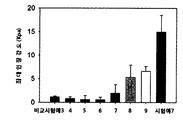
- Figure 4 is a graph showing the results for the adhesive strength of the hydrogel measured by Comparative Test Examples 3 to 9 and Test Example 7.
- Figure 5 is a graph showing the results for the hemostatic effect of the hydrogel measured in Comparative Test Examples 10, 11, Control and Test Example 8.
- chitosan 300 0.5 g was dissolved in 50 ml of 0.1 M HCl solution to prepare a chitosan solution adjusted to maintain a pH of 5 using 1 M NaOH.
- Dialysis was performed using dialysis membrane (MWCO: 12,000-14,000, SpectraPor) for 2 days at pH 5 and dialysis in tertiary distilled water for 4 hours. After dialysis, the material was stored in a desiccator without moisture after freeze-drying. The catechol binding rate was confirmed using nuclear magnetic resonance spectroscopy and ultraviolet-visible spectrophotometer. A graph confirming the catechol group-bound chitosan through nuclear magnetic resonance spectroscopy is shown in FIG. 2, and it was confirmed that the binding rate of catechol per molecule of chitosan was 9.9%.
- the graph of the Pluronic with the thiol group bound through nuclear magnetic resonance spectroscopy is shown in FIG. 3, and the binding ratio of the thiol group per molecule of the Pluronic molecule was 78%.
- 0.1 g of catechol-bound chitosan prepared in Preparation Example 1 was dissolved in 10 g of a pH 7.4 PBS (Phosphate buffered saline) buffer solution to prepare a chitosan solution, and a Pluronic 2.4 having a thiol group bonded to the terminal prepared in Preparation Example 2 above.
- g was dissolved in 10 g of pH 7.4 PBS (Phosphate buffered saline) buffer to make a pluronic solution.
- 5 g of the chitosan solution and 5 g of the pluronic solution were mixed to prepare a hydrogel solution.
- the gelation phenomenon was confirmed by raising the temperature from 0 ° C. to 90 ° C. by 1 ° C. using a previously reported vial tilting technique.
- the hydrogel was prepared by visual observation at 4 ° C. to 37 ° C. for 5 minutes to become a gel in a state of no motion.
- 0.1 g of catechol-bound chitosan prepared in Preparation Example 1 was dissolved in 10 g of pH 7.4 PBS (Phosphate buffered saline) buffer solution to make a chitosan solution, and a Pluronic 3.2 having a thiol group bonded to the terminal prepared in Preparation Example 2 above.
- g was dissolved in 10 g of pH 7.4 PBS (Phosphate buffered saline) buffer solution, except that a pluronic solution was prepared in the same manner as in Example 1.
- 0.2 g of catechol-bound chitosan prepared in Preparation Example 1 was dissolved in 10 g of pH 7.4 PBS (Phosphate buffered saline) buffer solution to make a chitosan solution, and a pluronic 2.4 having a thiol group bonded to the terminal prepared in Preparation Example 2 above.
- g was dissolved in 10 g of pH 7.4 PBS (Phosphate buffered saline) buffer solution, except that a pluronic solution was prepared in the same manner as in Example 1.
- 0.2 g of catechol-bound chitosan prepared in Preparation Example 1 was dissolved in 10 g of pH 7.4 PBS (Phosphate buffered saline) buffer solution to make a chitosan solution, and a Pluronic 3.6 having a thiol group bonded to the terminal prepared in Preparation Example 2 above.
- g was dissolved in 10 g of pH 7.4 PBS (Phosphate buffered saline) buffer solution, except that a pluronic solution was prepared in the same manner as in Example 1.
- Example 2 Same as Example 1 except for using chitosan (chitosan 300) without using a catechol group bonded chitosan prepared in Preparation Example 1 and a thiol group bonded to the terminal prepared in Preparation Example 2 was performed.
- chitosan chitosan 300
- Example 2 The same procedure as in Example 1 was performed except that a pluronic ions having a thiol group bonded to the terminal prepared in Preparation Example 2 were not used.
- Example 2 The same procedure as in Example 1 was performed except that the catechol-bound chitosan prepared in Preparation Example 1 was not used.
- Chitosan (chitosan 300) is used instead of the catechol group bonded chitosan prepared in Preparation Example 1, and Pluronic (Pluronic F-127) instead of Pluronic with a thiol group bonded to the terminal prepared in Preparation Example 2.
- Pluronic F-127 instead of Pluronic with a thiol group bonded to the terminal prepared in Preparation Example 2.
- Example 2 The same procedure as in Example 1 was performed except that chitosan (chitosan 300) was used instead of the chitosan to which the catechol group prepared in Preparation Example 1 was bound.
- chitosan chitosan 300
- Example 2 Except for using the hydrogel prepared in Example 2 was carried out in the same manner as in Test Example 1 to confirm the results. After 12 hours, 100% remained by mass ratio, 100% after 1 day, 100% after 2 days, 100% after 7 days, 100% after 14 days, and 100% after 31 days.
- Example 3 Except for using the hydrogel prepared in Example 3 was carried out in the same manner as in Test Example 1 to confirm the results. After 12 hours, 100% remained by mass ratio, 100% after 1 day, 100% after 2 days, 95.91% after 7 days, 64.76% after 14 days, and 27.30% after 31 days.
- Example 3 Except for using the hydrogel prepared in Example 3 was carried out in the same manner as in Test Example 1 to confirm the results. After 12 hours, 100% remained by mass ratio, 100% after 1 day, 100% after 2 days, 100% after 7 days, 80.26% after 14 days, and 42.33% after 31 days. Through the test examples 1 to 4 it was confirmed that the hydrogel according to the present invention can control the erosion degree by varying the composition of the chitosan bonded to the catechol group and the pluronic bond bound to the thiol group.
- a rat subcutaneous model (BALB / c, 21-23 g, 8w, M) was introduced to measure the erosion of hydrogels in vivo. After injecting 500 ⁇ l of the hydrogel prepared in Example 1 into the rat subcutaneous, the erosion degree was measured by comparing the mass of the remaining hydrogel with the mass of the initial hydrogel over time. As a result of measuring the stability of the hydrogel in vivo based on the result of erosion in vitro, 100% of the hydrogel prepared in Example 1 remained in a mass ratio after 1 day, 100% after 7 days, and 81.28 after 14 days. %, 75.04% remained after 25 days.
- Example 2 Except for using the hydrogel prepared in Example 2 was carried out in the same manner as in Test Example 5 to confirm the results.
- the mass ratio remained 100% after one day, 100% after 7 days, 98.67% after 14 days, and 97.45% after 25 days.
- the hydrogel according to the present invention can control the erosion degree by varying the composition of the catechol group-linked chitosan and the thiol group-linked pluronic, and confirmed that it has excellent stability in vivo.
- the composition of the catechol group-linked chitosan and the thiol group-linked pluronic can control the erosion degree by varying the composition of the catechol group-linked chitosan and the thiol group-linked pluronic, and confirmed that it has excellent stability in vivo.
- a universal testing machine equipped with a 150 N load cell with a hydrogel holder was used to analyze tissue adhesion characteristics.
- the rat subcutaneous tissue was salivary gland examined using a 6 mm punch, which was attached to a cylindrical detector using a commercially available cyanoacrylate glue.
- 0.1 g of the hydrogel prepared in Example 1 was placed in a holder on the universal testing machine plate, and the cylindrical detector with subcutaneous tissue was pressed for 5 minutes with a force of 0.1 mN.
- the temperature of the holder portion was fixed at 37 °C, the tensile strength was measured while pulling this, the results are shown in Figure 4 below.
Landscapes
- Health & Medical Sciences (AREA)
- Chemical & Material Sciences (AREA)
- Life Sciences & Earth Sciences (AREA)
- Epidemiology (AREA)
- Animal Behavior & Ethology (AREA)
- General Health & Medical Sciences (AREA)
- Public Health (AREA)
- Veterinary Medicine (AREA)
- Surgery (AREA)
- Engineering & Computer Science (AREA)
- Materials Engineering (AREA)
- Medicinal Chemistry (AREA)
- Dispersion Chemistry (AREA)
- Dermatology (AREA)
- Oral & Maxillofacial Surgery (AREA)
- Transplantation (AREA)
- Biomedical Technology (AREA)
- Molecular Biology (AREA)
- Materials For Medical Uses (AREA)
- Chemical Kinetics & Catalysis (AREA)
- Polymers & Plastics (AREA)
- Organic Chemistry (AREA)
Abstract
Priority Applications (4)
| Application Number | Priority Date | Filing Date | Title |
|---|---|---|---|
| US14/239,538 US9433699B2 (en) | 2011-11-21 | 2011-11-21 | Hydrogel comprising catechol group-coupled chitosan or polyamine and poloxamer comprising thiol group coupled to end thereof, preparation method thereof, and hemostat using same |
| AU2011381641A AU2011381641B2 (en) | 2011-11-21 | 2011-11-21 | Hydrogel comprising catechol group-coupled chitosan or polyamine and poloxamer comprising thiol group coupled to end thereof, preparation method thereof, and hemostat using same |
| CA2849288A CA2849288C (fr) | 2011-11-21 | 2011-11-21 | Hydrogel comprenant un chitosan ou une polyamine couple(e) a un groupe catechol et un poloxamere comprenant un groupe thiol couple a son extremite, son procede de preparation, ethemostat l'utilisant |
| JP2014538685A JP5805882B2 (ja) | 2011-11-21 | 2011-11-21 | カテコール基が結合したキトサンまたはポリアミン及び末端にチオール基が結合したポロキサマーを含むヒドロゲル及びこれの製造方法及びこれを利用した止血剤 |
Applications Claiming Priority (2)
| Application Number | Priority Date | Filing Date | Title |
|---|---|---|---|
| KR10-2011-0121482 | 2011-11-21 | ||
| KR1020110121482A KR101301276B1 (ko) | 2011-11-21 | 2011-11-21 | 카테콜기가 결합된 키토산 또는 폴리아민 및 말단에 티올기가 결합된 폴락소머를 포함하는 하이드로젤 및 이의 제조방법 및 이를 이용한 지혈제 |
Publications (1)
| Publication Number | Publication Date |
|---|---|
| WO2013077476A1 true WO2013077476A1 (fr) | 2013-05-30 |
Family
ID=48469897
Family Applications (1)
| Application Number | Title | Priority Date | Filing Date |
|---|---|---|---|
| PCT/KR2011/008880 Ceased WO2013077476A1 (fr) | 2011-11-21 | 2011-11-21 | Hydrogel comprenant un chitosan ou une polyamine couplé(e) à un groupe catéchol et un poloxamère comprenant un groupe thiol couplé à son extrémité, son procédé de préparation, et hémostat l'utilisant |
Country Status (6)
| Country | Link |
|---|---|
| US (1) | US9433699B2 (fr) |
| JP (1) | JP5805882B2 (fr) |
| KR (1) | KR101301276B1 (fr) |
| AU (1) | AU2011381641B2 (fr) |
| CA (1) | CA2849288C (fr) |
| WO (1) | WO2013077476A1 (fr) |
Cited By (4)
| Publication number | Priority date | Publication date | Assignee | Title |
|---|---|---|---|---|
| CN107530477A (zh) * | 2015-04-03 | 2018-01-02 | 伊诺特纳皮株式会社 | 用具有引入的儿茶酚基团和氧化的儿茶酚基团的交联壳聚糖涂布的无出血注射针 |
| CN108865086A (zh) * | 2018-04-28 | 2018-11-23 | 中石化石油工程技术服务有限公司 | 一种强抑制、强胶结井壁稳定剂及其制备方法 |
| CN110420350A (zh) * | 2019-08-28 | 2019-11-08 | 深圳先进技术研究院 | 复合生物玻璃的粘附温敏水凝胶及其制备方法和应用 |
| US12258494B2 (en) | 2018-06-26 | 2025-03-25 | Samsung Electronics Co., Ltd. | Adhesive for pellicle, pellicle for photo mask and method for manufacturing the same |
Families Citing this family (46)
| Publication number | Priority date | Publication date | Assignee | Title |
|---|---|---|---|---|
| WO2014027042A2 (fr) * | 2012-08-17 | 2014-02-20 | Amsilk Gmbh | Utilisation de polypeptides à auto-assemblage en tant qu'adhésifs tissulaires |
| KR101542137B1 (ko) | 2013-12-02 | 2015-08-25 | 한국과학기술원 | 촉매를 포함하지 않는 하이드로겔의 제조방법 및 이에 의해 제조되는 하이드로겔 |
| KR101596369B1 (ko) * | 2014-04-29 | 2016-02-22 | 서울대학교 산학협력단 | 키토산 카테콜 합성물질을 이용한 췌장소도 막의 표면 개질 방법 |
| WO2015174643A1 (fr) * | 2014-05-15 | 2015-11-19 | 포항공과대학교 산학협력단 | Hydrogel contenant des nanofibres à surface traitée et son procédé de préparation |
| KR101791241B1 (ko) | 2014-06-17 | 2017-10-30 | 한국과학기술원 | 카테콜 아민 기반의 다기능성 필름 및 이의 제조 방법 |
| SG11201700292WA (en) | 2014-07-16 | 2017-02-27 | Univ Nanyang Tech | Biological tissue adhesive composition and method of preparation thereof |
| JP7042749B2 (ja) | 2016-03-24 | 2022-03-28 | ステマッターズ バイオテクノロジア エ メディシナ レジェネラティヴァ エスアー | ジェランガムヒドロゲル、調製物、方法、およびそれらの使用 |
| KR101818229B1 (ko) * | 2016-09-23 | 2018-01-12 | 한국과학기술원 | 즉각적인 지혈능을 보유한 무출혈 주사바늘의 제조방법 |
| KR102283811B1 (ko) * | 2016-09-28 | 2021-07-30 | 코오롱인더스트리 주식회사 | 퀴논 경화형 조성물 및 이를 포함하는 접착제 조성물 |
| WO2018062835A1 (fr) * | 2016-09-28 | 2018-04-05 | 코오롱인더스트리 주식회사 | Compositions durcissables à base de quinone et compositions adhésives les comprenant |
| KR102009240B1 (ko) | 2017-06-21 | 2019-08-09 | 한국세라믹기술원 | 키토산-플루로닉 복합체 및 이를 포함하는 나노운반체 |
| KR102351290B1 (ko) | 2017-09-07 | 2022-01-13 | 경북대학교 산학협력단 | 중금속 흡착용 키토산-젤라틴 하이드로겔의 제조방법 및 이에 따라 제조된 하이드로겔 |
| US12156791B2 (en) | 2017-12-29 | 2024-12-03 | Tricol Biomedical, Inc. | Chitosan dressing for control of bleeding in transurethral prostatectomy |
| US11660236B2 (en) * | 2017-12-29 | 2023-05-30 | Tricol Biomedical, Inc. | Delivery systems for control of bleeding in transurethral prostatectomy |
| US11608454B2 (en) * | 2018-05-14 | 2023-03-21 | University Of Connecticut | High performance adhesives; methods of making; and use |
| US20200087453A1 (en) * | 2018-09-19 | 2020-03-19 | Baxter International Inc. | Low swelling synthetic sealant |
| CN110343693B (zh) * | 2018-12-27 | 2022-09-20 | 华东理工大学 | 一种磁性固定化酶载体及其制备方法 |
| CN110156915A (zh) * | 2019-05-27 | 2019-08-23 | 北京科技大学 | 一种儿茶酚/n-甲基丙烯酰化壳聚糖衍生物及其制备方法 |
| KR102093839B1 (ko) * | 2019-05-28 | 2020-05-04 | (주)다림티센 | 지혈용 조성물 및 이를 포함하는 용기 |
| KR102236812B1 (ko) * | 2019-07-08 | 2021-04-06 | 서울과학기술대학교 산학협력단 | 생체적합성 고분자-하이드로젤 복합체 및 이의 제조방법 |
| CN111110853B (zh) * | 2019-12-16 | 2023-05-05 | 温州医科大学 | 生物粘附性的温敏材料及其制备方法和药物载体的应用 |
| KR102438006B1 (ko) | 2020-02-25 | 2022-08-30 | 주식회사 테라시온 바이오메디칼 | 다용도 지혈제 조성물 및 그 제조방법 |
| KR102164819B1 (ko) * | 2020-03-02 | 2020-10-13 | 주식회사 이노테라피 | 지혈용 기구 및 이의 제조방법 |
| CN112094375B (zh) * | 2020-03-12 | 2023-11-24 | 四川大学华西医院 | 一种粘性水凝胶及自粘性医用口罩及其制备方法 |
| CN111777773B (zh) * | 2020-07-01 | 2021-04-30 | 广东海洋大学 | 一种儿茶酚功能化壳聚糖/牡蛎肽温敏水凝胶的制备方法、产品及应用 |
| KR102521769B1 (ko) | 2020-07-20 | 2023-04-14 | 주식회사 테라시온바이오메디칼 | 국소 지혈 파우더 조성물 및 이의 제조방법 |
| CN112472865B (zh) * | 2020-12-03 | 2022-04-19 | 广东工业大学 | 一种温敏抗菌止血水凝胶及其制备方法和应用 |
| CN113101264B (zh) * | 2021-04-08 | 2022-05-03 | 西南交通大学 | 一种具有ros响应的水凝胶及其制备方法和应用 |
| CN113209365B (zh) * | 2021-05-31 | 2022-04-01 | 福州大学 | 一种多功能封闭止血伤口敷料及其制备方法 |
| US12421432B2 (en) | 2021-09-03 | 2025-09-23 | Korea Advanced Institute Of Science And Technology | Adhesive composition and method for preparing same |
| KR102728741B1 (ko) * | 2021-09-03 | 2024-11-11 | 한국과학기술원 | 접착제 조성물 및 이의 제조 방법 |
| KR102735801B1 (ko) | 2021-10-13 | 2024-12-03 | 연세대학교 산학협력단 | 페리틴 가교 방식을 도입한 지속적 자가 치유가 가능한 안정화된 카테콜기 수식 하이드로젤 |
| CN114209874A (zh) * | 2021-11-19 | 2022-03-22 | 江苏德威兰医疗器械股份有限公司 | 一种医用水凝胶粘合剂及其制备方法和用途 |
| CN114209877B (zh) * | 2021-12-20 | 2022-11-18 | 中国科学院重庆绿色智能技术研究院 | 一种以聚乙烯亚胺为凝胶基质的抗菌凝胶的制备方法 |
| CN114272433A (zh) * | 2021-12-25 | 2022-04-05 | 陕西科技大学 | 一种明胶基生物医用粘合剂及其制备方法 |
| CN114470313B (zh) * | 2022-01-28 | 2023-02-14 | 华南理工大学 | 一种仿生机械活性水凝胶粘合剂及其制备方法 |
| WO2024005601A1 (fr) | 2022-06-30 | 2024-01-04 | 씨제이제일제당(주) | Composition médicale |
| KR102891033B1 (ko) | 2022-06-30 | 2025-12-01 | 씨제이제일제당(주) | 의료용 조성물 |
| KR102879517B1 (ko) * | 2022-07-05 | 2025-11-03 | 광주과학기술원 | 분해조절 가능한 전기전도성의 주입형 하이드로젤 및 이의 제조방법 |
| KR102746983B1 (ko) * | 2022-08-10 | 2024-12-27 | 연세대학교 산학협력단 | 알데히드와 카테콜기가 도입된 전분 하이드로젤 및 이의 용도 |
| CN118271650A (zh) * | 2022-12-30 | 2024-07-02 | 广州迈普再生医学科技股份有限公司 | 自愈合水凝胶组合物、自愈合水凝胶及其制备方法和用途 |
| CN116942890B (zh) * | 2023-06-09 | 2024-04-02 | 西南交通大学 | 具有促伤口闭合的抗菌抗炎温敏性水凝胶及其制备方法 |
| CN117159786B (zh) * | 2023-08-30 | 2024-03-26 | 广州贝奥吉因生物科技股份有限公司 | 用于再生伤口愈合的生物活性水凝胶的制备方法 |
| CN117487196B (zh) * | 2023-11-14 | 2024-05-31 | 佛山科学技术学院 | 一种物理交联粘附性水凝胶及其一锅法制备方法和应用 |
| WO2025189171A1 (fr) * | 2024-03-08 | 2025-09-12 | Massachusetts Institute Of Technology | Hydrogels adhésifs réticulés par des liaisons catéchol-thiol |
| CN119587744A (zh) * | 2024-12-06 | 2025-03-11 | 西北大学 | 一种可粘附高效止血的重组胶原蛋白壳聚糖复合微球的制备方法 |
Citations (5)
| Publication number | Priority date | Publication date | Assignee | Title |
|---|---|---|---|---|
| KR20080017161A (ko) * | 2006-08-21 | 2008-02-26 | 광주과학기술원 | 다당류-기능화 나노입자 및 수화젤 담체를 포함하는복합체, 이를 포함하는 서방형 약물전달 제제, 뼈충진제 및이들의 제조방법 |
| JP2010512230A (ja) * | 2006-12-11 | 2010-04-22 | プルーロームド インコーポレイテッド | 灌流臓器止血法 |
| KR20100048751A (ko) * | 2008-10-31 | 2010-05-11 | 주식회사 동성바이오레인 | 스프레이 가능한 캡슐화된 기능성 미립자 조성물과 그 제조방법 |
| WO2011062227A1 (fr) * | 2009-11-20 | 2011-05-26 | 三井化学株式会社 | Composition pour la réparation de tissus osseux |
| KR20110066615A (ko) * | 2009-12-11 | 2011-06-17 | 주식회사 원바이오젠 | 유착방지막 용도의 키토산 함유 나노섬유시트 및 그 제조방법 |
Family Cites Families (8)
| Publication number | Priority date | Publication date | Assignee | Title |
|---|---|---|---|---|
| FR2707878A1 (fr) | 1993-07-21 | 1995-01-27 | Imedex | Nouvelles compositions adhésives à usage chirurgical. |
| DE4428851C2 (de) | 1994-08-04 | 2000-05-04 | Diagnostikforschung Inst | Eisen enthaltende Nanopartikel, ihre Herstellung und Anwendung in der Diagnostik und Therapie |
| US5510102A (en) | 1995-01-23 | 1996-04-23 | The Regents Of The University Of California | Plasma and polymer containing surgical hemostatic adhesives |
| US6200595B1 (en) | 1998-04-24 | 2001-03-13 | Kuraray Co., Ltd. | Medical adhesive |
| JP2000288079A (ja) | 1999-04-07 | 2000-10-17 | Toyobo Co Ltd | 生体組織用接着剤 |
| US6310188B1 (en) | 2000-01-24 | 2001-10-30 | Board Of Supervisors Of Louisiana State University And Agricultural And Mechanical College | Method for producing chitin or chitosan |
| US6991652B2 (en) | 2000-06-13 | 2006-01-31 | Burg Karen J L | Tissue engineering composite |
| US7976825B2 (en) | 2007-12-06 | 2011-07-12 | Janos Borbely | Cancer cell diagnosis by targeting delivery of nanodevices |
-
2011
- 2011-11-21 AU AU2011381641A patent/AU2011381641B2/en not_active Ceased
- 2011-11-21 CA CA2849288A patent/CA2849288C/fr active Active
- 2011-11-21 KR KR1020110121482A patent/KR101301276B1/ko active Active
- 2011-11-21 WO PCT/KR2011/008880 patent/WO2013077476A1/fr not_active Ceased
- 2011-11-21 US US14/239,538 patent/US9433699B2/en active Active
- 2011-11-21 JP JP2014538685A patent/JP5805882B2/ja not_active Expired - Fee Related
Patent Citations (5)
| Publication number | Priority date | Publication date | Assignee | Title |
|---|---|---|---|---|
| KR20080017161A (ko) * | 2006-08-21 | 2008-02-26 | 광주과학기술원 | 다당류-기능화 나노입자 및 수화젤 담체를 포함하는복합체, 이를 포함하는 서방형 약물전달 제제, 뼈충진제 및이들의 제조방법 |
| JP2010512230A (ja) * | 2006-12-11 | 2010-04-22 | プルーロームド インコーポレイテッド | 灌流臓器止血法 |
| KR20100048751A (ko) * | 2008-10-31 | 2010-05-11 | 주식회사 동성바이오레인 | 스프레이 가능한 캡슐화된 기능성 미립자 조성물과 그 제조방법 |
| WO2011062227A1 (fr) * | 2009-11-20 | 2011-05-26 | 三井化学株式会社 | Composition pour la réparation de tissus osseux |
| KR20110066615A (ko) * | 2009-12-11 | 2011-06-17 | 주식회사 원바이오젠 | 유착방지막 용도의 키토산 함유 나노섬유시트 및 그 제조방법 |
Cited By (6)
| Publication number | Priority date | Publication date | Assignee | Title |
|---|---|---|---|---|
| CN107530477A (zh) * | 2015-04-03 | 2018-01-02 | 伊诺特纳皮株式会社 | 用具有引入的儿茶酚基团和氧化的儿茶酚基团的交联壳聚糖涂布的无出血注射针 |
| EP3278820A4 (fr) * | 2015-04-03 | 2018-12-05 | Innotherapy Inc. | Aiguille d'injection ne provoquant pas de saignement, revêtue de chitosane réticulé possédant un groupe catéchol et un groupe catéchol oxydé |
| CN108865086A (zh) * | 2018-04-28 | 2018-11-23 | 中石化石油工程技术服务有限公司 | 一种强抑制、强胶结井壁稳定剂及其制备方法 |
| US12258494B2 (en) | 2018-06-26 | 2025-03-25 | Samsung Electronics Co., Ltd. | Adhesive for pellicle, pellicle for photo mask and method for manufacturing the same |
| CN110420350A (zh) * | 2019-08-28 | 2019-11-08 | 深圳先进技术研究院 | 复合生物玻璃的粘附温敏水凝胶及其制备方法和应用 |
| CN110420350B (zh) * | 2019-08-28 | 2021-10-22 | 深圳先进技术研究院 | 复合生物玻璃的粘附温敏水凝胶及其制备方法和应用 |
Also Published As
| Publication number | Publication date |
|---|---|
| KR101301276B1 (ko) | 2013-08-29 |
| AU2011381641B2 (en) | 2015-04-23 |
| AU2011381641A1 (en) | 2014-04-17 |
| US9433699B2 (en) | 2016-09-06 |
| CA2849288A1 (fr) | 2013-05-30 |
| JP5805882B2 (ja) | 2015-11-10 |
| US20140193360A1 (en) | 2014-07-10 |
| KR20130055847A (ko) | 2013-05-29 |
| JP2014530739A (ja) | 2014-11-20 |
| CA2849288C (fr) | 2016-03-22 |
Similar Documents
| Publication | Publication Date | Title |
|---|---|---|
| WO2013077476A1 (fr) | Hydrogel comprenant un chitosan ou une polyamine couplé(e) à un groupe catéchol et un poloxamère comprenant un groupe thiol couplé à son extrémité, son procédé de préparation, et hémostat l'utilisant | |
| KR101552387B1 (ko) | 약물전달용 가교물 하이드로 젤 및 그 하이드로 젤의 제조방법 | |
| Rahimnejad et al. | Mussel-inspired hydrogel tissue adhesives for wound closure | |
| US10982121B2 (en) | Zwitterionic crosslinked polymer-based adhesives | |
| AU2001238384B2 (en) | Delivery systems using preformed biodegradable polymer compositions and methods | |
| ES2581558T3 (es) | Matrices de gelatina elásticas no adhesivas | |
| CN113209363B (zh) | 一种粘附止血可注射壳聚糖凝胶及其制备方法与应用 | |
| US8211418B2 (en) | Protein-based polymer tissue adhesives for medical use | |
| WO2021177536A1 (fr) | Outil hémostatique et son procédé de fabrication | |
| WO2018080221A1 (fr) | Hydrogel biocompatible et procédé pour sa production | |
| WO2013036072A1 (fr) | Agent thérapeutique injectable contre l'arthrite | |
| WO2012057381A1 (fr) | Barrière anti-adhérence contenant des acides hyaluroniques et de la l-arginine | |
| KR20230026401A (ko) | 개량된 접착성 약물 담체 | |
| WO2019039858A1 (fr) | Composition adhésive, adhésif comprenant celle-ci et procédé de fabrication associé | |
| US12539349B2 (en) | Biocompatible tissue-adhesive polymers | |
| WO2025095562A1 (fr) | Hydrogel comprenant un polymère dérivé d'acide hyaluronique | |
| AU2016261108B2 (en) | Haemostatic compositions | |
| WO2025170166A1 (fr) | Composition hémostatique absorbable à base de gélatine réticulée destinée à être utilisée dans le corps | |
| CN110818915A (zh) | 一种聚乙二醇基水凝胶及其制备方法和应用 | |
| WO2026063717A1 (fr) | Composition adhésive médicale et son procédé de préparation | |
| WO2020242231A1 (fr) | Composition hémostatique et contenant associé | |
| KR20240008551A (ko) | 주사 가능한 pH-반응성 하이드로겔 | |
| WO2023182763A1 (fr) | Dérivé d'acide hyaluronique substitué par un aldéhyde modifié par un dérivé de phénol à terminaison amine, et utilisation associée | |
| EA048656B1 (ru) | Двойная гидрогелевая мультисшивающаяся гемостатическая композиция и способ ее изготовления | |
| Correia et al. | Biomaterials Advances |
Legal Events
| Date | Code | Title | Description |
|---|---|---|---|
| 121 | Ep: the epo has been informed by wipo that ep was designated in this application |
Ref document number: 11876097 Country of ref document: EP Kind code of ref document: A1 |
|
| ENP | Entry into the national phase |
Ref document number: 2014538685 Country of ref document: JP Kind code of ref document: A |
|
| WWE | Wipo information: entry into national phase |
Ref document number: 14239538 Country of ref document: US |
|
| ENP | Entry into the national phase |
Ref document number: 2849288 Country of ref document: CA |
|
| ENP | Entry into the national phase |
Ref document number: 2011381641 Country of ref document: AU Date of ref document: 20111121 Kind code of ref document: A |
|
| NENP | Non-entry into the national phase |
Ref country code: DE |
|
| 32PN | Ep: public notification in the ep bulletin as address of the adressee cannot be established |
Free format text: NOTING OF LOSS OF RIGHTS PURSUANT TO RULE 112(1) EPC (EPO FORM 1205A DATED 11/09/2014) |
|
| 122 | Ep: pct application non-entry in european phase |
Ref document number: 11876097 Country of ref document: EP Kind code of ref document: A1 |