WO2013111558A1 - Appareil de communication sans fil, programme de communication sans fil et procédé de communication sans fil - Google Patents
Appareil de communication sans fil, programme de communication sans fil et procédé de communication sans fil Download PDFInfo
- Publication number
- WO2013111558A1 WO2013111558A1 PCT/JP2013/000259 JP2013000259W WO2013111558A1 WO 2013111558 A1 WO2013111558 A1 WO 2013111558A1 JP 2013000259 W JP2013000259 W JP 2013000259W WO 2013111558 A1 WO2013111558 A1 WO 2013111558A1
- Authority
- WO
- WIPO (PCT)
- Prior art keywords
- cell
- identifier
- csg
- reselection
- wireless communication
- Prior art date
- Legal status (The legal status is an assumption and is not a legal conclusion. Google has not performed a legal analysis and makes no representation as to the accuracy of the status listed.)
- Ceased
Links
Images



Classifications
-
- H—ELECTRICITY
- H04—ELECTRIC COMMUNICATION TECHNIQUE
- H04W—WIRELESS COMMUNICATION NETWORKS
- H04W36/00—Hand-off or reselection arrangements
- H04W36/0005—Control or signalling for completing the hand-off
- H04W36/0055—Transmission or use of information for re-establishing the radio link
- H04W36/0061—Transmission or use of information for re-establishing the radio link of neighbour cell information
-
- H—ELECTRICITY
- H04—ELECTRIC COMMUNICATION TECHNIQUE
- H04W—WIRELESS COMMUNICATION NETWORKS
- H04W52/00—Power management, e.g. Transmission Power Control [TPC] or power classes
- H04W52/02—Power saving arrangements
- H04W52/0209—Power saving arrangements in terminal devices
- H04W52/0225—Power saving arrangements in terminal devices using monitoring of external events, e.g. the presence of a signal
- H04W52/0229—Power saving arrangements in terminal devices using monitoring of external events, e.g. the presence of a signal where the received signal is a wanted signal
-
- H—ELECTRICITY
- H04—ELECTRIC COMMUNICATION TECHNIQUE
- H04W—WIRELESS COMMUNICATION NETWORKS
- H04W52/00—Power management, e.g. Transmission Power Control [TPC] or power classes
- H04W52/02—Power saving arrangements
- H04W52/0209—Power saving arrangements in terminal devices
- H04W52/0225—Power saving arrangements in terminal devices using monitoring of external events, e.g. the presence of a signal
- H04W52/0241—Power saving arrangements in terminal devices using monitoring of external events, e.g. the presence of a signal where no transmission is received, e.g. out of range of the transmitter
-
- H—ELECTRICITY
- H04—ELECTRIC COMMUNICATION TECHNIQUE
- H04W—WIRELESS COMMUNICATION NETWORKS
- H04W52/00—Power management, e.g. Transmission Power Control [TPC] or power classes
- H04W52/02—Power saving arrangements
- H04W52/0209—Power saving arrangements in terminal devices
- H04W52/0225—Power saving arrangements in terminal devices using monitoring of external events, e.g. the presence of a signal
- H04W52/0245—Power saving arrangements in terminal devices using monitoring of external events, e.g. the presence of a signal according to signal strength
-
- H—ELECTRICITY
- H04—ELECTRIC COMMUNICATION TECHNIQUE
- H04W—WIRELESS COMMUNICATION NETWORKS
- H04W8/00—Network data management
- H04W8/18—Processing of user or subscriber data, e.g. subscribed services, user preferences or user profiles; Transfer of user or subscriber data
- H04W8/186—Processing of subscriber group data
-
- Y—GENERAL TAGGING OF NEW TECHNOLOGICAL DEVELOPMENTS; GENERAL TAGGING OF CROSS-SECTIONAL TECHNOLOGIES SPANNING OVER SEVERAL SECTIONS OF THE IPC; TECHNICAL SUBJECTS COVERED BY FORMER USPC CROSS-REFERENCE ART COLLECTIONS [XRACs] AND DIGESTS
- Y02—TECHNOLOGIES OR APPLICATIONS FOR MITIGATION OR ADAPTATION AGAINST CLIMATE CHANGE
- Y02D—CLIMATE CHANGE MITIGATION TECHNOLOGIES IN INFORMATION AND COMMUNICATION TECHNOLOGIES [ICT], I.E. INFORMATION AND COMMUNICATION TECHNOLOGIES AIMING AT THE REDUCTION OF THEIR OWN ENERGY USE
- Y02D30/00—Reducing energy consumption in communication networks
- Y02D30/70—Reducing energy consumption in communication networks in wireless communication networks
Definitions
- the present invention relates to a wireless communication apparatus, a wireless communication program, and a wireless communication method.
- the CSG (Closed Subscriber Group: Limited Subscriber Group) function defined in 3GPP (3rd Generation Partnership Project: 3rd Generation Mobile Phone Partnership Project) specifications provides connectivity between wireless communication terminals, CSG cells, and networks. Emphasis on it. For this reason, the specifications often do not clarify specific operations regarding the power saving function of the wireless communication terminal and the efficiency of the cell selection procedure. Such an operation that has not been clarified (hereinafter referred to as an unknown operation) leads to excessive power consumption and sluggish cell selection.
- 3GPP 3rd Generation Partnership Project: 3rd Generation Mobile Phone Partnership Project
- the CSG function defined in the 3GPP specifications is described below.
- the CSG cell automatic detection function is a CSG cell that is not included in the broadcast information from the serving cell as a neighbor cell in the standby state in RRC (Radio Resource Control: Radio Resource Control). It is a function to detect.
- RRC Radio Resource Control: Radio Resource Control
- RRC is defined in the specification 3GPP TS25.331 and the specification 3GPP TS36.331.
- the CSG cell to be detected is a CSG cell having a CSG ID that is allowed to be accessed by the operator. That is, this CSG cell is a cell having a CSG ID included in an Allowed CSG list and an Operator CSG list defined in the specification 3GPP TS 23.122. Alternatively, the CSG cell to be detected is a CSG cell that has been in the past.
- the wireless communication terminal detects a nearby CSG cell using the CSG cell automatic detection function, and can select the CSG cell.
- a wireless communication terminal when a wireless communication terminal is located in a non CSG cell (a cell that is not a CSG), it uses the automatic detection function to detect nearby CSG cells and then reselects the CSG cell. There is a provision to do. However, there is no particular provision that the wireless communication terminal uses the automatic detection function for detecting another CSG cell when located in the CSG cell. Thus, the automatic detection function may or may not be used. This is one of unknown operations.
- a CSG cell of a RAT different from the currently used RAT Radio Access Technology: radio access method
- the radio communication terminal reselects the detected CSG cell. There is no particular rule. Accordingly, the detected CSG cells of different RATs may or may not be reselected. This is one of unknown operations.
- the CSG cell different from the user's wish since the CSG cell different from the user's wish is reselected, the user cannot enjoy the service with the expected CSG. Furthermore, when the CSG cell automatic detection function is activated when the CSG cell is in the area, when there are a plurality of CSG cells whose radio wave intensity levels are close to each other, the radio communication terminal repeats reselection between the CSG cells. This operation consumes power unnecessarily. Therefore, unconditionally operating the CSG cell automatic detection function when the CSG cell is in the area causes an undesirable problem in terms of power saving.
- the wireless communication terminal when the wireless communication terminal is set not to use the CSG cell automatic detection function when the CSG cell is in the service area, there may be a situation where the user must continue to be in the CSG cell different from the user's desire. Therefore, the wireless communication terminal should operate automatic detection of the CSG cell when necessary (when it is desired to be located in a CSG cell more appropriate for the user).
- the operation when the CSG cell is detected by a RAT different from the RAT currently used when the CSG cell is located in the wireless communication terminal causes the same problem. That is, if reselection of a RAT different from the currently used RAT operates unconditionally, the CSG cell is reselected even when reselection of the CSG cell is unnecessary. As a result, power is consumed unnecessarily.
- Patent Literature 1 states that the control unit of the user apparatus has a condition that the state in which the signal quality from the CSG cell is better than the signal quality from the serving cell by a predetermined threshold or more continues for a predetermined reselection period. , Determining whether to reselect a CSG cell is disclosed. The technique disclosed in Patent Document 1 reduces power consumption due to reselection by this method.
- Patent Document 2 suppresses useless switching of a visited system by switching the visited system when there is no outgoing call restriction in the mobile communication system to which the visited system is switched. .
- Patent Document 3 discloses a mobile device that uses its own search function to respond to external input, modify its function, and optimize the search method for the environment.
- Patent Document 1 defines reselection conditions, but does not disclose anything about the automatic detection function of a CSG cell. Therefore, even if this method is effective for power saving in reselection, the power consumption generated by the automatic detection function cannot be suppressed. Moreover, since the measurement of the radio wave quality in the reselection requires electric power, it is not a complete power saving.
- Patent Document 2 defines switching conditions for a visited system, but does not disclose a CSG cell automatic detection function. Therefore, even if this method is effective for power saving in switching the visited system, it is not possible to suppress power consumption generated by the automatic detection function of the CSG cell.
- Patent Document 3 discloses a spontaneous search function corresponding to an automatic detection function. However, there is no disclosure about suppression of the operation.
- An object of the present invention is to solve the above-described problems and to save power in a wireless communication terminal.
- cell identifying means for identifying an identifier of a cell that is located;
- Control means for controlling the detection and stop of the cells around the cell in the service area, or the operation of the cell reselection and the stop thereof;
- a non-target cell identifier recorded in an ID table for registering an identifier of a non-target cell that is a cell that stops the detection or a cell that stops the reselection when being in the service area, And a determination unit that outputs a determination result based on the comparison, and the control unit, based on the determination result of the determination unit, the detection or the Control reselection is obtained.
- a cell identification process that identifies an identifier of a cell that is located;
- a control process for controlling the detection and stop of the cells around the cell that is in the area, or the operation of the cell reselection and the stop thereof;
- a non-target cell identifier recorded in an ID table that records an identifier of a non-target cell that is a cell that stops the detection or a cell that stops the reselection at the time of being in the service area, and the area that is specified by the cell identification process
- a determination process for comparing the cell identifier of the serving cell that is the identifier of the cell being output and outputting a determination result; Based on the determination result of the determination process, a wireless communication program that causes the computer to execute the control process that operates the detection or the reselection is obtained.
- the identifier of the cell that is located is specified, Detecting and stopping cells around the cell that is in the area, or controlling the operation of cell reselection and its stop, A non-target cell identifier recorded in an ID table for registering an identifier of a non-target cell that is a cell that stops the detection or a cell that stops the reselection when in the service area, and an identifier of the cell that is in the service area Judgment is made by comparing with the serving cell identifier, Based on the result of this determination, a wireless communication method for operating the detection or the reselection is obtained.
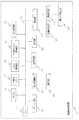
- FIG. 1 is a diagram illustrating a circuit configuration of the wireless communication apparatus according to the first embodiment.
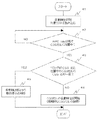
- FIG. 2 is a diagram illustrating an operation flow for limiting the automatic detection of the CSG cell according to the first embodiment.
- FIG. 3 is a diagram illustrating an operation flow for restricting reselection of the CSG cell according to the first embodiment.
- FIG. 4 is a diagram illustrating a flow of an operation for limiting automatic detection of the CSG cell according to the second embodiment.
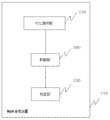
- FIG. 5 is a diagram illustrating a circuit configuration of a wireless communication apparatus according to the third embodiment.
- FIG. 6 is a diagram illustrating a second circuit configuration of the wireless communication apparatus according to the first embodiment.
- FIG. 1 shows a main part of a circuit configuration of a wireless communication apparatus according to the first embodiment of the present invention.
- the wireless communication device 11 of this embodiment is equipped with a CPU 12 (CPU: Central Processor Unit, central processing unit).
- the CPU 12 is connected to each unit in the apparatus via the bus 13.
- the CPU 12 causes the automatic detection control unit 24 to perform control of automatic detection of the CSG cell.
- the CPU 12 causes the reselection control unit 26 to execute control of reselection of the CSG cell.
- the CPU 12 causes the determination unit 23 to register the CSG ID registered in the list for controlling access to the CSG cell stored in the nonvolatile memory control unit 16 and the CSG of the cell in the area identified by the cell identification unit 22. Comparison with ID is executed. Thereby, the determination part 23 outputs the determination result based on comparison. Subsequently, the CPU 12 issues a command to the automatic detection unit control unit 24 and the reselection control unit 26 based on the determination result from the determination unit 23. Further, the CPU 12 updates, deletes, and adds data registered in this list in response to an input from the key input unit 18.
- ROM 14 Read Only Memory: read-only memory
- ROM Read Only Memory
- the USIM control unit 15 and the non-volatile memory control unit 16 manage a non-volatile memory area in which the Allowed CGS list and the Operator CSG list are stored in order to realize the CSG function.
- the Allowed CGS list and the Operator CSG list are defined in the specification 3GPP TS31.102.
- USIM is an abbreviation for Universal Subscriber Identity Module, and is an IC card used in conjunction with 3G mobile phones.
- the Allowed CSG list and the Operator CSG list are created according to the specification 3GPP TS23.122. These are used when the automatic detection unit 25 executes the CSG cell automatic detection function and the reselection unit 27 executes the CSG cell reselection operation function.
- a list of non-target cells that is, a list for suppressing automatic detection of a CSG cell, and a list for suppressing reselection of a RAT different from the RAT in use to a CSG cell are: It is stored in the nonvolatile memory control unit 16.
- the list for suppressing automatic detection of a CSG cell is a record of identifiers (CSG IDs) of CSG cells that are not automatically detected when the cell is located (hereinafter referred to as automatic). Also called a detection suppression target list).
- the list for suppressing reselection of a RAT different from the RAT being used into the CSG cell is that if the RAT is located in that cell, the reselection of the CSG cell of the RAT different from the RAT being used is performed.
- This is a record of CSG ID that is not performed.
- this list is also referred to as a reselection suppression target list.
- a CSG ID that is not automatically detected and a CSG ID that does not reselect a CSG cell of a different RAT are also referred to as non-target cell identifiers.
- non-target cell identifiers a list in which IDs (identifiers) of non-target cells that are cells that stop detection or cells that stop reselection when registered are registered may be called an ID table.
- the working memory 17 is composed of a RAM (Random Access Memory), and stores data temporarily required for the CPU 12 to execute the program.
- the CSG ID (Identification) information of the CSG to be detected in the automatic detection of the CSG cell is stored in a predetermined area of the work memory 17.
- the work memory 17 may store other information.
- the key input unit 18 is an input circuit that receives key input from the user.
- the display control unit 19 is a control circuit that controls display on the display unit 20.
- the display unit 20 is disposed on the front surface of the apparatus main body (not shown).
- the display unit 20 is a black-and-white or color liquid crystal panel or an organic EL (EL: Electro-Luminescence) display device.
- the display unit 20 may be a display device other than a liquid crystal panel or an organic EL.
- the transmitting / receiving unit 21 is a circuit that transmits and receives data wirelessly.
- the cell identification unit 22 identifies the cell ID (located cell identifier) of the cell where the wireless communication device 11 is located.
- the automatic detection unit 25 automatically detects the CSG cell and stores the detected CSG ID.
- the automatic detection control unit 24 controls the operation of the automatic detection unit 25.
- the different RAT detection unit 28 detects a RAT different from the RAT being used.
- the reselection unit 27 selects the RAT detected by the different RAT detection unit 28.
- the reselection control unit 26 controls the operation of the reselection unit 27.
- a control unit 29 having both functions may be used.
- FIG. 2 shows an operation flow for limiting automatic detection of CSG cells used in the present embodiment.
- FIG. 3 shows an operation flow for limiting reselection of the CSG cell used in the present embodiment.
- the operation for restricting automatic detection of the CSG cell shown in FIG. 2 and the operation for restricting reselection of a RAT different from the RAT in use shown in FIG. 3 can be performed independently of each other.
- the CPU 12 of the wireless communication device 11 reads a list for suppressing automatic detection of CSG cells (hereinafter referred to as an automatic detection suppression target list) from the nonvolatile memory control unit 16 (step 41). .
- the target of a specific CSG ID registered in the list for suppressing automatic detection of CSG cells is 1), 2) or 3) below.
- the CPU 12 stores the data of the operator CSG list or the manual CSG selection (selection) input via the transmission / reception unit 21 in the USIM control unit 15 and the nonvolatile memory control unit 16.
- the CPU 12 uses the CSG ID of 2) enables autonomous list management.
- 3) is manual management in which the user and the operator directly update the list.
- the operator CSG list of 1) is a list specified in the specification 3GPP TS23.122 and the specification 3GPP TS31.102. This list is a list indicating which CSG cells the business operator can access for each user, and is registered in advance in the USIM control unit 15 or the nonvolatile memory control unit 16.
- Manual CSG selection is an operation specified in the specification 3GPP TS23.122. In this operation, the CSG ID of the peripheral CSG cell is shown to the user, and when the user specifies the CSG ID, the user can access the CSG cell desired by the user.
- the content of 1) is a list
- the content of the list is the same as the operator CSG list managed by the USLM control unit 15 and the nonvolatile memory control unit 16 in the wireless communication device 11.
- the CPU 12 selects the Manual CSG of the specification 3GPP TS23.122, and temporarily stores the resulting CSG ID specified by the user in the work memory 17. Memorize. This CSG ID is added to the list.
- the contents of 3) are set as a list, the list is constructed by the user and the operator appropriately rewriting the list managed by the nonvolatile memory control unit 16 or adding an arbitrary CSG ID to the list. Is done.
- the CPU 12 causes the cell identification unit 22 to specify the ID of the cell in which the wireless communication device 11 is located, and determines whether this cell is a CSG cell.
- the cell identification unit 22 identifies the ID of the cell that is in the area, and determines whether this ID is the ID of the CSG cell (step 42). This determination is made with reference to information on the Allowed CSG List and the Operator CSG List managed by the USIM control unit 15 and the nonvolatile memory control unit 16.
- step 42 determines that the cell in the service area is a CSG cell (step 42, YES)
- the CPU 12 performs the operation of step 43. That is, the CPU 12 causes the determination unit 23 to determine whether any of the CSG IDs registered in the automatic detection suppression list is equal to the ID of the cell in the area in the RRC IDLE state (step 43).
- the CPU 12 causes the cell identification unit 22 to continue the determination process.
- step 43 if the CSG ID in the list includes a CSG ID that matches the CSG ID of the CSG cell being located, the CPU 12 causes the automatic detection control unit 24 to stop the operation of the automatic detection unit 25. (Step 45, step 43 YES).
- step 43 if there is no CSG in the list that matches the CSG ID of the CSG cell being located, the CPU 12 instructs the automatic detection control unit 24 to operate the automatic detection unit 25. To do. Receiving this instruction, the automatic detection control unit 24 operates the automatic detection unit 25 to automatically detect the CSG cells around the CSG cell being located (NO in Step 44 and Step 43).
- the automatic detection unit 25 operates only when the CSG ID in the list does not have a CSG that matches the CSG ID of the CSG cell in the service area. Therefore, compared with the case where the automatic detection part 25 is operated by any CSG ID, this embodiment can achieve power saving of the wireless communication device 11.
- the CPU 12 of the wireless communication device 11 generates a list (hereinafter, reselection suppression list) for suppressing reselection of a CAT cell of a RAT different from the currently used RAT from the nonvolatile memory control unit 16.
- the reselection suppression list uses any of the above 1) to 3) as in the case of the automatic detection suppression list (step 61).
- the CPU 12 causes the cell identification unit 22 to specify the ID of the cell in which the wireless communication device 11 is located, and determines whether this cell is a CSG cell.
- the cell identification unit 22 identifies the ID of the cell that is in the area, and determines whether this ID is the ID of the CSG cell (step 62).
- the cell identification unit 22 makes this determination with reference to information on the Allowed CSG List and the Operator CSG List managed by the USIM control unit 15 and the nonvolatile memory control unit 16.
- the CPU 12 When the cell identification unit 22 determines that the cell being located is a CSG cell (step 62, YES), the CPU 12 subsequently detects a CSG cell of a RAT different from the RAT that the different RAT detection unit 28 is using. It is determined whether or not it has been done (step 63).
- the CPU 12 determines whether or not the CSG cell having the CSG ID corresponding to the CSG ID registered in the reselection suppression list is present (step). 64).
- step 63, NO If no CSG is detected with a different RAT (step 63, NO), the processing from step 62 is repeated. If a CSG is detected with a different RAT (step 63, YES), the CPU 12 causes the determination unit 23 to have one of the CSG IDs registered in the reselection suppression list in the RRC IDLE state, and the ID of the cell in the same area. (Step 64).
- the CPU 12 When the CSG ID registered in the reselection suppression list matches the CSG ID of the CSG cell in the service area, the CPU 12 outputs an instruction not to cause the reselection unit 27 to reselect the detected CSG cell ( Step 66, Step 64 YES).
- the CPU 12 causes the reselection unit 27 to reselect the detected CSG cell (step 65, step 64). NO).
- the automatic detection control unit 24 and the reselection control unit 26 are separated from each other.
- the wireless communication apparatus 11 replaces the automatic detection control unit 24 and the reselection control unit 26 with a control unit 29 that integrates the functions of the automatic detection control unit 24 and the reselection control unit 26.
- the basic configuration of the second embodiment of the present invention is the same as that of the first embodiment.
- the difference from the first embodiment is that additional information is provided in a list of CSG IDs that suppress automatic detection of CSG cells. Specifically, as an example, RAT information attached to the CSG ID is added to the list of CSG IDs that suppress automatic detection of CSG cells as an extended function.
- FIG. 4 shows a flow for controlling automatic detection of CSG cells based on the CSG ID and RAT information.
- the list handled in step 81 has a CSG ID and RAT information associated with the CSG ID.
- the RAT information is added to the CSG ID of the automatic detection suppression target list in step 41 of FIG. 2 in the automatic detection suppression target list used in step 81 of FIG.
- Step 83 in FIG. 4 differs from step 43 in FIG. 2 in that the CPU 12 determines whether or not the target is to suppress automatic detection of the CSG cell based on the RAT information as well as the CSG ID.
- the operations in steps 82, 84 and 85 in FIG. 4 are the same as the operations in steps 42, 44 and 45 in FIG.
- the automatic detection of the CSG cell has been described.
- the CPU 12 can control the reselection operation to the CSG cell of a different RAT when the CSG cell is in the area, based on the RAT information.
- the RAT information is added to the list of CSG IDs that suppress reselection of a different RAT to a CSG cell.
- the information that can be added is not limited to RAT information.
- Automatic detection unit 22 only when the CSG ID registered in the list of CSG IDs for which automatic detection is suppressed and the CSG ID of the cell in the area match by adding the time zone information. In addition, it is possible to suppress automatic detection of CSG cells.
- the following can be applied to the method of registering and deleting a CSG ID list that suppresses automatic detection of CSG cells or a list of CSG IDs that suppress reselection to a CSG cell of a different RAT.
- the cell identification unit 22 counts the number of times the CSG cell per unit time is in each CSG ID. When the number of times of presence exceeds the threshold, the CSG ID is registered in the ID table. In addition, when the threshold is set separately, the CSG ID is deleted from the ID table.
- FIG. 3 A third embodiment of the present invention is illustrated by FIG.
- the cell identification unit 220 that identifies the identifier of the cell that is in the area, and the detection and the stop of the cell around the cell that is in the area, or the operation and the stop of the cell reselection are performed.
- the control unit 290 that controls the cell, the non-target cell identifier recorded in the ID table that registers the identifier of the non-target cell that is the cell that stops detection or the cell that stops reselection when located, and the cell identification unit 220 identifies A determination unit 230 that compares a cell identifier that is an identifier of a cell that has been in the service area and outputs a determination result based on the comparison, and the control unit 290 is based on the determination result of the determination unit 230
- the wireless communication device 110 controls the detection or the reselection.
- Wireless communication device CPU 13 bus 14 ROM DESCRIPTION OF SYMBOLS 15 USIM control part 16 Nonvolatile memory control part 17 Work memory 18 Key input part 19 Display control part 20 Display part 21 Transmission / reception part 22 Cell identification part 23 Judgment part 24 Automatic detection control part 25 Automatic detection part 26 Reselection control part 27 Re Selection unit 28 Different RAT detection unit 29 Control unit 110 Wireless communication device 220 Cell identification unit 230 Determination unit 290 Control unit
Landscapes
- Engineering & Computer Science (AREA)
- Computer Networks & Wireless Communication (AREA)
- Signal Processing (AREA)
- Mobile Radio Communication Systems (AREA)
Priority Applications (2)
| Application Number | Priority Date | Filing Date | Title |
|---|---|---|---|
| US14/373,771 US20150031362A1 (en) | 2012-01-23 | 2013-01-21 | Wireless communication apparatus, wireless communication program and wireless communication method |
| EP13740677.3A EP2809108A4 (fr) | 2012-01-23 | 2013-01-21 | Appareil de communication sans fil, programme de communication sans fil et procédé de communication sans fil |
Applications Claiming Priority (2)
| Application Number | Priority Date | Filing Date | Title |
|---|---|---|---|
| JP2012011077 | 2012-01-23 | ||
| JP2012-011077 | 2012-01-23 |
Publications (1)
| Publication Number | Publication Date |
|---|---|
| WO2013111558A1 true WO2013111558A1 (fr) | 2013-08-01 |
Family
ID=48873290
Family Applications (1)
| Application Number | Title | Priority Date | Filing Date |
|---|---|---|---|
| PCT/JP2013/000259 Ceased WO2013111558A1 (fr) | 2012-01-23 | 2013-01-21 | Appareil de communication sans fil, programme de communication sans fil et procédé de communication sans fil |
Country Status (4)
| Country | Link |
|---|---|
| US (1) | US20150031362A1 (fr) |
| EP (1) | EP2809108A4 (fr) |
| JP (1) | JPWO2013111558A1 (fr) |
| WO (1) | WO2013111558A1 (fr) |
Citations (10)
| Publication number | Priority date | Publication date | Assignee | Title |
|---|---|---|---|---|
| JP2007088605A (ja) * | 2005-09-20 | 2007-04-05 | Nec Corp | 移動通信端末及びセルの切り替え制御方法 |
| WO2009150943A1 (fr) * | 2008-06-11 | 2009-12-17 | シャープ株式会社 | Dispositif de station mobile, dispositif de station de base, et système de communication mobile |
| JP2010041652A (ja) * | 2008-08-08 | 2010-02-18 | Fujitsu Ltd | 端末装置、基地局装置検出方法、無線通信システム、及び基地局装置 |
| WO2010052843A1 (fr) * | 2008-11-04 | 2010-05-14 | 三菱電機株式会社 | Système de communication mobile |
| JP2010141669A (ja) | 2008-12-12 | 2010-06-24 | Ntt Docomo Inc | 移動端末及び通信方法 |
| WO2010082874A1 (fr) * | 2009-01-14 | 2010-07-22 | Telefonaktiebolaget L M Ericsson (Publ) | Distribution d'informations de contrôle d'accès dans un réseau |
| JP2010273381A (ja) | 2010-08-05 | 2010-12-02 | Ntt Docomo Inc | 移動通信システムにおけるユーザ装置 |
| WO2010150884A1 (fr) * | 2009-06-26 | 2010-12-29 | 株式会社エヌ・ティ・ティ・ドコモ | Procédé de communication mobile, station mobile et station de base sans fil |
| JP2011044848A (ja) * | 2009-08-20 | 2011-03-03 | Fujitsu Ltd | 移動通信端末、通信システムおよび通信方法 |
| JP2011130442A (ja) | 2009-12-15 | 2011-06-30 | Kotatsu Kokusai Denshi Kofun Yugenkoshi | Lte環境で異なるモード下の自発検索を管理する方法及びシステム |
Family Cites Families (7)
| Publication number | Priority date | Publication date | Assignee | Title |
|---|---|---|---|---|
| US9049651B2 (en) * | 2006-08-25 | 2015-06-02 | Qualcomm Incorporated | Selection of an access point in a communications system |
| KR101249897B1 (ko) * | 2008-09-26 | 2013-04-03 | 노키아 지멘스 네트웍스 오와이 | 폐쇄 가입자 그룹 액세스 제어를 제공하기 위한 방법, 장치 및 컴퓨터 판독가능 저장 매체 |
| US8467793B2 (en) * | 2008-10-31 | 2013-06-18 | Nokia Corporation | Mobility for user equipment in closed subscriber group environment |
| US8995998B2 (en) * | 2008-11-07 | 2015-03-31 | Qualcomm Incorporated | Optimized signaling of primary scrambling codes and frequency lists in wireless communications |
| US8553616B2 (en) * | 2009-09-22 | 2013-10-08 | Htc Corporation | Method for reducing closed subscriber group identity comparison |
| KR20110048468A (ko) * | 2009-11-02 | 2011-05-11 | 엘지전자 주식회사 | 무선 통신 시스템에서 csg 셀을 검출하는 방법 및 이를 위한 장치 |
| US8831678B2 (en) * | 2011-08-03 | 2014-09-09 | Qualcomm Incorporated | Method and systems for power savings by controlling a first radio based on a second radio |
-
2013
- 2013-01-21 WO PCT/JP2013/000259 patent/WO2013111558A1/fr not_active Ceased
- 2013-01-21 US US14/373,771 patent/US20150031362A1/en not_active Abandoned
- 2013-01-21 JP JP2013555190A patent/JPWO2013111558A1/ja not_active Withdrawn
- 2013-01-21 EP EP13740677.3A patent/EP2809108A4/fr not_active Withdrawn
Patent Citations (10)
| Publication number | Priority date | Publication date | Assignee | Title |
|---|---|---|---|---|
| JP2007088605A (ja) * | 2005-09-20 | 2007-04-05 | Nec Corp | 移動通信端末及びセルの切り替え制御方法 |
| WO2009150943A1 (fr) * | 2008-06-11 | 2009-12-17 | シャープ株式会社 | Dispositif de station mobile, dispositif de station de base, et système de communication mobile |
| JP2010041652A (ja) * | 2008-08-08 | 2010-02-18 | Fujitsu Ltd | 端末装置、基地局装置検出方法、無線通信システム、及び基地局装置 |
| WO2010052843A1 (fr) * | 2008-11-04 | 2010-05-14 | 三菱電機株式会社 | Système de communication mobile |
| JP2010141669A (ja) | 2008-12-12 | 2010-06-24 | Ntt Docomo Inc | 移動端末及び通信方法 |
| WO2010082874A1 (fr) * | 2009-01-14 | 2010-07-22 | Telefonaktiebolaget L M Ericsson (Publ) | Distribution d'informations de contrôle d'accès dans un réseau |
| WO2010150884A1 (fr) * | 2009-06-26 | 2010-12-29 | 株式会社エヌ・ティ・ティ・ドコモ | Procédé de communication mobile, station mobile et station de base sans fil |
| JP2011044848A (ja) * | 2009-08-20 | 2011-03-03 | Fujitsu Ltd | 移動通信端末、通信システムおよび通信方法 |
| JP2011130442A (ja) | 2009-12-15 | 2011-06-30 | Kotatsu Kokusai Denshi Kofun Yugenkoshi | Lte環境で異なるモード下の自発検索を管理する方法及びシステム |
| JP2010273381A (ja) | 2010-08-05 | 2010-12-02 | Ntt Docomo Inc | 移動通信システムにおけるユーザ装置 |
Non-Patent Citations (1)
| Title |
|---|
| See also references of EP2809108A4 * |
Also Published As
| Publication number | Publication date |
|---|---|
| EP2809108A4 (fr) | 2015-10-14 |
| US20150031362A1 (en) | 2015-01-29 |
| EP2809108A1 (fr) | 2014-12-03 |
| JPWO2013111558A1 (ja) | 2015-05-11 |
Similar Documents
| Publication | Publication Date | Title |
|---|---|---|
| KR102176643B1 (ko) | 다중 sim 휴대 장치에서 소비전력 최적화 방법 및 시스템 | |
| US11388600B2 (en) | Method and electronic device for automatically switching among plurality of profiles in ESIM | |
| US10425796B2 (en) | Radio access technology searching method and apparatus for emergency call in terminal supporting a plurality of communication networks | |
| EP3627863A1 (fr) | Procédé de resélection de cellule et dispositif associé | |
| US10069961B2 (en) | Terminal operating mode adjustment method and apparatus and computer readable storage medium | |
| US10045286B2 (en) | Method and apparatus for selecting network | |
| CN112020152A (zh) | 一种数据处理方法、装置及终端设备 | |
| JP5741095B2 (ja) | 無線通信装置および省電力制御方法 | |
| CN113348697B (zh) | 无线通信方法、装置及系统 | |
| JP6700403B2 (ja) | 無線通信端末の送信電力を制御する方法及び無線通信端末 | |
| CN106413036B (zh) | 一种网络接入处理方法及终端设备 | |
| US9974010B2 (en) | System and method for establishing network connection and terminal having the system | |
| CN107182113B (zh) | 多模移动终端的连网控制方法、装置及移动终端 | |
| CN115134797B (zh) | 紧急服务的处理方法、网络侧设备及终端 | |
| CN107925938A (zh) | 管理双接收多订制多待机通信设备中的小区选择 | |
| CN106792638A (zh) | 网络连接方法及终端 | |
| WO2017185882A1 (fr) | Procédé de commutation de réseau et terminal mobile | |
| CN111372299B (zh) | 一种搜网列表生成方法、搜网方法及相应装置 | |
| CN107912083B (zh) | 工作模式切换方法、装置及移动终端 | |
| CN111988867B (zh) | 无线资源控制受限的通信方法及终端设备 | |
| US9883051B2 (en) | Method and system for usage of manual PLMN selection mode | |
| US20100285842A1 (en) | Apparatus and method for power saving using predictive polling in a portable terminal | |
| WO2013111558A1 (fr) | Appareil de communication sans fil, programme de communication sans fil et procédé de communication sans fil | |
| CN107872863B (zh) | 移动终端中移动通信卡的供电控制方法、装置及移动终端 | |
| US20210120628A1 (en) | Apparatus, method and computer program for emergency call |
Legal Events
| Date | Code | Title | Description |
|---|---|---|---|
| 121 | Ep: the epo has been informed by wipo that ep was designated in this application |
Ref document number: 13740677 Country of ref document: EP Kind code of ref document: A1 |
|
| REEP | Request for entry into the european phase |
Ref document number: 2013740677 Country of ref document: EP |
|
| WWE | Wipo information: entry into national phase |
Ref document number: 2013740677 Country of ref document: EP |
|
| ENP | Entry into the national phase |
Ref document number: 2013555190 Country of ref document: JP Kind code of ref document: A |
|
| WWE | Wipo information: entry into national phase |
Ref document number: 14373771 Country of ref document: US |
|
| NENP | Non-entry into the national phase |
Ref country code: DE |