WO2013140630A1 - 検査装置、検査方法およびプログラム - Google Patents
検査装置、検査方法およびプログラム Download PDFInfo
- Publication number
- WO2013140630A1 WO2013140630A1 PCT/JP2012/057636 JP2012057636W WO2013140630A1 WO 2013140630 A1 WO2013140630 A1 WO 2013140630A1 JP 2012057636 W JP2012057636 W JP 2012057636W WO 2013140630 A1 WO2013140630 A1 WO 2013140630A1
- Authority
- WO
- WIPO (PCT)
- Prior art keywords
- noise
- circuit
- inspection
- terminal
- path
- Prior art date
- Legal status (The legal status is an assumption and is not a legal conclusion. Google has not performed a legal analysis and makes no representation as to the accuracy of the status listed.)
- Ceased
Links
Images


Classifications
-
- G—PHYSICS
- G01—MEASURING; TESTING
- G01R—MEASURING ELECTRIC VARIABLES; MEASURING MAGNETIC VARIABLES
- G01R31/00—Arrangements for testing electric properties; Arrangements for locating electric faults; Arrangements for electrical testing characterised by what is being tested not provided for elsewhere
- G01R31/001—Measuring interference from external sources to, or emission from, the device under test, e.g. EMC, EMI, EMP or ESD testing
- G01R31/002—Measuring interference from external sources to, or emission from, the device under test, e.g. EMC, EMI, EMP or ESD testing where the device under test is an electronic circuit
-
- G—PHYSICS
- G01—MEASURING; TESTING
- G01R—MEASURING ELECTRIC VARIABLES; MEASURING MAGNETIC VARIABLES
- G01R31/00—Arrangements for testing electric properties; Arrangements for locating electric faults; Arrangements for electrical testing characterised by what is being tested not provided for elsewhere
- G01R31/28—Testing of electronic circuits, e.g. by signal tracer
- G01R31/2801—Testing of printed circuits, backplanes, motherboards, hybrid circuits or carriers for multichip packages [MCP]
- G01R31/281—Specific types of tests or tests for a specific type of fault, e.g. thermal mapping, shorts testing
- G01R31/2817—Environmental-, stress-, or burn-in tests
Definitions
- the present invention relates to an inspection apparatus, an inspection method, and a program.
- Patent Document 1 There is a power supply noise detection circuit described in Patent Document 1 as a device for applying noise to a circuit formed on a substrate and checking whether the noise conducts a path on the circuit.
- the power supply noise detection circuit described in Patent Document 1 has a flip flop, and when the noise is not conducted in the power supply path, the polarity of the output of the flip flop is maintained while the noise is conducted in the power supply path. In this case, the polarity of the output of the flip flop is reversed. Then, when the polarity inversion of the output of the flip flop occurs, the power supply noise detection circuit causes the light emitting diode to emit light. By this light emission, the power supply noise detection circuit reports that noise has conducted to the power supply path.
- the power supply noise detection circuit described above maintains the light emission of the light emitting diode once the noise is conducted to the path on the circuit. For this reason, the power supply noise inspection circuit can not apply noise to the circuit, for example, a plurality of times, and let the user know which path conducts the noise how much. That is, this power supply noise inspection circuit has a problem that the user can not grasp a path in which noise is easily conducted or a path in which noise is not easily conducted.
- the present invention has been made in view of the above-described circumstances, and an object of the present invention is to provide an inspection apparatus, an inspection method, and a program capable of grasping a path in which noise can be easily conducted or a path in which noise is difficult to be conducted.
- a detection unit of an inspection apparatus detects conduction of a path on a circuit of noise applied to the circuit a plurality of times.
- the counting unit counts the number of times of noise conduction in the path detected by the detecting unit.
- the display unit displays the number of conducted noises counted by the counting unit.
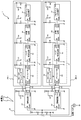
- Embodiment 1 Hereinafter, a noise inspection system 1 according to the first embodiment of the present invention will be described with reference to FIGS. 1 to 3.
- the noise inspection system 1 is provided with the to-be-inspected board
- the inspection substrate 10 has an electronic device and a circuit formed of a lead connected to the electronic device.
- the inspection substrate 10 is a substrate on which a noise applied to a circuit from an external device is subjected to inspection of whether it conducts a path on the circuit.
- the inspection substrate 10 includes amplification circuits K1 and K2, resistors R1 to R4, capacitors C1 and C2, a DC power supply Vcc, and connectors A1 and A2.
- the amplifier circuit K1 and the amplifier circuit K2 amplify the voltage applied to the resistor R2, that is, the signal input to the IN terminal, and output the amplified signal from the OUT terminal.
- One end of the resistor R2 is connected to the input terminal T, one end of the resistor R1, and each IN terminal of the amplifier circuits K1 and K2, and the other end of the resistor R2 is connected to the ground of the inspection substrate 10.
- the other end of the resistor R1 is connected to the DC power supply Vcc.
- each GND1 terminal and each GND2 terminal of the amplifier circuit K1 and the amplifier circuit K2 are connected to the ground of the inspection substrate 10 and the GND1 terminal of each isolator K4.
- an alternating current signal such as an audio signal is input to the input terminal T via a capacitor.
- the amplification circuit K1 and the amplification circuit K2 have the same function of amplifying the signal input to the IN terminal, but have different internal circuit configurations. Therefore, the amplification circuits of the amplifier circuit K1 and the amplifier circuit K2 are different.
- the OUT terminal of the amplification circuit K1 is connected to the IN terminal of the isolator K4 of the inspection apparatus 20_1 via the connector A1.
- the OUT terminal of the amplifier circuit K2 is connected to the IN terminal of the isolator K4 of the inspection apparatus 20_2 via the connector A2.
- Vcc terminal of the amplification circuit K1 is connected to the DC power supply Vcc via the resistor R3. Further, in the amplification circuit K1, the Vcc terminal is connected to the Vcc terminal of the isolator K4 of the inspection apparatus 20_1 and the Vcc terminal of the DC-DC converter K3 via the connector A1.
- Vcc terminal of the amplification circuit K2 is connected to the DC power supply Vcc via the resistor R4. Furthermore, in the amplification circuit K2, the Vcc terminal is connected to the Vcc terminal of the isolator K4 of the inspection apparatus 20_2 and the Vcc terminal of the DC-DC converter K3 via the connector A2.
- the amplifier circuit K1 and the amplifier circuit K2 amplify the signal input to the IN terminal using DC power supplied from the DC power supply Vcc.
- the DC power supply Vcc supplies, for example, a DC voltage of 3.3 volts.
- One end of the resistor R3 and one end of the capacitor C1 are connected to the DC power supply Vcc.
- the other end of the resistor R3 is connected to the Vcc terminal of the amplifier circuit K1, the Vcc terminal of the isolator K4 of the inspection apparatus 20_1, and the Vcc terminal of the DC-DC converter K3. Further, the other end of the capacitor C1 is connected to the ground of the inspection substrate 10.
- One end of the resistor R4 and one end of the capacitor C2 are connected to the DC power supply Vcc.
- the other end of the resistor R4 is connected to the Vcc terminal of the amplifier circuit K2, the Vcc terminal of the isolator K4 of the inspection apparatus 20_2, and the Vcc terminal of the DC-DC converter K3. Further, the other end of the capacitor C2 is connected to the ground of the inspection substrate 10.
- a high pass filter is formed by a circuit constituted by the resistor R3 and the capacitor C1 and a circuit constituted by the resistor R4 and the capacitor C2.
- the high pass filter removes noise superimposed on the DC voltage output from the DC power supply Vcc.
- the static electricity by the electromagnetic wave is applied to the circuit formed on the inspection substrate 10 described above.
- test noise is applied to the ground of the circuit formed on the inspection substrate 10 (the terminal on the ground side of the resistor R2 disposed on the inspection substrate 10) by the signal source SG1.
- the inspection device 20_1 and the inspection device 20_2 inspect whether noise is superimposed on the signals output from the OUT terminals of the amplifier circuit K1 and the amplifier circuit K2. In other words, it is inspected by inspection device 20_1 and inspection device 20_2 whether or not noise is conducted in the path from each OUT terminal of amplification circuit K1 and amplification circuit K2 to the ground of inspection substrate 10.
- one terminal of the signal source SG1 that outputs the test noise is connected to the ground of the inspection substrate 10, and the other terminal of the signal source SG1 is grounded.
- the static electricity applied to the circuit and the test noise applied to the circuit are collectively referred to simply as noise.
- the inspection apparatus 20_1 is electrically connected to the inspection substrate 10 via the connector A3 and the connector A1. As described above, the inspection apparatus 20_1 inspects whether or not noise is conducted along the path from the OUT terminal of the amplifier circuit K1 to the ground of the inspection substrate 10.
- the inspection device 20_2 is electrically connected to the inspection substrate 10 via the connector A3 and the connector A2. As described above, the inspection apparatus 20_2 inspects whether or not noise is conducted along the path from the OUT terminal of the amplifier circuit K2 to the ground of the inspection substrate 10.
- the inspection device 20_1 and the inspection device 20_2 have the same configuration and the same function.
- the inspection apparatus 20_1 and the inspection apparatus 20_2 include a DC-DC converter K3, an inspection unit J1 (isolator K4 and noise detection circuit K5), a counting circuit K6, a 7-segment LED device K7, resistors R5 to R8, and a capacitor C3. To C6 and a connector A3.
- the DC-DC converter K3 boosts the DC voltage supplied from the DC power supply Vcc, that is, the DC voltage applied to the Vcc terminal, to a DC voltage of 5 volts, for example, and outputs it from the Vdd terminal.
- the Vcc terminal is connected to the Vcc terminal of the isolator K4, the Vcc terminal of the amplifier circuit K1 and the other end of the resistor R3, and the Vdd terminal is one end of the resistors R5 to R8 and the capacitor C3. It is connected to one end of C6.
- the Vcc terminal of the DC-DC converter K3 of the inspection apparatus 20_2 is connected to the Vcc terminal of the isolator K4, the Vcc terminal of the amplifier circuit K2 and the other end of the resistor R4, the Vdd terminal is one end of the resistors R5 to R8, It is connected to one end of the capacitors C3 to C6.
- the inspection unit J1 inspects whether noise (electrostatic charge and test noise) applied to a circuit formed on the inspection substrate 10 conducts a path on the circuit. Specifically, the inspection unit J1 of the inspection apparatus 20_1 inspects whether the noise applied to the circuit conducts a path from the OUT terminal of the amplifier circuit K1 to the ground of the inspection substrate 10. Further, the inspection unit J1 of the inspection apparatus 20_2 inspects whether the noise applied to the circuit conducts a path from the OUT terminal of the amplification circuit K2 to the ground of the inspection substrate 10.
- noise electrostatic charge and test noise
- the inspection unit J1 includes an isolator K4 and a noise detection circuit K5.
- the isolator K4 transmits the signal input to the IN terminal to the OUT terminal by electromagnetic induction after blocking the current input to the IN terminal.
- the isolator K4 of the inspection apparatus 20_1 transmits the noise conducted in the path from the OUT terminal of the amplifier circuit K1 to the ground of the inspection substrate 10 to the OUT terminal by electromagnetic induction.
- the isolator K4 of the inspection apparatus 20_2 transmits the noise conducted in the path from the OUT terminal of the amplifier circuit K2 to the ground of the inspection substrate 10 to the OUT terminal by electromagnetic induction.
- the Vcc terminal of the isolator K4 of the inspection apparatus 20_1 is connected to the Vcc terminal of the DC-DC converter K3 of the inspection apparatus 20_1, the Vcc terminal of the amplification circuit K1 and the other end of the resistor R3.
- the IN terminal of the isolator K4 of the inspection apparatus 20_1 is connected to the OUT terminal of the amplification circuit K1.
- the GND1 terminal of the isolator K4 of the inspection apparatus 20_1 is connected to the GND2 terminal of the amplifier circuit K1 and the ground of the inspection substrate 10.
- the GND2 terminal of the isolator K4 of the inspection device 20_1 is connected to the ground of the inspection device 20_1.
- the OUT terminal of the isolator K4 of the inspection device 20_1 is connected to the IN terminal of the noise detection circuit K5 of the inspection device 20_1.
- the Vdd terminal of the isolator K4 of the inspection device 20_1 is connected to the other end of the resistor R5 of the inspection device 20_1. That is, the Vdd terminal of the isolator K4 of the inspection apparatus 20_1 is connected to the Vdd terminal of the DC-DC converter K3 of the inspection apparatus 20_1 via the resistor R5.
- the other end of the capacitor C3 of the inspection device 20_1 connected to the Vdd terminal of the DC-DC converter K3 is connected to the ground of the inspection device 20_1.
- Vcc terminal of the isolator K4 of the inspection apparatus 20_2 is connected to the Vcc terminal of the DC-DC converter K3 of the inspection apparatus 20_2, the Vcc terminal of the amplifier circuit K2 and the other end of the resistor R4.
- the IN terminal of the isolator K4 of the inspection apparatus 20_2 is connected to the OUT terminal of the amplification circuit K2.
- the GND1 terminal of the isolator K4 of the inspection apparatus 20_2 is connected to the GND2 terminal of the amplifier circuit K2 and the ground of the inspection substrate 10.
- the GND2 terminal of the isolator K4 of the inspection apparatus 20_2 is connected to the ground of the inspection apparatus 20_2.
- the OUT terminal of the isolator K4 of the inspection device 20_2 is connected to the IN terminal of the noise detection circuit K5 of the inspection device 20_2.
- the Vdd terminal of the isolator K4 of the inspection apparatus 20_2 is connected to the other end of the resistor R5 of the inspection apparatus 20_2. That is, the Vdd terminal of the isolator K4 of the inspection apparatus 20_2 is connected to the Vdd terminal of the DC-DC converter K3 of the inspection apparatus 20_2 via the resistor R5.
- the other end of the capacitor C3 of the inspection device 20_2 connected to the Vdd terminal of the DC-DC converter K3 is connected to the ground of the inspection device 20_1.
- the isolator K4 includes a driver circuit K8, a primary coil L1, a secondary coil L2, and a receiver circuit K9.
- the driver circuit K8 detects the rising and falling of the signal S1 input to the IN terminal, and detects two pulses, for example, when detecting the rising, one for example. A pulse is output from the OUT terminal to the primary coil L1.
- the driver circuit K8 performs the above-described operation by the DC voltage supplied from the Vcc terminal of the DC-DC converter K3.
- the Vcc terminal of the driver circuit K8 is a Vcc terminal of the isolator K4.
- the IN terminal of the driver circuit K8 is the IN terminal of the isolator K4.
- the GND1 terminal of the driver circuit K8 is the GND1 terminal of the isolator K4.
- the OUT terminal of the driver circuit K8 is connected to one terminal of the primary side coil L1.
- the GND terminal of the driver circuit K8 is connected to the other terminal of the primary coil L1 and the GND1 terminal of the driver circuit K8. That is, the GND terminal and the GND1 terminal of the driver circuit K8 and the other terminal of the primary side coil L1 are connected to the ground of the inspection substrate 10.
- the primary coil L1 is a micro coil manufactured by a semiconductor manufacturing process.
- the connection of each terminal of the primary side coil L2 is as described above.
- the secondary side coil L2 is also a micro coil manufactured by the semiconductor manufacturing process.
- the secondary coil L ⁇ b> 2 and the primary coil L ⁇ b> 1 are disposed in an insulated state at positions facing each other.
- the primary side coil L1 and the secondary side coil L2 are disposed to face each other at a predetermined interval d, and polyimide, which is an insulator, is disposed at the interval.
- the isolator K4 can transmit the pulse output from the driver circuit K by electromagnetic induction after interrupting the current from the primary coil L1 to the secondary coil L2. Therefore, it is possible to prevent a large current generated with the application of static electricity and test noise to the circuit to flow to the receiver circuit K9 and further to flow to the noise detection circuit K5 connected to the subsequent stage of the isolator K4.
- One terminal of the secondary coil L2 is connected to the IN terminal of the receiver circuit K9, and the other terminal is connected to GND of the receiver circuit K9.
- the receiver circuit K9 restores the rising or falling of the signal according to the number of the input pulses, and generates the signal S1 ′. . Then, the receiver circuit K9 outputs the generated signal S1 'from the OUT terminal. Thus, the receiver circuit K9 reproduces the signal S1 input to the IN terminal of the driver circuit K8.
- an IN terminal is connected to one terminal of the secondary coil L2, and a GND terminal is connected to the other terminal of the secondary coil L2.
- the Vdd terminal of the receiver circuit K9 is the Vdd terminal of the isolator K4. Therefore, the receiver circuit K9 performs the above-described operation by the DC voltage supplied from the Vdd terminal of the DC-DC converter K3.
- the OUT terminal of the receiver circuit K9 is the OUT terminal of the isolator K4.
- the GND2 terminal of the receiver circuit K9 is the GND2 terminal of the isolator K4.
- the GND2 terminal of the receiver circuit K9 is connected to the GND terminal of the receiver circuit K9. Therefore, the GND terminal and the GND2 terminal of the receiver circuit K9 and the other terminal of the secondary coil L2 are connected to the ground of the inspection device 20_1 in the case of the isolator K4 of the inspection device 20_1, and in the case of the isolator K4 of the inspection device 20_2. It is connected to the ground of the inspection apparatus 20_2.
- the GND terminal and the GND2 terminal of the receiver circuit K9 and the other terminal of the secondary coil L2 are connected to the ground of the inspection device 20 (the inspection device 20_1 or the inspection device 20_2).
- the GND terminal and the GND1 terminal of the driver circuit K8 and the other terminal of the primary side coil L1 are connected to the ground of the inspection substrate 10.
- the ground of the driver circuit K8 and the ground of the primary side coil L1 and the ground of the receiver circuit K9 and the ground of the secondary side coil L2 are electrically separated (the ground loop is cut off). Therefore, it is possible to prevent unnecessary static electricity and the like from being transmitted from the primary coil L1 to the secondary coil L2 at the time of no application of noise (electrostatic charge or test noise).
- the noise detection circuit K5 shown in FIG. 1 internally includes a low pass filter and a comparator disposed downstream of the low pass filter.
- the noise detection circuit K5 filters the input signal with a low pass filter.
- the noise detection circuit K5 compares the maximum value of the amplitude of the filtered signal (the maximum value of the voltage) with a predetermined voltage value using a comparator.
- the noise detection circuit K5 compares the maximum value of the amplitude of the filtered signal with the voltage value that causes the malfunction of the amplifier circuits K1 and K2 by the comparator.
- the noise detection circuit K5 outputs, for example, By outputting a voltage of 3 volts (positive voltage), a positive voltage is output from the OUT terminal.
- the noise detection circuit K5 when the maximum value of the voltage of the filtered signal is less than a predetermined voltage value (when noise causing the malfunction of the amplification circuits K1 and K2 is not superimposed), for example, A zero voltage is output from the OUT terminal by outputting a voltage (zero voltage) of zero volts.
- the noise detection circuit K5 determines whether noise is superimposed on the signal output from the isolator K4, that is, the signal output from the amplifier circuit K1 or the amplifier circuit K2 of the inspection substrate 10. Detection is performed, and a positive voltage or zero voltage is output as a detection result.
- the noise detection circuit K5 of the inspection apparatus 20_1 can inspect whether the noise applied to the circuit conducts the path from the OUT terminal of the amplification circuit K1 to the ground of the inspection substrate 10. Further, the noise detection circuit K5 of the inspection apparatus 20_2 can inspect whether the noise applied to the circuit conducts a path from the OUT terminal of the amplification circuit K2 to the ground of the inspection substrate 10.
- the IN terminal of the noise detection circuit K5 of the inspection device 20_1 is connected to the OUT terminal of the isolator K4 of the inspection device 20_1, and the IN terminal of the noise detection circuit K5 of the inspection device 20_2 is connected to the OUT terminal of the isolator K4 of the inspection device 20_2 Be done.
- the GND terminal of the noise detection circuit K5 of the inspection device 20_1 is connected to the ground of the inspection device 20_1, and the GND terminal of the noise detection circuit K5 of the inspection device 20_2 is connected to the ground of the inspection device 20_2.
- the OUT terminal of the noise detection circuit K5 of the inspection device 20_1 is connected to the IN terminal of the counting circuit K6 of the inspection device 20_1, and the OUT terminal of the noise detection circuit K5 of the inspection device 20_2 is the IN terminal of the counting circuit K6 of the inspection device 20_2.
- the Vdd terminal of the noise detection circuit K5 of the inspection apparatus 20_1 is connected to the other end of the resistor R6 of the inspection apparatus 20_1, and one end of the resistor R6 is the inspection apparatus via the Vdd terminal of the DC-DC converter K3 and the capacitor C4. It is connected to the ground of 20_1.
- the Vdd terminal of the noise detection circuit K5 of the inspection apparatus 20_2 is connected to the other end of the resistor R6 of the inspection apparatus 20_2, and one end of the resistor R6 is connected via the Vdd terminal of the DC-DC converter K3 and the capacitor C4. It is connected to the ground of the inspection apparatus 20_2.
- Each noise detection circuit K5 performs the above-described operation by the DC voltage supplied from the Vdd terminal of the DC-DC converter K3.
- the other end of the capacitor C4 of the inspection device 20_1 is connected to the ground of the inspection device 20_1, and the other end of the capacitor C4 of the inspection device 20_2 is connected to the ground of the inspection device 20_2.
- the counting circuit K6 has a plurality of T-type flip flops. When the positive voltage output from the OUT terminal of the noise detection circuit K5 is input to the IN terminal, the counting circuit K6 counts the number of times the positive voltage is output by detecting the rising of the positive voltage with a T-type flip-flop. Do.
- the counting circuit K6 of the inspection apparatus 20_1 counts the number of times the noise applied to the circuit has conducted the path from the OUT terminal of the amplification circuit K1 to the ground of the inspection substrate 10. Further, the counting circuit K6 of the inspection apparatus 20_2 counts the number of times the noise applied to the circuit has conducted the path from the OUT terminal of the amplification circuit K1 to the ground of the inspection substrate 10.
- the IN terminal of the counting circuit K6 of the inspection device 20_1 is connected to the OUT terminal of the noise detection circuit K5 of the inspection device 20_1.
- the IN terminal of the counting circuit K6 of the inspection device 20_2 is connected to the OUT terminal of the noise detection circuit K5 of the inspection device 20_2.
- the GND terminal of the counting circuit K6 of the inspection device 20_1 is connected to the ground of the inspection device 20_1, and the GND terminal of the counting circuit K6 of the inspection device 20_2 is connected to the ground of the inspection device 20_2.
- the OUT terminal of the counting circuit K6 of the inspection device 20_1 is connected to the IN terminal of the 7 segment LED device K7 of the inspection device 20_1, and the OUT terminal of the counting circuit K6 of the inspection device 20_2 is of the 7 segment LED device K7 of the inspection device 20_2. Connected to IN terminal.
- Each counting circuit K6 outputs a control signal corresponding to the counted number from the OUT terminal to control the display of the 7-segment LED device K7.
- the Vdd terminal of the counting circuit K6 of the inspection device 20_1 is connected to the other end of the resistor R7 of the inspection device 20_1, and one end of the resistor R7 is the inspection device 20_1 via the Vdd terminal of the DC-DC converter K3 and the capacitor C5.
- Connected to the ground of the The Vdd terminal of the counting circuit K6 of the inspection apparatus 20_2 is connected to the other end of the resistor R7 of the inspection apparatus 20_2, and one end of the resistor R7 is inspected via the Vdd terminal of the DC-DC converter K3 and the capacitor C5. It is connected to the ground of the device 20_2.
- Each counting circuit K6 performs the above-mentioned operation by the DC voltage supplied from the Vdd terminal of the DC-DC converter K3.
- the other end of the capacitor C5 of the inspection device 20_1 is connected to the ground of the inspection device 20_1, and the other end of the capacitor C5 of the inspection device 20_2 is connected to the ground of the inspection device 20_2.
- the seven-segment LED device K7 is configured of seven LEDs (Light Emitting Diodes).
- the seven-segment LED device K7 performs display according to the control signal output from the OUT terminal of the counting circuit K6.
- the 7-segment LED device K7 of the inspection apparatus 20_1 displays the number of times the noise applied to the circuit has conducted the path from the OUT terminal of the amplifier circuit K1 to the ground of the inspection substrate 10.
- the seven-segment LED device K7 of the inspection device 20_2 indicates the number of times the noise applied to the circuit has conducted the path from the OUT terminal of the amplifier circuit K2 to the ground of the inspection substrate 10.
- the IN terminal of the 7-segment LED device K7 of the inspection device 20_1 is connected to the OUT terminal of the counting circuit K6 of the inspection device 20_1.
- the IN terminal of the 7-segment LED device K7 of the inspection device 20_2 is connected to the OUT terminal of the counting circuit K6 of the inspection device 20_2.
- the GND terminal of the 7-segment LED device K7 of the inspection device 20_1 is connected to the ground of the inspection device 20_1
- the GND terminal of the 7-segment LED device K7 of the inspection device 20_2 is connected to the ground of the inspection device 20_2.
- the Vdd terminal of the 7-segment LED device K7 of the inspection device 20_1 is connected to the other end of the resistor R8 of the inspection device 20_1, and one end of the resistor R8 is inspected via the Vdd terminal of the DC-DC converter K3 and the capacitor C6. It is connected to the ground of the device 20_1.
- the Vdd terminal of the 7-segment LED device K7 of the inspection apparatus 20_2 is connected to the other end of the resistor R8 of the inspection apparatus 20_2, and one end of the resistor R8 is connected to the Vdd terminal of the DC-DC converter K3 and the capacitor C6. Is connected to the ground of the inspection apparatus 20_2.
- the other end of the capacitor C6 of the inspection device 20_1 is connected to the ground of the inspection device 20_1, and the other end of the capacitor C6 of the inspection device 20_2 is connected to the ground of the inspection device 20_2.
- a circuit composed of a resistor R5 and a capacitor C3, a circuit composed of a resistor R6 and a capacitor C4, a circuit composed of a resistor R7 and a capacitor C5, and a circuit composed of a resistor R8 and a capacitor C6 form a high pass filter .
- This high pass filter removes noise superimposed on the DC voltage output from the Vdd terminal of the DC-DC converter K3.
- This time chart shows the operation in the following case. That is, at t1, static electricity according to the international standard IEC61000-4-2 is applied as an electromagnetic wave to the circuit formed on the inspection substrate 10. Next, at time t2, the test noise according to the domestic standard JEM-TR177 is transmitted from the signal source SG1 to the ground side terminal of the resistor R2 disposed on the inspection substrate 10 (to the ground of the circuit formed on the substrate 10) Apply. After that, at time t3, a test noise according to the international standard IEC 61000-4-4 is transmitted to the ground terminal of the resistor R2 disposed on the inspection substrate 10 (at the ground of the circuit formed on the measurement substrate 10) as a signal source SG1. Apply from The operation in this case is shown in FIG.
- the static electricity in the international standard IEC61000-4-2 applied at time t1 simulates static electricity generated from a human body or the like.
- the test noise applied at time t3 according to the international standard IEC61000-4-4 simulates noise generated at the time of opening and closing of a relay or the like and noise generated from a servo or the like generated in an industrial instrument or the like.
- the test noise in the national standard JEM-TR177 applied at time t2 is the same noise as the test noise according to the international standard IEC61000-4-4, but the waveform of the test noise according to the international standard IEC61000-4-4 , And a sharp rise.
- the inspection As shown in FIG. 3, when the signal output from the OUT terminal of the amplification circuit K1 has a waveform shown by the signal S2_1 (at t1), the signal S3_1 (at t2), or the signal S4_1 (at t3), the inspection
- the signal output from the OUT terminal of the isolator K4 of the device 20_1 has a waveform shown by the signal S2_1 'at t1' delayed from t1 and has a waveform shown by the signal S3_1 'at t2' delayed from t2.
- the waveform is represented by the signal S4_1'.
- the isolator K4 of the inspection apparatus 20_2 has the waveform shown in the signal S2_2 'at time t1' delayed from t1 and the waveform shown in the signal S3_2 'at time t2 delayed from t2 and t3 delayed from time t3.
- the waveform shown by the signal S4_2 ' is obtained.
- the signal output from the isolator K4 of the inspection apparatus 20_1 is delayed from the signal output from the OUT terminal of the amplifier circuit K1 from the primary coil L1 to the secondary coil L2 (see FIG. 2). Due to the delay in signal transmission and the time spent generating the signal in the receiver circuit K9 (see FIG. 2). The signal output from the isolator K4 of the inspection apparatus 20_2 is later than the signal output from the OUT terminal of the amplifier circuit K2 for the same reason.
- the signal output from the OUT terminal of the isolator K4 of the inspection apparatus 20_1 has a waveform shown by the signal S2_1 ′, the signal S3_1 ′, or the signal S4_1 ′
- the signal is output from the OUT terminal of the noise detection circuit K5 of the inspection apparatus 20_1.
- the signal has a waveform in which a positive voltage occurs at t1 ′ and t3 ′.
- the reason that the signal output from the OUT terminal of the noise detection circuit K5 of the inspection apparatus 20_1 becomes a zero voltage at t2 ′ is that the voltage of the signal S3_1 ′ may cause the malfunction of the amplification circuit K1. It is because it was less than the voltage (predetermined voltage).
- the counting circuit K6 of the inspection device 20_1 causes the 7-segment LED device K7 of the inspection device 20_1 to display the numeral 2 .
- the signal output from the OUT terminal of the isolator K4 of the inspection apparatus 20_2 has a waveform shown by the signal S2_2 ′, the signal S3_2 ′, or the signal S4_2 ′
- the signal is output from the OUT terminal of the noise detection circuit K5 of the inspection apparatus 20_2.
- the signal to be output has a waveform in which a positive voltage occurs at time t2 '.
- the signals output from the OUT terminal of the noise detection circuit K5 of the inspection apparatus 20_2 become zero voltage at t1 ′ and t3 ′ when the voltages of the signal S2_2 ′ and the signal S4_2 ′ of the amplification circuit K2 It is because it was less than the voltage (predetermined voltage) which causes a malfunction.
- the counting circuit K6 of the inspection device 20_2 causes the 7-segment LED device K7 of the inspection device 20_2 to display the number 1 .
- one of the three noises applied to the circuit formed on the inspection substrate 10 has conducted the path from the OUT terminal of the amplifier circuit K2 to the ground of the inspection substrate 10.
- the inspection apparatus 20 _ 1 of the noise inspection system 1 applies the static electricity by the electromagnetic wave to the inspection substrate 10 or applies the test noise to the ground of the inspection substrate 10. Whether noise is conducted along a path from the OUT terminal of the amplifier circuit K1 to the ground of the inspection substrate 10 (whether noise is superimposed on a signal output from the amplifier circuit K1) can be inspected. In addition, the inspection apparatus 20_1 can count the number of times when the noise conducts in the path.
- the inspection apparatus 20_2 applies the static electricity by the electromagnetic wave to the substrate 10 to be inspected or the test noise to the ground of the substrate 10 to be inspected. It can be checked whether noise is conducted along the path to ground (whether noise is superimposed on the signal output from the amplifier circuit K2). In addition, the inspection apparatus 20_2 can count the number of times when noise conducts in the path.
- the path from each OUT terminal of amplifier circuit K1 and amplifier K2 to the ground of inspection substrate 10 is a path through which noise is easily conducted or a path that is hard to conduct noise. It makes it possible to grasp whether there is any. Therefore, the user can grasp whether the path is a path through which noise is easy to conduct or a path through which noise is hard to conduct.
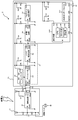
- the noise inspection system 2 is obtained by changing a part of the configuration of the noise inspection system 1 according to the first embodiment.
- the noise inspection system 2 changes the inspection substrate 10 of the noise inspection system 1 to the inspection substrate 11, changes the inspection device 20_1 to the inspection device 21, and uses the inspection device 20_2 of the noise inspection system 1
- the configuration is not made. Therefore, in the noise inspection system 2, the same components as those of the noise inspection system 1 are denoted by the same reference numerals, and the description thereof is omitted.
- the noise inspection system 2 includes an inspection substrate 11 and an inspection apparatus 21.
- the inspection substrate 11 uses the amplification circuit K1 used in the inspection substrate 10, but does not use the amplification circuit K2.
- the resistors R1 to R3, the capacitor C1, the DC power supply Vcc and the connector A1 arranged around the amplification circuit K1 have the same configuration and the same connection as the inspection substrate 10.
- the inspection device 21 includes a DC-DC converter K3, an isolator K4, a noise detection circuit K5, a counting circuit K6, a six-segment LED device K7, resistors R5 to R8 and capacitors C3 to C6 used in the inspection device 20_1. These configurations and connections are all the same as the inspection device 20_1.
- the inspection apparatus 21 includes an arithmetic circuit K10, a USB (Universal Serial Bus) interface K11, resistors R9 and R10, capacitors C7 and C8, and a USB terminal U1.
- arithmetic circuit K10 arithmetic circuit K10, a USB (Universal Serial Bus) interface K11, resistors R9 and R10, capacitors C7 and C8, and a USB terminal U1.
- USB Universal Serial Bus
- Arithmetic circuit K10 performs various operations.
- the IN terminal is connected to the OUT terminal of the noise detection circuit K5 and the IN terminal of the counting circuit K6, and the GND terminal is connected to the ground of the inspection apparatus 21.
- the IN / OUT terminal is connected to the IN / OUT terminal of the USB interface K11, and the Vdd terminal is connected to the Vdd terminal of the DC-DC converter K3 via the resistor R9.
- One end of the resistor R9 is connected to the Vdd terminal of the DC-DC converter K3 and one end of the capacitor C7, and the other end is connected to the Vdd terminal of the arithmetic circuit K10.
- the other end of the capacitor C7 is connected to the ground of the inspection apparatus 21.
- Arithmetic circuit K10 utilizes the DC power supplied from the Vdd terminal of DC-DC converter K3 and outputs a positive voltage from the OUT terminal of noise detection circuit K5, that is, a positive voltage is applied to the IN terminal. If so, the time is stored as data.
- the arithmetic circuit K10 includes a central processing unit (CPU) 101, a clock unit 102, and a storage unit 103.
- the CPU 101 When a positive voltage is output from the OUT terminal of the noise detection circuit K5, that is, when a positive voltage is applied to the IN terminal, the CPU 101 specifies the time at that time from the time clocked by the clock unit 102. . Then, the CPU 101 stores the specified time as data in the storage unit 103.
- the CPU 101 When communication with an external communication device according to the USB standard becomes possible, the CPU 101 receives an instruction from the external communication device via the USB interface K11 and is input to the IN / OUT terminal.
- the data indicating the time stored in the memory that is, the data indicating the time when the positive voltage is output from the noise detection circuit K5, is transmitted to the external communication apparatus via the IN / OUT terminal.
- the clock unit 102 has, for example, an oscillation circuit.
- the clock unit 102 measures time by the oscillation operation of this transmission circuit.
- the storage unit 103 is, for example, a flash memory, and stores data indicating the time when the positive voltage is output from the noise detection circuit K5 according to an instruction of the CPU 101.
- the USB interface K11 uses the DC power supplied from the Vdd terminal of the DC-DC converter K3 to communicate with the external communication device according to the USB standard.
- the USB interface K11 has a Vdd terminal connected to the Vdd terminal of the DC-DC converter K3 via the resistor R10.
- One end of the resistor R10 is connected to the Vdd terminal of the DC-DC converter K3 and one end of the capacitor C8, and the other end is connected to the Vdd terminal of the USB interface K11.
- the other end of the capacitor C8 is connected to the ground of the inspection apparatus 21.
- the USB interface K11 transmits an instruction from an external communication device to the arithmetic circuit K10, and acquires data (data indicating time) output from the arithmetic circuit K10.
- the OUT terminal of the USB interface K11 is connected to the USB terminal U1.
- the USB interface K11 acquires data indicating time from the arithmetic circuit K10, the data is output from the OUT terminal to be output to an external communication device through the USB terminal U1.
- the GND terminal of the USB interface K11 is connected to the ground of the inspection apparatus 21.
- a USB cable for communicating with an external communication device is connected to the USB terminal U1.
- a high pass filter is formed by a circuit constituted by the resistor R9 and the capacitor C7 and a circuit constituted by the resistor R10 and the capacitor C8. This high pass filter removes noise superimposed on the DC voltage output from the Vdd terminal of the DC-DC converter K3.
- CPU 101 of arithmetic circuit K10 specifies the time at that time from the time clocked by clock unit 102 and stores it as data in storage unit 103.
- the CPU 101 stores data stored in the storage unit 103 via the USB interface K11, that is, data indicating a time when a positive voltage is output from the noise detection circuit K5, Output to an external communication device.
- the external communication apparatus determines whether it is the static electricity or the test noise that has conducted the path from the OUT terminal of the amplifier circuit K1 to the ground of the inspection substrate 10 together with the number of times of conduction. .
- the noise inspection system 2 According to the noise inspection system 2 according to the second embodiment described above, it is separated from static electricity or test noise that it is easy or hard to conduct the path from the OUT terminal of the amplifier circuit K1 to the ground of the inspection substrate 10 Furthermore, from the number of conductions, it is possible to grasp how easily static electricity and test noise are conducted to the above-mentioned paths. Therefore, the user can grasp the above-mentioned.
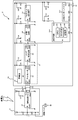
- the noise inspection system 3 is a modification of a part of the configuration of the noise inspection system 2 according to the second embodiment.
- the noise inspection system 3 changes the inspection device 21 of the noise inspection system 2 to the inspection device 22. Therefore, in the noise inspection system 3, the same components as those of the noise inspection system 2 are denoted by the same reference numerals, and the description thereof is omitted.
- the noise inspection system 3 includes an inspection substrate 11 and an inspection device 22.
- the inspection substrate 11 has the same configuration as that used in the noise inspection system 2 according to the second embodiment.
- the inspection device 22 is obtained by changing a part of the inspection device 21 of the noise inspection system 2 according to the second embodiment. Specifically, the inspection device 22 changes the DC-DC converter K3 used in the inspection device 21 to the storage battery D1. The other configuration of the inspection device 22 is the same as that of the inspection device 21.
- the storage battery D1 may be either a primary battery or a secondary battery. One terminal of the storage battery D1 is connected to one end of the resistors R5 to R10 and one end of the capacitors C3 to C8, and the other terminal of the storage battery D1 is connected to the ground of the inspection device 22.
- the inspection apparatus 22 supplies DC power from the storage battery D1 to the Vdd terminals of the isolator K4, the noise detection circuit K5, the counting circuit K6, the six-segment LED device K7, the arithmetic circuit K10 and the USB interface K11. There is. Therefore, even when the DC power supply Vcc of the inspection substrate 11 does not have the ability to operate the DC-DC converter K3, that is, even when the inspection devices 20_1, 20_2, and 21 can not be operated, The inspection device 22 can be operated by the storage battery D1, and the inspection by the inspection device 22 can be performed.
- the inspection device 20_1 and the inspection device 20_2 are separate from the inspection substrate 10.
- the inspection device 21 is separate from the inspection substrate 11
- the inspection device 22 is the inspection substrate 11. And were separate.
- it is not limited to this.
- the inspection device 20_1 and the inspection device 20_2 may be integrated with the inspection substrate 10.
- the inspection device 20_1 and the inspection device 20_2 may be configured in the substrate of the inspection substrate 10.
- the inspection device 21 or the inspection device 22 may be configured in the substrate of the inspection substrate 11.
- the inspection unit J1 is provided on a substrate separate from the inspection substrate 10, while the counting circuit K6 is provided. And the 7-segment LED device K7 may be configured in the inspection substrate 10. This is because the inspection unit J1 is easily affected by the large current generated by the noise conducted through the path between the OUT terminal of the amplifier circuit K1 (or the OUT terminal of the amplifier circuit K2) and the ground of the inspection apparatus 20_1. .
- the inspection unit J1 of the inspection apparatus 21 or the inspection unit J1 of the inspection apparatus 22 is provided on a substrate separate from the inspection substrate 11, the counting circuit K6, 7 segment LED device K7, arithmetic circuit K10, USB The interface K11 and the USB terminal U1 may be configured in the inspection substrate 11.
- the noise detection circuit K5 of the noise inspection systems 1 to 3 has a low pass filter and a comparator, and the noise detection circuit K5 is a signal (a signal output from the OUT terminal of the isolator K4) input to the comparator.
- the noise detection circuit K5 is a signal (a signal output from the OUT terminal of the isolator K4) input to the comparator.
- the noise detection circuit K5 is configured to have a low pass filter and an amplifier. Then, the noise detection circuit K5 may be configured to filter the signal output from the OUT terminal of the isolator K4 with a low pass filter, and amplify and output the filtered signal. If this amplified signal is equal to or higher than the voltage value counted by the counting circuit K6, the counting circuit K6 increments the display of the seven-segment LED device K7 by one. On the other hand, if the amplified signal is less than the voltage value counted by the counting circuit K6, the counting circuit K6 maintains the display of the 7-segment LED device K7.
- the noise detection circuit K5 and the counting circuit K6 are realized by hardware, but the present invention is not limited to this.
- the functions of the noise detection circuit K5 and the counting circuit K6 may be realized by software.
- the inspection device 20_1 and the inspection device 20_2 are equipped with a CPU and a computing device having a memory for storing a program to be executed by the CPU. Then, when the CPU executes a program and the signal output from the OUT terminal of the isolator K4 is input to the arithmetic device, the CPU calculates in advance the maximum value (maximum value of the voltage) of the amplitude of the input signal. Compare with the defined voltage value. Then, when the maximum value of the voltage of the input signal is equal to or higher than a predetermined voltage value, the CPU increments the display of the seven-segment LED device K7 by one.
- the CPU maintains the display of the seven-segment LED device K7 when the maximum value of the voltage of the input signal is less than a predetermined voltage value.
- the functions of the noise detection circuit K5 and the counting circuit K6 can be realized by software. Therefore, the noise detection circuit K5 and the counting circuit K6 can be eliminated from the inspection device 20_1 and the inspection device 20_2.
- test noise according to the domestic standard JEM-TR 177 and the test noise according to the international standard IEC 61000-4-4 Although applied to the terminal on the ground side (to the ground of the circuit formed on the measurement substrate 10), the present invention is not limited thereto.
- test noise described above may be applied to a terminal on the input terminal T side of the resistor R2 disposed on the test substrate 10 (a signal line of a circuit formed on the test substrate 10).
- the inspection device 20_1 is connected to the OUT terminal which is the output terminal of the amplification circuit K1, whereby the ground terminal of the inspection substrate 10 is connected to the OUT terminal of the amplification circuit K1. It was possible to grasp whether the path up to the path was a path through which noise was easy to conduct. Also, is the path from the OUT terminal of the amplifier circuit K2 to the ground of the inspection substrate 10 a path through which noise can easily be conducted by connecting the inspection device 20_2 to the OUT terminal which is the output terminal of the amplifier circuit K2? It became possible to grasp whether or not it was.
- the inspection apparatus 20_1 and the inspection apparatus 20_2 can be connected not only to the OUT terminals of the amplifier circuits K1 and K2 but also to desired paths on the circuit formed on the inspection substrate 10. As described above, by connecting the inspection device 20_1 and the inspection device 20_2 to a desired path on the circuit, it is possible for the user to grasp whether the desired path is a path where noise is easily conducted.
- the inspection device 22 uses the storage battery D1 to use the Vdd terminal of the isolator K4, the noise detection circuit K5, the counting circuit K6, 7 and the segment LED device K7, the arithmetic circuit
- DC power is supplied to K10 and USB interface K11, the present invention is not limited to this.
- a connector for DC power supply may be mounted on the inspection device 22.
- DC power from the DC power supplied through the DC power connector is divided into the isolator K4, the noise detection circuit K5, the counting circuit K6, the 7-segment LED device K7, the arithmetic circuit K10 and the USB interface K11.
- the programs executed by the inspection devices 21 and 22 are a flexible disk, a compact disc read-only memory (CD-ROM), a digital versatile disc (DVD), and a magneto-optical disc (MO). And the like may be stored in a computer readable recording medium and distributed, and the program may be installed in a computer or the like to configure an apparatus that performs the same control as the inspection apparatuses 21 and 22.
- the above-described program may be stored in a disk device or the like included in a predetermined server device on a communication network such as the Internet, and for example, it may be superimposed on a carrier wave and downloaded or the like.
- the present invention is suitable for realizing a path in which noise is easily conducted or a path in which noise is less likely to be conducted.
Landscapes
- Physics & Mathematics (AREA)
- Electromagnetism (AREA)
- General Physics & Mathematics (AREA)
- Tests Of Electronic Circuits (AREA)
- Testing Electric Properties And Detecting Electric Faults (AREA)
Abstract
Description
以下、本発明の実施の形態1に係るノイズ検査システム1を、図1~図3を参照して説明する。
次に、本発明の実施の形態2に係るノイズ検査システム2を、図4を参照して説明する。ノイズ検査システム2は、実施の形態1に係るノイズ検査システム1の構成の一部を変更したものである。
次に、本発明の実施の形態3に係るノイズ検査システム3を、図5を参照して説明する。ノイズ検査システム3は、実施の形態2に係るノイズ検査システム2の構成の一部を変更したものである。
10,11 被検査基板
20,21,22 検査装置
A1,A2,A3 コネクタ
K1,K2 増幅回路
K3 DC-DCコンバータ
K4 アイソレータ
K5 ノイズ検出回路
K6 計数回路
K7 7セグメントLED装置
K8 ドライバ回路
K9 レシーバ回路
K10 演算回路
K11 USBインターフェイス
L1 一次側コイル
L2 二次側コイル
SG1 信号源
U1 USB端子
Claims (8)
- 回路に複数回印加されたノイズの、前記回路上の経路の伝導を検出する検出部と、
前記検出部により検出された前記経路における前記ノイズの伝導回数を計数する計数部と、
前記計数部により計数された前記ノイズの伝導回数を表示する表示部と、
を備える検査装置。 - 前記検出部は、前記回路上の経路から選択された所望の経路を、前記ノイズが伝導したかを検出する、
請求項1に記載の検査装置。 - 前記検出部は、
前記回路が形成される基板とは別個の基板に設けられ、
前記検出部とは別個の基板に形成された前記回路上の経路を伝導する前記ノイズを、電磁誘導により受信するアイソレータ部と、
前記アイソレータ部により前記ノイズが受信された場合に、前記経路における前記ノイズの伝導を検出するノイズ検出部と、
を備える請求項1または2に記載の検査装置。 - 前記ノイズ検出部は、前記アイソレータ部により前記ノイズが受信され、受信されたノイズの振幅の最大値が予め定められた値以上である場合に、前記経路における前記ノイズの伝導を検出する、
請求項3に記載の検査装置。 - 計時を行うクロック部と、
前記検出部により前記経路における前記ノイズの伝導が検出された場合に、前記クロック部が計時している時間を記憶する記憶部と、
を備える請求項1から4のいずれか1項に記載の検査装置。 - 前記計数部および前記表示部は、前記回路が形成される基板とは別個の基板に設けられ、且つ、前記検出部が設けられた基板に設けられている、
請求項3または4に記載の検査装置。 - 検査装置の検査方法であって、
回路に複数回印加されたノイズの、前記回路上の経路の伝導を前記検査装置が検出する検出ステップと、
前記検出ステップにより検出された前記経路における前記ノイズの伝導回数を前記検査装置が計数する計数ステップと、
前記計数ステップにより計数された前記ノイズの伝導回数を前記検査装置が表示する表示ステップと、
を備える検査方法。 - 検査装置を制御するコンピュータに、
回路に複数回印加されたノイズの、前記回路上の経路の伝導を検出する検出機能、
前記検出機能により検出された前記経路における前記ノイズの伝導回数を計数して表示する計数機能、
を実現させるプログラム。
Priority Applications (4)
| Application Number | Priority Date | Filing Date | Title |
|---|---|---|---|
| HK15104165.4A HK1203629B (en) | 2012-03-23 | System and method for discriminating noise sources | |
| EP12872025.7A EP2829885B1 (en) | 2012-03-23 | 2012-03-23 | System and method for discriminating noise sources |
| PCT/JP2012/057636 WO2013140630A1 (ja) | 2012-03-23 | 2012-03-23 | 検査装置、検査方法およびプログラム |
| US14/372,101 US9453868B2 (en) | 2012-03-23 | 2012-03-23 | Test device, test method, and program |
Applications Claiming Priority (1)
| Application Number | Priority Date | Filing Date | Title |
|---|---|---|---|
| PCT/JP2012/057636 WO2013140630A1 (ja) | 2012-03-23 | 2012-03-23 | 検査装置、検査方法およびプログラム |
Publications (1)
| Publication Number | Publication Date |
|---|---|
| WO2013140630A1 true WO2013140630A1 (ja) | 2013-09-26 |
Family
ID=49222121
Family Applications (1)
| Application Number | Title | Priority Date | Filing Date |
|---|---|---|---|
| PCT/JP2012/057636 Ceased WO2013140630A1 (ja) | 2012-03-23 | 2012-03-23 | 検査装置、検査方法およびプログラム |
Country Status (3)
| Country | Link |
|---|---|
| US (1) | US9453868B2 (ja) |
| EP (1) | EP2829885B1 (ja) |
| WO (1) | WO2013140630A1 (ja) |
Cited By (2)
| Publication number | Priority date | Publication date | Assignee | Title |
|---|---|---|---|---|
| WO2023053246A1 (ja) * | 2021-09-29 | 2023-04-06 | 三菱電機株式会社 | ノイズ検出装置およびplcシステム |
| JP2023062736A (ja) * | 2021-10-22 | 2023-05-09 | アズールテスト株式会社 | 半導体デバイス検査装置 |
Families Citing this family (2)
| Publication number | Priority date | Publication date | Assignee | Title |
|---|---|---|---|---|
| CN118607569A (zh) * | 2018-02-01 | 2024-09-06 | 华为技术有限公司 | 存储卡和终端 |
| TWI688938B (zh) | 2018-05-22 | 2020-03-21 | 元太科技工業股份有限公司 | 可抑制電磁干擾的顯示裝置及顯示驅動電路 |
Citations (3)
| Publication number | Priority date | Publication date | Assignee | Title |
|---|---|---|---|---|
| JPH03252564A (ja) * | 1990-03-02 | 1991-11-11 | Nippon Telegr & Teleph Corp <Ntt> | 環境電磁雑音記録装置 |
| JPH04115634A (ja) | 1990-08-31 | 1992-04-16 | Fujitsu Ltd | 電源ノイズ検出回路 |
| JPH05209917A (ja) * | 1992-01-30 | 1993-08-20 | Fujitsu Ltd | 簡易型パルス・ノイズ試験器 |
Family Cites Families (11)
| Publication number | Priority date | Publication date | Assignee | Title |
|---|---|---|---|---|
| US5134366A (en) * | 1991-06-21 | 1992-07-28 | Digital Equipment Corporation | Magnetic head testing apparatus for detecting occurrences of popcorn noise amid externally generated noise |
| DE4224858C2 (de) | 1992-07-28 | 2000-03-30 | Langer Guenter | Verfahren zur Bestimmung der Prüflingsstörschwelle und Bewertung von EMV-Maßnahmen am Prüfling |
| JPH06332748A (ja) | 1993-05-18 | 1994-12-02 | Ibiden Co Ltd | コンピュータシステムledデバッガ |
| US5668477A (en) * | 1995-02-16 | 1997-09-16 | Read-Rite Corporation | Noise detecting apparatus for magnetic heads |
| JP3552722B2 (ja) * | 1995-03-27 | 2004-08-11 | 日立電子サービス株式会社 | ノイズ検知記録装置 |
| US6028423A (en) | 1997-12-11 | 2000-02-22 | Sanchez; Jorge | Isolation instrument for electrical testing |
| KR20000043490A (ko) * | 1998-12-29 | 2000-07-15 | 윤종용 | 반도체 칩의 테스트 시스템 및 테스터 |
| US7126356B2 (en) | 2004-04-30 | 2006-10-24 | Intel Corporation | Radiation detector for electrostatic discharge |
| US7151655B2 (en) | 2004-05-17 | 2006-12-19 | Intel Corporation | Electrostatic discharge (ESD) detector |
| JP2008177796A (ja) | 2007-01-17 | 2008-07-31 | Fuji Electric Fa Components & Systems Co Ltd | 省配線システム、そのマスタ通信装置、そのプログラム、表示制御方法 |
| US8594957B2 (en) * | 2008-02-20 | 2013-11-26 | Advantest (Singapore) Pte Ltd | System, method and computer program for detecting an electrostatic discharge event |
-
2012
- 2012-03-23 EP EP12872025.7A patent/EP2829885B1/en active Active
- 2012-03-23 US US14/372,101 patent/US9453868B2/en not_active Expired - Fee Related
- 2012-03-23 WO PCT/JP2012/057636 patent/WO2013140630A1/ja not_active Ceased
Patent Citations (3)
| Publication number | Priority date | Publication date | Assignee | Title |
|---|---|---|---|---|
| JPH03252564A (ja) * | 1990-03-02 | 1991-11-11 | Nippon Telegr & Teleph Corp <Ntt> | 環境電磁雑音記録装置 |
| JPH04115634A (ja) | 1990-08-31 | 1992-04-16 | Fujitsu Ltd | 電源ノイズ検出回路 |
| JPH05209917A (ja) * | 1992-01-30 | 1993-08-20 | Fujitsu Ltd | 簡易型パルス・ノイズ試験器 |
Non-Patent Citations (1)
| Title |
|---|
| See also references of EP2829885A4 * |
Cited By (3)
| Publication number | Priority date | Publication date | Assignee | Title |
|---|---|---|---|---|
| WO2023053246A1 (ja) * | 2021-09-29 | 2023-04-06 | 三菱電機株式会社 | ノイズ検出装置およびplcシステム |
| JPWO2023053246A1 (ja) * | 2021-09-29 | 2023-04-06 | ||
| JP2023062736A (ja) * | 2021-10-22 | 2023-05-09 | アズールテスト株式会社 | 半導体デバイス検査装置 |
Also Published As
| Publication number | Publication date |
|---|---|
| EP2829885B1 (en) | 2020-01-15 |
| HK1203629A1 (en) | 2015-10-30 |
| US9453868B2 (en) | 2016-09-27 |
| US20150241495A1 (en) | 2015-08-27 |
| EP2829885A1 (en) | 2015-01-28 |
| EP2829885A4 (en) | 2015-12-23 |
Similar Documents
| Publication | Publication Date | Title |
|---|---|---|
| US9684025B2 (en) | DUT continuity test with only digital IO structures apparatus and methods associated thereof | |
| KR101274821B1 (ko) | 전자 장치, 개방 회로 검출 시스템, 및 개방 회로의 검출 방법 | |
| JP6622970B2 (ja) | 試験測定用システム及びアクセサリ補償方法 | |
| WO2012109356A3 (en) | Audio accessory type detection and connector pin signal assignment | |
| US20130124134A1 (en) | Fast single-ended to differential converter | |
| CN104729539B (zh) | 包括具有内部校准信号的配件的测量系统 | |
| KR20110040359A (ko) | 휴대용 단말기에서 이어폰 인식 회로 장치 | |
| US9453868B2 (en) | Test device, test method, and program | |
| CN105409126B (zh) | 噪声解析装置、电子装置以及噪声源确定系统 | |
| CN103901358A (zh) | 三相电源异常侦测装置 | |
| JP2015179012A (ja) | 周波数検出装置および測定装置 | |
| CN202433470U (zh) | 用于检测交流系统接地故障的装置 | |
| JPWO2013140630A1 (ja) | 検査装置、検査方法およびプログラム | |
| EP2763433B1 (en) | Apparatus, systems and methods for inaudibly identifying an audio accessory using spectral shaping | |
| JP2008249731A (ja) | 静電気放電測定装置 | |
| HK1203629B (en) | System and method for discriminating noise sources | |
| CN107702813A (zh) | 微型扬声器控制测温整合装置及方法 | |
| JP2014228298A (ja) | バリスタ寿命検出装置、方法及びプログラム | |
| CN208797909U (zh) | 功放保护电路及电子设备 | |
| CN201740834U (zh) | 线路断点的简易检测装置 | |
| US20170168110A1 (en) | Directional pulse injection into a microelectronic system for electrostatic test | |
| CN202068655U (zh) | 静电导出系统及侦测其连接是否正常的侦测装置 | |
| CN204258774U (zh) | 适用于延迟信号发生器的输出电路 | |
| CN207779580U (zh) | 一种扬声器控制与测温的整合装置 | |
| JPWO2019035323A1 (ja) | 信号処理システム及び信号処理方法 |
Legal Events
| Date | Code | Title | Description |
|---|---|---|---|
| 121 | Ep: the epo has been informed by wipo that ep was designated in this application |
Ref document number: 12872025 Country of ref document: EP Kind code of ref document: A1 |
|
| ENP | Entry into the national phase |
Ref document number: 2014505955 Country of ref document: JP Kind code of ref document: A |
|
| WWE | Wipo information: entry into national phase |
Ref document number: 14372101 Country of ref document: US |
|
| NENP | Non-entry into the national phase |
Ref country code: DE |
|
| WWE | Wipo information: entry into national phase |
Ref document number: 2012872025 Country of ref document: EP |