WO2013145190A1 - Dispositif de gestion, dispositif de terminal et procédé de gestion d'itinéraire - Google Patents
Dispositif de gestion, dispositif de terminal et procédé de gestion d'itinéraire Download PDFInfo
- Publication number
- WO2013145190A1 WO2013145190A1 PCT/JP2012/058249 JP2012058249W WO2013145190A1 WO 2013145190 A1 WO2013145190 A1 WO 2013145190A1 JP 2012058249 W JP2012058249 W JP 2012058249W WO 2013145190 A1 WO2013145190 A1 WO 2013145190A1
- Authority
- WO
- WIPO (PCT)
- Prior art keywords
- unit
- route
- information
- search
- travel
- Prior art date
- Legal status (The legal status is an assumption and is not a legal conclusion. Google has not performed a legal analysis and makes no representation as to the accuracy of the status listed.)
- Ceased
Links
Images
Classifications
-
- G—PHYSICS
- G01—MEASURING; TESTING
- G01C—MEASURING DISTANCES, LEVELS OR BEARINGS; SURVEYING; NAVIGATION; GYROSCOPIC INSTRUMENTS; PHOTOGRAMMETRY OR VIDEOGRAMMETRY
- G01C21/00—Navigation; Navigational instruments not provided for in groups G01C1/00 - G01C19/00
- G01C21/26—Navigation; Navigational instruments not provided for in groups G01C1/00 - G01C19/00 specially adapted for navigation in a road network
- G01C21/34—Route searching; Route guidance
- G01C21/3407—Route searching; Route guidance specially adapted for specific applications
- G01C21/3415—Dynamic re-routing, e.g. recalculating the route when the user deviates from calculated route or after detecting real-time traffic data or accidents
-
- B—PERFORMING OPERATIONS; TRANSPORTING
- B60—VEHICLES IN GENERAL
- B60L—PROPULSION OF ELECTRICALLY-PROPELLED VEHICLES; SUPPLYING ELECTRIC POWER FOR AUXILIARY EQUIPMENT OF ELECTRICALLY-PROPELLED VEHICLES; ELECTRODYNAMIC BRAKE SYSTEMS FOR VEHICLES IN GENERAL; MAGNETIC SUSPENSION OR LEVITATION FOR VEHICLES; MONITORING OPERATING VARIABLES OF ELECTRICALLY-PROPELLED VEHICLES; ELECTRIC SAFETY DEVICES FOR ELECTRICALLY-PROPELLED VEHICLES
- B60L58/00—Methods or circuit arrangements for monitoring or controlling batteries or fuel cells, specially adapted for electric vehicles
- B60L58/10—Methods or circuit arrangements for monitoring or controlling batteries or fuel cells, specially adapted for electric vehicles for monitoring or controlling batteries
- B60L58/12—Methods or circuit arrangements for monitoring or controlling batteries or fuel cells, specially adapted for electric vehicles for monitoring or controlling batteries responding to state of charge [SoC]
-
- G—PHYSICS
- G01—MEASURING; TESTING
- G01C—MEASURING DISTANCES, LEVELS OR BEARINGS; SURVEYING; NAVIGATION; GYROSCOPIC INSTRUMENTS; PHOTOGRAMMETRY OR VIDEOGRAMMETRY
- G01C21/00—Navigation; Navigational instruments not provided for in groups G01C1/00 - G01C19/00
- G01C21/26—Navigation; Navigational instruments not provided for in groups G01C1/00 - G01C19/00 specially adapted for navigation in a road network
- G01C21/34—Route searching; Route guidance
- G01C21/3453—Special cost functions, i.e. other than distance or default speed limit of road segments
- G01C21/3469—Fuel consumption; Energy use; Emission aspects
-
- B—PERFORMING OPERATIONS; TRANSPORTING
- B60—VEHICLES IN GENERAL
- B60L—PROPULSION OF ELECTRICALLY-PROPELLED VEHICLES; SUPPLYING ELECTRIC POWER FOR AUXILIARY EQUIPMENT OF ELECTRICALLY-PROPELLED VEHICLES; ELECTRODYNAMIC BRAKE SYSTEMS FOR VEHICLES IN GENERAL; MAGNETIC SUSPENSION OR LEVITATION FOR VEHICLES; MONITORING OPERATING VARIABLES OF ELECTRICALLY-PROPELLED VEHICLES; ELECTRIC SAFETY DEVICES FOR ELECTRICALLY-PROPELLED VEHICLES
- B60L2240/00—Control parameters of input or output; Target parameters
- B60L2240/10—Vehicle control parameters
- B60L2240/12—Speed
-
- B—PERFORMING OPERATIONS; TRANSPORTING
- B60—VEHICLES IN GENERAL
- B60L—PROPULSION OF ELECTRICALLY-PROPELLED VEHICLES; SUPPLYING ELECTRIC POWER FOR AUXILIARY EQUIPMENT OF ELECTRICALLY-PROPELLED VEHICLES; ELECTRODYNAMIC BRAKE SYSTEMS FOR VEHICLES IN GENERAL; MAGNETIC SUSPENSION OR LEVITATION FOR VEHICLES; MONITORING OPERATING VARIABLES OF ELECTRICALLY-PROPELLED VEHICLES; ELECTRIC SAFETY DEVICES FOR ELECTRICALLY-PROPELLED VEHICLES
- B60L2240/00—Control parameters of input or output; Target parameters
- B60L2240/60—Navigation input
- B60L2240/62—Vehicle position
- B60L2240/622—Vehicle position by satellite navigation
-
- B—PERFORMING OPERATIONS; TRANSPORTING
- B60—VEHICLES IN GENERAL
- B60L—PROPULSION OF ELECTRICALLY-PROPELLED VEHICLES; SUPPLYING ELECTRIC POWER FOR AUXILIARY EQUIPMENT OF ELECTRICALLY-PROPELLED VEHICLES; ELECTRODYNAMIC BRAKE SYSTEMS FOR VEHICLES IN GENERAL; MAGNETIC SUSPENSION OR LEVITATION FOR VEHICLES; MONITORING OPERATING VARIABLES OF ELECTRICALLY-PROPELLED VEHICLES; ELECTRIC SAFETY DEVICES FOR ELECTRICALLY-PROPELLED VEHICLES
- B60L2240/00—Control parameters of input or output; Target parameters
- B60L2240/70—Interactions with external data bases, e.g. traffic centres
-
- B—PERFORMING OPERATIONS; TRANSPORTING
- B60—VEHICLES IN GENERAL
- B60L—PROPULSION OF ELECTRICALLY-PROPELLED VEHICLES; SUPPLYING ELECTRIC POWER FOR AUXILIARY EQUIPMENT OF ELECTRICALLY-PROPELLED VEHICLES; ELECTRODYNAMIC BRAKE SYSTEMS FOR VEHICLES IN GENERAL; MAGNETIC SUSPENSION OR LEVITATION FOR VEHICLES; MONITORING OPERATING VARIABLES OF ELECTRICALLY-PROPELLED VEHICLES; ELECTRIC SAFETY DEVICES FOR ELECTRICALLY-PROPELLED VEHICLES
- B60L2250/00—Driver interactions
- B60L2250/10—Driver interactions by alarm
-
- B—PERFORMING OPERATIONS; TRANSPORTING
- B60—VEHICLES IN GENERAL
- B60L—PROPULSION OF ELECTRICALLY-PROPELLED VEHICLES; SUPPLYING ELECTRIC POWER FOR AUXILIARY EQUIPMENT OF ELECTRICALLY-PROPELLED VEHICLES; ELECTRODYNAMIC BRAKE SYSTEMS FOR VEHICLES IN GENERAL; MAGNETIC SUSPENSION OR LEVITATION FOR VEHICLES; MONITORING OPERATING VARIABLES OF ELECTRICALLY-PROPELLED VEHICLES; ELECTRIC SAFETY DEVICES FOR ELECTRICALLY-PROPELLED VEHICLES
- B60L2250/00—Driver interactions
- B60L2250/16—Driver interactions by display
-
- B—PERFORMING OPERATIONS; TRANSPORTING
- B60—VEHICLES IN GENERAL
- B60L—PROPULSION OF ELECTRICALLY-PROPELLED VEHICLES; SUPPLYING ELECTRIC POWER FOR AUXILIARY EQUIPMENT OF ELECTRICALLY-PROPELLED VEHICLES; ELECTRODYNAMIC BRAKE SYSTEMS FOR VEHICLES IN GENERAL; MAGNETIC SUSPENSION OR LEVITATION FOR VEHICLES; MONITORING OPERATING VARIABLES OF ELECTRICALLY-PROPELLED VEHICLES; ELECTRIC SAFETY DEVICES FOR ELECTRICALLY-PROPELLED VEHICLES
- B60L2260/00—Operating Modes
- B60L2260/40—Control modes
- B60L2260/50—Control modes by future state prediction
- B60L2260/52—Control modes by future state prediction drive range estimation, e.g. of estimation of available travel distance
-
- B—PERFORMING OPERATIONS; TRANSPORTING
- B60—VEHICLES IN GENERAL
- B60L—PROPULSION OF ELECTRICALLY-PROPELLED VEHICLES; SUPPLYING ELECTRIC POWER FOR AUXILIARY EQUIPMENT OF ELECTRICALLY-PROPELLED VEHICLES; ELECTRODYNAMIC BRAKE SYSTEMS FOR VEHICLES IN GENERAL; MAGNETIC SUSPENSION OR LEVITATION FOR VEHICLES; MONITORING OPERATING VARIABLES OF ELECTRICALLY-PROPELLED VEHICLES; ELECTRIC SAFETY DEVICES FOR ELECTRICALLY-PROPELLED VEHICLES
- B60L2260/00—Operating Modes
- B60L2260/40—Control modes
- B60L2260/50—Control modes by future state prediction
- B60L2260/54—Energy consumption estimation
-
- Y—GENERAL TAGGING OF NEW TECHNOLOGICAL DEVELOPMENTS; GENERAL TAGGING OF CROSS-SECTIONAL TECHNOLOGIES SPANNING OVER SEVERAL SECTIONS OF THE IPC; TECHNICAL SUBJECTS COVERED BY FORMER USPC CROSS-REFERENCE ART COLLECTIONS [XRACs] AND DIGESTS
- Y02—TECHNOLOGIES OR APPLICATIONS FOR MITIGATION OR ADAPTATION AGAINST CLIMATE CHANGE
- Y02T—CLIMATE CHANGE MITIGATION TECHNOLOGIES RELATED TO TRANSPORTATION
- Y02T10/00—Road transport of goods or passengers
- Y02T10/60—Other road transportation technologies with climate change mitigation effect
- Y02T10/70—Energy storage systems for electromobility, e.g. batteries
-
- Y—GENERAL TAGGING OF NEW TECHNOLOGICAL DEVELOPMENTS; GENERAL TAGGING OF CROSS-SECTIONAL TECHNOLOGIES SPANNING OVER SEVERAL SECTIONS OF THE IPC; TECHNICAL SUBJECTS COVERED BY FORMER USPC CROSS-REFERENCE ART COLLECTIONS [XRACs] AND DIGESTS
- Y02—TECHNOLOGIES OR APPLICATIONS FOR MITIGATION OR ADAPTATION AGAINST CLIMATE CHANGE
- Y02T—CLIMATE CHANGE MITIGATION TECHNOLOGIES RELATED TO TRANSPORTATION
- Y02T10/00—Road transport of goods or passengers
- Y02T10/60—Other road transportation technologies with climate change mitigation effect
- Y02T10/72—Electric energy management in electromobility
-
- Y—GENERAL TAGGING OF NEW TECHNOLOGICAL DEVELOPMENTS; GENERAL TAGGING OF CROSS-SECTIONAL TECHNOLOGIES SPANNING OVER SEVERAL SECTIONS OF THE IPC; TECHNICAL SUBJECTS COVERED BY FORMER USPC CROSS-REFERENCE ART COLLECTIONS [XRACs] AND DIGESTS
- Y02—TECHNOLOGIES OR APPLICATIONS FOR MITIGATION OR ADAPTATION AGAINST CLIMATE CHANGE
- Y02T—CLIMATE CHANGE MITIGATION TECHNOLOGIES RELATED TO TRANSPORTATION
- Y02T90/00—Enabling technologies or technologies with a potential or indirect contribution to GHG emissions mitigation
- Y02T90/10—Technologies relating to charging of electric vehicles
- Y02T90/16—Information or communication technologies improving the operation of electric vehicles
Definitions
- the present invention relates to a management device, a terminal device, and a route management method.
- a navigation device that is mounted on a moving body such as a vehicle and guides and guides a driving route to a driver has been widely used.
- the progress of the technology using such a navigation device is remarkable, and various technologies for improving user convenience have been proposed.
- the vehicle occupant is informed of the optimal route from the current position of the vehicle to a charging facility that can charge the storage battery of the vehicle, for a vehicle that uses electric energy as driving energy.
- a technique see Patent Document 1: hereinafter referred to as “conventional example”.
- a navigation device installed in a vehicle identifies a charging facility to which a charging unit capable of charging a storage battery belongs based on the chargeability information sent from the charging facility management server, and To notify. Then, when the charge reservation operation by the occupant is accepted, the navigation device sets the charging facility designated by the occupant as the destination, and searches the route to the charging facility so as to avoid the congestion section based on the congestion information. It is like that.
- navigation devices mounted on each vehicle search for a route that avoids a traffic jam section independently of each other. For this reason, the newly searched route may overlap, and a new traffic jam section may be generated. The occurrence of such a new traffic jam section becomes a serious problem for a vehicle having a small amount of stored energy.
- the present invention has been made in view of the above circumstances, and provides a management device, a terminal device, and a route management method capable of searching for a reasonable travel route corresponding to the amount of energy held by each mobile body. For the purpose.
- the present invention is based on information related to a planned travel route including a reception unit that receives an amount of energy held by each of the plurality of mobile bodies; and a planned travel time of each of the plurality of mobile bodies.
- An estimation unit that estimates a section that is congested; based on the amount of energy held by each mobile unit that is scheduled to travel in the section estimated by the estimation unit;
- a search unit that searches for an avoidance route that avoids the estimated section of the mobile body identified from the transmission unit; and a transmission unit that transmits information regarding the avoidance route searched by the search unit to the identified mobile body; It is a management apparatus characterized by comprising.
- the present invention is an acquisition unit that acquires the amount of energy held by the mobile body; a transmission unit that transmits an acquisition result by the acquisition unit; and a change in response to transmission by the transmission unit
- a receiving unit that receives information related to the changed travel schedule route, and the changed travel schedule route is held by each of the plurality of mobile bodies including the mobile body and each of the plurality of mobile bodies. It is a terminal device characterized by being an avoidance route that avoids a traffic jam prediction section estimated based on the amount of energy to be transmitted.
- the present invention is based on information relating to a scheduled travel route that includes an amount of energy held by each of a plurality of moving bodies;
- a route management method comprising:
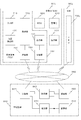
- FIG. 1 shows a schematic configuration of a terminal device (TEU) 700 1 , 700 2 ,... And a management device 800 according to an embodiment.
- TEU terminal device
- the management apparatus 800 is arrange
- the terminal devices 700 1 , 700 2 ,... are configured similarly.
- the mobile unit MV j in which the terminal device 700 j is arranged is equipped with a storage battery 910 and an ECU (Electronic Control Unit) 920. Further, the mobile MV j, the presentation unit 930 is disposed.
- ECU Electronic Control Unit
- the above storage battery 910 the driving energy of the moving body MV j is stored.
- the moving body MV j travels using such driving energy.
- the parameter values derived from the ECU 920 include the current value of the remaining energy of the storage battery 910 (hereinafter also referred to as “the amount of stored energy”) and the fully charged amount. Then, ECU 920 sends the amount of stored energy and the fully charged amount of storage battery 910 to terminal device 700 j via an in-vehicle communication network that operates according to a communication protocol such as CAN (Controller Area Network), for example.
- CAN Controller Area Network
- the presenting unit 930 includes a sound output unit, a display unit, and the like.
- the presentation unit 930 receives presentation information sent from the terminal device 700 j . Then, the presentation unit 930 presents information related to the planned travel route according to the presentation information.
- the terminal device 700 j includes an input unit 710, a position detection unit 720, and an acquisition unit 730.
- the terminal device 700 j includes a transmission unit 740, a reception unit 750, and an output unit 760.
- the input unit 710 includes a keyboard and the like. When a route search command specifying a destination is input to the input unit 710, the input unit 710 sends the route search command to the acquisition unit 730.
- Position detection unit 720 described above, to detect the position of the current position of the mobile object MV j (present position) sequentially. Then, the position detection unit 720 sends the detected current position to the acquisition unit 730.
- the acquisition unit 730 acquires the stored energy amount and the full charge amount sent from the ECU 920.
- the acquisition unit 730 acquires the route search command sent from the input unit 710.
- the acquisition unit 730 acquires the current position sent from the position detection unit 720. Then, the acquisition unit 730 sends the acquisition result to the transmission unit 740.
- the transmission unit 740 receives the acquisition result sent from the acquisition unit 730. Then, the transmission unit 740 sends the acquisition result to the management apparatus 800 via the network 950.
- the output unit 760 receives the information related to the planned travel route sent from the receiving unit 750. And the output part 760 sends the information regarding the said driving planned route to the presentation part 930 as presentation information.
- the management device 800 includes a storage unit 810 and a receiving unit 820.
- the management apparatus 800 includes an estimation unit 830, a search unit 840, and a transmission unit 850.
- the storage unit 810 stores various information data used by the management apparatus 800.
- Such information data includes map information and moving body information.
- the map information includes a road network, a road type, and the like.
- the mobile information, each of the planned travel route of the moving body MV j contains energy consumption information.
- the “energy consumption information” is the information per unit distance corresponding to the type of the moving body MV j (the vehicle type when the moving body is a vehicle) when moving without encountering a traffic jam. It is energy consumption.
- the reception unit 820 receives the acquisition result sent from each of the terminal devices 700 j . Then, when the acquired energy amount, the full charge amount, or the route search command is included in the acquisition result transmitted from the terminal device 700 j , the reception unit 820 stores the stored energy, the full charge amount, or the route search. The command is sent to the search unit 840. In addition, when the current position is included in the acquisition result transmitted from the terminal device 700 j , the reception unit 820 transmits the current position to the estimation unit 830 and the search unit 840.
- the above estimation unit 830 receives the respective current position of the moving body MV j sent from the receiver 820.
- the estimation unit 830 that has received the current position, based on the current position, the map information stored in the storage unit 810, and the respective travel schedule routes of the moving body MV j in the moving body information, A section in which there is a possibility of occurrence of traffic (hereinafter also referred to as a “congestion section”), a traffic jam occurrence time, and a mobile object that may encounter the traffic jam are estimated.
- Such estimation results are sent to the search unit 840 as estimation information.
- the search unit 840 receives the stored energy amount, the full charge amount, the route search command, and the current position sent from the receiving unit 820. Upon receiving the route search command, the search unit 840 stores the storage unit 810 based on the destination specified in the route search command and the current position of the moving body in which the terminal device that issued the route search command is arranged. The initial route from the current position of the moving body to the destination is searched with reference to the map information inside. Then, the search unit 840 stores the searched initial route in the storage unit 810 as the planned travel route of the mobile body. Subsequently, the search unit 840 generates information related to the searched initial route, and sends the generated information to the transmission unit 850 as information related to the planned travel route described above.
- the transmission unit 850 receives the information related to the scheduled travel route sent from the search unit 840. Then, the transmission unit 850 sends information related to the planned travel route to the terminal device arranged on the mobile body specified by the search unit 840 via the network 950.
- the data is sent to the search unit 840 of the management apparatus 800.
- the current position acquired by the acquisition unit 730 is sent to the estimation unit 830 and the search unit 840 of the management apparatus 800 via the transmission unit 740, the network 950, and the reception unit 820.
- the detected current position is sequentially transmitted from the position detection unit 720 to the acquisition unit 730.
- the stored energy amount and the fully charged amount are sequentially sent from the ECU 920 to the acquisition unit 730.
- the acquisition part 730 shall transmit the said present position to the estimation part 830 and the search part 840 of the management apparatus 800 sequentially.
- the acquisition unit 730 sequentially sends the stored energy amount and the full charge amount to the search unit 840 of the management device 800.
- Initial route search process executed by the search unit 840 of the management apparatus 800 will be described.
- the input unit 710 of the terminal apparatus 700 will be exemplified a process of searching for an initial route when the route search command specifying the destination is input.
- the acquisition unit 730 that has acquired the route search command sends the acquired route search command to the search unit 840 of the management device 800.
- the search unit 840 that has received the route search command stores the storage unit 810 of the management device 800 based on the destination specified in the route search command and the current position of the mobile unit MV 1 in which the terminal device 700 1 is placed.
- the travel route from the current position of the mobile unit MV 1 to the destination is searched as an initial route with reference to the map information inside.
- the search unit 840 searches for a travel route with the earliest arrival time at the destination.
- the search unit 840 stores the searched initial route in the storage unit 810 as the planned travel route of the mobile unit MV 1 . Subsequently, the search unit 840 generates information on the searched initial route, the generated information, as the information about the planned driving route, and sends to the output unit 760 of the terminal apparatus 700 1.
- the output unit 760 that has received the information related to the planned travel route sends the information related to the planned travel route to the presenting unit 930 arranged in the mobile unit MV 1 as the presentation information.
- the presentation unit 930 presents information regarding the initial route.
- the estimation unit 830 that has received the current position of the mobile MV j sent from each acquisition unit 730 of the terminal device 700 j receives the current position, the map information stored in the storage unit 810, and the movement Based on each planned travel route of the moving body MV j in the body information, a planned travel time at which each of the mobile bodies MV j passes through each position of the planned travel route is calculated. Subsequently, the estimation unit 830, and the calculated scheduled travel time, based on the respective planned travel route of the moving body MV j, congested section, the congestion occurrence time, and the moving body may be encountered on the traffic congestion Is estimated. Then, the estimation result is sent to the search unit 840 as estimation information.
- avoidance route search processing executed by the search unit 840 will be described.
- the search unit 840 Upon receiving the estimation information sent from the estimation unit 830, the search unit 840 calculates each energy margin of the moving object included in the estimation information.
- the search unit 840 first moves the energy consumption amount in the storage unit 810 when the mobile object to be calculated travels from the current position to the destination without encountering a traffic jam. Calculation is made while referring to energy consumption information in the body information. Subsequently, the search unit 840 subtracts the calculated energy consumption from the amount of energy held by the mobile object to be calculated. Then, by dividing the result of the subtraction by the full charge amount of the mobile object to be calculated, search unit 840 calculates the energy margin of the mobile object to be calculated.
- the search unit 840 specifies a mobile body having the lowest calculated energy margin from the mobile bodies included in the estimation information. Subsequently, the search unit 840 searches for the avoidance route for avoiding the traffic jam specified by the traffic jam section and the traffic jam occurrence time included in the estimation information for the identified mobile object. Then, the search unit 840 stores the searched avoidance route in the storage unit 810 as the planned travel route of the identified mobile body. Subsequently, the search unit 840 generates information on the searched avoidance route, and sends the generated information to the output unit 760 of the terminal device arranged on the identified moving body as information on the planned travel route.
- the output unit 760 that has received the information related to the planned travel route sends the information related to the planned travel route to the presenting unit 930 arranged in the identified moving body as the presentation information.
- the presentation unit 930 presents information related to the avoidance route.
- the estimation unit 830 that receives the current position of the mobile MV j sent from each of the terminal devices 700 j is stored in the current position and the storage unit 810.
- map information are, and, based on each of the planned travel route of the moving body MV j, to estimate the occurrence of congestion.
- the search unit 840 specifies a mobile body having the lowest energy margin among mobile bodies that may encounter a traffic jam estimated to be generated. Then, the search unit 840 searches for an avoidance route in which the identified mobile body avoids the traffic jam. The avoidance route searched in this way is presented by the identified moving body presenting unit 930.
- the management apparatus 800 searches for an initial route.
- an initial route may be searched in each terminal device, and the searched initial route may be reported to the management device.
- the estimated value of the stored energy amount (hereinafter referred to as “energy amount at arrival”) at the time of arrival at the destination without encountering traffic congestion is divided by the full charge amount to obtain an energy margin.
- the degree was calculated.
- the travelable distance based on the arrival energy amount may be adopted as the energy margin.
- the terminal device 700 j is configured not to include the presentation unit 930.
- the terminal device may include a presentation unit.
- the terminal device 700 j includes the input unit 710 and the position detection unit 720.
- the sharable element is used, and the sharable element is used as a component of the terminal device. It may be omitted.
- the stored energy amount and the fully charged amount are reported from the external ECU 920 to the terminal device 700 j .
- the terminal device may include a sensor for detecting a physical quantity that is difficult to receive the report. .
- the present invention is applied to the path management of a moving body using electric energy as driving energy, but the present invention is applied to the path management of a moving body using other energy as driving energy. May be.
- the acquisition unit and output unit of the terminal device of the above embodiment, and the estimation unit and search unit of the management device are configured as a computer device including a computer as a calculation means, and the functions of the above-described units are programmed. It can be realized by executing. These programs may be acquired in a form recorded on a portable recording medium such as a CD-ROM or DVD, or may be acquired in a form distributed via a network such as the Internet. Can do.
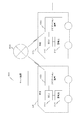
- FIG. 2 shows the positioning of the navigation devices 100 1 , 100 2 ,... And the server device 300 according to one embodiment.
- the navigation devices 100 1 , 100 2 ,... are an aspect of the terminal devices 700 1 , 700 2 ,.
- the server device 300 is an aspect of the management device 800 (see FIG. 1) of the above-described embodiment.
- Each of the navigation devices 100 j and the server device 300 can perform data communication via the network 500.
- the contents of communication between the navigation device 100 j and the server device 300 will be described later.
- the vehicle CR j on which the navigation device 100 j is arranged is equipped with a storage battery 210 and an ECU 220.
- the navigation device 100 j includes an element corresponding to the presentation unit 930 described above.
- the storage battery 210 stores driving energy for the vehicle CR j .
- the vehicle CR j moves using the driving energy.
- the ECU220 above collects the result of detection by various sensors for detecting the state of the vehicle CR j.
- the ECU 220 controls and manages the traveling of the vehicle CR j while sequentially deriving various parameter values useful for controlling the traveling of the vehicle CR j based on the collected detection results.
- the parameter value derived from the ECU 220 includes the amount of energy stored in the storage battery 210 and the amount of full charge. Then, the ECU 220 sends the stored energy amount and the full charge amount of the storage battery 210 to the navigation device 100 j via an in-vehicle communication network that operates according to a CAN (Controller Area Network) standard communication protocol.
- CAN Controller Area Network
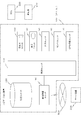
- FIG. 3 shows the configuration of the navigation device 100 j .
- the navigation device 100 j includes a control unit 110, a storage unit 120, a sound output unit 130 as a part of the presentation unit 930, and a display unit 140 as a part of the presentation unit 930. It has.
- the navigation device 100 j includes an input unit 150 as the input unit 710, a sensor unit 160, a GPS reception unit as a part of the position detection unit 720, and a wireless communication unit 180 as the transmission unit 740 and the reception unit 750. And.
- the control unit 110 performs overall control of the entire navigation device 100 j .
- the control unit 110 will be described later.
- the storage unit 120 includes a non-volatile storage device such as a hard disk device, and stores various information data used in the navigation device 100. Such information data includes map information, POI (Point Of Interest) information, background data, and the like.
- the storage unit 120 can be accessed by the control unit 110.
- the sound output unit 130 includes a speaker, and outputs sound corresponding to the sound data received from the control unit 110.
- the sound output unit 130 outputs under the control of the control unit 110, the traveling direction of the vehicle CR j a navigation process, the driving situation, a guidance voice such as traffic conditions.
- the display unit 140 includes a display device such as a liquid crystal panel, and displays an image corresponding to the display data received from the control unit 110.
- the display unit 140 displays map information, images such as route information, guidance information, and the like during navigation processing under the control of the control unit 110.
- Said input unit 150 is comprised by the key part provided in the main-body part of the navigation apparatus 100j , and / or the remote input device provided with a key part.
- a key part provided in the main body part a touch panel provided in a display device of the display unit 140 can be used.
- it can replace with the structure which has a key part, or can also employ
- this input unit 150 by the user to operate, configure and operation command operation contents of the navigation device 100 j is performed. For example, the user performs a route search command specifying the destination using the input unit 150.
- the sensor unit 160 includes a vehicle speed sensor, an acceleration sensor, an angular velocity sensor, a tilt sensor, and the like. Detection results from various sensors included in the sensor unit 160 are sent to the control unit 110 as sensor data.
- the GPS receiving unit 170 calculates the current position of the vehicle CR j based on reception results of radio waves from a plurality of GPS satellites. Further, the GPS receiving unit 170 measures the current time based on the date / time information transmitted from the GPS satellite. Information on these current position and current time is sent to the control unit 110 as GPS data.
- the wireless communication unit 180 receives the current position, the stored energy amount and the full charge amount, and the route search command of the vehicle CR j sent from the control unit 110. Then, the wireless communication unit 180 sends these pieces of information to the server apparatus 300 via the network 500.
- the wireless communication unit 180 receives information related to the planned travel route transmitted from the server device 300 via the network 500. Then, the wireless communication unit 180 sends information related to the planned travel route to the control unit 110.
- the control unit 110 includes a central processing unit (CPU) and its peripheral circuits.
- Various functions as the navigation device 100 j are realized by the control unit 110 executing various programs. These functions include a part of the position detection unit 720, the acquisition unit 730, and the output unit 760 in the above-described embodiment.
- the program executed by the control unit 110 is recorded on a computer-readable recording medium such as a hard disk, CD-ROM, or DVD, and is loaded from the recording medium and executed.
- the program may be acquired in a form recorded on a portable recording medium such as a CD-ROM or DVD, or may be acquired in a form distributed via a network such as the Internet. Also good.
- the control unit 110 provides navigation information to the user by appropriately referring to the map information in the storage unit 120 based on the sensor data sent from the sensor unit 160 and the GPS data received from the GPS receiving unit 170.
- the navigation information providing process includes (i) a map display for displaying a map of an area designated by the user on the display device of the display unit 140, (ii) where the vehicle CR j is located on the map, Also, map matching to calculate which direction you are heading, (iii) calculation of estimated arrival time when driving to the destination along the set route, (iv) direction to proceed And the like, such as control for displaying guidance guidance on the display device of the display unit 140 and control for outputting voice for guidance guidance from the speaker of the sound output unit 140, etc. included.
- control unit 110 performs a process for transmitting the map matching result described above, that is, the current position of the vehicle CR j to the server device 300 via the wireless communication unit 180 and the network 500.
- control unit 110 performs processing for reporting the route search command input to the input unit 150 to the server device 300.
- control unit 110 uses the display unit 140 and the sound output unit 140 to transmit information on the planned travel route transmitted from the server device 300 and received via the network 500 and the wireless communication unit 180 to the vehicle CR j . Process to present to the passenger.
- FIG. 4 shows the configuration of the server device 300.
- the server device 300 includes a storage unit 310 as a storage unit 810, an external communication unit 320 as a reception unit 820 and a transmission unit 850, and a control unit 330.
- the storage unit 310 includes a hard disk device that is a nonvolatile storage device.
- the storage unit 310 stores various information data used for the operation of the server device 300. This information data includes map information and vehicle information.
- the map information stored in the storage unit 310 includes a road network, a road type, and the like. Further, the vehicle information includes each planned travel route, energy consumption information, and the like of the vehicle CR j .
- the “energy consumption information” is an energy consumption amount per unit distance corresponding to the type (vehicle type) of the vehicle CR j when moving without encountering a traffic jam.
- the external communication unit 320 receives the current position of the vehicle CR j transmitted from each of the navigation devices 100 j , the stored energy amount and the full charge amount, and the route search command via the network 500. Then, the external communication unit 320 sends these pieces of information to the control unit 330.
- the external communication unit 320 receives information related to the scheduled travel route sent from the control unit 330. Then, the external communication unit 320 sends information related to the planned travel route to the navigation device arranged in the vehicle specified by the control unit 330 as will be described later via the network 500.
- the control unit 330 performs overall control of the entire server apparatus 300.
- the control unit 330 includes a central processing unit (CPU) and its peripheral circuits.
- Various functions are realized by the control unit 330 executing various programs. Such functions include functions as the estimation unit 830 and the search unit 840 in the above-described embodiment.
- the control unit 330 when the control unit 330 receives the route search command sent from the external communication unit 320, the control unit 330 identifies the vehicle on which the navigation device that issued the route search command is arranged. Subsequently, the control unit 330 refers to the map information in the storage unit 330 based on the destination specified in the route search command and the current position of the vehicle on which the navigation device that issued the route search command is arranged. Then, an initial route from the current position of the vehicle that issued the route search command to the destination is searched. Then, the control unit 330 stores the searched initial route in the storage unit 310 as the planned traveling route of the vehicle. Subsequently, the control unit 330 generates information related to the searched initial route, and sends the generated information to the external communication unit 320 as information related to the planned travel route described above.
- control unit 330 receives each current position of the vehicle CR j sent from the external communication unit 320, the control unit 330 in the current position, the map information stored in the storage unit 310, and the vehicle information
- the occurrence of a traffic jam is estimated based on each planned travel route of the vehicle CR j .
- the estimation of the occurrence of the traffic jam is a traffic jam section, a traffic jam occurrence time, and a vehicle that may encounter the traffic jam.
- the control unit 330 identifies the vehicle having the lowest energy margin from the vehicles that may encounter the traffic jam. Subsequently, the control unit 330 searches for the avoidance route for avoiding the traffic jam specified by the traffic jam section and the traffic jam occurrence time included in the estimation information for the identified vehicle. Then, the control unit 330 stores the searched avoidance route in the storage unit 310 as the planned traveling route of the vehicle. Subsequently, the control unit 330 generates information related to the searched avoidance route, and sends the generated information to the external communication unit 320 as information related to the planned travel route described above.
- control unit 330 The details of the avoidance route search process by the control unit 330 will be described later.
- the current position, the amount of stored energy, the full charge amount, or the route search command acquired by the control unit 110 of the navigation device 100 j The data is sent to the control unit 330 of the server device 300 via the wireless communication unit 180 of the device 100 j , the network 500, and the external communication unit 320 of the server device 300.
- the information about the planned driving route that is generated from the control unit 330, that via the external communication unit 320, a network 500 and a navigation device 100 j of the wireless communication unit 180 of the server 300 and sent to the control unit 110 become.
- each of the navigation devices 100 1 , 100 2 ,... It is assumed that information on the current position and the current time is sequentially sent from the GPS receiving unit 170 to the control unit 110 as GPS data. Further, it is assumed that the stored energy amount and the full charge amount are sequentially sent from the ECU 220 to the control unit 110. Then, it is assumed that the control unit 110 sequentially sends the current position to the control unit 330 of the server device 300. In addition, it is assumed that the control unit 110 sequentially sends the stored energy amount and the full charge to the control unit 330 of the server device 300.
- Initial route search process An initial route search process executed by the control unit 330 of the server device 300 will be described.
- the initial route search process when a route search command specifying a destination is input to the input unit 150 of the navigation device 100 1 will be described as an example.
- the route search command is acquired by the control unit 110.
- the control unit 110 that has acquired the route search command sends the acquired route search command to the control unit 330 of the server device 300.
- the control unit 330 that has received the route search command, in the storage unit 310 of the server device 300, based on the destination specified in the route search command and the current position of the vehicle CR 1 in which the navigation device 100 1 is arranged.
- the travel route from the current position of the vehicle CR 1 to the destination is searched as an initial route with reference to the map information.
- the control unit 330 searches for a travel route with the earliest arrival time at the destination.
- the control unit 330 stores the searched initial route in the storage unit 310 as the planned travel route of the vehicle CR 1 . Subsequently, the control unit 330 generates information related to the searched initial route, and sends the generated information to the control unit 110 of the navigation device 100 1 as information related to the planned travel route.
- the control unit 110 that has received information related to the planned travel route sends information related to the planned travel route to the sound output unit 130 and the display unit 140 as presentation information. As a result, the sound output unit 130 and the display unit 140 present information regarding the initial route.
- avoidance route search processing executed by the control unit 330 will be described.
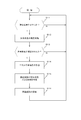
- step S11 the control unit 330, the vehicle CR j sent from either the control unit 110 of the navigation device 100 j It is determined whether a new current position has been received. If the result of this determination is negative (step S11: N), the process of step S11 is repeated.
- step S11 If the result of the determination in step S11 is affirmative (step S11: Y), the process proceeds to step S12.
- step S12 the control unit 330 performs a process for estimating occurrence of traffic jams.
- the control unit 330 When estimating the occurrence of the traffic jam, the control unit 330 first determines the current position, the map information stored in the storage unit 310, and the planned travel routes of the vehicle CR j in the vehicle information. The planned travel time at which each of the vehicles CR j passes through each position on the planned travel route is calculated. Subsequently, the control unit 330 estimates a traffic jam section, a traffic jam occurrence time, and a vehicle that may encounter the traffic jam based on the calculated planned travel time and each planned travel route of the vehicle CR j. To do.
- step S13 the control unit 330 determines whether or not the occurrence of traffic jam is estimated in step S12 described above. If the result of this determination is negative (step S13: N), the process returns to step S11.
- step S13 If the result of the determination in step S13 is affirmative (step S13: Y), the process proceeds to step S14.
- step S14 the control unit 330 calculates the energy margin of each vehicle estimated to encounter a traffic jam.
- the control unit 330 When calculating the energy margin, the control unit 330 first calculates the energy consumption when the vehicle to be calculated travels from the current position to the destination without encountering traffic jams, as vehicle information in the storage unit 310. The calculation is performed while referring to the energy consumption information at. Subsequently, the control unit 330 calculates the arrival time energy amount by subtracting the calculated energy consumption amount from the stored energy amount of the vehicle to be calculated. Then, the control unit 330 calculates the energy margin of the calculation target vehicle by dividing the calculated arrival energy amount by the full charge amount of the calculation target vehicle.
- step S15 the control unit 330 specifies a vehicle that should search for an avoidance route. Such specification is performed by the control unit 330 specifying a vehicle having the lowest calculated energy margin from vehicles estimated to encounter traffic jams.
- step S16 the control unit 330 searches for the avoidance route for avoiding the traffic jam specified by the traffic jam section and the traffic jam occurrence time included in the estimation information for the identified vehicle. Then, the control unit 330 stores the searched avoidance route in the storage unit 310 as the planned traveling route of the identified vehicle. Subsequently, the control unit 330 generates information related to the searched avoidance route, and sends the generated information to the control unit 110 of the navigation device arranged in the identified vehicle as information related to the planned travel route. Then, the process returns to step S11.
- the control unit 110 that has received information related to the planned travel route sends information related to the planned travel route to the sound output unit 130 and the display unit 140 as presentation information.
- the sound output unit 130 and the display unit 140 present information related to the avoidance route.
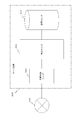
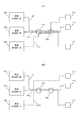
- FIG. 6 conceptually illustrates the change of the planned travel route of the vehicle having a low energy margin by searching for the avoidance route. That is, when routes RT 1 to RT 3 are set as planned traveling routes to destinations PT 1 to PT 3 for each of vehicles CR 1 to CR 3 , as shown in FIG. 6 (A). Assume that the occurrence of traffic jam is estimated in the section from point PA to point PB. In such a case, as shown in FIG. 6B, the avoidance route NRT 3 of the vehicle CR 3 having the lowest energy margin is searched for among the vehicles CR 1 to CR 3 , and the planned travel route of the vehicle CR 3 is determined. To the avoidance route NRT 3 .
- the control unit 330 that has received the current position of the vehicle CR j sent from each of the navigation devices 100 j is stored in the current position and the storage unit 310.
- the occurrence of traffic jam is estimated based on the map information and the respective planned travel routes of the vehicle CR j .
- the control unit 330 identifies a vehicle having the lowest energy margin among vehicles that may encounter a traffic jam estimated to occur. Then, the control unit 330 searches for an avoidance route for the identified vehicle to avoid the traffic jam.
- the server device 300 searches for an initial route.
- each of the navigation devices may search for an initial route and report the searched initial route to the server device.
- the energy margin is calculated by dividing the amount of energy at the time of arrival by the full charge amount.
- the navigation device 100 j includes the input unit 150 and the GPS receiving unit 170.
- the sharable element is used, and the sharable element is used as a component of the navigation device. It may be omitted.
- the stored energy amount and the fully charged amount are reported from the external ECU 220 to the navigation device 100 j .
- the navigation device may include a sensor for detecting a physical quantity that is difficult to receive the report. .
- the present invention is applied to the route management of a vehicle using electric energy as driving energy.
- the present invention is applied to the route management of a vehicle using other energy as driving energy. Also good.
Landscapes
- Engineering & Computer Science (AREA)
- Radar, Positioning & Navigation (AREA)
- Remote Sensing (AREA)
- Automation & Control Theory (AREA)
- Physics & Mathematics (AREA)
- General Physics & Mathematics (AREA)
- Life Sciences & Earth Sciences (AREA)
- Sustainable Development (AREA)
- Sustainable Energy (AREA)
- Power Engineering (AREA)
- Transportation (AREA)
- Mechanical Engineering (AREA)
- Navigation (AREA)
- Electric Propulsion And Braking For Vehicles (AREA)
Priority Applications (2)
| Application Number | Priority Date | Filing Date | Title |
|---|---|---|---|
| JP2014507157A JP6012711B2 (ja) | 2012-03-28 | 2012-03-28 | 管理装置及び端末装置、並びに、経路管理方法及び経路取得方法 |
| PCT/JP2012/058249 WO2013145190A1 (fr) | 2012-03-28 | 2012-03-28 | Dispositif de gestion, dispositif de terminal et procédé de gestion d'itinéraire |
Applications Claiming Priority (1)
| Application Number | Priority Date | Filing Date | Title |
|---|---|---|---|
| PCT/JP2012/058249 WO2013145190A1 (fr) | 2012-03-28 | 2012-03-28 | Dispositif de gestion, dispositif de terminal et procédé de gestion d'itinéraire |
Publications (1)
| Publication Number | Publication Date |
|---|---|
| WO2013145190A1 true WO2013145190A1 (fr) | 2013-10-03 |
Family
ID=49258555
Family Applications (1)
| Application Number | Title | Priority Date | Filing Date |
|---|---|---|---|
| PCT/JP2012/058249 Ceased WO2013145190A1 (fr) | 2012-03-28 | 2012-03-28 | Dispositif de gestion, dispositif de terminal et procédé de gestion d'itinéraire |
Country Status (2)
| Country | Link |
|---|---|
| JP (1) | JP6012711B2 (fr) |
| WO (1) | WO2013145190A1 (fr) |
Cited By (1)
| Publication number | Priority date | Publication date | Assignee | Title |
|---|---|---|---|---|
| WO2015146125A1 (fr) * | 2014-03-27 | 2015-10-01 | 株式会社デンソー | Système d'alimentation en combustible pour véhicule à pile à combustible |
Citations (3)
| Publication number | Priority date | Publication date | Assignee | Title |
|---|---|---|---|---|
| JP2009128065A (ja) * | 2007-11-20 | 2009-06-11 | Toyota Motor Corp | 経路案内装置 |
| JP2011094995A (ja) * | 2009-10-27 | 2011-05-12 | Toyota Motor Corp | 車両用経路案内装置 |
| JP2012008032A (ja) * | 2010-06-25 | 2012-01-12 | Nec Corp | 経路検索装置、経路検索システム、および経路提供方法 |
Family Cites Families (2)
| Publication number | Priority date | Publication date | Assignee | Title |
|---|---|---|---|---|
| WO2010137307A1 (fr) * | 2009-05-26 | 2010-12-02 | 日立オートモティブシステムズ株式会社 | Système de support de fonctionnement de véhicule et procédé |
| JP5212427B2 (ja) * | 2010-07-01 | 2013-06-19 | 株式会社デンソー | 運転支援装置 |
-
2012
- 2012-03-28 WO PCT/JP2012/058249 patent/WO2013145190A1/fr not_active Ceased
- 2012-03-28 JP JP2014507157A patent/JP6012711B2/ja active Active
Patent Citations (3)
| Publication number | Priority date | Publication date | Assignee | Title |
|---|---|---|---|---|
| JP2009128065A (ja) * | 2007-11-20 | 2009-06-11 | Toyota Motor Corp | 経路案内装置 |
| JP2011094995A (ja) * | 2009-10-27 | 2011-05-12 | Toyota Motor Corp | 車両用経路案内装置 |
| JP2012008032A (ja) * | 2010-06-25 | 2012-01-12 | Nec Corp | 経路検索装置、経路検索システム、および経路提供方法 |
Cited By (1)
| Publication number | Priority date | Publication date | Assignee | Title |
|---|---|---|---|---|
| WO2015146125A1 (fr) * | 2014-03-27 | 2015-10-01 | 株式会社デンソー | Système d'alimentation en combustible pour véhicule à pile à combustible |
Also Published As
| Publication number | Publication date |
|---|---|
| JPWO2013145190A1 (ja) | 2015-08-03 |
| JP6012711B2 (ja) | 2016-10-25 |
Similar Documents
| Publication | Publication Date | Title |
|---|---|---|
| US9835463B2 (en) | Route searching device, terminal device, and route searching method | |
| US9880014B2 (en) | Navigation system with session transfer mechanism and method of operation thereof | |
| US9691281B2 (en) | Navigation system with image assisted navigation mechanism and method of operation thereof | |
| US9638542B2 (en) | Method and system of route scheduling and presenting route-based fuel information | |
| US10229600B2 (en) | Navigation system with traffic flow mechanism and method of operation thereof | |
| US10088330B2 (en) | Navigation system with notification mechanism and method of operation thereof | |
| KR20160053971A (ko) | 대안 경로를 생성하기 위한 방법 및 시스템 | |
| JP2016520190A (ja) | 推奨ナビゲート可能区間を示す情報を提供する方法及びシステム | |
| JP2015001466A (ja) | 経路探索装置、端末装置及び経路探索方法 | |
| JP6088082B2 (ja) | 管理装置及び端末装置、並びに、経路管理方法及び経路取得方法 | |
| US9128170B2 (en) | Locating mobile devices | |
| JP2015076077A (ja) | 交通量推定システム、端末装置、交通量推定方法および交通量推定プログラム | |
| JP2007322172A (ja) | 迂回路提案システム及び迂回路提案方法 | |
| JP5052550B2 (ja) | 交通情報管理装置、交通情報管理方法および交通情報管理プログラム | |
| JP2008186082A (ja) | 情報作成システム | |
| JP5717918B2 (ja) | 充電時間導出装置、充電時間管理装置、端末装置及びその方法 | |
| JP6012711B2 (ja) | 管理装置及び端末装置、並びに、経路管理方法及び経路取得方法 | |
| JP2010176452A (ja) | 情報処理分散システム、情報処理装置及び情報処理分散方法 | |
| JP2019191200A (ja) | 経路探索装置、端末装置及び経路探索方法 | |
| WO2012132014A1 (fr) | Dispositif de calcul, système de calcul, terminal et procédé de calcul | |
| JP5818971B2 (ja) | 探索装置、探索管理装置、端末装置及び算出方法 | |
| JP2011201443A (ja) | 起動タイミング決定システム及び起動タイミング決定方法 | |
| JP5860136B2 (ja) | 画像処理装置、画像処理管理装置、端末装置及び画像処理方法 | |
| JP2018059950A (ja) | 経路探索装置、端末装置及び経路探索方法 | |
| WO2014162609A1 (fr) | Dispositif de collecte d'informations, dispositif de transmission d'informations, dispositif de réception d'informations, procédé de collecte d'informations et programme de collecte d'informations |
Legal Events
| Date | Code | Title | Description |
|---|---|---|---|
| 121 | Ep: the epo has been informed by wipo that ep was designated in this application |
Ref document number: 12872334 Country of ref document: EP Kind code of ref document: A1 |
|
| ENP | Entry into the national phase |
Ref document number: 2014507157 Country of ref document: JP Kind code of ref document: A |
|
| NENP | Non-entry into the national phase |
Ref country code: DE |
|
| 122 | Ep: pct application non-entry in european phase |
Ref document number: 12872334 Country of ref document: EP Kind code of ref document: A1 |