WO2013168819A1 - 酸素吸収剤組成物 - Google Patents
酸素吸収剤組成物 Download PDFInfo
- Publication number
- WO2013168819A1 WO2013168819A1 PCT/JP2013/063245 JP2013063245W WO2013168819A1 WO 2013168819 A1 WO2013168819 A1 WO 2013168819A1 JP 2013063245 W JP2013063245 W JP 2013063245W WO 2013168819 A1 WO2013168819 A1 WO 2013168819A1
- Authority
- WO
- WIPO (PCT)
- Prior art keywords
- group
- acid
- oxygen
- oxygen absorbent
- absorbent composition
- Prior art date
- Legal status (The legal status is an assumption and is not a legal conclusion. Google has not performed a legal analysis and makes no representation as to the accuracy of the status listed.)
- Ceased
Links
- PQNFLJBBNBOBRQ-UHFFFAOYSA-N C1Cc2ccccc2C1 Chemical compound C1Cc2ccccc2C1 PQNFLJBBNBOBRQ-UHFFFAOYSA-N 0.000 description 1
- LSXTYBNSZSMLAZ-UHFFFAOYSA-N O=C(CCCCC(OC1Cc2ccccc2C1)=O)OC(C1)Cc2c1cccc2 Chemical compound O=C(CCCCC(OC1Cc2ccccc2C1)=O)OC(C1)Cc2c1cccc2 LSXTYBNSZSMLAZ-UHFFFAOYSA-N 0.000 description 1
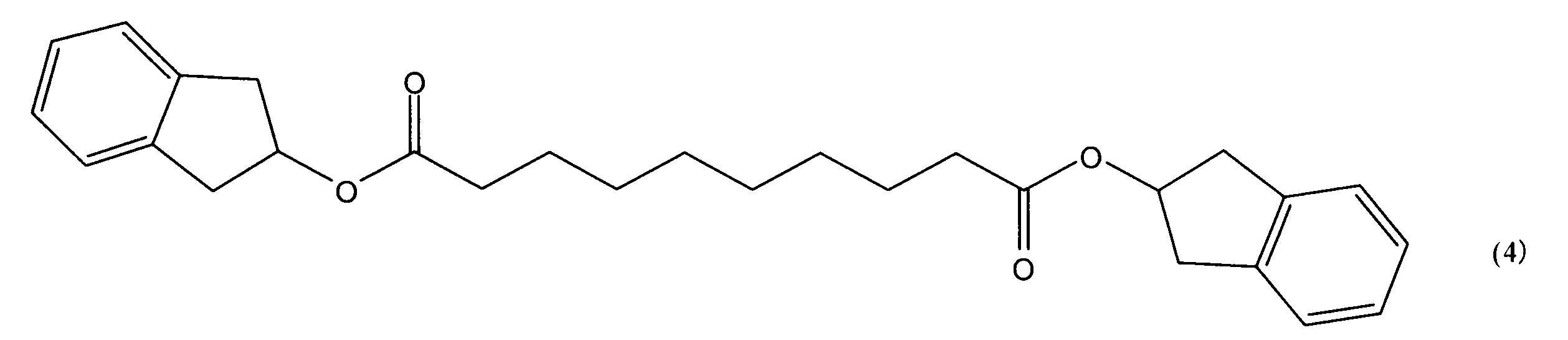
- LZEOTIFKBGHEEU-UHFFFAOYSA-N O=C(CCCCCCCCC(OC1Cc2ccccc2C1)=O)OC(C1)Cc2c1cccc2 Chemical compound O=C(CCCCCCCCC(OC1Cc2ccccc2C1)=O)OC(C1)Cc2c1cccc2 LZEOTIFKBGHEEU-UHFFFAOYSA-N 0.000 description 1
Classifications
-
- B—PERFORMING OPERATIONS; TRANSPORTING
- B01—PHYSICAL OR CHEMICAL PROCESSES OR APPARATUS IN GENERAL
- B01D—SEPARATION
- B01D53/00—Separation of gases or vapours; Recovering vapours of volatile solvents from gases; Chemical or biological purification of waste gases, e.g. engine exhaust gases, smoke, fumes, flue gases, aerosols
- B01D53/02—Separation of gases or vapours; Recovering vapours of volatile solvents from gases; Chemical or biological purification of waste gases, e.g. engine exhaust gases, smoke, fumes, flue gases, aerosols by adsorption, e.g. preparative gas chromatography
-
- B—PERFORMING OPERATIONS; TRANSPORTING
- B01—PHYSICAL OR CHEMICAL PROCESSES OR APPARATUS IN GENERAL
- B01J—CHEMICAL OR PHYSICAL PROCESSES, e.g. CATALYSIS OR COLLOID CHEMISTRY; THEIR RELEVANT APPARATUS
- B01J20/00—Solid sorbent compositions or filter aid compositions; Sorbents for chromatography; Processes for preparing, regenerating or reactivating thereof
- B01J20/22—Solid sorbent compositions or filter aid compositions; Sorbents for chromatography; Processes for preparing, regenerating or reactivating thereof comprising organic material
-
- A—HUMAN NECESSITIES
- A23—FOODS OR FOODSTUFFS; TREATMENT THEREOF, NOT COVERED BY OTHER CLASSES
- A23B—PRESERVATION OF FOODS, FOODSTUFFS OR NON-ALCOHOLIC BEVERAGES; CHEMICAL RIPENING OF FRUIT OR VEGETABLES
- A23B2/00—Preservation of foods or foodstuffs, in general
- A23B2/70—Preservation of foods or foodstuffs, in general by treatment with chemicals
- A23B2/704—Preservation of foods or foodstuffs, in general by treatment with chemicals in the form of gases, e.g. fumigation; Compositions or apparatus therefor
- A23B2/708—Preservation of foods or foodstuffs, in general by treatment with chemicals in the form of gases, e.g. fumigation; Compositions or apparatus therefor in a controlled atmosphere, e.g. partial vacuum, comprising only CO2, N2, O2 or H2O
- A23B2/712—Preservation of foods or foodstuffs, in general by treatment with chemicals in the form of gases, e.g. fumigation; Compositions or apparatus therefor in a controlled atmosphere, e.g. partial vacuum, comprising only CO2, N2, O2 or H2O in which an absorbent is placed or used
- A23B2/717—Oxygen absorbent
-
- B—PERFORMING OPERATIONS; TRANSPORTING
- B01—PHYSICAL OR CHEMICAL PROCESSES OR APPARATUS IN GENERAL
- B01D—SEPARATION
- B01D53/00—Separation of gases or vapours; Recovering vapours of volatile solvents from gases; Chemical or biological purification of waste gases, e.g. engine exhaust gases, smoke, fumes, flue gases, aerosols
- B01D53/14—Separation of gases or vapours; Recovering vapours of volatile solvents from gases; Chemical or biological purification of waste gases, e.g. engine exhaust gases, smoke, fumes, flue gases, aerosols by absorption
-
- B—PERFORMING OPERATIONS; TRANSPORTING
- B01—PHYSICAL OR CHEMICAL PROCESSES OR APPARATUS IN GENERAL
- B01J—CHEMICAL OR PHYSICAL PROCESSES, e.g. CATALYSIS OR COLLOID CHEMISTRY; THEIR RELEVANT APPARATUS
- B01J20/00—Solid sorbent compositions or filter aid compositions; Sorbents for chromatography; Processes for preparing, regenerating or reactivating thereof
- B01J20/30—Processes for preparing, regenerating, or reactivating
- B01J20/32—Impregnating or coating ; Solid sorbent compositions obtained from processes involving impregnating or coating
- B01J20/3202—Impregnating or coating ; Solid sorbent compositions obtained from processes involving impregnating or coating characterised by the carrier, support or substrate used for impregnation or coating
- B01J20/3204—Inorganic carriers, supports or substrates
-
- B—PERFORMING OPERATIONS; TRANSPORTING
- B01—PHYSICAL OR CHEMICAL PROCESSES OR APPARATUS IN GENERAL
- B01J—CHEMICAL OR PHYSICAL PROCESSES, e.g. CATALYSIS OR COLLOID CHEMISTRY; THEIR RELEVANT APPARATUS
- B01J20/00—Solid sorbent compositions or filter aid compositions; Sorbents for chromatography; Processes for preparing, regenerating or reactivating thereof
- B01J20/30—Processes for preparing, regenerating, or reactivating
- B01J20/32—Impregnating or coating ; Solid sorbent compositions obtained from processes involving impregnating or coating
- B01J20/3231—Impregnating or coating ; Solid sorbent compositions obtained from processes involving impregnating or coating characterised by the coating or impregnating layer
- B01J20/3242—Layers with a functional group, e.g. an affinity material, a ligand, a reactant or a complexing group
- B01J20/3244—Non-macromolecular compounds
- B01J20/3246—Non-macromolecular compounds having a well defined chemical structure
- B01J20/3248—Non-macromolecular compounds having a well defined chemical structure the functional group or the linking, spacer or anchoring group as a whole comprising at least one type of heteroatom selected from a nitrogen, oxygen or sulfur, these atoms not being part of the carrier as such
- B01J20/3253—Non-macromolecular compounds having a well defined chemical structure the functional group or the linking, spacer or anchoring group as a whole comprising at least one type of heteroatom selected from a nitrogen, oxygen or sulfur, these atoms not being part of the carrier as such comprising a cyclic structure not containing any of the heteroatoms nitrogen, oxygen or sulfur, e.g. aromatic structures
-
- B—PERFORMING OPERATIONS; TRANSPORTING
- B01—PHYSICAL OR CHEMICAL PROCESSES OR APPARATUS IN GENERAL
- B01J—CHEMICAL OR PHYSICAL PROCESSES, e.g. CATALYSIS OR COLLOID CHEMISTRY; THEIR RELEVANT APPARATUS
- B01J31/00—Catalysts comprising hydrides, coordination complexes or organic compounds
- B01J31/26—Catalysts comprising hydrides, coordination complexes or organic compounds containing in addition, inorganic metal compounds not provided for in groups B01J31/02 - B01J31/24
-
- B—PERFORMING OPERATIONS; TRANSPORTING
- B65—CONVEYING; PACKING; STORING; HANDLING THIN OR FILAMENTARY MATERIAL
- B65D—CONTAINERS FOR STORAGE OR TRANSPORT OF ARTICLES OR MATERIALS, e.g. BAGS, BARRELS, BOTTLES, BOXES, CANS, CARTONS, CRATES, DRUMS, JARS, TANKS, HOPPERS, FORWARDING CONTAINERS; ACCESSORIES, CLOSURES, OR FITTINGS THEREFOR; PACKAGING ELEMENTS; PACKAGES
- B65D81/00—Containers, packaging elements, or packages, for contents presenting particular transport or storage problems, or adapted to be used for non-packaging purposes after removal of contents
- B65D81/24—Adaptations for preventing deterioration or decay of contents; Applications to the container or packaging material of food preservatives, fungicides, pesticides or animal repellants
- B65D81/26—Adaptations for preventing deterioration or decay of contents; Applications to the container or packaging material of food preservatives, fungicides, pesticides or animal repellants with provision for draining away, or absorbing, or removing by ventilation, fluids, e.g. exuded by contents; Applications of corrosion inhibitors or desiccators
-
- B—PERFORMING OPERATIONS; TRANSPORTING
- B65—CONVEYING; PACKING; STORING; HANDLING THIN OR FILAMENTARY MATERIAL
- B65D—CONTAINERS FOR STORAGE OR TRANSPORT OF ARTICLES OR MATERIALS, e.g. BAGS, BARRELS, BOTTLES, BOXES, CANS, CARTONS, CRATES, DRUMS, JARS, TANKS, HOPPERS, FORWARDING CONTAINERS; ACCESSORIES, CLOSURES, OR FITTINGS THEREFOR; PACKAGING ELEMENTS; PACKAGES
- B65D81/00—Containers, packaging elements, or packages, for contents presenting particular transport or storage problems, or adapted to be used for non-packaging purposes after removal of contents
- B65D81/24—Adaptations for preventing deterioration or decay of contents; Applications to the container or packaging material of food preservatives, fungicides, pesticides or animal repellants
- B65D81/26—Adaptations for preventing deterioration or decay of contents; Applications to the container or packaging material of food preservatives, fungicides, pesticides or animal repellants with provision for draining away, or absorbing, or removing by ventilation, fluids, e.g. exuded by contents; Applications of corrosion inhibitors or desiccators
- B65D81/266—Adaptations for preventing deterioration or decay of contents; Applications to the container or packaging material of food preservatives, fungicides, pesticides or animal repellants with provision for draining away, or absorbing, or removing by ventilation, fluids, e.g. exuded by contents; Applications of corrosion inhibitors or desiccators for absorbing gases, e.g. oxygen absorbers or desiccants
-
- B—PERFORMING OPERATIONS; TRANSPORTING
- B01—PHYSICAL OR CHEMICAL PROCESSES OR APPARATUS IN GENERAL
- B01D—SEPARATION
- B01D2253/00—Adsorbents used in seperation treatment of gases and vapours
- B01D2253/20—Organic adsorbents
-
- B—PERFORMING OPERATIONS; TRANSPORTING
- B01—PHYSICAL OR CHEMICAL PROCESSES OR APPARATUS IN GENERAL
- B01D—SEPARATION
- B01D2253/00—Adsorbents used in seperation treatment of gases and vapours
- B01D2253/25—Coated, impregnated or composite adsorbents
-
- B—PERFORMING OPERATIONS; TRANSPORTING
- B01—PHYSICAL OR CHEMICAL PROCESSES OR APPARATUS IN GENERAL
- B01D—SEPARATION
- B01D2255/00—Catalysts
- B01D2255/20—Metals or compounds thereof
- B01D2255/207—Transition metals
-
- B—PERFORMING OPERATIONS; TRANSPORTING
- B01—PHYSICAL OR CHEMICAL PROCESSES OR APPARATUS IN GENERAL
- B01D—SEPARATION
- B01D2257/00—Components to be removed
- B01D2257/10—Single element gases other than halogens
- B01D2257/104—Oxygen
Definitions
- the present invention relates to an oxygen absorbent composition containing a compound having an indane skeleton and a transition metal catalyst.
- Oxygen is removed from containers containing these for the purpose of preventing oxygen oxidation of various products, such as foods, beverages, pharmaceuticals, and cosmetics, which are easily altered or deteriorated by the influence of oxygen, and for long-term storage. Oxygen absorber is used.
- an oxygen absorbent containing iron powder as a main reaction agent is generally used from the viewpoint of oxygen absorption capacity, ease of handling, and safety.
- this iron-based oxygen absorbent is sensitive to a metal detector, it has been difficult to use the metal detector for foreign object inspection.
- the package which enclosed the iron-type oxygen absorber has a possibility of ignition, it cannot be heated with a microwave oven.
- water is essential for the oxidation reaction of the iron powder, the effect of oxygen absorption can be exhibited only if the material to be stored is a high moisture system.
- an oxygen absorbent is dispersed between a conventional gas-barrier multilayer film formed by laminating a heat seal layer and a gas barrier layer, optionally with an intermediate layer made of a thermoplastic resin.
- an added oxygen absorbing layer which is a thermoplastic resin layer, and has a function of absorbing oxygen in the container in addition to the function of preventing oxygen permeation from the outside, such as extrusion lamination, coextrusion lamination, and dry lamination. It is manufactured using a known manufacturing method. However, this also has the problems that metal detectors used for inspection of foreign substances such as foods cannot be heated by a microwave oven, and that only the high-moisture content is effective. is doing. Those using oxygen absorbers such as iron powder are detected by metal detectors used to detect foreign substances such as food, and when iron is used as the content of alcohol beverages, the internal visibility is insufficient due to opacity. Aldehyde is generated by the oxidation reaction of alcohol using as a catalyst, and the flavor is lowered.
- an oxygen absorbent having an organic substance as a reaction main agent is desired.
- an oxygen absorbent containing an organic substance as a main reaction agent an oxygen absorbent containing ascorbic acid as a main agent is known (see Patent Document 2).
- an oxygen-absorbing resin composition having an oxygen scavenging property composed of a resin and a transition metal catalyst is known.
- a resin composition comprising a polyamide, particularly a xylylene group-containing polyamide and a transition metal catalyst as an oxidizable organic component is known (see Patent Document 3). Further, Patent Document 3 also exemplifies a packaging material obtained by molding a resin composition.
- an oxygen-absorbing resin composition that does not require moisture for oxygen absorption
- an oxygen-absorbing resin composition comprising a resin having a carbon-carbon unsaturated bond and a transition metal catalyst is known (see Patent Document 4). .
- the oxygen absorbent described in Patent Document 2 has a problem that oxygen absorption performance is low in the first place, and only a high-moisture-based material exhibits an effect and is relatively expensive. .
- Patent Document 3 since the resin composition described in Patent Document 3 expresses an oxygen absorption function by containing a transition metal catalyst and oxidizing a xylylene group-containing polyamide resin, a polymer due to oxidative degradation of the resin after oxygen absorption. There is a problem that the chain is broken and the strength of the packaging container itself is lowered. Furthermore, this resin composition has a problem that oxygen absorption performance is still insufficient, and the object to be preserved exhibits only an effect of high moisture.
- the present invention has been made in view of the above circumstances, and an object thereof is to provide an oxygen absorbent composition that does not generate odor after oxygen absorption and has excellent oxygen absorption performance. Another object of the present invention is to provide an oxygen absorbent composition that exhibits excellent oxygen absorption performance under a wide range of humidity conditions from low humidity to high humidity.
- an oxygen absorbent composition containing a compound having at least one indane skeleton and a transition metal catalyst can solve the above problems, and has completed the present invention.
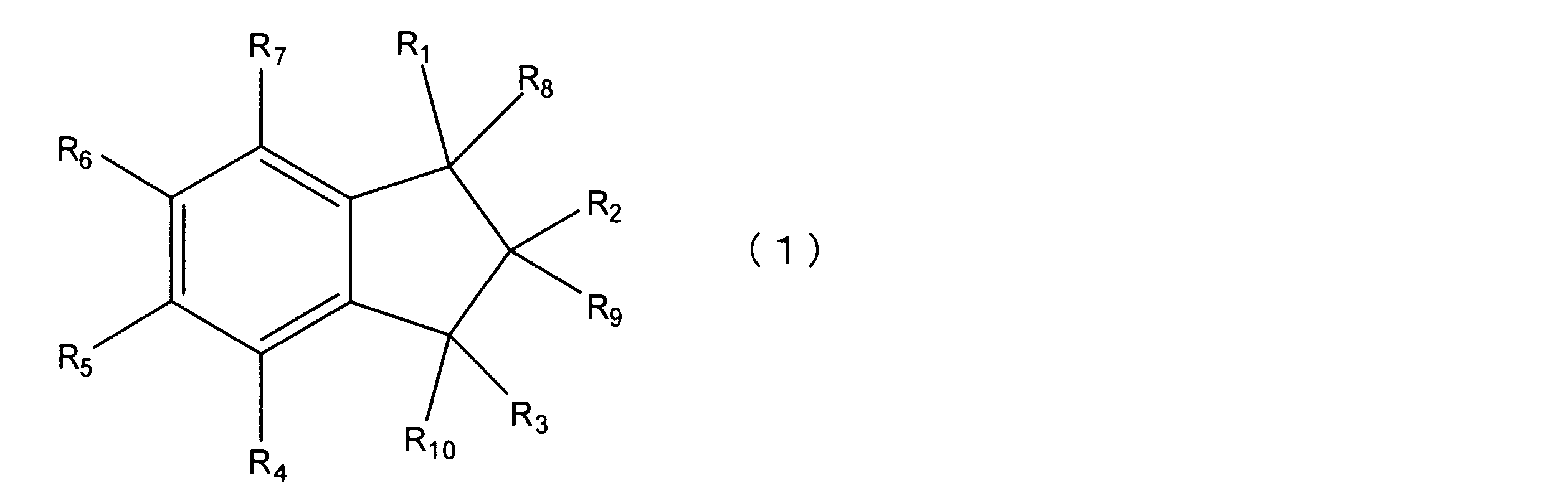
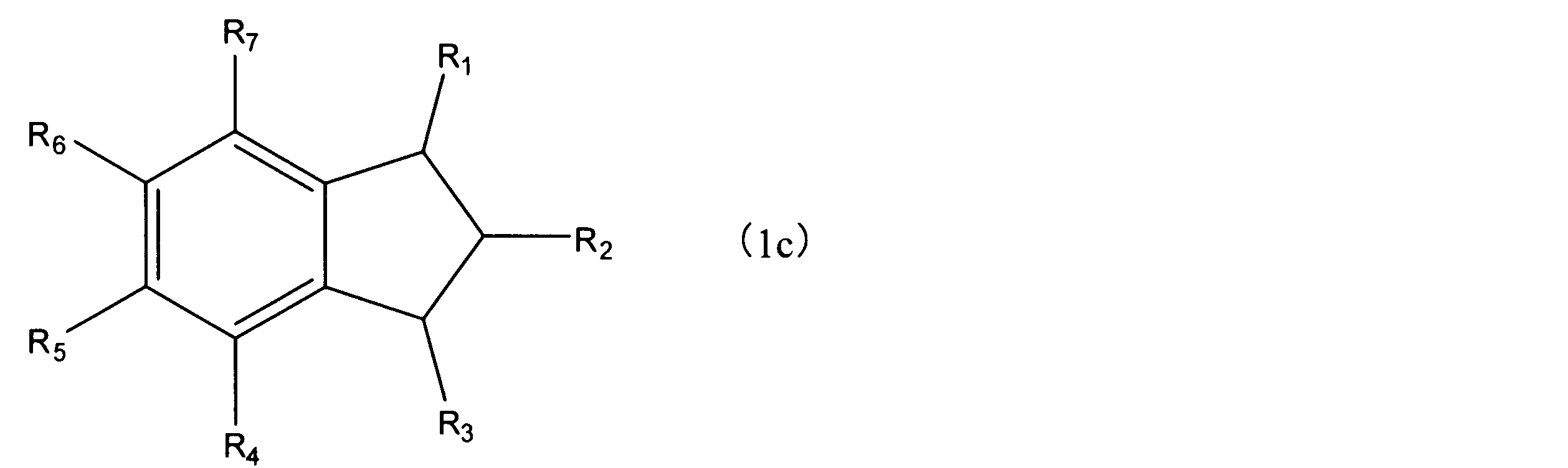
- An oxygen absorbent composition comprising at least one compound having an indane skeleton represented by the following general formula (1) and a transition metal catalyst.
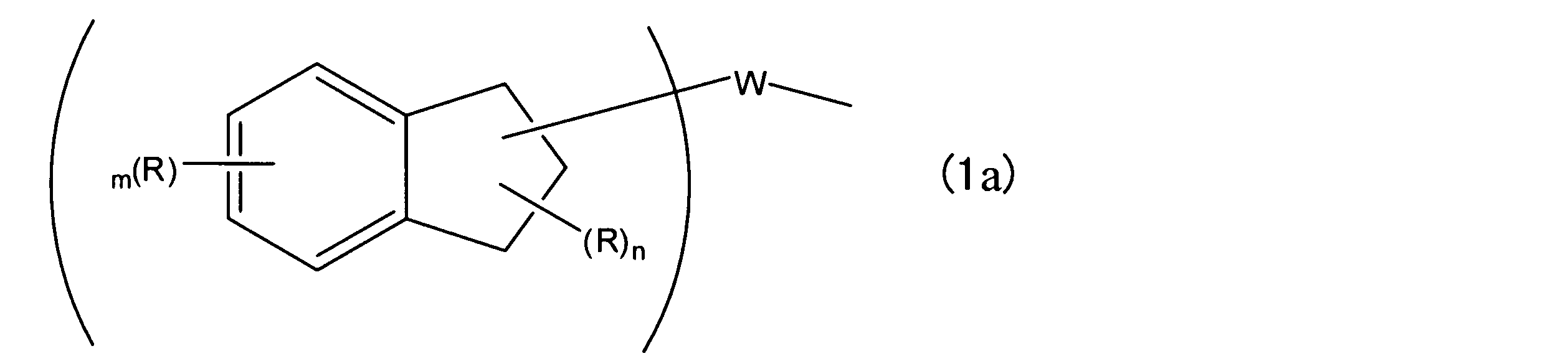
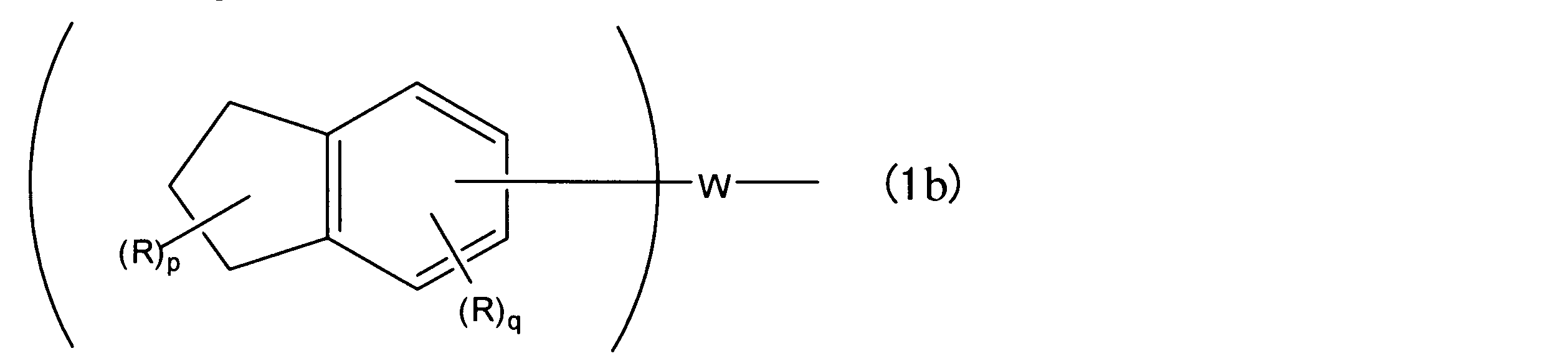
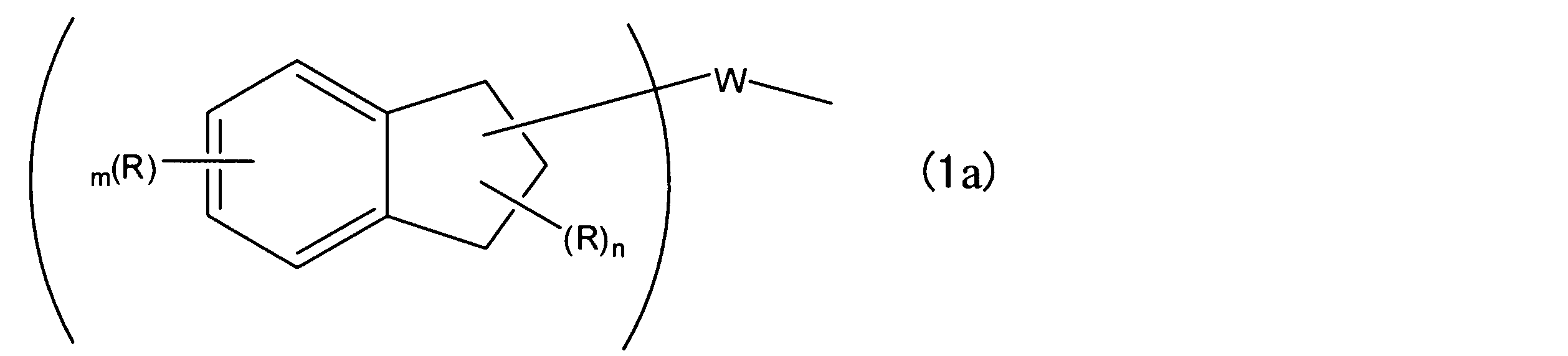
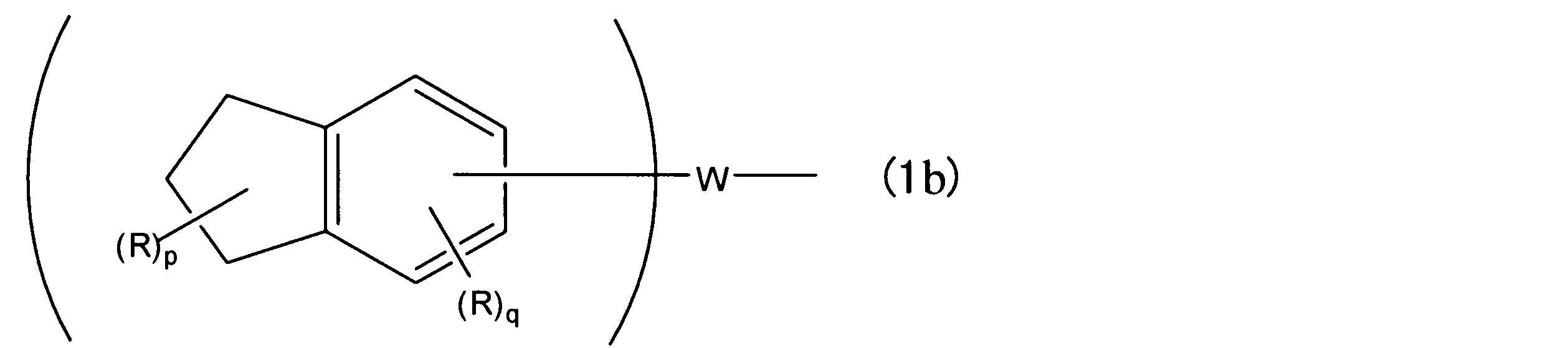
- R 1 to R 10 each independently represents a hydrogen atom or a monovalent substituent, and the monovalent substituent includes a halogen atom, an alkyl group, an alkenyl group, an alkynyl group, an aryl group, Heterocyclic group, cyano group, hydroxy group, carboxyl group, ester group, amide group, nitro group, alkoxy group, aryloxy group, acyl group, amino group, thiol group, alkylthio group, arylthio group, heterocyclic thio group, imide And at least one selected from the group consisting of a substituent represented by the following general formula (1a) and a substituent represented by the following general formula (1b), and these further have a substituent.
- two substituents out of R 1 to R 10 may be bonded to form a ring, and at least one hydrogen atom is bonded to the benzyl position of the indane skeleton.
- R each independently represents a monovalent substituent, and the monovalent substituent includes a halogen atom, an alkyl group, an alkenyl group, an alkynyl group, Aryl group, heterocyclic group, cyano group, hydroxy group, carboxyl group, ester group, amide group, nitro group, alkoxy group, aryloxy group, acyl group, amino group, thiol group, alkylthio group, arylthio group, heterocyclic thio
- R each independently represents a monovalent substituent, and the monovalent substituent includes a halogen atom, an alkyl group, an alkenyl group, an alkynyl group, Aryl group, heterocyclic group, cyano group, hydroxy group, carboxyl group, ester group, amide group, nitro group, alkoxy group, aryloxy group, acyl group, amino group, thiol group, alkylthio group, arylthio group, heterocyclic
- W is a bond or a divalent organic group
- the divalent organic group is an aromatic hydrocarbon group, a saturated or unsaturated alicyclic hydrocarbon group, a linear or branched saturated or unsaturated group.
- Saturated fat Group hydrocarbon group and heterocyclic group at least selected from the group consisting of —C ( ⁇ O) —, —OC ( ⁇ O) —, —N (H) C ( ⁇ O) —, and any combination thereof.
- Composition [6] The oxygen absorbent composition according to any one of [2] to [5] above, wherein the carrier substance is at least one selected from the group consisting of synthetic calcium silicate, diatomaceous earth, silica, and activated carbon. [7] The oxygen absorbent composition according to any one of the above [2] to [6], wherein the amount of the carrier substance is 10 to 1000 parts by mass with respect to 100 parts by mass of the compound having an indane skeleton. [8] An oxygen absorbent package comprising the oxygen absorbent composition according to any one of [1] to [7] packaged with a breathable packaging material.
- an oxygen absorbent composition that does not generate odor after oxygen absorption and has excellent oxygen absorption performance.
- an oxygen absorbent composition that exhibits excellent oxygen absorption performance under a wide range of humidity conditions from low humidity to high humidity.
- the present embodiment a mode for carrying out the present invention (hereinafter simply referred to as “the present embodiment”) will be described in detail.
- the following embodiments are examples for explaining the present invention, and are not intended to limit the present invention to the following contents.
- the present invention can be implemented with appropriate modifications within the scope of the gist thereof.
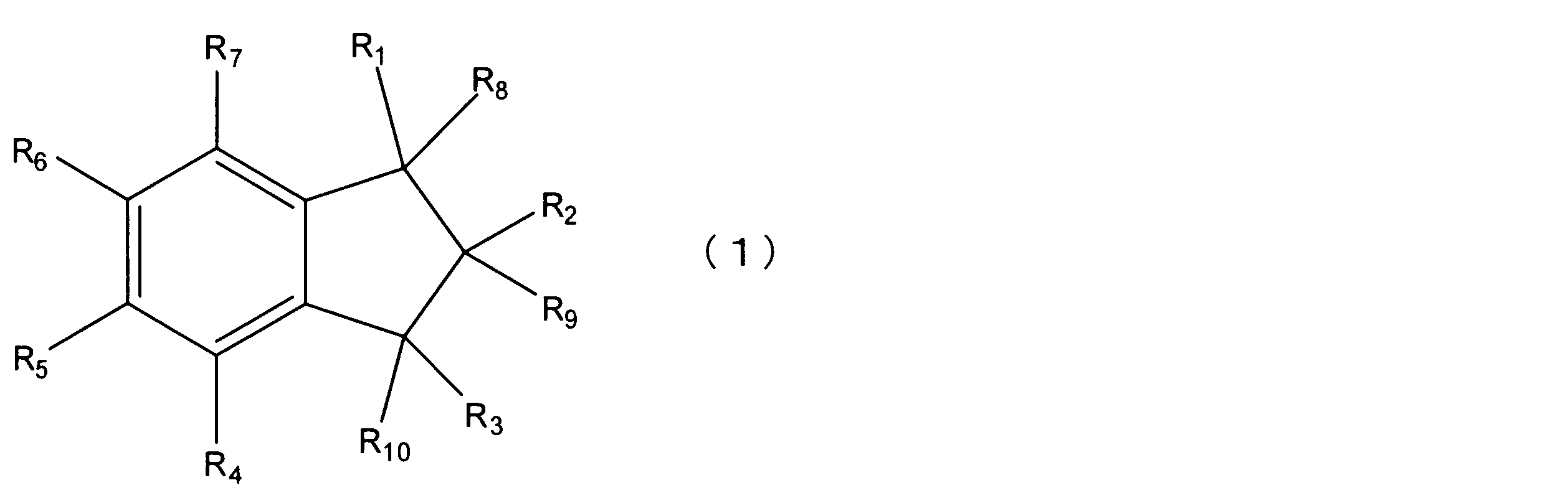
- the oxygen absorbent composition of the present embodiment contains at least one compound having an indane skeleton represented by the general formula (1) and a transition metal catalyst.
- a compound having an indane skeleton does not have a molecular chain breakage due to oxidation even after oxygen absorption, and can maintain its structure.
- R 1 to R 10 each independently represents a hydrogen atom or a monovalent substituent, and the monovalent substituent includes a halogen atom, an alkyl group, an alkenyl group, an alkynyl group, an aryl group, Heterocyclic group, cyano group, hydroxy group, carboxyl group, ester group, amide group, nitro group, alkoxy group, aryloxy group, acyl group, amino group, thiol group, alkylthio group, arylthio group, heterocyclic thio group, imide And at least one selected from the group consisting of a substituent represented by the following general formula (1a) and a substituent represented by the following general formula (1b), and these further have a substituent.
- two substituents out of R 1 to R 10 may be bonded to form a ring, and at least one hydrogen atom is bonded to the benzyl position of the indane skeleton.
- R each independently represents a monovalent substituent, and the monovalent substituent includes a halogen atom, an alkyl group, an alkenyl group, an alkynyl group, Aryl group, heterocyclic group, cyano group, hydroxy group, carboxyl group, ester group, amide group, nitro group, alkoxy group, aryloxy group, acyl group, amino group, thiol group, alkylthio group, arylthio group, heterocyclic thio
- R each independently represents a monovalent substituent, and the monovalent substituent includes a halogen atom, an alkyl group, an alkenyl group, an alkynyl group, Aryl group, heterocyclic group, cyano group, hydroxy group, carboxyl group, ester group, amide group, nitro group, alkoxy group, aryloxy group, acyl group, amino group, thiol group, alkylthio group, arylthio group, heterocyclic
- W is a bond or a divalent organic group
- the divalent organic group is an aromatic hydrocarbon group, a saturated or unsaturated alicyclic hydrocarbon group, a linear or branched saturated or unsaturated group.
- Saturated fat Group hydrocarbon group and heterocyclic group at least selected from the group consisting of —C ( ⁇ O) —, —OC ( ⁇ O) —, —N (H) C ( ⁇ O) —, and any combination thereof.
- M represents an integer from 0 to 4
- n represents an integer from 0 to 5
- p represents an integer from 0 to 6
- q represents an integer from 0 to 3.
- examples of the monovalent substituent represented by R 1 to R 10 include a halogen atom (for example, a chlorine atom, a bromine atom, an iodine atom), an alkyl group (preferably having 1 to 15 carbon atoms, More preferably, it is a linear, branched or cyclic alkyl group having 1 to 6 carbon atoms, such as methyl group, ethyl group, n-propyl group, isopropyl group, t-butyl group, n-octyl group, 2-ethylhexyl.
- a halogen atom for example, a chlorine atom, a bromine atom, an iodine atom
- an alkyl group preferably having 1 to 15 carbon atoms, More preferably, it is a linear, branched or cyclic alkyl group having 1 to 6 carbon atoms, such as methyl group, ethyl group, n-propyl group, iso
- alkenyl group preferably a linear, branched or cyclic alkenyl group having 2 to 10 carbon atoms, more preferably 2 to 6 carbon atoms, for example, vinyl group, allyl group
- alkynyl group preferably an alkynyl group having 2 to 10 carbon atoms, more preferably 2 to 6 carbon atoms, such as an ethynyl group or a propargyl group
- an aryl group preferably carbon Is an aryl group having 6 to 16 carbon atoms, more preferably 6 to 10 carbon atoms, such as a phenyl group or a naphthyl group, or a heterocyclic group (preferably having 1 to 12 carbon atoms, more preferably 2 to 6 carbon atoms).
- Monovalent groups obtained by removing one hydrogen atom from 5-membered or 6-membered aromatic or non-aromatic heterocyclic compounds for example, 1-pyrazolyl group, 1-imidazolyl group, 2-furyl Group), a cyano group, a hydroxy group, a carboxyl group, an ester group, an amide group, a nitro group, an alkoxy group (preferably a linear, branched, or 1 to 10 carbon atoms, more preferably 1 to 6 carbon atoms) A cyclic alkoxy group such as a methoxy group or an ethoxy group), an aryloxy group (preferably an aryloxy group having 6 to 12 carbon atoms, more preferably 6 to 8 carbon atoms such as a phenoxy group), an (Including a formyl group, preferably an alkylcarbonyl group having 2 to 10 carbon atoms, more preferably 2 to 6 carbon atoms, preferably 7 to 12 carbon atoms, more preferably 7 to 9 carbon atoms.
- An arylcarbonyl group such as an acetyl group, a pivaloyl group, or a benzoyl group
- an amino group preferably an alkylamino group having 1 to 10 carbon atoms, more preferably 1 to 6 carbon atoms, preferably 6 to 12 carbon atoms.
- an anilino group having 6 to 8 carbon atoms preferably a heterocyclic amino group having 1 to 12 carbon atoms, more preferably 2 to 6 carbon atoms, such as an amino group, a methylamino group, and an anilino group
- a thiol group, an alkylthio group preferably an alkylthio group having 1 to 10 carbon atoms, more preferably an alkylthio group having 1 to 6 carbon atoms, such as a methylthio group or an ethylthio group
- an arylthio group Preferably an arylthio group having 6 to 12 carbon atoms, more preferably 6 to 8 carbon atoms, such as a phenylthio group
- a heterocyclic thio group preferably having 2 to 10 carbon atoms, more preferably 1 carbon number
- imide groups preferably having 2 to 10 carbon atoms, more preferably 1 carbon number
- At least one hydrogen atom is bonded to the benzyl position of the indane skeleton.
- an excellent oxygen absorption ability and the like can be expressed by the action of a hydrogen atom bonded to the benzyl position of the indane skeleton and a transition metal catalyst described later.
- the compound in which at least one hydrogen atom is bonded to the benzyl position of the indane skeleton for example, any one of R 1 , R 3 , R 8 , and R 10 in the general formula (1) is a hydrogen atom.
- the compound etc. which are are mentioned.
- the hydrogen atom is a substituent T (wherein the substituent T is the same as that described for the monovalent substituent R above). It may be further substituted with the same meaning. Specific examples thereof include an alkyl group substituted with a hydroxy group (eg, hydroxyethyl group), an alkyl group substituted with an alkoxy group (eg, methoxyethyl group), and an alkyl group substituted with an aryl group (eg, benzyl).
- a hydroxy group eg, hydroxyethyl group
- an alkyl group substituted with an alkoxy group eg, methoxyethyl group
- an alkyl group substituted with an aryl group eg, benzyl
- an alkyl group substituted with a primary or secondary amino group eg, aminoethyl group
- an aryl group substituted with an alkyl group eg, p-tolyl group
- an aryl substituted with an alkyl group eg, 2-methylphenoxy group
- An oxy group for example, 2-methylphenoxy group and the like can be mentioned, but not limited thereto.
- the carbon number described above does not include the carbon number of the substituent T.
- a benzyl group is regarded as a C 1 alkyl group substituted with a phenyl group, and is not regarded as a C 7 alkyl group substituted with a phenyl group.
- Two of the monovalent substituents R 1 to R 10 may be bonded to form a ring. Specific examples thereof include compounds in which two of R 1 to R 10 are condensed to form a 5- to 8-membered ring.
- the ring here may be any known ring structure and is not particularly limited, but is preferably an aromatic ring, aliphatic ring or heterocycle having 4 to 7 carbon atoms (more preferably , Cyclohexane ring, cycloheptane ring, acid anhydride ring (for example, succinic anhydride ring, glutaric anhydride ring, adipic anhydride ring, etc.), benzene ring, bicyclo ring, etc.). ).
- the compound having an indane skeleton represented by the general formula (1) is at least one of R 1 to R 10 .
- One is a substituted or unsubstituted alkyl group, a substituted or unsubstituted aryl group, a hydroxy group, a carboxyl group, a substituted or unsubstituted ester group, an alkoxy group, an acyl group, a substituted or unsubstituted amide group, and a substituted or unsubstituted group.
- substituted imide groups hereinafter also simply referred to as “substituent group S”
- substituent group S there are substituted or unsubstituted alkyl groups, substituted or unsubstituted aryl groups, hydroxy groups, carboxyl groups, alkoxy groups, substituted or unsubstituted ester groups, and substituted or unsubstituted amide groups. More preferred.
- R 1 to R 7 each independently represents a monovalent substituent, and the monovalent substituent has the same meaning as R 1 to R 10 described above, provided that R 1 to R 7 2 or more of 7 are not bonded to form a ring.
- R 1 to R 7 are one selected from the substituent group S described above, and the other R 1 to R 7 are hydrogen atoms. It is preferable that two of R 1 to R 7 are one selected from the substituent group S, and 6 of R 1 to R 7 is more preferably a hydrogen atom.
- a preferred second embodiment of the compound having an indane skeleton represented by the above general formula (1) includes the following structures.
- R 8 is a group consisting of an aromatic hydrocarbon group, a saturated or unsaturated alicyclic hydrocarbon group, a linear or branched saturated or unsaturated aliphatic hydrocarbon group, and a heterocyclic group.
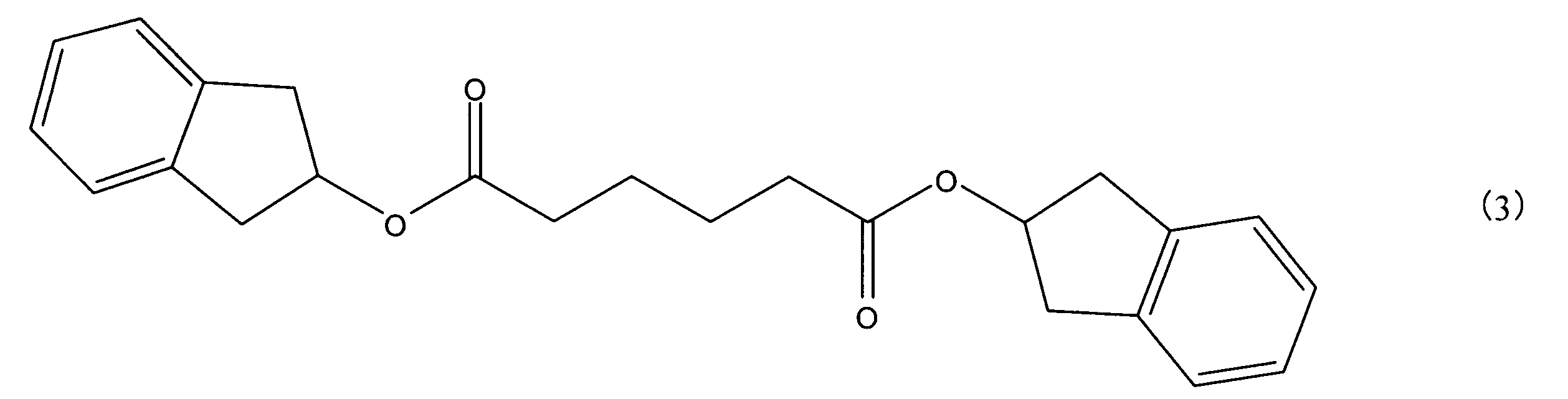
- the compound represented by the general formula (1d) can be synthesized by a known method. For example, it can be synthesized by transesterification reaction of 2-indanol and dicarboxylic acid ester or dehydration condensation reaction of 2-indanol and dicarboxylic acid.
- R 8 is preferably a divalent aromatic hydrocarbon group or an alkylene group (having 1 to 10, preferably 2 to 8 carbon atoms).
- All of the compounds having the indane skeleton represented by the general formula (1) described above have hydrogen at the benzyl position of the indane skeleton, and when used in combination with a transition metal catalyst described later, the hydrogen at the benzyl position is pulled. By pulling out, it exhibits excellent oxygen absorption ability.
- the oxygen absorbent composition of the present embodiment is one in which an increase in odor intensity after oxygen absorption is suppressed.
- the following oxidation reaction mechanism is assumed. That is, in the compound having an indane skeleton represented by the above general formula (1), hydrogen at the benzyl position of the indane skeleton is first extracted to form a radical, and then the benzyl position is obtained by the reaction between the radical and oxygen. It is considered that the carbon of this is oxidized to form a hydroxy group or a ketone group.
- the oxygen absorbent composition the molecular chain of the oxygen absorbent main agent is not broken by the oxidation reaction as in the prior art, and the structure of the oxygen absorbent main agent (compound) is maintained, so that the low molecular weight that causes odor It is presumed that the organic compound is hardly formed after oxygen absorption, and as a result, the increase in odor intensity after oxygen absorption is suppressed. Also from this viewpoint, in a compound having an indane skeleton, the larger the number of indane skeletons, the better. As a result, the number of reaction points with oxygen increases, and the oxygen absorbing ability is further improved.
- the hydrogen at the benzyl position of the indane skeleton described above may be present on at least one indane skeleton.
- the substituent has the general formula (1a) or the general formula (1b)
- it is preferable that hydrogen bonded to the benzyl position is also present in the indane skeletons of the general formulas (1a) and (1b).
- the molecular weight of the compound having an indane skeleton represented by the general formula (1) described above can be appropriately adjusted according to desired characteristics and substituents R 1 to R 10 to be introduced, and is not particularly limited. From the viewpoint of suppressing loss due to volatilization during use and increasing the amount of oxygen absorbed per unit mass of the compound, the molecular weight is preferably in the range of 150 to 1500, more preferably 180 to 1200, and even more preferably 200 to 1000.
- the compound which has the indane skeleton represented by General formula (1) mentioned above can be used individually by 1 type or in combination of 2 or more types.
- the compounds having an indane skeleton represented by the general formula (1) those having a high boiling point, that is, a low vapor pressure at the temperature during use, are preferably used from the viewpoint of suppressing loss due to volatilization during use.
- a compound having a lower vapor pressure at a kneading temperature with a thermoplastic resin is preferable because loss due to volatilization during production of the oxygen absorbent composition can be suppressed.
- a 3% weight loss temperature can be adopted as an index of loss due to volatilization. That is, the compound preferably has a 3% weight loss temperature of 100 ° C or higher, more preferably 150 ° C or higher, and further preferably 200 ° C or higher.
- the upper limit value of the 3% weight reduction temperature is not particularly limited.
- the ratio of the compound having the indane skeleton represented by the general formula (1) to the total amount of the compound having the indane skeleton represented by the general formula (1) and the thermoplastic resin described later in the oxygen absorbent composition is as follows:
- the content is preferably 1 to 30% by mass, more preferably 1.5 to 25% by mass, and still more preferably 2 to 20% by mass.
- the transition metal catalyst used in the oxygen absorbent composition of the present embodiment is appropriately selected from known ones as long as it can function as a catalyst for the oxidation reaction of the compound having an indane skeleton. There is no particular limitation.
- transition metal catalysts include, for example, organic acid salts, halides, phosphates, phosphites, hypophosphites, nitrates, sulfates, oxides and hydroxides of transition metals.
- examples of the transition metal contained in the transition metal catalyst include, but are not limited to, titanium, vanadium, chromium, manganese, iron, cobalt, nickel, copper, zinc, ruthenium, and rhodium. Among these, manganese, iron, cobalt, nickel, and copper are preferable.
- organic acid examples include acetic acid, propionic acid, octanoic acid, lauric acid, stearic acid, acetylacetone, dimethyldithiocarbamic acid, palmitic acid, 2-ethylhexanoic acid, neodecanoic acid, linoleic acid, toluic acid, oleic acid, Although capric acid and naphthenic acid are mentioned, it is not limited to these.
- the transition metal catalyst is preferably a combination of these transition metals and an organic acid, the transition metal is manganese, iron, cobalt, nickel or copper, and the organic acid is acetic acid, stearic acid, 2-ethylhexanoic acid, olein A combination that is an acid or naphthenic acid is more preferred.
- a transition metal catalyst can be used individually by 1 type or in combination of 2 or more types.
- the blending amount of the transition metal catalyst can be appropriately set according to the compound having the indane skeleton to be used, the thermoplastic resin, the type of the transition metal catalyst, and the desired performance, and is not particularly limited. From the viewpoint of the amount of oxygen absorbed in the oxygen absorbent composition, the blending amount of the transition metal catalyst is preferably 0.001 to 10 parts by mass as the transition metal amount with respect to 100 parts by mass of the compound having an indane skeleton. The amount is preferably 0.002 to 2 parts by mass, and more preferably 0.005 to 1 part by mass.
- the oxygen absorbent composition of the present embodiment may further contain a carrier substance as necessary.
- the oxygen absorbent composition containing the carrier material can be used as an oxygen absorbent as it is as a mixture of the compound, the transition metal catalyst and the carrier material.
- a carrier having the above-mentioned compound supported or impregnated on a carrier material by supporting or impregnating the compound having an indane skeleton represented by the general formula (1) with a transition metal catalyst on a carrier material as necessary. (Hereinafter also referred to as “oxygen absorbent carrier”), and this carrier can also be used as an oxygen absorbent.
- the carrier material can be appropriately selected from those known in the art. Specific examples thereof include, for example, synthetic calcium silicate, slaked lime, activated carbon, zeolite, pearlite, diatomaceous earth, activated clay, silica, kaolin, talc, bentonite, activated alumina, gypsum, silica alumina, calcium silicate, magnesium oxide, graphite. , Powders of carbon black, aluminum hydroxide, iron oxide and the like are mentioned, but not limited thereto. Among these, synthetic calcium silicate, diatomaceous earth, silica, and activated carbon are preferably used. In addition, a carrier substance can be used individually by 1 type or in combination of 2 or more types.
- the amount of the carrier substance can be set as appropriate according to the type of compound, thermoplastic resin or transition metal catalyst used and the desired performance, and is not particularly limited, but has an indane skeleton represented by the general formula (1).
- the amount is preferably 10 to 1000 parts by mass, more preferably 20 to 800 parts by mass with respect to 100 parts by mass of the compound.
- the loading of the compound on the carrier material can be performed according to a conventional method and is not particularly limited.
- a mixed solution containing a compound having an indane skeleton represented by the above general formula (1) or a mixed solution containing this compound and a transition metal catalyst is prepared, and this mixed solution is applied to a support material.
- an oxygen absorbent carrier in which the above-mentioned compound (and a transition metal catalyst if necessary) is carried (impregnated) on the carrier material by immersing the carrier material in this mixed solution.
- a solvent can be further contained during the preparation of the mixed solution.
- the compound or the transition metal catalyst is a solid, it can be efficiently supported on a support material by using a solvent.
- the solvent used here can be appropriately selected from known ones in consideration of the solubility of the compound and transition metal catalyst, and is not particularly limited.
- methanol, 2-propanol, ethylene glycol , Toluene, xylene, methyl acetate, ethyl acetate, butyl acetate, diisopropyl ether, tetrahydrofuran, methyl ethyl ketone, dichloromethane, chloroform, and other organic solvents are preferable, and methanol, 2-propanol, ethyl acetate, and methyl ethyl ketone are more preferable.
- a solvent can be used individually by 1 type or in combination of 2 or more types.
- the oxygen absorbent composition of the present embodiment may contain a thermoplastic resin.
- the content of the compound having the indane skeleton and the transition metal catalyst in the oxygen absorbent composition is not particularly limited.
- the compound having the indane skeleton and the transition metal catalyst are contained in the thermoplastic resin as they are, the compound having the indane skeleton and the transition metal catalyst are supported on the above-described carrier material in the thermoplastic resin. It may be contained in.
- an oxygen absorbent composition can be obtained by mixing or kneading the compound having an indane skeleton, a transition metal catalyst, and a carrier material blended as necessary with a thermoplastic resin.
- thermoplastic resin known ones can be used as appropriate, and are not particularly limited.
- low density polyethylene medium density polyethylene, high density polyethylene, linear low density polyethylene, linear ultra low density polyethylene, Polyolefins such as polypropylene, poly-1-butene, poly-4-methyl-1-pentene, or random or block copolymers of ⁇ -olefins such as ethylene, propylene, 1-butene and 4-methyl-1-pentene ; Acid-modified polyolefin such as maleic anhydride grafted polyethylene and maleic anhydride grafted polypropylene; ethylene-vinyl acetate copolymer, ethylene-vinyl alcohol copolymer, ethylene-vinyl chloride copolymer, ethylene- (meth) acrylic acid copolymer Polymers and their ionic cross-linked products (ionomers) ), Ethylene-vinyl compound copolymers such as ethylene-methyl methacrylate copolymer
- thermoplastic resin is preferably at least one selected from the group consisting of polyolefin, polyester, polyamide, ethylene-vinyl alcohol copolymer, plant-derived resin, and chlorine-based resin. Furthermore, it is preferably at least one selected from the group consisting of polyolefin, polyester, polyamide, ethylene-vinyl alcohol copolymer, and chlorine-based resin.
- these preferable thermoplastic resins will be described in detail.
- polyolefin used in the oxygen absorbent composition of the present embodiment examples include polyethylenes such as low density polyethylene, medium density polyethylene, high density polyethylene, linear low density polyethylene, and linear ultra low density polyethylene, polypropylene, polybutene- 1.
- Olefin homopolymers such as poly-4-methylpentene-1; ethylene-propylene random copolymer, ethylene-propylene block copolymer, ethylene-propylene-polybutene-1 copolymer, ethylene-cycloolefin copolymer Copolymer of ethylene and ⁇ -olefin such as ethylene; ethylene- ⁇ , ⁇ -unsaturated carboxylic acid copolymer such as ethylene- (meth) acrylic acid copolymer, ethylene- (meth) acrylic acid ethyl copolymer Ethylene- ⁇ , ⁇ -unsaturated carboxylic acid ester copolymer such as a polymer, ethylene -Ion-crosslinked products of ⁇ , ⁇ -unsaturated carboxylic acid copolymers, other ethylene copolymers such as ethylene-vinyl acetate copolymers; ring-opening polymers of cyclic olefins and hydrogenated products thereof
- polyester used for the oxygen absorbent composition of the present embodiment for example, from polyhydric alcohols containing one or more selected from polycarboxylic acids containing dicarboxylic acids and their ester-forming derivatives and glycols.
- the thing consisting of 1 type or 2 or more types chosen, what consists of hydroxycarboxylic acid and these ester-forming derivatives, what consists of cyclic ester, etc. are mentioned.
- the ethylene terephthalate-based thermoplastic polyester is composed of ethylene terephthalate units in the majority of ester repeating units, generally 70 mol% or more, and has a glass transition point (Tg) of 50 to 90 ° C. and a melting point (Tm) of 200 to 275.
- Polyethylene terephthalate is particularly excellent as an ethylene terephthalate-based thermoplastic polyester in terms of pressure resistance, heat resistance, heat resistance and pressure resistance. Copolyesters containing a small amount of ester units can also be used.
- dicarboxylic acids include oxalic acid, malonic acid, succinic acid, glutaric acid, adipic acid, pimelic acid, suberic acid, azelaic acid, sebacic acid, decanedicarboxylic acid, dodecanedicarboxylic acid, tetradecanedicarboxylic acid, hexadecanedicarboxylic acid 3-cyclobutanedicarboxylic acid, 1,3-cyclopentanedicarboxylic acid, 1,2-cyclohexanedicarboxylic acid, 1,3-cyclohexanedicarboxylic acid, 1,4-cyclohexanedicarboxylic acid, 2,5-norbornanedicarboxylic acid, dimer acid Saturated aliphatic dicarboxylic acids exemplified in the above, or ester-forming derivatives thereof, unsaturated aliphatic dicarboxylic acids exemplified in fumaric acid, male
- terephthalic acid terephthalic acid, isophthalic acid, and naphthalenedicarboxylic acids are particularly preferable from the viewpoint of physical properties of the resulting polyester.
- polycarboxylic acids other than these dicarboxylic acids include ethanetricarboxylic acid, propanetricarboxylic acid, butanetetracarboxylic acid, pyromellitic acid, trimellitic acid, trimesic acid, 3,4,3 ′, 4′-biphenyl. Examples thereof include tetracarboxylic acid and ester-forming derivatives thereof.
- glycols include ethylene glycol, 1,2-propylene glycol, 1,3-propylene glycol, diethylene glycol, triethylene glycol, 1,2-butylene glycol, 1,3-butylene glycol, and 2,3-butylene glycol.
- 1,4-butylene glycol 1,5-pentanediol, neopentyl glycol, 1,6-hexanediol, 1,2-cyclohexanediol, 1,3-cyclohexanediol, 1,4-cyclohexanediol, 1,2 -Cyclohexanedimethanol, 1,3-cyclohexanedimethanol, 1,4-cyclohexanedimethanol, 1,4-cyclohexanediethanol, 1,10-decamethylene glycol, 1,12-dodecanediol, polyethylene glycol Aliphatic glycols exemplified by polytrimethylene glycol and polytetramethylene glycol, hydroquinone, 4,4′-dihydroxybisphenol, 1,4-bis ( ⁇ -hydroxyethoxy) benzene, 1,4-bis ( ⁇ -hydroxyethoxyphenyl) sulfone, bis (p-hydroxyphenyl) ether
- glycols it is particularly preferable to use ethylene glycol, 1,3-propylene glycol, 1,4-butylene glycol, and 1,4-cyclohexanedimethanol as main components.
- polyhydric alcohols other than these glycols include trimethylolmethane, trimethylolethane, trimethylolpropane, pentaerythritol, glycerol, hexanetriol, and the like.
- hydroxycarboxylic acid examples include lactic acid, citric acid, malic acid, tartaric acid, hydroxyacetic acid, 3-hydroxybutyric acid, p-hydroxybenzoic acid, p- (2-hydroxyethoxy) benzoic acid, 4-hydroxycyclohexanecarboxylic acid. Or ester-forming derivatives thereof.
- cyclic ester examples include ⁇ -caprolactone, ⁇ -propiolactone, ⁇ -methyl- ⁇ -propiolactone, ⁇ -valerolactone, glycolide, lactide and the like.
- ester-forming derivatives of polyvalent carboxylic acids and hydroxycarboxylic acids include alkyl esters, acid chlorides, acid anhydrides, and the like.
- a polyester in which the main acid component is terephthalic acid or an ester-forming derivative thereof or naphthalenedicarboxylic acid or an ester-forming derivative thereof, and the main glycol component is alkylene glycol is preferable.
- the polyester whose main acid component is terephthalic acid or an ester-forming derivative thereof is preferably a polyester containing terephthalic acid or an ester-forming derivative thereof in total of 70 mol% or more based on the total acid components, More preferred is a polyester containing 80 mol% or more, and even more preferred is a polyester containing 90 mol% or more.
- the polyester in which the main acid component is naphthalenedicarboxylic acid or an ester-forming derivative thereof is preferably a polyester containing 70 mol% or more of naphthalenedicarboxylic acids or an ester-forming derivative thereof, more preferably It is a polyester containing 80 mol% or more, more preferably a polyester containing 90 mol% or more.
- 1,3-naphthalenedicarboxylic acid, 1,4-naphthalenedicarboxylic acid, 1,5-naphthalenedicarboxylic acid, 2,6-naphthalenedicarboxylic acid exemplified in dicarboxylic acids 2,7-naphthalenedicarboxylic acid or ester-forming derivatives thereof are preferred.
- the polyester in which the main glycol component is alkylene glycol is preferably a polyester containing 70 mol% or more of alkylene glycol in total with respect to all glycol components, and more preferably polyester containing 80 mol% or more. More preferably, it is a polyester containing 90 mol% or more.
- the alkylene glycol here may contain a substituent or an alicyclic structure in the molecular chain.
- the copolymer components other than terephthalic acid / ethylene glycol are isophthalic acid, 2,6-naphthalenedicarboxylic acid, diethylene glycol, neopentyl glycol, 1,4-cyclohexanedimethanol, from the viewpoint of achieving both transparency and moldability.
- it is at least one selected from the group consisting of 1,2-propanediol, 1,3-propanediol and 2-methyl-1,3-propanediol.
- a preferred example of the polyester used in the oxygen absorbent composition of the present embodiment is a polyester in which the main repeating unit is composed of ethylene terephthalate. More preferred is a linear polyester containing 70 mol% or more of ethylene terephthalate units, still more preferred is a linear polyester containing 80 mol% or more of ethylene terephthalate units, and particularly preferred is a line containing 90 mol% or more of ethylene terephthalate units. Polyester.
- polyester used in the oxygen absorbent composition of the present embodiment is a polyester whose main repeating unit is composed of ethylene-2,6-naphthalate. More preferred is a linear polyester containing 70 mol% or more of ethylene-2,6-naphthalate units, and further preferred is a linear polyester containing 80 mol% or more of ethylene-2,6-naphthalate units. Particularly preferred is A linear polyester containing 90 mol% or more of ethylene-2,6-naphthalate units.
- polyester used in the oxygen absorbent composition of the present embodiment include linear polyesters containing 70 mol% or more of propylene terephthalate units, linear polyesters containing 70 mol% or more of propylene naphthalate units, A linear polyester containing 70 mol% or more of 1,4-cyclohexanedimethylene terephthalate units, a linear polyester containing 70 mol% or more of butylene naphthalate units, or a linear polyester containing 70 mol% or more of butylene terephthalate units.
- polyesters include a combination of terephthalic acid / isophthalic acid / ethylene glycol, terephthalic acid / ethylene glycol / 1,4-cyclohexanedimethanol as a combination of the whole polyester. Combination, terephthalic acid / ethylene glycol / neopentyl glycol combination. Needless to say, the above polyester may contain a small amount (5 mol% or less) of diethylene glycol produced by dimerization of ethylene glycol during esterification (transesterification) reaction or polycondensation reaction. Nor.
- polyester used in the oxygen absorbent composition of the present embodiment include polyglycolic acid obtained by polycondensation of glycolic acid or methyl glycolate or ring-opening polycondensation of glycolide.
- the polyglycolic acid may be one in which other components such as lactide are copolymerized.
- polyamide used in the oxygen absorbent composition of the present embodiment for example, a polyamide having a unit derived from lactam or aminocarboxylic acid as a main constituent unit, or derived from an aliphatic diamine and an aliphatic dicarboxylic acid.
- Units derived from aliphatic polyamides whose units are main constituent units partially aromatic polyamides whose main constituent units are units derived from aliphatic diamines and aromatic dicarboxylic acids, and aromatic diamines and aliphatic dicarboxylic acids And partially aromatic polyamides having a main structural unit.
- the polyamide here may be copolymerized with monomer units other than the main structural unit, if necessary.
- lactam or aminocarboxylic acid examples include lactams such as ⁇ -caprolactam and laurolactam, aminocarboxylic acids such as aminocaproic acid and aminoundecanoic acid, and aromatic aminocarboxylic acids such as para-aminomethylbenzoic acid. Can be mentioned.
- aliphatic diamines include aliphatic diamines having 2 to 12 carbon atoms or functional derivatives thereof, alicyclic diamines, and the like.
- the aliphatic diamine may be a linear aliphatic diamine or a branched chain aliphatic diamine.
- linear aliphatic diamines include ethylenediamine, 1-methylethylenediamine, 1,3-propylenediamine, tetramethylenediamine, pentamethylenediamine, hexamethylenediamine, heptamethylenediamine, octamethylenediamine, Examples thereof include aliphatic diamines such as nonamethylene diamine, decamethylene diamine, undecamethylene diamine and dodecamethylene diamine.
- alicyclic diamine include cyclohexanediamine, 1,3-bis (aminomethyl) cyclohexane, 1,4-bis (aminomethyl) cyclohexane, and the like.
- the aliphatic dicarboxylic acid examples include linear aliphatic dicarboxylic acid and alicyclic dicarboxylic acid.
- a linear aliphatic dicarboxylic acid having an alkylene group having 4 to 12 carbon atoms is preferred.
- the linear aliphatic dicarboxylic acid adipic acid, sebacic acid, malonic acid, succinic acid, glutaric acid, pimelic acid, suberic acid, azelaic acid, undecanoic acid, undecadioic acid, dodecanedioic acid, dimer acid and their functions And the like.
- the alicyclic dicarboxylic acid examples include 1,4-cyclohexanedicarboxylic acid, hexahydroterephthalic acid, hexahydroisophthalic acid and the like.
- aromatic diamines include metaxylylenediamine, paraxylylenediamine, para-bis (2-aminoethyl) benzene, and the like.
- aromatic dicarboxylic acid examples include terephthalic acid, isophthalic acid, phthalic acid, 2,6-naphthalenedicarboxylic acid, diphenyl-4,4′-dicarboxylic acid, diphenoxyethanedicarboxylic acid, and functional derivatives thereof. Is mentioned.
- polyamides include polyamide 4, polyamide 6, polyamide 10, polyamide 11, polyamide 12, polyamide 4, 6, polyamide 6, 6, polyamide 6, 10, polyamide 6T, polyamide 9T, polyamide 6IT, polymetaxylylene azide.
- the copolymerization component that may be copolymerized with the polyamide includes a polyether having at least one terminal amino group or terminal carboxyl group and a number average molecular weight of 2,000 to 20,000, or a polymer having the terminal amino group.
- An organic carboxylate of ether or an amino salt of a polyether having a terminal carboxyl group can also be used. Specific examples thereof include bis (aminopropyl) poly (ethylene oxide) (polyethylene glycol having a number average molecular weight of 2000 to 20000).
- the partially aromatic polyamide may contain a structural unit derived from a polybasic carboxylic acid having three or more bases such as trimellitic acid and pyromellitic acid within a substantially linear range.
- ethylene vinyl alcohol copolymer used in the oxygen absorbent composition of the present embodiment those having an ethylene content of 15 to 60 mol% and a saponification degree of the vinyl acetate component of 90 mol% or more are suitable. It is.
- the ethylene content is preferably 20 to 55 mol%, more preferably 29 to 44 mol%.
- the saponification degree of the vinyl acetate component is preferably 95 mol% or more.
- the ethylene vinyl alcohol copolymer is an ⁇ -olefin such as propylene, isobutene, ⁇ -octene, ⁇ -dodecene, ⁇ -octadecene, unsaturated carboxylic acid or salt thereof, partial alkyl ester, complete alkyl ester, nitrile, amide. Further, a small amount of a comonomer such as anhydride, unsaturated sulfonic acid or a salt thereof may be further contained.
- a comonomer such as anhydride, unsaturated sulfonic acid or a salt thereof may be further contained.
- the plant-derived resin used in the oxygen absorbent composition of the present embodiment is not particularly limited as long as it is a resin containing a plant-derived substance as a raw material.
- Specific examples of plant-derived resins include aliphatic polyester biodegradable resins.
- Examples of the aliphatic polyester-based biodegradable resin include poly ( ⁇ -hydroxy acids) such as polyglycolic acid (PGA) and polylactic acid (PLA); polybutylene succinate (PBS), polyethylene succinate (PES). And polyalkylene alkanoates.
- Chlorine resin As a chlorine-type resin used for the oxygen absorbent composition of this embodiment, what is necessary is just a resin which contains chlorine in a structural unit, and a well-known resin can be used. Specific examples of the chlorine-based resin include polyvinyl chloride, polyvinylidene chloride, and copolymers of these with vinyl acetate, maleic acid derivatives, higher alkyl vinyl ethers, and the like.
- thermoplastic resins linear low density polyethylene (LLDPE), ethylene-vinyl alcohol copolymer (EVOH), nylon 6 (PA6), polyethylene terephthalate (PET), polyvinyl chloride (PVC), It is preferably used as a food packaging material.
- LLDPE linear low density polyethylene
- EVOH ethylene-vinyl alcohol copolymer
- PA6 nylon 6
- PET polyethylene terephthalate
- PVC polyvinyl chloride
- the oxygen absorbent composition of the present embodiment may further contain a radical generator and a photoinitiator as necessary in order to promote the oxygen absorption reaction.
- a radical generator include various N-hydroxyimide compounds such as N-hydroxysuccinimide, N-hydroxymaleimide, N, N′-dihydroxycyclohexanetetracarboxylic acid diimide, N-hydroxyphthalimide, N-hydroxytetrachlorophthalimide, N-hydroxytetrabromophthalimide, N-hydroxyhexahydrophthalimide, 3-sulfonyl-N-hydroxyphthalimide, 3-methoxycarbonyl-N-hydroxyphthalimide, 3-methyl-N-hydroxyphthalimide, 3 -Hydroxy-N-hydroxyphthalimide, 4-nitro-N-hydroxyphthalimide, 4-chloro-N-hydroxyphthalimide, 4-methoxy-N-hydroxyphthalimide, 4-dimethylamido -N-hydroxyphthalimide, 4-carboxy-N-hydroxy
- photoinitiator examples include, but are not limited to, benzophenone and its derivatives, thiazine dyes, metal porphyrin derivatives, anthraquinone derivatives, and the like.
- these radical generators and photoinitiators can be used individually by 1 type or in combination of 2 or more types.
- oxygen absorbent composition described above may contain various additives known in the art as long as the effects of the present embodiment are not impaired.
- optional components include fillers such as calcium carbonate, clay, mica and silica, drying agents, pigments, dyes, antioxidants, slip agents, antistatic agents, stabilizers, plasticizers, deodorants and the like. Although it is mentioned, it is not specifically limited to these.
- the oxygen absorbent composition of the present embodiment can be used as a packaging material and a packaging container in the form of a single layer, as well as at least one layer made of an oxygen absorbent composition and at least one layer made of another resin. It can be used as an oxygen-absorbing multilayer packaging material and an oxygen-absorbing multilayer packaging container.
- the oxygen absorbent composition of the present embodiment is preferably provided inside the outer surface of the container or the like so as not to be exposed on the outer surface of the container or the like, and for the purpose of avoiding direct contact with the contents. It is preferably provided outside the inner surface of the container or the like. Thus, it is preferable to use an oxygen absorbent composition as at least one intermediate layer of the multilayer.
- the oxygen absorbent composition of the present embodiment is at least a sealant layer containing a polyolefin resin, an oxygen absorbent layer containing an oxygen absorbent composition, and a gas barrier containing a gas barrier substance in the form of a film or a sheet. It can be used as an oxygen-absorbing multilayer body having a layer. Further, the obtained oxygen-absorbing multilayer body can be used as an oxygen-absorbing paper container by further laminating a paper substrate on the outer layer of the gas barrier layer.
- a gas barrier thermoplastic resin As the gas barrier material used for the gas barrier layer of the present embodiment, a gas barrier thermoplastic resin, a gas barrier thermosetting resin, various vapor deposition films such as silica, alumina, and aluminum, and a metal foil such as an aluminum foil can be used.
- the gas barrier thermoplastic resin is not particularly limited, and examples thereof include ethylene-vinyl alcohol copolymer, MXD6, and polyvinylidene chloride.
- the gas barrier thermosetting resin is not particularly limited, and examples thereof include a gas barrier epoxy resin (such as “Maxive” manufactured by Mitsubishi Gas Chemical Co., Ltd.).
- the method for producing the oxygen-absorbing multilayer body known methods such as a co-extrusion method, various laminating methods, various coating methods and the like can be used depending on the properties of various materials, processing purposes, processing steps, and the like.
- a method of producing a molten resin composition by extruding it from an extruder through a T die, a circular die or the like, or applying an adhesive to an oxygen absorbing film or sheet.
- the method of manufacturing by bonding with other films and sheets is mentioned.
- the molten resin can be co-injected or sequentially injected into an injection mold through a multi-layer multiplex die to form a multilayer container having a predetermined shape or a preform for manufacturing a container.
- the preform can be heated to a stretching temperature, stretched in the axial direction, and blow stretched in the circumferential direction by fluid pressure to produce a stretch blow bottle.
- the oxygen-absorbing multilayer body can be formed into a film shape and processed into a bag shape or a lid material.
- the oxygen-absorbing multilayer body of the present embodiment is formed into a sheet shape, and further absorbs oxygen in a predetermined shape such as a tray, a cup, a bottle, or a tube by a forming method such as vacuum forming, pressure forming, or plug assist forming.
- the oxygen absorbent composition of the present embodiment is processed into a powder, granule, pellet, film, or other small piece, and filled into a breathable packaging material to form a small bag of oxygen absorbent packaging.
- a breathable packaging material is not particularly limited as long as it is a packaging material used for oxygen absorbent applications, but it is preferable to use a packaging material having as high a breathability as possible in order to obtain a sufficient oxygen absorbing effect.
- packaging materials include, for example, papers such as Japanese paper, Western paper, rayon paper, non-woven fabrics using various fibers such as pulp, cellulose, fibers made of synthetic resin, plastic films or perforated materials thereof, or carbonic acid.
- Examples include a microporous film stretched after adding calcium or the like, and a laminate of two or more selected from these.
- a plastic film for example, a film of polyethylene terephthalate, polyamide, polypropylene, polycarbonate or the like and a film of polyethylene, ionomer, polybutadiene, ethylene acrylic acid copolymer, ethylene methacrylic acid copolymer or ethylene vinyl acetate copolymer as a sealing layer are laminated and bonded. The laminated film etc. which were made.
- the oxygen absorbent composition or the oxygen-absorbing multilayer body of the present embodiment can be made into an oxygen-absorbing container by being contained in the whole or a part of the packaging container.
- the oxygen-absorbing container of the present embodiment absorbs oxygen in the container, and when there is a small amount of oxygen that permeates or penetrates from the outside of the container, also absorbs this permeating or penetrating oxygen, It is possible to prevent alteration or the like due to oxygen of the content item to be stored (material to be stored).
- the shape of the oxygen-absorbing container of the present embodiment is not particularly limited, and can be set as appropriate according to the article to be stored and stored.
- Such containers can be suitably used as pouches, cups, trays, bottles and the like.
- a bag of the above-described film-like or sheet-like oxygen absorbent composition or oxygen-absorbing multilayer body a three-side sealed flat bag, a standing pouch, a gusset packaging bag, a pillow packaging bag, a main chamber and a secondary bag
- a multi-chamber pouch composed of a chamber and provided with an easily peelable wall between the main chamber and the sub chamber, shrink film packaging, and the like.
- it can also be set as the container of arbitrary shapes by performing thermoforming.
- the above-described film-like or sheet-like oxygen absorbent composition or oxygen-absorbing multilayer body by a method such as vacuum forming, pressure forming, or plug assist forming, trays, cups, bottles It is possible to produce an oxygen-absorbing container having a predetermined shape such as a tube or PTP (press-through pack). Moreover, it is also possible to mold the molten resin into a multilayer container having a predetermined shape by co-injecting or sequentially injecting the molten resin into an injection mold through a multilayer multiple die using an injection machine.
- thermoformed container which has a flange part
- an oxygen absorption function can be imparted to these containers.
- the oxygen absorbent composition or oxygen-absorbing multilayer body of the present embodiment can be formed into a film or sheet and used as an oxygen absorbent in the form of a label, card, packing or the like.
- the oxygen absorbent composition or the oxygen-absorbing multilayer body of the present embodiment it is possible to irradiate energy rays to promote the start of the oxygen absorption reaction and increase the oxygen absorption rate.
- the energy ray for example, visible light, ultraviolet ray, X-ray, electron beam, ⁇ -ray or the like can be used.
- the amount of irradiation energy can be appropriately selected according to the type of energy beam used.
- the oxygen absorbent composition of the present embodiment does not require moisture for oxygen absorption, in other words, oxygen can be absorbed regardless of the presence or absence of moisture in the object to be preserved. Can be used in applications. In particular, since there is no generation of odor after oxygen absorption, it can be particularly suitably used in, for example, foods, cooked foods, beverages, health foods, pharmaceuticals and the like. That is, the oxygen absorbent composition of the present embodiment and various molded articles such as laminates using the same absorb oxygen under a wide range of humidity conditions (relative humidity 0% to 100%) from low humidity to high humidity. Since it is excellent in performance and excellent in flavor retention of contents, it is suitable for packaging of various articles.
- Specific examples of stored items include beverages such as milk, juice, coffee, teas, alcoholic beverages; liquid seasonings such as sauces, soy sauce, noodle soups, dressings; cooked foods such as soups, stews, and curries; jams, mayonnaise Pasty foods such as tuna, fish and shellfish products; processed milk products such as cheese, butter and eggs; processed meat products such as meat, salami, sausage and ham; carrots, potatoes, asparagus, shiitake mushrooms Fruits; Eggs; Noodles; Rices such as rice and milled rice; Grains such as beans; Rice processed foods such as cooked rice, red rice, rice cakes and rice bran; Sweets such as buns; powder seasonings, powdered coffee, coffee beans, tea, infant milk powder, infant foods, powder diet foods, nursing foods, dried vegetables, rice crackers, rice crackers, etc.
- beverages such as milk, juice, coffee, teas, alcoholic beverages
- liquid seasonings such as sauces, soy sauce, noodle soups, dressings
- cooked foods
- Dry foods foods with low water activity
- chemicals such as adhesives, adhesives, pesticides and insecticides
- pharmaceuticals health foods such as vitamins; pet foods; miscellaneous goods such as cosmetics, shampoos, rinses and detergents;
- health foods such as vitamins; pet foods; miscellaneous goods such as cosmetics, shampoos, rinses and detergents;
- the present invention is not particularly limited thereto.
- preserved items that tend to deteriorate in the presence of oxygen such as beer, wine, sake, shochu, fruit juice drinks, fruit juices, vegetable juices, carbonated soft drinks, teas, etc. for beverages, fruits, nuts, vegetables for foods , Meat products, infant food, coffee, jam, mayonnaise, ketchup, edible oil, dressing, sauces, boiled foods, dairy products, etc.
- the container and the objects to be preserved can be sterilized in a form suitable for the objects to be preserved.
- the sterilization method for example, heat sterilization at 100 ° C. or lower, pressurized hot water treatment at 100 ° C. or higher, heat sterilization such as ultra-high temperature heat treatment at 130 ° C. or higher, sterilization by electromagnetic waves such as ultraviolet rays, microwaves, and gamma rays, Examples thereof include gas treatment such as ethylene oxide, and chemical sterilization such as hydrogen peroxide and hypochlorous acid.
- Example 1 50 parts by mass of synthetic calcium silicate (trade name “Microcell E”, manufactured by Celite) with 100 parts by mass of indane mixed with cobalt 2-ethylhexanoate so that the amount of cobalt is 0.1 parts by mass.
- a granular oxygen absorbent composition was produced by impregnation into the part. The amount of oxygen absorbed was measured and the odor was evaluated, and the results are shown in Table 1.
- Example 2 An oxygen absorbent composition was produced in the same manner as in Example 1 except that cobalt 2-ethylhexanoate was replaced with cobalt naphthenate, and the amount of oxygen absorbed was measured and the odor was evaluated. These results are shown in Table 1.
- Example 3 An oxygen absorbent composition was produced in the same manner as in Example 1 except that cobalt 2-ethylhexanoate was replaced with iron 2-ethylhexanoate, and the amount of oxygen absorbed was measured and the odor was evaluated. . These results are shown in Table 1.
- Example 4 An oxygen absorbent composition was produced in the same manner as in Example 1 except that 50 parts by mass of synthetic calcium silicate was replaced with 120 parts by weight of diatomaceous earth (trade name “RC417”, manufactured by Showa Chemical Industry Co., Ltd.). The oxygen absorption was measured and the odor was evaluated. These results are shown in Table 1.
- Example 5 An oxygen absorbent composition was produced in the same manner as in Example 4 except that cobalt 2-ethylhexanoate was replaced with cobalt naphthenate, and the amount of oxygen absorbed was measured and the odor was evaluated. These results are shown in Table 1.
- Example 6 A reaction vessel equipped with a stirrer, a partial condenser, a full condenser, a thermometer, a heating device and a nitrogen introduction tube was charged with 5.2 g (30 mmol) of dimethyl adipate and 12.1 g (90 mmol) of 2-indanol, and nitrogen. The mixture was heated to 130 ° C. in an atmosphere, 15 mg of tetrabutyl titanate was added, and the mixture was heated to 200 ° C. until the methanol was distilled off. Next, the raw material was removed by distillation at 150 ° C. and 2 torr.
- a mixed solution in which cobalt 2-ethylhexanoate was blended so that the amount of cobalt was 0.1 parts by mass with respect to 100 parts by mass of Compound A was obtained by using silica sol (trade name “MEK-ST 40D”, manufactured by Nissan Chemical Industries, Ltd., In addition to 750 parts by mass of methyl ethyl ketone (containing 60%), the mixture was stirred at 60 ° C. for 1 hour in a nitrogen atmosphere. Then, methyl ethyl ketone was distilled off under reduced pressure and powdered to obtain a granular oxygen absorbent composition. In the same manner as in Example 1, the oxygen absorption amount of the oxygen absorbent composition was measured and the odor was evaluated. These results are shown in Table 1.
- Example 7 Compound B having an indane skeleton was obtained in the same manner as in Example 6 except that dimethyl adipate was replaced with dimethyl sebacate.
- the structural formula of the obtained compound B is shown in Table 1.
- the NMR analysis results are as follows. 1 H-NMR (400 MHz CDCl 3 ) ⁇ 7.11-7.29 (8H m), 5.52 (2H tt), 3.31 (4H dd), 2.98 (4H dd), 2.23 (4H t), 1.50-1.65 (4Hm), 1.08-1.22 (8Hm).
- an oxygen absorbent composition was produced in the same manner as in Example 6, and the oxygen absorption amount was measured and the odor was evaluated. These results are shown in Table 1.
- Example 8 Compound C having an indane skeleton was obtained in the same manner as in Example 6 except that dimethyl adipate was replaced with dimethyl isophthalate.
- the structural formula of the obtained compound C is shown in Table 1.
- the NMR analysis results are as follows. 1 H-NMR (400 MHz CDCl 3 ) ⁇ 8.60 (1H s), 8.15 (2H d), 7.47 (1H t), 7.17-7.29 (8H m), 5.78 (2H tt), 3.45 (4H dd), 3.19 (4H dd).
- an oxygen absorbent composition was produced in the same manner as in Example 6, and the oxygen absorption amount was measured and the odor was evaluated. These results are shown in Table 1.
- the oxygen absorbent composition of the present invention has no odor generation after oxygen absorption, and has excellent oxygen absorption performance at both high and low humidity. Indicated.
Landscapes
- Chemical & Material Sciences (AREA)
- Engineering & Computer Science (AREA)
- Chemical Kinetics & Catalysis (AREA)
- Analytical Chemistry (AREA)
- Organic Chemistry (AREA)
- Life Sciences & Earth Sciences (AREA)
- Food Science & Technology (AREA)
- General Chemical & Material Sciences (AREA)
- Oil, Petroleum & Natural Gas (AREA)
- Inorganic Chemistry (AREA)
- Materials Engineering (AREA)
- Zoology (AREA)
- Polymers & Plastics (AREA)
- Wood Science & Technology (AREA)
- Mechanical Engineering (AREA)
- Solid-Sorbent Or Filter-Aiding Compositions (AREA)
- Food Preservation Except Freezing, Refrigeration, And Drying (AREA)
- Packages (AREA)
- Catalysts (AREA)
- Gas Separation By Absorption (AREA)
Description
[1]
少なくとも1種の下記一般式(1)で表されるインダン骨格を有する化合物及び遷移金属触媒を含有する酸素吸収剤組成物。
[2]
前記インダン骨格を有する化合物を担持した担体物質を含有する、上記[1]に記載の酸素吸収剤組成物。
[3]
前記担体物質に前記遷移金属触媒が更に担持された、上記[2]に記載の酸素吸収剤組成物。
[4]
前記遷移金属触媒は、マンガン、鉄、コバルト、ニッケル、及び銅からなる群より選択される少なくとも1種の遷移金属を含む、上記[1]~[3]のいずれかに記載の酸素吸収剤組成物。
[5]
前記インダン骨格を有する化合物100質量部に対する前記遷移金属触媒の配合量が、遷移金属量として0.001~10質量部である、上記[1]~[4]のいずれかに記載の酸素吸収剤組成物。
[6]
前記担体物質が、合成ケイ酸カルシウム、珪藻土、シリカ、及び活性炭からなる群より選択される少なくとも1種である、上記[2]~[5]のいずれかに記載の酸素吸収剤組成物。
[7]
前記インダン骨格を有する化合物100質量部に対する前記担体物質の配合量が10~1000質量部である、上記[2]~[6]のいずれかに記載の酸素吸収剤組成物。
[8]
上記[1]~[7]のいずれかに記載の酸素吸収剤組成物を通気性包装材料で包装してなる、酸素吸収剤包装体。
本実施形態のインダン骨格を有する化合物は、下記一般式(1)で表される。



本実施形態の酸素吸収剤組成物おいて使用される遷移金属触媒としては、上記のインダン骨格を有する化合物の酸化反応の触媒として機能し得るものであれば、公知のものから適宜選択して用いることができ、特に限定されない。
本実施形態の酸素吸収剤組成物は、熱可塑性樹脂を含有していてもよい。このとき、酸素吸収剤組成物中における前記インダン骨格を有する化合物と遷移金属触媒の含有形態は、特に限定されない。例えば、前記インダン骨格を有する化合物及び遷移金属触媒が熱可塑性樹脂中にそのまま含有されていても、前記インダン骨格を有する化合物及び遷移金属触媒が上述した担体物質に担持された状態で熱可塑性樹脂中に含有されていてもよい。
本実施形態の酸素吸収剤組成物に用いられるポリオレフィンとしては、例えば、低密度ポリエチレン、中密度ポリエチレン、高密度ポリエチレン、線状低密度ポリエチレン、線状超低密度ポリエチレン等のポリエチレン、ポリプロピレン、ポリブテン-1、ポリ-4-メチルペンテン-1等のオレフィン単独重合体;エチレン-プロピレンランダム共重合体、エチレン-プロピレンブロック共重合体、エチレン-プロピレン-ポリブテン-1共重合体、エチレン-環状オレフィン共重合体等のエチレンとα-オレフィンとの共重合体;エチレン-(メタ)アクリル酸共重合体等のエチレン-α,β-不飽和カルボン酸共重合体、エチレン-(メタ)アクリル酸エチル共重合体等のエチレン-α,β-不飽和カルボン酸エステル共重合体、エチレン-α,β-不飽和カルボン酸共重合体のイオン架橋物、エチレン-酢酸ビニル共重合体等のその他のエチレン共重合体;環状オレフィン類開環重合体及びその水素添加物;環状オレフィン類-エチレン共重合体;とこれらのポリオレフィンを無水マレイン酸等の酸無水物等でグラフト変性したグラフト変性ポリオレフィン等を挙げることができる。
本実施形態の酸素吸収剤組成物に用いられるポリエステルとしては、例えば、ジカルボン酸を含む多価カルボン酸及びこれらのエステル形成性誘導体から選ばれる1種又は2種以上とグリコールを含む多価アルコールから選ばれる1種又は2種以上とからなるもの、又はヒドロキシカルボン酸及びこれらのエステル形成性誘導体からなるもの、又は環状エステルからなるもの等が挙げられる。エチレンテレフタレート系熱可塑性ポリエステルは、エステル反復単位の大部分、一般に70モル%以上をエチレンテレフタレート単位が占めるものであり、ガラス転移点(Tg)が50~90℃、融点(Tm)が200~275℃の範囲にあるものが好適である。エチレンテレフタレート系熱可塑性ポリエステルとしてポリエチレンテレフタレートが耐圧性、耐熱性、耐熱圧性等の点で特に優れているが、エチレンテレフタレート単位以外にイソフタル酸やナフタレンジカルボン酸等のジカルボン酸とプロピレングリコール等のジオールからなるエステル単位の少量を含む共重合ポリエステルも使用できる。
本実施形態の酸素吸収剤組成物に用いられるポリアミドとしては、例えば、ラクタムもしくはアミノカルボン酸から誘導される単位を主構成単位とするポリアミドや、脂肪族ジアミンと脂肪族ジカルボン酸とから誘導される単位を主構成単位とする脂肪族ポリアミド、脂肪族ジアミンと芳香族ジカルボン酸とから誘導される単位を主構成単位とする部分芳香族ポリアミド、芳香族ジアミンと脂肪族ジカルボン酸とから誘導される単位を主構成単位とする部分芳香族ポリアミド等が挙げられる。なお、ここでいうポリアミドは、必要に応じて、主構成単位以外のモノマー単位が共重合されたものであってもよい。
本実施形態の酸素吸収剤組成物に用いられるエチレンビニルアルコール共重合体としては、エチレン含量が15~60モル%であり、且つ、酢酸ビニル成分のケン化度が90モル%以上のものが好適である。エチレン含量は、好ましくは20~55モル%であり、より好ましくは29~44モル%である。また、酢酸ビニル成分のケン化度は、好ましくは95モル%以上である。なお、エチレンビニルアルコール共重合体は、プロピレン、イソブテン、α-オクテン、α-ドデセン、α-オクタデセン等のα-オレフィン、不飽和カルボン酸又はその塩、部分アルキルエステル、完全アルキルエステル、ニトリル、アミド、無水物、不飽和スルホン酸又はその塩等の少量のコモノマーをさらに含んでいてもよい。
本実施形態の酸素吸収剤組成物に用いられる植物由来樹脂としては、原料として植物由来物質を含む樹脂であればよく、その原料となる植物は特に限定されない。植物由来樹脂の具体例としては、脂肪族ポリエステル系生分解性樹脂が挙げられる。また、脂肪族ポリエステル系生分解性樹脂としては、例えば、ポリグリコール酸(PGA)、ポリ乳酸(PLA)等のポリ(α-ヒドロキシ酸);ポリブチレンサクシネート(PBS)、ポリエチレンサクシネート(PES)等のポリアルキレンアルカノエート等が挙げられる。
本実施形態の酸素吸収剤組成物に用いられる塩素系樹脂としては、構成単位に塩素を含む樹脂であればよく、公知の樹脂を用いることができる。塩素系樹脂の具体例としては、ポリ塩化ビニル、ポリ塩化ビニリデン、及び、これらと酢酸ビニル、マレイン酸誘導体、高級アルキルビニルエーテル等との共重合体等が挙げられる。
本実施形態の酸素吸収剤組成物は、粉体状、顆粒状、ペレット状、フィルム状又はその他の小片状に加工し、通気性包装材料に充填することにより、小袋状の酸素吸収剤包装体と使用しても使用することができる。通気性包装材料としては、酸素吸収剤用途に用いられる包装材料であれば特に制限はないが、酸素吸収効果を十分に得るために、できるだけ通気性の高い包装材料を用いることが好ましい。そのような包装材料としては、例えば、和紙、洋紙、レーヨン紙等の紙類、パルプ、セルロース、合成樹脂からなる繊維等の各種繊維類を用いた不織布、プラスチックフィルム又はその穿孔物等、或いは炭酸カルシウム等を添加した後、延伸したマイクロポーラスフィルム等、さらにはこれらから選ばれる2種以上を積層したもの等を挙げることができる。プラスチックフィルムとしては、例えば、ポリエチレンテレフタレート、ポリアミド、ポリプロピレン、ポリカーボネート等のフィルムと、シール層としてポリエチレン、アイオノマー、ポリブタジエン、エチレンアクリル酸コポリマー、エチレンメタクリル酸コポリマー又はエチレン酢酸ビニルコポリマー等のフィルムとを積層接着した積層フィルム等が挙げられる。
本実施形態の酸素吸収剤組成物又は酸素吸収性多層体は、包装容器の全体又は一部に含ませることで酸素吸収性容器とすることもできる。本実施形態の酸素吸収性容器は、容器内の酸素を吸収して、容器外から容器壁面を透過する或いは侵入する酸素がわずかでもある場合にはこの透過或いは侵入する酸素をも吸収して、保存する内容物品(被保存物)の酸素による変質等を防止することができる。
Aw=P/P0=RH/100
と定義される。
酸素吸収量の測定及び酸素吸収後の臭気の評価は以下のとおりに行った。
アルミ箔積層フィルムからなるガスバリア袋を2つ用意した。酸素吸収剤組成物1gを、空気1000ccとともに2つのガスバリア袋内に充填し、一方の袋内の相対湿度を100%に調整し、他方の袋内の相対湿度を30%に調整した後、それぞれ密封した。このようにして得られた密封袋を温度23℃の雰囲気下にて7日間保管して、保管後の密封袋内の酸素濃度を酸素濃度計(東レエンジニアリング(株)製、商品名:LC-750F)で測定し、この酸素濃度から酸素吸収量を計算した。
前記酸素吸収量の測定と同様に、温度23℃、相対湿度100%又は30%にて30日間保管した後の密封袋を開封し、密封袋内の臭気を確認した。
臭気については、酸素吸収前後での臭気の変化の有無についてそれぞれ評価し、酸素吸収後に臭気の変化がなかった場合を、「臭気発生無し」と判断した。
インダン100質量部に対し、コバルト量が0.1質量部となるよう2-エチルヘキサン酸コバルトを配合した混合液を、合成ケイ酸カルシウム(商品名「マイクロセルE」、セライト社製)50質量部に含侵させ、粒状の酸素吸収剤組成物を製造した。
酸素吸収量の測定及び臭気の評価を行い、結果を表1に示した。
2-エチルヘキサン酸コバルトをナフテン酸コバルトに代えたこと以外は、実施例1と同様の方法により酸素吸収剤組成物を製造して、酸素吸収量の測定及び臭気の評価を行った。これらの結果を表1に示した。
2-エチルヘキサン酸コバルトを2-エチルヘキサン酸鉄に代えたこと以外は、実施例1と同様の方法により酸素吸収剤組成物を製造して、酸素吸収量の測定及び臭気の評価を行った。これらの結果を表1に示した。
合成ケイ酸カルシウム50質量部を珪藻土(商品名「RC417」、昭和化学工業(株)製)120重量部に代えたこと以外は、実施例1と同様の方法により酸素吸収剤組成物を製造して、酸素吸収量の測定及び臭気の評価を行った。これらの結果を表1に示した。
2-エチルヘキサン酸コバルトをナフテン酸コバルトに代えたこと以外は、実施例4と同様の方法により酸素吸収剤組成物を製造して、酸素吸収量の測定及び臭気の評価を行った。これらの結果を表1に示した。
撹拌機、分縮器、全縮器、温度計、加熱装置及び窒素導入管を備えた反応容器に、アジピン酸ジメチル5.2g(30mmol)、2-インダノール12.1g(90mmol)を仕込み、窒素雰囲気下で130℃まで加熱し、テトラブチルチタネート15mgを加え、200℃まで加熱し、メタノールの留出がなくなるまで反応させた。次に、150℃、2torrで蒸留し、原料を除去した。得られた粗生成物に酢酸エチルを10g加え、再結晶により精製し、インダン骨格を有する化合物Aを90%の収率で得た。
得られた化合物Aの構造式を表1に示す。なお、NMRの分析結果は下記のとおりである。1H‐NMR(400MHz CDCl3)δ7.12-7.30(8H m)、5.51(2H tt)、3.31(4H dd)、2.98(4H dd)、2.26(4H t)、1.57-1.70(4H m)。
アジピン酸ジメチルをセバシン酸ジメチルに代えたこと以外は実施例6と同様の方法によりインダン骨格を有する化合物Bを得た。
得られた化合物Bの構造式を表1に示す。なお、NMRの分析結果は下記のとおりである。1H‐NMR(400MHz CDCl3)δ7.11-7.29(8H m)、5.52(2H tt)、3.31(4H dd)、2.98(4H dd)、2.23(4H t)、1.50-1.65(4H m)、1.08-1.22(8H m)。
次いで、実施例6と同様の方法により酸素吸収剤組成物を製造して、酸素吸収量の測定及び臭気の評価を行った。これらの結果を表1に示した。
アジピン酸ジメチルをイソフタル酸ジメチルに代えたこと以外は実施例6と同様の方法によりインダン骨格を有する化合物Cを得た。
得られた化合物Cの構造式を表1に示す。なお、NMRの分析結果は下記のとおりである。1H‐NMR(400MHz CDCl3)δ8.60(1H s)、8.15(2H d)、7.47(1H t)、7.17-7.29(8H m)、5.78(2H tt)、3.45(4H dd)、3.19(4H dd)。
次いで、実施例6と同様の方法により酸素吸収剤組成物を製造して、酸素吸収量の測定及び臭気の評価を行った。これらの結果を表1に示した。

Claims (8)
- 少なくとも1種の下記一般式(1)で表されるインダン骨格を有する化合物及び遷移金属触媒を含有する酸素吸収剤組成物。

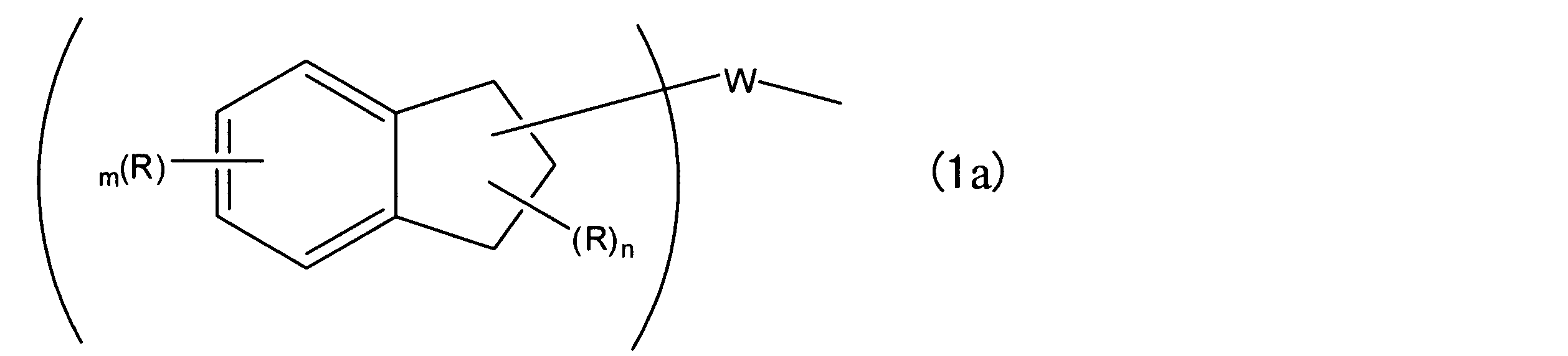
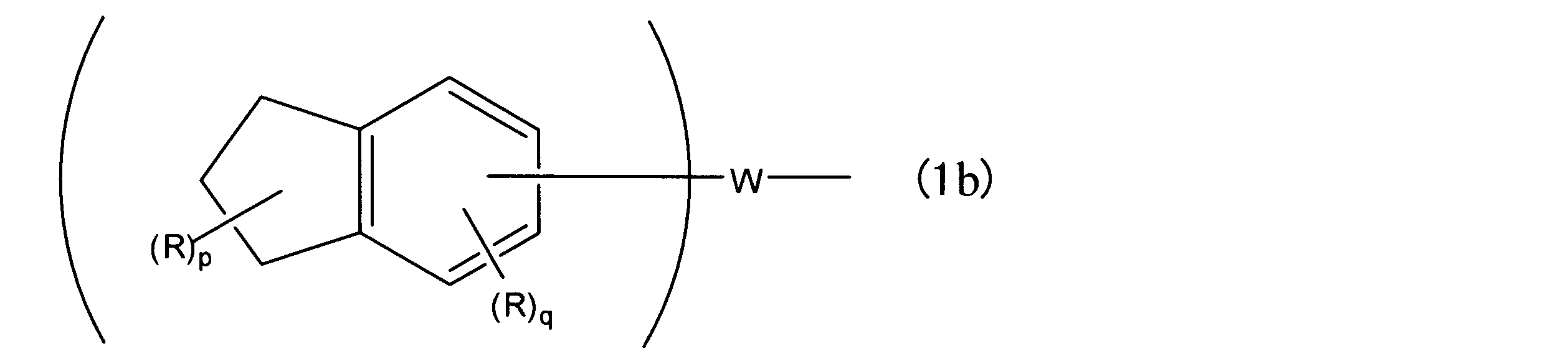
- 前記インダン骨格を有する化合物を担持した担体物質を含有する、請求項1に記載の酸素吸収剤組成物。
- 前記担体物質に前記遷移金属触媒が更に担持された、請求項2に記載の酸素吸収剤組成物。
- 前記遷移金属触媒は、マンガン、鉄、コバルト、ニッケル、及び銅からなる群より選択される少なくとも1種の遷移金属を含む、請求項1~3のいずれか1項に記載の酸素吸収剤組成物。
- 前記インダン骨格を有する化合物100質量部に対する前記遷移金属触媒の配合量が、遷移金属量として0.001~10質量部である、請求項1~4のいずれか1項に記載の酸素吸収剤組成物。
- 前記担体物質が、合成ケイ酸カルシウム、珪藻土、シリカ、及び活性炭からなる群より選択される少なくとも1種である、請求項2~5のいずれか1項に記載の酸素吸収剤組成物。
- 前記インダン骨格を有する化合物100質量部に対する前記担体物質の配合量が10~1000質量部である、請求項2~6のいずれか1項に記載の酸素吸収剤組成物。
- 請求項1~7のいずれか1項に記載の酸素吸収剤組成物を通気性包装材料で包装してなる、酸素吸収剤包装体。
Priority Applications (6)
| Application Number | Priority Date | Filing Date | Title |
|---|---|---|---|
| EP13787723.9A EP2848301B1 (en) | 2012-05-11 | 2013-05-13 | Oxygen absorbent composition |
| KR1020147031533A KR20150016504A (ko) | 2012-05-11 | 2013-05-13 | 산소 흡수제 조성물 |
| JP2014514770A JP6083434B2 (ja) | 2012-05-11 | 2013-05-13 | 酸素吸収剤組成物 |
| US14/398,582 US9771203B2 (en) | 2012-05-11 | 2013-05-13 | Oxygen absorbing agent composition |
| CN201380024775.6A CN104284718B (zh) | 2012-05-11 | 2013-05-13 | 吸氧剂组合物 |
| IN10198DEN2014 IN2014DN10198A (ja) | 2012-05-11 | 2013-05-13 |
Applications Claiming Priority (2)
| Application Number | Priority Date | Filing Date | Title |
|---|---|---|---|
| JP2012-109501 | 2012-05-11 | ||
| JP2012109501 | 2012-05-11 |
Publications (1)
| Publication Number | Publication Date |
|---|---|
| WO2013168819A1 true WO2013168819A1 (ja) | 2013-11-14 |
Family
ID=49550848
Family Applications (1)
| Application Number | Title | Priority Date | Filing Date |
|---|---|---|---|
| PCT/JP2013/063245 Ceased WO2013168819A1 (ja) | 2012-05-11 | 2013-05-13 | 酸素吸収剤組成物 |
Country Status (8)
| Country | Link |
|---|---|
| US (1) | US9771203B2 (ja) |
| EP (1) | EP2848301B1 (ja) |
| JP (1) | JP6083434B2 (ja) |
| KR (1) | KR20150016504A (ja) |
| CN (1) | CN104284718B (ja) |
| IN (1) | IN2014DN10198A (ja) |
| TW (1) | TWI578918B (ja) |
| WO (1) | WO2013168819A1 (ja) |
Cited By (2)
| Publication number | Priority date | Publication date | Assignee | Title |
|---|---|---|---|---|
| JP2014014747A (ja) * | 2012-07-06 | 2014-01-30 | Mitsubishi Gas Chemical Co Inc | 酸素吸収剤組成物 |
| JP2017047969A (ja) * | 2015-09-03 | 2017-03-09 | 住友ベークライト株式会社 | 滅菌密封空間を含む包装体の製造方法、滅菌密封用袋体、および滅菌密封空間を含む包装体 |
Families Citing this family (3)
| Publication number | Priority date | Publication date | Assignee | Title |
|---|---|---|---|---|
| EP2848301B1 (en) * | 2012-05-11 | 2017-11-15 | Mitsubishi Gas Chemical Company, Inc. | Oxygen absorbent composition |
| TWI632953B (zh) | 2013-03-05 | 2018-08-21 | 三菱瓦斯化學股份有限公司 | 氧吸收性樹脂組成物 |
| TWI682882B (zh) * | 2018-07-25 | 2020-01-21 | 黃千鐘 | 生物可分解的組成物 |
Citations (11)
| Publication number | Priority date | Publication date | Assignee | Title |
|---|---|---|---|---|
| JPS51136845A (en) | 1975-05-21 | 1976-11-26 | Saito Reisuke | Method of producing oxygen absorbent provided in container for food |
| JPS60142919A (ja) * | 1983-12-29 | 1985-07-29 | Otsuka Pharmaceut Co Ltd | 抗酸化剤 |
| JPS6160610A (ja) * | 1984-08-31 | 1986-03-28 | Otsuka Pharmaceut Co Ltd | 低酸素症改善剤 |
| JPH04298231A (ja) * | 1991-03-27 | 1992-10-22 | Toppan Printing Co Ltd | 酸素吸収剤組成物 |
| JPH05115776A (ja) | 1991-04-02 | 1993-05-14 | W R Grace & Co | 酸素掃去のための配合物、製品及び方法 |
| JPH07165776A (ja) * | 1993-10-19 | 1995-06-27 | Nippon Sanso Kk | コバルトシッフベース錯体と酸素分離用錯体溶液及び酸素分離方法 |
| JPH09234832A (ja) | 1995-12-28 | 1997-09-09 | Mitsubishi Gas Chem Co Inc | 酸素吸収多層フィルム及びその製造方法 |
| JPH09241635A (ja) * | 1996-03-04 | 1997-09-16 | Yasuhara Chem Kk | 脱酸素剤およびその製造法 |
| JP2001252560A (ja) | 2000-03-14 | 2001-09-18 | Toyobo Co Ltd | 酸素吸収剤 |
| JP2009006204A (ja) * | 2005-10-05 | 2009-01-15 | Kuraray Co Ltd | 酸素吸収体および酸素吸収体の製造方法 |
| JP2011092921A (ja) * | 2009-09-30 | 2011-05-12 | Kyodo Printing Co Ltd | 酸素吸収剤及び酸素吸収性樹脂組成物ならびに酸素吸収性フィルム |
Family Cites Families (13)
| Publication number | Priority date | Publication date | Assignee | Title |
|---|---|---|---|---|
| BE551488A (ja) * | 1955-10-05 | |||
| ES530269A0 (es) | 1983-03-04 | 1985-12-01 | Otsuka Pharma Co Ltd | Derivados de indano y sus sales |
| JPH0811056B2 (ja) * | 1987-02-14 | 1996-02-07 | 三菱瓦斯化学株式会社 | 酸素吸収剤 |
| DE3804488A1 (de) | 1987-02-14 | 1988-08-25 | Mitsubishi Gas Chemical Co | Sauerstoffabsorptionsmittel |
| JP2703875B2 (ja) * | 1995-11-29 | 1998-01-26 | 日本酸素株式会社 | 酸素分離用錯体溶液並びに酸素分離法 |
| US6063503A (en) | 1995-12-28 | 2000-05-16 | Mitsubishi Gas Chemical Company, Inc. | Oxygen-absorbing multi-layer film and method for preparing same |
| KR100490710B1 (ko) * | 1999-03-03 | 2005-05-24 | 가부시키가이샤 구라레 | 산소 흡수성 수지 조성물 |
| MX2007009868A (es) | 2005-02-15 | 2007-11-06 | Constar Int Inc | "composiciones depuradoras de ox??geno y envase que comprende dichas composiciones". |
| EP2754690B1 (en) * | 2007-05-10 | 2017-12-13 | Plastipak Packaging, Inc. | Oxygen scavenging molecules, articles containing same, and methods of their use |
| KR101535321B1 (ko) * | 2009-06-15 | 2015-07-08 | 미츠비시 가스 가가쿠 가부시키가이샤 | 산소 흡수 수지 조성물 |
| JP2011246612A (ja) * | 2010-05-27 | 2011-12-08 | Mitsubishi Gas Chemical Co Inc | 熱硬化性樹脂組成物 |
| EP2848301B1 (en) * | 2012-05-11 | 2017-11-15 | Mitsubishi Gas Chemical Company, Inc. | Oxygen absorbent composition |
| IN2015DN00464A (ja) * | 2012-07-10 | 2015-06-26 | Mitsubishi Gas Chemical Co |
-
2013
- 2013-05-13 EP EP13787723.9A patent/EP2848301B1/en not_active Not-in-force
- 2013-05-13 US US14/398,582 patent/US9771203B2/en not_active Expired - Fee Related
- 2013-05-13 TW TW102116961A patent/TWI578918B/zh not_active IP Right Cessation
- 2013-05-13 KR KR1020147031533A patent/KR20150016504A/ko not_active Withdrawn
- 2013-05-13 IN IN10198DEN2014 patent/IN2014DN10198A/en unknown
- 2013-05-13 JP JP2014514770A patent/JP6083434B2/ja not_active Expired - Fee Related
- 2013-05-13 WO PCT/JP2013/063245 patent/WO2013168819A1/ja not_active Ceased
- 2013-05-13 CN CN201380024775.6A patent/CN104284718B/zh not_active Expired - Fee Related
Patent Citations (11)
| Publication number | Priority date | Publication date | Assignee | Title |
|---|---|---|---|---|
| JPS51136845A (en) | 1975-05-21 | 1976-11-26 | Saito Reisuke | Method of producing oxygen absorbent provided in container for food |
| JPS60142919A (ja) * | 1983-12-29 | 1985-07-29 | Otsuka Pharmaceut Co Ltd | 抗酸化剤 |
| JPS6160610A (ja) * | 1984-08-31 | 1986-03-28 | Otsuka Pharmaceut Co Ltd | 低酸素症改善剤 |
| JPH04298231A (ja) * | 1991-03-27 | 1992-10-22 | Toppan Printing Co Ltd | 酸素吸収剤組成物 |
| JPH05115776A (ja) | 1991-04-02 | 1993-05-14 | W R Grace & Co | 酸素掃去のための配合物、製品及び方法 |
| JPH07165776A (ja) * | 1993-10-19 | 1995-06-27 | Nippon Sanso Kk | コバルトシッフベース錯体と酸素分離用錯体溶液及び酸素分離方法 |
| JPH09234832A (ja) | 1995-12-28 | 1997-09-09 | Mitsubishi Gas Chem Co Inc | 酸素吸収多層フィルム及びその製造方法 |
| JPH09241635A (ja) * | 1996-03-04 | 1997-09-16 | Yasuhara Chem Kk | 脱酸素剤およびその製造法 |
| JP2001252560A (ja) | 2000-03-14 | 2001-09-18 | Toyobo Co Ltd | 酸素吸収剤 |
| JP2009006204A (ja) * | 2005-10-05 | 2009-01-15 | Kuraray Co Ltd | 酸素吸収体および酸素吸収体の製造方法 |
| JP2011092921A (ja) * | 2009-09-30 | 2011-05-12 | Kyodo Printing Co Ltd | 酸素吸収剤及び酸素吸収性樹脂組成物ならびに酸素吸収性フィルム |
Non-Patent Citations (1)
| Title |
|---|
| See also references of EP2848301A4 |
Cited By (2)
| Publication number | Priority date | Publication date | Assignee | Title |
|---|---|---|---|---|
| JP2014014747A (ja) * | 2012-07-06 | 2014-01-30 | Mitsubishi Gas Chemical Co Inc | 酸素吸収剤組成物 |
| JP2017047969A (ja) * | 2015-09-03 | 2017-03-09 | 住友ベークライト株式会社 | 滅菌密封空間を含む包装体の製造方法、滅菌密封用袋体、および滅菌密封空間を含む包装体 |
Also Published As
| Publication number | Publication date |
|---|---|
| EP2848301B1 (en) | 2017-11-15 |
| US20150090932A1 (en) | 2015-04-02 |
| IN2014DN10198A (ja) | 2015-08-07 |
| US9771203B2 (en) | 2017-09-26 |
| CN104284718A (zh) | 2015-01-14 |
| EP2848301A4 (en) | 2016-01-06 |
| CN104284718B (zh) | 2016-10-19 |
| TWI578918B (zh) | 2017-04-21 |
| JPWO2013168819A1 (ja) | 2016-01-07 |
| EP2848301A1 (en) | 2015-03-18 |
| TW201406306A (zh) | 2014-02-16 |
| KR20150016504A (ko) | 2015-02-12 |
| JP6083434B2 (ja) | 2017-02-22 |
Similar Documents
| Publication | Publication Date | Title |
|---|---|---|
| JP6249245B2 (ja) | 酸素吸収性樹脂組成物、およびこれを用いた酸素吸収性多層インジェクション成形体および酸素吸収性多層容器 | |
| KR101860602B1 (ko) | 산소 흡수제 조성물 및 그것을 이용한 산소 흡수제 포장체 | |
| JP6150180B2 (ja) | 酸素吸収剤組成物及び酸素吸収剤包装体 | |
| JP6083434B2 (ja) | 酸素吸収剤組成物 | |
| JP6048745B2 (ja) | 酸素吸収性多層インジェクション成形体 | |
| KR20150128652A (ko) | 산소 흡수제 조성물 | |
| JP5974871B2 (ja) | 酸素吸収性多層インジェクション成形体 | |
| JP6057097B2 (ja) | 酸素吸収性樹脂組成物 | |
| JPWO2014057991A1 (ja) | 酸素吸収性樹脂組成物 | |
| JP6048744B2 (ja) | 酸素吸収性多層体、及び酸素吸収性容器 | |
| JP6051956B2 (ja) | 酸素吸収性多層体、及び酸素吸収性容器 | |
| JP6098238B2 (ja) | 薬液が充填された容器の保存方法 | |
| JP5935650B2 (ja) | 酸素吸収性多層体及び酸素吸収性多層容器 | |
| JP6051957B2 (ja) | 酸素吸収性多層体、及び酸素吸収性容器 | |
| JP6115760B2 (ja) | 酸素吸収性樹脂組成物 | |
| JP2014171405A (ja) | 果汁及び/又は野菜汁の保存方法 |
Legal Events
| Date | Code | Title | Description |
|---|---|---|---|
| 121 | Ep: the epo has been informed by wipo that ep was designated in this application |
Ref document number: 13787723 Country of ref document: EP Kind code of ref document: A1 |
|
| ENP | Entry into the national phase |
Ref document number: 2014514770 Country of ref document: JP Kind code of ref document: A |
|
| REEP | Request for entry into the european phase |
Ref document number: 2013787723 Country of ref document: EP |
|
| WWE | Wipo information: entry into national phase |
Ref document number: 2013787723 Country of ref document: EP |
|
| WWE | Wipo information: entry into national phase |
Ref document number: 14398582 Country of ref document: US |
|
| ENP | Entry into the national phase |
Ref document number: 20147031533 Country of ref document: KR Kind code of ref document: A |
|
| NENP | Non-entry into the national phase |
Ref country code: DE |