WO2013186832A1 - Composition de matériau de revêtement en poudre et son procédé de production - Google Patents
Composition de matériau de revêtement en poudre et son procédé de production Download PDFInfo
- Publication number
- WO2013186832A1 WO2013186832A1 PCT/JP2012/064897 JP2012064897W WO2013186832A1 WO 2013186832 A1 WO2013186832 A1 WO 2013186832A1 JP 2012064897 W JP2012064897 W JP 2012064897W WO 2013186832 A1 WO2013186832 A1 WO 2013186832A1
- Authority
- WO
- WIPO (PCT)
- Prior art keywords
- powder coating
- polyester resin
- coating composition
- fluororesin
- coating film
- Prior art date
- Legal status (The legal status is an assumption and is not a legal conclusion. Google has not performed a legal analysis and makes no representation as to the accuracy of the status listed.)
- Ceased
Links
Images
Classifications
-
- C—CHEMISTRY; METALLURGY
- C09—DYES; PAINTS; POLISHES; NATURAL RESINS; ADHESIVES; COMPOSITIONS NOT OTHERWISE PROVIDED FOR; APPLICATIONS OF MATERIALS NOT OTHERWISE PROVIDED FOR
- C09D—COATING COMPOSITIONS, e.g. PAINTS, VARNISHES OR LACQUERS; FILLING PASTES; CHEMICAL PAINT OR INK REMOVERS; INKS; CORRECTING FLUIDS; WOODSTAINS; PASTES OR SOLIDS FOR COLOURING OR PRINTING; USE OF MATERIALS THEREFOR
- C09D167/00—Coating compositions based on polyesters obtained by reactions forming a carboxylic ester link in the main chain; Coating compositions based on derivatives of such polymers
- C09D167/02—Polyesters derived from dicarboxylic acids and dihydroxy compounds
-
- C—CHEMISTRY; METALLURGY
- C09—DYES; PAINTS; POLISHES; NATURAL RESINS; ADHESIVES; COMPOSITIONS NOT OTHERWISE PROVIDED FOR; APPLICATIONS OF MATERIALS NOT OTHERWISE PROVIDED FOR
- C09D—COATING COMPOSITIONS, e.g. PAINTS, VARNISHES OR LACQUERS; FILLING PASTES; CHEMICAL PAINT OR INK REMOVERS; INKS; CORRECTING FLUIDS; WOODSTAINS; PASTES OR SOLIDS FOR COLOURING OR PRINTING; USE OF MATERIALS THEREFOR
- C09D127/00—Coating compositions based on homopolymers or copolymers of compounds having one or more unsaturated aliphatic radicals, each having only one carbon-to-carbon double bond, and at least one being terminated by a halogen; Coating compositions based on derivatives of such polymers
- C09D127/02—Coating compositions based on homopolymers or copolymers of compounds having one or more unsaturated aliphatic radicals, each having only one carbon-to-carbon double bond, and at least one being terminated by a halogen; Coating compositions based on derivatives of such polymers not modified by chemical after-treatment
- C09D127/12—Coating compositions based on homopolymers or copolymers of compounds having one or more unsaturated aliphatic radicals, each having only one carbon-to-carbon double bond, and at least one being terminated by a halogen; Coating compositions based on derivatives of such polymers not modified by chemical after-treatment containing fluorine atoms
-
- C—CHEMISTRY; METALLURGY
- C09—DYES; PAINTS; POLISHES; NATURAL RESINS; ADHESIVES; COMPOSITIONS NOT OTHERWISE PROVIDED FOR; APPLICATIONS OF MATERIALS NOT OTHERWISE PROVIDED FOR
- C09D—COATING COMPOSITIONS, e.g. PAINTS, VARNISHES OR LACQUERS; FILLING PASTES; CHEMICAL PAINT OR INK REMOVERS; INKS; CORRECTING FLUIDS; WOODSTAINS; PASTES OR SOLIDS FOR COLOURING OR PRINTING; USE OF MATERIALS THEREFOR
- C09D167/00—Coating compositions based on polyesters obtained by reactions forming a carboxylic ester link in the main chain; Coating compositions based on derivatives of such polymers
-
- C—CHEMISTRY; METALLURGY
- C09—DYES; PAINTS; POLISHES; NATURAL RESINS; ADHESIVES; COMPOSITIONS NOT OTHERWISE PROVIDED FOR; APPLICATIONS OF MATERIALS NOT OTHERWISE PROVIDED FOR
- C09D—COATING COMPOSITIONS, e.g. PAINTS, VARNISHES OR LACQUERS; FILLING PASTES; CHEMICAL PAINT OR INK REMOVERS; INKS; CORRECTING FLUIDS; WOODSTAINS; PASTES OR SOLIDS FOR COLOURING OR PRINTING; USE OF MATERIALS THEREFOR
- C09D5/00—Coating compositions, e.g. paints, varnishes or lacquers, characterised by their physical nature or the effects produced; Filling pastes
- C09D5/03—Powdery paints
-
- C—CHEMISTRY; METALLURGY
- C08—ORGANIC MACROMOLECULAR COMPOUNDS; THEIR PREPARATION OR CHEMICAL WORKING-UP; COMPOSITIONS BASED THEREON
- C08L—COMPOSITIONS OF MACROMOLECULAR COMPOUNDS
- C08L2205/00—Polymer mixtures characterised by other features
- C08L2205/03—Polymer mixtures characterised by other features containing three or more polymers in a blend
Definitions
- the present invention relates to a powder coating composition and a method for producing the powder coating composition, and in particular, a powder coating composition capable of forming a coating film comprising a fluorine coating layer and a polyester coating layer. It is about.
- a powder coating composition may be referred to as a layer separation type powder coating composition.
- Acrylic resin-based, polyester resin-based, or epoxy resin-based powder coatings are mainly used for powder coatings.
- the epoxy resin-based powder coating has a disadvantage that it is inferior in weather resistance.
- thermosetting acrylic resin powder coating As a powder coating to improve such defects, a mixture of a thermosetting acrylic resin powder coating and a thermosetting epoxy resin powder coating is applied, and the mixture is heated and cured, whereby the upper layer is made of acrylic.
- a powder coating material has been developed that can form a multi-layer coating film having a resin-based powder coating film and an epoxy resin powder coating layer as a lower layer (see, for example, Patent Documents 1 to 3).
- thermosetting fluororesin-based powder coating using a fluororesin having better weather resistance than acrylic resin and polyester resin has been developed (for example, see Patent Document 4).
- a powder coating using only a fluororesin as a resin requires a large amount of expensive fluororesin and tends to increase the cost.
- the present inventor uses a powder coating composition comprising a fluororesin excellent in weather resistance, a low-cost polyester resin, and a specific curing agent.
- a highly weather-resistant coating film comprising a fluorine coating film layer and a polyester coating film layer can be formed at low cost and in a reduced process, and the present invention has been completed.
- the powder coating composition of the present invention comprises a group comprising a fluororesin containing a hydroxyl group or a carboxyl group, a polyester resin containing a hydroxyl group or a carboxyl group, ⁇ -hydroxyalkylamide, triglycidyl isocyanurate and an isocyanate compound. It is possible to form a coating film comprising a fluorine coating layer and a polyester coating layer.
- the powder coating composition of the present invention preferably further contains an epoxy resin.
- the powder coating composition of the present invention preferably further contains a luster pigment.
- the polyester resin is a hydroxyl group-containing polyester resin, and the hydroxyl group-containing polyester resin has a number average molecular weight of 5,000 or less and a weight average molecular weight of 10,000 to 20,000. .
- the polyester resin has a melt viscosity of 3.5 Pa ⁇ s (190 ° C.) or less, a measurement start temperature of 200 ° C., and a temperature drop rate of 10 ° C./min.
- the slope in the range of 100 to 120 ° C. is 15000 or more.
- the fluororesin is a hydroxyl group-containing fluororesin.
- the mass ratio (A / B) of the fluororesin (A) and the polyester resin (B) is 50/50 to 10/90.
- the difference in solubility parameter (SP value) between the fluororesin and the polyester resin is 0.6 to 0.9.
- the method for producing the powder coating composition of the present invention comprises melting and kneading a mixture containing the fluororesin, the polyester resin and the curing agent at 100 to 160 ° C., then pulverizing the mixture after cooling, A body coating composition is prepared.
- a highly weather-resistant coating film comprising a fluorine coating layer and a polyester coating layer is reduced. It is possible to provide a layer-separated type powder coating composition that can be formed at low cost and in a reduced process. Moreover, the manufacturing method of this powder coating composition can also be provided.
- the powder coating composition of the present invention is selected from the group consisting of a fluororesin containing a hydroxyl group or a carboxyl group, a polyester resin containing a hydroxyl group or a carboxyl group, ⁇ -hydroxyalkylamide, triglycidyl isocyanurate, and an isocyanate compound. It is possible to form a coating film comprising a fluorine coating layer and a polyester coating layer. Moreover, since the powder coating composition of this invention uses cheap polyester resin other than the fluororesin which is excellent in a weather resistance, it can suppress the manufacturing cost and can form the coating film excellent in a weather resistance.
- a fluorine coating layer refers to the coating layer formed based on a fluororesin
- a polyester coating layer refers to the coating layer formed based on a polyester resin.
- the fluororesin needs to be a solid resin at room temperature, and its softening point is preferably 50 to 150 ° C.
- the said fluororesin forms a fluorine coating film layer, and brings a weather resistance to a coating film.
- the normal temperature is a temperature in the range of 20 ° C. ⁇ 15 ° C. (5 to 35 ° C.) defined by JIS Z 8703.
- the fluororesin needs to have a reactive site that reacts with a curing agent or the like, and contains a hydroxyl group or a carboxyl group. Therefore, the said fluororesin can be manufactured by copolymerizing a fluorine-containing monomer with the monomer containing a specific reactive group, for example.
- fluorine-containing monomer examples include vinyl fluoride, vinylidene fluoride, trifluoroethylene, tetrafluoroethylene, bromotrifluoroethylene, chlorotrifluoroethylene, pentafluoropropylene, hexafluoropropylene, and (per) fluoroalkyltrifluoro.
- a monomer containing a specific reactive group is a polymerizable monomer containing a hydroxyl group or a carboxyl group as a group (reactive group) that reacts with a curing agent or the like.
- examples of the hydroxyl group-containing polymerizable monomer include allyl alcohol; hydroxyalkyl vinyl ethers such as 2-hydroxyethyl vinyl ether, 3-hydroxypropyl vinyl ether, 4-hydroxybutyl vinyl ether, 4-hydroxycyclohexyl vinyl ether; 2-hydroxy Hydroxyalkyl allyl ethers such as ethyl allyl ether, 3-hydroxypropyl allyl ether, 4-hydroxybutyl allyl ether, 4-hydroxycyclohexyl allyl ether; hydroxyalkyl (meth) acrylates such as 2-hydroxyethyl (meth) acrylate; Vinyl hydroxyacetate, vinyl hydroxyisobutyrate, vinyl hydroxypropionate, vinyl hydroxybutyrate, vinyl hydroxyvalerate, Esters of hydroxyalkyl carboxylic acids such as vinyl droxycyclohexyl carboxylate and vinyl alcohol; hydroxyalkyl allyl esters such as hydroxyethyl allyl este
- examples of the carboxyl group-containing polymerizable monomer include (meth) acrylic acid and carboxyalkyl allyl ester.
- a hydroxyl group-containing polymerizable monomer is preferable from the viewpoints of resin stability and control of melt viscosity.
- the fluororesin is preferably a hydroxyl group-containing fluororesin.
- a polymerizable monomer other than the fluorine-containing monomer and a monomer containing a specific reactive group may be used.
- Such polymerizable monomers include vinyl ethers, olefins, allyl ethers, vinyl esters, allyl esters, (meth) acrylic acid esters, (meth) acrylic acid amides, cyano group-containing monomers, dienes, etc. And crotonic acid esters.
- polymerizable monomer other than the fluorine-containing monomer and the monomer containing a specific reactive group include, for example, alkyl vinyl ethers such as methyl vinyl ether, ethyl vinyl ether, butyl vinyl ether, isobutyl vinyl ether, cyclohexyl vinyl ether, and chloroethyl vinyl ether.
- alkyl vinyl ethers such as methyl vinyl ether, ethyl vinyl ether, butyl vinyl ether, isobutyl vinyl ether, cyclohexyl vinyl ether, and chloroethyl vinyl ether.
- Olefins such as ethylene, propylene, 1-butene, isobutylene, cyclohexene, vinyl chloride and vinylidene chloride; styrene monomers such as styrene and ⁇ -methylstyrene; methyl allyl ether, ethyl allyl ether, butyl allyl ether, cyclohexyl allyl Alkyl allyl ethers such as ether; vinyl acetate, vinyl propionate, vinyl butyrate, vinyl isobutyrate, vinyl valerate, vinyl hexanoate, octa Vinyl esters of carboxylic acids (preferably fatty acids) such as vinyl acid and vinyl versatate; allyl esters of carboxylic acids (preferably fatty acids) such as allyl propionate and allyl acetate; methyl (meth) acrylate, (meta ) (Meth) acrylic esters such as ethyl acrylate, buty
- a polymerizable monomer having a reactive group other than a hydroxyl group and a carboxyl group may be used for the polymerization of the fluororesin.
- reactive groups include functional groups such as amide groups, amino groups, nitrile groups, glycidyl groups, and isocyanate groups.
- amino group-containing polymerizable monomers include aminoalkyl vinyl ethers and aminoalkyl allyl ethers
- amide group-containing polymerizable monomers include (meth) acrylamide, N-methyl (meth) acrylamide and the like.
- examples of the nitrile group-containing polymerizable monomer include (meth) acrylonitrile
- examples of the glycidyl group-containing polymerizable monomer include glycidyl allyl ether and glycidyl (meth) acrylate
- an isocyanate group-containing polymerizable monomer examples thereof include vinyl isocyanate and isocyanatoethyl acrylate.
- the fluorine resin preferably has a fluorine content of 5 to 80% by mass, more preferably 10 to 70% by mass. If the fluorine content of the fluororesin is 5% by mass or more, sufficient weather resistance can be imparted to the coating film obtained from the powder coating composition of the present invention, and the fluorine content of the fluororesin is 80% by mass. When it is below, sufficient chemical resistance can be imparted to the coating film.
- the fluororesin is a hydroxyl group-containing fluororesin
- the hydroxyl value of the fluororesin is preferably 100 mgKOH / g or less from the viewpoint of maintaining the flexibility of the coating film. From the viewpoint of imparting impact properties, it is preferably 10 mgKOH / g or more. In particular, the hydroxyl value of the fluororesin is preferably 30 to 70 mgKOH / g.
- the polyester resin can be produced by reacting a carboxylic acid component and a polyhydric alcohol component by a known method, and must have a reactive site that reacts with a curing agent or the like. It must contain a hydroxyl group or a carboxyl group and must be a solid resin at room temperature, and its softening point is preferably 100 to 150 ° C.
- the polyester resin forms a polyester coating layer and constitutes a part of the coating. Thereby, compared with the coating film which consists only of a fluorine coating-film layer, the external appearance and workability of a coating film can improve, and also manufacturing cost can be reduced.
- carboxylic acid component examples include phthalic acid, isophthalic acid, terephthalic acid, naphthalenedicarboxylic acid, succinic acid, glutaric acid, adipic acid, pimelic acid, suberic acid, azelaic acid, sebacic acid, 1,9-nonanedicarboxylic acid, 1,10-decanedicarboxylic acid, 1,12-dodecanedicarboxylic acid, 1,2-octadecanedicarboxylic acid, maleic acid, fumaric acid, cyclohexanedicarboxylic acid, hexahydrophthalic acid, tetrahydrophthalic acid Polycarboxylic acids such as trimellitic acid and pyromellitic acid, lower alkyl esters of these polycarboxylic acids and acid anhydrides thereof, and malic acid, tartaric acid, 1,2-hydroxystearic acid, paraoxybenzoic acid,
- polyhydric alcohol component examples include ethylene glycol, diethylene glycol, triethylene glycol, 1,2-propanediol, 1,3-propanediol, 1,3-butanediol, 1,4 -Butanediol, 1,5-pentanediol, 1,6-hexanediol, 1,9-nonanediol, 1,10-decanediol, neopentyl glycol, spiroglycol, 1,10-decanediol, 1,4- Examples include cyclohexanedimethanol, trimethylolethane, trimethylolpropane, glycerin, pentaerythritol and the like.
- the polyester resin can be produced by an ordinary method known for producing a polyester resin for a powder coating composition using a carboxylic acid component and a polyhydric alcohol component as raw materials.
- the above-mentioned raw materials are used in appropriate combinations and mixing ratios, subjected to esterification or transesterification at 200 to 280 ° C. according to a conventional method, and then subjected to polycondensation reaction at 230 to 290 ° C. using a catalyst under reduced pressure.
- a polyester resin can be produced by performing a depolymerization reaction with a polyhydric alcohol.
- the polyester resin may have a reactive group other than a hydroxyl group and a carboxyl group.
- reactive sites include functional groups such as amide groups, amino groups, nitrile groups, glycidyl groups, and isocyanate groups.
- the polyester resin is preferably a hydroxyl group-containing polyester resin from the viewpoint of cross-linking reaction and control of coating film properties. From the viewpoint of controlling the melt viscosity, the polyester resin preferably has a number average molecular weight of 5,000 or less and a weight average molecular weight of 10,000 to 20,000.
- the number average molecular weight and the weight average molecular weight can be determined using polystyrene as a standard substance by gel permeation chromatography (GPC).
- the hydroxyl value of the polyester resin is preferably 20 to 100 mgKOH / g, more preferably 30 to 80 mgKOH / g.
- the hydroxyl value of the polyester resin is less than 20 mgKOH / g, it is difficult to obtain sufficient mechanical properties and solvent resistance of the coating film.
- the polyester resin exceeds 100 mgKOH / g, an amount of curing agent suitable for the hydroxyl value (for example, isocyanate) Compound), which is expensive.
- the acid value of the polyester resin is preferably 20 to 80 mgKOH / g, and more preferably 30 to 80 mgKOH / g.
- the acid value of the polyester resin is less than 20 mgKOH / g, it is difficult to obtain sufficient mechanical properties and solvent resistance of the coating film.
- a curing agent in an amount suitable for the acid value for example, ⁇ -hydroxyalkylamide and triglycidyl isocyanurate
- a curing agent in an amount suitable for the acid value for example, ⁇ -hydroxyalkylamide and triglycidyl isocyanurate
- the polyester resin has a melt viscosity of 3.5 Pa ⁇ s (190 ° C.) or less.
- the polyester resin has an inclination in the range of 100 to 120 ° C. in the Arrhenius plot based on the melt viscosity (Pa ⁇ s) measured under the conditions of a measurement start temperature of 200 ° C. and a temperature drop rate of 10 ° C./min. The above is preferable.
- the melt viscosity is measured by using a rheometer such as a rheometer ARES manufactured by TA Instruments Inc.
- the conditions other than the measurement start temperature and the temperature lowering speed are as follows: a parallel plate with a diameter of 40 mm, a gap width of 1. 0 mm, frequency 9.42 rad / s, distortion 1.0%.
- the measurement result of the obtained melt viscosity is plotted on a graph in which the horizontal axis is the reciprocal 1 / T of the temperature T (K) and the vertical axis is the logarithm lnV of the melt viscosity V (Pa ⁇ s), and Arrhenius
- the slope of a straight line at 100 to 120 ° C. can be obtained. If the slope of the straight line is 15000 or more, it is preferable because layer separation of the coating film is easily formed, and the slope is preferably 16000 to 20000.
- the powder coating composition of the present invention preferably further contains an epoxy resin in order to improve the adhesion to the substrate.
- the epoxy resin needs to be a solid resin at room temperature, and its softening point is preferably 50 to 150 ° C. It does not specifically limit as said epoxy resin,
- the epoxy resin conventionally used in manufacture of an epoxy resin type powder coating composition can be used.
- the epoxy resin for example, bisphenol A type diglycidyl ether resin, bisphenol F type diglycidyl ether resin, aminoglycidyl ether resin, bisphenol AD type diglycidyl ether resin, bisphenol Z type diglycidyl ether resin, O -Cresol novolac epoxy resin, phenol novolac epoxy resin, biphenol glycidyl ether resin, cyclopentadiene skeleton epoxy resin, naphthalene skeleton epoxy resin, GMA acrylic resin, etc., and other substituents other than epoxy groups of these resins are replaced with other substituents Examples thereof include resins obtained by a modification reaction using a carboxyl group-terminated polybutadiene-acrylonitrile (CTBN) or a modification reaction such as esterification.
- CTBN carboxyl group-terminated polybutadiene-acrylonitrile
- the epoxy resin preferably has an epoxy equivalent of 300 to 1200, particularly preferably 400 to 1000.
- the curing agent needs to be a curing agent selected from the group consisting of ⁇ -hydroxyalkylamide, triglycidyl isocyanurate and isocyanate compound, and a hydroxyl group or carboxyl group-containing fluororesin It can react with a hydroxyl group or carboxyl group-containing polyester resin and an epoxy resin to form a cross-linked bond.
- ⁇ ⁇ -hydroxyalkylamide When the resin used in the powder coating composition of the present invention has a carboxyl group, it is preferable to use ⁇ -hydroxyalkylamide as a curing agent.
- ⁇ -hydroxyalkylamides those having two or more functional groups per molecule are particularly preferred from the viewpoint of low-temperature curability and the water resistance of a coating film obtained by coating.
- Examples of ⁇ -hydroxyalkylamide include N, N-di ( ⁇ -hydroxyethyl) acetamide, bis ( ⁇ -hydroxyethyl) adipamide, bis ( ⁇ -hydroxypropyl) adipamide, bis [N, N-di ( ⁇ -hydroxy).
- Ethyl)] adipamide and bis [N, N-di ( ⁇ -hydroxypropyl)] adipamide are particularly preferred.
- the ⁇ -hydroxyalkylamide preferably has a hydroxylamide group of 0.5 to 1.5 equivalents relative to the carboxyl group in the resin.
- Triglycidyl isocyanurate When the resin used in the powder coating composition of the present invention has a carboxyl group, it is preferable to use triglycidyl isocyanurate (TGIC) as a curing agent.
- triglycidyl isocyanurate include Araldite (registered trademark) PT 710, Araldite (registered trademark) PT 810, Araldite (registered trademark) PT 910, Araldite (registered trademark) PT 912 (all manufactured by Huntsman) Etc.
- the powder coating composition of the present invention can be blended with an isocyanate compound as a curing agent from the viewpoint of coating film properties such as coating film hardness and hydrolysis resistance. Is more preferable.
- the isocyanate compound is preferably solid at room temperature.
- the blocked isocyanate compound may be masked by reacting, for example, a polyisocyanate obtained by reacting an aliphatic, aromatic or araliphatic diisocyanate with a low molecular weight compound having active hydrogen with a blocking agent. Therefore, manufacturing is also easy.
- the diisocyanate include tolylene diisocyanate, 4,4′-diphenylmethane isocyanate, xylylene diisocyanate, hexamethylene diisocyanate, 4,4′-methylene bis (cyclohexyl isocyanate), methylcyclohexane diisocyanate, bis (isocyanatomethyl) cyclohexane, isophorone.
- Diisocyanate, dimer acid diisocyanate, lysine diisocyanate and the like are mentioned.
- the low molecular weight compound having active hydrogen include water, ethylene glycol, propylene glycol, trimethylolpropane, glycerin, sorbitol, ethylenediamine, ethanolamine, diethanolamine, hexamethylenediamine.
- Etc., isocyanurate, uretidione, hydroxyl group Low molecular weight polyesters having, polycaprolactone and the like.
- the blocking agent include alcohols such as methanol, ethanol and benzyl alcohol, phenols such as phenol and crezone, lactams such as caprolactam and butyrolactam, and oximes such as cyclohexanone, oxime and methyl ethyl ketoxime.
- specific examples of the blocked isocyanate include isophorone diisocyanate blocked with ⁇ -caprolactam (Evonik Vestagon B1530, Bayer Cleran UI), and the like.
- the isocyanate compound preferably has a softening point of 10 to 120 ° C, particularly preferably 40 to 100 ° C.
- a softening point of less than 10 ° C. is not preferable because the powder coating composition is cured in a room temperature environment or a granular lump is formed.
- the softening point exceeds 120 ° C., it becomes difficult to uniformly disperse the isocyanate compound in the powder coating composition when the powder coating composition is produced by melt kneading. Performances such as smoothness, coating strength, and moisture resistance may be impaired.
- the isocyanate compound preferably has an isocyanate group of 0.05 to 1.5 equivalents, particularly preferably 0.8 to 1.2 equivalents, based on the hydroxyl groups in the resin. If the isocyanate group is less than 0.05 equivalent, the degree of cure of the powder coating composition may be insufficient, and coating performance such as adhesion, coating hardness, and chemical resistance may be lowered. Moreover, when this isocyanate group exceeds 1.5 equivalent, there exists a possibility that a coating film may become weak, heat resistance, chemical resistance, moisture resistance, etc. may be inferior. Furthermore, since the blocked isocyanate is expensive, the cost is increased if an excess of blocked isocyanate is used.
- the powder coating composition of the present invention can further contain a luster pigment.
- Bright pigments include, for example, aluminum powder pigment, nickel powder pigment, gold powder, silver powder, bronze powder, copper powder, stainless steel powder pigment, mica pigment, graphite pigment, glass flake pigment, metal-coated glass powder, metal coating Mica powder, metal-coated plastic powder, and scaly iron oxide pigment.
- the content of the bright pigment in the powder coating composition of the present invention is preferably 0.1 to 30% by mass, and more preferably 0.5 to 20% by mass. When the content of the glitter pigment is less than 0.1% by mass, it is difficult to obtain the brightness of the coating film.
- the layer separation property of the coating film and the glitter pigment on the coating film surface are difficult to obtain. There is a possibility that the chemical resistance, moisture resistance, etc. of the coating film due to the exposure of the film are inferior. Further, since bright pigments are expensive, the cost increases when using excessive bright pigments.
- the powder coating composition of the present invention can contain pigments commonly used, such as colored pigments and extender pigments, in addition to the luster pigment.
- the color pigment include inorganic pigments such as titanium oxide, yellow iron oxide, titanium yellow, bengara, lithopone and antimony oxide, Hansa Yellow 5G, Permanent Yellow FGL, Phthalocyanine Blue, Indanthrene Blue RS, Permanent Red F5RK, And organic pigments such as Brilliant First Scarlet G.
- examples of extender pigments include barium sulfate, barium carbonate, calcium carbonate, clay, silica powder, diatomaceous earth, talc, basic magnesium carbonate, and alumina white.
- the powder coating composition of this invention may contain a rust preventive pigment, when the base material which should be coated needs rust prevention property.
- rust preventive pigments include condensed calcium phosphate, aluminum phosphate, condensed aluminum phosphate, zinc phosphate, aluminum phosphite, zinc phosphite, calcium phosphite, zinc molybdate, calcium molybdate, and manganese molybdate. Can be mentioned. These pigments may be used alone or in combination of two or more.
- the powder coating composition of the present invention includes plasticizers, curing accelerators, crosslinking accelerators, surface conditioners, ultraviolet absorbers, light stabilizers, antioxidants, fluidity adjustments as additives for general paints. You may mix
- the powder coating composition of the present invention has a mass ratio (A / B) of the fluororesin (A) to the polyester resin (B) of 50/50 to 10/90 from the viewpoint of weather resistance and low cost. preferable. If the ratio of the fluororesin to the total of the fluororesin and the polyester resin exceeds 50% by mass, the amount of expensive fluororesin is increased, which increases the cost. On the other hand, the fluororesin accounts for the total of the fluororesin and the polyester resin. If the ratio is less than 10% by mass, sufficient weather resistance may not be obtained.
- the difference in solubility parameter (SP value) between the fluororesin and the polyester resin is preferably 0.6 to 0.9. If the SP value difference between the fluororesin and the polyester resin is less than 0.6, the fluororesin and the polyester resin may become compatible when melted and cured to form a coating film. On the other hand, when the difference between the SP values exceeds 0.9, layer separation occurs, but there is a concern about delamination between the upper layer and the lower layer.
- the SP value which is a resin solubility parameter, is calculated as follows.
- SP n (SP THF ⁇ V THF + SP Hexane ⁇ V Hexane ) / (V THF + V Hexane ) (1)
- SP h (SP THF ⁇ V THF + SP Water ⁇ V Water) / (V THF + V Water) ⁇ (2)
- the temperature difference from the start of melting to the start of curing under conditions of a temperature increase rate of 10 ° C./min is preferably 50 ° C. or more, and is 80 to 100 ° C. More preferably it is.
- the melting start temperature (° C.) is the temperature when the elastic modulus of the mixture of the polyester resin and the curing agent starts to decrease
- the curing start temperature (° C.) is when the elastic modulus of the mixture starts to increase. Temperature.
- a rheometer such as a rheometer ARES manufactured by T.A. Instruments Inc. is used. Conditions other than the rate of temperature increase are a parallel plate with a diameter of 40 mm, a gap width of 1.0 mm, and a frequency of 9. 42 rad / s, strain 1.0%, temperature range 80-200 ° C.
- the temperature (° C.) at which the fluororesin and the curing agent start to react is set as a curing start temperature TR (A)
- the temperature (° C.) at which the polyester resin and the curing agent start to react is set at a curing start temperature TR (B)
- the temperature difference TR (B) ⁇ TR (A) between the curing start temperature TR (A) and the curing start temperature TR (B) is preferably 15 ° C. or more, and preferably 20 ° C. or more. Is more preferable. If the temperature difference TR (B) ⁇ TR (A) is less than 20 ° C., the layer separation property may be lowered when a coating film is formed from the powder coating composition of the present invention.
- the method for producing a powder coating composition of the present invention is a method for preparing the above powder coating composition. Specifically, the mixture containing the fluororesin, polyester resin and curing agent is heated at 100 to 160 ° C. It is characterized by melt-kneading and then pulverizing the mixture after cooling to prepare a powder coating composition. Preferably, the mixture containing the fluororesin, polyester resin and curing agent is dry blended with a Henschel mixer or the like, melt-kneaded at 120-140 ° C. using a co-kneader, etc., cooled, pulverized, and 180 mesh (96 ⁇ m). ) To obtain a powder coating composition.
- the powder coating composition of the present invention is made of a steel material such as an aluminum alloy such as a building sash or a building panel, a carbon steel such as a railway bridge, a road bridge, a gas tank, a petroleum tank, and a steel tower by a usual method.
- a coating film is formed by coating on the surface of the substrate and then melting and curing at a temperature preferably in the range of 170 to 250 ° C, more preferably in the range of 170 to 210 ° C.
- the powder coating composition of the present invention can form a coating film including a fluorine coating layer and a polyester coating layer because the fluororesin and the polyester resin are not compatible and cause layer separation.
- the lower layer side (that is, the side closer to the substrate surface) is the polyester coating layer
- the upper layer side (that is, the side far from the substrate surface) is the fluorine coating layer.
- an epoxy resin is located in a lower layer side.
- an additive orientates to the upper layer side of a coating film.
- polyester resin A > 2650 g of neopentyl glycol as the alcohol component of the polyester resin, 3966 g of isophthalic acid as the carboxylic acid component, and 4.7 g of tetra-n-butyl titanate as the reaction catalyst, stirring device, heating device, thermometer, fractionating device, and nitrogen gas
- the reaction vessel was charged into a stainless steel reaction vessel equipped with an introduction tube and subjected to a polycondensation reaction at 250 ° C. for 16 hours with stirring in a nitrogen atmosphere. When the predetermined hydroxyl value was reached, the polyester resin A was obtained.
- polyester resin B > 2496 g of neopentyl glycol as the alcohol component of the polyester resin, 4233 g of isophthalic acid as the carboxylic acid component, and 4.7 g of tetra-n-butyl titanate as the reaction catalyst, stirring device, heating device, thermometer, fractionating device, and nitrogen gas
- the reaction vessel was charged into a stainless steel reaction vessel equipped with an introduction tube and subjected to a polycondensation reaction at 250 ° C. for 16 hours while stirring in a nitrogen atmosphere. When the predetermined acid value was reached, the reaction was terminated, and polyester resin B was obtained.
- a test plate was prepared in order to perform an evaluation test of the powder coating composition.
- a 1.5 mm thick chromate-chromated aluminum plate is suspended in the vertical direction, and the film thickness is 60 ⁇ m using a corona-charged electrostatic powder coating machine (PG-1 type manufactured by Asahi Sunac Corporation).
- the aluminum plate was electrostatically coated at a voltage of ⁇ 60 kV, then baked in an electric furnace at 190 ° C. for 20 minutes, and allowed to cool to room temperature as it was to prepare a test plate.
- the coating film on the test plate is cut, and the coating film cross section is observed with a microscope (Keyence Co.) to evaluate whether the inside of the coating film is separated into an upper layer and a lower layer. Further, the cross section of the coating film is observed with a scanning electron microscope (Ultra High Resolution Analytical Scanning Electron Microscope SU-70, manufactured by Hitachi High-Technologies Corporation), and the distribution of the elemental fluorine (fluororesin) in the cross section of the coating film is confirmed by elemental analysis. .
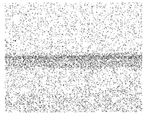
- the image which mapped the fluorine atom which exists in the coating film cross section about Example 8 is shown in FIG.
- the dark part in the figure is a part with a large amount of fluorine element (fluororesin) and is unevenly distributed in the upper layer.
- ⁇ Layer separation microscopic observation
- ⁇ ... Complete two-layer separation occurs.
- X The polyester resin is exposed on the surface of the upper layer.
- ⁇ Layer separation (elemental analysis) ⁇ ... The fluorine element is unevenly distributed in the upper layer.
- the coating film is cut into a grid pattern of 100 squares with an interval of 1 mm, and whether or not the coating film is peeled off after the adhesive tape is applied is evaluated.
- the denominator represents the number of squares cut in a grid pattern (100)
- the numerator represents the number of squares of the coating film remaining on the test plate after tape peeling.
- ⁇ Boiling water resistance> The test plate is immersed in ion-exchanged water (95 ⁇ 5 ° C.) for 24 hours, cooled with water, dried, and the adhesion of the coating film is evaluated by a method in accordance with JIS K 5600-5-6 (cross-cut method).
- the denominator represents the number of squares cut in a grid pattern (100)
- the numerator represents the number of squares of the coating film remaining on the test plate after tape peeling.
- ⁇ Mortar resistance> Apply the mortar paste on the coating surface of the test plate, leave it in a high humidity environment of 50 ° C. and 95RH% for 24 hours, peel off the mortar mass from the test plate, and wash with ion-exchanged water. Thereafter, the state of the coating film is visually evaluated.
- ⁇ Nitric acid resistance> A test plate is placed on the glass bottle so as to cover the glass bottle containing 70% by mass nitric acid solution, and the coating film surface of the test plate is exposed to steam for 60 minutes, and then washed with ion-exchanged water.
- the color difference ⁇ E with respect to the coating film surface before being exposed to the vapor of the dried coating film surface is measured with a color difference meter (CR-300 manufactured by Minolta).
- the test plate is placed in a high humidity environment of 50 ° C. and 95 RH% for 3000 hours, washed with ion-exchanged water, then allowed to cool and dry, and the state of the coating film is visually evaluated.
- test plate is allowed to stand for 3000 hours in a 35 ° C. salt spray environment, washed with ion-exchanged water, then allowed to cool and dry, and the state of the coating film is visually evaluated.
- ⁇ Accelerated weather resistance> Using an accelerated weathering tester compliant with JIS B 7753 (Sunshine weatherometer method), the test time is 3000 hours, the 60 ° specular gloss value retention before the test is 100%, and the 60 ° mirror surface after the test Gloss value retention is measured with a gloss meter (micro-TRI-gloss BYK: incident reflection angle 60 °), and color difference ⁇ E before and after the test is measured with a color difference meter (Minolta: CR-300). To do.
- Polyester resin B Carboxyl group-containing polyester resin, acid value 48 mg KOH / g, number average molecular weight 3900, weight average molecular weight 12300, solubility parameter (SP value) 9.84, melt viscosity 2.5 Pa ⁇ s (190 ° C.), measurement start temperature 200 ° C. and Slope 15346 in the range of 100 to 120 ° C. in an Arrhenius plot based on melt viscosity (Pa ⁇ s) measured at a temperature decrease rate of 10 ° C./min. ⁇ Acrylic resin A Toa Gosei Co., Ltd.
- ARUFON UH-2170 hydroxyl group-containing acrylic resin, number average molecular weight 4600, weight average molecular weight 14000, solubility parameter (SP value) 9.19, melt viscosity 4.3 Pa ⁇ s (190 ° C), start of measurement Slope 12739 in the range of 100 to 120 ° C. in an Arrhenius plot based on melt viscosity (Pa ⁇ s) measured at a temperature of 200 ° C. and a cooling rate of 10 ° C./min.
- the melting start temperature (softening point) was 95 ° C.
- the curing start temperature was 183 ° C.
- Curing start temperature TR (A) at which the fluororesin and ⁇ -caprolactam blocked isocyanate (isocyanate compound) start to react is 167 ° C., and curing at which polyester resin A and ⁇ -caprolactam blocked isocyanate (isocyanate compound) start to react
- the temperature TR (B) was 182 ° C.
- the temperature difference TR (B) ⁇ TR (A) was 15 ° C.
Landscapes
- Chemical & Material Sciences (AREA)
- Life Sciences & Earth Sciences (AREA)
- Engineering & Computer Science (AREA)
- Materials Engineering (AREA)
- Wood Science & Technology (AREA)
- Organic Chemistry (AREA)
- Chemical Kinetics & Catalysis (AREA)
- Paints Or Removers (AREA)
Priority Applications (5)
| Application Number | Priority Date | Filing Date | Title |
|---|---|---|---|
| JP2012531587A JPWO2013186832A1 (ja) | 2012-06-11 | 2012-06-11 | 粉体塗料組成物及びその製造方法 |
| CN201610509921.XA CN106118196A (zh) | 2012-06-11 | 2012-06-11 | 粉体涂料组合物及其制造方法 |
| CN201280073908.4A CN104520395A (zh) | 2012-06-11 | 2012-06-11 | 粉体涂料组合物及其制造方法 |
| SG11201408188VA SG11201408188VA (en) | 2012-06-11 | 2012-06-11 | Powder coating material composition and method for producing same |
| PCT/JP2012/064897 WO2013186832A1 (fr) | 2012-06-11 | 2012-06-11 | Composition de matériau de revêtement en poudre et son procédé de production |
Applications Claiming Priority (1)
| Application Number | Priority Date | Filing Date | Title |
|---|---|---|---|
| PCT/JP2012/064897 WO2013186832A1 (fr) | 2012-06-11 | 2012-06-11 | Composition de matériau de revêtement en poudre et son procédé de production |
Publications (1)
| Publication Number | Publication Date |
|---|---|
| WO2013186832A1 true WO2013186832A1 (fr) | 2013-12-19 |
Family
ID=49757696
Family Applications (1)
| Application Number | Title | Priority Date | Filing Date |
|---|---|---|---|
| PCT/JP2012/064897 Ceased WO2013186832A1 (fr) | 2012-06-11 | 2012-06-11 | Composition de matériau de revêtement en poudre et son procédé de production |
Country Status (4)
| Country | Link |
|---|---|
| JP (1) | JPWO2013186832A1 (fr) |
| CN (2) | CN106118196A (fr) |
| SG (1) | SG11201408188VA (fr) |
| WO (1) | WO2013186832A1 (fr) |
Cited By (10)
| Publication number | Priority date | Publication date | Assignee | Title |
|---|---|---|---|---|
| CN103937382A (zh) * | 2014-03-21 | 2014-07-23 | 安徽蓝柯复合材料有限公司 | 一种卷材涂料及其制备方法 |
| WO2015016185A1 (fr) * | 2013-07-29 | 2015-02-05 | 旭硝子株式会社 | Matériau de revêtement en poudre, article revêtu et procédé de fabrication de matériau de revêtement en poudre et d'article revêtu |
| WO2015099051A1 (fr) * | 2013-12-27 | 2015-07-02 | 旭硝子株式会社 | Article revêtu |
| WO2016140145A1 (fr) * | 2015-03-02 | 2016-09-09 | 旭硝子株式会社 | Revêtement en poudre, et article revêtu ainsi que procédé de fabrication de celui-ci |
| WO2017110924A1 (fr) * | 2015-12-25 | 2017-06-29 | 旭硝子株式会社 | Revêtement en poudre, procédé de production de revêtement en poudre, et article revêtu |
| WO2017119373A1 (fr) * | 2016-01-04 | 2017-07-13 | 旭硝子株式会社 | Composition de revêtement en poudre, procédé de production de composition de revêtement en poudre, et article revêtu |
| CN107254239A (zh) * | 2017-06-07 | 2017-10-17 | 常州豪坦商贸有限公司 | 一种复合改性氟碳聚酯粉末涂料及其制备方法 |
| JP2018199778A (ja) * | 2017-05-26 | 2018-12-20 | 関西ペイント株式会社 | 粉体塗料組成物 |
| CN109575778A (zh) * | 2018-12-25 | 2019-04-05 | 佛山科学技术学院 | 一种耐高温亚光陶瓷粉末涂料及其制备方法 |
| WO2021030664A1 (fr) * | 2019-08-15 | 2021-02-18 | Ppg Industries Ohio, Inc. | Compositions de revêtement en poudre comprenant un polyester et un fluoropolymère et revêtements formés à partir de celles-ci |
Families Citing this family (7)
| Publication number | Priority date | Publication date | Assignee | Title |
|---|---|---|---|---|
| CN105273581B (zh) * | 2015-11-06 | 2017-12-22 | 广州擎天材料科技有限公司 | 一种高红外快速固化卷钢用粉末涂料及其制备方法 |
| CN105400395A (zh) * | 2015-11-27 | 2016-03-16 | 安徽锦洋氟化学有限公司 | 一种高性能pvdf氟碳粉末涂料 |
| CN105400317A (zh) * | 2015-11-27 | 2016-03-16 | 安徽锦洋氟化学有限公司 | 一种耐湿热氟碳粉末涂料 |
| AU2017326514A1 (en) | 2016-09-18 | 2019-03-07 | Akzo Nobel Coatings International B.V. | A hybrid polyester-fluorocarbon powder coating composition and a method for coating a substrate with such composition |
| CN106883694B (zh) * | 2017-03-31 | 2021-06-22 | 中山市凯德美氟碳新材料有限公司 | 一种工业设备防腐用氟碳粉末涂料及其制备方法 |
| CN107011774B (zh) * | 2017-04-10 | 2020-10-02 | 立邦涂料(天津)有限公司 | 一种高硬度粉末涂料组合物及其制备方法和用途 |
| JP2019214719A (ja) * | 2018-06-12 | 2019-12-19 | Agc株式会社 | 粉体塗料及び粉体塗料の製造方法 |
Citations (5)
| Publication number | Priority date | Publication date | Assignee | Title |
|---|---|---|---|---|
| JP2003096377A (ja) * | 2001-09-25 | 2003-04-03 | Asahi Glass Co Ltd | 熱硬化性フッ素樹脂粉体塗料組成物 |
| JP2010150459A (ja) * | 2008-12-26 | 2010-07-08 | Kansai Paint Co Ltd | 塗料組成物 |
| WO2010114018A1 (fr) * | 2009-03-31 | 2010-10-07 | ダイキン工業株式会社 | Composition de revêtement à base d'une résine durcissable à température ambiante |
| JP2011012119A (ja) * | 2009-06-30 | 2011-01-20 | Dainippon Toryo Co Ltd | 層分離タイプの粉体塗料組成物 |
| JP2012041383A (ja) * | 2010-08-12 | 2012-03-01 | Dainippon Toryo Co Ltd | 層分離タイプの艶消し粉体塗料組成物 |
Family Cites Families (8)
| Publication number | Priority date | Publication date | Assignee | Title |
|---|---|---|---|---|
| CN1103409A (zh) * | 1994-07-22 | 1995-06-07 | 广东省肇庆星湖化工企业集团公司 | 封闭异氰酸酯固化剂的生产方法 |
| JP3876575B2 (ja) * | 1999-10-25 | 2007-01-31 | Basfコーティングスジャパン株式会社 | 凹凸模様形成性粉体塗料、その製造方法、塗膜の形成方法および塗装物 |
| JP3819219B2 (ja) * | 2000-06-20 | 2006-09-06 | 大日精化工業株式会社 | 粉体塗料組成物 |
| JP2009524732A (ja) * | 2006-01-26 | 2009-07-02 | ジオム コーポレイション | 少なくとも2つの熱可塑性樹脂を含む粉末溶射組成物 |
| JP2008031349A (ja) * | 2006-07-31 | 2008-02-14 | Nippon Paint Co Ltd | 粉体塗料組成物の製造方法 |
| CN101665652A (zh) * | 2009-07-30 | 2010-03-10 | 老虎粉末涂料制造(太仓)有限公司 | 一种具有抗菌功能的粉末涂料及其制备方法和应用 |
| KR101369624B1 (ko) * | 2009-10-22 | 2014-03-05 | 다이킨 고교 가부시키가이샤 | 피복 물품의 제조 방법 및 피복 물품 |
| CN102051102A (zh) * | 2009-11-09 | 2011-05-11 | 李新春 | 夜光粉末涂料 |
-
2012
- 2012-06-11 CN CN201610509921.XA patent/CN106118196A/zh active Pending
- 2012-06-11 SG SG11201408188VA patent/SG11201408188VA/en unknown
- 2012-06-11 CN CN201280073908.4A patent/CN104520395A/zh active Pending
- 2012-06-11 JP JP2012531587A patent/JPWO2013186832A1/ja active Pending
- 2012-06-11 WO PCT/JP2012/064897 patent/WO2013186832A1/fr not_active Ceased
Patent Citations (5)
| Publication number | Priority date | Publication date | Assignee | Title |
|---|---|---|---|---|
| JP2003096377A (ja) * | 2001-09-25 | 2003-04-03 | Asahi Glass Co Ltd | 熱硬化性フッ素樹脂粉体塗料組成物 |
| JP2010150459A (ja) * | 2008-12-26 | 2010-07-08 | Kansai Paint Co Ltd | 塗料組成物 |
| WO2010114018A1 (fr) * | 2009-03-31 | 2010-10-07 | ダイキン工業株式会社 | Composition de revêtement à base d'une résine durcissable à température ambiante |
| JP2011012119A (ja) * | 2009-06-30 | 2011-01-20 | Dainippon Toryo Co Ltd | 層分離タイプの粉体塗料組成物 |
| JP2012041383A (ja) * | 2010-08-12 | 2012-03-01 | Dainippon Toryo Co Ltd | 層分離タイプの艶消し粉体塗料組成物 |
Cited By (31)
| Publication number | Priority date | Publication date | Assignee | Title |
|---|---|---|---|---|
| US10563087B2 (en) | 2013-07-29 | 2020-02-18 | AGC Inc. | Powder coating material, coated article and processes for their production |
| WO2015016185A1 (fr) * | 2013-07-29 | 2015-02-05 | 旭硝子株式会社 | Matériau de revêtement en poudre, article revêtu et procédé de fabrication de matériau de revêtement en poudre et d'article revêtu |
| JPWO2015016185A1 (ja) * | 2013-07-29 | 2017-03-02 | 旭硝子株式会社 | 粉体塗料、塗装物品およびそれらの製造方法 |
| WO2015099051A1 (fr) * | 2013-12-27 | 2015-07-02 | 旭硝子株式会社 | Article revêtu |
| US10113069B2 (en) | 2013-12-27 | 2018-10-30 | AGC Inc. | Coated article |
| JPWO2015099051A1 (ja) * | 2013-12-27 | 2017-03-23 | 旭硝子株式会社 | 塗装物品 |
| CN103937382A (zh) * | 2014-03-21 | 2014-07-23 | 安徽蓝柯复合材料有限公司 | 一种卷材涂料及其制备方法 |
| US10590281B2 (en) * | 2015-03-02 | 2020-03-17 | AGC Inc. | Powder coating material, coated article, and method for producing coated article |
| CN107429103B (zh) * | 2015-03-02 | 2019-12-24 | Agc株式会社 | 粉体涂料、涂装物品和涂装物品的制造方法 |
| US20170335117A1 (en) * | 2015-03-02 | 2017-11-23 | Asahi Glass Company, Limited | Powder coating material, coated article, and method for producing coated article |
| CN107429103A (zh) * | 2015-03-02 | 2017-12-01 | 旭硝子株式会社 | 粉体涂料、涂装物品和涂装物品的制造方法 |
| JPWO2016140145A1 (ja) * | 2015-03-02 | 2017-12-21 | 旭硝子株式会社 | 粉体塗料、塗装物品および塗装物品の製造方法 |
| WO2016140145A1 (fr) * | 2015-03-02 | 2016-09-09 | 旭硝子株式会社 | Revêtement en poudre, et article revêtu ainsi que procédé de fabrication de celui-ci |
| US20180298199A1 (en) * | 2015-12-25 | 2018-10-18 | Asahi Glass Company, Limited | Powder coating material, method for producing powder coating material, and coated article |
| CN108473816B (zh) * | 2015-12-25 | 2020-10-20 | Agc株式会社 | 粉体涂料、粉体涂料的制造方法、及涂装物品 |
| JPWO2017110924A1 (ja) * | 2015-12-25 | 2018-10-18 | Agc株式会社 | 粉体塗料、粉体塗料の製造方法、および塗装物品 |
| CN108473816A (zh) * | 2015-12-25 | 2018-08-31 | 旭硝子株式会社 | 粉体涂料、粉体涂料的制造方法、及涂装物品 |
| WO2017110924A1 (fr) * | 2015-12-25 | 2017-06-29 | 旭硝子株式会社 | Revêtement en poudre, procédé de production de revêtement en poudre, et article revêtu |
| US10738198B2 (en) | 2015-12-25 | 2020-08-11 | AGC Inc. | Powder coating material, method for producing powder coating material, and coated article |
| JPWO2017119373A1 (ja) * | 2016-01-04 | 2018-10-18 | Agc株式会社 | 粉体塗料、粉体塗料の製造方法、および塗装物品 |
| WO2017119373A1 (fr) * | 2016-01-04 | 2017-07-13 | 旭硝子株式会社 | Composition de revêtement en poudre, procédé de production de composition de revêtement en poudre, et article revêtu |
| US10655022B2 (en) | 2016-01-04 | 2020-05-19 | AGC Inc. | Powder coating material, method for producing powder coating material, and coated article |
| JP2018199778A (ja) * | 2017-05-26 | 2018-12-20 | 関西ペイント株式会社 | 粉体塗料組成物 |
| CN107254239B (zh) * | 2017-06-07 | 2019-05-14 | 扬州彩虹粉末涂料有限公司 | 一种复合改性氟碳聚酯粉末涂料及其制备方法 |
| CN107254239A (zh) * | 2017-06-07 | 2017-10-17 | 常州豪坦商贸有限公司 | 一种复合改性氟碳聚酯粉末涂料及其制备方法 |
| CN109575778A (zh) * | 2018-12-25 | 2019-04-05 | 佛山科学技术学院 | 一种耐高温亚光陶瓷粉末涂料及其制备方法 |
| WO2021030664A1 (fr) * | 2019-08-15 | 2021-02-18 | Ppg Industries Ohio, Inc. | Compositions de revêtement en poudre comprenant un polyester et un fluoropolymère et revêtements formés à partir de celles-ci |
| US11015080B2 (en) | 2019-08-15 | 2021-05-25 | Ppg Industries Ohio, Inc. | Powder coating compositions and coatings formed therefrom |
| US20220348786A1 (en) * | 2019-08-15 | 2022-11-03 | Ppg Industries Ohio, Inc. | Powder coating compositions comprising a polyester and a fluoropolymer and coatings formed therefrom |
| AU2020330608B2 (en) * | 2019-08-15 | 2023-03-16 | Ppg Industries Ohio, Inc. | Powder coating compositions and coatings formed therefrom |
| EP4592342A3 (fr) * | 2019-08-15 | 2025-08-13 | PPG Industries Ohio, Inc. | Compositions de revêtement en poudre comprenant un polyester et un fluoropolymère et revêtements formés à partir de celles-ci |
Also Published As
| Publication number | Publication date |
|---|---|
| CN104520395A (zh) | 2015-04-15 |
| CN106118196A (zh) | 2016-11-16 |
| SG11201408188VA (en) | 2015-02-27 |
| JPWO2013186832A1 (ja) | 2016-02-01 |
Similar Documents
| Publication | Publication Date | Title |
|---|---|---|
| WO2013186832A1 (fr) | Composition de matériau de revêtement en poudre et son procédé de production | |
| JP5372621B2 (ja) | 層分離タイプの粉体塗料組成物 | |
| JP5419828B2 (ja) | 層分離タイプの艶消し粉体塗料組成物 | |
| JP5419941B2 (ja) | 粉体塗料組成物 | |
| JP5612280B2 (ja) | 層分離塗膜の形成方法 | |
| JP2014218671A (ja) | 粉体塗料組成物及びその製造方法 | |
| CN108473809B (zh) | 粉体涂料、粉体涂料的制造方法、及涂装物品 | |
| CN102257030A (zh) | 用于低温固化并具有高流动性的粉末涂料组合物 | |
| CN101067066A (zh) | 酸官能含磷聚酯粉末组合物和由该组合物制备的粉末涂层 | |
| JP6927219B2 (ja) | 塗装物品の製造方法 | |
| JP5921001B2 (ja) | 塗装体 | |
| TW201833248A (zh) | 粉體塗料、附塗膜之基材之製造方法、塗裝物品及含氟聚合物 | |
| CN102388087B (zh) | 粉末涂料组合物 | |
| JPWO2015020107A1 (ja) | 粉体塗料の製造方法、塗装物品およびその製造方法、ならびにカルボキシ基含有フッ素樹脂の製造方法 | |
| US10751753B2 (en) | Method for producing coated article | |
| JP6163110B2 (ja) | 粉体混合塗料及び塗装部材 | |
| JP6060667B2 (ja) | 粉体塗料及び塗装部材の製造方法 | |
| JP2021152089A (ja) | 粉体塗料、粉体塗料の製造方法、塗膜付き基材の製造方法および塗装物品 | |
| WO2024202134A1 (fr) | Composition de revêtement en poudre, film de revêtement, et corps revêtu | |
| JP2023077199A (ja) | 艶調整粉体塗料組成物、艶調整硬化塗膜を有する塗装物品及び艶調整硬化塗膜の形成方法 | |
| HK1233221A1 (en) | Coated body | |
| JP2004196954A (ja) | 自己硬化型塗料組成物 |
Legal Events
| Date | Code | Title | Description |
|---|---|---|---|
| ENP | Entry into the national phase |
Ref document number: 2012531587 Country of ref document: JP Kind code of ref document: A |
|
| 121 | Ep: the epo has been informed by wipo that ep was designated in this application |
Ref document number: 12879082 Country of ref document: EP Kind code of ref document: A1 |
|
| NENP | Non-entry into the national phase |
Ref country code: DE |
|
| 122 | Ep: pct application non-entry in european phase |
Ref document number: 12879082 Country of ref document: EP Kind code of ref document: A1 |