WO2014007273A1 - Microorganisme utile, et procédé de production d'une substance souhaitée - Google Patents
Microorganisme utile, et procédé de production d'une substance souhaitée Download PDFInfo
- Publication number
- WO2014007273A1 WO2014007273A1 PCT/JP2013/068205 JP2013068205W WO2014007273A1 WO 2014007273 A1 WO2014007273 A1 WO 2014007273A1 JP 2013068205 W JP2013068205 W JP 2013068205W WO 2014007273 A1 WO2014007273 A1 WO 2014007273A1
- Authority
- WO
- WIPO (PCT)
- Prior art keywords
- gene
- compound
- promoter
- acid
- strain
- Prior art date
- Legal status (The legal status is an assumption and is not a legal conclusion. Google has not performed a legal analysis and makes no representation as to the accuracy of the status listed.)
- Ceased
Links
Images



Classifications
-
- C—CHEMISTRY; METALLURGY
- C12—BIOCHEMISTRY; BEER; SPIRITS; WINE; VINEGAR; MICROBIOLOGY; ENZYMOLOGY; MUTATION OR GENETIC ENGINEERING
- C12N—MICROORGANISMS OR ENZYMES; COMPOSITIONS THEREOF; PROPAGATING, PRESERVING, OR MAINTAINING MICROORGANISMS; MUTATION OR GENETIC ENGINEERING; CULTURE MEDIA
- C12N15/00—Mutation or genetic engineering; DNA or RNA concerning genetic engineering, vectors, e.g. plasmids, or their isolation, preparation or purification; Use of hosts therefor
- C12N15/09—Recombinant DNA-technology
- C12N15/63—Introduction of foreign genetic material using vectors; Vectors; Use of hosts therefor; Regulation of expression
-
- C—CHEMISTRY; METALLURGY
- C12—BIOCHEMISTRY; BEER; SPIRITS; WINE; VINEGAR; MICROBIOLOGY; ENZYMOLOGY; MUTATION OR GENETIC ENGINEERING
- C12N—MICROORGANISMS OR ENZYMES; COMPOSITIONS THEREOF; PROPAGATING, PRESERVING, OR MAINTAINING MICROORGANISMS; MUTATION OR GENETIC ENGINEERING; CULTURE MEDIA
- C12N1/00—Microorganisms; Compositions thereof; Processes of propagating, maintaining or preserving microorganisms or compositions thereof; Processes of preparing or isolating a composition containing a microorganism; Culture media therefor
- C12N1/20—Bacteria; Culture media therefor
-
- C—CHEMISTRY; METALLURGY
- C12—BIOCHEMISTRY; BEER; SPIRITS; WINE; VINEGAR; MICROBIOLOGY; ENZYMOLOGY; MUTATION OR GENETIC ENGINEERING
- C12N—MICROORGANISMS OR ENZYMES; COMPOSITIONS THEREOF; PROPAGATING, PRESERVING, OR MAINTAINING MICROORGANISMS; MUTATION OR GENETIC ENGINEERING; CULTURE MEDIA
- C12N15/00—Mutation or genetic engineering; DNA or RNA concerning genetic engineering, vectors, e.g. plasmids, or their isolation, preparation or purification; Use of hosts therefor
- C12N15/09—Recombinant DNA-technology
- C12N15/11—DNA or RNA fragments; Modified forms thereof; Non-coding nucleic acids having a biological activity
- C12N15/52—Genes encoding for enzymes or proenzymes
-
- C—CHEMISTRY; METALLURGY
- C12—BIOCHEMISTRY; BEER; SPIRITS; WINE; VINEGAR; MICROBIOLOGY; ENZYMOLOGY; MUTATION OR GENETIC ENGINEERING
- C12N—MICROORGANISMS OR ENZYMES; COMPOSITIONS THEREOF; PROPAGATING, PRESERVING, OR MAINTAINING MICROORGANISMS; MUTATION OR GENETIC ENGINEERING; CULTURE MEDIA
- C12N15/00—Mutation or genetic engineering; DNA or RNA concerning genetic engineering, vectors, e.g. plasmids, or their isolation, preparation or purification; Use of hosts therefor
- C12N15/09—Recombinant DNA-technology
- C12N15/63—Introduction of foreign genetic material using vectors; Vectors; Use of hosts therefor; Regulation of expression
- C12N15/70—Vectors or expression systems specially adapted for E. coli
-
- C—CHEMISTRY; METALLURGY
- C12—BIOCHEMISTRY; BEER; SPIRITS; WINE; VINEGAR; MICROBIOLOGY; ENZYMOLOGY; MUTATION OR GENETIC ENGINEERING
- C12N—MICROORGANISMS OR ENZYMES; COMPOSITIONS THEREOF; PROPAGATING, PRESERVING, OR MAINTAINING MICROORGANISMS; MUTATION OR GENETIC ENGINEERING; CULTURE MEDIA
- C12N9/00—Enzymes; Proenzymes; Compositions thereof; Processes for preparing, activating, inhibiting, separating or purifying enzymes
- C12N9/10—Transferases (2.)
- C12N9/1048—Glycosyltransferases (2.4)
- C12N9/1051—Hexosyltransferases (2.4.1)
- C12N9/1055—Levansucrase (2.4.1.10)
-
- C—CHEMISTRY; METALLURGY
- C12—BIOCHEMISTRY; BEER; SPIRITS; WINE; VINEGAR; MICROBIOLOGY; ENZYMOLOGY; MUTATION OR GENETIC ENGINEERING
- C12P—FERMENTATION OR ENZYME-USING PROCESSES TO SYNTHESISE A DESIRED CHEMICAL COMPOUND OR COMPOSITION OR TO SEPARATE OPTICAL ISOMERS FROM A RACEMIC MIXTURE
- C12P13/00—Preparation of nitrogen-containing organic compounds
- C12P13/04—Alpha- or beta- amino acids
-
- C—CHEMISTRY; METALLURGY
- C12—BIOCHEMISTRY; BEER; SPIRITS; WINE; VINEGAR; MICROBIOLOGY; ENZYMOLOGY; MUTATION OR GENETIC ENGINEERING
- C12P—FERMENTATION OR ENZYME-USING PROCESSES TO SYNTHESISE A DESIRED CHEMICAL COMPOUND OR COMPOSITION OR TO SEPARATE OPTICAL ISOMERS FROM A RACEMIC MIXTURE
- C12P13/00—Preparation of nitrogen-containing organic compounds
- C12P13/04—Alpha- or beta- amino acids
- C12P13/06—Alanine; Leucine; Isoleucine; Serine; Homoserine
-
- C—CHEMISTRY; METALLURGY
- C12—BIOCHEMISTRY; BEER; SPIRITS; WINE; VINEGAR; MICROBIOLOGY; ENZYMOLOGY; MUTATION OR GENETIC ENGINEERING
- C12P—FERMENTATION OR ENZYME-USING PROCESSES TO SYNTHESISE A DESIRED CHEMICAL COMPOUND OR COMPOSITION OR TO SEPARATE OPTICAL ISOMERS FROM A RACEMIC MIXTURE
- C12P13/00—Preparation of nitrogen-containing organic compounds
- C12P13/04—Alpha- or beta- amino acids
- C12P13/08—Lysine; Diaminopimelic acid; Threonine; Valine
-
- C—CHEMISTRY; METALLURGY
- C12—BIOCHEMISTRY; BEER; SPIRITS; WINE; VINEGAR; MICROBIOLOGY; ENZYMOLOGY; MUTATION OR GENETIC ENGINEERING
- C12P—FERMENTATION OR ENZYME-USING PROCESSES TO SYNTHESISE A DESIRED CHEMICAL COMPOUND OR COMPOSITION OR TO SEPARATE OPTICAL ISOMERS FROM A RACEMIC MIXTURE
- C12P13/00—Preparation of nitrogen-containing organic compounds
- C12P13/04—Alpha- or beta- amino acids
- C12P13/14—Glutamic acid; Glutamine
-
- C—CHEMISTRY; METALLURGY
- C12—BIOCHEMISTRY; BEER; SPIRITS; WINE; VINEGAR; MICROBIOLOGY; ENZYMOLOGY; MUTATION OR GENETIC ENGINEERING
- C12P—FERMENTATION OR ENZYME-USING PROCESSES TO SYNTHESISE A DESIRED CHEMICAL COMPOUND OR COMPOSITION OR TO SEPARATE OPTICAL ISOMERS FROM A RACEMIC MIXTURE
- C12P13/00—Preparation of nitrogen-containing organic compounds
- C12P13/04—Alpha- or beta- amino acids
- C12P13/20—Aspartic acid; Asparagine
-
- C—CHEMISTRY; METALLURGY
- C12—BIOCHEMISTRY; BEER; SPIRITS; WINE; VINEGAR; MICROBIOLOGY; ENZYMOLOGY; MUTATION OR GENETIC ENGINEERING
- C12P—FERMENTATION OR ENZYME-USING PROCESSES TO SYNTHESISE A DESIRED CHEMICAL COMPOUND OR COMPOSITION OR TO SEPARATE OPTICAL ISOMERS FROM A RACEMIC MIXTURE
- C12P7/00—Preparation of oxygen-containing organic compounds
- C12P7/40—Preparation of oxygen-containing organic compounds containing a carboxyl group including Peroxycarboxylic acids
-
- C—CHEMISTRY; METALLURGY
- C12—BIOCHEMISTRY; BEER; SPIRITS; WINE; VINEGAR; MICROBIOLOGY; ENZYMOLOGY; MUTATION OR GENETIC ENGINEERING
- C12P—FERMENTATION OR ENZYME-USING PROCESSES TO SYNTHESISE A DESIRED CHEMICAL COMPOUND OR COMPOSITION OR TO SEPARATE OPTICAL ISOMERS FROM A RACEMIC MIXTURE
- C12P7/00—Preparation of oxygen-containing organic compounds
- C12P7/40—Preparation of oxygen-containing organic compounds containing a carboxyl group including Peroxycarboxylic acids
- C12P7/42—Hydroxy-carboxylic acids
-
- C—CHEMISTRY; METALLURGY
- C12—BIOCHEMISTRY; BEER; SPIRITS; WINE; VINEGAR; MICROBIOLOGY; ENZYMOLOGY; MUTATION OR GENETIC ENGINEERING
- C12P—FERMENTATION OR ENZYME-USING PROCESSES TO SYNTHESISE A DESIRED CHEMICAL COMPOUND OR COMPOSITION OR TO SEPARATE OPTICAL ISOMERS FROM A RACEMIC MIXTURE
- C12P7/00—Preparation of oxygen-containing organic compounds
- C12P7/40—Preparation of oxygen-containing organic compounds containing a carboxyl group including Peroxycarboxylic acids
- C12P7/44—Polycarboxylic acids
-
- C—CHEMISTRY; METALLURGY
- C12—BIOCHEMISTRY; BEER; SPIRITS; WINE; VINEGAR; MICROBIOLOGY; ENZYMOLOGY; MUTATION OR GENETIC ENGINEERING
- C12P—FERMENTATION OR ENZYME-USING PROCESSES TO SYNTHESISE A DESIRED CHEMICAL COMPOUND OR COMPOSITION OR TO SEPARATE OPTICAL ISOMERS FROM A RACEMIC MIXTURE
- C12P7/00—Preparation of oxygen-containing organic compounds
- C12P7/40—Preparation of oxygen-containing organic compounds containing a carboxyl group including Peroxycarboxylic acids
- C12P7/44—Polycarboxylic acids
- C12P7/46—Dicarboxylic acids having four or less carbon atoms, e.g. fumaric acid, maleic acid
Definitions
- the present invention relates to a microorganism for efficiently producing useful substances such as organic acids and amino acids, and a method for producing useful substances using the microorganisms.
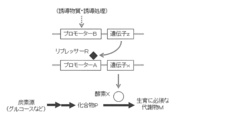
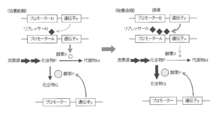
- FIG. 1 in order to efficiently produce compound P in a biosynthetic pathway or metabolic pathway in which a metabolite M essential for growth is produced from a carbon source via compound P that is an intermediate metabolite, A method for obtaining an auxotrophic mutant deficient in the activity of enzyme X that converts compound P to metabolite M has been used frequently.
- the target compound P is produced using the mutant strain, it is necessary to add the metabolite M or the final product generated from the metabolite M to the medium, and there is a problem that the manufacturing cost increases.
- the metabolite M or the final product produced from the metabolite M is controlled by artificially placing the transcription of the gene x encoding the enzyme X under the control of the repressor to control the amount of metabolite M produced.
- the transcription amount of gene x is controlled using another promoter that is not subject to the original promoter of gene x but is repressed by a repressor. There have been no reports of cases where the production amount of compound P was improved by doing so.
- a useful compound is produced using a microorganism, in a biosynthetic pathway or a metabolic pathway in which a metabolite M essential for growth is produced from a carbon source via a compound P that is an intermediate metabolite, from a compound P on the pathway
- a method of producing the useful compound by a branched route is often used. Even when this method is used, a method of obtaining an auxotrophic mutant deficient in the activity of the enzyme X has been often used.
- a metabolite M or a final product generated from the metabolite M is added to the medium. There is a problem that the manufacturing cost is high.
- An object of the present invention is to produce a compound P using a microorganism having a biosynthetic pathway or a metabolic pathway that generates a metabolite M essential for growth from a carbon source via a compound P that is an intermediate metabolite.
- a method for obtaining a strain capable of efficiently accumulating compound P in a medium in which the amount of conversion from P to metabolite M is reduced and no metabolite M or a final product generated from metabolite M is added (FIG. 1).
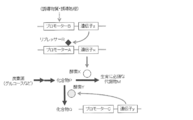
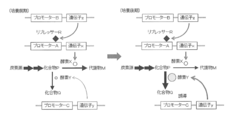
- it is to provide a method for producing compound Q by enzyme Y based on accumulated compound P (FIG. 3).
- the present inventors solved the above-mentioned problems in research for constructing a strain that efficiently produces DHS as a target substance using Corynebacterium glutamicum ATCC13032 strain (hereinafter abbreviated as ATCC13032 strain). Tried to do.
- ATCC13032 strain Corynebacterium glutamicum ATCC13032 strain
- the gene qsuB (cg0502) encoding DHS dehydrase (enzyme Y) that enhances the expression of a plurality of enzymes involved in the biosynthetic pathway from glucose to DHS (compound P) and further promotes the conversion from DHS to protocatechuic acid.
- This NSH ⁇ aroE3 strain was confirmed to produce 0.5 g / L protocatechuic acid by culturing in a medium supplemented with three kinds of aromatic amino acids and shikimic acid.
- the NSH ⁇ aroE3_vanE3 strain was constructed by integrating DNA into which the aroE3 gene was linked to the vanA (cg2616) gene promoter (hereinafter abbreviated as vanA promoter).
- This NSH ⁇ aroE3_vanE3 strain was found to be capable of growing in a synthetic medium without addition of three kinds of aromatic amino acids and shikimic acid, and produced 16.6 g / L of protocatechuic acid, thereby solving the problems of the present invention.
- a strain that controls the expression of the aroE3 gene with a repressor encoded by the rhcR (cg1308) gene (hereinafter abbreviated as RhcR repressor) was constructed.
- RhcR repressor a repressor encoded by the rhcR
- the qsuD (cg0504) gene encoding shikimate dehydrogenase that promotes the conversion of DHS to shikimate (metabolite M) and qsuB encoding DHS dehydrase
- the NSH ⁇ aroE3 ⁇ qsuB ⁇ qsuD strain in which a deletion mutation was also introduced into the gene was constructed, it was confirmed that the NSH ⁇ aroE3 ⁇ qsuB ⁇ qsuD strain could not grow unless three kinds of aromatic amino acids, vitamin K2 and paraaminobenzoic acid were added.
- NSH ⁇ aroE3 ⁇ qsuB ⁇ qsuD strain was confirmed to produce 7.7 ⁇ g / L DHS by culturing in a medium containing these additives.
- the NSH ⁇ aroE3_vanE3 ⁇ qsuB ⁇ qsuD strain was constructed by introducing deletion mutations into the qsuD gene and the qsuB gene based on the NSH ⁇ aroE3_vanE3 strain by the same procedure as the construction of the NSH ⁇ aroE3 ⁇ qsuB ⁇ qsuD strain.
- the Pben-vanR strain was constructed by integrating the benA (cg2637) gene promoter and the vanR gene encoding the vanR repressor into the chromosome.
- the present inventors have found that 15.4 g / L DHS can be produced in addition to growing in a synthetic medium that does not contain any substances, and have solved the problems of the present invention.
- the present invention relates to the following (1) to (24).
- prokaryotes having all the properties described in (a) to (d) below.
- the promoter B is selected from the group consisting of ferulic acid, vanillic acid, vanillin, benzoic acid, 3-hydroxybenzoic acid, resorcinol, 4-hydroxybenzoic acid, 2,4-dihydroxybenzoic acid, fructose and sucrose.
- the prokaryotic organism according to any one of (1) to (3), wherein the prokaryotic organism is a promoter induced by addition of a compound.
- the gene z encoding the protein of the repressor R is the vanR (cg2615) gene, pcaR (cg2624) gene, or rhcR (cg1308) gene of Corynebacterium glutamicum ATCC13032 strain, The prokaryotic organism according to any one of (1) to (4).
- the promoter A is a promoter of vanA (cg2616) gene, promoter of pobA (cg1226) gene, promoter of pcaH (cg2631) gene or promoter of rhcH (cg1309) gene of Corynebacterium glutamicum ATCC13032 strain.
- a method for producing compound P comprising culturing the prokaryote according to any one of (1) to (6) in the presence of a carbon source in a state where transcription of promoter A is suppressed.
- the prokaryotic organism according to any one of (1) to (6) is cultured in the presence of a carbon source in a state where transcription of promoter A is suppressed, and then a treatment for inducing transcription of promoter B is added.
- the production method of the compound P characterized by reducing the production amount of the metabolite M by increasing the expression level of the protein of repressor R by this.
- the substitution mutation in the promoter region that promotes transcription of the gene y described in the property (e) indicates that the entire promoter or a part of the promoter is the original promoter and promoter A that promotes transcription of the gene.
- the promoter C is selected from the group consisting of ferulic acid, vanillic acid, vanillin, benzoic acid, 3-hydroxybenzoic acid, resorcinol, 4-hydroxybenzoic acid, 2,4-dihydroxybenzoic acid, fructose and sucrose.
- a method for producing compound Q comprising culturing the prokaryote according to any one of (11) to (16) in the presence of a carbon source in a state where transcription of promoter A is suppressed.
- the prokaryotic organism according to any one of (11) to (16) is cultured in the presence of a carbon source in a state where transcription of promoter A is suppressed, and then a treatment for inducing transcription of promoter B is added.
- the production method of compound Q characterized by decreasing the production amount of the metabolite M and increasing the production amount of compound Q by increasing the expression level of the protein of repressor R by this.
- a method for producing compound Q characterized by increasing the expression level of the protein of repressor R by adding to decrease the production amount of metabolite M and increase the production amount of compound Q.
- the production method of compound Q according to any one of (17) to (19), wherein the production amount of compound Q is increased by increasing.
- the combination of the compound P, the compound Q, and the metabolite M is any one of (j) to (w) below, and any one of (17) to (20) The manufacturing method of the compound Q as described in.
- Compound P is 3-dehydroshikimic acid, Compound Q is protocatechuic acid, and Metabolite M is shikimic acid.
- Compound P is chorismic acid, compound Q is anthranilic acid, and metabolite M is prefenic acid.
- (M) Compound P is prefenic acid, Compound Q is allogenic acid, and Metabolite M is phenylpyruvic acid.
- N Compound P is prefenic acid, Compound Q is phenylpyruvic acid, and metabolite M is 4-hydroxyphenylpyruvic acid or allogenic acid.
- O Compound P is 2-oxoisovaleric acid, Compound Q is 2-isopropylmalic acid, and Metabolite M is valine.
- (P) Compound P is 2-oxoisovaleric acid, Compound Q is valine, and Metabolite M is 2-isopropylmalic acid.
- Compound P is glutamic acid, Compound Q is ⁇ -glutamyl phosphoric acid, and Metabolite M is N-acetylglutamic acid.
- R Compound P is glutamic acid, Compound Q is N-acetylglutamic acid, and Metabolite M is ⁇ -glutamylphosphoric acid.
- S Compound P is aspartic acid, Compound Q is asparagine, and metabolite M is ⁇ -alpartyl phosphate.
- T Compound P is aspartic acid ⁇ -semialdehyde, Compound Q is 2,3-dihydrodipicolinic acid, and Metabolite M is homoserine.
- Compound P is homoserine, compound Q is O-acetylhomoserine, and metabolite M is homoserine phosphate.
- V Compound P is homoserine, compound Q is homoserine phosphate, and metabolite M is O-acetylhomoserine.
- W Compound P is serine, Compound Q is O-acetylserine, and Metabolite M is glycine.
- microorganisms that efficiently produce useful organic compounds such as DHS and protocatechuic acid can be obtained based on a carbon source such as glucose. Moreover, if the microorganism of this invention is used, DHS, a protocatechuic acid, etc. can be efficiently manufactured using the culture medium which does not contain an aromatic amino acid.
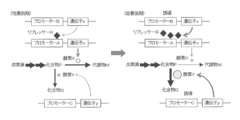
- the target compound P on the biosynthetic pathway from the carbon source to the metabolite M essential for growth is produced by controlling the expression of the enzyme by the repressor R which is the product of the gene z, and the compound P is converted from the compound P to the compound Q.
- enzyme X is normally produced by releasing the transcriptional repression of promoter A by repressor R.
- enzyme X is restored by reversing the transcriptional repression of promoter A by repressor R.
- the figure which shows that the expression level of is reduced significantly and the compound P accumulate
- enzyme X is normally produced by releasing the transcriptional repression of promoter A by repressor R.
- the repression of promoter A by repressor R is restored to restore enzyme X.
- stores is converted into the compound Q by the effect
- the amount of repressor R is small, so that enzyme X is normally produced by transcription of promoter A.
- the amount of repressor R increases, so the expression level of enzyme X is greatly reduced.
- stores converts into the compound Q by the effect
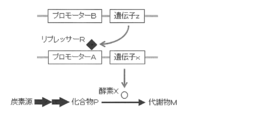
- the expression of enzyme X is kept low by repressing transcription of promoter A by repressor R, and the production amount of metabolite M is restricted, so that a small amount of compound P can be produced while growing microorganisms.
- the latter figure shows that the production amount of compound Q is increased by inducing and expressing enzyme Y that converts compound P to compound Q to increase the expression amount of enzyme Y.
- the expression of enzyme X is kept low by repressing transcription of promoter A by repressor R, and the production amount of metabolite M is restricted, so that a small amount of compound P can be produced while growing microorganisms.
- the repressor R is induced and expressed to increase the accumulation amount of the compound P
- the enzyme Y that converts the accumulated compound P into the compound Q is induced and expressed to increase the expression amount of the enzyme Y,
- the microorganism of the present invention is a microorganism used for efficiently producing a target compound P which is an intermediate metabolite on a biosynthetic pathway from a carbon source to a metabolite M essential for growth, and has the following four properties.
- the microorganism is preferably a prokaryotic organism in which a transcription repression system by repressor R is developed for gene expression control.
- A Among the enzyme groups involved in biosynthesis from the carbon source that can be used by the microorganism to the compound P, the activity of any one or more of the enzymes is enhanced compared to the wild-type prokaryotic strain.
- the activity of the enzyme X is deficient or reduced by having a mutation due to substitution, deletion or addition.
- the property (a) can be imparted to the microorganism used in the present invention. That is, by introducing a mutation into the translation initiation region of the gene encoding the enzyme protein, introducing a mutation into the promoter region of the gene, replacing the promoter with another strong promoter, cloning into a multicopy plasmid, etc.
- the amount of compound P produced can be increased by increasing the amount.
- the amount of compound P produced can also be increased by introducing an amino acid mutation that cancels the feedback inhibition into the enzyme protein. Mutation introduction into these DNAs or proteins can be performed by mutagenesis treatment or the like, but can also be performed using recombinant DNA technology or homologous recombination technology.
- the activity of the enzyme X can be deleted using a mutagenesis treatment or a recombinant DNA technique.
- the translation region of the wild type gene x is used using a homologous recombination technique.
- a deletion mutation is introduced in the inside. In this case, if the entire translation region is deleted, downstream gene expression may be inhibited due to the polar effect. Therefore, the translation region lacks the translation region in-frame, leaving the 5 'and 3' portions. It is desirable to introduce a mutation.
- the activity of enzyme X is also lost by introducing a mutation by substitution, deletion or addition of one or more bases in the vicinity of the translation initiation region of gene x or in the promoter region that promotes transcription of gene x. be able to.
- the property (b) and the property (c) may be simultaneously imparted by replacing the original promoter region that promotes transcription of the gene x with the DNA of the promoter A described in the property (c).
- Property (c) can be imparted by placing DNA encoding the protein of active enzyme X under the control of promoter A, whose transcription is repressed by repressor R.
- the promoter A is a promoter different from the original promoter that promotes transcription of the gene x, and may be any promoter as long as transcription is suppressed by the repressor R.
- the promoter A repressed by the repressor R in the Escherichia coli K-12 strain is a pL promoter or pR promoter that undergoes transcriptional repression by the cI857 gene product of ⁇ phage, and lac that undergoes transcriptional repression by the lacI gene product.
- Examples include promoters or promoters of the gal operon that are subject to transcriptional repression by the galR gene product.
- vanR repressor the vanA promoter that undergoes transcriptional repression by the product of the vanR (cg2615) gene (hereinafter referred to as vanR repressor) (hereinafter abbreviated as VanR repressor), rhcR (Cg1308) promoter (hereinafter abbreviated as rhcH promoter) of rhcH (cg1309) gene (hereinafter abbreviated as rhcH gene) subjected to transcriptional repression by the product (hereinafter abbreviated as rhcR gene) of gene (cg1308),
- the promoter (hereinafter abbreviated as pcaI promoter) of the pcaI (cg2623) gene hereinafter referred to as the pcaI gene
- the microorganism of the present invention has a low expression level of enzyme X in a normal state due to the addition of the properties (b) and (c).
- the microorganism since the microorganism has a mutation that increases the amount of the compound P due to the addition of the property (a), the microorganism can produce an amount of the metabolite M necessary for growth.
- the growth of the microorganism can be improved by releasing the transcriptional repression by repressor R and increasing the expression level of enzyme X.
- Property (d) is not only a wild-type expression unit of gene z encoding the protein of repressor R, but also an expression unit of gene z in which gene z is placed under the control of an inducible promoter B different from the promoter of the gene. It can also be given by forming. In addition to the wild type expression unit of gene z, the expression unit of gene z placed under the control of the inducible promoter B may be incorporated into the microorganism of the present invention.
- the repressor R any repressor can be used as long as it is a prokaryotic-derived repressor. However, it is preferable to use a repressor that can release the suppression by adding an inducer or changing temperature.
- Escherichia coli K-12 strain as the microorganism of the present invention, for example, the cI857 gene of ⁇ phage that is induced by culturing at 38 ° C. or higher, the lacI gene that is induced by addition of lactose, A repressor encoded by a galR gene that is induced by addition of galactose or a tetR gene that is induced by addition of tetracycline can be used.
- the suppression is released by the addition of VanR repressor, resorcinol or 2,4-dihydroxybenzoic acid that is released by the addition of ferulic acid, vanillic acid or vanillin.
- RhcR repressor, or PcaR repressor whose inhibition is released by the addition of 4-dihydroxybenzoic acid can be used.
- promoter B any promoter can be used as long as it is an inducible promoter derived from prokaryotes. Specifically, when gene z is expressed in Escherichia coli K-12, the ⁇ phage pL promoter, pR promoter, lac promoter, gal operon promoter, trp operon promoter, araBAD promoter, or the like is used. be able to.
- vanA promoter which is induced by addition of ferulic acid, vanillic acid or vanillin, rhcH promoter which is induced by addition of resorcinol or 2,4-dihydroxybenzoic acid, 4-hydroxybenzoic acid Induced by addition of pcaI promoter induced by addition of acid, nagI (cg3351) gene (hereinafter referred to as nadI gene) promoter induced by addition of 3-hydroxybenzoic acid, benzoic acid Promoter of benA (cg2637) gene (hereinafter referred to as benA gene) (hereinafter referred to as benA promoter), promoter of cg2118 gene or ptsS (cg2925) gene (hereinafter referred to as benA promoter) , PtsS gene Promoter can be used for).
- the microorganism of the present invention has an enzyme activity that metabolizes compound P in addition to enzyme X, and there is a possibility that the accumulated amount of the compound will decrease in the production of compound P, mutagenesis treatment or recombinant DNA It is preferable to delete or reduce the activity of any one or more of the metabolic enzymes of compound P possessed by the microorganism, depending on the technique.
- Corynebacterium Corynebacterium
- Brevibacterium Brevibacterium
- Arthrobacter Arthrobacter
- Nocardioides Oida CEA d Nocardioidaceae
- micro Agrobacterium Microbacterium
- Streptomyces Seth Streptomyces Seth
- Amiko Kakuto-flops cis Amycolatopsis
- Rhodococcus Rhodococcus
- Kineokokkasu Kinineococcus
- Acinetobacter Acinetobactor
- Pseudomonas Pseudomonas
- Pantoea Pantoea
- Klebsiella Klebsiella
- Prokaryotes belonging to any of the genus Escherich
- the method for producing compound P using the microorganism of the present invention includes, for example, a method for producing target compound P by culturing in a medium containing a carbon source while suppressing transcription of promoter A.
- a method for producing target compound P by culturing in a medium containing a carbon source while suppressing transcription of promoter A since the transcription amount of the promoter A controlling the expression of the enzyme X is suppressed to a low level by the repressor R, the production amount of the metabolite M is limited, and the compound P is efficiently produced. (FIG. 4).
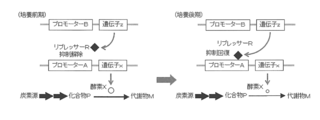
- the production process of the compound P is carried out in the first culture phase, the second culture phase and the second culture phase. It is also possible to produce the target compound P by dividing. That is, after inoculating the microorganism in a medium containing a carbon source, transcriptional repression is canceled by adding an inducer or increasing or decreasing the culture temperature according to the nature of the repressor R, thereby reducing the expression level of enzyme X. Increase and continue culture.
- the amount of compound P produced can be increased by restoring the suppression by the repressor R at an appropriate time and suppressing the expression of the enzyme X (FIG. 5).
- suppression by repressor R can be recovered by adjusting the amount of the inducer added and depleting the inducer in the later stage of culture.
- promoter A which is induced by an increase or decrease in culture temperature
- the suppression by repressor R can be recovered by returning the culture temperature to a temperature at which suppression by repressor R occurs.
- the target compound P is produced by dividing the production process of the compound P into two phases, ie, the first culture phase and the second culture phase.
- the inducible promoter B is activated by adding an inducer or raising or lowering the culture temperature depending on the nature of the inducible promoter B.
- the compound when the production method using a microorganism of the present invention is used, the compound can be easily obtained by changing the culture method using the same microorganism according to the growth state of the microorganism or the effect of compound P on the microorganism. P production can be maximized.
- any carbon source can be used as long as it can be used by the microorganism of the present invention.
- sugars such as glucose, sucrose and fructose
- alcohols such as ethanol and methanol
- organic acids such as citric acid, malic acid and succinic acid, glycerol, molasses and the like can be used.
- Compound P may be any organic compound as long as it is a metabolite on the biosynthetic pathway that generates a metabolite essential for growth from a carbon source. Examples include DHS, glutamic acid, aspartic acid, and serine.
- DHS can be produced by controlling the expression of shikimate dehydrogenase (enzyme X) that produces shikimate (metabolite M). DHS is useful as an antioxidant (United States States Patent 5,821,266) and can be used as a raw material for producing protocatechuic acid and shikimic acid using microorganisms.
- Glutamic acid which is a useful amino acid, is mino acid-N-acetyltransferase (enzyme X) that produces N-acetylglutamic acid (metabolite M) or ⁇ -glutamyl kinase (enzyme X) that produces ⁇ -glutamylphosphate (metabolite M). ) To control the expression.
- Aspartic acid which is a useful amino acid, expresses the expression of aspartokinase (enzyme X) that produces ⁇ -alpartyl phosphate (metabolite M) or asparagine synthase (enzyme X) that produces asparagine (metabolite M). Produced by controlling.
- Serine a useful amino acid, regulates the expression of serine hydroxymethyltransferase (enzyme X) that produces glycine (metabolite M) or serine transferase (enzyme X) that produces O-acetylserine (metabolite M) Can be produced.
- ATCC13032 strain that efficiently produces DHS will be described in detail.
- GB accession number BX927147 from the GenBank (hereinafter abbreviated as GB) database of National Center for Biotechnology Information (hereinafter abbreviated as NCBI).
- NCBI National Center for Biotechnology Information
- a strain derived from the ATCC 13032 strain producing DHS is a microorganism having the following properties (aa) to (dd).
- Bb a translational region or translational regulatory region of a wild-type gene (gene x) encoding a protein of shikimate dehydrogenase (enzyme X) that converts DHS into shikimate (metabolite M), or transcription of the gene
- gene x a wild-type gene
- enzyme X protein of shikimate dehydrogenase
- the ability to convert DHS to shikimic acid is deficient or reduced by having mutations due to substitution, deletion or addition of one or more bases in the promoter region to be promoted.
- the ATCC13032 strain has aroE3 (cg1835) gene (DNA region of complementary strand base numbers 1,726,078 to 1,726,908) and aroE1 (cg1283) gene (complementary strand base numbers of 1,182,337 to 1,183,143) as genes encoding active shikimate dehydrogenase. Region) and qsuD (cg0504) gene (DNA region of nucleotide numbers 446,537 to 447,388), but introduced mutations into the aroE3 gene, which plays a major role in the conversion of DHS to shikimate,
- the property bb can also be imparted by deletion or reduction of the expression of the active shikimate dehydrogenase of the gene.
- the qsuD gene and / or the aroE1 gene may be imparted with the property bb by introducing a mutation in which the expression of the active shikimate dehydrogenase of the gene is deleted or reduced.
- Good. The transcription of DNA encoding active enzyme X is controlled by promoter A, which is different from the original promoter that promotes transcription of gene x and whose transcription is suppressed by the protein of repressor R.
- Dd One or more copies of the gene z encoding the protein of the repressor R are contained, and transcription of the gene is controlled by the original promoter of the gene and / or an inducible promoter B different from the promoter.
- the repressor R includes, as described above, a VanR repressor whose deregulation is released by addition of ferulic acid, vanillic acid or vanillin, a RhcR repressor whose deregulation is released by addition of resorcinol or 2,4-dihydroxybenzoic acid.
- a PcaR repressor that is derepressed by the addition of 4-dihydroxybenzoic acid can be used.
- promoter A that is repressed by repressor R in the ATCC13032 strain is a vanA promoter that is repressed by VanR repressor, a rhcH promoter that is repressed by RhcR repressor, or transcription repressed by PcaR repressor. And the promoter of the pcaI gene.
- Promoter B is induced by addition of ferulic acid, vanillic acid or vanillin, vanA promoter which is induced by addition of resorcinol or 2,4-dihydroxybenzoic acid, induction by rhcH promoter, which is induced by addition of 4-hydroxybenzoic acid
- rhcH promoter which is induced by addition of 4-hydroxybenzoic acid
- Use pcaI promoter, nagI promoter that is induced by addition of 3-hydroxybenzoic acid benA promoter that is induced by addition of benzoic acid
- promoter of cg2118 gene that is induced by addition of either fructose or sucrose, or ptsS promoter be able to.
- the property (bb) And the property (cc) may be simultaneously imparted.
- a mutation that enhances the pathway for generating DHS from DAHP or a mutation that increases the amount of DAHP generated may be introduced.
- DAHP is converted to 3-dehydroquinic acid (hereinafter abbreviated as DHQ) by 3-dehydroquinic acid synthase, and DHQ is further converted to DHS by DHQ dehydrase. Therefore, a mutation occurs in the transcriptional / translational regulatory region of the gene aroB (cg1827) gene (hereinafter referred to as aroB gene) encoding DHQ synthase and / or the aroD (cg0503) gene (hereinafter referred to as aroD gene) encoding DHQ dehydrase.
- aroB gene the transcriptional / translational regulatory region of the gene aroB gene cg1827 gene
- aroD gene the aroD gene cg0503 gene
- the expression level of DHQ synthase and / or DHQ dehydrase can be enhanced and the amount of DHS can be increased.
- the amount of DHS can be increased by replacing the original promoter that promotes transcription of the aroB gene and
- the DHS amount can be increased by increasing the DAHP amount.
- Methods for increasing the amount of DAHP include cancellation of feedback inhibition by aromatic amino acids for DAHP synthase, enhancement of the expression level of DAHP synthase, or erythrose 4-phosphate (hereinafter referred to as E4P) which is a substrate of DAHP synthase. Abbreviated) or phosphoenolpyruvate (hereinafter abbreviated as PEP).
- DAHP synthase is often feedback-inhibited by tryptophan, tyrosine or phenylalanine. Since it is known that feedback inhibition can be canceled by introducing amino substitution mutations into DAHP synthase, aroF (cg1129) gene (hereinafter referred to as aroF gene) and aroG (cg2391) gene (hereinafter referred to as aroG gene) Mutations can be introduced into the DAHP synthase gene such as to increase the amount of DAHP.
- Examples of a method for enhancing the expression level of DAHP synthase include a method for introducing a mutation into the transcriptional / translational regulatory region of a gene encoding DAHP synthase.
- the amount of DAHP can be increased by replacing the original promoter that promotes transcription of the gene encoding DAHP synthase with the Tu promoter.
- a tkt gene encoding transketolase (hereinafter referred to as tkt gene), a tal (cg1776) gene encoding transaldolase (hereinafter referred to as cg1776).
- Gene or zwf (cg1778) gene encoding glucose-6-phosphate 1-dehydrogenase, etc. to introduce the mutation into the transcriptional / translational regulatory region of the enzyme gene involved in the pentose phosphate pathway There is a way to enhance it.
- a mutation is made in the transcription / translation regulatory region of pps (cg0644) gene encoding PEP synthase or pck (cg3169) gene encoding PEP carboxykinase. And a method for enhancing the expression of the gene.
- the amount of PEP can be increased by introducing a mutation into the translation region of the gene or the transcription / translation regulatory region of the gene to suppress the conversion of PEP.
- mutations may be introduced into a single gene, but in order to further improve the amount of DHS produced, it is preferable to introduce mutations into a plurality of genes.
- a strain derived from the ATCC13032 strain having the properties (aa) to (dd) described above can produce DHS based on a carbon source such as glucose. Since the aroD gene encoding DHQ dehydrase forms an operon with the qsuB (cg0502) gene encoding the DHS dehydrase that converts DHS into protocatechuic acid (hereinafter referred to as the qsuB gene), it imparts a property (aa) Therefore, when the expression of the aroD gene is increased by promoter replacement, the expression of the qsuB gene is also increased, so that a part of the accumulated DHS is converted to protocatechuic acid. In order to suppress the conversion to protocatechuic acid, it is desirable to introduce a mutation into the translation region of the qsuB gene or the transcription / translation control region of the gene.
- the microorganism of the present invention has the following property (e) in addition to the above four properties (a) to (d), by using the microorganism, it is converted from a carbon source to a metabolite M essential for growth.
- the target compound Q can be efficiently produced by converting the compound P on the biosynthetic route to the compound Q.
- substitution of one or more bases in the translation region of gene y encoding the protein of enzyme Y that converts compound P to compound Q, the translational regulatory region of the gene or the promoter region that promotes transcription of gene y By having a mutation due to deletion or addition, the ability to convert compound P to compound Q is enhanced, or the expression of gene y is controlled differently from the wild type.
- the expression level of the enzyme Y is often not sufficient in the wild type state, one or more bases are contained in the translational regulatory region of the gene y or the promoter region that promotes transcription of the gene y. Introduce mutation by substitution, deletion, or addition to enhance the expression level of enzyme Y, or to give property (e) by placing the transcription of gene y under control different from that of wild type promoter can do.
- the first enzyme in the branch pathway is often subject to feedback inhibition by the final product, the activity of enzyme Y is enhanced by releasing the feedback inhibition by introducing a mutation into the translation region of gene y.
- the property (e) can also be imparted.
- the property (e) is imparted by replacing the entire promoter or a part of the promoter that promotes transcription of the gene y with DNA of a promoter C that is different from the original promoter that promotes transcription of the gene and the promoter A. be able to.
- promoter C a promoter different from the original promoter of the gene y and different from the promoter A can be used.
- promoter C a constitutive expression promoter can be used, but an inducible promoter is preferably used.
- inducible promoter any of the promoters listed as examples of the promoter B used for imparting the above property (d) can also be used.
- promoter C ⁇ phage pL promoter or pR promoter, lac promoter, gal operon promoter, trp operon promoter, araBAD promoter, etc., or vanA promoter that is induced by addition of ferulic acid, vanillic acid, or vanillin RhcH promoter induced by addition of resorcinol or 2,4-dihydroxybenzoic acid, pcaI promoter induced by addition of 4-hydroxybenzoic acid, nagI promoter induced by addition of 3-hydroxybenzoic acid, benzoic acid
- vanA promoter that is induced by addition, or the promoter of the cg2118 gene or the ptsS promoter that is induced by addition of either fructose or sucrose can be used.
- Promoter C used for imparting property (e) may be the same as promoter B used for imparting property (d).
- the promoter C may be a promoter that undergoes transcriptional control by a protein that controls transcription of the promoter B.
- the microorganism of the present invention has an enzyme activity for metabolizing Compound Q, and there is a possibility that the accumulated amount of the compound is reduced in the production of Compound P, mutagenesis treatment or recombinant DNA technology is used. It is preferable that the activity of any one or more metabolic enzymes of compound P possessed by the microorganism is deficient or reduced.
- Examples of the method for producing compound Q using the microorganism of the present invention include a method for producing compound Q by culturing in a medium containing a carbon source while suppressing transcription of promoter A.
- the transcription amount of the promoter A that controls the expression of the enzyme X is suppressed by the repressor R, the production amount of the metabolite M is limited, and the compound Q is efficiently converted from the compound P. It can be produced well (Fig. 7).
- the production process of compound Q is carried out in the first culture phase, the second culture phase, and the second culture phase. It is preferable to produce compound Q by dividing. That is, after inoculating the microorganism in a medium containing a carbon source, the expression level of enzyme X is reduced by releasing transcriptional repression by adding an inducer or increasing or decreasing the culture temperature according to the nature of the repressor R. Increase and continue culture. Thereafter, the amount of compound Q produced from compound P can be increased by restoring inhibition by repressor R at an appropriate time and inhibiting the expression of enzyme X (FIG. 8).
- suppression by repressor R can be recovered by adjusting the amount of the inducer added and depleting the inducer in the later stage of culture. .
- the suppression by repressor R can be recovered by returning the culture temperature to a temperature at which suppression by repressor R occurs.
- the compound Q is produced by dividing the production process of the compound Q into two phases of the first culture phase and the second culture phase. That is, after inoculating the microorganism in a medium containing a carbon source and growing the cells, the inducible promoter B is activated by adding an inducer or raising or lowering the culture temperature depending on the nature of the inducible promoter B.
- the production amount of the presser R By increasing the production amount of the presser R, the production of the metabolite M can be suppressed and the production amount of the compound Q from the compound P can be increased (FIG. 9).
- the production process of compound Q is cultured using a microorganism in which the expression of enzyme Y is placed under the control of inducible promoter C.
- Compound Q is preferably produced by dividing it into two phases, the first period and the latter period of culture. That is, after inoculating the microorganism in a medium containing a carbon source and growing the bacterial cells, depending on the nature of the inducible promoter C, the transcription of the inducible promoter C is activated by adding an inducer or raising or lowering the culture temperature.
- the production amount of compound Q from compound P can be increased (FIG. 10).
- inducible promoter C activation of inducible promoter C is activated late in the culture to increase the amount of enzyme Y produced, and inducible promoter B is activated to increase the amount of repressor R produced, thereby suppressing the production of metabolite M. Then, the amount of compound Q produced from compound P may be increased (FIG. 11).
- promoter C and promoter B the same promoter, the induction of promoter C can be performed at the same time as the induction of promoter B.
- promoter C and promoter B are selected from a group of promoters that are transcriptionally controlled by the same control protein, the induction of promoter C is the same as the induction of promoter B even if they are different promoters. Can be done at the time.
- the compound when the production method using a microorganism of the present invention is used, the compound can be easily obtained by changing the culture method using the same microorganism according to the growth state of the microorganism or the influence of compound Q on the microorganism. Q production can be maximized.
- the compound Q is produced by a pathway branched from the compound P in a biosynthetic pathway or metabolic pathway that produces a metabolite M essential for growth from a carbon source via the compound P. Any compound can be produced if it can produce
- Compound P may be any organic compound as long as it is a metabolite on the biosynthetic pathway that generates a metabolite essential for growth from a carbon source. Examples include DHS, chorismic acid, prefenic acid, 2-oxoisovaleric acid, glutamic acid, aspartic acid, aspartic acid ⁇ -semialdehyde, homoserine, and serine.
- Compound Q may be any organic compound as long as it is a substance obtained by converting compound P with enzyme Y.
- protocatechuic acid for example, protocatechuic acid, anthranilic acid, 4-hydroxyphenylpyruvic acid, allogenic acid, phenylpyruvic acid, 2-isopropylmalic acid, valine, ⁇ -glutamylphosphoric acid, N-acetylglutamic acid, asparagine, 2,3-dihydrodipicolinic acid and O -Acetyl homoserine and the like.
- compound P When compound P is DHS, shikimate (metabolite M) is produced by shikimate dehydrogenase (enzyme X), but protocatechuic acid (compound P) can be produced by DHS dehydrase (enzyme Y).
- Protocatechuic acid can be used as a raw material for the production of 2-pyrone-4,6-dicarboxylic acid, which is expected as a raw material for new plastics, using microorganisms, as well as a raw material for pharmaceuticals, agricultural chemicals, fragrances and the like.
- anthranilic acid is a synthetic raw material such as tryptophan, which is an aromatic amino acid. If the microorganism has a tryptophan biosynthetic pathway, tryptophan can be directly produced.
- phenylpyruvic acid (metabolite M) is produced by prefenic anhydrase (enzyme X), but the microorganism of the present invention is prefenic acid dehydrogenase in Escherichia coli K-12 strain or the like.
- 4-Hydroxyphenylpyruvic acid (Compound Q) can be produced by (Enzyme Y).
- 4-Hydroxyphenylpyruvic acid is a raw material for synthesizing tyrosine, an aromatic amino acid. If the microorganism has a tyrosine biosynthesis pathway from 4-hydroxyphenylpyruvic acid, tyrosine can also be directly produced.
- phenylpyruvic acid is produced by prefenic acid dehydrase (enzyme X).
- prefenic acid dehydrase enzyme X
- prefenic acid aminotransferase Allogenic acid (compound Q) can be produced by enzyme Y). Allogenic acid is a raw material for synthesizing tyrosine, an aromatic amino acid, and if the microorganism has a tyrosine biosynthesis pathway from allogenic acid, tyrosine can also be directly produced.
- 4-hydroxyphenylpyruvic acid is produced by the prefenic acid dehydrogenase (enzyme X) in the Escherichia coli K-12 strain or the like of the microorganism of the present invention.
- Allogeneic microorganisms such as Corynebacterium glutamicum produce allogenic acid (metabolite M) by prephenic acid dehydrogenase (enzyme X), but produce phenylpyruvic acid (compound Q) by prefenic acid dehydrating enzyme (enzyme Y). can do.
- Phenylpyruvic acid can be a raw material for the synthesis of phenylalanine, an aromatic amino acid. If the microorganism has a biosynthesis pathway for phenylalanine, phenylalanine can be directly produced.
- compound P When compound P is 2-oxoisovaleric acid, valine (metabolite M) is produced by branched-chain amino acid aminotransferase (enzyme X), but 2-isopropylmalic acid synthase (enzyme Y) produces 2-isopropylmalic acid. (Compound Q) can be produced.
- 2-Isopropylmalic acid is a raw material for the synthesis of leucine, and if the microorganism has a leucine biosynthesis pathway, leucine can also be produced directly.
- compound Q When compound P is 2-oxoisovaleric acid, 2-isopropylmalate (metabolite M) is produced by 2-isopropylmalate synthase (enzyme X), but valine is produced by branched-chain amino acid aminotransferase (enzyme Y). (Compound Q) can be produced.
- N-acetylglutamic acid (metabolite M) is produced by amino acid-N-acetyltransferase (enzyme X), but ⁇ -glutamylphosphate (compound Q) is produced by ⁇ -glutamyl kinase (enzyme Y).
- ⁇ -glutamyl phosphate serves as a raw material for proline synthesis, and proline can also be produced directly if the microorganism has a biosynthesis pathway for proline.
- N-acetylglutamic acid serves as a raw material for synthesizing arginine. If the microorganism has an arginine biosynthetic pathway, arginine can also be produced directly.
- compound Q When compound P is aspartate ⁇ -semialdehyde, homoserine (metabolite M) is produced by homoserine dehydrogenase (enzyme X), but 2,3-dihydrodipicolinic acid is produced by dihydroxypyrophosphate synthase (enzyme Y). (Compound Q) can be produced. 2,3-dihydrodipicolinic acid is a raw material for synthesizing lysine, and if the microorganism has a biosynthetic pathway for synthesizing lysine from 2,3-dihydrodipicolinic acid, lysine can also be produced directly.
- homoserine phosphate serves as a raw material for the synthesis of threonine and isoleucine, and if the microorganism has an isoleucine biosynthetic pathway, threonine and isoleucine can also be produced directly.
- O-acetylserine is a raw material for synthesizing cysteine. If the microorganism has a cysteine biosynthesis pathway, it can directly produce cysteine.
- the gene encoding enzyme Y involved in the production of compound Q may be a gene derived from the microorganism of the present invention, or may be a gene derived from a prokaryotic or eukaryotic organism different from the microorganism of the present invention. Good.
- the gene product may be used for the production of protocatechuic acid.
- Escherichia coli K-12 strain Has no DHS dehydrase gene, it is necessary to use DHS dehydrase genes derived from other microorganisms.
- the strain derived from the ATCC 13032 strain producing protocatechuic acid is a microorganism having the following property (ee) in addition to the properties (aa) to (dd) described above.
- ee Different from the original promoter that promotes transcription of the qsuB gene (gene y; base numbers 444, 184 to 446,040) encoding the protein of DHS dehydrase (enzyme Y) that converts DHS to protocatechuic acid, and also different from promoter A Promoter C controls the transcription of the qsuB gene.
- a strain derived from the ATCC13032 strain having the properties (aa) to (ee) described above can produce protocatechuic acid based on a carbon source such as glucose, but it is produced because the strain has protocatechuate dioxygenase. There is a possibility that the amount of protocatechuic acid is reduced by decomposing the produced protocatechuic acid.
- pcaG (cg2630) gene encoding protocatechuic acid 4,5-dioxygenase alpha subunit protein (complementary chain base number 2,511,382 to 2,511,996) and / or protocatechuic acid 4,5-dioxygenase beta subunit Introduces mutations by substitution, deletion or addition of one or more bases into the translation region of the pcaH (cg2631) gene encoding the protein (complementary strand base numbers 2,512,008 to 2,512,700) or the transcription / translation control region of the gene. By doing so, it is preferable to delete or reduce the degradation activity of the enzyme.
- this strain has parahydroxybenzoic acid hydroxylase which hydroxylates 5-position of protocatechuic acid and catalyzes the conversion to gallic acid, a part of the produced protocatechuic acid is converted to gallic acid.
- substitution of one or more bases in the translation region of the pobB (cg1226) gene (complementary strand base number 1,126,301 to 1,127,488) encoding the parahydroxybenzoate hydroxylase protein or the transcription / translation control region of the gene It is preferable that the hydroxylation activity of the parahydroxybenzoate hydroxylase is deleted or reduced by introducing a mutation caused by deletion or addition.
- the microorganism of the present invention is a genus Corynebacterium, Brevibacterium, Arthrobacter, Nocardioidaeae, Microbacterium, Streptomyces, Amicokactopsis, Any microorganism can be used as long as it belongs to the genus Rhodococcus, Kineococcus, Acinetobacter, Pseudomonas, Pantoae, Klebsiella, and Escherichia.
- the method for introducing mutations in the ATCC13032 strain will be described in detail.
- Escherichia coli K-12 strain is mainly used as a host bacterium used for introducing DNA cloning and mutation.
- the above Escherichia coli K-12 and ATCC13032 strains are cultured by known methods commonly used for culturing Escherichia coli and Corynebacterium bacteria, respectively. After culturing, the chromosomal DNA of the microorganism is isolated and purified by a known method (for example, the method described in Current Protocols in Molecular Biology). Obtaining a fragment containing DNA encoding the above promoter or metabolic enzyme from the chromosomal DNA by restriction enzyme digestion, polymerase chain reaction (PCR), or hybridization using synthetic DNA. Can do.
- PCR polymerase chain reaction
- any plasmid vector, phage vector, etc. can be used as long as it is a self-replicating vector in Escherichia coli K-12.
- pUC19 Gene, 33, 103 (1985)
- pUC18 pBR322
- the like can be used.
- Escherichia coli used as a host for the above vector can be any microorganism belonging to Escherichia coli, and specifically, Escherichia coli (XL) -XL1-Blue MRF '[manufactured by Stratagene Strategies, 5, 81 (1992)], Escherichia coli JM109, Escherichia coli BL21, and the like.
- the DNA is introduced into microorganisms belonging to the genera, Klebsiella and Escherichia, a vector capable of autonomous replication in these microorganisms is used.
- a vector capable of autonomous replication in these microorganisms is used.
- the recombinant DNA can be introduced into the host microorganism using a shuttle vector capable of autonomous replication in both microorganisms of both the microorganism and the Escherichia coli K-12 strain.
- shuttle vectors capable of autonomous replication in Corynebacterium bacteria include pAM330 (see JP-A-58-67699), pHM1519 (see JP-A-58-77895), and the like.
- pAM330 see JP-A-58-67699
- pHM1519 see JP-A-58-77895
- DNA fragments capable of autonomously replicating plasmids in Corynebacterium are extracted from these vectors and inserted into the Escherichia coli-Corynebacterium shuttle vector, both Escherichia coli and Corynebacterium are obtained.
- the plasmid pHM1519 replication region of the Corynebacterium glutamicum ATCC13058 strain is inserted into the pHSG298 (manufactured by Takara Bio Inc.), an Escherichia coli vector, as a replication region for replicating the plasmid in the Corynebacterium strain.
- the shuttle vector can be constructed.
- the shuttle vector can be retained.
- the ATCC13032 strain and the Corynebacterium glutamicum ATCC13058 strain can be obtained from an independent administrative agency, the National Institute for Product Evaluation Technology and the Biological Genetic Resources Department (hereinafter abbreviated as NITE).
- any method for introducing DNA can be used as long as it is a method for introducing DNA into the host cell, for example, a method using calcium ions [Proc. Natl. Acad. Sci. USA, 69, 2110 (1972) Electroporation method [Nucleic Acids Res., 16, 6127 (1988)].
- DNA can also be introduced into Corynebacterium glutamicum by the method of van der Rest et al. [Appl. Microbiol. Biotechnol., 52, 541 (1999)].
- DNA can be extracted from the transformant obtained as described above, and the base sequence of the DNA of the present invention contained in the DNA can be determined.
- a commonly used base sequence analysis method for example, dideoxy method [Proc.tlNatl. Acad. Sci. USA, 74, 54631977 (1977)] or 3730xl type DNA analyzer (manufactured by Applied Biosystems), etc. Can be used.
- the target DNA can also be prepared by chemical synthesis using a 8905 type DNA synthesizer manufactured by Perceptive Biosystems based on the DNA base sequence determined above.
- Strains with the desired phenotype include treatment with mutagens such as N-methyl-N'-nitro-N-nitrosoguanidine and ethylmethanesulfonic acid, mutation treatment by UV and radiation irradiation, and natural mutation. Is obtained by introducing a mutation.
- the strain clones the DNA of the region into which the mutation is introduced, and introduces the mutation into the DNA in vitro (in vitro).
- the plasmid is introduced into the strain, or between the plasmid and the chromosomal DNA.
- Substitution mutations can also be introduced by homologous recombination.
- the type of mutation to be introduced may be any of a base substitution mutation, a deletion mutation, an insertion mutation, or a substitution mutation with a large DNA fragment, as long as the desired phenotype appears. As long as it is above, it may be a mutation of any size.
- the above-described method is used as a method for introducing a mutation unless otherwise specified.
- the microorganism of the present invention when it is necessary to regulate the expression level of a gene other than a promoter or transcription control protein, adjustment of the distance between the ribosome binding sequence and the translation initiation codon, modification of the sequence around the translation initiation codon, or The translation initiation efficiency of the gene can be regulated by modifying the base sequence in the translation region.
- the DNA for introducing the mutation thus obtained is usually inserted into a plasmid that can be replicated in Escherichia coli, and then introduced into the host strain Corynebacterium glutamicum using the DNA introduction method described above. To do.
- the plasmid is a temperature-sensitive vector
- one cross-type homologous set is obtained by high-temperature culture selection, and when it has an antibiotic resistance marker such as kanamycin resistance that can be expressed in a host bacterium, the antibiotic resistance selection. Sort out replacements.
- W Jager et al. In order to obtain a mutant strain in which the DNA is replaced by double cross-type homologous recombination in a chromosomal region homologous to the DNA fragment, usually developed by W Jager et al. [J. Bacteriol.
- a method using a levansucrase gene (sacB gene) of Bacillus subtilis 168 strain can be used. Sucrose resistance selection is used. Using this method, Corynebacterium glutamicum expressing the sacB gene of Bacillus subtilis 168 strain is lethal in a medium containing sucrose. Strains can be obtained by sucrose resistance selection.
- the culture of the microorganism of the present invention can be performed in a normal nutrient medium containing a carbon source, a nitrogen source, an inorganic salt, various vitamins, etc.
- a carbon source examples include sugars such as glucose, sucrose, and fructose, ethanol, Alcohols such as methanol, organic acids such as citric acid, malic acid, and succinic acid, glycerol, and molasses are used.
- the nitrogen source for example, ammonia, ammonium sulfate, ammonium chloride, ammonium nitrate, urea or the like is used alone or in combination.
- inorganic salts examples include potassium monohydrogen phosphate, potassium dihydrogen phosphate, and magnesium sulfate.
- nutrients such as various vitamins such as peptone, meat extract, yeast extract, corn steep liquor, casamino acid, and biotin can be added to the medium.
- Cultivation is usually performed under aerobic conditions such as aeration agitation and shaking.
- the culture temperature is not particularly limited as long as the microorganism of the present invention can grow, and the pH during the culture is not particularly limited as long as the microorganism of the present invention can grow.
- the pH adjustment during the culture can be performed by adding an acid or an alkali.
- the target organic compound in the culture solution after completion of the culture is obtained by removing insoluble components such as bacterial cells from the culture solution by centrifugation or the like, if necessary, followed by extraction with an organic solvent such as ethyl acetate, activated carbon, etc.
- the target organic compound can be collected by using a method such as an ion exchange resin, a crystallization method, a precipitation method such as salting out, a distillation method or the like alone or in combination.
- ATCC13032 strain that efficiently produces DHS as compound P as the microorganism of the present invention and the method for producing DHS using the microorganism will be specifically described with reference to Examples.
- examples of the construction of a strain of ATCC13032 strain that efficiently produces protocatechuic acid as compound Q as the microorganism of the present invention and the production method of protocatechuic acid by the microorganism will be specifically described with reference to Examples. The present invention is not limited to these examples.
- Example 1 Comparison of DHS productivity between Pben-vanR strain and NSH ⁇ aroE3 ⁇ qsuB ⁇ qsuD Phen-vanR strain (Reference Example 11) in which the expression of the aroE3 gene is suppressed by the VanR repressor, and the ability to convert DHS to shikimate and DHS by in-frame deletion mutation of the qsuB, qsuD and aroE3 genes NSH ⁇ aroE3 ⁇ qsuB ⁇ qsuD strain (Reference Example 10) that lost the ability to convert protocatechuic acid into protocatechuic acid was cultured in a 3 L jar fermenter, and DHS productivity test was performed. These strains have higher DHS production than wild strains because the transcription of four genes (aroF, aroG, aroB, and aroD genes) involved in the synthesis of DHS from DAHP is controlled by the Tu promoter. is doing.
- Pre-culture and pre-culture media for these strains include CGXII media (ammonium sulfate 20 g / L, urea 5 g / L, potassium dihydrogen phosphate 1 g / L, dipotassium hydrogen phosphate 1 g / L, Magnesium sulfate heptahydrate 0.25 g / L, calcium chloride 10 mg / L, ferrous sulfate heptahydrate 10 mg / L, manganese sulfate pentahydrate 10 mg / L, zinc sulfate 7 water Japanese 1mg / L, Copper sulfate 0.2mg / L, Nickel chloride hexahydrate 0.02mg / L, Biotin 0.2mg / L, Glucose 20g / L, Protocatechuic acid 30mg / L, pH7.0) Using.
- CGXII media ammonium sulfate 20 g / L, urea
- CGCF medium which is a CGXII medium containing 2.1 g / L citric anhydride and 1.0 g / L iron sulfate / 7H 2 O, was used.
- DHS and protocatechuic acid were performed using this method unless otherwise specified.
- NSH ⁇ aroE3 ⁇ qsuB ⁇ qsuD strain is extremely poor in CGXII medium and CGCF medium, so 0.5 g / L tryptophan, 0.4 g / L phenylalanine, 0.45 g / L tyrosine, 17 mg / L shikimic acid, 45 mg / L vitamin K2 and 14 mg / L paraaminobenzoic acid were added to these media and cultured.
- After starting the main culture collect the culture medium in a timely manner, dilute it 1000 times with 5% aqueous acetonitrile, and analyze it under the separation conditions shown in Table 1 using high performance liquid chromatography (Waters, LCT TM Premier TM XE). Was calculated based on the ratio of the DHS peak area with a DHS aqueous solution (DHS purchased from Sigma) as a control.
- DHS DHS aqueous solution
- the DHS production of the Pben-vanR strain and the NSH ⁇ aroE3 ⁇ qsuB ⁇ qsuD strain was maximized at 86 hours and 62 hours after the start of the culture, respectively, and the maximum DHS production of these strains was 15.4 g / L and 7.7 ⁇ g / L, respectively.
- the Pben-vanR strain that can artificially control the expression of the aroE gene with a VanR repressor is a medium that does not contain aromatic amino acids as compared to the NSH ⁇ aroE3 ⁇ qsuB ⁇ qsuD strain that is cultured in a medium that contains aromatic amino acids. It became clear that DHS productivity was excellent even when cultured in the medium.
- Example 2 Protocatechuic acid production using NSH ⁇ aroE3 and NSH ⁇ aroE3_vanE3 strains
- NSH ⁇ aroE3 strain having an in-frame deletion mutation in the aroE3 gene see Reference Example 7
- VanR repressor based on the strain The NSH ⁇ aroE3_vanE3 strain (see Reference Example 8) modified so as to express the aroE3 gene was cultured in a 3 L jar fermenter and the production amount of protocatechuic acid was compared.
- the culture solution obtained by culturing these strains in CGXII medium was diluted with CGXII medium so that the absorbance at 600 nm was 3.0, and then inoculated into CGCF medium (0.9 L) in a 3 L jar fermenter by 1%.
- the NSH ⁇ aroE3 strain has a very poor growth in CGXII medium and CGCF medium due to deletion mutation of aroE3 gene, so 50 mg / L tryptophan, 50 mg / L phenylalanine, 50 mg / L tyrosine and 17 mg / L L shikimic acid was added to these media and cultured.
- glucose was added at a rate of 2.0 ⁇ g / hour and further cultured for 62.5 hours.
- the culture solution is collected in a timely manner, and the culture solution is diluted 1000 times with 5% acetonitrile aqueous solution and analyzed under the separation conditions shown in Table 1 using high performance liquid chromatography (Water, LCT TM Premier TM XE).
- the protocatechuic acid aqueous solution with a known concentration was purchased from Wako Pure Chemical Industries, Ltd. was used as a control to calculate the ratio of the protocatechuic acid peak area.
- quantification of procatechuic acid was measured using this method.
- the protocatechuic acid production of the NSH ⁇ aroE3 and NSH ⁇ aroE3_vanE3 strains was maximized at 48 hours and 62.5 hours after the start of culture, respectively, and the maximum production of protocatechuic acid of these strains was 0.5 g / L and 16.6 g / L, respectively. Met. From this result, when a strain that controls the expression of the aroE gene with a VanR repressor is cultured in a medium that does not contain aromatic amino acids and shikimic acid, protocatechuic acid of NSH ⁇ aroE3 strain cultured in a medium that contains aromatic amino acids and shikimic acid It was revealed that protocatechuic acid was produced approximately 33 times as much as the production amount.
- Example 3 Production of Protocatechuic Acid Using NSH ⁇ aroE3_vanE3 Strain, NSH ⁇ aroE3_vanE3 ⁇ qsuB_Pben-qsuB Strain and NSH ⁇ aroE3_vanE3 ⁇ qsuB_Pben-qsuB-vanR Strain of NsuS 3 L jars of NSH ⁇ aroE3_vanE3 ⁇ qsuB_Pben-qsuB strain (Reference Example 12) and NSH ⁇ aroE3_vanE3 ⁇ qsuB_Pben-qsuB-vanR strain (Reference Example 13) bred so that expression of qsuB gene and vanR gene can be induced by addition of benzoic acid
- the production of protocatechuic acid was compared by culturing with a fermenter.
- the qsuB gene was induced by adding 5 mM final concentration of benzoic acid at 14.5 hours after the start of the main culture.
- the qsuB and vanR genes were induced by adding 5 mM final concentration of benzoic acid.
- glucose was added at a rate of 3.5 g / hour from the start of the main culture at 14.5 hours, 15.5 hours, and 18.5 hours, respectively. The culture was terminated after 62 hours.
- Example 4 Protocatechuic acid production using NSH ⁇ aroE3_vanE3 ⁇ qsuB_Pben-qsuB-vanR and tkt Culturing the above-described NSH ⁇ aroE3_vanE3 ⁇ qsuB_Pben-qsuB-vanR strain (Reference Example 13) and the tkt strain (Reference Example 14) with enhanced transketolase expression of the strain using 3 L jar fermenters as follows: The production of protocatechuic acid was compared.
- FIG. Production of protocatechuic acid using control system with RhcR repressor All the above examples were production experiments in which the expression of aroE3 gene was controlled by VanR repressor. Difference in protocatechuic acid productivity by the presence or absence of transcription induction of nagI promoter using Pnag-qsuB-rhcR strain (Reference Example 17) that controls expression and expresses qsuB and rhcR genes under the control of nagI promoter was examined as follows. When inducing transcription of the nagI promoter of the Pnag-qsuB-rhcR strain, 3-hydroxybenzoic acid was added to 5 mM at 16.5 hours after the start of the main culture, and glucose was added at 4.9 hours at 20.5 hours.
- the mixture was added at a rate of g / hour, and the culture was terminated after 62.5 hours from the start of the culture.
- the transcription of the nagI promoter of the Pnag-qsuB-rhcR strain was not induced, the culture was terminated 62.5 hours after the start of the culture without adding 3-hydroxybenzoic acid. as a result,.
- the production of protocatechuic acid in the Pnag-qsuB-rhcR strain that did not induce the transcription of the nagI promoter was 47.5 hours and 43.5 hours after the start of culture, respectively.
- the maximum production of protocatechuic acid was 11.2 g / L and 8.4 g / L, respectively. From this result, even when the expression of the aroE3 gene and the qsuB gene is controlled by the RhcR repressor, a significant amount of protocatechuic acid can be produced. It became clear that
- Reference Example 1 Construction of shuttle vector pHCG298 for Escherichia coli-corynebacterium bacteria Corynebacterium glutamicum ATCC13058 carrying plasmid pHM1519 was obtained from NITE, and plasmid pHM1519 was isolated by a conventional method. Subsequently, two types of DNA (SEQ ID NOs: 1 and 2) were used to add a restriction enzyme BglII site and an NcoI site to the pHSG298 vector for Escherichia coli carrying the kanamycin resistance gene functioning in the ATCC13032 strain (manufactured by Takara Bio Inc.). Was synthesized.
- Bacillus subtilis encoding a levans classase that functions lethally to the host cell in order to select a strain in which the target DNA region has been integrated into a specific region of the chromosome by double crossover homologous recombination 168 strains of sacB gene were used as selection markers.
- Bacillus subtilis 168 strain was obtained as IAM2118 strain from RIKEN Microbial System Storage Facility.
- genome sequence information (GB accession number: NC — 000964) of Bacillus subtilis 168 strain was obtained from NCBI via the Internet.
- Chromosomal DNA of Bacillus subtilis 168 strain was purified using a chromosomal DNA extraction kit (RBC Bioscience).
- telomere sequence containing the sacB gene.
- an A residue was added to the 3 ′ end of the amplified DNA fragment using Taq DNA polymerase.
- the amplified DNA fragment was recovered after gel electrophoresis, purified, and then incorporated into a pT7Blue-T vector to construct a plasmid pTBSACB1 carrying the sacB gene.
- the sacB gene A constitutive expression plasmid pHKPsacB1 was constructed.
- the plasmid pHKPsacB1 carries DNA having high homology with the chromosomal DNA of Corynebacterium, homologous recombination occurs between the chromosomal DNA and the plasmid, and the entire plasmid is incorporated into the chromosome.
- the resulting strain exhibits a kanamycin resistant and sucrose sensitive phenotype. Thereafter, when crossover homologous recombination occurs twice, the plasmid-derived DNA region is excluded from the chromosome. As a result, the bacterium exhibits a kanamycin sensitive and sucrose resistant phenotype.
- Reference Example 3 Production of HT23 strain in which the modification / restriction enzyme gene of ATCC13032 strain is disrupted Construction of Plasmid for DNA Modification / Restriction Enzyme Gene Disruption HT23 strain in which DNA modification / restriction enzyme gene was disrupted was constructed based on ATCC13032 strain as follows. ATCC13032 strain was obtained from NITE as NBRC12168 strain. The base numbers shown in the following examples are the base numbers of the genome sequence of the ATCC13032 strain, and the genome sequence information was obtained from the NCBI GB database as the accession number NC_006958 via the Internet.
- culture of Corynebacterium bacteria including ATCC13032 strain is CGYE medium (ammonium sulfate 20 g / L, urea 5 g / L, KH2PO4 1 g / L, K2HPO4 1 g / L, MgSO4 ⁇ 7H20 0.25 g / L, yeast extract 1 g / L, CaCl2 10 mg / L, FeSO4 ⁇ 7H2O 10 mg / L, MnSO4 ⁇ 5H2O 10 mg / L, ZnSO4 ⁇ 7H2O 1 mg / L, CuSO4 0.2 mg / L, NiCl2 ⁇ 6H2O 0.02 mg / L, biotin 0.2 mg / L, glucose 20 g / L, pH 7).
- CGYE medium ammonium sulfate 20 g / L, urea 5 g / L, KH2PO4 1 g / L, K2HPO4 1 g
- CglIM (cg1996) gene (base number 1,879,784 to 1,880,875) encoding the DNA modifying enzyme possessed by ATCC13032 strain
- cglIR cg1997) gene (base number 1,880,884 to 1,881,960)
- cglIIR cg1998) gene encoding two restriction enzymes
- the 5 'flanking region was amplified by PCR using these primers with the chromosomal DNA of ATCC13032 strain as a template. After adding an A residue to the 3 ′ end of the amplified DNA fragment with Taq DNA polymerase, the amplified DNA fragment is purified by gel electrophoresis and incorporated into the pT7Blue-T vector to retain the 5 ′ flanking region. Plasmid pTUSR1F was constructed.
- an about 1.1 kb BamHI-XhoI fragment containing the 5 'flanking region was prepared from the plasmid pTUSR1F. Further, an XbaI-XhoI fragment of about 1.4 kb containing the 3 'flanking region was prepared from the plasmid pTUSR1R. Further, an approximately 1.6 kb BamHI-SphI fragment containing a sacB gene constitutive expression region was prepared from plasmid pHKPsacB1 (Reference Example 2-2). These three fragments were inserted between the BamHI and XbaI sites of the cloning vector pHSG298 for Escherichia coli to construct a plasmid pHKSD0977-9 for DNA modification / restriction enzyme gene disruption.
- SCR strain is cultured in 1 mL LB liquid medium (10 g / l tryptone, 5 g / l yeast extract, 10 g / l sodium chloride) for 24 hours, and a part of the culture solution is LB agar containing 10% sucrose.
- HT23 strain was obtained by smear culture on the medium. It was confirmed by PCR using the primers of SEQ ID NOs: 13 and 14 that the HT23 strain was a double-crossover homologous recombinant lacking the DNA modification / restriction enzyme gene as expected.
- Reference Example 4 Construction of a pcaH ⁇ pcaG gene-disrupted strain
- ATCC13032 A DRHG strain lacking a part of the chromosomal DNA of the strain (complementary strand base numbers 2,511,382 to 2,512,700) was constructed.
- the amplified DNA fragment is purified by gel electrophoresis and incorporated into a pT7Blue-T vector (manufactured by Novagen). Plasmid pTPCAUSR1F with a 5 ′ flanking region was constructed.
- two types of primers SEQ ID NOs: 19 and 20 for amplifying the 3 ′ flanking region (complementary strand base numbers 2,510,015 to 2,511,377) of HT23 strain were synthesized, and purified chromosomal DNA of HT23 strain was used as a template.
- the 3 ′ flanking region was amplified by PCR using these primers. After adding an A residue to the 3 ′ end of the amplified DNA fragment by Taq DNA polymerase, the amplified DNA fragment is purified by gel electrophoresis, and incorporated into the pT7Blue-T vector, whereby a plasmid having the 3 ′ flanking region is obtained.
- pTPCADSR1R was constructed. An approximately 1.3 kb EcoRI-MluI fragment containing the 5 ′ flanking region was prepared from pTPCAUSR1F by restriction enzyme digestion. In addition, an approximately 1.4 kb MluI-BamHI fragment containing the 3 ′ flanking region was prepared from pTPCADSR1R by restriction enzyme digestion.
- SCRHG strain was cultured in 1 mL of LB liquid medium for 24 hours, and a part of the culture solution was smeared on LB agar medium containing 10% sucrose to obtain DRHG strain. It was confirmed by PCR using the primer sets of SEQ ID NOS: 23 and 24 that the DRHG strain was a double-crossover homologous recombinant lacking the pcaH / pcaG gene as expected. In addition, when PCR reaction using the primers of SEQ ID NOs: 25 and 26 was performed, an amplified DNA fragment was not obtained, so it was also confirmed that the DRHG strain was deficient in the sacB gene.
- Reference Example 5 Construction of a pobB gene disrupted strain Based on the DRHG strain constructed in Reference Example 4 in order to disrupt the pobB gene encoding parahydroxybenzoate hydroxylase and suppress the production of gallic acid from protocatechuic acid, A DRHG145 strain lacking a part of DNA (complementary strand base numbers 1,126,301 to 1,127,488b) was constructed as follows.
- the 5 ′ flanking region (base numbers 1,127,505 to 1,128,687) of the pobB gene and add a restriction enzyme XbaI site and a SalI site at both ends of the amplified fragment, 30) was synthesized.
- the 5 ′ flanking region of the pobB gene was amplified by PCR using these primers.
- the amplified DNA fragment in the 3 ′ flanking region is digested with restriction enzymes SphI and XbaI
- the amplified DNA fragment in the 5 ′ flanking region is digested with restriction enzymes XbaI and SalI. 2 was introduced between the SphI site and the SalI site in the multicloning site to obtain a plasmid pHKPsacB ⁇ pobB.
- DRHG_Km strain was cultured in 1 mL of LB liquid medium for 24 hours, and a part of the culture solution was smeared on LB agar medium containing 10% sucrose to obtain DRHG145 strain. It was confirmed by PCR using the primers of SEQ ID NOs: 27 and 30 that the DRHG145 strain was a double-crossover homologous recombinant lacking the pobB gene as expected.
- two types of primers (SEQ ID NOs: 35 and 36) were synthesized in order to add a restriction enzyme RsrII site and a PfoI site at both ends of the amplified fragment.
- the 5 ′ flanking region of the cg0500 gene, the 3 ′ flanking region of the promoter region of the aro operon, and the Tu promoter were amplified by PCR using these three primer sets.
- the amplified DNA fragment in the 5 'flanking region of the cg0500 gene is digested with restriction enzymes SphI and RsrII
- the amplified DNA fragment in the 3' flanking region of the promoter region of the aro operon is digested with restriction enzymes PfoI and SbfI
- Tu After digesting the amplified DNA fragment of the promoter with restriction enzymes RsrII and PfoI, SbfI and SphI sites in the multiple cloning site of plasmid pHKPsacB1 (see Reference Example 2) are obtained from these three restriction fragments.
- the plasmid pHKPsacB_ aro-Ntu was obtained.
- pHKPsacB_Ntu-aro is introduced into DRHG145 strain and selected for resistance to kanamycin to obtain DRHG145_Km strain did.
- the DRHG145_Km strain was analyzed by PCR using the primers of SEQ ID NOs: 31 and 34 and the primer for confirming the sacB gene (SEQ ID NOs: 3 and 4), the expected results were obtained. Therefore, the DRHG145_Km strain was isolated from the plasmid pHKPsacB_Ntu-aro. Was confirmed to be a single crossover homologous recombinant introduced into the cg0500 gene region.
- the DRHG145_Km strain was cultured in 1 mL of LB liquid medium for 24 hours, and a portion of the culture solution was smeared on an LB agar medium containing 10% sucrose to obtain the NUA strain.
- NDSGU strain in which promoter of aroG gene was replaced with Tu promoter region was constructed based on NUA strain as follows.
- (1) Construction of aroG promoter replacement plasmid Amplifies the 5 'flanking region of the aroG gene promoter (complementary strand base numbers 2,280,842 to 2,282,206) and adds restriction enzyme SphI and RsrII sites to both ends of the amplified fragment
- Two kinds of primers (SEQ ID NOs: 38 and 39) were synthesized.
- the NDS_Km strain was cultured in 1 mL of LB liquid medium for 24 hours, and a part of the culture solution was smeared on an LB agar medium containing 10% sucrose to obtain an NDSGU strain.
- the NDSGU strain was a double crossover homologous recombinant in which the aroG promoter region was replaced with the Tu promoter as expected. did.
- a DNA primer (SEQ ID NO: 42) outside the 5 'flanking region of the aroG gene and a DNA primer (SEQ ID NO: 43) outside the 3' flanking region were synthesized, and the aroG promoter was also obtained by PCR using these primers. It was confirmed that the region was a double crossover homologous recombinant in which the Tu promoter was replaced.
- NSU strain in which promoter of aroB gene was replaced with Tu promoter region was constructed based on NDSGU strain as follows.
- (1) Construction of aroB promoter replacement plasmid In order to amplify the 5 'flanking region (complementary strand base numbers 1,720,573 to 1,721,670) of the aroB gene promoter and add restriction enzyme SphI and RsrII sites to both ends of the amplified fragment, two primers (SEQ ID NO: 44 and 45) was synthesized.
- the NDSGU_Km strain was analyzed by PCR using the chromosomal DNA of the NDSGU_Km strain as a template, the primers of SEQ ID NOs: 48 and 49, the primers of SEQ ID NOs: 35 and 36, and the sacB gene confirmation primer (SEQ ID NOs: 3 and 4). From the obtained results, it was confirmed that the NDSGU_Km strain was a single crossover homologous recombinant in which the plasmid pHKPsacB_aroB-Ntu was introduced into the aroB gene region.
- the NDSGU_Km strain was cultured in 1 mL of LB liquid medium for 24 hours, and a part of the culture solution was smeared on an LB agar medium containing 10% sucrose to obtain an NSU strain.
- the double cross-over type in which the aroB promoter region is replaced with the Tu promoter as expected in the NSU strain by PCR using the primers of SEQ ID NOs: 44 and 47, the primers of SEQ ID NOs: 48 and 49, and the primers of SEQ ID NOs: 35 and 36 It was confirmed to be a homologous recombinant.
- NSH strain in which promoter of aroF gene is replaced with Tu promoter NSH strain in which the promoter region of aroF gene encoding DHQ dehydrase is replaced with Tu promoter region was constructed based on NSU strain as follows.
- (1) Construction of aroF promoter replacement plasmid In order to amplify the 5 ′ flanking region (complementary strand base numbers 1,046,619 to 1,047,863) of the promoter of the aroF gene and to add restriction enzyme SphI site and RsrII site to both ends of the amplified fragment, two kinds of primers (SEQ ID NO: 50 and 51) was synthesized.
- the NSU_Km strain was analyzed by PCR using the chromosomal DNA of the NSU_Km strain as a template, the primers of SEQ ID NOs: 54 and 55, the primers of SEQ ID NOs: 35 and 36, and the sacB gene confirmation primer (SEQ ID NOs: 3 and 4). From the obtained results, it was confirmed that the NSU_Km strain was a single crossover homologous recombinant in which the plasmid pHKPsacB_aroF-Ntu was introduced into the aroF gene region.
- NSU_Km strain was cultured in 1 mL of LB liquid medium for 24 hours, and a part of the culture solution was smeared on LB agar medium containing 10% sucrose to obtain NSH strain.
- the double cross-over type in which the aroB promoter region is replaced with the Tu promoter as expected in the NSU strain by PCR using the primers of SEQ ID NOs: 50 and 53, the primers of SEQ ID NOs: 54 and 55, and the primers of SEQ ID NOs: 35 and 36 It was confirmed to be a homologous recombinant.
- in-frame disruption strains of aroE1 and aroE3 genes encoding shikimate dehydrogenase Among the three types of shikimate dehydrogenase possessed by ATCC13032, the aroE1 and aroE3 genes that may affect growth
- a strain into which an in-frame deletion mutation was introduced (a strain into which an in-frame deletion mutation was introduced (hereinafter also referred to as an in-frame disruption strain) was constructed as follows. Mutation, i.e., in-frame disruption, refers to a mutation in which a deletion having a length of a multiple of 3 bases is introduced into the translation region.
- a digestion reaction was performed with restriction enzymes SphI and SbfI.
- the resulting DNA fragment was introduced between the restriction enzyme sites SbfI-SphI in the multiple cloning site of plasmid pHKPsacB1 (see Reference Example 2) to obtain plasmid pHKPsacB ⁇ aroE1.
- the plasmid pHKPsacB ⁇ aroE1 has a structure in which the region of complementary strand base numbers 1,181,390 to 1,184,160 is deleted from the aroE1 gene region.
- NSH_Km strain was cultured in 1 mL of LB liquid medium for 24 hours, and a part of the culture solution was smeared on LB agar medium containing 10% sucrose to obtain NSH ⁇ aroE1 strain. It was confirmed by PCR using the primers of SEQ ID NOs: 60 and 61 that the NSH ⁇ aroE1 strain was a double-crossover homologous recombinant lacking the aroE1 gene as expected.
- SEQ ID NOs: 64 and 65 Two types of DNA primers (SEQ ID NOs: 64 and 65) were synthesized in order to amplify the 3 ′ flanking region (base numbers 1,725,101 to 1,726,094) of the aroE3 gene.
- a restriction enzyme SbfI site was introduced into the primer of SEQ ID NO: 65.
- the amplification reaction was performed by the overlapping PCR method using the primers of SEQ ID NOs: 62 and 65. Then, a digestion reaction with restriction enzymes SphI and SbfI was performed.
- the resulting DNA fragment was introduced between the restriction enzyme SbfI site and the SphI site in the multiple cloning site of plasmid pHKPsacB1 (see Reference Example 2) to obtain plasmid pHKPsacB ⁇ aroE3.
- the plasmid pHKPsacB ⁇ aroE3 has a structure in which the region of complementary strand base numbers 1,726,095 to 1,726,886 is deleted from the aroE3 gene region.
- the NSH_Km strain was analyzed by the PCR method using the primers of SEQ ID NOs: 62 and 65, the primers of SEQ ID NOs: 66 and 67, and the primer for confirming the sacB gene (SEQ ID NOs: 3 and 4), an expected result was obtained. From the results, it was confirmed that the NSH_Km2 strain was a single crossover type homologous recombinant in which the plasmid pHKPsacB ⁇ aroE3 was introduced into the aroE3 gene region.
- NSH_Km2 strain was cultured in 1 mL of LB liquid medium for 24 hours, and a part of the culture solution was smeared on LB agar medium containing 10% sucrose to obtain NSH ⁇ aroE3 strain. It was confirmed by PCR using the primers of SEQ ID NOs: 66 and 67 that the NSH ⁇ aroE3 strain was a double-crossover homologous recombinant lacking the aroE3 gene as expected.
- NSH ⁇ aroE3 and NSH ⁇ aroE1 ⁇ aroE3 strains were found to recover their growth when shikimic acid, tryptophan, fanylalanine and tyrosine were added to CGXII medium, and the main gene encoding shikimate dehydrogenase was confirmed to be the aroE3 gene. .
- Reference Example 8 Construction of protocatechuic acid producing strain NSH ⁇ aroE3_vanE3 expressing aroE3 gene under the control of vanA promoter
- the gene encoding vanillate demethylase of ATCC13032 strain is cg2616 (hereinafter abbreviated as vanA gene.
- vanA gene Base number 2,496,775-2,497,905 bp: size 1,131 bp
- cg2617 hereinafter abbreviated as vanB gene, base numbers 2,497,909 to 2,498,886 bp: size 978 bp).
- vanAB gene region base numbers 2,497,909 to 2,498,886 bp
- the repressor that controls vanA and vanB genes is known as cg2615 (hereinafter abbreviated as vanR gene; complementary strand base numbers 2,496,013 to 2,496,591 bp: size 579 bp).
- vanR gene complementary strand base numbers 2,496,013 to 2,496,591 bp: size 579 bp.
- the aroE3 gene was introduced into the vanA gene and vanB gene regions by the vanR gene, and the aroE3 gene was replaced under the control of the vanR gene.
- the parent strain the NSH ⁇ aroE3 strain shown in Reference Example 7 was used.
- a replacement vector was constructed by the following procedure in order to replace the vanAB gene region of the ATCC13032 strain with the aroE3 gene.
- the 5 ′ flanking region of the vanAB gene is amplified and the restriction enzyme site SphI is introduced into the DNA primer of SEQ ID NO: 68, and the 3 ′ flanking region of the vanAB gene is amplified and the restriction enzyme site SbfI is added to the DNA primer of SEQ ID NO: 71.
- Two kinds of DNA primers (SEQ ID NO: 72 and SEQ ID NO: 73) were synthesized to amplify the aroE3 gene.
- DNA primers (SEQ ID NO: 74 and SEQ ID NO: 75) were prepared 112 bp outside the 5 ′ flanking region of the vanAB gene and 106 bp outside the 3 ′ flanking region, and the 5 ′ flanking region and 3 ′ flanking region of the vanAB gene were prepared. PCR was performed using the DNA primers (SEQ ID NO: 68 and SEQ ID NO: 71) used to amplify the ranking region, and using a colony of a kanamycin resistant strain of the strain NSH ⁇ aroE3 directly as a template.
- the amplified DNA fragment obtained by PCR was 2,905 bp.
- an amplified DNA fragment obtained by PCR amplified with the DNA primers of SEQ ID NO: 74 and SEQ ID NO: 71 is 2,913 bp
- an amplified DNA fragment obtained by PCR amplified with the DNA primers of SEQ ID NO: 68 and SEQ ID NO: 75 is 4,186 bp. Met.
- the sacB gene region was confirmed by PCR analysis or the like, it was found that the strain NSH ⁇ aroE3 was a single cross-type homologous recombinant.
- the strain NSH ⁇ aroE3 once cross-type homologous recombinant was cultured in 1 mL of LB liquid medium for 24 hours, and a small amount was smeared on LB agar medium containing 10% sucrose.
- the chromosomal DNA retained by the grown strain NSH ⁇ aroE3 was predicted to replace the sacB gene, kanamycin resistance gene, and vanAB gene region with the aroE3 gene, and was named NSH ⁇ aroE3_vanE3 strain.
- strain NSH ⁇ aroE3_vanE3 17.5 mg / L shikimic acid, 50 mg / L tryptophan, 50 mg / L fanylalanine, 50 mg / L tyrosine, 10 mg / L parahydroxybenzoic acid and 10 mg / L
- the viability tests of strains NSH ⁇ aroE3_vanE3 and NSH ⁇ aroE3 were carried out using CGXII medium added with paraaminobenzoic acid (hereinafter referred to as 6 kinds of additives) and CGXII medium without addition of 6 kinds of additives.
- the strain NSH ⁇ aroE3_vanE3 grew normally in the former medium, but the growth rate to the middle of the culture was slow in the latter medium.
- the strain NSH ⁇ aroE3 grew on the former medium but did not grow on the latter medium. It was also found that when the strain NSH ⁇ aroE3_vanE3 was cultured by adding 50 ⁇ M or more of ferulic acid, vanillic acid or vanillin to the CGXII medium without the addition of six kinds of additives, it was found that the cells grew normally.
- the 5 ′ flanking region and 3 ′ flanking region of the qsuB gene were amplified by PCR using these primers. After digesting the 5 ′ flanking region amplification product with restriction enzymes SbfI and XbaI and digesting the 3 ′ flanking region amplification product with restriction enzymes XbaI and SalI, these DNA fragments were ligated to plasmid pHKPsacB1 (see Reference Example 2). The plasmid was introduced between the SbfI site and the SalI site in the multiple cloning site to obtain pHKPsacB ⁇ qsuB, a plasmid for disrupting the qsuB gene.
- a DNA primer (SEQ ID NO: 80) that matches the sequence upstream of the 5 ′ flanking region of the qsuB gene and a DNA primer (SEQ ID NO: 80) that matches the sequence downstream of the 3 ′ flanking region ( SEQ ID NO: 81) was synthesized and analyzed by PCR using the primers of SEQ ID NOs: 79 and 80 and primers of SEQ ID NOs: 76 and 81. Analysis by PCR using any primer set gave the expected results, confirming that these strains are single-crossover homologous recombinants with the plasmid pHKPsacB ⁇ qsuB introduced into the qsuB gene region. .
- NSH ⁇ qsuB_Km strain, NSH ⁇ aroE3 ⁇ qsuB_Km strain, and NSH ⁇ aroE3_vanE3 ⁇ qsuB_Km strain are each cultured in 1 ⁇ mL of LB liquid medium for 24 hours, and a part of the culture solution is smeared on LB agar medium containing 10% sucrose. Strain, NSH ⁇ aroE3 ⁇ qsuB strain, and NSH ⁇ aroE3_vanE3 ⁇ qsuB strain were obtained.
- the resulting DNA fragment was introduced between the restriction enzyme sites SbfI-SalI in the multiple cloning site of plasmid pHKPsacB1 (see Reference Example 2) to obtain plasmid pHKPsacB ⁇ qsuD.
- the plasmid pHKPsacB ⁇ qsuD has a structure in which the region of base numbers 446,554 to 447,384 is deleted from the qsuD gene region.
- NSH ⁇ aroE3 ⁇ qsuB_Km and NSH ⁇ aroE3_vanE3 ⁇ qsuB_km strains are the desired single-crossover homologous recombinants, a part upstream of the qsuD gene 5 ′ flanking region and a downstream of the 3 ′ flanking region Two types of primers (SEQ ID NOs: 86 and 87) based on a part were synthesized.
- NSH ⁇ aroE3 ⁇ qsuB_Km strain and NSH ⁇ aroE3_vanE3 ⁇ qsuB_km strain were cultured in 1 ⁇ mL of LB liquid medium for 24 hours, and a part of the culture was smeared on LB agar medium containing 10% sucrose to obtain NSH ⁇ aroE3 ⁇ qsuB ⁇ qsuD strain and NSH ⁇ aroE3 ⁇ BuSqD .
- NSH ⁇ aroE3 ⁇ qsuB ⁇ aroE strain and NSH ⁇ aroE3_vanE3 ⁇ qsuB ⁇ qsuD strain were confirmed to be double-crossover homologous recombinants lacking the aroE gene as expected, by PCR using the primers of SEQ ID NOs: 86 and 87.
- NSH ⁇ aroE3 ⁇ qsuB ⁇ qsuD strain aromatic amino acid requirement test NSH strain, NSH ⁇ aroE3 strain, NSH ⁇ aroE3 ⁇ qsuB strain, NSH ⁇ aroE3 ⁇ qsuB ⁇ aroE1 strain, NSH ⁇ aroE3_vanE3 ⁇ qsuB strain, NSH ⁇ aroE3_vanE3 ⁇ qsuB strain, NSH ⁇ aroE3 ⁇ qsuBq A test was conducted.
- Reference Example 11 Construction of a DHS producing strain capable of controlling the expression of aroE3 gene by inducible expression of VanR repressor
- vanR repressor By replacing the benABCD gene region of NSH ⁇ aroE3_vanE3 ⁇ qsuB ⁇ qsuD strain constructed in Reference Example 10 with vanR gene, the vanR gene is expressed under the control of benA promoter A strain was established.
- SEQ ID NOs: 88 and 89 Two DNA primers (SEQ ID NOs: 88 and 89) were synthesized to amplify the 5 'flanking region (base numbers 2,515,963 to 2,516,969) of the benABCD gene region.
- SEQ ID NOs: 90 and 91 two types of DNA primers (SEQ ID NOs: 90 and 91) were synthesized in order to amplify the 3 ′ flanking region (base numbers 2,521,372 to 2,522,498) of the benABCD gene region.
- the primers of SEQ ID NOs: 88 and 91 have a restriction enzyme SalI site and an SbfI site, respectively.
- the 5 ′ flanking region and 3 ′ flanking region of the benABCD gene were amplified by PCR using these primers.
- two types of DNA primers (SEQ ID NOs: 92 and 93) were synthesized to amplify the vanR gene.
- the vanR gene region was amplified by PCR using the chromosomal DNA of the HT23 strain as a template and the primers of SEQ ID NOs: 92 and 93.
- an amplification reaction was performed by the overlap PCR method using the primers of SEQ ID NOs: 88 and 93. Thereafter, a DNA fragment cleaved at the SalI site in the primer of SEQ ID NO: 88 and the NarI site inside the vanR gene was obtained by digestion with restriction enzymes SalI and NarI.
- the amplification reaction was performed by the overlap PCR method using primers of SEQ ID NOs: 91 and 92 using a mixture of the amplified DNA of the vanR gene region and the amplified DNA of the 3 ′ flanking region of the benABCD gene as a template.
- NarI and SbfI a DNA fragment cleaved at the NarI site in the vanR gene and the SbfI site in the primer of SEQ ID NO: 91 was obtained.
- These two types of DNA fragments were introduced between the SalI and SbfI sites in the multiple cloning site of plasmid pHKPsacB1 (see Reference Example 2) to obtain plasmid pHKPsacB_Pben-vanR.
- the primer (SEQ ID NO: 94) matches the sequence upstream of the 5 ′ flanking region of the vanR gene and matches the sequence downstream of the 3 ′ flanking region. After synthesizing the primer (SEQ ID NO: 95), it was analyzed by PCR using the primers of SEQ ID NOs: 94 and 91 and the primers of SEQ ID NOs: 88 and 95.
- NSH ⁇ aroE3_vanE3 ⁇ qsuB ⁇ qsuD strain_Km strain is a single-crossover homologous recombinant in which the plasmid pHKPsacB_Pben-vanR has been introduced into the benABCD gene region. I confirmed that there was.
- the NSH ⁇ aroE3_vanE3 ⁇ qsuB ⁇ qsuD strain_Km strain was cultured in 1 mL of LB liquid medium for 24 hours, and a portion of the culture solution was smeared on an LB agar medium containing 10% sucrose to obtain a Pben-vanR strain.
- Pben-vanR strain was a double crossover homologous recombinant in which the benABCD gene region was replaced with the vanR gene.
- a primer (SEQ ID NO: 98) matching the sequence upstream of the 5 ′ flanking region of the qsuB gene and a primer matching the sequence downstream of the 3 ′ flanking region ( SEQ ID NO: 99) was synthesized and analyzed by PCR using the primers of SEQ ID NO: 88 and 99 and the primers of SEQ ID NOs: 91 and 98.
- NSH ⁇ aroE3_vanE3 ⁇ qsuB_Km strain is a single-crossover homologous recombinant in which the plasmid pHKPsacB_Pben-qsuB has been introduced into the benABCD gene region, because the PCR method using any primer set gave the expected results. It was confirmed.
- the NSH ⁇ aroE3_vanE3 ⁇ qsuB_Km strain was cultured in 1 mL of LB liquid medium for 24 hours, and a portion of the culture solution was smeared on an LB agar medium containing 10% sucrose to obtain an NSH ⁇ aroE3_vanE3 ⁇ qsuB_Pben-qsuB strain. It was confirmed by PCR using the primers of SEQ ID NOs: 88 and 99 and the primers of SEQ ID NOs: 91 and 98 that the benABCD gene region was a double crossover homologous recombinant in which the qsuB gene was substituted.
- SEQ ID NOs: 100 and 101 Two types of DNA primers (SEQ ID NOs: 100 and 101) were used to amplify the 5 'flanking region (base numbers 2,520,333 to 2,521,374) of the vanR gene insertion region.
- SEQ ID NOs: 102 and 103 Two types of DNA primers (SEQ ID NOs: 102 and 103) were synthesized.
- the primers of SEQ ID NOs: 100 and 103 have a restriction enzyme SalI site and an SbfI site, respectively.
- the 5 ′ flanking region and 3 ′ flanking region of the vanR gene insertion region were amplified by PCR using these primers.
- two types of DNA primers SEQ ID NOs: 104 and 105 were synthesized in order to amplify the vanR gene, and the vanR gene region was obtained by PCR using the chromosomal DNA of the HT23 strain (Reference Example 3) as a template. Amplified.
- the amplification reaction was performed by the overlap PCR method using the primers of SEQ ID NOs: 100 and 105. Thereafter, digestion with restriction enzymes SalI and BamHI gave a DNA fragment cleaved at the SalI site in the primer of SEQ ID NO: 100 and the BamHI site inside the vanR gene.
- an amplification reaction was performed by an overlap PCR method using primers of SEQ ID NOs: 104 and 103, using a mixture of the amplified DNA of the vanR gene region and the amplified DNA of the 3 ′ flanking region of the vanR gene insertion region as a template, By digestion with restriction enzymes BamHI and SbfI, a DNA fragment cleaved at the BamHI site inside the vanR gene and the SbfI site in the primer of SEQ ID NO: 103 was obtained.
- the NSH ⁇ aroE3_vanE3 ⁇ qsuB_Pben-qsuB strain_Km strain is a one-time crossover type in which the plasmid pHKPsacB_Pben-qsuB-vanR was introduced into the vanR gene insertion region. It was confirmed to be a homologous recombinant.
- NSH ⁇ aroE3_vanE3 ⁇ qsuB_Pben-qsuB strain_Km strain was cultured in 1 mL of LB liquid medium for 24 hours, and a part of the culture was smeared on LB agar medium containing 10% sucrose to obtain NSH ⁇ aroE3_vanE3 ⁇ qsuB_Pben-qsuB-vanR strain . It was confirmed by PCR using the primers of SEQ ID NOs: 106 and 107 that the homologous recombinant was a two-fold crossover type in which the vanR gene was inserted downstream of the qsuB gene in the benABCD gene region.
- Reference Example 14 Construction of a protocatechuic acid-producing bacterium tkt strain that constitutively expresses the tkt gene
- the NSH ⁇ aroE3_vanE3 ⁇ qsuB_Pben-qsuB-vanR strain constructed in Reference Example 13 is the parent strain, and the tkt gene involved in the synthesis of erythrose-4-phosphate is the Tu promoter (Reference Example)
- a tkt strain in which the transcription unit linked to 6) hereinafter abbreviated as Ptu-tkt transcription unit was inserted into the DNA modification / restriction enzyme gene disruption site was constructed as follows.
- Reference Example HT23 strain (Reference Example 3) chromosomal DNA was used as a template to amplify the 5 'flanking region and 3' flanking region of the DNA modification / restriction enzyme gene disruption site by PCR using these primers.
- the obtained 5 ′ flanking region amplified DNA and tkt gene amplified DNA were used as templates, followed by an amplification reaction by the overlapping PCR method using primers of SEQ ID NOs: 108 and 113, and then by restriction enzymes SbfI and PfoI. By digestion, a DNA fragment cleaved at the SbfI site in the primer of SEQ ID NO: 108 and the PfoI site in the primer of SEQ ID NO: 113 was obtained.
- an amplification reaction was performed by the overlapping PCR method using primers of SEQ ID NOs: 36 and 111 using a mixture of amplified DNA of the Tu promoter and amplified DNA of the 3 ′ flanking region as a template, and then the restriction enzymes Pfo and SalI were used. By digestion, a DNA fragment cleaved at the PfoI site in the primer of SEQ ID NO: 36 and the SalI site in the primer of SEQ ID NO: 111 was obtained.
- the primer (SEQ ID NO: 115) matches the sequence upstream of the 5 ′ flanking region and the sequence downstream of the 3 ′ flanking region.
- the primer (SEQ ID NO: 116) to be synthesized was synthesized and analyzed by PCR using the primers of SEQ ID NOs: 115 and 116 and the primers of SEQ ID NOs: 108 and 111.
- NSH ⁇ aroE3_vanE3 ⁇ qsuB_Pben-qsuB-vanR strain_Km strain is a single crossover homologous recombinant into which the plasmid pHKPsacB_Ptu-tkt has been introduced. I confirmed that there was.
- the NSH ⁇ aroE3_vanE3 ⁇ qsuB_Pben-qsuB-vanR strain_Km strain was cultured in 1 mL of LB liquid medium for 24 hours, and a part of the culture solution was smeared on an LB agar medium containing 10% sucrose to obtain a tkt strain.
- a Ptu-tkt transcription unit was incorporated into the DNA modification / restriction enzyme gene disruption site by PCR using the primers of SEQ ID NOs: 115 and 116 and the primers of SEQ ID NOs: 108 and 111 and restriction enzyme digestion of the amplified fragment 2 It was confirmed to be a homologous recombination with round crossover type.
- Reference Example 15 Construction of a strain expressing the aroE3 gene under the control of the rhcH promoter A strain from which the region from the cg1309 gene to the cg1311 gene (hereinafter abbreviated as rhcHMD gene region) was replaced with the aroE3 gene was constructed as follows.
- the amplified DNA fragment in the 5 'flanking region is digested with restriction enzymes KpnI and SbfI, and the amplified DNA fragment in the 3' flanking region is digested with restriction enzymes SbfI and SalI, and then these DNA fragments are converted into plasmid pHKPsacB1 (Reference Example). 2) between the KpnI site and the SalI site in the multiple cloning site to obtain plasmid pHKPsacB ⁇ genH.
- the NSH ⁇ aroE3_Km strain was cultured in 1 mL of LB liquid medium for 24 hours, and a part of the culture solution was smeared on an LB agar medium containing 10% sucrose to obtain an NSH ⁇ aroE3 ⁇ genH strain. It was confirmed by PCR using the primers of SEQ ID NOs: 117 and 120 that the NSH ⁇ aroE3 ⁇ genH strain was a double-crossover homologous recombinant lacking the genH gene as expected.
- SEQ ID NO: 123 and SEQ ID NO: 124 were synthesized to amplify the 3 ′ flanking region (base numbers 1,218,296 to 1,219,545) of the rhcHMD gene.
- a restriction enzyme SalI site was introduced into the primer of SEQ ID NO: 124.
- DNA primers of SEQ ID NO: 125 and SEQ ID NO: 126 were synthesized in order to amplify the aroE3 gene.
- amplification was performed by overlap PCR using DNA fragments (SEQ ID NO: 125 and SEQ ID NO: 124) using a DNA fragment obtained by amplifying the 3 'flanking region and aroE3 gene as a template.
- the amplified DNA fragments were digested with SbfI and AvrII and AvrII and SalI, and introduced between the restriction enzyme sites SbfI-SalI in the multiple cloning site of plasmid pHKPsacB1 (see Reference Example 2) to obtain plasmid pHKPsacB_rhcR_Prhc-rhcE3.
- the NSH ⁇ aroE3 ⁇ genH_Km strain was analyzed by PCR using the DNA primers of SEQ ID NO: 127 and SEQ ID NO: 128, the primers of SEQ ID NO: 121 and SEQ ID NO: 124, and the sacB gene confirmation primer (SEQ ID NOS: 3 and 4), the expected results were obtained.
- the NSH ⁇ aroE3 ⁇ genH_Km strain was confirmed to be a single crossover homologous recombinant in which the plasmid pHKPsacB_rhcR_Prhc-rhcE3 was introduced into the rhcHMD gene region.
- NSH ⁇ aroE3 ⁇ genH_rhcE3 strain is obtained by culturing a single cross-type homologous recombinant of NSH ⁇ aroE3 ⁇ genH strain in 1 ⁇ mL LB liquid medium for 24 hours and smearing a part of the culture on LB agar medium containing 10% sucrose. It was. By the PCR method using the primers of SEQ ID NOs: 127 and 128, it was confirmed that the rhcHMD gene region of the NSH ⁇ aroE3 ⁇ genH_rhcE3 strain was replaced with the aroE3 gene and was a double-crossover homologous recombinant as expected.
- Each strain was inoculated into CGXII medium as a pre-culture medium, cultured at 30 ° C. overnight, washed twice, and planted in the main culture medium CGXII medium so that the absorbance at 600 nm was about 0.1.
- CGXII medium a culture experiment in which shikimic acid (17.5 mg / L), tryptophan (50 mg / L), fanylalanine (50 mg / L) and tyrosine (50 mg / L) were added to CGXII medium was also performed in parallel. As a result, it was revealed that the NSH strain grew normally on the CGXII medium, but the NSH ⁇ aroE3 strain grew very slowly.
- NSH ⁇ aroE3_vanE3 strain and the NSH ⁇ aroE3 ⁇ genH_rhcE3 strain were delayed in growth from the beginning to the middle of the culture and recovered in the end of the culture.
- the growth of NSH ⁇ aroE3_vanE3 strain or NSH ⁇ aroE3 ⁇ genH_rhcE3 strain was recovered when shikimic acid, tryptophan, fanylalanine and tyrosine were added to CGXII medium. From these results, it was found that both the VanR repressor and the RhcR repressor can control the expression of the aroE3 gene.
- Reference Example 16 Construction of a strain that expresses the rhcR gene under the control of the nagI promoter
- the strain that expresses the rhcR gene under the control of the nagI promoter is as follows: It was constructed as follows.
- SEQ ID NO: 129 and SEQ ID NO: 130 Two types of DNA primers (SEQ ID NO: 129 and SEQ ID NO: 130) were synthesized in order to amplify the 5 'flanking region (complementary strand base numbers 3,199,996 to 3,200,904) of the nagIKL gene operon region.
- a restriction enzyme SbfI site was introduced into the primer of SEQ ID NO: 129.
- the 5 'flanking region of the nagIKL gene operon region was amplified by PCR using these primers.
- SEQ ID NO: 131 and SEQ ID NO: 132 Two types of DNA primers (SEQ ID NO: 131 and SEQ ID NO: 132) were synthesized in order to amplify the 3 'flanking region (complementary strand base numbers 3,196,321 to 3,197,306) of the nagIKL gene operon region.
- a restriction enzyme SalI site was introduced into the primer of SEQ ID NO: 132.
- DNA primers of SEQ ID NO: 133 and SEQ ID NO: 134 were synthesized in order to amplify the rhcR gene.
- amplification was performed by overlap PCR using DNA fragments (SEQ ID NO: 132 and SEQ ID NO: 133) using a DNA fragment obtained by amplifying the 3 'flanking region and rhcR gene as a template.
- the amplified DNA fragments were digested with SbfI and AvrII and AvrII and SalI, and introduced between the restriction enzyme sites SbfI-SalI in the multiple cloning site of plasmid pHKPsacB1 (see Reference Example 2) to obtain plasmid pHKPsacB_Pnag-rhcR.
- the NSH ⁇ aroE3 ⁇ genH_rhcE3_Km strain was analyzed by the PCR method using the DNA primers of SEQ ID NO: 135 and SEQ ID NO: 136, the primers of SEQ ID NO: 129 and SEQ ID NO: 132, and primers for confirming the sacB gene (SEQ ID NOs: 3 and 4), the expected results were obtained.
- the NSH ⁇ aroE3 ⁇ genH_rhcE3_Km strain was confirmed to be a single crossover homologous recombinant in which the plasmid pHKPsacB_Pnag-rhcR was introduced into the operon region of the nagIKL gene.
- the Pnag-rhcR strain was obtained by culturing a single cross-type homologous recombinant of NSH ⁇ aroE3 ⁇ genH_rhcE3 strain in 1 mL of LB liquid medium for 24 hours and smearing a part of the culture on LB agar medium containing 10% sucrose. Got.
- the nagIKL gene region of the Pnag-rhcR strain was replaced with the rhcR gene, and it was confirmed that it was a double-crossover homologous recombinant as expected.
- the primers of SEQ ID NOs: 137 and 140 have a restriction enzyme SbfI site and a SphI site, respectively.
- SbfI site a restriction enzyme
- SphI site a restriction enzyme
- the 5 ′ flanking region and the 3 ′ flanking region of the qsuB gene introduction region were amplified by PCR using these primers.
- two types of DNA primers SEQ ID NOs: 141 and 142
- SEQ ID NOs: 141 and 142 were synthesized to amplify the qsuB gene, and the qsuB gene region was determined by PCR using the chromosomal DNA of the HT23 strain (Reference Example 3) as a template. Amplified.
- an amplification reaction was performed by the overlap PCR method using the primers of SEQ ID NOs: 137 and 142. Thereafter, digestion with restriction enzymes SbfI and XhoI yielded a DNA fragment cleaved at the SbfI site in the primer of SEQ ID NO: 137 and the XhoI site inside the qsuB gene.
- an amplification reaction was performed by an overlap PCR method using primers of SEQ ID NOs: 140 and 141, using a mixture of the amplified DNA of the qsuB gene region and the amplified DNA of the 3 ′ flanking region of the qsuB gene introduction region as a template, Digestion with restriction enzymes XhoI and SphI yielded a DNA fragment cleaved at the XhoI site within the qsuB gene and the SphI site within the primer of SEQ ID NO: 140.
- the Pnag-rhcR strain_Km strain was cultured in 1 mL of LB liquid medium for 24 hours, and a portion of the culture was smeared on an LB agar medium containing 10% sucrose to obtain the Pnag-qsuB-rhcR strain. . It was confirmed by the PCR method using the primers of SEQ ID NOs: 143 and 144 that the qsuB gene was a double crossover homologous recombinant introduced downstream of the nagI promoter.
Landscapes
- Chemical & Material Sciences (AREA)
- Organic Chemistry (AREA)
- Life Sciences & Earth Sciences (AREA)
- Engineering & Computer Science (AREA)
- Wood Science & Technology (AREA)
- Zoology (AREA)
- Health & Medical Sciences (AREA)
- Genetics & Genomics (AREA)
- Bioinformatics & Cheminformatics (AREA)
- Biotechnology (AREA)
- General Engineering & Computer Science (AREA)
- Microbiology (AREA)
- General Health & Medical Sciences (AREA)
- Biochemistry (AREA)
- General Chemical & Material Sciences (AREA)
- Chemical Kinetics & Catalysis (AREA)
- Biomedical Technology (AREA)
- Molecular Biology (AREA)
- Medicinal Chemistry (AREA)
- Biophysics (AREA)
- Plant Pathology (AREA)
- Physics & Mathematics (AREA)
- Tropical Medicine & Parasitology (AREA)
- Virology (AREA)
- Preparation Of Compounds By Using Micro-Organisms (AREA)
- Micro-Organisms Or Cultivation Processes Thereof (AREA)
Priority Applications (6)
| Application Number | Priority Date | Filing Date | Title |
|---|---|---|---|
| JP2014523757A JP6322576B2 (ja) | 2012-07-03 | 2013-07-03 | 有用微生物および目的物質の製造方法 |
| KR1020147035866A KR102139454B1 (ko) | 2012-07-03 | 2013-07-03 | 유용미생물 및 목적물질의 제조방법 |
| CN201380032679.6A CN104379729B (zh) | 2012-07-03 | 2013-07-03 | 有用微生物和目标物质的制备方法 |
| EP13812517.4A EP2851421B1 (fr) | 2012-07-03 | 2013-07-03 | Microorganisme utile, et procédé de production d'une substance souhaitée |
| US14/408,400 US10047382B2 (en) | 2012-07-03 | 2013-07-03 | Useful microorganism and method for producing substance of interest |
| US16/034,532 US10781461B2 (en) | 2012-07-03 | 2018-07-13 | Useful microorganism and method for producing substance of interest |
Applications Claiming Priority (2)
| Application Number | Priority Date | Filing Date | Title |
|---|---|---|---|
| JP2012149431 | 2012-07-03 | ||
| JP2012-149431 | 2012-07-03 |
Related Child Applications (2)
| Application Number | Title | Priority Date | Filing Date |
|---|---|---|---|
| US14/408,400 A-371-Of-International US10047382B2 (en) | 2012-07-03 | 2013-07-03 | Useful microorganism and method for producing substance of interest |
| US16/034,532 Continuation US10781461B2 (en) | 2012-07-03 | 2018-07-13 | Useful microorganism and method for producing substance of interest |
Publications (1)
| Publication Number | Publication Date |
|---|---|
| WO2014007273A1 true WO2014007273A1 (fr) | 2014-01-09 |
Family
ID=49882025
Family Applications (1)
| Application Number | Title | Priority Date | Filing Date |
|---|---|---|---|
| PCT/JP2013/068205 Ceased WO2014007273A1 (fr) | 2012-07-03 | 2013-07-03 | Microorganisme utile, et procédé de production d'une substance souhaitée |
Country Status (6)
| Country | Link |
|---|---|
| US (2) | US10047382B2 (fr) |
| EP (1) | EP2851421B1 (fr) |
| JP (1) | JP6322576B2 (fr) |
| KR (1) | KR102139454B1 (fr) |
| CN (1) | CN104379729B (fr) |
| WO (1) | WO2014007273A1 (fr) |
Cited By (4)
| Publication number | Priority date | Publication date | Assignee | Title |
|---|---|---|---|---|
| CN103937734A (zh) * | 2014-04-23 | 2014-07-23 | 清华大学 | 一种高产透明质酸的基因工程菌及其应用 |
| JP2016003291A (ja) * | 2014-06-18 | 2016-01-12 | 住友ベークライト株式会社 | ポリエステル樹脂用単量体およびポリエステル樹脂 |
| US10961526B2 (en) | 2016-03-28 | 2021-03-30 | Research Institute Of Innovative Technology For The Earth | Transformant, and method for producing protocatechuic acid or salt thereof using same |
| WO2023112933A1 (fr) | 2021-12-13 | 2023-06-22 | 花王株式会社 | Nouveau promoteur |
Families Citing this family (11)
| Publication number | Priority date | Publication date | Assignee | Title |
|---|---|---|---|---|
| US8647642B2 (en) | 2008-09-18 | 2014-02-11 | Aviex Technologies, Llc | Live bacterial vaccines resistant to carbon dioxide (CO2), acidic PH and/or osmolarity for viral infection prophylaxis or treatment |
| US10047382B2 (en) | 2012-07-03 | 2018-08-14 | Kao Corporation | Useful microorganism and method for producing substance of interest |
| US10676723B2 (en) | 2015-05-11 | 2020-06-09 | David Gordon Bermudes | Chimeric protein toxins for expression by therapeutic bacteria |
| CN106190939B (zh) * | 2016-07-18 | 2020-04-07 | 清华大学 | 高产透明质酸的重组谷氨酸棒杆菌及其制备方法与应用 |
| US11180535B1 (en) | 2016-12-07 | 2021-11-23 | David Gordon Bermudes | Saccharide binding, tumor penetration, and cytotoxic antitumor chimeric peptides from therapeutic bacteria |
| US11129906B1 (en) | 2016-12-07 | 2021-09-28 | David Gordon Bermudes | Chimeric protein toxins for expression by therapeutic bacteria |
| CN106947727B (zh) * | 2017-02-20 | 2019-08-16 | 波顿(上海)生物技术有限公司 | 一种基因工程菌及其构建方法与生产香兰素的方法 |
| CN109456991B (zh) * | 2017-09-06 | 2023-05-09 | 华东师范大学 | 原儿茶酸调控的开关系统及其调控方法和应用 |
| CN108251346B (zh) * | 2018-01-15 | 2021-03-23 | 清华大学 | 一种表达透明质酸酶的重组谷氨酸棒杆菌及其应用 |
| CN110607313B (zh) * | 2019-09-27 | 2021-06-22 | 内蒙古伊品生物科技有限公司 | 一种高产l-赖氨酸的重组菌株及其构建方法与应用 |
| CN111471630B (zh) * | 2020-06-11 | 2021-11-02 | 鲁东大学 | 一株棒杆菌Ytld-phe09及其应用 |
Citations (15)
| Publication number | Priority date | Publication date | Assignee | Title |
|---|---|---|---|---|
| JPS5089592A (fr) | 1973-12-13 | 1975-07-18 | ||
| JPS5867699A (ja) | 1981-10-16 | 1983-04-22 | Ajinomoto Co Inc | プラスミド |
| JPS5877895A (ja) | 1981-11-02 | 1983-05-11 | Ajinomoto Co Inc | プラスミドphm1519 |
| JPS6098989A (ja) | 1983-11-04 | 1985-06-01 | Ajinomoto Co Inc | 発酵法によるプロトカテク酸の製造法 |
| JPH0549489A (ja) | 1991-08-22 | 1993-03-02 | Ajinomoto Co Inc | 発酵法によるl−フエニルアラニンの製造法 |
| JPH05304971A (ja) | 1992-01-30 | 1993-11-19 | Ajinomoto Co Inc | L−フェニルアラニンの製造法 |
| US5272073A (en) * | 1992-06-30 | 1993-12-21 | Purdue Research Foundation | Biocatalytic synthesis of catechol from glucose |
| US5821266A (en) | 1996-07-19 | 1998-10-13 | Michigan State University | Antioxidant activity of 3-dehydroshinkimates |
| JP2000295996A (ja) * | 1999-02-08 | 2000-10-24 | Kyowa Hakko Kogyo Co Ltd | プリンヌクレオチドの製造法 |
| US6472169B1 (en) | 1999-01-29 | 2002-10-29 | Board Of Trustees Operating Michigan State University | Biocatalytic synthesis of shikimic acid |
| JP2006508684A (ja) * | 2002-12-03 | 2006-03-16 | アクゾ・ノベル・エヌ・ベー | ロドコッカスからの新しい発現系 |
| JP2007300809A (ja) * | 2006-05-08 | 2007-11-22 | Yamaguchi Univ | シキミ酸の製造方法 |
| JP4305184B2 (ja) | 2001-11-23 | 2009-07-29 | 味の素株式会社 | エシェリヒア属細菌を用いたl−アミノ酸の製造方法 |
| JP2010207094A (ja) * | 2009-03-06 | 2010-09-24 | Genaris Inc | プロトカテク酸の製造法 |
| WO2011138006A1 (fr) * | 2010-05-03 | 2011-11-10 | Forschungszentrum Jülich GmbH | Capteurs pour la détection de métabolites intracellulaires |
Family Cites Families (12)
| Publication number | Priority date | Publication date | Assignee | Title |
|---|---|---|---|---|
| JPS4539036B1 (fr) | 1967-06-09 | 1970-12-09 | ||
| US4305184A (en) | 1979-01-15 | 1981-12-15 | Bunker Ramo Corporation | Control of skew, bow and yield in circularly knit pile fabric |
| US5571697A (en) | 1989-05-05 | 1996-11-05 | Baylor College Of Medicine Texas Medical Center | Expression of processed recombinant lactoferrin and lactoferrin polypeptide fragments from a fusion product in Aspergillus |
| ZA932568B (en) | 1992-04-24 | 1993-11-12 | Baylor College Midecine A Non | Production of recombinant human lactoferrin |
| TWI222464B (en) | 1999-02-08 | 2004-10-21 | Kyowa Hakko Kogyo Kk | Process for producing purine nucleotides |
| AU2003256365B2 (en) | 2002-07-03 | 2010-02-18 | Pfenex Inc. | Benzoate- and anthranilate-inducible promoters |
| KR100725336B1 (ko) | 2005-12-26 | 2007-06-07 | 씨제이 주식회사 | 코리네형 세균에서 작동하는 신규 유도발현 벡터 시스템 |
| DE102006025821A1 (de) | 2006-06-02 | 2007-12-06 | Degussa Gmbh | Ein Enzym zur Herstellung von Mehylmalonatsemialdehyd oder Malonatsemialdehyd |
| DE102007005072A1 (de) | 2007-02-01 | 2008-08-07 | Evonik Degussa Gmbh | Verfahren zur fermentativen Herstellung von Cadaverin |
| KR20100031525A (ko) | 2007-06-01 | 2010-03-22 | 에보니크 룀 게엠베하 | 메타크릴산 또는 메타크릴산 에스테르의 제조 방법 |
| CN102498086A (zh) | 2009-01-22 | 2012-06-13 | 阿迈瑞斯公司 | 产生十二烷二酸及其衍生物的方法 |
| US10047382B2 (en) * | 2012-07-03 | 2018-08-14 | Kao Corporation | Useful microorganism and method for producing substance of interest |
-
2013
- 2013-07-03 US US14/408,400 patent/US10047382B2/en active Active
- 2013-07-03 EP EP13812517.4A patent/EP2851421B1/fr active Active
- 2013-07-03 JP JP2014523757A patent/JP6322576B2/ja active Active
- 2013-07-03 WO PCT/JP2013/068205 patent/WO2014007273A1/fr not_active Ceased
- 2013-07-03 CN CN201380032679.6A patent/CN104379729B/zh active Active
- 2013-07-03 KR KR1020147035866A patent/KR102139454B1/ko active Active
-
2018
- 2018-07-13 US US16/034,532 patent/US10781461B2/en active Active
Patent Citations (15)
| Publication number | Priority date | Publication date | Assignee | Title |
|---|---|---|---|---|
| JPS5089592A (fr) | 1973-12-13 | 1975-07-18 | ||
| JPS5867699A (ja) | 1981-10-16 | 1983-04-22 | Ajinomoto Co Inc | プラスミド |
| JPS5877895A (ja) | 1981-11-02 | 1983-05-11 | Ajinomoto Co Inc | プラスミドphm1519 |
| JPS6098989A (ja) | 1983-11-04 | 1985-06-01 | Ajinomoto Co Inc | 発酵法によるプロトカテク酸の製造法 |
| JPH0549489A (ja) | 1991-08-22 | 1993-03-02 | Ajinomoto Co Inc | 発酵法によるl−フエニルアラニンの製造法 |
| JPH05304971A (ja) | 1992-01-30 | 1993-11-19 | Ajinomoto Co Inc | L−フェニルアラニンの製造法 |
| US5272073A (en) * | 1992-06-30 | 1993-12-21 | Purdue Research Foundation | Biocatalytic synthesis of catechol from glucose |
| US5821266A (en) | 1996-07-19 | 1998-10-13 | Michigan State University | Antioxidant activity of 3-dehydroshinkimates |
| US6472169B1 (en) | 1999-01-29 | 2002-10-29 | Board Of Trustees Operating Michigan State University | Biocatalytic synthesis of shikimic acid |
| JP2000295996A (ja) * | 1999-02-08 | 2000-10-24 | Kyowa Hakko Kogyo Co Ltd | プリンヌクレオチドの製造法 |
| JP4305184B2 (ja) | 2001-11-23 | 2009-07-29 | 味の素株式会社 | エシェリヒア属細菌を用いたl−アミノ酸の製造方法 |
| JP2006508684A (ja) * | 2002-12-03 | 2006-03-16 | アクゾ・ノベル・エヌ・ベー | ロドコッカスからの新しい発現系 |
| JP2007300809A (ja) * | 2006-05-08 | 2007-11-22 | Yamaguchi Univ | シキミ酸の製造方法 |
| JP2010207094A (ja) * | 2009-03-06 | 2010-09-24 | Genaris Inc | プロトカテク酸の製造法 |
| WO2011138006A1 (fr) * | 2010-05-03 | 2011-11-10 | Forschungszentrum Jülich GmbH | Capteurs pour la détection de métabolites intracellulaires |
Non-Patent Citations (9)
| Title |
|---|
| LI, K. ET AL.: "Microbial synthesis of 3-dehydroshikimic acid: a comparative analysis of D-xylose, L-arabinose, and D- glucose carbon sources", BIOTECHNOL. PROG., vol. 15, no. 5, 1999, pages 876 - 883, XP055178510 * |
| MORAWSKI, B. ET AL.: "Repression of Acinetobacter vanillate demethylase synthesis by VanR, a member of the GntR family of transcriptional regulators", FEMS MICROBIOL. LETT., vol. 187, 2000, pages 65 - 68, XP055178512 * |
| NUCLEIC ACIDS RES., vol. 16, 1988, pages 6127 |
| PROC. NATL. ACAD. SCI. U.S.A., vol. 69, 1972, pages 2110 |
| PROC. NATL. ACAD. SCI. U.S.A., vol. 74, 1977, pages 5463 |
| STRATAGENE, STRATEGIES, vol. 5, 1992, pages 81 |
| TERAMOTO, H. ET AL.: "Regulation of expression of genes involved in quinate and shikimate utilization in Corynebacterium glutamicum", APPL. ENVIRON. MICROBIOL., vol. 75, no. 11, 2009, pages 3461 - 3468, XP009173982 * |
| VAN DER REST ET AL., APPL. MICROBIOL. BIOTECHNOL., vol. 52, 1999, pages 541 |
| W. JAGER ET AL., J. BACTERIOL., vol. 174, 1992, pages 5462 |
Cited By (5)
| Publication number | Priority date | Publication date | Assignee | Title |
|---|---|---|---|---|
| CN103937734A (zh) * | 2014-04-23 | 2014-07-23 | 清华大学 | 一种高产透明质酸的基因工程菌及其应用 |
| CN103937734B (zh) * | 2014-04-23 | 2016-05-11 | 清华大学 | 一种生产透明质酸的基因工程菌及其应用 |
| JP2016003291A (ja) * | 2014-06-18 | 2016-01-12 | 住友ベークライト株式会社 | ポリエステル樹脂用単量体およびポリエステル樹脂 |
| US10961526B2 (en) | 2016-03-28 | 2021-03-30 | Research Institute Of Innovative Technology For The Earth | Transformant, and method for producing protocatechuic acid or salt thereof using same |
| WO2023112933A1 (fr) | 2021-12-13 | 2023-06-22 | 花王株式会社 | Nouveau promoteur |
Also Published As
| Publication number | Publication date |
|---|---|
| US10781461B2 (en) | 2020-09-22 |
| KR102139454B1 (ko) | 2020-08-03 |
| US10047382B2 (en) | 2018-08-14 |
| EP2851421A4 (fr) | 2015-11-25 |
| JPWO2014007273A1 (ja) | 2016-06-02 |
| KR20150027761A (ko) | 2015-03-12 |
| CN104379729B (zh) | 2020-07-21 |
| EP2851421B1 (fr) | 2018-11-28 |
| JP6322576B2 (ja) | 2018-05-09 |
| CN104379729A (zh) | 2015-02-25 |
| US20180312882A1 (en) | 2018-11-01 |
| US20150197775A1 (en) | 2015-07-16 |
| EP2851421A1 (fr) | 2015-03-25 |
Similar Documents
| Publication | Publication Date | Title |
|---|---|---|
| JP6322576B2 (ja) | 有用微生物および目的物質の製造方法 | |
| CN103403147B (zh) | 产腐胺的微生物以及使用此微生物生产腐胺的方法 | |
| CN112888776B (zh) | 生产目标物质的方法 | |
| US10612006B2 (en) | Method for producing aldehyde | |
| JP6297134B2 (ja) | プトレシン生産性を有する微生物及びそれを用いたプトレシン生産方法 | |
| US8455237B2 (en) | Escherichia coli strain with phosphoenolpyruvate carboxylase promoter replaced with cysteine synthase promoter and method of enhanced production of L-threonine using the same | |
| EP3423563B1 (fr) | Production améliorée d'acide muconique à partir de micro-organismes génétiquement modifiés | |
| KR19990077974A (ko) | L-글루타민산을생산하는박테리아및l-글루타민산을생산하는방법 | |
| US12600939B2 (en) | Mutant of Corynebacterium glutamicum with enhanced l-glutamic acid productivity and method for preparing l-glutamic acid using the same | |
| US6316232B1 (en) | Microbial preparation of substances from aromatic metabolism/I | |
| CN1289675C (zh) | 微生物制备芳族氨基酸的方法 | |
| JP4821606B2 (ja) | 効率的にL−グルタミン酸を生産するためのプロモーター変異による細菌のsucAB発現の最適化 | |
| TW201718863A (zh) | 用於製造腐胺或鳥胺酸的微生物及使用該微生物用於製造腐胺或鳥胺酸的方法 | |
| DE10219714A1 (de) | Verfahren zur mikrobielien Herstellung von aromatischen Aminosäuren und anderen Metaboliten des aromatischen Aminosäurebiosyntheseweges | |
| US20150111261A1 (en) | L-threonine-producing escherichia coli and method for producing l-threonine using the same | |
| JP7422888B2 (ja) | 新規なプロモーター及びその用途 | |
| JP4314897B2 (ja) | L−ロイシンの製造方法 | |
| CN106574232A (zh) | 具有l‑赖氨酸生产能力的微生物和使用其的l‑赖氨酸生产方法 | |
| WO2024005033A1 (fr) | Procédé de production d'un composé aromatique | |
| KR20150028121A (ko) | Nad+ 의존성 포르메이트 데히드로게나제 유전자를 포함하는 코리네박테리움 및 이를 이용한 c4 디카르복실산 생산 방법 | |
| CN118599748A (zh) | 一种工程改造的盐单胞菌及其生产乙偶姻的方法 |
Legal Events
| Date | Code | Title | Description |
|---|---|---|---|
| 121 | Ep: the epo has been informed by wipo that ep was designated in this application |
Ref document number: 13812517 Country of ref document: EP Kind code of ref document: A1 |
|
| WWE | Wipo information: entry into national phase |
Ref document number: 14408400 Country of ref document: US Ref document number: 2013812517 Country of ref document: EP |
|
| ENP | Entry into the national phase |
Ref document number: 20147035866 Country of ref document: KR Kind code of ref document: A |
|
| ENP | Entry into the national phase |
Ref document number: 2014523757 Country of ref document: JP Kind code of ref document: A |
|
| NENP | Non-entry into the national phase |
Ref country code: DE |