WO2014104331A1 - 高分子アクチュエータ素子 - Google Patents
高分子アクチュエータ素子 Download PDFInfo
- Publication number
- WO2014104331A1 WO2014104331A1 PCT/JP2013/085189 JP2013085189W WO2014104331A1 WO 2014104331 A1 WO2014104331 A1 WO 2014104331A1 JP 2013085189 W JP2013085189 W JP 2013085189W WO 2014104331 A1 WO2014104331 A1 WO 2014104331A1
- Authority
- WO
- WIPO (PCT)
- Prior art keywords
- amount
- carbon
- actuator element
- polymer actuator
- electrode layer
- Prior art date
- Legal status (The legal status is an assumption and is not a legal conclusion. Google has not performed a legal analysis and makes no representation as to the accuracy of the status listed.)
- Ceased
Links
Images

Classifications
-
- B—PERFORMING OPERATIONS; TRANSPORTING
- B81—MICROSTRUCTURAL TECHNOLOGY
- B81B—MICROSTRUCTURAL DEVICES OR SYSTEMS, e.g. MICROMECHANICAL DEVICES
- B81B3/00—Devices comprising flexible or deformable elements, e.g. comprising elastic tongues or membranes
- B81B3/0018—Structures acting upon the moving or flexible element for transforming energy into mechanical movement or vice versa, i.e. actuators, sensors, generators
- B81B3/0021—Transducers for transforming electrical into mechanical energy or vice versa
-
- F—MECHANICAL ENGINEERING; LIGHTING; HEATING; WEAPONS; BLASTING
- F03—MACHINES OR ENGINES FOR LIQUIDS; WIND, SPRING, OR WEIGHT MOTORS; PRODUCING MECHANICAL POWER OR A REACTIVE PROPULSIVE THRUST, NOT OTHERWISE PROVIDED FOR
- F03G—SPRING, WEIGHT, INERTIA OR LIKE MOTORS; MECHANICAL-POWER PRODUCING DEVICES OR MECHANISMS, NOT OTHERWISE PROVIDED FOR OR USING ENERGY SOURCES NOT OTHERWISE PROVIDED FOR
- F03G7/00—Mechanical-power-producing mechanisms, not otherwise provided for or using energy sources not otherwise provided for
- F03G7/008—Mechanical-power-producing mechanisms, not otherwise provided for or using energy sources not otherwise provided for characterised by the actuating element
- F03G7/012—Electro-chemical actuators
- F03G7/0121—Electroactive polymers
-
- B—PERFORMING OPERATIONS; TRANSPORTING
- B81—MICROSTRUCTURAL TECHNOLOGY
- B81B—MICROSTRUCTURAL DEVICES OR SYSTEMS, e.g. MICROMECHANICAL DEVICES
- B81B2201/00—Specific applications of microelectromechanical systems
- B81B2201/03—Microengines and actuators
- B81B2201/032—Bimorph and unimorph actuators, e.g. piezo and thermo
Definitions
- the present invention relates to a polymer actuator element provided with an electrolyte layer and an electrode layer.
- Patent Document 1 discloses an invention relating to a polymer actuator element including an electrolyte layer and an electrode layer.
- the electrode layer contains carbon nanotubes and carbon nanohorns at a predetermined ratio. Thus, it is described that a large driving force and a displacement amount can be generated.
- polymer actuator elements including an electrolyte layer and an electrode layer are required to have excellent durability.
- an object of the present invention is to provide a polymer actuator element that is excellent in responsiveness with a large amount of displacement and generated force while maintaining good durability.
- the present invention provides a polymer actuator element having an electrolyte layer and an electrode layer.
- the electrode layer includes activated carbon nanofibers and carbon nanohorns.
- the carbon nanofiber is preferably produced by a melt spinning method using an aromatic mesophase pitch. Thereby, durability can be improved more effectively.
- the weight of the carbon nanohorn is not less than the weight of the carbon nanofiber. Effectively, the displacement amount and the generated force can be increased, and excellent responsiveness can be obtained. More specifically, the weight ratio of the carbon nanohorn to the total carbon amount (carbon nanohorn amount / total carbon amount) is preferably 0.5 to 0.7. Thereby, the displacement amount and the generated force can be increased more effectively, and excellent responsiveness can be obtained.
- the electrolyte layer and the electrode layer contain an ionic liquid, and the weight ratio of the ionic liquid in the electrode layer to the total carbon amount (ionic liquid amount (electrode layer) / total carbon amount) is 1. It is preferably 3 to 1.7.
- the electrolyte layer and the electrode layer contain a base polymer, and the weight ratio of the base polymer in the electrode layer to the total carbon amount (base polymer amount (electrode layer) / total carbon amount) is 0.00. It is preferably 7 to 1.1.
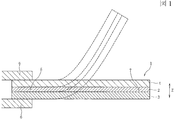
- FIG. 1 is a partial cross-sectional view of a polymer actuator element in an embodiment of the present invention.
- FIG. 2A is a graph showing experimental results of displacement amounts of the comparative example, example 1, example 2, and example 3, and
- FIG. 2B is a graph showing comparative example, example 1, and example.
- 2 and FIG. 2C are graphs showing experimental results of the responsiveness of Comparative Example, Example 1, Example 2, and Example 3.
- FIG. is there.
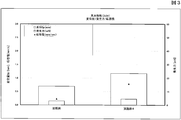
- FIG. 3 is a graph showing experimental results of the displacement amount, generated force, and responsiveness of the comparative example and Example 4.
- FIG. 1 shows a partial cross-sectional view of the polymer actuator element of the present embodiment.
- the structure of the polymer actuator element will be described with reference to FIG.
- the polymer actuator element 1 in this embodiment includes an electrolyte layer (ion conductive layer) 2 and electrode layers 3 and 4 formed on both side surfaces in the thickness direction (Z) of the electrolyte layer 2. It is configured with.
- a polymer actuator element 1 includes an electrolyte layer 2 having an ionic liquid and a base polymer, activated carbon nanofiber (ACNF), carbon nanohorn (CNH), an ionic liquid, and a base polymer. It has electrode layers 3 and 4.
- the electrolyte layer 2 is formed with a thickness of about 10 ⁇ m to 30 ⁇ m.
- the total thickness of the electrode layer 3 and the electrode layer 4 is about 50 to 150 ⁇ m.
- PVdF polyvinylidene fluoride
- PMMA polymethyl methacrylate
- EMIBF4 ethylmethylimidazolium tetrafluoroborate
- EMITFSI ethylmethylimidazolium bis (trifluoromethanesulfonyl) imide
- EMITfO ethylmethylimidazolium trifluoromethanesulfonate
- the base end portion 5 of the polymer actuator element 1 is a fixed end portion, and the base end portion 5 of the polymer actuator element 1 is fixedly supported by fixed support portions 6 and 6. As shown in FIG. 1, for example, the polymer actuator element 1 is supported in a cantilever manner.
- a driving voltage is applied between the electrode layers 3 and 4 on both sides, as shown by the dotted line in FIG. 1, the ion layer 3 moves between the electrode layer 3 and the electrode layer 4 due to ion movement between the electrode layer 3 and the electrode layers 3 and 4.
- a volume difference is generated and a bending stress is generated, so that the distal end portion 7 which is a free end portion of the polymer actuator element 1 can be bent and deformed.
- the principle that the difference in volume between electrodes due to ion transfer is generally not unambiguous, but one of the typical principle factors is that the difference in volume occurs due to the difference in ion size between cation and anion. It is known.
- the carbon materials contained in the electrode layers 3 and 4 are activated carbon nanofibers (ACNF) and carbon nanohorns (CNH).
- carbon nanofibers can be activated by an activation treatment (preferably an alkali activation treatment).
- an activation treatment preferably an alkali activation treatment.
- the activation treatment a known method such as gas activation using water vapor or the like, chemical activation using a chemical such as zinc chloride, or alkaline activation using an alkali metal compound can be used.
- the carbon nanofibers preferably use pitch as the carbon precursor polymer, and in particular, it is preferable to use an aromatic mesophase pitch that is expected to have high strength and high elasticity.
- a carbon nanofiber can be produced by melt spinning a polymer blend in which an aromatic mesophyse pitch is dispersed in a matrix polymer, and then subjecting the spun fiber to infusibilization, carbonization heating, activation treatment, and graphitization.
- carbon nanofibers manufactured by Teijin Limited can be used.
- the electrode layers 3 and 4 contain carbon nanohorn (CNH) as a conductive additive material.
- the electrode layers 3 and 4 include activated carbon nanofibers (ACNF) and carbon nanohorns, so that the electrode layers include carbon nanofibers, but are equivalent to the comparative example that does not include carbon nanohorns. While maintaining the durability, the displacement amount and the generated force are larger than those of the comparative example, and excellent responsiveness can be obtained.
- the weight of the carbon nanohorn is preferably equal to or greater than the weight of the carbon nanofiber. More specifically, the weight ratio of carbon nanohorns to the total carbon amount (carbon nanohorn amount / total carbon amount) is preferably 0.5 to 0.7. “Total carbon content” is a value obtained by adding the weights of carbon nanohorn and carbon nanofiber. However, when carbon materials other than carbon nanohorns and carbon nanofibers are included, the total carbon amount is determined by adding the weights of all the carbon materials.
- the electrode layer has the same durability as the comparative example that contains carbon nanofibers but does not contain carbon nanohorns. As compared with the comparative example, the displacement amount and the generated force can be effectively increased and excellent responsiveness can be obtained while maintaining.
- the time from the maximum displacement to half the displacement can be used as an index.
- the longer the half time the longer the displacement can be maintained for a longer time, and the better the DC durability.
- the electrode layer includes carbon nanofibers, but the comparative example does not include carbon nanohorns. Excellent DC durability equal to or better than that of the molecular actuator element can be obtained.
- the weight ratio of the ionic liquid in the electrode layers 3 and 4 to the total carbon amount is 1.3 to 1.7. It is preferable.
- the amount of the ionic liquid here is evaluated by the weight of the ionic liquid contained in the electrode layers 3 and 4. Note that it is preferable to select EMI-TfO as the ionic liquid.
- the weight ratio of the base polymer in the electrode layers 3 and 4 to the total carbon amount is 0.7 to 1.1. Is preferred.
- the amount of the base polymer is evaluated based on the weight of the base polymer contained in the electrode layers 3 and 4. At this time, PVdF is preferably selected as the base polymer.
- the polymer actuator element 1 is not limited to the three-layer structure of electrode layer 3 / electrolyte layer 2 / electrode layer 4 shown in FIG.
- an existing method can be used for manufacturing the polymer actuator element. That is, it is manufactured through preparation of an electrode solution, preparation of an electrode layer (casting method), preparation of an electrolyte solution, preparation of an electrolyte layer (casting method), and preparation of a polymer actuator element (stacking each layer and thermocompression bonding). Can do.
- the polymer actuators of Examples and Comparative Examples having a three-layer structure of electrode layer / electrolyte layer / electrode layer shown in FIG. 1 were prepared.
- the electrode layer was formed of a carbon material, an ionic liquid, and a base polymer
- the electrolyte layer was formed of an ionic liquid and a base polymer.
- EMI-TfO was used for the ionic liquid
- PVdF was used for the base polymer.
- the element thickness was about 100 ⁇ m.
- activated carbon nanofibers hereinafter referred to as ACNF
- CNH carbon nanohorn
- ACNF was used as a carbon material. That is, the polymer actuator element of the comparative example does not contain CNH.
- Table 1 shows the amount of ionic liquid (mg), the amount of base polymer (BP amount) (mg), the amount of ACNF (mg), and the comparative examples used in the experiment, Example 1, Example 2 and Example 3.
- CNH amount (mg), total carbon amount (mg), ionic liquid amount / total carbon amount, BP amount / total carbon amount, CNH amount / total carbon amount are listed.
- the amount of ionic liquid and the amount of base polymer are both in the electrode layer.
- the displacement amount is a maximum at a position of 1 mm from the most distal position of the polymer actuator element shown in FIG. 1 toward the proximal end portion 5 (a position of 4 mm from the most proximal end position toward the distal end portion 7).
- the amount of displacement was used.
- the generated force is indicated by a force when a driving voltage is applied to the polymer actuator element in the reference state drawn by a solid line shown in FIG.
- the responsiveness is the speed required to reach the maximum displacement from the reference state drawn by the solid line shown in FIG.
- Table 1 shows the measurement results of the displacement, generated force, and responsiveness of each polymer actuator element of Comparative Example, Example 1, Example 2, and Example 3. Further, based on Table 1, the displacement amount of each sample is shown in FIG. 2A, the generated force of each sample is shown in FIG. 2B, and the responsiveness of each sample is shown in FIG. 2C.
- each of the polymer actuator elements of each example has a larger displacement and generated force and better responsiveness than the polymer actuator element of the comparative example. I understood.
- the CNH amount was set to be equal to or greater than the ACNF amount.
- the CNH amount / total carbon amount is set within the range of 0.5 to 0.7
- the ionic liquid amount (electrode layer) / total carbon amount is set within the range of 1.3 to 1.7.
- the BP amount (electrode layer) / total carbon amount was set within the range of 0.7 to 1.1.
- Example 4 was manufactured under the same conditions as Example 2. However, due to manufacturing variations, Example 4 was slightly thinner than Example 2 in terms of element thickness. As a result, the displacement amount in Example 4 is larger than that in Example 2, and the generated force is reduced.
- FIG. 3 shows the displacement amounts of the comparative example and the embodiment example 4 shown in Table 2 (here, the displacement amount pp means that the polymer actuator element shown in FIG. 1 is displaced upward from the reference state shown by the solid line in FIG. 1).
- the displacement amount obtained by adding the displacement amount 0p at the time and the displacement amount when the reference state is displaced downward in the figure is shown), and the generated force and the responsiveness are graphed.
- Example 4 As shown in Table 2 and FIG. 3, it was found that the polymer actuator element of Example 4 had a larger displacement and generated force and superior responsiveness than the polymer actuator element of the comparative example. Regarding the responsiveness, it was found that Example 4 was about three times higher than the comparative example.
- the polymer actuator of the example including both the carbon nanofiber and the carbon nanohorn activated in the electrode layer includes the carbon nanofiber in the electrode layer.
Landscapes
- Chemical & Material Sciences (AREA)
- Engineering & Computer Science (AREA)
- Analytical Chemistry (AREA)
- Combustion & Propulsion (AREA)
- Computer Hardware Design (AREA)
- Microelectronics & Electronic Packaging (AREA)
- Mechanical Engineering (AREA)
- General Engineering & Computer Science (AREA)
- Compositions Of Macromolecular Compounds (AREA)
- Carbon And Carbon Compounds (AREA)
Priority Applications (3)
| Application Number | Priority Date | Filing Date | Title |
|---|---|---|---|
| JP2014554607A JP6083052B2 (ja) | 2012-12-27 | 2013-12-27 | 高分子アクチュエータ素子 |
| EP13868579.7A EP2945276A4 (de) | 2012-12-27 | 2013-12-27 | Polymeraktorelement |
| US14/752,496 US9873609B2 (en) | 2012-12-27 | 2015-06-26 | Polymer actuator element |
Applications Claiming Priority (2)
| Application Number | Priority Date | Filing Date | Title |
|---|---|---|---|
| JP2012-284032 | 2012-12-27 | ||
| JP2012284032 | 2012-12-27 |
Related Child Applications (1)
| Application Number | Title | Priority Date | Filing Date |
|---|---|---|---|
| US14/752,496 Continuation US9873609B2 (en) | 2012-12-27 | 2015-06-26 | Polymer actuator element |
Publications (1)
| Publication Number | Publication Date |
|---|---|
| WO2014104331A1 true WO2014104331A1 (ja) | 2014-07-03 |
Family
ID=51021395
Family Applications (1)
| Application Number | Title | Priority Date | Filing Date |
|---|---|---|---|
| PCT/JP2013/085189 Ceased WO2014104331A1 (ja) | 2012-12-27 | 2013-12-27 | 高分子アクチュエータ素子 |
Country Status (4)
| Country | Link |
|---|---|
| US (1) | US9873609B2 (de) |
| EP (1) | EP2945276A4 (de) |
| JP (1) | JP6083052B2 (de) |
| WO (1) | WO2014104331A1 (de) |
Cited By (6)
| Publication number | Priority date | Publication date | Assignee | Title |
|---|---|---|---|---|
| JP2016180068A (ja) * | 2015-03-24 | 2016-10-13 | アルプス電気株式会社 | 炭素含有フィルムおよび炭素含有フィルムの製造方法ならびに高分子アクチュエータ素子および高分子アクチュエータ素子の製造方法 |
| WO2017033836A1 (ja) * | 2015-08-21 | 2017-03-02 | 国立研究開発法人産業技術総合研究所 | ナノカーボン高分子アクチュエータ |
| JP2017070138A (ja) * | 2015-10-01 | 2017-04-06 | アルプス電気株式会社 | 高分子アクチュエータ |
| WO2018211981A1 (ja) | 2017-05-18 | 2018-11-22 | 東レ・ダウコーニング株式会社 | フルオロアルキル基含有硬化性オルガノポリシロキサン組成物、その硬化物および当該硬化物を備えたトランスデューサー等 |
| WO2020116440A1 (ja) | 2018-12-07 | 2020-06-11 | ダウ・東レ株式会社 | 硬化性オルガノポリシロキサン組成物、その硬化物および当該硬化物を備えたトランスデューサー等 |
| WO2024075661A1 (ja) | 2022-10-05 | 2024-04-11 | ダウ・東レ株式会社 | トランスデューサー用硬化性オルガノポリシロキサン組成物、その硬化物および当該硬化物を備えたトランスデューサー等 |
Families Citing this family (1)
| Publication number | Priority date | Publication date | Assignee | Title |
|---|---|---|---|---|
| US10813257B2 (en) * | 2016-09-05 | 2020-10-20 | Nec Corporation | Electromagnetic wave absorbing material |
Citations (5)
| Publication number | Priority date | Publication date | Assignee | Title |
|---|---|---|---|---|
| JP2005163229A (ja) * | 2003-12-03 | 2005-06-23 | Japan Science & Technology Agency | カーボンナノファイバーとその製造方法 |
| JP2005223025A (ja) * | 2004-02-03 | 2005-08-18 | Shinshu Univ | カーボンナノファイバーを用いる高分子アクチュエータ |
| WO2010029992A1 (ja) | 2008-09-12 | 2010-03-18 | アルプス電気株式会社 | 高分子アクチュエータ |
| JP2011114140A (ja) * | 2009-11-26 | 2011-06-09 | Teijin Ltd | 電極材料、その製造方法、およびその電極材料を用いた電気化学キャパシタ |
| JP2012095520A (ja) * | 2010-10-01 | 2012-05-17 | Canon Inc | アクチュエータ |
Family Cites Families (7)
| Publication number | Priority date | Publication date | Assignee | Title |
|---|---|---|---|---|
| EP2416488B1 (de) * | 2009-03-31 | 2019-03-06 | Daikin Industries, Ltd. | Elektrodenfolie für ein polymerbetätigungselement und polymerbetätigungselement damit |
| JP5733938B2 (ja) * | 2009-12-08 | 2015-06-10 | キヤノン株式会社 | アクチュエータ |
| JP5523553B2 (ja) * | 2010-03-24 | 2014-06-18 | アルプス電気株式会社 | 高分子アクチュエータおよびその製造方法 |
| EP2400573A1 (de) * | 2010-06-23 | 2011-12-28 | Bayer MaterialScience AG | Elektromechanischer Wandler, Verfahren zu dessen Herstellung und Verwendung desselben |
| JP2012135156A (ja) * | 2010-12-22 | 2012-07-12 | Canon Inc | アクチュエータ |
| JP6128508B2 (ja) * | 2011-07-07 | 2017-05-17 | 国立研究開発法人産業技術総合研究所 | カーボンナノファイバーアクチュエータ |
| WO2014119166A1 (ja) * | 2013-01-30 | 2014-08-07 | 東海ゴム工業株式会社 | 柔軟なトランスデューサ |
-
2013
- 2013-12-27 JP JP2014554607A patent/JP6083052B2/ja active Active
- 2013-12-27 WO PCT/JP2013/085189 patent/WO2014104331A1/ja not_active Ceased
- 2013-12-27 EP EP13868579.7A patent/EP2945276A4/de not_active Withdrawn
-
2015
- 2015-06-26 US US14/752,496 patent/US9873609B2/en active Active
Patent Citations (5)
| Publication number | Priority date | Publication date | Assignee | Title |
|---|---|---|---|---|
| JP2005163229A (ja) * | 2003-12-03 | 2005-06-23 | Japan Science & Technology Agency | カーボンナノファイバーとその製造方法 |
| JP2005223025A (ja) * | 2004-02-03 | 2005-08-18 | Shinshu Univ | カーボンナノファイバーを用いる高分子アクチュエータ |
| WO2010029992A1 (ja) | 2008-09-12 | 2010-03-18 | アルプス電気株式会社 | 高分子アクチュエータ |
| JP2011114140A (ja) * | 2009-11-26 | 2011-06-09 | Teijin Ltd | 電極材料、その製造方法、およびその電極材料を用いた電気化学キャパシタ |
| JP2012095520A (ja) * | 2010-10-01 | 2012-05-17 | Canon Inc | アクチュエータ |
Non-Patent Citations (1)
| Title |
|---|
| See also references of EP2945276A4 |
Cited By (6)
| Publication number | Priority date | Publication date | Assignee | Title |
|---|---|---|---|---|
| JP2016180068A (ja) * | 2015-03-24 | 2016-10-13 | アルプス電気株式会社 | 炭素含有フィルムおよび炭素含有フィルムの製造方法ならびに高分子アクチュエータ素子および高分子アクチュエータ素子の製造方法 |
| WO2017033836A1 (ja) * | 2015-08-21 | 2017-03-02 | 国立研究開発法人産業技術総合研究所 | ナノカーボン高分子アクチュエータ |
| JP2017070138A (ja) * | 2015-10-01 | 2017-04-06 | アルプス電気株式会社 | 高分子アクチュエータ |
| WO2018211981A1 (ja) | 2017-05-18 | 2018-11-22 | 東レ・ダウコーニング株式会社 | フルオロアルキル基含有硬化性オルガノポリシロキサン組成物、その硬化物および当該硬化物を備えたトランスデューサー等 |
| WO2020116440A1 (ja) | 2018-12-07 | 2020-06-11 | ダウ・東レ株式会社 | 硬化性オルガノポリシロキサン組成物、その硬化物および当該硬化物を備えたトランスデューサー等 |
| WO2024075661A1 (ja) | 2022-10-05 | 2024-04-11 | ダウ・東レ株式会社 | トランスデューサー用硬化性オルガノポリシロキサン組成物、その硬化物および当該硬化物を備えたトランスデューサー等 |
Also Published As
| Publication number | Publication date |
|---|---|
| JP6083052B2 (ja) | 2017-02-22 |
| US20150298963A1 (en) | 2015-10-22 |
| JPWO2014104331A1 (ja) | 2017-01-19 |
| US9873609B2 (en) | 2018-01-23 |
| EP2945276A1 (de) | 2015-11-18 |
| EP2945276A4 (de) | 2016-07-27 |
Similar Documents
| Publication | Publication Date | Title |
|---|---|---|
| JP6083052B2 (ja) | 高分子アクチュエータ素子 | |
| JP6128508B2 (ja) | カーボンナノファイバーアクチュエータ | |
| JP5110574B2 (ja) | 高アスペクト比のカーボンナノチューブとイオン液体から構成される導電性薄膜、アクチュエータ素子 | |
| JP5733938B2 (ja) | アクチュエータ | |
| JP5252405B2 (ja) | 高分子アクチュエータ | |
| US8994246B2 (en) | Actuator | |
| JP5734064B2 (ja) | アクチュエータ | |
| JP5004078B2 (ja) | 高アスペクト比のカーボンナノチューブを用いた高配向性電極によるアクチュエータ素子 | |
| JP5332027B2 (ja) | 導電補助剤を添加したカーボンナノチューブ電極を用いたアクチュエータ素子 | |
| JP6270273B2 (ja) | 高分子アクチュエータ素子、高分子アクチュエータ素子用電極層、高分子アクチュエータ素子用電極層の製造方法、及び、高分子アクチュエータ素子の製造方法 | |
| JP4568885B2 (ja) | 高強度、高導電性薄膜によるアクチュエータ素子及びその製造方法 | |
| JP5831926B2 (ja) | 高分子アクチュエータ素子及びその製造方法 | |
| JP4863297B2 (ja) | カーボンナノチューブを用いた高強度、高導電性薄膜およびアクチュエータ素子製造方法 | |
| JP2011239604A (ja) | 高分子アクチュエータ素子の製造方法 | |
| JP6542092B2 (ja) | 高分子アクチュエータ | |
| JP6870835B2 (ja) | 積層アクチュエータ | |
| JP6619875B2 (ja) | 積層構造体、高分子アクチュエータ素子、センサ素子、および機器 | |
| JP6562319B2 (ja) | ナノカーボン高分子アクチュエータ |
Legal Events
| Date | Code | Title | Description |
|---|---|---|---|
| 121 | Ep: the epo has been informed by wipo that ep was designated in this application |
Ref document number: 13868579 Country of ref document: EP Kind code of ref document: A1 |
|
| ENP | Entry into the national phase |
Ref document number: 2014554607 Country of ref document: JP Kind code of ref document: A |
|
| NENP | Non-entry into the national phase |
Ref country code: DE |
|
| WWE | Wipo information: entry into national phase |
Ref document number: 2013868579 Country of ref document: EP |